Qwertyman N0. 117: Our Best Books Forward

Qwertyman for Monday, October 28, 2024

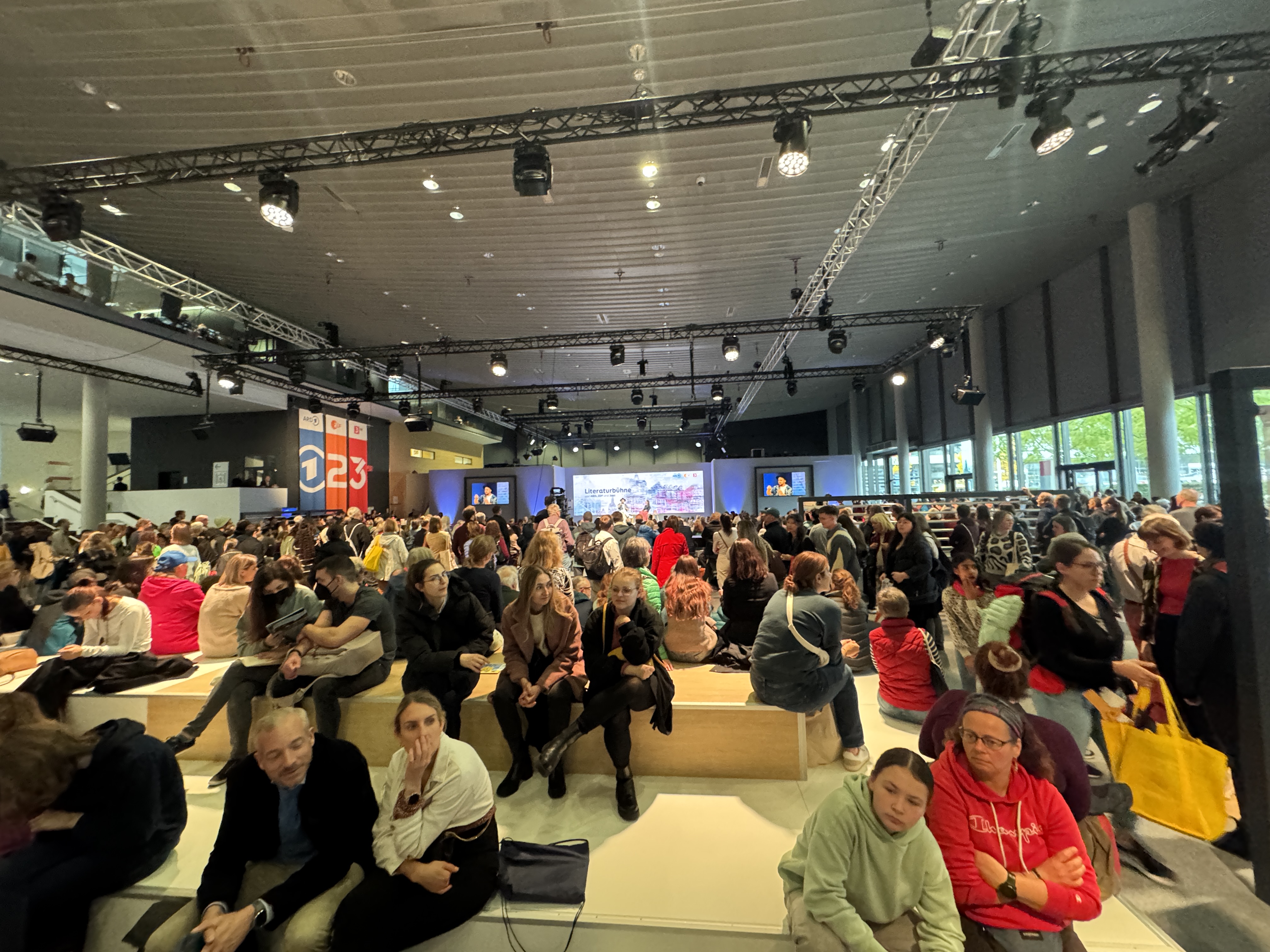
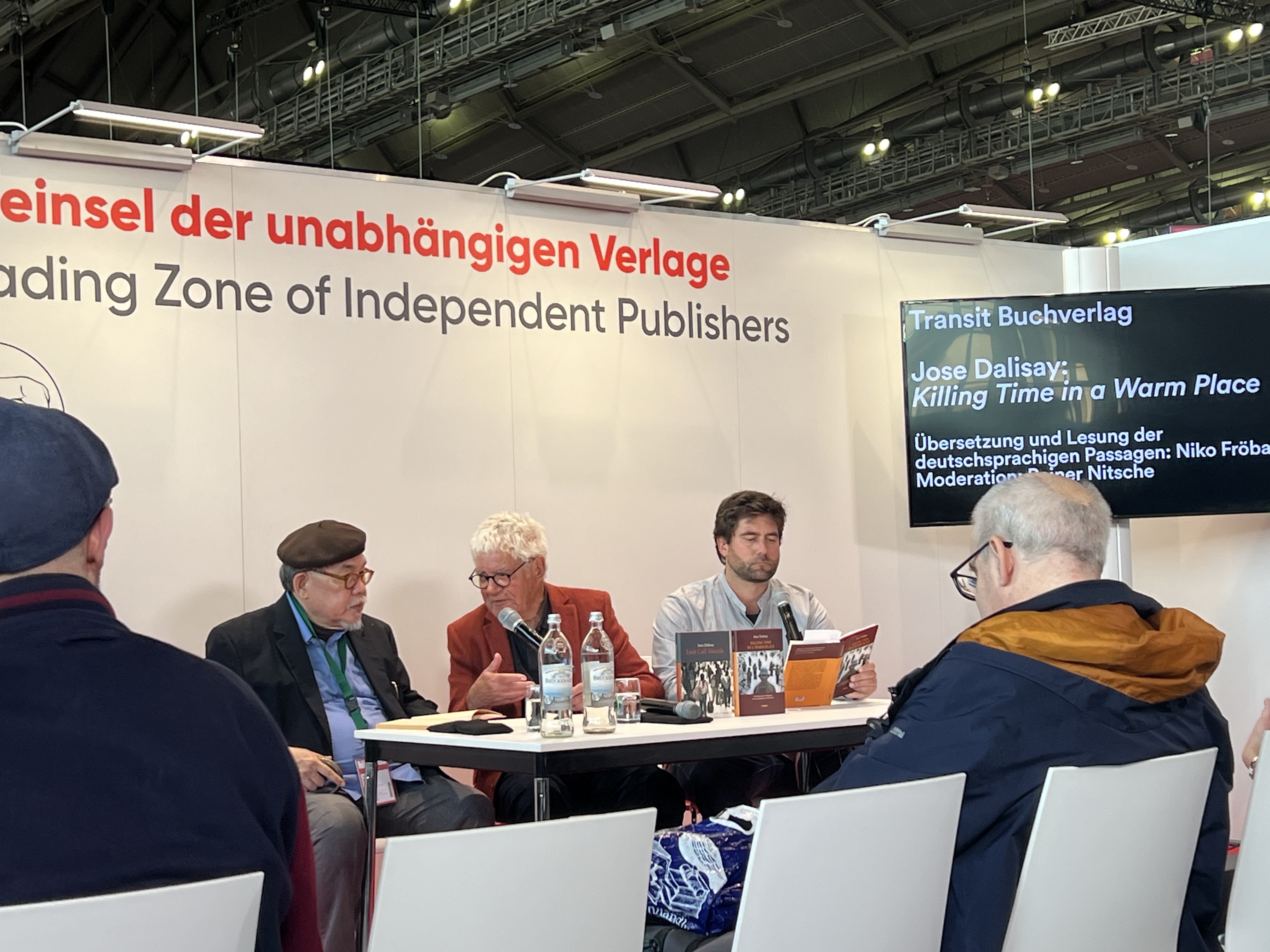
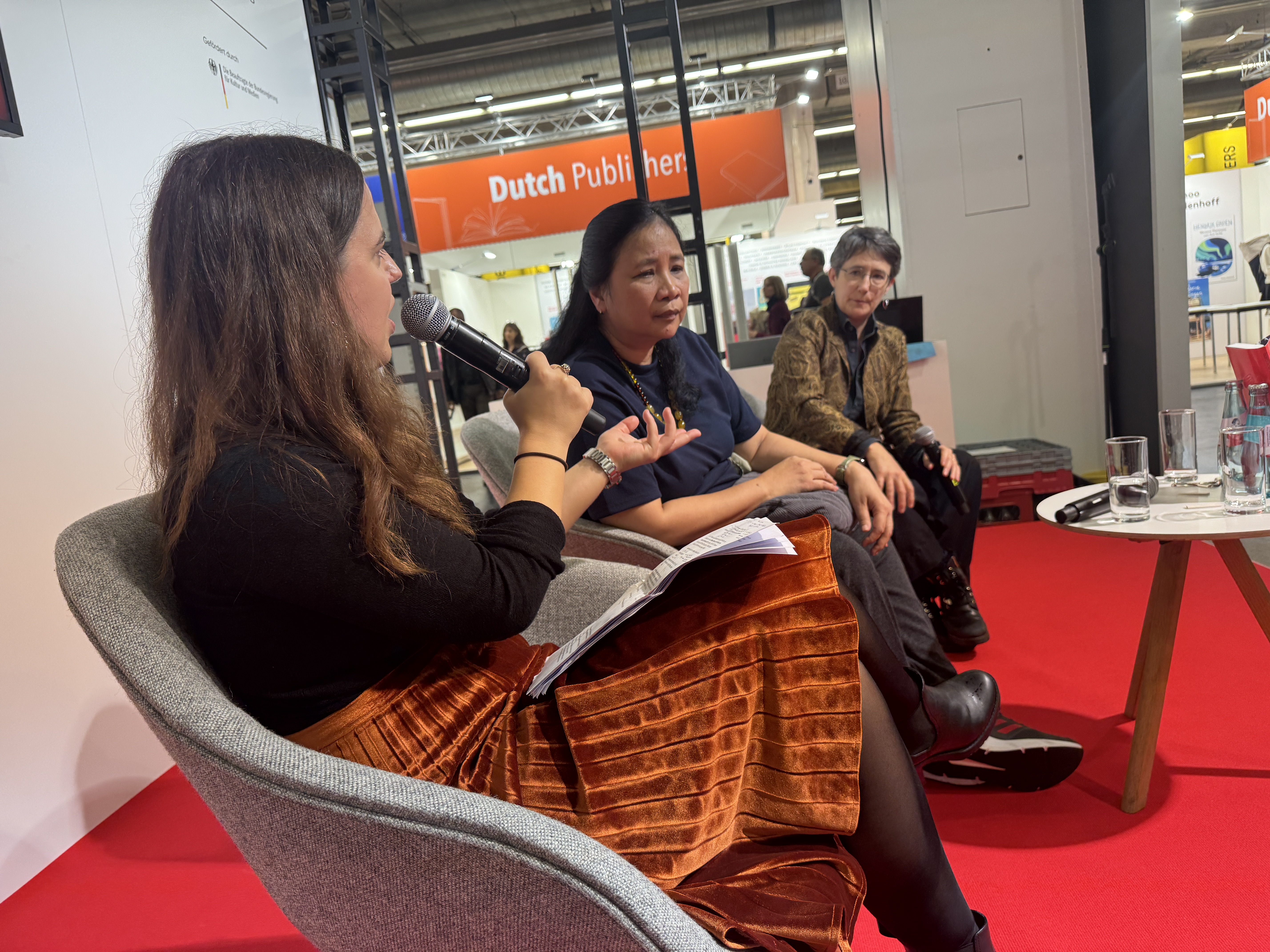
NOW ON its 76th year, the Frankfurter Buchmesse (FBM)—better known outside Germany as the Frankfurt Book Fair, the world’s oldest and largest such event—ended successfully last October 20 with a significant representation from the Philippines, which sent scores of authors, publishers, and book industry officials to the fair. All that was in preparation for FBM 2025, when the Philippines will be Guest of Honor (GOH), the country whose literature will be the focus of the fair’s attention.

You can think of the Frankfurt Book Fair as the Olympics of the global book industry, with over 200,000 participants (book industry persons and the public) representing over 100 countries. However, there are no prizes for Best Novel, Best Nonfiction Book, Best Children’s Book, and so on. Everyone is effectively in competition with everyone else, but the real rewards are in the professional and personal connections made between and among authors, publishers, agents, editors, and translators at the fair, connections that materialize into deals for translation and publication rights. Although exhibited books can be sold at the close of the fair, the FBM isn’t meant to sell books, but rights to books, for which it has become the world’s oldest and largest marketplace. This means that, through the right contacts, Filipino books can be translated into and sold in French, Turkish, Spanish, and Urdu editions, etc. and vice versa. 

Becoming GOH is a signal distinction—but it doesn’t come free. Nations vie and pay for the honor, which this year went to Italy and in 2026 will go to the Czech Republic. I’m sure that there have been and will be more criticisms of our participation in Frankfurt, chiefly of the costs of our foreign exposure vs. the local promotion of our literature, but it’s not a zero-sum game. We need both kinds of investments. We have impressive literary production from all over the country—much of it unknown even to ourselves—but we also need to share the best of it with the world, to raise their understanding of the Filipino above the stereotypes they know (Imelda’s shoes, Manny Pacquiao, DHs, cruise ship crewmen, etc.—not all of them bad, for sure, especially our OFWs, but in need of context).

If FBM 2024 was any indication, FBM 2025 will be an even more resounding success for the Philippines. All literary genres were represented this year in terms of books and panel discussions, and valuable connections were made with European publishers, translators, and agents. Philippine literature will never be the same after this. (This year’s upshot for me is that my novel Soledad’s Sister will be coming out soon in Spanish, after its versions in Italian, French, and German.)

Having followed trends in international publishing for some time, I’m particularly impressed by the way the FBM has helped to promote our new writing by young authors in literary categories that have traditionally received less attention compared to what I’ve called “the big white whale” of publishing, the novel. Approach most publishers and agents at the FBM, and what they’ll ask you is, “Where’s your novel?” For primarily commercial reasons, the novel remains the most saleable and traded commodity at book fairs. (I know many who will wince at my reference to books as commodities, but let’s be absolutely clear about this: the bottom line of book publishing and book fairs is business, not “Kumbaya”-type international peace and understanding.) 

Sadly, however, Filipinos have historically not been a novel-writing, novel-buying, and novel-reading people. In this respect, Rizal’s Noli and Fili are aberrations, familiar to us only and thankfully because of the law requiring their study. That said, our writers are masters of the short literary forms—poetry and the short story in particular. I’ve often remarked that we Pinoys are world-class sprinters, not marathoners; our world-view is not Olympian, but pedestrian, formed close-quarters at street level. 

This year, I’m told that over 70 deals were made between Filipino authors and foreign agents and publishers for the translation and publication of works that went well beyond the traditional novel, including children’s stories (another of our strongest suits) and genre and graphic fiction. These authors were young, and some had their works translated from languages other than English. If anything, this surge in translations, long overdue, is one strategic benefit that our FBM participation has enabled, and our GOH status next year should boost it even further.

According to FBM Director Juergen Boos, “I am very excited about the Philippines’ Guest of Honor presentation in 2025. The motto ‘The imagination peoples the air’ resonates with the universality of storytelling. Even though the Philippines is the world’s thirteenth largest nation with more than 109 million citizens, I believe for many of us in Europe, Philippine literature is currently still rather unknown territory. As the country steps into its role as Guest of Honor, we will learn a lot about the importance of storytelling and today’s cultural scene for Philippine civil society. With an incredible 183 different languages spoken on its 7,641 islands, the country’s diverse influences are one of the aspects I am looking forward to seeing in Frankfurt in 2025.”

I did say that there are no prizes awarded at the FBM, but I have to correct that to acknowledge the Diagram Group Prize for the Oddest Title at the FBM, given since 1978 and now voted upon by the public, and won by such books as Proceedings of the Second International Workshop on Nude Mice, The Joy of Chickens, How to Shit in the Woods: An Environmentally Sound Approach to a Lost Art, and If You Want Closure in Your Relationship, Start with Your Legs. This is not a prize to which Filipino writers have so far aspired, but who knows? Pinoy wackiness (alongside wisdom) knows no bounds.

Many thanks to the National Book Development Board, the National Commission for Culture and the Arts, the German literary organization LitProm, culture champion Sen. Loren Legarda, and our other sponsors and supporters for this great opportunity to put our best books forward on the global stage. Mabuhay!

Qwertyman No. 106: For Our National Peace of Mind

Qwertyman for Monday, August 12, 2024

FOR A country starved for heroes, Carlos Yulo’s double-gold performance at the Olympics provided a sumptuous feast—a bacchanalian one, to use probably the newest and most notorious word in many people’s vocabulary. In one YouTube replay after another, we marveled at his seemingly magical flips and tumbles, and our eyes welled with tears when the Philippine anthem played over the stadium’s loudspeakers.

The euphoria effectively drowned out the previous week’s near-manic howls over the controversial Dionysian tableau of the opening ceremonies and the chorus proclaiming Paris as the most evil and corrupt city on the planet. Suddenly Paris acquired a golden halo; Yulo was beatified on social media as the exemplar of perseverance and tough-mindedness, and rightly so. His feat—sterling victories achieved despite overwhelming odds—was unprecedented and not likely to be equaled by another non-hyphenated Pinoy anytime soon.

But no sooner had Filipinos united in that moment of jubilation than they, almost by instinct, found cause to divide once again, this time over one’s choice of villainess in poor Caloy’s life: the bitter mother or the sexy girlfriend, behind either one of whom platoons of supporters rallied. Team Nanay exalted motherhood and filial piety above all else; Team GF cheered for the pursuit of happiness. Who will get to the podium remains to be seen.

I’m sure Caloy Yulo isn’t alone in his predicament. An assiduous journalist just has to comb through the life stories of all the 400+ gold medalists in the Paris Olympics to discover that 87.93 percent of them have problems with mothers, fathers, girlfriends, boyfriends, siblings, in-laws, best friends, neighbors, and pets. (For these, I would look most closely into places like Uzbekistan, Uganda, and, yes, Italy, where families seem to be big and noisy.) Statistically speaking, there has to be a champion shotputter or a synchronized swimmer somewhere whose miserable mama hates his shapely squeeze. (I’ve even heard someone posit over breakfast coffee that maybe EJ Obiena needed a mother/girlfriend problem to clear the bar at 6.0 meters.)

The big difference is that no one goes to town with family dramas quite like us Pinoys, especially Pinoys with social-media accounts normally given to showing off what they just ate or their OOTD. To show, at least once in a while, that there’s actually a thinking and feeling person behind the avatar (and online, feeling equals thinking), we post a strong opinion—never mind that it’s the millionth repost of someone else’s meme. We find it important—nay, obligatory—to take sides on vital issues (that do not include PISA scores, ICC probes, or jeepney modernization). We have to decide if the mother or the girlfriend is at fault; our national peace of mind depends on it. Never mind what Caloy Yulo himself thinks—this is bigger than him (like most things are).

And this is just the beginning, although it’s inextricably tied in with the next big question that 115 million Filipinos have to grapple with: what should Caloy do with all his money? (I don’t even want to think about whether he should go into showbiz or politics next—my friend Ige Ramos’ post on those prospects was probably the sanest of the past week, and one Caloy would do well to heed.)

In addition to all the lifetime supplies of ramen, litson manok, and colonoscopies that come with being a Pinoy Olympic laureate, will it be too much to offer Caloy Yulo a lifetime supply of peace? It costs nothing but our willful silence.

Seriously now, silence is a virtue, and withholding opinion can be as valuable and as helpful as giving one. It doesn’t mean you’re dumb or uncaring. On the contrary, it might mean that you know enough to understand that staying out of the fray and keeping your thoughts to yourself is the more sensible if not kinder option. But we Pinoys, the reigning world usisero and pakialamero champions, have never been known for excessive self-restraint, which manifests only when the neighbor’s wife is being beaten senseless by her husband (“Wala tayong kinalaman diyan”) or when witnesses are called to testify to their boss’ or their congressman’s misdeeds.

Sadly, social media has empowered everyone from nitwits to geniuses (and of course, everyone thinks of himself or herself as a genius, especially the nitwit) to hold forth on every conceivable subject, even and especially if the issue at hand is none of one’s bloody business. 

I say that with the ironic awareness that we opinion writers do pretty much the same thing, with some sort of official license; we even get paid for it. Indeed we may even be the ultimate pakialamero, poking our noses into all manner of secrets and scandals, particularly the government variety (or maybe not me, because I don’t hobnob with politicians or their secretaries, and so am useless when it comes to the saucy stuff). But the difference is that having to write 1,000 words instead of a ten-word tweet, we actually have to stop to think about how we feel, to contextualize, and perhaps even to decide that we have nothing truly important or useful or even amusing to say about the matter, and so should move on to something else.

At least Caloy can rest assured that given the nature of the beast, this tempest will blow over soon. (Is anyone still posting about the Last Supper? That’s so last-week!) And before too long, he can rightfully enjoy the pommel horse in his P32-million condo. Wait—it does have a pommel horse, right? If not, it should! What do you think?

(Photo from rappler.com)

Penman No. 465: Back to the Nineties

Penman for Sunday, August 11, 2024

AMONG THIS year’s most interesting new books is one that’s neither a novel nor a political exposé, but a musical chronicle of a decade that many Filipinos now look back on with a certain nostalgia, albeit for different reasons—the 1990s.

Say “the Nineties,” and a range of responses will come to mind depending on how old you were then. For today’s seniors, the core of it was likely FVR’s infectious optimism over “Philippines 2000,” the relative stability we had gained after the anti-Cory coups and in anticipation of our centennial in 1998. For those younger but old enough to drink beer, it was the age of the Eraserheads, Clubb Dredd, the ‘70s Bistro, and Mayric’s, an explosion of OPM like we had seen back in the 1970s but with a harder and sharper edge.

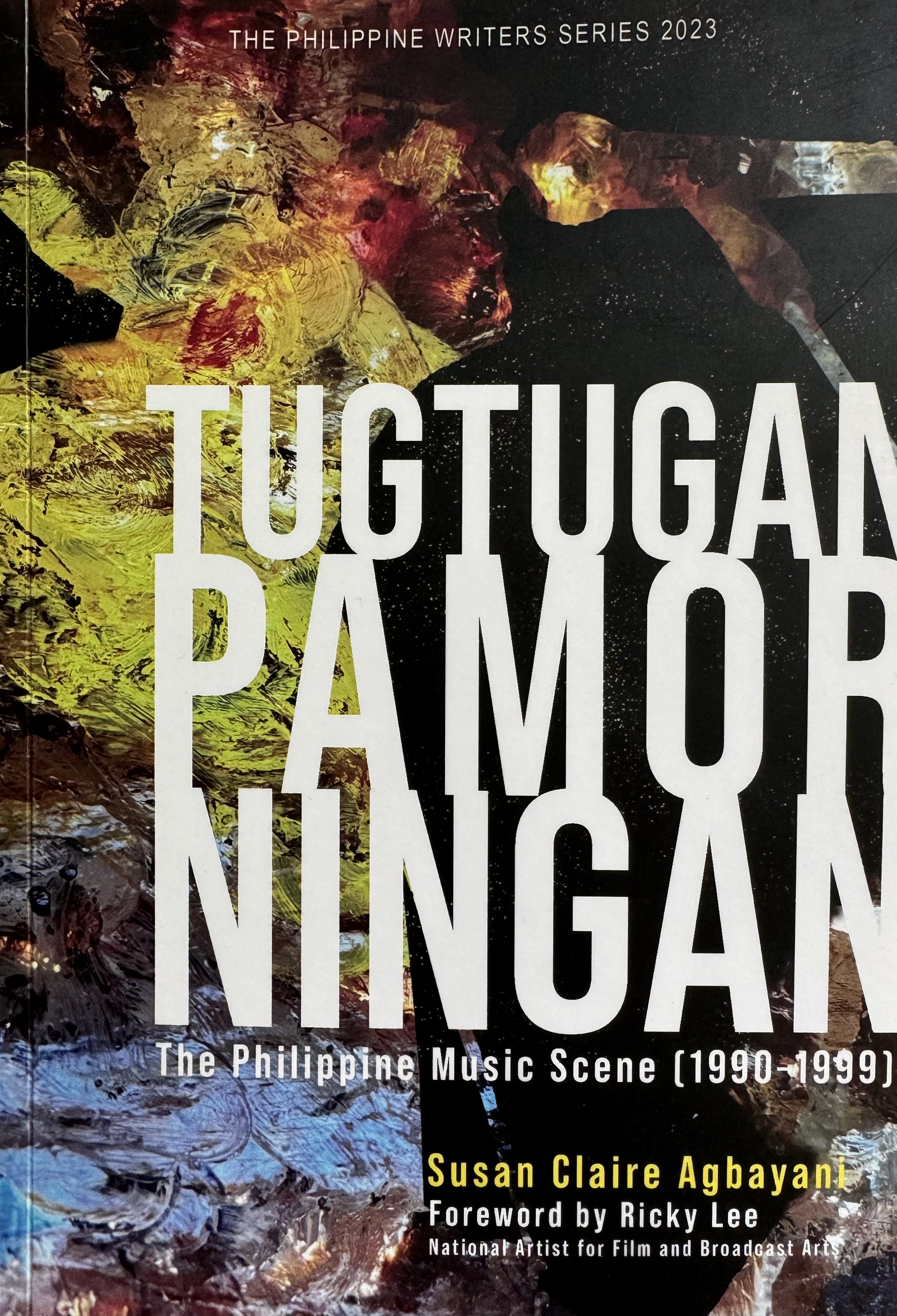
It’s that latter scenario—set against the context of our transition from Cory to FVR to Erap—that’s captured in Susan Claire Agbayani’s landmark Tugtugan Pamorningan: The Philippine Music Scene 1990-1999 (University of the Philippines Press, 2024, part of the Philippine Writers Series of the UP Institute of Creative Writing). An indefatigable cultural journalist, publicist, and sometime concert producer (and also, I must proudly admit, my former student), Claire was among the very few writers who could have undertaken this job (Eric Caruncho, Jessica Zafra, and Pocholo Concepcion, all of whom she cites, would have been the others). 

Comprehensively, the book’s chapters cover bars and concerts, the music scene, personality profiles, duos and trios, pop/jazz/R&B/show bands, alternative/rock bands, the Eraserheads (yes, a chapter all to their own), Mr. and Mss. Saigon, and visiting acts, rounded out by a gallery of period pics.

As a compilation of pieces from Claire’s reportage at that time, the book revives not only the music but also the issues besetting the industry then, such as Sen. Tito Sotto’s wanting to ban the Eraserheads song “Alapaap” for supposedly promoting drug abuse. Priceless vignettes abound, such as that of Basil Valdez singing “Ama Namin” to composer George Canseco’s wife over the phone, three days before she died, and of Ely Buendia telling Nonoy Zuñiga that he had won a singing competition in school with the latter’s “Doon Lang.” We learn about Humanities teacher and all-around performer Edru Abraham’s Lebanese ancestry and how it connects him to world music.

The best scenes, I think, are the saddest ones, such as this piece on a jazz diva:

“She goes around greeting the waiters, then the manager. At last, she sits on a stool, and croons ‘Left Alone,’ the song after which the bar was named. She closes her eyes, closed them more tightly as a couple walks out in the middle of her song. The waiters laugh loudly in the background, occupied with their own concerns. Those who remain inside the bar talk not in whispers. No, they don’t know her. They don’t know Annie Brazil.”

But ultimately it’s the music, the sheer variety and vitality of it, that surges through, so innate to the Filipino and so necessary. If there were an Olympics for music, we’d make the podium in all the categories, and Tugtugan Pamorningan reminds us why. As the title implies, it’s a nightlong festival for us when the music starts. But like night itself, even the Nineties came to an end, with the 2000s bringing in MP3, iTunes, and Spotify, and somehow the smoky, small-bar intimacy that the previous decade connoted gave way to Taylor Swift mega-concerts that people actually flew out to instead of taking a taxi.

I contributed an afterword to the book, so here’s a bit more of what I had to say:

I was a bit too old by the time the ‘90s came along to experience it in the way Claire has so capably and faithfully chronicled in this book, but still young enough to imbibe its energy and its excesses. I was 36 in 1990, finishing my PhD in the States, and when I returned to Manila the following year after five years of being away, I found a radically different scene from the one I’d left just after EDSA. I had a lot to adjust to, and somehow San Miguel beer and the city’s new nightlife seemed to ease those pains, at least until the next morning. 

That was how, despite being too old to know the Eraserheads and their music, I managed to stumble once or twice into Club Dredd, Mayrics, the ‘70s Bistro, and a few other meccas mentioned here, but mostly just out of curiosity. I guess I was looking for something else, and found it on Timog Avenue with my partners-in-crime Charlson Ong and Arnold Azurin, finishing up with some coffee or a beer for the road at Sam’s Diner on Quezon Avenue at 3 am. I wasn’t even a Penguin person—I never thought of myself as being hip or cool—and I preferred hanging out with journos after work in that kebab place on Timog.

That was my life as a barfly—which was also how my newspaper column got that title—and its soundtrack consisted of Basia, Bryan Adams, and “Total Eclipse of the Heart.” I wasn’t much into bands—no one could beat the Beatles—and OPM for me meant APO and Louie Ocampo, whose songs were singable and could make me smile, which I needed a lot. It was a wild time, when I was smoking and drinking and messing around town in my white VW, courting disaster, until one day I found my way home and decided to stay there forever.

That makes the ‘90s sound like some kind of inferno, but now that I think about it, it was the last gasp of innocence before the 2000s and everything we associate with it—9/11, GMA and Erap, the Internet, the iPod, social media, K-pop, tokhang, Trump, the pandemic, the Marcos restoration, and AI—came in. There was a simple-mindedness even to our vices then; truth was truth, fake was fake, and it was easy to tell one from the other. It was rough and raw in many ways—even our 14.4K modems screeched like cats in heat when they connected—but we still got wide-eyed about the possibility of extra-terrestial menace in The X-Files, and we may even have believed that FVR’s “Philippines 2000” was going to be a better place even as we got worried sick over what Y2K would bring, so there remained a tender spot of credulity in us.

That’s all gone now, like Jacqui Magno’s voice, replaced by CGIs, deep fakes, and other synthetics produced by FaceMagic and ChatGPT. 

I can’t honestly say that I miss the ‘90s, and I feel much relieved to have survived them, but there’d be a huge hole in my life—and in the nation’s—if they didn’t happen. What’s in that hole is what’s in the music Claire writes about—and the music often gets it better than even we writers can.

Qwertyman No. 105: Pronouns and Parodies

Qwertyman for Monday, August 5, 2024

SOME DAYS, I swear, when I open my Facebook feed, I’m met by a flood of vexatious opinion certain to trigger my worst reflexes. Much as I’m tempted to respond, I rarely do, knowing that FB comments don’t really soften hearts and minds, but only make them harder. Also, I’m not the witty sort with one-liners that will go viral; my thoughts and words like to ramble and even lose their way, but at least you know it’s not AI or the “Forward” button at work.

Two topics did get me worked up a bit last week, and I’m going to use this column to write the kind of longish social-media comment no one will read. You’ll recognize both issues instantly if you haven’t been living under a rock.

The first was that picture of a seated gay “personality” (I’m never quite sure how persons become “personalities”) lecturing a waiter standing at parade-rest, reportedly for two hours, on gender sensitivity, all because he called her “Sir.” 

There’s a part of me that understands how and why that happened. Some will call this silly wokeness, but in UP, we take our students’ preferred pronouns and names seriously as a sign of respect for the person. 

But what I also know is, when I teach, I stand and my students sit. That’s not to emphasize my authority, but so they can relax, listen, and hopefully imbibe what I’m telling them. I realize that the lady said she invited the waiter to sit down, but I also understand why he declined. Staff don’t sit for a chummy chat with customers. And imagine this: if I (an old man, dirty or not) were the customer and I felt poorly served by a female employee, and I asked her to sit at my table for two hours while I educated her on the finer points of etiquette, would or should she oblige? And I hate listening to or giving long lectures. If I can’t get something across in twenty minutes max, then I’m a lousy teacher.

There’s politics which can be good and right—and people who may not be. Some of the most politically savvy people I’ve met have also been, as some would say, that part of you where the sun don’t shine. 

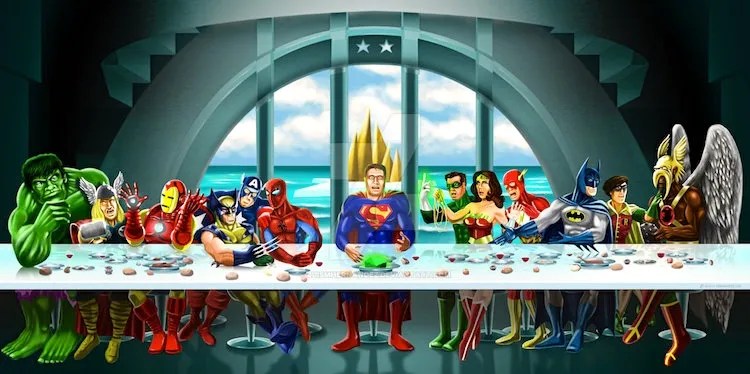
The other hot topic, of course, was the “Last Supper” tableau at the opening ceremonies of the Olympics in Paris, which allegedly mocked the Lord and Christianity itself by replacing Jesus and his apostles at the long table with a raft of drag queens and other presumably degenerate characters. 

I never saw so many Christians and especially Catholics (some of them my good friends) come out of the woodwork to profess their outrage at what they took to be willful sacrilege. And predictably, like wolves sniffing out red meat, many more friends from the other side piled on the “offendees” with mini-treatises on Bacchus and bacchanals, pagan elements in Christian ritual, art criticism, the French mentality and sensibility, and such other topics worthy of dissertations.

Now, as I’ve often confessed in this column (maybe losing five readers and FB friends every time I bring it up; in this context, maybe more), I’m not much of a churchgoer, and have continuing issues with the religion I was born into—and with all of organized religion for that matter, despite growing up in Catholic school. I prefer to pray on my own. I have nothing against people who stay in the fold, go to Mass regularly, post daily proverbs on Viber, and believe in the Bible as the one and only true source of, well, the truth. If their faith keeps them whole and happy—and I can see in many cases that it does—then well and good. Some may be hypocrites, but I’m sure many or most aren’t—and there are hypocrites as well (and worse) among apostates like me.

But back to Paris. What I’m not going to say is, “You shouldn’t have been offended.” If you were, you were. Even if you later changed your mind after listening to all the learned explanations (to some, I’m sure, excuses), the fact is, you saw something you didn’t like. (I just have to wonder—how many people responded directly to the tableau itself, and how many were nudged into seeing it and later objecting by another post screaming, “Hey, you have to see this! Look what they’ve done to Jesus!”? It works the same way on the right and on the left: a meme cascades swiftly down the Internet, and people react viscerally even before they can think.) 

Sure, the “Last Supper” is only a painting by one Leonardo da Vinci, that smart Italian fellow who also imagined flying machines, tanks, and other wonderful contraptions—so why not Jesus’ last meal? (I don’t think there’s an exact record in any of the four Gospels about how the scene was blocked for thirteen characters, except that Christ very likely sat in the middle for better reach, and certainly nobody knows who sat next to whom and leaned over whom. Some depictions down the centuries don’t even use a straight table but an inverted U, or have everyone reclining on mats and pillows, or sitting in a circle.) But even images and objects have symbolic meaning and power, so it’s easy to get hopping mad if someone, say, spits on a painting of your grandmother, or turns it into an unflattering cartoon. 

I do share the consternation over why a hyper-expensive and PR-conscious global enterprise like the Olympics would risk alienating half of France and a third of the world (presuming all Christians took umbrage at the Blue Guy) by—according to the charge sheet—deliberately, premeditatedly, and maliciously mounting a patently anti-Christian production for the whole planet to see. I know the French eat strange things like sheep testicles and have a law requiring skimpy trunks and head caps (yes, even if you’re bald) in public pools, but really now, mock the Last SupperSacré Dieu! (Or, excuse me, let’s use the milder sacré bleu!)

Given all of that, my only question is, where was all the outrage when that President was joking about raping captive nuns and cursing the Pope? And speaking of the Renaissance and the power of representation, remember that Pieta-like photograph of a grieving mother cradling her murdered son at the height of that same President’s tokhang campaign, that President who called Catholic bishops “gay SOBs”? Where was all the righteousness? But maybe we’re just getting started. There’ll be FB accounts I’ll be checking in on, the next time something wildly repulsive happens.

(Image from arnoldzwicky.org–Please condemn him. not me!)

Qwertyman No. 102: Retaining the Fools

Qwertyman for Monday, July 15, 2024

A RECENT Rappler report on “The Philippine Senate: From statesmen to showmen” by James Patrick Cruz told us much of what we already knew, but didn’t have the exact numbers for—that political families dominate that institution, that most of them come from the big cities, that most of them are men, that older senators (above 50) outnumber young ones, and that many come from the glitzy world of entertainment and media.

Surprisingly (and why am I even using this word?), most senators are highly educated and even have advanced degrees, mostly in law. However, the study says, “the high educational background of senators has not produced ‘evidence-based policymaking.’…  Some lawmakers, for example, have used the Bible to argue against the reproductive health law in a secular setting and have relied on personal experiences in discussions on divorce.”

And not surprisingly, the academics consulted for the study concluded that “If you want better policy, we should go for better inclusion, better representation, and not just be dominated by political families.” Indeed, from the very beginning, it notes that “Political analysts have observed a decline in the quality of the Philippine Senate over the years. The shift from a chamber filled with statesmen to one dominated by entertainers and political dynasties has become evident.”

And then again we already knew all that. What the Rappler study does is provide a historical overview—quantitatively and qualitatively—of how the Philippine Senate has morphed as an institution over the decades, reflecting changes in the electorate and in Philippine society itself. It opens with resonant passages from the speeches of political leaders from a time when the word “senator” bestowed an aura of respectability and consequence upon its bearer. 

It quotes the luminous Jose W. Diokno: “There is one dream that we all Filipinos share: that our children may have a better life than we have had. To make this country, our country, a nation for our children.” Sen. Jovito R. Salonga, another legendary figure and war hero, follows with “Independence, like freedom, is never granted. It is always asserted and affirmed. Its defense is an everyday endeavor—sometimes in the field of battle, oftentimes in the contest of conflicting wills and ideas. It is a daily struggle that may never end—for as long as we live.”

It’s entirely possible—and why not?—that this kind of elevated prose can be uttered today by a senator or congressman backed up by a capable speechwriter, if not AI. The question is, will they be believed? Will the words ring true coming out of their speaker’s mouth—especially if that speaker were one of today’s, shall we say, non-traditional senators, reared more in showbiz and social media than in Demosthenes? 

“Non-traditional” applies as well to political families, which notion we can expand beyond DNA matches to communities of convenience, of shared geographical, economic, and cultural origins—the entertainers, the media stars, business moguls, the Davao boys, and so on. (There’s probably no better guide to how traditional families have ruled the Philippines than An Anarchy of Families: State and Family in the Philippines, edited by Alfred W. McCoy and published by the University of Wisconsin Press in 2009.)

It might also be that the problem lies not so much or not only in the dynastic nature of Philippine politics, as in the fact that the quality of these families has badly deteriorated. And by “quality” I don’t mean anything by way of economic or social candlepower—none of that “de buena familia” silliness. (To be sure, no family—however celebrated—has ever been perfect, coming with its fair share of black sheep, eccentrics, and outliers. Our social lore abounds with barely whispered stories of the abusive father, the spendthrift mother, the gay son—yes, in Pinoy archetype, gay is wayward—and the mad daughter.) 

I suppose we keep looking for some defining virtue, a reputation founded on academic excellence, intellectual prowess, philanthropy, moral ascendancy, and the like. How many families in the Senate and Congress today can lay claim to that kind of legacy? Today, prominent families achieve and maintain their status through their economic and political clout, through popularity or even notoriety, and even through sheer staying power, thanks to the muscle memory of many Pinoys in the voting booths.

In 1998, in my biography of the accomplished, fascinating, and resolutely revolutionary Lava brothers, I noted that “For anyone familiar with the history of the Philippines over these past one hundred years, it will not tax the truth to suggest that so much of that history has been family history. In many ways, modern Philippine history is an extended family picture album in which a few names and facial features keep recurring, with only the characters’ ages, expressions, poses, and costumes changing from page to page. Most ordinary Filipinos have lived in the shadow and by the sufferance of such dynasties as the Marcoses, the Lopezes, the Aquinos, the Laurels, and the Cojuangcos, among others—families which have ritually sired presidents and kingmakers, tycoons, rakes, sportsmen, and society belles. But none of them were like—and there may never be another Filipino family like—the Lavas.”

For those who never knew them, over the mid-20th century, five Lava brothers—Vicente, Francisco, Horacio, Jose, and Jesus—emerged from a moderately affluent landowning family from the heartland of Bulacan to become progressive intellectuals, some of them even leading the Partido Komunista ng Pilipinas. Ironically, these were no workers or peasants. Vicente, a government pensionado, held a PhD in chemistry from Columbia University; Horacio and Francisco also held advanced degrees in economics and law from Berkeley and Stanford, respectively; Jose was a lawyer-CPA whose University of the Philippines thesis was adjudged the best of his class; Jesus was a medical doctor, also graduating from UP.

Just so we know, the Lavas and their comrades were operating legally and openly right after the War, and were even elected to Congress under the Democratic Alliance in 1946—only to be expelled on trumped-up charges of fraud and terrorism, with their votes on the key parity rights issue discounted. Under threat of extermination, they went underground, followed by two decades of bloody struggle.

That’s what happened to one family with real brains and convictions, even pre-NTF-ELCAC; we expel the thinkers and retain the fools.

(Image from constitutionnet.org)

Penman No. 464: A Fantasy Memoir

Penman for Sunday, July 7, 2024

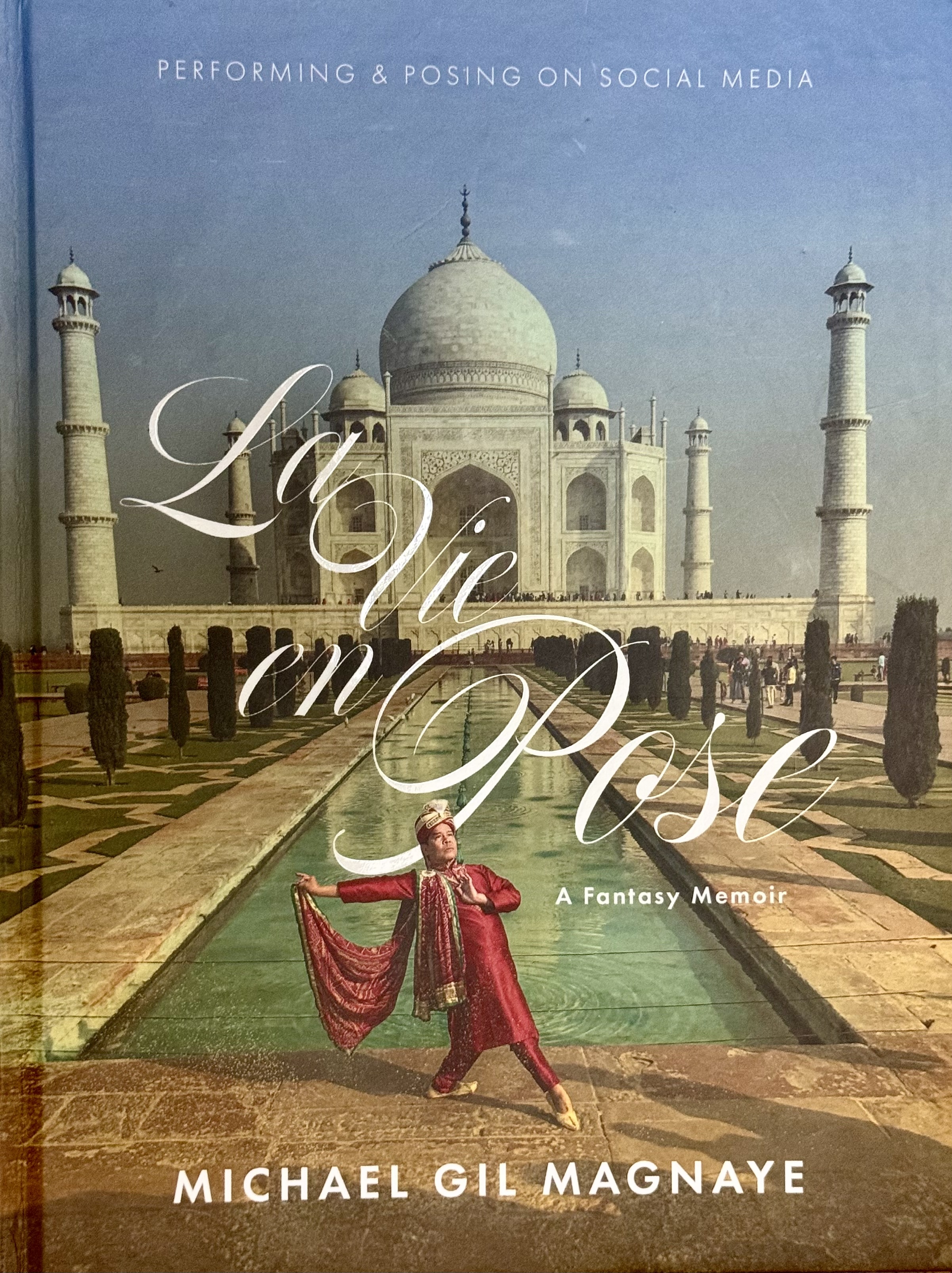
THE AUTHOR calls his book a “fantasy memoir,” and if it’s a genre you’re not familiar with, you wouldn’t be alone. Or maybe that’s just because you’re a dour and straight septuagenarian like me who doesn’t go out too much, watches true-crime shows to relax, and presses his pants and shines his shoes because, well, that’s the way it should be. I later googled the term, just to see what’s out there, and much to my surprise, it does exist—a genre defined by “imagination, escapism, and dreams,” with the stipulation that these fantasies, or products of the mind, are just as valid as memory in recreating one’s life.

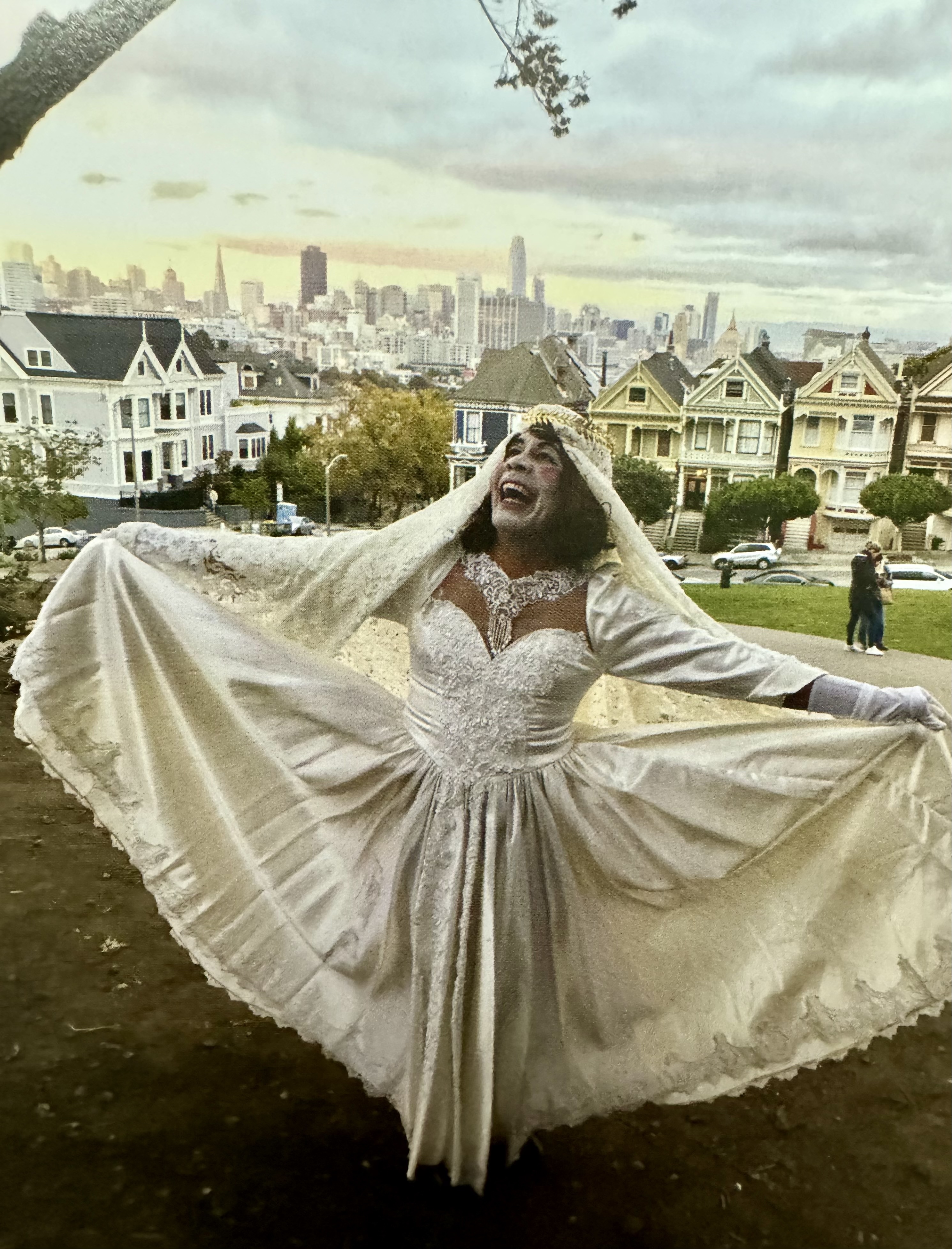
Thankfully, from the cover onward, Michael Gil Magnaye’s La Vie en Pose makes it purpose clear to the most casual and non-literary of readers: to have fun—while raising some very serious questions on the side about who and what we are (or pretend to be), what poses we ourselves assume, consciously or not, in our everyday lives, and how our identities are constructed by something so simple as what we wear.

La Vie en Pose is one of those rare books one can truly call “inspired,” resulting from the kind of half-crazy “What if?” lightbulb moment that strikes you over your tenth bottle of beer at 3 in the morning. Unlike many such flashes, this one stayed with Gil, took firmer shape, and turned into a virtual obsession—a first book to be completed by his 60th birthday, not just any book, not one of dry prose between the covers, but one certain to make a personal statement for the ages.

Magnaye, who works as an advisor to an international NGO, describes the book as “a fantasy memoir told in a hundred photographs of the author in costume, striking a pose around the world. Designed and photographed over a decade, these vignettes depict media celebrities, politicians, literary characters and wholly fictitious figures drawn from Magnaye’s fertile imagination. The collection offers satirical, often hilarious commentary on noteworthy personalities in pop culture, politics and history, from Game of Thrones to Bridgerton, from Jackie Onassis to Ruth Bader Ginsburg.”

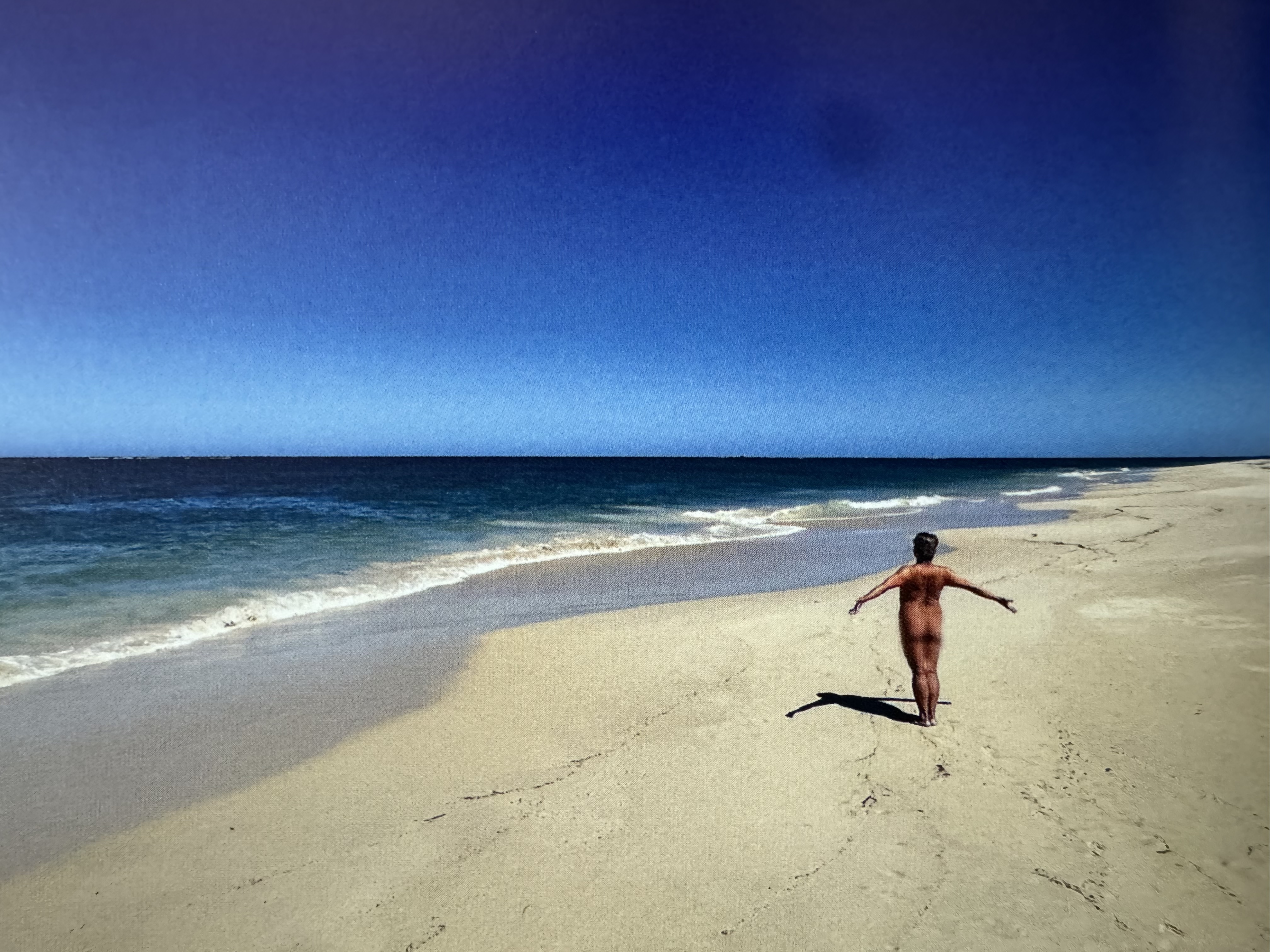
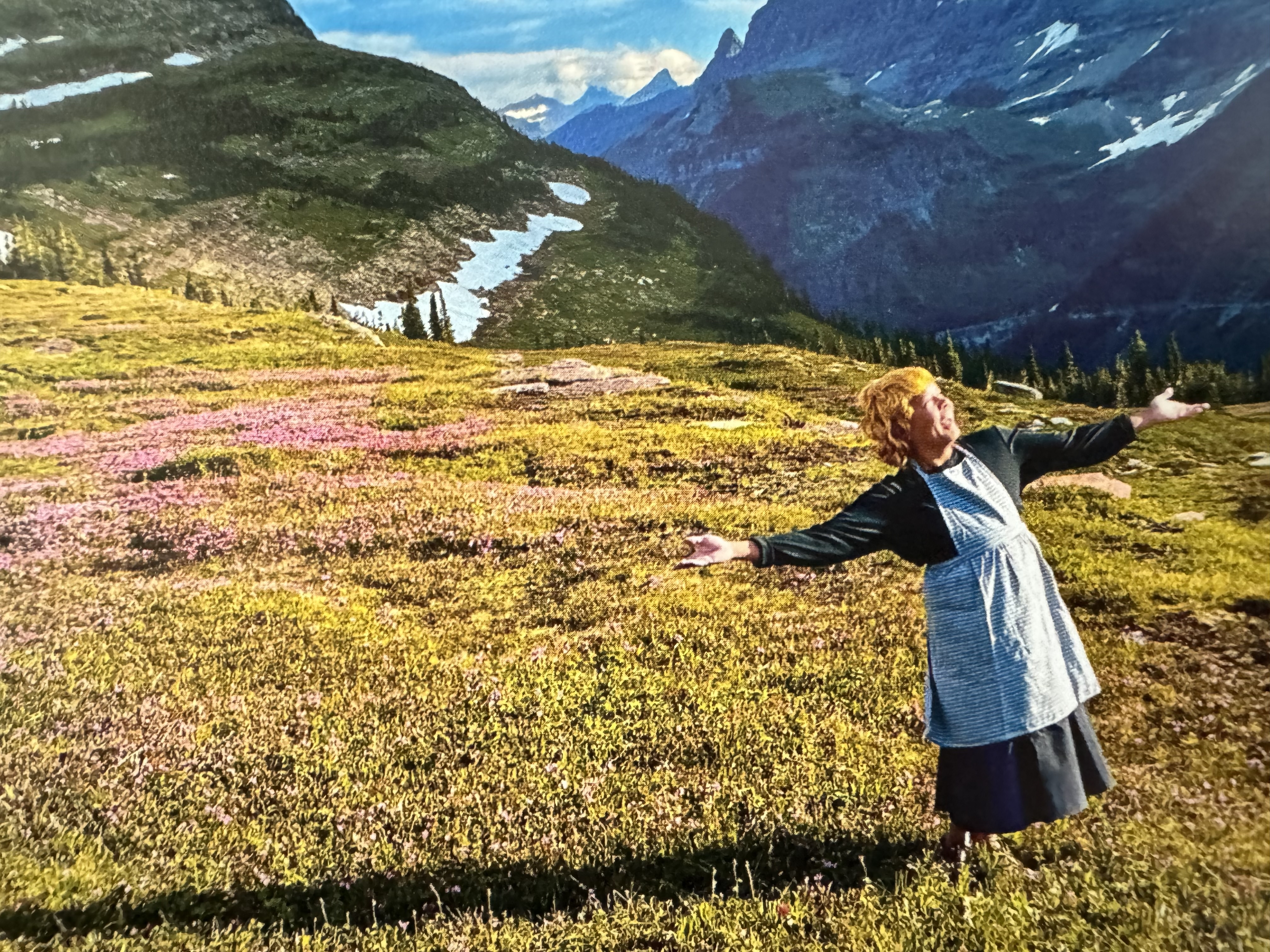
Divided into eight chapters and edited by the celebrated Fil-Am writer Marivi Soliven, the book takes Gil around the world (none of this is AI—the photography took many years and plane flights to complete), posing in various locales and contexts, often in costume, to mimic or to pay homage to familiar figures and situations. The pop-culture setups will likely elicit the most laughs and smiles—Tina Turner, Maria von Trapp, and of course Barbie all get their comeuppance—and the UP Oblation poses (thankfully just backsides) show the malayong lupain that our iskolars ng bayan have reached (Gil studied and taught Humanities in UP before going to Stanford for his master’s). The levity aside, he strikes thoughtful, almost architectural, poses against spare backdrops. He draws his husband Roy, a normally reticent software engineer, into take-offs on couples (Ari and Jackie, Ennis and Jack). The effect is both riotous and reflective, a visual essay on how pop and political culture have overwhelmed us, but also how we have appropriated and domesticated them for our own purposes, if only to say, “Hey, I can be as good that!”

The poet and queer theorist J. Neil Garcia explains it better in this note he posted online about the 30thanniversary of the landmark Ladlad anthology he co-edited with Danton Remoto: “Queer creativity is itself an integral component of the equality message, and not simply a means to an end. Since the freedom of the imagination is perhaps where all freedom begins, it is clear that giving the queer artist the power or the ability to create their own texts and art works needs to be seen as a vital objective of the equality movement, one of whose primary interests must be in securing this imaginative and/or cognitive ability above all. Hence, we need to insist on the truth that queer creativity isn’t simply a tool to promote the equality message and other activist agendas; rather, queer creativity itself is part of the agenda—is part of the equality message itself (and so, queer creativity is not just a means to an end; quite crucially, as the best evidence and enactment we have of individual and collective agency, even against the harshest of odds, it is an end, in itself).”

For Gil—whom I was friends with back when he still had a girlfriend and confronting his sexuality—the book is more than a personal celebration (he launched it in UP last June 23 to mark his 60th birthday); it’s also an assertion of his rights as a queer (the preferred term these days to “gay”) person—and by extension, of all other LGBTQ+ people as well—to express themselves creatively. In his introduction, he notes that “This book is born at a fraught moment in gender politics. Some states in the US have passed legislation that attacks transgender youth for their chosen wardrobe or preferred pronouns. A drag artist in the Philippines has been jailed for performing an irreverent dance interpretation of a Catholic hymn. Such adverse events would seem to suggest that cross-dressing is an act of subversion. I would argue that cross-dressing and mimicry are strategies that drag queens, drag kings, non-binary performers, and gender benders employ to resist, challenge, navigate, and extricate themselves from systems imposed by traditional constructs. And it’s a lot of fun.”

La Vie en Pose most surely is. Copies might still be available at the UP Center for Women’s and Gender Studies.

Penman No. 461: A Parisian Interlude

Penman for Sunday, April 7, 2024

WHY IS it that just when you think you’ve begun to figure out a foreign city’s transport system, it’s time to come home? That happened again barely two weeks ago when my wife Beng and I flew to France for some speaking engagements in Paris and Le Havre. We were there for work, not tourism, and more work waited for us as well back home, so we couldn’t stay for as long as we would have wanted to. We’d been to Paris three times before and had done the obligatory Louvre and Eiffel Tower visits, but it almost seems criminal not to linger and loiter around such a beautiful city.

We were there at the invitation of SciencesPo, France’s leading social sciences university, for a series of talks on Philippine literature and art. Along with France-based writer Criselda Yabes, I gave a reading as well at the Philippine embassy in Paris at the behest of our most gracious ambassador, Mme. Junever “Jones” Mahilum-West, an avid amateur painter and supporter of Philippine culture. Our host at SciencesPo, Dr. Pauline Couteau, also arranged some events for us at their campus in Le Havre and sponsored a special screening of Lino Brocka’s classic “Maynila sa mga Kuko ng Liwanag” at the Entrepot Theater in Paris.

It was a hectic week that left these footloose septuagenarians exhausted but exhilarated at the same time, warmed up in France’s unseasonably chilly weather (often falling below 10C) by the enthusiasm of our new friends, both French and fellow Filipinos. 

Again, however, we had a sweet problem to deal with even before we flew to Paris: with such little time left on our schedule for more casual diversions, what places or experiences would we put on top of our list for our relaxation and amusement, given Paris’ almost inexhaustible offerings of wonder and delight?

Anthony Bourdain, bless his soul, famously advised short-term visitors to Paris not to make a mad dash to try and see everything all at once, but to just relax, have coffee, imbibe the neighborhood culture, stay in bed (and for those able and inclined, make love). Beng and I recalled, with both fondness and regret, how we had first seen Paris a quarter-century earlier from the back of a bus on a 99-pound budget tour from our base then in Norwich, England. The bus went by the city’s landmarks so fast that Beng missed Rodin because she was in the on-board restroom then. Subsequent visits afforded us a bit more time to see the Mona Lisa (of course) and to go up the Eiffel Tower (of course) but our happiest memories came, as Bourdain suggested, from just walking in the city gardens and along the Seine.

This time, we decided to do just two things with our limited free time: visit one museum, and hit the flea markets. This follows a pattern that Beng and I have observed over decades of traveling together, from Amsterdam, Barcelona, and London to New York, Tokyo, and Shanghai. The museums capture and preserve the glory of the past, and if you’re lucky, rather than pay for made-in-China miniatures at the museum gift shop, you can find some genuine article from that past in the flea market. 

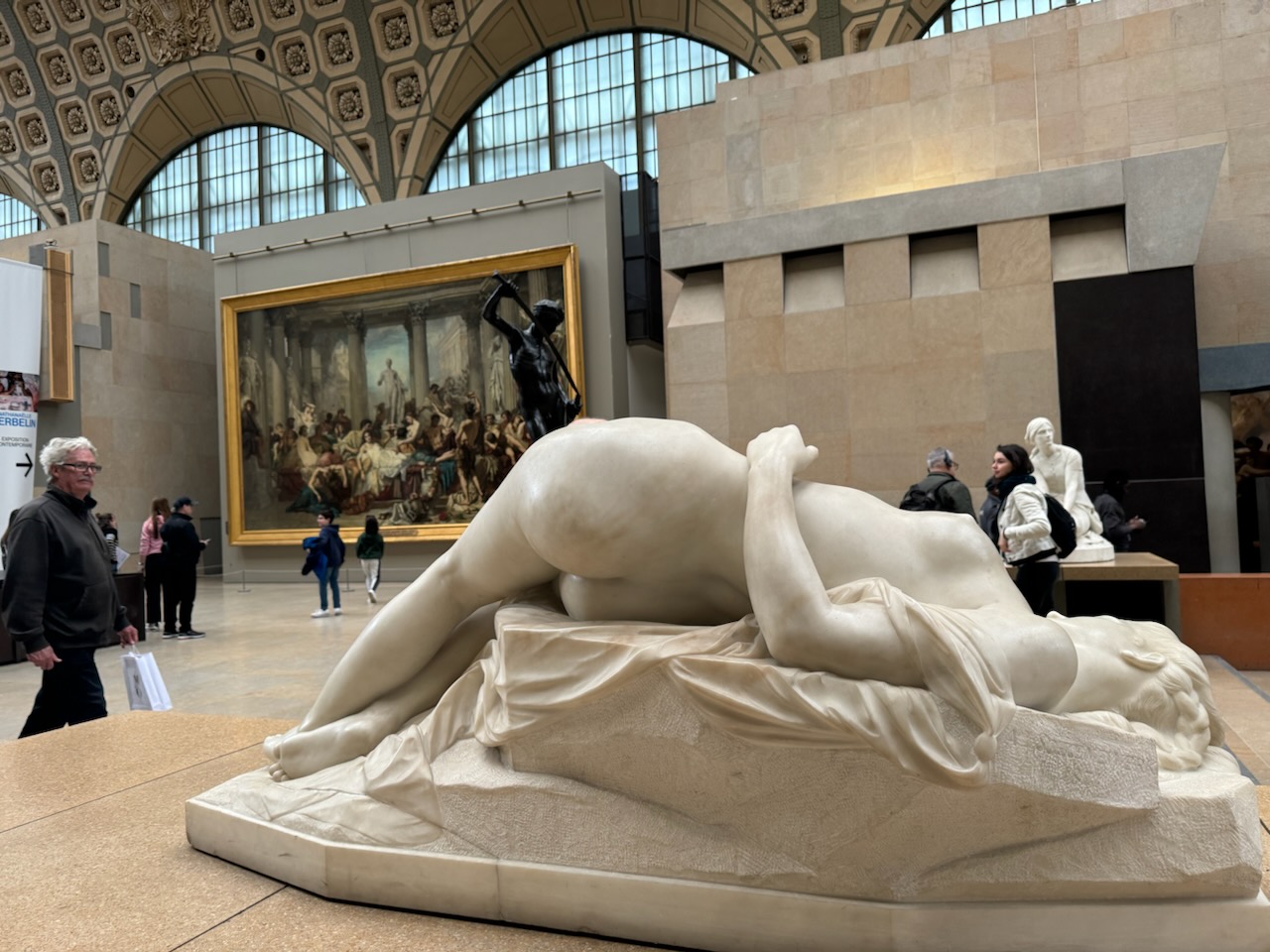
Our choice of museum was easy: Paris has dozens of fantastic museums—and you’ll never, ever finish the entire Louvre in one visit—but the great one we’d never been to was the Musée d’Orsay, the former train station that’s become France’s cathedral of Impressionism. Finally, this time, in the few hours we had just before boarding the train to Le Havre, we managed to step into the Musée d’Orsay, and what a divine experience e that was, to find room after room filled by the masterworks of Renoir, Monet, Manet, Seurat, Degas, Redon, Courbet, and so on, like walking into a book of pictures. 

Understandably, hundreds of other people had the same idea, so the best time to visit may have been after 6 pm—the museum closes at 9:45—when admission rates are also cheaper. Not a few friends have remarked that they found the Musée d’Orsay much better than the Louvre, perhaps because of its relative compactness and its delivery of proven crowd-pleasers in its collection.

Our flea-market sorties proved just as wondrous, with the additional thrill of unpredictability, as each table will be different from the one before it and you need a quick, trained eye to spot the jewel in the junkyard. As flea-market addicts from decades back when we used to scour the yard sales and antique barns of the American Midwest for things we could drag home, Beng and I have developed a routine of scan-and-scrutinize, looking for our respective grails (old fountain pens for me, old bottles and costume jewelry for her).

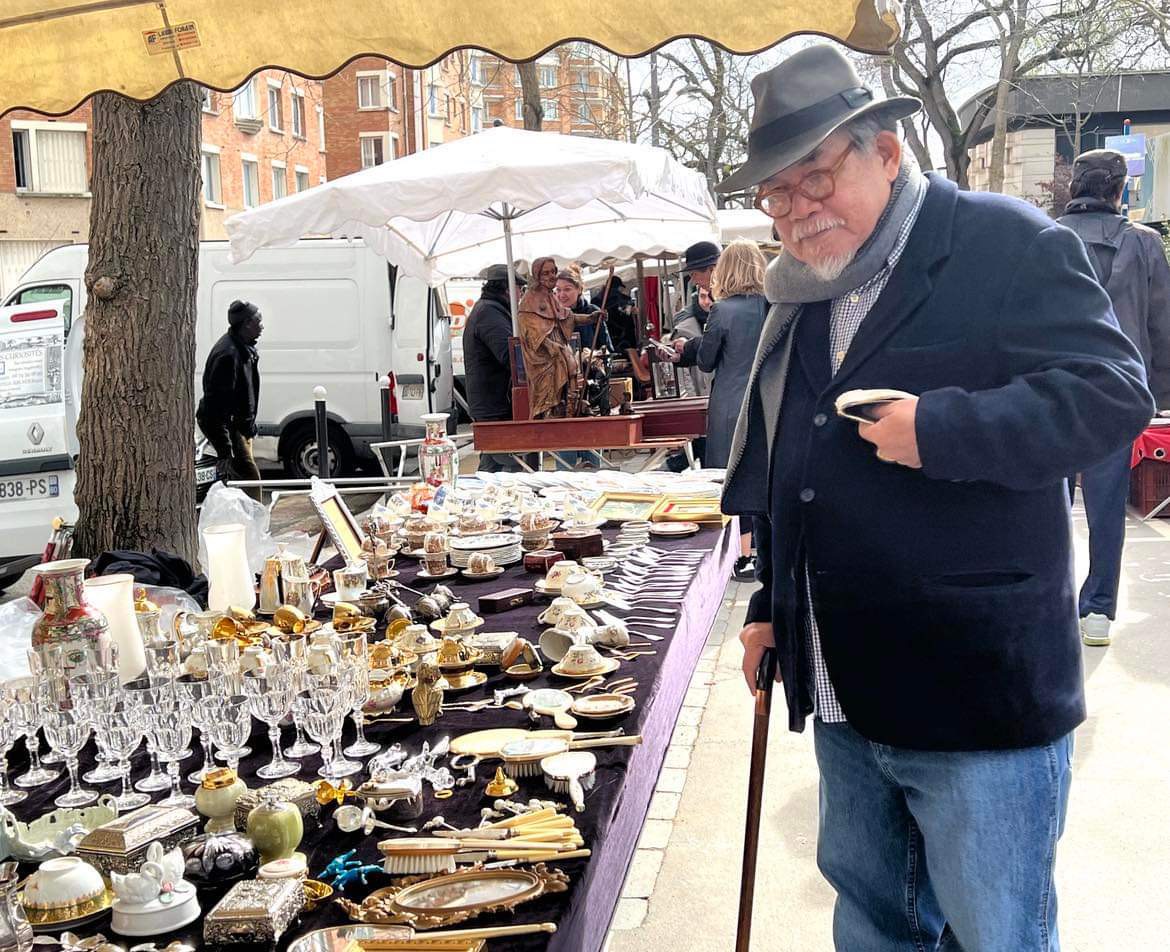
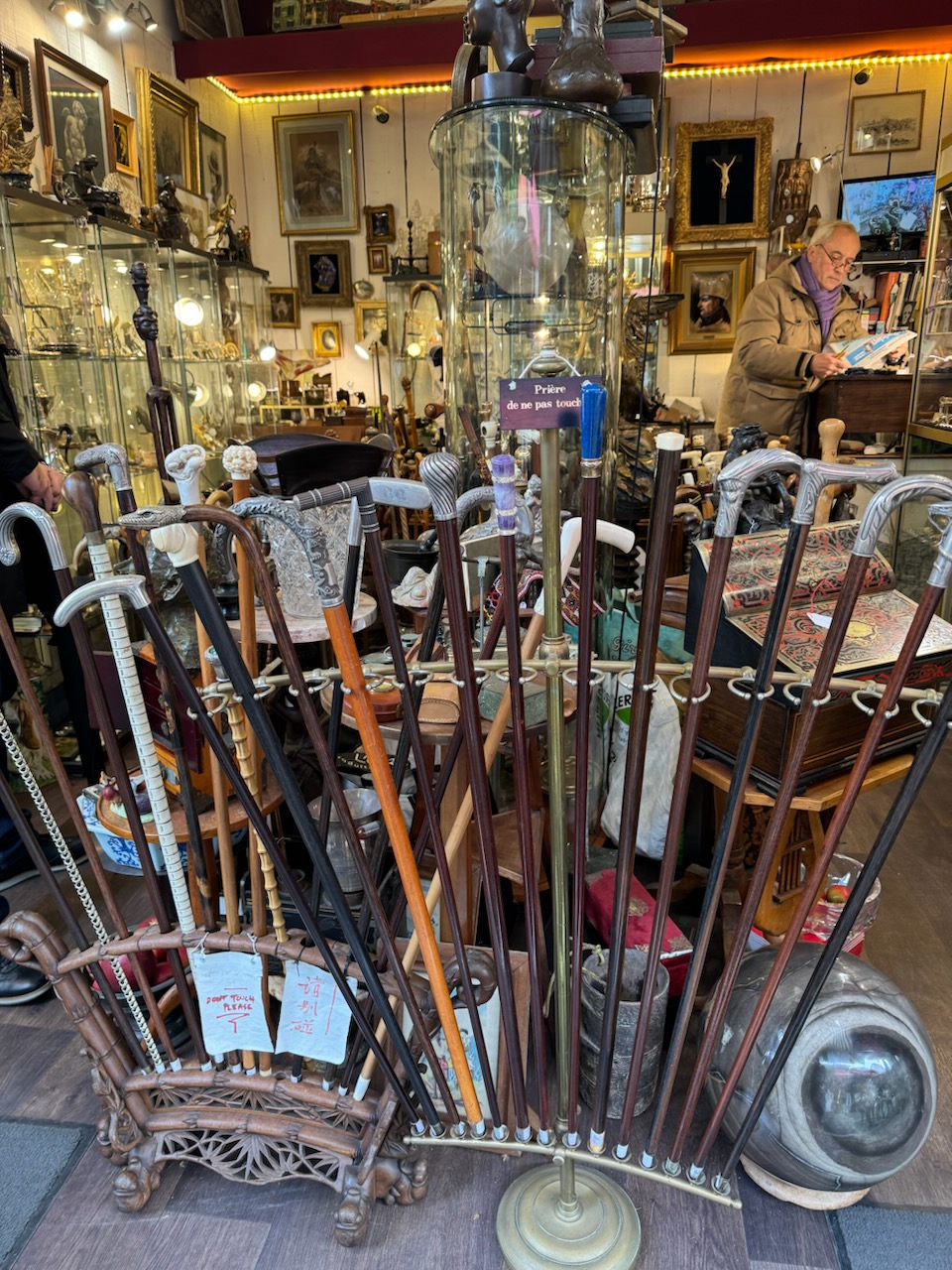
We were lucky to be billeted near our first flea market, the one at Porte de Vanves, which has about a hundred dealers strung along a large city block selling all manner of goodies from 18th-century books and Christofle silverware to walking sticks and paintings. I searched in vain for that lost Juan Luna and that stray copy of the Fili (which Rizal finished in Paris), but the flea-market gods blessed me instead with an early 1900s “safety” fountain pen sheathed in gold, perfect in every way, lying all by its lonesome on a table of bric-a-brac. “Combien, madame?” I asked in my schoolboy French, my throat dry with anticipation. “Cinquante euros,” she said; it was easily worth five times that, but I gathered up all my courage and countered, “Quarante?” “Okay,” she said, “A quick “Merci!” and 40 euros later, I was a happy boy with a new toy—what could be a better memento of this short trip than a gorgeous century-old pen with the word “Paris” on its 18-carat nib?

Of course, this luck was not to be repeated on our visit to the big flea market of St. Ouen in Clignancourt—reputedly the largest of its kind in the world—a few hours before boarding the plane back for home, but we rewarded our labors with a late lunch in a Chinese restaurant. After a week of French cuisine, immersed in the grandeur of French art and culture, huge platefuls of Cantonese fried rice sounded just about right. It was as if we were being told, “You’ve had your Parisian interlude and your souvenirs, it’s time to go home.” Au revoir!

Penman No. 459: Spartan but Splendorous

Penman for Sunday, February 11, 2024

WE OFTEN think of ecotourism in terms of swimming with whale sharks or encountering rare species of flora and fauna in some faraway forest. But not too far from Metro Manila lies a natural haven that will satisfy adventurers and conservationists alike—and the ecotourists who are both.

That haven is the Masungi Georeserve, a 3,000-hectare tract of largely reforested land marked by sharp karst or limestone shards jutting out into the sky amid bamboo groves, exotic orchids, and Benguet pine.

The unlikely remainder of an aborted housing project for DENR employees, Masungi now serves as home to hundreds of species, many of them rare and some even unique, such as the purple jade vine and the Masungi microsnail.

These sightings alone would be well worth the trip—a pleasant 30-kilometer drive from Quezon City through Masinag and Antipolo on the Marikina-Infanta or Marilaque Highway, on some of the country’s best and widest roads. (On the weekday morning we went there, it took us just a little over an hour from UP Diliman.) 

Masungi straddles the Sierra Madre boundary between Baras and Tanay, Rizal, much of which is occupied by the Upper Marikina Watershed, across the Kaliwa Watershed on the northern side. Its name comes from the Tagalog sungi, meaning sharp, a reference to the profusion of limestone outcrops looking like sharp teeth across the mountainous landscape.

The georeserve—now being managed by the Masungi Georeserve Foundation—wasn’t set up as any kind of pleasure park. Indeed “pleasure”—except the visual kind—was the last thing this septuagenarian thought of when he went up the steep trails to a vantage point that afforded a spectacular view of Laguna de Bay and the surrounding metropolis far below. Younger and fitter visitors, however, will surely find the challenge pleasurable and even exhilarating.

When the housing project with the DENR failed to materialize—the DENR couldn’t evict the squatters already there and the land, in truth, was simply too steep and inhospitable to permanent human habitation—engineer Ben Dumaliang and his Blue Star company (the housing project contractor) took it upon themselves to rehabilitate what land they could and regrow the forest that would have been lost forever. In 2015, Ben’s daughters established the Masungi Georeserve Foundation to oversee the place, and in 2017, the MGF entered into a contract with the DENR under then Sec. Gina Lopez for the georeserve’s replanting and conservation.

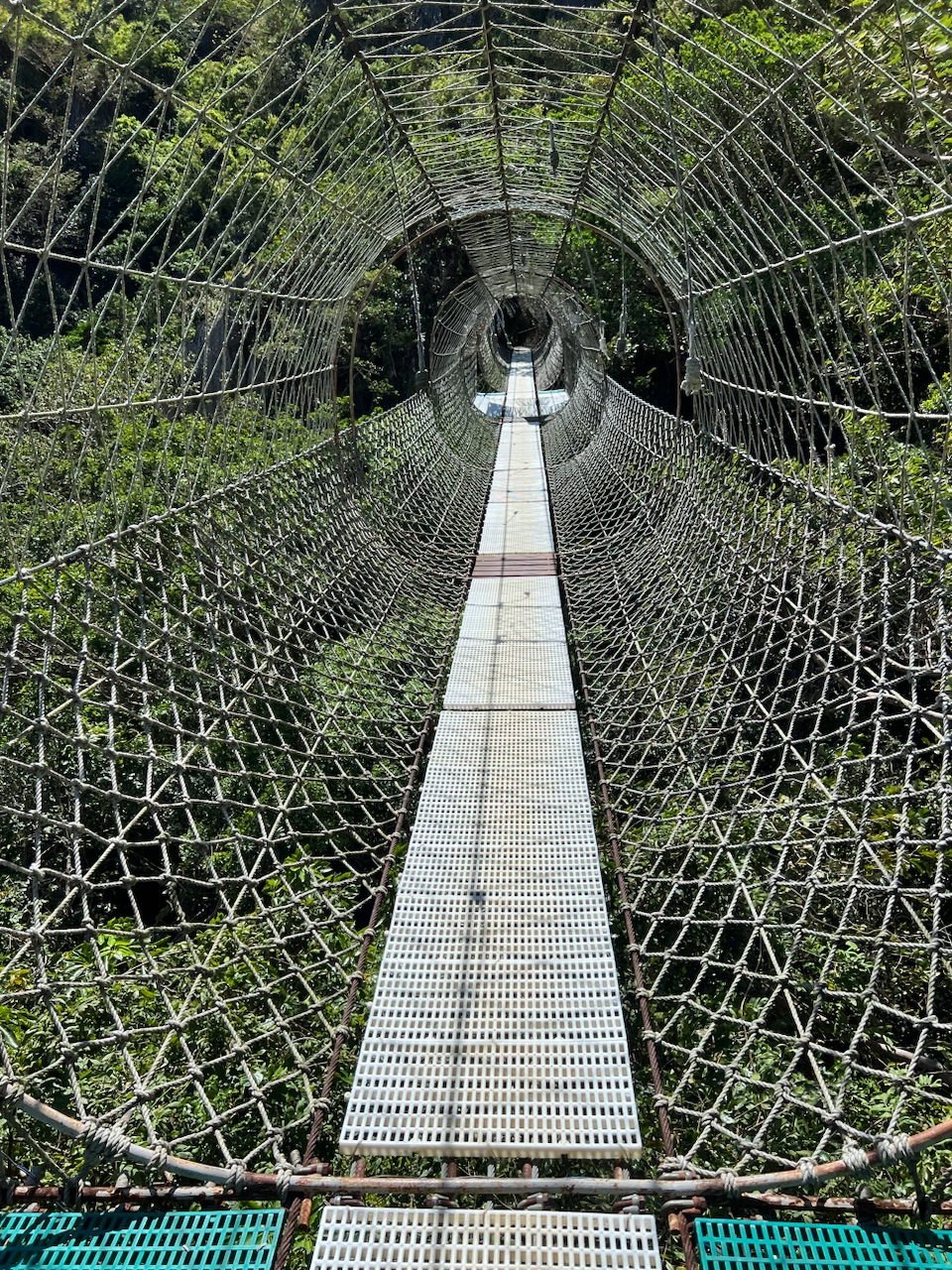
Masungi now features a Discovery Trail for hikers aged 13 and up that takes about three to four hours to complete, although it can be shortened depending on the hikers’ preference. The challenging trails feature hanging bridges, a giant spiderweb, rope walls, caves, and other points of interest (or maybe not, for acrophobes like me). Protective headgear is provided.

Typical reviews on Tripadvisor include comments like this one, from a Singaporean visitor: “Perfect day at Masungi Georeserve. The hike was well-organized and well-paced with sufficient rest stops. Our guide was knowledgeable and friendly, allowing us to take our time and helping to take our photos. You do need a certain level of fitness and daring to tackle the ropes, steps, and hanging bridges, but you will be rewarded with stunning views of the limestone karst formations. There are alternative paths to take for those who have a fear of heights but these detours may take longer. Best not to rush and go with people who won’t judge you if you feel like dropping out! Well done to the Foundation and for educating the public on biodiversity and sustainable tourism. Book ahead and pray for great weather.”

This one came from a repeat visitor, Ronald R: “Had the privilege of visiting Masungi Georeserve for the ninth time (six times on the Legacy Trail, thrice at side trails and once on the Discovery Trail) and every visit was a memorable learning and life-changing experience. All dedicated forest rangers are well versed in the changing landscape and diversity of flora and fauna. The experience differs depending on the weather. I prefer windy, cloudy weather when going up there. The Sierra Madre is more dramatic with rain clouds. Beyond the transformations, the team behind Masungi Georeserve is focused on restoring the lost and abused part of the Upper Marikina Watershed Area. Masungi Georeserve is a platform to make anyone fall in love with nature in a much deeper level. The Masungi Georeserve experience should be in every nature lover’s bucket list.”

Experienced rangers—most of them recruited from the local community, including indigenous Dumagats—serve as guides for these treks. To support the place’s upkeep—it gets no funding from the government—the georeserve charges guests P1,500 each on weekdays and P1,800 on weekends, covering the tour and simple but satisfying snacks (including a refreshingly minty tea made from the kayumanis, a native plant; a set lunch buffet is also available at the hilltop Silayan restaurant). The number of daily visitors is strictly controlled to minimize wear and tear to the area, and groups are kept manageably small. (For more helpful and detailed instructions, as well as photos of the various features along the trail, visit willflyforfood.com and look for “The Masungi Georeserve Survival Guide.”)

It’s a spartan but bracing experience, minus the spa, the massage, the gourmet menu, the uniformed attendants, and all the other amenities we associate with more genteel and patrician hideaways. This is nature in your face—but what a splendorous sight it is to behold, a painterly tableau of rock, tree, bird, and flower set against a radiant blue sky, 640 meters up and far removed from the smog and sludge of the metropolis. 

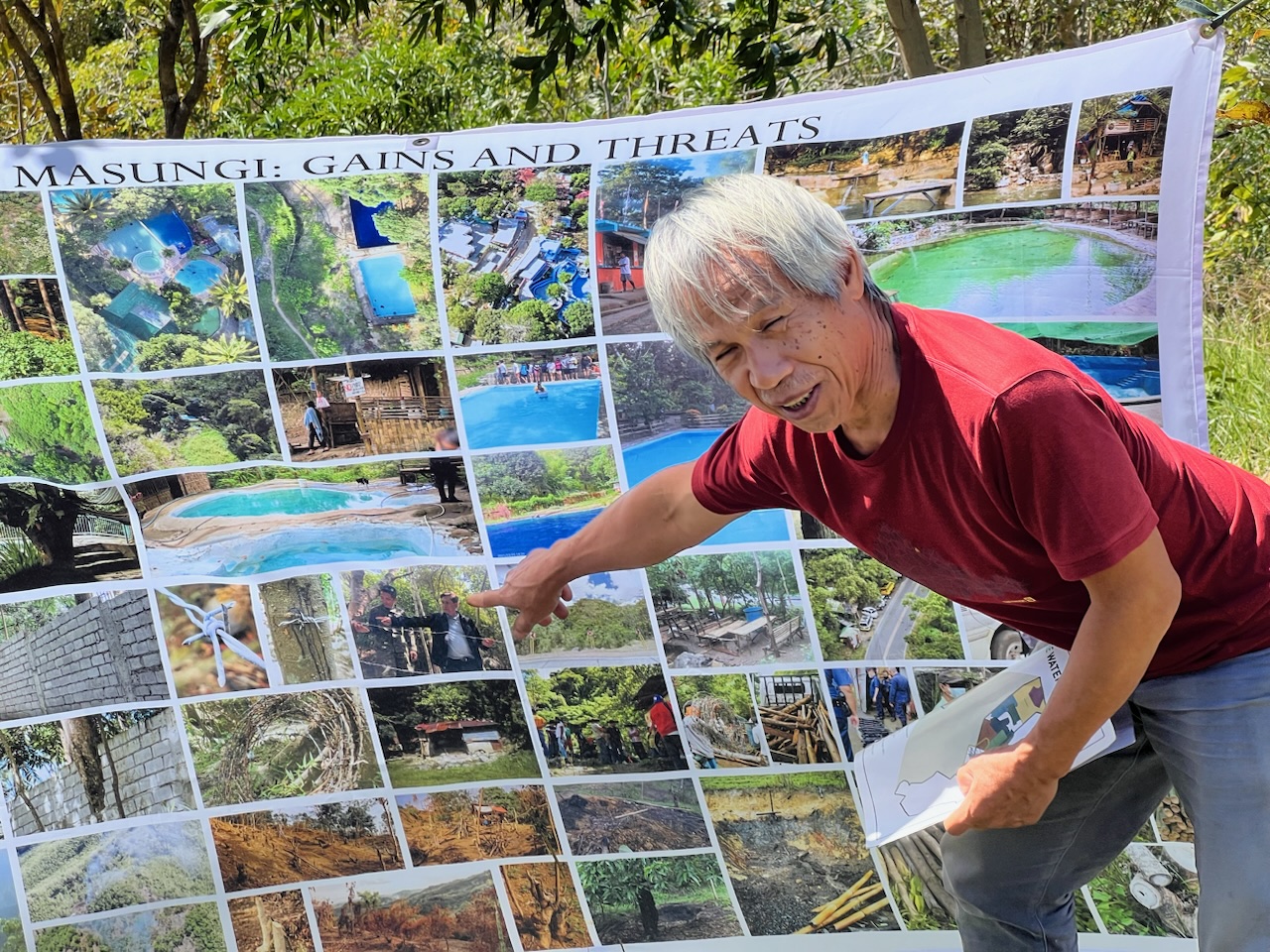
It’s sad and alarming that Masungi continues to be threatened by powerful landgrabbing syndicates as well as by the indifference if not hostility of the government people who should be supporting it, but that’s another story (check out my Qwertyman column last January 29, “Fighting Windmills at Masungi”). In the meanwhile, avail yourself of this chance to encounter nature like you never have before, and enjoy Masungi while it lasts.

Qwertyman No. 79: Hymns of Repentance

Qwertyman for Monday, February 5, 2024

A CERTAIN senator was quoted some time ago as saying that Filipinos supporting the intentions of the International Criminal Court to probe the Duterte administration’s bloody tokhang campaign should be made to sing the national anthem 1,000 times to regain their sense of patriotism. The clear message was that, if you were in favor of an international body looking into local crimes and liabilities, you were being anti-Filipino. 

It wasn’t surprising, of course, given that the good senator was among those prominently mentioned as possible defendants in the case. In jest, he said that if he were found guilty, he would miss his grandchildren if he were incarcerated in the Hague. And just to be sure, he added that not all people in jail are guilty—he certainly wasn’t.

Without commenting on the merits or demerits of a hypothetical ICC case against officials of the previous administration—something we have enough lawyers on both sides to perorate upon—I’ll just observe that the quality of justice the senator and his likely dock mates can expect from the ICC will surely be far better than that received by the victims of summary and extrajudicial executions under the regime of tokhang. In the very least, guilty or not, they will be alive and reasonably comfortable, although they might temporarily miss the company of family and friends, as those bereaved by tokhang have come to experience for all eternity.

I was intrigued by the suggestion that repeated singing of “Lupang Hinirang” would make a better Filipino out of me, or at least make me think of the ICC as some kind of fire-breathing Godzilla threatening to incinerate the Filipino race off the face of the earth.

There are far more effective songs  for instilling love of country. Yoyoy Villame’s “Philippine Geography” will teach us more about the country we say we’re dying for than our anthem, which must have been sung hundreds of times in the halls of Congress without much palpable effect on the patriotism of some occupants. At least I’m assuming it’s regularly sung there; if not, then perhaps our senator can start a little closer to home.

(As for professing one’s innocence, oldtimers will remember Diomedes Maturan’s “Huwag Kang Manalig sa Bulong-Bulungan” (remade by Victor Wood). Even Billy Joel warbled that “Although this is a fight I can lose, the accused is an innocent man!”)

On a more serious tangent, let me swipe a page from a recent talk given by UP President Angelo A. Jimenez, himself a lawyer, at a seminar of police officials on the thorny topic of national security and human rights:

“Our police officers should be commended for the seizure of a total of P6.2 billion worth of illegal drugs in the first half of 2023. The PNP’s Intensified Cleanliness Program, aligned with the Philippine Anti-Illegal Drugs Strategy, has employed a coordinated approach among government agencies to create drug-free communities. This shows that a serious and successful war on drugs can be undertaken without any needless loss of life, for as long as we observe the law, fight corruption, and remember the need for compassion in a just society. Even drug suspects have rights—indeed, even convicted prisoners—and we maintain our moral superiority by respecting those rights, even as we dispense justice. Only then and only thus can we regain our people’s trust.

“Ours is a society that operates on leadership by example. If people see their public officials and law enforcers doing the right thing, they will follow suit. If they see the law being flouted by these very same people—such as unauthorized government SUVs using the bus lanes along EDSA—they feel entitled and emboldened to do wrong themselves. Exemplary behavior at the top will create and strengthen the moral foundation for a responsible and law-abiding citizenry. We cannot demand what we ourselves cannot supply or enforce.”

Frankly, I myself doubt that a full-blown ICC investigation will prosper under the present dispensation, which reportedly promised the senator that not a hair of his (but then, where’s the hair?) would be touched by the ICC, back when the two camps were—just to use an idiomatic expression, and meaning no malice—as thick as thieves.

Now that the knives are out between the erstwhile allies, the ICC card seems to be in play again, teasing us with the possibility of justice being done, but I’m not holding my breath. It’s just too big a risk for those in power to take, too wide a door to open—like Cha-cha for ostensibly just economic provisions. Who knows what other crimes the ICC will unearth, who else they will indict, and how far back they will go? Once you give people a taste of respect for human rights, why, they’d be at it like potato chips—they’ll keep wanting more. There’d be chaos in the streets and no, sir, we can’t have any of that, just when we need law and order.

For this reason alone, I don’t think our good-humored senator has anything to worry about, neither from the Palace nor from the Hague. He can finish his term, retire to his farm in peace, shoot the breeze (or something else) with his old boss, and have his memoirs ghost-written. Unless, of course, a certain lady succeeds in clawing her way to the top, in which case the senator—still fairly young as senior politicos go—can expect a new lease on his public life and serve afresh, perhaps in the Cabinet, where men and women of action belong, rather than in the Senate, where they’re reduced to preening and tweaking their moustaches.

Someone with far greater and indisputable jurisdiction will take over this case and pronounce ultimate judgment; he will need no rapporteur, no investigating party, no authorization, no earthly prison; his verdict will be unappealable. His brand of justice will make the ICC look like talent-show judges by comparison. Those found guilty will be killing lots of time in a very warm place. Some people better start learning and singing hymns of repentance.

Qwertyman No. 77: Taylor Swift 101

Qwertyman for Monday, January 22, 2024

THERE WAS a lot of snickering around the local Internet a couple of weeks ago when the University of the Philippines announced that it was going to offer a course on the American megastar Taylor Swift. “Why???” seemed to be the most common hair-trigger response, expressing consternation over the need or rationale for such a course. “This is where your taxes go,” lamented another netizen.

The clear suggestion was that spending a semester—that’s 16 weeks—on a pop phenomenon like Taylor Swift was a grandiose and frivolous waste of teaching time and people’s money, scarce resources better allocated to studying worthier topics like, say, Gomburza, the South China Sea, endemic species, and sovereign wealth funds. (Not incidentally, all these other topics are already covered in other UP courses, so no one need worry that they’re being sacrificed for in-depth analyses of “Cruel Summer” or “You Need to Calm Down.”)

Before we go any further, I have to declare that I’m no Swiftie, as her adoring fans call themselves, and I had to look up and listen to those two titles I just mentioned. At my age, my idea of a diva I’d pay good money to listen to is Barbra Streisand, Laura Fygi, Lisa Ono, and Dionne Warwick, none of them below 60. I have to admit that the only Swift song I was aware of before she exploded into global stardom was “You Belong with Me,” which my then-teener niece Eia used to bounce her head to (an effect that, I’ve since discovered, many Swift pieces tend to induce). 

Still, my instinctive reaction to the announcement of the UP Swift course wasn’t “Why?” but what I suppose is the academic’s default of “Why not?” When I looked into how the course was going to be taught by its instructor—Cherish Aileen Brillon, a mass communications specialist who had previously published a paper on, among others, “Darna and Intellectual Property Rights”—I could see that this wasn’t going to be just party time for 15 kids listening through Taylor Swift’s ten albums (yes, I counted) over a semester, but serious study connecting material from the singer’s songs and of course from her life as a 21st century celebrity to our reception of her and whatever she represents, as Filipinos. 

The course—an elective under the BA Broadcast and Media Studies program of the Colle of Mass Communication—will focus on “the conception, construction, and the performance of Taylor Swift as a celebrity and how she can be used to explain our and, of course, media’s relationship with class, politics, gender, race, and fantasies of success and mobility…. Gender should be part of the discussion because Taylor is a woman operating in a highly patriarchal and misogynist entertainment industry,” Brillon told the STAR in an earlier interview. “Transnationality is also a large part of the discussion,” she added, defining the term as a “media-driven flow of goods, products and services from various nations” in this globalized age. “Celebrities have always been transnational anyway. The class will look into the transnationality of Taylor and how Filipinos are appropriating their relationships with celebrities.” 

If you know anything about what’s being taken up in universities worldwide today as media and cultural studies, that mouthful I quoted above is heavy-duty academic work of the kind I myself may not be too keen to undertake, but the results of which I’d be deeply interested to find out. And that because there’s nothing more pervasive and influential in our world today than the media, which includes the Internet, TV, radio, and newspapers, plus all the advertising, the tweets, the Facebook feeds, the Spotify music, and the Amazons, Lazadas, Shopees, and eBays you find in them. How the media draws our attention and often subliminally persuades us into buying certain products and ideas can’t be worthier of academic research and investigation. 

And it’s not as if this hasn’t been done before. New York University, Stanford, Arizona State University, the Berklee College of Music, Rice University, UC Berkeley, the University of Florida, the University of Delaware, and Brigham Young University are among the American universities offering Taylor Swift courses from different approaches ranging from the music itself to social psychology, marketing, and literature.

So, okay, they’re Americans—why us Filipinos? Because the singer has a huge Pinoy fan base, despite the slight that local Swifties felt when she left the Philippines out of her 2024 Southeast Asian “Eras” tour, for which well-heeled Pinoys then rushed online to book expensive ticket packages for her shows in Singapore. (She’s been here twice before, in 2011 and 2014.)

But never mind Taylor Swift. Back in 1995, scholars attending the first International Conference on Elvis Presley at the University of Mississippi’s Center for the Study of Southern Culture got academia “all shook up,” according to reports, with papers bearing titles like “A Revolutionary Sexual Personae: Elvis Presley and the Acquiescence of Black Rhythms,” which discussed sensuality and spirituality in Elvis’s acts.

And then, of course, there are all the college courses on Frank Sinatra at Suffolk University, and on the Beatles at MIT and Oxford, among many other places. At Carnegie Mellon University, flautist and Prof. Stephen Schultz alternates teaching 18th-century Baroque music with a class on the Beatles; guess which class attracts 200 students a semester.

I’m sure that, despite these precedents and rationales, there will remain many skeptics who’ll still believe that all this academic mumbo-jumbo is just an excuse for both professor and student to kill an hour and a half doing nothing but nodding their heads to pop tunes and chatting about which song’s lyrics were cooler. (Don’t be too surprised, but that’s also basically what happens when we discuss poetry and fiction, sans the rhythmic nodding.)

But then you could be talking about Taylor Swift and her songs—or you could be talking about how Adolf Hitler and his deadly message were packaged and sold to the German people, not to mention Donald Trump and other despots closer to our time and place. This is what media and cultural studies are ultimately about—the power of media and other cultural forces to shape our minds, our purchases, our votes, and therefore our history. 

Perhaps our students can even learn more from a semester of Taylor Swift, BTS, and Justin Bieber than the Shakespeare they’ll merely turn to AI to write papers on. Like I told one naysayer, “We keep studying history, religion, law, etc., and yet we seem to learn nothing—just look at how a former human rights lawyer suddenly justifies EJKs.” So there may yet be more to Taylor Swift 101 than meets the eye. As another Swift—Jonathan—put it, “Vision is the art of seeing what is invisible to others.”

(Image from Sky News)