Penman No. 445: Some Notes on Travel Writing

Penman for Sunday, December 4, 2022

I’M SURE you’ve noticed—with much envy in my case—how so many of your friends have been traipsing around the world these past few months on what’s been called “revenge travel,” that perfectly human impulse to flee the cage after years of imposed isolation. 

And whether you’re guzzling down a pint of beer in Munich, chasing pintxos in San Sebastian, or crossing a bridge in Kyoto, the chances are you’ll be happy with a raft of digital photographs to show for your adventures. Many will want to post about their tours on their blogs, while a much smaller group will—perhaps months later—sit down to reflect on their experience and write about it in an effort to make better sense of what they went through. 

That’s something I’ve done myself from time to time, and so I thought of sharing some notes for the prospective travel writer—not just of the usual travel feature we produce for commercial media, but of a more personal kind of travel essay, one focused as much on the traveler as on the place itself. Beyond reportage citing facts and figures, this is writing that implicates and engages the traveler, the writing persona, and makes him or her a character in the piece. 

At my age, I consider myself a fairly well-traveled person, but one of the first things I want to say about good travel writing is that it’s really not about where you’ve gone or how many countries you’ve been to. It’s not about quantity, but quality of experience, perspective, and insight. The challenge isn’t to go to what to most Filipinos would be an exotic place like Paris or Tahiti. It’s to go there and to find and to tell us something about it that millions of other visitors or tourists have never seen.  

And when I say “something others have never seen,” it’s not about looking for obscure places, new bars, strange customs, or unique souvenirs. They could all be part of a great story because they’re intrinsically interesting, and if all you want to do is a standard feature story for a magazine, that would be all right. You could even make a good and exciting living writing these travel features, because the industry travel constantly needs them and they sell. 

For many of us, that would be a dream job: fly off to faraway destinations and to first-class hotels with all your expenses paid, just to write about how wonderful the place and the experience was. In my two decades as a columnist for the Lifestyle Section of the Philippine Star, I was lucky to have had a taste of that kind of luxury, having been sent on special assignment to the US, Germany, Israel, and Malaysia, among many other places. When I traveled for academic or professional conferences, which was quite often, I wrote those up too as travel pieces.

But—putting on my creative writing teacher’s hat—I also want you to think of travel writing not just as a function of place, but rather a function of mind. I want you to realize that you don’t need to go to an African safari or to ride a gondola in Venice to be a good travel writer—or a good writer, period. I want you to be able to turn a place you may have been to a thousand times or even lived in—say, Cubao—into a travel destination, and to explore not just its surface but its culture and subcultures, its inhabitants, its range of markets, its daytime and nighttime versions.

There are always two tracks embedded in a good travel essay: the story of the place itself, and the story of the traveler. To put it another way, there is the external journey, and the internal journey. 

The external journey is the story of the journey itself—the purpose of the travel, the choice of destination, the mode of travel, observations along the journey, reaching the destination, first impressions, engagements with the local people, sights, food, experiences, and other vignettes until departure time. 

The internal journey is the story of the traveler’s life situation at the start of the travel—his or her expectations, anxieties, distractions—and then his or her reactions to the unfolding environment, his or her interactions with the place and people, and his or her terminal thoughts and feelings about the whole experience, whether explicitly stated or implied. Very often, the internal journey involves some kind of quest—a search for something beyond the place itself, or some object in it, but an answer to some personal question, which gives meaning to the visit and the encounter with the place. 

That question could be “Who am I?” or “Where do I belong?” or “What do I really want?” or “Is there hope?” As the travel progresses, the answers to these questions begin to be formed or revealed. Thus do the external and internal tracks run parallel or congruent until they bend and meet at a certain point. Indeed, it can be argued that the external track, the travelogue itself, is simply an excuse or a device to tell the personal story, which emerges as the true point of interest in the piece. 

The internal track could also be subtle and subdued, embedded in the main narrative, and palpable only upon closer reading. Nevertheless it will be there, the result of a place or an experience’s impact on a person. In the travel essay, therefore, it is the interaction between person and place and the insight that comes from it that is the real, unified story. 

As the great travel writer Pico Iyer put it, “We travel, initially, to lose ourselves; and we travel next to find ourselves. We travel to open our hearts and eyes and learn more about the world than our newspapers will accommodate. We travel to bring what little we can, in our ignorance and knowledge, to those parts of the globe whose riches are differently dispersed. And we travel, in essence, to become young fools again—to slow time down and get taken in, and fall in love once more.” 

So when you write your next travel story or travel essay, don’t just tell us about what you’re looking at, which many thousands of visitors before you have already seen. Try to look at it from another angle, or find an interesting detail that’s been paid little attention to, and reflect on what it says to you. Your perspective is as important as the place itself; it may not be shown or expressed too strongly, but it will be there and should be there, for the work to be truly yours, truly unique, and truly worth doing. Happy trails!

Qwertyman No. 21: AI in the House

Qwertyman for Monday, December 26, 2022

I’D BEEN wanting to write about this for a long time, since last year when my artist-friends first alerted me to the amazing new possibilities being opened by artificial intelligence (AI) in such traditional fields as painting. Before that, like many people, I’d thought of AI in terms of subjects like warfare, medicine, and gaming. It had to be only a matter of time before the technology was ported over to the arts—not just to painting, but to creative writing and music, among other pursuits.

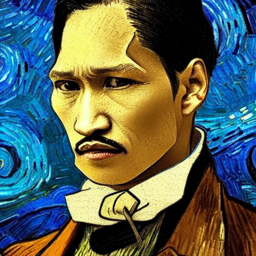
If you don’t know how AI works, just think of it this way (which is the way a lot of people, many of them not even artists, are having fun these days). You download a software program called an “AI generator” (such as starryai for painting, Rytr for creative writing, and AIVA for music), then put it to work by demanding that it produce “a portrait of Jose Rizal in the style of Van Gogh.” Minutes later (or just seconds if you pay), you’ll get what you asked for. What your computer (or in fact, many other computers working together) just did was to run a search for all the images of “Jose Rizal” it could find, then establish what “the style of Van Gogh” means in terms of brush strokes, colors, and so on, and apply one to the other. It’s all about “algorithms” or instruction sets that get sent out and executed until the desired outcome pops up.

That sounds like harmless entertainment, and much of AI is or appears to be, but it isn’t hard to see how even a touch of mischief (not to mention loads of malice) can quickly change the complexion of things. Driven by a fear of computing or what we might call Faustian science, popular culture is replete with examples of AI gone berserk, from HAL 9000 in 2001: A Space Odyssey to the master kidnapper Sark in Tron. But positive applications such as those employed in medicine, where AI helps analyze CT scans, MRIs, and X-rays with a sharper eye than a human radiologist sees with, continue to push AI research forward. IBM itself declares that “At this point, there is little doubt that AI will become a core part of the digital health systems that shape and support modern medicine.”

My own first brush with AI happened last week when I stumbled on an article in the New York Times titled “A New Chat Bot Is a ‘Code Red’ for Google’s Search Business.” Intrigued, I read on and found out about ChatGPT, one of many new programs that are threatening to replace Google’s famous search engine. We all know how Google works: you enter a search term, you get a long list of links to possible answers. Chat bots cut through that mess and give you a short, clear, grammatically correct answer (although nobody can guarantee that the answer itself is correct). That’s good if you want a quick reply to a question, but I can just imagine the epidemic of college term papers cutting and pasting unsourced chat-bot answers with gay abandon. 

All this led me to wonder how chat bots would respond to truly important questions, so I decided to download ChatGPT to my iPhone, and to ask it some test questions that would tell me about itself as much as what I was asking about. Below are my questions and the answers that artificial intelligence produced, verbatim (I purposely asked the first question to see if AI was capable of some kind of self-awareness):

1. Q. What are the dangers of artificial intelligence? A. 1. Unintended Consequences – Algorithms designed to reach specific goals could have unintended consequences that produce unforeseen results. 2. Job Loss – AI could displace workers by automating jobs, leading to severe economic disruption in the near future if nobody is trained to take over for the machines. 3. Black Box AI – AI systems are often difficult to understand, making it hard to debug the system when something goes wrong. 4. Over-Reliance on AI – Dependency on AI could lead to cognitive laziness, where humans rely too heavily on algorithms for decision-making and problem-solving. 5. AI Biases – AI systems trained on biased data and algorithms can end up replicating the same flawed assumptions and stereotypes. 6. Security Breaches – Malicious actors could exploit vulnerabilities in AI systems to commit cyber-attacks, data breaches and fraud.

2. Q. What’s wrong with the Philippines? A. The Philippines faces a wide range of problems that must be addressed in order to progress forward. These issues include corruption, overpopulation, environmental destruction, poverty, inequality, and unequal access to education. Additionally, Filipino infrastructure and public services are in dire need of improvement in order to create a more livable and equitable society. Other issues such as illegal drugs, crime, and terrorism also remain major problems facing the Philippines.

3. Q. When should a country have a sovereign wealth fund? A. A country should have a sovereign wealth fund when it has a large amount of assets (such as revenues from oil exports) that can be used for investments and for stabilizing government finances during economic downturns.

4. A. How can we reduce corruption in government? A. The best way to reduce corruption in government is to increase transparency and accountability. This could include strengthening laws and regulations to ensure that government officials are held to high standards, creating independent oversight and auditing systems, and engaging civil society and community members in governance processes. Additionally, investing in training for government officials on ethics, anti-corruption policies and procedures, and proper financial management can help to reduce corruption. Finally, engaging the public to report and discuss any allegations of corruption can help to both curb and address existing instances of corruption.

5. Q. Can volcanoes be punctured? A. No, volcanoes cannot be punctured. Volcanoes are made of molten rock, known as magma, that is too hot and too deep to be pierced with any known tool.

Now, you tell me if those answers sound any worse than the malarkey we’ve been hearing from some of our esteemed senators and congressmen, who cost billions to maintain, feel unbound by the rules of logic and grammar, and can take forever to give you a straight answer. Of course, they can well afford to buy a program like ChatGPT in aid of legislation (it’s free for three days, then P499/mo.). But then, why resort to chat bots when there’s already so much artificial intelligence going around in both august chambers?

Qwertyman No. 17: A Crying Boy

Qwertyman for Monday, November 28, 2022

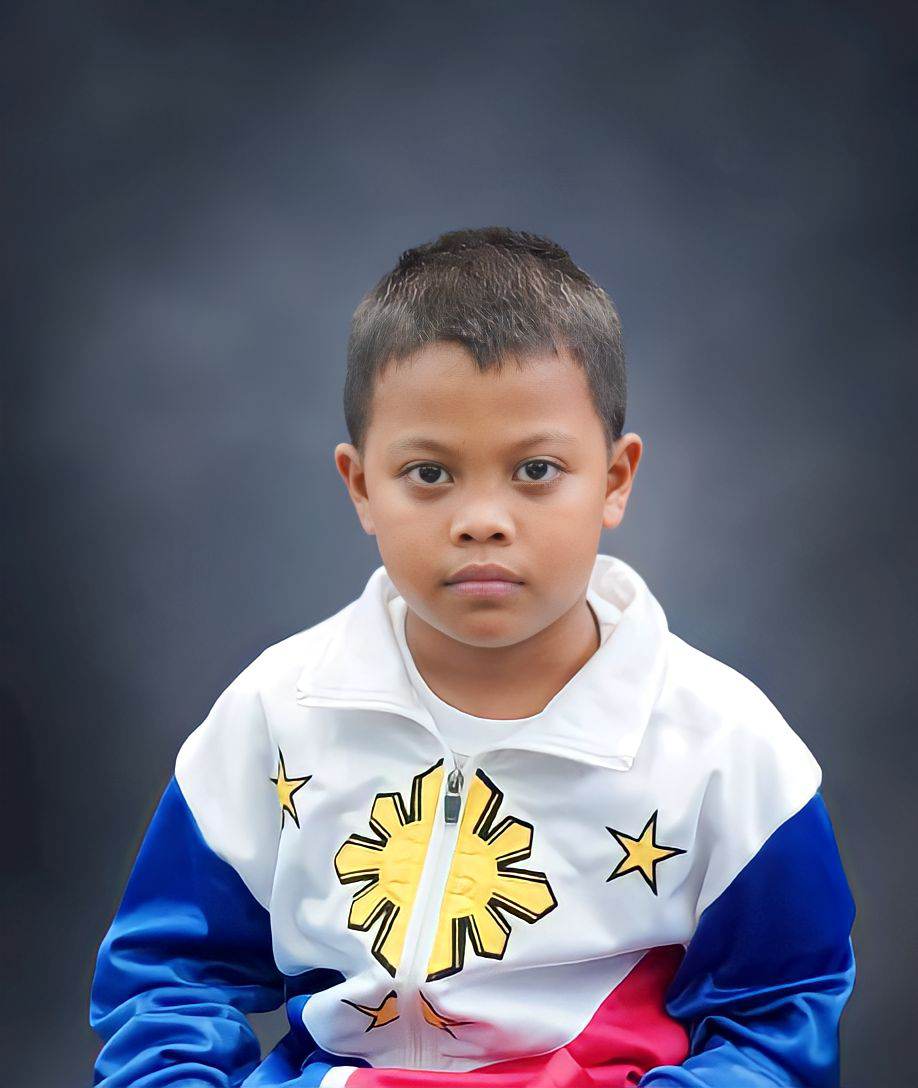
WE ALL cheered two weeks ago when nine-year-old Bince Rafael Operiano—a boy from Oas, Albay—came home with medals from the 6th Eastern Asia Youth Chess Championship in Bangkok, Thailand, where he finished on top of the Under-10 category and sixth overall. 

But then we were saddened by the news that Bince had had to struggle not just with his opponents in the early rounds, where he lost, but also with loneliness, because his father was not around, having had to wait for his plane ticket from the Philippine Sports Commission (PSC). Bince was said to have been crying. Fortunately, according to Albay Rep. Fernando Cabredo, Bince’s father caught up with Bince just in time to cheer him on to victory. 

So all’s well that ends well, right? Not according to an anonymous “Grandmaster” (possibly an alias) who posted on Viber that things were even more complicated than that. This “GM” alleged that Bince’s parents had received donations for the kid, but that the money had been spent on paying off debts and other expenses. The Operianos, he said, were “making drama” to raise even more money; Bince, he added, wasn’t even that great a player, and that other Filipinos had performed even better in the tournament, to much less publicity. 

I don’t know who “Grandmaster” is, or if he is even a real GM (we now have at least ten Filipino GMs on record, all of them male, which is why I’m defaulting to “he/him”); the post strongly suggests that he’s someone on the inside, in the know, the guy with the goods.

All right, that he may be. But even assuming that everything he says is true, my question is, so what? The journalists (and the “Mariteses”) in us might respond to the possibility that the boy and his story are being manipulated for money with dismay if not righteous outrage, and demonize the parents for their greed, or for being what we Pinoys would call “mukhang pera.”

But honestly, who isn’t “mukhang pera” in this society of ours, where profit-seeking—quite often at someone else’s expense—has become the accepted norm? Of course, when developers buy farmland on the cheap from desperate farmers, they don’t get called out for being “mukhang pera”; they might even get voted to high public office. When someone secures an apologetic write-off for billions in unpaid taxes, that’s not being “mukhang pera.” When favored government offices get billions in “intelligence funds” with nary a question, that’s just business as usual, nothing to do with “mukhang pera.”

But let’s get back to Bince and his story. Clearly the family was in dire straits, or they wouldn’t have used whatever cash they raised to pay off debts. Clearly the father wanted to accompany his son, or he wouldn’t have followed him to Bangkok, albeit too late for the opening round. Someone out there will almost surely berate them for not handling their donations “responsibly,” and they could be right, but poverty and sudden money can addle the mind and one’s priorities (so can huge wealth, for that matter).

These are matters of adult concern. I suggest that it will be better and more fair to put ourselves in young Bince’s shoes. You’re nine years old in a foreign country, probably on your first plane ride overseas. You know some people on your team and you know how to play chess, but everything else is strange and bewildering. You’re looking at your chessboard and at your opponent who’s just as old as you are—the two of you should be playing in the sun outside but you’re here to demolish him or her. The other kids have their parents watching on from the gallery, and you can see your opponent’s eyes dart now and then to his or her parent, for comfort if nothing else. After the game, they will share hugs, maybe even an ice cream, and tour a mall. 

You think of Papa, whom you left at the airport. He promised he’d follow, but there’s still no sign of him, and you panic; you feel like crying but you can’t do that while you’re playing. Your opponent can feel your distress and seems torn between pitying you, or killing you outright. He/she moves his/her rook to c4 and you know you’ve lost. You quickly shake hands like you’ve been trained to do, then you run away and go to a corner and cry. It doesn’t bother you anymore that some people can see you crying. They probably think you’re just a sore loser. You want to tell them, it’s not the game, it’s Papa, I miss Papa, and Mama, and our home in Oas. I know they told me not to think about them too much, I know I shouldn’t, but I can’t help it, I really tried. Please don’t get angry with me. I’ll do better when I see Papa, I promise.

That’s the issue, from Bince’s point of view. Whatever other people may be making of his case is beyond him, and should be. As he grows older, he’ll begin to feel and understand the real pressures he’s under—to succeed for his family’s and country’s sake, with little support; he will have to get used to being alone. 

Some will say, that’s par for the course, that’s the way champions are made; you forge them like steel in the hottest of fires. His very hardship will be the source of his power. But still I have to ask, must it always be this way for the children of the poor? As fortunate as the Operianos may be to even have the option, why must Bince see sport as a way out of poverty than just a wonderful game to play? 

But to end on a happy note, let’s report as well (with thanks to Rappler for the data) that Christian Gian Karlo Arca topped the Under-14 and gained a Master title; Lexie Grace Hernandez won the Under-18 crown and took a Woman International Master title while April Joy Claros placed second but was the top Under-16 player, winning a Woman Master title and one Woman International Master norm. Jemaicah Mendoza topped the girls’ Under-12, and won a Woman Master title. (Bince is supposed to get a Master title when he turns ten.) May the best of futures come to you all.

Qwertyman No. 14: An Oppa for Pinoy Culture

Qwertyman for Monday, November 7, 2022

THE HON. Victor M. Dooley was in a quandary once again. He had struggled with his maiden speech, but thanks to the timely assistance of his rumored girlfriend and sometime girl Friday Yvonne Macahiya, he had delivered a brilliant address on “Culture and the Environment: Shared Survival through Values Education,” which the footnotes failed to say had been Yvonne’s term paper for her Political Science 104 class at the Western Aklan Institute of Technology. 

It didn’t matter that most of his esteemed colleagues were absent or nodding off when he gave his speech with all the passion he exuded back when he was “Mr. Disaster,” the TV-radio hero of the typhoon-flooded, the earthquake-shaken, and the fire-singed. When Yvonne’s press release came out, it was just like he had spoken before the UN General Assembly, the world’s grandest stage; never mind that some audiences there weren’t too hot, either. 

“We are the world’s most disaster-prone country not because we are weak,” he said, thumping his fist on the lectern before letting his gaze travel across the gallery to turn up the drama, “but because disasters visit other countries less. The Lord Almighty has brought these disasters upon us to test our faith, to strengthen our spirits, and to breed true champions of the desperate and the dispossessed!” Again he paused for dramatic effect, but all he heard was the snorting of a venerable gentleman from a northern province, dreaming of Lamborghinis landing in his Special Economic Zone.

Still, something from his speech must have registered in someone’s mind—the word “education”?—because Sen. Dooley found himself appointed to the Committee on Basic Education, Arts, and Culture, which to him sounded like the wimpiest assignment anyone could get. He had expected to be named chair of the Committee on Environment, Natural Resources and Climate Change (that went to a real estate developer), or the one on Public Information and Mass Media (that went to a retired general), or to something that could have used his mestizo heritage, like the Committee on Foreign Relations (that went to a Chinoy movie producer). 

Basic education? Other than passing grade school, what did he know about classrooms and curricula? But then the committee also covered Arts and Culture, so, hmmm, maybe that was what they saw in him, his stellar career as a singer-dancer-TV show host, the way the ladies swooned when he winked at them at the end of his “Buchikik” song. Arts and Culture was entertainment, right? It was about keeping people happy, so they could smile through Covid, unemployment, EJKs, 60-1 peso-dollar rates, and P300/kilo pork. 

There wasn’t much he could do about those things—blame it on the pandemic, on Ukraine (he did have some important foreign-policy views: those darned Ukrainians should just have given over some potato fields to the Russians instead of endangering world peace with their silly resistance), and on troublemakers who even won Nobel prizes for having nothing good to say about hardworking despots.

But now, the Hon. Victor M. Dooley had to come up with a program that would leave his indelible mark on Philippine culture, and he convened an ad hoc committee composed of himself, his chief of staff Roy, the indispensable Yvonne, and a special guest who sashayed into the room and planted wet kisses on both of Vic’s cheeks, much to his embarrassment and to Yvonne’s utter surprise. 

“Ms. Terry! I never thought you would respond to my invitation!” 

“Why ever would I not? How long has it been, dearie? The last time  I saw you, you were still a struggling singer trying your best to hold your note—so I held it for you, hihihi.  And look at you now, an honorable Senator of the Republic!”

“And who, may I ask, might you be?” interjected Yvonne.

“Ah! Yvonne, this is Ms. Terry, who sponsored my entry into show business many years ago. I asked him—I mean her, ahaha, we better get our preferred pronouns right, especially after that gender-sensitivity workshop we all had to take—to come and help us devise a program for our country’s cultural revival.”

“Why didn’t you tell me?” said Yvonne. “I could’ve called on some of my National Artist friends—”

“What’s a National Artist?” asked Vic.

“Never mind. Welcome aboard, Ms. Terry—oh, I get it now, mystery herself! I’m Yvonne, the congressman’s Chief Political Affairs Officer. Can we offer you some coffee?”

“If you have low-acid coffee with non-dairy creamer and gluten-free scones, I’d much appreciate it. But I’ll take what you have.”

“Our Chief of Staff here makes an excellent three-in-one and I’m sure he hasn’t finished all the Sky Flakes.” Yvonne cocked an eyebrow at Roy, who slunk away muttering. “Now let’s get down to business. The senator wants a new program with strong popular appeal that will raise our people’s spirits, promote national unity, and put Philippine culture on the global map. You said you have some ideas?”

“I do! Two, in fact. One, boy bands. We should undertake a nationwide search for cute mop-haired boys from the age of six up and train them in a camp for singing and dancing. Two, a cooking competition for girls, who don’t know how to cook anymore. We’ll have regional and then national contests for the best pinakbet, sinigang, and adobo. We can even have a Fil-Am edition, but let’s do it in West Covina so I can visit my cousin there. What do you think?”

“Nice, but I have an even more inspired idea!” said the senator. “To promote our own, let’s ban all Korean shows for a year. Tama na mga K-drama, P-drama naman. Nakakainis na, e!”

Yvonne groaned. “Are you crazy? Do you want to bring the wrath of the BTS Army down on you, not to mention my mama who’s in love with Hyun Bin?” Yvonne turned to their guest. “I like your ideas, Ate! I think you and I will make a great team—between you and me, we can make Vic Dooley the oppa of Philippine culture!”

“Thanks, but what’s an oppa?” asked the senator.

Penman No. 444: A San Diego Sojourn

Penman for Sunday, November 6, 2022

A FEW weeks ago, for the first time since the pandemic, my wife Beng and I took a plane out of the country, and I can’t tell you how liberating that felt after three years of being landbound. I’d had few complaints about the long lockdowns, because I’m used to working and writing in isolation, and have become much less sociable as I age. But I did miss the travel, the foreign air, the view from the other side of the ocean. 

Just before the pandemic hit, Beng and I had spent my first year in retirement (and a good chunk of my retirement kitty) gallivanting around seven countries, against the advice of family and friends who thought that we were overdoing it; perhaps we were, but now we know that the world we saw then will never be the same again, and that we ourselves—in or approaching our seventies—will never be able to do that again. And so it was with a huge sigh of relief that we boarded our flight to San Diego, where our daughter Demi has been living with her husband Jerry for the past 15 years. We’d visited San Diego often before, but probably not with this much anticipation, having been away for years. 

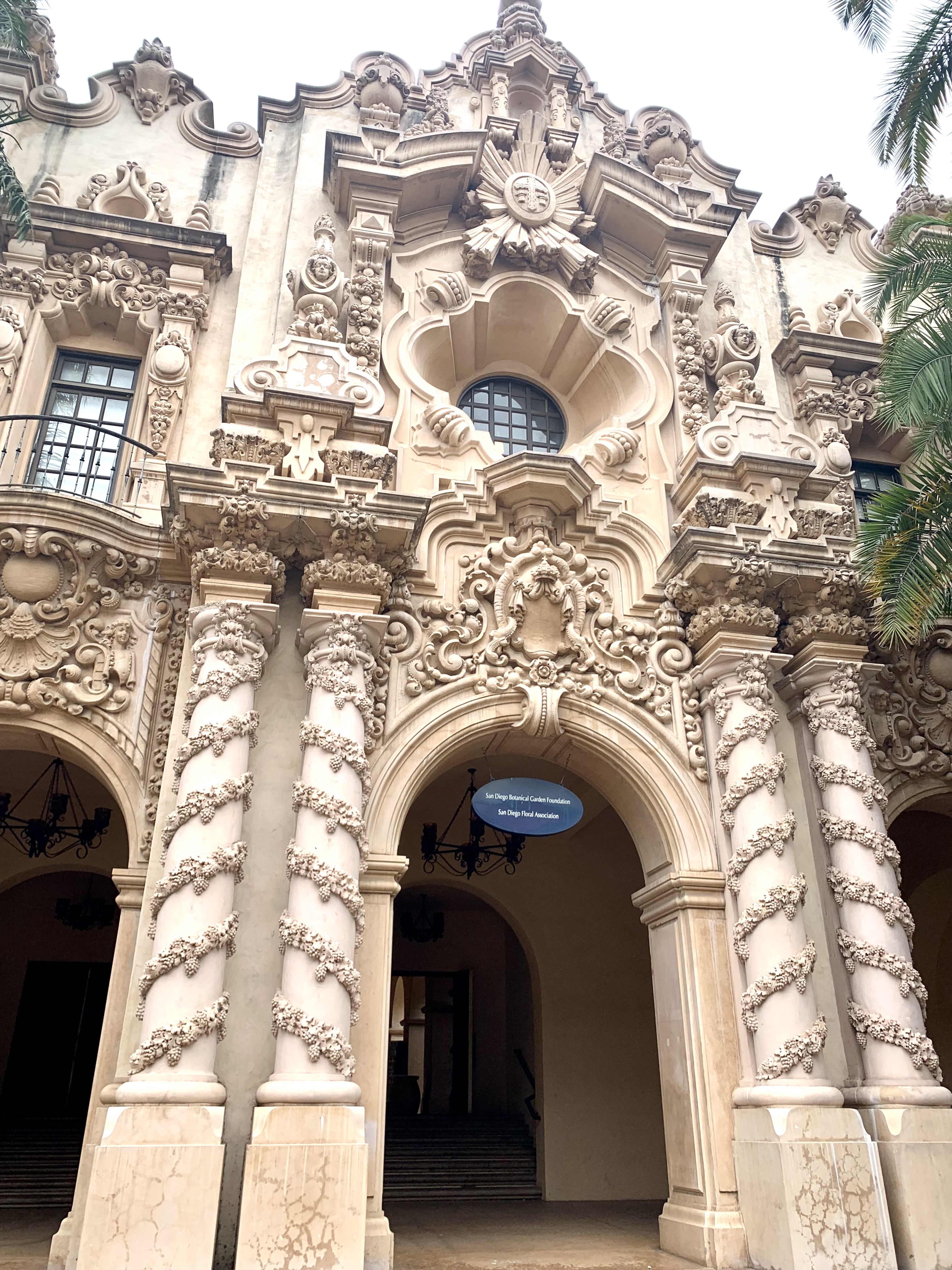
Sitting on the Mexican border, San Diego isn’t the first place most Filipinos would choose when they think of visiting America, unless, like us, they have personal reasons to go there. Los Angeles and San Francisco seem to be more exciting places, have large Fil-Am communities, and have long been the ports of entry for Pinoys landing on the West Coast. (Our Japan Airlines flight was that rare straight flight via Tokyo to San Diego.) But San Diego has its own charm and its own attractions, most notably Balboa Park, the San Diego Zoo, and Comic-Con, that annual extravaganza of pop culture that draws about 150,000 fans from around the galaxy. (Much to my young students’ chagrin, I’ve been to Comic-Con twice, happily ignorant of much of what I was looking at.) 

And whether you’ve lived there for decades or are just passing through, San Diego will always give you a taste of home, with dozens of Pinoy foods stores and restaurants, especially in National City and Chula Vista where you can shop at Seafood City for daing na bangus and Chocnut and at Goldilocks for your party cake while dropping packages off at LBC—or you can run to Mira Mesa for your Jollibee fix. (For me, an American sojourn would be incomplete without a trip to Arby’s and Red Lobster.)

Inevitably San Diego also has its own spotted history of East-West relations, in which Filipinos have figured; the better part of that history was celebrated last month as Filipino-American Heritage Month in the city. The worst part remains in the archives, in the memories of early immigrants such as Emeterio Reyes, who recalls that “I asked the driver if he could take me to a Catholic church. As soon as we got there, I told him to wait for me because I had a funny feeling I might not be welcome at this church. As I entered the door, a priest approached me and told me that the church was only for white people. That moment, I wanted to cry and die!” 

When Sebastian Vizcaino sailed into what he would name San Diego Bay on November 10, 1602, he found that he had “arrived at a port which must be the best to be found in all the South Sea, for, besides being protected on all sides and having good anchorage, it is in latitude 33½o. It has very good wood and water, many fish of all kinds, many of which we caught with seine and hooks. On the land there is much game, such as rabbits, hares, deer, very large quail, royal ducks, thrushes, and many other birds. On the 12th of the said month, which was the day of the glorious San Diego, the general, admiral, religious, captains, ensigns, and almost all the men went ashore. A hut was built and mass was said in celebration of the feast of Señor San Diego.”

As a major port facing the Pacific, San Diego has long been home to the US Navy’s Pacific Fleet, its base harboring over 50 ships. The naval presence defines much of San Diego’s character, and provides a good part of the reason why about 200,000 Filipino-Americans live there today. Since early in the American occupation, Filipinos have signed up with the US Navy as their passport to what they hoped would be a better life and to a bit of adventure. 

I just learned, for example, that the first Filipino to have joined the US Navy, back in 1903, was a seminarian in Manila named Potenciano Parel who snuck out of his vows to be a sailor, but not having the right papers, he used those of a friend and assumed his identity, Tomas Dolopo; the Dolopos continue to be San Diegans. Demi’s late father-in-law, Ric Ricario, joined in 1957; his eldest son, Ray, followed him into the Navy; Ray’s brother Jerry met and married Demi. And so we find ourselves now tied by blood to that long tradition, as did many thousands of others before us.

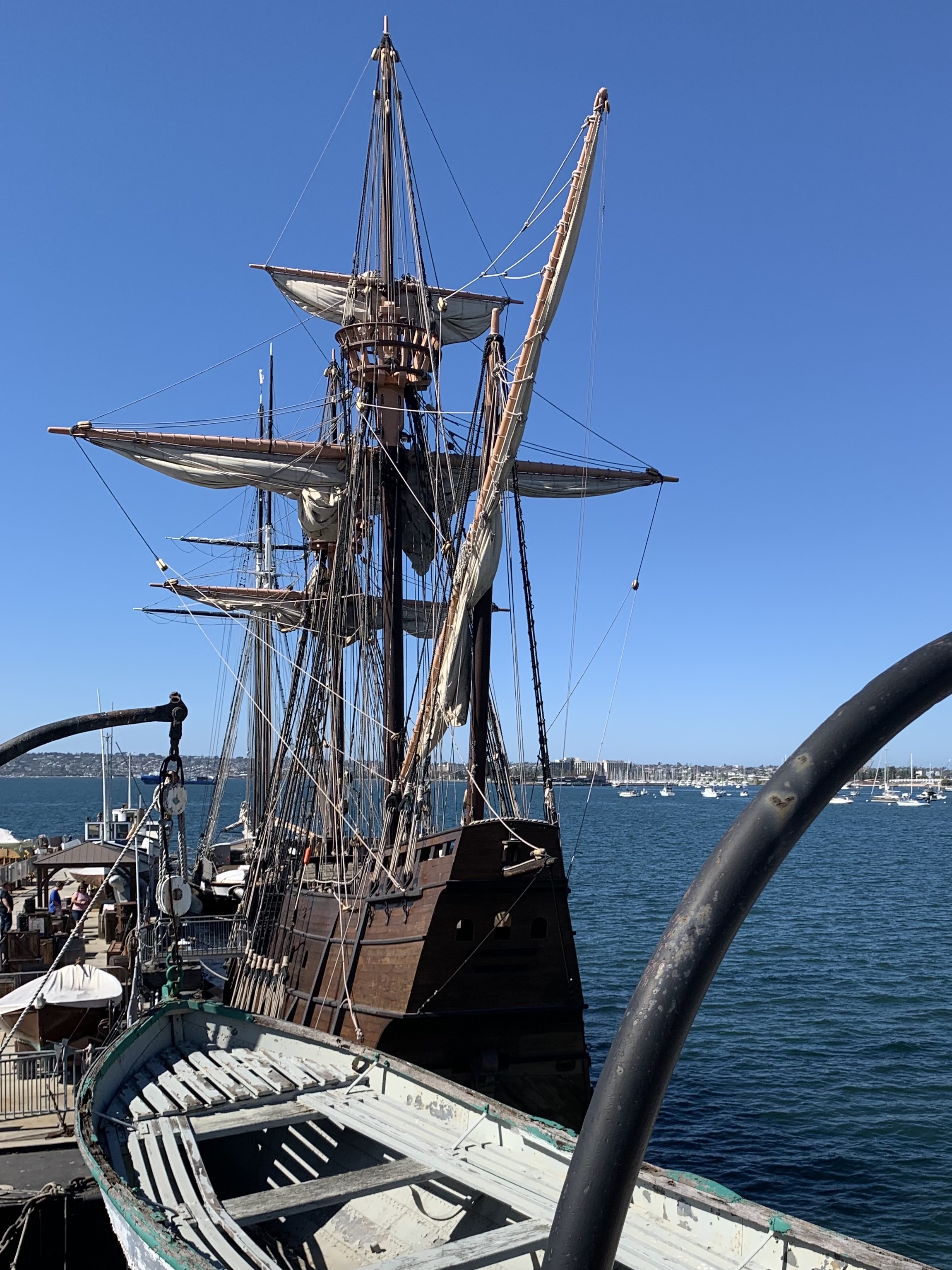
Despite having visited San Diego many times before, and having enjoyed its more popular attractions, we felt more acutely aware of history this time around. We finally stepped into the city’s Maritime Museum, a complex of many ships from various centuries that allows visitors a hands-on experience at traveling the world on water. The ships on display range from a full-size and fully functional replica of a Spanish galleon ca. 1542, the San Salvador, to the world’s oldest sailing ship, the grand, mid-1800s Star of India, to a ca. 1970s submarine that still holds the record for the deepest dive, the USS Dolphin. For just $15 for seniors and just slightly more for others, you can hop from one ship to another, and imagine what it was like to cross a tempestuous ocean with only the stars to light the way and nothing to eat but stale bread and salted pork. 

We enjoyed history of another kind by having dinner with our in-laws in a National City dive that our son-in-law Jerry chose for its unique ambience, which you can either call seedy or loaded with character. (There was a famous sailor’s bar in the area called the Trophy Lounge, Jerry told us, that used to be run by ladies from Olongapo…. But that’s another story, and San Diego has books of them, yet to be told.) La Maze is the kind of leatherbound ‘50s restaurant that the Rat Pack and other Hollywood celebrities frequented when in San Diego, and you can still order the same great steaks they had. A local band played dance music, and to the tune of “Solamente Una Vez,” I took the pretty silver-haired fox next to me to the floor and slow-dragged the night away. 

Qwertyman No. 13: Something Good

Qwertyman for October 31, 2022

MINISTER QUAQUA was having a bad day—a very bad day, probably the worst since he was appointed to his post by President Ongong after they had finished two bottles of Balvenie Portwood, with boiled peanuts and chicharon bituka on the side. Quaqua had brought the chicharon bituka to the Palace as a gift to the President, ostensibly as a sample of his company’s latest R&D. A self-professed man of science, the President was known to be interested in cutting-edge research. 

Pork was highly coveted by Kawefans, but was now considered contraband, because of a longstanding ban on pork and pork products forced by the great swine flu epidemic of 1986. Some Kawefan families, including the Quaquas, had made fortunes by creating and marketing fake pork—veggie-based substitutes for adobo, barbecue, and sisig. Pork smuggling was therefore big business, and naturally the Quaquas had a finger in that pie, too. The anti-pork law allowed for a tiny sample of real pork to be imported for research purposes, for producers of the fake stuff to run taste tests of their bogus bolognas against. The rumor was that pork was coming into Kawefo by the ton, and even more alarmingly, that the Quaquas kept a top-secret pig farm in the distant province of Suluk-sulukan under armed guard, producing Chinese ham, chicharon bituka, and tocinofor the most select clients, including the First Family. 

Quaqua had come to the Palace not just to share some pulutan with an old friend, but to advise him against yielding to the strong pro-pork lobby, which argued for the legalization of pork, so every Kawefan could enjoy his or her rightful taste of inihaw na baboy. It was a popular initiative, certain to gain the ruling party more votes in the next election. But Quaqua had a strong counter-argument: legalizing banned substances not only negated decades of established jurisprudence (he was a lawyer, after all), but would put legitimate producers of healthy substitutes out of business—and, he didn’t need to add, abolish the black market in pork altogether. 

“Just look at what those fools in Bukolandia did with drugs,” he told Ongong as he poured the Balvenie. “To take care of the drug problem, they legalized drugs, so not only is the whole country now on a high, but the economy is down because there’s no business to be made, with people planting weed and cooking up meth in their own backyards. We can’t allow that to happen—imagine, if people bred their own pigs, how common the taste of lechon and chicharon would be. Fake pork can take care of that demand without turning our country into a stinking pigsty. True pork has to remain—” and here he munched on a morsel of bituka—“a restricted commodity.”

There must have been something more than MSG in what Quaqua fed the President, because he was appointed Minister of Justice on the spot, as he had been praying novenas for. Now, he could tell the Kawefan Bureau of Investigation (KBI) to spend its time on worthier pursuits like chasing after subversive authors and professors instead of bothering with peripheral issues like pork smuggling.

But barely had he warmed his seat when his first crisis exploded. One of the President’s peskiest critics, Dr. Fofo, a radio broadcaster from way down south, had been shot dead by two men on a motorcycle. That wasn’t the problem—after all, presidential critics died all the time. They should’ve read the news and shut up if they knew what was good for them. The problem was that Dr. Fofo’s killers stupidly got caught when a piglet sprang from out of nowhere—likely an escapee from an illegal farm—and enticed the duo to chase it, until their motorcycle hit a post. In police custody, the two boasted of their connections and were threatening to out their mastermind if they weren’t released soon. Social media was on their case.

“We can’t let these idiots cause a fuss,” Quaqua told his assistant, Vice Minister for Public Affairs Zhuzhu. “They screw up, they pay the consequences. That’s justice!… Hoy, are you listening? I just said—”

“Sir, Mr. Minister, we have a bigger problem!” The assistant was on his mobile phone and looked deeply worried.

“Why? What happened?”

“Sir—your wife—Mrs. Quaqua was just arrested!”

“What? Where? Why?”

“At the airport. They booked her for—uhm—stealing the silverware in business class. They say they found several pairs of spoons and forks in her handbag.”

“Are they crazy? Does that airline want its landing rights revoked? Taking home spoons and forks from airplanes is an old Kawefan custom! Get me the airport manager—”

“Uh, it wasn’t in our airport, sir,” said Zhuzhu. “Your wife just landed in Paris, to attend Fashion Week—”

Oooh, that’s right, said Quaqua to himself—they’d had a spat over his latest mistress Gigi, and he’d given her the usual blank check to placate her. Still, it was embarrassing.

“Then get me the French ambassador! Let’s see if they’ll risk diplomatic relations on account of some—some stupid cutlery!”

“Uhm, the spoons and forks are innocent, sir—they’re not sentient beings,” said Zhuzhu, his eyes downcast. “I learned that in our Employee Development Seminar on Eastern Philosophy, sir.”

“Tell them to have seminars on gun cleaning and pest control!” Quaqua made a note to himself: “I swear, Zhuzhu, as soon as this blows over, I’m going to get me a retired general to take your place.”

Zhuzhu held up his phone to show his boss a news clip from CNN. “It’s on CNN now, sir. They’ve even posted a mug shot of Mrs. Quaqua holding up the forks and spoons.”

“What?!” The justice minister fell back into his chair and looked out the window. “They didn’t even blur her face? The inhumanity, the incivility…. What has mankind come to? Where’s understanding and tolerance when you need them? Whatever did my dear wife do to deserve this?”

“According to the great masters, sir, we sow what we reap, our past actions affect our present ones, so Mrs. Quaqua did something, like for example, she married you—”

Just then Zhuzhu’s phone rang again and Quaqua couldn’t wait to hear the news. “Did they release her? Did they come to their senses? What’s up?”

Zhuzhu looked sad. “I’m afraid it’s about something else, sir. About those two suspects in the murder of Dr. Fofo? I’ve just been told that they’re both dead. They had an argument and—well, they strangled each other to death in their cell.”

Quaqua’s eyes lit up. There was a God. “Then I must have done something good in my past life, Zhuzhu!”

“What about the madame, sir?”

“Alas, it’s beyond our jurisdiction,” Quaqua sighed, thinking of Gigi’s perfume. “Let French justice take its course.”

(Image from eatlikepinoy.com)

Penman No. 443: A Hairy Experiment

Penman for Sunday, October 2, 2022

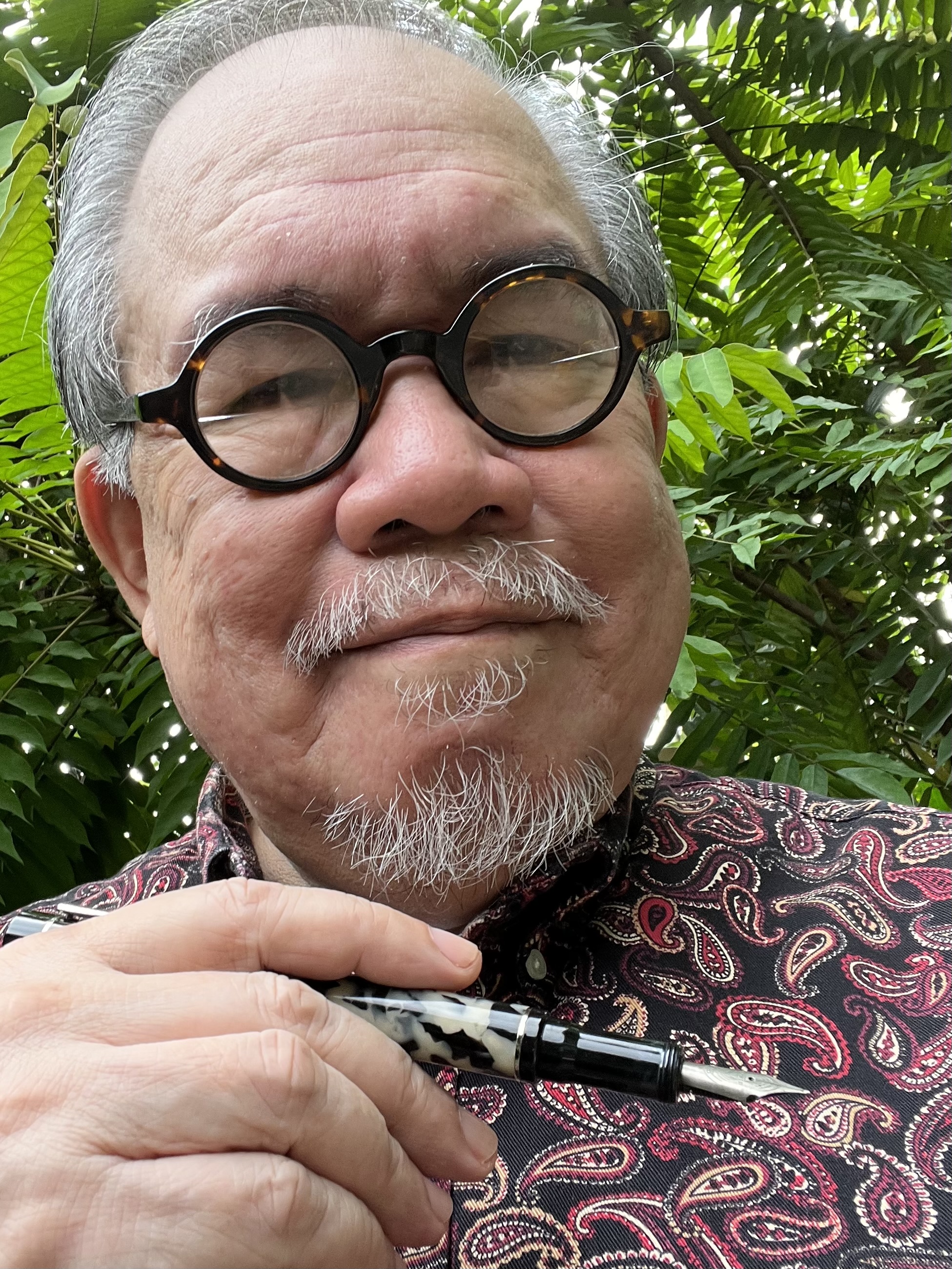
FOR THE first time in my 68 years, I tried something new these past two months: grow a mustache and a beard. It began when Beng caught Covid—thankfully the rather benign Omicron variety—and I followed suit, which required us to self-isolate for at least a week. Either out of laziness or perhaps to give some purpose to my enforced enclosure, I didn’t shave until I woke up one morning to find some whiskers germinating on my upper lip and chin, and decided to wait some more. 

No one in my family has ever sported facial hair, for good reason—our forefathers must have been chasing wild goats in the forest when they handed out genes for abundant hair. They got home just in time to catch some scraps, which was why my two brothers and I enjoyed luxuriant mops on our tops in our younger days, only to lose much of it to male-pattern baldness in our senior years. We grow hairy chests and bristly forearms only in our deepest sleep—in other words, we morph into Tom Selleck (or maybe Chewbacca)—and wake up to the pathetic reality of a pimple forming right where a respectable thicket’s supposed to be.

Much to my surprise, a perceptible fuzz did grow around my mouth, and for a minute back there I entertained the possibility of doing a Hemingway (for which I already have the girth), until I had to accept the fact that the Lord was already being exceedingly generous in making me feel like Johnny Depp for a day (hey, we even have the same initials). 

It was nothing to crow about (a Facebook friend admitted to shaving off his incipient mustache when someone remarked that “I have more hair around my anus”), but I was happy. I looked different, and—okay—I felt just a bit different, maybe a tad more writerly, as if anything coming out of my mouth was going to sound like godly wisdom. It was comforting to know that while I’m never going to grow a mohawk on top, I can still go bald and whiskered, Yoda-like. Additionally, I thought that Beng would be tickled and thrilled to be kissed by a new man in her life (tickled, yes, thrilled, no).

All this has led me to explore the history of the mustache (“moustache” is its British version). The BBC’s “The Moustache: A Hairy History” gives a fascinating account of the ups and downs of facial hair (and even a new word: “pogonotrophy,” the art of its cultivation). The highlights include Peter the Great’s “beard tax,” which led to shaved chins and flowery mustaches; Lord Byron’s preference for the pencil-thin trim; the association of bushy beards with bacteria, and the subsequent falling out of fashion of the hirsute look (also, World War I gas masks didn’t work with grizzly faces); the resurgence of the handlebar mustache (strictly no beards) postwar; and the now-popular “Movember” charity event in November, for which men grow mustaches to raise awareness of men’s health issues (a most noble excuse, to my mind).

Since Samson established the link between hair and testosterone, mustaches and beards have also implied more masculinity, about which The Gentleman’s Journal has an interesting story. When the British colonized India, the native men—who brandished their mustaches like scimitars—looked down on their clean-shaven sahibs as wimps, forcing the white masters to grow their own, and bringing the fashion back to England with them. (The e-zine also offered up this etymology: “‘Mastax’, a Greek word, was stolen by the Scottish and turned into ‘Mystax’, with both meaning ‘jaws, mouth or lips’. The Medieval Greeks took the word back, and that ‘Moustakion’ grew out into the Italian ‘Mostaccio’ — before the French combed it into submission, giving us ‘Moustache’ around 1580, with a final definition of: ‘The hair that grows on the upper lip of men’.”)

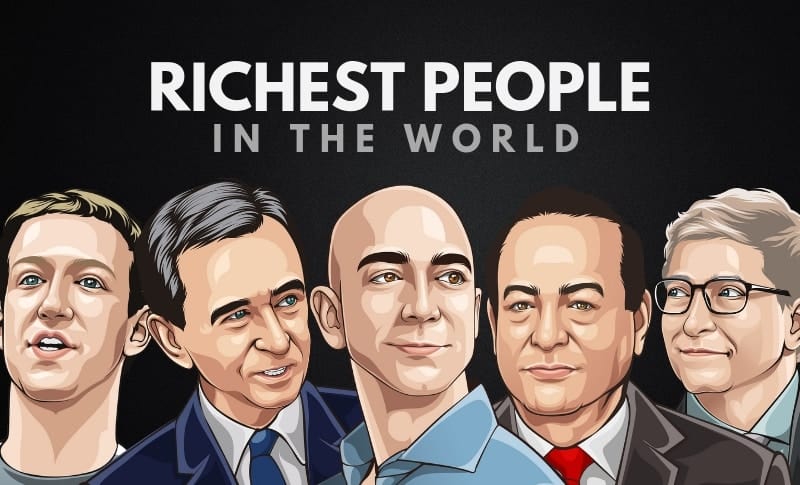
The history of beards seems just as complicated; at one point, says Beardpilot, you could pay off a debt with your beard. Ancient societies punished erring men by cutting off their beards. In the Middle Ages, touching someone else’s beard could be cause for a duel. Before Peter the Great, Henry VIII and Elizabeth I also taxed beards. Of course, wherever you went, hair on your face meant virility and wisdom. What it did not guarantee was money, if one recent survey is to be believed, claiming that “Ninety-eight percent of the men on the Forbes 100 list of the world’s richest individuals are clean-shaven.”

Me, I’d rather be wise than virile at 68 (and should I say wealthy rather than wise?), but I’m just trying to get used to feeling something furry and sometimes wet beneath my nose, especially when I’m slurping soup or sneezing. I’ve learned to trim what passes for a mustache where I can touch it with my tongue, and to snip off vagabond whiskers from my scraggly beard. Beng seems indifferent to my experiment, in fair exchange for me not saying anything untoward about her pixie cut (I miss her bangs). I told our apu-apuhan Buboy that his Tatay Butch was going to be a pirate, but he appears unimpressed; I’m not menacing enough, needing to put more growl into my act. I hope Demi agrees that the bearded-guru effect makes her dad look smarter than he is.

One of these days I’m sure I’ll say that I’ve had enough, and reach for a razor—but not just yet. I’m just getting the hang of pogonotrophy, and while I guess I’m never going to be as shaggy as a Wookiee, I’d like to have fun playing Johnny Depp just a little bit longer, before the dementia gets real.

Qwertyman No. 10: Monkey Poo

(Image from deviant art.com)

Qwertyman for Monday, October 10, 2022

THE WATER was still dripping from a leak in the ceiling of the office, caught in a pink plastic pail behind his swivel chair, when Gov. Tingting got the call from the Office of the President on the satellite phone. It was only a secretary on the line, but Tingting stood at attention as if he were speaking to the man himself, mumbling “Yessir, yessir” although it was a “ma’am” giving him instructions. 

He felt immensely relieved to have taken, at his aide Atty. Noknok’s pleading, the call which he had first presumed to be a prank, because he couldn’t imagine why President Ongong would be interested in him or his humble dominion. Well, of course there was that supertyphoon Digoy, which ravaged Suluk-sulukan among other provinces in Kawefo’s benighted southeast, but hundreds routinely died in Suluk-sulukan’s annual floods without getting more than a passing mention from the capital media, much less a call from the Palace.

Suluk-sulukan was a province best known for not being known. It occupied an island of the same name, and was reachable by a two-hour flight from Metro Kabugaw to the adjacent province of Lagunsoy, followed by a three-hour ride by pumpboat, and then another hour by bumpy tricycle from the pier to the capital town of Maunggoy. Its chief industry should have been tourism, given the abundance of its forests, nature trails, and beaches, but it came with one huge disincentive: the mountains of monkey poo that lined the roads and clogged the waterways, raising an infernal, ammoniac stink that the locals had gotten used to and barely noticed but which repelled tourists, invaders, and potential investors alike. The floods drained some of it out into the ocean but it was back as soon as the sun shone. 

Even the free face masks given out at the pier, imprinted with Gov. Tingting’s smiling face and the slogan “Beauty right under your nose” did little to encourage the intrepid to stay. Political dynasties had risen and fallen on the monkey-poo crisis, and Tingting—who had won on a promise to exterminate the monkeys—was surviving only because the bales of face masks they had airdropped on the island in the midst of the pandemic offered a temporary reprieve.

“So what did the President say, Gov?” Atty. Noknok asked, eager to absorb every snippet of political gossip, to affirm his status as “the little gov.”

“He asked me to come to the capital!” said Tingting, his eyes still glazed over with disbelief.

“Really? Will he hand you a check for disaster relief? I can take the picture, Gov! I’ll make sure it comes out in the papers.” Suluk-sulukan had exactly one paper, The Maunggoy Times, published by Tingting’s sister Mingming; there had been two, until the other paper’s editor was shot by a pair of motorcycle-riding gunmen whom witnesses could not identify because they looked too much like the governor’s bodyguards.

“What disaster relief are you talking about?” said the governor. “This is something much bigger! He’s inviting me to watch the Presidential Cup race with him, in the presidential box, at the Santa Mama racetrack! It’s the biggest race and social event of the year—remind me to get the missus one of those big, floppy, feathery hats. Imagine me, the governor of an obscure and godforsaken province, sitting beside the President!”

“What does he want—aside from, uh, the pleasure of your company?” Atty. Noknok didn’t get to where he was by being stupid. He was astute enough to know that every conversation in politics was a transaction. The President already had Suluk-sulukan’s 150,000 votes—there were more monkeys in the place than registered voters, and there was no shortage of simians willing to vote—so that wasn’t the issue. 

And then Noknok remembered: a delegation of businessmen and engineers from the great country of Wannamia had come to visit the President to talk about Suluk-sulukan’s deposits of mahalikite, reputedly the next big thing in semiconductors. Mahalikite was found in impacted monkey poo and was still a very rare mineral, but the Wannamese implied that they had found the technology to extract it from the raw stuff. Noknok had brought it up with his boss at one meeting, but Tingting was an old-school warlord whose interest in technology didn’t go far beyond guns and calibers, and so he dismissed the report as just so much chatter. 

“Nothing,” said the Gov. “He says he just wants me to have some fun, knowing how difficult it’s been for me and my family. We lost two houses and three SUVs to Digoy! Oh my God, I still shiver when I think about it. The pain of watching that Cayenne go under the bridge….”

“So you’re bringing your family?”

“Of course. I think it’s about time my boys inhaled the fine, industrial air of Metro Kabugaw, to prepare them for the challenges of urbanization.”

“Uhm, Gov—I hate to bring this up, but—won’t it look bad for you to be out there in the capital, betting on the horses, while thousands of Suluk-sukeños still don’t have enough food and are living in makeshift tents?”

“Are you my adviser or my enemy’s? That’s why I’m also taking you along—to provide PR cover and to find something good to say about my trip.”

“You are? Well—why didn’t you say so, haha, thanks! Of course, Gov, that’s elementary. We can always say that the real business in Kawefo takes place in the presidential box of the President’s Cup, and obviously, President Ongong has serious matters to discuss with you.”

“He does?” The gov sounded rather disappointed.

“Sure! I wouldn’t be surprised if he also invited the Wannamese to talk to us about large-scale exports of monkey poo for mahalikite extraction. I talked to you last month about it, but—you were too busy—”

“Of course I was! I’m always busy looking after the welfare of every Suluk-sukeño. So what were you telling me?”

“Well—we bring in the Wannamese, they take out our monkey poo, and for every metric ton, we impose a small tax, part of which will go to your, uhm, intelligence fund, which I’ll administer. It’s a win-win deal for all.”

“I like that—for the first time in our history, we can breathe poo-free air! They’ll build statues of me as the Great Liberator! What about the President? What’s in it for him?”

“He gets the bigger chunk, of course, for his intelligence fund. No worries—there’s a lot of poo to go around.”

A drop of rainwater fell on the gov’s brow, which he took to be a sign. “Forget extermination. I want you to think of a monkey-feeding program!”

Penman No. 442: Yes, You Cane!

Penman for Sunday, September 4, 2022

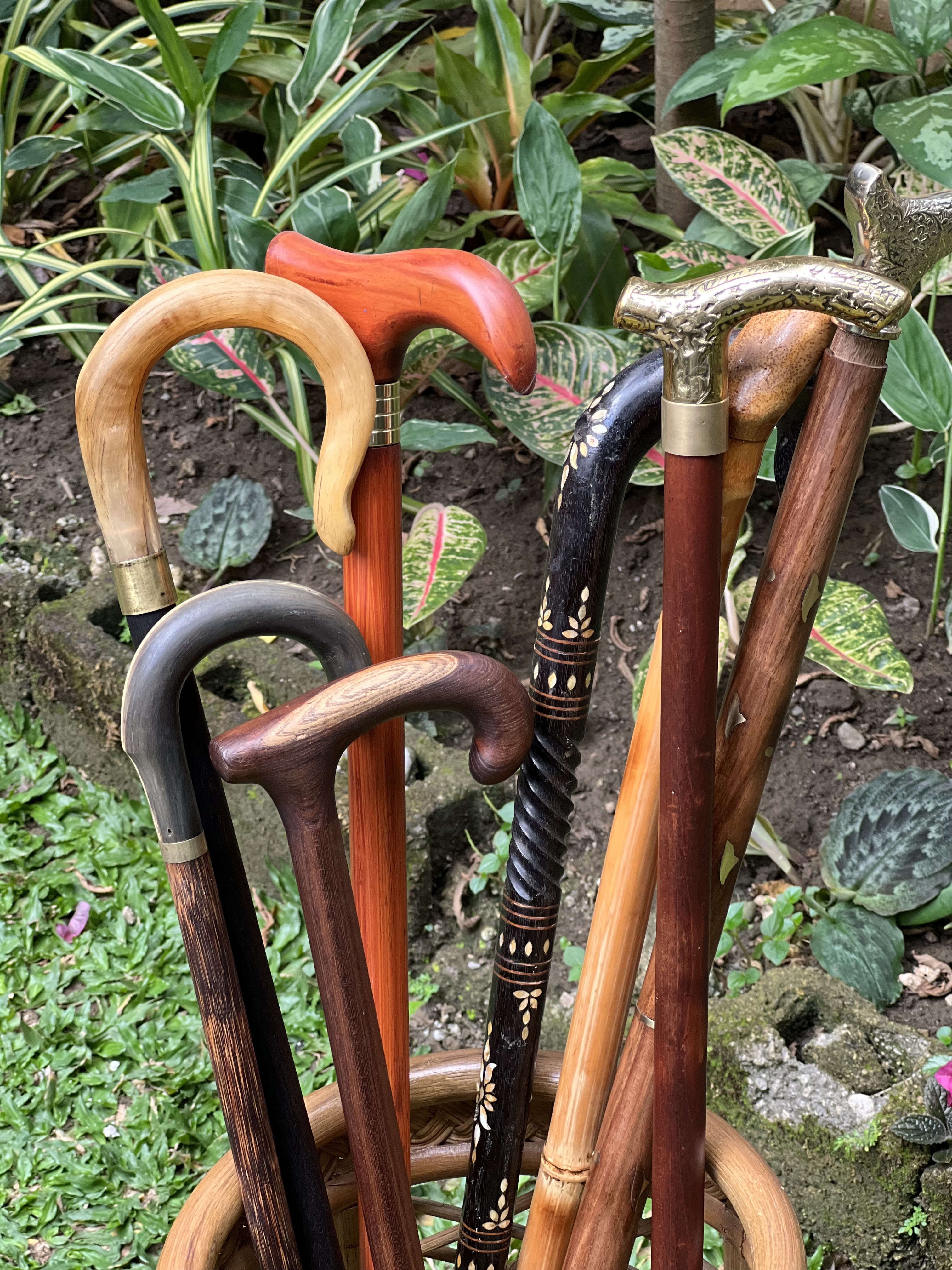
AS IF I didn’t have enough junk filling up every corner of the house, I’ve lately gone on another collecting binge, for which the only justification I can offer is that, well, it’s age-appropriate. 

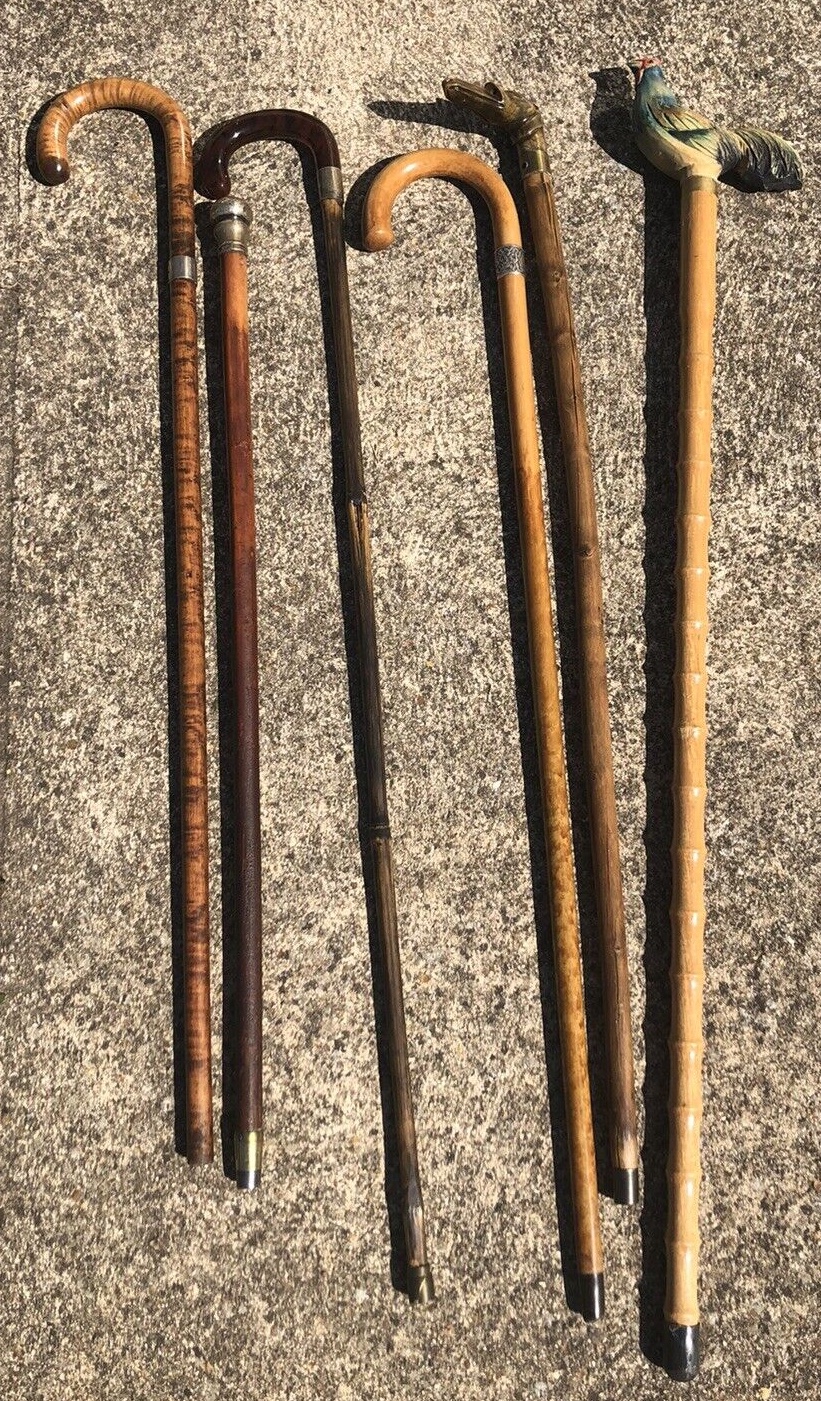
I’m talking about collecting canes and walking sticks (we’ll use those terms interchangeably for this article, although there are technical differences between them), accessories we now associate with the onset of decrepitude or some other infirmity. I’m not quite there yet—although, at 68, I should need no excuse for carrying a cane, especially for my periodic attacks of gout—but I thought it prudent to prepare now for the inevitable, and acquire artful and functional canes while I’m still sentient enough to know between wood and plastic.

I’m not sure when this newfound diversion began for me. I’d been using the familiar, adjustable metal canes you can buy at drugstores for my gout, which Beng has also leaned on for her arthritis. At some point—as with my other follies—I must have said to myself, “If I’m going to carry this around all day, it might as well be nice. No, forget nice, it might as well be grand!”

And so began my hunt—online, in Japan-surplus shops, and wherever else you can find them—for the perfect cane, which, as soon as you say it, you realize is an impossibility, because the next one is always going to be better, or at least different.  That’s just how it is for collectibles, and how my few working fountain pens grew to 400 at one point (now trimmed down to a more modest 150). 

To bring some reason into this passion, let’s go back to the utilitarian roots of walking sticks and canes, supposedly in the long sticks or poles that shepherds carried to protect themselves and their flocks from predators like wolves. The same sticks were used as walking aids, to climb up hills and mountains with, as well as for taking measurements. By the 1500s, with the use of cane for the shafts, the word “cane” entered popular usage.

Meanwhile, beyond saving you from a bad fall, these wooden sticks found a new and loftier purpose in the hands of men (and some women) who ruled over vast kingdoms and had to show something for it. They became scepters for emperors, kings, and queens—bishops also took to holding even longer staffs—and as such had to look the part, acquiring embellishments of silver, gold, and precious gemstones. When you had to say something like “Off with his head!”, it seemed more convincing to do it with an upraised stick. Moses, of course, had the most potent rod of all, good for getting water out of rocks and for smiting down the detested Amalekites. 

(Image from 123rf.com)

All that pomp and pageantry associated with carrying sticks must have rubbed off on the bourgeoisie, who took to canes as fashion accessories, one more way of showing (or showing off) how prosperous and important one was. Carrying a cane didn’t mean you were lame; to the contrary, it suggested that you wielded power as a bona fide member of the gentry. Genteel ladies had their own versions, some of which had secret compartments for perfumes, combs, fans, and even mirrors; the men liked theirs with swords, knives, and guns—these multipurpose sticks were called “system” canes.

In the London of the 1700s, according to one history of canes, “A gentleman had to procure licenses for the privilege of carrying canes. It was expected that they would abide by certain rules or risk loss of the privilege. The authorities actually policed rules for canes and walking sticks vehemently. It was considered an extreme violation of manners to carry a walking stick under one’s arm, to brandish it in the air, drag it on the ground or to lean on it while standing.”

Thankfully today no such licenses are required, and the etiquette of canes is observed mainly in the breach. Canes are back to being the implements of the sick and the aged, and eyebrows will rise if you appear on the street or in your workplace sporting an antique derby (a popular style with a short wavy handle) or a shillelagh (a cane made from a rough piece of wood with a knob on top).

As a senior, I consider myself exempted from all licenses, excuses, and medical prescriptions in this regard. I collect canes because, like my pens, they’re both tools and works of art, relics from an age of manners and elegance. That they’re out of fashion is an even bigger plus, because it means very few other people want them, and their prices will be reasonable. 

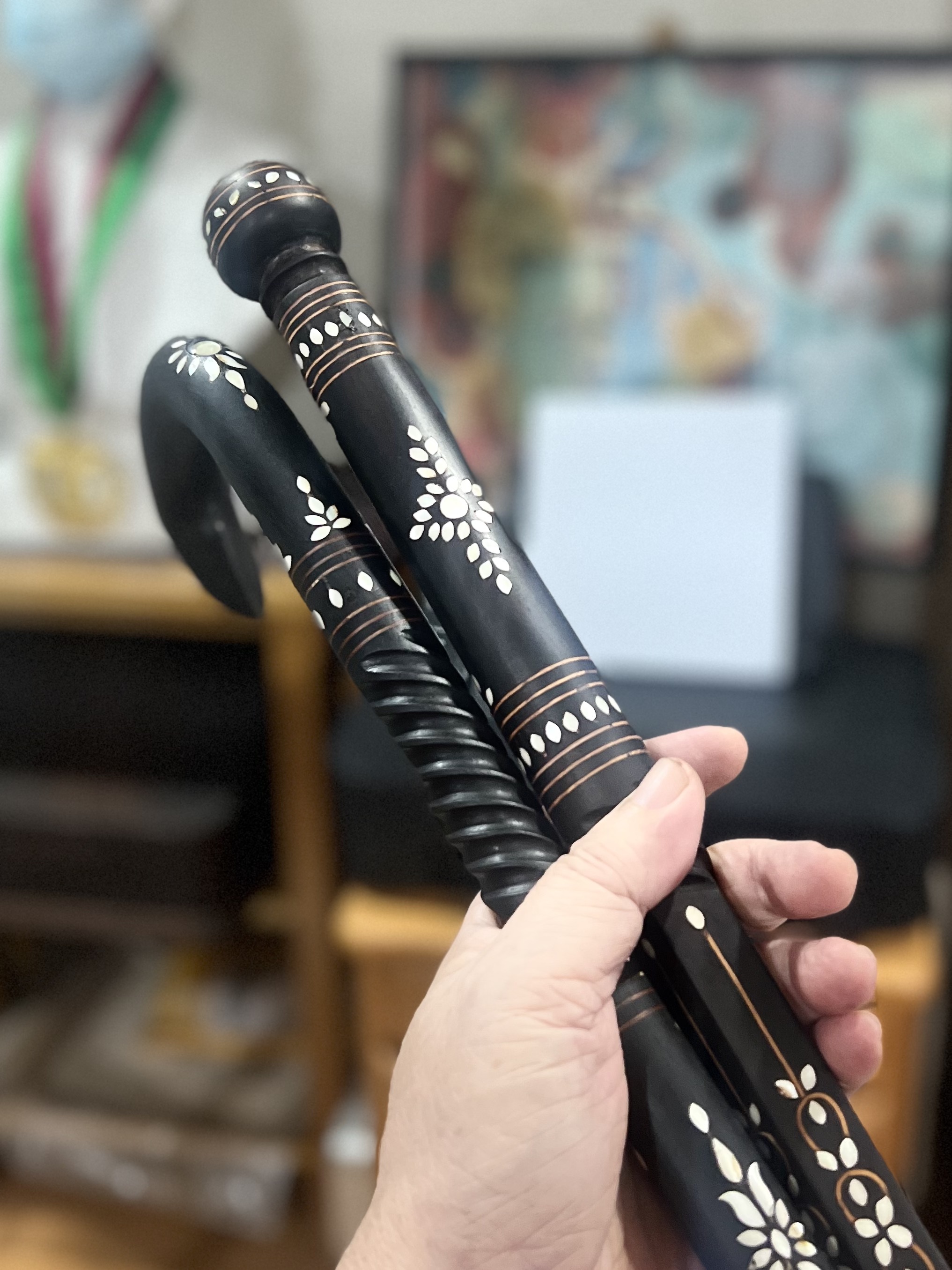
The Philippines is a great place to start collecting canes, because we have very fine antique and vintage ones, made of kamagong or some other hardwood, intricately carved with mother-of-pearl inlays. Some others have silver pommels, handles, bands, and ferrules (the metal caps at the tips) and fine repoussé (hammered) work on the silver. Japanese canes often come in bamboo, which can be very expressive at their bent handles. 

What I’ve looked for outside of our region are canes from Europe and the US, which employ horn, silver, brass, and other materials for their handles, which can be elaborately carved and decorated with animals, skulls (not my thing), and whatever floats the owner’s boat. Vintage canes can also come with bands or badges that denote provenance, such as the owner’s monogram or his military service. There are many websites online devoted to this hobby, and eBay is always a rich source for canes (new but vintage-style ones made in India can be had for not too much). It’s important, by the way, to trim your canes down to size—your hand should be just resting lightly over the handle beside you—not bent upward or reaching down. I do this myself with a hacksaw, and use one of those rubber plugs sold in True Value for chairs to cap the bare tip.

I’m not waiting for my next bout with gout to enjoy my walking sticks. Having resumed my walks around the UP campus, I’ve found that carrying a cane not only supports me but improves my balance and rhythm (I swing it out in front of me like a pendulum). Beng, who needs them more (and who has her own mini-collection), has also discovered that being a cane-carrying senior has its advantages: people are more courteous, service is faster, and seats miraculously appear. I’ll try that the next time we fly!

Qwertyman No. 4: Subversive Sisters Having Fun

Qwertyman for Monday, August 29, 2022

(Image from danbooru.donmai.us)

“WHY IS IT,” asked Sister Edwige as she threw a couple of green chips into the pot to call Sister Augustinha’s raise, “that every time we nuns have a little bit of fun, someone out there screams like we were indulging ourselves in some carnal revelry?”

“Sister Edwige!” said Sister Loreto, as she put her hand on her cheek, a sure tell that she had some pretty valuable cards in the hole, like a pair of jacks or an ace-king. “People might think that you—that we actually knew what you were talking about!”

“It’s no crime to know what we’re not supposed to be doing,” said Sister Edwige, who was wondering whether Sister Loreto was going to reraise, or was going to play it dumb, like she held the lowest pair. Some sisters were so transparent, which was why they chose to play Scrabble or bake muffins during their recreation hour instead of facing the likes of Sister Edwige at Texas Holdem, but with Sister Loreto, even letting on that she had a superior hand when she very possibly did not was part of the game. “Crafty” was the word for her, Edwige decided, something not necessarily malicious but with the possibility of being so.

“So are you going to call or fold?” Sister Augustinha said, annoyed that Edwige apparently didn’t feel threatened enough by her raise, and that Loreto might even move all-in.

“I’ll… just call,” Loreto said, whereupon the remaining sister, Sister Maryska, tossed her cards down, sensing imminent disaster. Acting as the dealer, Maryska drew the turn card—the king of clubs—eliciting a groan of agony from the playacting Loreto.

“Do you think it’s possible they’ll haul us off to prison and then try us for witchcraft, like they did in the old days?” asked Edwige with a chuckle.

“But whatever for?” said Maryska. In a previous life, she had been a nursery-school teacher, but had chosen to enter the order when the Virgin Mary appeared to her from a kaimito tree. “Everything we’ve done has been for the greater glory of God, hasn’t it?”

“Check!” said Sister Augustinha.

“Check!” said Sister Edwige.

“Hmmm…. Let’s make a tiny bet, shall we? Say, two hundred? Just to keep things exciting?” Sister Loreto ever so slightly pushed two even stacks of chips into the pot.

“Two hundred!” said Sister Maryska! “Why, that’s more than I can spend in a week on cookies and three-in-one coffee!”

“It’s only play money, Sister Maryska,” said Augustinha dryly. “It’s not like you or anyone here will starve to death if she makes a dumb call—which I’m not doing!” She folded her hand. “This is pretend-poker. We’re pretending that we’re escaped convicts disguised as nuns, that we stole these habits from a convent’s clothesline, and since our funds are running low and our runaway car is out of gas, we have to stake everything on a game of poker at the local bar, against the woman they know as… Madame Stolichnaya, a retired pediatric nurse and reputed mistress of the Master Demon himself, Dom Athanasius.” A shiver swept the table as Augustinha’s voice descended into a raspy whisper.

“Oooh, that’s exciting!” said Sister Maryska. “Tell us more! What did we do to become prison convicts?”

Before she joined the nunnery, Augustinha had been part of an avant-garde theater group known for its complete lack of inhibitions onstage and offstage, and it was rumored among the novices peeling potatoes in the kitchen that Augustinha had led a blissfully debauched life, complete with boyfriends, banned substances, and (dare they say it) aborted babies. That she was now one of the order’s most devout and dedicated sisters—the one who bathed lepers and tended to terminal patients—could not dispel the impression that she knew more about life than one was reasonably entitled to. 

“I fold!” said Sister Edwige, finishing the hand and letting Loreto scoop up the pot. “I think Sister Augustinha’s game is more fun. Let’s play that instead!”

“Awww, just when I was winning!” said Sister Loreto, pouting at her suddenly worthless chips. 

“Did we rob a bank?” asked Maryska. “Did someone get killed?”

Loreto said, “What do we know about robbing banks? Even if we did get some money, what would we have used it for? We made a vow of poverty—” 

“No, no,” said Edwige, “we didn’t make any vows, we’re not sisters, although we later pretend to be so. We’re villains, we like money, we like spending it on cars, houses, perfumes, vacations to Paris—” 

“Men? Did we spend on men?” asked Loreto.

“I don’t even know what it means to spend on men,” sighed Maryska. “Does that mean you—you buy them nice things, like watches and shoes and iPhones—”

“Or you can just buy them,” said Augustinha with a shrug.

“Really? For what?” said Maryska.

Edwige laughed. She had three brothers—an airline pilot, a cryptocurrency trader, and a police captain—all of whom had been left by their wives and girlfriends for various reasons. “So you can keep them as pets, snuggle up to them on rainy days, smell their body hair—”

“Ewww, I don’t even want to think about, please, please, take that thought away!” said Loreto, shaking her hands in the air. “No wonder we got caught! We had all of these impure thoughts! We robbed a bank so we could get and do all of these nasty things!”

“Technically, the bank robbery alone was enough to land us in jail. The motive doesn’t matter. We could’ve robbed a bank to give its money away to the poor. We’d still be criminals in the eyes of the law,” said Augustinha.

“It must be fun to be bad—sometimes,” said Sister Maryska, looking out into the garden, where other sisters were watering the begonias and watching the clouds turn pink.

“Do people even know what bad means anymore?” said Sister Edwige. “Or good, for that matter?”

Sister Loreto shuffled the deck of cards and said, “Let’s play another hand! And somebody close that window—I can feel a chill coming.”