Qwertyman No. 52: Joe Biden’s SOTU

Qwertyman for Monday, July 31, 2023

BECAUSE OF a glitch that happened when Chinese hackers tried to hijack America’s C-Span network so they could replace congressional programming with X-rated cartoons (on the theory that no one would miss the analogy), for a few minutes in the early morning of July 24, 2023 (Eastern Standard Time), the channel’s viewers were treated instead to the live coverage of an apparently big event happening in faraway Philippines.

Celebrities and bigwigs were getting dropped off by their limousines and luxury SUVs at some place called the “Batasan,” which a commentator helpfully explained was the building that housed the Congress of the Philippines—the Philippine Capitol, in other words, minus the dome.

House Speaker Kevin McCarthy was just about to go to bed in his home in Bakersfield—he had flown back to California for the weekend to avoid the screechings of the Freedom Caucus in his ears—and he had been having a hard time sleeping, wondering which was worse, having to deal with Joe Biden or with Donald Trump. Just when he was about to drift off to dreamland, his cellphone rang. It was an aide back in Washington, and immediately Speaker Kevin wondered if something earthshaking had happened—like Biden resigning after being diagnosed with dementia or Trump discovering honesty and humility and turning to God. “Boss, you have to see this. Tune in to C-Span!”

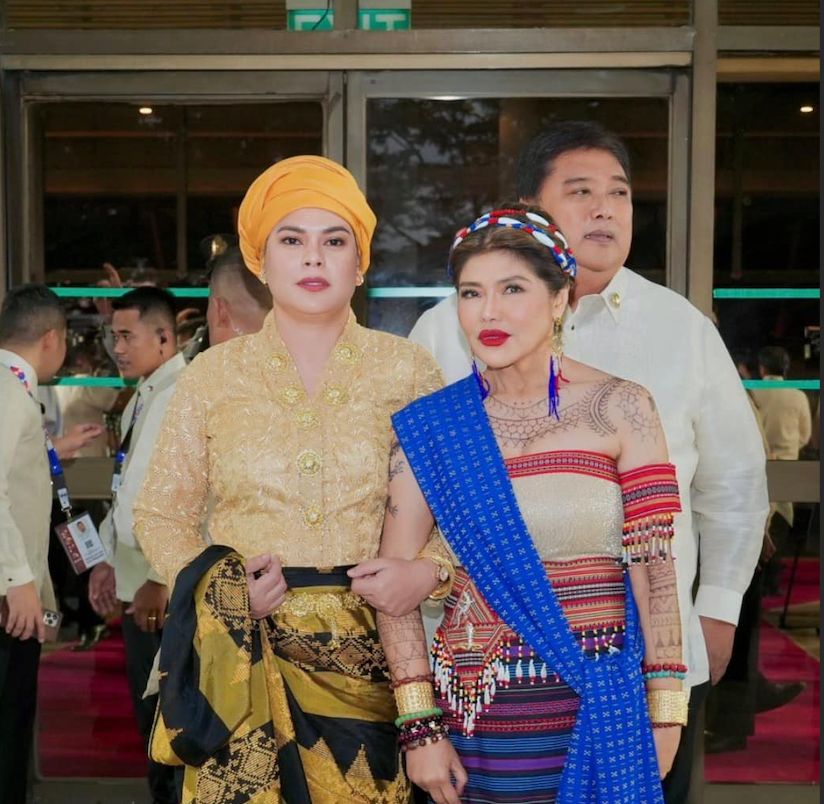
Grumbling, the Speaker did as asked and had to rub his eyes as he watched a woman step out onto the red carpet dressed like some aboriginal priestess, complete with warlike tattoos. Others came in headdresses, butterfly sleeves, heavily embroidered gowns, and sashes with pictures of dead people. “What’s going on? What the hell am I looking at? Is this some movie premiere or what?”

“It’s a live feed from the Philippines, what they call a SONA—the president’s State of the Nation Address, their version of our State of the Union. The president’s arriving shortly to deliver his speech.”

“You woke me up to get me to listen to some political crap in some backwater country? Are you out of your mind? Don’t we get enough of this in DC?”

“No, no, boss, it’s not about the speech—that’s the whole point, forget the speech, it’s about the fashions! Look at them, preening like peacocks and peahens. Look at the coverage, I’ll bet you, tomorrow, all the papers and social media in Manila will be talking about the dresses, not the speech!”

“And so?” Kevin got up from bed, sufficiently intrigued to pour himself a scotch in anticipation of a longer chat. This aide was his top PR strategist, and sometimes the guy came up with truly inspired ideas, like plucking Ms. Horseface away from the Freedom Caucus to boost his conservative credentials and keep the restless natives in check. Joe Biden was the enemy, but his own crew members could be a bigger pain.

“Well, don’t you see, boss? Joe Biden’s next SOTU is coming up, and… we need a distraction. We don’t want him lecturing the American people about how we’re stripping women of their rights to safe abortions, or teaching the young that slavery had some real benefits, or carving up congressional districts to make sure that dark-skinned people don’t get too much sun on election day. I mean, he’ll do that anyway, but these Filipinos know something we don’t—it’s not the speech, it’s the party! We can turn the SOTU into a fashion show and no one will care what Old Joe says!”

McCarthy took a closer look at the screen and listened to the commentators blabbering about this and that gown and comparing it to last year’s versions—the more outrageous, the better. He recalled being canceled back in January for appearing in a picture wearing a blue suit with brown shoes—par for the course in cool Europe but never in redneck America!—and smiled in anticipation of his revenge. 

As it turned out, the Speaker and his aide weren’t alone. Before the footage could be pulled off C-Span, it had made the rounds of the bars around Washington, DC, and someone found even more detailed coverage on YouTube, and when daylight broke over the Potomac it was all that the senators, congressmen, and their flunkies could talk about over their morning coffee. 

“So what are you going to wear to the SOTU?” reporters asked Georgia Rep. Marjorie Taylor Greene as soon as she stepped out the door of her DC apartment. She had a ready answer for that, having pondered the question over her Wheaties: “I’ll come in a long black dress,” she said, “with the word IMPEACH running down the front!”

It didn’t take long for Marjorie’s arch-rival on the right, Rep. Lauren Broebert of Colorado, to announce that she was coming “As Annie Oakley, in defense of the Second Amendment, the biggest victim of all the mass shootings happening in America today!”

Even Kari Lake, who was still refusing to accept her defeat for the governorship of Arizona, revealed that she was attending the SOTU as a guest, and that she was coming dressed as a Mexican muchacha—“Not to glorify diversity or any of that woke garbage, but to draw attention to illegal immigration, which is sucking the lifeblood of this great country and its legal, blue-passport-carrying citizens!”

Sen. Tommy Tuberville of Alabama, who had stubbornly and singlehandedly been holding up the confirmation of dozens of generals because he didn’t want the military to pay for the abortions of women in the service, had his own idea: “I’m having myself fitted for the uniform of a Confederate general.” Inspired by something he had seen on a related YouTube clip, he added, “And for good measure, my wife Suzanne will be wearing a gold necklace made from the excavated medals and buttons of Union Army officers!”

Reached for comment at Mar-a-Lago, Donald Trump declared he wasn’t coming, and fumed when a reporter reminded him that former presidents were invited to the event. “Who’re you calling a former president? That thievin’, lyin’ Joe is a never president—never, never, never! I should be the one giving the SOTU, not him—and I will, again!”

Alerted to the SONA brouhaha by his butler, Joe Biden passed the sugar on to Jill as the video played in the background. He listened briefly to the other president’s speech and smiled. “A New Philippines, hmmm…. How does ‘A New America’ sound to you, honey?”

“I think not,” said Jill. “In fact, we rather miss the old one, don’t we? When America was a kinder and gentler place?”

“That’s George Bush Senior’s line, honey. From the 1988 GOP convention.”

“Exactly. Back when even some Republicans got some things right.”

Qwertyman No. 48: Beauty and Horror

Qwertyman for July 3, 2023

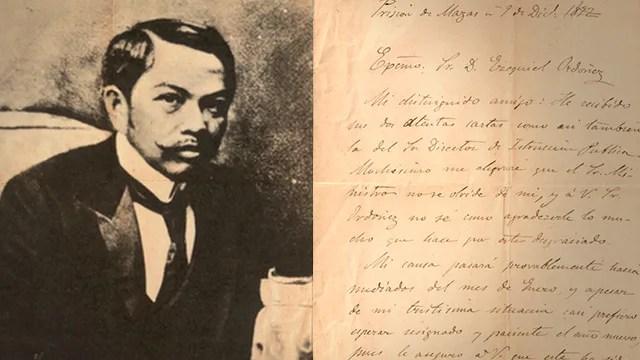
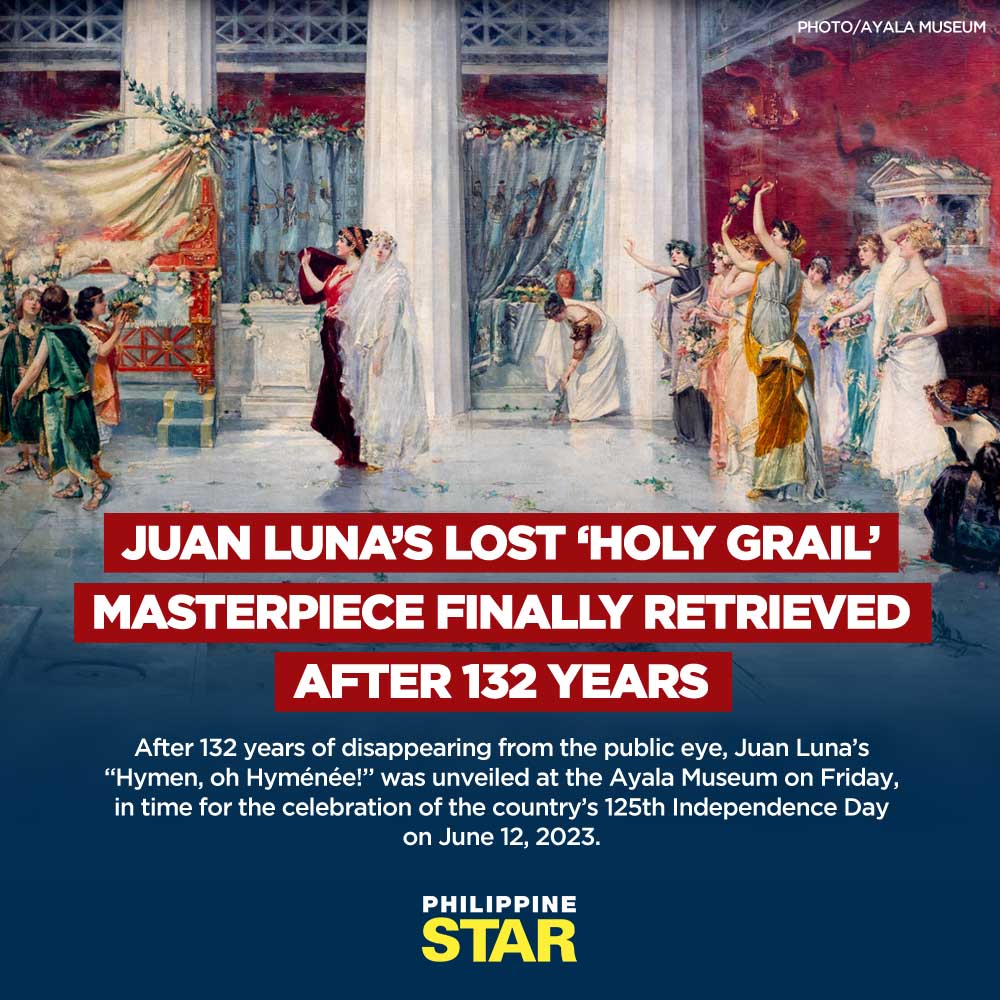
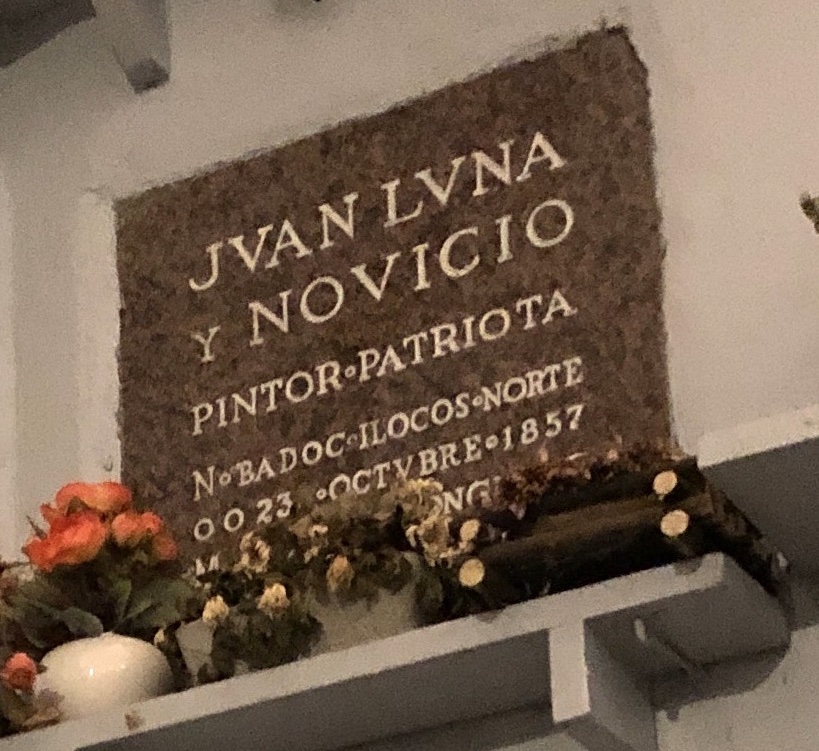
I WAS surprised, a bit amused, but also deeply bothered by the reactions of Filipino netizens to an event that hogged the headlines two weeks ago—the special exhibit of Juan Luna’s painting “Hymen, O Hyménée.” 

The painting, said to have been lost for over 130 years, was put on display in all its solitary glory at the Ayala Museum, evidently a prize catch and worthy of public attention. The attention came—not all of it positive. Quickly a thread developed online scoring the artist, the painting, the museum, and the curious who trooped to Makati to see the painting. Why, posters asked, was praise being heaped on a deranged man who murdered his wife and mother-in-law? Where was our outrage? Speaking of the painting, why, technically it wasn’t even that good. 

They were, of course, all fair points to raise, designed to provoke some serious re-evaluation of why we like the things (and the people) we do. While there was some quibbling about the aesthetic merits and demerits of the painting, most of the negative reaction was clearly aimed at Juan Luna’s homicidal and presumably misogynistic streak. Just to be clear, he did admit to killing the two women (he suspected his wife of having an affair with a Mr. Dussaq), but was later acquitted on grounds that merely prove how partial to men the old judicial system was.

This brings up the inevitable question—not about Luna’s guilt, which seems to have been settled in the court of public opinion, but about that of those professing to admire Luna’s talent as a painter: knowing what we know now about an artist, should his or her work be judged by his or her character? Can or should we put our blinders on when gazing at a painting or reading a book, and savor the work in denial of its creator’s evil history? Should we resist Google, adopt or feign ignorance, and leave moral judgments to others?

I know that some esteemed writers and artists, like the late F. Sionil Jose who preceded me in this space, were severe and unforgiving in their application of a moral frame to creative work. To Manong Frankie, if you supported the Marcos dictatorship and profited from it, your credentials as an artist were forever compromised. Today we would call this “cancel culture,” which has been appropriated by right-wingers to complain about being punished for being, well, right-wingers.

It seems like a logical proposition: if you don’t like someone for good reason, then reject his or her work, which could be tainted by all manner of subliminal malice. You can stand proud in your clarity of mind and emotion, in your spirited defense of the good and just.

But this also raises a very practical problem: entering a museum or a library, how am I to know which artists or authors led upright lives, and which ones flourished in depravity? If I enjoy a work, only to discover later that its creator attempted to rape a teenage girl (as the Nobel prizewinner William Golding did, and even wrote about it privately) or tortured animals and adored Hitler (like Salvador Dali did), am I supposed to regurgitate my admiration and pronounce the work worthless?

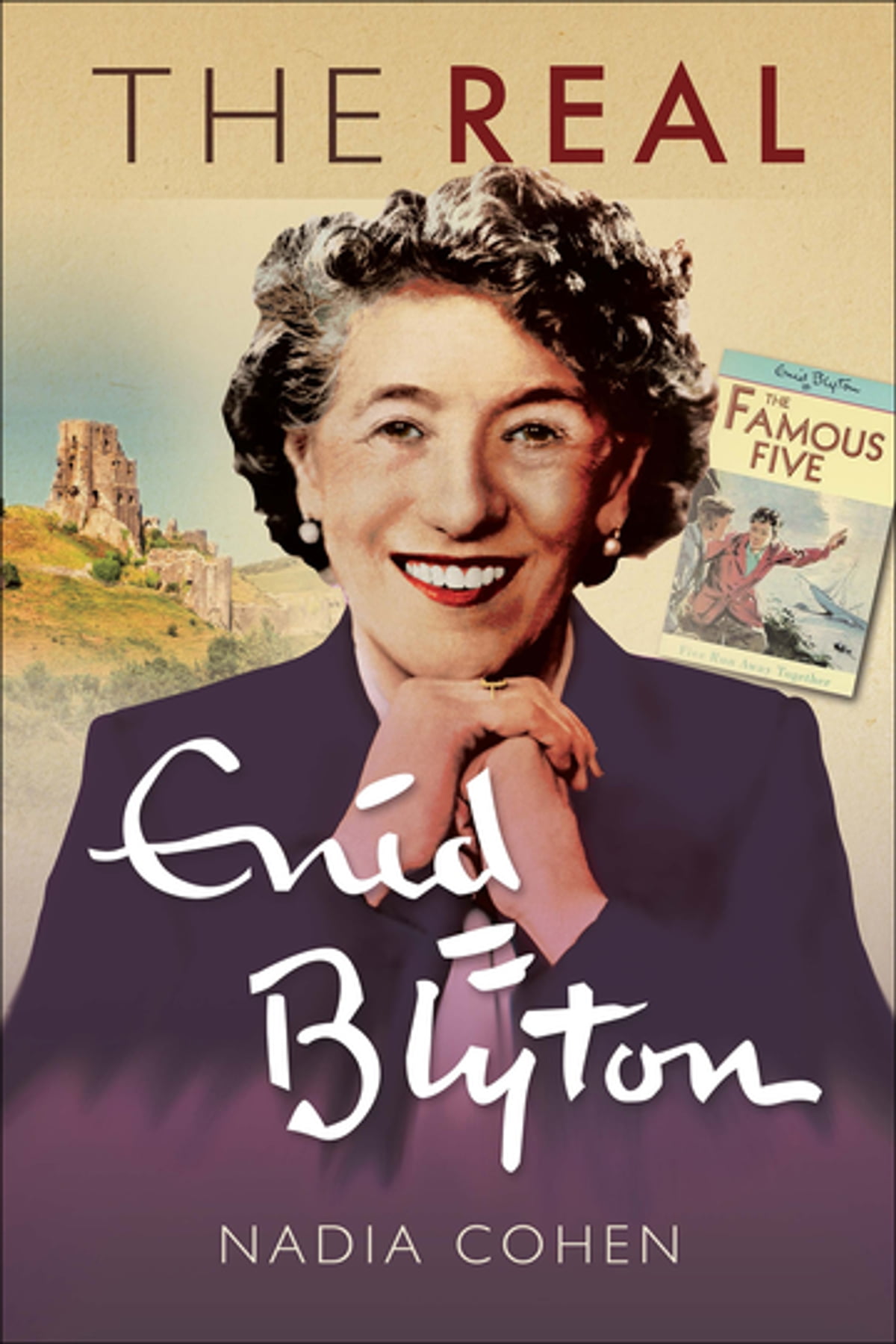
The list of artists and writers who were less than paragons of moral virtue is a long and (dis)honorable one. For this we go to Google, which has been asked the question so often that so-called “listicles” exist of the answers, which inevitably throw up the same names. Paul Gauguin abandoned his family and fled to Tahiti where he took on three child brides, infecting them all with syphilis. TS Eliot and Ezra Pound were Jew haters, as were, for that matter, Richard Wagner, Edgar Degas, and Roald Dahl. Picasso abused his women and drove them mad, calling them “machines for suffering.” Beloved writer of children’s stories Enid Blyton was a terrible mother, neglectful and vindictive, described by her own daughter as “without a trace of maternal instinct.” What am I to tell our daughter Demi, now 49, who grew up on Enid Blyton and who carefully rounded up all her Blyton books and tied them up in a ribbon during her last visit, for passing on to another child?

I recall when, years ago, a renowned actress (whom I need not name, as you can surely guess who she is) was denied the National Artist Award by Malacañang because of her reported use of drugs at some point in her troubled life. (I know, because the Palace official who recommended the disapproval told me the story.) Thankfully this was later rectified.

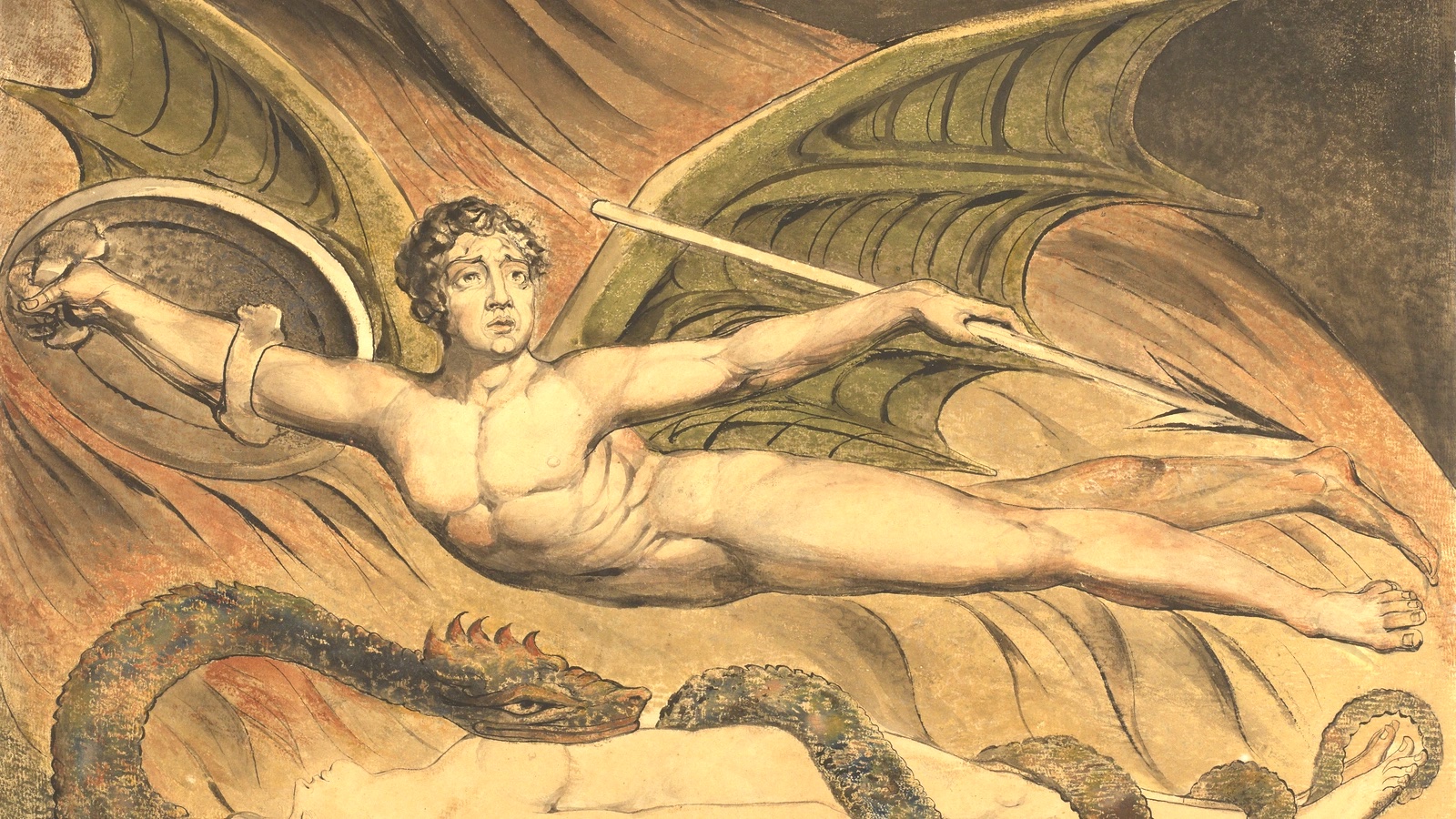
And as soon as I say that, you can see where I incline in this debate. I hate evil as much as any sane person would, but also recognize and accept that some of that is always latent within me and within others, and that it is my awareness of it—or my guilt when I give in to it—that grounds and deepens my art. I’m not saying evil is a prerequisite for artmaking, as surely saintly folk have produced great art (although I still have to find that listicle); it’s just there, like a shadow in the forest, the Lucifer without which the aura of our angels would dim. 

And what about the deplorable if not detestable excess of it in these aforementioned geniuses? Do we excuse or absolve their failings by accepting their art? I think not. What we are accepting is not their wrongdoing, but rather the fact of how one of art’s and indeed of life’s great mysteries is how often beauty and horror cohabit. Thus we can come to an informed appreciation of a work and its maker, wonder at how so much darkness could produce so much light, and begin to understand our complexity as humans, which artists give form and voice to.

Myself, I like to think of art as a personal act of redemption, or at least of restitution. It will never excuse one’s bad behavior, or repair the damage done. But it will show how capable we are of refined and abstract expression, despite our brutish selves.

The greater problem for me is that, today, we inhabit a moral minefield where art itself has been conscripted to disguise falsehood and deception. Artificial intelligence has neither heart nor conscience, but its manipulators can produce breathtakingly attractive lies. Much more than a long-interred Juan Luna, this worries me.

Penman No. 451: A Harvest of Books

Penman for Sunday, June 4, 2023

IF YOU’RE reading this on this Sunday morning, then it’s not yet too late for you to find a cab and get yourself over to the World Trade Center in Pasay City to catch the last day of the Philippine Book Festival, and have your favorite Filipino authors sign their books for you.

Organized by the National Book Development Board (NBDB) in partnership with the National Library and other agencies and organizations, the PBF will showcase the best of new Philippine writing and publishing, with the bonus of having most of the authors around for signings, chats, and the now-obligatory selfies.

Since the Internet took off thirty years ago, people have been declaring that “Books are dead!” (And even before that, “The Author is dead!”—although, of course, not quite in that almost literal sense). Well, guess what—both are very much alive, whole new generations of them, as if the Internet never happened. I don’t have the hard figures to show—I’m sure the NBDB has them—but just from what I’ve seen at the past Manila International Book Fairs (the next one of which will be held in September), there’s much more new writing and publishing happening now than there was before the Internet. 

There are many drivers for that, one of which has to be the proliferation of writing programs and workshops, whose graduates really succeed only when they come out with books. (Like I often remind Creative Writing grad students who take forever to “perfect” their thesis projects, “You’re writing for no more than five readers—your dissertation committee—and when you’re done, your thesis will be sitting on a solitary shelf. Just do what you need to pass the damned defense and focus on producing your first book out of that draft! Your real examiners will be your readers.”) 

Another factor is the growth of the publishing industry, which has become much more diversified in terms of ownership, material, and audience. The long years of martial law drove much creative output underground, so to speak, with few available venues for literary publishing and only competitions like the Palancas providing incentives for continued production. (On the other hand, the government presses kept churning out books on the First Couple’s abounding wisdom.) Post-EDSA, the pent-up dam broke, and literature flourished, but still hardly on the scale we’re seeing today.

I suspect that’s because many new players have gone into publishing, finding niche markets for everything from religious and self-help books to graphic novels and high-end coffee-table books. Among these, I’d count Milflores Publishing, founded by the late Tony Hidalgo and now in the hands of the very capable Andrea Pasion-Flores. Balangay Books, focused on local literature, has been opening doors for new young authors, and belongs to the Indie Pub Collab PH, a group of independent publishers. Down south, Savage Mind Bookshop and the Ateneo de Naga University Press have made great strides in literary publishing not just in the Bicol region but well beyond. Emerging in the wake of the Pink Revolution, San Anselmo Publications has made a name for itself as a purveyor of progressive thought. A recent visit to OMF Literature’s bookshop and office along Boni Avenue showed me how Christian literature is flourishing, attracting both new authors and readers. 

Let’s not forget self-publishing, which with such new technologies as print-on-demand and e-books has outgrown the stigma of “vanity” publishing and has produced both commercial and critical successes. While overall quality remains highly variable, the free Internet has empowered and enabled a new generation of young people to feel like they can become “writers” by posting on such sites as Wattpad—and some of them will be. (The irony here is that, as on Amazon, writers who succeed in their e-book debuts then get picked up by publishers of physical books.) Professional design and editorial outfits such as Studio 5 and Perez NuMedia also exist to help individuals and institutions turn their ideas into prizewinning books.

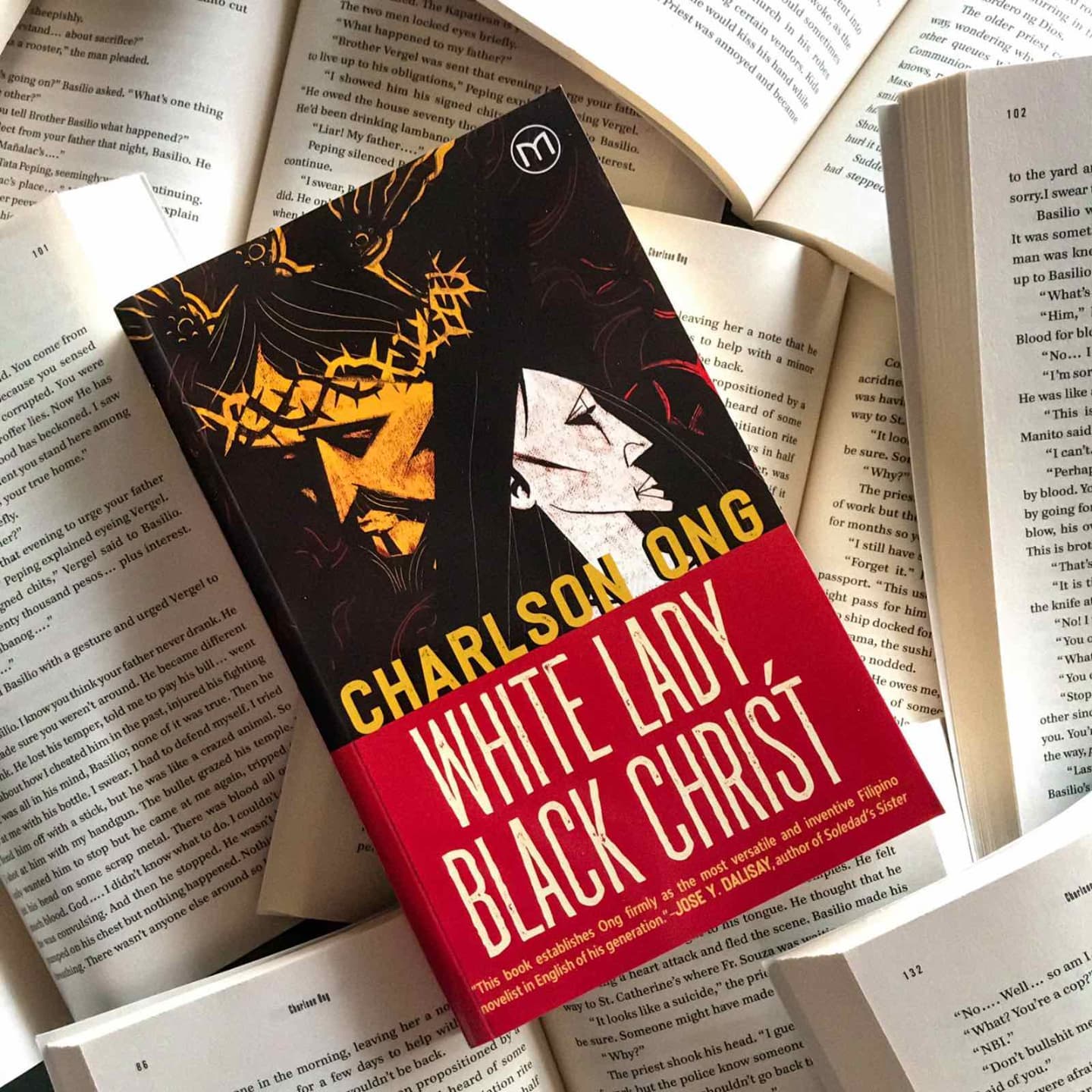
And then of course the long-established big-name publishers and academic publishers are still around: Anvil Publishing, UP Press, Ateneo de Manila University Press, UST Publishing House, and the University of San Carlos Press, among others. Vibal Publishing has produced impressive and sumptuously printed historical books—as has, let’s not forget, the National Historical Commission. They remain the publishers of choice for what might generally be considered prestigious but non-commercial projects, although their marketing savvy has vastly improved, from book design to distribution (much of the bookselling has moved online, to Shopee and Lazada). But since the wait at these publishing houses tends to be long, even established Filipino authors like novelist Charlson Ong (White Lady, Black Christ) have gone with such alternatives as Milflores (as did I, in its previous incarnation), which can often provide speedier results with no sacrifice of quality.

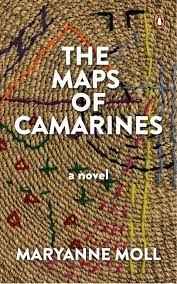
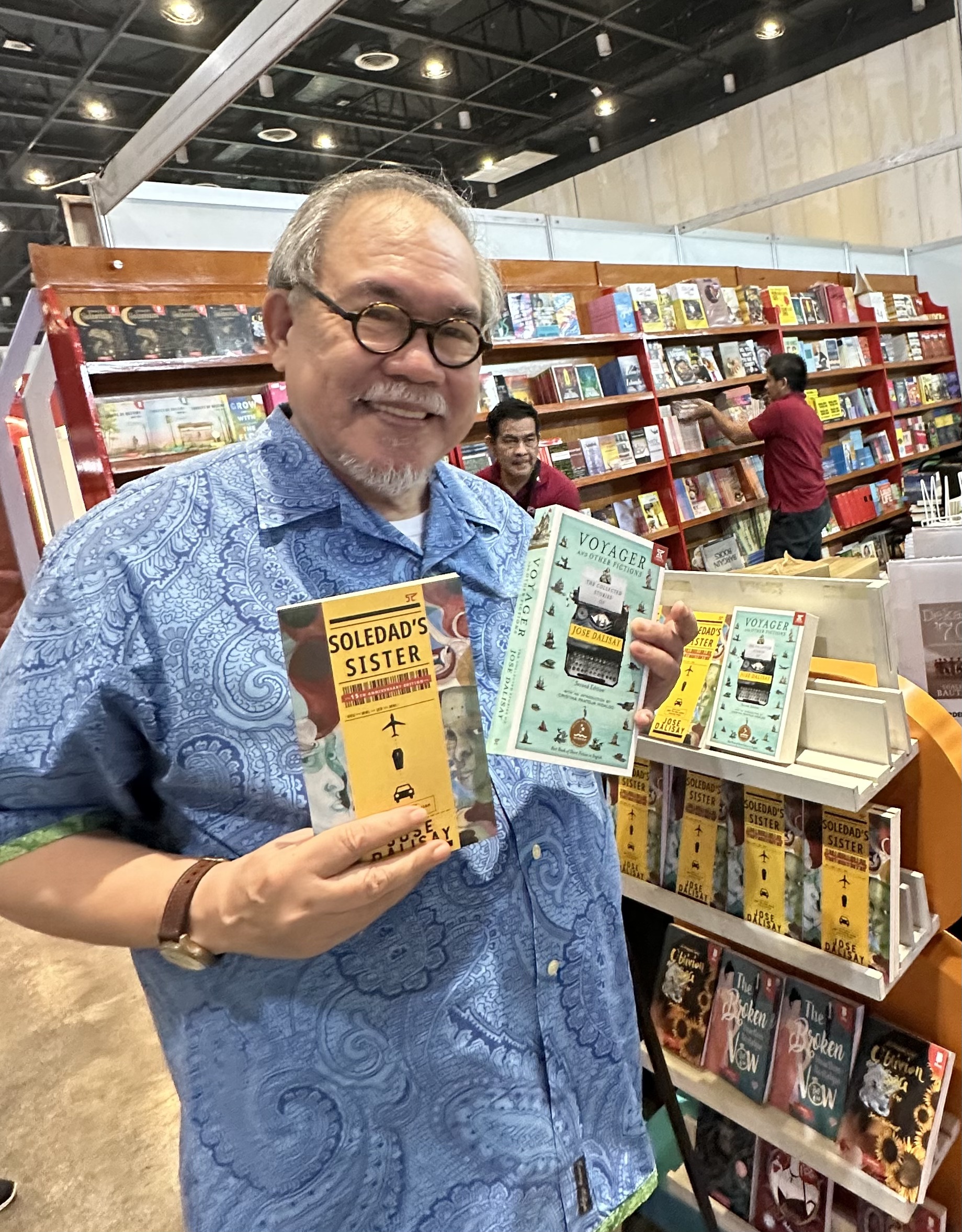
One more thing: more Filipino authors have begun to get published and noticed abroad, beyond America. Note the recent publication of Ulirát: The Best Contemporary Stories in Translation from the Philippines, edited by Tilde Acuña et al., and the South Africa-based Jim Pascual Agustin’s Waking Up to the Pattern Left by a Snail Overnight, both by Gaudy Boy in Singapore. Singapore is also where Penguin Random House SEA is based, and from where it published Danton Remoto’s novel Riverrun and his book of stories The Heart of Summer(aside from his translations of our classic works in Filipino), and Maryanne Moll’s novel The Maps of Camarines. I’m also happy to report that my novel Soledad’s Sister just came out in a German hardcover edition (as Last Call Manila) from Transit Buchverlag, following earlier editions in Italy, France, and the US. A 15th-anniversary edition of the novel, along with a new edition of my Voyager collected stories, are on sale at PFB—as are almost all of the books I mentioned here, with their authors on hand to sign them.

So wait no further and grab that ride to the WTC, for your share of this bountiful harvest of Filipino books. (Did I say that entrance is free?)

Penman No. 450: A Hillside Haven

Penman for Sunday, May 7, 2023

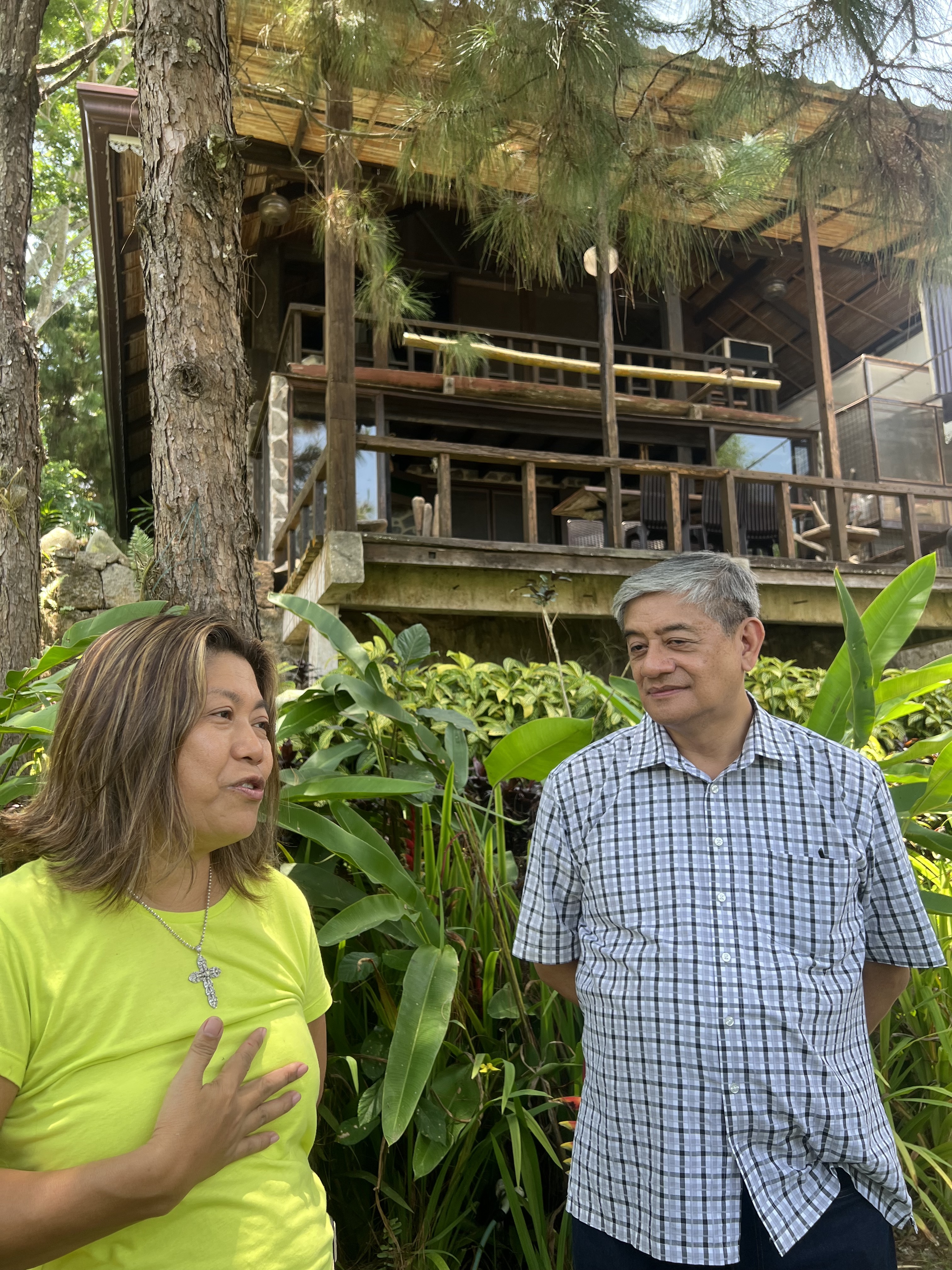
“SHAMBALA’ IN Tibetan Buddhism is a mythical kingdom where, according to lore, resides a community devoted to good deeds. But there’s a real version of it, aligned with the same beneficent principle, and it’s just two hours from Manila on a good day.

Thanks to the herculean efforts of the wife-and-husband team of Riza and Albert Muyot, a place called Shambala Silang now exists to welcome city folk fleeing stress, pollution, and stop-and-go traffic for a day or two of blissful living.


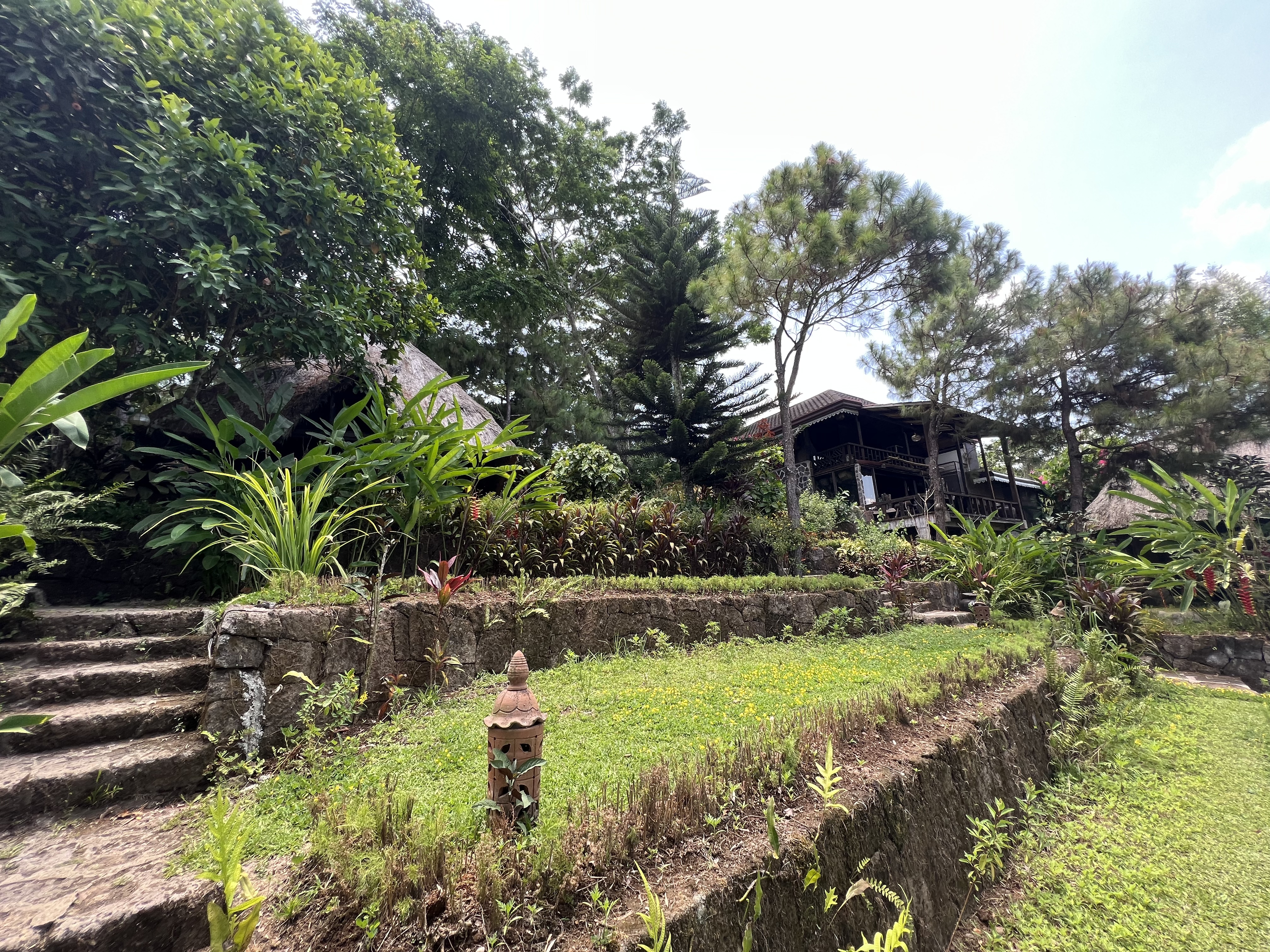
The two-hectare hillside resort seems larger than it is, magnified by the panorama that opens behind it—the green sprawl of a provincial landscape under a bright blue bowl of sky. But “resort” seems a misnomer, because Shambala doesn’t have a swimming pool, a karaoke bar, a disco, or a zipline. Except for short walks around the property, you don’t come to Shambala to work up a sweat, but rather to relax, meditate, and celebrate life, whether by yourself or better yet, in the company of loved ones and friends.

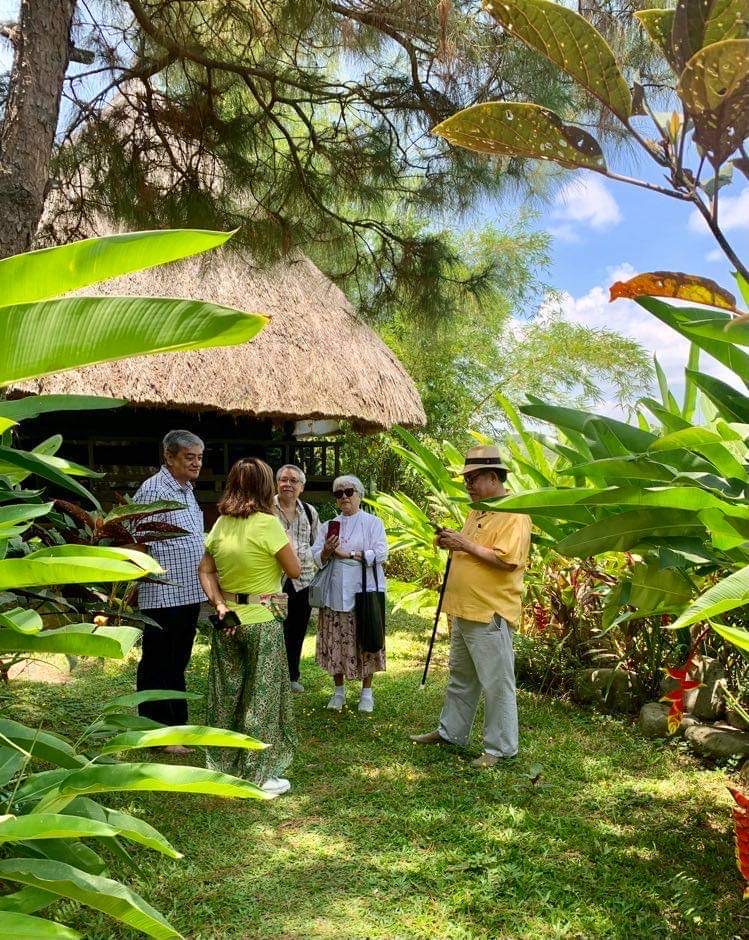
That’s what we did on a recent day trip organized by fellow writer and academic and dear friend Edna Manlapaz, at the gracious invitation of the Muyots. (Albert—a lawyer and former Undersecretary of Education—is another old friend, a fellow fountain-pen enthusiast and Michigan alumnus.) The main invitee and guest of honor was actually National Artist for Literature Jimmy Abad who came with his wife Mercy, and we roped in novelist Charlson Ong to complete the party.

From Quezon City, Shambala is best reached by the Skyway, then CALAX, then a series of backroads winding through Silang. We have friends who have chosen to relocate here, and passing through groves of mango and other fruit trees, we can understand why. If you want to disengage from city life, Silang is an easy option, where you can vanish into the woods while still being a short drive away from modern necessities. A narrow dirt trail leads uphill to Shambala, and I have to admit that I wasn’t expecting much from what I could (or couldn’t) see on the road, but then it appears at the very end, and the magic begins.

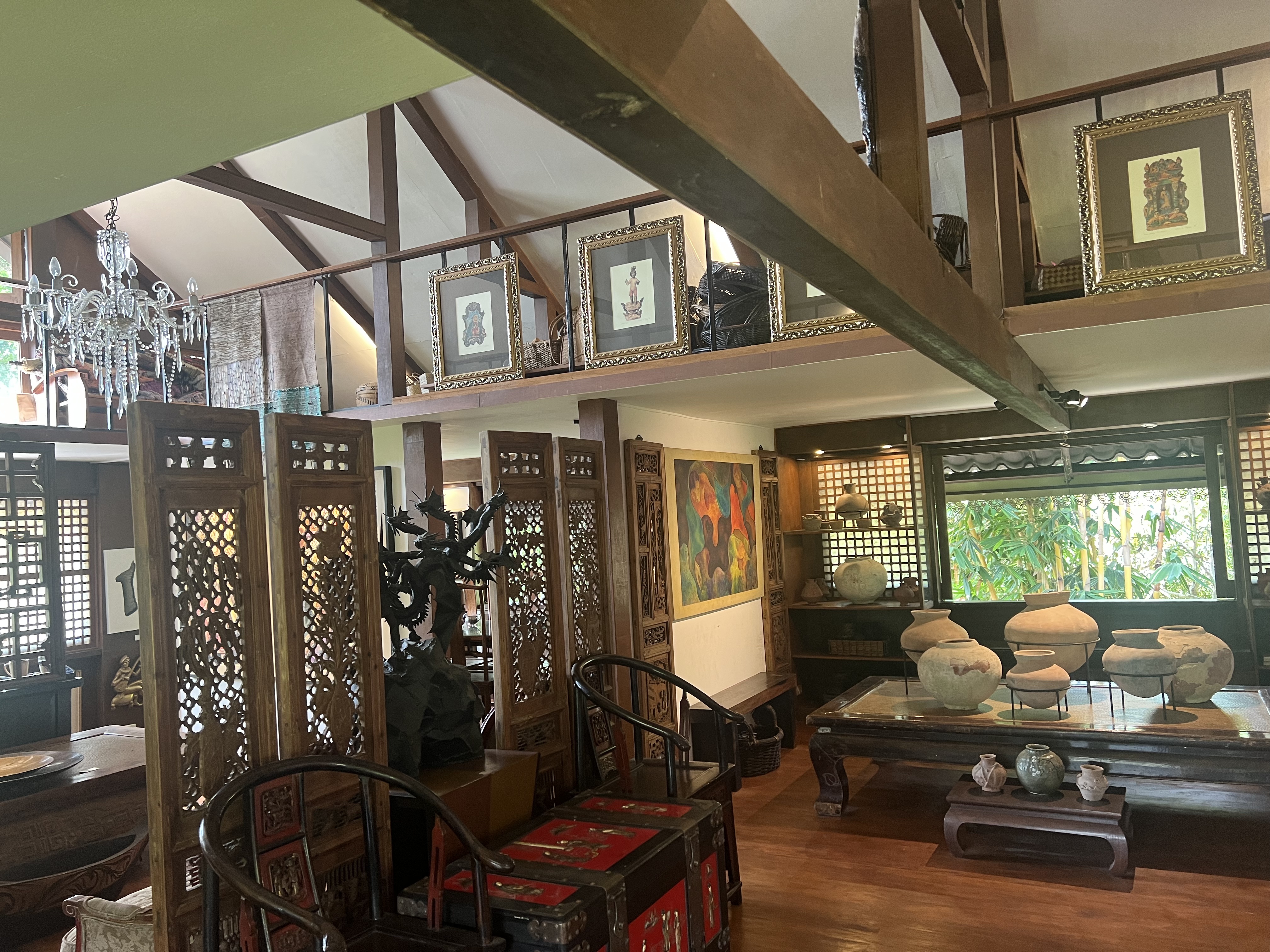
Shambala is a cluster of several buildings containing art galleries, collections of Philippine tribal art and culture, halls for meetings and celebrations, restaurants, gardens, and the Muyots’ private residence. It has six tribal houses open for overnight (or longer) stays, operating as a B-and-B. The houses are authentic structures brought down from the north when their owners no longer needed them, and rebuilt piece by piece. “They were originally constructed without nails, but we had to reinforce them and to introduce some modern touches and conveniences to make them more comfortable for our guests,” said Riza. “For example, we expanded the space beneath the houses , which was traditionally used for farm animals like chickens, so we could put a platform around which people could sit and meet. We also added friendlier stairs.” The one-room houses are spacious and airy, and a modern bathroom stands outside each of them.

Below the houses, down the hillside, is a circle of stones with a fireplace at its center—a dap-ay traditionally used for meetings of tribal elders and for religious functions, but now serving as a virtual theater or arena for post-prandial get-togethers under the moonlight.

And everywhere you look, there are trees—about a thousand of them, according to the Muyots, a hundred of which are Benguet and Norfolk pine, specially brought in. “There was nothing here when we bought the place around 2000 but pineapples and coffee,” said Albert. The Muyots were then looking for a sylvan hideaway to run to from their workplaces in Manila. They found the property and fell in love with it, although today’s Shambala wasn’t necessarily what they had in mind. “This is all Riza’s doing,” Albert explained. “She’s the one with the vision, the one who saw the possibilities and brought them to reality.” Now the CEO of Save the Children Philippines, Albert is happy enough to work on his laptop from his home office on the property (yes, there’s wi-fi all around).

A CPA who once worked with SGV, Riza comes from a corporate background. She’s also a gifted poet whose works subtly appear among the art on the walls. “Culture, heritage, art, and nature—that’s what we devote ourselves to here in Shambala,” Riza said. “We have an ongoing exhibit of soil painting featuring artists from the Talaandig tribe in Bukidnon. Do you know that there are 21 colors of soil in Bukidnon? They add water to those soils and use them in their painting. “ Shambala brought over Mindanao artists such as Kublai Millan and Datu Waway Saway to share their experiences and insights in the TIBOK Community Art Fair last month.

“People discovered us during the pandemic,” said Albert. “They went to Tagaytay, only to be turned away because of local restrictions on visitors from out-of-town, like seniors who couldn’t be let in. They came here and liked it, and spread the word.” It’s no surprise that on busy weekends, as many as 200 people pass through Shambala’s gates. Shambala has consistently ranked No. 1 in TripAdvisor surveys of such resorts in the area.

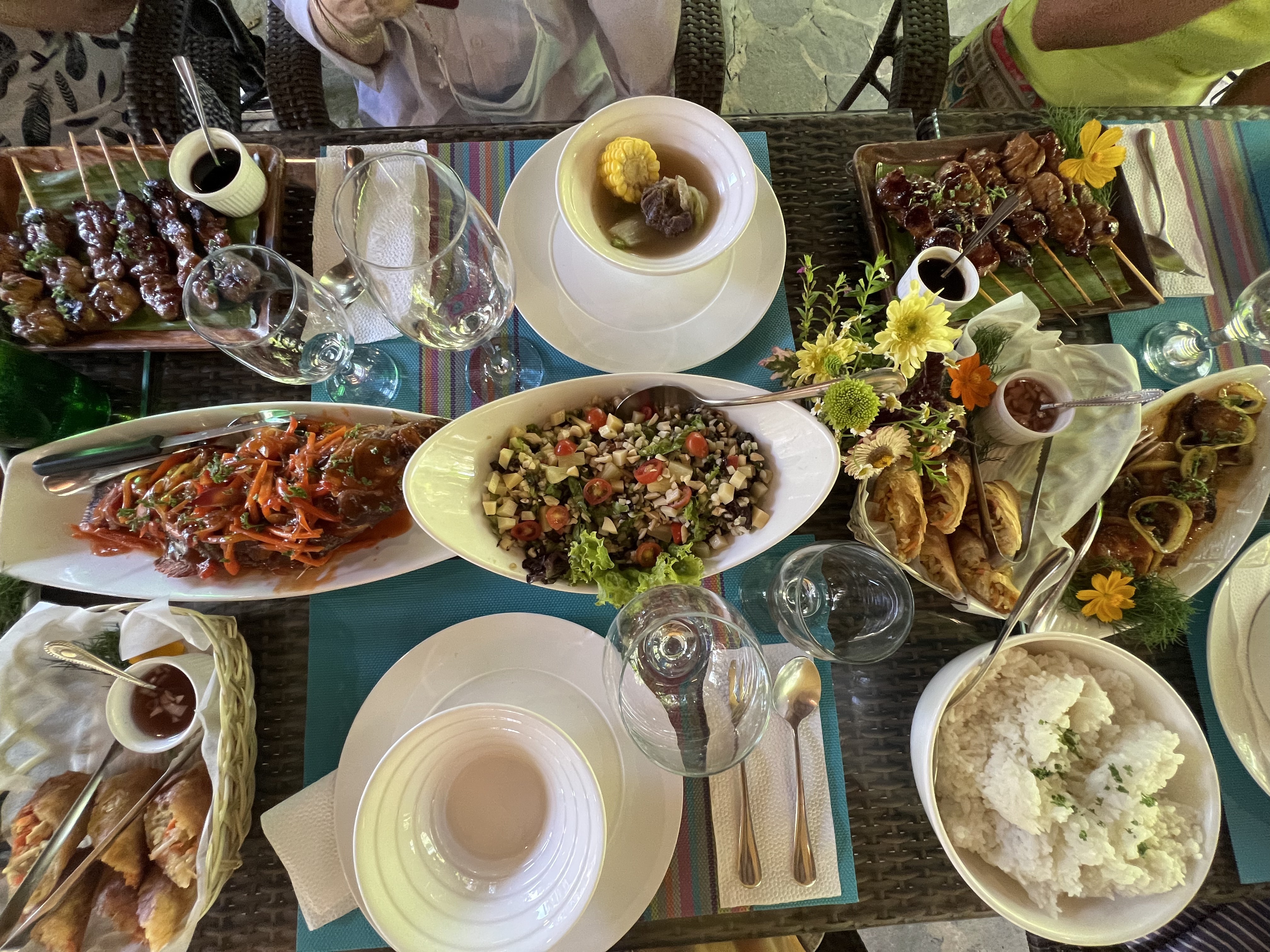
So if you want to try something exquisitely different—like their signature welcome drink made from malunggay, luya, and calamansi—drive off the beaten track to Tagaytay and try Shambala one of these days. The food’s as heavenly as the place itself, and you’ll wonder why you didn’t come here sooner. You can find out more about Shambala and their rates on their Facebook page here: https://www.facebook.com/ShambalainSilang/.

Penman No. 449: Sharing the Joy of Pens

Penman for April 2, 2023

With the successful holding of the 2023 Manila Pen Show last March 18 and 19 at the Holiday Inn Makati, the Philippines firmly established itself as Southeast Asia’s Pen Central—the largest and liveliest marketplace of items and ideas related to one of the world’s fastest-growing hobbies: collecting fountain pens and other writing peripherals (inks, papers, and cases). 

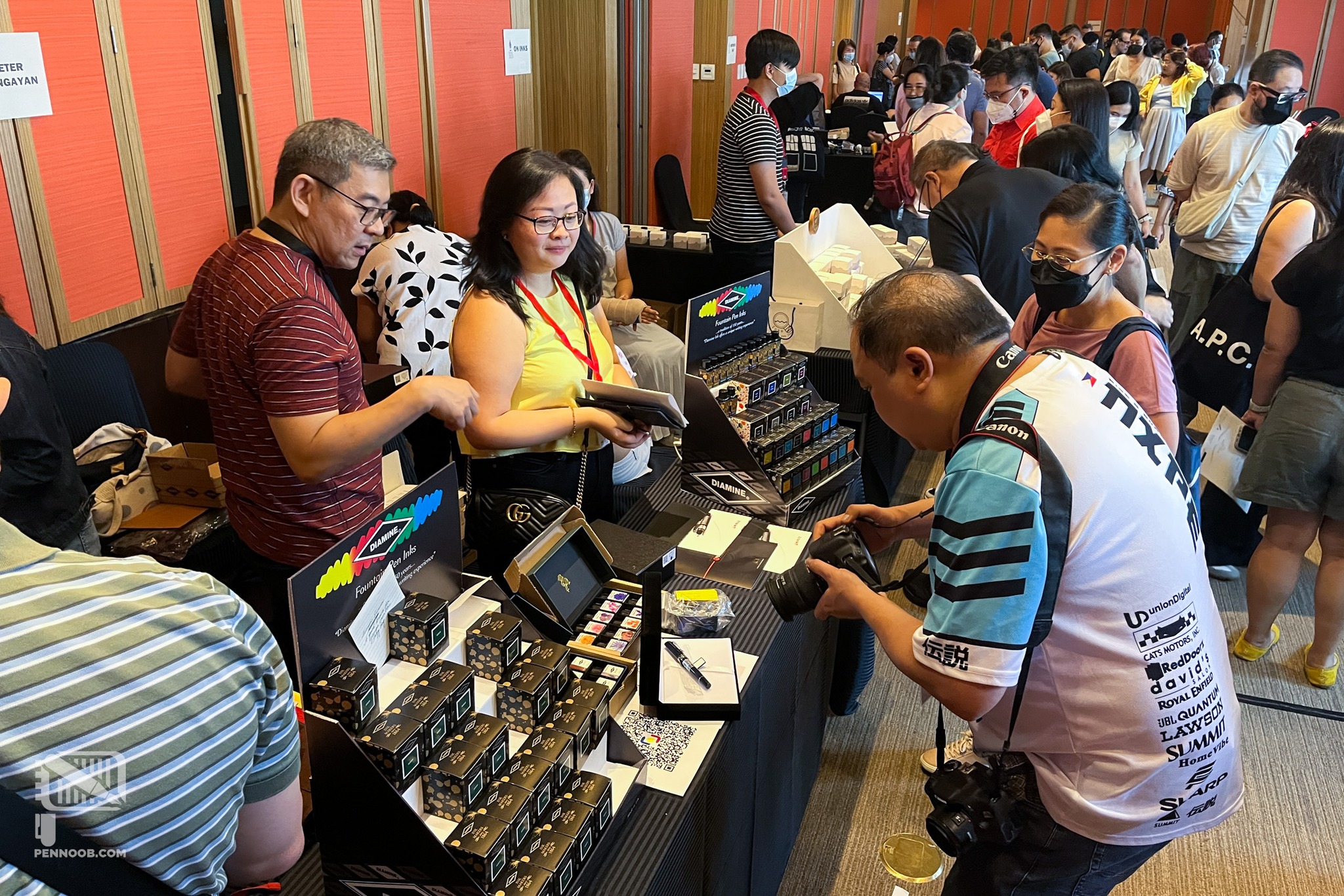
The last MPS in 2019, just before the pandemic, had brought in 700 visitors. This year, that number was eclipsed on just the first day, and by closing time Sunday, over 2,000 pen lovers—from hardcore and advanced collectors picking up $2,000 Nakayas to eager newbies thrilled to get sub-P200 Wing Sungs—had showed up. The turnout wasn’t totally surprising, considering that Fountain Pen Network-Philippines (FPN-P), the pen show hosts and organizers, now counts more than 12,000 members on its Facebook page.

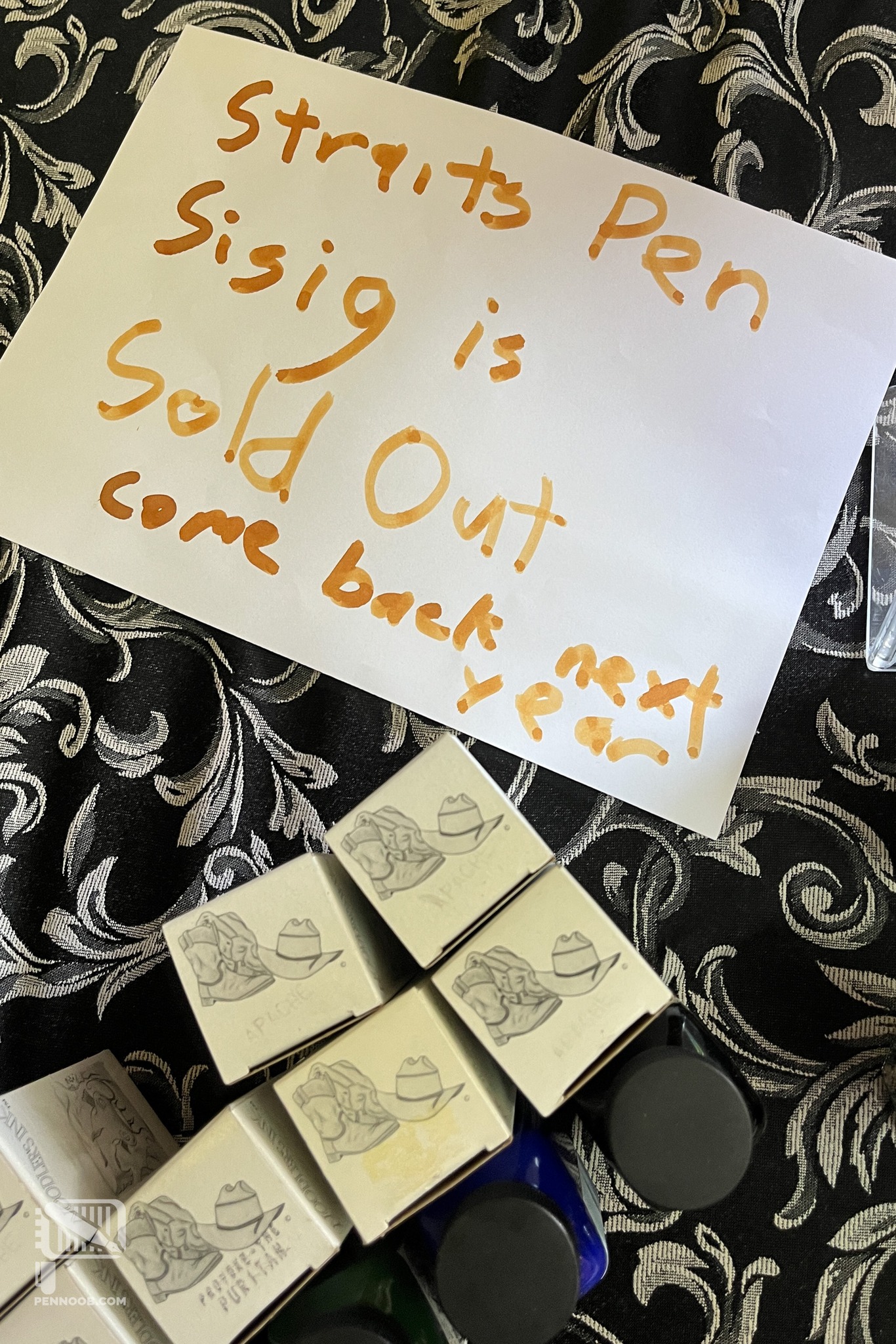
Aside from the country’s leading purveyors of writing paraphernalia—familiar names such as Scribe, Everything Calligraphy, Pengrafik, Stationer Extraordinaire, Leather Library, Leather Luxe, Shibui, Gav N Sav, JumpBid, and Kasama—foreign sellers from Singapore, Malaysia, and Japan such as Aesthetic Bay, Pen Gallery, Straits Pens, Musubi, and Toyooka Craft flew in just for the show. Nearly all the sellers reported robust sales at all price points.

As a longtime pen collector and co-founder of FPN-P, I’m proud of how the hobby has taken off in this country over the past decade, and also frankly amazed by how different our demographics are from the rest of the world. Fountain pen collecting, especially in the West, has long been the domain of predominantly old white men, inclined like I am toward vintage pens and high-end, limited-edition modern pens. 

FPN-P’s profile is distinctly different: mostly young professionals between 20 and 40, with far more women than men, happy to purchase the entire color range of inexpensive Chinese-made Jinhao 82s (and inks to match) but just as savvy about the latest Montblanc release, keen on using and enjoying their pens rather than keeping them in boxes. As the MPS attendance showed, ours is an exuberant, generous, and democratic community, with little sense of entitlement or competition, dedicated to sharing the joy of pens, of expressing your individuality and artistry with the ink on your nib, of doing something personal and authentic in this age of artificial intelligence.

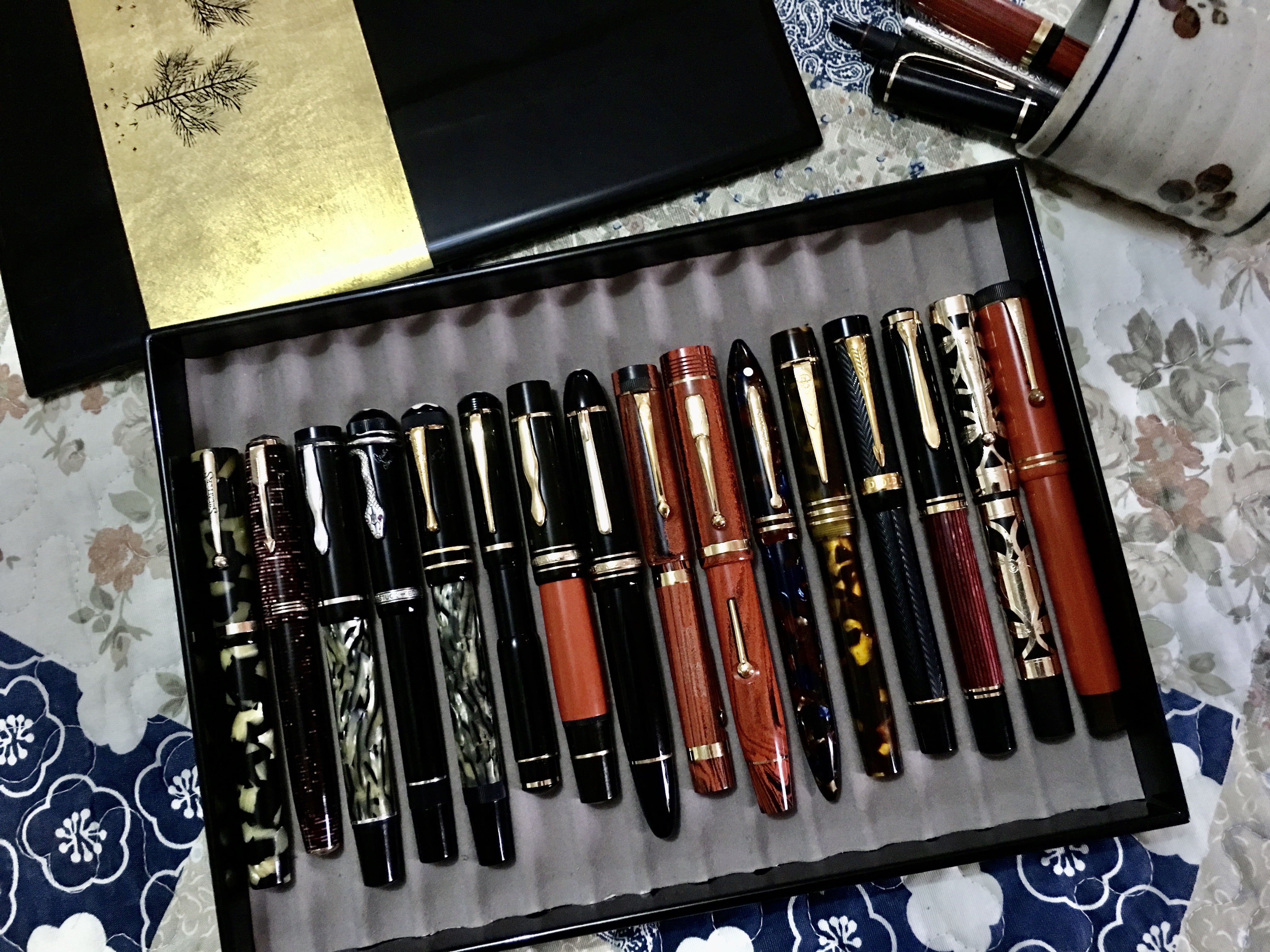
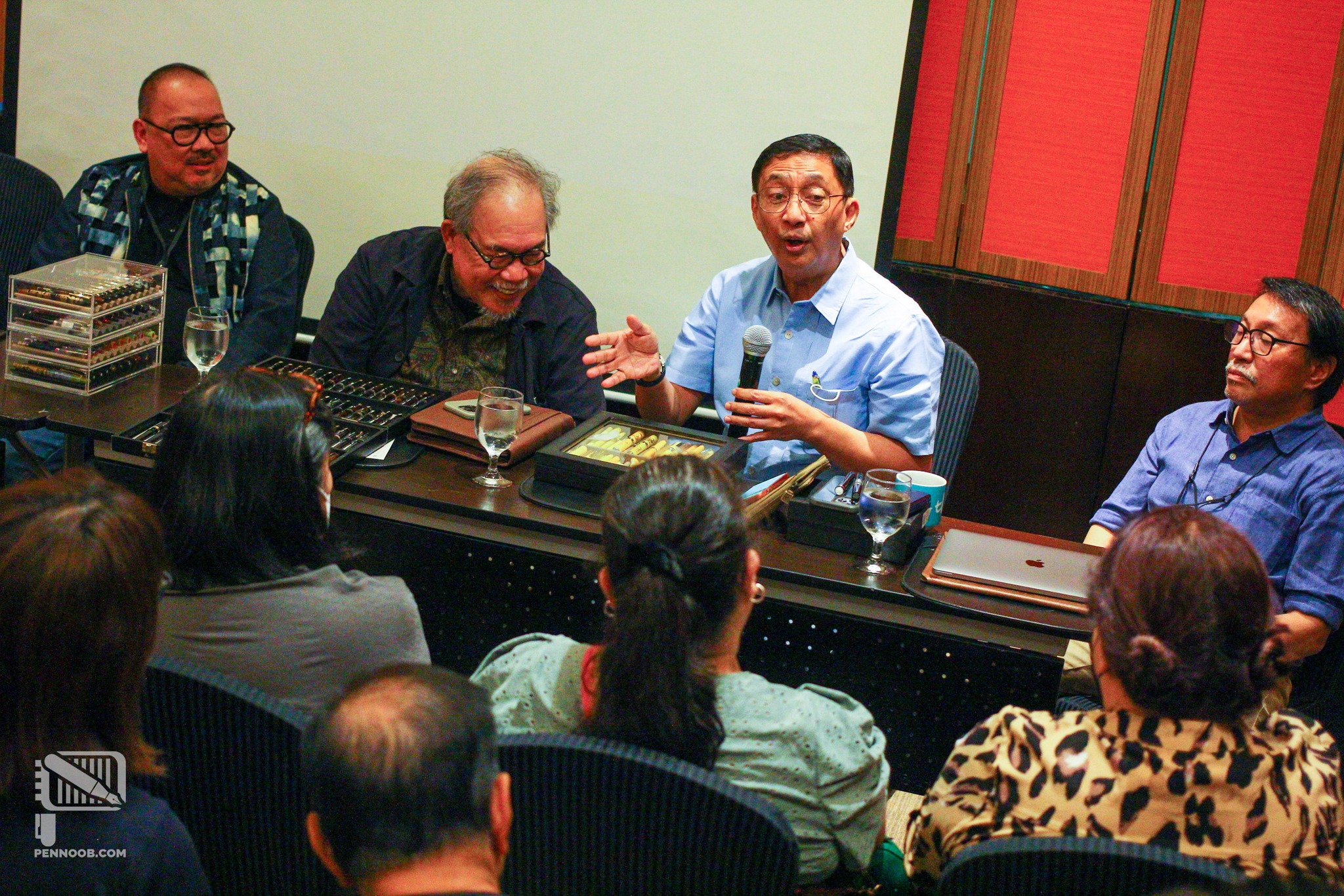
A highlight of MPS 2023 was a panel discussion devoted to the topic of “Curating a Fountain Pen Collection,” and I was privileged to share the table with fellow collectors Reggie Reginaldo, Amanda Gorospe, Jun Castro, Ronnie Geron, and Raffy Aquino. Each of us said a few words about how and why we put our collections together, given that each of us had a different focus: inexpensive pens, high-end pens, vintage pens, yellow pens, and so on.

Before talking about my passion for vintage pens (i.e., pens at least 50 years old, in many cases a hundred years old), I tried to explain what “curation” was all about. Here’s part of what I said:

Every collection begins as most love affairs do—with fleeting glimpses of the loved one, then seemingly chance encounters, then long chats over coffee before the steep and blissful freefall into a dizzying madness. 

For a moment, happiness and contentment reign. And then sadly follow the inevitable regrets, the disaffections, the “It’s not you, it’s me’s,” the parting with the old object of desire and its replacement by a new flame.

Today we’ll try to introduce some sense into this seeming cycle of bliss and despair. Curation means bringing some method into the madness, finding the inner logic that threads many disparate elements together.

The word “curation” is rooted in the Latin curare, “to take care of,” or to treat an illness, and here clearly the illness is in the collector, whom curation treats by providing guideposts to follow and guardrails against excess.

There are several kinds of collectors:

  1. Those who want anything and everything, although they might be more properly called accumulators (this describes 90 percent of us at the beginning);
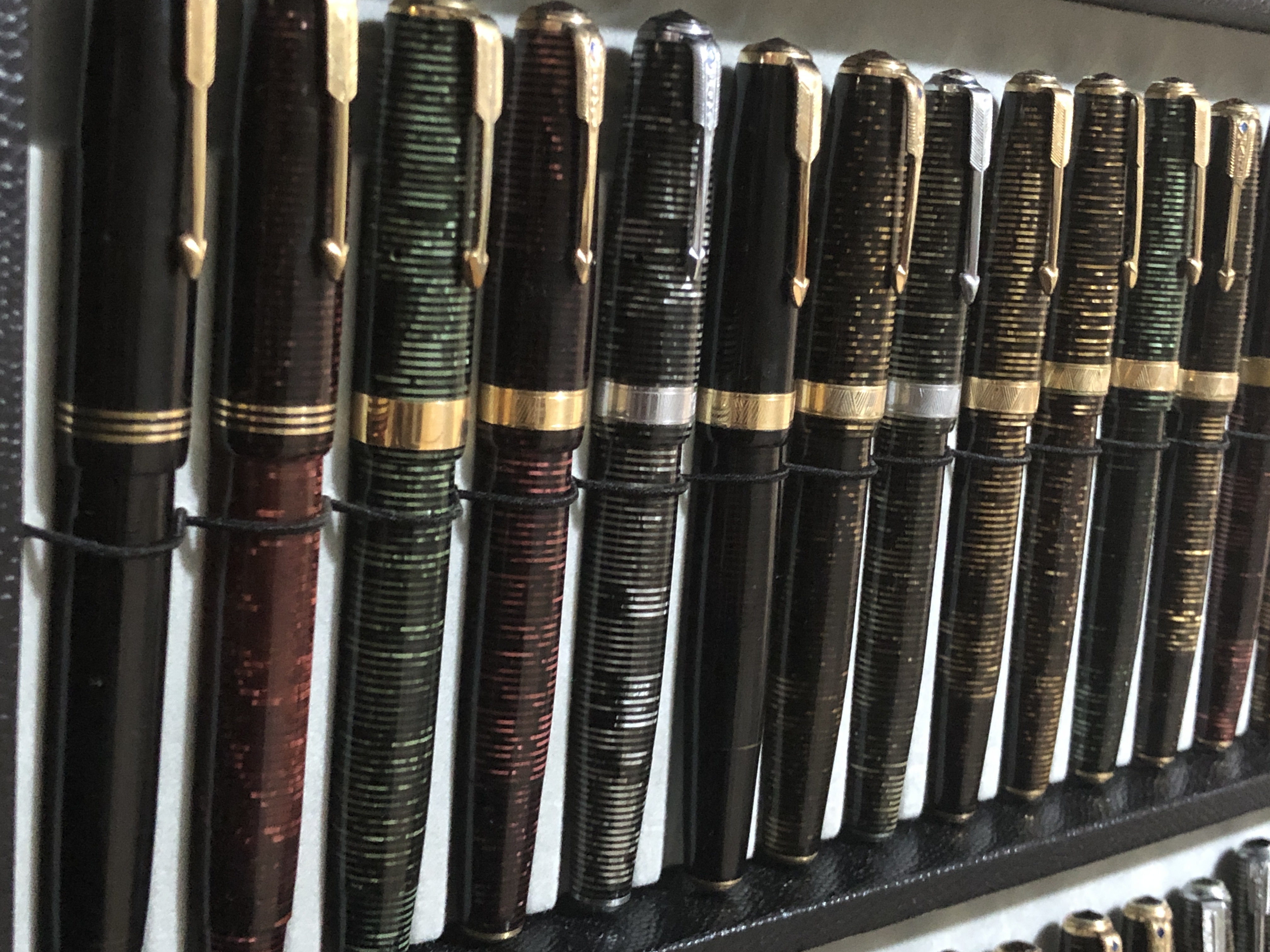
  2. Those who want everything of a kind (this applies to my fetish for Parker Vacumatics);
  3. Those who want the best or the most impressive of everything (this implies having the budget to go with your taste);
  4. Those who want some very specific things, for personal or even idiosyncratic reasons; and
  5. Those who get only what they need or can afford—perhaps the rarest of all collectors, the practical and disciplined kind.

Vintage collecting relies heavily on connoisseurship—on knowing the field and knowing what to look for. Surprisingly, it often involves less money than buying new pens. Of course there’s a cost to factor in for restoration and repairs, but even so few vintage pens reach the stratosphere of the thousands of dollars you would pay for a shiny new Montblanc.

You can collect based on brand, material, filling system, size, and of course price. For vintage you can add age and scarcity. Good working or repairable condition is presumed, although vintage collectors should always be on the lookout for cheap parts pens. 

Every quest for collectibles also involves what we might call “unicorns”—ultra-rare or one-of-a-kind pieces that exhibit some distinguishing hallmark of quality or technical innovation. These could be prototypes, custom jobs, or things in almost mint condition despite their age.

It also helps to know what you don’t like, or no longer like. For example, I generally don’t go for small and light pens, nor for blingy or too colorful pens. My pens are “lolo” pens—staid, conservative, almost severe, corny to most young collectors today.

Culling or cutting down is a good exercise, financially and mentally. I built up my collection over the years by selling five good pens to get one better pen. I have also sold very good pens that I once lusted after, but no longer spoke to me.

Curation, ultimately, is about knowing yourself. At a certain point in your collecting life, you have to take stock of your collection and ask yourself, “What do these objects say about me?” Is this the self-image I want to project, the one I’m happiest with? 

My answer to my own question is, I’m an old guy who likes old things, because they offer physical proof of life after death. We die, but our words—and the wording—go on. A vintage pen is an old guy lucky enough to find a new home. I’m happy to give him a shower and a warm bed, and all the ink he wants to drink.

Qwertyman No. 36: A Tourist in Taiwan

Qwertyman for Monday, April 10, 2023

MY WIFE Beng and I visited Taiwan with friends on a five-day holiday just before Holy Week, and returned home dog-tired but deeply impressed by what we had seen: a country not just surviving but staunchly moving forward, progressive and optimistic, despite living under the constant threat of invasion by its hulking neighbor and self-declared owner, China.

It was my fourth visit to Taiwan and my wife’s second, so we had witnessed the island’s wonders before. But we went back—this time with friends who had never been there—precisely because it had much to offer as a vacation spot. For me, Taiwan has largely been about food (especially the beef-brisket noodles and fruits like the giant atis and cherimoya), technology (like the exhilarating 3D I-Ride it has exported to Hollywood), and culture (exemplified by the legendary jadeite cabbage at the National Palace Museum). Economists and political scientists will surely have much more to look for and investigate in Taiwan, but my unsophisticated cravings were fully satisfied. 

The tourist in me observed that Taiwan had achieved First-World status, with elevated expressways, high-rise housing, clean waterways, and extensive transport networks. Taipei’s shops were open past 10 pm, catering to a busy nightlife. We took a day trip out to visit the Chimei Museum in Tainan, and boarded the High Speed Rail that zoomed down the island’s west coast at 236 km/h. Despite Taiwan’s high level of industrialization, the countryside remained lush with forests and greenery, and Taipei’s streets were litter-free. True, there were homeless people gathered around Taipei’s Main Station, living out of shopping carts and camping tents, but we had seen far worse in New York and San Diego. Some old-school courtesies persisted: on the subways and buses, younger riders still stood up to yield their seats to seniors.

That said, it was hard for me to shake off the feeling that we were experiencing an ephemeral pleasure. As we took a bridge over a river in Taipei, and reveled in the vista of a thoroughly modern city rising from its ancient roots as a Spanish trading outpost, I remarked to Beng, half-facetiously, that a few Chinese bombs could pulverize all that. China, I said, could “Ukrainize” Taipei, and blow the 101-storey Taipei 101 building, the National Palace Museum, the Shilin Night Market, and all the other attractions we associate with this city into smithereens. Beng said that I shouldn’t be making such horrible jokes, but I had to wonder how much of what I said was indeed a joke and how much of it was dire possibility.

The threat is certainly there—and has been there since 1949, when Chiang Kai-Shek’s losing Nationalist forces retreated to the island, took it over, and turned it into a thorn in Communist China’s side. China has repeatedly used shows of force around Taiwan to demonstrate its readiness and capability to employ “resolute and forceful measures to defend (its) national sovereignty and territorial integrity,” and while no explosively significant confrontations have taken place, China’s saber-rattling has only grown louder, provoked by presumptive American guarantees to help defend Taiwan in the event of a Chinese attack, and possibly emboldened by Russia’s invasion of Ukraine. (The US, of course, has been rattling its own sabers, particularly with the acquisition of more basing rights in the Philippines.)

You’d think that the specter of invasion would switch Taiwan into full military mode, with air-raid drills and sirens and tanks and soldiers in the streets, but no. When we were there, it was business as usual, with no sense of urgency, even as Taiwanese President Tsai Ing-Wen met with US House Speaker Kevin McCarthy in California, raising the cross-straits temperature further.

Taiwan-watchers such as David Sacks, whose post was republished by the influential Council on Foreign Relations last November, have warned against complacency, especially in the wake of Russia’s Ukrainian misadventure. According to Sacks, “Despite these growing worries and initial steps, actions remain far below where they need to be to deter China and respond to potential Chinese aggression. The increases to Taiwan’s defense budget over the past six years are commendable, but at 2.4 percent of gross domestic product (GDP), it is still well below where it needs to be…. While there is a recognition that the civilian population will need to play a large role in defending the island, the conversation about how to reform Taiwan’s reserve force is still in its infancy, with little consensus on what its role should be. Taiwan’s military lacks the munitions it would need to withstand an initial Chinese assault and its military services continue to pursue legacy platforms such as fighter jets and large naval vessels that will have little utility during a conflict. It is far from certain that there is buy-in across the military for adopting an asymmetric defense strategy.

“Beyond the military realm, Taiwan needs to do much more to increase the resilience of its society and decrease its reliance on trade with China…. Over 40 percent of Taiwan’s exports go to China or Hong Kong. While there is wide agreement that this is a major vulnerability, there is a certain amount of defeatism, with few ideas of how to reduce this dependence without massive government intervention.

“While the government is taking steps (albeit insufficient) to address the growing threat China poses, there is a worrying gap between officials and the public. Opinion polls reveal that Taiwanese people are not concerned about an invasion and believe war is unlikely in the next decade…. Understandably, most want to focus on improving their lives. There is a fine line, however, between stoicism and complacency.”

Is this a fatalism that we Filipinos seem to share? If China attacks Taiwan, can the Philippines be next, and what will we or can we do about it? (In my admittedly  pedestrian view, China has no need for a military invasion of the Philippines—which will be costly and troublesome, given our geography—so long as it achieves full control of the South China Sea. It will be cheaper and easier to subvert and suborn the government, if it wants pro-China policies to prevail.)

I was glad to be just a tourist in Taiwan, enjoying my cherimoya, instead of being a defense analyst pondering the medium term—or, for that matter, being a local fruit seller who might one day find a gaping hole where the orchard used to be.

(Photo from thetimes.co.uk)

Qwertyman No. 30: Alternatives to Cha-cha

Qwertyman for Monday, February 27, 2023

WE PINOYS know—as night follows day—that every time a new administration comes to power, a fresh initiative emerges to amend the 1987 post-EDSA Constitution. Fidel V. Ramos tried it with his ill-fated PIRMA campaign, followed by Joseph Estrada’s “Constitutional Correction for Development,” the attempt of Gloria Macapagal-Arroyo’s congressional allies to form a constituent assembly without the Senate, and even Noynoy Aquino’s reported openness to giving the President a second term. Rodrigo Duterte included “charter change” or cha-cha in his platform and tried to push it until Covid came.

Most Filipinos, let’s admit it, don’t even know what the Constitution contains, but a few of us seem hell-bent on changing whatever is in there. Never, of course, for selfish reasons like extending term limits (now why would we even suspect our politicos capable of such nefarious designs?) but for “economic provisions only” (although extending one’s term limit is a very healthy economic provision, as far as I can tell). 

Cha-cha is in the air once again, fellow citizens, going around the House and Senate like a marching band, despite President Marcos Jr.’s public disavowal of support for the proposal. 

Even the National Economic and Development Authority’s estimate that cha-cha—the convention and the plebiscite—could cost as much as P28 billion (yes, that’s a B) isn’t likely to deter its proponents from advancing their cause. With more than five years to go under BBM, a lot of plausible reasons could be found for coughing up that money. Why, even the President could change his mind over that period, persuaded perhaps by a groundswell of demand for cha-cha that he can’t possibly ignore. (Why am I suddenly thinking of that pool resort in Cavite with the artificial wave machine that we so enjoyed last summer?)

Perplexed by this insistence on the need for cha-cha now, I turned to my favorite chatmate, sounding board, and political counselor—ChatGPT—for some answers and explanations. (I know what you’re thinking—I’m just making all of this up—but no: I actually paid good money for this app, so I’m going to get  my money’s worth. If you don’t believe me, try asking it the same questions.) Here’s a transcript of my conversation with ChatGPT:

ChatGPT: Hello, How can I assist you?


Qwertyman: How important is cha-cha to the Philippines?


ChatGPT: Cha-cha is an important dance to the Philippines, as it represents their culture and traditions. It holds a special place in the hearts of many Filipinos and is regarded as a national dance. It is often performed in public gatherings and celebrations to bring people together and express joy and happiness.

(Hmmm, I don’t know where you got that, ChatGPT. Pinoys who remember Nestor de Villa and “Dancetime with Chito” might have a hankering for the cha-cha, but I don’t see any great demand for it from millennials or even their parents. Are you sure it’s that special to us?)


Qwertyman: Why cha-cha? Why not the twist or the shingaling?


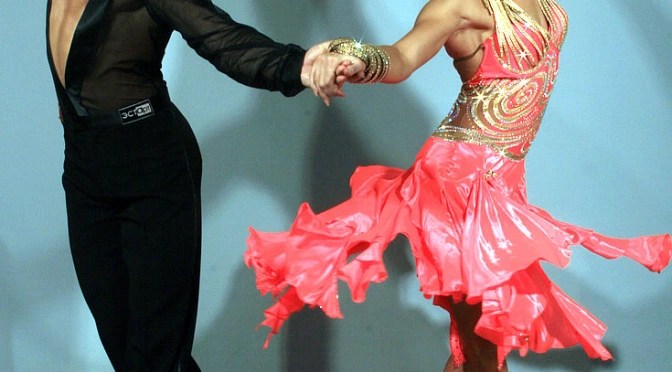
ChatGPT: The cha-cha is a distinctive Latin dance with an easily recognizable beat, which makes it easy to follow. It’s also more graceful and flowing than other partner dances, making it well-suited to more formal events. In addition, its pattern of three steps forward and two steps back is easy to learn, making it a great choice for beginners.

(That’s what worries me, ChatGPT. As you say, it’s “a great choice for beginners,” which is probably why a rookie senator is on top of the process. Some of us are also worried that cha-cha will mean two steps forward and three steps back.)


Qwertyman: But what if people just want to sit down and not do the cha-cha?


ChatGPT: That’s perfectly fine! There are many ways to have fun and enjoy one another’s company without having to do the cha-cha. You could play board games, cards, watch a movie, listen to music, engage in conversation, etc. Whatever makes you and the people around you comfortable and entertained is the best way to go!

(Totally agree! Someone should tell our esteemed lawmakers that they can do this, too—play board games, cards, watch a movie, listen to music, engage in conversation—rather than tinker with the Constitution, especially if it’s beyond their comprehension.)


Qwertyman: What are the dangers of doing the cha-cha?


ChatGPT: The dangers of doing the cha-cha include: 1. Potential for pulled muscles or sprains due to improper form, which increases the risk of injury. 2. Risk of slipping and falling since the cha-cha can involve quick, sharp movements. 3. Risk of strain on the joints due to the fast, jumping nature of the dance. 4. Risk of overheating due to the amount of movement required for the cha-cha.

(To which we can add: 1. The potential for a further decline in the quality of our leadership, by the extension of political dynasties into future generations of inbred politicians, raising the genetic potential for imbecility. 2. Risk of slipping and falling back into old ways and faces of governance. 3. Risk of strain on the national budget. 4. Risk of overheating the political climate.)

Qwertyman: Is it better to do the cha-cha today or some other time?


ChatGPT: That depends on what you have planned for today. If you have other commitments or would like to save the cha-cha for another time, it is best to choose an alternate date.

(Other commitments? Hmmm, let me think. Defending our patrimony in the West Philippine Sea? Achieving price stability for basic commodities? Fighting corruption? Raising the competencies of our children in STEM? Dispensing justice, especially in long drawn-out cases like the Maguindanao Massacre, the tokhang murders, and Leila de Lima’s incarceration? Providing housing, livelihood, and adequate social security to the poorest Filipinos? Is this list long enough?)


Qwertyman: What are the best alternatives to the cha-cha?


ChatGPT: 1. Bachata 2. Salsa 3. Merengue 4. Cumbia 5. Samba 6. Paso Doble 7. Tango 8. West Coast Swing 9. Bolero 10. Contemporary Latin Dance.

(I have to admit you got me there, ChatGPT. I’ve never heard of the bachata—unless you mean “ban charter talk”?)

(Image from The Adobo Chronicles)

Qwertyman No. 29: Balloon over Boracay

Qwertyman for Monday, February 20, 2023

WHEN THE balloon was first spotted high over Boracay, some people thought it was a new ride, a welcome addition to the banana boats and paragliders that the tourists couldn’t seem to get enough of. 

“How much does it cost? Where does it land?” asked Akmal from landlocked Uzbekistan, whose belly was white as fish and whose hair reminded the locals of the red seaweed that sometimes strayed into the island’s waters. 

“Does it have a basket? I don’t see any people,” said Frida from icy Norway, who had actually flown on hot-air balloons where they were popular, as in Turkey’s Cappadocia and California’s Napa Valley. 

“It’s not from here,” said Gordo, the boy from Manoc-Manoc whose job it was to lash the ferry boats from Caticlan to their moorings and to take the hand of passengers stepping onto the pier. He had seen everything there was to see in Boracay in all of his seventeen years, from the shameless couplings on the surf to the occasional victim washed up on the shore, and all cuts of humankind from cigar-chomping Texans to barrel-chested Samoans, and he knew what belonged and what didn’t. This silver dot in the sky definitely did not. 

As if having a mind of its own, the balloon drifted north of the island to Yapak over Puka Shell Beach, then back down again over White Beach, where it attracted even more observers. Men who had been using their telescopes and cameras to focus on the usual bathing beauties turned their gear skyward to where people were pointing, and those with the longest lenses snapped pictures of the aerial intruder, for posting on Instagram and Facebook as the curiosity of the day.

Unknown to them, however, the balloon had been spotted much earlier by the government’s Aerial Surveillance Bureau, whose chief had hastily summoned his staff to an emergency meeting at the ASB’s secret command center, on the fringe of a golf course in southern Manila. The ASB’s Director O, a retired Air Force general, was still pulling off his gloves when his subordinates dropped into their seats and the lights went out. A blurry image of the drifting balloon appeared onscreen.

“This unidentified object entered our airspace above the Spratlys at 0423 hours, when it was too dark to be seen by our human spotters. It has since set course for Boracay Island, above which it has remained since 0933 hours, when it was finally spotted by one of our boys who was chasing a monkey up a coconut tree. Now the question is, what is it, who sent it, and why is it here? Is it friend or foe? The President expects me to report to him in the Palace in one hour and I need answers!”

“Sir, if I may,” said his Deputy Director M, “it looks exactly like the one they shot down over the USA and Canada. It’s a weather balloon from—from that country—equipped with advanced surveillance hardware and sophisticated communications capabilities.” It had been ordered since the previous administration not to mention “that country” by name in discussions of national security, so as not to give offense to a favored neighbor, and the habit had stuck, even in private conversations.

“Let’s not jump to conclusions!” said Director O. “There are many other countries perfectly capable of sending up these balloons. For all we know it could be a Lithuanian, a Ugandan, or a Wakandan balloon. I’m not going to upset the ambassador from that country with unproven allegations about his country’s behavior—however outrageous, obnoxious, and objectionable its actions are in the West Philippine Sea, just between you and me.”

“But why is it here, sir? And why Boracay?”

“Good question. Don’t quote me on this, but during the last National Security Council meeting, we were told that that country is preparing to reveal a new Thirteen-Dash Line map, supposedly drawn in the 16th century just before the Spanish came, that extends all the way to Boracay!”

“What?! But Stations 1, 2, and 3 are inalienable parts of our national patrimony! As Winston Churchill said, ‘We shall fight on the beaches, we shall fight on the landing ground, we shall fight on the hills, we shall never surrender!’”

“Yes, but in Boracay, people make love, not war. Imagine having to clean up all that white sand after an invasion. Another six-month lockdown! Can Philippine tourism afford it?”

“So what do we do, sir? Do we bring down this balloon?”

“With what? I already called the Air Force to see if they could fly by the object, but all of our fighters are undergoing maintenance—change oil, check battery, adjust brakes, etc.”

“What about kwitis?”

“Are you making a bad joke in a national emergency?”

“No, sir! The DOST and DND have a secret research program based in Bulacan called the Katipunan Weapons Initiative To Initiate Security, or KWITIS. It’s a multi-stage kwitis that can protect the archipelago against missiles, drones, asteroids, and UFOs like the Boracay balloon! It’s totally indigenous and sustainable, because it uses kawayan for the frame and kiping for decoration and employs out-of-work firecracker makers in the off-season—”

Just then another aide burst into the conference room, breathless with news.

“Sir! Turn on the TV! The balloon is down. The balloon came down!”

They switched to a live feed from CNN, which showed the balloon settled on the beach, its silver skin acting like a mirror for the dozens of kibitzers crowding around it, taking their selfies and groufies with gay abandon. A couple of local policemen who had tried to restrain the crowd were taking their selfies as well, flashing the “heart” hand-sign. “The balloon touched down about fifteen minutes ago on its own, and it is quickly becoming the center of what could become the biggest Boracay party ever! There are still no obvious indications of where it came from or why it is here, but this balloon seems to be totally harmless, so far, even ‘cute,’ according to Loujay, who’s visiting from London,” gushed the reporter. 

And then small puffs of red, blue, and yellow smoke came out of the metal box at the bottom of the balloon, and for a minute the people shrieked and began running away, but as the smoke dispersed and the people inhaled the fumes, their faces lit up in ecstasy and they began dancing. Music also poured out of the balloon—the frenetic techno club mix that brought even the masahistas and the barbecue vendors to their feet.

“I know that, sir! That’s Stefano DJ Stoneangels!” said Deputy Director M, whose shoulders began moving up and down. “This is even more mysterious than we thought. We are under attack!”

“Indeed we are,” said Director O. “We need to investigate further. Pack up, boys, and bring your trunks, we’re going to Boracay!”

(Image from madmonkeyhostels.com)

Qwertyman No. 28: Catching Fluffy

Qwertyman for Monday, February 13, 2023

(Disclaimer: Our story today has nothing to do with the recent capture and deportation of the Japanese criminal mastermind known as “Luffy,” for which we congratulate our brave and vigilant law enforcers, although I have to admit to being inspired by that diabolically fearsome alias.)

HIS PHONE rang at the worst possible time. The chief of the Metropolitan Investigation Division was just about to reach the climax of his story—the ladies around him all open-mouthed and wide-eyed in anticipation—when the Tiktok “Moonlight” song, which he had been using as his ringtone, broke the spell, instantly sending some of the girls into their habitual gyrations.

“Chief!” exclaimed Melanie, his special girl in the club, “I didn’t know you liked that song! You’re so cool! Come, let’s dance!” She took his free hand and tried to drag him to the dancefloor, but he resisted. It was unusual for Chief Tiny (short for “Agustin”) to resist Melanie’s persuasions, but she could see from his look that this was something serious.

Chief Tiny had spotted the name on the call—Bungi, his lead investigator—and he knew that Bungi knew not to call him at this hour for any reason less than to report the mysterious sighting of a bearded man walking on the waters of Manila Bay. If this was just to tell him that his wife was at the station looking for him again, for which Bungi was supposed to have had a dozen excuses at his disposal, why, he was going to make sure Bungi was demoted to jail guard in charge of sanitation. Tiny was especially annoyed because he had been trying to impress the girls with his story of how he had found and captured Don Waldo—the country’s most notorious drug and gambling lord, compadre to this senator and that congressman, master of a reputed harem of 100 women, and ruthless widow-maker dozens of times over. Tiny had geo-located him through the Facebook feeds of his then girlfriend, the previous year’s Ms. Matabungkay, and had negotiated his peaceful surrender, much to everyone’s relief. Of course, he wasn’t going to tell them that Don Waldo posted bail one hour after he was arrested, and that the two men had exchanged winks at the station after the media photographers had had their fill. It was all part of his standard MO: catch the bad guy, work out a deal, and let him off the hook on some technicality. 

“Boss,” said Bungi in a whisper over the phone, “we found him—Fluffy.”

“Fluffy!” Tiny screamed with all his 250 pounds, jolting everyone. “Are you sure it’s him, the Fluffy, ourFluffy?”

“Yes, sir. Of course they call him ‘Fruffy’ in Japanese, but I saw him myself—absolutely no doubt he’s our man.”

As Chief Tiny continued to chat with his caller, Melanie shrank back into her seat beside the chief, trying to catch as much of the conversation as she could while collecting her own thoughts. She knew this man called “Fluffy”—personally, professionally, biblically, in all kinds of ways. When the chief wasn’t around, Fluffy took his place in her private quarters, in a condo overlooking the Pasig River, from the other side of which she had triumphantly risen. Initially there had been a language problem—his vocabulary would have been considered coarse even in Japan—but what they needed to communicate did not require too many hand-signs. What didn’t need explaining was his nickname, made obvious by the two clumps of steel-woolly hair on his head, like a poodle.

From his Pinoy bodyguard, Melanie learned that Fluffy ran an extensive Japanese mafia in the Philippines, which controlled the distribution of everything from fake Japanese car parts, Ebisu dolls, Voltes V figurines, and ramen noodles. They competed with an equally vicious Korean mafia engaged in pushing fake Korean car parts, BTS coffee mugs, CLOY T-shirts, and kimchi, as well as a Chinese mafia flooding the market with fake American, European, and everyone-else’s car parts, imported galunggong, POGO workers, and tikoy. Sometimes the rivalry got too hot and blood was spilled on Manila’s streets, giving Chief Tiny unnecessary headaches that required a few hours with Melanie to cure. But now Melanie herself felt the onset of a massive migraine: if her two patrons found out about the other and their common interest, then all hell would break loose.

“Sorry, girls, but I have to go,” Chief Tiny announced, getting to his feet. “I have to catch a master criminal.” With that, he gave Melanie a quick hug, and hurried off.

Melanie had to think fast. Chief Tiny made her feel protected—not only when he encircled her in his ham-like arms, but more importantly when she or her friends ran into trouble or needed a big favor like a police escort for a relative’s funeral. Fluffy was strange but sweet, gifting her with exotic desserts like green tea cookies and mochi; she was scared but also thrilled by his insistence that she take on his tattoos. Whom would she choose? She thought of sending Chief Tiny an anonymous text message telling him where Fluffy was, but then they already knew that. She thought of sending Fluffy another message to tell him that Chief Tiny was on his way to get him, but if he ran away then that would only prolong her own predicament. She decided to let fate take its course and to stick by whoever survived. Meanwhile, she wasn’t going to waste her time, and moved on to the next cubicle to make the acquaintance of a Korean gentleman who reminded her of that oppa Gong Yoo.

Two hours later, Melanie and her new partner were happily warbling BTS’ “Butter” on the videoke: Smooth like butter, like a criminal undercover / Gon’ pop like trouble breaking into your heart like that, ooh!”Suddenly she heard two all-too-familiar voices from the other side.

“You’re very hard to catch, Mr. Fluffy! You’re very good!”

“No, Mr. Tiny, you’re better because you caught me, haha!”

“Next time, don’t hide under the table, haha! That’s the first place we look!”

“Thank you for not shooting me, haha!”

“How can we be friends if I shoot you, haha! Now, let’s have a good time—I will introduce you to my very pretty girlfriend!”

“You also have a very pretty girlfriend, also here? Me, too! But my girlfriend is prettier, haha!”

The Korean gentleman in the next cubicle was perplexed. “Melanie! Where you go? Why you hiding under the table?”

(Photo from bbc.com)