Penman No. 49: To the Writer at 25 (Part 2)

John and ChristinePenman for Monday, June 3, 2013

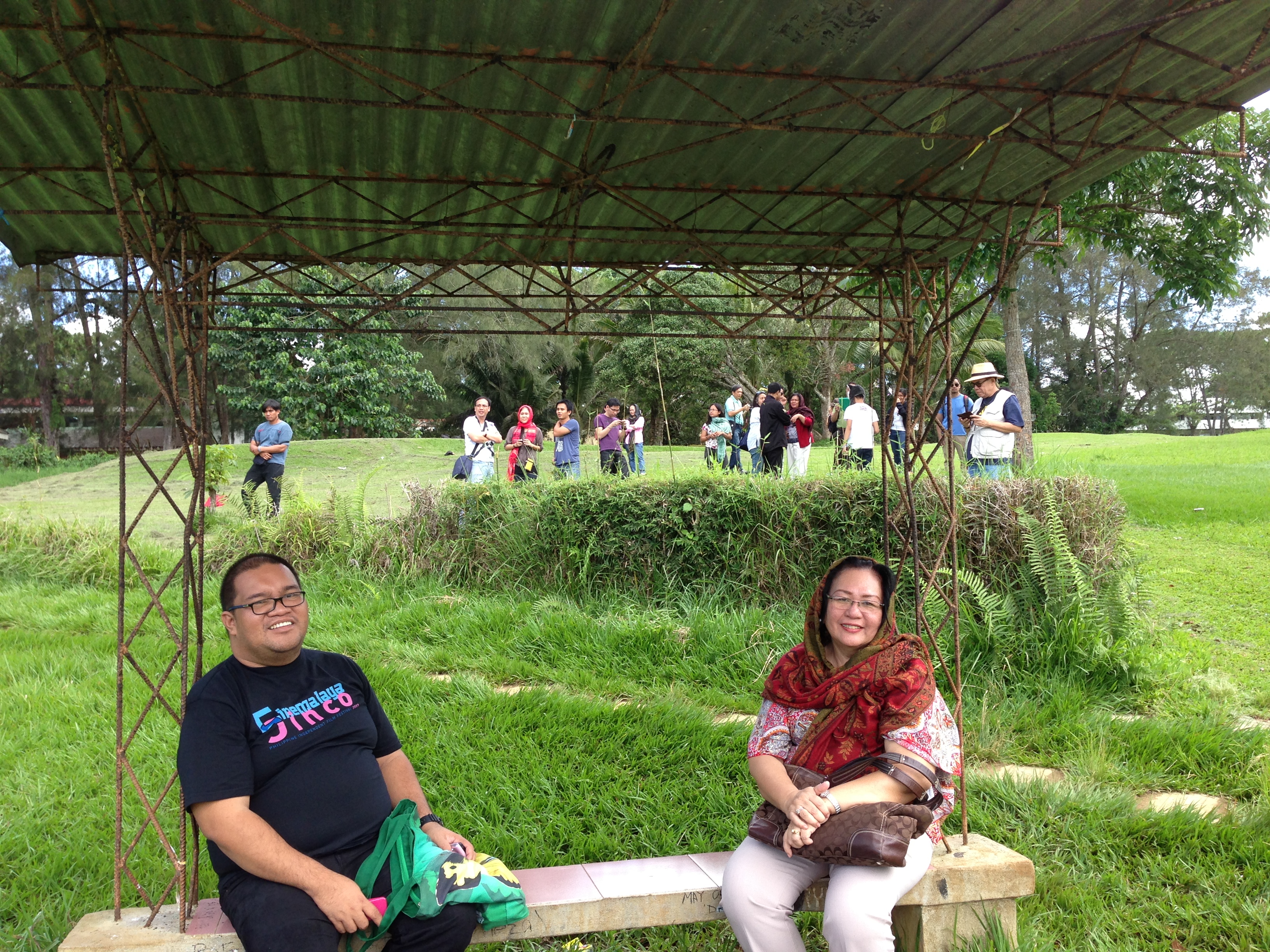
TO CONTINUE from last week, here’s what I told my young audience at the 20th Iligan National Writers Workshop (that’s them in the picture above, with panelists John Iremil Teodoro and Christine Godinez-Ortega in the foreground) at the MSU-Iligan Institute of Technology:

Writing in The Atlantic a few years ago, Max Fisher addressed the question of age and artistic productivity. “When in life are we most creative?” he asked. “Do we peak when we are young and energetic, or old and experienced?” Fisher brought up three answers, each with its own champion.

First, he suggested, “We peak young.” He quoted Kazuo Ishiguro—who incidentally is my exact age, born 1954—who said: “There’s something very misleading about the literary culture that looks at writers in their 30s and calls them budding or promising, when in fact they’re peaking.” According to Ishiguro, he had been “haunted by the realization that most of the great novels had been written by authors under 40.”

Second, “We peak in middle age.” Fisher cites a psychologist from UC-Davis who established that while “poets and physicists tend to produce their finest work in their late 20s… geologists, biologists and novelists tend to peak much later, often not until they reach late middle age…. Unlike poets, who peak early and fade quick, fiction writers tend to ripen and mature with age.”

Finally, says Fisher, “We peak old (sometimes).” Here he falls back on Malcolm Gladwell of Tipping Point fame, who points out that “Some poets do their best work at the beginning of their careers. Others do their best work decades later. Forty-two per cent of Frost’s anthologized poems were written after the age of fifty. For Williams, it’s forty-four per cent. For Stevens, it’s forty-nine per cent.”

I myself suspect that, with enough research, we can come up with all kinds of numbers to support any one of these propositions. There will always be the prodigious Marlowes and Poes and Rizals and Plaths who will streak like a comet across the night sky in their 20s and 30s—and perhaps not incidentally die soon after. Some writers, even if they live long, will produce a burst of brilliant work in their early years, and then drop the pen, or be little heard from again.

Paz Marquez Benitez published the classic “Dead Stars” when she was 31, and Angela Manalang Gloria came out with her book of poems, which she would be known for, at 33—but they would forever be those 30-somethings and no older in our literary appreciation. Nick Joaquin published his first poem, “The Innocence of Solomon,” at 20, “May Day Eve” when he was 30, and “Portrait of the Artist as Filipino when he was 34, but The Woman with Two Navels wouldn’t come until he was 44, and of course he continued writing and publishing practically until his death at 86 in 2004. NVM Gonzalez was 26 when he published The Winds of April in 1941; he was 43 by the time he wrote “Bread of Salt” in 1958, and 46 when he published The Bamboo Dancers in 1960. And like Joaquin, Gonzalez demonstrated longevity, working well into his last years. Speaking of longevity and sustained production, we have Leo Deriada and Tony Enriquez, plugging away, I’m sure, at another prizewinning novel or story, as they’ve been doing all these decades.

We’ll see, however, that most of our best writers, especially those who lived past their 70s, produced their most memorable work between their 20s and 40s. Rarely have we found a Dostoyevsky, who published The Brothers Karamazov four months before he died at 59 (my present age). Jose Garcia Villa’s writing might as well have ended with the comma poems of Volume Two in 1949, although he lived for nearly half a century more. Franz Arcellana’s literary legacy really lies in Selected Stories, published in 1962 when he was 46; I know of no more stories that he wrote until his death 40 years later in 2002.

You can draw your own conclusions and prescriptions, but this is mine: write what you can when you can, the sooner the better. The best time to write that story or that poem in your head is today, not tomorrow, and never mind if it turns out to be bad, because that’s what tomorrow is for, for the insightful and merciless and inspired revision that separates the mediocre writer from the truly talented and committed.

Of course I should also say that to writers of my generation, with a slight difference: write what you can while you can, because tomorrow may not come around. Today we live in an intensely youth-oriented culture, and some days it may seem like only the young get all the attention—which they deserve—but we are not in competition with them. Rather we are competing with ourselves, with time itself, and with the ages.

Now, what would I do—or what would I advise a writer to do—if I were 25 today?

1. Focus on your first book. If you write only one book in your life, then this will be the most important thing you will leave behind, not counting your children—or maybe even counting them. Your first book will be even more important than an MFA or your MFA thesis, which, truth to tell, no one but your defense panel will read. Some students I know dithered for years in a vain attempt to perfect their MFA or PhD thesis projects. For me, much of that was wasted time. Do a thesis worthy of passing—and then spend time cleaning up the text and shaping it into a reader-worthy book, a book with your name on the spine. And of course there are good books and bad books, and some days you wish an awful author had desisted from publishing and spared a few trees. But you’ll have to take your chances and get that bad first book out of the way, or you’ll never get to your good second one.

2. Focus on your second book. Your first book will likely have expended everything you’d always wanted to say. So now, what? Once you’ve mined your own young and unavoidably angsty life for material, what’s left for you to write about? Why, the world of course, although that world may seem awfully small at 25, especially if you haven’t been looking too closely at anyone but yourself and your friends. The real challenge of writing for me isn’t writing about oneself—which is, admittedly, an inexhaustible subject, a continuing mystery—but about strangers, whom the writer then makes as familiar as oneself. That’s what the best writers have done—perform great acts of invention, of transport, of sheer imagination. You have to believe to believe that there is more than one book—indeed, more than one life to plumb—in you.

3. Attend a workshop or two, but learn to hunker down and to work on your own. Young writers today seem enamored of workshops, and that’s understandable to a point, as writing is among the loneliest of labors anyone can assume, and the young writer will need the affirmation and the comfort of the company that workshops provide. But workshops can’t be a crutch; life isn’t an eternal summer where you can keep tinkering with a draft in the hope that someone out there in some workshop will finally like it. Past your second or third workshop, keep the workshop in your head, and begin to write, in productive solitude, in the silent company of your presumptive fellows—Chekhov, Rilke, Salinger, Joaquin, Alfon, Gordimer, Lahiri, or whoever moves you to do as they did.

4. Stop arguing, and leave the polemics and the criticism to others. You don’t have time for that, and it can distract you from what you should be doing, which is writing more of your own work. While criticism can help clarify our own aims and means, these debates can sap too much of a writer’s psychic energy, energy one needs for his or her own poetry.

5. Lastly, listen to old fogeys like me, and listen closely—but make up your own minds, make your own mistakes, and don’t be afraid to make them, or you’ll never get anything right. Not everything you write will be a work of genius; indeed, much of it will very likely be immemorable. But if you endeavor to write well and to write enough, sooner or later, that masterpiece you might be remembered by will come. Desperate to earn a living from his writing, Chekhov wrote more than 200 stories in his lifetime; except for the most devoted fan, no more than a dozen of these stories will be familiar to us as classics. But he would not have come up with that glittering dozen if he hadn’t written 190 other less worthy pieces. So nothing is ever wasted in writing. Your misfires and your false starts are part of your investment in the enterprise of a lifetime.

Would Rizal be Rizal without the Noli and the Fili and Mi Ultimo Adios? Perhaps, but he would be a diminished Rizal, whose martyrdom would have lost much of its resonance. Will it be sacrilege to suggest that we admire Rizal less for his actions than for his writings? Were his writings not, in fact, largely his deeds? In any event, they are what live on—what he wrote at 25 and in the few years left to him after that.

As Hippocrates put it so well, “Ars longa, vita brevis,” often transposed into “Life is short, but art lives long.” May we all write something worthy of surviving us—the sooner the better.

Penman No. 44: Pen Boys’ Weekend

Chito and JPPenman for Monday, April 29, 2013

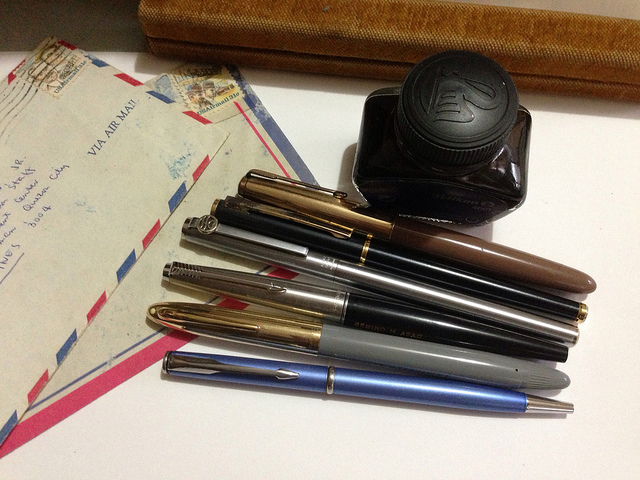
AS IF two trips up to Baguio in early April weren’t enough, I went up a third time later this month. But while my previous sorties had to do with literature—high-minded work, you might say—this third one was purely for fun… and, well, okay, some education of the esoteric kind. That education, I hope, properly qualifies this piece for the Arts & Culture section, particularly as it has to do with my favorite subject of discussion, fountain pens—that’s right, those inky instruments of insistent individuality.

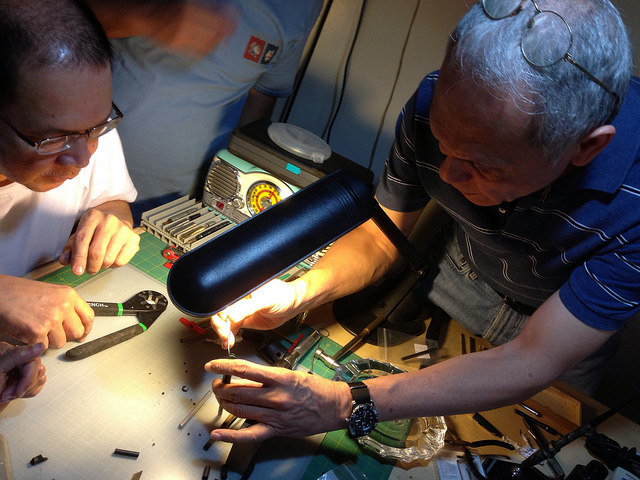
The members of our five-year-old pen club, the Fountain Pen Network-Philippines or FPN-P, had long planned to hold a vintage-pen-repair workshop in Baguio, and this month it finally happened. Why Baguio? Because that’s where our host—the Bali-based Fil-Am pest exterminator (seriously, that’s what he does for a living) Butch Palma—keeps house when he’s in the Philippines, with a veritable pen repair shop and laboratory in the basement. After some hemming and hawing, seven diehards signed up for the workshop: the onetime mechanic, nurse, and now banker JP Reinoso, our local “nibmeister” or master of nib repair and modification; the retired pharmaceuticals executive Chito Limson; the lawyer and DepEd Undersecretary Albert Muyot; the UP engineering major Jonathan Isip, our resident geek and IT specialist; the UP Special Ed grad student Cesar Salazar, who’s had as rich and varied a business background as any; and the two Butches, Dalisay and Palma.

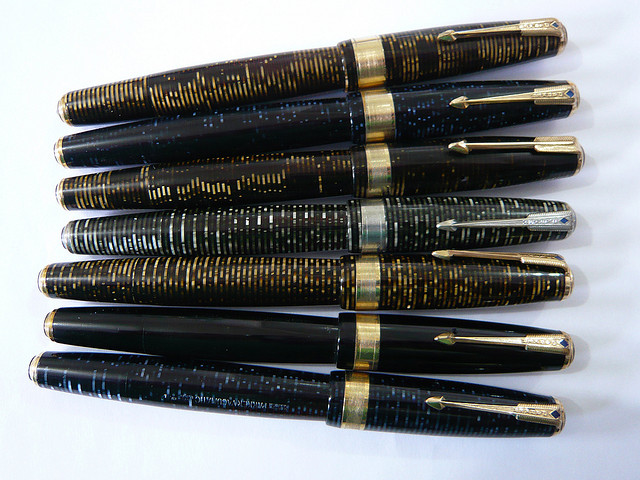
In FPN-P, my tocayo and I are known as the vintage-pen guys, since our collections (about 200 pens for me, and double that for The Other Butch, or TOB as he’s affectionately called in the group) lean heavily toward prewar pens. I have about 60 Parker Vacumatics—fabulous pens and eye candy, with colorful shimmering stripes—and have learned to repair them myself; TOB also likes Vacs, Sheaffers, and gold pens, and is far more advanced and experienced at repair than the rest of us. But what’s even more impressive about TOB is his armory of pen-repair tools, including a mean-looking heat gun and Dremel drill, maintained and arranged as carefully as a conscientious dentist might treat his picks and forceps. (The comparison isn’t as fanciful as it may seem; the dental pick is one of a pen repairman’s most constant friends.)

Fountain-pen repair is a lot like vintage-car restoration. You want the final product to come out all spiffy and shiny, but there’s a lot of work to do—often insanely complicated work—under the hood. You don’t need just the skills, which no one really teaches; you also need the parts, supplies, and tools, which can be as arcane as they come, such as an inner-cap puller for Parker pens, sac protectors for Sheaffer Touchdowns, lever boxes for hard-rubber Watermans, and rubber sacs and diaphragms of many sizes. These aren’t things you can pick up at True Value; they have to be sourced online, and then painstakingly practiced with, inevitably at the cost of a priceless pen or two.

And when a repair newbie’s eagerness outstrips his skills or his patience, disaster happens. Thirty years ago, as I was just getting hooked on pens, I found a rare, mustard-colored Parker 51 Vacumatic in a thrift shop in Michigan for 25 cents—not bad for a pen worth at least 1,000 times more—and promptly cracked the barrel with a twist of the pliers. (Memo to self: heat the barrel with a hair dryer before attempting disassembly, to let the plastic expand.)

Vacumatics

You would’ve thought that—dozens of fixed Vacumatics later—I would be a master at this, and maybe I thought so, too. But at TOB’s workshop, I made another dumb newbie mistake: using a tool I didn’t know without reading or following instructions. The tool in point was TOB’s heat gun, which sends out a blast of hot air like some kind of light saber. I was kidding my tocayo about his having a heat gun instead of a hair dryer because—well, if you see his shiny, saintly pate, you’ll understand why—and then I turned the heat gun on a 1940 Vacumatic that I was going to use to demonstrate my graduate-level skills to the nervous newbies. But, alas, before I could say “This is how…”, the heat gun vaporized a chunk of the pen’s barrel, and there in a smoky wisp went another of George S. Parker’s creations, having survived for over 70 years before some dumb monkey with a PhD zapped it to pen heaven.

Happily the rest of our weekend’s forays into the art of reviving dead writing instruments went much less dramatically, with positive results. Taking a break from headaches in primary education, Usec Albert (one of three Usecs in FPN-P, big fountain pens being a lawyer’s weapons of choice) learned how to replace a “jewel” or an ornament in the butt of a ca. 1960s Parker 61, Chito repaired the 1940s Vac of San Beda Prof. Pidoy Velez (threatening to bill him P8,000 per hour for the three-hour service), JP showed me how to breathe life back into a 1930s Touchdown, and TOB put together a pretty 1938-ish blue Esterbrook using a cap and barrel rummaged from my parts bin (and I found a black Vac barrel from his, to replace the one I ruined), so in the end, everything worked out just fine for the pen boys. (And just to get this straight, at least a third of FPN-P’s more than 300 registered members are female, some of them—the amazingly talented Ms. Leigh Reyes instantly comes to mind—blessed not only with formidable pen collections but with divine calligraphic skills as well.)

We didn’t do too badly as amateur pen repairmen go, but we were glad to be reminded that for truly difficult jobs and truly valuable pens, there are pros we can always tap around the world for their unique expertise. For the longest time, the bible of pen repairmen was the late Frank Dubiel’s “Da Book,” but a new generation of more scientifically savvy restorers has taken over. The legendary Richard Binder (who lent his name to the word “binderized,” to mean exquisitely finetuned and smoothened nibs) has himself retired, but nibmeisters John Mottishaw and Greg Minuskin can still refashion a perfect nib from a sorry scrap of gold, and out in Nebraska, Danny Fudge still services my Vacs and Duofolds when I can’t bear to break them myself. Ron Zorn in upstate New York has a backlog of at least six months, but he’s almost the only one who can properly put back a broken pen together—not with superglue or epoxy, but with a solvent weld that takes months to cure. (Can anyone here in Manila do these things? Beyond the simple repairs we did, the short and plain answer is no; Montblanc does do basic repairs in its service center in Rustan’s Makati, and sends on the tougher jobs to Hong Kong and Gemany.)

Is it worth it? That depends on how much you value your pens. If it’s a P500 Schneider or Inoxcrom, replacing it might be cheaper than attempting a fix; if it’s your grandfather’s Wahl Doric or Waterman Patrician, a $30 solution from Danny Fudge (plus postage, of course) will be a bargain. As far as I’m concerned, and as far as I can help it, every old pen deserves a second chance, if only because they’ll never be made again the way they were back in the 1920s. (That’s not entirely true: companies like Conway Stewart have come out with splendid revisions of the old classics, but these pens could cost you more than an iPhone.)

Boys being boys, and with our precious cargo back in their leather cases, we gathered around the table over scotch and coffee, and babbled into the wee hours about a host of manly subjects: cars and carburetors, terabytes and audio formats, Paul Simon and the Beatles, swords and light sabers, Malcolm Gladwell and Jared Diamond. Now and then some new words and brilliant ideas slipped into the conversation: hadoken, innumeracy, dyscalculia; now and then wives and women were mentioned, but not too often. And every five minutes or so, the talk drifted back to pens, about how gorgeous but oh how expensive the prewar Omas Extra Lucens was, about how Sheaffer Vac-Fills use a bewildering range of rod sizes, and, yes, how quickly vintage celluloid can melt in the wrong hands.

Such was our pen boys’ weekend, and—as I’m sure our wives appreciated—there are worse things men can spend their weekends on and weekends with than leaky Vacumatics.

Penman No. 15: Nerds and Nationalists

Penman for Monday, Oct. 8, 2012

THIS WEDNESDAY, the fraternity I’ve belonged to for over 40 years will be celebrating its first half-century.

I joined Alpha Sigma almost as soon as I stepped into the University of the Philippines in Diliman as a wet-eared freshman in 1970. It was one of the three things I wanted to be a part of in UP, an ambition I’d nurtured over my high school days at Philippine Science—the Philippine Collegian student newspaper, Alpha Sigma, and an activist organization (which turned out to be the Samahang Demokratiko ng Kabataan, via the Nationalist Corps).

They were indeed all of one package: I looked up to Alpha Sigma because the Collegian was then being lorded over by fraternity members like Vic Manarang and Tony Tagamolila, both editors in chief, and Gary Olivar, who wrote a column. It seemed to be the frat where all the cool and brainy guys were, but more than that, it also attracted a strong core of dedicated activists—people like the then-imprisoned Nilo Tayag (one of the original founders) and a quiet but intense young fellow named Benny Tiamzon, now reputed to be the supremo of the New People’s Army.

I can imagine how strange this must sound to many readers who think of writers and academics as deskbound people who should have better things to do than gather around a campfire like cavemen, chug beer, and thump their chests, literally and figuratively. Indeed, in this age of Facebook, NGOs, and Rotary Clubs, fraternities can be seen by people as something of an anachronism, a throwback to feudal privilege and the days of Big Men on Campus. Frankly, I can’t blame them. Just about the only thing most of us hear about frats today is when they haze poor, hopeful neophytes to a bloody pulp. And as far as I’m concerned, frats that do that deserve to be treated like the criminals they are—punished in court and summarily outlawed.

I’d be the last to deny that there’s a lot of childish and sometimes fatal stupidity you can associate with this kind of alpha-male bonding. But to be just as honest, at least back in the day when I was a 17-year-old looking up at the Oblation, there were worse choices I could have made than to join up with this happy bunch of nerds and nationalists.

Alpha Sigma’s founders established it in UP in 1962 precisely to go against the grain of traditional fraternities, which seemed to be interested only in beating each other up, in finding cushy jobs for their alumni, and parading their cars around campus. The initials “AS” may have been suggested by the frat’s base in the College of Arts and Sciences, but they soon stood for “Advocates of Scholarship” and “Alay sa Sambayanan.”

Since then, the fraternity has produced a long line of brothers who have distinguished themselves in nearly all fields of endeavor—not just in the usual categories of business and politics, but also in the arts, in engineering, in public health, and, of course, in public service.

To name just a few, they include the likes of Smart Communications founder Doy Vea, sociologist and journalist Randy David, legal scholar and professor Raul Pangalangan, and the late playwright Boy Noriega. Dodo Banzon runs PhilHealth; over in Seattle, Oying Rimon manages the public health portfolio of the Gates Foundation. I could go on and on with this list, but you get the idea.

We have many brods in mainstream politics—Sen. Gringo Honasan, Cong. Miro Quimbo, and former GMA men Mike Defensor and Gary Olivar among the most prominent of them. But the Left can also count Alpha Sigmans among its most revered figures; aside from the aforementioned Nilo Tayag, Tony Tagamolila, and Benny Tiamzon, they include Billy Begg and Joey Calderon who, like Tony, heroically gave up their lives in the fight against the dictatorship.

Like blood brothers, we have differences, disagreements, and debates within the fraternity, which is a healthy thing. If I thought a brod was doing wrong, I’d consider it my duty and indeed the best thing I could do for him to tell him so. I’ve never believed in a culture of silence and secrets, nor in blind obedience. I do appreciate the opportunity that the fraternity has provided for people from opposite sides of the political fence to meet and to argue civilly without fear of being bashed or punished—something I wish we could do more of in our society at large. I can’t forget that on the run during martial law, many of us found shelter and succor with the brods.

And for the young men who come to UP like I did many years ago and who find their way into our brotherhood, I have a standard set of messages waiting for them. Build up both your mental and physical strength, I say, but eschew violence—it has no place in the university. Value scholarship and service; develop your talents, so you can serve the people better. Be an example for others to emulate.

When a resident brod enrolls in my class and introduces himself to me, I tell him that I will expect more from him than from his classmates, and that he had better be ready to recite on demand, because I don’t ever want it said that I gave a brod a free cut or went easy on him. That’s how we can maintain high standards of behavior and performance within the fraternity, and guarantee that it won’t decline into irrelevance.

If you’re an Alpha Sigman and would like to reconnect with 50 years of a glorious tradition of excellence and service, join us in our grand reunion this Wednesday evening, at the Shangri-La Makati. Please email me for more details.