Penman No. 370: A Collection and a Collaboration

MatterCover.png

Penman for Monday, September 16, 2019


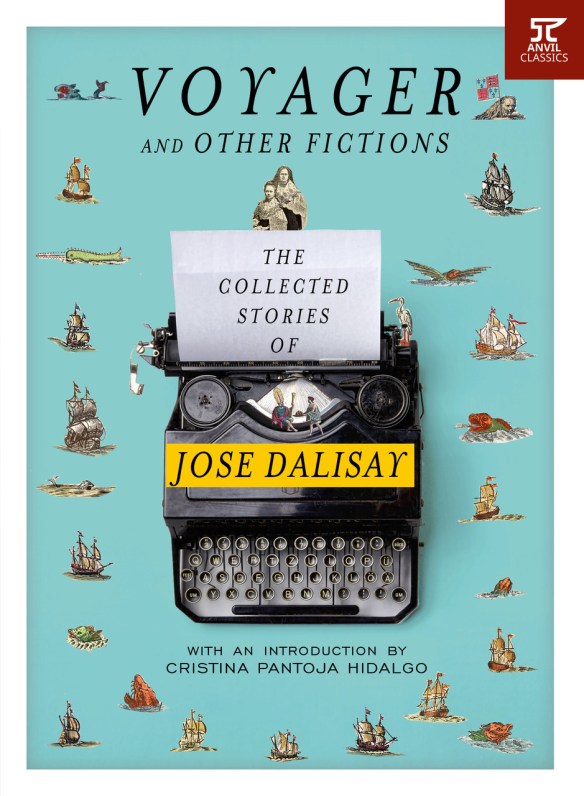
YOU KNOW that you’ve reached the hilltop, just in time to view the sunset, when they start compiling your works into hefty one-volume collections that could take a very long vacation on a very lonely island to plow through. Apparently I’m at that point, because Anvil Publishing has just released Voyager and Other Fictions: The Collected Stories of Jose Dalisay, a 500-page compendium of 43 stories written and published over four decades from the 1970s onwards.

I had been quietly at work on this collection these past few months with Anvil general manager Andrea Pasion-Flores and her team, and I was elated to see it being sold at the recent Philippine Readers and Writers Festival, and later at National Book Store, Anvil’s parent company. Let me just share what I said about the project in my brief preface to the stories:

“These stories span forty years, from 1975 to 2015, during which I turned from a lanky 21-year-old to a potbellied senior, and everything in between. I’ve chosen to present them in the chronological order of their writing, as best as my challenged memory could manage, hoping that this sequencing will reveal some patterns of growth and change in the way a writer selects and treats material as he himself is shaped by life and time.

“The inclusion of some juvenilia may be indulgent, but my excuse is that it may be instructive and inspiring (albeit by negative example) to the young writer who must be made to believe that better things come with age.

“I came to fiction in English from a background in drama and screenwriting in Filipino. This helps explain my interest in scene-setting and dialogue, in the unseen currents of thought and feeling that cross synapses and much larger spaces between people.

“While creative nonfiction occupies most of my time in retirement, largely for a living, nothing exhilarates me more than writing fiction—not the novel, for which I never mustered anything resembling affection, but the short story, which I find both exacting and exciting in its compactness.

“I’ve lately often argued that the best antidote to fake news is true fiction, because only fiction—not even journalism—has the power to draw us out of ourselves, out of the present, into that chill place where Honesty resides. Fiction redeems and saves the writer as much as it exalts the reader. That realization has been the personal reward of my work for these past forty years.”

After writing so many books for other people—I always say that rather than live to write, I write to live—it’s a balm for the spirit to see and review all my stories in one place, and to be reminded of fiction as my true love, the thing I most enjoy doing although the least materially rewarding. Indeed I’ve often said that my stories—invariably of lower and middle-class Filipinos like me—are the biographies of those people who can’t afford to hire me to write about them, whose lives are often dismissed as “ordinary” but which are in fact eventful and dramatic in their own fashion.
Voyager and Other Fictions cover 02 062819.jpeg

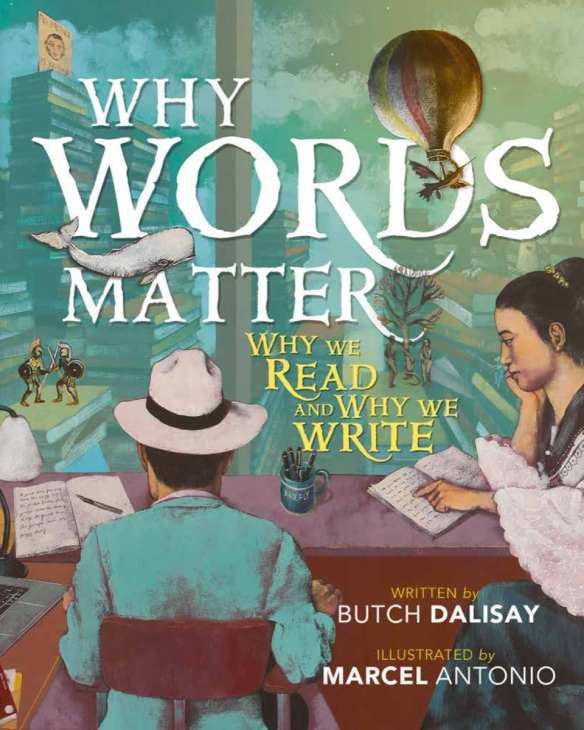
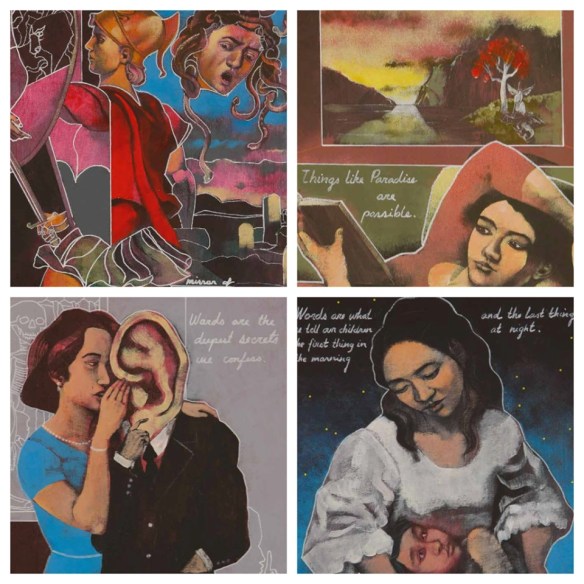
I had a second reason to rejoice with the launch of my newest book, Why Words Matter, last Saturday at the Vargas Museum in UP Diliman. With lovely and haunting illustrations by Marcel Antonio, the book is based on a TEDTalk I gave last year in UP about why we read and why we write, and how words can kill but can also heal. It’s being published by Gigo Alampay’s CANVAS (The Center for Art, New Ventures and Sustainable Development). Two other books were also launched alongside mine—a children’s counting book by artist Ioannis Sicuya, and one about horror stories from the martial law era that distills affidavits by claimants of martial law abuses into three sentence tales, illustrated by Renz Baluyot.

While this book was produced as a special, limited art-book edition (only 500 copies, all hardbound), CANVAS will allow the free, non-commercial distribution of material from the book, with proper attribution, in any medium, as part of its program for cultural literacy.

I must say that I’m awed by and deeply grateful for Marcel’s exquisite artwork (just as I appreciated Jordan Santos’ delightful cover design for Voyager). Not since I collaborated with Jaime Zobel on an art book titled The Island almost 25 years ago have I had such a visually engaging publication. While I firmly believe that every author—never mind how sharp he or she may imagine himself or herself to be—needs an editor, and even as I’ve welcomed most of my editors’ suggestions, I’ve also sometimes given my publishers and designers a hard time, having stubborn and stodgy ideas about how my books should look. I’m relieved to have had a very pleasant experience with the publication of these two new books, for which again I thank Andrea and Gigo for putting together. It’s a bracing reminder to this old man that, to a happy few, his words still do matter.

(Voyager is available at National Book Store; to order Why Words Matter, please email info@canvas.ph.)
70482837_2759972480728101_3571365147433762816_n.jpg

Penman No. 368: Scavenging a Smith-Corona

IMG_9518.JPGPenman for Monday, August 26, 2019
 

I HAD the privilege of being mentioned last week in the column of my historian-friend and fellow connoisseur of all things older than ourselves, Ambeth Ocampo, for having facilitated his acquisition of a 1962 Ferrari-red typewriter sporting a rare cursive typeface. Ambeth and I had run into each other at the recent Philippine Readers and Writers Festival in Makati, where we had separate events but both attended the visiting Gina Apostol’s talk on her new novel Insurrecto. Strangely enough, the last time we met was also in last year’s PRWF, where we realized to our mutual amusement that we were both carrying Agatha Christie fountain pens. (For the record, he has also been a lifelong penman.)

Occasionally—like I suppose his legions of fans do—I email him for his professional opinion of my recent antiquarian pickups, like a French book from 1706 about the Jesuits in “Nouvelle Philippines,” which got me all excited until Ambeth burst my bubble by telling me that “Nouvelle Philippines” didn’t exactly mean Manila or even Mindanao but a group of little islands out there in the stormy Pacific. That’s why I always hasten to explain that he’s the scholar and I’m the scavenger, although the things that he himself has scavenged—like Emilio Jacinto’s silver quill pen—are pretty fabulous.

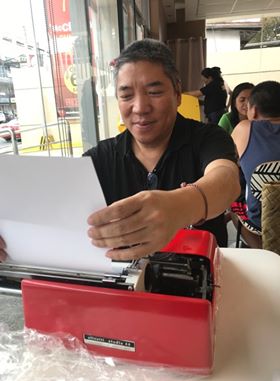
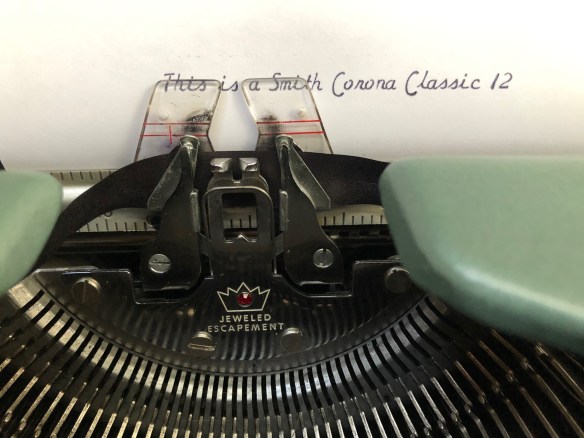
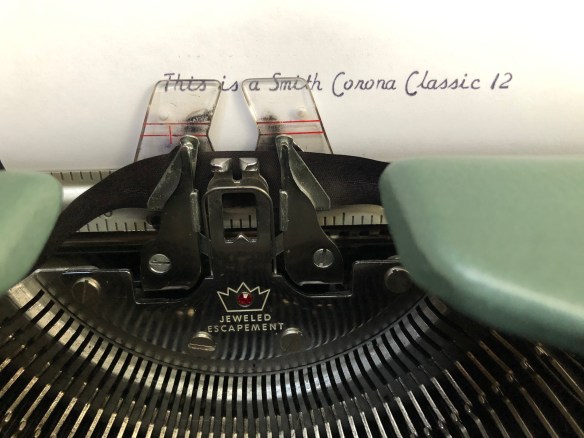
At the PRWF, he asked me if I knew of any cursive (or “script”) typewriters for sale; I said I did not, but would ask a collector-friend, Dennis Pinpin, if he had any. I have about two dozen typewriters (yegads) in my stable, and only one of them has script (that’s it up there, an SCM Classic 12), but Dennis has over a hundred, so he had to have one or two to spare. Indeed, when I asked Dennis, he did—a 1980s Olympia Traveller de Luxe, a sturdy German workhorse on which I had begun my first novel back in graduate school, and an older, fire-red Olivetti Studio. Which one should I get, Ambeth asked me. The Olivetti, I said, will likely have softer keys. The two gents met in a burger joint, had an enjoyable conversation, and a red machine crossed the table for what I knew was a bargain, Dennis being a soft touch for serious writers interested in having some fun with noisy old contraptions.

68253810_2592140314151181_4481874673470013440_n.jpg

But that wasn’t the end of my typewriter week. Like all true collectors, I keep telling myself “Okay, that was the last one,” knowing perfectly well that I’m lying through my teeth. For a couple of days midweek, I got all worked up about acquiring a 1920s Remington that had belonged to a Bulakeño associate of Jose Rizal; I had an agreement with the seller on the price and meeting place, only to be later told that some mysterious stranger had bought it from under my nose. (Ambeth, was that you?) I was beside myself with dismay and disgust, muttering oaths about palabra de honor, but then (like many of you would do, fess up) I sought to soothe my injured feelings by looking for something else to buy. I got lucky over the weekend on a sortie to Bangkal, picking up two lovely paintings by minor masters for the same coin I would have handed over for the typewriter.

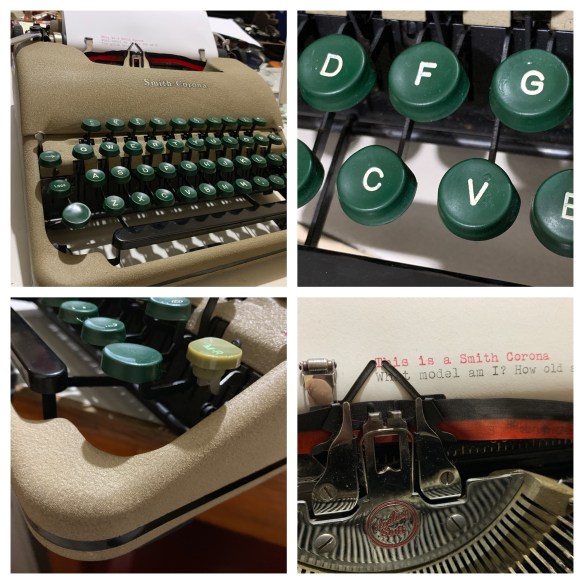
And it still didn’t end there, because—idly scanning the online ads while desperately finishing another corporate history (which puts the butter on my bread, and allows me the folly of these pursuits)—my eyes fell on a bright, clean-faced Smith Corona in a crinkle-paint finish they used to call “Desert Sand,” being offered by a seller not too far from me for the price of, shall we say, a couple of dinner-and-movie dates with Beng (sorry, Beng!). I PM’ed the seller, who said the machine had been reserved by someone else. Drat, I thought, but nobly messaged back that I respected dibs, and that if that deal fell through, then I was next in line.

The next day I got a message that the other fellow had failed to show up, and that the Smith Corona was mine to take: destiny! Now I should admit that this was going to be my sixth Smith Corona, the typewriter equivalent of either gluttony or a very unimaginative diet, but as all true collectors know (I really should have an official True Collectors T-shirt made), redundancy is never a problem, except to spouses (and thankfully Beng prefers redundancy in my collectibles to redundancy in spouses). I drove out and picked up the machine, which was being sold out of a Japan-surplus stall in Tandang Sora.

IMG_0230.jpg

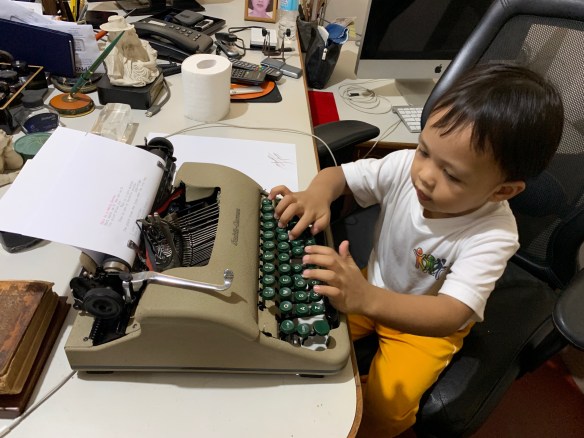
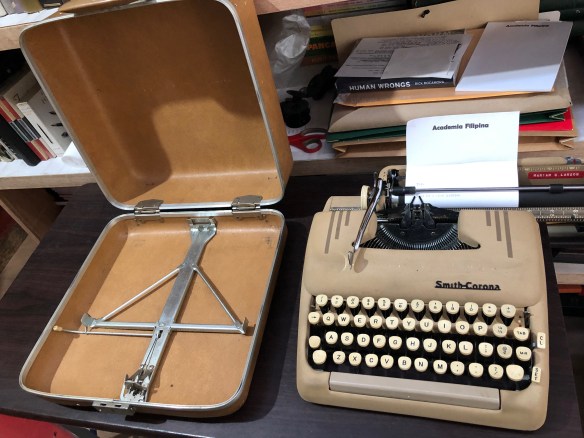
Back home I gently opened the case, and began drooling at the sight of a near-pristine Smith Corona Standard, whose serial number marked it as having been made in 1941; it had obviously never seen any action, like firing off a desperate message from a bunker in Bataan or Okinawa. After I had wiped and oiled it, the soft clatter of keys striking the platen, probably for the first time in decades, filled the air in my home office like Debussy’s Reverie. (That’s our apu-apuhan Buboy below, trying out the new toy.) How do these beauties, I would later tweet, find their way to ugly old me? I imagined Ambeth across the city, pecking away at his Olivetti, maybe wondering if Rizal had ever used a Hammond or a Blickensderfer.

IMG_0241.jpeg

(Photo of Ambeth Ocampo courtesy of Dennis Pinpin.)


Penman No. 363: A Singapore Swing

IMG_0941.jpeg

Penman for Monday, July 22, 2019
I’VE BEEN visiting Singapore nearly every year for one reason or other, usually for a conference or at least passing through Changi on my way elsewhere, but this month Beng and I decided to fly there just to have a little fun.

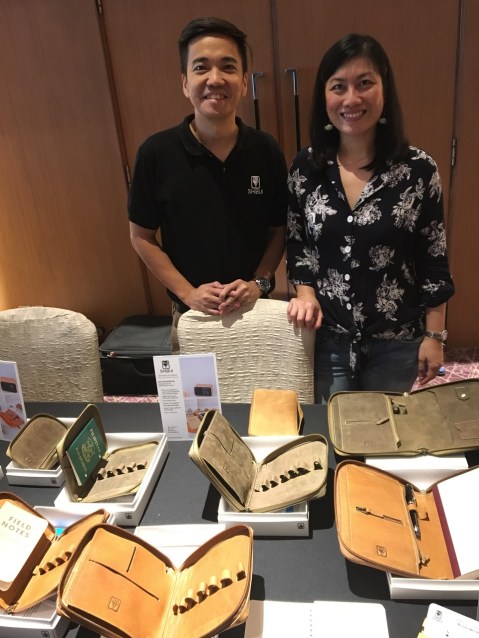
I did have an official excuse, sort of, for this particular swing—the 3rdSingapore Pen Show held at the Marina Mandarin on July 13, which brought together the country’s and region’s premier sellers of pens and related products. I thought I would drop by for a look-see as the “old man” of Philippine fountain pen collecting, and happily I was accompanied by a small but very knowledgeable Pinoy contingent that included adwoman and artist Leigh Reyes (who also happens to be the new president of our Fountain Pen Network-Philippines), medical executive Joseph Abueg, and avid collector Micah Robles, among others. We were all proud to see two major Filipino companies represented at the Singapore show and generating brisk sales and inquiries: Jillian Joyce Tan’s Everything Calligraphy, which was showing off its new line of Philippine-made Vinta inks, and Arnold Ang’s Shibui leather pen cases, which can easily compete in quality and design with the world’s best.

IMG_0335.jpeg

I’ve been to many other pen shows around the world, chiefly in America where they happen year-round, and while Singapore’s may be relatively smaller because newer, it also showcased Asia’s strengths as the producer of some of the world’s finest pens—the high-end Japanese Nakayas, for example, which are rarely seen in the West. Eurobox, which has a formidable collection of vintage pens, came in from Tokyo; and André Mora of the renowned Mora Stylos flew in all the way from Paris with a bevy of their coveted Oldwins. Pen shows are as much about people as they are about pens, and I was delighted to see some old friends like Lai Kim Hoong of Malaysia’s PenGallery, as well as make some new ones like Tan Fong Kum of Singapore’s Aesthetic Bay and Ng Lip Sing of Singapore’s Straits Pens.

So did I buy anything? I normally step out of pen shows with a wild man’s stare, clutching four or five precious finds in my fists, but the great thing about having too many pens is that you know when to stop and to just enjoy the scenery, which is what I did. I came to Singapore to talk pens with kindred spirits, and brought a selection of 12 of my most interesting vintage and modern pens, and had lively conversations about a few of them. Unlike our Manila Pen Show—the next one of which will take place November 16-17 this year—which is far busier and which features more side events like lectures and demos, Singapore’s was still more of a market than a community, and I would’ve liked a longer chat over coffee with our local counterparts, but maybe next time.

Our other objective for this Singapore trip was to visit the National Gallery, which somehow doesn’t figure on most tourist itineraries like the Marina Bay Sands or the Gardens by the Bay. Built where the old City Hall and Supreme Court stood, the National Gallery is both an imposing but also welcoming structure, with guides and docents ready to walk you through the exhibits. Aside from Singaporean art, of course, the gallery’s strength lies in its collection of Southeast Asian art, which is breathtaking in its range of styles as well as in its commonality of themes—nation, nature, people. Filipino talent is well represented throughout the exhibit—from the ground floor, where Mark Justiniani’s mind-blowing (and, for the vertiginous like me, unnerving) “Stardust” bridge obliges the visitor to take a literal walk through bottomless space, to the succession of galleries on Levels 3-5 where “Between Declarations and Dreams: Art of Southeast Asia since the 19th Century” is on show.

IMG_0924 2.jpeg

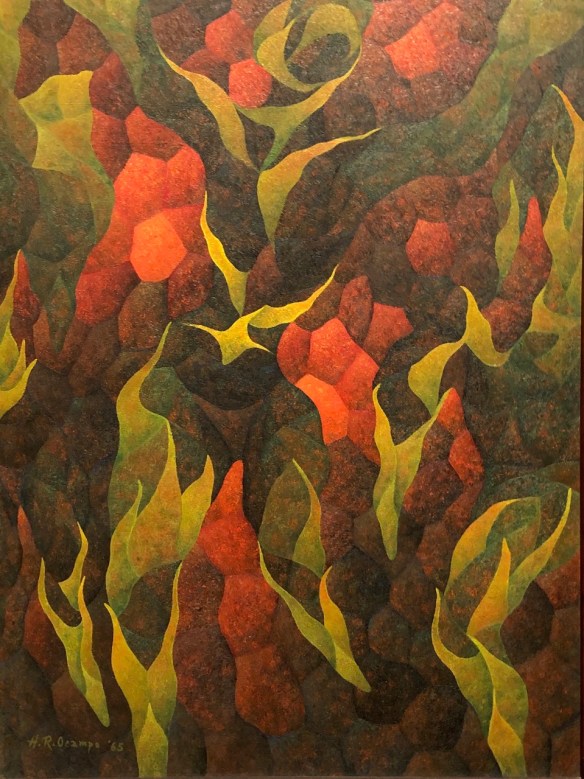
A trio of less-known 1940s Amorsolos is flanked by the orchestrated chaos of a Purugganan; an early and dark Edades exudes primal energy; elsewhere are exemplary pieces by Galo Ocampo, Arturo Luz, Anita Magsaysay-Ho, Napoleon Abueva, Bobby Chabet, Ray Albano, Santy Bose, and Imelda Cajipe. But the piece de resistanceof Filipino modernist representation is H. R. Ocampo’s Dancing Mutants, encountering which made our whole Singapore trip worth it. And the curators themselves must have been aware of the specialness of this stunning work from 1965, according it its very own corner in the gallery, almost altar-like. I’ve seen many Ocampos (with Beng restoring quite a few of them), but this one made me want to fall on my knees in praise of its creator.

IMG_0957.jpeg

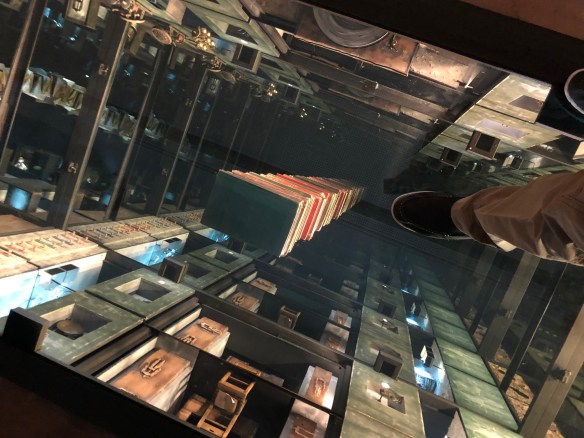
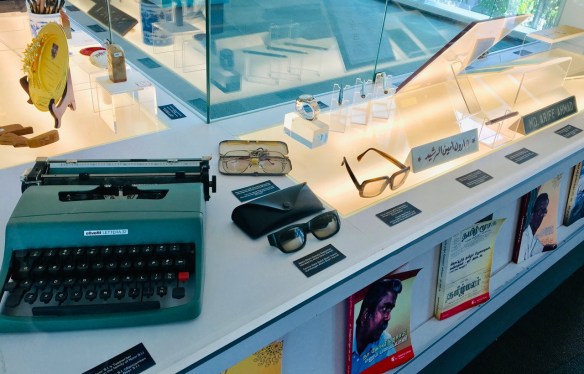
And purely by serendipity, when we stepped out of a mobile-phone shop on North Bridge Road, I noticed that the building across the street was none other than the National Library, which I’d visited as a journalist on a previous assignment. Let’s go in, I told Beng, I want to show you something. So we did, and there on the 11thfloor was a permanent exhibit on “Singapore’s Literary Pioneers”—featuring not only the books of the country’s best writers, but also their pens, typewriters, and even their eyeglasses. This, I told Beng wishfully, is how writers should be revered. Always better than a pen show is seeing what comes out of those pens, at their very finest.

IMG_0344.jpeg


Penman No. 360: Mechanical Murmurs

IMG_0241.jpeg

Penman for Monday, July 1, 2019
 

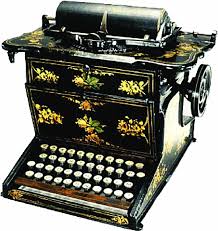
I’M SURE no more than a handful of us knew about it, but last June 23 was National Typewriter Day—in America, where Christopher Latham Sholes was granted a patent for the new writing machine in 1868. While Sholes had been preceded by many others touting ideas for some kind of mechanical writing, it was he—along with Samuel Soule and Carlos Glidden—who put the first commercially viable typewriter together (in Milwaukee, famous for Harley-Davidson motorcycles, Miller, Pabst, and Schlitz beer, and Briggs and Stratton engines, and briefly my home 30 years ago).

The typewriter would go on from that first Sholes and Glidden machine to revolutionize writing, industry, and communication over most of the 20thcentury, and bring forth names like Remington, Smith-Corona, Underwood, Royal, Olympia, Olivetti, and Hermes, among many others. (Remington, a gun maker, bought out Sholes even before his invention came out.) But few of its descendants would show the charm of that first typewriter (then spelled as two words—and would later refer to the person typing, or the typist, as well), its glossy black front and top bedecked with colorful flowers.

Unknown.jpeg

The Sholes and Glidden came out on the market in July 1874, and it must have been such a hit that not even a year later—writing from Hartford, Conn. on March 19, 1875—a man who signed as “Saml. L. Clemens” would claim that it was causing him too much trouble:

“GENTLEMEN: Please do not use my name in any way. Please do not even divulge the fact that I own a machine. I have entirely stopped using the Type-Writer, for the reason that I never could type a letter with it to anybody without receiving a request by return mail that I would not only describe the machine, but state what progress I had made in the use of it, etc. etc. I don’t like to write letters, and so I don’t want people to know I own this curiosity-breeding little joker. Yours truly, SAML. L. CLEMENS”

Unknown.jpeg

(The writer, of course, was better known as Mark Twain, whose tongue-in-cheek endorsements must have been much in demand, because almost 30 years later we find him scribbling again from New York, on Oct. 1, 1903, this time on behalf of Conklin fountain pens and their famous “crescent” fillers, which prevented pens from rolling off the table: “Dear Sirs: I prefer it to ten other fountain pens, because it carries its filler in its own stomach, and I cannot mislay even by art or intention. Also, I prefer it because it is a profanity saver; it cannot roll off the desk.”)

It’s probably safe to assume that hundreds of millions of typewriters must have been manufactured since Sholes and Glidden made their debut, spanning all shapes, sizes, and functions, from steel behemoths to plastic cuties, from manual to electric to electronic, offering all manner of type from all-caps to cursive. Of course, word processors and computers effectively buried typewriters and the industry behind them from the 1980s onwards—except for pockets of enthusiasts and personal users, such as the online Antique Typewriter Collectors group to which I and a few other Filipinos belong. (And many thanks to my friend Dennis Pinpin for his post reminding me of National Typewriter Day.)

IMG_9481.jpeg

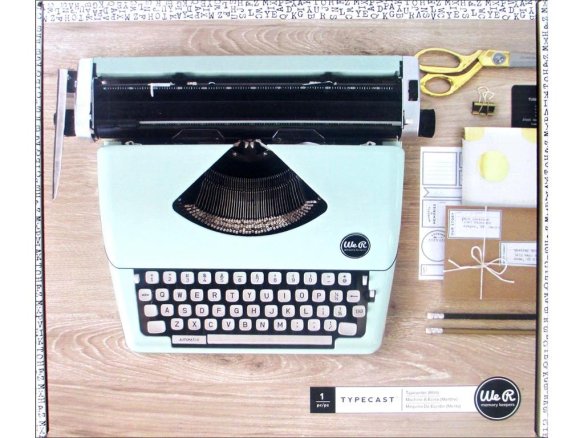
Eight years ago I wrote a requiem for the typewriter—prematurely, as it turned out—when the Indian manufacturer Godrej and Boyce, which was still making 12,000 machines a year in 2009 mainly for the Indian government, announced that it was closing shop. But lately a new manual typewriter (made, where else, but in China) , has been popping up online under the “We R Memory Keepers” brand; one or two young people I know have picked it up—attracted, no doubt, by its cuddly retro profile and its pastel colors—but I have to hasten to add that based on the expert opinion of my ATC friends, your money would be far better spent on a vintage Olympia or Smith-Corona, given the flimsiness of the WRMK’s construction. In other words, you can’t keep memories with shoddy engineering.

71qf+SpfUaL._SL1024_.jpg

But why even keep using typewriters when computers are so much more available and convenient? For some collectors and enthusiasts, it’s the very isolation of the machine and of the typing itself—removed from email, Facebook, and all such distractions—that recommends it for more thoughtful writing, especially for poems, novels, and personal correspondence. As a professional writer and editor working on half a dozen books at a time, I can’t afford to be that romantic; I love my fountain pens and typewriters, but do all my serious work on my Macs, and typically turn to my Olympia Traveller or my Olivetti 32 to fill out forms and address envelopes.

IMG_0205.jpeg

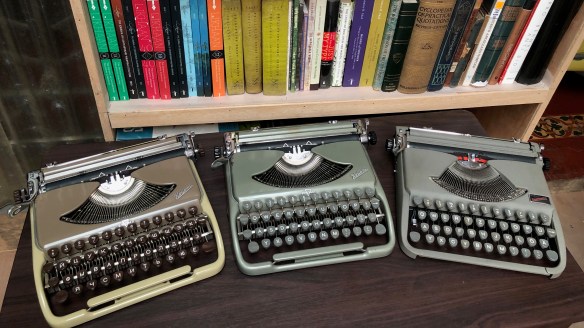
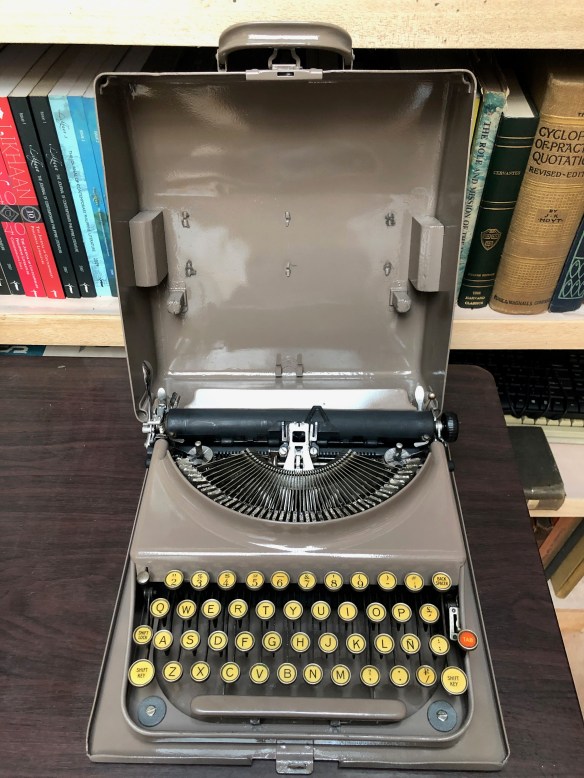
But then again what have I amassed over 20 typewriters for (don’t say it—one friend has 70, another a hundred), if not for the romance of hearing a mechanical murmur from the past? As with my Parker Vacumatics from the 1930s, I have to wonder what secrets my typers wrote—especially my current pet, an impossibly thin, all-steel Groma Gromina made in East Germany around 1955.

Sometimes I type a line—a nonsense line, anything—just to hear that reassuring “ding!” at the end of it. Can we say, thereby, that life has no meaning—or that the meaning is in the gesture itself?

IMG_9518.jpeg


Penman No. 359: Retrieval and Repatriation

arts3-pineda-paguia-buenventura-custodio_2019-06-23_16-53-03.jpg

Penman for Monday, June 24, 2019


CHATTING WITH a friend about my growing collections of old books and paintings the other day, it struck me how so many of my Philippine-related items were sourced abroad, mainly from the US, Spain, and the UK. In other words, these materials left the country one way or the other ages ago, and are only now being repatriated by those like me who pick up other people’s throwaways with a gleeful passion. And beyond just wanting to acquire some new old thing, we collect with a special mission—to find, retrieve, and restore valuable or at least interesting pieces of Filipiniana, so they can be enjoyed by another generation of Filipinos.

I have friends who have the kind of checkbooks and connections that allow them to score and bring home stray Lunas and Hidalgos from some obscure Spanish estate or farmhouse. I’m glad that players like them exist to compete with the high rollers at Sotheby’s and Christie’s, but I’m clearly not in that league, so I look for far more plebeian objects: books written by Filipinos or about the Philippines, and paintings by Filipino artists.

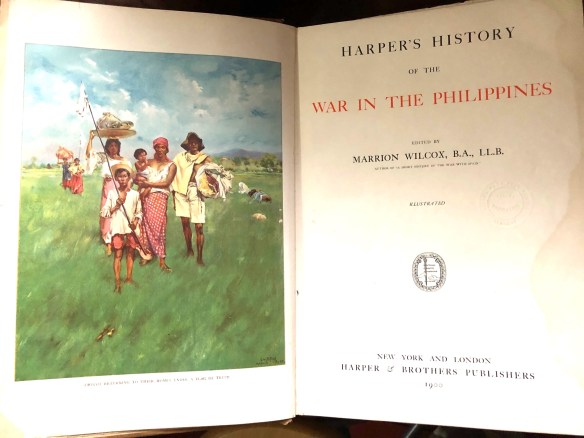
The books are far more plentiful than the paintings, of course. At the turn of the 20th century, following the American occupation of these islands, there was great publishing interest in accounts of America’s first imperialist adventure, as well as in depictions of life in the new colony. Easily the most available antiquarian books you can find on the Philippines will have to do with that period, sporting triumphal titles such as the large two-volume Our Islands and Their People (1899), War in the Philippines and Life and Glorious Deeds of Admiral Dewey (1899), and Under MacArthur in Luzon or Last Battles in the Philippines (1901). My best acquisition in this department is the huge, elephant-folio-sized Harper’s History of the War in the Philippines (1900), which has superb illustrations, but quite frankly, as a Filipino reader, I find the propagandistic prose barely tolerable, with only my indulgent humor to carry me through passages deploring our “numerous piracies and cannibalistic feasts.”

IMG_6451_2.jpeg

I’ve had more fun and a deeper sense of satisfaction tracking down the foreign publications of our literary masters like Carlos Bulosan, Manuel Arguilla, Jose Garcia Villa, Nick Joaquin, and Bienvenido Santos. Like many writers of their generation, they saw publishing in America as a form of validation, and while we may argue today that we needn’t look to New York for approval, you can’t deny that surge of pride when you see those names in, say, a 1953 issue of Partisan Review alongside the best of the West.

It was, in fact, my discovery of an issue of Story magazine from the early 1930s some 30 years ago, when I was a graduate student in the American Midwest, that fired up this enthusiasm for retrieval and repatriation. That issue contained the Baguio-based Sinai Hamada’s iconic story “Tanabata’s Wife,” and I had the pleasure of presenting his family with that copy years later. I would stumble on the odd book about Dewey and his exploits at antique malls for 50 cents, and bring that home. In Edinburgh years later, I found a postcard of Filipino women, and turned that into a story titled “We Global Men.” Sometimes you just have to look very closely; scanning some antique documents being sold online, I spotted a reference in a 1578 travel book to “von der Spanier mache in den Philippinischen Insuln,”and was able to pick that up for a few euros.

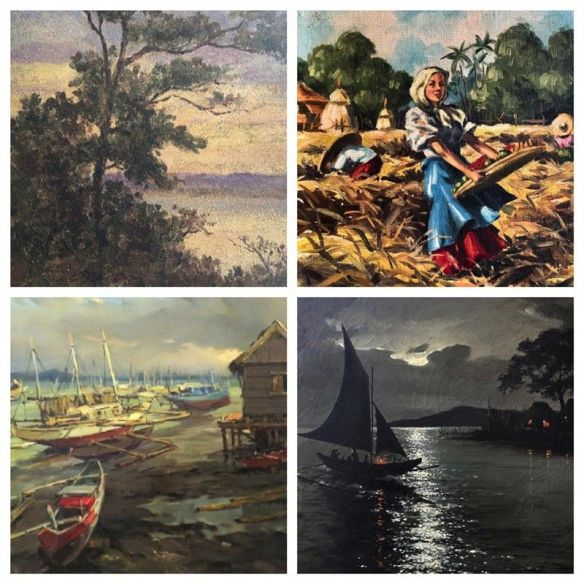
Most delightful have been the paintings that I’ve come across on eBay and other auction sites—among them, a purplish treescape by the great Jorge Pineda from 1937; a patriotically themed harvest scene by P. T. Paguia from 1945; a moonlit near-monochrome by Cesar Buenaventura from 1956; and a Cavite seascape by Gabriel Custodio from 1965. Probably brought over to the US by American servicemen or by tourists looking for souvenirs, and less regarded by their next owners, these artworks turn up like flotsam on the shores of eBay (or shopgoodwill.com, where the Custodio appeared, being sold out of a Goodwill store in Spokane). And how do I know they’re not fake? The answer is, I don’t, not until I actually have and see them, but then I’m a poker player, and quite used to going all-in on a solid hunch. (The Pineda was a tricky gamble, but it’s the original frame from the period—with the seal of the well-known but long-defunct frameshop in New York—that provided the validation).

I’m not the only person on the hunt for these lost treasures, so they don’t necessarily come dirt-cheap, and shipping poses special challenges, but holding them in your hands after they’ve crossed decades and thousands of miles brings a matchless thrill. Like Filipinos themselves—the Ulysses of this age, global wanderers who inevitably come home—these pieces best belong where they are loved.


Penman No. 358: A Feast for Book Lovers (2)

IMG_0731.jpg

Penman for Monday, June 17, 2019


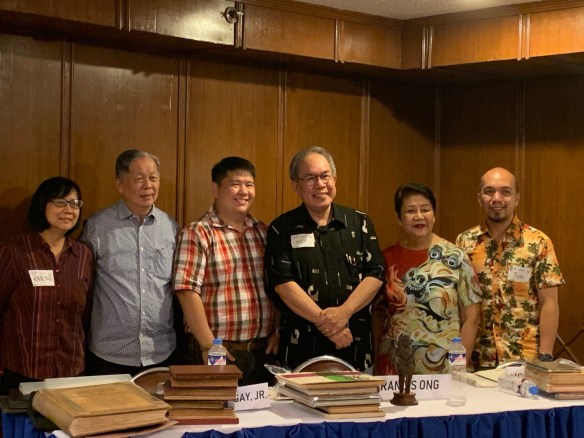
LAST SATURDAY, at the 10thPhilippine International Literary Festival sponsored by the National Book Development Board, I joined a panel discussion on “Advanced and Antiquarian Book Collecting,” and since most of you weren’t there to hear me and my fellow panelists Anthony John Balisi and Francis Ong, I’d like to share part of what I said.

As most of my readers know, I’ve long been a collector of fountain pens, especially vintage ones going back to the early 20thcentury. I still have a couple of hundred pens in the collection, which I’ve begun trimming down for the inevitable day when our only daughter will have to deal with all the junk her weird papa left behind. Well, she’s going to have to deal with a lot more than pens, because over the past few years or so, I’ve also begun to amass collections of midcentury paintings, typewriters, and, yes, old books.

I’ll talk about those other afflictions some other time—although I’m sure you see a pattern somewhere there. To focus on book collecting, let’s start with the basic proposition that people buy books to read, usually for education or entertainment. That’s how all book collectors begin: as readers who enjoy the word on the page. But collectors are excited by more than what books contain or mean; they enjoy the book itself as a cultural artifact (and yes, as a tradeable commodity), as a physical manifestation of ideas, and as a work of art and technology in itself.

Book publishing has a long and fascinating history, and important books—like the Gutenberg Bible (1455), our own Doctrina Christiana (1593), and Jose Rizal’s Noli Me Tangere (1887) and El Filibusterismo (1891)—are much sought after. Because of the sheer number of books published since Gutenberg, collectors tend to focus on specific areas like art, religion, history, geography, cooking, horticulture, and such.

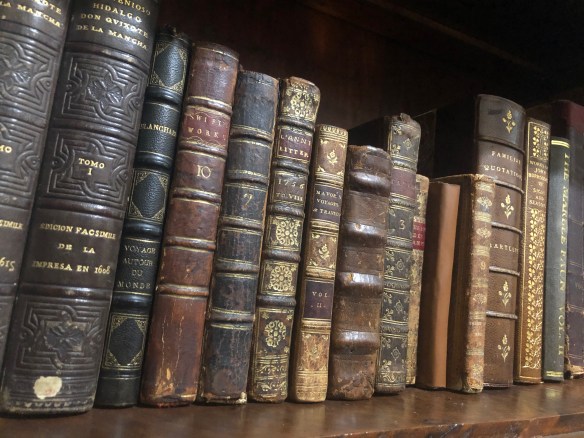
I’m not even going to pretend that I’ve read or can read many of the books in my library; some are in languages like Latin or old French and Spanish, and while I can guess at some meanings with the help of a dictionary, I’d be better off with a readily available translation. So why do I buy and keep these books? Why even go for, say, first editions when cheap copies of modern editions abound?

It’s because I feel like I’m saving many of these books from oblivion, and that it’s important for future generations to see and appreciate these texts in their original state. In fact, many items in my collection began as props for teaching; you can’t imagine how surprised and thrilled my literature students are when I show them an actual copy of The Gentleman’s Magazine from 1773 when we discuss what the early colonists in America must have been reading, or a 1935 issue of The Prairie Schooner where a story by Manuel Arguilla titled “Midsummer” appeared. It’s what I’ve been calling “the materiality of literature,” its occurrence as a phenomenon as physical and as necessary as the Internet and satellite TV today. Like I told a historian-friend who couldn’t figure out why I was obsessed with finding original texts of easily accessible books, “The object is the object.”

Most of my books these days come from eBay, which gives me access to a global trove of books, many of them obscure and unappreciated where they are. I’ve gotten choice books from as far as Portugal and Guatemala this way. But some of my most remarkable finds have been local pickups—like books signed by Amado V. Hernandez and Atang de la Rama, delivered to me in Intramuros by a seller on a bicycle, or a signed first edition of Carlos Bulosan’s America Is in the Heart, which I bought in Jollibee Philcoa.

For show-and-tell last Saturday, I was happy to share some of these best finds:

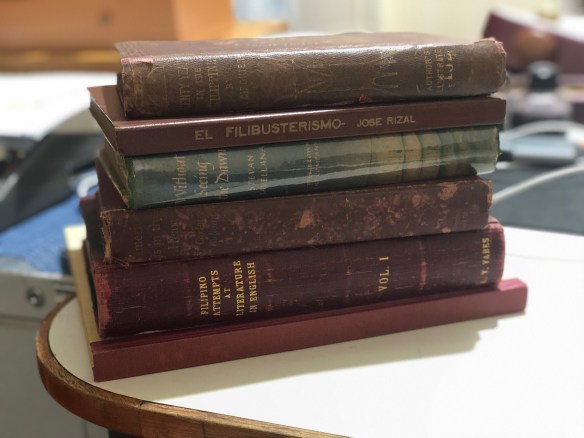
  1. An Abridgement of the Notable Works of Polidore Vergil by Thomas Langley. Published in London in 1551, it’s the oldest volume in my collection—found, of all places, in olx.ph, and picked up by me from its seller in Cubao one dark Christmas Eve. (And how does a 470-year-old English book of essays end up in Cubao? Via Paris, where the seller’s mother worked as an OFW, and was gifted by her client with the book.)
  2. El Filibusterismo by Jose Rizal, in the second edition published by Chofre in Manila in 1900. Another local pickup, found online.
  3. America Is in the Heart by Carlos Bulosan, another copy of the 1946 first edition, second printing, gifted to me by Greg Brillantes to replace the copy I gave my daughter as a wedding present.
  4. Without Seeing the Dawn by Stevan Javellana, a 1947 first edition, signed by its first owner Zoilo Galang, our first Filipino novelist in English, found in Megamall.
  5. Doctrina Christiana, a facsimile edition published by the Library of Congress in 1947, very soon after this oldest of Philippine books joined the LOC collection, my copy signed by its donor and benefactor, Lessing J. Rosenwald, found on eBay.
  6. Filipino Attempts at Literature in English, a one-of-its-kind compilation put together by a young Leopoldo Yabes in the 1930s, who gifted it to poet Jimmy Abad, who passed it on to me for restoration. (This book, like many others, will be bequeathed to the University of the Philippines.)

If these precious books survive me—and they will—then my mad chase for them will make final and total sense.

IMG_2193.JPG


Penman No. 357: A Feast for Book Lovers

IMG_0651.jpeg

Penman for Monday, June 10, 2019


IF YOU love books—whether as a reader, writer, or collector of them—you have to put this on your calendar: June 15, Saturday, 1 pm, Great Eastern Hotel, Quezon Avenue. That’s when I join a panel of fellow bibliophiles to talk about “Advanced and Antiquarian Book Collecting” at the 10thPhilippine International Literary Festival sponsored by the National Book Development Board.

It was actually at my suggestion that this panel was put together, when the NBDB solicited panel proposals a few months back. I asked Anthony “Tuni” John Balisi and Francis Ong, two prominent members of our online Filipiniana Book Collectors Club (FBCC), to sit on the panel with me, and happily they agreed.

There are, of course, far more accomplished, knowledgeable, and comprehensive book collectors out there—the formidable tandems of Mario Feir and Steven Feldman and of Jonathan Best and John Silva come to mind, as well as the likes of Jimmy Laya and Ambeth Ocampo—and we hope they can join us to share their experiences and insights. But for the purposes of the panel, we wanted to keep things on a strictly amateur and fun level, to focus on the joy and the excitement of acquiring desirable books that remain fairly accessible to new and middling enthusiasts like us.

You’d think that book collecting—especially in this digital age—would be a pastime for old fogies who never really made the transition to e-books and who still write notes with a fountain pen or a typewriter (two of my other collecting passions), but you’d be surprised by the number of young people, male and female alike, looking for and selling books on FBCC and other online sites. Perhaps, as with pens and typewriters, it’s a romantic gesture, a tip of the hat to a less troublous past. But the fact is that a lot of book collecting now happens online, putting to rest the notion that these old guys (and gals) can’t key in a URL or do a Google search to find a signed first edition of Carlos Bulosan’s America Is in the Heart if their lives depended on it.

As my rationale for the panel put it, books are an invaluable resource as repositories of knowledge, experience, and analysis. In the Philippines, they have figured prominently in our history both as keepers of the national memory and as instigators of change, even of revolution. Collecting and preserving our most important book is a mission and passion shared by advanced collectors who complement the efforts of libraries and other institutions to ensure that the best and most significant books of the past and present can be bequeathed to the future.

Our panel’s focus will be on Filipiniana, particularly history, literature, art, and religion. Through this session, we seek to engage the Filipino public in book collecting both as a hobby and as a means of preserving and promoting the value of books as cultural artifacts and keepers of the national memory. The discussion can also include where and how we source rare books, how to restore and conserve them, and the book market. The session should result in a greater public awareness of the value of books as cultural artifacts and of book collecting as a specialized art in itself.

I’m going to save the better and more detailed parts of this discussion for my talk at the PILF—and for this column next Monday—but let me just say, as a teaser, that we will be bringing some of our most interesting acquisitions to the event, for show and tell. (Aside from Filipiniana, I plan on exhibiting some of my oldest books, including one in English from 1551, and manuscripts from the 1500s and 1600s.)

And we’d just be a morsel in a veritable feast for the book lover at the PILF, which this year is devoted to the theme of “Gunitâ: a pursuit of memory”—which means, according to the NBDB, “making a mark in the age of forgetting by remembering our roots and fostering new voices through our literature. Gunitâ is the ability to remember. We are at a time when forgetting is common and we are chasing after our memories and history so that it is not forgotten.” Keynoting the festival will be National Artist Resil Mojares—one writer I deeply admire for the lucidity of his scholarship—whose talk will be followed by a plenary discussion that will also include Miguel Syjuco, Lualhati Abreu, and Joel Salud.

You can view the full PILF program here: tinyurl.com/program10thPILF. Entry to the festival is free, but you have to pre-register for it for Day 1 at tinyurl.com/10thPILFDay1and for Day 2 at tinyurl.com/10thPILFDay2.


Penman No. 356: Loverly London (2)

IMG_0602.jpeg

Penman for Monday, June 3, 2019


TO PUT it one way, the United Kingdom is the kind of place where the money looks too pretty to spend, especially the duotone one-pound and two-pound coins. But you better have a lot of it, and be prepared to let go—unless, like Beng and me, you thrive on the low end of things, which can come for next to nothing, if not for free.

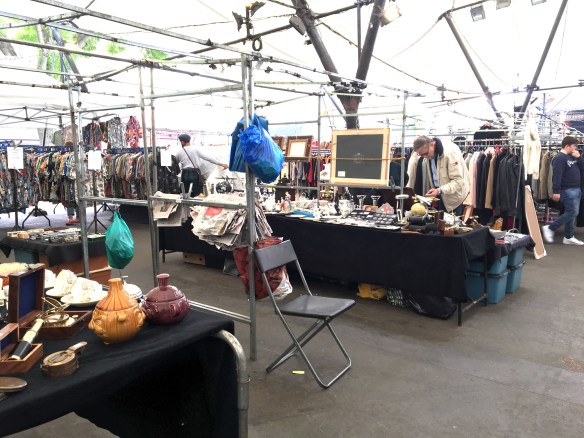
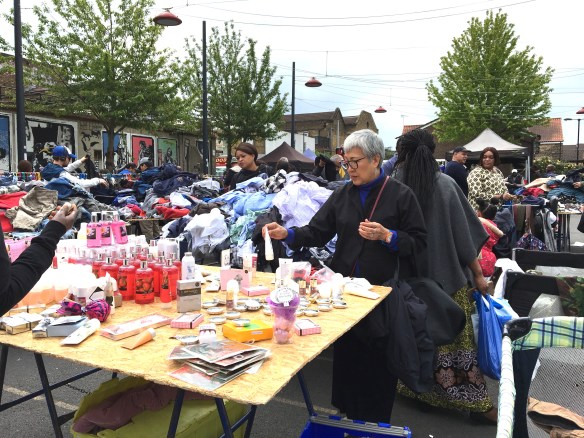
As I’ve often mentioned here, Beng and I are inveterate flea market fanatics, and one reason we travel so much isn’t to pose beside the landmarks as nearly everyone else does, but to scour the flea markets, thrift shops, and garage sales of the world for the glorious stuff others see as junk—or maybe don’t see at all. From New York’s Hell’s Kitchen, Amsterdam’s Waterlooplein, and Barcelona’s Encants to Paris’ Clignancourt, Singapore’s Sungei, and Beijing’s Panjiayuan, we’ve been there and done that.

IMG_0285.jpeg

As it happens, we’ve yet to find a city as full of flea markets as London. On the weekends, you can easily find a dozen of them hawking everything from vintage Gladstone bags and Victorian silverware to paisley shirts from the ‘60s and ancient Roman coins. Beng usually looks for little silver baubles and I, of course, look for pens, old books, and anything to do with writing.

London is also charity and thrift-shop heaven, and every square mile you’d be guaranteed to find at least one Oxfam, British Heart Foundation, Cancer Research, Norwood, Barnardo’s, or British Red Cross shop, often right next to another. Being fairly large for a Pinoy, I don’t mind saying that nearly everything I wear on top comes from some ukay-ukay or resale shop, so London’s flea markets and thrift shops are always a chance to pick up well-cut shirts and blazers for a tenth or less of what they would go for on the High Street.

IMG_0238.jpeg

And true enough, London delivered in spades. Portobello Road is every tourist’s idea of a weekend bargain paradise (thanks to the Notting Hill movie—Hugh Grant’s bookshop at #142 is now a shoe shop), but the fact is that even more interesting and affordable markets can be found at Deptford, Brick Lane, and Islington, among others.

IMG_0281.jpeg

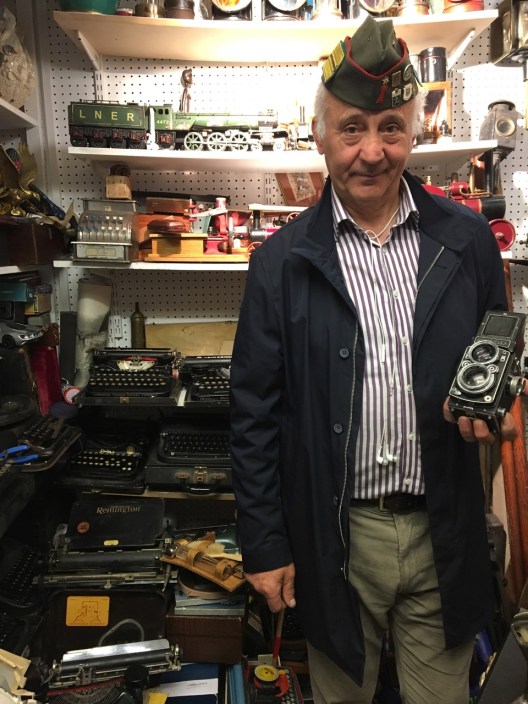
I did have a good chat with an antiques dealer named Nicholas on Portobello Road. He came over to me when he saw me craning my neck at the awesome pile of vintage typewriters he kept in one of his stalls. Even if I had to tell him that I couldn’t possibly drag one of those beauties home in my luggage, he seemed happy to meet someone—a Filipino at that—who understood how lovely and valuable his Erikas and Bar-Lets were.

IMG_0294.jpeg

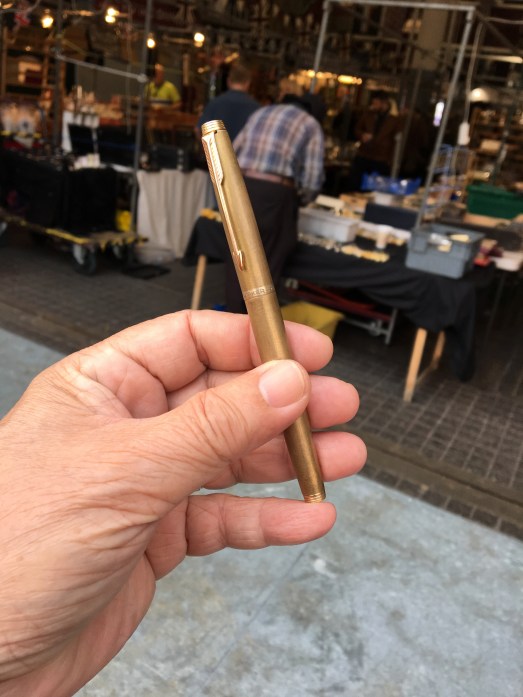
Of course I couldn’t leave London without buying a pen or two. A tip from Nicholas led me to the Jubilee Antiques Market which happens at Covent Garden every Monday. The dealers set up as early as 5 am, and we were there at 7, me scouting the stalls for tubular objects, Beng interviewing a licensed mudlark (someone who pokes around the banks of the Thames) about his finds. I came away with a prize for £25, haggled down from £30—a rare brass prototype of the iconic Parker 75.

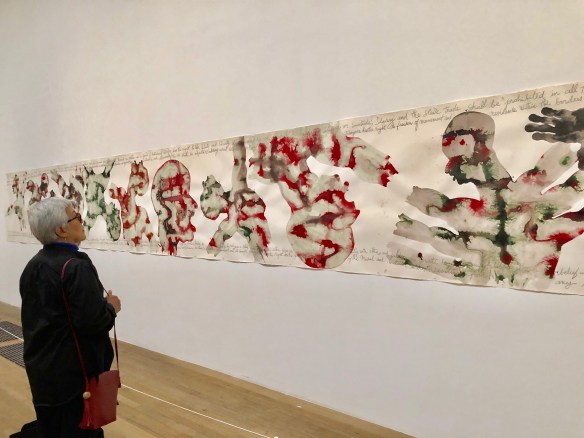
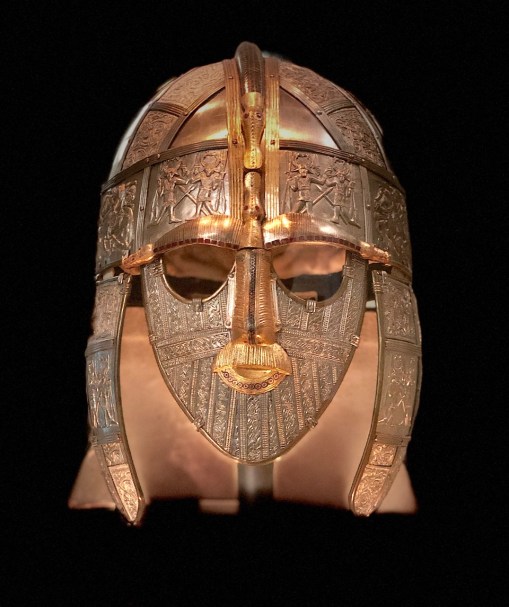
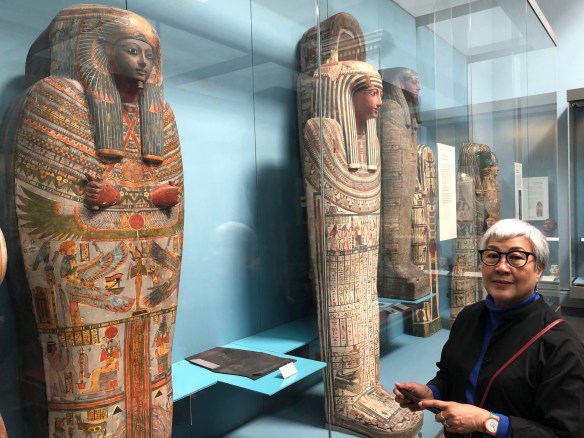
But more than markets, London is mecca for museum rats, which Beng and I also are, and while we’ve been there before and seen literally the same old things, we took in and reveled at the Sutton Hoo masks and the Egyptian mummies at the British Museum all over again, before hopping over to the Tate Modern at the South Bank for a mind-blowing exhibition of paintings from the Weimar Republic and highly inventive political art from the present. What impressed us even more were the guided tours for children at the Tate, their early exposure to the complexity of the modern mind. (Most London museums are free and open all week.)

IMG_0588.jpeg

IMG_0566.jpeg

IMG_0572.jpeg

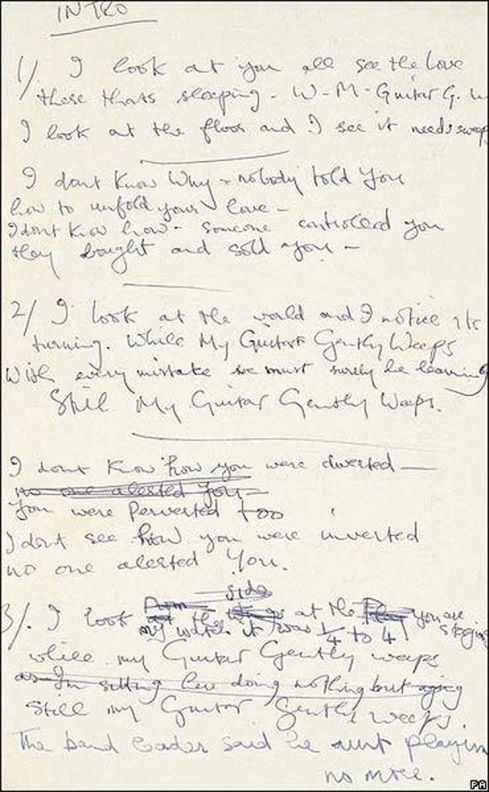
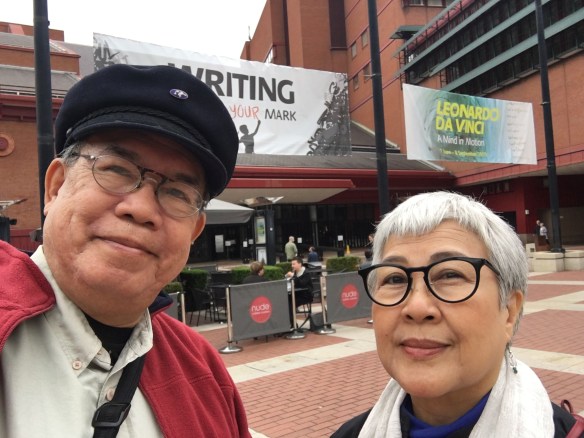
We reserved our last stop in London for a treat I had been anticipating for ages: a return to the British Library and to its exhibit of its treasures, ranging from old Bibles, the Magna Carta, and pre-modern maps to a special section on the Beatles. I was struck by how neat, orderly, and indeed unfailingly precise the ancient manuscripts were, as you might have expected of sacred texts, such as the Codex Sinaiticus, its every word hand-inscribed in the 4thcentury but looking as sharp and as fresh as this morning’s paper. Contrast that to the vigorous scrawls, scribbles, and cross-outs of modern writers—including the Beatles, who wrote letters and lyrics with a schoolboyish disregard for form and order: the draft of “Michelle” on the front of an envelope, that of “A Hard Day’s Night” on a greeting card. Elsewhere, Sylvia Plath sends a poem to a publisher in long hand.

d7bbdbf04633e0c9431f751041ddf1d6.jpg

IMG_0327.jpeg

Words, decades, and centuries come alive in London—not just in the library or museum but on the street, which makes yet another visit worth yearning for.

Penman No. 355: Loverly London (1)

IMG_0319.jpeg

Penman for Monday, May 27, 2019


I FIRST visited London 25 years ago, on my way to Scotland to take up residence at Hawthornden Castle on the fellowship that led to Penmanship and Other Stories. Since then I’ve been back a few times—very often in 1999-2000, when again I was a writing fellow at Norwich. It’s easily my favorite city in the world to visit, given its cultural vitality and the accessibility of the things that matter most to me—museums, galleries, and flea markets—and for the past two decades, Beng and I had been dreaming of returning to London to step back into our old haunts.

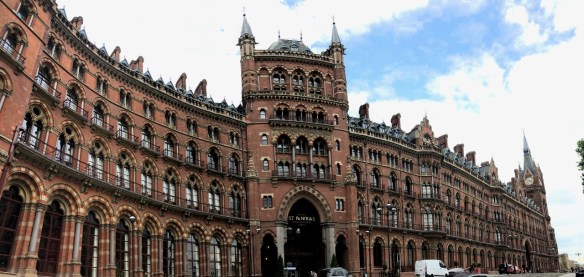
That finally came true on the heels of our recent Scotland trip with our daughter Demi and her husband Jerry; they flew back to home and work in California, so Beng and I had a full week to ourselves, and wisely we decided to just spend almost all of that time in London, except for an overnighter in nearby Chelmsford and Norwich. As with 20 years ago, we did everything by train and by Oyster card (“contactless” is a new English word you’ll learn quickly just out of Heathrow). There’s nothing like a train ride into the English countryside and its undulating greens awakened now and then by brilliant yellow swathes of rapeseed to make one understand Wordsworth and Romanticism, in the same way that Glasgow’s sooty masonry and steel sinews recall a darker, Dickensian industrial past.

9101e10824ce12963ec78a189abcd3c22e091785.jpg

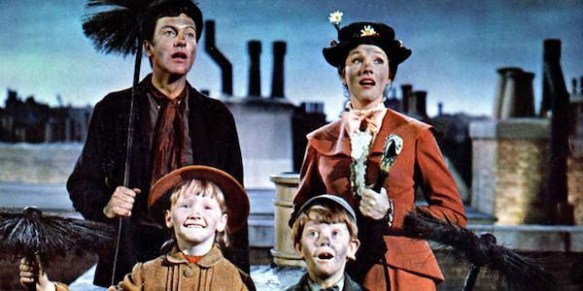
Speaking of Dickens, and like many Pinoys my age, my first impression of London was shaped by Broadway’s and Hollywood’s renditions of its Victorian upside and downside, in such confections as “Oliver Twist” and “Mary Poppins” (from which the screech of my schoolboy crush, Julie Andrews, still resonates, appealing for “a room somewhere, far a-wigh from the cold night air…. Awww, wouldn’t it be loverly?”).

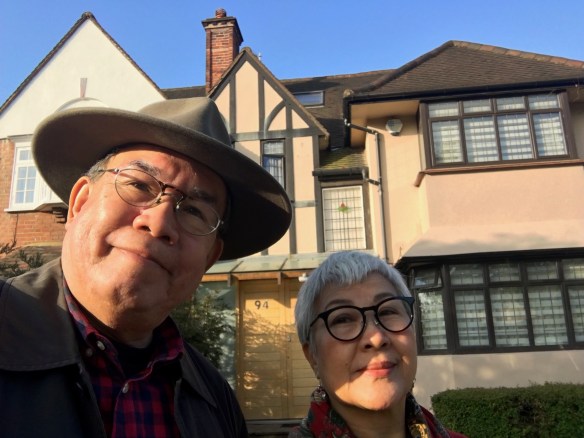
Well, thanks to Booking.com, Beng and I found ourselves a loverly, affordable room in a large house in the northwestern London suburb of Golders Green—a neat and quiet, multicultural neighborhood on the Tube’s Northern Line, historically Jewish but with many Turkish, Iranian, and Japanese restaurants and groceries lining the streets. And, of course, there were Filipinos everywhere, not tourists like us (you’ll find them at Harrods) but off-duty caregivers and housekeepers enjoying time together at the local KFC.

IMG_0329.jpeg

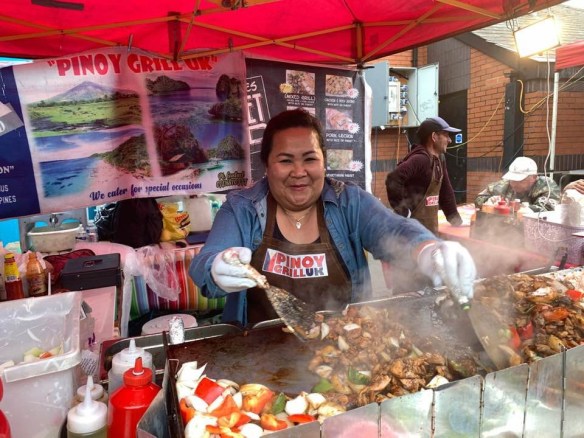
That’s where we met someone we’ll call Thelma, who has worked for the same Jewish employer for the past ten years. It just so happened that she and Beng had some mutual friends from Iloilo, where Thelma went to college. “I’m treated very well here,” Thelma said. “Every year I get a paid vacation to go home.” We spotted another unmistakably Pinay girl at the streetcorner selling suman, which we had for our next breakfast. And at the end of a long Sunday walk down Portobello Road, in a cluster of street-food stalls offering everything from vegan paella to Jamaican patties, we found Eva Caparanga’s Pinoy Grill UK, which instantly answered the question we had been asking all day, “What are we having for dinner tonight?” As she heaped our chicken adobo into a large takeout cup, Eva told us that she had been in the UK for more than 30 years, and was still working in health care, but that for the past three years she had used her days off to run her stall at the far end of the popular Portobello Market. “People ask me why I do this, and I tell them it’s so I can help family back home in Bicol. And again they ask me why I do that, and I say, well, that’s just how we Filipinos are!”

IMG_0618.JPG

The story of Filipinos in the UK and London is a long and colorful one, and I can’t count the many times they came to my succor during my tenure at Norwich and my weekend sorties to London years ago. When my feet acquired a horrible infection in Norwich, I ran to the National Health Service, only to find it staffed by kindly Pinoy nurses who got me back to walking in no time. In London, my host was the late, beloved Ed Maranan, who had ushered at the National Theatre and could sneak me into plays for free; in return, I made sure to wash the dishes at his flat on Goldhawk Road. The writer Jun Terra also brought me around once to marvel at the late Dr. Teyet Pascual’s art pieces in his Chelsea apartment.

This time, Beng and I were resolved to stay close to ground level, having neither the budget nor the inclination to splurge on the timelesss luxury that puts British-made things—whether they be suits, shoes, bags, or fountain pens—in a class all by themselves. This time, we said, we would go straight for the two things that we enjoy most in our sorties to foreign cities: flea markets and museums.

More on these next week.

IMG_0269.jpeg

Penman No. 354: A Scottish Sortie

IMG_0415.jpegPenman for Monday, May 20, 2019


AS UNLIKELY as it may seem, many Filipino writers have a special affinity for Scotland, that northern country (yes, it is one) bound up into the United Kingdom with England, Wales, and Northern Ireland. That’s not only because of our passing familiarity with the likes of Robert Burns and Walter Scott, but because, over the past three decades, more than a dozen Filipino writers—among them Krip Yuson, Eric Gamalinda, Ricky de Ungria, Marj Evasco, Rofel Brion, Danton Remoto, Mia Gonzalez, and myself—have been fellows at the Hawthornden Castle International Retreat for Writers, about half an hour by bus in Midlothian, just outside of Edinburgh.

That was where, in 1994, I wrote much of what became Penmanship and Other Stories, including the title story, which came out of a serendipitous purchase of a 1938 Parker Vacumatic at the Thistle Pen Shop in Edinburgh. Indeed, two literary anthologies have emerged from the Pinoy-Scottish connection: Luna Caledonia, a poetry collection edited by Ricky de Ungria and published in 1992, and Latitude, a fiction collection co-edited by Sarge Lacuesta and Toni Davidson and published in 2005.

IMG_0369.jpeg

I returned to Scotland in 2000 with my wife Beng and daughter Demi in tow; I was a writing fellow then at the University of East Anglia in Norwich, and Demi was visiting us from Manila. As it happened, a local radio station was offering free train tickets to Scotland to whoever could dial in and answer some simple questions at 5 am, so for three consecutive mornings, I woke up early and did just that, and soon we three were rolling away to Glasgow, taking the scenic route along the western coast (and being feted on the train by a kindly Pinoy attendant).

That was 20 years ago, and since then Beng and I have expressed a more than idle longing to revisit Scotland—especially Beng, an unabashed fan of Braveheart and Outlander. In the meantime, Demi got married to bright young fellow from California named Jerry, and in 2014 Demi and Jerry treated us, on our 40thwedding anniversary, to a tour of Spain, following Rizal’s footsteps in Madrid and Barcelona, and Anthony Bourdain’s in San Sebastian.

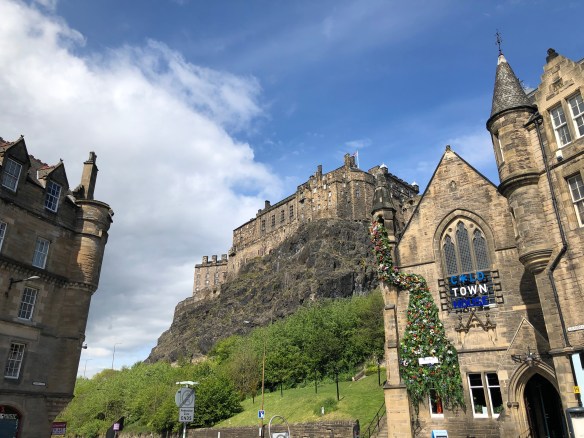
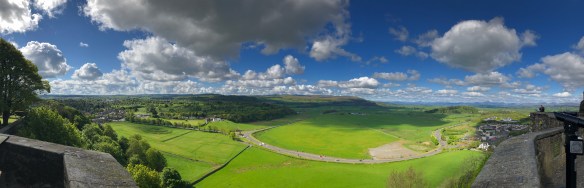
We wanted to repeat that this year to mark our 45th, so it was no huge surprise that we settled on Scotland where Jerry—who likes his single malts—had never been. After meeting up in London, we took a train to Edinburgh and lodged in the shadow of its imposing castle, to which we paid the obligatory visit. I treated our small party next to a day tour of Stirling Castle, Loch Lomond, Deanston Distillery, and Doune Castle, before moving on the next day to Glasgow and its more down-to-earth, industrial vibe.

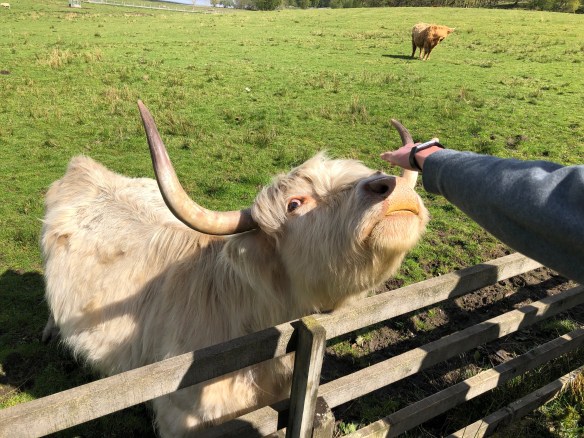
I wanted to record this not to bore you with the details of another family sortie, but to remark on what impressed us most, outside of the often desolate beauty of the Scottish highlands and our comic encounters with the “hairy coos” (the Highland cattle probably fattened by tourist feedings).

IMG_0434.jpeg

For me, a retired professor who can’t help being interested in a country’s educational and cultural infrastructure, the question was, how could the Scots have done so much with seemingly so little?

Pop stars like Sean Connery, Arthur Conan Doyle, Robert Louis Stevenson, JK Rowling, and Annie Lennox aside, Scotland has produced engineer James Watt, inventor Alexander Graham Bell, penicillin discoverer Alexander Fleming, social philosopher Adam Smith, and explorer David Livingstone. A book by the historian Arthur Herman titled How the Scots Invented the Modern World asks: “Who formed the first literate society? Who invented our modern ideas of democracy and free market capitalism? The Scots…. In the eighteenth and nineteenth centuries Scotland made crucial contributions to science, philosophy, literature, education, medicine, commerce, and politics—contributions that have formed and nurtured the modern West ever since…. John Knox and the Church of Scotland laid the foundation for our modern idea of democracy; the Scottish Enlightenment helped to inspire both the American Revolution and the U.S. Constitution; and thousands of Scottish immigrants left their homes to create the American frontier, the Australian outback, and the British Empire in India and Hong Kong.”

IMG_0387.jpeg

This from a country of less than 6 million people (that’s right, six), whose influence extends far beyond their shores. While wives and widows everywhere may bemoan the loss of their husbands to golf and whisky, both industries annually contribute £1 billion and £6 billion, respectively—about P500 billion combined—to the Scottish economy, which is also driven by oil and gas, a £12-billion industry. (To put things in perspective, you can add up those three for a total contribution of £19 billion or about US$25 billion, which is what Philippine BPOs generate, as well as OFWs—but with a much smaller denominator.)

What was most telling to me was how Scotland, despite its plethora of warriors, politicians, engineers, and industrialists, valued its writers, who in turn valued Scottish national pride. The 200-foot statue of Walter Scott in Edinburgh is the largest in the world of any writer’s, and in Glasgow, Scott’s monument also towers over those of others in George Square.

Of course we can argue that we venerate Jose Rizal—only to elect his intellectual and moral opposites. As the Scots might put it, “A nod’s as guid as a wink tae a blind horse.”

IMG_0123.jpeg