Qwertyman No. 59: Counterintuitive

Qwertyman for Monday, September 18, 2023

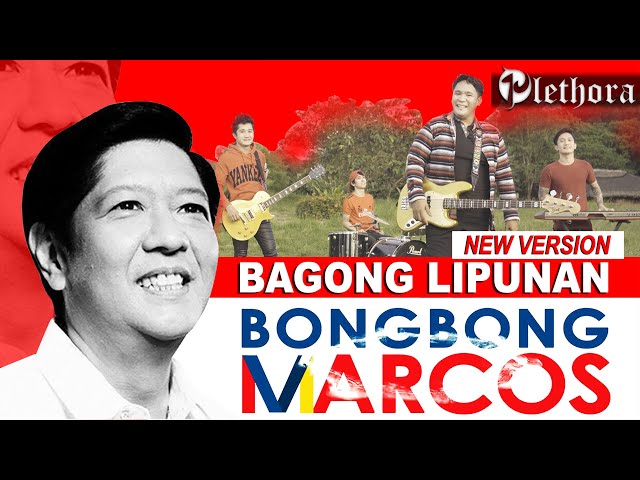
ON MY way to NAIA to catch a flight early one morning a few weeks ago, I snapped out of my half-sleep when I heard a song on the radio station that my Grab driver was tuned in to. I hadn’t heard it in almost half a century, and I was surprised to realize that I still knew the lyrics—not that I sang it back then, but because it was inescapable, flooding the airwaves with its bootstep optimism: “May bagong silang, may bago nang buhay, bagong bansa, bagong galaw, sa Bagong Lipunan!” The only difference—and what troubled me even more—was that it was a new arrangement, sung by a solo male voice, obviously a remake for a new generation. We were back in 1973, and whoever was behind that broadcast was making sure we knew it.

But of course, despite all the ironies that have been pointed out with the accession of another Marcos to power, and all the parallels that both the Junior and his detractors have drawn with the Senior’s reign, 2023 isn’t exactly 1973. The convenient conclusion would be to assume that Marcos Part II would be a replay of Marcos Part I—and many Filipinos, myself included, warned of that possibility in the run-up to the May 2022 election. But is there any possibility that President Ferdinand E. Marcos, Jr. might want to break out of his father’s mold and be, to some extent, his own man?

As soon as I say that—and before I get social media all riled up with my seeming revisionism—let me add that it’s the dramatist in me that appreciates the classic bind that Marcos Jr. must find himself in. Drama is premised on the possibility of character change—and even if the character reverts to his old self in the end, a brief flirtation with one’s opposite can be revealing.

In political caricature, characters are reduced to their extreme and basest versions—black and white, sinner and saint, damned and blessed. Oversimplification makes for effective propaganda, just so you don’t forget who the enemy is and which side you’re on. In realist drama, we move beyond types to explore the complexities of human character, taking the individual as a compound of many different—and sometimes even conflicting—traits and predispositions. Thus (goes the playwright’s conceit), no one is totally good or totally evil; the inner monster and the inner angel are in constant contention, and depending on the specific circumstances, one side will prevail at some key point that then defines that character for the history books. 

Motivations are key to what characters ultimately become—or decide to become, as personal agency and moral responsibility attend every important decision we make. Pride, love, honor, greed, revenge, and lust are powerful motivations, and often get the better of characters who are well aware of right and wrong, but who succumb to what’s been described as “human nature.” The good can become the bad; there’s a whole category of English Renaissance drama called “revenge tragedy” where, like Hamlet, a virtuous hero aggrieved by injustice plots to gain retribution, only to be so consumed by his vengeful passions that he becomes the very evil he condemns.

Now back to Marcos Jr. I’m trying, as the playwright and screenwriter I once was, to see him as the protagonist of our present play, shorn of my personal biases. Improbably—though some would say inevitably—he’s back where his father was, and with the weight of history on his shoulders. He’s firmly seated in power, and has all the opportunity and the resources to do what he wants. 

Independent and even critical observers I’ve spoken with have noted how generally cautious Marcos has been, so far, to avoid the kind of issues that will bring masses of people out onto the streets. Yes, the legitimacy of his election remains under serious question (something his handlers still have to convincingly address), but the “single IP” finding hasn’t been as politically incendiary as it probably would be in a more tech-savvy society (no, our appetite for TikTok and Facebook doesn’t count for tech-savvy). Yes, he travels and spends too much, but people—his 31.5 million, real or not—expect that to come with being a Marcos. Yes, he’s backed terribly risky if not silly ideas like a sovereign wealth fund and price ceilings, but again he knows that the economics of it will go over most people’s heads. 

On the other hand, he’s made all the right noises with regard to Chinese expansionism, in a dramatic and popular break from his predecessor. In our porma-conscious society, he looks and sounds more presidential than that predecessor who felt choked by a necktie and visibly lost in a roomful of younger, more articulate world leaders. Like his senior, Marcos Jr. understands imagery and pageantry. His rambling ad libs have been his bane, so he stays on script in his major speeches. He made some inspired and popular Cabinet choices such as the late lamented Toots Ople, although he quickly undermined any suggestion of sagacity with the appointment of the likes of Larry Gadon. 

Clearly he’s not going to repudiate his father’s legacy. His camp will continue to move to revise history and gild the rust and the rot of martial rule. In his recent speech before Singaporean businessmen, he couldn’t resist crowing that the Philippines’ 7.6% growth rate in 2022 was last achieved in 1976, “under my father’s administration.” Thanks to a DepEd edict, Filipino students will no longer learn about the “Marcos dictatorship” but simply “dictatorship,” which would be like talking about World War II without ever mentioning Hitler. The mechanical erasure of Marcosian martial law will be pushed forward by such measures as Sen. Robinhood Padilla’s proposed law designating September 21 as “Unsung Heroes Day,” to honor anti-communists.

But again the playwright in me wants to ask, is there room or possibility in Marcos Jr.’s character to make a clean break from the past and start over as his own man—or will self-interest, political habit, and family pressure prove too strong to overcome? One fellow columnist told me that his sense was that BBM was out to rehabilitate the Marcos name, to do better than his dad. Can that happen without admitting and making restitution for the wrongs of the past? We sentimental Pinoys will understand if the son will never speak ill of the father, but can he go beyond that to repair the damage done and build a bridge of trust toward his detractors—such as by releasing all political prisoners, squashing red-tagging, and putting the government’s massive intelligence funds to better use? Can and will he risk his political alliances to effect good governance?

Or will it be—to use that word that Executive Secretary Bersamin picked in his letter terminating Finance Undersecretary Cielo Magno for her unsolicited lesson in economics—too “counterintuitive” to do the right thing and accept wiser counsel? Only time and Ferdinand R. Marcos, Jr. will tell.

Qwertyman No. 58: A Long Grace Note

Qwertyman for Monday, September 11, 2023

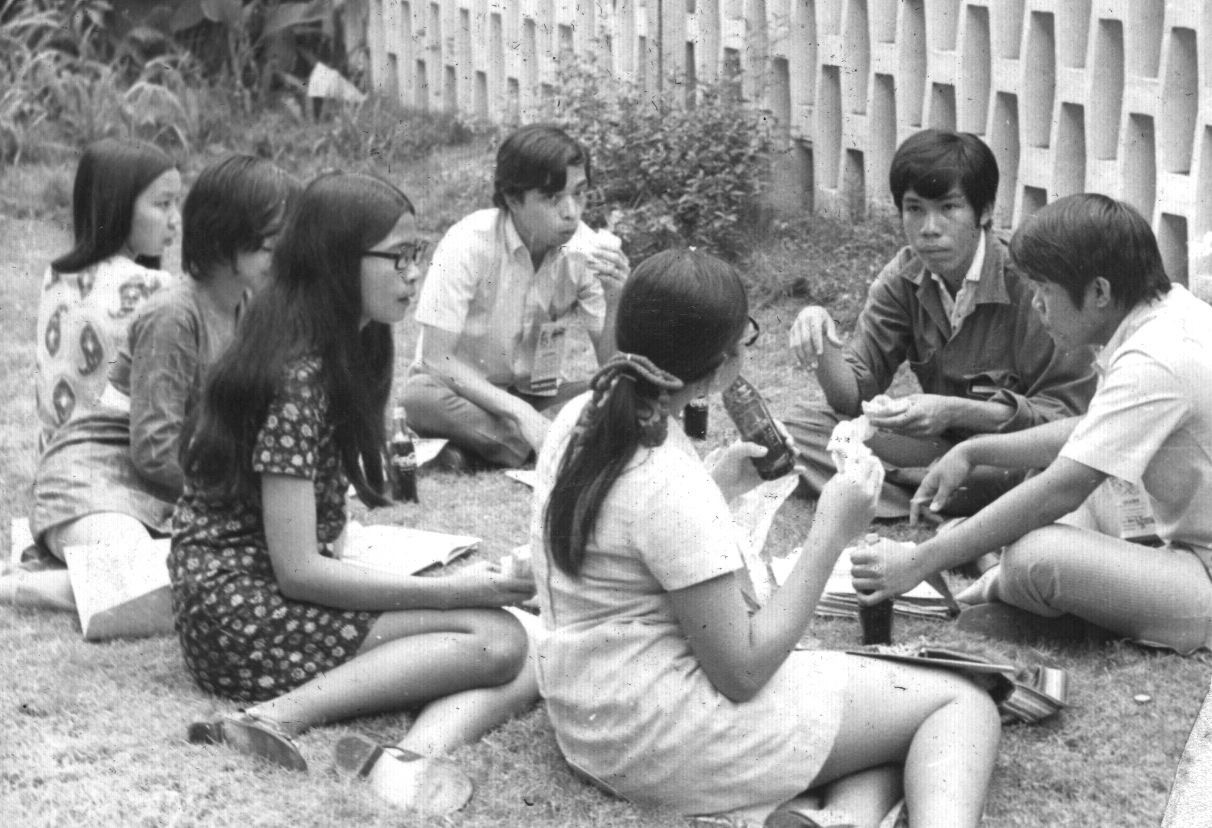
AT ABOUT this time fifty years ago, I was newly released from martial-law prison after seven months of what everyone euphemistically called “detention,” and wondering what to do with the rest of my life. I was just nineteen, so I suppose you could say that I had a lot of living ahead of me, but I felt very differently then. More than a dozen of my friends—all of them in their twenties or even younger—had died horrible deaths fighting the regime. We exalted them as the martyrs that they were, but grimly realized and acknowledged that given how things were going, we ourselves would be fortunate to see the ripe old age of thirty.

I had been arrested at home on a cold January morning in 1973, just past midnight. Like many student activists, I had dropped out of college during the First Quarter Storm of the early 1970s. But instead of joining “the movement” full-time, I improbably found a job with a newspaper as a general-assignments reporter. It was heady stuff at age eighteen, covering three-alarm fires, floodwater rescues, and the very same demonstrations I had joined on the other side of the police barricades. And then martial law was declared—I was actually covering a rally in UP, and thought I had a scoop when a radio station nearby came under fire from the Metrocom, only to be told by my night editor when I tried to phone the story in that we no longer had a newspaper to publish, because soldiers had taken over the office. 

Over the next few months I shuttled between part-time jobs and clandestine meetings with the anti-martial law underground, moving around the city. I wasn’t doing much, given how green I was, but I thought it was important to take part in the resistance in whatever way. And then when Christmas came, like a good boy, I went home to my parents and foolishly had a chat with a neighbor who turned out to be a military asset. Not long after, a posse of soldiers appeared at our door, and when my father nudged me awake, I had a gun pointed at my face. I was being arrested under a catch-all “Arrest, Search, and Seizure Order” or ASSO issued by the Defense Minister, Juan Ponce Enrile, for whom I would ironically be writing some speeches during his post-EDSA reincarnation (he won’t remember that, as I was a tiny mouse in the office).

My release in August 1973 came right out of a Kafka story. I was taking a shower one morning in our prison—which, by the way, is roughly where St. Luke’s BGC is today—when I heard my name being called over the PA system. “Dalisay, report to the guardhouse immediately!” The last time I had done that, after one Sunday dinner, I had been beaten up by some drunken guards just for the heck of it, so I groaned when I heard the announcement. Not again, and so early? As it happened, I was received by an Army officer with a stack of papers. He pulled mine out, squinted at it, and said, “Dalisay, you’re still here? Pack your things. We have nothing on you.” The first place I visited after I went home was the AS Steps in UP, where we had gathered for many a raucous rally; it was vacant and deathly silent, and I knew that I wasn’t going back to school just then. Only after a long detour—working as a printmaker, a writer, an economist, and meeting Beng and fathering Demi—did I return to UP and graduate with my degree at age thirty.

I’ve written about my activism and incarceration in my first novel, Killing Time in a Warm Place (Anvil Publishing, 1992), and it isn’t what this column is really about. Rather, it’s about the aftermath, about having a life after martial law, and an unexpectedly long one at that. 

For any activist from my generation who’s still alive, every breath we’ve taken after our 30th birthday is a grace note—what the dictionary describes as “an extra note added as an embellishment and not essential to the harmony or melody”—in other words, a bonus. Considering that we could have been gunned down like dogs or buried alive like some of our comrades were, you can understand why we feel that way. It’s almost absurd to contemplate, but education, marriage, career, success, fame, fortune—and all the downsides and flipsides that come with them—all these were a long string of surprises, any one of which might never have happened, but for a twist of fate or a stroke of luck (clichés, like life’s very milestones, but ones we appreciate).

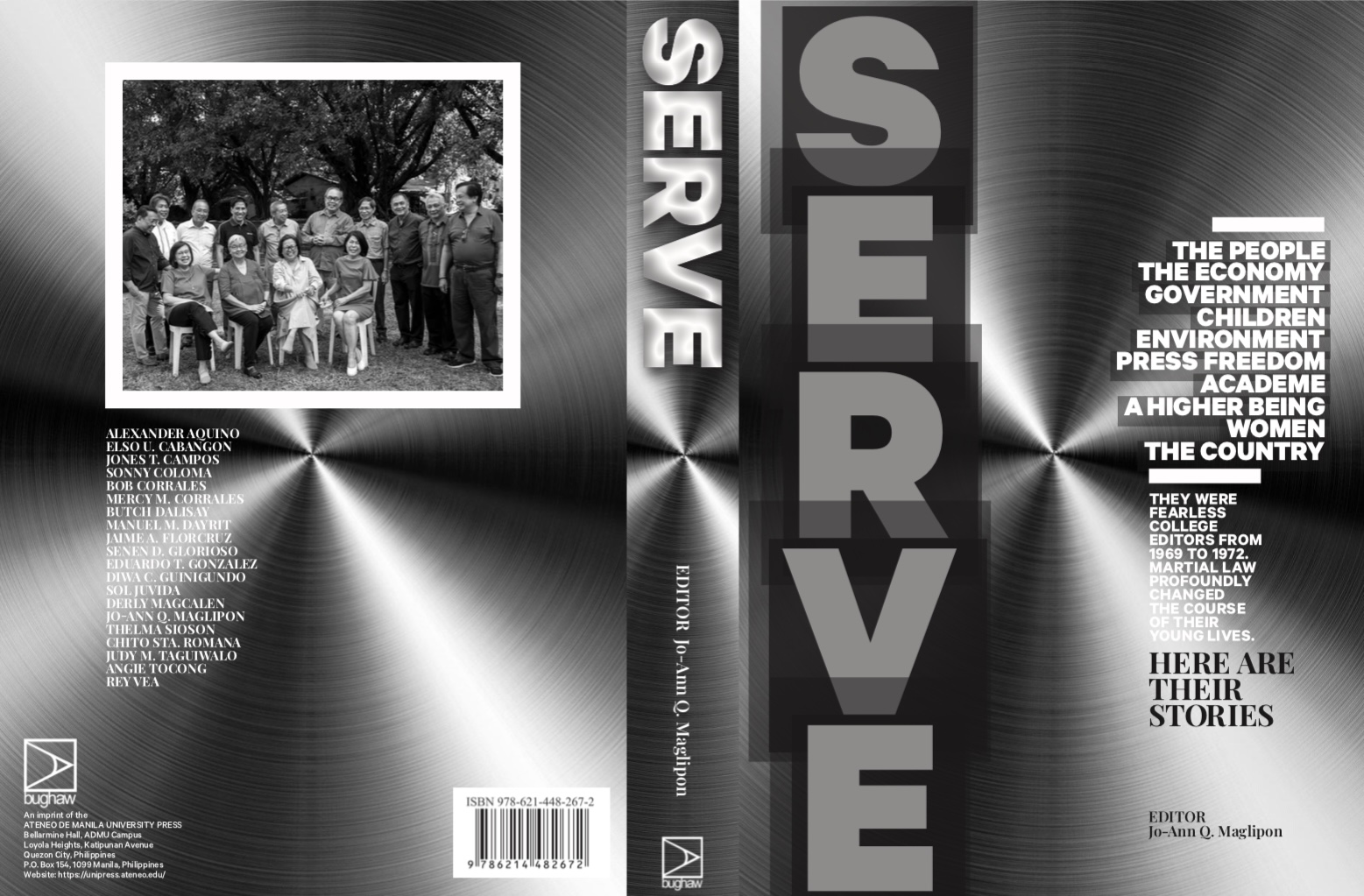
When my fellow FQSers and I—all college editors who were part of the SERVE book that I wrote about last week and that we launched last Saturday—gathered around a table before the launch to pre-sign some copies, we noted with much chuckling how surprisingly old we had become. We were beset by diabetes and hypertension, which were lethal enough but easier to bear than the four bullets one of us took to his face and body; he was with us that day, laughing, his spirits buoyed by his fervent Christian faith. 

We had become university presidents and professors, Cabinet secretaries, CEOs, magazine editors, pastors, and opinion-makers. I don’t think there was anyone in that room who believed any longer in the necessity nor the efficacy of violence, but neither did anyone imagine that our youthful goals had been met, that the country had become a kinder place, and that our work for justice and freedom was done. We had come to terms with our past, were busily in the present, and were hoping to enjoy what little we had left of our extended lives. But like those shaken passengers who stagger away from a crashed plane, leaving the uncounted dead behind, I’m sure that we felt driven by survivor’s guilt to make the most meaning of our gifted years, to do well and to do good, and to serve our people in any way we could. 

We learned that everything may be political, but also that politics is not everything, and that the road to happiness and deliverance may be wider than we had thought. I myself have resolved that even as I fight on for truth and beauty, I will not allow my happiness to be determined by our political vicissitudes, if I can help it. That will be my sweet revenge on my jailers. I will survive you, live a fuller life, and meet my Maker with a clear conscience and a smile.

Qwertyman No. 56: The Rule of Rules

Qwertyman for Monday, August 28, 2023

HAVE A problem? No worries—the Philippine government will make a rule to fix it (maybe). Don’t have a problem? No matter—the Philippine government will make a rule to give you one.

Some days it feels like all that government exists for is to make new rules, because, well, it’s the government, and so it has to look and sound like one. Never mind what the preamble to our Constitution states, imploring the aid of Almighty God to “establish a Government that shall embody our ideals and aspirations, promote the common good, conserve and develop our patrimony, and secure to ourselves and our posterity, the blessings of independence and democracy under the rule of law and a regime of truth, justice, freedom, love, equality, and peace.” Forget the rule of law and all that jazz; all hail the rule of rules.

Two pronouncements by our hallowed poohbahs caught our attention in recent weeks. 

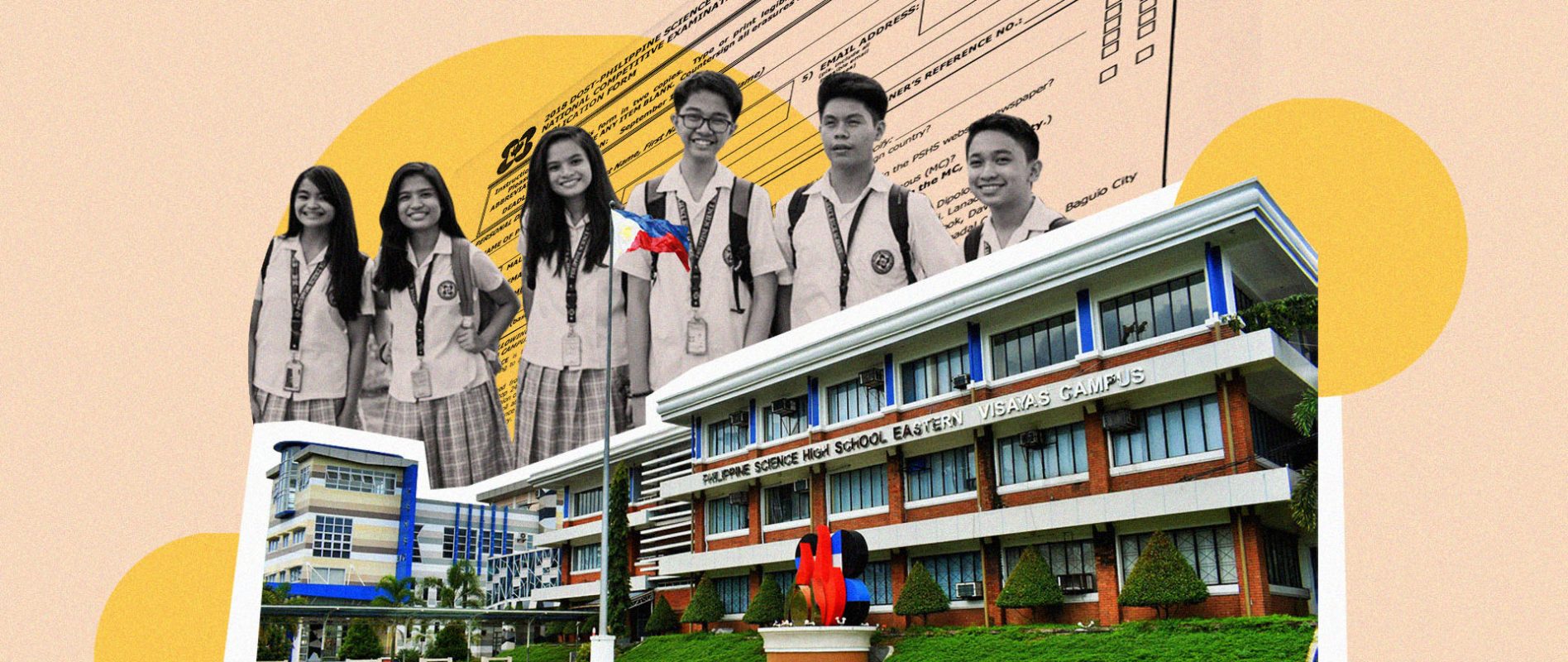
The first was an order from the Vice President and Secretary of Education, DepEd Order No. 21,  directing in its implementing guidelines that all public schools must ensure that “school grounds, classrooms and all their walls and other school facilities are clean and free from unnecessary artwork, decorations, tarpaulins, and posters at all times…. Classroom walls shall remain bare and devoid of posters, decorations, or other posted materials. Classrooms should not be used to stockpile materials and should be clear of other unused items or items for disposal.”

Why? Because these were distractions to learning, explained the good secretary, presumably including in her edict the pictures of past presidents, national heroes, posters of Philippine birds and plants, TV-movie idols, Mama Mary, cellphone and softdrink advertisements, half-naked women, CPP-NPA recruitment posters, the periodic table of elements, weapons of Moroland, and the winking Jesus. 

I actually found myself agreeing with the removal of some of these popular items of wall décor, especially the pictures of politicians, which doubtlessly produce anxiety and despair in those who might contemplate them seriously. The good presidents will make you ask, “Where did all that goodness go?” The bad ones will invite only dismay and even self-loathing: “How did these jokers even make it to Malacañang? So you can still be that kind of person and become President? What on earth were we thinking?” This leads to even more profound and troublesome questions about the nature and practice of democracy, which a poorly trained and underpaid sixth-grade teacher will be hard put to answer, undermining whatever little authority she still exerts over her students. (To her credit, Sec. Sara reportedly removed her own picture from a classroom she visited.)

But Rizal, Bonifacio, Mabini, Tandang Sora, and the usual pantheon of Philippine heroes decking our classroom walls? Will removing their visages encourage students to think more deeply about their Science or Math problems, or will young minds simply drift off to Roblox, Taylor Swift, and Spongebob Squarepants? Will making our classrooms look as bare as prisons (and even prisons have calendars and pinups) lead to a spike in student attentiveness and performance? What does it say of DepEd—with all the academic resources and intelligence funds at its disposal—that directives like this are issued apparently on a whim and without prior and proper study? Where was the attention to science and education that the secretary was aiming for?

The other new rule that sent us screaming to our group chats was the imposition of new guidelines for foreign travel by the Inter-Agency Council Against Trafficking, announced by the Department of Justice, supposedly to curb the incidence of human trafficking, which we all acknowledge t0 be a serious problem. But is this a serious solution?

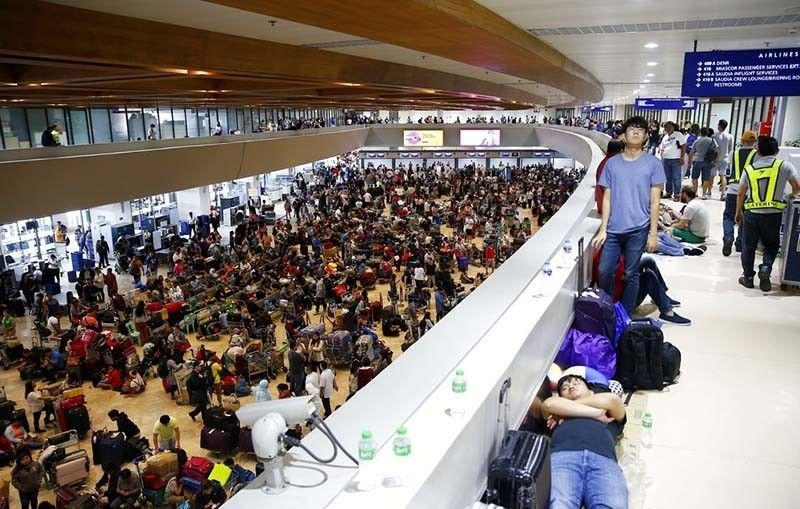
Under the new guidelines, Pinoys going abroad to see the sakura in Tokyo or to watch the New Year’s Eve ball drop in Manhattan won’t get past NAIA immigration without showing their flight and hotel bookings, proof of their financial capacity to afford their trip, and proof of employment. That’s a lot of paperwork to bring along, and if you’ve seen how long the queues can get at NAIA even without these papers in the way, you can imagine what they’re going to be like with each single document having to be scrutinized by an immigration officer. There’s an even longer list of additional requirements for people traveling under sponsorship and for OFWs—including a requirement for a child traveling with his or her parents to present a PSA-issued birth certificate, which was already a requirement for that child to have been issued a passport.

Exactly what this rigmarole adds to the reduction of trafficking is unclear to my muddled mind, because it seems to me that any good trafficker worth his or her illegal fees will be smart enough to produce the fake documents their wards will need to slip through airport security. As experience has shown, it isn’t even fake documentation but corruption and connivance that have greased the wheels of trafficking. 

Which reminds me, I received a letter some time ago from an expat Briton and a longtime Philippine resident named Thomas O’Donnell, complaining about such unnecessary requirements as the filing of annual reports by foreigners in this country. The Philippines has a reciprocity agreement with other countries such as the UK, Thomas says, but the UK doesn’t require Philippine residents there to do the same thing. So was it—like many of our other rules—just something to keep our bureaucrats occupied (or possibly, profitably occupied)? Where was the fun in the Philippines, Thomas lamented, and how was a fellow like him supposed to love it? 

Having lived here for 23 years, Thomas clearly has found other, countervailing reasons for staying on, but he has a point. Despite an anti-red tape law in the books, we still invent ways to complicate the simplest things. And answer me this: if the DepEd chief thinks that bare walls can lead to clearer thinking, shouldn’t we declutter our travel processes as well, so we can all sit in the departure lounge in peace with an hour to spare, waiting for our flight (that will likely be delayed, but that’s another story)?

Qwertyman No. 54: Two Valedictories

Qwertyman for Monday, August 14, 2023

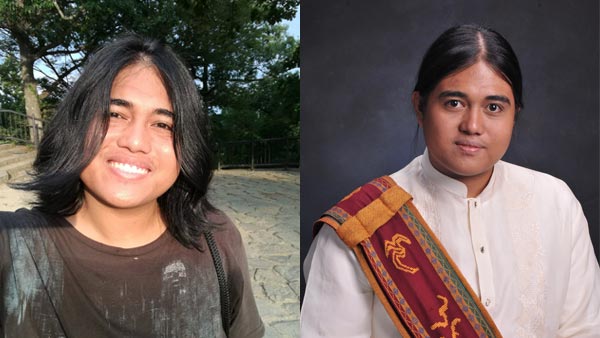
TWO SPEECHES delivered by graduating students of the University of the Philippines made the rounds of social media last week, garnering generally positive responses for their forthrightness. One was more strident than the other, but both carried essentially the same message: we need to reframe the way we look at the education of the poor, and what true success should mean for the working student.

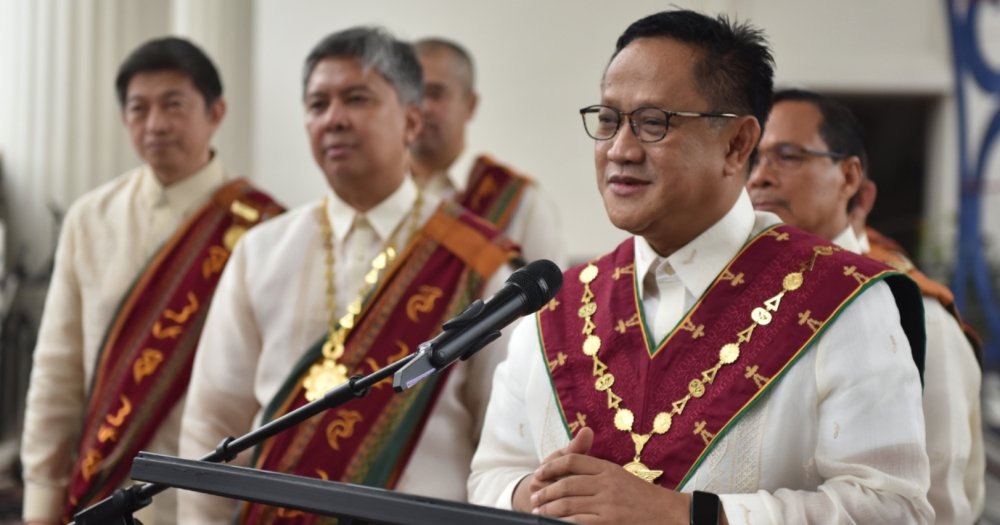
The first was Val Anghelito R. Llamelo, summa cum laude and class valedictorian, Bachelor of Public Administration. The son of an OFW, Val began working at a very young age at a BPO, as a marketing assistant, and as a tutor to support his needs and that of his family’s. He was, almost needless to say, the first UP graduate his family produced, and finishing summa against all odds was the icing on the cake.

He wasn’t there, he said, to deliver the usual valedictory speech you’d expect from a person with his kind of success story. He was grateful for his opportunities, but he didn’t feel like celebrating his hard-won triumph, which people would typically applaud for its sheer improbability. And that, precisely, was the problem, according to Val.

“Why should I be an exception?” he asked in so many words. “Why can’t more Filipinos from my background do well in college and finish like I did? Why does access to a quality education remain the privilege of a few? During the pandemic, how many poor students underperformed because of their lack of access to digital technology?”

Again I’m paraphrasing here, but Val went on to say, “I don’t want to be your inspiration or role model. No one should have to endure what I faced. I want you to be disgruntled enough with the system to demand something better and not settle for less, to yearn for a system where working students, indigenous people, and individuals from impoverished families can have fair opportunities to study and to succeed. Praising us gives politicians in power an excuse to renege on their commitment to improve our lives. We overvalue resilience. Using the familiar analogy of the glass that’s half-full and half-empty, we’re often made to feel that we should be contented with the fact that it’s half-full, but we should focus on the fact that it’s half-empty, and should hold our leaders accountable for filling it up.”

The other speaker was Leo Jaminola, a BS Political Science cum laude and MA Demography graduate who juggled six jobs—as an encoder, transcriptionist, library student assistant, tutor, writer, and food vendor—to complete his bachelor’s degree. 

“Graduating with honors back then was nothing short of a miracle,” says Leo. “In the years that followed, the list of jobs I took just grew longer as I became a research assistant, a government employee, a development worker, and a consultant for different projects with some engagements overlapping with each other.  

“The past years have been a long-winding maze of seeking financial security and I have still yet to find a way out of this crisis. From full-time work, part-time work, and competitions, I did my best to provide not only for myself but also for my family. 

“While some of my peers have hefty investments in high-yield financial instruments, here I am still overthinking whether I deserve an upgrade to a large Coke while ordering at the local fast food chain. 

“During my childhood, I saw how poverty manifested itself in the form of cramped makeshift houses, children playing near litter-filled canals, and senior citizens succumbing to illnesses without even getting a proper diagnosis. Growing up, I thought of these as normal occurrences that should be accepted as it is the way of life. Now, I do not think that this should be the norm. 

“Some people will say that poverty is a personal failure and that the members of my community should work harder but I know better. One of the things that I learned from my experience is that hard work as the primary factor in being successful is a myth. That’s not to say that it doesn’t play a role but privilege and access to resources have greater impacts on whether a person ends up successful or not. 

“If hard work is all it took, then the many young breadwinners I know who continue to support their families while chasing their own dreams would not be constantly organizing their budget trackers to find ways how to stretch their salary until the next payday. 

“Others will read this and use it as some kind of living proof that people, even those from the most marginalized groups, can make it in life simply by working hard rather than addressing structural barriers. But what of those who didn’t make it despite working as hard or even harder than me? How are their experiences not evidence of the continued inaccessibility of education and opportunities in our country? 

“Rather than success, we should see my experience and the stories of so many others as systemic failures. If anything, my story should make us angry and move us to demand a much better society—one that allows our people to live with dignity, dream freely, and enjoy equal opportunities.”

The speeches echo each other, but then so have the “model” valedictories that Val and Leo so forcefully seek to subvert. Indeed, the usual narrative we hear is that of the poor boy (or girl) made good, followed by congratulatory praises for his or her tenacity and faith in Divine Providence. (Some of them, like the poor boy from Lubao, even become President.)

I have to admit that we find such stories inspiring if not necessary, because they offer the possibility of salvation for a lucky and plucky few. But we have to bear in mind as well—as Val and Leo emphasize—that for every summit achieved like theirs lie hundreds if not thousands of others who never got past base camp, not for lack of talent or will but simply for lack of means. To succeed as a nation and society depends much less on producing exceptional one-offs than on leveling the playing field for most.

(Photos from Philstarlife and pep.ph)

Qwertyman No. 49: The Best We Can Do?

Qwertyman for Monday, July 10, 2023

“IS THIS the best we can do?” That question has been ringing in my mind since a couple of weeks ago when two issues came up that, for me and apparently many others, define the level of mediocrity to which governance and decision-making in this country has sunk. Both concerns have already been well ventilated in social media, which is far more scathing and cruel than a Monday column like mine can afford to be—I hate to start my readers’ week with something likely to leave them with an upset stomach—but let’s just think of this as a gargle to relieve our mouths and throats of unpleasant flavors.

First, ex-Atty. Larry Gadon. I don’t know the guy; I’ve yet to meet him and frankly I hope I never have to. I’ve heard the diatribe for which he was rightfully disbarred by the Supreme Court. It’s an awful slurry of verbal excrement that no one but its own source deserves to experience, and there’s doubtlessly more where it came from, disbarment or not. I can live with that, because I know that there’s an even higher court that will render judgment on this fellow and his kind, and it will come with a harshness commensurate to the totality of one’s character. 

What I find more odious is what came after: the Palace’s affirmation of its trust in its appointee as Presidential Adviser on Poverty Alleviation, and Gadon’s own vague reference to certain corporate managerial skills that supposedly qualified him for the job. I had been chatting with a lawyer the day after the disbarment, wondering what Malacañang would do next. “Oh, that won’t get past Justice Bersamin,” he said, adverting to the Executive Secretary. “Just you wait, they’ll take him down.” The next day Bersamin issued a lame press release echoing Gadon’s argument that he didn’t need to be a lawyer, anyway, to take on the Cabinet-level, Salary Grade 31 post, alleviating at least one person’s shortage of cash. (As Full Professor 12 in UP, after more than 30 years of teaching, I retired at Salary Grade 29. Am I envious? Of course I am—shouldn’t anyone be?)

At this point I was pulling hairs off my balding head. So, okay, he doesn’t need to be a lawyer to lead poverty alleviation. But what else does he bring to the job? Is choosing him the best BBM can do? Or does his selection merely confirm what Palace critics believe to be the lack of any genuine commitment to effective and legitimate governance, to give way to the dispensation of favors to political allies? Just when even skeptics were beginning to give their grudging approval to some appointments that made sense—Jimi FlorCruz as ambassador to China and Gibo Teodoro to Defense being two of them—we slid right back into the muck of patronage politics.

Does BBM think so poorly of the poor that he would entrust their fortunes to a man who, using the Supreme Court’s own words, was booted out of lawyering for his “misogynistic, sexist, abusive, and repeated intemperate language”? How will Presidential Adviser Gadon deal with the hundreds of poor women who will be flocking to his office seeking relief for their plaints? Now that he’s beyond the pale of the Supreme Court, will Gadon feel suitably chastened, or will he be emboldened to spread even more nightsoil around the yard? (The dramatist in me is whispering that true character will assert itself, and bring on its own downfall.)

Issue No. 2, the new “Love the Philippines” tourism slogan and the plagiarism mess that followed with its video. I never liked the word or expression “Meh,” which seems a lazy way to express dissatisfaction, but as 99% of social media seems to agree, “Love the Philippines” was triple-meh, totally uninspiring and unimaginative, and visually cluttered. I’m not even complaining about the P49 million reported to have been paid by the government to the ad agency that conceptualized the slogan; we know that the right few words, properly chosen, could make a world of difference in sales, many times more than the investment. (Nike’s “Just Do It” campaign, credited to the American Wieden+Kennedy agency, reportedly boosted Nike’s worldwide sales from $877 million in 1988 to $9.2 billion ten years later. We don’t know how much Nike paid for those three words, but its trademark and stunningly simple “swoosh” was drawn by a female college student who was paid $2 per hour in 1971.)

I also understand that we seem to be too self-critical and terribly hard to please when it comes to tourism slogans, maybe because they’re supposed to encapsulate and project our national identity—on which we have yet to arrive at a consensus, a century and a quarter onward. 

Dick Gordon’s “WOW Philippines” and the subsequent “It’s More Fun in the Philippines” earned their share of brickbats. But whatever those criticisms were, I’d have to agree that either one of them is infinitely better than “Love the Philippines,” whose imperative voice sounds tonally off. (Not to mention its susceptibility to parody, which the Palace’s PR watchdogs should have caught—a “Rob the Philippines” meme has been making the rounds, a tamer verb choice than others I’ve seen.) 

Social media is abuzz with what reportedly happened behind the scenes and what a Palace-favored director supposedly did to screw things up—but again, I’m not even going there, and will limit my dismay to the poor result that often emerges when money, politics, and egos get the better of creatives. The use of video clips from foreign sources to prop up a campaign for Philippine tourism was almost absurdly hilarious and totally inexcusable, and it’s hard to believe that a company as experienced and reputable as the contracted ad agency would have done that knowingly, although it owned up to it. 

At any rate, these missteps don’t do any good for any administration trying to earn the people’s trust, and the ultimate question is, what are they going to do about it? The answer will tell more about those in charge than the minor figures in these scandals.

Qwertyman No. 48: Beauty and Horror

Qwertyman for July 3, 2023

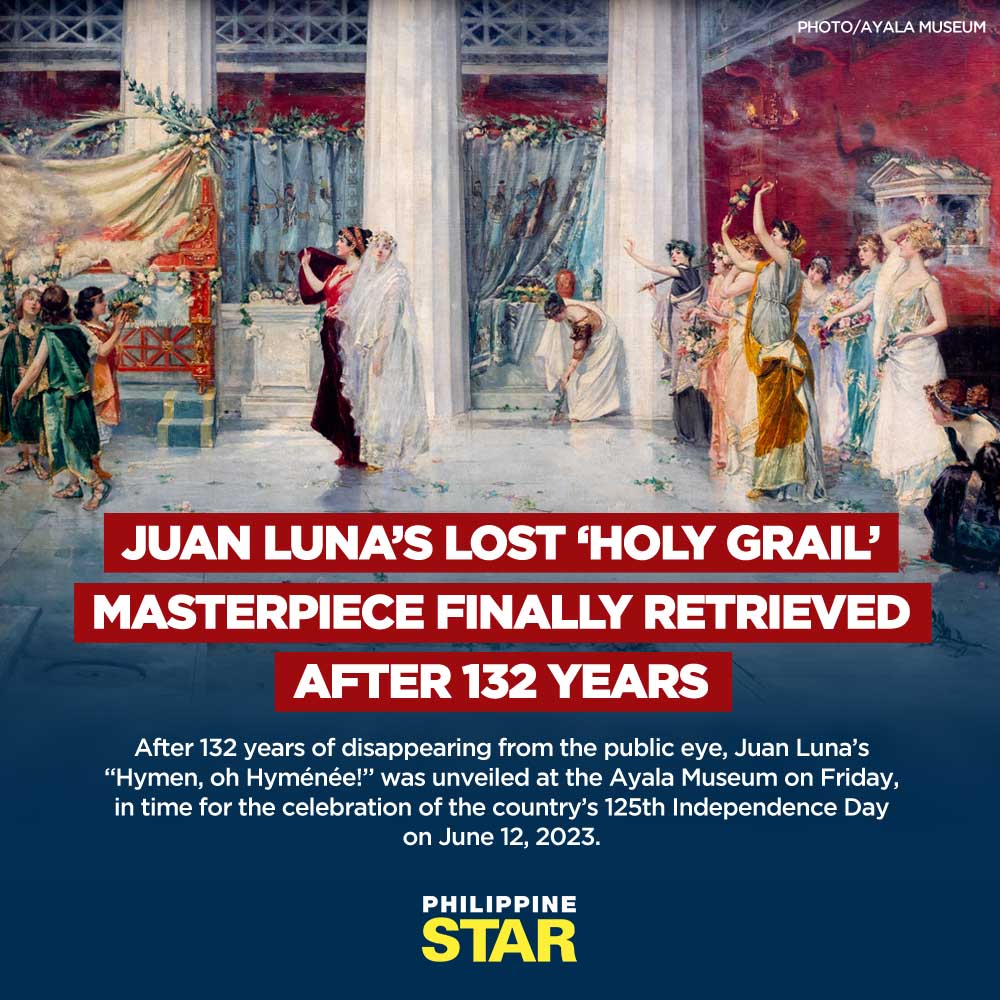
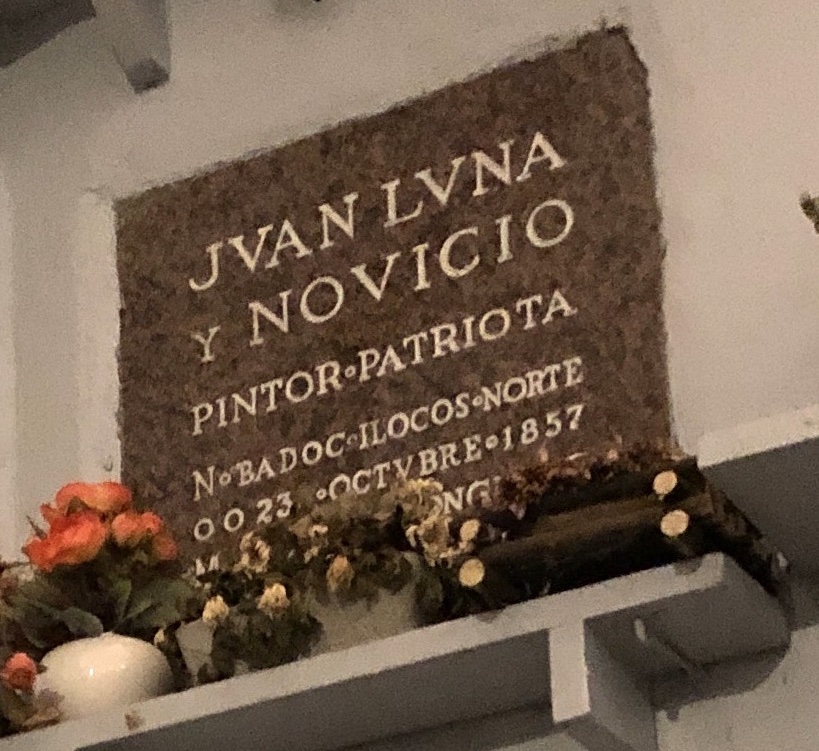
I WAS surprised, a bit amused, but also deeply bothered by the reactions of Filipino netizens to an event that hogged the headlines two weeks ago—the special exhibit of Juan Luna’s painting “Hymen, O Hyménée.” 

The painting, said to have been lost for over 130 years, was put on display in all its solitary glory at the Ayala Museum, evidently a prize catch and worthy of public attention. The attention came—not all of it positive. Quickly a thread developed online scoring the artist, the painting, the museum, and the curious who trooped to Makati to see the painting. Why, posters asked, was praise being heaped on a deranged man who murdered his wife and mother-in-law? Where was our outrage? Speaking of the painting, why, technically it wasn’t even that good. 

They were, of course, all fair points to raise, designed to provoke some serious re-evaluation of why we like the things (and the people) we do. While there was some quibbling about the aesthetic merits and demerits of the painting, most of the negative reaction was clearly aimed at Juan Luna’s homicidal and presumably misogynistic streak. Just to be clear, he did admit to killing the two women (he suspected his wife of having an affair with a Mr. Dussaq), but was later acquitted on grounds that merely prove how partial to men the old judicial system was.

This brings up the inevitable question—not about Luna’s guilt, which seems to have been settled in the court of public opinion, but about that of those professing to admire Luna’s talent as a painter: knowing what we know now about an artist, should his or her work be judged by his or her character? Can or should we put our blinders on when gazing at a painting or reading a book, and savor the work in denial of its creator’s evil history? Should we resist Google, adopt or feign ignorance, and leave moral judgments to others?

I know that some esteemed writers and artists, like the late F. Sionil Jose who preceded me in this space, were severe and unforgiving in their application of a moral frame to creative work. To Manong Frankie, if you supported the Marcos dictatorship and profited from it, your credentials as an artist were forever compromised. Today we would call this “cancel culture,” which has been appropriated by right-wingers to complain about being punished for being, well, right-wingers.

It seems like a logical proposition: if you don’t like someone for good reason, then reject his or her work, which could be tainted by all manner of subliminal malice. You can stand proud in your clarity of mind and emotion, in your spirited defense of the good and just.

But this also raises a very practical problem: entering a museum or a library, how am I to know which artists or authors led upright lives, and which ones flourished in depravity? If I enjoy a work, only to discover later that its creator attempted to rape a teenage girl (as the Nobel prizewinner William Golding did, and even wrote about it privately) or tortured animals and adored Hitler (like Salvador Dali did), am I supposed to regurgitate my admiration and pronounce the work worthless?

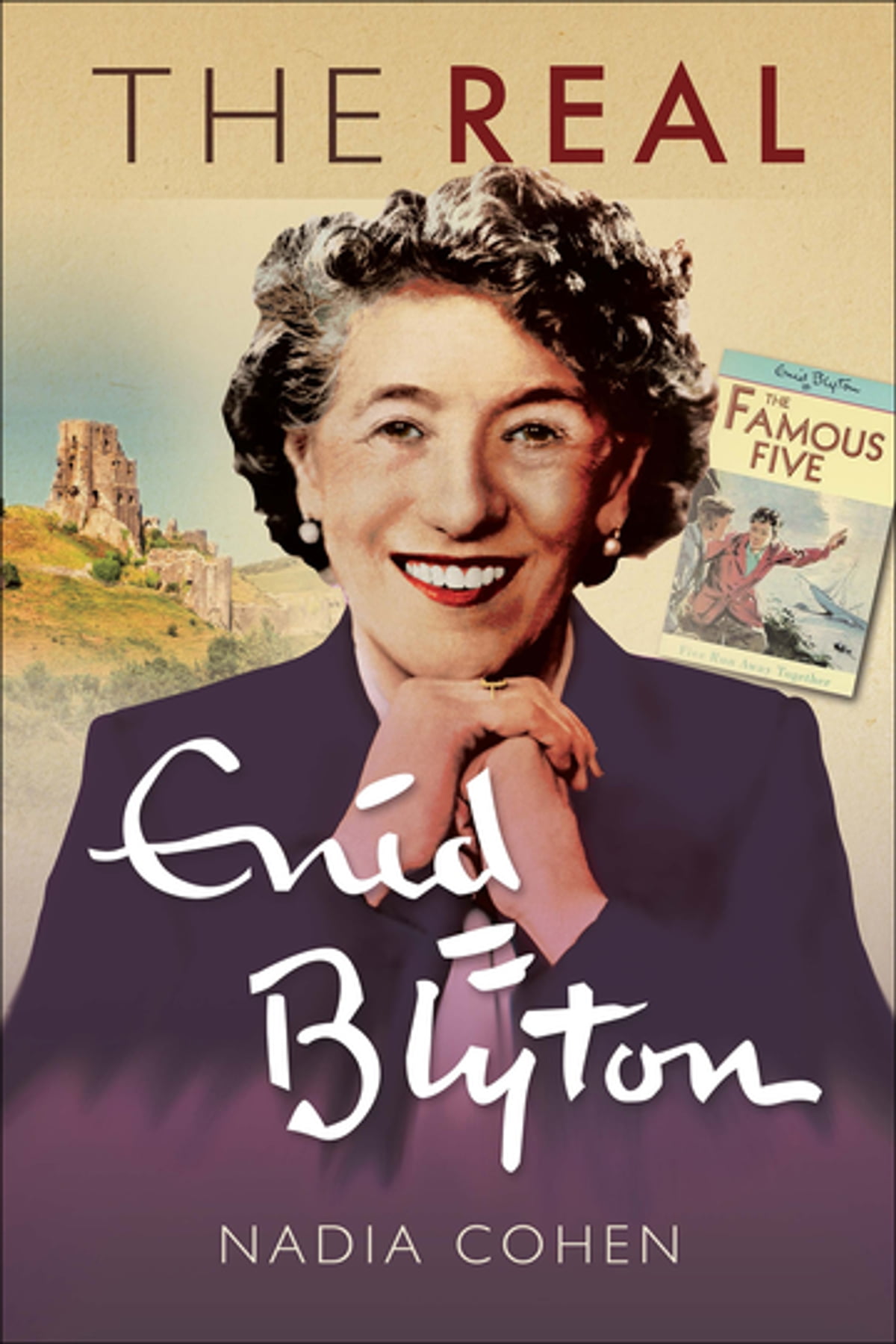
The list of artists and writers who were less than paragons of moral virtue is a long and (dis)honorable one. For this we go to Google, which has been asked the question so often that so-called “listicles” exist of the answers, which inevitably throw up the same names. Paul Gauguin abandoned his family and fled to Tahiti where he took on three child brides, infecting them all with syphilis. TS Eliot and Ezra Pound were Jew haters, as were, for that matter, Richard Wagner, Edgar Degas, and Roald Dahl. Picasso abused his women and drove them mad, calling them “machines for suffering.” Beloved writer of children’s stories Enid Blyton was a terrible mother, neglectful and vindictive, described by her own daughter as “without a trace of maternal instinct.” What am I to tell our daughter Demi, now 49, who grew up on Enid Blyton and who carefully rounded up all her Blyton books and tied them up in a ribbon during her last visit, for passing on to another child?

I recall when, years ago, a renowned actress (whom I need not name, as you can surely guess who she is) was denied the National Artist Award by Malacañang because of her reported use of drugs at some point in her troubled life. (I know, because the Palace official who recommended the disapproval told me the story.) Thankfully this was later rectified.

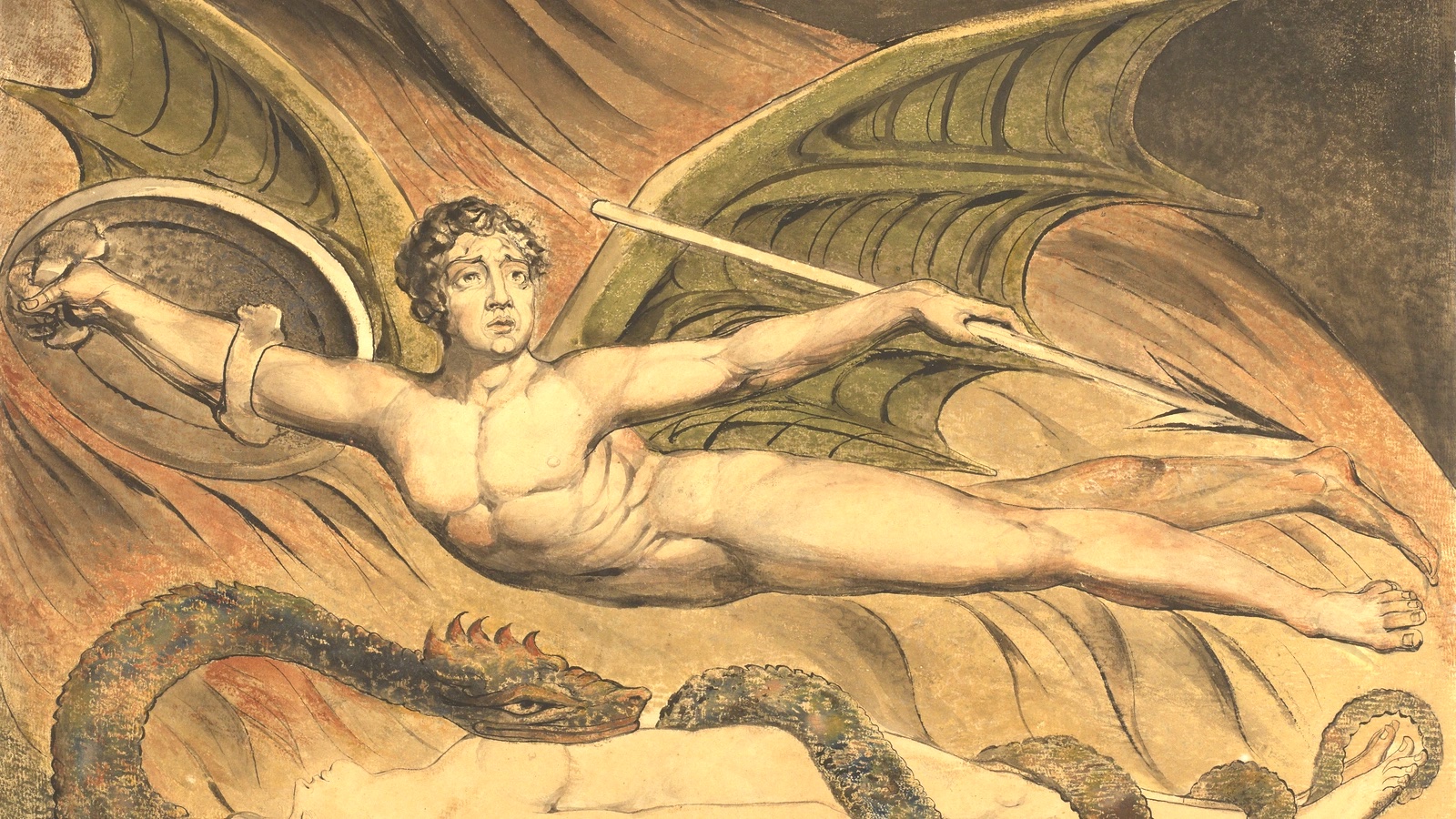
And as soon as I say that, you can see where I incline in this debate. I hate evil as much as any sane person would, but also recognize and accept that some of that is always latent within me and within others, and that it is my awareness of it—or my guilt when I give in to it—that grounds and deepens my art. I’m not saying evil is a prerequisite for artmaking, as surely saintly folk have produced great art (although I still have to find that listicle); it’s just there, like a shadow in the forest, the Lucifer without which the aura of our angels would dim. 

And what about the deplorable if not detestable excess of it in these aforementioned geniuses? Do we excuse or absolve their failings by accepting their art? I think not. What we are accepting is not their wrongdoing, but rather the fact of how one of art’s and indeed of life’s great mysteries is how often beauty and horror cohabit. Thus we can come to an informed appreciation of a work and its maker, wonder at how so much darkness could produce so much light, and begin to understand our complexity as humans, which artists give form and voice to.

Myself, I like to think of art as a personal act of redemption, or at least of restitution. It will never excuse one’s bad behavior, or repair the damage done. But it will show how capable we are of refined and abstract expression, despite our brutish selves.

The greater problem for me is that, today, we inhabit a moral minefield where art itself has been conscripted to disguise falsehood and deception. Artificial intelligence has neither heart nor conscience, but its manipulators can produce breathtakingly attractive lies. Much more than a long-interred Juan Luna, this worries me.

Qwertyman No. 47: An Open Door

Qwertyman for June 26, 2023

A FEW weekends ago, the traffic was tied up in knots around the University of the Philippines campus in Diliman, where we live, and we knew why. Many thousands of high school seniors hoping to enter UP were taking the university’s UPCAT or entrance exam, which had gone back to its old physical, face-to-face format after two years of being suspended in favor of a statistical formula because of the pandemic. This year, over 100,000 applicants took the UPCAT, out of whom about a tenth will be taken in, the actual number of admissions being determined by the capacity of UP’s eight “constituent universities” like UP Los Bañ0s and UP Mindanao, aside from Diliman, to absorb new freshmen.

As a campus resident and now a retired professor who still teaches a course every semester (an option I avail myself of, just to keep my foot in the classroom and know what the young people are thinking), I witness this ritual every year, and smile every time I see those bright and eager faces, squinting at the sun and looking a little lost; the first challenge every UP freshman faces is finding out where things are and the fastest way to get from Point A to Point B. 

That’s literally thinking on your feet, which is a survival skill we inculcate in our students. If there’s a smarter way to solve a problem than brute force, we’ll find it. (I recall how, in the middle of an exam for a Shakespeare class which I usually aced, I was stumped for the right answer, and in despair just responded with a quotation from A Midsummer Night’s Dream: “So quick bright things come to confusion!” My professor let me off with a 1.25.)

Frankly or perhaps unkindly, UP people are called pilosopomagulang, or maangas by those unfamiliar or uncomfortable with the forthrightness and cleverness that our academic culture encourages. At worst, we’re called “godless communists” by those who don’t see how packed our chapels and parking lots are (although of course, today, the most successful communists are called oligarchs). On this point, I can guarantee you that no one can be more annoyed if not enraged by a UP person than another UP person; our faculty feuds are legendary. Indeed that has become a liability with some employers who prefer to hire graduates who will simply do as they’re told without asking “Why?”

“Why?” may indeed be the wrong entry-level thing to say, but it’s also what has moved science and society forward, quickly followed by “How?” If no one asked it, we’d still be chasing animals over clifftops for food and sacrificing our first-borns for bigger harvests. This urge to apply reason to the most basic of human and natural functions again can be occasionally irritating, especially when it is accompanied by the unflinching (or perhaps juvenile) certitude that one is absolutely right. 

As a teenage activist in Diliman, I was sure that the only way out of the mess we were (and continue to be) in was an armed revolution; Marxist logic said so. Approaching 70, I’m just glad that I lived long enough to reason my way out of it, but looking back at that pimply 17-year-old who carried Harry Shaw’s College English in one hand and Mao’s Little Red Book in the other, I can understand why I thought the way I did. And no, it wasn’t like my professors force-fed me with rebellious notions. I was a reasonably bright kid who read the news—murders and massacres here, extreme poverty and hunger there, corruption and scandal all around, with few of our leaders seeming to care—and I was looking for a comprehensive and compelling framework to explain all this and map out a route forward. The Left offered that.

It’s important to note that then, as now, most UP students and certainly most Filipino students didn’t feel the same way and do as I and my comrades did, which was to put activism over academics. Our protests may have hogged the headlines and typecast UP for good as a school for rebels (although it had been a hotbed of student protest since Quezon’s time), but the majority of UP students then continued attending their classes, turning in their assignments, and picking up their diplomas, as was their right. Like I often emphasize, as vocal dissidents, we were (and are) in a distinct minority. That comes with the territory of resistance—not just in a university but in society as a whole.

Given what’s happened since, were we wrong to protest and did we waste our youth (and, as some politicians and red-tag-happy trolls might say, our people’s money as well)? Some of us persisted and stayed on that path; many paid with their lives, or devoted the entirety of their lives to their cause. Some turned 180 degrees and now rabidly renounce their past, casting their lot with their former enemies. Some, like me, now see moderate liberalism as the only viable way forward—to endure and survive, gaining ground from one generation and one community to the next, instead of in one fell swoop. Somehow I understand all of these outcomes, which are all human, all fallible, and none of them assured of success. I can only be hopeful, and not certain, that my option is the best one.

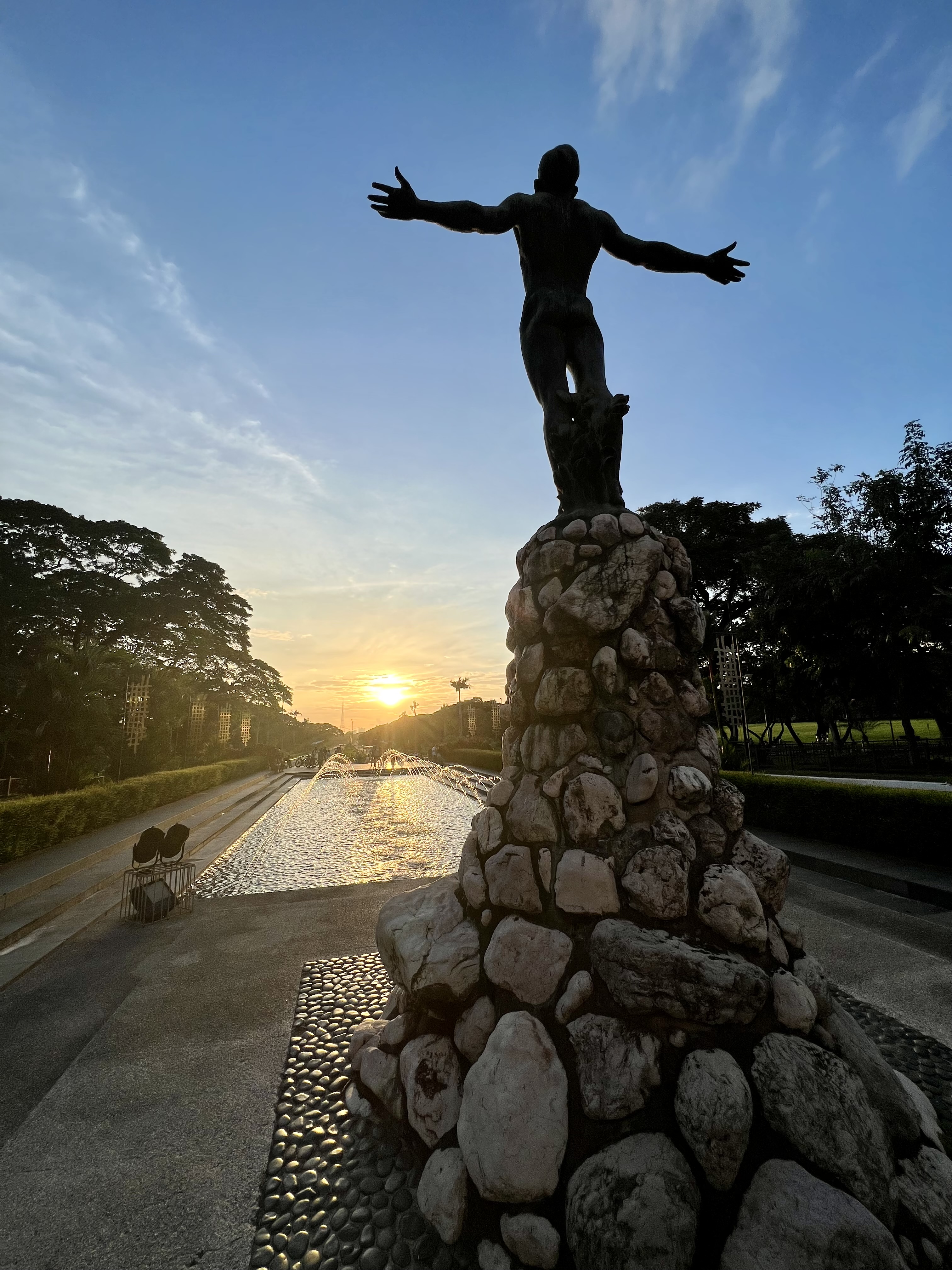
As I looked at the UPCAT examinees posing for selfies in front of the Carillon and the Oblation in Diliman, I remembered that eight UP students are now facing charges for their recent attempt to storm past a closed door at Quezon Hall to protest an unpopular decision by the Board of Regents. Among the complainants’ grievances, ostensibly, was that the wooden door was part of UP’s heritage, and had to be protected at all costs.

That saddened me, because the last image that one could imagine to stand for a university like UP is that of a closed and impregnable door. UP’s true heritage doesn’t lie in its furniture but in its tradition of free speech, and even of protest, the occasional overflow of passion included. I can only pray that UP’s new and compassionate president, Jijil Jimenez, can draw on his own activist past to see that point, and to keep an open door for his constituents to his mind and heart.

Qwertyman No. 46: The Writer as Liberator

Qwertyman for Monday, June 19, 2023

AS PART of its Independence Day celebration, the J. Amado Araneta Foundation asked me to give a talk on “The Writer as Liberator” last Saturday, and today being Jose Rizal’s birthday, I’m very happy to share that talk in full (a shorter version appeared as my Qwertyman column in the Star):

When I was first asked to talk about “The Writer as Liberator,” the first thought that went through my mind was probably the thought that’s now going through yours, which was that of the writer as political revolutionary or dissident, in the mold of Jose Rizal, Marcelo H. del Pilar, Lorraine Hansberry, Alexander Solzhenitsyn, Nadine Gordimer, Wole Soyinka, and so many others of their caliber and stature.

That presumption, of course, is certainly valid and reasonable. Indeed, human history is fraught with examples of writers who fought colonialism, slavery, racial prejudice, and feudal and capitalist oppression and exploitation in India, South Africa, and the United States, particularly the American South, among many if not most other countries in the world. Wherever evil has reared its head, writers have arisen to call it out by name in all its forms—overweening pride among the ancient Greeks, blind ambition in Shakespeare’s time, lust and greed everywhere down the ages. 

The Philippines has been no exception. Decades before Rizal, Francisco Baltazar or Balagtas employed allegory in Florante at Laura to depict suffering and denounce injustice. Rizal and the whole Propaganda Movement followed, in a story of resistance and revolution that many of us already know. It’s a high climactic point that we could talk about all day but I won’t, because I’d rather talk about other things that most of us don’t know about writers and liberation. 

Again, to deal with the obvious, writers of all kinds have been at the forefront of political and social change. They included poets, playwrights, novelists, journalists, screenwriters, and today we would have to count bloggers and comic book script writers.

Our heroes and champions of freedom were poets—Rizal’s Mi Ultimo Adios and Bonifacio’s Pag-Ibig sa Tinubuang Lupa spring to mind, but they were also followed by the likes of Claro M. Recto, Francisco “Soc” Rodrigo, Carlos P. Garcia, and Diosdado Macapagal. These men—sadly, our political and even our cultural life was dominated then by the patriarchy—came from a generation when there was a very thin line between journalism and creative writing, when an opinion column could appear in verse, and when senators were expected to be literate and eloquent.

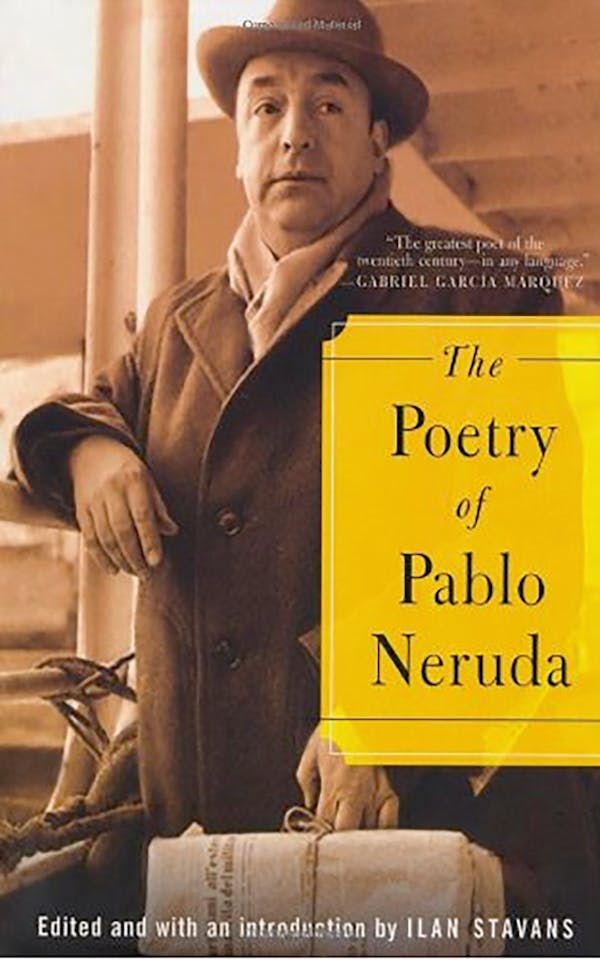
As I mentioned earlier, this was true of many countries around the world where people were fighting for freedom and justice. In South America, Simon Bolivar—who was known as The Liberator or El Libertador—led the fight for independence from Spain of what are now his native Venezuela, Colombia, Bolivia, Peru, Ecuador, and Panama, but he was also a poet, alongside the Cuban Jose Marti, among others. The Chilean poet and Nobel Prize winner Pablo Neruda wrote a poem in tribute to Bolivar, titled “A Song for Bolivar,” which I will read to you:

Our Father thou art in Heaven,
in water, in air
in all our silent and broad latitude
everything bears your name, Father in our dwelling:
your name raises sweetness in sugar cane
Bolívar tin has a Bolívar gleam
the Bolívar bird flies over the Bolívar volcano
the potato, the saltpeter, the special shadows,
the brooks, the phosphorous stone veins
everything comes from your extinguished life
your legacy was rivers, plains, bell towers
your legacy is our daily bread, oh Father.

The line “everything comes from your extinguished life” might as well have applied go Neruda himself, who was murdered by the fascist Pinochet government he opposed. Many writers have died for what they have written—and again we go back to Rizal—but others fought, lived on, and even succeeded in their struggles for national liberation. Two of the most prominent were Ho Chi Minh and Mao Zedong, who led long and ferocious wars against both local and foreign oppressors.

Imprisoned in China during the war, Ho Chi Minh wrote this poem in 1943 upon reading a book called the Anthology of a Thousand Poets:

The ancients liked to sing about natural beauty:
Snow and flowers, moon and wind, mists, mountains and rivers.
Today we should make poems including iron and steel,
And the poet should also know how to lead an attack.

In 1950, shortly after the Communists took over in China, Mao wrote this poem in reply to another poet named Liu Yazi:

The night was long and dawn came slow to the Crimson Land.

For a century demons and monsters whirled in a wild dance,

And the five hundred million people were disunited.

Now the rooster has crowed and all under heaven is bright,

Here is music from all our peoples, even from Yutian,

And the poet is inspired as never before. 

Note how, in these two poems, Ho and Mao locate the poet at the center of a collective struggle. This idea is developed even more strongly by Jose Ma. Sison—who by the way was an English major in UP—in his poem from the 196os titled “The Guerilla is Like a Poet”:

The guerilla is like a poet 
Keen to the rustle of leaves 
The break of twigs 
The ripples of the river 
The smell of fire 
And the ashes of departure. 

The guerilla is like a poet. 
He has merged with the trees 
The bushes and the rocks 
Ambiguous but precise 
Well-versed on the law of motion 
And master of myriad images. 

The guerilla is like a poet. 
Enrhymed with nature 
The subtle rhythm of the greenery 
The inner silence, the outer innocence 
The steel tensile in-grace 
That ensnares the enemy. 

The guerilla is like a poet. 
He moves with the green brown multitude 
In bush burning with red flowers 
That crown and hearten all 
Swarming the terrain as a flood 
Marching at last against the stronghold. 

An endless movement of strength 
Behold the protracted theme: 
The people’s epic, the people’s war. 

Given the aesthetics of the Philippine Left at that time, you could actually reverse this proposition to read “The poet is like a guerilla,” which Emman Lacaba certainly was, as was Ma. Lorena Barros, whose poem “Sampaguita” follows:

This morning Little Comrade

gave me a flower’s bud

I look at it now

remembering you, Felix,

dear friend and comrade

and all the brave sons and daughters

of our suffering land

whose death

makes our blades sharper

gives our bullets

surer aim.

How like this pure white bud

are our martyrs

fiercely fragrant with love

for our country and people!

With what radiance they should still have unfolded!

But sadness should not be

their monument.  

Whipped and lashed desperately

by bombed-raised storms

has not our Asian land

continued to bloom?

Look how bravely our ranks

bloom into each gap.

With the same intense purity and fragrance

we are learning to overcome.

Decades later, her namesake Kerima Lorena Tariman would write “Pagkilos,” a poem that celebrates motion in both nature and society:

Ang lahat ng bagay ay tila kitikiti,
Palagiang kumikilos at hindi mapakali.
Ang paggalaw ay kakambal ng bawat bagay,
Likas na kaugnay at hindi maihihiwalay.

Ang mga bagay-bagay ay kay hirap isipin,
Kung walang paggalaw, kung kaya, gayundin,
Ang paggalaw mismo ay di natin matatanto,
Kung wala ang mga bagay dito sa mundo.

Sa daigdig, halimbawa, nagpapahinga man ang pagod,
Matikas man ang estatwa at patay-malisya ang tuod,
Sila’y hindi naliligtas sa paggalaw ng planeta,
Ang pag-ikid at pag-inog ang palagiang sistema.

Kung kaya ang masa na akala mo’y walang imik,
Kapag natutong lumaban ay nagiging matinik!
May mga kasama man na natitigil sa pagkilos,
Ang rebolusyon sa daigdig ay hindi natatapos!

A, lahat ng bagay ay saklaw ng ating kilusan,
Katotohanan ito na di maaaring iwasan.
Kung kaya’t habang tayo ay may lakas at talino,
Sa pagkilos natin ialay ang ating bawat segundo!

Tragically, both Lorenas—and Emman Lacaba before them—would be killed in the struggle that they took on, and be hallowed as revolutionary martyrs.

Now, all this may sound like an open invitation for our favorite red-taggers to call all poets rebels, and all rebels communists. That would be ridiculous. Most poets are still happy and perfectly within their rights to write about the moon and the stars and undying love. Some rebel-poets were proud and self-admitted communists, at a time when the word was invested with a sheen of holiness. But the abject failure of communism to set up a truly free and egalitarian society and its appropriation in both China and Russia by new and autocratic elites has shed much of that romantic mystique, and it is supremely ironic that those writers and artists now fighting for civil liberties in both countries are considered enemies of the state.

“The Writer as Liberator” was an easier concept to deal with when we had a foreign occupier like Spain, America, or Japan. Today, our oppressors are internal, lodged within our society, and within our hearts and minds. The liberation we need today is from our worst selves, which is often the hardest enemy to face. Bad leadership has enabled and encouraged that side of us that accepts extrajudicial killing and unjust imprisonment as normal. 

The minds of so many of our people remain shackled by ignorance, falsehood, prejudice, superstition, fear, and a crippling dependency on the old and familiar, however self-destructive they may be. In an increasingly polarized and intolerant world, people everywhere face racial violence and discrimination, gender inequality, economic exploitation, and political repression.

The writers who will battle this chimera have many weapons at their disposal—not just books and the traditional press but social media, a universe of communication unto itself that Rizal and his contemporaries never dreamed of. Journalists fight with the truth, creative writers fight with the truth dressed up as artistic lies. 

I have often said that the best antidote to fake news is true fiction. By this I mean that it often takes artistry and good storytelling, more than a mere recitation of facts, to show people what is true.

Long before there were newspapers, writers gave voice to their people’s hopes and fears through what today would be called fiction: through myths, legends, tales, epics. These stories transported people from the crushing routine of their everyday lives to the realm of the gods, to a romantic past cloaked in the mists of fable and fancy. Indeed, these stories came even earlier than literacy itself, transmitted orally from one generation to the next. Creation myths validated and gave meaning to a tribe’s or a people’s existence; tragic drama reminded them of the consequences of our moral choices. 

When I started my Qwertyman column in the Philippine Star and began writing what I called “editorial fiction,” a columnist in another newspaper immediately cried “Foul!”, claiming that fiction cannot possibly be taken as opinion. I responded that all fiction is opinion, if you know how to read it closely enough. Like the mirror Perseus used to kill Medusa, we employ fiction to deal with truths we cannot bear to face.


I am under no illusion that the next revolution, whatever it may be against or when, will be sparked by a novel or a poem. Very likely, it will be a viral video that will ignite that flame. I pray it will not be violent, but rather a comprehensive conversion of our people’s minds and spirits for the good. But there will always be a place for the writer in the offices, kitchens, and workshops of democracy, on the bunkbeds where we lie dreaming of justice and prosperity for all. 

Let me close with a short poem that I wrote last year, titled “Freedom Is When”:

Freedom is when 

We don’t think about it

But it’s there like air

We seek only in its absence

When we’re gasping for breath.

Freedom is when

We can choose whom to love

Or whom or what to believe 

Without any fear

Of punishment or death.

Freedom is when

We can sleep without guilt

And dream without ghosts

Waking up to the aroma

Of steaming rice and stewed fish.

Ang kalayaan ay kung

Hindi natin ito iniisip

Tulad ng hangin

Hanggat ito’y mawala

At tayo’y maghingalo.

Ang kalayaan ay kung

Malaya tayong pumili

Ng iibigin, o paniniwalaan

Nang walang katatakutang

Parusa o kamatayan.

Ang kalayaan ay kung

Mahimbing tayong makakatulog

At managinip nang di minimulto

Hanggang tayo’y pukawin ng halimuyak

Ng bagong saing na kanin at pinangat.

Qwertyman No. 44: Again, America

Qwertyman for Monday, June 5, 2023

I HAVE a good friend whom we’ll call Ted, a Fil-Am who retired a few years ago as a ranking officer in the US Navy. He was in town recently on some family business, and like we always do when circumstances permit, we had dinner and a good chat just before he and his wife flew back home.

Most of us have friends if not relatives in America, and all of this would be pretty routine except for one fact: I’m a flaming liberal, and Ted is a Trump Republican. Over the fifteen years or so that we’ve known each other—well before Donald Trump entered the picture—we’ve been aware of those political differences, but rather than politely skirt them in our conversation like many sane people would, we feel comfortable enough with each other to talk at length about them, and even exchange some friendly barbs.

Much of that level of comfort comes from my belief that, in his own way, Ted sincerely and deeply loves his country—and his ancestral home, the Philippines. He’s smart, curious, eager to learn and understand. In his former naval job and as a private citizen, Ted—who was born in the US but spent some of his formative years in his family’s hometown in Bicol, and speaks some of the local language aside from Filipino—has visited the Philippines as often as he can, trying his best to improve relations between the two countries on a personal level. (On this last visit, for example, he also took part in a ceremony to celebrate the commissioning of the USS Telesforo Trinidad, named after an Aklan-born Filipino petty officer who was awarded the Medal of Honor for bravely rescuing his shipmates from an explosion aboard their ship in 1915.)

Given his naval background—his dad joined the Navy in the 1970s—I’m not surprised that Ted is a Republican, like many military Fil-Ams are. (One notable exception is a mutual friend of ours, the former West Pointer, Army Ranger, and diplomat Sonny Busa, as staunch a Democrat as they come, and a key figure behind Filipino veterans’ causes in Washington.) His support for Trump despite the man’s many failings continues to mystify me, but I’m guessing that in his calculations, Ted chose to cast his lot with the man best positioned to thwart the liberal agenda. That includes items that Ted and other Republicans feel extremely uncomfortable with, such as what he calls the “celebration, beyond just acceptance” of transgender rights, and their judicial enforcement.

Perhaps with any other person, my liberal hair-trigger would have fired away at such comments with a fusillade of counter-arguments, but with Ted I find more value in listening and trying to understand a certain mindset, as different as some of its premises may be from mine. In our last conversation, what Ted had to say was profoundly disturbing. I’m paraphrasing here, but essentially it was this: “America is a mess. People can’t talk civilly to each other anymore. When I say I’m a Republican, people instantly assume I’m a racist.” To which I said that people at the top like Trump (and our own version of him here) greenlighted that kind of boorish discourse, with additional pressure brought on by right-wing militias armed with AR-15s. We talked about January 6 (which he opined was not an insurrection) and the Second Amendment (which I said seemed sacrosanct in American politics). “You have cancel culture,” he sighed, “to which the other guy responds by going bam bam bam!” He was deploring, not endorsing it, trying to get a fix on his own society’s ailments. “It’s in our DNA,” he said glumly about guns.

Thankfully Ted and I always have other things to talk about—like the Philippines, in which Ted said he feels much more relaxed than his own country. He knows how worked up I can get about politics and our own leadership (or the lack thereof), but as far as he could see on this trip, I and my fellow Filipinos (including those he met in Bicol) were just chugging along. “We’re survivors,” I said, “and we’ll do what it takes to get by from day to day.”

That brings me to another friend, “Tony,” who messaged me out of the blue the other day, obviously distraught by the Senate vote on the Maharlika Fund bill and asking if it was time for him and his family to leave the country, given how we seem to be back on the road to political plunder and economic ruin. It wasn’t just a rhetorical question; he was really thinking about it. Here’s what I said:

“Hi, Tony—If it’s a realistic option, I don’t think anyone can or should blame you for leaving or wanting to leave. We have only one life and we have to make the most of it in all ways. Politics is important, but it’s only one of many other factors that define who we are—love, art, family, and faith, among others. That said, it can have a way of complicating our lives and life choices. 

“Moving to the US has also been an option for me for some time now. Our only daughter lives in California and has been wanting to petition us. But my wife and I have been strongly reluctant to move there, although we visit almost every year and are familiar and comfortable with living in the US, where I spent five years as a grad student. We are artists, and our work is culture-bound. We feel appreciated here, within our small circle of friends. However good we may be, in America we would be marginalized; we don’t want to become an American minority and deal with all the issues that will come with it. And America has become much less inviting now, with all the intolerance and racial violence provoked by Trumpism. 

“So unless it were a matter of life and death, we’ll stay here, despite the present dispensation and many more aggravations like the Maharlika Fund to come in the years ahead, because I feel that my continued survival and success will be my best way of fighting back. Having survived martial law, we can survive this as well. Everyone’s circumstances are different, and again you should feel free to find your place where you can best live with your family and secure their future. Nothing is ever final anyway, and you can always come back. Follow your heart and conscience, and you should be all right, wherever you may go. All best!”

(Image from bu.edu)

Qwertyman No. 41: Living up to “Honorable”

Qwertyman for Monday, May 15, 2023

I’VE BEEN following the saga of the Hon. George Santos, the freshman Republican congressman from New York, who’s been caught in a tangle of lies he made about his education and employment on his résumé, and who’s now been charged in federal court on 13 counts from wire fraud and money laundering to theft of public funds and making materially false statements to the House of Representatives. So brazen have been this young politico’s prevarications that even his fellow Republicans—many of whom had forced themselves to swallow Donald Trump’s gargantuan lies about the 2020 election—have called on Santos to resign, if only to spare their party from the prolonged embarrassment of nursing a self-confessed falsifier in their ranks.

Now this is what gets me: Santos had earlier admitted to having fabricated about four-fifths of his CV, an act he called “résumé embellishment” which involved a “poor choice of words.” He said he was sorry—but then just as quickly insisted that he was no criminal and intended to serve the rest of his term, and even run for re-election. He boldly reappeared in Congress—still dressed like the preppy he never was—and acted like nothing happened. Despite the ostracism, he stood his ground, knowing that under its rules, the US Congress couldn’t kick out one of its own—even someone convicted of a crime, unless that crime was treason.

The story fascinates me because it illustrates the utter shamelessness and disregard for the truth that now seems par for the course in politics, and not just in America. The fact that many of his colleagues found Santos’ behavior reprehensible offers hope that some people still know right from wrong. The other fact, that Santos refuses to take responsibility for his actions and resign—and that some people continue to support him nonetheless—reminds us of how degraded the idea of “honor” has become in contemporary society. 

Social scientists tell us that “honor” has evolved over the centuries from the chivalric, even aristocratic notion of responsibility to a community—think of a hero undertaking a noble sacrifice, even at the cost of one’s life, for the common good—to something much more individualized and internalized, to one’s own sense of respect, dignity, and integrity. 

I’d argue even further that for most people today, “honor” has become a much more elastic term, one that allows for a range of justifiable behaviors. I’ll give you an example: would you rat on an officemate, perhaps even your best friend, who’s also your chief competitor for that AVP position? You could, and you would—if you convince yourself that becoming that AVP is a more important honor, something your family and circle of friends would appreciate. This is the difference, as one scholar noted, between “internal” and “external” honor, between integrity and reputation. If we equate, as many might, “reputation” with popularity, with a positive public perception of your image, then it’s easy to see how and why many people find integrity expedient and expendable.

These thoughts ran through my mind when I learned of the recent passing of former Foreign Affairs Secretary Albert del Rosario, and read the many eulogies and encomiums following his death. All of them spoke of him as a man of honor, someone who fought for his country, stood by his word, and conducted himself with dignity. I had only occasional brushes with him, but can agree from those encounters with what was said. Some people communicate their integrity instantly, even wordlessly, just by their very manner. 

On the other hand, there are people who, by their swagger and arrogance (often a cover for some deeply felt inferiority), immediately invite mistrust if not repugnance. I’m reminded of a man who, from his lofty perch, drenched the good secretary with vitriol, accusing him of being “not a Filipino, you don’t look like a Filipino,” and threatening to “pour coffee on your face.” To which the diplomat merely reiterated the need to defend the country’s interests and to beware of the duplicity of our aggressive neighbor. 

The sad thing is how many Pinoys laughed along with that sneering man and thought that he was doing and saying the right thing. For years, he had fed them a diet of vulgarity, as if to reinforce the idea that that was the Filipino’s natural state and that he was one of them and spoke their language. In fact, he was cultivating and normalizing their basest instincts, an easier thing to do than the nobler alternative: appealing to their better selves, to what they could yet be. I see this innate goodness and decency, this desire for self-betterment, in Filipinos every day, even among the poorest of us. Overwhelmingly, this is still who and what we are. Those who believe otherwise debase only themselves.

But we are short on exemplary leadership—on leaders who value honor and integrity, on leaders who can feel shame, on leaders who can curb their profligacy out of respect for the poverty of the many, on leaders who will be genuinely missed and mourned by the masses when they depart. Our role models have become so few—and our expectations of our officials have become so low—that many of us have forgotten what honor truly means, assuming simply and tragically that it comes with wealth and power. The word “Honorable” is too easily affixed to certain high offices. Are they truly so?

I may be aghast at Rep. George Santos’ behavior in New York, but who knows how many lies are buried in our politicians’ CV’s, how many “résumé embellishments” and “poor choices of words” we have had to swallow?

And then again there’s a part of me that says, forget the résumé; it’s never been a trustworthy predictor of moral intelligence. Ability is the most basic we should expect of our “honorables.” Living up to their titles lies at the other extreme. But still I have to wonder: if a George Santos happened here, would he resign?