Penman No. 62: A Letter to the Philippines

Penman for Monday, Sept. 2, 2013

I RECEIVED a very interesting message in my mailbox last week from a good friend now based in Singapore, the American writer Robin Hemley, who serves as Director and Writer-in-Residence of the Yale-NUS Writing Program at the National University of Singapore. Robin and I have been to many conferences and workshops together, breaking bread and chugging beer not too long ago in Hong Kong, Michigan and Melbourne.

Just retired from Iowa, Hemley’s one of the world’s foremost experts on creative nonfiction, and a mean writer of fiction himself; I teach one of his stories, a very funny piece titled “Reply All,” in my class. He’s a frequent visitor to Manila—not surprisingly, since his wife Margie is Filipino. But Robin has been more intimately engaged with Philippine culture and society than his family ties would suggest. Fairly recently, he found himself stranded on a remote island in one of the Babuyan Islands while doing research for a novel. That’s my kind of writer—someone who immerses himself in his material to the point of self-endangerment.

Thus being no stranger to risk, Robin didn’t surprise me when he sent me a copy of a letter he had written in the wake of the pork barrel scandal, by which he had been deeply disturbed. It was addressed to no one in particular—he had titled it “A letter to the Philippines”—and Robin asked me what I thought of it, and if it would be worth sharing with others. I read the letter, and immediately wrote Robin to say that I thought it was worth publishing, and that I would be happy to do the honors in this column, with his approval—which came shortly after, with his thanks.

That creative writers and other artists respond to the day’s political issues is something we’ve learned to expect, if not encourage, although our responses more often take the form of our art itself, with its necessary mediations and interpretations. When we respond directly—like Beng and I did in joining the Million People March last Monday—it’s more as citizens than as artists. And that’s actually a relief and a reminder of sorts, that we can act as ordinary people, with ordinary people, away from the pressures of performance.

I decided to publish Robin’s letter to acknowledge his participation, if not his citizenship, in our society. Surely there are many others like him, though few perhaps as articulate, who feel deeply invested in our affairs but who, out of caution or a sense of propriety, have decided to keep quiet. Robin’s letter will also surely upset some Filipino readers who may feel that the pork barrel scam—or whatever wrongdoing takes place here—is none of a foreigner’s business. And that, I think, would be a sad thing, because if evil is universal and cuts across countries and cultures, so should the outrage that it deserves to be met with. Here’s Robin’s letter to us:

I want to preface my remarks by stating that although I am a foreigner, I have nothing but love and respect for the peoples of the Philippines. I’m married into the culture, have written extensively about it, and consider it my second home. If I could, I would become a citizen of the Philippines, but becoming a citizen of the RP is much more difficult than becoming a citizen of the U.S., which my wife did a few years back, not because she loves her country any less, but for logistical reasons, i.e. visa-free travel, as much as anything.

The most recent scandal in the Philippines, involving Janet Napoles and a number of prominent politicians, has prodded me to think more deeply about the privilege of citizenship. Unfortunately, politicians in almost all countries seem to think the number one qualification for any public position is the fearless ability to betray the public trust. Political scandals in the Philippines are nothing new. In fact, they seem to occur with such frequency that the Philippines’ famously free press ironically seems to exacerbate the ability of these officials to sink to ever lower depths of betrayal by giving the public a safety valve to impotently express their outrage. The hard-working public, the people who pay taxes, have become so inured to the corruption of their public officials or so resigned to it, that the frequent scandals in the papers become so much public theater, producing little in the way of results.The latest scandal seems so egregious that it has rightfully sparked enough outrage to bring people into the streets. If I were in the Philippines right now, I would join them, but I’m living in Singapore at the moment, a country that doesn’t have the same free press as the Philippines, but that has also a low tolerance for corruption of public officials.

I wonder if I would be welcome to join the protests in the Philippines. I know my friends would welcome my presence, but Filipinos by and large are sensitive to foreigners criticizing them, and for many good reasons which I respect. But I’ve also been to Cuba several times in the last few years, and I was impressed by the willingness of the Cuban people, almost from the beginnings of their fight against the Spanish, to enlist the support of sympathetic foreigners. Che Guevara, probably the most revered figure of the Cuban revolution, was Argentinian. And there have been many others, though I hasten to add that I’m not making any comparisons here other than this observation. I’m not communist and I don’t look good in a beret or a moustache.

Still, I think of the young Dutchman, himself apparently a communist sympathizer who famously made a policeman cry and then was deported from the Philippines for being obnoxious. This seems to me a serious blunder of the Philippine government, displaying a lack of maturity at best. While the Dutchman was undoubtedly immature himself, I’m not sure that his act warranted deportation. In principle, I should say I’m not opposed to making policemen cry. Not that I’m against the police of the Philippines. My late father-in-law was an honest policeman in Mindanao, and lived relatively modestly his entire life, but led a life of dignity because he refused to take a bribe, a temptation many of his fellow police couldn’t resist. He taught his children to be honest, too, a couple of them who have become lawyers and who refuse to enter politics because they don’t want to be corrupted. One, who works for the government, also refuses to take bribes, though they are routinely offered. And this of course makes me proud of the family into which I’ve married.

These are the people who should be in politics, but they’re too wise to do so. To me, they are the real patriots, the people who will never grab headlines, but who choose to live a life of quiet dignity serving the people and their homeland in the small ways available to them.

Instead of deporting critics of the Philippines, no matter how annoying they might be, no matter whom they make shed tears, perhaps the real villains of the Philippines should finally be called to account for their multiple betrayals. To set up fake NGOs, and contribute millions to their coffers in the name of the public good while cynically using this money for their own gain, seems to me to be a new nadir of betrayal. If found guilty, perhaps these politicians should lose what they should have valued most from the start: their citizenship.

Penman No. 58: Hello STOP Goodbye STOP

Penman for Monday, August 5, 2013
FROM INDIA, last week, came the news that the company that handles that subcontinent’s telegram service had sent out its last telegram, ending a facility that had been available to Indians since 1850. It was also from India that, two years ago, we received word of the demise of the last operating manufacturer of typewriters in the world, a company called Godrej and Boyce, which was still making up to 12,000 typewriters a year until 2009.

It might seem then that the horizon of obsolete technologies lies somewhere between Srinagar and Chennai, but of course we Pinoys know differently. For even in this age of Twitter, Instagram, SMS, and FaceTime, many Filipinos—the oldest and the poorest of us, that is—still have one foot firmly planted in the 20th century, and it will be a while before we’ll learn to let go, at least in our minds, of the things that made our life easier back in 1963.

A surprisingly comprehensive history of the Philippine telecommunications industry, written and published online by Federico and Rafael Oquindo, says that the Spanish began laying out a telegraphic service in the Philippines in 1867.

I’m not sure if we can actually still send paper telegrams to one another, since the old telegraphic companies have either died out or been taken over by telecoms giants more interested in moving money than messages. Your relatives would surely be more interested in receiving a MoneyGram from you, anyway, than your telegraphic best wishes. If you’re feeling wacky, you could also send them a singing telegram, which—for around P2,000—will include a box of chocolates to go with the guitarist and singer, and your favorite song.

But where has the old-fashioned, STOP-punctuated slip of paper gone? Gone the way of the horse-drawn carriage and the steam engine and the carrier pigeon, it would seem, replaced by faster, sexier, and maybe even cheaper ways of getting a message from A to B. In the US, Western Union sent its last telegram in 2006.

To be perfectly dry-eyed about it, few 21st-century citizens will miss and mourn the telegram. To send one, you had to go to an office and scrawl your message on a pad of paper—a message that, depending on your agent’s sharpness of eye and adequacy of mind, could come out garbled on the other end. The cost of the telegram was computed by the word, and how fast it traveled depended on how much of a premium you were willing to pay; I remember that “NLT”, or night letter, was the cheapest option, because you had to wait for some night clerk to attend to your message after everything else went out for the day. And then your telegram, encased in a flimsy plastic envelope, had to ride along with a bagful of others in the back of a motorcycle or even a bicycle to cross rivers and mountains to get to its recipient, two or three days after pushed your message across the counter.

It all seems too cumbersome and too quaint now, but there was a reason for the telegram’s popularity in its day. Very often, it went out to people and places without telephones (yes, there was such a country and such a time), and it was much faster than a regular letter, albeit more tight-lipped. Arguably, the telegram was unique in the power it conveyed and the significance it implied, for only the most important—both the saddest and the happiest—of messages merited a telegram.

Unlike SMS, or even the pager (remember EasyCall?) that preceded the cellular phone, the telegram was too slow for casual banter, too terse for courtship or argument. It worked best at bringing you the good news and the bad news: prizes won, loved ones lost, congratulations, condolences, reminders, pleadings.

I have a soft spot for the telegram, because it figured prominently in my literary career, starting with one I received in May 1969, informing me that I—then a high school senior—had won a national essay competition. Over the next two decades, at around this time of year, I would scan the horizon for the RCPI messenger, the bearer of the only telegram that mattered to me and hundreds of other aspiring Filipino writers: one sent by the Carlos Palanca Memorial Awards Foundation, telling us that we had won and inviting us to the September 1st awarding ceremony. (Our exuberant imagination supplied the rest of the unspoken message, which understandably would have cost the Palancas too much to tack on to their congratulations: “You’re a wizard of words, a literary lion, a paladin of prose whose works will sell a million copies, attract hordes of screaming fans, foment revolutions, and uplift human life and civilization!”) I did receive a number of those telegrams, a few of which I still keep as souvenirs, reminders of the Jobsian admonition to “stay hungry.”

There was one telegram I remember sending, sometime in the mid-1970s, from my small hometown in Romblon where I had gone on a short visit with my father and had quickly run out of cash, not having had much to bring in the first place. In desperation, I cabled my new bride Beng, whom I had to leave behind in Manila: “MISSUS I MISS US HONEY SEND MONEY.” And so she did.

And that’s all the old telegram companies do these days—send money to presumably happy recipients. Let text and Twitter take care of the bad stuff. If it’s the physical telegram itself you really want to send or to get, just so you can relive the good old days when people got inky fingers from writing long letters with fountain pens and licked postage stamps and waited for weeks to get something back in the mail, there’s hope for you. A company will still deliver a telegram to a Philippine address (and to over 200 other countries), for $24.95 plus 88 cents per word (no NLT option here); you’ll just need to go online at www.itelegram.com to avail yourself of this charming if pricey service.

SPEAKING OF other countries, it’s always good to read positive things about the Philippines when you’re abroad, even if they happen to be advertisements. In Hong Kong a couple of weeks ago, I beamed when I turned to the travel pages of a local newspaper and saw how many ads featured our national tourism tagline: “It’s more fun in the Philippines!” The ads offered special packages for Manila (read: the new Solaire casino) and other parts of the country (read: Boracay) via Philippine Airlines and Cebu Pacific.

Now, I’m one of those guys who—no matter how strongly I might criticize our foibles and follies back home—like to wave the Philippine flag when they’re on the road. Any chance I get, I invite my foreign friends to come and visit, allaying their usual fears by pointing out that they could get mugged in New York or robbed in Prague, anyway—they might as well enjoy our sunshine! Lord knows we need all the plugging we can get, with neighbors like Thailand roping in some 22 million tourists a year versus our 4 million.

I’m wondering now if it was schadenfreude—that wicked burst of pleasure you get when something nasty happens to your neighbor but not to you—that coursed through my veins when I came across an article in The Standard noted that traveling to Thailand was fraught with danger “from jet-ski scams to robbery, assault and even police extortion.” Hah! I thought—that’s what I’d been trying to tell my Hong Kong friends—it’s more fun in the Philippines!

Then I read on, turning the page: “Britain said Thailand is the country where its citizens are second most likely to require consular assistance, behind the Philippines.” Ooops! Sounds like we need to do a little more work in the Philippines.

(Image from philippinephilatest.net)

Penman No. 53: Manila, femme fatale

Manila-NoirPenman for Monday, July 1, 2013

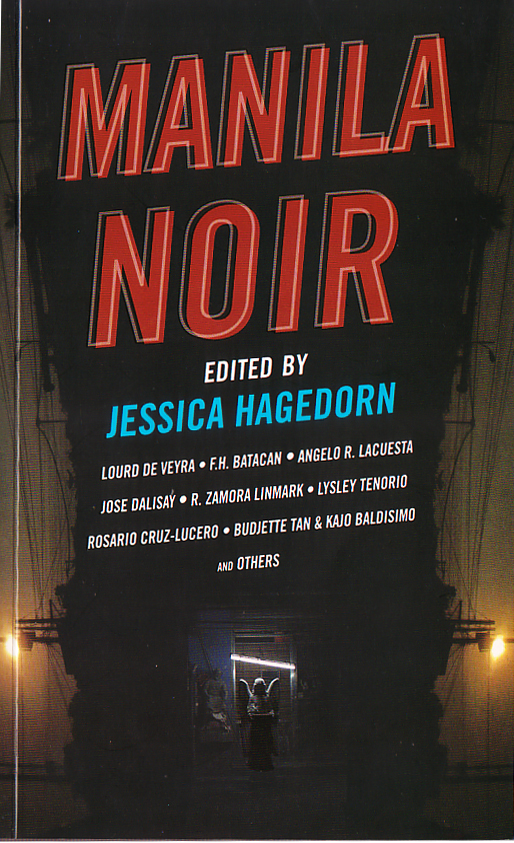
FIRST OF all, I’d like to invite my readers to the launch this coming Saturday of a unique and exciting new book, a collection of stories to which I made a modest contribution. The book’s title is Manila Noir, and it contains 14 stories written mainly by Manila-based authors, with each story focused on a specific district of the metropolis (mine, not surprisingly, was Diliman).

Edited by the accomplished Jessica Hagedorn, whose own Dogeaters made waves in international publishing in 1990, Manila Noir is the latest book in a long series published by Akashic Press—a series that includes books set in places as diverse as Chicago, Copenhagen, and Delhi. This local version (reprinted by Anvil Publishing) features pieces from Gina Apostol, Budjette Tan & Kajo Baldisimo, F.H. Batacan, Jose Dalisay Jr., Lourd de Veyra, Eric Gamalinda, Jessica Hagedorn, Angelo Lacuesta, R. Zamora Linmark, Rosario Cruz-Lucero, Sabina Murray, Jonas Vitman, Marianne Villanueva, and Lysley Tenorio.

Here’s what Publishers Weekly says about the book: “While certain cities in past Akashic volumes might appear to lack an obvious noir element, Manila (like Mexico City, which shares many of the same problems) practically defines it, as shown by the 14 selections in this excellent anthology. As Hagedorn points out in her insightful introduction, Manila is a city burdened with a violent and painful past, with a long heritage of foreign occupation. The specters of WWII (during which the city suffered from U.S. saturation bombing), and the oppressive 20-year reign of dictator Ferdinand Marcos live on in recent memory. The Filipino take on noir includes a liberal dose of the gothic and supernatural, with disappearance and loss being constants.”

As the French word for “black” suggests, noir is a mode of storytelling that dwells on the dark side of human nature, with crime as a central element or a specter hovering above the story.

In her introduction, Hagedorn herself notes that “I think of Manila as the ultimate femme fatale. Complicated and mysterious, with a tainted, painful past. She’s been invaded, plundered, raped, and pillaged, colonized for four hundred years by Spain and fifty years by the US, bombed and pretty much decimated by Japanese and American forces during an epic, month-long battle in 1945. Yet somehow, and with no thanks to the corrupt politicians, the crime syndicates, and the indifferent rich who rule the roost, Manila bounces back. The people’s ability to endure, adapt, and forgive never ceases to amaze.”

And this book, I guarantee you, will not fail to amaze. Join us—Jessica and my co-authors—for a round of brief readings, a Q&A, and a book signing session from 4 to 6 pm, July 6, at National Book Store Glorietta 1 in Makati. See you there!


IT WAS with deep sadness that I received, by text message, the news of the sudden passing of one of my dearest friends, Luverne Gueco. Luverne was also a brother in the profession, having served as foreign news editor at the Inquirer for many years. But more important to me than that, he was my kumpare, my confidante, and my partner in crime 30 years ago, when we were all in our mid-20s and romping through life like young men do. Luverne and I were part of a rather remarkable stable of writers and artists in the Economic Information Staff of the National Economic and Development Authority, a group recruited and supported by our visionary boss, Dr. Gerry Sicat.

It was a group that included former newsmen Jun Medina, Wilson Bailon, and Efren Cabrera; the now-Canada-based poet Patty Rivera; writers Fidel Rillo, Lilia Santiago, Jess Santiago, Reuel Aguila, Eric Caruncho, Joey Papa, and Minnie Quemuel; the future lawyer and now Undersecretary Rey Cruz; and let’s not forget a pretty artist named Beng, who worked with fellow artists Anna Nolasco and Herick Ventura. Not surprisingly, our immediate supervisor was himself an artist, the tenor Frankie Aseniero.

Although we were working under martial law, the NEDA then felt like a kind of Camelot, and we were all grateful for the little haven that Dr. Sicat created for long-haired, irreverent types like us (another officemate, albeit in another division, was the renowned playwright and another dear friend, the late Bienvenido “Boy” Noriega). As an ex-detainee, I failed my security clearance check, but Dr. Sicat took it upon himself to cover for me and sent me to the Development Economics program in UP to cool off for a year.

Luverne was in the thick of all this, one of the most dependable writers in the group. He had also been with the Left, and the stories he shared about what he had gone through seared themselves into my memory, so much so that I used the most painful one—about a rebel who took it upon himself to execute his wife after discovering she was an enemy spy—in my first novel, Killing Time in a Warm Place (1992).

After hours, our friendship developed in countless pool halls, beerhouses, and girlie bars (we were certainly no saints). We played pusoy, darts, and billiards with wild abandon. Luverne was a gifted pool player—this was the dawning of the age of the Pinoy pool champion, when Amang Parica was still king and young bucks like Bata Reyes and Django Bustamante were still hungry for glory. (I, on the other hand, was what the pros derisively called a “tama-bola,” a guy who could barely hit the target with the cue ball, let alone pocket it.) When Luverne married his wife Judith and became a dad, I became godfather to his son Elias. Luverne was always a motorcycle kind of guy, and had his share of bad spills, but when he went out looking for his first car, I convinced him to get the same car I already had—a VW Beetle.

Perhaps fittingly, Luverne collapsed while doing what he loved doing most—playing pool. I’m not sure if it was a stroke or a heart attack, but the end came swiftly. He was only 62.

I’m devoting all this space to the passing of someone who lived the quiet, uneventful life of a desk editor not just to mourn the loss of a friend, but also of the kind of friendship forged in the real world. Ironically, I didn’t see much of Luverne after NEDA—these past 30 years—and our last meeting was about a year ago, but there was never a moment during those decades when I wouldn’t have listed him among my six closest friends, people whom I could count on to help me in a bind, no questions asked, and to whom I would throw the same lifeline. How many people have earned your trust and affection like that?

I’m not on Facebook—one of the country’s last holdouts—for one stubborn reason: I can’t accept the Facebook definition of “friend.” To be my friend, we should have broken bread and maybe a few precious other things together; we should have rejoiced and despaired together; we should have found each other’s weakest spots, but let them be; we should have disagreed on many things, but agreed on more. On Facebook, “friendship” is a convenience, just as easily disposed of with a mouse click to “unfriend.” I’d much rather wait five years to talk to someone like Luverne and pick up where we left off as if those five years had been just yesterday.

Penman No. 40: Some Things Fishy in New GenSan

Microtel

Penman for Monday, April 1, 2013

THE FIRST thing I realized when I flew down to GenSan last weekend was how big the plane was—a wide-bodied Airbus A340 that seated eight people across—and how the plane was almost full for our early morning flight. This wasn’t going to be some spit of land under a clump of coconut trees.

Oddly enough, in my nearly 60 years, I’ve been to almost all corners of this country and about two dozen others, but had never visited General Santos City, not even back when it was still called Dadiangas. I simply had no reason to, which explained why I was there this time—to help tell the story of the city and of its entrepreneurial spirit through a biography of one of its business pioneers and of his family. I had told my client that his story had to be the story of the city as well, and that my sheer ignorance of it—beyond a few touristic slogans and clichés I’d heard about the place being the country’s tuna capital and the home of boxing champs both faded and fabled—was a good thing, because I was going to be interested in everything about the city, as I always am especially on a first visit.

So I read as much as I could, online, about GenSan before coming over. I came across the story of how, back in the days of President Quezon, a group of 62 Christian settlers led by Gen. Paulino Santos arrived on a steamship on the shores of Sarangani Bay. They were the spearhead of thousands more who followed them from Luzon and the Visayas, displacing the native B’laan, who called the place Dadiangas, after a tree. Dadiangas was then just part of the municipality of Buayan. In 1954, Buayan was renamed General Santos, which became a city in 1968, and was reclassified into a highly urbanized city in 1988.

“Highly urbanized” might suggest something like Cebu or Davao, with sprawling suburbs, heavy traffic, and crowded malls, but GenSan clearly—and perhaps thankfully—isn’t in that same category yet. As your plane prepares to land at the new international airport in Bgy. Tambler—built with significant and some say suspicious American support, its runway is big enough to take Boeing jumbo jets and even the new Airbus A380—the view at the window is that of rolling hills and even of mountains in the distance. That tall, cone-shaped mountain looming almost 2,300 meters over the plains is an active volcano called Mt. Matutum, South Cotabato’s highest point. (On the flight home at dusk, these mountains would turn velvet, laced by low-hanging clouds.)

GenSan’s city center is about a 20-minute drive from the airport, and the businesses along the tree-lined highway still suggest the old frontier: rough-hewn lumber, hardware, heavy machinery. A familiar face pops out of a billboard beside a shop selling bottled water—but this isn’t just any water, it’s “PacMan H2O, Ang Pambansang Tubig.” This is Manny Pacquiao country—or would have been, more convincingly, if he hadn’t lost in that congressional bid some years ago to Darlene Custodio, now GenSan’s incumbent mayor. Congressman Pacquiao of course now represents neighboring Sarangani just across the river, but he remains very much a presence in GenSan, maintaining two big houses there (“Mansion 1” and “Mansion 2,” as the locals called them), plus a gym.

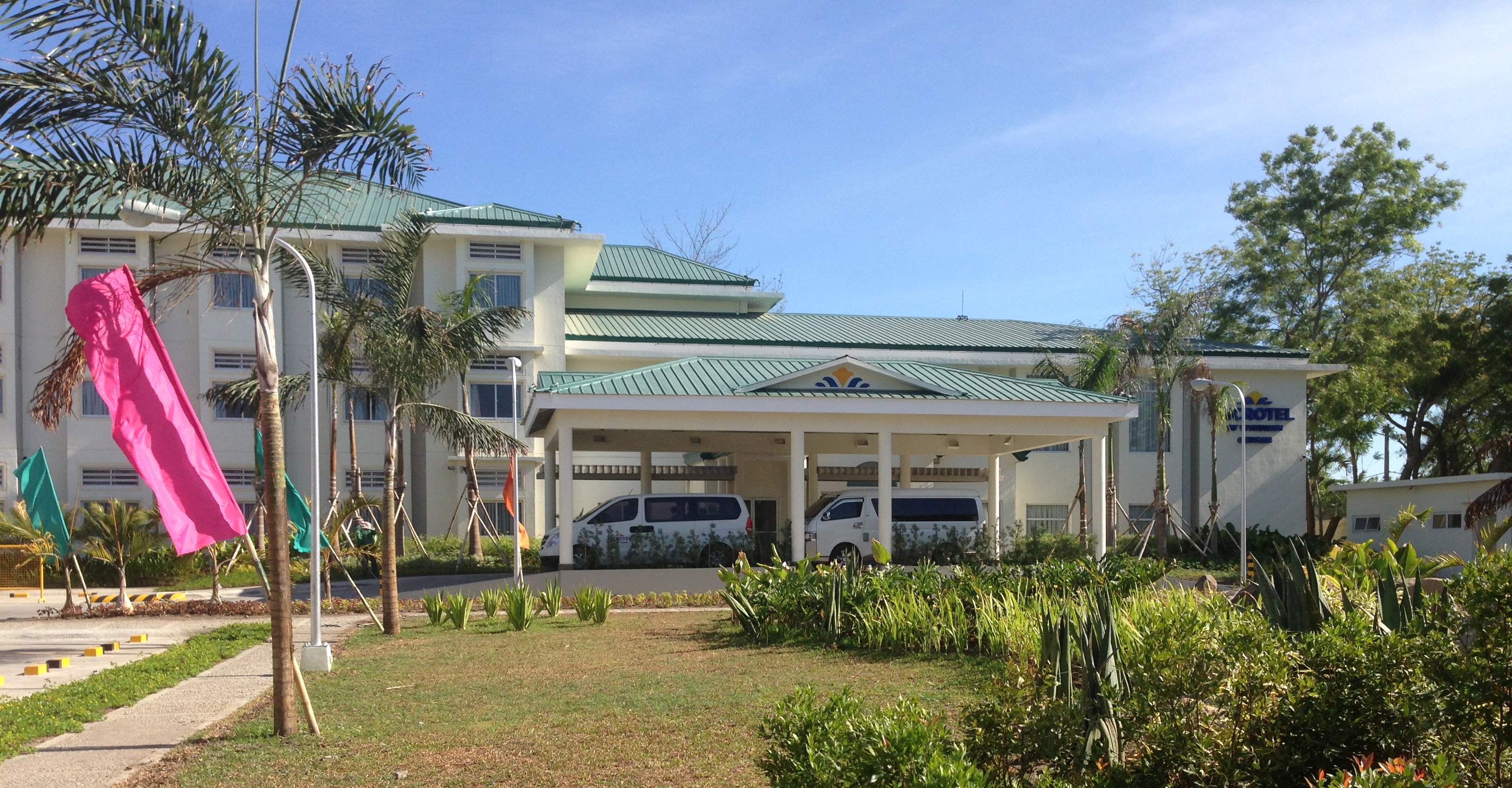
I was billeted at the Floirendo-owned Microtel, GenSan’s newest landmark along the national highway, not too far from the East Asia Royale Hotel, the city’s grandest. The Microtel was neat and comfortable, as a business hotel should be, and was flanked by an equally new strip of restaurants, culminating in a big McDonald’s fronting the highway (across, inevitably, a Jollibee). This sense of newness in this city of more than 500,000 people and almost 500 square kilometers was pervasive—down Santiago Boulevard off the main highway was GenSan’s own SM (what’s a Pinoy city without an SM?), which opened just last August and was already drawing crowds from the older Robinson’s, Gaisano, and the homegrown KCC mall. Not surprisingly, the vehicle of choice hereabouts was the SUV or its pickup variant, especially in white, with rows of them lining the parking lots.

Gen. Santos

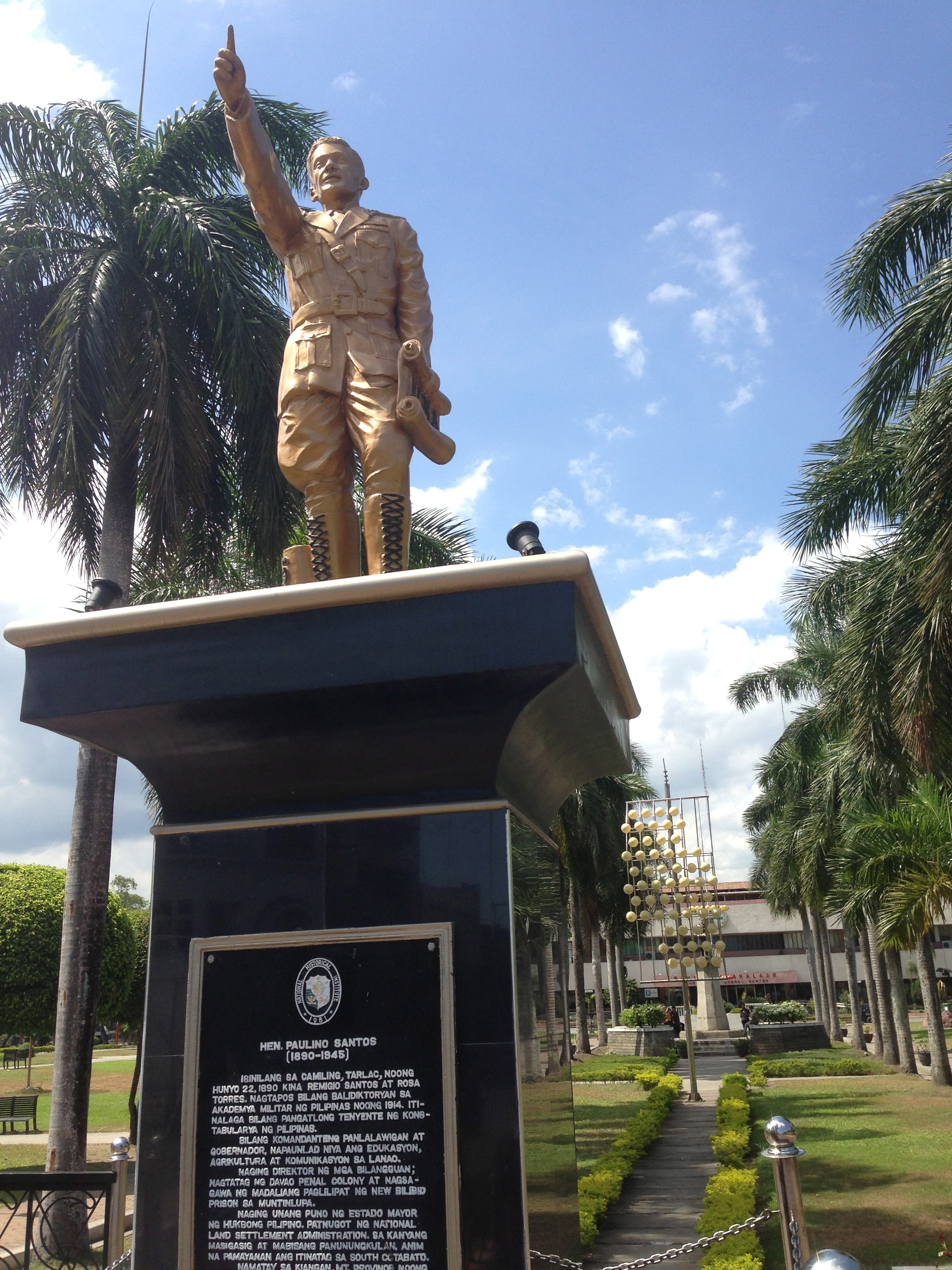
So what happened to the old GenSan? The former Buayan airport had been converted to an Air Force station, with goats and cows grazing beside the runway. I asked my guide to bring me to the older and poorer part of town, near the wharf and up Pioneer Avenue, towards City Hall. Now and then a house from the 1940s turned up, its paint long scoured and blistered by time and by the swirling dust that Gensan oldtimers remember. But even later structures looked forlorn or boarded up. “Everyone’s moved to SM,” said my guide. We got off a the park in front of City Hall to visit the statue of Gen. Santos, who headed Quezon’s land settlement program, and also to look for a living specimen of the dadiangas tree; surprisingly, we couldn’t find any, even when we went to a nearby plant nursery. “It has thorns and has yellow blossoms” was all the older people could tell us. There was no museum we could visit to look up the tree or a history of GenSan for that matter (and I’d be grateful for any leads from readers to a good history of Dadiangas or GenSan).

Most of my three-day visit went to work—interviews with my subjects and tours of plants and facilities—but it was very pleasurably punctuated by sorties to the local restaurants, and as a seafood addict, I found that I’d gone to heaven. I had to arm-wrestle the gargantuan crabs at Gusteau in the newish Sun City Suites complex (another popular local restaurant was Grab a Crab) and, of course, we were served schools of luscious tuna in all manner of preparation.

The sea being the source (excluding PacMan) of much of GenSan’s present wealth, I asked to see the city’s fish port in operation, and even as we arrived too late to observe the day’s tuna catch being unloaded for auction at 5:30 in the morning, the port was still abuzz with activity an hour later, with batches of tuna being graded, weighed and sorted out for resale to various end-buyers. I got a fascinating crash course in what we archipelagic Pinoys should know by heart but barely do—Tuna 101, or some things fishy in our economy and culture.

IMG_0925

I learned how tuna came in three basic varieties—bluefin (the premium kind that gets sold for record prices in Tokyo’s famous Tsukiji market—a 222-kg fish recently brought in US$1.78 million, or almost $8,000 per kilo); the more common yellowfin, which was what I saw that morning; and skipjack, the much smaller tuna that goes into canning and eventually onto your sliced bread. A Class A yellowfin could fetch P400 per kilo at the fish port, while its Class C brother could go for P180; the fish traders have to know which is which by sight and by an instinct honed through years of experience, although they could—only after buying their fish—take core samples from a natural slit under the dorsal fin to confirm their judgments.

I learned how the wooden boats that brought them in ventured out for weeks as far as the edge of the Indonesian border, the smaller ones returning with about 200 fish in their bellies, the larger with about 500. (The modern and large steel-hulled catchers of my hosts, the RD Corporation, remain at sea—with licenses to fish in Indonesia and Papua New Guinea—for as long as two years, employing helicopters to help track the migratory tuna; the “master fishermen” directing these operations on every vessel could earn as much as P200,000 a month—so get out of that call center, and learn to catch tuna!)

That afternoon, I visited a canning plant—the frustrated engineer in me would rather tour a factory than linger at a boutique—and saw how a skipjack gets thawed, pre-cooked, and stripped to its most useful parts by hand before it gets sterilized and canned for shipment in containers to the US, Europe, and Japan, among others. (The tuna that gets used in a Subway sandwich in New York and comes in a Subway-labeled can might have come from GenSan.)

Such was the energy fueling the new General Santos—but alas, it was more to be found in people than in the power lines, as the city remains plagued by chronic brownouts occurring twice a day in 3.5-hour stretches. Beyond another mall, GenSan needs more juice for its ice plants, its canneries, and its factories—in other words, for its future—and it can’t hurt to have even a small museum with a dadiangas tree in front to let weekend visitors like me know a little more about its past.

Penman No. 39: A Weekend of Bargains

Malakas at Maganda baybayinHIGH RESOLUTION (3)Penman for Monday, March 25, 2013

BEFORE ANYTHING else, let me put in a plug for a show that my wife Beng is curating on behalf of Kasibulan (Kababaihan sa Sining at Bagong Sibol na Kamalayan). Founded in 1989 by such stalwarts as Imelda Cajipe-Endaya, Brenda Fajardo, Ana Fer, Julie Lluch, and Ida Bugayong, Kasibulan has since gone on to engage a new generation of leading Filipino women artists. Those women—older and younger—have come together in a major exhibit titled “Malakas at Maganda,” a celebration of the power of female artistry. The show opened last Friday at the Executive House at the University of the Philippines, and will run for a month. I’ve seen it, and I can guarantee—especially to my fellow men—that it’s a marvelous eye-opener.


AS THE minders of an empty nest, Beng and I can be excused for being foolishly footloose—running off to unlikely destinations like Melaka and Ho Chi Minh City on budget tours, leaving our daughter Demi with little more than a clutch of leaky old fountain pens for an inheritance. But we’ve never forgotten the fun of finding even cheaper thrills right here at home. Indeed, for all the traveling we’ve done, Beng and I inevitably come to the same old conclusion: it’s more fun in the Philippines.

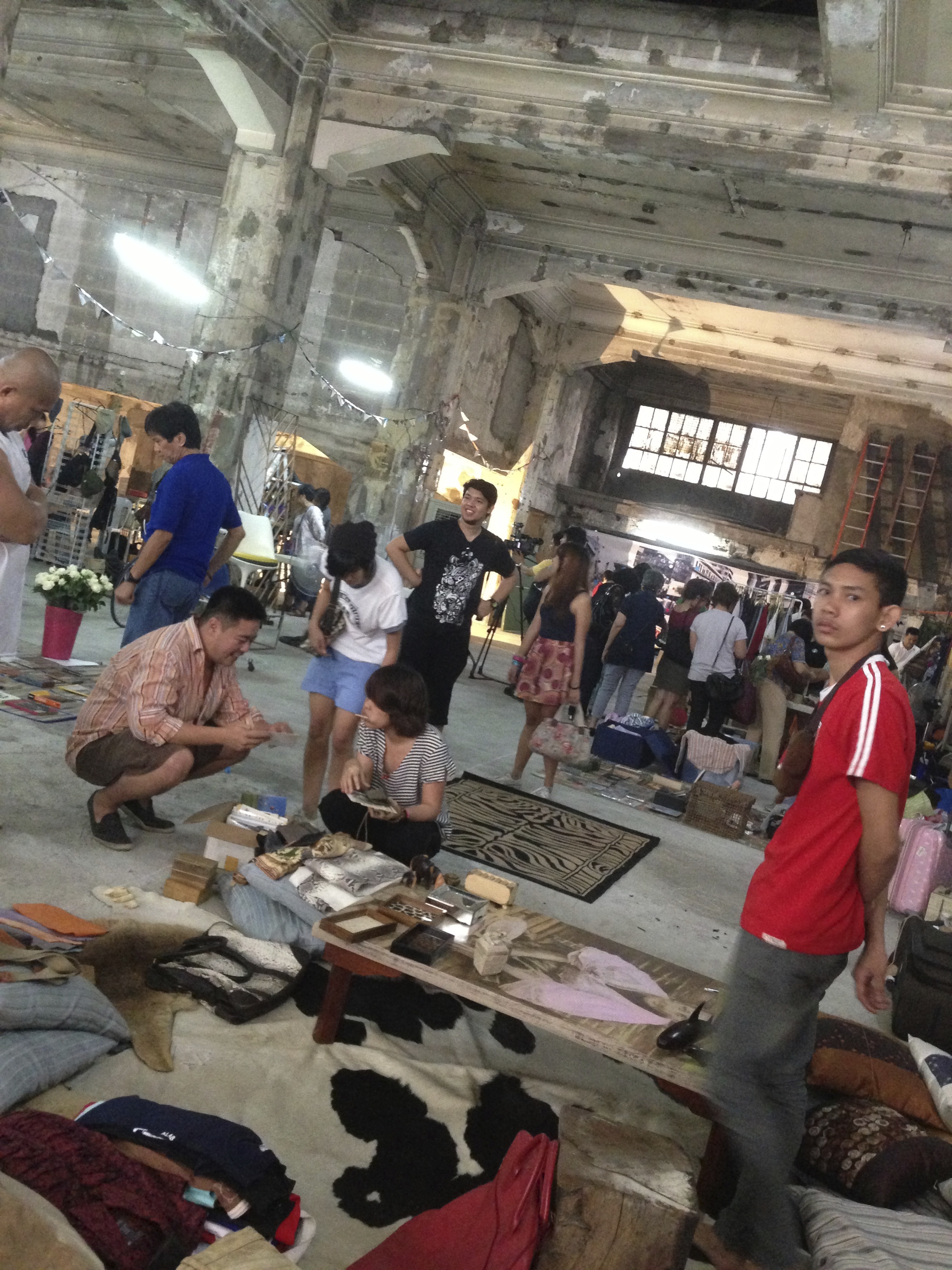
A couple of weekends ago—after both of us had slogged through a particularly tough week of work—we decided to blow the weekend off on our favorite pastime: shopping for ukay-ukay bargains. For many years now, the two of us have been shameless and ardent ukay-ukay and thrift-shop habitués, partly out of necessity but more, I’d say, for the sheer adrenaline rush of getting something for next to nothing. Now and then I need to put on a blazer for business, and two of my favorites—a Zegna and a Ferragamo, brands whose posh boutiques I’d never think of stepping into—were both Cubao ukay-ukay finds, for about P150 each. (And, of course, being the inveterate tourists that we are, we’ve carried the habit overseas, scoping out and revisiting our favorite resale shops in New York, Virginia, and San Diego. The highlight of my shopping year is our October jaunt to the flea markets of Manhattan—a treat I’m going to have to forgo this year, my semestral break already consumed as of this moment by other commitments.)

This time we had a special address on our weekend itinerary: the old Berg department store on the Escolta, where a group of young artists had organized a Saturday market. Beng spotted the notice on Facebook (she’s on it, I’m not) and it took little to convince me to go. I still remembered the Escolta of my youth, and how swanky it was back then. And they didn’t get much swankier than Berg, which was there before Rustan’s, before the malls, before eBay. (I have this recurrent dream of time-traveling to the past and walking into a store like Berg to the pens section, and, seeing row upon row of pristine Parker Vacumatics, picking out a blue and red Senior Maxima or maybe even a gold Imperial—the grandest of the ‘40s Parkers—and paying no more than P40 for each, a princely sum at the time.)

When we got there—from our parking spot in front of the iconic Savory Restaurant on Plaza Goiti—we saw that a crowd had begun to gather in the concrete cavern that was all that remained of the old store. Vendors—about 26 of them, I would later learn—had claimed their 2 x 2-meter squares on the bare floor and had laid out a cornucopia of books, clothes, shoes, trinkets, records, old bottles, cameras, bags, and other staples of the flea market trade.

IMG_0833

The people behind the event were the members of 98B, a “collaboratory” of young progressive artists led by Mark Salvatus, one of the brightest new names in the contemporary art scene. We had a happy reunion with Mark, whom we had come to know purely by chance almost ten years ago when we strayed into the Salvatus home and folk-art shop in Lucban during one Pahiyas. He was just starting out then, and we were glad to see him again—in old Escolta, of all places. His collective thought of the Saturday market as a way of revitalizing Escolta, a shabby relic of its old stylish self. “We’d like to encourage local businesses to grow,” said Marika Constantino, another 98B member, “which is why we didn’t bring in any food concessionaires, so locals could set up food stalls outside.” Another familiar face we ran into at Berg was that of Jason Moss—for many years now, Beng’s personal favorite and mine, another brilliant artist whose rise we’d predicted and followed. “He’s one of our guiding spirits,” said Mark. We gathered that 98B would look into regularizing the Saturday market—a great idea, going by the inaugural turnout.

Since we were in the neighborhood, Beng and I then availed ourselves of the opportunity to enjoy a hearty lunch of machang and pancit at Polland in Binondo. We walked off all that starch in our stomachs by following Ongpin all the way to Avenida Rizal (passing by another culinary landmark, the Ramon Lee fried chicken place in Sta. Cruz). Benighted as it may have been by the LRT overhead, this avenue—another childhood paradise—still contains many treasures for the bargain hunter. (I remember when, back in the early 1990s, I picked up a trove of gorgeous vintage pens—sold as new old stock—from the shops on Avenida for 1960s prices.)

This time, we plunged into a succession of ukay-ukay stores—one turned up a smart herringbone Ralph Lauren blazer (P380)—culminating in the three-story Japan surplus shop that we had visited years earlier and were glad to see was still there. The usual racks of clothes occupied the first floor, but on the top floor—the houseware section—were all manner of china and cutlery. Beng pounced on the bowls and teacups, but I took away a lovely lacquered bento box (P180) that I would use for my ink bottles. The floor also yielded possibly the day’s best score: two good-as-new Japan-made titanium eyeglass frames (P200 each) that Beng and I are now wearing with prescription lenses.

As if Escolta wasn’t enough, we took to the road the next day for more good food and cheap fashion—in Tagaytay, which has some of the best roadside restaurants and ukay-ukay palaces in the country. I suppose we use one as an excuse for the other—the eating and the shopping—but no one really needs an excuse to spend a lazy Sunday in Tagaytay, a treat we shared with Beng’s mom Juliet and her caregiver Meann, and our driver Vic. Food took priority, and our great discovery of the day was an unassuming restaurant along the ridge (turn right at the junction) called Tootsie’s. We had never been before, and were taking a chance since the usual suspects (bulalo at Leslie’s for me) were full to the brim, but we got lucky. Much to my mom-in-law’s delight, Tootsie’s proved to be something of a Visayan oasis in the Tagalog heartland, offering such delights as kansi bulalo (P485, soured with Bacolod batwan) and sus kadyos (P335). The crispy daing na biya (P137) was a terrific appetizer, and the roast chicken kawi (P305)—described by Chef Ed Quimson as an “unexpected, unintended chicken concoction on the way to a busy day” was a big hit, with its subtly smoky flavor.

Then we were off for a quick run to the ukay-ukay shops near the junction—I came away with a linen Giordano blazer for P200, and Beng picked up a straw hat for herself, rubber sneakers for Meann, and a cap for Vic—before dessert of halo-halo, turon, and mais con hielo at Ming’s on the way home. I tried not to eat too much, mindful of the inevitable connection between food and fashion. (The most visible beneficiary of my recent weight-loss program has been my waist, which dropped from a salbabida-size 40 to a more manageable 34. I had to send all of my pants to the tailor for alteration, but that’s easier to do with pants than shirts and jackets, so it’s also given me a great excuse to refurbish my wardrobe—all, of course, in the ukay-ukay. For the first time in years, I’ve been able to wear shirts marked L—without the X or XX—or even M. And thank God I didn’t throw or give away my linen Ferragamo, whose buttons I could barely close; today there’s room to spare.)

And so a fun weekend was had by all for not too much; we would morph back into working stiffs come Monday, but as we patted our stomachs and surveyed our haul from our forays that Sunday evening, Beng and I could only look forward to that long and endless weekend upon retirement, to be spent in the city’s and the world’s finest junk shops and food stalls.


Penman No. 35: Return to Radio

Radio

Penman for Monday, February 25, 2013 

I ACCEPTED an unusual invitation for an interview a couple of weeks ago—unusual because of the medium involved, which was radio, specifically DZUP, the on-campus station of the University of the Philippines. DZUP station manager Rose Feliciano asked me to guest on her noontime show so I could talk about the UP Institute of Creative Writing and its flagship programs, and I was happy to oblige—not only because, as UPICW Director, it’s my job to promote the institute, but also because I’ve always had a warm spot for radio, and remain a fan of the medium.

For Filipinos weaned on the Internet, radio must seem like a blast from the past, and, in a very real sense, it is. We’re told that the first local radio stations came on the air in June 1922, so we’re just nine years away from celebrating radio’s centennial in the Philippines. While there’s some dispute as to who really invented radio, no one disagrees with the fact that Guglielmo Marconi made the first successful radio transmission in 1895—when our revolucionarios were just plotting their moves against Spain—and received a British patent for it the year after.

Of course a century’s just a drop in the bucket of human history, but in terms of technology, it’s virtually an eternity. The idea of an invention remaining just as useful after a hundred years boggles the mind, in an age when, say, the floppy disk gave way to the CD, which then gave way to the DVD and then the USB drive, all within the span of a few years. And of course radio today is a far cry from the rasp across the ether that it was at its inception (you can hear a pin drop and bounce off the floor on FM), but the basic idea remains the same—a message is electronically transmitted and received, completing the cycle of communication.

I belong to that generation of Pinoys for whom radio, and not even TV, was our main source of information and entertainment while we were growing up. I remember listening to radio soaps such as “Eddie, Junior Detective” “Erlinda ng Bataan,” and “Gabi ng Lagim.” This last program, a horror show, would go into a TV version (on MBC, Channel 11, if I remember right), but there was nothing like being in your room and quaking all by your lonesome at every creak of the door or every drag of the chain, all these creepy sounds magnified by your fervid imagination.

And that was the magic of radio, especially in the pre-visual age. TV and film may look busier, but they’re actually more passive, in that they require little more of the viewer than for him or her to sit back and be flooded by images and sounds. Radio reaches deep into your brain and forces you to supply the missing image. (When I was very small, I was convinced that there were little people inside the big wooden box that ruled the living room, and was perplexed when I managed to peek into the back of the cabinet and could find nothing but glass tubes.)

One British commentator explains the continuing relevance of radio this way: “Radio is at once intimate and universal, capable of keeping you company like a proper pal and able to impart the gravest of news with a little respect rather than the hubris of its flash-git brother, TV. And it’s also brilliant at being (a) bridge builder…. I remember sitting at traffic lights as one of my British radio heroes, Chris Evans, cracked a joke on his breakfast show a decade or so ago; I turned left and right to see a plasterer in his pick-up truck cracking up and a suit in a Jag grinning at the same moment at the same joke, right there, live—and it was moving. It was like an advert for something but it rang true.

“The thing is this: radio does what we do, it sounds like we sound…. Radio’s better at being really well-behaved. It doesn’t need to be lit, over-orchestrated or faked. Radio requires a bit of description, it’s got an artistic bent; radio’s beauty is that it’s a bit abstract—it’s painting pictures, while TV’s just taking photos. Radio is also the secret to younger-looking skin because no-one can see you.”

But who listens to radio these days? I know I do—I tune in to the news the minute the car rolls out of the driveway, if only to check out the traffic situation, although of course I get to listen to the commentary (admittedly often insipid) as well. At night, on our way home from a movie and dinner, Beng and I gorge on the free medical and legal advice on radio for dessert.

Like that Brit said, radio comes across to us like an old friend—sometimes funny, sometimes silly, sometimes even truly useful and irresistible, such as during impeachment trials, disastrous floods, and post-election vote counts. And I know we’re hardly alone—it’s a safe bet to say that in an archipelago like the Philippines, radio remains the best and the cheapest bridge across the islands, shaping the tastes and opinions of millions of our countrymen, particularly the working poor who have to leave for work on jeepneys and buses at five or six in the morning.

I do wonder if my teenage and twenty-something students still listen to radio; I suspect they don’t, preferring to retreat into the individualized, hermetic cubicles of their iPods rather than engage in the community-building enterprise that’s radio. Perhaps I should worry, but I don’t. DZUP just marked its 55th anniversary, and I have little doubt that some version of it will live to be a hundred. In the same way that print survives and continues to be needed in this era of electronic and digital media, radio will continue to find its audience, for as long as the human voice appeals to the human ear and to our dreaming brain.

(Photo from dreamstime.com) 


Penman No. 25: EQ Yap, a Filipino Patriot

EQYPenman for Monday, Dec. 17, 2012

LAST DECEMBER 9 would have been the 81st birthday of a man named Emmanuel Quiason Yap—a name unfamiliar to most Filipinos, but who deserved more of his countrymen’s attention than they were able or willing to give him when he was around. Yap was one of the last in a distinguished line of nationalist Filipino intellectuals who emerged in the second half of the 20th century, a roster that included the likes of Renato Constantino, Alejandro Lichauco, and Hernando J. Abaya.

More than a year ago, I was asked by Yap’s family to write his biography, and I agreed—first, because he was the father of a former student of mine, and second, because I had met him earlier in the company of the Lavas, a family of committed revolutionaries whom I had also written about. (He was also a Yap, which is my mother’s maiden name, so we might have had a mutual ancestor somewhere back in Fujian.) I had heard of “Manoling” Yap’s own nationalist convictions, but had never really sat down with him to learn how he had acquired them.

I had several meetings with him and had begun on the book—which I’m now a week or two short of finishing—when he suddenly died in September 2011. Thus I begin the book this way:

“When Emmanuel Quiason Yap died all of a sudden on September 26, 2011, very few Filipinos knew what they had lost. It was almost as if a stranger had walked into a sleeping household, had left a precious gift in their midst, and had walked away; waking up in the morning, the family members see the object and wonder what it is and who brought it there, but they cannot recognize its value, and put it aside.

“His peers and colleagues would recognize and refer to him, even within his lifetime, as a visionary, an astute student and critic of his nation’s political and economic fortunes, a shaper of minds whose firm nationalist beliefs might have led the Philippines on to another track of growth and progress. He was an adviser to Presidents, senators, and congressmen; for a time, he headed an economic planning office for the House of Representatives; he helped to foster stronger diplomatic ties between the Philippines and socialist countries; and he founded a popular movement to promote patriotism among Filipinos. In various venues over many decades, including a newspaper column, he campaigned strenuously for a more independent foreign policy, a more self-reliant economy, and for greater justice in a society riven by exploitation and oppression.

“Manoling Yap, in other words, was a reformer, a man who never tired of thinking how life might yet be bettered. And he was no armchair dreamer, but someone who took his battles to the political arena, risking his life and freedom in pursuit of his principles. But as many if not most reformers soon discover, Manoling Yap would often find his idealism opposed, rejected, or even taken advantage of by others resigned to a more pragmatic view of things.”

Few may remember it now, but Yap—born in Angeles, Pampanga to a family of lawyers and entrepreneurs—was instrumental, along with Mayor Rafael del Rosario, in achieving cityhood for Angeles in the early 1960s and for planning its modernization. However, their plans ran afoul of the rackets being run by the notorious Kumander Sumulong, who issued death threats against the mayor and Manoling.

Trained as an economist, Manoling later went to Georgetown for graduate school with the encouragement of former President Jose P. Laurel, who urged him to go to America “to learn how the Americans are fooling us.” Yap took the admonition to heart—this was the time of parity rights—and came home an even more ardent nationalist. He taught at the Lyceum, then a bastion of radical thinking.

He set up the Congressional Economic Planning Office—a forerunner of what today is the National Economic and Development Authority—and worked with the old man Laurel’s son, Speaker Jose B. Laurel, in crafting the Magna Carta for Economic Freedom and Social Justice, which argued strongly for a more independent economic policy and for vigorous industrial and agricultural development. The Magna Carta was signed into law by Marcos in 1969, but languished in implementation, and Speaker Laurel himself fell from power soon afterwards—the victim, Yap was convinced, of imperialist machinations (as was, Yap would later believe, Marcos at Edsa).

Yap was also instrumental in opening diplomatic and trade ties with the socialist bloc in 1967—surprisingly, even as anti-Red rhetoric was escalating along with the Vietnam War, and well before Richard Nixon undertook his own diplomatic initiative toward China. He accompanied Rep. Manuel Enverga, chairman of the House Foreign Relations Committee, on a grueling three-month journey behind the Bamboo and Iron Curtains. Years later, he would also advise Sen. Leticia Ramos Shahani, when she chaired the Senate Foreign Relations Committee, and help her draft a more independent foreign policy moving away from the traditional Philippine-US alliance to stronger ties with our neighbors in the Asia-Pacific, and with countries in the Middle East, the Indian Ocean, and Central Asia.

In the last decade of his life, Manoling Yap devoted much of his time and energy into setting up and promoting the People’s Patriotic Movement, an effort to unite Filipinos from all backgrounds and persuasions behind the fundamental need for a sense of nationhood. “Together,” he wrote, “we will rediscover our common historical truth, rectify the errors of our colonial past, muster the national will to reconstruct the Filipino nation into a strong nation-state which can adequately feed, educate and protect its own people by the sweat of its brow and not from mendicancy and subservience to other nations, and ultimately assure a better future to all our children.”

As with many intellectuals, he was a man of ironic contradictions—an Atenean who sang Latin hymns as a boy with touching fervor, but one who grew into a brooding skeptic; a civil libertarian, but one who imposed strict family discipline; a seeker and defender of freedom and a friend of known Communists, but one who appreciated Ferdinand Marcos as a progressive nationalist; and an astute analyst who predicted the end of the Cold War but who blithely ignored the signs of his own failing health.

Emmanuel Quiason Yap was a complex man; his burning idealism often met with disappointment and disenchantment, and in the end he had very few friends left to talk to—among them his cousin the historian Serafin Quiason Jr., the painter Dan Dizon, and my fellow STAR columnist Billy Esposo. But he had his country at heart and died a patriot, joining the privileged company of his heroes—Rizal, Mabini, and the old man Laurel.

Penman No. 24: The Necessity for Nonfiction

NonfictionowPenman for Monday, Dec. 10, 2012

A FEW weeks ago, in Melbourne, I had the pleasure and privilege of speaking before a global audience of experts in and practitioners of nonfiction—that broad branch of writing that straddles everything from journalistic reportage, history, and philosophical essays to personal memoirs, travelogues, and cookbooks. I gave one of the four keynote addresses in that three-day-long Bedell Nonfictionow Conference; the other speakers were David Shields, on collage and appropriation; Helen Garner, on the central place of the interview in nonfiction; and Margo Jefferson, on the boundary between criticism and nonfiction. I chose to take a less technical and more social tack, and talked about why, more than ever, there’s a need for nonfiction in this age of the Internet, particularly in places off the global literary centers like the Philippines.

I wasn’t alone in representing the Philippines and its literature. Lawrence Ypil, one of our brightest young poets who’s doing a second MFA at the University of Iowa, this time for nonfiction, spoke about using family photographs to solve a mystery, and also introduced the work of Resil Mojares and Simeon Dumdum Jr. from his native Cebu. Longtime activists Bonifacio Ilagan and Marili Fernandez-Ilagan discussed the political possibilities of nonfiction in print, film, and theater; Boni also gave a comprehensive overview of recent political nonfiction from the Philippines. Their talks provoked much interest, and reminded me of just how far ahead of the curve our writing is in many ways, despite the obvious obstacles to writing in a society that doesn’t seem to value books much.

So I used my keynote as an opportunity to reintroduce contemporary Philippine literature to others, highlighting our work in nonfiction, particularly that of the late, great Nick Joaquin. Below is the full text of that 40-minute talk (because of space limitations, I was able to provide only an excerpt for the newspaper column version of this piece):

Thank you all for this great honor of having me as one of the keynote speakers for this conference, and for this opportunity to introduce another literature and another literary experience to a global audience, from which we Filipinos have been largely removed. And who, exactly, are we Filipinos? Just two days ago, a Gallup poll revealed that Filipinos were the most emotional people on the planet. We laugh and we cry with equal facility—so don’t be too surprised if this talk descends from the sublime to the ridiculous within a paragraph of each other.

This being a keynote, let me assure you that this talk will be about more than our domestic literature, and that it will connect to the greater issues of nonfiction in the world. But I have chosen to begin on a point of disconnection, from the periphery, because our vagrant experience presents some interesting possibilities for looking at how nonfiction—if not literature itself—has served self and society outside of the West.

Indeed, these past few years, I’ve traveled around various literary conferences around the world with a stock speech titled “Why You’ve Never Heard of Me,” by way of addressing the relative obscurity in which the Filipino writer has labored—even and especially in the company of our fellow Asians such as the Chinese, the Japanese, and the Indians who have understandably gained much greater international attention and prominence.

In sum, my thesis is that we Filipinos don’t write enough novels, and the novel has been the ticket to literary fame and consequence in 20th century publishing. It also hasn’t helped that, as a former colony of Spain and the United States, we are out of the Commonwealth loop. We no longer write in Spanish, and as for our writing in English—a thriving, century-old literature—the Americans (with the notable exception of Robin Hemley) don’t quite know how to receive it, despite its troubling familiarity, like the bastard child who suddenly appears at the door with an expectant smile. We also have a robust literature in our other national and regional languages, but again they hardly connect to the other native literatures of Southeast Asia, in gatherings of which the non-Bahasa-speaking Filipino has often been the odd person out.

That’s all the more strange when we consider the Filipino diaspora which—like that of the Indians, the Nigerians, and many other ambulatory nationalities—has taken our workers all over the planet. We are you maids, your nurses, your sailors, your entertainers. One-tenth of our population of over 90 million people now live and work overseas, in places as remote to us as Iceland, Angola, and Syria, providing not just the foreign remittances that keep our economy afloat but also a wealth of material for our literary imagination. Indeed it often takes the literary imagination, more than journalistic reportage, to sort out these experiences of dislocation.

But why even go abroad for alienation? If there’s anything colonialism does to the colonized, it’s to leave behind two states of mind, often manifested in two or more predominant languages, one of which represents the colonial elite. That’s American English in our case, and while it’s given us a global edge in the BPO or call-center industry—in which we now rank second, next only to India—it has produced no comparable literary dividends, with our literature in English trailing far behind India’s, and even behind translations to English from the Chinese and Japanese, in the attention of the world.

Thus we represent an insular experience. But like exotic species which—after a geological point of separation—have survived and mutated on their own in some tropical plateau or some literary Galapagos, literatures like ours can be interesting and useful objects of study, because they manifest both fundamental similarities to and striking departures from the biological mainstream. They speak back to the mainstream, as I am speaking today, and offer up a mirror—perhaps a somewhat distorted or distorting mirror—in which others can see versions of themselves.

Our insularity has resulted in some interesting courses of evolution. Given the absence of a market for novels, we have developed our strengths in poetry and the short story. Given further that there is no money to be made either in poetry or the short story—but also that these genres require little material investment—our writers have focused on producing the best art they can, rather than on satisfying a market (and there was, arguably, a market for these in our newspapers and magazines of the early 20th century, when they were part of the entertainment mainstream).

In the case of Philippine nonfiction, curiously enough, more titles have been emerging over the past 20 years—memoirs, biographies, histories, essays, travelogues, cookbooks, and motivational materials for business and religion. Most it not all of this production has been in English rather than in the national language, Filipino—not surprisingly, since books are expensive and considered non-essential items in a country still largely poor, and the people who can buy books at and for their leisure speak and write in English. (Parenthetically, this introduces another interesting element for further thought: if translating language means inevitably translating experience, what goes on in nonfiction in a foreign or borrowed, and especially a colonial, tongue? Whose stories tend to get told, and how, from what perspective?)

There has also been a perceptible rise in enrollments in courses and workshops for nonfiction, seen by many—correctly or otherwise—to be a less formidable and more accessible entry point to writing than fiction or poetry.

The rising global popularity of nonfiction is manifest in the region. A quick glance at the recent titles taken up by the Hong Kong-based Asian Review of Books will reveal a clear preponderance of nonfiction, covering such diverse topics as the undercities of Mumbai, Christianity in Communist China, the Thai monarchy, the Amritsar Massacre, the Jewish community in Shanghai, and Japanese ninjas. Not surprisingly, much of this nonfiction deals with China and India, being both the largest sources of and markets for such work. There is great interest in the West in these two countries, as well as in Japan and Korea, because their economies are umbilically tied to those of the West.

But let me go beyond money and markets, and talk about the necessity for nonfiction in less familiar and less mediagenic countries such as ours.

To state the obvious, nonfiction provides an alternative to fiction and of course to itself. In the first instance, I don’t simply mean the choice the reader faces at the bookshop at any given moment between buying a novel or a book of essays, but as a means to appreciating the truth, in which everyone is presumably interested and invested.

That truth can be particularly elusive in a country and society where there has been a longstanding tradition of suppressing it—in our case, the nearly two decades of the rule of Ferdinand Marcos, carrying over to his successors, one or two of whom turned out to be even more adept than Marcos in kleptocracy and in hiding the truth.

In this experience we Filipinos can hardly be alone, given the emergence and in many cases the continuing rule of autocrats, despots, and demagogues around the world, from Asia and the Middle East to Africa and Latin America. Personal accounts and testimonies are important in such places where an “official version” of events is often promoted, if not enforced.

While fiction might best capture the grotesqueness of life and the absurdity of the truth in many of these places—and I’ll get back to this later—it is nonfiction that bears the burden of presenting the facts on the ground, often at great risk to the author and even to the reader.

It was just a little over a week ago when PEN International marked the Day of the Imprisoned Writer—an issue I could personally relate to, having been imprisoned for seven months in 1973 at age 18 not for writing any earth-shaking novel but rather political flyers and such ephemera. Among those on PEN’s list of “focus cases” was Ericson Acosta, a young poet and activist who had been writing and filing reports on human rights abuses in the Philippine countryside. He has been held without trial since February last year—ironically, under the regime of President Benigno Aquino III, whose family has been canonized for its espousal of civil liberties.

The authoritarian State not only seeks to stifle the truth: it is an active and imaginative producer of fiction. In the Philippines, this was never more palpable than during the long years of martial law, from 1972 until the expulsion of the Marcoses—at least for the time being—in 1986. Let me share a few stories in this regard.

In 1964, just before he first ran for President, Marcos commissioned Hartzell Spence—an American author and editor of Yank magazine, who contributed the word “pinup” to the vocabulary—to write his biography, titled For Every Tear a Victory (later reissued as Marcos of the Philippines), of which a film version was later made. These biographies touted Marcos’ wartime heroism, for which he supposedly received 27 medals, thus becoming the most highly decorated soldier of the war on the American side. Most of these decorations were subsequently proven to be fake. Spence reported that Marcos sustained wounds from singlehandedly engaging 50 Japanese soldiers in a gun battle, a claim Newsweek later disproved. Marcos also claimed to have led a guerrilla force of more than 8,000 men, which the US Army dismissed upon investigation as “fraudulent” and “absurd.”

There was no doubt that Marcos was a brilliant fellow—he topped the bar examinations in 1939, having reviewed for the exams while in prison for allegedly shooting his father’s political enemy at night between the eyes; the young Marcos had been a sharpshooter with the ROTC, and was the natural suspect. He defended himself before the Supreme Court and was acquitted, and the legend was born. Indeed, it was easier to create and to promote the myth because the known facts in themselves seemed incredible enough.

Sometimes the myth was not about himself, but about the nation and its prehistory. In 1971, one of the biggest stories to rock the anthropological world was the discovery of the Tasaday, supposedly a Stone Age tribe that had somehow survived in the Philippine South in benign innocence, well into the 20th century. They made the cover of the National Geographic and were hailed as if Adam and Eve themselves had stepped wild-eyed out of Eden, until skeptical parties spoiled the fun by decrying the Tasaday as an elaborate hoax. As chronicled by Robin Hemley, more responsible investigation has since established that the truth very likely lay somewhere in between—that the Tasaday were neither quite that ancient nor that synthetic, but had lived largely by themselves for a long time. The Marcos government, however, felt deeply invested in validating the notion of a lost tribe, as it seemed to extend the arc of development even farther back, as if to say, “Look how far we’ve come.”

To make sure that the future got things right, in 1977, Marcos published a multivolume history of the Filipino people under his own byline, titled Tadhana, or “destiny,” for which he had actually commissioned some of the country’s most eminent historians.

To reach beyond the range of books, the Marcoses ventured into film. One of the most memorable projects I’ve ever worked on—if only because of its intentions—was an abortive film epic conceived and commissioned by Imelda Marcos, circa 1978, involving the production of a four-hour extravaganza on Philippine history from Ferdinand Magellan to Ferdinand Marcos. This was to be the Marcoses’ version of Hitler’s Triumph of the Will. But instead of having just one Leni Riefenstahl, Imelda wanted eight of the country’s top film directors and their scriptwriters to stitch the opus together, dividing four hundred years of Philippine history among themselves into a half-hour segment each.

As it was the height of martial law, there was no saying no to the Madame, and film director Lino Brocka took me along, as a 24-year-old rookie scriptwriter, to a meeting with Mrs. Marcos in a State guesthouse near the presidential palace where, over bottomless cups of coffee and increasingly crumbly cupcakes, she lectured us for at least six hours on how to make a good movie. The meeting lasted so long that we had to be issued special passes, because a 10 pm curfew was in effect, and we staggered home around 2 am. The movie was done, but for some reason was—and I should probably add thankfully—never shown and never seen in its entirety, not even by its makers. It remains one of the great mysteries of mythmaking under martial law—all those reels of footage devoted to the historical inevitability and apotheosis of Marcos, which must now lie in a warehouse somewhere in Manila and have themselves become historical relics.

But this kind of mythologizing did not begin nor end with Marcos, and it would be naïve to think that other Filipino leaders did not avail themselves of the power of fiction—or, otherwise, the power of silence.

Let me point out here quickly that while repression remains a very real threat in our society, Philippine literature and journalism are wonderfully wanton—we have no sacred cows, no taboos. We feel free to write as we please, if only because we suspect, with some justification, that the government is functionally illiterate, and doesn’t give a rat’s ass about what you say in your obscure novel or inscrutable poem. But this doesn’t mean that there’s no political backlash, when someone upstairs does read or misread your report in the newspaper, the magazine, or online.

Those genres tell us something, by the way—that, at least in the Philippines, nonfiction is a far riskier enterprise than fiction. Statistics kept by the international Committee to Protect Journalists show that 73 Filipino journalists have been killed since 1992. So far, no novelists or poets have figured on the death list.

Some of our journalists eat death threats and libel suits for breakfast. One of them has been Marites Vitug, a groundbreaking magazine editor and investigative reporter whose two books on the Philippine Supreme Court—and the shenanigans within, which culminated in the recent impeachment of the Chief Justice—have become two of the hottest nonfiction titles in town. I copyedited both books—doing the first one anonymously, asking my name to be left out of the acknowledgments—not necessarily because I feared for my life or freedom, but because I knew that the book would result in a libel suit which would be more an annoyance than anything; I had many foreign engagements lined up and a libel suit (two of which I’d already faced myself, one from the former President’s husband) would mean that I would have to secure permission from the court even to spend, say, a weekend in Hong Kong. Sure enough, Vitug got slapped with a libel suit and a death threat, which thankfully went nowhere.

But speaking of journalists, let me introduce a name that will be unfamiliar to most of you, by way of celebrating the indigenous explosion of creative nonfiction around the world.

Born in 1917, Nicomedes Marquez Joaquin, better known as Nick Joaquin, was, by popular acclamation, the greatest Filipino writer of his generation, a man who effortlessly straddled the worlds of street-level journalism and highbrow fiction. He practiced New Journalism well before the term was coined, and wrote true-crime fiction well before Truman Capote put it on the publishing map. To Nick—and to use his own words—journalism was “literature in a hurry,” and Nick Joaquin seemed to be in an awful hurry, producing an average of 50 feature articles a year, according to his biographer. He wrote these under a pseudonym that was also an anagram of his surname, Quijano de Manila. He would also write some of the most memorable Filipino short stories and plays of his time, in an English inflected with the exuberance of the Spanish he also knew and loved, but it was his unique reportage that made him accessible to a broad public. He took on all subjects—politics, crime, showbiz, and sports.

According to critic Resil Mojares, “He raised journalistic reportage to an art form. In his crime stories—for example, ‘The House on Zapote Street’ (1961) and ‘The Boy Who Wanted to Become Society’ (1961)—he deployed his narrative skills in producing gripping psychological thrillers rich in scene, incident, and character. More important, he turned what would otherwise be ordinary crime reports (e.g., a crime of passion in an unremarkable Makati suburban home or the poor boy who gets caught up in a teenage gang war) into priceless vignettes of Philippine social history.”

I’m going to read you a few short paragraphs of his prose, just to suggest his treatment of his material, and also his language:

In “Flesh and the Devil,” published in January 1962 in the Philippines Free Press, Joaquin introduced a story of white slavery by harking back to ancient mythology:

Proserpine, in classic myth the daughter of the earth mother, was kidnaped by the lord of the underworld and carried to hell. Rescued and brought back to earth, she found herself alien to its light and flowers; half of her heart had turned dark; she had eaten of hell’s pomegranates and must ever partly dwell in shadow.

The pomegranates of hell were news last week in the story of four girls who said they had escaped from hell after several months of an evil bondage; their flesh had been made merchandise. Three of the girls are 19 years old, but the fourth is a child of 15, and her name is Proserpina.

But he could be as hard-boiled as they came. In “The Mystery of the Murdered Bigamist,” published in May 1961, he reported on the discovery of a corpse:

He had been stabbed eight times in the left breast, his throat had been slashed, and he had been hit so hard in the face his left eyeball had sunk. He had been trussed up with a rope, his hands and feet bound together behind him, and he had been stripped of his wallet, watch, ring, and shoes…. In the ditch where he was found, the police found the bloodstained fragments of a letter in Pampango. The writing was almost illegible, but the signature was clear: Felino.

And always, Joaquin sets the piece in its larger context, as the enactment of an ageless drama. Reporting in 1963 on the bloody assault of a government office by private security guards gone rogue who had axed the skulls of their victims—also security guards—he would write that:

In the August 26 robbing of the Rice and Corn Administration’s main office in Manila, the security-guard culture, long a-ripening, has burst into saga and epic. The eyer is now the eyed, and the figure that has so long lurked at the edges of our consciousness has moved into the center of our attention. We stare at the symbol of our unsafeness.

Security guards were the victims, security guards were the villains… The tragedy happened within a special sphere, among an esoteric society or knighthood of men bound by their own codes, their own private rituals, a shared lore…. A couple of the invaders had been false to the code of the brotherhood and had been ousted, and returned in stealth and were let in, because they knew the secret words and rites.

Joaquin goes on to chronicle sundry acts of mayhem and mésalliance: the murder of a movie star’s delinquent son; the affair between a Filipino ambassador and a German baroness; an abortive shooting of an actor who later became President of the Philippines. Despite his many awards for his fiction and drama, he never considered journalism beneath him. In 1996, he said that “Journalism trained me never, never to feel superior to whatever I was reporting, and always, always to respect an assignment, whether it was a basketball game, or a political campaign, or a fashion show, or a murder case, or a movie-star interview.”

In 1977, his best journalistic pieces were compiled in several anthologies, under the titles Reportage on Crime, Reportage on Lovers, and Reportage on Politics, and eventually these selections grew to more than ten books; in addition, he wrote histories, almanacs, and a dozen biographies.

I brought up Nick Joaquin (who died in 2004) not just to introduce a name, but also to show that the New Journalism and creative nonfiction were laying down native roots in other parts of the world outside of the West—certainly not only in the Philippines—before we knew them by these terms. Joaquin’s Free Press pieces, which began in 1957, antedated Truman Capote’s In Cold Blood, which was published in 1966. Of course Capote never claimed to have invented the true-crime genre, and neither did Joaquin, and more thorough investigation will easily turn up far earlier examples from all around the world.

Indeed, we are often referred back to the Scotsman William Roughead, who began attending trials at age 19 and, in 1913, published the first of many collections, Twelve Scots Trials, which he called “adventures in criminal biography.” It’s instructive that Roughead lamented his publisher’s choice of that title, which he thought was too dry. He said that “Trials suggested to the lay mind either the bloomless technicalities of law reports or the raw and ribald obscenities of the baser press.”) You’ll note that in this desire to eschew “bloomless technicalities” and “raw and ribald obscenities” lies the fundamental impulse for creative nonfiction.

The highest crimes, of course, are often perpetrated by the State, and this again is where the greatest value of nonfiction lies, in unraveling the truth where the outcome could affect the lives and fortunes of millions. Sometimes the most significant outcomes are no more immediate and practical than an understanding of the past, especially when alternative histories face off against each other.

This is where nonfiction competes against itself, one version versus another. We often speak of nonfiction in the same breath that we say “the truth,” as if nonfiction and the truth were interchangeable, but this is something that everyone in this conference should know cannot always be so. Nonfiction is, in a sense, a process rather than a product, a way to establishing certain verities most of us can accept or agree with or recognize, albeit with some resistance.

Most notably, nonfiction is an arena for competing histories or interpretations of history. This again is particularly important where the formation of a people’s self-image is involved, especially in a colonial or postcolonial context.

Traditional historians, for example, have viewed and represented the uprisings of poor peasants in the Philippines as the epileptic seizures of cultist fanatics, rather than legitimate and inevitable revolts of the feudal oppressed. The communist guerrillas who fought the Japanese in the Second World War and struggled on against the American-supported postwar regime—much like the Vietnamese resistance—were presented as power-hungry troublemakers and stooges of the Soviet Union and Red China, disregarding their deep nationalist and anti-imperialist orientation.

These histories and their alternatives continue to be written in my country and, I’m sure, in yours. In my own nonfictional work, I’d like to think that I’ve contributed to this conversation through the biographies and institutional histories that I’ve been writing, about which I’ll say more in this afternoon’s panel discussion on nonfiction from the Philippines. Nonfiction is even more essential in this age of Facebook and Twitter, when every event is deemed newsworthy within five seconds of its occurrence, for even the worst—or some would say the best—of gonzo journalism bears some of the composure and the composition of art.

Nevertheless, the argument can always be made that sometimes the best response to fact is fiction—not the fiction of the State, but the fiction that emanates from deep within the individual’s heart and conscience, bodied forth by the free imagination. Fiction—especially the kind of realist, pre-postmodern fiction that still predominates in Asia—is relentless in its effort to make sense of events and of the characters who impel them. Our narratives tend to be straightforward, transparent or at least translucent rather than opaque, trading cleverness of presentation and virtuosity of language for what is seen—or hoped to be seen—as honest, heartfelt storytelling, the object of which is the understanding of character and the improvement of community.

Our national hero Jose Rizal was an excellent polemicist who scored the abuses and effects of Spanish colonial rule in one essay after another—but it was his two novels from the 1880s, Noli Me Tangere and El Filibusterismo, that captured both the obviousness of the need for some kind of revolutionary action and yet also the complexity and difficulty of making this choice. His farewell poem, supposedly written in his prison cell on the eve of his execution by firing squad, is impressed in the national consciousness.

Under martial law, when our presses were shut down and all the newspapers and magazines were producing hosannas, it was poetry, fiction, and drama that took up the fight—slyly, stealthily, employing such disguises and devices as we knew would escape the regime’s eyes and yet catch the public’s. In 1983, when Sen. Ninoy Aquino returned from exile in the US, only to be gunned down by an assassin at the airport—thereby precipitating a chain of events that would ultimately lead to Marcos’ downfall and departure—my reaction was to write not an essay, but a novella set in 1883, with a revolutionary agent returning from Hong Kong being assassinated on his homebound voyage.

I’ve also written a novel about those years, about growing up under Marcos and about our complicity in the whole project; but one of these days I’d like to embark on my dream project, which is an oral history of our martial-law experience through the eyes of various protagonists from all the sectors involved—the resistance, the government, the military, the businessmen, the citizens.

And then perhaps we will understand why, 40 years after they virtually proclaimed themselves rulers for life over one of the happiest and yet also the most dolorous people on the earth, and even long after the downfall and the death of their patriarch in 1989, the Marcos family remains staunchly embedded in our political firmament, with Imelda Marcos in Congress, her daughter Imee in the governor’s mansion, and her son Ferdinand Marcos Jr., now a senator, being groomed for the presidency. It was as if martial law never happened—and to many Filipinos, especially the young, it never did.

Simply put, the full story of this most traumatic episode in our modern history has yet to be told. Most of us never knew what happened behind the barbed wire; most of us never understood that the prison began well before the barbed wire, and extended into our homes and our subconscious. We cannot remember what we never knew, and we can never learn from what we cannot remember.

And this, ultimately, is the necessity for nonfiction—whether it comes in the form of personal memoir or national history, of comic musing or tragic reflection, of travelogue or cookbook, of political polemic or erotic encounter: it constrains us to confront the tangible world, reminds us of our vulnerable, mutable, insurgent physicality, and connects us to a shared past, present, and future. Today it connects me to you and our literature to yours, for which opportunity I once again am deeply grateful.

Penman No. 18: My Own QC Memorial

Penman for Monday, October 29, 2012

BECAUSE OF the timing of this current trip to the US, I failed to attend the awarding ceremonies two weeks ago for Quezon City’s Gawad Parangal, which I was honored to receive this year among other sons and daughters of the city. So by way of publicly thanking the people who gave me that distinction, let me offer up my own memorial to that city which I now call home.

“Now,” I just realized, goes back almost 45 years, except for a couple of stretches we spent in Pasig and San Mateo. The Dalisays—my parents and their five kids—might as well have been gypsies in our childhood, moving around Manila at least a dozen times while we were growing up, everywhere from Pasay and Singalong to Boni Avenue and Pasig (not just one but three barrios in Pasig—Malinao, Bambang, and San Nicolas). Childhood and adolescence were to me a series of moving trucks carting increasingly smaller loads of furniture, appliances, and sundry effects from one apartment or rented space to another.

But it’s Quezon City that’s accounted for most of my life, since the early ‘60s when we found ourselves on Liberty Avenue—peppered by grainy-sweet aratiles—before our Pasig interlude. When I qualified for the Philippine Science High School in 1966, we moved back to Quezon City, to another apartment on Mahiyain Street in Teachers Village, where we ran a small and luckless poultry business in the backyard; I learned to smoke here, and I remember looking up at the tracered sky one New Year’s Eve and sighing, “It’s 1970!”

We were paying P160 a month for that apartment, but even that proved too much, and we had to move again, to what amounted to a lean-to that my father built on the side of a house on Tandang Sora; here we kept a pig in the bathroom and performed our ablutions under his watchful eye. I walked from this happy hovel to my classes in UP; the happiness ended, at least for me, when I was arrested in this same place under martial law in January 1973.

Within a year I was out of prison and married; my young bride Beng and I moved briefly to an apartment on Bignay Street in Kamuning, and then to Project 6, before settling in with Beng’s folks in Barangay Marilag in Project 4. In 1978, my parents decided to amortize a small house and lot in Modesta Village in San Mateo, so, being the good son, I took the house next to theirs, and paid that off over 15 years, even when we lived elsewhere. In those carless days, commuting to work meant leaving very early and coming home past dinnertime, so we eventually moved back to Project 4, and then to Sorsogon Street in West Triangle, Masikap Street in Barangay Central, and finally (for now) to Juan Luna in Barangay UP Campus.

It’s been a hectic but exciting journey, in the course of which I grew up, and more; I first met my wife-to-be in Quezon City; I lost my innocence (and more) in Quezon City; I received my college degree in Quezon City; my daughter went to school, had her debut, and got her first job in Quezon City; my father died in Quezon City; I’ve written most of my books in Quezon City.

I’ve often asked myself why—given how wide Metro Manila has grown and how many choices of places to live we middle-class working stiffs have—I’ve kept coming back to QC the couple of times I’ve strayed from it. It’s hardly the prettiest place on earth—although it has green fringes, like Diliman, especially where it overlooks Marikina Valley, that make you forget or want to forget its drearier swaths.

But the wonder of Quezon City is precisely its variety and mutability. A pious president lived on sedate Times Street, not too far from Timog Avenue in its raucous heyday. (And the younger me remembers, with an unrepentant grin, that Manila, Makati, and Pasay had nothing on QC in the nightlife department, back in the day.) Some neighborhoods might verge on the hoity-toity, but few approach the opulence and pretentiousness of the new upper class in Manila’s newer suburbs.

Indeed, if anything, Quezon City is staunchly middle class, my comfort zone, one that stretches from Farmer’s and Ali Mall in Cubao to SM North and Trinoma and the restaurants of Matalino Street and its pedestrian-friendly environs. A perfect Sunday for Beng and me might begin with a morning walk around the UP Academic Oval, a light lunch at Via Mare, then a P250 foot massage at Ton-Ton on V. Luna in mid-afternoon, a half-hour’s browsing through the “new” arrivals at the ukay-ukay next door, an early dinner of chicken mami and siopao in our favorite noodle place in Trinoma, capped by a movie around 7 pm.

The older we get, the less inclined Beng and I are to roam too far from our nest on the UP campus (unless it’s to some exotic destination reachable by budget fare), knowing that, in our corner of QC, everything we need is a 15-to 30-minute drive away: groceries at Rustan’s or Shoppersville, medical check-ups at your choice (or maybe not) of the Lung, Heart, or Kidney Center, certificates of all sorts at the NSO and licenses of all manner at City Hall. And, of course, there’s my workplace-cum-backyard, the University of the Philippines, where I’ll likely stay until they kick me out when I reach mandatory retirement not too long from now.

How I got there is another serendipitous QC story in itself. I’d been working, albeit as a college dropout, at the Manila and then the Makati offices of the National Economic and Development Authority in the late ‘70s when our boss, Gerry Sicat, decided to move our unit to the NEDA office on EDSA, near GMA-7. Being that close to UP, I thought I’d re-enroll and take some units when I could, and I did—and left NEDA to teach in UP.

It was probably just fitting that the person who informed me of my Gawad Parangal was another friend from NEDA days, former Budget Minister Manny Alba, who’s worked for Quezon City for many years now as City Administrator and Senior Adviser to the Mayor. After telling me the happy news, Dr. Alba shared his own reminiscences of UP:

“I note you live on Juan Luna St., UP Campus. So, did I, from 1961 (when the area was still cogonal), until 1983. I was Minister of the Budget for two years then but I left (though I did not want to), because I was feeling guilty paying just about P300 a month and displacing other deserving faculty members.

“I was on leave. In fact, I was on leave for most of the time I was working with the government and it was easy for me to go back to UP after martial law. I was on a status called ‘faculty on government service’ or FOGS (I was one of several original ‘foggies,’ which included Gerry Sicat, Cesar Virata, Jimmy Laya, Tony Aguenza, and OD Corpuz. OD himself concocted the idea of the FOGS, when he was UP President.”

And in my own odd way, that’s what and where I am now—an aging fogey killing time on the fruit farm most people call the University of the Philippines, Diliman, Quezon City.