Qwertyman No. 32: This Business of Titles

Qwertyman for Monday, March 13, 2023

THERE’S BEEN a lot of buzz online recently about the use of titles like “Doctor” and “PhD,” a topic of inflammatory interest to Pinoys for many of whom those extra letters before and after one’s name can mean everything between abject inconsequence on the one hand and celestial esteem on the other.

While nobody seems to question why public officials from the president down to the barangay kagawad use their titles with gleeful abandon, academic degrees—which are arguably harder to earn honestly than votes—provoke much hand-wringing, notably among academics themselves who like to worry about things that would make ordinary people happy.

To put it simply, some people like using their titles, and others don’t. Those who do believe that they deserve it, having worked their posteriors off to gain them. Those who don’t apparently think that it’s unseemly to earn an exalted degree like a PhD and then to wear it on your T-shirt so nobody forgets to address you by your honorific, “Doctor.” The only “PhDs” I know who are above all this are those who got them for being, say, a generous taipan, and who feel elated to be called “Dr.” for the rest of their lives.

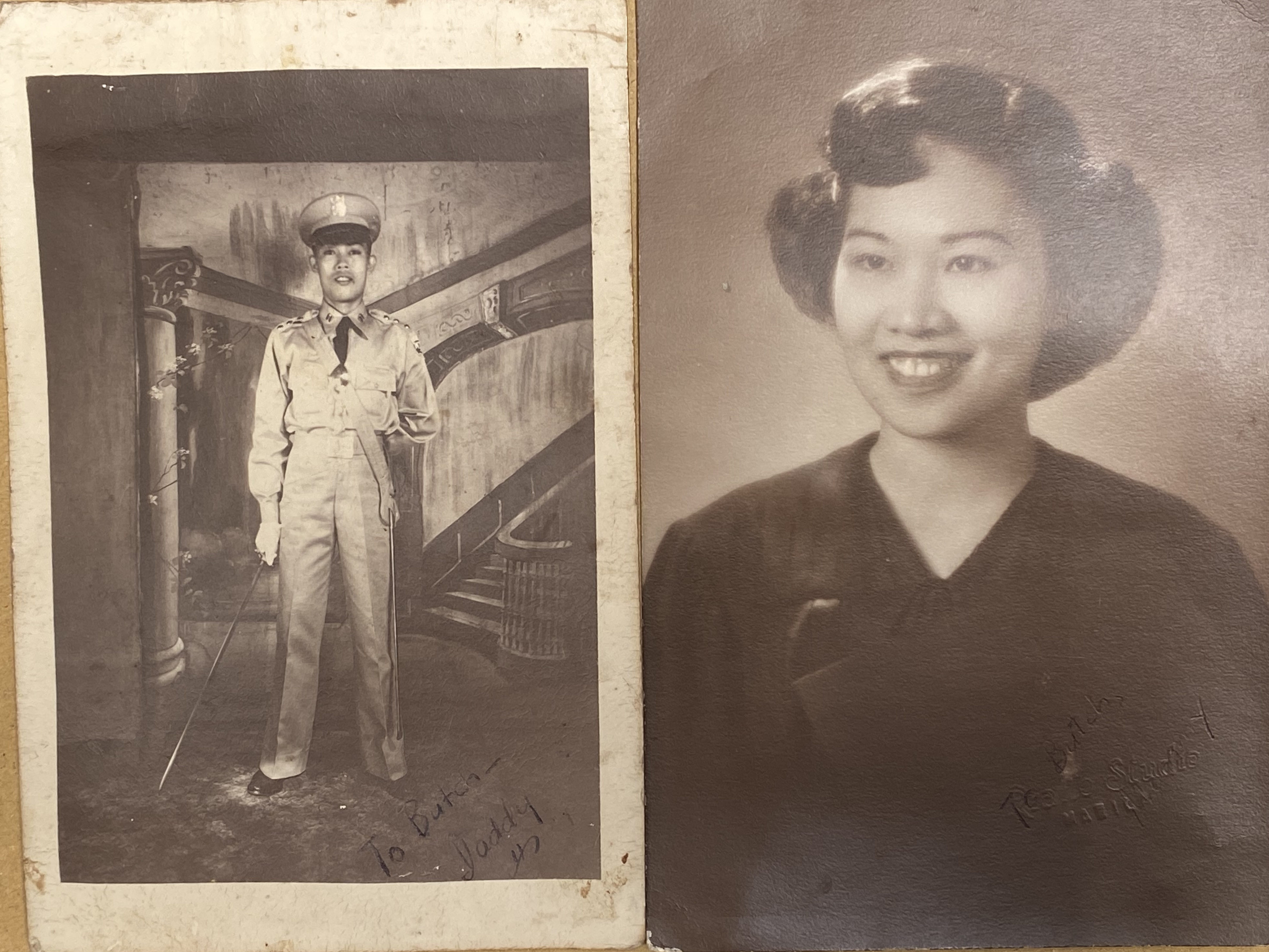
As it happens, I have a PhD in English, which I got more than thirty years ago from the University of Wisconsin-Milwaukee, after my Master of Fine Arts from the University of Michigan. As soon as I say that, I feel like I’m boasting, which I suppose I am. But I only brought it up to make the point that, well, I hardly ever bring it up. Nobody ever calls me “Dr. Dalisay” or “Prof. Dalisay” except in an academic or professional context (they do call me “the Prof” at my favorite poker hangout, where I play with guys going by monikers like Daga, Todas, Hot Sauce, and Paos). I pull it out now and then when I suspect it will enhance my credibility and maybe even my paycheck by 200 percent. But most of the time I’m quite happy to be just “Butch” or “Sir Butch” (or “Ho-zay” when I’m in the US, to save myself the long explanation for why my father Jose Sr. chose to call his first-born “Butch”). 

So for me, it’s entirely situational, and no one should be made to feel immodest if he or she insists on being called “Doctor,” as Dr. Jill Biden does. The only caveat I’ll make is that, among writers, nobody seriously gives a hoot about academic degrees, unless you plan on teaching, which is really what the PhD is for, practically speaking. In UP these days, particularly in the sciences, you can’t teach for long without a PhD—the idea being that going through a doctoral program pushes you beyond your practical experience and innate talent toward some appreciation of theory and into research. 

In the Philippines, for many reasons, it’s still easier for teachers in many universities to become professors before finishing their PhDs, and so there’s a tendency to value the “Dr.” above the “Prof.”—which is not the case in UP and in most foreign universities, where the title “Professor” (meaning a full professor and not an assistant or associate professor) remains one’s ultimate career goal. The presumption is that a PhD should be an entry-level qualification for higher teaching, an early step in one’s ascent to full professorship. (Which reminds me to say that there’s no such degree as “PhD cand.” or “MA units”, as I’ve seen on some CVs—you’ve either done it or you haven’t.)

Why do we fuss over these titles? Because, in a society that offers few material rewards and consolations for academics, they can assume inordinate importance, and invest their holders with an intellectual and moral authority that demands or at least deserves respect—never mind that academia, like the rest of our institutions, is home to any number of crackpots and charlatans in togas, as corruptible as every other traffic cop. Let’s not forget that Hitler’s propaganda minister, Joseph Goebbels, had a PhD in Drama from the University of Heidelberg, and that PhDs from Stanford and Harvard, among others, greased the wheels of Marcos’ martial law.

But lest we think we’re the only ones seemingly obsessed by the trappings of imagined power, there’s at least one other country more retentive down there when it comes to academic titles, perhaps for the opposite reason—not because they’re rare, but because they’re part of such a long and prolific tradition that an elaborate hierarchy has to be put in place. 

That place is Germany—where, until 2008, and thanks to a Nazi-era law, you couldn’t call yourself “Dr.” unless you secured your PhD in Germany itself or was the kind who could fix broken bones. Ian Baldwin, a molecular ecologist from Cornell, found himself charged with “title abuse” when he put “Dr.” before his name on his card, as were at least six other American PhDs working in Germany. The law was later relaxed, but you get the point—when it comes to degrees, Deutschland still thinks of itself as being über alles.

The Germans make one more formal distinction—the precedence of the professor over the PhD, again on the assumption that while PhDs can be had for a dime a dozen, professorship is a career-capping accomplishment achieved only by exemplary research, publication, and mentorship. And thus, if you were teaching at, say, Humboldt University of Berlin (which as of 2020 had 57 Nobel laureates and almost 3,000 PhD students), your full title would be “Prof. Dr. XXX.” And because some people can’t find happiness and fulfillment with just one PhD, they would be called “Prof. Dr. Dr. XXX.” (I kid you not—go ahead and Google it. The Guinness record stands at 33 PhDs for a guy from Hyderabad, whom I don’t even want to begin to address.) Some titles would include variants like “ir” for “ingeneur” or engineer, and “hc” for honoris causa (often conveniently forgotten by hc recipients). The Austrians, I’m told, can be even more particular than the Germans, and can legally use their titles on their passports. The Dutch, by the way, have a “Drs.” degree which can be a bit confusing—it’s short for doctorandus, which means you’re studying for your PhD.

But who cares, other than the title-holder? Certainly not the Quakers, who value equality between people to the point of eschewing all titles, including (until recently, and only in America) “Mr.” and “Mrs.” If you’re familiar enough with each other, you can use first names. If not, then full names will do. When I visited the Quaker HQ in Philadelphia many years ago, I was “Jose Dalisay.” British Quakers were said to have referred to the late Queen as “Betty Windsor.” 

But something tells me that notion of equality won’t work here, where calling people “Digong,” “Bongbong,” and “Sara” won’t bring you any closer to the kingdom of heaven (or some such dominion). 

Qwertyman No. 31: A Homecoming for Anwar

Qwertyman for Monday, March 6, 2023

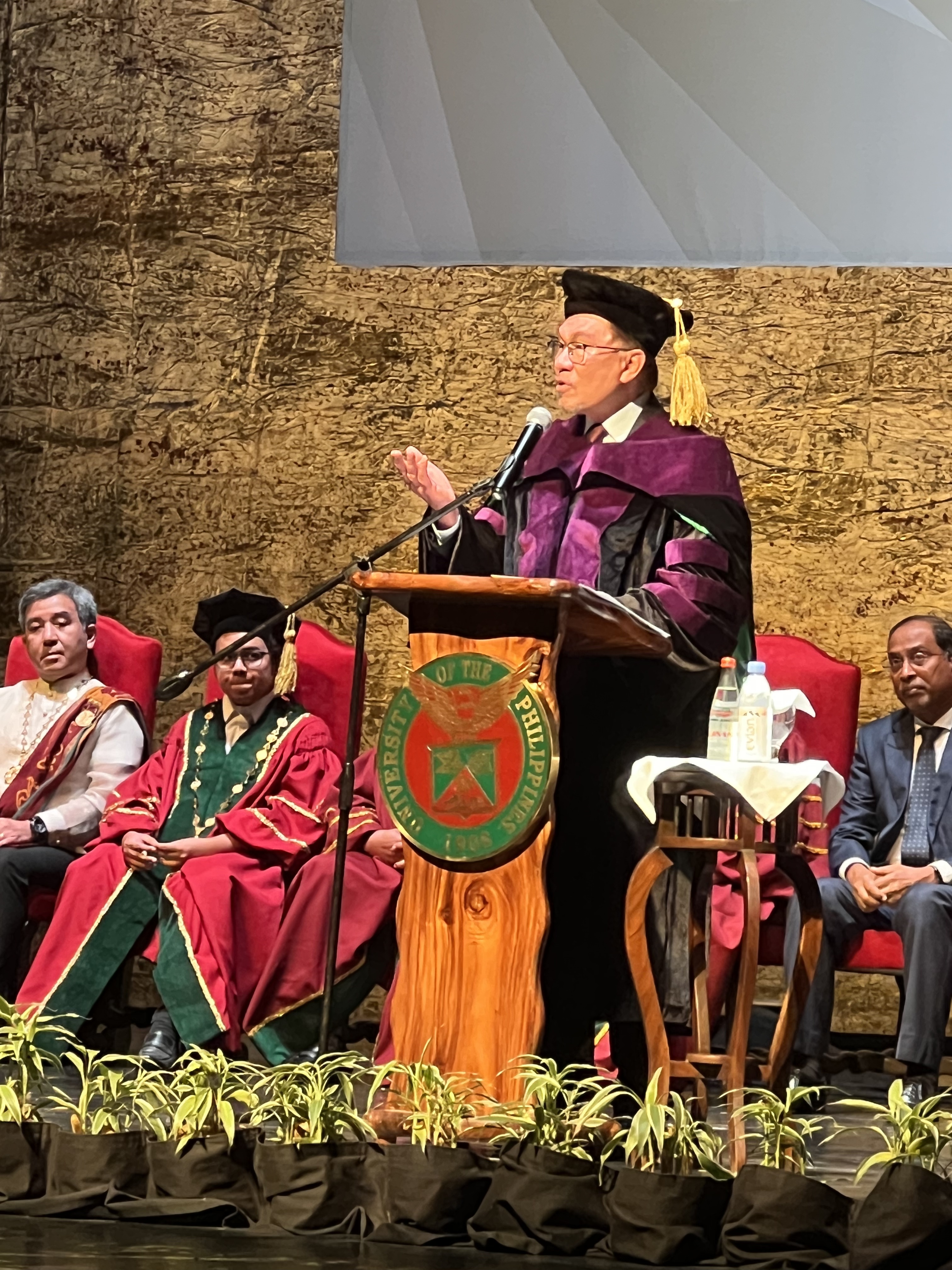
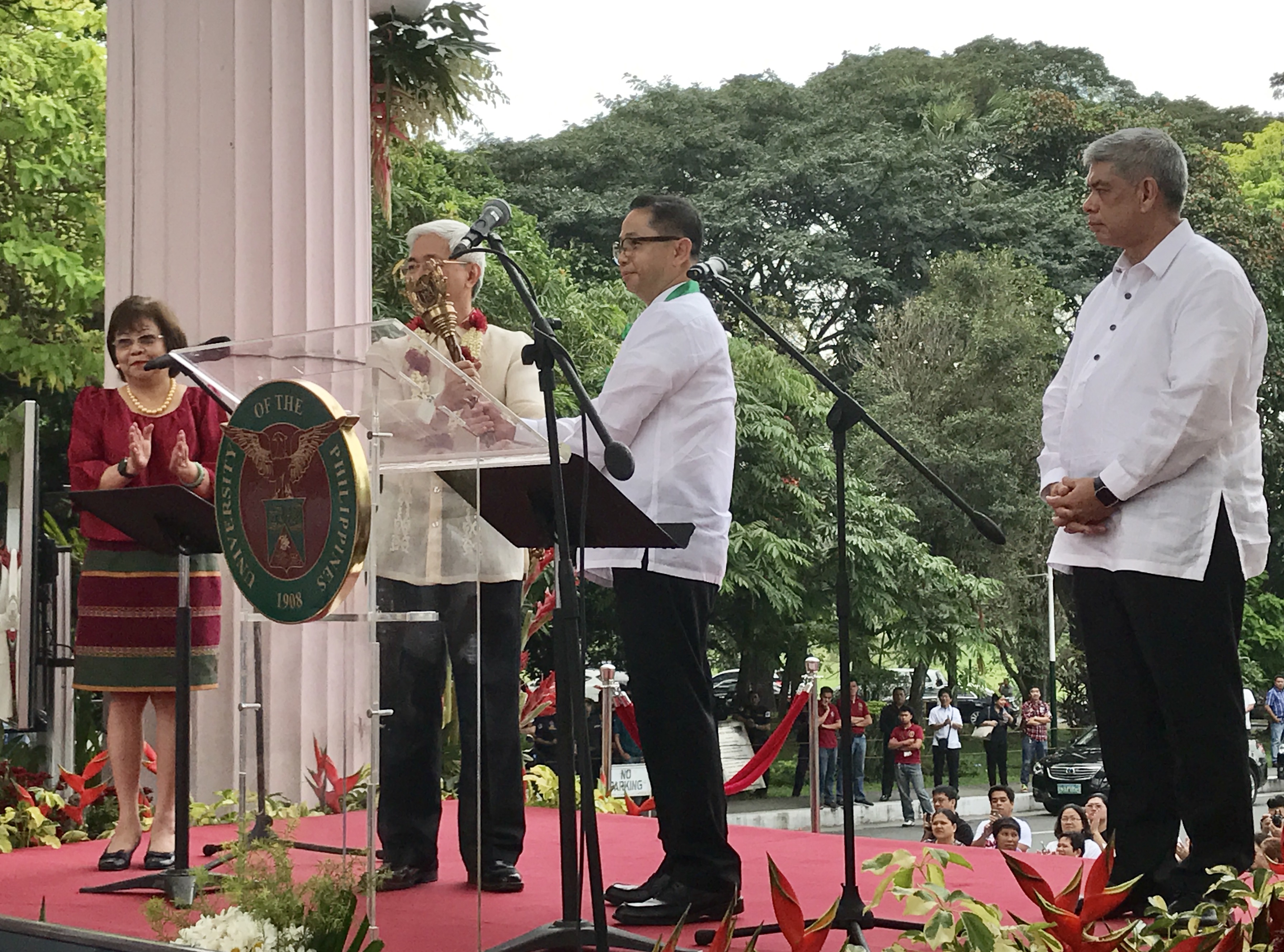
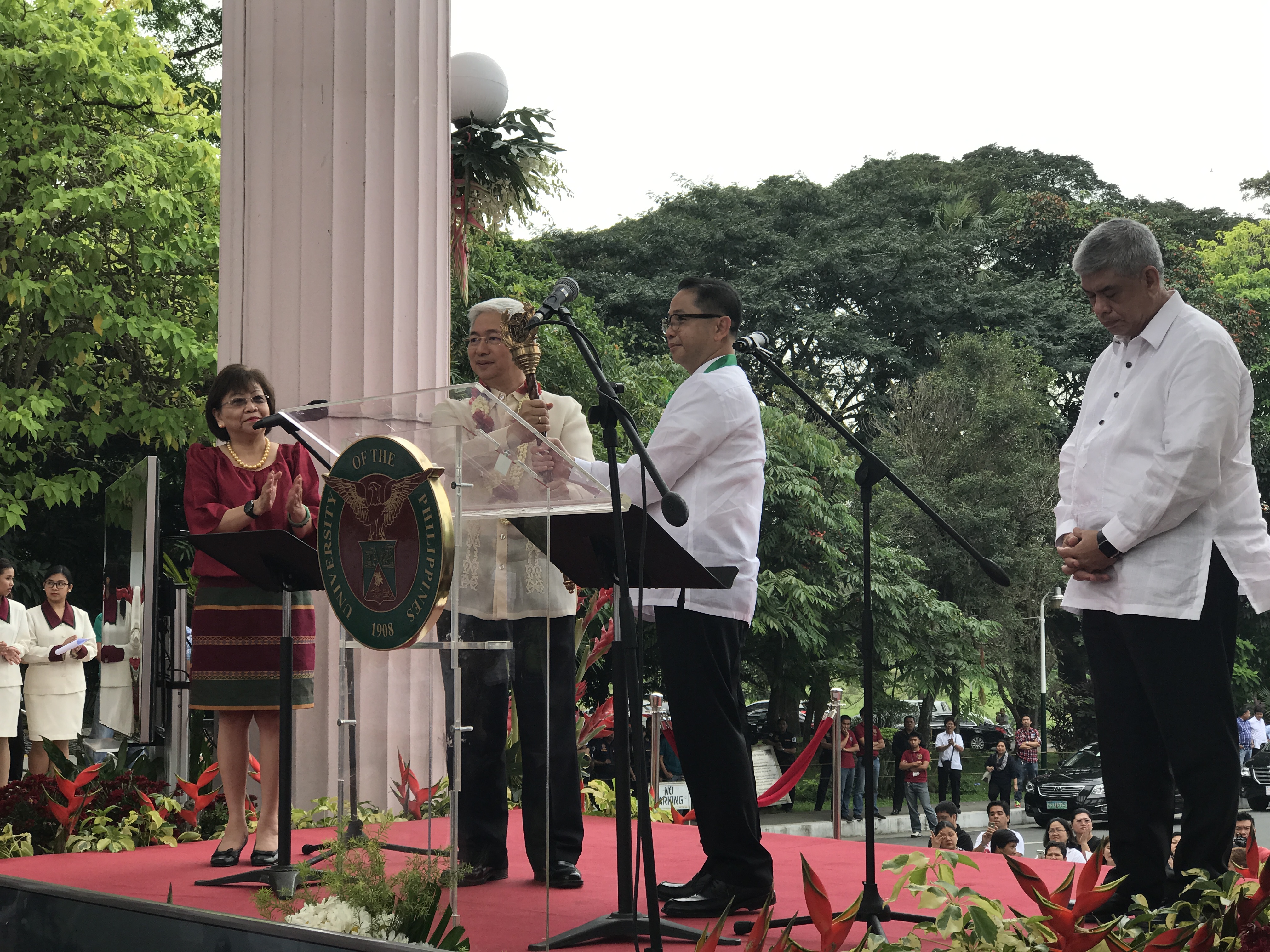
TODAY WE pause our fictional forays to focus on some happily factual news—the visit last Thursday of Malaysian Prime Minister Anwar Ibrahim to the University of the Philippines, which conferred on him an honorary Doctor of Laws degree.

I’ve been missing many university events especially since I retired four years ago, but I made it a point to attend this one because I’ve long been intrigued by Anwar’s colorful if mercurial political career—one that witnessed his meteoric rise from a student leader (who majored, at one point, in Malaysian literature) to minister of culture, youth, and sports, then of agriculture, and then of education, before being named Finance Minister and Deputy Minister in the 1990s.

As Finance Minister during the Asian financial crisis of 1997, Anwar imposed very strict measures to keep the Malaysian economy afloat—denying government bailouts, cutting spending, curbing corruption and calling for greater accountability in governance. His zeal and effectiveness gained him international recognition—Newsweek named him Asian of the Year in 1998—and put him on track to succeed his mentor Mahathir Mohamad as Prime Minister. 

However, his growing popularity came at a steep personal price. In what he and his supporters denounced as political persecution, he was imprisoned twice following a fallout with Mahathir. In the meanwhile, Malaysia sank into a morass of corruption under the since-disgraced Najib Razak, making possible the brief return to power of Mahathir, who enabled the release of his sometime protégé Anwar. Anwar’s eventual accession to the prime ministership in December 2022 was for many a just culmination of decades of near-misses (in our lingo, naunsyami).

His visit to Diliman last week was actually a homecoming. Anwar had visited UP more than once as a young student being mentored by the late Dr. Cesar Adib Majul, our leading specialist in Islamic studies. Like other Malaysian scholars, Anwar has also had a deep and lifelong appreciation for the life and work of Jose Rizal, with whom he shared the notion of a pan-Asian community of interests.

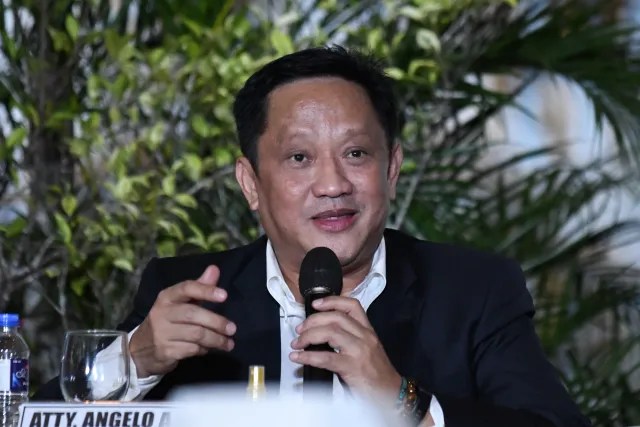
Most instructive was the new UP President Angelo Jimenez’s summation of Anwar’s political philosophy, in his remarks welcoming and introducing the PM:

“Beneath Anwar Ibrahim’s sharp sense of financial management lies a deep well of moral rectitude, a belief in right and wrong that seems to have deserted many of today’s political pragmatists. Much of that derives from his strong religious faith—which, unlike the West, he does not see as being incompatible with the needs and priorities of modern society. To him, this is a native strength that can be harnessed toward an Asian Renaissance.

“Like Jose Rizal, who self-identified as ‘Malayo-Tagalog’ and who was a keen student of the cultural and linguistic connections between Malays and his own countrymen, Anwar appreciates the West as a source of knowledge but cautions against neglecting or yielding our cultural specificity.

“At the same time, he has championed a more inclusive and pluralistic Malaysia, arguing—and here I quote from his book on The Asian Renaissance—’not for mere tolerance, but rather for the active nurturing of alternative views. This would necessarily include lending a receptive ear to the voices of the politically oppressed, the socially marginalized, and the economically disadvantaged. Ultimately, the legitimacy of a leadership rests as much on moral uprightness as it does on popular support.’”

In his talk accepting the honorary degree, Anwar argued strongly and eloquently for the restoration of justice, compassion, and moral righteousness to ASEAN’s hierarchy of concerns, beyond the usual economic and political considerations. He was particularly critical of ASEAN’s blind adherence to its longstanding policy of non-interference in its members’ internal affairs, noting that “ASEAN should not remain silent in the face of blatant human rights violations” and that “non-interference cannot be a license to disregard the rule of law.” 

Extensively quoting Rizal, whom he had studied and lectured often about, Anwar urged his audience to free themselves from the self-doubt engendered by being colonized, while at the same time remaining vigilant against subjugation by their “homegrown masters.” I found myself applauding his speech at many turns, less out of politeness than a realization that I was in the presence of a real thinker and doer whose heart was in the right place. (And Anwar was not without wry humor, remarking that as a student leader visiting UP, “I was under surveillance by both Malaysian and Philippine intelligence. Now I have the Minister of Intelligence with me.”)

Speaking of honorary doctorates, I recall that UP has had a longstanding tradition of inviting newly elected presidents of the Republic, whoever they may be, to receive one, as a form of institutional courtesy. As soon as I say that, I realize that many readers will instantly recoil at the idea for reasons I need not elaborate upon. But let me add quickly that not all Malacañang tenants have accepted the honor. Some have had the good sense to find a reason to decline, knowing the kind of reception they will likely get from Diliman’s insubordinate natives, beyond the barricades that will have to be set up for their security. For everyone’s peace of mind, I humbly suggest that it may be time to retire this tradition, which agitates all but satisfies no one. 

For the record, UP has given honorary doctorates to less than stellar recipients, including the Romanian dictator Nicolae Ceaucescu and the martial-law First Lady Imelda R. Marcos. Even some recent choices have stirred controversy and dismay. 

As a former university official, a part of me understands why and when a state university dependent on government funding employs one of the few tools at its disposal for making friends and influencing people. But as a retired professor who has devoted most of his life to UP and its code of honor and excellence, I find the practice unfortunate if not deplorable. 

I don’t make the rules, but if I did, I would automatically exclude incumbent Filipino politicians, Cabinet members, and serving military officers from consideration. This is not to say that they cannot be deserving, as some surely are, but that they can be properly recognized for their accomplishments upon leaving office. This will also leave much more room for the university to hail truer and worthier achievers of the mind and spirit—scientists, artists, scholars, civil society leaders, entrepreneurs, other outstanding alumni, and fighters for truth, freedom, and justice in our society.

Qwertyman No. 26: UP’s New President

Qwertyman for January 30, 2023

TWO FRIDAYS from now, a change of leadership will take place at the University of the Philippines, when outgoing President Danilo L. Concepcion turns his office over to Atty. Angelo “Jijil” A. Jimenez. Elected by the Board of Regents last November after what was known to be a tightly contested three rounds of voting, Jimenez will serve for the next six years as UP’s 22nd president. (By tradition, the BOR’s formal announcement of the vote declares it to have been “unanimous” although, to the best of my knowledge, it never has been, at least in modern times.)

Jimenez is no stranger to UP’s political and academic culture. A sociology and law graduate from UP with a master’s in management from the National University of Singapore, Jimenez served twice on the Board of Regents as Student Regent in 1992 and as Regent from 2016 to 2021. 

How he will win over the faculty is something else. It’s no secret that many professors emeriti and other faculty members—myself included—openly declared themselves in support of the candidacy of UP Diliman Chancellor Fidel Nemenzo, whom his supporters saw to have the best academic and administrative experience among all the six candidates for the position. That did not mean that no one else was qualified, and the BOR apparently saw something more in Jimenez that we did not, and so we will have to live with that decision.

The faculty’s chief concern may have been that Jimenez has never taught full-time in UP, raising fears that he might not appreciate or respect UP’s academic culture as strongly as a UP president should.

Academic culture is hard to explain to outsiders, but it is a way of life founded on intellectual meritocracy, on the idea that authority and respect are earned through hard-won knowledge, the currency of learning. And “intellectual” here doesn’t simply mean knowing something and being smart (and in some cases, insufferably arrogant), but actually doing something about it—through teaching, research, or some form of social action. Universities value people who contribute to our understanding of ourselves and to the improvement of human life. This is more than gaseous talk that nobody else can understand. It’s doing the deep thinking that nobody else will do, because they either have no interest or see no profit in it, or because they’re not trained to. A national university like UP, funded by our taxes, applies that thinking and learning to real-world problems and places its resources at the service of society. UP demonstrated this social commitment during the pandemic through the heroic sacrifices of its staff at the Philippine General Hospital and the research conducted by the Philippine Genome Center, among others.

Nonetheless, I can sense that despite their initial misgivings, many members of UP’s academic community are willing to give Jimenez a chance to prove himself as a protector and promoter of UP’s interests rather than someone imposed by the powers-that-be to bring the unruly natives to heel. 

“Jijil knows UP’s academic culture, and he listens. He studies things carefully before making a decision,” a highly respected colleague who knows (and once taught) Jimenez assured me. I have to say that in the few times that I met and observed him when I served as Concepcion’s VP for Public Affairs, I was impressed by Jimenez’s grasp of the issues and his willingness to learn. And this will not be the first time that someone perceived to be an outsider was chosen to sit in Quezon Hall; the most notable and perhaps the most effective of such predecessors was Edgardo J. Angara in the 1980s, who had no qualms about using his powers to modernize and streamline UP’s aging bureaucracy, against stiff resistance from within.

Jimenez has led a colorful life that included being posted as labor attaché in war-torn Iraq and him and his wife adopting a baby girl who was left at their doorstep. As a labor lawyer, he will understand the plight of the disempowered, and know how to speak to power and, just as importantly, to negotiate with it as well. 

Ultimately, it will be his character that will be on trial—how he will perform and decide under pressure from both left and right, what values lie at his moral core, and how he will steer the university and ensure its well-being under an indifferent if not hostile political regime. 

PAAJ, as he will be known in UP (Concepcion was PDLC), will have to contend with the rabid red-taggers at UP’s gates (and some of them well within its campuses), who will expect him to deliver UP, and specifically Diliman, on a platter to Malacañang. Curiously, just before the voting, Jimenez—a Duterte appointee to the Board of Regents—was denounced by another newspaper’s resident canine as a communist, alongside Fidel Nemenzo. UP has never had a shortage of detractors rooting for nothing less than its closure, but expect the troll armies to work overtime the minute PAAJ asserts its academic freedom.

Internally, Jimenez will have to deal with the conditions and demands of a constituency just emerging from the temporary and unnatural constraints imposed by the pandemic and eager to spring back into normal academic life but with even more incentives to work and to teach. Some colleagues will berate me for this, but “serve the people” no longer seems to be reason enough to study and to teach in UP. The sense of entitlement afflicting society at large has also crept into UP’s culture, with students complaining about their grades, freshly hired instructors complaining why they haven’t been promoted, and professors complaining why their work wasn’t given more points in their evaluation. Economic issues are easy to understand in a time of rampant food prices (and gross profligacy on the part of public officials), but this goes beyond a bigger paycheck. 

Given his two stints on the Board of Regents, Jimenez will be familiar with these issues down to their minutiae, as perhaps a lawyer can best comprehend. Appointing a capable executive staff will be key to his success, but again, they can only act on judgments emanating from the president’s fundamental sense of good and bad and right and wrong.

Arguably, the visible function of university presidents has changed in recent times, from being exemplars of scholarship and ideological firebrands to resource generators and managers. (Concepcion was particularly adept at the latter role.) How Angelo A. Jimenez will distinguish himself over the next six years will be a story entirely his to craft. I will be eager to read it, and wish him well.

Qwertyman No. 25: Courtesy Ca. 2023

Qwertyman for Monday, January 23, 2023

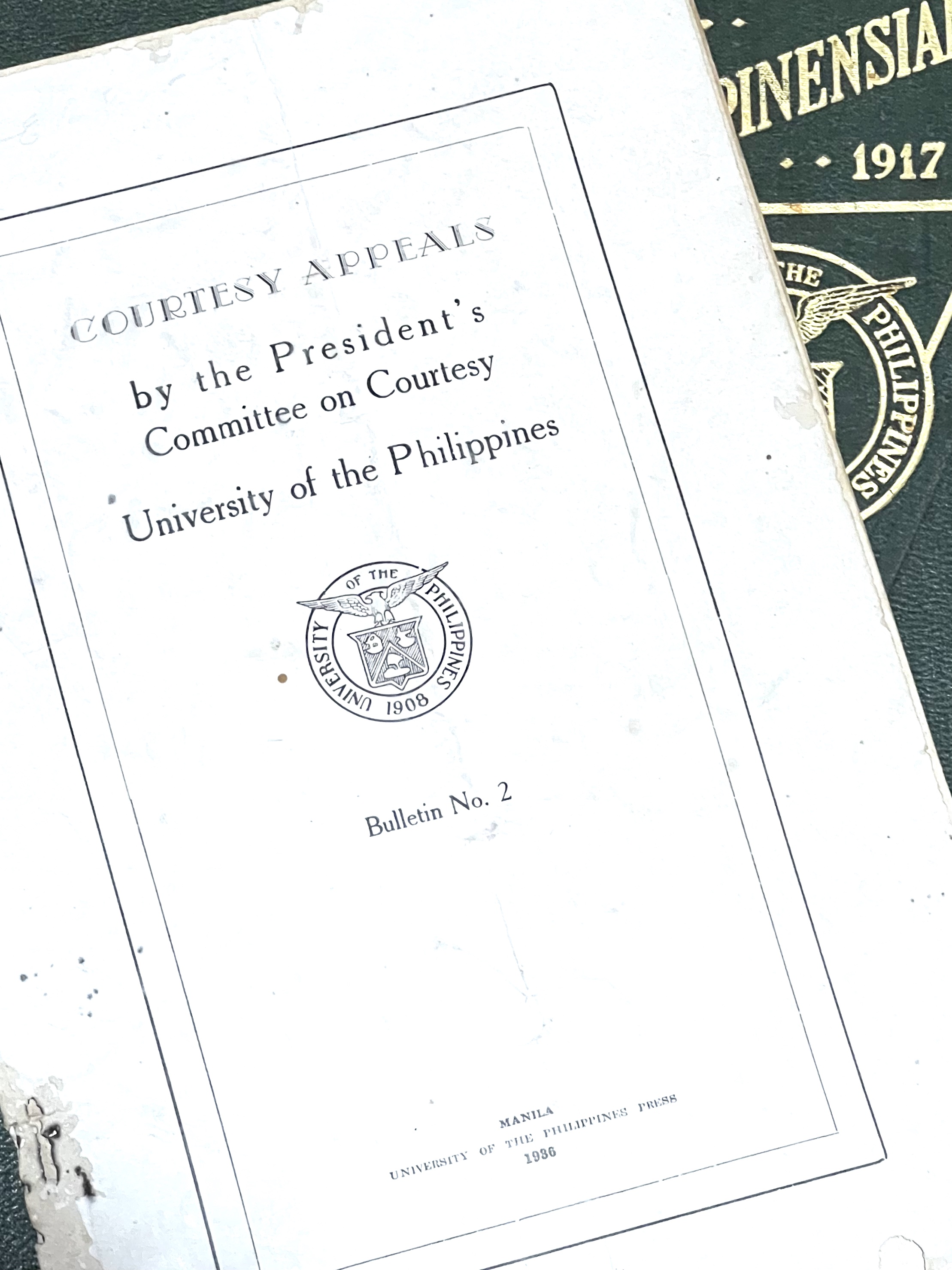
THIS TOPIC wouldn’t have occurred to me to write about if I hadn’t come across—in my meanderings online as a collector of antiquarian books and papers—a copy of a slim pamphlet published by the University of the Philippines Press in 1936, titled “Courtesy Appeals by the President’s Committee on Courtesy.” But as soon as I saw that title, I knew I had to get that pamphlet and reflect on the observance (most likely in the breach) of its prescriptions today.

To be honest, I never even heard of a “committee on courtesy” in UP. Neither, as a former student and professor, did I ever instinctively attach the word “courtesy” to UP, although I will not agree to any collective condemnation of “Iskos” and “Iskas” as boorish and uncultured. Granted, UP lore is rich with tales of what we’ll call youthful insolence toward their elders, in ways that would make even millennials cringe. (Who was that young poet who, in a writers’ workshop, supposedly stole a famous lady poet’s underwear—don’t ask me how—and strung it up a flagpole or hung it on a line, prompting her friend—another professor known for her fiery temper—to curse the laughing fellows: “I wish your mothers had aborted you!”) 

Meekness may not be one of a UP student’s strongest suits, because we teach them to assert themselves. But we also teach them to criticize or comment with style and intelligence, as when a young wit responded to a customary recitation of then President Carlos P. Romulo’s kilometric list of honorary degrees by saying, “Why, Mr. President, you have more degrees than a thermometer!” (In fairness to CPR, that fellow went on to an illustrious career accompanied by much—and some say self-generated—pomp and circumstance.)

Courtesy, of course, is not about sticking out but about staying in—behaving oneself for social acceptability and harmony, living up to someone else’s expectations by observing a strict code of do’s and don’ts. At least that’s how it was appreciated in the 1930s, when President Jorge Bocobo created the committee that came out with the prescriptions in the pamphlet. Although he served as one of UP’s most hardworking and effective presidents—someone who pushed UP students to go out and serve the masses—Bocobo was also known to be a rather prudish disciplinarian. He had been on the committee that censured Jose Garcia Villa for publishing his “obscene” and “ultramodernistic” poem “Song of Ripeness,” leading to Villa’s suspension and hastening his departure for more liberal America. He also cut down on the popular student dances that Rafael Palma allowed, and enforced the rule for student uniforms. When Guillermo Tolentino presented his design for the Oblation statue, Bocobo had one important comment: protect its modesty with a fig leaf, which was done. Not surprisingly, although again a bit too simply, he was called “the gloomy dean” by the editorialists of the time.

In 1936, when the pamphlet came out, Jorge Bocobo was almost midway through his presidency (1934-39). I learned that 8,000 copies were printed to be handed out to all students, and teachers were required to discuss its contents—all 20 pages of them—in class.

Some of its prescriptions are entirely understandable for the period:

“A young lady of social position does not go to a ball without a chaperon.”

“When a gentleman is introduced to a lady, he does not extend his hand first. It is the lady’s place to show whether she wants to shake hands or not.”

“When a lady leaves a gentleman to whom she has been introduced, she never says she is ‘glad to have met him’ or that she ‘hopes to see him again.’’

Some would be perfectly applicable today:

“Annoying the ladies by staring at them or making remarks about them as they pass cannot be countenanced.”

“Avoid being a bore by talking too much. Be a sympathetic listener.”

Some would be difficult to enforce:

“It would be nicer if gentlemen should remove their hats on entering a building.”

“Do not wear a tuxedo at daytime.”

“(Do not) thrust the individual knife into a butter dish or the individual fork into a pickle dish.”

“Bananas are peeled into a plate and taken with the fork.”

I was amused, as many of you would be, but these social commandments (yes, they were far more than “appeals,” and students and faculty were disciplined for disobeying them) invited me to wonder how we look at courtesy today or even think about it, let alone practice it. Thanks to the anonymity provided by the Internet and to a toxic political environment, rudeness if not obnoxiousness seem to have become the norm. It’s almost customary to assume that the other fellow is uninformed, hostile, stupid, or just plain wrong, and I have to confess to thinking this of many people I encounter for the first time, especially online. 

I’ve been on the receiving end of these assumptions as well. An expat American—a Trumper—once tried to convince me that I knew nothing about America, as did an expat Brit who lectured me about the monarchy like I’d never read a book (I could’ve lectured him back on Elizabethan revenge tragedy, but he could have been just a regular fellow who didn’t know anything about me, and why should he, so I desisted and let it slide).

Courtesy today clearly involves more than etiquette or protocol, more than observing antiquated codes of behavior requiring you to use this fork or that spoon. It’s more a matter of attitude toward other people, of assuming them worthy of respect and an intelligent and civil response (until they prove otherwise, as many inevitably do, especially in politics). 

Unfortunately we also too easily conflate courtesy with external manners, with opening doors for ladies (which I still do, although my wife Beng sometimes has to remind me there’s a door in front of us). On a higher order of behavior, aren’t profligacy and ostentation extreme forms of discourtesy to a people struggling to make ends meet? Do arrogance and impunity invite respect, or resentment and disdain?

What could a “Courtesy Appeals” for 2023 read like? “Do not waste the people’s hard-earned money” seems like a good place to start.

(Some factoids mentioned here come from an unpublished, unofficial history of UP. You can check them out against an official history published recently by the UP Press.)

Qwertyman No. 15: The Next UP President

Qwertyman for Monday, November 14, 2022

AFTER FOURTEEN straight Mondays of producing what I’ve called “editorial fiction”—make-believe vignettes meant to poke fun at the issues of the day, the prose version of editorial cartoons—I’ll take what will be the occasional break to engage more frontally with a concern of deep personal and professional interest.

Over the next few weeks, the Board of Regents of the University of the Philippines will select the 22nd president of our national university to succeed President Danilo L. Concepcion, whose six-year term ends in February next year. (Let me add quickly, for full disclosure, that I was President Concepcion’s Vice President for Public Affairs until I retired in 2019, and held the same position under former President Francisco Nemenzo in the early 2000s.)

Whether or not you graduated from UP or have a child or a relative there, this is important for every Filipino, because—like it or not—UP produces an immoderate majority of the people who make up our political, economic, and social elite. Its leadership, therefore, is a matter of national consequence. Since its birth in 1908, UP’s alumni roster has counted presidents, senators, congressmen, CEOs, community leaders, artists, writers, scientists, and, yes, rebels and reformers of all persuasions. 

There are six candidates on the BOR’s ballot, some of them, to my mind, more qualified—beyond what their CVs say—than others. The Board of Regents has eleven members—the CHED chairman, the incumbent president, the chairs of the Senate and House committees on higher education, the alumni regent, three Malacañang appointees, and three so-called sectoral (faculty, student, and staff) regents; it will take six of them to elect the next president. 

Whoever that choice is, he will be certain to have a challenging six years ahead, especially considering the present political regime, which he will have to contend and to some significant extent work with. UP remains dependent on the national government for its budget, for which it has to make its case before Congress every year, like any other agency. 

Prickly issues will face No. 22. There’s been a lot of loose talk lately about UP’s standards supposedly falling, with too many cum laudes graduating even as its international ranking has reportedly dropped. Indeed these should give rise to public concern, but there’s more to it than meets the eye, and UP’s level of service to the nation (think PGH in the pandemic) hasn’t flagged.

Historically, the relationship between the Philippine president and the UP president has been a testy if not an acrimonious one—most notably that between Quezon and Palma—because of the university’s role as social critic. But Malacañang now has much to do with choosing the latter through the power wielded by administration representatives on the BOR. What the Marcoses will do with UP remains to be seen; will the next UP president, for example, be given free rein to pursue the martial law museum project that’s already been approved for construction? It may not be the most important item on the agenda—more support for research and faculty development should be, if we want to shore up our ratings—but it will be strongly indicative of how the Palace will deal with Diliman.

What I’ve observed is that the role of the UP president has greatly evolved since Palma’s time. While many of us would like to see an ideological firebrand at the helm, UP is a broad and diverse community whose survival and growth will require keen diplomatic skills to negotiate between the university’s external and internal publics. (And yes, even firebrands can do that, against all expectations; Dodong Nemenzo did.) University presidents worldwide have increasingly been more of resource generators and managers than thought leaders—perhaps boring, but they deliver the goods. What’s important is for them to be able to practice and defend the academic freedom that also allows the university to become the best it can be. I pray our regents will bear that balance in mind in its deliberations.

ALSO, A word on my chosen approach to editorial commentary. I know that some of you can’t make heads or tails of my fictionalized renditions of our political and social culture, but I think you will, with just a little more effort. Maybe it’s the literature professor in me, but I believe readers should be challenged to figure out the sense of things, and not just have it served to them on a platter. 

We’ve fallen into the groove of letting others reach our conclusions for us, so all we need to do is nod affirmatively. Whichever side of the political fence you’re on, that only contributes to sloppy, second-hand, copy-paste thinking. In my pieces, I try not focus on just one person or one target—other and sharper columnists can do that. I’m more interested in the culture of our politics—in the way groups of us think and feel about what’s in our best interests—and in our complicity in bad governance. Sure, we have rotten eggs in high public office—every administration has had them. At this point, I’m much less bothered by the fact that we live in a world of despots than by the fact that we (or many of us) put them there, we keep them there, and we just pinch our noses when they stink.  

Another columnist (who actually writes wilder fiction than me and my feverishly imaginative friends) even complained that fiction has no place in the op-ed page. Excuse me? All fiction is opinion, and always has been; the critical commentary of fiction even preceded journalism. In earlier times, our op-ed pages even offered poetry—political commentary in verse—at a time when our poets were patriots, and our patriots were poets. Sadly those times and those exceptional commentators are gone, replaced by hacks producing not only dishonest and soulless but dishwater prose. 

I’m not a poet, so the closest I can get to that is fiction, which pretends that some things happened that didn’t (but then again, in another sense, really did—and that’s what some readers find confusing). One thing I must confess I do like about fiction is that, unlike factual commentary that readers today tend to forget after a week, a good story sticks around. Sadly for its implicit targets, fiction is forever. You can shoot me dead, but my work will survive me—and, for that matter, you.

Penman No. 440: A Classic Reborn

Penman for Sunday, July 3, 2022

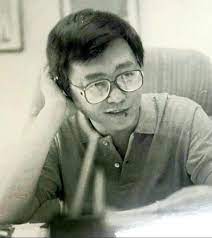
I’VE LONG believed that my late friend and contemporary, Bienvenido “Boy” M. Noriega, Jr., was one of our very best modern playwrights, and indeed worthy of a National Artist Award. I—and many who knew him and his work—had been hoping that he would get that distinction this year, but too much time may have passed since he left us 28 years ago for critics to recall just how good he was.

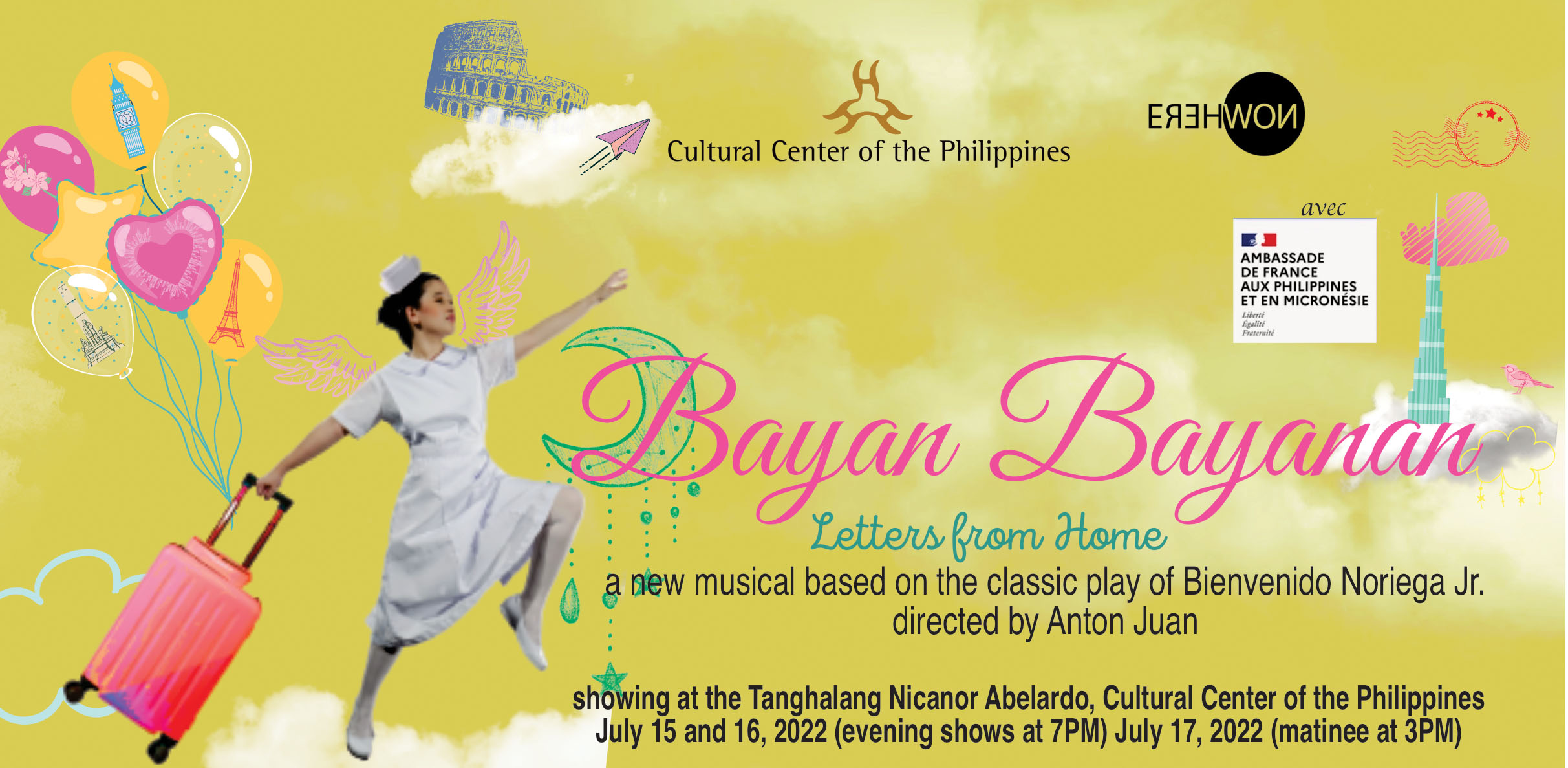
Still, there’s great news today for Boy’s fans, and for everyone eager for the return of great theater to the Philippine stage. The seminal Noriega play, “Bayan-Bayanan,” which premiered at the CCP’s Little Theater in 1975 and won that year’s Grand Prize for the Full-Length Play in the Palancas, is going to be shown again in Manila this month, rendered as a new musical, “Bayan Bayanan: Letters from Home.”

Directed by Dr. Anton Juan and produced by the Erehwon Center for the Arts with support from the Embassy of France, the updated play promises to offer fresh insights into the OFW experience, having been originally written and presented long before overseas Filipino workers came to be known as OFWs. Back in the early ‘70s, as martial law descended on the country, they were all just exiles, migrants, transients, and vagabonds, some by choice, others by the lack of it. In Europe, and specifically in Geneva where the play is set, Filipinos tended to be middle-class professionals drawn there by their work, as Boy Noriega himself was as a government economist in his early 20s attending global trade negotiations. 

As I’ve written about before, Boy and I were very close friends—and fervid contest competitors—in those days. We were UP Alpha Sigma fraternity brothers who found ourselves working in literally the same office at NEDA Padre Faura. He was two years older than me, so I looked up to him as a mentor, and when he went to Harvard for graduate school and then began flying to all these conferences abroad, he wrote me long letters to share his exhilaration at studying our heroes like Chekhov and Ibsen (he was enrolled in Public Administration, but took side courses in Drama). When he came home, we spent many lunch hours talking about the plays we were writing or wanted to write. 

Boy announced himself to Philippine theater in the most spectacular way—by writing “Bayan-Bayanan” and having it presented at the CCP almost at the very start of his playwriting career. Immediately you knew that you were witnessing a major talent unfolding. His kind of drama was quiet, thoughtful, cumulative in its impact. Writing under martial law and being somewhat more politically engaged, I resorted to historical allegory, but Boy took the present head-on, albeit from another angle, of the young Filipino discovering the world in both geographical and emotional terms.

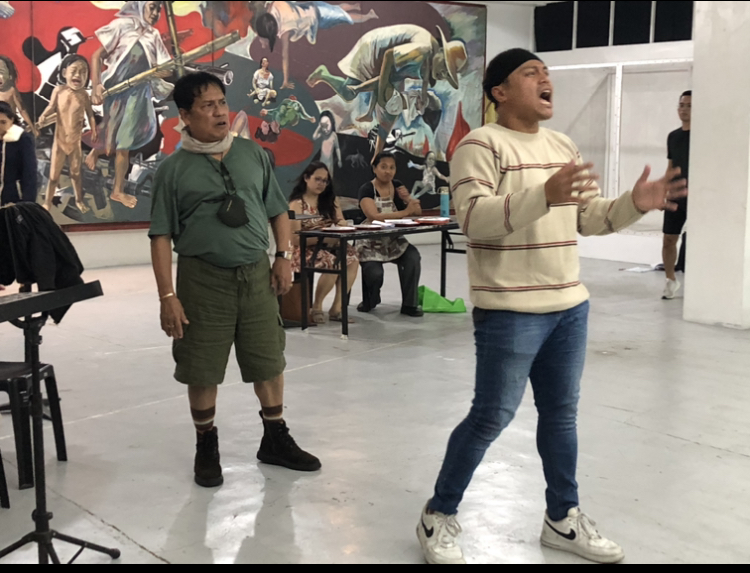
When I heard that Erehwon was planning to revive “Bayan-Bayanan” as a musical, I was delighted and at the same time a bit concerned how Boy’s material was going to be handled almost half a century down the road. But my worries lifted when I learned that the revival was going to be directed by none other than Anton Juan, who knows the play better than anyone else around, having directed it in Athens, London, Geneva, Paris, Chicago, and Toronto, and having himself been the kind of global traveler that Boy dwells on. “I have directed this play many times before in Europe, and each time there is always something new,” Anton says. “It grows like a pearl, takes shape in the memory and hearts of those who perform it and those who watch it: why? Because it is real. It is grounded on real characters we can identify with, in all their beauty and vulnerability, in all their strengths and their weaknesses.”

Anton Juan composed some of the new songs for the play, along with Cleofe Guangko-Casambre, who had composed for the play “‘Rizal’s Sweet Stranger;” Russ Narcies Cabico, also a theater and television actor and singer; pianist-composer Andrew Bryan Sapigao; and composer-musical arranger Jonathan Cruz.

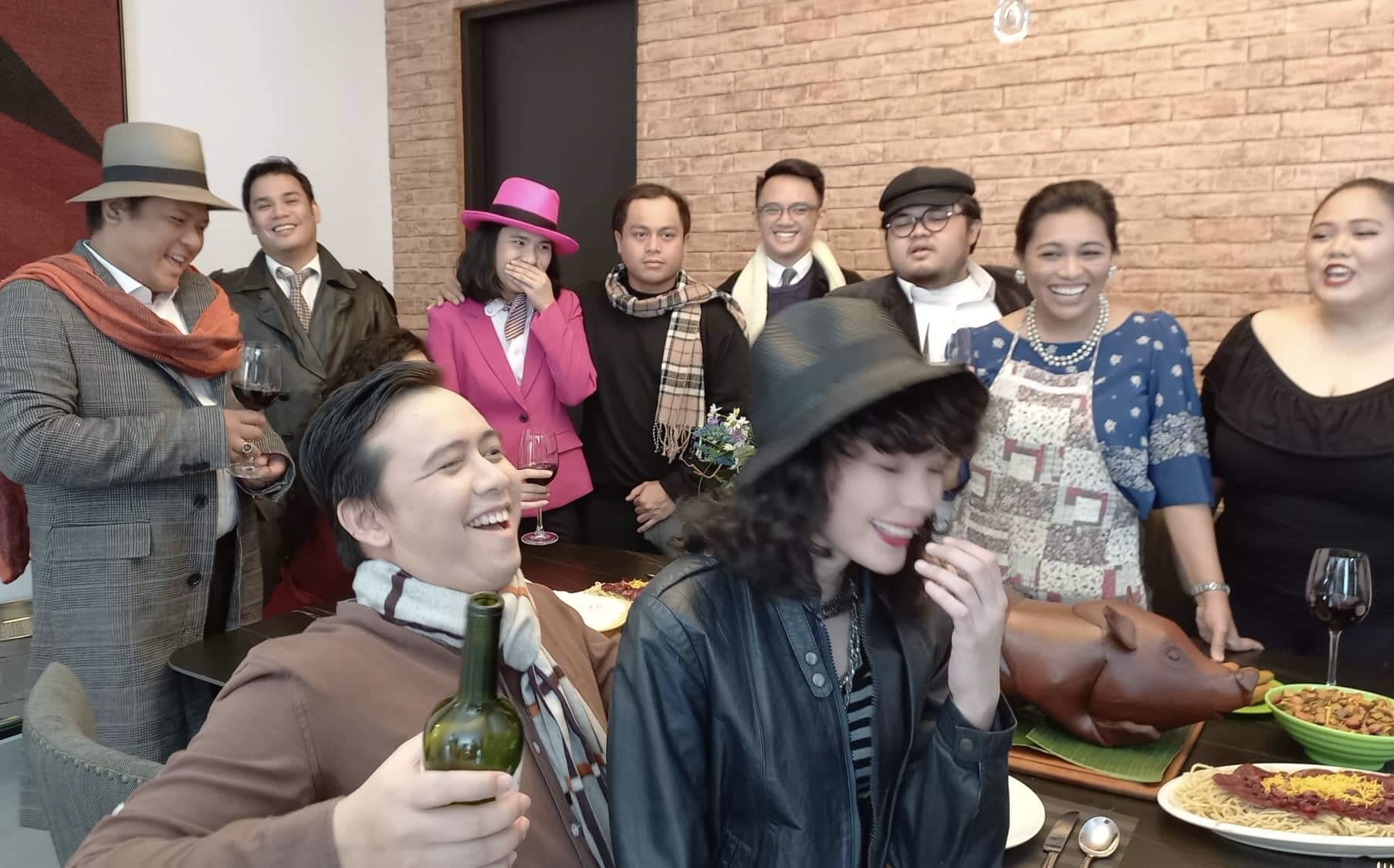
The cast comprises a mix of veterans and newcomers. Professional theater actress and singer Banaue Miclat-Janssen portrays the central character Manang, while Dino—the “Boy” in the play—is portrayed by theater actor and classically trained singer Carlo Mañalac. Supporting them are Ava Olivia Santos, Roxy Aldiosa, Carlo Angelo Falcis, Jacinta Remulla, Richard Macaroyo, Greg de Leon, and Jane Wee. Of special note is the participation of French-Filipino actress Uno Zigelbaum, through the sponsorship of the French Embassy.

The role of the Erehwon Center for the Arts (of which Anton is Creative Director) is also noteworthy. Founded by another old friend of mine, Raffy Benitez, Erehwon has established itself firmly in our country’s cultural landscape as a sponsor of painters, sculptors, musicians, dancers, and writers, who have come to see Erehwon’s Quezon City headquarters—also its performance and exhibition venue—as a haven for the arts at a time when cultural budgets everywhere have fallen. Funded largely by Raffy’s own generosity and by some other patrons, Erehwon hopes that this collaboration with the CCP and the French Embassy will lead to other significant projects that can ultimately be self-sustaining. 

The play will premiere on  the evening of July 15, followed by a 7 pm evening show on July 16 and a 3 pm matinee on July 17, at the CCP’s Tanghalang Nicanor Abelardo. Tickets are available at Ticketworld. See you there!

Penman No. 439: New Looms for Old

Penman for Sunday, June 5, 2022

WHEN WE first met Dr. Analyn “Ikin” Salvador-Amores at the University of the Philippines Baguio five years ago, she was already the director of the new and fascinating Museo Kordilyera that had just opened to showcase the culture of the northern highlands. Ikin graciously took Beng and me on a tour of the exhibits, which UPB had painstakingly put together from its own collections and from the donations of such patrons as National Artist and Baguio resident Bencab. 

But going beyond what was on display, Ikin brought us to the museum’s laboratory—research is the other important part of its mandate—to show us their growing collection of rare Philippine textiles. Some of these were a century old, retrieved and repatriated from collections abroad by Ikin herself, or donated by collectors. This, she indicated, was going to be a vital aspect of the Museo Kordilyera’s mission—to gather and preserve the threads of the past for the appreciation of new generations of Filipinos. 

Indigenous textiles have a long history in the Philippines, having been woven long before the Spanish came—indeed, more than a millennium before the Christian era. They were used for clothing and also for ceremonial purposes such as the burial of the dead. They come in a wide range of materials, designs, and uses, from the abel and Bontoc of the north to the hablon and piña of the Visayas and the Yakan and tinalak weaves of the south, among many others. Using local fibers and dyes, native weavers employ hand looms to turn their traditional designs—animals, celestial objects, humans, deities, and geometric shapes—into not just functional clothing but works of art and visual bearers of their tribe’s or community’s culture.

But these traditional weavers and their products are under threat from many factors, and unless proper and timely intervention is undertaken, cultural advocates like the Oxford-trained Dr. Salvador-Amores worry that they could decline further if not vanish in this digital century. She points to four major reasons for this decline: the advanced age of master weavers and the lack of young people willing to take their place; the scarcity of materials for weaving such as cotton; new technology, cheaper mass-produced substitutes, even fake “ethnic” fabrics; and ready-to-wear clothes and ukay-ukay, reducing demand for traditional textiles.

Enter the Cordillera Textiles Project or CordiTex, which Ikin is also directing, aimed at finding and employing new technology to revive the ancient art of weaving and train and engage a new generation of weavers. The technology comes in the form of the Universal Testing Machine that analyzes the internal and external characteristics of Cordillera textiles so they can be technically described, and the digital loom, which—with the help of software—can recreate old designs and fabrics, especially those that weavers can no longer make, and assist those weavers in doing them on their traditional backstrap or foot looms.

Before the machines come into the picture, however, much research has to be done. CordiTex is a multidisciplinary endeavor, involving anthropology, ethnobotany, ethnomusicology, ethnomathematics, physics, chemistry, ergonomics, economics, and geography. (I’ll bet some of us didn’t even realize these disciplines existed. And if we wonder why “ergonomics” is important in weaving, it’s because weavers often suffer from musculoskeletal problems of the neck, shoulders and lower back; strain from incorrect posture; and chronic lower back problems.)

Ikin’s team has conducted research not just in the Cordillera region, but also in weaving collections in the US, Germany, and Austria, where samples gathered a century ago by expeditions to the Philippines are kept. In the US, for example, much material and information can be found at the Museum of Anthropology at the University of Michigan, the Field Museum in Chicago, the American Museum of Natural History, and the Newberry Library.

Mathematical symmetry analysis figures out the math behind traditional designs so they can be rendered into formulas, followed by 3-D modeling, to take the physical properties and the weaving structures of the fibers into account. 

Now enter the digital loom—the Thread Controller 2 or TC2—a machine designed, developed and made by Digital Weaving Norway (DWN) to turn design ideas into woven fabrics. Rolled out in 2012, the TC2 is a hand-operated electronic jacquard loom, capable of producing both traditional and contemporary weaves for industrial and artistic purposes. The University of the Philippines has acquired two of these machines—one for UP Baguio, and another for the College of Home Economics in UP Diliman. Six researchers from UP led by Ikin went to DWN to study the use of the machines, and workshops have since been conducted in Baguio and Diliman, assisted by a visiting expert from DWN, to introduce the TC2 and its technology to local weavers and researchers.

Dr. Salvador-Amores is emphatic that their work in CodiTex is not aimed at replacing hand looms. “While CordiTex can now replicate and reconstruct traditional extant textiles through digitization and digital loom weaving, we are doing this so that the younger generation can re-weave these in their traditional looms,” she said. “Hopefully this will empower local weavers, engender ethnic identity, and sustain Cordillera weaving.”

The next time you visit Baguio, take a side trip to the Museo Kordilyera to see what the fuss is all about. You might get lucky and catch Ikin—or if not, then her pioneering book Tapping Ink, Tattooing Identities: Tradition and Modernity in Contemporary Kalinga Society (UP Press, 2014), yet another fascinating topic altogether.

(Photos courtesy of Analyn Salvador-Amores)

Hindsight No. 12: The Color of Danger

Hindsight for Monday, April 4, 2022

TWENTY-FIVE YEARS ago, I took on the first of what would become many biographical assignments: the life story of the Lava brothers. In many ways, they remain the most fascinating of my subjects, brilliant men with PhDs and other advanced degrees from such schools as Columbia, Berkeley, and Stanford who, despite their upper-middle-class origins, were counted among the most dangerous subversives in the 1950s and 1960s. 

Three of them—Vicente, Jose (Peping), and Jesus—became general-secretaries of the Partido Komunista ng Pilipinas. Never Party members, Horacio and Francisco (Paquito) were nationalists and civil libertarians who served in high government positions—Horacio as one of the new Central Bank’s top economists and Paquito as chief legal counsel of the Securities and Exchange Commission, which he helped organize. (A sixth brother, Pedro, also became a Party member in the US but died before the war.) 

I remembered them last week when I read the reports of bookstores being splashed with red paint and of a certain government official spewing the same substance out of her mouth. No, I’m not going to defend Vicente, Peping, and Jesus Lava against Red-tagging; they were proud communists to the end. 

What has stuck in my mind from the many interviews I held with Peping and Jesus in their home in Mandaluyong was a moment with Peping—who, when I met him in the mid-1990s, was a frail and white-haired old man. Peping had graduated salutatorian from the UP College of Law in 1937 and his thesis, hailed by Dean Vicente Sinco as the best they had ever received, was published by the Harvard Law Journal. In his dotage, Peping seemed stiff, dour, and humorless, but as a young man he had played the banjo, with “Always” and “Five-Foot-Two” among his favorites.

At some point, I asked Peping: “Among all the figures in history, whom do you admire the most?” Without batting an eyelash, sitting ramrod-straight in his wooden chair, he answered: “Stalin and Marcos.” 

The mention of Joseph Stalin, the Soviet Union’s brutal dictator for over 30 years until his death in 1953, was disturbing but not surprising. The PKP looked up to the Soviet Union as a model, and some of its members had been trained there, although the Lavas themselves downplayed the connection, citing the Philippines’ greater affinity with the Chinese experience. Upon his release from prison in 1970, Peping had gone to Moscow, and then to Prague, where he and his wife lived for the next 20 years. Clearly, even if Stalin had long been officially repudiated in Russia, he left a deep and positive impression on Peping. 

What I didn’t expect—although it would make sense in retrospect—was his admiration for Ferdinand Marcos, whom he had never personally met. Why would Peping Lava, a hardcore Communist, admit to being a fan of yet another dictator, whose martial-law regime was responsible for the deaths of tens of thousands of so-called “enemies of the State,” many young and idealistic revolutionaries among them?

The answer might be found in the relationship that Marcos cultivated with the old Left, including a meeting between Marcos and representatives of the Movement for the Advancement of Nationalism (MAN) in 1968. Negotiations between Marcos and the PKP leadership reportedly followed, resulting in the release of Peping in 1970, and of Jesus Lava and Casto Alejandrino in 1974; Luis Taruc had been released even earlier in 1968. (The PKP had been decapitated by the arrest of Peping and many leading members in 1950, followed by the arrest of Jesus in 1964.) 

The Lavas were convinced that, despite all his liabilities and abuses, Marcos was a nationalist at heart who was aware of, and opposed to, American imperialist control over the country’s economy and politics. The Americans, not Marcos, were the main enemy. (Peping believed that the Americans were responsible for the deaths of Ramon Magsaysay, Claro M. Recto, and Ninoy Aquino.)

They were attracted by his “independent” foreign policy, especially his diplomatic overtures to China and the Soviet Union. Citing international sources, they even surmised that their release had been a precondition attached by the Soviets to rapprochement with the Philippines. Jesus Lava would contend that as of 1974, the PKP had entered a “negotiated political settlement” with the Marcos administration and had therefore been legalized. (Meanwhile, breaking away from the old PKP, Jose Ma. Sison had “re-established” the CPP in 1968, and it would be his CPP-NPA-NDF combine that Marcos would go after under martial law, as would Marcos’ successors.)

If any of this sounds familiar in light of our recent history, you win no prizes. When Rodrigo Duterte came to power in 2016, my old friends on the Left bubbled over with excitement, believing they had found a trustworthy ally who was prepared to unfriend America in favor of rosier relations with China and Russia. I was dismayed then by what I thought was fatal naivete, or miscalculated opportunism; he played them, not the other way around. 

Today, with such instrumentalities as the NTF-ELCAC and even education officials at the vanguard, going against the Reds is back in fashion. The “threat” they pose is allegedly serious enough to warrant billions in the budget for anti-subversion programs, never mind that the CPP-NPA’s military significance has been severely diminished over the past 40 years, and that we need that money for more pressing concerns. 

Never mind, too, that Russia and China—the erstwhile centers of the global Red revolution—are now universally condemned as oppressors of their own people and aggressors beyond their borders. Stalinism is back with Vladimir Putin, and Xi Jinping is trying to out-Mao Mao. (And another Marcos threatens to return to Malacañang. Peping Lava could feel right at home today.) Our government says it hates communists with a passion, and yet the best it can do is remain “neutral” in Putin’s war on Ukraine, and “realistic” in dealing with China’s encroachments on Philippine territory. 

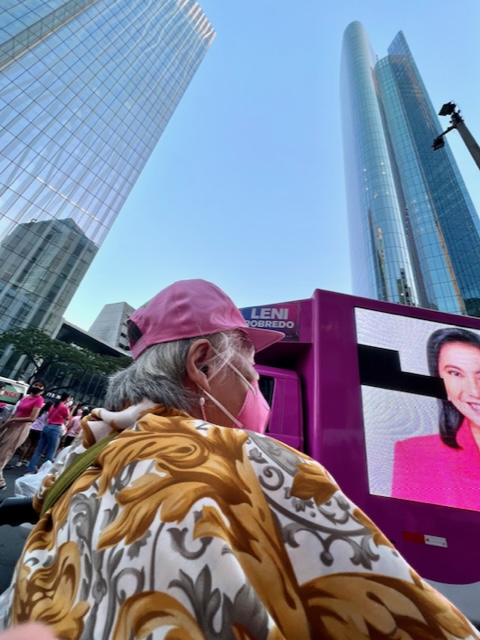
All this leads me to conclude that the old Marxism-Leninism—which is barely recognizable in today’s Russia and China—is no more than a bogeyman, and even the government knows that. Red-tagging just happens to be a convenient cover to attack the real enemy: the liberal middle forces now at the forefront of reform and of democratic regime change. The color of danger is pink, not red. 

Hindsight No. 11: A Political Playbook

Hindsight for Monday, March 28, 2022

I WAS rearranging the books and periodicals in my library the other day when I came across a copy of a journal from more than 60 years ago—the 3rd quarter, 1958 issue of Comment, self-described as “a quarterly of Philippine affairs… conceived in the observation that absence of thought has resulted from a prevailing atmosphere of conformity and dread of ideas.” 

It was quite an assertion to make, but the journal’s mainstays were up to livening things up in the Cold War chill that had turned many Filipinos—both in government and academia—into rabid anti-communists. On Comment’s editorial board were F. Sionil Jose, Onofre D. Corpuz, and G. Burce Bunao (on leave for their studies abroad were Alejandrino Hufana and Elmer Ordoñez). Then only in their early thirties or even younger, these men would count among the most prominent intellectuals and writers of their time. 

What particularly caught my attention was an article written by Corpuz on “Filipino Political Parties and Politics.” O.D., as he would be known, had just recently returned with his PhD in Political Economy and Government from Harvard, on the verge of a long and prominent—though sometimes contentious—career in public administration that would see him serve as Secretary and then Minister of Education, founder and president of the Development Academy of the Philippines, member of the Batasang Pambansa, and president of the University of the Philippines. 

Another political scientist and UP president, Jose V. Abueva, gave due praise to Corpuz upon the latter’s passing in 2013, citing his landmark scholarship in economic history. But Abueva also pointedly noted that O.D. was “soft in his judgment of Marcos’ authoritarian rule.” (Interestingly, Corpuz had described martial law as “an anti-democratic but constitutional coup” and EDSA as “a democratic but unconstitutional coup.”)

I was curious about what O.D. Corpuz observed of Philippine politics in the 1950s and if those observations would still hold today. Let me share a few choice quotations from the article, and you tell me if they don’t remind you on some level of what we’ve been seeing lately.

First, he notes the political centrality of the family and the elite:

“The importance and strength of the family and of its manifold of values, interests, ethics, and behaviors is one of the basic facts in the cultural context of politics and government in this country…. Close association between party and family was natural from the outset. 

“The first elections in this country in this century were municipal elections. This meant that, as a general rule, during the critical time when the foundations of political leadership were to be established in this country, those foundations had to be local…. The organization of national politics that later came after 1907 was essentially a superstructure resting on local foundations, in which the locally dominant families were the primary factor.”

I knew that only men could vote until 1937, but I didn’t know until I read Corpuz that, early on, you also had to own “real property worth at least five hundred pesos or paid at least thirty pesos of the established taxes annually” and read, write, or speak English or Spanish.

These requirements of maleness, wealth, and literacy lodged if not locked political power within the elite. Citing the French political scientist Maurice Duverger, Corpuz then goes on to classify political parties into “cadre” and “mass” parties, with practically everyone falling into the former category (the communists being the notable exception), comprising individuals bound by common interests and goals. These groupings were temporary, opportunistic, and shared the mindset of the elite from where their members came. These members also freely defected from one party to the other as circumstances required or suggested:

“The frequency of defections is a unique and interesting characteristic of Philippine politics. No party system abroad seems to breed that adventurous individual in whom ours abounds, who changes his party affiliation almost every season…. Defectors do not defect by themselves. They have personal and independent followings that go with them wherever they go, and it is these, as much as the defectors themselves, that are coveted by the parties.”

All parties needed money, and they knew where to get it:

“Cash contributions come in the form of large donations. M. Duverger calls this the system of capitalist financing…. The majority party would enjoy a positional advantage over the minority in the matter of contributions, forced or voluntary, from business firms. It is similarly favored when it comes to per capita levies from aliens, especially the overstaying Chinese, who render their donations unto Caesar during the Christmas and political seasons.” 

Corpuz predicts, presciently, that the old landed aristocracy would at some point be matched or supplanted by new wealth coming out of commerce and industry, which would then control the political levers. Ultimately, family trumps party and ideology; its survival and prosperity are what matter most:

“A somewhat more important factor is the existence of private and family interests that are not subordinated to the demands of administration unity or party discipline. Some families affiliate themselves to a party only as a tactical maneuver, with the basic aim of acquiring a means for aggrandizing family interests.”

Finally, Corpuz observes the existence of a significant “floating electorate”—today’s “undecided” or “convertible” voters—and how to win them over:

“In the Philippines, to a degree rarely matched elsewhere, the slogans of the parties belong to the corpus of political myths…. The lack of ideological meaning in the party platforms is often lamented… (arising from) the fact that the attitude of the floating voter is unpredictable…. As a minimum condition, they must not alienate the floating vote. In this case, therefore, the safest course of action for the campaign planners is to declare the party’s unswerving dedication to generalities.”

I’ll leave it to your imagination what those “generalities” might be today. But I have to say that for a minute back there, I thought I was reading a political playbook for the 2020s.

Penman No. 432: In memoriam, FSJ

Penman for Friday, January 7, 2022

TO THE chorus of voices mourning the passing of Manong Frankie Sionil Jose, let me add my own.

For a very long time, Manong Frankie and I were not what could honestly be called friends. I had said hurtful things about him and his work, and I could feel that he took that to heart. 

But we did begin on a very high and encouraging note. In 1983, he selected me and a few other Filipino writers—Rey Duque, Marj Evasco, and Fanny Llego among them, as far as I can remember—to attend a writer’s seminar in Bali that he and his friend the late Takdir Alisjabanah had organized to bring young Southeast Asian writers together. It was my first big international conference, and it was exhilarating to be talking literature on the fringe of a crater lake. I deeply appreciated that gesture on Manong Frankie’s part; through him I met such luminaries as Edwin Thumboo, Shirley Lim, and Cecil Rajendra. At that point I had read and appreciated The Pretenders and many of FSJ’s short stories.

Some years later, I was in America studying for my MFA in Michigan and then my PhD in Wisconsin, and at some point I was interviewed by National Public Radio about Philippine literature—I can’t recall why, or why me (it was probably just after EDSA, when the world’s eyes were upon us, and I was conveniently available)—and when FSJ’s name came up I indelicately repeated what I thought was the prevalent opinion then (and until much later) of his work among my fellow writers in English: that while he wrote about all the right things, his prose was far too plain and lacking in certain qualities. (It was an opinion that would understandably provoke a backlash from FSJ’s supporters who valued his substance more than his style.)

That must’ve gotten back to Frankie because—whether I just imagined it or not—I felt that I got the cold shoulder from him from then on. It didn’t help that he seemed to have a bone to pick with UP and creative writing workshops, and held the notion that we were out to create clones of our snooty selves, detached from the harsh realities of life on the ground. I (and many others) continued to be exasperated by his cantakerousness (I even called him “cranky Frankie”) and groaned at his propensity to lecture young writers to the point of scolding them for one shortcoming or other.

But even so no one could deny his massive and meaningful contributions to our literature and to the idea of a literature grounded on history and social reality. When I happened to serve on the preliminary committee vetting candidates for the National Artist Award the year he eventually won it, I had no problem putting my minor misgivings aside and voting for him.

I’m not sure when the thaw in our relationship began, but it must have been when we were both invited in 2017 to an NCCA-sponsored seminar in La Union where I was asked to give a talk on Manuel Arguilla. I knew he was going to be listening, and I have to admit that I wrote my lecture with him specifically in mind, wanting to reassure him that I wasn’t some city-boy snob who didn’t know one end of a carabao from the other and who couldn’t write about anything but professors sipping cappuccinos at Starbucks. Through Arguilla, I wanted him to know that I felt and understood—and indeed wrote about—his concern for common and unarticulated lives.

Later that year, when I spoke at the annual Palanca Awards dinner about how writers in our society often have to write for others for a living but also need to redeem themselves through their art, he approached me from below the podium and extended his hand to congratulate me, and I knew we had reconciled.

We were brought even closer when he and the late Sen. Edgardo J. Angara founded the Akademyang Filipino, asking me to serve as a trustee along with such stalwarts of civil liberties as former Justices Antonio Carpio and Conchita Carpio Morales. He would remind me, among the most junior members of that board, to make sure the Akademya survived him, pleading his age. (His daughter Jette, who sadly died just weeks before Frankie, was our very capable executive secretary.)

He and Manang Tess would invite me and Beng for dinner, and he was very happy and surprised when I presented him once with a copy of the maiden issue of Solidarity, which he had lost. In private, he told me something that assured me that we had, again, become friends.

Still, for all that, his mercurial politics continued to confound me. Separated by the Covid lockdown, our meetings stopped, although even if we had met I probably would not have been able to ask him to his face how he could reconcile his loathing of dictatorship with his approval for Marcos’ successor. Not I nor anyone else could have changed his mind. It was sad to see him savagely reviled for his contentious remarks about ABS-CBN and Maria Ressa, among other issues, but I suspect that there was a part of him that courted and reveled in the notoriety.

And that was what I learned about F. Sionil Jose: you had to take him as he was, all of a package, or reject him outright, which would also be a pity. Nearly all great writers had their quirks and imperfections, but it’s their work that survives and surpasses all our momentary misgivings.

Farewell, Manong!