The continuing chronicles of Jose Dalisay Jr., aka Butch Dalisay, a Filipino collector of old fountain pens, disused PowerBooks, '50s Hamiltons, creaky cameras and typewriters, VW spare parts, poker bad beats, and desktop lint.
LAST WEEK, at the Executive House of the University of the Philippines where he officially resides, UP President Angelo “Jijil” Jimenez graciously hosted a delegation of about twenty Filipino-American business and community leaders from San Diego, California, led by our honorary consul there, Atty. Audie de Castro.
I was happy and proud to have helped facilitate this visit, having some close personal and professional ties myself to San Diego. Our unica hija Demi married a San Diegan, and has happily lived there with her husband Jerry for almost 20 years now. My wife Beng and I visit her nearly every year if we can afford it.
San Diego also happens to be where a dear friend of mine, Mrs. Julie Hill, lives in a lovely home in Rancho Sta. Fe. Julie stayed in the Philippines for some years many decades ago when her husband was the Ford Foundation representative here and fell in love with the country and its people, and despite having traveled and served all over the world, the Philippines retains a special place in Julie’s heart. The last time I dropped in on her a year ago, Julie (who’s approaching 90) announced that she was donating what came out to more than P20 million to help the poorest of UP students. Atty. De Castro helped to formalize that donation as our consul in San Diego, cementing our relationship.
Professionally, but through Julie’s recommendation, I also served as Pacific Leadership Fellow in 2014 at the University of California San Diego, where I had previously lectured on Philippine-American affairs. Beng, meanwhile, observed operations and state-of-the-art techniques at the Balboa Art Conservation Center.
In other words, we’ve established rather close ties to this sunny and vibrant city in Southern California, where many generations of Fil-Ams have taken root, mainly because of the US naval base there, where thousands of Filipino sailors recruited from the Philippines have served. That’s how Demi’s in-laws came to San Diego from Bicol, their children born as Americans but deeply mindful of their Filipino heritage.
Many of our visitors never saw the Philippines until they were grown up, and I think most were setting foot on the UP campus for the first time. So we gave them the warmest reception and the best orientation we could, and engaged them over lunch in a lively discussion.
One of them asked: “What is the Filipino dream?” My UP colleagues responded to that in various ways, coming from different technical and academic disciplines. I tried to give a pedestrian answer: “The Filipino dream is actually a fairly simple one: a roof over one’s head, food on the table, a good education for the children, peace and justice in our communities. We dream for our families. But like all seemingly simple things, achieving that dream is difficult and complicated.”
The visitors had earlier asked President Jimenez about UP’s role in national leadership, and beyond citing how many presidents, senators, and Supreme Court justices we’ve produced—which, to be honest, has also contributed to the ruination of our nation—Jijil emphasized the value his administration places on service to the Filipino people, which can manifest even from beyond our shores. He spoke of UP sharing its knowledge and resources with other SUCs, of UP assuming its responsibilities as the country’s national university—a concept perhaps alien to the American situation but entirely relevant to ours. (I was aware, of course, that UP has many internal issues and priorities of its own to sort out—it always has, regardless of administration.)
A more challenging discussion was one that I had on the side with two ladies who admitted that they represented two ends of the American p0litical spectrum, but had managed to remain friends despite their differences. Their question for me was, what did I personally think of what was happening in America?
No longer in UP spokesman mode, I could have answered as bluntly as possible, but I wanted to give them the more nuanced answer their friendship deserved.
I began by saying that I considered myself an exemplar of American colonial education, having gone to a private elementary school in the 1960s where I learned about “heifers” and “mackinaws” long before I ever got to see real ones, and even memorized American states and their capitals, to the dismay of my future American friends when we played Trivial Pursuit. I shed off much of the mystification as a student activist in the 1970s and took a far more critical view of the American influence over our history, economy, and politics.
But the indoctrination was so effective that I retained a fundamental affection and even admiration for many aspects of American culture and technology, and maintained a lifelong and ultimately professional interest in the US. I studied and worked for five years in the Midwestern heartland, in Michigan and Wisconsin, I taught American literature—not just in UP but in America itself, to college students who seemed surprised that I seemed to know more about their country than they did. Not just because our daughter lives there, I continue to follow American affairs keenly, starting my day with the digital editions of the New York Times and the Washington Post (the latter now sadly degraded).
What I told them was that this America was no longer the America I once thought I knew and looked up to, despite its excesses. I said I thought I understood, at least in part, where MAGA was coming from, in the neglect of the American working class and their anxieties in a rapidly changed world. At the same time, Donald Trump had ridden on those grievances to empower and aggrandize himself and the billionaire elite, trampling on the very liberties that had once defined American democracy, imposing his racist and imperialist vision of America, and endangering global peace and security. The shootings in Minnesota were profoundly shocking and depressing. I said that as much as it saddened me, with loved ones in the US, I did not plan on visiting America again until this madness had passed. If even American citizens could be dragged by masked men into vans and summarily deported to El Salvador, then I did not want to risk an encounter with the American Gestapo.
I could have added that both Americans and Filipinos, as polarized as we have become, need to find some common ground, as we share problems that cut across our differences. Bu the time was short, and we sent our guests off with a smile.
HAVING NO idea how Gen Z people write love letters (and if they even do), I asked AI, and this is what it told me:
“Gen Z love letters are characterized by digital-native, emotionally fluent, and, often, casual expressions that prioritize vulnerability, mental health, and boundary-setting. They frequently use lowercase, rapid-fire, multi-message formats, and ‘ily’ (informal) or ‘love ya’ to avoid excessive intensity. Common themes include a rejection of traditional, performative romance in favor of ‘soft launching’ relationships (gradually revealing a partner online) and a focus on authenticity over aesthetics.”
I have to confess that the answer left me feeling much relieved to be 72 years old and increasingly irrelevant. If I were young and seventeen today but with the mind and heart that I had back in 1971, I seriously doubt that I could make a significant connection to the Gen Z girl of my dreams, from whom I would have drawn derisive laughter for a long, convoluted, meandering letter asking for a first date (I will neither confirm nor deny that this actually happened). I may have lacked in “emotional fluency,” but certainly not for words, which were all I had when, in 1973, I met a pretty girl named Beng and pounded her with prose, in my crabbed, ungainly penmanship using a technical pen; within months we were married (and still are, 52 years later).
Time was when love needed to be declared in big, bold, wet letters—and I don’t mean letters as in ABC, but letters as in pages of paper filled with scribbled and impassioned professions of affection, sometimes of hurt, sometimes of longing, but always of desire for the addressee. Setting everything else aside, overtaken and overwhelmed by this most urgent need, a man or a woman sat at a desk—or kitchen table, or any hard surface on a beach or a moving vehicle—and put pen to paper to release a flood of pent-up emotion.
It all came down to the same three-word idea: “I love you” (sometimes, or more often, with a fourth word, “but”). As with love poems, some letters were better, more unique, more persuasive than others; most, in hindsight, were likely mawkish or mediocre. But rarely—except perhaps to writers keen on grammar and style—did literary merit matter, neither to sender nor receiver; the profession of love alone was monumental enough. Because it was handwritten and signed, it was personal and deliberate, a statement of commitment impossible to deny.
Indeed what was thought to be intimate and ephemeral sometimes became history. Little did lovers realize or perhaps care they would become famous, and that their private correspondence would become known—thankfully not to their peers but to posterity and the critical judgment of strangers.
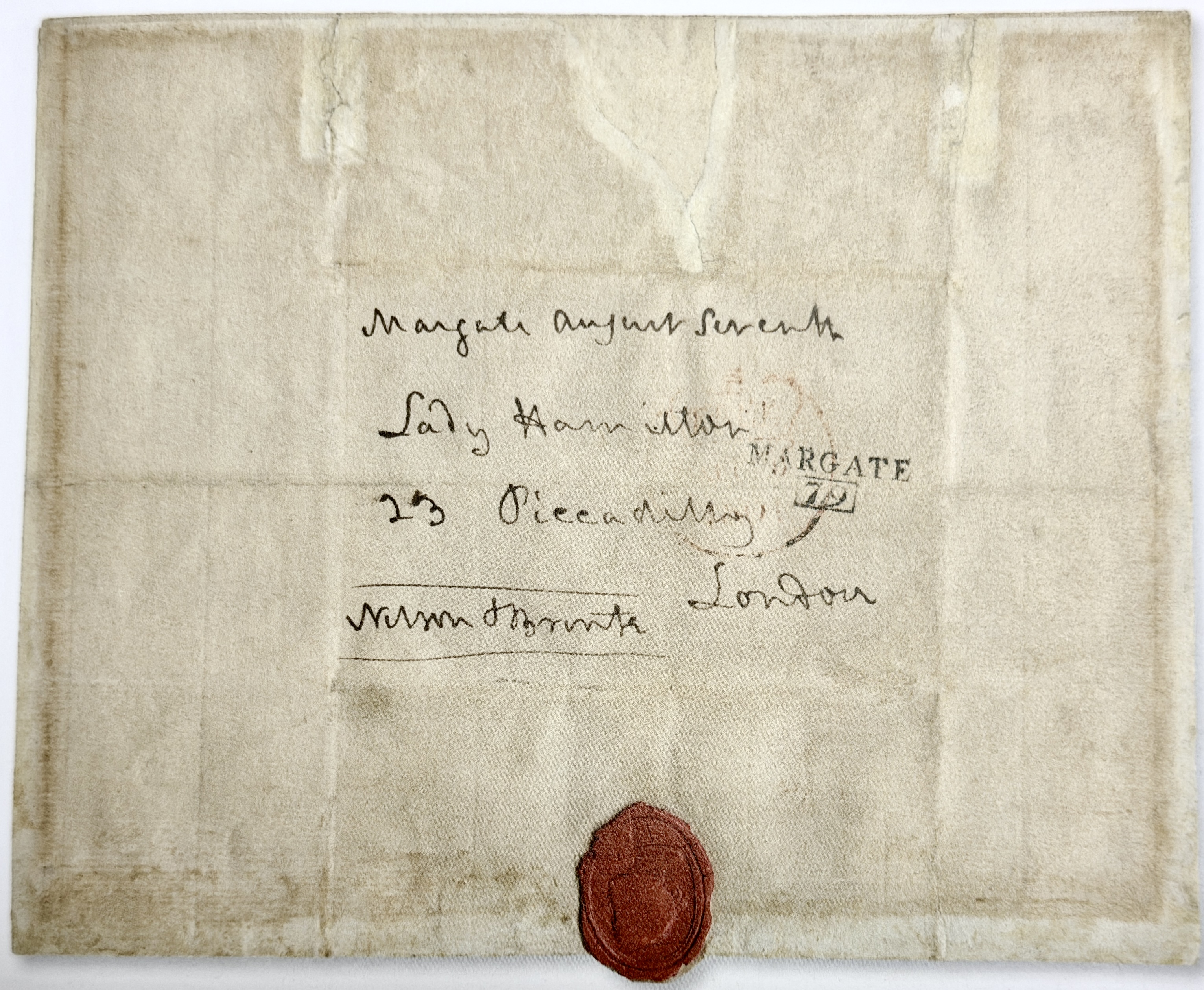
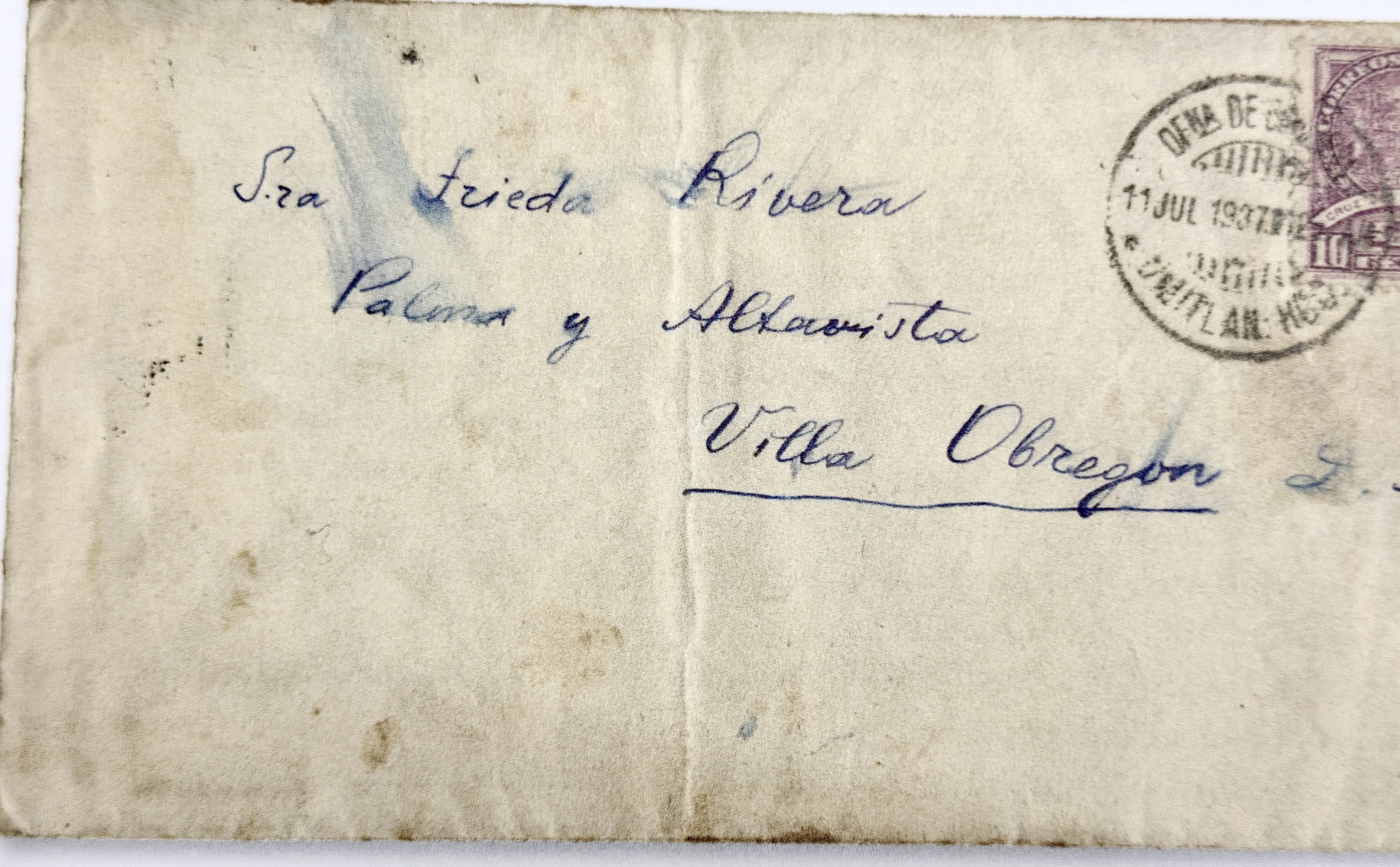
In one of the books I treasure most in my library titled The Magic of Handwriting: The Pedro Correa de Lago Collection (Taschen, 2018), two envelopes offer proof of love affairs—illicit in this case, as all the parties concerned were married to someone else—between Lord Nelson and his mistress Lady Hamilton, and between the revolutionary Leon Trotsky and artist Frida Kahlo (who had given the outcast Trotskys refuge in her home).
This was the same free-spirited Frida who would write her husband Diego Rivera that “Nothing compares to your hands, nothing like the green-gold of your eyes. My body is filled with you for days and days. You are the mirror of the night. The violent flash of lightning. The dampness of the earth. The hollow of your armpits is my shelter. My fingers touch your blood. All my joy is to feel life spring from your flower-fountain that mine keeps to fill all the paths of my nerves which are yours.” (To be fair to Frida, Diego was far more liberal with his vagrant attentions.)
In one of literary history’s worst-kept secrets, Vita Sackville-West would write to Virginia Woolf that “I am reduced to a thing that wants Virginia… I composed a beautiful letter to you in the sleepless nightmare hours of the night, and it has all gone: I just miss you, in a quite simple desperate human way. You, with all your undumb letters, would never write so elementary a phrase as that; perhaps you wouldn’t even feel it. And yet I believe you’ll be sensible of a little gap. But you’d clothe it in so exquisite a phrase that it should lose a little of its reality…. I suppose you are accustomed to people saying these things. Damn you, spoilt creature; I shan’t make you love me any more by giving myself away like this — But oh my dear, I can’t be clever and stand-offish with you: I love you too much for that. Too truly. You have no idea how stand-offish I can be with people I don’t love. I have brought it to a fine art. But you have broken down my defenses. And I don’t really resent it.”
Jose Rizal’s letters to Leonor Rivera were reportedly all burned, but as Ambeth Ocampo notes, two of her letters to Rizal survive, in which she uses the pseudonym “Taimis” and tells him that “I was very much surprised that you had a letter for Papa and none for me; but at first when they told me about it I did not believe it, because he did not expect that a person like you would do such a thing. But later I was convinced that you are like a newly opened rose, very flushed and fragrant at the beginning, but afterwards it begins to wither…. Truly I tell you that I’m very resentful for what you have done and for another thing that I’ll tell you later when you come.” We know how that story ended, with the both of them going their separate ways and marrying another, although Leonor was said to have pined for Pepe to the end.
Again thanks to Ambeth, I can quote Manuel L. Quezon’s 1937 letter to his wife Doña Aurora, where he engages in what today might be called “gaslighting”:
“Darling, I am still wondering if you really think that I love you less. Please don’t doubt me, my love has never changed from the first day I have realized that I was in love with you. I have my weakness as you know, but, dear, it’s all superficial and you know also, that, except for the case of that bailarina, my weaknesses in this respect have not been serious. When you married me, you were frankly informed by me of my shortcomings. I did not want to deceive you by promising something that I could not fulfill. After we have been married you have placed [me], sometimes, in a position when I thought that it was better that I should not confess to you what I had done that might hurt your feelings, but I want you to know that whenever such a thing took place I have felt very bad about it, because nothing I dislike more than not to tell the truth and I always resented the fact that you should prefer to put me in such a situation, thus making me almost hate myself.”
That would still have been more preferable than receiving this ardent letter from a king, and falling for him: “But if you please to do the office of a true loyal mistress and friend, and to give up yourself body and heart to me, who will be, and have been, your most loyal servant, (if your rigour does not forbid me) I promise you that not only the name shall be given you, but also that I will take you for my only mistress, casting off all others besides you out of my thoughts and affections, and serve you only…. And if it does not please you to answer me in writing, appoint some place where I may have it by word of mouth, and I will go thither with all my heart. No more, for fear of tiring you.” The recipient, Anne Boleyn, lost her head in more ways than one, and the sender, Henry VIII, went on to court her successor, Jane Seymour, who wisely returned his love letter unopened—sparking his interest in her even more intensely.
The letter I found too coarse and too embarrassing (brimming with scatological detail) to even quote was written by James Joyce to his wife Nora, but the technologically adept will surely find it online.
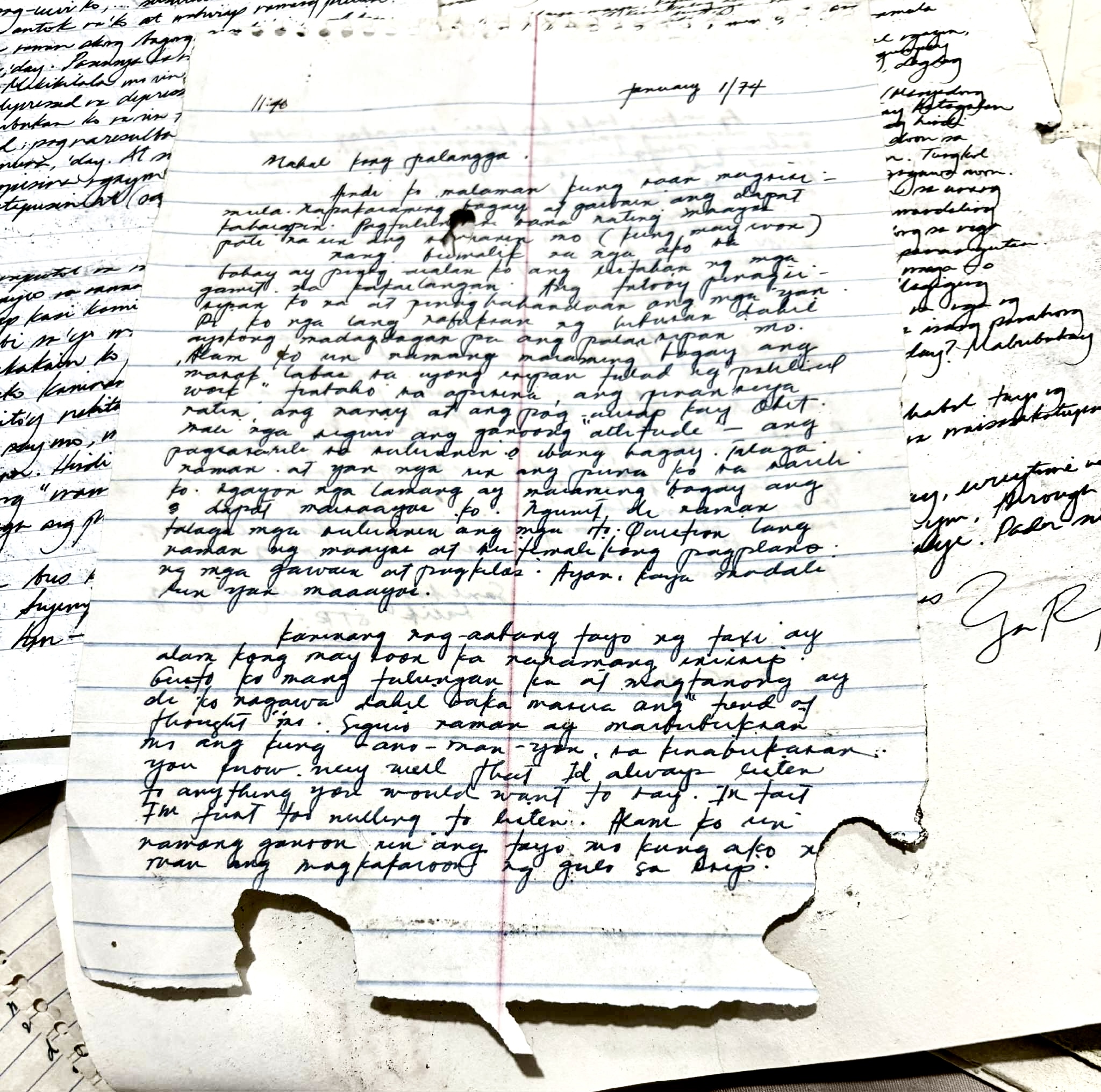
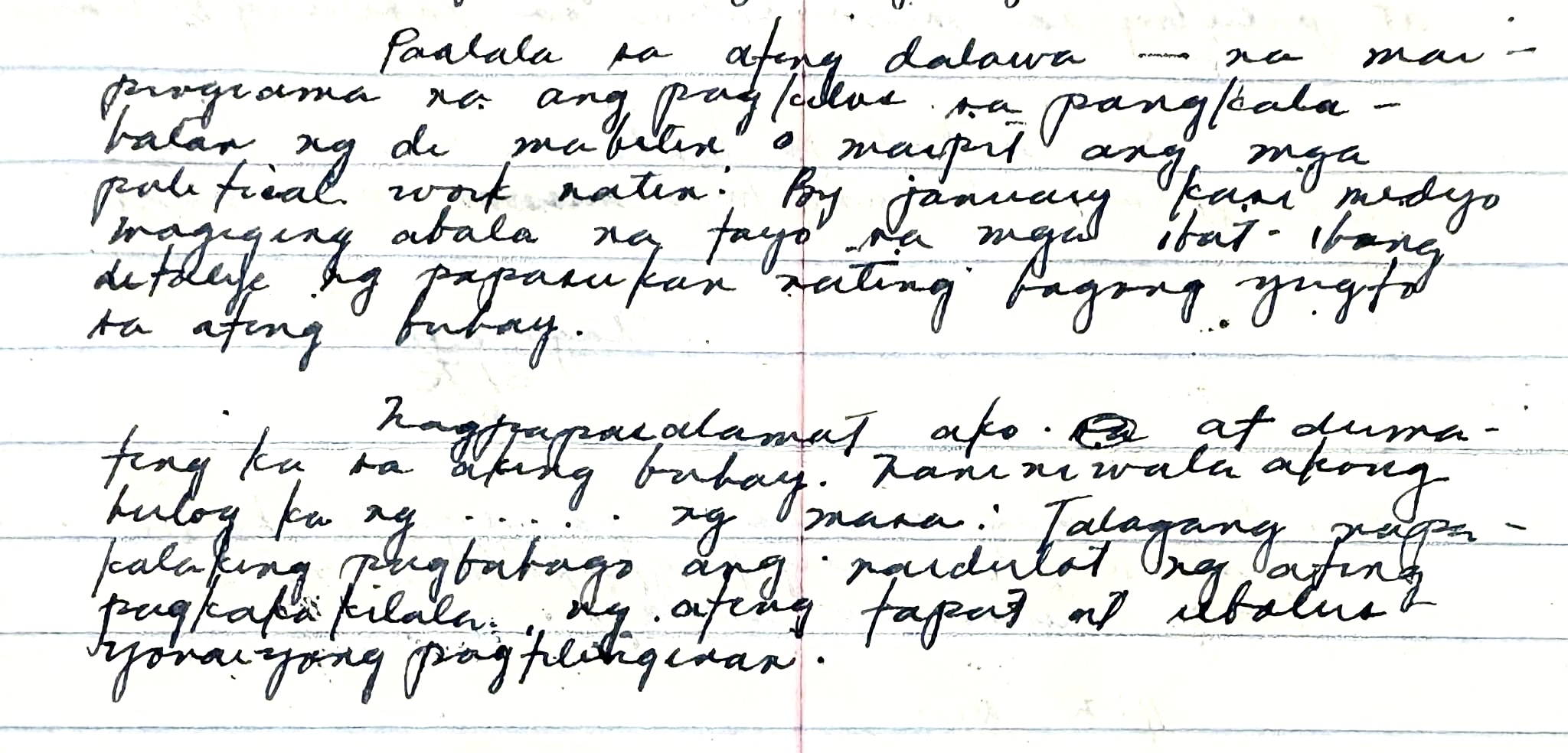
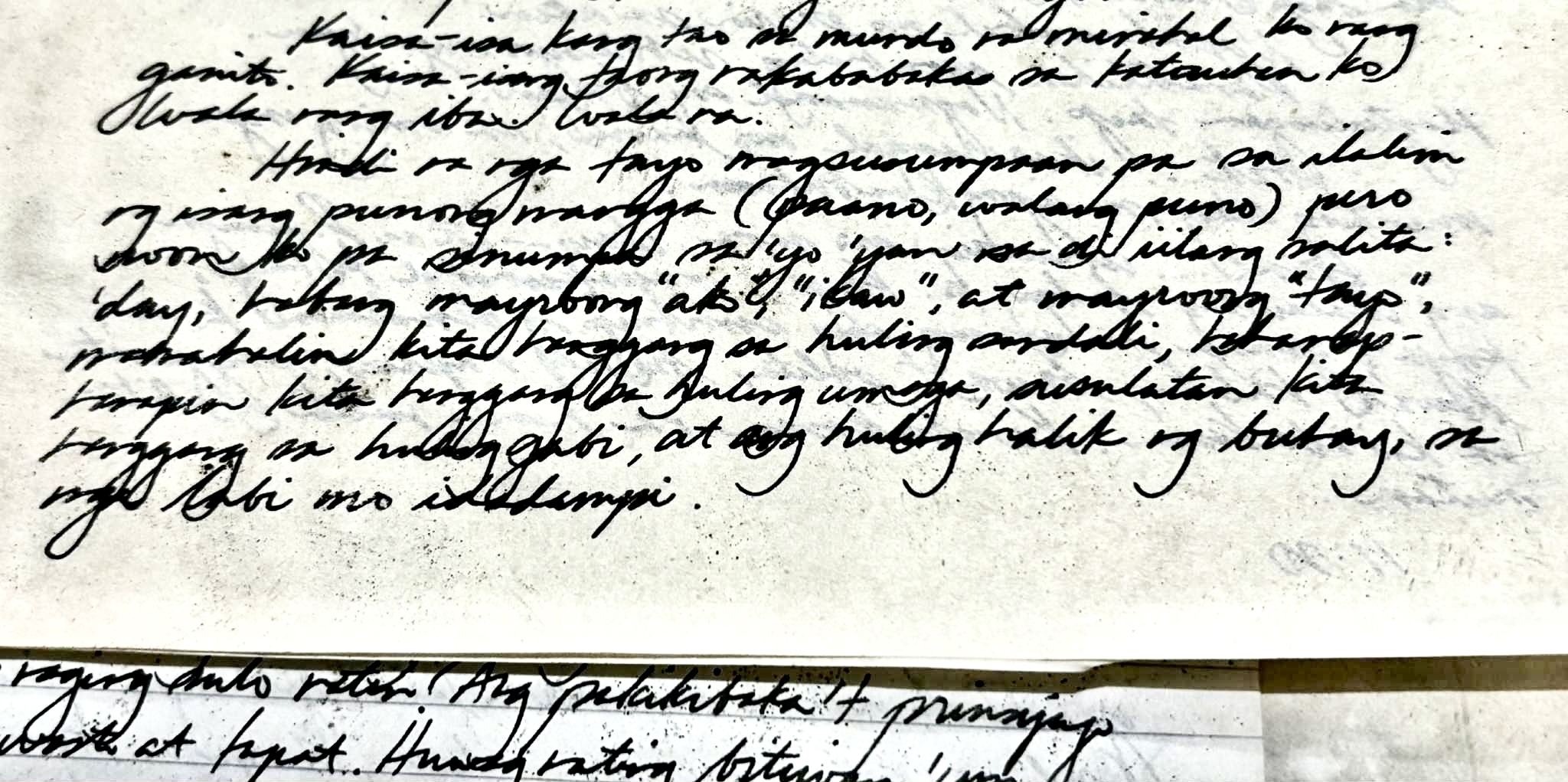
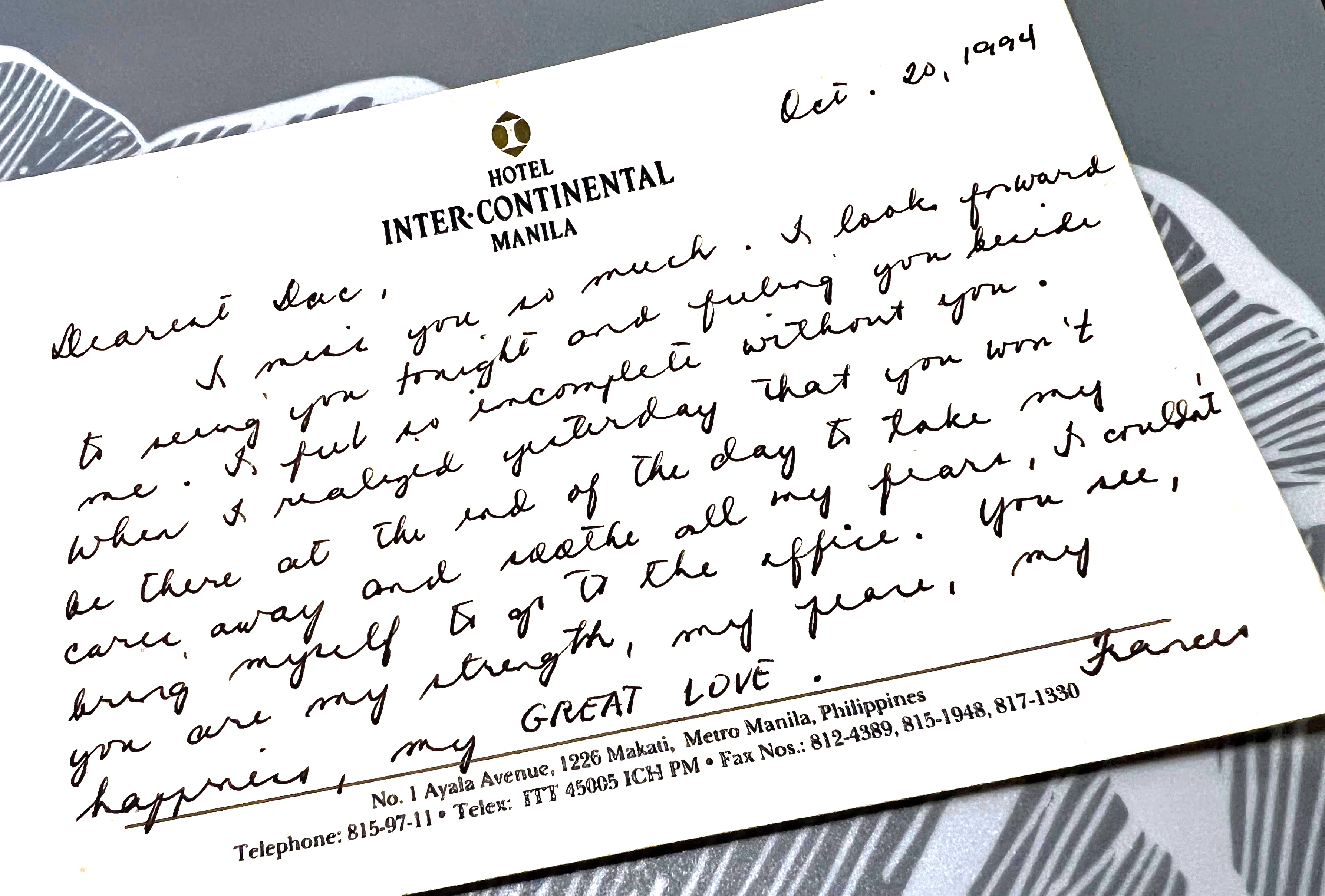
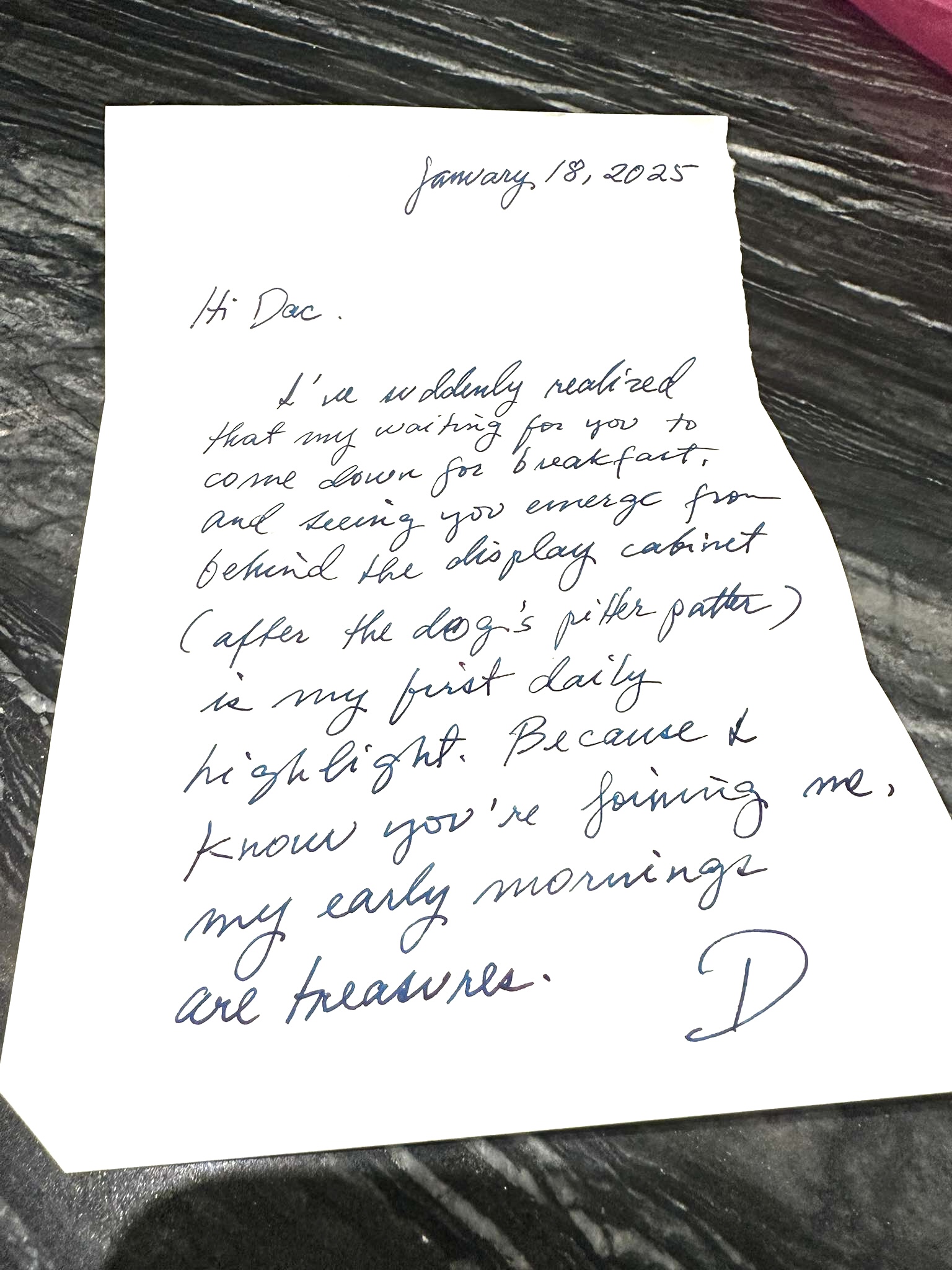
My own letters to Beng, and hers to me, are stored in a moldering box that occasionally gets lost and then resurfaces in a year or two, and when we go over them we laugh and cringe at their melodramatic prolixity, as though life itself would run out soon (as it did for many of our generation, under the cloud of martial law, and thus the urgency).
So how do the love letters that we—perhaps the last of the art’s practitioners—have written stack up against history’s and literature’s most memorable? But first, who are “we?”
The immediate “we” are members of our Fountain Pen Network-Philippines who still value and use pens for handwritten communication, beyond signing checks and office forms. Old fogeys like me naturally fall into that category, but surprisingly, given the fountain pen’s and handwriting’s resurgence as a form of protest, if you will, against digital homogenization, many younger people, even some Gen Z’ers, have taken up the cause. Ballpoints are all right—but there’s still nothing better than a vintage fountain pen nib, which flexes with pressure and gives the inked line more character, to convey emotion.
From what I’ve gathered, the best love letters people write go far beyond the often vapid promises and profuse assertions of courtship. They’re unbidden reminders and reassurances of affection, a note quietly written in the morning, a message of congratulations. This, too, is love with a deeper, more hushed voice that comes with maturity and assurance.
I should take my own advice and write Beng more love letters with my hundreds of pens, every single act of which would validate that pen’s existence and probably exorbitant purchase price. I should employ all the colors of ink stored in the dozen bottles that crowd my desk to express love in all its shades and moods, in the same spirit that Robert Graves wrote: “As green commands the variables of green, so love my loves of you.”
But sadly this old man’s fingers have become cramped from being curled too long over keyboards, and can barely finish a page of handwriting before tiring. So instead—though not quite a Gen Z’er accustomed to “lowercase, rapid-fire, multi-message formats”—I write articles like this and stories on Facebook that suggest, ever so obliquely, how central she remains to my life, albeit in Georgia 12 points and .DOCX rather than flowing script. My idle pens, dear Beng, are like the books I’ve yet to write for you, the words still forming in the opaque ink, like the colorful and wide umbrellas I keep buying to shield you with, waiting for rain. So there, and Happy Valentine’s.
I MIGHT have become a lawyer in another life, given that, back in the sixties, the profession of law still carried with it a certain gravitas, a presumption of not only intellectual brilliance but a commitment to public service. The best of legal minds found themselves in the Supreme Court and the Senate, and the latter was studded with such stars as Jovito Salonga, Jose Diokno, Arturo Tolentino, and Tecla San Andres Ziga. (To Gen Z’ers unfamiliar with these names, Diokno topped both the bar and CPA exams—despite the fact that he never completed his law studies, for which the Supreme Court had to give him special dispensation, and was also too young to be given his CPA license, for which he had to wait a few years. Ziga was the first woman bar topnotcher.)
My father studied to be a lawyer, but other priorities got in the way; his dream would be achieved by my sister Elaine and my brother Jess. As for me, activism and martial law happened, and in that environment where the law as we knew it suddenly didn’t seem to matter, I lost any urge to enter law school, and chose between English and history instead.
Thankfully, many others saw things differently, and now make up the cream of the profession, appearing on lists such as the Philippines’ Top 100 and Asia’s Top 500 Lawyers. Their skills are formidable—I’ve been told that some senior lawyers are so sharp (or so, shall we say, highly persuasive) that they can get a Supreme Court decision reversed—and their fees will certainly reflect that.
But my utmost admiration is reserved for lawyers who have devoted their careers to that portion of the Lawyer’s Oath that says: “I shall conscientiously and courageously work for justice, as well as safeguard the rights and meaningful freedoms of all persons, identities and communities. I shall ensure greater and equitable access to justice.”
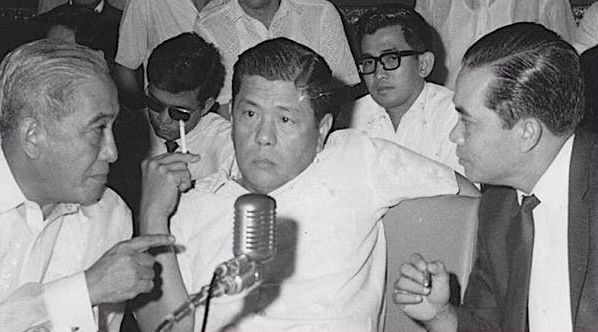
No better group of lawyers represents that than the Free Legal Assistance Group or FLAG, founded in 1974 by Diokno himself, then newly released from prison, together with Lorenzo M. Tanada, Joker P. Arroyo, Alejandro Lichauco, and Luis Mauricio, all fellow members of the Civil Liberties Union of the Philippines (CLUP), as martial law entrenched itself and civil liberties became increasingly threatened.
In the half-century since then—documented in FLAG’s anniversary book Frontliners for Human Rights: FLAG of the People @50 (FLAG, 2025)—FLAG has worked to locate and release desaparecidos, or persons abducted by State agents, fight the death penalty, defend victims of extrajudicial killings, and contest the Anti-Terrorism law, among other key initiatives.
“From its birth, FLAG has kept faith in its philosophy of developmental legal advocacy—the adept use of the law and its processes and institutions not only to secure rights and freedoms but also to change the social structures that trigger and perpetuate injustice,” FLAG reports. “Over 50 years, FLAG has handled over 9,052 cases and assisted over 9,591 clients throughout the country. These figures are merely a fraction of the cases FLAG has handled, and the clients FLAG has served nationwide. The number of FLAG clients excludes the communities and barangays who had experienced massacres and hamletting, urban poor communities whose homes had been demolished, and landless farmers and tenant farmer associations, whose numbers are impossible to count. Overall, FLAG’s rate of success ranged from a low of 66.89% (in 1989) to a high of 79.11% in 1990. On average, FLAG has won 7 out of every 10 cases it has handled, or an impressive success rate of 72.92%.
“FLAG has always provided its legal services, free of charge. In line with its core mandate, FLAG renders free legal assistance primarily to those who cannot afford, or cannot find, competent legal services. FLAG counts clients among the urban poor, students, indigenous peoples, farmers, fishers, political prisoners, and non-unionized or non-organized workers.”
These gains have come at a huge personal cost—no less than 14 FLAG lawyers have died in the line of duty, presumably at the hands of State agents. FLAG lawyers have been Red-tagged, harassed, and put under surveillance.
That hasn’t stopped its lawyers from pursuing their mission under its current Chairman, former Supreme Court spokesman Atty. Theodore Te. The need for their services certainly remains, with the Philippines ranking 38th out of 170 countries in the world in the 2023 Atlas of Impunity released by the Eurasia Group for “impunity,” defined as” the exercise of power without accountability, which becomes, in its starkest form, the commission of crimes without punishment.”
We can only wish Ted Te and his courageous colleagues well, as they operate in an environment more complex in many ways than martial law.
Speaking of law books, I’d like to recommend another book that was launched just recently, Constitutional Law for Filipinos: Mga Konsepto, Doktrina at Kaso (Central Books, 2026) by Atty. Roel Pulido. One of our leading environmental lawyers, Atty. Pulido teaches Constitutional and Environmental Law at Arellano University, where he also serves as Director of the Office of Legal Aid.
“This is a project designed to be a learning aid,” says Roel. “It has a few unique features. First, It does not explain each and every Article of the Constitution. Instead, it focuses on Constitutional law concepts. Each concept is explained in simple language. Then Supreme Court rulings explaining the concepts are quoted. And in a box, I have placed a short and simple Filipino explanation of the concept. Second, the cases are quoted to explain and elaborate each concept. Instead of including all the convoluted issues in one case, it focuses only on the topic at hand. Third, the doctrine of each case cited is summarized in a sentence in both English and Filipino.”
We need more books like this that make the ideas and the language of the law more accessible to ordinary Filipinos. That’s the first requisite of legal literacy, which is also a form of empowering people. FLAG and Atty. Pulido are the kind of lawyers I would have wanted to become.
SOCIAL MEDIA was abuzz last week with mainly praises for but also some questions about Hidilyn Diaz’s appointment to teach weightlifting at the University of the Philippines in Diliman.
I don’t think anyone doubted the Olympic gold medalist’s mastery of her subject. One post that went viral, however, wondered whether the athlete had what it took to teach at UP, considering that all the preparation she would have received was a four-day orientation the university gives all new faculty members.
To be fair to the questioner, her concern was legitimate, taking Hidilyn the sports celebrity out of the picture for a minute. As I’ll discuss later, proficiency in a talent or profession doesn’t necessarily translate to good teaching.
To be fair to Hidilyn, unlike many Filipino athletes, she’s no stranger to the classroom, having graduated in 2023 with a bachelor’s degree in business management from St. Benilde, after several interruptions because of her training and the pandemic.
I have no doubt myself that despite her lack of teaching experience, Hidilyn will be a fine, welcome, and indeed a prize addition to the UP faculty roster. Her presence alone will galvanize student interest in her sport, and in UP athletics in general.
Her teaching, I’m pretty sure, will take care of itself. Having trained with some of the world’s best coaches, she will not lack for topics and techniques. What will probably challenge her the most will be her transition from star to student—as the learner of teaching that she will have to be. Her students will have to get over their awe of her celebrity to imbibe her lessons.
Her first year will be fraught with both exhilaration and frustration, as the enthusiasm and even the ecstasy of teaching are weighed down by the drudgery of academic bureaucracy—particularly in UP which, despite its leadership in many fields, remains a laggard in the prompt payment of salaries for new hires.
The fact that we’re even talking about this shows how far we’ve come from the past, when a good reputation was enough to get you in front of the blackboard.
The problem here isn’t Hidilyn, and not even just UP itself, but a global academic culture that seems to have been taken over by the accountants and professional managers from the dreamers.
I have nothing per se against the numbers crunchers, who are central and vital to every modern university’s survival. But the seemingly ceaseless demand for performance metrics to justify budgets, promotions, and bonuses—a mind-numbing exercise for staff already exhausted from their regular chores—can produce a false dazzle that favors consistency of delivery and even of mediocrity over originality, non-conformity, and inspiration.
As a writer and also a professor and former university administrator myself, I can appreciate the peculiar challenges of recruiting and sustaining what we might call non-traditional academics like creatives and athletes in this kind of environment. You need them to identify and develop their successors among their students; conversely, many of them also need the security of a job.
But teaching is its own art, its own sport, its own discipline—and I know, from sad experience, that not all artists and athletes, no matter how gifted they may be in their fields, can teach. Some lack the people skills and the empathy the classroom requires; the most expressive artists can be woefully inarticulate, the lithest athlete inexplicably clumsy.
Those who do connect—performers who know their audiences and who value contact and feedback and continuous learning—become the best teachers.
Many of them might not even meet today’s stringent entrance standards. UP’s College of Science, for example and for good reason, now requires a PhD of its teaching applicants. The humanities and athletics obviously can’t enforce that rule, given that there are Literature PhDs who can’t write a decent poem and SportsEd PhDs who can’t swim.
On the other hand, some very fine writers have taught at UP without even a bachelor’s degree because of their extraordinary talent, notably NVM Gonzalez, IP Soliongco, Jose Lacaba, and Ricky Lee.
This will be self-serving, but no better example of that kind of avatar exists at UP today than my wife June, who has been teaching the very first course in Art Conservation at the College of Fine Arts as a senior lecturer for the past three years.
Now 75, June came into teaching late in life, after a long career in the arts as a graphic designer, watercolorist, and for the past quarter-century as an art restorer and conservator running her own studio. Few people in this country (excuse the proud husband speaking) have her skill and experience, having worked on all the Filipino masters from Luna, Hidalgo, and Amorsolo onward, including the Spoliarium. She had always dreamt of teaching, knowing how few authentic and scientific conservators there are in the Philippines, and the need to train the young.
The only problem was, as a student activist, she had left UP under martial law a few units short of completing her Fine Arts degree. She married me, worked, became a mother, and never went back to school.
But she did train long and hard in conservation and restoration with the Agencia Internacional of the Spanish government, practically every day for a full year, in a program more rigorous than a master’s. On the strength of that training and her experience—she and her team have restored the collections of the Central Bank, the Philippine National Bank, and the GSIS, among others—she was taken in by UP to advise the administration on conserving the university’s vast art collections, leading to her appointment as lecturer (for a subject that, frankly, no one else in UP can teach right now). Aside from her classes, June has been advocating for UP to set up its degree program in conservation and an Arts Conservation Center to serve as both a teaching and service facility. She still runs her own Artemis Art Restoration company for private clients. For a 75-year-old dropout, that can’t be too bad. She complains of fatigue and of being perplexed by the world of AI, and says she wants to stop before dementia sets in, but I know her students love her and wish she would teach forever (because they tell her so).
I myself was a dropout for a decade and had worked as a journalist and screenwriter before returning to UP to finish my degree so I could teach—which I ended up doing for 35 years and still do long after retirement.
When I think of Hidilyn Diaz coming in to UP amid all the fuss, I want to tell her to just relax, and to enjoy the campus and her students. Teaching in UP will be full of joys and aggravations, but the heaviest lifting will be within her—of doubts, fears, and the catcalls of the rabble in the bleachers. Welcome to the home of Honor, Excellence, and Service—and never mind that it also happens to be a hornets’ nest.
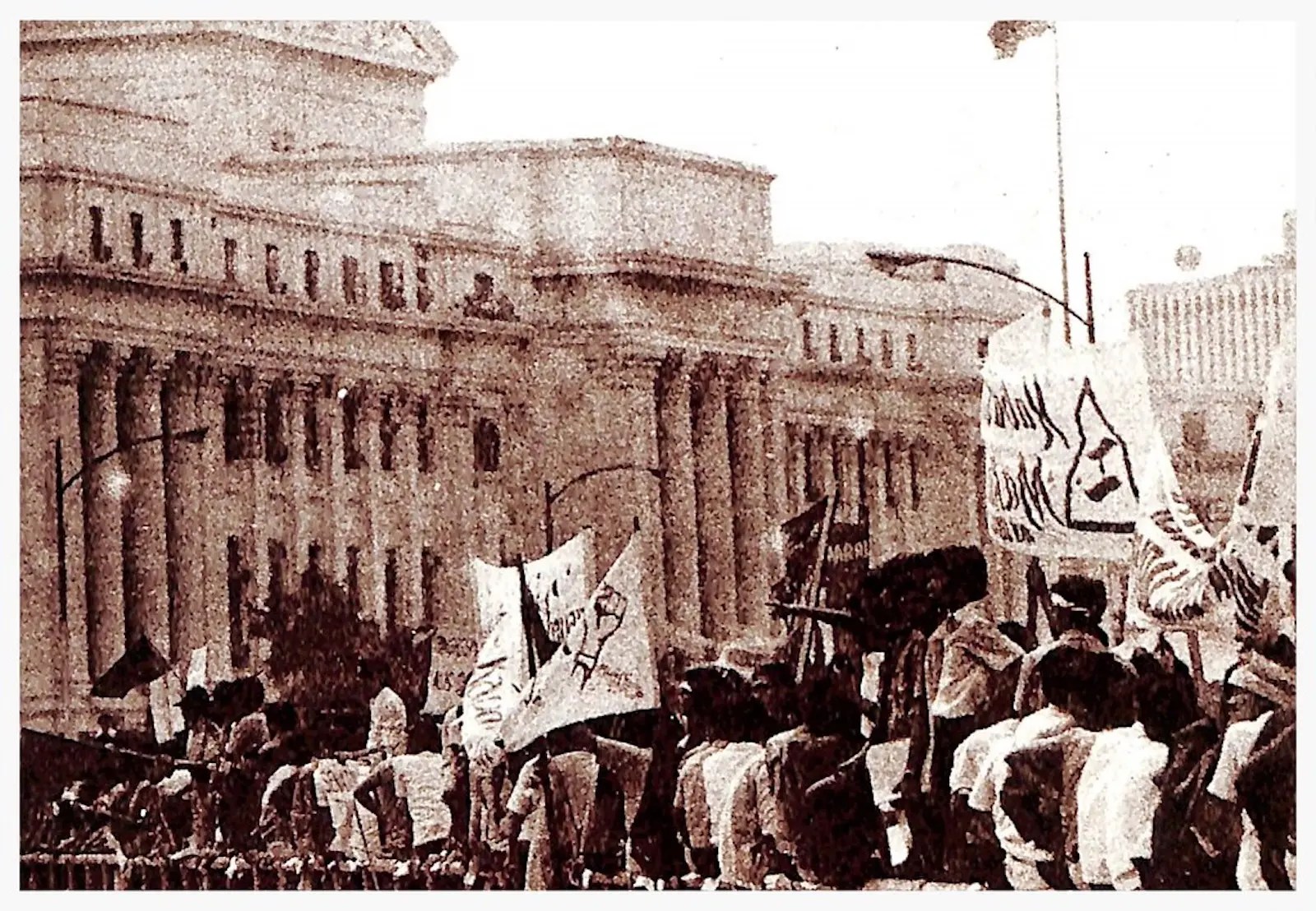
I’M WRITING this piece on my 72nd birthday, so I hope you’ll indulge me if I revert to the memory of another January 56 years ago. On the afternoon of January 26, 1970, I milled with thousands of other young students on the campus of the University of Sto. Tomas, the staging ground for a large contingent of demonstrators marching to the Legislative Building near the Luneta (now the National Museum). President Ferdinand Marcos was going to deliver his State of the Nation Address, and a mass action had been called to protest a host of issues, from Marcos’ increasingly authoritarian rule to rising prices, militarization, corruption, and Philippine subservience to American interests.
I had just turned 16, and was a senior and an activist at the Philippine Science High School. But I was no radical—not yet; I stood under the banner of the National Union of Students of the Philippines (NUSP), among so-called “moderates” led by Edgar Jopson, derided by FM as the “grocer’s son” and later to become a revolutionary martyr. Unlike the far-Left Kabataang Makabayan (KM) and the Samahang Demokratiko ng Kabataan (SDK, which I would soon join) who were railing against “imperialism, feudalism, and bureaucrat capitalism,” the NUSP’s cause sounded much more tangible albeit modest: a non-partisan 1971 Constitutional Convention.
What happened next that afternoon, when both groups of protesters converged at the Senate, would change Philippine political history. The moderates had paid for the rental of the protest mikes and loudspeakers, and wanted to pack up early, but the radicals literally seized the paraphernalia—and figuratively seized the day—launching into a verbal offensive that soon turned physical. Then a young journalist covering the event, Jose “Pete” Lacaba provides the reportage:
“Where the demonstration leaders stood, emblems of the enemy were prominently displayed: a cardboard coffin representing the death of democracy at the hands of the goonstabulary in the last elections; a cardboard crocodile, painted green, symbolizing congressmen greedy for allowances; a paper effigy of Ferdinand Marcos. When the President stepped out of Congress, the effigy was set on fire and, according to report, the coffin was pushed toward him, the crocodile hurled at him. From my position down on the street, I saw only the burning of the effigy—a singularly undramatic incident, since it took the effigy so long to catch fire. I could not even see the President and could only deduce the fact of his coming out of Congress from the commotion at the doors, the sudden radiance created by dozens of flashbulbs bursting simultaneously, and the rise in the streets of the cry: “MARcos PUPpet! MARcos PUPpet! MARcos PUPpet!”
“Things got so confused at this point that I cannot honestly say which came first: the pebbles flying or the cops charging. I remember only the cops rushing down the steps of Congress, pushing aside the demonstration leaders, and jumping down to the streets, straight into the mass of demonstrators. The cops flailed away, the demonstrators scattered. The cops gave chase to anything that moved, clubbed anyone who resisted, and hauled off those they caught up with. The demonstrators who got as far as the sidewalk that led to the Muni golf links started to pick up pebbles and rocks with which they pelted the police. Very soon, placards had turned into missiles, and the sound of broken glass punctuated the yelling: soft-drink bottles were flying, too. The effigy was down on the ground, still burning.”
The January 26 rally and the trouble that erupted would lead to the January 30-31 demos that would prove even more violent, and what would become the First Quarter Storm or the FQS was born. “First quarter” would turn out to describe not only the beginning of 1970 but of the decade itself, as the start of 1971 would prove just as incendiary, with the establishment of the Diliman Commune (and of course, now as a UP freshman, I was there). It seemed that the entire country was politically on fire, with protests mounting by the week, and it would all culminate in what everyone predicted: the declaration of martial law in September 1972.
It took another 14 years and another “first quarter storm”—the tumultuous months of January and February 1986, following the snap election—to depose Marcos. Fifteen years later in 2001, on another January, yet another president, Joseph Estrada, would be hounded out of office over issues of corruption.
What is it about these first quarters that provoke such firestorms? And do we still have it in us to begin the year on a note of political resolve?
I’ve been worried, like many of us, that the Christmas break, the congressional recess, and intervening issues may have sucked the steam out of the public outrage that boiled over the flood-control scam last year, and lulled the government into thinking that the worst was over and that we could all just settle back into the old routine: let the Ombudsman and the courts do their job, etc.
What’s worse is if we fall into that mindset, too. The budget deliberations, the Cabral death mystery, the Leviste files, the Barzaga antics, and even a traffic violation episode have all seemed to be distractions from our laser-sharp focus on bringing the crooks to justice. But in fact, they’re all of one piece: demanding better and honest government, the overarching issue we need to press.
And just as the radicals seized the initiative from the moderates 56 years ago, FM’s son, PBBM, can still seize the day by going against all expectations, even against his own nature, and finishing what he may have inadvertently begun: weeding out corruption in government. Never mind the motive—reviving his sagging poll numbers, saving his skin, redeeming the Marcos name, or leaving a worthy legacy behind. He has little choice, if he and his family are to survive.
There are immediate and concrete steps he can take to achieve this:
1. Activate the Independent People’s Commission. The people are waiting for his next move in this respect; get the enabling law passed and the job done.
2. Impeach VP Sara Duterte. The grounds haven’t changed, and the urgency can only increase as 2028 approaches.
3. Revamp the Cabinet, but replace the non-performers. PBBM knows who they are as well as the public—especially the publicity-seekers whose departments haven’t delivered.
4. Find Atong Ang, Zaldy Co, Harry Roque, etc. and jail the big fish—including political allies. It’s hard to believe that with billions in intelligence funds, the administration can’t track and nail these highly visible fugitives down. Justice is perception.
Do these, and maybe we’ll avoid the generational kind of flare-up and meltdown that followed January 26, 1970.
ALMOST TWO weeks after the New Year, I’m sure many of us are still struggling with the resolutions we made—you know, the same ones we announced a year ago, like losing weight, buying no more (supply the object—shoes, watches, dresses), emptying the closet, and being nicer to (supply the officemate or in-law). I had to think that there must be resolutions we can make and actually keep—not easy or frivolous ones, but resolutions that will make a real difference in how we think, behave, and live. Here’s what I came up with:
1. I will not help spread fake news and hoaxes. Fighting for the truth begins with a healthy skepticism and the patience to verify. There’s no such thing as “harmless” fake news passed on.
Last year I had to gently warn a score of friends—smart people with outstanding reputations—who posted on Facebook about Meta claiming the rights to their pictures and about pages turning blue (“It really happened!”) It’s a hoax that’s been going around for years, I told them; there was no such thing as the post described. What’s the harm, they said, just wanted to be sure. Well, the harm is in the propagation; every repost expands the space for fake news to grow, and the poster’s credibility only magnifies it further. That credibility also takes a hit, when it’s shown to absorb and help spread falsehood. Next time, visit a reputable fact-checker like http://www.snopes.com to verify a dubious post. The days are gone when you can assume that what you see is true unless proven otherwise; if you have to assume anything, assume the opposite.
2. I will think before I respond. I will reserve judgment until I understand the situation better, with clearer context and trustworthy and verifiable sources. It’s been said that today, especially online and on social media, people don’t read to understand, but to reply. Many of us have trigger itch—the compulsion to react to and comment on anything and everything that crosses our gunsights. And we do that literally without second thought, drawing on little more than scant knowledge and ample prejudice, and the unflinching conviction that we are right.
The rise of the provocative meme—extremely compact and blunt, digitally manufactured to make a very specific point—has made this even easier, more efficient and more vicious. Memes eschew context, and invite uncritical concurrence. When I see a witty meme, I might smile and even smirk—but I will pause before joining a bashing spree if I have the slightest suspicion that something isn’t quite right. And while I’m at it, I will keep my sense of humor; I will not be baited or feel obliged to respond in anger, and I will remember that forbearance or silence is not surrender, but often victory.
3. I will use AI responsibly. I will use it as an assistant, but not let it do my thinking for me. I will use it to learn, understand, teach, and create. I will not use it to lie, malign, exaggerate, or aggrandize. I will not pretend to know everything AI can do or is doing. I will neither fear nor ignore it, but I will be wary—especially if what it produces is too clean, too good, or too intent to please. Truth often has rough edges that AI could polish out, like it enhances our portraits.
I was watching a video on YouTube last week that purported to show the detailed production process by which the fashion house Hermes made its hyper-expensive and hard-to-get Birkin bag (am no fashionista, but am deeply curious about that industry’s workings). The video went to great lengths to demonstrate why the company’s bags commanded such high prices—the quality of the leather, the workmanship, the exclusivity—in purposeful contrast to the numerous fakes being made of the popular bag. But there was something about that video that made me uncomfortable—it seemed too luminous, its people too handsome, its tableaux too staged. An outdoor scene, supposedly outside the boutique, gave it away: the large shop sign clearly said HERMEES, with the extra E; it was no mistake—a few scenes later, they showed the sign again. The whole video was AI-driven, and no human seemed to be home and sharp enough to note the error. Now, its content may have been entirely factual, but its implied condemnation of fakery in business can’t possibly be helped by such a clumsy use of AI.
4. I will not expect of others what I cannot expect of myself. This was something I learned during martial law, when I was imprisoned with all kinds of people—activists and common criminals, from both privileged and impoverished families. There and elsewhere, I saw how people who could speak so boldly and so well about revolution and liberty could break, sometimes so easily, under pressure. I witnessed and understood the marks of torture. I realized that everyone probably has a breaking point. I wondered what mine was. (My dentist would later tell me that I had a high threshold for pain, which surprised me.) But I came away thinking that if I asked another person to make an extraordinary sacrifice, it should be something I would be willing and prepared to do as well. I say this not to excuse weakness in other people, but to demand more of myself.
I will, however, hold public officials to a higher standard. They chose to lead—for which many are also handsomely rewarded—and so they must prove themselves better than the led. I have a right to expect that my President and congressman will act more wisely and more responsibly than me.
That said, I will live as honorably as I can, despite and especially because of the morally degraded environment in which we find ourselves today. I will not abet corruption in any way. This might be the hardest of all to keep, given how we have all somehow been complicit in this crime.
5. I will be more charitable, and share more of what I have. I will rescue “charity”—among the most human of values—from the political dustbin to which it has been relegated as useless and even harmful tokenism. I’ve heard too many people speak loudly and articulately about big themes like “social justice,” “Gaza,” and “anti-poverty” without yielding a peso from their own pockets or actually doing something concrete for the afflicted. Give, or serve. If you can’t change the system, change a life—you might even change yours.
THIS COMES a bit too late to affect the box office in any way (and it’s not as if anything I write sends people scurrying anywhere), but my wife Beng and I just saw “Manila’s Finest,” and we left much impressed and hopeful for Philippine cinema.
We were out of town for most of the Christmas holidays so we unfortunately got to see only this one film among all of the Metro Manila Film Festival entries. We’d heard good things about the other entries as well, and the fact that “Manila’s Finest” ended up in only third place for Best Picture tells me that we probably missed out on what seems to be a bumper crop. But this isn’t about the MMFF, and I won’t even call it a formal review. It’s more of an emotional reaction to a period and a milieu I happen to have some familiarity with.
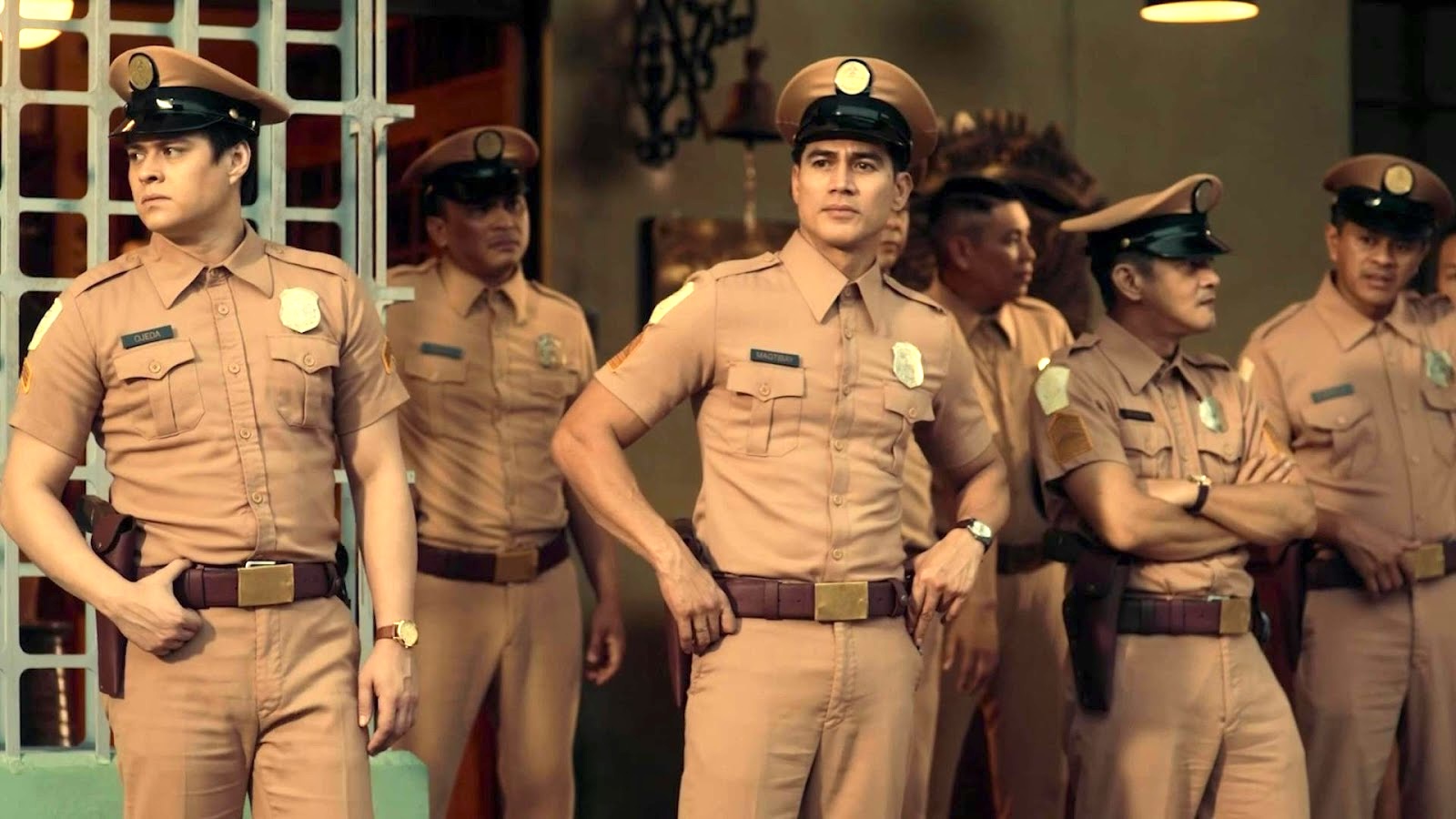
“Manila’s Finest” is set in a precinct of the Manila Police from 1969 to 1972, a time of great social and political turmoil. It revolves around the character of Lt. Homer Magtibay (very capably played by Piolo Pascual), a policeman who, despite his flaws, holds on to an old-fashioned sense of duty just when the police service is becoming more politicized in preparation for martial law. He has his hands full with a gang war, only to realize that an even deadlier kind of factionalism is emerging within the force itself, with the rising power of the Philippine Constabulary’s Metropolitan Command, or Metrocom. He also has to deal with trouble at home, as his daughter has become a student activist, the kind that he and his fellow cops have to face with truncheons at the rallies. It dawns on him that it isn’t petty crooks creating chaos in the streets, but the government itself, setting the stage for a crackdown. The movie ends, rather abruptly, on a dire note of warning, hinting at darker times ahead.
The film appealed to me on many levels—the political, the aesthetic, the narrative—but most strongly at the personal, because of the memories it inadvertently brought up. To begin with, my late father Jose Sr. was a cop—or almost. A law student who never finished (like the movie’s Homer), he joined the police academy, in the same batch that produced the future MPD chief James Barbers. The very first picture in my photo album is that of him in police uniform, at parade rest. He never joined the force, perhaps because he married, but he did become an agent for the Motor Vehicles Office, and I remember how impressed I was by his silvery badge when he flashed his wallet open on the jeepney rides we took. That was the kind of thrall in which lawmen at the time were held, or at least I so imagined; they kept the world safe and peaceful, and held evil at bay. (I was too young to understand that my dad’s MVO badge got us free rides.)
I became an activist in college and joined many rallies and street marches; this changed my view of the police, who became fascist pigs, the enforcers of laws for the rich and powerful. During the Diliman Commune of 1971, I held a kwitis that I was supposed to fire if I saw cops approaching on the perimeter of UP’s Area 14. And then something happened that would reverse my perspective: I dropped out of school to find a job. At age eighteen, I finagled my way into becoming a reporter for the Philippines Herald, with zero units in Journalism but with loads of pluck and some writing talent. Seeing what they were dealing with, my editors led by Oskee Villadolid and Joe Pavia decided to give me a crash course in journalism by designating me as General Assignments reporter and making me do the rounds of the beats: police, education, sports, and so on.
Of course, the police beat turned out to be the most challenging and instructive. I was stationed at MPD headquarters on UN Avenue, and put on the graveyard shift that ra through midnight until the morning. When nothing much was going on, we played ping-pong and waited for the fire alarm bell to ring (we ran out only for major fires, like the Family Clinic fire where my job was to count the dead). I kept a little black book of phone numbers where I could ring up hospitals to ask if any major accidents had come in. I learned of a restaurant near the Luneta where killers could be hired for not too much. Being a snot-nosed newbie, I trailed veterans like Ruther Batuigas to avoid being kuryented or bum-steered. I covered murders and suicides, visited the city morgue at three in the morning, and joined cops on their drives along Ermita, checking on vagrants, just like in the movie. It was all heady stuff for an eighteen-year-old.
But what proved to be most stressful was covering demonstrations, now that I was looking at them from the other side of the barricades, parked in a Herald jeep with a driver and photographer. Despite my job, my sympathies strongly remained with the activists, and I dreaded watching the police donning their riot gear and preparing for certain trouble. These being the days long before cellphones and pagers, there was no way I could warn my comrades about what I thought to be snipers or provocateurs or just agents taking their pictures from the rooftop of the Shellborne Hotel near the US Embassy. When the tear gas canisters began flying all I could do myself was duck and run, and I remember visiting some wounded marchers in the ER later. After I covered the funeral of a rebel killed in combat, praising him effusively and playing up the drama, an editor cleaned up my prose and gave me a very dry lesson in reportage: “Omit flowers.”
That’s the kind of treatment director Raymond Red gives his material in “Manila’s Finest.” Nothing is romanticized, no hero left unsullied, except perhaps for the young activists whose further awakening yet lies ahead of them. This well-crafted and well-acted film deserves all its plaudits; the mature Piolo Pascual is outstanding, as is the period production design (except again perhaps for everyone’s new-looking uniform, the bane of period movies, and a few questionable references time-wise—“barangay,” “the New Society,” and Pierre Cardin-style barongs all came after 1972, if memory serves me right). Most of all, “Manila’s Finest” deserves and indeed demands a sequel, into the time of tokhang, when the moral choices facing the police became even starker. But as it is, at least for me, “Manila’s Finest” may indeed have been the finest of its kind this year.
MAYBE BECAUSE of the name I chose for it, longtime followers of this column which I began more than 25 years ago will associate me with collecting vintage fountain pens, and they’d be right—partly. That’s because while I continue to collect pens with a passion, I’ve since branched out in half a dozen other directions, including typewriters, blotters, antiquarian books, midcentury paintings, canes, and even silver spoons.
It’s the kind of behavior that drives collectors’ wives crazy (although I’ll have more to say about the gender issue later), and I can only be thankful that my wife Beng has indulged me all these years. Beng collects bottles, tin cans, and pens herself, but nowhere near the intensity with which I check out eBay three times a day, scour the FB Marketplace, converse in geek-speak with fellow collectors, and subject my collections to never-ending cataloguing.
Seventeen years ago, some twenty people who must have thought they were the only ones interested in fountain pens met in our front yard in UP to form the Fountain Pen Network-Philippines. Those twenty have since grown to over 15,000 members on our FPN-P Facebook page. Unusually among hobbyist groups, and despite its explosive growth, FPN-P has remained one of the Internet’s friendliest and safest spaces, thanks to strict moderation and its openness to all kinds of pens and members, whether they come in with P100 pens from Temu or six-figure Montblancs (yes, there are Rolexes in pendom, although pens are far more pocket-friendly than watches).
One natural offshoot of FPN-P’s expansion has been the emergence of sub-interest groups, among which is the “PlumaLuma” group, which began as one devoted to vintage pens and desk accessories, but which soon evolved into “PlumaLuma Atbp.” as it became clear that pens weren’t our only obsession.
Some collectors maintain a clear and strict focus, like watches, santos, and tea sets. Others branch out into tangential areas (like other writing instruments and books and ephemera for me). The latter far outnumber the former, as collectors soon realize that one is never enough—not just of an object, but of collectibles. There are also “completists” who must have every single item known to have existed, catalogued and off-catalogue, in every collecting band (among my vintage Parker pens, for example, I have about 80 “Vacumatics” from the 1930s and 1940s—still far short of the hundreds of variants made).
Any serious collector in any field will tell you that a good collection takes more than money—although money surely matters in the rarefied realms. What’s just as important is connoisseurship—knowing what to want and why, and understanding the market. For budget-challenged collectors like me, knowledge and determination help balance out the odds, allowing me to buy low, sell high, and eventually trade up to the best goods without paying MSRPs. That also means taking more risks on places like eBay, but then there’s the thrill and pleasure of the hunt, which stepping into a boutique and plunking down a credit card simply can’t buy.
Those of us who collect vintage and antique items (by convention, “vintage” means at least fifty years and “antique” at least a century old) take even more risks , because what we collect could be damaged, stolen, or even fake. With the rise of auction houses and the allure of parking one’s money in some conversation-piece or status-symbol artifact, the stakes have risen even higher; there have been reports, for example, of forged master paintings sold and of “rare” coins being doctored to acquire more value at the auctions.
None of this has daunted the fatally bug-bitten collector, for whom the bar has simply risen; the Internet and the emergence of collecting groups has enlarged the competition, but at the same time it has opened more markets (I’ve bought pens and rare Filipiniana from as far as Bulgaria and Argentina).
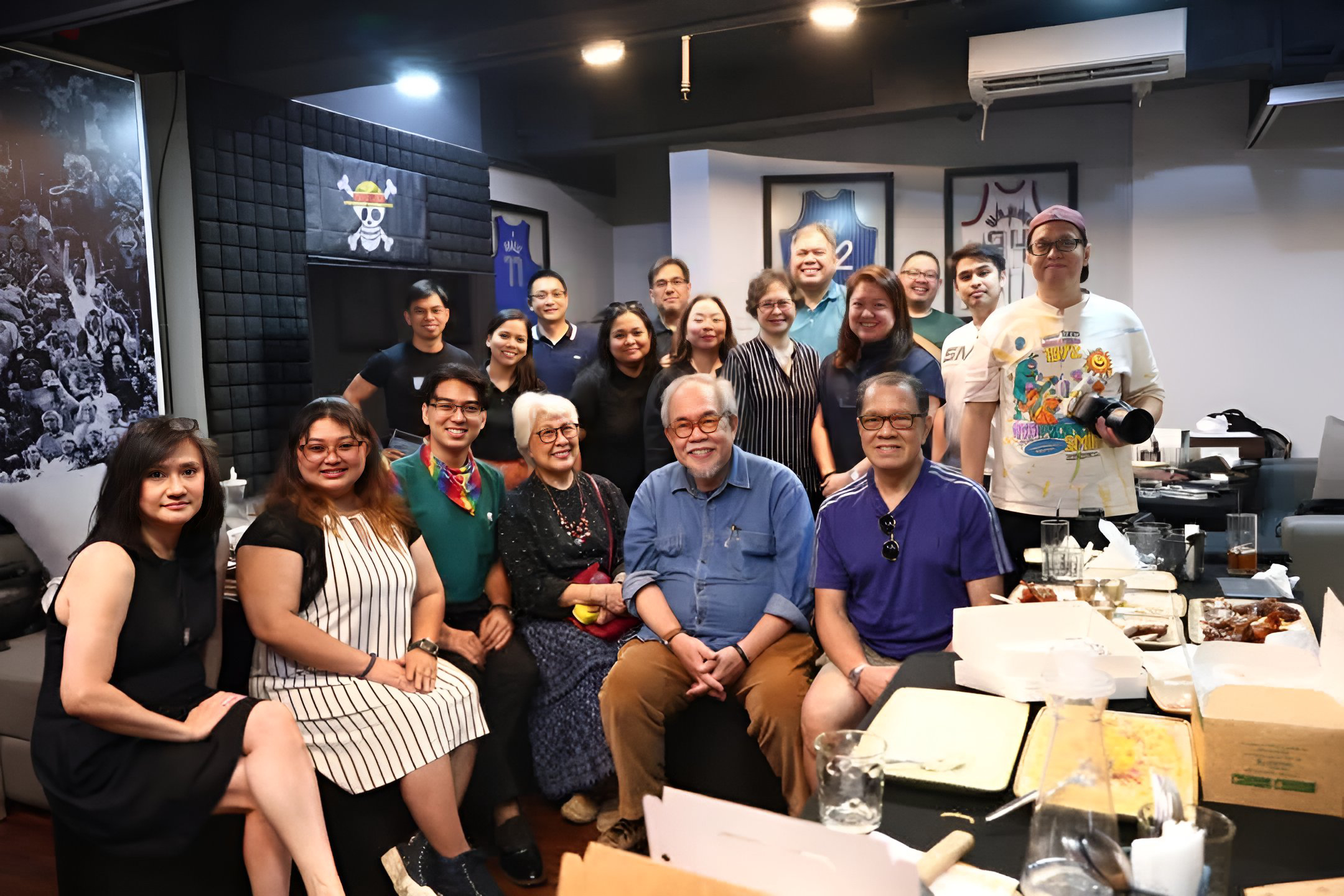
That explains the amazing range you’re about to see in the collections of four gentlemen I’ve picked out from PlumaLuma Atbp. who exemplify, for me, the finest in collecting and connoisseurship, being virtual walking encyclopedias of their particular specialties. (And to clarify an earlier point, PlumaLuma has many lady members with formidable pen collections—lawyer Yen Ocampo and cardiologist Abigail Te-Rosano among them—but despite what’s been said about women and shopping, they don’t seem to be anywhere near as profligate as most of these men.)
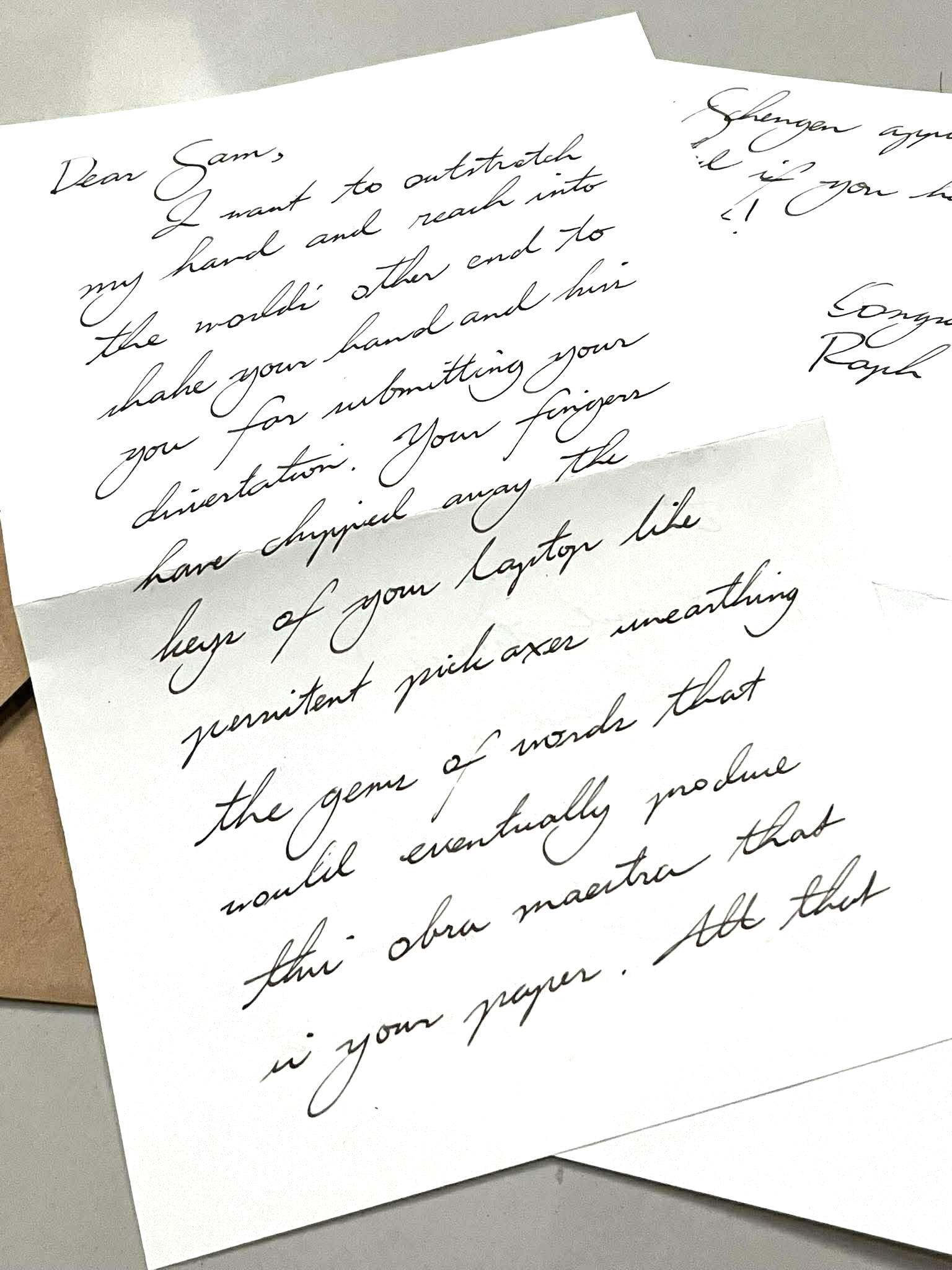
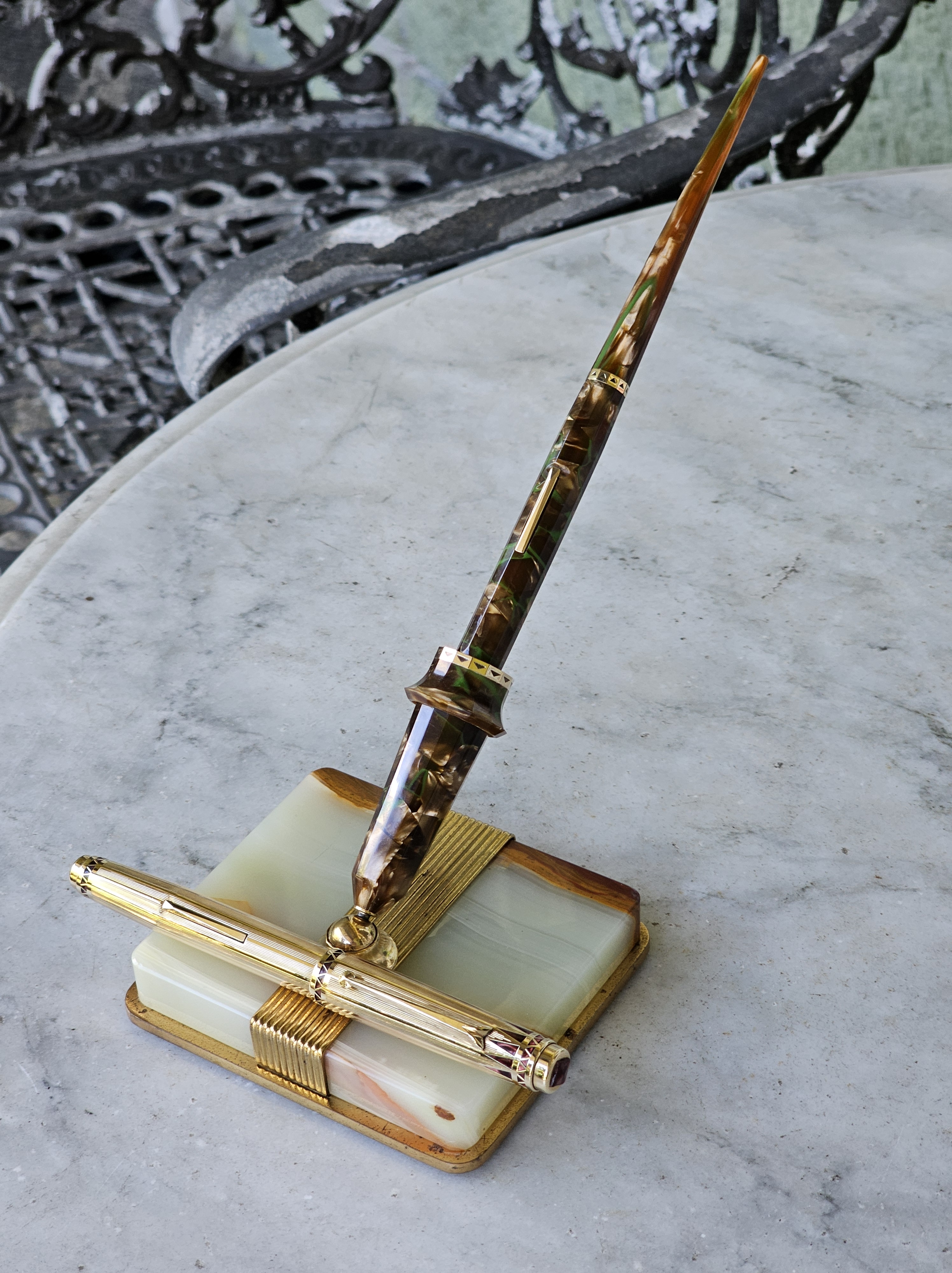
The exception to the charge of profligacy (to which I will readily confess) is Raphael “Raph” Camposagrado. Barely in his thirties, Raph trained in the UK and often travels to Europe as a software and AI consultant, imbibing Old World culture with keen devotion. He is the model of collecting focus and discipline, keeping his world-class collection of vintage fountain pens within clear numerical bounds. The one thing they have to be, aside from being old, is beautiful—as in Art Deco beautiful. No pen epitomizes that more than the 1930s Wahl Eversharp Coronet, as Raph explains:
“Considered the peak of Art Deco within the world of pen collecting, the Coronet is abundantly adorned with the symmetry, sharp angles, and geometric forms that enjoyers of the design movement obsess over. The cap and barrel are gold filled and strewn with longitudinal striations. Triangular red pyralin inserts and the pyramidal cap finial give a bold pop of color echoing the beams of search lights that would have streaked over 1930s Manhattanites. This particular piece is equipped with a slide adjuster that allows the user to change the stiffness of the nib from a firm writer of business letters to one with line variation for calligraphic pursuits. It even sports an ink view letting the user see if the pen is due for a refill. While modern pen making tends toward the large, gilded, and ornate, the Coronet achieves extravagance with just the right amount of restraint. It is golden without being a rococo explosion. It is diminutive and so maintains the dimensions of classic jewelry. It knows just how much to show like many other luxury pieces made in the late 1930s.”
Raph is also known for his sub-collection of exquisite desk pen sets, once the hallmark of executive success. The Wahl-Eversharp Doric sets, in particular, are visual stunners.
“I personally scoured Ebay to build a mini collection around this model by Wahl-Eversharp called the Doric,” says Raph. “Other than the Coronet, the Doric is quintessentially Art Deco, sporting twelve facets. The marble desk base is supported by a thin chrome bed and has bracing that reminds me of a hawk’s neck and beak when viewed from the front or back. The depth of the celluloid on the various pens looks as if it were of stone as natural as the desk base itself.”
Investment consultant Alexander “Sandy” Lichauco has long been known in the collecting world as a collector of Philippine medals and tokens, having co-authored a seminal book on it with Dr. Earl H0neycutt (Philippine Medals and Tokens 1780-2024). However, dismayed by the rampant commercialism in that hobby (forgeries and malpractices abound), Sandy turned to fountain pens, amassing an amazing vintage collection in less than two years (including many Parkers that I—his budolero—wish I had).
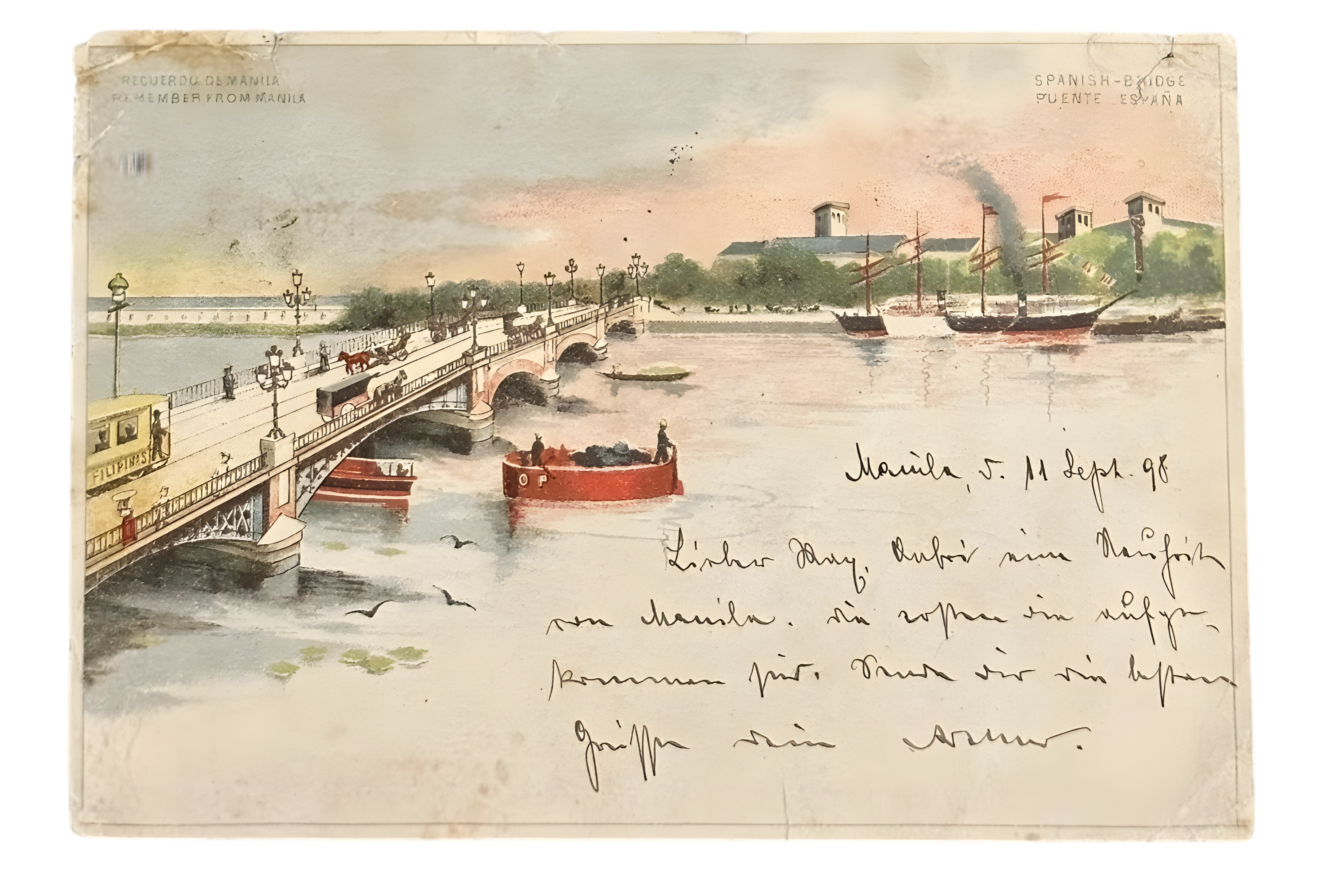
But aside from medals and pens, Sandy is also one of the country’s foremost deltiologists—that’s “postcard collector” to most of us. “I’m deep into deltiology now and have tracked down nearly 100 private mailing cards (which isn’t much compared to other collectors, but I’ve become very intentional and selective about these cards) from the turn of the century, including these two newly acquired color cards,” he says. “But the crown jewel is my 1898 Pioneer card of the Puente de España. I snagged it at a London auction, and I love the unique watercolor art. It’s postmarked and was used just three months after we gained our independence from Spain. It’s been on exhibit at the Ortigas Library since August.”
Sandy also maintains the highly informative and interesting blog www.nineteenkopongkopong.com (and he can explain the origin of that word).
When he’s not practicing his trade as a licensed architect and project and construction manager, Melvin Lam—our newest convert to fountain pens—collects historical artifacts and documents such as the silver quill pen given as a prize to the young Jose Rizal, a letter from Andres Bonifacio to Emilio Jacinto, 1st Republic revolutionary coins and banknotes, a photograph of Rizal’s execution, the 1898 Malolos menu, revolutionary flags from the First Republic, the Murillo Velarde map, and an Ah Tay bed, among many others.
Melvin is also an expert on the anting-anting, co-authoring the Catalogue of Philippine Silver Anting-Anting Medals. “My passion for history and culture was influenced by my father, Robert Lam, who began collecting antiques and artifacts in the 1970s. It has taken my family over 50 years to acquire our current collection. Our collection ranges from early prehistoric Philippine artifacts, items from the pre-colonial, Spanish colonial, American occupation, and Commonwealth eras, up to World War II Filipiniana items. It also includes antique anting-anting, antique santos, Philippine indigenous items, antique furniture, and Martaban jars.”
Not surprisingly, Melvin serves as president of the Bayanihan Collectors Club, known for its webinars, exhibits, auctions, and other historical celebrations, and as a board member of the Filipinas Collectibles and Antique Society (FCAS), which organizes international conventions for antiques and collectibles.
For sheer collecting range and prowess, few can hold a candle to Augusto “Toto” Lozada Toledo, who retired from banking and insurance broking ten years ago. Never mind his 400 fountain pens (older than Toto by a few months, I have about just half that). It would be more accurate to describe Toto as a collector of collections, which comprise, aside from pens, mainly bottles (vintage and modern, soft drinks, medicines, ink, liquor, perfumes, pomades, insulators, Avon figurals, milk and baby bottles, and kitchen glassware) and Batman (action figures, vehicles, Lego sets, and comics).
Ask Toto about the history of Parker Quink (no, not invented by a Filipino as the urban legend has it), and you’ll get a half-hour lecture on Quisumbing Ink and Quesada ink, aside from Quink itself—with all the right props, of course.
A coffee fan, Toto also collects old brewing equipment, coffee cups, used (!) coffee bags, and Starbucks prepaid cards. From his banking and insurance background, he collects old passbooks and checks, vintage fire extinguishers and alarms, metal coin banks, prewar insurance policies, and Zuellig ephemera. (I’m leaving out a lot here, but you get the idea.)
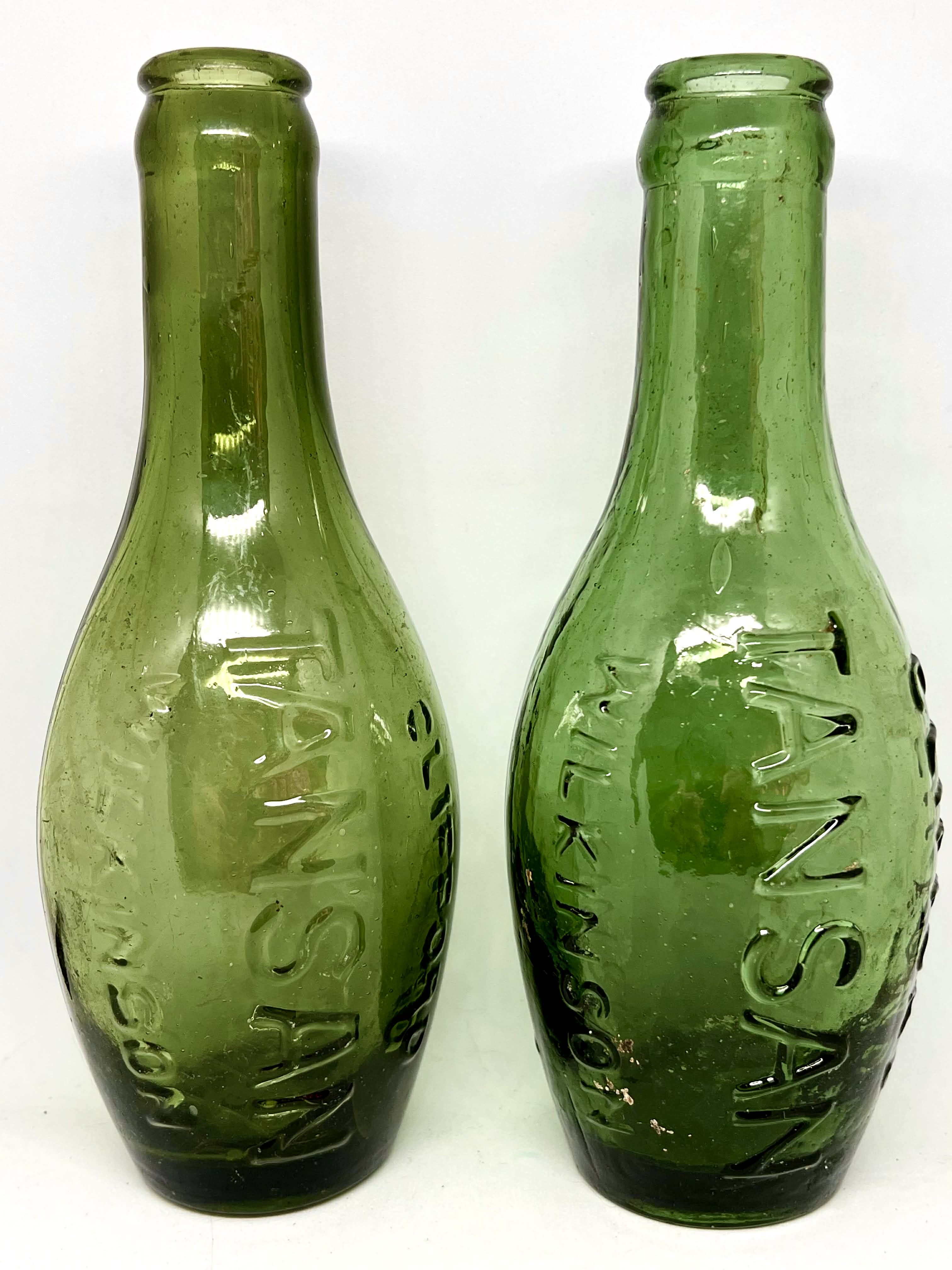
“My main collection is vintage glass bottles—maybe 3,000 specimens—of Philippine products, because of my interest in Philippine history, and how bottles provide clues of their provenance, their makers, their likely users (who actually drank from them), art work (for bottles with paper labels), and the evolution of their logos, which are often tied in to changes in corporate history and ownership,” Toto explains. “The next largest collection is Batman objects—some 2,000 action figures alone. As a seven-year old boy, I read the 1939 issue of Detective Comics No. 27, featuring the debut of Batman, and have always been fascinated by his mental and physical skills that did not originate from alien powers but from his individual training and intellectual prowess.
“The coffee collection comes from a lifelong affair with the brew. The banking and insurance collection comes from a 40-year career in these professions. My first fountain pen was a Wearever Pennant (still with me), that my father gave me as Grade 1 student in 1960. Briefly interrupted by the emergence of Bic ballpens in the 1960’s era, I picked up the collecting in the late 1970s. The others are a result of my interest in the Art Deco aesthetic, my career with the Zuellig Group, my love for Philippine history, and my longing for a return to the mid-century era. It’s always difficult to choose favorite pieces, but for bottles, it would be the Tansan Aerated Water because of the actual etymology of its name, and the (misplaced) brand association with the crown metal cap. The bottle is also very much a part of the American colonial era (strictly recommended for the US military), and was exclusively distributed by F. E. Zuellig, Inc. I also count the San Miguel Beer bottles, from its ceramic containers (from Germany), dark green bottles (from Hong Kong), and the establishment of its own bottle making plant which produced the now-ubiquitous and iconic amber steinies.”
My own most recent acquisitions beyond pens have been, of all things, paper blotters and silver spoons, which began as I idly searched for items Nouveau and Deco. It didn’t help the budget that there are literally hundreds if not thousands of such baubles to be found on eBay at any given time (220,000-plus for fountain pens this very minute). Like Raph, Sandy, Melvin, and Toto, I can spend sleepless nights sighing over some obscure object of desire that might leave wives and mates suspicious, but which they will accept in resignation over more dangerous liaisons.
I’m well aware that there are people who would consider us insane, but let me put it this way: to a world full of ugliness and discord, we bring beauty and order in the cabinets and cases that home and organize our collectibles, and at a time when people forget things after five minutes, we keep the memories of centuries.
ONE OF the great regrets of my college life was that, for some reason or other, I never got to take a formal course in Philosophy, which might have helped me make sense of the moral sordidness permeating our lives today. Like many of you I’ve been particularly captivated by the question of why a presumably all-good and just God would allow so much evil in a divinely created world, and let good people go bad, from petty thievery to massive corruption in the flood-control billions.
I’ll get back to the billions later (I think you know where this is headed), but let me start with me getting scammed, albeit small-scale, on Christmas Eve.
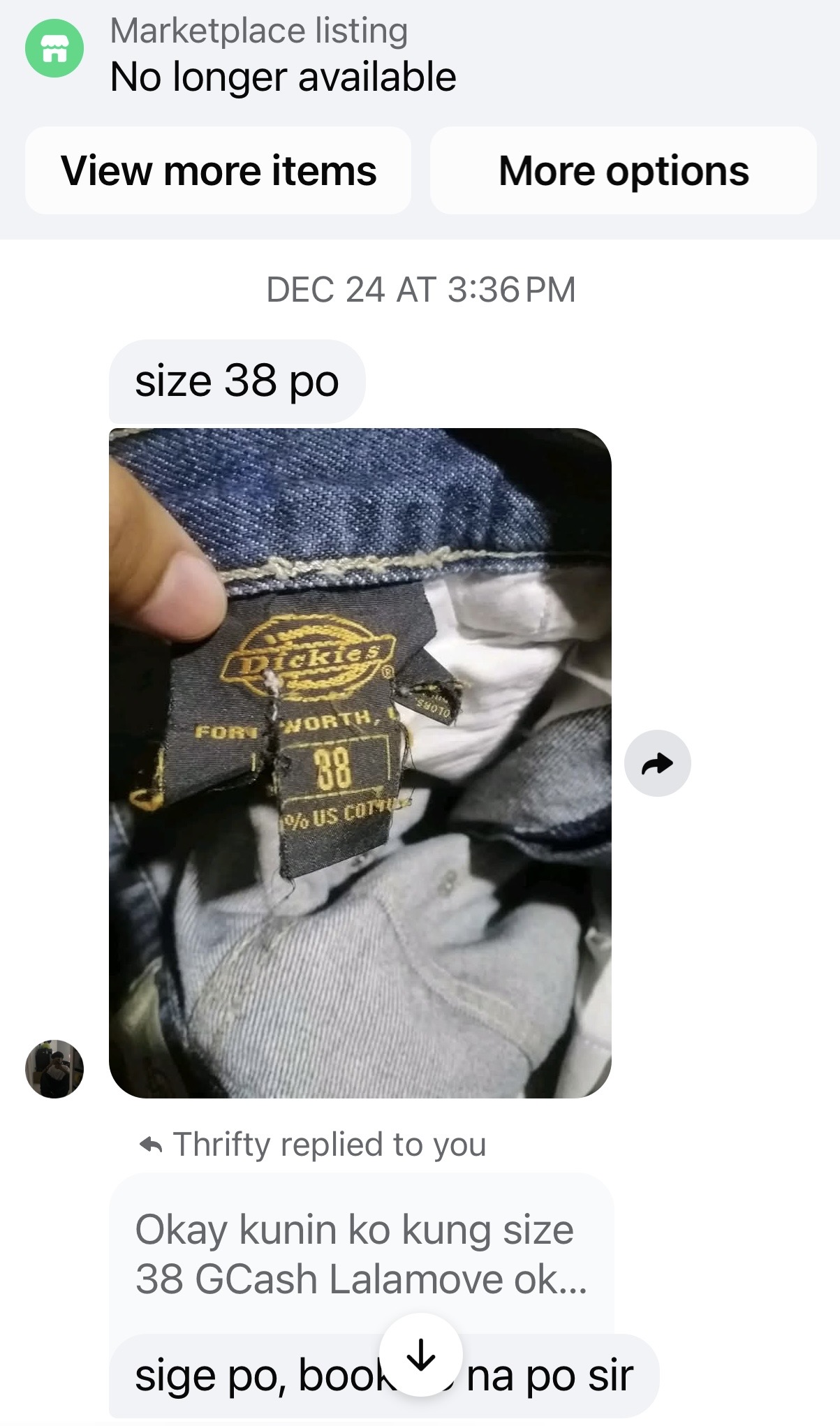
It started with an ad on Facebook Marketplace, where I spend more time than I probably should in search of old pens, books, and the kind of odds and ends that bring joy to old men trying to buy their childhoods back. The item I saw was none of the above, but rather a decent-looking pair of second-hand jeans that I thought would fit me.
(Yes, because I’m larger than most Filipino males, and because threads today cost a fortune in the shops, almost all my clothes come used from the ukay-ukay, eBay, and FB. I’m a great believer in recycling—my mom used to dress us in B-Meg feedbag cotton, if you remember that—and at my age I have no qualms about wearing some dead man’s shirt, after a good wash.)
So I messaged the seller, whom we’ll call Mr. T, confirming the price in the mid-hundreds and more importantly the waist size. He promptly replied with a picture of the size tag, which delighted me, and he asked for and got my shipping details, offering to do the booking himself and send me the Lalamove cost, to my great relief. About fifteen minutes later he said he was having problems finding a rider—entirely plausible, since it was probably the busiest shipping day of the year—and so I offered to add a tip, which he offered to split with me. How nice.
Mr. T got a rider, I got the total price, and paid him without second thought. He sent me a picture of a rider bearing packages, one of which would have been my jeans, and I waited. I normally ask for the tracking, but this was pretty close and the amount was small so I didn’t bother, and besides Mr. T. very helpfully sent me updates (“He’s just five minutes away”) and even sent me a number to call. Fifteen minutes later, figuring the rider had lost his way, I called the number, and got an “out of reach” message. Holiday congestion, I figured. Thirty minutes, I called again; same reply. I messaged Mr. T on FB; messaged bounced, “Couldn’t send.” Our lively, Christmas-y conversation was over. I’d been scammed.
That wasn’t the first time it had happened to me, online or in real life. I’m no dupe, and know my way around the digital darkness, often warning friends myself about phishing scams and hoaxes, but the problem is, I’m a gambler at heart, and when it comes to small amounts, small bets, I gamble quite freely on the goodness of human nature, even in the knowledge that, at some point, I’m bound to lose. (To be fair, 95% of my online transactions have been problem-free and even profitable, so no, I’m not going back to writing checks and visiting bank tellers like some of my Boomer friends have.)
Of course, from the scammer’s point of view, those hundreds that trickle in from suckers like me soon turn into streams of thousands. And someone like me, familiar with loss, might afford to shrug it off, but there are kids out there who would be devastated if their P500 toy never came.
What fascinates me here is the tender, loving care with which Mr. T executed his plan, and kept me hoping until the very end. He could’ve shut me off the second he got his money, but no; he kept me hanging on, then dropped me at the very last minute. I can imagine him doing this with practiced efficiency, and I suspect not a little pleasure at being proven right about the gullibility of people.
Now the fictionist in me imagines that Mr. T wasn’t born with scamming in mind, and didn’t take Scamming 101 at Evil U. He might have studied Accounting or Pharmacy or even Philosophy, and even gotten good grades, until something clicked in his head one morning to try something different, putting self-love at the fore.
This is where I go back to wishing I’d read more of Immanuel Kant and his idea of the “radical evil” rooted in every individual no matter how good, just waiting to be activated. That resonates with me, because I couldn’t possibly do the fiction I do if I didn’t believe that the germ of evil resides in every good person, and vice versa. (In a sense I have to admire Mr. T for being the better fictionist, having put one over the pro.)
And this brings me in a roundabout way to something I’d been thinking deeply about these past two weeks, as I’m sure many of you have—that image of Cathy Cabral on the lip of that ravine, running her life through her head, mesmerized by the ribbon of light in the stream below. She knew what stood behind and ahead of her; only what lay below was unknowable and perhaps comforting. She was here to confront something greater than her fear of heights.
Never much of a conspiracist, even in my fiction, I have often found that the simplest truths and explanations are also the most difficult to accept. One of them is that there slithers a Mr. T and a Cathy C. in each of us, seeking a way out.
NEXT WEEK, after Christmas, my wife Beng and I are flying to a southern city—I won’t say yet exactly where—for a short break from the stresses of the season. (Surely you’ll agree that there’s no time fraught with more anxiety—and the entire gamut of emotion from euphoria to depression—than a Pinoy Christmas, from its tinkly inception in September to its grim, budget-busting conclusion post-New Year. Let’s not even talk about the traffic.)
Beng and I have done this for years now, making it a point to visit some local place the two of us have never been before—among them Balabac, Camiguin, Dipolog, Roxas City, and Virac, destinations usually passed over by tourists in search of thrills and spills outside our septuagenarian menu.
We’ve done this out of a deep love for and interest in our country and culture, despite all the inconveniences we associate with local travel. We’ve never been first- or business-class-type passengers to begin with, and despite our age can take a few bumps on the road in search of native fabrics, fresh iterations of suman and fish tinola, and a dip under a waterfall.
In other words, tourism-wise, we’re the easy sell, the low-hanging fruit, with modest expectations and demands and a developed tolerance for discomfort (delayed flights, rough roads, no aircon, the occasional mosquito or cockroach).
Not surprisingly, it isn’t people like us who lift up the Philippine tourism industry. We remain heavily dependent on foreign visitors bearing dollars, won, and yuan, and those tourists—typically educated, digital-savvy millennials seeking leisure and adventure experiences—have literally a planetful of destinations to choose from, and the figures clearly show that even within Southeast Asia, we’re hardly their first choice.
A comprehensive report by Zhan Guo on the ASEAN+3 Macroeconomic Office (AMRO) website notes that while Philippine tourism has rebounded somewhat since the pandemic, major structural bottlenecks continue to restrain the sector from achieving its full potential.
The report notes that “Compared with ASEAN peers, the Philippines’ international tourism market remains relatively small. Even before the pandemic, the country lagged regional peers in foreign arrivals—8.2 million foreign visitors—well below Indonesia’s 16 million, Malaysia’s 26 million, Thailand’s 40 million, and Singapore’s 15 million. Moreover, foreign tourists remain concentrated in a few destinations: the National Capital Region and Central Visayas (home to Cebu) account for over 60 percent of total foreign overnight stays. Many promising sites remain underdeveloped or difficult to reach.”
In 2024, foreign arrivals barely reached 6 million. As of November 2025, we haven’t even hit 5 million.
Completing the picture, AMRO notes that “Tourism has long been a cornerstone of the Philippine economy. In 2024, the sector’s gross value added reached ₱3.5 trillion—7 percent higher above pre-pandemic levels—and accounted for 13.2 percent of GDP. It also supported 4.9 million jobs, or 13.8 percent of the labor force. AMRO’s analysis shows that tourism-related industries—such as hotels and restaurants—can generate higher domestic value-added per unit of production input than the average for all sectors, making the sector a key driver of the country’s post-pandemic recovery.”
Now, these figures are helpful, and AI can spout them any time, but what we really need to hear are ground-level stories from real people—tourists and expats—who’ve been here long enough and who can tell us in all candor what we need to do to catch up with our neighbors. I know we Pinoys can be extremely sensitive to criticism, especially when it comes from white people who fly in from their comfort zones and begin to expect everything here to work just as well as they do back home, and who then broadcast their woes and gripes to the world like the Philippines was the foulest and most benighted place on earth, ever. I’m sure we’ve all met louts like these.
But then there are foreigners who actually and deeply love this country—sometimes more than some of us do—despite everything they and we have to bear with, and these are the friends we need to listen to. It was an online encounter with one such expat last week that triggered this column, when I came across the blog of a European who goes by the moniker “The Lazy Traveler,” who’s been living in the Philippines for over a decade now and has traveled quite a bit around the country and the region.
Let me quote what he wrote (with some minor edits just to improve the flow):
“Main problem: accommodation is bad and overpriced. I’m planning a motorcycle route in Vietnam from south to north. Almost everywhere there, you can sleep for $3–$4. $10 already feels like luxury. In the Philippines, it’s hard to find anything under $10. The average is $25–$30, and the quality is usually terrible.
“I remember sitting at White Beach in Puerto Galera with a resort owner. He showed me rooms priced at almost $100 per night. Inside, everything was broken—doors, toilet flush, fittings. I told him, ‘Don’t be offended, but who is paying 5,000 pesos for that crap?’ His answer: ‘They come fifteen people, so it’s cheap.” (Sleeping on the floor and everywhere.) I asked why he doesn’t fix the rooms. He said, “It will be broken again in two weeks.” That mindset explains a lot.
“If I ride from Pagudpud to General Santos, the trip will cost me at least thirty times more than Vietnam, with more hassle and less comfort.
“Another big issue: transportation. If you don’t have your own transport like a motorcycle, roaming around the Philippines can be a horror—slow connections, overpriced tricycles, limited public transport, and wasted time. Mobility here often feels like a struggle, not freedom.
“Second issue: domestic flights are insanely expensive. Not long ago, Manila–Siargao was close to $400.
“Third issue: too many restrictions, no real freedom. Hiking? Register at the barangay.
Simple trail? Mandatory guide. Then come the fees: ‘local support’ fee, environmental fee, parking fee, toilet fee, shower fee…. That’s why some foreigners call it Feelippines.
“Not to mention the official Facebook page of the Department of Tourism—it’s full of Frasco and Marcos faces instead of destinations. With 1.4 million followers, their posts get 30–40 reactions. Sayang. (I checked the page, and it’s true—JD)
“I love the Philippines. That’s why I’m still here. But if tourism wants to improve, these problems need to be called out—not ignored.”
I’m sure this isn’t the first time we’re hearing these things, and that the government knows what it needs to do. The AMRO paper lays it all down: better transport connectivity, basic utilities and infrastructure, digital readiness, and visitor facilities.
Now we need BBM to treat this like flood control: another way to lose a lot of money aside from thievery is not to make it when we very well could.










 Pinoy Penman 3.0