Penman No. 135: Democracy and Cultural Expression

DSC_0024Penman for Monday, February 9, 2015


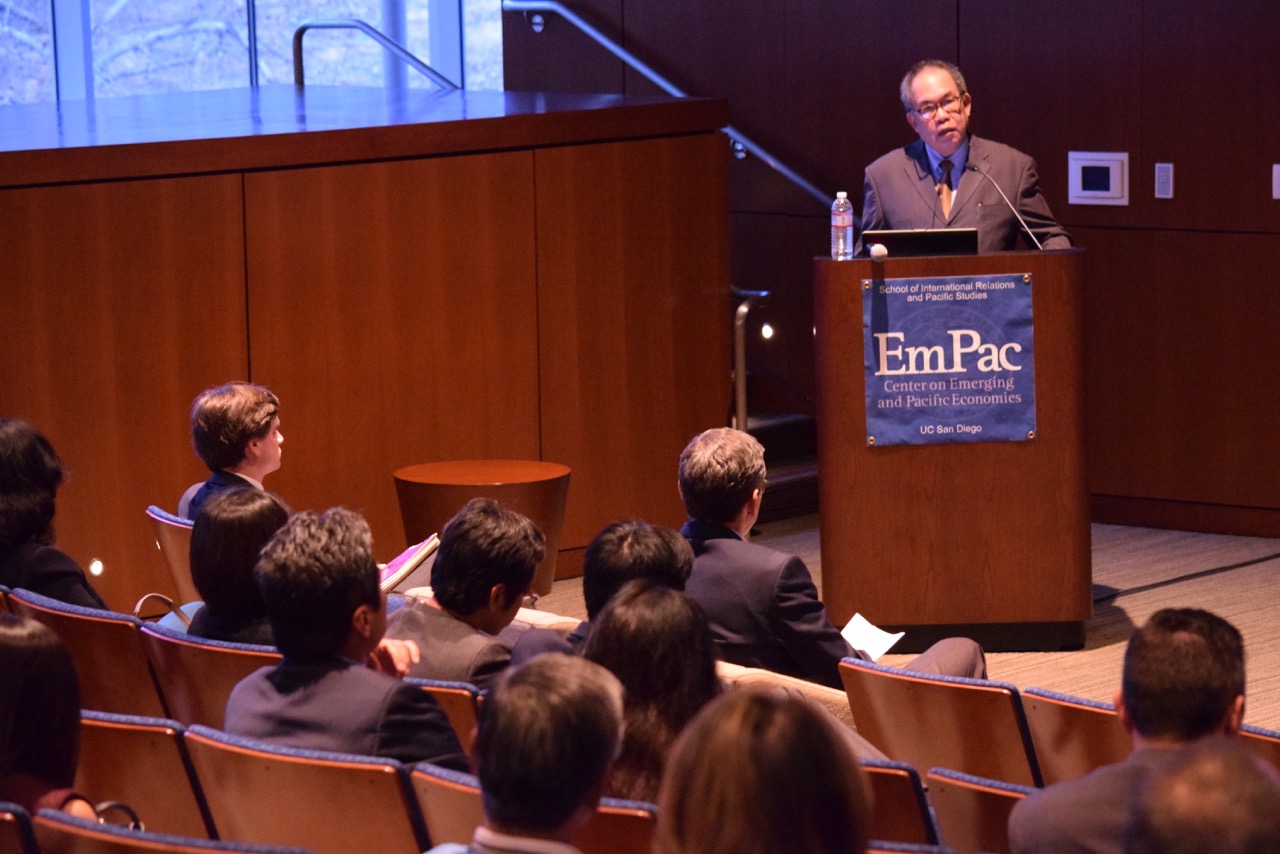
I SPENT the past two weeks as a Pacific Leadership Fellow at the School of International and Pacific Relations of the University of California, San Diego, and the highlight of my fellowship was a 40-minute talk I gave on the general topic of “Democracy and Cultural Expression: Confronting Modernization in the Philippines.” The PLF—usually a government or business leader from the Asia-Pacific region—is asked to make a public presentation to a large audience composed of academic and community representatives, to introduce and discuss major issues facing his or her society.

I felt it safer to presume that the non-Filipino members of my audience last January 28 knew very little about Philippine history and politics, so I began with a broad overview of that history, bringing things to the present and the medium-term horizon, considering both our strengths and resources—noting the robustness of our recent economic growth—but also the longstanding inequalities and structural weaknesses that continue to hold us back. Here’s a slightly edited excerpt from the rest of my talk:

We have to pause and wonder exactly what kind of democracy we have in the Philippines, and what needs to be done—particularly on the cultural front—to achieve a fuller sense of the word.

I wouldn’t go so far as to call Philippine democracy a sham, because most Filipinos enjoy fundamental rights and freedoms absent in patently undemocratic societies—freedom of expression, of association, of mobility, of enterprise; the right to vote, and a presumptive equality under the law. But that presumption is also the weakest leg our democracy stands on, undermined by gross economic and social inequalities in our society showing Philippine democracy as more a democracy of style and spirit than one of substance.

Indeed, economically and politically, the Philippines has been ruled for more than a century by an elite, a roomful of families from the landed gentry and comprador capitalists who developed their wealth and power as agents and executors of colonization, and have taken turns at governing the country well into the present.

We cannot have true democracy without achieving a better balance in our economic and social structure, and its best hope in the Philippines could be in our enlarging middle class. They may not yet have the economic and political clout of the elite, but coming from the poor and aspiring in their own way to become more prosperous, they have the most at stake in creating a new regime of opportunity and fairness.

It is the middle class that has served as the voice of Philippine democracy, primed by its education to value freedom of thought and expression. It is the middle class that stands at the vanguard of modernization, having not just the desire but also the means—through education and entrepreneurship—to change the future.

… One out of every ten Filipinos now lives and works abroad in a decades-long diaspora that has kept the Philippine economy afloat through remittances amounting to more than $25 billion in 2013. But they bring home not only money but new ideas, and I feel confident that, in the long run and for all its social costs, this diaspora will have salutary effects because that domestic helper in Milan or plumber in Bahrain will no longer be simply a domestic helper or plumber when they come home. Tourists bring home snapshots of pretty places and exotic food; foreign workers bring home real learning, lessons in survival and getting ahead, and raised expectations of their local and national leaders.

This exposure to global culture and its elevation of local aspirations will be a major force in reshaping the Filipino future. And again, it is the middle class—the dwellers of the Internet and the Ulysses of this new century—that will lead in this transformation, just as they have led the most important movements for political and social reform in our history.

… One of the bright spots of Philippine society today is the fact that civil society is very much alive, constantly on guard against governmental or corporate abuse and wrongdoing, ever ready to uphold the rights of ordinary citizens and communities, and firmly rooted in those communities. It has stood at the forefront of the movement to fight corruption, which recently came to a new climax with the explosive revelation of a billion-peso pork-barrel scam going all the way to the Senate and even possibly higher.

One of the greatest challenges of our modernization may be that of electoral reform—not just a reform of the electoral process, but a reform of the voter’s mind—not to vote for popular candidates, but to vote wisely, to see the vote as a chance to short-circuit a historical process and to lay claim to one’s equality and patrimony.

And this is where culture comes in, as an instrument of social and political reform and modernization. If we look at culture more proactively not just as a way of living but a way of thinking, then there is much room for the promotion of true democracy through cultural expression.

By cultural expression I don’t mean simply the writing of stories, poems, plays, and essays, which is what I do most days, partly as my civic duty. I mean the use of all media at our disposal—the arts, the press, the Internet, whatever can influence the Filipino mind—to forge and sustain a set of core values, of national interests that cut across family, class, and region.

Of course, we can take “cultural expression” in its more popular and familiar forms—stories, poems, plays, music, painting, and dance, among others—as gestures toward the idea of a larger, national culture. After all, with every poem or painting, the artist seeks to palpate, from an audience of citizens, a sense of what is common and what is important—or to put it both ways, what is commonly important and what is importantly common. This has always been the social value and the political mission of art—not just as a means of self-expression, but of establishing, affirming, and promoting certain commonalities of thought and feeling.

… We need nothing less than a new cultural revolution—focused on the assertion of the ordinary citizen’s rights over power and privilege, on the importance of the rule of law, and on our understanding and acceptance of what it means to be a Filipino in this globalized world. Forging that sense of national identity is crucial to securing our future, again in a world and in a part of the world where the Chinese, the Japanese, the Koreans, and the Americans seem to have very clear ideas about their roles and capabilities. In this ocean of resurgent nationalisms, we Filipinos need to redefine ourselves as more than America’s students and surrogates.

In sum, much remains to be done to lend more substance to Philippine democracy in terms of addressing age-old economic and social inequalities. But the first field of battle exists in the mind and spirit, and the first campaign in this battle, the first declaration of freedom, has to be an act of the imagination.

I prefer to see democracy as a process rather than a product; the aspiration can be as powerful as its actualization. This democracy is first formed by its assertion: by seeking democracy, we begin to achieve it, and this assertion is the task of our artists, writers, thinkers, and opinion makers, the imaginative shapers of our national identity.

Penman No. 130: Museums and Musicals (Part 1)

Penman for Monday, January 5, 2015
 

IF THERE’S anything in America I keep returning to—aside from the flea markets and antique shops—it’s the two things I consider to be among the country’s prime cultural resources: its museums and its musical theater.

Both are, at heart, forms of popular entertainment. While museums are arguably more educational, the first American museums, we’re told, began as collections of curiosities that attracted entrepreneurs like the showman P. T. Barnum, who bought up bizarre objects and juxtaposed them with such live attractions as bearded ladies and exotic animals. The American musical, on the other hand, descended from burlesques and operettas imported from Europe, livened up by chorus girls and minstrel songs, until (notes theater historian Mark Lubbock) Oscar Hammerstein II and Jerome Kern came up with Show Boat in 1927 and refashioned the musical as a play unto itself, beyond the pastiche of production numbers that it had been.

I suppose I should be adding “major-league sports” to this list. The NBA is, after all, one of America’s biggest exports, with a global cultural impact that extends far beyond the ballgame itself. As a graduate student in Milwaukee, I spent whole Saturday afternoons enjoying double-headers at the baseball park, and I once cut a class in Shakespeare to watch Michael Jordan pull off a last-second three-pointer to beat the hometown Bucks (and despite being Bucks fans, we all stood up and cheered). And then there’s Hollywood, America’s mammoth fantasy machine.

But sports and movies can now be had on satellite TV and even your iPhone. Museums and musicals—I’m thinking Broadway and off-Broadway here—are still best experienced live, despite the likely availability of much of the material online or on DVD. Many Americans themselves apparently agree. A 2008 article that came out on National Public Radio reveals an interesting statistic: the total combined attendance for all major-league sports (basketball, baseball, football, and hockey) that year was estimated at around 140 million, against the estimated attendance at American museums, pegged at 850 million.

I landed in Washington, DC on my first American visit 35 years ago, and I’ve been returning to the Smithsonian Institution ever since, looking at but never tiring of the same old things: Abraham Lincoln’s hat, George Washington’s dentures, the Hope Diamond, the Space Shuttle, the giant squid. Every pilgrimage to the Smithsonian (and, in London, to the British Museum) transforms me into a wide-eyed boy, seized by the collar and shaken into speechlessness by the majesty of history.

On this last sojourn, as I reported last week, a visit to the exhibition of historic signatures at the National Archives Museum proved to be one of the highlights of our museum-hopping. But we visited other equally arresting exhibits, most notably the MacArthur Memorial Museum in Norfolk, Virginia.

I’d always been fascinated by this monumental figure—who, like many monuments, came with more than a deep fissure or two. I was born too late to appreciate him as the liberator of occupied Philippines, but I’d always nurtured a vague memory of going to the Luneta as a boy to see him, one 4th of July, a day of floats and big horses. I later suspected that memory to be false, until I confirmed, online, that MacArthur had indeed made one last sentimental journey to the Philippines in July 1961, when I was seven.

Norfolk seems an odd place for a MacArthur Memorial; it’s a Navy town, and he was an Army man through and through, and West Point—where he had served as superintendent—would have been far more logical. But his mother’s family was rooted in Norfolk, and Douglas himself would have been born there had not his father Arthur, himself an Army officer, been assigned to Little Rock, Ark., where Douglas was born in 1880.

Some things surprised me at the MacArthur museum: first of all, the discovery that it was also his and his second wife Jean’s resting place. The first thing you notice upon entering the memorial, flanked by rows of flags from various campaigns (Bataan, Corregidor, Leyte, Lingayen, and Manila are prominently cited), is the sunken crypt in which the two tombs lie side by side. Second, I was struck by the number of Philippine items and references in the place—perhaps logically so, because even Arthur himself had been a general in the forces that occupied Manila in 1898.

Third—although I should have expected this—there was absolutely no mention of Isabel Rosario “Dimples” Cooper, the Scottish-Filipino actress who became Douglas’ girlfriend in between his marriages (his first wife, Louise Cromwell Brooks, had been a socialite). A fourth discovery was of interest only to this hardcore fountain-pen collector: the famous Parker “Big Red” Duofold, already an iconic pen when MacArthur reportedly used one to sign Japan’s surrender papers with on the Missouri, turned out to be a smaller lady’s version loaned to him by Jean.

There were recordings of his speeches, and I listened closely. MacArthur spoke famously simple words. His “I shall return” pledge ranks among the most familiar of rhetorical refrains; less known but equally moving was his farewell to West Point, two years before his death in 1964: “When I cross the river, my last conscious thoughts will be of The Corps, and The Corps, and The Corps.” But the verbal simplicity came out of a complex man, one who could fearlessly take on what he saw to be the communist colossus (and be sacked for his perceived recklessness in Korea by President Truman) but who was, by many biographical accounts, a mama’s boy.

It was, all told, a most impressive exhibition, amplifying a figure already larger than life to begin with. I suppose my biggest surprise was my own continuing fascination with this Big White Man, in the way that I’ve often wondered about the postcolonial (or should that be neocolonial) chic we attach to names like “McKinley” and “Rockwell,” especially when they involve high-priced property.

Those of us who luckily came too late to experience the horrors of the Second World War can argue all day about the moral wrongs of American imperialism and the self-serving designs of America on the Pacific—and would very probably be right. But in these days of tension in the South China or West Philippine Sea, we might end up wishing a MacArthur were around to do what no pragmatic politician in Washington or Manila today would imagine doing.

Next week, the musicals.

Penman No. 126: Friendships Old and New

IMG_5878Penman for Monday, December 8, 2014


OUR THREE-MONTH American sojourn has come to a close, and by the time you read this we should be back in Manila, a bit wobbly in the knees but glad to be home. I’ve gained back too much weight—the price to pay for all that scrumptiously greasy diner food and the cold spells that excused me from my daily walks—and I’ve begun to miss my morning tinapa and my suppertime tinola. But I’ve hit my research targets and more, and am eager to hunker down to writing the book that should come out of all this. I know that in a couple of weeks this vacation will be another happy memory, and I’ll be stuck in Christmas traffic on EDSA, sweltering and muttering why the heck I didn’t stay out there for another month or two.

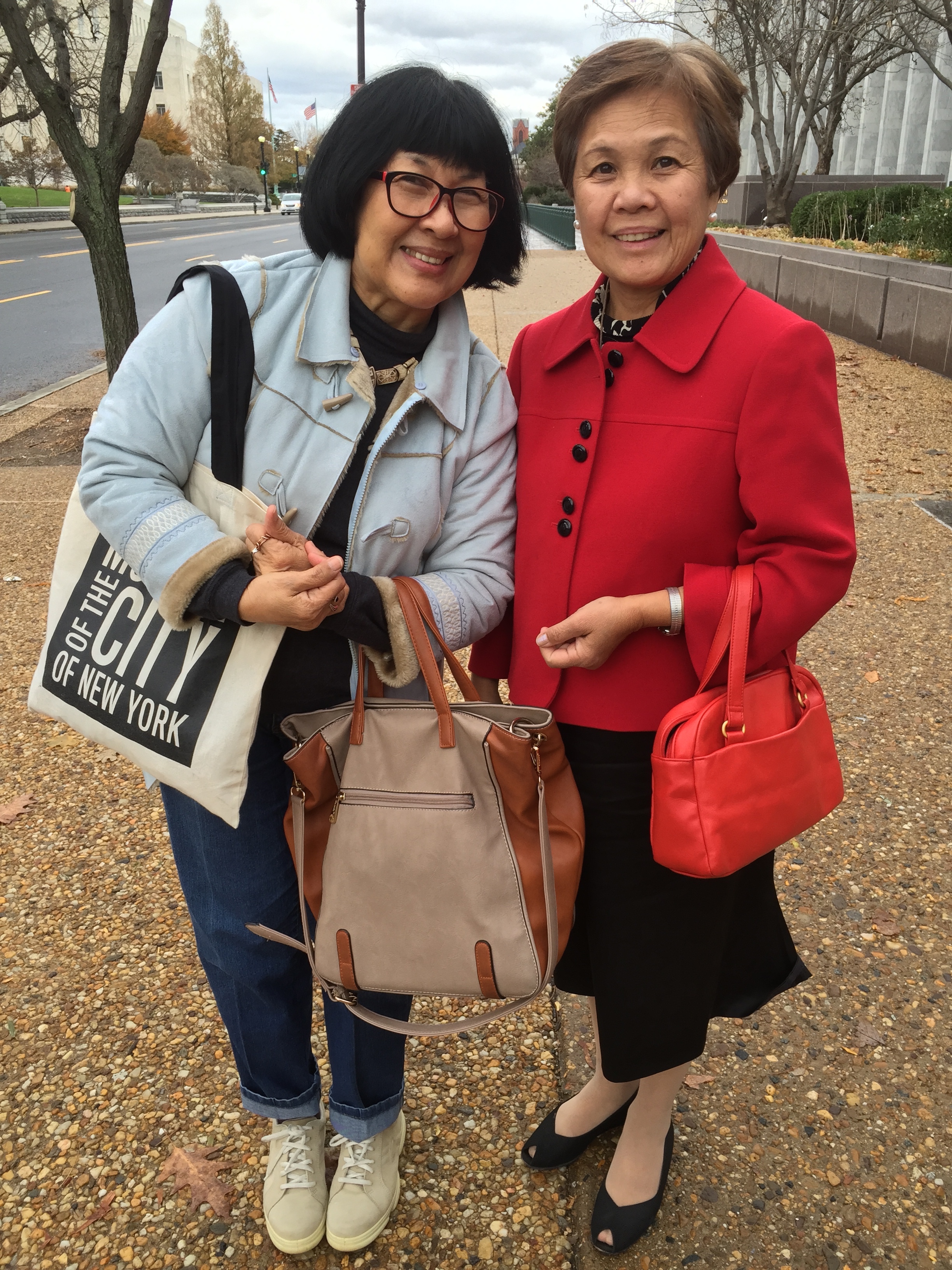
Before that happens, let me thank some very fine people we met during this visit, which apart from the work was marked by new friendships made, existing friendships strengthened, and old friendships revived. I’ve already thanked my interview subjects in a previous piece, but there were others behind the scenes who made this particular journey pleasant and memorable. They include Sonny and Ceres Busa, Nomer and Camille Obnamia, Erwin and Titchie Tiongson, and Jun and Myrna Medina.

They may just be names to those who’ve never met them, and indeed they’re not the kind of A-listers you’d find in the glossy magazines that make virtual libraries of Metro Manila’s beauty salons. Even among Filipino-Americans, just a few names keep recurring in the social registers, either titans of industry or doyennes of fashion—leading one to wonder, where’s everybody else and what are they doing? Surely the rich and famous have no monopoly on everything that’s interesting and important? So let me introduce these friends to the world at large, by way of celebrating the non-celebrity whose quiet deeds lend substance to the sparkle of those better known.

IMG_5703

IMG_6134

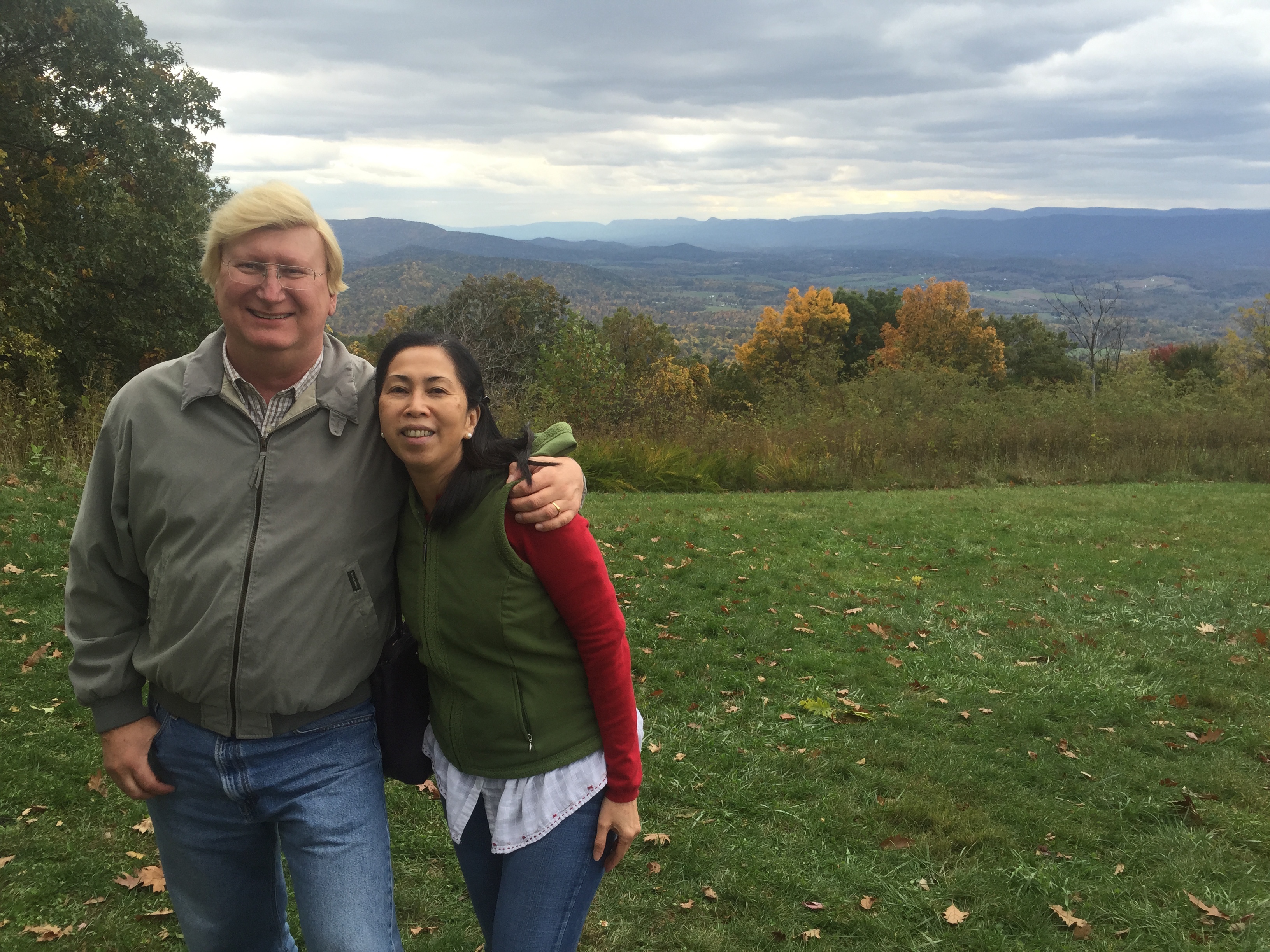
Sonny and Ceres hosted us twice at their postcard-pretty home in Annandale, Virginia and introduced us to the satisfying simplicity of Ethiopian food. The Waray-born Sonny had been a US consul in Addis Ababa, among other places, and his hilarious but spot-on insights into the American mind enlivened our every conversation. Ceres helps oversee a caregiving company for seniors in Virginia, a job eased by her patience and cheerful disposition, of which Sonny is luckily the prime beneficiary.

Nomer had been born in Sampaloc, Quezon and joined the Navy, where he met Camille in Hawaii; they’ve settled down in Columbus, Ohio, and our friendship began in the most unlikely circumstances. A committed conservative, Nomer had responded sharply to a column I wrote here years ago on artistic license, and our email conversation turned into a more gentle exchange of ideas and gestures. An expert in government procurement, Nomer had freely offered his counsel to our agencies and opinion-makers many times on ways of curbing corruption, but much to his dismay, his letters didn’t even merit the courtesy of a reply; I sadly felt obliged to tell him why. He and Camille took us into their home in the American heartland, where again I was reminded of the complexity and yet also the civility of much of American society, the challenges of Ferguson notwithstanding.

IMG_5951

As I wrote in this column two weeks ago, Eric and Titchie showed us, through their documentation of the Filipino presence in the capital area, that remembering the past need not be the preoccupation of the old, but has to be a continuing project for future generations to appreciate. A freelance journalist who’s been recognized for her work, Titchie wrote a fascinating article (http://www.oovrag.com/essays/essay2013b-3.shtml) about how a pretty stretch along the Potomac River was inspired by the Luneta, thanks to First Lady Helen Taft, who wanted the new park to mimic what she had seen in Manila, where her husband had served as Governor-General.

IMG_6089

Jun and Myrna Medina are old friends from the early 1970s, married four days after Beng and I got hitched. When I met Jun after being released from martial-law prison, he literally emptied his wallet for me, and later helped me get a job, a favor that in turn allowed me to propose marriage to Beng. Jun had also been a newspaperman and a fellow activist before martial law, but what many of his friends didn’t know was that he had eagerly volunteered to join a group of cadres bound for the Visayas, only to be turned down because his Capampangan origins would have marked him instantly as an outsider and gotten him killed (as, tragically, would befall everyone else in that posse). Another spin of the wheel of life took Jun to America, where he and Myrna have devoted themselves to their charismatic ministry. I hadn’t seen Jun in at least 20 years—only to discover that the Medinas had been living barely ten minutes away from my sister’s place in Centreville, Virginia, my virtual second home.

IMG_6132

Of course, let me add our family—Elaine and Eddie Sudeikis in Virginia, Jana and Senen Ricasio in New York, and Demi and Jerry Ricario in San Diego—to our list of hosts and sponsors (led primarily by the Philippine American Educational Foundation, the Fulbright folks). Other friends new and old like Mitzi Pickard, Reme Grefalda, Susan Brooks, and Moira Madrid-Spahr also contributed their time and attention to my visit.

IMG_5392

IMG_6386

IMG_5240

I was hosted by the George Washington University, and from GWU I have to thank English Department chairman Robert McRuer, creative writing program head Lisa Page, and old Manila hand and law professor Ralph Steinhardt. Ralph helped prosecute the Marcoses in Hawaii for human rights abuses when he was a young lawyer, and I’ll always remember his story about the response of a plaintiff whom he warned against the rigors and the costs of fighting the Marcoses: “I just want to be believed.”

In the end, that’s all we can hope for, and may my forthcoming book be worthy of all these good people’s graciousness and generosity.

Penman No. 124: Pinoys on the Potomac

cropped-logo-rizal-washington8Penman for Monday, Nov. 24, 2014


ERWIN TIONGSON and his wife Titchie are in their early 40s, successful professionals and the parents of young sons; they live in Fairfax, Virginia, a pleasantly wooded suburb just outside of Washington, DC. An Atenean from Nueva Vizcaya, Erwin teaches Econometrics at Georgetown University, while Titchie, a prizewinning writer, has chosen to stay at home to look after the children. Outwardly they might seem to be just another Filipino couple living the good American life, steadfastly focused on the present and the future. But their true passion inclines elsewhere, as Beng and I would discover in one of the most fascinating encounters we’ve had in our current American sojourn.

I’d first heard about Erwin from another new Fil-Am friend, Sonny Busa, a retired Marine, a former consul and instructor in international relations at West Point. (Sonny, in turn, had been introduced to me by upstate-NewYork-based Sharon Delmendo, who has done a lot of research on Philippine-American relations—so now you see how the academic circuit works.) Sonny had mentioned to me that there was a Filipino in the community who had taken it upon himself to chronicle the history of the Philippine presence in Washington and the surrounding area—more than a century of visits and residencies by Filipino politicians, diplomats, writers, artists, musicians, and other personages whose life and work, in one way or another, drew them to the American capital.

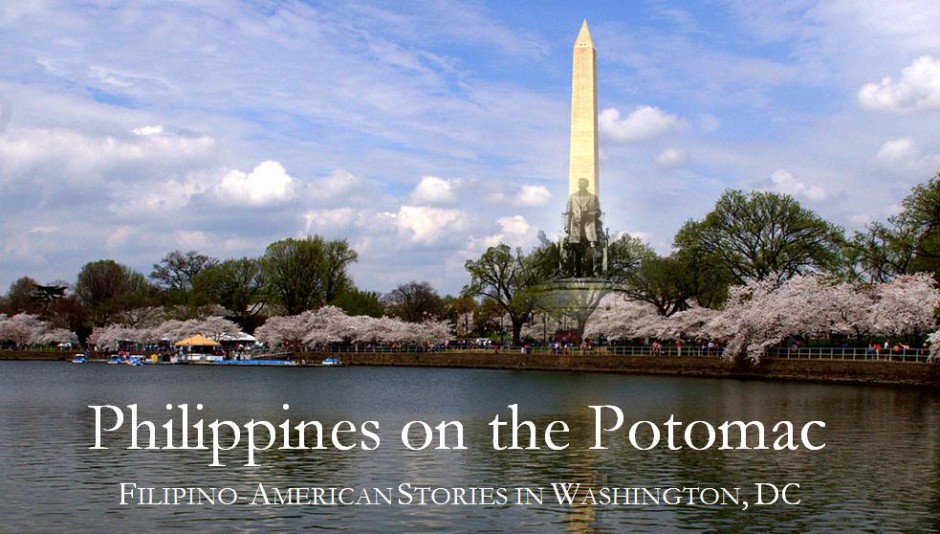
That’s how I found the website that contained all this information—a WordPress site titled “Philippines on the Potomac: Filipino-American Stories in Washington, D.C.” (https://popdc.wordpress.com). If you’ll take a minute to click on that link, you’ll discover what I did, with a child’s wonderment at the entrance of a carnival: short articles and accompanying photographs tracing the connections between Filipinos and Washington, DC.

As might be expected, the big political figures, especially those from the Commonwealth and postwar period, dominate the reportage: Manuel L. Quezon, Carlos P. Romulo, Sergio Osmeña, Manuel Roxas, and Jose Abad Santos. But cultural luminaries are also well represented: Juan Luna, Jose Garcia Villa, Juan Arellano, Enya Gonzalez, Fernando Amorsolo, and Bienvenido Santos, among others.

Quezon had served as Resident Commissioner—effectively our ambassador—in Washington until 1916, and when he went to the US on his wartime exile and died in New York in 1944, it was at the Cathedral of St. Matthew the Apostle in Washington—not too far from where our embassy now sits—where his funeral mass was held prior to his interment at Arlington (less than 20 years later, John F. Kennedy would follow the same route; MLQ’s remains were moved to the Philippines after the war, and now lie at the Quezon Memorial).

Carlos P. Romulo and his family lived in a home on Garfield Street for 16 years, CPR having served in many capacities, from aide de camp to Gen. Douglas MacArthur to Resident Commissioner, ambassador, and president of the United Nations General Assembly. (One of the website’s most remarkable images has an old sepia photograph of the Romulos superimposed exactly over the same spot in front of the present house, which has barely changed.)

The site provides a treasure trove of other historical facts—including, inevitably, tidbits of information that serious scholars might dismiss as trivia, but which enthusiasts like me can’t get enough of. The sculptor and National Artist Guillermo Tolentino, for example, once worked as a waiter in Washington, and somehow managed to meet President Woodrow Wilson and to present him with the gift of a small statue, which Wilson kept in his room until his death; Wilson later helped Tolentino get a scholarship to art school. We also learn that Juan Luna and Felipe Agoncillo went to Washington in 1899 to campaign against the Treaty of Paris, and stayed at the Arlington Hotel, where they were spied upon by the Secret Service. (All these stories are properly attributed and referenced, by the way.)

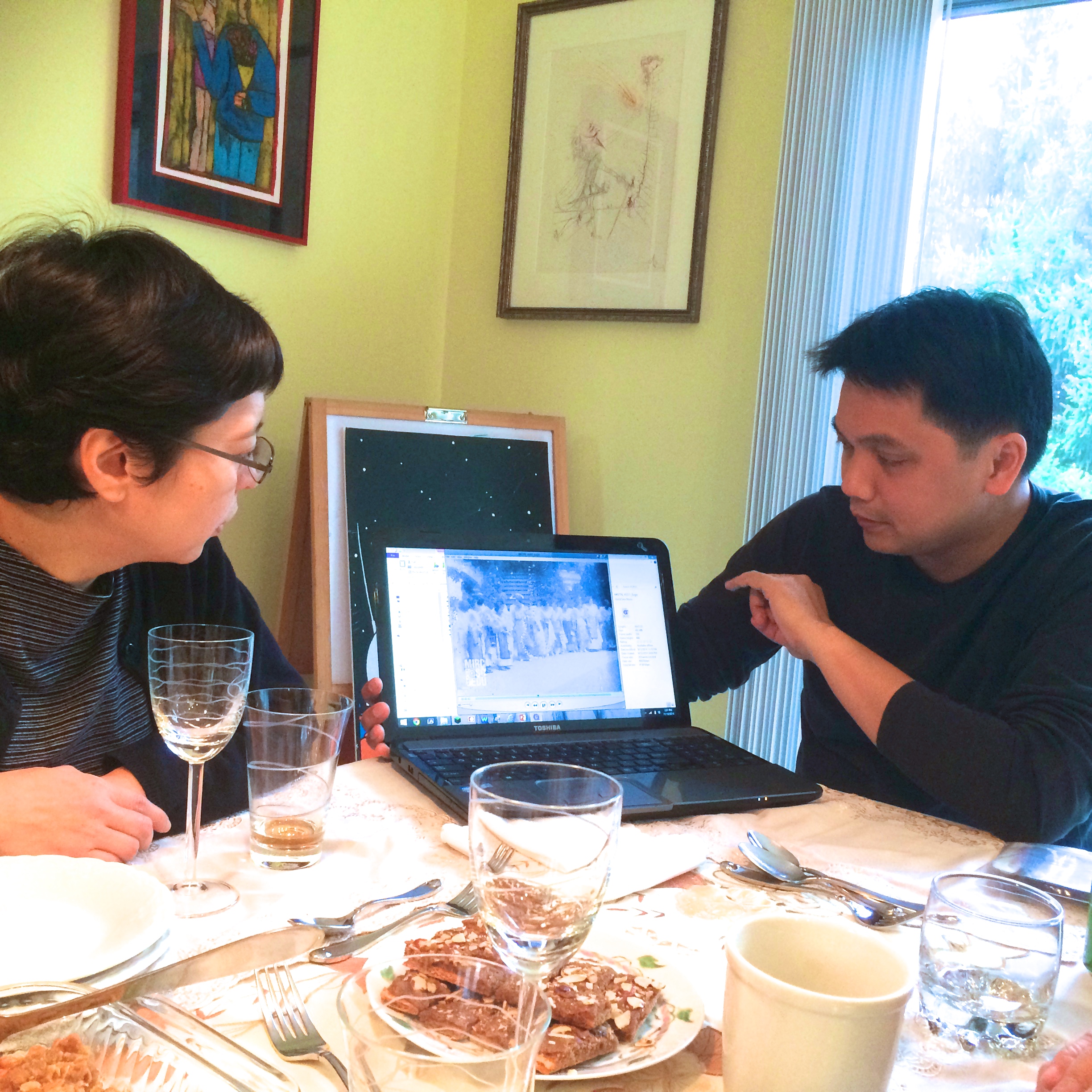
Better than just poking around the website, the Tiongsons invited us to lunch and show-and-tell, and I couldn’t wait. Learning of my current affiliation with the George Washington University, Erwin had pointed me to an article written by CPR’s granddaughter Liana relating how Romulo had coached a debating team from the University of the Philippines in an engagement with the GWU team, over this issue: “Resolved, That the Philippine Islands should be granted immediate and complete independence.” The debate took place on April 18, 1928 at GWU’s Corcoran Hall. “UP won,” said Erwin. “It was the team’s fifth victory, after defeating Stanford, California, Utah, and Colorado. The team would go on to defeat all their other opponents—a total of 14 universities, if I remember correctly.”

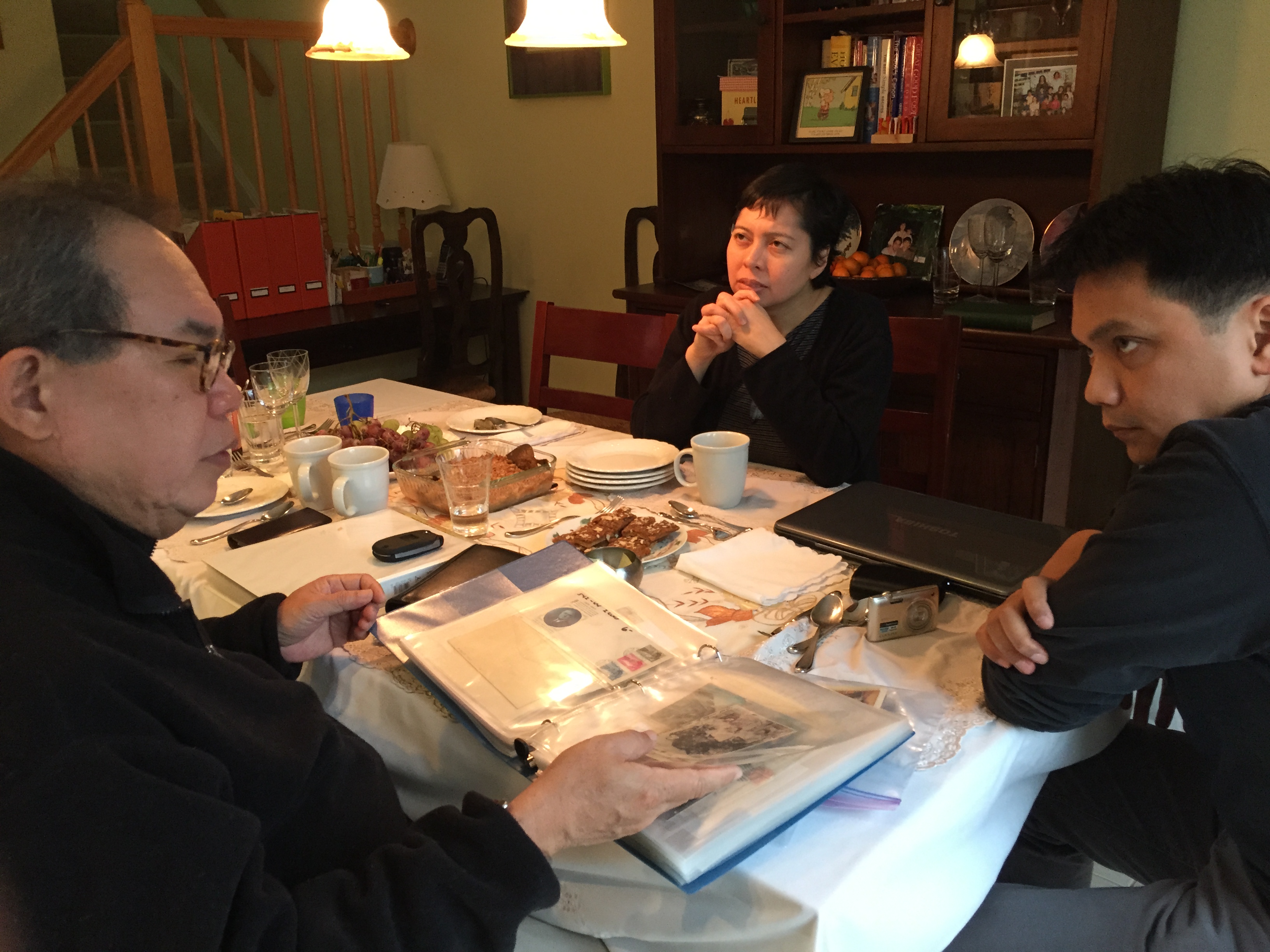
Tiongsons

Even more interesting were the personal stories that Erwin and Titchie shared with us (after a sumptuous lunch of home-made corned beef and baked salmon, which all by itself was well worth the Sunday visit). I can’t go too deeply into the details now, but Beng and I were thrilled to share Erwin’s elation over his most recent discovery, a book that had been inscribed by Maximo Kalaw, MLQ’s private secretary, to a “Nina Thomas”—who turned out to be the American lawyer the young Quezon had been engaged to (he broke off the engagement after being advised that marrying an American was political suicide). Erwin made contact with Nina’s heirs in Virginia; she never married, but she passed on Quezon’s monogrammed walking stick and their engagement ring to her niece.

Erwin also showed us a movie poster from 1946 of Anna and the King of Siam, featuring Rex Harrison, Irene Dunne, and a little-known actress named “Chabing”—who turned out to be Isabel Rosario “Dimples” Cooper, Douglas MacArthur’s girlfriend (not mistress) between marriages; after MacArthur left her, she resumed her film career (she was notable for having recorded the first on-screen kiss in Philippine movies in 1926), assuming the single name “Chabing,” whose filmography you can look up on IMdb.

It was also a treat to listen to a radio recording of Jose Garcia Villa, made in the 1950s, of him reading his “Lyric 17” (1942) which famously begins with “First, a poem must be magical….” Most moving was the 20-minute documentary of President Quezon’s funeral—directed by no less than the renowned director John Ford—that Erwin had magically retrieved from somewhere in the many university libraries, archives, and museums that he still haunts in search of fugitive Filipiniana. He has begun a collection of war correspondence from the early 1900s and the Second World War; one 1902 letter poignantly retained a swatch of jusi, which the wife of an American official in Iloilo wanted her folks to see.

We could have stayed there the whole day, reveling in our memories of the grand old men of Philippine letters—NVM Gonzalez, Ben Santos, Nick Joaquin, Manuel Viray; I shared my own little adventures in cultural retrieval. But Beng and I had sadly had to trundle out again into the autumn chill, warmed by our imaginations, and in my ears rang a line from Viray’s poem about his old house in Washington, on Cathedral Avenue, which the Tiongsons had also located: “A streak of light aslant / On the screen door creeps up the line of dusty books.”


Penman No. 121: Souvenirs of Washington

SouvenirPic

Penman for Monday, November 3, 2014

A COUPLE of weeks ago, walking from my sister’s office in downtown Washington, DC to the library of the George Washington University, I paused at the corner of 19th and I (or “Eye”) Streets, and was overcome by a sense of déjà vu. I vaguely recognized the place, but something had changed—the old Presidential Hotel was no longer there, replaced by the Presidential Plaza, a grayish, nondescript commercial building replicated on a hundred other blocks in the city. It was what had stood at that spot that I suddenly missed: the hotel, built in the 1920s—and me, more than half a lifetime younger and suitcase in hand, looking up at my first American abode.

It was September 1980, I was 26 years old, and I was on my first foreign trip—to the United States, no less, thanks to a generous and visionary boss who thought that a budding writer like me could benefit from some exposure to the outside world. He arranged for a grant that would introduce me to media organizations and practices in various places in the US for three months, and within a month of being told that I was leaving, I was—all gussied up in a scratchy double-knit suit, which was what I thought any Stateside-bound traveler worthy of respect was supposed to wear.

After stops in Honolulu and San Francisco, I arrived in Washington on a nippy autumn morning. My first American mystery greeted me in a sign just outside the airport: “PED XING.” What on earth did that mean, I thought—could there be so many Chinese in Washington? I took a cab to my hotel, the Presidential on 19th and I, and was met by the doorman, who suspiciously resembled—and indeed was—a kababayan. I felt instantly relieved. He seemed happy to see me as well, and after effusive introductions and references to the motherland, he showed me to my room, up on the fifth floor.

Unable to sleep, I stepped out, still in my suit, and surveyed the streets around me. I got hungry and saw a classy-looking restaurant at the corner. I had several hundred dollars on me—partly my allowance, and partly my life savings—in cash; I felt rich. I stepped into the place, and ordered quarter of roast chicken. It cost me eight dollars, and I dutifully tacked on a 15% tip, like the guidebook said. I walked around the corner to K Street, and saw a luggage store; I walked in, and all too quickly fell in love with a saddle-leather Schlesinger briefcase. “How much?” I asked. “One hundred dollars,” the lady said. “I’ll take it!” I said, and forked the cash over; it would be eight years before I would get my first credit card, but that’s another story.

I walked back to my hotel, feeling very businesslike with that briefcase that smelled positively posh, and just outside the hotel, on the bus stop along the sidewalk, I noted my second American mystery: another sign that said “No Standing.” How was one supposed to catch a bus or a cab, I wondered, if they couldn’t stand there, and I couldn’t see any seats, either. I fell asleep that afternoon, with the Schlesinger beside me in bed, only to be woken up by a loud rap on my door. It was my kababayan the friendly doorman, and it must have been past nine in the evening. “Padre,” he whispered, “could you lend me twenty dollars? I have a hot date tonight and don’t want to disappoint her, I’m just a little short!” He winked conspiratorially, and I slipped him the twenty, and went back to bed.

Many more interesting things would happen to me during that visit, but that was the last I saw of my new kaibigan and of my twenty bucks. The next day, I went back around the street to look for a breakfast place, and saw my first McDonald’s. It was my first American fast-food experience, and I felt flustered by the array of comestibles on offer overhead. Forgetting for a second where I was, I glanced at the two Pinoy-looking ladies in the line beside me and asked, in Tagalog, “Miss, paano ba umorder dito?” and they told me how. They turned out to be secretaries at the World Bank. Later that day, when I told the cook at the cafeteria in our sponsoring institute about my eight-dollar lunch, she laughed and said, “You shoulda framed that chicken!” before serving me a full meal for $2.50.

Since I was going to be in Washington just briefly being flying onward to my main destination in East Lansing, Michigan, I resolved to make the most of my visit by touring as much of DC as I could. Our daughter Demi was just six years old, and I sent her postcards and pictures that I took of squirrels running around the White House lawn. Outside the Smithsonian, I lingered before the souvenir carts before choosing a tall ceramic (at least that’s what I thought) mug that said—what else—“Souvenir of Washington, DC” and featured the relief facade of the Capitol building. (I would later discover, back in Manila, that the mug was made of plaster, and made in Taiwan.)

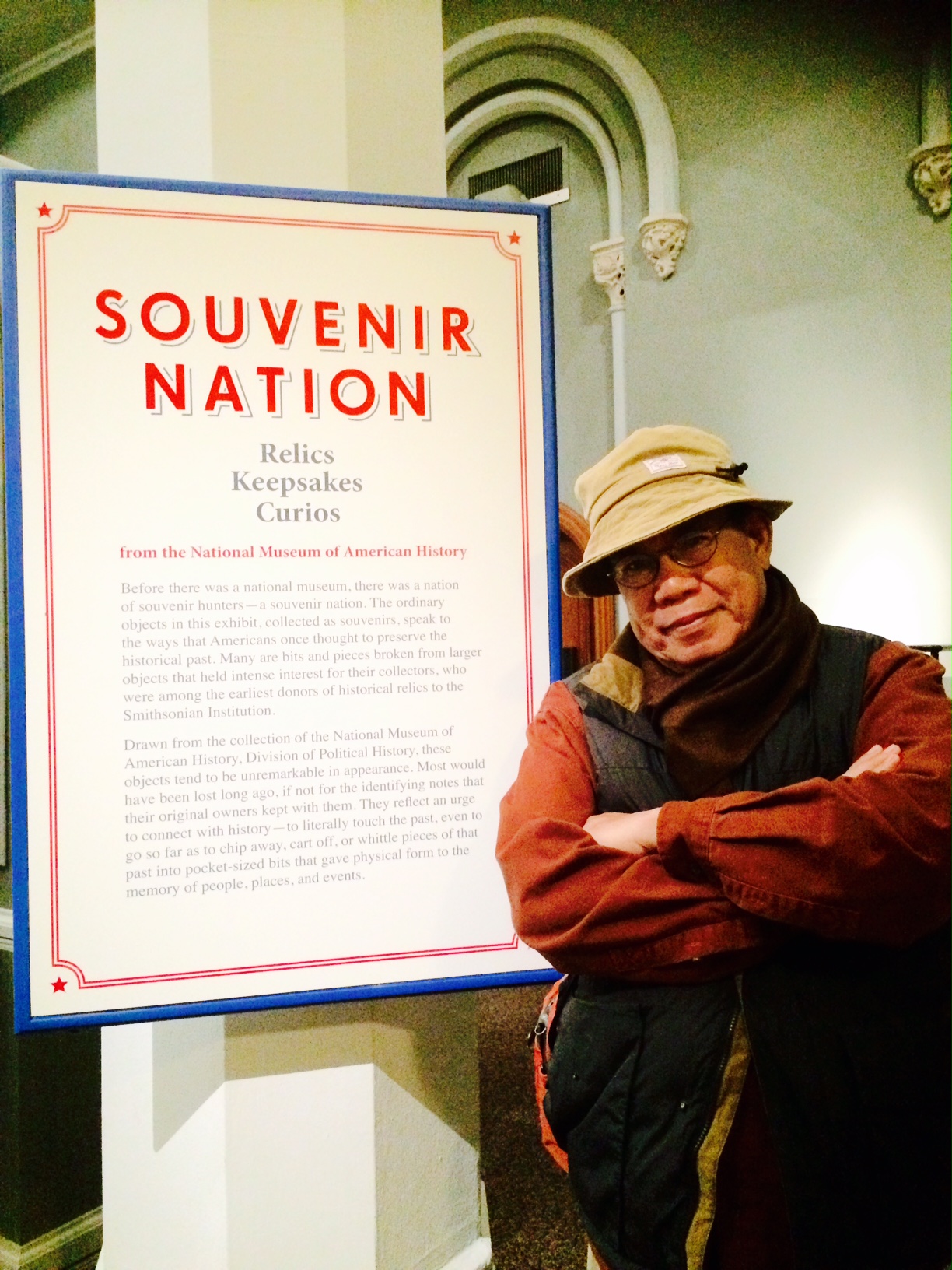
All these came back to me as I stood at that corner of 19th and I, feeling a little foolish but feeling even luckier to be alive at all and back in the same spot, much bulkier from ingesting untold hundreds of chickens and Big Macs since then, but not all that much the wiser. And as it happened, when I walked the other day into the Smithsonian Castle, on exhibit was “Souvenir Nation”—a show of how people have kept pieces of the past to form their own personal histories.

I’m over souvenir mugs, but I still keep that Taiwanese token on a shelf back in Diliman as a reminder of one’s innocence or stupidity—one or the other, although I can be fairly sure by now that there’s hugely far more of the latter in Washington than the former. And I still have the Schlesinger briefcase, all beat up as it should be after 34 years, but still handsome in a rugged way, which is more than can be said for its owner. No, I’m not over fine leather briefcases; I saw the very same case on eBay last week, selling slightly used for $25, and I snatched it up to replace the old one—as a souvenir of this great and wondrous city of Washington, DC.

Penman No. 119: Bulosan in the Heart

Penman for Monday, October 20, 2014


TAKING A short break from my fellowship in Washington, DC, Beng and I flew off to the West Coast a couple of weeks ago for a weekend with our daughter Demi and her husband Jerry. Demi was celebrating her 40th birthday (can you believe it?) and had sent us tickets to join them in Seattle; they live in San Diego, but they’d loved Seattle from a previous visit and wanted to share that discovery with us.

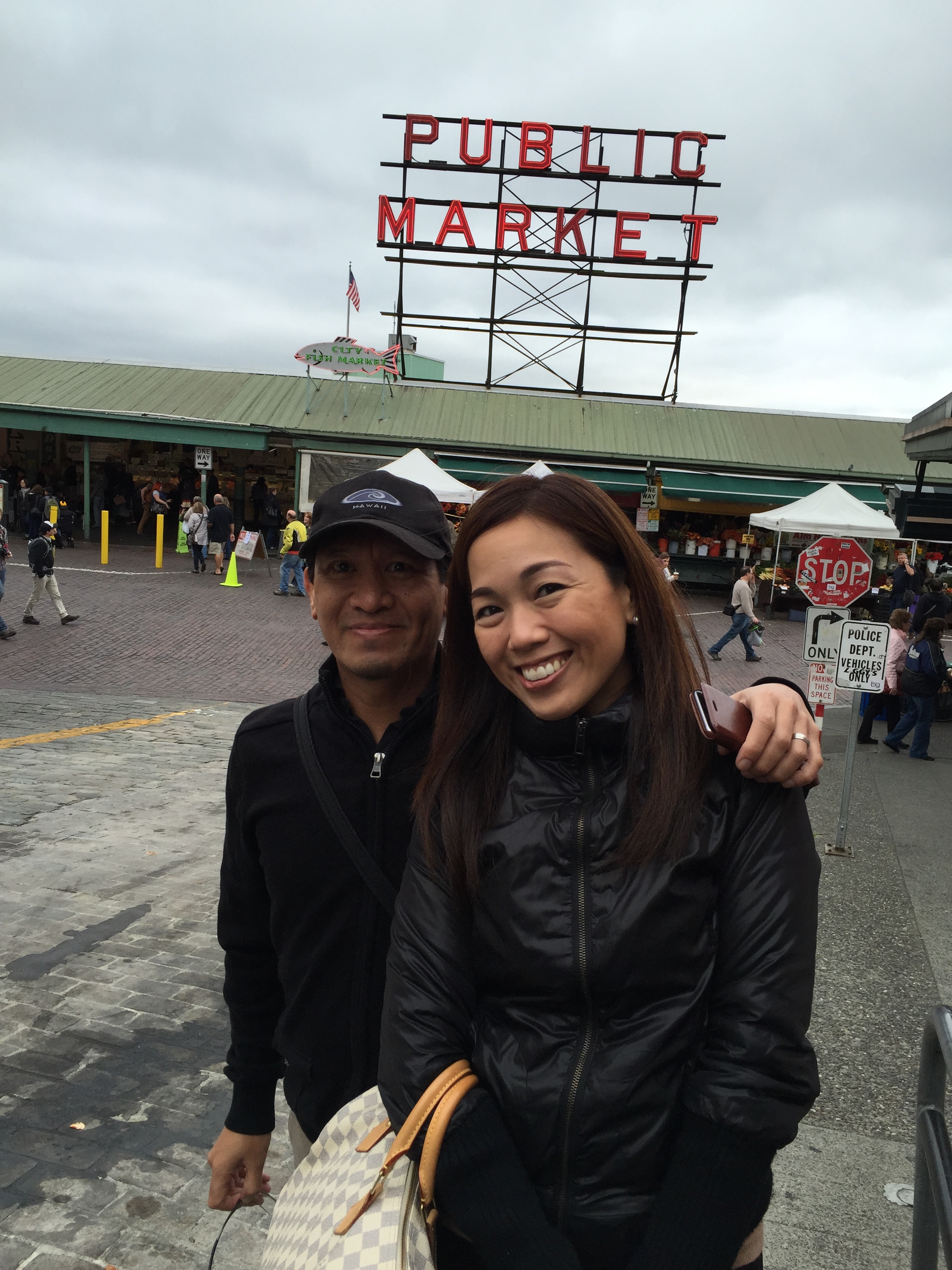
Over three days, we did the Seattle thing, and had loads of fun: the Pike Place Market, the Space Needle, a glimpse of the Chihuly glass garden, antiquing in Snohomish, and a boys’ tour of the Boeing plant in Everett. But it was an unexpected turn in the program that made it all the more worthwhile.

On the drive into the city from the airport, I had mentioned to Jerry (who had been born in Rhode Island to parents from Bicol) that two Asian-American icons—Carlos Bulosan and Bruce Lee—were buried in Seattle. Jerry’s an engineer in the aviation industry, but like Demi, he has a keen interest in culture and in his roots.

Bulosan’s name holds a special significance for our family. In high school, with some help from Beng, Demi had put together a book report on America Is in the Heart—Bulosan’s sprawling semi-autobiographical novel about the Filipino immigrant experience in America, first published by Harcourt Brace in 1946. I myself had written my undergraduate thesis at the University of the Philippines on Bulosan, fascinated by his often paradoxical appreciation of America, which he described as being at once “so kind and yet so cruel.”

Born in Pangasinan, he shipped out to Seattle in 1930, and never returned until his death from bronchopneumonia, also in Seattle, on September 11 (yes, 9/11) in 1956. (There’s some debate over the year of his birth, which has been variously listed as 1911, 1913, and 1914.) In the US, without the benefit of college, he became a voracious reader and taught himself to write, and became known both as a writer and a labor activist. Since the 1970s, many critics such as Epifanio San Juan Jr. have championed a reappreciation of Bulosan and his work; in 1973, the University of Washington Press republished America Is in the Heart, which was translated into Filipino as Nasa Puso ang Amerika by Carolina S. Malay and Paula Carolina S. Malay and published by Anvil in 2000.

When Demi and Jerry made plans to marry in 2007, I knew what I was going to give them as a wedding gift. After a long and eventful search culminating in a meeting with the seller in a Jollibee in Diliman, I had just acquired a first edition of America Is in the Heart, and carried it with me to San Diego. This copy had been inscribed by Bulosan to his friend Fred Ruiz Castro: “This story of my life will, I hope, bring me closer to you and our native land through our good friend J. C. Dionisio, with my best wishes, Carlos Bulosan, Los Angeles, 3-6-1946.”

Upon receiving the book in Manila almost a month later, Castro—who became Chief Justice in 1976—also signed it on April 4, 1946. I signed the book on a following page on April 2, 2007, and Beng and I presented it to Demi and Jerry on April 15. The book now rests proudly on their bookshelf in San Diego. (When I first wrote about this in my column—about finding that “holy grail” of a signed first edition and giving it to our only child on her wedding in America—I got a pleasant surprise upon my return: the gift of another copy of an early edition, acquired by another Filipino writer when he was in college, Greg Brillantes. That book, signed by Greg, now sits on my topmost shelf in Diliman.)

Now back to Seattle. On our last full day there, after touring the Boeing plant in the morning while our wives did their own thing downtown, Jerry and I were hit by the same brain wave in the car: why not look for Carlos Bulosan’s grave and pay our respects to our literary hero? A little Googling quickly revealed his gravesite, at the Mt. Pleasant Cemetery on Queen Anne Hill. We picked up Beng and Demi at the hotel, and located the cemetery not too far away.

GPS helped bring us there, but it couldn’t pinpoint the exact grave among the many hundreds on the site; thankfully, Google also yielded a picture of the grave itself, and the four of us spread out across the cemetery, looking for visual markers—particularly a white obelisk in the distance; it took about 20 minutes until Demi yelled “I found it!”

It was, ironically, very close to the cemetery gates, on the left side. Beng picked some flowers nearby and offered them at the foot of the marker, which read: “CARLOS BULOSAN 1914-1956 Writer Poet Activist,” followed by an epitaph that Bulosan himself had written: “Here here the tomb of Bulosan is / Here here are his words dry as the grass is.” It was a pretty spot, truth to tell, and the grass was hardly dry. After the cemetery, we visited Seattle’s International District near the waterfront, to peek at the Bulosan exhibit through the windows of the historic Eastern Hotel, where Bulosan and other Filipino cannery workers lived.

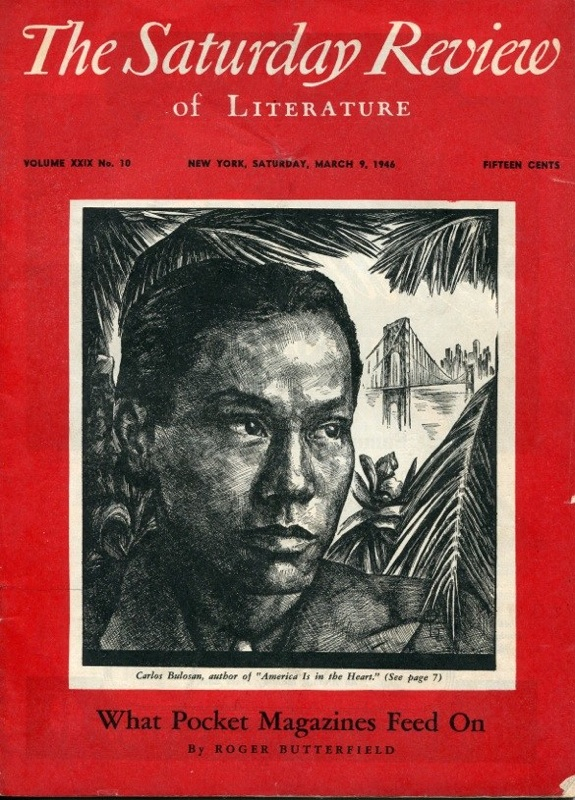
Demi and Jerry don’t know it yet, but they have another Bulosan memento coming from me: a copy of the Saturday Review of Literature from March 9, 1946, on the cover of which the famous pen-and-ink portrait of Bulosan first appeared. One of these days, I’ll pay another homage, to the Bulosan memorabilia on exhibit at the University of Eastern Pangasinan in Binalonan, where they keep copies of his letters, commemorate September 11 as Carlos Bulosan Day, and teach a 3-unit course on his life and works. There’s a trove of material on him at the University of Washington library, and perhaps on another visit to Seattle, with more time, I might look into that, too. But as every Fil-Am and indeed every Filipino should know, a pioneering voice like Carlos Bulosan’s can ring everywhere and forever, in the heart.

Bulosan

Penman No. 19: Autumn in New York

Penman for Monday, November 5, 2012

I FIRST visited New York 32 years ago, as a young man on his first trip abroad, and I can still remember the convulsive thrill that I felt as I peered out the window of my plane from Detroit and saw Manhattan’s spires rising toward me, to the accompaniment of a Gershwin tune.

At the same time, I looked at New York with not a little dread, both because of its sheer immensity and also its fearsome reputation for harboring mobsters and hucksters. While I marveled at the Christmas lights of Rockefeller Center, I also saw Times Square and Bryant Park at their worst, long before Rudy Guiliani came in with a broom, and 9/11 lent the city the kind of composure that comes with tragedy.

I’ve been back many times since—with my mother, daughter, and sister, and Beng’s sister living in the US, we try to visit every year—and over the years, I’ve slowly learned to trust if not to love this mother and mentor of modern cities, holding my wariness in check just long enough to let New York’s many and unexpected charms seep through and permeate my senses.

It’s a tired cliché by now, but while I go to my sister’s place outside of Washington, DC for rest and recuperation, I go to New York for the energy and the excitement, for the buskers in the subways playing everything from Vivaldi to That’s Amore, for Paul’s Burgers in St. Mark’s Place, for the two lions guarding the library (Patience downtown, Fortitude on the uptown side), for the $6/lb. Chinese takeouts, for the Art Deco flourishes nearly everywhere you look, for the Housing Works resale shops, for the discounted Broadway tickets, for the Sabrett’s hotdogs on the sidewalks, for the muscular subway, for the parks that sprout up amidst brownstone and cinderblock, for the warren of words that’s the Strand, and, of course, for the translucent glass stairway leading down to the reverse-heaven of the Apple Store.

New York can have the newest of the new—think of the iPhone 5 and the iPad mini—but oddly enough, what Beng and I enjoy most on our New York visits is seeking out old treasures (or what might be junk to most other people) in the thrift shops of 23rd Street and the flea markets of the Upper West Side and Hell’s Kitchen. Sometimes these treasures even come free, shamelessly dragged in off the street on my sister-in-law’s block in Forest Hills, like that miniature wooden Christmas sleigh that I salvaged last week off the top of a pile of detritus (the polite Roman word, I think, for garbage).

Inevitably, despite our absent intentions, every visit brings something new. Two years ago it was the magic of dusk in Coney Island, at the very end of the F subway line and, it seemed, of New York itself, so serene was that velvet hour with the amusement park’s fun machines in off-season repose. This year it was a day trip we took by train to a small village called Cold Spring, up the Hudson River, after learning that it hosted a cluster of antique shops and was a good place to catch the fall colors, besides.

It did not disappoint on either count; autumn declared itself resplendently for most of the 90-minute ride along the ribbon of the Hudson, and exploded in brilliant yellows and reds on our arrival in Cold Spring. As Beng and Mimi scoured the shops for old buttons, bottles, and trinkets, I strayed into a shop with a small door that turned out to be a huge warehouse of vintage knickknacks—among them, a lovely black hard-rubber-and gold Conklin ladies’ pen from around 1920 and a marbled Parker Vacumatic desk pen from 1935. Having earlier picked up a Waterman silver-overlay pen and a contemporaneous brass inkwell from 1915 at the Greenflea Market on the Upper West Side, I pronounced this trip sufficiently penworthy, and contented myself for the rest of the day with photographing the Hudson’s color-washed banks.

Another novelty on this trip was my first walk into and across the heart of Central Park, which I had somehow never done in three decades of visiting New York. All that time I had contented myself with reconnoitering the fringes of the park, forewarned by a score of movies and CSI New York episodes about the demons and dangers lurking within. On the Saturday that we crossed the park on our way to Greenflea, we met nothing more dangerous than sprightly squirrels and latter-day hippies channeling John Lennon in Strawberry Fields, the corner of the park across the Dakota Apartments, where Lennon lived and was shot dead (a few days after I left New York on my first visit there in 1980). And how can you walk across Central Park without (again) George Gershwin, Simon and Garfunkel, Barbra Streisand, and Liza Minnelli performing in concert in your dreaming head?

We had earlier visited the 9/11 Memorial downtown, where the Twin Towers used to stand; last year it had been under construction—and still was, to some degree, as the museum within has yet to open. But the two large reflecting pools were already in operation, acting like four-sided waterfalls whose constant flow—broken only, when we looked, by an almost unbearably theatrical rainbow—seemed to represent a perpetual dousing of the fires that burned the towers down, a cleansing of the evil and the ill will that came before and after the event. I had also been there in 2001, a few months before 9/11, and had seen the towers—had even gone up to the top of one of them on an earlier visit—but had no personal connection to the place. Still, I paused when I caught a name—one of almost 3,000 names etched deeply into the bronze railings around the pools—that was unmistakably Filipino: “Ronald Gamboa,” who turned out to be a 33-year-old Fil-Am, a manager at The Gap who died as a passenger on UA 175, one of the hijacked planes.

In yet another unintended irony, I’m writing this paean to New York from Lansing, Michigan, where I’m attending a conference and from where I’m supposed to fly back to JFK tomorrow and then back home to Manila on Thursday—but can’t, because New York and much of the American East Coast has been shut down by super storm Sandy, and I’m effectively stranded. If I can’t get back to JFK by Wednesday, I’ll have to rebook my Manila-bound flight, and stay in New York a little longer. That’ll be mildly annoying—but I can’t wait to spend a bonus weekend in Manhattan, poring over heaps of junk at the flea market, in quest of that golden glint that could be the clip of a 1936 Parker Vacumatic Oversize, one that George Gershwin himself might have scripted a tune or two with.

Penman No. 17: Another October, Another Michigan

Penman for Monday, October 22, 2012

LIKE I mentioned last week, I’m in the US to visit family and to participate at the International Conference on the Philippines (Icophil), which is taking place Oct. 28-30 at Michigan State University in East Lansing, Michigan.

Dealing with all aspects of Philippine Studies, Icophil happens every four years, and it’s been held around the world—mainly in the US and the Philippines, but also in Australia and the Netherlands; the upcoming conference in Michigan will be the ninth. Icophil’s international reach reflects not only the global Filipino diaspora, but also the growing interest and engagement of non-Filipino scholars in Philippine affairs. While most participants still come from the Philippines, a significant number of speakers and panelists come from foreign universities.

Icophil also provides scholars an opportunity to assess the state of Philippine Studies around the world, in a roundtable organized by Prof. Belinda Aquino of the University of Hawaii at Manoa, who is Icophil’s founding chair. Convenors for this year’s conference are the eminent scholars Dr. Roger Bresnahan of MSU and Dr. Bernardita Churchill of UP.

Aside from us Filipinos, this meeting will bring together Filipinists from the US, Japan, Singapore, Thailand, Australia, France, Russia, Spain, and the Netherlands. By institutional affiliation, the confirmed Filipino participants will include Jose Buenconsejo, Marilyn Canta, and myself (UP Diliman)); Filomeno Aguilar, Jr., Czarina Saloma-Akpedonu, and Lisandro Claudio (Ateneo de Manila); Paul Dumol and Clement Camposano (University of Asia and the Pacific); Raymundo Rovillos (UP Baguio); Teresita Ang See (KAISA); Nick Deocampo (Center for New Cinema);  Genevieve L. Asenjo (DLSU); Hope Sabanpan-Yu (University of San Carlos), Kristian Cordero (Ateneo de Naga); and Prisciliano Bauzon (University of Southern Mindanao).

Icophil 2012’s keynote speaker will be an international expert on climate change, Dr. Rodel Lasco, Senior Scientist and Philippine Program Coordinator of the World Agro-Forestry Centre (ICRAF) and Affiliate Professor, UPLB School of Environmental Science and Management. A recipient of the Outstanding Young Scientist Award in 1997, Dr. Lasco has been a member of the Intergovernmental Panel on Climate Change since 1999. In 2009, he was elected to the National Academy of Science and Technology of the Philippines.

Trailers for two new and interesting documentaries will be shown: one by MSU Prof. Geri Alumit-Zeldes on the two Filipino nurses who were wrongly convicted for murdering their patients in Ann Arbor, Mich. in the mid-1970s, and another, by filmmaker Sonny Izon, about the “Manilaners”—Jewish refugees from the Nazi Holocaust who found refuge in Manila through the intercession of President Manuel Quezon. Filmmaker Nick Deocampo will also be showing a documentary on American influences on Philippine cinema.

The panel discussions cover a predictably broad range of topics, from indigenous peoples, the Pinoy diaspora, and peace-building to economic relations, modernization, and popular culture (one of my early favorites on the program: “Automats, Supper Clubs, Drive-ins, and Quarantined Carinderias: The Contradictions of Restaurant Culture in Post-War Manila” by Peter Keppy of the Netherlands Institute for War Documentation).

I expect to be ruffling a few academic feathers with my chosen topic, which just happens to be one of my recent areas of expertise: “The Commissioned Biography: Confessions of a Hired Gun.” I’ll be speaking less as an academic than a professional writer, and I’ll try to keep it light, but I’ll be dealing with some serious ethical and academic questions raised by the practice of biographical writing from a sympathetic point of view, as opposed to the independent and critical stance expected of the unpaid scholar. Aside from payment for the writer and PR for the subject, can there be anything to be gained from the commissioned biographies that have appeared in recent years on Philippine shelves? Can they be of any service to the academic historian, political scientist, and litterateur? My provisional answer is yes, but I’m going to have to prove my case.

I tacked on the official part of this trip to my annual vacation so it’s not costing UP anything, but I have another personal reason for going to Icophil. I’m a proud graduate of Michigan State’s archrival, the University of Michigan (MFA ’88), but it was MSU (the “other” Michigan) and East Lansing that hosted me for more than two months on my first visit to the US (and my first trip abroad) in 1980. I’d never been away from my home and family for so long, and it was here that my 30-year-plus relationship with America took off. I would even write about that first autumn—about a foray into the yellow forest in my backyard called Sanford Woods—in my first novel, Killing Time in a Warm Place (1992):

“Sandbar, Sandfar, Sanford. Sanford Woods. In the shock of autumn, the first of my life, I took a walk in Sanford Woods with Estoy. Estoy himself had arrived in the United States just the previous year to take a Ph.D. in Development Economics on a fellowship, and I took the train up to Michigan the first chance I got to leave the conference in New York. I had never stepped into a forest of red and gold before, and for the first few minutes I trod carefully on the layered ground, as though disturbing it would hurtle me back in a swirl of pretty leaves to prison camp. We let ourselves be taken in and covered by that new season: we watched the squirrels shimmy up the trunks, and, coming into a patch of pure, delirious yellow, I persuaded Estoy to pose for a snapshot he could send home to his wife Marie. He stood stiffly against the color, hands in his jacket pockets, and he muttered an oath about the cold, but his grin was true. On the way back we observed how fat the squirrels were. In Manila, Estoy said, they’d be roasting on a spit, if they ever got that big. I said that there probably was a law preventing people from doing that in this country.”

That fellow “Estoy” was based on a real character, a friend who passed away a few years ago, whose life was marked by both blinding brilliance and consuming darkness. I barely told his story in the novel, and it will be a moving experience for me to retrace our steps into those woods, in another October more than three decades after.

More comic is the memory of my first kitchen disasters in that new country: of how I walked miles to the nearest Asian food store, craving food from home, and then eagerly frying a panful of dilis in my dorm room, only to have people hammering on my door, asking where that awful smell was coming from; and of stashing bottles of Coke in the freezer and forgetting about them, to be greeted by a ragged waterfall of black ice upon opening the fridge.

I’ll have a thing or two to say in East Lansing, but I’m really looking forward to more private conversations with the squirrels and sugar maples of Sanford Woods.


Flashback No. 4: What Fil-Ams Can Do

This being the Fourth of July, and my daughter Demi having taken her oath as an American citizen a couple of weeks ago, I thought I’d repost this piece I wrote for the now-defunct San Francisco-based magazine Filipinas a few years ago.

Manileño for January 2007

I HAD a very pleasant and engaging semester as a visiting professor at St. Norbert College in De Pere, Wisconsin, last fall, a welcome break from my teaching duties at the University of the Philippines, where I should be back in harness by the time you read this. Not only did my stint at SNC allow me to introduce the Philippines to about 50 of my own students, only three of whom were Filipino-Americans; I was also able to speak before several groups of students and compatriots in other schools—the University of Michigan, the University of California at San Diego, and Marian College in Fond du Lac, Wisconsin.

With UCSD having one of the biggest Asian-American student populations among US universities, my encounter with the students there after my formal talk proved the longest and most challenging. Here, a student raised a question that I would hear in other places: what was the best thing Filipino-Americans could do for Filipinos and the Philippines?

I’m sure that it’s a question that occupies Filipino-Americans all the time, and for which there are any number of answers, some easier and more obvious than others.

When a supertyphoon hits the Philippines and ravages the land, then relief goods are always welcome; when poor Filipino boys and girls can’t go to school despite their talents, their lives can be changed by scholarships from Fil-Ams who also worked their way up the educational and economic ladder. Many US-based doctors make regular pilgrimages home on medical missions to poor communities. Some Philippine schools receive loads of used books and computers from their alumni in America.

All of these efforts are noble and much appreciated, for sure. A few of them may have been undertaken more to burnish the image of the donor than to uplift the lot of the receiver, but in the end, it doesn’t matter: some public or private good has been done.

At the same time, such humanitarian projects are basically defined by a relationship of dependency, with America as the perennial giver and the Philippines as perpetual receiver. It’s a relationship that, like I told the students in San Diego, can sometimes grate on both sides, with Fil-Ams feeling like the only thing they’re useful for is another donation to another needy cause, and Filipinos feeling like they’re seen as little more than mendicants.

It gets worse when—dependency or not, and whether out of frustration, bossiness, or a genuine concern—some Filipino-Americans dispense quick and easy prescriptions for the cure of Philippine maladies as though nobody back home had the brains or the guts to come up with such ideas on their own.

One such bromide Pinoys often hear is, “Why don’t you just unite behind the President and stop bickering with one another?” Sounds good, but it makes me wonder why more than two million Filipino-Americans can’t get together under, say, just one dozen regional associations and one alumni association for each major university or college, and elect a congressman or US senator among themselves.

The fact is that the best and worst of our culture manifest themselves on both sides of the ocean. Our generosity, our sense of self-sacrifice for the good of the family, our commitment to education, and our industry and resourcefulness have helped us back home as much as they have gained our compatriots a firm footing in American society. On the other hand, the same sorry habits of inggitan, intrigahan, and siraan have fragmented Filipinos in Manila and Manhattan, in Cebu and Chicago, in Davao and Detroit (I’m using these cities metaphorically, but I’m sure you can supply the damning details). One of the worst examples I heard of recently had to do with the visit some years ago of a Philippine president to a Midwestern city—only to find two competing Fil-Am organizations holding two separate programs in two hotels facing each other across the street.

So what did I tell the bright and idealistic Fil-Am students who asked me what I thought they could best do for the Philippines?

Be good Americans, I said—whatever that may mean to each of them. Get engaged in America’s political processes, and make a difference in your own sphere of action. Vote not just for fellow Filipino-Americans—although a few more such voices in high places could help the community as a whole—but for political leaders who will make responsible decisions that will benefit peoples everywhere, including Filipinos.

As the world’s only remaining superpower, America needs all the critical intelligence (and I don’t mean military intelligence) it can muster, and Filipino-Americans can make themselves heard on both domestic and foreign-policy issues, instead of simply going with the flow and making themselves as inconspicuous as possible.

And what’s our claim to being in a unique position to tell Americans and American leaders something they don’t know? Well, we lived with America for half a century. As I often tell my American friends, we were their first Vietnam; and yet we also view America with much greater affection—some would say unreasonably so—than they can ever expect from Afghanistan or Iraq.

Overseas charity is good for the soul and is always welcome; but as they say, it begins at home, as does good global citizenship.