Qwertyman No. 173: A Page from 1937

Qwertyman for Monday, November 24, 2025
I”M NOT a historian, although there are times I wish I were, and at an early crossroads in my youth, I actually had to choose between Literature and History for my major, settling for the former only because I thought I could finish it faster. But I’ve retained a lifelong interest in history, for the treasure trove of stories to be found in the past and for what those stories might foretell of the future. 

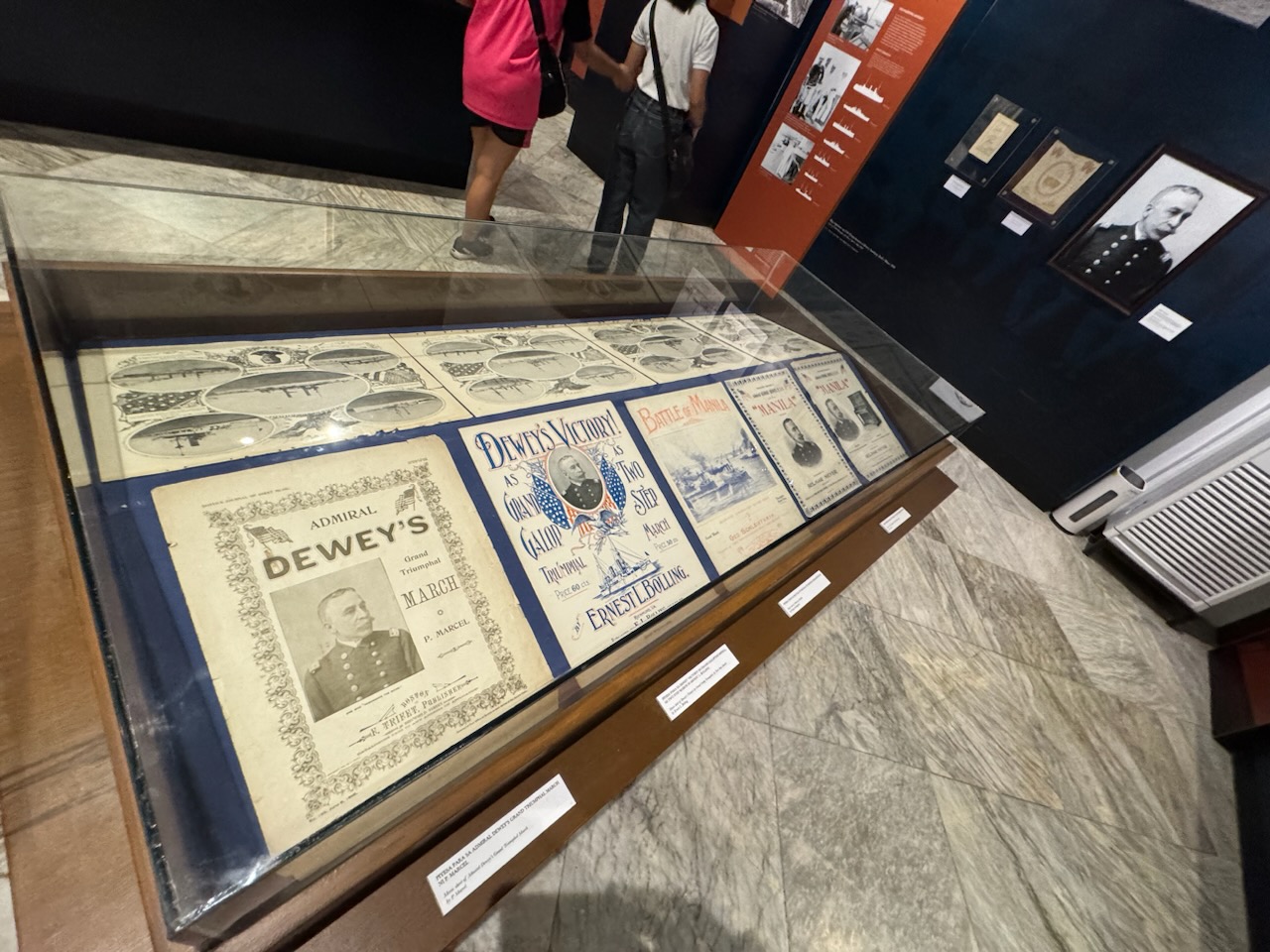
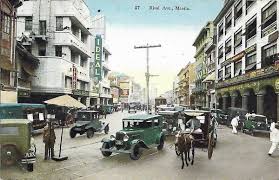
I’m particularly fascinated by the prewar period—what Filipinos of the midcentury looked back on as “peacetime” and what Carmen Guerrero Nakpil called our “fifty years in Hollywood,” which were enough to occlude much of the influence of our “three hundred fifty years in a convent” under the Spanish. It was an age of many transitions, from the jota to jazz, from the caruaje to the Chevrolet, from tradition to that liberative and all-embracing buzzword, the “modern.” Much of that went up in smoke during the Second World War, but you can still catch the ghost of this lost world on the Escolta, among other vestiges of our love-hate affair with America. (You might want to visit the Art Deco exhibition at the National Museum of Fine Arts, ongoing until May 2026; I have some items on display there.)

So entranced have I been by this time that I decided, during the pandemic, to set my third novel in it, at the birth of the Commonwealth and upon Quezon’s assumption of ultimate power, an upstairs-downstairs narrative about the comprador upper class and the world of the Manila Carnival set against the embers of the Sakdal uprising, the fuming and scheming Aguinaldistas, and the netherworld of printing-press Marxists and tranvia pickpockets. Progress has been slow because novels always take the back seat to life’s more pressing needs, but I still hope to get this done if it’s the last thing I do.

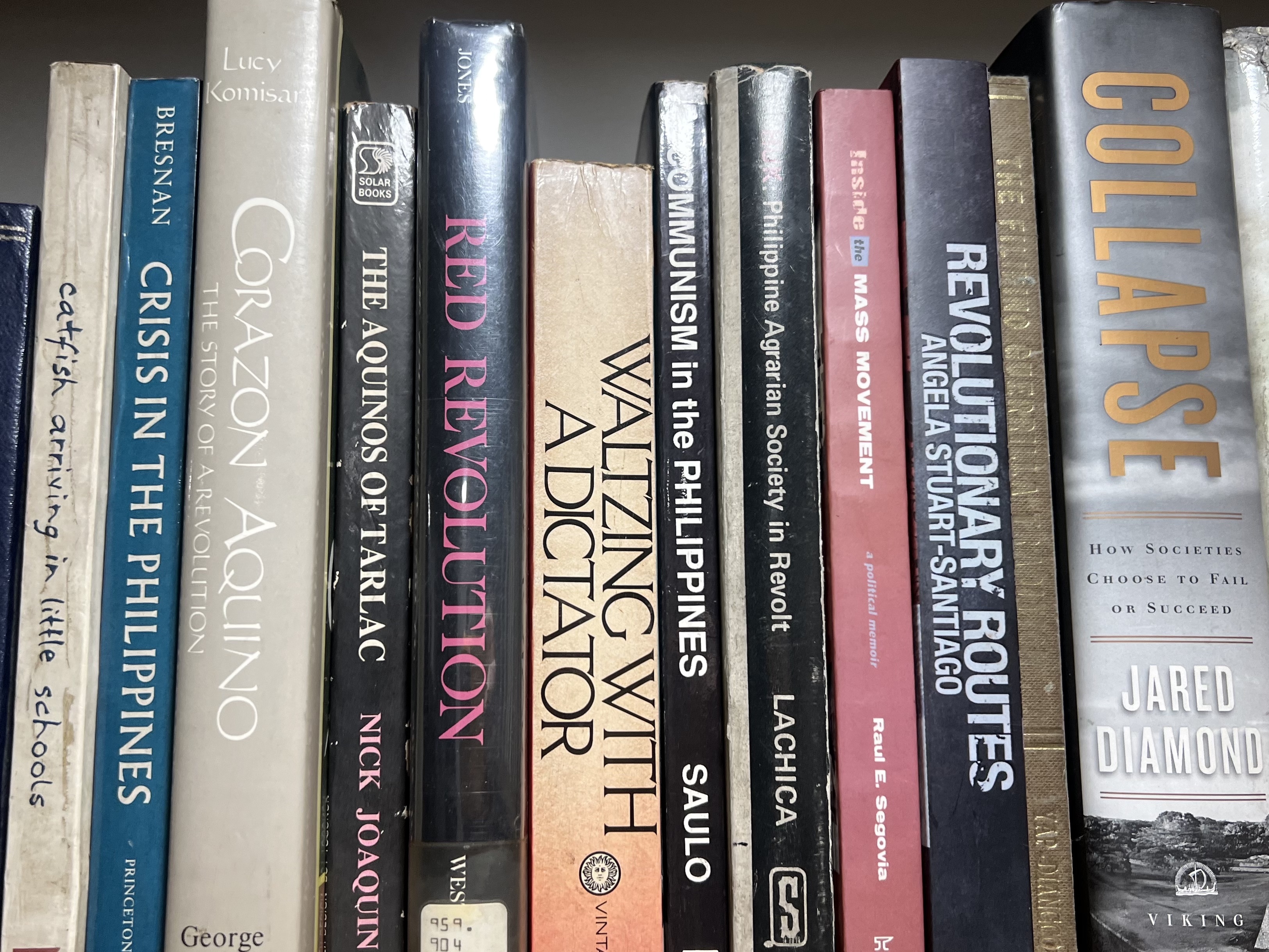
The research for the book, however, has brought its own rewards. Among my main sources for the background has been a slim volume—long out of print and now very  hard to find—titled The Radical Left on the Eve of War: A Political Memoir by James S. Allen (Quezon City: Foundation for Nationalist Studies, 1985). Allen (actually a pseudonym for Sol Auerbach) was an American scholar and journalist, an avowed Marxist who traveled to the Philippines in 1936 and 1938 with his wife Isabelle, also a member of the American Communist Party, to meet with local communists and socialists (then headed by Crisanto Evangelista and Pedro Abad Santos, respectively) and to get a sense of the Philippine situation under American rule. 

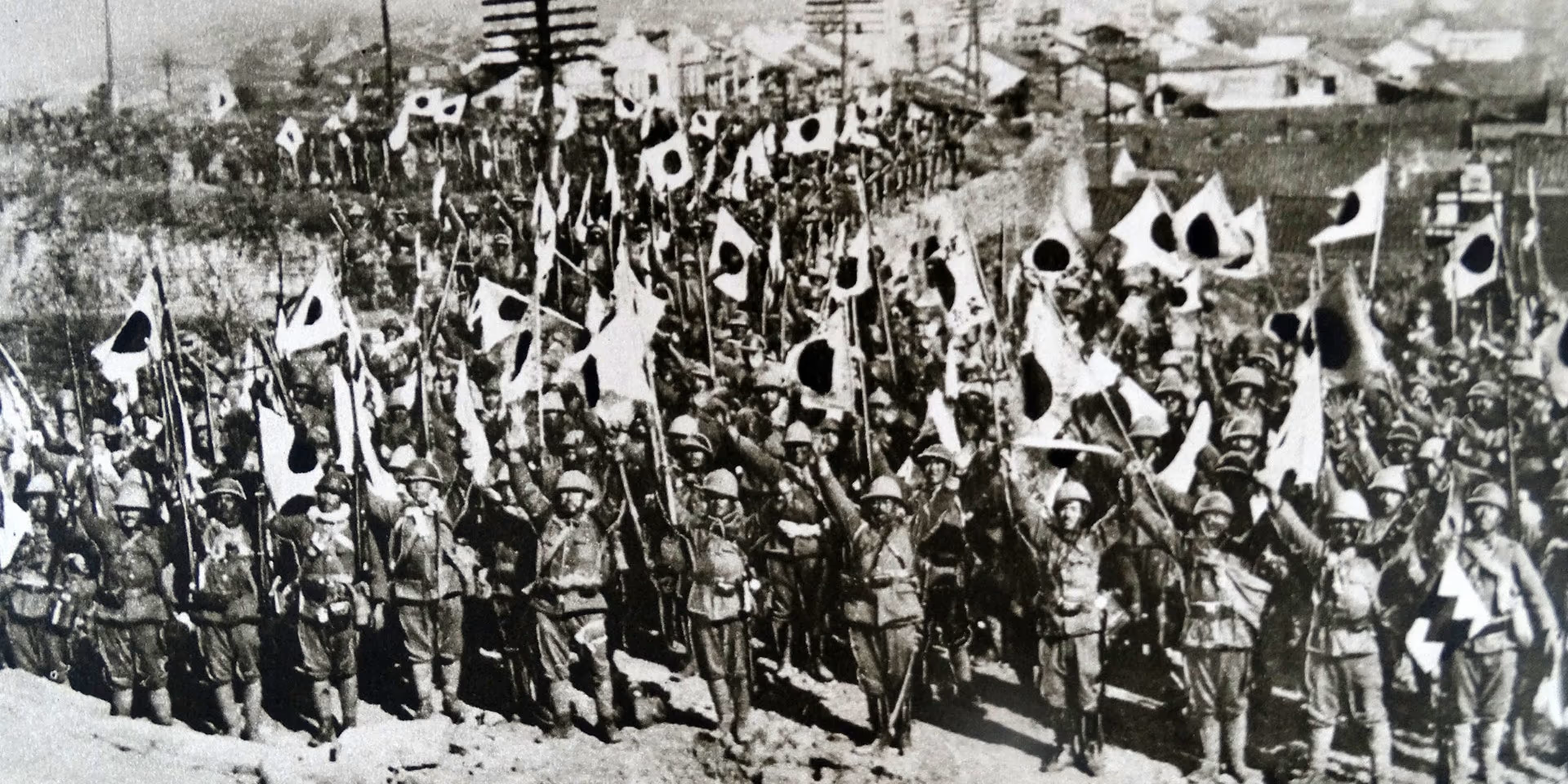
Even that early, the threat of a Japanese invasion was already looming on the horizon and causing great anxiety in the Philippines; Japan had earlier occupied Manchuria and as much as a quarter of the entirety of China by 1937. It seemed like a confrontation between Japan and the United States was inevitable, although some Filipino nationalists—fiercely anti-American—preferred to ally themselves with their fellow Asians than with prolonged white rule. At the same time, others like Pedro Abad Santos feared that the independence Quezon sought would be granted prematurely to give the US an excuse to abandon the islands and avoid confronting the Japanese. 
This is where I tell you why I’m bringing up James Allen’s memoirs this Monday—because of our present situation vis-à-vis China and (in one of history’s ironic reversals from victim to victimizer) its growing domination of the South China Sea. In Quezon, Filipinos had a leader who was deeply mistrusted and opposed by many; the United States’ willingness to defend the Philippines was in doubt; and the threat of a foreign invasion was clear and imminent. 

Allen actually sat down with Quezon for a long interview at the latter’s invitation, and was impressed by the man’s grasp of politics and his singular ambition. But the article that came out of that encounter displeased MLQ; Allen, after all, was still a communist at heart, which makes the following quotation—from a letter Allen would compose and send to his American colleagues in October 1937—even more interesting. I’ll leave it to you to observe the parallels, and to cast them against the Marcos-Duterte issues of our time.

“Filipino Marxists and radicals need to relate independence from the United States to the world crisis created by fascism. The immediate concern in the struggle for an independent and democratic Philippines is to safeguard the country against the threat of Japanese aggression. The objectives of complete independence from the United States and the internal democratic transformation must be obtained without endangering such gains as have been made or subjecting the country to new masters. The people must be awakened to the prime and pressing danger to their national existence. The United States is moving toward alignment with the democratic powers against the fascist bloc, albeit slowly and indecisively.


“Roosevelt is shifting somewhat toward the Left of Center to keep pace with his mass support from the surging labor movement and anti-fascist and anti-war popular sentiment. The national interests of the Philippines call for vigilance and precautions against Japanese aggression. This coincides with the interests of the United States in the Pacific area, and it would be folly not to take full advantage of this concurrence. In the broader perspective, the outcome of the struggle in China will be crucial for all the peoples of the Far East, and if the United States were to withdraw from the Philippines this would be a serious blow against China and encouragement to Japan’s designs upon Southeast Asia and the islands of the Pacific. The cause of Philippine independence at this time can best be served by cooperation with the United States.


“The situation also requires a change in the attitude toward Quezon, from frontal attack to critical support. Unprincipled opposition for the sake of opposition-as with some leading participants in the Popular Alliance is dangerous, for it plays into the hand of pro-Japanese elements and sentiments. Quezon certainly is not an anti-fascist, but he is not intriguing behind the scenes with Japan. The greatest opposition to his early independence plan comes from the landed proprietors, particularly the sugar barons, while it enjoys support among the people. The Popular Alliance should also support the plan, including provisions for mutually satisfactory economic, military and diplomatic collaboration after independence. Though Quezon is far from being a Cardenas or Roosevelt in his domestic policies, every effort should be made to move him away from his pro-fascist and land baron support by providing him with mass backing for such pro-labor and progressive measures as are included in his social justice program. In sum, the Popular Alliance should encourage a national democratic front devoted to the preservation of peace in the Pacific, the safeguarding of Philippine independence, and defense and extension of democracy in the country.”
Penman No. 474: Looking Back and Letting Go

Penman for Sunday, June 1, 2025

AS ANY friend who’s had the privilege of being invited to his Makati home quickly realizes, Ambeth Ocampo is more than the engaging public intellectual we all know, whose Looking Back series has made history come alive for young Filipinos. He’s also an inveterate collector of rare Filipiniana—books, ephemera, art, and historical objects—all of which come with the territory he works in. 

There have been many Filipinos of a similar bent—the legendary Alfonso Ongpin and the late Ramon Villegas come to mind, as well as the more contemporary Jimmy Laya, Melvin Lam, and Edward de los Santos, among others—but the way Ambeth has amassed his collection is noteworthy on its own, as it folds the personal almost imperceptibly into the professional. 

It comes pretty close to the classic prescription for murder—means, motive, and opportunity—all captured in his classic story of how he stumbled on and picked up Emilio Jacinto’s silver quill, a writing prize, from an antiques dealer who didn’t bother to learn what it was and let it go for its scrap value. (Having as much of Ambeth’s desire for antiquarian junk but with much less knowledge and certainly less means, I’ve often joked, between the two of us, that Ambeth’s the scholar and I’m the scavenger.)

Jacinto’s quill, along with a trove of other historical treasures from Ambeth’s personal collection, will be up for auction on June 7 at Leon Gallery. They include Juan Luna’s silver belt, Felix Resurreccion Hidalgo’s walking stick, an official copy of the Malolos Constitution, Philippine maps from 1616 and 1647, and the Noceda and Sanlucar Vocabulario de la Lengua Tagala from 1860, among many others.

Knowing how precious these objects were, I had to ask Ambeth more about them, and this is what he said.

What made you think of selling these treasures now? Surely it can’t be easy letting go of them after being their caretaker all this time?

Over the years, I have come to the realization that collecting is not the hobby it used to be. As a boy I collected stamps and learned geography, history, and the culture of foreign countries in the process. I was fortunate that my father’s company had an international correspondence, so every week his secretary would send me a batch of envelopes to sort out.

I started collecting Filipiniana books in the 1980s, stocking up from the National Bookstore Quezon Boulevard branch bargain bin where I completed my Nick Joaquin essay collection because they cost one peso each. After school, I went to the Heritage Art Center in Cubao that I learned only years later was the site of the old Philippine Art Gallery. It was a ramshackle grouping of rooms upon added rooms made from old house parts that Mario Alcantara, the owner, bought from mambubulok. I had a favorite nook where I did my homework and when bored I would explore the rooms that I think gave me an eye for art and the ability to choose what I thought was good or not.

Looking back my collecting, and my life, has been the happy intersection of skill and opportunity. Napoleon once said “ability is nothing without opportunity.” I have always seen collecting as a responsibility. Collecting significant Filipiniana is not a hobby. It is not an investment. Collecting is a responsibility, the collector a steward who preserves the collection for the next generation. 

The objects I put at auction have enriched my life in many ways and I think they will enrich the life of their next steward. Some of the lots like the Malolos Republic one-peso banknote and the printed copy of the Malolos Constitution have been tucked away in a drawer. If I drop dead tomorrow these might be carelessly thrown away as trash. They should go where they are better appreciated. Collectors de-accessioning keeps the market alive and buzzing.

Let’s get this out of the way: it’s none of our business, but what will you do with the money?


Since I am not a dealer the material reward does not really factor in the equation. I have sold other things before at cost or even at a loss, just thinking that my gain was the enjoyment I got chasing after them and acquiring them. What will I do with the proceeds? When I started selling my rare Filipiniana I thought that instead of having shelves of books, maybe I should just sell and use the proceeds to buy one or two incunabula or samples of early Philippine printing from 1593-1640. Instead of caring for a whole library I will just care for half a dozen very important books.

How did you start out as a collector of historical objects? How and where did you find them? Aside from Jacinto’s pen, what was your most serendipitous find?

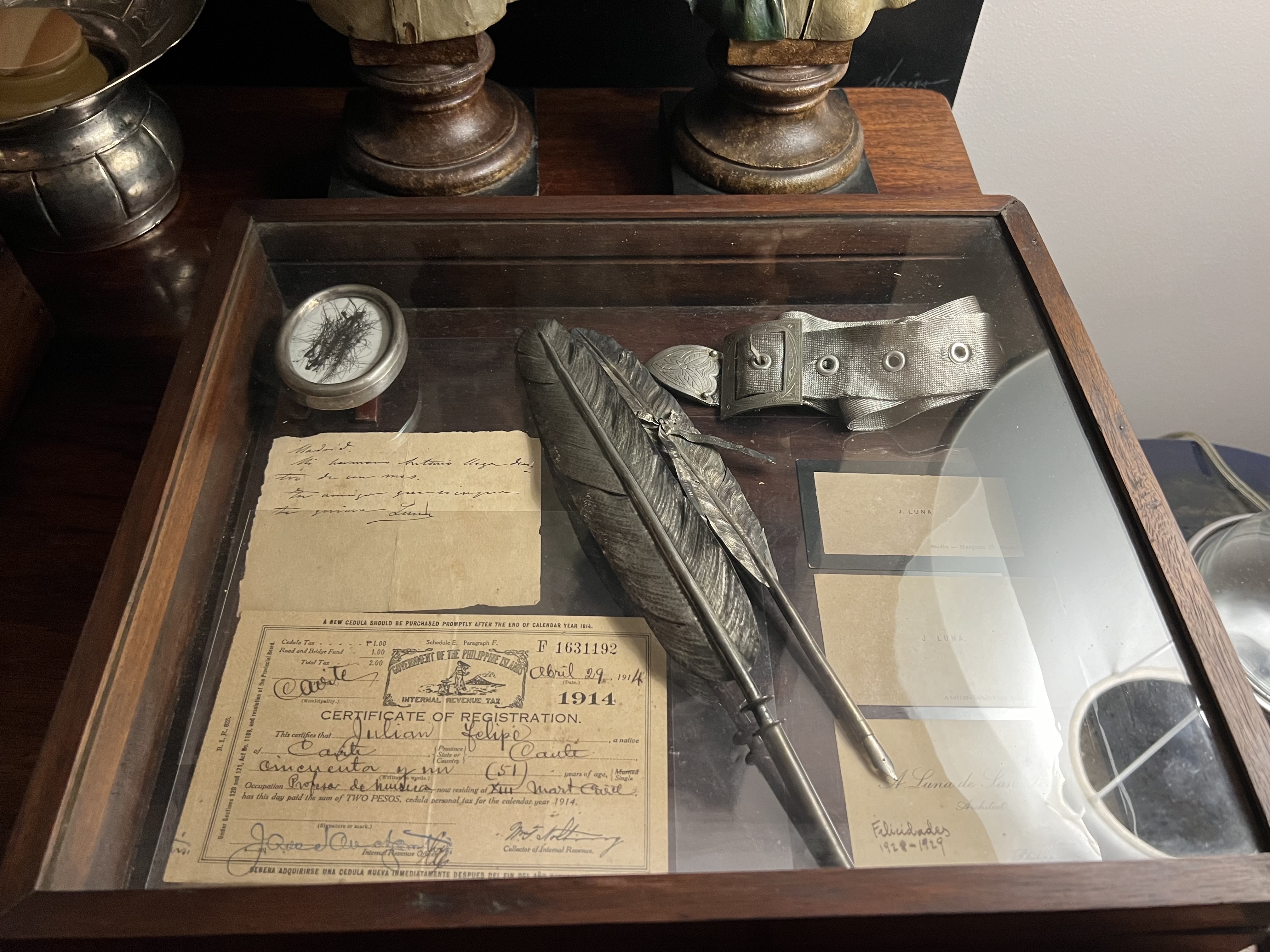
Collecting historical objects came naturally from my work as a historian. I would find things in used bookstores and when supply was still plentiful in the Ermita antique shops. One of the serendipitous finds was the cedula or residence certificate of a certain Julian Felipe, a musician from Cavite. It was in a heap of old papers, initially priced at one hundred pesos. I haggled it down to fifty, paid, and ran away. 

Another time my favorite antique dealer brought a “European painting” of a Virgin and Child to my home. I looked at it and knew it was Philippine. When I opened the frame to inspect the painting, hidden under the frame was the signature of the Filipino master Mariano Asuncion (1802-1855). The silver belt of Juan Luna and the bank draft in his name were acquired from Mario Alcantara. It came with the famous trove of paintings inherited by Grace Luna de San Pedro that are now in the National Museum. While everyone was going wild over the paintings, I spent many afternoons browsing the boxes of memorabilia that included the bloodied uniform Antonio Luna wore when he was assassinated, the palettes and brushes of Juan Luna, the memorabilia, some architectural plans of Andres Luna de San Pedro, and much more. I offered to buy the palettes and brushes and the painter’s smock but Mario said these were destined for the National Museum. There was also the last letter Juan Luna wrote to his son from Hong Kong, written a day before his death, not only was this letter significant, Luna did a watercolor of Hong Kong Harbor on the first page of the double-sided letter. All I could afford was the silver belt that came with Luna’s black suit that Mario said was also destined for the National Museum. Unfortunately, the Heritage Art Center burned down and with it all these memorabilia.

Do you or can you separate the collector from the scholar? Did the collecting happen naturally as a consequence of the scholarship?

The collecting grew and was enriched by my research and scholarship. If I had a PhD in Math I probably would not have recognized these odds and ends now considered treasures. I have been divesting over the years. A large part of my Filipiniana collection was donated to the Center for Kapampangan Studies, Holy Angel, Pampanga. All I keep at home are the books I need for work for teaching, lecturing, and writing, but now that I am retired from Ateneo (but still employed on a post-retirement appointment) it is easier to let go. 

The full catalog of Leon Gallery’s Spectacular Mid-Year auction can be accessed on its website at https://leon-gallery.com

Penman No. 467: Recovering Our Memory of the Sea

Penman for October 20, 2024

I’VE OFTEN remarked, in academic conferences, about the glaring absence of the sea in our mainstream and modern literature, beyond serving as a decorative backdrop or romantic element. I recently learned that this may not be so true of the native literatures of the Philippine South, for whose people the sea is their economic and cultural lifeblood, but for most of the rest of us, the only sea we’ll ever know is Boracay, or the Dolomite Beach.

That’s a sad thing when we consider that the Philippines—the world’s second largest archipelago after Indonesia—also has one of the world’s longest coastlines (over 36,000 kilometers), is rich in marine biodiversity, and can look back to a long, proud, and continuing seafaring tradition. Despite the alarming depletion of our marine resources due to overfishing and damage to marine ecosystems, we continue to rank high among the world’s fish producers; ironically, our fishermen are among our country’s poorest citizens. And for many decades now, the Philippines has sent out its seafarers to crew the ships of the world—over 550,000 of them last year, making up a fourth of all the world’s seaborne workers.

To go back even farther into the past, pre-Hispanic Filipinos built the balangay that helped populate Austronesia as well as the speedy warship, the caracoa; in Spanish times our ancestors built the galleons that crossed the oceans. In Moby Dick, Herman Melville referred to Filipinos aboard the whalers as “Manila men.”

Behind these figures runs a compelling human and social drama, but it’s a story largely unknown and untold to our own people, and what little we know is fading even faster as more of us leave our islands for the big cities, slowly but surely losing our personal connections to the sea. We encounter sea life only in the fish market or the seafood section of the grocery, or in tin cans; our children do not know the names of fish, which many now refuse to eat, in favor of sausages and noodles.

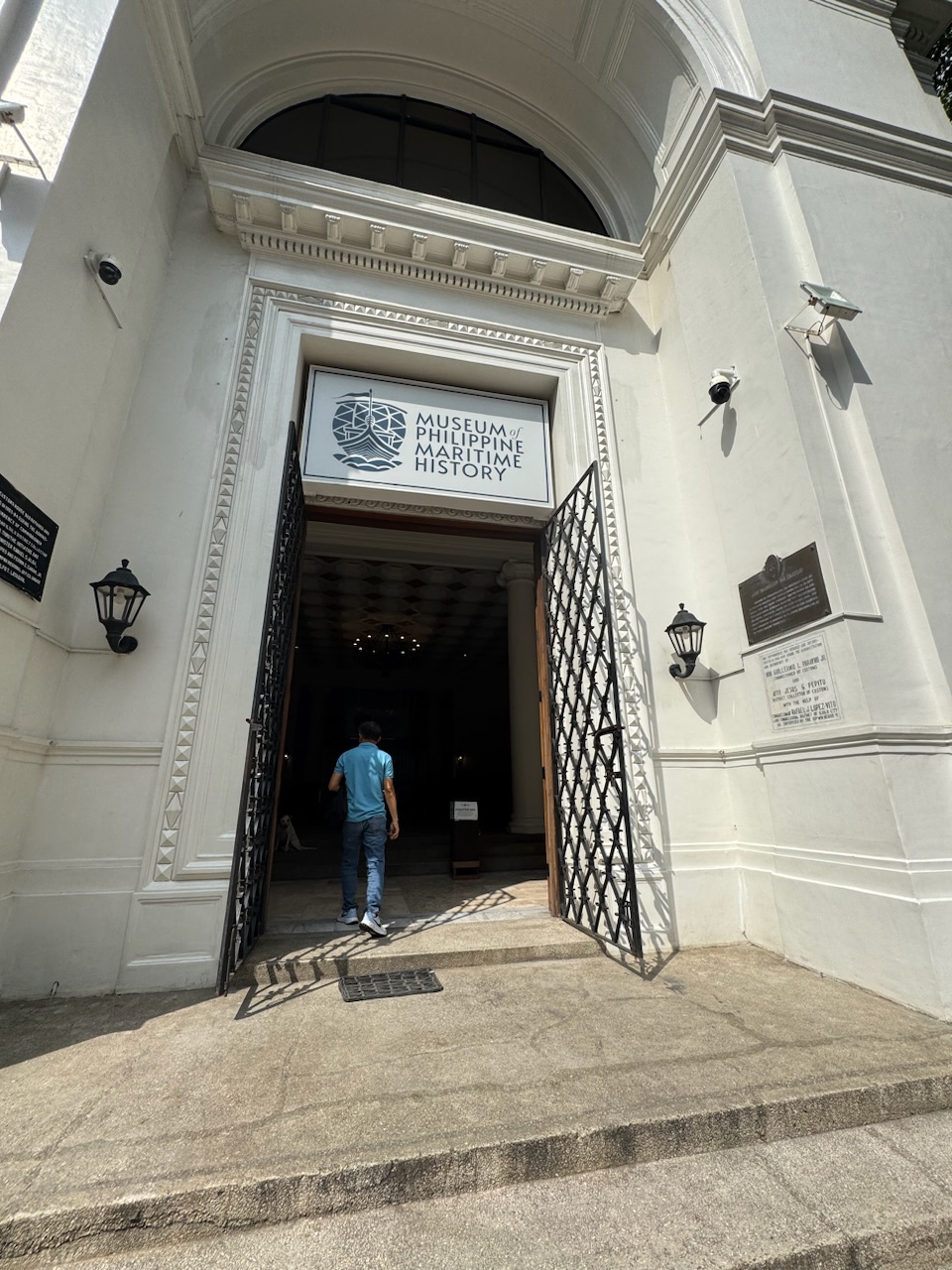
Thankfully, the National Historical Commission of the Philippines (NHCP) has done something critically important to fill this gap in our collective memory—by establishing a Museum of Philippine Maritime History (MPMH) that tells the story of our seafaring past. And it’s significant that this museum isn’t located in Manila, which would seem to be the logical first choice given Manila Bay and its port, but in Iloilo, which has also had a long and continuing affinity with the sea. Iloilo has historically supplied many if not most of the country’s seafarers to the global market. The city has a plethora of schools offering maritime courses, ensuring the continuity of talent.

I stumbled on the MPMH during a recent visit to Iloilo—among my favorite local destinations for all the obvious reasons (the food, the Esplanade, the heritage houses, the churches, the hospitality, the culture, and of course the people). The amazing boom it’s undergone over the past two decades under the sponsorship of former Sen. Frank Drilon and his local counterparts has dramatically transformed the city’s physical and economic landscape, but it hasn’t forgotten its past as it moves resolutely forward. 

Iloilo has long been known as the city of museums. Aside from the Museo Iloilo and any number of restored mansions, it now boasts the Museum of Philippine Economic History, which chronicles the city’s and region’s central role in sugar, shipping, and commerce; the Rosendo Mejica Museum, which celebrates Iloilo’s journalistic heritage (and I’m proud to say that my wife Beng descends from a Mejica); and the Iloilo Museum of Contemporary Art, which places Iloilo squarely in the center of cutting-edge art production.

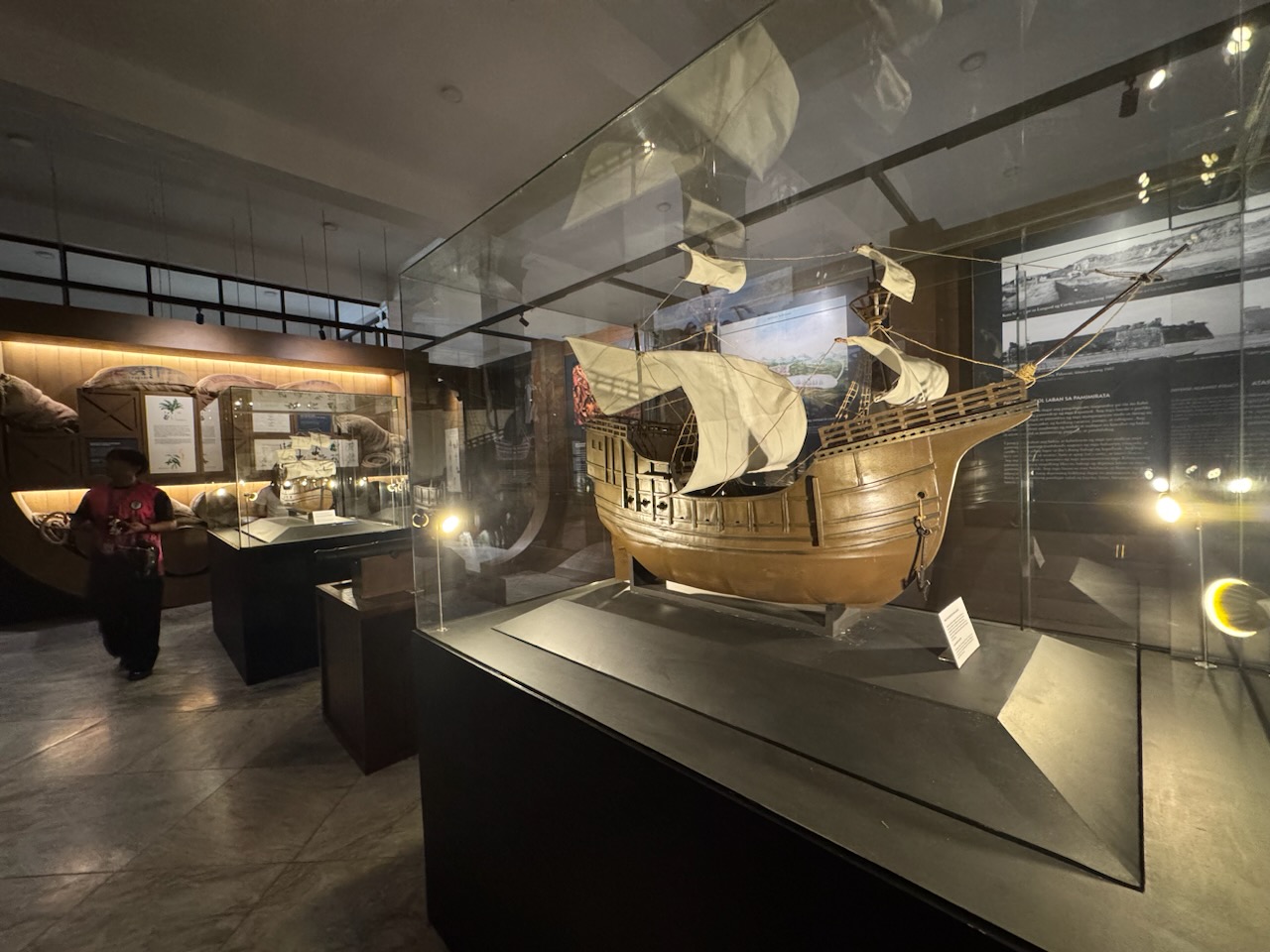
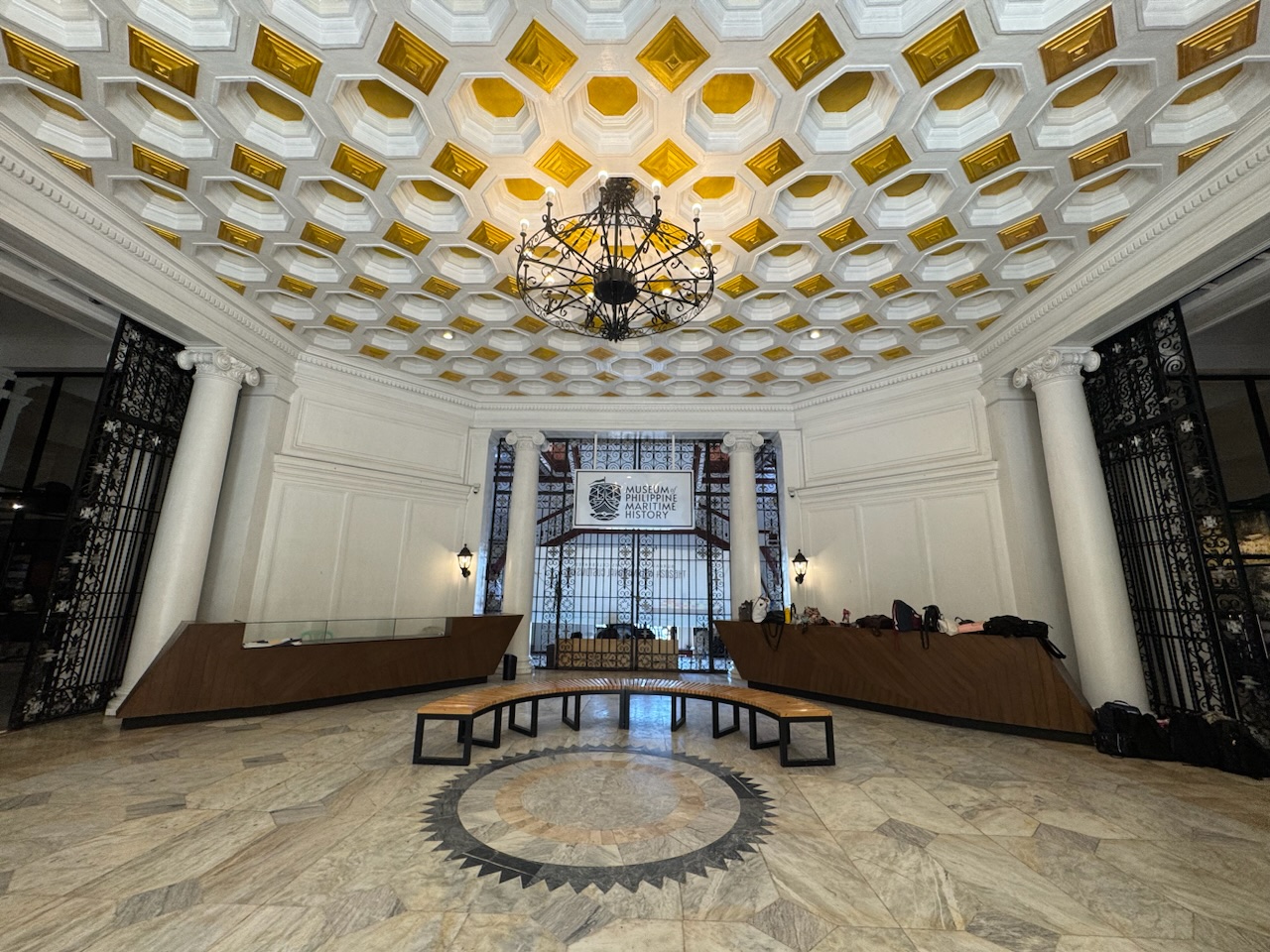
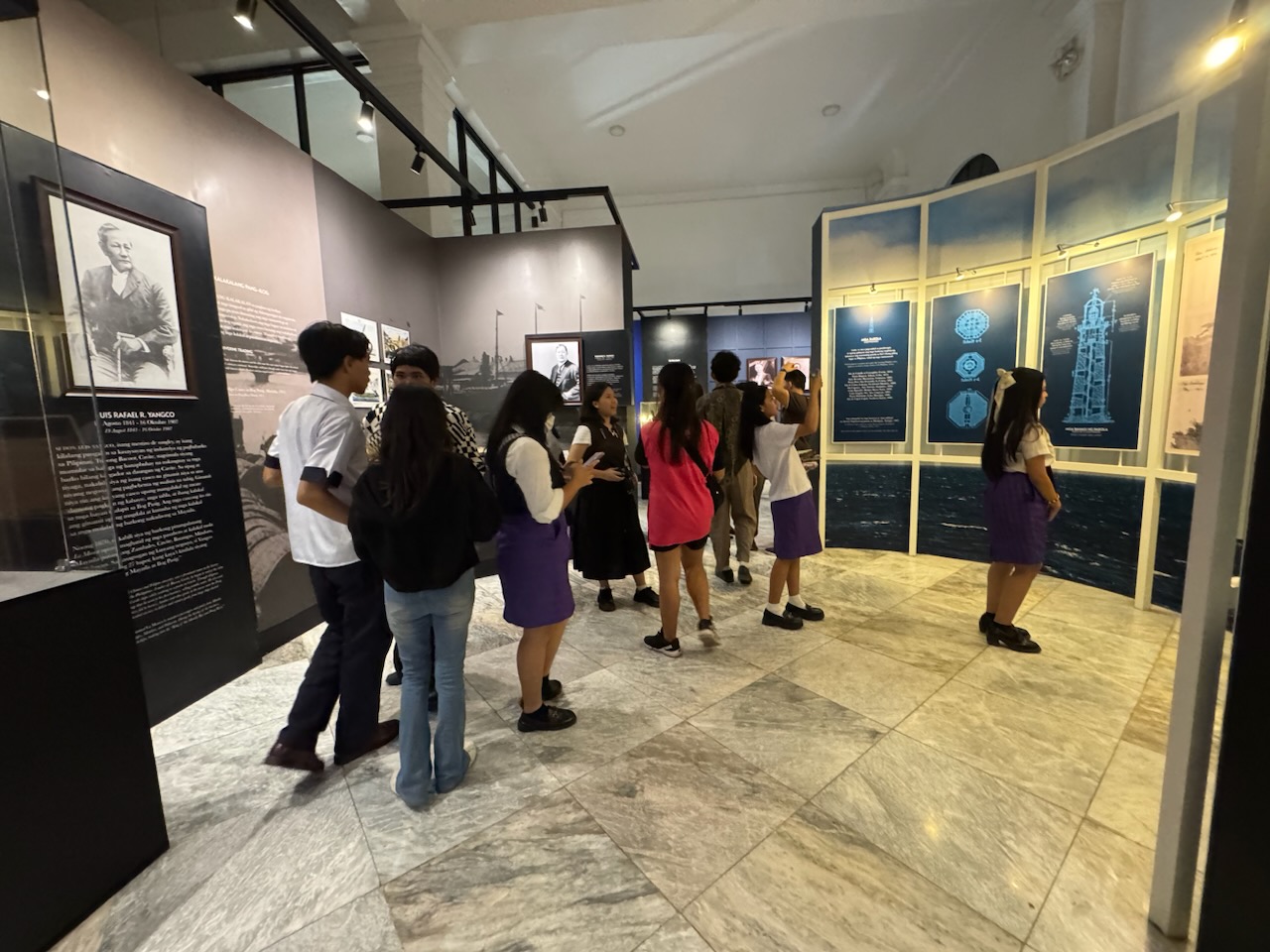
The MPMH, which opened in January 2023 at what used to be the Old Customs House on Calle Loney and Aduana in City Proper behind Sunburst Park, walks the visitor through exhibits covering the past until the Spanish era, and the American period to modern times. One very informative section presents the variety of Philippine boats (biray, casco, vinta, batil, etc.); scale models bring some to life. Key figures in our maritime history such as Luis Yangco (1841-1907), who had a shipping empire and supported the revolution are introduced. Historical photographs, posters, and other artifacts provide vivid visual proof of how vital the maritime industry was to our economy and society. Another panel notes the many waterborne festivals we Filipinos hold throughout the country, such as the Pista ‘Y Dayat in Lingayen, Pangasinan every May, and the Bangkero Festival in Pagsanjan, Laguna every March.

It’s not a huge gallery, and one wishes there were even more artifacts on display to ponder, but in terms of curation and presentation, the MPMH can hold its own, given its present limitations, against other international museums of its kind, with crisp, clear graphics, well-chosen items, and useful and interesting detail. (I’ve had the privilege of visiting the National Maritime Museum at Greenwich in the UK and the Museo Naval in Madrid, so as global standards go, those two maritime giants would be tough to match.) The MPMH’s best come-on—which probably accounted for the hordes of students present when we came by—is that it’s absolutely free, although donations are welcome. That’s a great start, with the kids, toward recovering our memory of the sea.

Qwertyman No. 89: The Country I Wanted to Love

Qwertyman for Monday, April 15, 2024

FOURTEEN YEARS ago, I received a writing assignment that any journalist would have jumped at: to go with other media representatives on a week-long visit to Israel and to report on our observations. Although the trip was sponsored by the Israeli government, and therefore clearly a PR initiative, we were under no instructions as to what to write about, or how. Of course there were implicit or effective restrictions: our itinerary did not include visits to Gaza, the West Bank, or other Palestinian-controlled areas, and we had no interviews with Palestinians (interestingly, one of our companions, ABS-CBN’s Uma Khouny, was half-Filipino and half Arab-Israeli). 

As expected, we saw the best of Israel, the sites that any “Holy Land” tour would have included: the Temple Mount, the Holy Sepulchre, the Wailing Wall, the Dead Sea, Masada, the bazaars, and so on. We also visited a kibbutz and marveled at how its inhabitants could coax so much life and verdure out of barren desert. We were brought to a state-of-the-art facility where we drove an Israeli-made, 100%-electric car around a track (this was in 2010, mind you). Just outside Tel Aviv, we met children at a hospital where they had heart operations they couldn’t have afforded or gotten otherwise; these children included Palestinians, Angolans, Chinese, and yes, a Filipino. We watched  vibrant performances of contemporary Israeli dance and music. We were moved close to tears by a visit to the Holocaust exhibits at Yad Vashem.

We left deeply impressed by the Israel we had seen and experienced, and I reported as much in two “Penman” columns for the STAR. We were aware that we had not seen everything on our carefully curated tour, and we understood that there were simmering tensions behind the high walls that were rising all over the place to block off zones that the government might have considered unsafe, but there was a time for every story, and this time was our hosts’.

Israel did not even need to invite me to gain my sympathy. Like many Catholic boys in the 1960s, I grew up steeped in the belief that the Jews were God’s chosen people—why else would he have delivered them out of Egypt (a scene replayed over and over again in Technicolor on Holy Week) to the Promised Land? I read Leon Uris’ Exodus and enjoyed the movie version with its memorable theme, “This Land Is Mine.” I learned to sing “Hava Nagila,” and so did you.

Over the next decades I would watch countless documentaries on the Mossad and its exploits in capturing Adolf Eichmann, freeing the hostages at Entebbe, going after the leaders of Black September in the wake of the Munich Olympics massacre, and gathering intelligence leading to the Yom Kippur War. The eye-patched Moshe Dayan and the grandmotherly Golda Meir were both cinematically compelling. More than biblical heroes, Israelis and Jews represented the finest of human qualities—tenacity, ingenuity, resolve, courage, and imagination. Even beyond Israel, who could argue with the brilliance of Isaac Bashevis Singer, Jascha Heifetz, Woody Allen, Barbra Streisand, and Marc Chagall? Never mind the Rothschilds and the Shylocks.

But now much of that luster has tragically vanished, lifted like so much vapor, in the wake of Israel’s invasion of Gaza and its horrific toll on human life. 

Like most onlookers from afar, I was appalled and outraged by Hamas’ attack on Israeli communities and citizens last October 7; subsequent reports of rapes and executions showed these assaults to have been premeditatedly barbaric, calculated to sow fear and terror in the enemy. No matter the history behind them, no matter the grievances that may have led to their unleashing, the violence committed especially against innocent civilians was brutish and repulsive.

Israel may have gained the moral high ground at that point in its pledge to avenge the victims, recover the hostages, and destroy Hamas, but it soon lost that superiority in its disproportionately savage invasion of Gaza. All its claims to sophistication and efficiency in waging war—the kind of surgical operation on display at Entebbe and elsewhere—went out the window in air strikes that have killed thousands of Palestinian civilians, including hapless children; even those who miraculously survive will forever bear the scars and trauma of this assault. To “weed out” Hamas, Netanyahu’s Israel has chosen to flatten and to destroy the whole garden. And as if the world were not watching, an Israeli commander even declared on TV that “There is no famine in Gaza.” 

This has gone far beyond “an eye for an eye, a tooth for a tooth.” The Israelis have claimed buckets of Palestinian eyes and teeth for every one lost to an Israeli. They have exceeded even the Roman practice of decimation, by which every tenth man in a cohort was executed in punishment for the offenses of the lot; instead, ten Palestinians seem to have suffered for every Hamas member deemed at fault for the October 7 attack (the actual kill ratio has been 30 to 1). The supreme irony of it is that Israel has merely guaranteed that Hamas’ age-old causes and resentments will live on, and even prosper with global sympathy for Palestinian self-determination, as may have been Hamas’ game plan all along.

Of course, the State of Israel does not need our admiration and affection, and we understand that it is engaged in an existential fight for its life on many fronts, as it has been since its inception in varying degrees of intensity; the same can now be said for the Palestinians. My opinion as a distant Filipino commentator will change nothing (except perhaps preclude me from further invitations to deplane at Ben-Gurion airport). I realize that what I am saying here will please neither side of this conflict and their partisans, and I expect to receive mail to insist that I failed to see this and that and to justify the ferocity of their actions. I know that we are no longer watching a movie with a billowing theme song and clear heroes and villains. 

But I suspect I am not alone in expressing my great sadness over the turn taken by a country I wanted to love. I can only take refuge in thinking that not all Israelis are Netanyahus, and not all Palestinians are Hamas. “Vengeance is mine, saith the Lord.” I wonder if that line from Deuteronomy has its equivalent in the Torah, or the Koran for that matter.

Qwertyman No: 40: Teaching History

Qwertyman for Monday, May 8, 2023

I HAVE a subscription to the New York Times, which I enjoy for its features and commentary as much as its news coverage, and the other day my attention was piqued by a small headline: “It’s Not Just Math and Reading: US History Scores for 8th Graders Plunge.”

According to the article, recent test scores reveal that young Americans (about 13-14 years old for eighth-graders) have become much less knowledgeable about their history and civics over the past decade—with 40 percent scoring “below basic” and only 13 percent ranked as “proficient.” 

I immediately wondered how our students would score given similar tests. Would they be able to answer even simple questions about why Ferdinand Magellan sailed to the Philippines, what prompted Filipinos to revolt against Spain, why the Americans occupied us, what led to our involvement in the Second World War, and what martial law and EDSA were all about? I’ll probably be safe in my prediction that they would score dismally, from what I’ve seen in my own classes in UP (yes, in UP), where I’ve been dismayed to find a yawning ignorance of history and literature among my students, supposedly among the best in the country. 

Don’t get me wrong: these are bright, idealistic kids, desirous of all things good for their people and their families. They perform well in class and will likely succeed in whatever career lies ahead of them. But when I ask a roomful of English majors if they know or have read NVM Gonzalez and only a couple of hands go up, I get worried. When I ask when or what year the Americans arrived to conquer us and I get strange answers like “1945,” I get worried. 

However shocked we may profess to be, we can’t blame the students. In 2014, following the passage of the Enhanced Education Act of 2013 or the K-12 Law, the Department of Education issued Order No. 20, Series of 2014, effectively removing Philippine History as a high school subject and subsuming it as an “integrated subtopic” under “Asian Studies,” supposedly to provide students with a wider global perspective. The idea sounds nifty, but as many educators have since pointed out, its practical effect has been to dilute the teaching of Philippine history to the point of oblivion. The result is that we have young Filipinos with no knowledge of the most basic facts and issues of their past, and no appreciation of how that past brought us to where we are today.

That vacuum has been an open invitation to misinformation and historical distortion, the stock-in-trade of political propagandists, trolls, and spinmeisters. It’s become much easier to sell myths like a golden age under martial law to impressionable youngsters who were never told or taught the truth. Not surprisingly, Order No. 20 has been attacked by its critics as a means to lobotomize the youth and to render them more susceptible to alternative narratives (aka fake news) concerning our history. 

And yes, I have to acknowledge that all this began under the late President Noynoy Aquino, a champion of K-12, whom I prefer to believe had no such nefarious motives in mind, as he and his family would have had little to gain by erasing history. But the policy was upheld and sustained by the following administration, with DepEd Secretary Leonor Briones arguing strenuously that History (including our martial-law experience) was being taught in Grade 6 under Araling Panlipunan, and again in high school as a component of Asian and World History.

Given the current DepEd’s expressed desire to review K-12, it might be a good time to test how effective that policy has been: just how much Philippine History are our high school students learning and retaining? How much should they know by the time they get to college, where thornier issues such as nationalism, agrarian reform, and foreign policy will be threshed out in all their nuances?

Long before these questions arose, it was a common complaint among students and even teachers that our problem with History was how badly it was taught, often as a collection of names and dates rather than a coherent narrative (which I must say I sometimes wonder about, fact often being stranger and messier than fiction). We generally agree that History should involve more reasoning than rote memorization. But as the New York Times reports, “That emphasis can contribute to a troubling lack of background knowledge,” with experts observing a “rapid and very significant decline in what students know about history and geography—like the fact that Africa is a continent, not a country.” So the basics of names, dates, and places remain important—getting the facts straight before getting into more complicated arguments.

It’s even more troubling to note that on top of this decline in historical knowledge and awareness among young Americans, there’s now a ham-fisted effort from conservative politicians to purge school curricula of what they see as “woke” content—subjects that have challenged the longstanding impression of America as a nation forged by whites. Governors like Florida’s Ron DeSantis—eager to present themselves as the flag-bearers of political and moral rectitude—have supported moves to eliminate African-American and LGBTQ studies from the curriculum. Others have called for banning books that threaten their view of traditional America, including books titled “The Infinite Moment of Us” (a young adult novel about love and sex) and “How to Be an Antiracist” (a nonfiction book about racism and ethnicity). This reminded me of how some Philippine state universities, not too long ago, went on their own book-banning spree, on some silly suspicion that books by such authors as National Artist Bienvenido Lumbera were “subversive.”

The New York Times piece came with an irresistible teaser: a brief five-question, multiple-choice history quiz for readers to test themselves on how well they know American history. I scored four out of five (failing a question about post-Civil War reconstruction)—not too bad, I thought, for a guy living seven thousand miles away. But then I come from a generation schooled on American textbooks, who know American history and geography better than many Americans. That’s a topic for another column.

In the meanwhile, let’s ask ourselves: how well do we know our history, and how important is that knowledge to understanding our present and shaping our future? Is “Maria Clara and Ibarra” pointing the way forward?

Qwertyman No. 3: The Book Convention

Qwertyman for Monday, August 22, 2022

THE ANNUAL convention of the National Association for the Advancement of Books of the Democratic Republic of Kawefo was about to begin, and after a rowdy rendition of the National Hymn that was sung in two keys when the video failed, followed by a ten-minute prayer in five different languages invoking Divine Guidance in the formulation of a “coherent, cohesive, and comprehensive national book development policy,” the Introduction of the Honorable Guest Speaker began, properly enough with the birth of the speaker in the country’s easternmost islands, better known for brigandry than textual poaching. 

“Minister Fwefwe could not have arrived at her exalted position at the helm of Kawefan higher education and cultural development without her deep and abiding commitment to the promotion of knowledge, which she gained through her lifelong immersion in the world’s intellectual foundries,” intoned her introducer, the current Vice-Minister of Propaganda whom everyone knew was angling for Fwefwe’s job at the next Cabinet reshuffle. An ex-Marine colonel who had been sacked for leading his men into a rebel ambush while searching for a cellular signal on which he could call his mistress, Vice-Minister Penpen had been rehabilitated through the good graces of his cousin, the chief cook at the Palace who served President Ongong his favorite dishes. “Who could have known that a chance encounter at the circulation desk of the Manoa Public Library on that fateful day of the 23rd of November, 1986, would lead to her elevation from a humble library assistant to our republic’s Chief Cultural Czarina?”

“Good Lord,” muttered Dr. Gawgaw in his corner, “he’s going to tell the full story all over again, is he?” Gawgaw dipped a nacho into the puddle of cheese before him and munched on it noisily. He sat with a group of old men sporting flowery ties and silver-tipped canes, with a sprinkling of elderly ladies whispering in an arcane Creole-like dialect. A retired Professor of Kawefan History, Gawgaw would have preferred to stay home in his library, sniffing the powdery biblichor out of his pigskin-bound volumes on “Robinaux’s Account of Kawefan Border Crossings, 1773” and admiring the faux-Victorian binding of “Society in a Centrifuge: Sugar and the Colonial Domestication of Kawefo,” which he wrote himself. But he had to attend this silly convention on behalf of his Society for the Preservation of Kawefan History, to ensure that any new book policy did not forget to account for the past, of which he was both protector and gatekeeper. “Madame Minister, republish our books!”

Across the aisle, the Kawefan Educational Publishers Guild had other ideas. “Books are everyone’s business!” And indeed it was, especially for Mrs. Krekre, lifetime president of the guild, the grande dame of Kawefan textbook publishing, and supplier of choice to all the government’s informational requirements. The guild employed hundreds of moonlighting schoolteachers to write textbooks that satisfied whatever Kawefan industry and ideology required (the ideology changed every six or twelve years, except for the occasional coup in between), and there was always a need to refresh history and its interpretation. The new administration was anxious to encourage the rumor that its ruling family’s wealth had been founded on ancient treasure, so new myths were being discovered and stories being written about the Lost Kingdom of Lifofo, to which President Ongong could trace his divine ancestry. New material meant new editions and teaching supplements, all of which required thorough vetting by the Ministry of Public Instruction, where Mrs. Krekre’s patient goodwill ensured everyone’s satisfaction.

Oblivious to the proceedings onstage were the members of the Kawefan Popular Writers League, an association dedicated to the principle of literature as entertainment, toward which they concocted dizzying romances set in the Swiss Alps, deep-space honeymoons, movie-star ghost stories, and murder sprees provoked by a secret kimchi recipe. They sipped their wintermelon-flavored milk tea at their table, sharing stories of their latest forays and frolics, and when Minister Fwefwe screeched into the mike about something that sounded like “social responsibility,” they screeched right back and giggled, annoying everyone else, but no one could shut them up or leave them out of the party, because everyone read them in their cars and bathrooms, including Dr. Gawgaw and Mrs. Krekre.

Looking much less happier were the dozen-odd members of Kawefan PEN, who stood forlorn just outside the convention hall, clutching placards that mentioned words like “FREEDOM” and “JUSTICE” alongside a slim stand of books illustrated with skulls, barbed wire, and raised fists. They were led by Prof. Mikmik, who had done his dissertation on Baudelaire at Harvard but who, after the Vietnam War, had seen the Marxist light and now sported a goatee and wrote inflammatory poetry. He had once been friends with Dr. Gawgaw until they quarreled over whose books mattered more in the grand scheme of things. Mikmik was convinced that he was under constant and intense surveillance, especially since his FB account was barraged by friend requests from nubile ladies masquerading as masseuses and escorts.

There were spies, indeed, on the convention floor, shuttling from one exhibition booth and table to another, deputized by the Inter-Agency Counter-Subversion Agency to locate, expose, and denounce subversive literature “in whatever form, format, or genre, for the purpose of undermining the people’s faith and belief in duly constituted authority….” The IACSA’s operatives had attended a workshop in Camp Ngungu, where important questions like “What’s a genre?” were addressed by retired professors of comparative literature (“A novel, a cookbook, a nursery rhyme!”). Key words like “liberal,” “gay,” “rejection,” and “penguins” were dissected and discussed to lay bare the insurgent cancer throbbing at the heart of Kawefan society.

Agent Pogpog had joined the IACSA after sleeping on his call-center job, and was now intent on making a name for himself by bagging his first major subversive author, following the recent, high-profile arrests of poets Gemgem, Kripkrip, and Ricric. For the past three hours, pretending to be a graduate student, he had been keeping Prof. Mikmik company, trying to figure out if Mikmik’s autobiographical epic, Seven Seasons of Solipsism, was subversive or not. It contained a line about “the promethean susurrus of unvanquished desire,” which sounded suspiciously rebellious. “It’s totally subversive, I assure you,” said Mikmik, “and if those fools in the military only knew their Homer, I should have been locked up and shot dead thirty years ago when this book came out. And then this book would be in its tenth edition!”

Inside the convention hall, Dr. Gawgaw burped, Mrs. Krekre laughed, and Minister Fwefwe raised a toast to all authors past and present, and to their boundless imagination.

Hindsight No. 28: The Queen of Trolls

Hindsight for July 25, 2022

(Photo from philstar.com)

FROM THE street, the building still looked like the bank it had once been, with fluted columns crowned by precast acanthus leaves, but the paint and even the cement cladding had chipped off to reveal the pedestrian concrete underneath. It had been a branch of the old Fidelity Bank & Trust Co., which had gone under in the 1980s after its owner had fled to Southern Spain with P600 million in debts, and the building had served various lessees and uses—once, even, as a shoe emporium on its ground floor, with a restaurant in the mezzanine. But with the building of the LRT, the whole district was literally benighted, occupied by aging tenants with nowhere else to go, pitted with all kinds of booby traps for the unwary.

The former bank’s windows had all been shuttered or painted over, but a steady procession of young people still went in and out of the place through a side door at all hours of the day and night. The locals were made to understand that it had been converted to a call center, although a sign that said “Far Eastern Institute of Homeopathic Medicine” still hung beside the old entrance. Security guards—always two at a time—were posted at the side door, and they ran everyone’s ID through a screening device before letting them in.

The one exception to this routine was the woman they called Ma’am Ventura, a smallish, gray-haired lady in her late sixties who was always accompanied by her driver-bodyguard Bulag, so-called because he never took off his wraparound shades. Ma’am Ventura always wore a dark jacket, matching skirt, white blouse, and flat shoes, like a bank teller—which she had been, in this very same branch, which explained why she had chosen to lease it for her operation. 

She had had the mezzanine converted to an office with a window overlooking the cubicles below, and with a long table around which her floor managers assembled at 10 p.m. to assess the day’s metrics and discuss tomorrow’s messages. The dress code for the trolls below—the “social media specialists”—was strictly informal, the easier for them to vanish into the crowd, but for her managers, Ma’am Ventura insisted on ties, socks, skirts, and heels, so they could understand that they were professionals, as worthy of respect as any college instructor or law clerk. “Transforming society through democratic discourse” was the outfit’s pitch to its recruits.

But tonight, Ma’am Ventura was in a typically foul mood, reviewing some scripts that a new hire had prepared. “Puñeta! I’m not asking you to write an essay that will get a 1.0 from Professor Dadufalza! I want you to say, in 280 characters or less, and in words Bulag will understand, why historians lie! Can someone please show poor Ms.—uhm—Ms. Morales here how she needs to think if she wants to stay in this job?”

Ever eager to please, Nico raised his pencil from his seat on Ma’am Ventura’s right. “They’re people. Just like us. They make mistakes. We don’t even need to prove they’re wrong. We just need to show they could be.”

“Wasn’t the Code of Kalantiaw fake news? Someone just made it up,” came a voice from the far end. Nico winced, knowing it was coming. Angela never missed an opportunity to upstage him at these sessions, flaunting her UP degree—which she knew Ma’am Ventura had as well—like she was standing on a three-foot stool, spreading her arms wide. “Even historians can be fooled.” 

“How many Pinoys out there today even know about the Code of Kalantiaw?” said Bruce, Nico’s ally and Angela’s spurned suitor. “That might be good for TV or Kuya Obet’s column but it’s useless for us.”

“So what can we use? Ms. Morales, any ideas? Redeem yourself.” Ma’am Ventura lit up her first cigarette of the evening; smoking was forbidden on the shop floor but up here they would all reek of it by midnight. This was the part of the work Ma’am Ventura enjoyed the most. The business side of the meeting—impressions, reach, audience growth, engagement rate, etc.—just harvested stats for the client. The Q&A reminded her of the time, after the bank closed down, when she had to take on a teaching job at the college in her provincial hometown. She had begun by teaching Accounting, which she had studied for, but as often happened in these places, she was soon made to teach English and even History. 

At first she tried her best to keep a few chapters ahead of her students, reading the textbooks late at night and figuring out exercises to keep them busy and from asking questions she couldn’t answer. But then the load just became too heavy and she began resorting to what she told herself was just conjecture—that, for example, Josephine Bracken agreed to become Jose Rizal’s wife to escape a scandal in her family—and she soon found it so pleasurable that even her exams posed questions like “What if Japan had won the Second World War? What would you be eating and watching on TV today?” She graded them based on their inventiveness, which she took as another form of intelligence. They began with a set of known facts, and then embellished them, building speculation upon speculation. It was much more fun that just memorizing names and dates. History was a record of settled arguments—until you gave it a kick.

Ms. Morales struggled. “Well—ma’am—can we say that historians lie because—because they don’t really know what happened, so—so they may not even know they’re lying? I mean—they’re not bad people, just—”

“Historians lie because they get paid to lie—by the left-wing universities that buy their books, even by the priests who are always looking for somebody else to blame,” Nico interjected, holding his pencil like he was about to snap it. “We just have to show they’re no saints.”

Angela added, “Let’s dig up some dirt, surely there’s—”

Ma’am Ventura rapped the table. “So what’s the line, boys and girls, what are we going to feed the sharks?” Below them, the monitors from dozens of computer screens glowed like votive candles to a hungry god.

A little hand went up from Ms. Morales. Everyone stopped. A snicker escaped Bruce’s airways. Ms. Morales fidgeted with her Hello Kitty purse. “Kung—kung manghuhula binabayaran, historian pa kaya? I mean… they’re also fortune-tellers, right? Just looking backwards.” She zipped and unzipped her purse. No one spoke until Ma’am Ventura began clapping.

Hija, that’s brilliant! I want you all to write scripts around that punchline! Ms. Morales, I don’t know what you had for dinner, but I’m calling Grab to order it for everyone! Welcome aboard!” Ma’am Ventura blew a cloud of smoke so for a moment no one could see her face, but they could imagine her flashing that sweetest of smiles.

Hindsight No. 6: A Cultural Agenda

Hindsight for Monday, February 21, 2022

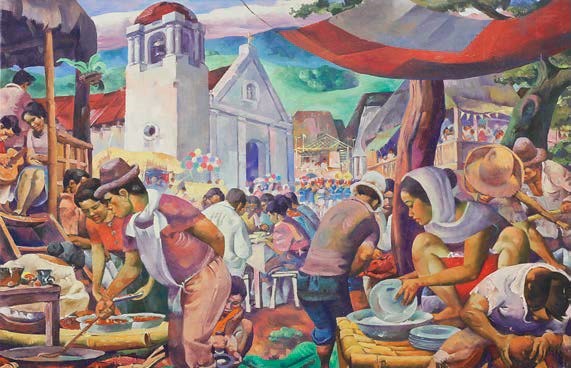
(Botong Francisco’s “Pista sa Angono”)

NOTABLY ABSENT from the platforms of nearly all candidates for the presidency is any mention of culture and the arts as a vital element in our quest of nationhood. Everyone has an opinion about the economy, the pandemic, corruption, peace and order, foreign relations, infrastructure, the environment, and countryside development, but you can hardly hear anyone speak—beyond the usual generalizations and platitudes—about what makes us Filipino, what it means to live as an archipelago with over 100 languages, and why and how we can be so similar in some ways and yet so different in others.

These are all matters of culture, which are often given tangible expression in the arts—the songs that make us weep, the paintings that brighten our walls, the stories that make us wonder about what’s important to us, the dances whose gestures take the place of words. At their best, culture and the arts rehumanize us, remind us of our truest, noblest, and also most vulnerable selves.

Unfortunately, we have been brought up to see them as little more than adornments, passing entertainments, intermission numbers to play in between presumably weightier and more consequential concerns. On an official level, culture has been treated as an adjunct of other ventures such as sports and tourism, culminating in beauty contests and street dances. 

The National Commission for Culture and the Arts (NCCA) and the Cultural Center of the Philippines (CCP) have had active programs for funding the arts and for sponsoring performances and exhibitions, but despite many previous initiatives, efforts to set up a formal Department of Culture to oversee a broader cultural agenda have failed, again because of the low priority accorded to the sector.

Many studies have shown, however, that the arts—transposed into the creative industries that produce cultural products covering everything from books, movies, and TV shows to music, food, advertising, and advertising—create a large economic footprint.

Citing UNCTAD figures, a report commissioned by the British Council some years ago noted that “Depending on how they are defined, the Creative Industries are estimated to represent anywhere from 3% to 12% of global GDP.”

In 2010—the last year for which I have solid figures—copyright-based industries or CBIs contributed more than P660 billion to the economy, according to the Intellectual Property Organization of the Philippines. In GDP terms, the economic contribution of CBIs climbed from less than 5 percent in 2006 to more than 7 percent in 2010. Core CBIs comprising companies in the arts, media, and advertising largely accounted for this surge. A corresponding rise in employment occurred in the sector, from 11 percent of the total number of jobs in 2006 to over 14 percent four years later. Surely these figures have risen much higher since then.

But the most important argument for a clear and strong cultural agenda remains the moral one. Culture is an essential element of national growth and development, as it helps define our national identity and our national interests. Without culture, we have nothing to stand on except our territory. Culture is a dynamic description of our commonalities and differences, without understanding which we will be moving forward blindly, guided only by the political and economic interests of our elites.

That understanding of who we are and why we think and act the way we do should be the end-goal of our education, grounded in an appreciation of our history. But as recent questions have highlighted, the DepEd’s decision to integrate Philippine history into other areas of learning effectively diluted and diffused its teaching in high school, a critical period in the formation of young minds.

For these reasons, a group of Filipino artists, writers, scholars, and cultural workers have organized the Katipunan sa Kultura at Kasaysayan (KKK) to present the leading presidential candidates with a cultural agenda for the next administration. The key items on that agenda include the promotion of a liberative, creative, and innovative culture; support for the study, appreciation, and critical interpretation of Philippine history; the promotion of cultural and creative industries, and Filipino products; the promotion of democratic education and programs to raise literacy nationwide; and serving the health and welfare interests of cultural workers. (Full disclosure: I work with National Artist Virgilio Almario in this organization.) We presented that agenda to all the leading candidates but heard back from only one, who endorsed it warmly: VP Leni Robredo. We were not surprised.

It’s not surprising, either, that those who understand Filipino culture best are those intent on exploiting its fractures and contradictions. The manipulation of public opinion and political outcomes thrives on knowing how people and groups behave, what emotional levers to pull, and which buzzwords to propagate. 

The confused and fragile state of our culture can be easily seen in how susceptible our people are to fake news. A recent SWS survey showed that 51 percent of Filipinos—every other one of us—find it difficult to tell real news from fake. The traditional sources of what most people have deemed the truth—the government, the Church, the traditional media, the schools, law enforcement, and even scientists—no longer carry the same trustworthiness they used to. Their places have been taken over by social media, cable TV, and micro-networks that can spread disinformation at lightning speed.

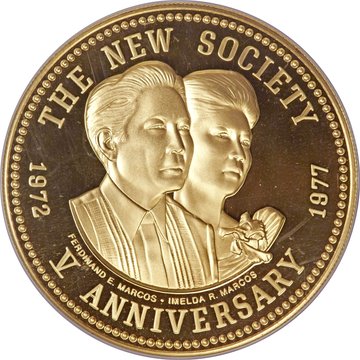
When I heard the New Society theme “May Bagong Silang” being played at Ferdinand Marcos Jr.’s proclamation rally, I recalled how music, theater, and art were harnessed by the martial-law regime to create spectacle, a key instrument of enthrallment and intimidation, from imperial Rome’s circuses to Nazi Germany’s torchlit parades. That’s culture at the service of dictatorship, belying Leonard Bernstein’s claim that music was one art “incapable of malice.” 

I’ve often noted, in my talks on this topic, how ironic it was that the only presidency that put culture and the arts at the forefront was Marcos Sr.’s, and today even the staunchest of Imelda’s critics will grudgingly acknowledge the value of the CCP. But there was an ulterior agenda to that, which makes it even more urgent to promote a culture that will uphold truth, reason, and justice as a basis for national unity, instead of being used as a glitzy curtain to mask wanton murder and thievery.

Hindsight No. 3: A False Nostalgia

Hindsight for Monday, January 31, 2022

SINCE MY belated debut on Facebook just over a month ago, I seem to have acquired something of a reputation for my posts about the past—not in the scholarly mode of a real historian, which I most certainly am not, but as a collector and keeper of objects that evoke strong associations with times and people long gone. These include century-old fountain pens and typewriters, and even older books and documents steeped in the accumulated oils of the hands that held them.

I’ll admit to having an intense, almost fetishistic, interest in the past—the 1930s are of particular significance to me, because I’m writing a novel set in that period—and I can identify with the romance conjured by postcards of ocean-going liners and of the old Manila Hotel. If you play “Smoke Gets in Your Eyes” on a turntable, you’ll float to the ceiling in my esteem. In my dreams, I fantasize about strolling into the Crystal Arcade one fine day in 1937 and stepping out with a fistful of Parker Vacumatic Senior Maxima pens while towing a cart with all 55 volumes of Blair and Robertson.

But that’s where the nostalgia ends. In many if not most respects—as I’ve told friends who, for example, ask me if UP’s fabled Cadena de Amor ceremony is worth reviving—there’s one place the past deserves to be, which is exactly where it is. Nostalgia is comforting precisely because the past is over, and because we tend to remember just the good parts, and even burnish them to perfection.

But it was never really all that good. Amorsolo’s maidens all seem fresh out of the batis and every Joseon prince’s robes on K-drama seem immaculately pressed even after a swordfight, but the past was literally a filthy place. Queen Elizabeth I was said to take a bath once a month. William Shakespeare and his friends wore those fluffy collars around their necks because that’s all they changed. The lovely ladies of Versailles doused themselves in perfume to quell the odor of their unwashed bodies. The “buntis” window grilles we now admire in old Manila houses were once drenched with dubious liquids being dumped on the street below.

Neither was it so peaceful. Even without counting the devastation of war, the past was fraught with danger, hardship, and unrest. It may have been a grand and glorious time for the rich in their cars and villas, but the masses were suffering in the farms and factories. Power was brazenly exercised, as in the torture and murder of Moises Padilla in 1951. Postwar congressmen carried .45s at their waist into the session hall. As a young police reporter in 1972, I learned where you could find a gun for hire for P500 per target.

We like to think that the past was simple, with fewer choices to be made. But it was never that simple for many without real choices. Poverty was and is never simple, because every morning the mind races to figure out where supper is coming from, and if Nanay can survive on a third of her prescribed dosage or on plain salabat.

All these come to mind when I hear Filipinos today—many of them not even in their 40s—talking about how a return to the “glory days” of Marcosian martial law would set this country back on track and bring us the prosperity, the peace, and the prestige we once enjoyed. I wonder what it is exactly they are “remembering,” and if they understand what putting a Marcos back in Malacañang will mean to this country. This goes beyond the historical amnesia we often hear about these days; the Dictionary of Obscure Sorrows calls it “anemoia,” a nostalgia for a time someone has never known, or that never happened.

No, I’m not calling them stupid or wicked by any means. In many cases they’re simply innocent or uninformed, and therefore suggestible. If they feel oppressed by the present and are facing an uncertain future, the past will acquire the appeal of the womb, offering safety and security. The idealization of martial law as a time when streets were wide and clean and when new buildings were rising right and left is a more inviting prospect for those who can’t be bothered with facts and figures about debt-driven growth, cronyism, and horrific abuses under military rule. (For those facts, check out https://newslab.philstar.com/31-years-of-amnesia/golden-era)

That even oldtimers can wax nostalgic over the Marcos years isn’t hard to understand. Like the Germans under Hitler, many if not most Filipinos then never saw a prison camp, never had a son or daughter tortured and salvaged, never had a business taken over by the regime. Those of us who actively resisted dictatorship were in a distinct minority—as we still are today. Complicity has to be endemic for despots to thrive.

But now once again we are called to arms, in a battle for the imagination—a battle of competing narratives and modes of narration. Will the cold, hard truth alone triumph over romantic fantasy, or will we need to be more inventive in our messaging to get through to those unlike us? Instead of just revisiting the past, should we dwell more on a rosy but realizable vision of the future? Instead of staking out May 9 as a referendum on martial law, should we double down on what a presidential election should be—a competition between platforms and qualities of leadership? (And then use the next six years to correct our history textbooks.)

It’s true that we have good reason to long for seemingly lost or threatened graces like statesmanship and civility (not to mention intelligence) in politics, as well as plain good manners and delicadeza. There are good things we can yet recover and revive from better days, with the right leadership and inspiration. But to do that, we have to save the future from those who would drag us back 50 years into a past that was as morally sordid, as violent, and as dispiriting as anything that ever happened in our history. 

Hindsight No. 1: A Time for Telling

Hindsight for Monday, January 17, 2022

IT WAS with great shock and sadness that I received the news of Manong Frankie Sionil Jose’s passing two Fridays ago; my recollections of him appeared online later that day. But just as jarring a surprise was a call I later received from Millet Mananquil, my editor in the Lifestyle section, and then from Doreen Yu, our Op-Ed editor, informing me that I had been chosen to take over FSJ’s column-space on this page.

It was a great privilege, of course, and I accepted it gratefully. But it also carried with it an awesome responsibility—to be honest, to be fair, to know enough about an issue to speak with some legitimacy about it, and also to be modest and open-minded enough to remember one’s inescapable fallibility. I don’t think that last one’s going to be a problem, because I’ve made mistakes often enough to know that—well, I make mistakes, some of which may have hurt people badly.

But last Saturday I turned 68, and with that age comes a keener sense of doing right, of accountability for one’s choices and judgments, as well as a greater tolerance for the shortcomings of others, though not of evil or of wrong itself. I intend to maintain those bearings in this new capacity.

Some readers may wonder how a Lifestyle writer like me—obsessed with fountain pens, old books, Broadway showtunes, and digital gadgetry—ends up doing op-ed, which seems a far more serious and consequential calling. A brief self-introduction might be in order.

I dropped out of UP as an engineering freshman in 1971 and, against all odds (not having spent one day in Journalism class, and being all of 18), landed a job as a features writer and general assignments reporter with the Philippines Herald in 1972. My first task was to fill up half the Features page every day—something that schooled me forever on the importance of deadlines and of resourcefulness, because I had to come up with the topics on my own. I moved to Taliba as a suburban correspondent; was arrested for my activism shortly after martial law was declared; spent seven months in prison; and upon my release joined the information staff of the National Economic and Development Authority, where I would work for the next ten years, picking up a diploma in Development Economics along the way.

I returned to school, finished up my academics all the way to a PhD (more for teaching than for my writing), and taught full-time while writing stories and film scripts. In the mid-1990s, thanks to my friend and now fellow-columnist Jarius Bondoc, I was hired as an editorial writer for the newly opened newspaper TODAY. Being busy with other aspects of management, our boss Teddyboy Locsin trusted me to do about three editorials a week, including the newspaper’s very first one. 

I discovered that opinion writing was exhilarating—but also, again, fraught with responsibility. It got to the point that I found myself wishing I could write something less driven by analysis and conscience—small things like my rickety VW Beetle, double-knit pants, and my love of crabs, instead of ponderous topics like prison reform, the defense budget, and Philippines 2000. (I still have 113 editorials that I wrote on my hard drive.) So I asked for—and got—a Lifestyle column called “Barfly” on the back page, which helped me decompress and kept me sane, reminding me that life was much more than politics and that beauty and fun were as important as anything else to happiness.

I’m going to keep that escape valve open—I’ve promised Millet that I’ll continue contributing my “Penman” column every now and then—but I’ll approach this new task with the loftiness of mind that it deserves (although you’ll excuse me if I sometimes prefer to take a more comic tack, as the best criticism is often served up with a smile). 

Unfortunately I’m not a political insider; I don’t make the rounds of kapihans and have become something of a happy recluse over the Covid lockdowns. You’ll see my politics soon enough—unabashedly liberal (with a small L), middle-force, intensely uncomfortable with both Right and Left extremes. (I came out of the Left and worked briefly for the Right as a sometime speechwriter for five Presidents—but not the last two.) I thank God every night for my family’s safety and for our blessings and for the well-being of others, but I’ve had my differences with Church dogma and would rather spend my Sundays reflecting on human frailty and redemption by reading a book or writing a story.

But I do have a deep and abiding love of history, of which I have so much more to learn. This is why I’m keeping FSJ’s “Hindsight” for this column’s title. (When I returned to UP to resume my undergraduate studies, I dithered between English and History, and chose English only because I was likely to finish it sooner). I agree with Manong Frankie, among many others, that one of the greatest obstacles to our nationhood is the fact that we have a very poor memory—much less an understanding—of our past. We’re reaping the bitter fruit of that amnesia now, in the prospect of electing a dictator’s son to the presidency, a full half-century after the father plunged this country into political and moral darkness by declaring martial law to perpetuate himself in power.

There—it’s when vexatious thoughts like that cross my mind that my fingers begin to itch and I want to editorialize, the complete opposite of my impulse as a fictionist to show and not tell. (I often begin my fiction-writing classes by comparing an editorial on, say, justice for the poor with a short story dealing with the same concern, but without once mentioning “justice,” “poverty,” and such abstractions.) But even as I remain a fictionist at heart, there’s a time for telling, for gathering up the threads of an unfolding narrative and declaring, in plain language, what they mean. That’s what I hope to do.