Qwertyman No. 173: A Page from 1937

Qwertyman for Monday, November 24, 2025
I”M NOT a historian, although there are times I wish I were, and at an early crossroads in my youth, I actually had to choose between Literature and History for my major, settling for the former only because I thought I could finish it faster. But I’ve retained a lifelong interest in history, for the treasure trove of stories to be found in the past and for what those stories might foretell of the future. 

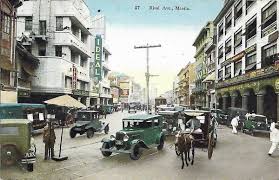
I’m particularly fascinated by the prewar period—what Filipinos of the midcentury looked back on as “peacetime” and what Carmen Guerrero Nakpil called our “fifty years in Hollywood,” which were enough to occlude much of the influence of our “three hundred fifty years in a convent” under the Spanish. It was an age of many transitions, from the jota to jazz, from the caruaje to the Chevrolet, from tradition to that liberative and all-embracing buzzword, the “modern.” Much of that went up in smoke during the Second World War, but you can still catch the ghost of this lost world on the Escolta, among other vestiges of our love-hate affair with America. (You might want to visit the Art Deco exhibition at the National Museum of Fine Arts, ongoing until May 2026; I have some items on display there.)

So entranced have I been by this time that I decided, during the pandemic, to set my third novel in it, at the birth of the Commonwealth and upon Quezon’s assumption of ultimate power, an upstairs-downstairs narrative about the comprador upper class and the world of the Manila Carnival set against the embers of the Sakdal uprising, the fuming and scheming Aguinaldistas, and the netherworld of printing-press Marxists and tranvia pickpockets. Progress has been slow because novels always take the back seat to life’s more pressing needs, but I still hope to get this done if it’s the last thing I do.

The research for the book, however, has brought its own rewards. Among my main sources for the background has been a slim volume—long out of print and now very  hard to find—titled The Radical Left on the Eve of War: A Political Memoir by James S. Allen (Quezon City: Foundation for Nationalist Studies, 1985). Allen (actually a pseudonym for Sol Auerbach) was an American scholar and journalist, an avowed Marxist who traveled to the Philippines in 1936 and 1938 with his wife Isabelle, also a member of the American Communist Party, to meet with local communists and socialists (then headed by Crisanto Evangelista and Pedro Abad Santos, respectively) and to get a sense of the Philippine situation under American rule. 

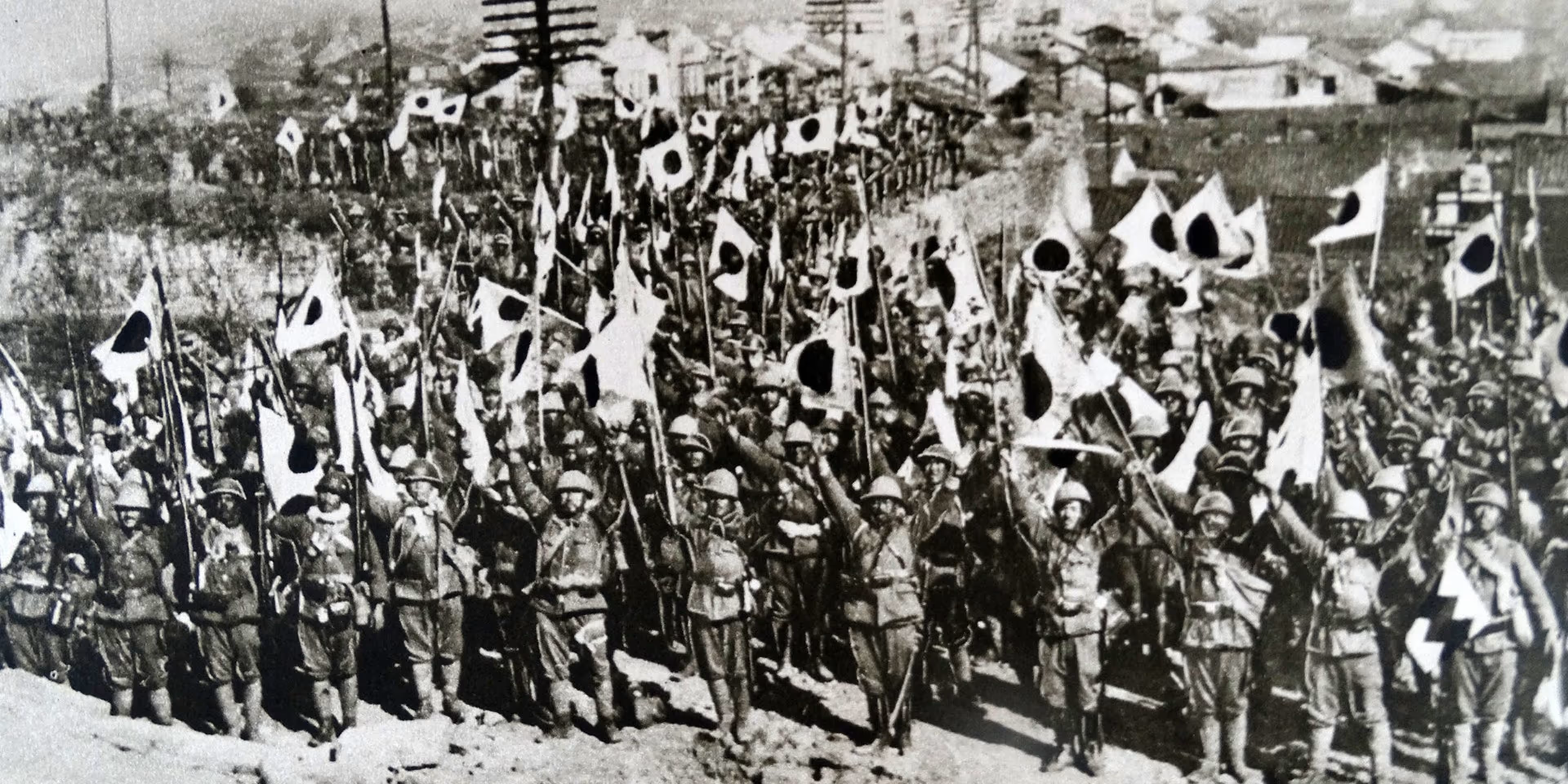
Even that early, the threat of a Japanese invasion was already looming on the horizon and causing great anxiety in the Philippines; Japan had earlier occupied Manchuria and as much as a quarter of the entirety of China by 1937. It seemed like a confrontation between Japan and the United States was inevitable, although some Filipino nationalists—fiercely anti-American—preferred to ally themselves with their fellow Asians than with prolonged white rule. At the same time, others like Pedro Abad Santos feared that the independence Quezon sought would be granted prematurely to give the US an excuse to abandon the islands and avoid confronting the Japanese. 
This is where I tell you why I’m bringing up James Allen’s memoirs this Monday—because of our present situation vis-à-vis China and (in one of history’s ironic reversals from victim to victimizer) its growing domination of the South China Sea. In Quezon, Filipinos had a leader who was deeply mistrusted and opposed by many; the United States’ willingness to defend the Philippines was in doubt; and the threat of a foreign invasion was clear and imminent. 

Allen actually sat down with Quezon for a long interview at the latter’s invitation, and was impressed by the man’s grasp of politics and his singular ambition. But the article that came out of that encounter displeased MLQ; Allen, after all, was still a communist at heart, which makes the following quotation—from a letter Allen would compose and send to his American colleagues in October 1937—even more interesting. I’ll leave it to you to observe the parallels, and to cast them against the Marcos-Duterte issues of our time.

“Filipino Marxists and radicals need to relate independence from the United States to the world crisis created by fascism. The immediate concern in the struggle for an independent and democratic Philippines is to safeguard the country against the threat of Japanese aggression. The objectives of complete independence from the United States and the internal democratic transformation must be obtained without endangering such gains as have been made or subjecting the country to new masters. The people must be awakened to the prime and pressing danger to their national existence. The United States is moving toward alignment with the democratic powers against the fascist bloc, albeit slowly and indecisively.


“Roosevelt is shifting somewhat toward the Left of Center to keep pace with his mass support from the surging labor movement and anti-fascist and anti-war popular sentiment. The national interests of the Philippines call for vigilance and precautions against Japanese aggression. This coincides with the interests of the United States in the Pacific area, and it would be folly not to take full advantage of this concurrence. In the broader perspective, the outcome of the struggle in China will be crucial for all the peoples of the Far East, and if the United States were to withdraw from the Philippines this would be a serious blow against China and encouragement to Japan’s designs upon Southeast Asia and the islands of the Pacific. The cause of Philippine independence at this time can best be served by cooperation with the United States.


“The situation also requires a change in the attitude toward Quezon, from frontal attack to critical support. Unprincipled opposition for the sake of opposition-as with some leading participants in the Popular Alliance is dangerous, for it plays into the hand of pro-Japanese elements and sentiments. Quezon certainly is not an anti-fascist, but he is not intriguing behind the scenes with Japan. The greatest opposition to his early independence plan comes from the landed proprietors, particularly the sugar barons, while it enjoys support among the people. The Popular Alliance should also support the plan, including provisions for mutually satisfactory economic, military and diplomatic collaboration after independence. Though Quezon is far from being a Cardenas or Roosevelt in his domestic policies, every effort should be made to move him away from his pro-fascist and land baron support by providing him with mass backing for such pro-labor and progressive measures as are included in his social justice program. In sum, the Popular Alliance should encourage a national democratic front devoted to the preservation of peace in the Pacific, the safeguarding of Philippine independence, and defense and extension of democracy in the country.”

Qwertyman No. 125: The Young Dodong Nemenzo (1)

Qwertyman for Monday, December 23, 2024

IT WAS with deep sadness that we received the news last week of the passing of Francisco “Dodong” Nemenzo, the staunch Marxist, nationalist, and former president of the University of the Philippines. My wife Beng and I are spending Christmas with our daughter in the US and being an all-UP family, we all knew Dodong and were much affected by his loss. Beng had been a student of Dodong’s at UP, and I was privileged to serve under him as his Vice President for Public Affairs twenty years ago. But long before this, I had met him as a student at the Philippine Science High School where his wife Princess taught us History; he came to pick her up in the afternoon in his Volkswagen Beetle whose door was emblazoned with the Bertrand Russell “peace” sign.

We will be missing the many memorial events that will surely be held in his honor these coming days, so I thought of recalling Dodong in a different way from what most of his colleagues and comrades will be speaking about him. More than ten years ago, I interviewed Dodong for a book I sadly have yet to finish, and he spoke with me about his life before he became the fighting ideologue everyone now remembers him to be. Let’s hear him in this abbreviated excerpt:

“We went back to Cebu after the war. Everything was still in turmoil. I enrolled at the Miraculous Medal School, a Catholic school, and completed my third and fourth grade there. By the time I reached fifth grade, Cebu Normal School was opened so I graduated from there. After sixth grade, I spent a year in the seminary in Cebu. That was my parents’ plan ever since I could remember. I was the only boy among three children, and the eldest. My parents were devout Catholics, and they considered it an honor when a member of the family became a priest or a nun. Since I was an only boy they wanted me to become a priest. I stayed there for only a year, and then I quit. That was probably the beginning of my radicalization. The seminary back then was run by Spanish or Vincentian priests who were supporters of Franco. They looked down on Filipinos and despised Rizal. 

“I went to the University of San Carlos. It was a Catholic school but my father was unhappy with the Science instruction. Our science textbook used the question-and-answer method and my father didn’t like that. He examined my notebooks every day and corrected what my teacher said. He got mad when we were taught creationism, and he lectured me on Darwin and evolution. I answered my teacher back and the principal reported me to my father for my heretical tendencies. My father decided to free me from this nonsense and transferred me to the Malayan Academy, a private non-sectarian school that had very good teachers. I finished near the bottom of my class, failing in Conduct and Tagalog. 

“I entered UP Diliman in 1953. The rule then was that you were exempted from the entrance exam if you had an average of 82, but my average was around 77 so I had to enroll in a summer institute that was like a backdoor into UP if you passed 6 units there. I didn’t know what course to take. My father didn’t want me to take up Law and wanted me to become a scientist like him, but I reckoned that if I did that, I would always be compared to him and come up short. So I chose a course called AB General. 

“The advising line was a mile long. Jose ‘Pepe’ Abueva, a friend of my father’s, passed by and saw me in the queue. He asked after me and I told him that I couldn’t think of a course I really wanted. He tried to sell me on Public Administration, but I didn’t like to serve in a bureaucracy. He said there’d be a lot of opportunities abroad, scholarships, and if I did well I could join the faculty. He had a lot of arguments, but the one that persuaded me was ‘If you join Public Ad right now, I’ll sign your Form 5 right away, and you won’t have to join this crowd.’ 

“That’s how I ended up in Public Ad. When the dean of Business Administration tried to recruit me and my (Pan Xenia fraternity) brod Gerry Sicat who was then in Foreign Service to go into Economics for our master’s, Pepe Abueva again swooped in and told me to take up an MPA instead, and to join the PA faculty immediately. So I became a faculty member in my senior year, just before my graduation, as an assistant instructor. I probably had the longest title in UP: ‘research assistant with the rank of assistant instructor, with authority to teach but no additional compensation.’ I really wanted to teach, but had no actual assignment. I only took over the classes of professors who went on leave. 

“I never joined the UP Student Catholic Action or UPSCA. Well, maybe for one year, but I was never active and then I got out of it. I joined only until I met an UPSCAn named Princess. We always met in Delaney Hall. We were together in the student council. She was representing Liberal Arts, I was representing Public Ad. I joined in 1955, my third year, along with Gerry Sicat, Manny Alba, and Jimmy Laya. I became a liberal and distanced myself from UPSCA. 

“I idolized (Philosophy professor) Ricardo Pascual. I was looking for a cause, but these liberals were just fighting for academic freedom with no purpose. It seemed empty. I was under the influence of Pascual for some time, but we had no advocacy. I joined a short course in Social Order at Ateneo on the papal encyclicals on labor. My liberalism and my growing social consciousness merged and I started reading Marx and Huberman on my own, to find out what we were fighting for. There were a couple of professors like Elmer Ordoñez and SV Epistola who according to Bill Pomeroy had already reached that level of consciousness, but when he left they became liberals, they weren’t really organized.” (To be continued)

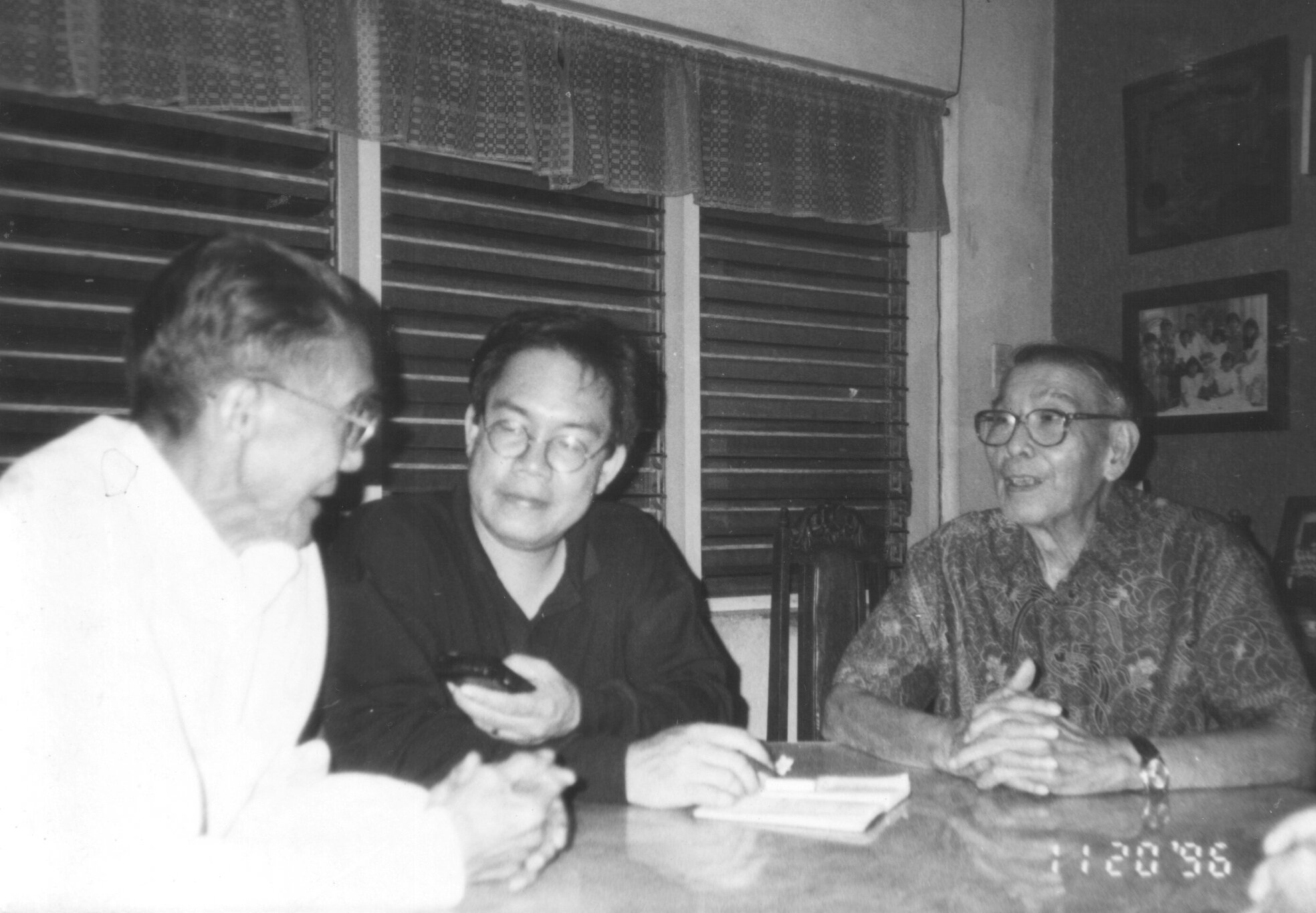
(Photograph by Rick Rocamora, used with permission)

Hindsight No. 12: The Color of Danger

Hindsight for Monday, April 4, 2022

TWENTY-FIVE YEARS ago, I took on the first of what would become many biographical assignments: the life story of the Lava brothers. In many ways, they remain the most fascinating of my subjects, brilliant men with PhDs and other advanced degrees from such schools as Columbia, Berkeley, and Stanford who, despite their upper-middle-class origins, were counted among the most dangerous subversives in the 1950s and 1960s. 

Three of them—Vicente, Jose (Peping), and Jesus—became general-secretaries of the Partido Komunista ng Pilipinas. Never Party members, Horacio and Francisco (Paquito) were nationalists and civil libertarians who served in high government positions—Horacio as one of the new Central Bank’s top economists and Paquito as chief legal counsel of the Securities and Exchange Commission, which he helped organize. (A sixth brother, Pedro, also became a Party member in the US but died before the war.) 

I remembered them last week when I read the reports of bookstores being splashed with red paint and of a certain government official spewing the same substance out of her mouth. No, I’m not going to defend Vicente, Peping, and Jesus Lava against Red-tagging; they were proud communists to the end. 

What has stuck in my mind from the many interviews I held with Peping and Jesus in their home in Mandaluyong was a moment with Peping—who, when I met him in the mid-1990s, was a frail and white-haired old man. Peping had graduated salutatorian from the UP College of Law in 1937 and his thesis, hailed by Dean Vicente Sinco as the best they had ever received, was published by the Harvard Law Journal. In his dotage, Peping seemed stiff, dour, and humorless, but as a young man he had played the banjo, with “Always” and “Five-Foot-Two” among his favorites.

At some point, I asked Peping: “Among all the figures in history, whom do you admire the most?” Without batting an eyelash, sitting ramrod-straight in his wooden chair, he answered: “Stalin and Marcos.” 

The mention of Joseph Stalin, the Soviet Union’s brutal dictator for over 30 years until his death in 1953, was disturbing but not surprising. The PKP looked up to the Soviet Union as a model, and some of its members had been trained there, although the Lavas themselves downplayed the connection, citing the Philippines’ greater affinity with the Chinese experience. Upon his release from prison in 1970, Peping had gone to Moscow, and then to Prague, where he and his wife lived for the next 20 years. Clearly, even if Stalin had long been officially repudiated in Russia, he left a deep and positive impression on Peping. 

What I didn’t expect—although it would make sense in retrospect—was his admiration for Ferdinand Marcos, whom he had never personally met. Why would Peping Lava, a hardcore Communist, admit to being a fan of yet another dictator, whose martial-law regime was responsible for the deaths of tens of thousands of so-called “enemies of the State,” many young and idealistic revolutionaries among them?

The answer might be found in the relationship that Marcos cultivated with the old Left, including a meeting between Marcos and representatives of the Movement for the Advancement of Nationalism (MAN) in 1968. Negotiations between Marcos and the PKP leadership reportedly followed, resulting in the release of Peping in 1970, and of Jesus Lava and Casto Alejandrino in 1974; Luis Taruc had been released even earlier in 1968. (The PKP had been decapitated by the arrest of Peping and many leading members in 1950, followed by the arrest of Jesus in 1964.) 

The Lavas were convinced that, despite all his liabilities and abuses, Marcos was a nationalist at heart who was aware of, and opposed to, American imperialist control over the country’s economy and politics. The Americans, not Marcos, were the main enemy. (Peping believed that the Americans were responsible for the deaths of Ramon Magsaysay, Claro M. Recto, and Ninoy Aquino.)

They were attracted by his “independent” foreign policy, especially his diplomatic overtures to China and the Soviet Union. Citing international sources, they even surmised that their release had been a precondition attached by the Soviets to rapprochement with the Philippines. Jesus Lava would contend that as of 1974, the PKP had entered a “negotiated political settlement” with the Marcos administration and had therefore been legalized. (Meanwhile, breaking away from the old PKP, Jose Ma. Sison had “re-established” the CPP in 1968, and it would be his CPP-NPA-NDF combine that Marcos would go after under martial law, as would Marcos’ successors.)

If any of this sounds familiar in light of our recent history, you win no prizes. When Rodrigo Duterte came to power in 2016, my old friends on the Left bubbled over with excitement, believing they had found a trustworthy ally who was prepared to unfriend America in favor of rosier relations with China and Russia. I was dismayed then by what I thought was fatal naivete, or miscalculated opportunism; he played them, not the other way around. 

Today, with such instrumentalities as the NTF-ELCAC and even education officials at the vanguard, going against the Reds is back in fashion. The “threat” they pose is allegedly serious enough to warrant billions in the budget for anti-subversion programs, never mind that the CPP-NPA’s military significance has been severely diminished over the past 40 years, and that we need that money for more pressing concerns. 

Never mind, too, that Russia and China—the erstwhile centers of the global Red revolution—are now universally condemned as oppressors of their own people and aggressors beyond their borders. Stalinism is back with Vladimir Putin, and Xi Jinping is trying to out-Mao Mao. (And another Marcos threatens to return to Malacañang. Peping Lava could feel right at home today.) Our government says it hates communists with a passion, and yet the best it can do is remain “neutral” in Putin’s war on Ukraine, and “realistic” in dealing with China’s encroachments on Philippine territory. 

All this leads me to conclude that the old Marxism-Leninism—which is barely recognizable in today’s Russia and China—is no more than a bogeyman, and even the government knows that. Red-tagging just happens to be a convenient cover to attack the real enemy: the liberal middle forces now at the forefront of reform and of democratic regime change. The color of danger is pink, not red.