Qwertyman No. 118: A Flickering Flame

Qwertyman for Monday, November 4, 2024

TOMORROW, NOVEMBER 5 (or Wednesday, November 6, our time), American voters will choose who between Republican Donald J. Trump and Democrat Kamala Harris will lead them from the White House over the next four years.

For more than four million Filipino-Americans, the outcome will bear a direct impact on their daily lives, their choices, their standing in society, their future. For the rest of the world, including those of us here in the Philippines, the result will shape not only how we see America, but also how America sees us in the global scheme of things.

Only the foolish will think that we have no stake in this election, and that America’s position in the world will be the same regardless of who wins. For the people of Ukraine, a Trump victory might as well be his friend Putin’s; for the Taiwanese, the Filipinos, and others dependent on at least the deterrence if not the active deployment of American military power vis-à-vis Chinese expansionism in Asia, Trumpian isolationism can only invite more unbridled aggressiveness from the region’s bullies.

As I’ve often said here before, like many millions of Filipinos, my stake is more personal than that: our daughter lives and works in California, and my sister is also a US citizen, both of them contributing productively to that country’s economic and social well-being. Both are proudly voting and campaigning for the only candidate who offers real hope for the future of America and the world: Kamala Harris. To them, she represents not just the right political but also and even perhaps more importantly the right moral choice.

Of course, I totally agree. Why anyone would vote for a man who even many of his supporters admit is a convicted felon, a habitual liar, a womanizer, a pervert, a racist, a chauvinist, and a would-be dictator is beyond me. But apparently enough Americans will, enough to make all polls point to a dead heat between the two candidates, with the outcome likely to be decided by voters in a handful of so-called “battleground” states.

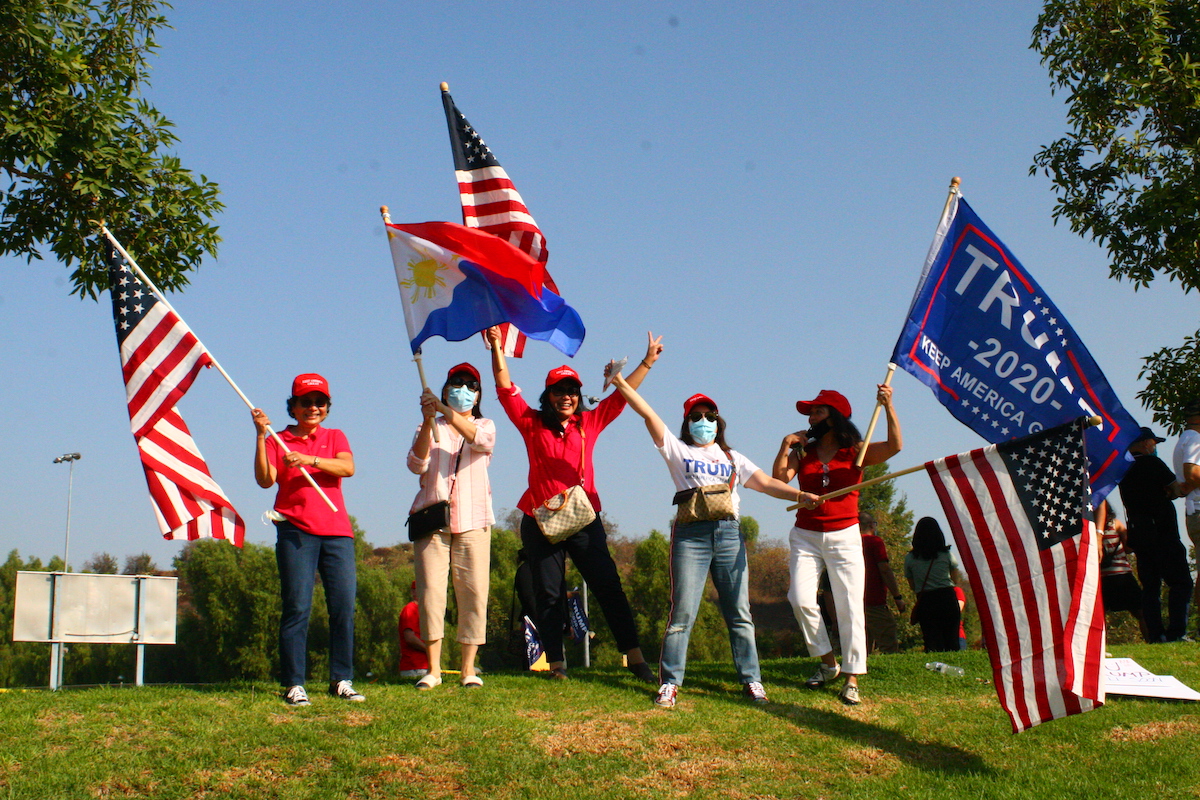
Among those many millions of Trumpists willing to overlook his not-insubstantial shortcomings are legions of Fil-Ams who—despite having historically voted Democrat as an ethnic minority—now find common cause with Trump’s blatantly racist anti-immigrant rhetoric (it isn’t even about illegal immigration anymore, but about immigrants from “garbage” countries in Asia, Africa, and Latin America) and his supposed “anti-abortion” stance (since diluted for political expediency). Among other single-issue MAGA voters, “the economy” remains their strongest reason for choosing Trump, despite 23 Nobel-prizewinning economists writing that Trump’s tariff-based economic plans will be disastrous for the US.

Eighty-two Nobel laureates, in fact, are on record supporting Harris, but that clearly matters little in an election driven more by primal fear than by truth and reason. As astrophysicist Neil deGrasse Tyson lamented, “How sad it must be—believing that scientists, scholars, historians, economists, and journalists have devoted their entire lives to deceiving you, while a reality TV star with decades of fraud and exhaustively documented lying is your only beacon of truth and honesty.”

My own sense is that many Trump voters won’t be voting for Trump the man, whom his sharper and more hidebound supporters—many of whom, like Sen. Ted Cruz, he has savagely maligned but who have masochistically endured his insults to ensure their own survival—will admit before God to be the lowest of the execrably low. They will be voting for the deep grievances and resentments that Trump has so craftily stoked in them, and against the idea of an “elite” and a “swamp” that Trump and his new acolyte Elon Musk, strangely enough, represent more visibly than most Democrats.

Thus the very real possibility remains that we may wake up Friday morning to the specter of Trump 2.0 and whatever it will bring. Should that happen, we can imagine the global wave of consternation and dismay that will ensue among liberals and progressives everywhere. On the other front will resound the triumphant cheers and chuckles of global despots and their minions.

All this brings me to what I suspect has been my real worry all along—not the US election, about which we can do nothing, but our own political horizon, on which familiar dangers are looming large.

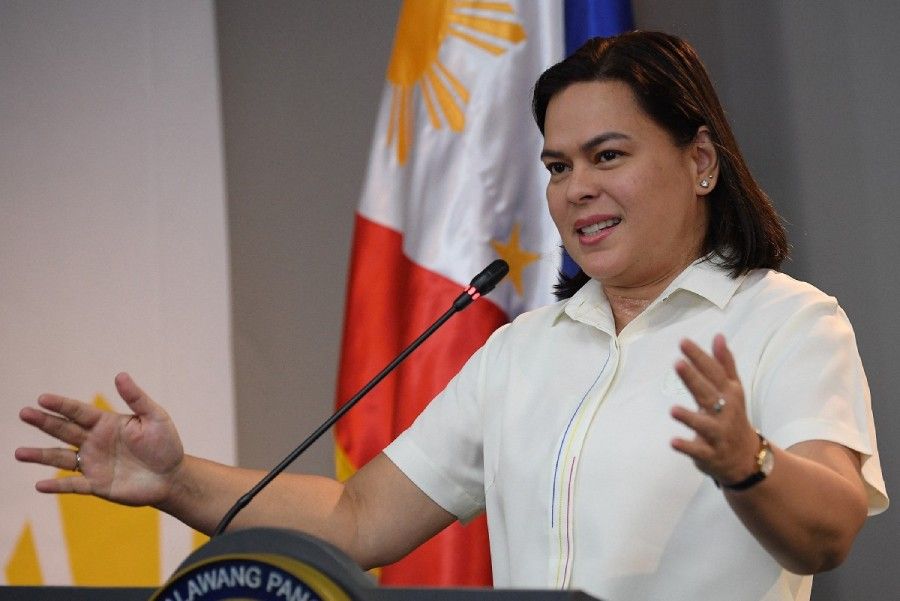
At least one online pundit with an unusual point of view has lauded the recent performances of Vice President Sara Duterte and her father former President Rodrigo Duterte at their Senate hearings as a kind of resurrection—in the very least, an affirmation of their continuing political viability, if not resurgent power. 

The Dutertes mastered their fumbling inquisitors, this commentator crowed, reporting that the gallery even clapped for the senior Duterte at the end of a raucous session at which he virtually confessed to willfully causing the summary execution of suspects without ever being prosecuted. The Dutertes, he seemed to imply, remain above and beyond the law; with their cohorts in office, they are the law, or shall soon be again.

Indeed Philippine politics has become a theater where bravado, bluster, and buffoonery matter. We cannot even tell the actors from the characters any longer. Lies resound louder than the truth, and the audience rewards the best “hugot line” with wild applause.

The upcoming midterm election already promises to showcase the worst of our political predilections, with family dynasties and patently unfit candidates crowding the top of the poll rankings.

So if the Americans choose Trump over Harris, why should we be surprised? Where character, reason, and talent no longer matter, the tyrants rule with fools at their feet to keep the populace amused.

But if Kamala Harris wins, whatever it brings to America, it will mean for me that, however fragile, hope remains for good sense to prevail even in extremely fraught situations such as ours. If only for that flickering flame, I pray she wins.

(Image from newsweek.com)

Qwertyman No. 75: Trump 2.0

Qwertyman for Monday, January 8, 2024

IN MY column last week, I mentioned the “Trumpian dystopia” threatening to take over the United States and many other rightward-leaning societies and governments around the world. 

A “dystopia” is, of course, a place or a situation where everything has been turned on its head, where the bad has become good and the wrong has become right, and where the things we most feared or abhorred have become the norm. You find this in George Orwell’s 1984, where the government controls everything; younger readers and viewers will relate to Suzanne Collins’ The Hunger Games, where citizens are sacrificed for the Capitol’s entertainment. In other words, it’s social and political hell for those reared in the kind of postwar liberalism that eschews racial discrimination, authoritarianism, gender inequality, and religious intolerance, among other shibboleths.

It’s hard to believe that much of America seems to be marching in lockstep toward that dystopia under a revived Donald Trump, wh0m nearly all polls see as leading the race for the US presidency, which will be at stake in November this year. On this date three years ago, he was squarely in the doghouse in the aftermath of the shockingly violent assault on Congress on January 6 by Trump partisans unwilling to accept that he had lost to Joe Biden in the election. Even his closest allies at that time distanced themselves from his apparent captaincy of that bloody caper, although many of them have returned to his kennel. 

Nearly a full presidential cycle later, he’s back in the Republican saddle, way ahead of a pack of rivals who, save one, have refused to denounce Trump for what he is: the greatest single threat to American democracy because of what he represents (leaving aside foreign tyrants like Vladimir Putin and Kim Jong-un). That, not surprisingly, is President Joe Biden’s exact description of him, so some might say it’s biased, but to remain unbiased against Donald Trump is to lie prostrate in front of a steamroller, begging to be annihilated.

It doesn’t help that the incumbent is 81 years old, palpably slow, avuncular, and whispery where Trump screams into people’s ears (to the delight of many). Their age difference—just four years—isn’t actually all that much, but beyond personalities, it’s a difference in cultures, and perhaps of understanding how politics works in this post-Facebook age, where obnoxiousness has become a virtue and regularity a liability.

Trump thrives on notoriety, parlaying the four indictments involving 91 criminal charges against him—plus the two disqualifications from state ballots—into a kind of a badge of courage, flipping prosecution into persecution. Rather than fracture his base, any attack on Trump (and any attack by him) only seems to consolidate the estimated 30-40% of hardcore Trumpers who now effectively define the Republican party, the tail wagging the dog.

Among the most repugnant (and, by Trumpian logic, among the most attractive) of his recent statements has been his denunciation of undocumented migrants as “poisoning the blood of our country,” specifically mentioning Latin America, Africa, and Asia as the sources of what in other speeches he has called rapists, terrorists, and Covid carriers.

You would think that that kind of Hitlerian rhetoric would galvanize the Hispanic and Asian-American—not to mention the African-American—communities in America against Trump, but no. If anything, his support among these groups seems to be rising, driven ironically enough by his hardline position on immigration, the very same factor that made these minorities possible to begin with.

What I’m interested in is how the Filipino-American community will respond to Trump 2.0, and what that will say of us as a people, albeit as one of many minorities in America’s multiracial society.

There are now about 4 million Filipino-Americans; half of them, 2 million, are voters. (To put this in context, the US population now stands at 336 million, of whom 170 million are voters.) Historically, Filipino-American voters have leaned Democrat, with a majority of them voting for Hillary Clinton and Joe Biden in 2016 and 2020. But a very vocal (though perhaps somewhat less visible, as many people tend to reveal their preferences only in the voting booth) “Filipinos for Trump” movement exists, and if trends persist will likely gain more traction this time around.

In 2020, Filipino pro-Trumpers cited “family, religion, and faith” as the main reasons they were backing him, like many American evangelicals, despite all the evidence to the contrary in Trump’s personal behavior and speech. For many, it all came down to one issue—abortion—the right to which has now been successfully rolled back by the Supreme Court’s conservative majority. This time around, the flashpoint will likely be immigration, a global problem abetted by collapsing economies and repressive regimes. Well-settled minorities such as Filipino-Americans derive a strong sense of entitlement from all the personal sacrifices and legal processes they went through to acquire their citizenship, and feel cheated by migrants scrambling across the border. This kind of single-issue vote—a gross simplification and reduction of values into one criterion—favors demagogues like Trump, who work through two-dimensional posterization.

A more interesting—and more sinister—reading of Trump’s popularity came up in a recent guest essay in the New York Times by Matthew Schmitz, arguing in his title that “The Secret to Trump’s Appeal Isn’t Authoritarianism,” but rather that “Mr. Trump enjoys enduring support because he is perceived by many voters—often with good reason—as a pragmatic if unpredictable kind of moderate” and “a flexible-minded businessman who favors negotiation and compromise.” That logic, while fetching, predictably drew quick rebukes. One reader said: “Thanks, Mr. Schmitz, but we’re already well aware of this. Italians liked Mussolini because he ‘made the trains run on time.’ This is exactly our point. This is how dictatorships happen.”

That brought me back to our own long and continuing affair with despotism, and how sharply simplified populist sloganeering can cut through and cut down on complex reasoning—with devastating consequences for democracy, here and across the Pacific. 

(Photo from colorlines.com)

Qwertyman No. 60: UP’s Southern Pivot

Qwertyman for Monday, September 25, 2023

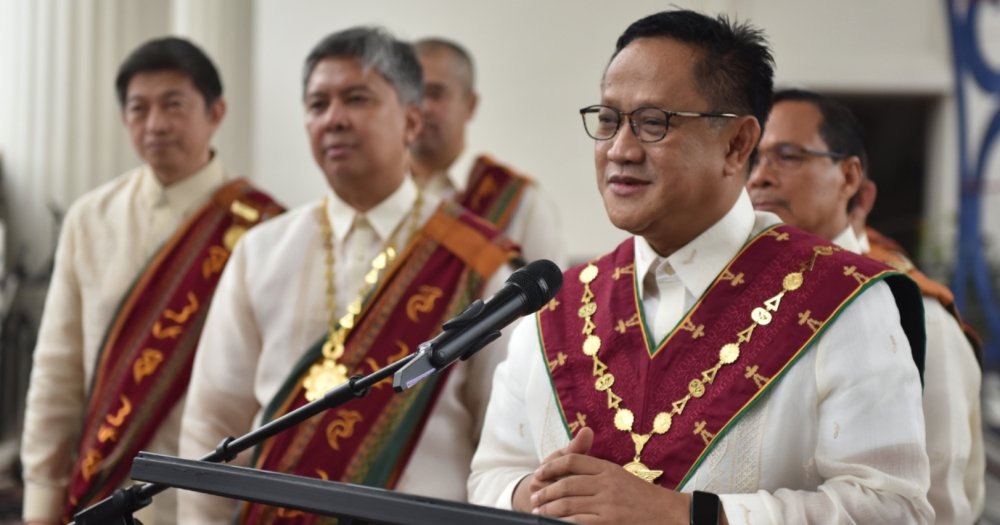
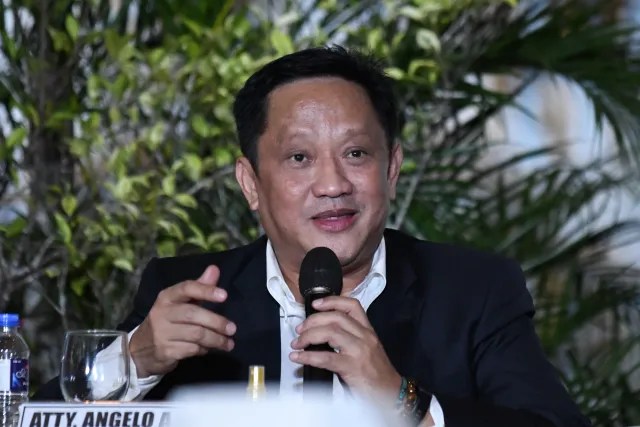
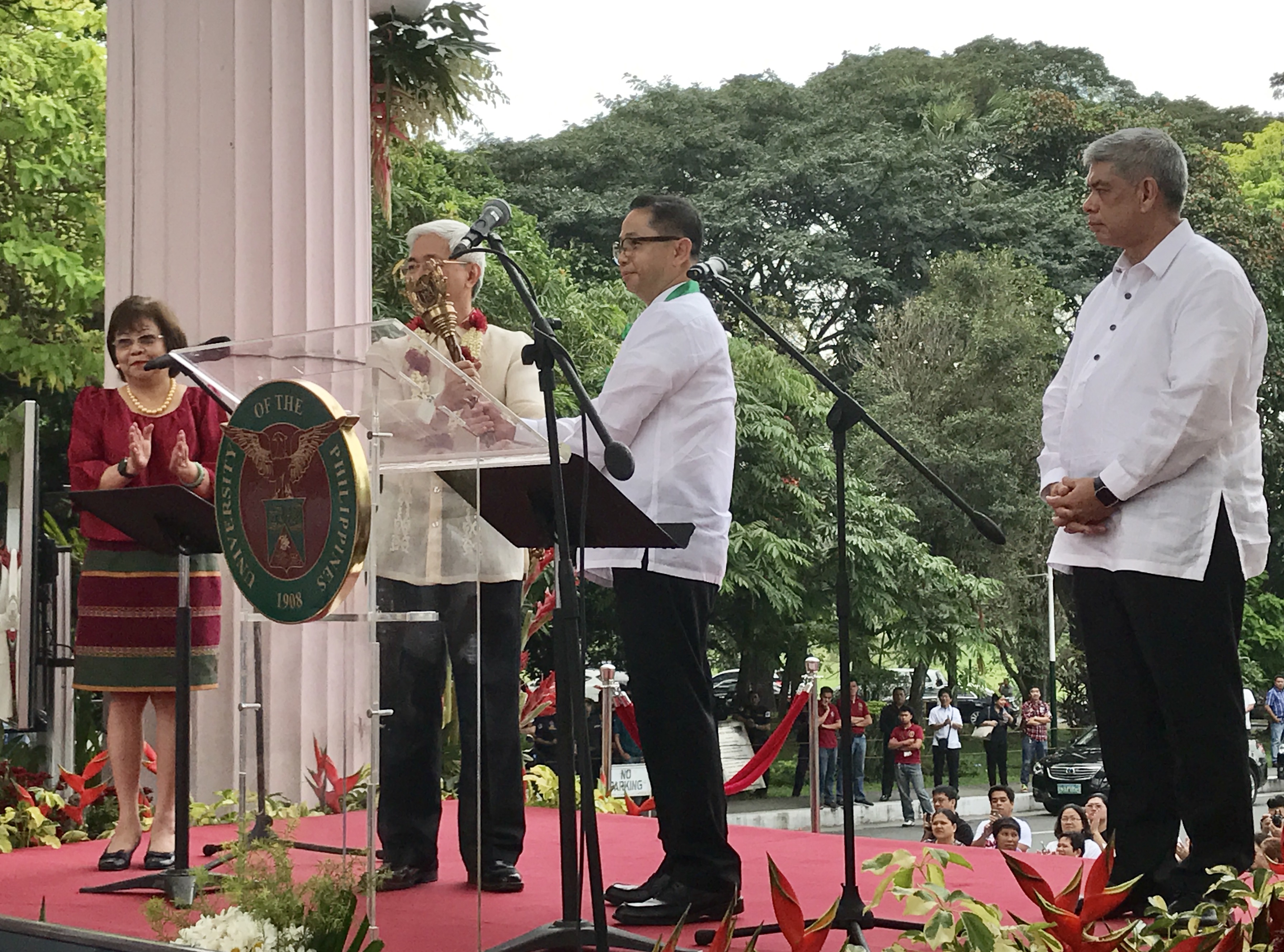
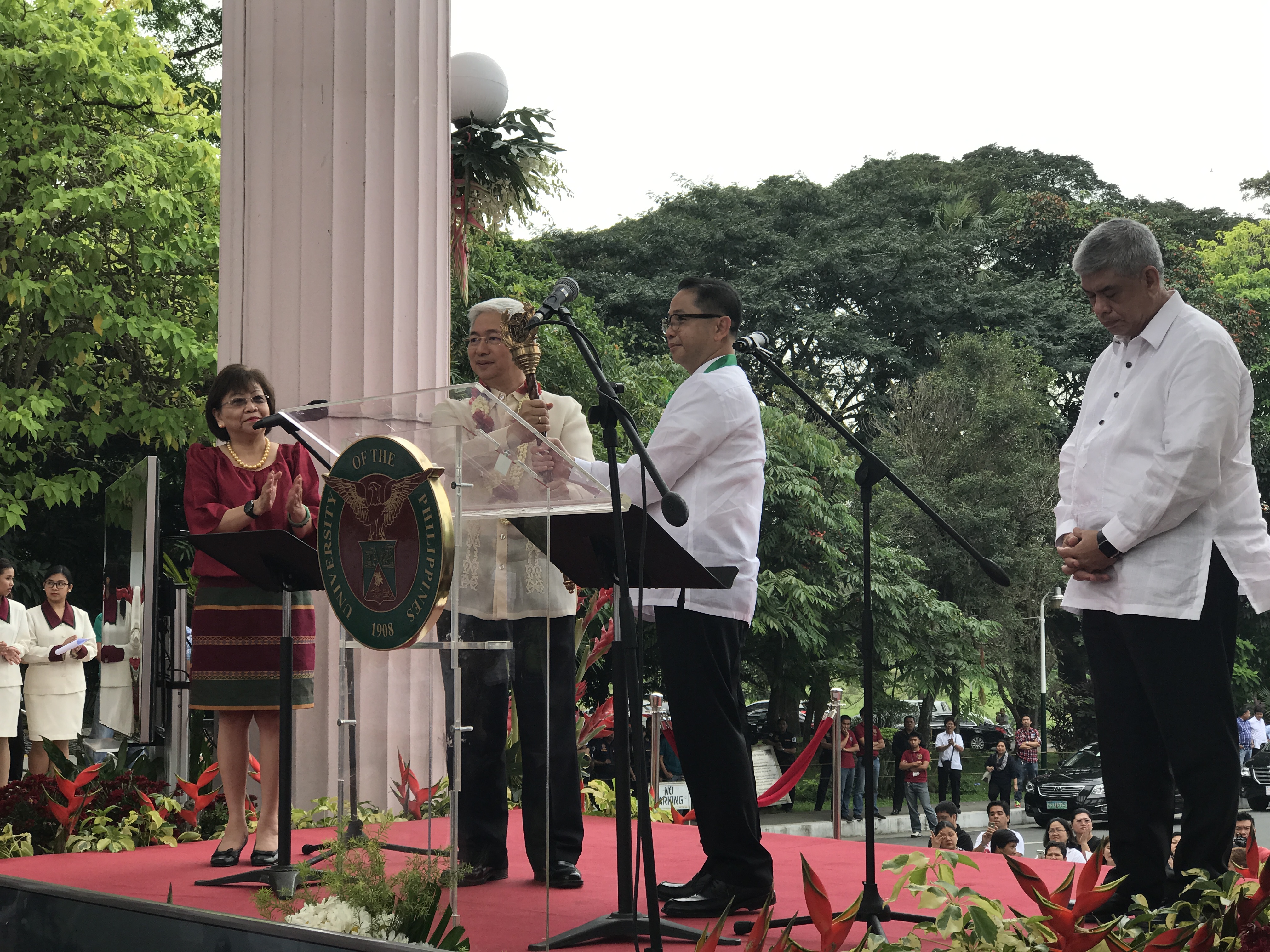
AT HIS formal investiture as the University of the Philippines’ 22nd president last September 14 in Davao, Atty. Angelo “Jijil” A. Jimenez made clear what his and UP’s priorities were going to be for the next six years of his administration: a renewed emphasis on service and equity, and more collaboration with other state universities and colleges (SUCs) and private higher education institutions (HEIs).

These priorities, he said, sprang naturally out of what he called the “three moral paradoxes” facing UP, the country’s “national university” mandated by RA 9500 to lead in Philippine higher education.

The first one he mentioned in his speech was the fact that, despite more than a century of UP producing national leaders, the country remains beset by mass poverty and economic and social inequality. “Beyond nurturing the Filipino mind and spirit, should UP have been more explicitly charged with raising our people’s material welfare? Are we doing enough at present to promote economic progress and social justice among our people?”

The second was his observation that UP, conceived as a “university for the Filipino people,” primarily serves the children of well-off, urban-based families, with 60 percent of its freshman population coming from private schools, “and our admissions policy unfortunately does not do enough to correct that bias.” Jimenez wants UP to help more underprivileged youth from the countryside prepare for, take, and pass the UPCAT, aside from other measures that can be undertaken to democratize access to a UP education.

Third, UP accounts for a fifth of the national budget for higher education, with the balance to be shared by more than 110 other SUCs, but was UP doing enough to share its academic resources with other schools? “If not everyone can come to UP, then UP must go not only where it can help raise academic standards, but also where it can cooperate and collaborate as an equal partner, and learn from SUCs with advanced and specialized expertise in certain areas,” said Jimenez.

Following through on his commitment to place UP at the service of HEIs all over the country, Jimenez convened an “SUC Summit” on the day after his investiture, attended by about 80 SUC presidents and representatives, to map out areas of collaboration between them and UP. Earlier, UP had also inked an agreement with officials of the Bangsamoro Autonomous Region in Muslim Mindanao (BARMM) to assist the latter in promoting access to quality education, improving health outcomes, strengthening the capabilities of SUCs and LGUs, and rehabilitating conflict-affected communities.

UP’s southward pivot was no accident. A former student leader and labor lawyer by training—he served as labor attaché in wartorn Iraq—Jimenez was born in Butuan, of Manobo blood. “It was a long way from Butuan to Baghdad, but in many ways, it is even longer from Mindanao to Manila. We have been so accustomed to thinking of Manila as the capital and Mindanao as the periphery, forgetting that once upon a time, the reverse was true. That imbalance is now being redressed, with Mindanao shaping up as our gateway to ASEAN, as the political and economic force that it has always been…. That it took the national university 115 years to have a president from Mindanao tells us something about we Mindanawons—and especially those of us who come from lumad origins—have had to contend with.”

So it was more than symbolic that Jimenez chose to hold his investiture not in Diliman, UP’s seat of administrative and academic power, but in UP Mindanao, one of the UP System’s eight “constituent universities” (and interestingly, the only one created by congressional fiat, after a push by Mindanawon lawmakers in the 1990s to have a UP of their own). 

President Jimenez also emphasized that he was adding one important word to UP’s longstanding motto of “Honor and Excellence.” That word was “Service,” a reminder to every Isko and Iska, as UP’s students are called, that their education is a debt to be repaid to the Filipino people for the rest of their lives.

These are noble and praiseworthy ambitions—most significantly, Jimenez’s desire to open UP up to the children of the poor, to break the tightening lock of privileged students on admission to the country’s premier state university. Ironically, because of the politically expedient but economically questionable free tuition law, public funds are subsidizing the college education of many children whose parents could very well afford to pay full tuition, while leaving the truly needy even farther behind. 

This wouldn’t be the first time that the “excellence vs. equity” issue came up for re-evaluation. UP oldtimers will recall when high school valedictorians and salutatorians from all over the country merited automatic entry into UP, ensuring broader geographical coverage. During the time of President Edgardo Angara, a system allowing disadvantaged students to come in via “presidential discretion” was put in place, but this was reportedly abused and later junked. (When I served as Vice President, I—and other UP officials—would routinely get calls from politicians, friends, and frantic parents hoping that we could work some magic to get their children in. I said I would rather resign than even try to compromise UP’s admissions system—it just doesn’t work that way in UP, even if it might elsewhere.)

Any strategy for producing an intellectual elite based on talent alone will favor those who come from strong elementary and high school backgrounds, most likely our top private and science high schools. On the other hand, especially given the sorry state of our public schools (this, even before budgetary diversions to “confidential funds”), you can’t just bring in students from all over just to make sure of equal representation; many of these poorly prepared students will suffer, as would the university itself. 

It’s a complicated but vital question: what primary purpose should UP serve? With universities today encouraged to join the global rat race run by Quacquarelli Symonds, Times Higher Education, Shanghai Ranking Consultancy, and other ratings bodies (businesses, that’s what they are), are we forgetting more basic needs by chasing after these costly metrics?

Jijil Jimenez’s heart seems to be in the right place in calling for UP to return to its roots—as he returned to his in Mindanao—as a university of the people, but working out the details will be a challenge. If he can rally the faculty behind him and get government support, then he can yet be one of  UP’s most effective and even beloved presidents.

(Photo from sunstar.com.ph)

Qwertyman No. 26: UP’s New President

Qwertyman for January 30, 2023

TWO FRIDAYS from now, a change of leadership will take place at the University of the Philippines, when outgoing President Danilo L. Concepcion turns his office over to Atty. Angelo “Jijil” A. Jimenez. Elected by the Board of Regents last November after what was known to be a tightly contested three rounds of voting, Jimenez will serve for the next six years as UP’s 22nd president. (By tradition, the BOR’s formal announcement of the vote declares it to have been “unanimous” although, to the best of my knowledge, it never has been, at least in modern times.)

Jimenez is no stranger to UP’s political and academic culture. A sociology and law graduate from UP with a master’s in management from the National University of Singapore, Jimenez served twice on the Board of Regents as Student Regent in 1992 and as Regent from 2016 to 2021. 

How he will win over the faculty is something else. It’s no secret that many professors emeriti and other faculty members—myself included—openly declared themselves in support of the candidacy of UP Diliman Chancellor Fidel Nemenzo, whom his supporters saw to have the best academic and administrative experience among all the six candidates for the position. That did not mean that no one else was qualified, and the BOR apparently saw something more in Jimenez that we did not, and so we will have to live with that decision.

The faculty’s chief concern may have been that Jimenez has never taught full-time in UP, raising fears that he might not appreciate or respect UP’s academic culture as strongly as a UP president should.

Academic culture is hard to explain to outsiders, but it is a way of life founded on intellectual meritocracy, on the idea that authority and respect are earned through hard-won knowledge, the currency of learning. And “intellectual” here doesn’t simply mean knowing something and being smart (and in some cases, insufferably arrogant), but actually doing something about it—through teaching, research, or some form of social action. Universities value people who contribute to our understanding of ourselves and to the improvement of human life. This is more than gaseous talk that nobody else can understand. It’s doing the deep thinking that nobody else will do, because they either have no interest or see no profit in it, or because they’re not trained to. A national university like UP, funded by our taxes, applies that thinking and learning to real-world problems and places its resources at the service of society. UP demonstrated this social commitment during the pandemic through the heroic sacrifices of its staff at the Philippine General Hospital and the research conducted by the Philippine Genome Center, among others.

Nonetheless, I can sense that despite their initial misgivings, many members of UP’s academic community are willing to give Jimenez a chance to prove himself as a protector and promoter of UP’s interests rather than someone imposed by the powers-that-be to bring the unruly natives to heel. 

“Jijil knows UP’s academic culture, and he listens. He studies things carefully before making a decision,” a highly respected colleague who knows (and once taught) Jimenez assured me. I have to say that in the few times that I met and observed him when I served as Concepcion’s VP for Public Affairs, I was impressed by Jimenez’s grasp of the issues and his willingness to learn. And this will not be the first time that someone perceived to be an outsider was chosen to sit in Quezon Hall; the most notable and perhaps the most effective of such predecessors was Edgardo J. Angara in the 1980s, who had no qualms about using his powers to modernize and streamline UP’s aging bureaucracy, against stiff resistance from within.

Jimenez has led a colorful life that included being posted as labor attaché in war-torn Iraq and him and his wife adopting a baby girl who was left at their doorstep. As a labor lawyer, he will understand the plight of the disempowered, and know how to speak to power and, just as importantly, to negotiate with it as well. 

Ultimately, it will be his character that will be on trial—how he will perform and decide under pressure from both left and right, what values lie at his moral core, and how he will steer the university and ensure its well-being under an indifferent if not hostile political regime. 

PAAJ, as he will be known in UP (Concepcion was PDLC), will have to contend with the rabid red-taggers at UP’s gates (and some of them well within its campuses), who will expect him to deliver UP, and specifically Diliman, on a platter to Malacañang. Curiously, just before the voting, Jimenez—a Duterte appointee to the Board of Regents—was denounced by another newspaper’s resident canine as a communist, alongside Fidel Nemenzo. UP has never had a shortage of detractors rooting for nothing less than its closure, but expect the troll armies to work overtime the minute PAAJ asserts its academic freedom.

Internally, Jimenez will have to deal with the conditions and demands of a constituency just emerging from the temporary and unnatural constraints imposed by the pandemic and eager to spring back into normal academic life but with even more incentives to work and to teach. Some colleagues will berate me for this, but “serve the people” no longer seems to be reason enough to study and to teach in UP. The sense of entitlement afflicting society at large has also crept into UP’s culture, with students complaining about their grades, freshly hired instructors complaining why they haven’t been promoted, and professors complaining why their work wasn’t given more points in their evaluation. Economic issues are easy to understand in a time of rampant food prices (and gross profligacy on the part of public officials), but this goes beyond a bigger paycheck. 

Given his two stints on the Board of Regents, Jimenez will be familiar with these issues down to their minutiae, as perhaps a lawyer can best comprehend. Appointing a capable executive staff will be key to his success, but again, they can only act on judgments emanating from the president’s fundamental sense of good and bad and right and wrong.

Arguably, the visible function of university presidents has changed in recent times, from being exemplars of scholarship and ideological firebrands to resource generators and managers. (Concepcion was particularly adept at the latter role.) How Angelo A. Jimenez will distinguish himself over the next six years will be a story entirely his to craft. I will be eager to read it, and wish him well.

Qwertyman No. 15: The Next UP President

Qwertyman for Monday, November 14, 2022

AFTER FOURTEEN straight Mondays of producing what I’ve called “editorial fiction”—make-believe vignettes meant to poke fun at the issues of the day, the prose version of editorial cartoons—I’ll take what will be the occasional break to engage more frontally with a concern of deep personal and professional interest.

Over the next few weeks, the Board of Regents of the University of the Philippines will select the 22nd president of our national university to succeed President Danilo L. Concepcion, whose six-year term ends in February next year. (Let me add quickly, for full disclosure, that I was President Concepcion’s Vice President for Public Affairs until I retired in 2019, and held the same position under former President Francisco Nemenzo in the early 2000s.)

Whether or not you graduated from UP or have a child or a relative there, this is important for every Filipino, because—like it or not—UP produces an immoderate majority of the people who make up our political, economic, and social elite. Its leadership, therefore, is a matter of national consequence. Since its birth in 1908, UP’s alumni roster has counted presidents, senators, congressmen, CEOs, community leaders, artists, writers, scientists, and, yes, rebels and reformers of all persuasions. 

There are six candidates on the BOR’s ballot, some of them, to my mind, more qualified—beyond what their CVs say—than others. The Board of Regents has eleven members—the CHED chairman, the incumbent president, the chairs of the Senate and House committees on higher education, the alumni regent, three Malacañang appointees, and three so-called sectoral (faculty, student, and staff) regents; it will take six of them to elect the next president. 

Whoever that choice is, he will be certain to have a challenging six years ahead, especially considering the present political regime, which he will have to contend and to some significant extent work with. UP remains dependent on the national government for its budget, for which it has to make its case before Congress every year, like any other agency. 

Prickly issues will face No. 22. There’s been a lot of loose talk lately about UP’s standards supposedly falling, with too many cum laudes graduating even as its international ranking has reportedly dropped. Indeed these should give rise to public concern, but there’s more to it than meets the eye, and UP’s level of service to the nation (think PGH in the pandemic) hasn’t flagged.

Historically, the relationship between the Philippine president and the UP president has been a testy if not an acrimonious one—most notably that between Quezon and Palma—because of the university’s role as social critic. But Malacañang now has much to do with choosing the latter through the power wielded by administration representatives on the BOR. What the Marcoses will do with UP remains to be seen; will the next UP president, for example, be given free rein to pursue the martial law museum project that’s already been approved for construction? It may not be the most important item on the agenda—more support for research and faculty development should be, if we want to shore up our ratings—but it will be strongly indicative of how the Palace will deal with Diliman.

What I’ve observed is that the role of the UP president has greatly evolved since Palma’s time. While many of us would like to see an ideological firebrand at the helm, UP is a broad and diverse community whose survival and growth will require keen diplomatic skills to negotiate between the university’s external and internal publics. (And yes, even firebrands can do that, against all expectations; Dodong Nemenzo did.) University presidents worldwide have increasingly been more of resource generators and managers than thought leaders—perhaps boring, but they deliver the goods. What’s important is for them to be able to practice and defend the academic freedom that also allows the university to become the best it can be. I pray our regents will bear that balance in mind in its deliberations.

ALSO, A word on my chosen approach to editorial commentary. I know that some of you can’t make heads or tails of my fictionalized renditions of our political and social culture, but I think you will, with just a little more effort. Maybe it’s the literature professor in me, but I believe readers should be challenged to figure out the sense of things, and not just have it served to them on a platter. 

We’ve fallen into the groove of letting others reach our conclusions for us, so all we need to do is nod affirmatively. Whichever side of the political fence you’re on, that only contributes to sloppy, second-hand, copy-paste thinking. In my pieces, I try not focus on just one person or one target—other and sharper columnists can do that. I’m more interested in the culture of our politics—in the way groups of us think and feel about what’s in our best interests—and in our complicity in bad governance. Sure, we have rotten eggs in high public office—every administration has had them. At this point, I’m much less bothered by the fact that we live in a world of despots than by the fact that we (or many of us) put them there, we keep them there, and we just pinch our noses when they stink.  

Another columnist (who actually writes wilder fiction than me and my feverishly imaginative friends) even complained that fiction has no place in the op-ed page. Excuse me? All fiction is opinion, and always has been; the critical commentary of fiction even preceded journalism. In earlier times, our op-ed pages even offered poetry—political commentary in verse—at a time when our poets were patriots, and our patriots were poets. Sadly those times and those exceptional commentators are gone, replaced by hacks producing not only dishonest and soulless but dishwater prose. 

I’m not a poet, so the closest I can get to that is fiction, which pretends that some things happened that didn’t (but then again, in another sense, really did—and that’s what some readers find confusing). One thing I must confess I do like about fiction is that, unlike factual commentary that readers today tend to forget after a week, a good story sticks around. Sadly for its implicit targets, fiction is forever. You can shoot me dead, but my work will survive me—and, for that matter, you.

Qwertyman No. 10: Monkey Poo

(Image from deviant art.com)

Qwertyman for Monday, October 10, 2022

THE WATER was still dripping from a leak in the ceiling of the office, caught in a pink plastic pail behind his swivel chair, when Gov. Tingting got the call from the Office of the President on the satellite phone. It was only a secretary on the line, but Tingting stood at attention as if he were speaking to the man himself, mumbling “Yessir, yessir” although it was a “ma’am” giving him instructions. 

He felt immensely relieved to have taken, at his aide Atty. Noknok’s pleading, the call which he had first presumed to be a prank, because he couldn’t imagine why President Ongong would be interested in him or his humble dominion. Well, of course there was that supertyphoon Digoy, which ravaged Suluk-sulukan among other provinces in Kawefo’s benighted southeast, but hundreds routinely died in Suluk-sulukan’s annual floods without getting more than a passing mention from the capital media, much less a call from the Palace.

Suluk-sulukan was a province best known for not being known. It occupied an island of the same name, and was reachable by a two-hour flight from Metro Kabugaw to the adjacent province of Lagunsoy, followed by a three-hour ride by pumpboat, and then another hour by bumpy tricycle from the pier to the capital town of Maunggoy. Its chief industry should have been tourism, given the abundance of its forests, nature trails, and beaches, but it came with one huge disincentive: the mountains of monkey poo that lined the roads and clogged the waterways, raising an infernal, ammoniac stink that the locals had gotten used to and barely noticed but which repelled tourists, invaders, and potential investors alike. The floods drained some of it out into the ocean but it was back as soon as the sun shone. 

Even the free face masks given out at the pier, imprinted with Gov. Tingting’s smiling face and the slogan “Beauty right under your nose” did little to encourage the intrepid to stay. Political dynasties had risen and fallen on the monkey-poo crisis, and Tingting—who had won on a promise to exterminate the monkeys—was surviving only because the bales of face masks they had airdropped on the island in the midst of the pandemic offered a temporary reprieve.

“So what did the President say, Gov?” Atty. Noknok asked, eager to absorb every snippet of political gossip, to affirm his status as “the little gov.”

“He asked me to come to the capital!” said Tingting, his eyes still glazed over with disbelief.

“Really? Will he hand you a check for disaster relief? I can take the picture, Gov! I’ll make sure it comes out in the papers.” Suluk-sulukan had exactly one paper, The Maunggoy Times, published by Tingting’s sister Mingming; there had been two, until the other paper’s editor was shot by a pair of motorcycle-riding gunmen whom witnesses could not identify because they looked too much like the governor’s bodyguards.

“What disaster relief are you talking about?” said the governor. “This is something much bigger! He’s inviting me to watch the Presidential Cup race with him, in the presidential box, at the Santa Mama racetrack! It’s the biggest race and social event of the year—remind me to get the missus one of those big, floppy, feathery hats. Imagine me, the governor of an obscure and godforsaken province, sitting beside the President!”

“What does he want—aside from, uh, the pleasure of your company?” Atty. Noknok didn’t get to where he was by being stupid. He was astute enough to know that every conversation in politics was a transaction. The President already had Suluk-sulukan’s 150,000 votes—there were more monkeys in the place than registered voters, and there was no shortage of simians willing to vote—so that wasn’t the issue. 

And then Noknok remembered: a delegation of businessmen and engineers from the great country of Wannamia had come to visit the President to talk about Suluk-sulukan’s deposits of mahalikite, reputedly the next big thing in semiconductors. Mahalikite was found in impacted monkey poo and was still a very rare mineral, but the Wannamese implied that they had found the technology to extract it from the raw stuff. Noknok had brought it up with his boss at one meeting, but Tingting was an old-school warlord whose interest in technology didn’t go far beyond guns and calibers, and so he dismissed the report as just so much chatter. 

“Nothing,” said the Gov. “He says he just wants me to have some fun, knowing how difficult it’s been for me and my family. We lost two houses and three SUVs to Digoy! Oh my God, I still shiver when I think about it. The pain of watching that Cayenne go under the bridge….”

“So you’re bringing your family?”

“Of course. I think it’s about time my boys inhaled the fine, industrial air of Metro Kabugaw, to prepare them for the challenges of urbanization.”

“Uhm, Gov—I hate to bring this up, but—won’t it look bad for you to be out there in the capital, betting on the horses, while thousands of Suluk-sukeños still don’t have enough food and are living in makeshift tents?”

“Are you my adviser or my enemy’s? That’s why I’m also taking you along—to provide PR cover and to find something good to say about my trip.”

“You are? Well—why didn’t you say so, haha, thanks! Of course, Gov, that’s elementary. We can always say that the real business in Kawefo takes place in the presidential box of the President’s Cup, and obviously, President Ongong has serious matters to discuss with you.”

“He does?” The gov sounded rather disappointed.

“Sure! I wouldn’t be surprised if he also invited the Wannamese to talk to us about large-scale exports of monkey poo for mahalikite extraction. I talked to you last month about it, but—you were too busy—”

“Of course I was! I’m always busy looking after the welfare of every Suluk-sukeño. So what were you telling me?”

“Well—we bring in the Wannamese, they take out our monkey poo, and for every metric ton, we impose a small tax, part of which will go to your, uhm, intelligence fund, which I’ll administer. It’s a win-win deal for all.”

“I like that—for the first time in our history, we can breathe poo-free air! They’ll build statues of me as the Great Liberator! What about the President? What’s in it for him?”

“He gets the bigger chunk, of course, for his intelligence fund. No worries—there’s a lot of poo to go around.”

A drop of rainwater fell on the gov’s brow, which he took to be a sign. “Forget extermination. I want you to think of a monkey-feeding program!”

Qwertyman No. 8: The Secret

(Photo from dreamstime.com)

Qwertyman for Monday, September 26, 2022

“LOLO, LOLO, was martial law really bad? We took it up in class today!”

“Bad? Said who?”

“Our teacher, Ms. Landicho. She said that awful things happened back then that people have forgotten about.”

“How old is this—Ms. Landicho?”

“Oh, maybe in her thirties? She’s just about to be married—to Mr. Arnaldo, our Physics teacher! We’d been teasing her about it for months!”

“In her thirties? Then how would she know what the heck happened under martial law? She wasn’t even born then.”

“Were you around then, Lolo?”

“Of course I was. I’m seventy-three now, so fifty years ago I was a young man. I had just left my first job because my boss was a tyrant! So I moved to another bank and that’s where I met your Lola Auring, whom I would marry two years later. If I hadn’t made that move, you wouldn’t be here!”

“Was that the bank you now own?”

“The bank we own, hijo! That’s why I want you to go to Wharton after college. I’ll be there for your graduation, and then I’ll give you the keys to that Mercedes G you’ve always wanted—”

“Really, Lolo? But that’s at least ten years away! Golly, a Mercedes G….”

“I remember, my first car was a used and beat-up Datsun Bluebird that your Lola Auring wouldn’t even step into until I got it fixed, because the door kept opening on her side, hahaha! I spent half-a-month’s salary just replacing that door. Oh, the things we went through….”

“Ms. Landicho said her lolo died under martial law….”

“So? So did a lot of people. People die all the time—of heart attacks, diabetes, even slipping in the bathroom can kill you, like my friend Pepito—”

“She said her lolo was arrested by the soldiers, and then they tortured him and dumped his body under the mango trees in Cavite.”

“Well—he must have done something to deserve that. You go against the government, what do you expect? There was a war with the communists going on. War is ugly, wherever you go. Was that was your teacher said about martial law being bad? Did she also say how many crimes and strikes were averted, how clean, peaceful, and orderly everything was, with people following the law?”

“She said her lolo did nothing wrong—”

“Of course she’d say that. Nobody’s lolo does anything wrong—right, hijo? Haha.”

“Yes, Lolo!”

“I did all the right things. I stayed out of trouble, focused on getting my life and my future together, on raising my family and raising my income. And then I went into business for myself, so nobody could boss me around. I showed everyone what I was capable of. I didn’t care about what everybody else was doing. You listen well, hijo. In this world, you take care of yourself first, and then your family next. If you can’t take care of yourself, you can’t take care of your family.”

“You’ve always taken good care of us, Lolo. Papa always tells me, if not for you, I’d be taking the bus or the jeep to a public school—”

“Like I had to, at your age! We were poor as rats and sometimes I went to school with nothing but gas in my stomach. I made sure your papa never went through that. That’s why I had to succeed.”

“Mama also says that if not for the President, you wouldn’t have succeeded. She says that you worked for people who worked for the President—”

“Is that what she said? I have to talk to your mother one of these days. There’s a lot that woman will never understand. There’s a lot that women will never understand. What you have to do to keep yourself and your family afloat. Instead of gratitude, you get questions, questions, questions—”

“What did you do for the President, Lolo? I want to know! Was it a big job, a secret mission, something nobody else could do?”

“Well, I guess you could say, all of the above! Remember, I was still a very young man. But I realized—and my bosses did, too—that I was very good with numbers. And secrets! They could trust me with their lives. But shhhhhh, don’t tell anyone!”

“Like what kind of secrets, Lolo?”

“If I told you, then it wouldn’t be a secret anymore, would it?”

“Awww, Lolo, I promise not to tell anyone! You can trust me—like they trusted you!”

“Well…. All right. Since it’s been a long time and since the President himself is gone, I suppose I can share a secret with you—but just one secret, okay? And this will remain a secret between the two of us—never tell your mama or papa.”

“Okay! Cross my heart and hope to die! What’s the secret, Lolo?”

“I… took… care… of… the… President’s… money. There was a lot of it. I had to collect it and send it safely abroad.”

“Why you? Did you carry it in a bag? Couldn’t the Air Force or the Navy do that?”

“Hahaha, it’s not that simple, hijo, a 747 wouldn’t have been enough to carry everything! He had to keep it abroad because—there were bad people here who were after it. So I was sent on secret missions to make sure everything was okay…. I went to Hong Kong, to the United States, to Switzerland. I loved Switzerland most of all—oh, to be in my thirties again and to watch the fountain at Lake Geneva at sunset. Le Jet d’Eau est tres beau!”

“So that’s where you learned French!”

Juste un peu, mon garçon! If she were still here, I would have loved to take your Lola Auring there again. You must go to Geneva—after Wharton!”

“Lolo—Ms. Landicho said—she said the President stole a lot of money—”

“Wha—I pay so much for that school and they tell you this? Your teacher keeps saying things she knows nothing about! I was there! I saw no stealing! And let me tell you something—even if I did, presuming I did, it was none of my business. Making money was his business, keeping it safe was mine. That’s called compartmentalization. Remember that word—compartmentalization! You put everything in its box, just worry about the things you should worry about, and you’ll be all right. Understood? Comprenez vous?”

“Yes, Lolo…. So I’ll put the lolo I know in one box, and then my secret lolo in another box….”

“They’re one and the same person.”

“That, Lolo, will be my secret.”

Hindsight No. 19: Plot and Character

Hindsight for Monday, May 23, 2022

(Photo from philtstar.com)

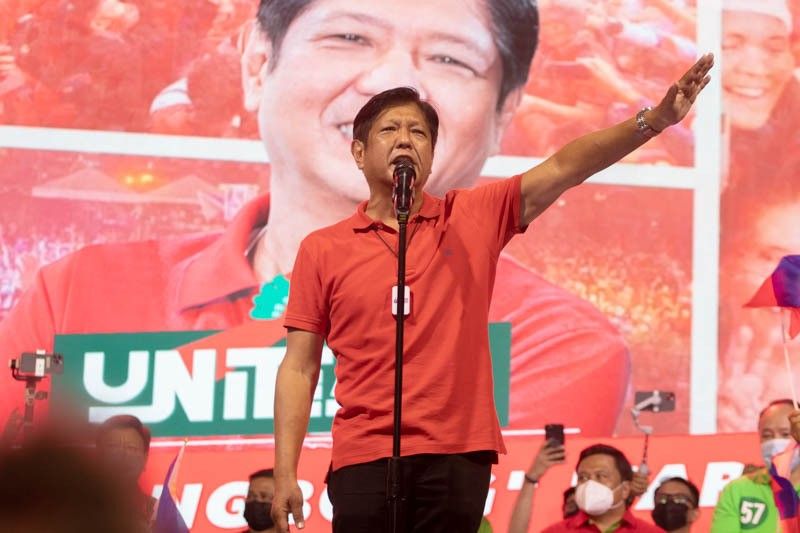
WITH THE counting all but over—setting aside some issues not likely to change the outcome—it’s clear that our people have spoken, and that, by a 2-to-1 majority, they have chosen Ferdinand Marcos Jr. to lead this country for the next six years. 

It’s no huge secret that I, among many others, voted for somebody else. Of course I’m unhappy, but what I feel doesn’t really matter much in the scheme of things. Given that the life expectancy of the Filipino male is 67.26 years, I’m already on borrowed time at 68 and would be lucky to see the end of this next administration, let alone the one after that. I’ve told my mom Emy—who voted at age 94 and who shed tears of dismay and disbelief when the results rolled in—that living for six more years to vote one more time should now be her goal. Just surviving will be her best revenge.

I wonder how it is, however, for the young people who took to the streets for Leni and Kiko, believing that they would make a difference. They did, although not in the way they expected, to ride a pink wave all the way to Malacañang. They realized, as we ourselves did ages ago, that money and machinery are always heavy favorites over hope and idealism, and that issues, ideas, and the truth itself can be made to look far less important than image and message, if you can buy the right PR consultant.

They will also have learned, as has been pointed out by other commentators from both sides, that it wasn’t all disinformation—that Marcos Jr. appealed to the genuine desperation of the poor with a promise of relief, however illusory. Since most of Leni’s young supporters were visibly middle-class, first-time voters, it was a rude but necessary awakening to the realities of class politics in this country, which politicians of all kinds—none of whom have to worry about where their next litson baka is coming from—have learned to negotiate and manipulate. 

Defeat, it’s been said, can offer more lessons than victory, and while we may have metaphorically won in some significant respects—chiefly the aggregation of “middle” forces not tied to any traditional political party into a burgeoning progressive movement—there will be much to review and refine in the years ahead. This very dissociation of the Kakampinks from the old parties and their command structures, for example, was a blast of fresh air for many volunteers, but also a liability for operators used to the old ways.

Understandably there’s been much wringing of hands and gnashing of teeth in the trenches, in the desire to meld seething resistance with grudging acceptance. I see it in both young and old activists—the young, because they’re heartbroken for the first time, and the old, because they didn’t expect to find themselves facing a Marcos all over again. The bashing and taunting they’re getting online from galleries of screeching monkeys doesn’t help. 

Being one of those old fogeys, I tend to be more subdued in my reaction to Marcos Jr.’s victory, and advise my young friends to cool down, ignore the bashers, and steel themselves for a complicated and challenging future. As someone who went through and survived martial law—I was eighteen when I was arrested and imprisoned for alleged subversion (although I was never charged or tried in court, just locked up for the state’s peace of mind)—I can offer them living proof that we can survive dictators and despots, with faith, resourcefulness, and courage. My parents survived the Second World War, and many other people have gone through worse.

I’m neither predicting nor wishing that a Marcos presidency will be bound to fail. I’d hate for the country to suffer just to prove a point. Besides, whatever I think today won’t matter one bit to what will happen. Whatever Marcos does, he will do so of his own will, by his own nature, out of his own character. What that character really is will emerge in the crucible of crisis—and crisis is the only thing the future guarantees, whoever the president happens to be. Beyond and regardless of the propaganda for and against him, Mr. Marcos Jr. will have ample opportunity to display what he would not have us glimpse in a public debate, and that revelation will do more than a million tweets calling him a thief or praising his acumen.

Speaking of character, I had an interesting discussion last week with an old friend, a renowned professor of Business Administration, who brought up the possibility of “luck or destiny” to account for the Marcos victory. He added that luck was an important factor in business, and that he would flunk a student who thought otherwise. 

I disagreed; as a teacher of creative writing, I said that I wouldn’t accept “luck or destiny” as a resolution for a student story. We’d call it deus ex machina—a helping hand—which thwarts the logic of the narrative with an artificial and improbable ending. I know: it happens in real life, but not in good fiction. As Mark Twain says in one of my favorite quotations, “Of course fact is stranger than fiction. Fiction, after all, has to make sense.” 

Whether factual or fictional, stories are really less about events—the plot—than character. The plot is simply there to enable character development. Things happen for a reason: to test and reveal our character, to show ourselves and others what kind of people we really are, with dramatic clarity and inevitability.

If you’re wondering why I strayed from the May 9 election to a mini-lecture on writing, it’s because we can look at that election and its aftermath as a long and continuing narrative that will establish our character as citizens, and as leaders. The next crises—the post-pandemic economy, China’s ambitions, a crackdown on civil liberties, getting deeper in debt—will come to try us. That’s the plot. And when that happens, Bongbong will be Bongbong, and all Filipinos—31 million of them, especially—will see exactly what they bargained for.

So if you’re still smarting, just chill, recuperate, get back to something you enjoy doing, and let this drama take its course. Like my mom Emy, endure and survive. Give Marcos Jr. a chance to achieve his “destiny,” which could yet be everyone’s best education.

Hindsight No. 15: The Also-Rans

Hindsight for April 25, 2022

(Photo from philstar.com)

I USED to hold Isko Moreno in high esteem when he was the new mayor of Manila and seemed intent on cleaning it up, figuratively and literally. My wife Beng and I were once on one of our regular sorties to the Japan-surplus shops along Avenida Rizal when we heard a great commotion outside, and when we looked, a team from the mayor’s office was spraying the street with jets of water and making sure the sidewalks were clear of obstructions. 

When he announced his bid for the presidency and came out with that beautifully produced “Ako si Isko” commercial—before Leni Robredo entered the race—I thought he was a viable prospect. I even told Beng and my mother, who had their misgivings, that I would vote for Isko if Leni didn’t run because he checked all the boxes: coming out of poverty, visibly on the job, willing to stand up to presidential bullying, good-looking, and passably articulate. Even his sometimes broken English was no problem and might even have been endearing, proof positive of his struggle to learn the language of another class. 

I was similarly impressed by Ping Lacson’s command of governmental matters and his coolness under fire, and especially by his refusal to avail himself of his pork-barrel allocations. I might even have been willing to give him the benefit of the doubt—a huge doubt bordering on certainty—on the Kuratong Baleleng murder case if it came down to that. I recall having been in the Senate gallery in 2003—the UP Charter was also up for deliberation then—when Lacson took to the floor, put up a screen, and with devastating efficiency and cutting sarcasm laid a trail of dashes connecting the First Gentleman to the mythical “Jose Pidal.” After the presidential debates—and as Isko’s sheen began to dull and darken—I began to think, like many others, that he would have been a great No. 2 (whether as vice president, or second choice). 

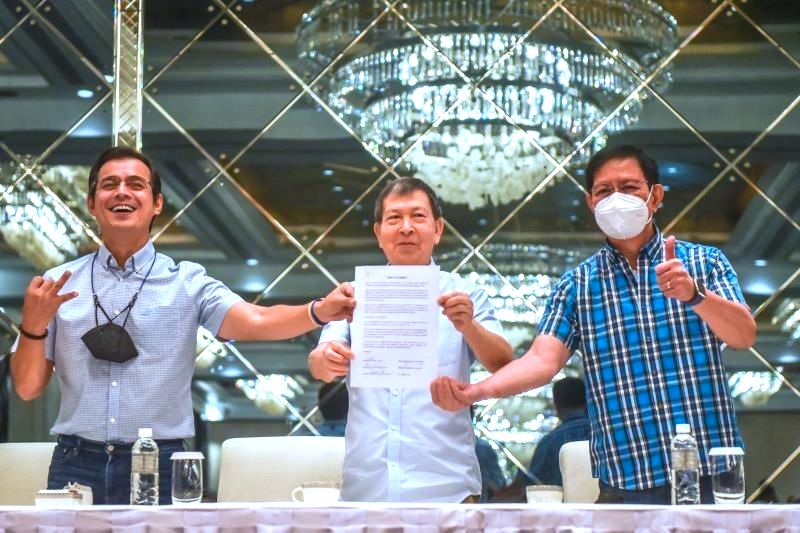
But whatever remaining palatability Isko Moreno had—dragging Ping Lacson along (Norberto Gonzales we can kindly ignore)—vanished with that Easter Sunday gripe session masquerading as a press conference that only revealed their pettiness of mind and character. It wasn’t even just what they said—for which they would’ve already been raked over the coals hundreds of times before this column comes out—but the way Isko in particular handled the post-presscon flak that sticks in the craw. 

Given a chance to refocus his sights on Ferdinand Marcos Jr. instead of yapping at Leni’s heels, Isko doubled down on his silly dare for Leni to stand aside and let him take on Marcos Jr. one on one, claiming that he owned the “everyone-who-can’t stand-Leni” vote, next to the frontrunner. And no, said his manager, it wasn’t some impulsive remark brought on by the summer heat. It was all thought out; they’d made their calculations—Leni had hit her ceiling, and Isko, well, his ceiling was higher. 

Which has to make one wonder: how did he think he was going to get there? Did he imagine he’d inherit a suddenly headless Pink Army, and merge that with a gazillion Leni haters defecting from the Marcos camp (and his bottomless war chest)? What about the “everyone-who-can’t-stand-Isko” vote, which can only have ballooned after his stunt? And no, Leni Robredo isn’t some sidewalk obstruction to shove out of the way.

Dissociating himself from Isko’s call, Ping Lacson said that he “didn’t see it coming,” which of course was possible, but troubling for someone supposed to be a consummate tactician. Should he have been bothered that Isko upstaged him, or even more, insulted that Isko didn’t even care to ask him to withdraw as well, given his deep-frozen standing in the polls?

Manny Pacquiao dodged a bullet by what his manager called “divine intervention”—a congested airport—and so was able to land and perch on a square foot of moral high ground. Giving the Almighty more work to do (after all the “acts of God” recently being attributed to Him), Pacquiao also explained that only God could change his mind about running.

Leody de Guzman did the smart thing and enjoyed his halo-halo in South Cotabato. Whatever happens, I think history will salute Ka Leody’s albeit largely symbolic candidacy, as an example of pushing principles over percentages. 

Leni Robredo ignored the press conference and asked her Kakampinks to do so as well, training their attention on the remaining weeks of the campaign—and on the frontrunner.

Frontrunner Marcos Jr. may have had the best time of all, laughing his head off at the Easter show. (When a Facebook friend asked if he might have paid for the presscon bill, I told her that those fellows couldn’t have come that cheaply.)

It’s a sad turn of events—and I’m not being facetious here in any way—because it would have been good for our democracy and for our people to have had truly worthy and viable candidates to choose from, to offer hope beyond May 9 in a new breed of political leaders willing to stand up to despots, kleptocrats, bullies, monsters, and crooks—and children thereof. Instead we see politicians willing to do and say anything to win—even if they won’t, which only makes it doubly sad and puzzling. By holding that pointless presscon—the more expensive equivalent of an email blast announcing “I’m alive!”—the three men merely highlighted the singular fitness of Mrs. Robredo to take on Marcos Jr. for the presidency.

Come May 10, either Marcos Jr. or Robredo will have won. That will leave all the others as also-rans, some of whom will take their loss with grace and dignity, some of whom will protest to high heaven, some of whom will count their net income, and some of whom will look for someone else to blame. 

You can be an also-ran and hold your head high, prepared to fight for the people again not six years down the road, but all the years in between. You can also be an also-ran whom people will be happy to consign to oblivion, having revealed how desperate, how foolish, and how nasty you can get just to be called “Mr. President.”

Hindsight No. 11: A Political Playbook

Hindsight for Monday, March 28, 2022

I WAS rearranging the books and periodicals in my library the other day when I came across a copy of a journal from more than 60 years ago—the 3rd quarter, 1958 issue of Comment, self-described as “a quarterly of Philippine affairs… conceived in the observation that absence of thought has resulted from a prevailing atmosphere of conformity and dread of ideas.” 

It was quite an assertion to make, but the journal’s mainstays were up to livening things up in the Cold War chill that had turned many Filipinos—both in government and academia—into rabid anti-communists. On Comment’s editorial board were F. Sionil Jose, Onofre D. Corpuz, and G. Burce Bunao (on leave for their studies abroad were Alejandrino Hufana and Elmer Ordoñez). Then only in their early thirties or even younger, these men would count among the most prominent intellectuals and writers of their time. 

What particularly caught my attention was an article written by Corpuz on “Filipino Political Parties and Politics.” O.D., as he would be known, had just recently returned with his PhD in Political Economy and Government from Harvard, on the verge of a long and prominent—though sometimes contentious—career in public administration that would see him serve as Secretary and then Minister of Education, founder and president of the Development Academy of the Philippines, member of the Batasang Pambansa, and president of the University of the Philippines. 

Another political scientist and UP president, Jose V. Abueva, gave due praise to Corpuz upon the latter’s passing in 2013, citing his landmark scholarship in economic history. But Abueva also pointedly noted that O.D. was “soft in his judgment of Marcos’ authoritarian rule.” (Interestingly, Corpuz had described martial law as “an anti-democratic but constitutional coup” and EDSA as “a democratic but unconstitutional coup.”)

I was curious about what O.D. Corpuz observed of Philippine politics in the 1950s and if those observations would still hold today. Let me share a few choice quotations from the article, and you tell me if they don’t remind you on some level of what we’ve been seeing lately.

First, he notes the political centrality of the family and the elite:

“The importance and strength of the family and of its manifold of values, interests, ethics, and behaviors is one of the basic facts in the cultural context of politics and government in this country…. Close association between party and family was natural from the outset. 

“The first elections in this country in this century were municipal elections. This meant that, as a general rule, during the critical time when the foundations of political leadership were to be established in this country, those foundations had to be local…. The organization of national politics that later came after 1907 was essentially a superstructure resting on local foundations, in which the locally dominant families were the primary factor.”

I knew that only men could vote until 1937, but I didn’t know until I read Corpuz that, early on, you also had to own “real property worth at least five hundred pesos or paid at least thirty pesos of the established taxes annually” and read, write, or speak English or Spanish.

These requirements of maleness, wealth, and literacy lodged if not locked political power within the elite. Citing the French political scientist Maurice Duverger, Corpuz then goes on to classify political parties into “cadre” and “mass” parties, with practically everyone falling into the former category (the communists being the notable exception), comprising individuals bound by common interests and goals. These groupings were temporary, opportunistic, and shared the mindset of the elite from where their members came. These members also freely defected from one party to the other as circumstances required or suggested:

“The frequency of defections is a unique and interesting characteristic of Philippine politics. No party system abroad seems to breed that adventurous individual in whom ours abounds, who changes his party affiliation almost every season…. Defectors do not defect by themselves. They have personal and independent followings that go with them wherever they go, and it is these, as much as the defectors themselves, that are coveted by the parties.”

All parties needed money, and they knew where to get it:

“Cash contributions come in the form of large donations. M. Duverger calls this the system of capitalist financing…. The majority party would enjoy a positional advantage over the minority in the matter of contributions, forced or voluntary, from business firms. It is similarly favored when it comes to per capita levies from aliens, especially the overstaying Chinese, who render their donations unto Caesar during the Christmas and political seasons.” 

Corpuz predicts, presciently, that the old landed aristocracy would at some point be matched or supplanted by new wealth coming out of commerce and industry, which would then control the political levers. Ultimately, family trumps party and ideology; its survival and prosperity are what matter most:

“A somewhat more important factor is the existence of private and family interests that are not subordinated to the demands of administration unity or party discipline. Some families affiliate themselves to a party only as a tactical maneuver, with the basic aim of acquiring a means for aggrandizing family interests.”

Finally, Corpuz observes the existence of a significant “floating electorate”—today’s “undecided” or “convertible” voters—and how to win them over:

“In the Philippines, to a degree rarely matched elsewhere, the slogans of the parties belong to the corpus of political myths…. The lack of ideological meaning in the party platforms is often lamented… (arising from) the fact that the attitude of the floating voter is unpredictable…. As a minimum condition, they must not alienate the floating vote. In this case, therefore, the safest course of action for the campaign planners is to declare the party’s unswerving dedication to generalities.”

I’ll leave it to your imagination what those “generalities” might be today. But I have to say that for a minute back there, I thought I was reading a political playbook for the 2020s.