Qwertyman No. 167: Stranger Than Fiction

Qwertyman for Monday, October 13, 2025

IF SEN. Alan Peter Cayetano and his cohorts in the Senate minority wanted to rile the people even more, they couldn’t have done it better than by having Cayetano challenge Sen. Tito Sotto for the Senate presidency, at the same time that he was floating his supposedly heroic idea of having all elective officials resign because the public was fed up with them.

He had to know that that was exactly the kind of antic that made people throw up at the mention of certain names—a dubious pantheon of the corrupt, the bought, and the compromised. But he did it anyway, employing his imagination to yank public attention away from the burning issue of the hour—the massive flood control scam and its ties to many lawmakers—in the direction of Mars, and the possibility of honest (never mind intelligent) politicians inhabiting that planet.

Why he did that is anyone’s guess, but mine would be that anything to stop the momentum building up at the Blue Ribbon Committee under Sen. Ping Lacson was good for the minority, many of whom were increasingly being threatened by the exposure. If Cayetano had resigned first (and forthwith!) to provide proof positive of his noble intentions, the distraction would have been worth our time, but of course that was never part of the plan. 

The plot to unseat Sotto—brazen and shameless in its purpose—was more credible and worrisome. It fizzled out but remains potent, simmering just beneath the surface. Lacson’s resignation as BRC chair was probably a concession to forestall Sotto’s, but the situation in the Senate is so volatile that it can’t take much for the leadership to switch while we’re brushing our teeth. 

All we seem to be waiting for is that point of utter desperation when the beleaguered, fighting for their political lives and possibly even their personal freedom, ignore all considerations of decency and public sensitivity, weasel their way back into the majority, and deliver the Senate to its most famous watcher from the gallery: Vice President Sara Duterte, whose fate still hangs in the balance of an impeachment vote that has yet to happen.

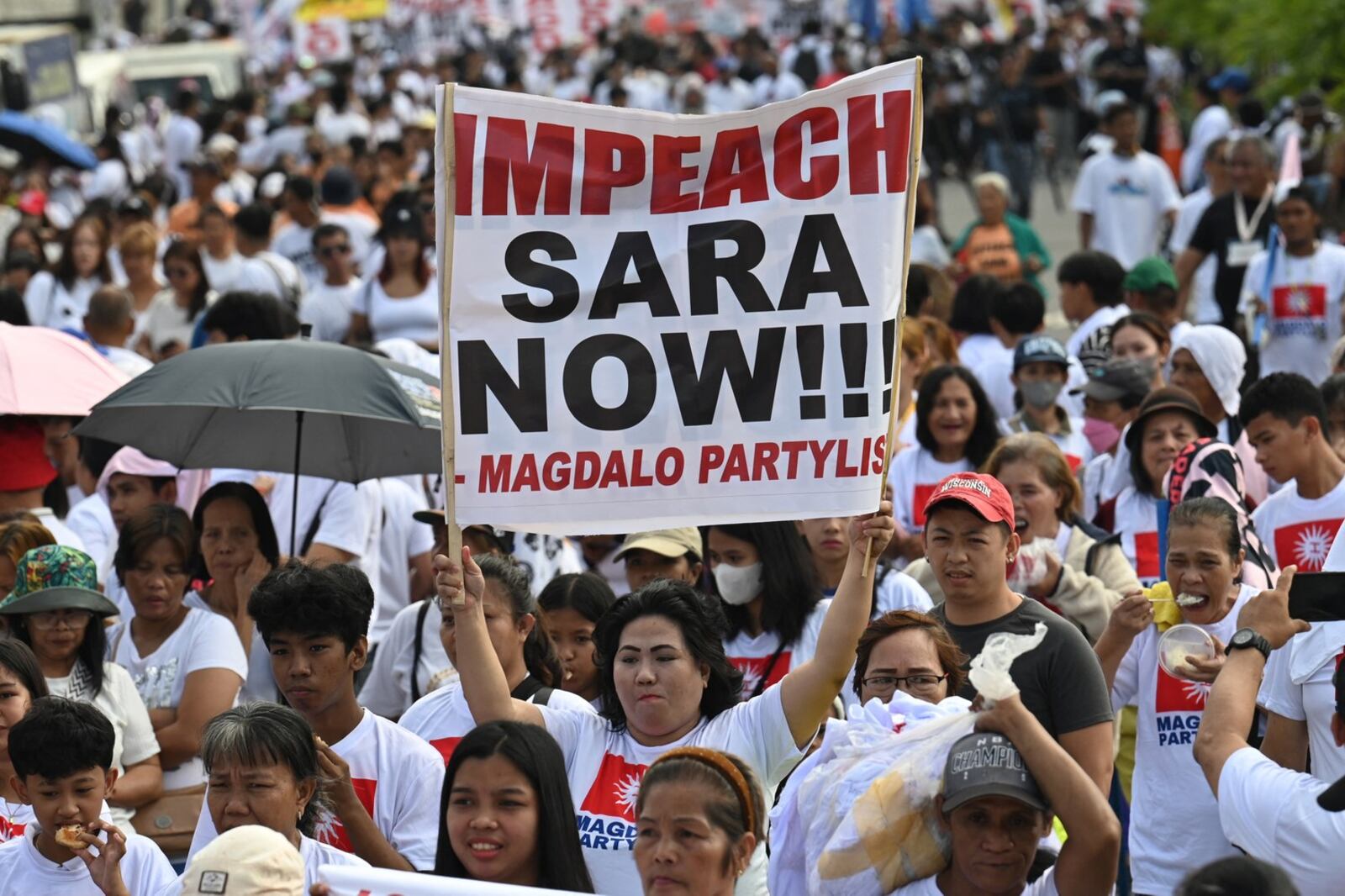
That vote and its implications, let’s all remember, was what triggered all of this. Premised on rampant corruption within her office, her impeachment, had it passed the Senate, would have barred her from running for the presidency in 2028 (and, for PBBM, from the resurgent Dutertes wreaking retribution on their erstwhile allies). But this isn’t really just about Sara—it’s about all those other trapos who’ve cast their lot with her, whose fortunes depend on her absolution in the Senate and ascension to the Palace. 

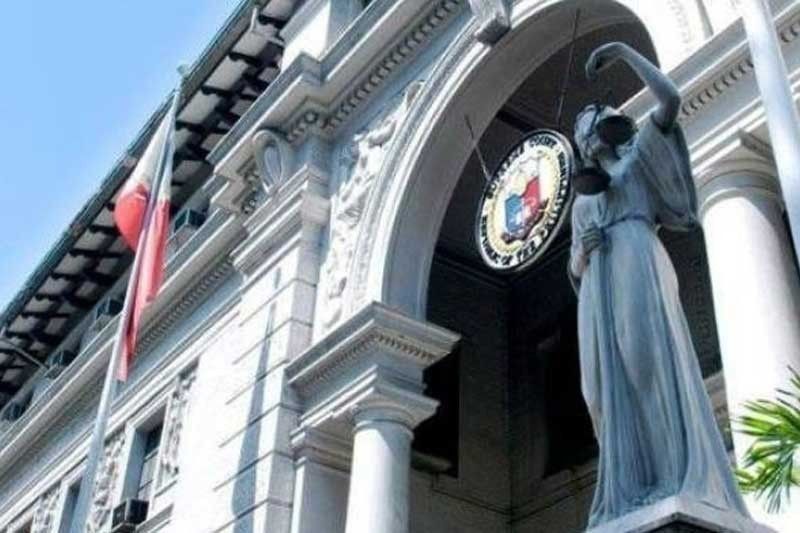
Former Senate President Chiz Escudero, who dragged his and the Senate’s feet in that process, has now dropped all pretensions to impartiality, calling the impeachment “unconstitutional” in a speech that would only have pleased the Vice President, a title he himself might be auditioning for. He did his part well, with what many saw to be the ill-considered assistance of the Supreme Court, to freeze the impeachment complaint. 

And there that matter sat, until PBBM—whether unwittingly or presciently—(and here we’ll go fast and loose with the idioms) shook the tree, opened a can of worms, threw mud at the wall, and unleashed the kraken by exposing the trillion-peso infrastructure scandal now rocking the country. He might have done this to suggest a link between the alleged corruption in the VP’s office and even larger acts of plunder emanating from her father’s time in Malacañang, a deft political move. But reality overtook his imagination, and now the issue’s grown far beyond that into his own administration, his own responsibilities, his own accountability. 

That said, and however we may have felt about him, PBBM has done us all a service by drawing the curtain on the systemic rot in our society and governance, for which he, Sara, and their cohorts have all been culpable, directly or administratively. By doing so he rendered himself vulnerable as well, and the VP’s forces are now zeroing in on that vulnerability to deflect attention from their own predicament. 

Thus the barrage of “Marcos resign!” calls (as opposed to the Left’s “Marcos and Duterte resign!”), which has become shorthand for BBM out, Sara in. (It was on that key point that the rumored September 21 coup plot reportedly first stumbled, with the plotters balking at the alternative.) It also explains the slew of professionally produced reels on Facebook and other social media calling for the military to depose the President—ironically, something so openly seditious that Digong Duterte’s NTF-ELCAC would have instantly pounced on them, but which BBM and his crew seem to be shrugging off, at least for now. 

What tempts our imagination in this fraught situation—where public trust in our politicians and even in the courts is hitting critical lows, and where no clear and short path to change seems visible until 2028—is the possibility of military intervention, whether by martial law or on its own volition. I’ve been assured by friends who know better that this military of ours today is much more professional in its mindset than its predecessors, and that it will abide by the Constitution. I sincerely hope they’re right, because if there’s anything that all the parties in this mess can probably agree on, it’s that boots in the streets won’t bring us any closer to a functioning democracy. 

I’m reminded in this instance of one of my favorite literary quotations, from Mark Twain who said (in so many words) that “Of course fact is stranger than fiction. Fiction, after all, has to make sense.” If you had told me three years ago that we are now relying on a dictator’s son to save us from an even worse alternative, and in the process—if almost by accident—expose corruption so foul that we are back on EDSA demanding not regime change but the rule of law, I would have called you a lousy fictionist with a runaway imagination. Yet here we are.


Qwertyman No. 161: Torre for Senator

Qwertyman for Monday, September 1, 2025

CAN THERE be any question that the logical next step for cashiered PNP Chief Gen. Nicolas Torre is to run for senator?

The next elections are still three years away; the newly sworn-in senators haven’t even warmed their seats. But the public disgust with the current crop—coupled with Torre’s elevation to hero status—just might create enough momentum and leave enough time for a new wave of Torre-type do-gooders to emerge and coalesce for 2028. The ongoing swell of public outrage against massive corruption in our public works could well become the trigger for a broader and more enduring coalition for good government. 

Many remain skeptical of President Bongbong Marcos’ resolve to pursue this drive to its politically torturous conclusion, but such a coalition—which can tap moderate elements from within the administration’s ranks—could force BBM’s hand, being the only viable option to a DDS resurgence in 2028. 

Let’s get this clear: BBM may not be our idea of a progressive democrat, and he’s been making the right noises not because he found religion, but because a Duterte comeback will threaten the Marcoses with more vicious punishment than they ever got from Cory Aquino. 

Still, it can only be a boon for the middle forces if he helps rather than hinders this brewing tsunami he was at least partially responsible for initiating when he publicly called out those divinely blessed contractors by name. We still don’t know what impelled him to take that extraordinary step, but now that the cat is out of the bag, there’s no pushing it back in, and the people won’t take anything less than decisive action against the greedy rich. You can feel the anger forming out there, the mob right out of Les Miserables taking to the streets, prepared to lynch the next billionaire who flaunts his or her Rolls-Royce umbrella while the poor drown in the floods. 

And the message is getting through: ostentation is in retreat, the Birkins and the Bentleys vanishing from Instagram beneath temporary covers until the wave subsides. But will it? How can it, when, trembling and fuming in their fortresses, the objects of our attention continue to manifest consternation rather than contrition? I love it when one of these clueless ingenues, in the midst of the uproar, protests that her family “owes nothing to the Filipino people, because the government paid for services (they) delivered.” 

The pretty miss obviously never heard Lady Thatcher, or even saw her meme reminding us that “The government has no money. It’s all your money.” (The full quotation, from a Conservative Party conference in Blackpool in 1983, goes thus: “Let us never forget this fundamental truth: the State has no source of money other than money which people earn themselves. If the State wishes to spend more it can do so only by borrowing your savings or by taxing you more. It is no good thinking that someone else will pay—that ‘someone else’ is you. There is no such thing as public money; there is only taxpayers’ money.”)

This brings us back to Gen. Torre, who showed the kind of resolve we’ve long hoped to see in our leaders by attempting to clean up and straighten out a national police force badly begrimed by President Duterte’s tokhang campaign and by its continuing involvement in such nefarious cases as the apparent murder and disappearance of at least 34 sabungeros

It seems odd that we civil libertarians should be supporting a general—and one who was ostensibly fired for ignoring his civilian superiors—but this was a man who went against the grain, who employed his authority for the tangible public good in ways that his predecessors (and yes, those civilian superiors) never did. Can people be blamed for thinking that one Torre is worth more than two or three Remullas when it comes to the delivery of public service?

And Torre was right in rejecting the notion of being designated an “anti-corruption czar” in charge of prosecuting corrupt contractors and their cohorts in government. It’s a trap and a setup, for the inevitable failure of which Torre will once again be the fall guy. Does anyone really believe that yet another toothless commission—on top of all the anti-graft and anti-corruption agencies we’ve seen come and go, and all the laws we already have in place—will solve this mess? 

The Senate could and should have been that commission, but it’s too laughably compromised to investigate its own, and their brethren in the Lower House. Perhaps we should begin by driving the crooks out of both Houses of Congress, and replacing them with men and women of fundamental virtue, honor, and decency: our Vico Sottos and Heidi Mendozas, among others. And yes, I would even include Baguio Mayor Benjamin Magalong in this list, despite his professed and unapologetic gratitude for President Duterte’s assistance to his city during the pandemic. His loyalty, he says, is to the people of Baguio, and I would rather believe him than all those jokers and poseurs in power who speak of corruption and even of establishing “Scam Prevention Centers” when they should be holding up a mirror to their own faces.

Hmmm, maybe that’s a good idea for our next rally against corruption—let’s bring hand mirrors, the way Hong Kong protesters carried yellow umbrellas to fight for their rights in 2014 and South Koreans lit candles to demand President Park Geun-hye’s resignation in 2016—the “Mirror Movement” to shame public officials and the filthy rich. Mga kapal-mukha, mga walanghiya. Not that we truly expect them to change, but that we expect to change them. Torre for senator!

Qwertyman No. 158: Other Battles to Fight

Qwertyman for Monday, August 11, 2025

A LOT has been said this past week about the 12-0 decision of the Supreme Court on the impeachment case against Vice President Sara Duterte essentially supporting her contention that the one-year rule against bringing up new impeachment charges had been violated by the House of Representatives, and pushing back the earliest date for any resumption of such charges to February 6, 2026.

Predictably, the decision raised a storm of protest involving no less than former Justices of the Court, our top legal luminaries and lawyers’ organizations, and key media and political personalities who accused the Court of judicial overreach. On the other side were somewhat more muted voices calling for respecting the Court’s judgment—including, surprisingly or otherwise, a very sedate Sen. de la Rosa, now all flush with legal wisdom and temperance; to be fair, some of these people were hardly Duterte fans, but likely just citizens tired of all the bashing going on. (The Senate’s subsequent vote to “archive” the impeachment complaint would catch even more flak.)

However this issue is ultimately settled, one thing is clear: the Filipino public’s trust and confidence in their political institutions has hit a new low. And contrary to certain suggestions, it’s not because of journalists and gadflies like me who seem keen on tearing the house down, but because, well—it’s in the nature of the beast (or the human) for something so supposedly venerable as our Supreme Court to behave strangely in certain situations. 

The controversy stirred up by the Court in the Duterte case reminded me of a passage that I quoted in my recently published biography of retired Associate Justice and Ombudsman Conchita Carpio Morales, who has also manifested an opinion contrary to that of her current peers. The quotation comes from the former law dean and legal scholar Pacifico A. Agabin, who wrote in his book The Political Supreme Court (Quezon City: UP Press, 2012):

“The Supreme Court, like the US Supreme Court, is both an appellate and a constitutional court. Unlike most countries in Europe, we do not have a constitutional court, and so our high tribunal performs these dual functions under the Constitution. And when it decides constitutional cases, it becomes a political body, just like the executive and legislative branches. ‘Political,’ as used here, means that it acts as a legislature, according to Richard Posner, in the sense of having and exercising discretionary power as capacious as a legislature’s. According to Posner, ‘constitutional cases in the open area are aptly regarded as ‘political’ because the Constitution is about politics and because cases in the open area are not susceptible of confident evaluation on the basis of professional legal norms.’ Thus, when the court decides constitutional cases, it becomes a political organ. Like a chameleon, it changes color and assumes a different role as a political body.

“To repeat, I use the term ‘political’ here not in its partisan sense, but more in its ideological connotations. Unfortunately, there is no dividing line between the ideological and the partisan meanings, and sometimes, these blur into each other. The court itself sometimes fall into the partisan trap.

“This holds especially true in a personalistic culture like ours, where values like utang na loob and pakikisamaare embedded in the Filipino’s subconscious.”

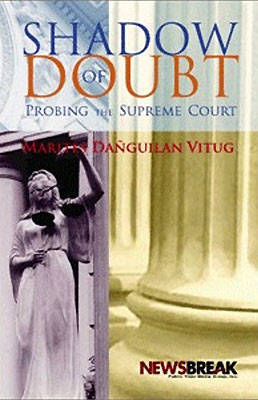
Now, that’s all still very high-minded, but another memory that’s even more disturbing comes from a book that I edited (anonymously, because I didn’t want to be saddled with a libel case—as its author inevitably was): Shadow of Doubt: Probing the Supreme Court (Newsbreak, 2010), written by my friend, the prizewinning journalist Marites Vitug. In her prologue, she recalls this incident:

“During an interview, after I asked an aspiring candidate to the Supreme Court about the unsavory realities of the appointment process, he advised me to tread carefully. The candidate, a Justice of a mid-level court, was fearful of the effects of a book that would pry into the sanctuary of the Supreme Court and ruffle the institution. 

“Over an oatmeal breakfast (mine) and coffee (his), he worried that the public may lose their confidence in the Court. He then told me the story of a staff member of a Supreme Court Justice decades ago. This man had access to confidential information and, after learning of Court decisions, immediately approached winning litigants and informed them that he could work on their cases and get favorable results. He asked for money—and, voila, delivered them the good news when the decisions were promulgated. He always had happy clients.

“The Justice I was speaking with was, at the time, working on the Court. Disturbed by the corrupt behavior of a colleague, he reported this to the Chief Justice. However, the Chief Justice took a benign, almost indifferent view. He told the young lawyer that this would soon come to an end because the erring staff member was about to leave the Court; he held a post co-terminus with that of his boss, an associate Justice. 

“It was best, the Chief Justice said, to let it pass. He feared that if the Court acted on it and the anomalies became known to the public, confidence in the ‘last bulwark of democracy’ would wane. It was paramount to keep the institution pristine in the eyes of the public, never mind if wrongdoing was gnawing the Court.

“The Justice looked back at this moment and narrated the story to impress on me how important it is to protect the institution. For him and the Chief Justice who initiated him into this misplaced patriotism, strengthening the institution meant glossing over grave offenses.”

I’m not a lawyer (something we very often hear these days, followed by some legalistic opinion), but my pedestrian sense tells me that this Court and this Senate aren’t going to dig themselves out of the hole they’ve jumped into. Pinoy officialdom never admits mistakes and apologizes, like the Japanese do; we love to brazen it out with the thickest of cheeks. 

Given that, let’s not hang our expectations on this one peg of VP Sara Duterte’s impeachment. Whether she gets impeached or not, she’ll still have to answer for the serious charges brought against her, perhaps with even more finality than her removal from office will bring. 

February 6, 2026 is less than six months away. Let the prosecutors use the time to prepare an airtight case that will secure a clear conviction, in the court of public opinion if not in the Senate tribunal—a case so compelling that it will embarrass any senator-judge who will ignore its logic (and let’s face it, there will be many), and hold him or her accountable to the people at the next election.

In the meanwhile, we have many other and far more consequential battles to fight—our bloated budget, our growing debt, the illiteracy of our youth, the hunger and homelessness of our poor. These can’t be “archived,” and the “forthwith” on these issues came and went a long time ago.

Qwertyman No. 156: That Bam-Kiko Thing

Qwertyman for Monday, July 28, 2025

RETURNING SENATORS Bam Aquino and Kiko Pangilinan have been getting roasted online for joining the majority bloc in the incoming Senate, thereby securing important committee chairmanships under the highly unpopular but tough-to-unseat Senate President Chiz Escudero. Despite sympathetic reactions from such opposition stalwarts as former VP and now Naga Mayor Leni Robredo and Sen. Risa Hontiveros, the two have been roundly scored for their decision.

Typical of the outcry was this much circulated post by a friend I deeply admire, the penal and judicial reformer Raymund Narag, who lamented that “They will join the majority. The same majority that excuses corruption as politics, power as protection, and self-interest as national interest. But what they forget is that we voted for them not to play the game. They forget that it was not just about committees, or positions, or so-called influence. It was about principle. We mourn the death of idealism in Philippine politics. But it’s a slow death. Not by assassination, not by defeat, but by compromise. And the executioners are the very people who once called themselves idealists.”

It’s a heavy to charge to lay at the feet of these two men—turncoatism, betrayal, the surrender of idealism, latent hypocrisy—and I can see where the disappointment and dismay are coming from. But with all due respect to my friend Raymund and to those who share his sentiments, I don’t see these dire reversals at all in the choices that Bam and Kiko made, but possibly an interesting and potentially significant maturing of our political culture, especially within the opposition.

It’s true that the Bam-Kiko decision came as a surprise, and that things would have been much clearer, the battle lines much more cleanly drawn, had they sat with Sen. Risa Hontiveros in a true and unflinching albeit tiny minority, duking it out with the majority at every turn, exposing wrongdoing right and left, and remaining unblemished by compromise to the end of their term. We could have remembered them for their impassioned speeches in defense of democracy and justice, tilting against the windmills of the Marcos-Duterte regime.

But I don’t think that’s all or what we elected these two senators for—or was it? As far as I can tell, we voted for them to get things done—the good, the right, and the best things—where they mattered, in their areas of expertise: Bam in education, and Kiko in agriculture. Granted, it may have been secondary to sending a message upstairs that these were the good guys, infinitely much better than the trapos being foisted on us by both the Marcos and Duterte factions, but it was their track record that gilded their credentials.

In case we’ve forgotten or weren’t listening too closely when they were campaigning, Bam Aquino authored 51 laws, including the Universal Access to Quality Tertiary Education Act, the Go Negosyo Act, and the Microfinance NGOs Act. He was also behind the Masustansyang Pagkain para sa Batang Pilipino Act and the No Shortchanging Act of 2016. Kiko Pangilinan, an even more seasoned lawmaker, produced over 150 laws, including the Sagip Saka Act, the Coconut Farmers and Industry Trust Fund Act, and the 105-Day Expanded Maternity Leave Law.

Their acceptance of the agriculture and education chairmanships should help ensure and strengthen their ability to pursue these progressive initiatives further—regardless of how they think about and vote on other issues of national consequence, such as the impeachment of VP Sara Duterte, the national budget, our foreign policy, and constitutional change. 

We have yet to see—as their critics already seem to have foretold—if they will cherish their chairmanships to the extent of abandoning their fundamental principles. Instead I foresee the greater likelihood of the reverse happening: of Bam and Kiko relinquishing their posts should their stay there prove morally untenable. If they were to perform well in their Senate positions, and they were then stripped of their chairmanships for their independent stances, then that still would be more emphatic than if they had never assumed the responsibilities that are also their entitlements, according to their competencies.

But in and of itself, joining the majority bloc—never a firm nor a politically or philosophically cohesive entity in our system of what Shakespeare called “vagabond flags”—should be less of a deal or an issue than it is being made out to be. This “majority,” in any case, seems such a ragtag band that it is almost certain to collapse before the end of the present term.

It probably says more about us as an electorate than about Bam and Kiko when we cast their decision as a “betrayal” of what they were presumably voted for. I’m no political scientist so the experts can explain this better than I can, but it seems to me that we’ve become used to seeing our legislature as a forced marriage of fundamentally incompatible forces—the ruling party (powerful but unintelligent, corrupt, opportunist, cynical, good-for-nothing) and the opposition (weak but progressive, smart, morally upright, idealistic, courageous, media-savvy, and effective). We see the Senate as an arena, a battleground (and often a circus), rather than an office where people are supposed to work, and work together (never mind that some of them are lazy and stupid), achieving results through compromise.

Bam and Kiko just need to prove themselves once more at their jobs and serve the Filipino to the best of their ability, so that when 2028 comes—and whatever their plans may be for that next milestone—they can have a good answer to the basic question that our voters have every right to ask: “So what have you done for me?” It’s a question that the elevated rhetoric of the progressive opposition has sadly often ignored and dearly paid for, almost as if it were beneath consideration. Bam and Kiko need a platform from which to connect corruption to the price of rice, to persistent flooding, to the failure of Filipino children to read at Grade 3. 

Of course, it can be said that that’s exactly what Risa Hontiveros has been doing all by her lonesome—without the benefit of patronage, and with just the chairmanship of the Senate Committee on Women, Children, Family Relations and Gender Equality to her name. She sponsored the passage of the Expanded Solo Parents Welfare Act, the Safe Spaces Act which protects Filipinos, especially women, from gender-based harassment in public spaces, and the Anti-Online Sexual Abuse or Exploitation of Children Law.

Taking another tack but manifesting the same tenacity, Sen. Loren Legarda has survived through many administrations in all kinds of political weather, drawing criticism for that ability, but has remained steadfast in her commitment to protecting the environment, mitigating climate change, and promoting Philippine arts and culture like no other senator nor President for that matter has. 

But for what they’ve already done and could yet do, I think Bam and Kiko deserve our trust. Let’s cut them some slack and give them a chance. We pinklawans aren’t the only voters they’re answerable to.

(Photo from rappler.com)

Qwertyman No. 150: Let the Curtains Rise

Qwertyman for June 16, 2025

UNLIKE MANY newspaper columnists, I don’t have much of a political or business network, being a not-very-sociable recluse who prefers to play poker with a few regulars and going out on dinner dates with the wife than to clink glasses with the cognoscenti. 

But every now and then I get a seat at the table with people who seem to truly know what is going on—political operatives and operators with the inside track on where people really stand and who’s in bed with whom, and bankers who find themselves serving as confessors to clients pouring out their tales of woe (e.g., the going rate of commissions on government contracts). 

As the fly on the wall with little to contribute but my amazement and credulity, I leave such meetings often profoundly depressed but also grateful to be more of a fictionist than a journalist, a writer who fancies the eternal verities of life instead of someone who has to gulp and swallow the unreportable.

Last week, I sat down to one of these powwows with a group of eminently connected friends whose identities shall go unmentioned, and the talk of course quickly went to VP Sara Duterte’s impeachment, and to the twists and turns the process has taken from the House to the Senate and back to the House again. The consensus among these pundits—who all come from different political persuasions—was that (1) Sara was guilty as hell of something or other; (2) but the trial wouldn’t take place; and (3) even if it did, she would surely get off the hook. 

The reasoning was that, as the last elections showed, the Dutertes were still surprisingly strong, and that the old man Digong’s banishment to the ICC only galvanized his base; therefore, Sara remained a viable candidate for 2028 (barring her impeachment and perpetual disqualification). If the administration slate had done better and had a lock on the numbers, that impeachment and Sara’s future would have been moot. 

But with the tide seemingly shifting Sara’s way—remember, she doesn’t need as many senators to acquit her as those required to convict her—then it may prove opportune for some senators to straddle the fence under cover of impartiality and assure their political future under Duterte 2.0 by at least keeping the door open for the lady. A more impish conjecture had it that this “remand” maneuver—which seems to have taken everyone by surprise except its chief instigator—provides an interlude during which certain crucial negotiations can take place. “It always comes down to money,” concluded one of our cohort. It was in everyone’s best interest not to have a trial, said another, because it would open a Pandora’s box of embarrassing revelations that would make Sara’s alleged transgressions look as petty as, well, Piattos.

Finally, the little Quixote in me had to speak up, and all I could say was, “If there’s no trial, there’ll be big trouble.” Feeling a bit bolder, I added, “And it’s not even just about winning, but holding people accountable—not just Sara but the senators as well.” Cynicism, I thought, was the real enemy in matters like these; we can’t let ourselves be paralyzed by cold reality, and it’s surprising what a little hope and even folly can do to change that reality.

Exactly what I had in mind when I said “big trouble,” I have to admit I wasn’t too sure of. I know people have been talking about an “Edsa IV” (let’s put that in Roman numerals to make it look more historic). But while I like the sound of it and would probably join the angry mob marching to the Senate to the beat of “Do You Hear the People Sing,” there’s an inherent problem or two with this “Edsa IV” scenario. 

Edsas are usually aimed at shaming and shooing someone out of office, but who would we be up against this time? Certainly not BBM (about whom more, later), who’s been enjoying a free ride on the center-left’s campaign against the Dutertes. VP Sara? She’s beyond shame and will never quit. SP Chiz Escudero? It would flatter him too much to be rallied against; besides, if you counted all the needles already being stuck into his homunculus by the enraged public, he’d look like a porcupine. Also, Edsas work when they reach a turning point, like when the Army decides to go south when they’re being ordered north; no such tactical possibilities here.

So it looks like we’re going to be stuck with the notion of a trial, which I believe will happen despite all the noises to the contrary because—take note I said this—we Pinoys can’t resist putting on and watching a good show and this impeachment promises to be a blockbuster of a melodrama. One way of framing it would be to present a beleaguered princess on the dock, invoking an exiled father and suffering the wrath of a cousin who usurped the throne; or, a comely damsel is revealed to be a hissing and slithering snake-witch when sprayed with the Holy Water of Truth by the village elders. There will be ample opportunity for all players to emerge as heroes or villains in this unfolding narrative.

And then there’s BBM, whose coy “hands-off” pronouncements no one at our table would take at face value. Even as I fought off cynicism, I reminded myself how we fictionists and dramatists sometimes have to be even more cynical than the most hard-bitten journalist to do our work well. We work with human nature—not with data, like good social scientists do, which is also how and why we can make people cry and laugh like the best scholars can’t. We have to see both the best and the worst in our characters to understand them thoroughly. “Ask yourself,” I often tell my writing students, “what does your character most strongly desire? What can he or she least afford to lose? In their moments of direst need, what do they pray for? If you can answer that, then you know who they are.”

So I asked myself: what does BBM want? To survive and prosper, of course—and then again, whether he’ll admit it or not, as a character in a play, he will want redemption, if not for the family name then for himself, to be a Marcos and yet be his own man. What does Sara want? Survival as well, of course, and exoneration—and beyond that, as she has made abundantly plain, revenge for betrayal and willful injury. 

I may not know that much about politics or business, but this has moved to the realm of theater. Mark my words, those curtains will be rising soon.

(Photo by Ted Aljibe/AFP)

Qwertyman No. 145: The Devil on My Shoulder

Qwertyman for Monday, May 12, 2025

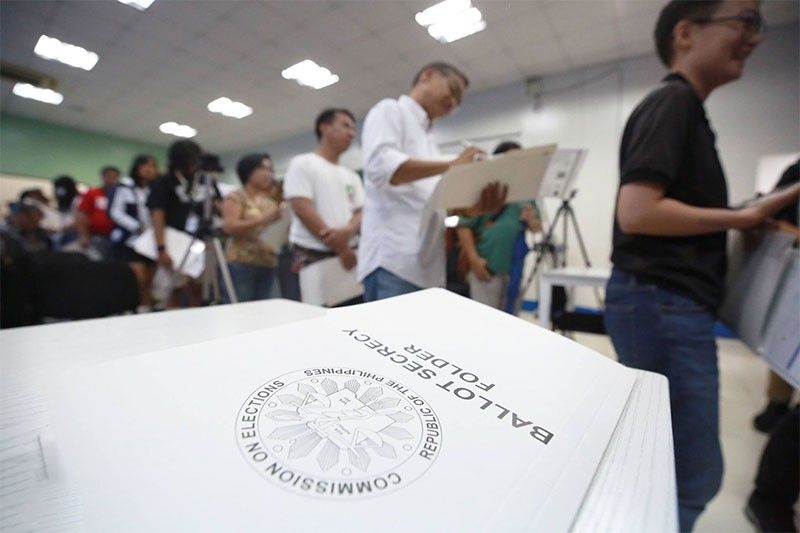
TODAY, ONCE again, we troop to the polling booths in the hope of making our votes matter—votes that, if the cynics are to be believed, might as well be dust in the wind. The surveys have spoken, the winners named. All that remains is for this day to be over, for the formalities to be done with, for the supposedly inevitable to play itself out. And then we’ll watch the new-old Senators of the Republic proclaimed in a ceremony that will showcase the state of our electoral mind. 

As absurd as it may seem, many Pinoys will actually be happy with the outcome—that’s what the surveys are all about, aren’t they? These are the senators we wanted—or most of us, anyway. “Most of them” is probably what you’re thinking, if you’re a regular reader of this column and agree with most of my views.

I can’t think of a more complicated election in recent times, in terms of an answer to the question of “What’s in our best interest as Filipinos, and how do we make that happen?”

The idealist in me has the simplest and probably the morally most unambiguous response: vote for the best candidates, period: the intelligent, the progressive, the principled, the proven, the humane, the hardworking, the uncompromised. Whether they win or lose, it shouldn’t matter—you’ve done your best as a responsible citizen; in a sense, you’ve won. I sorely want to believe this, and to do this today.

But persistently, impishly, like a little devil perched on my shoulder, a contrarian spirit urges me to temper my idealism with some consideration of its practical costs.

Last week in California, a Fil-Am friend asked me to explain the significance of these elections. In the US, midterms usually mean a referendum on the incumbent President’s performance, and next year will most definitely be one for the Orange Pope and his systematic dismantling of American democracy.

For us Filipinos, May 2025 isn’t that clear-cut—although it should have been, if the armies of May 2022 had remained in place, leaving us with a stark choice between the good and the bad.

But the ruling “Uniteam” alliance has since collapsed, with each side fielding its own troubled slate of aspirants, all seething with the most primal of motives: survival, revenge, profit, and opportunity.

The opposition seems to be a loose coalition of liberal, Left, and anti-administration forces. Among these, four names have consistently surged to the top in the kind of social media neighborhood I inhabit. I’ll call them my Triple A candidates, the ones I won’t have any second thoughts about, leaving me with eight more spots to fill.

It’s those eight that give me pause—not for any lack of qualified and virtuous prospects, but because there could be dire consequences for not filling up the rest of my ballot, as some have suggested, or voting for names without a prayer of winning, as a matter of principle (or, by this time, by force of habit).

It’s interesting to observe how, unlike in previous elections where voting straight for a party’s slate was the norm, various formulas and menus have emerged on social media—cafeteria or halo-halo style—to reflect this urge for some balance between the ideal and the practical in this three-cornered fight. Even opposition stalwarts, including Leni Robredo herself, have been excoriated for their previously unthinkable endorsements of certain candidates from the other side. Whatever happened to ideological purity? (It was always an illusion: note the Left’s earlier alliances with a notoriously bloodthirsty Digong Duterte and an unabashedly capitalist Manny Villar.)

I think many Filipinos understand what’s at stake in this election—not just who will compose the next Senate, but what that composition will mean. As I told my Fil-Am friend, Rodrigo Duterte may be safely imprisoned in the Netherlands, but his specter looms large and heavy over these midterms, through his proxies led by his daughter, VP Sara and their “DuterTEN” team (now more like DuterTWELVE, if you add one Marcos and one Villar). Sara was all set to be impeached for grave threats against the First Family and grand theft Piattos—which would not only have taken her out as VP but disqualified her from running for President in 2028. But that procedure—needing at least 16 votes in the Senate—got kicked down the road, after the election, leaving Sara’s fate up to the newly reconstituted Senate to seal.

So again, I told my friend, presuming that the BBM administration’s game plan here is to freeze Sara out of the presidency so it can install its own man, 2025 is really all about 2028. It’s a referendum, sure—not so much about the present President, but rather the past and maybe the future one. We’re not just—or not even—voting necessarily for the best candidates, but for senators who will push Sara out, or keep her in. Daddy Digong’s summary extradition to the ICC, while a relief for many, merely intensified that drama, raising the stakes to a matter of survival for the Dutertes.

It’s another sad and sorry spot to be in, for these elections to come down to choosing among the lesser or the least of 8, or 16, or 24 evils, against the statistical near-certainty of another wipeout for the truly good. Should I support this fairly familiar trapo, the devil I know, over that manifest idiot, just to help ensure that the latter stays out? Or, again, should I simply disregard all the surveys and scenarios, and vote from my purest and most innocent of hearts for the best people on that ballot? (Was this how the cardinals chose Pope Leo XIV, or did more pragmatic considerations come into play?)

By the time you read this, I shall have cast an early vote as a senior in my barangay. Like we often say, we are whom we vote for, and there’s a part of me that fears what I’ve become or may have to be. I need some of that Holy Spirit with me today—we all will.

Qwertyman No. 134: “Forthwith” and Other Adverbs

Qwertyman for Monday, February 24, 2025

NEVER IN our modern political history has so much seemed to depend on the meaning and interpretation of one word. For the past week, politicians, lawyers, and columnists like me have weighed in with their sense of “forthwith,” as it appears in Article XI, Section 3, paragraph 1 of our 1987 Constitution, which states that “In case the verified complaint or resolution of impeachment is filed by at least one-third of all the members of the House, the same shall constitute the Articles of impeachment, and trial by the Senate shall forthwith proceed.”

At bar is the impeachment of Vice President Sara Duterte, which is hanging in the balance with the complaint signed by more than enough congressmen and forwarded to the Senate for action “forthwith.” That happened just before the Senate adjourned, whereupon Senate President Chiz Escudero announced that, hold your horses, we’re on break here with seven of our members trying to get their jobs back, and there’s a bunch of other things we need to do before the trial even starts like getting properly fitted for our judicial robes, so we’ll see you in June after the SONA. As an aside to the House, Escudero also wondered aloud why Congress was rushing him, when they had two months to get the damn thing signed and sent over. No, he insisted, “forthwith” doesn’t mean “right now”; it means “when we’re ready.”

This flew in the face of opinions by such as retired Supreme Court Associate Justice Adolf Azcuna, who argued that an impeachment wasn’t tied to the legislative calendar, and that the Senate was constitutionally bound to convene on the complaint. Minority Leader Sen. Koko Pimentel agreed, calling on Escudero to at least convene a caucus to discuss the trial.

English-major nerds like me should live for moments like this. I can fantasize about being called as an expert witness to speak to the etymology and meaning of “forthwith,” whereupon I would have sagely advised Their Honors that “Round the middle of the twelfth century, the phrase forth mid appeared (mid being essentially the same as the modern German word mit, with), later forth with, to go somewhere in the company of other people. Necessarily, if you go forth with others, you go at the same time as they do. It seems this sense of time eventually took over, though the process of transition isn’t very clear, and it’s mixed up with other phrases that also referred to time. Certainly, by about 1450 the phrase had condensed to a single adverb with the modern meaning of immediately, without delay.” Did I know that all along? Of course not. I googled it and lifted it from a source only named “Hugo.”

It does point to an interesting fact about language, however—meanings change over time, and, depending on the context, can be bent to suit one’s purposes and perceptions. While all modern dictionaries will say that “forthwith” means “immediately,” lawyers and judges (yes, that sneaky lot, with all due respect to my lawyer-friends) have opined that “surrounding circumstances” could loosen things up a bit. One Canadian commentator has noted that “Some courts have determined that the word ‘forthwith’ requires vigorous action, without any delay, and have suggested that whether there has been such action is a question of fact, having regard to the circumstances of the particular case. Others have suggested it means the action must be taken without pause or delay, or done at once, while some judges have commented that the nature of the act to be done is to be taken into consideration when determining the required immediacy…. The term ‘as soon as possible’ has been defined as meaning no more than ‘without reasonable delay’ or ‘within a reasonable time.’ Some cases have suggested that the length of the period of time involved for performance is subject to a reasonableness standard rather than a sense of urgency, and may be influenced by trade practice, custom and other circumstances.

So if this “reasonableness standard” were to apply in the matter of Sara Duterte, would SP Chiz’s reluctance to convene the Senate now as an impeachment court be reasonable? Not being a lawyer, I’ll leave the legality or constitutionality of it to those who know better—even if, as we can see, it’s lawyer vs. lawyer in this case. I did learn from another retired SC Justice (not Azcuna) that the impeachment process does require many preliminaries before the actual trial, including reviewing the rules of the Senate—and let’s not forget the robes, which the SP emphasizes (at P6,000-P8,000 each) will have to be dry-cleaned by the senator-judges themselves, to save the Senate money (a laudable show of thriftiness, given that the new Senate building in Taguig is now expected to cost over P30 billion). 

What’s apparent to this pedestrian observer is that whatever “forthwith” means, it didn’t happen, at least not the way our framers probably intended it. We’ll be in for a few more months of what Henry Kissinger creatively called “constructive ambiguity” aka fudging, while the senatorial candidates (at least those not identified with the Dutertes) avoid the issue.

“I’ve yet to see and consider the complaint,” at least one reelectionist senator has said, likely echoing others. “If I’m going to sit as a senator-judge, then I wouldn’t want to prejudge the issue” has been another refrain. It’s a reasonable—and highly convenient—stance to take, especially during this election season.

By kicking the impeachment down the road, the Senate avoids making it an election issue for those candidates who need to straddle the fence for their survival. While the House complaint signed by 215 out of 316 congressmen might suggest that the VP’s goose is cooked, the Senate is a different arena altogether, with the present numbers inclined toward Sara’s acquittal. How the administration will tip that balance in its favor will be the game to watch (an AKAP-laden budget can’t hurt). The Dutertes don’t help themselves any with their proclivity to “kill” their enemies, but any assumption that they’re politically done for will be very foolish.

We’re told that impeachments are political more than anything, which means there should be political consequences for all involved. We wish the process had begun much earlier, a month or two ahead of the campaign period, so we could have partly based our senatorial choices on their performance as jurors, and their quality of mind.

Since “forthwith” didn’t happen, let’s hope that the trial, whenever it takes place, involves two other adverbs:

“Expeditiously,” so we can all return to our normal lives (at least until the next scandal—or, God forfend, the next impeachable official, comes along); and

“Fairly,” with incontrovertible evidence, so there will be no question afterward that the right thing was done. 

Qwertyman No. 133: The Finest of the Filipino

Qwertyman for Monday, February 17, 2025

FOLLOWING THROUGH on my recent piece about our Senate becoming a family show, our constitutionalists probably had the right idea when they decided to amend the Charter in 1940 to provide for a Senate that would draw its members not from provinces or regions but from the country at large. (Under the Americans, Filipino senators were elected based on senatorial districts or groupings of provinces corresponding roughly to our regions today.)

It would have been a way to diminish regionalism and promote the sense of a nation in whose interest these senators would serve. With a countrywide electorate to woo, senatorial candidates would presumably address a broad range of national and even international concerns beyond the parochial claims of their native communities. It was a call to greatness. 

Time was when we had a Senate like that, when men and women with deep intellect, a sense of history, and the gift of articulation spoke to the issues that mattered to the Filipino people and their future. 

One such senator was Jose W. Diokno, who later in his life could speak inspiring words like these:

“There is one dream that all Filipinos share: that our children may have a better life than we have had. So there is one vision that is distinctly Filipino: the vision to make this country, our country, a nation for our children.

“A noble nation, where homage is paid not to who a man is or what he owns, but to what he is and what he does.

“A proud nation, where poverty chains no man to the plow, forces no woman to prostitute herself and condemns no child to scrounge among garbage.

“A free nation, where men and women and children from all regions and with all kinds of talents may find truth and play and sing and laugh and dance and love without fear.”

And then there was Sen. Jovito R. Salonga, who broke the 11-11 tie in the Senate to expel the US military bases from the Philippines in 1991 with these musings:

“I think all of us are engaged in a search—a search for the soul of the nation, a quest for the best in the Filipino character, a search for the true Filipino spirit.

“We summon the memories of those we honor, from Jose Rizal to Andres Bonifacio, from Jose Abad Santos to Ninoy Aquino.

“Their collective message, even on the eve of their death, was one of hope, not of fear; of faith, not of doubt; of confidence in the capacity of the Filipino to suffer and overcome, not of his unwillingness to stand the rigors of freedom and independence.

“In our history as a nation, our best years were when we took our destiny in our own hands and faced the uncertain future with boldness and faith. Those were the times when we experienced a sense of national renewal and self-respect…. 

“Therefore, I vote no to this treaty, and if it were only possible, I would vote 203 million times no.”

There are those who will say that these are just words, and that we don’t elect senators to make fancy speeches, that the Senate should be more than a debate society. I would agree—except that these senators were far more than orators; they worked hard to craft and pass important laws, many of which we still benefit from today.

A genius who topped both the CPA and bar exams, Diokno was behind pro-Filipino laws such as the Investment Incentives Act of 1967 that empowered local businessmen so we could move out of import substitution and the Oil Industry Commission Act of 1971 regulated the oil industry. Named Outstanding Senator many times over, he later set up the Free Legal Assistance Group.

Another bar topnotcher and a genuine war hero tortured by the Japanese, Salonga authored the Code of Conduct and Ethical Standards for Government Employees and the Anti-Plunder Law. He was staunch defender of freedom and civil liberties all his life.

When I look at the list of candidates running for the Senate this year, and at the surveys predicting the seemingly inevitable victory of a number of them, I deeply doubt that the likes of Pepe Diokno and Jovy Salonga would stand a chance of winning today. Their old-man looks, dated rhetoric, and inflexible principles amount to little in our media-centric culture, where popularity and notoriety drive political success, with factors like “integrity” and “capability” hardly figuring in the equation. 

Among the most potent of images being peddled by current aspirants is that of the “action” star or “action” person who promises to deliver everything from instant justice, barangay roads, and hospital beds to basketball courts, photo ops, and fiesta lechon. “Action” means looking good and making smart-alecky comments for social-media consumption at Senate hearings; “action” means talking the language of the streets, being everyone’s kumpare or kumare.

There’s nothing wrong with these per se, as we do need politicians to be in touch with the everyday realities our people face. The loftiest oratory isn’t going to banish corruption, traffic, high prices, red tape, and abusive officials—unless it’s accompanied by well-crafted and enforceable laws that are the Senate’s proper business. 

And that’s where we should ask: what have these candidates actually done to deserve their seat? And never mind the rhetoric; some of our best senators were no barnburners when it came to speechifying, but—like late Edgardo J. Angara—they delivered where it mattered: in SEJA’s case, no less than the Free High School Act, Commission on Higher Education, Technical Education and Skill Development Authority, the National Health Insurance Act (Philhealth), Senior Citizens Act, the Agriculture and Fisheries Modernization Act, the Renewable Energy Act and the Procurement Reform Act.

The Senate wasn’t meant to be a Department of Quick Fixes. The true senator’s sphere of action is in his or her mind. We should be choosing, electing, and paying senators based on how they think we should act and move ahead as a nation. 

The Senate is not a welfare agency. It is not a medical clinic or dispensary. It is not an action center or complaints hotline. It is not a job placement bureau. It is not a police precinct. It shouldn’t even be a representative body in the sense of having one senator represent intelligence and another represent ignorance so everyone can say it’s a body of equals. 

It should represent the finest of the Filipino—in intellect, character, and sensibility. Do our chart-toppers meet that standard?

Qwertyman No. 130: A Family Business

Qwertyman for Monday, January 27, 2025

“The Senate is not a family business,” posted my friend R. on Facebook, and I found myself nodding at what sounded like the patently obvious truth, which somehow seems to still elude our family-oriented countrymen.

Among the loudest alarms raised by the forthcoming midterm election is the likelihood that, once again, Filipino voters will be choosing people with the same surnames to add to what has become, over the decades, a cozy nest of clans. 

It isn’t just the Senate, of course, which is infected with dynastisis. From Congress down to the Sangguniang Kabataan where fledgling politicos learn to tweet, our entire political system has been one big and long-running Family Feud. Husbands, wives, and their kids serve as senator, congressman, governor, mayor, and councilor with utter shamelessness, claiming a form of manifest destiny contestable only by another family.

It’s gotten so bad that—surprise, surprise—Sen. Robinhood Padilla, last accused of doing little on the job but preening his mustache, filed SB 2730 last July against political dynasties (already in our Constitution, but lacking an enabling law). Citing a Harvard study (which always seems to bear more weight than common sense), Padilla said that political dynasties “persist and reproduce their power over time, undermining the effectiveness of institutional reforms in the process.” 

More informatively, Padilla noted that “A dataset of Philippine local elections from 1988 to 2019 showed the number of governors with at least one relative in office (dynasty) increased by almost 39 percentage points, from 41% in 1988 to 80% in 2019. The dynasty proportion of vice governors rose from 18% in 1988 to 68% in 2019. The percentage of mayors in the dynasty increased gradually from 26% in 1988 to 53% in 2019…. Political dynasties, in effect, have exhausted resources to attain economic and political dominance while at the same time compromising political competition and undermining accountability…. It is time to break the barriers preventing the best and the brightest from serving the Filipino people.”

Tell that to the Philippine Senate which, because it has only 24 members, magnifies the prevalence and persistence of dynastisis even more. 

One of the ways the US Senate differs from ours is the way it’s composed, with two senators from each of the 50 US states, which, in their federal system, gives equal weight to giant Texas and tiny Vermont. That should make it highly unlikely for two related people to be in the Senate at the same time, right? Well, sort of. As it turns out, in US history, two pairs of brothers actually served in the Senate together. One pair I’m pretty sure you never heard of—Theodore and Dwight Foster, who simultaneously represented Rhode Island and Massachusetts at the start of the 1800s. The next pairing didn’t happen until more than 150 years later—with Edward and Robert Kennedy representing Massachusetts and New York in the 1960s. 

Our Senate puts America’s to shame in that department. 

It helps, of course, to be related to a President, or to prepare oneself to be one. By my count, there have been five Aquinos in the Senate—Ninoy, Butz, Tessie, Noynoy, and Bam; four Marcoses—Ferdinand, Imelda, Bongbong, and Imee; four Estradas—Joseph, Loi, JV, and Jinggoy; three Roxases—Manuel, Gerry, and Mar; three Osmeñas—Serging, John, and Serge; three Laurels—Jose, Sotero, and Doy; and two Magsaysays—Gene and Jun. “Cong Dadong” Macapagal never became a senator, but his daughter Gloria did. Fidel Ramos’ contribution to the Senate was his sister Letty.

To these presidential surnames we have to add those of other political families such as the Dioknos, Tañadas, Kalaws, Angaras, Guingonas, Antoninos, Rectos, Pimentels, Revillas, Villars, Cayetanos, and possibly Tulfos. The Cebu Osmeñas—John and Sergio, Jr.—once served together in the Seventh Congress in the early 1970s; the Cayetanos—Pia and Alan—followed suit in the Fourteenth, in the late 2000s, and the Villars—Cynthia and Mark—in the current Nineteenth. 

That’s not to say that some members of these political clans were not deserving or distinguished. Many certainly were—in the right hands, a family tradition of public service sets high standards and expectations. Never mind the ancient Fosters, but I don’t think America minded having Ted and Bobby Kennedy in the Senate, with Ted serving continuously for an astounding 47 years until he died.

They have no term limits in America. We imposed ours in the 1987 Constitution—a well-meaning gesture meant to democratize our legislature, but which backfired and produced exactly what it wanted to avoid. Our political families quickly learned to adjust and do a merry-go-round, ensuring further that one member or other would occupy all spots in the wheel. What developed over the years was less a revitalization of the institution with bright new talents than a pooling and coagulation of old blood. 

So rather than an anti-dynasty law which seems to have little chance of passing a House full of dynasties anyway, perhaps we should revisit term limits, so we can retain the services of truly outstanding senators (like Franklin Drilon, for example) for life, rather than punish ourselves by replacing them with inferior siblings and cousins. 

There are and have been high-performing senators whom we don’t and shouldn’t mind serving over and over again, politicians with genuine and critical advocacies they have devoted their lives to. Our political history has been fortunate to have seen the likes of such men and women as Senators Claro M. Recto, Jose Diokno, Lorenzo Tañada, Raul Manglapus, Emmanuel Pelaez, Helena Benitez, Eva Estrada Kalaw, Juan Flavier, Rene Saguisag, Miriam Defensor Santiago, and Edgardo Angara, just to speak of the departed.

Sadly our political realities preclude the truly poor from winning a Senate seat, and only extraordinary circumstances like EDSA can lift up capable and virtuous candidates of modest means such as Dr. Juan Flavier and Atty. Rene Saguisag to that exalted position. But their interests can be articulated and defended by men and women with the capacity and quality of mind and spirit to see beyond themselves. These are senators whom we expect to make laws that build a nation, rather than empower and enrich themselves and their progeny even further.

Qwertyman No. 116: Dynasty

Qwertyman for Monday, October 21, 2024

“MAMA, PAPA, I wanna be a congressman!”

Senator Bebot Maybunga and Governor Kikay Maybunga looked up from their dinner plates at Mikmik, who sat at the far end of the table, to where they had deported him for a little peace of mind. Their younger son was given to wild outbursts that disrupted his parents’ serious deliberations about politics, business, and entertainment. Governor Kikay and her friends were planning for Paris Fashion Week, while Senator Bebot was thinking F1 at the Austrian Grand Prix.

“Well it’s about time Hamilton left Mercedes,” Bebot was saying while chewing at his bistek, “after all the crappy cars they built for him. A man’s got to go where he’ll do best. That’s why we joined the Federalistas, right? What’s the use of being a Progresibo if you can’t get any of your projects through? Pity our poor constituents! So we go with the Ferraris of Philippine politics—the Federalistas! And let me tell you something, honey—I’m going to be their Verstappen!”

“Who’s Fershwersh?” asked Kikay. “I want to know what really happened between Nicole Kidman and Selma Hayek. I mean, did Nicole really brush Selma off at the Balenciaga show?” She popped an overripe tomato into her mouth, savoring its sweet-sourness. “The only time I’d swat your hand away is if it was pawing someone else, like that starlet at the XYZ Awards. Don’t tell me you didn’t know she was coming on to you while you played Daddy-o!”

“I want to be a congressman!” cried Mikmik again, this time hitting his plate with his spoon four times for emphasis. Their housemaid Yeye hurriedly mopped the bistek sauce that scattered all around him.

“Stop yelling and finish your food!” said Bebot. “You can’t be a congressman if you don’t finish your food.” That had been Mikmik’s problem since early childhood—half his plate always went to the dogs, so they now had three Rottweilers and three dachshunds, despite which the boy got all puffed up like an Obemio painting. They’d sent him everywhere from the Mayo Clinic to a sanatorium in Switzerland, but all the doctors could tell the Maybungas was that Mikmik had low self-esteem, for which he tried to compensate by eating a little a lot—something called the Schlumpfegel Syndrome, which could be addressed only if the boy succeeded at something truly outstanding, after which he would then complete his meals. It was complicated—and expensive, but thankfully there was all that land that Kikay owned, which Bebot found ways to run public roads and bridges through.

“But what do you want to be a congressman for, hijo?” asked his mama, trying to play the part of the good parent, as Bebot groaned. “It’s a hard job. Look at your Kuya Pepito, he’s always out somewhere with the President, trying to make sure that everything will be okay for—well, everybody.”

“The only thing that bastard is looking out for is himself,” grumbled Bebot. “After everything I did for him, imagine, he goes to Singapore for F1 with the President and leaves me behind!”

“Don’t call him a bastard! He’s our son, he has a father and a mother!”

“Am I a bastard, Mama?” asked Mikmik. Kikay rushed over to where Mikmik sat to wrap her arms around him, as Bebot smirked. Their political enemies had spread the dastardly humor that Mikmik had actually been fathered by one of Kikay’s old flames—something Bebot himself had long suspected, for how could he possibly have spawned such an idiot, but had never pressed because he still needed Kikay’s old-family money for his higher ambitions.

“No, of course not, Mikmik! You too have a mother—and a father!”

“I wanna be a congressman!”

“But your Kuya Pepito is already congressman for the first district, hijo! When his next term ends, Mama will be congressman, because Kuya will be governor.”

“But I can be congressman for the second district, Mama—”

“No, hijo, we don’t live there—”

“But Papa has a house there! A nice house, with a swimming pool!” Bebot nearly choked on his ball of rice, as Kikay’s eyes narrowed into slits. Their political enemies had let it be known to one and all that the senator kept a mistress in the second district, but Kikay decided not to bring it up because, well, she was a firm believer in family unity, and her brothers and sisters would never have forgiven her if they lost their juicy contracts on account of some silly spat over a querida

“I know what we can do, hijo!” Kikay exclaimed, struck by a brilliant idea. “We can make you mayor! This nincompoop mayor of ours has been talking about getting his even more nincompoop wife to run against me for governor, so why not take his job? I agree, it’s about time you joined us in this noble profession!”

“Can a mayor drive a big car and go wang-wang? Because Kuya Pepito does that and it’s why I want to be a congressman!”

“Of course, hijo, you can drive a big car around town all day and go wang-wang if you like. You can even have a police escort and they’ll go wang-wang too.”

“And Papa won’t get mad and hit me over the head like he always does?”

Kikay glared at Bebot who was looking away, whistling.

“No, hijo, even senators can’t hit mayors over the head—”

“But if I’m mayor, then I can hit people over the head, right? Like a, a sheriff, right? I saw it on TV once!”

Bebot finally turned and said, “You can’t be congressman, you can’t even be mayor! The law says you have to be at least twenty-three to be mayor, and you’re only twenty-one—at best!”

“What does he mean by that, Mama? Look, Mama, Papa’s making a face at me again, like he’s going to hit me!”

Again Kikay wrapped her arms around Mikmik and flashed Bebot her meanest look. “No, baby, he won’t, and you’re going to be mayor, Mama will make sure of it. Don’t worry about your age, it’s only a birth certificate, and since when was that piece of paper a problem? Mayor Mikmik Maybunga—let’s not forget your middle name, Mikmik Macatangay Maybunga. Aren’t these people just so lucky to have us at their service?”