Qwertyman No. 150: Let the Curtains Rise

Qwertyman for June 16, 2025

UNLIKE MANY newspaper columnists, I don’t have much of a political or business network, being a not-very-sociable recluse who prefers to play poker with a few regulars and going out on dinner dates with the wife than to clink glasses with the cognoscenti. 

But every now and then I get a seat at the table with people who seem to truly know what is going on—political operatives and operators with the inside track on where people really stand and who’s in bed with whom, and bankers who find themselves serving as confessors to clients pouring out their tales of woe (e.g., the going rate of commissions on government contracts). 

As the fly on the wall with little to contribute but my amazement and credulity, I leave such meetings often profoundly depressed but also grateful to be more of a fictionist than a journalist, a writer who fancies the eternal verities of life instead of someone who has to gulp and swallow the unreportable.

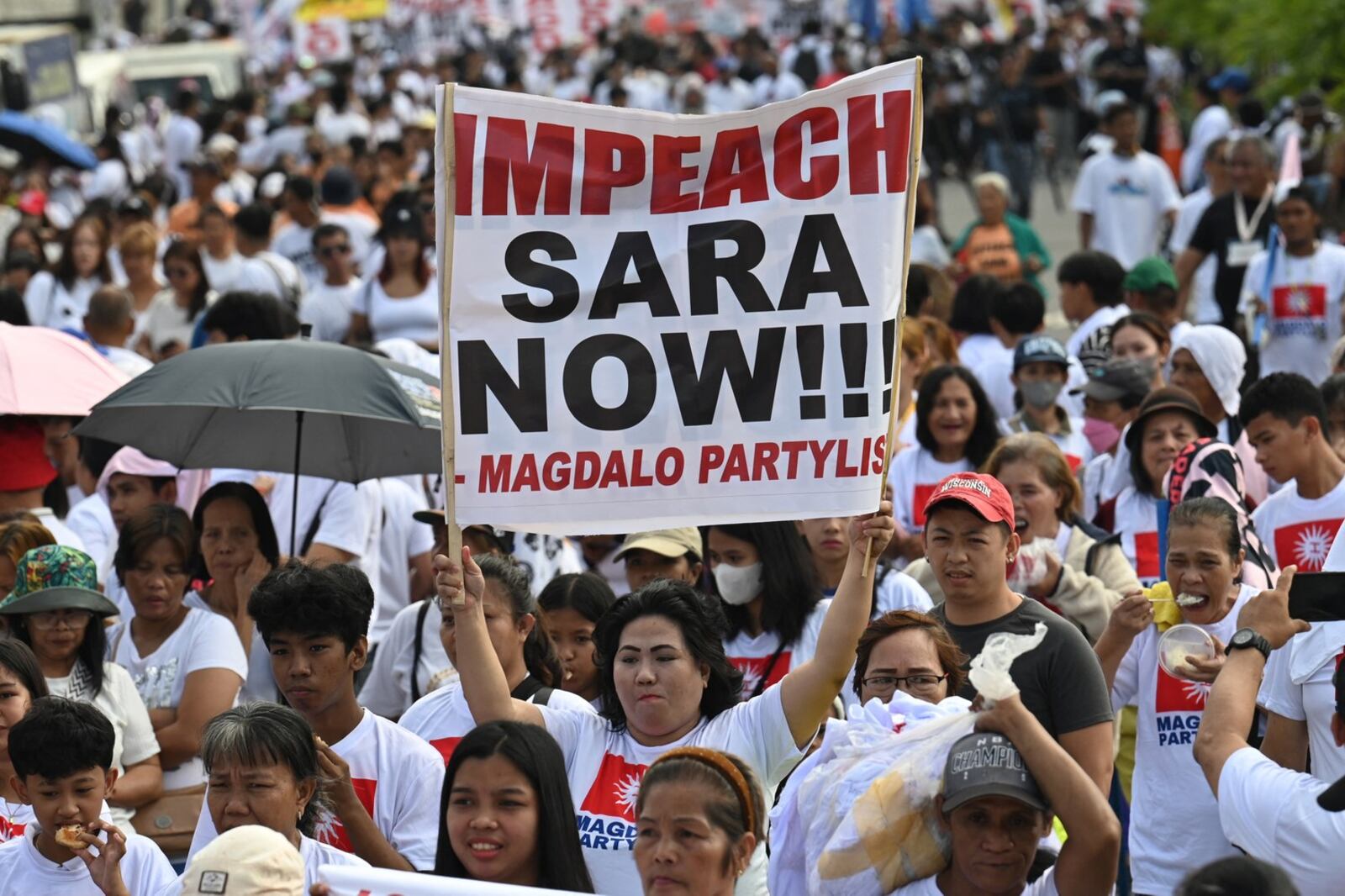
Last week, I sat down to one of these powwows with a group of eminently connected friends whose identities shall go unmentioned, and the talk of course quickly went to VP Sara Duterte’s impeachment, and to the twists and turns the process has taken from the House to the Senate and back to the House again. The consensus among these pundits—who all come from different political persuasions—was that (1) Sara was guilty as hell of something or other; (2) but the trial wouldn’t take place; and (3) even if it did, she would surely get off the hook. 

The reasoning was that, as the last elections showed, the Dutertes were still surprisingly strong, and that the old man Digong’s banishment to the ICC only galvanized his base; therefore, Sara remained a viable candidate for 2028 (barring her impeachment and perpetual disqualification). If the administration slate had done better and had a lock on the numbers, that impeachment and Sara’s future would have been moot. 

But with the tide seemingly shifting Sara’s way—remember, she doesn’t need as many senators to acquit her as those required to convict her—then it may prove opportune for some senators to straddle the fence under cover of impartiality and assure their political future under Duterte 2.0 by at least keeping the door open for the lady. A more impish conjecture had it that this “remand” maneuver—which seems to have taken everyone by surprise except its chief instigator—provides an interlude during which certain crucial negotiations can take place. “It always comes down to money,” concluded one of our cohort. It was in everyone’s best interest not to have a trial, said another, because it would open a Pandora’s box of embarrassing revelations that would make Sara’s alleged transgressions look as petty as, well, Piattos.

Finally, the little Quixote in me had to speak up, and all I could say was, “If there’s no trial, there’ll be big trouble.” Feeling a bit bolder, I added, “And it’s not even just about winning, but holding people accountable—not just Sara but the senators as well.” Cynicism, I thought, was the real enemy in matters like these; we can’t let ourselves be paralyzed by cold reality, and it’s surprising what a little hope and even folly can do to change that reality.

Exactly what I had in mind when I said “big trouble,” I have to admit I wasn’t too sure of. I know people have been talking about an “Edsa IV” (let’s put that in Roman numerals to make it look more historic). But while I like the sound of it and would probably join the angry mob marching to the Senate to the beat of “Do You Hear the People Sing,” there’s an inherent problem or two with this “Edsa IV” scenario. 

Edsas are usually aimed at shaming and shooing someone out of office, but who would we be up against this time? Certainly not BBM (about whom more, later), who’s been enjoying a free ride on the center-left’s campaign against the Dutertes. VP Sara? She’s beyond shame and will never quit. SP Chiz Escudero? It would flatter him too much to be rallied against; besides, if you counted all the needles already being stuck into his homunculus by the enraged public, he’d look like a porcupine. Also, Edsas work when they reach a turning point, like when the Army decides to go south when they’re being ordered north; no such tactical possibilities here.

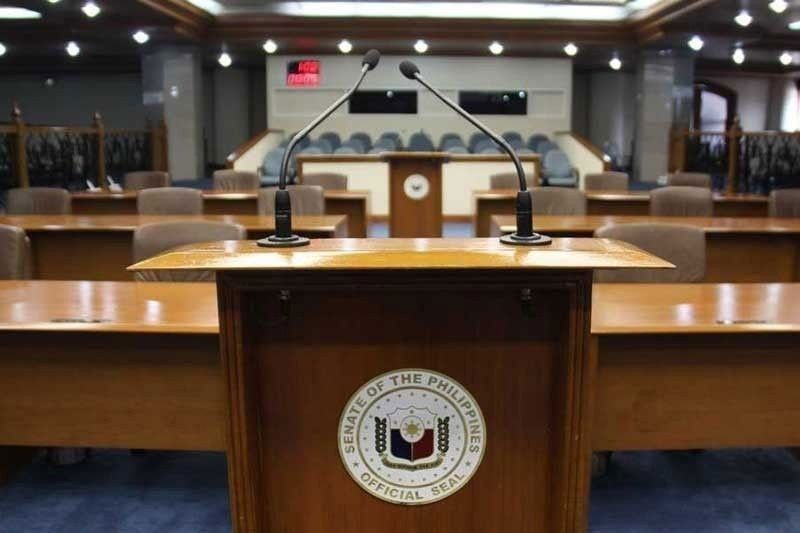
So it looks like we’re going to be stuck with the notion of a trial, which I believe will happen despite all the noises to the contrary because—take note I said this—we Pinoys can’t resist putting on and watching a good show and this impeachment promises to be a blockbuster of a melodrama. One way of framing it would be to present a beleaguered princess on the dock, invoking an exiled father and suffering the wrath of a cousin who usurped the throne; or, a comely damsel is revealed to be a hissing and slithering snake-witch when sprayed with the Holy Water of Truth by the village elders. There will be ample opportunity for all players to emerge as heroes or villains in this unfolding narrative.

And then there’s BBM, whose coy “hands-off” pronouncements no one at our table would take at face value. Even as I fought off cynicism, I reminded myself how we fictionists and dramatists sometimes have to be even more cynical than the most hard-bitten journalist to do our work well. We work with human nature—not with data, like good social scientists do, which is also how and why we can make people cry and laugh like the best scholars can’t. We have to see both the best and the worst in our characters to understand them thoroughly. “Ask yourself,” I often tell my writing students, “what does your character most strongly desire? What can he or she least afford to lose? In their moments of direst need, what do they pray for? If you can answer that, then you know who they are.”

So I asked myself: what does BBM want? To survive and prosper, of course—and then again, whether he’ll admit it or not, as a character in a play, he will want redemption, if not for the family name then for himself, to be a Marcos and yet be his own man. What does Sara want? Survival as well, of course, and exoneration—and beyond that, as she has made abundantly plain, revenge for betrayal and willful injury. 

I may not know that much about politics or business, but this has moved to the realm of theater. Mark my words, those curtains will be rising soon.

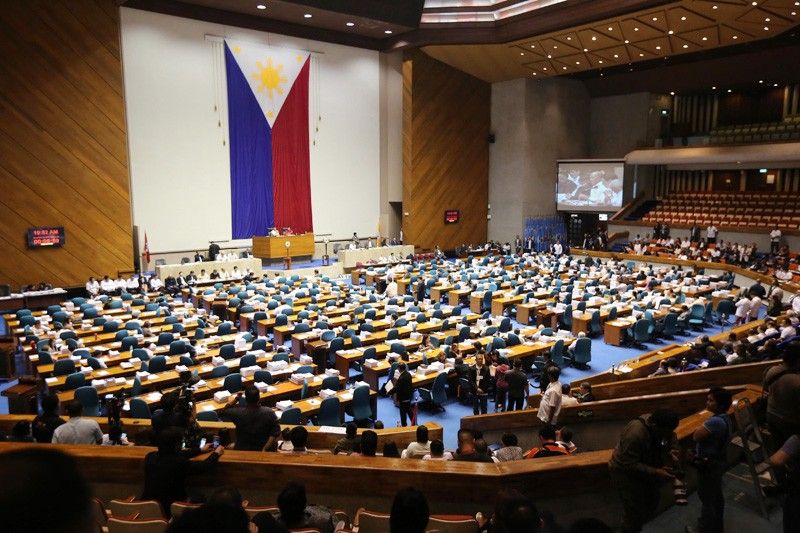
(Photo by Ted Aljibe/AFP)

Qwertyman No. 145: The Devil on My Shoulder

Qwertyman for Monday, May 12, 2025

TODAY, ONCE again, we troop to the polling booths in the hope of making our votes matter—votes that, if the cynics are to be believed, might as well be dust in the wind. The surveys have spoken, the winners named. All that remains is for this day to be over, for the formalities to be done with, for the supposedly inevitable to play itself out. And then we’ll watch the new-old Senators of the Republic proclaimed in a ceremony that will showcase the state of our electoral mind. 

As absurd as it may seem, many Pinoys will actually be happy with the outcome—that’s what the surveys are all about, aren’t they? These are the senators we wanted—or most of us, anyway. “Most of them” is probably what you’re thinking, if you’re a regular reader of this column and agree with most of my views.

I can’t think of a more complicated election in recent times, in terms of an answer to the question of “What’s in our best interest as Filipinos, and how do we make that happen?”

The idealist in me has the simplest and probably the morally most unambiguous response: vote for the best candidates, period: the intelligent, the progressive, the principled, the proven, the humane, the hardworking, the uncompromised. Whether they win or lose, it shouldn’t matter—you’ve done your best as a responsible citizen; in a sense, you’ve won. I sorely want to believe this, and to do this today.

But persistently, impishly, like a little devil perched on my shoulder, a contrarian spirit urges me to temper my idealism with some consideration of its practical costs.

Last week in California, a Fil-Am friend asked me to explain the significance of these elections. In the US, midterms usually mean a referendum on the incumbent President’s performance, and next year will most definitely be one for the Orange Pope and his systematic dismantling of American democracy.

For us Filipinos, May 2025 isn’t that clear-cut—although it should have been, if the armies of May 2022 had remained in place, leaving us with a stark choice between the good and the bad.

But the ruling “Uniteam” alliance has since collapsed, with each side fielding its own troubled slate of aspirants, all seething with the most primal of motives: survival, revenge, profit, and opportunity.

The opposition seems to be a loose coalition of liberal, Left, and anti-administration forces. Among these, four names have consistently surged to the top in the kind of social media neighborhood I inhabit. I’ll call them my Triple A candidates, the ones I won’t have any second thoughts about, leaving me with eight more spots to fill.

It’s those eight that give me pause—not for any lack of qualified and virtuous prospects, but because there could be dire consequences for not filling up the rest of my ballot, as some have suggested, or voting for names without a prayer of winning, as a matter of principle (or, by this time, by force of habit).

It’s interesting to observe how, unlike in previous elections where voting straight for a party’s slate was the norm, various formulas and menus have emerged on social media—cafeteria or halo-halo style—to reflect this urge for some balance between the ideal and the practical in this three-cornered fight. Even opposition stalwarts, including Leni Robredo herself, have been excoriated for their previously unthinkable endorsements of certain candidates from the other side. Whatever happened to ideological purity? (It was always an illusion: note the Left’s earlier alliances with a notoriously bloodthirsty Digong Duterte and an unabashedly capitalist Manny Villar.)

I think many Filipinos understand what’s at stake in this election—not just who will compose the next Senate, but what that composition will mean. As I told my Fil-Am friend, Rodrigo Duterte may be safely imprisoned in the Netherlands, but his specter looms large and heavy over these midterms, through his proxies led by his daughter, VP Sara and their “DuterTEN” team (now more like DuterTWELVE, if you add one Marcos and one Villar). Sara was all set to be impeached for grave threats against the First Family and grand theft Piattos—which would not only have taken her out as VP but disqualified her from running for President in 2028. But that procedure—needing at least 16 votes in the Senate—got kicked down the road, after the election, leaving Sara’s fate up to the newly reconstituted Senate to seal.

So again, I told my friend, presuming that the BBM administration’s game plan here is to freeze Sara out of the presidency so it can install its own man, 2025 is really all about 2028. It’s a referendum, sure—not so much about the present President, but rather the past and maybe the future one. We’re not just—or not even—voting necessarily for the best candidates, but for senators who will push Sara out, or keep her in. Daddy Digong’s summary extradition to the ICC, while a relief for many, merely intensified that drama, raising the stakes to a matter of survival for the Dutertes.

It’s another sad and sorry spot to be in, for these elections to come down to choosing among the lesser or the least of 8, or 16, or 24 evils, against the statistical near-certainty of another wipeout for the truly good. Should I support this fairly familiar trapo, the devil I know, over that manifest idiot, just to help ensure that the latter stays out? Or, again, should I simply disregard all the surveys and scenarios, and vote from my purest and most innocent of hearts for the best people on that ballot? (Was this how the cardinals chose Pope Leo XIV, or did more pragmatic considerations come into play?)

By the time you read this, I shall have cast an early vote as a senior in my barangay. Like we often say, we are whom we vote for, and there’s a part of me that fears what I’ve become or may have to be. I need some of that Holy Spirit with me today—we all will.

Qwertyman No. 134: “Forthwith” and Other Adverbs

Qwertyman for Monday, February 24, 2025

NEVER IN our modern political history has so much seemed to depend on the meaning and interpretation of one word. For the past week, politicians, lawyers, and columnists like me have weighed in with their sense of “forthwith,” as it appears in Article XI, Section 3, paragraph 1 of our 1987 Constitution, which states that “In case the verified complaint or resolution of impeachment is filed by at least one-third of all the members of the House, the same shall constitute the Articles of impeachment, and trial by the Senate shall forthwith proceed.”

At bar is the impeachment of Vice President Sara Duterte, which is hanging in the balance with the complaint signed by more than enough congressmen and forwarded to the Senate for action “forthwith.” That happened just before the Senate adjourned, whereupon Senate President Chiz Escudero announced that, hold your horses, we’re on break here with seven of our members trying to get their jobs back, and there’s a bunch of other things we need to do before the trial even starts like getting properly fitted for our judicial robes, so we’ll see you in June after the SONA. As an aside to the House, Escudero also wondered aloud why Congress was rushing him, when they had two months to get the damn thing signed and sent over. No, he insisted, “forthwith” doesn’t mean “right now”; it means “when we’re ready.”

This flew in the face of opinions by such as retired Supreme Court Associate Justice Adolf Azcuna, who argued that an impeachment wasn’t tied to the legislative calendar, and that the Senate was constitutionally bound to convene on the complaint. Minority Leader Sen. Koko Pimentel agreed, calling on Escudero to at least convene a caucus to discuss the trial.

English-major nerds like me should live for moments like this. I can fantasize about being called as an expert witness to speak to the etymology and meaning of “forthwith,” whereupon I would have sagely advised Their Honors that “Round the middle of the twelfth century, the phrase forth mid appeared (mid being essentially the same as the modern German word mit, with), later forth with, to go somewhere in the company of other people. Necessarily, if you go forth with others, you go at the same time as they do. It seems this sense of time eventually took over, though the process of transition isn’t very clear, and it’s mixed up with other phrases that also referred to time. Certainly, by about 1450 the phrase had condensed to a single adverb with the modern meaning of immediately, without delay.” Did I know that all along? Of course not. I googled it and lifted it from a source only named “Hugo.”

It does point to an interesting fact about language, however—meanings change over time, and, depending on the context, can be bent to suit one’s purposes and perceptions. While all modern dictionaries will say that “forthwith” means “immediately,” lawyers and judges (yes, that sneaky lot, with all due respect to my lawyer-friends) have opined that “surrounding circumstances” could loosen things up a bit. One Canadian commentator has noted that “Some courts have determined that the word ‘forthwith’ requires vigorous action, without any delay, and have suggested that whether there has been such action is a question of fact, having regard to the circumstances of the particular case. Others have suggested it means the action must be taken without pause or delay, or done at once, while some judges have commented that the nature of the act to be done is to be taken into consideration when determining the required immediacy…. The term ‘as soon as possible’ has been defined as meaning no more than ‘without reasonable delay’ or ‘within a reasonable time.’ Some cases have suggested that the length of the period of time involved for performance is subject to a reasonableness standard rather than a sense of urgency, and may be influenced by trade practice, custom and other circumstances.

So if this “reasonableness standard” were to apply in the matter of Sara Duterte, would SP Chiz’s reluctance to convene the Senate now as an impeachment court be reasonable? Not being a lawyer, I’ll leave the legality or constitutionality of it to those who know better—even if, as we can see, it’s lawyer vs. lawyer in this case. I did learn from another retired SC Justice (not Azcuna) that the impeachment process does require many preliminaries before the actual trial, including reviewing the rules of the Senate—and let’s not forget the robes, which the SP emphasizes (at P6,000-P8,000 each) will have to be dry-cleaned by the senator-judges themselves, to save the Senate money (a laudable show of thriftiness, given that the new Senate building in Taguig is now expected to cost over P30 billion). 

What’s apparent to this pedestrian observer is that whatever “forthwith” means, it didn’t happen, at least not the way our framers probably intended it. We’ll be in for a few more months of what Henry Kissinger creatively called “constructive ambiguity” aka fudging, while the senatorial candidates (at least those not identified with the Dutertes) avoid the issue.

“I’ve yet to see and consider the complaint,” at least one reelectionist senator has said, likely echoing others. “If I’m going to sit as a senator-judge, then I wouldn’t want to prejudge the issue” has been another refrain. It’s a reasonable—and highly convenient—stance to take, especially during this election season.

By kicking the impeachment down the road, the Senate avoids making it an election issue for those candidates who need to straddle the fence for their survival. While the House complaint signed by 215 out of 316 congressmen might suggest that the VP’s goose is cooked, the Senate is a different arena altogether, with the present numbers inclined toward Sara’s acquittal. How the administration will tip that balance in its favor will be the game to watch (an AKAP-laden budget can’t hurt). The Dutertes don’t help themselves any with their proclivity to “kill” their enemies, but any assumption that they’re politically done for will be very foolish.

We’re told that impeachments are political more than anything, which means there should be political consequences for all involved. We wish the process had begun much earlier, a month or two ahead of the campaign period, so we could have partly based our senatorial choices on their performance as jurors, and their quality of mind.

Since “forthwith” didn’t happen, let’s hope that the trial, whenever it takes place, involves two other adverbs:

“Expeditiously,” so we can all return to our normal lives (at least until the next scandal—or, God forfend, the next impeachable official, comes along); and

“Fairly,” with incontrovertible evidence, so there will be no question afterward that the right thing was done. 

Qwertyman No. 133: The Finest of the Filipino

Qwertyman for Monday, February 17, 2025

FOLLOWING THROUGH on my recent piece about our Senate becoming a family show, our constitutionalists probably had the right idea when they decided to amend the Charter in 1940 to provide for a Senate that would draw its members not from provinces or regions but from the country at large. (Under the Americans, Filipino senators were elected based on senatorial districts or groupings of provinces corresponding roughly to our regions today.)

It would have been a way to diminish regionalism and promote the sense of a nation in whose interest these senators would serve. With a countrywide electorate to woo, senatorial candidates would presumably address a broad range of national and even international concerns beyond the parochial claims of their native communities. It was a call to greatness. 

Time was when we had a Senate like that, when men and women with deep intellect, a sense of history, and the gift of articulation spoke to the issues that mattered to the Filipino people and their future. 

One such senator was Jose W. Diokno, who later in his life could speak inspiring words like these:

“There is one dream that all Filipinos share: that our children may have a better life than we have had. So there is one vision that is distinctly Filipino: the vision to make this country, our country, a nation for our children.

“A noble nation, where homage is paid not to who a man is or what he owns, but to what he is and what he does.

“A proud nation, where poverty chains no man to the plow, forces no woman to prostitute herself and condemns no child to scrounge among garbage.

“A free nation, where men and women and children from all regions and with all kinds of talents may find truth and play and sing and laugh and dance and love without fear.”

And then there was Sen. Jovito R. Salonga, who broke the 11-11 tie in the Senate to expel the US military bases from the Philippines in 1991 with these musings:

“I think all of us are engaged in a search—a search for the soul of the nation, a quest for the best in the Filipino character, a search for the true Filipino spirit.

“We summon the memories of those we honor, from Jose Rizal to Andres Bonifacio, from Jose Abad Santos to Ninoy Aquino.

“Their collective message, even on the eve of their death, was one of hope, not of fear; of faith, not of doubt; of confidence in the capacity of the Filipino to suffer and overcome, not of his unwillingness to stand the rigors of freedom and independence.

“In our history as a nation, our best years were when we took our destiny in our own hands and faced the uncertain future with boldness and faith. Those were the times when we experienced a sense of national renewal and self-respect…. 

“Therefore, I vote no to this treaty, and if it were only possible, I would vote 203 million times no.”

There are those who will say that these are just words, and that we don’t elect senators to make fancy speeches, that the Senate should be more than a debate society. I would agree—except that these senators were far more than orators; they worked hard to craft and pass important laws, many of which we still benefit from today.

A genius who topped both the CPA and bar exams, Diokno was behind pro-Filipino laws such as the Investment Incentives Act of 1967 that empowered local businessmen so we could move out of import substitution and the Oil Industry Commission Act of 1971 regulated the oil industry. Named Outstanding Senator many times over, he later set up the Free Legal Assistance Group.

Another bar topnotcher and a genuine war hero tortured by the Japanese, Salonga authored the Code of Conduct and Ethical Standards for Government Employees and the Anti-Plunder Law. He was staunch defender of freedom and civil liberties all his life.

When I look at the list of candidates running for the Senate this year, and at the surveys predicting the seemingly inevitable victory of a number of them, I deeply doubt that the likes of Pepe Diokno and Jovy Salonga would stand a chance of winning today. Their old-man looks, dated rhetoric, and inflexible principles amount to little in our media-centric culture, where popularity and notoriety drive political success, with factors like “integrity” and “capability” hardly figuring in the equation. 

Among the most potent of images being peddled by current aspirants is that of the “action” star or “action” person who promises to deliver everything from instant justice, barangay roads, and hospital beds to basketball courts, photo ops, and fiesta lechon. “Action” means looking good and making smart-alecky comments for social-media consumption at Senate hearings; “action” means talking the language of the streets, being everyone’s kumpare or kumare.

There’s nothing wrong with these per se, as we do need politicians to be in touch with the everyday realities our people face. The loftiest oratory isn’t going to banish corruption, traffic, high prices, red tape, and abusive officials—unless it’s accompanied by well-crafted and enforceable laws that are the Senate’s proper business. 

And that’s where we should ask: what have these candidates actually done to deserve their seat? And never mind the rhetoric; some of our best senators were no barnburners when it came to speechifying, but—like late Edgardo J. Angara—they delivered where it mattered: in SEJA’s case, no less than the Free High School Act, Commission on Higher Education, Technical Education and Skill Development Authority, the National Health Insurance Act (Philhealth), Senior Citizens Act, the Agriculture and Fisheries Modernization Act, the Renewable Energy Act and the Procurement Reform Act.

The Senate wasn’t meant to be a Department of Quick Fixes. The true senator’s sphere of action is in his or her mind. We should be choosing, electing, and paying senators based on how they think we should act and move ahead as a nation. 

The Senate is not a welfare agency. It is not a medical clinic or dispensary. It is not an action center or complaints hotline. It is not a job placement bureau. It is not a police precinct. It shouldn’t even be a representative body in the sense of having one senator represent intelligence and another represent ignorance so everyone can say it’s a body of equals. 

It should represent the finest of the Filipino—in intellect, character, and sensibility. Do our chart-toppers meet that standard?

Qwertyman No. 130: A Family Business

Qwertyman for Monday, January 27, 2025

“The Senate is not a family business,” posted my friend R. on Facebook, and I found myself nodding at what sounded like the patently obvious truth, which somehow seems to still elude our family-oriented countrymen.

Among the loudest alarms raised by the forthcoming midterm election is the likelihood that, once again, Filipino voters will be choosing people with the same surnames to add to what has become, over the decades, a cozy nest of clans. 

It isn’t just the Senate, of course, which is infected with dynastisis. From Congress down to the Sangguniang Kabataan where fledgling politicos learn to tweet, our entire political system has been one big and long-running Family Feud. Husbands, wives, and their kids serve as senator, congressman, governor, mayor, and councilor with utter shamelessness, claiming a form of manifest destiny contestable only by another family.

It’s gotten so bad that—surprise, surprise—Sen. Robinhood Padilla, last accused of doing little on the job but preening his mustache, filed SB 2730 last July against political dynasties (already in our Constitution, but lacking an enabling law). Citing a Harvard study (which always seems to bear more weight than common sense), Padilla said that political dynasties “persist and reproduce their power over time, undermining the effectiveness of institutional reforms in the process.” 

More informatively, Padilla noted that “A dataset of Philippine local elections from 1988 to 2019 showed the number of governors with at least one relative in office (dynasty) increased by almost 39 percentage points, from 41% in 1988 to 80% in 2019. The dynasty proportion of vice governors rose from 18% in 1988 to 68% in 2019. The percentage of mayors in the dynasty increased gradually from 26% in 1988 to 53% in 2019…. Political dynasties, in effect, have exhausted resources to attain economic and political dominance while at the same time compromising political competition and undermining accountability…. It is time to break the barriers preventing the best and the brightest from serving the Filipino people.”

Tell that to the Philippine Senate which, because it has only 24 members, magnifies the prevalence and persistence of dynastisis even more. 

One of the ways the US Senate differs from ours is the way it’s composed, with two senators from each of the 50 US states, which, in their federal system, gives equal weight to giant Texas and tiny Vermont. That should make it highly unlikely for two related people to be in the Senate at the same time, right? Well, sort of. As it turns out, in US history, two pairs of brothers actually served in the Senate together. One pair I’m pretty sure you never heard of—Theodore and Dwight Foster, who simultaneously represented Rhode Island and Massachusetts at the start of the 1800s. The next pairing didn’t happen until more than 150 years later—with Edward and Robert Kennedy representing Massachusetts and New York in the 1960s. 

Our Senate puts America’s to shame in that department. 

It helps, of course, to be related to a President, or to prepare oneself to be one. By my count, there have been five Aquinos in the Senate—Ninoy, Butz, Tessie, Noynoy, and Bam; four Marcoses—Ferdinand, Imelda, Bongbong, and Imee; four Estradas—Joseph, Loi, JV, and Jinggoy; three Roxases—Manuel, Gerry, and Mar; three Osmeñas—Serging, John, and Serge; three Laurels—Jose, Sotero, and Doy; and two Magsaysays—Gene and Jun. “Cong Dadong” Macapagal never became a senator, but his daughter Gloria did. Fidel Ramos’ contribution to the Senate was his sister Letty.

To these presidential surnames we have to add those of other political families such as the Dioknos, Tañadas, Kalaws, Angaras, Guingonas, Antoninos, Rectos, Pimentels, Revillas, Villars, Cayetanos, and possibly Tulfos. The Cebu Osmeñas—John and Sergio, Jr.—once served together in the Seventh Congress in the early 1970s; the Cayetanos—Pia and Alan—followed suit in the Fourteenth, in the late 2000s, and the Villars—Cynthia and Mark—in the current Nineteenth. 

That’s not to say that some members of these political clans were not deserving or distinguished. Many certainly were—in the right hands, a family tradition of public service sets high standards and expectations. Never mind the ancient Fosters, but I don’t think America minded having Ted and Bobby Kennedy in the Senate, with Ted serving continuously for an astounding 47 years until he died.

They have no term limits in America. We imposed ours in the 1987 Constitution—a well-meaning gesture meant to democratize our legislature, but which backfired and produced exactly what it wanted to avoid. Our political families quickly learned to adjust and do a merry-go-round, ensuring further that one member or other would occupy all spots in the wheel. What developed over the years was less a revitalization of the institution with bright new talents than a pooling and coagulation of old blood. 

So rather than an anti-dynasty law which seems to have little chance of passing a House full of dynasties anyway, perhaps we should revisit term limits, so we can retain the services of truly outstanding senators (like Franklin Drilon, for example) for life, rather than punish ourselves by replacing them with inferior siblings and cousins. 

There are and have been high-performing senators whom we don’t and shouldn’t mind serving over and over again, politicians with genuine and critical advocacies they have devoted their lives to. Our political history has been fortunate to have seen the likes of such men and women as Senators Claro M. Recto, Jose Diokno, Lorenzo Tañada, Raul Manglapus, Emmanuel Pelaez, Helena Benitez, Eva Estrada Kalaw, Juan Flavier, Rene Saguisag, Miriam Defensor Santiago, and Edgardo Angara, just to speak of the departed.

Sadly our political realities preclude the truly poor from winning a Senate seat, and only extraordinary circumstances like EDSA can lift up capable and virtuous candidates of modest means such as Dr. Juan Flavier and Atty. Rene Saguisag to that exalted position. But their interests can be articulated and defended by men and women with the capacity and quality of mind and spirit to see beyond themselves. These are senators whom we expect to make laws that build a nation, rather than empower and enrich themselves and their progeny even further.

Qwertyman No. 116: Dynasty

Qwertyman for Monday, October 21, 2024

“MAMA, PAPA, I wanna be a congressman!”

Senator Bebot Maybunga and Governor Kikay Maybunga looked up from their dinner plates at Mikmik, who sat at the far end of the table, to where they had deported him for a little peace of mind. Their younger son was given to wild outbursts that disrupted his parents’ serious deliberations about politics, business, and entertainment. Governor Kikay and her friends were planning for Paris Fashion Week, while Senator Bebot was thinking F1 at the Austrian Grand Prix.

“Well it’s about time Hamilton left Mercedes,” Bebot was saying while chewing at his bistek, “after all the crappy cars they built for him. A man’s got to go where he’ll do best. That’s why we joined the Federalistas, right? What’s the use of being a Progresibo if you can’t get any of your projects through? Pity our poor constituents! So we go with the Ferraris of Philippine politics—the Federalistas! And let me tell you something, honey—I’m going to be their Verstappen!”

“Who’s Fershwersh?” asked Kikay. “I want to know what really happened between Nicole Kidman and Selma Hayek. I mean, did Nicole really brush Selma off at the Balenciaga show?” She popped an overripe tomato into her mouth, savoring its sweet-sourness. “The only time I’d swat your hand away is if it was pawing someone else, like that starlet at the XYZ Awards. Don’t tell me you didn’t know she was coming on to you while you played Daddy-o!”

“I want to be a congressman!” cried Mikmik again, this time hitting his plate with his spoon four times for emphasis. Their housemaid Yeye hurriedly mopped the bistek sauce that scattered all around him.

“Stop yelling and finish your food!” said Bebot. “You can’t be a congressman if you don’t finish your food.” That had been Mikmik’s problem since early childhood—half his plate always went to the dogs, so they now had three Rottweilers and three dachshunds, despite which the boy got all puffed up like an Obemio painting. They’d sent him everywhere from the Mayo Clinic to a sanatorium in Switzerland, but all the doctors could tell the Maybungas was that Mikmik had low self-esteem, for which he tried to compensate by eating a little a lot—something called the Schlumpfegel Syndrome, which could be addressed only if the boy succeeded at something truly outstanding, after which he would then complete his meals. It was complicated—and expensive, but thankfully there was all that land that Kikay owned, which Bebot found ways to run public roads and bridges through.

“But what do you want to be a congressman for, hijo?” asked his mama, trying to play the part of the good parent, as Bebot groaned. “It’s a hard job. Look at your Kuya Pepito, he’s always out somewhere with the President, trying to make sure that everything will be okay for—well, everybody.”

“The only thing that bastard is looking out for is himself,” grumbled Bebot. “After everything I did for him, imagine, he goes to Singapore for F1 with the President and leaves me behind!”

“Don’t call him a bastard! He’s our son, he has a father and a mother!”

“Am I a bastard, Mama?” asked Mikmik. Kikay rushed over to where Mikmik sat to wrap her arms around him, as Bebot smirked. Their political enemies had spread the dastardly humor that Mikmik had actually been fathered by one of Kikay’s old flames—something Bebot himself had long suspected, for how could he possibly have spawned such an idiot, but had never pressed because he still needed Kikay’s old-family money for his higher ambitions.

“No, of course not, Mikmik! You too have a mother—and a father!”

“I wanna be a congressman!”

“But your Kuya Pepito is already congressman for the first district, hijo! When his next term ends, Mama will be congressman, because Kuya will be governor.”

“But I can be congressman for the second district, Mama—”

“No, hijo, we don’t live there—”

“But Papa has a house there! A nice house, with a swimming pool!” Bebot nearly choked on his ball of rice, as Kikay’s eyes narrowed into slits. Their political enemies had let it be known to one and all that the senator kept a mistress in the second district, but Kikay decided not to bring it up because, well, she was a firm believer in family unity, and her brothers and sisters would never have forgiven her if they lost their juicy contracts on account of some silly spat over a querida

“I know what we can do, hijo!” Kikay exclaimed, struck by a brilliant idea. “We can make you mayor! This nincompoop mayor of ours has been talking about getting his even more nincompoop wife to run against me for governor, so why not take his job? I agree, it’s about time you joined us in this noble profession!”

“Can a mayor drive a big car and go wang-wang? Because Kuya Pepito does that and it’s why I want to be a congressman!”

“Of course, hijo, you can drive a big car around town all day and go wang-wang if you like. You can even have a police escort and they’ll go wang-wang too.”

“And Papa won’t get mad and hit me over the head like he always does?”

Kikay glared at Bebot who was looking away, whistling.

“No, hijo, even senators can’t hit mayors over the head—”

“But if I’m mayor, then I can hit people over the head, right? Like a, a sheriff, right? I saw it on TV once!”

Bebot finally turned and said, “You can’t be congressman, you can’t even be mayor! The law says you have to be at least twenty-three to be mayor, and you’re only twenty-one—at best!”

“What does he mean by that, Mama? Look, Mama, Papa’s making a face at me again, like he’s going to hit me!”

Again Kikay wrapped her arms around Mikmik and flashed Bebot her meanest look. “No, baby, he won’t, and you’re going to be mayor, Mama will make sure of it. Don’t worry about your age, it’s only a birth certificate, and since when was that piece of paper a problem? Mayor Mikmik Maybunga—let’s not forget your middle name, Mikmik Macatangay Maybunga. Aren’t these people just so lucky to have us at their service?”

Qwertyman No. 102: Retaining the Fools

Qwertyman for Monday, July 15, 2024

A RECENT Rappler report on “The Philippine Senate: From statesmen to showmen” by James Patrick Cruz told us much of what we already knew, but didn’t have the exact numbers for—that political families dominate that institution, that most of them come from the big cities, that most of them are men, that older senators (above 50) outnumber young ones, and that many come from the glitzy world of entertainment and media.

Surprisingly (and why am I even using this word?), most senators are highly educated and even have advanced degrees, mostly in law. However, the study says, “the high educational background of senators has not produced ‘evidence-based policymaking.’…  Some lawmakers, for example, have used the Bible to argue against the reproductive health law in a secular setting and have relied on personal experiences in discussions on divorce.”

And not surprisingly, the academics consulted for the study concluded that “If you want better policy, we should go for better inclusion, better representation, and not just be dominated by political families.” Indeed, from the very beginning, it notes that “Political analysts have observed a decline in the quality of the Philippine Senate over the years. The shift from a chamber filled with statesmen to one dominated by entertainers and political dynasties has become evident.”

And then again we already knew all that. What the Rappler study does is provide a historical overview—quantitatively and qualitatively—of how the Philippine Senate has morphed as an institution over the decades, reflecting changes in the electorate and in Philippine society itself. It opens with resonant passages from the speeches of political leaders from a time when the word “senator” bestowed an aura of respectability and consequence upon its bearer. 

It quotes the luminous Jose W. Diokno: “There is one dream that we all Filipinos share: that our children may have a better life than we have had. To make this country, our country, a nation for our children.” Sen. Jovito R. Salonga, another legendary figure and war hero, follows with “Independence, like freedom, is never granted. It is always asserted and affirmed. Its defense is an everyday endeavor—sometimes in the field of battle, oftentimes in the contest of conflicting wills and ideas. It is a daily struggle that may never end—for as long as we live.”

It’s entirely possible—and why not?—that this kind of elevated prose can be uttered today by a senator or congressman backed up by a capable speechwriter, if not AI. The question is, will they be believed? Will the words ring true coming out of their speaker’s mouth—especially if that speaker were one of today’s, shall we say, non-traditional senators, reared more in showbiz and social media than in Demosthenes? 

“Non-traditional” applies as well to political families, which notion we can expand beyond DNA matches to communities of convenience, of shared geographical, economic, and cultural origins—the entertainers, the media stars, business moguls, the Davao boys, and so on. (There’s probably no better guide to how traditional families have ruled the Philippines than An Anarchy of Families: State and Family in the Philippines, edited by Alfred W. McCoy and published by the University of Wisconsin Press in 2009.)

It might also be that the problem lies not so much or not only in the dynastic nature of Philippine politics, as in the fact that the quality of these families has badly deteriorated. And by “quality” I don’t mean anything by way of economic or social candlepower—none of that “de buena familia” silliness. (To be sure, no family—however celebrated—has ever been perfect, coming with its fair share of black sheep, eccentrics, and outliers. Our social lore abounds with barely whispered stories of the abusive father, the spendthrift mother, the gay son—yes, in Pinoy archetype, gay is wayward—and the mad daughter.) 

I suppose we keep looking for some defining virtue, a reputation founded on academic excellence, intellectual prowess, philanthropy, moral ascendancy, and the like. How many families in the Senate and Congress today can lay claim to that kind of legacy? Today, prominent families achieve and maintain their status through their economic and political clout, through popularity or even notoriety, and even through sheer staying power, thanks to the muscle memory of many Pinoys in the voting booths.

In 1998, in my biography of the accomplished, fascinating, and resolutely revolutionary Lava brothers, I noted that “For anyone familiar with the history of the Philippines over these past one hundred years, it will not tax the truth to suggest that so much of that history has been family history. In many ways, modern Philippine history is an extended family picture album in which a few names and facial features keep recurring, with only the characters’ ages, expressions, poses, and costumes changing from page to page. Most ordinary Filipinos have lived in the shadow and by the sufferance of such dynasties as the Marcoses, the Lopezes, the Aquinos, the Laurels, and the Cojuangcos, among others—families which have ritually sired presidents and kingmakers, tycoons, rakes, sportsmen, and society belles. But none of them were like—and there may never be another Filipino family like—the Lavas.”

For those who never knew them, over the mid-20th century, five Lava brothers—Vicente, Francisco, Horacio, Jose, and Jesus—emerged from a moderately affluent landowning family from the heartland of Bulacan to become progressive intellectuals, some of them even leading the Partido Komunista ng Pilipinas. Ironically, these were no workers or peasants. Vicente, a government pensionado, held a PhD in chemistry from Columbia University; Horacio and Francisco also held advanced degrees in economics and law from Berkeley and Stanford, respectively; Jose was a lawyer-CPA whose University of the Philippines thesis was adjudged the best of his class; Jesus was a medical doctor, also graduating from UP.

Just so we know, the Lavas and their comrades were operating legally and openly right after the War, and were even elected to Congress under the Democratic Alliance in 1946—only to be expelled on trumped-up charges of fraud and terrorism, with their votes on the key parity rights issue discounted. Under threat of extermination, they went underground, followed by two decades of bloody struggle.

That’s what happened to one family with real brains and convictions, even pre-NTF-ELCAC; we expel the thinkers and retain the fools.

(Image from constitutionnet.org)

Qwertyman No. 86: The Real Pasaways

Qwertyman for Monday, March 25, 2024

THE LOCAL Internet came down hard last week on an anonymous teacher who was caught on livestream giving her students a scorching tongue-lashing for what she claimed was their lack of respect and discipline. Almost hysterical, Teacher X called them good-for-nothings without a future. Predictably, netizens deplored her derogatory language, which they equated with child abuse, and called on the Department of Education to investigate the incident and impose some disciplinary measure on the teacher concerned.

I agree that Ma’am seems to have gone overboard in expressing her displeasure over her students’ misbehavior, and that she could have been more circumspect in her choice of words. I’m certain that DepEd—which happens to be headed by someone who doesn’t mince words herself when it comes to court sheriffs—will use her case to remind teachers of the need for exemplary behavior, if not some sweetness and light, in classroom management. 

At the same time, having been a teacher myself for forty years, I can imagine and understand the exasperation that must have gone into a titanic diatribe like that. I’ve never taught in elementary or high school, where these aggravations come in spades on both sides of the teacher’s table, but I’ve heard and read enough to know what a cauldron of high emotions a Filipino classroom can be in the worst of circumstances. 

Let’s pack a room meant for twenty students with twice that number or even more, with the heat from a tin roof bearing down on everyone (or, in another season, rain leaking down onto desks and textbooks). The teacher recites her lesson in a funereal monotone, expecting her students (who keep themselves awake by sneaking glances at TikTok on their phones) to regurgitate what she has just said: “Class, how do you pronounce a-DO-le-scent?” 

Not that she truly cares what they say, because her mind’s on the box of chocolates she has to buy for the supervisor whose signature she needs for her salary loan. She’ll spend half that loan on a fence around her garden to keep the roaming pigs and pissing drunks away, and the other half on a new cellphone because her arch-rival Mrs. Buenafe has one that can take selfies without the blemishes. Maybe, if she took better pictures of herself, she could win back her husband Temyong from that tramp in Trece Martires.

Just then a fight breaks out at the back of the room because Etoy has dropped a ballpen to sneak a look at Corito’s underwear, in full view of Corito’s alleged boyfriend Mikmik. “Stop that, quiet, gademet, you imbecile a-DO-lescents, I order you to behave or I’ll squeeze your little balls until they pop! You have no future, you worthless pasaways! You’re going to rot in this living hell they call a classroom!”

Now, when Teacher X says “You have no future,” I take it to mean that Ma’am has read the Edcom II report on the sad state of Philippine education, which puts our young learners practically at the cellar of global achievement. Unless some systemic reforms are put in place by the same DepEd that will now trumpet the virtues of better decorum in the classroom, we might as well have cursed those kids that caused Teacher X to blow her top—and by “curse” I don’t mean the use of foul language, but rather a hex such as a witch might put on some unfortunate soul. 

Philippine education is full of pasaways, many of them more than ten or even fifteen years old. Some have been in the system for so long that they have mastered its ways and means (e.g., how to make good money off bad textbooks) to a level of proficiency worthy of a doctorate. Secretaries of Education come and go—some more lamented than others—but these pasaways remain, as they do in certain bureaus dealing with government revenues, because they ensure continuity, which everyone but the occasional and hopelessly naive reformer appreciates. They may even be well-mannered, with the nicest smiles and mildest dispositions you ever saw, because of their contentment with the world as it is and their philosophical acceptance of human frailty.

This brings to mind another kind of pasaway, a certain man of God—no, make that Son of God—who has steadfastly refused to honor a summons by a Senate committee looking into sex trafficking, of which this pastor has been accused, among other crimes and misdemeanors. Let me judged by the proper court, he has argued through his lawyers, although—if he is who he claims to be—then no one but God the Father will qualify for that privilege.

God must have been a prolific babymaker, because this prosperous preacher is but one of many around the world proclaiming themselves to be Sons of God. Nearly all have landed in some kind of trouble with the law, usually in matters of sex and money, paltry and mundane emoluments that Sons of God seem to feel especially entitled to, in partial recompense for the heavy burdens of divinity.

Someone should have assured our good pastor that the Senate is a decorous institution, exceedingly kind to its guests, as a recent hearing involving police officials being questioned by a former police official showed. A senator who walked out of that hearing out of disgust over the “babying” shown the witnesses by their inquisitor now himself stands accused of discourtesy. Notwithstanding the presence of a chairperson known for her intolerance of untruths, our Son of God can surely count on the professed and unshakeable friendship of some of her honorable colleagues to shelter him from the slings and arrows of earthly justice. We are a much kinder people than that apoplectic teacher might suggest.

Qwertyman No. 79: Hymns of Repentance

Qwertyman for Monday, February 5, 2024

A CERTAIN senator was quoted some time ago as saying that Filipinos supporting the intentions of the International Criminal Court to probe the Duterte administration’s bloody tokhang campaign should be made to sing the national anthem 1,000 times to regain their sense of patriotism. The clear message was that, if you were in favor of an international body looking into local crimes and liabilities, you were being anti-Filipino. 

It wasn’t surprising, of course, given that the good senator was among those prominently mentioned as possible defendants in the case. In jest, he said that if he were found guilty, he would miss his grandchildren if he were incarcerated in the Hague. And just to be sure, he added that not all people in jail are guilty—he certainly wasn’t.

Without commenting on the merits or demerits of a hypothetical ICC case against officials of the previous administration—something we have enough lawyers on both sides to perorate upon—I’ll just observe that the quality of justice the senator and his likely dock mates can expect from the ICC will surely be far better than that received by the victims of summary and extrajudicial executions under the regime of tokhang. In the very least, guilty or not, they will be alive and reasonably comfortable, although they might temporarily miss the company of family and friends, as those bereaved by tokhang have come to experience for all eternity.

I was intrigued by the suggestion that repeated singing of “Lupang Hinirang” would make a better Filipino out of me, or at least make me think of the ICC as some kind of fire-breathing Godzilla threatening to incinerate the Filipino race off the face of the earth.

There are far more effective songs  for instilling love of country. Yoyoy Villame’s “Philippine Geography” will teach us more about the country we say we’re dying for than our anthem, which must have been sung hundreds of times in the halls of Congress without much palpable effect on the patriotism of some occupants. At least I’m assuming it’s regularly sung there; if not, then perhaps our senator can start a little closer to home.

(As for professing one’s innocence, oldtimers will remember Diomedes Maturan’s “Huwag Kang Manalig sa Bulong-Bulungan” (remade by Victor Wood). Even Billy Joel warbled that “Although this is a fight I can lose, the accused is an innocent man!”)

On a more serious tangent, let me swipe a page from a recent talk given by UP President Angelo A. Jimenez, himself a lawyer, at a seminar of police officials on the thorny topic of national security and human rights:

“Our police officers should be commended for the seizure of a total of P6.2 billion worth of illegal drugs in the first half of 2023. The PNP’s Intensified Cleanliness Program, aligned with the Philippine Anti-Illegal Drugs Strategy, has employed a coordinated approach among government agencies to create drug-free communities. This shows that a serious and successful war on drugs can be undertaken without any needless loss of life, for as long as we observe the law, fight corruption, and remember the need for compassion in a just society. Even drug suspects have rights—indeed, even convicted prisoners—and we maintain our moral superiority by respecting those rights, even as we dispense justice. Only then and only thus can we regain our people’s trust.

“Ours is a society that operates on leadership by example. If people see their public officials and law enforcers doing the right thing, they will follow suit. If they see the law being flouted by these very same people—such as unauthorized government SUVs using the bus lanes along EDSA—they feel entitled and emboldened to do wrong themselves. Exemplary behavior at the top will create and strengthen the moral foundation for a responsible and law-abiding citizenry. We cannot demand what we ourselves cannot supply or enforce.”

Frankly, I myself doubt that a full-blown ICC investigation will prosper under the present dispensation, which reportedly promised the senator that not a hair of his (but then, where’s the hair?) would be touched by the ICC, back when the two camps were—just to use an idiomatic expression, and meaning no malice—as thick as thieves.

Now that the knives are out between the erstwhile allies, the ICC card seems to be in play again, teasing us with the possibility of justice being done, but I’m not holding my breath. It’s just too big a risk for those in power to take, too wide a door to open—like Cha-cha for ostensibly just economic provisions. Who knows what other crimes the ICC will unearth, who else they will indict, and how far back they will go? Once you give people a taste of respect for human rights, why, they’d be at it like potato chips—they’ll keep wanting more. There’d be chaos in the streets and no, sir, we can’t have any of that, just when we need law and order.

For this reason alone, I don’t think our good-humored senator has anything to worry about, neither from the Palace nor from the Hague. He can finish his term, retire to his farm in peace, shoot the breeze (or something else) with his old boss, and have his memoirs ghost-written. Unless, of course, a certain lady succeeds in clawing her way to the top, in which case the senator—still fairly young as senior politicos go—can expect a new lease on his public life and serve afresh, perhaps in the Cabinet, where men and women of action belong, rather than in the Senate, where they’re reduced to preening and tweaking their moustaches.

Someone with far greater and indisputable jurisdiction will take over this case and pronounce ultimate judgment; he will need no rapporteur, no investigating party, no authorization, no earthly prison; his verdict will be unappealable. His brand of justice will make the ICC look like talent-show judges by comparison. Those found guilty will be killing lots of time in a very warm place. Some people better start learning and singing hymns of repentance.

Qwertyman No. 14: An Oppa for Pinoy Culture

Qwertyman for Monday, November 7, 2022

THE HON. Victor M. Dooley was in a quandary once again. He had struggled with his maiden speech, but thanks to the timely assistance of his rumored girlfriend and sometime girl Friday Yvonne Macahiya, he had delivered a brilliant address on “Culture and the Environment: Shared Survival through Values Education,” which the footnotes failed to say had been Yvonne’s term paper for her Political Science 104 class at the Western Aklan Institute of Technology. 

It didn’t matter that most of his esteemed colleagues were absent or nodding off when he gave his speech with all the passion he exuded back when he was “Mr. Disaster,” the TV-radio hero of the typhoon-flooded, the earthquake-shaken, and the fire-singed. When Yvonne’s press release came out, it was just like he had spoken before the UN General Assembly, the world’s grandest stage; never mind that some audiences there weren’t too hot, either. 

“We are the world’s most disaster-prone country not because we are weak,” he said, thumping his fist on the lectern before letting his gaze travel across the gallery to turn up the drama, “but because disasters visit other countries less. The Lord Almighty has brought these disasters upon us to test our faith, to strengthen our spirits, and to breed true champions of the desperate and the dispossessed!” Again he paused for dramatic effect, but all he heard was the snorting of a venerable gentleman from a northern province, dreaming of Lamborghinis landing in his Special Economic Zone.

Still, something from his speech must have registered in someone’s mind—the word “education”?—because Sen. Dooley found himself appointed to the Committee on Basic Education, Arts, and Culture, which to him sounded like the wimpiest assignment anyone could get. He had expected to be named chair of the Committee on Environment, Natural Resources and Climate Change (that went to a real estate developer), or the one on Public Information and Mass Media (that went to a retired general), or to something that could have used his mestizo heritage, like the Committee on Foreign Relations (that went to a Chinoy movie producer). 

Basic education? Other than passing grade school, what did he know about classrooms and curricula? But then the committee also covered Arts and Culture, so, hmmm, maybe that was what they saw in him, his stellar career as a singer-dancer-TV show host, the way the ladies swooned when he winked at them at the end of his “Buchikik” song. Arts and Culture was entertainment, right? It was about keeping people happy, so they could smile through Covid, unemployment, EJKs, 60-1 peso-dollar rates, and P300/kilo pork. 

There wasn’t much he could do about those things—blame it on the pandemic, on Ukraine (he did have some important foreign-policy views: those darned Ukrainians should just have given over some potato fields to the Russians instead of endangering world peace with their silly resistance), and on troublemakers who even won Nobel prizes for having nothing good to say about hardworking despots.

But now, the Hon. Victor M. Dooley had to come up with a program that would leave his indelible mark on Philippine culture, and he convened an ad hoc committee composed of himself, his chief of staff Roy, the indispensable Yvonne, and a special guest who sashayed into the room and planted wet kisses on both of Vic’s cheeks, much to his embarrassment and to Yvonne’s utter surprise. 

“Ms. Terry! I never thought you would respond to my invitation!” 

“Why ever would I not? How long has it been, dearie? The last time  I saw you, you were still a struggling singer trying your best to hold your note—so I held it for you, hihihi.  And look at you now, an honorable Senator of the Republic!”

“And who, may I ask, might you be?” interjected Yvonne.

“Ah! Yvonne, this is Ms. Terry, who sponsored my entry into show business many years ago. I asked him—I mean her, ahaha, we better get our preferred pronouns right, especially after that gender-sensitivity workshop we all had to take—to come and help us devise a program for our country’s cultural revival.”

“Why didn’t you tell me?” said Yvonne. “I could’ve called on some of my National Artist friends—”

“What’s a National Artist?” asked Vic.

“Never mind. Welcome aboard, Ms. Terry—oh, I get it now, mystery herself! I’m Yvonne, the congressman’s Chief Political Affairs Officer. Can we offer you some coffee?”

“If you have low-acid coffee with non-dairy creamer and gluten-free scones, I’d much appreciate it. But I’ll take what you have.”

“Our Chief of Staff here makes an excellent three-in-one and I’m sure he hasn’t finished all the Sky Flakes.” Yvonne cocked an eyebrow at Roy, who slunk away muttering. “Now let’s get down to business. The senator wants a new program with strong popular appeal that will raise our people’s spirits, promote national unity, and put Philippine culture on the global map. You said you have some ideas?”

“I do! Two, in fact. One, boy bands. We should undertake a nationwide search for cute mop-haired boys from the age of six up and train them in a camp for singing and dancing. Two, a cooking competition for girls, who don’t know how to cook anymore. We’ll have regional and then national contests for the best pinakbet, sinigang, and adobo. We can even have a Fil-Am edition, but let’s do it in West Covina so I can visit my cousin there. What do you think?”

“Nice, but I have an even more inspired idea!” said the senator. “To promote our own, let’s ban all Korean shows for a year. Tama na mga K-drama, P-drama naman. Nakakainis na, e!”

Yvonne groaned. “Are you crazy? Do you want to bring the wrath of the BTS Army down on you, not to mention my mama who’s in love with Hyun Bin?” Yvonne turned to their guest. “I like your ideas, Ate! I think you and I will make a great team—between you and me, we can make Vic Dooley the oppa of Philippine culture!”

“Thanks, but what’s an oppa?” asked the senator.