Qwertyman No. 122: On Writing as a Profession

Qwertyman for Monday, December 2, 2024
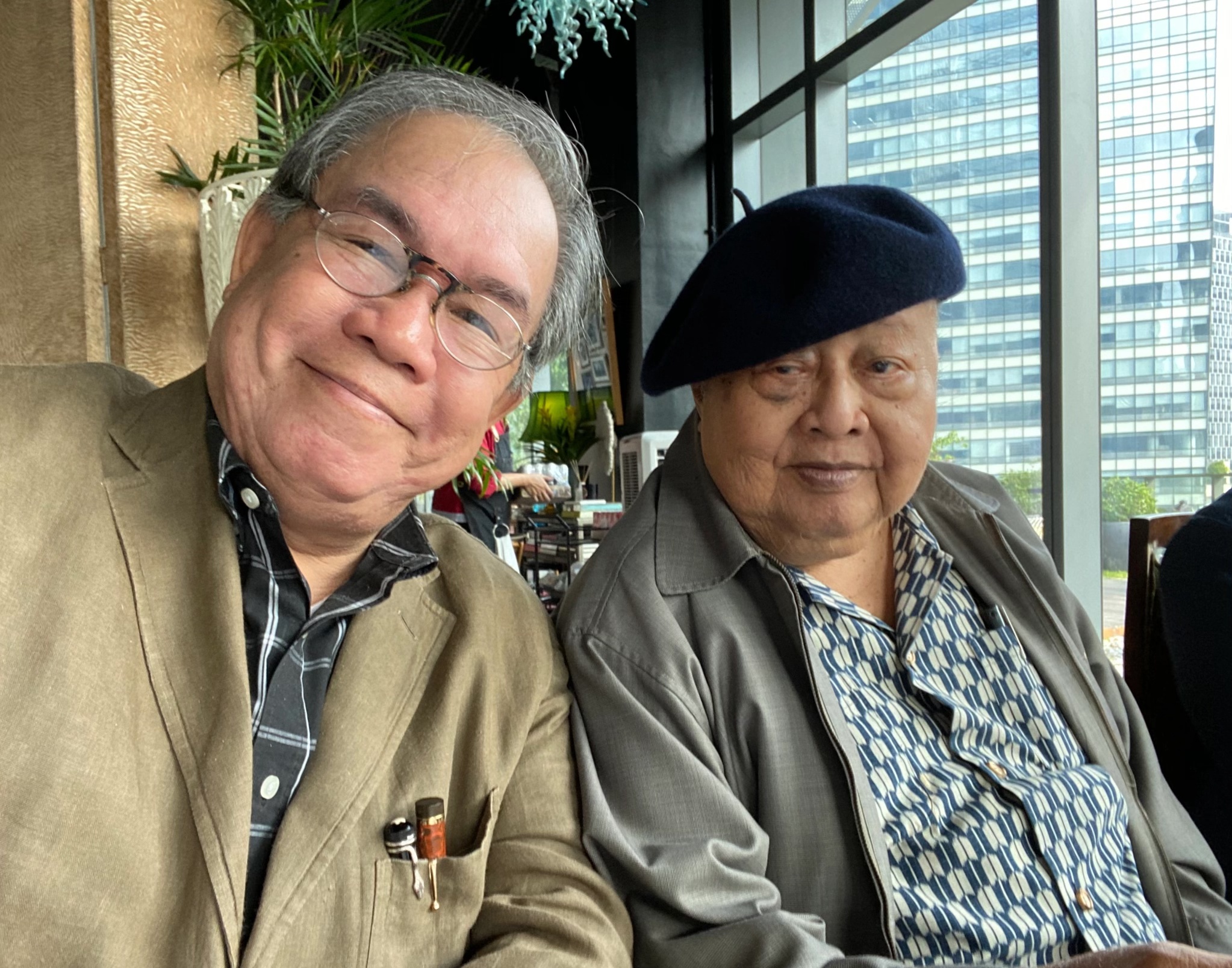
FOLLOWING THROUGH on last week’s piece about the challenges faced by creative writers trying to make a living in this country, let me share some further thoughts on that topic that I wove into my Rizal Lecture last week at the annual congress of Philippine PEN. My talk was titled “The Living Is in the Writing: Notes on the Profession of  Writing in the Philippines.”

Our writers of old made a profession of writing, often by working as journalists, speechwriters, and PR people at the same time that they wrote poems, stories, novels, and essays on the side. Some also taught, and of course some writing comes with that territory, but with teaching you get paid for your classroom hours than for your word count. (To which I should also add, so much of the writing that our literature professors do today is understandable only to themselves.)

Our best and most prolific writers lived by the word and died by it. The two who probably best exemplified this kind of commitment to writing—and nothing but writing—were Nick Joaquin and his good friend Frankie Sionil Jose. Both were journalists and fictionists (in Joaquin’s case, a poet and playwright as well). We can say the same for Carmen Guerrero Nakpil and Kerima Polotan, as well as for Gregorio Brillantes, Jose Lacaba, Ricky Lee, Alfred Yuson, Cristina Pantoja-Hidalgo, and Charlson Ong, among others. 

These were all writers whom you never heard to claim, as has been recent practice, that “I am a poet!” or “I am a fictionist!” They were all just writers, for whom the practice of words was one natural and seamless continuum, and a profession they mastered just as well as we expect doctors, engineers, mechanics, and lawyers to do. This was also when journalists could be poets who could also be politicians and even reformers, revolutionaries, and heroes.

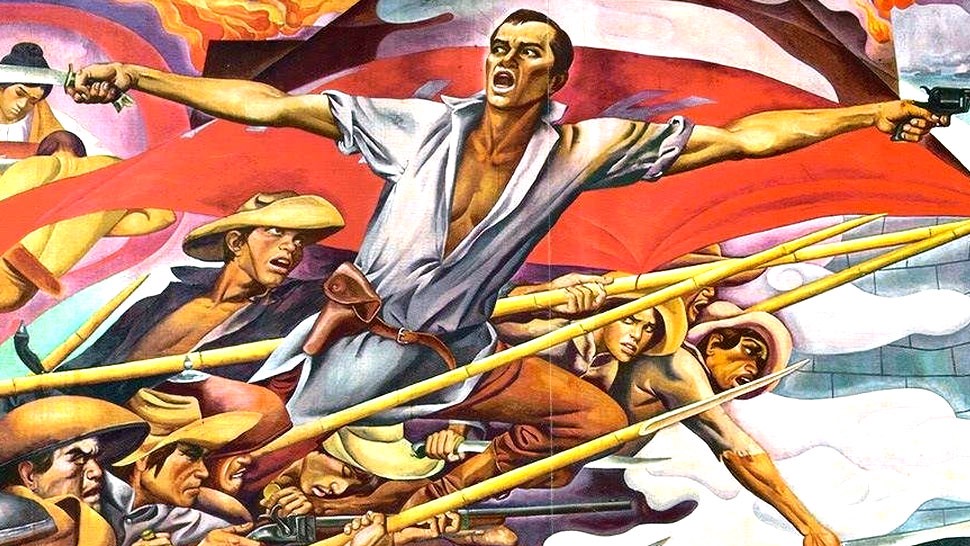
This was paralleled in other arts such as painting, where artists such as Juan Luna, Fernando Amorsolo, and Botong Francisco routinely accepted commissions to support themselves and any other personal undertakings. (Of course, this was well within the old Western tradition of writers and artists having wealthy patrons to help keep them alive and productive.)

But then came a time when, for some reason, creative and professional writing began to diverge, as creative writing withdrew from the popular sphere and became lodged in academia, where it largely remains today. Professional writing, or writing for, money, came to be seen as the work of hacks, devoid of art and honor. Even George Orwell urged writers to take on non-literary jobs such as banking and insurance—which incidentally T.S. Eliot and Wallace Stevens did, respectively—rather than what he called “semi-creative jobs” like teaching and journalism, which he felt was beneath them. (Orwell himself worked as a dishwasher in Paris, where he wryly observed that “nothing unusual for a waiter to wash his face in the water in which clean crockery was rinsing. But the customers saw nothing of this.”)

An attitude of condescension soon emerged among poets and fictionists who looked down on journalists as a lesser breed—something I have always warned my students against, having been a journalist who had to turn in a story, any story, by 2 pm every day on pain of losing my job. Never knock journalists. Let’s not forget that when it comes to facing real dangers brought on by one’s written word, poets and fictionists have it easy. The last Filipino novelist who was shot for what he wrote was Jose Rizal; the only writers dying today are our journalists and broadcasters in the hinterlands offending the local poobahs. Governors and generals read newspapers, not novels; they are impervious to metaphor.

Professional writers, on the other hand, saw creative writers as artsy dilettantes enchanted by fancy words and phrases that no one else understood and very few people paid for. Creative writers took it as a given that they were wedded to a life of monastic penury, unless they had another skill or job like teaching, doctoring or lawyering, or marrying into wealth. It even became a badge of honor of sorts to languish in financial distress while reaping all manner of writing honors, in the misguided notion that starving artists produced the finest and most honest work. 

The fact is, both are two sides of the same coin, which is the currency of public persuasion through words and language. One is an artist, the master of design; the other is the artisan or craftsman, the master of execution. Both can reside in the same person, unless you’re foolish enough to disdain one or the other. You can produce great art, if you have the talent, the discipline, and the hubris for it; but you can also live off your artistic skills, if you have the talent, the discipline, and the humility for it. 

(That said, I have to report that in my forty years of teaching creative writing, some of the students who find it hardest to switch to fiction are journalists, who just can’t let go of the gritty and often linear reality they’ve been accustomed to; poets come next, those who feel preciousness in every word and turn of phrase, so much that they can’t move from one page to the next without agonizing, or, going the other way, without drowning us in verbiage.)

This was why, more than twenty years ago, I designed and began teaching an undergraduate course at the University of the Philippines called “CW198—Professional Writing.” Mainly intended for Creative Writing and English majors who had very little idea of their career options after college aside from teaching, the course syllabus includes everything from business letters, news, interviews, and features to brochures, scripts, speeches, editing, publishing, and professional ethics. The first thing I tell them on Day One is this: “There is writing that you do for yourself, and writing that you do for others. Don’t ever get the two mixed up.”
Qwertyman No. 115: Why I Teach

Qwertyman for Monday, October 14, 2024

LAST OCTOBER 5, we marked World Teachers Day—not one of our most popular or noisiest holidays (it isn’t even an official one), but one that gives us pause to remember some of the most important people in our young lives. I taught for 35 years before I retired in 2019, and I still teach one writing subject every semester as professor emeritus, so I suppose I wanted to be that “VIP” in someone’s life. 

When we teach writing—and not even creative writing, but composition—to freshmen, we take young people by the hand and help them make sense out of their lives and their ideas, such as they are. The term “composition” applies as much to the writer as to the text: one composes oneself, drawing out the essentials and leaving out the dross. Creative writing pushes that process one step farther, by turning to the imagination instead of one’s limited experience for material and insight. 

The creative writing teacher’s task is not only to encourage but also to guide and to train that imagination, sparing the student from having to reinvent the wheel but affording him or her the thrill of self-discovery. 

It’s an inarguably fine and noble mission. On the other hand, and in economic terms, the teaching of creative writing is brutally inefficient. In a typical workshop class of 20 people, an instructor would be fortunate to find two or three with real talent—an aptitude for language, a maturity of insight, a stylistic flair. Among those, far fewer will have the discipline and perseverance to write and write well for life.

So why should we even persist, or expend public funds to produce boatloads of people who will probably never write the kind of line you will mumble in your half-sleep, or will cry out to the heavens in your most painful or most euphoric moment?

For one, because producing good creative writers is like mining for precious stones, where a ton of ore might have to be torn out of the earth and sifted through to produce one small jewel-grade rock, which has yet to be cut and shaped by expert hands. 

We must also persist in teaching creative writing because the production of new literature reinvigorates and replenishes our imagination as a people, our imagination of ourselves. It is that imagination, however dark, that gives us hope and makes reality endurable. The truth of numbers—of GDP and ROI and per capita income and population growth rates—is important (I’ve often remarked what a terribly innumerate society we are); but it is a limited and even sometimes deceptive truth that barely begins to tell our story. History does this, but without much latitude for pure conjecture. As in painting and the other arts, creative writers have often simply done, and done first, what critics and theorists would later describe and systematize. Creative writing is a breath of intuition caught on paper.

But I also teach creative writing in the conviction that every student—no matter the person’s background—has at least one good story to tell, and that it is our task as teachers to release that story. Most of my students may come to my classes merely to pass the time, or fulfill a requirement, or satisfy a craving for some critical attention; many may never write another story in their lives. But I want them to come out appreciating and respecting the liberative and ameliorative power of art—which is a fancy way of saying that, for those of us who will never be mistaken on the street for Brad Pitt or Superman, here we can be and do anything, for as long as we make artistic sense.

As K. Patricia Cross, professor emerita of higher education at Berkeley, reminds us, “The task of the excellent teacher is to stimulate ‘apparently ordinary’ people to unusual effort. The tough problem is not in identifying winners: it is in making winners out of ordinary people.”

Anyone can write anything, but not everyone can be a writer. By the same token, not every writer can be a teacher. People who have no problems stringing seamless paragraphs of compound-complex sentences can’t give a lecture or an exercise worth an ATM receipt. It takes a different sensibility—and, yes, another set of talents (or what I call a whole bunch of P’s—preparation, perseverance, patience, and passion)—to teach well and to endure in the classroom.

I feel passionate about teaching in UP and in this country, and in giving back to them, through my students, what they have given me. But teaching is not a word I often say in the same breath as love. I cannot honestly say that I love teaching, in the sense of wanting to do it for most of my waking hours, or missing it terribly when I’m doing something else. Teaching is one of the most exhausting jobs you can get. The job doesn’t begin or end in the classroom; it just happens there.

Every time I step into a classroom, I pause at the doorway to expel a deep sigh and collect my thoughts, wondering if I have enough to sustain a 90-minute performance. As the American novelist Gail Godwin famously said, “Good teaching is one-fourth preparation and three-fourths theatre.” Indeed I spend the last ten minutes before class writing a script in my head: I will say this; I will do this; I will bring these props and use them at some point; I will ignite an argument; I will leave them with a question that will buzz in their ears for a week. Even bad stories can be turned to great lessons; where’s the teaching point? How can I say it without crushing or diminishing the person? 

It doesn’t always work—sometimes I simply collapse into my chair and count away the minutes—but we all attempt some variation of this drill. Basically, we are saying: I will do my best to make this day worth their time and mine. It’s what they expect; it’s what I promised.

It is not love but duty that drives me to teach—although duty, perhaps, can also be a form of love; a love not of the thing itself but of some larger principle. That principle to me is service—service to country, people, university, and service to the great and truly free republic of the imagination.

“How do you know that what you’re doing matters?” I was asked once. “How can you tell if you’re making a difference?” My answer was, I don’t know, I can’t tell. But for a teacher, the only distinguished achievement that counts is the quality of one’s students. You are distinguished by their achievement, and in this sense, I have been distinguished aplenty.

Qwertyman No: 40: Teaching History

Qwertyman for Monday, May 8, 2023

I HAVE a subscription to the New York Times, which I enjoy for its features and commentary as much as its news coverage, and the other day my attention was piqued by a small headline: “It’s Not Just Math and Reading: US History Scores for 8th Graders Plunge.”

According to the article, recent test scores reveal that young Americans (about 13-14 years old for eighth-graders) have become much less knowledgeable about their history and civics over the past decade—with 40 percent scoring “below basic” and only 13 percent ranked as “proficient.” 

I immediately wondered how our students would score given similar tests. Would they be able to answer even simple questions about why Ferdinand Magellan sailed to the Philippines, what prompted Filipinos to revolt against Spain, why the Americans occupied us, what led to our involvement in the Second World War, and what martial law and EDSA were all about? I’ll probably be safe in my prediction that they would score dismally, from what I’ve seen in my own classes in UP (yes, in UP), where I’ve been dismayed to find a yawning ignorance of history and literature among my students, supposedly among the best in the country. 

Don’t get me wrong: these are bright, idealistic kids, desirous of all things good for their people and their families. They perform well in class and will likely succeed in whatever career lies ahead of them. But when I ask a roomful of English majors if they know or have read NVM Gonzalez and only a couple of hands go up, I get worried. When I ask when or what year the Americans arrived to conquer us and I get strange answers like “1945,” I get worried. 

However shocked we may profess to be, we can’t blame the students. In 2014, following the passage of the Enhanced Education Act of 2013 or the K-12 Law, the Department of Education issued Order No. 20, Series of 2014, effectively removing Philippine History as a high school subject and subsuming it as an “integrated subtopic” under “Asian Studies,” supposedly to provide students with a wider global perspective. The idea sounds nifty, but as many educators have since pointed out, its practical effect has been to dilute the teaching of Philippine history to the point of oblivion. The result is that we have young Filipinos with no knowledge of the most basic facts and issues of their past, and no appreciation of how that past brought us to where we are today.

That vacuum has been an open invitation to misinformation and historical distortion, the stock-in-trade of political propagandists, trolls, and spinmeisters. It’s become much easier to sell myths like a golden age under martial law to impressionable youngsters who were never told or taught the truth. Not surprisingly, Order No. 20 has been attacked by its critics as a means to lobotomize the youth and to render them more susceptible to alternative narratives (aka fake news) concerning our history. 

And yes, I have to acknowledge that all this began under the late President Noynoy Aquino, a champion of K-12, whom I prefer to believe had no such nefarious motives in mind, as he and his family would have had little to gain by erasing history. But the policy was upheld and sustained by the following administration, with DepEd Secretary Leonor Briones arguing strenuously that History (including our martial-law experience) was being taught in Grade 6 under Araling Panlipunan, and again in high school as a component of Asian and World History.

Given the current DepEd’s expressed desire to review K-12, it might be a good time to test how effective that policy has been: just how much Philippine History are our high school students learning and retaining? How much should they know by the time they get to college, where thornier issues such as nationalism, agrarian reform, and foreign policy will be threshed out in all their nuances?

Long before these questions arose, it was a common complaint among students and even teachers that our problem with History was how badly it was taught, often as a collection of names and dates rather than a coherent narrative (which I must say I sometimes wonder about, fact often being stranger and messier than fiction). We generally agree that History should involve more reasoning than rote memorization. But as the New York Times reports, “That emphasis can contribute to a troubling lack of background knowledge,” with experts observing a “rapid and very significant decline in what students know about history and geography—like the fact that Africa is a continent, not a country.” So the basics of names, dates, and places remain important—getting the facts straight before getting into more complicated arguments.

It’s even more troubling to note that on top of this decline in historical knowledge and awareness among young Americans, there’s now a ham-fisted effort from conservative politicians to purge school curricula of what they see as “woke” content—subjects that have challenged the longstanding impression of America as a nation forged by whites. Governors like Florida’s Ron DeSantis—eager to present themselves as the flag-bearers of political and moral rectitude—have supported moves to eliminate African-American and LGBTQ studies from the curriculum. Others have called for banning books that threaten their view of traditional America, including books titled “The Infinite Moment of Us” (a young adult novel about love and sex) and “How to Be an Antiracist” (a nonfiction book about racism and ethnicity). This reminded me of how some Philippine state universities, not too long ago, went on their own book-banning spree, on some silly suspicion that books by such authors as National Artist Bienvenido Lumbera were “subversive.”

The New York Times piece came with an irresistible teaser: a brief five-question, multiple-choice history quiz for readers to test themselves on how well they know American history. I scored four out of five (failing a question about post-Civil War reconstruction)—not too bad, I thought, for a guy living seven thousand miles away. But then I come from a generation schooled on American textbooks, who know American history and geography better than many Americans. That’s a topic for another column.

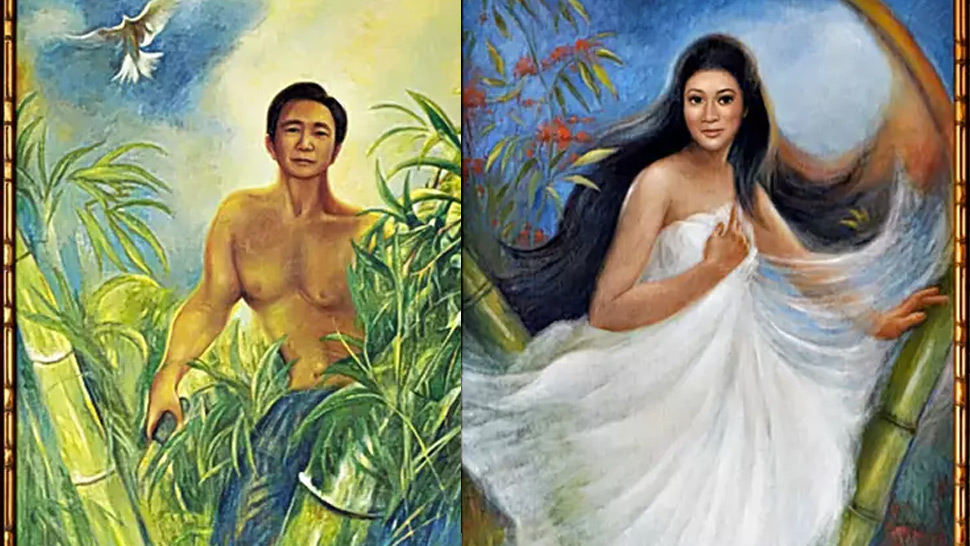
In the meanwhile, let’s ask ourselves: how well do we know our history, and how important is that knowledge to understanding our present and shaping our future? Is “Maria Clara and Ibarra” pointing the way forward?

Penman No. 399: Teacher’s Travails

Penman for Monday, October 26, 2020

WE CAN’T let this month pass without remarking that World Teachers Day came and went last October 5—the same day that 22 million public school students forcibly entered the digital age in the Philippines, many probably kicking and screaming, or more likely staring at a spinning wheel on a tablet screen or a blank wall.

Covid has wrought what two decades of wishful thinking on the part of some futurists could not—a mass migration to distance education, with students responding to their teachers’ questions from a hundred kilometers away. No more long commutes, no more packed lunches, no more fooling around at the malls after (or during) class. 

At least that’s the dreamy theory. As millions of Filipino parents are discovering, being housebound with their kids, tethered to a tablet or laptop and doing Math and Reading with a child more interested in recess, isn’t exactly a recipe for familial harmony. 

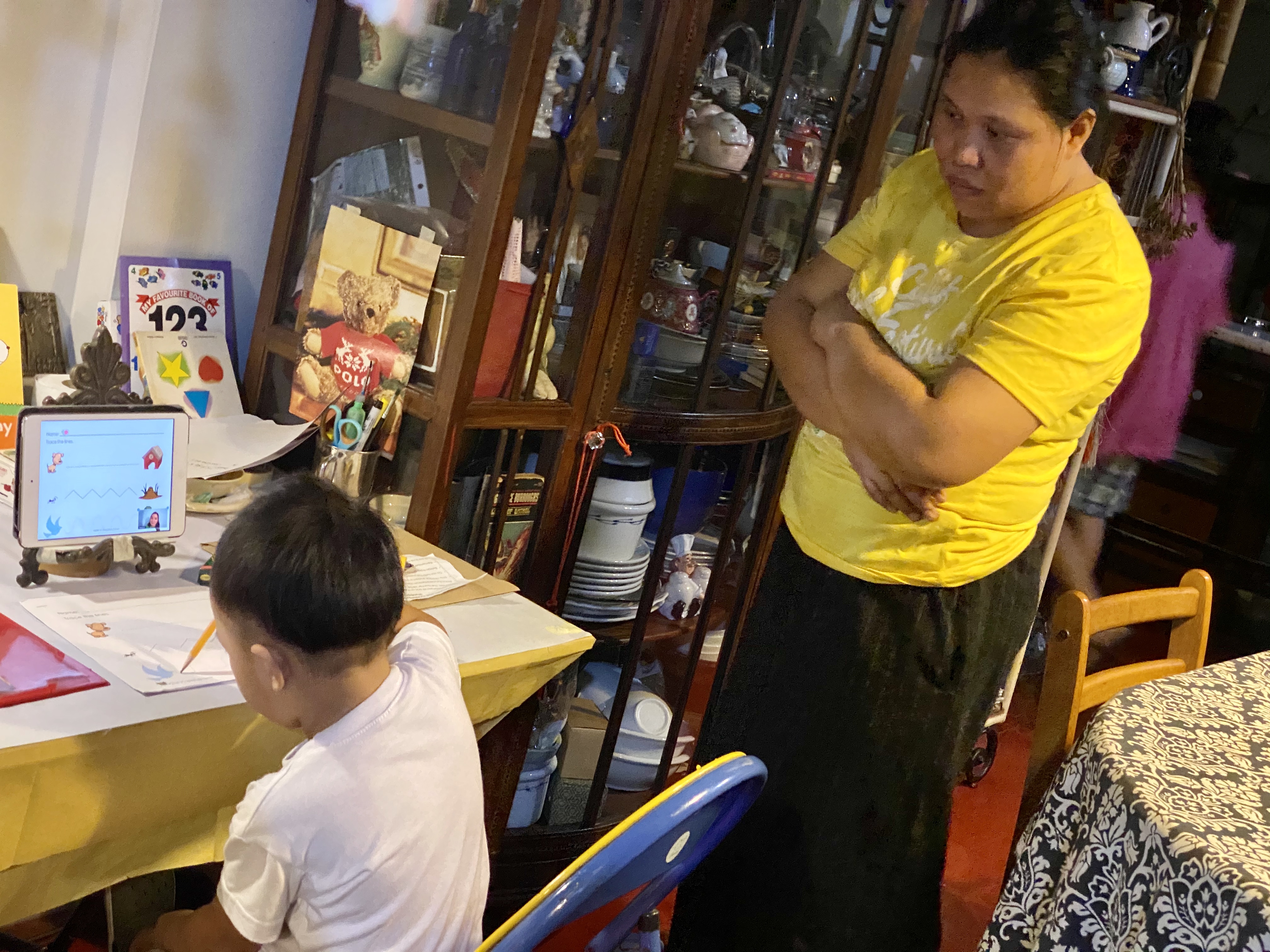
We know this for a fact because our resident apu-apuhan Buboy, now in senior nursery (how can a four-year-old be in any way “senior”?), has been showing all the signs of juvenile rebellion, ducking beneath his chair and the study table we’ve set up for him, while his classmates dutifully recite their ABC’s and 123’s, to the dismay of his mom, our faithful housekeeper Jenny, who keeps him company throughout his 90-minute class. Buboy also finds great delight in seemingly making fun of whatever Teacher says, repeating his own exaggerated version of “Children, be kind!” and similar admonitions.

It’s not that Buboy can’t handle technology. Like many kids today, he’s a digital native, able to turn on an iPad and navigate YouTube on his own. When the Internet is slow, he’ll tell his Tatay Butch that the “signal” is weak and that the image is “loading.” He can’t read yet, but he knows what “USB” is and, perhaps dangerously, can jam a USB device into its port, properly oriented. I’ve heard him trying to coax Alexa into singing the ABC song, and my daily playtime with him invariably includes putting him in the driver’s seat of the Suzuki Jimny, from where he punches all the buttons within his reach, wrangles the wheel and gearshift, and pretends we’re driving to Bicol (the only other place he knows, aside from Cavite, his grandparents’ domiciles). I’ve promised to give him the Jimny when he grows tall enough for his feet to reach the pedals—for which he first has to eat a lot of rice and vegetables—and I have no doubt he’ll hold me to that pledge, when the time comes.

It’s not that he’s inattentive, either, because Jenny says that Buboy regurgitates the day’s lessons in his bugoy way when they’re alone after class, as if to say, “I was listening, okay? I just wasn’t that interested.” Younger than most of his classmates, Buboy has to catch up on reading and arithmetic, but we’re not worried—the learning will happen sooner or later, one way or another, and the more important thing is for him to have fun in school, not an easy thing when all you see are faces on a screen. The onus of keeping Buboy and his like focused and occupied is on moms like Jenny, who now have to be co-teachers on top of everything else.

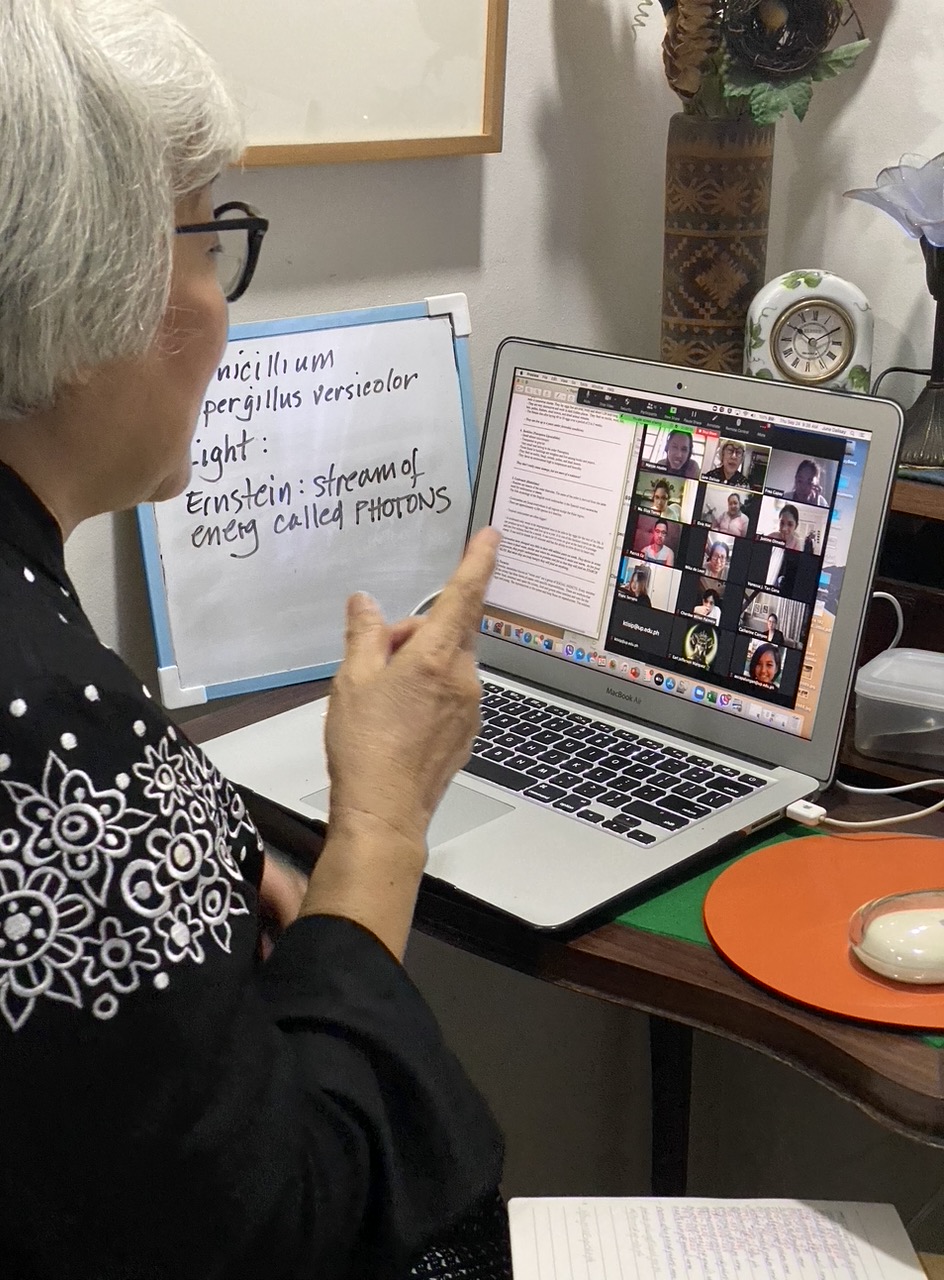
The other person at home adjusting to the new normal is my wife Beng, who is teaching at UP for the first time in her long career. She’s done many hands-on workshops before, but teaching Art Conservation online is a bit like learning cooking by reading the recipe. Beng was literally in tears when she was cobbling her coursepack together before the semester started, wondering what she had gotten herself into, but peeking over her shoulder during her biweekly classes (she calls me her “Assistant Emeritus”), I can see that she and the kids are having a grand time, despite the weak wi-fi and the inevitable absences.

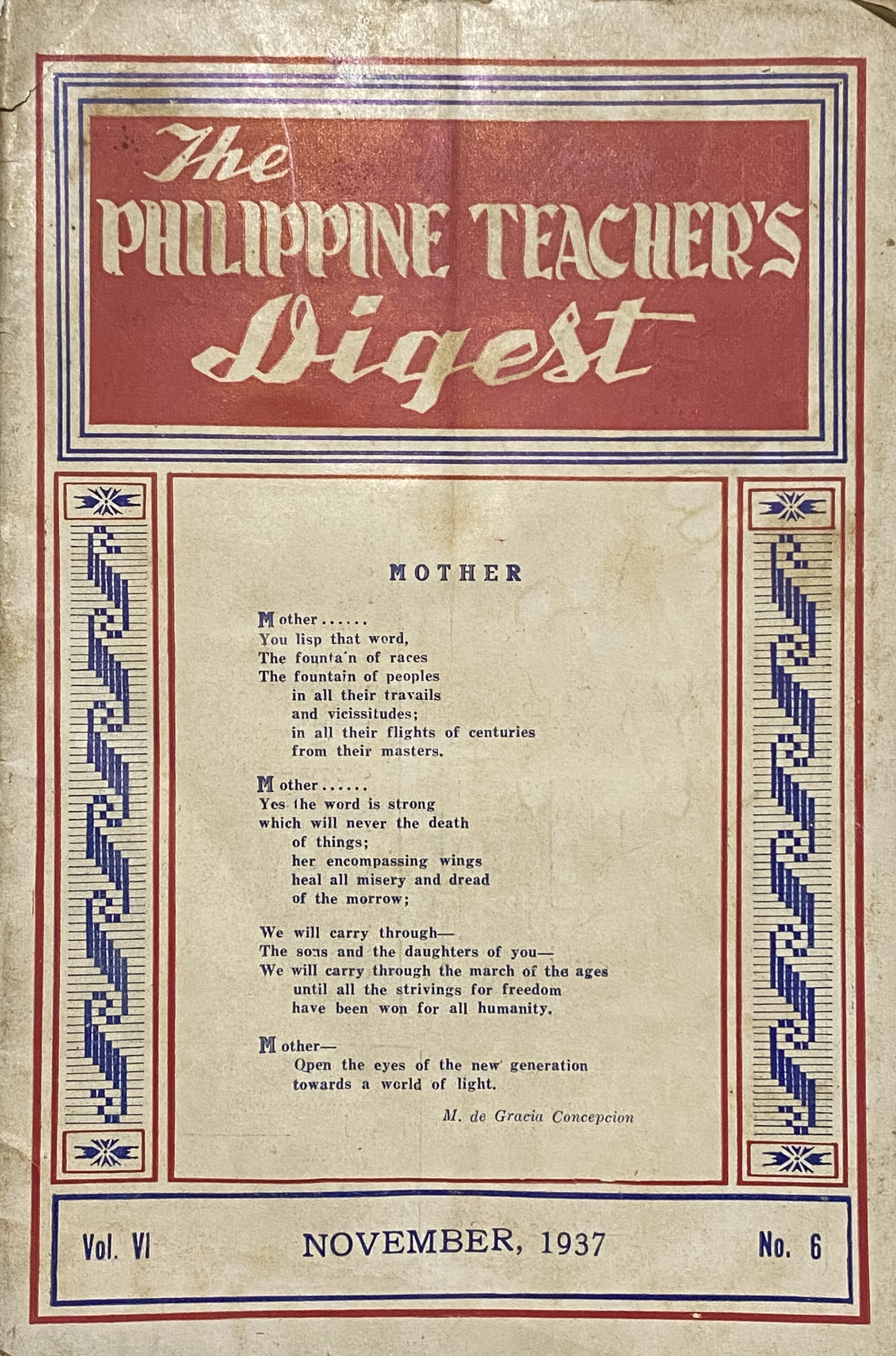
So all this will pass, as we’re constantly being reassured, and maybe it will. I just happen to have a copy of the October 1932 issue of the Philippine Teacher’s Digest, and one of its US-based articles speaks of “The Maintenance of School Services During the Period of Economic Depression”:

“The school program is being restricted. It is being proposed in many communities that the schools can get along with less music and art. The health service has been crippled or abolished. Opportunities in the industrial and household arts have been removed from the curriculum. The work in physical education is less adequately provided. Indeed, there are those who propose that a return to the curriculum of a past century is the solution to the problem of the support of education.”

Eighty-eight years later, some of that still sounds distressingly familiar, as does this refrain from another article in the same issue: “Teachers strongly protest against any radical action to reduce the teachers’ salaries. They believe that the reduction of teachers’ salaries will drive from the service many efficient teachers and promising applicants…. In general, teachers are underpaid.”

Very true, but for all that, I’m pretty sure that Buboy’s teacher, his mom Jenny, and his Nanay Beng will do everything they can do stare this pandemic in the eye to make sure there’s more to his fourth year of life than cartoons, TikTok, and Gummi Bears.

Penman No. 289: PowerPeeves

PowerPoint-Clips-Featured-382x255.jpg

Penman for Monday, February 5, 2018


I’VE NEVER used PowerPoint in my life as much as I had to this past year, largely because I’ve been asked to do many presentations—briefings, TEDTalks, and such. For the longest time, I’d resisted using PowerPoint (and its Mac counterpart, Keynote), not because I dislike visual aids, but because I felt confident that I could get my message across just by having people listen to my words and my voice.

That works—sometimes. I feel that when I’m talking to persuade—like when I spoke at the annual conference of the Writers Union of the Philippines to argue for the need to give evil a human face, or when I exhorted young writers at the Palancas to remember to write for oneself after writing for others—then direct address works better, without props or pictures.

After more than 30 years of teaching, I’ve long lost whatever shyness I may have had about public speaking—a teacher has no better tool in a classroom than his or her voice—but that doesn’t mean talking comes naturally, especially if you have to make sense. In the ten minutes or so before every class, walking down the corridor or up to my floor, I rehearse the lines I’ll be opening with, the points I have to make. It does get easier with time and practice, but every class is a performance, every audience a fresh challenge.

Perhaps it helped that, in our elementary years, we had a subject called Declamation which forced us to memorize and recite long, elaborate poems and speeches like Edwin Markham’s “The Man with the Hoe” and Mark Antony’s lament at Caesar’s funeral. We may not have understood what we were emoting about with full juvenile fervor, but—at least for me—it got rid of the stage fright, and I marveled at the fact that, if you spoke well and clearly, people listened.

Of course that was something that politicians already knew. They could whip the masses up into a maniacal frenzy—just with words. No flash cards, no graphs and charts, and yes, no PowerPoint. Not for Hitler, not for Marcos, not for… well, most other demagogues you can think of, some orange-haired presidents included. They knew that nothing could mobilize people better than fear, and nothing could stoke fear better than the imagination, such as of alien hordes and drug-crazed zombies streaming over the border. (On the other hand, the good guys could raise the dead as well with eloquently simple but moving oratory—think of Churchill’s “blood, toil, tears, and sweat” speech of 1940, which drew on similar remarks made much earlier by Theodore Roosevelt, not always a good guy.)

It’s tempting to suggest that if Churchill et al. had to use PowerPoint to rally the troops, the Battle of Britain would have been lost as he fidgeted, as presenters often do, with the controls and clicked back and forth between slides of Spitfires, Hurricanes, Heinkels, and Dorniers and rattled off their ranges and payloads. If Genghis Khan had to sit for a PowerPoint presentation on the economic and tourism potentials of every new territory over the horizon before he actually shouted “Advance! Kill! Plunder!”, he would never have gone past the Yellow River.

But of course today very little can happen without someone first having to plunk down a laptop, connect a medley of cables and wires, tinker with screen and clicker, and run through a cascade of slides in a coma-inducing monotone.

But I’ll admit it: there’s nothing like PowerPoint when people need to see what you’re talking about, whether it’s the tomb of Tamerlane in Samarkand, a genetically modified eggplant, or a fountain pen Jose Rizal would have written with. It’s most useful in speeches and lectures meant to inform, providing visual reinforcement for such abstract (and, these days, politically unfashionable) concepts as “human rights,” “freedom of the press,” and “territorial integrity.”

I remember being fascinated by scenes from the Bible that our Religion teacher in grade school flipped through in a roll of posters, and I’m sure we’ll all agree that the impact images produce is visceral.

That said, let me rattle off some of my pet peeves when it comes to PowerPoint presentations:

  1. Slides full of long text, which the presenters then read word for word, line by line. For heaven’s sake, summarize, condense, get to the core of things!
  2. Presenters who mumble like they were confessing their sins.
  3. Slides of cute babies, puppies, kittens, and sunsets when you’re talking about sexual harassment, Bentham Rise, or global warming.
  4. Whoosh! Swirl! Zoom! Dazzling and dizzying transitions and visual effects, accompanied by a fruit salad of colors and a library of exotic fonts.
  5. And, of course, presentations that just go on and on and on, because the presenters never bothered to do a dry run, edit their draft, or look at the clock and all the bored faces.

All yours, Genghis!


(Image from makeuseof.com)


Penman No. 244: Summer and Sacrifice

SJackson

Penman for Monday, March 27, 2017


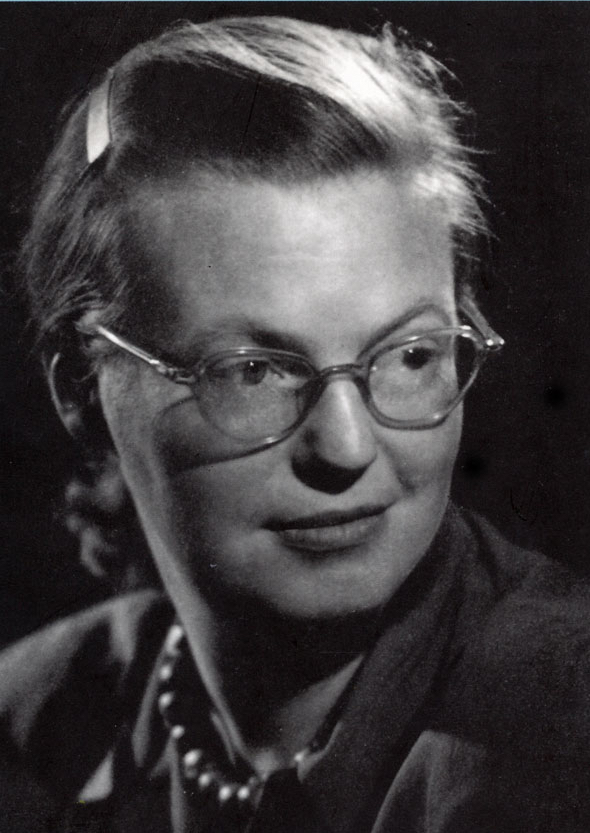
LAST WEEK, my undergraduate class in Contemporary American Literature took up a short story that has never failed to elicit strong reactions since it was first published in June 1948, soon becoming one of America’s most anthologized stories. When Shirley Jackson’s “The Lottery” came out in The New Yorker, it caused such a firestorm of protest from angry readers that Jackson herself would later write that “Of the three-hundred-odd letters that I received that summer I can count only thirteen that spoke kindly to me, and they were mostly from friends. Even my mother scolded me: ‘Dad and I did not care at all for your story in The New Yorker,’ she wrote sternly; ‘it does seem, dear, that this gloomy kind of story is what all you young people think about these days. Why don’t you write something to cheer people up?’”

If you’re not familiar with the story and would want to read it first before dealing with the spoilers in this piece, I suggest you drop this paper for a few minutes and take a quick look here: http://fullreads.com/literature/the-lottery/. It’s an easy read—Jackson made sure that her story, like her mother suggested, would “cheer people up,” at least at the beginning, which is probably American literature’s most optimistic opening sentence: “The morning of June 27th was clear and sunny, with the fresh warmth of a full-summer day; the flowers were blossoming profusely and the grass was richly green.”

Set in a small farming town on a brilliant summer morning, the story seems to promise nothing but gaiety and frolic. Instead, it turns into a tale of dark horror and human sacrifice, where the townspeople draw lots to choose one of their own to be stoned by the others—including the victim’s own children—to death, in the name of tradition. (As in many primitive societies, these people have been led to believe that sacrifice will bring a good harvest.)

It’s a masterful piece of storytelling, and one that I often turn to for aspects of both craft and insight. In my English 42 American Lit class, we discuss the stories not only for their literary qualities, but also for their historical, political, and cultural significance. Why did the majority of “The Lottery”’s readers in 1948 react so violently against it?

For one thing, because The New Yorker at that time didn’t specifically identify it as a short story, many readers thought it was nonfiction, and couldn’t believe that something so horrible could take place in progressive, postwar America. (South Africa banned the story, leading Jackson to comment that “At least they got it!”) Most readers simply couldn’t take the idea that “good country people” (the title of another important Flannery O’Connor story) could be so stupid and so evil as to communally murder an innocent person for what was perceived to be the common good.

But this was also the age of McCarthyism, of witch-hunts fueled by the anti-Communist hysteria that swept America after the war. Suddenly your neighbor couldn’t be trusted, and too many people were only too willing to give someone else up in defense of “the American way of life.”

american-gothic

My students and I talk about tradition and sacrifice, looking at examples from history, literature, and anthropology—from the animal sacrifice practiced by various tribes to the human sacrifice undertaken in massive numbers by the Aztecs. We discuss the reasons why these practices—some of which might now be deemed inhuman or inhumane—have persisted down the centuries into the present, chiefly the need to placate or propitiate a higher being to gain some reward in return.

Of course we discuss our own Filipino experience, like the ritual killing of pigs and chickens, and even tokhang’s communal aspect. But most notably, nothing brings tradition and sacrifice together for Filipinos more clearly than Holy Week and the figure of the crucified Christ who gives up his life to atone for humankind. Enacted in every Mass, but most vividly in the blaze of summer, Jesus’ sacrifice and our Christian identification with it very likely accounts for our fascination with martyrs such as Jose Rizal and Ninoy Aquino, and with the notion of the hero as sacrificial lamb.

In his study of Philippine literature, the scholar Gerald Burns cites Leon Ma. Guerrero, Rizal’s translator, when he observes in the context of our Roman Catholicism that “Filipinos do not value failure, or for that matter tragedy, for its own sake, but only insofar as these are submerged into the larger end of sacrifice. ‘We reserve our highest homage and deepest love for the Christ-like victims whose mission is to consummate by their tragic “failure” the redemption of our nation.'”

For my undergrads, it’s a lot to digest on a March afternoon, but I can sense that I’ve touched a nerve, especially when I close by asking them, “Should we have to equate heroism and sacrifice with dying? I would hope not. We can live, and not just die, for our country.”

Because of my administrative duties and the fact that I’ll be retiring in two years, this English 42 will likely be the last undergraduate class I will ever teach—a thought that fills me with great sadness and even greater responsibility. And it’s been a wonderful challenge and privilege to use a foreign literature to help my students become better Filipinos.

(For an excellent essay on Shirley Jackson and “The Lottery,” see here: http://www.nybooks.com/articles/2016/10/27/shirley-jackson-in-love-death/)

(Images from shirleyjackson.org and tvline.com)

Penman No. 221: Teaching the Millennials

L1090932.JPG

Penman for Monday, October 17, 2016


THERE WERE no marching bands, greeting cards, or fireworks to mark the event, but World Teachers’ Day was celebrated last October 5. As unofficial or secular holidays like Mothers’ or Grandparents’ Day go, it’s a relatively new one, proclaimed by UNESCO in 1994 to draw attention to the key role teachers play in molding the citizens of every country. My calendar shows that I did nothing remarkable that Wednesday, my day off from teaching, so I very likely spent it on a foot-massage-movie-and-dinner date with Beng. But surely teaching would have crossed my mind, as it does every day, because we keep preparing for our next class even in our idle hours, wondering how we can make our students’ encounters with us more interesting and memorable.

I’ve been thinking about teaching a lot more lately, first because of the recent deaths of some valued mentors and colleagues. Just over the past month, our department lost two of its stalwarts—Professors Sylvia Ventura and Magelende “May” Flores. I’ve written quite a bit in this corner about Sylvia, my Shakespeare teacher, who fired up my enthusiasm for Elizabethan drama and poetry. May was an English-language specialist and textbook author, a sweet, imperturbable lady with a caring smile for everyone. (Continuing the tradition, May’s son Emil also teaches with the department and has become one of our prime experts on science fiction and creative nonfiction.)

The second reason is my own impending retirement, less than three years hence. It’s hard to believe that it’s been more than three decades since I gave up my PR job at a government agency to devote the rest of my life—as I told myself then—to studying, writing, and teaching. I never did become much of a scholar—I guess I did become the writer I wanted to be—but even this close to the end of an active career, the teacher in me is still a work in progress.

That’s because every teaching day is a new performance, even if—like it would be for a theater actor—the script may essentially be the same for courses you’ve taught for years. Every new batch of students brings with it a new mix of challenges—even, over the decades, a generational drift to adjust to. For example, a teacher can’t simply blame millennials for their lack of a historical memory, which we helped create; I try to get them interested in the past not for the past’s sake, but to show them how an appreciation of the past can help their future.

Teachers, in other words, have to keep learning about their students and their interests, so lessons remain fresh and relevant, rather than boring incantations regurgitated from ages past. We need to relate the lesson to the student’s present realities, which may seem daunting if you’re talking about, say, a 19th-century short story about the French bourgeoisie, but which can be done with a little imagination (in this case, I’d begin by talking about the Filipino middle class and its aspirations—“Where do you see yourself ten years from now?”).

But as vital as it is to connect directly with millennials, it’s just as important to remind them that there are many things in this world that may seem to have little or nothing to do with them that will still affect their lives—in other words, that we’re still motes in the grand scheme of things, and that Nature can be profoundly indifferent to our noisome plaints and woes.

That’s a harder lesson to impart, even to older students—to any person who hasn’t encountered something much larger than himself or herself, like a World War, or martial law, or a terrorist attack. In a me-centered universe, no one wants to feel disempowered, so I then have to challenge them into getting out of themselves and enlarging the sphere of personal actions they can take to improve not only their own future, but also that of their fellowmen.

Back when we ourselves were freshmen and sophomores in the early 1970s, this message came down to us in the exhortatory slogan “Serve the people!” Exactly how seemed a lot simpler to figure out back then, when a predatory dictatorship was looming over everything and everyone (a dreadful specter I thought I’d escaped forever). Today a young person’s options are far richer and more complex, with all manner of personal advocacies, NGOs, weekend CSR programs, and Facebook groups competing for one’s political attention.

But whatever the chosen means may be, the overriding need for building empathy remains, for leading young urban, middle-class Filipinos to see, to appreciate, and to grow their stake in a future that they share with the millions of others who live unlike them, many without the opportunities that they enjoy. We can’t truly be a nation—much less a Christian one—if we continue to dismiss the bullet-riddled bodies of the poor as trash because we find nothing in common with them.

A teacher’s job is to help students draw the line between two points, including and especially the most seemingly disparate ones. That includes the line between teacher and student, between student and student, and between student and society. If that’s all I’ve done these past three decades, I can retire happy.


AND NOW for something liberative. According to the exhibit notes, “Ebarotika! (You are Erotic, Eve) follows the story of Eve who dared venture into the forbidden. Her defiant act opened knowledge’s connection with sexuality, the knowledge of one’s sexual and erotic desire. But it also resulted in shame and punishment. Thus, many of us cover and hide our sexual and erotic life. Those who are bold enough to come into the open are subjected to stigma, discrimination, and death. Sexuality and the erotic are a source of life, joy, and pleasure. They are not objects of fear, horror, and anxiety. They must be opened, shared, and celebrated instead of being censored, concealed, and criminalized.”

Curated by Lia Torralba, Ebarotika! features 19 Kasibulan artists: Yasmin Almonte, Lot Arboleda, Chie Cruz, Cecil de Leon Escobar, Imelda Cajipe Endaya, Anna Fer, Lorna Fernandez, Kristin Garanchon, Lorna Israel, Amihan Jumalon, Nina Libatique, Eden Ocampo, Jonabelle Operio, Fel Plata, Rebie Ramoso, Benay Reyes, Doris Rodriguez, Christine Sioco, and Lia Torralba.

It opened last Saturday, but will run until November 23 at the Sining Kamalig Art Gallery located on the Upper Ground Floor of Ali Mall in Cubao, Quezon City. See you there!


Penman No. 163: The Gentler Path

IMG_7998

Penman for Monday, August 24, 2015

FOR THE first time in something like 20 years, I’m teaching two undergraduate classes this semester. I usually teach one graduate and one undergrad class, but thanks to what I’m taking as a glitch in the registration process, my graduate fiction writing class—which is usually oversubscribed—had zero enrollees this term, forcing its cancellation and my reassignment to a course usually reserved for young instructors, English 11 or “Literature and Society.”

I should make it clear that I’ve always insisted on teaching at least one undergrad class every semester, and have done so unfailingly since I returned from my own graduate studies abroad in 1991. The benefits go both ways—young students get to learn from more experienced professors, and senior profs get to know how young people think. With four years of active teaching left before retirement (it’s hard to believe, but I’m getting there), these encounters with some of the country’s brightest young minds will only become more precious, and as with every class I take on, I can only hope that, many years from now, my former students will remember something useful that they picked up from me.

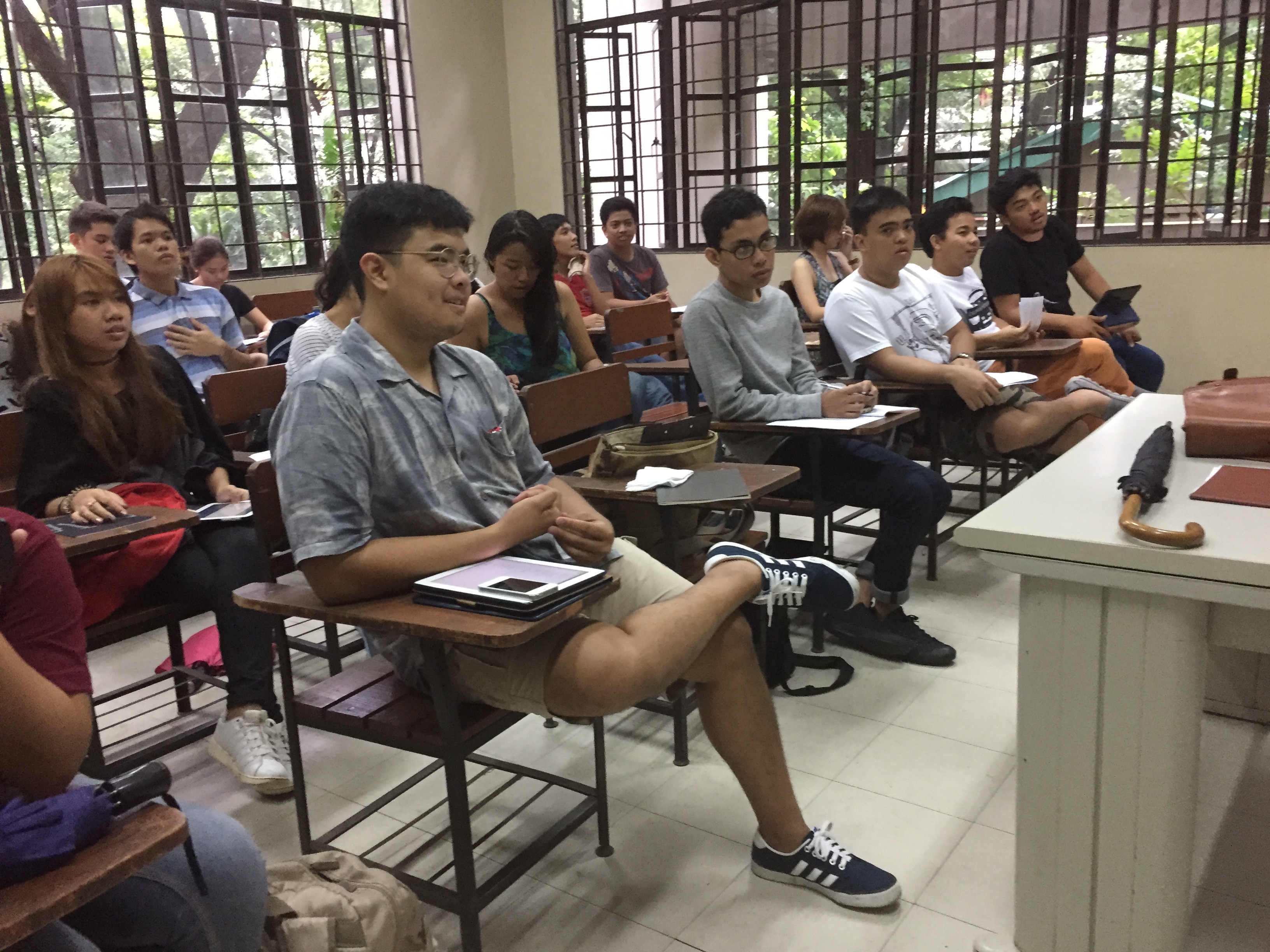
I haven’t taught English 11 in ages, so it was with some trepidation that I entered the classroom on our first day a couple of weeks ago, under UP’s new academic calendar. Students don’t realize this, but professors can be just as full of anxiety at the start of the semester as they are. As I scan the roomful of faces, I’m already wondering who will likely give me problems and who will make it worth the effort of preparing for every day’s lesson as if I myself were taking an exam. Thankfully, most of these mutual apprehensions soon retreat as I reassure my students that I know what I’m talking about—and that I won’t scream at them if they don’t—and as I begin to understand what exactly I’m working with, which is always a welcome challenge.

This semester, I was glad to discover that my English 11 class of about 30 students was composed of mainly science and engineering majors. You’d think that teaching the humanities to them would pose problems, but I see it as a unique opportunity to lead smart people on an adventure they might have missed out on otherwise. Of course, UP’s General Education program makes sure that our graduates acquire a balanced outlook on life, so my students didn’t really have any choice, but I see my job as making them see Literature as much less an imposed subject than a welcome relief from everything else—in other words, fun. When you disguise labor as discovery, and emphasize incentives over penalties, the students—and you yourself—can feel more relaxed.

English 11 is what used to be English 3 in my time—an introduction to literature—and while some teachers see this as a chance to pile on the heavy stuff like The Brothers Karamazov (and I can understand why), I prefer to take the gentler path to literary enlightenment, and begin with things the students know or can apprehend. That way you can lead them to stranger and more intriguing discoveries about the way language works to convey human experience.

Last week, for example, one of the first poems we took up in class was “Southbound on the Freeway,” a poem published in 1963 by the American poet May Swenson. We could’ve done something like T. S. Eliot’s “The Wasteland,” but unless you train lay people to look at poetry a certain way—to see it as a puzzle or a riddle to be solved, for example—it’s often very hard for them to get a handle on what some poets do on a high and abstracted level of language and idea, much like the way Picasso’s departure into Cubism (think of his women-figures with their eyes looking this way and their noses pointing that way) can be better appreciated if you first consider what goes into a traditional portrait like the Mona Lisa.

“Southbound on the Freeway” reads like a rather simple and even funny poem, in which alien visitors on a spaceship look down at the Earth, and see creatures “made of metal and glass…. They have four eyes. / The two in the back are red. / Sometimes you can see a 5-eyed / one, his red eye turning / on the top of his head.” It doesn’t take much for the student to see that the aliens, hovering above a freeway, have concluded that the cars themselves are Earthlings, and even that some cars—like the “5-eyed” police car—are more special than others.

In literature, this is a familiar device we call “defamiliarization,” by which poets and other artists take something we see everyday and present it to us in fresh and unexpected ways, revealing facets and insights we never really thought about before. The Swenson poem seems like all it does is show us how perspective can change our perception of things, but it goes beyond that eye-trick and asks a very intriguing question at the end: “Those soft shapes, / shadowy inside / the hard bodies—are they / their guts or their brains?”

At this point, I ask the class, what’s this poem really about? Is it just about aliens and humans, or about cars on the road? Inevitably, someone spits out the magic word: technology! So what is it about technology that’s so important, I press on, and what does it have to do with our lives? Why, everything, the class exclaims in a chorus—we’d die without our cell phones and iPads!

We go into a brief and engaging discussion about what exactly technology means, and whether it has benefited human society—or not. We talk about mechanization, automation, better and easier ways of doing things, products that were invented to improve human life, and inventions that did the opposite. We talk about armaments, and about Eli Whitney’s cotton gin and how it actually helped to encourage more slavery in the American South. I tell them that at some point, later in the semester, I’ll talk to them some more about the legend of Dr. Faust and how it led to the stereotype of the mad scientist, all the way to Dr. Strangelove, Lex Luthor, and Doc Ock. I can see that the class is listening, and I’m happy.

I ask them what the real question is that the Swenson poem is posing, and they get it. It’s been a good day in school for Literature and Society.

Penman No. 154: Teaching English to Filipinos

NEU

Penman for Monday, June 22, 2015

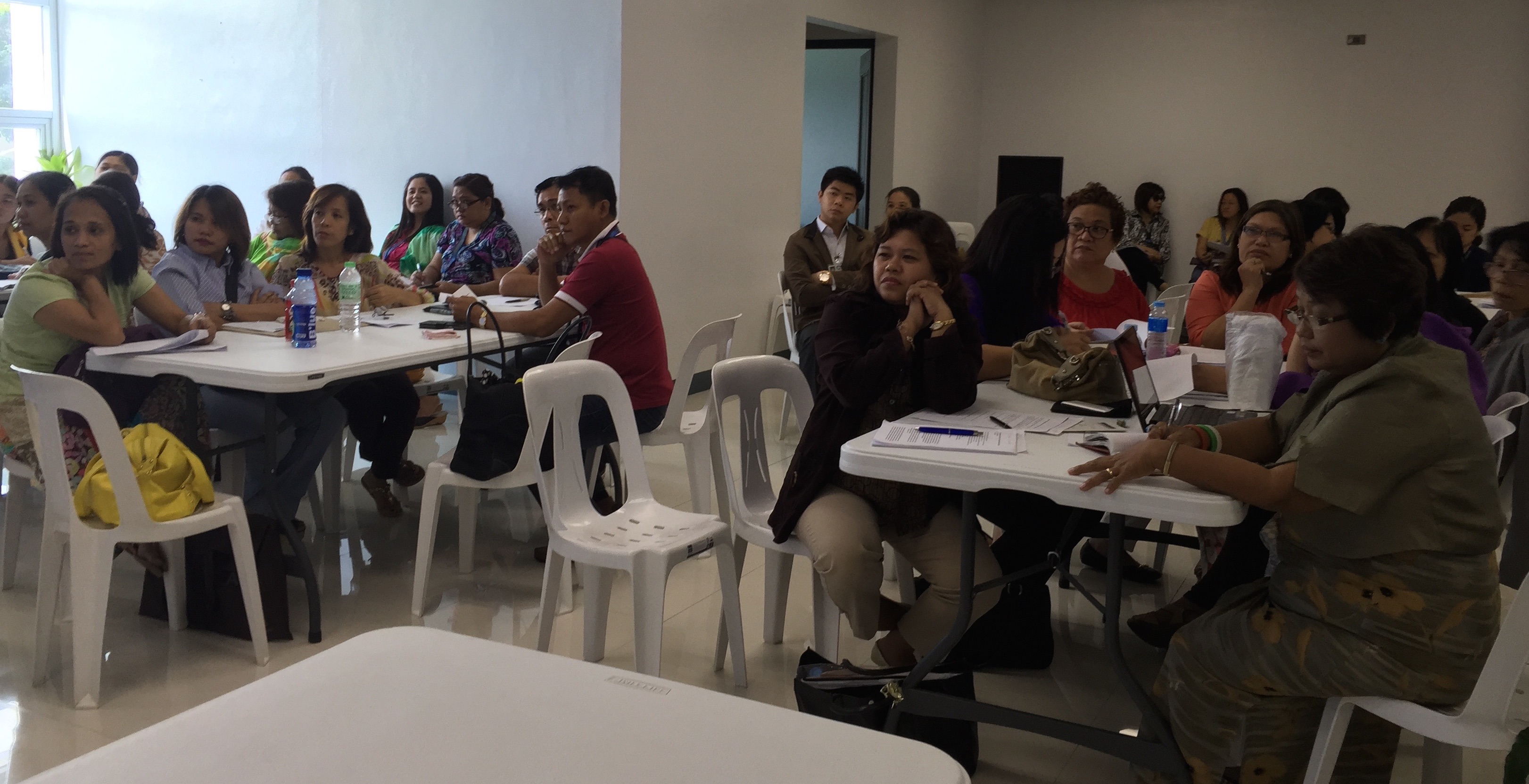
I HAD a great time last week with the English faculty of New Era University in Quezon City, who had invited me to speak at their three-day workshop on “Enhancing English Teaching Practices.” For three days, I met with a very lively group of about 30 to 40 college and high school teachers of English, talking about writing, reading, and teaching the language in today’s Filipino classroom.

I was backstopped in these discussions by the young and very sharp Ms. Cyndriel “CY” Meimban, who had taken her high school at New Era before doing an English degree with us at the University of the Philippines and then a master’s in Education at Arizona State U. CY—who also just happens to be the daughter of an old friend and fellow Fulbrighter, Dr. Adriel Meimban—took a break from her teaching duties at Northern Arizona University to help out her fellow teachers at NEU.

It was my first visit to the NEU campus near Commonwealth Avenue, which was rather ironic because we’ve lived on the UP campus just across that avenue for the past ten years. The NEU is part of the Iglesia ni Cristo complex and is run by the church, although I was pleasantly surprised to find that it’s open to all faiths. There’s a substantial Muslim population in that very area, for example, and many students from that community attend New Era.

We held our workshop in the new Professional Schools building, which housed NEU’s colleges of Law and Medicine, among others; more prominently, along Commonwealth Avenue, the College of Evangelical Ministry which Dr. Meimban (a former president of NEU) now heads trains young INC ministers, including about a hundred students from overseas—Filipino-Americans and Filipino-Europeans, among many others; I was surprised to be addressed by a young black man from South Africa in perfect Filipino. I was, in other words, in a very rich cultural and linguistic environment, in which language is used not just to express oneself or get jobs but to propagate the faith.

Otherwise, the workshop attendees voiced the same problems I’ve heard elsewhere: a clear decline in English proficiency not just among students but teachers as well; the lack of new materials in the syllabi, particularly in literature classes, as well as teaching guides for these materials; and the persistence of outdated approaches to the reading and teaching of literature and of English itself.

I began my presentation with something I always emphasize when I teach English in UP, especially in my American Literature class: we study and teach English not because we want to be Americans, British, or some other Anglophone people, but to become better Filipinos. We learn English and study other literatures in English to gain insights into and understand how these other societies operate and how certain human values and truths transcend national and social boundaries. Thereby, we should lose our unfamiliarity with and our awe of the foreign, empowering ourselves as citizens of the world.

I did a module on creative writing—focusing on fiction and nonfiction—as a way of showing teachers how writers think and work, so they can themselves become writers or at least understand what writers do and how they do it. In reading and teaching literature, I went over several poems and stories, and asked my audience to draw up a list of questions that could or should be raised about the text beyond “What’s the moral lesson?”

I emphasized the importance of considering and discussing form and technique as much as content and meaning as a way of seeing how language works, on the level of the sentence or even the word. I argued for the enjoyment of language for its own sake—in effect, for the study of literature as an exercise in pleasure as much as in education.

The problem with too many literature classes is that they’re taught as anything but literature—as philosophy, as religion, as politics—rather than as the imaginative play on words that lies at the heart of literature. When teachers march into class and declare, “Class, this is what this poem means, and believe me because I’m the absolute authority on it,” students and even teachers miss out on the fun of discovery, of teasing out sense from seeming chaos.

Inevitably, the question of a “language policy” came up. Would students benefit from the imposition of an “English-only” policy? Was it all right (or was it criminal) for a teacher of English to resort to Filipino when teaching English, or literature in English?

I went out on a limb here—and I’m sure that what I’ll say here will turn many a reader livid with consternation and disgust—but I said that, even as a former chair of the UP English Department, I’ve always been opposed to an English-only policy, because it’s silly and it simply doesn’t work.

We study English—and try to master it—because it serves us well in communication and in business, especially in a global sense, but to deliberately throttle our use of other languages (of which we have an enormous wealth) in the notion that it will somehow make us better users and speakers of English is downright stupid. I’ve yet to meet someone who now speaks and writes perfect English by having paid 5 centavos for every Filipino word he or she used. Most writers of my generation are happily bilingual or even trilingual, and we don’t get our languages or linguistic registers mixed up; what’s key is appropriateness—which language and which register is best for which occasion?

I would even argue that code-switching from English to Filipino can work in the teaching of English, and especially of literature in English, if it relaxes the non-Anglophone student and allows him or her to speak—and even to make a mistake, which should also be encouraged (and gently corrected) without too heavy a penalty. Patience and understanding, rather than force and sheer authority, have always gotten me better results in the classroom. I hope my colleagues in New Era University got a taste of that treatment, and that they enjoyed the experience.

Penman No. 118: To Teach Is to Persist

To-teach-is-to-persist-Penman-Butch-DalisayPenman for Monday, October 13, 2014


SOMEONE REMINDED me that World Teachers’ Day was celebrated earlier this month, on October 5. I forgot about it because I was—I am—overseas, on sabbatical leave until mid-2015. In our department at the University of the Philippines, we normally get just one sabbatical leave over the course of our teaching career, and typically, professors take it a few years before retirement. I’m five years away from that crossroads, so this is a good time to be away from the classroom and to recharge, which is what the sabbatical leave was originally designed for.

Wikipedia tells us that “Sabbatical (from Latin sabbaticus, from Greek sabbatikos, from Hebrew shabbat, i.e., Sabbath, literally a ‘ceasing’) is a rest from work, or a break, often lasting from two months to a year. The concept of sabbatical has a source in shmita, described several places in the Bible (Leviticus 25, for example, where there is a commandment to desist from working the fields in the seventh year). In the strict sense, therefore, a sabbatical lasts a year.”

This sabbatical, however, is shaping up to be anything but a vacation, or a rest break. I may be cool and dry in an America turning pretty with the onset of autumn, but my workload is as tropically toxic as ever, with several books to complete, columns and articles to write, faculty advising duties to perform, and sundry interests—totally and thankfully unscholarly—to pursue.

I do get a respite from the classroom, but, perhaps ironically, that’s the part of teaching I miss the most. As we celebrated World Teachers Day, I also realized that I was marking my 30th year of teaching this November, and I asked myself what three decades of teaching have taught me. After some reflection, it came down to this: to teach is to persist in the perfection of our humanity and our citizenship. That sounds awfully grand to the point of being pompous and pretentious—don’t we, after all, just grab a book, drag our feet to class, and preach bunkum for an hour to a roomful of people with the pulse rate of zombies to earn our lunch and gas money?

There are, of course, many days just like that in a teaching career, days that blur one into the other until the end of yet another semester. And at some point, it’ll get to you: your speech starts slurring and your eyes get glassy, and you can’t wait until the bell rings or the hour hand moves; you had a long rough night, the car needs new tires, the bills are piling up, your thoughts keep drifting back to Paris or Palawan, and the last thing you or your students want to talk about is disease and social order in William Carlos Williams’ “The Use of Force.”

Maybe ten years ago, I had such a day at the very start of the semester, and without realizing it, I must have been so bleary-eyed that I gave off the impression of not quite being there. To my great shock and dismay, one student later blogged about her disappointment with what she had seen; she had expected a stirring performance from her professor on Day One. It was a wake-up call, and I woke up; I promised that student that I would do my best to live up to her expectations, and I hope I did; we’re good, and she’s since gone on to a promising career in writing.

What I became acutely aware of then was that every teaching day is a performance, not unlike a show a professional actor studies and rehearses for, with the additional challenge that one simply doesn’t repeat the previous show, but keeps adding to it, improvising when possible to adapt to changes in the composition and the mood of every audience. I mutter my first lines to myself on the steps up to my classroom, ticking off the day’s main points and questions in my head; I take a deep breath, step into the door, flash a brief smile, and the day begins. And like the pro I have to be, I’ve learned to take care of myself, so I can teach well—to stay healthy, to sleep well (especially before a class day), and to think of something new to say or to bring to the next class.

So we all have our bad days, but it’s precisely on days like these when we need to remind ourselves of what a tremendous opportunity we have to make this Tuesday or Wednesday one of the most memorable in our young charges’ lives, through something we say, an idea or an experience we share, that will turn a key and open a door in their minds. Only in teaching can an ordinary, even a boring, day suddenly become indelibly special, with nothing more than thoughts and words—and the teacher’s persistence and faith in every student’s potential for transformation into someone more aware, more human, more Filipino. Perfectability? It’s more about the effort than the goal—and I’m sure that whatever we do for our students, we teachers do for ourselves as well.


SPEAKING OF teaching, my department has asked me to invite all teachers and students interested or involved in translation issues to attend the 6th Asian Translation Traditions Conference (ATT6) to be held October 23-25, 2014 at the University of the Philippines, Diliman, Quezon City.

The official flyer says that “The rationale for the ATT series is to challenge the Eurocentric emphasis of Translation Studies, which is largely due to the “unavailability of reliable data and systematic analysis of translation activities in non-European cultures” (Hung and Wakabayashi 2005). The ATT series was initiated by Professor Eva Hung of Hong Kong in 2002. A small but successful workshop was held in London that same year, followed by well-attended international conferences in India, Turkey, Hong Kong, and the United Arab Emirates. It is hoped that ATT6 will lead to theorizing on translation and developing methodologies on translation arising from the specific historical and contemporary contexts of Asia.”

Hmmm, I think that needs to be translated: this conference will explore the theory and practice of translation in an Asian context. For more details, please visit http://asiantranslation6.up.edu.ph/.

{Illustration by Igan D’Bayan of the Philippine Star.)