Unknown's avatar

About penmanila

A Filipino collector of old fountain pens, disused PowerBooks, '50s Hamiltons, poker bad beats, and desktop lint.

Penman No. 271: From Balagtas to Gloc-9

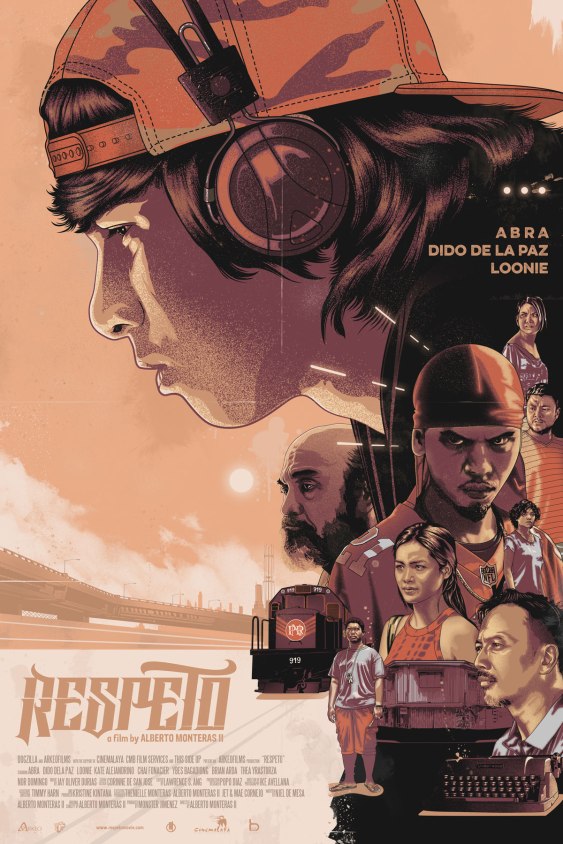
RespetoPoster.jpg

Penman for Monday, October 2, 2017


It would be easy and comforting to praise director Treb Monteras’ Respeto as a testament to the redemptive power of poetry, to art as a transcendent force in the universe—but it’s not that simple.

Yes, there’s quite a bit of that, and happily so for occasional poets like this viewer. We want to believe, in our heart of hearts, that poetry will save us, will elevate us from the sordidness of our surroundings and from our own sad and sorry failings. Two of my favorite quotations about poetry which I often bring up in class address that notion.

The first comes from that quintessential poet of the city, the Frenchman Charles Baudelaire: “When (like a poet) / the Sun descends into the city / It ennobles even / the vilest of its creatures.” So, poetry ennobles, raises up the poet from his or her pedestrian reality, no matter how vile that reality may be.

The second comes from Anne Sexton, who took her own life at age 45 after a long bout with depression, but who could still understand that “Suicide, after all, is the opposite of poetry.” Poetry was the life-force, the contributor to the poet’s heightened state of being, as Sexton would advert to in another line: “Saints have no moderation, nor do poets, just exuberance.”

These ideas were swilling in my head hours after my wife Beng and I stepped out of the cinema, still trying to figure out what I was supposed to think. We had missed Respeto during its Cinemalaya screening—they ran out of seats for us at its last showing—but had heard great things about it and weren’t about to miss it again during its regular run.

The movie itself isn’t hard to follow, even for a pair of senior citizens whose virgin ears opened up to Pinoy battle rap (always good to learn something new) for the first time. The Brockaesque descent into the urban jungle is such a familiar move for Filipino filmmakers (Hamog and Pauwi Na most recently come to mind) that it’s practically a given, but Respeto deepens the milieu by opening a door to the hip-hop subculture that many middle-class and middle-aged moviegoers have no inkling about whatsoever.

The fast and furious exchange of expletives aside, you could take Respeto as an Araby-type coming-of-age story where a young man falls for a woman, tries to gift her with something marvelous, and fails in the effort but learns something about himself in the process. Well, it’s a lot more complicated than that, because many other dualities and intersections abound in the story beyond just man and woman: that between youth and age (Hendrix, played by the ace rapper Abra, and Doc, played by Dido de la Paz), between apartment and slum, between bookshop and bar, between wisdom and wit, between Balagtas and Gloc-9, between Marcos and Duterte, and even between people who suffer and die for their beliefs and those who simply die out of poverty and crime. And perhaps, in the end, the movie asks, are they really so different? Is there some overarching reality that yokes them all together?

That reality seems to be that they’re all Filipinos living in the time of tokhang, a reality that pointedly intrudes into the narrative at key points and provides the inevitable climax. The environment seethes with menace and aggression—from the verbal violence (and blatant machismo) of the rap battles to the chilling corruption of the rogue cop Fuentes (played with understated competence by Nor Domingo). Without providing too much of a spoiler, I’ll just say that there’s no happy ending here, no triumphant reversals of fortune where the good guy bucks the odds, wins the prize, and gets the girl.

A perceptive review online by Tristan Zinampan puts it this way: “Respeto tells us that—given the cyclical oppression of Philippine society—going your own way, resignation, and apathy are not enough a vehicle to escape. Injustice is widespread; there’s simply no room to hide in this little archipelago. Just because you’re looking up, it doesn’t mean the chains on your feet aren’t there.”

Respeto’s Pinoy ‘hood is fertile ground for confrontation between good and evil in all their forms, with life and art insistently if desperately seeking to survive in the most hostile environments, even within the rap arena itself, where originality seems to be at a premium. The movie’s consistent use of a cemetery as a place for the creation of new art in words and images highlights this struggle.

Ultimately, however, at least for this viewer, Respeto affirms the inescapability of politics—especially the politics that kills—in our society, and its intrusion into our most private spaces, our most fervent dreams. There’s no doubt that the film draws much of its appeal from its running political commentary, but it’s less the topical references that create Respeto’s critical value for me than the power games that define it, some larger than others.

My takeaway isn’t a soothing one: poetry won’t save us, but guns—maybe even a rock—could, if that’s what it takes to overcome evil. And then again, the poetry—the truly great poetry, like all great art—will survive all of us: killers, victims, and bystanders alike. Catch Respeto the next chance you get, maybe on the campus film circuit, and tell me what you think.
 

Penman No. 270: Precedents for Presidents

IMG_3085.jpg

Penman for Monday, September 25, 2017


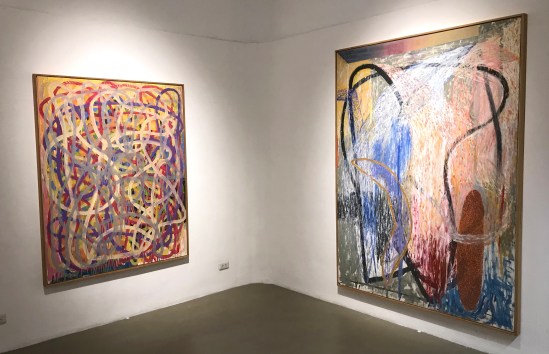
It’ll only be around for a few days more, but painter Rock Drilon’s latest exhibit at Galleria Duemila on Loring Street in Pasay City is worth looking into, if only to see how a master abstractionist is inspired by the idea and the experience of home. Titled “Homecoming: Works from Dumangas,” the show is the culmination of the past five years that he’s been staying at the Drilons’ ancestral home in Dumangas, Iloilo, after decades of living and working in the big city up north. He’d originally returned to his roots just to help out his aging mother, but the pull of the province proved too strong, and Rock found himself staying on for good.

This is the 61-year-old’s 50th-plus show, and if you’ve followed his career you’ll see familiar figures in his latest work—the loopy lines and amoeba-like shapes—suffused with color, predominantly pastel but pockmarked with black, like life itself. Of course, the wonder of—and, for many, the problem with—abstract expressionism is that a work can seem to mean anything and everything that the viewer brings to the picture.

Drilon cites Chabet, Dubuffet, and Basquiat among his major influences, aside from his mentor Joya, and it helps to appreciate their art as a whole to see a pattern among the patterns. One manifesto seeking to explain the school famously defined it as “violently opposed to common sense,” and you can see that in Drilon’s creations, whose subjects defy categorization but provoke intense examination. No soul-comforting churches, no sunsets, no ricefields here, only squiggles that could be both microbes and galaxies, as minute or as massive as our imaginations will make them. “Homecoming” is on until September 30.

RockD.jpg

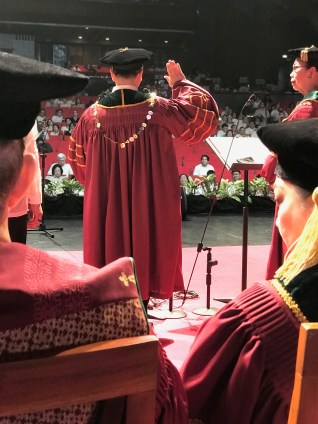
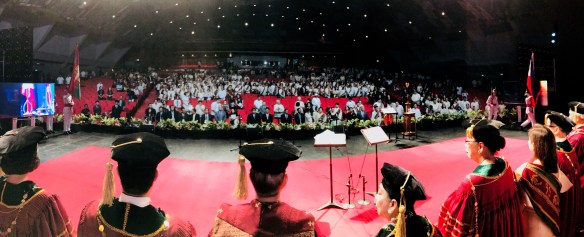
AN INVESTITURE, we’re told, is a “formal ceremony conferring the authority and symbols of high office, held during the new president’s first year in office,” and is a high point in the life of every university. Aside from the annual graduation, few opportunities exist for shows of pomp and circumstance—where the professors and administrators parade in full academic regalia—in universities like UP where egalitarianism is religion and simplicity of dress and manner are seen to complement sharpness of mind.

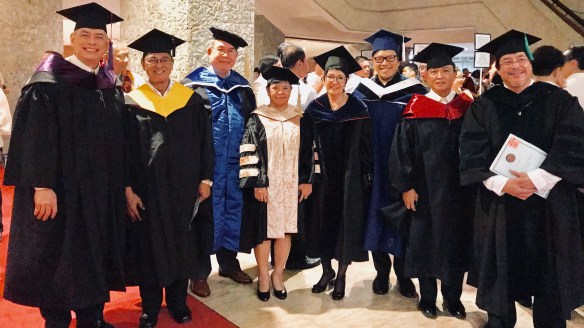
We had one at the University of the Philippines last Wednesday, in honor of our new president Atty. Danilo “Danicon” L. Concepcion, UP’s 21st, and it occurred to me that in all my 33 years in UP, I had somehow never been to one, although it’s taken place every six years in UP’s modern history. As one of his VPs, I had the honor of marching onstage, and so had a very special view of things.

The experience led me to dig into UP’s history of investitures, where I discovered more than few interesting factoids.

Our very first president, for example, wasn’t only a foreigner—an American—but also a clergyman, an Episcopalian pastor. His name was Dr. Murray Bartlett, and his investiture was held on December 20, 1911—three years after UP opened. About 2,000 students, teachers, and guests trooped to Padre Faura for the afternoon ceremony where—against the expectations of many—Bartlett argued in his speech for a “University for Filipinos” that would not merely copy US universities.

UP’s third president (after the Filipino jurist Ignacio Villamor) was again an American, and a Methodist minister—Guy Potter Benton—and his investiture in December 1921 was memorable not only for its lavish budget of P10,000 and a star-studded guest list that included Governor General Leonard Wood, Senate President Manuel Quezon, and Speaker Sergio Osmeña, but because of a feature that would never be seen again: the UP faculty wore all-white togas, which someone had thought more appropriate for the tropics. (It would be voted out the next year.)

Benton’s illustrious successor, Rafael Palma, had an investiture described as “austere,” but the word clearly did not apply to Don Rafael’s prolific pen, whose 8,000-word speech I clocked at about an hour and a half.

Flashing forward, Onofre D. Corpuz seemed to have spoken in the spirit of martial law when, in 1975, he scorned the notion of the university as a “battleground of ideas,” calling it “a romantic stereotype” which the people could ill afford to support with their taxes.

Edgardo J. Angara’s investiture in 1982 was besieged by a hostile crowd declaiming a litany of complaints—he had dared to start reforming UP’s ancient academic programs, and he would later reconfigure UP into constituent universities—but if anything, his raucous investiture would prove that you can get someone dead wrong, because Angara would go on to become one of UP’s best chief executives.

IMG_3077.jpg

These precedents were on my mind last week as I sat in my chair behind our new president, who made an impassioned appeal for the university’s constituents to find common ground, favoring “consensus over conflict, civility over calumny, and collaboration over confrontation.” UP, he said, should be “a clearing—a safe, free, and congenial space” within which its people could undertake “cutting-edge research, timely policy studies, exciting new exhibits and productions, and provocative art and literature.” (You can find the full text of his speech on www.up.edu.ph.)

We all cheered him on and wished him well—governing UP can sometimes be as difficult as governing the archipelago—and as we marched down the stage I felt more than a witness to history unfolding.

IMG_3088.jpg

Penman No. 269: What the iPhone Hath Wrought

iPhoneX.jpg

Penman for Monday, September 18, 2017


FROM MY lofty perorations on literature these past two weeks, allow me to slide back down to the more pedestrian and frankly more entertaining plateau of pop culture, to talk about that object of desire that’s changed the world in more than a few ways this past decade—the iPhone.

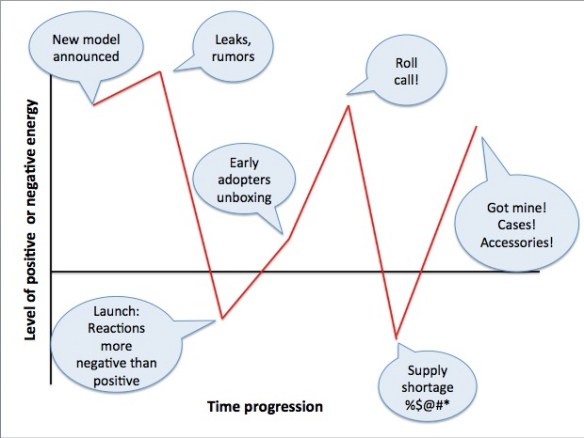
What triggered this piece was last Tuesday’s launch in the US of the iPhone 8, iPhone 8 Plus, and iPhone X (read: iPhone Ten), Apple’s much-hyped rollout of its 10th anniversary models with a promised slew of new features. I won’t bother you with all the details, which you can find on apple.com/iphone. I’ll just summarize some of the hottest come-ons of these new toys: Face ID, wireless charging, OLED screens, Portrait Lighting, Animojis, better cameras, and longer battery life.

Natch, all of that comes at a price—a pretty hefty one. For the most feature-laden, top-of-the-line iPhone X, you can hock the family jewels, as it will cost you a whopping $1,149 plus tax, or well over P60,000, which normally should get you a decent laptop. It’s more than Apple has ever asked for an iPhone, so the question even the most rabid Apple fan will be asking is, “Is it worth it?”

That’s an existential question that will also involve asking what you were created for, what the future will be, the difference between need and want (nada), and how life’s privations can justify apparent extravagance. The fact that I don’t have $1,000 sloshing around right now makes it easier for me to frame an answer, but an equally glaring fact is that I have owned every model of iPhone that ever came out, except for the 3G, so I wouldn’t be surprised if I ended up trading a few old pens for the X. (My justification has always been—aside from being a self-styled, occasional “technology journalist”—is that life is short and getting even shorter, and getting the newest things now is a way of cheating time. That’s why I was among the few Apple geeks who brought in the first iPhones back in 2007 and got them to work with local SIMs long before “jailbreaking” entered the tech vocabulary—but that’s another story.)

The real question to ask is, what has the iPhone (and, to be fair, the Treo, the BlackBerry, the Nokia, and all the Android clones) wrought upon our lives? For those of us past midlife, it doesn’t seem too long ago when a “cellphone” (how quaint the word seems now, when even “flip phone” seems ancient) was just a portable house phone you lugged around to make calls at the streetcorner and impress people, and the coolest add-ons to your cellphone were flashing diodes and “El Bimbo” or “Macarena” ringtones.

In an attempt to answer that question, and on the eve of the big iPhone X/8 rollout, the New York Times put out a video on its website talking about “Things Apple’s iPhone Helped Destroy,” to wit: alarm clocks, cabs, cameras, small talk, calendars, the compass, the address book, work/life balance, postcards, the watch, shame and humility, the carpenter’s level, maps, anonymity, and photo albums.

It’s all true, of course: your iPhone 7 and Samsung Galaxy S8 have assumed such inordinately huge roles in your daily life that you might as well be comatose without them. The first thing my wife Beng does when she wakes up isn’t even to kiss me but to check out Facebook (on her 6s Plus, a hand-me-down from my 7 Plus, which proves how families exist to provide a natural and environmentally friendly recycling system for used gadgets, and always a good reason for upgrading at the top of the chain). And where would we be without Waze? (Still stuck in traffic, but at least Waze gives us a scientific basis and a graphical interface for our panic.)

iPhoneRollout.jpg

Over at PhilMUG—the venerable Philippine Macintosh Users Group, where we light incense sticks and mumble mantras at Steve Jobs’ altar and tithe away our next year’s salary to Apple—the response to the entry of the iPhone 8, 8 Plus, and X into our humdrum existences was predictably mixed. You heard the usual grumble about pricing (“$999 for a phone? That’s insane!” followed by “But, uhm, we paid P45,000 back in 2007 for the first 16GB iPhone, remember?”), the geeky handwringing over tech specs (“Does facial recognition mean that my wife can open my phone while I’m sleeping by bringing it up to my face?” Answer: No, your eyes have to be open), and the feeble pledge of loyalty to the old model (“My iPhone 7 has served me faithfully this past year… so I’ll wait… until my Christmas bonus”).

To truly complete the New York Times’ list of things the iPhone helped destroy, let’s add “sense of satisfaction”—the idea that we could happily live with something for at least five years, like the way I’ve blissfully cohabited with many of my fountain pens for three decades now, not mention my wife of 43 summers, even if she prefers Facebook to my drool-stained cheek.

(Images courtesy of Apple and SE20@Philmug)


Penman No. 268: What This Prize Should Mean to You (2)

IMG_2927.jpg

Penman for Monday, September 11, 2017


ONE OF the strangest moments of my life happened in 1993, when my first novel, “Killing Time in a Warm Place,” shared the grand prize with the late, great Tony Enriquez’s “Subanons.” The guest of honor then was none other than President Fidel V. Ramos, among whose speechwriters was none other than me.

There were four or five of us doing his speeches then, and the assignments were farmed out at random, and I can’t remember now if I accepted that Palanca Awards night job with delight or dismay. I suppose I could have swapped assignments with somebody else, but I had to think deeply about the situation. I was one of the awardees, so the young novelist in me wanted to sit back and hear my President’s sincerest thoughts about literature.

But the speechwriter in me also knew that those sincerest thoughts were just going to be written by somebody else in the room, so I figured, it might as well be me, to make sure that he would say nothing terribly wrong, and that he would say something very nice. And of course he did.

Incredibly enough, the same situation happened a year later, when I received a TOYM Award for Literature at Malacañang Palace, again from FVR. In both instances—because we ghostwriters preferred to remain spectral and worked far out of his sight—he had no idea that the hand he was shaking had also crafted his speech. In fact, it wasn’t until a few months ago, when I interviewed him for another book, that I finally introduced myself as the writer of 500 of his speeches, which remain on my hard drive. We had a good laugh.

I’ve written speeches for five Presidents and innumerable senators and CEOs, as well as the biographies of such diverse figures as Communist guerrillas, capitalist icons, and Marcos cronies. At any given time, I’m working on three or four book projects. I teach, write a weekly column, and peck away at stories, essays, poems, my third novel, and my unfinished oral history of the First Quarter Storm. And, oh, I also get to dress up and play the part of an academic bureaucrat.

I say this neither as a boast nor a lament, but simply to show that it’s all in a writing life. I’m happy and fortunate to have all of these writing jobs—although I must confess to being happier with some than others—because, despite all the challenges and compromises I have to face, this was what I signed up for.

Many other writers in this room have done the same thing, in varying degrees, both out of necessity and desire. Quite a few have approached me and said, “I want to do what you do,” but I wonder if they realize what they are asking for. I remember, early on, typing away at a commercial film script I had to complete, with tears streaming down my face, because what I really wanted to do was to join the Palancas, and I was out of time. That’s my greatest anxiety—to run out of time.

There will always be those who will scoff at what I do and who will insist that every word you write should be God’s own truth, as if that were humanly possible. God might as well smite all lawyers, copywriters, and PR professionals—and let’s throw in all politicians—with his righteous hand.

In a course I designed called Professional Writing, which I’ve been teaching for the past 20 years in UP, I begin every semester with this admonition: “There’s writing that you do for yourself, and writing that you do for others. And don’t ever get those two mixed up, or you’ll come to grief.” I also remind them that they can always say no, as I’ve done many times without regret.

If you embrace writing as a lifelong and life-sustaining profession rather than a weekend hobby, then you will not be writing every piece as if it were destined for the Palancas, although, as a professional, I do every job I accept as if it were my first, last, and only job, no matter how big or small.

But that again is exactly why we should value the Palancas. Too often, we lend our words to others. With these prizewinning pieces, we reclaim our words to ourselves, for ourselves, for whatever it was that first impelled us to write.

You remind me of that 21-year-old who, even as he had to write speeches, scripts, and stories for others, burned with the desire to write for himself and for his people at large—as this 63-year-old still does, awaiting blessed retirement 16 months hence so I can write the best of what remains in me to write.

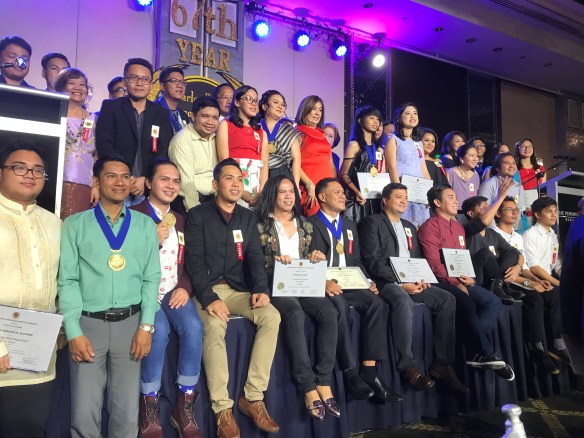
Writing for the truth, writing for honor and glory, writing for the love of language—these are what your being here is all about, what the Palancas have existed for these past 67 years. While the generous cash awards are nothing to sneeze at—as the Foundation’s accountants will certainly attest to—the Palancas have always been about more than money. Your certificate tells you, this is how good you are; you look around you and you realize, that is how much better you can be.

This is our real reward, our hope, and our redemption. Whatever else you may have had to write or had to do, what you submit to these awards is your finest self, your truest words, your ineradicable proof of citizenship in the community of letters.

Let me quote President Ramos—well, in fact, let me quote myself: “It is both literature’s virtue and responsibility to reaffirm our fundamental humanity, and the unity of our interests and aspirations as a people. Every act of writing rehumanizes us, both writer and reader.” This is especially important in these darkening times, when megalomaniacal and murderous despotism threatens societies across the ocean, debases the truth, and cheapens human life. The best antidote to fake news is true fiction.

You and I have much to write about. You will not even need to wait until the next Palanca deadline to do what only you can do, and to say what only you can say. If you write for truth, freedom, and justice, and for the beauty and value of life itself, you will always be a first-prize winner in my book.

Penman No. 267: What This Prize Should Mean to You (Part 1)


IMG_2935.jpg

Penman for Monday, September 4, 2017


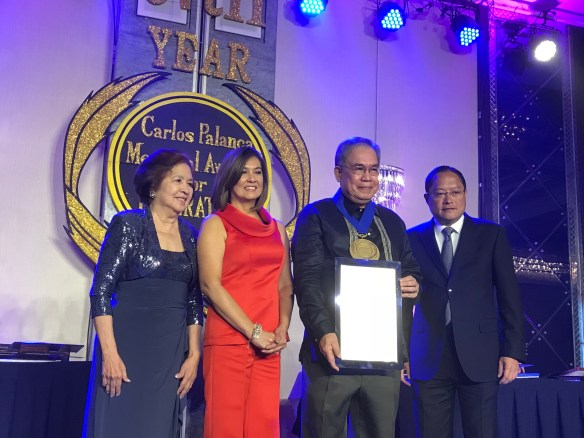
I WAS much honored to be the guest speaker last Friday at the 67th annual Carlos Palanca Memorial Awards for Literature, so I’ll share my talk with my Penman readers this week and next:

First of all, I’d like to thank the Palanca Foundation and family for this tremendous honor, which I honestly never expected to receive. For about forty years, I have been watching and listening to many very distinguished people at this podium explicating on literature and society—and you will forgive my bias if I say that the writers were usually more memorable than the politicians—but I never imagined myself to be in their exalted position.

Indeed I have been fortunate enough to join the Palanca Hall of Fame, but I am no literary genius or philosophizer. I have always introduced myself as a Swiss Army Knife of writing, a practitioner and professional who has made a living of his words. I was already working as a newspaper reporter at 18, before I won my first Palanca; I was a journalist beholden to the facts before I was liberated by fiction.

Tonight I will address myself mainly to the first-time winners in this audience, to those who entered the Rigodon Ballroom with an extra spring in their step and a sparkle in their eyes, with their parents or partners in tow.

I can tell you now that you will never forget this evening, as I have never forgotten my own introduction to this very special society of peers and comrades. It was on this day in 1975 that I won my first Palanca, a share of second prize for a short story in English. The awarding was held on the top floor of the company building in what used to be Echague—now, of course, Carlos Palanca Street—in Manila.

It was a little less opulent than this ballroom, but to that 21-year-old winning a prize the first time he joined, it might as well have been heaven, nirvana, and Camelot all rolled into one. I knew no one, and no one knew me, and I could only watch from afar as celebrated writers like Krip Yuson—who shared first prize in my category with Leo Deriada—regaled each other, likely with stories of their latest exploits in Ermita.

I still have my certificate from that ceremony: an elaborately hand-lettered work of art larger than a college diploma. Since I had dropped out in my freshman year and was working in a government office under martial law, I treasured that certificate as if it were my diploma, and had it framed. I’m told that the calligrapher who crafted those certificates has passed away, but his strokes remain indelible in my memory.

With my prize money of a couple of thousand pesos, plus some savings, I bought my first car—which tells you what kind of car it was: a canary-yellow 1963 Datsun Bluebird, battered but bright, into rehabilitating which I would throw many more years of good money after bad and not get even one day’s worth of driving, before my mechanic finally ran away with it. Years later I would get a call from the Quezon City police to inform me that they had impounded a yellow Bluebird registered in my name, and I could have it back if I paid the fee. I went over to take a look—the car’s tires were all flat, and it was riddled with bullet holes. I muttered an oath and a prayer and left it there.

So that’s what happened with my first Palanca prize, and one of these days if I turn that into a short story I might get some of my money back. But the most grievous consequence of that first victory was the fact that, for the next four years, I lost. I turned in entry after entry, and kept losing and losing. Considering who was winning—the likes of Gregorio Brillantes and F. Sionil Jose—I shouldn’t have been surprised, but I had to fight back the growing fear that my first Palanca was a joke.

In 1980 I won again, and soon hit my stride. It took 20 more years to enter the Hall of Fame, by which time I had published ten books, gone back to college, and begun another career as a teacher. I never joined the Palancas again, except to be an occasional judge, but I have come to these awarding ceremonies as often as I could, eager to witness the annual emergence of new literary talent.

I give you this overview of my long relationship with these awards to bring us to the subject proper of my brief talk this evening, “What This Prize Should Mean to You.” The quick and correct response, of course, is to say that a Palanca award will bring you honor, some fame—certainly bragging rights for your proud mama and papa—and even some money, if not for a car then for a weekend in Boracay or a new phone or laptop to replace the old one.

You will be walking on air for a couple of weeks, until the novelty wears off, the money is spent, and you return to the humdrum of teaching, call-centering, Uber-driving, or whatever it is keeps you and your family alive. You will discover that, to most people, your literary genius makes no difference and no sense. You will begin to wonder, as I did, if it was all a fleeting illusion.

Some of you will fall by the wayside, but most of you will press on, like we did, wanting this Cinderella moment to repeat itself year after year. It will not always happen, and you will learn to take your losses as well as your triumphs—those years I kept joining and losing became my real education—but if you keep at it, you will reach the point when the winning will matter less than the writing. That, I think, will be your greatest victory, the realization that these awards are but an enabler, a handmaiden of books that will be validated no longer by a panel of three judges but by a readership of thousands.

(To be continued)


Penman No. 266: The Pinoy Film Family

patay-na-si-hesus-movie-poster.jpg

Penman for Monday, August 28, 2017


LIKE MANY Filipinos, I really should see more locally made movies than the Hollywood and Netflix confections that have become our staple entertainment. That statement’s even more ironic in my case, having scripted about two dozen movies, mostly for the late Lino Brocka, between 1978 and 2003.

I missed out totally on this year’s Cinemalaya offerings because of a toxic schedule at work—I tried to catch Respeto on its last day only to find all the tickets sold out—so I made sure to make time for the Pista ng Pelikulang Pilipino the following week. I suppose I more than made up by managing to see four of the PPP entries over as many days: Patay Na si Hesus, Pauwi Na, Birdshot, and Hamog, in that order.

I might have chosen these movies because I’d heard good things about them, but I also wanted to see how they represented the Filipino family—for me an eternally fascinating subject, even from the days when Lino and I explored its complexity in such films as Tahan Na, Empoy and Inay. Filipino society (and politics, for that matter) is nothing if not about family, which seems inextricably connected to our struggles for survival—we survive for family, and also because of it.

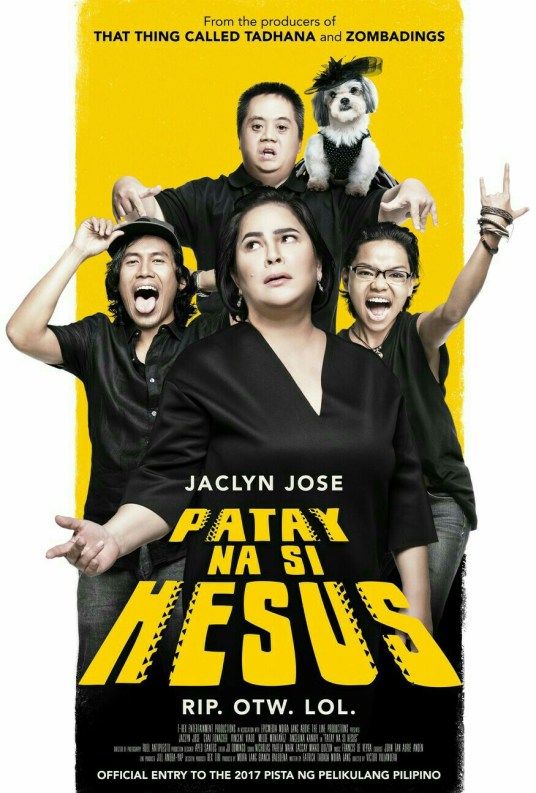
Directed by Victor Villanueva, Patay Na si Hesus has a long-estranged wife and now a widow, Iyay (Jaclyn Jose), drive her ragtag family in a minicab from Cebu to Dumaguete to attend the wake of her husband Hesus. Along the way and at the wake itself all manner of misadventure happens: a nun liberates herself, a lesbian relationship crumbles, a boy with Down Syndrome seems to get lost but actually finds his way, a coffin collapses, and a dog dies (curiously—and sorry for the spoiler—the three dogs in three of these movies all die). The dog’s demise has all the characters wailing and shedding the tears they couldn’t muster for the absent dad.

Pauwi Na is another family-on-the-road movie, with Mang Pepe (Bembol Roco) and his wife Remy (Cherry Pie Picache)—crushed by eking out an existence in the slums—transporting their brood back to the Pinoy fantasy of a paradaisical province, not by train or bus but by pedicab. Director Paolo Villaluna’s project is a long and laborious journey that ends in tragic loss, but the family’s dogged faith in a better life elsewhere infuses the film with both power and poignance. Mang Pepe is every Filipino tatay who’s gone the extra mile—many miles—to put food on the table and bring a smile to his family’s faces. (I’ll admit to having teared up remembering my own father, a highly intelligent man who wanted to become a lawyer but never quite got the right breaks, and who at one point had to work as a jeepney barker just to tide us over.)

Directed by Mikhail Red, Birdshot juxtaposes the coming-of-age of young Maya (Mary Joy Apostol) with the brutishness and brutality of political power in the rural hinterlands. The endangered eagle that she shoots dead is precious, but it’s hardly the most grievous loss the place suffers, although there’s little official interest in investigating the bigger crimes.

Hamog is set in another jungle—the bowels beneath and around Guadalupe Bridge, in the city’s slums and tenements where street urchins become almost feral in their predation. The movie is actually a diptych, an exploration of two lives—Rashid’s and Jinky’s—and it opens doors to what to most Filipino viewers would be unusual relationships (a Muslim man with several wives, a woman with a husband and a lover under one roof). While doubtlessly powerful, the narrative needed, I felt, a bit of rounding out, even assuming that its director Ralston Jover precisely wanted to make a point of leaving ends loose, as life often happens.

I’ve already mentioned the 100% mortality rate for canines in these scripts; another interesting parallel was the appearance of phantoms—Jesus Christ, a shadowy forest figure, Supergirl—in three of the films, which seemed more organic and necessary in Pauwi Na but too deliberately cinematic a touch in Birdshot and Hamog.

Their minor flaws aside, all four movies were well worth my time and money, and I was glad to see full houses for a couple of them, and appreciative audiences who clapped as the credits rolled. For someone who’s been out of the film industry for a while, it was heartening to witness such a wealth of new young talent—both on the directorial and acting sides (Chai Fonacier, who appears in the two road movies, has a great future ahead of her)—emerging to take over from the likes of Brocka, Bernal, de Leon, and the other masters of that generation. If I were to hand out my own awards just among these four, I’d give the top prize to Patay Na si Hesus, for its refreshing quirkiness and dark comedy.

What struck and impressed me from a writer’s perspective was the non-linearity of the plots and the moral ambiguity of the characters and situations—a far cry from, say, Brocka, in whose movies it was always clear who the villain was, and why.

Most important, of course, was to see how the Pinoy nuclear family had morphed in response to changing times—to nontraditional sexuality, to absentee parents, to the pressure to survive—and yet also to see the love and affection in it undiminished and even intensified by need. Bravo!


Penman No. 265: Photography as Propaganda

Empire.jpg

Penman for Monday, August 21, 2017


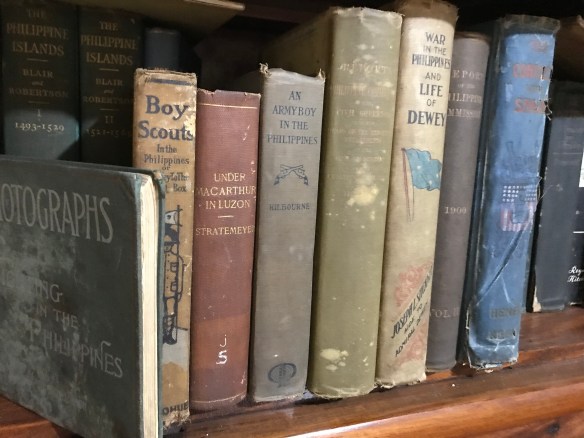
I HAVE a cabinet in my home office where I keep shelves of my most valued books—first editions, signed copies, antiquarian volumes, and such. One shelf is occupied by a special mini-collection of books from the turn of the 20th century, from the late 1800s to the early 1900s, most of them having to do with what we’ve come to call the Philippine-American War. Bearing titles like War in the Philippines and Life of Dewey, Under MacArthur in Luzon, and An Army Boy in the Philippines, the books purport to chronicle—“celebrate” might be the better term—the occupation of the Philippines by the United States from 1898 onward.

I picked up many of these books more than 20 years ago when I was a graduate student in the American Midwest and on the prowl for Philippine-related material in used bookstores and flea markets. When eBay came along, I found many more, and was pleased to secure a few, often for less than $20 plus shipping.

While old, these books weren’t necessarily rare, because they must have been printed in the high tens or hundreds of thousands as a form of patriotic propaganda that straddled journalism and popular entertainment. Often written in a triumphal tone and exulting in the victory of America—then a rising naval and imperial power—over decrepit Spain, they blended into travelogues exploring the US’ new possessions—Cuba, Puerto Rico, Hawaii, and the Philippines—turning a military project into a story of adventure in exotic lands.

Shelf.jpg

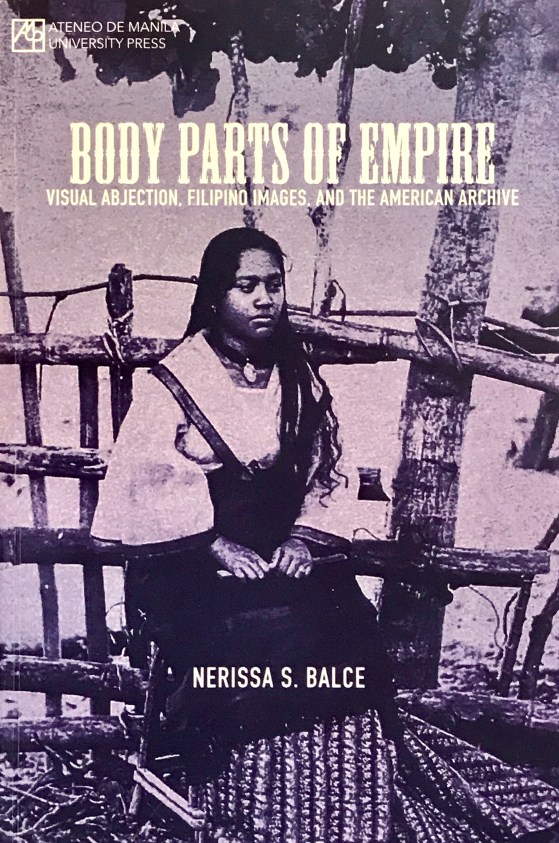
These stories—and their accompanying illustrations—were very much on my mind last week when Beng and I attended a fascinating lecture at Ateneo de Manila University by an expert who had made that dark period (which few Americans and, sadly, just as few Filipinos seem to remember) part of her academic specialty. Dr. Nerissa Balce was in Manila to read from and talk about her book Body Parts of Empire: Visual Abjection, Filipino Images, and the American Archive (AdMU Press, 2017; U of Michigan Press, 2016), and we thought it was a good opportunity to catch up with and learn from an old friend (she married my Trivial Pursuit antagonist, the poet Fidelito Cortes).

After working as a journalist in Manila, Nerissa went to the University of California-Berkeley for a PhD in Ethnic Studies, took a postdoc at the University of Oregon, and taught at the University of Massachusetts-Amherst before joining the State University of New York-Stony Brook’s Department of Asian and Asian American Studies.

Through photographs and a refreshingly lucid lecture shorn of much of the academic jargon that often renders these presentations impenetrable to many listeners—even fellow professors like me—Nerissa showed how American photographers who were (to use a later term) embedded with the US military forces used their work to celebrate but then also obliquely if unintentionally criticize the violence of a colonial war. Photographs, she would argue in her book, have a life of their own, once taken and published; they may have been originally meant to depict the power of one side over another, and the abject position of the presumptive loser in the conflict, but seen or used a different way, they can convey other messages, like the subject’s insistent humanity or resistance.

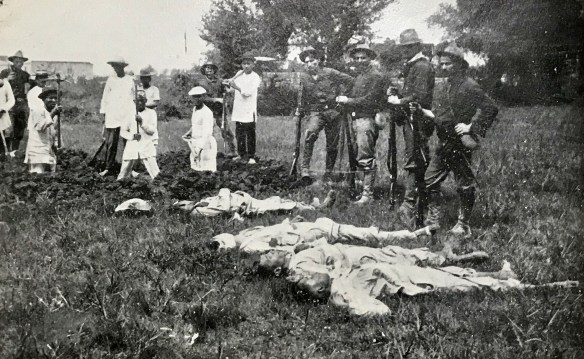
I’d seen many such images in my books from that war; one of them—F. Tennyson Neely’s Fighting in the Philippines—typically portrays American soldiers towering angularly over the slack corpses of Filipino “insurgents” (as our fighters would be referred to for the longest time) as Filipino gravediggers prepare to bury their compatriots. This was what Washington wanted the American public to see: visual proof of American power and dominance. It must have been effective propaganda, especially when accompanied by narratives explaining America’s “civilizing” mission.

Soldiers.jpg

But, as Nerissa and other scholars point out, the very same photographs proved useful to those opposed to America’s imperial expansion. The Anti-Imperialist League published a collection of antiwar poems using a picture of a corpse-filled trench as its frontispiece. “The different political uses for the same photograph suggest the paradoxical power of the photographic image, and how photographs can celebrate as well as expose the violence of colonialism and war.” She goes beyond the battlefield to discuss how the empire shaped our image, and how that image, in a way, shaped the empire. Pictures of native women doing embroidery suggested a colony stabilizing into happy domesticity under a benign regime.

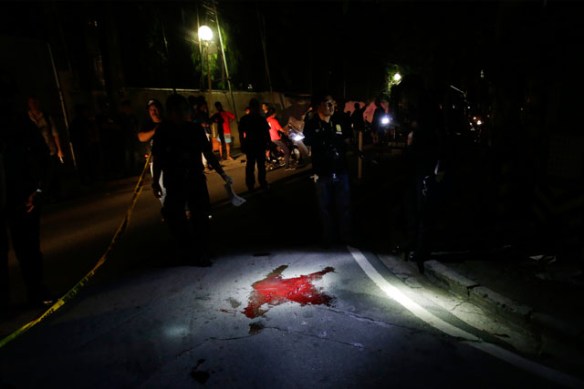
I’m not a historian, but if you want a reasonably reliable account of that period, read Brian McAllister Linn’s The Philippine War 1899-1902 (The University Press of Kansas, 2000); to see how that war was waged on the cultural front, Balce’s book makes a great companion piece. In this present time when, more than ever, pictures speak louder than words, and dead men’s bodies have begun to pile up again, we’d have to wonder what new empire is growing out of the shadows.

ph-china-drugwar.jpg

[Photo from philstar.com]


Penman No. 264: The First Filipino Pen

IMG_2315.jpg

Penman for Monday, August 15, 2017


IT’S BEEN a while since I’ve written about the objects that gave this column its title—my fountain pens—so I’ll indulge myself after many weeks of hardcore arts-and-culture pieces to talk about my favorite pastime. Pens, after all, are both technological and cultural tools without which civilization and knowledge could not have advanced over the past millennium. Just imagine Shakespeare or Einstein without pen and ink, and you’ll see what I mean.

With that excuse out of the way, let me report that for the past year or so, I’ve considered myself semi-retired as far as pen collecting is concerned. Where I used to pick up two to three pens a month, I haven’t (until very recently) bought a pen in half a year; more than that, I’ve sold off much of my collection, bringing down what once would have been around 300 vintage and modern pens to less than half that. I plan to reduce that further to a core of about 50 that I can pass on to my sole heiress, Demi, who will inherit no tracts of land or shares of stock or certificates of deposit, only colorful tubes of plastic and metal with pointed ends and messy blobs.

My most recent acquisitions could hardly even be called spectacular, save one. Off eBay, I picked up two pen-and-pencil sets of Parker Vacumatics from the early 1940s, because they came in the less-common azure pearl color and at a price hard to resist. Last month in California, poking around our usual haunts in the antique malls and flea markets around San Diego, I landed a Montblanc 22 and a Parker 21 from the 1960s, an Esterbrook from around 1940, and a Sheaffer Targa rollerball from the mid-1970s (yes, I keep a few rollerballs around, for filling in those immigration and customs forms on which fountain-pen ink tends to run because of bad paper).

Many people, even those more used to cheap (but perfectly good) ballpoints, have some idea what “Montblanc” is, so let me just demonstrate why it’s important to know what you’re looking for. I saw that near-mint MB displayed in a cabinet in a shop in San Diego, with a tag that said, “Not sure if it works,” which probably explained the very reasonable price of $48. That’s about a third of what this pen—in very good shape and working condition—would go for online. (The 22 is a lower-end but still attractive model and not the fat, cigar-shaped 149 that most people rightfully associate with Montblanc, which sells in the boutiques for about $700 but which you can get, slightly used, for half that price on eBay, if you’re a risk-taker and bottom-feeder like me.)

35303577574_c37ca72f3c_c

The seller probably couldn’t make it work because he or she didn’t know how: the 22 is a piston-operated pen, requiring the turning of a knob at its end, and you can see the piston rise and fall in a see-through window on the barrel. That’s how I tested the pen and why I bought it without hesitation (intending to resell it later, but when Beng remarked how nice it was, she instantly became its new owner). In other words—and every collector, every picker of every little thingy from vintage Hamiltons to bird stamps knows this—knowledge pays.

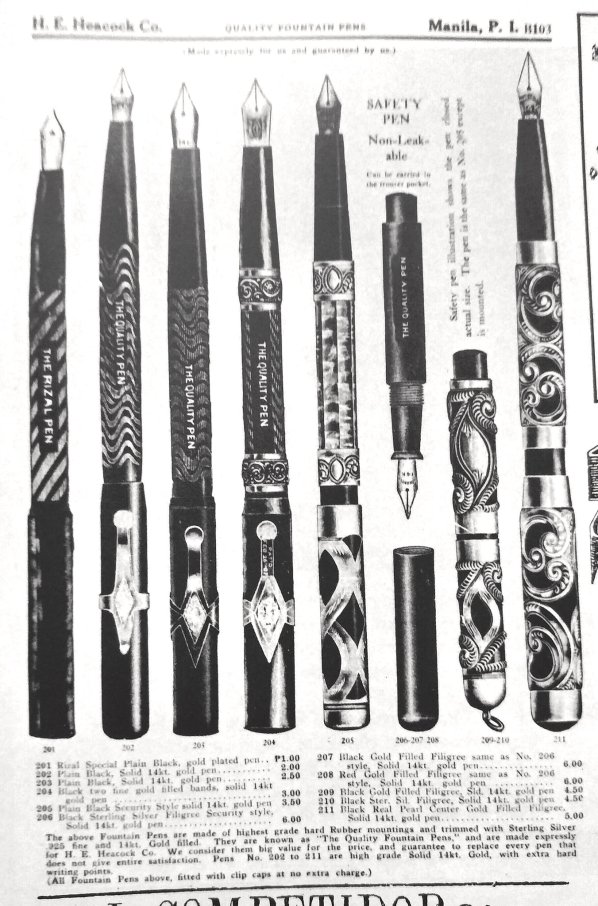
So the MB was a great score, but the piece de resistance of this andropausal batch was truly one of a kind. Filipinos have been among the world’s most avid and most knowledgeable pen users and collectors (we have hundreds of members at fpnp.org), but until recently, no one has ever made one. (We found an advertisement for a “Rizal” pen from the 1920s, but it was likely a British or American pen rebranded for the local market—and yes, I’d happily pay for a specimen!)

RizalPen.jpg

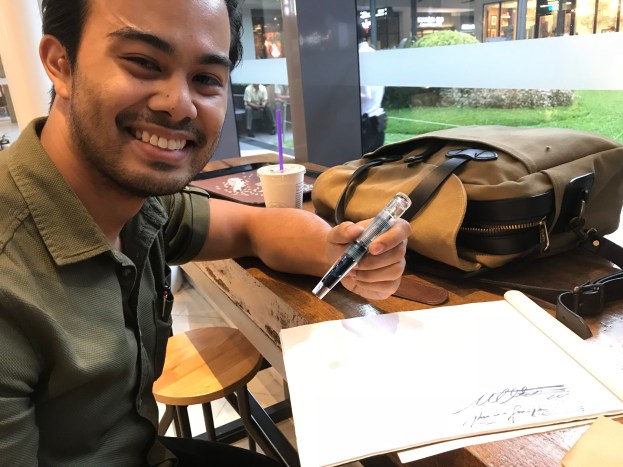
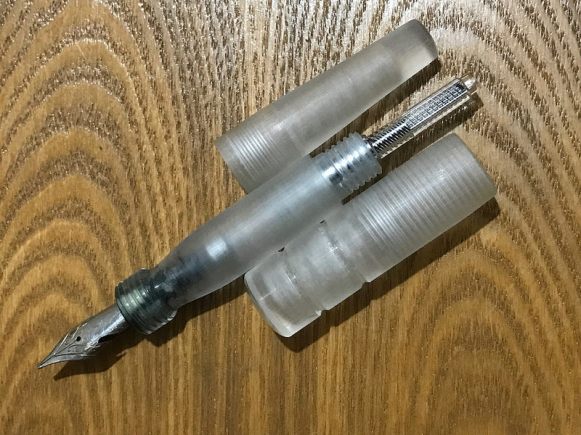
That changed when I got a call from one of our members, a bright young man and newly minted MD by the name of Mark del Rosario, who enjoys tinkering with pens, blades, and lathes in his home workshop when he’s not preparing for his internship as a neurologist. Mark had been fascinated by nibs (the pen’s writing point) and had been modifying them to produce different lines, but when he presented me with a box at our meeting and when I opened it, I saw that he had gone much farther than just toying with steel tips—because there was the first fully functional fountain pen ever made by a Filipino, a prototype handcrafted by Mark in frosted acrylic and sporting a lovely smooth German-made Jowo (“yo-vo”) nib. And he was giving it to me for my collection, to honor me as a prime purveyor of our common addiction.

I couldn’t congratulate and thank Mark enough, so I’ll say it here: finding a 1960s Montblanc in California for less than $50 was good, but being gifted with the first Filipino pen by its maker is incalculably better. The only bad thing about it is that now I’m looking at pens again….

36426934531_dd2e66e302_c

Penman No. 263: Geekdom Galore at Comic-Con 2017 (2)

IMG_2677.jpeg

Penman for Monday, August 7, 2017


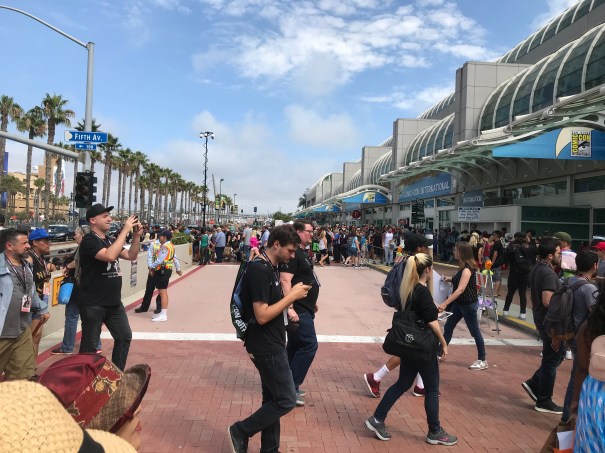
LET’S START with some stats: last month, Beng and I were two of the 35 million visitors who would have trooped to San Diego, California by the end of the year. We go there regularly for our daughter Demi, but most others would probably mention the beaches, the ships, the Mexican food, the whale-watching—and, for 130,000 people in late July, that long weekend of masked madness called Comic-Con International. Those fun-seeking fans will book all of San Diego’s 40,000 hotel rooms—many a year in advance, at room rates easily triple the normal—and on the average spend over $600 per person, injecting some $80 million in direct spending and another $70 million in multiplier effects.

Geekdom, in other words, is serious business, and there’s no stronger pitch that the spinners and purveyors of fantasy can make to their market than Comic-Con, which began in San Diego itself in the dim and dingy basement of the rundown US Grant Hotel one day in March 1970. Since then, the US Grant—where Demi works—has been refurbished into the city’s swanky grande dame, and Comic-Con, like the superheroes it glorifies, has morphed from a pimply kid to a sleek and powerful machine.

I’m sure the fans aren’t thinking much about the history when they stream through the doors of the SDCC on opening day and emerge with bags and boxes of new Funko Pop Justice League figurines, Deadpool Wooden Push Puppets, and one of this year’s exclusives, a Twin Peaks Agent Cooper Bobble Head, all yours for $14.99. The comic-book collectors could dwell on decades past, but most of Comic-Con is decidedly future-oriented, always looking around the corner for the next TV season’s plot spoilers and the next sequel’s new villain.

IMG_2653.jpg

There’s even been an urban-dictionary term coined for the phenomenon: “FOMO,” or “fear of missing out,” the hidden impulse behind the surge of the pop-culture hysteria best exemplified by Comic-Con. It’s all fun, of course, on the level of cosplay and souvenir shopping. For others, it’s also a profession and the work of a lifetime.

There were two such professionals and icons I sought out in this year’s Comic-Con: the Filipino-American artists Whilce Portacio and Alex Niño. I’d already met and interviewed Whilce in last year’s event, and subsequently at the Asia Pop Comic-Con in Manila, but it was good seeing him again in top form, signing autographs and artworks for fans in his booth in the Artists’ Alley.

Whilce actually wasn’t there yet when we arrived, as he was being interviewed by Syfy about his work, so Beng and I wandered off to observe a long queue forming for the autograph of another artist whom we frankly had never heard of before—the very young Patrick Ballesteros, another Fil-Am and San Diego native.

“We’re everywhere!” Whilce would remind me later. “Marvel, DC, Pixar, you name it, we’re there.” Whilce himself would co-found Image Comics and create Bishop for the X-Men, and he has been going back and forth to the Philippines to mentor young graphic talents such as Leinil Yu and to set up a studio that can meet the growing global demand for illustrators and animators.

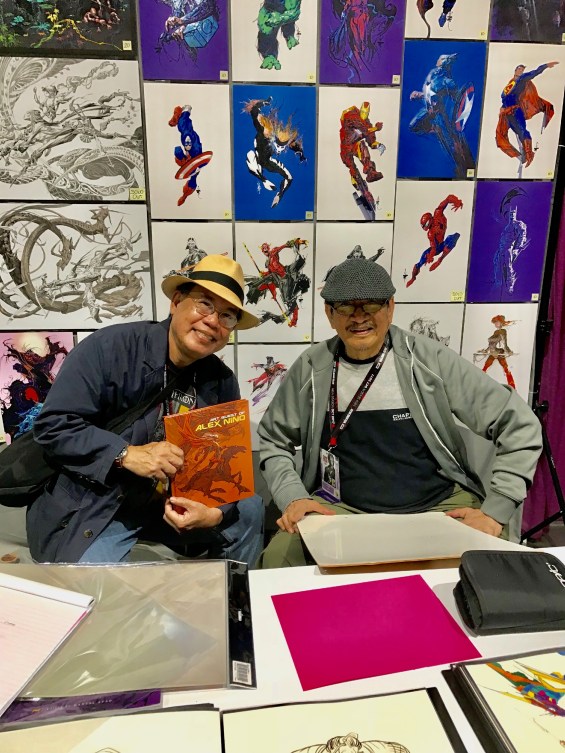
I missed Alex Niño last year—at 77, he now attends only the last couple of days of Comic-Con, leaving it to his son Jules to mind the booth—but I caught him this time at Comic-Con’s closing hour for a quick chat about his struggle to rise to the top of his profession in the US. Tony de Zuñiga blazed the trail for all of them, but Alex, Nestor Redondo, Larry Alcala, and later Whilce and his peers followed shortly after in the 1980s and 1990s.

Alex recalled a crucial moment at the beginning when, still in the Philippines, he was approached by DC to draw a comic, he came up with a carefully drawn work, only for DC to balk at his price. “I tore the pages up,” Alex said. “I preferred to do that than get short-changed.” Unknown to him, his wife Norma had painstakingly pieced and pasted the drawings together overnight, and had sent it to DC—which, understanding what had happened, paid Alex’s price. This sense of self-worth would serve Alex and his compatriots well.

He moved to the US in 1974, and I’ll leave you to check out Wikipedia for his voluminous credits since then. Time may have slowed him down a bit, but it hasn’t stopped him from working, albeit more traditionally than others. He has just finished illustrating a book on wines for Jay Ignacio. “I don’t mind technology, but I never got used to a tablet. With digital art, you can’t tell what or where the original artwork is. I still use a pen and ink, and markers. I had to evolve my own style to be different from the others. None of my five children have taken after me, but my grandson in the Philippines works in animation. I can’t retire, because I’ve yet to be satisfied by what I’ve done. I feel that my best work, my masterpiece, is still out there.”

Way to go, Alex—spoken like a true Pinoy superhero! Until next year—if we get those badges.

IMG_2662.jpg


Penman No. 262: Geekdom Galore at Comic-Con 2017 (1)

IMG_2544.jpg

Penman for Monday, July 31, 2017


I MUST’VE been a really good kid to deserve this fortune, because much to my surprise—and possibly the chagrin of my 20-something students for whom this would be the closest they could get to heaven without dying—I got to attend Comic-Con International in San Diego with my sidekicks Beng and Demi (and Demi’s husband Jerry) for the second year in a row. I’d given up on returning to the show after failing to score tickets (“badges,” in CC parlance) twice online, but again our San Diego-based daughter pulled off a miracle at the last minute and got badges for us for the opening and closing days of the four-day convention, smack in the middle of what’s become our annual US vacation.

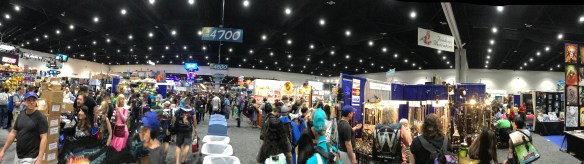
As all of my undergrads and junior colleagues know, San Diego’s Comic-Con is the world’s largest and most-awaited extravaganza of popular culture, running now for 47 years and attracting 150,000 attendees from all over the world. This is geekdom galore—a global gathering of fans of comic books, superheroes, fantasy, toys, animation, TV, and basically anything that levitates, teleports, or transmutates.

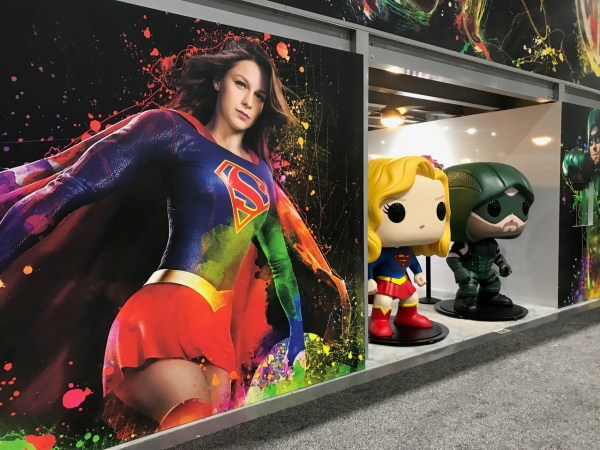
If you’re my age (63) and can’t relate to anything I’ve said, I can’t blame you. The average age of the Comic-Con attendee is 25; until recently, about 60 percent were male, but that’s been changing with the emergence of strong female superheroes such as Wonder Woman and Supergirl and intriguing characters like Stranger Things Eleven.

IMG_2684.jpg

But while seniors (yes, we got a discount on the tickets) may seem out of place at Comic-Con, the fact is, we were the original comic-book fans who grew up not just on DC and Marvel at a time when Adam West still played Batman on TV and George Reeves, not Christopher Reeve, played Superman; we were also followers of Lastikman, Palos, Gagamba, Darna, and other Pinoy heroes in the local komiks. For older folks like me, Comic-Con is rejuvenation, if not resurrection.

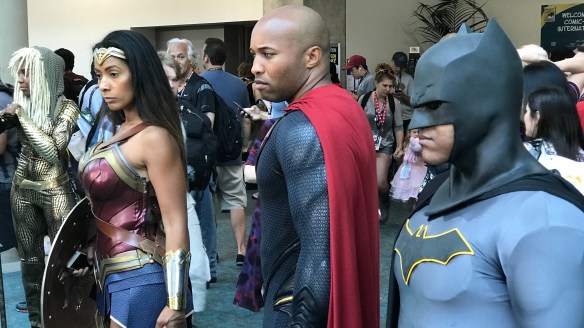
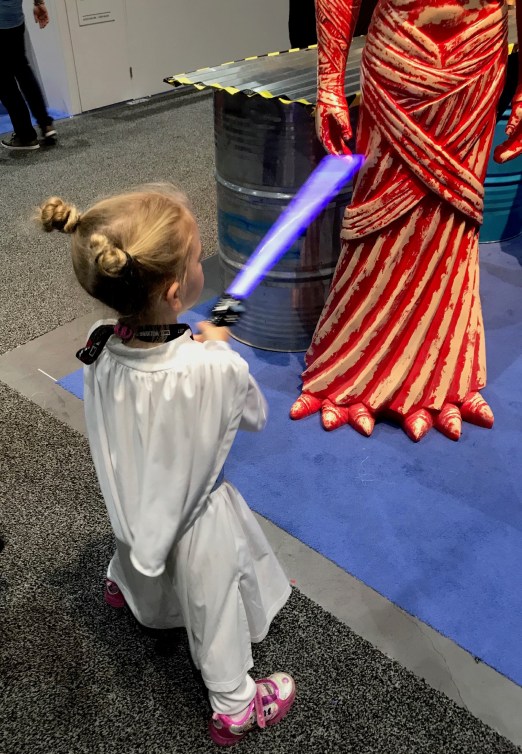
Here, everyone who was ever made to feel weird or was left out because of, say, a desire to wear blue hair, green skin, or an extra eye will feel at home, because Comic-Con is just like that Star Wars bar scene, with patrons from a dozen galaxies, multiplied a hundred times over. Fans come to the show dressed as their favorite superhero or cartoon character, and you don’t even need the body (or, for that matter, the gender) of Gal Gadot to be Wonder Woman. I’d give this year’s Most Astounding Cosplayer Award to the Princess Leia who had all the right buns—and a beard. Before I could snap a picture, she/he was off to Alderaan (aka home).

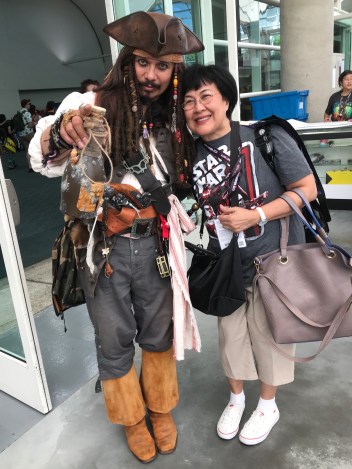
Also ubiquitous this year were various iterations of Harley Quinn (the girl from Suicide Squad), Spider-Man, and Deadpool, and even a knotty Groot or two. Beng was swept off her feet by a Jack Sparrow lookalike who had the accent and the bow down pat. I swallowed my shyness and agreed to Beng’s prodding to have my picture taken with Wonder Woman (one of them, anyway). We were unabashed fans for the weekend, and enjoying ourselves, although we had to squat on the floor and eat our lunch sandwiches, like hundreds of others, for lack of seats at the San Diego Convention Center.

IMG_2528.jpg

That’s because almost all the seats were in the meetings rooms and halls upstairs. The SDCC is a lot like the Mall of Asia’s SMX, only larger, with a huge exhibition hall downstairs and meeting spaces of various sizes for the convention itself upstairs. While the ground floor had hundreds of booths exhibiting everything from collector comics (I saw one, All-Star Comics No. 8 from December 1941which introduces Wonder Woman, selling for $75,000) to what happens in a Hollywood make-up studio, on the second floor were endless queues of fans who had come for the four days of panels. If downstairs was merchandise, upstairs was talk—and lots of it.

It’s at these one-hour panels, running in parallel sessions all over, that fans can actually meet the stars, who just might let some spoiler slip about a show’s forthcoming season (the Game of Thrones panel, hosted by Hodor, ended with a snippet about Melisandre) or give a definitive answer to some lingering mystery (was Bladerunner’s Deckard a replicant? Harrison Ford remained evasive). Most other panels are smaller and more practical, with titles like “Career Paths into Game Development,” How to Color Comic Art,” “Basic Star Wars Robotics,” and “Villains: Creating the Perfect Antagonist.” I wish I could say I attended even one of these, but the long lines quickly drove us back downstairs.

The biggest panels take place at Hall H, which can accommodate 6,500 people. A Comic-Con badge is far from a guarantee of entry into this cavernous space, for which the queue spills out to the yard and street outside—beginning days before; Demi’s brother-in-law Ray had planned on standing in line for his daughter Mia for the Stranger Things panel on Saturday, but had to give up when he learned that the line had begun forming on Thursday.

Madness, indeed—but of a happy kind, especially for host San Diego, which stood to gain $150 million in revenues from the July 20-23 convention. More on Comic-Con next week, including the highlights of my interview with Pinoy comics icon Alex Niño.

For more of my Comic-Con 2017 pics, click here.

IMG_2676.jpg