Penman No. 433: Finally, Facebook

Penman for January 16, 2022

My Lifestyle column in the Philippine STAR, “Penman,” has now been moved to every other Sunday, to avoid the awkwardness (and extravagance) of having two of my columns appear in the paper on Mondays. My takeover of F. Sionil Jose’s “Hindsight” on the Op-Ed page debuts tomorrow.

I WAS sixteen years late to the party, but I finally gave in and opened a Facebook account last June under my name, initially just for family. A few weeks ago I began accepting “friends,” of which I now have about 600, and I don’t intend to add too many more, although time and tolerance could change that reticence as well.

I resisted joining Facebook all those years for all the reasons some of my real-life friends remain staunch holdouts. Foremostly, it seemed to diminish and commodify the idea of friendship, replacing what should have been forged over conversation, coffee, and even conflict with a few keystrokes. Even now, looking at the roster of my newfound “friends,” I know—and do not really regret—that less than half of them are people I have actually broken bread or raised a toast with.

Honest to God, not being a politician, I don’t need 5,000 friends; I wouldn’t even know what to do with 1,000 of them. If they all pledged to buy my next book, then maybe I’d reconsider and lower the bar by a foot or two, in the cause of promoting literacy and my Fountain Pen Rescue Fund.

And then of course Facebook is a total timesuck, defined by the Urban Dictionary as “the void that gets created by engaging in an activity that seems like it will be short but ends up taking up huge amounts of time.” It’s just not human not to read and then not to respond to comments on your posts, and then not to read the posts of others and not to react to them.

Every “tag” might as well be a distress call; somewhere out there you’re being praised or reviled, and you just have to pause that report you’re drafting for the Board of Regents or that article you’re refereeing for the Journal of Linguistics to see what Cookie has been saying about that encounter in Boracay or Chef Dodo’s opinion of your dinuguan recipe.

As it is, even deciding who gets to be your Facebook “friend” or not raises all kinds of vexing and time-consuming moral dilemmas. I don’t know how others do it, but I review nearly every request I receive, going through that person’s profile—and not just our common “friends”—to see who and what’s behind the name. My rule of thumb is, if I really know you—and like you—then you’re in; if I know you by reputation, I might even feel honored, and click “confirm.” If I’ve never met or heard about you at all—which isn’t your fault or any fault for that matter—then I evaluate your application for virtual “friendship” using my shamelessly subjective criteria.

First, I check to see if you’re a real person, or that you are who you say you are. Early on in this “friendship” game, I received a slew of requests from impossibly pretty and shapely ladies, which made me wonder why I had waited sixteen years to enter paradise. (They all seemed to have one or two common “friends” with me, always the same persons, so I know who’s been extraordinarily amiable out there.) Out of curiosity (I swear!), I accepted one such request, and almost instantly got a private message that invited me to become her digital pen pal, because she was lonely and unoccupied in some far-off country. I wanted to tell her to buy my book of funny essays, or even my short stories, to relieve her boredom, but I had an inkling that creative nonfiction wasn’t going to be the bridge between us.

I checked out her posts—all of them suggestive of her good health and weight maintenance, and of her preference for clothes that did not consume too much fabric (kudos for sustainability)—only to notice that they had all been posted on the same day! My wonderment quickly turned to dismay, realizing that I, among other papas of the world, was being suckered into hell by this honeypot, who was very likely some ugly fellow like me named George or Brando. And so I sadly punched “delete,” as I did for the many others who would follow in Ms. Lonely’s wake.

Second, I check to see if you’re interesting and if we’ll get along. If all you can show me are endless updates of your profile picture—here’s me on the beach, here’s me with my dog, here’s me with a balloon, here’s me lifting weights—then we really don’t need each other, thank you. I have a soft spot for all kinds of artists, and I don’t necessarily just go for the famous or abundantly talented ones; I’ve signed in struggling young people because I admire honest effort.

If you’re a benign plantita proud of your grandkids, your succulents, and your muffins, you’re in—the world needs you! If you became my friend just to sell me something, you’re out (unless you buy my book first). Now here’s a killer: if I see even the slightest sign of you supporting dictatorship, book-banning, EJK, and fake news, you’re out. (I know we’re supposed to make friends across the political divide, hold hands, and sing “Kumbaya,” but I didn’t join Facebook to get my daily dose of aggravation.)

Penman No. 432: In memoriam, FSJ

Penman for Friday, January 7, 2022

TO THE chorus of voices mourning the passing of Manong Frankie Sionil Jose, let me add my own.

For a very long time, Manong Frankie and I were not what could honestly be called friends. I had said hurtful things about him and his work, and I could feel that he took that to heart. 

But we did begin on a very high and encouraging note. In 1983, he selected me and a few other Filipino writers—Rey Duque, Marj Evasco, and Fanny Llego among them, as far as I can remember—to attend a writer’s seminar in Bali that he and his friend the late Takdir Alisjabanah had organized to bring young Southeast Asian writers together. It was my first big international conference, and it was exhilarating to be talking literature on the fringe of a crater lake. I deeply appreciated that gesture on Manong Frankie’s part; through him I met such luminaries as Edwin Thumboo, Shirley Lim, and Cecil Rajendra. At that point I had read and appreciated The Pretenders and many of FSJ’s short stories.

Some years later, I was in America studying for my MFA in Michigan and then my PhD in Wisconsin, and at some point I was interviewed by National Public Radio about Philippine literature—I can’t recall why, or why me (it was probably just after EDSA, when the world’s eyes were upon us, and I was conveniently available)—and when FSJ’s name came up I indelicately repeated what I thought was the prevalent opinion then (and until much later) of his work among my fellow writers in English: that while he wrote about all the right things, his prose was far too plain and lacking in certain qualities. (It was an opinion that would understandably provoke a backlash from FSJ’s supporters who valued his substance more than his style.)

That must’ve gotten back to Frankie because—whether I just imagined it or not—I felt that I got the cold shoulder from him from then on. It didn’t help that he seemed to have a bone to pick with UP and creative writing workshops, and held the notion that we were out to create clones of our snooty selves, detached from the harsh realities of life on the ground. I (and many others) continued to be exasperated by his cantakerousness (I even called him “cranky Frankie”) and groaned at his propensity to lecture young writers to the point of scolding them for one shortcoming or other.

But even so no one could deny his massive and meaningful contributions to our literature and to the idea of a literature grounded on history and social reality. When I happened to serve on the preliminary committee vetting candidates for the National Artist Award the year he eventually won it, I had no problem putting my minor misgivings aside and voting for him.

I’m not sure when the thaw in our relationship began, but it must have been when we were both invited in 2017 to an NCCA-sponsored seminar in La Union where I was asked to give a talk on Manuel Arguilla. I knew he was going to be listening, and I have to admit that I wrote my lecture with him specifically in mind, wanting to reassure him that I wasn’t some city-boy snob who didn’t know one end of a carabao from the other and who couldn’t write about anything but professors sipping cappuccinos at Starbucks. Through Arguilla, I wanted him to know that I felt and understood—and indeed wrote about—his concern for common and unarticulated lives.

Later that year, when I spoke at the annual Palanca Awards dinner about how writers in our society often have to write for others for a living but also need to redeem themselves through their art, he approached me from below the podium and extended his hand to congratulate me, and I knew we had reconciled.

We were brought even closer when he and the late Sen. Edgardo J. Angara founded the Akademyang Filipino, asking me to serve as a trustee along with such stalwarts of civil liberties as former Justices Antonio Carpio and Conchita Carpio Morales. He would remind me, among the most junior members of that board, to make sure the Akademya survived him, pleading his age. (His daughter Jette, who sadly died just weeks before Frankie, was our very capable executive secretary.)

He and Manang Tess would invite me and Beng for dinner, and he was very happy and surprised when I presented him once with a copy of the maiden issue of Solidarity, which he had lost. In private, he told me something that assured me that we had, again, become friends.

Still, for all that, his mercurial politics continued to confound me. Separated by the Covid lockdown, our meetings stopped, although even if we had met I probably would not have been able to ask him to his face how he could reconcile his loathing of dictatorship with his approval for Marcos’ successor. Not I nor anyone else could have changed his mind. It was sad to see him savagely reviled for his contentious remarks about ABS-CBN and Maria Ressa, among other issues, but I suspect that there was a part of him that courted and reveled in the notoriety.

And that was what I learned about F. Sionil Jose: you had to take him as he was, all of a package, or reject him outright, which would also be a pity. Nearly all great writers had their quirks and imperfections, but it’s their work that survives and surpasses all our momentary misgivings.

Farewell, Manong!

Penman No. 431: Restoring a Binondo Landmark

Penman for Monday, January 3, 2021

THERE’S A charm and a mystery to old Manila’s Binondo district that even casual passersby can’t miss, an appeal compounded of centuries of history, commerce, and the daily lives of one of the country’s most industrious and yet also least understood communities, the Chinese Filipinos (the usage Teresita Ang See advocates over “Filipino Chinese,” given that the second term denotes their political and geographical home). 

Having been established in 1594 by the Spanish as a settlement for Catholic Chinese, Binondo (among other contiguous districts) became the world’s oldest Chinatown, evolving down the centuries into one of Manila’s most thriving business centers and choicest real estate locations. Here, all within hailing distance of the 425-year-old Binondo Church, hardware shops selling everything from portable generators and electrical equipment to automotive spare parts and screws of all sizes stand cheek-by-jowl with seafood restaurants and, inevitably, banks.

One of those banks has been an economic and cultural landmark not just in Chinatown but in the country’s history for a century now, and the restoration of its old Binondo headquarters is a fitting capstone to the bank’s centennial celebration.

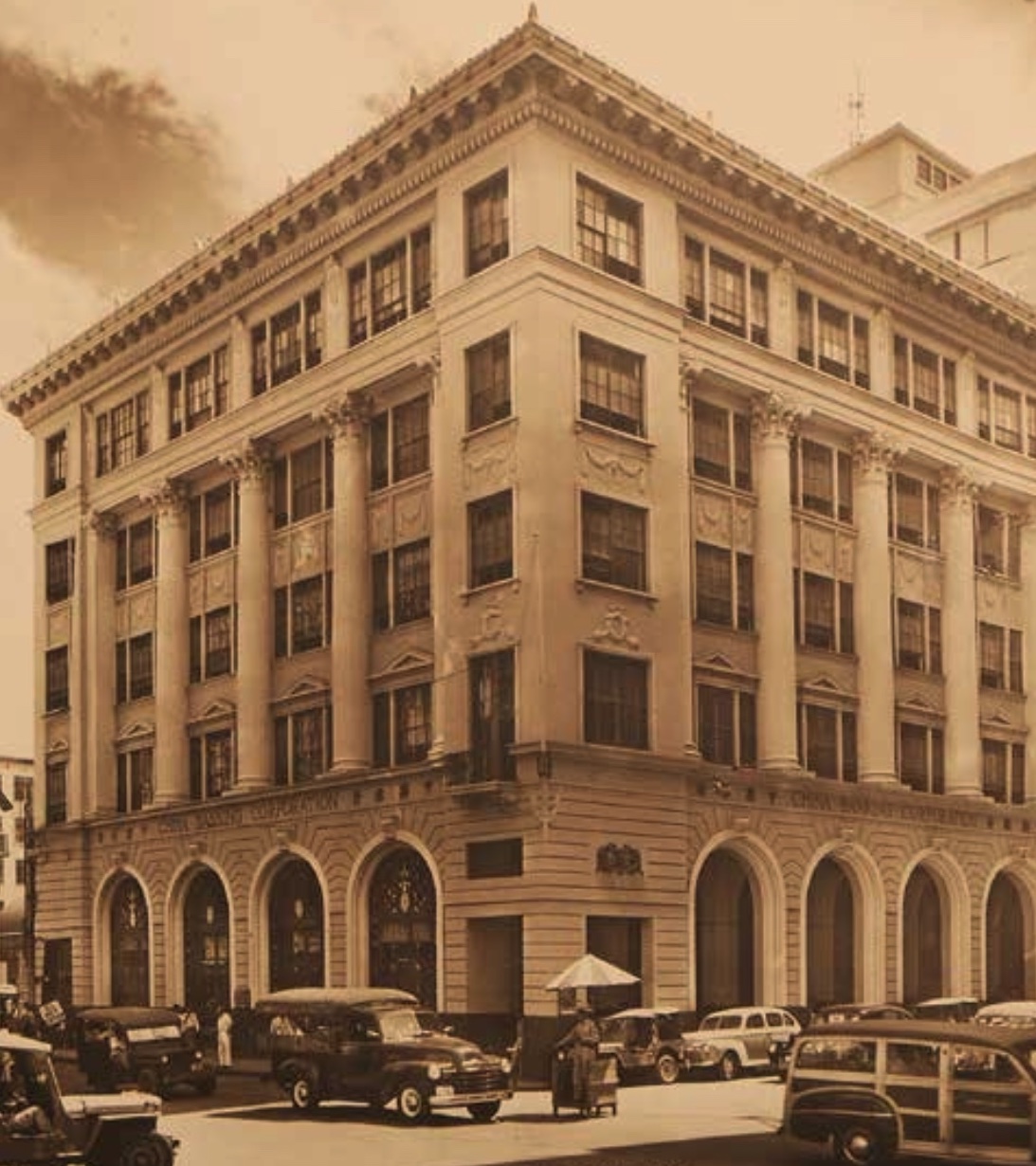
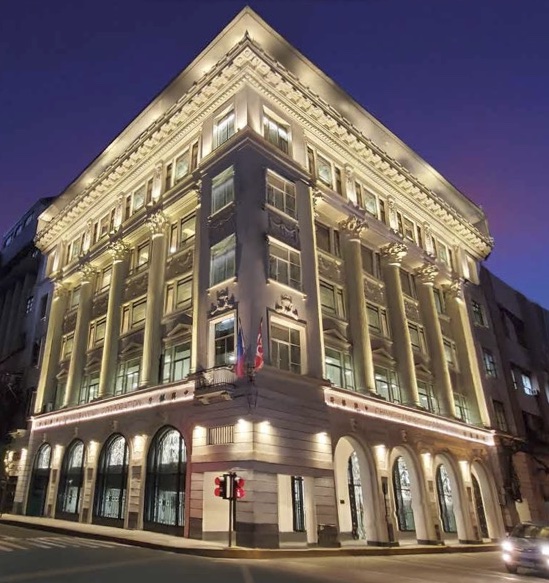
The bank is none other than China Bank, which set up shop in 1920 in the same general neighborhood—at No. 90 Calle Rosario (now Quintin Paredes St.). It didn’t take too long before the bank realized that it needed more space for its growing business, and by 1924, it had moved into its newly built, five-story (later extended to seven) building at the corner of Juan Luna and Dasmariñas streets. It had been designed by the German architect Arthur Julius Niclaus Gabler Gumbert in the Neoclassical style then in vogue, with Beaux-Arts touches. Later known as the Binondo Business Center, the building served as the bank’s head office until 1969, when China Bank moved its key operations to Makati.

No one could have walked up to that building pre-war and remained unimpressed. It was the physical manifestation of China Bank’s high ambitions, but grounded in the realities and challenges of operating in an environment that in some ways remained suspicious of if not hostile to Chinese businessmen. The young visionary Dee C. Chuan, already a lumber magnate in his twenties, was quoted to have said around 1911 that “Many Chinese known by their countrymen to be worth half a million pesos are unable to get credit from the present banks.” 

The answer was to form China Bank, with the help of such highly respected co-founders as Guillermo Cu Unjieng, Carlos Palanca, and Albino SyCip; it was to be a bank that would combine Eastern values with Western banking know-how and cater to the underserved community of Chinese businessmen and entrepreneurs in the Philippines, many of whom would move on to be become taipans in their own right. And from early on, through the Depression and the Second World War, the bank relied on its close relationship with its clients—among whom xinyong or word of honor was paramountly important—to retain their business, paying off its obligations even when other banks had defaulted on theirs. A century later, China Bank has moved far beyond its Chinese-Filipino niche market to serve a much broader public, achieving its target milestones of P1 trillion in assets and P100 billion in capital by the end of 2020. 

But the bank didn’t want to celebrate its centennial just by counting its money. According to China Bank SVP and Centennial Committee chairman Alex C. Escucha, as early as 2016, the bank’s leadership under its chairman Hans Sy had already decided that the restoration of the old Binondo headquarters would be the centerpiece of their centennial. 

Not only would the building undergo a thorough and historically authentic renovation led by Architect Manuel Noche, former secretary of the Heritage Conservation Society; a bank museum would also be built, curated by Marian Pastor Roces, for the public to appreciate the business and culture of banking through memorabilia, art, and mementoes. Sonia Olivares Santiago & Associates and Maja Olivares-Co would work on the contemporary design aspects of the Binondo branch. This was realized last December 21 with the unveiling of two historical markers for the restored Binondo Heritage Center and the China Bank Museum by the National Museum and the National Historical Commission of the Philippines.

The bank also published a comprehensive coffee table book, 100 Years of Trust: The China Bank Story, a substantially new version of its 90th-anniversary book written by the late Raul Rodrigo, updated by his wife Nancy Pe Rodrigo; edited by me, with the invaluable assistance of Alex Escucha (the bank’s encyclopedic institutional memory), Ann Ducanes, and Hershey Villegas, among others; and handsomely designed and produced by Perez NuMedia. 

But it’s the Binondo Heritage and Restoration Project that the general public will likely appreciate the most, because it visibly connects past with present and shows the way forward for institutions with similar forms of heritage to protect. At a time when cultural treasures and landmarks are being demolished wholesale to make way for new malls and condos, China Bank proves that history can be a continuing concern (in all its decades of operation, the Binondo office never stopped being a bank). What’s needed is vision and commitment, which China Bank Chairman Hans Sy and President William Whang have proven to have in abundance.

Persian Rose

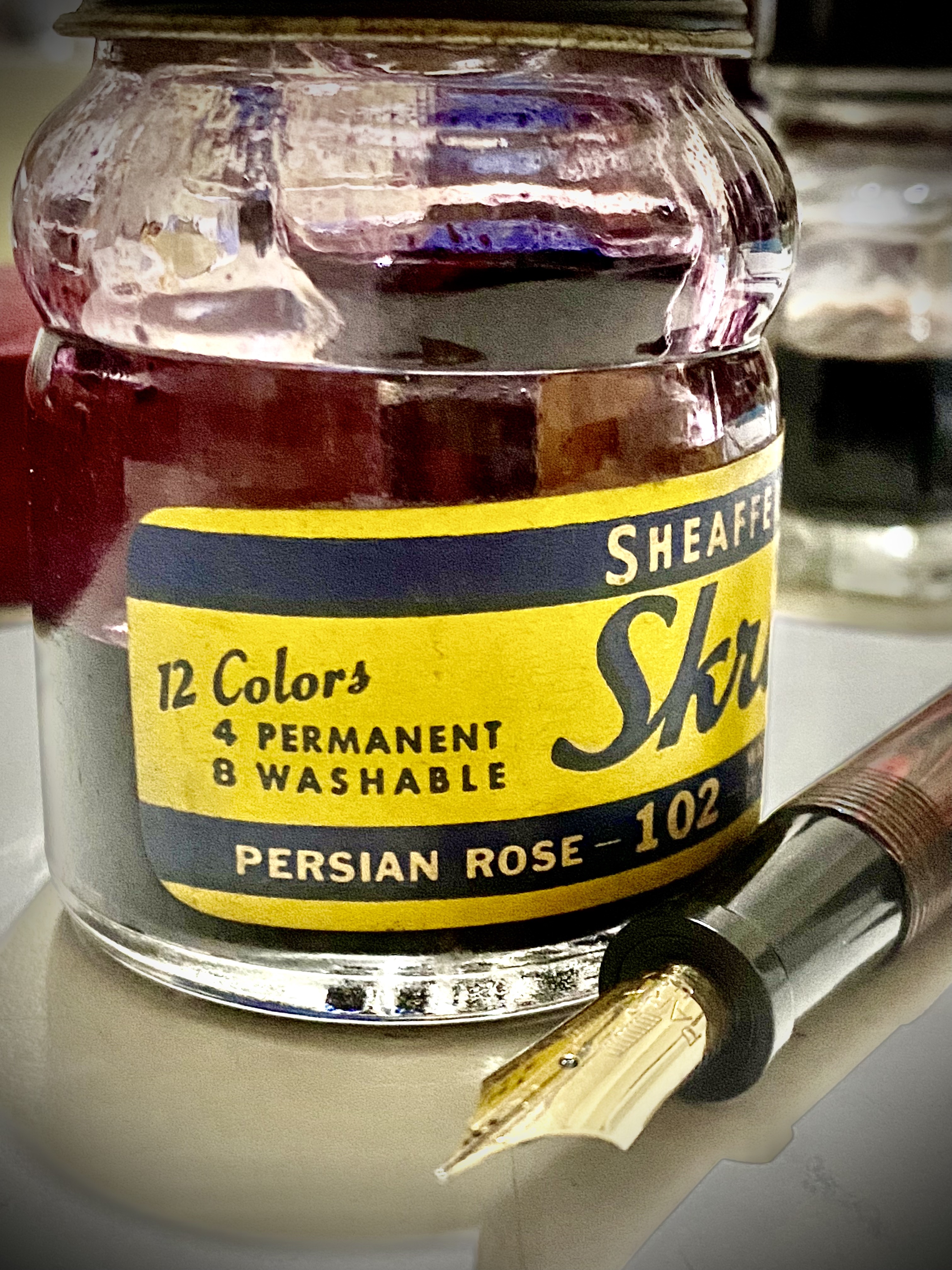
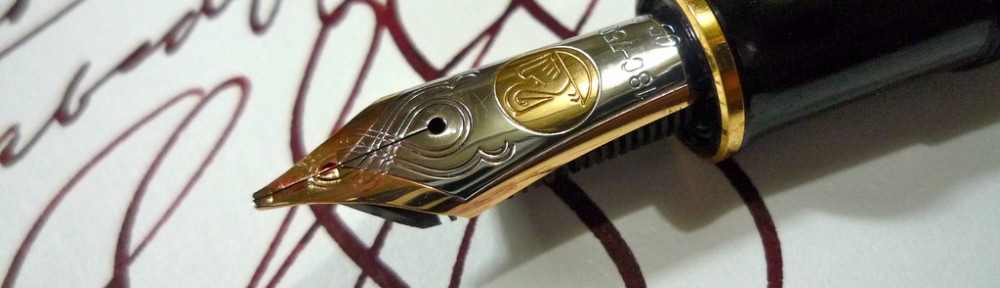
(Some years ago I was asked to contribute to an anthology of “sudden fiction”—short stories no more than about 500 words each—and at that time I had just found two bottles of a very rare Sheaffer ink from the 1950s called Persian Rose, although sadly one bottle was spoiled, so I decided to write a story about it, and here it is.)

HIS HANDS trembled with excitement when the parcel arrived; it had taken three weeks to cross the Pacific—and a few days more before that to find its way to the main PO in Los Angeles from someone named W. Kiffin in Broken Bow, Nebraska. He had no idea who “W. Kiffin” was, if “W” was a man’s or a woman’s name; he usually knew his eBay sellers, and got his vintage pens and inks from established dealers with positive feedbacks of 1000+. These were aggregators for whom pickers trawled the backwoods of Kansas and Wisconsin for that burgundy 1937 Parker Senior Maxima in mint condition, very possibly a gift put away in a drawer and soon forgotten. Why? Did the owner die—a plane crash, a ferry accident, a bullet in Iwo Jima? Each old pen hobbled in with a story, and there were hundreds of them now in his collection, from a continent and sometimes a century away. By the time he had run the pen through the ultrasonic cleaner, put in a new rubber sac, and polished the cap and barrel, the pen looked new and the stories were gone down the drain.

This time he had bought a Lady Duofold in jade green and a bottle of ink from W. Kiffin. Kiffin was new on eBay, had a feedback of 6, and had apparently been disposing of his or her grandmother’s effects. That’s what the advertisement said: “Nana’s stuff, found in a drawer.” It was the ink more than the pen that excited him: a possibly unopened bottle of Sheaffer’s Persian Rose, a bright purplish pink from the 1950s much sought after by connoisseurs the way wine collectors prized something like a Petrus 1947. A small bottle of Persian Rose could sell for as much as $85, and he had bagged the ink and pen for just $16.50 both, plus shipping.

As he opened the Jiffy bag he saw that the pen had browned with age, as he expected. Its nib was stubbed and well used; Nana had probably written with it to the last. But the ink was still in its original box, which was a little frayed but intact. Eagerly he opened it and slowly uncapped the bottle; Persian Rose was always a question—would it keep fresh, retain its vivid hue? What drove Nana to get it? A flush of joy? An expectation of many long letters to be written over that summer in Broken Bow? 

The cap came off with a slight twist and he realized it had been opened—maybe once or twice. The ink looked darker than blood. He dipped a clean new pen into the liquid and wrote a line on the sheet he had laid out for the ceremony: the ink was spoiled. He shuddered with disappointment and put the bottle away.

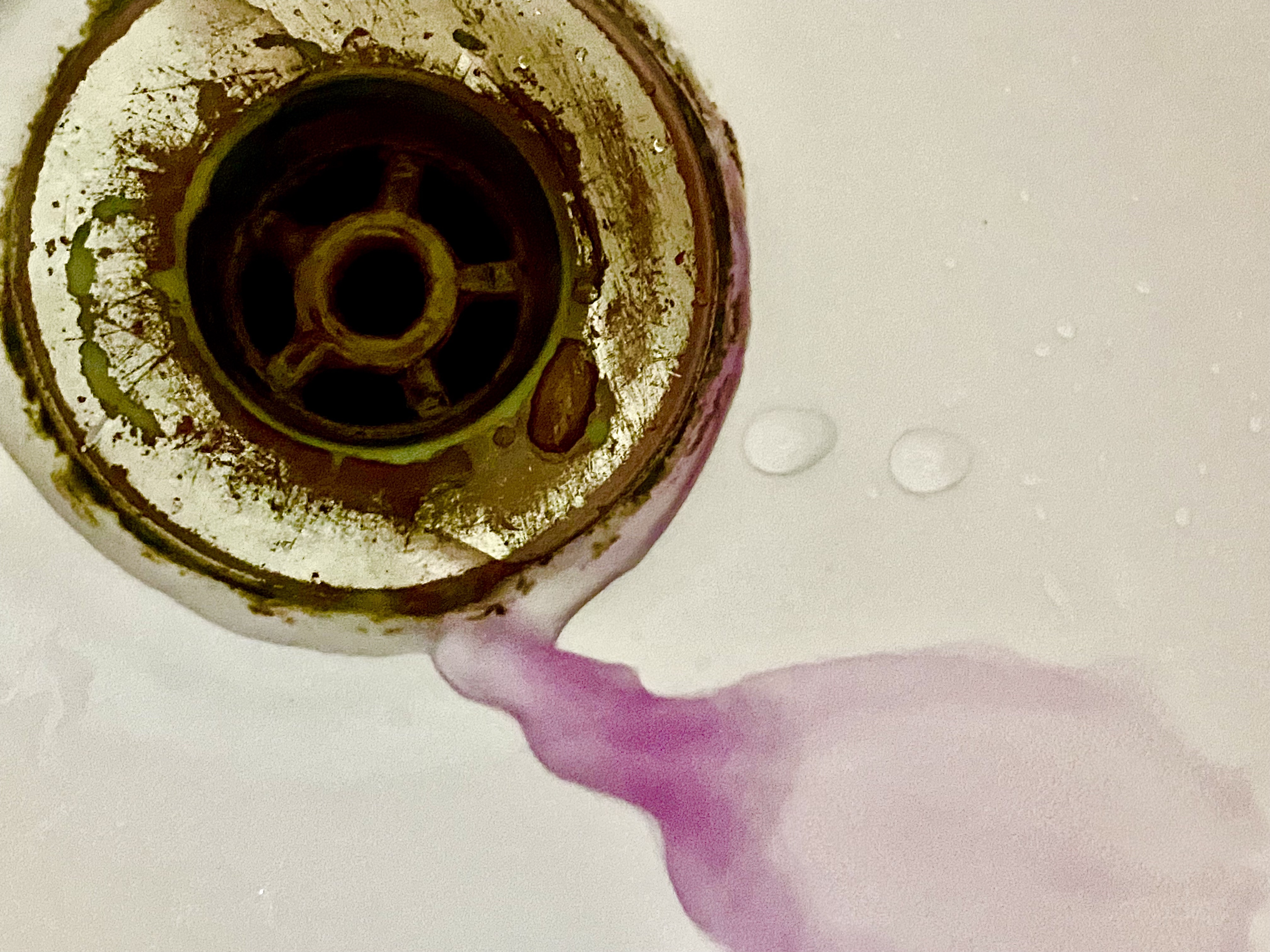
Later, he worked on the Duofold, and ran the nib under tap water. The brightest rush of pink bled out of the nib—the truest Persian Rose, dried out for longer than he had been alive—and vanished in a floral swirl, like Nana’s last breath.

A Visit from GPS (long story follows)

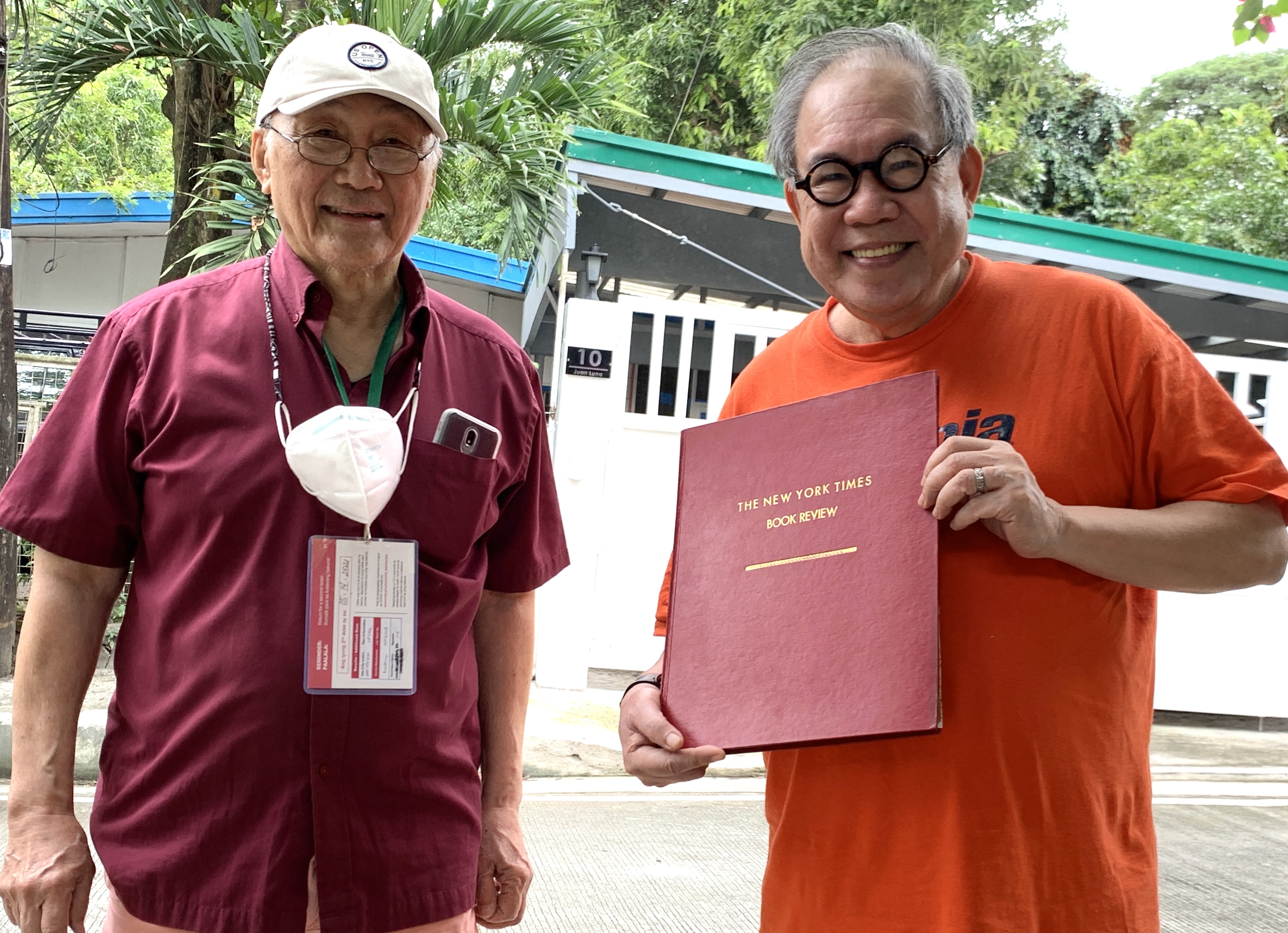
I HAD a surprise visit—and present—this morning from one of the people I have always acknowledged to be my life mentors, Dr. Gerry P. Sicat, my former boss (and Beng’s) at the National Economic and Development Authority. He brought me a bound special issue of the New York Times Book Review from 1996, featuring the first reviews of such literary luminaries aa Dostoyevsky, Conrad, Woolf, Hemingway, Gordimer, and Updike. He had saved the copy for me back when he was still working in Washington, when he heard from his daughter that I was “doing well” in UP; somehow he had misplaced the copy for 25 years, finding it only recently, and thus today’s visit.

The “doing well” remark goes back to the long story of my ten years at NEDA (1973-83) and how GPS (or “DG” as we all called him, for Director-General) shaped my life at a crucial stage.

I was just 19 in August 1973 when I stepped out of martial-law prison. I had dropped out of UP at 18 with 21 units to my name, but I had already worked for the Philippines Herald and Taliba as a reporter before my arrest for subversion. In Bicutan, I had studied drawing with the printmaker Orly Castillo, and upon my release I joined Orly at the Printmakers Association of the Philippines studio in Ermita to study and practice printmaking—something I would do for several years. It was at the PAP where I met Beng (I should say, met her again, as I had seen her in UP and admired her from a distance—she was a pretty senior on the Student Council, and I was a bumbling freshman), and within three months of our getting together, I told myself that I wanted to marry her. (Ours was a generation steeped in fire and blood—scores of comrades had died fighting the dictatorship, and we had come to be convinced that we were not going to see our 30th year, maybe not even our 25th. So if we had anything important to do—like marry and have children—the sooner we did it, the better.) 

I shared the bold announcement with my mom: I had met a nice girl and I was going to ask her to marry me. “Are you crazy?” she responded. “You don’t even have a job!” Well—I said—I suppose you’re right, I should find some gainful employment.

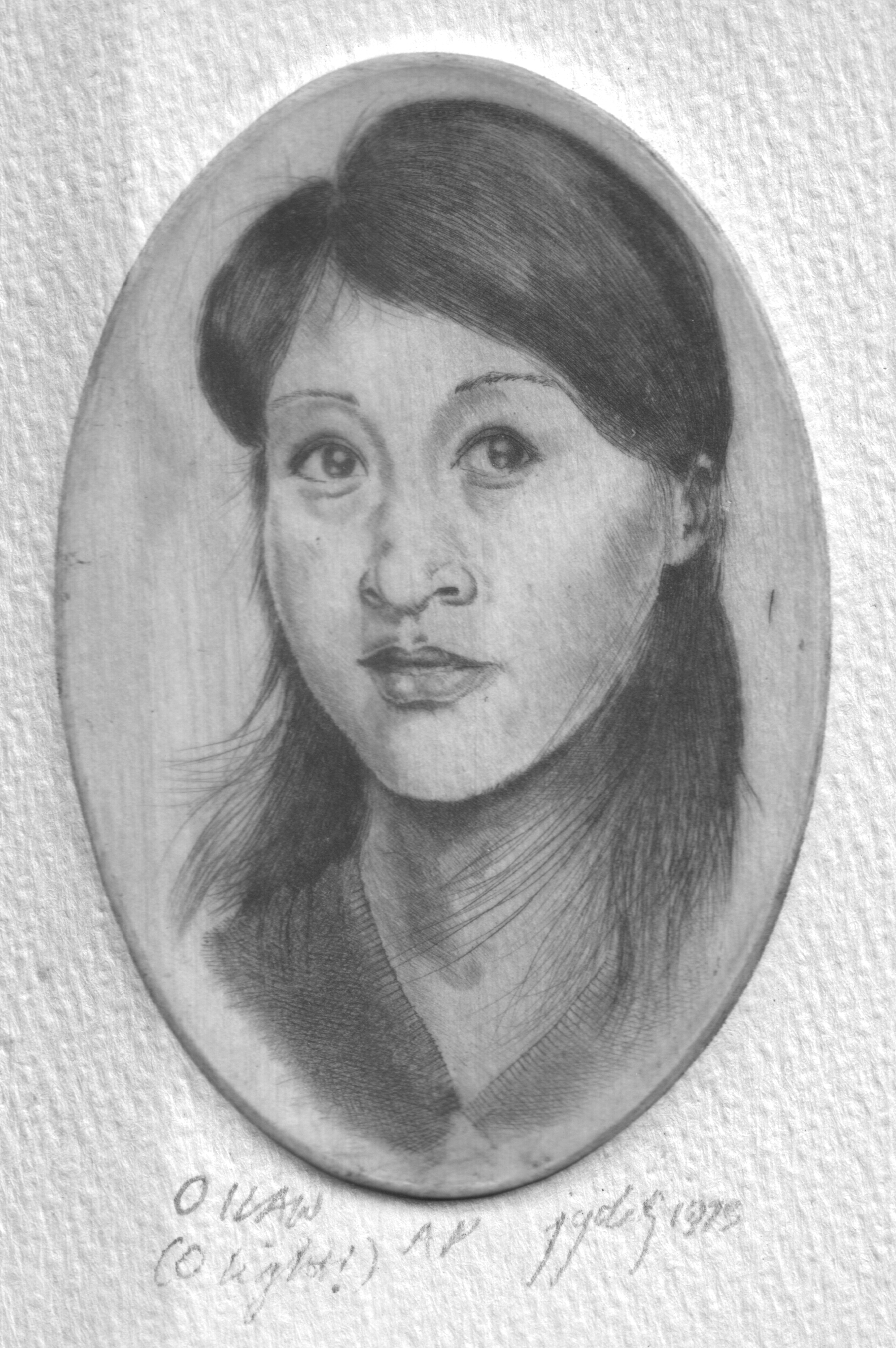
(Above, a drypoint print of Beng from 1973;
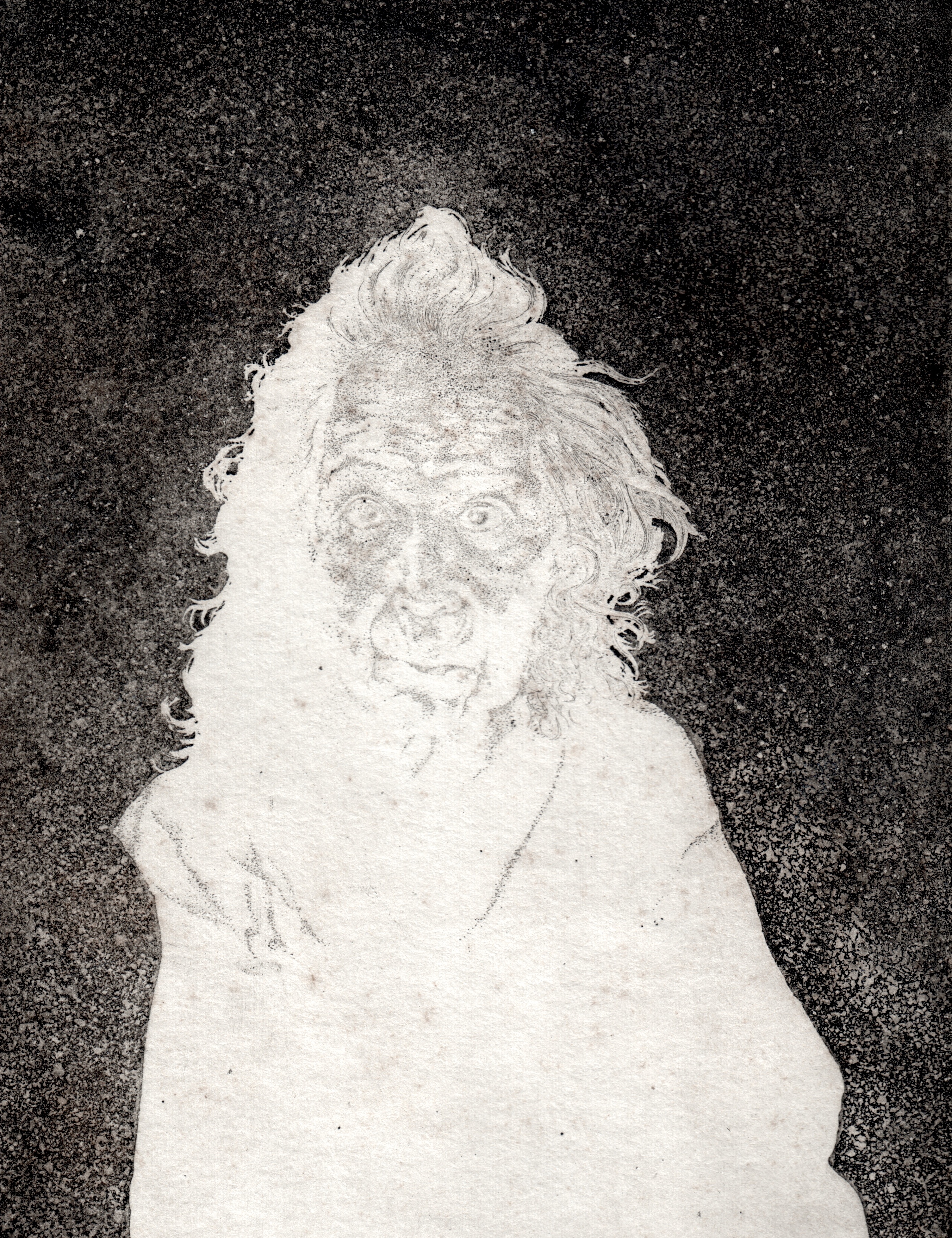
below, an aquatint and drypoint print of my grandmother Mamay from 1975. )

That same day I went to the PAP studio to work on some prints and to mull over my future. Printmaking was fun—and I got to hobnob with such brilliant (and real) artists as Bencab and Tiny Nuyda, among others—but it wasn’t something I could live off, let alone support a family with. A kind dealer came by every few weeks to buy prints from me and other PAP members for P15-25 each to serve as fillers for the frames she was selling to US servicemen in Clark and Subic. I needed a real 9-5 job.

That afternoon I walked around the Padre Faura neighborhood, and on the street I ran into an old friend and comrade, Jun Medina, who had been a newspaperman pre-ML and was now the PR chief at NEDA. He was so happy to see me—he had known I was in prison—that he literally emptied his wallet to give me whatever he had, a kindness I would never forget. He asked me if I was back working. “No,” I said. “In fact I’m looking for a job.” He lit up and said, “We’re looking for a feature writer! Why don’t you apply? Let’s go up and see the boss!” Sure, I thought, what’s there to lose?

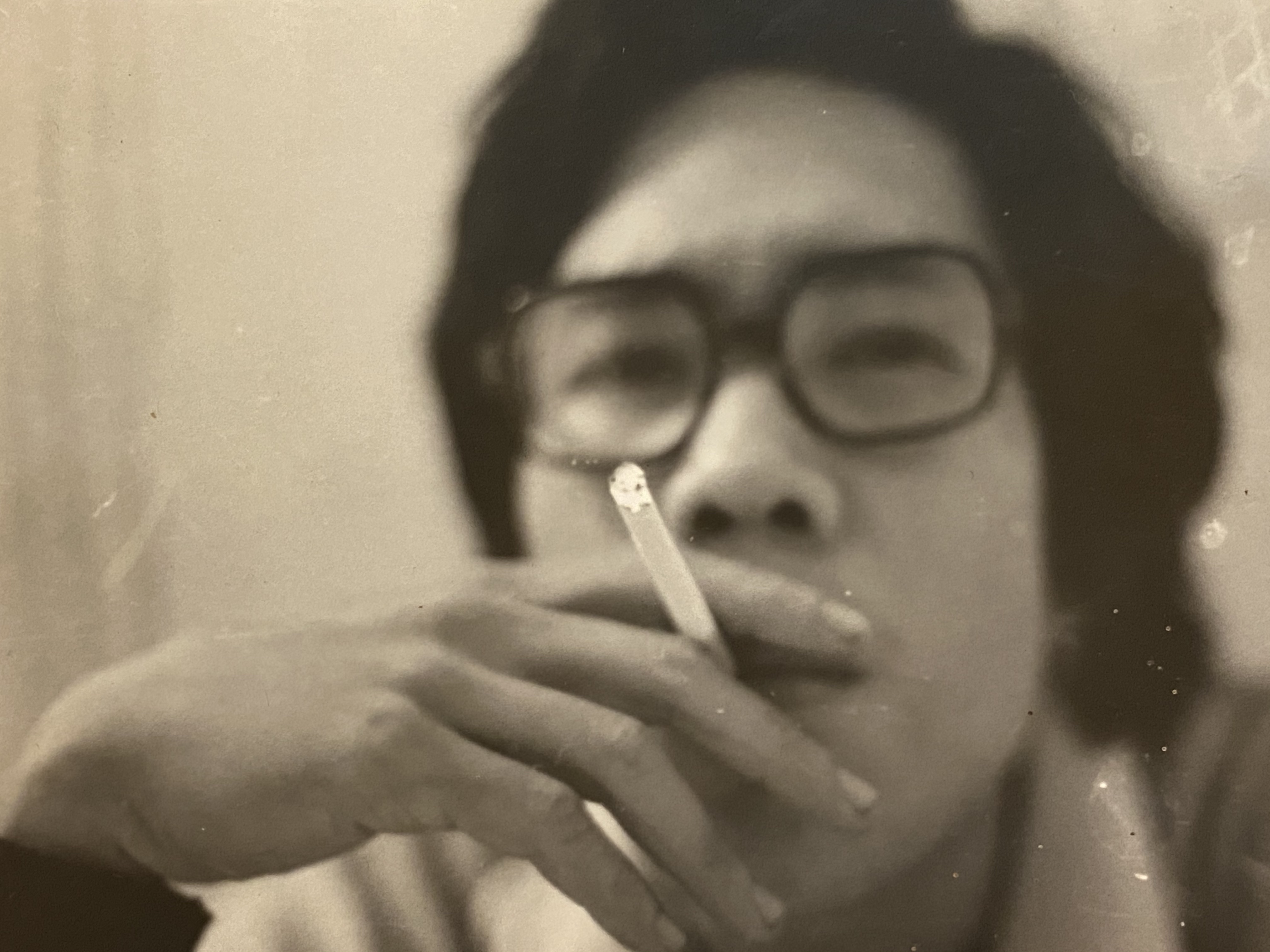
(Puffing and dreaming–at my worst, I smoked four packs a day;
quit smoking with Beng cold-turkey in 1994.)

And just like that, a few minutes later, I was talking to NEDA Director-General Dr. Gerardo P. Sicat, whom I had never met before; he was only 38 then, trim and fit (he was a tennis player and marathoner), but cool and laid back, asking just a few questions to see if I had anything in my noggin. Jun vouched for me and my writing, and that apparently was enough. “Let’s start you at P700,” said GPS, and lightbulbs popped in my head; in 1973, P700 a month was good  money.

That night I went home and had the pleasure of informing my mother that “I found a job, and I’m getting married!”

Of course I had to ask Beng first, so I sat her down at the old Skorpios in Cubao and probably over batchoy and puto I got a napkin and scribbled some figures on it, starting with “700.” How much would an apartment cost? Food? Transportation? “We can get married!” I concluded, although I guess I turned that into a question, because she agreed (and would later tell me, “I don’t know why, but I did!”).

We met at the PAP in September; on January 15, 1974, on my 20th birthday, we were married by the CFI judge my mother worked for—took less than five minutes—and had a merienda cena reception at The Bungalow for less than a hundred people at P8 per head; when the management realized that we hadn’t made arrangements for a wedding cake, they hastily and kindly provided one.

So Dr. Sicat made that possible, but his unbidden intercessions wouldn’t end there. Knowing that I was barely a freshman when I left UP, he sent me to the UP School of Economics as a special student to attend the one-year graduate diploma Program in Development Economics, so I could learn something more substantial about the things I was writing about. That course introduced me to outstanding teachers (some of them just instructors back then) like Agustin Kintanar, Gon Jurado, Rosalinda Tidalgo, Dante Canlas, and Ruping Alonzo, and made lifelong friends of batchmates like Meynard Guevarra (now DOJ Secretary) and Vicky Bataclan and Libran Cabactulan (later DFA ambassadors), among others. Against all odds, the salimpusa passed. (And I was ever aware that my “special student” enrollment was vaguely anomalous, but I suppose there were advantages to GPS being a UP regent at that time.)

On the strength of that diploma, Dr. Sicat later endorsed me to the United Nations Development Programme office in Manila when the security watchdogs at NISA complained about my access to sensitive documents at NEDA, as an ex-detainee who still had to report regularly to the military authorities. GPS was sending me to the UNDP to cool off—they even had to create the position of “National Professional Officer” for me, which was later adopted by other UNDP offices in the system—and for a year, I did project evaluations and liaised between the UNDP and NEDA. I was even given a chance to move over to the FAO and to work with NEDA’s External Assistance Staff, but after a year of role-playing as the economist I truly wasn’t, I asked to return to my PR job at NEDA and to my creative writing, which was what I most enjoyed. (For a time, my closest friend and officemate at NEDA was the late Bienvenido “Boy” Noriega, my Alpha Sigma fraternity brother and fellow playwright. Many other writers like Patty Rivera, Fidel Rillo, Lilia and Jess Santiago, and Eric Caruncho would join our Economic Information Staff.)

(With fellow playwrights Boy Noriega and Paul Dumol, ca. 1981.)

In 1980, GPS had another surprise for me: he was sending me to the US for three months on a USAID grant to study media operations—and I enjoyed and learned from that immensely, but I knew that GPS had really sent me out as a writer who needed to see a bit of the world outside, to broaden my horizons; it was something he routinely did for his young staff. I have since been to the US dozens of times—our daughter lives there—but that first visit remains incandescent in my memory: first snow, first tour of the Smithsonian, first glimpse of New York, Broadway, the raw material for my story “Oldtimer,” long walks in yellow forests. 

When I returned, I was filled with a fresh resolve to just go back to school, to study and write and perhaps to teach for the rest of my life, which I did. For two years, I shuttled between NEDA and UP, racing to get a proper AB English degree; I resigned from NEDA in 1983 as the political climate was heating up so I could focus on my studies full-time, graduating in 1984, with Beng working doubly hard to support us in the interim.

Also in 1984, Dr. Sicat left NEDA himself to take up a post with the World Bank in Washington, DC. Before leaving, he asked me and Boy Noriega to visit him at his home in La Vista, where he gave each of us 30 minutes to select ten books from his library. I was beside myself picking out those books—I recall choosing, among others, Kenneth Clark’s Civilization, William Pomeroy’s The Forest (which I had read in high school and was deeply impressed by), the two volumes on the Philippine short story compiled by Leopoldo Yabes, and Mao’s Little Red Book (because mine had been confiscated upon my arrest). They remain with me to this day.

And then I took my MFA and PhD in the US on a Fulbright grant (basically just a plane ticket and a book allowance, because Fulbright funds were running low then—so I had to work, among others, as a cook for a Chinese fast-food) from 1986 to 1991, and returned to UP to teach full-time, become a professor, and publish more books. I suppose this was what Dr. Sicat’s daughter meant when she told her dad that his former recruit was “doing well.” 

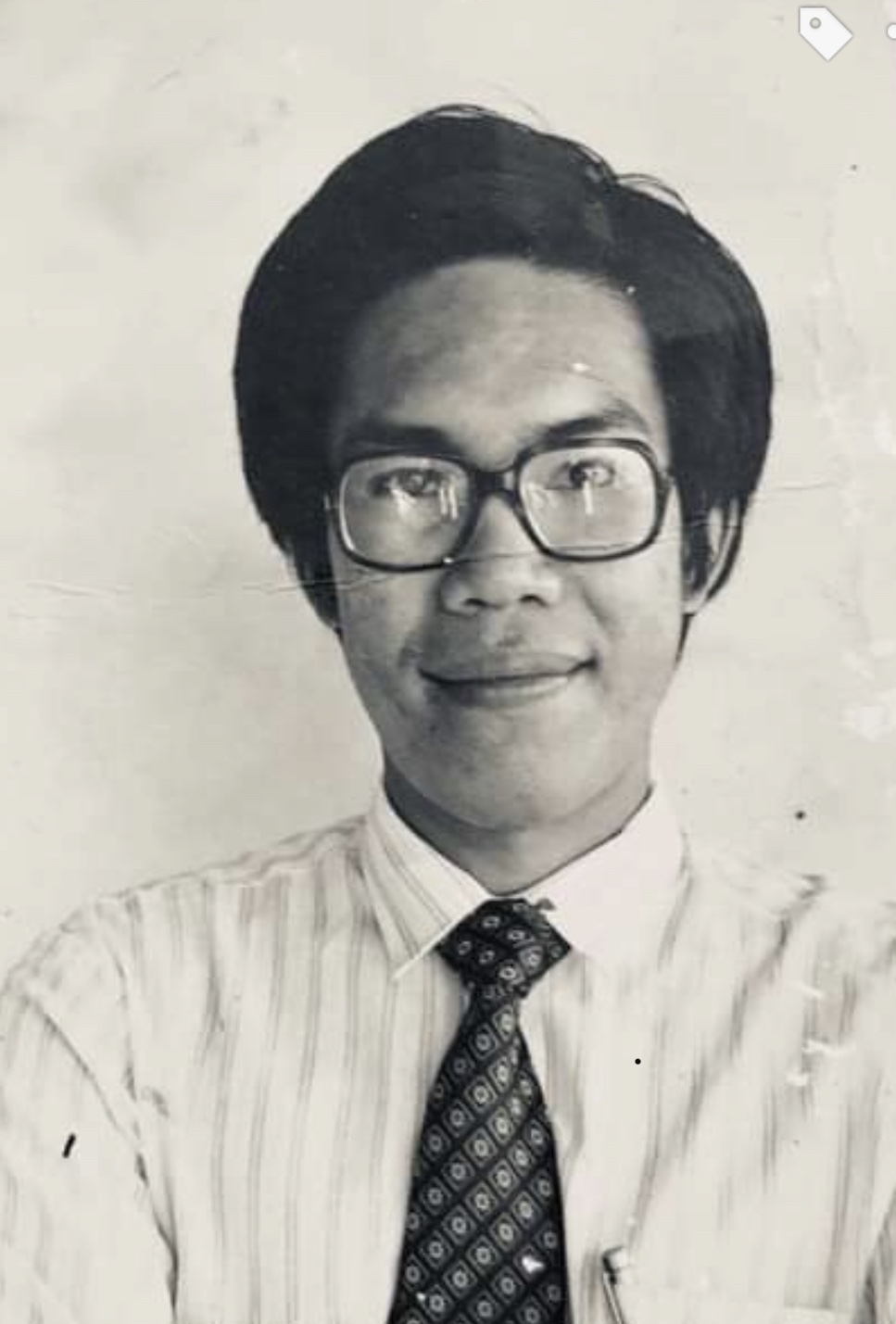
(From around 1992, going by the hair.)

When I retired in 2019, one of the guests I made sure would attend my retirement party was GPS, and shortly after I followed in his footsteps as Professor Emeritus. 

He must have been shaking his head—but smiling—when he left our place today. (Beng and I were—at 86, GPS looked a whole lot slimmer and fitter than my 67.) Many thanks, DG, for the job and the visit, and for everything in between.

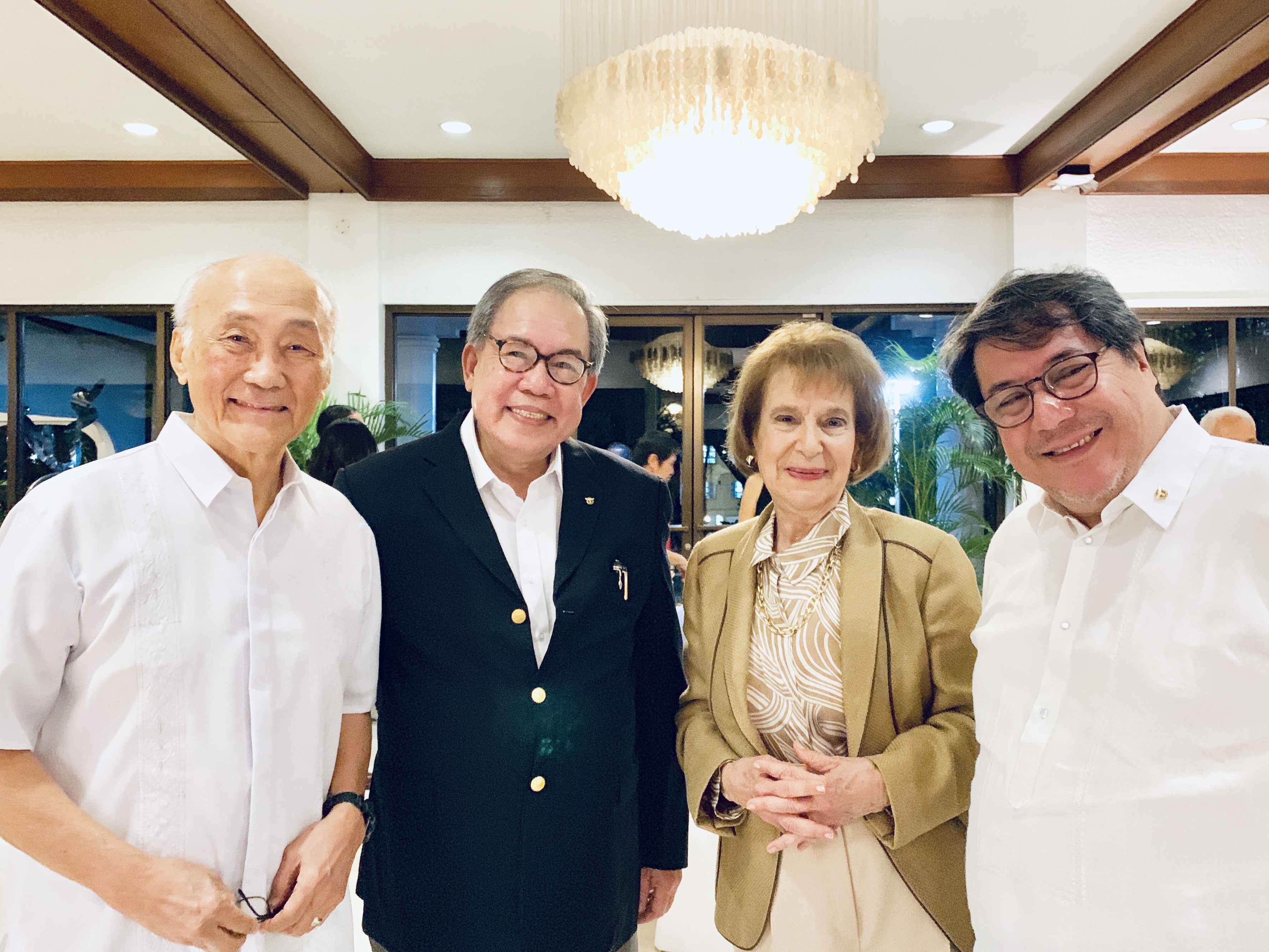
(At my retirement party, with GPS, my friend Julie Hill, and EVP Ted Herbosa.)

Penman No. 430: Rizal’s Typewriter

Penman for Monday, December 20, 2021

NOW THAT I have your attention, let me backtrack quickly and clarify that title: I’m talking about a typewriter that Jose Rizal or the Katipunan could have used, had they been tech-savvy enough and infected with 19th-century FOMO.

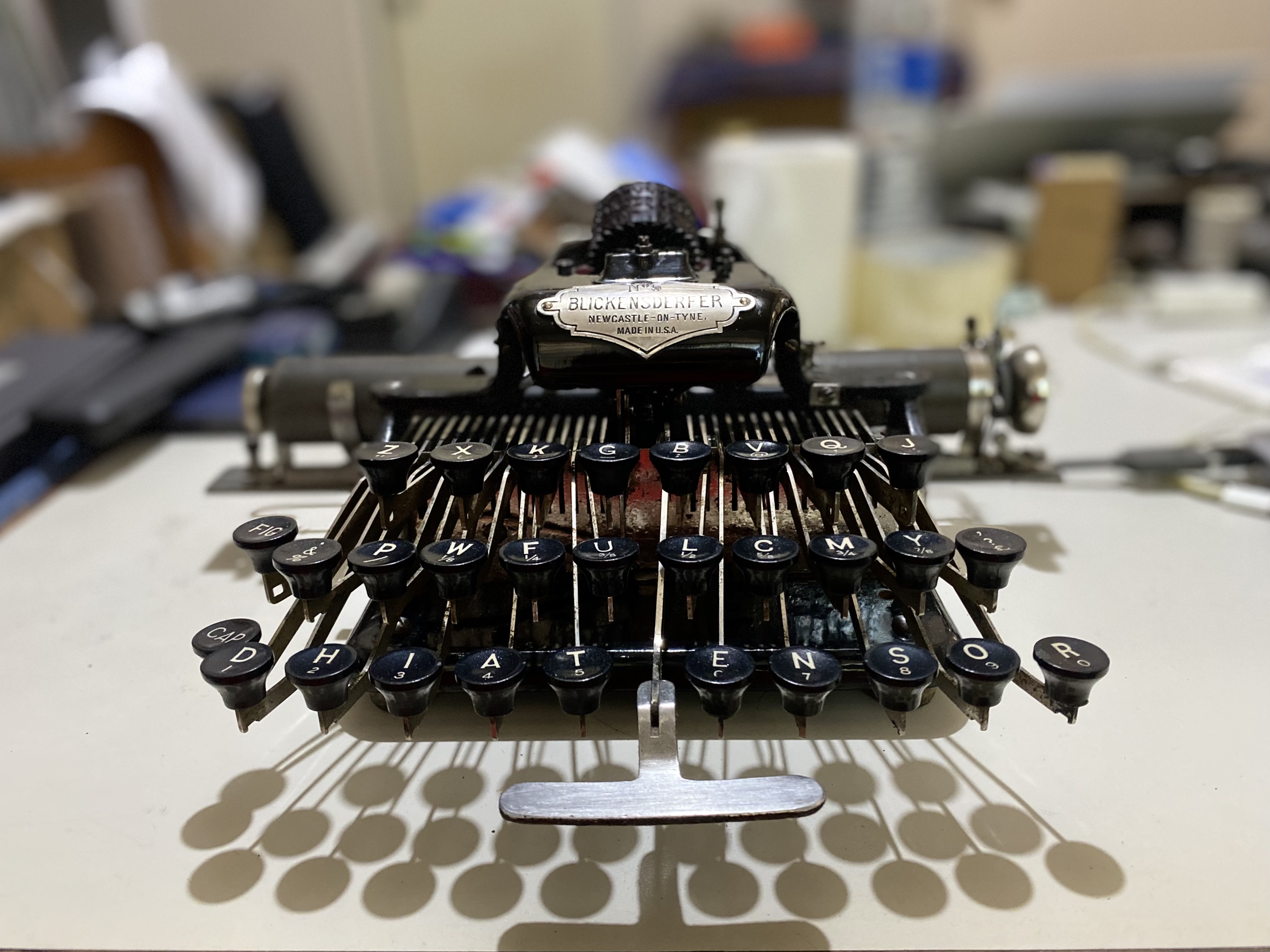
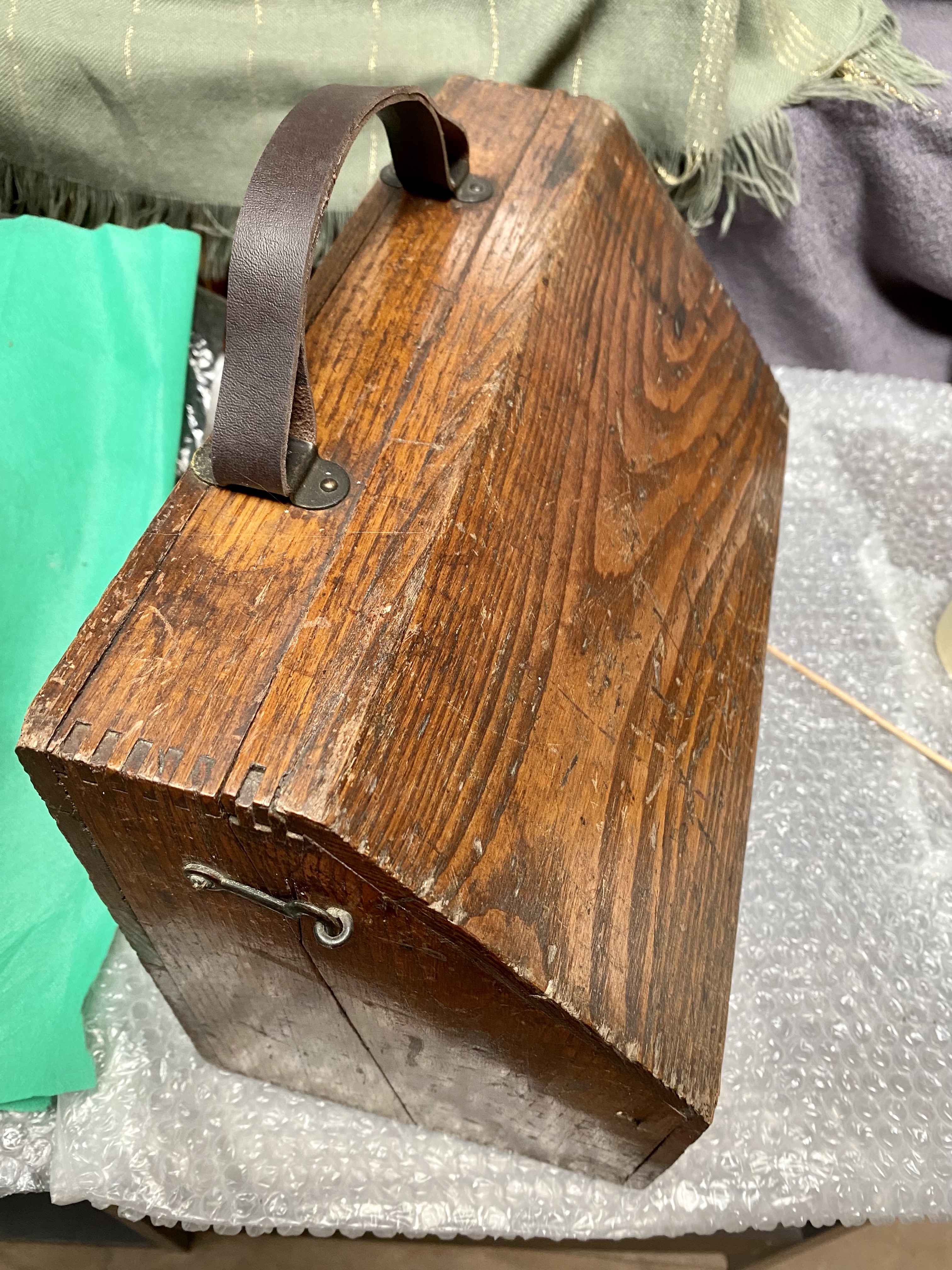
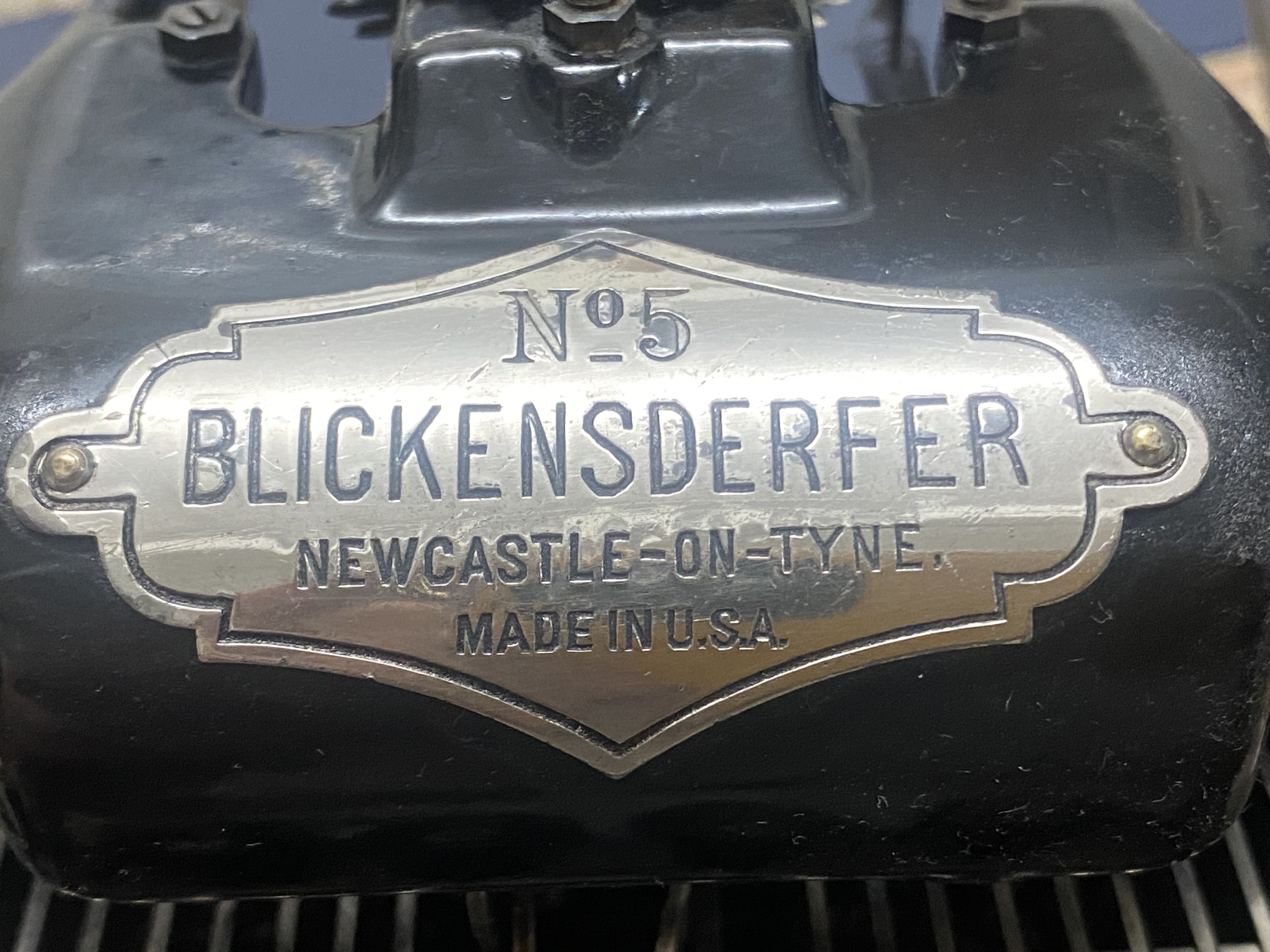
Early this month, a box I had been eagerly awaiting arrived from England, where I had found the machine on—where else?—eBay, selling for a reasonable price (“reasonable,” that is, to oddball collectors like me). Inside the box was a wooden case, visibly old, with a latch on each side. I undid both latches and the case opened to reveal what I expected to see: “an antique Blickensderfer No. 5 typewriter with spare typewheel in original oak case,” according to the ad I saw. But the first thing that struck me wasn’t the machine itself—it was the fragrance of oak, still embedded in the wood after more than a century.

Why did I even want the Blick, as the typewriter invented by the American George Canfield Blickensderfer came to be known? By the time the first Blick was patented in 1891, the typewriter had been on the market for about 17 years (many prototypes preceded the Sholes and Glidden, but were never mass-produced, except for the sci-fi-worthy Hansen Writing Ball, ca. 1870). But most were big and bulky, and—surprise—wrote on the other side of the typist, who couldn’t see what he or she was typing. 

The Blick No. 5 was the first typewriter that could truly be called a portable, with a keyboard and a front-facing platen or paper roller, much like its modern counterpart. Think of it as the MacBook Air of its time. It looked like an insect with a big head and spindly legs, and even more strikingly, it employed what its inventor called the “scientific” DHIATENSOR keyboard—those bottom-row letters supposedly figuring in 85 percent of the words in English. QWERTY had already established itself as the standard layout early on, and later Blicks would use it, but I preferred the quirkiness of DHIATENSOR.

The Blick No. 5 was given its public debut at the 1893 at the World’s Columbian Exposition in Chicago, a monumental event meant to showcase such novelties as a moving walkway, AC electricity, and the Ferris wheel. The small, lightweight typewriter became a hit, helped along by the fact that it sold at a third of the 100 dollars that most other typewriters cost at the time.

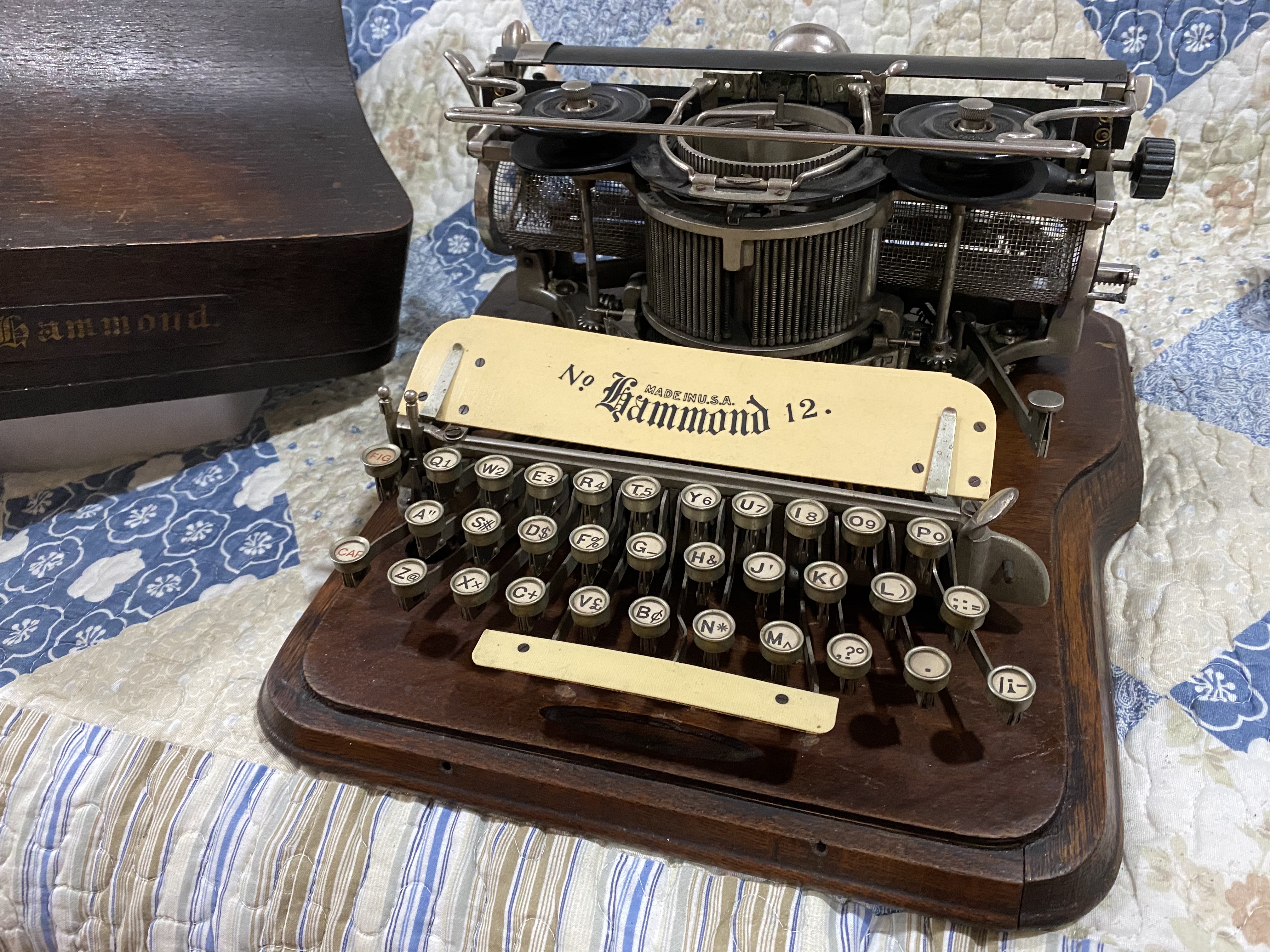
So I wanted one in my collection for historical purposes; prior to this, my earliest machine was a larger and grander-looking Hammond 12 from around 1905. That Hammond got to me, also in its original wooden case and all the way from Ohio, luckily in one piece. 

That’s the trouble with collecting any machine with scores of tiny parts a hundred years old—iron corrodes, rubber shrinks, wood warps, paint fades; screws come off, joints get fused solid, whole sections vanish, and often all you have left is a rusty lump of metal better tossed into the garbage. 

Most Blicks and other old typewriters you can find on eBay will manifest at least a few of these problems. Missing parts—obscure and ancient—can be hard to find; thankfully a global network of typewriter enthusiasts exists to offer help and advice online. Reviving a machine with frozen typebars is another major chore; but again expert repairmen still remain to come to the rescue. (Among them is our own Quiapo-based Gerald Cha, whom I’ve written about, through whose hands all my machines pass for the requisite CLA—cleaning, lubrication, and adjustment.) Shipping is yet another potentially harrowing complication—fragile, valuable, and irreplaceable machines can be turned into scrap with one drop of a poorly padded box.

It was a miracle that the Blickensderfer turned up at my doorstep whole, complete, and needing just a bit of lubrication. When Gerald typed out its first few letters in script, it was as though a mute singer had found her voice after a century.

But one more ritual had to be performed: dating the machine to the year it was manufactured (mine was an English model, made in America but sold out of Newcastle-on-Tyne). For this, typewriter collectors have an online resource to fall back on: typewriterdatabase.com, which has been painstakingly crowdsourcing and cataloguing the serial numbers of hundreds of brands of typewriters. I first had to locate the number on my Blick; it was there on the upper right of the bottom of the frame—68403. A quick check yielded the year it was made: 1896. More than liking the Blick, I now stood in awe of it.

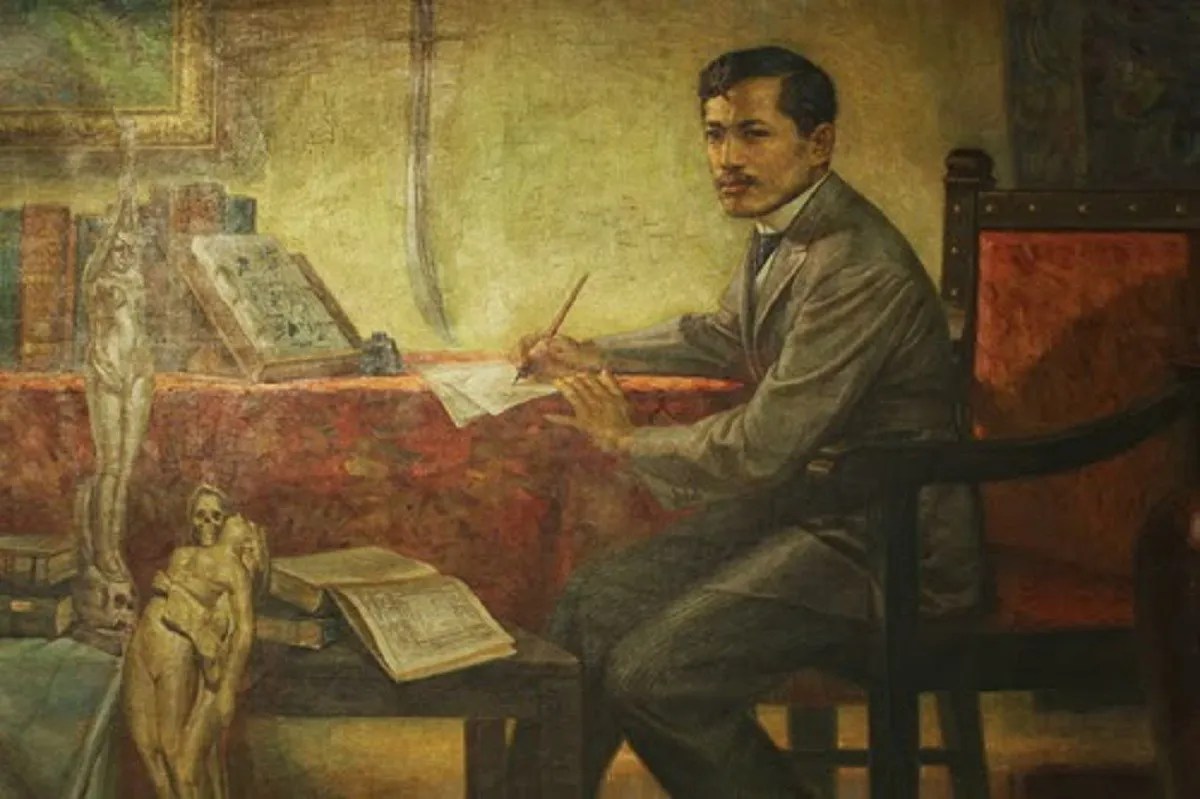
I’d like to fantasize that some of these machines made their way to Manila and figured, somehow or other, in the Revolution, although I do have to admit that the standard image of Rizal poised to write “Mi Ultimo Adios” with a quill pen in hand is much more appealing than him pecking away at a keyboard. 

(Image from joserizal.com)

I asked Ambeth Ocampo about it, and he said that while he hadn’t come across any connection between Rizal and a typewriter, our hero surely would have encountered it in his many travels abroad. Rio Almario seems to recall having seen a copy of the Katipunan’s Kartilya in typescript, but we can’t be certain when that was made. With the Americans came the Remingtons—and it’s no small coincidence that the same company made the firearms that subdued us and the typewriters we began writing in English on. I can only stare at my Blickensderfer No. 5 and wonder what stories sailed across its paper horizon.

Martha, Martha (A Christmas Story)

(Twenty years ago, instead of a regular column, I wrote and sent in a Christmas story for The Philippine STAR, titled “Some Families, Very Large.” This year, I thought of doing that again, this time a story set in a Covid ICU–about loves and lives lost, power and disempowerment.)

THE GENERAL LOOKED hard at the tinsel star on the Christmas tree across his desk and convinced himself that it was leaning to the left, perhaps by an inch, and he wondered if he should fix it himself or let someone else do it for him. The tree was too tall even for him to reach the star on tiptoe, because his secretary and his aide had perched the four-foot tree on top of a painted stool to create more space beneath its plastic branches for the mound of gift-wrapped presents that began to arrive in the first week of December. 

Two years earlier, a mayor from Cagayan for whom the general had done a small favor had sent him a washing machine covered in gold foil, and he had raffled that off to the delighted staff, just like all the baskets of canned ham, English biscuits, and cheap California wine that gathered under the tree. Some came all the way from Manila, an eight-hour drive away, a token of the esteem in which the general was held, and of his prospects to make chief of staff. The most serious gifts never made it to the office; he was corrupt, for sure, but the general was nothing if not discreet, and he was proud of managing his affairs with a certain style. The Christmas tree and the pile of presents, to be honest, offended his sensibilities; it was too loud, almost vulgar, but it endeared him to his staff, and that was part of his charm, his ability to make people feel that they were being cared for. 

He was a man who could just as easily shoot a rebel in a back alley or a safehouse as he could lift a baby out of a flood to a chopper. Back at the Academy, he excelled both in boxing and mathematics, skills he later put to good use in Mindanao when he was honing his skills in procurement and dealing with unreasonable parties. The rough edges had come off as he rose up the ranks—now he knew smoother and more efficient ways to inflict pain or punishment and get things done—but the urge to ball up his fist and beat up someone senseless never quite left him, and he knew that the best gift time had given him was restraint, which accounted for his cool demeanor. 

As a young father, he had been heavy-handed with his son, now a ballet dancer in Chicago, but they had begun to learn how to talk over Facetime. His wife Martha never quite understood his sacrifices for the family, demanding that he account for the silliest things, and failing that she buried herself in bonsai clubs and Bible-study groups. At some point he discovered—she confessed—that she had had a brief affair with a college flame, an insurance executive they played mixed doubles with, and only the fact that he was then due for his first star stopped him from unloading an M-14 into his wife’s lover. Despite her tearful entreaties, he never expressed forgiveness, but neither did he mention the subject again. 

As the cars grew in the garage until they had to move houses, they aged together in a sullen but civil stalemate, remarking occasionally on the TV news and serving as wedding sponsors with practiced ease. At their last wedding in Tagaytay, he had caught her staring at him from across the aisle where the women were, and try as he might he could find no malice in her expression, as if they had done each other no wrong, and he remembered the soft and unlined face of the girl he married, and then she smiled and he looked away, feeling somewhat embarrassed. Now that the general was back in his regional outpost, he saw less and less of her, but that memory of Tagaytay lingered in his mind, and it bothered him that he couldn’t tell if it was the wife of the present or the bride of the past that called to him.

He was still looking at the star when his mobile phone rang, from an unknown number. That in itself was not surprising; sometimes his contacts and assets used burner phones. He let it ring four times before taking the call. He rushed out into the anteroom and told his secretary, “Get me a chopper, right now.”

THE DOCTOR SLUMPED against the wall and ripped off his face mask, in willful violation of the protocol that governed the use and disposal of PPEs. The prescribed order was gloves, gown, eye protection, and surgical mask—he had done it hundreds of times over the past many months—but bathed in sweat, he felt out of breath and was desperate for a smoke. To step out of the hospital even for a minute would be too complicated, so he punched a cold Tru-Orange out of the vending machine, gulped it down, inhaled what stale air he could in the corridor, replaced the mask, and staggered back into the ICU. Someone had strung up Christmas lights above the nurses’ station at the far end of the hallway and they blinked indifferently.

The doctor had not been home in two days and was living out of his locker, taking showers and catnaps and calling his daughter Sheryl when he could, but he had interrupted one of her Zoom lectures once and he made a note to be more mindful of the hour. Ellen was six hours behind in Lowestoft, which oddly enough would have worked better for his night shifts, but the last time they had spoken on Facetime, just before the Delta surge, she seemed not just six hours but six months, six years, behind, growing fainter and blurrier, although he could see the crisp numbers of the wooden clock on her wall and a shadow dipping into the picture. It would have been easier on both of them if they had said curt and final goodbyes and dropped all pretenses to remaining friends for Sheryl’s sake, but it was she who had made the last call, on the excuse of asking about the unexpected death of a batchmate from med school, and even as he merely repeated what he had read in their group chat, he could sense her staring more than listening, trying to recover details of his face, and in them, perhaps some sign of contrition. 

The doctor noticed that a new patient had been wheeled in during his break, and he glanced at her chart, not expecting to find anything outstandingly different: female, 52, a resident of Miranila Village, brought by ambulance to the ER after collapsing on the sidewalk from acute respiratory distress, positive for Covid, further tests pending. Despite her condition, he could see from her manicure and her slim, untroubled fingers that she was a woman of leisure; a pale stripe marked where her wedding ring would have been—put aside, along with her other personal effects, by the attending nurses.

It was nearly two years after the pandemic started, and the world outside the hospital had begun to resemble a happy memory of a time taken for granted: people on the street, stores open, cars locked in traffic, even a masked Santa Claus at the entrance of the mall. But in the Covid ICU the grim parade continued—of the unvaccinated, the careless, the unsuspecting, and the merely unlucky.

Two-thirds of the beds were full, each one of them a mess of tubes, machines, and bedsheets within which a body struggled mightily to remain viable despite the violence raging through its fevered blood. The patients once had faces, but now they had receded into their oxygen masks and blankets with only tethered limbs to gesture this or that, if at all. Early on in the pandemic, the doctor had toured the wards and spoken with each patient who came in who was still conscious, reading off their charts and asking about the weather in Paoay or about grandchildren, affecting a voice of benign reassurance. 

But then the cases came one after the other, like waves to an unmoving shore, and over the months they ate away at something in him, at the parts that remembered birthdays, green grass and gentle rain, the White Shoulders on Ellen’s cheek, the words that came after “let nothing you dismay.” There were no more stories to tell or to ask for in the Covid ICU, only predictable and unhappy endings prefaced by feeble grasps at hope. “Doctor, doctor,” some relative would call him, “we found it, the Tocilizumab! In a hospital in Bohol, of all places, can you believe it? We’ll have it airlifted in the morning.” And he would feign relief and take a deep sigh, knowing that the next morning could be too late, because this virus seemed to have a mind of its own, leaving it to God’s mercy or whimsy to decide which bodies would heal at home and which would burn in the oven. 

THE DOORS DOWN the hallway suddenly flew open and the general strode in, trailed by an aide and a flustered nurse. The doctor saw the intrusion through the window of the ICU and hurried out to head it off. The general was wearing a face mask but the doctor could see from the neck down who and what he was dealing with. 

“Where is she, where’s my wife?”

“Who, what’s her name?” 

“Arguelles. Martha Protacio Arguelles,” said the nurse. “The wife of—General Arguelles.”

The doctor could read the namepatch on the soldier’s fatigues and noted the two stars on his collar. 

“I want to see her now,” the general said, in that tone no subordinate had ever said no to.

“I’m sorry, general, but your wife is in the Covid ICU and no visitors are allowed in there. I’m Dr. Cañete—” 

“I’m not a visitor, I’m her husband—”

“And I’m her doctor—sir. Everyone who goes in there, they’re our patients, my colleagues and mine. We do our best to keep them alive—and you.”

“I’ll hold you responsible—”

“Of course, I understand.” And what will you do if she dies, the doctor thought—shoot me dead? Because some virus found its way down her throat and made a home and a neighborhood of her chest cavity? Because she did something foolish like stepping out and taking her chances, thinking the worst was over? “I can show her to you—from the outside. Here.”

The doctor walked him over to the window closest to Martha’s bed. There was little to see but her prostrate body swaddled in sky-blue sheets and the ventilator that straddled her face like some exotic, long-tailed animal. 

“How is she?”

“She can’t breathe on her own. You might have known she had lung problems, but Covid made it worse.” He could see the general looking intently at his wife, and he wondered about the thoughts running through the man’s head—a cadets’ ball, courtship, furtive sex, a wedding, childbirth, midlife, secrets, rages, regrets, distant thunder, black sand. “We’re still running tests for the usual complications—her heart, her liver, and so on. You seem to be a strong person, general, so I won’t sugar-coat my words. Mortality rates in the Covid ICU run to as high as 65 percent, lower for those on mechanical ventilation, but it’s never just about the numbers. Everyone here is on his own. Sometimes they fight hard, and sometimes they just give up.” 

“‘Surrender’ is not a word in my vocabulary,” the general said in a way that made it obvious he had used the expression dozens of times before, in speeches to the troops and at the poker table with governors and congressmen. “I can get you everything—anything—you need, just let me know…. I didn’t even know she was sick. She never told me anything.” The last time they spoke on the phone a few days earlier, she sounded chirpy, and was hoping to fly out with her friends to Bacolod, now that airports were reopening. 

“Maybe she didn’t know herself. Or maybe she did—she could have felt dizzy, had difficulty breathing, felt warm—some sick people like to stay in air-conditioned rooms or face the electric fan, did you know that? But women have such a high threshold for pain, and of course you know why, so they tend to say nothing, and endure it. Until it’s too late.”

“Is it? I mean, is it too late?” the general asked, but he wasn’t looking at the doctor. “There are—things, important things I want to tell her.” The general’s voice had come down to a near-whisper. He had flattened his palm against the glass.

The doctor remembered Ellen at the airport, flying off on the excuse of taking a position with the National Health Service, but really to get away from him and the overweening pride that came with being a savior of lives, so embracing of others and yet so hurtful toward those closest to him. What had he said to Ellen then? Perhaps something so banal as “Don’t forget to ask for an upgrade—tell them about your medical background”? Or was it “I’ll remind Sheryl of the time-zone difference”? It seemed much easier to tell a patient that he was dying and would be a jar of ashes by day’s end.

The general seemed lost in thought; his frame had gone limp, and the doctor felt a twinge of pity toward the man, but only a little. From what he knew of the military, you had to have done some pretty horrible things to reach certain positions, and surely this man was no exception. At the ICU, or just outside it, he had seen tycoons, society matrons, sports heroes, and media superstars fall to pieces as soon as he told them, “I’m sorry, but you can’t go in there.” 

But tonight he could be generous. It was Christmas, after all, and he could always say, how do you say no to a general? Perhaps the whole protocol was wrong—why keep the dying away from their loved ones? Could the possibility of infection be worse than forever leaving remorse or forgiveness unspoken? 

“You know, general—” he was about to say, when a nurse approached them with a logoed shopping bag from an upscale mall that told everyone where the general’s wife had been.

“General,” the nurse said with a tremor in her voice, “these are Madame’s things. We made sure everything was secure as soon as we realized whom it belonged to—and who she was. We put her cellphone and her jewelry and her handbag in there. Please, take them. We don’t want to be responsible for these valuables.”

The general was about to motion for his aide to get the bag and then he changed his mind and took it, thanking the nurse who scurried away. He looked around and found a vacant bench at the other end of the corridor. “Stay here,” he told his aide and, by implication, the doctor.

So Martha had gone shopping, not unusual for the time of year. Probably already feeling some discomfort and unsteady on her feet, she had gone out by herself to buy a few presents. The general laid out her goods on the bench—the iPhone, the ostrich Hermes, some lingerie he kept in its discreet wrapping, his favorite cologne, and, at the bottom, yet another bag from a luxury watch store with a stapled receipt that made him take a deep breath when he saw the six-figure price and an additional charge “For Engraving.” He knew she had the money—he had always made sure she did—but could he call her out for extravagance if it was meant for him? He smiled, and immediately he felt the pain of her possible loss even more deeply, at a moment when it seemed they had the world to gain. He would retire in three years from the military and be appointed by the President to head this or that authority, but before reporting for the new job he would take Martha on a cruise around the post-pandemic planet, from the fjords of Norway to sunny Belize. She was telling him something, and if he could only rush into that room and take her in his arms, he would. He had so many things to tell her as well.

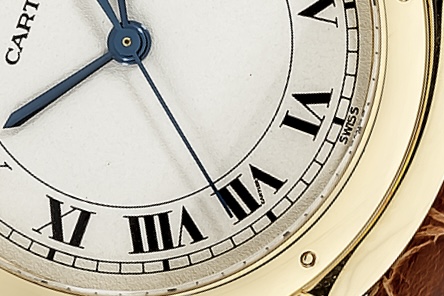
He could not contain his exhilaration and, abandoning all caution, he tore the receipt away and opened the bag. Inside was the watch box—an expensive but unfamiliar brand. He lifted the top and saw a gold watch with a brown crocodile strap, blued hands, and roman numerals on an ivory face. He had expected something in steel or titanium with a rotating bezel, something he could dive into the Great Barrier Reef with, or lead an assault into the jungles of Basilan with. But perhaps she was civilizing him further, completing his transformation into a proper gentleman. Perhaps she had asked the engraver to say this in script: “To my dearest Ronnie, For peace and joy in our golden years. Your loving Martha.” He could feel hot tears welling in his eyes. Oh, Martha, Martha, let us be happy, Lord give us time to be happy.

He turned the watch over and his face turned ashen beneath his mask. His chest tightened and he could not breathe.

The doctor rushed to his side. “General! General, are you all right? Look, if you want to see her—but only for a minute—”

The general looked up at him, and all the doctor could see was his eyes, but he recognized what he knew was the face of utter defeat. 
Penman No. 429: Becoming Miss Demeanor

Penman for Monday, December 6, 2021

(Photo from Pageanthology 101)

IF YOU’RE still wondering what to give your teenager or 20-something this Christmas (older folks can count as kids), I can recommend a highly unique book that came into my mailbox recently from a former student, titled A Creativity Mix Book by Hilom Pagasa. 

We’re often told—and it’s true—that Filipinos are a highly creative people, full of ideas and passions waiting to be expressed in some artful way. But even the most creative persons sometimes need help to turn that spark into a flame—something wondrous and illuminating, without burning down the house. This book can be immensely helpful in making that happen, even for people who may not think of themselves as being creative. There’s an artist and a poet in you, and this book will help you find it.

Written for these challenging times, it’s full of exercises, artworks, essays, poems, and other materials meant to make our Covid-benighted world bright and exciting again. The author describes herself as “just a housewife who wants to heal,” having battled bipolar disorder, but the book is about you, not her. Check it out on Lazada and other places online.

ALTHOUGH NOT much of a beauty pageant fan, I was dismayed to read about the recent experience of Ms. Gianna Llanes, a lovely young Filipina who flew to Mexico to represent the country at the coronation night of “Miss Glamour International 2021”—only to realize, along with five other candidates, that the whole thing was bogus, with no judges and no sponsors to be found for the big event. How anyone could dash the hopes of these ladies so summarily is beyond me, and I can only wish better luck for Gianna in her future endeavors, whether or not they involve chasing after a glittery tiara.

That sad episode also piqued my interest in “Miss Glamour International” and all these other new and relatively little known pageants that seem to have appeared all over the planet since I last took a long, hard look at Miss Universe in 1994. A quick check of Wikipedia turned up a lot more contests I’d barely or never heard of: Miss Global, Miss Globe International, Miss Grand International, Miss Heritage, Miss Model of the World, Miss Supertalent, Miss Supranational, and Miss Intercontinental, among others. As it turns out, the Philippines has figured prominently in many of these pageants, which should come as no surprise.

Back in the day, there were really only three big beauty contests to speak of—Miss Universe, Miss International, and Miss World (or four, if you add Miss Philippines, which was something of a prerequisite to all of the foregoing). It was, of course, Miss Universe that first captivated the Pinoy in 1952, when Armi Kuusela won the title and was promptly captivated by a Pinoy. (An aside I can’t resist making is the fact that Miss Kuusela, or Mrs. Hilario—she’s since become Mrs. Williams—attended a lecture I gave on the Philippines at the University of California San Diego fifteen years ago. We were introduced by a mutual friend, but I guess I was too starstruck to take a selfie.) 

I don’t need to reprise the long, illustrious list of Filipina beauties who’ve won titles at these pageants, major and minor, especially as I’m familiar with only the older ones, who enlivened my juvenile fantasies and who must be grandmothers by now. I guess what fascinates and also depresses me is how something that used to be a happy-go-lucky joyride—a pretty girl gets nudged or cajoled into joining a pageant, which strikes her as a ridiculous idea that the Mother Superior would surely object to, but she does it anyway just to see what it’s like—has been turned into a full-blown industry, with fashion designers and coaches for every quarter-turn. It’s no longer enough just to be fresh-faced and wide-eyed; you’ll need to be trained like a Marine recruit at boot camp so you can sashay in high heels beneath a canopy of feathers for which a whole ostrich farm died and answer questions about climate change and racial discrimination like a PhD candidate.

Online, there are even sites like missacademy.com that promise to turn you into Miss Demeanor, or whoever it is you dream of becoming: “We apologize for interrupting your stereotypical programming, but news flash… pageantry is getting a MAJOR makeover! Say goodbye to the trends of yesteryear and hello to MISS Academy–the future of pageants. Our training will get you primped, primed, polished and prepped in every aspect of competition. The skills you develop at MISS Academy are sure to give you an edge above the rest, in any arena of life, long after you retire the crown.” Not to be outdone, crowndiva.com offers private lessons in ten areas of training ranging from “wardrobe and accessories consultation and selection” to “pageant-specific makeup and hair lessons” for the price of $175 per hour. 

I have absolutely no doubt that our ladies have been prepared well enough by life in the Philippines to surmount any hurdles on their path to international (or universal) fame. I’m more worried by the possibility that, the way things are going, pageant organizers will soon run out of names for their ventures. Well, there’s still Miss Multinational, Miss Globalization, Miss Galaxy, Miss Cosmos, Miss Supernova, Miss Milky Way, Miss Constellation….

Penman No. 428: Wenchworld

Penman for Monday, November 22, 2021

OKAY, SO The X-Files assured us “The truth is out there,” CSI showered us with “epithelials” and impressed “blunt force trauma” into our noggins, Narcos made it cool to be a “patron,” and The Blacklist (or what I’ve seen of this nine-season, 178-episode epic so far) keeps sending us back to the “post office” or some other “black site.” K-drama, on the other hand, will forever be memorable to me for its wanton use of the word “wench.”

I’m not confessing that I’m a K-drama addict—for that, you can indict my wife Beng, who also happens to be my bedmate, which means that whatever she watches, so must I. Vicariously, therefore, I have learned that it is possible in the K-Universe to go back and forth between North and South Korea by parachute or tunnel, and even to go back and forth between Joseon and the present by holding on to a pretty girl and falling over; that a family’s most precious heirloom, on which everyone’s happiness depends, can be its secret kimchi recipe; that tall and tiny hats maketh the man; that Korean mafiosi travel with at least 300 OOTDs, to be worn just once—plus, of course, someone to keep them immaculately pressed; and that kissing in the rain is better than kissing under energy-saving light bulbs.

But most of all, the K-Universe is peopled by men (half of whom seem to be “unfilial sons”) and women (the younger half of whom are “saucy wenches”). It’s the “wench” part that gets me, because it’s a word I haven’t heard since I was slogging through my grad-school classes in Elizabethan Drama more than thirty years ago. 

Most famously, of course, in Shakespeare’s The Taming of the Shrew, Petruchio woos the intemperate Katherine: “Why, there’s a wench! Come on, and kiss me, Kate!” From Love’s Labours Lost, we get “The tongues of mocking wenches are as keen / As is the razor’s edge invisible.” The word is all over English in the 1500s and 1600s, embedded in Shakespeare and his contemporaries; Christopher Marlowe, in The Jew of Malta, has his character Barabas trying to brush away his sinful past when he is accused of fornication: “But that was in another country, and besides the wench is dead.”)

While we’re in this sort-of-scholarly mode, let’s look up “wench” to see what it was supposed to mean then. Etymonline.com gives us this block of information: 

“Late 13c., wenche ’girl, young woman,’ especially if unmarried, also ‘female infant,’ shortened from wenchel ’child,’ also in Middle English ‘girl, maiden,’ from Old English wencel, probably related to wancol ’unsteady, fickle, weak,’ from Proto-Germanic *wankila- (source also of Old Norse vakr’child, weak person,’ Old High German wanchal ’fickle’), from PIE *weng- ’to bend, curve’…. The wenche is nat dead, but slepith. [Wyclif, Matthew ix.24, c. 1380]. In Middle English occasionally with disparaging suggestion, and secondary sense of ‘concubine, strumpet’ is attested by mid-14c. Also ‘serving-maid, bondwoman, young woman of a humble class’ (late 14c.), a sense retained in the 19c. U.S. South in reference to slave women of any age. In Shakespeare’s day a female flax-worker could be a flax-wenchflax-wife, or flax-woman.”

Perhaps more helpfully, vocabulary.com tells us that “Wench used to mean young girl, so if you find someone describing a lovely wench in Shakespeare, it means a lovely girl. Wench comes from Middle English, and was a common word for girl, child, or servant. Over time it came to mean mainly serving girls, as in a bar wench, who serves drinks at a tavern. Eventually it came to mean prostitute. If you find wench in a love poem from the 16th century, think of it as an informal version of maiden. But if someone called you a wench last week, you should be insulted.”

Now, in the K-Universe, the use of “wench” transcends centuries, being equally useful in the period of the Three Kingdoms as it was under the Joseon dynasty, under Japanese annexation, and after the Korean War. (At a certain point, when you’ve watched hundreds of hours of K-drama—only because your wife is watching, mind you—you become something of an expert on Korean history, politics, and culture. I’ve even developed a taste for japchae, which I like to think of as Korean sotanghon.) It’s entirely possible for a Gangnam goon to call a confederate on his Samsung phone to say “Get rid of that insufferable wench!”

All that is probably because the Official Association of K-Drama Translators, at a crucial conference in Jeju, sat down to take up the word nyeon (“a term that refers to a female person in a degrading/derogatory manner”), with partisans debating fiercely between “bitch” and “whore.” The argument entered its second day, with tempers flaring and steel chopsticks dangerously stabbing the air, until the revered Dr. Sung Hyun-Lee, a fruit grocer by day and Confucian scholar and acupuncturist by night, woke up from his soju-assisted meditation and proposed the word “wench.” He had come across the word while watching Pirates of the Caribbean, and thought it perfect to describe a passing ship in the night.

Since all K-drama heroines can be wenches (as long as they have doe eyes, porcelain skin, and wispy hair—but wait, doesn’t that sound like all K-boys as well?), “wench” seems to have lost its pay-for-play connotations on Netflix, and now simply means “any pretty and young Korean woman who attracts and then annoys a nasty man—a cruel Joseon prince, a North Korean general, or a Seoul crime boss.” Problem solved.

The Real Subversion

(Image from The Washington Post)

A Statement by UP Professors Emeriti on the Banning of “Subversive” Books

November 11, 2021

WE, PROFESSORS Emeriti at the University of the Philippines, express our strongest support for the University Council of UP Diliman in its protest against the recent memorandum issued by the Commission on Higher Education in the Cordillera Administrative Region urging libraries in that region to remove “subversive” books and materials from their collections. 

Far from being of tangential concern to us in UP, this memorandum is an assault on academic freedom in all Philippine universities, as it sets the stage for further and possibly even more repressive measures in schools across the country. Any threat to academic freedom in any Philippine school or university is a threat to the whole system and has to be confronted instantly and squarely, regardless of whether individual institutions choose to deny the threat or to acquiesce to it. While the memorandum seems to present the removal of “subversive” books as non-compulsory, we all know how such directives, in the culture of our bureaucracy, can have coercive and chilling effects. 

We are appalled by the CHED Chairman’s subsequent statement describing the compliance of some state universities with the CHED memorandum as an “exercise of their academic freedom.” This is disingenuous if not perverse. Academic freedom is neither exercised nor asserted by submitting to its suppression. It is not the bureaucratic freedom of corporate bodies to do as they wish. It does not mean that academic leaders can invoke the principle as a personal right of administrators to define and delimit the intellectual endeavors of their entire constituencies. It is a transcendent principle that implies preserving sources of history and ideas for present and future scholars, even if these are currently unfashionable or politically incorrect. Its enshrinement in our Constitution prevents the State or other institutional bodies from restricting the rights of academics and limiting them in their intellectual pursuits.

The CHED Chairman also decries UP Diliman’s response to the CHED memorandum as a form of “disrespect” toward other institutions. But indeed the greater disrespect manifest here is that of the fundamental and constitutionally protected right of all Philippine institutions of higher learning to academic freedom. This is the real subversion taking place—the takeover of academic administrations and governance by political appointees more intent on executing some external agenda than performing their duty to defend academic freedom and excellence against all incursions.

Many of us still recall the darkest days of martial law, when our campuses and offices were raided by soldiers in search of “subversive” books. Professors and students were imprisoned for their beliefs, and books were burned for their content. Never again should the military or the government itself determine which books we can read and teach. Never should academic freedom be compromised in the name of national security. 

Again we must emphasize that academic freedom is prerequisite to academic excellence, which cannot prosper under conditions of political repression or oversight. As repositories of knowledge, university libraries must remain open to all books, so their ideas can be critiqued and contested in the classroom and laboratory, in the crucible of truth and reason. To ban books is to promote ignorance and intellectual servility, and to condone its practice is to betray one’s sacred calling as a producer and propagator of knowledge. 

We call on the CHED to revoke this ill-conceived memorandum and on our Board of Regents and university administrators to resist any efforts from within and outside UP to curtail academic freedom. We reaffirm the primacy of the faculty in all matters of academic policy and practice, of which our libraries are an integral part. To defend books and libraries is to defend democracy itself, whose strength derives from a diversity of ideas and beliefs. To that end, we recommit ourselves, and urge our colleagues in active service to do as well.

Signed:

Gemino H. Abad

Jasmin Acuña

Florian Alburo

Virgilio S. Almario

Violeta Bautista

Apolonio Chua

Ma. Cecilia Gastardo-Conaco

Gisela Concepcion

Lourdes J. Cruz

Virginia Cuevas

Jose Dalisay

Randolf S. David

Emmanuel S. de Dios

Ma. Serena Diokno

Erlinda Echanis

Cecilia Florencio

Cristina P. Hidalgo

Angelito Manalili

Ma. Lourdes San Diego-McGlone

Manolo G. Mena

Evelyn Mae Mendoza

Flora Elena Mirano

Solita Monsod 

Francisco Nemenzo

Epictetus Patalinghug

Ernesto Pernia

Rafael Rodriguez

Emerlinda R. Roman

Ramon Santos

Gerardo P. Sicat

Guillermo Tabios III

Michael L. Tan

Nicanor G. Tiongson

Amaryllis Torres

Lina Valcarcel

Corazon Villareal

Roy Ybañez

Rosario T. Yu