Qwertyman No. 143: I or AI?

Qwertyman for Monday, April 27, 2025

I’VE RECENTLY been asked to talk about literature in the time of artificial intelligence (AI) in a couple of conferences in Dumaguete and Manila. What that tells me is that, with AI’s emergence and growing popularity, there’s been much uncertainty, anxiety, and fear—even outright hostility—generated by the seemingly unstoppable intrusion of artificial intelligence not just into literature but into almost every aspect of human life and society. As I’ve said before, depending on how you see and use it, AI is either God’s gift to humanity or the destroyer of civilizations. 

While it has been hailed for its contributions to such fields as medicine and criminology—shortening diagnostic procedures and sharpening digital forensics—AI’s application to less mechanical endeavors is more fraught with both ethical and technical questions. Studio Ghibli’s Hayao Miyazawa, for one, has forsworn the use of AI in his work, calling it “an insult to life itself.” 

For writers and other creatives, the big questions are: Will and can AI replace the author? Is AI capable of artistic imagination? Should writers, publishers, and readers feel threatened by its future development? Might there be a positive role for AI in literary creation? 

Now, we can be very brave and declare that the worst piece of writing or art done by a human is still better than the best of what AI can produce. I’ve heard many authors proudly insist that “AI can never replace me!” But do you honestly think that’s true, and will the readers of the future—say, the consumers of popular fiction—care? The sobering fact is that there is so much bad art and bad writing done by real humans that it shouldn’t be too hard to artificially produce something better, for which people will gladly pay. 

I know that this will strike some of us as being crassly commercial, but it would be naïve to deny that much of what know to be culture today has been commodified—produced and sold as entertainment, whether it be a book, a movie, a concert, a computer program, or the hardware with which to access them. These are all media in which AI is already playing an increasingly important role—initially, perhaps, merely as a facilitator, a simplifier of complex or difficult tasks, or as an aid to the imagination, but also as a co-creator or collaborator, such as in the generation and animation of images. 

Given the fact that most of us produce art to sell—and why shouldn’t we, especially when we promote the idea of “creative industries”—the entry of AI into our thought processes and methods of work could be a matter of survival for many. The question is, will it improve the mediocre, or degrade the excellent? Can we excel without it, or because of it?

Early AI’s clumsy mistakes or “hallucinations” are worth a laugh, but I’m not sure how long we’ll be laughing; AI’s present ineptitude simply means it has a lot to learn—and it will, with the kind of training it’s being fed off our books, our texts, our manner of writing. It will only be a matter of time—I’d say less than a decade—before AI can mimic the best of global writing especially as literary texts get digitized and tossed into the meatgrinder, until it can produce a decent if not impressive approximation of certain styles and approaches. 

(For AI professionals, the next phases of the AI revolution will move into Artificial General Intelligence or AGI, at which point AI can match human intelligence, and ASI or Artificial Super Intelligence, when AI becomes self-aware enough to improve and replicate itself without human intervention and possibly beyond human control. These scary scenarios will not take, they say, a century to happen—some experts predict that AGI could be realized as early as 2027.)

What’s going for us is that while literary styles can be copied, the human imagination is far richer and stranger than we think. AI tends to homogenize; the human artist strives to be unique. Even so, researchers are already talking about algorithmic imagination and experimental humanities as “true collaborations with culture machines.”

Given that it’s inescapable, I propose that instead of fearing it, ignoring it, or maligning it as I’m sure many of us are inclined to do, we study AI and use for what it might be able to offer in aid of the imagination—as unsettling or unappetizing as that proposition sounds.

We’re already tapping AI every time we use Google, and no one seems to mind. I don’t mind admitting that I have used AI—not in fiction but in creative nonfiction or CNF, specifically in writing the biography, where I ask AI to summarize and organize biographical material that I would have eventually found on my own, anyway—in days rather than seconds. 

I suspect that the use of AI in CNF is much less troubling for writers and theorists than its employment in, say, writing the novel or the poem, which we have been trained to think of as more personal, more “us,” than nonfiction. We will yield CNF to AI, but draw the line at fiction and poetry, where we feel we should resist the intrusion of the beast or the machine into the recesses of our imagination. 

I wonder, however, how long this fortress will hold, or what the first crack in the wall will be, if it isn’t there already. I’m pretty sure that somewhere out there, a plodding novelist is already using AI to chart a tree of plot possibilities—What will happen if Maria marries Oscar? What if they decide to live in Davao instead of Baguio? And so on. I wouldn’t do this myself, because the fun of writing for me is in working out the future of my characters in my head. 

And then again I write fiction for the love of it—unlike almost all other kinds of writing that I do for a living. But if I were a novelist under contract to produce a novel a year, I’m not so sure that I wouldn’t seek AI’s help to lighten my load and get the job done. So is AI OK for money but not for love? Is that what it all comes down to?

So right now we have many more questions than answers, and at the pace the world is changing, most answers we come up with will soon be obsolete anyway. But the basic questions will remain, the most vital of which could be, when we say “I am,” is that “I” me, or is it AI speaking?

Qwertyman No. 140: The City of Stories

Qwertyman for Monday, April 7, 2025

THIS PAST weekend, I was down in Dumaguete City with National Artist for Literature Resil Mojares, historian Ambeth Ocampo, and scores of other writers for the 2nd Dumaguete Literary Festival. At my age, I’ve frankly tired of going to literary festivals, conferences, and workshops, preferring to work quietly at home—Dr. Mojares apparently feels the same way—but we couldn’t resist the allure of Dumaguete, a city central to the development of Philippine postwar literature, and always well worth visiting on its own for its gentle charms.

I personally have much to thank Dumaguete for, for what it contributed to my own budding literary and academic career. Early in 1981, shortly after I had returned from my first visit to the US, I received an invitation from Dr. Edilberto Tiempo to join the Silliman Writers Workshop which he and his wife Edith—the poet and future National Artist—had started two decades earlier upon their own homecoming from America. 

I had dropped out of college for a decade by then, and was working at NEDA, which had sent me to the US for an observation tour. What that trip to the American Midwest—mainly the campus of Michigan State in East Lansing—did for me was to rekindle my interest in learning. Dr. Tiempo’s invitation could not have come at a better time: a summer devoted to talking about poetry and fiction at Silliman University felt dreamlike, and by the time the workshop ended, my head spinning with magical lines from Robert Graves, I had resolved to quit my job, go back to UP, and just study, write, and teach for the rest of my life. And that’s what happened.

I wasn’t alone in that kind of transformative experience; as the country’s oldest writers’ workshop, the Silliman summer workshop became a virtual rite of passage for young writers, especially in English (some writers in Filipino have also attended, with works in translation). Silliman itself (older than UP by several years) has produced many of the Philippines’ finest writers, aside from the elder Tiempos—among them Ricaredo Demetillo, Aida Rivera-Ford, Merlie Alunan, Leoncio Deriada, Cesar Ruiz Aquino, Elsie Coscolluela, Rowena Tiempo-Torrevillas, Marjorie Evasco, Lakambini Sitoy, Artemio Tadena, and Myrna Peña-Reyes. It also has a strong performing arts tradition, contributing the likes of National Artist Eddie Romero, Gilopez Kabayao, Amiel Leonardia, Junix Inocian, and Elmo Makil, among others.

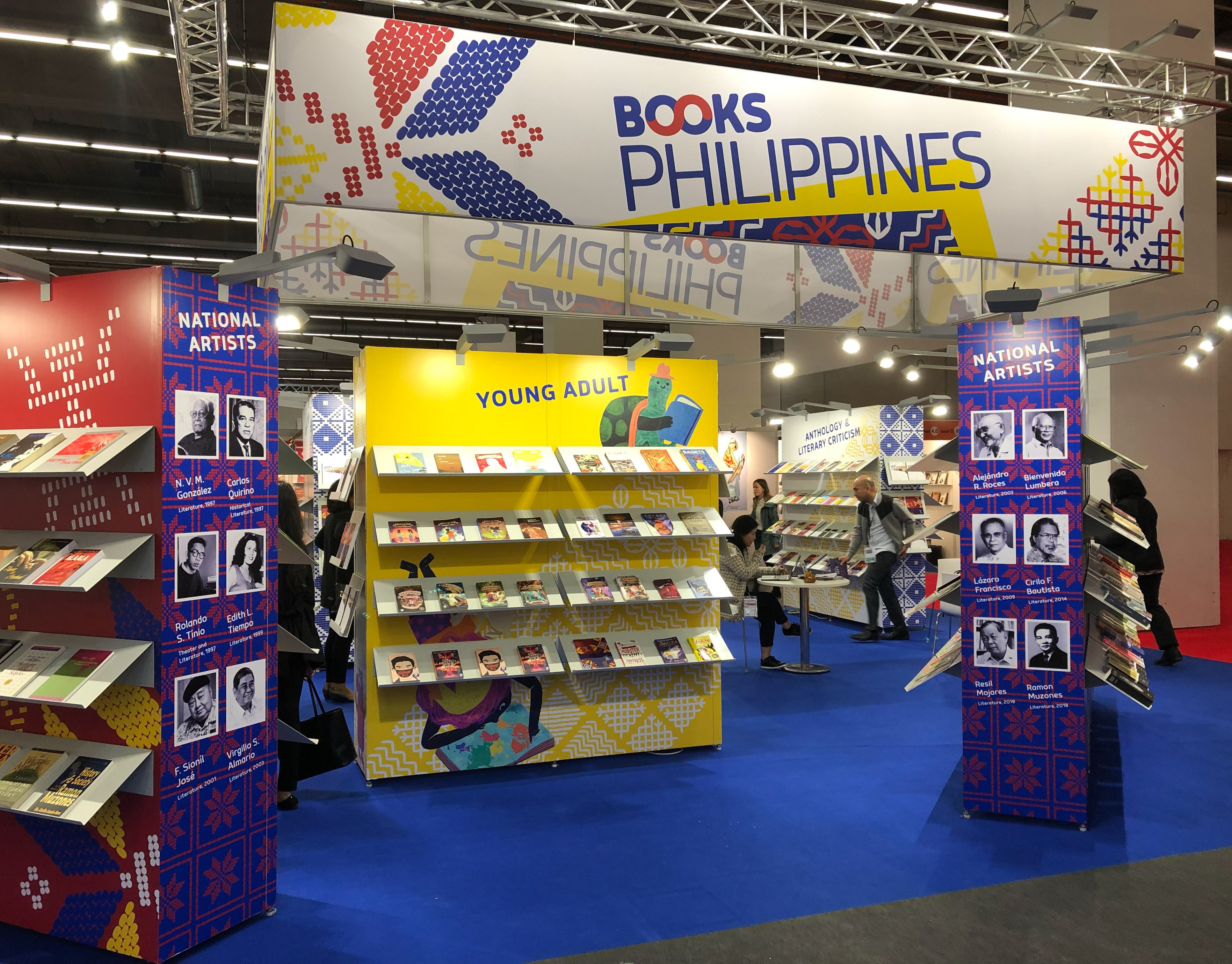
For all these, Dumaguete has been formally nominated to be designated as a UNESCO City of Literature—one of many such distinctions listed under UNESCO’s Creative Cities Network program that was launched in 2004 to recognize and celebrate cities around the world—350 of them form more than 90 countries to date—for their signal achievements in Crafts & Folk Art, Design, Film, Gastronomy, Literature, Music, and Media Arts. So far, 53 cities in 39 countries have been named Cities of Literature—among them Barcelona, Heidelberg, Iowa City, Lahore, and Norwich. (Iloilo has already been named a City of Gastronomy, and Quezon City is vying to be designated a City of Film.) With the Philippines serving as this year’s Guest of Honor at the Frankfurt Book Fair, Dumaguete’s recognition as a UNESCO City of Literature will raise our global cultural profile even higher, and let the Philippines be known for more than Boracay, Manny Pacquiao, and Imelda’s shoes.

Leading that charge for Dumaguete is Silliman University literature professor Ian Rosales Casocot, one of our best fictionists and co-director of the festival with Gayle Acar. Working with the Dumaguete City government, the Department of Trade and Industry, and the Buglas Writers Guild which Ian heads, Ian notes that aside from developing writers, “Dumaguete itself has been a constant subject of many literary works, from novels to poetry, from essays to plays. It is high time that Dumaguete is recognized for its role in shaping literature in our corner of the world.” The well-attended Dumaguete Literary Festival, now on its second edition, offers proof positive of that city’s continuing centrality to our literary life and culture. 

We had been invited to share our views on various aspects of Philippine literature in this age of artificial intelligence. I joined a panel of writers dedicated to that specific topic—or, as they put it, “Can AI Win a Nobel Prize for Literature?”—which happened to be something I’ve given much thought to.

Understandably, there’s been a lot of fear and anxiety—even outright hostility—generated by the emergence of AI in nearly every aspect of human life and society. Studio Ghibli’s Hayao Miyazawa, for example, has forsworn the use of AI in his work, calling it “an insult to life itself.” While it has been hailed for its contributions to such fields as medicine and criminology—shortening diagnostic procedures and sharpening digital forensics—AI’s application to less mechanical endeavors is more fraught with both ethical and technical questions. 

In previous lectures and again in Dumaguete, I showed how—at this point—AI poses little threat to the writer of truly good and imaginative literature, by yielding execrable responses to such prompts as “Write a paragraph about a summer night in Spanish Manila in the style of Nick Joaquin.” It’s worth a laugh, but I’m not sure how long we’ll be laughing; AI’s present ineptitude simply means it has a lot to learn—and it will, with the kind of training it’s being fed off our books, our texts, our manner of writing. It will only be a matter of time—I’d say less than a decade—before AI can mimic the best of global writing. For me, the best response is neither to hate nor to ignore it, but to understand it and employ it for helpful uses we have yet to find. (We’re already tapping AI every time we use Google, and no one seems to mind.) It should even be possible for authors to creatively interact with AI in what I’m calling a game of prompts.

What we can reasonably certain of is that while literary styles can be copied, the human imagination is far richer and stranger than we think. AI tends to homogenize; the good creative writer strives to be unique. Like Dumaguete, there’s a whole city, a labyrinthine cosmopolis, of stories in every writer’s mind to be discovered and explored.

Penman No. 473: New Light on (and from) the Philippine Short Story

Penman for Sunday, April 6, 2025

FEW MAY have noticed, but this year, 2025, marks the centenary of what has been widely acknowledged to be our first classic short story in English, Paz Marquez Benitez’s deathless “Dead Stars.”

As I’ve often observed as both a writer and teacher of Philippine literature, there’s probably no literary form more popular among Filipinos than the short story and its predecessors—myths, legends, folktales, and such stories that draw on the power of narrative to tell and teach us something about human life. 

A lot of this has to do with the fact that people and cultures everywhere have made use of stories to make sense of things—to establish causality in human actions—often as a way of prescribing and also proscribing certain behaviors. Stories were there to learn from, like the biblical parables, Aesop’s fables, and the creation myths. The more exciting and entertaining the stories were, the easier the learning happened. Even the mere recognition of oneself in a story that could have taken place a thousand years ago in a place across the planet makes our lives seem more meaningful.

In the Philippines—as it did in the West, where the modern short story took form—the short story was a staple of prewar weekly magazines like the Sunday Tribune, where a story written by an American author would be matched by a local story during what our early literary scholars like Leopoldo Yabes would call our period of apprenticeship. This was in English, but the short story in Filipino (then Tagalog) and other Philippine languages had developed even earlier, and continued (as it continues) to explore new forms and material.

Why the short story and not the novel? That’s another long discussion to be had, and I’ve addressed it in a lecture titled “Novelists in Progress,” but the short of it is that, well, we Pinoys like things in small doses (think Nick Joaquin’s “heritage of smallness”), and the short story satisfies our craving for a touch of fiction and fantasy in our ordinary lives. We’re not marathoners, but great sprinters; we’re not summiteers or navel-gazers, but masters of the street and alley. 

And so, over the past century, important anthologies of the Philippine short story have been published, tracking the development of the genre and its practitioners, from Yabes’ landmark Philippine Short Stories 1925-1940 (a project continued by Gemino Abad for 1956-2008) to Isagani Cruz’s Best Philippine Short Stories of the Twentieth Century (2000). Outside of English, Mga Agos sa Disyerto edited by Efren Abueg came out in 1964, proclaiming new directions for Tagalog short fiction, and the much-needed Ulirat: Best Contemporary Stories in Translation from the Philippines was published in 2021, edited by Kristine Ong Muslim.

But the 21st century is now a quarter of the way through, and just in these past two decades or so, a fresh bumper crop of brilliant new stories has built up, awaiting harvest.

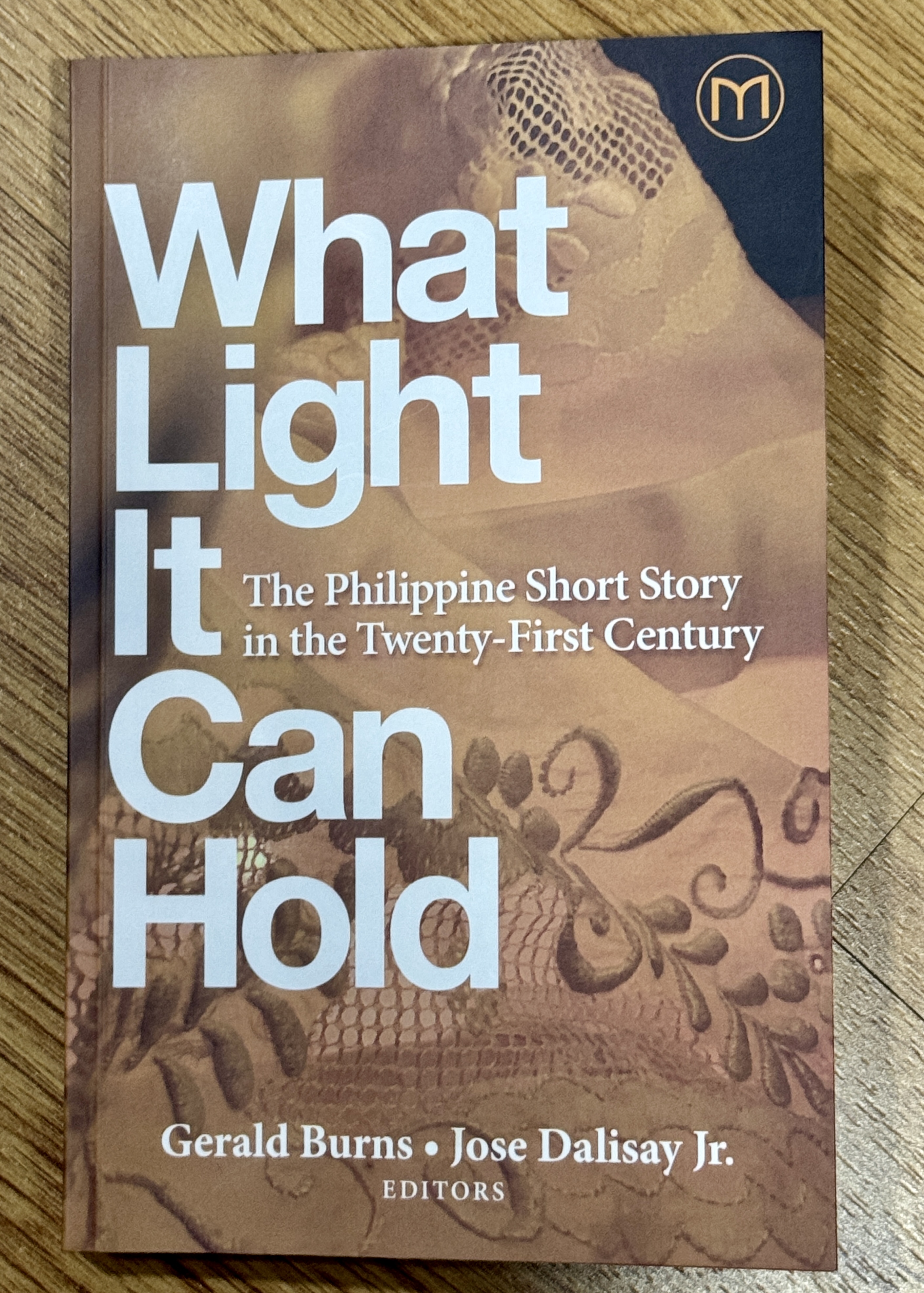
Five years ago, an American friend named Gerald “Jerry” Burns—a fellow academic and a scholar of Philippine literature in English, now Emeritus Professor at Franklin Pierce University in New Hampshire—decided to do just that: review the best of the newest Philippine short stories and produce a selection with which to introduce them to the world. He needed a collaborator, and having worked with Jerry earlier when he was a Fulbright professor at our English department in UP, I agreed to co-edit the volume with him. Because of our backgrounds, our stories would be mainly those written in English (and the excellent Ulirat had already covered much more ground in the other Philippine languages than we ever could) but Jerry wisely insisted that we should have at least some representation of non-English stories in translation in the book, if only to lead the reader to explore more in Ulirat.

The selection process was predictably long and bruising, with all the political, aesthetic, and practical considerations that go into anthologizing, but in the end we came up with 18 stories written by both familiar and fresh names, from within and beyond the Philippines, including the diaspora: Dennis Andrew Aguinaldo, Dean Francis Alfar, Mia Alvar, John Bengan, Ian Rosales Casocot, Richard Giye, Vicente Groyon, Ino Habana, Carljoe Javier, Monica Macansantos, Perry Mangilaya, Doms Pagliawan, Ma. Elena Paulma, John Pucay, Anna Sanchez, Larissa Mae R. Suarez, Lysley A. Tenorio, and Socorro Villanueva. We also found an agreeable and supportive publisher, Milflores Publishing, fortuitously run by Andrea Pasion-Flores, herself a fine fictionist who understood the need for a new anthology like this, especially on the threshold of the Philippines’ participation as Guest of Honor in this year’s Frankfurt Buchmesse.

The book’s title, What Light It Can Hold: The Philippine Short Story in the Twenty-First Century, was suggested to Jerry by an encounter with the piña weavers of Kalibo, Aklan, and a caption he saw that said: “How fragile a single thread of piña is, how delicate, but look how much light it can hold.” He explains that “What Light… is intended to recognize the limited capacity of the Philippine short story in this period to offer any widespread or definitive illumination of the nation’s life and culture. At the same time, a more expansive understanding of that title is possible. For the short story, as will be suggested in the next pages, is a signature Philippine product, too. And these slender narratives, fashioned by their makers with a skill, patience, and devotion comparable to the piña weavers’, bring what light they can hold to vital areas of contemporary Philippine and larger human experience.”

No anthology project will be without its perceived failures and omissions, and Dr. Burns and I remain fully open to criticism in that respect. But we believe the sympathetic reader still stands to profit from both the selections and the introduction, penned largely by Jerry, that makes salient observations on the changes that have taken place in this most favored literary form of ours over the past century. Happy reading! (What Light It Can Hold is available on Lazada and Shopee.)

Qwertyman No. 137: ICC Ex Machina

Qwertyman for Monday, March 17, 2025

IN PLAYWRITING and fiction, we call it deus ex machina—literally, the “god out of the machine”—which has come to mean a miraculously happy or fortuitous ending to a long and agonizing drama. 

You’ll find it, for example, when a virginal heroine—beleaguered by dirty old men and rapacious creditors—seems on the brink of yielding her precious virtue, tearfully praying on her knees for deliverance, when a kindly lawyer comes knocking on her door to announce that a distant uncle has passed away, leaving her his fortune. We rejoice with her—despite feeling, at the same time, that divine intervention came a bit too conveniently. This is why I admonish my students to refrain from employing deus ex machina in their stories, because in today’s hard-bitten and cynical world, nobody really believes in it anymore, and readers simply feel deprived of a more rational ending.

Like many things we know about drama, the idea goes back to the ancient Greeks, whose playwrights used it to great effect, Aeschylus and Euripides among them. Euripides most memorably turned to deus ex machina in Medea, where the title character—having been cheated on by her husband Jason—kills Jason’s mistress and their own two children. Guilty both of murder and infanticide, Medea seems hopeless and bound for damnation—until a machine, actually a crane shaped like a chariot drawn by dragons, emerges from behind the stage. It has been sent by Medea’s grandfather, the sun-god Helios, to pluck Medea away from her husband and from the coils of human justice and deliver her to the safety of Athens.

Was it fair of the gods to save Medea from the punishment awaiting her on earth? It’s arguable, but more than a device to resolve a messy plot, the “god out of the machine” was meant to remind the Athenian audience that a higher order of justice obtained, and that when humanity became too entangled in its own predicaments, then it was time for the gods to take over.

A lot of this swept through my mind last week as the drama of Rodrigo Duterte’s arrest and express delivery to the International Criminal Court at the Hague played out on TV and social media. Had the gods come out of the machine to impose divine justice? It had seemed nearly impossible a few years ago, when Digong was still flaunting his untouchability and taunting the ICC to come and get him. Well, we all know what happened since then—and they did. 

We understand just as well that the Marcos administration performed this operation not out of some abounding sense of justice or because it had suddenly acquired a conscience and realized the evil with which it had “uniteamed” to electoral victory in 2022. “We did what we had to do,” President Marcos Jr. explained on TV, with deadpan truthfulness—referring superficially to the Philippines’ obligation to honor its commitment to Interpol, but subtextually to the irresistible opportunity to cripple someone who had become a political arch-enemy, and providentially gain the support of masses of people harmed and disaffected by Duterte’s butchery.

The outswelling of that support—at least for Digong’s arrest and deportation—was spontaneous and sincere. Not since the Marcoses’ departure at EDSA had I felt such relief and exhilaration—and surely the irony would not have been lost on BBM, who knows what it was like to leave on a jetplane, kicking and dragging, for an uncertain future.

And what I say next may go against the grain of everything I have said and thought about the Marcoses, but no matter what ulterior motives may have come into play in this episode of the Duterte-ICC saga, I feel thankful for the resolve and the dispatch that BBM showed in this instance. Along with his administration’s resistance to Chinese aggression in the West Philippine Sea, this will be certain to count among his most positive achievements. 

The great difference between this drama and Medea, as an example of deus ex machina, is that the intervention of the ICC (with BBM helpfully providing the crane) isn’t going to save Duterte, but rather the people whom his presidency soaked in blood. But as with Medea, the “gods” step in when local justice proves impotent or inadequate (and did anyone really believe that Duterte would be hauled before and convicted in a Philippine court of law, when even the Maguindanao Massacre took a full decade to produce convictions for the principals?).

The question now is what next—not for The Great Punisher, for whom a prolonged trial at a cushy court will not be punishment enough, but for the Marcos administration, which suddenly finds itself with more political capital at its disposal, and yet also put itself at greater risk? Surely it must also realize that it not only has committed itself to tearing down the entire House of Duterte and confronting the many millions of voters they still represent, but that it has also set itself up for higher expectations, on pain of suffering the same ignominious fate?

In the hopeful bit of theater playing in my mind, I imagine BBM parlaying the bonus of goodwill he has earned from this maneuver into a broader if not genuine resolution to distance himself further from his predecessor and create a freer and more just society. There are clear and immediate steps he can take in this direction. The first gesture would be the release of all remaining political prisoners, followed by the abolition of the NTF-ELCAC, which no longer serves any useful purpose (not that it ever did). He can root out and punish the enablers and perpetrators of Oplan Tokhang and eliminate oppression and corruption from the mindset of Philippine law enforcement. And then he can begin reforming Philippine governance, starting with the quality of the people he seeks to bring to power—senators, congressmen, and the like.

But then that would be the ultimate deus ex machina, and we have been shaped by experience into a stubbornly disbelieving lot.

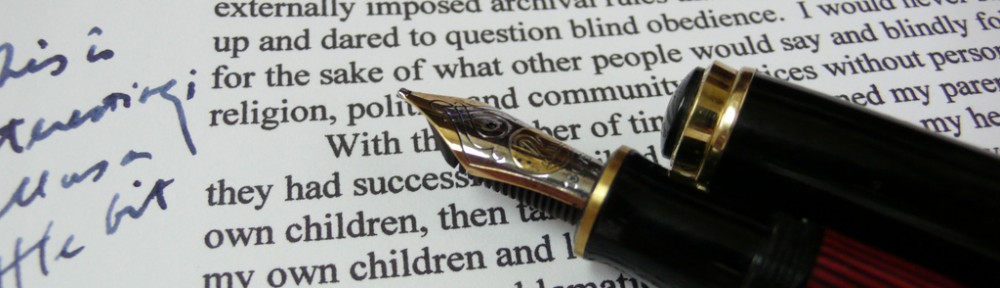
Penman No. 472: Manila Pen Show at Manila Pen

Penman for Sunday, March 9, 2025

FOR A group that began in our Diliman front yard with less than 20 people almost 17 years ago, the Fountain Pen Network-Philippines (FPN-P) has come an awfully long way. With over 14,000 members online, meeting physically by the dozens in regular “pen meets” held in hapless cafes and restaurants, and thousands more informal recruits among families and friends, FPN-P should really register soon as a partylist devoted to “spreading the joy of handwriting with fountain pens.” We have active chapters in Baguio, Bacolod, and Davao, among other places; quite a few members even reside abroad but keep in regular touch through the group’s FB page.

As I’ve often written here before, the allure of fountain pens lies in their rediscovery by digital natives as a means of self-expression—of recovering one’s uniqueness in a universe homogenized and anonymized by computer code. Our ranks include Supreme Court judges, Cabinet undersecretaries, artists, professors, doctors, and lawyers, but most of our members are young professionals in their twenties and thirties for whom writing in cursive is itself an adventure. There are probably hundreds of thousands of pen fanciers (as they used to be called) around the world, mainly in the US and Europe, but what distinguishes FPN-P is its youthful vibe and the infectious fanaticism of its members.

Some fall in love not just with the pens but with penmanship itself, and become calligraphers. Others grow enamored of inks and papers of a bewildering assortment—inks that shimmer and sheen, combining lustrous gold with a deep oceanic blue, and papers that range from silken smoothness to almost parchment-like toughness.

Next weekend, hundreds of these penfolk (and the general public) will converge at the 5th Manila Pen Show that will be taking place March 15 and 16 at—fittingly enough—the Peninsula Manila. 

Top pen makers and dealers from Japan, Hong Kong, Singapore, and Malaysia have been coming to the MPS, attracted and impressed by the level of sophistication—and the deep pockets—of Filipino pen collectors. While the MPS has pens for everyone at every price point—from the low hundreds for students to six figures for the big guns—Filipino pen collectors and users at any level have been known for their deep knowledge and obsessive familiarity with all aspects of the hobby. 

They can tell you how Japanese artisans produce the various kinds and textures of urushi resin that renders pen surfaces impermeable to even acid. They can discuss minuscule but hundred-dollar differences in Parker Vacumatics from the 1930s, or argue passionately for vintage Pilot Myus and exotic inks like the perfume-scented De Atramentis.

This year’s MPS will not only bring sellers of pens and assorted writing paraphernalia, but also feature workshops and panel discussions on topics ranging from nature journaling and nib care to Art Nouveau and Deco pens (and, most intriguingly, “Your Pen and Your Brain: A Love Story,” to be conducted by Gang Badoy Capati). A group of advanced collectors will discuss the finer points of pen connoisseurship (including that point when pens stop just being writing instruments but become jewelry or even art). 

I’ll be on the Art Nouveau and Deco panel, but this time, instead of discussing pens (which others will do this time, all of them experts at particular models and periods), I’ll talk about the peripherals and accessories of the writing trade—the desk pen sets, inkwells, and ink blotters of the kind you would have seen in a typical office desk of the 1930s. 

As with past Manila Pen Shows, nibmeisters or professional pen repairmen will be around to fix that Montblanc nib you dropped on the kitchen floor or your Lolo’s gunked-up Sheaffer that’s been lying in a drawer since he died. One thing most people don’t realize is that most pens, no matter how old, can be fixed (I myself routinely revive 100-year-old Parker Duofolds among other vintage pens in my workshop—you’ll need some special skills and parts, but it’s not rocket science).

You don’t have to be an FPN-P member or even a current fountain pen user to come and enjoy the show. Indulge your curiosity and feel free to see, touch, and test the pens on display (with the exhibitor’s permission, of course, as some pens may require very careful handling). Most sellers will take credit cards or online payment. There will be a modest charge for entry and for the presentations, but all funds raised will be donated after expenses to the Save the Children Philippines, FPN-P’s sponsored charity for the past MPSes. You can find more details about the show at https://manilapenshow.helixpay.ph.

(Image thanks to Raph Camposagrado)

Penman No. 471: A Promise to Keep

Penman for Sunday, February 9, 2025

Now and then we come across stories of foreigners who fall under the spell of the Philippines so completely that wherever else they go, the Philippines and its panoply of wonders—its mangoes, its waters, its sunsets, and above all its smiling people—stay with them, urging them to return, in spirit if not in person.

One such visitor was my good friend Julie Hill, who with her late husband Arthur first came to Manila in 1968 on a mission to help improve Philippine education, among other concerns. Almost six decades later, after having traveled the world and settled in America, Julie’s thoughts and affections remain bonded to this country and to its future. In the twilight of her life, she has decided to gift poor but bright young Filipinos with a life-changing opportunity to study at the University of the Philippines, from the forthcoming sale at auction of two paintings by National Artists HR Ocampo and Ang Kiukok.

Born in Alexandria, Egypt to Greek parents, Julie Hill went on to a fulfilling life in the United States and around the world with Arthur, who represented the Ford Foundation in the Philippines. Forced to leave Egypt when Nasser took over, Julie found a scholarship for her master’s degree in chemistry at the University of Minnesota. There she met Arthur, an Australian taking his PhD in Education and Mathematical Statistics. 

The two fell in love, married, and embarked on a lifelong adventure around the world—to Western Samoa, Thailand, Indonesia, and Afghanistan, where Arthur’s expertise in education and agricultural development was much sought after. Arthur passed away in 2002, but Julie went on to her own career as an international marketing executive for Lucent and later AT&T. Since retiring at their home in Rancho Sta. Fe, California, she has written and published five books of travel and memoirs—all of which I edited after being introduced to her by our mutual friend Jimmy Laya, turning our business connection into a long and dear friendship.

From the first of those books, A Promise to Keep (2003), come many vivid impressions of a country and society transitioning to modernity, troubled but brimming with energy and promise. Arthur got busy working with UP and the International Rice Research Institute, among others, and the Hills became good friends with the rising technocrats of the time—Cesar Virata, Gerry Sicat, and Jimmy Laya. It was Laya—who remains close to Julie—who introduced her to the local art community.

“The art scene was vibrant,” Julie would write. “Manila, a centuries-old entrepot, was rich in art and culture, and we were privileged to visit many private art collections….

“Art galleries flourished. A self-exiled painter stormed into town and set new price ceilings. The audience increased. So did the column inches devoted to art in the newspapers and magazines….

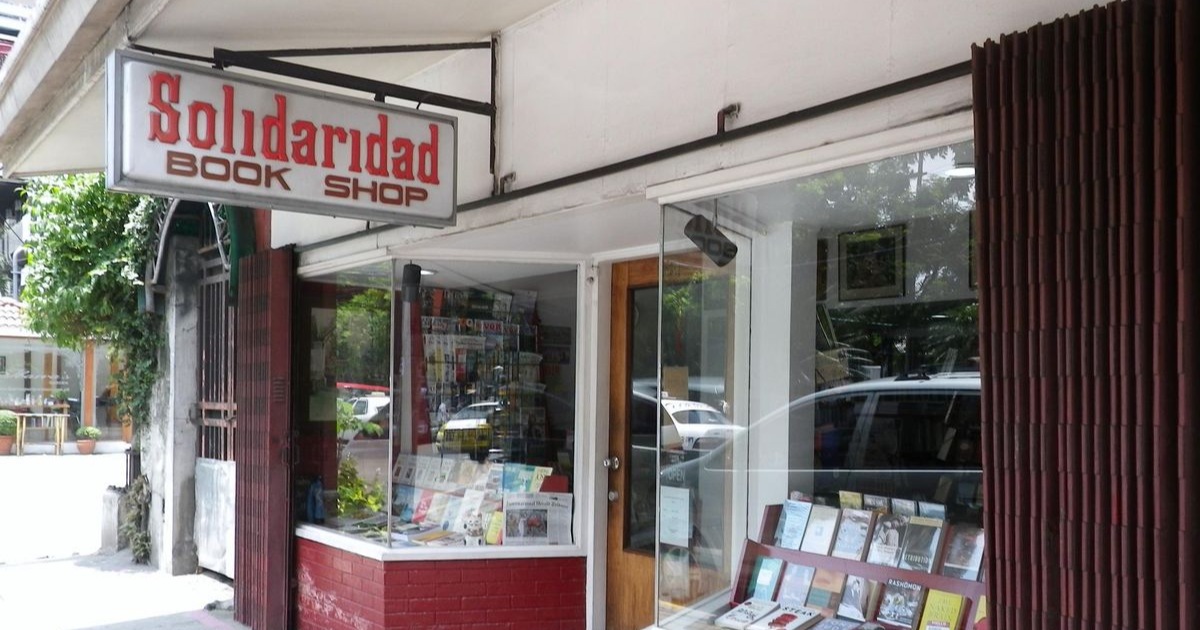
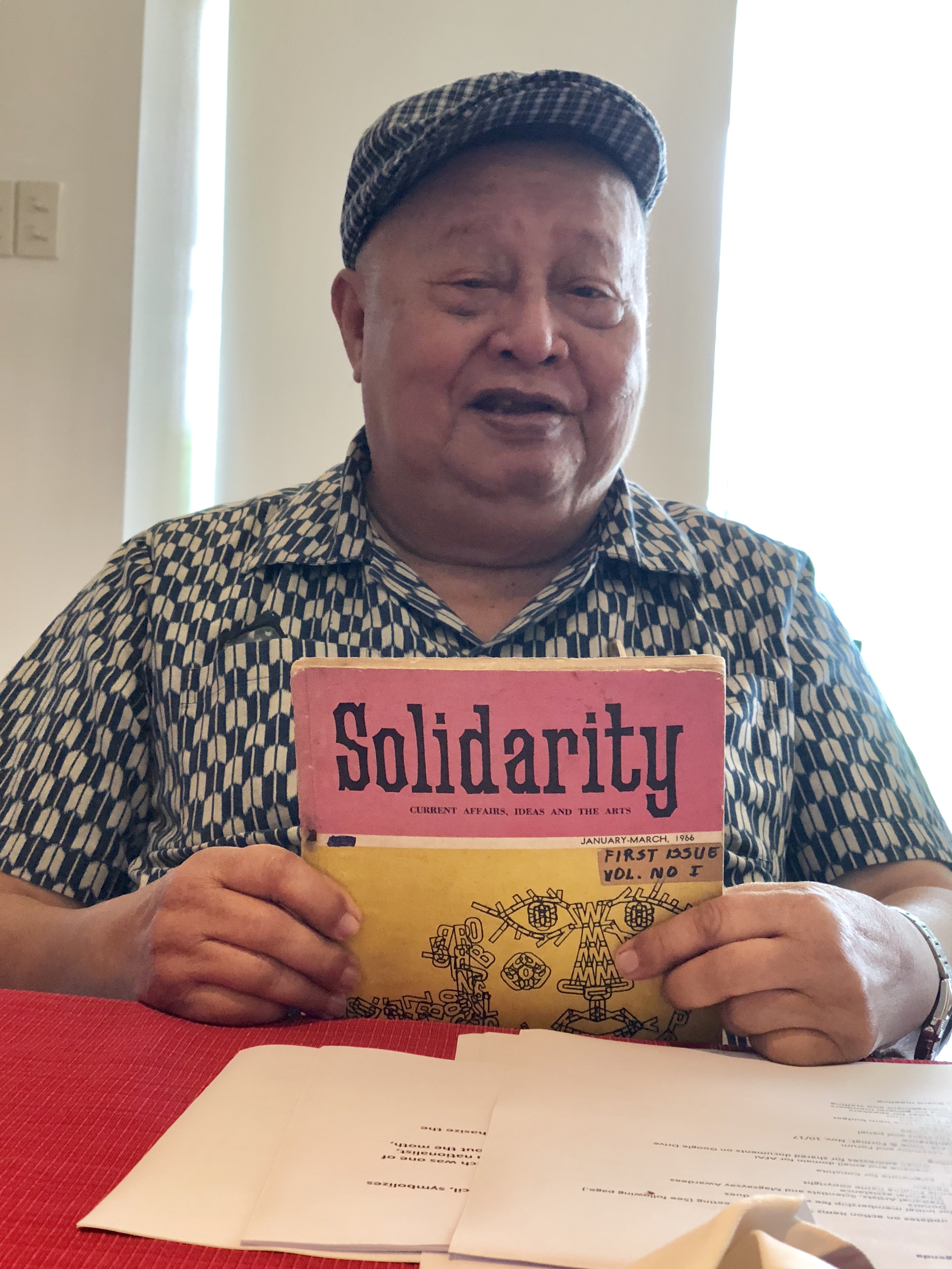
“The Luz Gallery in Makati was run by Arturo Luz, a leading painter, known for his high standards of professionalism. His gallery gained the trust of the public and the artists. The Solidaridad gallery and bookshop was located in Ermita, run by novelist Frankie Sionil Jose. Solidaridad was the middle ground between the established artists exhibiting at Luz and smaller galleries where new talent was championed. You could find superb examples of prints, drawings, miniatures, relief metal sculptures, collage, photographs, and paintings all over Manila.

“We were interested in meeting the artists and visiting their studios, but were reluctant to pay the gallery prices. If we liked the work of a particular artist, why not buy directly from him or her? This was how we searched for and found the home of Hernando Ocampo.”

“Hernando Ocampo was a pure abstract expressionist with a daring originality in his paintings. His work was unmistakably Filipino, ascribing this national character to his unique, tropical colors. A typical Ocampo painting is not unlike a honeycomb, a complex weave of color and tone with each individual cell suggesting a large, more real life form. His work is tropical and warm and suggestive of symmetry. The colors and shapes seem to dance before the eyes. His home in Maypajo was a mecca for friends, admirers, and collectors. He had an open house on Sundays. Good food and hard and soft drinks were ready for guests. Visiting Ocampo, we felt welcomed not only by the artist but also by his family. We commissioned a painting. Sketches were drawn; we followed the progress of our painting with our weekly Sunday visits, and sampled the wonderful pancit, that ubiquitous Filipino noodle dish, that was offered. We photographed the progress of his work. He completed the ‘Song of Summer’, a mastery of color in 17 different shades of red. It would hang proudly in our home in California, and continue to provide intense, pleasurable excitement, another reminder of our times in the Philippines.” (Note: Ocampo’s sketch and color guide for the painting will go with the artwork at auction.)

The Hills left Manila for Indonesia shortly after martial law, but on a return visit in the early 1980s, their old friends at the Ford Foundation presented them with another painting by another Filipino master, Ang Kiukok.Julie recalls seeing several works by accomplished Filipino painters in the foundation office, purchased back when they were far more affordable, and this may have been one of them. Like the Ocampo, it traveled with the Hills around the world all the way to Rancho Sta. Fe, where I have been visiting Julie over the years (our daughter Demi conveniently lives nearby in San Diego).

It was during our most recent visit there that Julie brought up the idea of donating her two paintings for the benefit of poor UP students. A lifelong but quiet supporter of students as far away as Mindanao and a staunch believer in the transformative power of education, Julie also honored me by anonymously (but no more) endowing the Jose Y. Dalisay Jr. Professorial Chair in Creative Writing at UP, over my embarrassed pleas to put it in her name.

This time, she wants the money to go to UP’s poorest—specifically, those exceptionally bright and mainly provincial students who, against all odds, pass the UPCAT but fail to enroll, lacking the means to afford the cost of living on a UP campus. We’ll need to work out the mechanics, but this will go much farther than professorial chairs in changing Filipino lives.

“I had a privileged education in Alexandria and was fortunate to receive a scholarship for my graduate education in America,” Julie says. “During our years in Manila, Arthur and I developed a deep affection for the people of the Philippines, and I am hoping that this donation will contribute to creating a generation of talented and hopeful Filipinos who will serve their country well.”

The Ocampo and Ang Kiukok paintings will be sold at auction by Leon Gallery on February 22. I pray that generous buyers will help Julie keep her promise to the Filipino people.

Penman No. 470: A Collector’s Christmas

Penman for Sunday, January 5, 2025

MY WIFE Beng and I in San Diego, California for our first Christmas in the US in ten years, visiting our daughter Demi and her husband Jerry. San Diego’s one of those perennially pleasant places where the weather seems to be perfect almost all year round. You don’t come here for a white Christmas—although there’s snow up in the mountains not too far from town. It’s still sunny and warm enough in late December for people to be going around in T-shirts and shorts in the daytime, but for us Pinoys who love to freeze, sweaters and jackets are de rigueur.

We’ve been coming here for twenty years now, and while San Diego is chockfull of attractions—this is, after all, where Comic-Con happens every July (been there, done that twice) and where the waterfront boasts a flotilla of historic ships from a life-size Spanish galleon to the USS Midway—I have to admit that the collector in me loves San Diego for its antique malls, flea markets, and thrift shops, of which scores can be found in the city and its suburbs. I’ve found many a prize piece in these places—such as a working gold-plated 1930s Hamilton “Curvex” watch in a basket marked “Any item $5”—which, for me, beats walking into a boutique and plunking down your credit card to pay full price.

I guess I’m a cheapskate at heart, which is why everywhere Beng and I have gone around the world, flea markets and thrift shops—aside from museums—are at the top of our to-do list. The thrill is even less in the purchase itself than in finding something old, beautiful, potentially valuable—and at a bargain. 

Collectors everywhere know the feeling—that tingle in your bones and at your fingertips when you step into a shop and scan the territory, and notice something in the hazy distance that seems to look like your obscure object of desire. As a collector of vintage fountain pens, I naturally gravitate toward small tubular shapes in black, silver, or gold—which was how, last March, I spotted and bagged a gold “safety” French-made pen from the early 1900s, sitting all by its lonesome at a table at the Porte de Vanves flea market in Paris, a 40-euro find for something easily worth five times as much. 

Everyone has his or her strategy, but mine has always been to do a quick march down and around the street or aisle, just to see what’s out there and to catch obvious standouts, before taking a more leisurely and more probing walk back, peering into corners and at the details of particular pieces. It pays to come early—flea markets open as early as 5 am—and we’ve been lucky to bag early-bird bargains at cock’s crow in a barn in Ohio and the flea market at Covent Garden in London.

Unfortunately, flea markets of this sort have yet to become a regular feature of Filipino life, unless we count the Bangkal used-goods market in Makati and the plethora of Japan-surplus stores that have sprung up around the country. 

Fortunately, there’s a global flea market that’s accessible to nearly everyone and which doesn’t even require you to fly overseas and deal with visas, airfares, and airports. That market is eBay, which I like to call the great equalizer, since anyone with an Internet connection and a bank account can tap into the millions of items that eBay has online at any given second.

To my great wonderment and not a little horror, I realized as I was writing this that I’ve been on eBay for 27 years now, having signed up with the website just three months after it changed its name to eBay from Auction Web in September 1997. My first buy was a 1950s Pelikan 140 fountain pen from Germany, and since then I’ve made almost 2,000 purchases covering all my collecting passions, from pens, typewriters, and Apple computers to antiquarian books, paintings, and clothes. (Clothes? Yes! If you’re a rather large man like me who has difficulty finding his size in local stores, you’ll have lots more choices on eBay for less as long as you’re sure of your shirt, blazer, pants, shoe, and hat sizes.) 

Shipping each item to Manila directly from the US or the UK (another eBay paradise) will be too costly, so what I and other experienced collectors do is to open an account with a forwarder like ShippingCart or Johnny Air Cargo, which gives you a local address, wait until the items pile up, and then ship them in a box to Manila. (Check with each shipper’s website for their specific insurance and customs policies.) I generally get my goods within two weeks of shipping them out.

I began by mentioning that we were in San Diego because this ties in with another twist to the Pinoy collector’s and shopper’s strategy: if you know you’re going to be in the US and will be staying with a relative or friend, you can have your eBay or Amazon items shipped to that address over, say, the preceding month, and bring everything home with you in the second suitcase you’re entitled to, saving a ton on air freight costs. 

This time around, to give you an idea of what my Christmas loot has been, I’ll be filling up a suitcase (or more likely my carry-on) with some small things of little commercial value but of great interest to hopeless hoarders like me. They’ll include:

– A copy of The Gentleman’s Magazine from April 1825, in which an article predicts that “It appears that Spain is likely to lose her possessions in the Eastern, as well as the Western world” because of rebellions and crimes in the Philippines as well as at home, including “ravages committed (in Catalonia) by wolves within the last twelve or fifteen months…. The last was a young girl who, on the 18th instant, was almost entirely devoured by the wolves” (which, according to the monks, were “animated by the souls of defunct Constitutionalists”);

– A first American edition of Paul Proust de la Gironiere’s Twenty Years in the Philippine Islands, published in New York in 1854;

– A lovely Art Nouveau rocker ink blotter from around 1915, once used to mop up excess ink from fountain pens; and

– A Parker Duofold Senior fountain pen in pearl and black from around 1929, once owned by a “Francis J. Keefe” whose identity will be another mystery to explore.

If Christmas was this bountiful, I can only imagine what the New Year will be like.

Penman No. 469: Seniors and Their Stories

Penman for Sunday, December 8, 2024

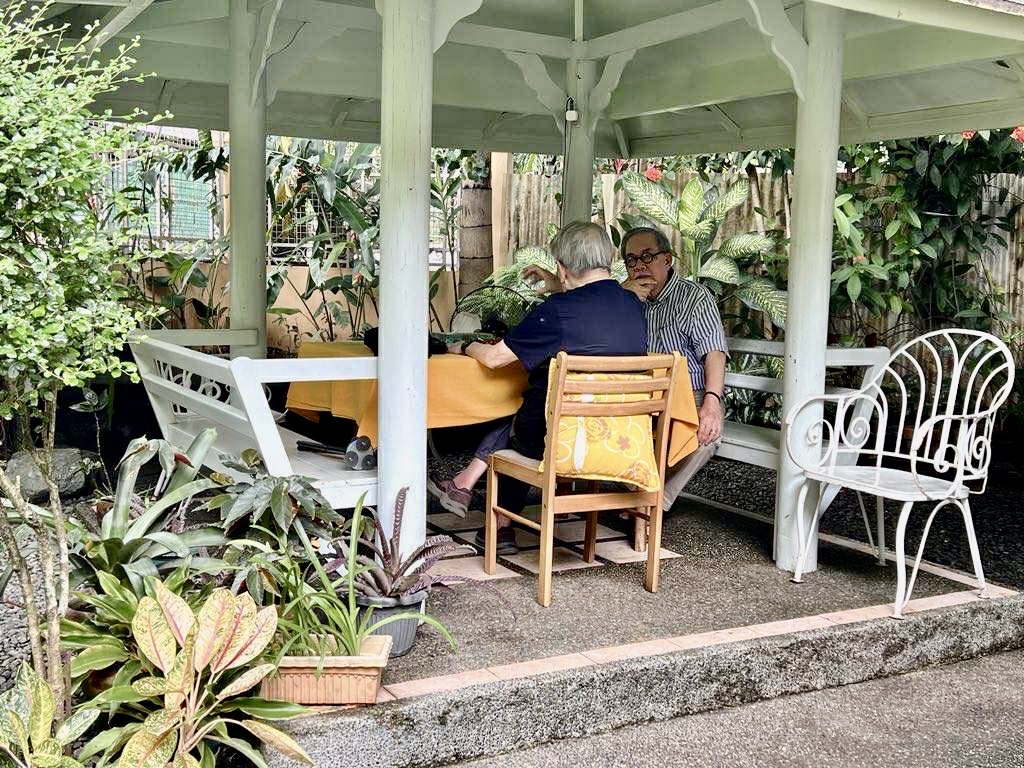
I HAD the privilege of attending the private launch of a book in Makati recently, a book titled Bridges of Memory produced by a group of seniors who had each contributed their poems, stories, and essays to the collection. None of them was a professional writer; I gathered that they came from distinguished backgrounds in banking, law, public service, and other pursuits. 

Prior to publishing the book, they had been mentored by an accomplished and experienced writer, the San Francisco-based poet Oscar Peñaranda, who just happened to be an old friend of mine. Oscar was in the US when the launch took place, so he sent a congratulatory video. I was pleasantly surprised to learn that this was already the “Sunshine” group’s (so named because they meet at the Sunshine Place for seniors in Makati) second such book.

As you might expect, the book contains the authors’ musings on life, love, and loss, the funny with the sad, the joyful with the tragic. The styles and the quality of the writing predictably varied, but the enthusiasm was palpably even, with all the contributors present eager to share their work.

At that very same moment, way across town, another mass book launch was being held at a major university, where one of the featured books was a long and distinguished biography that had partly been edited by me. I had also been invited to that event, but chose to attend the Makati one despite the Christmas traffic, because I had the feeling that it would somehow be a more enjoyable occasion, at least for me, as it would put me in touch with writers of a gentler disposition.

Having been caught in a whirlwind of literary activities over the past two months—from the Frankfurt Book Fair to the Palanca Awards to the PEN Congress—you’d think that I’d shy away from a small book launch, but aside from the fact that some of the authords were friends, I wanted to show my support for this kind of more personal writing and publishing that we too often take for granted as self-indulgence.

I’d seen books like this before, the output of writing groups, barkadas, high-school chums, and fellow alumni. They’re often triggered by an impending milestone, like a 50th anniversary or a grand reunion and homecoming.

The professional crowd might think of such volumes as vanity projects published by people who could never put out their own books. But then that’s the whole point: one person’s vanity is another person’s self-empowerment, and such private publishing reclaims the right to self-expression from the academic and commercial gatekeepers. The works they contain may not win any literary prizes, but they are as honest and heartfelt as writing can get, and satisfy the most basic urge that impels all good writers: to use words to give shape to one’s thought and feeling, and to share those words with others so they might think and feel the same way. They’re written neither for fame nor fortune, but to leave some precious memories behind for a very specific audience—although some pieces may be of such merit as to be more widely appreciated.

I’ve always said, even in my own creative writing classes at the university, that I believe that every person has at least one good story in him or her—and that it’s my job as a teacher to bring that story out. And people know this, too—many of them are dying to tell their story, but don’t know where and how, and who will listen. That’s particularly true for digitally-challenged seniors, who don’t have access to blogging, and who use Facebook for little more than “Happy Birthday!”

I’m particularly taken by the fact that these books are produced by seniors, who are increasingly being left out of a social world ruled by schemes and products for young people. Even within families—let’s admit it—very few grandchildren now have the time nor the patience to listen to their elders’ stories, much less to ply them with questions; they’d rather scroll through their social media than ask what a typical summer vacation was like half a century ago, or what people did before there were cellphones, computers, and satellite TV.

Years ago, fearing we would lose her soon because of her illness, I’d asked my mother to write down her memoirs in notebooks which I still keep. As it happened, she recovered magnificently, miraculously, and is approaching 97, still strong and alert, albeit a little slow. She walks every day, plays games on her iPad, and navigates Netflix on her own. When she’s staying with us (we siblings share her company), Beng and I pepper her with questions about her childhood in their village in Romblon, where she rode a horse and scooped fish out of the plentiful sea. The youngest of a dozen children, she was the apple of her father’s eye, and the only girl he sent to Manila for high school and college at UP. They had a rice mill, and snakes roosted in the large straw bins that kept the unhusked rice. But the snakes were to be feared much less than the beautiful encantos that came down from Kalatong on fiestas and lured their victims to join them with offerings of black rice. How could you not like and want to retell stories like that?

Our seniors are a treasury of stories to be told. They just need to be asked, encouraged to write, and published.

(For your copy of Bridges of Memory, email marketing@sunshineplaceph.com.)

Qwertyman No. 122: On Writing as a Profession

Qwertyman for Monday, December 2, 2024

FOLLOWING THROUGH on last week’s piece about the challenges faced by creative writers trying to make a living in this country, let me share some further thoughts on that topic that I wove into my Rizal Lecture last week at the annual congress of Philippine PEN. My talk was titled “The Living Is in the Writing: Notes on the Profession of  Writing in the Philippines.”

Our writers of old made a profession of writing, often by working as journalists, speechwriters, and PR people at the same time that they wrote poems, stories, novels, and essays on the side. Some also taught, and of course some writing comes with that territory, but with teaching you get paid for your classroom hours than for your word count. (To which I should also add, so much of the writing that our literature professors do today is understandable only to themselves.)

Our best and most prolific writers lived by the word and died by it. The two who probably best exemplified this kind of commitment to writing—and nothing but writing—were Nick Joaquin and his good friend Frankie Sionil Jose. Both were journalists and fictionists (in Joaquin’s case, a poet and playwright as well). We can say the same for Carmen Guerrero Nakpil and Kerima Polotan, as well as for Gregorio Brillantes, Jose Lacaba, Ricky Lee, Alfred Yuson, Cristina Pantoja-Hidalgo, and Charlson Ong, among others. 

These were all writers whom you never heard to claim, as has been recent practice, that “I am a poet!” or “I am a fictionist!” They were all just writers, for whom the practice of words was one natural and seamless continuum, and a profession they mastered just as well as we expect doctors, engineers, mechanics, and lawyers to do. This was also when journalists could be poets who could also be politicians and even reformers, revolutionaries, and heroes.

This was paralleled in other arts such as painting, where artists such as Juan Luna, Fernando Amorsolo, and Botong Francisco routinely accepted commissions to support themselves and any other personal undertakings. (Of course, this was well within the old Western tradition of writers and artists having wealthy patrons to help keep them alive and productive.)

But then came a time when, for some reason, creative and professional writing began to diverge, as creative writing withdrew from the popular sphere and became lodged in academia, where it largely remains today. Professional writing, or writing for, money, came to be seen as the work of hacks, devoid of art and honor. Even George Orwell urged writers to take on non-literary jobs such as banking and insurance—which incidentally T.S. Eliot and Wallace Stevens did, respectively—rather than what he called “semi-creative jobs” like teaching and journalism, which he felt was beneath them. (Orwell himself worked as a dishwasher in Paris, where he wryly observed that “nothing unusual for a waiter to wash his face in the water in which clean crockery was rinsing. But the customers saw nothing of this.”)

An attitude of condescension soon emerged among poets and fictionists who looked down on journalists as a lesser breed—something I have always warned my students against, having been a journalist who had to turn in a story, any story, by 2 pm every day on pain of losing my job. Never knock journalists. Let’s not forget that when it comes to facing real dangers brought on by one’s written word, poets and fictionists have it easy. The last Filipino novelist who was shot for what he wrote was Jose Rizal; the only writers dying today are our journalists and broadcasters in the hinterlands offending the local poobahs. Governors and generals read newspapers, not novels; they are impervious to metaphor.

Professional writers, on the other hand, saw creative writers as artsy dilettantes enchanted by fancy words and phrases that no one else understood and very few people paid for. Creative writers took it as a given that they were wedded to a life of monastic penury, unless they had another skill or job like teaching, doctoring or lawyering, or marrying into wealth. It even became a badge of honor of sorts to languish in financial distress while reaping all manner of writing honors, in the misguided notion that starving artists produced the finest and most honest work. 

The fact is, both are two sides of the same coin, which is the currency of public persuasion through words and language. One is an artist, the master of design; the other is the artisan or craftsman, the master of execution. Both can reside in the same person, unless you’re foolish enough to disdain one or the other. You can produce great art, if you have the talent, the discipline, and the hubris for it; but you can also live off your artistic skills, if you have the talent, the discipline, and the humility for it. 

(That said, I have to report that in my forty years of teaching creative writing, some of the students who find it hardest to switch to fiction are journalists, who just can’t let go of the gritty and often linear reality they’ve been accustomed to; poets come next, those who feel preciousness in every word and turn of phrase, so much that they can’t move from one page to the next without agonizing, or, going the other way, without drowning us in verbiage.)

This was why, more than twenty years ago, I designed and began teaching an undergraduate course at the University of the Philippines called “CW198—Professional Writing.” Mainly intended for Creative Writing and English majors who had very little idea of their career options after college aside from teaching, the course syllabus includes everything from business letters, news, interviews, and features to brochures, scripts, speeches, editing, publishing, and professional ethics. The first thing I tell them on Day One is this: “There is writing that you do for yourself, and writing that you do for others. Don’t ever get the two mixed up.”

Penman No. 468: A Game of Prompts

Penman for Sunday, November 17, 2024

I WAS in Dumaguete recently for a seminar organized by the Intellectual Property Office of the Philippines to encourage local authors and publishers to break out into the international market, following through on our participation at the Frankfurt Book Fair. I was asked to talk about “The Future of Literature,” but I chose to turn that around and talk instead about the literature of the future.

Taking off from the challenges and opportunities posed by artificial intelligence, I put forth a series of “provocations” that writers and publishers could think about. Let me share part of what I said:

My first provocation: the literature of the future, or some part of it, will be a game of prompts: not just or not mainly to copy existing writers, but to produce results that will be a hybrid of the author’s creativity in prompt-making and AI’s selectivity, drawing from its enormous stock of possible responses. This will be writing as a form of play, of co-authorship between man and machine.

Following through from this is Provocation No. 2: Expect the growth of the literature of hybridity—of more crossovers from one genre or form to another, from one language to another, from one sensibility to another. This is by no means new and has been happening for some time now, but there will be an even greater and more deliberate blurring of traditional boundaries, more experimentation.

To some extent, that will be because—and here’s Provocation No. 3, and to use this generation’s favorite trigger-word—there will be less gatekeeping. Or, if not less, then more resistance to or disregard of it. There will be more independent publishing and self-publishing to counter the influence of traditional publishing houses. But this free-for-all will also likely lead to a general decline of standards, as writers forgo the services of editors and the critical evaluations of quality- and market-minded publishers.

Provocation No. 4: The big novel will survive, simply because of the power of inertia, and because there will always be a need for something as capacious to contain and possibly comprehend the ever-growing complexity of human life. Our exposure to the international market at the Frankfurt Book Fair will also provide more impetus to the production of novels, something at which we Filipinos have not been particularly good at, historically speaking. 

On the other hand—Provocation No. 5—there will be a general shortening and simplification of form, as writing seeks to approximate the meme, or Tiktok. I don’t know exactly how this will happen, or what form it will take, but when I look at the frankly scary popularity of Lang Leav, I worry that people will see that kind of poetry as the new standard. Of course Emily Dickinson was just as short if not even shorter 150 years ago; she would have made a fine poet for our time.

Given what the world is going through, and the even bleaker future humanity faces, I propose—Provocation No. 6—that the literature of the future will be one of survival, of coping, of enduring. I have recently been advocating the need to produce a literature of hope, but that will be a difficult ask for young writers just trying to keep their heads above the water, and more understandably concerned with this life than with anything that may follow. Science fiction and fantasy will always go over the visible horizon, anticipating a distant future albeit in often dystopian terms, but for most, it will be the literature of next week.

And in that increasingly diminishing and threatening universe—Provocation No. 7—when our precious selves are all we have left to cling to, the literature of “I am,” the first-person narrative, and the politics of identity will prevail. When we no longer trust the government, business, education, our parents, the Church, and even God, and on the verge of losing control of our own petty lives, we will desperately fight to be recognized, acknowledged, and maybe even loved. We will leave nations and societies to the editorialists and social scientists; in fiction and poetry, we will seek solace and sense.

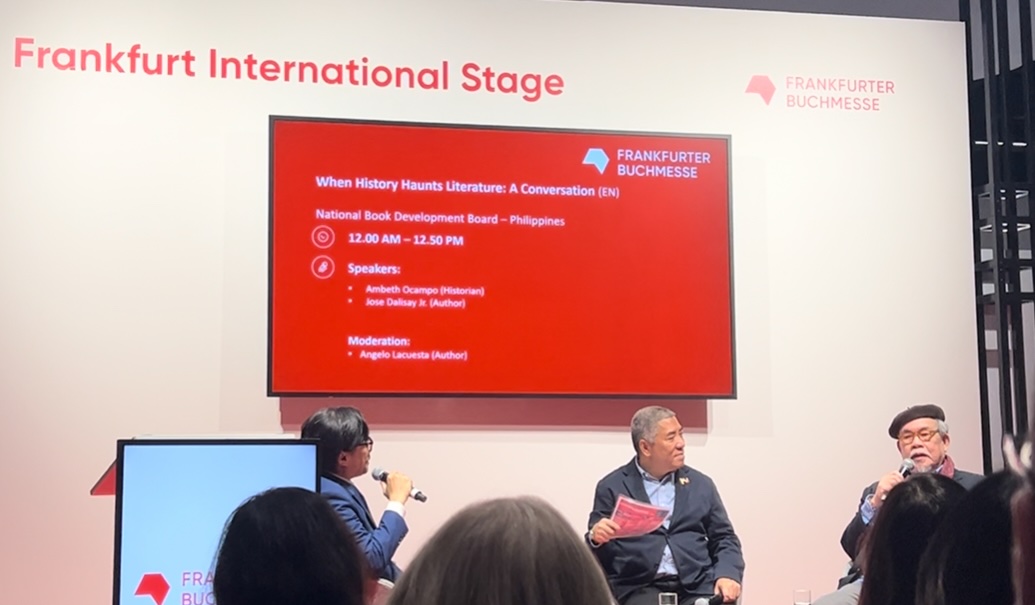
Let me just say a few words about the Frankfurt Book Fair, the 2024 edition of which I and some of us here attended last month. As you know, the Philippines will be Guest of Honor next year, which will do much to project the visibility of Philippine literature overseas. Even this year, many gains were already achieved by our writers and publishers, with dozens of deals signed for the translation and publication of our books in foreign markets.

Post-Frankfurt, Filipino writers will think of writing for the world—not necessarily in English although that’s always an option, but through translation, which will be the great equalizer. The huge surge in translation coming out of Frankfurt—not just from Filipino to English but from our other Philippine languages, including English, to other global languages—will forever change our literary culture, which has traditionally and quite unfairly favored our writers in English when it comes to recognition beyond our shores.

Also, and this may be a controversial point, I’ve long had this suspicion—and maybe Frankfurt proves it—that the rest of the world doesn’t really care about (because it doesn’t know about nor understand) the differences between Tagalog, Iluko, Bikol, and Cebuano etc. literature. When we reach foreign readers in translation, we’re all Filipino—and only Filipino—just as African or Indian literature  appear to us as cultural blocs rather than deeply variegated constructs. This has its positives and negatives, but I tend to lean on the positives, which are a reminder that our literature helps define a cohesive national experience and identity above the regional and ethnic markers otherwise so precious to us.

In one of my sessions in Frankfurt, I was asked a question, to which I replied: “I will always be more optimistic about literature than politics.” Given what has just happened in America, and what that will mean for the rest of the world, I have to believe this even more than ever.