Qwertyman No. 104: The Knowing Is in the Living

Qwertyman for Monday, July 29, 2024

(This is the full text of the shortened version published in my column for today of my commencement address to the graduating class of the University of the Philippines Diliman Extension Program in Olongapo and Pampanga on July 26, 2024.)

A VERY pleasant afternoon, and my warmest congratulations first of all to our graduates and their parents today. Thank you for inviting me to come over today to share some of this old man’s thoughts with you.

I have given commencement speeches at UP graduations before—twice at UP Baguio, once at the UPD College of Science, and then at UPM’s College of Medicine—so you would think that I would take this assignment in stride and just repeat what I told the others, but no. 

This is probably the smallest and most intimate of all UP graduations I have attended, for which reason I thought I would do something different, something special, and write something new, this short talk I’ve titled “The Knowing Is in the Living.”

Now, as nice as our young graduates are, they’re probably thinking, “Oh, no, they invited another of those tiresome old Boomers who’ll be telling us things that we already have coming out of our ears. Things like, how hard and difficult life was for them, walking to school in the sun or taking notes by hand and we have it easy, so we should stop bitching about slow wi-fi and weak aircon and toughen up. 

“He’ll talk about how socially aware and politically committed they were, how they cut classes to march in the streets and fight the dictatorship, going underground, getting caught and tortured in martial-law prison while watching friends die in heroic battles with fascist forces—while we argue about the characters in House of the Dragon over cappuccino at Starbucks. 

“He’ll wax nostalgic about fountain pens and typewriters, index cards and pencil sharpeners, about inhaling the dust in the library stacks and paying fines for overdue books, while we’ve become overly dependent on Google and that new monster, AI, which can do in seconds what took him weeks to produce. He’ll talk about integrity like he invented the word, about refusing to compromise no matter what. 

“He’ll tell us to learn to live in monastic simplicity, in denial of today’s comforts and conveniences and the allure of the coming iPhone 16. In other words, he’ll do his best to make us feel like we were born in the wrong decade, that we missed out on the great defining and character-building struggles of the past—World War II, martial law, EDSA (and no, Covid doesn’t count)—and that we’re lost souls floating in some kind of existential limbo, with little substance and without purpose.”

Well—did I tell you any of that? Do I look like the kind of commencement speaker who would inflict his wisdom—otherwise known as pain and anguish—on his captive audience for the next half-hour, in revenge for all the predictable and long-winded speeches he himself had to listen to all his life?

Before you smile too broadly, let me remind you that I’m still in command of this podium and could do just that, just for the fun of it—but I probably won’t. And I won’t, because the opportunity is just too great and too inviting to be different, to say something you will actually remember and maybe even cherish for the rest of your life.

Ordinarily, on an occasion like this, I would have spoken to you about the topics I usually take up in my columns for the Star—about how important it is to match intelligence with values, about the need to seek out the truth in this age of fake news and AI, about how deftly but resolutely we should navigate the murky political waters ahead of us; in other words, about how we must develop a strong and clear moral core, whatever profession we choose, and live for the good of others.

But again that’s the kind of message that AI itself could have written, fed with the prompt “Write me a graduation speech for the University of the Philippines.”

I will trust that you already know these things. I will not speak about your degrees and what they will mean to the nation, which surely will be substantial. I will not even say how important UP is to the Filipino people; you already knew that when you took the UPCAT, which was why you took the UPCAT.

Instead, today I will talk to you about time—yes, that fourth dimension which, according to science and philosophy, is really a function or a measure of change. Without change, there is no time. 

Why time? Because it’s been on my mind a lot lately. Last January, I celebrated my 70th birthday and my 50thwedding anniversary with my wife June. I was deeply grateful for those milestones, which I honestly never expected to reach, having been a young activist who went to martial-law prison and who saw many of his friends die too soon. So for me, anything beyond 20 was what you would call in music a “grace note,” an unexpected bonus that has just kept on giving and giving. 

To be sure, it hasn’t always been an easy life, and I won’t bother you with the details, but I can tell you what a huge surprise and relief it is to be here, alive and reasonably well, at 70. I am now older than my professors were when I was your age, and the reversal is both fascinating and, for you on the other end of it now, a mystery yet to be written.

For most of us, life has a fairly predictable plot, and it goes this way:

In your twenties you will want to know who you are, what you stand for. You will choose a course and a profession, get a job, dress up like an adult.

In your thirties you will think more seriously about companionship, maybe marriage, maybe children. You will want your heart to make up its dizzy mind, and settle on someone, or get used to being alone.

In your forties you will fret about finances, your position in your company, maybe have an affair, lose your faith, and then again if you’re lucky maybe gain everything back.

In your fifties you will be expert at many things, sit on boards and manage this and that. You will begin to think about words like “stability,” “reputation,” and “legacy.”

In your sixties your steps will become shorter and slower, and you will want comfort most of all—a soft bed, an easy chair, good food and wine—and indulge your bucket list.

In your seventies and eighties, you will just want and fight to be alive.

In your nineties, with most of your friends gone, and with your eyesight and hearing going, you may well just want to be dead.

That’s the basic plot—but like time itself, it’s not a fixed one. Time is strangely flexible.

In my writing classes, I often say that a well-written story, even if it’s twenty pages long, feels like it ended too swiftly, but a badly written one, no matter how short, feels like forever. And we all know but don’t understand why happiness always seems to be fleeting, while grief and pain endure. That’s how time is bent by whatever we fill it up with—how it holds meaning, or loses it.

How will you fill up that space with change, and make your time worthwhile? What kind of story will your life be? 


As one of my book titles go, “The Knowing Is in the Writing.” By this I mean that we writers think that we know our characters from the beginning—but in fact, we only really know them as we write about them, and subject them to the kind of intense pressure that life will bring to bear on each one of you.

Let’s say, for example, that Tony is a young lawyer, smart and idealistic, determined to seek justice and freedom for his people, destined for professional success. He works for an NGO for not much money. He is engaged to Marie, a PGH nurse who’s also supporting her family, and who has been offered a job in the UK. Tony doesn’t want Marie to go, because she will be away for many years and he wants them to marry, but he can’t support them both and their families as well on his salary. Tony is then recruited by a big real estate firm to work in its legal division, where he will help in the removal of squatters from company property and the conversion of farms into subdivisions. What will Tony do?

How well do we know Tony, until he actually makes a moral choice that could possibly run against the character we thought we knew?

In fiction and in playwriting, I often point out to my students that characters become most interesting when they go out of character—not whimsically, but out of dramatic necessity and inevitability, the kind of tortured inner logic that drives us to do things we never thought we could, in our imagination of ourselves as good people: to lie, to cheat, to steal, to support extrajudicial killing, to laugh at rape jokes, and to think that someone who habitually lies and brings out the worst in people can be fit to be president. But conversely, that turn of character can also lead us to perform amazing acts of nobility and charity, of heroism.

In your case, the knowing will be in the living. You think you know yourself today, what you want, where you want to go, and how to get there—and it’s important that even now, you have this game plan and this compass to lead you forward. But you will never know and discover your true self until your most vulnerable moment, at which your soul will be revealed in utter transparency. 

For some of us, the sad truth is that life will be short. But that’s no reason to say it will be worth little, because you can still make it meaningful and memorable. Remember Achilles, who in the Iliad was given a choice of living a short but glorious life, as opposed to a long but boring one; he chose the former, and thereby became a legend. And there was the brilliant modernist writer Djuna Barnes, who lived to be 90. Taking off from that famous quotation from Thomas Hobbes, she said that “For others, life can be nasty, brutish, and short. For me, it has simply been nasty and brutish.”

But again, how your lives turn out will be your story to write, although you will have many co-authors, including the Divine. Some say life is predestined, which would make for bad fiction; I prefer to believe in at least the illusion of free will, of human agency, because then we and our fictional characters have moral responsibility; and in such stories of inner struggle, there will be lessons to be learned, like the Greeks learned from the plays they watched over and over again.

Life will be a challenge, as soon as you step out of this campus into the world at large. But what I can tell you is that, with grit and a little luck, you will survive. To do that, you may have to learn to forgive yourself for your mistakes, to change your mind, and to compromise if you must, because the ideal you will always be a work in progress. Whoever sits in Malacañang or the White House, you can still find ways to serve the people, for which you will and must survive. We survived martial law; you survived the pandemic. Surely we can give purpose to our good fortune. In my case, I have found that purpose in my writing, in my search for truth and beauty, and in my more modest and focused commitments to my family and community. 

So, again, how shall we fill up the time ahead of us? Of course we’re running on different clocks or even calendars. If your life is at brunch, mine has just been called to dinner. I don’t know about you, but I will have that dinner with my wife on the beach, with a glass of wine, imagining what it must be like over the deepening horizon.

That horizon will always be ahead of us. We think we are forging ahead into the future, but in fact, with every breath we take, we are becoming part of the past, of what happened, of what was. When I hold and look at the silly old things I collect—three-hundred year-old books, and old fountain pens and typewriters from when Jose Rizal was still alive—I am comforted by the certainty that the past survives in artifacts and memories, so that it is important that we leave images and signatures that will bring smiles to those who see them.

There is an afterlife. In the very least, it is the life of those we leave behind. You will now be part of my afterlife. Through this speech, through my words, I will live in you.

Let me end with a quote from a favorite source—me—and share something that I have said to every UP graduating class I have been honored to address:

To be a UP student, faculty member, and alumnus is to be burdened but also ennobled by a unique mission—not just the mission of serving the people, which is in itself not unique, and which is also reflected, for example, in the Atenean concept of being a “man for others.” Rather, to my mind, our mission is to lead and to be led by reason—by independent, scientific, and secular reason, rather than by politicians, priests, shamans, bankers, or generals. 

You are UP because you can think and speak for yourselves, by your own wits and on your own two feet, and you can do so no matter what the rest of the people in the room may be thinking. You are UP because no one can tell you to shut up, if you have something sensible and vital to say. You are UP because you dread not the poverty of material comforts but the poverty of the mind. And you are UP because you care about something as abstract and sometimes as treacherous as the idea of “nation”, even if it kills you.

Sometimes, long after UP, we forget these things and become just like everybody else; I certainly have. Even so, I suspect that that forgetfulness is laced with guilt—the guilt of knowing that you were, and could yet become, somebody better. And you cannot even argue that you did not know, because today, I just told you so.

Qwertyman No. 102: Retaining the Fools

Qwertyman for Monday, July 15, 2024

A RECENT Rappler report on “The Philippine Senate: From statesmen to showmen” by James Patrick Cruz told us much of what we already knew, but didn’t have the exact numbers for—that political families dominate that institution, that most of them come from the big cities, that most of them are men, that older senators (above 50) outnumber young ones, and that many come from the glitzy world of entertainment and media.

Surprisingly (and why am I even using this word?), most senators are highly educated and even have advanced degrees, mostly in law. However, the study says, “the high educational background of senators has not produced ‘evidence-based policymaking.’…  Some lawmakers, for example, have used the Bible to argue against the reproductive health law in a secular setting and have relied on personal experiences in discussions on divorce.”

And not surprisingly, the academics consulted for the study concluded that “If you want better policy, we should go for better inclusion, better representation, and not just be dominated by political families.” Indeed, from the very beginning, it notes that “Political analysts have observed a decline in the quality of the Philippine Senate over the years. The shift from a chamber filled with statesmen to one dominated by entertainers and political dynasties has become evident.”

And then again we already knew all that. What the Rappler study does is provide a historical overview—quantitatively and qualitatively—of how the Philippine Senate has morphed as an institution over the decades, reflecting changes in the electorate and in Philippine society itself. It opens with resonant passages from the speeches of political leaders from a time when the word “senator” bestowed an aura of respectability and consequence upon its bearer. 

It quotes the luminous Jose W. Diokno: “There is one dream that we all Filipinos share: that our children may have a better life than we have had. To make this country, our country, a nation for our children.” Sen. Jovito R. Salonga, another legendary figure and war hero, follows with “Independence, like freedom, is never granted. It is always asserted and affirmed. Its defense is an everyday endeavor—sometimes in the field of battle, oftentimes in the contest of conflicting wills and ideas. It is a daily struggle that may never end—for as long as we live.”

It’s entirely possible—and why not?—that this kind of elevated prose can be uttered today by a senator or congressman backed up by a capable speechwriter, if not AI. The question is, will they be believed? Will the words ring true coming out of their speaker’s mouth—especially if that speaker were one of today’s, shall we say, non-traditional senators, reared more in showbiz and social media than in Demosthenes? 

“Non-traditional” applies as well to political families, which notion we can expand beyond DNA matches to communities of convenience, of shared geographical, economic, and cultural origins—the entertainers, the media stars, business moguls, the Davao boys, and so on. (There’s probably no better guide to how traditional families have ruled the Philippines than An Anarchy of Families: State and Family in the Philippines, edited by Alfred W. McCoy and published by the University of Wisconsin Press in 2009.)

It might also be that the problem lies not so much or not only in the dynastic nature of Philippine politics, as in the fact that the quality of these families has badly deteriorated. And by “quality” I don’t mean anything by way of economic or social candlepower—none of that “de buena familia” silliness. (To be sure, no family—however celebrated—has ever been perfect, coming with its fair share of black sheep, eccentrics, and outliers. Our social lore abounds with barely whispered stories of the abusive father, the spendthrift mother, the gay son—yes, in Pinoy archetype, gay is wayward—and the mad daughter.) 

I suppose we keep looking for some defining virtue, a reputation founded on academic excellence, intellectual prowess, philanthropy, moral ascendancy, and the like. How many families in the Senate and Congress today can lay claim to that kind of legacy? Today, prominent families achieve and maintain their status through their economic and political clout, through popularity or even notoriety, and even through sheer staying power, thanks to the muscle memory of many Pinoys in the voting booths.

In 1998, in my biography of the accomplished, fascinating, and resolutely revolutionary Lava brothers, I noted that “For anyone familiar with the history of the Philippines over these past one hundred years, it will not tax the truth to suggest that so much of that history has been family history. In many ways, modern Philippine history is an extended family picture album in which a few names and facial features keep recurring, with only the characters’ ages, expressions, poses, and costumes changing from page to page. Most ordinary Filipinos have lived in the shadow and by the sufferance of such dynasties as the Marcoses, the Lopezes, the Aquinos, the Laurels, and the Cojuangcos, among others—families which have ritually sired presidents and kingmakers, tycoons, rakes, sportsmen, and society belles. But none of them were like—and there may never be another Filipino family like—the Lavas.”

For those who never knew them, over the mid-20th century, five Lava brothers—Vicente, Francisco, Horacio, Jose, and Jesus—emerged from a moderately affluent landowning family from the heartland of Bulacan to become progressive intellectuals, some of them even leading the Partido Komunista ng Pilipinas. Ironically, these were no workers or peasants. Vicente, a government pensionado, held a PhD in chemistry from Columbia University; Horacio and Francisco also held advanced degrees in economics and law from Berkeley and Stanford, respectively; Jose was a lawyer-CPA whose University of the Philippines thesis was adjudged the best of his class; Jesus was a medical doctor, also graduating from UP.

Just so we know, the Lavas and their comrades were operating legally and openly right after the War, and were even elected to Congress under the Democratic Alliance in 1946—only to be expelled on trumped-up charges of fraud and terrorism, with their votes on the key parity rights issue discounted. Under threat of extermination, they went underground, followed by two decades of bloody struggle.

That’s what happened to one family with real brains and convictions, even pre-NTF-ELCAC; we expel the thinkers and retain the fools.

(Image from constitutionnet.org)

Qwertyman No. 100: The Political Doghouse

Qwertyman for Monday, July 1, 2024


TO NO one’s great surprise, Vice President Sara Duterte resigned from her concurrent posts as Secretary of Education and vice-chair of that long-named (short name: red-tagging) council. Maybe because I was far away from Davao when the news came in, I heard no wailing and gnashing of teeth. A tree fell in the forest. The world moved on.

Inday Sara promised to continue to be a mother to the country’s teachers—the same people she had ordered to strip their walls bare of teaching aids. She was back in the news a week later after reportedly announcing that her father and two brothers were going to run for senator in next year’s elections. Her name was brought up as a possible “leader of the opposition.” None of these silly propositions generated the kind of groundswell she may have been hoping for, as someone once touted to be a shoo-in for the presidency who just got suckered into sliding down to No. 2 (to her Papa Digong’s boundless dismay) in a deal craftily brokered by former President Gloria Macapagal Arroyo.

To Duterte diehards—and let’s face it, there are still quite a few, although being out of office tends to lose people by the day—Sara will always be their golden girl, the victim of craven betrayal by their erstwhile “Uniteam” ally. To her non-fans, she will always be the bratty bureaucrat who demanded P650 million in confidential funds and who bragged about spending P125 million of DepEd money in the time it takes you to say “low PISA scores.”

Where she goes from here is the big question. In a touch of supreme irony, she now finds herself in almost exactly the same position as her predecessor, Leni Robredo, who was boxed out of Digong Duterte’s Cabinet and pretty much left on her own.

And there the inevitable and (for Sara) unfortunate parallels arise, because VP Leni shunned privilege, turned her exclusion into a challenge, and made the OVP a model of what a government office with meager funds could do, with honest, visionary and purpose-driven leadership. Leni became, and continues to be, beloved, as close to a saintlike figure as any elected official could aspire to be. That this quality failed to propel Robredo to the presidency says more about our electorate and political culture than about her—the dark, mutable, and serpentine side of Philippine politics that the Dutertes thrive in.

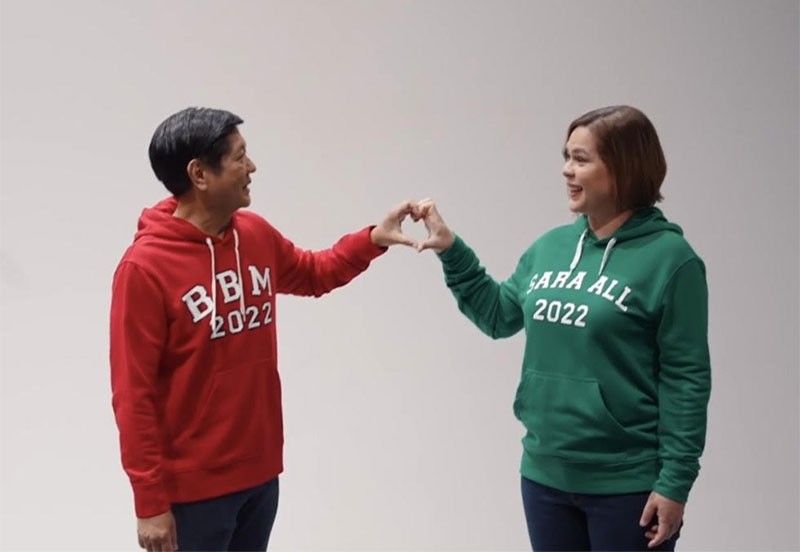
I have no doubt whatsoever that Sara Duterte will continue to be politically engaged and even run for the presidency in 2028, no matter what. In that, she will have less to worry about from Leni Robredo, who has expressed her desire to return to local politics in Naga, than from the likes of the eminent Sen. Raffy Tulfo, who topped Pulse Asia’s latest survey of presidential contenders at 35 percent against Sara’s 34 and Leni’s 11. Yes, that’s the kind of electorate we have, which can’t tell between meritocracy and mediocrity, so Sara will prosper in that environment and may even win against BBM’s anointed (Speaker Martin Romualdez scored a dismal 1 percent in the same survey).

Still, 2028 is four long years down the road, a lot of time for things to congeal and to unravel. Familia Duterte will close in and consolidate behind the name and the tough-guy brand, and in the event that all three Duterte boys make it to the Senate—an absurdity moderated only by the presence today of so many DNA matches in that august body—then Sara’s path to the Palace will have been cleared by a bulldozer. 

Of some minor interest is the fate of the two Digong acolytes in the Senate—Sens. Bong and Bato—who seem to be feeling orphaned. Both have been making the requisite pledges of fealty to the Dutertes, despite Bong Go being slammed by Davao Mayor Baste Duterte for not defending their home turf loudly enough from the lofty positions to which their patron raised them. Chastised, the two said they would support a Senate inquiry into the “excessive use of force” in the police raid against fugitive pastor Apollo Quiboloy, whom Sen. Bato had vowed to guard with his life should he appear in the Senate under subpoena—a degree of sensitivity and solicitude profoundly absent from the murderous “tokhang” campaign that both men supported.

So the Dutertes are far from dead and gone, but BBM—and let’s not forget the Kakampink forces simmering below the surface—has four more years to vaporize the Uniteam that never really was. (And then again, BBM claims that the Uniteam remains intact—nothing to worry about, folks!—because the Dutertes’ political party, the PDP, was never part of the coalition. Say that again?)

More important than preserving the fiction of the Uniteam, the opening provides Marcos with yet another opportunity to shore up his political capital—already boosted by his turnaround from his predecessor’s policies on Chinese aggression and on the war on drugs—by selecting a qualified, full-time professional for the post. Several names have been mentioned in a hypothetical shortlist, none of them apparently an expert in basic education, where most of our problems begin. And while it may be true, as Inday Sara herself noted, that you don’t have to be a teacher to be DepEd secretary, you have to understand that Philippine education needs more than mandatory toothbrushing to brighten up.

Ultimately, Sara Duterte’s resignation from her DepEd post may yet be her most valuable service to the nation, by opening the door to someone vastly more qualified to take on that critical job—unless, again, the DepEd is made to serve its other purpose as a doghouse for political strays.

Qwertyman No. 99: A Call to Engage

Qwertyman for Monday, June 24, 2024

I WASN’T going to start this column on this note since I had another topic in mind, but it occurred to me that these two concerns may after all be related and have a bearing on one another.

You may have missed it since it was just local news, but a few weeks ago, elections were held for the University of the Philippines Student Council (UPSC) in Diliman—historically, the breeding ground of young hopefuls destined for national politics. It’s always been a tight and sometimes even bitter contest of personalities and platforms, strategies and tactics, rhetoric and resources. Given its superior organization, ideological discipline, and progressive platform, the student Left has held an advantage in these elections over the past few decades, but vigorous and sometimes successful challenges have arisen from centrist parties appealing to more student-oriented causes. 

The outcome is often eagerly awaited. But last month, something incredible happened. The “abstain” vote won, leaving the posts of chairperson, vice chairperson, and many councilors unfilled—and they will so remain. 

It would be easy to read this as a sign of apathy, especially given that only 36.7 percent of the student body voted this year, but those “abstain” votes sent a clear and deliberate message: we don’t want any of you, we want something or someone better—could we please have some real change around here?

I could understand that; as a teacher (I still teach optionally, even if I’m retired), I’ve opened the classroom door to scores of student candidates asking for five minutes to make their campaign pitch, and almost invariably, it’s the same familiar litany of complaints over this and that (the same ones we ourselves mouthed half a century ago)—valid complaints, to be sure, but thoroughly tired and uninspiring. And when you ask, even in your mind, “So what are you going to do about it?”, you can hear the answer coming: “Elect us, and we’ll show you!” I let my students raise the difficult questions (that’s what I train them to do) and share their discomfort and embarrassment when they don’t get the specific and well thought-out answers they deserve.

Now, put that scene on “pause,” and let me report on another UP matter (even if you’re not from UP, this likely concerns you because UP accounts for about 20 percent of our national budget for higher education).

Last week, on the occasion of UP’s 116th founding anniversary, President Angelo A. Jimenez formally presented a set of ten “flagship programs” to the media and the public which his relatively new administration will seek to undertake—not necessarily complete, but at least initiate—over the remaining five years of his tenure. These programs were the result of year-long consultations with the university’s academic and administrative leaders. They cover academic excellence; inclusive admissions; research and innovation; Open Distance e-Learning (ODeL); Archipelagic and Oceanic Virtual University (AOVU); active and collaborative partnerships; arts and culture; expansion of public service offices; Quality Management System (QMS) and Quality Assurance (QA); and digital transformation. 

Jimenez (or “PAJ” as the university community calls him) was quick to explain that rather than being new or distinctly separate programs, these are really thematic priorities that pull together many existing threads from UP’s wide range of teaching and research expertise. For example, the AOVU concept whereby UP will undertake a more comprehensive but also more coordinated study of our marine resources—our “blue economy”—draws on UP’s longstanding experience in marine science, fisheries, and maritime law, with the added emphasis on our archipelagic geography as a strength rather than a weakness. This will be supported by such innovations as UP Los Baños’ new PhD offering in Environmental Diplomacy and Negotiations aimed at developing leaders from around Southeast Asia who can bring good science into environmental conflict management and sustainable development.

There are many aspects and details of the ten flagship programs that deserve deeper discussion—and some will certainly be challenging if not controversial—but some key themes resonated with me most strongly as a former administrator, a teacher, and a UP fanatic since my childhood days when my mom (UP Educ. 1956) indoctrinated me by playing a record of “UP Beloved” and “Push On, UP” over and over again on our turntable.

Likely of greatest impact to most Filipinos was PAJ’s pledge to democratize UP even further by adopting policies that will bring in more students from underrepresented and marginalized sectors of the country, to correct the lopsidedness of UP’s student profile now favoring private and largely metropolitan high school graduates without necessarily compromising UP’s high admission standards. One way would be by engaging more UP student and faculty “Pahinungod” volunteers to help in teaching disadvantaged students pre-UPCAT, and also by providing sustained support to such students who pass the UPCAT but decide to stay out because of the high expenses of studying in a UP campus (a budget has been set aside to support 350 of these students under the Lingap Iskolar program).

But the key word of the day was “service,” which has been added by PAJ to UP’s traditional motto of “Honor and Excellence.” (I know there’s been some grumbling, in typical UP fashion, over the process by which that decision was arrived at, leading me to sigh and ask, “Is that even a fight worth picking? Isn’t ‘service’ the one thing we can all implicitly agree on?”) Jimenez wants UP to be more engaged with the people, with communities, with other universities, citing programs such as UP Tacloban’s response to the seasonal red tides that render mussels unsafe to eat but still useful as extracted material for pharmaceuticals and cosmetics.

Above all, service should be a mindset that impels UP students and faculty members to find meaningful roles on their own in their community, whether local, national, or global. It struck me that perhaps this was what our student politicians needed to find and articulate, beyond sloganeering about often abstract issues—how can I serve you and our people, as I am, where I am? What can I do for you?

That “abstain” vote should be minded by the administration as well, and not just in UP. Our youth are seeking to be engaged and inspired—but their cynicism will abate only if they see, in their elders, the exemplars of the integrity and accountability, aside from ability, that any prospective servant of the people should bring to the job.

(Image from upd.edu.ph)

Qwertyman No. 98: Panahon Not

Qwertyman for Monday, June 17, 2024

WHOEVER URGED President Marcos Jr. to issue that memo mandating all government agencies and schools to sing the new “Bagong Pilipinas” hymn and recite the accompanying pledge at flag ceremonies should be banished to the farthest reaches of Malacañang, in the archives chronicling his predecessors’ most stupid mistakes.

PBBM was already riding a cresting wave of nationalism (bordering, let’s admit it, on Sinophobia for many) because of Chinese aggression in the West Philippine Sea and scandals related to offshore gambling operations run by Chinese in the country. He also earned grudging points from even his staunchest critics and detractors for seemingly being open to investigating the human rights excesses of his iron-fisted predecessor and sanctioning the arrest of one of that man’s most notorious cronies (an unsuccessful operation that Vice President Sara Duterte found the delicacy to deplore for its “excessive use of force,” which you never heard her say about her papa’s murderous tokhang campaign). 

Bongbong Marcos, in other words, was beginning to look and sound like what Rodrigo Duterte never could: a president with a grasp of the issues and a sensitivity to public opinion. Even former Associate Justice Antonio Carpio, a prominent figure in the opposition in 2022, praised BBM for the latter’s recent foreign policy speech in Singapore, where he cited the Treaty of Washington whereby Spain ceded Philippine territory beyond what was stipulated in the Treaty of Paris. “This finally corrects the greatest misconception in Philippine history,” said Carpio, a militant advocate of Philippine territorial rights, “a watershed moment in our fight to defend our island territories and maritime zones in the West Philippine Sea.” 

No, it didn’t mean that the old pre-EDSA issues were forgiven and forgotten, nor that new ones like the dubious Maharlika fund haven’t emerged over the first two years of his tenure, on top of his wanderlust. But BBM has had the good luck—if you can call it that—of inheriting Chinese expansionism and the Duterte legacy, and the good sense to get on the right side of these thorny concerns. 

Granted, there’s no real way to know if his deviation from Digong’s Sinophilia and trigger-happiness is sincere and not just a ploy to torpedo Inday Sara’s claim to succeeding him and install his own man. At this point, it doesn’t seem to matter much; so brazen has Chinese aggression been that even Duterte’s boys in the Senate have felt compelled to wear “West Philippine Sea” T-shirts, even as their lesser allies pose as “peaceniks” who somehow saw nothing wrong with the former president waging war on his own people.

So did BBM’s team—or BBM himself—think that this was the right time to reap some of that PR dividend, consolidate his gains, and foist the “Bagong Pilipinas” brand on the country through a new song and pledge?

The implicit rationale, we can understand. It’s a page right out of his dad’s New Society playbook: use music—indeed, use culture and education—to generate team spirit, or at least some semblance of it. That’s what anthems, hymns, and fight songs are for, from the American Civil War’s “Battle Hymn of the Republic” to the quintessentially English “Jerusalem” and the Nazi “Horst Wessel Lied.” Here in the Philippines, no martial-law morning was complete without the “Bagong Lipunan” (its real title was “Bagong Pagsilang”) song playing on the radio. 

To be fair (if it’s even possible to say that, given that the regime put me in prison for seven months in 1973), it was a catchy, well-written song, with a martial (what else) rhythm; that we still remember at least the tune five decades later attests to the success of its imprinting. It resurfaced on the airwaves shortly after BBM took office in 2022, reviving apprehensions of a New Society 2.0, but it seems to have been pulled shortly after, leading me to suspect that BBM, after all, wanted to be taken on his own and move away from his father’s shadow, which would have been the smart (if nearly impossible) thing to do.

But the imposition of this “Bagong Pilipinas” hymn and pledge again invites uncomfortable parallels and comparisons with what FM Sr. did—and I don’t mean just having the martial-law anthem composed and played, but everything else that came with the New Society: the corruption, the arrests and killings, the submission of our institutions to autocratic rule. 

If you don’t want to go there, let’s talk about just the “Bagong Pilipinas” song itself—have you even heard it? I’m not a music critic, but even I can tell that it’s barely singable, with an uneven tempo, with immemorable lyrics, the constant refrain of which is “Panahon na ng pagbabago” (“It’s time for change”), probably the tritest political message there ever was. You need a trained choir and a band capable of trumpet flourishes to render the piece effectively; I can be convinced that this will work only if I see and hear the President himself and his Cabinet singing the song from memory at the Malacañang flag ceremony (and let’s add the new Senate President, who has embraced the directive).

I don’t know how many millions went to the lyricist and composer of the song, who have mysteriously remained anonymous; clearly, they weren’t the late National Artists Levi Celerio and Felipe de Leon, who worked together on the “Bagong Lipunan” hymn. Perhaps BBM’s critics should be happy that they weren’t that good because, presidential mandate or not, this hymn and its equally problematic pledge seem fated to be ignored and forgotten for their sheer unusability, superfluity, and irrelevance.

PBBM should have been advised that at a time when the nation needs to pull together against a visible external threat, we need constancy, not change, not confusion over who and what we are. We need our one and only National Anthem more than ever, and the same Pledge of Allegiance we have been reciting since our childhood years. Panahon naPanahon not.

Qwertyman No. 96: Not Filipino Enough

Qwertyman for Monday, June 3, 2024

IN THE current feeding frenzy over Bamban, Tarlac Mayor Alice Guo’s allegedly questionable citizenship (to which I admittedly contributed with my tongue-in-cheek take two weeks ago), a consensus appears to have formed that Mayor Guo isn’t Filipino, or isn’t Filipino enough. All kinds of “tests” of “Filipino-ness” have come up online, things that every homegrown Pinoy is supposed to know: dinuguanchismis, Dolphy, chakapeks man, etc.

The ancient Hebrews had a word for this practice, by which they distinguished friend from foe: “shibboleth,” which supposedly couldn’t be pronounced correctly by the enemy, much like the myth that “Mickey Mouse” was the password American GIs used on D-Day, because it was something only Yanks understood.

We can understand how and why these exclusionary measures serve a purpose: to protect the community from external threat. At the same time, these cultural code words help define that community by establishing a common denominator (as common as can be—not George Washington or Alexander Hamilton, but Micky Mouse). Interestingly, they say as much about the excluders as the excluded.

The larger question that needs to be asked by truly inquiring minds is this: what does it really take or mean to be Filipino? Not just “a Filipino,” a matter of citizenship or legal personality provable with birth certificates and passports, but “Filipino” in a more personal, cultural, and even psychological sense.

When we challenge Mayor Guo’s identity—is she who she claims to be?—we imply that we know ours, and feel secure in that knowledge. We think that eating balut and pinakbet, dancing the tinikling and budots, listening to the Eraserheads and April Boy Regino, putting out an open palm ahead of us and bending when we cross a busy room, and counting on our hand from one to five starting with the pinky finger make us Pinoy—and of course they do; but are they enough?

Academics (and, let’s not forget, politicians) have long wrestled with this question, given how our extensive colonial history has effectively extinguished whatever the aboriginal pre-Filipino may have been in most of us. For better or for worse, the “Filipino” we speak of and identify as today is a fairly modern construct and, to my mind, still very much a work-in-progress, as is the Filipino nation itself.

One such academic view was provided by UP Assistant Professor Jay Yacat in the Philippine Journal of Psychology in 2005, where he wrote that “The label ‘Filipino’ functions as a social category. And as such, it is important to identify its boundaries. The meaningful boundaries define the loob/labas of the concept of Filipino. Identity as Filipino was found to have three relevant components: pinagmulan (socio-political component); kinalakhan (cultural component); and kamalayan (psychological component). This supports the position that national identity is more than a political identity. It is possible to think of national identity as three kinds of relationships: relationship with the state; relationship with culture; and relationship with self and others.…

“However, the more interesting finding is that individuals and groups place differing emphases on the three dimensions…. Another important implication is… the constructed-ness of our national identity. Our notion of being Filipino is negotiated and not fixed. This means that our definitions of being Filipino have the potential to be changed depending on a variety of factors: gender, ethnicity, age, political convictions, background, upbringing among others. True, this flexibility may bring about more confusion about our national identity but on a more positive note, this could also provide maneuverable spaces for marginalized groups to participate in a national context: Chinese-Filipinos, Amerasians and other biracials in the Philippines; naturalized citizens; indigenous peoples; and non-Christian groups….

“The analysis identified two kinds of Filipino-ness. This is based on the level of identity integration into one’s loob. A more integrated sense of Filipino identity is called ‘Pilipino sa puso.’ The individual who has not fully integrated this sense of being Filipino into the self is known as ‘Pilipino sa pangalan.’ Kamalayan (psychological sense) seems to be the primary determining factor of Filipino-ness.”

That’s a lot to digest, but my clearest takeaway—which we don’t really need a professor to tell us—is that Filipino-ness can be superficial or deeply felt and understood. The degree of that understanding—of who we are, where we came from, where we want to go, how to get there, and whom we need or want to make that journey with—may yet be the ultimate gauge of how Filipino we are. 

Another suggestion I’d like to make is that to be Filipino is to be inclusive, and therefore tolerant of other ethnicities, cultures, and beliefs. We’d never have survived this far if we weren’t so, despite the regionalism that seems ineradicable in our national politics. 

The Senate is right to continue probing Mayor Guo for her suspected ties to illegal gambling and human trafficking, and for the questions hovering over her citizenship. But Filipino-Chinese cultural advocate Teresita Ang See is also right to deplore the disturbing turn of the public mood into one of a witchhunt against the Chinese among us. 

Continuing Chinese provocations in the West Philippine Sea present a clear and present danger. The Guo allegations and suggestions of “sleepers” in the country are riding on those concerns to build up a hysteria that might ultimately divide rather than unify us. They deserve to be investigated, but without losing focus on the real enemy. I’ve seen some of the vicious feedback that Ang See has received for her sober warning; none of that vitriol makes her any less a Filipino than her attackers.

Indeed, the worst damage to our security and sense of nationhood isn’t being done by Chinese spies, but by Filipinos parroting the Chinese line or selling us the story that opposition to Chinese aggression is futile and that seeking international help against it will only bring on a war we can’t win. These are the real sleepers in our midst.

Qwertyman No. 94: Artificial Intelligence

Qwertyman for Monday, May 20, 2024

DR. CHICHOY Carabuena had a problem. He wanted the school he owned and ran—the Generoso Carabuena Academy of Pedagogy in Santa Vicenta—to place higher in both national and international rankings, partly so he could raise tuition fees, and also so he could claim bragging rights among his university-president friends and drinking buddies. He had inherited the school from his grandfather; Generoso Carabuena was a banker who had collaborated with the Japanese and stolen the money they left behind to open a school for teachers, which was his wife’s dream, becoming a war hero in the process for outsmarting the enemy. 

The school had done well enough to the point that Chichoy’s dad Ramoncito could buy a Mercury Capri that he regularly drove to Manila to carouse in its nightclubs. Chichoy was the product of one of Ramoncito’s dalliances with the agreeable ladies, and it fell on him to rescue both the business and the family name from ruin and disrepute. He had been managing a carinderia for Pinoy workers in Dubai when the call came, and always wanting to become someone of substance, he returned to Sta. Vicenta to turn the daughters and sons of hog butchers and vegetable growers into teachers, like he imagined himself to be. Surely higher education wasn’t all that different from running a restaurant and coming up with the right menu at the right price for your customers. He had secretly dreamed of becoming a mayor, a congressman, or even governor, but first, he had to make a name for himself and make money.

Somewhere along the way he picked up a “Dr.” from a diploma mill and dressed the part, coming to his office even in the warmest of days in coat and tie. “More than anything else,” he would lecture his new recruits, “first impressions count, so before you even become a teacher, you have to look like a teacher, walk like a teacher, and sound like a teacher!” He had a faux marble statue made of his grandfather to greet visitors at the school entrance, and another one of Jose Rizal standing behind Generoso, as if looking on in approval. 

But lest people think he was beholden to the past, Chichoy Carabuena peppered his speeches with 21st-century mantras like “disruption,” “innovation,” “sustainability,” “customer-centric,” and, yes, “21st-century.” “The great challenge to higher education today,” he would often declaim, “is to produce graduates attuned to a global climate of disruption and innovation, mindful of evolving needs and opportunities in the marketplace of ideas while seeking sustainable and synergistic 21st-century solutions to problems rooted in our feudal and neocolonial history.”

Those speeches were written for him by his former executive assistant named Mildred, a UP graduate whom he had to fire when his wife discovered them smooching in his office—an act he vehemently insisted to be no more than a paternal gesture, much like  former President’s public bequeathal of a kiss on a married woman, a defense that gained no ground. His wife personally chose his next EA, a former SAF commando named Dogbert; making the best of the situation, Chichoy paraded Dogbert around as his bodyguard, spreading the rumor that his life was under threat from unspecified enemies determined to keep the quality of Philippine education down. “We can give them no quarter,” he declared at the last CHED event he attended. “We must resist, with all impunity, those who aim to keep our poor people shackled to the twin pillars of ignorance and idiocy!” He missed Mildred in those moments, but he felt quite pleased with his growing self-sufficiency in speechwriting, thanks to his new discovery, ChatGPT. Of course it never quite came up to his standards, so he tweaked the prose here and there, like that reference to Samson that he hoped would bring the house down.

But now, reading the reports of top Philippine universities slipping in their rankings in the usual Times Higher Education and Quacquarelli-Symonds surveys, Dr. Carabuena saw an opportunity for his modest HEI to rise. “As their mystique diminishes, so our aura will grow,” he informed an indifferent Dogbert. “We just need to come up with sustainable innovations that will disrupt the status quo.” Dogbert handed him a slim folder. “Sir, someone wants to see you, to apply for the position of Academic Vice President.” It was a position that Chichoy himself had held concurrently to save on salaries, but now he felt obliged to pass it on to a real expert. He flipped the folder open and saw the picture of a cute Chinese-looking woman going by the name of “Dr. Alice Kuan.” Chichoy was mesmerized. “Send her in—and get out!”

When Dr. Alice Kuan stepped into Chichoy’s office, he felt himself enveloped in a miasma of jasmine, peonies, and five spices—everything good he remembered from his only visit to China many years ago. Her lips were lotus-pink, her skin ivory-white, and here and there dumplings suggested themselves to his imagination. “Good morning, Dr. Kuan! Please, have a seat! You’re here to apply for the AVP job?”

“Yes, Mr. President,” she said with a quarter-moon smile, “and I come with many ideas for both improving your curriculum and raising revenues through academic innovations.”

“Innovations! I like that! Like what?”

“Why artificial intelligence, of course! We could use AI to teach many of our courses, reducing costs. Also, we could bring in more foreign students from—uhm—friendly neighboring countries, while creating part-time employment opportunities for them in—uhm—online entertainment, for which we could even lease out some of your campus property. It would create a huge economic boost for Sta. Vicenta!” 

Temple bells rang in Chichoy’s mind. Not only was she fetching; she was smart! Suddenly he could see his political future brightening. He wanted to know more about this adorable avatar, and only then did he notice how patchy her resume was. 

“Your birth certificate was filed when you were…. 17?”

“Was it? I don’t remember.”

“Which elementary school did you go to?”

“I don’t remember. Maybe homeschooling?” She threw him an exasperated sigh. “Look, Dr. Carabuena, does it matter? I can have AI do a perfect resume if that’s what you want. If not, I can take my ideas to the Fontebello Institute of Technology in San Bonito just an hour away, and maybe they’ll be more receptive to disruptive innovations—”

“No, no, no! Disruptive, I like disruptive! Please, Dr. Kuan, stay in your seat! I’ll have somebody prepare your contract. Dogbert!”

(Image generated by AI.)

Qwertyman No. 93: A Century of Philippine Accountancy

Qwertyman for Monday, May 13, 2024

IN MY long life as a professional writer—aside from being a fictionist, journalist, and academic—I’ve occasionally been asked to write books for both private and public institutions and individuals, usually to commemorate an important milestone. My clients have included banks, power and energy companies, accounting firms, NGOs, business tycoons, politicians, and thinkers. 

While it’s a job, it’s also been a great learning experience for me, particularly when I’ve had to deal with topics like oil exploration, steel manufacturing, and geothermal energy. I begin to understand how things really work in our economy and society, seeing the cogs and wheels that turn industry, create jobs, and produce things people need. I meet people I never would have run into otherwise, people with interesting stories to tell about themselves and their work.

Probably the most famous of those people was Washington SyCip, the legendary founder of SGV & Co., once one of Asia’s largest and most highly respected accounting firms, whose biography Wash: Only a Bookkeeper I wrote back in 2008. When people tell me how boring the lives of accountants must be, I tell them the story of Wash, who wasn’t just an academic prodigy who graduated summa cum laude from college at 17, but who also served as a US Army codebreaker in India in the Second World War. Granted, not many accountants lead lives as colorful as Wash’s, but to suggest that there’s no drama in accountancy is certainly mistaken. 

I discovered this in my latest (and very likely my last) commissioned book, A Century of Philippine Accountancy, which will be launched this week by the Philippine Institute of Certified Public Accountants (PICPA) Foundation. The book is a compendium of both big and small stories, an institutional history that also delves into the personal struggles and triumphs of key people in the industry.

The centennial book comes a bit late, because the Philippine accounting profession formally traces its beginning to March 17, 1923, when the Sixth Philippine Legislature passed Act No 3105, “An act regulating the practice of public accounting; creating a Board of Accountancy; providing for examination, for the granting of certificates and the registration of Certified Public Accountants; for the suspension or revocation of certificates and for other purposes.” Six years later, the PICPA was established within the private sector to represent professional interests.

Of course, some form of bookkeeping was being practiced in the Philippines long before that. Given the Philippines’ vigorous trade with other countries such as China even before Spain’s arrival in 1521, there must have been some early form of record-keeping maintained by both natives of the islands and their foreign trading partners. Accounting in early China was said to have reached a peak during the Western Zhou dynasty (1100-771 BC); the Chinese developed sophisticated methods of accounting to keep track of such basics as revenues, expenditures, salaries, and grain. In Spain, regulations began to be applied regarding the accountability of companies starting with Queen Juana and her son Emperor Charles V in the 1500s. Manila’s galleon trade with Mexico, which lasted from 1565 to 1815, required meticulous bookkeeping, and archival records still exist of the cargo manifests of the galleons; these records show, for example, that audits of the ships’ cargo revealed discrepancies in capacity that suggested smuggling (whereby space meant for such necessities as water was reduced to make way for profitable goods).

Since 1923, the profession has grown in the Philippines by leaps and bounds to nearly 200,000 registered CPAs, employed in over 8,000 firms and partnerships. Based on the number of Publicly Listed Companies (PLCs) they audit, six firms dominate the industry: SGV & Co. (Ernst & Young); Isla Lipana & Co. (PricewaterhouseCoopers Philippines); R.G. Manabat & Co. (KPMG Philippines); Reyes Tacandong & Co. (RSM Philippines); Punongbayan & Araullo (Grant Thornton Philippines); and Navarro Amper & Co. (Deloitte Philippines). In keeping with the times, many local firms have affiliated themselves with large global partners to avail themselves of the latest technology and expertise. (For a bit of trivia, the first Filipino CPA was Vicente F. Fabella, the founder of what is now Jose Rizal University.)

The profession is governed by the Board of Accountancy (BOA), which administers the CPA Licensure Exam at least once a year. The BOA in turn is supervised by the Professional Regulatory Commission, along with other professional boards. The BOA and PRC work closely with the Securities and Exchange Commission (SEC), which is responsible for ensuring the integrity of the country’s financial system and its institutions.

The 1997 Asian financial crisis highlighted the importance of quality assurance and adopting international financial reporting standards in accounting. With the help of the Asian Development Bank and the World Bank, the major players in the profession—PICPA, BOA, PRC, and SEC, among others—undertook studies to reform the industry, resulting in the Philippine Accountancy Act of 2004. The SEC also initiated an Oversight Assurance Review to extend and strengthen reforms further. What the book chronicles most significantly, according to former SEC Commissioner Antonieta Fortuna-Ibe, is the Filipino CPA’s rise to global respectability and prominence, because of the industry’s relentless efforts to raise its standards and to keep pace with the latest developments in financial technology. Ibe stood at the vanguard of many basic reforms in Philippine accountancy, and was behind the push for a book to mark their centenary.

The profession will need to adapt to the ever-changing financial landscape. As SGV’s Wilson Tan puts it, “While we have yet to see how new technologies such as the Metaverse and the integration of AI into work applications will impact the accounting profession, CPAs of the future will need to likewise evolve their skills and capabilities. Foundational changes will need to be made in the curriculum to integrate learning that encompasses non-financial reporting matters, use of technology, data, and analytics, and cybersecurity, among others.”

Personal integrity, as ever, lies at the bedrock of accountancy. The BIR’s Marissa Cabreros reminds everyone that “Every CPA being asked to sign a financial statement must give weight to the purpose of their signature. If it has your signature as a CPA, we expect that you reviewed and recorded that properly. But unfortunately, sometimes lapses happen and CPAs forget what they signed for. An accountant must always have the importance and value of her signature in her heart.” Wash SyCip could not have put it any better.

Accountants and other members of the public interested in getting a copy of the book can email Lolita Tang at lolitatang@yahoo.com for more information.

Qwertyman No. 91: 1968 Redux

Qwertyman for Monday, April 29, 2024

A WAVE of pro-Palestinian protests has been sweeping American college campuses, prompting academic administrators and political leaders to push back and invoke their powers—including calling in the police—to curtail the demonstrations. 

House Speaker Mike Johnson—a Trump ally and staunch supporter of Israel—probably spoke for his ilk when he told protesting students at Columbia to “Go back to class! Stop wasting your parents’ money!” He also called on Columbia University president Minouche Shafik—an Oxford Economics PhD and English baroness who also happens to have been born in Alexandria, Egypt to Muslim parents—to resign for not moving strongly enough against antisemitism on the Columbia campus, despite Shafik’s controversial suspension of pro-Palestine student groups earlier and her resort to police action, resulting in mass arrests.

The protests and the violent response to them threw me back to 1968, when the world’s streets from Chicago to Paris shook from the boots of students and workers marching against the Vietnam War, for civil rights, and for women’s liberation. In the Philippines, student organizations such as the SCAUP and the newly formed SDK took up the same causes, on top of a resurgent nationalism. I was too young to have been part of these great movements then, although we marched in high school for “student power,” whatever that meant. I would get deeply involved as the decade turned, infected by the inescapable ferment in the air; in 1973 I would realize that protest had a price when I spent seven months in martial-law prison.

I’ve tried hard to think what it would be like to be 18 and a student today, what cause would drive me to the streets and to pitch a tent on the campus grass. While we Pinoys have our sympathies, Gaza seems too distant for us to mobilize for, and certainly we don’t lack for domestic issues to be bothered by, although our level of tolerance appears to have risen over time. In 1971, a 10-centavo increase in oil prices was enough for us to trigger the Diliman Commune; today we routinely wait for Tuesday’s inevitable announcement of gas price hikes and sigh.

Perhaps time and age do bring about shifts in perspective; some leftist firebrands of my youth have now become darlings of the right, and I myself have moved much closer to the center, ironically morphing from student activist to university official at the time of my retirement.

As that administrator—at a university where protesting is practically part of the curriculum—I can appreciate the bind Dr. Shafik now finds herself in, hemmed in from both left and right, with the complexity of her thinking and the brilliance of her own achievements reduced to a single issue: how to deal with students who won’t “go back to class and stop wasting their parents’ money,” as Speaker Johnson would have it, and will instead insist on their right to self-expression, whatever the cost. Aggressiveness, audacity, and even insolence will come with the territory. Persons in authority become natural targets of one’s rejection of things as they are; the preceding two generations are to be held immediately responsible for things gone wrong. 

I recalled a time when UP students barged into Quezon Hall to interrupt a meeting of the Board of Regents to plead their cause. Some furniture was scuffed, but the president sat down with the students and discussed their demands. No one left happy, of course, but what had to be said on both sides was said. At another meeting later, someone asked if the students involved should have been sanctioned for what they did. I had to butt in to pour cold water on that notion, knowing that any punitive action would just worsen the problem. Open doors, I said, don’t shut them; this is UP—that kind of protest is what makes us UP, and our kind of engaged response is also what makes us UP.

Some will say that these outbursts are but cyclical, and that young people never learn, in repeating what their now-jaded seniors did way back when. But then the State never learns either, by responding to student protests today the way they did back in 1968, with shields and truncheons, effectively affirming everything the young suspect about elderly authority.

The Israel-Hamas war—now magnified, through many lenses, into an Israeli war on Palestinians—is a particularly thorny issue for American academia and for a public habituated to looking at the Jewish people as biblical heroes and historical victims. Gaza has turned that perception around for many, with the aggrieved now seen as the aggressors. In my column two weeks ago, I agreed with that re-evaluation, although I was careful to take the middle road and to condemn the excesses—committed for whatever reason—on both sides. 

Not surprisingly, I quickly got blowback from both my pro-Israel and pro-Palestinian friends. War is always ugly, one said, and Israel has to do what it must to save itself; the Hamas attack on October 7 was overblown by propaganda, said another, and it was something that Israel had coming. 

I still accept neither extreme; call me naïve and even Pollyannish, but I stand not with Israel nor with Palestine, but for peace and justice, which are not exclusive to one side, and can only be achieved by both working and living together. You can argue all the politics and the history you want, but there is absolutely no humane rationalization for the rape of women, the murder of children, and yes, even the killing of innocent men—not even the prospect of potentially saving more lives, the very argument behind the incineration of 200,000 Japanese in Hiroshima and Nagasaki, an act of war we all benefited from, but cannot call guiltless.

In a conflict as brutal and as polarizing as this one, “middle” never quite cuts it, and the excess of one will always be justified by the excess of the other. (To complicate my ambivalence, some issues do seem to have no middle, like Ukraine.) There have been no mass protests or demonstrations to advance my kind of moderation, and I don’t expect students, whether in Columbia or UP, to take to the streets flashing “peace” signs. 

And in mentioning that, I think I’ve put a finger on one difference between 1968 and 2024: “peaceniks” were neither pro-Saigon nor pro-Hanoi, although her critics were quick to paint Jane Fonda red; they just wanted America out of a war that was none of its business. There was an innocence to that that seems to have been lost in our hyper-informed and over-analyzed century. We feel compelled to choose with passion and precision, and are defined by our choices, from politics to sneakers.

Penman No. 461: A Parisian Interlude

Penman for Sunday, April 7, 2024

WHY IS it that just when you think you’ve begun to figure out a foreign city’s transport system, it’s time to come home? That happened again barely two weeks ago when my wife Beng and I flew to France for some speaking engagements in Paris and Le Havre. We were there for work, not tourism, and more work waited for us as well back home, so we couldn’t stay for as long as we would have wanted to. We’d been to Paris three times before and had done the obligatory Louvre and Eiffel Tower visits, but it almost seems criminal not to linger and loiter around such a beautiful city.

We were there at the invitation of SciencesPo, France’s leading social sciences university, for a series of talks on Philippine literature and art. Along with France-based writer Criselda Yabes, I gave a reading as well at the Philippine embassy in Paris at the behest of our most gracious ambassador, Mme. Junever “Jones” Mahilum-West, an avid amateur painter and supporter of Philippine culture. Our host at SciencesPo, Dr. Pauline Couteau, also arranged some events for us at their campus in Le Havre and sponsored a special screening of Lino Brocka’s classic “Maynila sa mga Kuko ng Liwanag” at the Entrepot Theater in Paris.

It was a hectic week that left these footloose septuagenarians exhausted but exhilarated at the same time, warmed up in France’s unseasonably chilly weather (often falling below 10C) by the enthusiasm of our new friends, both French and fellow Filipinos. 

Again, however, we had a sweet problem to deal with even before we flew to Paris: with such little time left on our schedule for more casual diversions, what places or experiences would we put on top of our list for our relaxation and amusement, given Paris’ almost inexhaustible offerings of wonder and delight?

Anthony Bourdain, bless his soul, famously advised short-term visitors to Paris not to make a mad dash to try and see everything all at once, but to just relax, have coffee, imbibe the neighborhood culture, stay in bed (and for those able and inclined, make love). Beng and I recalled, with both fondness and regret, how we had first seen Paris a quarter-century earlier from the back of a bus on a 99-pound budget tour from our base then in Norwich, England. The bus went by the city’s landmarks so fast that Beng missed Rodin because she was in the on-board restroom then. Subsequent visits afforded us a bit more time to see the Mona Lisa (of course) and to go up the Eiffel Tower (of course) but our happiest memories came, as Bourdain suggested, from just walking in the city gardens and along the Seine.

This time, we decided to do just two things with our limited free time: visit one museum, and hit the flea markets. This follows a pattern that Beng and I have observed over decades of traveling together, from Amsterdam, Barcelona, and London to New York, Tokyo, and Shanghai. The museums capture and preserve the glory of the past, and if you’re lucky, rather than pay for made-in-China miniatures at the museum gift shop, you can find some genuine article from that past in the flea market. 

Our choice of museum was easy: Paris has dozens of fantastic museums—and you’ll never, ever finish the entire Louvre in one visit—but the great one we’d never been to was the Musée d’Orsay, the former train station that’s become France’s cathedral of Impressionism. Finally, this time, in the few hours we had just before boarding the train to Le Havre, we managed to step into the Musée d’Orsay, and what a divine experience e that was, to find room after room filled by the masterworks of Renoir, Monet, Manet, Seurat, Degas, Redon, Courbet, and so on, like walking into a book of pictures. 

Understandably, hundreds of other people had the same idea, so the best time to visit may have been after 6 pm—the museum closes at 9:45—when admission rates are also cheaper. Not a few friends have remarked that they found the Musée d’Orsay much better than the Louvre, perhaps because of its relative compactness and its delivery of proven crowd-pleasers in its collection.

Our flea-market sorties proved just as wondrous, with the additional thrill of unpredictability, as each table will be different from the one before it and you need a quick, trained eye to spot the jewel in the junkyard. As flea-market addicts from decades back when we used to scour the yard sales and antique barns of the American Midwest for things we could drag home, Beng and I have developed a routine of scan-and-scrutinize, looking for our respective grails (old fountain pens for me, old bottles and costume jewelry for her).

We were lucky to be billeted near our first flea market, the one at Porte de Vanves, which has about a hundred dealers strung along a large city block selling all manner of goodies from 18th-century books and Christofle silverware to walking sticks and paintings. I searched in vain for that lost Juan Luna and that stray copy of the Fili (which Rizal finished in Paris), but the flea-market gods blessed me instead with an early 1900s “safety” fountain pen sheathed in gold, perfect in every way, lying all by its lonesome on a table of bric-a-brac. “Combien, madame?” I asked in my schoolboy French, my throat dry with anticipation. “Cinquante euros,” she said; it was easily worth five times that, but I gathered up all my courage and countered, “Quarante?” “Okay,” she said, “A quick “Merci!” and 40 euros later, I was a happy boy with a new toy—what could be a better memento of this short trip than a gorgeous century-old pen with the word “Paris” on its 18-carat nib?

Of course, this luck was not to be repeated on our visit to the big flea market of St. Ouen in Clignancourt—reputedly the largest of its kind in the world—a few hours before boarding the plane back for home, but we rewarded our labors with a late lunch in a Chinese restaurant. After a week of French cuisine, immersed in the grandeur of French art and culture, huge platefuls of Cantonese fried rice sounded just about right. It was as if we were being told, “You’ve had your Parisian interlude and your souvenirs, it’s time to go home.” Au revoir!