Penman No. 292: Adventures in Bookhunting (1)

IMG_4893.jpg

Penman for Monday, March 5, 2018


OVER THE past couple of years, slowly but surely, my collecting focus has shifted from vintage fountain pens to even older books, for several reasons. One is that I’ve actually run out of “grail” pens, as we call them, to chase after—the realistically reachable ones, at least (although some will argue that holy grails, almost by definition, should lie beyond one’s grasp).

The second is that old books, on average, are much more affordable than pens. Just for example, I recently sold a 1945 Parker Vacumatic Senior Maxima (a big, black, art-decoish pen to you) to a former student for P10,000 (well below its market value, because I liked the guy). Flush with disposable cash, I went on a book-buying spree on eBay, and for $200 I was able to get (1) the 1895 edition of Bartlett’s Quotations, the last edition Bartlett himself edited; (2) a 1946 edition from Guatemala of Thomas Gage: The English-American—A New Survey of the West Indies 1648, a thrilling account of travel on the galleons, although Gage never made it to Manila; (3) Das Leben und Leiden Jesu Christi den Joseph Berg, from 1910; (4) A Venetian June by Anna Fuller from 1895; 95) The Writings of John Burroughs, Vol. 7, Signs and Seasons, from 1914; (5) Petit Voyage Autour du Monde by Pierre Blanchard from 1850; (6) The Laughter of My Father by Carlos Bulosan in a 1946 Bantam paperback edition; (8) La France Coloniale Illustrée, a profusely illustrated travel book from 1895; (9) An American Doctor’s Odyssey by Victor Heiser from 1936, a first edition in its dust jacket; and (10) A Book of Delights by John Hadfield, a book of poetry and fine art from 1954.

That’s ten wonderful books averaging $20 each, some of them going for no more than $5, often with free Stateside shipping (I hoard them in my daughter’s place in California, then she ships them to me in bulk). Can and do I actually read all these books? Honestly, no. I did learn some French, German, and Spanish in school, but hardly enough to figure things out without a dictionary. But as book collectors are wont to do, I picked some of these books less for their contents than their covers—exquisite bindings, lush illustrations, fantastic condition after a century’s passage. I do plan on enjoying them in my retirement, but I’ll dwell on that another time.

All of the books above came from eBay in the US and the UK, but some of my best finds have happened right here—none more spectacular, perhaps, than a 1551 volume in English that I picked up last Christmas Eve in Cubao.

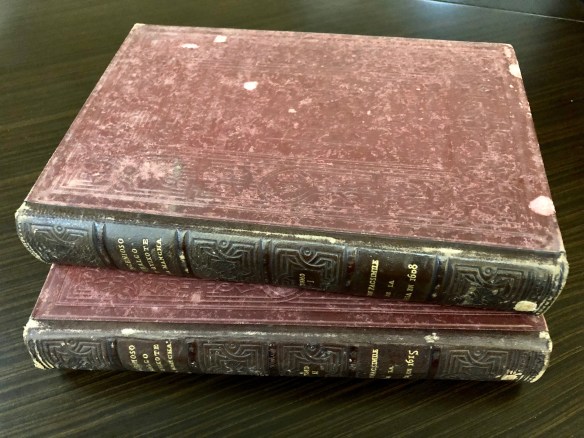
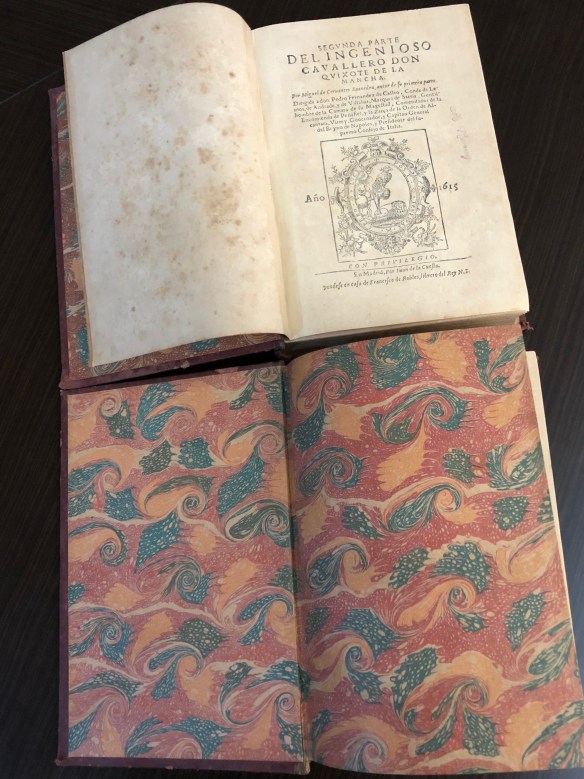
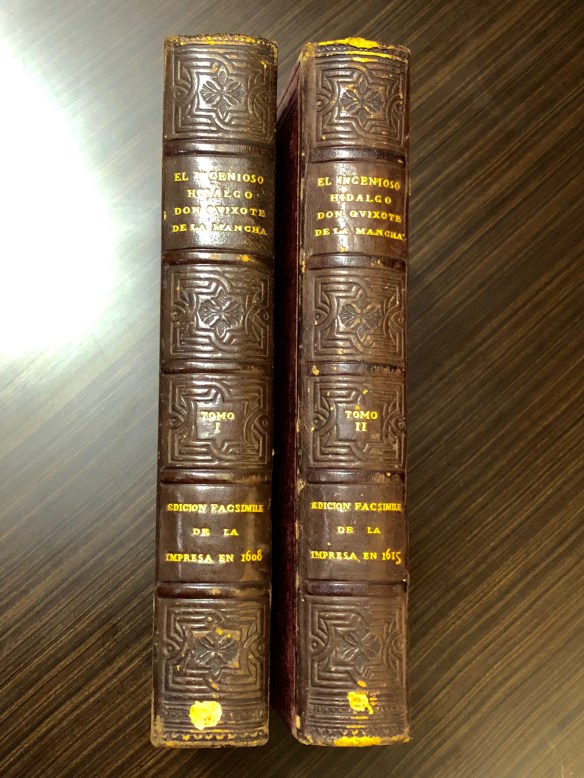
One day last week turned out to be a particularly fine day for bookhunting. I checked out the usual places online and saw that someone was selling a very interesting pair of old books. I messaged the seller, and after a bit of haggling, we met at a burger joint in Tandang Sora (my favorite kind of place for these transactions; about 11 years ago I picked up a first edition of Bulosan’s America Is in the Heart in another fastfood in Philcoa), and instead of a Big Mac, I came away with a facsimile edition, in two volumes, of Cervantes’ deathless El Ingenioso Hidalgo Don Quixote de la Mancha from 1608/1615.

IMG_4889.jpg

Collectors rarely bother with facsimiles or photographic copies, but this one, published in Barcelona in 1897, had acquired an appeal of its own, and it was in good shape and nicely bound.

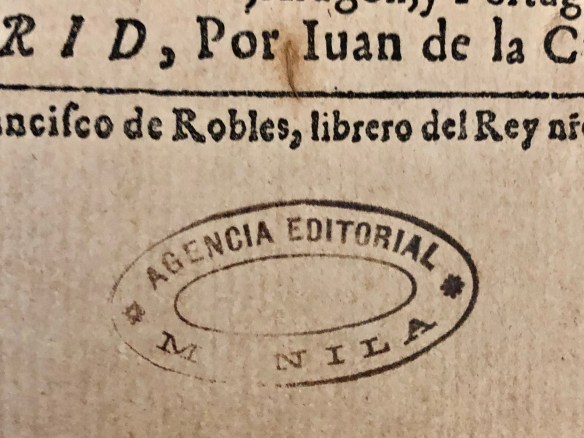
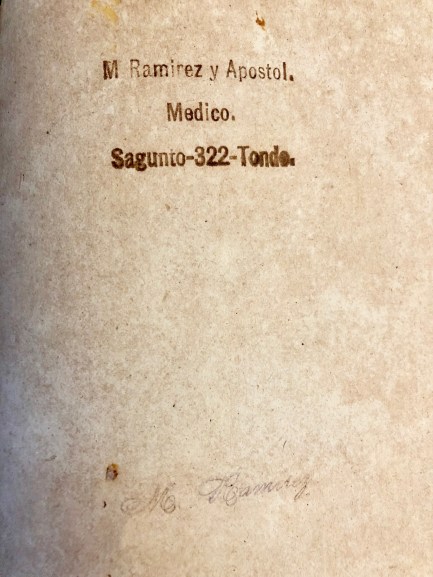
What was even more interesting was when I opened the books and discovered stamps. One displayed the name of the previous owner, a certain “M. Ramirez y Apostol, Medico, Sagunto-322-Tondo,” and another simply said “Agencia Editorial.” That sent me scurrying to Google, which revealed, first of all, that Agencia Editorial was a bookshop in Escolta run by a man named Manuel Arias y Rodriguez (1850-1924). Arias was a Spaniard, but he sympathized with the brewing revolution and (says our source at nigelgooding.co.uk) sold the Noli and Fili on the sly. He was also an amateur photographer who covered the revolution as a war correspondent for a Barcelona newspaper, and famously took Rizal’s execution picture. He died in Tokyo in 1924 as Spain’s ambassador there.
IMG_4892.jpg

I couldn’t find anything specific on “M. Ramirez y Apostol,” but I did establish that the family must have been quite well off, because an Ildefonso Ramirez y Apostol sold some land on Calle Ilaya in Tondo in 1908, which became the subject of litigation. Calle Sagunto (now Sto. Cristo) intersected with Azcarraga (now C. M. Recto), in a theater-and-restaurant district, and was the street on which Andres Bonifacio lived and where the Katipunan was founded in 1892. On Nov. 24, 1919, a scandal exploded in the newspaper La Nacion’s headlines: prominent Manileños and politicians had been caught by the police in a raid on a gambling den in Quiapo—among them, a powerful banker named Eusebio Ramirez y Apostol.

IMG_4891.jpg

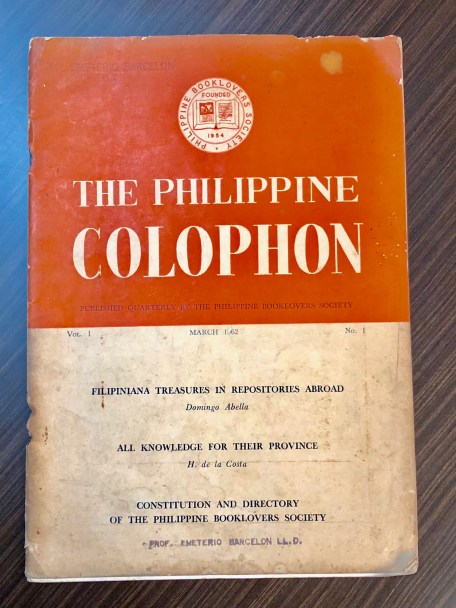
It wasn’t what I was looking for when I bought Don Quixote, but side-stories like these make bookhunting even more of an adventure, albeit from an armchair. And the day wasn’t over yet—I later picked up a journal from 1962 called The Philippine Colophon, full of bookhunting stories, but that will have to wait for next time.

IMG_4886.jpg


Penman No. 290: My Cabinet of Curiosities

IMG_4755.jpg

Penman for Monday, February 12, 2018


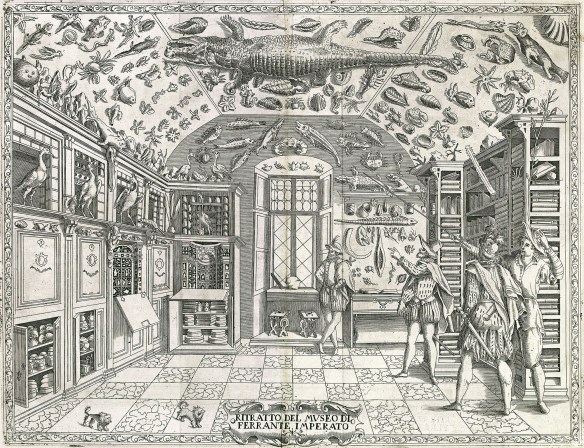
HISTORY TELLS us that museums began as private collections of odds and ends—Wunderkammer or “rooms of wonder” in German, later to be known as “cabinets of curiosities”—where wealthy Europeans of the 16th century amassed objects from all around the world for the amazement and delectation of their friends. Those objects ranged from stuffed crocodiles and “unicorn” (narwhal) horns to Roman coins, clockwork globes, and such vestiges of defeated empires as the feather crown of the Aztec Montezuma (now in Vienna’s Museum of Ethnology).

Kept and shown in—yes—cabinets (although originally “cabinets” could also mean whole rooms), these collections formed the basis for what later became full-scale and more specialized museums. Those museums are what Beng and I make a beeline for every time we land on foreign territory, eager for the chance to see wondrous objects from the past with our own eyes. Topping that list would be perennials like the Smithsonian Institution, the British Museum, the Field Museum, and the New York City Public Library—for which one lifetime seems inadequate to appreciate in their entirety—as well as art palaces such as the Louvre, the Prado, the Art Institute of Chicago, the Tate, and the Getty.

RitrattoMuseoFerranteImperato.jpg

For reasons we can only guess at, the routing in those places almost always ends at the gift shop, where you can pick up a pewter Colosseum or a Vincent van Gogh fridge magnet (both made, of course, in China) to remember your visit by.

My urges, however, have gone in another direction: instead of spending $24.99 on a fake Lindbergh cap at the Air and Space Museum, I’d rather spend it on a book on early aviation or on a 1927 newspaper marking the historic trans-Atlantic flight. You’d be surprised how inexpensive the real thing can be, compared to the mock memento.

Given that mindset—and the fact that I’ve had more than 30 years of collecting old fountain pens, watches, and other men’s junk behind me—it’s no surprise that I’ve cobbled together my own cabinet of curiosities at home, representing half a lifetime of picking rubbish off the street. Some people would call me a pack rat, for keeping Love Bus tickets ca. 1978 or real plane tickets from back when they used red carbon paper for the passenger coupons.

Lately I’ve been prowling eBay for fine old books, but I get as much pleasure finding treasure in a Cavite junkyard as I do securing a 130-year-old travel book in French online (you’ll see both below).

I’ll leave it for Beng and Demi to sort everything out when I myself become a candidate for taxidermy, but here’s a sampler of what a visitor to my mini-museum will find:

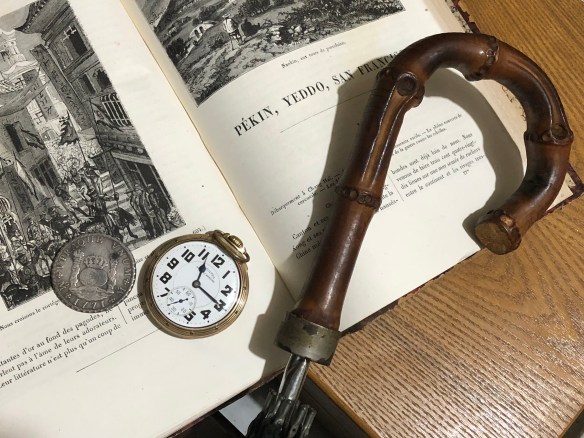
  1. A man’s black umbrella with a classic bent-bamboo handle, found for P120 in a Japanese surplus store in Bacoor. Beng rhapsodizes over the ceramics in these stores, and rightly so, but I’ve been strangely attracted to wooden umbrellas, clocks, and boxes;
  2. A silver “Dos Mundos” coin from 1771, big and fat, from my home island of Tablas in Romblon, reputed to be a pirate haven in Spanish times.
  3. A gold-tinted medallion given out to luminaries and guests at the Independence Day celebration on July 4, 1946, the kind gift of a dear family friend, whose father was one of those guests;
  4. A Form 5 (at it was already called then) that a student registered with at the University of the Philippines in the 1930s, accompanied by a booklet of course offerings for that time.
  5. A 900-page travel book, published in Paris in 1878, with 360 beautiful engravings of scenes from Australia, Java, Japan, and China, sourced from Funchal in Portugal;
  6. A gold Hamilton railroad watch from around 1925, large and bright, so-called because railroads required precise timekeeping down to the exact second to avoid collisions, and such watches were synchronized by telegraphy;
  7. The original iPhone from 2007 (of which I must sheepishly admit I have three, two of which still function perfectly), which I predict will be tomorrow’s great collectible (alongside my EasyCall pager, which still glows when turned on, a near-mint BlackBerry, and four Palm PDAs);
  8. A copy of The Gentleman’s Magazine from November 1773—no, not an early version of Playboy or Penthouse, but the very first publication to call itself a magazine, or a collection of general-interest articles, including the title story on “The Frugal Housewife, wherein the art of dressing all sorts of viands with cleanliness, decency, and elegance, is explained….”; and
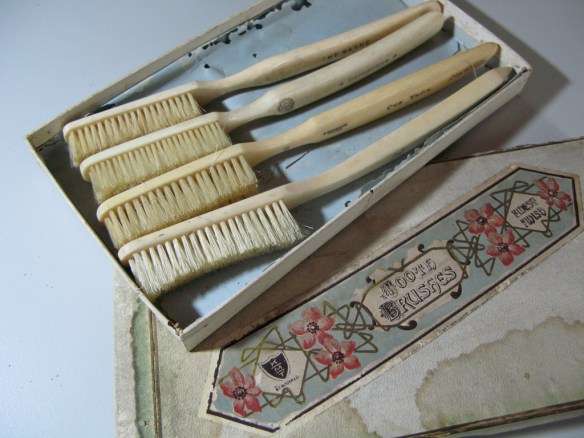
  9. An array of French-made 19th-century toothbrushes with bone handles and boar bristles.

2153883977_aa8979c3b2_b.jpg

I could go on and on—but it only gets worse (or more fascinating, if you like extracted teeth, gallstones, and other wonders of the natural world). Don’t be shy, come on in!


Penman No. 289: PowerPeeves

PowerPoint-Clips-Featured-382x255.jpg

Penman for Monday, February 5, 2018


I’VE NEVER used PowerPoint in my life as much as I had to this past year, largely because I’ve been asked to do many presentations—briefings, TEDTalks, and such. For the longest time, I’d resisted using PowerPoint (and its Mac counterpart, Keynote), not because I dislike visual aids, but because I felt confident that I could get my message across just by having people listen to my words and my voice.

That works—sometimes. I feel that when I’m talking to persuade—like when I spoke at the annual conference of the Writers Union of the Philippines to argue for the need to give evil a human face, or when I exhorted young writers at the Palancas to remember to write for oneself after writing for others—then direct address works better, without props or pictures.

After more than 30 years of teaching, I’ve long lost whatever shyness I may have had about public speaking—a teacher has no better tool in a classroom than his or her voice—but that doesn’t mean talking comes naturally, especially if you have to make sense. In the ten minutes or so before every class, walking down the corridor or up to my floor, I rehearse the lines I’ll be opening with, the points I have to make. It does get easier with time and practice, but every class is a performance, every audience a fresh challenge.

Perhaps it helped that, in our elementary years, we had a subject called Declamation which forced us to memorize and recite long, elaborate poems and speeches like Edwin Markham’s “The Man with the Hoe” and Mark Antony’s lament at Caesar’s funeral. We may not have understood what we were emoting about with full juvenile fervor, but—at least for me—it got rid of the stage fright, and I marveled at the fact that, if you spoke well and clearly, people listened.

Of course that was something that politicians already knew. They could whip the masses up into a maniacal frenzy—just with words. No flash cards, no graphs and charts, and yes, no PowerPoint. Not for Hitler, not for Marcos, not for… well, most other demagogues you can think of, some orange-haired presidents included. They knew that nothing could mobilize people better than fear, and nothing could stoke fear better than the imagination, such as of alien hordes and drug-crazed zombies streaming over the border. (On the other hand, the good guys could raise the dead as well with eloquently simple but moving oratory—think of Churchill’s “blood, toil, tears, and sweat” speech of 1940, which drew on similar remarks made much earlier by Theodore Roosevelt, not always a good guy.)

It’s tempting to suggest that if Churchill et al. had to use PowerPoint to rally the troops, the Battle of Britain would have been lost as he fidgeted, as presenters often do, with the controls and clicked back and forth between slides of Spitfires, Hurricanes, Heinkels, and Dorniers and rattled off their ranges and payloads. If Genghis Khan had to sit for a PowerPoint presentation on the economic and tourism potentials of every new territory over the horizon before he actually shouted “Advance! Kill! Plunder!”, he would never have gone past the Yellow River.

But of course today very little can happen without someone first having to plunk down a laptop, connect a medley of cables and wires, tinker with screen and clicker, and run through a cascade of slides in a coma-inducing monotone.

But I’ll admit it: there’s nothing like PowerPoint when people need to see what you’re talking about, whether it’s the tomb of Tamerlane in Samarkand, a genetically modified eggplant, or a fountain pen Jose Rizal would have written with. It’s most useful in speeches and lectures meant to inform, providing visual reinforcement for such abstract (and, these days, politically unfashionable) concepts as “human rights,” “freedom of the press,” and “territorial integrity.”

I remember being fascinated by scenes from the Bible that our Religion teacher in grade school flipped through in a roll of posters, and I’m sure we’ll all agree that the impact images produce is visceral.

That said, let me rattle off some of my pet peeves when it comes to PowerPoint presentations:

  1. Slides full of long text, which the presenters then read word for word, line by line. For heaven’s sake, summarize, condense, get to the core of things!
  2. Presenters who mumble like they were confessing their sins.
  3. Slides of cute babies, puppies, kittens, and sunsets when you’re talking about sexual harassment, Bentham Rise, or global warming.
  4. Whoosh! Swirl! Zoom! Dazzling and dizzying transitions and visual effects, accompanied by a fruit salad of colors and a library of exotic fonts.
  5. And, of course, presentations that just go on and on and on, because the presenters never bothered to do a dry run, edit their draft, or look at the clock and all the bored faces.

All yours, Genghis!


(Image from makeuseof.com)


Penman No. 288: From Quiapo to Norwich

QuiapoPic.png

Penman for Monday, January 29, 2018


IT’S A strange title, I know, but it’s all I could come up with to highlight the two topics I’m taking up this week. They’re not actually connected—at least not yet—but they were much on my mind as I dusted off my texts for a new semester of teaching at UP (all for naught, as it turned out, as my graduate writing class was dissolved for lack of students—to my secret relief).

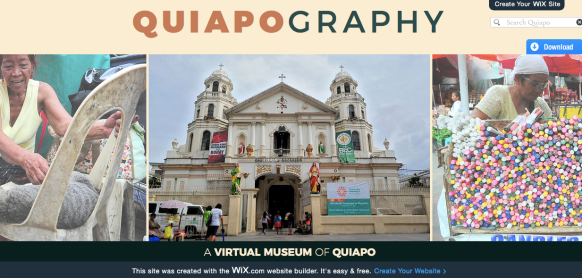
“Quiapo” is at the core of Quiapography, a digital-humanities project designed and led last semester by Dr. Patricia May Jurilla. Normally our resident expert on the history of books and publishing—one of those rare nerds who shares my strange attraction to Gothic blackletter and to the aroma of centuries-old paper—May branched out not only into a new subject but also a new approach to teaching and learning under the rubric of “digital humanities.”

Or maybe not that new. I asked Dr. Jurilla to explain the concept to me, and I was told that “Digital humanities has been in practice for over twenty years now. It’s emerged as a discipline itself with its own league of practitioners, dedicated book series and journals, circuit of conferences and events, degree programs, and new job opportunities in the tight academic market.”

Better than any explanation is the product itself of her PhD students’ semester, during which May directed them in a digital exploration and presentation of that most quintessentially Pinoy of urban spaces, Quiapo. That can be seen on the Quiapographywebsite at https://updigitalhumanities.wixsite.com/quiapography, “a virtual museum designed to document and map the culture of Quiapo in order to celebrate, re-view, and rediscover its heritage and its importance in Philippine history and society.”

Aside from the familiar photographs of and stories about Quiapo Church, amulet vendors, and the Black Nazarene, the site contains useful resources such as a list of literary works about Quiapo, pieces on the district’s fortune tellers, camera shops, and historical heritage, and photo galleries of just about everything.

Myself, I wish that I’d known about the project earlier, as I would’ve had my own Quiapo stories to contribute, as central as the place was to my young life—from my memories of descending for the first time into its brand-new underpass (something straight out of a sci-fi fantasy to a ten-year-old) to marching at Plaza Miranda with fist raised as a teenage Maoist and buying Christmas ham on Echague as a family man.

For those who’ve never strayed into this crucible of Filipino-ness (and sadly, in today’s mall-oriented culture, that would be millions of Pinoy millennials), Quiapographyshould provide a perfect introduction.

L1030874.jpg

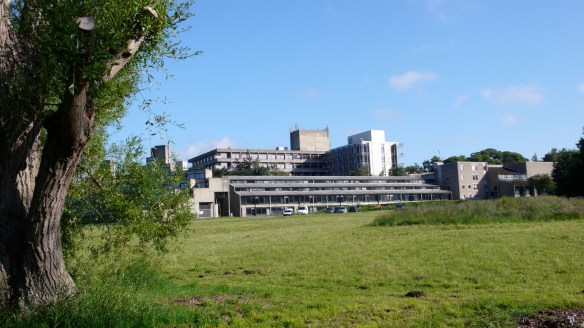
And now a quick cut to Norwich, some 10,600 kilometers away from Quiapo in southeastern England. For nine months between 1999 and 2000, this city became home for me and Beng when I took up residency there as the David T. K. Wong Fellow at the University of East Anglia. It was a restful but also fruitful stay that led to what became my second novel, Soledad’s Sister.

To put it simply, UEA is the most vibrant center of creative writing in the UK. Its community of writers was founded by Sir Angus Wilson and Sir Malcolm Bradbury in 1970, and its graduates have included the likes of Kazuo Ishiguro, Ian McEwan, and Rose Tremain. (Among the privileges of being there was having books signed by future Nobel prizewinners J. M. Coetzee and Ishiguro.)

Every year, UEA invites a writer to stay and write there—no teaching, no research, no lectures, just writing and relaxation—at its expense, or rather that of a sponsor named David T. K. Wong. A former journalist, civil servant, and businessman from Hong Kong who also writes fiction, Mr. Wong did well enough in life to endow the generous fellowship, an award of £26,000 to enable a fiction writer who wants to write in English about Asia.

I was the second Wong Fellow, and over the 20 years since the fellowship’s inception in 1998, two other Filipinos have followed me to Norwich—Lakambini Sitoy in 2003, and the current fellow, the Davao-born but US-based Nathan Go.

This brings me to my pitch: if you think you have a great novel or collection of stories welling in you—and you’d like to finish it in England, looking out on a lagoon full of graceful swans—please apply for the next Wong Fellowship, like I dared to do two decades ago. All you basically need, aside from the forms and the £10 application fee, is a 2,500-word excerpt from your proposed fiction project. The deadline for applications is February 28. For forms and more information, go here:https://www.uea.ac.uk/literature/fellowships/david-tk-wong-fellowship. Good luck!

Penman No. 287: Mysteries Solved

1934LetterB.jpg

Penman for Monday, January 22, 2018


AS I’VE been writing and tweeting about recently, my forays into collecting on the Internet have led to all kinds of serendipitous discoveries—people and stories I never knew, places I never visited.

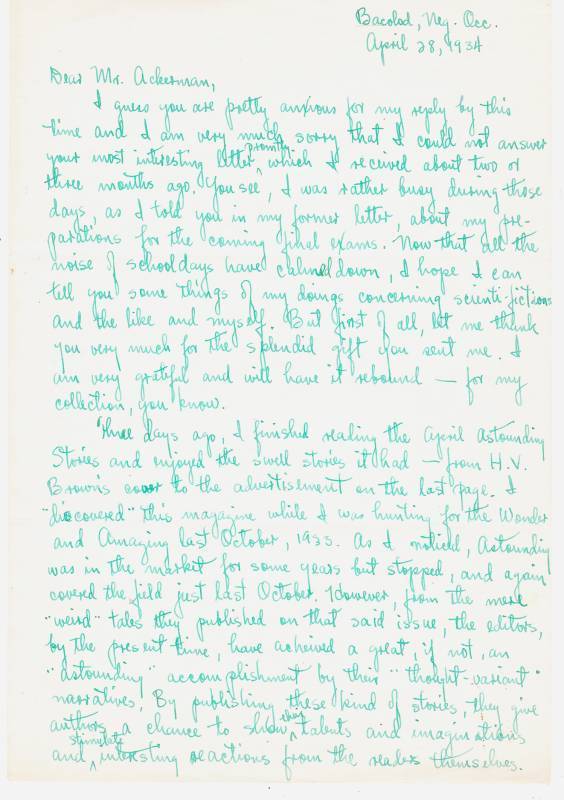
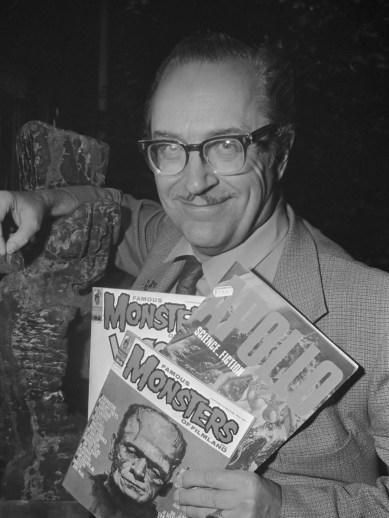
I began telling one such story a couple of weeks ago, when I mentioned coming across letters on eBay written in the 1930s by a young man from Bacolod to sci-fi pioneer Forrest J. Ackerman, then also a precocious teenager in California. We can’t tell how the two of them first made contact, but it likely had to do with the sci-fi magazines both of them were following.

Forrest_J_Ackerman_(1972).jpg

In a letter dated April 28, 1934 and written in green ink, the Filipino remains deferential to the American, addressing him as “Dear Mr. Ackerman” despite the fact that they were practically the same age and apparently had already been corresponding for some time. “I guess you are pretty anxious for my reply by this time and I am very much sorry that I could not answer your most interesting letter promptly, which I received two or three months ago,” the Pinoy begins. He explains that he’s been busy with schoolwork, then he goes on to rave about the sci-fi magazines and stories he’s been reading.

On another page, the writer talks about movies and their common idol, Marlene Dietrich. “She’s such a charming and exotic personage,” he says. “How did you like her new picture ‘The Scarlet Empress’? I liked Dietrich when I first saw her in ‘Morocco’ with Gary Cooper.” He signs off by sending Ackerman a picture of himself, with “a poor imitation of a Karloff smile,” and jokes that they’ll see each other at “the Far Eastern Olympics” which, of course, never happens.

It’s amusing and a bit astounding to see how up-to-date Filipinos were with American pop culture (as our correspondent was at pains to show) in these prewar days without the Internet, but I had an even bigger surprise in store when a reader who’d met me and Beng before, Sony Ng, wrote me to say that she knew who the writer was.

Ayco2.jpg

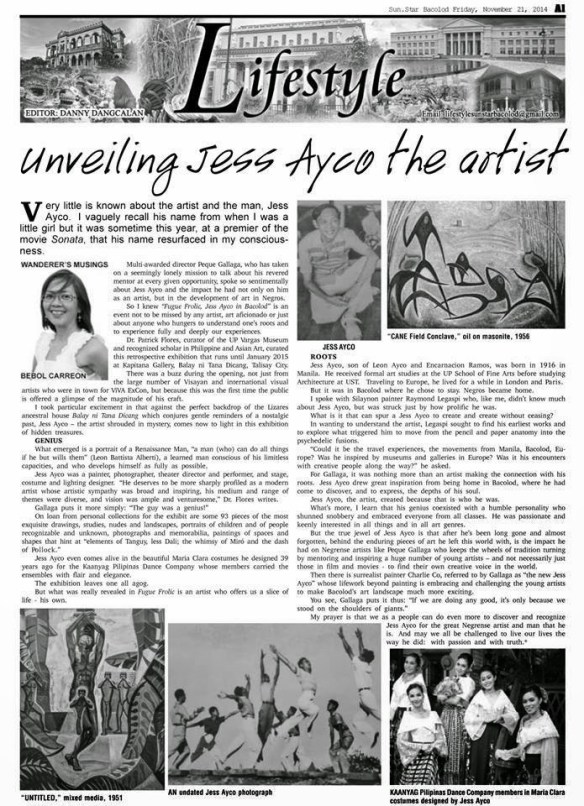
I’d read his signature as “J. R. Oyco” but it was actually “J. R. Ayco,” the “J” being “Jess,” who had gone to Ateneo with Sony’s father. “I remember my father borrowing his copy of their yearbook Aegis (Class ’34, if I am not mistaken) and how I enjoyed it very much…. My mother had a friend, Amparo Ayco, whose husband Loth was Jess’ brother, I think. And they are the parents of Dr. Alex Ayco, the doctor of Cory [Aquino],” wrote Sony.

Jess, as it turns out, became an accomplished and quite famous painter in Bacolod. Further research showed that the Manila-born but Bacolod-based Jess studied painting in UP and architecture at UST, had an “avant-garde sensibility,” and won prizes for his works, some of which can be found at the UP Vargas Museum. Critics described him as a “Renaissance man,” being a theater director, performer, and costume and lighting designer at the same time. Sadly, he reportedly died penniless, unwilling to market his work.

Sekido.jpg

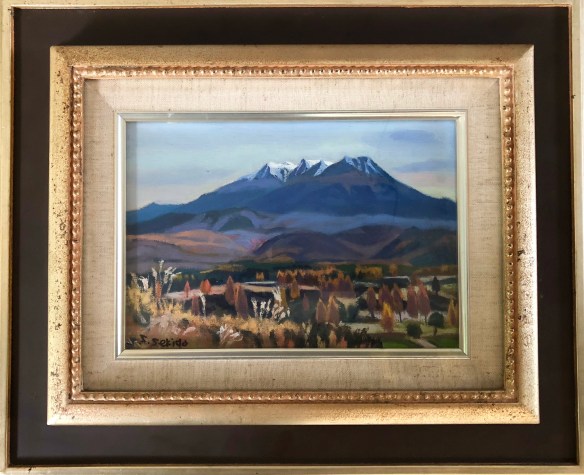
Speaking of painting, I had another mystery on my hands when I picked up a small painting that I saw online—a charming autumnal landscape done in the Western style by a Japanese painter surnamed “Sekido.” That was all I could see from the ad, aside from the irresistible price (for which you could get a throwaway cellphone). A quick run to Caloocan later, the painting—and a mystery—was mine.

Who was “Sekido”? Where was the place depicted? A Google search showed that a Yoshida Sekido (1894-1965) achieved some popularity for his exotic watercolors, but mine was an impressionistic oil, and likely newer; the signature was in Western letters. There was, however, something written in Japanese written at the back of the painting, and I posted an image of it to my international fountain-pen group and to my friends Lita and Fumio Watanabe.

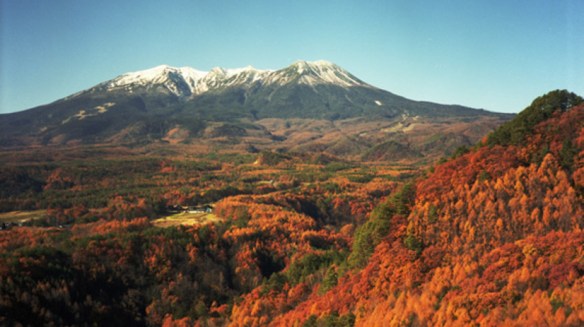
After a day or two I got a tentative response. The painter’s name was Shosaku Sekido, born in 1939, and a member of Hakujitsukai, an association of Japanese artists who had studied abroad. There was nothing further on him online. Only one other word stuck out of the translation: “Kaida,” a place name. I looked it up, and found my quarry, in a series of pictures nearly identical to my painting: popular views of Mt. Ontake in the Kaida Highlands of Nagano Prefecture, Japan.

f2077fb5-c0eb-4fc4-b9ea-15a3a389e716.wide.jpg

Now, I said, to complete the experience, Beng and I will have to go there on our next sortie to Japan—but we’ll have to keep our distance, as Mt. Ontake is an active volcano, whose last eruption in 2014 tragically killed 63 people, including many tourists. The beauty is a beast—the kind of mystery we have few answers for.

(Photo of Forrest Ackerman from Wikipedia; photo of Jess Ayco article from Sun-Star Bacolod; photo of Mt. Ontake from trulyjapan.net)

Penman No. 284: A Passion for the Past

IMG_3975.jpeg

Penman for Monday, January 1, 2018


DESPITE THE fact that I write biographies and institutional histories, I’m not a historian and have never claimed to be one. But some days I wish I were. Back in 1981, when I was re-entering UP after dropping out for ten years as a freshman, I chose between History and English as my professed major, and settled on English only because it offered the faster path to follow, to make up for lost time. But if truth be told, in more leisurely circumstances, I would have preferred to study History, and thereby learn Spanish and even some Latin.

That’s because I’m fascinated by the past—by what happened, and by “what if”; I suppose that becoming a writer of fiction satisfies some of that curiosity (one always has to imagine and construct a past that never really happened but could have, for one’s characters). I’ve indulged that curiosity by collecting vintage fountain pens, surmising the words of love, pain, loss, and hope they would have inked for their long-vanished owners.

But more recently I’ve been edging into a new area of interest—old books and manuscripts. I’ve had the odd book from the 1800s and some beautifully handwritten documents from Spanish times, but my passion took a more serious turn with the acquisition, on eBay and elsewhere, of some rather more precious pieces. I often bring these specimens—like my December 1922 Philippine Collegian—to my classes, so my students can appreciate the material reality of the past and understand that the world, time, and society didn’t begin with the Internet and Facebook.

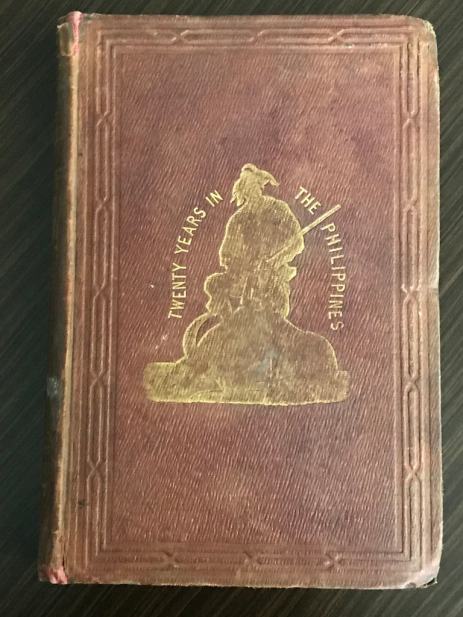
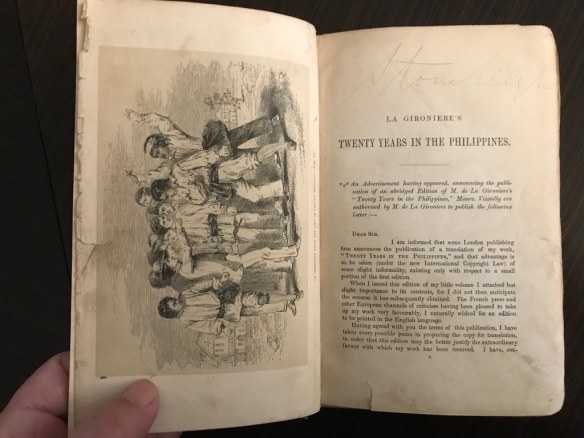
About a year ago, I picked up a first English edition of a book I’ve enjoyed (in paperback) since the 1970s—Paul P. de la Gironiere’s Twenty Years in the Philippines, later expanded into Adventures of a Frenchman in the Philippines. Gironiere was an adventurer who came to the Philippines from France in the early 1800s and established a large estate in Jalajala, on the shore of Laguna de Bay. He wrote about his exploits, and the original French came out in an English edition in 1853. I found a copy of that book on eBay, from the UK.

38985878042_bf134a46f3_b.jpg

38985877652_490a1afe80_b.jpg

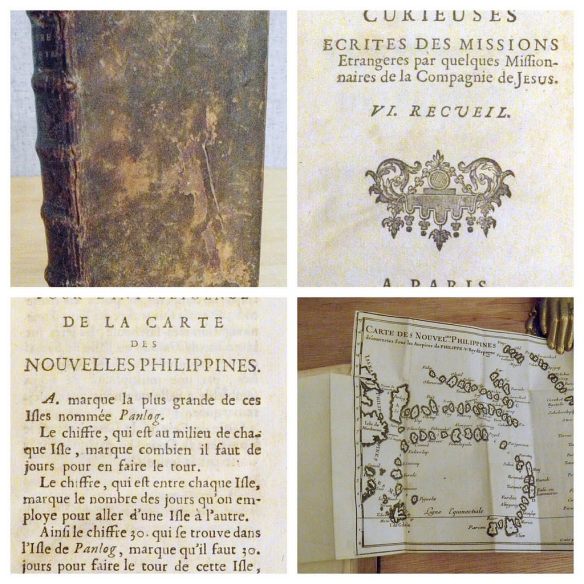
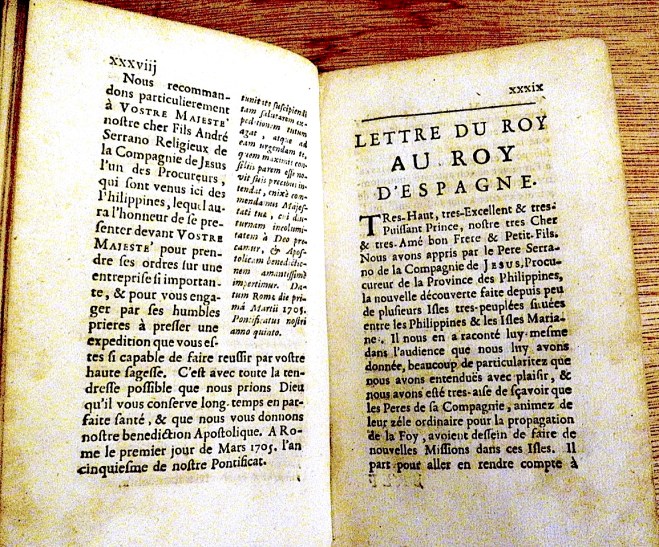
Now, 1853 is pretty old, but that would soon be surpassed by another irresistible find: a book of letters written by the Jesuit missionaries in the Philippines, published in France in 1706. The Jesuits arrived here in 1581, so the book—part of a century-long series called the Lettres Edifiantes, covering their missions around the world—is full of stories. I may not be an Atenean and my French is very poor, but I can discern marvelous adventures and great historical importance in this volume, which I found in California.

27498055959_fffba7d055_b.jpg

IMG_4230.jpg

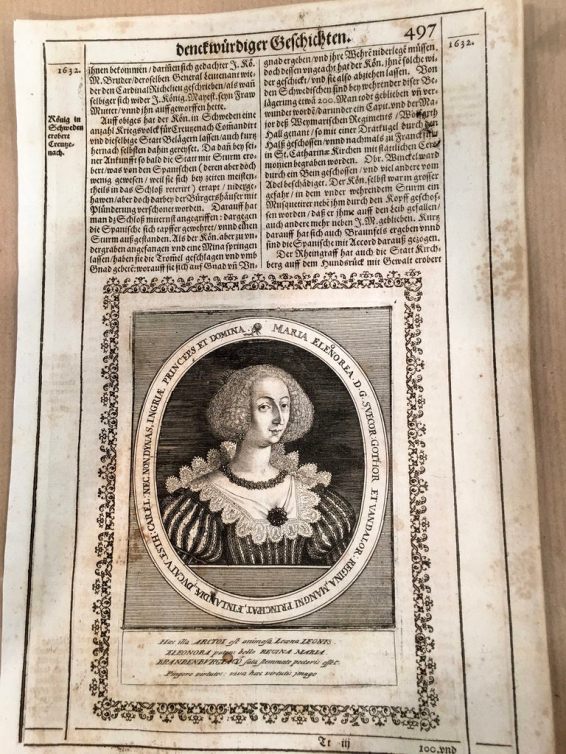
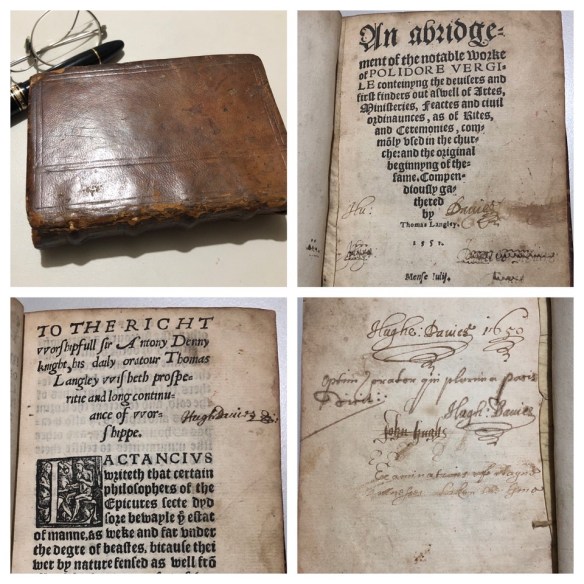
Before this, I actually had something older: a page of a German book from 1632, which I picked up at the Frankfurt Book Fair last year. But nothing could top the elation of a discovery I made just this Christmas Eve. I was idly browsing olx.ph; not finding any interesting pens, I searched for “antiques,” and stumbled on what was clearly a very old book in English from 1551, printed in Gothic blackletter. I made what I thought was a fair offer, and the seller texted back quickly to accept it; he’d been trying to sell it for a year with no takers, so my offer seemed timely, given the season. He said he was in Cubao; I said that in that case, I’d just drive over to pick it up. I saw the ad around 6:00 pm and by 7:00 the book was in my hands.

IMG_4127.jpeg

It’s nothing outstanding on its own—an abridgment by the churchman Thomas Langley of an earlier book, De inventoribus rerum, by Polidore Vergil, an Italian scholar, a kind of history of institutions like the Catholic Church (Vergil’s book got him in trouble with the church, which put it on its index of banned books). But I’m amazed by the fact that it’s survived quite handsomely for its 466 years—the pages are crisp, the leather binding firm—and charmed by the marginal notes of one of its owners, a Hugh Davies from 1650, written in extremely fine point with a quill, using sepia ink. When this book came out, Shakespeare (1564-1616) hadn’t even been born yet; the sacking of Manila was still 20 years away.

And how ever did it travel from London to Cubao across five centuries? My seller told me that his mother was a caregiver in Paris, whose clients gifted her with all manner of odds and ends—old books, Russian banknotes, silver spoons—and so the Pinoy diaspora once again works amazing wonders, bringing the flotsam and jetsam of history to our distant shores.

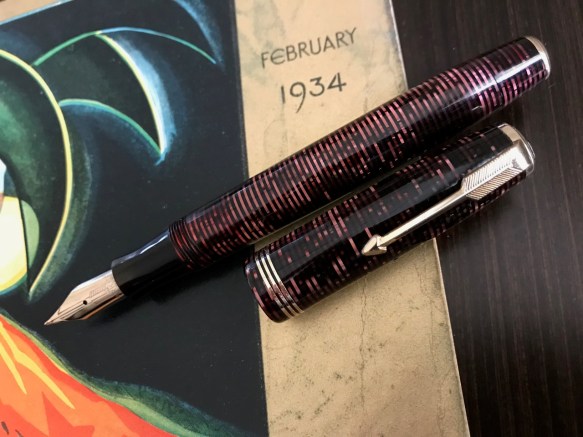
As I’ve often noted, the most wonderful thing about the past is that it’s over, especially when you think about all the terrible wars, the hardships, and the filth people had to endure just to get where we are today. But in a more romantic mood I can imagine myself strolling down the Escolta in the mid-30s in a white linen suit and straw hat, stepping into the Crystal Arcade or Heacock’s to scoop up the newest Parker Duofolds and Vacumatics. If you visit my office in UP, the magazine you’ll find on my visitor’s table won’t be from last month, but from February 1934. This will soon be joined by another magazine—indeed, the very first publication to use “magazine” in its title—the London-based Gentleman’s Magazine, issue of November 1773, and by a copy of the Illustrated London News, showing Taal Volcano, from February 4, 1860.

The past (or should I say eBay?) is truly inexhaustible; I only wish I could say the same for my finances. Happy New Year!

29865499124_9395dcd754_b.jpg


Penman No. 283: (Happy (Digital) Anniversary

ebay2

Penman for Monday, December 25, 2017


IT USED to be, in simpler times, that we marked and celebrated only the most meaningful of anniversaries—birthdays, weddings, the passing of loved ones, and maybe the day when we became a lawyer, a professor, or a boss. In my case, things got even simpler because Beng and I decided to get married on my 20th birthday (44 years ago in a few weeks). It’s a decision I’ve regretted since—not the marriage, but the twinning of these events, because it would have been nice to have two separate days and two separate excuses to celebrate.

But in this era, when relationships don’t seem to last much longer than cellphone batteries and when people can instantly “unfriend” each other for the most peevish of reasons, anniversaries have become precious things, with millennials having to invent such clumsy portmanteaus as “monthsaries” or “mensversaries” to find relief in the completion of another month’s tetchy togetherness.

And then there’s the turn of the consumer year that merchandisers won’t let you forget; if it’s September, then it’s not only the start of Yuletide in the Philippines, but also the inevitable announcement of the new iPhone X, Y, or Z (accompanied by a deep intake of breath as the awesome new gadget is unveiled, followed by the gnashing of teeth once the price is mentioned).

And yes, of course, I have the new X, which I was intrigued by but surely didn’t need—people my age could have lived happily ever after with the iPhone 4s, if truth be told—but I felt like rewarding myself for having stuck with the iPhone for ten years since the first one came out. That’s what anniversaries usually do—compel you to repeat a lunatic act. (Those of us now screaming about the X’s price tag will do well to remember that the first one, with all of 16 gigs of memory, cost a princely 45K in September 2007, plus another 5K to hack for use with local telcos. And before anyone subpoenas my SALN as a UP prof, I got my X at a steep discount through my telco, by hocking my soul for two more years.)

The decade-defining X reminded me of two more anniversaries that fell this year, of the kind that makes sense only in the context of our new digital reality, where a few years might as well be a lifetime in terms of changes in the way we think and work.

Last December 17, I marked my 20th year on eBay, which means I’ve been a digital consumer for longer than some of my students have been alive. EBay began as Auction Web in 2005, but it was in September 1997 when it opened shop as eBay, so it turns out that I signed up just a few months after its official launch. My first eBay purchase was a 1950s Pelikan 140 fountain pen from Germany, which stayed with me until I foolishly sold it a couple of years ago; my most recent one this month, again from Germany, was a 1950s Montblanc 234 ½ fountain pen—how odd is that? (But perhaps no odder than another recent acquisition—a book of letters of the Jesuits in the Philippines to the King of Spain, in a French edition published in 1706.)

DPb-BQ_UEAAmCOg

Between those two purchases lies a long green trail of about 1,000 other eager buys (my 100%-positive feedback score stands at 869)—mostly pens, watches, and books, but also computers, phones, spare parts for everything, and things you can’t get from any store (like original Apple shirts, the blue ones Apple Store employees wear). Like the cliché goes, one man’s junk is another man’s treasure, and I’ve very often been that other man, crazy and willing enough to take your grandfather’s Parker 51 or that weird-looking Hamilton Piping Rock (yes, that’s what it’s called) off your hands.

Friends scared of doing business online often ask if I’ve ever been scammed or burned on eBay. In those hundreds of transactions, maybe two or three times, I either never received what I bought, or got something else; but since eBay has an ironclad guarantee, I got refunded in the end. Presuming you take the right precautions—examine advertisements down to the minutest detail; read feedbacks (although they’re not infallible); know your product; review its price history, etc.—eBay’s safe and easily the world’s largest bazaar open to Filipinos. My only word of caution: it can get addictive, especially since it’s cashless; expect your PayPal/credit card bill to soon read “eBay eBay eBay…”

My other anniversary thankfully came free: last March, I marked my tenth year on Twitter. Ironically, I’m not much of a social-media guy, and that Twitter account (@penmanila), which I must’ve opened in 2007 on a whim, lay dormant for most of that decade until two years ago, when—uhm—a certain candidate in a certain election got me so worked up that I quickly found my meek and gentle self embroiled in a full-scale Twitter war with a vandal army. (“Something wicked this way comes,” I tweeted, quoting Macbeth; it didn’t stay that lofty or that literate for long.)

Wicked

I’m now up to 760 tweets, and counting—still nowhere near the many thousands that my younger readers have unleashed upon the universe, but old guys think more slowly and our fingers take more time to travel across the keyboard. That’s actually good for social media and its trigger-happy culture, and I can only wish I were that pokey and that deliberate on eBay.

Still, happy anniversary, and Merry Christmas, all!

Penman No. 279: That Schoolboy Spirit

IMG_3628

Penman for Monday, November 27, 2017


UNTIL A couple of Saturdays ago, the last basketball shot I saw in a live full-court game was taken by the greatest of them all—Michael Jordan. This was sometime in 1989 or 1990; I was a graduate student in Milwaukee, and my friend Peter enticed me out of Shakespeare class, waving an extra ticket to the Bucks-Bulls game at the downtown arena. MJ was in town—it was literally going to be a once-in-a-lifetime chance to watch an NBA game, with Michael Jordan playing, for free. Screw Macbeth! MJ did not disappoint; with the Bulls trailing by two in the final minute, he sank a three-pointer in the final seconds, and while we were supposed to be Bucks fans, we all jumped in our seats to cheer him, screaming our heads off.

I’ve never been a huge basketball fan, although I very briefly covered the MICAA for a newspaper in the pre-PBA days and followed the NBA back when Kareem Abdul Jabbar was still Lew Alcindor. But I vicariously enjoy sport in all its varieties, from American football and baseball to boxing and badminton, as much from the game itself as from watching the players and the other watchers. There’s something about a surge going through a crowd that senses something magical about to explode on the arena or the court that lights a long-dormant fuse in me and brings me back to my boyhood, when my father took me to the Besa Boxing Arena and the Rizal Coliseum for an afternoon’s throaty mayhem.

So I could hardly resist when a friend from grade school, who’s so modest I have to call him by his initials JV, invited me and the La Salle Green Hills gang to watch the La Salle-Ateneo game at the Big Dome last November 12. Ever the resourceful fellow (which explains his success in business), JV had managed to secure a certain number of tickets that enabled an impromptu reunion of some guys in our Viber group.

Of course every Pinoy barkada thinks of itself as special, but this one had a genuine claim to fame: our class was accelerated twice, saving us precious time. (And money, for those rarities—destitute La Sallites—like me.) I’ve written about my La Salle sojourn (Prep-Grade 7, 1960-66) elsewhere, the sum of which is, it’s the school I owe my preparation as a writer to, not to mention the supportive friendship of some very fine gentlemen. I went on to the Philippine Science High School, UP, and grad school in America, but I always treasured my schoolboy years in Green Hills and the love of books and language that they left me with.

How much better could it get? One minute I’m watching His Airness drop a game-winning trey, and nearly 30 years later I’m holding a golden ticket to the biggest game of the season so far. (Lest I be accused of treason to UP—which I should be cheering, after all, as a university official—I just haven’t had a chance to attend a live game yet, but was following and rooting for them all the way on the S&A channel, and I promise to come courtside next season.)

IMG_3587

First, we had to dress for the occasion, and while most of my buddies had closets full of green shirts, green socks, and presumably green underwear (JV even wore electric green sneakers), I had to reconnoiter several malls and department stores the week before the game to locate the perfect XXL polo shirt in shamrock green. We assembled four hours before gametime for a long and leisurely lunch in a nearby restaurant—for some of us, our first reunion in over 50 years, a long green-shirted line of seniors who’d last seen each other in khaki shorts, talking maintenance meds over crispy pata and cerveza negra. (Here’s one to us, guys—JV, Billy, Beyey, Dennis, Butch DG, Toffy, Mike, Conrad, and Jun!)

No matter how inured you might be to sports and competition, there’s no way you can escape the peculiar tingle and sizzle of a La Salle-Ateneo game, from the minute the drums unleash their tom-tom thunder from way up in the bleachers to the second the final buzzer sounds and sends half the gallery into hysteria while plunging the other half in utter despair.

It’s a rivalry that they say goes back to 1939, when La Salle beat Ateneo for the NCAA championship for the first time (27-23—sounds more like a halftime score these days). It’s come a long way since, and I don’t know who’s keeping track of the historic score, but every La Salle-Ateneo game feels like the deciding match of a best-of-three finals, going by the sheer electricity around the arena.

The last time I was at the Araneta Coliseum was two years ago to watch a revival concert of the Zombies; well, this was anything but a zombie crowd. Between spotting all the celebrities in the stands, appreciating the, uhm, fine art of cheerleading, and trying to catch up with new cheers and fight songs that I’d never mouthed before, it was sensory overload for a solid hour, an excursion into a culture I’d read about but had never visited.

I won’t bother you with the details of the game itself, which predictably went the cardiac route, with the Archers going down by as much as 12 in the third quarter, only to unload a 10-0 bomb in the closing minutes that led to an extremely satisfying outcome, 79-76, and just like that afternoon in Milwaukee nearly three decades gone, I found myself screaming and shaking like a broken radiator.

On the way out of the coliseum, a foot-wide grin still plastered to my face, I met a couple of blue-shirted colleagues from academia, whose baleful looks I couldn’t (and didn’t really want to) banish with my most effusive greetings.

IMG_3617


Penman No. 275: Listening in Bali

IMG_3343

Penman for Monday, October 30, 2017


The first time I saw Bali was 34 years ago. I was a much younger man, then only 29, an eager participant in a writers’ conference organized by F. Sionil Jose, in the company of other Filipinos who included, as far as I can remember, the late Rey Duque, Marjorie Evasco, Charlson Ong, and Fanny Llego. We spent a week in a villa on the steamy banks of Lake Batur, far away from the tourist traps of Denpasar and Ubud, which we would visit only at the very end of our trip.

It was my first time to attend an international gathering of writers, and I was deeply impressed by all the big names I met, aside from Manong Frankie himself—our host, the scholar S. Takdir Alisjabanah, among the pillars of Bahasa Indonesia; the Singaporean poet and professor Edwin Thumboo; the Malaysian poet and lawyer Cecil Rajendra; and the Malaysian-American poet Shirley Geok-lin Lim. I can’t recall a thing I said in the impassioned discussions that took place; that first time, it was all about listening and imbibing the wisdom of the masters in an environment that could not have been more conducive to inspiration.

IMG_3372

The lake was a caldera, which explained the hot springs simmering on its fringes, where we joined the unabashed Balinese in their early-morning ablutions; at night, we argued literature under the spell of the stars and the aptly named Bintang beer, to the faint accompaniment of a gamelan symphony. The one discordant note that I would later write about in a short story was an ill-advised sortie across the lake to a private graveyard, which the locals resented; but even that was a writerly touch, an almost obligatory twist to a near-perfect plot. And rightly so: back home, Ninoy and EDSA had yet to happen, and the country was seething in the darkness.

These memories swarmed through my senses last week when I returned to Bali for yet another literary conference, the tenth annual meeting of the Asia Pacific Writers and Translators (APWT), the region’s largest and most active literary network. Hosted by the Ganesha University of Education in the city of Singaraja in the northern part of the island, the conference brought together about a hundred delegates from all over, but mostly from Australia, Singapore, Malaysia, the US, and, of course, the Philippines, which has always figured prominently in this organization (I sit on its Advisory Board). With me were UPICW Director Roland Tolentino, the essayist and playwright Luna Sicat-Cleto, the poet and translator Randy Bustamante, and my wife the art restorer Beng, an avid observer and fully paid member of APWT.

APWTPic

Even the most jaded of writers can’t be faulted for flying into Bali and expecting a bit of paradise, and the island and its people can still deliver on that promise in spades. The manicured rice terraces, the monkeys lining the road, the meticulously patterned garlands, the whiskery banyan trees, the uncountable temples and altars—and let’s not forget the scenically smoldering Mount Agung on the horizon—all suggest transport to another realm of blissful serenity. That illusion, of course, was broken fifteen years ago by catastrophic terror bombings that took more than 200 lives, and in the course of our three-day conference, testimonials by our Balinese friends themselves would reveal certain painful realities behind the festive façade.

“It’s very difficult to be a Balinese woman,” more than one of them said (I’m pooling their voices together, as in a chorus). “People expect you just to be a pretty flower. I have a PhD and I make more than my husband, but I still have to appear subordinate to him and to his wishes, and I have to serve him at home, making his coffee and serving his clothes. When I received a fellowship abroad, people congratulated my husband, instantly assuming that it was his achievement and not mine—and I had to smile and say nothing about it. You know why I write in English? Because my husband can’t read English, so English liberates me, allows me to express my true feelings.”

IMG_3299

Another intriguing panel I attended took up “Nostalgia and the Asian City,” and the discussion dwelt on how cities like Hong Kong and Singapore had changed in the literary imagination. But, from the floor, I had to interject the Philippine experience and note how nostalgia in many other places like ours referred to a longing for an unspoiled rural Eden that no longer exists, an unrecoverable if not fact an imaginary past. Over lunch, I pursued the point: nostalgia is being used as a powerful political tool, such as in defense of a mythical “better time under martial law” to support a restoration of that regime.

I was assigned to a panel devoted to protest literature, and found myself grouped with three Australians who spoke on their respective struggles as immigrant, aborigine, and bohemian writers. I chose to speak about our history of protest literature and what a deadly business it was. So, our moderator asked in the end, what were we personally doing to upend the status quo? The status quo for me, I said, was darkness and despair, and it was winning out even in literature, so that there’s nothing easier to write these days than another sad and dismal story. Therefore, I would strive to write happy stories—stories with a believably, hard-won, happy ending—as my form of resistance. We have to fight for joy as much as justice; we have to keep fighting for happiness, hope, and beauty in this age of Trump and tokhang—what else were we persisting for?

As I said those words—which I had not expected to say, but had long been coming around to saying—I felt all of my 63 years, hoping perhaps that some young soul in that audience was truly listening.


Penman No. 273: A Privileged Friendship

IMG_7575

Penman for Monday, October 16, 2017


THE LAST time I saw Wash SyCip was from a far distance. It was his 95th birthday on June 30, 2016, and a long line of well-wishers—businessmen, politicians, and other celebrities—had queued up at the ballroom of the Shangri-La Makati to greet him and have their pictures taken with the icon. I thought for a second about falling in line, just to say hello, but then decided against it, already having spent more time with Wash than most people except his closest associates. He looked more frail than I had ever seen him, even as he kept up a cordial countenance seated in his chair on a raised dais, and I felt content to remember the sprightlier octogenarian I had first met a decade earlier.

Of course I knew who Washington SyCip was well before then; my wife Beng worked as an artist in the communications department of SGV in the 1980s, but I had never met the man himself—not until an opportunity arose to bid for and to write his biography in early 2006, when he was turning 85. I felt very fortunate to have been chosen for the job—and that’s what it was to me then, a job, albeit one involving an illustrious subject. I had no inkling that I was about to enter into a privileged friendship, something that would extend well beyond the writing of a book.

I had already done books for and about other personages in politics and business, and would do many more after Wash. But none of them—meaning no disrespect to or disregard for my other clients—would come close to the biography I would write for Wash, and it had everything to do with the uniqueness of the man, who lived not only an extraordinarily long life but also one far more colorful than you would credit an accountant for.

For months, we met Saturday mornings in his seventh-floor SGV office, and chatted for a couple of hours about phases of his life, proceeding chronologically from his childhood to the key decision to open his own accounting firm, a moment that I would later decide to open the book with. (Wash: Only a Bookkeeper was published in 2009 by the SGV Foundation and the Asian Institute of Management, and won the National Book Award for Nonfiction in 2010.) Immediately I felt at ease with his polite formality; no artificial chumminess there or dramatic flourish, just a quiet consistency of well-remembered detail, everything from trying to learn the foxtrot for a graduation dance and breaking Japanese codes in Calcutta to carrying a cold, dressed duck under his arm on the New York subway to bring to a lady friend.

Most readers, I’m sure, were looking for the grand contours, the big business decisions—and there’s all that in the book—but I tried to keep things homely, and was glad that Wash was game for it. He liked to play “Lara’s Theme” from Dr. Zhivago on his iPod—but not being a techie, often forgot to recharge it.

When he learned that I collected pens, he sent a bunch of them over to my house; I opened the box and saw that he had gifted me with some very nice ballpoints, which I thanked him for. When a perceptive associate gently reminded him that I collected not ball pens but fountain pens, he sent another box of the correct writing instruments—CEOs like him typically received scores of these as gifts and stored them away in drawers—with an apologetic note, even more graciously acknowledged by the ecstatic recipient. And every Christmas we would receive a box filled with some lovely piece of décor handcrafted by a microenterprise he supported in Cebu.

He had a soft spot for Filipino talent of all kinds. He once hosted a party at his home for President Cory Aquino, some ambassadors, and similarly lofty people. After dinner, he sprung a surprise on them. “Just get into your cars and follow me!” he announced with a twinkle in his eye. He led the convoy to a dimly downscale stretch of Boni Avenue, down into the happy maw of Club Mwah, the gay musical revue. Cory had a blast, and I had fun watching Wash garlanded by that feathery parade.

Sometimes I dropped by his office or chatted with him in the corner of a soirée to hear him share his views on current goings-on, both of us probably thinking that they would be useful inputs to the centennial update of his biography, but really just to catch up. It was these unscripted asides, his inviting trust, that I felt most privileged by. I suppose biographers come in through some special door, and with Wash, that door always seemed open.

Last July I received an envelope from Wash, and even without opening it I could feel that it contained a pen inside. “Dear Butch,” said the accompanying note, “This is the only pen that I have come across which may be new to your library. Just note the owl at the head of the pen. Sincerely, Wash.” It was a ballpoint, but I didn’t mind—owls (and turtles) were his trademark avatars.

IMG_3207

His generosity was well known, but it was never the showy or sentimental kind. He believed above all in the capability of the poor to learn and to lift themselves up with a little help. Despite the American citizenship he had to accept in a time of war, he thought and acted as a true global Filipino.

When he passed away last week on a plane above the Pacific—bridging the two shores he knew best, and still on the job at 96—I was requested to draft an obituary, and I replied, choking, that it was going to be my honor. It was the first—and, almost certainly, the only—time I would shed a tear for someone I wrote about.