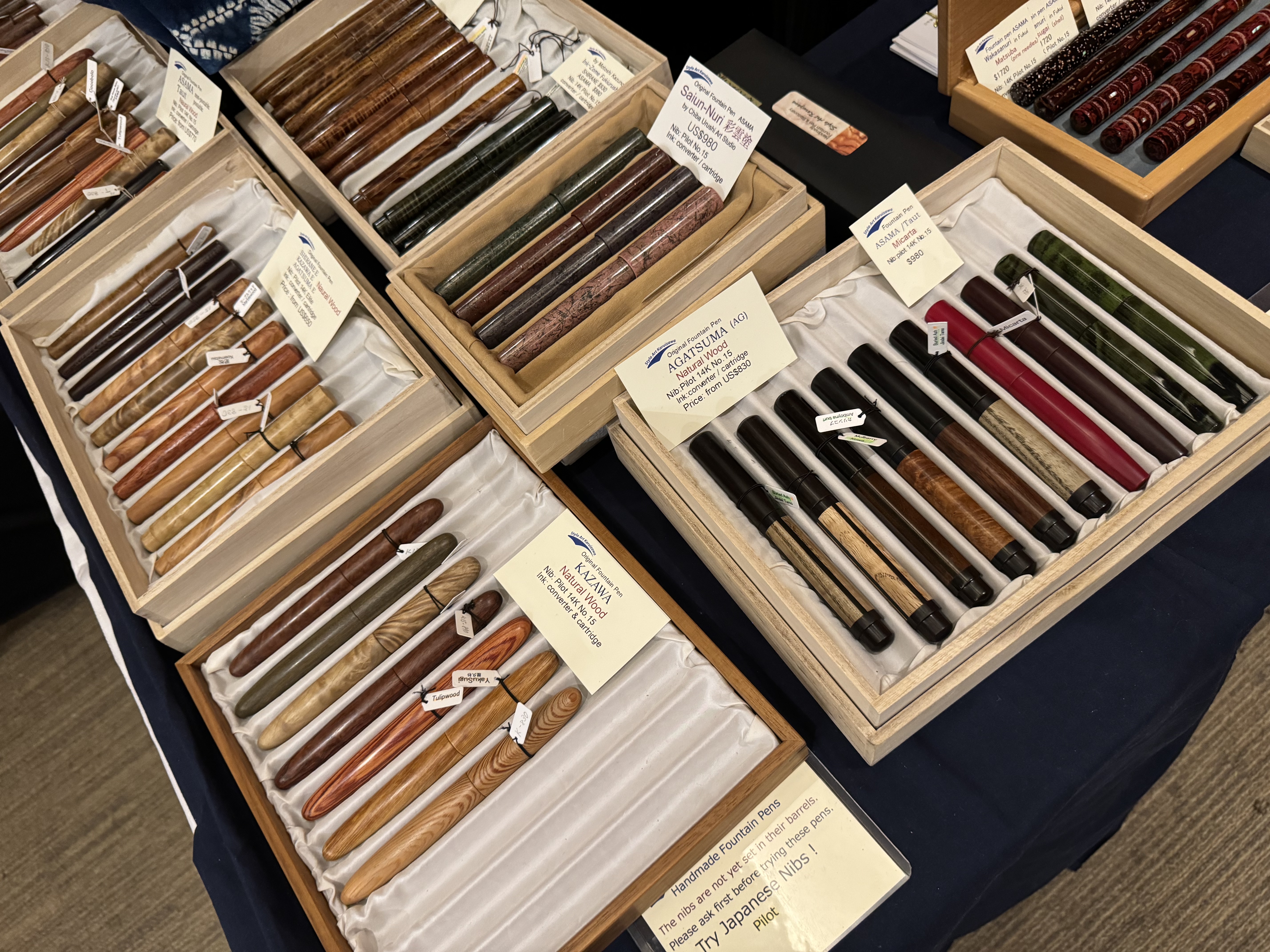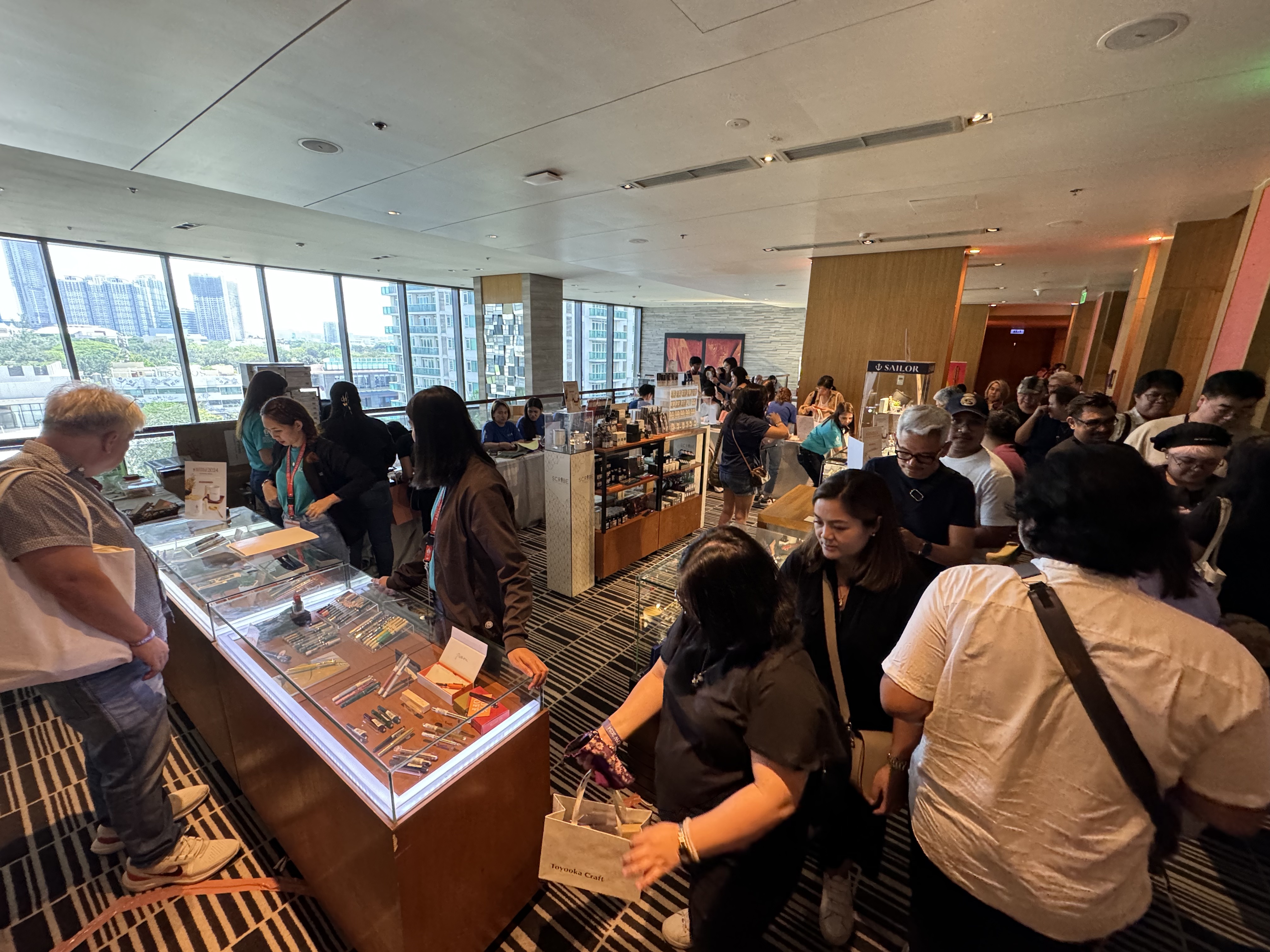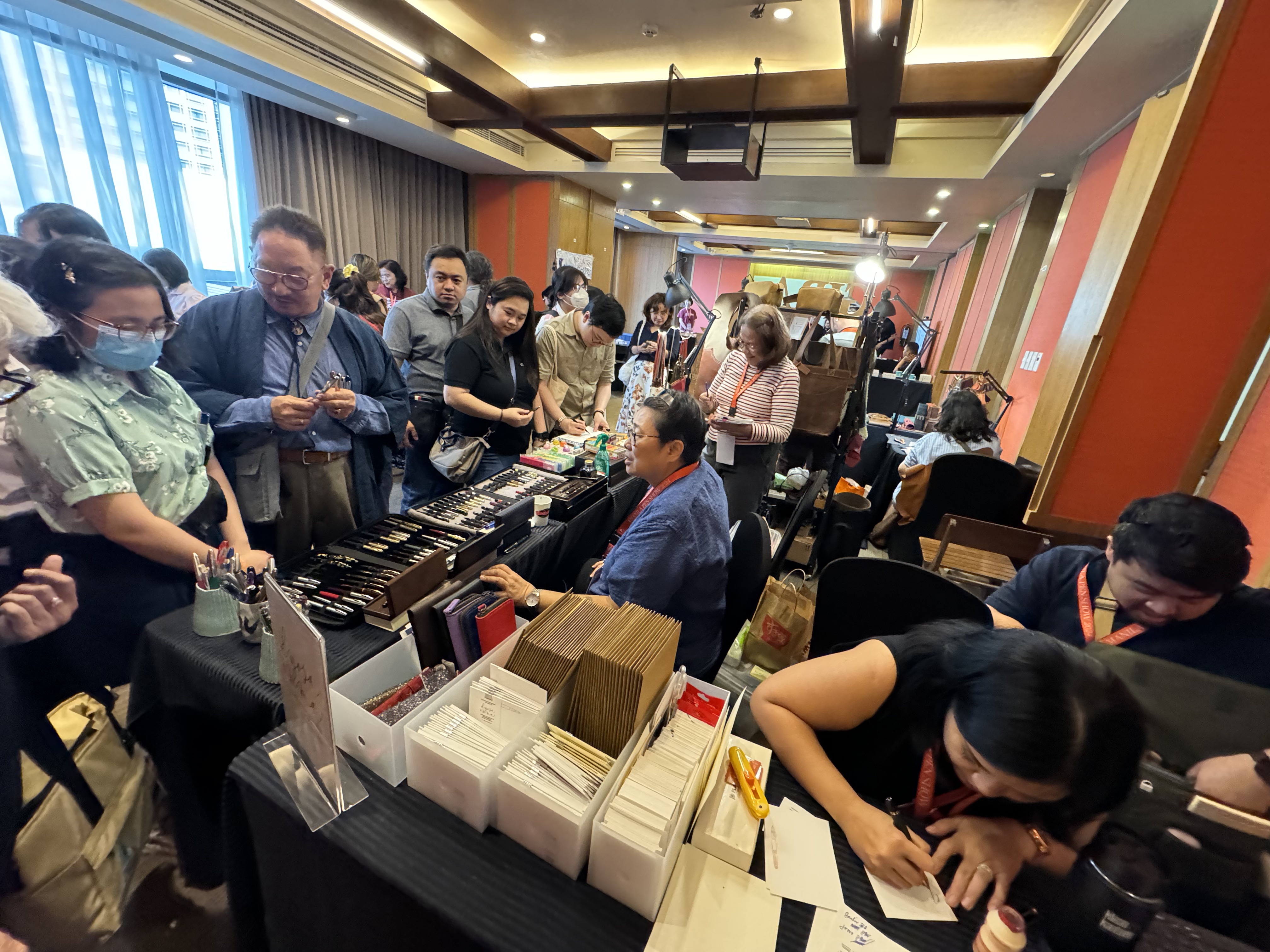
Penman No. 473: Taking Care of Emy

Penman for Friday, May 9, 2025

MY MOM Emy turns 97 today, May 9. Some years, her birthday coincides with Mothers’ Day, saving us a celebration. But that’s a bit deceptive, because when you have a parent this old living with you, every day is a blessing worth celebrating. 

It’s hard to believe that Mommy Emy is a lot healthier than she was a quarter-century ago, when we all feared that we were about to lose her, just a few years after our dad Joe Sr. passed away in 1996 from a ruptured aneurysm. After all, the stories usually went that way—one spouse dies, the other follows soon after, out of grief or a sense of life suddenly losing its purpose and meaning. Whatever caused it, Mom fell ill with tuberculosis, with the disease progressing so devastatingly that she was coughing blood and feeling terribly weak. Luckily, her doctor put her on a menu of cutting-edge pills that, over two years, miraculously banished the TB, well enough for her to secure a US visa to join my sister Elaine in California.

Over the next decade, she regained her strength, and even as she sorely missed our dad, indulged in a newfound zest for life—traveling with my sisters in the US, Canada, and Europe, visiting glaciers, going up the Tower of Pisa, and settling into in the quiet suburbs of Virginia just outside of DC with Elaine and her husband Eddie. She stayed there long enough to gain a green card, and we would visit her every now and then, sensing that, despite Elaine’s and Eddie’s loving care, she was pining for home. Eventually she did return to Manila, giving up her green card. “I want to die here,” she stated with finality, and that was that. 

One thing I love about my mom is her eminently practical sense. Since at least five years ago, she has written out clear instructions about what to do in case she was dying—no intubation, no extraordinary efforts to prolong her life, just as quiet and as painless a departure as could be managed. Last year we went out with her to the department store to pick out her funeral dress—a macabre chore to some, but for us, and especially for her, a cheerful excursion, with much discussion about this cut or that shade of blue (yes, she’s going in blue). 

She was born in Romblon a landlord’s youngest daughter, the apple of his eye, the only one to go to UP in Manila, from where she graduated with an Education degree. Growing up, she rode a horse on the farm and accompanied my Lolo Cosme on his trips to Manila. She remembers how easy and provident life was back then: “We would go to the beach and Papa would throw a net into the water, not far from shore, and it would come up teeming with fish, and the fish were everywhere, jumping in the air.” 

My father was a sharecropper’s grandson, too poor to finish college but with a sharp mind and a gift for words that must have swept Emy off her feet. Like many couples of their time and place, they decided to seek their fortune in Manila a few years after I was born. Their love was deep but often tested, given that there were five of us to raise. There was even a time when Dad was a barker for jeepneys, and Mom worked as postal clerk for minimum wage. Life sometimes felt like a soap opera, but we all pulled through, and often it was Emy’s internal toughness that made sure we were fed and ready for school.

Since her return from Virginia, my mom has been staying with us in UP Diliman, occasionally spending time with my three other siblings (Elaine is now in Canada). Still figure-conscious despite her age, she watches what she eats, but we indulge her every whim. It doesn’t take much to make her happy—almost daily Facetime calls from Elaine in Canada and our daughter Demi in the US, a weekly manicure, visits from her brood, and Tuesday Circle get-togethers with her group of neighborhood friends, among whom she is now most senior. 

What surprises people who meet her for the first time is how strong and alert she is. She uses a cane and a walker (but only because we insist), but she takes long walks daily around the yard and just outside the house. Her steps are getting slower and harder, but she marched for Leni in 2022, in gratitude for which the VP sent her a video greeting on her 95th birthday. She reads without glasses, and plays word games on her iPad with a passion; she follows Netflix, and watches the news with tart commentary. She’s as prayerful and religious as they come, but is staunchly liberal in her politics. “All my friends are dead” is her frequent complaint, quickly balanced by “But I’m so thankful for my children!” She and Beng share long meals and laughter-filled conversations. We have no doubt that as long as she takes her maintenance meds and doesn’t suffer a bad fall, she’ll live to be a happy hundred. 

Emilia Yap Dalisay’s name will never make it to the society pages, but she’s the biggest star in our small stretch of sky, and taking care of her has been our grandest privilege. Happy birthday, Mommy Emy, and may you have as many more years to come as God’s kindness will allow.


Qwertyman No. 144: A Better Fighting Chance

Qwertyman for Monday, May 5, 2025

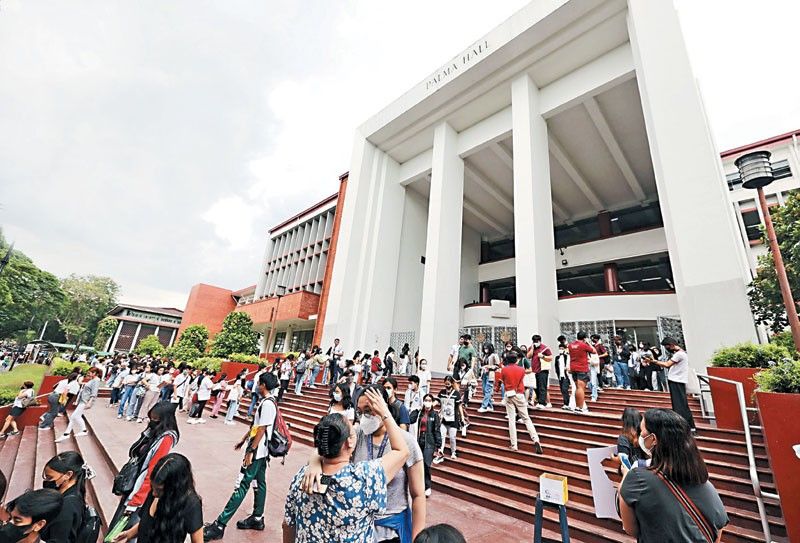
TWO WEEKS ago, almost 18,000 young Filipinos and their parents awoke to the good news that they had qualified for admission to the University of the Philippines through the UP College Admission Test (UPCAT). Over 135,000 high school students had applied, so this year’s admission rate stood at just over 13%, almost 7% higher than last year’s outcome.

Whatever UP’s critics may think it’s become, entry into one of its eight constituent universities remains the highest of aspirations for many Filipino families, especially the poor for whom the tuition and cost of living at top private universities is impossible without a scholarship. 

UP oldtimers like to recall the days, decades ago, when the quality of public education was still high enough for public and private high school graduates to compete on fairly even terms for admission into UP. It wasn’t unusual for some provinciano wearing chinelas to step into a UP classroom or laboratory and beat the daylights out of some elite-school fellow in academic performance. Many of those provincianos—the likes of Ed Angara, Miriam Defensor, Billy Abueva, and Dodong Nemenzo—went on to stellar careers in government, education, the arts, and industry. UP was clearly doing what it was supposed to do, as its past President Rafael Palma put it: to be “the embodiment of the hopes and aspirations of the people for their cultural and intellectual progress.”

Ironically, by the time the UP Charter was revisited and revised a century after its founding in 2008, giving it the unique status of being the “national university,” UP’s student profile had changed. Jokes about UP Diliman’s parking problems began to underline the popular perception that UP was no longer a school for Filipinos across the archipelago and across income strata but one for the privileged, mainly from the big cities. The introduction of free tuition in state universities and colleges in 2017, while well intentioned, even resulted in subsidizing the children of the rich in UP, who could well have afforded going to Ateneo or La Salle.

But some good news is emerging, as this year’s UPCAT results bear out. Starting with last year’s UPCAT, there’s already been a reversal of the trend favoring graduates from private high schools, with 55% of qualifiers now coming from public and 45% from private high schools. UP President Angelo Jimenez—himself a boy from the boonies, coming out of tribal roots in Bukidnon—has pledged to do even more to give poor students outside of the big cities a better fighting chance of getting into UP.

“We started this banking on two things,” he says, “that UP will respond to the challenge of transforming the so-called common clay—the less-advantaged—into fine porcelain, and that the less-advantaged will respond to the challenge of opportunity. The task of leadership now is to set the enabling environment, structures, and systems to ensure the success of this two-pronged strategy. It’s a big bet, and it gets bigger. We still have the non-UPCAT track. This includes our Associate in Arts program, UPOU’s ODeL, talent-based modes, and finally, the UP Manila School of Health Sciences in Tarlac, Aurora, Palo, and Cotabato. We cannot solve all problems, we are not lowering standards. In fact, we must demand excellence regardless of social and economic status, and enforce it. But we are dropping rope ladders so people long staring up from the base of the fortress walls can have a better chance of scaling its sheer drop with something better than their bare hands.”

Those rope ladders include adding more UPCAT testing centers in faraway places, ultimately to have at least one in each province—a goal that will be met later this year. The testing centers are also being moved from private to public high schools. “We’ve seen that more students tend to participate when the tests are given in their national high schools,” says UP Office of Admissions director Francisco de los Reyes. Aside from more testing centers, UP is helping disadvantaged students prepare better for UPCAT through its Pahinungod volunteers, who distribute reviewers using real items from past UPCATs (these reviewers are also downloadable for UPCAT applicants) and use them for UPCAT simulations, guiding students even with such details as shading the exam oblongs. (De los Reyes reports that wrong shading has caused 20% of their machine counting errors.)

These steps are clearly paying off. Davao de Oro (formerly Compostela Valley), which previously accounted for less than 10 UPCAT qualifiers, has just produced 31, after a testing center was put up in Nabunturan. 

UP’s support for poor students doesn’t end with UPCAT. Every year, thousands of qualifiers from so-called Geographically Isolated and Disadvantaged Areas (GIDAs), even after passing UPCAT against all odds, fail to show up for enrollment after realizing that they cannot afford the costs of living on a UP campus. UP has rolled out a P50-million Lingap Iskolar program that provides such disadvantaged qualifiers who meet certain standards P165,000 a year to cover housing, meals, transportation, books, cellphone load, and other expenses. Almost 200 Lingap Iskolar grants were given out last year. In UP Manila, private donors fund daily meals for over 30 students.

I’m particularly happy to report that a dear friend of mine, Julie Hill, recently donated almost P21 million that will be used for a new Agapay Fund that will go toward the upkeep of poor students in UP’s School of Health Sciences, which has a unique ladderized program that enables rural midwives to become nurses, and nurses to become doctors. The program has already produced about 200 doctors who have served their communities back. 

Among them was Dr. Hannah Grace Pugong, who recently landed in the top 10 of the medical board exams, after placing No. 1 in the midwifery and No. 3 in the nursing exams. Dr. Pugong will soon be deployed under the Department of Health’s Doctors to the Barrios (DTTB) program, fulfilling her return service commitment. It is an obligation she willingly embraces, saying that “I have often reminded myself that how I treat my patients should reflect how I want my family members to be treated by other health workers.” 

If that’s not what being a national university should be about, I don’t know what is.

Qwertyman No. 142: A Long Learning Process

Qwertyman for Monday, April 21, 2025

I RECENTLY came across a thread on social media urging Filipinos to boycott the midterm elections next month on the expectation that they will be tainted with fraud, as the 2022 elections were believed or alleged to have been by many.

When I looked it up, as early as last October when certificates of candidacy were still being filed, a retired OFW named Ronnie Amorsolo had already protested the elections, telling aspirants to not even run and calling the May 2025 polls a waste of time, energy, and money as they were already rigged. Political dynasties were making sure they would stay in power, he said, with the connivance of the Comelec and Miru Systems, the contractor for this year’s automated vote counting.

I can understand the extreme frustration of our countrymen like Ronnie who feel that the current electoral system is hopeless and that our democracy itself is a fraud given the seemingly unbreakable grip of dynastic families on our political leadership. But I disagree with his cynicism and with his call for a boycott. I think abstention will simply play into the hands of those dynasties and be written off as a virtual surrender.

To put it another way: if Leni Robredo herself believed in the futility of seeking change through elections, then why is she running for mayor of Naga? Granted, it’s friendly territory for the Robredos, but she could have symbolically stayed away to make a point. (There are, of course, those who fault even Leni for not protesting her presidential loss loudly enough and for wishing her opponent well, but I for one admire her for her graciousness and sobriety. I suspect she must have known that whether or whatever fraud may have occurred, much more work needed to be done to move Filipinos toward the light.)

As a longtime educator, I believe in learning—sometimes, the hard way. What’s happening in America now is what tens of millions of Americans didn’t realize they had voted for—but they did, and now they’re reaping the dire results; we’ll see in the US midterms next year if they’ve learned anything (and the Democrats as well, about their messaging). I’ve always thought that it will take at least two more generations before we Pinoys start looking for real merit in our leaders like the Singaporeans (whose inclination to self-censor I have always scoffed at, but for whom governance has become a learnable science). 

In the meanwhile we will keep making mistakes and keep paying the price—until we learn from those mistakes. Experience, they say, is the best teacher, but to learn from experience, you still need someone in the room to make sense of what just happened and what’s likely to happen again, if we don’t choose wisely. That’s what a good opposition should do—tilt against windmills and prepare to lose if they must, but give voters clear choices and alternatives. And the opposition itself has much to learn in terms of communicating with the seemingly unreachable. I don’t think it’s true that the only language the poor understand at the polls is money; a moving narrative of hope could work miracles.

In a very recent study titled “Elections Under Autocracy: The Opposition’s Dilemma—Compete or Boycott,” law professors Samuel Issacharoff and Sergio Verdugo point out that “Even in extreme authoritarian situations, opposition leaders should develop a pragmatic and strategic assessment of the political landscape. In many cases, the opposition should opt for participation while simultaneously exposing and denouncing the regime’s electoral abuses. Participation does not necessarily imply endorsing the legitimacy of a rigged system—despite the risk of elections strengthening the regime in the end—but instead serves as a means to challenge the regime, mobilize supporters, maintain political visibility and denounce abuses to both the domestic and international communities. By engaging in the process, opposition forces can highlight institutional flaws, document electoral manipulation, and create pressure for reform, even in the face of near-certain defeat. While acknowledging that outright victory is unlikely, there are there are compelling reasons for opposition forces to contest elections in authoritarian settings to be considered.” 

Remember 1985? If we had boycotted the snap elections then—and what a brazen act of larceny those elections turned out to be—would February 1986 have happened? It wasn’t just the plight of the military rebels that brought us out on EDSA; it was our outrage—and yes, maybe we just don’t have enough of that today, but push us some more, and it could happen again.

At this point, let me borrow some thoughts from a group called the Global Transparency and Transformation Advocates Network (GTTAN), which recently put out a statement in response to the calls for a boycott of the May elections: 

“While GTTAN understands that the boycott aims to express dissatisfaction with the electoral system and pressure authorities for reform, the reality is that with only three months remaining, any significant changes are highly unlikely.

“The COMELEC and the current administration have demonstrated little interest in implementing reforms, making boycott rallies an ineffective protest strategy.

“Furthermore, refusing to participate will not prevent the election from taking place. 

“Instead, it may lead to a sweeping victory for the administration’s candidates, as their supporters will still cast their votes.

“An outright boycott risks further weakening opposition to the government.

“For these reasons, GTTAN firmly opposes the call to boycott the elections. Instead, GTTAN advocates a strategic approach that includes: 

  1. Deploying poll watchers to oversee the voting process, including vote counting, recording, and reporting at each precinct; 
  1. Collaborating with and supporting organizations including political parties that are actively working for electoral integrity; 
  1. Advocating for citizens’ rights to review the automated election system, ensuring it meets transparency and auditability standards;
  1. Pushing COMELEC to maintain election records for a minimum of 10 years after each election and to make such records available for inspection by the public upon request; and  
  1. Educating voters on proper voting procedures and raising awareness to prevent election fraud. 

I couldn’t have put it better: engagement, not withdrawal, remains the activist’s bravest and toughest option. Whether those twelve names you write down win or not—or even get counted or not—you’ve already won your own battle against despair.

(Image from philtstar.com)

Qwertyman No. 141: Purity and Perfection

Qwertyman for Monday, April 14, 2025

LAST WEEK, former Commission on Audit Commissioner and senatorial candidate Heidi Mendoza—a staunch exponent of good governance and nemesis of crooks—drew flak from some people who would have been her natural allies on the liberal side of the political spectrum: the LGBTQ community. At issue was her expressed disagreement with same-sex marriage, as a personal belief she did not seek to impose on anyone else. That still wasn’t enough for some same-sex marriage advocates, who announced their withdrawal of their support for her candidacy.

Of course both Heidi and her detractors have a right to their opinions, but I can’t help thinking that the only people chuckling at this situation are avatars of neither good governance nor gender rights, but the enemies of both.

Heidi Mendoza hasn’t been alone in this position of being seen to have been right on many things but wrong on—well, something, but something big enough to destroy and erase whatever good they’d done before. “Being seen” is important here, because it’s a matter of perception; like beauty, “wrongness” is in the eyes of the beholder. 

Today’s social media is populated by such beholders who can’t wait to see personalities make what they deem to be mistakes, and often to point those out with all the hawkish attentiveness of dancesport judges and the ruthless certitude of Pharisees. 

I’m sure you’ve come across many more such instances of people whom you thought you knew and whose ideas you had largely agreed with, only to find them—suddenly one morning—the object of the nastiest vitriol the Internet can be capable of dishing. Once blood is spotted in the water, the sharks start circling and a feeding frenzy follows. Many comments simply echo the previous one, seeking to be even louder and crueler; little attention is paid to context and nuance.

Witness what has happened just these past few weeks:

A political scientist and commentator who had grown a substantial following for his liberal positions got skewered for comparing Mindanao to sub-Saharan Africa. Never mind his explanatory reference to a scholarly study which made that comparison based on certain criteria. In the verbal shorthand of a TV interview, the soundbite was all that mattered to many.

An expert on infectious diseases—globally recognized in that field—was savaged for opining that former President Rodrigo Duterte should have been tried by a Philippine court instead of being bundled off to The Hague. Never mind that the good doctor made it clear that he was against EJK and all the wrongs that the old man is now in the dock for. Netizens seemed to take it against him that he tried to explain how many Mindanawons felt about Duterte, and that he had worked under that administration to help stop Covid during the pandemic.

A prominent journalist and exponent of ethical journalism—also a fervent convert to evangelical Christianity—upset and lost many friends when he declared his disagreement with the idea of transgender athletes competing with their biological counterparts. (It was a view shared by a former student of mine, a lawyer and legal scholar of the same religious persuasion.) This man’s longstanding commitment to the truth and to justice seemed trivial compared to what he had to say on this one issue.

No doubt these issues are centrally important to some, the litmus test by which they judge people’s character and their “true colors.” But which color is truly “true”—the mass of blue or the spot of yellow? And what effect does single-issue politics have on the big picture?

I wonder what all those Arab-Americans who withheld their vote for Kamala Harris because she didn’t sound pro-Palestinian enough are thinking now that the man they effectively helped return to power is speaking unabashedly about Gaza as “an incredible piece of real estate.” I know that some continue to insist that they did the right thing in holding on to the one issue that mattered to them, and of course it was their right to do so. But I can’t help thinking of all those Fil-Ams who trumpeted the Orange Guy’s alleged support for the rights of the unborn, in disregard of all the pain and misery he’s causing to the born. 

Me, I’m as liberal as they come, with all of that word’s pitfalls and contradictions. I believe in civil liberties and human rights, in free speech, in freedom from censorship, in the equal application of the law for all. I also support divorce, same-sex marriage, abortion rights, transgender rights, and gun control. I stand neither with Zionists nor Hamas but for peace for the people of Israel and Palestine. I believe in and pray to God—a God who is good and just—but mistrust organized religion and both extreme Right and Left (indeed, anyone who claims to know how life should be lived) and resist doctrine of any kind, whether Church, State, or Party. If you’re my FB friend and you find any of these too reprehensible for comfort, feel free to unfriend me, or to stop reading this column. 

I have to admit that, following major upheavals like the 2022 election and the Duterte arrest, I’ve lightened my roster of Facebook friends by offloading a number of characters whose preferences I loathed. I didn’t have any qualms about that, because they were “friends” only in the shallowest Facebook sense of the word. (I find Facebook useful, but blame it for its degradation and devaluation of “friendship.”) Most had never interacted with me, and neither of us would miss the other.

But there are friends you have in real life who are arguably worth more than their politics or religion. By this I don’t mean that they fatten your bank account or make your life easier (although some might); if anything, they remind us how much more complicated people and life can be, and how ideological purity or moral perfection may ultimately be less important (and certainly more boring) than the challenge of finding some common ground and surviving together. In continuing to talk with them, we talk with ourselves and those parts of us still capable of doubt and wonder. 

So disagree as I may with her on this particular point, I’m voting for Heidi Mendoza. I suspect I stand a better chance of convincing her to support same-sex marriage than of straightening out the crooks and dimwits eager to take her place in our already benighted Senate.

Qwertyman No. 140: The City of Stories

Qwertyman for Monday, April 7, 2025

THIS PAST weekend, I was down in Dumaguete City with National Artist for Literature Resil Mojares, historian Ambeth Ocampo, and scores of other writers for the 2nd Dumaguete Literary Festival. At my age, I’ve frankly tired of going to literary festivals, conferences, and workshops, preferring to work quietly at home—Dr. Mojares apparently feels the same way—but we couldn’t resist the allure of Dumaguete, a city central to the development of Philippine postwar literature, and always well worth visiting on its own for its gentle charms.

I personally have much to thank Dumaguete for, for what it contributed to my own budding literary and academic career. Early in 1981, shortly after I had returned from my first visit to the US, I received an invitation from Dr. Edilberto Tiempo to join the Silliman Writers Workshop which he and his wife Edith—the poet and future National Artist—had started two decades earlier upon their own homecoming from America. 

I had dropped out of college for a decade by then, and was working at NEDA, which had sent me to the US for an observation tour. What that trip to the American Midwest—mainly the campus of Michigan State in East Lansing—did for me was to rekindle my interest in learning. Dr. Tiempo’s invitation could not have come at a better time: a summer devoted to talking about poetry and fiction at Silliman University felt dreamlike, and by the time the workshop ended, my head spinning with magical lines from Robert Graves, I had resolved to quit my job, go back to UP, and just study, write, and teach for the rest of my life. And that’s what happened.

I wasn’t alone in that kind of transformative experience; as the country’s oldest writers’ workshop, the Silliman summer workshop became a virtual rite of passage for young writers, especially in English (some writers in Filipino have also attended, with works in translation). Silliman itself (older than UP by several years) has produced many of the Philippines’ finest writers, aside from the elder Tiempos—among them Ricaredo Demetillo, Aida Rivera-Ford, Merlie Alunan, Leoncio Deriada, Cesar Ruiz Aquino, Elsie Coscolluela, Rowena Tiempo-Torrevillas, Marjorie Evasco, Lakambini Sitoy, Artemio Tadena, and Myrna Peña-Reyes. It also has a strong performing arts tradition, contributing the likes of National Artist Eddie Romero, Gilopez Kabayao, Amiel Leonardia, Junix Inocian, and Elmo Makil, among others.

For all these, Dumaguete has been formally nominated to be designated as a UNESCO City of Literature—one of many such distinctions listed under UNESCO’s Creative Cities Network program that was launched in 2004 to recognize and celebrate cities around the world—350 of them form more than 90 countries to date—for their signal achievements in Crafts & Folk Art, Design, Film, Gastronomy, Literature, Music, and Media Arts. So far, 53 cities in 39 countries have been named Cities of Literature—among them Barcelona, Heidelberg, Iowa City, Lahore, and Norwich. (Iloilo has already been named a City of Gastronomy, and Quezon City is vying to be designated a City of Film.) With the Philippines serving as this year’s Guest of Honor at the Frankfurt Book Fair, Dumaguete’s recognition as a UNESCO City of Literature will raise our global cultural profile even higher, and let the Philippines be known for more than Boracay, Manny Pacquiao, and Imelda’s shoes.

Leading that charge for Dumaguete is Silliman University literature professor Ian Rosales Casocot, one of our best fictionists and co-director of the festival with Gayle Acar. Working with the Dumaguete City government, the Department of Trade and Industry, and the Buglas Writers Guild which Ian heads, Ian notes that aside from developing writers, “Dumaguete itself has been a constant subject of many literary works, from novels to poetry, from essays to plays. It is high time that Dumaguete is recognized for its role in shaping literature in our corner of the world.” The well-attended Dumaguete Literary Festival, now on its second edition, offers proof positive of that city’s continuing centrality to our literary life and culture. 

We had been invited to share our views on various aspects of Philippine literature in this age of artificial intelligence. I joined a panel of writers dedicated to that specific topic—or, as they put it, “Can AI Win a Nobel Prize for Literature?”—which happened to be something I’ve given much thought to.

Understandably, there’s been a lot of fear and anxiety—even outright hostility—generated by the emergence of AI in nearly every aspect of human life and society. Studio Ghibli’s Hayao Miyazawa, for example, has forsworn the use of AI in his work, calling it “an insult to life itself.” While it has been hailed for its contributions to such fields as medicine and criminology—shortening diagnostic procedures and sharpening digital forensics—AI’s application to less mechanical endeavors is more fraught with both ethical and technical questions. 

In previous lectures and again in Dumaguete, I showed how—at this point—AI poses little threat to the writer of truly good and imaginative literature, by yielding execrable responses to such prompts as “Write a paragraph about a summer night in Spanish Manila in the style of Nick Joaquin.” It’s worth a laugh, but I’m not sure how long we’ll be laughing; AI’s present ineptitude simply means it has a lot to learn—and it will, with the kind of training it’s being fed off our books, our texts, our manner of writing. It will only be a matter of time—I’d say less than a decade—before AI can mimic the best of global writing. For me, the best response is neither to hate nor to ignore it, but to understand it and employ it for helpful uses we have yet to find. (We’re already tapping AI every time we use Google, and no one seems to mind.) It should even be possible for authors to creatively interact with AI in what I’m calling a game of prompts.

What we can reasonably certain of is that while literary styles can be copied, the human imagination is far richer and stranger than we think. AI tends to homogenize; the good creative writer strives to be unique. Like Dumaguete, there’s a whole city, a labyrinthine cosmopolis, of stories in every writer’s mind to be discovered and explored.

Qwertyman No. 139: Filipinos for Nothing

Qwertyman for Monday, March 31, 2025

THERE’S A part of me that wants to stop beating up on the Dutertes, lest I be accused of being part of the Marcos propaganda machine (which stands to benefit from all this anyway, whatever I say), but like the gift that keeps on giving, the D’s and their people just won’t let me let them be. Being no lawyer, I’ll have nothing to say on the legality or otherwise of the former President’s arrest and forced departure for the Netherlands—except to opine, as others have, that justice sometimes works in mysterious ways.

My beef for this week is how the Duterte Agitprop Department (let’s call it DAD, like Elon Musk’s DOGE) has spun the whole ICC affair in the public sphere. These days, you never expect people to stand on the truth and nothing but the truth in these political matters. But you do hope for s0me degree of sophistication, for the kind of professional finesse that will justify the multimillions that any PR crew tasked with saving Rodrigo Duterte’s skin—or barring that, at least his reputation—will have been budgeted.

There are three propositions by the Duterte camp that I want to focus on, among many others that have arisen since the arrest.

First, his supposed global allies and endorsers. 

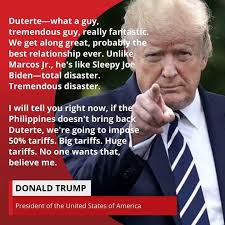
Donald Trump, for example, reportedly took precious time out from dismantling American democracy to declare that “We will protect Rodrigo and the Filipino people from the oppression you are facing…. I and the United States will not allow any of our allies and friends to suffer, and we will impose sanctions against the Marcos Administration for the unlawful act they did.” Why, he had even called Xi Jinping—not about tariffs, not about Taiwan, not about American forces in the Philippines—but about the “serious matter concerning our good friend Rodrigo.” For his part, Xi Jinping—who on a state visit to Manila did say “Our relations have now seen a rainbow after the rain” in response to Duterte’s more prosaic “I simply love Xi Jinping!”—supposedly brought up the Duterte arrest and the ICC in his opening address to the Boao Forum for Asia. Not to be outdone, another Duterte hero, Vladimir Putin, was reported to have threatened (someone—not specified) with “grave consequences” for Duterte’s arrest, as it violated the Rome Statute (which Russia incidentally pulled out of in 2016).

It’s all good when a national leader of superlative virtue and achievement has been so badly wronged that the world takes notice and his peers rise up in alarm to protest the injustice. But really—Donald Trump, Xi Jinping, and Vladimir Putin, all of them prime candidates for the ICC’s hospitality (Putin already is, along with Benjamin Netanyahu)? Never mind that all these supposed endorsements turned out to be fake; they still elicited applause from the DDS faithful, which I suppose was the intended effect. Q: Would it have been too much to expect an endorsement from the likes of Pope Francis? A: Yes.

Second, that call for OFWs to stop remitting their earnings home in a “Zero-Remittance Week” protest.

Our overseas workers contributed nearly $40 billion to the Philippine economy last year, so someone at DAD must have figured it would be brilliant to prick that bubble in the name of remitting Duterte home. But yet again, really? 

Granted, PRRD created the Department of Migrant Workers and the OFW Bank, and brought home hundreds of thousands of OFWs during the pandemic. Former OWWA chief Hans Cacdac even called him “the father of OFWs.” I don’t doubt that the Duterte name has a lot of traction in our expatriate communities, and that flexing a bit of their economic power in a week-long protest will ring some alarm bells, but you might as well ask people to chop off a finger to prove their fealty. For how long do you imagine will Pinoys postpone housing amortizations, tuition payments, maintenance meds, and grocery expenses to protest even the crucifixion of Jesus Christ?

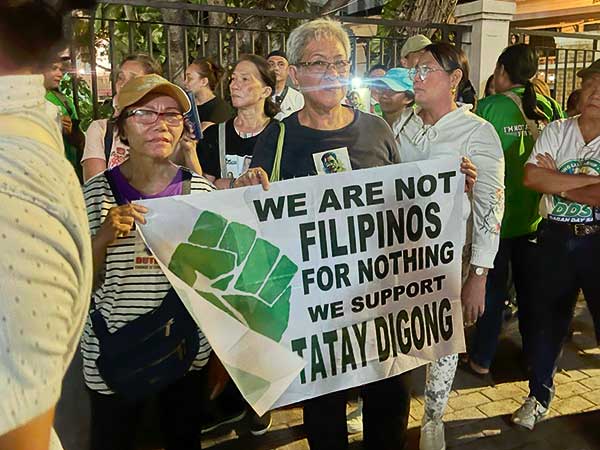
Lastly, and perhaps closest to my propagandist’s heart, there’s that inexplicably vague “I am not a Filipino for nothing” slogan.

Sure, it sounds brave and bold—like it actually says and means something. But does it, really? I’ve been turning the statement around and around in my head and maybe I’m extraordinarily dense and unreceptive but I just don’t get it. In rhetoric, double negatives are often used to suggest or even emphasize the opposite (the technical term is “litotes,” as in “That’s not a bad idea” or “She’s hardly destitute”). 

Rarely do double negatives make good copy for T-shirts and streamers, if you want to rally the masses. Well, there was Winston Churchill’s “We shall never surrender” (arguably a double negative) speech on the occasion of the Battle of Britain in June 1940, but that statement was preceded by a string of powerful positives: “We shall fight in France, we shall fight on the seas and oceans, we shall fight on the beaches, we shall fight on the landing grounds, we shall never surrender.”

Ninoy Aquino—who must be rolling in his grave at being compared to Digong Duterte—famously said “The Filipino is worth dying for,” a slogan ironically made all the more resonant by the fact that it turned out to be self-fulfilling. I doubt that Duterte will carry his emulation to that extreme, but he or his handlers can learn from its clarity and brevity, which contribute to its emotional appeal. “I am not a Filipino for nothing” means, well, nothing. It says nothing about freedom, justice, peace, love, patriotism, godliness, courage, or integrity—none of the grand ideals and ideas that our heroes exemplified. Might it be because these notions were never really associated with a president whom we best remember for his crude expletives and constant exhortations to kill? 

“Sampalin ang ICC!” sounds much more honestly him. It still sounds lame, especially given where he is right now, but it seems more purposeful, and should look good on a green T-shirt.

Qwertyman No. 138: Dutch Entertainment

Qwertyman for Monday, March 24, 2025

AS I’VE mentioned here before, I was a prisoner once—under martial law, for more than seven months, when I was eighteen. I had been arrested without a warrant for unspecified offenses against the State, on the strength of an Arrest, Search, and Seizure Order (ASSO) issued by Defense Secretary Juan Ponce Enrile. ASSOs were literally a catch-all piece of paper, meant to capture anyone whose face the regime didn’t like. I was sleeping at home when military agents barged in, and scooped me up in front of my terrified parents.

Our prison stood on a patch of land where the upscale BGC stands now; when we looked out at night we could see the neon lights of Guadalupe flashing. We had a small library in the back, TV in the mess hall, chess, calisthenics, and rumor-mongering for entertainment. It wasn’t too bad when there were just 40 of us occupying two Army barracks in the early months of martial law, but when we grew to over 200, the harsh realities of prison life set in, and people began escaping through the barbed wire.

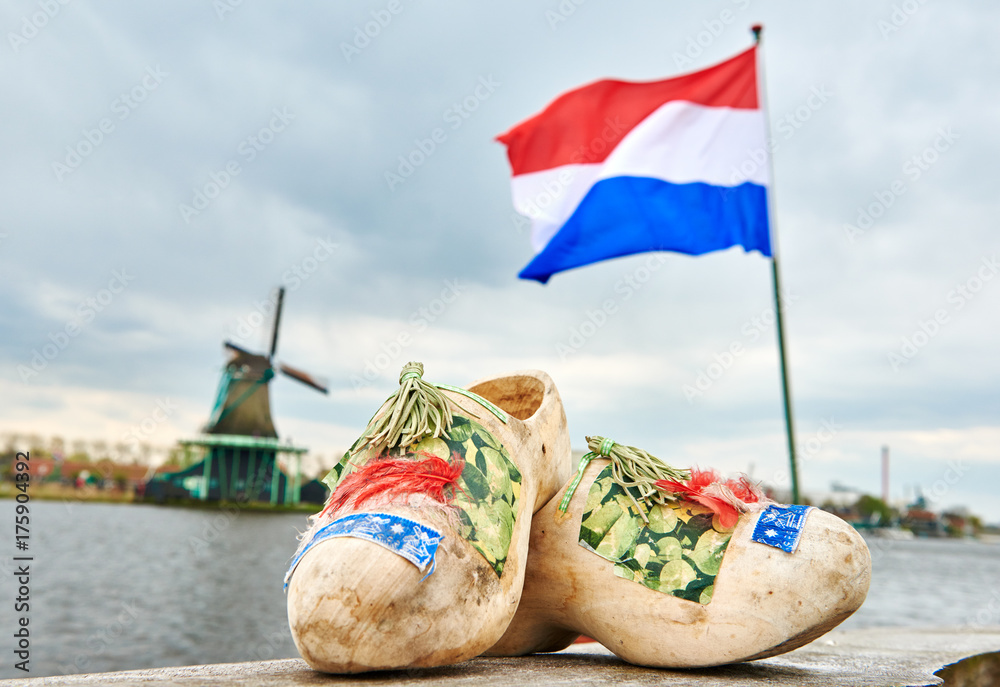
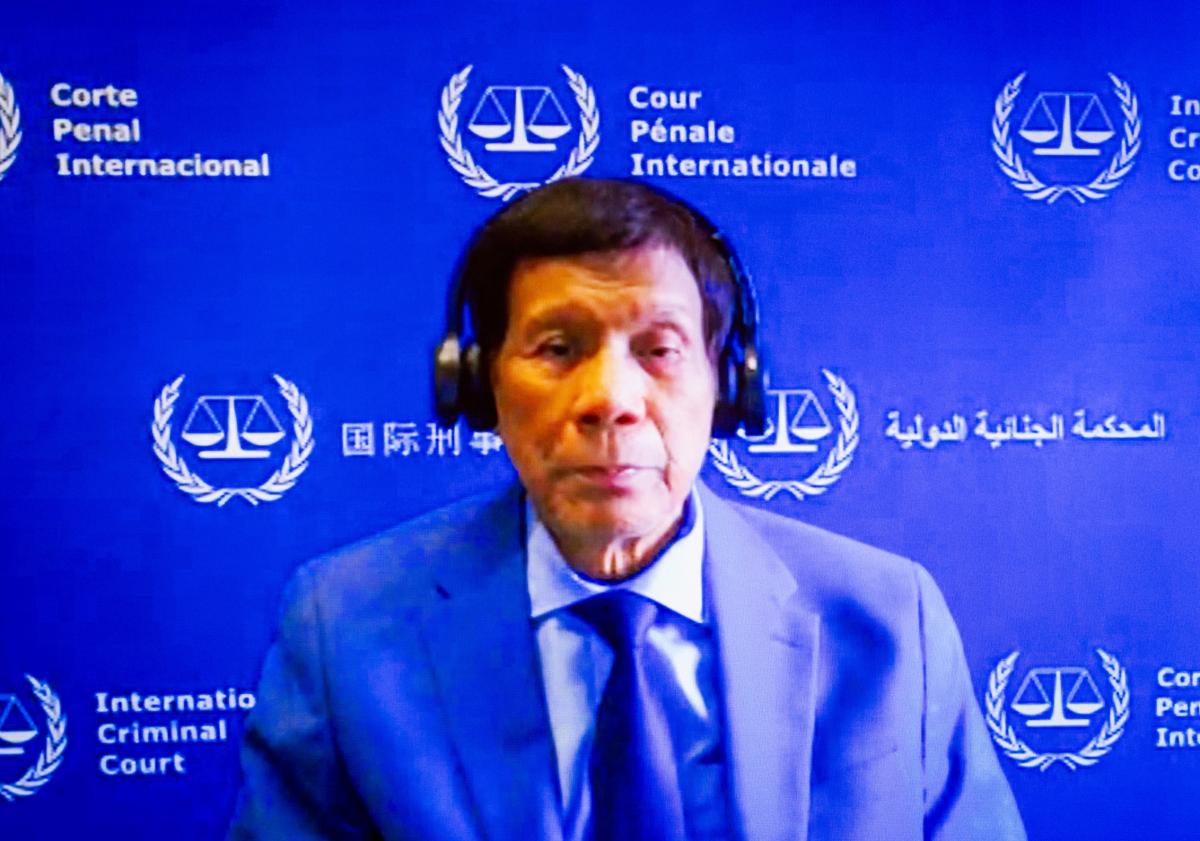
These recollections came back to me last week as I thought about the surprise arrest and deportation of former President Rodrigo Roa Duterte to a holding cell in the Netherlands while awaiting trial by the International Criminal Court.

By any legal reckoning, he’s going to be there for a while—he won’t be arraigned until September—so like it or not he’s going to have to adjust to his new abode over the next few months, like we had to in Bicutan.

His subalterns and supporters can make all the noise they want outside his prison, in the Philippines, and wherever in the world a DDS chapter exists, but RRD’s time ahead in Scheveningen will be largely spent in quiet and solitude.

From what we’ve seen online of his holding cell, Digong’s digs aren’t plush by any standard, but seem fairly adequate and comfortable—just spare enough to suggest to its occupant that he is in some kind of retreat, where he can ponder his worldly actions and contemplate the afterlife. Indeed the room—with its military cot and washbasin—evokes priestly economy, in stark contrast to the sybaritic excesses its previous tenants must have been accustomed to in their prime. In fairness to the incumbent, that lifestyle is something he has never been associated with; part of his popular appeal stems from his image as a man used to sleeping on hard beds and dining on the simplest fare.

There is a large flat-screen TV in the room, through which Digong can follow the news of the world and—given the way that world is going—feel upheld in his conviction that a hard fist and a knock on the head always makes things right. His heroes—Donald Trump, Vladimir Putin, and Xi Jinping (notably the same despots “quoted” by his trolls as expressing their support for him, like character references)—seem to be doing all right, keeping the world safe from the rule of law.

He might learn that the Dutch music industry is undergoing a boom on the strength of songs like “Anxiety” by Doechii and “Guilty” by Teddy Swims. Football, tennis, and golf are the favorite sports of the Dutch, although Digong might also be amused by a Frisian sport called klootschieten, which involves throwing a ball and sometimes drawing blood. Dutch cinema is a small industry, but The Punisher should still be thrilled by local crime classics like “Murder Story” (1989), “Gangsterboys” (2010), and “Accused” (2014).

Should RRD prefer interesting human conversation, I doubt he’s going to get it from the likes of Harry Roque, whose own tribulations must be coming out of Digong’s ears (“I want to go home, and you want to come here?”). If there are any CPP-NDF holdouts left in Utrecht, I’m sure they’ll have  a lot to talk about on a prison visit, going back to the Left’s early flirtation with their “nationalist” ally.

But truth to tell, if I were the former President, I would spend my time in Scheveningen writing my memoirs. I wrote a novel about my government-sponsored Airbnb experience, but given his bluntness, fiction probably won’t be RRD’s best suit.

I suspect Digong is a lot more articulate and maybe even more urbane than he lets on, because no Chief Executive could possibly be that vulgar and that ill-mannered without it being an act (you can imagine him rehearsing those PI’s before the SONA and turning up his collar to look even more roguish). All his life, he has presented himself to be a man of menace, projecting unforgiving brutality, steeping his hands into a cauldron of boiling blood to strike fear into his foes—but couldn’t all that have been just a show in the name of, uhm, good governance? 

The alternative narrative could go thus: In truth and deep at heart, all by his lonesome in his corner of the darkened Palace, he may have been a sensitive and tortured soul whose conscience reared and roared with every fresh report of another tokhang victim, who felt the anguish of every wife and mother like a stab to his own tender heart. He had done what he had to do for the noblest of purposes—the salvation of his suffering people from the stupor of narcotics (about which he knew something himself, but it was only to ease the pain from a motoring accident—all other uses were criminal).

RRD’s memoirs would not only be a spirited defense of his life—an apologia pro vita sua, as they used to be called—but a full, tell-all accounting of everything everyone ever did: henchmen, enemies, beneficiaries, and erstwhile allies alike. If he says he can’t get justice at the Hague, then at least he can dispense some of it from the safety of his albeit involuntary confinement.

Now that would not only be edifying but entertaining, wouldn’t it?

Qwertyman No. 137: ICC Ex Machina

Qwertyman for Monday, March 17, 2025

IN PLAYWRITING and fiction, we call it deus ex machina—literally, the “god out of the machine”—which has come to mean a miraculously happy or fortuitous ending to a long and agonizing drama. 

You’ll find it, for example, when a virginal heroine—beleaguered by dirty old men and rapacious creditors—seems on the brink of yielding her precious virtue, tearfully praying on her knees for deliverance, when a kindly lawyer comes knocking on her door to announce that a distant uncle has passed away, leaving her his fortune. We rejoice with her—despite feeling, at the same time, that divine intervention came a bit too conveniently. This is why I admonish my students to refrain from employing deus ex machina in their stories, because in today’s hard-bitten and cynical world, nobody really believes in it anymore, and readers simply feel deprived of a more rational ending.

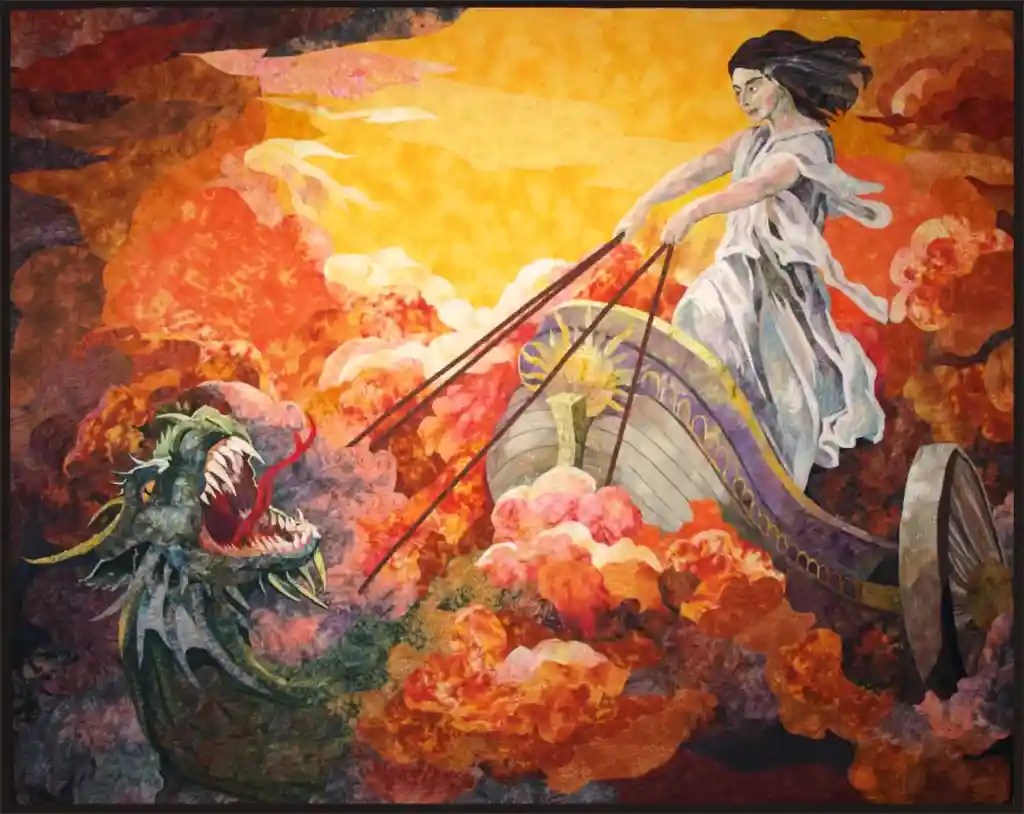
Like many things we know about drama, the idea goes back to the ancient Greeks, whose playwrights used it to great effect, Aeschylus and Euripides among them. Euripides most memorably turned to deus ex machina in Medea, where the title character—having been cheated on by her husband Jason—kills Jason’s mistress and their own two children. Guilty both of murder and infanticide, Medea seems hopeless and bound for damnation—until a machine, actually a crane shaped like a chariot drawn by dragons, emerges from behind the stage. It has been sent by Medea’s grandfather, the sun-god Helios, to pluck Medea away from her husband and from the coils of human justice and deliver her to the safety of Athens.

Was it fair of the gods to save Medea from the punishment awaiting her on earth? It’s arguable, but more than a device to resolve a messy plot, the “god out of the machine” was meant to remind the Athenian audience that a higher order of justice obtained, and that when humanity became too entangled in its own predicaments, then it was time for the gods to take over.

A lot of this swept through my mind last week as the drama of Rodrigo Duterte’s arrest and express delivery to the International Criminal Court at the Hague played out on TV and social media. Had the gods come out of the machine to impose divine justice? It had seemed nearly impossible a few years ago, when Digong was still flaunting his untouchability and taunting the ICC to come and get him. Well, we all know what happened since then—and they did. 

We understand just as well that the Marcos administration performed this operation not out of some abounding sense of justice or because it had suddenly acquired a conscience and realized the evil with which it had “uniteamed” to electoral victory in 2022. “We did what we had to do,” President Marcos Jr. explained on TV, with deadpan truthfulness—referring superficially to the Philippines’ obligation to honor its commitment to Interpol, but subtextually to the irresistible opportunity to cripple someone who had become a political arch-enemy, and providentially gain the support of masses of people harmed and disaffected by Duterte’s butchery.

The outswelling of that support—at least for Digong’s arrest and deportation—was spontaneous and sincere. Not since the Marcoses’ departure at EDSA had I felt such relief and exhilaration—and surely the irony would not have been lost on BBM, who knows what it was like to leave on a jetplane, kicking and dragging, for an uncertain future.

And what I say next may go against the grain of everything I have said and thought about the Marcoses, but no matter what ulterior motives may have come into play in this episode of the Duterte-ICC saga, I feel thankful for the resolve and the dispatch that BBM showed in this instance. Along with his administration’s resistance to Chinese aggression in the West Philippine Sea, this will be certain to count among his most positive achievements. 

The great difference between this drama and Medea, as an example of deus ex machina, is that the intervention of the ICC (with BBM helpfully providing the crane) isn’t going to save Duterte, but rather the people whom his presidency soaked in blood. But as with Medea, the “gods” step in when local justice proves impotent or inadequate (and did anyone really believe that Duterte would be hauled before and convicted in a Philippine court of law, when even the Maguindanao Massacre took a full decade to produce convictions for the principals?).

The question now is what next—not for The Great Punisher, for whom a prolonged trial at a cushy court will not be punishment enough, but for the Marcos administration, which suddenly finds itself with more political capital at its disposal, and yet also put itself at greater risk? Surely it must also realize that it not only has committed itself to tearing down the entire House of Duterte and confronting the many millions of voters they still represent, but that it has also set itself up for higher expectations, on pain of suffering the same ignominious fate?

In the hopeful bit of theater playing in my mind, I imagine BBM parlaying the bonus of goodwill he has earned from this maneuver into a broader if not genuine resolution to distance himself further from his predecessor and create a freer and more just society. There are clear and immediate steps he can take in this direction. The first gesture would be the release of all remaining political prisoners, followed by the abolition of the NTF-ELCAC, which no longer serves any useful purpose (not that it ever did). He can root out and punish the enablers and perpetrators of Oplan Tokhang and eliminate oppression and corruption from the mindset of Philippine law enforcement. And then he can begin reforming Philippine governance, starting with the quality of the people he seeks to bring to power—senators, congressmen, and the like.

But then that would be the ultimate deus ex machina, and we have been shaped by experience into a stubbornly disbelieving lot.

Qwertyman No. 136: Bringing In the No-Shows

Qwertyman for Monday, March 10, 2025

EVERY YEAR, about 100,000 Filipino high school seniors take the University of the Philippines College Admission Test (UPCAT), hoping to get into one of UP’s ten campuses nationwide. It’s an annual ritual that’s been taking place since 1968, except for a brief period during the pandemic when the test was replaced by an alternative system. (I didn’t even realize until I looked these figures up that I was among the third batch of UPCAT takers in 1970; thankfully I got in.)

Of those 100,000 hopefuls, only about 13,000-15,000 make it. That passing percentage may seem cruelly if not needlessly small, but there’s good reason for it. While we’d like more students to come to UP, admissions are limited by how many incoming freshmen UP’s campuses (or “constituent universities” such as UP Manila and UP Mindanao) can optimally absorb. Classrooms, housing, teachers, and facilities all come into play. Large campuses like Diliman and Los Baños can obviously take in more, but even so there’s a limit to admissions that needs to be observed if UP is to maintain the quality of higher education that it promises.

The more troubling statistics have to do with the distribution of those “passers” (technically, no one “fails” the UPCAT, which is just one of several factors that determine admission, including high school grades; each campus also has a different qualifying standard to rationalize admissions, so you can “fail” Diliman but qualify for UP Cebu). 

Last year, according to UP’s own statistics, 44 percent of UPCAT qualifiers came from private high schools. Another 27 percent came from the country’s science high schools. (which are publicly funded, but offer a much higher standard of education). Other public high schools accounted for only 29 percent of the total. Consider these figures against the larger picture, in which around 80 percent of our students go to public high schools, and less than 20 percent to their private counterparts. 

Compounding this gross inequality, about 70 percent of UPCAT qualifiers come from the big cities, mainly in Luzon. This, of course, is no big surprise. A recent study by UP professors showed what we didn’t need a study to know (but being academics, of course they had to prove it): that “income advantage” weighed heavily on one’s chances of passing the UPCAT and getting into UP. If you went to a good private high school, you were more likely to get in than a poor student from the boonies. To top it off, with tuition now free in public universities, we actually end up subsidizing many students from affluent families who could well afford to pay their way in private colleges.

This lopsided situation has long been the cause of much concern within and beyond UP, which, as the country’s “national university,” bears the dual responsibility of aiming to be the best university in the country bar none, and yet also serve the interests of the entire Filipino nation, and not just those of the urban elite that has apparently become over-represented in its student body. Various UP administrations have sought to address this seemingly paradoxical “excellence vs. equity” argument through different methods aimed at more democratic access—without, as current UP President Angelo Jimenez emphasizes, lowering UP’s standards. This remains a work in progress, but the aim is clear: make it possible for poorer Filipinos to get into UP so it can truly be the “university for the Filipino” it was envisioned to be.

Against all odds—and this brings me to my present point—many surprisingly do. I don’t have the actual figure on hand, but they number in the low thousands, of the 13,000-15,000 in an incoming batch. Encouraging, yes? But here’s the rub: about 1,500 of them never show up—what we call “no-shows”—not for lack of ambition, but for lack of means to cover the cost of living at a UP campus. Imagine that: it’s hard enough to get a good public high school education in what are called Geographically Isolated and Disadvantaged Areas (GIDAs), and harder still to pass the UPCAT from where you are. You’re elated to learn you made it, only to realize that you’re not leaving home after all, because you can’t afford the transportation, food, housing, books, and computers that come with college.

Thankfully, UP has initiated a new Lingap-Iskolar program to help out with these expenses and bring more GIDA passers in, starting with 300-500 students. Over the next four years, P250 million has been allotted by UP for this purpose. It’s a great initiative, but it still falls far short of minimizing the no-shows so the yawning disparity between UP’s rich and poor can be more effectively reduced.

With the education budget being squeezed even more under the current GAA, this is a great opportunity for the private sector to come in and make a clear and strategic impact on the future of the Filipino mind. If you’re a corporation or philanthropist in search of a good cause to support, look no farther—make it possible for a young Filipino from our poorest and remotest regions to study in UP. Sure, democratizing UP will require much broader and deeper moves, going back to basic education; but this step is solid, immediate, and tangible. 

I’m happy to report that I made this pitch to a dear friend in the US who had spent some time here in the Philippines more than 50 years ago with her late husband, who worked to help improve Philippine education. Responding to my call, that friend, Julie Hill, sold two HR Ocampo and Ang Kiukok paintings from her collection at a recent Leon Gallery auction, the proceeds of which she will be donating to the UP Foundation for a fund to be set up along the lines of Lingap-Iskolar. Despite being away for so long, Julie remains deeply attached to the Philippines; she’s not Elon-Musk rich and lives very modestly, but has sacrificed her best pieces so some bright young Pinoys she will never meet can have a better future and serve the nation.

If a foreigner can do that, I don’t see why our homegrown billionaires can’t. Support a GIDA scholar, and make a difference right now.

Penman No. 472: Manila Pen Show at Manila Pen

Penman for Sunday, March 9, 2025

FOR A group that began in our Diliman front yard with less than 20 people almost 17 years ago, the Fountain Pen Network-Philippines (FPN-P) has come an awfully long way. With over 14,000 members online, meeting physically by the dozens in regular “pen meets” held in hapless cafes and restaurants, and thousands more informal recruits among families and friends, FPN-P should really register soon as a partylist devoted to “spreading the joy of handwriting with fountain pens.” We have active chapters in Baguio, Bacolod, and Davao, among other places; quite a few members even reside abroad but keep in regular touch through the group’s FB page.

As I’ve often written here before, the allure of fountain pens lies in their rediscovery by digital natives as a means of self-expression—of recovering one’s uniqueness in a universe homogenized and anonymized by computer code. Our ranks include Supreme Court judges, Cabinet undersecretaries, artists, professors, doctors, and lawyers, but most of our members are young professionals in their twenties and thirties for whom writing in cursive is itself an adventure. There are probably hundreds of thousands of pen fanciers (as they used to be called) around the world, mainly in the US and Europe, but what distinguishes FPN-P is its youthful vibe and the infectious fanaticism of its members.

Some fall in love not just with the pens but with penmanship itself, and become calligraphers. Others grow enamored of inks and papers of a bewildering assortment—inks that shimmer and sheen, combining lustrous gold with a deep oceanic blue, and papers that range from silken smoothness to almost parchment-like toughness.

Next weekend, hundreds of these penfolk (and the general public) will converge at the 5th Manila Pen Show that will be taking place March 15 and 16 at—fittingly enough—the Peninsula Manila. 

Top pen makers and dealers from Japan, Hong Kong, Singapore, and Malaysia have been coming to the MPS, attracted and impressed by the level of sophistication—and the deep pockets—of Filipino pen collectors. While the MPS has pens for everyone at every price point—from the low hundreds for students to six figures for the big guns—Filipino pen collectors and users at any level have been known for their deep knowledge and obsessive familiarity with all aspects of the hobby. 

They can tell you how Japanese artisans produce the various kinds and textures of urushi resin that renders pen surfaces impermeable to even acid. They can discuss minuscule but hundred-dollar differences in Parker Vacumatics from the 1930s, or argue passionately for vintage Pilot Myus and exotic inks like the perfume-scented De Atramentis.

This year’s MPS will not only bring sellers of pens and assorted writing paraphernalia, but also feature workshops and panel discussions on topics ranging from nature journaling and nib care to Art Nouveau and Deco pens (and, most intriguingly, “Your Pen and Your Brain: A Love Story,” to be conducted by Gang Badoy Capati). A group of advanced collectors will discuss the finer points of pen connoisseurship (including that point when pens stop just being writing instruments but become jewelry or even art). 

I’ll be on the Art Nouveau and Deco panel, but this time, instead of discussing pens (which others will do this time, all of them experts at particular models and periods), I’ll talk about the peripherals and accessories of the writing trade—the desk pen sets, inkwells, and ink blotters of the kind you would have seen in a typical office desk of the 1930s. 

As with past Manila Pen Shows, nibmeisters or professional pen repairmen will be around to fix that Montblanc nib you dropped on the kitchen floor or your Lolo’s gunked-up Sheaffer that’s been lying in a drawer since he died. One thing most people don’t realize is that most pens, no matter how old, can be fixed (I myself routinely revive 100-year-old Parker Duofolds among other vintage pens in my workshop—you’ll need some special skills and parts, but it’s not rocket science).

You don’t have to be an FPN-P member or even a current fountain pen user to come and enjoy the show. Indulge your curiosity and feel free to see, touch, and test the pens on display (with the exhibitor’s permission, of course, as some pens may require very careful handling). Most sellers will take credit cards or online payment. There will be a modest charge for entry and for the presentations, but all funds raised will be donated after expenses to the Save the Children Philippines, FPN-P’s sponsored charity for the past MPSes. You can find more details about the show at https://manilapenshow.helixpay.ph.

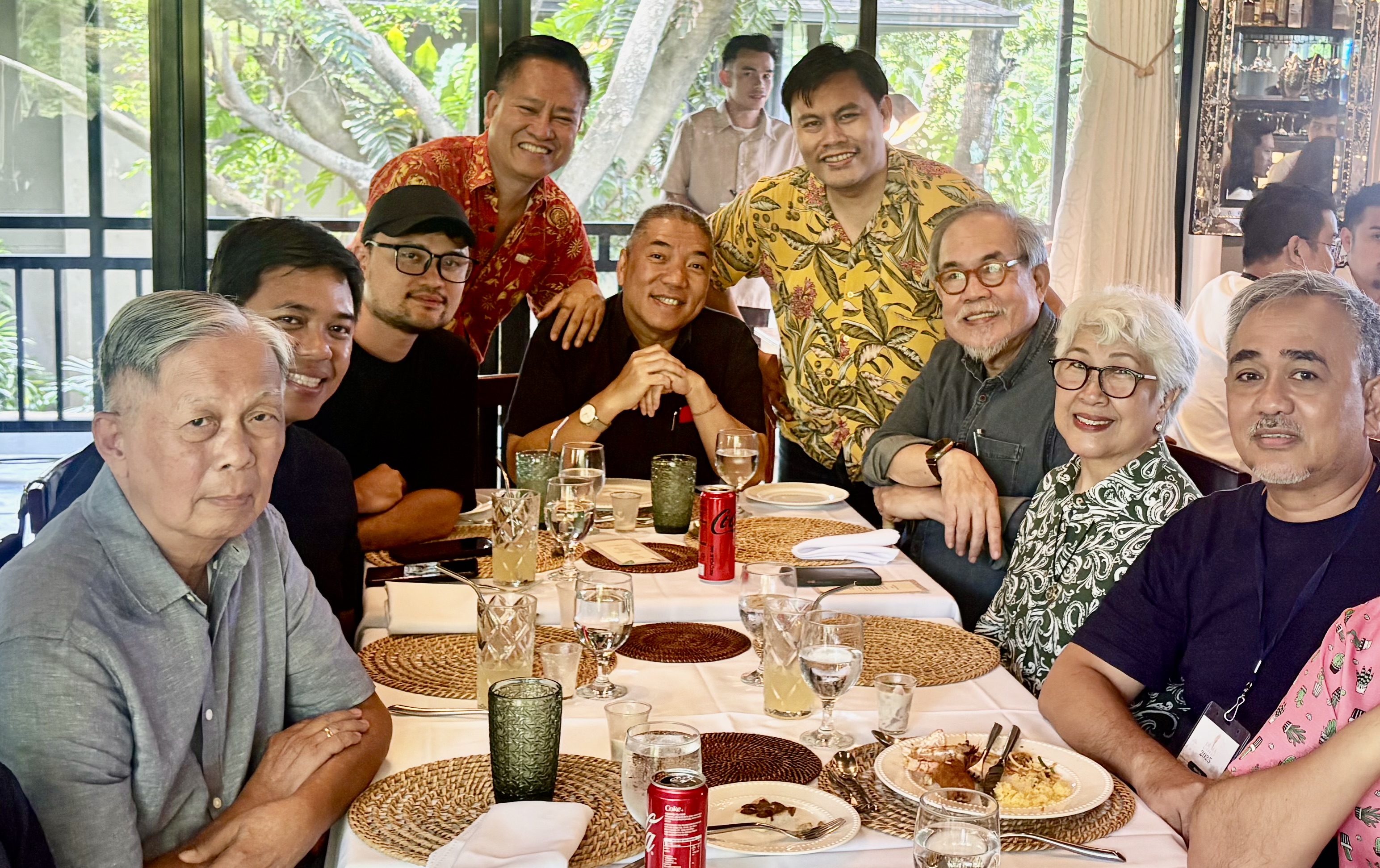
(Image thanks to Raph Camposagrado)