Penman No. 445: Some Notes on Travel Writing

Penman for Sunday, December 4, 2022

I’M SURE you’ve noticed—with much envy in my case—how so many of your friends have been traipsing around the world these past few months on what’s been called “revenge travel,” that perfectly human impulse to flee the cage after years of imposed isolation. 

And whether you’re guzzling down a pint of beer in Munich, chasing pintxos in San Sebastian, or crossing a bridge in Kyoto, the chances are you’ll be happy with a raft of digital photographs to show for your adventures. Many will want to post about their tours on their blogs, while a much smaller group will—perhaps months later—sit down to reflect on their experience and write about it in an effort to make better sense of what they went through. 

That’s something I’ve done myself from time to time, and so I thought of sharing some notes for the prospective travel writer—not just of the usual travel feature we produce for commercial media, but of a more personal kind of travel essay, one focused as much on the traveler as on the place itself. Beyond reportage citing facts and figures, this is writing that implicates and engages the traveler, the writing persona, and makes him or her a character in the piece. 

At my age, I consider myself a fairly well-traveled person, but one of the first things I want to say about good travel writing is that it’s really not about where you’ve gone or how many countries you’ve been to. It’s not about quantity, but quality of experience, perspective, and insight. The challenge isn’t to go to what to most Filipinos would be an exotic place like Paris or Tahiti. It’s to go there and to find and to tell us something about it that millions of other visitors or tourists have never seen.  

And when I say “something others have never seen,” it’s not about looking for obscure places, new bars, strange customs, or unique souvenirs. They could all be part of a great story because they’re intrinsically interesting, and if all you want to do is a standard feature story for a magazine, that would be all right. You could even make a good and exciting living writing these travel features, because the industry travel constantly needs them and they sell. 

For many of us, that would be a dream job: fly off to faraway destinations and to first-class hotels with all your expenses paid, just to write about how wonderful the place and the experience was. In my two decades as a columnist for the Lifestyle Section of the Philippine Star, I was lucky to have had a taste of that kind of luxury, having been sent on special assignment to the US, Germany, Israel, and Malaysia, among many other places. When I traveled for academic or professional conferences, which was quite often, I wrote those up too as travel pieces.

But—putting on my creative writing teacher’s hat—I also want you to think of travel writing not just as a function of place, but rather a function of mind. I want you to realize that you don’t need to go to an African safari or to ride a gondola in Venice to be a good travel writer—or a good writer, period. I want you to be able to turn a place you may have been to a thousand times or even lived in—say, Cubao—into a travel destination, and to explore not just its surface but its culture and subcultures, its inhabitants, its range of markets, its daytime and nighttime versions.

There are always two tracks embedded in a good travel essay: the story of the place itself, and the story of the traveler. To put it another way, there is the external journey, and the internal journey. 

The external journey is the story of the journey itself—the purpose of the travel, the choice of destination, the mode of travel, observations along the journey, reaching the destination, first impressions, engagements with the local people, sights, food, experiences, and other vignettes until departure time. 

The internal journey is the story of the traveler’s life situation at the start of the travel—his or her expectations, anxieties, distractions—and then his or her reactions to the unfolding environment, his or her interactions with the place and people, and his or her terminal thoughts and feelings about the whole experience, whether explicitly stated or implied. Very often, the internal journey involves some kind of quest—a search for something beyond the place itself, or some object in it, but an answer to some personal question, which gives meaning to the visit and the encounter with the place. 

That question could be “Who am I?” or “Where do I belong?” or “What do I really want?” or “Is there hope?” As the travel progresses, the answers to these questions begin to be formed or revealed. Thus do the external and internal tracks run parallel or congruent until they bend and meet at a certain point. Indeed, it can be argued that the external track, the travelogue itself, is simply an excuse or a device to tell the personal story, which emerges as the true point of interest in the piece. 

The internal track could also be subtle and subdued, embedded in the main narrative, and palpable only upon closer reading. Nevertheless it will be there, the result of a place or an experience’s impact on a person. In the travel essay, therefore, it is the interaction between person and place and the insight that comes from it that is the real, unified story. 

As the great travel writer Pico Iyer put it, “We travel, initially, to lose ourselves; and we travel next to find ourselves. We travel to open our hearts and eyes and learn more about the world than our newspapers will accommodate. We travel to bring what little we can, in our ignorance and knowledge, to those parts of the globe whose riches are differently dispersed. And we travel, in essence, to become young fools again—to slow time down and get taken in, and fall in love once more.” 

So when you write your next travel story or travel essay, don’t just tell us about what you’re looking at, which many thousands of visitors before you have already seen. Try to look at it from another angle, or find an interesting detail that’s been paid little attention to, and reflect on what it says to you. Your perspective is as important as the place itself; it may not be shown or expressed too strongly, but it will be there and should be there, for the work to be truly yours, truly unique, and truly worth doing. Happy trails!

Qwertyman No. 21: AI in the House

Qwertyman for Monday, December 26, 2022

I’D BEEN wanting to write about this for a long time, since last year when my artist-friends first alerted me to the amazing new possibilities being opened by artificial intelligence (AI) in such traditional fields as painting. Before that, like many people, I’d thought of AI in terms of subjects like warfare, medicine, and gaming. It had to be only a matter of time before the technology was ported over to the arts—not just to painting, but to creative writing and music, among other pursuits.

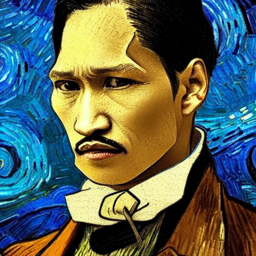
If you don’t know how AI works, just think of it this way (which is the way a lot of people, many of them not even artists, are having fun these days). You download a software program called an “AI generator” (such as starryai for painting, Rytr for creative writing, and AIVA for music), then put it to work by demanding that it produce “a portrait of Jose Rizal in the style of Van Gogh.” Minutes later (or just seconds if you pay), you’ll get what you asked for. What your computer (or in fact, many other computers working together) just did was to run a search for all the images of “Jose Rizal” it could find, then establish what “the style of Van Gogh” means in terms of brush strokes, colors, and so on, and apply one to the other. It’s all about “algorithms” or instruction sets that get sent out and executed until the desired outcome pops up.

That sounds like harmless entertainment, and much of AI is or appears to be, but it isn’t hard to see how even a touch of mischief (not to mention loads of malice) can quickly change the complexion of things. Driven by a fear of computing or what we might call Faustian science, popular culture is replete with examples of AI gone berserk, from HAL 9000 in 2001: A Space Odyssey to the master kidnapper Sark in Tron. But positive applications such as those employed in medicine, where AI helps analyze CT scans, MRIs, and X-rays with a sharper eye than a human radiologist sees with, continue to push AI research forward. IBM itself declares that “At this point, there is little doubt that AI will become a core part of the digital health systems that shape and support modern medicine.”

My own first brush with AI happened last week when I stumbled on an article in the New York Times titled “A New Chat Bot Is a ‘Code Red’ for Google’s Search Business.” Intrigued, I read on and found out about ChatGPT, one of many new programs that are threatening to replace Google’s famous search engine. We all know how Google works: you enter a search term, you get a long list of links to possible answers. Chat bots cut through that mess and give you a short, clear, grammatically correct answer (although nobody can guarantee that the answer itself is correct). That’s good if you want a quick reply to a question, but I can just imagine the epidemic of college term papers cutting and pasting unsourced chat-bot answers with gay abandon. 

All this led me to wonder how chat bots would respond to truly important questions, so I decided to download ChatGPT to my iPhone, and to ask it some test questions that would tell me about itself as much as what I was asking about. Below are my questions and the answers that artificial intelligence produced, verbatim (I purposely asked the first question to see if AI was capable of some kind of self-awareness):

1. Q. What are the dangers of artificial intelligence? A. 1. Unintended Consequences – Algorithms designed to reach specific goals could have unintended consequences that produce unforeseen results. 2. Job Loss – AI could displace workers by automating jobs, leading to severe economic disruption in the near future if nobody is trained to take over for the machines. 3. Black Box AI – AI systems are often difficult to understand, making it hard to debug the system when something goes wrong. 4. Over-Reliance on AI – Dependency on AI could lead to cognitive laziness, where humans rely too heavily on algorithms for decision-making and problem-solving. 5. AI Biases – AI systems trained on biased data and algorithms can end up replicating the same flawed assumptions and stereotypes. 6. Security Breaches – Malicious actors could exploit vulnerabilities in AI systems to commit cyber-attacks, data breaches and fraud.

2. Q. What’s wrong with the Philippines? A. The Philippines faces a wide range of problems that must be addressed in order to progress forward. These issues include corruption, overpopulation, environmental destruction, poverty, inequality, and unequal access to education. Additionally, Filipino infrastructure and public services are in dire need of improvement in order to create a more livable and equitable society. Other issues such as illegal drugs, crime, and terrorism also remain major problems facing the Philippines.

3. Q. When should a country have a sovereign wealth fund? A. A country should have a sovereign wealth fund when it has a large amount of assets (such as revenues from oil exports) that can be used for investments and for stabilizing government finances during economic downturns.

4. A. How can we reduce corruption in government? A. The best way to reduce corruption in government is to increase transparency and accountability. This could include strengthening laws and regulations to ensure that government officials are held to high standards, creating independent oversight and auditing systems, and engaging civil society and community members in governance processes. Additionally, investing in training for government officials on ethics, anti-corruption policies and procedures, and proper financial management can help to reduce corruption. Finally, engaging the public to report and discuss any allegations of corruption can help to both curb and address existing instances of corruption.

5. Q. Can volcanoes be punctured? A. No, volcanoes cannot be punctured. Volcanoes are made of molten rock, known as magma, that is too hot and too deep to be pierced with any known tool.

Now, you tell me if those answers sound any worse than the malarkey we’ve been hearing from some of our esteemed senators and congressmen, who cost billions to maintain, feel unbound by the rules of logic and grammar, and can take forever to give you a straight answer. Of course, they can well afford to buy a program like ChatGPT in aid of legislation (it’s free for three days, then P499/mo.). But then, why resort to chat bots when there’s already so much artificial intelligence going around in both august chambers?

Qwertyman No. 20: The Gift

Qwertyman for Monday, December 19, 2022


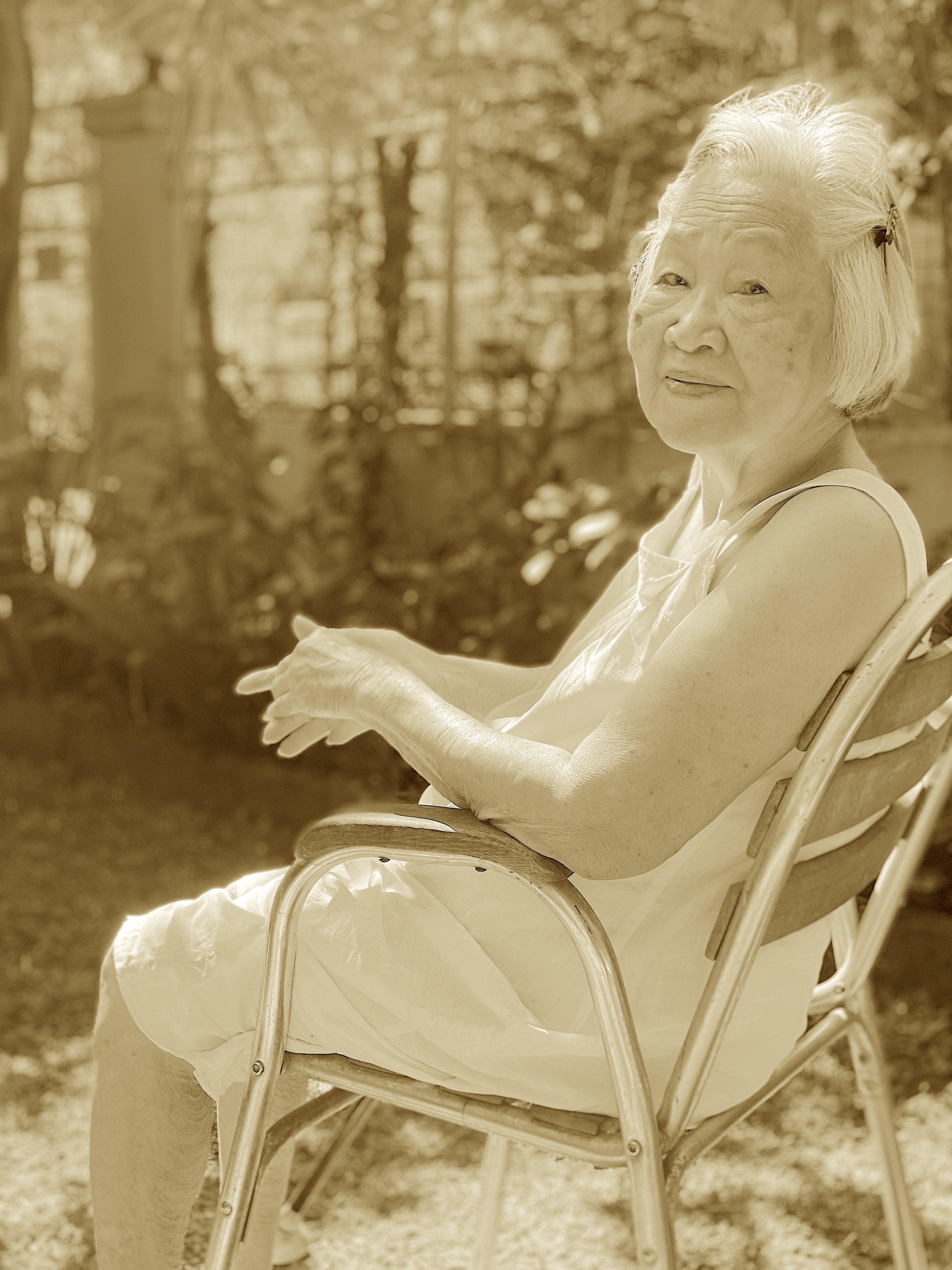
(Taking a break from politics, I wrote this Christmas story that might take a little effort to figure out, but which I hope will be worth your while. With apologies to my mom Emy for using her picture above.)

I’M NOT deaf, she wanted to shout, I can hear, I can understand what you’re saying—I’m not stupid, I’m just… lost. I don’t know who you are or what I’m doing here. You seem to be a nice man, and thank you for the chocolate and the barquillos—I don’t know how you knew I liked those—but I have to say that I don’t feel comfortable sitting here with you asking me how I am, asking all these questions about names and places I can’t recall. You’re very nice and very kind and speak to me like I know you, like I should know you, and it makes me feel very bad that I don’t have the answers you seem to be looking for. Like “the champaca near the fence of the house on Tagumpay Street.” Of course I know champaca and how nice it smells—but the house, a house, on Tagumpay Street? You say we lived there? When? Why should I have lived there, with you? 

They laughed and Jovy shrugged and said, “She’s somewhere else—again.” Laura cast her a pitying glance and said, “I wonder if there’s something we can do or say to bring her back, even just for tonight. I mean, it’s Christmas, right? Surely God can work some miracle to allow Mama to enjoy her family? It would be such a gift to the kids. Where are they, anyway? It’s past nine.”

Jovy reached for a bottle of Macallan and poured himself a shot. “They’ll come if they will. I don’t remember them talking much to her when she was still okay. Don’t see why it should be any different this time.”

Laura stared out the window at all the Christmas lights that made their gated village look like a bed of stars. From the kitchen wafted the confused but beguiling hints of vinegar, red pepper, and other pungent flavorings.

Laura liked to think of herself as the family minder, the one whose job tonight was to make sure everyone had a filling noche buena and wished each other well, like a good Filipino family, albeit with one somewhat distracted member. With the pandemic still festering and the world they knew upended, a return to some sense of order and normalcy felt overdue. In Decembers past, she and Jovy would take the children, Toby and Rina, to chilly getaways in Baguio, with Mama maddeningly singing carols from the back of the van all the way up Kennon Road.

“I’m sure the kids will come,” Laura said, adjusting a bell on the Christmas tree. “I told them they were getting special gifts from us.”

“They are? “ Jovy said, surprised. “Like what gifts?”

“Papa’s Longines and Mama’s bridal necklace,” Laura replied under her breath, as if she expected Jovy to react badly. “It’s about time we passed them on.”

“Papa’s gone so I guess the watch is okay, but have you spoken to Mama about the necklace?”

“And tell her what? She won’t even know what she’s looking at.”

“Maybe we should wait for Rina’s wedding—“

“That girl’s not getting married for another ten years, if ever. I just want us to make something special happen tonight, like families do.”

“At least you could show it to Mama. Make it look like she’s the one giving it to Rina. As if Rina will even care. You know she hates old things. She’ll probably just sell it on eBay.”

“What she does with it is her business. What’s important is that we’ve discharged our generational responsibility.”

“If you insist—“

“Leave Mama to me.”


“IT’S A VERY small watch,” Toby said, unable to mask his disappointment. He was a stockbroker who lived in his own condo and came for dinner once or twice a month to brag about his  new girlfriend, or his new bike. 

“That’s what men wore back in the ‘50s. I guess you could give it to what’s-her-name, Nikka, now,” said Jovy.

“Nikka would like Mama’s necklace more, I think. Maybe Rina and I can do a trade.”

In her corner, Mama stared as Laura opened the blue velvet box that held her necklace of white gold and tiny emeralds, sold by a prominent Escolta jeweler before the war. Rina was on her phone near the door, mumbling an apology to someone. She wasn’t even vaguely interested in the necklace that Laura was bribing her with; she’d come home for a bunny costume she needed for a New Year party. She hated being asked about marriage, and the bridal jewelry was another not-too-subtle nudge.

“I wanted to show this to you, Mama, before we—before you—give it to Rina. You remember Rina, your granddaughter? She’s almost thirty, and should get married soon!”

I don’t know this Rina you’re talking about, Mama thought. And why do you always ask me to remember, why should I remember? Isn’t it enough that I eat my porridge and drink my tea?… But—this shiny thing in the box, I know it, for some reason…. It’s very pretty, so sparkly, those little green eyes…. I know I’ve seen it, in the mirror—around my neck! It was a happy day, I was happy all in white with these green sparkles, and I was all so white and so very happy.

“Do you want to be the one to give it to Rina?” Laura said, unsure of what was passing through Mama’s mind. She noticed some agitation, some flicker of anxiety, although Mama was smiling.

“Give it? Why?”

“Because it’s Christmas, Mama. Because it makes us happy to give gifts.”

“I thought this was my gift. It makes me happy.”

Laura tried not to sound exasperated. “You don’t need it anymore, Mama. It’s time it went to Rina.”

Mama now remembered: her wedding day, the carriage, the lilies along the aisle, the choir, and her groom Miling, so blindingly handsome in his white sharkskin suit. 

She saw Rina, the girl they said was her granddaughter, still on her phone across the room. From that distance she looked virginal, almost angelic. Mama could imagine her in a white gown. Mama looked at Laura, who seemed distressed, waiting for an answer. Now that she had finally remembered something, they wanted to take it away. 

She ran the necklace through her fingers. She recalled how the clasp had pricked her thumb that morning, but she was in such bliss she hardly felt the pain. She looked at Rina, and sensed the younger woman’s deep unhappiness. It seemed so unfair.

Mama shut her eyes and shut the box and turned her face away. “I don’t know what this is for,” she told Laura. “Give it to her.”

“Thank you, Mama,” Laura said, much relieved. “And Merry Christmas.”

Mama seemed more distant than ever, lost in her thoughts. “I don’t think she even knows what Christmas is, anymore,” Laura sighed.

Qwertyman No. 19: The Real Maria Ressa

Qwertyman for Monday, December 12, 2022

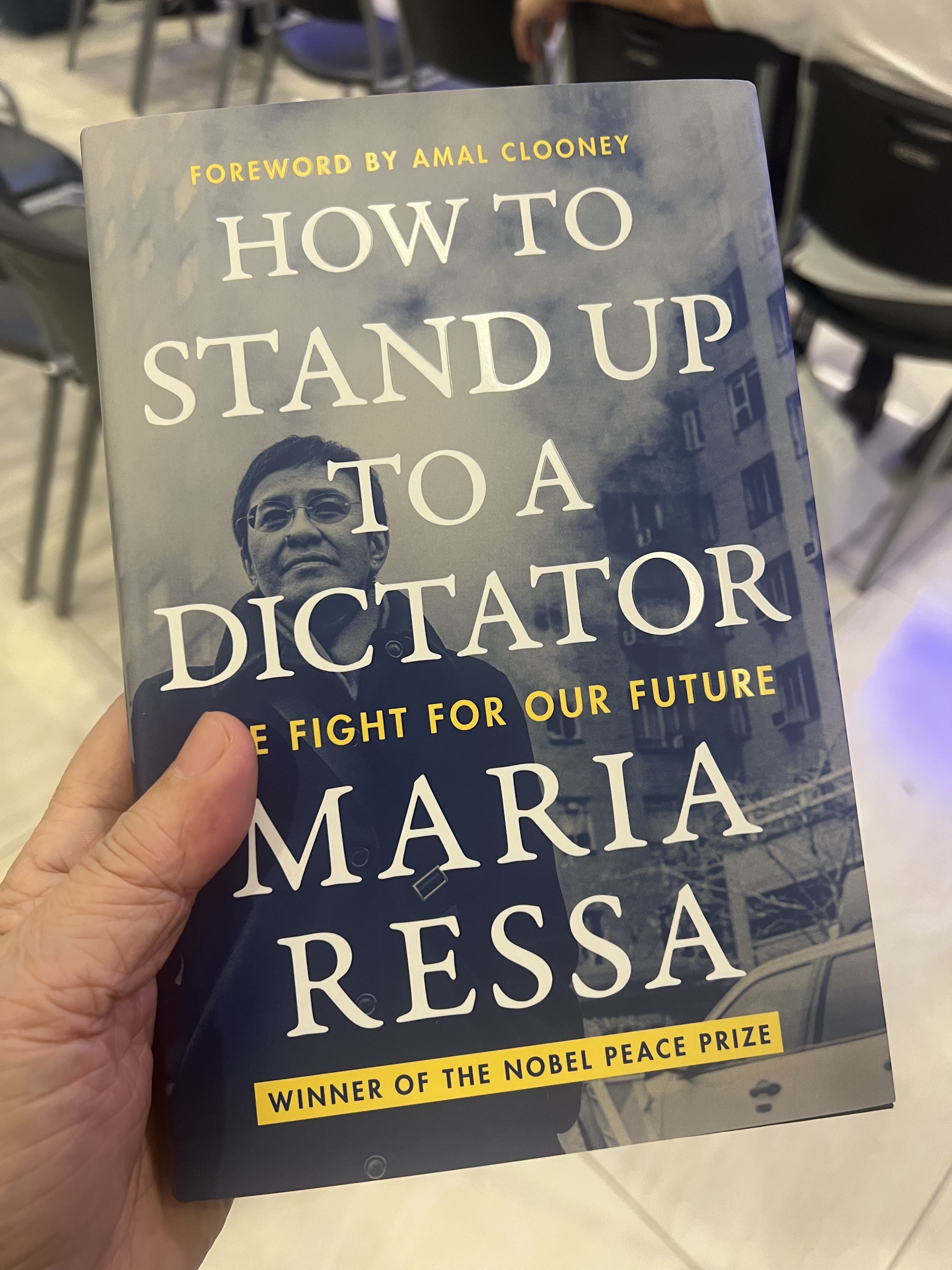
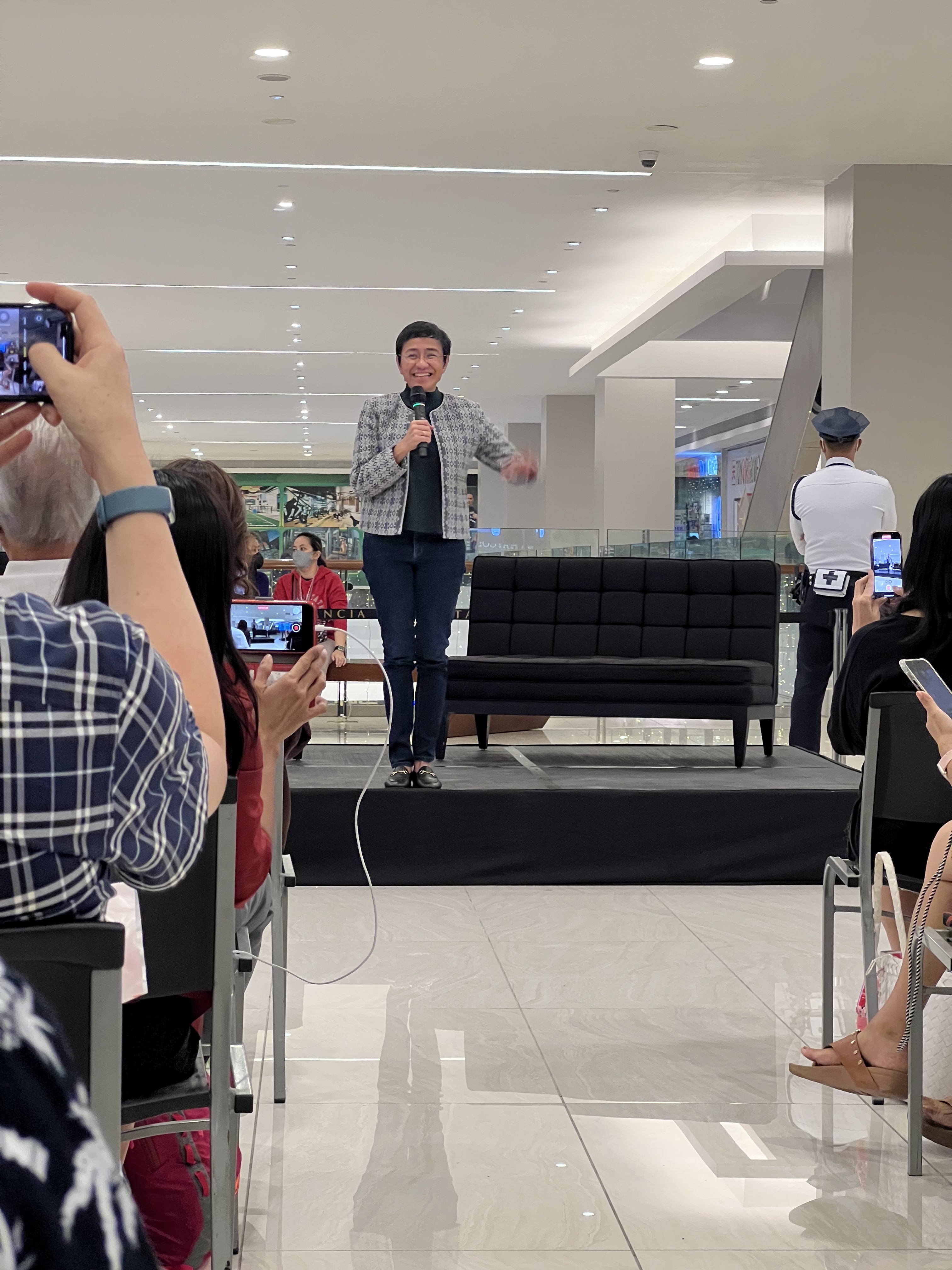
I WAS very honored to speak last Saturday at the launch of Maria Ressa’s new book, How to Stand up to a Dictator: The Fight for Our Future (Harper, 2022). I’d read an advance copy of it a couple of weeks ago, and to cut to the chase, if you’re thinking of buying a book to read for the holidays or to gift to friends, look no further. This book, for me, is among the year’s best in nonfiction.

I have to emphasize that word—nonfiction. As we all know we live in times when fiction has taken over as the most influential form of human discourse, particularly in the political arena. As a practicing fictionist, I should be happy about that, but I’m not and I can’t be, because so much of it is bad fiction, crudely written—and surprisingly, infuriatingly effective, at least with a certain kind of reader. 

Maria’s book cuts through all that. It’s undisguised, old-fashioned, in-your-face truth-telling, told in the same voice and tone we’ve become familiar with over the years of listening to her reportage over CNN. I’m sure that, like me, many of you wondered the first time you heard her: “Who was this little brown-complexioned woman speaking with an American accent?” She looked Filipino, but how come we’d never seen her before?

This was all before she rose to prominence—some would say notoriety—as the moving spirit behind Rappler, and subsequently to global fame as a Nobel Prize winner for Peace. We identified with her travails, shared her anger and sadness at the abuse she has received, and rejoiced in her victories, whether in the courts or in the larger sphere of public opinion. 

But how well do we really know Maria Ressa, and whatever drives her to be who and what she is? This book takes us to the person behind the phenomenon, and answers many questions we may have had about her and her stubborn advocacies.

The book’s title sounds like that of an instruction manual—which it is, and also is not, being part autobiography, part journalism, and part testimonial. As a manual for freedom fighters, it emphasizes the need for collaborative and collective action against seemingly insurmountable forces. Those forces now include the Internet, which, as Maria documents with both precision and profound dismay, has morphed from a medium that once held all kinds of liberative promises into a medium for mass deception and targeted assault. She draws her counsel not from some esoteric guru or academic paradigm, but from some very basic values that have informed her own life—the Honor Code she followed in school, and the Golden Rule.

“That’s what I lay out in this book,” she says, “an exploration into the values and principles not just of journalism and technology but of the collective action we need to take to win this battle for facts. This journey of discovery is intensely personal. That’s why every chapter has a micro and a macro: a personal lesson and the larger picture. You will see the simple ideas I hold on to in order to make what have—over time—become instinctive but thoughtful decisions.”

It’s this constant back-and-forth between the personal and the political—and at some point they become inextricably fused—that forms the fiber of Maria’s narrative and gives it strength. Her convictions are grounded in personal experience; they have not been paid for—as the hacks in the journalistic trade will allege, seeking to bring her down to their own level—except in the coin of personal suffering under the constant threat of imprisonment and violence.

But we learn from this book that trauma is nothing new to Maria. (We also learn that Maria Ressa wasn’t the name she was born into, but to find out her birth name, you’ll have to buy the book.) From her abrupt relocation from Manila to America at the age of ten, to her journalistic immersion in the horrors of conflict and disaster in Indonesia and Ormoc, the book chronicles Maria’s quest for truth, meaning, and purpose in her life, and that of others. She stresses the importance of remembering the past to make sense of the present, quoting TS Eliot’s phrase, “the present moment of the past.”

And so can we, she seems to suggest, even in these times of high anxiety, when we can see the vultures hovering over such once-sacrosanct treasures as our pension funds, while billions more go to feed the dogs of an increasingly untenable counter-insurgent war. The big words we have become used to tossing around—truth, freedom, reason, justice, democracy—they all come down to a personal choice to do the right thing, and the courage to do it. 

Nowhere is this matter of choice more evident than in the fact that Maria is here in the Philippines, having willfully subjected herself to our brand of justice, however imperfect it may be, instead of escaping to the safety of America or another haven, which her dual citizenship if not her celebrity can certainly afford her. She will see her own story through to the end, in the locale where it matters, among the people to whom it matters most.

I’ve often remarked, as a creative writer and professor of literature, that in this country, the writers most in danger of political persecution and retribution are really not fictionists or poets like me. Not since Rizal has a Filipino novelist been shot dead for what he wrote. For sure, we have lost many brilliant writers to the struggle for freedom and democracy—Emman Lacaba, and most recently Lorena Tariman and her husband Ericson Acosta. But they were killed by the State not for what they wrote—the State is illiterate when it comes to metaphor—but for what they allegedly did.

Rather, the most imperiled writers in the Philippines as in many other places are the journalists who speak the language of the people and of their plaints in terms too clear to ignore. They could be radio announcers like Percy Lapid, or the victims of wholesale murder in Maguindanao, or high-profile and exemplary targets such as Maria Ressa. It would have been easy for her to lash back at her critics and tormentors with the same viciousness. But, she says, “I will not become a criminal to fight a criminal. I will not become a monster to fight a monster.”

That, too, is a difficult choice, and one I am sure we are often tempted to cast aside. But Maria’s equanimity in the face of savagery shames us back into our better selves. It will be that kind of quiet resolve that we will need to survive and prevail. After all, we survived martial law. We can survive this regime—with agility, patience, and courage. But don’t take my word for it. Read Maria’s book to know that we can, and why we must.

Qwertyman No. 18: The Excavation

Qwertyman for Monday, December 5, 2022

PRISONER Q felt his shovel bite into the soil with what sounded like a sigh of satisfaction. It had rained, and the earth was dark and soft and yielded without complaint. Beside him, his fellow inmates attacked the job with gusto, happy to be outside under an overcast sky instead of stewing in their cells and taking turns napping, because of the limited space. The mayores or cell block leaders could, of course, sleep anytime; they even had bunks to stretch out on while everyone else languished on the floor or stood up against the railings. 

As an agurang or elder, Prisoner Q enjoyed a few privileges—he got into the front of the line at mealtimes, although he ate the same sweaty rice and slurped the same dishwater soup, and now and then he got a pack of cigarettes from his mayor or (he was told) even the warden himself because he could write in English and could draft special requests or letters of appeal, but otherwise, especially to the outside world, he was just one of them, another mouth to feed at the state’s expense.

So everyone was surprised when Prisoner Q volunteered to join the excavation detail that the warden ordered to be put together for a special project in a vacant lot toward the back of the prison. It wasn’t his body they questioned—he had stayed fit over the 14 years he had been in prison, and was in better shape than when he came in—but his mind. These labor details were usually assigned to newcomers who needed to be broken in, who needed to be jerked out of the utak-laya mindset they clung to with their fingernails. It was backbreaking work, and more than one inmate had collapsed from exhaustion or sunstroke. Many assumed that Prisoner Q merely wanted a change of scenery, a change of pace to ward off buryong, the prison blues that led to slashed wrists and, worse, running amok and causing mass mayhem.

They also wondered what all the digging was for, and why the warden didn’t just bring in a backhoe to do the job. At first it had seemed like all they were digging was a ditch, but it grew bigger and deeper by the day and by the week, until it was the size and depth of a swimming pool. And still they dug on for up to ten hours a day, their meals brought down to them, with a makeshift latrine in a corner for their immediate needs. The dig turned up old beer and soft-drink bottles, ceramic shards, a scorched wristwatch, and Army-issue spoons and forks, but nothing of extraordinary value, except for a silver ring that had lost its stone. Whatever they found was laid out on the surface on a white cotton bedsheet, and now and then the warden came by to inspect and to collect the more interesting pieces, tossing the rest back into the maw of the excavation. Sometimes the warden consulted a map that he had on his phone, which no one else could see, and measured distances. Rumors began to spread that the warden was after treasure, that he had gotten hold of a wartime Japanese map that indicated the presence of at least part of Yamashita’s marvelous loot in this particular quadrant of the prison. 

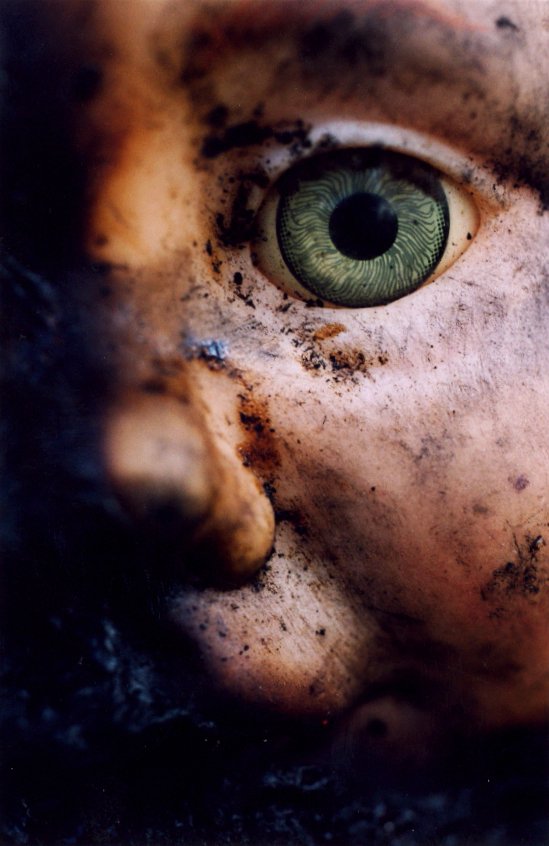
One day Prisoner Q dug up the head of a bisque doll, half of its face badly burnt. Its one good eye stared at him, and he threw it away. And then from a few inches deeper emerged the skeletons, a whole tangled mass of them, as if they had chosen to die together in some conflagration. A scrap of cloth bore a flowered print; the heel was peeling off a man’s shoe. The news of the bones’ discovery hardly caused a stir in the penitentiary, where corpses of even more recent vintage turned up all over. The warden picked through the bones like they were cattle, and pulled a thin gold ring from a finger. He ordered Prisoner Q’s gang to put the bones in the trash and to resume digging. Prisoner Q cradled the three skulls in his arms and set them down carefully on the wheelbarrow; one of them had a gaping hole on the right; another had lost its jaw. He wondered what kind of violence could have led to such a catastrophic end. He had seen terrible things done to people and to bodies in prison, and he had almost forgotten what violence meant. He felt impervious to injury.

That night, lying on his back, Prisoner Q’s thoughts drifted off to what it was like to sleep again on a soft bed with freshly ironed sheets and with a woman breathing evenly beside him, and much as he wanted to quench the thought, it grew, seemingly on its own, in his imagination. This was the utak-laya he had successfully suppressed within his first three years, making him forget the family he had forbidden from visiting him in prison; his share from the last robbery would take care of their needs for life, and last he heard they had a farm in Casiguran, facing another ocean. 

The woman lying next to him soon had a son of about six, who rode a red bicycle and was crazy about cars. When Prisoner Q offered him a car he had crafted out of a sardine can and bottlecaps, the boy turned away. Prisoner Q followed the boy to his room and saw how it overflowed with toys of all kinds—robots, guns, planes, and of course cars—and he jumped in surprise when a blue sportscar zipped between his feet and ran away, and the boy holding the remote control laughed gleefully. Then the woman came in and said, “It’s time for merienda. I made some biko and hot chocolate.” Biko, he tried to think, biko? The sticky rice clung to his palate and he could smell and taste the coconut milk in it, and he was smiling when he was shaken awake by a foot in his ribs, nudging him to get up. The dream exploded in his brain, and he tried to hold on to parts of it—that whiff of coconut, the boy’s taunts—but they came away in shreds. He wanted to lash out at the man who had woken him up, but it was just his friend Teroy, claiming his space on the floor.

That morning they dug some more, and then they ran out of earth, and hit solid adobe on which their spades were useless. No treasure could have been buried deeper than this virgin rock. The warden cursed at his misfortune and called the digging off. Prisoner Q’s grief was even greater; he was still scraping away at a hole that had opened up inside of him, and he could not stop.

Qwertyman No. 16: Prisoner Y

Qwertyman for Monday, November 21, 2022

PRISONER Y was still chewing on a tasty strip of cartilage that clung to the meatless rib he had fished out of the soup when he felt Cortes’ breath on his nape and heard his wheezing voice: “The warden wants to see you. Now.” He stood up, tossed the rib back onto his tray—a hand quickly grabbed it from nowhere—and turned to follow the guard. He wondered what the warden wanted this time. 

Nearly all the fans in the mess hall were out of commission and the inmates’ sweat mixed in the air with the fat curdling in the lukewarm broth, and Prisoner Y looked forward to the air-conditioning in the warden’s office, although he was sure the warden didn’t call him in for a conversation. The last couple of times, in fact, it was the warden’s secretary who had spoken to him, and he barely glimpsed the warden through the half-open door. 

The first time, he was picked up just outside the service gate by three men in an SUV, who brought him to a warehouse in Parañaque, where a man was trussed up, his head in a sack, screaming in a language Prisoner Y couldn’t make out. One of the men handed Prisoner Y a .45 and nodded; another man pointed another .45 at him; the third man held up his phone and recorded everything. Prisoner Y aimed at the victim’s head and fired; the body spasmed and stopped writhing. They drove him back to the prison, where Cortes met him at the gate and ushered him back to his cell. 

When his cellmates asked where he had been—now and then one of them would be gone like that for a day—Prisoner Y said that the warden had asked him to do some carpentry at his home; he had been a handyman in his past life, before the debts piled up and he learned to do other things with his hands. When someone asked him why he didn’t make a break for it while he could, and someone else remarked how all he wanted was an hour at the mall to savor the cool air and watch the salesgirls bending over, Prisoner Y said—truthfully, recalling how humid that warehouse was and how it reeked of stale oil and some shapeless menace—that he felt safer inside.

On his wife’s next visit that Sunday, she was deliriously happy. A man had come by their house, she said, and had dropped off some money in an envelope, saying that it was something owed her husband for a job he had done inside the prison. What did you do, she asked, did you build a house for the warden? It was enough to buy a new stove and a smartphone for Carmela, who needed it for school. I worked on the prison chapel, he lied, knowing it would make her happy; the old roof was leaking and you know the chapel is the warden’s pet project.

The second time it was different, because he had to ride on the back of a motorcycle that one of his handlers drove, and shoot his target on the run. The man, he realized to his horror, was the prison chaplain, walking the street in a Hawaiian shirt and slacks, as though on his day off, in search of a special meal or a movie to watch. Instantly Prisoner Y understood—the chaplain had spoken to the media about how prisoners complained to him about their food, how the prison officials skimmed a percentage off every sack of rice and kilo of stringy pork that entered the kitchen; there was talk of an investigation, although the inmates doubted anything would come out of it. He was there to make sure. It should have been easier to do with the priest in common garb, shorn of his soutane, but then the priest turned toward him as he fired and he could see the man’s terminal expression, one more of resigned acceptance than anything else. Despite himself, Prisoner Y muttered a prayer for forgiveness as they sped away.

Today Cortes led him past the secretary straight into the warden’s office and closed the door behind them. The warden was on his cellphone, a cigarette in his other hand; some ashes drifted onto his barong and he shot up from his seat to stub the cigarette into an ashtray and flick the ashes off without any change of voice in his phone conversation. “Of course, pañero, you don’t even need to ask, send my love to Mercy and the girls.” He shut his phone off and turned to Prisoner Y, who remained standing with his hands behind him. “How’s your wife? Is she happy? You know what they say—happy wife, happy life!” Prisoner Y murmured something like “Yes she is, thanks,” but the warden was already coming over to his side of the table. “Let’s take a walk,” he said. “I want to talk about your future.” What was there to talk about? The future was his life sentence for murder.

In his six years in the penitentiary, Prisoner Y thought he had seen everything, every grimy corner of it, even the luxury suites inhabited by the drug lords and out-of-power politicians, but now the warden led him past the kitchen down a corridor he had assumed led to cold storage, and he was right; when Cortes unlocked the doors and pulled them open, a blast of cold air stung his nose, along with an acrid curl of some potent chemical. 

The warden flicked the light switch on and Prisoner Y saw them: a swarm of cadavers—some on raised platforms, many just on the floor, under browning blankets that could not cover everything. He could see fingers withered dry. “Stabbings, cancer, TB, chokings—they all end up here, the ones without family, the ones no one will miss. We should just burn these but there’s a budget for their maintenance. I’ve made sure of that.” 

“Why did you bring me here?” 

The warden nudged the edge of one blanket with his foot. “Your next job will be so important that it will have to be done by someone who might as well be dead.” Prisoner Y rubbed his arm and said, “I still have a family.” The warden looked at him calmly and said, “I know. You do. That’s why we’re here.” Prisoner Y shivered from a chill colder than bare ice.

Qwertyman No. 14: An Oppa for Pinoy Culture

Qwertyman for Monday, November 7, 2022

THE HON. Victor M. Dooley was in a quandary once again. He had struggled with his maiden speech, but thanks to the timely assistance of his rumored girlfriend and sometime girl Friday Yvonne Macahiya, he had delivered a brilliant address on “Culture and the Environment: Shared Survival through Values Education,” which the footnotes failed to say had been Yvonne’s term paper for her Political Science 104 class at the Western Aklan Institute of Technology. 

It didn’t matter that most of his esteemed colleagues were absent or nodding off when he gave his speech with all the passion he exuded back when he was “Mr. Disaster,” the TV-radio hero of the typhoon-flooded, the earthquake-shaken, and the fire-singed. When Yvonne’s press release came out, it was just like he had spoken before the UN General Assembly, the world’s grandest stage; never mind that some audiences there weren’t too hot, either. 

“We are the world’s most disaster-prone country not because we are weak,” he said, thumping his fist on the lectern before letting his gaze travel across the gallery to turn up the drama, “but because disasters visit other countries less. The Lord Almighty has brought these disasters upon us to test our faith, to strengthen our spirits, and to breed true champions of the desperate and the dispossessed!” Again he paused for dramatic effect, but all he heard was the snorting of a venerable gentleman from a northern province, dreaming of Lamborghinis landing in his Special Economic Zone.

Still, something from his speech must have registered in someone’s mind—the word “education”?—because Sen. Dooley found himself appointed to the Committee on Basic Education, Arts, and Culture, which to him sounded like the wimpiest assignment anyone could get. He had expected to be named chair of the Committee on Environment, Natural Resources and Climate Change (that went to a real estate developer), or the one on Public Information and Mass Media (that went to a retired general), or to something that could have used his mestizo heritage, like the Committee on Foreign Relations (that went to a Chinoy movie producer). 

Basic education? Other than passing grade school, what did he know about classrooms and curricula? But then the committee also covered Arts and Culture, so, hmmm, maybe that was what they saw in him, his stellar career as a singer-dancer-TV show host, the way the ladies swooned when he winked at them at the end of his “Buchikik” song. Arts and Culture was entertainment, right? It was about keeping people happy, so they could smile through Covid, unemployment, EJKs, 60-1 peso-dollar rates, and P300/kilo pork. 

There wasn’t much he could do about those things—blame it on the pandemic, on Ukraine (he did have some important foreign-policy views: those darned Ukrainians should just have given over some potato fields to the Russians instead of endangering world peace with their silly resistance), and on troublemakers who even won Nobel prizes for having nothing good to say about hardworking despots.

But now, the Hon. Victor M. Dooley had to come up with a program that would leave his indelible mark on Philippine culture, and he convened an ad hoc committee composed of himself, his chief of staff Roy, the indispensable Yvonne, and a special guest who sashayed into the room and planted wet kisses on both of Vic’s cheeks, much to his embarrassment and to Yvonne’s utter surprise. 

“Ms. Terry! I never thought you would respond to my invitation!” 

“Why ever would I not? How long has it been, dearie? The last time  I saw you, you were still a struggling singer trying your best to hold your note—so I held it for you, hihihi.  And look at you now, an honorable Senator of the Republic!”

“And who, may I ask, might you be?” interjected Yvonne.

“Ah! Yvonne, this is Ms. Terry, who sponsored my entry into show business many years ago. I asked him—I mean her, ahaha, we better get our preferred pronouns right, especially after that gender-sensitivity workshop we all had to take—to come and help us devise a program for our country’s cultural revival.”

“Why didn’t you tell me?” said Yvonne. “I could’ve called on some of my National Artist friends—”

“What’s a National Artist?” asked Vic.

“Never mind. Welcome aboard, Ms. Terry—oh, I get it now, mystery herself! I’m Yvonne, the congressman’s Chief Political Affairs Officer. Can we offer you some coffee?”

“If you have low-acid coffee with non-dairy creamer and gluten-free scones, I’d much appreciate it. But I’ll take what you have.”

“Our Chief of Staff here makes an excellent three-in-one and I’m sure he hasn’t finished all the Sky Flakes.” Yvonne cocked an eyebrow at Roy, who slunk away muttering. “Now let’s get down to business. The senator wants a new program with strong popular appeal that will raise our people’s spirits, promote national unity, and put Philippine culture on the global map. You said you have some ideas?”

“I do! Two, in fact. One, boy bands. We should undertake a nationwide search for cute mop-haired boys from the age of six up and train them in a camp for singing and dancing. Two, a cooking competition for girls, who don’t know how to cook anymore. We’ll have regional and then national contests for the best pinakbet, sinigang, and adobo. We can even have a Fil-Am edition, but let’s do it in West Covina so I can visit my cousin there. What do you think?”

“Nice, but I have an even more inspired idea!” said the senator. “To promote our own, let’s ban all Korean shows for a year. Tama na mga K-drama, P-drama naman. Nakakainis na, e!”

Yvonne groaned. “Are you crazy? Do you want to bring the wrath of the BTS Army down on you, not to mention my mama who’s in love with Hyun Bin?” Yvonne turned to their guest. “I like your ideas, Ate! I think you and I will make a great team—between you and me, we can make Vic Dooley the oppa of Philippine culture!”

“Thanks, but what’s an oppa?” asked the senator.

Penman No. 444: A San Diego Sojourn

Penman for Sunday, November 6, 2022

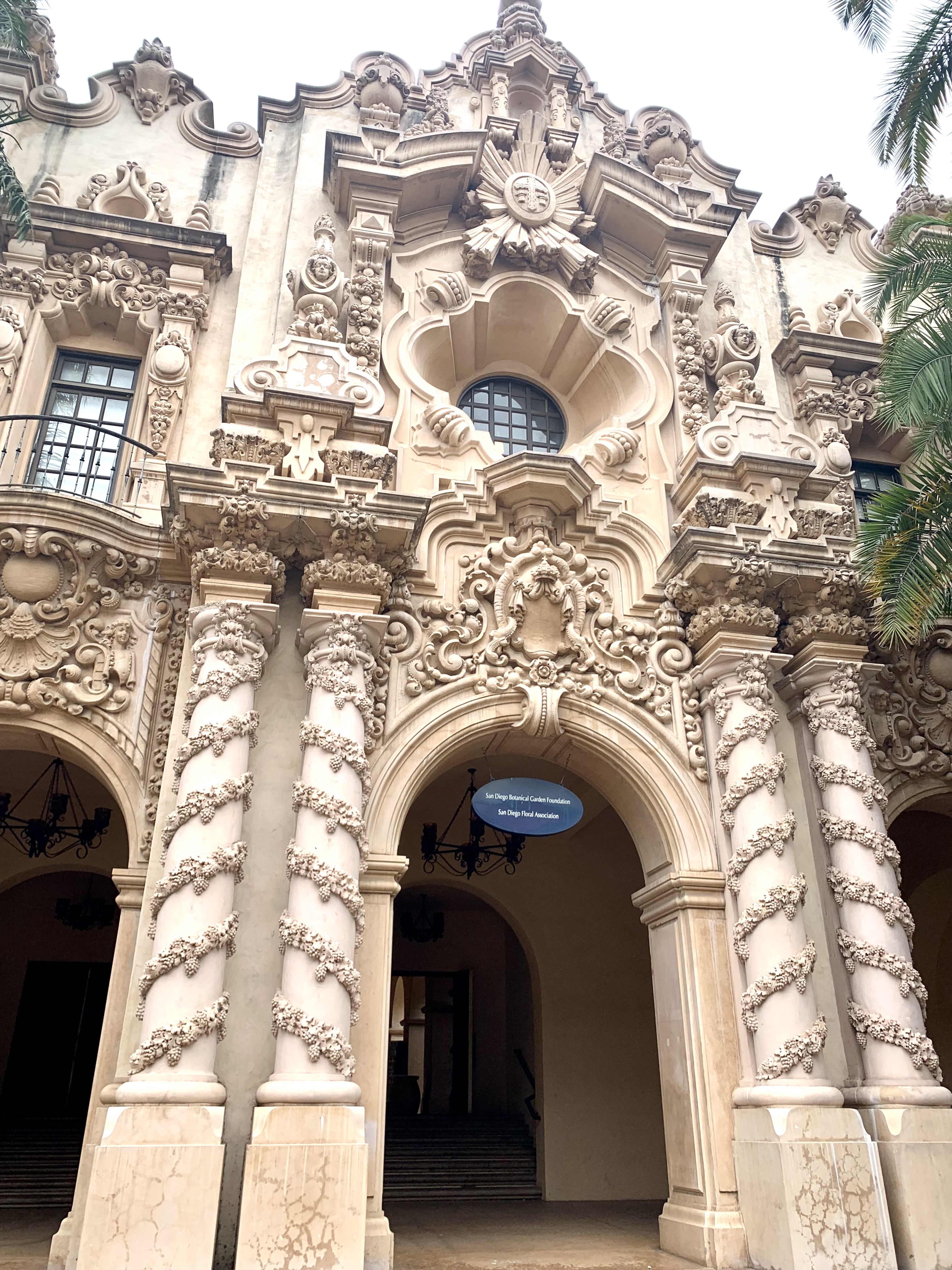
A FEW weeks ago, for the first time since the pandemic, my wife Beng and I took a plane out of the country, and I can’t tell you how liberating that felt after three years of being landbound. I’d had few complaints about the long lockdowns, because I’m used to working and writing in isolation, and have become much less sociable as I age. But I did miss the travel, the foreign air, the view from the other side of the ocean. 

Just before the pandemic hit, Beng and I had spent my first year in retirement (and a good chunk of my retirement kitty) gallivanting around seven countries, against the advice of family and friends who thought that we were overdoing it; perhaps we were, but now we know that the world we saw then will never be the same again, and that we ourselves—in or approaching our seventies—will never be able to do that again. And so it was with a huge sigh of relief that we boarded our flight to San Diego, where our daughter Demi has been living with her husband Jerry for the past 15 years. We’d visited San Diego often before, but probably not with this much anticipation, having been away for years. 

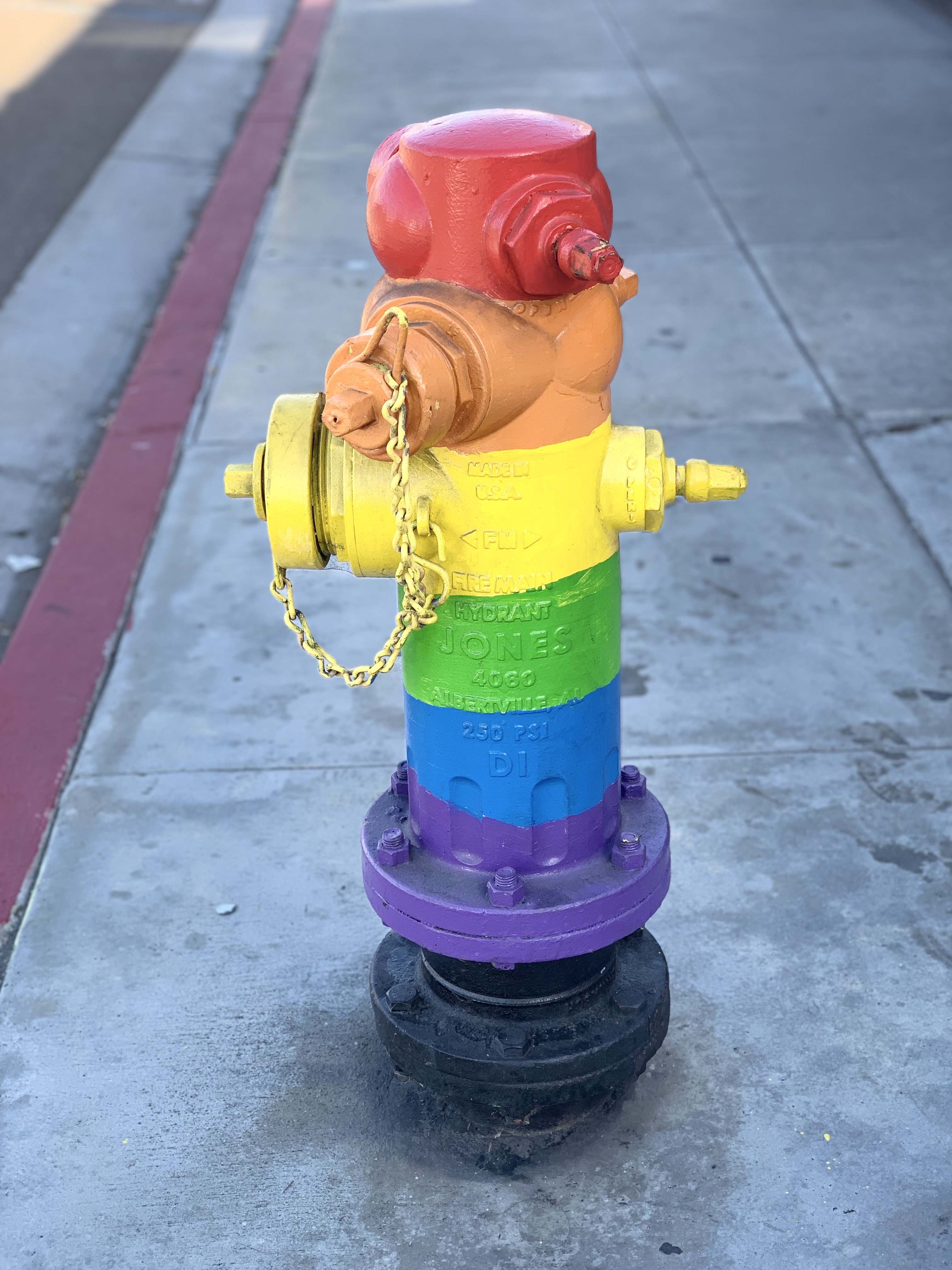
Sitting on the Mexican border, San Diego isn’t the first place most Filipinos would choose when they think of visiting America, unless, like us, they have personal reasons to go there. Los Angeles and San Francisco seem to be more exciting places, have large Fil-Am communities, and have long been the ports of entry for Pinoys landing on the West Coast. (Our Japan Airlines flight was that rare straight flight via Tokyo to San Diego.) But San Diego has its own charm and its own attractions, most notably Balboa Park, the San Diego Zoo, and Comic-Con, that annual extravaganza of pop culture that draws about 150,000 fans from around the galaxy. (Much to my young students’ chagrin, I’ve been to Comic-Con twice, happily ignorant of much of what I was looking at.) 

And whether you’ve lived there for decades or are just passing through, San Diego will always give you a taste of home, with dozens of Pinoy foods stores and restaurants, especially in National City and Chula Vista where you can shop at Seafood City for daing na bangus and Chocnut and at Goldilocks for your party cake while dropping packages off at LBC—or you can run to Mira Mesa for your Jollibee fix. (For me, an American sojourn would be incomplete without a trip to Arby’s and Red Lobster.)

Inevitably San Diego also has its own spotted history of East-West relations, in which Filipinos have figured; the better part of that history was celebrated last month as Filipino-American Heritage Month in the city. The worst part remains in the archives, in the memories of early immigrants such as Emeterio Reyes, who recalls that “I asked the driver if he could take me to a Catholic church. As soon as we got there, I told him to wait for me because I had a funny feeling I might not be welcome at this church. As I entered the door, a priest approached me and told me that the church was only for white people. That moment, I wanted to cry and die!” 

When Sebastian Vizcaino sailed into what he would name San Diego Bay on November 10, 1602, he found that he had “arrived at a port which must be the best to be found in all the South Sea, for, besides being protected on all sides and having good anchorage, it is in latitude 33½o. It has very good wood and water, many fish of all kinds, many of which we caught with seine and hooks. On the land there is much game, such as rabbits, hares, deer, very large quail, royal ducks, thrushes, and many other birds. On the 12th of the said month, which was the day of the glorious San Diego, the general, admiral, religious, captains, ensigns, and almost all the men went ashore. A hut was built and mass was said in celebration of the feast of Señor San Diego.”

As a major port facing the Pacific, San Diego has long been home to the US Navy’s Pacific Fleet, its base harboring over 50 ships. The naval presence defines much of San Diego’s character, and provides a good part of the reason why about 200,000 Filipino-Americans live there today. Since early in the American occupation, Filipinos have signed up with the US Navy as their passport to what they hoped would be a better life and to a bit of adventure. 

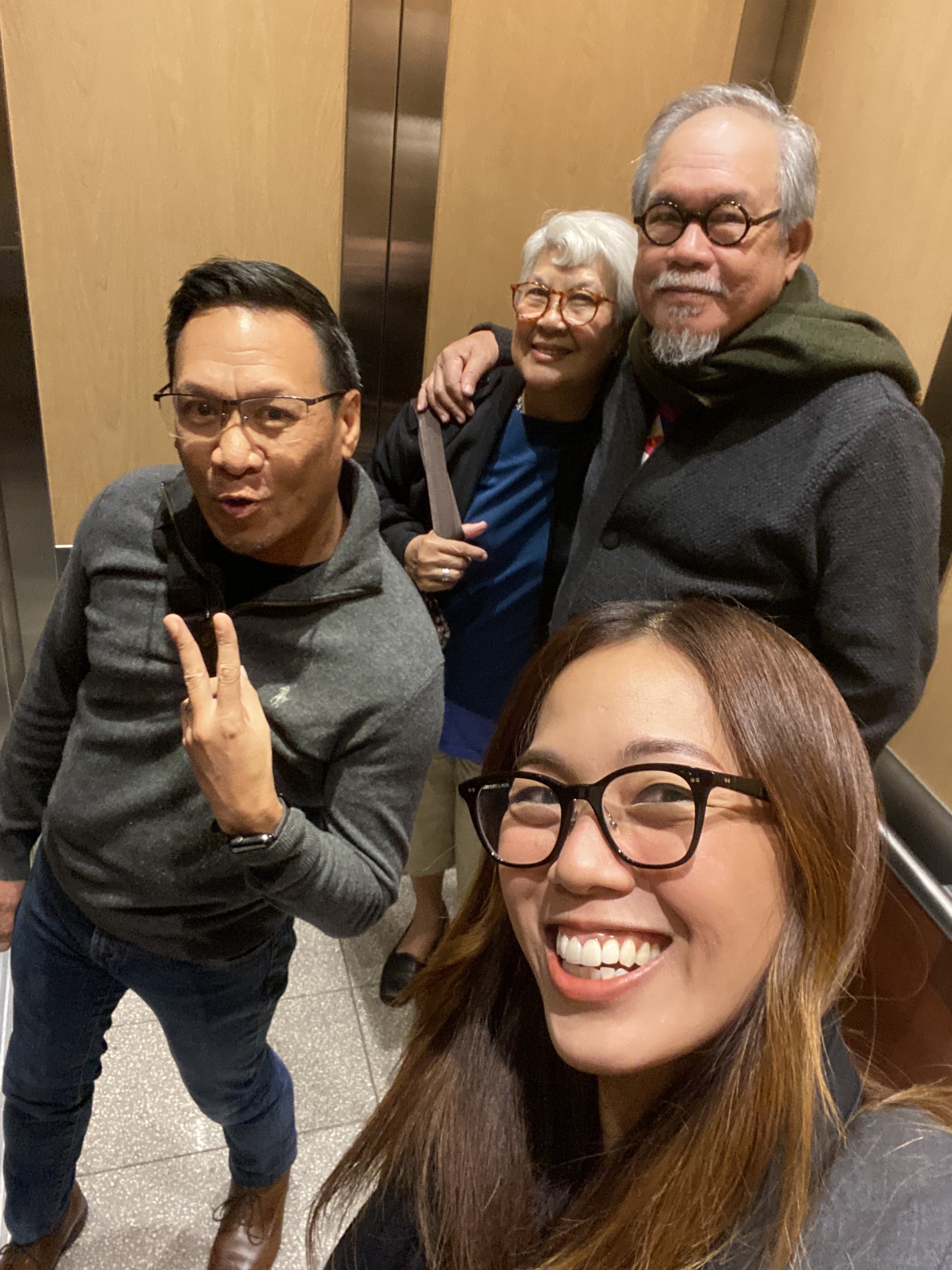
I just learned, for example, that the first Filipino to have joined the US Navy, back in 1903, was a seminarian in Manila named Potenciano Parel who snuck out of his vows to be a sailor, but not having the right papers, he used those of a friend and assumed his identity, Tomas Dolopo; the Dolopos continue to be San Diegans. Demi’s late father-in-law, Ric Ricario, joined in 1957; his eldest son, Ray, followed him into the Navy; Ray’s brother Jerry met and married Demi. And so we find ourselves now tied by blood to that long tradition, as did many thousands of others before us.

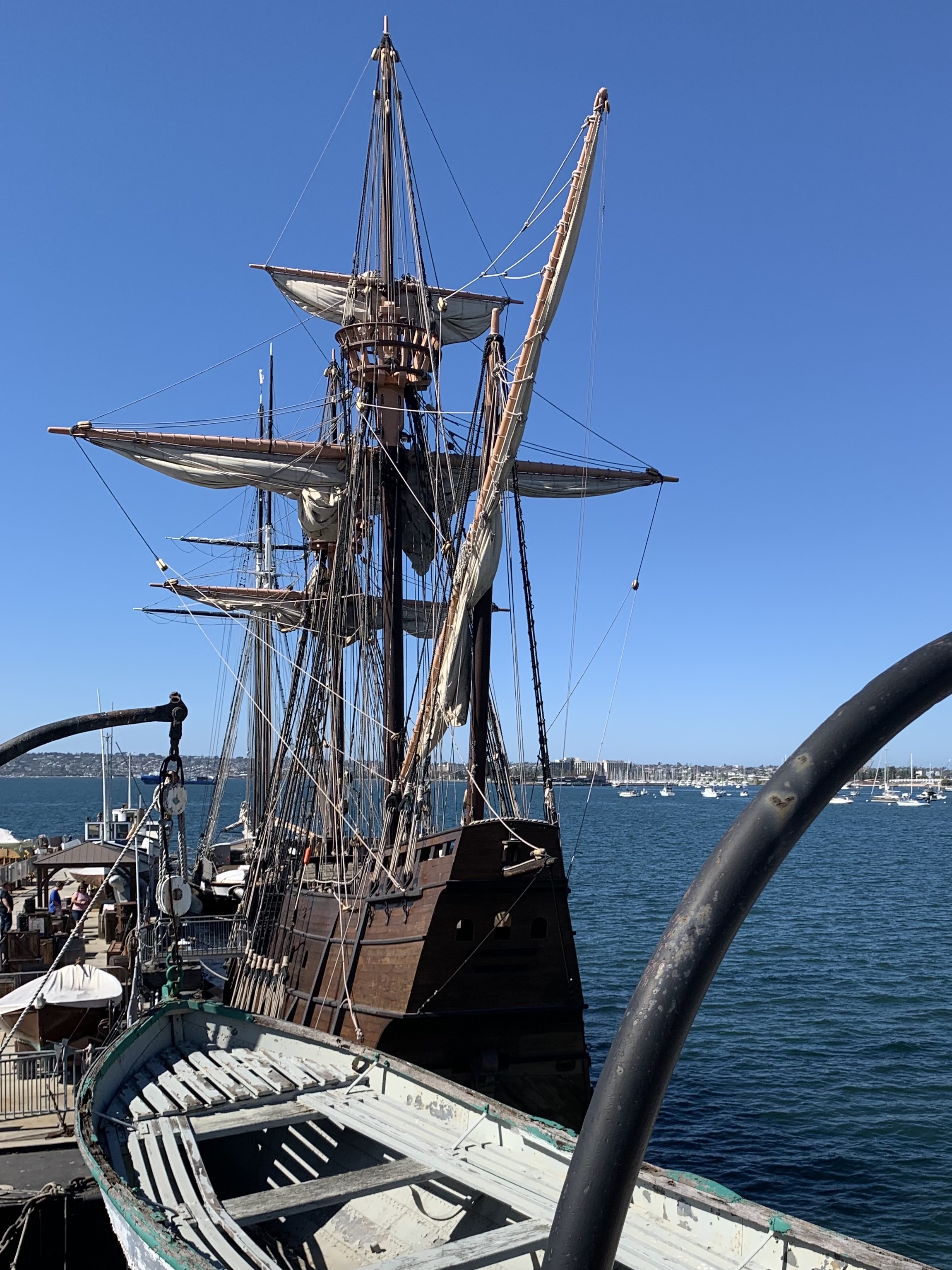
Despite having visited San Diego many times before, and having enjoyed its more popular attractions, we felt more acutely aware of history this time around. We finally stepped into the city’s Maritime Museum, a complex of many ships from various centuries that allows visitors a hands-on experience at traveling the world on water. The ships on display range from a full-size and fully functional replica of a Spanish galleon ca. 1542, the San Salvador, to the world’s oldest sailing ship, the grand, mid-1800s Star of India, to a ca. 1970s submarine that still holds the record for the deepest dive, the USS Dolphin. For just $15 for seniors and just slightly more for others, you can hop from one ship to another, and imagine what it was like to cross a tempestuous ocean with only the stars to light the way and nothing to eat but stale bread and salted pork. 

We enjoyed history of another kind by having dinner with our in-laws in a National City dive that our son-in-law Jerry chose for its unique ambience, which you can either call seedy or loaded with character. (There was a famous sailor’s bar in the area called the Trophy Lounge, Jerry told us, that used to be run by ladies from Olongapo…. But that’s another story, and San Diego has books of them, yet to be told.) La Maze is the kind of leatherbound ‘50s restaurant that the Rat Pack and other Hollywood celebrities frequented when in San Diego, and you can still order the same great steaks they had. A local band played dance music, and to the tune of “Solamente Una Vez,” I took the pretty silver-haired fox next to me to the floor and slow-dragged the night away. 

Qwertyman No. 13: Something Good

Qwertyman for October 31, 2022

MINISTER QUAQUA was having a bad day—a very bad day, probably the worst since he was appointed to his post by President Ongong after they had finished two bottles of Balvenie Portwood, with boiled peanuts and chicharon bituka on the side. Quaqua had brought the chicharon bituka to the Palace as a gift to the President, ostensibly as a sample of his company’s latest R&D. A self-professed man of science, the President was known to be interested in cutting-edge research. 

Pork was highly coveted by Kawefans, but was now considered contraband, because of a longstanding ban on pork and pork products forced by the great swine flu epidemic of 1986. Some Kawefan families, including the Quaquas, had made fortunes by creating and marketing fake pork—veggie-based substitutes for adobo, barbecue, and sisig. Pork smuggling was therefore big business, and naturally the Quaquas had a finger in that pie, too. The anti-pork law allowed for a tiny sample of real pork to be imported for research purposes, for producers of the fake stuff to run taste tests of their bogus bolognas against. The rumor was that pork was coming into Kawefo by the ton, and even more alarmingly, that the Quaquas kept a top-secret pig farm in the distant province of Suluk-sulukan under armed guard, producing Chinese ham, chicharon bituka, and tocinofor the most select clients, including the First Family. 

Quaqua had come to the Palace not just to share some pulutan with an old friend, but to advise him against yielding to the strong pro-pork lobby, which argued for the legalization of pork, so every Kawefan could enjoy his or her rightful taste of inihaw na baboy. It was a popular initiative, certain to gain the ruling party more votes in the next election. But Quaqua had a strong counter-argument: legalizing banned substances not only negated decades of established jurisprudence (he was a lawyer, after all), but would put legitimate producers of healthy substitutes out of business—and, he didn’t need to add, abolish the black market in pork altogether. 

“Just look at what those fools in Bukolandia did with drugs,” he told Ongong as he poured the Balvenie. “To take care of the drug problem, they legalized drugs, so not only is the whole country now on a high, but the economy is down because there’s no business to be made, with people planting weed and cooking up meth in their own backyards. We can’t allow that to happen—imagine, if people bred their own pigs, how common the taste of lechon and chicharon would be. Fake pork can take care of that demand without turning our country into a stinking pigsty. True pork has to remain—” and here he munched on a morsel of bituka—“a restricted commodity.”

There must have been something more than MSG in what Quaqua fed the President, because he was appointed Minister of Justice on the spot, as he had been praying novenas for. Now, he could tell the Kawefan Bureau of Investigation (KBI) to spend its time on worthier pursuits like chasing after subversive authors and professors instead of bothering with peripheral issues like pork smuggling.

But barely had he warmed his seat when his first crisis exploded. One of the President’s peskiest critics, Dr. Fofo, a radio broadcaster from way down south, had been shot dead by two men on a motorcycle. That wasn’t the problem—after all, presidential critics died all the time. They should’ve read the news and shut up if they knew what was good for them. The problem was that Dr. Fofo’s killers stupidly got caught when a piglet sprang from out of nowhere—likely an escapee from an illegal farm—and enticed the duo to chase it, until their motorcycle hit a post. In police custody, the two boasted of their connections and were threatening to out their mastermind if they weren’t released soon. Social media was on their case.

“We can’t let these idiots cause a fuss,” Quaqua told his assistant, Vice Minister for Public Affairs Zhuzhu. “They screw up, they pay the consequences. That’s justice!… Hoy, are you listening? I just said—”

“Sir, Mr. Minister, we have a bigger problem!” The assistant was on his mobile phone and looked deeply worried.

“Why? What happened?”

“Sir—your wife—Mrs. Quaqua was just arrested!”

“What? Where? Why?”

“At the airport. They booked her for—uhm—stealing the silverware in business class. They say they found several pairs of spoons and forks in her handbag.”

“Are they crazy? Does that airline want its landing rights revoked? Taking home spoons and forks from airplanes is an old Kawefan custom! Get me the airport manager—”

“Uh, it wasn’t in our airport, sir,” said Zhuzhu. “Your wife just landed in Paris, to attend Fashion Week—”

Oooh, that’s right, said Quaqua to himself—they’d had a spat over his latest mistress Gigi, and he’d given her the usual blank check to placate her. Still, it was embarrassing.

“Then get me the French ambassador! Let’s see if they’ll risk diplomatic relations on account of some—some stupid cutlery!”

“Uhm, the spoons and forks are innocent, sir—they’re not sentient beings,” said Zhuzhu, his eyes downcast. “I learned that in our Employee Development Seminar on Eastern Philosophy, sir.”

“Tell them to have seminars on gun cleaning and pest control!” Quaqua made a note to himself: “I swear, Zhuzhu, as soon as this blows over, I’m going to get me a retired general to take your place.”

Zhuzhu held up his phone to show his boss a news clip from CNN. “It’s on CNN now, sir. They’ve even posted a mug shot of Mrs. Quaqua holding up the forks and spoons.”

“What?!” The justice minister fell back into his chair and looked out the window. “They didn’t even blur her face? The inhumanity, the incivility…. What has mankind come to? Where’s understanding and tolerance when you need them? Whatever did my dear wife do to deserve this?”

“According to the great masters, sir, we sow what we reap, our past actions affect our present ones, so Mrs. Quaqua did something, like for example, she married you—”

Just then Zhuzhu’s phone rang again and Quaqua couldn’t wait to hear the news. “Did they release her? Did they come to their senses? What’s up?”

Zhuzhu looked sad. “I’m afraid it’s about something else, sir. About those two suspects in the murder of Dr. Fofo? I’ve just been told that they’re both dead. They had an argument and—well, they strangled each other to death in their cell.”

Quaqua’s eyes lit up. There was a God. “Then I must have done something good in my past life, Zhuzhu!”

“What about the madame, sir?”

“Alas, it’s beyond our jurisdiction,” Quaqua sighed, thinking of Gigi’s perfume. “Let French justice take its course.”

(Image from eatlikepinoy.com)

Qwertyman No. 12: The Changing of the Colors

Qwertyman for Monday, October 24, 2022

(Image from esquiremag.ph)

PITONG STARED out the window of his Chicago apartment to the shoreline of Lake Michigan, and watched the usual Sunday crowd of families with small children in colorful tracksuits and seniors plodding nowhere at half a mile per hour on their adjustable canes. It was getting later into the fall, and the colors were exploding all over the city from Lincoln Park to Promontory Point; at the Botanic Garden in Glencoe the Japanese maples blazed a vivid red. Pitong remembered that it was at a time like this, almost twenty years earlier, when he and Marietta had arrived in the United States, and they could not believe what a transformation the seasons induced in the chlorophyll and carotenoids of leaves. 

He felt intensely drawn to his postgraduate studies, which was what they came to America for—“To explore,” as he wrote in his application, “new ideas for the energization of the Philippine economy, particularly through the deregulation of key industries, including power and telecommunications.” 

With a US-minted PhD, Pitong thought he could return to a professorship if not a deanship at a top university, or a directorship at NEDA or Foreign Affairs. So immersed did Pitong become in his anticipated future that he forgot about Marietta, who had given up a promising career in pharmaceuticals to join him as his bedmate and cook, until he began to doze off after interminable arguments online about the American capacity for policy reform. 

She snuggled up to him in the deep of winter, and he was colder than ice. In their second spring she volunteered to usher with the local symphony; by that summer she had fallen for a clarinetist, and by the fall she had found her happiness, while Pitong continued to stew in his darkening pot of theory and counter-theory, of the sticky explanations how, in the post-9/11 world, security and economic concerns were inextricably intertwined and indeed congealed in the individual consciousness.

Pitong returned home alone when he failed his dissertation defense, while Marietta began a family in California, to where her clarinetist had moved to join a new orchestra. Almost immediately, through an old friend on the Left—yes, he had had more than a passing dalliance with that crowd, although he now denied it—Pitong found himself a job in the Palace, drafting speeches for Madame President and getting close enough to hold up an umbrella for her at the slightest drizzle. He began to project some political weight and smiled at whispers to the effect that he would soon become her spokesman. When he brushed his teeth in the morning, he ended by frowning at the mirror, as if the republic were about to collapse, and elocuting in his whiny voice, trying to sound as gruff as he could, “Good morning, ladies and gentlemen of the media.” 

And then the republic did collapse, or rather Madame President did, in a scandal that whittled down her stature even more severely, and rather than desert her like those scoundrels did, Pitong made noisy pledges of allegiance to her—while secretly negotiating, on the side and through the same old comrades (the Left had influence in any government, he would realize), an accommodation with the new regime. When they laughed him out of the place, he fled the country in humiliation, hooked up with his alumni network, got a job handling loan applications in a small bank, and prayed every night that a sinkhole would devour the Palace he left behind and all of its cursed occupants.

For his own entertainment, he opened a blog under the title of “Batang Recto,” a play on the Manila street where he picked up cheap textbooks and on all the connotations of “right,” which he embraced. He took every opportunity to lambast anything that had to do with Family “A,” communists, female empowerment, abortionists (he was convinced that Marietta had purposely lost their baby, not that he wanted to care for one), drug users, hippies, Barbra Streisand, Hillary Clinton, Barack Obama (and 95% of his race), hip-hop, gun control, and climate change. 

He now proudly identified himself as an American citizen—he felt deeply insulted when someone asked if he was a “Pacific Islander,” like he paddled a dugout in his three-piece suit—and bristled when Pinoys from Pateros or Pagadian questioned his opinions on American issues like “birtherism,” as if they knew anything about American politics. But at the same time he felt perfectly free to dispense political wisdom to the islanders, because they seemed hopelessly lost in their fantasy of a liberal democratic paradise, which they failed to realize had been cooked up by a cabal in Washington since the days of Quezon and Cordell Hull to protect American economic and military interests in the Philippines for the next half-century. 

Pitong no longer relied on or believed in scholarly research to establish the truth; so much of it was produced and propagated by an academic elite intent on perpetuating its hegemony, against the challenge of intuitive thinkers like himself and a few other brave souls he had come into contact with. Together, on private networks, they reviewed and reconstructed history, and plotted a chart for human survival and development. The plan recognized the existential threats posed by liberal retardates still tied to obsolete notions like racial and gender equality, which accounted for their weakness at the core.

When a Pinoy strongman and his American counterpart became presidents of their countries, Pitong heard his angels sing. The world was clearly waking up to what he had known for many years—that there was genius latent in resentment, prejudice, and suspicion, in the politics of self-interest, the purest of human motivations. One stalwart was cheated out of re-election, but another was replaced by an even more reliable autocrat. When Russian bombs fell on Ukraine, he felt his logic justified—having denied Russia’s destiny and gone to bed with the West, Ukraine had no one else to blame for its misery but itself. Batang Recto was always right.

Pitong slept soundly on the pillow of these beliefs. He felt most virile after savaging some pink fool on his blog, and sometimes he woke up with a woman next to him, with whom he did not care to exchange names, mindful of security. When he looked out the window at the changing of the colors and at the people on the lakefront, he felt no irony, no loneliness, no remorse. He was never stronger, never surer. He tingled with anticipation at the coming of The Storm that would sweep all the liberals, tree-huggers, and Mariettas of the world away. It was the closest thing he felt to happiness.