The continuing chronicles of Jose Dalisay Jr., aka Butch Dalisay, a Filipino collector of old fountain pens, disused PowerBooks, '50s Hamiltons, creaky cameras and typewriters, VW spare parts, poker bad beats, and desktop lint.
ALMOST TWO weeks after the New Year, I’m sure many of us are still struggling with the resolutions we made—you know, the same ones we announced a year ago, like losing weight, buying no more (supply the object—shoes, watches, dresses), emptying the closet, and being nicer to (supply the officemate or in-law). I had to think that there must be resolutions we can make and actually keep—not easy or frivolous ones, but resolutions that will make a real difference in how we think, behave, and live. Here’s what I came up with:
1. I will not help spread fake news and hoaxes. Fighting for the truth begins with a healthy skepticism and the patience to verify. There’s no such thing as “harmless” fake news passed on.
Last year I had to gently warn a score of friends—smart people with outstanding reputations—who posted on Facebook about Meta claiming the rights to their pictures and about pages turning blue (“It really happened!”) It’s a hoax that’s been going around for years, I told them; there was no such thing as the post described. What’s the harm, they said, just wanted to be sure. Well, the harm is in the propagation; every repost expands the space for fake news to grow, and the poster’s credibility only magnifies it further. That credibility also takes a hit, when it’s shown to absorb and help spread falsehood. Next time, visit a reputable fact-checker like http://www.snopes.com to verify a dubious post. The days are gone when you can assume that what you see is true unless proven otherwise; if you have to assume anything, assume the opposite.
2. I will think before I respond. I will reserve judgment until I understand the situation better, with clearer context and trustworthy and verifiable sources. It’s been said that today, especially online and on social media, people don’t read to understand, but to reply. Many of us have trigger itch—the compulsion to react to and comment on anything and everything that crosses our gunsights. And we do that literally without second thought, drawing on little more than scant knowledge and ample prejudice, and the unflinching conviction that we are right.
The rise of the provocative meme—extremely compact and blunt, digitally manufactured to make a very specific point—has made this even easier, more efficient and more vicious. Memes eschew context, and invite uncritical concurrence. When I see a witty meme, I might smile and even smirk—but I will pause before joining a bashing spree if I have the slightest suspicion that something isn’t quite right. And while I’m at it, I will keep my sense of humor; I will not be baited or feel obliged to respond in anger, and I will remember that forbearance or silence is not surrender, but often victory.
3. I will use AI responsibly. I will use it as an assistant, but not let it do my thinking for me. I will use it to learn, understand, teach, and create. I will not use it to lie, malign, exaggerate, or aggrandize. I will not pretend to know everything AI can do or is doing. I will neither fear nor ignore it, but I will be wary—especially if what it produces is too clean, too good, or too intent to please. Truth often has rough edges that AI could polish out, like it enhances our portraits.
I was watching a video on YouTube last week that purported to show the detailed production process by which the fashion house Hermes made its hyper-expensive and hard-to-get Birkin bag (am no fashionista, but am deeply curious about that industry’s workings). The video went to great lengths to demonstrate why the company’s bags commanded such high prices—the quality of the leather, the workmanship, the exclusivity—in purposeful contrast to the numerous fakes being made of the popular bag. But there was something about that video that made me uncomfortable—it seemed too luminous, its people too handsome, its tableaux too staged. An outdoor scene, supposedly outside the boutique, gave it away: the large shop sign clearly said HERMEES, with the extra E; it was no mistake—a few scenes later, they showed the sign again. The whole video was AI-driven, and no human seemed to be home and sharp enough to note the error. Now, its content may have been entirely factual, but its implied condemnation of fakery in business can’t possibly be helped by such a clumsy use of AI.
4. I will not expect of others what I cannot expect of myself. This was something I learned during martial law, when I was imprisoned with all kinds of people—activists and common criminals, from both privileged and impoverished families. There and elsewhere, I saw how people who could speak so boldly and so well about revolution and liberty could break, sometimes so easily, under pressure. I witnessed and understood the marks of torture. I realized that everyone probably has a breaking point. I wondered what mine was. (My dentist would later tell me that I had a high threshold for pain, which surprised me.) But I came away thinking that if I asked another person to make an extraordinary sacrifice, it should be something I would be willing and prepared to do as well. I say this not to excuse weakness in other people, but to demand more of myself.
I will, however, hold public officials to a higher standard. They chose to lead—for which many are also handsomely rewarded—and so they must prove themselves better than the led. I have a right to expect that my President and congressman will act more wisely and more responsibly than me.
That said, I will live as honorably as I can, despite and especially because of the morally degraded environment in which we find ourselves today. I will not abet corruption in any way. This might be the hardest of all to keep, given how we have all somehow been complicit in this crime.
5. I will be more charitable, and share more of what I have. I will rescue “charity”—among the most human of values—from the political dustbin to which it has been relegated as useless and even harmful tokenism. I’ve heard too many people speak loudly and articulately about big themes like “social justice,” “Gaza,” and “anti-poverty” without yielding a peso from their own pockets or actually doing something concrete for the afflicted. Give, or serve. If you can’t change the system, change a life—you might even change yours.
THIS COMES a bit too late to affect the box office in any way (and it’s not as if anything I write sends people scurrying anywhere), but my wife Beng and I just saw “Manila’s Finest,” and we left much impressed and hopeful for Philippine cinema.
We were out of town for most of the Christmas holidays so we unfortunately got to see only this one film among all of the Metro Manila Film Festival entries. We’d heard good things about the other entries as well, and the fact that “Manila’s Finest” ended up in only third place for Best Picture tells me that we probably missed out on what seems to be a bumper crop. But this isn’t about the MMFF, and I won’t even call it a formal review. It’s more of an emotional reaction to a period and a milieu I happen to have some familiarity with.
“Manila’s Finest” is set in a precinct of the Manila Police from 1969 to 1972, a time of great social and political turmoil. It revolves around the character of Lt. Homer Magtibay (very capably played by Piolo Pascual), a policeman who, despite his flaws, holds on to an old-fashioned sense of duty just when the police service is becoming more politicized in preparation for martial law. He has his hands full with a gang war, only to realize that an even deadlier kind of factionalism is emerging within the force itself, with the rising power of the Philippine Constabulary’s Metropolitan Command, or Metrocom. He also has to deal with trouble at home, as his daughter has become a student activist, the kind that he and his fellow cops have to face with truncheons at the rallies. It dawns on him that it isn’t petty crooks creating chaos in the streets, but the government itself, setting the stage for a crackdown. The movie ends, rather abruptly, on a dire note of warning, hinting at darker times ahead.
The film appealed to me on many levels—the political, the aesthetic, the narrative—but most strongly at the personal, because of the memories it inadvertently brought up. To begin with, my late father Jose Sr. was a cop—or almost. A law student who never finished (like the movie’s Homer), he joined the police academy, in the same batch that produced the future MPD chief James Barbers. The very first picture in my photo album is that of him in police uniform, at parade rest. He never joined the force, perhaps because he married, but he did become an agent for the Motor Vehicles Office, and I remember how impressed I was by his silvery badge when he flashed his wallet open on the jeepney rides we took. That was the kind of thrall in which lawmen at the time were held, or at least I so imagined; they kept the world safe and peaceful, and held evil at bay. (I was too young to understand that my dad’s MVO badge got us free rides.)
I became an activist in college and joined many rallies and street marches; this changed my view of the police, who became fascist pigs, the enforcers of laws for the rich and powerful. During the Diliman Commune of 1971, I held a kwitis that I was supposed to fire if I saw cops approaching on the perimeter of UP’s Area 14. And then something happened that would reverse my perspective: I dropped out of school to find a job. At age eighteen, I finagled my way into becoming a reporter for the Philippines Herald, with zero units in Journalism but with loads of pluck and some writing talent. Seeing what they were dealing with, my editors led by Oskee Villadolid and Joe Pavia decided to give me a crash course in journalism by designating me as General Assignments reporter and making me do the rounds of the beats: police, education, sports, and so on.
Of course, the police beat turned out to be the most challenging and instructive. I was stationed at MPD headquarters on UN Avenue, and put on the graveyard shift that ra through midnight until the morning. When nothing much was going on, we played ping-pong and waited for the fire alarm bell to ring (we ran out only for major fires, like the Family Clinic fire where my job was to count the dead). I kept a little black book of phone numbers where I could ring up hospitals to ask if any major accidents had come in. I learned of a restaurant near the Luneta where killers could be hired for not too much. Being a snot-nosed newbie, I trailed veterans like Ruther Batuigas to avoid being kuryented or bum-steered. I covered murders and suicides, visited the city morgue at three in the morning, and joined cops on their drives along Ermita, checking on vagrants, just like in the movie. It was all heady stuff for an eighteen-year-old.
But what proved to be most stressful was covering demonstrations, now that I was looking at them from the other side of the barricades, parked in a Herald jeep with a driver and photographer. Despite my job, my sympathies strongly remained with the activists, and I dreaded watching the police donning their riot gear and preparing for certain trouble. These being the days long before cellphones and pagers, there was no way I could warn my comrades about what I thought to be snipers or provocateurs or just agents taking their pictures from the rooftop of the Shellborne Hotel near the US Embassy. When the tear gas canisters began flying all I could do myself was duck and run, and I remember visiting some wounded marchers in the ER later. After I covered the funeral of a rebel killed in combat, praising him effusively and playing up the drama, an editor cleaned up my prose and gave me a very dry lesson in reportage: “Omit flowers.”
That’s the kind of treatment director Raymond Red gives his material in “Manila’s Finest.” Nothing is romanticized, no hero left unsullied, except perhaps for the young activists whose further awakening yet lies ahead of them. This well-crafted and well-acted film deserves all its plaudits; the mature Piolo Pascual is outstanding, as is the period production design (except again perhaps for everyone’s new-looking uniform, the bane of period movies, and a few questionable references time-wise—“barangay,” “the New Society,” and Pierre Cardin-style barongs all came after 1972, if memory serves me right). Most of all, “Manila’s Finest” deserves and indeed demands a sequel, into the time of tokhang, when the moral choices facing the police became even starker. But as it is, at least for me, “Manila’s Finest” may indeed have been the finest of its kind this year.
MAYBE BECAUSE of the name I chose for it, longtime followers of this column which I began more than 25 years ago will associate me with collecting vintage fountain pens, and they’d be right—partly. That’s because while I continue to collect pens with a passion, I’ve since branched out in half a dozen other directions, including typewriters, blotters, antiquarian books, midcentury paintings, canes, and even silver spoons.
It’s the kind of behavior that drives collectors’ wives crazy (although I’ll have more to say about the gender issue later), and I can only be thankful that my wife Beng has indulged me all these years. Beng collects bottles, tin cans, and pens herself, but nowhere near the intensity with which I check out eBay three times a day, scour the FB Marketplace, converse in geek-speak with fellow collectors, and subject my collections to never-ending cataloguing.
Seventeen years ago, some twenty people who must have thought they were the only ones interested in fountain pens met in our front yard in UP to form the Fountain Pen Network-Philippines. Those twenty have since grown to over 15,000 members on our FPN-P Facebook page. Unusually among hobbyist groups, and despite its explosive growth, FPN-P has remained one of the Internet’s friendliest and safest spaces, thanks to strict moderation and its openness to all kinds of pens and members, whether they come in with P100 pens from Temu or six-figure Montblancs (yes, there are Rolexes in pendom, although pens are far more pocket-friendly than watches).
One natural offshoot of FPN-P’s expansion has been the emergence of sub-interest groups, among which is the “PlumaLuma” group, which began as one devoted to vintage pens and desk accessories, but which soon evolved into “PlumaLuma Atbp.” as it became clear that pens weren’t our only obsession.
Some collectors maintain a clear and strict focus, like watches, santos, and tea sets. Others branch out into tangential areas (like other writing instruments and books and ephemera for me). The latter far outnumber the former, as collectors soon realize that one is never enough—not just of an object, but of collectibles. There are also “completists” who must have every single item known to have existed, catalogued and off-catalogue, in every collecting band (among my vintage Parker pens, for example, I have about 80 “Vacumatics” from the 1930s and 1940s—still far short of the hundreds of variants made).
Any serious collector in any field will tell you that a good collection takes more than money—although money surely matters in the rarefied realms. What’s just as important is connoisseurship—knowing what to want and why, and understanding the market. For budget-challenged collectors like me, knowledge and determination help balance out the odds, allowing me to buy low, sell high, and eventually trade up to the best goods without paying MSRPs. That also means taking more risks on places like eBay, but then there’s the thrill and pleasure of the hunt, which stepping into a boutique and plunking down a credit card simply can’t buy.
Those of us who collect vintage and antique items (by convention, “vintage” means at least fifty years and “antique” at least a century old) take even more risks , because what we collect could be damaged, stolen, or even fake. With the rise of auction houses and the allure of parking one’s money in some conversation-piece or status-symbol artifact, the stakes have risen even higher; there have been reports, for example, of forged master paintings sold and of “rare” coins being doctored to acquire more value at the auctions.
None of this has daunted the fatally bug-bitten collector, for whom the bar has simply risen; the Internet and the emergence of collecting groups has enlarged the competition, but at the same time it has opened more markets (I’ve bought pens and rare Filipiniana from as far as Bulgaria and Argentina).
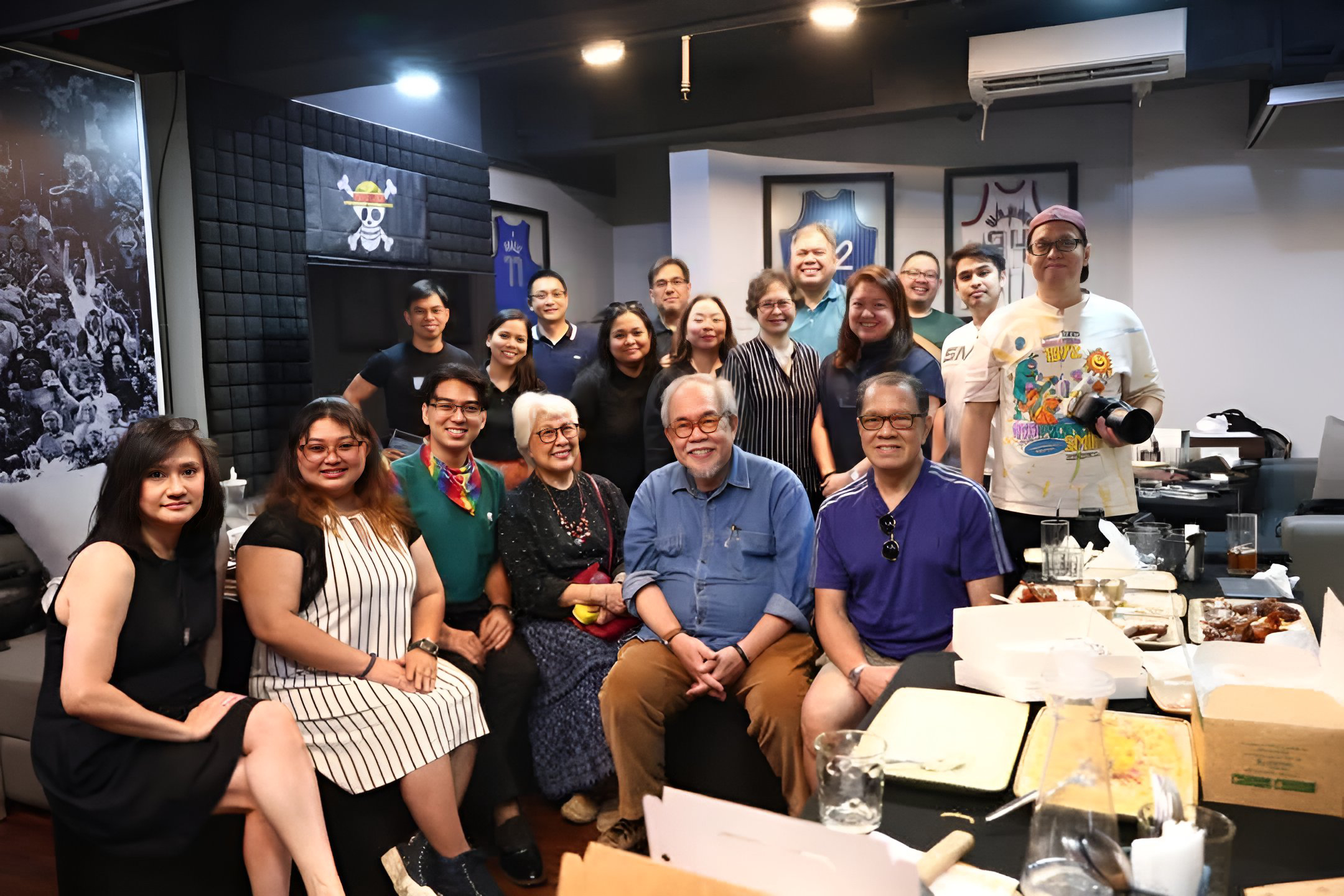
That explains the amazing range you’re about to see in the collections of four gentlemen I’ve picked out from PlumaLuma Atbp. who exemplify, for me, the finest in collecting and connoisseurship, being virtual walking encyclopedias of their particular specialties. (And to clarify an earlier point, PlumaLuma has many lady members with formidable pen collections—lawyer Yen Ocampo and cardiologist Abigail Te-Rosano among them—but despite what’s been said about women and shopping, they don’t seem to be anywhere near as profligate as most of these men.)
The exception to the charge of profligacy (to which I will readily confess) is Raphael “Raph” Camposagrado. Barely in his thirties, Raph trained in the UK and often travels to Europe as a software and AI consultant, imbibing Old World culture with keen devotion. He is the model of collecting focus and discipline, keeping his world-class collection of vintage fountain pens within clear numerical bounds. The one thing they have to be, aside from being old, is beautiful—as in Art Deco beautiful. No pen epitomizes that more than the 1930s Wahl Eversharp Coronet, as Raph explains:
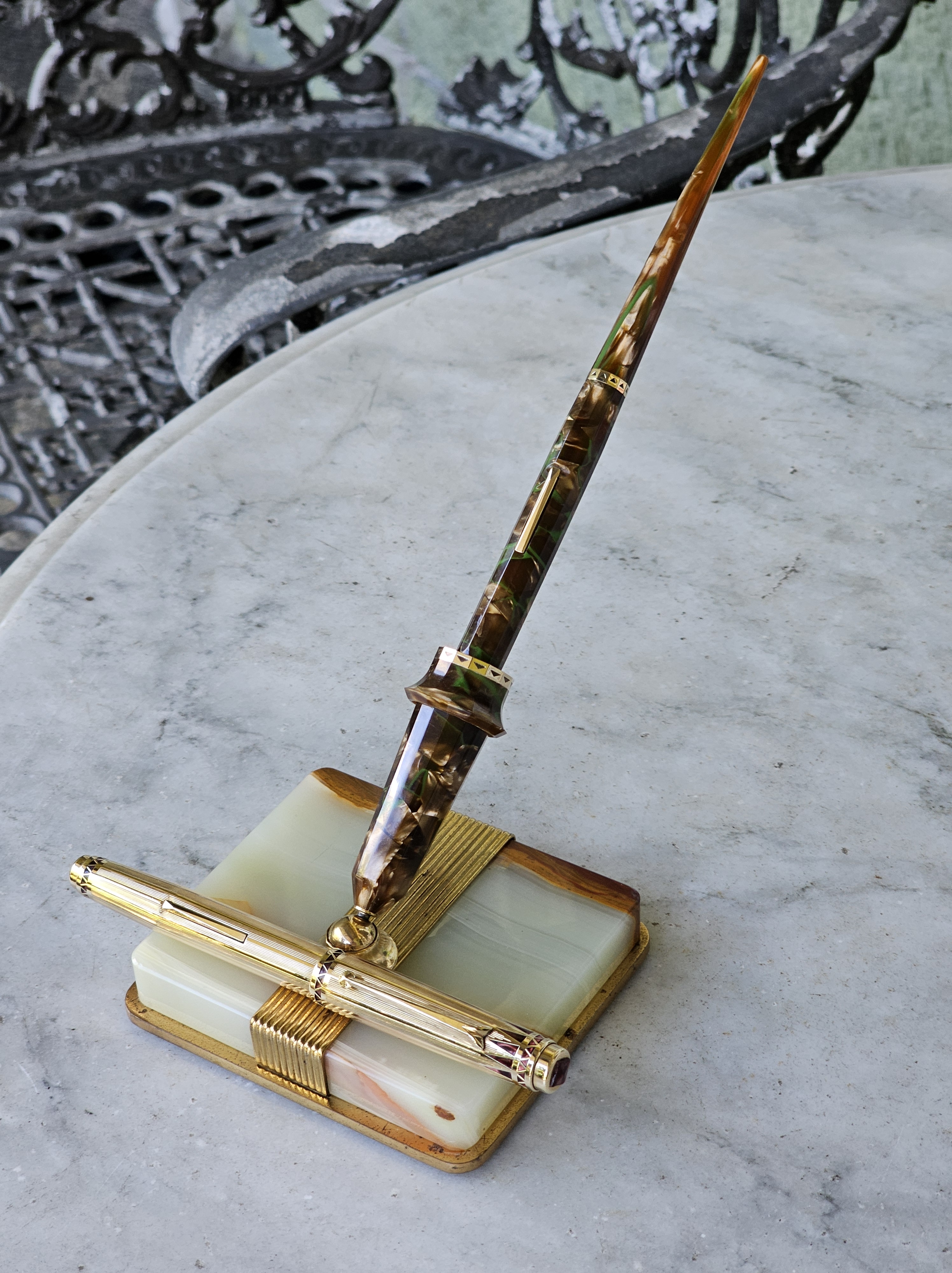
“Considered the peak of Art Deco within the world of pen collecting, the Coronet is abundantly adorned with the symmetry, sharp angles, and geometric forms that enjoyers of the design movement obsess over. The cap and barrel are gold filled and strewn with longitudinal striations. Triangular red pyralin inserts and the pyramidal cap finial give a bold pop of color echoing the beams of search lights that would have streaked over 1930s Manhattanites. This particular piece is equipped with a slide adjuster that allows the user to change the stiffness of the nib from a firm writer of business letters to one with line variation for calligraphic pursuits. It even sports an ink view letting the user see if the pen is due for a refill. While modern pen making tends toward the large, gilded, and ornate, the Coronet achieves extravagance with just the right amount of restraint. It is golden without being a rococo explosion. It is diminutive and so maintains the dimensions of classic jewelry. It knows just how much to show like many other luxury pieces made in the late 1930s.”
Raph is also known for his sub-collection of exquisite desk pen sets, once the hallmark of executive success. The Wahl-Eversharp Doric sets, in particular, are visual stunners.
“I personally scoured Ebay to build a mini collection around this model by Wahl-Eversharp called the Doric,” says Raph. “Other than the Coronet, the Doric is quintessentially Art Deco, sporting twelve facets. The marble desk base is supported by a thin chrome bed and has bracing that reminds me of a hawk’s neck and beak when viewed from the front or back. The depth of the celluloid on the various pens looks as if it were of stone as natural as the desk base itself.”
Investment consultant Alexander “Sandy” Lichauco has long been known in the collecting world as a collector of Philippine medals and tokens, having co-authored a seminal book on it with Dr. Earl H0neycutt (Philippine Medals and Tokens 1780-2024). However, dismayed by the rampant commercialism in that hobby (forgeries and malpractices abound), Sandy turned to fountain pens, amassing an amazing vintage collection in less than two years (including many Parkers that I—his budolero—wish I had).
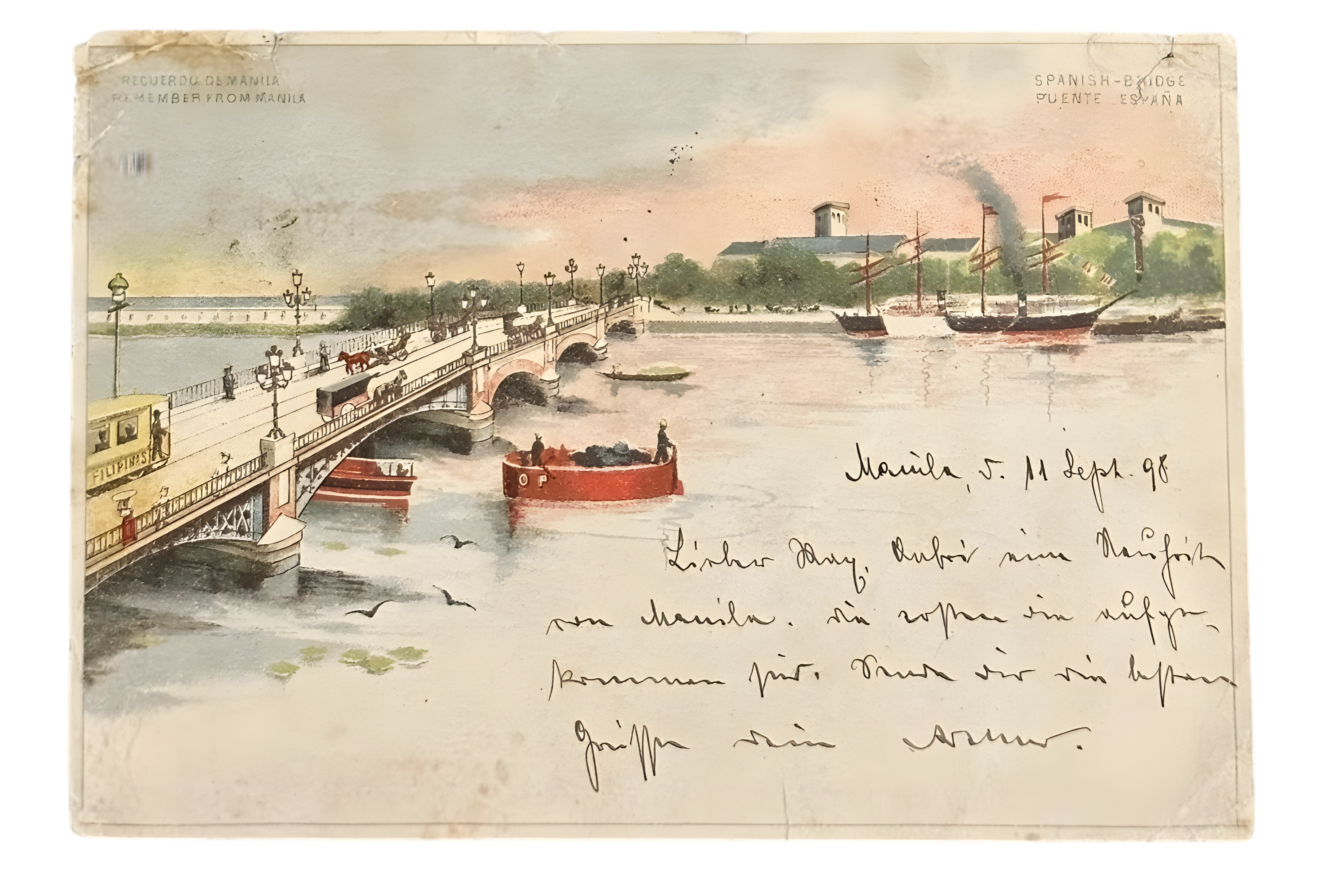
But aside from medals and pens, Sandy is also one of the country’s foremost deltiologists—that’s “postcard collector” to most of us. “I’m deep into deltiology now and have tracked down nearly 100 private mailing cards (which isn’t much compared to other collectors, but I’ve become very intentional and selective about these cards) from the turn of the century, including these two newly acquired color cards,” he says. “But the crown jewel is my 1898 Pioneer card of the Puente de España. I snagged it at a London auction, and I love the unique watercolor art. It’s postmarked and was used just three months after we gained our independence from Spain. It’s been on exhibit at the Ortigas Library since August.”
Sandy also maintains the highly informative and interesting blog www.nineteenkopongkopong.com (and he can explain the origin of that word).
When he’s not practicing his trade as a licensed architect and project and construction manager, Melvin Lam—our newest convert to fountain pens—collects historical artifacts and documents such as the silver quill pen given as a prize to the young Jose Rizal, a letter from Andres Bonifacio to Emilio Jacinto, 1st Republic revolutionary coins and banknotes, a photograph of Rizal’s execution, the 1898 Malolos menu, revolutionary flags from the First Republic, the Murillo Velarde map, and an Ah Tay bed, among many others.
Melvin is also an expert on the anting-anting, co-authoring the Catalogue of Philippine Silver Anting-Anting Medals. “My passion for history and culture was influenced by my father, Robert Lam, who began collecting antiques and artifacts in the 1970s. It has taken my family over 50 years to acquire our current collection. Our collection ranges from early prehistoric Philippine artifacts, items from the pre-colonial, Spanish colonial, American occupation, and Commonwealth eras, up to World War II Filipiniana items. It also includes antique anting-anting, antique santos, Philippine indigenous items, antique furniture, and Martaban jars.”
Not surprisingly, Melvin serves as president of the Bayanihan Collectors Club, known for its webinars, exhibits, auctions, and other historical celebrations, and as a board member of the Filipinas Collectibles and Antique Society (FCAS), which organizes international conventions for antiques and collectibles.
For sheer collecting range and prowess, few can hold a candle to Augusto “Toto” Lozada Toledo, who retired from banking and insurance broking ten years ago. Never mind his 400 fountain pens (older than Toto by a few months, I have about just half that). It would be more accurate to describe Toto as a collector of collections, which comprise, aside from pens, mainly bottles (vintage and modern, soft drinks, medicines, ink, liquor, perfumes, pomades, insulators, Avon figurals, milk and baby bottles, and kitchen glassware) and Batman (action figures, vehicles, Lego sets, and comics).
Ask Toto about the history of Parker Quink (no, not invented by a Filipino as the urban legend has it), and you’ll get a half-hour lecture on Quisumbing Ink and Quesada ink, aside from Quink itself—with all the right props, of course.
A coffee fan, Toto also collects old brewing equipment, coffee cups, used (!) coffee bags, and Starbucks prepaid cards. From his banking and insurance background, he collects old passbooks and checks, vintage fire extinguishers and alarms, metal coin banks, prewar insurance policies, and Zuellig ephemera. (I’m leaving out a lot here, but you get the idea.)
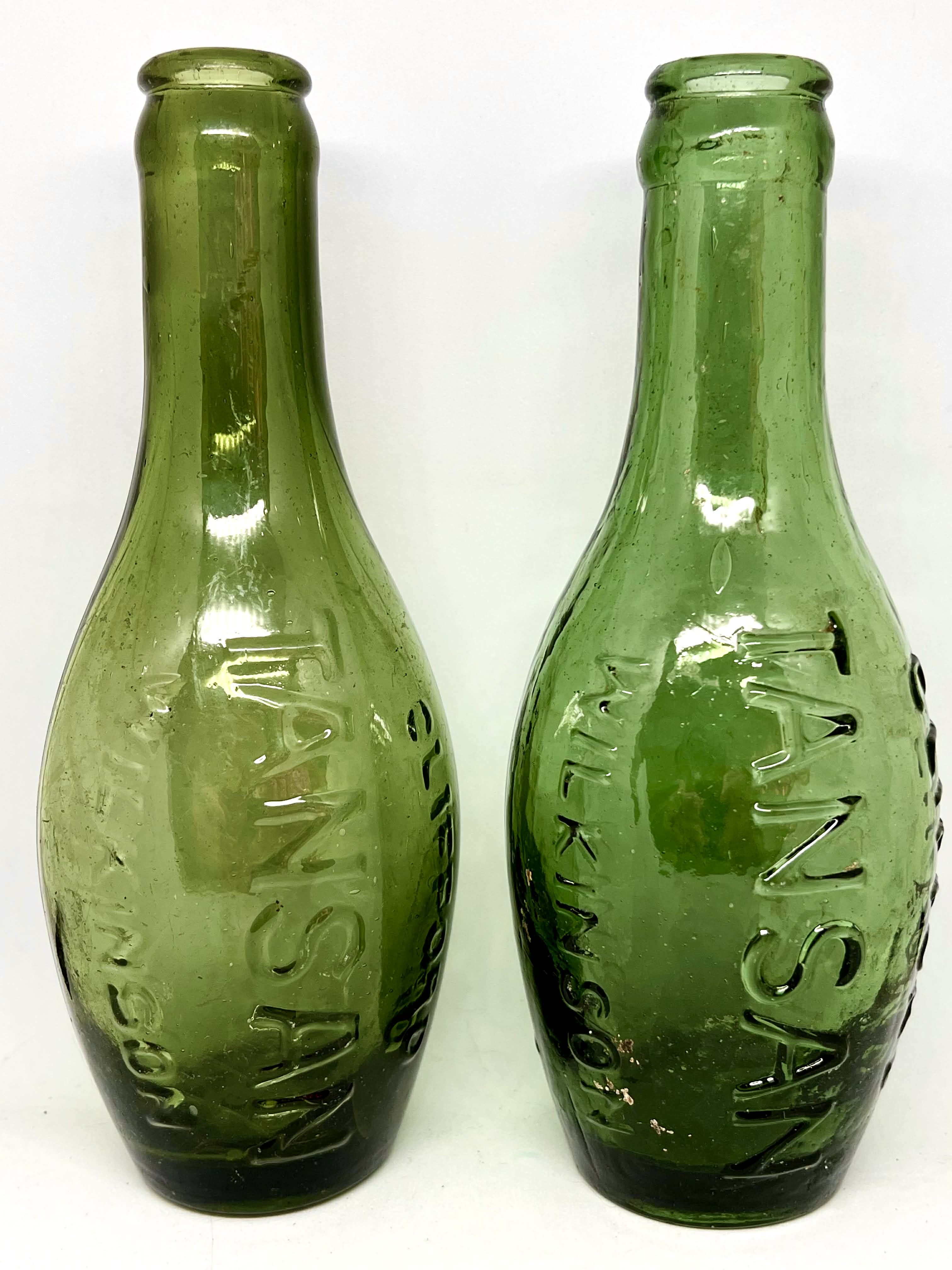
“My main collection is vintage glass bottles—maybe 3,000 specimens—of Philippine products, because of my interest in Philippine history, and how bottles provide clues of their provenance, their makers, their likely users (who actually drank from them), art work (for bottles with paper labels), and the evolution of their logos, which are often tied in to changes in corporate history and ownership,” Toto explains. “The next largest collection is Batman objects—some 2,000 action figures alone. As a seven-year old boy, I read the 1939 issue of Detective Comics No. 27, featuring the debut of Batman, and have always been fascinated by his mental and physical skills that did not originate from alien powers but from his individual training and intellectual prowess.
“The coffee collection comes from a lifelong affair with the brew. The banking and insurance collection comes from a 40-year career in these professions. My first fountain pen was a Wearever Pennant (still with me), that my father gave me as Grade 1 student in 1960. Briefly interrupted by the emergence of Bic ballpens in the 1960’s era, I picked up the collecting in the late 1970s. The others are a result of my interest in the Art Deco aesthetic, my career with the Zuellig Group, my love for Philippine history, and my longing for a return to the mid-century era. It’s always difficult to choose favorite pieces, but for bottles, it would be the Tansan Aerated Water because of the actual etymology of its name, and the (misplaced) brand association with the crown metal cap. The bottle is also very much a part of the American colonial era (strictly recommended for the US military), and was exclusively distributed by F. E. Zuellig, Inc. I also count the San Miguel Beer bottles, from its ceramic containers (from Germany), dark green bottles (from Hong Kong), and the establishment of its own bottle making plant which produced the now-ubiquitous and iconic amber steinies.”
My own most recent acquisitions beyond pens have been, of all things, paper blotters and silver spoons, which began as I idly searched for items Nouveau and Deco. It didn’t help the budget that there are literally hundreds if not thousands of such baubles to be found on eBay at any given time (220,000-plus for fountain pens this very minute). Like Raph, Sandy, Melvin, and Toto, I can spend sleepless nights sighing over some obscure object of desire that might leave wives and mates suspicious, but which they will accept in resignation over more dangerous liaisons.
I’m well aware that there are people who would consider us insane, but let me put it this way: to a world full of ugliness and discord, we bring beauty and order in the cabinets and cases that home and organize our collectibles, and at a time when people forget things after five minutes, we keep the memories of centuries.
ONE OF the great regrets of my college life was that, for some reason or other, I never got to take a formal course in Philosophy, which might have helped me make sense of the moral sordidness permeating our lives today. Like many of you I’ve been particularly captivated by the question of why a presumably all-good and just God would allow so much evil in a divinely created world, and let good people go bad, from petty thievery to massive corruption in the flood-control billions.
I’ll get back to the billions later (I think you know where this is headed), but let me start with me getting scammed, albeit small-scale, on Christmas Eve.
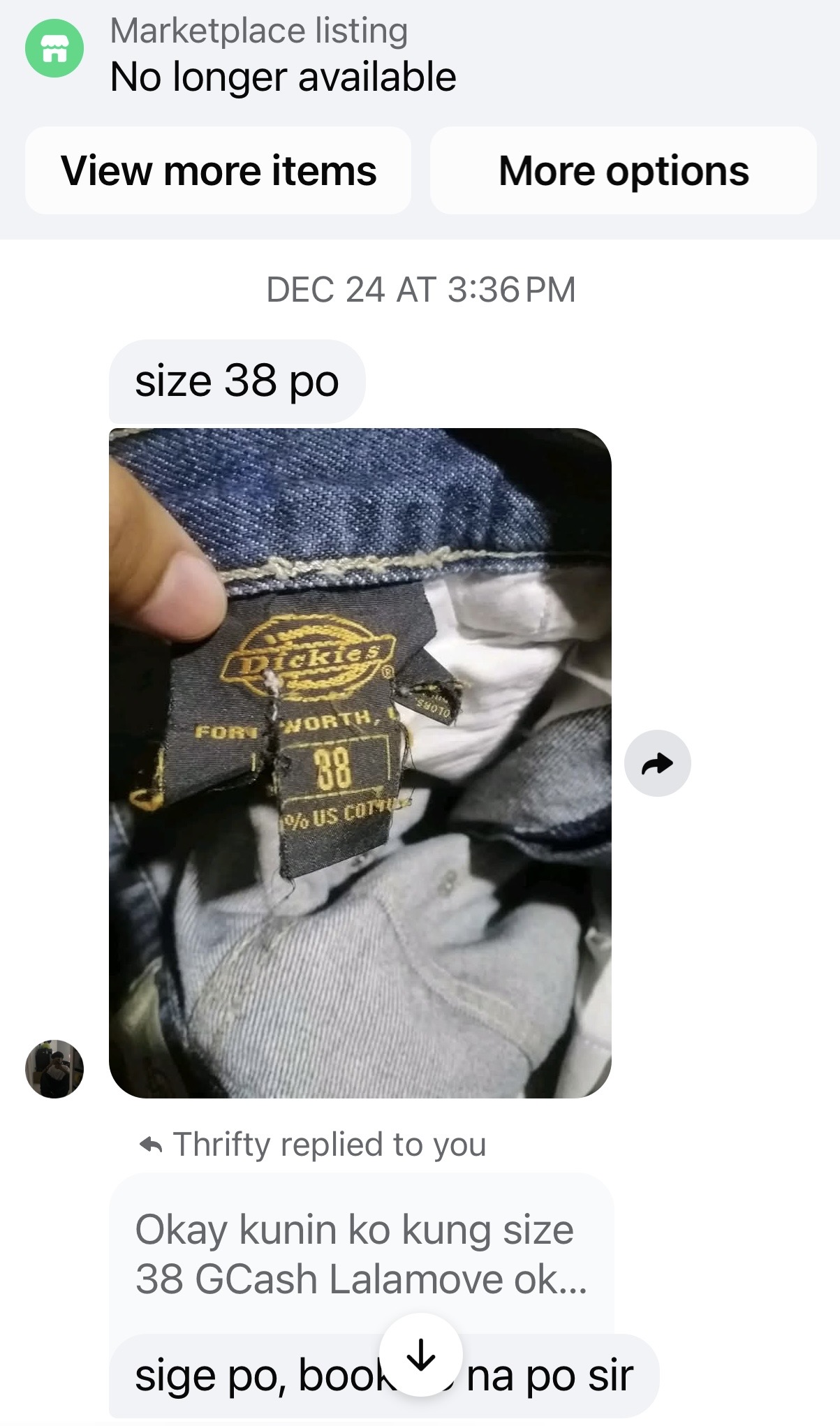
It started with an ad on Facebook Marketplace, where I spend more time than I probably should in search of old pens, books, and the kind of odds and ends that bring joy to old men trying to buy their childhoods back. The item I saw was none of the above, but rather a decent-looking pair of second-hand jeans that I thought would fit me.
(Yes, because I’m larger than most Filipino males, and because threads today cost a fortune in the shops, almost all my clothes come used from the ukay-ukay, eBay, and FB. I’m a great believer in recycling—my mom used to dress us in B-Meg feedbag cotton, if you remember that—and at my age I have no qualms about wearing some dead man’s shirt, after a good wash.)
So I messaged the seller, whom we’ll call Mr. T, confirming the price in the mid-hundreds and more importantly the waist size. He promptly replied with a picture of the size tag, which delighted me, and he asked for and got my shipping details, offering to do the booking himself and send me the Lalamove cost, to my great relief. About fifteen minutes later he said he was having problems finding a rider—entirely plausible, since it was probably the busiest shipping day of the year—and so I offered to add a tip, which he offered to split with me. How nice.
Mr. T got a rider, I got the total price, and paid him without second thought. He sent me a picture of a rider bearing packages, one of which would have been my jeans, and I waited. I normally ask for the tracking, but this was pretty close and the amount was small so I didn’t bother, and besides Mr. T. very helpfully sent me updates (“He’s just five minutes away”) and even sent me a number to call. Fifteen minutes later, figuring the rider had lost his way, I called the number, and got an “out of reach” message. Holiday congestion, I figured. Thirty minutes, I called again; same reply. I messaged Mr. T on FB; messaged bounced, “Couldn’t send.” Our lively, Christmas-y conversation was over. I’d been scammed.
That wasn’t the first time it had happened to me, online or in real life. I’m no dupe, and know my way around the digital darkness, often warning friends myself about phishing scams and hoaxes, but the problem is, I’m a gambler at heart, and when it comes to small amounts, small bets, I gamble quite freely on the goodness of human nature, even in the knowledge that, at some point, I’m bound to lose. (To be fair, 95% of my online transactions have been problem-free and even profitable, so no, I’m not going back to writing checks and visiting bank tellers like some of my Boomer friends have.)
Of course, from the scammer’s point of view, those hundreds that trickle in from suckers like me soon turn into streams of thousands. And someone like me, familiar with loss, might afford to shrug it off, but there are kids out there who would be devastated if their P500 toy never came.
What fascinates me here is the tender, loving care with which Mr. T executed his plan, and kept me hoping until the very end. He could’ve shut me off the second he got his money, but no; he kept me hanging on, then dropped me at the very last minute. I can imagine him doing this with practiced efficiency, and I suspect not a little pleasure at being proven right about the gullibility of people.
Now the fictionist in me imagines that Mr. T wasn’t born with scamming in mind, and didn’t take Scamming 101 at Evil U. He might have studied Accounting or Pharmacy or even Philosophy, and even gotten good grades, until something clicked in his head one morning to try something different, putting self-love at the fore.
This is where I go back to wishing I’d read more of Immanuel Kant and his idea of the “radical evil” rooted in every individual no matter how good, just waiting to be activated. That resonates with me, because I couldn’t possibly do the fiction I do if I didn’t believe that the germ of evil resides in every good person, and vice versa. (In a sense I have to admire Mr. T for being the better fictionist, having put one over the pro.)
And this brings me in a roundabout way to something I’d been thinking deeply about these past two weeks, as I’m sure many of you have—that image of Cathy Cabral on the lip of that ravine, running her life through her head, mesmerized by the ribbon of light in the stream below. She knew what stood behind and ahead of her; only what lay below was unknowable and perhaps comforting. She was here to confront something greater than her fear of heights.
Never much of a conspiracist, even in my fiction, I have often found that the simplest truths and explanations are also the most difficult to accept. One of them is that there slithers a Mr. T and a Cathy C. in each of us, seeking a way out.
LAST WEEK I used the words “tone-deaf” and “cross-eyed” to describe certain quarters with admirably exact and exacting political positions, people of stature and authority—but who then do or say something incomprehensibly off-the-wall that betrays a fundamental disconnect with reality, or with what most people feel.
In the wake of last weekend’s huge anti-corruption rallies at the Luneta and EDSA, critics were quick to chastise, albeit politely, Cardinal “Ambo” David for seeming to drive a wedge between the two crowds by declining to ally himself with those calling for a transition council. Was he being unnecessarily divisive?
I almost thought so (we were out of town and couldn’t attend either rally), until I read the statement from Tindig Pilipinas explaining that “The organizers chose… not to adopt calls for the simultaneous resignations of both the top two leaders of the country, or a transition council, because they recognize how easily such demands can be weaponized by insidious forces waiting in the wings…. There have always been differences because the people… are not homogenous. Unity arrives when a critical mass comes together to effect change, through the open and deliberate discussion of differences between actors of good will.” I think that’s something I can understand and even identify with; difference is not necessarily division, for so long as we share a common overarching goal.
“Disconnect” seems more applicable to the case of Trade Secretary Cristina Roque, who got a ton of bricks dumped on her head on social media for proposing that P500 could be enough for a Pinoy family’s noche buena, or traditional Christmas-Eve meal. What planet is she living on, most comments asked. Doesn’t she know that the current price of (name your ingredient) is X per kilo at (name your public market)? What do they expect us to eat at noche buena, canned sardines? Why don’t the DTI secretary and her undersecretaries stick to P500 for their own noches buenas? And so on.
Never mind that the government later whipped out its calculators to prove, mathematically, that a P500 Christmas dinner was possible—and here’s the magic menu, if you missed it, from the Philippine News Agency: ham (500g): P170; spaghetti noodles (250g): P30; macaroni (200g): P24; mayonnaise (220ml): P121.30; cheese spread (24g): P12; queso de bola (300g): P211.60; fruit cocktail (432g): P61.76; all-purpose cream (110ml): P36.50.
Maybe it all adds up when you punch the “equals” sign, but not politically, it doesn’t, because a Pinoy Christmas isn’t a numbers game. It’s laden with emotion and not a little illusion—the fantasy of a family coming together for a shared meal, despite the past year’s tribulations, of a door opening and Papa or Ate making a surprise appearance from Dubai with presents in hand, of sick Junior miraculously rising from his bed, to ask for some sweetened ham.
Giving them the benefit of the doubt, I know the DTI meant otherwise, to show possibilities rather than limits. But that P500 figure dropped like a lid on a dream, a clattering reminder of how difficult things are rather than how hopeful we should be. I guess it’s just the old playwright in me, attuned to the urgings of human hearts and minds, that keeps scripting this scenario of mismatched intention and reception.
At the bottom line, it’s never a good idea, whatever the math says, for the well-off to tell the poor to live within their means, and especially to blame them for their poverty (like “You make yourselves poor and miserable because all you do is make babies, you lack initiative, you don’t save for a rainy day” etc.). That just makes them resent you even more, and start asking questions like, how’d you get so rich, anyway?
Now of course Sec. Roque never said or even suggested any of those nasty things. All she probably really meant was, hey, let’s all have a merry Christmas—look, even you can afford it at this price point, with the economy doing so well. But again—ooops—up goes the red flag, because however the government may argue that the Philippine economy is performing at a faster clip (reportedly 4.0 percent during the third quarter of 2025) than even neighbors like Singapore, Malaysia, and Thailand, that can’t mean much to consumers grappling with the rising costs of living (in New York and much of America, the “affordability” issue that the Democrats have seized upon as a winning theme, and which Donald Trump of course dismisses as a figment of his enemies’ imagination).
It doesn’t help that Christmas comes at yearend, a time for stock-taking and reflection, for year-on-year comparisons of one’s well-being. What was 2025 all about? Did it make our lives any better, or give us something to feel better about in 2026? I suppose that depends on whether you’re looking at the problem (can you help it, if it’s right in your face?) or at the solution (which remains largely wishful thinking).
True, it was good that—by design or inadvertently—President Bongbong Marcos opened a can of worms with that speech on corruption, leading to the flood-control exposés and to an explosion of public outrage not seen since EDSA days. But now those worms are all over the place—some crawling back to the Palace—and it looks like Junior’s going to need a nuclear solution to bring them under control, at the risk of some damage to friends and family, maybe even himself. Whatever happens, the people’s awareness and rejection of massive corruption can’t be undone, and will be a major issue come 2028. That’s progress by any standard. We’ve rediscovered our voice, found our footing, and won’t be duped or silenced.
On the other hand, it’s never good to realize you’ve been stolen from in the crazy billions. If PBBM can only get that money back into the treasury—and toss in a few billion of his own—then we’d have a truly merry Christmas to look forward to in 2026, with considerably more than P500 to budget for the holiday ham.
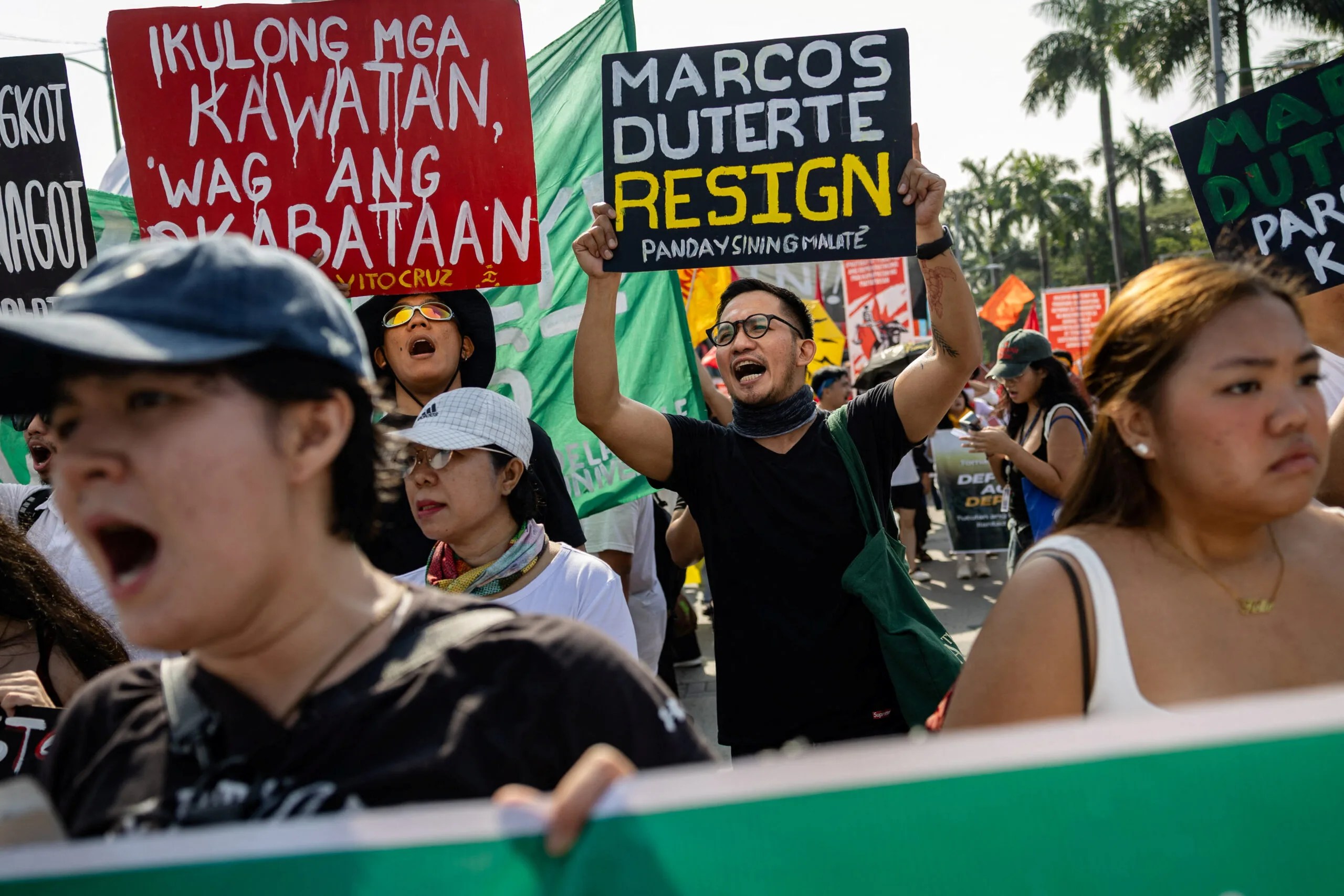
AS NOT a few placards in yesterday’s big anti-corruption march would have said, both President Bongbong Marcos and VP Sara Duterte should resign, along with everyone in public office implicated in the flood-control scandal and all the other shenanigans that have come to light over the past couple of months.
That probably means half the government, but given the current public mood, the more the better, to give the nation a chance to rebuild itself on new foundations of moral rectitude and accountability. At least that’s the long view, supported by the Left among other parties who think that anything short of a national reset will simply paper over the problems and guarantee their comeback.
It all sounds good, and it does make sense—except that, as we all know, it ain’t gonna happen.
It’s about as realistic as the expectation that BBM will fall to his knees, own up to the Marcos billions, and ship all that money back to the Philippines on a FedEx plane for mass distribution, any more than VP Sara will admit to her father’s drug-fueled bloodlust, seek forgiveness of all the tokhang victims, and forsake her presidential ambitions. Let’s face it: the Marcos and Duterte dragons will be clawing at each other all the way to 2028. Meanwhile, what are we mere mortals supposed to do or to hope for?
In the very least, we can ignore the DDS calls for BBM to step down and for Sara to take over, because there’s even less appetite for that than the Both-Resign demand. The Dutertes want to make hay of the moment, but the sun isn’t exactly shining on them. Despite their strong and well-funded social media efforts, the DDS camp seems pretty much in disarray, with Digong in jail, Sara in limbo until February (it tells me something that they approved the OVP’s 2026 budget in full—it’s for the office, not VP Sara, although she doesn’t seem to know the difference), Bato de la Rosa suddenly scarce, and their shot at a junta takeover badly misfiring.
(The ICC’s predictable decision not to grant his interim release could in fact prove to be an ironic win. Digong at this point is useful only as emotional capital for Sara’s survival and triumph. His camp, I suspect, secretly wants him to stay in The Hague as a symbol of the Marcoses’ unforgivable perfidy. Bringing him back home will mean having to take care of a grumpy old man whose greatest ability—cursing—isn’t helping him much in his present situation; he was never a Leila de Lima, and certainly no Ninoy Aquino.)
All the players’ moves are interesting in this grand melodrama. I frankly can’t trust the Left, either, to show the way forward. Like a religion (did I hear someone say “Iglesia ni Cristo”?), the Left likes to flaunt its moral ascendancy—to “virtue-signal,” in today’s parlance—and its rock-solid grasp of the global and local situation from the Marxist standpoint. And yet it gets all tone-deaf and cross-eyed when it comes to picking its horses—ditching EDSA, but backing billionaire capitalist Manny Villar and then pseudo-nationalist and butcher Rodrigo Duterte for the presidency (should we even mention slaughtering comrades it deemed wayward in the Ahos campaign?).
Interestingly, the INC also supported Duterte in 2016, and then BBM and Sara Duterte in 2022. While adopting some progressive liberals like Franklin Drilon, Risa Hontiveros, and more recently Bam Aquino and Kiko Pangilinan into its senatorial slate, it has also flexed its machinery behind Duterte surrogates Bong Go and Bato de la Rosa, as well as corruption-tainted Senators Joel Villanueva and Jinggoy Estrada. During its last mass rally last November 25 for “peace, transparency, and accountability,” however, it was careful to distance itself from recent calls for BBM’s resignation. In other words, the INC is the perfect straddler, the seguristathat makes sure it will survive and prosper under any administration, reportedly to secure key government appointments for its favored nominees.
That leaves us and our own wits, which—considering everyone’s else’s brain fog—might yet prove the most trustworthy.
In the realm of the doable, I want to see heads roll—as close to the top as the situation will allow. One way of looking at this, and strangely enough, is that the Filipino people aside, the party with the greatest stake in seeing this anti-corruption campaign through to the end (i.e., just short of the Palace) is PBBM himself. Having opened this Pandora’s box, he well knows that the only way he can keep his own head and hold sway over 2028 is to catch all those demons he released. I don’t know about you, but right now I’m desperate enough to let BBM finish his term in relative peace if he achieves nothing else than the herculean task of cleaning up the stables.
VP Sara’s impeachment trial should resume in February and will be a more efficient and definitive way to shut her out for good. But we have loads of senators, congressmen, department secretaries and undersecretaries, and lesser flunkies all caught up in this mess who should be held to account for their thievery. Hold the big bosses, the ultimate signatories, accountable, sure. But don’t let the second- and third-level enablers and functionaries off, because the message needs to be sent that complicity won’t pay—and that your sponsors will ditch you when things get too hot.
I want to see our courts work, overtime, to expedite the prosecution of these corruption cases. No pussyfooting, please, no Maguindanao massacre here. Let’s put a quick and decisive end to the kind of legalistic foolishness that lets a senator off the hook for a P30-million “private contribution,” with the judgment rendered by the Comelec commissioner who had previously served as that senator’s lawyer. How the heck can that be allowed to happen? What ethical universe are we in? The same goes for former Ombudsman Samuel Martires’ “forgetting” why he had kept secret his decision junking his predecessor’s carefully crafted case against Sen. Joel Villanueva.
If the Comelec accepts Sen. Rodante Marcoleta’s ridiculous excuse that he kept millions of political donations off his report of campaign expenses because they were meant to be “secret,” then we should launch a million-people march not just against the likes of Marcoleta but also specifically against the Comelec to hound those charlatans out of office. That commissioner who couldn’t find the shame to recuse himself from his former client’s case should be impeached if he doesn’t resign.
I have no problem with people marching and screaming “Marcos, Duterte, resign!”, because we have billions of reasons to be upset with both. But I hope that doesn’t keep us from going after immediate and tangible if less-than-perfect results. Look at it this way—gut the body, and you’ve effectively chopped off the head.
I”M NOT a historian, although there are times I wish I were, and at an early crossroads in my youth, I actually had to choose between Literature and History for my major, settling for the former only because I thought I could finish it faster. But I’ve retained a lifelong interest in history, for the treasure trove of stories to be found in the past and for what those stories might foretell of the future.
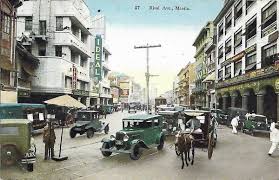
I’m particularly fascinated by the prewar period—what Filipinos of the midcentury looked back on as “peacetime” and what Carmen Guerrero Nakpil called our “fifty years in Hollywood,” which were enough to occlude much of the influence of our “three hundred fifty years in a convent” under the Spanish. It was an age of many transitions, from the jota to jazz, from the caruaje to the Chevrolet, from tradition to that liberative and all-embracing buzzword, the “modern.” Much of that went up in smoke during the Second World War, but you can still catch the ghost of this lost world on the Escolta, among other vestiges of our love-hate affair with America. (You might want to visit the Art Deco exhibition at the National Museum of Fine Arts, ongoing until May 2026; I have some items on display there.)
So entranced have I been by this time that I decided, during the pandemic, to set my third novel in it, at the birth of the Commonwealth and upon Quezon’s assumption of ultimate power, an upstairs-downstairs narrative about the comprador upper class and the world of the Manila Carnival set against the embers of the Sakdal uprising, the fuming and scheming Aguinaldistas, and the netherworld of printing-press Marxists and tranvia pickpockets. Progress has been slow because novels always take the back seat to life’s more pressing needs, but I still hope to get this done if it’s the last thing I do.
The research for the book, however, has brought its own rewards. Among my main sources for the background has been a slim volume—long out of print and now very hard to find—titled The Radical Left on the Eve of War: A Political Memoir by James S. Allen (Quezon City: Foundation for Nationalist Studies, 1985). Allen (actually a pseudonym for Sol Auerbach) was an American scholar and journalist, an avowed Marxist who traveled to the Philippines in 1936 and 1938 with his wife Isabelle, also a member of the American Communist Party, to meet with local communists and socialists (then headed by Crisanto Evangelista and Pedro Abad Santos, respectively) and to get a sense of the Philippine situation under American rule.
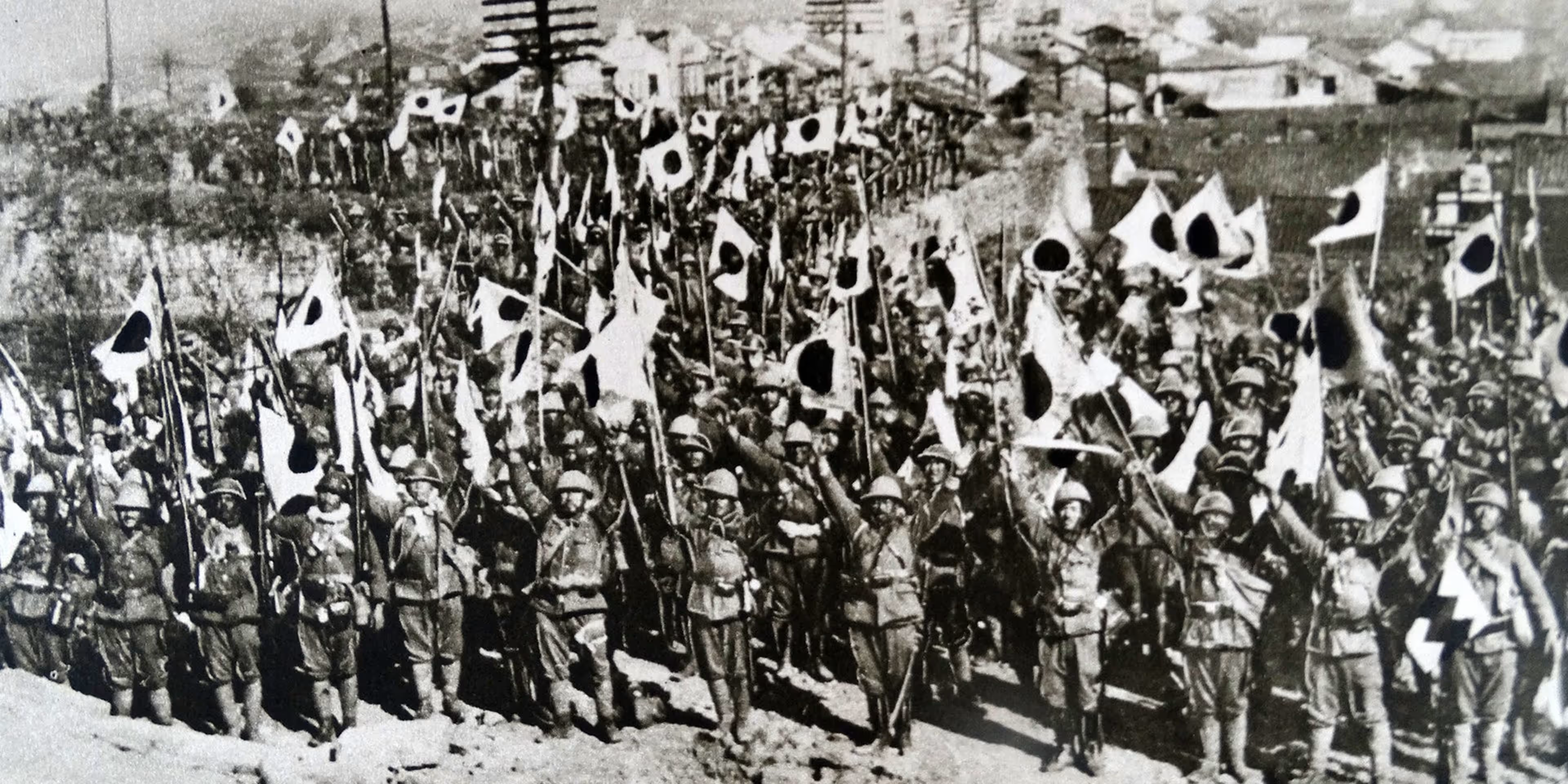
Even that early, the threat of a Japanese invasion was already looming on the horizon and causing great anxiety in the Philippines; Japan had earlier occupied Manchuria and as much as a quarter of the entirety of China by 1937. It seemed like a confrontation between Japan and the United States was inevitable, although some Filipino nationalists—fiercely anti-American—preferred to ally themselves with their fellow Asians than with prolonged white rule. At the same time, others like Pedro Abad Santos feared that the independence Quezon sought would be granted prematurely to give the US an excuse to abandon the islands and avoid confronting the Japanese.
This is where I tell you why I’m bringing up James Allen’s memoirs this Monday—because of our present situation vis-à-vis China and (in one of history’s ironic reversals from victim to victimizer) its growing domination of the South China Sea. In Quezon, Filipinos had a leader who was deeply mistrusted and opposed by many; the United States’ willingness to defend the Philippines was in doubt; and the threat of a foreign invasion was clear and imminent.
Allen actually sat down with Quezon for a long interview at the latter’s invitation, and was impressed by the man’s grasp of politics and his singular ambition. But the article that came out of that encounter displeased MLQ; Allen, after all, was still a communist at heart, which makes the following quotation—from a letter Allen would compose and send to his American colleagues in October 1937—even more interesting. I’ll leave it to you to observe the parallels, and to cast them against the Marcos-Duterte issues of our time.
“Filipino Marxists and radicals need to relate independence from the United States to the world crisis created by fascism. The immediate concern in the struggle for an independent and democratic Philippines is to safeguard the country against the threat of Japanese aggression. The objectives of complete independence from the United States and the internal democratic transformation must be obtained without endangering such gains as have been made or subjecting the country to new masters. The people must be awakened to the prime and pressing danger to their national existence. The United States is moving toward alignment with the democratic powers against the fascist bloc, albeit slowly and indecisively.
“Roosevelt is shifting somewhat toward the Left of Center to keep pace with his mass support from the surging labor movement and anti-fascist and anti-war popular sentiment. The national interests of the Philippines call for vigilance and precautions against Japanese aggression. This coincides with the interests of the United States in the Pacific area, and it would be folly not to take full advantage of this concurrence. In the broader perspective, the outcome of the struggle in China will be crucial for all the peoples of the Far East, and if the United States were to withdraw from the Philippines this would be a serious blow against China and encouragement to Japan’s designs upon Southeast Asia and the islands of the Pacific. The cause of Philippine independence at this time can best be served by cooperation with the United States.
“The situation also requires a change in the attitude toward Quezon, from frontal attack to critical support. Unprincipled opposition for the sake of opposition-as with some leading participants in the Popular Alliance is dangerous, for it plays into the hand of pro-Japanese elements and sentiments. Quezon certainly is not an anti-fascist, but he is not intriguing behind the scenes with Japan. The greatest opposition to his early independence plan comes from the landed proprietors, particularly the sugar barons, while it enjoys support among the people. The Popular Alliance should also support the plan, including provisions for mutually satisfactory economic, military and diplomatic collaboration after independence. Though Quezon is far from being a Cardenas or Roosevelt in his domestic policies, every effort should be made to move him away from his pro-fascist and land baron support by providing him with mass backing for such pro-labor and progressive measures as are included in his social justice program. In sum, the Popular Alliance should encourage a national democratic front devoted to the preservation of peace in the Pacific, the safeguarding of Philippine independence, and defense and extension of democracy in the country.”
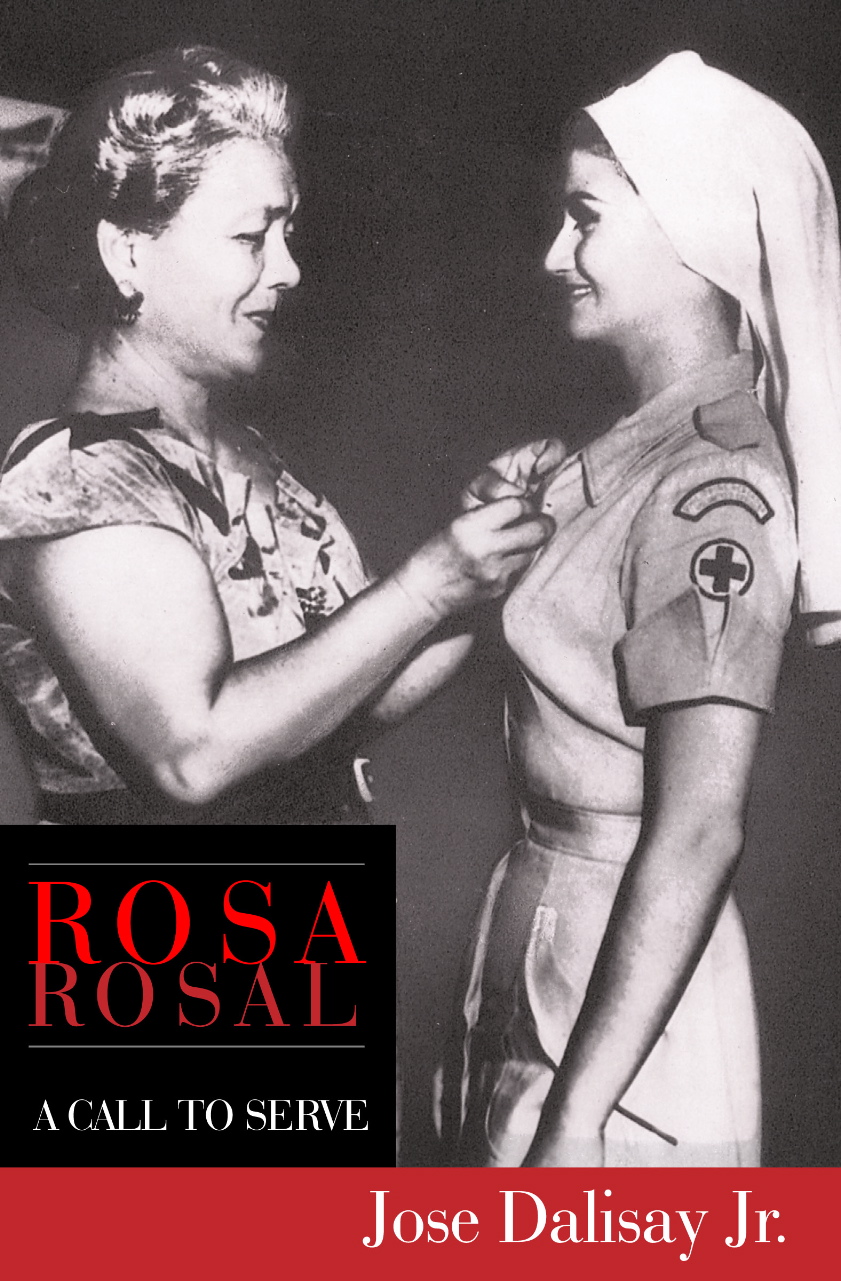
IT WAS with great sadness and regret that I received the news of Rosa Rosal’s passing last week—sadness, because of what everyone who knew her and her work would have seen as the end of an extraordinary life of artistry and service; and regret, because I had completed her biography fifteen years ago, and it came this close to publication before being shelved, for reasons I can no longer remember. I think Rosa said she needed to look into it a bit more, but never came around to doing so, until the months became years, and we eventually lost touch.
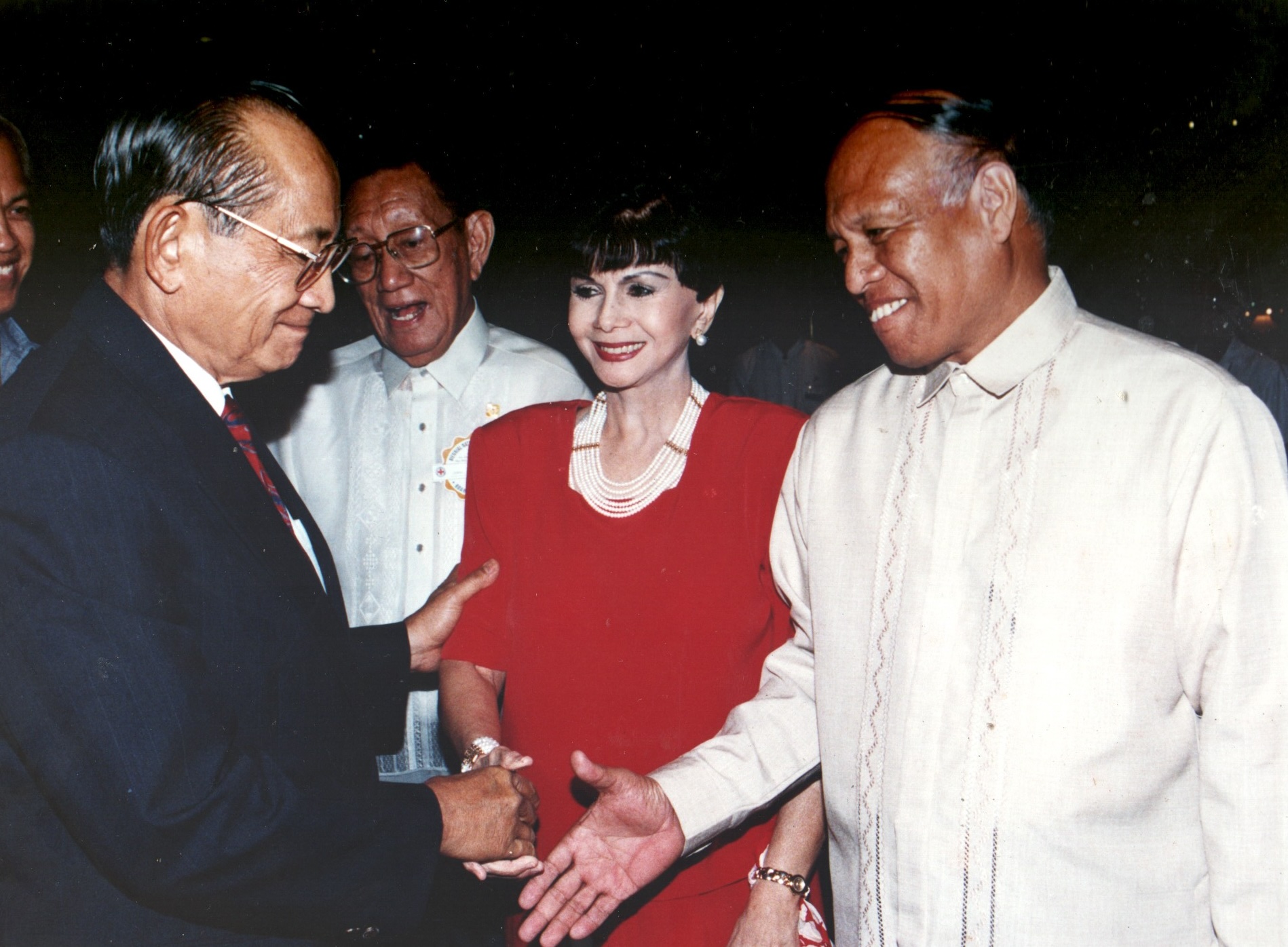
The book had been commissioned by the Philippine Red Cross, the organization to which Rosa had devoted much of her life’s work away from the cameras. Having established herself as one of the country’s biggest movie stars—and not just a star, either, but a truly talented and accomplished actress—Rosa decided to put her celebrity to good use by aligning herself with the Red Cross, its blood donation drives, and other humanitarian efforts she pursued on her public-service programs.
It’s a pity the book (Rosa herself chose the title: A Call to Serve) never came out because Rosa’s life story was a stirring and remarkable one, centered on a woman vastly different from her onscreen persona and yet filled with such drama that it would be hard to believe as a movie. Her life seemed a constant pairing of triumph and tragedy, of maintaining courage and composure in the depths of pain and despair. Toward the end—she was already in her eighties then, and prepared to face her Maker—she left everything to God, being the person of faith that she was all her life.
I recovered the manuscript from my files, hoping that with Rosa’s passing, the Red Cross and Rosa’s family might decide to revisit the project and bring it to being—we owe it to Rosa and all she did. Herewith, some excerpts from the book that might yet be:
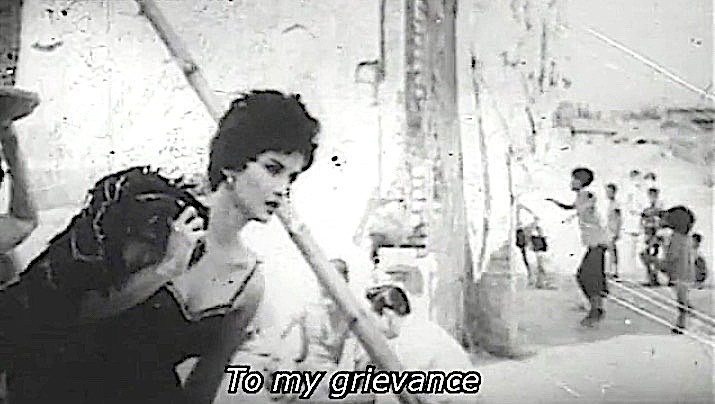
Screenshot
In retrospect, the opening sequence of Anak Dalita (LVN Pictures, 1956) captured what its star, Rosa Rosal, would be doing for the rest of her life: bringing comfort to the afflicted, as unlikely as her appearance and position may have been for an angel of mercy.
In that prizewinning film, set in the war-torn ruins of Manila’s Walled City, Rosa’s bargirl-character Cita steps into the frame in a black, spaghetti-strapped dress, almost ethereally beautiful and glamorous amid such squalid surroundings. It is daytime and she seems to have worked all night, but her first concern is to seek out a dying woman whose soldier-son has been stationed abroad.
The beauty and the glamour were genuine, and vintage, vampish Rosa Rosal. But just as real, offscreen, was the compassion that animated her in a long and still continuing life of virtue and public service. Rosa Rosal was as lustrous a star as stars came, but her feet remained on bare and solid earth; over the decades, it was the star within her that shone even more brightly than her on-camera celebrity.
The woman who would be known as the Florence Nightingale of her country was, fittingly enough, born with that name. Rosal Rosal was born Florence Danon on October 16, 1931 to Julio Danon and Gloria Lansang del Barrio.
Very little is known of Julio, a French-Egyptian-Jewish businessman. “My father died when I was very young, so I never got to know him,” Rosa says. It was her mother whom Rosa grew up with and looked up to. “She was a simple woman from Sta. Rita, Pampanga, a typical Kapampangan—a great cook, and very industrious. The wisdom she gave me is what made me who I am now. It’s a great thing that I chose to listen to her words instead of resenting her constant presence.”
When Rosa was six, Gloria remarried a Filipino named Ruperto del Barrio; they would have four more children—boy-and-girl twins, and then two more girls. “We weren’t rich, but we lived a decent life thanks to my mother and stepfather’s efforts. They bartered with people from the province. My mother was such a hard worker. She used to sand down all our furniture with is-is, a rough-textured leaf.”
The family lived in a two-story house in Sta. Cruz, Manila. Theirs was a simple, unassuming life, where time spent with one another was highly valued. “My mother made sure that the whole family ate together, so everyone could talk to each other and share stories. We spoke Tagalog in our house.”
Rosa went to the Antonio Regidor Elementary School. Early on, a lifelong trait of hers would surface here. Rosa saw herself as a “strong person,” but instead of using that strength to get ahead of others, Rosa used it to protect the weak. “When I was 10 years old, there was this girl who kept on bullying one of our other classmates. At first I tried talking to her,” Rosa recalls. “I begged her not to cause any more trouble for anyone. But she ignored my request. So one time, when the two of us were in the girls’ restroom, I dunked her face into the toilet bowl. She begged me to stop, but I made her promise not to bully anyone anymore before I did.”
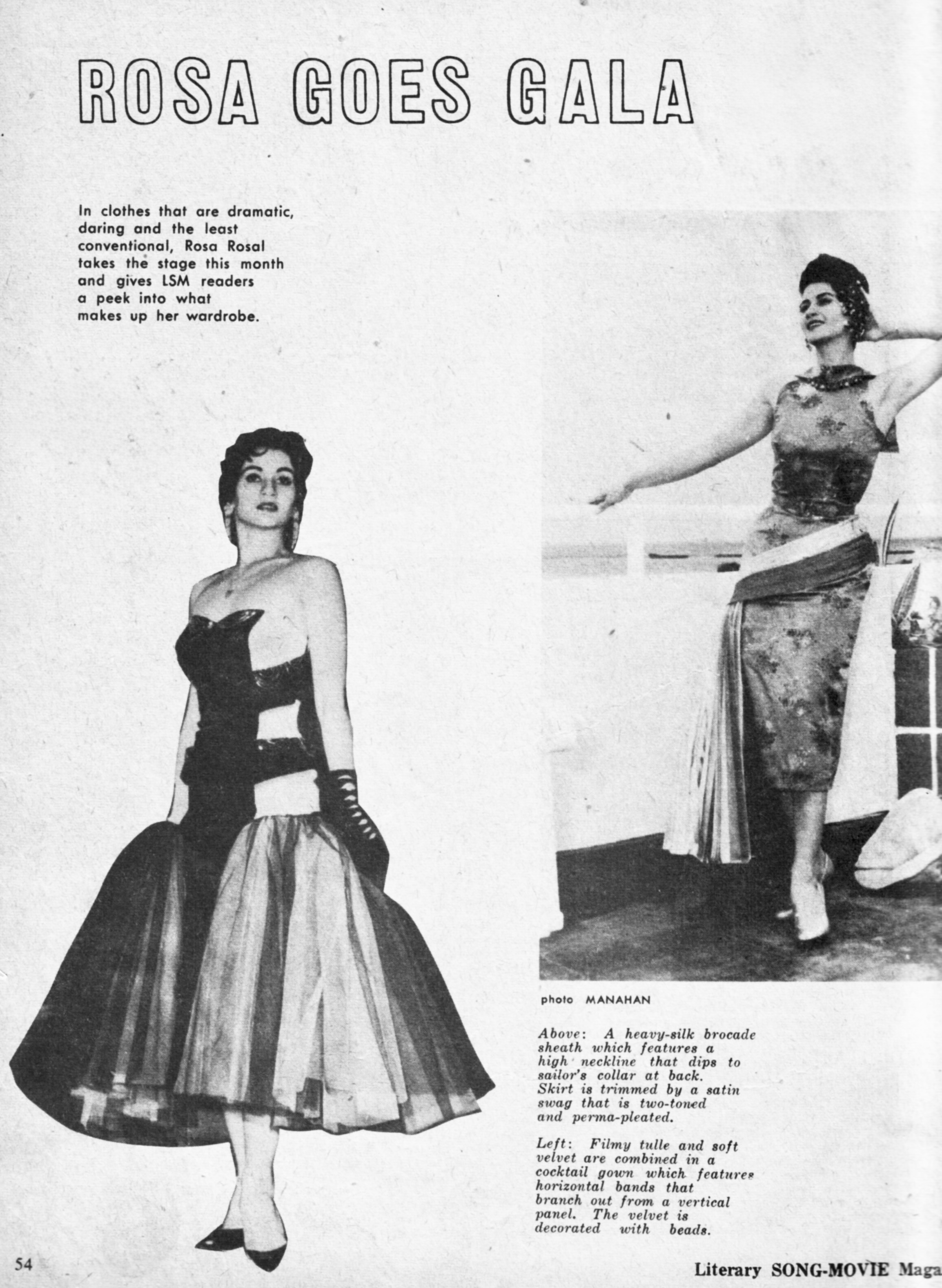
On screen, Rosa continued to do what would have made most Filipino mothers faint. She seemed to think nothing of doing kissing scenes, wearing figure-hugging bathing suits, and playing the other woman. She was the character people loved to hate, but were also secretly entranced by, because she did freely what they could not.
In private, however, Rosa was anything but that kind of woman. She was deeply religious and devoted to her family, and her main objective was to give herself and her siblings a proper education. “Unlike my colleagues, I wasn’t too fond of going out and socializing. I didn’t frequent clubs or places like that. It was only later on that I formed friendships with my fellow actors, like Delia Razon. Actually most of the people that I hung out with were men, and everyone else thought of me as one of the boys. When we went out on the field I had my own accommodations, but I still preferred to sleep and hang out where the crew stayed.”
Oscar Miranda bore witness to the other Rosa: “In our neighborhood, Rosa was admired. Even when she was already a star seemingly beyond our reach, she had a nice smile and a kind word for everyone. In spite of her growing contravida image, everyone knew she was a nice girl, a good girl who was respectful and devoted to her parents, a very pious girl who heard mass every Sunday. Everyone sensed that her new image was just for show and Rosa was their star. Because the neighborhood saw her grow up, she was really one of them.”
“One time there was this girl at the PGH ER who had fallen from the top of a five-story building, and was in a coma. I returned to the hospital two days later and the girl was still there. I couldn’t help but ask around about her. I was told that the child needed a neurologist, so I talked to Dr. Vic Reyes, a good friend, and had him look at the child. The doctor said that it was a hemorrhage and that the girl needed blood. So I went to the Red Cross, got some blood for the girl and brought it back to the hospital. Even with the blood, the doctors were not sure if the child would make it. The mother was there, crying the whole time.
“When the blood was about to run out, the girl’s hands suddenly moved. Her eyes opened, and she cried out, ‘Mama!’ and the mother cried again, this time in relief. So with that experience I saw first-hand what blood can do. I realized that blood is something very precious. It can really prolong someone’s life. That’s when I decided to dedicate myself to the Red Cross,” Rosa recalls.
Even before this, Rosa had already attended blood donations through the Red Cross. “At the time, before you were accepted as a Red Cross member, you had to undergo training. I would come home from shooting at 5 am and then go straight to the training at 7. I didn’t have a car then so I had to take a cab to the Red Cross.”
The Red Cross and its blood bank would become so important to Rosa that they would eventually become the focus of her life, well beyond the movies. “You know I don’t celebrate my real birthday. I celebrate July 4,1950, the date of the first blood donation drive that I organized. It was held in Muntinlupa. I used to personally deliver blood to hospitals in Subic. On one such delivery run, a group of Huks—Communist guerrillas—stopped me in Pampanga. They told me that the next time I passed by, I should attach a Red Cross banner to my car so they would know that it was me.”
There was a tragic background to that encounter with the Huks. She had become friends with Baby Quezon, President Manuel Quezon’s daughter. “The two of us would meet at the Army-Navy Club. One day, I had just made a personal appearance, and they were asking me to hang out with them. Normally I couldn’t say no to Baby, but my mother was waiting for me at home. On the way home, I was with Alfonso Carvajal, and we heard on the radio that Baby and her friends had been ambushed by the Huks, and they were all killed. When I got home I told my mother what happened. I realized that my love for my mother saved my life.”
Working for the Red Cross also began to change how Rosa might have wanted others to see her. “When I became a regular volunteer for the Red Cross, I requested Manny de Leon if I could veer away from contravidaroles. I was tired of playing one, anyway. So he gave me Sonny Boy, opposite Jaime de la Rosa, and I won a FAMAS award for that.”
* * * * *
Not everyone appreciated Rosa’s efforts. Some suspected her of hypocrisy, of using her social work to promote herself. One incident is embedded in Rosa’s memory. “One time a group of teachers wanted to raise money to build a school in Tondo. I was able to raise P10,000 and I gave it to them. I was about to go home from Tondo when I noticed that one of my car’s tires was flat—the tire had been slashed. A man stepped up to me and said that he was the one who did that to my car. He said that I was doing all of my volunteer work not because I wanted to help people but because I wanted to sustain my popularity as an actress. The teachers helped me fix my car and told me to ignore the man, but I was still affected, and I cried on the way home. My mother saw me and I told her what happened. She didn’t tell me to stop doing charity work. She just sat with me and comforted me.”
Years later she would meet this man again—a girl was badly in need of a blood transfusion, and Rosa provided the help she needed. A man who identified himself as her father approached Rosa in tears, begging her forgiveness. “I was the one who slashed your tires,” he confessed. “I’m so sorry I doubted you!” Rosa wept with him, astounded by the irony of the situation.
* * * * *
That part of the country—Batangas, Cavite, Laguna—lived up to its reputation as a hotbed of rebellion and outright banditry. Steeped in poverty, people resorted to desperate acts; the comforts and glamour of Manila were another world away, and the only contact that the provincial folk had with it was through the movies—or, better yet, on those rare occasions when the movie stars themselves deigned to make a personal appearance in the boonies, usually in conjunction with a town fiesta, of which their ethereal visitation became the highlight.
And so did Rosa find herself again, another time, on another bus in Batangas, coming home from an appearance with an entourage of about 20 actors, singers, and dancers. Suddenly the bus was stopped in the middle of the road by a gang of robbers. “There were about ten of them,” Rosa remembers. “They boarded our bus and asked for our belongings. I told everyone to just comply. The thieves heard my voice and thought that I sounded familiar. To be sure, they asked me who I was, and I said I was Rosa Rosal. ‘Aren’t you the one with the Red Cross?’, one of them said. I said yes, and to everyone’s great surprise their leader ordered his gang to return what they stole. “Return everything. Don’t touch her, because she helps people like us.’ And then they left. We all cried afterwards. It was quite an experience. But I didn’t tell my mother about it.”
I wish I could share more—we’ve barely scratched the drama of her real life—but the rest will have to wait for the book. Let me end with something Rosa wrote in her preface (with a reference to her beloved grandson James, who died in an accident in 2010):
“I am ready to go anytime that He calls for me. I know that when that time comes, Jesus, my mother, and James will be there to welcome me. I can imagine the smile on their faces when God shows me the permanent home He has prepared for me. I thank Him for all the awards He has given me. I praise Him for the death of my grandson, James, as well as the 30 years of suffering of my mother. We praise God not just for the good times but also for the painful times. I have gladness and joy in my heart as I have obeyed His commandments and I answered His call to serve.”
AS A professional writer and editor, I take on many jobs that the other side of me—the fictionist, journalist, and teacher—usually wouldn’t get to do. I write biographies, speeches, and feature stories, among others, and while I do them to the best of my ability and to my clients’ satisfaction, they don’t always coincide with my personal interests, nor necessarily inspire me to think or act a certain way.
These past two years, however, I’ve been proud and privileged to perform a very special assignment that I’ve come to look forward to, because it renews my faith in people and my hopes for a better future—phrases that would otherwise just roll off the tongue like so many other tired and meaningless clichés. At 71, I’d like to believe that I’ve pretty much seen it all and can afford to be cynical, as even Gen Z’ers can affect—a bit prematurely, I think, but understandably so in this sad and sordid world of ours.
So it often comes as a surprise to be reminded that some good people persist at doing good if not great deeds, and that’s what this unique responsibility I’ve taken on is all about—writing the citations for the year’s Ramon Magsaysay Awards laureates, a task I inherited from RMAF stalwart Jim Rush and National Artist Resil Mojares. (Before I go any further I should clarify that I have nothing to do with the selection process, I am covered by an NDA—not even my wife gets to know the winners ahead of everyone else—and I cannot and do not cozy up to the likes of Hayao Miyazaki for selfies and signatures.)
This year only three laureates were chosen, but again the range and the depth of their accomplishments tell us that ordinary people can achieve extraordinary successes—not just for themselves but for society at large—with vision, faith, and perseverance, or what the Ramon Magsaysay Awards Foundation calls “greatness of spirit,” the common element among its 356 winners from 23 countries since 1957.
They included Shaheena Ali from the Maldives, an island-country that often appears in tourist brochures and websites as a tropical island paradise, surrounded by aquamarine waters ideal for snorkeling and fishing. Behind this idyllic façade, however, lies a murkier and unpleasant truth. Plastic pollution has befouled the island chain’s crystalline waters, threatening the marine ecosystem, the economy, and the health of its residents. Waste is either burned or tossed into the ocean, producing harmful smoke and microplastics. As a diver, photojournalist, and diving instructor herself, Ali often came literally face to face with the tides of trash clouding up the once-pristine waters of her beloved islands.
In 2015, deciding to fight back, Ali linked up with an NGO, Parley for the Oceans, to frame a comprehensive program to save the country’s waters from pollution and to turn plastic waste into a useful source of livelihood for the people. Today, as executive director of Parley Maldives, she oversees the implementation of their signature strategy: Avoid, Intercept, and Redesign (AIR) plastics for a better environment. With Ali, Parley has introduced plastic interception and collection sites in island communities and over seventy schools, leading over 700 collaborative cleanups along affected coastlines. Ali has also worked with the government to address climate change. “I go there to clean up with hope,” she says, “hope that my grandchildren will see whales in the ocean in their lifetime as I did growing up.”
For its part, India has become both an economic and political powerhouse, with many visible signs of its rising affluence. Despite the overall surge in growth, however, many rural and tribal girls have had no access to an adequate education. Because of this disparity, illiterate girls are forced to marry early, have children, and work—while culturally privileged males go to school.
In 2005, a young graduate of the London School of Economics decided to return home to India to take on this challenge. Safeena Husain established the Foundation to Educate Girls Globally (FEGG) or “Educate Girls.” Starting out in Rajasthan, Educate Girls identified the neediest communities, brought unschooled or out-of-school girls into the classroom, and worked to keep them there until they were able to acquire credentials for higher education and gainful employment.
The results were dramatic. What began with fifty pilot village schools reached over 30,000 villages across India’s most underserved regions, involving over two million girls, with a retention rate of over 90%. Educate Girls also launched Pragati, an open-schooling program that allows young women aged 15-29 to complete their education and avail themselves of lifelong opportunities. Its initial cohort of 300 learners has grown to over 31,500. “Girls’ education is the closest thing we have to a silver bullet to solve some of the world’s most difficult problems,” says Husain. “It is one of the best investments a country can make, impacting nine of the seventeen Sustainable Development Goals, including health, nutrition, and employment. By scaling our programs, deepening government partnerships, and embedding community-led solutions, we strive to create a brighter, more equitable future—one girl at a time.”
The third awardee was no stranger to those of us long aware of his special ministry. Flaviano Antonio L. Villanueva or simply “Father Flavie” belongs to that breed of socially committed clergy for whom godliness is to be found not in the halls of influence and wealth but in the streets, among the poorest and the most forgotten.
In 2015, he founded the Arnold Janssen Kalinga Center in Manila to provide “dignified care and service” to thousands of poor and marginalized Filipinos. Kalinga works to recreate the poor’s self-image, reclaim their self-respect, and restore their self-worth. Villanueva also led the effort to locate the bodies of victims of the government’s “war on drugs” where thousands of Filipinos were summarily executed. Often, their impoverished families could not secure permanent graves for them. Villanueva found the funds to exhume, cremate, inurn, and relocate the bodies to a proper resting place. This Paghilom program brought comfort to widows and orphans and allowed them to continue leading productive lives. “Justice can take many forms—among them, the recovery of one’s self-confidence, and forgiving oneself,” he says. Following the late Pope Francis’ example, he initiated showers for the homeless as both a literal and symbolic act of cleansing, to prepare them for a fresh start in life.
I always end up doing more than writing up these people’s stories—I learn from them, and am reminded that instead of just mouthing slogans and railing at the universe—at all the evil, the injustice, and the ugliness we have to live with—we can choose to act and to fight back, like these avatars of social action did.
I’M COMING late to the party, having been away for a couple of weeks, but even in faraway Frankfurt, I was itching to come home to see what the brouhaha over the “Quezon” movie was all about.
Rarely does a Pinoy movie stir a hornet’s nest like this one did, and even without seeing it, I took that as a good sign for our film industry, especially big-ticket projects which sometimes leave people wondering why they were even made.
What especially piqued my interest, of course, was the reaction of Quezon family members and friends who thought the old man’s cartoonish depiction as a womanizing, scheming, and power-hungry politician despicable.
Now, my own grandfathers led pretty quiet lives, so I’m sure that if anyone called them womanizing, scheming, and power-hungry, I’d be mighty upset, too.
The difference is, unlike my lolos and going by what the historians suggest, Manuel Luis Quezon seems to have been all of the above—which isn’t to say he wasn’t much more than all those negatives put together. It was apparently that “much more” that the Quezonistas were looking for—MLQ the patriot and freedom fighter—to balance out the picture, especially since most young Filipinos know nothing of the man except as a place-name. Had that been shown, the outrage might arguably have been muted, the image softened.
But of course that wasn’t what the movie’s makers were going for. As has already been noted by dozens of reviewers before me, “Quezon” is no documentary (and let’s not forget that even documentaries can be biased—just watch Leni Riefenstahl’s adoring portrayal of Hitler and his Nazis in her bizarrely beautiful “Triumph of the Will”). From the outset, it declares that it is mixing up history with “elements of fiction,” which is just as good as using that old commercial come-on, “based on a true story.”
I’m no historian—I’ll confess to being an enthusiast—but as it so happens, I’ve been a playwright, screenwriter, biographer, and fictionist at various points of my otherwise uneventful life, so I can probably speak to these issues with some experience. I can attest, for example, having written some biographies of the rich and famous, that families and descendants can inherit myths about their patriarchs, and treat and pr0pagate them as God’s own truth.
My take is, I don’t think we should receive “Quezon” as history, biography, fiction, or even film. It’s theater (captured on film), and it declares itself as such right from the beginning, as I’ll shortly explain. This may be due to the fact that the script was co-written by one or our most accomplished playwrights, Rody Vera, alongside director Jerrold Tarog. His approach was explicitly stylized and non-realistic, from the use of silent-movie title cards, ghoulish makeup, and painted backdrops in the black-and-white sequences (including that almost balletic choreography of the young MLQ rising from the floor of his prison cell) to the conception and blocking of such scenes as those of Quezon working the floor of the House and the capitalist bosses gathering round the table. (If all this seems obvious and elementary, dear reader, my apologies—in these days of TikTok, I don’t know what people are looking at anymore).
So what if the movie is theater disguised as film? Does that explain or excuse its supposed excesses and exaggerations?
Well, theater is, almost by nature, exaggeration—movements and motives get simplified and magnified, the easier to get them across. Theater is agitational—it aims to provoke emotion, to bring people to their feet, clapping in delight or screaming in rage.
And that’s what “Quezon” did, didn’t it? It got its message across, effectively and efficiently, like a train on schedule, and taking it as theater, I found it roundly entertaining. By and large, the actors carried themselves off with aplomb, from Jericho Rosales’ masterful Quezon, Romnick Sarmenta’s comic-cool Osmeña (his was actually the most difficult role to play, to my mind), Mon Confiado’s aggrieved Aguinaldo, and Karylle’s restrained Aurora. The employment of the fictional journalist Joven Hernando was what a smart scriptwriter would do, to weave the narrative threads together. (Teaser: Quezon and Aguinaldo figure in the novel I’ve been writing about prewar Manila.)
My quibbles have to do with minor complaints like (don’t be surprised) “Wrong period fountain pens again, all of them—why don’t they ever ask me?” (Quezon did hold his pen that odd way, though) and “Does every movie chess scene have to end with a checkmate?” I could have added “Why does everyone’s shirt and pants look fresh in a period movie?” but we’ll excuse those as theatrical costumes.
If there was anything I would have added to the content, it would have been a quiet moment of self-reflection, in which we realize just how Quezon sees himself. That alone might have lifted up his character from caricature.
The real Quezon seems to have been every bit as petty as the movie shows him to be, but also every bit as great, as it seems to have taken for granted.
Quezon had something of a history with the University of the Philippines, whose protesting students (one of them a young buck named Ferdinand Marcos, who accused Quezon of “frivolity” over all the dance parties in Malacañang) led him to ride into UP’s Padre Faura campus astride a white horse to either charm or intimidate them.
He had a long-running tiff with then UP President Rafael Palma over the Hare-Hawes-Cutting Act, and when Palma retired after ten hard years in the hot seat, citing a technicality, the government denied Palma the gratuity that was his due. When Palma died, however, Quezon reportedly went to his wake to deliver a eulogy worthy of the man.
You didn’t see that Quezon in the movie—and then again, maybe you did.














 Pinoy Penman 3.0