Penman No. 327: More than Memorials

IMG_8420.jpg

Penman for Monday, 12 November 2018


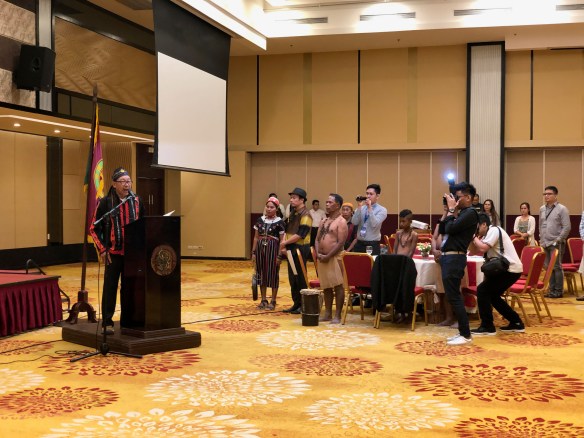
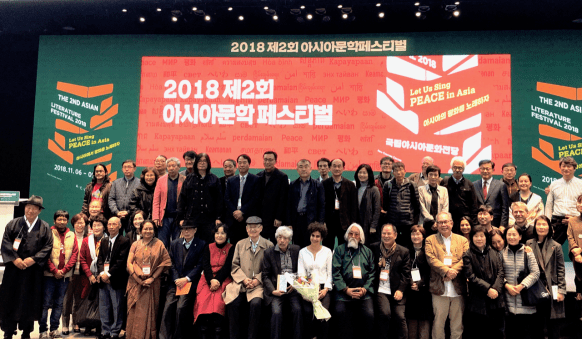
I WAS in Gwangju, South Korea last week to participate in the 2nd Asian Literature Festival, a new, Korea-based gathering of writers from across the continent aimed specifically at promoting peace through literature, with dozens of delegates from as far as Palestine attending. Initiated and supported by Korea’s Ministry of Culture, Sports, and Tourism through Gwangju’s Asia Culture Center (ACC), the festival draws its strength from Gwangju’s historic role in keeping Korean democracy alive.

I’ll share more impressions about the literary part of the festival next week, but as this was being written just as the festival opened, I’d like to dwell for a moment on our first formal activity there, which set the tone for the whole week.

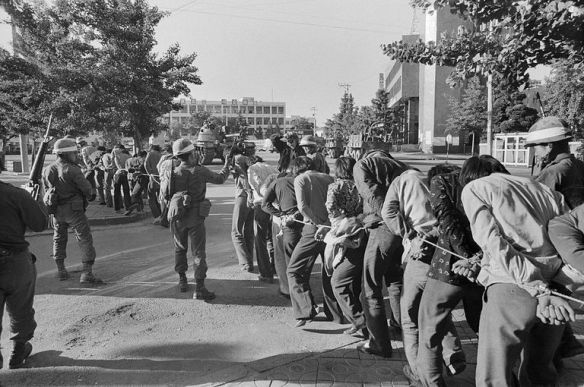
Korea’s sixth largest city, Gwangju is about 300 kilometers south of Seoul, an hour and a half away by high-speed train. Known for its cuisine, Gwangju (the name means “city of light”) is also an important cultural center in Korea. It came to global prominence in May 1980, when the city’s people rebelled against the newly installed government of Chun Doo-hwan, who had led a military coup just months before, and who imposed nationwide martial law on May 17, closing down universities, muzzling the press, and arresting critics like future President Kim Dae-jung. (Does any of this sound familiar to us Filipinos?)

Among others in other regions, Gwangju’s citizens rose up against the strongman, as they did against the Japanese. In response, over nine days starting on May 18, the military undertook a brutal campaign of suppression against what came to be known as the Gwangju Uprising, leading to the deaths of hundreds of civilians branded as communists by the government. In 1987, a memorial cemetery was set up to honor the city’s freedom martyrs, and subsequent governments have made amends to these victims and their families.

GettyImages-515125644-589bcd983df78c4758f88864-1.jpg

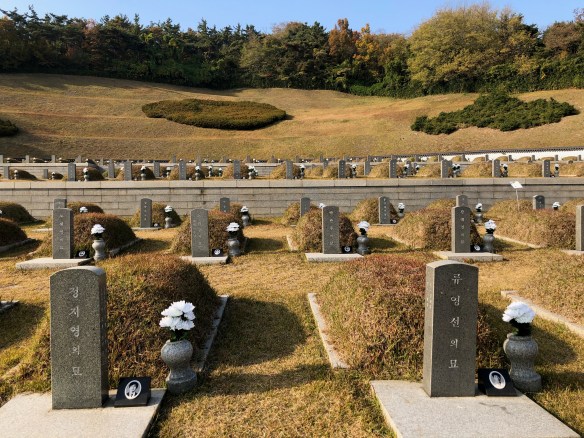
Not surprisingly, therefore, and before anything else, the visiting writers were brought by their hosts to this cemetery, Mangwol-dong, for everyone to pay their respects not just to the dead, but also to the spirit of peace that their sacrifice engendered. The cemetery at Mangwol-dong is set in a poignantly serene landscape, resplendent in autumnal colors when we visited. A tall monument rises up to the sky, overlooking hundreds of graves, each marked when possible by a picture of the lost one—a poet here, a garbage collector there, a teacher, a student.

I’ve visited many war memorials in America and elsewhere, and have found them no less sad and moving. But almost invariably they honor the fallen soldiers, rather than the civilian casualties. Korea does it differently.

IMG_E1647.jpg

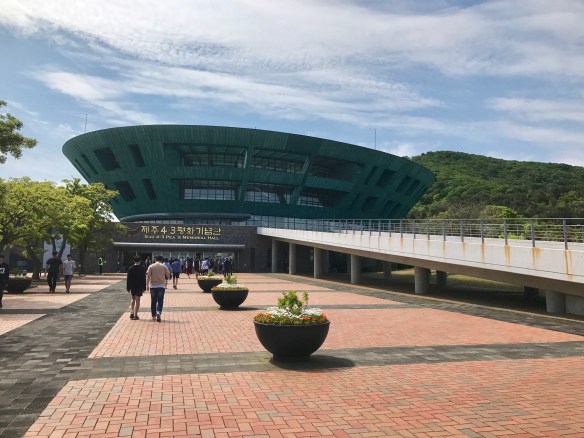
Last year, I visited another memorial as well, on the island of Jeju, where thousands of civilians were massacred by government troops on April 3, 1948. Jeju’s memorial to those victims—with its harrowing exhibits but also its emphasis on finding peace and justice in our time—offers, like Gwangju’s, another model for our own martial law museum. While it will not have the same space and breadth of sky in its projected site in Diliman, our memorial should not only be able to provoke horror, but also hope amidst the sorrow, hope that can only materialize through sustained struggle. Beyond memorials, South Korea has ingrained democratic values in its citizens, regardless of their Presidents.

As Dr. Roslyn Russell, chair of the International Committee of the UNESCO Memory of the World Register, put it, “Unlike the piecemeal attempts to redress past histories of violence and crimes against humanity committed by the government that have been seen in South America and South Africa, the objectives of liquidation of the past—including ‘investigation,’ ‘punishment of those involved in the repression of the uprising,’ ‘recovery of honor,’ ‘compensation for the victims’ and ‘efforts to commemorate it’—were achieved in Gwangju. The May 18 Democratic Uprising played a key role in the democratization of Korea, and influenced the end of the Cold War and the spread of democracy in East Asia…. Pro-democracy movements occurred in the Philippines, Thailand, China, Vietnam, and other countries following in Korea’s footsteps.”

The Koreans know how to jail their misbehaving Presidents—and to keep them there, instead of springing them free after a few years. They’ve also shown that economic progress doesn’t have to come at the cost of democracy and human rights, as many Filipinos enamored of strongman rule love to claim, albeit with little material benefit to show for the surrender of their souls and minds. Koreans value and enjoy their prosperity, but they also remain vigilant against corruption by their corporate giants and government leaders. In 2016-2017, Korea’s Candlelight Revolution mobilized 17 million candle-bearing citizens to peacefully depose another untenable regime.

A statement was flashed onscreen during one of our sessions: “What we must fear is not pain as such but allowing pain to close our mouths.” That’s courage I seem to remember we once had, and could yet recover.

Penman No. 326: A Season of Winners

Cafe.jpgPenman for Monday, November 5, 2018
 

UNEXPECTEDLY, OCTOBER turned out to be a season of winners, with a series of important awards being announced involving culture and the arts.

Foremost, of course, were the National Artist Awards, eagerly anticipated by the cultural community every two years or so. Dismayed as I was by the Palace’s decision to drop Nora Aunor (and even more by the silly excuse they gave for doing so—I’m reasonably sure I can live with the agony and torment if they went nuts and named me a National Artist, which I would shyly accept), the rest of the list pretty much got a pass from the arts community, as far as I could tell.

I was especially happy to see old friends and acquaintances like Amel Bonifacio, Resil Mojares, Kidlat Tahimik, and Ryan Cayabyab on the list, people whose work I’ve known and respected for a long time. And not to take the shine off any of the winners, but I was also sad to find, once again, that my personal bets for this highest of creative honors—among them the poet Jimmy Abad and the artists Junyee and Jaime de Guzman—would have to wait for yet another round. Having been involved to some minor degree in the search process for previous NAs, I know that more visibility for the artist helps, and we’ll work on it next time.

But there was plenty of recognition to go around last month, albeit on a more local scale.

For the past six years, I’ve been privileged to serve on the Selection Committee of Quezon City’s Manuel L. Quezon Gawad Parangal for Outstanding Citizens and Institutions. It’s a task I’ve shared with former Budget Minister and City Administrator Manny Alba, former UP President Emer Roman, former QC councilor Bert Galarpe, lawyer Vicky Loanzon, and former QC Vice Mayor Connie Angeles.

There’s never any shortage of achievers from Quezon City to acknowledge in whatever field, from politics, education, and business to the arts, media, and entertainment. This year, in ceremonies last October 12, I was delighted to greet some friends among the awardees. (I assure you our friendship had nothing to do with their recognition, impeccably supported by the evidence.)

Among them was the engineer and educator Rey Vea, who belonged to the mythical first batch of the Philippine Science High School, two years ahead of me; we worked together in the UP Collegian, were arrested within a day of each other under martial law, and flew to the US in the same batch of Fulbright study grantees. Rey went on to become dean of the UP College of Engineering, administrator of the Maritime Industry Authority, and president of Mapua University.

Another outstanding QC citizen honored was the poet, editor, and screenwriter Jose “Pete” Lacaba, one of those colleagues I deeply admire as much for his craft as for his dedication to it. Like his own hero Nick Joaquin with whom he worked, Pete never drew a line between journalism and creative writing, and produced first-rate results with whatever he put his mind to. A few years older than me and a Pateros boy, Pete hung out in the same Rizal Provincial Library that I spent many an afternoon in back in the mid-1960s. We later both wrote scripts for Lino Brocka, along with Ricky Lee and Joey Reyes, and the joke among us was that Pete got all the best, long-gestating projects like Jaguar and Bayan Ko because he also wrote the slowest.

And this is as good a time as any to congratulate my fellow STAR columnist and another good friend, the writer and entrepreneur Wilson Lee Flores, whom you’ll find smiling even in the most difficult circumstances, such as when the 79-year-old Kamuning Bakery that he had almost singlehandedly revived burned down last February. The bakery itself had won the same award last year for its artisanal bread, but our committee thought that the proprietor—also a three-time Palanca laureate—deserved one on his own.

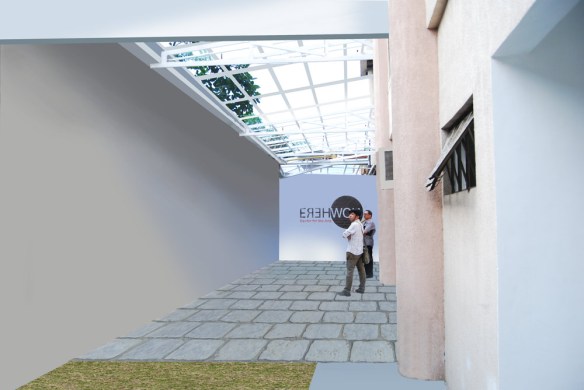
In the institutional category, my loudest cheers went to Ma Mon Luk, the iconic house of noodles I’ve patronized since I was a boy and whose owner George Ma Mon Luk is a fellow fountain pen and typewriter collector, and the Erehwon Art Center, which its founder and patron Raffy Benitez has tirelessly guided within a few short years to becoming one of the city’s true cultural oases, virtually a mini-CCP that has projected the best of Philippine art both here and overseas.

And I can’t let this review pass without mentioning the Palanca Awards for Literature, which for the first time in its 68-year-long history held its Awards Night this year in October instead of the customary September 1. Among the winners was a neurosurgeon named Ron Baticulon who had nursed a dream of writing well enough to win a Palanca, which his work “Sometimes You Can’t Save Them All” did, for Second Prize in the Essay in English category. The piece is a powerful and moving account of a young doctor’s encounters with the families of the dying, and of the humanity that asserts itself in the bleakest of situations. I’m looking forward to the release of Ron’s first book from the UP Press early next year.

To them and all the other winners from last month’s derbies, my warmest congratulations.

Baticulon.jpeg


Penman No. 325: Free to Think, Free to Speak

IMG_0438.jpg

Penman for Monday, October 29, 2018


I’VE BEEN seeing frothy messages on the Internet calling for the University of the Philippines to be shut down because it seems to be producing nothing more than anti-government critics and rebels (and, uhm, five out the seven new National Artists announced last week).

It’s no big secret that rebellion and resistance are coded into UP’s DNA, because it has always encouraged critical thinking, which in turn encourages—at least for a while, until complacency sets in—an attitude of dissent, of anti-authoritarianism, of rejection of the status quo. That’s how knowledge happens, as every scientist since Galileo has affirmed. Learning to lead requires critical thinking; learning to follow demands nothing more than blind conformity.

Apply that to the political sphere, and not surprisingly, UP has for the past century been a crucible of protest, against both internal and external forces seeking to influence its constituents’ thoughts and actions. Those protests and their causes have ranged from tuition fees, uniforms, and substandard facilities to unfair dismissals, Malacañang interference, foreign control of our destiny, and the overhaul of Philippine society itself.

UPPrep1950.jpg

In 1928, a law prescribed the wearing of uniforms by students in all public schools, including UP. The uniform for men was a white suit (khaki on rainy days); for women, a white blouse and dress reaching three inches below the knees. UP students opposed the measure, and President Rafael Palma supported them.

In 1933, the first student protest against a tuition fee increase, from P30 to P50 per semester, took place at the College of Education in the form of a boycott led by, among others, Fe Palma—the daughter of the President.

The resistance got more serious when it came to political interference in UP affairs. In the early ‘30s, in a tussle over differing positions on Philippine independence, then Senate President Manuel Quezon punished Palma—and the entire University—by removing UP’s lump-sum allotment. Quezon was a notorious meddler in UP matters, often coming to Padre Faura from Malacañang when he was President astride a white horse. A young UP law student even attacked Quezon for his “frivolity,” accusing Quezon of throwing lavish parties in Malacañang while the country suffered under the Americans. The student’s name was Ferdinand Marcos.

This didn’t stop with Quezon. When President Quirino demanded courtesy resignations from all government officials, UP President Bienvenido Gonzalez refused to tender his, to protect UP’s autonomy.

In the 1950s, at the height of McCarthyism, the Congressional Committee on Anti-Filipino Activities conducted a witch-hunt for communists in UP; the committee was led by Cong. Leonardo Perez, himself a former Collegianeditor. A throng of 3,000 students led by Heherson Alvarez and Reynato Puno marched to Congress in protest.

Diosdado Macapagal made few friends in UP when, upon assuming office in 1962, he announced that his choice for next UP President was Carlos P. Romulo, practically bypassing the Board of Regents. Macapagal got his way.

About Macapagal’s successor Marcos, I can only say that as a 17-year-old participant in the Diliman Commune, I carried but never got to throw a Molotov cocktail—but I would have if I had to, firm in the belief that the military had no right to drive their armored vehicles onto UP grounds.

fred-dilimancommune-universityforthepeople.jpg

True, since the 1940s, many of the leaders of the Communist Party of the Philippines have come from UP, from the fascinating Lava brothers to the English major Joma Sison. But UP has also bred Presidents Laurel, Roxas, Macapagal, Marcos, and Macapagal-Arroyo. Ramon Magsaysay and Fidel Ramos both spent time in UP before moving elsewhere. We can add hundreds of senators, congressmen, Supreme Court Justices, Cabinet secretaries, and icons of industry, the arts, the sciences and the professions to this list.

In other words, UP has attracted all kinds—communists and socialists, yes, but also capitalists, ultraconservative Catholics and born-again Christians, Rizalist cultists, military agents, the Ananda Marga, and Muslim separatists. Our 300,000 alumni can count saints as well as scoundrels, Jedi Masters and Sith Lords, democrats and demagogues.

And the same thing can be said of top global universities like Cambridge, which in the 1930s was home to what came to be known as the “Cambridge Five,” led by the top Soviet spy Kim Philby. There’s a Communist Party of Canada Club at the University of Toronto, alongside an American Culture Club and a Chinese Christian Fellowship. Even Wharton has a Marx Café, an underground club of Marxist enthusiasts.

When you think about it, apprehensions about UP in 2018 are no more tenable than the charges laid against freethinkers on campus back in the 1940s. And we actually do a lot more than rebel—look into our breakthroughs in research on www.up.edu.ph, which has helped boost our ranking to the top of Philippine universities.

For me, the true heart of UP lies neither in the Right nor the Left, but in that great liberal middle—“liberal” with a small “L”—whose members value the freedom to think, to speak, to study, and to teach, subscribing neither to State propaganda nor to Party doctrine, but trusting their own reason and education to illumine the way forward.

In its editorial of April 14, 1962, the Philippine Collegian wrote this about outgoing President Vicente Sinco, a visionary who fathered what came to be known as the General Education program and who fought to maintain UP’s secular character:

“Dr. Sinco is one of the most liberal of UP presidents. He has stood for intellectual freedom, for the autonomy of the mind…. This particular achievement of Dr. Sinco in… protecting the freedom of intelligence from the infringements of lies, orthodoxy, and mediocrity is a challenge to anyone in the future who will occupy the office.”

TR.jpg


Penman No. 322: The Fair Filipina

IMG_8051 copy

Penman for Monday, October 8, 2018


I’M ALWAYS intrigued—sometimes enthralled, sometimes amused, sometimes annoyed—by the descriptions I come across in my old books of Filipinos seen through the eyes of foreigners. Jose Rizal, of course, had the same interest, and painstakingly annotated Antonio Morga’s 1609 Sucesos de las Islas Filipinas, correcting what he thought Morga hadn’t quite understood. (There’s that famous reference to “stinking fish,” which Rizal points out is just bagoong.)

Thousands of books have since been written by visitors to the Philippines since Morga, and overwhelmingly they’ve been authored by white men. As the American period opens, we begin to see accounts such as those written by Mary Fee (A Woman’s Impressions of the Philippines, 1910). But by and large, we encounter what some might call the colonial male gaze, particularly as applied to Filipino women.

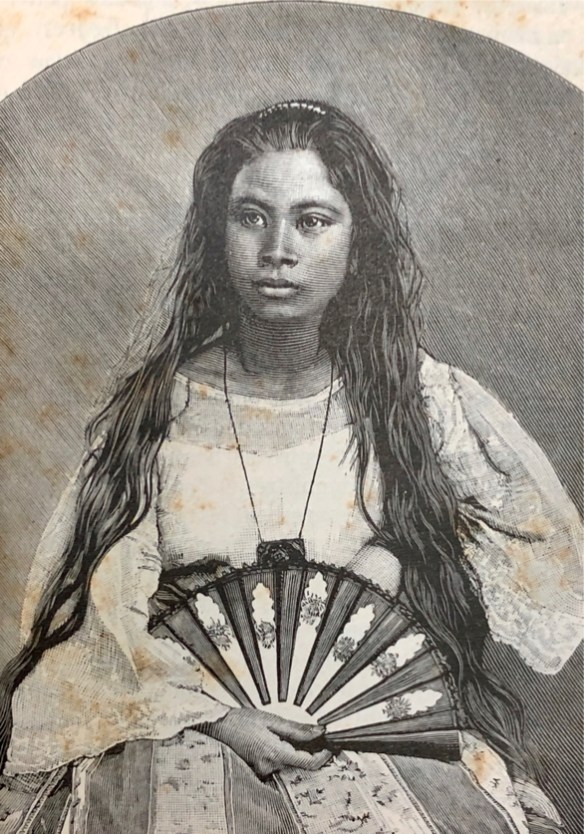
One of the earliest accounts I’ve come across in my library is that of Paul P. de la Gironiere, whose Twenty Years in the Philippines (1853) is a long (and some say fanciful) adventure story, with the author as hero, in the romantic mode of the period. His description of the mestiza is very finely detailed:

“In fine, if Binondoc be exclusively the city of pleasure, luxury, and activity, it is also that of amorous intrigues and gallant adventures. In the evening, Spaniards, English, and French, go to the promenades to ogle the beautiful and facile half-breed women, whose transparent robes reveal their splendid figures. That which distinguishes the female half-breeds (Spanish-Tagals, or Chinese-Tagals) is a singularly intelligent and expressive physiognomy. Their hair, drawn back from the face, and sustained by long golden pins, is of marvellous luxuriance. They wear upon the head a kerchief, transparent like a veil, made of the pine fibre, finer than our finest cambric; the neck is ornamented by a string of large coral beads, fastened by a gold medallion. A transparent chemisette, of the same stuff as the head-dress, descends as far as the waist, covering, but not concealing, a bosom that has never been imprisoned in stays. Below, and two or three inches from the edge of the chemisette, is attached a variously coloured petticoat of very bright hues. Over this garment, a large and costly silk sash closely encircles and shows its outline from the waist to the knee. The small and white feet, always naked, are thrust into embroidered slippers, which cover but the extremities. Nothing can be more charming, coquettish, and fascinating, than this costume, which excites in the highest degree the admiration of strangers. The half-breed and Chinese Tagals know so well the effect it produces on the Europeans, that nothing would induce them to alter it.”

Alfred Marche, whoseVoyage aux Philippines(1887) contains some of the loveliest engravings of local scenes, including one of an unmistakably Filipina beauty, observed (in French) that “The Bella Filipina is one of their favorite tunes, which celebrates the grace, the beauty of Filipina women, señoras  whose type is more or less vague and floating, because there has been a lot of mixing in this corner of the earth.”

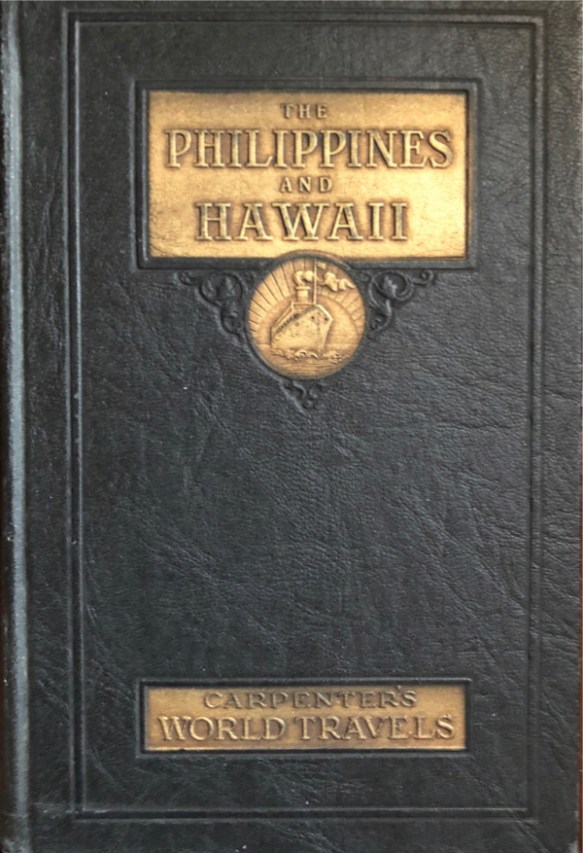
Frank G. Carpenter was one of those globetrotters whose journalistic dispatches popularized geography, and he wrote this in his book Through the Philippines and Hawaii (1926) about an evening in a Manila theater, under the heading “The Fair Filipina”:

“All the seats are full, and there are perhaps five hundred dark-skinned people dressed in their best in the boxes and pit. On all sides of us there are Philippine girls and women of every condition and age. Look for an instant at this girl at my side. I pretend to take notes of the play as I write this description, and since it is safe to say that the little lady cannot read my scrawl, she will not object. What a pretty creature she is ! If she were white you would call her a daisy, but as she is brown the name “tiger lily” will fit her much better. She is a plump little thing, with liquid black eyes and a skin as soft and smooth as cream. Her luxuriant black hair is put up in a great knot just back of her crown, and held there by a comb of gold set with rhinestones. Sneak a look out of the tail of your eye at her small brown ears, with the big rings in their lobes, and at the same time notice that gold chain wound round her neck. Maybe you have thought of Filipinas as dirty, ragged, and poor. This one, at least, must be well-to-do, and there are scores just like her all over the house.

“How well the black gauzy dress shows off the beauty of her neck. Her costume consists of a low-cut jacket, with great bell-like elbow sleeves standing out from the arms. Her embroidered undergown also is cut low. About her bare shoulders is pinned a kind of kerchief. I say her shoulders are bare, for the kerchief and jacket are of such sheer stuff that through the meshes you can see the plump, dimpled shoulders and arms. I venture you never saw so many beautiful arms and necks at one time.”

Shall we be enthralled, amused, or annoyed? You be the judge.

IMG_8054 copy

Penman No. 321: That “K” Factor

KPOP.png

Penman for Monday, October 1, 2018


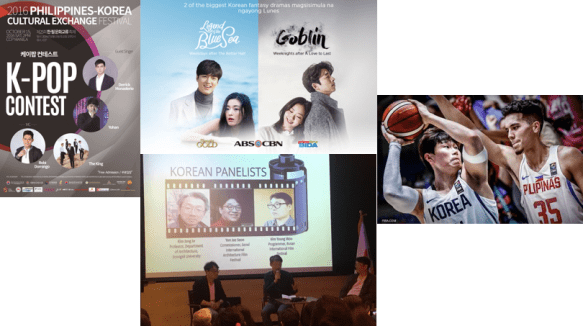
I WAS  in Bangkok last week among a delegation of Filipino academics to attend the 8th meeting of the Korean Studies Association of Southeast Asia (KOSASA), and it was a good opportunity to reflect on the history and growth of Philippine-Korean relations, which have seen a major boost over the past 20 years. While economically driven, much of that growth has been cultural—let’s call it the “K” factor—which accounts for both the proliferation of little Koreatowns and Korean restaurants in major Philippine cities and my wife Beng’s insatiable addiction to Koreanovelas like Boys Over Flowers.

Younger Filipinos enamored of K-Pop probably won’t be aware of this, but our diplomatic ties with Korea (I mean South Korea, of course) will mark their 70thanniversary next year. Those ties were barely a year old when the Korean War erupted, and as an American ally, we sent a contingent of almost 7,500 soldiers to join the fight—the Philippine Expeditionary Force to Korea (PEFTOK), which famously included a young lieutenant by the name of Fidel V. Ramos. After the war, Filipinos also contributed to the economic rehabilitation of South Korea. For example, Filipino engineers helped build the Jangchung Gymnasium—Korea’s first domed sports arena—that opened in 1963.

Korea has since given much back to the Filipino people. In 2013, the Korean government readily sent troops and NGO workers to help in rehabilitation and recovery projects after the devastation wrought by Typhoon Yolanda.

The Philippines has seen an influx of Korean tourists and migrants, who now make up 25 percent of total foreign arrivals, reaching more than 1.6 million in 2017. The Korean community in the Philippines is also flourishing, growing to over 93,000 residents as of 2017.

 For all these reasons, over the past decade, Korean studies in the Philippines have developed both in quantity and quality. With the Philippines hosting one of the largest expatriate Korean communities in the world, Filipino scholars are studying the Korean diaspora and interrelated phenomena in the Philippine context.

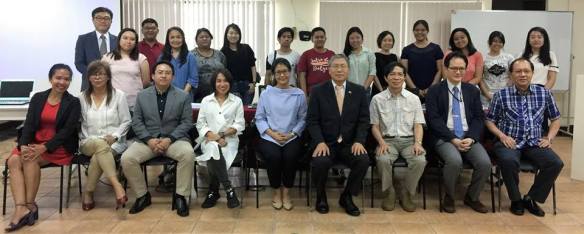
 The University of the Philippines leads in the study of Korean social sciences, humanities, and language in the country. Korean studies are lodged in four colleges in UP Diliman: the Asian Center, the College of Social Sciences and Philosophy, the College of Arts and Letters, and the Center for International Studies.

PublicForum.jpg

The Asian Center offers MA and PhD programs in Asian studies, which include Korean topics and concerns. Korean language courses were first offered by the UP Department of Linguistics in 1990 as an Asian language elective. Until recently, only four courses in Korean were offered in UP, but higher-level courses have just been added to the curriculum. The Center for International Studies also offers a Korea-related GE (General Education) course for undergraduates, now titled “Global Studies 197: From Kimchi to K-Pop.”

In 2016, UP launched the Korea Research Center (UP KRC) aiming to lead and harmonize Philipine-Korean research and link Korean academic institutions and Korean community organizations in the Philippines. It also publishes HanPil: Occasional Paper Series on the Philippines and Korea, which has now produced three issues. Bringing all of these resources together, the First Philippine Koreanist Congress was held on May 26, 2018.

UP’s engagement with Korean academic institutions is part of a broad and strong initiative on the part of UP to internationalize its offerings, its faculty and student body, and its academic and institutional network. While UP, in decades past, traditionally looked westward—particularly to the United States and Europe—for these connections, it has increasingly sought to strengthen its relations with Asian universities. Since 2012, we’ve sent 123 students and 14 faculty members from UP to South Korean universities for study. The 14 faculty members went there for their doctorates—again a marked departure from our old practice of sending our faculty to the West for their PhDs.

On a personal note, while I’m in no way a Korea expert, as a journalist and novelist I’ve maintained strong personal relationships with my Korean counterparts, and have participated in several literary conferences in Korea. (I’ll be returning there in November for a writers’ conference on Peace in Asia in Gwangju.) Time and again, in these meetings, I’ve realized how much we share with Koreans—in terms, for example, of our experience with martial law and our emergence from it. So what happened since, and what accounts for the palpable difference in our two economies? That’s what we need to learn from them.

Of course, we also have much to share with Korea. One of my best graduate students, Sandra Nicole Roldan, had one of her essays translated and published in the Korean literary journal ASIA a couple of years ago, where one of my short stories, “In the Garden,” was also published in Korean in 2015. They’re small starts, but hopefully this exchange will grow in the other direction. Right now, a visiting professor is teaching Filipino language courses at the Busan University of Foreign Studies (BUFS), laying the foundation for Philippine Studies there. Maybe Koreans will soon discover Sarah Geronimo and some of our best pop artists as well!

Penman No. 320: On Academic Freedom

Avatars.png

Penman for Monday, September 24, 2018


Let me dwell this week on the idea of academic freedom, which has been in focus again recently in the light of controversies involving conflicting ideologies on campus. It’s important because universities are the natural home of ideas, and therefore for clashes of ideas, which then take various forms of political and cultural expression.

Modern (and especially secular) universities stand on the bedrock of academic freedom, which at its simplest means one’s freedom to choose what to study and what to teach, and giving value to knowledge—not power, not money, not superstition—as our best guide to the way forward. That knowledge can be gained through research and reason, through experimentation, debate, and creative intuition. Hopefully that knowledge will yield better options for a thinking citizen.

That’s the basic concept, and while it sounds like something no one should quarrel with, the fact is that academic freedom has been under constant threat and attack over the past century, precisely because knowledge and its free expression can be dangerous to those in power. The challenges understandably often come from the Right, but even the Left—preternaturally imbued with a sense of moral righteousness—has not hesitated to throttle academic freedom when it feels justified, such as when neo-Nazis appear on campus in the US and Europe.

Two specific cases come to mind to illustrate both sides of this argument. The first (drawn from an unpublished history of UP) shows State power brazenly applied to stifle freedom of expression at the University of the Philippines.

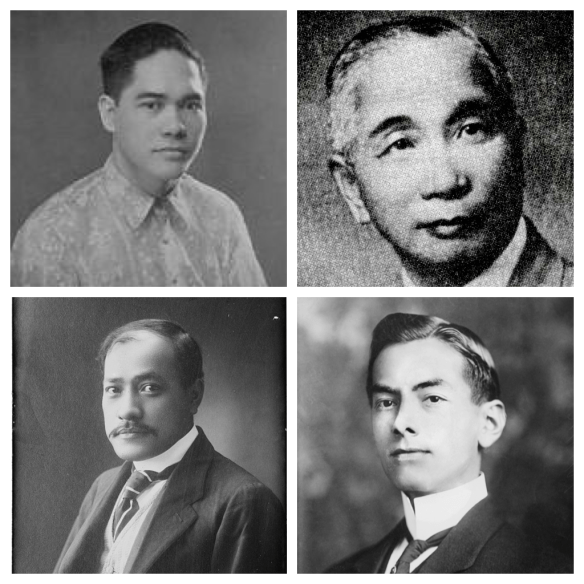
In the early 1930s, law student and Collegian editor Arturo Tolentino got into a fight with Law Dean Jorge Bocobo over whether he could write about the Hare-Hawes-Cutting Law, which then-Senate President Manuel Quezon and Bocobo himself opposed. When the Collegian published a news item seeming to support the bill, Bocobo backed the Collegian adviser’s decision to stop printing the Collegian and to burn the 900 copies already printed, on the grounds that the Collegian was not supposed to publish political material. Tolentino appealed to President Palma, who upheld Tolentino on the basis of free speech. But Bocobo appealed to the Board of Regents, which was filled with Quezon allies, and they overturned Palma.

Dean Bocobo reprimanded Tolentino and threatened him with suspension and even expulsion if he kept violating the BOR ruling. But it was Quezon who was most infuriated by the whole affair, and his ire was unmistakably vented on Palma.

Only days after Palma upheld the Collegian’s right to discuss the HHC, the legislature came down hard on the university and imposed a new system of appropriation requiring an itemized budget. Quezon commended the Lower House for probing the finances of UP, stressing that the move was “a distinct service” to the university. Things got worse between Palma and Quezon, and when Palma finally resigned in fatigue after ten years of service, the BOR denied him a gratuity on some technicality, and denied him an honorarium as well. (When Palma died in 1939, however, Quezon stopped everything to be able to attend his funeral, at which he offered generous words of praise for his former adversary.)

The second case involves an aborted debate at Yale University in April 1974, which featured Dr. William Shockley, a Nobel prizewinner for Physics, who had openly proposed that blacks were racially inferior, and that intelligence could be measured by the percentage of one’s Caucasian blood. So repugnant was the notion to many Yale professors and students that they effectively stopped Shockley from speaking, in a fracas that resulted in some suspensions. (And here I have to thank Fareed Zakaria for bringing this to my attention in a recent CNN program.)

A committee was later set up to investigate and assess the incident, and the report of that committee is instructive in what it concluded: “The primary function of a university is to discover and disseminate knowledge by means of research and teaching. To fulfill this function a free interchange of ideas is necessary not only within its walls but with the world beyond as well. It follows that the university must do everything possible to ensure within it the fullest degree of intellectual freedom. The history of intellectual growth and discovery clearly demonstrates the need for unfettered freedom, the right to think the unthinkable, discuss the unmentionable, and challenge the unchallengeable. To curtail free expression strikes twice at intellectual freedom, for whoever deprives another of the right to state unpopular views necessarily also deprives others of the right to listen to those views.”

The committee quoted Justice Oliver Wendell Holmes, Jr., who wrote in U.S. v. Schwimmer,1928, that “If there is any principle of the Constitution that more imperatively calls for attachment than any other it is the principle of free thought—not free thought for those who agree with us but freedom for the thought that we hate.”

That’s a sobering reminder for anyone who professes to uphold academic freedom and human rights: knowledge moves forward not by silencing the other side, but by presenting superior arguments—not always the easiest thing to do, especially without screaming your head off.

Penman No. 318: Mysteries of Fish

GenSanTuna.jpg

Penman for Monday, September 10, 2018


I’VE OFTEN written and spoken about how—despite the fact that we inhabit an archipelago of over 7,000 islands, bordered on all sides by the sea, and comprising one of the longest coastlines in the world—we seem to have very little by way of a maritime literature. By this I mean novels, stories, poems, and plays that have the sea as a central element, beyond serving as a romantic backdrop.

There’s a whole economy and culture to be found in our relationship with the sea, but much of this has been lost to a metropolitan generation bred on canned tuna and Starbucks coffee. Even among my students, I can count on my fingers the number of people who’ve taken a boat ride longer than a spin around a lake or the short hop from Caticlan to Boracay.

I myself was born in a house a stone’s throw from the beach, in a village on an island far from Manila, so the sea has never been far from my mind and imagination. I dream about it constantly, with recurrent images of huge waves rolling and breaking on the shore, and I as a boy walking on the sand with my father, now long gone.

But I too have to admit that save for a few scenes and the opening chapter of my novel in progress, the sea has figured minimally in my fiction. That’s probably because I feel responsible for creating credible characters whose lives are inextricably waterbound, and haven’t felt confident enough to do justice to the task. The fact is, we’ve lost touch with our marine heritage, which is supremely ironic given how Filipinos have distinguished themselves as seafarers, and how many Filipinos depend on the sea for a living.

This was much on my mind two weeks ago when I flew to Iloilo to attend the formal investiture of Dr. Ricardo P. Babaran as the tenth Chancellor of the University of the Philippines-Visayas. A fisheries expert and nautical engineer, Ric recounted how, as a young boy far up north in Cagayan, he enjoyed going out to sea and to the river to fish.

“My fishing buddies generally used earthworms as bait, but they sometimes used live crickets using different fishing gear. As a young fisher, I observed that using either crickets or earthworms yielded different outcomes—certain fish seemed to prefer one or the other—but my fisher friends were never able to explain to me why. This mystery bothered me for a long time,” he told us.

RBabaran.jpg

Ric left Cagayan to study Fisheries in UP Diliman, and had to deal with the derision of other people who wondered “why Fisheries students needed four years just to learn how to capture fish with hook and line.” Even now, he says, this misappreciation of Fisheries partly explains why “fish-based industries are faring poorly in the Philippines.” (Indeed, an economist I know has pointed out that the recent spike in prices can be traced to some degree to a shortage of fish.)

Ric went on to take an MS in naval architecture and ocean engineering at the University of Washington, and then his PhD in Fisheries Science at Kagoshima University. It was in Japan where, Ric says, he finally found the answer to his childhood mystery: “I learned that catfish and mudfish responded differently to earthworms and crickets because of a process called chemo-reception.”

Dr. Babaran’s investiture was attended by many guests, including many academic officials and luminaries, but several of them stood out, for different reasons. Among them was Dr.  Loel Losanes, a UPV alumnus and the Filipino head of Japan’s Hikari Corporation, probably the largest producer of South Sea pearls in the world.

Just as significant was the presence of members of the Kamamado fishers group from Guimaras, many of them elderly women who, Ric noted, “supplement their daily income with the P40 they get from selling the equivalent of two-liter-sized containers of captured cardinal fish. Through this group, we will undertake a program that will promote responsible fisheries, which I believe will position the Philippines more strategically in the relation to the ornamental fish industry that generates $7 to 8 billion annually.”

I’m confident that the programs of Chancellor Babaran and UPV will improve the livelihoods of millions of our shore-dwelling countrymen, but I’m even more hopeful that a deeper and broader awareness of the importance of the sea in our lives will soon emerge, if only because of the crisis now roiling in the waters around us. (“About a third of our fish catch comes from the West Philippine Sea,” Ric told me.)

And I’m especially happy that a place like UPV exists to mind our waters. A young PhD in UPV, Noel Ferriols, recalled how he was convinced to study in UPV instead of Manila when he and his mother visited the campus in Miag-ao, which specializes in fisheries. “I was amazed when the security guard told me the scientific name of a certain kind of fish,” Noel said. “I thought to myself, if this is a place where even security guards can recite the genus and species of a fish, then it’s where I want to be.”


Penman No. 314: Sourcing the Pinoy Crowd

IMG_7312

Penman for Monday, August 6, 2018


ART CRITICS often like to write about the Pinoy penchant to fill up vacant spaces—our horror vacui, evident in everything from our front yards to our jeepneys and desktops. And when there’s nothing to fill up a nice big void like an empty hall or open street with, heck, we fill them up with our own bodies, to form a healthy crowd.

We Pinoys usually don’t think too much about being caught in a crush at the LRT, the ballgame, or the rally. Indeed, students of crowd psychology will point out that while they may be uncomfortable, crowds can also generate positive synergies, and that even in the most seemingly unruly mob, an inner logic eventually emerges and prevails.

But we also know that crowds can turn ugly and deadly pretty quickly, as the stampedes that every and then convulse English football show. Even much less than that, there’s nothing funny about people fainting in a queue or in a surging mass of bodies desperate for one thing, whether it’s a glance from a rock star or a little slip of paper that could be a ticket to a first-rate college education.

All this was on my mind last Monday as I dealt with one of my busiest days as a school administrator at the University of the Philippines, where an estimated 40,000 people converged at the Office of Admissions in Diliman in one day to submit their applications to take the UPCAT, UP’s entrance exam, in mid-September. To wrap your head around that figure, Diliman has 25,000 students on a normal day. But my guess is that at least half of those 40,000 were anxious parents taking a day off from work to accompany their kids.

It was actually the extended deadline for students of private high schools in Metro Manila (not public as erroneously reported—a lot of fake or unverified news went out that day and after, and a woman presenting herself as a network news reporter even urged the crowd to chant for an extension as her camera rolled). As a torrent of tweets soon reported, the lines kept growing longer, tempers flared, and panic seized more than a few people in the area. The media calls came soon after, and—as UP’s equivalent of, uhm, Harry Roque—I spent the rest of the day and part of the evening fielding questions.

Did we expect the size of the crowd? Well, yes and no. The surge in applications was unprecedented—in years past, we’d get something like 80,000 applications; last year it was 103,000, and this year, our estimate runs to about 167,000. What accounted for the sudden bulge? Free tuition, for one, and K-12, for another. (The actual number of qualified exam takers could be about 20 percent less, and the admission rate—those who “pass,” although there’s no fixed passing grade—about 17 percent of all takers, which is a function of UP’s carrying capacity.)

We did see that coming, but I guess what we didn’t anticipate was how many students (and/or parents) would choose to appear and line up in person, rather than avail themselves of other less stressful options clearly stated on the application webpage—to submit applications online, or by mail or courier, or in bulk with the help of their school. (UP provided the extra option of a drop box when it saw how large the crowd was.) That was probably because queuing up guaranteed—if all your papers were in order—a test permit at the end of the line. But that also meant that the line could take all day.

So we Pinoys are seguristas, willing to sacrifice comfort for the certitude of paper in hand. We still mistrust electronic processing, and can’t wait a couple of weeks to know our fate. I went onsite to see for myself what was going on, and was told by one exasperated guard that “They won’t listen! There’s a drop box right there, and we’ve told them they can courier the forms, but they’d rather line up for hours!”

You’d also have to wonder why Pinoys like to wait for deadlines to do the inevitable; July 30 was already an extension from July 27, and applications had been open for three weeks. But to be fair to the students and their parents, it wasn’t entirely their fault to have waited so late in the day to submit their papers. Some told me that their high schools had held their papers up; some were charging rather stiff fees for handling UPCAT forms.

And was there a class factor at play? When the turn of the public high school applicants came, the huge crowds dwindled, and the lines got shorter—and far fewer parents appeared, because they probably couldn’t afford a day off, or trusted their children to fend for themselves. Things moved more smoothly.

There are lessons for everyone to be learned here—by the students, by the parents, and by us, most of all—and we’ll continue seeking ways to ease procedures for everyone in the years ahead. Eventually, I foresee a time when all submissions will be made online, like visa applications—something we can’t enforce until every Filipino has access to the Internet, and overcomes his or her mistrust of information technology. Until then, we’ll all have to learn better crowd management, provide lots of water and Portalets, exercise patience, take the media brickbats, and soldier on.

Maybe this was a crowd that didn’t really need to be there, but on the other hand, and to put it positively, it was a stark visual reminder of the intensity of our people’s aspirations for a good college education. The best way to disperse it long-term would be to meet those needs, in UP and beyond.

Penman No. 313: A Life-Affirming Mission

UPCMPic.jpeg

Penman for Monday, July 30, 2018


TWO SUNDAYS ago, I had the privilege of serving as commencement speaker before the 2018 graduating class of the University of the Philippines College of Medicine. You’d have to ask them why they chose to invite a writer and professor of English to speak to a corps of medical professionals, but I was happy to accept. It was likely the last time I would wear my sablay as a UP official, as I will be retiring six months hence after 35 years of service to the university. So this, too, was my valedictory, my final opportunity to share with the audience some insights gleaned from my life in UP as student, teacher, and administrator.

Here’s a brief excerpt, about a third, from that talk. Email me if you want a copy of the full text.

Thirty-six years ago, as a young and aspiring writer, I wrote a story about a doctor. The story was set in the Philippine Revolutionary War, and it dealt with an old, cynical doctor named Ferrariz who had made a mess of his life and, seeing few other options, had signed up to become a doctor with the Spanish army, fighting the Filipino insurgents up in the mountains. His unit is taking heavy losses, but one day they capture a rebel—a fifteen-year-old boy named Makaraig, who is badly wounded. Ferrariz’s superior, a major, orders Ferrariz to save the boy’s life.

Let me quote briefly from the story:

… For three days he worked like a driven man, cleaning out and dressing the boy’s wounds, setting the arm, packing cold compresses upon the swellings. He felt godlike in that mission. He unpacked his books from their mildewed boxes, brushed off the fungi and reviewed and relived the passion of the way of healing. He watched miracles work themselves upon the boy and stood back amazed at his own handiwork. When he was through, when he faced nothing more than that penance of waiting for the boy to revive, Ferrariz realized that his eyes were wet. Not since he stepped into the University, knowing nothing, had he felt as much of an honest man.

In other words, this doctor, who had lost faith in his talents and in his hands, suddenly finds himself revived and redeemed by his mission of curing a battered boy. By saving Makaraig, he saves himself.

But the story doesn’t end there. The major has his own reasons for bringing a rebel back to life—to torture and interrogate him, and eventually to kill him, and that’s where the story closes, in a long scream that pierces the doctor’s newly awakened soul.

That story, titled “Heartland,” went on to win in the 1982 Palanca Awards for Literature. But why did I write a story about a doctor who saves a patient, only to have him murdered by others? Why did I write a story about self-redemption?

The story behind the story was that while I was only 28, I felt like Ferrariz, an old man who had gone adrift and who was just going from job to job with mechanical indifference. It was martial law, and despite the fact that I became a political prisoner at 18 and spent seven months in a camp in what we now call Bonifacio Global City, I had been working as a government propagandist for the past eight years, churning out press releases, speeches for President Marcos, and glowing articles about his New Society.

I needed to remind myself that I could write good fiction (what I was writing for work was bad fiction), that somewhere in me was truth waiting to be said.

… For the past 110 years, that has been part of the mission of the University of the Philippines, our national university, the bearer and champion of our people’s hopes. Through our general education program, we try to produce graduates who can be as conversant about Greek tragedy as about the Law of the Sea and thermodynamics. The premise is that a well-rounded, well-educated student will elevate not only himself or herself but also his or her community and society, bringing people together in common cause.

At least, that’s the noble intention. We know that, in practice, while UP has produced scores of such exemplars as Wenceslao Vinzons, Fe del Mundo, Jovito Salonga, Manuel and Lydia Arguilla, and Juan Flavier, and while we graduated 29 summa cum laudes from Diliman this year, we also know that many UP students and alumni have flunked, and flunked badly, especially in the moral department.

In other words—and it saddens me as a UP professor to say this—intelligence never guaranteed moral discernment or rectitude, and as proud as we may be of our nationalist traditions and contributions to national leadership, much remains to be done to ensure that we imbue our students not only with skills but with principles. In other words, just as we ask physicians to heal themselves, we educators first have to teach ourselves.

This is why I began this talk with my story about Dr. Ferrariz and his seemingly futile gesture. What that story really wants to ask is: What is life without freedom? What is knowledge without values?

What does a cum laude mean or matter if it will not be used to relieve human suffering but only to enrich oneself and one’s family? Of what use is a glittering GWA of 1.25 if your moral GWA is a murky 3.0? How can you study to save lives and yet remain silent in the face of its wanton loss—not even by disease or accident, but by willful human policy?

There is, indeed, no more life-affirming mission or profession than yours, and in a season of slaughter, to affirm life can be a radical and even dangerous proposition.

Penman No. 309: A Breakthrough in Tacloban

IMG_6876.JPG

Penman for Monday, July 2, 2018


LATE JUNE is graduation season under the new academic calendar of the University of the Philippines, and since the UP System is made up of eight constituent universities spread out over 17 campuses, that’s a lot of graduations to attend for officials like me. Since the President can’t possibly be at all the ceremonies—which are sometimes scheduled on the same day, or just a day apart—we VPs decide early on where we want to go to represent the System administration.

Diliman is a given, being basically home. I also attend the rites of UP Manila, partly because I’m fascinated by the number and variety of degrees we hand out under the health sciences (culminating this year in the combined MD/PhD—a physician who’s also a researcher, the very top of the heap). But also, UP Manila—harking back to an earlier tradition—still requires its graduates to wear togas instead of the now-ubiquitous sablay or sash, which means I get to drag my US-university toga, or what I call my clown costume, out of the mothballs.

Last year I chose to go to UP Baguio, only to realize, the night before the ceremony, that not only was I on the roster of visitors, but was also the commencement speaker—a little detail that no one had remembered to tell me. A faster commencement speech was never written. (I’ll admit it—I was thrilled to get the job done.)

This June, I selected UP Tacloban—not yet a constituent university but a college under the supervision of UP Visayas. I picked Tacloban because I hadn’t been there for at least 15 years since the early 2000s, and I wanted to see how the campus and the city had recovered from Yolanda’s devastation. I imagined that It was still scarred by the catastrophe five years after; instead, as soon as we landed, I was impressed by how quickly the place had gotten back on its feet, abuzz with tricycles and new construction.

With a morning to spare, I walked about town with Beng (who had come along at her own expense to see old friends) and toured the still-sequestered Sto. Niño Shrine (always more a shrine to the Marcoses), badly ravaged by the storm and by neglect. An even sorrier sight was the adjacent People’s Center and Public Library, which had been converted to a Japanese surplus store. I don’t bemoan the humbling of excess, but as Beng reminded me, “This was the people’s money.”

One happy discovery I did not expect was Tacloban as a food paradise. Wherever we went and at whatever price point—the surf and turf combo and the grilled marlin at the hotel, the fish tinola, the grilled scallops, and bulalo at the Acacia restaurant, more tinola and nilagang carabeef at the unli-rice Pinutos at the mall, and the lemongrass roasted chicken at the now-iconic Ayo restaurant—the food was fresh and flavorful, the beef amazingly tender and the tinola divinely laced with lemongrass and ginger.

All that fortified us for the graduation, which was fairly small as UP graduations go, with just about 200 graduates, two of them finishing magna cum laude, from such fields as Accountancy, Management, Communication Arts, Biology, Computer Science, and Political Science. Tacloban Dean Dr. Dodong Sabalo, a management expert, introduced me to the commencement speaker, Ms. Debbie D. Namalata, San Miguel Brewery’s National Sales Manager and Vice President for Sales, and a UPV alumna, who gave a stirring talk about how her family overcame poverty to achieve professional success against all odds. It was a theme echoed by the valedictorian, Kim Decolongon Limosnero, whose mother had sold chicharon to put him and his siblings through school.

You’d think that I would get bored going to these graduations and witnessing the endless parade of young people coming up the stage in their Sunday best with their parents in tow, but I honestly never do, especially when I listen to such stories as Debbie’s and Kim’s, and see fathers wearing denims and sneakers not because they want to look hip but because it’s the best outfit they can afford. There wasn’t a dry eye in the house when Kim addressed his widowed mother—who had never finished college—as “my summa cum laude,” and I recalled my own parents who had similarly labored mightily to send all five of us to school.

And as I sat onstage, I received the saddest message on my phone, about another UP student named Jemima Faye Dangase, who was supposed to graduate cum laude in Agribusiness Economics from UP Mindanao. The daughter of very poor parents—her diabetic father was a municipal utility worker and her mother was unemployed—Jemima was clearly her family’s hope. She submitted all her requirements for graduation, went home, then crumbled in pain—pain she had borne quietly for months without complaint, apparently so as not to trouble her already beleaguered parents. She was brought to the hospital, where doctors discovered her organs ravished by cancer; and there she died.

I know it borders on melodrama, but this is, truly, the story of Philippine education and why it’s so crucial to social transformation. For every Jemima who stumbles on the very last steps, there must be a Kim who breaks through. This is why going to such places as Tacloban revives my faith in the Filipino future, despite the dark travails of the present, in this moral equivalent of a Yolanda, which—reposing our faith in a God wiser than all despots—we will survive.