Qwertyman No. 152: A Probinsyana from Paoay

Qwertyman for Monday, June 30, 2025
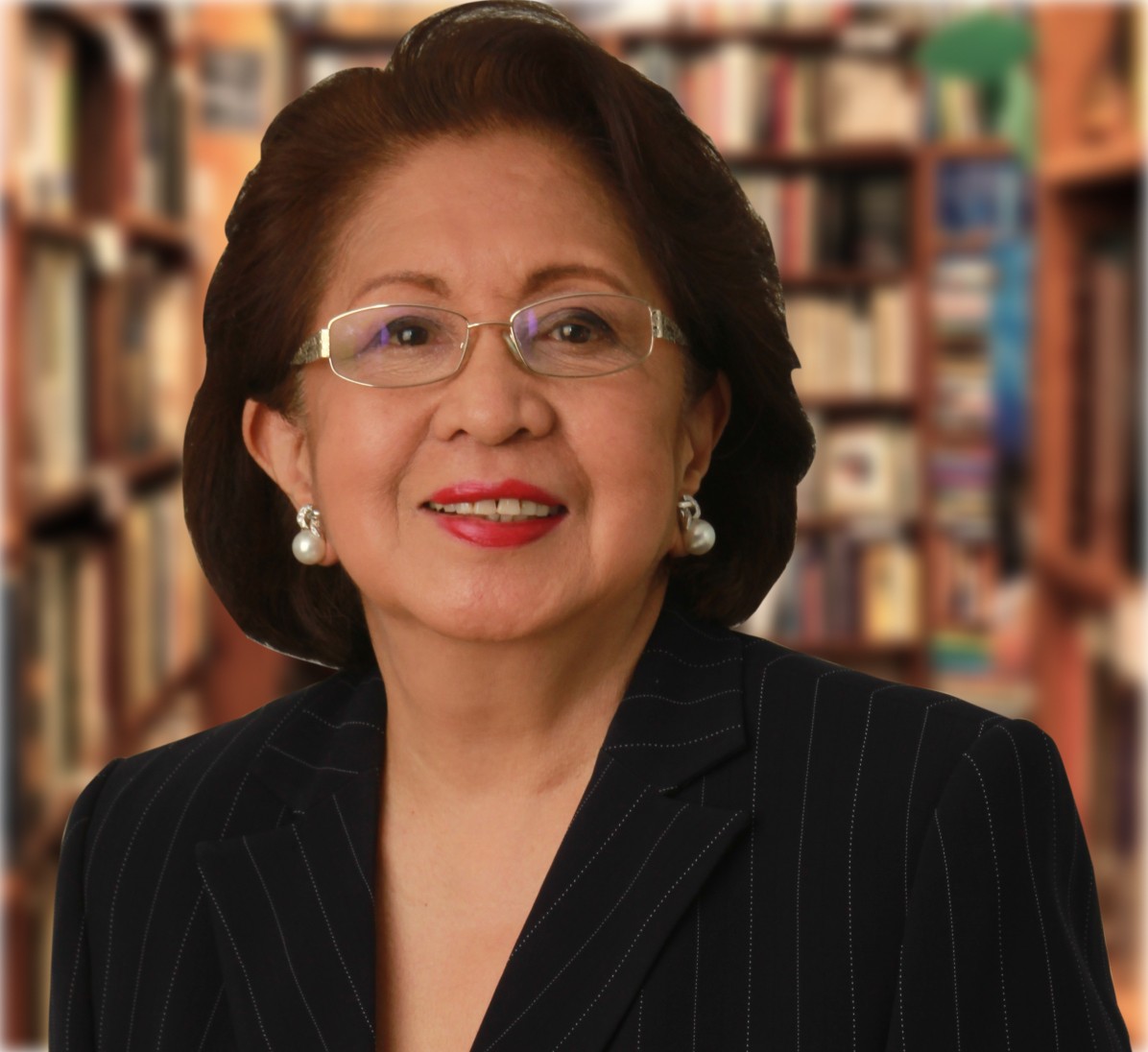
IT WON’T officially be out for another couple of weeks, but I’m happy to announce the publication of my latest book, the biography of one of the Philippine judiciary’s most fearless and remarkable women, former Supreme Court Justice and Ombudsman Conchita Carpio Morales. Begun during the pandemic, Neither Fear Nor Favor: The Life and Legacy of Conchita Carpio Morales (Milflores, 2025) traces the journey of a probinsyanafrom Paoay, Ilocos Norte to the country’s highest court, followed by an even more distinguished period of service as “the people’s agent” at the Office of the Ombudsman.

I’ve written a number of biographies of outstanding Filipinos before—among them the accounting titan Washington SyCip, former UP and Senate President Edgardo Angara, and the renowned economist Leonides Virata, as well as the revolutionary Lava brothers—but this was different in many ways. 

Foremostly, it was because my subject was a woman working her way up a heavily male-dominated system, constantly challenged to adhere to her fundamental values and principles in an environment of corruption, intimidation, and political accommodation.  For the men—given that they had the talent and the grit, and possibly the right connections—success was practically a given; for such women as Conchita, proving oneself worthy was often doubly difficult.

Since the Supreme Court of the Philippines was established in 1901, almost 200 justices have been appointed to that exalted bench; only 18 have been women as of 2023, and it wasn’t until 1973 that the first female justice, Cecilia Muñoz Palma, took office. After Morales was appointed to the SC by President Gloria Macapagal Arroyo in 2002, among the first cases to fall on her lap was the impeachment of no less than Chief Justice Hilario Davide, brought on by pro-Estrada congressmen who believed Davide had misused the Judiciary Development Fund. A fellow Justice approached the novice to ask her pointblank, “Chit, do you think you can handle this?” Inhibiting herself from the case would have been the prudent option, but she took it on, and wrote the decision disposing of the complaint.

She would soon be known for her fierce independence. Despite death threats—a grenade was once left outside her Muntinlupa home, along with a threatening message—she worshiped no sacred cows, spared no one from judicial scrutiny when the situation demanded. This was even much clearer when she retired from the Supreme Court and was appointed Ombudsman, in charge of investigating and prosecuting high-profile cases of graft and corruption in government. Among the cases that crossed her desk were those against PGMA, President Noynoy Aquino, former Senate President Juan Ponce Enrile, and former Vice President Jejomar Binay.

While most of a Justice’s or Ombudsman’s work is done quietly, away from public view, occasionally they come into the limelight even against their wishes because of our fraught political environment where issues often end up in court. One such case was the 2011 impeachment of Chief Justice Renato Corona, a highly significant and contentious case that centered on serious allegations of corruption and betrayal of public trust. 

Then the Ombudsman, Morales engaged a former Supreme Court colleague, Serafin Cuevas, in what came to be known as the “battle of retired justices. “I had been summoned as a hostile witness by the defense,” Conchita recalls. “I sensed that the defense wanted to embarrass and humiliate me even. They thought that my alleged opinion that Corona had millions of dollars in undeclared deposits had been based on the three complaints filed before the Office of the Ombudsman. But it was the Anti-Money Laundering Council that had furnished me with the CJ’s record of bank transactions. I had requested their assistance as reported by the media even before I was summoned to testify. The three complaints filed at the OMB never mentioned any dollar deposits. If the defense counsels had been insightful enough, they should have figured that out.” Corona was eventually impeached on a vote of 20-3.

Her confrontations with former President Rodrigo Duterte—a distant relative, through the marriage of her nephew Manases Carpio to presidential daughter Sara—were also the stuff of theater. At the 2016 wedding of Manases’ brother Waldo, the President and the Ombudsman walked down the aisle together arm in arm—he in a cream barong and she in a bottle-green gown—and appeared friendly, making small talk. The cordiality would not last long.

One year later, in October 2017, President Duterte challenged Conchita to resign as Ombudsman, claiming that she had exercised “selective justice” in asking her deputy, Arthur Carandang, to investigate his unexplained wealth. Duterte suspended Carandang, and threatened to impeach Conchita. “Resign now,” he told Morales, “at kung hindi, huhubaran kita!” The last line—which literally translates into “or else I’ll strip you naked”—was egregiously coarse, but came as no surprise to audiences familiar by this time with Duterte’s tough-guy and often misogynistic language.

Morales promptly hit back, vowing not to be intimidated. “If the President has nothing to hide, he has nothing to fear,” she coolly told a press conference.

What most people never saw was Conchita’s lighter side. The first time she went to Broadway in 1981, she watched Evita with her sister Vicky. Before watching, they had dinner at Gallagher’s, where the size of the steaks made Conchita’s eyes pop. She couldn’t finish her portion and, ever the Ilocana, wanted to have it wrapped to take home. Her sister told her not to do that, so Conchita went to the ladies’ room, got some tissue paper, and wrapped the steak. The following day, they went to Washington, where they went to dinner and had shrimp cocktail. Conchita then took out the previous day’s steak to the shock of Vicky, who said, “Don’t bring that out. Don’t embarrass me!” The steak ended up in the wastebasket. 

Lawyer Ephyro Amatong and others who trained with her were privy to Conchita’s moods and modes. “When she was in her ‘Justice’ mode, she was very strict, very sharp, very hard to read, with an incredible poker face. I knew lawyers like the co-head of litigation at a big firm who thought that she was scary,” Eph says. “But while she could be reserved, she could also be very charming and accommodating. She had a great sense of humor. I remember when she had to attend an en banc meeting or when she had a ponencia for deliberation, just before she went out the door, she might be laughing or making jokes about the grilling she might get, or mention what she was wearing and how fashionable she was. But once the door opened and once she stepped out, her ‘Justice’ face came on, ready for battle.”

You can read more about this feisty Filipina, the Ramon Magsaysay awardee for public service in 2016, in the book. Neither Fear Nor Favor: The Life and Legacy of Conchita Carpio Morales will be available on Shopee and Lazada or from milflorespublishing.com very soon.
Penman No. 473: New Light on (and from) the Philippine Short Story

Penman for Sunday, April 6, 2025

FEW MAY have noticed, but this year, 2025, marks the centenary of what has been widely acknowledged to be our first classic short story in English, Paz Marquez Benitez’s deathless “Dead Stars.”

As I’ve often observed as both a writer and teacher of Philippine literature, there’s probably no literary form more popular among Filipinos than the short story and its predecessors—myths, legends, folktales, and such stories that draw on the power of narrative to tell and teach us something about human life. 

A lot of this has to do with the fact that people and cultures everywhere have made use of stories to make sense of things—to establish causality in human actions—often as a way of prescribing and also proscribing certain behaviors. Stories were there to learn from, like the biblical parables, Aesop’s fables, and the creation myths. The more exciting and entertaining the stories were, the easier the learning happened. Even the mere recognition of oneself in a story that could have taken place a thousand years ago in a place across the planet makes our lives seem more meaningful.

In the Philippines—as it did in the West, where the modern short story took form—the short story was a staple of prewar weekly magazines like the Sunday Tribune, where a story written by an American author would be matched by a local story during what our early literary scholars like Leopoldo Yabes would call our period of apprenticeship. This was in English, but the short story in Filipino (then Tagalog) and other Philippine languages had developed even earlier, and continued (as it continues) to explore new forms and material.

Why the short story and not the novel? That’s another long discussion to be had, and I’ve addressed it in a lecture titled “Novelists in Progress,” but the short of it is that, well, we Pinoys like things in small doses (think Nick Joaquin’s “heritage of smallness”), and the short story satisfies our craving for a touch of fiction and fantasy in our ordinary lives. We’re not marathoners, but great sprinters; we’re not summiteers or navel-gazers, but masters of the street and alley. 

And so, over the past century, important anthologies of the Philippine short story have been published, tracking the development of the genre and its practitioners, from Yabes’ landmark Philippine Short Stories 1925-1940 (a project continued by Gemino Abad for 1956-2008) to Isagani Cruz’s Best Philippine Short Stories of the Twentieth Century (2000). Outside of English, Mga Agos sa Disyerto edited by Efren Abueg came out in 1964, proclaiming new directions for Tagalog short fiction, and the much-needed Ulirat: Best Contemporary Stories in Translation from the Philippines was published in 2021, edited by Kristine Ong Muslim.

But the 21st century is now a quarter of the way through, and just in these past two decades or so, a fresh bumper crop of brilliant new stories has built up, awaiting harvest.

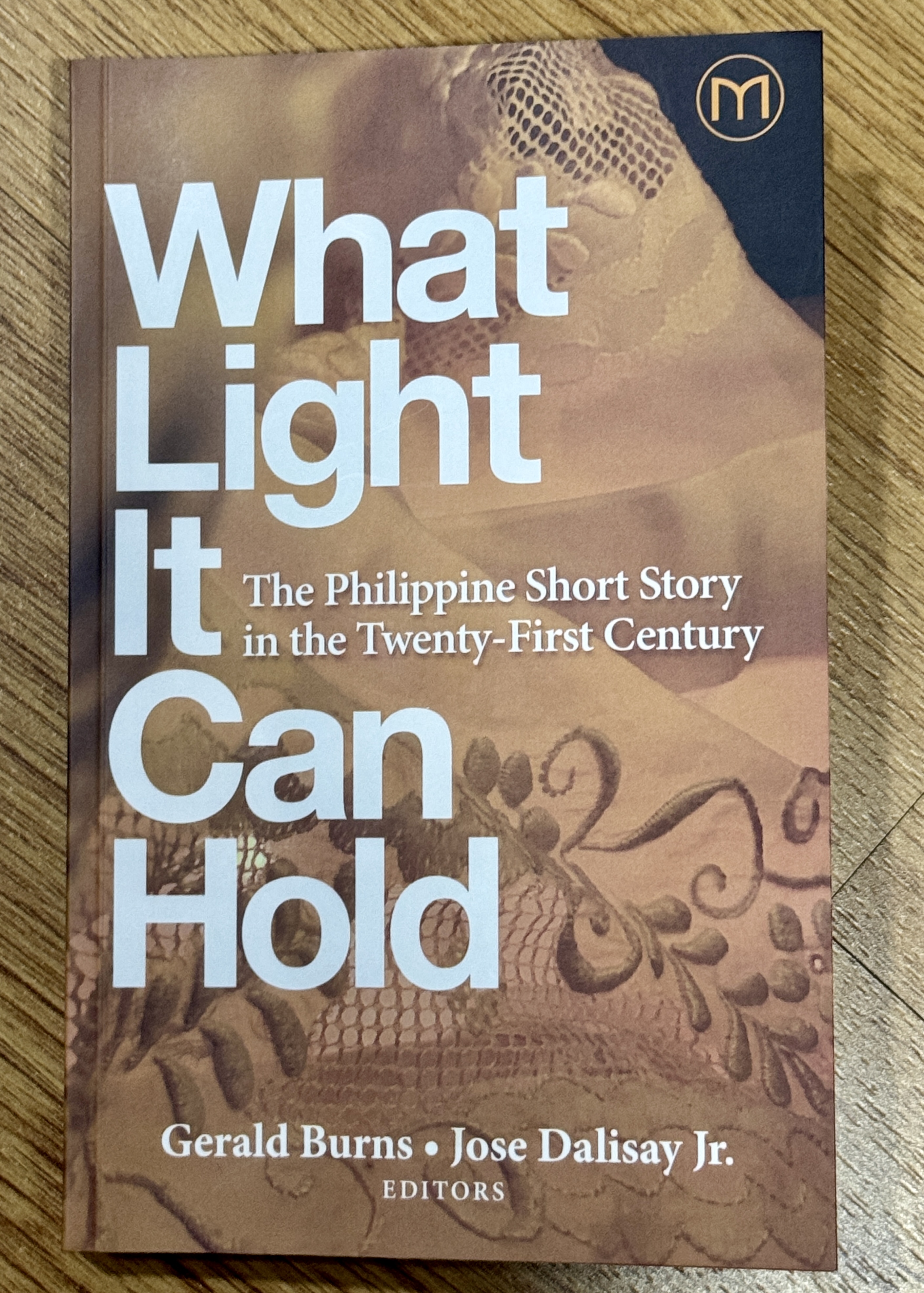
Five years ago, an American friend named Gerald “Jerry” Burns—a fellow academic and a scholar of Philippine literature in English, now Emeritus Professor at Franklin Pierce University in New Hampshire—decided to do just that: review the best of the newest Philippine short stories and produce a selection with which to introduce them to the world. He needed a collaborator, and having worked with Jerry earlier when he was a Fulbright professor at our English department in UP, I agreed to co-edit the volume with him. Because of our backgrounds, our stories would be mainly those written in English (and the excellent Ulirat had already covered much more ground in the other Philippine languages than we ever could) but Jerry wisely insisted that we should have at least some representation of non-English stories in translation in the book, if only to lead the reader to explore more in Ulirat.

The selection process was predictably long and bruising, with all the political, aesthetic, and practical considerations that go into anthologizing, but in the end we came up with 18 stories written by both familiar and fresh names, from within and beyond the Philippines, including the diaspora: Dennis Andrew Aguinaldo, Dean Francis Alfar, Mia Alvar, John Bengan, Ian Rosales Casocot, Richard Giye, Vicente Groyon, Ino Habana, Carljoe Javier, Monica Macansantos, Perry Mangilaya, Doms Pagliawan, Ma. Elena Paulma, John Pucay, Anna Sanchez, Larissa Mae R. Suarez, Lysley A. Tenorio, and Socorro Villanueva. We also found an agreeable and supportive publisher, Milflores Publishing, fortuitously run by Andrea Pasion-Flores, herself a fine fictionist who understood the need for a new anthology like this, especially on the threshold of the Philippines’ participation as Guest of Honor in this year’s Frankfurt Buchmesse.

The book’s title, What Light It Can Hold: The Philippine Short Story in the Twenty-First Century, was suggested to Jerry by an encounter with the piña weavers of Kalibo, Aklan, and a caption he saw that said: “How fragile a single thread of piña is, how delicate, but look how much light it can hold.” He explains that “What Light… is intended to recognize the limited capacity of the Philippine short story in this period to offer any widespread or definitive illumination of the nation’s life and culture. At the same time, a more expansive understanding of that title is possible. For the short story, as will be suggested in the next pages, is a signature Philippine product, too. And these slender narratives, fashioned by their makers with a skill, patience, and devotion comparable to the piña weavers’, bring what light they can hold to vital areas of contemporary Philippine and larger human experience.”

No anthology project will be without its perceived failures and omissions, and Dr. Burns and I remain fully open to criticism in that respect. But we believe the sympathetic reader still stands to profit from both the selections and the introduction, penned largely by Jerry, that makes salient observations on the changes that have taken place in this most favored literary form of ours over the past century. Happy reading! (What Light It Can Hold is available on Lazada and Shopee.)

Penman No. 436: A New Blooming at Milflores

Penman for Sunday, March 6, 2022

CHAIRMAN MAO’S dictum about letting “a hundred flowers bloom, a thousand schools of thought contend” must have been on the mind of former activist, writer, retired UN official, and later gentleman-farmer and entrepreneur Antonio “Tony” Hidalgo when he founded Milflores Publishing in 1999 to publish books that would “meet the needs and wants of the Filipino masses.” His wife, the celebrated author Cristina Pantoja “Jing” Hidalgo, could not have been more pleased. Aside from building a lovely heritage home in San Miguel, Bulacan with a cock farm for Tony behind it, the Hidalgos were eager to do their part for Philippine literature beyond teaching and writing. 

Milflores would go on to publish 80 titles on such varied subjects as suburban living, cockfighting, and 20th-century masculinity, on top of the usual fiction. It was beginning to make a mark as a small but quality press—and then Tony sadly and suddenly died in 2011, leaving a devastated Jing to carry on with distributing their titles. Busy with her own professional life, Jing soldiered on as far as she could, until 2020 when a white knight entered the picture in the form of Andrea Pasion-Flores, who had been her student (and mine) at UP many years earlier. 

Since graduation, Drea—a fine fictionist in her own right—moved on to become a lawyer, then executive director of the National Book Development Board, then our first international literary agent, and until 2020 general manager of Anvil Publishing. Post-Amvil, Drea was looking for fresh challenges and opportunities, and she found it in Milflores. Her husband Javi, also a lawyer, put her up to it: “Javi and I thought about starting a new publishing company, which might’ve been cheaper. But Javi gave me the idea of buying Milflores. First, because of the name—it fits with ours. Second, it already had some goodwill that would be a shame if it were forgotten. Third, it wouldn’t hurt to ask Jing if she had any plans for it. In a heartbeat, she said yes.”

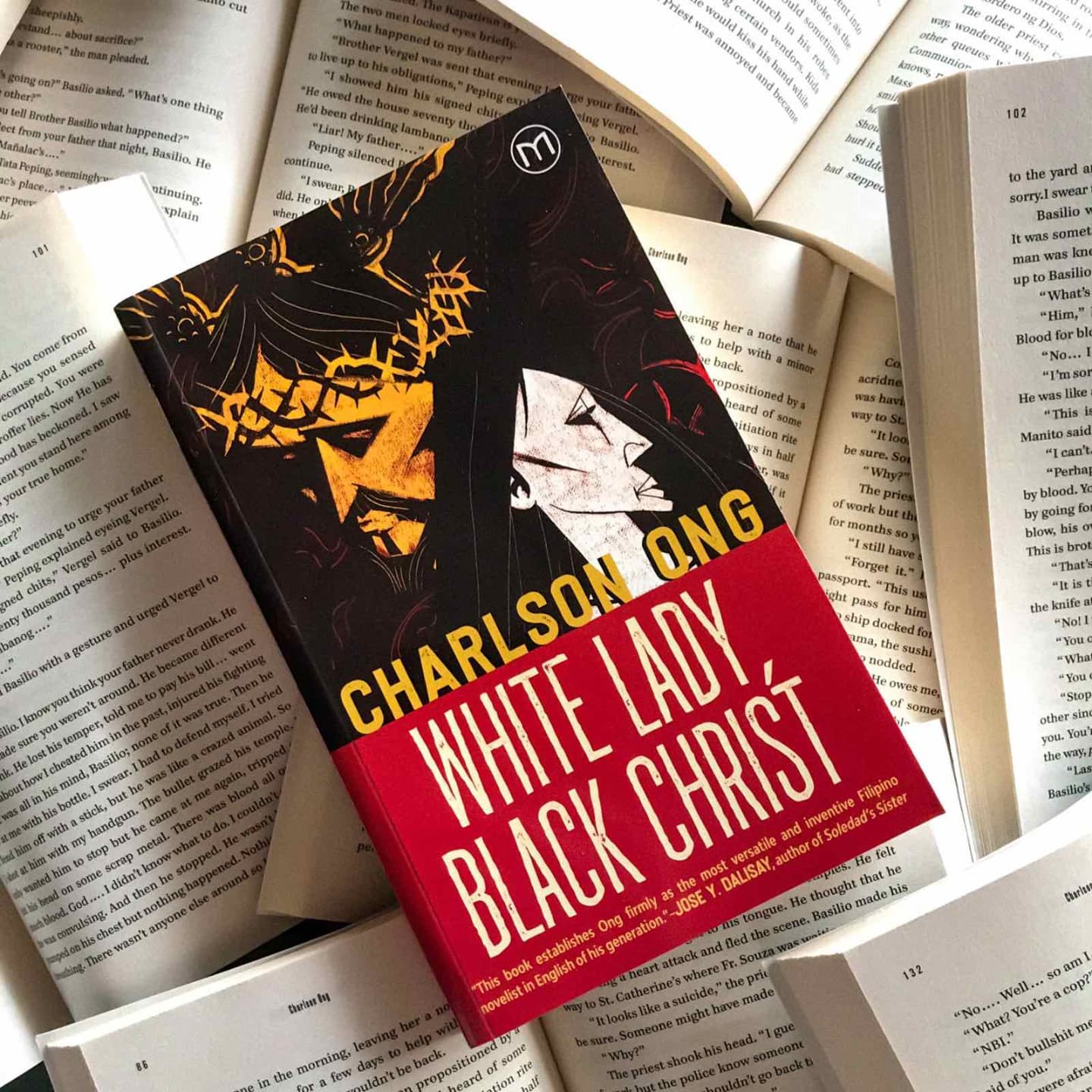
Since that takeover, Milflores has already come out with an impressive list of titles that herald a new blooming for both the company and Philippine literary publishing as a whole. Against all the odds thrown her way by the pandemic, the tenacious Drea managed to secure publishing rights from top-drawer Filipino authors such as Charlson Ong, whose wild and wacky novel White Lady, Black Christ became Milflores’ flagship offering in May 2021. As Charlson’s agent, Drea had already sold an earlier novel of his to a Malaysian publisher, so this was a natural follow-through.

This was followed by a new edition of Nick Joaquin’s Rizal in Saga. Drea had also sold NJ to Penguin Classics. “I wanted this book more than anything because, as Ambeth Ocampo said, the book went out of print the moment it was published because the government gave it out as a souvenir during the centennial of Rizal’s death in 1996, and was never reprinted.” Drea pulled out all the stops, and went for a hardcover edition. “If I was to deserve this book, there would be no cutting corners. I had to make people realize the value of this book. It had to be an object to be desired. And, as Ambeth told me, we both made sure it came out well because we both felt NJ deserved no less. When I die and go to book heaven, I want to hear Nick and Rizal tell me, I did well by them, haha!”

Simeon “Jun” Dumdum’s Why Keanu Reeves Is Lonely and Why the World Goes on as It Does, a small collection of poetry, was another risk worth taking. “Knowing I wouldn’t be raking in millions with this book, why did I want it? Because anyone who reads his poetry will be uplifted. It’s a book to treasure, really. Jun Dumdum was so game with whatever we did with it, even if we said we’d like the book to be neon pink and green. He was onboard! I like those kind of writers.”

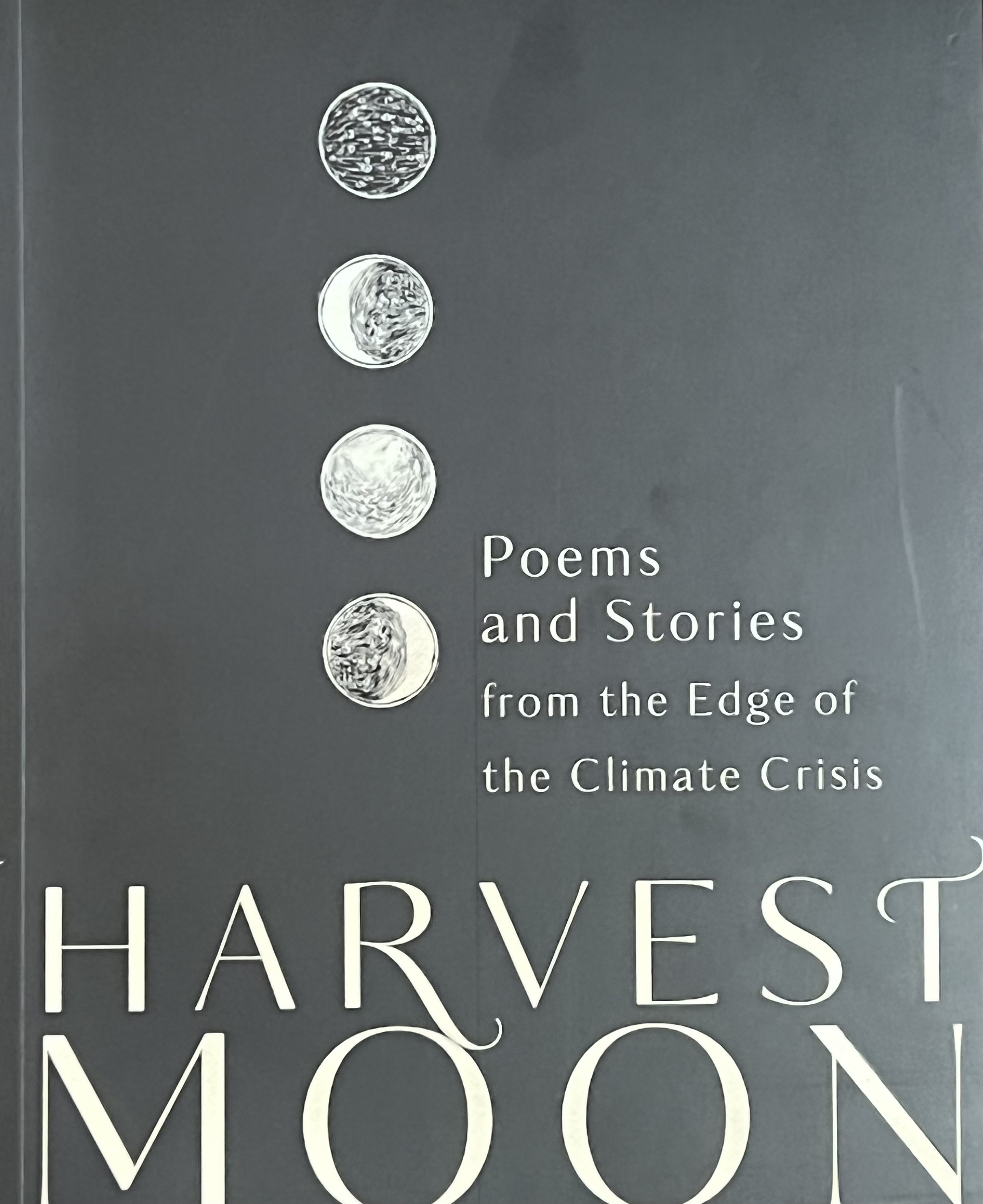
Writer and noted bookseller Padma Perez brought Milflores its biggest book yet, Harvest Moon: Poems and Stories from the Edge of the Climate Crisis, co-published with the Institute for Climate and Sustainable Cities (ICSC). Most books with a political agenda tend to be preachy and off-putting, but Harvest Moon is unique in its concept and execution. Twenty-four writers from around the world were given evocative photographs as prompts, with the further stipulation that they were to avoid buzz words and phrases such as “sustainability” and “climate change.” The result is visually and textually moving, investing the project with deep personal insight. This book is being sold at a deep discount, thanks to a subsidy from ICSC.

Drea Pasion-Flores has followed these up with other provocative projects, including many more in the pipeline. Robby Kwan Laurel’s Ongpin Stories is a timely reprint; former Sen. Rodolfo Biazon’s biography by Eric Ramos is a gripping narrative of a man who rose from doing other people’s laundry and selling in the market to become a general and senator, and one of the heroes of EDSA 1; David Guerrero’s The Crap Ideas Book is an inspirational book on creativity; the bedridden Nick Carbo’s new book of poems, Epithalamion, is, says Drea, his “shot at immortality.”

Milflores also has something lined up for younger readers: Kat Martin’s debut novel At Home with Crazy is the story of a 14-year-old girl dealing with the stress of living with a mother with a mental illness. Internist-oncologist William Liangco’s Even Ducks Get Liver Cancer and Other Essays is a hilarious romp through the travails of med school in a charity hospital. Drea will also publish two graphic nonfiction books by the feminist Swedish graphic illustrator Liv Stromquist and a cookbook by artist and cancer-fighter Robert Alejandro.

“I have big dreams for Milflores,” says Drea. “I want to try to bring a Philippine company out there, not just here. I’m guessing it’s not going to be the next Coca-Cola Company. It’s going to take time and lots of good books, but I have no doubt I can get there—or somewhere close to it.” (More information at milflorespublishing.com)