Qwertyman No. 173: A Page from 1937

Qwertyman for Monday, November 24, 2025
I”M NOT a historian, although there are times I wish I were, and at an early crossroads in my youth, I actually had to choose between Literature and History for my major, settling for the former only because I thought I could finish it faster. But I’ve retained a lifelong interest in history, for the treasure trove of stories to be found in the past and for what those stories might foretell of the future. 

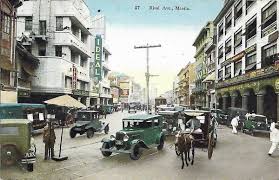
I’m particularly fascinated by the prewar period—what Filipinos of the midcentury looked back on as “peacetime” and what Carmen Guerrero Nakpil called our “fifty years in Hollywood,” which were enough to occlude much of the influence of our “three hundred fifty years in a convent” under the Spanish. It was an age of many transitions, from the jota to jazz, from the caruaje to the Chevrolet, from tradition to that liberative and all-embracing buzzword, the “modern.” Much of that went up in smoke during the Second World War, but you can still catch the ghost of this lost world on the Escolta, among other vestiges of our love-hate affair with America. (You might want to visit the Art Deco exhibition at the National Museum of Fine Arts, ongoing until May 2026; I have some items on display there.)

So entranced have I been by this time that I decided, during the pandemic, to set my third novel in it, at the birth of the Commonwealth and upon Quezon’s assumption of ultimate power, an upstairs-downstairs narrative about the comprador upper class and the world of the Manila Carnival set against the embers of the Sakdal uprising, the fuming and scheming Aguinaldistas, and the netherworld of printing-press Marxists and tranvia pickpockets. Progress has been slow because novels always take the back seat to life’s more pressing needs, but I still hope to get this done if it’s the last thing I do.

The research for the book, however, has brought its own rewards. Among my main sources for the background has been a slim volume—long out of print and now very  hard to find—titled The Radical Left on the Eve of War: A Political Memoir by James S. Allen (Quezon City: Foundation for Nationalist Studies, 1985). Allen (actually a pseudonym for Sol Auerbach) was an American scholar and journalist, an avowed Marxist who traveled to the Philippines in 1936 and 1938 with his wife Isabelle, also a member of the American Communist Party, to meet with local communists and socialists (then headed by Crisanto Evangelista and Pedro Abad Santos, respectively) and to get a sense of the Philippine situation under American rule. 

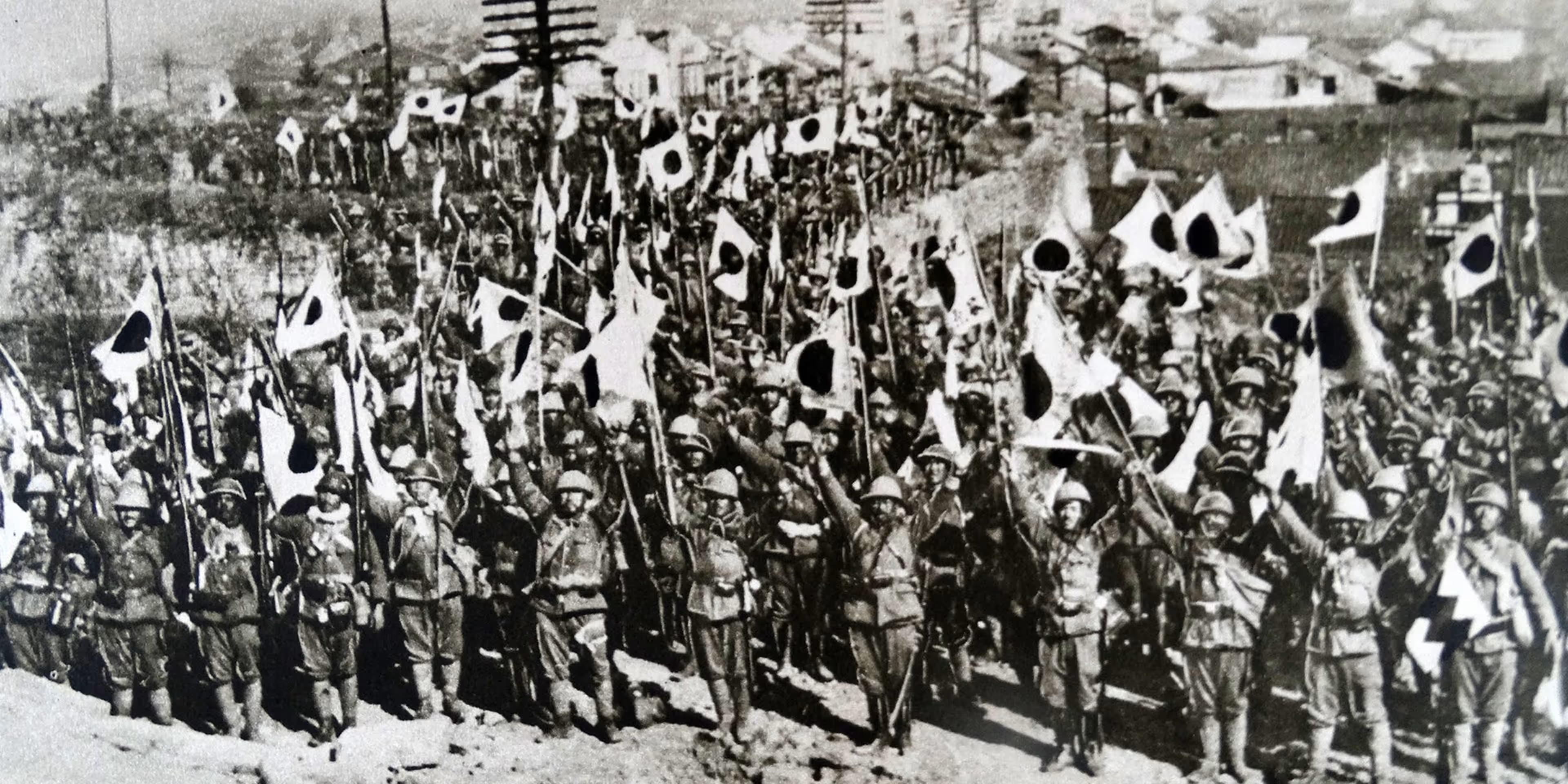
Even that early, the threat of a Japanese invasion was already looming on the horizon and causing great anxiety in the Philippines; Japan had earlier occupied Manchuria and as much as a quarter of the entirety of China by 1937. It seemed like a confrontation between Japan and the United States was inevitable, although some Filipino nationalists—fiercely anti-American—preferred to ally themselves with their fellow Asians than with prolonged white rule. At the same time, others like Pedro Abad Santos feared that the independence Quezon sought would be granted prematurely to give the US an excuse to abandon the islands and avoid confronting the Japanese. 
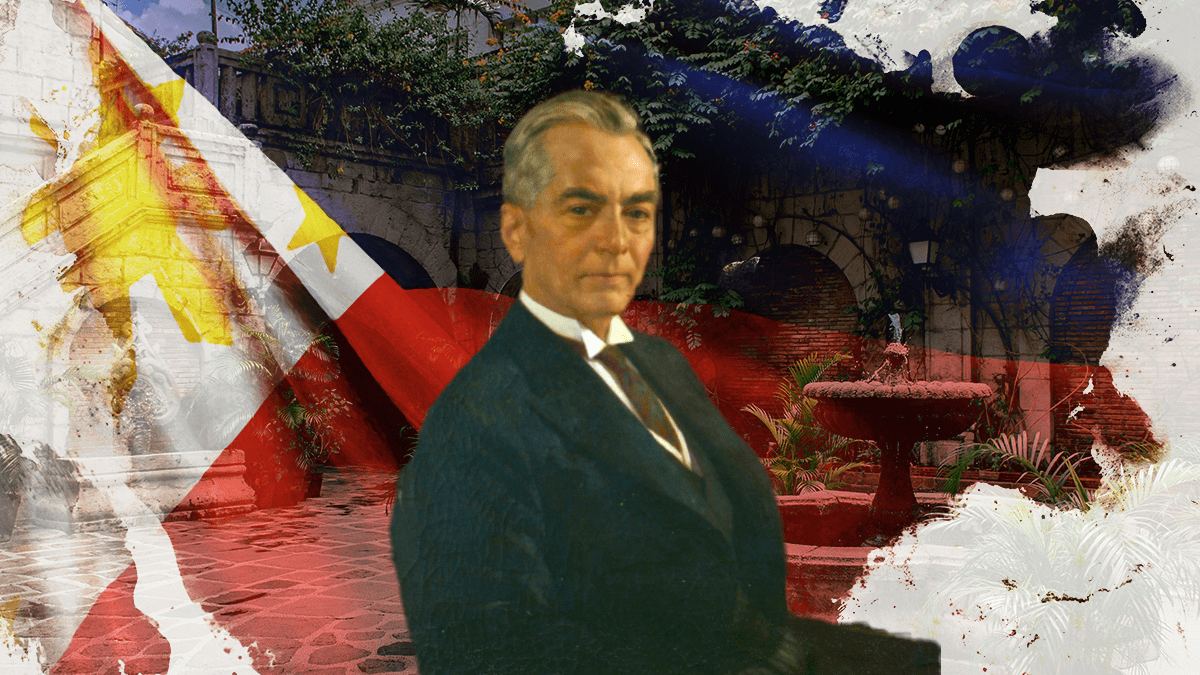
This is where I tell you why I’m bringing up James Allen’s memoirs this Monday—because of our present situation vis-à-vis China and (in one of history’s ironic reversals from victim to victimizer) its growing domination of the South China Sea. In Quezon, Filipinos had a leader who was deeply mistrusted and opposed by many; the United States’ willingness to defend the Philippines was in doubt; and the threat of a foreign invasion was clear and imminent. 

Allen actually sat down with Quezon for a long interview at the latter’s invitation, and was impressed by the man’s grasp of politics and his singular ambition. But the article that came out of that encounter displeased MLQ; Allen, after all, was still a communist at heart, which makes the following quotation—from a letter Allen would compose and send to his American colleagues in October 1937—even more interesting. I’ll leave it to you to observe the parallels, and to cast them against the Marcos-Duterte issues of our time.

“Filipino Marxists and radicals need to relate independence from the United States to the world crisis created by fascism. The immediate concern in the struggle for an independent and democratic Philippines is to safeguard the country against the threat of Japanese aggression. The objectives of complete independence from the United States and the internal democratic transformation must be obtained without endangering such gains as have been made or subjecting the country to new masters. The people must be awakened to the prime and pressing danger to their national existence. The United States is moving toward alignment with the democratic powers against the fascist bloc, albeit slowly and indecisively.


“Roosevelt is shifting somewhat toward the Left of Center to keep pace with his mass support from the surging labor movement and anti-fascist and anti-war popular sentiment. The national interests of the Philippines call for vigilance and precautions against Japanese aggression. This coincides with the interests of the United States in the Pacific area, and it would be folly not to take full advantage of this concurrence. In the broader perspective, the outcome of the struggle in China will be crucial for all the peoples of the Far East, and if the United States were to withdraw from the Philippines this would be a serious blow against China and encouragement to Japan’s designs upon Southeast Asia and the islands of the Pacific. The cause of Philippine independence at this time can best be served by cooperation with the United States.


“The situation also requires a change in the attitude toward Quezon, from frontal attack to critical support. Unprincipled opposition for the sake of opposition-as with some leading participants in the Popular Alliance is dangerous, for it plays into the hand of pro-Japanese elements and sentiments. Quezon certainly is not an anti-fascist, but he is not intriguing behind the scenes with Japan. The greatest opposition to his early independence plan comes from the landed proprietors, particularly the sugar barons, while it enjoys support among the people. The Popular Alliance should also support the plan, including provisions for mutually satisfactory economic, military and diplomatic collaboration after independence. Though Quezon is far from being a Cardenas or Roosevelt in his domestic policies, every effort should be made to move him away from his pro-fascist and land baron support by providing him with mass backing for such pro-labor and progressive measures as are included in his social justice program. In sum, the Popular Alliance should encourage a national democratic front devoted to the preservation of peace in the Pacific, the safeguarding of Philippine independence, and defense and extension of democracy in the country.”
Qwertyman No. 171: “Quezon” as Theater

Qwertyman for Monday, November 10, 2025

I’M COMING late to the party, having been away for a couple of weeks, but even in faraway Frankfurt, I was itching to come home to see what the brouhaha over the “Quezon” movie was all about.

Rarely does a Pinoy movie stir a hornet’s nest like this one did, and even without seeing it, I took that as a good sign for our film industry, especially big-ticket projects which sometimes leave people wondering why they were even made.

What especially piqued my interest, of course, was the reaction of Quezon family members and friends who thought the old man’s cartoonish depiction as a womanizing, scheming, and power-hungry politician despicable.

Now, my own grandfathers led pretty quiet lives, so I’m sure that if anyone called them womanizing, scheming, and power-hungry, I’d be mighty upset, too.

The difference is, unlike my lolos and going by what the historians suggest, Manuel Luis Quezon seems to have been all of the above—which isn’t to say he wasn’t much more than all those negatives put together. It was apparently that “much more” that the Quezonistas were looking for—MLQ the patriot and freedom fighter—to balance out the picture, especially since most young Filipinos know nothing of the man except as a place-name. Had that been shown, the outrage might arguably have been muted, the image softened.

But of course that wasn’t what the movie’s makers were going for. As has already been noted by dozens of reviewers before me, “Quezon” is no documentary (and let’s not forget that even documentaries can be biased—just watch Leni Riefenstahl’s adoring portrayal of Hitler and his Nazis in her bizarrely beautiful “Triumph of the Will”). From the outset, it declares that it is mixing up history with “elements of fiction,” which is just as good as using that old commercial come-on, “based on a true story.”

I’m no historian—I’ll confess to being an enthusiast—but as it so happens, I’ve been a playwright, screenwriter, biographer, and fictionist at various points of my otherwise uneventful life, so I can probably speak to these issues with some experience. I can attest, for example, having written some biographies of the rich and famous, that families and descendants can inherit myths about their patriarchs, and treat and pr0pagate them as God’s own truth. 

My take is, I don’t think we should receive “Quezon” as history, biography, fiction, or even film. It’s theater (captured on film), and it declares itself as such right from the beginning, as I’ll shortly explain. This may be due to the fact that the script was co-written by one or our most accomplished playwrights, Rody Vera, alongside director Jerrold Tarog. His approach was explicitly stylized and non-realistic, from the use of silent-movie title cards, ghoulish makeup, and painted backdrops in the black-and-white sequences (including that almost balletic choreography of the young MLQ rising from the floor of his prison cell) to the conception and blocking of such scenes as those of Quezon working the floor of the House and the capitalist bosses gathering round the table. (If all this seems obvious and elementary, dear reader, my apologies—in these days of TikTok, I don’t know what people are looking at anymore).

So what if the movie is theater disguised as film? Does that explain or excuse its supposed excesses and exaggerations?

Well, theater is, almost by nature, exaggeration—movements and motives get simplified and magnified, the easier to get them across. Theater is agitational—it aims to provoke emotion, to bring people to their feet, clapping in delight or screaming in rage.

And that’s what “Quezon” did, didn’t it? It got its message across, effectively and efficiently, like a train on schedule, and taking it as theater, I found it roundly entertaining. By and large, the actors carried themselves off with aplomb, from Jericho Rosales’ masterful Quezon, Romnick Sarmenta’s comic-cool Osmeña (his was actually the most difficult role to play, to my mind), Mon Confiado’s aggrieved Aguinaldo, and Karylle’s restrained Aurora. The employment of the fictional journalist Joven Hernando was what a smart scriptwriter would do, to weave the narrative threads together. (Teaser: Quezon and Aguinaldo figure in the novel I’ve been writing about prewar Manila.)

My quibbles have to do with minor complaints like (don’t be surprised) “Wrong period fountain pens again, all of them—why don’t they ever ask me?” (Quezon did hold his pen that odd way, though) and “Does every movie chess scene have to end with a checkmate?” I could have added “Why does everyone’s shirt and pants look fresh in a period movie?” but we’ll excuse those as theatrical costumes.

If there was anything I would have added to the content, it would have been a quiet moment of self-reflection, in which we realize just how Quezon sees himself. That alone might have lifted up his character from caricature.

The real Quezon seems to have been every bit as petty as the movie shows him to be, but also every bit as great, as it seems to have taken for granted.

Quezon had something of a history with the University of the Philippines, whose protesting students (one of them a young buck named Ferdinand Marcos, who accused Quezon of “frivolity” over all the dance parties in Malacañang) led him to ride into UP’s Padre Faura campus astride a white horse to either charm or intimidate them.

He had a long-running tiff with then UP President Rafael Palma over the Hare-Hawes-Cutting Act, and when Palma retired after ten hard years in the hot seat, citing a technicality, the government denied Palma the gratuity that was his due. When Palma died, however, Quezon reportedly went to his wake to deliver a eulogy worthy of the man.

You didn’t see that Quezon in the movie—and then again, maybe you did.

(Image from banknoteworld.com)

Penman No. 475: True Confessions

Penman for Sunday, July 13, 2025

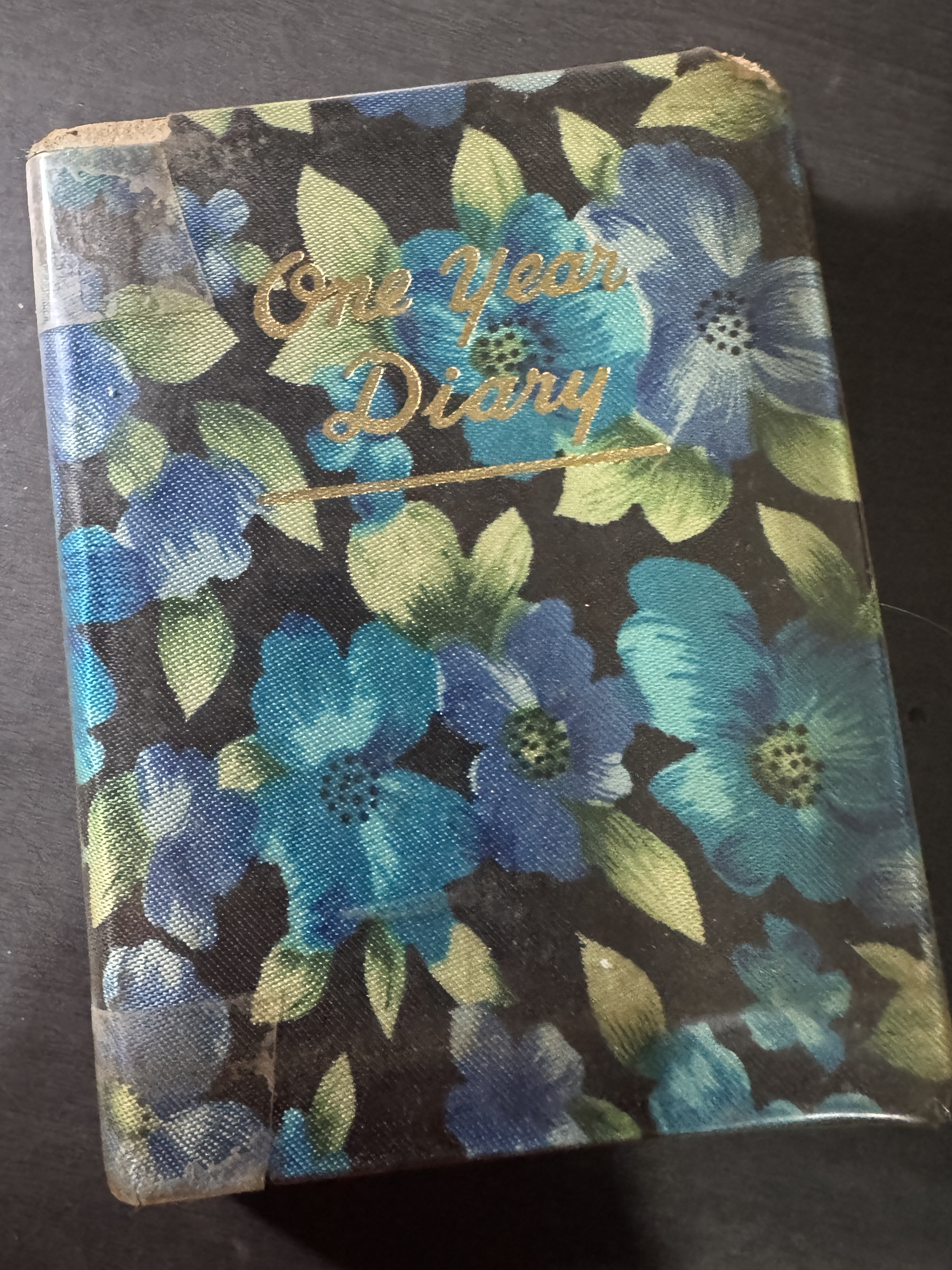
AS A collector (make that a scavenger) of old books, manuscripts, and what the market generally calls “ephemera,” I inevitably come across material neither written by nor meant for kings and presidents, but rather pedestrians like myself with things to say, perhaps secrets to whisper, likely to no one but to God and posterity.

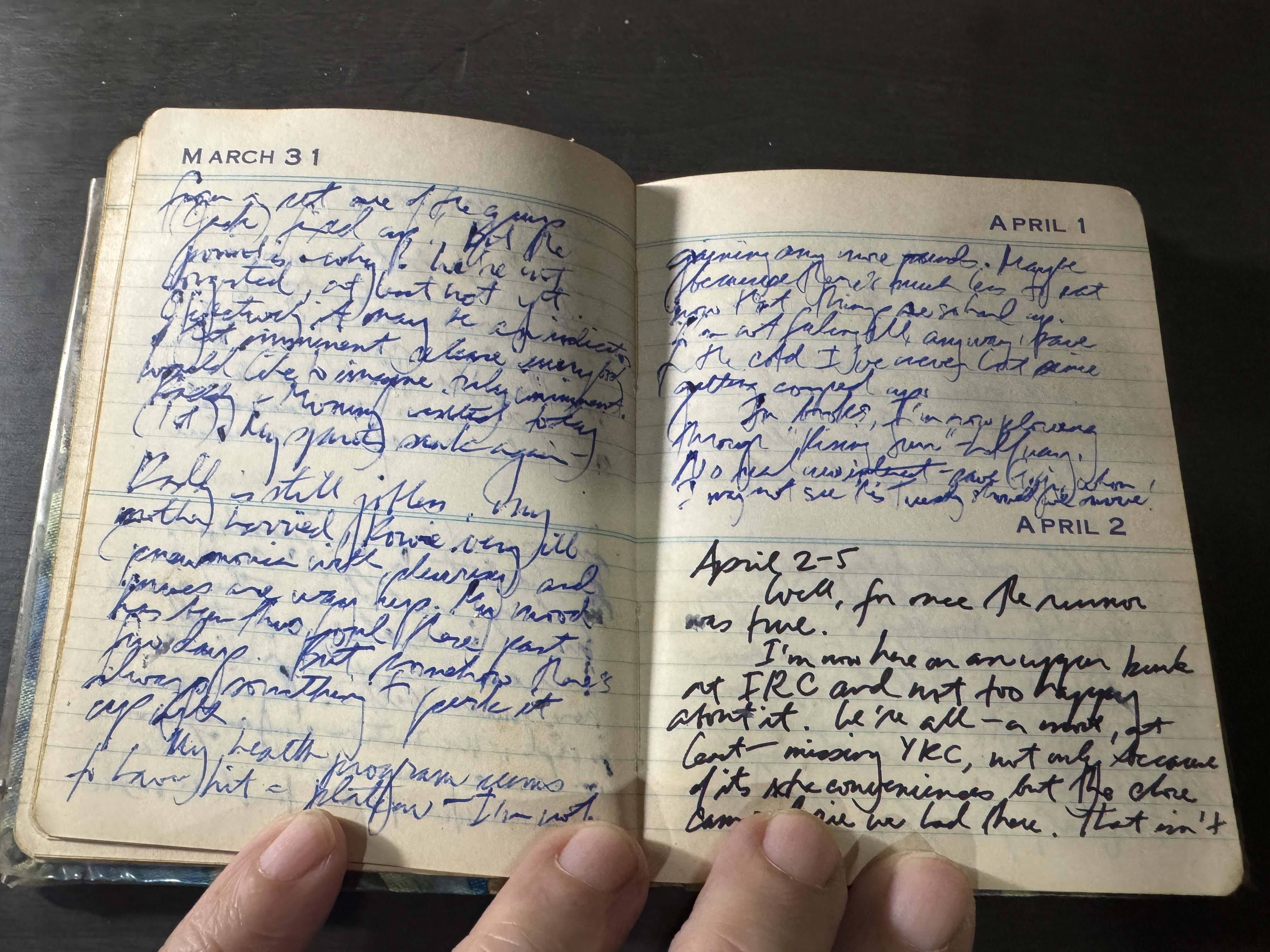
I’m talking about diaries and journals, which people of my generation used to do (and millennials are back to doing). Worse than a pack rat, I hoard other people’s memories, some in diaries that would make people turn in their graves to know I had. I come across these often as discards or stray items among people selling and buying old books, but I find them equally if not even more fascinating than published (and therefore sanitized) material.

Back then, before computers and digital journals, New Year began with the purchase of a new diary, its pristine pages waiting to be filled with birthdays, appointments, expenses—and more interestingly, interjections of love, pain, joy, and grief, life’s highest and lowest moments. 

I myself kept diaries at one time, although the entries tended to peter out around March or April, when fatigue got the better of my enthusiasm. My most interesting one has to be my martial-law diary, which I rather presumptuously began as soon as I was thrown in prison at Fort Bonifacio; I say “presumptuously” because, at seventeen, I entertained the precious thought that somehow, someday, my juvenile musings would be worth something to someone other than my mother (I had yet to find a wife then). 

When the Italian Marxist Antonio Gramsci languished in a Fascist jail in the late 1920s, presumably between a meager breakfast and gazing out into the starless night, he penned lines like “The old world is dying, and the new world struggles to be born: now is the time of monsters.” He developed his theory of hegemony and held forth on the role of intellectuals in social change, published in his seminal Prison Notebooks.

My own teenage memoirs have survived, but instead of writing about the dominance of the ruling class or about harrowing details of torture and misery—which did happen to others—I chronicled the visits of the pretty young psychologists assigned by the military to interview us; of course we assumed they were spies, but that didn’t stop us from chatting with (more like staring at) them across a table that felt much too wide.

Indeed, for most of us more interested in the personal than the political (although arguably one will always be the other), the value of diaries lies in their true confessions, in their promise of intimacy and insight—along with, let’s admit it, the wicked thrill of voyeurism.

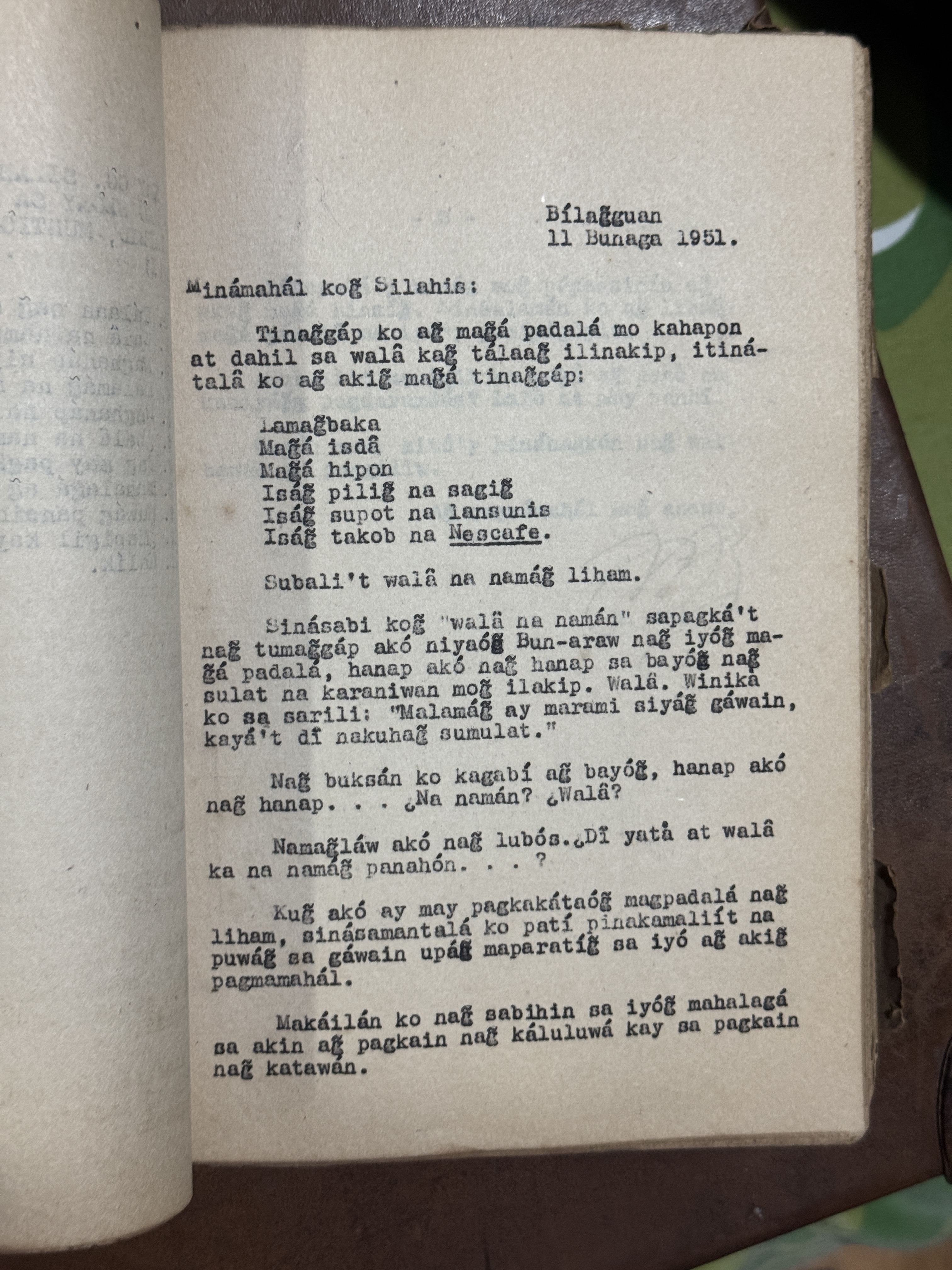
Among the most poignant of my inadvertent discoveries has been the diary—really more a scrapbook—of a once-famous and gifted writer (whose name I’ll leave out for now as he still has family around) who was imprisoned after the War for his stridently pro-Japanese sentiments and actions. In three languages, both typewritten and handwritten, he acknowledges receipt of his beloved’s supplemental rations—beef, fish, fruits, and coffee—but no letter yet again. “Nang buksan ko kagabi ang bayong, hanap ako nang hanap…. Na naman? Wala? Namanglaw ako nang lubos. Di yata at wala ka na naming panahon.” How many times do I have to tell you, he goes on to lament, that even for important to me than sustenance for my body is sustenance for my spirit?

I once came across a whole sheaf of journals in a ditch in front of our house, which I was inspecting because it had gotten clogged with what turned out to be a plastic bag full of papers. It had been carelessly thrown there by the home’s previous occupants or whoever cleaned it out—we had just moved in. They turned out to be the personal papers of a renowned UP professor, and as guilty as I felt about peeking into her life, I read a few pages, in which she confessed her admiration for a certain man (she lived and died a spinster)—only to remind herself, with what I could almost hear was a deep sigh of regret, that she considered herself wedded to God. I read no further, and decided to turn the papers over to a friend, a former and beloved student of hers who was the closest thing to a son.

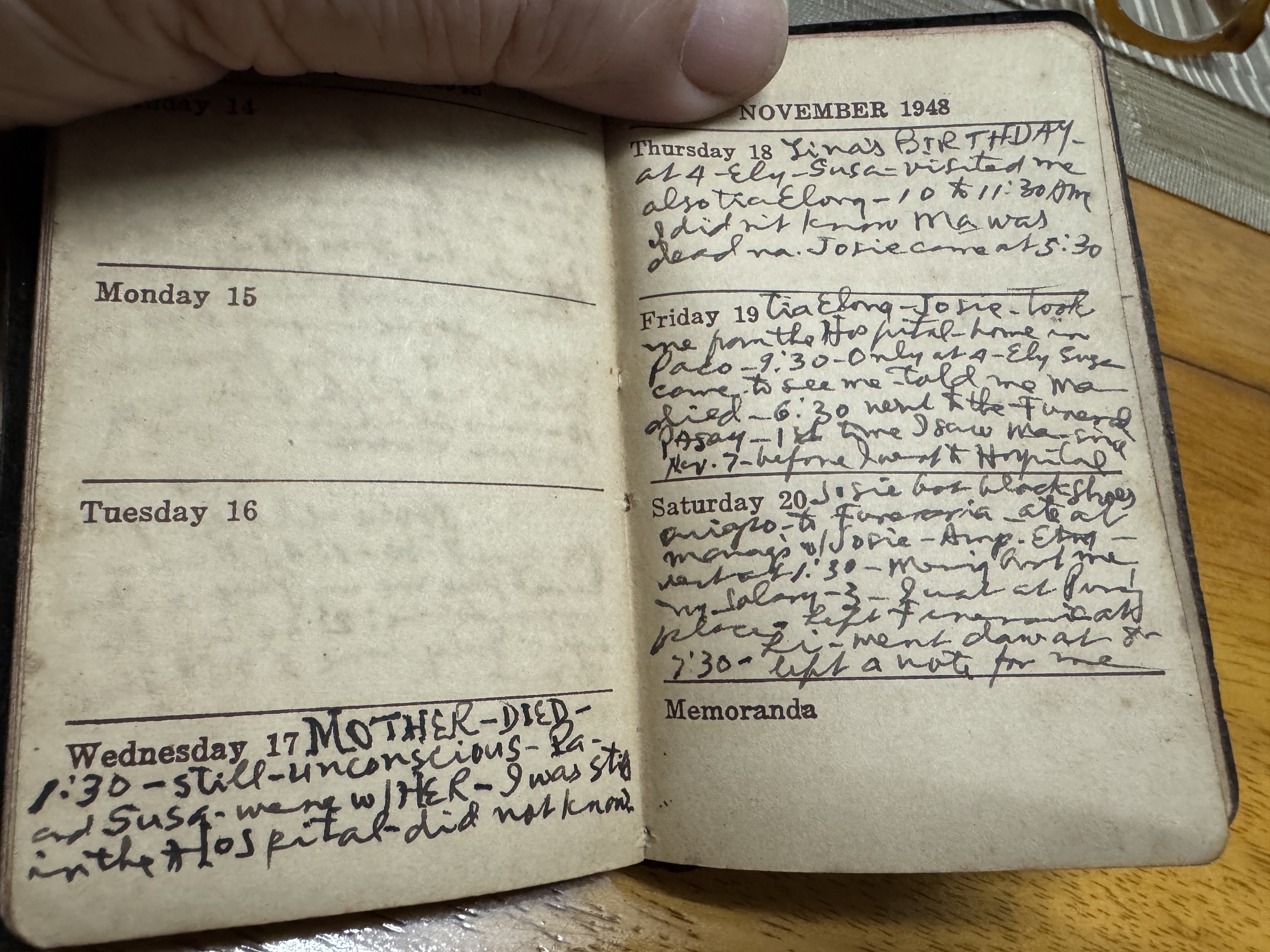
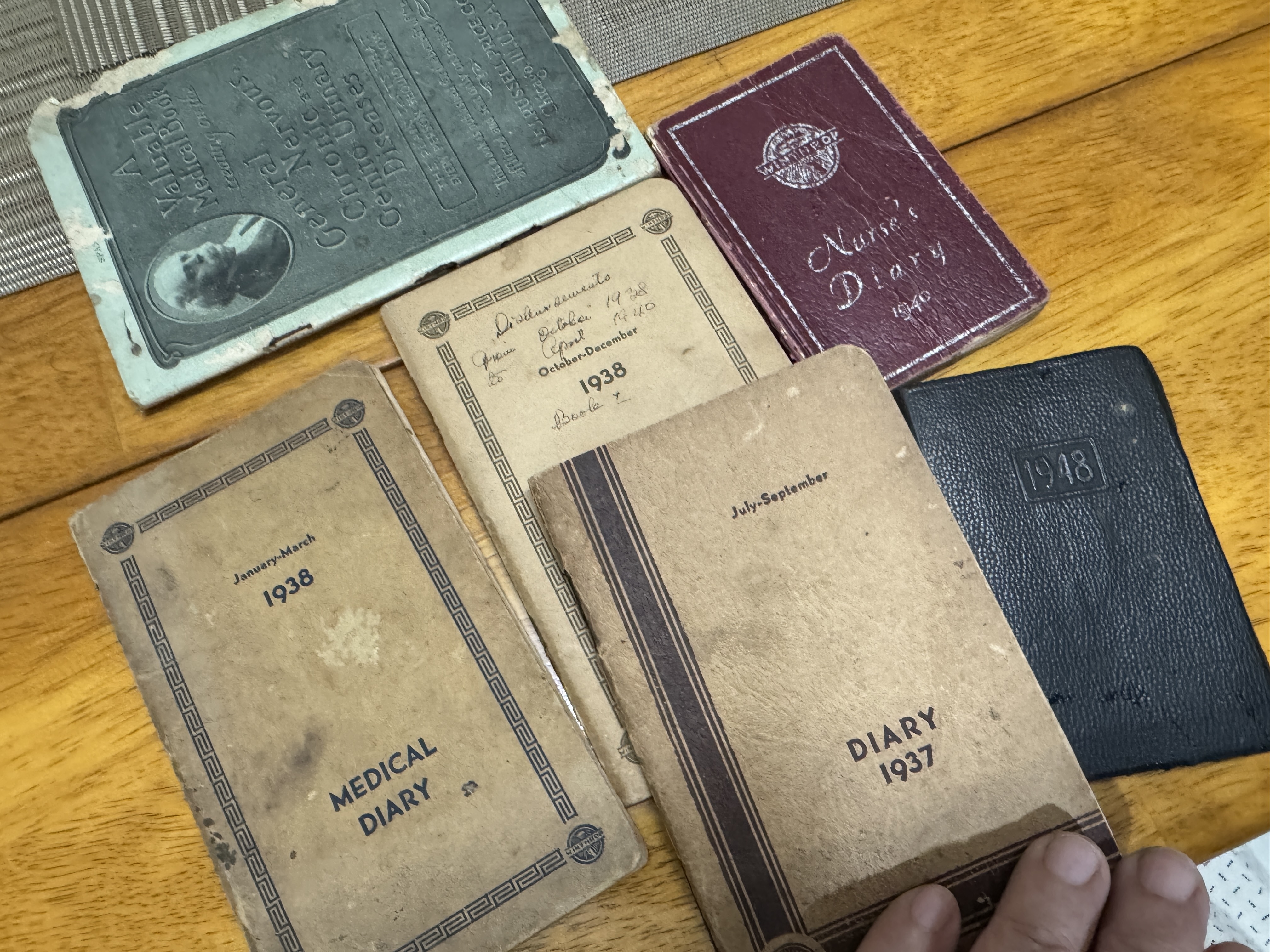
Most recently, some diaries from the late 1930s and 1940s came to me along with a medical book, and they contain nothing so revelatory, but the details of everyday life a,re always engrossing. They obviously belonged to a doctor—perhaps more than one—and while they contain medical marginalia they also carry legal notes, so the owner must have been studying to be a medico-legal person. Rather moving is the narrative in one diary of bringing a very sick mother to the hospital; I flipped a few pages and the inevitable entry appeared: “Mother died.” And there lay the stark helplessness of a doctor who could not save his own mother.

For many years now, the writer and presidential historian Manolo Quezon has been on top of an important enterprise called the Philippine Diary Project, a digitized compilation of diaries and memoirs from such notables as Jose Rizal, Ferdinand E. Marcos, Dean Worcester, and Emilio Aguinaldo all the way to the murdered activist Ericson Acosta (clearly more women need to be added to the roster).

“To me there are two holy grails,” Manolo told me. “The first is the diary of Gregorio H. Del Pilar. The diary of the American officer who led the expedition that killed him, Frederick Funston, exists but has yet to be transcribed. It was he, by all accounts, who pocketed del Pilar’s pocket diary; perhaps his papers will reveal them after a thorough search. The other is the diary of Benigno S. Aquino, Sr. The late Benito Legarda, Jr. told me that it was shown to him by one of the sisters of Ninoy, and that, in Spanish, it began, “I have been summoned to a meeting in Malacañan by the commanding general of the Japanese Military Administration…” The thing is, the last sister who had it, lost her memory and her children have not found the diary since.”

He adds that “A large portion of the Marcos diary is missing and anecdotally is said to be in the possession of a former member of his administration. For me though, what I’m seeking are diaries by Filipinos. Our own voices are woefully underrepresented. I think many were lost in Ondoy, many others have been thrown away, still more exist, but families are afraid people will take offense and so prefer to keep them secret.”

What I find from my own small collection is that whether they wrote in English or Tagalog, or used fountain pens or typewriters, our forebears recorded the smallest details such as “Auto repair 15.00” and “Won jai-alai 5-3 event.” Today we do all that with digital ink. I wonder what some digital pack rat will be remarking about us 50 years hence.

Penman No. 454: Revenge Travel, Local Edition

Penman for Sunday, September 3, 2023

WE PINOYS don’t really know what “summer” is any longer, with heavy rains falling out of the sky as much in March as they do in September, but especially with the new school calendar in place, most of us now do what used to be our summer traveling between May and August, if Facebook posts are any indication.

Many Filipinos—those who can afford it—still seem to be in “revenge travel” mode, flying off to Prague, Helsinki, Myanmar, and other parts off the usual travel charts. My wife Beng and I had a couple of dream spots halfway around the world in mind—recalling our pre-pandemic spree in 2019 when we blew a chunk of my retirement kitty on an escapade to Penang, Tokyo, England, Scotland, Singapore, the US, Turkey, and Macau—but our shrunken pesos and aching knees urged something kinder and more affordable: go local, and suffer no jetlag.

As it happened, we visited at least four places these past few months that I’d like to share with our readers looking for alternatives to the usual weekend destinations, ie, Tagaytay, Subic, Baguio, and Boracay. Some of these trips were partly for work, although I have to admit that pleasure pretty much overpowered anything else on our minds once we got there.

The first was a treat for the whole household—Beng, myself, my 95-year-old mom Emy, her caregiver Jaja, our housekeepers Jenny and Ara, Jenny’s husband and Beng’s assistant Sonny, and Jenny’s and Sonny’s kids Jilliane and Buboy. This is our extended family, whom we genuinely enjoy being with, so every year I promise to take them out on an overnight trip to water resort, as everyone (well, at least below 65) loves to swim. That means a wave pool, a place to cook, good and clean rooms for sleeping and showering, and not too long a ride (for my mom who gets carsick). 

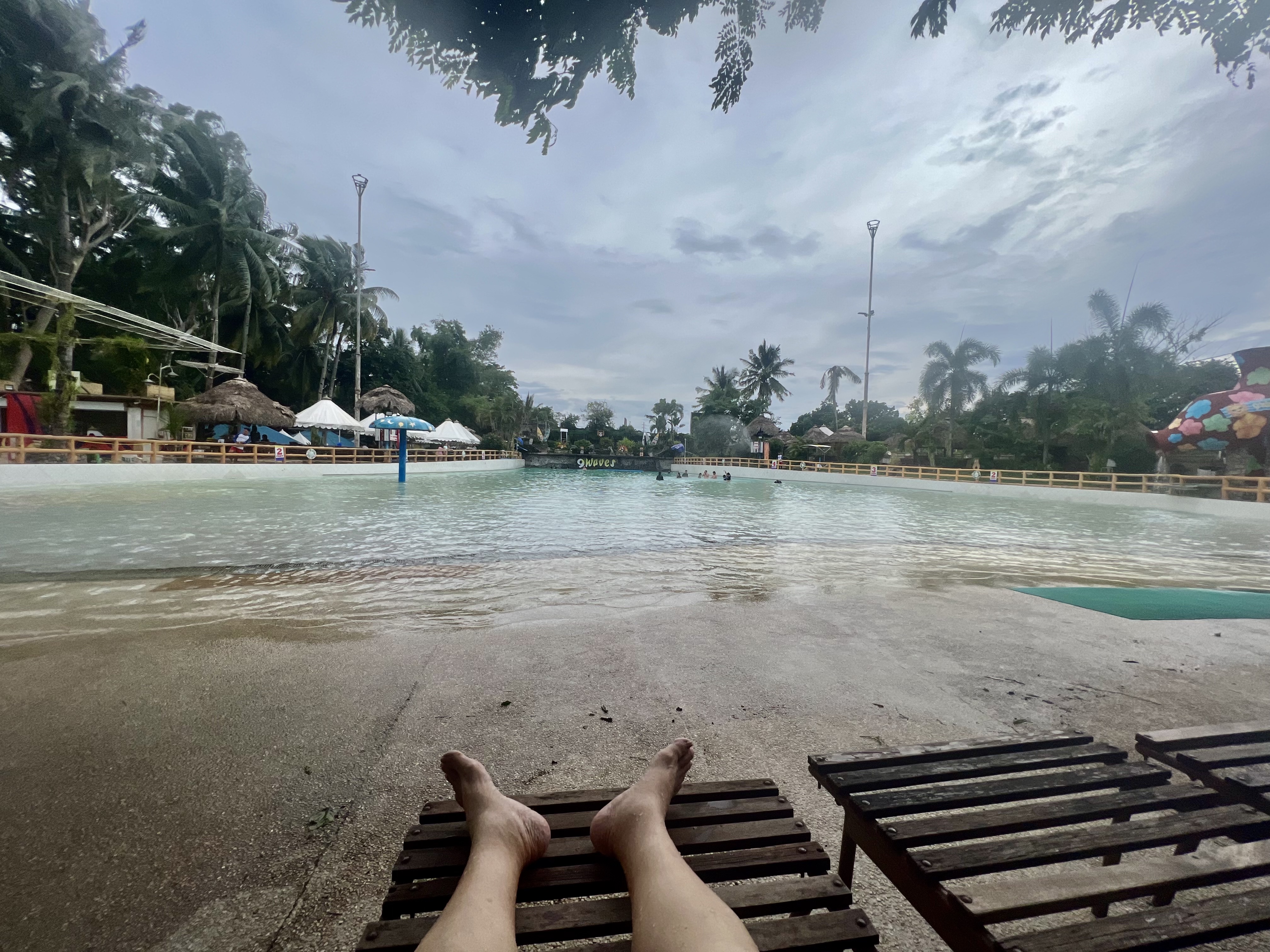
Last year it was the Villa Excellance Beach and Wave Pool Resort in Tanza, Cavite that did the trick for us—and it’s still worth a weekend for your family—but a little Googling yielded me something much closer to our home on UP Campus: the Ciudad Christhia Nine Waves Resort in San Mateo, Rizal, just a 30-minute hop away via the Commonwealth/Tumana route. The place had everything we were looking for—it’s an ideal venue as well for teambuilding seminars, if you don’t want to go too far, with very helpful staff and prices that won’t break the bank; you can do your broiling right beside the huge pool, and the cabanas were clean and cozy. While I flailed around in the knee-high water, six-year-old Buboy had a blast in the wave pool, which was all that mattered.

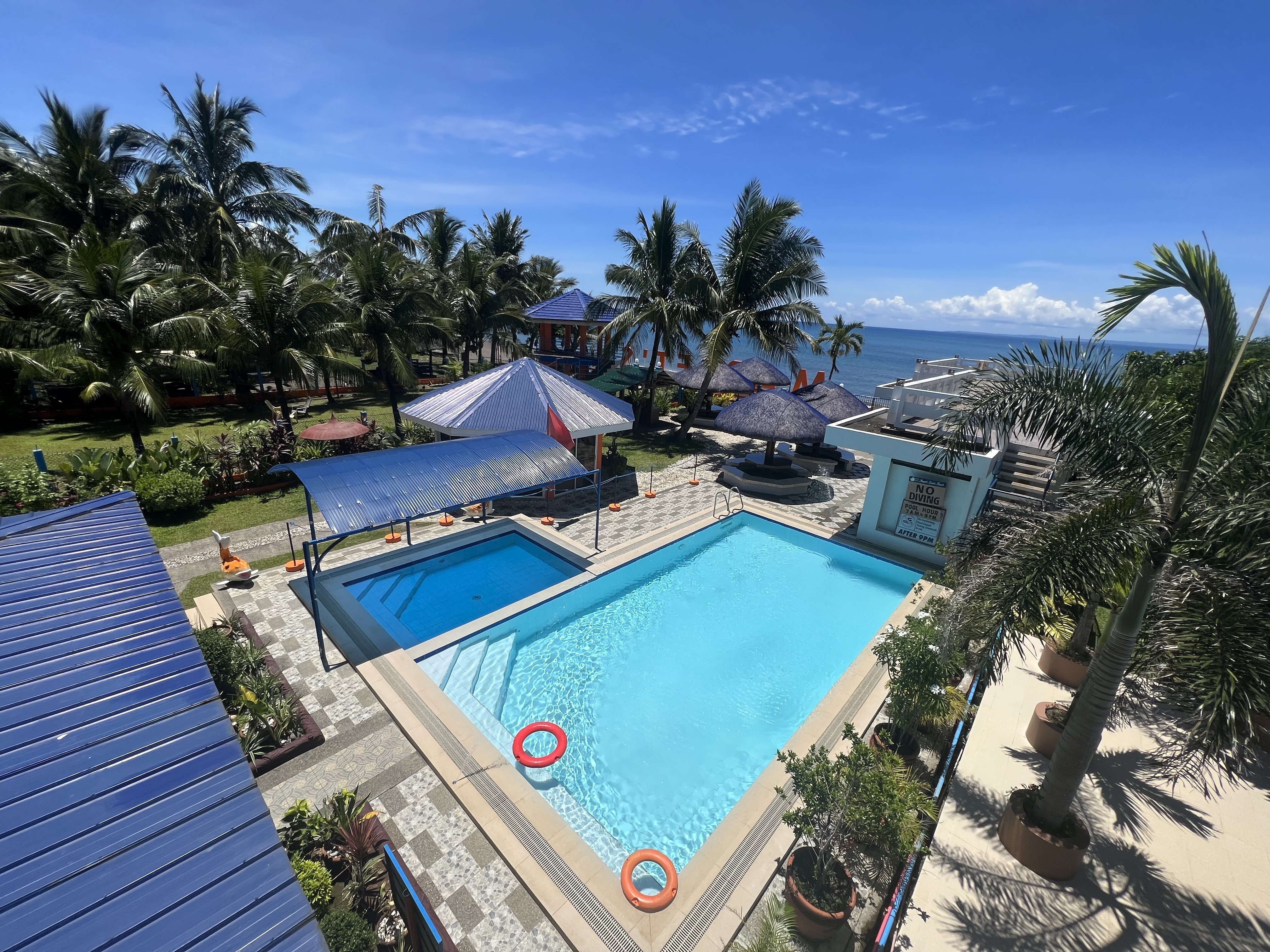
If you don’t mind driving through the mountains on a zigzag road for about three hours, then a trip to Infanta, Quezon will make the effort worth it. Facing the Pacific, but with Pagbilao Island buffering the waves in between, Infanta offers a bevy of beach resorts, of which Beng and I went to the Marpets Beach Resort, which was run by an American expat and his Filipino wife. Aside from its stretch of beach, the resort had three swimming pools, very livable quarters, and deliciously cooked food. The great thing about a roadtrip to Quezon—which is reachable via the zigzag Marilaque Highway from Marikina and also via the equally scenic though more moderate route passing Antipolo, Famy, and Real—is that the journey itself is an adventure, with much local produce to buy along the way, and breathtaking views to snap. 

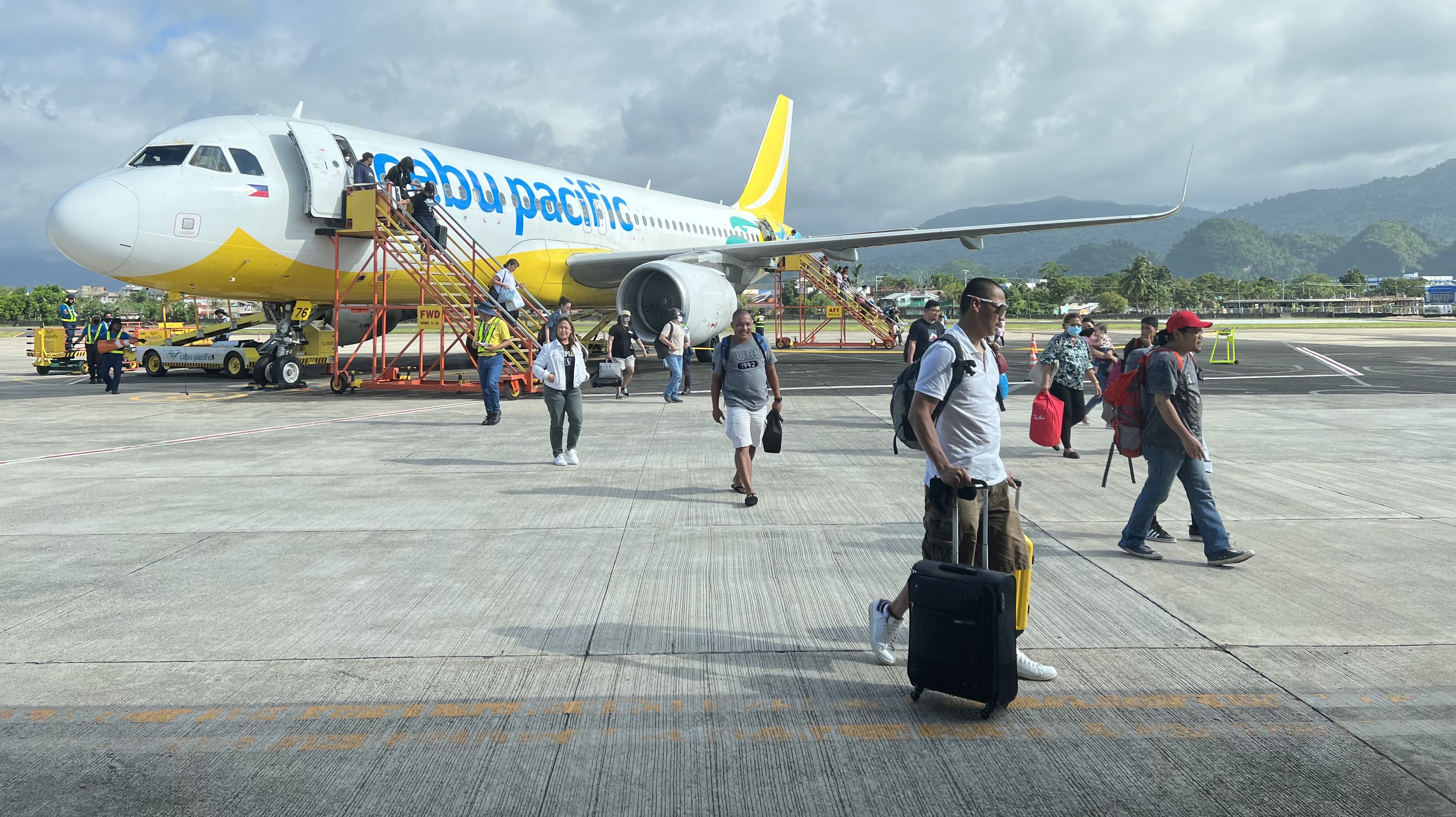
Our third destination was almost a random but providential choice. Looking for an inexpensive getaway far enough from Manila to require a plane, and with some airline credits to expend, Beng and I looked up Cebu Pacific’s destination map and settled on one spot we’d never been to—Virac, Catanduanes. We Manileños often hear of Virac only in the context of incoming typhoons, for which it’s probably unfairly used as a reference point, but if you catch it on a sunny day like we did, then you’d rather be here than busy Boracay. I found a new boutique hotel on booking.com called Happy Island Inn in San Vicente, a short tricycle ride from downtown fronting the water, and it turned out to be a winner, priced very reasonably with the friendliest front desk fellow I’ve ever met in all my travels.

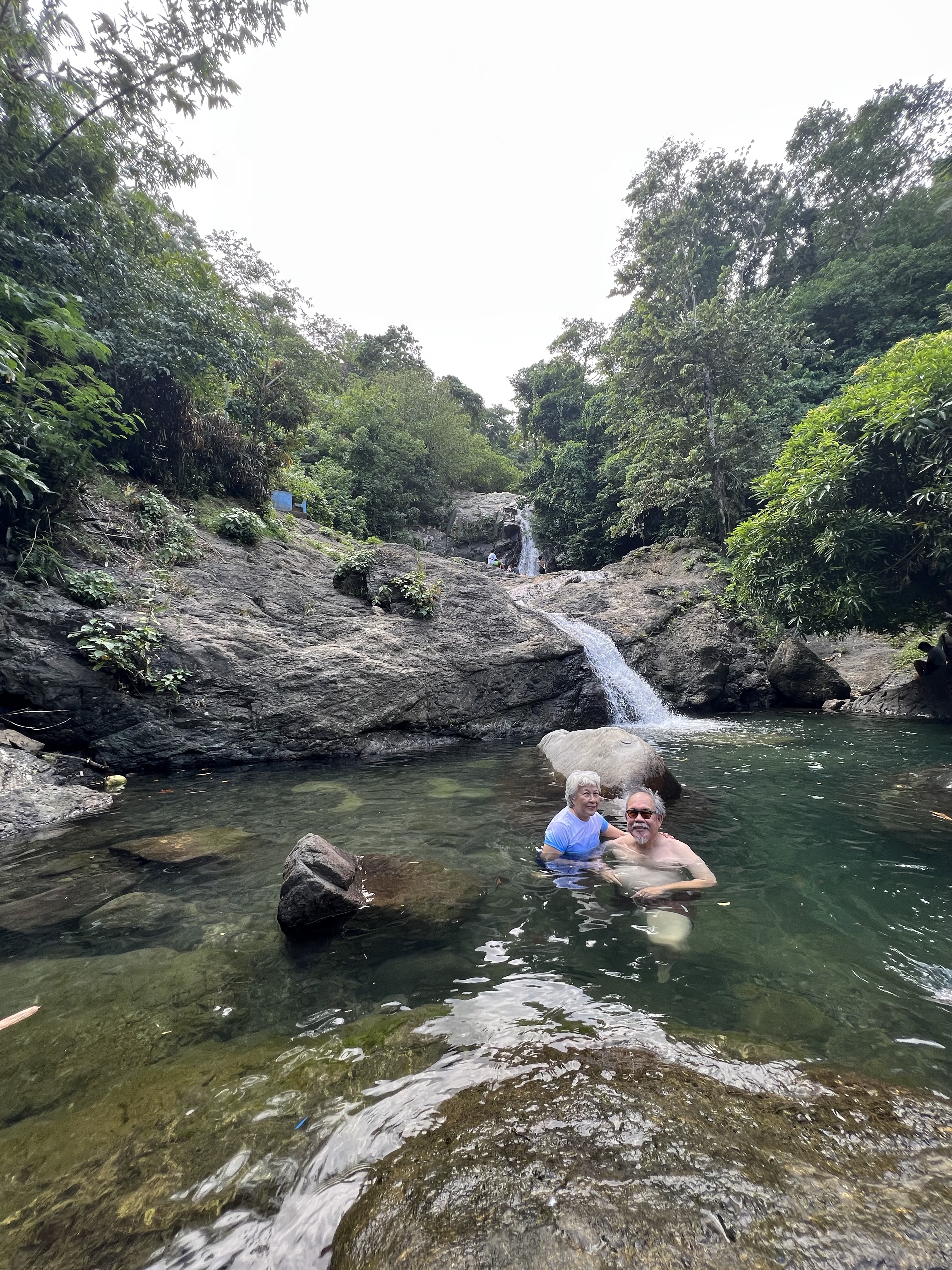
Soon we learned that nearly everything in Virac is reachable by tricycle, which we hired for a day tour that included a beachside lunch at the ritzy Twin Rocks resort, a visit to the historic Bato church, hewn out of stone and coral, and a bracing dip into the cool and clear waters of Maribina Falls (entry fee, P25 per person). We made new friends of a lovely couple, Bobby and Myette Tablizo, with whom we shared stories under a full moon. There’s a lot more to be discovered of Catanduanes up north—the island can be circled on a first-class circumferential road—but we’ll save that for next time.

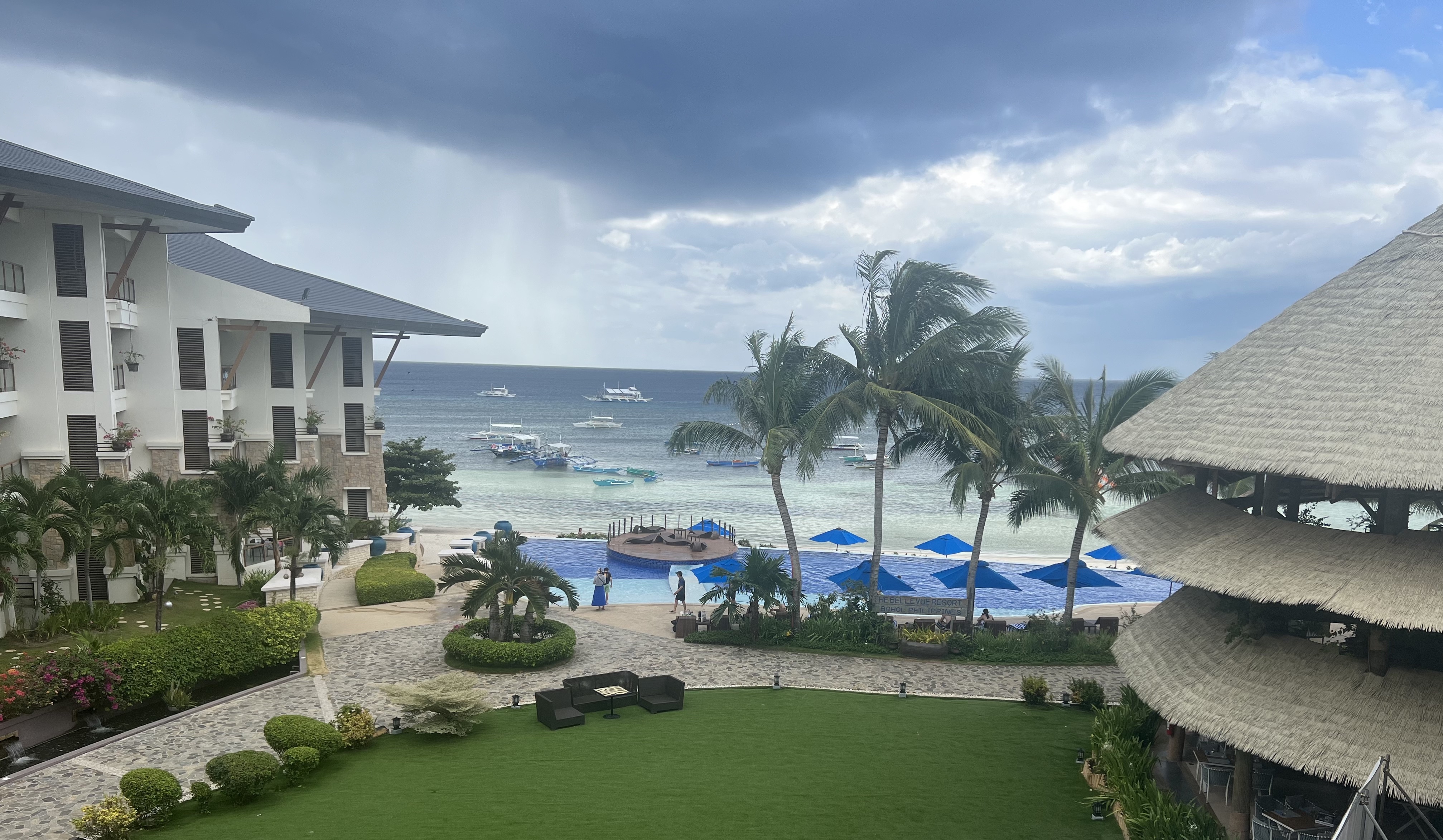
My last sortie was by my lonesome and work-related, but work gets doubly hard in a place meant to transport you to blissful oblivion. This was in Panglao, Bohol, which, the last time I looked many years ago, was little more than a cluster of huts. Imagine my surprise when we stepped off the plane into a world-class airport and then, just minutes later, were wheeled into the kind of resort you find on some glossy magazine cover or on the travel channel but never thought was right in your backyard. (Well, of course there’s a whole class of Pinoys who do know about such places, and I’ve been fortunate to have been invited to a few, but my poor-boy’s jaw still can’t help dropping in the face of luxury.)

The Bellevue Resort in Panglao is one such place that will make you wish you’d studied something like plastic surgery so you could spend a few weekends here every year. The rooms are as plush and comfortable as you should expect at its price point, but it’s the waterfront that will captivate the first-time visitor, with its white-sand beach, tour boats, infinity pool, and multilevel restaurant. Breakfast or dinner beachside is an option, and a tour of the rest of Bohol can be arranged.

Of course, there’s always Bali or the south of France, but with the new travel paperwork requirements, who needs the hassle at immigration? Save yourself the travel tax and go local. It’s still more fun in the Philippines, if you know where to look.

Penman No. 325: Free to Think, Free to Speak

IMG_0438.jpg

Penman for Monday, October 29, 2018


I’VE BEEN seeing frothy messages on the Internet calling for the University of the Philippines to be shut down because it seems to be producing nothing more than anti-government critics and rebels (and, uhm, five out the seven new National Artists announced last week).

It’s no big secret that rebellion and resistance are coded into UP’s DNA, because it has always encouraged critical thinking, which in turn encourages—at least for a while, until complacency sets in—an attitude of dissent, of anti-authoritarianism, of rejection of the status quo. That’s how knowledge happens, as every scientist since Galileo has affirmed. Learning to lead requires critical thinking; learning to follow demands nothing more than blind conformity.

Apply that to the political sphere, and not surprisingly, UP has for the past century been a crucible of protest, against both internal and external forces seeking to influence its constituents’ thoughts and actions. Those protests and their causes have ranged from tuition fees, uniforms, and substandard facilities to unfair dismissals, Malacañang interference, foreign control of our destiny, and the overhaul of Philippine society itself.

UPPrep1950.jpg

In 1928, a law prescribed the wearing of uniforms by students in all public schools, including UP. The uniform for men was a white suit (khaki on rainy days); for women, a white blouse and dress reaching three inches below the knees. UP students opposed the measure, and President Rafael Palma supported them.

In 1933, the first student protest against a tuition fee increase, from P30 to P50 per semester, took place at the College of Education in the form of a boycott led by, among others, Fe Palma—the daughter of the President.

The resistance got more serious when it came to political interference in UP affairs. In the early ‘30s, in a tussle over differing positions on Philippine independence, then Senate President Manuel Quezon punished Palma—and the entire University—by removing UP’s lump-sum allotment. Quezon was a notorious meddler in UP matters, often coming to Padre Faura from Malacañang when he was President astride a white horse. A young UP law student even attacked Quezon for his “frivolity,” accusing Quezon of throwing lavish parties in Malacañang while the country suffered under the Americans. The student’s name was Ferdinand Marcos.

This didn’t stop with Quezon. When President Quirino demanded courtesy resignations from all government officials, UP President Bienvenido Gonzalez refused to tender his, to protect UP’s autonomy.

In the 1950s, at the height of McCarthyism, the Congressional Committee on Anti-Filipino Activities conducted a witch-hunt for communists in UP; the committee was led by Cong. Leonardo Perez, himself a former Collegianeditor. A throng of 3,000 students led by Heherson Alvarez and Reynato Puno marched to Congress in protest.

Diosdado Macapagal made few friends in UP when, upon assuming office in 1962, he announced that his choice for next UP President was Carlos P. Romulo, practically bypassing the Board of Regents. Macapagal got his way.

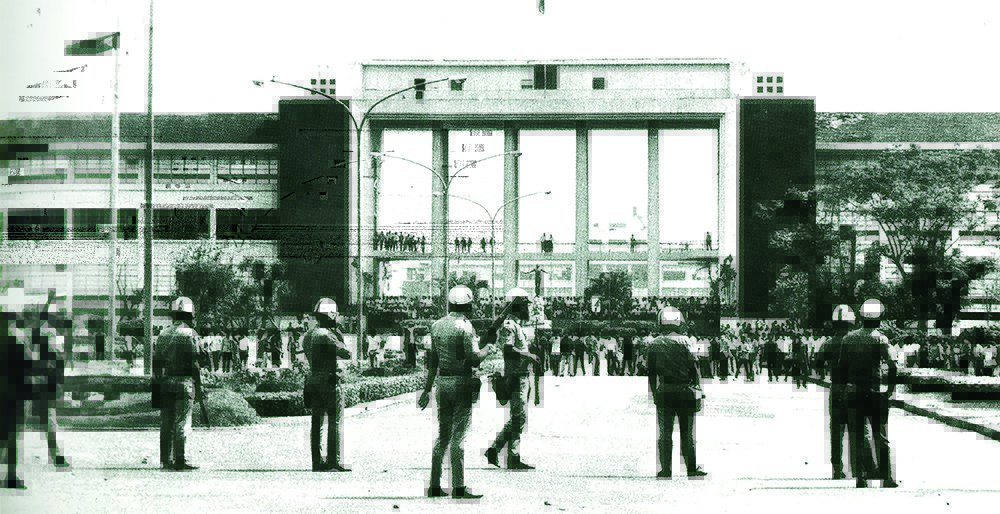
About Macapagal’s successor Marcos, I can only say that as a 17-year-old participant in the Diliman Commune, I carried but never got to throw a Molotov cocktail—but I would have if I had to, firm in the belief that the military had no right to drive their armored vehicles onto UP grounds.

fred-dilimancommune-universityforthepeople.jpg

True, since the 1940s, many of the leaders of the Communist Party of the Philippines have come from UP, from the fascinating Lava brothers to the English major Joma Sison. But UP has also bred Presidents Laurel, Roxas, Macapagal, Marcos, and Macapagal-Arroyo. Ramon Magsaysay and Fidel Ramos both spent time in UP before moving elsewhere. We can add hundreds of senators, congressmen, Supreme Court Justices, Cabinet secretaries, and icons of industry, the arts, the sciences and the professions to this list.

In other words, UP has attracted all kinds—communists and socialists, yes, but also capitalists, ultraconservative Catholics and born-again Christians, Rizalist cultists, military agents, the Ananda Marga, and Muslim separatists. Our 300,000 alumni can count saints as well as scoundrels, Jedi Masters and Sith Lords, democrats and demagogues.

And the same thing can be said of top global universities like Cambridge, which in the 1930s was home to what came to be known as the “Cambridge Five,” led by the top Soviet spy Kim Philby. There’s a Communist Party of Canada Club at the University of Toronto, alongside an American Culture Club and a Chinese Christian Fellowship. Even Wharton has a Marx Café, an underground club of Marxist enthusiasts.

When you think about it, apprehensions about UP in 2018 are no more tenable than the charges laid against freethinkers on campus back in the 1940s. And we actually do a lot more than rebel—look into our breakthroughs in research on www.up.edu.ph, which has helped boost our ranking to the top of Philippine universities.

For me, the true heart of UP lies neither in the Right nor the Left, but in that great liberal middle—“liberal” with a small “L”—whose members value the freedom to think, to speak, to study, and to teach, subscribing neither to State propaganda nor to Party doctrine, but trusting their own reason and education to illumine the way forward.

In its editorial of April 14, 1962, the Philippine Collegian wrote this about outgoing President Vicente Sinco, a visionary who fathered what came to be known as the General Education program and who fought to maintain UP’s secular character:

“Dr. Sinco is one of the most liberal of UP presidents. He has stood for intellectual freedom, for the autonomy of the mind…. This particular achievement of Dr. Sinco in… protecting the freedom of intelligence from the infringements of lies, orthodoxy, and mediocrity is a challenge to anyone in the future who will occupy the office.”

TR.jpg


Penman No. 320: On Academic Freedom

Avatars.png

Penman for Monday, September 24, 2018


Let me dwell this week on the idea of academic freedom, which has been in focus again recently in the light of controversies involving conflicting ideologies on campus. It’s important because universities are the natural home of ideas, and therefore for clashes of ideas, which then take various forms of political and cultural expression.

Modern (and especially secular) universities stand on the bedrock of academic freedom, which at its simplest means one’s freedom to choose what to study and what to teach, and giving value to knowledge—not power, not money, not superstition—as our best guide to the way forward. That knowledge can be gained through research and reason, through experimentation, debate, and creative intuition. Hopefully that knowledge will yield better options for a thinking citizen.

That’s the basic concept, and while it sounds like something no one should quarrel with, the fact is that academic freedom has been under constant threat and attack over the past century, precisely because knowledge and its free expression can be dangerous to those in power. The challenges understandably often come from the Right, but even the Left—preternaturally imbued with a sense of moral righteousness—has not hesitated to throttle academic freedom when it feels justified, such as when neo-Nazis appear on campus in the US and Europe.

Two specific cases come to mind to illustrate both sides of this argument. The first (drawn from an unpublished history of UP) shows State power brazenly applied to stifle freedom of expression at the University of the Philippines.

In the early 1930s, law student and Collegian editor Arturo Tolentino got into a fight with Law Dean Jorge Bocobo over whether he could write about the Hare-Hawes-Cutting Law, which then-Senate President Manuel Quezon and Bocobo himself opposed. When the Collegian published a news item seeming to support the bill, Bocobo backed the Collegian adviser’s decision to stop printing the Collegian and to burn the 900 copies already printed, on the grounds that the Collegian was not supposed to publish political material. Tolentino appealed to President Palma, who upheld Tolentino on the basis of free speech. But Bocobo appealed to the Board of Regents, which was filled with Quezon allies, and they overturned Palma.

Dean Bocobo reprimanded Tolentino and threatened him with suspension and even expulsion if he kept violating the BOR ruling. But it was Quezon who was most infuriated by the whole affair, and his ire was unmistakably vented on Palma.

Only days after Palma upheld the Collegian’s right to discuss the HHC, the legislature came down hard on the university and imposed a new system of appropriation requiring an itemized budget. Quezon commended the Lower House for probing the finances of UP, stressing that the move was “a distinct service” to the university. Things got worse between Palma and Quezon, and when Palma finally resigned in fatigue after ten years of service, the BOR denied him a gratuity on some technicality, and denied him an honorarium as well. (When Palma died in 1939, however, Quezon stopped everything to be able to attend his funeral, at which he offered generous words of praise for his former adversary.)

The second case involves an aborted debate at Yale University in April 1974, which featured Dr. William Shockley, a Nobel prizewinner for Physics, who had openly proposed that blacks were racially inferior, and that intelligence could be measured by the percentage of one’s Caucasian blood. So repugnant was the notion to many Yale professors and students that they effectively stopped Shockley from speaking, in a fracas that resulted in some suspensions. (And here I have to thank Fareed Zakaria for bringing this to my attention in a recent CNN program.)

A committee was later set up to investigate and assess the incident, and the report of that committee is instructive in what it concluded: “The primary function of a university is to discover and disseminate knowledge by means of research and teaching. To fulfill this function a free interchange of ideas is necessary not only within its walls but with the world beyond as well. It follows that the university must do everything possible to ensure within it the fullest degree of intellectual freedom. The history of intellectual growth and discovery clearly demonstrates the need for unfettered freedom, the right to think the unthinkable, discuss the unmentionable, and challenge the unchallengeable. To curtail free expression strikes twice at intellectual freedom, for whoever deprives another of the right to state unpopular views necessarily also deprives others of the right to listen to those views.”

The committee quoted Justice Oliver Wendell Holmes, Jr., who wrote in U.S. v. Schwimmer,1928, that “If there is any principle of the Constitution that more imperatively calls for attachment than any other it is the principle of free thought—not free thought for those who agree with us but freedom for the thought that we hate.”

That’s a sobering reminder for anyone who professes to uphold academic freedom and human rights: knowledge moves forward not by silencing the other side, but by presenting superior arguments—not always the easiest thing to do, especially without screaming your head off.

Penman No. 307: Minding the Magazine (2)

TwoMags.jpg

Penman for Monday, June 18, 2018


LAST WEEK, I wrote about acquiring copies of English magazines from the 1770s so my students in English and American literature could see what people in those days actually read, and what “entertainment” may have meant to them. I noted how magazines are arguably better chroniclers of everyday social life than books, especially since they also came to be profusely illustrated, and may even have sold copies more on the strength of their illustrations than their text.

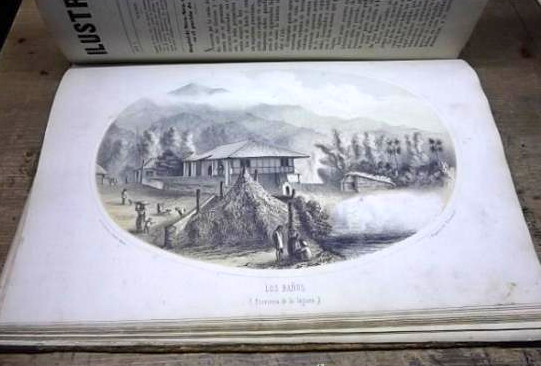
This was certainly true for Ilustracion Filipina, an illustrated magazine that came out twice a month between March 1859 and December 1860—a pitifully short life-span for such a glorious publication. Not to be confused with the similarly titled La Ilustracion Filipina, published between 1891 and 1905, Ilustracion Filipina featured exquisite lithographs depicting scenes and aspects of Filipino life, produced by such renowned artists as Baltasar Giraudier and C. W. Andrews. I have yet to be so fortunate as to find even one copy of this magazine, which was bought by subscription and lasted for no more than 44 issues. (An 1859 compilation with 14 lithographs by Andrews sold in Spain in 2013 for 1,400 euros.)
LosBanosIlustracion.png

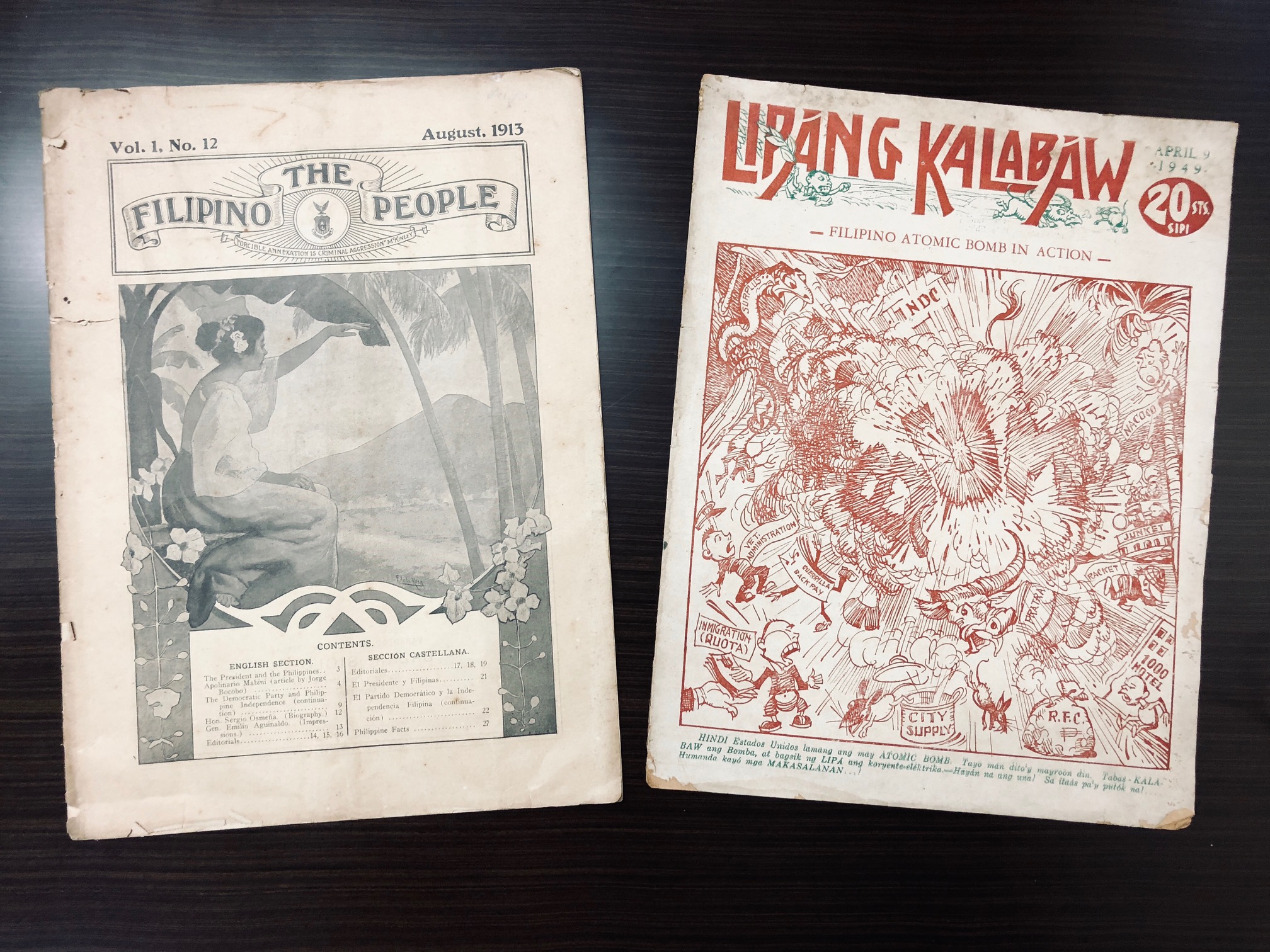
What I did come across in my near-daily trawlings of eBay a few weeks ago were issues of The Filipino People (Vol. 1, No. 12) and Lipang Kalabaw (April 9, 1949). In all these years of looking at hundreds of publications, I had not seen these two magazines.

When I got my hands on them, the older magazine proved particularly interesting, because it was published and edited in Washington, DC by none other than Resident Commissioner Manuel L. Quezon (who would have been about 35 then), “as an official medium for expressing the views of the people whose name it bears.” The magazine is “devoted solely to… the fair and truthful exposition of the relations between the Philippines and the United States, with a view to hastening the ultimate establishment of Philippine independence upon a self-governing republican basis.” Tellingly, its masthead contains a quotation from (of all people) McKinley: “Forcible annexation is criminal aggression.”

As a political magazine, it’s full of polemical articles, not very interesting today to anyone but historians, and brief biographical profiles of Apolinario Mabini, Sergio Osmeña, Emilio Aguinaldo (whose doorkeeper informs the American interviewer “If the American gentleman would be pleased to wait but a moment he would be joined by the master of the house”). It contains a Spanish section, basically a translation of the English pages. While I was hoping for a poem or a short story, the only touches of art in the magazine were a photograph of a majestically clean San Sebastian Church, and the cover (sadly only in black and white) by Fabian de la Rosa.

Lipang Kalabaw, as it turns out (and many thanks to Crispin Ponce for the source material), went through three incarnations—first as a weekly owned edited by Lope K. Santos between 1907 and 1909, with caricatures drawn by Jorge Pineda. This first version struck hard at its political targets, which struck back even harder, forcing the magazine to shut down. Santos revived it in 1922 under banner of Bagong Lipang Kalabaw, promising to be gentler in its tone—but it zeroed in on Governor-General Leonard Wood, and also closed shop after two years following a libel suit. Its third, last, and supposedly most tepid version came out in 1947. (The “lipa” refers to a big-leafed tree.)

My 1949 issue curiously has few real bylines and no editorial board, just pseudonyms like “Binatang Balo” and “Igueng Bel-Bel”—probably the smart thing to do if you were skewering President Quirino and the Congress, with jibes like “Paligsahan sa Pagnanakaw: Ngayon, sa ating Kongreso, and mga usapan ay hindi na ukol sa ‘kung sino ang magnanakaw at sino ang hindi,’ kung di ay ‘sino sa ating lahat ang nakapagnakaw ng lalong marami.’ Samakatwid, lumalalabas na ‘todos na parejo, camaron y cangrejo.’”

Perhaps this magazine deserves a fourth incarnation?

If it’s not too late to dream, one of the things I’d like to do in my impending retirement is to create and edit a magazine—even just an e-zine—I’ll call The Filipinist, devoted to antiquarian books, periodicals, paintings, sculpture, photographs, prints, maps, coins, stamps, and historical memorabilia—anything and everything having to do with the Filipino past. It won’t be for scholars (we have enough of those) but for enthusiasts, although scholars would of course be welcome to contribute their insights. I think I should be able to assemble a pretty credible team of editors and writers among like-minded friends and fellow collectors, and in the very least, The Filipinist should fill a gap in media overloaded with articles about tomorrow, technology, and the world out there. And just in case these musings become more than an idle wish, I’ve set aside the domain name for filipinist.ph, as my small personal investment in the future of the Pinoy magazine.

Penman No. 305: More Autographs and Memories

Romulo

Penman for Monday, June 4, 2018


FOUR YEARS ago, I wrote a column-piece titled “Autographs and memories,” largely about a visit that Beng and I made to an exhibit of autographs at the National Archives in Washington, DC, where I ogled the signatures of such as Ezra Pound, Adolf Hitler, Albert Einstein, and a score of American presidents and notables. I wished loudly that we would have a similar exhibit curated and mounted, say, at the National Museum.

Having ventured into collecting mid-century genre paintings, I’m slowly building up a digital archive of artists’ signatures. Those of our National Artists are pretty well covered by numerous coffee table books (so well that I’m sure some enterprising souls have made an industry out of copying them), but I’m more interested in the less-known likes of Serafin Serna, Gabriel Custodio, Crispin V. Lopez, Ben Alano, Jose D. Castro, and Fortunato Jervoso, among others—painters born shortly after the turn of the century and who may have studied under Fernando Amorsolo, or been influenced by his style.

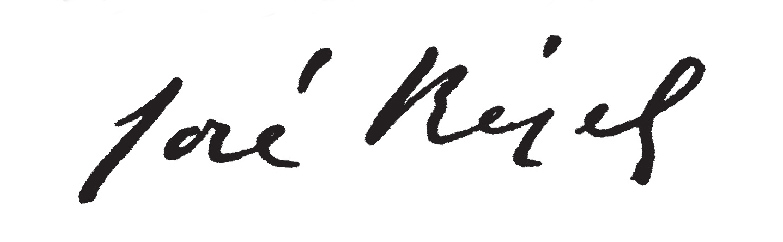
When it comes to literature, however, then I do feel happily obligated to collect works signed by our National Artists, and have shamelessly invoked the privilege of friendship to solicit signatures to go with the books of Virgilio Almario, Bien Lumbera, and F. Sionil Jose—and, when they were alive, NVM Gonzalez, Franz Arcellana, Edith Tiempo, and Nick Joaquin. I’ve just as assiduously sought out those of such estimable and historically important writers (apart from my close personal writer-friends) as Carlos Bulosan, Zoilo Galang, Bienvenido Santos, Aida Rivera Ford, Tita Lacambra Ayala, Greg Brillantes, and Resil Mojares. On my wish list remain the autographs of Manuel Arguilla and Stevan Javellana, ideally on their books—and dare I even add Jose Rizal?

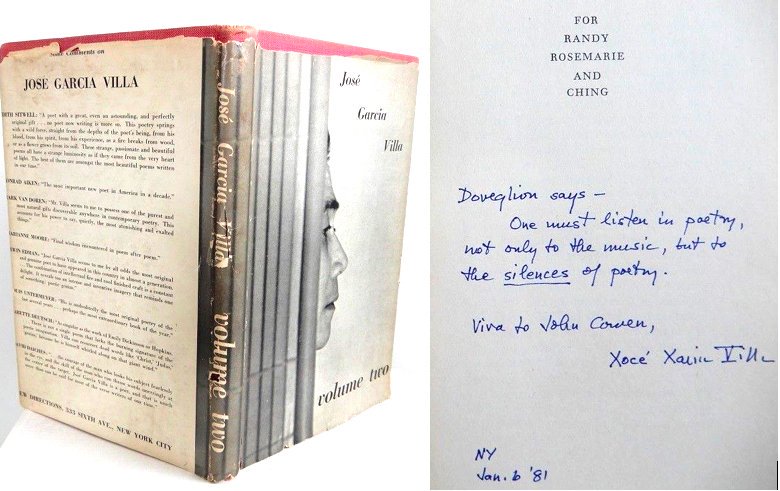
I never was his student (although Jimmy Abad and Luigi Francia were, half a generation ahead of me), but I had always wished to meet Jose Garcia Villa. The closest I would get was a signed copy of his 1949 book, Volume Two, courtesy of eBay.

Villa.jpeg

The Web may be the bane of many a bibliophile yearning for the tactile pleasures of typeset pages and deckled edges, but it also happens to be a nearly inexhaustible trove of hidden treasure, like the seabed where gold-laden galleons lie.

It was where, a couple of weeks ago, I chanced upon a book inscribed by the late dramatist and poet and National Artist Rolando Tinio to a “Lito, Lito,” whom he gently urges to move away from English, like Tinio himself did. Tinio had directed one of my plays in the late 1970s, but I must have been so awestruck that I never got to ask him to sign anything, not even the playbill.

That reminded me of another departed National Artist I wouldn’t have been too shy to swipe a signature from—but also never did. Lino Brocka and I collaborated on about 14 movies, and I corresponded with him frequently, especially when I was sending him scripts and storylines from graduate school in the US in the late 1980s until he died in 1992. But I don’t recall that he was ever the writing kind. (Instead, unmindful of time zones, he’d call me at 3 in the morning.) For all the work we did together, I can’t locate a single note from Lino.

I did secure an autographed book and a note—neither of them meant for me—online, signed by another National Artist for Literature (yes, the one we very often forget about, perhaps because he distinguished himself in so many other fields): Carlos P. Romulo, who received that honor in 1982.

My only encounter with Gen. Romulo was through a speech of his that I memorized and declaimed in grade school—the one that describes Filipinos as “short sunburnt men who love to fling the salty net” (I must’ve flung that net a thousand times in my impassioned recitations)—but I knew him to be a personage so highly accomplished and acclaimed that one university wag would claim that CPR had “more degrees than a thermometer.”

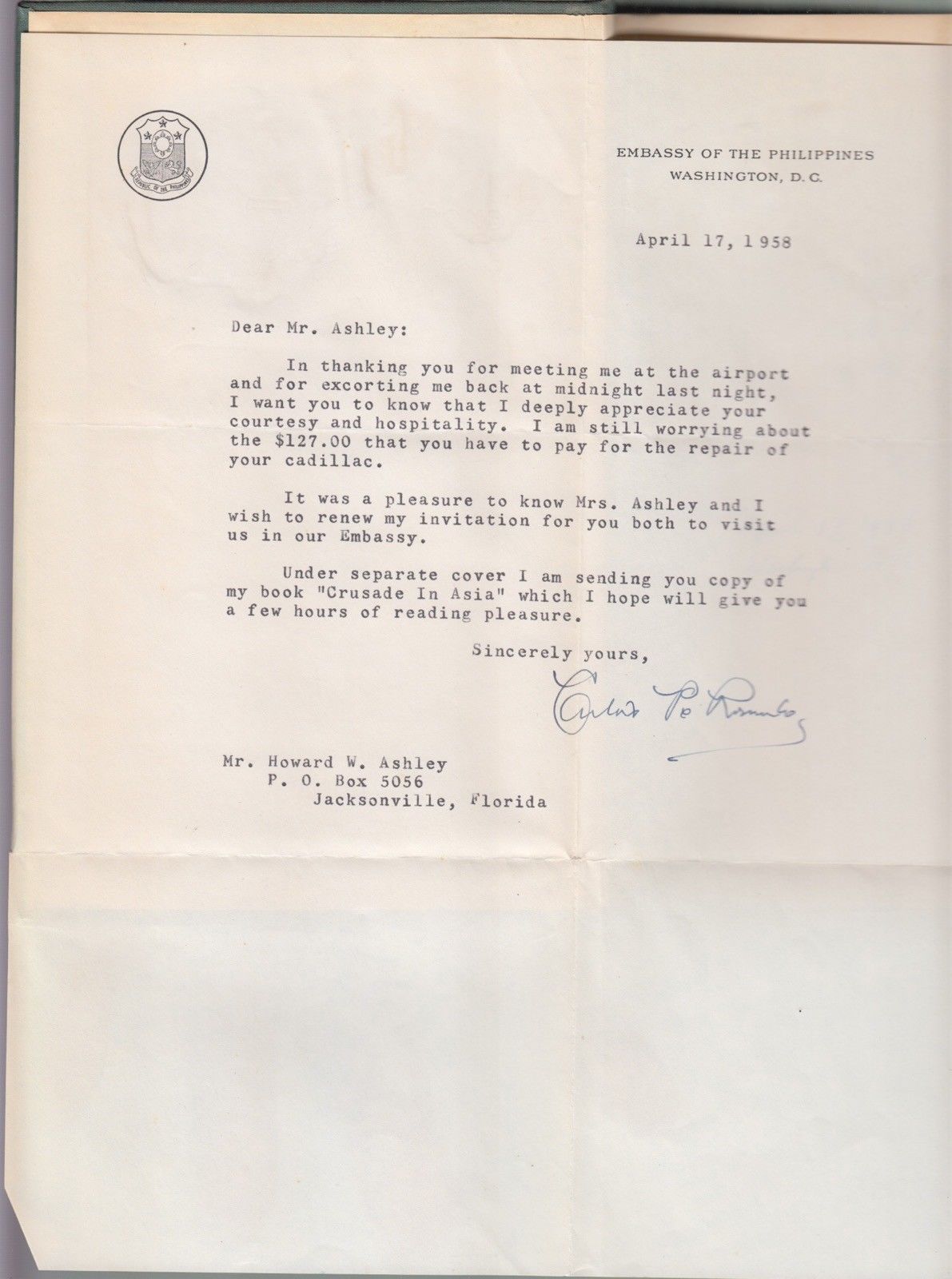
The book, Crusade in Asia, was inscribed by CPR to a “Howard W. Ashley” of Jacksonville, Florida, and was accompanied by a typewritten and signed letter also dated April 17, 1958 on the letterhead of the Philippine Embassy in Washington, DC, where CPR was serving as ambassador between 1955 and 1962. In the note, Romulo thanks Ashley for meeting him at the airport at midnight—a gesture that had unintended consequences, as CPR writes that “I am still worrying about the $127.00 that you have to pay for the repair of your Cadillac.”

Rebuke

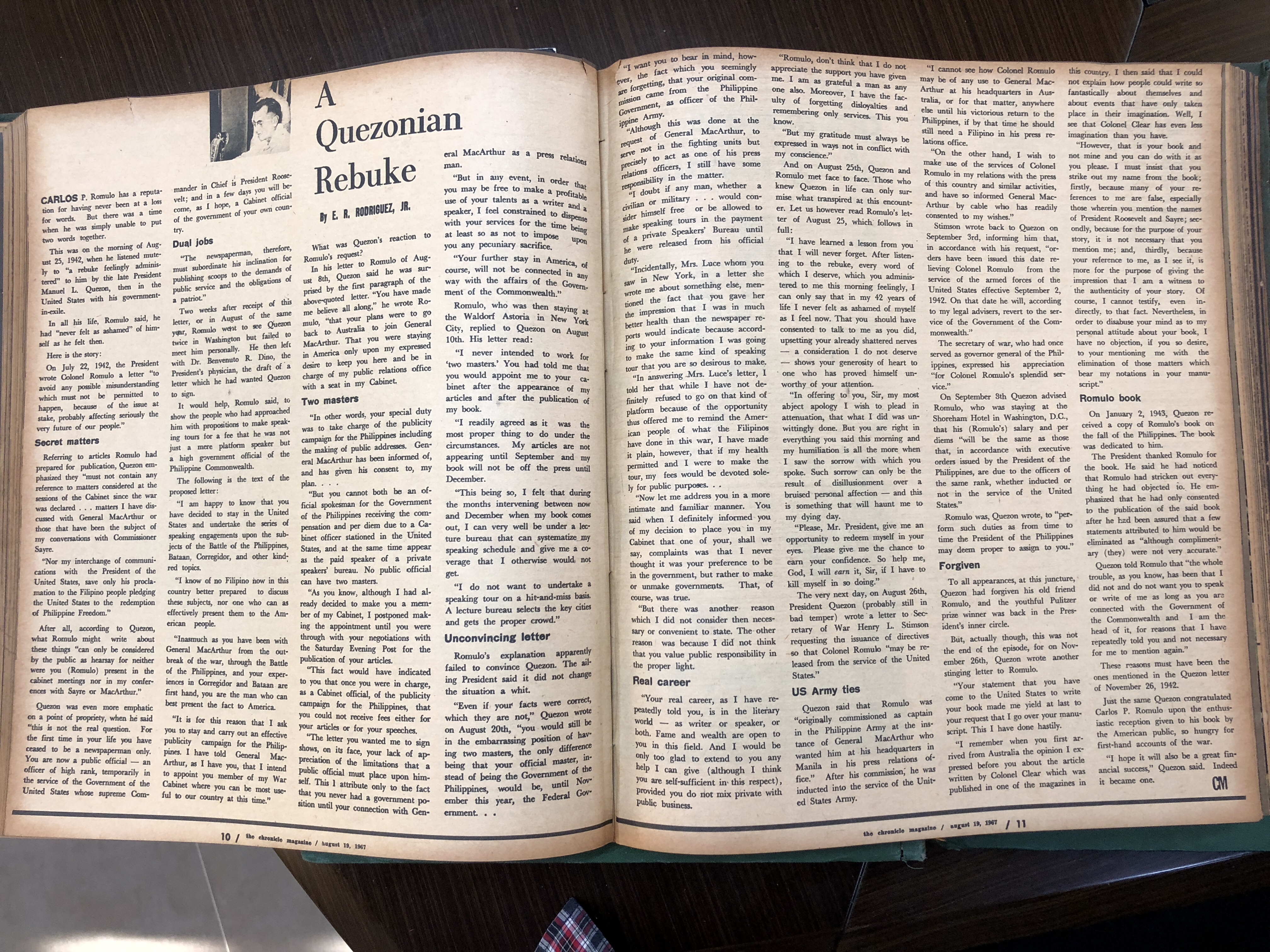
Speaking of CPR, by coincidence—the kind that antiquarian collectors tend to run into more often than others—I came across an article by E. R. Rodriguez, Jr. in the Aug. 19, 1967 issue of The Chronicle Magazine.It details a mortifying exchange of long letters between a younger CPR and his boss, President Manuel L. Quezon, who delivers a stinging rebuke to his irrepressibly articulate aide for going on a private book tour while serving as a government official. That deserves its own column one of these days—but what I’d give for a signed original of what MLQ said!


Penman No. 129: Autographs and Memories

Jose_Rizal's_signaturePenman for Monday, December 29, 2014


WE AFFIX our signatures to documents everyday—to checks, memoranda, requests, receipts, and felicitations—with nary a thought to where those signatures will go, those hurried scribbles that say “I was here,” “I saw this,” or “I caused this,” and, therefore, “I matter.” For most of us, those signatures will go the way of the documents that occasioned them—to some vault, shredder, or rubbish heap—their practical purposes having been served, and bearing no other value otherwise. That is, unless you’re a George Washington, or a Paul McCartney, or a Princess Diana; and then you might sign a table napkin and turn that into pile of dollars.

I’ve always been fascinated by signatures and autographs (the commonly held difference being that signatures meet legal requirements, while autographs satisfy emotional needs). My earliest model, of course, was my father’s signature, written with that flourish typical of his generation, with an understandable hint of self-magnification. Impressive signatures took time and care to practice and to write, so my father’s attention to his own left me awed and respectful. Even if he was only a clerk in his office, he signed his name as presidents did.

Mine, alas, is completely undistinguished—illegible, to be more accurate, something once likened by a curious onlooker to a paper clip pulled from both ends. I know that some people seek to cultivate a mystique by designing unreadable signatures, but I never meant to, and find the practice pretentious. My father’s signature seemed larger than life, but before and beyond anything else, it proclaimed his name, which (especially in this avatar- and alias-driven present) is probably the most honest thing you can do.

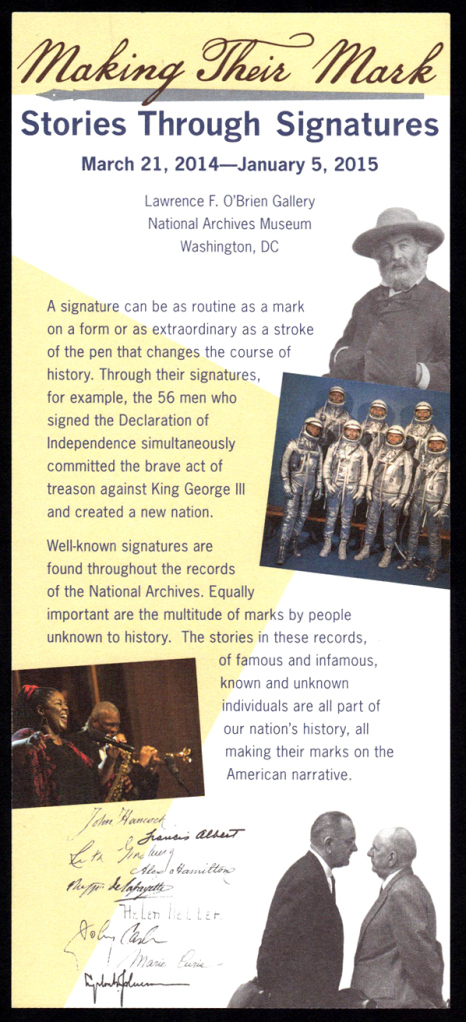
I had these thoughts in mind when—among the last things we did before flying home from Washington—I took Beng to a very special exhibition at the National Archives Museum on “Making Their Mark: Stories Through Signatures” (still on until January 5). It promised to showcase the signatures of both prominent and obscure figures and their contributions (positive and otherwise) to the shaping of history, and the exhibition did not disappoint. Being something of a history buff and museum rat, I had previously come across the most well-known ones in facsimile and in other exhibits—Washington, Jefferson, Lincoln, Kennedy, and, of course, John Hancock—but here was an opportunity to appreciate them in context, appended to actual documents that should have, but not always, mattered.

ArchivesCard

Albert Einstein’s ends a long letter passionately—and, in hindsight, poignantly—arguing for the peaceful use of nuclear energy. Adolf Hitler’s—accompanying a large sheet attesting to his marriage to Eva Braun—is surprisingly small. Another unexpected twist comes courtesy of the poet Ezra Pound, who can masterfully edit his friend TS Eliot and yet, it turns out, can barely spell, as when he pleads in 1914 with the American consul in London on behalf of his fiancée, and here I quote him verbatim: “As an american about to mary and english woman, I write to you….” The Hopi Indians petition for their land in 1894, signing their names as pictographs of rainclouds, fish, and birds. Their voices are as lost and as forgotten as the letters of ordinary citizens writing to the President for various causes, none more futile than an appeal by the children of convicted spies Julius and Ethel Rosenberg for their parents’ lives to be spared.

As we left the museum, Beng and I wondered aloud why we couldn’t come up with a similar exhibition of historic signatures—say, of our national heroes and National Artists and National Scientists—by way of introducing our younger citizens to the story of our nation, as told by individuals in letters and other interesting and important memorabilia. This is, of course, a generation that writes messages, not letters; that tweets, not corresponds. The value of a signature—think of Manny Pacquiao’s on a boxing glove, or a porn star’s on a T-shirt—is what it will fetch on eBay.

Bonifacio

Some people collect autographs for fun and profit, and like any hobby involving demand and supply, a thriving business has grown around the pursuit and acquisition of scarce signatures, especially from people who will never write another one. Sometimes context is everything; a woman who got JFK to sign her newspaper just before he boarded that fateful car in Dallas made $30,000 out of that grim memento. The most sought-after signatures today, according to one listing on the Web, are those of the Beatles, the Apollo 11 crew, Marilyn Monroe, and—no, not JFK, or Churchill, or Hitler, who all follow this curious entry—the Sex Pistols with Sid Vicious. For what it’s worth, George Washington remains the star of the show, his signature on the Acts of Congress earning that book’s owner close to $10 million because of the confluence of the man and the material.

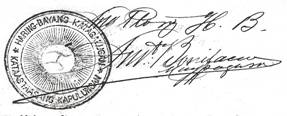
I’d be happy to run into a sheaf of yellowing papers at an antique shop or an old library and to find these signed by Rizal, Bonifacio, Juan Luna, Gregorio del Pilar, Paz Marquez Benitez, Angela Manalang-Gloria, Manuel Quezon, Jose Garcia Villa, Botong Francisco, or some such person. I doubt that I’ll be ever so lucky, precisely because we don’t value old books, especially those that have been scribbled on. As a literary tourist of sorts, I’ve been fortunate to have books signed by Joseph Heller, Kazuo Ishiguro, JM Coetzee, Junot Diaz, Frank McCourt, and Edward Jones, among others, but I’d trade most of them for any one of the above.

Quezon

Because our daughter Demi still understands what documents mean, she will be inheriting—aside from a trove of leaky pens—a passel of books and letters signed by many of our finest writers, her dad’s friends and mentors. I’ve been quite shameless about soliciting these signatures and autographs, fully expecting that the time will come, sooner than later, when our scrawls will be replaced by digital thumbprints, already a reality with Apple’s TouchID.

Maybe that’s how digital books will be signed in the future—with the press of a thumb or a forefinger on a touchpad—and it will simplify my life as an author, but take me even farther away from the verifiable veracity of the written word, and the written name.

Penman No. 124: Pinoys on the Potomac

cropped-logo-rizal-washington8Penman for Monday, Nov. 24, 2014


ERWIN TIONGSON and his wife Titchie are in their early 40s, successful professionals and the parents of young sons; they live in Fairfax, Virginia, a pleasantly wooded suburb just outside of Washington, DC. An Atenean from Nueva Vizcaya, Erwin teaches Econometrics at Georgetown University, while Titchie, a prizewinning writer, has chosen to stay at home to look after the children. Outwardly they might seem to be just another Filipino couple living the good American life, steadfastly focused on the present and the future. But their true passion inclines elsewhere, as Beng and I would discover in one of the most fascinating encounters we’ve had in our current American sojourn.

I’d first heard about Erwin from another new Fil-Am friend, Sonny Busa, a retired Marine, a former consul and instructor in international relations at West Point. (Sonny, in turn, had been introduced to me by upstate-NewYork-based Sharon Delmendo, who has done a lot of research on Philippine-American relations—so now you see how the academic circuit works.) Sonny had mentioned to me that there was a Filipino in the community who had taken it upon himself to chronicle the history of the Philippine presence in Washington and the surrounding area—more than a century of visits and residencies by Filipino politicians, diplomats, writers, artists, musicians, and other personages whose life and work, in one way or another, drew them to the American capital.

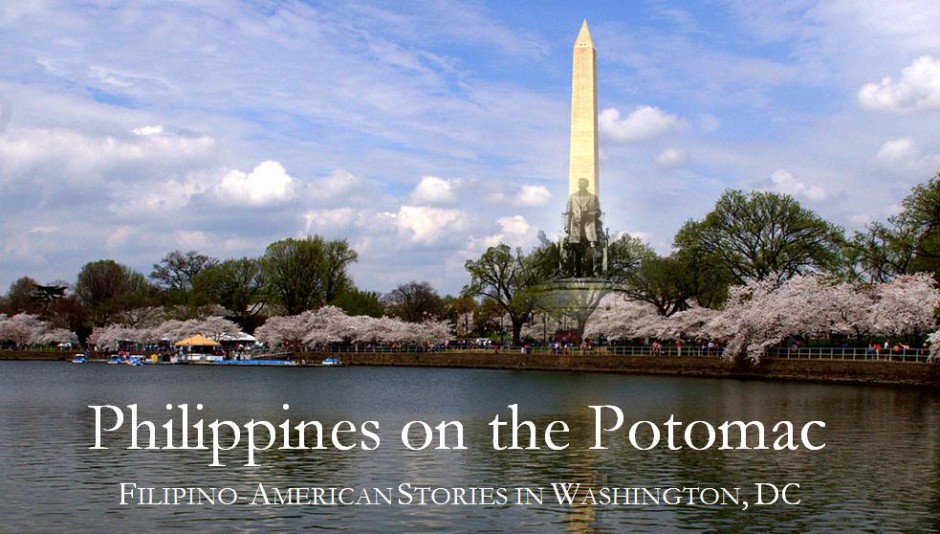
That’s how I found the website that contained all this information—a WordPress site titled “Philippines on the Potomac: Filipino-American Stories in Washington, D.C.” (https://popdc.wordpress.com). If you’ll take a minute to click on that link, you’ll discover what I did, with a child’s wonderment at the entrance of a carnival: short articles and accompanying photographs tracing the connections between Filipinos and Washington, DC.

As might be expected, the big political figures, especially those from the Commonwealth and postwar period, dominate the reportage: Manuel L. Quezon, Carlos P. Romulo, Sergio Osmeña, Manuel Roxas, and Jose Abad Santos. But cultural luminaries are also well represented: Juan Luna, Jose Garcia Villa, Juan Arellano, Enya Gonzalez, Fernando Amorsolo, and Bienvenido Santos, among others.

Quezon had served as Resident Commissioner—effectively our ambassador—in Washington until 1916, and when he went to the US on his wartime exile and died in New York in 1944, it was at the Cathedral of St. Matthew the Apostle in Washington—not too far from where our embassy now sits—where his funeral mass was held prior to his interment at Arlington (less than 20 years later, John F. Kennedy would follow the same route; MLQ’s remains were moved to the Philippines after the war, and now lie at the Quezon Memorial).

Carlos P. Romulo and his family lived in a home on Garfield Street for 16 years, CPR having served in many capacities, from aide de camp to Gen. Douglas MacArthur to Resident Commissioner, ambassador, and president of the United Nations General Assembly. (One of the website’s most remarkable images has an old sepia photograph of the Romulos superimposed exactly over the same spot in front of the present house, which has barely changed.)

The site provides a treasure trove of other historical facts—including, inevitably, tidbits of information that serious scholars might dismiss as trivia, but which enthusiasts like me can’t get enough of. The sculptor and National Artist Guillermo Tolentino, for example, once worked as a waiter in Washington, and somehow managed to meet President Woodrow Wilson and to present him with the gift of a small statue, which Wilson kept in his room until his death; Wilson later helped Tolentino get a scholarship to art school. We also learn that Juan Luna and Felipe Agoncillo went to Washington in 1899 to campaign against the Treaty of Paris, and stayed at the Arlington Hotel, where they were spied upon by the Secret Service. (All these stories are properly attributed and referenced, by the way.)

Better than just poking around the website, the Tiongsons invited us to lunch and show-and-tell, and I couldn’t wait. Learning of my current affiliation with the George Washington University, Erwin had pointed me to an article written by CPR’s granddaughter Liana relating how Romulo had coached a debating team from the University of the Philippines in an engagement with the GWU team, over this issue: “Resolved, That the Philippine Islands should be granted immediate and complete independence.” The debate took place on April 18, 1928 at GWU’s Corcoran Hall. “UP won,” said Erwin. “It was the team’s fifth victory, after defeating Stanford, California, Utah, and Colorado. The team would go on to defeat all their other opponents—a total of 14 universities, if I remember correctly.”

Tiongsons

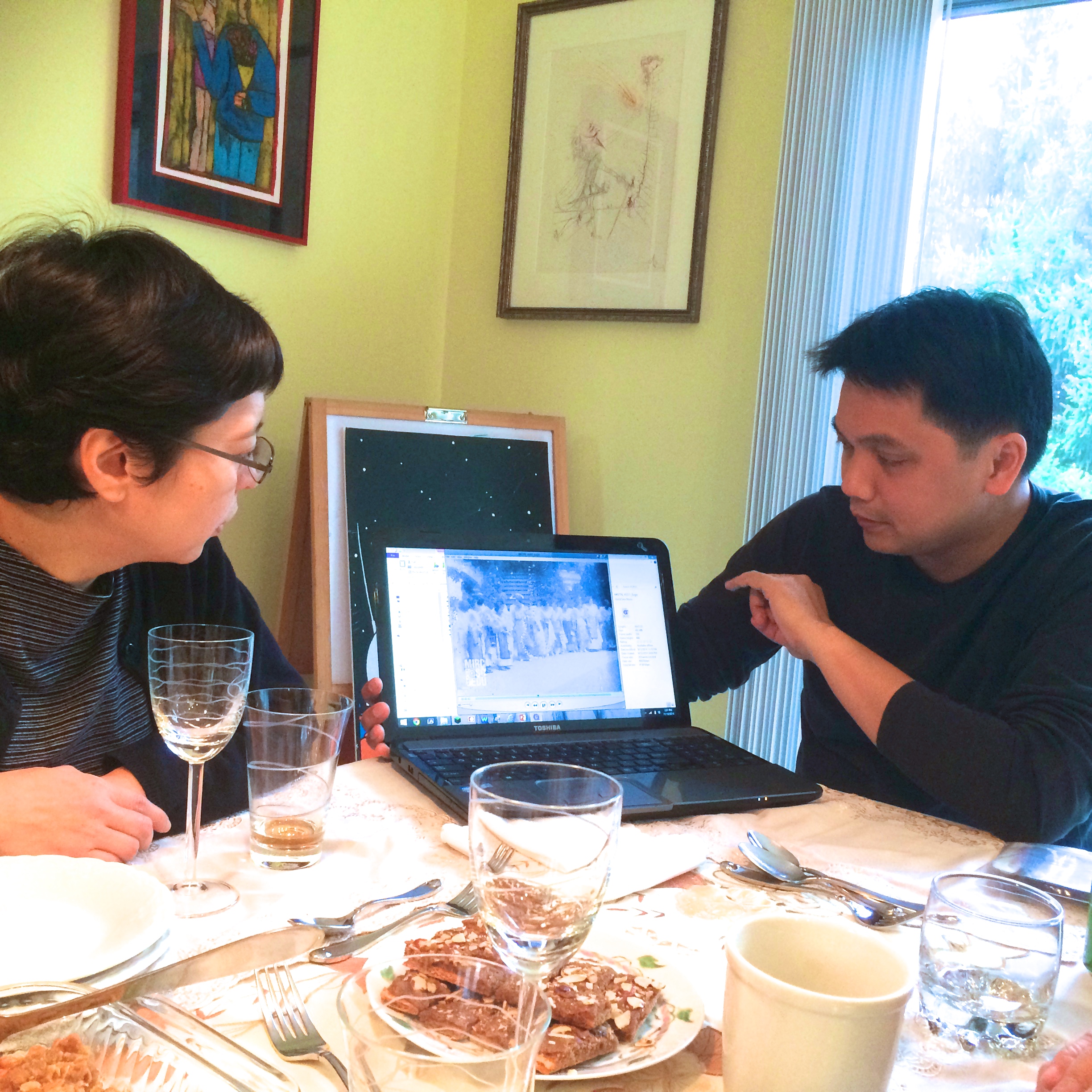
Even more interesting were the personal stories that Erwin and Titchie shared with us (after a sumptuous lunch of home-made corned beef and baked salmon, which all by itself was well worth the Sunday visit). I can’t go too deeply into the details now, but Beng and I were thrilled to share Erwin’s elation over his most recent discovery, a book that had been inscribed by Maximo Kalaw, MLQ’s private secretary, to a “Nina Thomas”—who turned out to be the American lawyer the young Quezon had been engaged to (he broke off the engagement after being advised that marrying an American was political suicide). Erwin made contact with Nina’s heirs in Virginia; she never married, but she passed on Quezon’s monogrammed walking stick and their engagement ring to her niece.

Erwin also showed us a movie poster from 1946 of Anna and the King of Siam, featuring Rex Harrison, Irene Dunne, and a little-known actress named “Chabing”—who turned out to be Isabel Rosario “Dimples” Cooper, Douglas MacArthur’s girlfriend (not mistress) between marriages; after MacArthur left her, she resumed her film career (she was notable for having recorded the first on-screen kiss in Philippine movies in 1926), assuming the single name “Chabing,” whose filmography you can look up on IMdb.

It was also a treat to listen to a radio recording of Jose Garcia Villa, made in the 1950s, of him reading his “Lyric 17” (1942) which famously begins with “First, a poem must be magical….” Most moving was the 20-minute documentary of President Quezon’s funeral—directed by no less than the renowned director John Ford—that Erwin had magically retrieved from somewhere in the many university libraries, archives, and museums that he still haunts in search of fugitive Filipiniana. He has begun a collection of war correspondence from the early 1900s and the Second World War; one 1902 letter poignantly retained a swatch of jusi, which the wife of an American official in Iloilo wanted her folks to see.

We could have stayed there the whole day, reveling in our memories of the grand old men of Philippine letters—NVM Gonzalez, Ben Santos, Nick Joaquin, Manuel Viray; I shared my own little adventures in cultural retrieval. But Beng and I had sadly had to trundle out again into the autumn chill, warmed by our imaginations, and in my ears rang a line from Viray’s poem about his old house in Washington, on Cathedral Avenue, which the Tiongsons had also located: “A streak of light aslant / On the screen door creeps up the line of dusty books.”