Qwertyman No. 75: Trump 2.0

Qwertyman for Monday, January 8, 2024

IN MY column last week, I mentioned the “Trumpian dystopia” threatening to take over the United States and many other rightward-leaning societies and governments around the world. 

A “dystopia” is, of course, a place or a situation where everything has been turned on its head, where the bad has become good and the wrong has become right, and where the things we most feared or abhorred have become the norm. You find this in George Orwell’s 1984, where the government controls everything; younger readers and viewers will relate to Suzanne Collins’ The Hunger Games, where citizens are sacrificed for the Capitol’s entertainment. In other words, it’s social and political hell for those reared in the kind of postwar liberalism that eschews racial discrimination, authoritarianism, gender inequality, and religious intolerance, among other shibboleths.

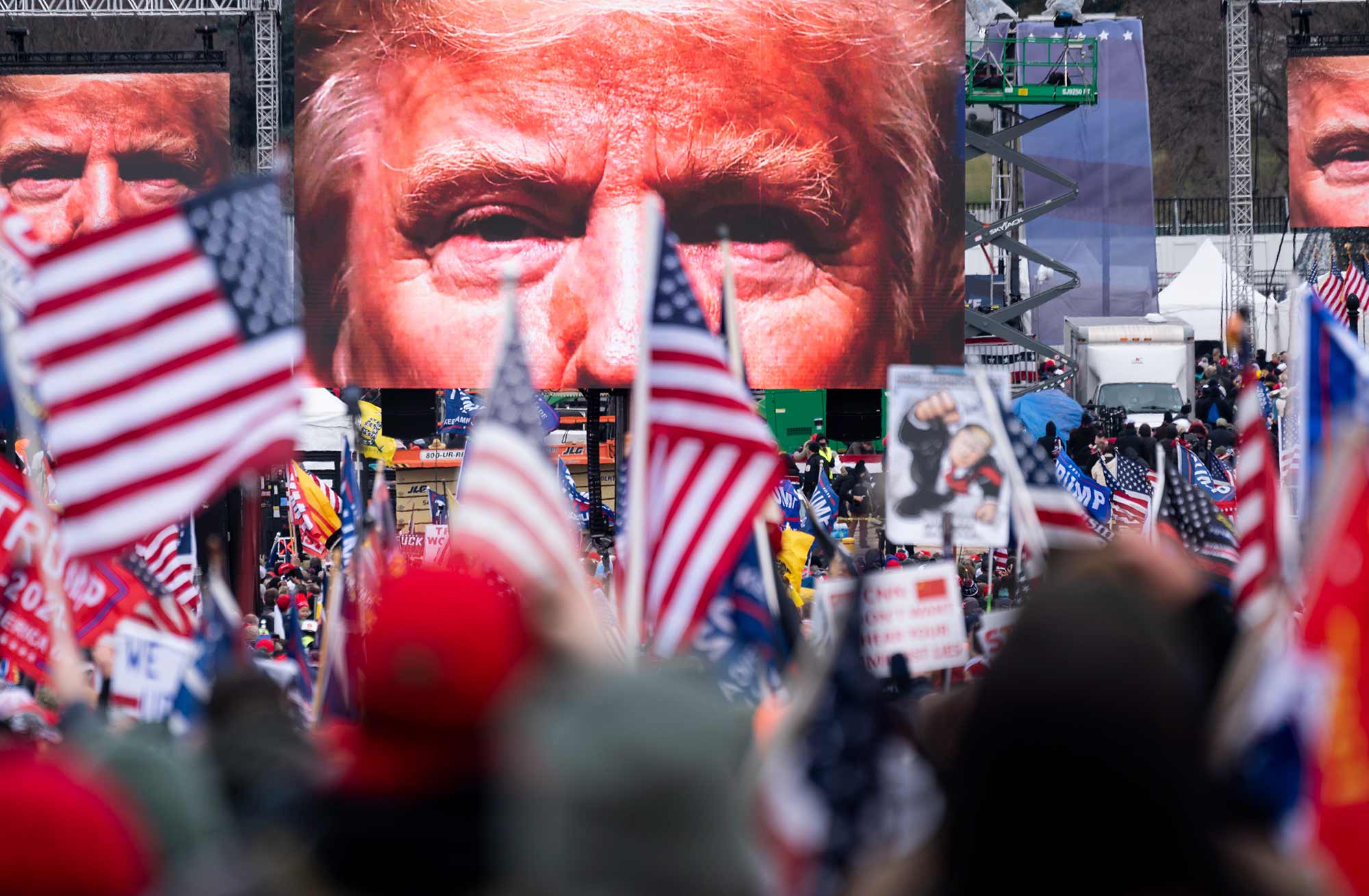
It’s hard to believe that much of America seems to be marching in lockstep toward that dystopia under a revived Donald Trump, wh0m nearly all polls see as leading the race for the US presidency, which will be at stake in November this year. On this date three years ago, he was squarely in the doghouse in the aftermath of the shockingly violent assault on Congress on January 6 by Trump partisans unwilling to accept that he had lost to Joe Biden in the election. Even his closest allies at that time distanced themselves from his apparent captaincy of that bloody caper, although many of them have returned to his kennel. 

Nearly a full presidential cycle later, he’s back in the Republican saddle, way ahead of a pack of rivals who, save one, have refused to denounce Trump for what he is: the greatest single threat to American democracy because of what he represents (leaving aside foreign tyrants like Vladimir Putin and Kim Jong-un). That, not surprisingly, is President Joe Biden’s exact description of him, so some might say it’s biased, but to remain unbiased against Donald Trump is to lie prostrate in front of a steamroller, begging to be annihilated.

It doesn’t help that the incumbent is 81 years old, palpably slow, avuncular, and whispery where Trump screams into people’s ears (to the delight of many). Their age difference—just four years—isn’t actually all that much, but beyond personalities, it’s a difference in cultures, and perhaps of understanding how politics works in this post-Facebook age, where obnoxiousness has become a virtue and regularity a liability.

Trump thrives on notoriety, parlaying the four indictments involving 91 criminal charges against him—plus the two disqualifications from state ballots—into a kind of a badge of courage, flipping prosecution into persecution. Rather than fracture his base, any attack on Trump (and any attack by him) only seems to consolidate the estimated 30-40% of hardcore Trumpers who now effectively define the Republican party, the tail wagging the dog.

Among the most repugnant (and, by Trumpian logic, among the most attractive) of his recent statements has been his denunciation of undocumented migrants as “poisoning the blood of our country,” specifically mentioning Latin America, Africa, and Asia as the sources of what in other speeches he has called rapists, terrorists, and Covid carriers.

You would think that that kind of Hitlerian rhetoric would galvanize the Hispanic and Asian-American—not to mention the African-American—communities in America against Trump, but no. If anything, his support among these groups seems to be rising, driven ironically enough by his hardline position on immigration, the very same factor that made these minorities possible to begin with.

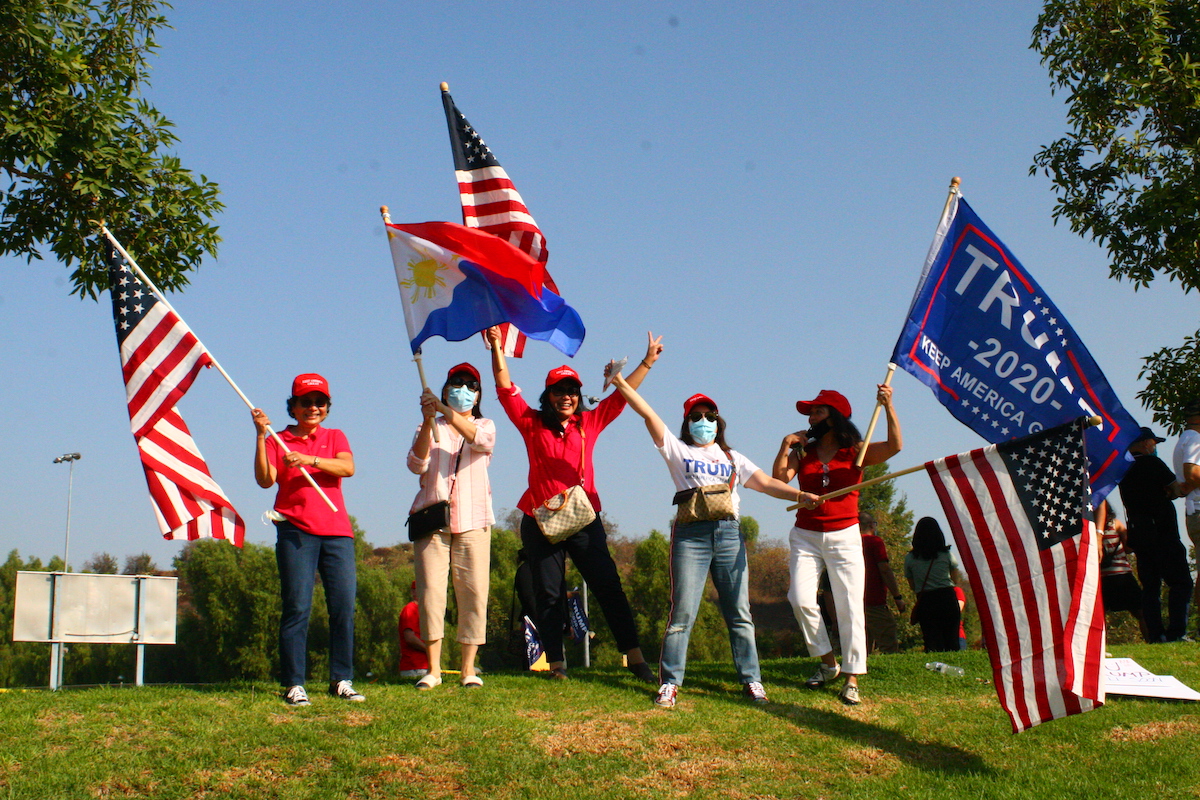
What I’m interested in is how the Filipino-American community will respond to Trump 2.0, and what that will say of us as a people, albeit as one of many minorities in America’s multiracial society.

There are now about 4 million Filipino-Americans; half of them, 2 million, are voters. (To put this in context, the US population now stands at 336 million, of whom 170 million are voters.) Historically, Filipino-American voters have leaned Democrat, with a majority of them voting for Hillary Clinton and Joe Biden in 2016 and 2020. But a very vocal (though perhaps somewhat less visible, as many people tend to reveal their preferences only in the voting booth) “Filipinos for Trump” movement exists, and if trends persist will likely gain more traction this time around.

In 2020, Filipino pro-Trumpers cited “family, religion, and faith” as the main reasons they were backing him, like many American evangelicals, despite all the evidence to the contrary in Trump’s personal behavior and speech. For many, it all came down to one issue—abortion—the right to which has now been successfully rolled back by the Supreme Court’s conservative majority. This time around, the flashpoint will likely be immigration, a global problem abetted by collapsing economies and repressive regimes. Well-settled minorities such as Filipino-Americans derive a strong sense of entitlement from all the personal sacrifices and legal processes they went through to acquire their citizenship, and feel cheated by migrants scrambling across the border. This kind of single-issue vote—a gross simplification and reduction of values into one criterion—favors demagogues like Trump, who work through two-dimensional posterization.

A more interesting—and more sinister—reading of Trump’s popularity came up in a recent guest essay in the New York Times by Matthew Schmitz, arguing in his title that “The Secret to Trump’s Appeal Isn’t Authoritarianism,” but rather that “Mr. Trump enjoys enduring support because he is perceived by many voters—often with good reason—as a pragmatic if unpredictable kind of moderate” and “a flexible-minded businessman who favors negotiation and compromise.” That logic, while fetching, predictably drew quick rebukes. One reader said: “Thanks, Mr. Schmitz, but we’re already well aware of this. Italians liked Mussolini because he ‘made the trains run on time.’ This is exactly our point. This is how dictatorships happen.”

That brought me back to our own long and continuing affair with despotism, and how sharply simplified populist sloganeering can cut through and cut down on complex reasoning—with devastating consequences for democracy, here and across the Pacific. 

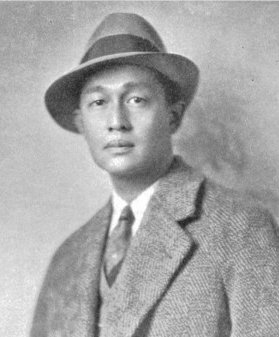
(Photo from colorlines.com)

Penman No. 457: The Actor as Painter

Penman for Sunday, December 3, 2023

A FEW months ago, I had the good fortune of coming into ownership of four watercolors by Juan Arellano (1888-1960), the famous architect of such landmarks as the Metropolitan Theater, the Post Office Building, and the Legislative Building (now the National Museum). Less known to many was that Arellano’s first love was painting, and it was a passion he pursued throughout his life. 

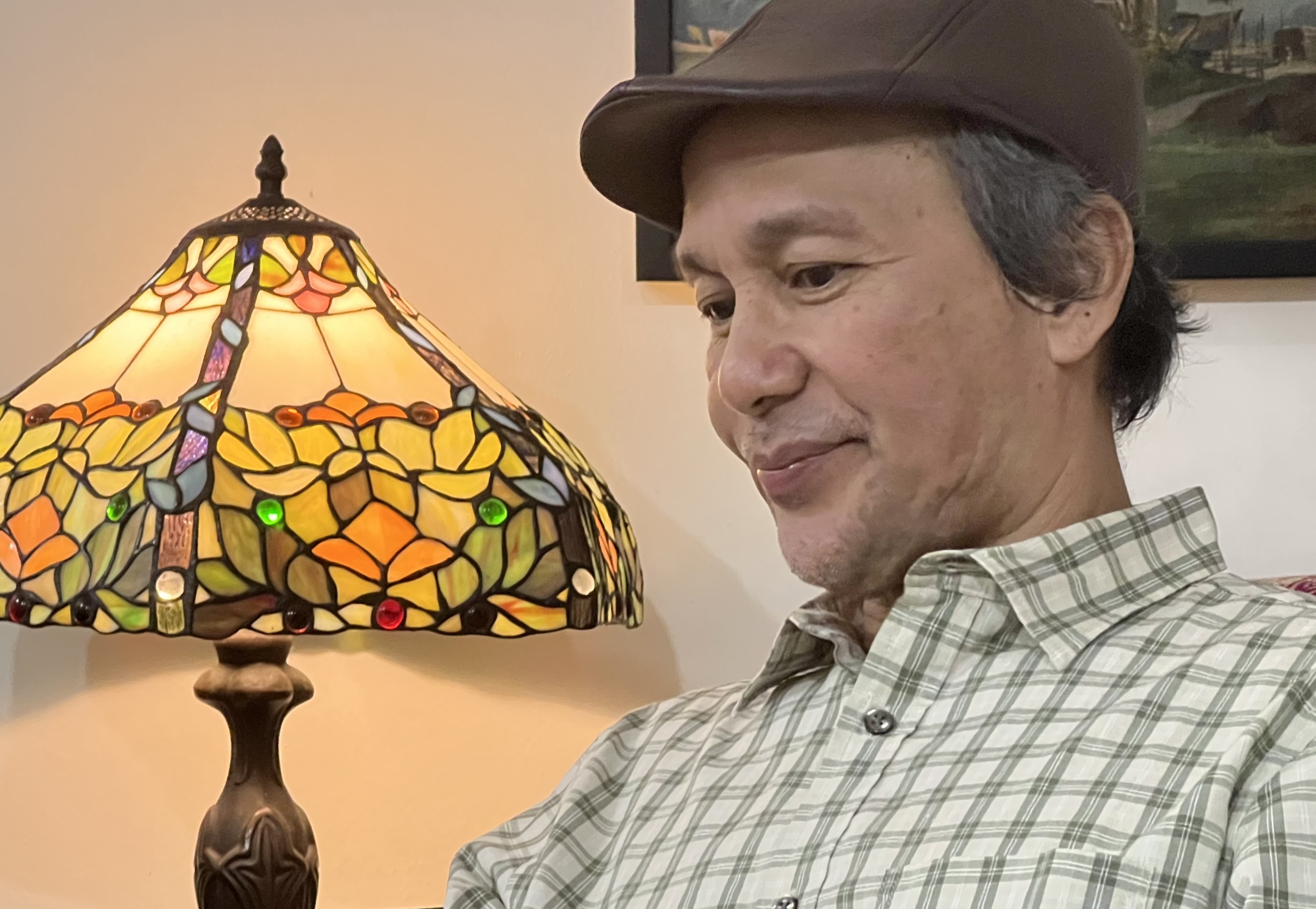
My inquiries into the background of my paintings led me to cross paths—initially online—with Juan’s grandson Raul Arellano, who turned out to be an accomplished painter in his own right. Born in Cagayan de Oro, Raul has been based for almost 30 years now in the United States, but he has recently been returning to the Philippines more often. When, one day, he messaged me to ask if we could meet up, I said yes, eager to learn what he could recall of his grandfather but also to get to know him and his art. 

I’m by no means an art critic, but my wife Beng (a professional art conservator and watercolorist) and I are museum rats and enjoy both traditional and modernist art, and peek into the local art scene when we can. There’s a lot of brilliance and energy out there to be sure, but also much safe and tiresome repetitiveness from artists who’ve settled on a commercial formula, such that their work no longer exudes emotional power. Many young painters—like their writing counterparts whom I meet at workshops and teach in school—also seem to think that the only worthy subject is death and despair, which invariably means dark canvases devoid of any suggestion of wonder and mystery, let alone delight.

When I saw Raul’s work online, even before we met, what leapt out at me was exactly what I found missing in many others—an element of metaphysical magic, fantastical but relatable, the kind of paintings you want to return to over and over again. I saw flashes of Henri Rousseau, Van Gogh, and William Blake, among others, but it was still all him—not his grandfather, for sure—trying to tell me something I hadn’t really thought much about before.

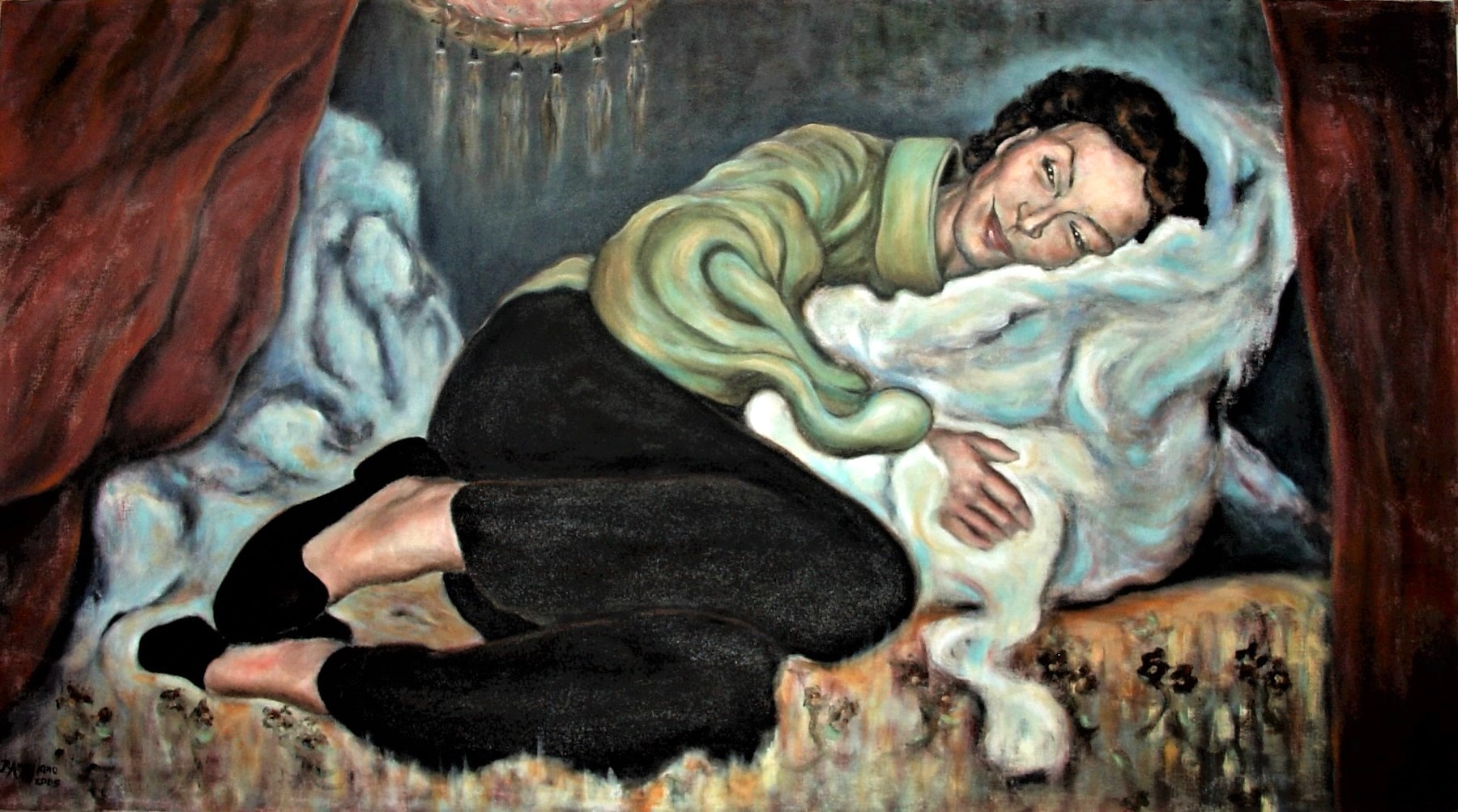
As it turned out, Raul never met his grandfather, who died five years before Raul was born in 1965 (Raul’s father was Juan’s third son Cesar). All he has of him is a self-portrait—and, of course, a passion for art that runs in the family; his cousin Carlos or “Chuckie,” the son of architect Otilio, was a formidable art patron and collector; Chuckie’s younger sister Agnes remains one of the country’s leading and most imaginative sculptors; Cesar’s brother Salvador or “Dodong” Arellano became a well-known painter of horses and game fowl in California.

Raul’s path to painting was neither straight nor easy. His first great obsession was acting, to the point of becoming a resident actor of Tanghalang Pilipino at the Cultural Center of the Philippines, playing a smoldering Tony Javier in a production of Nick Joaquin’s “Portrait of the Artist as Filipino.” “We were trained in method acting,” says Raul, “and it got to the point that I became so immersed in my character that other people on the set found it unnerving.” He would go on to act in the movies, in the crime drama Akin ang Puri(1996) directed by Toto Natividad, Batang West Side (2001) directed by Lav Diaz, and Himpapawid (2009) directed by Raymond Red. Of his performance in Himpapawid, reviewer Jude Bautista noted that “Raul Arellano as the main character is able to show the frustrations of the common man without going over the top. There is a quiet intensity in his performance.”

That intensity had been brewing in Raul the person for some time, leading to and compounded by domestic problems. In 1995, he took the opportunity to go on a film fellowship at the Art Institute of Chicago. The Midwest was too cold so he later moved to California, and quickly realized what all dreamseekers in LA wake up to: that he had to start all over again at the bottom rung of the ladder. “I swept floors. I learned how to operate a forklift. When the big steel container that you’re lifting comes crashing to the ground, you can feel the jolt running down your spine. I was in a lot of pain, but I kept on. When I left, my boss was very sorry to lose me.”

He set up a business restoring American muscle cars. “I had a Russian mechanic, but I took care of the interiors myself. I specialized in Mustangs—you could show me a Ford screw and I could tell you the year and model it came from. I had a fastback Mustang but my best sale was a Shelby Cobra.” But again another personal crisis blew up and he enrolled in a community college to study painting. He left school once he felt he had learned enough about the history, the theory, and the techniques of art to express himself. “Something in me was always wanting to come out, and I found that release in painting. I had no models or artists I looked up to. I just wanted to express myself, to work from my subconscious. I found that I could work best in a cemetery, because it was so peaceful. I still like working in the open, in plein air.”

The lure of painting proved irresistible. He worked in oils, and one of his favorite paints was lead white, popularly used in the past for its visual qualities and permanence. However, it was banned in the 1970s because of the danger of lead poisoning—a danger Raul was well aware of but embraced. “I found a stash of old paint and bought it all up. I was inhaling it every day and I could feel it doing strange things to my head.”

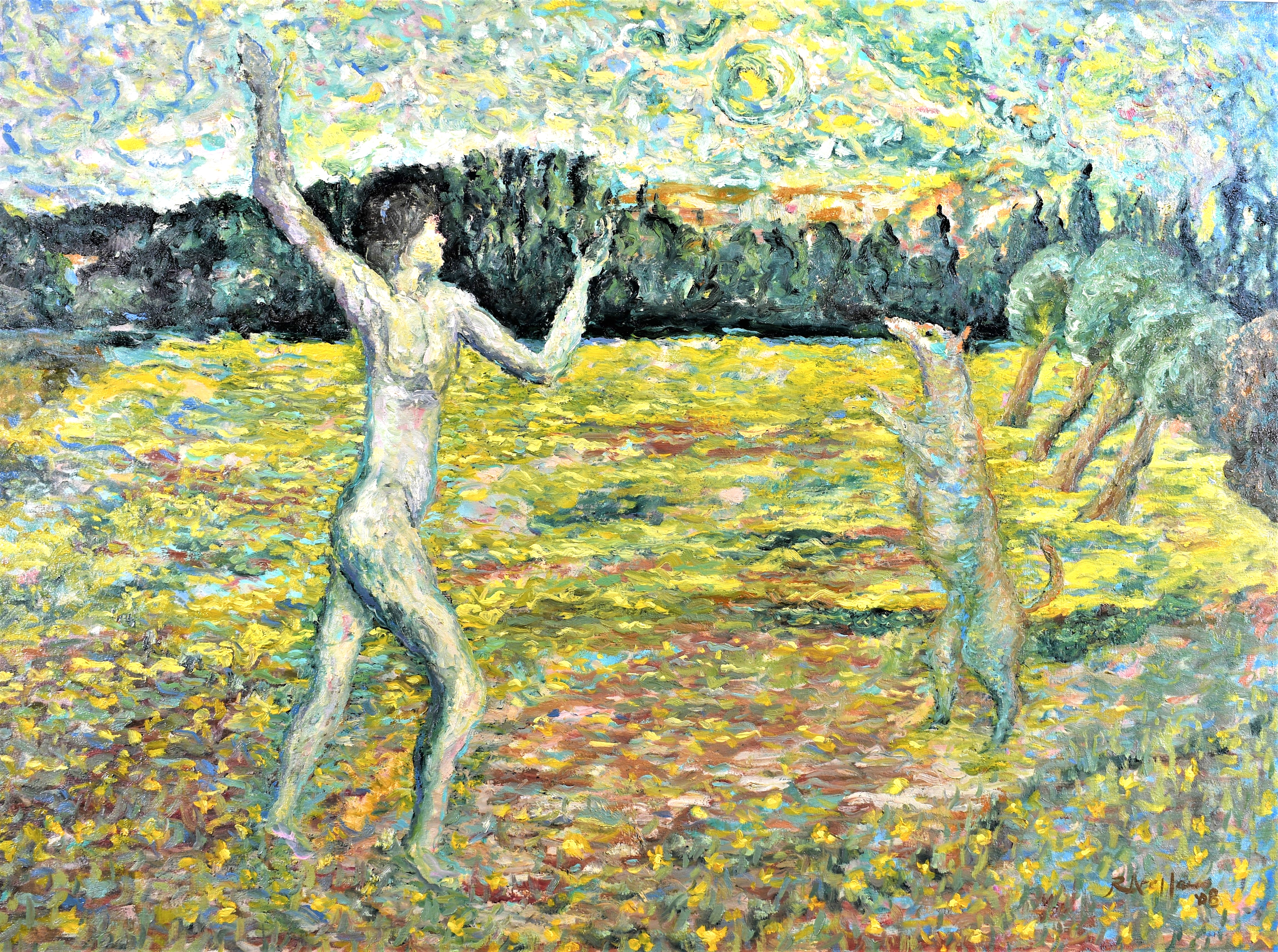
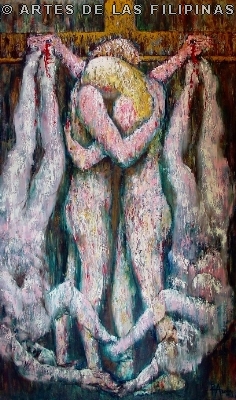
He returned to Manila every now and then and even resumed acting, but the death of a close friend shook him up badly. “I was all set to come out with an exhibit of traditional, representational paintings, but I was overcome with grief over the loss of my friend, and I just had to express that feeling in my work. So I put all my old work aside and began ‘Crucifixion.’” That work is one of his most impressive and a personal favorite, painted in 2004 at the outbreak of the war in Iraq.

(Image from artesdelasfilipinas.com)

Today Raul spends time in a small farm in Batangas, enjoying quick sketches in the sylvan scenery, and contemplating the possibility of exhibiting in his homeland. With him having gone from peace to pain, from calm to conflict and back again, one can only wonder what new work will emerge from this phase of his life. I find myself wishing for his playfulness to return, but that of course depends on what Raul Arellano is feeling inside.

(More here on Raul Arellano: https://artesdelasfilipinas.com/archives/85/the-art-and-thought-of-raul-arellano-original-)

Qwertyman No. 45: Onward to Frankfurt?

Qwertyman for Monday, June 12, 2023

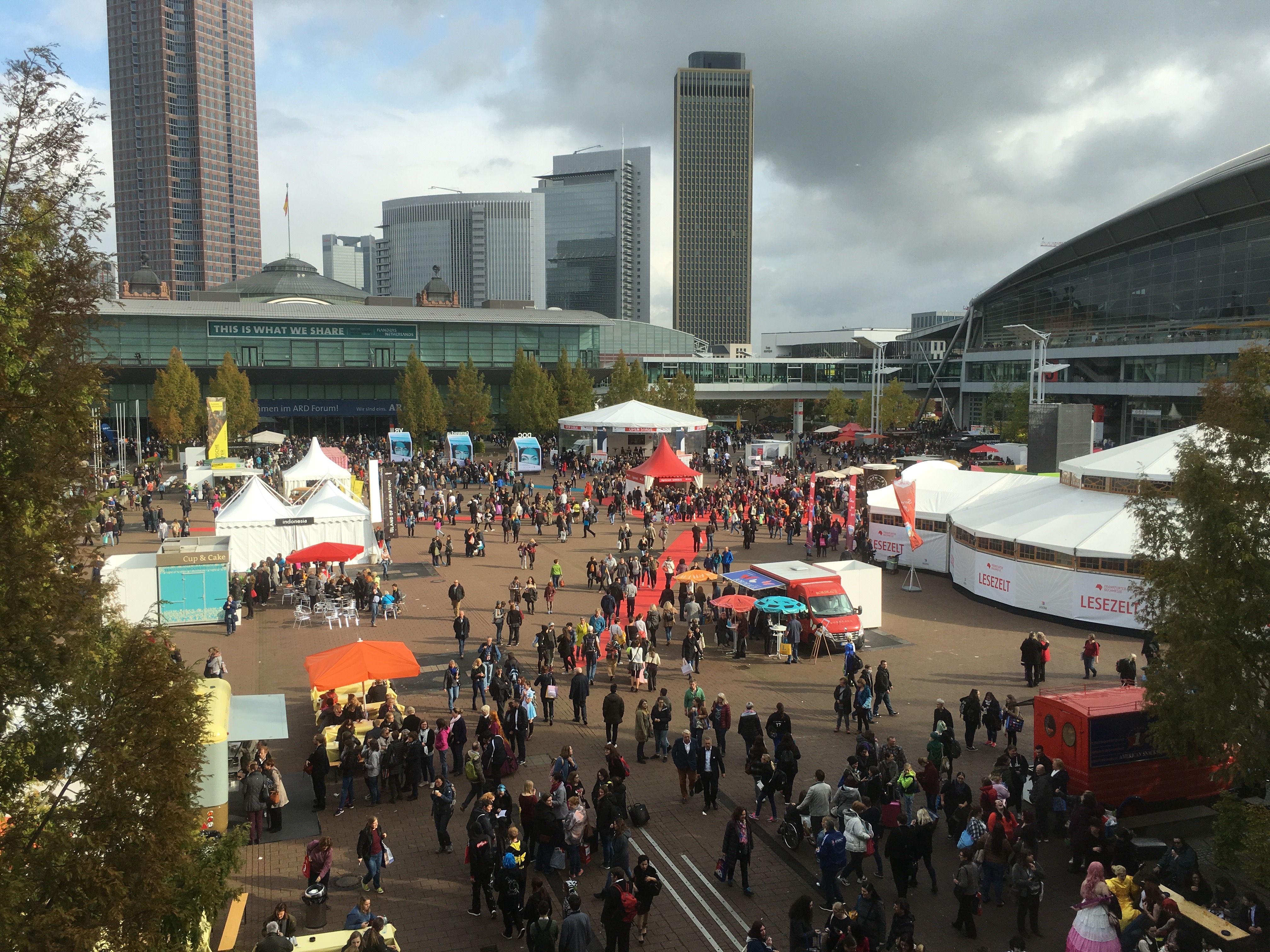
IF YOU were at the Philippine Book Festival (PBF) that took place at the World Trade Center earlier this month, you would have been surprised to find how many Filipinos were writing, publishing, selling, buying, and reading books. A project of the National Book Development Board (NBDB), the PBF was the first such event devoted solely to locally produced books—as opposed to, say, the Manila International Book Fair (MIBF) in September, which is open to books and publications from overseas. The NBDB wisely decided to showcase our homegrown literary talents—not only from Manila, and not only from my generation of old fogeys, but from all over the country, and writers of all persuasions and ages (as young as fourteen!).

We Pinoys have become so immersed in Netflix, YouTube, and social media that many of us have forgotten about reading, and what a good book can do for one’s mind and soul. We want everything delivered to us in short sentences—even in acronyms or, if possible, in memes—because long paragraphs (and, God forbid, pages) can only mean a waste of our precious time (which is, of course, best spent posting what we last ate on Instagram, and critiquing someone’s OOTD). Whether fiction or nonfiction, books challenge us to carry ideas through to the limits of our reason and imagination. The difference between a good meme and a good book can be that between wit and wisdom—between the bubbles that rise to the top of your champagne and the notes that linger on your tongue and senses long after you’ve put your drink down.

And despite the death knells that have been tolled for publishing and reading in this country, the droves of people who flocked to the PBF and the MIBF show otherwise; as I’ve noted elsewhere, more new authors and publishers are emerging across various genres and languages than ever before, spurred by writing programs and workshops, new technologies, and more exposure for Filipino writers in international markets.

That last note—the emergence of Philippine writing in the global consciousness—has been a long time coming. We’ve had, of course, writers who’ve been published abroad, most notably Jose Rizal and the late National Artist F. Sionil Jose. In America, both expatriate and US-born writers such as Gina Apostol, Ninotchka Rosca, Jessica Hagedorn, Eric Gamalinda, Zach Linmark, and Brian Ascalon Roley have made important inroads into publishing, some with mainstream publishers. Of course, they were preceded by the likes of Carlos Bulosan, Jose Garcia Villa, NVM Gonzalez, and Bienvenido Santos, in a time when getting published in America seemed to be the apex of a literary career. We’re way past that now, having found our own voice and our own readers right here at home. 

I’ve often remarked that I’d rather be read by 10,000 Filipinos than 100,000 Americans, but I may have spoken too soon, as even those 10,000 Pinoys willing to buy and read a serious novel can be hard to round up. Therein lies the irony: we’re happy to write and publishers seem happy to publish, and the high attendance at the PBF could be a sign that things are changing, but creating a critical mass of local readers for literature remains a struggle. 

Even in America, where we imagine that almost four million Filipinos should be able to clear out an edition of 5,000 books without any trouble, that simply doesn’t happen. I suspect that that’s because we’ve never really been a book-reading culture, unlike the Japanese and the Indians, and the easy availability of entertainment on Netflix and Tiktok just aggravates the situation. (A more disturbing possibility is that our writers still haven’t learned to write the kind of stories with the kind of treatment that Filipino readers—and there are also many kinds of them—expect, without sacrificing literary “quality,” whatever that means. In my old age, this is what I’m aiming for—to give my readers stories that they’d want to see turned into movies.) 

There’s no doubt that we’re producing materials of high literary value—in English, Filipino, and our regional languages; we saw that in the PBF and we see it in our classes and workshops all the time. These works deserve to be shared with a broad audience—not just here, but overseas, where the Chinese, the Japanese, the Koreans, the Indonesians, and the Vietnamese have already made a name for themselves in the publishing world. 

But that takes a network we still have to familiarize ourselves with and learn how to navigate—a network of translators, literary agents, editors, publishers, and booksellers largely unknown and therefore closed to us. We’re not totally clueless. Through the NBDB and local publishing stalwarts such as Karina Bolasco (just recently retired from the Ateneo Press and the founder of Anvil Publishing before that) and Andrea Pasion-Flores (our very first international literary agent, now owner of Milflores Publishing and president of the Book Development Association of the Philippines), the Philippines has been represented over the past few years in such major events as the annual Frankfurt Book Fair, the world’s largest such market of authors, publishers, and agents.

Not meaning to be immodest, thanks to my agents and publishers, I myself have benefited from this kind of exposure, having sold my second novel Soledad’s Sister in last year’s FBF into a German translation and edition, which just came out; before that, it had already been translated into and published in Italian and French, aside from an American edition. Imagine what that network could do for the rest of our writers.

This brings me to an idea whose time, I strongly believe, has come: focal representation in a forthcoming Frankfurt Book Fair as a “guest of honor,” a position reserved for a country wishing to showcase the best of its literary talent across all genres (two years ago it was Canada, followed by Slovenia). This has to be accompanied by a strong effort in translation—from the regional languages to English, and from English to other international languages like Spanish and French, perhaps even Chinese. It will take much planning and a sizeable budget, but as our recent forays into the Venice Biennale have shown on behalf of our leading artists, with the right cultural leadership and vision, it can be done.

Qwertyman No. 44: Again, America

Qwertyman for Monday, June 5, 2023

I HAVE a good friend whom we’ll call Ted, a Fil-Am who retired a few years ago as a ranking officer in the US Navy. He was in town recently on some family business, and like we always do when circumstances permit, we had dinner and a good chat just before he and his wife flew back home.

Most of us have friends if not relatives in America, and all of this would be pretty routine except for one fact: I’m a flaming liberal, and Ted is a Trump Republican. Over the fifteen years or so that we’ve known each other—well before Donald Trump entered the picture—we’ve been aware of those political differences, but rather than politely skirt them in our conversation like many sane people would, we feel comfortable enough with each other to talk at length about them, and even exchange some friendly barbs.

Much of that level of comfort comes from my belief that, in his own way, Ted sincerely and deeply loves his country—and his ancestral home, the Philippines. He’s smart, curious, eager to learn and understand. In his former naval job and as a private citizen, Ted—who was born in the US but spent some of his formative years in his family’s hometown in Bicol, and speaks some of the local language aside from Filipino—has visited the Philippines as often as he can, trying his best to improve relations between the two countries on a personal level. (On this last visit, for example, he also took part in a ceremony to celebrate the commissioning of the USS Telesforo Trinidad, named after an Aklan-born Filipino petty officer who was awarded the Medal of Honor for bravely rescuing his shipmates from an explosion aboard their ship in 1915.)

Given his naval background—his dad joined the Navy in the 1970s—I’m not surprised that Ted is a Republican, like many military Fil-Ams are. (One notable exception is a mutual friend of ours, the former West Pointer, Army Ranger, and diplomat Sonny Busa, as staunch a Democrat as they come, and a key figure behind Filipino veterans’ causes in Washington.) His support for Trump despite the man’s many failings continues to mystify me, but I’m guessing that in his calculations, Ted chose to cast his lot with the man best positioned to thwart the liberal agenda. That includes items that Ted and other Republicans feel extremely uncomfortable with, such as what he calls the “celebration, beyond just acceptance” of transgender rights, and their judicial enforcement.

Perhaps with any other person, my liberal hair-trigger would have fired away at such comments with a fusillade of counter-arguments, but with Ted I find more value in listening and trying to understand a certain mindset, as different as some of its premises may be from mine. In our last conversation, what Ted had to say was profoundly disturbing. I’m paraphrasing here, but essentially it was this: “America is a mess. People can’t talk civilly to each other anymore. When I say I’m a Republican, people instantly assume I’m a racist.” To which I said that people at the top like Trump (and our own version of him here) greenlighted that kind of boorish discourse, with additional pressure brought on by right-wing militias armed with AR-15s. We talked about January 6 (which he opined was not an insurrection) and the Second Amendment (which I said seemed sacrosanct in American politics). “You have cancel culture,” he sighed, “to which the other guy responds by going bam bam bam!” He was deploring, not endorsing it, trying to get a fix on his own society’s ailments. “It’s in our DNA,” he said glumly about guns.

Thankfully Ted and I always have other things to talk about—like the Philippines, in which Ted said he feels much more relaxed than his own country. He knows how worked up I can get about politics and our own leadership (or the lack thereof), but as far as he could see on this trip, I and my fellow Filipinos (including those he met in Bicol) were just chugging along. “We’re survivors,” I said, “and we’ll do what it takes to get by from day to day.”

That brings me to another friend, “Tony,” who messaged me out of the blue the other day, obviously distraught by the Senate vote on the Maharlika Fund bill and asking if it was time for him and his family to leave the country, given how we seem to be back on the road to political plunder and economic ruin. It wasn’t just a rhetorical question; he was really thinking about it. Here’s what I said:

“Hi, Tony—If it’s a realistic option, I don’t think anyone can or should blame you for leaving or wanting to leave. We have only one life and we have to make the most of it in all ways. Politics is important, but it’s only one of many other factors that define who we are—love, art, family, and faith, among others. That said, it can have a way of complicating our lives and life choices. 

“Moving to the US has also been an option for me for some time now. Our only daughter lives in California and has been wanting to petition us. But my wife and I have been strongly reluctant to move there, although we visit almost every year and are familiar and comfortable with living in the US, where I spent five years as a grad student. We are artists, and our work is culture-bound. We feel appreciated here, within our small circle of friends. However good we may be, in America we would be marginalized; we don’t want to become an American minority and deal with all the issues that will come with it. And America has become much less inviting now, with all the intolerance and racial violence provoked by Trumpism. 

“So unless it were a matter of life and death, we’ll stay here, despite the present dispensation and many more aggravations like the Maharlika Fund to come in the years ahead, because I feel that my continued survival and success will be my best way of fighting back. Having survived martial law, we can survive this as well. Everyone’s circumstances are different, and again you should feel free to find your place where you can best live with your family and secure their future. Nothing is ever final anyway, and you can always come back. Follow your heart and conscience, and you should be all right, wherever you may go. All best!”

(Image from bu.edu)

Qwertyman No. 41: Living up to “Honorable”

Qwertyman for Monday, May 15, 2023

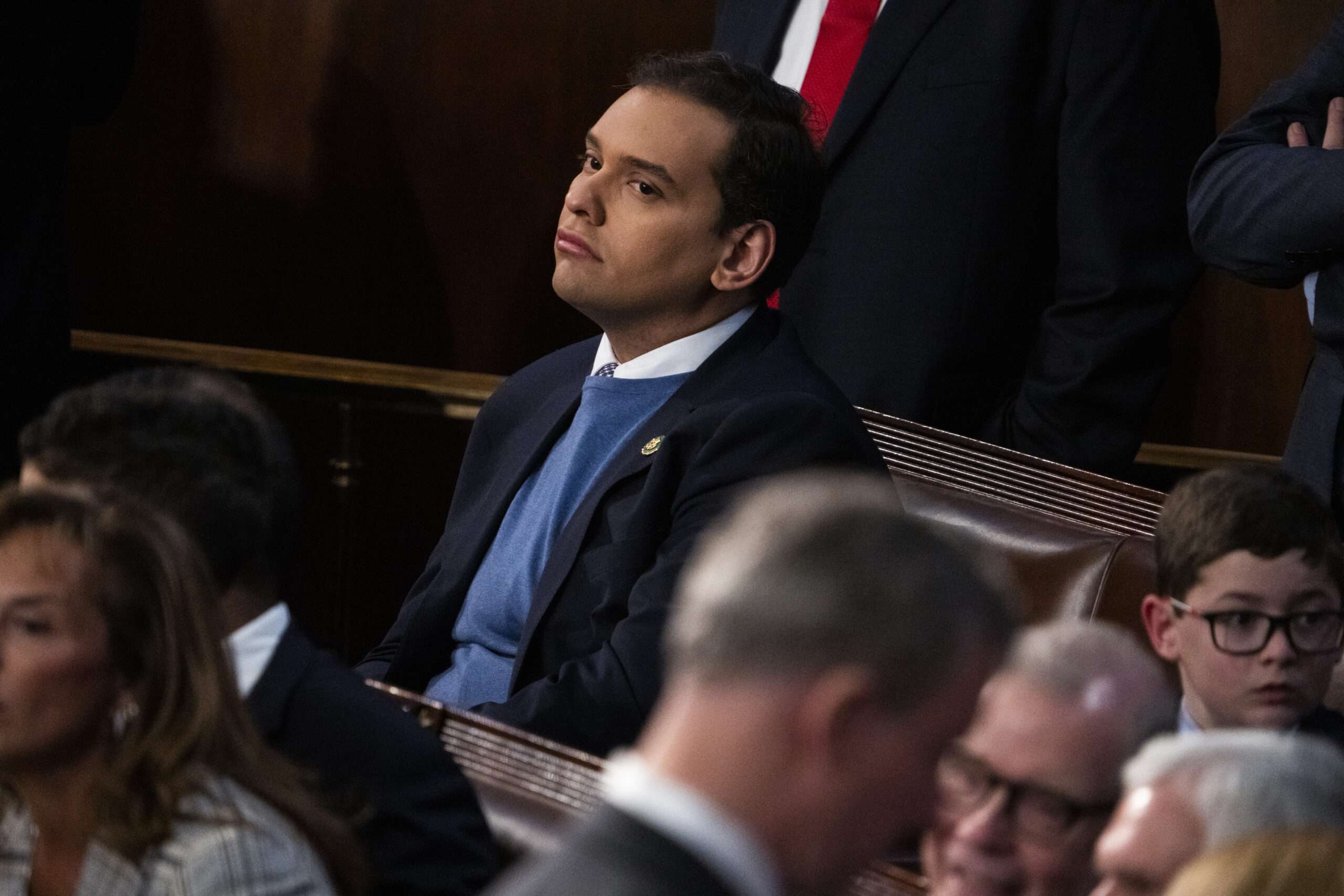
I’VE BEEN following the saga of the Hon. George Santos, the freshman Republican congressman from New York, who’s been caught in a tangle of lies he made about his education and employment on his résumé, and who’s now been charged in federal court on 13 counts from wire fraud and money laundering to theft of public funds and making materially false statements to the House of Representatives. So brazen have been this young politico’s prevarications that even his fellow Republicans—many of whom had forced themselves to swallow Donald Trump’s gargantuan lies about the 2020 election—have called on Santos to resign, if only to spare their party from the prolonged embarrassment of nursing a self-confessed falsifier in their ranks.

Now this is what gets me: Santos had earlier admitted to having fabricated about four-fifths of his CV, an act he called “résumé embellishment” which involved a “poor choice of words.” He said he was sorry—but then just as quickly insisted that he was no criminal and intended to serve the rest of his term, and even run for re-election. He boldly reappeared in Congress—still dressed like the preppy he never was—and acted like nothing happened. Despite the ostracism, he stood his ground, knowing that under its rules, the US Congress couldn’t kick out one of its own—even someone convicted of a crime, unless that crime was treason.

The story fascinates me because it illustrates the utter shamelessness and disregard for the truth that now seems par for the course in politics, and not just in America. The fact that many of his colleagues found Santos’ behavior reprehensible offers hope that some people still know right from wrong. The other fact, that Santos refuses to take responsibility for his actions and resign—and that some people continue to support him nonetheless—reminds us of how degraded the idea of “honor” has become in contemporary society. 

Social scientists tell us that “honor” has evolved over the centuries from the chivalric, even aristocratic notion of responsibility to a community—think of a hero undertaking a noble sacrifice, even at the cost of one’s life, for the common good—to something much more individualized and internalized, to one’s own sense of respect, dignity, and integrity. 

I’d argue even further that for most people today, “honor” has become a much more elastic term, one that allows for a range of justifiable behaviors. I’ll give you an example: would you rat on an officemate, perhaps even your best friend, who’s also your chief competitor for that AVP position? You could, and you would—if you convince yourself that becoming that AVP is a more important honor, something your family and circle of friends would appreciate. This is the difference, as one scholar noted, between “internal” and “external” honor, between integrity and reputation. If we equate, as many might, “reputation” with popularity, with a positive public perception of your image, then it’s easy to see how and why many people find integrity expedient and expendable.

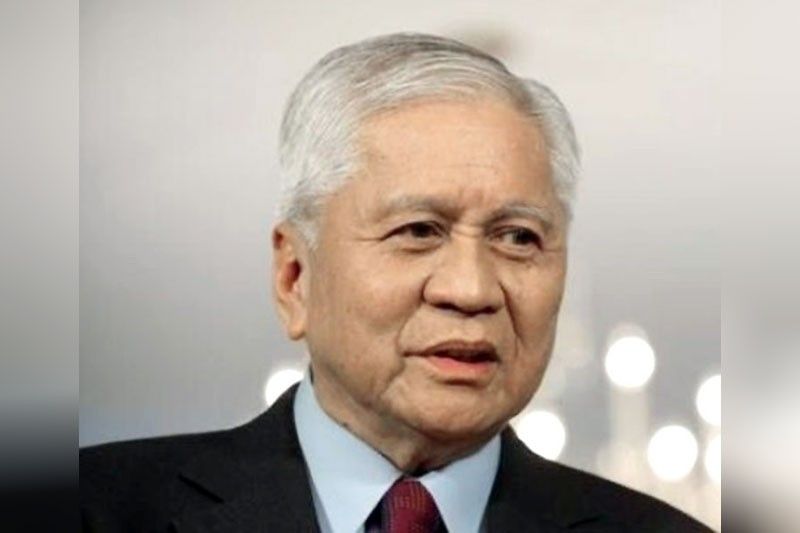
These thoughts ran through my mind when I learned of the recent passing of former Foreign Affairs Secretary Albert del Rosario, and read the many eulogies and encomiums following his death. All of them spoke of him as a man of honor, someone who fought for his country, stood by his word, and conducted himself with dignity. I had only occasional brushes with him, but can agree from those encounters with what was said. Some people communicate their integrity instantly, even wordlessly, just by their very manner. 

On the other hand, there are people who, by their swagger and arrogance (often a cover for some deeply felt inferiority), immediately invite mistrust if not repugnance. I’m reminded of a man who, from his lofty perch, drenched the good secretary with vitriol, accusing him of being “not a Filipino, you don’t look like a Filipino,” and threatening to “pour coffee on your face.” To which the diplomat merely reiterated the need to defend the country’s interests and to beware of the duplicity of our aggressive neighbor. 

The sad thing is how many Pinoys laughed along with that sneering man and thought that he was doing and saying the right thing. For years, he had fed them a diet of vulgarity, as if to reinforce the idea that that was the Filipino’s natural state and that he was one of them and spoke their language. In fact, he was cultivating and normalizing their basest instincts, an easier thing to do than the nobler alternative: appealing to their better selves, to what they could yet be. I see this innate goodness and decency, this desire for self-betterment, in Filipinos every day, even among the poorest of us. Overwhelmingly, this is still who and what we are. Those who believe otherwise debase only themselves.

But we are short on exemplary leadership—on leaders who value honor and integrity, on leaders who can feel shame, on leaders who can curb their profligacy out of respect for the poverty of the many, on leaders who will be genuinely missed and mourned by the masses when they depart. Our role models have become so few—and our expectations of our officials have become so low—that many of us have forgotten what honor truly means, assuming simply and tragically that it comes with wealth and power. The word “Honorable” is too easily affixed to certain high offices. Are they truly so?

I may be aghast at Rep. George Santos’ behavior in New York, but who knows how many lies are buried in our politicians’ CV’s, how many “résumé embellishments” and “poor choices of words” we have had to swallow?

And then again there’s a part of me that says, forget the résumé; it’s never been a trustworthy predictor of moral intelligence. Ability is the most basic we should expect of our “honorables.” Living up to their titles lies at the other extreme. But still I have to wonder: if a George Santos happened here, would he resign? 

Qwertyman No: 40: Teaching History

Qwertyman for Monday, May 8, 2023

I HAVE a subscription to the New York Times, which I enjoy for its features and commentary as much as its news coverage, and the other day my attention was piqued by a small headline: “It’s Not Just Math and Reading: US History Scores for 8th Graders Plunge.”

According to the article, recent test scores reveal that young Americans (about 13-14 years old for eighth-graders) have become much less knowledgeable about their history and civics over the past decade—with 40 percent scoring “below basic” and only 13 percent ranked as “proficient.” 

I immediately wondered how our students would score given similar tests. Would they be able to answer even simple questions about why Ferdinand Magellan sailed to the Philippines, what prompted Filipinos to revolt against Spain, why the Americans occupied us, what led to our involvement in the Second World War, and what martial law and EDSA were all about? I’ll probably be safe in my prediction that they would score dismally, from what I’ve seen in my own classes in UP (yes, in UP), where I’ve been dismayed to find a yawning ignorance of history and literature among my students, supposedly among the best in the country. 

Don’t get me wrong: these are bright, idealistic kids, desirous of all things good for their people and their families. They perform well in class and will likely succeed in whatever career lies ahead of them. But when I ask a roomful of English majors if they know or have read NVM Gonzalez and only a couple of hands go up, I get worried. When I ask when or what year the Americans arrived to conquer us and I get strange answers like “1945,” I get worried. 

However shocked we may profess to be, we can’t blame the students. In 2014, following the passage of the Enhanced Education Act of 2013 or the K-12 Law, the Department of Education issued Order No. 20, Series of 2014, effectively removing Philippine History as a high school subject and subsuming it as an “integrated subtopic” under “Asian Studies,” supposedly to provide students with a wider global perspective. The idea sounds nifty, but as many educators have since pointed out, its practical effect has been to dilute the teaching of Philippine history to the point of oblivion. The result is that we have young Filipinos with no knowledge of the most basic facts and issues of their past, and no appreciation of how that past brought us to where we are today.

That vacuum has been an open invitation to misinformation and historical distortion, the stock-in-trade of political propagandists, trolls, and spinmeisters. It’s become much easier to sell myths like a golden age under martial law to impressionable youngsters who were never told or taught the truth. Not surprisingly, Order No. 20 has been attacked by its critics as a means to lobotomize the youth and to render them more susceptible to alternative narratives (aka fake news) concerning our history. 

And yes, I have to acknowledge that all this began under the late President Noynoy Aquino, a champion of K-12, whom I prefer to believe had no such nefarious motives in mind, as he and his family would have had little to gain by erasing history. But the policy was upheld and sustained by the following administration, with DepEd Secretary Leonor Briones arguing strenuously that History (including our martial-law experience) was being taught in Grade 6 under Araling Panlipunan, and again in high school as a component of Asian and World History.

Given the current DepEd’s expressed desire to review K-12, it might be a good time to test how effective that policy has been: just how much Philippine History are our high school students learning and retaining? How much should they know by the time they get to college, where thornier issues such as nationalism, agrarian reform, and foreign policy will be threshed out in all their nuances?

Long before these questions arose, it was a common complaint among students and even teachers that our problem with History was how badly it was taught, often as a collection of names and dates rather than a coherent narrative (which I must say I sometimes wonder about, fact often being stranger and messier than fiction). We generally agree that History should involve more reasoning than rote memorization. But as the New York Times reports, “That emphasis can contribute to a troubling lack of background knowledge,” with experts observing a “rapid and very significant decline in what students know about history and geography—like the fact that Africa is a continent, not a country.” So the basics of names, dates, and places remain important—getting the facts straight before getting into more complicated arguments.

It’s even more troubling to note that on top of this decline in historical knowledge and awareness among young Americans, there’s now a ham-fisted effort from conservative politicians to purge school curricula of what they see as “woke” content—subjects that have challenged the longstanding impression of America as a nation forged by whites. Governors like Florida’s Ron DeSantis—eager to present themselves as the flag-bearers of political and moral rectitude—have supported moves to eliminate African-American and LGBTQ studies from the curriculum. Others have called for banning books that threaten their view of traditional America, including books titled “The Infinite Moment of Us” (a young adult novel about love and sex) and “How to Be an Antiracist” (a nonfiction book about racism and ethnicity). This reminded me of how some Philippine state universities, not too long ago, went on their own book-banning spree, on some silly suspicion that books by such authors as National Artist Bienvenido Lumbera were “subversive.”

The New York Times piece came with an irresistible teaser: a brief five-question, multiple-choice history quiz for readers to test themselves on how well they know American history. I scored four out of five (failing a question about post-Civil War reconstruction)—not too bad, I thought, for a guy living seven thousand miles away. But then I come from a generation schooled on American textbooks, who know American history and geography better than many Americans. That’s a topic for another column.

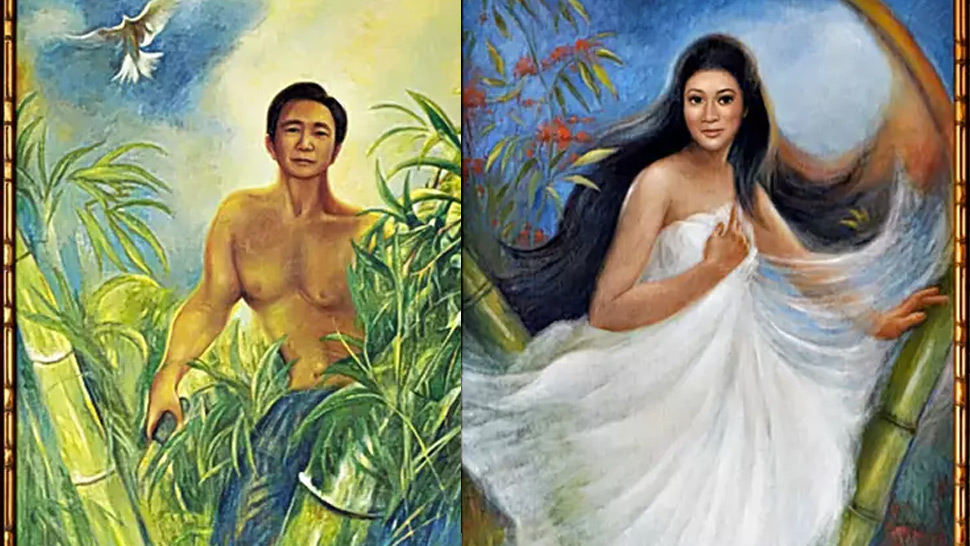
In the meanwhile, let’s ask ourselves: how well do we know our history, and how important is that knowledge to understanding our present and shaping our future? Is “Maria Clara and Ibarra” pointing the way forward?

Qwertyman No. 35: The Ultimate Casualty

Qwertyman for Monday, April 3, 2023

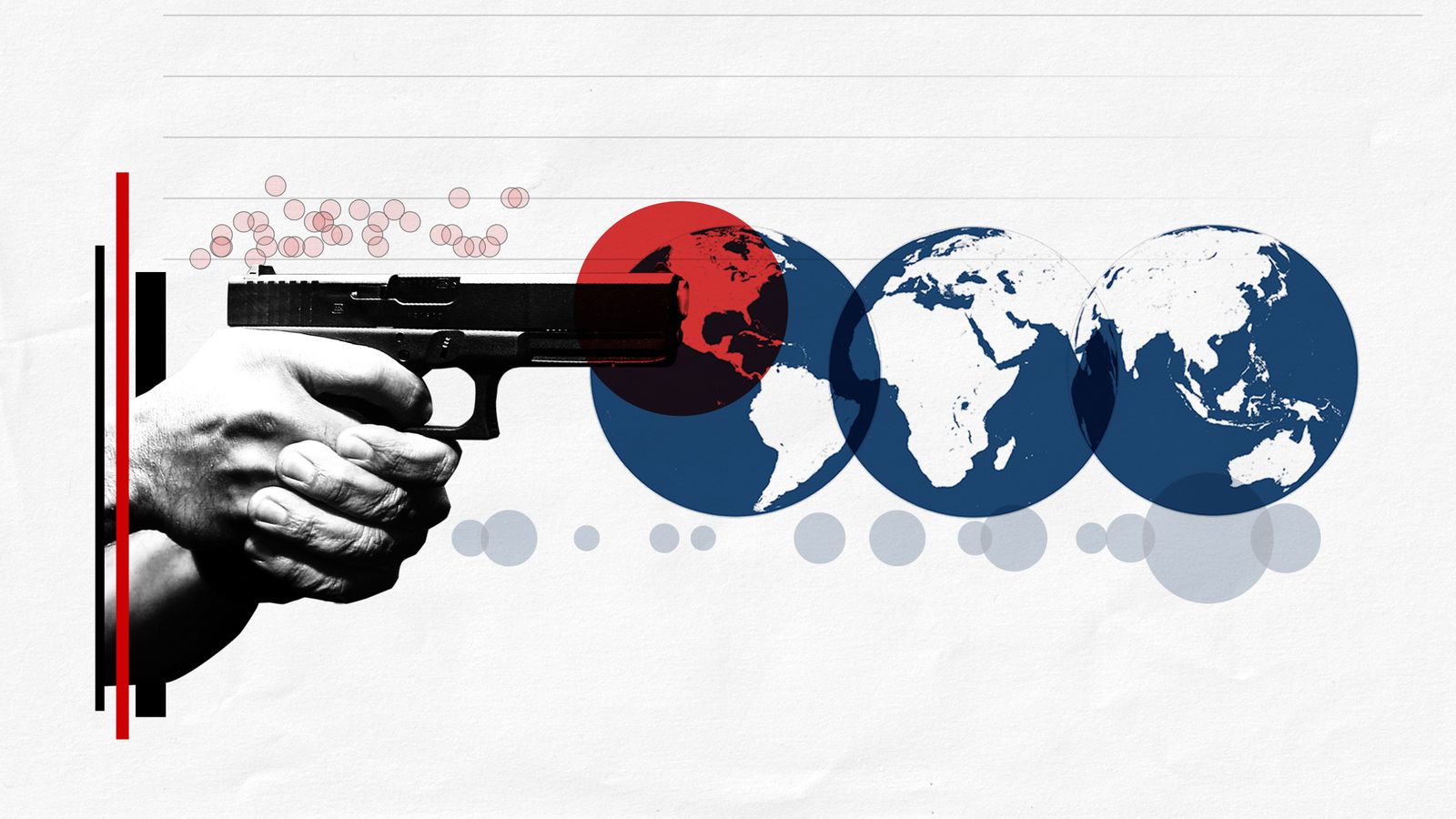
I’M SURE I wasn’t the only one who looked up from his breakfast coffee last week to see, on the morning news, that another mass shooting had ripped through the heart of America—in Nashville, a city that usually brings to mind the twangy plaints of country music, in mournful songs about prison life and cheating hearts. This time the pain was much more brutal and direct, devoid of all poetry: six people were killed, including three nine-year-olds, their bodies savaged by bullets from AR-15-style assault rifles.

According to the Gun Violence Archive—whose very existence should be disturbing—it was the 130th mass shooting in the US in the first three months of 2023 alone. Last year, 647 such events were recorded; overall, more than 44,000 Americans died from gun violence in 2022. At this rate, 2023 will almost certainly be a much bloodier year for America. There will be hundreds more Nashvilles, thousands more families ambushed by unspeakable tragedy, choruses of angry wails to heaven asking God to explain why.

Like any other parent who witnessed that carnage, my wife Beng raised the question on every sensible person’s mind: “How could they let this happen?” 

“This” here would mean not only the mass killing itself, but the means to do it. Two AR-15-style assault rifles were used by the 28-year-old shooter. The AR-15 has been the mass shooter’s weapon of choice. It can rip people to shreds. According to the Washington Post, “The AR-15 fires bullets at such a high velocity — often in a barrage of 30 or even 100 in rapid succession — that it can eviscerate multiple people in seconds. A single bullet lands with a shock wave intense enough to blow apart a skull and demolish vital organs. The impact is even more acute on the compact body of a small child.”


The mere thought of children being mowed down like carnival toys is horrific, but apparently not enough for America’s powerful and richly funded gun lobby, which has insisted on looking the other way, sanctifying the Americans’ Second-Amendment right to bear arms above all other human considerations. 

In Tennessee, where the shootings took place, it is legal for anyone over 21 to carry handguns without a permit; that holds true for 24 other states, making fully half of America gun-friendly. And despite the mounting deaths from mass shootings, politicians in many predominantly Republican states—including Tennessee—are sponsoring even more permissive gun laws, to do away with background checks and facilitate the sale and transport of lethal weapons.

President Biden has rightly said that he has done all he could to help stop the violence by calling for a ban on assault rifles, but the opposition to such gun-control measures has been stubbornly successful. The National Rifle Association (NRA), which has been bankrolled by the gun industry for generations, has lost some of its luster and bluster following the public outcry over the mass shootings, but it still wields enormous political power by supporting gun-supportive candidates in elections.


The gun lobby argues speciously that guns don’t kill—people do; and further, that the problem isn’t that there are too many guns on the streets (there can never be too many), but that mass shooters are certified lunatics who in no way represent the millions more of responsible gun owners who keep their guns for target practice, for the joy of collecting, and for the End of Days, when hordes of zombie-like strangers will come over the hill to invade their homes, steal their food, and rape their wives. Mass shootings, they insist, are a mental-health problem, not something to be blamed on the proliferation and easy availability of weaponry.

Why does this concern us in faraway Philippines? First, because millions of us have relatives in America—who, as minority citizens, are prone to racial violence, as the recent spate of maulings of Filipino-Americans has shown. Many mass shootings have been racially motivated, and it will be only a matter of time before some teenage White Aryan barges into a Pinoy wedding or fiesta to prove his superiority through the barrel of an assault rifle. I fear for our daughter in California, who could be enjoying a night out with friends or shopping for groceries when the shooting begins. (Much to Beng’s and my surprise, our daughter Demi joined the UP Rifle and Pistol Team and became a sharpshooter, but has never felt the need to own and carry.)

Of course, in truth, we knew about America’s bloody history a long time ago, if only from The UntouchablesThe Godfather, and America’s Most Wanted. What was a cowboy, a frontiersman, or soldier without a gun? And let’s not forget that it was the Krag-Jorgensen rifle with which US Army troopers “pacified” Filipino “insurgents” from 1898 onwards.

The second connection is our own gun culture—which, though not as pronounced and as strident as America’s, nevertheless exists, with the gun seen less as a means of self-defense than as a symbol and enforcer of power. With no need for a Second Amendment, our politicians and other bigwigs assemble arsenals for their private armies, such as the cache of arms and ammunition recently uncovered on the property of the Teveses in Negros Oriental. 

Oldtimers will remember when people boarded jeeps and buses with .45s tucked into their waists; congressmen used to enter the Session Hall bringing guns. Ironically, it took martial law to mop up most of those vagrant firearms—when someone decided that only he and his henchmen could carry them—but yet even more ironically, it was the military bullet that assassinated Ninoy Aquino that took the regime down.

I’m not so naive as to believe that we’ll see a gunless world in our lifetime and sing “Kumbaya” until we fall asleep. As societies undergo even more wrenching tests of the values that keep them together, our animal instincts—fear, belligerence, and survivalism—will become even more assertive, and the most brutish and inarticulate among us will let their firepower do the speaking. Unless reason prevails, the insanity will continue.

Abetting the murder of children—whether in Nashville or Bakhmut—means condoning the death of our humanity. That will be the ultimate casualty.

(Image from cnn.com)

Qwertyman No. 34: America the Paradox

Qwertyman for Monday, March 27, 2023

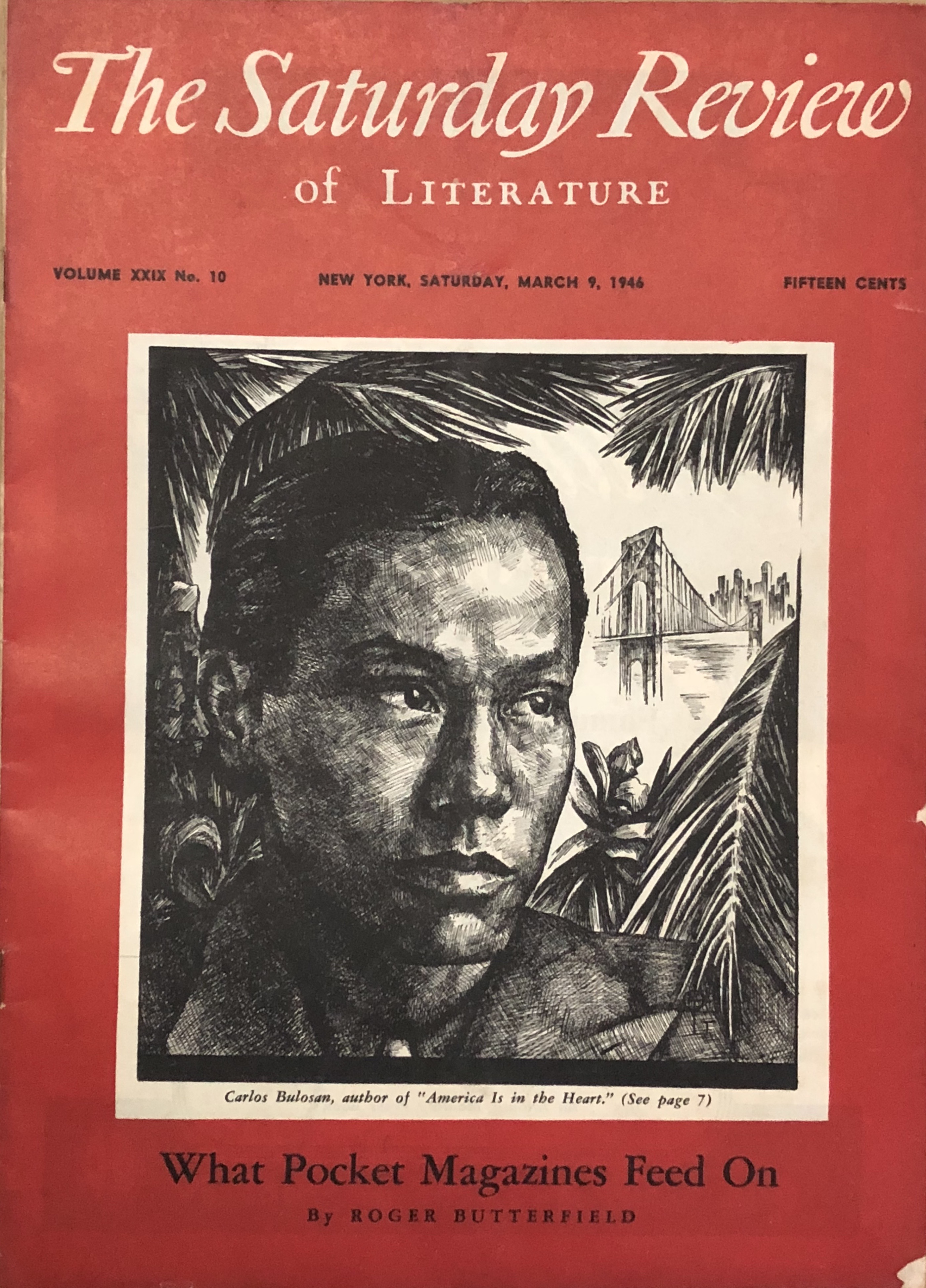
“AMERICA THE Paradox” was the title of an undergraduate paper I wrote on Carlos Bulosan for my class in Philippine literature, in which I observed—as many had done before me—that Bulosan felt deeply conflicted by the two faces that he kept seeing in America. On the one hand, it was the mother with open arms, calling out to the world’s orphans, and accepting of all brave and enterprising spirits. On the other hand, it was the hard fist of racism, viciously averse to all complexions other than white. 

Bulosan arrived in Seattle in 1930, a time of great economic turmoil, and he soon found himself fighting for the exploited poor, becoming a labor organizer and writing radical poetry. He would remain poor for the rest of his short life, despite achieving some degree of literary celebrity following the success of his semi-autobiographical 1946 novel America Is in the Heart. He died of tuberculosis in Seattle in 1956, never having been able to come home. I was so moved by Bulosan’s travails that I gifted our daughter with a signed first edition of his novel as her wedding present, and paid my respects at his grave when I visited Seattle some years ago.

Last Thursday, March 23rd, I joined several hundred other guests for dinner at the Sofitel to celebrate a joyful event: the 75th anniversary of the Fulbright program in the Philippines. Over that period, the Fulbright program, which selects and sends scholars from all over the world to study in the US, has sponsored over 3,000 Filipino scholars and 1,000 American scholars coming to the Philippines. The Philippines—through the Philippine-American Educational Foundation (PAEF)—has the longest-running Fulbright program in the world, dating back to March 23, 1948, hence last week’s big commemoration.

It isn’t hard to see why Sen. J. William Fulbright believed that such a scholarship program was a good idea then, with the Cold War brewing and America projecting itself as the champion of the Free World. For the Philippines, it was a continuation of the prewar practice of sending pensionados to the US, thereby ensuring a cohort of Filipino intellectuals and administrators sympathetic to the American cause.

I myself went out on a Fulbright twice—in 1986, for my MFA at Michigan and then my PhD at Wisconsin, and then in 2014 as a senior scholar at George Washington University. It would be an understatement to say that the Fulbright—especially that first five-year stint—was life-changing for me. The learning was exhilarating, but the living—away from home and family—was fraught with pain.

Still, we Fulbrighters had it much better than Bulosan. Most of our expenses were borne by the American taxpayer (although, because of a budget crunch, I had to teach and also to work part-time as a cook, cashier, and busboy at a Chinese takeout). Our return home was guaranteed (indeed, legally mandated). Most of us enjoyed the hospitality and support of new Fil-Am and American friends. 

Although here and there we had the inevitable brush with racism, we saw America in the best possible light, as a source of knowledge and of the democratic spirit. Arriving in Michigan just after EDSA 1986, I too was seen as living proof of the long and beneficial reach of America’s cultural influence: I could speak English like they did, and (mild boast coming) could write at least as well if not better than they did. 

I recall how, in one Shakespeare class, I was the only one who could explain the difference between “parataxis” and “hypotaxis,” and how, in another class, our professor wrote up a long sentence from one of my stories on the board to demonstrate “Jose’s perfect command of punctuation.” But all that was presumably because of my Americanized education—not even in America, but in the Philippines, where we had seemingly prepared all our lives to come to America, only to find ourselves more indoctrinated than many Americans. (I had memorized all the state capitals in grade school in La Salle, confounding my American friends at Trivial Pursuit.)

Ironically, I also belonged to the First Quarter Storm generation that railed against “American imperialism,” that learned about our colonial exploitation and about the primacy of American self-interest in its transactions with the world. We rallied at the US Embassy against the war in Vietnam and against the US bases in the Philippines. We denounced Ferdinand Marcos as an American puppet, and saw Washington’s hand in every instance of political mayhem around the globe. Where did all that militancy go? Was a scholarship to Hollywood enough to negate these accusations?

Seated at that Fulbright dinner and listening to the speakers extolling our special relationship with America, I thought about Bulosan, the FQS, my Fulbright experience, our daughter in California, my teaching of American literature, and such recent issues as EDCA and the Chinese presence in our territorial waters to sort out my emotions. 

The America that had been such a paradox for Bulosan remains, in many ways, a chimera for us today—speaking with moral authority against the Russian invasion of Ukraine, and yet still enamored in many places of Trumpian demagoguery; espousing peace and human rights while allowing assault rifles on its streets; and promoting education and global literacy while hosting the world’s biggest engines of disinformation. We want to believe in the America that believed in us, although the cynical can argue that “believed” should be taken as “invested,” of whose efficacy this column offers ample proof. 

In the end, I reminded myself of what I tell my students: (1) The American government and the American people are not necessarily the same; (2) The American people are many peoples; there is no single, monolithic America; (3) We study America and its literature not to become Americans, but to be better Filipinos; and (4) We often take the terms “America” and “American” in an ideal or idealized sense, a compound of expectations and aspirations shaped by Abraham Lincoln, Hollywood, cable TV, and Spotify.

We went to America not just to study there, but to study America, and that study continues. 

(Image from pacforum.org)

Qwertyman No. 19: The Real Maria Ressa

Qwertyman for Monday, December 12, 2022

I WAS very honored to speak last Saturday at the launch of Maria Ressa’s new book, How to Stand up to a Dictator: The Fight for Our Future (Harper, 2022). I’d read an advance copy of it a couple of weeks ago, and to cut to the chase, if you’re thinking of buying a book to read for the holidays or to gift to friends, look no further. This book, for me, is among the year’s best in nonfiction.

I have to emphasize that word—nonfiction. As we all know we live in times when fiction has taken over as the most influential form of human discourse, particularly in the political arena. As a practicing fictionist, I should be happy about that, but I’m not and I can’t be, because so much of it is bad fiction, crudely written—and surprisingly, infuriatingly effective, at least with a certain kind of reader. 

Maria’s book cuts through all that. It’s undisguised, old-fashioned, in-your-face truth-telling, told in the same voice and tone we’ve become familiar with over the years of listening to her reportage over CNN. I’m sure that, like me, many of you wondered the first time you heard her: “Who was this little brown-complexioned woman speaking with an American accent?” She looked Filipino, but how come we’d never seen her before?

This was all before she rose to prominence—some would say notoriety—as the moving spirit behind Rappler, and subsequently to global fame as a Nobel Prize winner for Peace. We identified with her travails, shared her anger and sadness at the abuse she has received, and rejoiced in her victories, whether in the courts or in the larger sphere of public opinion. 

But how well do we really know Maria Ressa, and whatever drives her to be who and what she is? This book takes us to the person behind the phenomenon, and answers many questions we may have had about her and her stubborn advocacies.

The book’s title sounds like that of an instruction manual—which it is, and also is not, being part autobiography, part journalism, and part testimonial. As a manual for freedom fighters, it emphasizes the need for collaborative and collective action against seemingly insurmountable forces. Those forces now include the Internet, which, as Maria documents with both precision and profound dismay, has morphed from a medium that once held all kinds of liberative promises into a medium for mass deception and targeted assault. She draws her counsel not from some esoteric guru or academic paradigm, but from some very basic values that have informed her own life—the Honor Code she followed in school, and the Golden Rule.

“That’s what I lay out in this book,” she says, “an exploration into the values and principles not just of journalism and technology but of the collective action we need to take to win this battle for facts. This journey of discovery is intensely personal. That’s why every chapter has a micro and a macro: a personal lesson and the larger picture. You will see the simple ideas I hold on to in order to make what have—over time—become instinctive but thoughtful decisions.”

It’s this constant back-and-forth between the personal and the political—and at some point they become inextricably fused—that forms the fiber of Maria’s narrative and gives it strength. Her convictions are grounded in personal experience; they have not been paid for—as the hacks in the journalistic trade will allege, seeking to bring her down to their own level—except in the coin of personal suffering under the constant threat of imprisonment and violence.

But we learn from this book that trauma is nothing new to Maria. (We also learn that Maria Ressa wasn’t the name she was born into, but to find out her birth name, you’ll have to buy the book.) From her abrupt relocation from Manila to America at the age of ten, to her journalistic immersion in the horrors of conflict and disaster in Indonesia and Ormoc, the book chronicles Maria’s quest for truth, meaning, and purpose in her life, and that of others. She stresses the importance of remembering the past to make sense of the present, quoting TS Eliot’s phrase, “the present moment of the past.”

And so can we, she seems to suggest, even in these times of high anxiety, when we can see the vultures hovering over such once-sacrosanct treasures as our pension funds, while billions more go to feed the dogs of an increasingly untenable counter-insurgent war. The big words we have become used to tossing around—truth, freedom, reason, justice, democracy—they all come down to a personal choice to do the right thing, and the courage to do it. 

Nowhere is this matter of choice more evident than in the fact that Maria is here in the Philippines, having willfully subjected herself to our brand of justice, however imperfect it may be, instead of escaping to the safety of America or another haven, which her dual citizenship if not her celebrity can certainly afford her. She will see her own story through to the end, in the locale where it matters, among the people to whom it matters most.

I’ve often remarked, as a creative writer and professor of literature, that in this country, the writers most in danger of political persecution and retribution are really not fictionists or poets like me. Not since Rizal has a Filipino novelist been shot dead for what he wrote. For sure, we have lost many brilliant writers to the struggle for freedom and democracy—Emman Lacaba, and most recently Lorena Tariman and her husband Ericson Acosta. But they were killed by the State not for what they wrote—the State is illiterate when it comes to metaphor—but for what they allegedly did.

Rather, the most imperiled writers in the Philippines as in many other places are the journalists who speak the language of the people and of their plaints in terms too clear to ignore. They could be radio announcers like Percy Lapid, or the victims of wholesale murder in Maguindanao, or high-profile and exemplary targets such as Maria Ressa. It would have been easy for her to lash back at her critics and tormentors with the same viciousness. But, she says, “I will not become a criminal to fight a criminal. I will not become a monster to fight a monster.”

That, too, is a difficult choice, and one I am sure we are often tempted to cast aside. But Maria’s equanimity in the face of savagery shames us back into our better selves. It will be that kind of quiet resolve that we will need to survive and prevail. After all, we survived martial law. We can survive this regime—with agility, patience, and courage. But don’t take my word for it. Read Maria’s book to know that we can, and why we must.

Penman No. 444: A San Diego Sojourn

Penman for Sunday, November 6, 2022

A FEW weeks ago, for the first time since the pandemic, my wife Beng and I took a plane out of the country, and I can’t tell you how liberating that felt after three years of being landbound. I’d had few complaints about the long lockdowns, because I’m used to working and writing in isolation, and have become much less sociable as I age. But I did miss the travel, the foreign air, the view from the other side of the ocean. 

Just before the pandemic hit, Beng and I had spent my first year in retirement (and a good chunk of my retirement kitty) gallivanting around seven countries, against the advice of family and friends who thought that we were overdoing it; perhaps we were, but now we know that the world we saw then will never be the same again, and that we ourselves—in or approaching our seventies—will never be able to do that again. And so it was with a huge sigh of relief that we boarded our flight to San Diego, where our daughter Demi has been living with her husband Jerry for the past 15 years. We’d visited San Diego often before, but probably not with this much anticipation, having been away for years. 

Sitting on the Mexican border, San Diego isn’t the first place most Filipinos would choose when they think of visiting America, unless, like us, they have personal reasons to go there. Los Angeles and San Francisco seem to be more exciting places, have large Fil-Am communities, and have long been the ports of entry for Pinoys landing on the West Coast. (Our Japan Airlines flight was that rare straight flight via Tokyo to San Diego.) But San Diego has its own charm and its own attractions, most notably Balboa Park, the San Diego Zoo, and Comic-Con, that annual extravaganza of pop culture that draws about 150,000 fans from around the galaxy. (Much to my young students’ chagrin, I’ve been to Comic-Con twice, happily ignorant of much of what I was looking at.) 

And whether you’ve lived there for decades or are just passing through, San Diego will always give you a taste of home, with dozens of Pinoy foods stores and restaurants, especially in National City and Chula Vista where you can shop at Seafood City for daing na bangus and Chocnut and at Goldilocks for your party cake while dropping packages off at LBC—or you can run to Mira Mesa for your Jollibee fix. (For me, an American sojourn would be incomplete without a trip to Arby’s and Red Lobster.)

Inevitably San Diego also has its own spotted history of East-West relations, in which Filipinos have figured; the better part of that history was celebrated last month as Filipino-American Heritage Month in the city. The worst part remains in the archives, in the memories of early immigrants such as Emeterio Reyes, who recalls that “I asked the driver if he could take me to a Catholic church. As soon as we got there, I told him to wait for me because I had a funny feeling I might not be welcome at this church. As I entered the door, a priest approached me and told me that the church was only for white people. That moment, I wanted to cry and die!” 

When Sebastian Vizcaino sailed into what he would name San Diego Bay on November 10, 1602, he found that he had “arrived at a port which must be the best to be found in all the South Sea, for, besides being protected on all sides and having good anchorage, it is in latitude 33½o. It has very good wood and water, many fish of all kinds, many of which we caught with seine and hooks. On the land there is much game, such as rabbits, hares, deer, very large quail, royal ducks, thrushes, and many other birds. On the 12th of the said month, which was the day of the glorious San Diego, the general, admiral, religious, captains, ensigns, and almost all the men went ashore. A hut was built and mass was said in celebration of the feast of Señor San Diego.”

As a major port facing the Pacific, San Diego has long been home to the US Navy’s Pacific Fleet, its base harboring over 50 ships. The naval presence defines much of San Diego’s character, and provides a good part of the reason why about 200,000 Filipino-Americans live there today. Since early in the American occupation, Filipinos have signed up with the US Navy as their passport to what they hoped would be a better life and to a bit of adventure. 

I just learned, for example, that the first Filipino to have joined the US Navy, back in 1903, was a seminarian in Manila named Potenciano Parel who snuck out of his vows to be a sailor, but not having the right papers, he used those of a friend and assumed his identity, Tomas Dolopo; the Dolopos continue to be San Diegans. Demi’s late father-in-law, Ric Ricario, joined in 1957; his eldest son, Ray, followed him into the Navy; Ray’s brother Jerry met and married Demi. And so we find ourselves now tied by blood to that long tradition, as did many thousands of others before us.

Despite having visited San Diego many times before, and having enjoyed its more popular attractions, we felt more acutely aware of history this time around. We finally stepped into the city’s Maritime Museum, a complex of many ships from various centuries that allows visitors a hands-on experience at traveling the world on water. The ships on display range from a full-size and fully functional replica of a Spanish galleon ca. 1542, the San Salvador, to the world’s oldest sailing ship, the grand, mid-1800s Star of India, to a ca. 1970s submarine that still holds the record for the deepest dive, the USS Dolphin. For just $15 for seniors and just slightly more for others, you can hop from one ship to another, and imagine what it was like to cross a tempestuous ocean with only the stars to light the way and nothing to eat but stale bread and salted pork. 

We enjoyed history of another kind by having dinner with our in-laws in a National City dive that our son-in-law Jerry chose for its unique ambience, which you can either call seedy or loaded with character. (There was a famous sailor’s bar in the area called the Trophy Lounge, Jerry told us, that used to be run by ladies from Olongapo…. But that’s another story, and San Diego has books of them, yet to be told.) La Maze is the kind of leatherbound ‘50s restaurant that the Rat Pack and other Hollywood celebrities frequented when in San Diego, and you can still order the same great steaks they had. A local band played dance music, and to the tune of “Solamente Una Vez,” I took the pretty silver-haired fox next to me to the floor and slow-dragged the night away.