Penman No. 377: A Harvest of Singaporean Fiction

GPASG.png

Penman for Monday, December 23, 2019


WRITING ABOUT Singaporean short fiction in the Malaysian literary journal Tenggara in 1990, the highly respected Singaporean poet and teacher Robert Yeo observed of his country’s short story writers that “They prefer the relative safety of naturalism or realism and have learned to construct the short story in terms of traditional ways of having a well-defined plot, a single moment, clear characterization, and a resolute or indeterminate end. There are no innovative tales like the surrealism of Franz Kafka, the magical realism of Marquez or the labyrinthine mazes of Borges, writers who have responded to the urgings of their personal visions of the worlds they inhabit and make….” At the same time he remained optimistic, and opined that as poets had lorded it over the previous decades, the time for fictionists had come.

Prof. Yeo’s self-criticism reminded me that, years earlier, I spotted a remark in the introduction to an anthology of Singaporean short stories that Singaporean writers had much to learn from their Filipino counterparts, who had explored the territory with both talent and audacity.

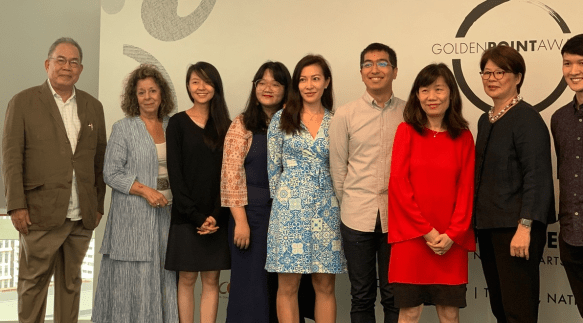
Two weeks ago, as I attended the awarding ceremonies of the Golden Point Award at the National Library of Singapore, I reflected on those comments and was happy to conclude, on my hosts’ behalf, that those days of cautious apprenticeship were over: Singaporean fiction had fully come of age. Indeed perhaps it had done that much earlier than I had noticed, but this time I was staring it in the face, in the form of the superlative pieces that won prizes in the GPA competition.

Begun by the National Arts Council in 1993—perhaps precisely to encourage the risk-taking and innovation that Robert seemed to be missing—the Golden Point Award is Singapore’s biennial version of our much older and broader Palancas, focused on discovering and encouraging new writers in Singapore’s four official languages (English, Chinese, Malay, and Tamil) in the poetry and short story categories. I was the sole international judge in the English short story, a task and privilege I shared with two distinguished Singaporean writers, Meira Chand and Balli Kaur Jaswal (who had also been a David TK Wong Fellow at Norwich, and who lived for some time in Manila).

The judging that we did online over several weeks was exciting but exhausting. Of the 1,200 entries submitted this year to the GPA in all categories, more than half went to the English short story. We plodded patiently through the digital pile, and were pleasantly surprised to find, when we finally met in Singapore for the final deliberation, that our top-six shortlists were practically the same, save for one or two pieces.

The stories submitted covered an astonishing and also very revealing range of themes and concerns that created (especially for me, as an outsider looking in) a comprehensive image of Singaporean society today. They included the following, in no particular order: migrant workers; Chinese grandparents; filial piety; competition and conformity; the generation gap; Western education, the English language (Oxbridge and British accents), and social status; arranged marriages; racial disharmony; sexual liberation; Singaporean history and nationhood; the Singaporean future; utopia and dystopia.

Addressing Robert Yeo’s earlier plaint, the entries also came in full range of genres, from realism to fantasy and science fiction, horror, young adult, even erotica.

In my judging, I looked for the human in the Singaporean, and the Singaporean in the human. While it may not have been explicitly stated in the rules, I tried to see how the works represented both contemporary Singaporean society and also the state of writing in Singapore.

The best stories for me displayed complexity, subtlety, intimacy, and insight; they had a palpable narrative and emotional impact, and took their time to develop their tensions and arrive at their subliminally earned conclusions. I was especially taken by our second-prize winner, “Little Fears” by Lauren Ho, which drew on the tension between a Singaporean mother and her Filipino nanny, who had clearly won over her child’s affections.

The least successful ones bore many of the hallmarks of amateurs, which I see often enough in our own workshops and the Palancas: a plethora of literary quotes and allusions, hurried summaries of situations, essayistic discussions of their subjects, revelatory titles, one-dimensional characterizations, and predictable plots.

Nevertheless, the enthusiasm of all participants—the courage of writing and submitting a story for judgment—should be commended, as I could sense that the GPA was as much about encouraging effort and expression as it was about recognizing excellence.

At the awards ceremony, I also had the opportunity to meet and chat with Singaporean publisher Edmund Wee, whose Epigram (epigrambooks.sg) imprint has been championing local literature and writers. Now Edmund is looking beyond Singapore itself for the best new works by sponsoring the Epigram Books Fiction Prize, which offers the largest prize money in the Singaporean—indeed Southeast Asian—literary circuit: S$25,000 (about P933,000) plus a publishing contract; three other shortlisted finalists will get S$5,000 and a publishing contract. Starting this year, the competition was opened to ASEAN authors, and Edmund made a point of asking me to encourage more Filipinos to join. The next deadline will be in August 2020, with the winner to be announced the following January. Check out their website, folks.

With incentives like the GPA and the Epigram Prize, Prof. Yeo can rest assured that Singaporean fiction will be alive and well for many decades to come.


Penman No. 376: The Other Pepe

IMG_2234.jpeg

Penman for Monday, December 9, 2019


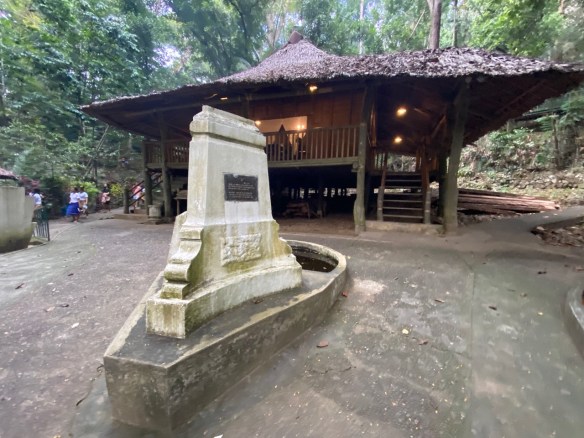
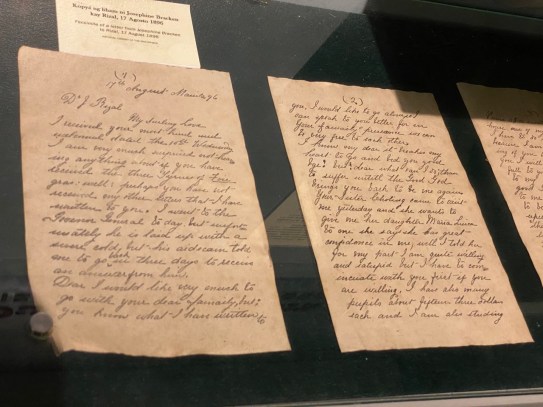
THIS COLUMN started out in my mind as an account of a return visit to Dapitan, where my wife Beng and I had first gone eight years ago to pay homage to Jose Rizal, who had lived there in exile for four years between 1892 and 1896, until shortly before his arrest in Europe and his trial and execution in Manila. It was by many accounts a happy and productive interlude, during which he practiced his skills as physician, teacher, poet, and scientist, a period highlighted by his romance with a young woman named Josephine Bracken, whom he would later marry at death’s door.

IMG_2242.jpeg

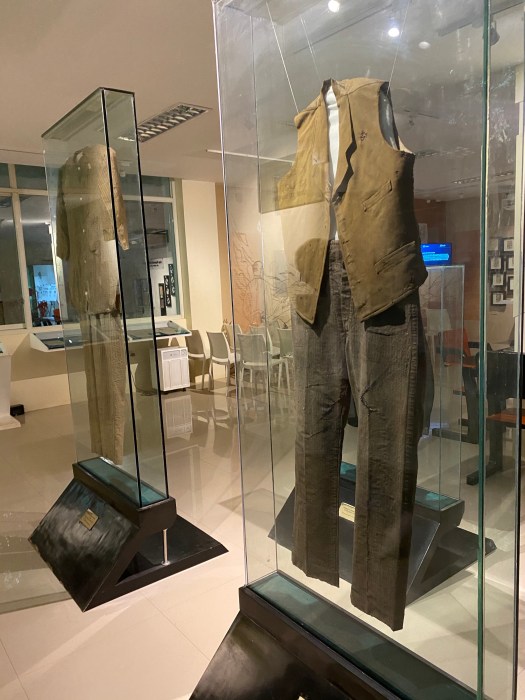
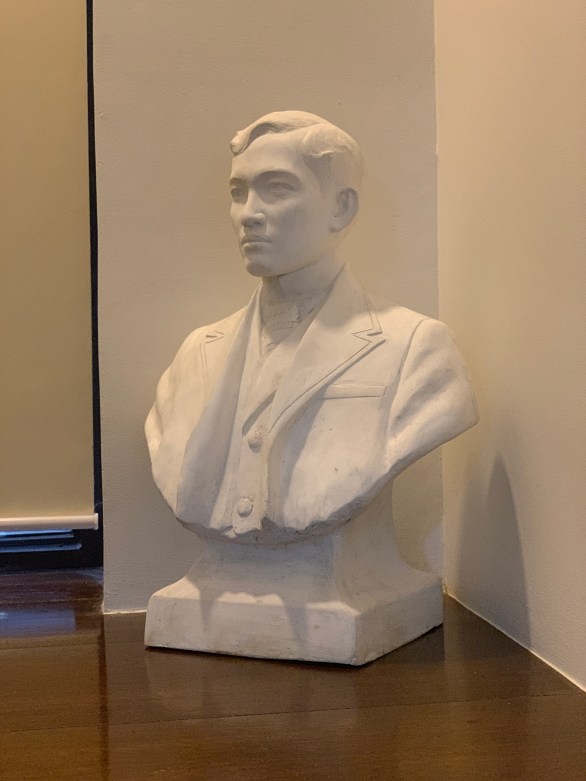
Indeed there’s no way you can visit his beachfront estate named Talisay, now a national shrine, without being swept up by the epic drama of Rizal’s last years—a drama wrought not in the theater of armed combat, but in the innermost recesses of his spirit, torn as he was by many loves and longings, successively losing a stillborn son, his freedom, and then his life. Again I looked at his clothes, his letters, and his artworks, trying to see the man beneath the trees, or on the water’s edge pointing something out to Josephine in the gathering dusk. (I keep a plaster bust of Rizal, crafted in 1961 by Anastacio Caedo, in my home office, and often find myself staring at it and asking, “What are you thinking?”)

IMG_0297.jpeg

IMG_2247.jpeg

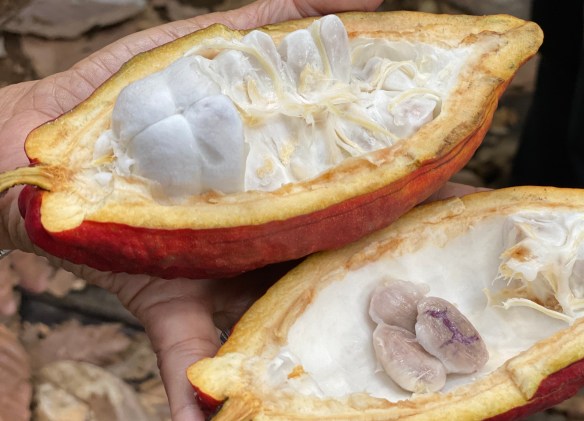
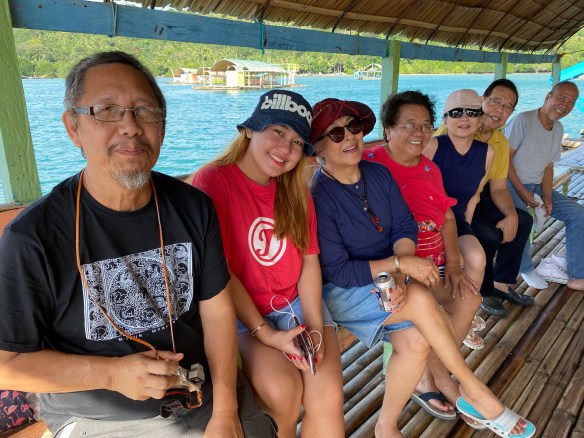
We had gone down to Dapitan via Dipolog, where the airport is, to enjoy a weekend with old friends from our time as the elves and acolytes of Dr. Gerry Sicat at the National Economic and Development Authority, back in the 1970s. Our boss at the Economic Information Staff, Frankie Aseniero, and his wife Nanette had graciously invited us to visit them in Dipolog, where Frankie, now retired but not quite, was a gentleman-farmer planting cacao and milling coco sugar and vinegar for the export market. With Beng and me were Medecins Sans Frontieres volunteer-physician Ginny Pineda Garcia and her husband the photographer Oliver Garcia and the poet Fidel Rillo.

IMG_2324.jpeg

IMG_2372.jpeg

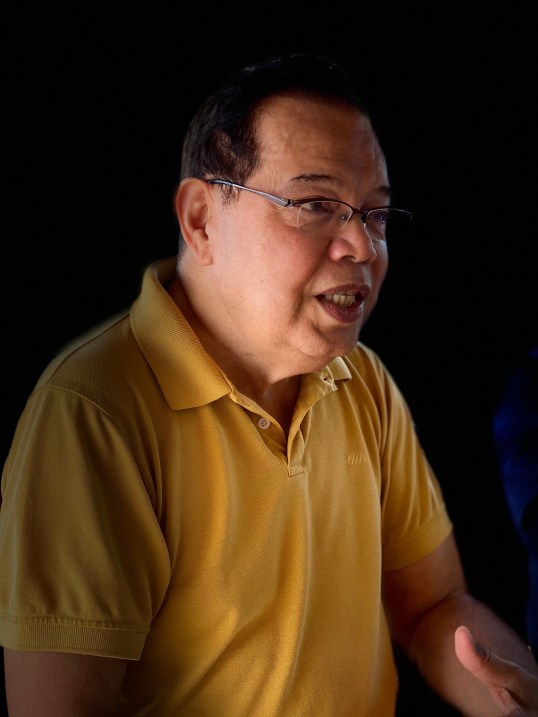
We’re all friends now in our seniorhood, but I have to admit, with some shame, that in our rebellious twenties we gave Frankie a hard time at the office, so let me make up for some of that by talking about his other talents, beyond business and management, as well as his fascinating family history. As it happens, Francisco Aseniero, Jr. is also one of our country’s most celebrated tenors who never fails to make us swoon every time he launches into “Stranger in Paradise” or “Dein ist mein ganzes Herz”; he has concertized all over the world and continues to lend his voice to programs benefiting worthy causes.

IMG_2382.jpeg

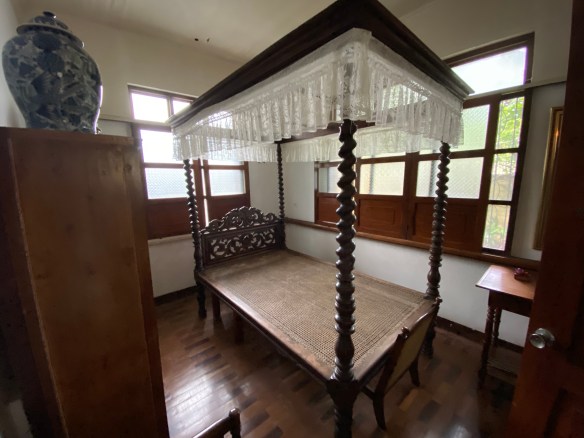
How Frankie’s story connects with Rizal and a later phase of our history brings us back to Talisay, where Frankie’s grandfather Jose, then a boy of eleven or twelve, became a student of the other Pepe. So devoted was the boy to his teacher that he accompanied Rizal to Manila, hoping to be educated further in the big city, but events quickly overtook both master and pupil, and the young Jose had to suffer the harrowing experience of witnessing his hero’s execution. He had joined Rizal’s mother and sister on the eve of his death, and had seen and copied Rizal’s farewell poem, according to Frankie’s brother George, a philosopher and historian. Jose Aseniero went on to serve as governor of Zamboanga before the war. At one point he also acquired some of Rizal’s belongings, among which is the four-poster bed that can still be found in the Asenieros’ ancestral home.

IMG_2353.jpeg

The story is no less interesting on Frankie’s maternal side. His grandfather there was a Swedish engineer named Charles Gustaf Carlson who migrated to the United States in 1895, and shortly after became a Protestant missionary to the Philippines, arriving in 1902 and being counted among the “Thomasites” who taught English to Filipinos. Charles became principal of the Industrial Trade School in Zamboanga, where he married a former student, Eugenia Enriquez. Among their six children was Ingeborg Eughenia, who met and married Francisco Aseniero, Jose’s engineer-son.

But what brought the whole experience together for me was a story that Frankie told us on our last day, as we were winding down, about one of his concerts in a small town in Bulacan. He and some friends had been invited to sing there, and he had obliged as usual. “I was surprised to find that in such a small place, the people thronged to see us, dressed in their Sunday best,” Frankie recalled. “We felt like we owed it to them to sing our hearts out, and we did.” He found himself singing like he would have done in London, Vienna, or New York, and the crowd responded with utmost appreciation as Frankie and his party offered up Broadway and operatic classics. “It was a magical moment, and seeing the people enjoying the music made my hair stand on end!”

How Jose Rizal himself would have loved that, having brought his world-honed talent to Dapitan, enriching and ennobling its soil for other and lesser Pepes like us following in his footsteps.

IMG_2256.jpeg


Penman No. 375: Delightful Turkey

Attachment-1.jpeg

Penman for Monday, November 25, 2019


AS 2019 draws to a close, it’s struck me that the year I turned 65 and retired has also been the busiest travel year of my life. Since I shut the door to my office for the last time in January—and thanks to my retirement check—my wife Beng and I have been to Penang, Tokyo, Scotland, London, Singapore, Turkey, the US, and Macau, doubling down on a pledge to keep moving while our knees can take it, which may not be for much longer. We’re also empty nesters, so with no fixed schedules and domestic responsibilities, it becomes that much easier to pack a bag and vanish for a few days. (Unfortunately this doesn’t mean that I have no work to worry about—I just carry half a dozen book projects with me all the time, on the road, in my trusty laptop and backed up to the Cloud.)

Among all those places—most of which we’d already been to before—the pick of the year has to be Turkey. Like many Pinoy seniors standing at the pre-departure area, I’d long nursed a Turkish trip on my bucket list—and it’s hardly just me: Turkey, specifically Istanbul, remains the world’s top tourist destination, attracting some 30 million visitors a year.

Why Turkey? Because why not? The very name conjures exotic adventures in a landscape swept by history and culture. Mosques, muezzins, and markets all come to mind, in a gaudy parade of images and tropes shaped as much by Hollywood as by the TV news. Indeed my earliest acquaintance with Turkey came with a movie I saw at the Leleng Theater behind Pasig’s public market as a boy in the mid-‘60s. It was titled “Topkapi” and starred Melina Mercouri, and it had to do with jewel thieves going for an emerald-encrusted dagger on exhibit in the palace of that name, and I remember how far away Turkey seemed,  in that lice-infested darkness, from the fish scales and pineapple peels of my reality. More than fifty years later, I was going to be the jewel thief, and the precious dagger was none other than Turkey itself, which I was going to see and hold for myself.

IMG_1567.jpeg

IMG_1650.jpeg

The immediate trigger for this sortie was an irresistible offer we heard about from the Makati-based Rakso Travel agency, which sells package tours to Turkey for less than $2,000 all-in—and by “all-in” they mean exactly that, inclusive of flights, hotels, all meals, tours, tips, and visas. We thought it was an amazing deal, given that the trip would cover ten days and eight nights (the extra days would be for the flights) and cover all the major cities and sites you’d like to see in that country (with the exception of Mt. Ararat on the eastern side, off-limits because of political tensions). The itinerary included Istanbul, Cannakale, Troy, Pergamon, Kusadasi, Ephesus, Cappadocia, Konya, Amasya, Safranbolu, and Istanbul again—a 3,000-kilometer romp. Rakso also took care of the visas, which are now easier and cheaper to get if you have a US visa, in which case you can receive an e-visa online.

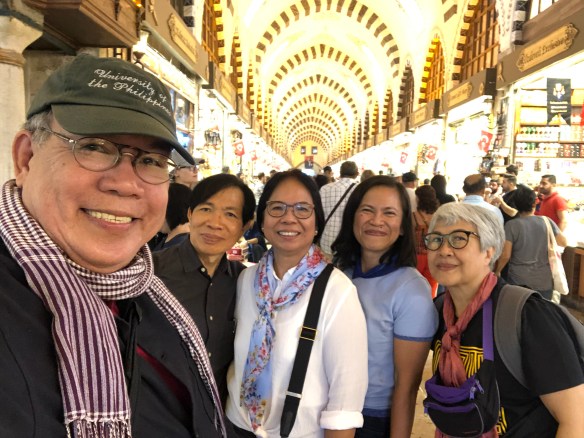
Despite being seasoned travelers, this was the first time Beng and I joined a group tour, and we were relieved to see, as we assembled at the airport, that our all-Pinoy group of 38 was composed mainly of mature professionals and bright young people eager to explore the world. The most senior member of our group was a jolly, still sprightly, and beer-loving 88-year-old we all called “Tatang,” whose very presence offered hope that we had some mileage still ahead of us.

IMG_1423.jpeg

IMG_1479.jpeg

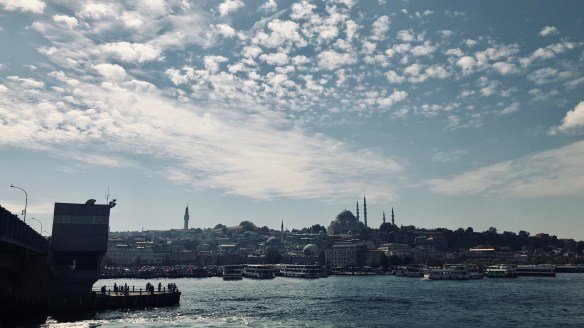
The 12-hour flight from Manila to Istanbul on Turkish Airlines was timed perfectly to arrive in Istanbul at dawn, with the city’s towers rising about the mists, heralding a whole new day of discovery and adventure. And that’s what awaited us for the next eight days, starting right off the bat after a quick breakfast with the Blue Mosque and the Hagia Sofia, two of Istanbul’s most famous landmarks.

IMG_1414.jpeg

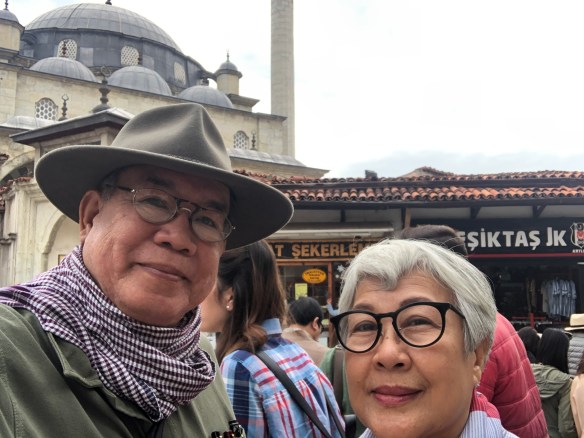
I’m not going to bore you with a blow-by-blow, scene-by-scene account of all the sites we visited; there’s often nothing more annoying than to have to leaf through someone else’s travel pictures, which also tend to look like, well, everybody else’s. There are only so many “evil eyes” (the virtual logo of Turkish tourism) you can look at, only so many Turkish delights you can nibble on.

IMG_1374.jpeg

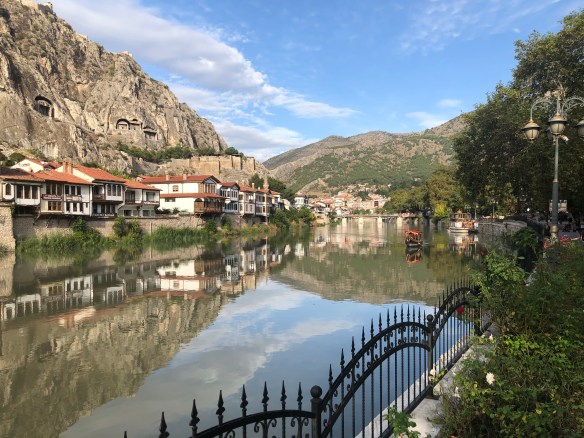
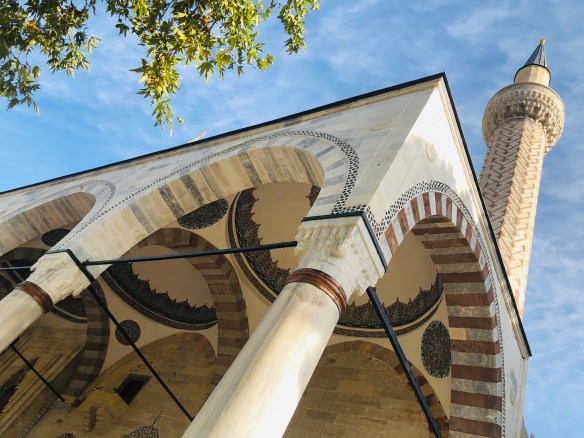
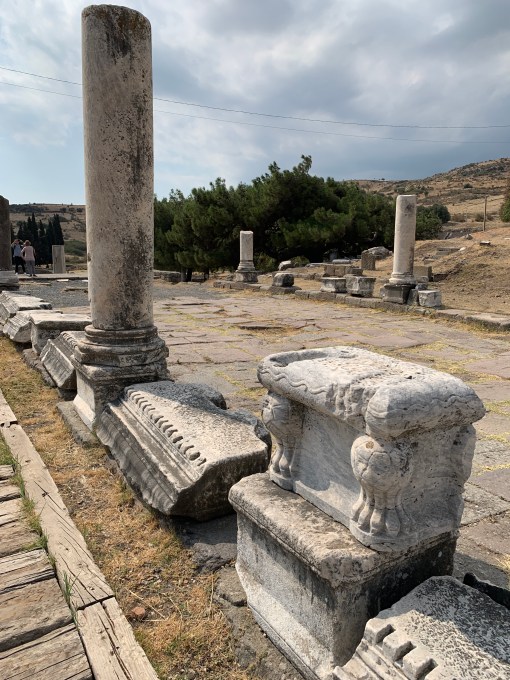
I’ll just say that aside from Istanbul itself, with its majestic domes and labyrinthine markets, the highlights of the tour for me were those on the quiet side: driving past the muted batteries of Gallipoli; standing on the ramparts of Troy, overlooking what would have been a tableau of both courage and carnage; stepping into the ancient library at Ephesus; watching dozens of multicolored balloons lift up into the early morning sky at Cappadocia; having lunch in Amasya with a waterfall cascading behind Beng’s shoulder; and stumbling into a sidestreet in Safranbolu, canopied by grapevines.

IMG_0507.jpeg

Hats off to Rakso for the package—the hotels and the food were excellent, the tours were fascinating (if fatiguing for the slow-footed), our guide was wonderful, and we emerged with three dozen new friends. I still keep two precious boxes of Turkish delights in the fridge, which our guide said would easily keep for six months; Turkey itself will surely linger longer in the memory.

IMG_1296.jpeg

Penman No. 374: A Pen-Filled Weekend

35808325815_67799625b6_o.jpg

Penman for Monday, November 11, 2019


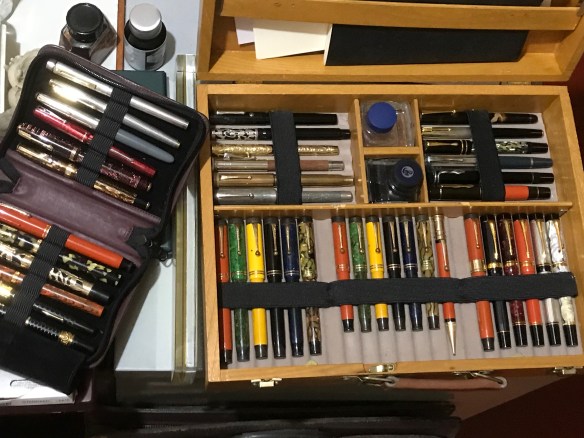
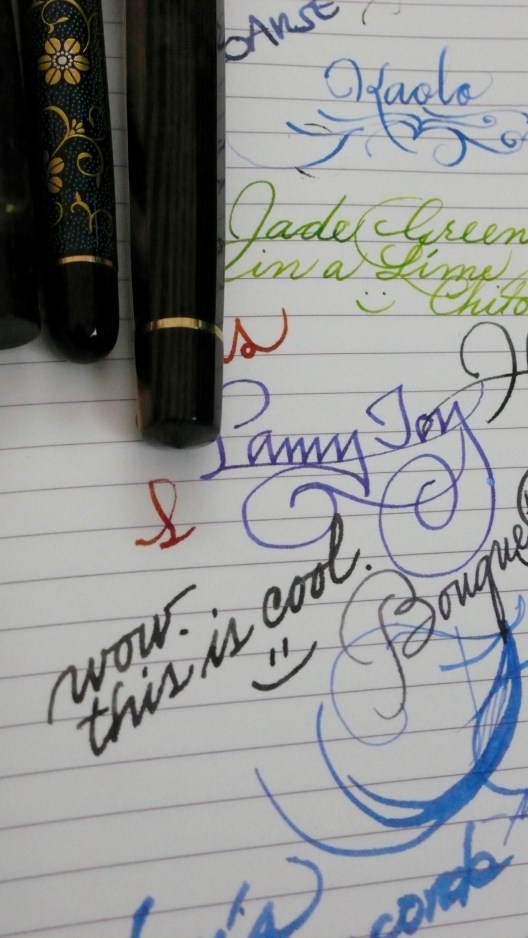
IT’S BEEN a while since I’ve written anything about the original inspiration behind this column and its title—my longtime passion for collecting and using fountain pens—so please indulge me as I return to it this week with a big announcement: the holding of the second Manila Pen Show this weekend, November 16-17, at the Holiday Inn and Suites Makati.

But before we go to the show, let me make my standard pitch for fountain pens, for readers new to them. To younger generations weaned on ballpoints, rollerballs, gel pens, and other disposable writing instruments, fountain pens may be strange anachronisms—colorful (and often expensive) metal or plastic tubes filled with ink that could make an awful mess on your paper (or worse, on your shirt or dress). Why even bother with them when there are far more convenient and cheaper writing tools around (and why even bother with physical writing in this age of digital ink)?

It’s because—given the times we live in, when computer fonts and emoticons can make us write and sound alike—many people have begun to feel the need to express their individuality, to step out of the crowd and say “This is me!” in a very visible way. And nothing achieves that better than handwriting, which is best undertaken with a fountain pen.

Of course you could also write with a pencil or a Bic ballpoint and say the same thing as you would with, say, a Parker 75 or a Sheaffer Balance fountain pen. But pencils and ballpens have hard, stiff points which, like rollerballs, leave even and uniform lines. Fountain pens can have softer “nibs” (the business end, either steel or gold, where ink touches paper) which allow for line variation—i.e., very thin or “fine” to very thick or “broad” lines—depending on the pressure you apply. Some so-called “flexible” nibs can even go from Extreme Fine (EF or XF) to Double Broad (BB). All of which means a lot of writing fun—and sometimes you don’t even have to write anything that means anything, as the doodling alone can bring hours of therapeutic pleasure.

2638972860_d5312f71b9_o.jpg

Not surprisingly, according to The Telegraph of London in an article from March 2018, “The fountain pen is enjoying a fresh renaissance with sales of the classic writing instrument rising, a trend which experts are crediting to youngsters wanting to find an ‘antidote’ to their increasingly digital lives.” The Washington Post agreed last December, in a column titled “The handwriting is on the wall: fountain pens are back!” Indeed, all over the world, fountain pen sales are soaring, with younger people rediscovering—sometimes as “fashion statements”—what their grandparents carried daily in their pockets or purses as work tools.

One important shift from the past to the present has been the disappearance or sidelining of the major vintage brands such as Parker, Sheaffer, Waterman, and Wahl-Eversharp in favor of upstarts such as TWSBI, Franklin-Cristof, and Moonman. While some of the old brands have resurrected themselves, and other standouts such as Montblanc, Pelikan, and Pilot have never gone away, it’s the availability online of colorful, inexpensive, and surprisingly well-built pens from such places as China and India that has moved the market for pens from middle-aged executives to college students and young professionals.

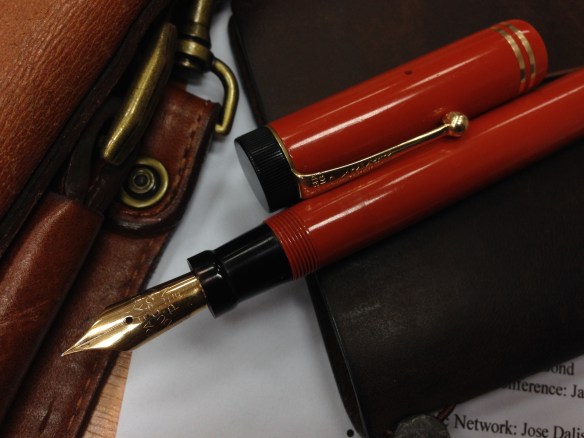
Many such youngsters comprise the 8,700-strong membership of Fountain Pen Network-Philippines (https://www.facebook.com/groups/159754404054904/), an organization of FP collectors and enthusiasts which I helped found in my backyard with 19 other pioneers eleven years ago. Like the pens themselves, some of us old fogeys are still around, nursing our collections of pre-war Parker Vacumatics (my specialty) and Waterman 52s, but we’ve happily been overtaken by a younger set obsessed with not just the pens but with inks and papers.

Now, about the Manila Pen Show: for veterans and newbies, and even with the proliferation of pen products on the Web, there’s nothing like going to a pen show to enjoy the whole carnival. The best way to choose and buy a pen is still to hold and feel it and see how it writes. I’ve been to pen shows in Chicago, Baltimore, Ohio, Singapore, and Detroit, among others, and you can imagine how exhilarating (and financially debilitating) those sorties can be, with thousands of glittery pens to choose from within so many square feet.

We held the first MPS last year at SM Aura to mark FPN-P’s tenth anniversary, and it was so successful that we decided to hold another one this weekend, this time for two days, from 9 am to 6 pm. Raffle tickets will be issued in exchange for donations to charity, in lieu of an entrance fee. According to our spokesperson and calligrapher extraordinaire Lorraine Marie Nepomuceno, “Modern and vintage pens will be available, as well as fountain pen inks, paper products, and accessories. Participating international retailers include Aesthetic Bay (Singapore), Atelier Musubi (Singapore), Newton Pens (USA), Pengallery (Malaysia), Pierre Cardin (Hong Kong), Regalia Writing Labs (USA) and Straits Pen (Singapore). Local retailers and brands represented at the pen show include Calibre and Friends, Cross Pens, Everything Calligraphy, Faber-Castell, Gav ‘n Sav, Guia’s Vintage Pens, Inks by Vinta, Kasama Pens, Lamy, National Bookstore/Noteworthy, Pengrafik, Peter Bangayan, Scribe, Shibui, and Troublemaker Inks. Enthusiasts with minor repair needs or who require nib regrinds can visit the booths of nibmeisters John Lim or JP’s Pen Spa. Workshops, as well as talks by special guests, have been organized for both days of the show.”

One of those special guests will be, ahem, me, to give a talk on collecting vintage pens on the afternoon of the 17th. See you at the Holiday Inn!

10155727165_7828cbd961_o.jpg


Penman No. 373: Another Jewel in the the Shadows

69627947_548969835922415_5469275461408260096_n.jpg

Penman for Monday, October 28, 2019


AT A dinner last week with friends in Ann Arbor, Michigan—an old haunt of mine, having done my master’s there more than thirty years ago—the talk came around to finding and retrieving valuable Filipiniana from the United States and wherever these precious objects—books, paintings, and other artifacts—may have been buried for the past century. I shared the story of how the oldest book in my small antiquarian collection—a book of English essays from 1551, published in London—turned up in Cubao, Quezon City, after having been gifted to its Pinoy owner who was a caregiver in Paris.

That discussion, in turn, reminded me of another interesting message I’d received a month earlier from a reader named Wassily Clavecillas, with whom I’d been exchanging notes about our shared interests (he also supplied me with information about the long-forgotten painter Anselmo Espiritu, whom I wrote about last July). With his permission, I’ll share a slightly edited version of Wassily’s message, which illustrates how literary and historical jewels can still emerge from the shadows:

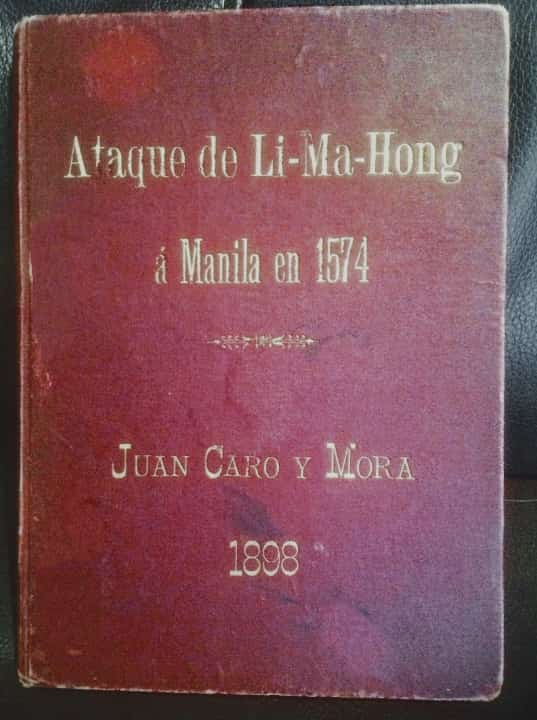
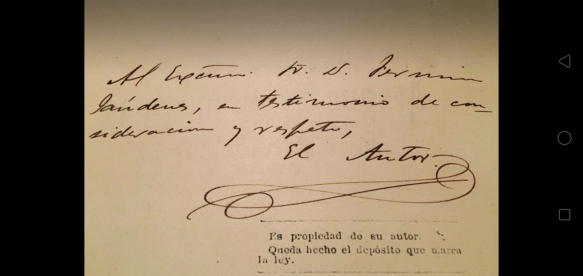
“Professor, let me tell you about a book entitled Ataque de Li-Ma-Hong a Manila en 1574 by the Spanish writer Juan Caro y Mora, printed in 1898 in Manila. The item was the only Filipiniana object in the lot of Orientalia bequeathed to my aunt by her then employer/patron, who came from an affluent family in California.

69872705_2012314682202860_4642759243525521408_n.jpg

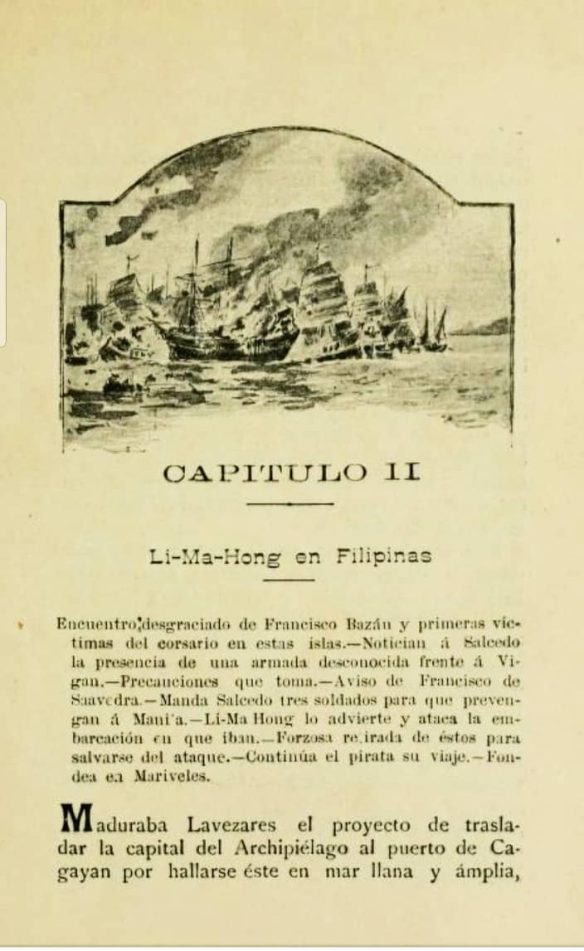
“Encompassing roughly 155 pages, the book is interspersed with artfully crafted vignettes, landscapes, and battle scenery depicting the invasion of Manila by the infamous Chinese pirate Li Ma Hong—an event whose 445th anniversary will fall this November 29. The illustrator was none other than Vicente Mir Rivera, the Filipino Gilded Age artist, a contemporary of Juan Luna, Felix Resurreccion Hidalgo, Lorenzo Guerrero, and the brothers Manuel and Anselmo Espiritu. Though not as celebrated as Luna or Hidalgo, Rivera was an important artist and artisan, who also designed with lavish attention to detail the canonical crowns of the Nuestra Senora del Santisimo Rosario, which was executed by the jewelers La Estrella del Norte.

“The illustrations were rendered mostly in watercolor and presumably perished in the fires of war-ravaged Manila in WWII. What we have left, though not originals, are no less beautiful in their form, abounding in visions of verdant Filipino landscapes and seascapes, complemented with renderings of intrepid Spanish soldiers, fierce Chinese corsairs, and valiant Filipino warriors.

“The book was effectively a historical record of Spain’s erstwhile military and martial glories. This is the second edition of Juan Caro y Mora’s tome; a much rarer first edition was never sold but was given to subscribers of the author’s newspaper La Voz Española, which Mora edited.”

Wassily goes on further to say that the book was included in a lot of various Oriental antiques and ephemeras, mostly Japanese netsuke, fine silk scroll paintings, Qing dynasty jade and porcelain figurines, and numerous 19th-century travel books on Asia, which once adorned the richly decorated anterooms of a sprawling California estate.

Bequeathed to his aunt by her employer, for sentimental reasons she never sold this bounty and had the items packed and concealed away in her other home in another state in the US, where the collection remained safe, dormant but not forgotten. Some time ago she decided to go through all the contents again it was then that she found the book.

69716379_673343176520640_3239088116430012416_n.png

Upon further scrutiny,” Wasily reports further, “I was excited to realize that Juan Caro y Mora had inscribed and dedicated the book to his Excellency Governor-General Fermin Jaudenes, the third-to-the-last Spanish-appointed Governor-General of the Philippines. Jaudenes was known for his role in the infamous ‘Mock Battle of Manila,’ where the collapsing Spanish forces orchestrated with the American occupiers the surrender of the City of Manila, to salvage the reputation of Imperial Spain and deny the Filipinos their hard-fought victory.

“One can only speculate if the book was given by the author as a morale booster to the embattled Governor General during what many consider as the death knell of Spain’s empire. The surrender of Manila it heralded the end of 300 years of European rule over the archipelago and marked the beginning of 50 years of Pax Americana.”

Many thanks, Wassily, for your account and perceptive commentary. I’ve never seen or even known about this book myself, of course, but it reinforces my conviction that many more treasures remain hidden out there, in some American or European attic or garage.

Over the past year, I’ve built up a small trove myself of old Filipiniana awaiting repatriation at my daughter’s place in California—multiple copies each of such popular staples as Harper’s History of the War in the Philippines, Atlas de Filipinas, and Our Islands and Their People, as well as another first edition of Stevan Javellana’s Without Seeing the Dawn. They may not be quite as exotic as Limahong’s story, or have such a splendorous provenance, but I hope to bring them home soon to spark wonder and delight in more Filipino eyes.


Penman No. 372: Love Letters from Rody (2)

IMG_1085.jpeg

Penman for Monday, October 14, 2019


TWO MONDAYS ago, I featured the first of two typewritten love letters that I had found, folded and unsent, between the pages of an old book from the 1950s that I recently bought. As I mentioned then, I felt embarrassed to suddenly become privy to someone else’s most personal displays of affection, but was at the same time transfixed by the literary qualities of the writer’s prose.

I’m aware that back then, it wasn’t unheard of to employ templates—form love letters commissioned and sold in books by enterprising publishers to help verbally-challenged Romeos along. Somewhere in my collection is one such book, from the early 1900s and in profusely ornate Tagalog, offering letters for every possible occasion along the courtship timeline—including a letter to the girl’s parents, imploring their tolerance and understanding. By the 1950s and 1960s—as I recall from my sorties to the bookshops and newsstands along Avenida Rizal—these were available in English (thankfully I felt no need to resort to them, although my versions probably made their recipients cringe).

Our present suitor, who signs his name “Rody,” clearly dipped into his own trove of metaphors in addressing his unnamed beloved, with such choice passages as “rich jewels in an Ethiop’s ear.” From this second letter, we can divine that he had gone to college to study Medicine, had been confined at the hospital where his beloved worked and nursed him back to health, only to afflict him with a fatal passion; in despair over failing his school exams and hearing nothing from her (despite which he takes her silence for love), he joins the US Navy, and is now on the eve of sailing for San Diego (where, ironically, this column is being written, on our annual visit to our daughter Demi). Let’s hear it from Rody, and pray that whoever he (and she) was, he found love and peace in his later life.

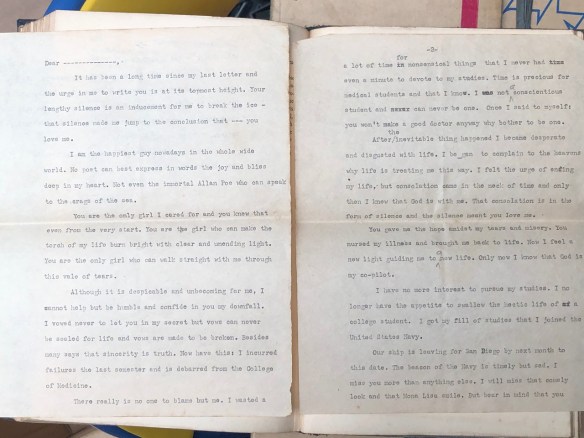
Dear ————–,

 It has been a long time since my last letter and the urge in me to write you is at its topmost height. Your lengthy silence is an inducement for me to break the ice—that silence made me jump to the conclusion that—you love me.

 I am the happiest guy nowadays in the whole wide world. No poet can best express in words the joy and bliss deep in my heart. Not even the immortal Allan Poe who can speak to the crags of the sea.

 You are the only girl I cared for and you knew that even from the very start. You are the girl who can make the torch of my life burn bright with clear and unending light. You are the only girl who can walk straight with me through this vale of tears.

 Although it is despicable and unbecoming for me, I cannot help but be humble and confide in you my downfall. I vowed never to let you in on my secret but vows can never be sealed for life and vows are made to be broken. Besides many say that sincerity is truth. Now have this: I incurred failures the last semester and am debarred from the College of Medicine.

 There really is no one to blame but me. I wasted a lot of time on nonsensical things that I never had a minute to devote to my studies. Time is precious for medical students and that I know. I was not a conscientious student and can never be one. Once I said to myself: you won’t make a good doctor anyway, so why bother to be one?

 After the inevitable thing happened I became desperate and disgusted with life. I began to complain to the heavens why life was treating me this way. I felt the urge of ending my life, but consolation came in the nick of time and only then I knew that God was with me. That consolation was in the form of silence and the silence meant you love me.

 You gave me hope amidst my tears and misery. You nursed my illness and brought me back to life. Now I feel a new light guiding me back to life. Only now I know that God is my co-pilot.

 I have no more interest to pursue my studies. I no longer have the appetite to swallow the hectic life of a college student. I got my fill of studies that I joined the United States Navy.

 Our ship is leaving for San Diego by next month to this date. The beacon of the Navy is timely but sad. I miss you more than anything else. I will miss that comely look and that Mona Lisa smile. But bear in mind that you will always be the girl I love.

 I long to talk to you and bid you good-bye but time is stingy and never gave me a chance. Last Sunday I intended to visit you at the Nurses’ Home and discuss with you matters at hand but you were on duty. I can make it this Sunday, will you be off by then?

 I hope this letter will reach you before the time, and see you then.

 Lovingly yours,

 Rody


Penman No. 371: Love Letters from Rody (1)

IMG_1124.jpg

Penman for Monday, September 30, 2019


IT’S NOTHING short of embarrassing to stumble upon other people’s intimacies—you know you shouldn’t be looking and you try to turn your eyes away, but you also know you’ll be taking at least a peek, as the curious and fallible humans we all are.

More than fifteen years ago, moving into a new home on campus previously occupied by an eminent professor who had retired and moved elsewhere, I went out to investigate a blockage in the culvert just outside our house. I was surprised to find a mass of papers, bundled up in plastic, that had apparently been tossed there by whoever had cleaned up the place in preparation for my taking it over. When I took the bundle apart, I realized—to my simultaneous horror and fascination—that these were Professor X’s private papers: her diaries, letters, and notes accumulated and saved over more than half a century of exemplary teaching.

Looking a bit deeper into the penciled entries (I told you I couldn’t resist), I spotted references to a nameless man with whom the writer was clearly enamored—but it was also and just as clearly a stillborn affair, as the writer professed, with fervid anguish, her commitment to a higher, spiritual calling. They would not become another Heloise and Abelard. My hands felt that they had been scorched by the papers, and I decided to turn them over to a friend, a poet who was among her most devoted disciples, for safekeeping.

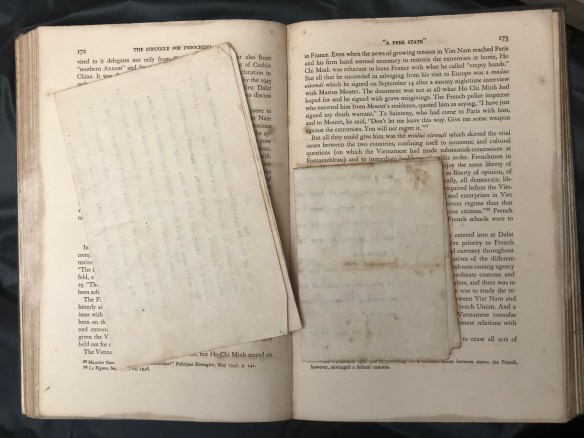
Two weeks ago, I bought a trove of books from a junk shop in Caloocan, books from the 1930s to the 1950s covering mainly political and historical subjects. I was really just after a good copy of Lope K. Santos’ Banaag at Sikat and Zoilo Galang’s For Dreams Must Die (a 1950 novel based on another star-crossed romance, between Jose Rizal and Leonor Rivera. When I began sorting out the lot, I noticed an unusual thickness in a book from 1953 about the struggle for Indochina, and fished out, from between pages 172 and 173, a folded letter; several chapters later I found yet another letter.

They were typewritten letters, probably drafts, with scribbled corrections between the lines—undated, unaddressed, unsigned, and unsent—written by someone who identifies himself in the second letter only as “Rody” (no, not that Rody). I was struck by the quality and quaintness of the prose; these were letters obviously crafted by an educated man, meant for a distant an unnamed beloved. All we can firmly gather from them is that she was a nurse in a hospital, while he—well, let’s read the first letter first, and take it from there. The second letter—and my speculations—will follow in a couple of weeks. Stay tuned.

IMG_1091.jpg

Maybe you will be surprised on receiving this letter—a letter unexpected at the most inopportune time. I was overwhelmed by a magic urge which I cannot understand or cope with. It induced my pen to scribble the words coming out of my heart.

The end of the world and the complete annihilation of mankind is at hand, they say. My love for you will never end through eternity. It will be enduring as the tides of time, as lasting as the sacred flames kindled by my burning heart.

Love works so many wonders, lovers say. It can deviate the earth from its course, it can make the giddy heaven fall. It can teach the torches to burn bright like rich jewels in an Ethiop’s ear. My love for you is as deathless as Gabriel’s love for Evangeline, as infinite as Romeo’s love for Juliet.

Three years elapsed like a click. For three years, I waited in patience for a ray of light on my love affair. During this period, I found the right meaning of love and can define it even in my sleep.

Through the years I found neither laughter nor peace. I cannot associate the past, the present nor the future. Will my future be bright? Or will it be gloomy as the present and the past? You are the key to the answer. My life will be meaningless and valueless without you. No one but you can bring light to my world of darkness. Nothing but love can best cure my aching heart.

 Each night I go to the hospital, just to have a glimpse of you. Wanting to talk to you for a moment which I know is an impossibility. My eyes just speak for me in the passing glance.

Each night I sink in a sea of speculation. In the maintaining silence, I think of you. I cannot help but ask myself, what are my chances? Will the answer be ‘yes’ or ‘no’? I think of the fatal ‘no’ as the answer. I think of yes. Each of them is a sentence complete in itself. Each of them is a word which can mean everything in my life—words which when heard can shatter heaven and earth.

Maybe during these three long years, you have known me from head to toe better than any living soul on earth. And it is not far from impossible that you have reached a decision.

I love you more than anything else. Do you love me too? Your silence on the matter can only signify four simple words—“I love you too.”

I am the captive of yoru charm, the prisoner of your heart. I am standing before the judgment chair—before the beauteous goddess of love.

Hoping that your sound discretion guide you in your decision, I pause


Penman No. 370: A Collection and a Collaboration

MatterCover.png

Penman for Monday, September 16, 2019


YOU KNOW that you’ve reached the hilltop, just in time to view the sunset, when they start compiling your works into hefty one-volume collections that could take a very long vacation on a very lonely island to plow through. Apparently I’m at that point, because Anvil Publishing has just released Voyager and Other Fictions: The Collected Stories of Jose Dalisay, a 500-page compendium of 43 stories written and published over four decades from the 1970s onwards.

I had been quietly at work on this collection these past few months with Anvil general manager Andrea Pasion-Flores and her team, and I was elated to see it being sold at the recent Philippine Readers and Writers Festival, and later at National Book Store, Anvil’s parent company. Let me just share what I said about the project in my brief preface to the stories:

“These stories span forty years, from 1975 to 2015, during which I turned from a lanky 21-year-old to a potbellied senior, and everything in between. I’ve chosen to present them in the chronological order of their writing, as best as my challenged memory could manage, hoping that this sequencing will reveal some patterns of growth and change in the way a writer selects and treats material as he himself is shaped by life and time.

“The inclusion of some juvenilia may be indulgent, but my excuse is that it may be instructive and inspiring (albeit by negative example) to the young writer who must be made to believe that better things come with age.

“I came to fiction in English from a background in drama and screenwriting in Filipino. This helps explain my interest in scene-setting and dialogue, in the unseen currents of thought and feeling that cross synapses and much larger spaces between people.

“While creative nonfiction occupies most of my time in retirement, largely for a living, nothing exhilarates me more than writing fiction—not the novel, for which I never mustered anything resembling affection, but the short story, which I find both exacting and exciting in its compactness.

“I’ve lately often argued that the best antidote to fake news is true fiction, because only fiction—not even journalism—has the power to draw us out of ourselves, out of the present, into that chill place where Honesty resides. Fiction redeems and saves the writer as much as it exalts the reader. That realization has been the personal reward of my work for these past forty years.”

After writing so many books for other people—I always say that rather than live to write, I write to live—it’s a balm for the spirit to see and review all my stories in one place, and to be reminded of fiction as my true love, the thing I most enjoy doing although the least materially rewarding. Indeed I’ve often said that my stories—invariably of lower and middle-class Filipinos like me—are the biographies of those people who can’t afford to hire me to write about them, whose lives are often dismissed as “ordinary” but which are in fact eventful and dramatic in their own fashion.

Voyager and Other Fictions cover 02 062819.jpeg

I had a second reason to rejoice with the launch of my newest book, Why Words Matter, last Saturday at the Vargas Museum in UP Diliman. With lovely and haunting illustrations by Marcel Antonio, the book is based on a TEDTalk I gave last year in UP about why we read and why we write, and how words can kill but can also heal. It’s being published by Gigo Alampay’s CANVAS (The Center for Art, New Ventures and Sustainable Development). Two other books were also launched alongside mine—a children’s counting book by artist Ioannis Sicuya, and one about horror stories from the martial law era that distills affidavits by claimants of martial law abuses into three sentence tales, illustrated by Renz Baluyot.

While this book was produced as a special, limited art-book edition (only 500 copies, all hardbound), CANVAS will allow the free, non-commercial distribution of material from the book, with proper attribution, in any medium, as part of its program for cultural literacy.

I must say that I’m awed by and deeply grateful for Marcel’s exquisite artwork (just as I appreciated Jordan Santos’ delightful cover design for Voyager). Not since I collaborated with Jaime Zobel on an art book titled The Island almost 25 years ago have I had such a visually engaging publication. While I firmly believe that every author—never mind how sharp he or she may imagine himself or herself to be—needs an editor, and even as I’ve welcomed most of my editors’ suggestions, I’ve also sometimes given my publishers and designers a hard time, having stubborn and stodgy ideas about how my books should look. I’m relieved to have had a very pleasant experience with the publication of these two new books, for which again I thank Andrea and Gigo for putting together. It’s a bracing reminder to this old man that, to a happy few, his words still do matter.

(Voyager is available at National Book Store; to order Why Words Matter, please email info@canvas.ph.)

70482837_2759972480728101_3571365147433762816_n.jpg

Penman No. 369: Meaning in the Many

L1090932.jpg

Penman for September 2, 2019


IN MY fiction writing classes, until I recently retired, I often began the semester with what I thought was a generous offer, or actually a challenge: I would give flat 1.0 to anyone who could submit a well-written story with a happy ending—not some contrived finale with God scooping the hero out of harm’s way on the last page, but something the reader could believe in, something that would give reason for hope in the human condition, or at least the human future.

How many students, do you imagine, found their way to that happy ending and to that glittering 1.0 all these years? None, not a single one. It wasn’t for lack of talent—I did hand out a few 1.0’s for other reasons—but it seems that a believably happy story has become the hardest thing to write in these times in which the political has compounded the personal. As my students’ stories keep repeating, people feel trapped in situations and relationships that diminish their self-worth. In the age of the Internet, which is supposed to connect strangers instantaneously across the planet, many feel lonelier than ever, unable to keep up or blend in with the crowd, which always seems made up of happier, smarter, and richer people.

Everyone says they want the truth, which others—including governments and peddlers of this and that—are laboring to obscure, but when they do find it, they can’t deal with the consequences. The only ones smiling are those in power, who feel they can get away with murder, because no one else is strong and whole enough to stand up to them. As someone else sagely noted, despots feed on people’s despair.

In recent conversations over coffee with friends—chats overcast by a spate of deaths in the literary family and by a growing despondency over our political situation—the question was inevitably asked: so what can we do? How can we recover and offer hope, and find some happiness amidst hardship and despair?

To cut a long and complicated discussion short, I’ve resolved that, at the minimum, my aim will simply be to survive all the bad people and the bad stuff. I shall keep myself healthy and sane, and do things that not only give me personal pleasure—an admittedly selfish but vital element of happiness and well-being—but also help others, which can yield even greater satisfaction, as you find meaning in the many.

I know that that’s easier for me to say and to execute, as a 65-year-old retiree who’s been through enough, has hit most of his life goals, and could croak tomorrow without too much commotion. Easier, that is, than a 22-year-old with a troubled home life, a shaky job that barely pays for gas and fares, and the crushing pressure to conform and be another nobody.

But it’s certainly true that for my generation, we were ever aware that the world was larger than ourselves, and that it didn’t owe us a living, so we had work and fight for everything, and while we bitched like hell about the general crappiness of life, we were thankful for every scrap that fell our way, and prepared to fight and bitch some more the next day. We sought out kindred spirits and sang songs together, finding solace in community and in the sobering realization that many others had it worse. We found relief from our personal troubles by relieving the greater needs of others.

That may all sound peachy and preachy, platitudes that roll smoothly off the tongue forty or thirty years after one’s last rolled papaya-leaf cigarette or shot of watery gin. But it’s true: we tried to be as strong and as tough as we could, individually, but didn’t mind admitting to a soft spot here and there, maybe even turning that into an affectation (dare we say an art) like poetry, or music, or, for others, activism and public service. Whatever we had, we shared with an audience. And if sometimes we didn’t even get so much as a thank-you or a polite couple of claps, well, we could always say we belonged to a cool and tight fraternity of the underappreciated, like Poe and Baudelaire. Misery loves company, but we didn’t just stay miserable—we made something out of it, something even approaching bliss.

So in line with my new mantra of starting local and starting small, Beng and I will devote ourselves to family and community, beginning with our apu-apuhan Buboy, who’ll turn three this month, working with his parents to ensure that he’ll get a good and sensible education while we can help it—not just in school, but around the house and at the dinner table. I’ll be telling him things like “Respect food, and finish what’s on your plate. Eat fish and vegetables. Love cars—toys or real ones—but respect pedestrians. Respect working people, your parents most of all. Do things yourself. Do the right thing even when no one’s looking, and even when everyone else is doing wrong.”

IMG_0107.jpg

There’s reason for hope if we each do the right thing in our own lives, and not yield too easily and too soon to the clamors of submission and self-annihilation.(There’s always somebody else who deserves to go before we do.) We are not alone.

Penman No. 368: Scavenging a Smith-Corona

IMG_9518.JPGPenman for Monday, August 26, 2019


I HAD the privilege of being mentioned last week in the column of my historian-friend and fellow connoisseur of all things older than ourselves, Ambeth Ocampo, for having facilitated his acquisition of a 1962 Ferrari-red typewriter sporting a rare cursive typeface. Ambeth and I had run into each other at the recent Philippine Readers and Writers Festival in Makati, where we had separate events but both attended the visiting Gina Apostol’s talk on her new novel Insurrecto. Strangely enough, the last time we met was also in last year’s PRWF, where we realized to our mutual amusement that we were both carrying Agatha Christie fountain pens. (For the record, he has also been a lifelong penman.)

Occasionally—like I suppose his legions of fans do—I email him for his professional opinion of my recent antiquarian pickups, like a French book from 1706 about the Jesuits in “Nouvelle Philippines,” which got me all excited until Ambeth burst my bubble by telling me that “Nouvelle Philippines” didn’t exactly mean Manila or even Mindanao but a group of little islands out there in the stormy Pacific. That’s why I always hasten to explain that he’s the scholar and I’m the scavenger, although the things that he himself has scavenged—like Emilio Jacinto’s silver quill pen—are pretty fabulous.

At the PRWF, he asked me if I knew of any cursive (or “script”) typewriters for sale; I said I did not, but would ask a collector-friend, Dennis Pinpin, if he had any. I have about two dozen typewriters (yegads) in my stable, and only one of them has script (that’s it up there, an SCM Classic 12), but Dennis has over a hundred, so he had to have one or two to spare. Indeed, when I asked Dennis, he did—a 1980s Olympia Traveller de Luxe, a sturdy German workhorse on which I had begun my first novel back in graduate school, and an older, fire-red Olivetti Studio. Which one should I get, Ambeth asked me. The Olivetti, I said, will likely have softer keys. The two gents met in a burger joint, had an enjoyable conversation, and a red machine crossed the table for what I knew was a bargain, Dennis being a soft touch for serious writers interested in having some fun with noisy old contraptions.

68253810_2592140314151181_4481874673470013440_n.jpg

But that wasn’t the end of my typewriter week. Like all true collectors, I keep telling myself “Okay, that was the last one,” knowing perfectly well that I’m lying through my teeth. For a couple of days midweek, I got all worked up about acquiring a 1920s Remington that had belonged to a Bulakeño associate of Jose Rizal; I had an agreement with the seller on the price and meeting place, only to be later told that some mysterious stranger had bought it from under my nose. (Ambeth, was that you?) I was beside myself with dismay and disgust, muttering oaths about palabra de honor, but then (like many of you would do, fess up) I sought to soothe my injured feelings by looking for something else to buy. I got lucky over the weekend on a sortie to Bangkal, picking up two lovely paintings by minor masters for the same coin I would have handed over for the typewriter.

And it still didn’t end there, because—idly scanning the online ads while desperately finishing another corporate history (which puts the butter on my bread, and allows me the folly of these pursuits)—my eyes fell on a bright, clean-faced Smith Corona in a crinkle-paint finish they used to call “Desert Sand,” being offered by a seller not too far from me for the price of, shall we say, a couple of dinner-and-movie dates with Beng (sorry, Beng!). I PM’ed the seller, who said the machine had been reserved by someone else. Drat, I thought, but nobly messaged back that I respected dibs, and that if that deal fell through, then I was next in line.

The next day I got a message that the other fellow had failed to show up, and that the Smith Corona was mine to take: destiny! Now I should admit that this was going to be my sixth Smith Corona, the typewriter equivalent of either gluttony or a very unimaginative diet, but as all true collectors know (I really should have an official True Collectors T-shirt made), redundancy is never a problem, except to spouses (and thankfully Beng prefers redundancy in my collectibles to redundancy in spouses). I drove out and picked up the machine, which was being sold out of a Japan-surplus stall in Tandang Sora.

IMG_0230.jpg

Back home I gently opened the case, and began drooling at the sight of a near-pristine Smith Corona Standard, whose serial number marked it as having been made in 1941; it had obviously never seen any action, like firing off a desperate message from a bunker in Bataan or Okinawa. After I had wiped and oiled it, the soft clatter of keys striking the platen, probably for the first time in decades, filled the air in my home office like Debussy’s Reverie. (That’s our apu-apuhan Buboy below, trying out the new toy.) How do these beauties, I would later tweet, find their way to ugly old me? I imagined Ambeth across the city, pecking away at his Olivetti, maybe wondering if Rizal had ever used a Hammond or a Blickensderfer.

IMG_0241.jpeg

(Photo of Ambeth Ocampo courtesy of Dennis Pinpin.)