Penman No. 193: Knowledge as Capital

2171790476_7c4dfcd25a

Penman for Monday, March 28, 2016


THE UNIVERSITY of the Philippines (UP) campus in Cebu City hosted the second presidential debate a couple of Sundays ago, and with education on the debate agenda, the setting couldn’t have been more appropriate. UP—so far, our only “national university” so designated—may be more than a hundred years old, but it continues to grow, particularly in places like the Visayas, Mindanao, and Central Luzon, where the demand for quality higher education is as great as ever.

Not too many people may have been aware of it, but in preparation for the debate—and indeed for the next national administration—UP President Alfredo E. Pascual commissioned a study by the university’s think tank, the Center for Integrative Development Studies (CIDS), to look into where we are in the regional scheme of things and how we can expect to catch up and compete with our more advanced neighbors.

Copies of the paper—titled “Knowledge-Based Development and Governance: Challenges and Recommendations to the 2016 Presidential Candidates”—were provided by UP to the staffs of the presidential candidates in advance of the Cebu debate. But knowing most politicians’ propensity to go for the sound bite and dwell on the personal, I tend to doubt if more than one or two of the candidates or their staffs found the time and the focus to read it.

It would be a pity if that indeed were the case, not only because of all the work that UP put into the paper (CIDS was backstopped by the offices of the President and the Vice President for Academic Affairs), but because of all the opportunities for development that we will likely miss, again, if our political leaders don’t heed what our top academic minds are saying.

The full text of the paper can be found here: http://www.up.edu.ph/wp-content/uploads/2016/03/20160315-UP-Knowledge-Paper-Final.pdf. For the benefit of our readers (and maybe the odd politician who will read this), I’ll unpack the technical jargon and get to the core of what the paper says and proposes.

It opens with an indisputable premise: Education is indispensable for economic development. More education means less poverty and income inequality, because it drives innovation and productivity, and helps people adjust to new challenges and opportunities.

But of course we already knew that. In a society like ours, we all look to education as the way out and the way forward, which is why our people slave for years overseas to put their kids through college. So sacred is education to the Filipino family that every candidate for public office, especially the Presidency, feels duty-bound to extol its virtues.

To be fair to the present administration, it’s put its money where its mouth is, for the most part. The study notes that “Since Benigno S. Aquino III assumed the presidency, government expenditure on public education has enjoyed annual increases. Out of the education sector‘s PHP364.9 billion budget for 2015, PHP43.3 billion was given to state universities and colleges—a 13.8 percent increase over the 2014 allotment…. Over PHP3 billion was made available for scholarships under SUCs and more than PHP2 billion for scholarships administered by the Commission on Higher Education. A total of PHP316 million (roughly 0.09 percent) was earmarked to fund research.”

That sounds good, but sadly it’s still not enough. The rest of our ASEAN neighbors spend an average of 5 to 6 percent of their GDP on education, but we try to make do with 3 percent. That’s why even our best universities lag behind their global and regional counterparts. The study notes that “In 2014, the University of the Philippines ranked only 8th out of the top 10 universities in ASEAN. In 2010, the Philippines ranked 89th in the global Knowledge Economy Index, far behind Singapore, which placed 19th.”

With all the new phones, computers, and call centers we see around us, we might be led to believe that the Philippines has become a high-tech haven, but that just isn’t so. (“We may be No. 1 in voice operations,” I once heard President Pascual say in relation to BPOs, “but were just around No. 9 in non-voice, which is where there’s more value-added. We need not just call center agents, but software engineers!”)

In its summary, the study observes that “Our level of technology remains low in quality and scale, and concentrated in low-productivity sectors. To catch up and move ahead faster, we need to raise our scientific and technological skills, which only better and more focused education can achieve.

“This calls for massive government investments in high-level knowledge capital—the so-called ‘suprastructure’ of economic growth. This human capital will create a knowledge-based economy driven not just by brawn but brains, tapping into one of our richest but least developed resources.”

In other words, and to put it plainly, we need more brainpower—more nerds, if you will—of the kind who can innovate, produce, do trailblazing research, and network with their global peers. That kind of knowledge can reap sizeable benefits for our economy, as it’s done for Singapore, China, Korea, and a host of other countries who’ve invested in their “suprastructure.”

But PhDs don’t come easy and don’t come cheap. UP argues that our government should have a plan to produce them systematically. The object of our educational system shouldn’t just be producing hordes of college graduates who can’t find good jobs, but graduates in fields and with skills that the economy actually needs. The best of them should be sent abroad for advanced degrees, and then brought home with sufficient incentives and an environment conducive to research. The UP paper goes even farther and recommends that in areas where we lack expertise, world-class professors and researchers should be enticed to teach here and work with their local counterparts, in the same way that Singapore was able to considerably shorten its learning curve.

While much of this will occur in science and technology, the paper wisely notes that “Because values are important in setting the right path to growth, the promotion of science and engineering should be closely integrated with the social sciences, the arts, and the humanities to ensure the holistic development of the Filipino.”

To spread the work and its benefits, the UP paper envisions a hubs-and-spokes model of development anchored on regional centers of excellence in certain fields—possibly even other national universities beyond UP.

There’s a lot more to be found in the study that was UP’s gift to the candidates—and thereby to the nation—but whether any practical good comes out of it will depend on the political leaders who govern our fortunes, and, ultimately, on us who vote them into office.

(Kindly note that as a “think paper” subject to further discussion, the study mentioned here does not necessarily reflect the position of the UP academic community as a whole, but rather of the researchers and offices involved.)


Penman No. 188: Risk and Reward in the Collectibles Market

14314401260_4553a0384a_b

Penman for Monday, February 22, 2016


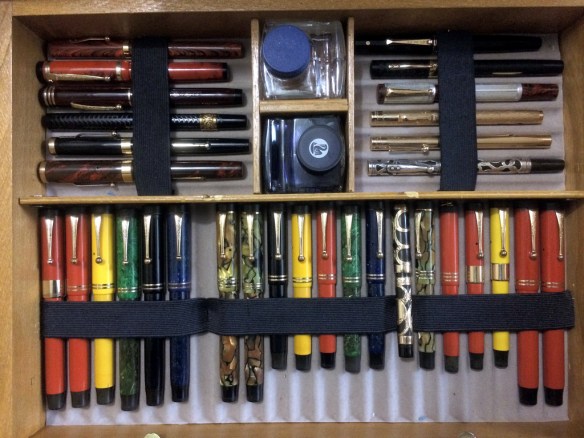
I’M GOING to be talking a lot about pens in the next paragraphs, so you might think of turning away if they hold no interest for you, but this is really about collecting and purchasing decisions as a whole, and could just as well apply to cars, watches, Star Wars figurines, and whatever else people hoard in their inner sanctums. If you’ve been bitten by the collecting bug, do read on.

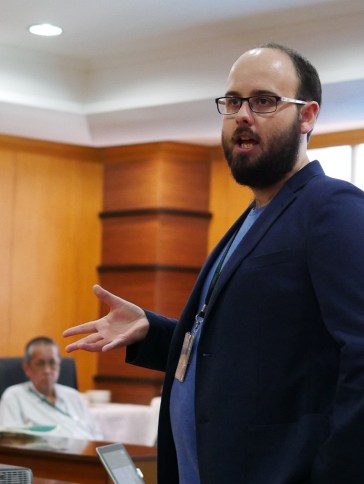
Dr. Jonathon Deans is an Australian economist who specializes in the study of energy and commodity markets, and who teaches economics at the University of Newcastle. But away from his day job, Jonathon pursues a hobby with equal passion: collecting fountain pens. And unlike most of his fellow stylophiles (the fancy word for the addiction) who simply chase after and gloat over their inky toys, Dr. Deans has managed to merge his two interests by running a highly regarded blog on “Pen Economics” (www.peneconomics.com), tracking and discussing the vicissitudes of the global market for writing instruments.

Jonathon happened to be in town these past two months to accompany his partner Lisa, a Colombo Plan fellow and Development Economics student at De La Salle University, whose Economics department is headed by Dr. Gerardo “Bombit” Largoza—by uncanny coincidence, another fountain-pen collector and fellow member of Fountain Pen Network-Philippines (www.fpn-p.org). This happy confluence led to DLSU sponsoring a well-attended lecture two Saturdays ago by Dr. Deans at La Salle on “Adventures in the Fountain Pen Economy.” (He’s left for now, but will be back in April.)

Jonathon explained that central to the economics of the matter is the idea of price vs. value, and where value (how strongly we desire the product) exceeds price, a purchase will likely be made. I listened with great interest and some amusement to his observation that many buyers of modern pens are risk-averse. He admitted that he was one such person himself, and noted further that he valued a close relationship with his favorite pen dealer—even at the cost of paying a certain premium over regular prices—because of the many benefits afforded by such relationships, chiefly personalized service and unparalleled solicitude.

dgxBJDT

I couldn’t agree more with Jonathon (who gave a brilliantly comprehensive and insightful overview of the global fountain pen industry and particularly of our behavior as consumers). My amusement, however, came from my realization that while we thought alike on many important things (like our shared love of the Montblanc Ernest Hemingway, a pen considered a “holy grail” by many collectors), we differed in a few basic respects, particularly my greater willingness to take risks, to navigate the choppy waters of eBay to fish for rare species of vintage pens. But then, of course, I’m a poker player, so am more comfortable with taking calculated risks (and losing as well, because of over-optimistic calculations). My collection contains mostly vintage Parkers and modern Montblancs, so I found myself asking, what makes consumers favor one over the other?

The risks in buying, say, a 1928 Parker Duofold vs. a brand-new Parker Premier seem obvious. The modern pen should be shiny and trouble-free, and if it shows any problems or defects will be replaced under warranty. Being older than your grandfather, a vintage pen could be broken, leaky, warped, or missing parts, or otherwise difficult to operate, maintain, and repair.

So why do vintage buyers and collectors seem more willing to take more risks, and even court them? One trade-off is a generally lower cost. If the items work or if you can make them work, then they will likely be well worth their price. But there are also unquantifiable values to be added to vintage objects, values that help account for their allure: the cachet of age and relative scarcity or even rarity, the history of the object itself and its provenance, and materials and workmanship you won’t find on the modern factory floor.

In buying vintage collectibles, risk can be reduced by knowledge. For the highly knowledgeable buyer or collector, who will be aware of the common pitfalls of the vintage trade, the opportunity of acquiring a rare object at low or reasonable cost far outweighs the risk of receiving an object not as described, with no return option, or needing service. (Those risks will be even more diminished in direct physical sales, not online. But even online, the risks of buying pens long-distance—whether vintage or modern—are drastically reduced by eBay’s built-in money-back guarantee: if you don’t get the product as advertised, your money will be refunded.)

Indeed this ratio of risk to reward forms a great part of the thrill and satisfaction of vintage acquisition. While buying a new car from a dealership can be pleasurable, it’s hard to equal the excitement of finding, say, a 1952 Volkswagen Hebmuller tucked away in an old garage. While these two buyers will likely be two different people buying for different motives, many collectors will weigh both options, anticipating and investing in the collectibles of the future as shrewdly as they assemble the best pieces from the past.

With very few exceptions, vintage pens can only be bought on the second-hand market, where warranties and returns normally don’t apply. They are often sourced by enthusiasts and pickers in the wild, from estate sales, yard sales, resale shops, pawnshops, and small, out-of-the way antique shops. Eventually many get aggregated by dealers who sell online, on eBay and in their Web stores. The transition from a sale at the flea market to one concluded via PayPal is important, because here a certain measure of security can be afforded the buyer, not to mention the possibility of paying less for a prized pen at auction. (I’d typically pick up a $200 pen for $50, and resell it for $100 to finance other purchases.)

In fact, as far as eBay is concerned, I’ve probably had 1,000 transactions on eBay these past 19 years, and in the two or three times I’ve had to avail myself of its money-back guarantee, it worked without a hitch. This leaves just the risk of being disappointed and of being inconvenienced by the refund process.

Knowing this, the knowledgeable eBay buyer can take even more risks with the pen itself—that poorly photographed Vacumatic could be a sought-after Oversize, and therefore worth paying $50 more for. While the eBay guarantee will not refund the buyer in case the pen turns out not to be the desired Oversize (if it wasn’t advertised as such), it can give the buyer an extra boost of confidence to make a purchase, any purchase, in the way that gamblers may tend to play more aggressively in comfortable and well-secured casinos.

So yes, there are indeed more risks involved in buying vintage, and buying online; but the rewards, both physical and psychic, are also potentially great, and as Dr. Deans emphasized in his talk, when the buyer perceives value exceeding price, a purchase will be most likely happen, to the dismay of our bank accounts and hapless partners.

[Photo of Jonathon by Chito Gregorio]

Penman No. 186: What the Fax?

Fotolia_1659378_XS.jpg

Penman for Monday, February 1, 2016


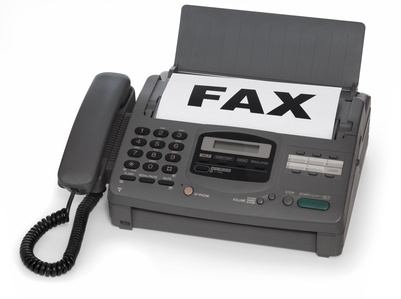
A CASUALTY of the recent upgrade in my home-office setup, which I reported on last week, turned out to be something I hadn’t given much thought to in a very long time—my fax machine, or rather the fax part of my multi-function printer. Moving to a new Internet service provider also happened to mean giving up my old telephone line—one which was practically dedicated to faxing—and I realized, while plugging this line in and unplugging that one, that I really didn’t need a fax machine anymore. Who still sends faxes these days, anyway?

I tried to think of the last time I’d received a truly useful fax message, and I honestly couldn’t remember when that happened. A few years ago, my wife Beng would still receive faxed invitations to bid on certain government contracts for her art restoration business, until I told her to tell her senders that they were better off just emailing the invitations to her, which I suppose they did, because the faxes stopped. I even used to get spam faxes advertising car loans and real estate deals, which was the most annoying thing, because unlike junk email, faxes ate up your paper and your ink.

I’ve written requiems in this corner to late, lamented technologies, especially those having to do with writing and communication. In July 2011, I wrote one for the typewriter, noting that an Indian outfit called Godrej and Boyce—the last company in the world still making typewriters—was closing shop. In August 2013 I performed the same sad ritual for the telegraph (which sent its last full stop, again, in India). For a time, the fountain pen seemed fated to be tossed to the dustbin, thanks to the advance of the ballpoint, the rollerball, and of course the computer, but it’s undergone a remarkable resurgence, although more as a fashion accessory than a writing tool. We can write odes to the newsroom telex, the rotary phone, and the pager (I still have my EasyCall beeper, and when I stuck a battery into it the other day, just to see, it still gave off a faint green glow).

But the fax? Does anyone and will anyone truly miss the fax?

Before we try to answer that question, let’s take a long step backward and recall how the fax (short for “facsimile”) was born—in 1843, from a patent applied for by Alexander Bain, a Scottish inventor who’s also credited for the electric clock. The patent was for “improvements in producing and regulating electric currents and improvements in timepieces, and in electric printing, and signal telegraphs,” and one of its results was a contraption, using two pendulums, that transferred an image line-by-line from one to the other. Frederick Bakewell improved on the idea with his “image telegraph” in 1848, and in 1861, the Italian Giovanni Caselli did both men better with his “Pantelegraph,” the first commercial fax service between Paris and Lyon—more than a decade before the first working telephones! (Thank you, Wikipedia, for the factoids.)

The heyday of the fax was back in the 1980s, and that’s where many of us baby boomers will remember it from—particularly the smelly rolls of chemically impregnated paper that you needed to keep feeding the machine (and the Xerox machine in the corner, which wasn’t quite ready to take plain paper yet). Having a fax machine at home meant you were busy and important, and having a phone line dedicated to it meant you were doubly busy and doubly important. For senders, the thing to say was “Fax tone, please!” and if your listener heard you right, you got an ear-ache from the resultant screech.

We were still faxing in the 1990s, by which time I was an editorial writer and Lifestyle columnist for the newspaper TODAY. That meant I had to send my piece in by fax—email and Word attachments hadn’t quite caught on, yet. I remember what a thrill it was to pair my computer—a PowerBook 2400c, the precursor of today’s ultrathin MacBook Air—with my Nokia 6210, through the wonders of infrared. You had to line up the two devices so that their IR ports matched exactly, and in those days before Bluetooth and wi-fi, it was the coolest thing, giving you bragging rights as a “road warrior” in the “Roamin’ Empire,” as the computer and connectivity ads of the period trumpeted.

And then email and PDF happened, and suddenly all you had to do was to scan or even photograph a document—or even more simply, save it as PDF—and then to drag and drop it into your outgoing message. Like photographic film, faxing lost its reason for being in a historical instant, at least for most users.

There are, to be sure, holdouts who insist that reports of the death of fax are grossly exaggerated. There’s a piece online with exactly that title that even points out that instead of dying out, faxing has actually grown in recent times. “In 2010,” says the report, “the computer-based fax market was roughly $350 million per year, according to Business2Community.com. What’s the size of the market in 2013? The market for computer-based faxing is $620 million. Yeah, fax is still around. There are good reasons for the growth in electronic faxing, too. While e-mail has subsumed much of the role faxing used to play, fax technology still offers a number of benefits. These include the need for a paper trail, security, ease of use and business processes that are built around fax and are easier to keep alive than to replace with new processes.”

Take note, however, that the article says “computer-based” or “electronic” faxing, no longer the old method that required a special machine. It goes on to explain that “Just as phone calls have migrated to voice-over-IP (VoIP), fax has migrated to fax-over-IP. This digital version of the fax cuts out the need for paper and fax machines altogether, becoming a form of digital document that acts like e-mail but integrates more fully with older workflows and fax technology.” So FoIP (the “IP” is for “Internet protocol”) seems to be where Bain’s pendulums have gone, and its users argue that there are still things today’s fax technology can do—like provide digital receipts—that regular email can’t (a dubious argument, it seems to me).

As for myself, I’m glad to be rid of that old whine-and-screech. If you have a document for me, email it to me, or upload it to DropBox, and we’ll be saving a small stand of trees and a tub of ink in the process. I’m prone to weeping in remembrance of things past, but losing my fax machine simply leaves me radiant with the glow of digital liberation.

[Image from hlsbs.com]


Penman No. 165: Going for the Bestseller

IMG_8046

Penman for Monday, September 7, 2015

AUGUST AND SEPTEMBER are usually busy months in the cultural calendar, and this year’s been no exception. UMPIL—the Writers Union of the Philippines—held its annual conference toward the end of August, with the economist and columnist Solita “Winnie” Monsod delivering the customary Adrian Cristobal Lecture. On September 1st—perhaps the most important date on many a young Filipino writer’s calendar—the 65th Carlos Palanca Memorial Awards for Literature were given out, with poetry titan Gemino “Jimmy” Abad arguing eloquently for the power of literary language to create its own reality.

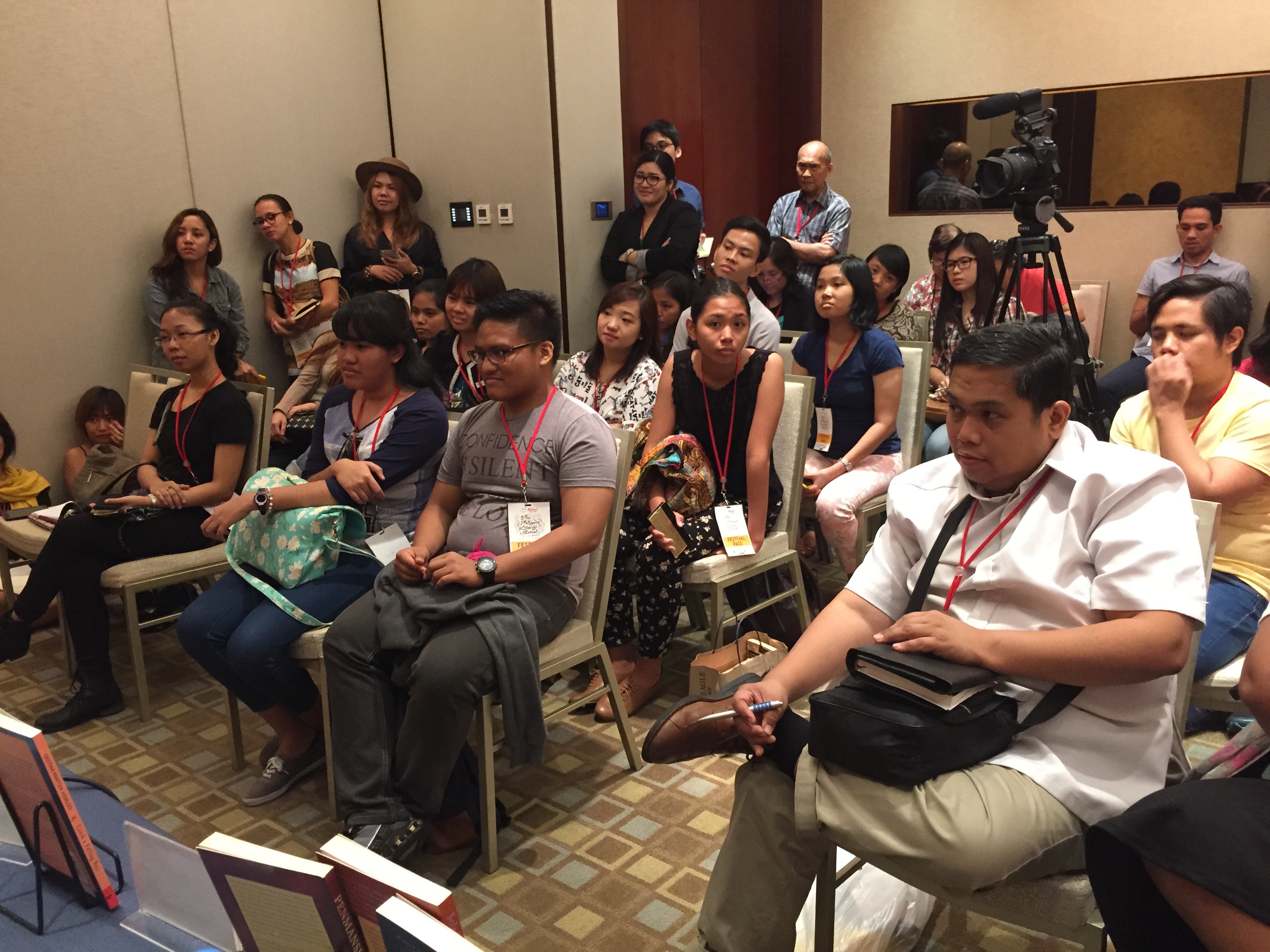
In that same week, National Book Store, among other sponsors, put on the Philippine Literary Festival at the Raffles Hotel in Makati, headlined by visiting authors Matthew Quick and Meg Wolitzer. I went on a panel at that festival with my friends Krip Yuson and Jing Hidalgo, with Marivi Soliven as moderator, to talk about writing the novel. I was surprised to walk into a packed room at the Raffles, despite the fact that Meg Wolitzer was holding forth in another session at the same time.

Now, I’ll admit that I’d never read Meg before, although I’d read about her recent novel Belzhar. She was advertised as a bestselling author, as was Matthew Quick, who wrote The Silver Linings Playbook.

I overheard a mild complaint in the hallway to the effect that the NBDB should have invited the powerhouse cast of Pulitzer prizewinners that Manila festivalgoers have been used to seeing (I remember hosting a chat with the wonderfully encouraging Junot Diaz a few years ago). I didn’t have the time to stop and respond to that comment, but I would’ve said, ”Hey, no problem! There’s a lot we can learn about producing bestsellers! And bestsellers can and should be well-written, too!”

Indeed, in our panel on the novel, one of the recurrent themes that came up was that we Filipinos don’t write enough novels (“We’re world-class sprinters,” I noted, “but not marathoners”), at a time when the only thing international publishers are looking for are novels, which can lead to fat Hollywood contracts and all kinds of other spin-offs.

Toward the end of that discussion, in the Q&A, a young lady in the audience asked about what we (presumably the literary Establishment, going by our senior-citizen cards) thought of newer and less traditional routes to literary fame like Wattpad. Thankfully, I’d heard of Wattpad, and had even actually registered on the site a few months earlier out of curiosity, so I could peek into what was going on there. I knew that Wattpad was generating stories that were already being adapted into commercial movies, so it was more than another digital pastime. (For my fellow 60-somethings, Wattpad’s a website where people—usually very young people—upload stories of all kinds, typically love stories, vampire stories, science fiction, and fantasy.)

I told the questioner that while it was likely that much of the material on Wattpad wouldn’t come up to conventional literary standards, I didn’t see that as a problem. What was important was that—at some level and with little or no intervention from their elders—young people were writing and reading, and that can’t ever be a bad thing. Tastes mature and change, and even within those young-adult genres, truly good work is bound to emerge and be recognized and rewarded. And even mainstream literature itself would ultimately benefit from the spillover; as Shakespeare put it, “When the tide comes in, all the ships in the harbor rise.”

But beyond supporting what younger writers were doing, I brought up another pet theme of mine, which is that we older writers write way too serious (if not sometimes inaccessible) stuff, and have thereby separated ourselves from our potential readers. Creative writing has become way too academicized—produced in, for, and by formal writing programs, with little regard for what ordinary readers are really concerned about in their daily lives. In other words, while we seek to develop our readership, or work on the demand side, we should also work on the supply side by writing material of more popular appeal, with little or no reduction in quality.

This train of conversation ran on a couple of nights later at the Palancas, where I had a chance to chat at the sidelines with Graphic fiction editor Alma Anonas-Carpio and essayist Ferdie Pisigan-Jarin. (I don’t smoke—and I would urge everyone not to—but I happen to find people who smoke usually more interesting to chat with than those who don’t, so I usually join the smokers out on the patio of the Rigodon Ballroom at these Palanca dinners, especially when the program—with my apologies to the gracious hosts and the contest winners—goes on for too long.)

I told Ferdie that I suspected that, outside of school, young readers these days didn’t really care much about author’s reputations, or about what critics or other old people say about a work. Ferdie agreed. “We undertook a survey,” he said, “and we found out that what makes young readers decide to buy a book is what they can get of the story from the back cover. They can’t even leaf through the pages, because most books these days are shrink-wrapped.”

From Alma came the astounding news that one young Filipino writer, Marian Tee, was making a regular six-figure income from the Amazon sales of her e-book novels. Though based here, Marian writes dreamy romantic comedies set in places like Greece, with titles like The Werewolf Prince and How Not to Be Seduced by Billionaires, and with covers displaying a surfeit of naked male muscle. The female protagonist may be blond, swears Alma, but she’s really Sarah Geronimo in disguise.

I’m not saying that we should all write like Marian, because we probably couldn’t even if we wanted to. But it’s good to know that there’s someone among us who knows the market and can play the global game, because there’s a lot we can learn from her—in adaptability, in audacity, in humility, and in plain hard work.

I don’t think that literature as a fine art will ever be threatened (any more than it already is); there will always be authors who won’t mind being read by a precious few, and thankfully so, because these are the writers who will keep pushing the envelope of language and exploring uncommon sensibilities. For most other writers, or most other times, it’s worth keeping in mind that “bestseller” isn’t necessarily a bad word.

Penman No. 145: Another Watch to Watch

Penman for Monday, April 20, 2016

KNOWING WHAT an Apple diehard I am, friends have been asking me about the forthcoming Apple Watch, and if I’m going to get one. So I’m going to make another little digression today to answer that question—although, arguably, technology is art and culture in contemporary society, particularly when it’s something close and familiar enough to wear on your person.

As half the planet now knows, Apple announced the Apple Watch last September 9 in a splashy event helmed by the company’s new and nimble CEO, Tim Cook. It’s due to be released this Sunday in the US, and preorders opened last April 10; within six hours, most models—about a million units—were sold out.

That’s the kind of first-day frenzy and manic marketing that Apple might as well take out a patent on, because no other company even comes close in making people line up on the sidewalk a week before the store doors open. It’s also what turns Apple haters—and there are more than a few—apoplectic, refusing to understand how the mere whiff of a new toy from Cupertino, California could leave a fourth of humanity in a hypnotic trance.

Well, the Apple Watch is finally here, heralding Apple’s entry into the fashion market—make that high-fashion, with its top-of-the-line, solid-gold model selling for a toe-curling $17,000 (base models start at $349, or about P15,500). It comes in two sizes and a number of finishes, with an array of attractive watchbands (attractive to most people, anyway, who sadly don’t include old leather-loving codgers like me.)

Given those numbers, it’s safe to conclude that the Apple Watch was made to do more than tell the time. While hardly in the same stratosphere of high-end watch brands such as Patek Philippe and Rolex, Apple hasn’t done too badly as a horological upstart. Designed to work best with an iPhone, the Apple Watch can receive your email and text messages, and show incoming calls. It can do Facebook and Twitter, and perhaps most hyped of all, it can track your health stats. It can play your favorite tunes, and store some of your favorite pics. You can still use it without an iPhone for neat little tricks like Apple Pay (if and when that comes to our shores).

What are its downsides? It doesn’t have built-in GPS; you’ll need your iPhone for that. And with its touted 18-hour battery life, you’ll probably need to recharge it every night.

Many of these features, I should point out—except for the Apple-specific apps—were and are available on other smart watches, for a lot less than what Apple is charging for their sum total. Before the Apple Watch, Beng and I had some fun with our his-and-hers Pebble watches, which basically told the time and displayed our email and SMS messages on a monochrome screen. Eventually, we both got tired of charging the buzzing beasties, and went back to our analog Hamiltons.

Which brings me to my answer to my friends’ question. Am I getting an Apple Watch? Heck, no—and this will probably be the first Apple rollout since the Newton that I’ll be passing on. But why not?

I’ll admit that the price is a factor—the Pebble didn’t cost me more than $100, and it’s way below that now (feature-wise, of course, the Pebble can’t hold a candle to the Apple Watch). But in truth, cost never did turn back the Apple masses, who seem convinced that the pricier and sleeker something with an Apple logo is, the more compelling it must be to possess.

It certainly isn’t for any lack of features, either, that I’m not in the buyers’ queue (where I was for the iPhone 6; I had ordered mine as soon as the online counters opened, and received it via UPS last September 19, the first day of delivery in the US). The Apple Watch is abundantly capable and versatile, and we’ve only seen the barest suggestion of all the lively apps that are going to be developed for this device.

Instead, I may have to admit, as I’ll do now, to the onset of what we might call digital fatigue—that awful sensation of drowning under an onrushing wave of 1’s and 0’s. I’ve never felt this before, and it must be my biological age showing, but it took the Apple Watch and its kaleidoscope of colors to tell me that I’ve had enough. Please, not another device to tether and feed like a pet goat, and one that will bleat mightily when some silly text message comes in selling a condo I can’t possibly afford, and one that will remind me with a smug chirp about how overweight I am.

I know that I can talk to the Apple Watch, which will be the coolest thing for my students to see since I stepped into class with a Nokia the size of a shoe strapped to my waist in the early ‘90s. But I have trouble enough talking to my phone; I hate making and taking phone calls, because they usually mean problems to deal with. My iPhone is, first of all, a camera, a jukebox, a browser, and a datebook; and then it’s a phone (come to think of it, it’s also and already a watch, and a damn good one).

As it is, I don’t even use my iPad often enough, and I have to remember to charge it after letting it idle for a couple of weeks in solitary stupor. There’s a nest of charging cables at the foot of my bed, with phones, power banks, and digital recorders huddled like suckling pigs; I can just see the Apple Watch joining that blue- and red-eyed menagerie—but again, I’d rather not.

The ultimate reason for my self-denial is, I guess, the romantic one. I love my vintage and my two-handed watches too much to trade them for some blingy upstart. I believe a watch’s first and only duty is to tell the time. I believe a watch should have a clear, round, and honest face, from which I can read the time at a glance, without breaking my train of thought. I believe a watch should have a soft and pliant strap, like good leather; it should be beautiful, but quiet and undemanding, except for the occasional turn of the crown.

Appwatch95

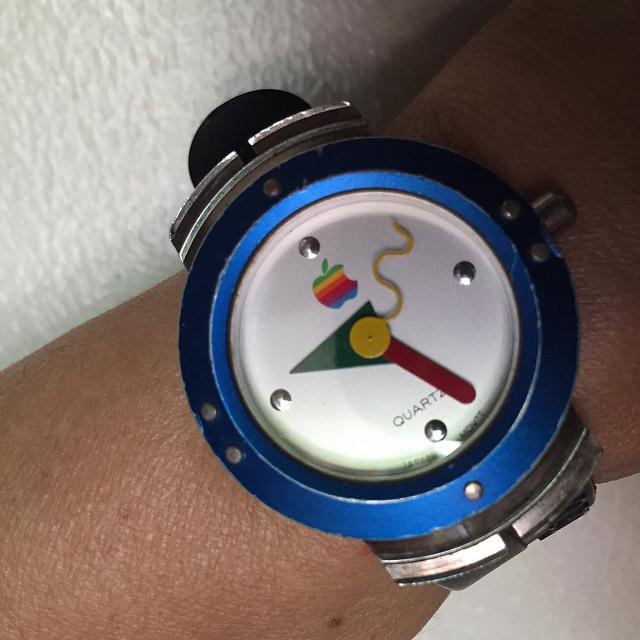
Kind of like the original Apple watch from 1995—I think the happiest watch ever designed—which everyone seems to have forgotten about in the mad rush to get the new one. I dusted mine off the other day, put a new battery in, and gave it to Beng. It tells the time, and puts a smile on your face. What more can you ask for?

[Apple Watch pic from wired.co.uk]

Penman No. 108: Writing as a Job

Penman for Monday, August 4, 2014


PEOPLE OFTEN ask me about my work as a professional writer—meaning, someone who makes a living out of his writing, rather than someone who just loves to write the occasional poem for sharing with friends.

There are, in fact, quite a number of people in this country who can be considered professional writers: regularly employed journalists, ad-agency copywriters, screenwriters, textbook writers, and even professional bloggers, among others. But except for the few who possess the talent and the gumption to churn out popular novels, there are really no professional Filipino writers of creative work like fiction and poetry, because there’s no market for these products out here. The typical Filipino reader would sooner buy the latest iteration of Twilight or 50 Shades of Grey than, say, a new novel by my friend Charlson Ong.

That’s why fictionists like Charlson and me have turned to writing other things for other people—biographies, histories, speeches, audiovisual presentation scripts, and even advertising copy—to supplement our incomes as teachers and columnists. But let me hasten to add that it’s more than money—as welcome and as necessary as the money is—that drives us to do this. For me—and I’m sure it’s the same thing for the others—it’s the challenge of doing something different, often something with a clear objective and a well-defined if limited audience, such as a company history, as opposed to a novel that you float like a balloon into the night sky.

At UP, where I’ve taught a course called “Professional Writing” that seeks to equip our English majors with some practical skills and attitudes, I tell students on Day One that “There’s writing that you do for yourselves, and writing that you do for others, and never get the two mixed up.”

Like my father, who wrote speeches and correspondence for politicians, I’ve been writing for others nearly all my adult life—I earned my first paycheck for a TV drama script I wrote when I was 16—so I approach professional writing with the dry eye of the frustrated engineer that I also happen to be. (This also means that, when I revert to my own fiction, I can do so with extravagance and exuberance, although fiction has its own rigor and discipline; the poets themselves will tell you that “poetic license” is really anything but license.) Over the past three decades, since my first book (Oldtimer and Other Stories) came out in 1984, I’ve published nearly 30 books of my own, aside from books I’ve edited for others. Many of these were limited-circulation books, like those I wrote on the Philippine geothermal industry and the Philippine flag, so you would never even have heard of them, but they served their specific purposes, so the job was done.

Let me offer some advice to those who want to get into writing as a living.

First, drop the ego and the angst. I knocked on a lot of doors and was paid almost nothing (and sometimes nothing) for my earliest jobs, but each one taught me something about writing and about the business of writing, both the good and the bad. Take every job as both an earning and a learning opportunity. Prepare to be edited, contradicted, and countermanded, sometimes by people who know less about writing than you (if they knew as much, they probably wouldn’t have gotten you). Give it your best shot, and leave the rest to the client. Suck it up, have a beer, then move on. (You’d be surprised how easily and how well the world can move on without you.)

Second, learn your trade and your tradecraft. This means mastering your language, both in terms of grammar and style, and appreciating the nuances that every job will involve. Write bilingually; adjust, absorb, adapt.

Third, get interested in subjects beyond writing and literature. Read the papers. Acquire a working knowledge of business and economics, politics and public affairs, history, science and technology, sports, and entertainment. This versatility will enhance your marketability. To do a job well, you’ll need to understand and even to enjoy what you’re writing about.

Fourth, set your own opinions aside. Unless you’re writing under your own byline or are being hired for your ideas, you don’t need to personally believe in and stand by everything that’s being said—you’re speaking for someone else, and your own opinions could get in the way. If your own ideas and principles matter more than the job, then say no and walk away (I’ve done this, quite a few times)—it’s the fairest thing to do, both for the client and for yourself.

Fifth, learn to multitask. These days, I typically work on three or four book projects at the same time, in various stages of completion. Life’s too short to have to wait for one project to be completed before starting the next one. Each project takes about 18-24 months, so I’ve learned to pace myself. I’ve also learned to delegate work—to assign more basic research and drafting to good assistants, so I can focus on the final organization and styling of the material.

Sixth, know the business and what business means. Use contracts, observe deadlines, pay the taxman, pay your assistants well, buy a good suit and a good pair of shoes. Keep and respect confidences. Unless you’ve been shortchanged, don’t badmouth a client from whom you gladly took a check.

Seventh, simplify your life. You can only produce so much by also giving up so much, which for me means a vastly diminished social life. I’ve pretty much given up partying or going out with friends; my only indulgences are my pens, the biweekly poker night, and traveling with Beng (of which I can never have enough, which is why I do all this). But I’m happy, which in this world is the hardest job of all.


Penman No. 107: Small Loans for Big Dreams

WS-Butch-1Penman for Monday, July 28, 2014


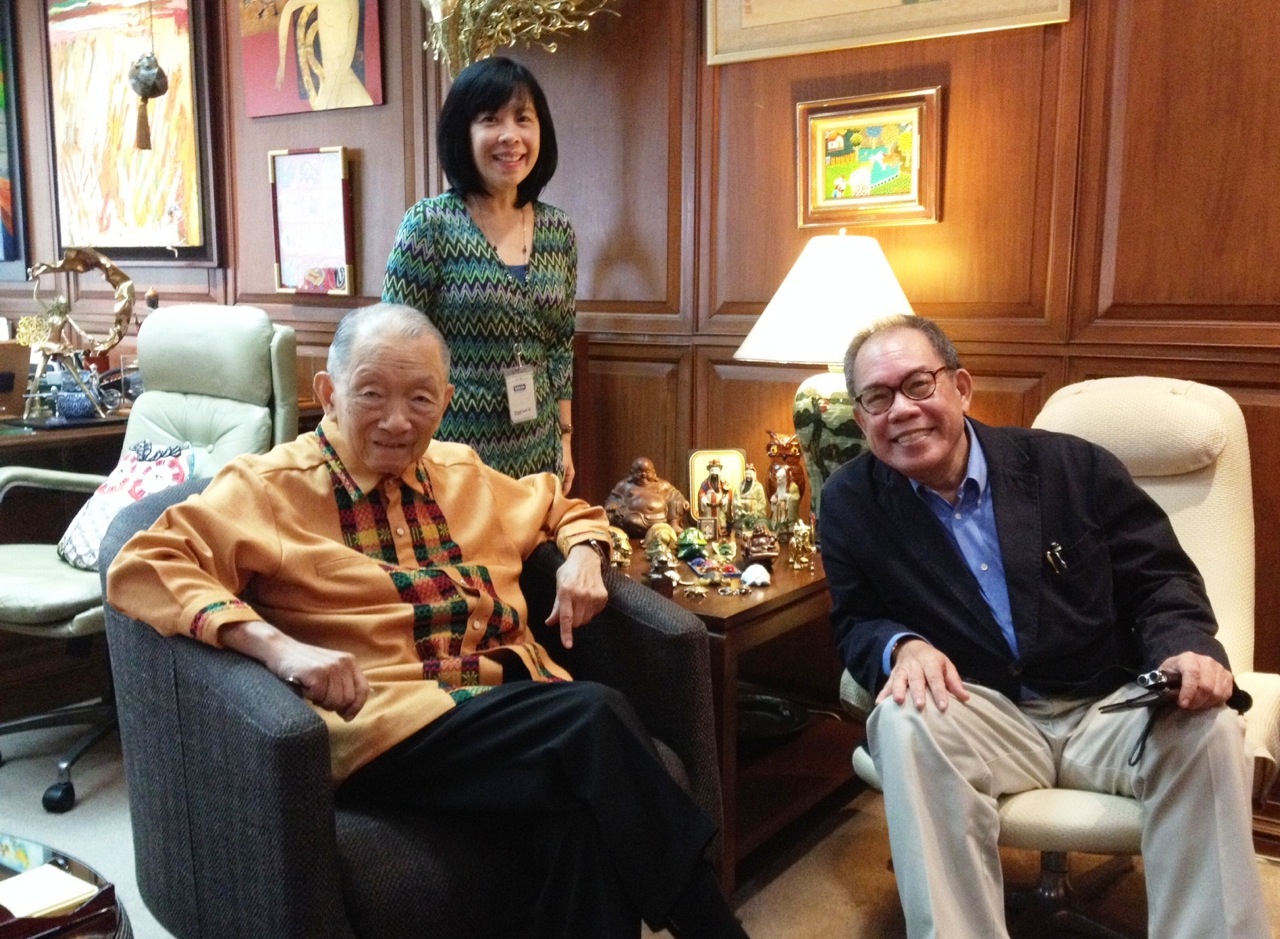
IT HAD been a few years since I last sat down for a chat with the accounting and business guru Washington SyCip, whose biography (Wash: Only a Bookkeeper, published in 2009) I had been privileged to write, so I was only too happy to oblige when our mutual friend Marlu Balmaceda asked if I could spend some time last week to shoot the breeze with Wash.

Both Wash and I had aged a bit since we started working on his book back in 2006—I more so than he, who last month turned 93. Having just gotten my senior card in January, I’ve been feeling entitled to some relaxation, but Wash SyCip was right at his desk in his old 14th floor office where I last saw him, working away, surrounded by a growing menagerie of owls, turtles, and roosters, the gifts of friends. On the wall was a Chinese painting of a dignitary, perhaps the Emperor himself, seeking the counsel of a wizened turtle. Wash caught me looking at it and told me what the turtle’s sage advice was: “Take it easy.”

As cool and dapper as he is, Wash makes it look like he’s taken it easy all his life, but I know for a fact—having chronicled that life—that it just isn’t so. No slouch could’ve put up and sustained what became the regional accounting giant SGV.

But this time, Wash wasn’t talking about himself, but about a new program for education that he and a friend began three years ago, called the Zero Dropout Education Scheme, which seeks to put and keep poor Filipino kids in school. “The country’s biggest problem remains poverty and the wide gap between the rich and the poor,” Wash says. “For me, education is key to alleviating poverty, but ironically, the poorer you are, the more children you have, so half go to school and half don’t. Those who don’t will stay illiterate, and will be resigned to poverty all their lives.”

Seeing that illiteracy still afflicted millions of Filipinos, Wash resolved to do something about it and committed US$1 million of his own money to a fund aimed at the problem. Helping him along was his friend, the Armenian-American businessman and philanthropist Paul Kazarian, who pledged to match Wash’s contribution dollar for dollar. But even with that funding, Wash was modest and realistic enough to know that he couldn’t do the job by himself. “I don’t really know the poor, and how best to reach them,” he admits. “So I got in touch with CARD-MRI, which has been a leader in Philippine microfinance, to help us out.” Radiowealth Finance Corporation has also geared its CSR program toward the Zero Dropout scheme, and committed to provide P30 million.

The Center for Agriculture and Development-Mutually Reinforcing Institutions or CARD-MRI goes all the way back to 1986 when Dr. Jaime Aristotle Alip and 14 other rural development practitioners got together to set up CARD specifically to help empower women in poor communities. In 2008, it received the Ramon Magsaysay Award for Public Service. “With over 1,400 units all over the country, CARD had a network in place we could tap for our program,” Wash says.

Initially available to CARD members, the Zero Dropout scheme offers small renewable loans ranging from P1,500 to P3,000, at a monthly interest rate of 1 percent. “Basic education may be free,” Wash acknowledges. “But families still need money for school supplies, slippers, clothes, and other expenses. That’s where we come in. We’d like to provide not just the money, but an easy way of getting it, with as little red tape as possible.”

As of March this year, the program had supported over 46,000 students through loans totaling over P160 million, out of which P130 million in principal and P6.5 million in interest has already been paid back. They expect to hit 100,000 beneficiaries by year’s end.

While most beneficiaries come from Region IV-A (the Calabarzon area), the program has expanded to the ARMM in Mindanao, where the dropout rates are the highest. Typical beneficiaries include Lucena native Lilia Fernandez, a mother of nine who works as a manicurist alongside her husband, a construction worker; her son Erick dreams of becoming an engineer.

Unlike the government’s conditional cash transfer program, which gives cash direct to poor beneficiaries, Zero Dropout is a loan program. “They repay the loan through microfinance, by increasing their income with a loan for a store, a tricycle, and so on,” adds Wash.

If you think poor borrowers can’t or won’t repay their loans, think again. CARD has made a name for itself making sure its system works, basically because it’s led by people from the very grassroots it serves. Wash tells this story: “I had CARD’s management people over for dinner at my house once, and discovered that none of them were from Makati or Manila. They were all from the rural areas, and they were mostly women, very bright women. I was very impressed with their dedication. CARD knows its clientele. It works with groups of 20 women who guarantee each other. I’ve attended meetings with these groups and I can see that our poor communities are full of people with initiative and drive.”

I came away most impressed by an incident that Wash related: “When Yolanda hit, 8,000 students under the program were affected in Leyte and other places. My first reaction was to cancel their loans, as the least we could do to help. But Dr. Alip said, Wash, no—the poor are more honest than the rich. And as reconstruction took off, the loans also began to be repaid, even if the borrowers had lost their homes.” If that’s not inspiring—in the context of billions lost to crooks and scammers—I don’t know what is.

Penman No. 99: The Bromance of Fred and Wash

FredWashPenman for Monday, June 2, 2014


IT WAS with great sadness that I read last week about the passing, at age 92, of Alfredo M. Velayo—an outstanding accountant, teacher, citizen, and philanthropist. Fred Velayo was best known as the “V” in SGV or Sycip Gorres Velayo & Co., the pioneering accounting firm that he co-founded with Washington SyCip and Ramon Gorres after the Second World War.

I had the great privilege and opportunity of writing Wash SyCip’s biography some years ago, and among the delights of that assignment was meeting and interviewing Fred Velayo—who, like Wash, was already well advanced in years but still sprightly and brimming with boyish mischief. Tall, handsome, genial, and an irrepressible joker, Fred was the perfect foil for the more private and more formal Wash.

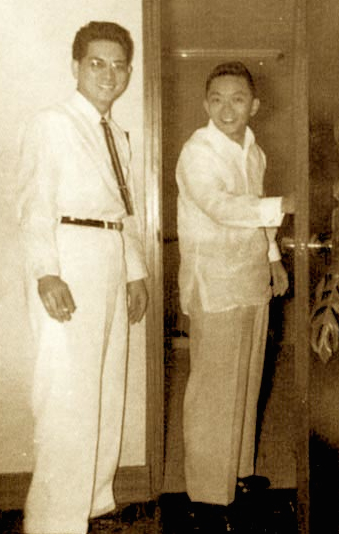
Fred and Wash had one of the most memorable friendships (today they call these unusually durable male bondings “bromances”) I’ve ever come across—certainly one of the longest ones, starting in the 1920s at the tender age of five, when both boys attended Padre Burgos Elementary School in Sampaloc, Manila. Their first meeting, on the first day of school, wasn’t too auspicious. The children started crying when their mothers and yayas had to leave—except Wash’s mother, who was a good friend of the principal’s, and was allowed to stay. So Wash sat there unperturbed, and Fred would remember with a chuckle that “Right that first day, of course, we all hated him. Naturally. He was looking at us, saying ‘Why the hell are you little kids crying?’”

With his brilliant mind and work ethic—qualities that Fred himself displayed—Wash would never again have to lean back on privilege to get ahead. But a little luck never hurt. Bright as they were, both boys got accelerated in grade school—not once, but twice. In Wash’s case, it didn’t occur just twice, but thrice. Fred always wondered how that happened when he was just as smart as Wash—and Wash didn’t tell him the real reason until they were in their mid-70s in 1996, when Wash let slip that there had been room in the upper class for just one more boy, and the teacher chose him—alphabetically.

Fred and Wash caught up with each other in V. Mapa High; they both lived in Sta. Mesa and walked to school together. The friendship—and the rivalry—continued over high school, then went on to college at the University of Sto. Tomas, from which both graduated summa cum laude. As I would note in my book, “To no one’s great surprise, Wash finished his four-year course in two-and-a-half years, graduating a full year ahead of Fred, and ending up being Fred’s teacher in one subject at the ripe old age of 17. Amazingly, Fred would close the gap a bit by also getting to teach in his junior year, also at 17.”

Wash went to Columbia in New York for his PhD and was caught by the War there, and joined the US Army as a codebreaker in India; Fred stayed behind and married the girl who would become his wife of over seven decades, Harriet. After the War, their paths crossed again—Wash came home, and Fred went to the States with Harriet and joined the Army.

But when Wash had to go back to the US to fulfill a residency requirement (he had to take US citizenship to be able to work as a codebreaker), he needed someone to mind the small accounting business he had started in Manila, and there was no other person who could fit that bill but his old pal Fred Velayo. He wrote Fred a letter that would become part of SGV lore. He told Fred, on December 16, 1946: “Dear Fred, Received your letter from Alaska the day after I mailed my last letter—but hasten to write you this note. You should try to return as soon as possible as the top opportunities here are excellent—the earlier you start the better. Master’s degree doesn’t mean much—ninety percent of the FEU accounting faculty do not have anything more than a bachelor’s degree—including some of the highest paid ones. But now is the time to get started as I believe that the more you put it off, the greater will be the competition when you get settled. There’s a lot of accounting work—and you can combine this with teaching and importing (with Miller-Gates)—the returns are much larger here than in the States and the competition for a capable person is much less. So cabron, get the hell on that boat and come out here. The various bills before Congress will undoubtedly increase the work of CPAs—but you have to get in on the ground floor… some come over fast. You can also try your hand at insurance—good and profitable line. Cost of living has been going down during the past month in spite of strikes in the States. Housing isn’t worse than in the States—so make up your mind—be your own boss—and come to virgin territory! See you soon. Wash.”

At first, Fred said no—he and Harriet had just begun to settle down in the US—but in January 1947, Fred changed his mind and took a plane home. The rest, as they say, is accounting history. Fred had a funny story about what supposedly happened next:

“One day, years later, Wash came back. He was still earning a little more than me. And so he came to my room. (WS) Fred, this has got to stop. (AMV) What are you talking about? (WS) The fact that I’m earning more from the firm than you. From now on everything will be equal. Our monthly drawings, even perks, club membership, everything, the same. It’s not fair to you that I’m getting a little more. (AMV) SOB, how come it took you so long? (WS) Never mind, from now on we’ll be equal partners. As he walked out of my room, he started laughing. (WS) Anyway, you’ll always be my junior partner. (AMV) After you said we’re equal from now on? (WS) I can’t help it. I’m 57 days older than you. He even counted!”

When we interviewed Fred for Wash’s book (Fred already had his own biography published before Wash), he told us a hoary joke, often recounted at SGV reunions, about dying ahead of Wash and getting to heaven sooner. I guess he knew something Wash didn’t. Bon voyage, Fred Velayo.