Qwertyman No. 19: The Real Maria Ressa

Qwertyman for Monday, December 12, 2022

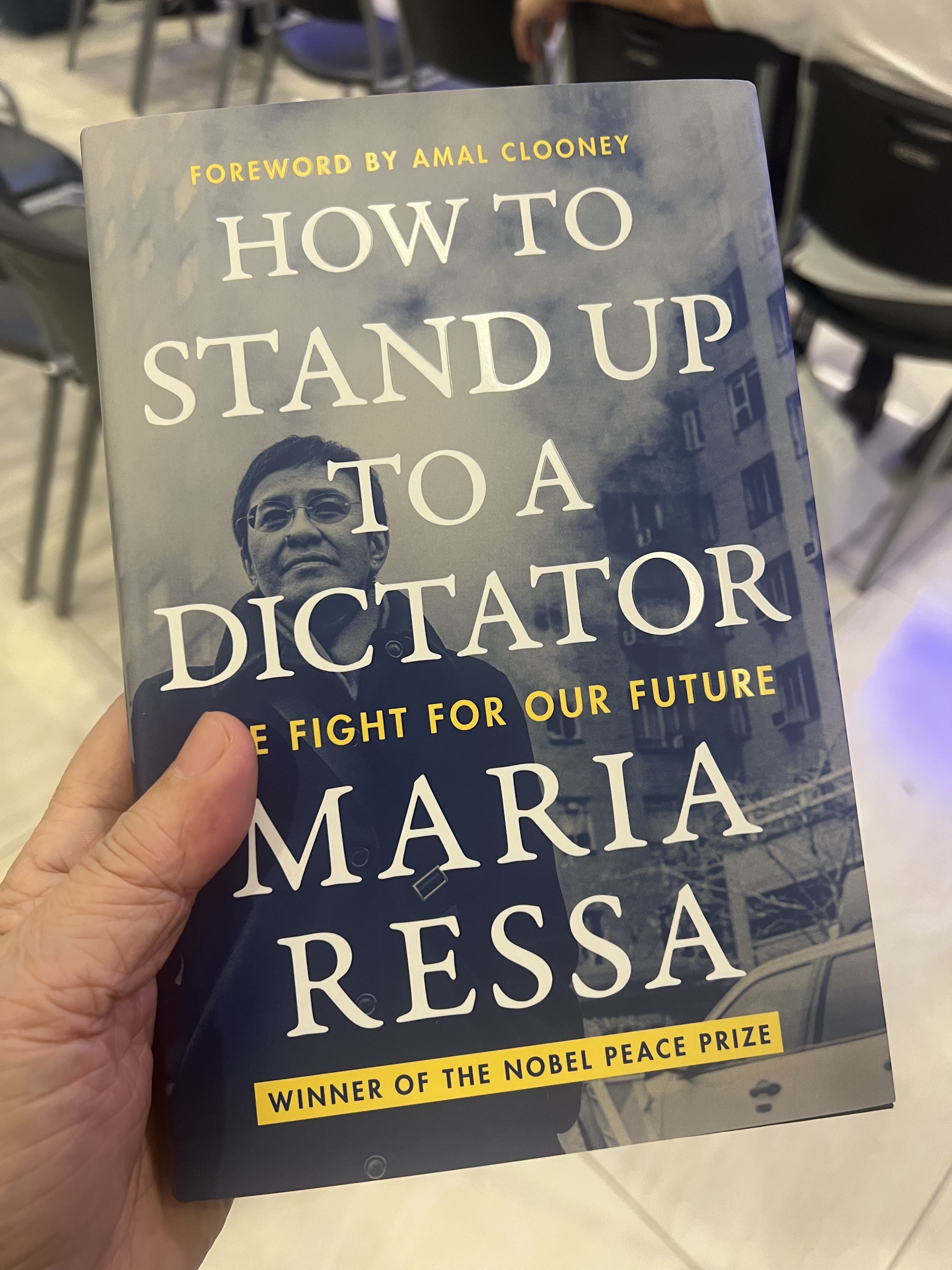
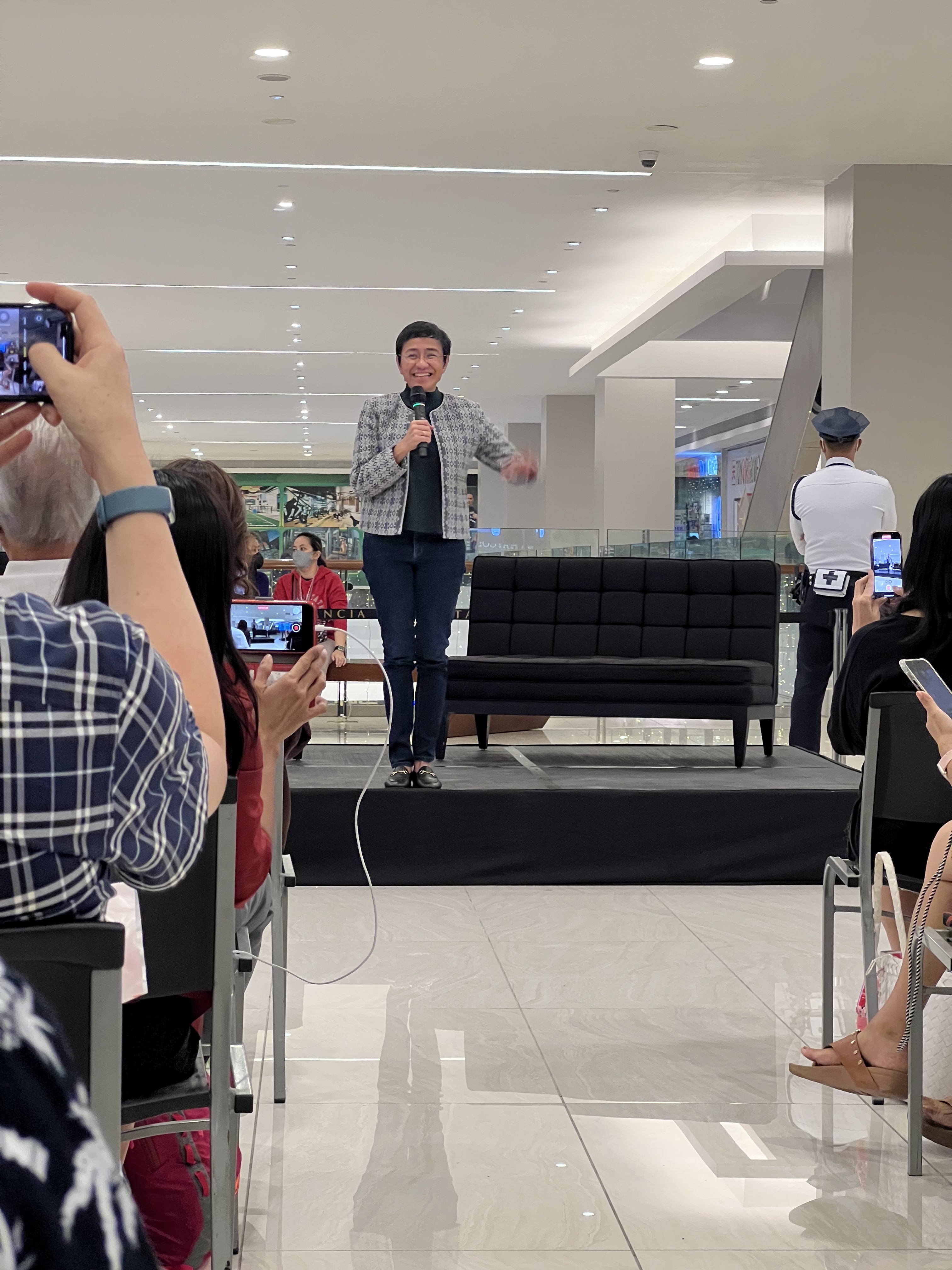
I WAS very honored to speak last Saturday at the launch of Maria Ressa’s new book, How to Stand up to a Dictator: The Fight for Our Future (Harper, 2022). I’d read an advance copy of it a couple of weeks ago, and to cut to the chase, if you’re thinking of buying a book to read for the holidays or to gift to friends, look no further. This book, for me, is among the year’s best in nonfiction.

I have to emphasize that word—nonfiction. As we all know we live in times when fiction has taken over as the most influential form of human discourse, particularly in the political arena. As a practicing fictionist, I should be happy about that, but I’m not and I can’t be, because so much of it is bad fiction, crudely written—and surprisingly, infuriatingly effective, at least with a certain kind of reader. 

Maria’s book cuts through all that. It’s undisguised, old-fashioned, in-your-face truth-telling, told in the same voice and tone we’ve become familiar with over the years of listening to her reportage over CNN. I’m sure that, like me, many of you wondered the first time you heard her: “Who was this little brown-complexioned woman speaking with an American accent?” She looked Filipino, but how come we’d never seen her before?

This was all before she rose to prominence—some would say notoriety—as the moving spirit behind Rappler, and subsequently to global fame as a Nobel Prize winner for Peace. We identified with her travails, shared her anger and sadness at the abuse she has received, and rejoiced in her victories, whether in the courts or in the larger sphere of public opinion. 

But how well do we really know Maria Ressa, and whatever drives her to be who and what she is? This book takes us to the person behind the phenomenon, and answers many questions we may have had about her and her stubborn advocacies.

The book’s title sounds like that of an instruction manual—which it is, and also is not, being part autobiography, part journalism, and part testimonial. As a manual for freedom fighters, it emphasizes the need for collaborative and collective action against seemingly insurmountable forces. Those forces now include the Internet, which, as Maria documents with both precision and profound dismay, has morphed from a medium that once held all kinds of liberative promises into a medium for mass deception and targeted assault. She draws her counsel not from some esoteric guru or academic paradigm, but from some very basic values that have informed her own life—the Honor Code she followed in school, and the Golden Rule.

“That’s what I lay out in this book,” she says, “an exploration into the values and principles not just of journalism and technology but of the collective action we need to take to win this battle for facts. This journey of discovery is intensely personal. That’s why every chapter has a micro and a macro: a personal lesson and the larger picture. You will see the simple ideas I hold on to in order to make what have—over time—become instinctive but thoughtful decisions.”

It’s this constant back-and-forth between the personal and the political—and at some point they become inextricably fused—that forms the fiber of Maria’s narrative and gives it strength. Her convictions are grounded in personal experience; they have not been paid for—as the hacks in the journalistic trade will allege, seeking to bring her down to their own level—except in the coin of personal suffering under the constant threat of imprisonment and violence.

But we learn from this book that trauma is nothing new to Maria. (We also learn that Maria Ressa wasn’t the name she was born into, but to find out her birth name, you’ll have to buy the book.) From her abrupt relocation from Manila to America at the age of ten, to her journalistic immersion in the horrors of conflict and disaster in Indonesia and Ormoc, the book chronicles Maria’s quest for truth, meaning, and purpose in her life, and that of others. She stresses the importance of remembering the past to make sense of the present, quoting TS Eliot’s phrase, “the present moment of the past.”

And so can we, she seems to suggest, even in these times of high anxiety, when we can see the vultures hovering over such once-sacrosanct treasures as our pension funds, while billions more go to feed the dogs of an increasingly untenable counter-insurgent war. The big words we have become used to tossing around—truth, freedom, reason, justice, democracy—they all come down to a personal choice to do the right thing, and the courage to do it. 

Nowhere is this matter of choice more evident than in the fact that Maria is here in the Philippines, having willfully subjected herself to our brand of justice, however imperfect it may be, instead of escaping to the safety of America or another haven, which her dual citizenship if not her celebrity can certainly afford her. She will see her own story through to the end, in the locale where it matters, among the people to whom it matters most.

I’ve often remarked, as a creative writer and professor of literature, that in this country, the writers most in danger of political persecution and retribution are really not fictionists or poets like me. Not since Rizal has a Filipino novelist been shot dead for what he wrote. For sure, we have lost many brilliant writers to the struggle for freedom and democracy—Emman Lacaba, and most recently Lorena Tariman and her husband Ericson Acosta. But they were killed by the State not for what they wrote—the State is illiterate when it comes to metaphor—but for what they allegedly did.

Rather, the most imperiled writers in the Philippines as in many other places are the journalists who speak the language of the people and of their plaints in terms too clear to ignore. They could be radio announcers like Percy Lapid, or the victims of wholesale murder in Maguindanao, or high-profile and exemplary targets such as Maria Ressa. It would have been easy for her to lash back at her critics and tormentors with the same viciousness. But, she says, “I will not become a criminal to fight a criminal. I will not become a monster to fight a monster.”

That, too, is a difficult choice, and one I am sure we are often tempted to cast aside. But Maria’s equanimity in the face of savagery shames us back into our better selves. It will be that kind of quiet resolve that we will need to survive and prevail. After all, we survived martial law. We can survive this regime—with agility, patience, and courage. But don’t take my word for it. Read Maria’s book to know that we can, and why we must.

Qwertyman No. 15: The Next UP President

Qwertyman for Monday, November 14, 2022

AFTER FOURTEEN straight Mondays of producing what I’ve called “editorial fiction”—make-believe vignettes meant to poke fun at the issues of the day, the prose version of editorial cartoons—I’ll take what will be the occasional break to engage more frontally with a concern of deep personal and professional interest.

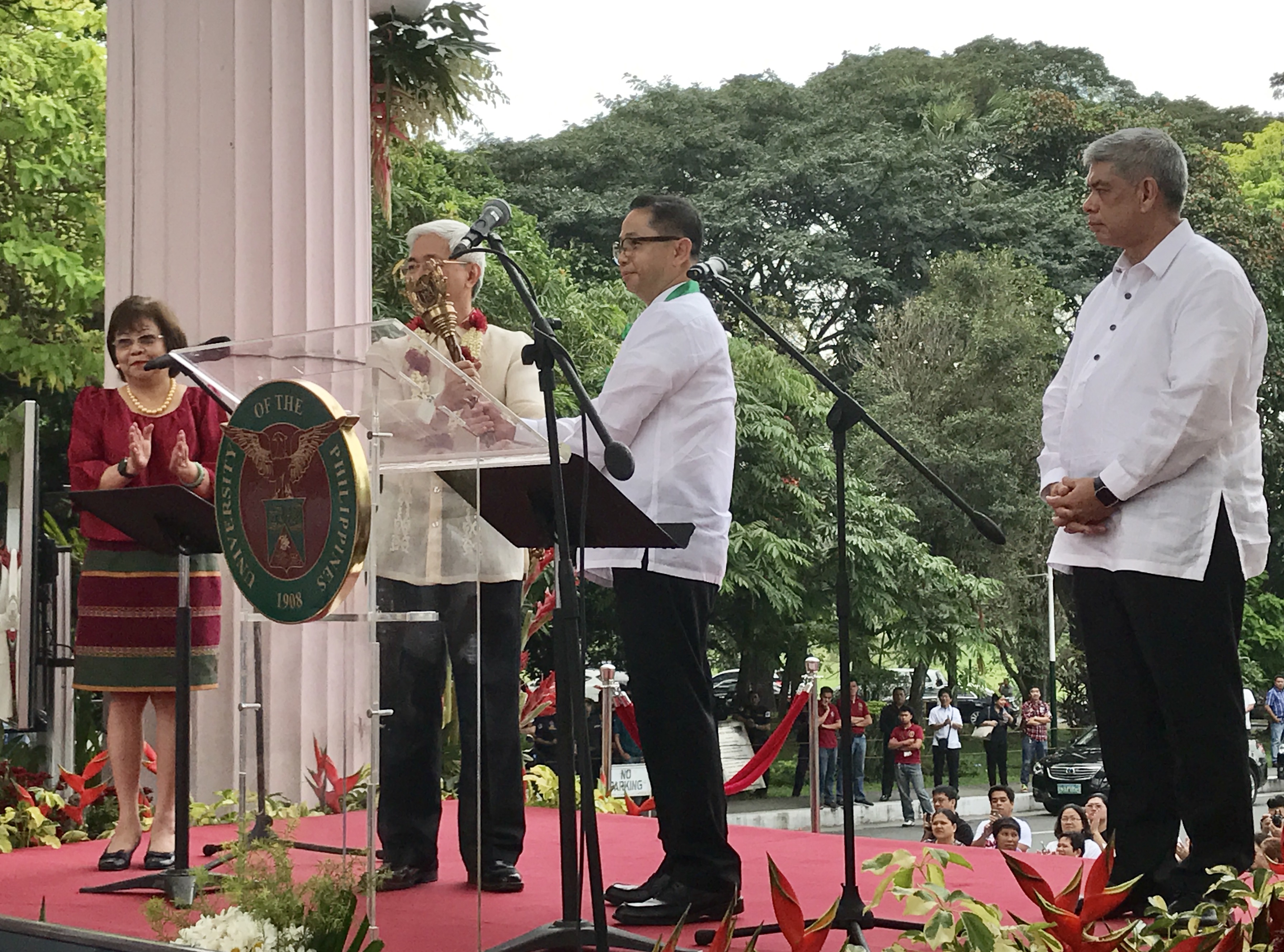
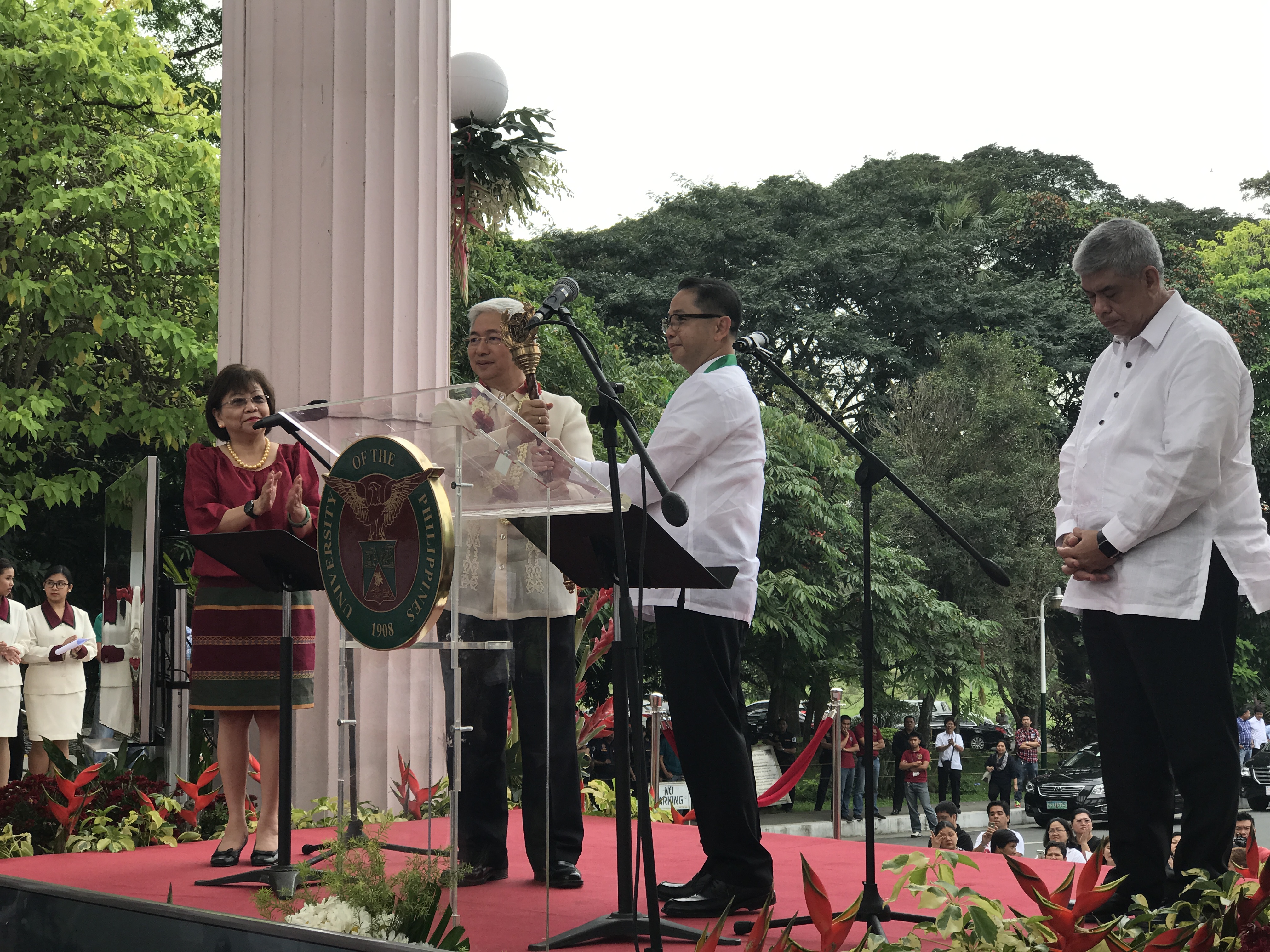
Over the next few weeks, the Board of Regents of the University of the Philippines will select the 22nd president of our national university to succeed President Danilo L. Concepcion, whose six-year term ends in February next year. (Let me add quickly, for full disclosure, that I was President Concepcion’s Vice President for Public Affairs until I retired in 2019, and held the same position under former President Francisco Nemenzo in the early 2000s.)

Whether or not you graduated from UP or have a child or a relative there, this is important for every Filipino, because—like it or not—UP produces an immoderate majority of the people who make up our political, economic, and social elite. Its leadership, therefore, is a matter of national consequence. Since its birth in 1908, UP’s alumni roster has counted presidents, senators, congressmen, CEOs, community leaders, artists, writers, scientists, and, yes, rebels and reformers of all persuasions. 

There are six candidates on the BOR’s ballot, some of them, to my mind, more qualified—beyond what their CVs say—than others. The Board of Regents has eleven members—the CHED chairman, the incumbent president, the chairs of the Senate and House committees on higher education, the alumni regent, three Malacañang appointees, and three so-called sectoral (faculty, student, and staff) regents; it will take six of them to elect the next president. 

Whoever that choice is, he will be certain to have a challenging six years ahead, especially considering the present political regime, which he will have to contend and to some significant extent work with. UP remains dependent on the national government for its budget, for which it has to make its case before Congress every year, like any other agency. 

Prickly issues will face No. 22. There’s been a lot of loose talk lately about UP’s standards supposedly falling, with too many cum laudes graduating even as its international ranking has reportedly dropped. Indeed these should give rise to public concern, but there’s more to it than meets the eye, and UP’s level of service to the nation (think PGH in the pandemic) hasn’t flagged.

Historically, the relationship between the Philippine president and the UP president has been a testy if not an acrimonious one—most notably that between Quezon and Palma—because of the university’s role as social critic. But Malacañang now has much to do with choosing the latter through the power wielded by administration representatives on the BOR. What the Marcoses will do with UP remains to be seen; will the next UP president, for example, be given free rein to pursue the martial law museum project that’s already been approved for construction? It may not be the most important item on the agenda—more support for research and faculty development should be, if we want to shore up our ratings—but it will be strongly indicative of how the Palace will deal with Diliman.

What I’ve observed is that the role of the UP president has greatly evolved since Palma’s time. While many of us would like to see an ideological firebrand at the helm, UP is a broad and diverse community whose survival and growth will require keen diplomatic skills to negotiate between the university’s external and internal publics. (And yes, even firebrands can do that, against all expectations; Dodong Nemenzo did.) University presidents worldwide have increasingly been more of resource generators and managers than thought leaders—perhaps boring, but they deliver the goods. What’s important is for them to be able to practice and defend the academic freedom that also allows the university to become the best it can be. I pray our regents will bear that balance in mind in its deliberations.

ALSO, A word on my chosen approach to editorial commentary. I know that some of you can’t make heads or tails of my fictionalized renditions of our political and social culture, but I think you will, with just a little more effort. Maybe it’s the literature professor in me, but I believe readers should be challenged to figure out the sense of things, and not just have it served to them on a platter. 

We’ve fallen into the groove of letting others reach our conclusions for us, so all we need to do is nod affirmatively. Whichever side of the political fence you’re on, that only contributes to sloppy, second-hand, copy-paste thinking. In my pieces, I try not focus on just one person or one target—other and sharper columnists can do that. I’m more interested in the culture of our politics—in the way groups of us think and feel about what’s in our best interests—and in our complicity in bad governance. Sure, we have rotten eggs in high public office—every administration has had them. At this point, I’m much less bothered by the fact that we live in a world of despots than by the fact that we (or many of us) put them there, we keep them there, and we just pinch our noses when they stink.  

Another columnist (who actually writes wilder fiction than me and my feverishly imaginative friends) even complained that fiction has no place in the op-ed page. Excuse me? All fiction is opinion, and always has been; the critical commentary of fiction even preceded journalism. In earlier times, our op-ed pages even offered poetry—political commentary in verse—at a time when our poets were patriots, and our patriots were poets. Sadly those times and those exceptional commentators are gone, replaced by hacks producing not only dishonest and soulless but dishwater prose. 

I’m not a poet, so the closest I can get to that is fiction, which pretends that some things happened that didn’t (but then again, in another sense, really did—and that’s what some readers find confusing). One thing I must confess I do like about fiction is that, unlike factual commentary that readers today tend to forget after a week, a good story sticks around. Sadly for its implicit targets, fiction is forever. You can shoot me dead, but my work will survive me—and, for that matter, you.

Qwertyman No. 14: An Oppa for Pinoy Culture

Qwertyman for Monday, November 7, 2022

THE HON. Victor M. Dooley was in a quandary once again. He had struggled with his maiden speech, but thanks to the timely assistance of his rumored girlfriend and sometime girl Friday Yvonne Macahiya, he had delivered a brilliant address on “Culture and the Environment: Shared Survival through Values Education,” which the footnotes failed to say had been Yvonne’s term paper for her Political Science 104 class at the Western Aklan Institute of Technology. 

It didn’t matter that most of his esteemed colleagues were absent or nodding off when he gave his speech with all the passion he exuded back when he was “Mr. Disaster,” the TV-radio hero of the typhoon-flooded, the earthquake-shaken, and the fire-singed. When Yvonne’s press release came out, it was just like he had spoken before the UN General Assembly, the world’s grandest stage; never mind that some audiences there weren’t too hot, either. 

“We are the world’s most disaster-prone country not because we are weak,” he said, thumping his fist on the lectern before letting his gaze travel across the gallery to turn up the drama, “but because disasters visit other countries less. The Lord Almighty has brought these disasters upon us to test our faith, to strengthen our spirits, and to breed true champions of the desperate and the dispossessed!” Again he paused for dramatic effect, but all he heard was the snorting of a venerable gentleman from a northern province, dreaming of Lamborghinis landing in his Special Economic Zone.

Still, something from his speech must have registered in someone’s mind—the word “education”?—because Sen. Dooley found himself appointed to the Committee on Basic Education, Arts, and Culture, which to him sounded like the wimpiest assignment anyone could get. He had expected to be named chair of the Committee on Environment, Natural Resources and Climate Change (that went to a real estate developer), or the one on Public Information and Mass Media (that went to a retired general), or to something that could have used his mestizo heritage, like the Committee on Foreign Relations (that went to a Chinoy movie producer). 

Basic education? Other than passing grade school, what did he know about classrooms and curricula? But then the committee also covered Arts and Culture, so, hmmm, maybe that was what they saw in him, his stellar career as a singer-dancer-TV show host, the way the ladies swooned when he winked at them at the end of his “Buchikik” song. Arts and Culture was entertainment, right? It was about keeping people happy, so they could smile through Covid, unemployment, EJKs, 60-1 peso-dollar rates, and P300/kilo pork. 

There wasn’t much he could do about those things—blame it on the pandemic, on Ukraine (he did have some important foreign-policy views: those darned Ukrainians should just have given over some potato fields to the Russians instead of endangering world peace with their silly resistance), and on troublemakers who even won Nobel prizes for having nothing good to say about hardworking despots.

But now, the Hon. Victor M. Dooley had to come up with a program that would leave his indelible mark on Philippine culture, and he convened an ad hoc committee composed of himself, his chief of staff Roy, the indispensable Yvonne, and a special guest who sashayed into the room and planted wet kisses on both of Vic’s cheeks, much to his embarrassment and to Yvonne’s utter surprise. 

“Ms. Terry! I never thought you would respond to my invitation!” 

“Why ever would I not? How long has it been, dearie? The last time  I saw you, you were still a struggling singer trying your best to hold your note—so I held it for you, hihihi.  And look at you now, an honorable Senator of the Republic!”

“And who, may I ask, might you be?” interjected Yvonne.

“Ah! Yvonne, this is Ms. Terry, who sponsored my entry into show business many years ago. I asked him—I mean her, ahaha, we better get our preferred pronouns right, especially after that gender-sensitivity workshop we all had to take—to come and help us devise a program for our country’s cultural revival.”

“Why didn’t you tell me?” said Yvonne. “I could’ve called on some of my National Artist friends—”

“What’s a National Artist?” asked Vic.

“Never mind. Welcome aboard, Ms. Terry—oh, I get it now, mystery herself! I’m Yvonne, the congressman’s Chief Political Affairs Officer. Can we offer you some coffee?”

“If you have low-acid coffee with non-dairy creamer and gluten-free scones, I’d much appreciate it. But I’ll take what you have.”

“Our Chief of Staff here makes an excellent three-in-one and I’m sure he hasn’t finished all the Sky Flakes.” Yvonne cocked an eyebrow at Roy, who slunk away muttering. “Now let’s get down to business. The senator wants a new program with strong popular appeal that will raise our people’s spirits, promote national unity, and put Philippine culture on the global map. You said you have some ideas?”

“I do! Two, in fact. One, boy bands. We should undertake a nationwide search for cute mop-haired boys from the age of six up and train them in a camp for singing and dancing. Two, a cooking competition for girls, who don’t know how to cook anymore. We’ll have regional and then national contests for the best pinakbet, sinigang, and adobo. We can even have a Fil-Am edition, but let’s do it in West Covina so I can visit my cousin there. What do you think?”

“Nice, but I have an even more inspired idea!” said the senator. “To promote our own, let’s ban all Korean shows for a year. Tama na mga K-drama, P-drama naman. Nakakainis na, e!”

Yvonne groaned. “Are you crazy? Do you want to bring the wrath of the BTS Army down on you, not to mention my mama who’s in love with Hyun Bin?” Yvonne turned to their guest. “I like your ideas, Ate! I think you and I will make a great team—between you and me, we can make Vic Dooley the oppa of Philippine culture!”

“Thanks, but what’s an oppa?” asked the senator.

Qwertyman No. 12: The Changing of the Colors

Qwertyman for Monday, October 24, 2022

(Image from esquiremag.ph)

PITONG STARED out the window of his Chicago apartment to the shoreline of Lake Michigan, and watched the usual Sunday crowd of families with small children in colorful tracksuits and seniors plodding nowhere at half a mile per hour on their adjustable canes. It was getting later into the fall, and the colors were exploding all over the city from Lincoln Park to Promontory Point; at the Botanic Garden in Glencoe the Japanese maples blazed a vivid red. Pitong remembered that it was at a time like this, almost twenty years earlier, when he and Marietta had arrived in the United States, and they could not believe what a transformation the seasons induced in the chlorophyll and carotenoids of leaves. 

He felt intensely drawn to his postgraduate studies, which was what they came to America for—“To explore,” as he wrote in his application, “new ideas for the energization of the Philippine economy, particularly through the deregulation of key industries, including power and telecommunications.” 

With a US-minted PhD, Pitong thought he could return to a professorship if not a deanship at a top university, or a directorship at NEDA or Foreign Affairs. So immersed did Pitong become in his anticipated future that he forgot about Marietta, who had given up a promising career in pharmaceuticals to join him as his bedmate and cook, until he began to doze off after interminable arguments online about the American capacity for policy reform. 

She snuggled up to him in the deep of winter, and he was colder than ice. In their second spring she volunteered to usher with the local symphony; by that summer she had fallen for a clarinetist, and by the fall she had found her happiness, while Pitong continued to stew in his darkening pot of theory and counter-theory, of the sticky explanations how, in the post-9/11 world, security and economic concerns were inextricably intertwined and indeed congealed in the individual consciousness.

Pitong returned home alone when he failed his dissertation defense, while Marietta began a family in California, to where her clarinetist had moved to join a new orchestra. Almost immediately, through an old friend on the Left—yes, he had had more than a passing dalliance with that crowd, although he now denied it—Pitong found himself a job in the Palace, drafting speeches for Madame President and getting close enough to hold up an umbrella for her at the slightest drizzle. He began to project some political weight and smiled at whispers to the effect that he would soon become her spokesman. When he brushed his teeth in the morning, he ended by frowning at the mirror, as if the republic were about to collapse, and elocuting in his whiny voice, trying to sound as gruff as he could, “Good morning, ladies and gentlemen of the media.” 

And then the republic did collapse, or rather Madame President did, in a scandal that whittled down her stature even more severely, and rather than desert her like those scoundrels did, Pitong made noisy pledges of allegiance to her—while secretly negotiating, on the side and through the same old comrades (the Left had influence in any government, he would realize), an accommodation with the new regime. When they laughed him out of the place, he fled the country in humiliation, hooked up with his alumni network, got a job handling loan applications in a small bank, and prayed every night that a sinkhole would devour the Palace he left behind and all of its cursed occupants.

For his own entertainment, he opened a blog under the title of “Batang Recto,” a play on the Manila street where he picked up cheap textbooks and on all the connotations of “right,” which he embraced. He took every opportunity to lambast anything that had to do with Family “A,” communists, female empowerment, abortionists (he was convinced that Marietta had purposely lost their baby, not that he wanted to care for one), drug users, hippies, Barbra Streisand, Hillary Clinton, Barack Obama (and 95% of his race), hip-hop, gun control, and climate change. 

He now proudly identified himself as an American citizen—he felt deeply insulted when someone asked if he was a “Pacific Islander,” like he paddled a dugout in his three-piece suit—and bristled when Pinoys from Pateros or Pagadian questioned his opinions on American issues like “birtherism,” as if they knew anything about American politics. But at the same time he felt perfectly free to dispense political wisdom to the islanders, because they seemed hopelessly lost in their fantasy of a liberal democratic paradise, which they failed to realize had been cooked up by a cabal in Washington since the days of Quezon and Cordell Hull to protect American economic and military interests in the Philippines for the next half-century. 

Pitong no longer relied on or believed in scholarly research to establish the truth; so much of it was produced and propagated by an academic elite intent on perpetuating its hegemony, against the challenge of intuitive thinkers like himself and a few other brave souls he had come into contact with. Together, on private networks, they reviewed and reconstructed history, and plotted a chart for human survival and development. The plan recognized the existential threats posed by liberal retardates still tied to obsolete notions like racial and gender equality, which accounted for their weakness at the core.

When a Pinoy strongman and his American counterpart became presidents of their countries, Pitong heard his angels sing. The world was clearly waking up to what he had known for many years—that there was genius latent in resentment, prejudice, and suspicion, in the politics of self-interest, the purest of human motivations. One stalwart was cheated out of re-election, but another was replaced by an even more reliable autocrat. When Russian bombs fell on Ukraine, he felt his logic justified—having denied Russia’s destiny and gone to bed with the West, Ukraine had no one else to blame for its misery but itself. Batang Recto was always right.

Pitong slept soundly on the pillow of these beliefs. He felt most virile after savaging some pink fool on his blog, and sometimes he woke up with a woman next to him, with whom he did not care to exchange names, mindful of security. When he looked out the window at the changing of the colors and at the people on the lakefront, he felt no irony, no loneliness, no remorse. He was never stronger, never surer. He tingled with anticipation at the coming of The Storm that would sweep all the liberals, tree-huggers, and Mariettas of the world away. It was the closest thing he felt to happiness.

Qwertyman No. 5: A Rhetorical Question

Qwertyman for September 5, 2022

(Photo from philstar.com)

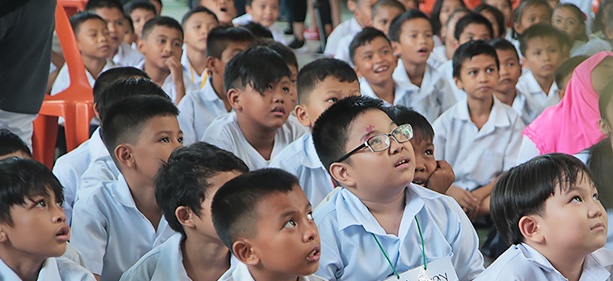
TEACHER LENLEN’S chest swelled with pride when she opened the door to her 8th grade classroom in Gen. Pupu Noknok Elementary School in the town of Bugbugan, province of Kalamias, in the People’s Democratic Republic of Kawefo. Freshly painted in the fluorescent green that seemed to be in favor since President Ongong’s election, the cavernous classroom held exactly 100 chairs, and was reputed to be the largest elementary-school classroom in the archipelago. It was so huge that Teacher Lenlen had to use a microphone hooked up to two loudspeakers in the back of the room to reach the farthest students, from Wutwut to Zygzyg. 

“Good morning, class!” she shouted on the first day of school, oblivious to the idea that she didn’t need to scream because she already held a microphone. “My name is Mrs. Lenlen Fayfay, but you can call me Teacher Lenlen, and I will be your homeroom teacher. Now, what is a homeroom teacher? According to Wikipedia, a homeroom teacher ‘is responsible for almost everything concerning a homeroom period and classroom. At the start of the school year, it is the homeroom teacher’s responsibility to make sure that each student gets relevant textbooks and materials, which are supplied by the government. The teacher is also responsible for the attendance.’ Is that understood? Did I make myself clear? If yes, then answer ‘Yes, Teacher Lenlen!’ If you did not understand what I just said, raise your hand and approach the microphone when I recognize you. Is that understood?”

“Yes, Teacher Lenlen!” The answer, magnified by the three standing microphones set up at key points along the central divide between left and right, reached Teacher Lenlen like a towering tsunami, forcing her to cover her ears.

“You don’t have to shout!” she shouted back. “Just speak in your natural voice! Okay, class?”

“Okay, Teacher Lenlen!” Another wave rolled over her, drowning her shriek of protest.

“Teacher Lenlen! Teacher Lenlen!” A boy’s hand shot up from the middle of the room.

“Yes? Who are you and what is it?” Secretly, Lenlen felt relieved to be dealing with just one student, whose solitary voice she could easily overpower. “To the microphone!”

The boy scurried to the nearest mike, giving high fives along the way to his giggling classmates. “My name is Marmar Pwepwe, and I have a question.”

Teacher Lenlen raised her hand to stop him before he could speak, seizing upon the moment as a teaching opportunity. “Before you answer me, let me make this clear, this being our first day of class. Because there are one hundred of you, we have to make sure that every question you ask is important, all right? Wait, wait, wait! Don’t answer me! If you want to say ‘Yes, Teacher Lenlen!’, just nod your head—quietly, like this.” She nodded her head, keeping her lips sealed. “Is that understood?”

“Yes, Teacher Lenlen!” came the bone-jarring reply.

“Eeeek, stop! Stop it! I told you to nod your heads! How hard is that? Didn’t your parents teach you to nod your heads? Okay, everybody, let’s nod our heads together—up, down, up down! That’s good, do it again, up, down, up down! See? A nation that can nod together can be great again!”

“Teacher Lenlen! May I ask my question now?” said the boy Marmar.

“Oh, all right! What is it?”

“Well—I googled what you said about homeroom teachers, and I discovered that it’s the definition of a homeroom teacher in Afghanistan. Teacher Lenlen—are we in Afghanistan?”

A roar of laughter erupted. His classmates had known Marmar to be a smart aleck since the lower grades, for which he had been sent to the guidance counsellor’s office more than once.

Teacher Lenlen’s cheeks turned red. It was true—there was a long list of definitions in Wikipedia for “homeroom teacher,” and she had conveniently picked out the topmost one, for Afghanistan. So what? How different could Afghanistan—wherever that was—be from Kawefo? 

“Before I answer you, don’t you know that cellphones are prohibited in this school during class time? And how could you google anything, when even I can’t get a decent wi-fi signal in this room?”

“I didn’t use a cellphone, Teacher Lenlen! It was a tablet with cellular data, which my mother gave me for my tenth birthday, for Zoom!”

“Oh, so your mother gave it to you! Maybe I should talk to your mother about using tablets in class, when we’re no longer using Zoom, but meeting face-to-face. Class, are we still on Zoom, or meeting face-to-face? DON’T ANSWER! That’s what’s called a ‘rhetorical question’—a question you already know the answer to, so you don’t even need to answer it. Everybody write this down!” She went to the blackboard and wrote “R-H-E-T-O-R-I-C-A-L!”

“What does ‘rhetorical’ mean, Teacher Lenlen?” asked a little girl in the front row. Lenlen was glad that nobody else seemed to have heard her, because, come to think of it, she didn’t know, except that when you added “question” to it, it meant exactly what she had just said. She went up to the girl and whispered, “I’ll tell you tomorrow. That’s tomorrow’s lesson.”

Marmar was still standing at the mike, and said, “If you want to talk to my mother, Teacher Lenlen, I’ll give you her phone number.” 

“I was speaking rhetorically!” Lenlen retorted. “I’m talking to you, not to her!” Marmar’s confederates snickered in their seats. “What’s so funny?”

Another boy piped up. “Teacher Lenlen, Marmar’s mother is the governor!”

Marmar Pwepe… Governor Pompom Pwepwe—of course, she should have made the connection! The governor was known for her fiery temper, punching sheriffs and other public officials who crossed her path. Beads of sweat began to form on Teacher Lenlen’s forehead.

Just then, a squadron of policemen appeared at the door, discombobulating Teacher Lenlen further. Had she been reported so quickly? What was going to happen to her pension, to the trip to Bangkok she had been planning for so long?

“Ma’am Lenlen Fayfay?” asked their commanding officer. “I’m Captain Shushu. We have been deputized by the regional office of the Inter-Agency Counter-Subversion Agency—” 

“Oh, no—you have the wrong person. I’m Mrs. Fayfay, yes, but I swear to God, I’m not a subversive! I never said anything bad about President Ongong or… or Governor Pwepwe….” She stared at Marmar, begging for mercy.

“We’re not here to arrest you or anyone, Mrs. Fayfay. We’re here to requisition thirty chairs for the regional office, which needs more furniture to properly perform its solemn duties. I trust you agree?” Captain Shushu turned to the students, counting heads. “The first three rows, get up!” His men took their chairs out into the corridor. Lenlen could hear a similar commotion happening in the other classrooms.

The students sat forlorn on the floor, clutching their bags. Teacher Lenlen wondered if she needed the governor’s phone number, after all.

Penman No. 442: Yes, You Cane!

Penman for Sunday, September 4, 2022

AS IF I didn’t have enough junk filling up every corner of the house, I’ve lately gone on another collecting binge, for which the only justification I can offer is that, well, it’s age-appropriate. 

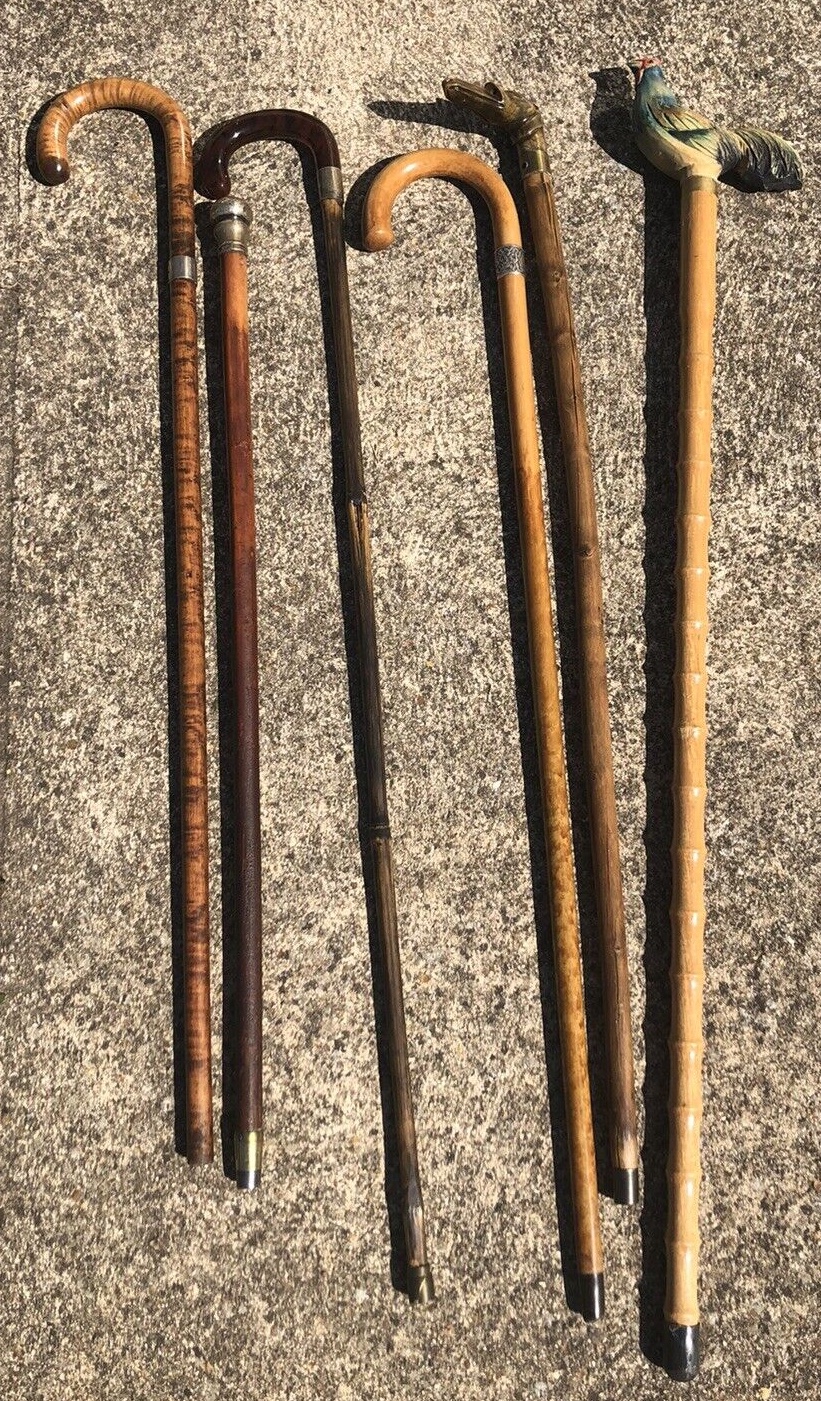
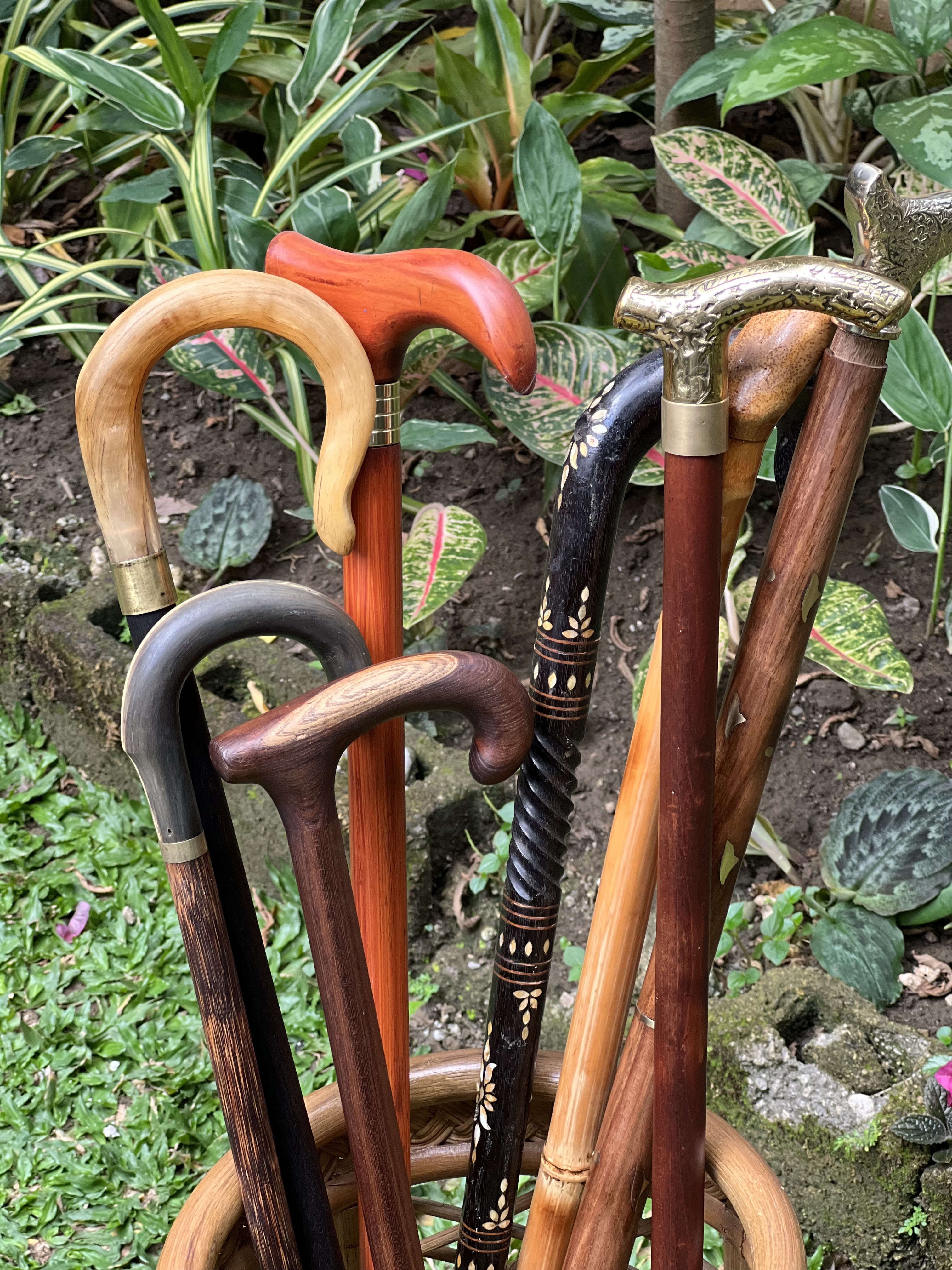
I’m talking about collecting canes and walking sticks (we’ll use those terms interchangeably for this article, although there are technical differences between them), accessories we now associate with the onset of decrepitude or some other infirmity. I’m not quite there yet—although, at 68, I should need no excuse for carrying a cane, especially for my periodic attacks of gout—but I thought it prudent to prepare now for the inevitable, and acquire artful and functional canes while I’m still sentient enough to know between wood and plastic.

I’m not sure when this newfound diversion began for me. I’d been using the familiar, adjustable metal canes you can buy at drugstores for my gout, which Beng has also leaned on for her arthritis. At some point—as with my other follies—I must have said to myself, “If I’m going to carry this around all day, it might as well be nice. No, forget nice, it might as well be grand!”

And so began my hunt—online, in Japan-surplus shops, and wherever else you can find them—for the perfect cane, which, as soon as you say it, you realize is an impossibility, because the next one is always going to be better, or at least different.  That’s just how it is for collectibles, and how my few working fountain pens grew to 400 at one point (now trimmed down to a more modest 150). 

To bring some reason into this passion, let’s go back to the utilitarian roots of walking sticks and canes, supposedly in the long sticks or poles that shepherds carried to protect themselves and their flocks from predators like wolves. The same sticks were used as walking aids, to climb up hills and mountains with, as well as for taking measurements. By the 1500s, with the use of cane for the shafts, the word “cane” entered popular usage.

Meanwhile, beyond saving you from a bad fall, these wooden sticks found a new and loftier purpose in the hands of men (and some women) who ruled over vast kingdoms and had to show something for it. They became scepters for emperors, kings, and queens—bishops also took to holding even longer staffs—and as such had to look the part, acquiring embellishments of silver, gold, and precious gemstones. When you had to say something like “Off with his head!”, it seemed more convincing to do it with an upraised stick. Moses, of course, had the most potent rod of all, good for getting water out of rocks and for smiting down the detested Amalekites. 

(Image from 123rf.com)

All that pomp and pageantry associated with carrying sticks must have rubbed off on the bourgeoisie, who took to canes as fashion accessories, one more way of showing (or showing off) how prosperous and important one was. Carrying a cane didn’t mean you were lame; to the contrary, it suggested that you wielded power as a bona fide member of the gentry. Genteel ladies had their own versions, some of which had secret compartments for perfumes, combs, fans, and even mirrors; the men liked theirs with swords, knives, and guns—these multipurpose sticks were called “system” canes.

In the London of the 1700s, according to one history of canes, “A gentleman had to procure licenses for the privilege of carrying canes. It was expected that they would abide by certain rules or risk loss of the privilege. The authorities actually policed rules for canes and walking sticks vehemently. It was considered an extreme violation of manners to carry a walking stick under one’s arm, to brandish it in the air, drag it on the ground or to lean on it while standing.”

Thankfully today no such licenses are required, and the etiquette of canes is observed mainly in the breach. Canes are back to being the implements of the sick and the aged, and eyebrows will rise if you appear on the street or in your workplace sporting an antique derby (a popular style with a short wavy handle) or a shillelagh (a cane made from a rough piece of wood with a knob on top).

As a senior, I consider myself exempted from all licenses, excuses, and medical prescriptions in this regard. I collect canes because, like my pens, they’re both tools and works of art, relics from an age of manners and elegance. That they’re out of fashion is an even bigger plus, because it means very few other people want them, and their prices will be reasonable. 

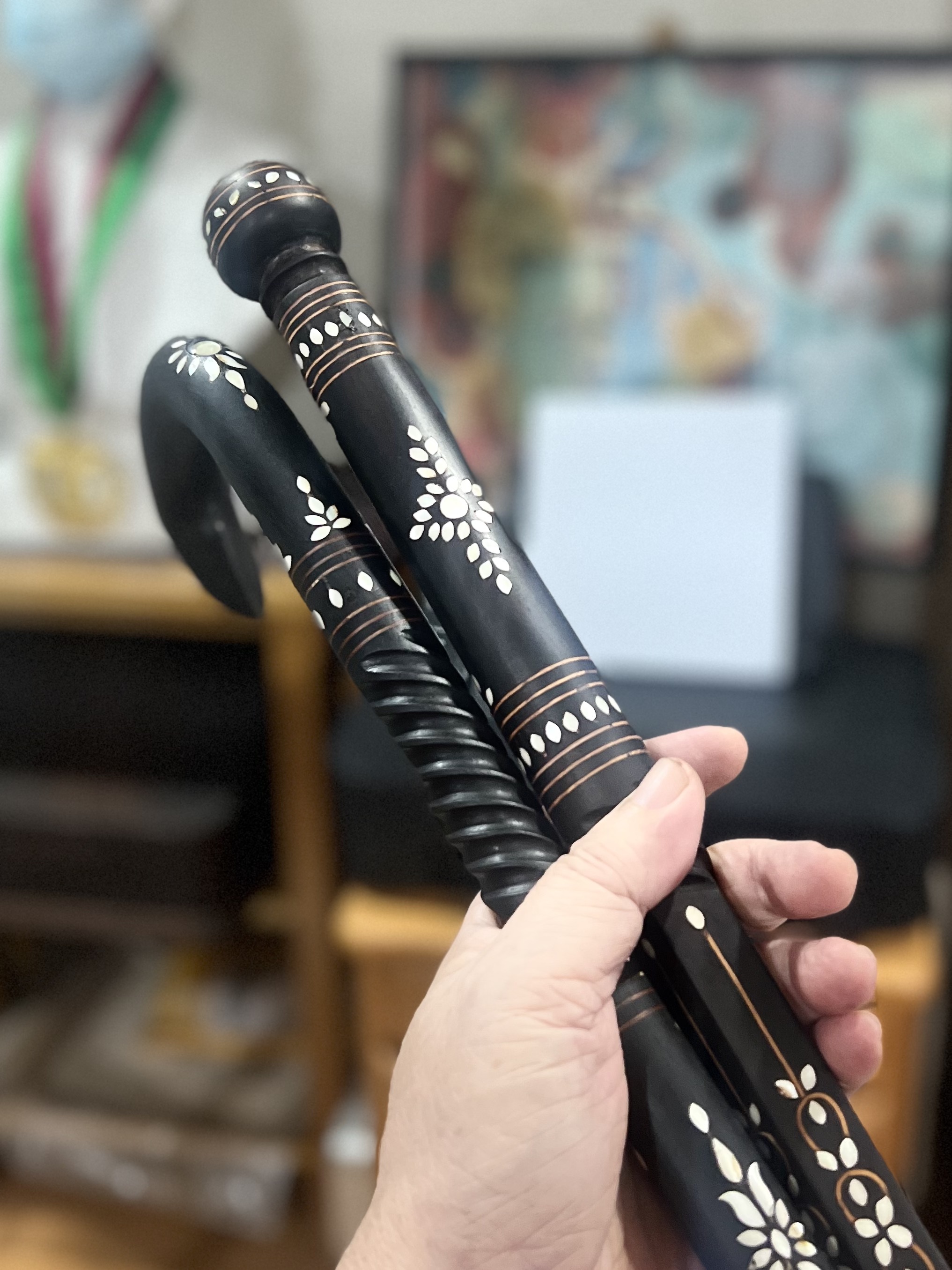
The Philippines is a great place to start collecting canes, because we have very fine antique and vintage ones, made of kamagong or some other hardwood, intricately carved with mother-of-pearl inlays. Some others have silver pommels, handles, bands, and ferrules (the metal caps at the tips) and fine repoussé (hammered) work on the silver. Japanese canes often come in bamboo, which can be very expressive at their bent handles. 

What I’ve looked for outside of our region are canes from Europe and the US, which employ horn, silver, brass, and other materials for their handles, which can be elaborately carved and decorated with animals, skulls (not my thing), and whatever floats the owner’s boat. Vintage canes can also come with bands or badges that denote provenance, such as the owner’s monogram or his military service. There are many websites online devoted to this hobby, and eBay is always a rich source for canes (new but vintage-style ones made in India can be had for not too much). It’s important, by the way, to trim your canes down to size—your hand should be just resting lightly over the handle beside you—not bent upward or reaching down. I do this myself with a hacksaw, and use one of those rubber plugs sold in True Value for chairs to cap the bare tip.

I’m not waiting for my next bout with gout to enjoy my walking sticks. Having resumed my walks around the UP campus, I’ve found that carrying a cane not only supports me but improves my balance and rhythm (I swing it out in front of me like a pendulum). Beng, who needs them more (and who has her own mini-collection), has also discovered that being a cane-carrying senior has its advantages: people are more courteous, service is faster, and seats miraculously appear. I’ll try that the next time we fly!

Qwertyman No. 3: The Book Convention

Qwertyman for Monday, August 22, 2022

THE ANNUAL convention of the National Association for the Advancement of Books of the Democratic Republic of Kawefo was about to begin, and after a rowdy rendition of the National Hymn that was sung in two keys when the video failed, followed by a ten-minute prayer in five different languages invoking Divine Guidance in the formulation of a “coherent, cohesive, and comprehensive national book development policy,” the Introduction of the Honorable Guest Speaker began, properly enough with the birth of the speaker in the country’s easternmost islands, better known for brigandry than textual poaching. 

“Minister Fwefwe could not have arrived at her exalted position at the helm of Kawefan higher education and cultural development without her deep and abiding commitment to the promotion of knowledge, which she gained through her lifelong immersion in the world’s intellectual foundries,” intoned her introducer, the current Vice-Minister of Propaganda whom everyone knew was angling for Fwefwe’s job at the next Cabinet reshuffle. An ex-Marine colonel who had been sacked for leading his men into a rebel ambush while searching for a cellular signal on which he could call his mistress, Vice-Minister Penpen had been rehabilitated through the good graces of his cousin, the chief cook at the Palace who served President Ongong his favorite dishes. “Who could have known that a chance encounter at the circulation desk of the Manoa Public Library on that fateful day of the 23rd of November, 1986, would lead to her elevation from a humble library assistant to our republic’s Chief Cultural Czarina?”

“Good Lord,” muttered Dr. Gawgaw in his corner, “he’s going to tell the full story all over again, is he?” Gawgaw dipped a nacho into the puddle of cheese before him and munched on it noisily. He sat with a group of old men sporting flowery ties and silver-tipped canes, with a sprinkling of elderly ladies whispering in an arcane Creole-like dialect. A retired Professor of Kawefan History, Gawgaw would have preferred to stay home in his library, sniffing the powdery biblichor out of his pigskin-bound volumes on “Robinaux’s Account of Kawefan Border Crossings, 1773” and admiring the faux-Victorian binding of “Society in a Centrifuge: Sugar and the Colonial Domestication of Kawefo,” which he wrote himself. But he had to attend this silly convention on behalf of his Society for the Preservation of Kawefan History, to ensure that any new book policy did not forget to account for the past, of which he was both protector and gatekeeper. “Madame Minister, republish our books!”

Across the aisle, the Kawefan Educational Publishers Guild had other ideas. “Books are everyone’s business!” And indeed it was, especially for Mrs. Krekre, lifetime president of the guild, the grande dame of Kawefan textbook publishing, and supplier of choice to all the government’s informational requirements. The guild employed hundreds of moonlighting schoolteachers to write textbooks that satisfied whatever Kawefan industry and ideology required (the ideology changed every six or twelve years, except for the occasional coup in between), and there was always a need to refresh history and its interpretation. The new administration was anxious to encourage the rumor that its ruling family’s wealth had been founded on ancient treasure, so new myths were being discovered and stories being written about the Lost Kingdom of Lifofo, to which President Ongong could trace his divine ancestry. New material meant new editions and teaching supplements, all of which required thorough vetting by the Ministry of Public Instruction, where Mrs. Krekre’s patient goodwill ensured everyone’s satisfaction.

Oblivious to the proceedings onstage were the members of the Kawefan Popular Writers League, an association dedicated to the principle of literature as entertainment, toward which they concocted dizzying romances set in the Swiss Alps, deep-space honeymoons, movie-star ghost stories, and murder sprees provoked by a secret kimchi recipe. They sipped their wintermelon-flavored milk tea at their table, sharing stories of their latest forays and frolics, and when Minister Fwefwe screeched into the mike about something that sounded like “social responsibility,” they screeched right back and giggled, annoying everyone else, but no one could shut them up or leave them out of the party, because everyone read them in their cars and bathrooms, including Dr. Gawgaw and Mrs. Krekre.

Looking much less happier were the dozen-odd members of Kawefan PEN, who stood forlorn just outside the convention hall, clutching placards that mentioned words like “FREEDOM” and “JUSTICE” alongside a slim stand of books illustrated with skulls, barbed wire, and raised fists. They were led by Prof. Mikmik, who had done his dissertation on Baudelaire at Harvard but who, after the Vietnam War, had seen the Marxist light and now sported a goatee and wrote inflammatory poetry. He had once been friends with Dr. Gawgaw until they quarreled over whose books mattered more in the grand scheme of things. Mikmik was convinced that he was under constant and intense surveillance, especially since his FB account was barraged by friend requests from nubile ladies masquerading as masseuses and escorts.

There were spies, indeed, on the convention floor, shuttling from one exhibition booth and table to another, deputized by the Inter-Agency Counter-Subversion Agency to locate, expose, and denounce subversive literature “in whatever form, format, or genre, for the purpose of undermining the people’s faith and belief in duly constituted authority….” The IACSA’s operatives had attended a workshop in Camp Ngungu, where important questions like “What’s a genre?” were addressed by retired professors of comparative literature (“A novel, a cookbook, a nursery rhyme!”). Key words like “liberal,” “gay,” “rejection,” and “penguins” were dissected and discussed to lay bare the insurgent cancer throbbing at the heart of Kawefan society.

Agent Pogpog had joined the IACSA after sleeping on his call-center job, and was now intent on making a name for himself by bagging his first major subversive author, following the recent, high-profile arrests of poets Gemgem, Kripkrip, and Ricric. For the past three hours, pretending to be a graduate student, he had been keeping Prof. Mikmik company, trying to figure out if Mikmik’s autobiographical epic, Seven Seasons of Solipsism, was subversive or not. It contained a line about “the promethean susurrus of unvanquished desire,” which sounded suspiciously rebellious. “It’s totally subversive, I assure you,” said Mikmik, “and if those fools in the military only knew their Homer, I should have been locked up and shot dead thirty years ago when this book came out. And then this book would be in its tenth edition!”

Inside the convention hall, Dr. Gawgaw burped, Mrs. Krekre laughed, and Minister Fwefwe raised a toast to all authors past and present, and to their boundless imagination.

Qwertyman No. 1: Maiden Speech

Qwertyman for Monday, August 8, 2022

(Image from Etsy.com)

THE FRESHMAN senator was worried. The Hon. Victor M. Dooley was due to deliver his maiden speech on the Senate floor in a week, and he still hadn’t come up with a brilliant idea to wow the media with, to assure his many millions of voters that they had chosen the right fellow over a couple of dozen lawyers, economists, professors, and retired generals.

No one was surprised when he won. He had all the proper credentials for a 21st century senator: his grandmother had married an American soldier, giving him square cheekbones, facial hair, and a Western surname; his father had been a commissioner of the Bureau of Customs, amassing a fortune in just a few years; he himself had been a matinee idol, a pop singer, a TV game-show host, and, when he got too old for the lover-boy roles, he reinvented himself as “Mr. Disaster,” the TV-radio hero whom you could count on to be there even before the first Navy rescue boats, the first aftershock, and the Chinese volunteer fire brigade. 

Mike in hand, and in a voice perfect for soap opera, Vic reported on the masses’ tragic losses while doling out relief bags containing a T-shirt with the “Mr. Disaster” lightning logo, a kilo of rice, three cans of sardines, five packets of instant noodles, and a prepaid phone card with P50 load, with which they could get online and thank him on FB. He had over 10 million followers on Facebook, seven children by three women, a warehouse full of supercars, his own chopper, and a new young thing named Yvonne, whom he had met in Boracay doing the TikTok dance.

It was Yvonne—once while they were playing footsie at the fish spa—who had dared Vic to run for senator, to prove that he really loved her and that he was really as popular as he claimed to be. She hadn’t even been born when Vic Dooley—sneaking out of his History class—joined a noontime TV show and shook, rattled, and rolled his way to showbiz fame. Vic giggled when she said, “Why not run for the Senate?” and she thought he was tickled by the idea, but it was only the tiny fish feeding on his toes. At any rate, like they say, the rest was history, and Yvonne stole the SONA fashion show with her see-through terno.

Now Yvonne liked to hang out in Vic’s Senate office, which she had decided to decorate with a marine motif—to remind her, she said, of her humble beginnings as a fisherman’s daughter in Caticlan. This distressed Vic’s chief of staff Roy, who was a professional operator Vic hired from a defeated incumbent, and who could not keep his eyes off Yvonne’s bare belly. She was tweaking the angle of a huge blue marlin painting on the wall behind Vic, who was too deep in thought to notice. Even now, when they were gathered around the big table to discuss Vic’s maiden speech, Roy’s gaze traveled below her navel. 

“Everyone knows me as Mr. Disaster. So we should come up with something disaster-related, right? Hmm, like maybe deputizing Boy Scouts and Girl Scouts for disaster relief operations?”

“But boss, if one of them drowns, it might be an even bigger disaster!” said Roy. 

Vic nodded reluctantly. “You’re right…. How about a change of image? Slowing down a bit to something softer, gentler. Like, uhm, Mr. Sensitive. Kuya Vic. Someone you can turn to….” He looked up dreamily at the ceiling, imagining his new persona.

“Hm, puede,” said Roy. “Instead of going out to every disaster, we can just set up a social welfare unit in the office—maybe something Ma’am Yvonne can head!”

“Did I hear my name? Are you giving me a table and a chair? Can it be in aqua?”

Vic struggled with his irritation. “I need an issue I can be identified with—something that will appeal to the heart of the masses, that they will thank me for forever…. That congressman’s anti-ghosting bill’s pure genius! I wish we’d thought of that first. Imagine all the heartache saved if people just—just told the truth! Are you there, are you alive, do you love me, what about our kids? And to think that he even linked emotional abuse to loss of productivity—” 

“If you criminalized emotional abuse, half of this country would be in prison, and mostly men,” Roy said dryly. “How’s that for loss of productivity?”

“Ohhh, you’re right again,” Vic said, remembering how he had skipped out on the three mothers of his children. “It’s a violation of—of human rights! Of the pursuit of happiness!” Instinctively he reached out for Yvonne, curling his arm around her waist. “What do you say, baby?”

“I think a sea turtle would be good for the other wall,” she said. 

Roy groaned, too audibly, and Vic frowned. Yvonne slid out of Vic’s grip and stretched her body like she was about to do calisthenics. “You know, I’d rather leave politics to you boys because I’m more interested in, uhm, the finer things in life, like beauty, health, and art. But let me give you a tip: you can’t legislate things like happiness or the truth. Ghosting? Did they even think of the implications of a law against ghosting? It would force people to tell the truth, to own up to their responsibilities, to face the consequences. Sounds good, but don’t you see where the opposition can go with this? Let me throw you a hypothetical question: if you owed someone a lot of money, like back taxes, and that person comes running after you but you pretend not to hear them, as if you never owed them anything, isn’t that ghosting?” 

She turned to Vic and planted both hands on the table, leaning into his face. This time Roy wasn’t looking at her midriff but at her eyes, which reminded him of his Math teacher in high school, when she was about to send him to the blackboard. “If you like this office as much as I do, pray for more disasters to happen, and keep doing what got you here. Novelty and political risk are directly correlated.”

“Where did you learn that?” Roy whispered.

“Western Aklan Institute of Technology, AB Political Science, magna cum laude, 2018. Best Undergraduate Thesis for ‘The Impact of Full Devolution on Environmental Compliance in Boracay Island.’”

“Can—can you write my maiden speech?” the Hon. Victor Dooley croaked. “Write whatever you want.”

“I thought you’d never ask,” said Yvonne, adjusting the tilt of the blue marlin yet again.

Penman No. 441: The Mystery of the Word

Penman for July 31, 2022

TO BEGIN with a small personal note: this week marks my 22nd anniversary writing Penman for the Philippine STAR, an adventure that began on August 5, 2000 with a piece about my recent writing fellowship in Norwich, England, working on the novel that eventually became Soledad’s Sister (Anvil Publishing, 2008). I’ve kept every column I’ve written since then in my digital files, now numbering over 1,100 pieces; a couple of years ago, I selected what I thought were the ones worth reading again (not every column is, to be perfectly honest) and put 110 of them together in a book titled A Richness of Embarrassments and Other Easy Essays (UP Press, 2020, still available on Shopee and Lazada). 

It’s hard to believe that 22 years and 1,100 columns later, I’m still at it, and perhaps even harder yet to believe that I’m enjoying it with the same sense of discovery and delight, looking forward to seeing my text in print with a cub reporter’s enthusiasm. Much of that I should credit to my editors, Millet Mananquil, along with Igan D’Bayan and now Scott Garceau, who have been extremely supportive, sometimes to the point of indulgence (such as when I stray far beyond the normal bounds of art and culture). I’ve since learned to moderate myself, to stay within the zone, and to proactively seek out less known but worthy cultural endeavors to publicize. (The eager beaver in me has made sure that my editors never have to worry about my meeting deadlines; my columns are usually done the week before.)

I began reporting and writing for the old Philippines Herald at age 18, in 1972; at 68, I still remind myself that writing for a national broadsheet, even in this age of Facebook, is a tremendous privilege, so I still respect my editors, my deadlines, and my readers’ intelligence. I can only hope that our younger writers—who now have the freedom and capability to write whatever they like whenever they want on their blogs—will understand that journalism is also a community of shared values (by which I don’t simply mean pakikisama, although there’s a lot of that), and that no matter how brilliant you may think you are, you still have to earn your union card, so to speak, to gain the goodwill and respect of others (and if those things don’t matter to you, then you have a problem, and good luck with that). 

Moving on to other fruitful friendships and associations, I was elated to attend the Parangal for our newest National Artists at the CCP Main Theater last month. The eight new laureates were Agnes Locsin for Dance; Nora Villamayor (aka Nora Aunor) and Ricardo “Ricky” Lee for Film and Broadcast Arts; Gemino Abad for Literature; Fides Cuyugan-Asensio for Music; and posthumously, Antonio “Tony” Mabesa for Theater, Salvacion Lim Higgins for Fashion Design, and Marilou Diaz-Abaya for Film and Broadcast Arts.

I was proud to note that I had worked with or for many of them, and was well aware of their exceptional talent and dedication to their craft. I had never met Nora Aunor, but had written a script for her, “Ina Ka ng Anak Mo,” directed by the late (and also National Artist) Lino Brocka. Lino regaled me with stories about how amazingly good a natural actress Nora was, and I thought so myself, watching her onscreen. I had many issues with former President Rodrigo Duterte’s governance, but I have to credit him for not interfering—unlike many of his predecessors—with the National Artist selection process, particularly in Nora’s case, which everyone knew had been previously held up because of her alleged drug use.

I had worked with directors Tony Mabesa and Marilou Diaz-Abaya, sadly both of them now gone. Tony directed several of my plays and always managed to get just the right tone I wanted to come across. Marilou directed my script which eventually became “Ika-11 Utos: Mahalin Mo Asawa Mo” (someone else always made up these more marketable titles, for which I had absolutely no talent), a crime and domestic drama that received respectable reviews but didn’t win any prizes. But what I observed in Marilou was her work ethic and her methodical approach to the material. I had been used to churning out one-week wonders for Lino, but with Marilou, the scripting process took months, because she would pause and analyze every scene and snippet of dialogue for its political and philosophical implications. 

I was gratified to have made the right call in the cases of Jimmy Abad and Ricky Lee; I had privately predicted, before the results were announced (and with no inside information whatsoever) that the two would be very strong contenders (I also mentioned Lualhati Bautista and Pete Lacaba, among those still living; for the record, I was also nominated, but it was more to make my 94-year-old mom proud and happy, which she was, and so I was). I had known Ricky for a long time, both of us being Lino Brocka’s go-to’s when he needed a script done fast. Ricky, of course, was more than fast; he was good. And while I wandered off into many other kinds of writing, Ricky turned screenwriting into the art and profession it deserved to be, not just for himself but for scores of acolytes. We used to ask each other, half-jokingly, why Pete seemed to get all the choice, festival-bound assignments; and we decided that it was because, by his own admission, Pete was the slowest scriptwriter among us, and therefore got to work on the long-gestating projects.

But I was happiest of all for my former professor and dear friend Jimmy Abad, whom I felt should have received this honor at least ten years earlier, given his elevated poetry, outstanding scholarship, and generous mentorship to generations of writers. For someone who began by studying to be a farmer at UP Los Baños and who then entered the Jesuit seminary (when he left after three years, he recalls, “The first thing I did was to look for a store and smoke a cigarette!”), Jimmy found his true calling in unraveling the Mystery of The Word, of language and how it shapes our view of life. I can think of no writer more purely dedicated to his art than Jimmy, the classic absent-minded professor who drives up one-way streets and whom I had to remind of his exact age. When it comes to words and their meanings, he is ever-aware, ever-present, and ever-caring. A true National Artist, indeed. Heartiest congratulations to all!

Penman No. 439: New Looms for Old

Penman for Sunday, June 5, 2022

WHEN WE first met Dr. Analyn “Ikin” Salvador-Amores at the University of the Philippines Baguio five years ago, she was already the director of the new and fascinating Museo Kordilyera that had just opened to showcase the culture of the northern highlands. Ikin graciously took Beng and me on a tour of the exhibits, which UPB had painstakingly put together from its own collections and from the donations of such patrons as National Artist and Baguio resident Bencab. 

But going beyond what was on display, Ikin brought us to the museum’s laboratory—research is the other important part of its mandate—to show us their growing collection of rare Philippine textiles. Some of these were a century old, retrieved and repatriated from collections abroad by Ikin herself, or donated by collectors. This, she indicated, was going to be a vital aspect of the Museo Kordilyera’s mission—to gather and preserve the threads of the past for the appreciation of new generations of Filipinos. 

Indigenous textiles have a long history in the Philippines, having been woven long before the Spanish came—indeed, more than a millennium before the Christian era. They were used for clothing and also for ceremonial purposes such as the burial of the dead. They come in a wide range of materials, designs, and uses, from the abel and Bontoc of the north to the hablon and piña of the Visayas and the Yakan and tinalak weaves of the south, among many others. Using local fibers and dyes, native weavers employ hand looms to turn their traditional designs—animals, celestial objects, humans, deities, and geometric shapes—into not just functional clothing but works of art and visual bearers of their tribe’s or community’s culture.

But these traditional weavers and their products are under threat from many factors, and unless proper and timely intervention is undertaken, cultural advocates like the Oxford-trained Dr. Salvador-Amores worry that they could decline further if not vanish in this digital century. She points to four major reasons for this decline: the advanced age of master weavers and the lack of young people willing to take their place; the scarcity of materials for weaving such as cotton; new technology, cheaper mass-produced substitutes, even fake “ethnic” fabrics; and ready-to-wear clothes and ukay-ukay, reducing demand for traditional textiles.

Enter the Cordillera Textiles Project or CordiTex, which Ikin is also directing, aimed at finding and employing new technology to revive the ancient art of weaving and train and engage a new generation of weavers. The technology comes in the form of the Universal Testing Machine that analyzes the internal and external characteristics of Cordillera textiles so they can be technically described, and the digital loom, which—with the help of software—can recreate old designs and fabrics, especially those that weavers can no longer make, and assist those weavers in doing them on their traditional backstrap or foot looms.

Before the machines come into the picture, however, much research has to be done. CordiTex is a multidisciplinary endeavor, involving anthropology, ethnobotany, ethnomusicology, ethnomathematics, physics, chemistry, ergonomics, economics, and geography. (I’ll bet some of us didn’t even realize these disciplines existed. And if we wonder why “ergonomics” is important in weaving, it’s because weavers often suffer from musculoskeletal problems of the neck, shoulders and lower back; strain from incorrect posture; and chronic lower back problems.)

Ikin’s team has conducted research not just in the Cordillera region, but also in weaving collections in the US, Germany, and Austria, where samples gathered a century ago by expeditions to the Philippines are kept. In the US, for example, much material and information can be found at the Museum of Anthropology at the University of Michigan, the Field Museum in Chicago, the American Museum of Natural History, and the Newberry Library.

Mathematical symmetry analysis figures out the math behind traditional designs so they can be rendered into formulas, followed by 3-D modeling, to take the physical properties and the weaving structures of the fibers into account. 

Now enter the digital loom—the Thread Controller 2 or TC2—a machine designed, developed and made by Digital Weaving Norway (DWN) to turn design ideas into woven fabrics. Rolled out in 2012, the TC2 is a hand-operated electronic jacquard loom, capable of producing both traditional and contemporary weaves for industrial and artistic purposes. The University of the Philippines has acquired two of these machines—one for UP Baguio, and another for the College of Home Economics in UP Diliman. Six researchers from UP led by Ikin went to DWN to study the use of the machines, and workshops have since been conducted in Baguio and Diliman, assisted by a visiting expert from DWN, to introduce the TC2 and its technology to local weavers and researchers.

Dr. Salvador-Amores is emphatic that their work in CodiTex is not aimed at replacing hand looms. “While CordiTex can now replicate and reconstruct traditional extant textiles through digitization and digital loom weaving, we are doing this so that the younger generation can re-weave these in their traditional looms,” she said. “Hopefully this will empower local weavers, engender ethnic identity, and sustain Cordillera weaving.”

The next time you visit Baguio, take a side trip to the Museo Kordilyera to see what the fuss is all about. You might get lucky and catch Ikin—or if not, then her pioneering book Tapping Ink, Tattooing Identities: Tradition and Modernity in Contemporary Kalinga Society (UP Press, 2014), yet another fascinating topic altogether.

(Photos courtesy of Analyn Salvador-Amores)