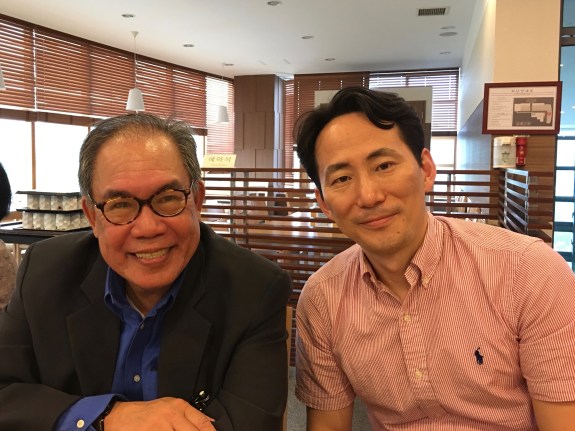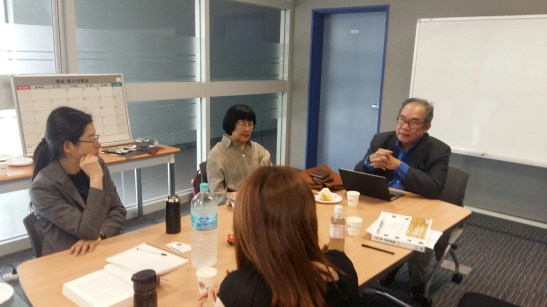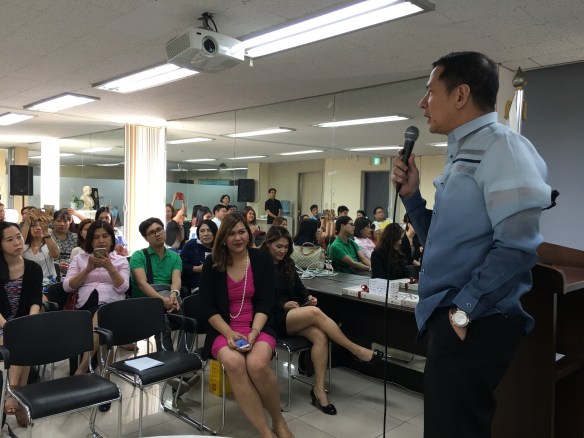
Penman No. 200: Memoirs of a Teenage Maoist

e13-644.jpg

Penman for Monday, May 23, 2016


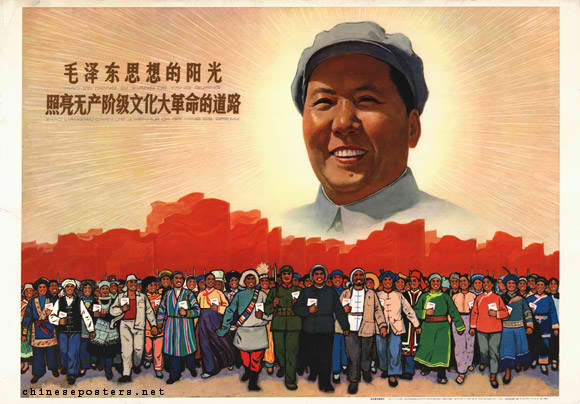
A SMALL item in the foreign news caught my eye last week: a note that the 50th anniversary of China’s Cultural Revolution had gone unnoticed—in China itself, with no parades or ceremonies to mark the historic event. For those of us too young to remember, the Cultural Revolution was launched by Chairman Mao Zedong on May 16, 1966, to consolidate his power and purge his rivals within the Communist Party in the guise of doing away with old ways of thinking. To fight the old, Mao rallied the young—millions of “Red Guards” who turned on their parents, teachers, and superiors, feeling suddenly empowered to reject authority and traditional learning and to see themselves as the vanguards of a new age.

Over the decade that the Cultural Revolution ran its course until Mao’s death in 1976, many millions died—from executions and from famine. While Mao’s legacy would live on, there’s firm consensus both within and outside China that the Cultural Revolution was an unmitigated man-made disaster, something the Party itself in 1981 blamed for “the most serious setback and loss for the Party, the country and the people since the founding of China.”

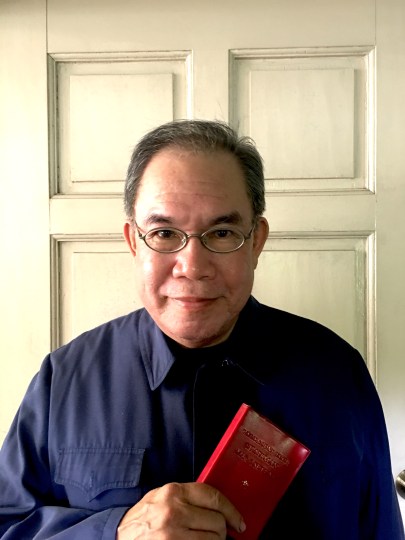
What did this have to do with us and with me? Well, to put it as simply as I can, I was a teenage Maoist, and for a while back there, I and quite a number of like-minded comrades saw ourselves as the local chapter of the Red Guards. Call it madness, but we saw Mao as a demigod, and looked to his China as a beacon of hope and a model for other countries like ours—also beset by centuries of feudalism and colonial rule—to follow.

How did that happen? I had joined the student activist movement and had gone to my first demonstrations in high school, and as soon as I entered college in 1970, I signed up with the Nationalist Corps. It wasn’t a communist organization, but it was a short step from reading Renato Constantino to reading Mao. Mao’s teachings (in contrast to the heavy-duty theorizing of Marx and Lenin) were attractive in their seeming simplicity, in their pithiness, in their rosy optimism. It was chicken congee for the soul.

Until today, you’ll hear 60-somethings from my cadre recite gems, chapter and verse, from Mao’s Quotations (better known as the LRB, or the Little Red Book) like “A revolution is not a dinner party, “Political power grows out of the barrel of a gun,” “Dare to struggle, dare to win,” “Wherever there is struggle there is sacrifice, and death is a common occurrence…. All men must die, but death can vary in its significance.” Among my favorites—music to my 17-year-old ears—was “The world is yours, as well as ours, but in the last analysis, it is yours. You young people, full of vigor and vitality, are in the bloom of life, like the sun at eight or nine in the morning. Our hope is placed on you. The world belongs to you.”

It wasn’t too different from what Rizal or the Desiderata said, especially about the youth as the fair hope of the fatherland, but I think what drew us to Mao at that point and to his brand of Marxism was his emphasis on classes and class analysis, his awareness of society as one divided between rich and poor (with the rich collaborating with foreign powers to keep themselves in place), and the fact (or the fantasy) that in China, things were actually going according to the socialist plan. Very few of us had ever been to China then (famously, of course, three senior activists would get stranded there—Eric Baculinao, Chito Sta. Romana, and Jimi FlorCruz), but we accepted it as an article of faith that Chairman Mao was doing right by his own people.

In Manila, we did our best to copy the flag-waving strokes of Peking Opera (eg, “Taking Tiger Mountain by Strategy”), learned about obscure heroes like Norman Bethune, and wore the LRB like a talisman in the breast pockets of our army fatigue jackets. (Procured from US military surplus stores in Dau, it was the closest we could get to the Mao—actually the Sun Yat-sen—jackets that the Red Guards adopted as a uniform, with the red star on the matching cap; but we at least wore genuine “Ho Chi Minh” sandals fashioned out of rubber tires.) At dawn, we tuned our transistor radios to the faint and crackly signal of Radio Peking, for our regular dose of socialist top tunes like the “Internationale,” “Sailing the Seas Depends Upon the Helmsman,” and “The East Is Red”—plus, of course, the daily rundown of the news from the global war on US imperialism. An enterprising fellow even then, I corresponded with a Hong Kong bookseller who seemed only too happy to mail me copies of the Peking Review, even if I had no money to pay him.

Only years later did the failings of Mao’s experiment and the horrors of the Cultural Revolution emerge, revealed not so much by Western propaganda as by the Chinese themselves, who had suffered the most from its excesses. It would take time—and, indeed, a personal visit to China—to appreciate this disconnect between our long-distance romance with Mao’s socialist paradise and cold reality.

It was in July 1987 when I was finally able to set foot on hallowed ground—Tiananmen Square in Beijing, where I was doing a cultural exchange visit along with writer-friends Krip Yuson, Ricky de Ungria, Eric Gamalinda, and Timmy Lim. We had been assigned a translator and a minder, whom we’ll call Chang—a tall wisp of a man who spoke decent English and who was working, he said, on a translation of a biography of Elvis Presley in his spare time. (Had he ever listened to Elvis? No. We sent him a cassette of Elvis from Manila.)

Standing just meters away from Mao’s mausoleum—there seemed to be thousands of Chinese visitors waiting in line to go in—I asked Chang if he could help me see Chairman Mao. “What you want to do that for?” he asked incredulously. “He killed my grandfather in the Cultural Revolution!” Ooops—I tried to say that I was sorry to hear about his angkong, but I had to tell him that I was once a Mao fanboy and just had to meet the man, even his current state of embalmed repose. Chang still didn’t seem ready to believe me, so I sang him the first few lines of the “Helmsman” song: “Sailing the seas depends upon the helmsman, life and growth depend on the sun, rain and dewdrops nourish the crops, making revolution depends on Mao Tsetung Thought!” Chang shushed me up before a crowd could gather: “Okay, okay, I bring you inside, but hurry, okay?”

And so I filed past my fallen idol, awash in conflicting emotions; frankly Mao’s waxen face did little to exude revolutionary vitality, and in just two more years that same square would be bathed in fresh young blood.

I would return to China many times since then as both tourist and writer, and at one point I would chance upon a Mao jacket in a backstreet shop in Shanghai—you’ll never find them in the glitzy stores—and some days I wear it to remind me of what people today will surely say was a youthful folly. Sometimes I’ll stick a most unproletarian Montblanc into the breast pocket, but then again, it’s where the real Chinese revolution led—the freedom to shop for baubles on Nanjing Road.

IMG_8493.jpg

[Image from chineseposters.net]

Penman No. 199: A Bell from Bauang

IMG_3136.JPG

Penman for Monday, April 25, 2016


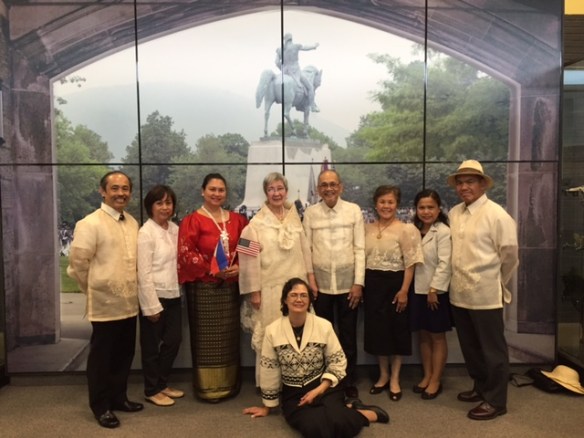
SANTIAGO “SONNY” Busa is one of the most remarkable people I’ve met. I was introduced to him when I spent some time in Washington, DC on a fellowship a couple of years ago, and from the very first time we sat down for a chat in the backyard of his home in the DC suburb of Annandale, Virginia, we hit it off. He possesses a hilarious, self-deprecating wit, is fascinated by history, and speaks, among other languages, Spanish, Ethiopian and Chinese. Ironically, though born in Eastern Samar—he was practically just a baby when his family moved to the US—Sonny doesn’t speak Filipino (or, we keep joking, pretends not to, so he can listen in on what everyone is saying).

IMG_3148.JPG

A retired diplomat who served as consul general at the American embassy in Manila, among other postings some years ago, Sonny had also been a US Army Ranger and parachutist, and taught International Relations at his alma mater, West Point. For all that, he’s a flaming liberal (like me), doesn’t believe in keeping an armory or packing a .45 to feel masculine or secure, and devotes much of his time to promoting the Philippines and Philippine concerns in America along with his lovely wife Ceres. Last year, he was a key figure in the commemoration of the Bataan Death March in New Mexico, where 5,000 soldiers and civilians marched across the desert for more than 26 miles—and they’ve been doing this for 27 years now!

But Sonny’s recent messages gave me a special reason to smile. He’s been a staunch advocate for the return of the three bells taken as war trophies by American troops from Balangiga, Samar in 1901—two bells remain in a “Trophy Park” in a military base in Wyoming, and another is in a military museum in South Korea. Despite the strenuous efforts of both Filipino and American activists to have those bells returned, it hasn’t happened yet.

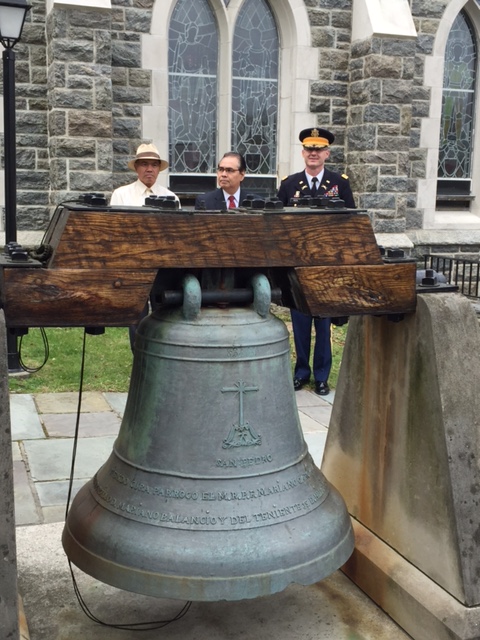
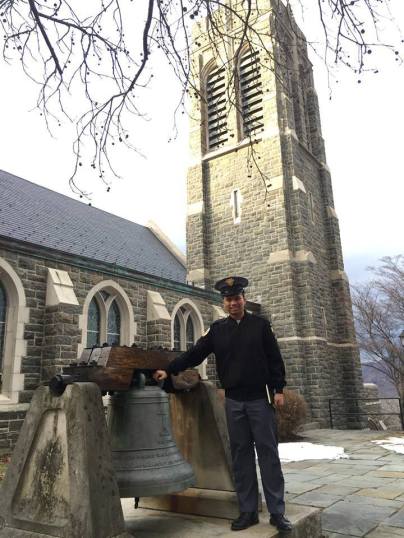
As it turns out, the Balangiga bells weren’t alone. In 1899, during the Philippine-American War (which the Americans insisted on calling an “insurgency” for the longest time), a Lieutenant Tom Berry took a bell from the Church of St. Peter and Paul in Bauang, La Union and shipped it to America, where it languished for over three decades in some Army warehouse. In 1933, the same soldier—now General Berry, the superintendent of West Point—had the bell taken out of storage to be displayed at the Catholic chapel of the academy.

Last January, acting on an inquiry from Fr. Ronald Raymund Chan of the Diocese of San Fernando, Lt. Gen. Robert Caslen, Jr.—the current superintendent of West Point and a friend of Sonny’s—wrote Fr. Chan back to say that “The bell currently displayed on the grounds of our Catholic Chapel here is apparently the bell in question. According to our own records, the markings on the bell itself matches all the descriptions you provided. While we have been honored to guard and display this bell for the past several decades, we would be glad to return the bell to its rightful home. We are currently in the process of making arrangements for the return of the bell to your Parish.”

IMG_3179.JPG

Aside presumably from Fr. Chan and the people of Bauang, no one was happier about this outcome than Sonny Busa, who had married Ceres in that chapel in 1977 in a military wedding, and had looked with fondness at the bell every time he visited the academy. He alerted me and some friends about the San Pedro bell last February, but asked us to keep quiet about it for the meanwhile until the return arrangements were finalized, fearing that Americans opposed to the return of any war booty—especially the Balangiga bells—would torpedo the move.

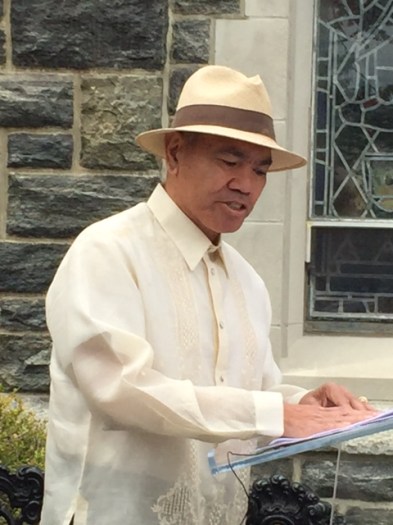
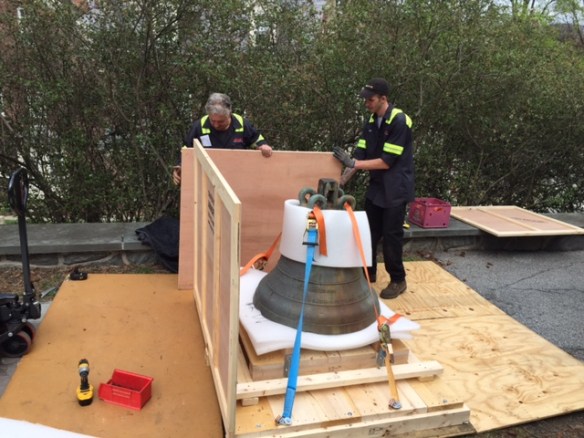
Last month, on the 29th, the send-off finally took place at West Point, with Sonny Busa, Philippine Consul General in New York Mario de Leon, and prominent members of the Filipino community in attendance. Another good friend of Sonny and mine, the Filipino-American historian Sharon Delmendo, stood as both proud witness and photographer. Another special participant was Filipino exchange Cadet Don Dalisay—to whom I would be glad to claim a relation, because Sonny says that he’s at the top of all his classes at West Point.

Dalisay Bell.jpg

In his message to me, Sonny—who had been put in charge of the turnover ceremony—emphasized that Gen. Caslen had “ordered the bell returned to La Union because it belongs in its rightful home. West Point above all stands for high morals in all that it does and teaches and keeping looted war booty is not part of its ethic. The people of La Union are hyper-excited and have already built a display stand. Once the bell arrives it will be big news in the whole of the Philippines as you can imagine.”

That truly is wonderful news, Sonny, and many thanks from your kababayans for your tireless efforts to help right the wrongs of the past and to remind us of our precious heritage.

IMG_3112.JPG

But sadly—as I write this on the eve of one of the most important and contentious elections of our modern history—I fear that too many of us have forgotten how valuable our democracy is, and what artifacts like the San Pedro bell stand for. At war with ourselves and with foreign invaders long gone, we seem far too willing to squander our votes on mindless whimsy and puerile petulance.

I so desperately pray we can prove ourselves deserving of that bell, Sonny. How hollow its ring would be otherwise—a death knell for sanity and decency, rather than the vibrant peal of freedom.

(Photos by Sharon Delmendo and Sonny Busa)

Penman No. 192: Reveling in the Risqué

IMG_7981.JPG

Penman for Monday, March 21, 2016


ONE THING I always knew but have seen more evidence of lately is that fact that when women get together, wonderful and even magical things happen. I suppose it has to do with the female predisposition to cooperate (versus the male impulse to compete). Case in point: the hugely successful literary reading billed as “Wordello,” which I plugged in this corner last month.

It had been conceived as a fund-raising project by the ladies of the Likhaan Creative Writing Foundation for the benefit of, among others, the UP Institute of Creative Writing (which I head, so I have a million reasons to be appreciative). But it turned out to be much more than just another reading of poetry and prose, mindful of how such events rarely go beyond sedate, even solemn undertakings where people stand up and mumble before politely attentive audiences.

This was one evening devoted to reveling in the risqué, to pushing the boundaries of the acceptable in a way that brought us back to the freer, more spirited Sixties. Remarkably, it had been organized by a group of middle-aged women as proper and as pedigreed as they come, people you’d normally associate with golf and afternoon tea. But the Likhaan ladies are also very fine writers in their own right, mentored by no less than Jing Hidalgo, and quite a few of them have taken classes with us in UP, so it was no surprise to find them indulging their subversive side.

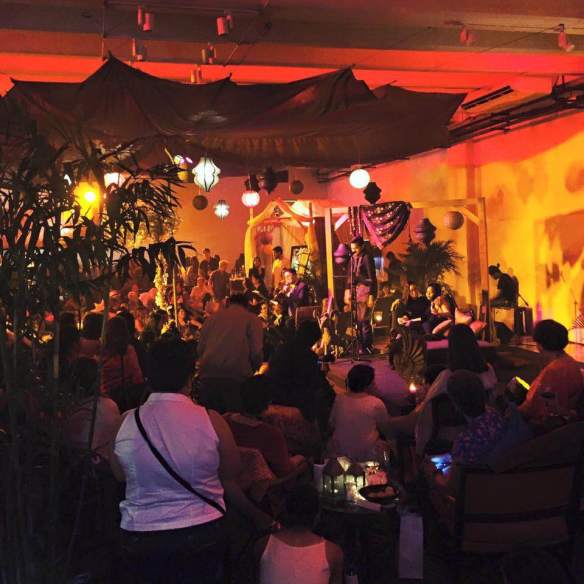
I’d never been to the venue at the Green Sun on Chino Roces Avenue Extension, and when Beng and I got there last March 5, we expected to walk into just another hotel-and-restaurant lobby setup. Instead, a large corner of the place had been transformed, just for the evening, into a virtual bordello, with ladies in bare backs and slinky black lingerie well, slinking around. When I found my bearings, I was glad to run into and to chat with old friends like writers Charlson Ong, JB Capino (on a home visit from Illinois, where he’s been based), Carla Pacis, Cecille Lopez Lilles, Mabek Kawsek, Linda Panlilio, Bambi Harper, and Cesar Aljama, as well as BenCab and Annie Sarthou.

Most of the readings proved appropriately racy, and I had to explain that I had come as a bashful patron, choosing to read something fairly short and chaste. But elsewhere in the room, something smoky and sexy was going on. We had to leave a little early for another commitment that evening, so I asked Likhaan Foundation’s Chichi Lizot, the writer-translator busybody behind the project, to tell us what happened next, and how they put on such a good show in the first place. Here’s Chichi’s summing-up:

“We had heard of ‘poetry brothels,’ not only in New York and Paris, but also in other parts of the world. Were we ready for it here? The idea of presenting poetry, bordello-style, in a land of taboos was both daunting and exciting. It was then that ‘Wordello,’ coined by a poet and friend who joins some of us for drinks every so often, RayVi Sunico, was born.

“Working on the concept, pinning down sponsors, inviting poets, and finding a venue accessible to all began six months ago. Creating and feeding our social media sites got going in December. A handful of active members found friends along the way willing to help, spurred by the untrodden approach towards literature. There is something about the forbidden that excites.

IMG_7972.JPG

“Then came the evening of Wordello. Stepping into its entrance of beaded curtains after going through the ultra-modern corridors of Green Sun was like being transported into a secret world—of red, orange and magenta, of incense, alcohol, and erotica. It was a den of iniquity. It was Moulin Rouge—and much more. There were candles and Persian lamps. Carpets. Palm trees. Griffins standing guard. And in a cage, a masked executioner wielding an axe.

“The youngest in the audience must have been fifteen, the oldest, ninety-two. Some came in their chauffeur-driven imports, the others in jeepneys—any clothed, or rather, unclothed, comme il fallait. And as they hobnobbed with friends and strangers alike, they discovered a tarot reader of a monk in a nook somewhere. In a tent draped in extravagant silk, a body calligrapher was engrossed in a woman’s back, oblivious to spectators. Books and art pieces were up for grabs in different corners, incongruous yet fitting. The lively activity at the bar provided no respite to bartenders only eager to please. Omnipresent conversations thrived.

“And then from nowhere, a young poet delivered a line. Loud and clear. A male voice cried out from another corner. The room was stunned into silence. Yet another demanded attendance—this time female—delivering utterances from across the expanse of subdued light. Fifteen poets in a flash mob of sorts embarked us on a journey, harbingers all, of what was about to unfold. Their words were tame in comparison to the almost three hours of poetry, skits and the performing arts—mostly unbridled and unafraid. One or two in the audience left after the fifth number, scandalized. Most stayed, to either endure or embrace the words spoken by the inimitable and the sans pareil, and the fledgling.
IMG_7974.JPG

“The place was packed, denying access to waiters serving bar-chow. Seated comfortably in deep couches were the elderly. Many were happily relaxed on intricate pillows, risers, and carpets on the floor. Chairs had to be added in every space possible for the weary, but quite a few were content standing behind the bar or around divans, mesmerized.

“Sensei Shinobi, who performed the Japanese art of bondage on a defenseless but willing wisp of a woman, was saved for last. As we turned into voyeurs, watching with awe the dexterity with which Shinobi beautifully and artfully crafted rope around the young woman’s body, no one dared breathe. It was art in the sublime. And as he hoisted his model on a single metal ring that dangled from a scaffolding, and then twirled her around, a pin could have been dropped and heard.”

Bravo, Chichi, and merci beaucoup! Until the next iteration of what now deserves to be the year’s sauciest literary event.

IMG_7973.JPG


(Photos by Vidal Lim)


Penman No. 191: For Love of Art and Artists

FullSizeRender-4.jpg

Penman for Monday, March 14, 2016


MUCH AS I’d want, I can’t possibly go to all the literary and arts events I get invited to, so I’ve occasionally had to deputize my wife Beng (June Mercy Dalisay to others)—a painter and an art restorer—to do the kibitzing for me. Or, I should really say, for herself, because, as president of the Erehwon Art Foundation, she often has more immediate reasons than I do to meet with artist-friends and luminaries from the arts world.

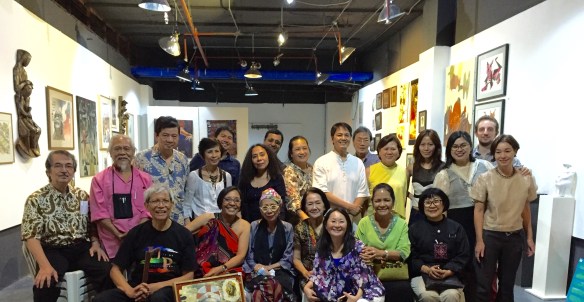
One recent event I was truly sorry to miss was a special raffle and auction held last February 27 for the benefit of Beng’s dear friend Norma Liongoren, doyenne of the Liongoren Gallery, sister, mother, and confidant of artists young and old. The Church Café, a Bible study group founded by Norma, initiated a fund-raising project for her, called “For Love of Norma.” The group was composed of writers Alma and Mario Miclat, painter Imelda Cajipe-Endaya, writers Fe and Roger Mangahas, sculptor Julie Lluch, and Magel Cadapan, Norma’s gallery assistant and curator.

Norma’s artist friends donated almost 150 artworks to the cause, and Simoun Balboa, manager of the Sining Kamalig gallery in Cubao, lent the venue. A mini-concert and performance was put together by pastor Ed Lapiz, together with the Day by Day Ministry, Kaloob Dance Group, and Jerry Dadap’s Andres Bonifacio Concert Chorus.

The event proved a resounding success, with the spirited bidding raising a substantial sum for Norma, who very graciously and bravely left her hospital bed to join the party with her husband Fred to personally give thanks. The audience—all deeply moved by Norma’s gesture—included writers Gilda Cordero-Fernando, Menchu Sarmiento, and Wilson Lee Flores, gallery owner Silvana Diaz, artists Junyee, Gus Albor, Adie Baens Santos, Anna Fer, and Ato Habulan, diplomat Al Vicente, Quezon City busybody Ruby Palma, pulmonologists Rene Cheng and Julius Dalupang, activist Princess Nemenzo, GSIS museum head Ryan Palad, and journalist Jenny Juan, who emceed the event. Beng helped organize the auction-raffle, which lasted well into the evening, along with businessman and art collector Sonny Go.

IMG_8407.jpeg

A few weeks earlier, Beng also attended a media event organized by her friend Ricky Francisco, an independent curator and fellow conservator, at the Fundacion Sanso in San Juan. This time I’ll let Beng’s words speak for themselves:

“It was a sunny afternoon when I walked up the steps of the new and modern building of the Fundacion Sanso. I passed through a lobby with minimal furniture but glimpsed lovely watercolor paintings that filled the walls.

“I was late and the media event had started. I tried to be inconspicuous and sat between sculptor Toym Imao and a dignified elderly gentleman who turned out to be the artist himself, Juvenal Sanso. He looked at me and smiled. I smiled back and said a few words. He didn’t say anything and just nodded his head. Later I would know why.

“Gilda Socorro Salita, managing director of Fundacion, briefed the guests and media people on the series of events for the celebration of Sanso’s 70th year as an artist. The retrospective includes art exhibits at the Ateneo Art Gallery, the Vargas Museum, and the Lopez Museum. By the time this report comes out, the first in a series of exhibitions will have started, entitled ‘Other: Zobel and Sanso,’ an exhibition of prints and drawings at the Ateneo Gallery. This exhibition is free and runs until May 20. As a memento of the afternoon, the media kits given to everyone included a charming bookmark lifted from an old plate and printed on cream paper by Pandy Aviado.

“The guests began to leave but I decided to stay behind so I could talk to Sanso some more. But it was Ricky Francisco and gallery owner Jack Teotico whom I found myself with. Jack was one of the founders of the Fundacion, which serves as a repository of Sanso’s personal collection of artworks, books, and other mementos representing seven decades not only of creative work but also of travels and lasting friendships nurtured and preserved despite great distances. An old friend from our UP days, Jack invested not only funds but also much time and effort in gathering good people to run the gallery and museum.

“When I asked Jack why the artist seemed to have a hard time hearing, Jack told me the story of how, during the Second World War and when there was heavy fighting between the Japanese and Americans in Manila, a bomb landed just a few feet away from Sanso. He sustained injuries on his arm and still has tiny bits of shrapnel embedded under his skin. However, his hearing was greatly affected, and he remains practically deaf on the left side.

“The afternoon settled quietly into dusk as I was transported to many places and events from stories Jack and Ricky narrated—Sanso as a child of an affluent family in Spain, his country of birth; the blue-eyed Sanso as a young boy in Sta. Ana, Manila speaking fluent Tagalog, playing with boys of his age and forging strong friendships with his playmates, especially one with Henry Sy; Sanso as he diligently worked on his drawings with his teacher Alejandro Celis; Sanso as a student at the UP College of Fine Arts in Padre Faura and his friendship with artists Araceli Dans and Larry Alcala; and his entry ‘Incubus’ winning first prize in a competition held in the 1950s and sponsored by the Art Association of the Philippines then headed by Purita Kalaw-Ledesma.

“It was time to leave but before I did, I treated myself to the mesmerizing display of visual delights that represented Sanso’s beautiful watercolors from the Brittany series as well as the paintings representing memories of Parañaque and Cavite. Sanso’s haunting and mysterious images in the retrospective Elogio de Agua or Hymns to Water keep running like a lovely brook in a quiet corner of my heart. The exhibit can be viewed until October 1st at Fundacion Sanso, 32 V. Cruz St., San Juan City, Metro Manila.”

Many thanks, Beng, for that glowing report, which makes we wish I had been there to chat with the artist (and now I’ll know to stay on his right side). I’d always been engrossed by Sanso’s dark waterscapes and their vegetal inhabitants, made even more intriguing by the total absence of human figures.

IMG_8042.jpg

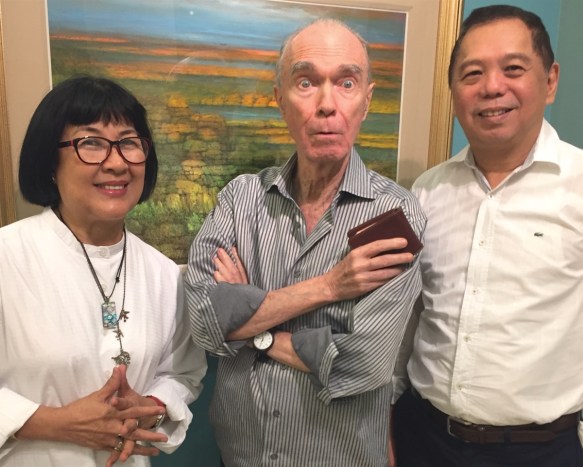
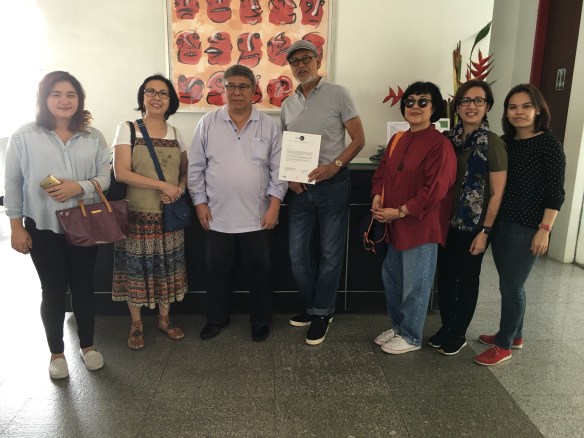
I did, however, tag along on a day trip up to Baguio last week with the folks of the Erehwon Art Foundation led by Beng and the foundation’s chairman, Boysie Villavicencio, on a very special mission: to receive the donation of an etching press to the foundation by none other than National Artist Benedicto Cabrera. I’ve been a frequent guest of Bencab’s at his museum because UP’s summer writers’ workshops have always begun with a visit with Ben (except this May, when we move to Los Baños), and I’ve watched that museum grow from a few stakes in the ground to the breathtaking complex and tourist attraction that it’s become.

Bencab was as gracious as ever in meeting us, and his donation of one of his two etching presses will be a great boost to Erehwon and to other Filipino printmakers. The press used to belong to National Artist Arturo Luz, who gave it to Ben in the 1990s. Erehwon is now planning a printmaking workshop with Fil de la Cruz, Ambie Abano, and other noted printmakers leading novices into the art.

As a former printmaker myself, I just might reignite this old passion, this fascinating interplay of paper, ink, and metal. It was at the old Printmakers Association of the Philippines (PAP) workshop and gallery on Jorge Bocobo in Ermita that I met Beng in the early 1970s, so without art and a shared love of it, we’d never have married, and this column-piece would never have happened.

Penman No. 188: Risk and Reward in the Collectibles Market

14314401260_4553a0384a_b

Penman for Monday, February 22, 2016


I’M GOING to be talking a lot about pens in the next paragraphs, so you might think of turning away if they hold no interest for you, but this is really about collecting and purchasing decisions as a whole, and could just as well apply to cars, watches, Star Wars figurines, and whatever else people hoard in their inner sanctums. If you’ve been bitten by the collecting bug, do read on.

Dr. Jonathon Deans is an Australian economist who specializes in the study of energy and commodity markets, and who teaches economics at the University of Newcastle. But away from his day job, Jonathon pursues a hobby with equal passion: collecting fountain pens. And unlike most of his fellow stylophiles (the fancy word for the addiction) who simply chase after and gloat over their inky toys, Dr. Deans has managed to merge his two interests by running a highly regarded blog on “Pen Economics” (www.peneconomics.com), tracking and discussing the vicissitudes of the global market for writing instruments.

Jonathon happened to be in town these past two months to accompany his partner Lisa, a Colombo Plan fellow and Development Economics student at De La Salle University, whose Economics department is headed by Dr. Gerardo “Bombit” Largoza—by uncanny coincidence, another fountain-pen collector and fellow member of Fountain Pen Network-Philippines (www.fpn-p.org). This happy confluence led to DLSU sponsoring a well-attended lecture two Saturdays ago by Dr. Deans at La Salle on “Adventures in the Fountain Pen Economy.” (He’s left for now, but will be back in April.)

Jonathon explained that central to the economics of the matter is the idea of price vs. value, and where value (how strongly we desire the product) exceeds price, a purchase will likely be made. I listened with great interest and some amusement to his observation that many buyers of modern pens are risk-averse. He admitted that he was one such person himself, and noted further that he valued a close relationship with his favorite pen dealer—even at the cost of paying a certain premium over regular prices—because of the many benefits afforded by such relationships, chiefly personalized service and unparalleled solicitude.

dgxBJDT

I couldn’t agree more with Jonathon (who gave a brilliantly comprehensive and insightful overview of the global fountain pen industry and particularly of our behavior as consumers). My amusement, however, came from my realization that while we thought alike on many important things (like our shared love of the Montblanc Ernest Hemingway, a pen considered a “holy grail” by many collectors), we differed in a few basic respects, particularly my greater willingness to take risks, to navigate the choppy waters of eBay to fish for rare species of vintage pens. But then, of course, I’m a poker player, so am more comfortable with taking calculated risks (and losing as well, because of over-optimistic calculations). My collection contains mostly vintage Parkers and modern Montblancs, so I found myself asking, what makes consumers favor one over the other?

The risks in buying, say, a 1928 Parker Duofold vs. a brand-new Parker Premier seem obvious. The modern pen should be shiny and trouble-free, and if it shows any problems or defects will be replaced under warranty. Being older than your grandfather, a vintage pen could be broken, leaky, warped, or missing parts, or otherwise difficult to operate, maintain, and repair.

So why do vintage buyers and collectors seem more willing to take more risks, and even court them? One trade-off is a generally lower cost. If the items work or if you can make them work, then they will likely be well worth their price. But there are also unquantifiable values to be added to vintage objects, values that help account for their allure: the cachet of age and relative scarcity or even rarity, the history of the object itself and its provenance, and materials and workmanship you won’t find on the modern factory floor.

In buying vintage collectibles, risk can be reduced by knowledge. For the highly knowledgeable buyer or collector, who will be aware of the common pitfalls of the vintage trade, the opportunity of acquiring a rare object at low or reasonable cost far outweighs the risk of receiving an object not as described, with no return option, or needing service. (Those risks will be even more diminished in direct physical sales, not online. But even online, the risks of buying pens long-distance—whether vintage or modern—are drastically reduced by eBay’s built-in money-back guarantee: if you don’t get the product as advertised, your money will be refunded.)

Indeed this ratio of risk to reward forms a great part of the thrill and satisfaction of vintage acquisition. While buying a new car from a dealership can be pleasurable, it’s hard to equal the excitement of finding, say, a 1952 Volkswagen Hebmuller tucked away in an old garage. While these two buyers will likely be two different people buying for different motives, many collectors will weigh both options, anticipating and investing in the collectibles of the future as shrewdly as they assemble the best pieces from the past.

With very few exceptions, vintage pens can only be bought on the second-hand market, where warranties and returns normally don’t apply. They are often sourced by enthusiasts and pickers in the wild, from estate sales, yard sales, resale shops, pawnshops, and small, out-of-the way antique shops. Eventually many get aggregated by dealers who sell online, on eBay and in their Web stores. The transition from a sale at the flea market to one concluded via PayPal is important, because here a certain measure of security can be afforded the buyer, not to mention the possibility of paying less for a prized pen at auction. (I’d typically pick up a $200 pen for $50, and resell it for $100 to finance other purchases.)

In fact, as far as eBay is concerned, I’ve probably had 1,000 transactions on eBay these past 19 years, and in the two or three times I’ve had to avail myself of its money-back guarantee, it worked without a hitch. This leaves just the risk of being disappointed and of being inconvenienced by the refund process.

Knowing this, the knowledgeable eBay buyer can take even more risks with the pen itself—that poorly photographed Vacumatic could be a sought-after Oversize, and therefore worth paying $50 more for. While the eBay guarantee will not refund the buyer in case the pen turns out not to be the desired Oversize (if it wasn’t advertised as such), it can give the buyer an extra boost of confidence to make a purchase, any purchase, in the way that gamblers may tend to play more aggressively in comfortable and well-secured casinos.

So yes, there are indeed more risks involved in buying vintage, and buying online; but the rewards, both physical and psychic, are also potentially great, and as Dr. Deans emphasized in his talk, when the buyer perceives value exceeding price, a purchase will be most likely happen, to the dismay of our bank accounts and hapless partners.

[Photo of Jonathon by Chito Gregorio]

Penman No. 181: A Designer on an Island

IMG_7775.jpg

Penman for Monday, January 4, 2016


ONE OF the side benefits of our recent visit to Bohol was an opportunity to reconnect with an old friend and professional colleague, the prizewinning book designer Felix Mago Miguel, who has chosen to live and work in Bohol for the past ten years with his wife Amel and their five children.

Beng and I had known Felix for a long time, since she saw and bought some of his paintings and gifted the then-newlyweds with her own painting and some plates by the potter Lanelle Abueva-Fernando. (“The plates are all gone now, because we used them and would break one every year,” said Amel apologetically, “but the painting’s still there!”) Felix and I had worked together, as writer and designer, on some coffee table book projects, notably those on Philippine-American relations, the Mt. Apo geothermal project, and the Government Service Insurance System. After my early collaborations with the late, lamented Nik Ricio, it was a relief and a pleasure to find the young and talented Felix, who has rightfully taken over Nik’s mantle as one of the country’s most sought-after book designers.

We invited the couple over to lunch at our hotel and we had a nice long chat about life, work, and what it’s like to keep on top of your profession from an island far from the country’s business and cultural center.

“Honestly, it hasn’t been all that difficult,” said the former Manileño. “In fact, I didn’t tell my clients for a whole year that I was working from Bohol because they might worry about my accessibility and meeting deadlines and so on. But with the help of the Internet and by scheduling my trips to Manila, I’ve been able to cope with the demands of the job. I use WeTransfer and Google Drive to move large files online, on my SmartBro account.”

Amelia Zubiri was born in Bohol, but also grew up and went to school in Manila, where she and Felix met in UP Diliman, where Felix was a Fine Arts major, graduating in 1992. They decided to move to Bohol to get away from Manila’s toxic atmosphere and to raise their children, now aged 16 to 7, in a healthier and more relaxed environment; all the children—the twins Ulan Kalipay and Ulap Namnama, Angin Kalinaw, Araw Naasi, and Langit Biyaya (the only one born on the island)—have been home-schooled. Deeply spiritual, the Miguels have learned to repose their trust in Providence, and their faith has been well placed.

When a huge earthquake devastated Bohol on October 15, 2013—just two weeks before supertyphoon Yolanda ravaged the Visayas—the Miguels and their one-storey home emerged shaken but unscathed, and they shared their good fortune by helping out with relief efforts. “The earthquake was a life-changer for many Boholanos,” Amel reflected. “It encouraged many Boholanos who had left for jobs overseas to come home and spend more time with their families. Seeing the new houses they had painstakingly built crushed in seconds seemed to remind them that nothing was more important than time together.”

Most of these OFWs work as seafarers, an occupation historically favored by Visayans. “It’s not uncommon for a Boholano family to have one or two seamen working on ocean-going vessels,” said Amel. “You can tell the houses that they build with their remittances by little design elements like anchors and portholes,” added Felix, smiling.

Felix Mago Miguel’s own journey to the crest of the book design business is a story of good breaks, sheer talent, and perseverance. Now 44, he started out in 1996 by designing Soledad Lacson-Locsin’s landmark translations of the Noli and Fili for Bookmark. “I’d done book covers before, but this was the first time that the publisher, Lori Tan, let me do everything from cover to cover,” said Felix. Later that same year, another book project, Water in the Ring of Fire: Folktales from the Asia-Pacific, edited by Carla M. Pacis, won for Felix his first design award from the National Book Awards. Since then, he has designed over a hundred books, some of them winning him recognition from the National Book Awards and the Gintong Aklat competition.

It isn’t the awards, however, that drives him to excel in his craft, but the satisfaction that he gets out of seeing a happy client. The project that has given him the most pleasure has been XYZ: The Creativity of Jaime Zobel, which drew on Zobel’s three decades of work in photography and art. “Don Jaime was so ecstatic about the book that he told me he needed to take a Valium to calm down,” recalled Felix. It’s that kind of reception that drives Felix to spend long nights staring at a computer screen, poring over one image after another.

The most technically challenging was Cuaresma, put together by Cora Alvina and edited by Gilda Cordero-Fernando and Fernando Zialcita, and winner of the National Book Award in 2000. “This was before digital photography, and I had to work with a huge box of color slides,” said Felix. But then again, “The technical aspects of book design are often easier to deal with than some people behind the books,” Felix confessed.

Like me, he’s had his share of good book projects that, for some reason or another, went nowhere. He did get paid for work done, as I was, but it’s such a waste of labor and good material when a project that seemed so promising never sees the light of day, because someone in the production process fails to deliver, or because the clients themselves lose interest or change their minds. Thankfully for Felix and me—as I wrote in this column a few weeks ago—coffee table books remain in high demand, and I expect to be working with him again on one or two forthcoming projects soon. One current project he’s excited about is a book on native Philippine trees that he’s doing for the Lopezes.

While he’s based in Tagbilaran, Felix flies out to Manila to personally check on his projects in the press. This used to be done abroad for high-quality printing jobs, but local printers have expanded and improved significantly enough to take on the challenge. “Our best local printers like House Printers can now compete head to head with their counterparts in Hong Kong and Singapore,” Felix said. (House Printers produced one of my most recent books, the biography of former Sen. Ed Angara.)

He misses painting, and spoke wistfully about the last big painting he did, a mural for the Church of Gesu on the Ateneo campus in Quezon City. But the children, the Miguels said, seem to be taking intuitively to art; Felix and Amel have monitored their time online to make sure that they can attend to more active and creative pursuits, and it may not be long before this couple’s decision to forsake Manila for a southern island bears fruit beyond more beautiful books.

IMG_7785.jpg


Penman No. 176: The Heart’s Serenade

HARANA NG PUSO WITH SONIA ROCO.JPG

Penman for Monday, November 30, 2015


I WAS down in Davao a couple of weekends ago to speak at the Philippine International Writers Festival organized by the National Book Development Board, and while these festivals and conferences can become a repetitive blur after a while, I’m always happy to attend them, because they’re a chance to meet with many new writers as well as to touch base again with old friends.

This time around, I felt particularly lucky to have had breakfast at the same table with Dr. Michael “Mike” Coroza, a guy I’d been meaning to have a chat with for a long time. The reason was that my wife Beng and I have been fans of Mike’s weekly radio program, “Harana ng Puso,” which goes on the air every Sunday from 8 to 10 pm on DWBR, 104.3 FM. Like many members of our generation, Beng and I have remained avid radio listeners even in this age of the Internet and satellite TV—an interest abetted by Manila’s horrendous traffic, in the grip of which radio often offers the only consolation.

Marikina-born and bred but with family roots in Laguna, Mike—who teaches literature at the Ateneo—is one of our finest poets in Filipino, a SEAwrite awardee who also happens to be a proponent and practitioner of the balagtasan, the traditional Tagalog poetic joust that used to cap many a fiesta celebration. He has taken the balagtasan to appreciative audiences in America, parrying the thrusts of his longtime stage rival, fellow poet Teo Antonio.

It was, however, Mike’s other passion—the kundiman—that prompted me to sidle up to him at breakfast in Davao and to confess to being a follower of his radio program, which will be celebrating its tenth anniversary next February.

Almost certainly one of its kind in Philippine radio, “Harana ng Puso” features performances of the kundiman as sung by such mainstays as the seemingly immortal Mabuhay Singers (composed of individual members Raye Lucero, Cely Bautista, Emma Lucero, Peping de Leon, Eddie Suarez, and Jimmy Salonga) and such occasional guests as the late singers Susan Fernandez and Gamaliel Viray, and Armida Siguion-Reyna, Heber Bartolome, and Joey Ayala. The talented and irrepressible amateur Sonia Roco—among other friends of the program—also sings frequently on the show. They’re all accompanied by the nimble-fingered Eddie Suarez, who can make a guitar sound like an orchestra, without any sheet music to boot.

Mike’s love affair with the kundiman began as a boy in Marikina, when he would listen to Tia Dely’s musical program, “Serenatang Kumbidahan,” on DZRH. (Being older than Mike, I too recall long afternoons in Pasig with my ear glued to the transistor radio—then as big as a shoebox—on which I would follow both musical and dramatic programs. The romance of radio is a hard one to explain to millennials—try movies without the pictures, which made a show like “Gabi ng Lagim” even scarier, with the imagination supplying the imagery.) The iconic Tia Dely (Fidela Magpayo in real life) died in 2008, and her program ended in 2005, but by that time Mike had already convinced the late DWBR station manager Jun Ruiz to host “Harana ng Puso” as the station’s contribution to the promotion of traditional Filipino music.

Thanks to that support, Filipino listeners can now enjoy two hours of the kundiman every Sunday evening, rendered with informed expressiveness by people whose own musical careers have been synonymous with the form, in the footsteps of such legends as the late Ruben Tagalog (who, despite his name, was actually from Iloilo) and Ric Manrique, Jr. Both Ruben and Ric were, incidentally, members of the Mabuhay Singers, which had been formed by the Villar Recording Company in 1958.

The kundiman’s origins continue to be debated; while today primarily Tagalog, some scholars trace its roots to the Visayas. “At some point,” says Mike, “the kundiman was so popular that translations would be made into Spanish by the likes of Manuel Bernabe and Jesus Balmori.” The form was refined and brought to its apex by such master composers as Francisco Santiago (“Madaling Araw,” “Pakiusap”) and Nicanor Abelardo (“Nasaan Ka, Irog?”, “Bituing Marikit”—and I’d have to add the music to “UP Beloved,” later “UP Naming Mahal”).

“It seems to me,” I told Mike half in jest, “that all the kundiman ever says is ‘I love you and and if you don’t love me, too, then I will kill myself!’” He laughed and said, “Well, that’s true, but it wasn’t always all about romantic love.” He brought up the example of the kundiman “Jocelynang Baliuag,” popular among Filipino insurrectos during the revolution against Spain, where the beloved is allegorically not just a beautiful woman but Freedom herself.

Outside of Sundays, I get my kundiman fix on YouTube, but there’s still nothing like hearing it on the air like a live serenade, which is what Mike Coroza and his deathless crew endeavor to do with their show—which, incidentally, Mike hosts pro bono, as a labor of love. “We survive on donations,” he says, “on the kindness of compatriots who feel as strongly as I do about the need to preserve this most Filipino of musical forms.”

If you feel like giving Mike Coroza and the kundiman a helping hand, get in touch with him at mcoroza@ateneo.edu. “Harana ng Puso” is a serenade well worth crooning and listening to for many more decades to come.


Penman No. 175: Filipinos at the Field Museum

IMG_8116.jpg

Penman for Monday, November 23, 2015


AS MANILA got busy with preparations and lockdowns for the Asia-Pacific Economic Cooperation summit, Beng and I flew out to Chicago for the culmination of a cross-continental initiative of another kind: the Art and Anthropology project hosted by the Field Museum and funded by the John D. and Catherine T. MacArthur Foundation.

A few months ago, sometime in August, five Filipino-American artists (Jennifer Buckler, Elisa Racelis Boughner, Cesar Conde, Joel Javier, and Trisha Oralie Martin) came over to Manila to work with their homegrown counterparts on a large mural (technically a free-standing painting) featuring objects from the Field Museum’s vast collection of Philippine anthropological artifacts. That phase was hosted locally by the Erehwon Art Center in Quezon City, on the board of whose foundation Beng (aka June Poticar Dalisay, the painter and art conservator) sits as Vice President.

This October, the five Filipino artists (Leonardo Aguinaldo, Florentino Impas, Jr., Emmanuel Garibay, Jason Moss, and Othoniel Neri) went to Chicago to do the same thing—working collaboratively with the Fil-Ams on a 28’ x 7’ mural at the Field Museum, locating ancient Filipino artifacts in a more contemporary and inevitably globalized context.

The moving spirit behind this project was the indefatigable Dr. Almira Astudillo Gilles, a Chicago-based Filipino-American cultural scholar and activist who also happens to be a prizewinning writer and presidential awardee for her work as an overseas Filipino. Inspired by the Philippine artifacts at the Field Museum, Almi—the only Filipino research associate at the Field—had secured a grant from the prestigious MacArthur Foundation for the project, which both the foundation and the museum acknowledged to be groundbreaking in many ways.

Better known for its so-called “genius grants” awarded to outstanding individuals, the MacArthur Foundation rarely provides funding for large institutions like the Field Museum, Almi says, but they saw in her proposal an opportunity to spur not just a trans-Pacific collaboration among artists but also a dialogue with the past. And there was no better host in the US for this project than the venerable Field Museum, whose collection of indigenous Philippine archaeological and ethnographic materials—numbering around 10,000 objects, most of them brought over by museum expeditions to the islands at the early part of the 20th century—is one of the world’s most comprehensive.

The mural produced by the artists in Chicago—which will be on display at the Field for six months since its formal unveiling last November 7—is both a celebration and indictment of our rich and complicated history, invoking all manner of element from the archetypal bulol and the revolutionary KKK (a symbol that predictably sparked some controversy, given its American context) to McDonald’s and Tito, Vic & Joey.

For the artists themselves, the collaboration was a rich, if sometimes unavoidably difficult, learning experience—learning about themselves, about each other, about art-making, about the mutable meanings of “Filipino” over time and space. Prior to the project, some of the Fil-Ams had never been to the Philippines, and some of the Filipinos had never been to America; that alone ensured sufficient provocation in their approach to the task at hand. The collaborative aspect itself was a challenge, given the need to manage and balance each artist’s individuality with some overarching purpose or design. But in the end, as Joel Javier would tell me, despite all the dialectics involved, it was “a once-in-a-lifetime experience” that every participant—chosen by a jury in each country—would have signed up for.

Our sortie into the Field Museum—a place I’ve visited quite a few times over the past two decades, but can never exhaust, like the Smithsonian—was made even more special by a private tour arranged for us by Almi Gilles into the heart of the Philippine collection itself, in the underground vaults of the Field. As a certified museum rat and armchair adventurer, I took it as an invitation to die and go to heaven; the closest I hope to get to Indiana Jones was to wear his hat, which I wore on the appointed day.

We were met at the museum by co-curator Alpha Sadcopen, a young Filipino-American woman with roots in the northern highlands; she held the key to the collection, and led us into a large room where shelf upon shelf of tribal and cultural artifacts—baskets, textiles, weapons, utensils, body decorations, etc.—were preserved, most of them never likely to be put on display outside. “I could feel a shiver down my spine,” Beng would tell me later, and I certainly did myself, walking past the priceless objects, and discerning in each one of them a pair of hands, a face, a story.

IMG_7418.jpg

As if that peek into our material past wasn’t a treat enough, Almi then led us down a few more corridors to meet with another titan of Philippine studies—the renowned zoologist Dr. Lawrence Heaney, curator and head of the museum’s Division of Mammals. Larry began studying the wildlife of the Philippines in 1981, a lifelong passion that has resulted in the discovery of dozens of previously unknown mammalian species, in many landmark publications, and in the establishment, with Larry’s Filipino colleagues, of the Wildlife Conservation Society of the Philippines.

We often think of world-class scientists as surly, self-absorbed individuals who can’t relate to anything beyond what they see in their microscopes and telescopes, but Larry defies that stereotype. You couldn’t have met a nicer man, and one who chose not only to sound the usual alarm about our threatened environment, but also to emphasize the positive and the possible. “Hectare for hectare, the Philippines is the world’s richest place for endemism,” he told us, cradling what seemed to be a huge rat saved from a 1946 expedition to Luzon, “and there certainly are serious threats to Philippine wildlife, but we’ve also noticed some bright spots. For example, the growth of overseas jobs for many Filipinos—despite its social costs—has also eased the pressures on the environment and on wildlife in many rural communities.” Dr. Heaney is coming over to Manila next year to launch another book, and I’ll be sure to be there.

IMG_7448.jpg

And what’s next for Almi Gilles? She’s looking skyward, into the connections between Philippine anthropology and astronomy. Her colleagues at the museum seem thrilled by the idea, and so are we.

For more pictures of the Philippine collection at the Field Museum, see here: https://www.flickr.com/photos/penmanila/albums/72157660699359089.


Penman No. 174: What Women Remember

4510563825_5f753e970a

Penman for Monday, 16 November 2015


I WAS very pleased and much relieved—and, as one of the convenors—immensely proud for the Philippines to have successfully hosted this year’s conference of the Asia Pacific Writers and Translators (APWT) late last month in Manila.

Among the highlights of the conference was a keynote talk given on the last day by none other than one of our foremost fictionists and critics, Dr. Cristina “Jing” Pantoja-Hidalgo, now the Director of UST’s Center for Creative Writing and Literary Studies, who spoke on a subject even her fellow Filipino writers like me know very little about or pay only minor attention to—the journals, memoirs, and autobiographies of Filipino women. I found her lecture (titled “The Subversive Memory: Women Tell What Happened”) so informative that I asked her permission to excerpt parts of it to share with my readers, so here:

Several generations are represented in the seven women who are the subject of my new book, which I called To Remember to Remember…. t today is referred to as multi- er, is available at the UST Publshing Housee so informative that I asked her permission to exce

The oldest, Paz Policarpio-Mendez, was born in a small town in the province of Nueva Ecija in 1903, and was among the first children to enter the American public school system, and one of the first women to go all the way to college in UP. But, to get there and to stay there, she had to fight her father – who did not hesitate to beat her when he objected to her behavior or her opinions. Always painfully aware of her father’s preference for his sons, she strove to win honors in school, to merit his approval. But he never gave it. Later, she married a journalist who eventually became a diplomat, and finally the Secretary of Foreign Affairs. But Paz went right on studying and teaching, while raising a family, and attending to the duties of a diplomat’s lady.

The youngest, Rica Bolipata-Santos, was born in Manila, and educated entirely in Catholic schools, until she decided to get a PhD in Creative Writing in UP. She is sister to the three famous Bolipata brothers, musical child prodigies. This doomed her to play second fiddle to them, to grow up feeling unimportant, untalented, even ugly. Kept back from developing her own musical talent (she could sing!), not deliberately or maliciously, but through neglect, she found her voice in writing and in teaching. Now she is also an academic administrator. But the biggest trial in her life has been her special child, and her memoir is the story of her struggle to cope with anger, sorrow, sometimes despair.

In between there is Solita Camara-Besa, a woman who describes herself as a battered child – this abuse by her father did not let up even after she was married, until her husband, demanded that she choose between himself and her parents. For all this, she became one of the country’s first women doctors—though again, she experienced appalling gender discrimination in the UP College of Medicine, of all places—and was part of the heroic little band of UP faculty members who kept UP and its teaching hospital, the Philippine General Hospital – running throughout World War II.

The remaining four writers who are part of the book took for granted their right to an education and to careers of their own. But they had their own battles to fight. For Gilda Cordero-Fernando (b. 1930), maker of baby bags, keeper of antique shop, fashion designer, publisher, and one of the country’s finest writers of fiction and nonfiction, the battle was against her mother and the convent school education that she felt trapped in; against her husband who resented her writing, her writer friends, and the many worlds that her numerous gifts opened up to her, but kept a mistress for most of their life together; and against conventional ideas about what constitutes accomplishment and success.

For the prize-winning poet and academic, Merlie Alunan (b. 1943), it was the battle to hold it all together when she became a single parent, seeing herself and her children through school, teaching in college, holding workshops for struggling young writers, and picking up poetry awards along the way.

Jennifer Ortuoste (b. 1968) trained as an apprentice racehorse jockey, married a professional jockey and raised her babies in the Santa Ana Racetrack. Hers is the story of a battered wife; and the story of the collapse of her marriage is told against the backdrop of the demise of the racetrack that she loved. When her marriage fell apart, she picked herself up, became a journalist, got an M.A., and is now writing prizewinning fiction and nonfiction.

Criselda Yabes (b. 1964) chose a profession, which until the generation before hers was not considered quite respectable for women—journalism. The most independent, unconventional and alienated of the seven, her story is focused on 16 months of her life, the period after she had been abandoned by her lover of seven years. And, to keep a hold on sanity, she went to Europe, first on a scholarship, then as a war correspondent in different countries, until, in a borrowed apartment in Athens, she began to write about the year she had just lived through, and so found her way home.

In life, these women broke from the mold. They would not settle for what was expected of and from them as women. They wanted different things. In writing their memoirs, they, again, transgressed. For in the Philippines, family matters are kept private, particularly matters which will make the family lose face; one’s personal memoirs inevitably include other members of the family. They may not have been flaming radicals, marching down streets, waving banners and chanting slogans, or being hauled off to jail, being tortured and even killed, as some of their sisters were. But, in their own quiet way, they were rebels….

I read the memoirs of the three older writers as variations on a theme, the theme being the education of the modern Filipino woman, and her transformation, from sheltered schoolgirl into formidable, professional woman without relinquishing the role of wife and mother. I do not claim for this narrative that it applies to all modern Filipino women, nor even all modern Filipino women of the middle class (to which all three belong). But I do believe that it is a pattern that many Filipinas aspire to, and can therefore identify with. And I suggest that in telling their own life stories, these writers are creating a different myth, to replace the older narratives about the Filipina and her role in society….

These are the narratives that we, the next generation of Filipino women writers inherited. Most of our mothers had college degrees and careers. After they married, those who lived in extended families, or could afford reliable yayas went on working, and became quite expert at juggling their several roles, what today is referred to as multitasking, and they trained their daughters to do the same.

The memoirs of the younger writers are, in a sense, their response to these narratives. I take them as signposts. They mark the latest paths taken by Filipinas and what they reveal is the distance they have travelled, but not a change of direction. Those pioneers, some of them already so bold for their time, but working in relative obscurity, had pointed the way….

What these women have done is take the personal narrative—either the full-length autobiography or the memoir—and use it to open doors previously kept firmly locked, and to explore their own thoughts and feelings about the monsters lurking in its shadowy corners. This they have done in language both precise and elegant. Thus have they contributed to the story of their country, and the place in it of Filipino women.

(Jing Hidalgo’s new book, To Remember to Remember, is available at the UST Publishing House for P400.)


Penman No. 173: Lines and Letters

IMG_8288

Penman for Monday, November 2, 2015

IT’S BEEN a while since I’ve written about my favorite pastime (aside from my weekly poker binges and my foot-massage-and-movie dates with Beng), so indulge me this break from the headaches of literature and politics and let me talk about those obscure objects of my writerly desire—pens and all things appurtenant thereto, as my lawyer friends would say.

We have, not incidentally, a good many lawyers among our members at the Fountain Pen Network-Philippines (FPN-P), which isn’t surprising, given how lawyers have traditionally used pens in their work, and at least in taking their bar examinations. Those pen-wielding members of the Philippine bar include Undersecretaries Albert Muyot, Ronnie Geron, and Rey Cruz; SEC Chairperson Tess Herbosa and SEC lawyer Joanne Ranada; pro-gun advocate Ticky Tabujara; former ACCRA lawyer Elsa Divinagracia; and Aboitiz lawyer Anthony Goquingco. While he hasn’t formally signed up with FPN-P, Supreme Court Justice Marvic Leonen, an avid pen user, has turned up at a meeting or two.

We also have a sizeable representation of doctors—among others, Novartis executive Aileeen Dualan, surgeons Jojo Hosaka, Joy Grace Jerusalem, and Leo Ona III, Healthway Medical head Eleanor Bengco-Tan, barrio doctors Edrie Alcanzare and Jim Lopez, Dagupan-based rehab specialist Hazel Gazmen, company physician Kristine Arabaca, and new Med graduate Mark del Rosario. Predictably, there’s a special thread in our forum devoted to providing specimens of our doctors’ handwriting—the more unreadable, the more impressive.

Alongside these professionals come teachers, writers, artists, businessmen, bankers, students, and all manner of writing enthusiast, drawn to the group if not by pens then by inks, papers, calligraphy, or drawing. What started out in my front yard in Diliman seven years ago with less than 20 people has grown to over 500 members on our dedicated website at http://www.fpn-p.org/, and more than 2,000 on our Facebook page (being FB-averse, I stay out of that group, but you’re welcome to sign up there if FB’s your thing).

Once or twice a month, we get together—typically for a long Saturday lunch in a Makati or Ortigas restaurant—to play with our pens and to doodle away in wild abandon. While we may talk politics in the corners of the meeting and devote some attention to tangential interests like watches and knives (you’d be surprised how many pen people have one or the other or even both as secondary hobbies), the focus is clearly on fountain pens, inks, and papers.

Whatever for? There’s no better way I can explain it than group therapy. As I’ve said in this column many times, it’s the sheer tactile pleasure of laying down lines and letters on a page, of watching the ink spread through the paper’s fibers, creating networks of meaning, or otherwise an impression of beauty, an entirely handmade beauty at that. This is what you can’t get from a ballpoint or a rollerball—a soft or shaped nib that can create breathtaking line variations from from extra-fine to triple-broad, that can be so sensitive to the touch that the merest tremor can betray some deep-seated emotion. With every stroke of the pen, another worldly care is banished, another rampant anxiety quelled. There’s nothing more intimate yet more revealing than that stroke, the physical commitment of thought to paper.

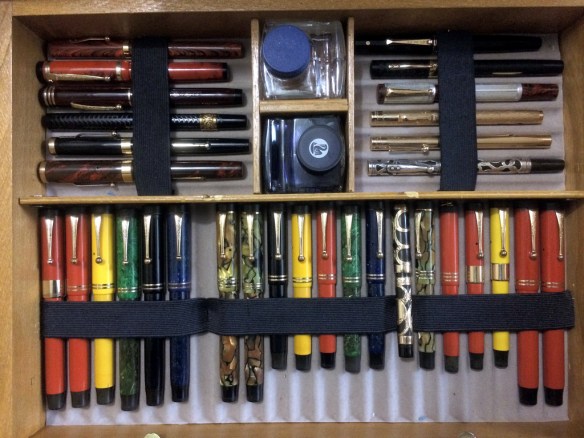
Fountain pen collectors (among other creatures infected by the same virus of compulsive acquisition) often speak of their “grail” pen, that one elusive, near-unattainable pen that calls to them in their dreams and shimmers like a mirage on the horizon of their consciousness. That pen could be as simple as a Parker 51 that they recall their father used, or as weighty as the Montblanc 149 favored by Supreme Court Justices, or as uncommon as a custom-made Nakaya or Hakase epitomizing the finest of Japanese craftsmanship.

Over the past 30 years of immersing myself in the hobby, I’ve had many such “grail” pens cross my fevered brain, and have actually had the good fortune of realizing most of them—a 1938 Parker Vacumatic Oversize in burgundy, a Parker “Big Red” Duofold from 1926, a Montblanc Agatha Christie from 1993, and, most recently, a Montblanc Ernest Hemingway from 1992. Almost as interesting as the pens themselves, each of these pens has a story behind it, a near-mythical chase across decades and continents.

Unlike many collectors, I don’t keep my best pens in a case, under lock and key. I rotate them for daily use, praying that I’ll never lose one, although that’s almost a statistical certainty. It isn’t ostentation that impels me to do this, but rather an acute and growing awareness of time passing—of the sense that, at my age, I probably have another ten good years left, and what a waste they would be if I let my happiest acquisitions moulder away in some dark drawer, never having kissed paper.

If all this talk of pens makes you want to reach for one—whether in memory of a long-forgotten practice or in anticipation of a novel experience—then join us this Saturday, November 7, at the Cinema VIP Lounge of Century City Mall on Kalayaan Avenue in Makati as we celebrate International Fountain Pen Day (yes, such a day exists) around the theme of “Celebrating Analog Writing in a Digital Age.”

Open to the general public, the day’s events will include a pen-and-ink art exhibit, a calligraphy workshop, a sketching session, as well as an introduction to fountain pens for children. Guests may also avail themselves of services such as vintage pen restoration, appraisals, and nib tuning.

For supporting this project, FPN-P would like to thank Manila’s leading purveyors of quality writing instruments such as Everything Calligraphy, Faber‐Castell, Lamy, Parker, Scribe Writing Essentials, Sheaffer and Wahl‐Eversharp/PenGrafik. Our special thanks go as well to Asia Brewery for their assistance.

Entrance is free, so take those leaky old pens out of your grandfather’s desk drawer and bring them to us for a cleaning and a good chat. But I warn you: fountain pen use can be highly addictive, and leave your fingers stained in the most wonderful colors.