Penman No. 215: An Explosion of Graphic Talent


IMG_9307.JPGPenman for Monday, September 5, 2016
 

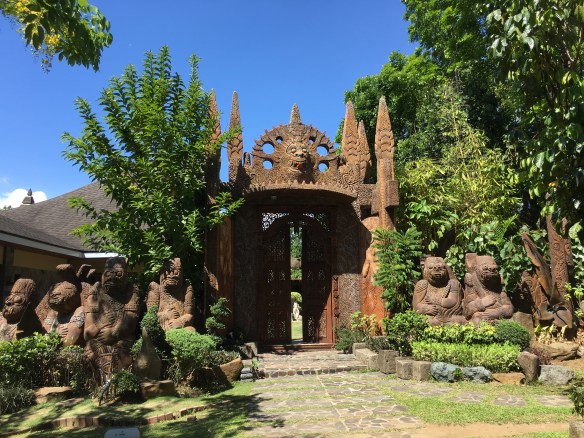
THERE WERE plenty of attractions at this year’s AsiaPOP Comicon, held August 26-28 at the SMX Convention Center at the Mall of Asia—chiefly the presence of such popular stars as X-Men’s Nicholas Hoult, The Vampire Diaries’ Claire Holt, Game of Thrones’ Joe Dempsie, and Stranger Things’ Millie Bobby Brown, and comic book artists Whilce Portacio, Mike Zeck, and Ken Lashley, among others. But what drew my attention and my wife Beng’s the most was the explosion of talent among Filipino graphic artists who displayed their work at the far end of the exhibition hall.

Let me take a step back and recall that just last July, thanks to the sheer luck of being in the right place at the right time, Beng and I found ourselves attending the San Diego Comic Con—the original and still the biggest pop-culture gathering of its kind. The sortie revived my juvenile interest in comics and all things strange and wonderful—an odd detour from the stodgy realism of my own work, but surprisingly refreshing. It was at the SDCC’s Artists’ Alley that I ran into the Fil-Am comics legend Whilce Portacio, and I interviewed him on the spot (the full interview will appear in a forthcoming issue of Esquire Philippines), during which I learned that he was coming to Manila soon for another pop culture event.

That event turned out to be AsiaPOP. AsiaPOP Comicon Manila was organized by Universal Events & Entertainment, a subsidiary of the Singapore-based Al Ahli Holding Group, whose head of Marketing and Business Development Abdulla Mahmood was glad to share the fact that AsiaPOP’s first Manila outing last year attracted 30,000 attendees—a more than respectable figure considering that the San Diego original typically brings in about 130,000 people over four days. “Pinoys are immersed in pop culture,” Abdulla told me, explaining why his group decided to launch their first such event in the Philippines. “They’re among the heaviest users of social media, too, which helps spread the word. From here, we’re bringing the show to Dubai, and from there on to other cities.”

New TV hit series like Stranger Things are central to that pop culture—Beng and I spent two sleepless nights binge-watching on Netflix, and now can’t wait for the next season to meet the Demogorgon (whom everyone seems to think is…). The senior citizen-professor in me has to wonder how Beng and I can so easily succumb to the seductions of superheroes and their ilk, but then I’d have to admit that with nothing much else to do outside of work, we’ve become TV and movie addicts who must’ve seen every nearly sci-fi and fantasy flick that’s been shown over the past five years (with some notable exceptions—we’ve yet to watch a single episode of Game of Thrones).

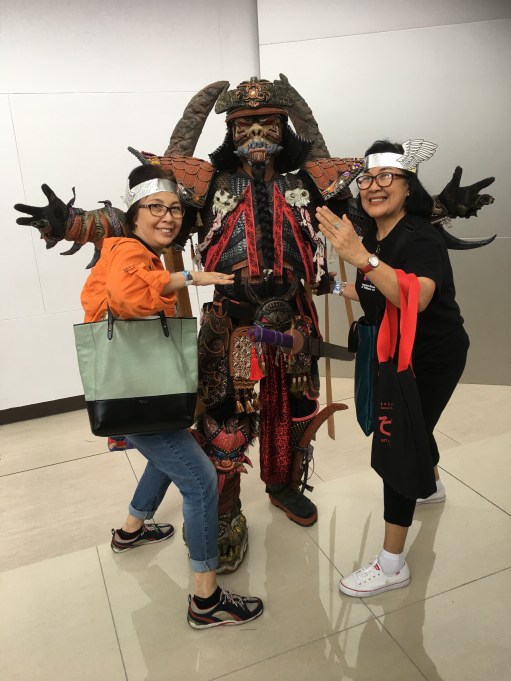
So we can understand all the buzz about Millie Bobby Brown, but as newcomers to the comics supershow, we’ve come to realize that the fun isn’t in chasing after individual characters and stars as much as imbibing the sheer variety and spectacle of the experience—everywhere you look, there’s something else to catch the eye, whether it’s the X-Men’s shapeshifting Mystique or a new superhero named… Lolang Tsora?

IMG_9290.JPG

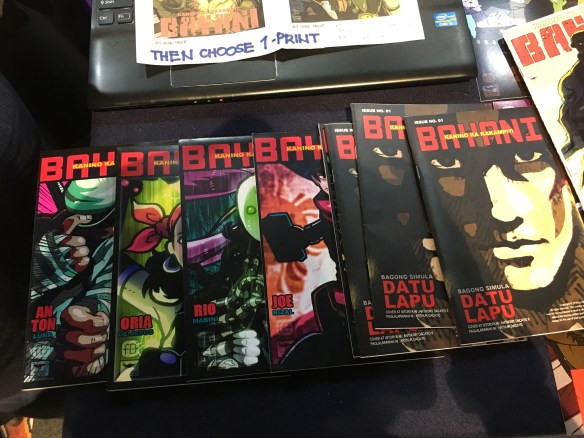
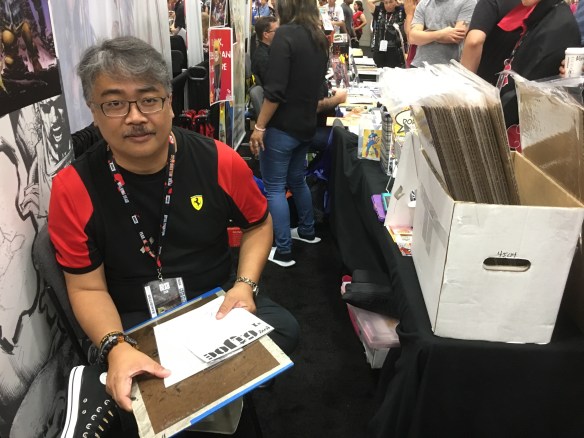
That was Tandang Sora as we knew her from our history books, but in her reincarnation in Anthony Dacayo II’s Bayani series, she employs a spinning dreamcatcher to thwart her foes. We found Anthony and his merry band of artists in AsiaPOP’s own version of the Artists’ Alley, which hosted exhibits from dozens of the most gifted comic book artists in the Philippines. Anthony himself works on stories (and some of the drawings) for his Bayani project, which has since been developed by Ranida Games into a phone-based game that employs Filipino heroes as characters with special skill sets (Joe Rizal uses a quill sword, for example, and Rio Mabini his Verdadero Decalogo). It was his way, said Anthony, of bringing our national heroes into the consciousness of a new generation.

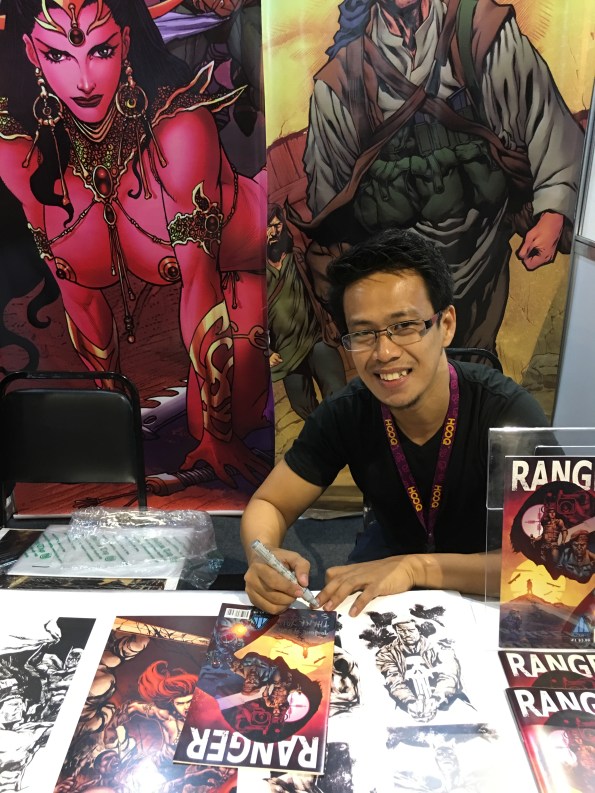
In another booth, we found Iloilo-born Jann Galino, who’s already done penciling work for Virginia-based Azure Multimedia’s “Ranger” comics. Jann exemplifies the Pinoy artist on the brink of the big breakthrough. He’s gone back to school to finish his Fine Arts degree while putting together a portfolio that he hopes will be good enough to show the scouts from Marvel and DC the next time they come around. On the other hand, Bukidnon native Harvey Tolibao has already done work for Marvel, DC, and Japanese game companies, among others, co-founding HMT Studios with some friends to expand and speed up the work.

IMG_9285.JPG

I was especially happy to run into a former student, Paolo Herras, who has published a series of Strange Native comic books for Quezon City-based Meganon Comics after stints in advertising and indie films, drawing on history and folklore to interrogate the present. Beside him was another young author and artist named Tepai Pascual, whose Maktan 1521 is a graphic retelling of the encounter between Magellan and Lapu-lapu.

IMG_9313.JPG

The biggest Pinoy names in the comic-book industry may now be too busy to appear at AsiaPOP—like Leinil Yu who trained with Whilce Portacio in the 1990s and is now one of the world’s most sought-after artists, and Budjette Tan, who now works for Lego in Denmark as a creative director in Lego’s ad agency. (A week after AsiaPOP, I ran into the California-based animator Jess Española, who won an Emmy in 2008 for his work on The Simpsons; he missed AsiaPOP but was in town to help motivate younger artists at his alma mater, the UP College of Fine Arts.)

But there’s no lack of younger Filipino graphic talent eager to follow on their heels, and events like AsiaPOP and the big Comicon in San Diego can provide the best launch pads for these Wacom-wielding wizards. (To know more about Filipino comics and their creators, check out http://www.philippinecomics.net.)


WITHIN DAYS of each other, two dear friends passed away last week—gallery owner Norma Crisologo Liongoren and retired professor and children’s book author Sylvia Mendez Ventura.

Norma was a memorable character whose eye-catching fashions lent more than a dash of color to her exhibition openings and parties in Cubao’s pioneering Liongoren Gallery. Most importantly, she was a generous spirit, lending artists both new and old her unflagging support and outright charity. Beng was especially close to Norma, and when I found her weeping and praying in our gazebo in the garden early one morning, I knew Norma had passed on in the night.

Sylvia was my Shakespeare teacher when I returned to school in the 1980s, and after one of her subjects, I was hooked on Shakespeare and the English Renaissance for life. Impeccably coiffed, this New York-educated diplomat’s daughter was a style icon who, like Robert Graves’ White Goddess, could lay bare your ignorance and cut you down with a single phrase. For some reason (and much to my classmates’ annoyance), I became her pet in class, and she would sometimes hand the lesson over to me to teach—which helped me decide to stay on and become a teacher myself. Sylvia was also a gifted painter, and I don’t think we ever told her, but for these past ten years, one of her flower paintings has hung over headboard. Good night, sweet princess, and flights of angels sing thee to thy rest!

Penman No. 213: Artisanal Delights at Salcedo

IMG_9208.JPG

Penman for August 22, 2016


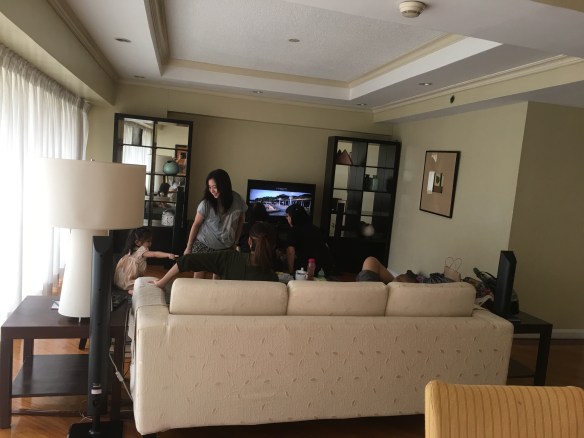
LIKE MANY Manileños, my wife Beng and I had heard of the famous and fabulous Salcedo Weekend Market in Makati but had never gone there, being staunch northerners who refuse to brave the EDSA traffic, even on weekends, if we could avoid it. But curiosity and circumstance finally forced us to relent a few Saturdays ago, the circumstance being a friend’s offer of a room at a nearby hotel that she and her husband weren’t going to be using.

That sounded to us like “Staycation!” so we jumped at the chance. This same friend—she’s in the travel business and gets around—had done us a similar favor a few months earlier as a Valentines’ Day treat for a pair of arthritic lovebirds. Since the room was huge and free, Beng promptly called her sister Mimi and Mimi’s kids and granddaughter Sophie to share the day with us, the idea being to walk a couple of blocks to the Salcedo Market, pick out whatever we wanted for lunch, then lay it all out on the long table and dive in.

IMG_9209.JPG

And that’s exactly what happened. The Salcedo Market opens at 6 and closes at 2, so Beng and I decided to take a sneak peek right after breakfast, before the rest of the family arrived all the way from Tierra Pura. Sure enough, even at that hour and with a slight drizzle threatening, scores of vendors had already set up shop under canvas tents spread out on what, on weekdays, is a parking lot close to the Makati Sports Club.

As I often point out in this corner, I’m no foodie—I’m an instant-ramen and canned-sardines sort of fellow for whom a trip to a food market might be like that of a heathen to the Vatican—but I’m addicted to food shows on TV the way some people can’t get their fill of horror movies, and am always curious to see what’s out there. Beng, on the other hand, will try and eat anything short of the rotten shark that seems to be all the rage in Iceland, and she has to catch me in a good mood so I can graciously agree to step into a restaurant where they serve pizza (I hate cheese), so the Salcedo Market sortie was, for her, sheer, exultant liberation.

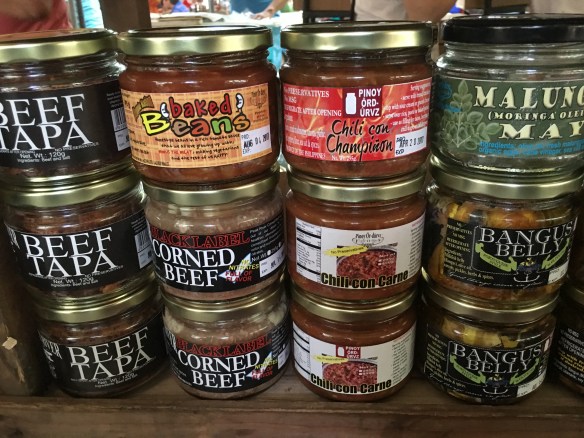
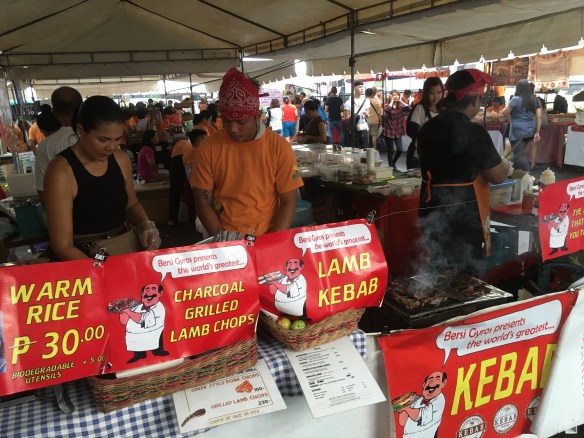
What immediately struck me, despite what I just said about my aversion for fine dining, was how many options there were for plain-food folks like me on offer—burgers, lechon, smoked fish, pancit, siopao, barbecue, and such familiar staples. What lifted them above the ordinary was the freshness and sometimes uniqueness of the ingredients—many were cooked on the spot—and the assurance that you weren’t going to make hourly runs to the bathroom later in the day. Knowing that I had a mound of work waiting for me in our hotel, I loaded up on lechon, corn on the cob, fresh jackfruit, and breadsticks to nibble on, while Beng chose the fresh Chinese lumpia. Mimi and her brood arrived, and I let the sisters drool over the fish curry, the lamb kebab, the laing with daing, the vodka tinapa, the malunggay pesto, and the other more exotic fare.

That was the Salcedo market scene for the most part—good food done well (and whether I liked it or not was irrelevant; seeing Beng’s eyes light up at the culinary pageant was well worth the trip), and home-cooked and artisanal food you just can’t order from a fastfood joint. I hate to think about what had to happen to produce my take-home kilo of tapang usa—Beng didn’t appreciate my Bambi jokes—but it was heaven on the tongue.

This was where a short walk back to the dinner table rounded out our Salcedo experience. There’s a cluster of tables in the center of the weekend market where you can gorge instantly on your selections, but given how many of us there were and how much food we’d amassed, we appreciated the luxury of a long table with complete cutlery in our lodgings just minutes away.

IMG_9222.JPG

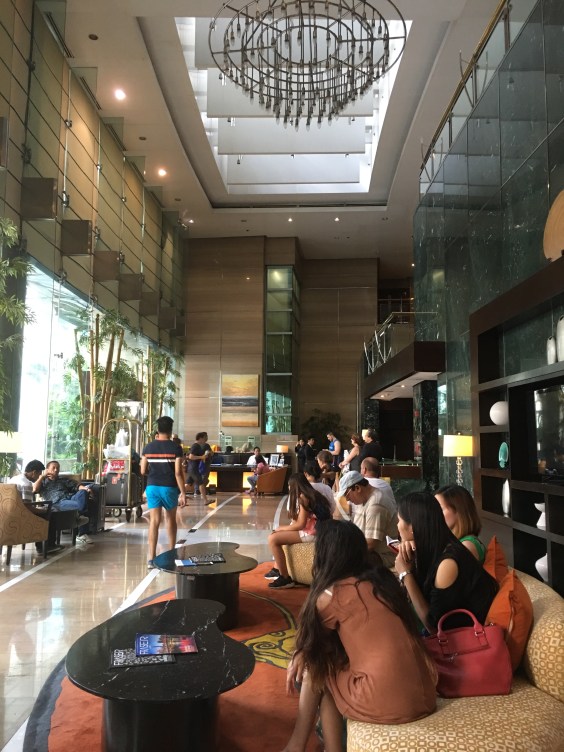
That abode, not incidentally, was Fraser Place Manila—and to call it a “hotel” frankly wouldn’t do it justice. Sometimes you just want a room, any room, to crash into for the night. Some other times, you want more than just a hotel—a place not just to stay but to actually live in, for a few days to weeks to months, maybe even years. (I’d learn from the staff that a couple upstairs checked in ten years ago—and liked the place so much they never left!)

The Fraser—part of a Singapore-based global chain—calls itself a “serviced apartment,” and as soon as we stepped into our two-bedroom suite, we could see why: the 180-sqm enclave was really a virtual house, with a complete kitchen, laundry, three toilets and baths plus another john for guests, and quarters for a housekeeper or caregiver. All your needs were attended to by the staff, the wi-fi was free and strong, and aside from the Salcedo Weekend Market, a host of other restaurants and facilities could easily be accessed in the neighborhood.

But who needs restaurants when, like us, you could bring in loads of choice take-out meals and groceries? It made me smile to see a guest cross the lobby with a bag of veggies and what could have been fresh fish—as only a hotel with a full kitchen could allow. (I also heard dogs yapping faintly in the hallways—the Fraser is pet-friendly, but no cobras please.)

IMG_9221.JPG


There were a couple of downsides to consider, and it’s best to put them out front. Fraser Place Manila isn’t exactly located in what you’d call Makati’s trendiest corner. It stands across a row of office buildings, separated from them by a parking lot. It doesn’t have a penthouse bar or restaurant with a 360-degree view where you can party with your gang until the wee hours. (Cravings does operate a restaurant on the 33rd floor, beside the pool.)

But it’s these very “minuses” that guarantee peace and quiet, which Beng and I appreciated later that evening after our visitors had left and as I typed away on a book project and Beng worked on a painting for a forthcoming exhibit. It also means (of course I had to ask) that we could’ve gotten our princely suite for less than what we recently paid for a small room at an airport hotel near LAX.

Some days, Makati might as well be as far as LAX for us Dilimanians, but we’ll be sure to be back for more of Salcedo. Watch out, Bambi!


IMG_9203.JPG

Penman No. 212: A Lovely Place to Be

IMG_8775.JPG

Penman for Monday, August 15, 2016


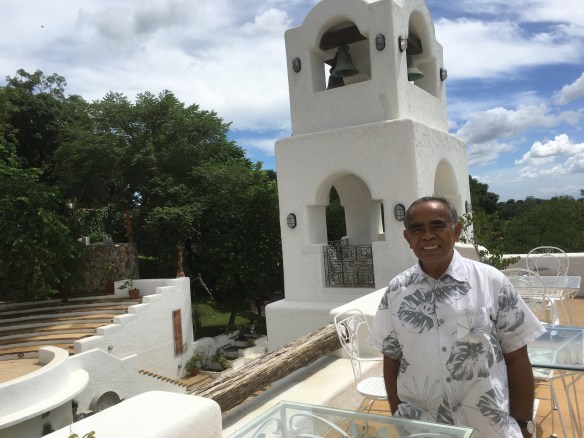
IT WAS a few Sundays ago when I joined a group of artists and friends for lunch at a place that has to be on the must-see list of any Filipino art lover, especially those within driving range of Antipolo. We had been invited for lunch by Dr. Joven Cuanang, whose Pinto Art Museum we had visited once before, but this time it was the founder himself who was going to walk us around the place, so we all looked forward eagerly to meeting him and having a chat.

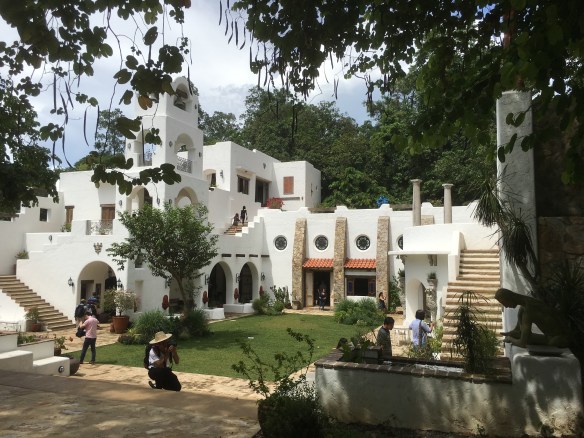
For those who’ve never heard of it or never been there, the best way to describe the Pinto (people, including myself, have been heard pronouncing it as PIN-to, but it’s really Pin-TO as in “door”) is to call it an art complex—mostly gallery, but also museum, restaurant, theater, library, and, apparently, research center. It’s also, quite simply, just a lovely place to be, with its buildings and galleries set on seemingly terraced hillsides leading naturally from one to the other, offering spectacular panoramas of the metropolitan skyline from every high point. Not surprisingly, it can get very busy on weekends, with as many as a thousand visitors streaming in through the gate (admission fees range from about P100 to P200).

IMG_8097.JPG

The Mediterranean-styled complex has that pleasing, thoughtfully curated ambience, the visual and sensory assurance of a well-managed experience. But of course, it wasn’t always so. The place began as a rough and weedy wilderness, which a young but visionary Dr. Cuanang bought up, patch by patch, more than four decades ago. “I started in 1972 with 1,000 square meters,” he reminisced. “Real estate prices fell after martial law and I was gradually able to acquire more land in the area.”

After EDSA, Joven fell in with a committee of prominent Antipolo residents and community leaders eager to spearhead the town’s cultural renaissance, but the good doctor soon decided to go it alone after an unpleasant brush with government corruption. He must have seen art and nature as the best cleansing agents, and he began supporting a posse of local artists, buying their work when they needed cash. Those artists later became the Salingpusa group, which considers Pinto its physical and spiritual home. “We didn’t have much then so the artists first exhibited their work by hanging them on a clothesline, and that practice became known as Sampayan,” said Cuanang.

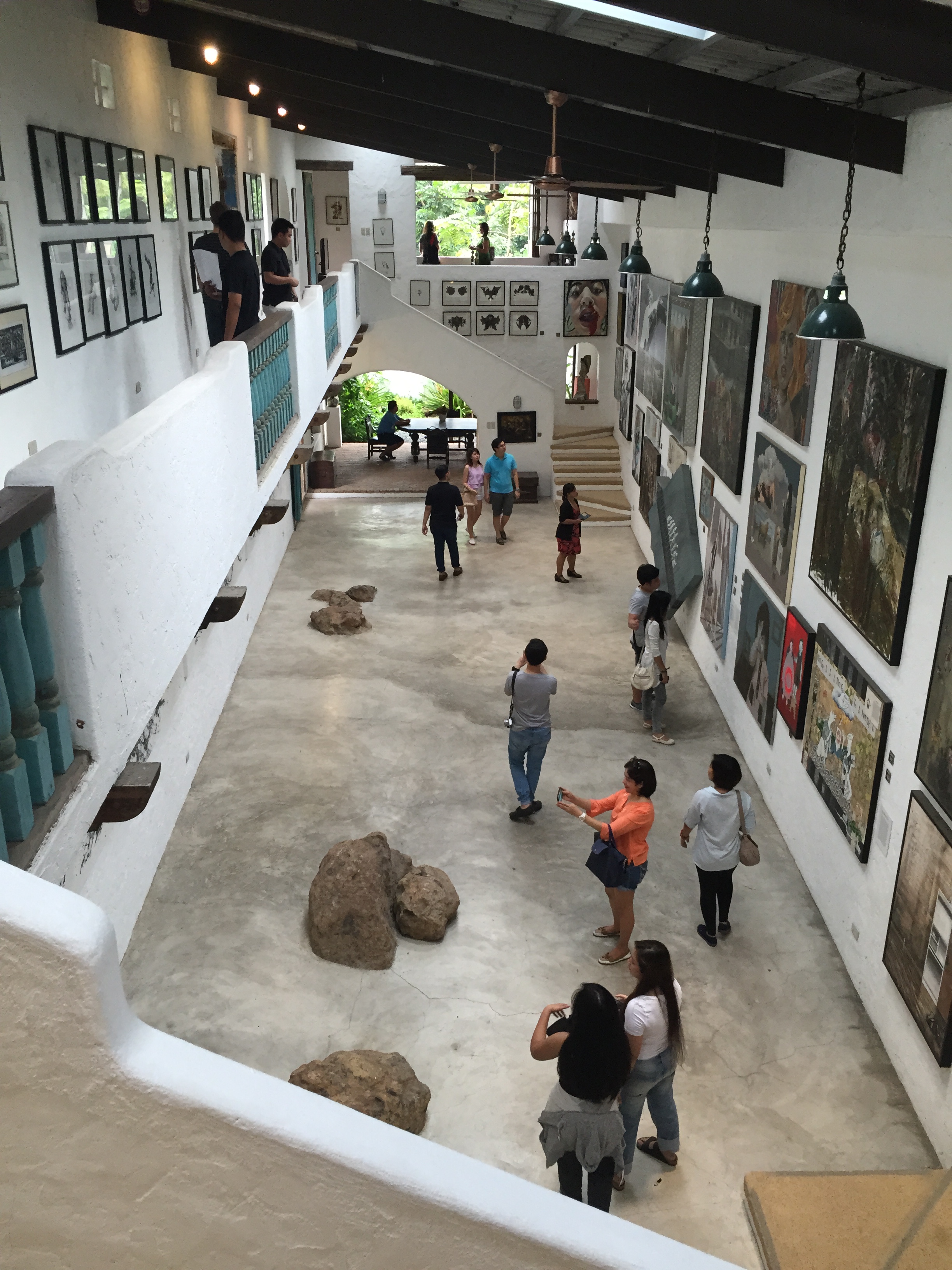
Today that clothesline spans six buildings spread over 1.2 hectares, operated by the Silangan Foundation for Arts, Culture, and Ecology. Designed by Tony Leaño, the buildings blend effortlessly into the landscape, which is no accident because they were built around natural objects like the huge rocks that dotted the hillside. “We observed three principles in designing the place,” Cuanang noted. “First, don’t cut any trees. Second, follow the landscape. And third, minimal maintenance.”

As much as possible, Pinto’s buildings also employ natural ventilation, a notable exception being the air-conditioned library (where I was secretly pleased to find a couple of my books on the shelves). You’re never too far away from being reminded, however, that human whimsy is at work on Nature here, with oversized sculptures of mythological figures such as Icarus, Sisyphus, and Ariadne scattered about the greenery or soaring on rooftops.

While some come specifically for the scenic grounds, which are often rented for wedding shoots, most visitors flock to Pinto, understandably, for the art, which represents many of the most vibrant and brilliant works of our younger if lesser known artists. “You won’t see a single National Artist here,” Dr. Cuanang said, smiling and gesturing at the paintings and sculptures around him. “I keep my Bencabs at home!”

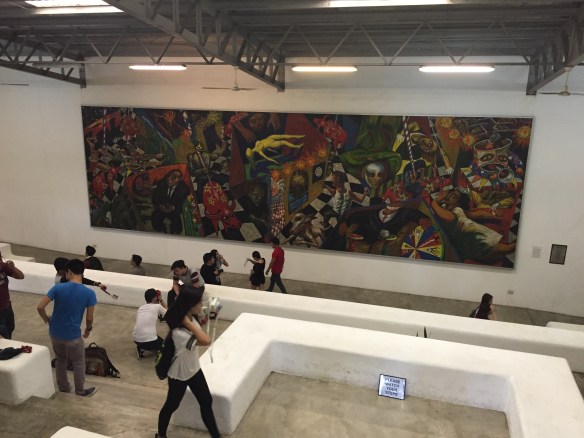
It’s refreshing and encouraging, in a way, not to see the usual parade of Amorsolos, Manansalas, Ocampos, and Botongs on display, and instead to find works by the likes of Elmer Borlongan, Jason Moss, Plet Bolipata, Tony Leaño, and Rodel Tapaya—at no diminution of quality, as these names could well be those of the National Artists of tomorrow. Salingpusa’s breathtaking 40 x 12-foot mural “Karnabal” is arguably the centerpiece of collection.

IMG_8049.JPG

Despite the plenitude of art offerings at Pinto and his obvious passion for art, Dr. Cuanang won’t think of himself a collector, the kind who spots and buys fine new work on the cheap for future profit. “I’m not here for the business,” he emphasized. “Too much art and discussion about art today is centered on the market.”

What truly interests the Harvard-trained neurologist, who still practices medicine after serving for many years as medical director of St. Luke’s, is wholeness of mind, body, and spirit, which he hopes to promote through the Pinto Academy of Arts and Sciences, a complex of facilities in a corner of the compound that comprises a large indoor theater, an amphitheater, a library, a function room, open decks, and gardens.

In a manifesto of sorts, Cuanang explained that “In medicine, healing is currently dominated by pharmaceuticals and technology, oftentimes to the detriment of the wholeness of a human being: mind, body, and soul. This perception is pervasive in our society. Fortunately, new knowledge in neuroscience research is affirming that the Arts and Sciences are in fact interconnected and mutually useful in preserving our wholeness, and together are powerful in the relief of our maladies.” The Academy, he added, “was built to promote conversation across disciplines to create, innovate and to pursue activities that celebrate this thought.”

The bridge between medicine and art, he pointed out, is neuroaesthetics, a branch of study that fascinates Dr. Cuanang. One of its chief proponents, Dr. Anjan Chatterjee of the University of Pennsylvania, poses its main concerns thus: “What in the brain triggers aesthetic experiences? And how does knowledge of basic brain mechanisms inform our understanding of these experiences? These questions are at the heart of an emerging discipline dedicated to exploring the neural processes underlying our appreciation and production of beautiful objects and artwork, experiences that include perception, interpretation, emotion, and action…. Neuroaesthetics is both descriptive and experimental, with qualitative observations and quantitative tests of hypotheses, aimed at advancing our understanding of how humans process beauty and art.”

It’s a lot to think about, for sure—but there’s no better place to ponder the glorious if sometimes dark mysteries of the human imagination than Joven Cuanang’s hilltop sanctuary.

Pinto Art Museum can be found on Sierra Madre Street in Grandheights Subdivision, Antipolo, and is open Tuesdays-Sundays, 9 am-6 pm.

IMG_8774.JPG

Penman No. 211: From Fantasy to Reality: Comic-Con (2)

IMG_8346.jpgPenman for Monday, August 8, 2016


THE SAN Diego Convention Center’s ground-level exhibit hall covers more than half a million square feet—about the same acreage as the SMX Convention Center at the Mall of Asia—and Comic-Con occupied every inch of this territory and more, spilling over to more meeting rooms upstairs and to the adjacent hotels.

The throngs of attendees and kibitzers also fill up the streets and parks outside the venue, all the way to San Diego’s picturesque Gaslamp district, which turns into party town at night after the convention—a mammoth “Star Wars” bar scene, with throngs of costumed characters downing tequilas and exotic cocktails whipped up just for the occasion. You can have your pick of convention specials like the Katniss Kiss at Bang Bang (gin, honey, ginger, rose water), the Kryptonite Martini at Spike Africa’s (Svedka vodka, pepperoncini peppers, olive brine), or the Walking Dead at Searsucker (Hamilton’s Jamaican rum, Bacardi Light, pineapple juice, cinnamon simple syrup, Fee Brother’s bitters, fresh lime, Lemonhart 151, topped with ginger beer).

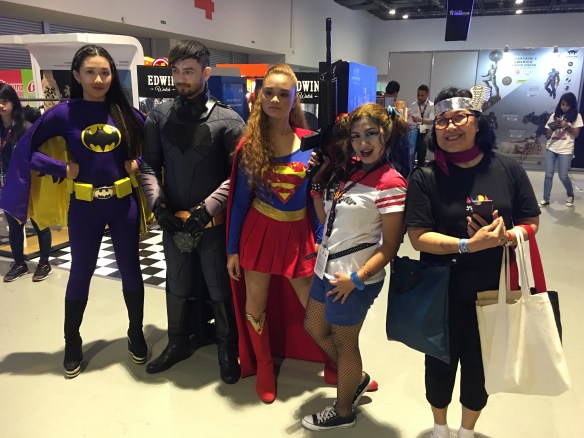
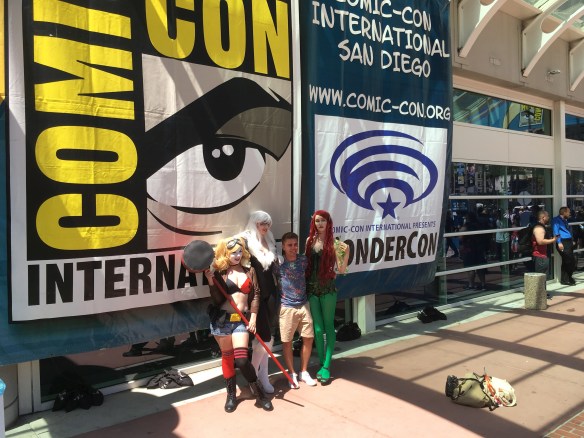
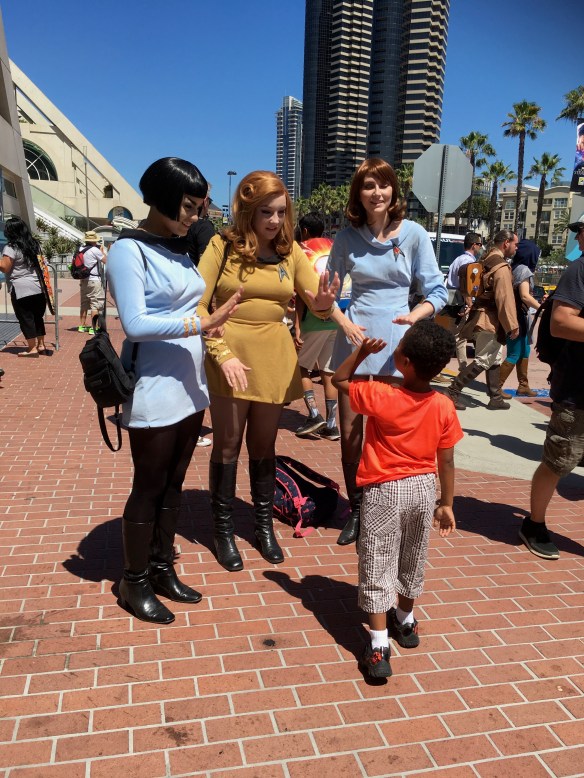
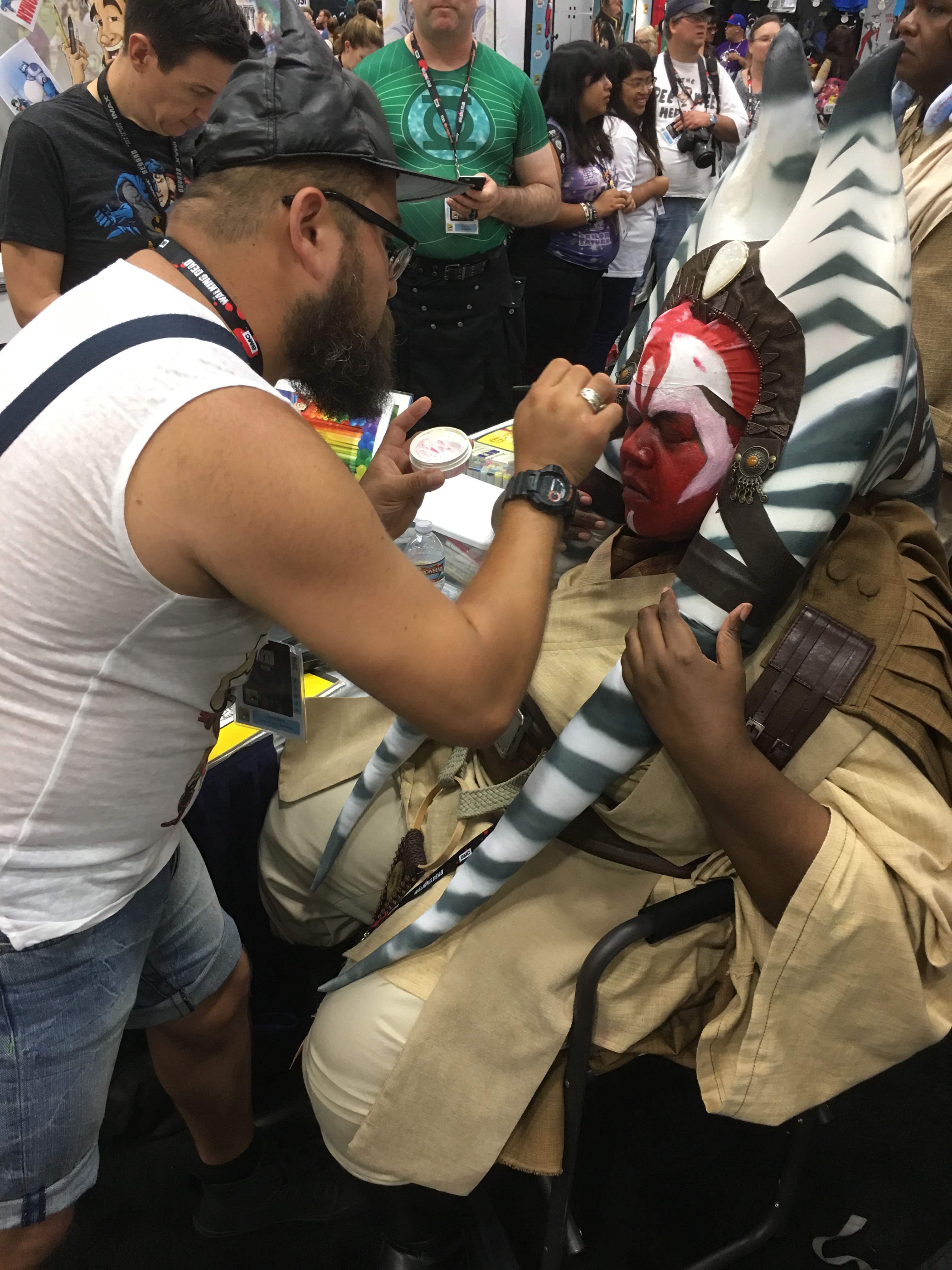
And you can choose to have that drink with Chewbacca or Captain Kirk, because Comic-Con’s strongest and most colorful attraction is, of course, cosplay, that not-too-subtle subterfuge by which anyone can be a superhero or super-villain for a day.

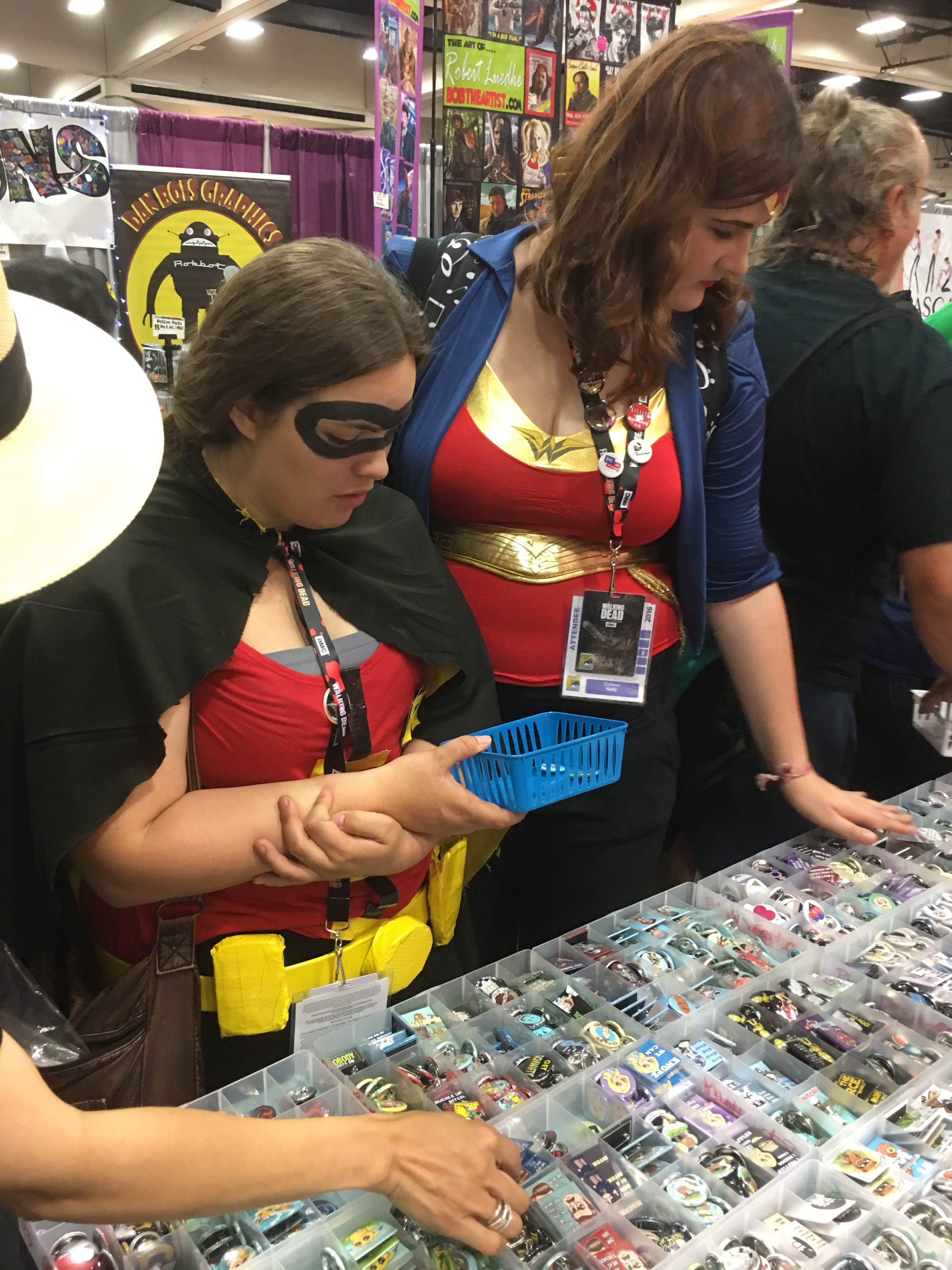
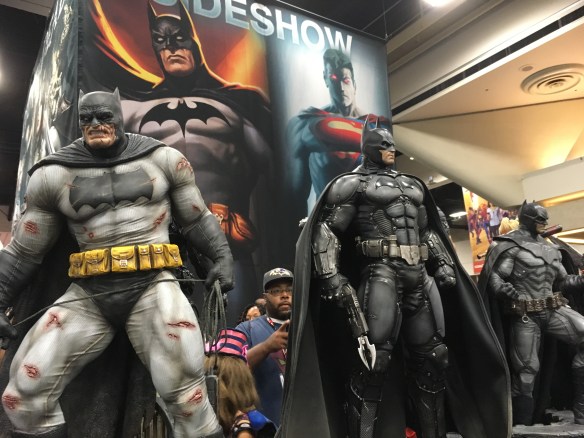
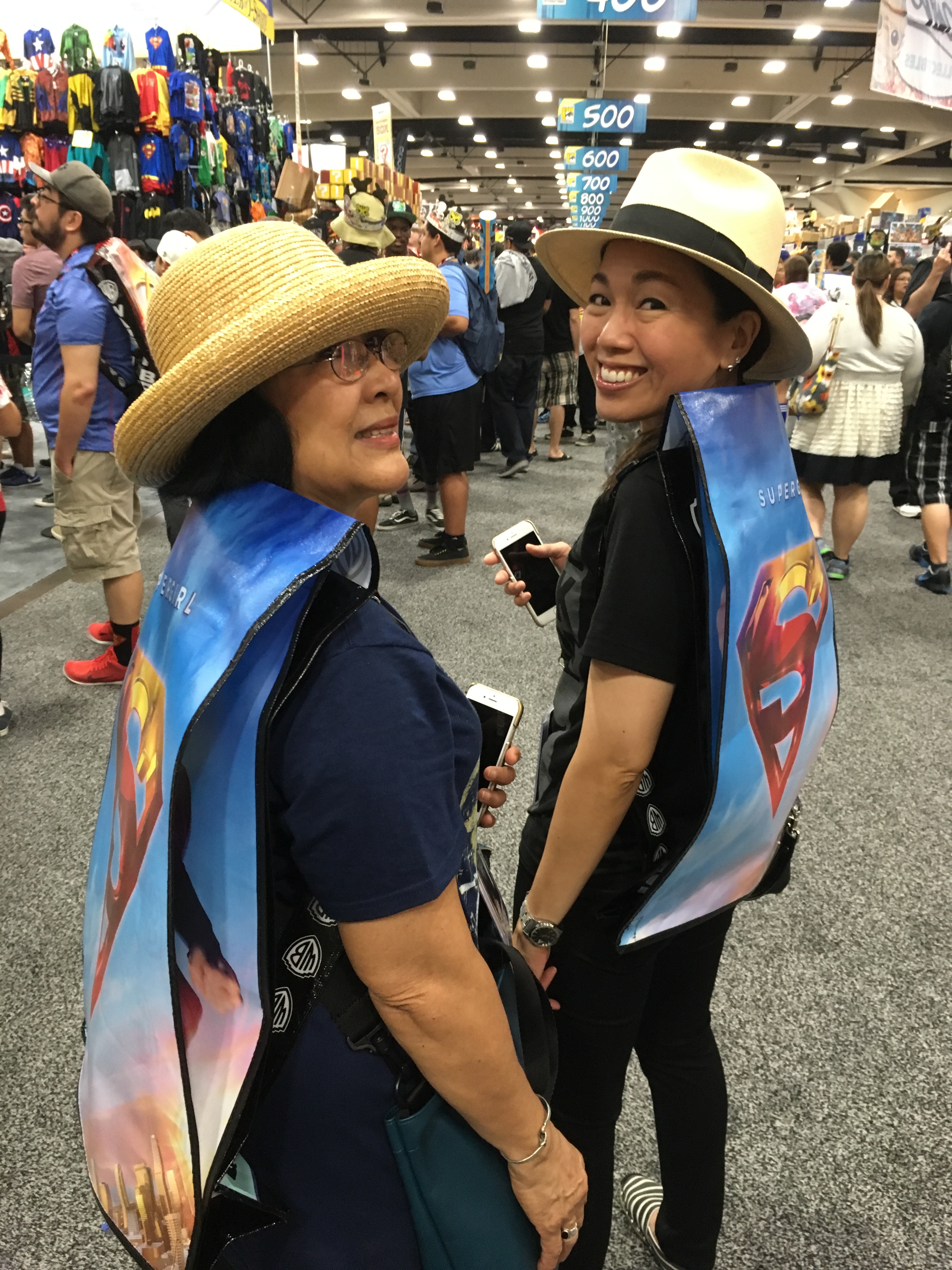
In this regard, Comic-Con 2016 more than met our expectations. There were Storm Troopers, Trekkies, Ghostbusters, and Batmen galore on the convention floor, even a Hulk, a Dumbledore, and a Silver Surfer or two. And as a couple of plus-size Supergirls demonstrated, you didn’t even need the prescribed physique to indulge your fantasy—just the costume, which the wearers had more than likely sewn up themselves, with a little help from suppliers like BuyCostumes.com (where you could be Spiderman for $44.99, or Queen Arwen for $59.99—Darth Vader will cost you more, with just the mask selling for $149.99). A day before Comic-Con opened, Demi’s nephew Matt was still busy preparing his costume and homemade weapon as the Soldier:76 character from “Overwatch,” with key components being shipped in by express courier from Hong Kong.

IMG_9059.JPG

If you didn’t care to dress up as a Sith Lord but had always wanted one to park behind your bar, you could take a life-sized Darth Vader home for about $7,000, for a tenth of which you could get a silicone mask of the Ice King from “Game of Thrones.”

Comic-Con, in other words, was merchandise mania, and it wasn’t uncommon to see hardcore fans staggering out of the venue with huge boxes and bags of souvenirs. Some may have addictions that will seem very peculiar to you and me—like the people who line up at midnight for special editions of the bobble-head Funko figurines—but beyond being a passion, it’s also a business that can see a Funko character that nominally sells for $15 be worth ten times that much on eBay the morning after (more on this later).

In a corner devoted to comic-book auctions, the cover art for an August 1977 issue of Conan the Barbarian had a pre-auction estimate of $12,000—a bargain compared to $20,000 for a Watchmen page. Being oldies and cheapskates, all Beng and I could sport were our black Star Wars T-shirts, which Demi had snapped at a sale (there wasn’t much demand, predictably, for T-shirts that invited you to “Join the Dark Side!”).


It’s all about fads and fashions, and those preferences are set on a screen somewhere—the movies, TV, the Internet, the mobile phone, the vast global domain of popular culture (which is to say, still largely Hollywood). The biggest draws this year included “Game of Thrones,” “The Walking Dead,” “Wonder Woman,” “Teen Wolf,” “Snowden,” “Suicide Squad,” “Aliens” (marking its 30th anniversary), “Supergirl,” “The Flash,” “Guardians of the Galaxy,” and “Star Trek Beyond,” but there’s never a lack of fans (and merchandise) for perennials like “Superman,” “Batman,” “Star Wars,” “Harry Potter,” and “Ghostbusters.”

But all these blockbusters begin with a writer and an artist—a “creator,” in industry parlance, along the lines of Marvel’s legendary Stan Lee—and as another main feature of Comic-Con, these creative geniuses were gathered at the far end of the hall in the Artists’ Alley. Tipped off by my younger friends at Philmug (who were attending Comic-Con vicariously through their former chairman), I made a beeline for the booth of Whilce Portacio, one of the most accomplished Filipino-Americans in the comic-book industry.

IMG_9045.JPG

Born a Navy brat in Sangley Point, Whilce had moved to the States as a baby and had grown up in Hawaii, where his artistic talent was nurtured by supportive teachers. He came home in 1978 and studied Fine Arts at Philippine Women’s University under Ibarra de la Rosa. Not speaking Tagalog and feeling very much alone, Whilce spent the time honing his craft, and by the time he flew back to the US a few years later, he was ready for his big break—where else but at Comic-Con, which was then a much smaller event but already the place to be if you were a gifted young artist with a portfolio to show.

A Marvel editor named Carl Potts (who also had some Filipino blood) took Whilce under his wing and from there on, there was no turning back. Whilce (a shortening of William Joyce) would go on to work on Punisher, X-Factor, Uncanny X-Men, Iron Man, Wetworks, and Spawn, among many other major projects, moving up from basic inking and penciling to becoming a creator himself of such characters as Bishop in X-Men and the Pinoy superhero Grail in Wetworks.

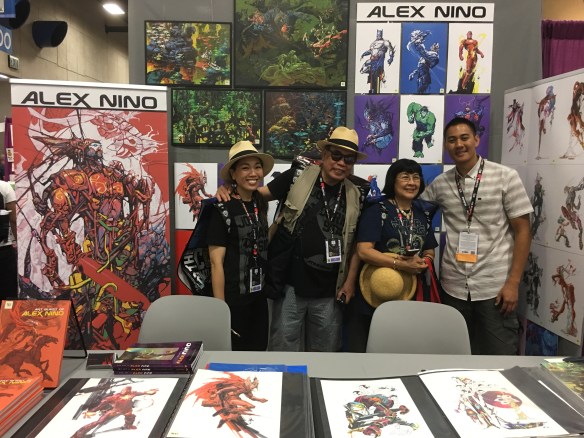
Following in the footsteps of such Filipino comics pioneers in the US as Alex Niño (who also had a booth at Comic-Con, but hadn’t checked in yet when I was there), Whilce sees himself as part of a series of waves of Filipinos who’ve excelled in the global industry. In 1995, he returned to the Philippines to set up a studio on Balete Drive, where he discovered and trained the next wave, which now includes such standouts as Leinil Yu and Philip Tan.

Indeed, another booth at Comic-Con featured the works of Philip Tan, Jay Anacleto, Stephen Segovia, and Carlo Pagulayan. While it took lucky breaks and personal contacts for people like him to succeed, Whilce says that “Today, with the Internet, young artists can introduce themselves. The bridges are now connected. The process and pipeline are now set for everybody.” (I know I promised to report on my long and very interesting interview with Whilce, but it would be a pity to summarize, so I’ll save that for another time. Better yet, come and see him in person when he flies in to Manila to grace our version of Comic-Con—the AsiaPOP Comicon, which will happen on August 26-28 at the SMX Convention Center, with tickets starting at just P550 for a one-day pass.)

IMG_9058.JPG

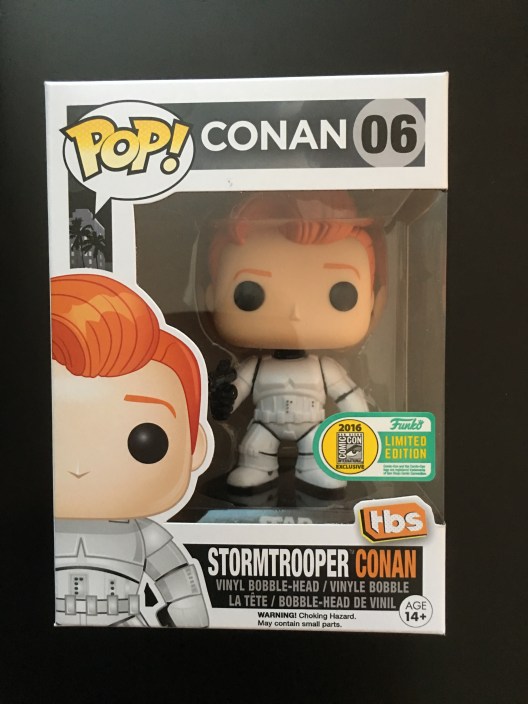
To cap my Comic-Con 2016 experience, and by another stroke of luck, our daughter Demi conjured a special pass to a live taping of Conan O’Brien’s show at the historic Spreckels Theater downtown (Conan has been a Comic-Con regular for some years now). Did I want to go? The featured guests were a surprise—the cast and crew of “Game of Thrones,” with Hodor, killed off in Season 6, getting the warmest applause. I’d have to admit that being a documentary and car-show freak, I’ve never been a fan of the series. But I had a great time watching Conan, the total pro, and every member of that audience left the theater with a Funko Conan Storm Trooper doll, which touts tried to buy at the door for a paltry $8.

Were they kidding? The dolls showed up on eBay the next day for as much as $300. I gave mine to Demi, which was the least her Tatay could do thank her for the treat of a lifetime.


IMG_9069.JPG

Penman No. 210: From Fantasy to Reality: Comic-Con (1)


IMG_8370.JPGPenman for Monday, August 1, 2016


IT WAS a millennial geek’s fantasy come true, except that it happened to a doddering senior with the good luck to be in the right place at the right time. As I reported last week, Beng and I were in the US last month to attend the launch of the foundation behind the prospective American Museum of Philippine Art (AMPA) in Los Angeles, and also to visit our unica hija Demi in nearby San Diego, where she’s been living and working with her husband Jerry for the past nine years.

We save up for these visits, which usually take place every year sometime in October during what used to be our semestral breaks. But with the shift in our academic calendar to the international (okay, the US) model, we timed this year’s trip for July in conjunction with the AMPA event, the sum of which was that we found ourselves in Southern California during the third week of July.

And what’s so special about that week—one marked by 90-degree-plus temperatures, water shortages, and brush fires in California’s sunbaked hinterlands? Well, as every pop-culture-savvy 30-year-old from Pandacan to Pasadena knows, it’s the time when Comics Convention International—better known as Comic-Con—takes place in San Diego, where it began 46 years ago.

So what exactly is Comic-Con, and what’s all the fuss about this annual pilgrimage attended by hordes of Earthlings, as well as presumptive superheroes and extraterrestials? It’s an exhibition, a convention, an academic conference, a parade, a pageant, a marketplace, and a film festival all at once—the world’s largest and best-known pop-cultural mecca.

IMG_8349.jpg

You might say that at 62, I had no right to be there at all, and I wouldn’t have argued, even if I’d been a staunch DC Comics fan in the ’60s who battled the Marvel masses in lunchtime chalk fights. I could easily think of half a dozen people just in my department in UP who would’ve given their right arms to be in my place, having followed every twist and turn of “Game of Thrones” and having memorized the names of every Jedi Master and Sith Lord in the Star Wars universes (the official and the expanded). These guys (and gals) take their fantasy seriously, and some of them go on from buying every issue of Batman to writing ponderous academic essays for such tomes as It Happens at Comic-Con: Ethnographic Essays on a Pop Culture Phenomenon, edited by Ben Bolling and Matthew J. Smith (Jefferson, NC: McFarland & Co., 2014).

In his foreword to that book, Matthew Pustz would recall that “When I got off the trolley in downtown San Diego, I knew just how to find it: follow the guy in the Green Lantern t-shirt. After a short walk, there it was—Comic-Con International, with the huge convention center sitting in the sun. Waiting to enter were tens of thousands of fans—all with their own strategies for making the most of what has become one of the largest popular culture events in the world. This was the summer of 2007, and I had traveled to San Diego all the way from Boston to attend something that I had dreamed about for a long time. I had attended comic book conventions before, in Chicago, Columbus, Ohio, and St. Louis. But San Diego was different, bigger, more important. This was San Diego—the Super Bowl of comic book conventions—and I was on the comic book fan’s holy pilgrimage, the trip that all fans must make at least once in their lives. This was the Gathering of the Nerd Tribes, Fanboy Woodstock.”

“Comic-Con is a fan event, but it is also a money-making extravaganza where all manner of creators, artists, and corporate owners of media products can sell and promote them to their exact target market. And this target market is one that can be virtually guaranteed to take the ‘buzz’ of Comic-Con back with them to to Iowa or Boston or Tokyo so they can ‘sell’ those products to their friends back home. Comic-Con is the ultimate merging of culture and commerce, and that makes it the perfect place to study how popular culture works in the twenty-first century.”

IMG_8380.JPG

While there are many other fantasy and pop-culture conventions—Dragon Con, for example, is a big cosplay event that takes place every year in Atlanta, Georgia on Labor Day weekend—Comic-Con is a San Diego original, run by “a nonprofit educational corporation dedicated to creating awareness of, and appreciation for, comics and related popular artforms, primarily through the presentation of conventions and events that celebrate the historic and ongoing contribution of comics to art and culture.” WonderCon, a comic-book-focused event, is held in Los Angeles.

The first Comic-Con—then known as the Golden State Comic Book Convention—was held in August 1970 at the US Grant Hotel (the grande dame of San Diego hotels, where our daughter Demi works), but it’s since moved on to the sprawling San Diego Convention Center (where Hall H alone, reserved for the biggest events, fills up its 6,000 seats) and to nearby hotels.

IMG_9048.JPG

Over its four-day run, Comic-Con 2016 was projected to draw 130,000 attendees from all over the world (and the galaxy), each of whom was also likely to spend at least $1,000 in San Diego, making it the city’s top annual grosser. Movie stars fly in to promote their projects and some celebrities like Conan O’Brien have made Comic-Con a regular item on their calendar.

Getting into Comic-Con used to be a matter of flying into San Diego and walking in through the convention door, but not anymore. According to the organizers, “Although we strive to make attending our show as easy as possible, obtaining a Comic-Con badge can require the persistence of Superman, the patience of a Watcher, the ingenuity of Tony Stark, and the readiness of Batman.” It’s hard to think of any other conference where the rules include the following:

  • All costume props and weapons must conform to state and federal law.
  • Projectile costume props and weapons must be rendered inoperable. Functional (real) arrows must have their tips removed and be bundled and zip-tied to a quiver.

Tickets to Comic-Con were sold out months ago, as were all hotel rooms in San Diego, at peak prices (“Comic-Con attendees book their rooms for next year before they leave,” Demi told us.) You don’t really buy a Comic-Con ticket but a “badge,” and to get a badge you have to pre-register online for a membership ID, with which you can then apply for a badge using a code that entitles you to a slot—well, you get the idea.

So how exactly did we get in? All I’ll say is, it pays to have a daughter in a hotel in San Diego in July. It wasn’t really in our vacation plans, but Demi decided to give a pair of seniors a special treat one morning by announcing that she could get the three of us into Comic-Con. Were we interested? You bet we were!

IMG_8362.JPG


Penman No.205: Sojourn in Seoul (2)

IMG_8666.jpg

Penman for Monday, June 27, 2016


HAVING PLANNED our trip to Seoul months in advance, I made a point of touching base with some local contacts for possible meetings—something I usually don’t do, wary of disturbing people with my unseasonable presence. But with a week to kill in one city and with some longstanding connections in place, I thought it would be even more ill-mannered if I didn’t at least tell them that I was going to be in town.

One of those connections was Dr. Sukjoo Sohn, who teaches English at Dong-a University in Busan, Korea’s big industrial center four hours by train from Seoul. Sukjoo—a specialist in world literature—happens to be married to Catherine Rose Torres, one of our bright new young fictionists who now serves as First Secretary and Consul at our embassy in Berlin. I’d first met Catherine in 2011 when I attended the Singapore Writers Festival and she was with our embassy there, and I was later very happy to write a blurb for her first book, Mariposa Gang and Other Stories (UST, 2015).

It’s really these personal connections that make for global literary networking, the value of which I can’t overemphasize. In 2014, Sukjoo translated one of my stories for publication in Global World Literature, which is put out by some of Korea’s foremost literary scholars and critics in that area. Through Sukjoo, I was also able to contribute an article to the Korea-based journal Asia, in which I wrote about some of our most gifted and exciting younger writers. As a result of that article, one of our best young non-fictionists, Sandra Nicole Roldan, will be visiting Seoul this week to attend the 2016 Asia Literature Creative Workshop.

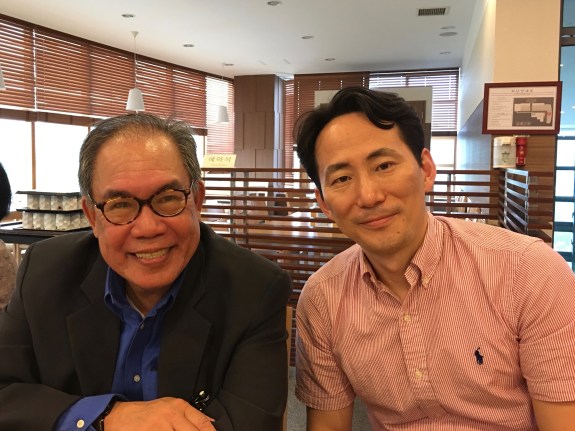
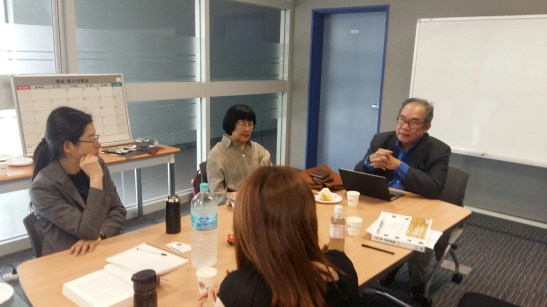
And so our connections continue and deepen. When they learned that I was visiting Korea, Sukjoo’s organization invited me to a special meeting, so I could tell them more about Philippine literature. That gathering took place at Seoul National University toward the end of our visit, and a very fruitful and engaging encounter it turned out to be. Perhaps I shouldn’t have been surprised, but their very first question had nothing to do with lyric poetry: “What do you think of your new President, Rodrigo Duterte?”

It will take more than this column to share my answer with you, but suffice it to say for now that we talked about our colonial history, our Catholic predisposition to suffering, the two Joses (not me) by which our literature is best known overseas, class as the key divisor in our literature and society, Korea’s and the Philippines’ shared experience of dictatorship, and the irony of having to deal with a resurgent Park and a resurgent Marcos, and our younger writers’ affinity with Gaiman, Murakami, and Wattpad.

We discussed my translated story, “In the Garden,” which I’d written in the 1980s about militarization in the countryside and the moral duty of a teacher caught in the crossfire. While the topics were unavoidably contentious, our meeting itself was thoroughly pleasant and mutually informative, capped by dinner, shop talk, and, yes, chatter about Lee Min-ho.

meeting 2.jpg

The second highlight of our visit—away from the malls and the flea markets—was a meeting with the Filipino community in Seoul, which had also been pre-arranged by Catherine through her Seoul colleague, the very capable Third Secretary and Vice Consul Ella Mitra.

It was a Sunday—our last full day in Korea—and much to our surprise, the embassy was open and bustling with people, with a wedding taking place right in Ella’s office. (“We can officiate at weddings,” Ella told us, “as long as the two parties are both Filipino citizens. We’re open on Sundays because that’s when most of the community can come.”) There were over 40,000 Filipinos in Korea, Ella informed me, many employed as factory workers in jobs that the locals themselves prefer not to do.

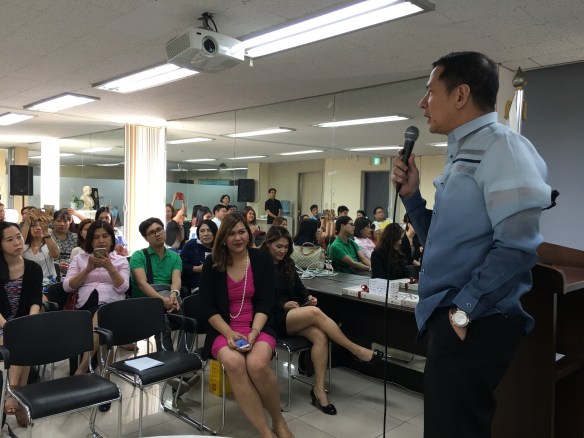
I’d been asked by the embassy to give a reading for the community—something I love to do whenever I’m abroad, as it puts me in touch with ordinary Filipinos striving to do their best in often very challenging circumstances. The Filipino, I like to say whenever the opportunity arises, is the modern-day Ulysses, roaming recklessly to the farthest reaches of the globe, but imbued with an unfailing sense of home. Now here they were, a crowd that filled the room beyond our most generous expectations—professionals, teachers, graduate students, Filipino-Korean couples, even the Ambassador himself, the dapper and articulate Raul Hernandez.

IMG_8681.jpg

The embassy had calendared my reading as its second Sentro Rizal activity, and with June 12 coming up, it seemed a good time to remind ourselves of the things that both divided and united us, and of the need to hang together as Filipinos, at a time and in a region of revived nationalisms. Even so I chose to do a very light reading, one that made fun of my own social ineptitude in cross-cultural situations, and thankfully it went over well with the audience. More than the reading, it was the ensuing Q&A and freewheeling chat over pancit and puto that proved most gratifying. I could sense the community’s strength of spirit, its determination to master a new cultural terrain.

I was especially happy to see a former student, Tech Apognol, now doing an MA in International Relations and speaking Korean. She’s hardly alone; the association of Filipino grad students in Korea now numbers 500, I was told, and there were plenty of masteral and doctoral scholarships for those inclined. “We can take classes in English,” one student named Eve told me.

Another grad student named RJ solved a mystery that had been bugging me for 40 years. Back then, I told him, I was a young writer employed by the National Economic and Development Authority, and one of my tasks was to help edit the Five-Year Development Plan, which was thicker than an encyclopedia because of its bloated prose. On the other hand, I recalled, the South Korean development plan that I used as a reference was no bigger and fatter than a paperback novel—and look, I told RJ, where Korea was now. “Ah, that’s easy,” RJ said. “It’s because the Koreans value brevity, and memos are expected to be no more than a page. The higher up the ladder papers go, the more concise they’re expected to be.”

The shopping was fun—just the flea markets for us, please, not the high-end shops—and the streetcorner food delicious, but it was, ultimately, our encounters with the people that added the most value to our visit. Kamsahamnida, Sukjoo, Cathy, Ella, and Tech for these memorable exchanges.

Penman No. 204: Sojourn in Seoul (1)

IMG_8594.jpg

Penman for Monday, June 13, 2016


AS MY regular readers well know by now, I have a habit of taking off to parts unknown with my wife Beng at the slightest excuse, and one such occasion came up three weeks ago when Beng marked her birthday (her 36th, it seemed to me—as it seemed to me last year as well, and the year before). Of course I’d known for months ahead that her birthday was coming up, so as early as January, I booked us a flight to and a hotel in Seoul, for the first week of June. (That’s how Beng and I get our kicks—we jump on early-bird budget fares and commit ourselves to travel months in advance, the better to plot the year ahead.)

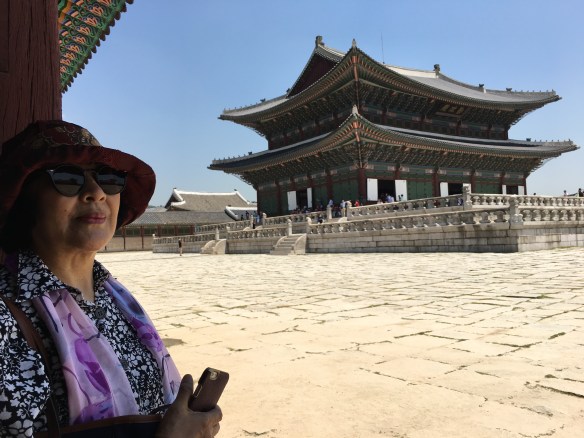
Why Seoul? Simply because Beng had never been to Korea, except for stopovers in Incheon, and I’d pledged years ago to take her everywhere I’d ever been. I visited Korea in 2007 on assignment for the STAR, to cover Hyundai’s shipbuilding and carmaking operations, and we stayed for a day or two in Seoul before moving on to Busan and Jeju, but I could hardly remember anything of Seoul except for the stately palaces and the enormous beef-barbecue dinners. I could do with another and more relaxed visit, on my own time and schedule, and Beng’s birthday in early June seemed perfectly timed, with our semester in UP just having ended.

I also suspected that a sojourn in Seoul would satisfy Beng’s yearnings to see, with her own eyes, the locales of her favorite Boys Over Flowers and the birthplace of Lee Min-ho, if not Lee Min-ho himself sauntering down an alley in Myeong-dong.

IMG_8611.jpg

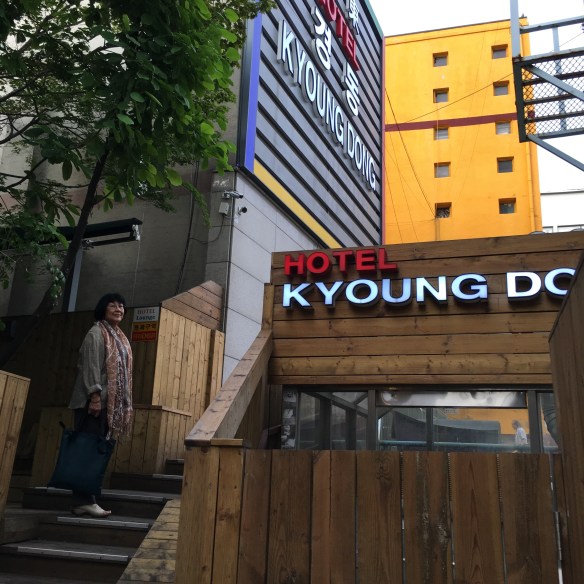
The planning was the easy part. Like I always do, I went online—to skyscanner.com for the plane fares and to booking.com and tripadvisor.com for the hotel. AirAsia had a good deal for the period, and I was able to locate a small, affordable hotel at a great location in central Seoul with four-star reviews—the Hotel Kyoung Dong in the Namdaemun/Namsan Park area.

IMG_8667.jpg

Because of the fare structure, we signed up for a six-night, Tuesday-Monday stay—a tad longer than our usual four-day getaways. But this would open, as I’ll report next week, more fruitful possibilities beyond sightseeing and shopping. This week, I’ll focus on the personal impressions of a casual tourist, hoping they’ll be of some help when you, dear reader (and dear reader’s husband/wife/partner) make your own plans for Seoul.

Yes, we Pinoys need visas for Korea, but if you’ve done a bit of traveling before or can prove you can pay for your own kimchi, then it shouldn’t be a problem (until the end of this year, and by special arrangement, BPI Gold cardholders practically get a free pass to a three-year multiple-entry visa).

It’s a four-hour flight to Seoul and ours left around 7 am, which was perfect for avoiding the horrendous traffic around NAIA and for arriving at Incheon International Airport at midday (Korean time is one hour ahead). I’d already exchanged my pesos for Korean won at the money changer in NAIA (P1,000=W25,000), so we headed straight for the express bus shuttle to downtown Seoul, a little over an hour away. Immediately Beng was struck by how clean and modern everything looked—no litter, no “informal settlements,” no traffic—and I had to give her a spiel about how it hadn’t always been like that, and how Korea had transformed itself into an economic powerhouse within a couple of generations.

Our bus dropped us off at Namdaemun Market—which was like dropping off Beng at the portals of paradise, shopping-wise. As we would realize not too long after, Namdaemun is like Greenhills multiplied by ten—and it was hardly alone, as there was also Dongdaemun to contend with, among other emporia.

IMG_8541.jpg

But first, we had to locate our hotel. I usually roam on my phone, so we would have depended on Waze or Google Maps to get us there, but for some reason, I couldn’t get online, so we had to resort to the old-fashioned way: asking for directions—which, in non-Anglophone Korea, isn’t exactly the easiest thing to do. (And as every wife knows, men would rather walk a mile the wrong way before asking for directions, which is why I always bring Beng along.)

And here we made our first pleasant discovery—that contrary to the notion that Koreans are rude, those we met were invariably kind and helpful. Amid a flurry of gestures and grunts, a parking attendant pointed us in the right direction, and an old man took over on the other side of the street and delivered us to our hotel’s doorstep. On the super-efficient Seoul Metro (the arrival of whose trains are heralded by a trumpet flourish you might hear at the Kentucky Derby), we would routinely see younger commuters yielding their seats to their elders, including us (haplessly incontrovertible proof of our visible age).

The last time I was in Korea, everything had been briskly orchestrated by our hosts, with nary a moment for exploring on our own, but now, with a long, lazy week stretching out ahead of us, we had hours to fill with markets and museums, parks and palaces, porcelain-cheeked nymphets in baby-doll dresses (and sometimes even more smartly coiffed young men), impeccably good food, and streetside bargains that gratified our pedestrian desires.

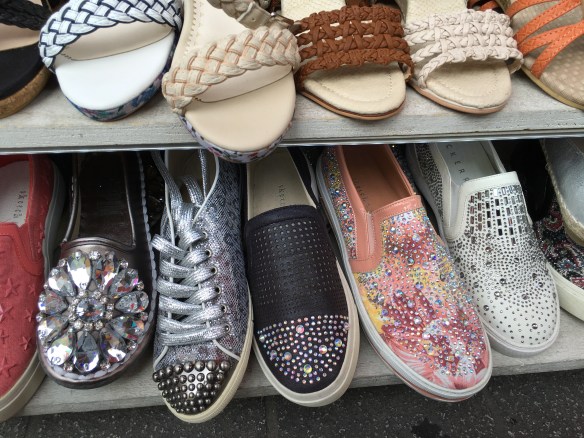
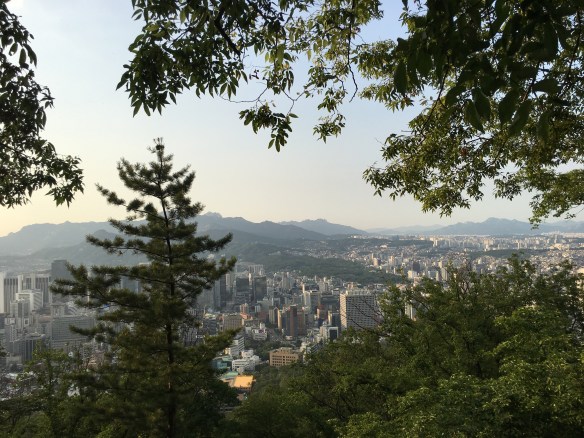
Beng and I didn’t sign up for any tours, nor did we venture out too far from the heart of the city. This vagabond pair of seniors decided that they would go as far as their subway tickets and their feet would carry them, spend an hour on a park bench just enjoying the scenery while munching on a slice of sweet green melon or a cob of corn (each for 1,000 won, or 40 pesos), and save our energy for the flea markets that, truth to tell and next to the museums, are always our prime targets wherever we go, and Seoul has half a dozen of them on the weekends.

IMG_8639.jpg

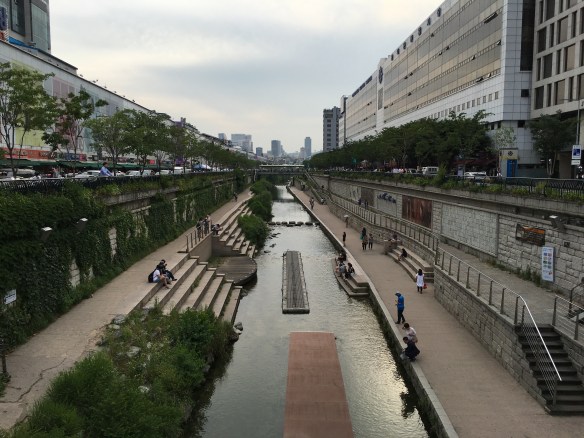
This, Beng and I acknowledged with a sigh and a smile, was tourism senior-style, punctuated by Zantac instead of ziplines, by moisturizer instead of, well, moisture. Some of our happiest moments were the quietest ones—watching the sunset from the peak of Namsan Hill, and the ducks and the carp at Cheonggyecheon Stream.

This brings up one of our small but vital complaints: as wonderful as the city was, Seoul can be hilly in parts, making for long, punishing climbs. Somehow, that doesn’t seem to deter the posses of ajummas—bag-toting Korean matrons sporting broad-brimmed visors—from marching to the markets for their daily dose of retail therapy, or perhaps even just the company of the similarly disposed. Had we lived there, we might have done the same.

Next week, I’ll report on less geriatric topics: culture, literature, and community.


Penman No. 203: Another Filipino Winner at the IPSC

unnamed.jpg

Penman for Monday, June 13, 2016


EVERY MAY, at Dartmouth House in London, about 60 young men and women from all over the world gather to represent their respective countries at the International Public Speaking Competition (IPSC). Sponsored by the English Speaking Union (ESU), the IPSC is the world’s premier public speaking event for young people, bringing together the best minds of their generation to share their ideas about the planet’s most pressing concerns.

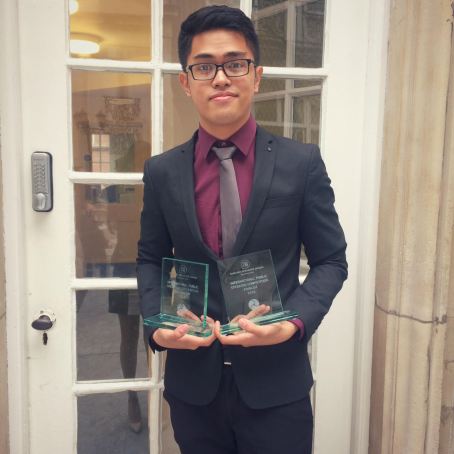
The Philippines has been sending representatives to the IPSC since 2002, and was granted International Charter Membership in October 2005. As a country we have performed superlatively, producing two world champions and at least four semifinalists. This 2016, I’m very happy to report that we notched another spectacular achievement, with Marco del Valle being named global first runner-up, after the representative from Mexico.

Just 20 and a Business Administration junior at UP Diliman, Marco is no stranger to competition, having already won six titles in business and marketing competitions, including the Henkel Innovation Challenge in Vienna, where he and his partner represented the Philippines and also placed second. Marco’s success comes as the latest in a long string of stellar finishes for young Filipino public speakers at the IPSC.

In 2004, 17-year-old Patricia Evangelista stunned everyone when she was named IPSC champion, presaging a successful career in print and broadcast journalism. In 2008, Gian Karlo Dapul became our second world champion at the IPSC, besting 57 other participants from 35 countries—an achievement made even more remarkable by the fact that he was only a Philippine Science High School senior then, competing against mostly college students. (The third-place winner that year, Rajab Ali Sayed of Pakistan, turned out to be half-Filipino.) In 2012, Bryan Chua made it to the semifinals, as did Germaine Chuabio in 2011, and Ervim Charles Orbase in 2010. (In 2012, Hong Kong’s representative in the finals, Ramon Joseph Valentin Romano, was actually a Filipino born of migrant parents.)

This year’s Philippine participation at the IPSC was made possible by the generous support of longtime partners Pilipinas Shell and Far Eastern University, led respectively by Ed Chua and Lourdes Montinola, who both sit on the board of ESU-Philippines. ESU-Philippines Chairperson Gigi Virata and President Marlu Vilches ably led this year’s selection process, along with ESU-Philippines regulars Linda Panlilio, Krip Yuson, and myself. As elated as we were by Marco’s performance, our joy was overshadowed by the recent and unexpected passing of two ESU-Philippine stalwarts—Ambassador Cesar Bautista, our chairman emeritus, and Loline Reed, who had very patiently and kindly guided our representatives in London, along with her husband Ken.

This year’s theme for the IPSC finals was “Integrity has no need of rules,” and Marco drew deeply on his personal experience to address the topic, declaring at one point that “Too often, we demonize people… who don’t live by our religious or social rules. But moral integrity isn’t about obeying rules. It’s about recognizing the fact that while we all make mistakes, we’re all capable of rising above them.”

He explains further: “Overall, my speech was about my relationship with my family, particularly my mother. In the speech (which is the same speech I gave for the national finals), I talked about the sacrifices my mother made in the face of different social norms, the same sacrifices that millions of people make every day. I talk about how our culture stigmatizes families who don’t fit the norm, and how that makes it harder for these families to function. I conclude, however, that the sacrifices we make for those we love will always outweigh any rules or social norms we might break.

“I’d have to say that my favorite part of the whole experience was getting to know the other contestants and hearing their stories. It’s one thing to place countries on a map, but it’s an entirely different thing to actually be roommates with someone from Serbia, to learn about Moroccan weddings and Estonian startup culture, and to hear stories of African democracy as told by someone from Ghana.

“As we went through the competition, I think the feeling we all got as contestants was that we weren’t competing against each other as much as we were sharing our own experiences. I was really happy to be able to show a bit of my culture to the world and share what makes Filipino culture special. Yet when you hear speech after speech from so many brilliant young minds around the world, you start to realize that there’s really not that much which separates us from other countries: we share the same dreams, the same fears, and the same ambitions. Above all, this is what I think the ESU IPSC really helped showcase: that it’s possible to celebrate our differences as individuals and as nations, while also respecting and recognizing the things we have in common. And in a world where fear and intolerance are rapidly becoming the political weapons of choice, I think it’s a lesson more people should learn.

“When I entered this competition, all I really hoped for was the chance to share my story and talk the causes I believe in. Thankfully, I’ve been given the chance to do so much more. Winning 1st runner-up is, for me, more than just a personal accomplishment. It’s a chance to show the world that the Filipino spirit is capable of anything.”

Marco’s IPSC experience mirrors that of his predecessors, most of whom have gone on to distinguished careers in public service, media, education, and business. Dr. Renzo Guinto of UP Manila, our IPSC representative in 2008, recalls that “I learned to understand, appreciate, and respect cultures and perspectives that are different from my own, which in turn bolstered my sense of empathy. I could say that the ESU contest played a crucial part in preparing me to become the global health advocate that I am today.”

Ryan Kaliph Buenafe, who as an FEU student was our first IPSC contestant in 2002 and who now serves as Global E-Learning Manager for the TelePerformance Group, attests that “The ESU content was about practice, revisions, then more practice and more revisions. Preparing for it meant that I had to tell a compelling story and message in a limited amount of time and engage the audience so they would be inspired by my story. This is not easy when you’re young. There’s no Wikipedia or Google shortcut. I had to work hard, then practice and revise. This is, as I have found out as an adult, a great preparation for life. We practice what we do so we can do it better and allow others to share their greatness (such as Dr. Jimmy Abad and Krip Yuson who helped me improve and revise my speech). It is our small but significant opportunity to share with the world, on a global stage, the story of our people and our selves…. If we are to learn from history and combat terrorism and hate, we need to connect as one people. ESU is a forum where such a connection is made possible and it has been the greatest experience of my youth.”

We can only hope that more young Filipinos like Marco will emerge to speak for the Philippines on the global stage and be heard for what they have to share. Mabuhay!

image2.PNG

(Photos by Giulia Rampinelli)

Penman No. 194: A Tree Grows at the Met

IMG_8118.jpg

Penman for Monday, April 4, 2016


THE FIRST and last time I saw a show at the Manila Metropolitan Theater must have been in the 1990s, for a production of Nick Joaquin’s “Portrait of the Artist as Filipino.” The theater was in fine shape then, and I recall being as enthralled by the place itself as by the spectacle onstage.

As a young boy in the early ‘60s, my father had worked at the old Department of Public Works building across Plaza Lawton (before they became the Post Office and Liwasang Bonifacio), and I had often tagged along to play with his red-and-blue pencils and his swivel chair. The most entrancing element in that locale, truth to tell, was the giant pot above the old Insular Ice Plant that spewed what seemed to be a steady stream of boiling water into a waiting coffee cup; but my eyes would stray to the strange pinkish building in the distance and I would wonder what went on there and what it held.

I got my answer, thanks to Nick Joaquin, but a few Sundays ago, I had an even more amazing opportunity to know the Met more intimately than I would ever have imagined. Sadly the intimacy was that which might exist between a doctor and a patient, like a probe of cold steel into some tubercular organ.

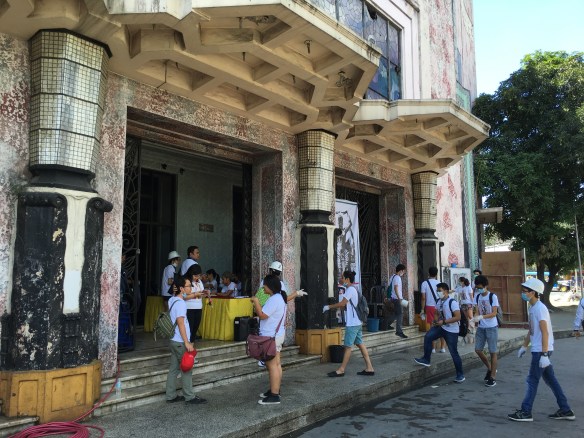
My wife Beng belongs to Kasibulan, a group of women artists, and they had been invited to do a sketching session at the old theater that Sunday morning, alongside a cleanup operation to be undertaken by volunteers. Did I want to come along, perhaps to take pictures, or at least hold bags and run errands for the ladies as they drew arches and vanishing points? Of course I did.

But before I go any further, especially for the benefit of our millennial readers, let me give a backgrounder on the Met and its sorry fate.

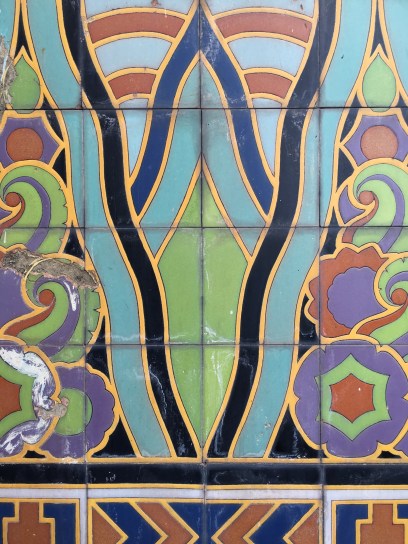
When the Manila Metropolitan Theater opened on December 10, 1931, it was an architectural wonder to behold and to step into—an Oriental palace in pink coral, crowned by exquisite minarets, statues, sculpture, and tilework. The overall style was Art Deco, the rage at the time, spilling over from the West but adapted to its new setting in the East. It could seat almost 1,700 people, and it had been put together and adorned by some of Manila’s finest architectural and artistic talents—designed by Juan Marcos Arellano, built by Pedro Siochi and Co., and decorated by the Italian sculptor Francesco Riccardo Monti, the sculptor Isabelo Tampinco, the future National Artist Fernando Amorsolo, and by Juan Arellano’s brother Arcadio.

IMG_8086.jpg

Erected near the site of its predecessor, the Teatro del Principe Alfonso XII which burned down in 1867, the Metropolitan was meant to be the city’s premier cultural venue, a showcase of the Filipino artistic genius. In its heyday, it hosted celebrated singers such as Jovita Fuentes and Atang de la Rama; from highbrow opera to the more popular zarzuela and vaudeville, the Met had the best to offer. Though damaged during the war, it was rebuilt and continued to be a haven for artists and entertainers until it began to decline in the 1960s, as other venues—and the growth of moviehouses in such places as Avenida Rizal, Escolta, and Cubao, followed by the establishment of the posh and modern Cultural Center—gained primacy among audiences.

At one point or other in its slide to abject decrepitude, the Met became a boxing arena, a movie set, a martial arts studio, a gay bar, an ice cream parlor, a TV stage, and a refuge for the homeless, among other incarnations. In 1978, Imelda Marcos took an interest and had the theater restored to its old glory, but then it fell again into disrepair, and was shut down in 1996 in a wrangle over ownership between the city government and the GSIS. Gloria Macapagal Arroyo and Mayor Fred Lim renovated and reopened it in 2010, when it was declared a “National Treasure” by the National Museum, but yet again it succumbed to politics, bureaucracy, and benign neglect; after a concert by the rock band Wolfgang in mid-2011, it was locked up by the GSIS.

In July last year, the ownership question was finally settled with the GSIS selling the property off to the National Commission for Culture and the Arts (NCCA), and shortly after the NCCA received P270 million from the Department of Budget and Management (DBM) for a fourth and hopefully final restoration, which the NCCA expects to complete by 2017.

It was this Met that we entered that Sunday. We were greeted by my UP colleague and one of the restoration project’s consultant-architects, Gerard Lico, who assigned two young but very capable juniors to guide our group on an all-access tour of the building. The lobby was buzzing with the enthusiasm of student volunteers from National University who, after an orientation and a safety briefing, filed into the structure behind their team leaders.

We followed them into a dark and cavernous hulk (the electricity had yet to be brought back), and encountered a touching mix of fragility and resilience. The Met had to be cleaned prior to restoration, and thus we were being privileged to see it at its most hapless state. There was dust and rust everywhere, and the wooden floorboards, reduced to a pulp, were crumbling beneath our feet.

Even so it demanded attention and respect, and we trod slowly, reverentially. Through the squalor emanated a lingering magnificence—the echoes of long-stilled operas, the footfalls of performers scurrying down the corridors. In one room was a tangled mass of costumes—a sailor outfit unmistakably from The Sound of Music—and when we stepped out onto the broad stage, you almost expected the spotlights to burst into life and the phantom audience to roar in approval. There was a hole in the stage floor and water in the orchestra pit, but nothing, it seemed, beyond repair, beyond human care.

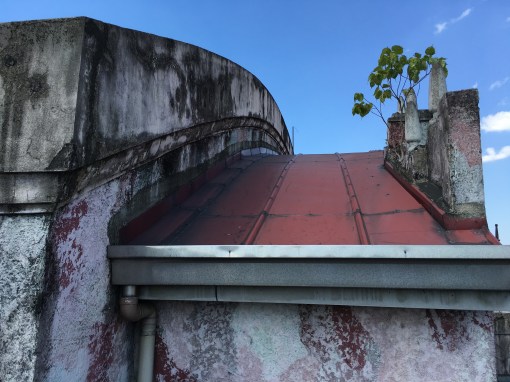
Out on the roofdeck, beneath the Moorish spires and the batik-inspired tiles, a small tree had sunk its rope-like roots into the masonry. I found myself hoping that it would be spared the restorer’s saw. Reprieves beget reprieves, and it would provide a fine organic testament to the Metropolitan’s endurance. (See more pics from our walking tour here.)

IMG_8072.jpg


Penman No. 192: Reveling in the Risqué

IMG_7981.JPG

Penman for Monday, March 21, 2016


ONE THING I always knew but have seen more evidence of lately is that fact that when women get together, wonderful and even magical things happen. I suppose it has to do with the female predisposition to cooperate (versus the male impulse to compete). Case in point: the hugely successful literary reading billed as “Wordello,” which I plugged in this corner last month.

It had been conceived as a fund-raising project by the ladies of the Likhaan Creative Writing Foundation for the benefit of, among others, the UP Institute of Creative Writing (which I head, so I have a million reasons to be appreciative). But it turned out to be much more than just another reading of poetry and prose, mindful of how such events rarely go beyond sedate, even solemn undertakings where people stand up and mumble before politely attentive audiences.

This was one evening devoted to reveling in the risqué, to pushing the boundaries of the acceptable in a way that brought us back to the freer, more spirited Sixties. Remarkably, it had been organized by a group of middle-aged women as proper and as pedigreed as they come, people you’d normally associate with golf and afternoon tea. But the Likhaan ladies are also very fine writers in their own right, mentored by no less than Jing Hidalgo, and quite a few of them have taken classes with us in UP, so it was no surprise to find them indulging their subversive side.

I’d never been to the venue at the Green Sun on Chino Roces Avenue Extension, and when Beng and I got there last March 5, we expected to walk into just another hotel-and-restaurant lobby setup. Instead, a large corner of the place had been transformed, just for the evening, into a virtual bordello, with ladies in bare backs and slinky black lingerie well, slinking around. When I found my bearings, I was glad to run into and to chat with old friends like writers Charlson Ong, JB Capino (on a home visit from Illinois, where he’s been based), Carla Pacis, Cecille Lopez Lilles, Mabek Kawsek, Linda Panlilio, Bambi Harper, and Cesar Aljama, as well as BenCab and Annie Sarthou.

Most of the readings proved appropriately racy, and I had to explain that I had come as a bashful patron, choosing to read something fairly short and chaste. But elsewhere in the room, something smoky and sexy was going on. We had to leave a little early for another commitment that evening, so I asked Likhaan Foundation’s Chichi Lizot, the writer-translator busybody behind the project, to tell us what happened next, and how they put on such a good show in the first place. Here’s Chichi’s summing-up:

“We had heard of ‘poetry brothels,’ not only in New York and Paris, but also in other parts of the world. Were we ready for it here? The idea of presenting poetry, bordello-style, in a land of taboos was both daunting and exciting. It was then that ‘Wordello,’ coined by a poet and friend who joins some of us for drinks every so often, RayVi Sunico, was born.

“Working on the concept, pinning down sponsors, inviting poets, and finding a venue accessible to all began six months ago. Creating and feeding our social media sites got going in December. A handful of active members found friends along the way willing to help, spurred by the untrodden approach towards literature. There is something about the forbidden that excites.

IMG_7972.JPG

“Then came the evening of Wordello. Stepping into its entrance of beaded curtains after going through the ultra-modern corridors of Green Sun was like being transported into a secret world—of red, orange and magenta, of incense, alcohol, and erotica. It was a den of iniquity. It was Moulin Rouge—and much more. There were candles and Persian lamps. Carpets. Palm trees. Griffins standing guard. And in a cage, a masked executioner wielding an axe.

“The youngest in the audience must have been fifteen, the oldest, ninety-two. Some came in their chauffeur-driven imports, the others in jeepneys—any clothed, or rather, unclothed, comme il fallait. And as they hobnobbed with friends and strangers alike, they discovered a tarot reader of a monk in a nook somewhere. In a tent draped in extravagant silk, a body calligrapher was engrossed in a woman’s back, oblivious to spectators. Books and art pieces were up for grabs in different corners, incongruous yet fitting. The lively activity at the bar provided no respite to bartenders only eager to please. Omnipresent conversations thrived.

“And then from nowhere, a young poet delivered a line. Loud and clear. A male voice cried out from another corner. The room was stunned into silence. Yet another demanded attendance—this time female—delivering utterances from across the expanse of subdued light. Fifteen poets in a flash mob of sorts embarked us on a journey, harbingers all, of what was about to unfold. Their words were tame in comparison to the almost three hours of poetry, skits and the performing arts—mostly unbridled and unafraid. One or two in the audience left after the fifth number, scandalized. Most stayed, to either endure or embrace the words spoken by the inimitable and the sans pareil, and the fledgling.
IMG_7974.JPG

“The place was packed, denying access to waiters serving bar-chow. Seated comfortably in deep couches were the elderly. Many were happily relaxed on intricate pillows, risers, and carpets on the floor. Chairs had to be added in every space possible for the weary, but quite a few were content standing behind the bar or around divans, mesmerized.

“Sensei Shinobi, who performed the Japanese art of bondage on a defenseless but willing wisp of a woman, was saved for last. As we turned into voyeurs, watching with awe the dexterity with which Shinobi beautifully and artfully crafted rope around the young woman’s body, no one dared breathe. It was art in the sublime. And as he hoisted his model on a single metal ring that dangled from a scaffolding, and then twirled her around, a pin could have been dropped and heard.”

Bravo, Chichi, and merci beaucoup! Until the next iteration of what now deserves to be the year’s sauciest literary event.

IMG_7973.JPG


(Photos by Vidal Lim)