Qwertyman No. 176: Remembering CAB (1929-2025)

Qwertyman for Monday, December 15, 2025

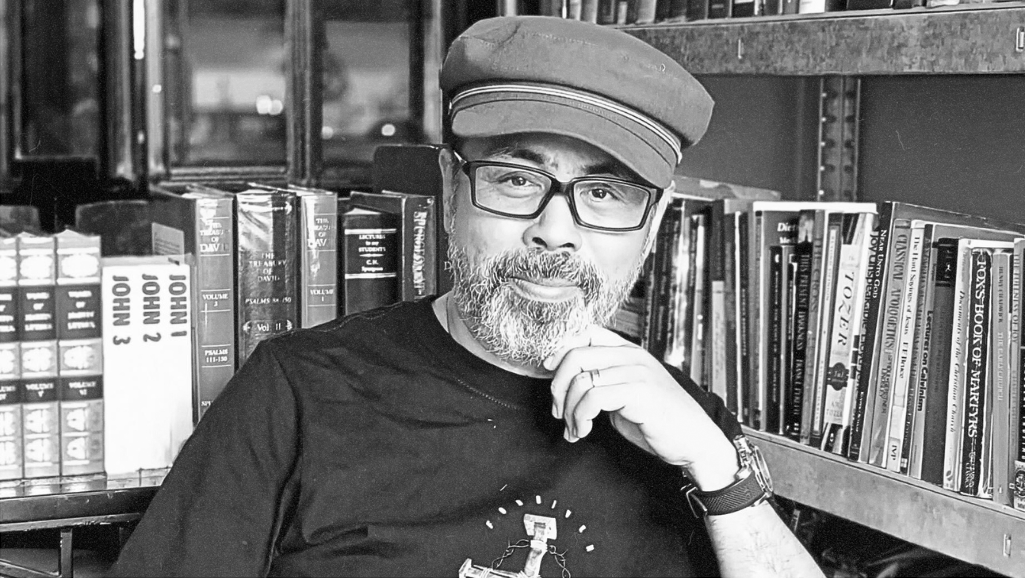
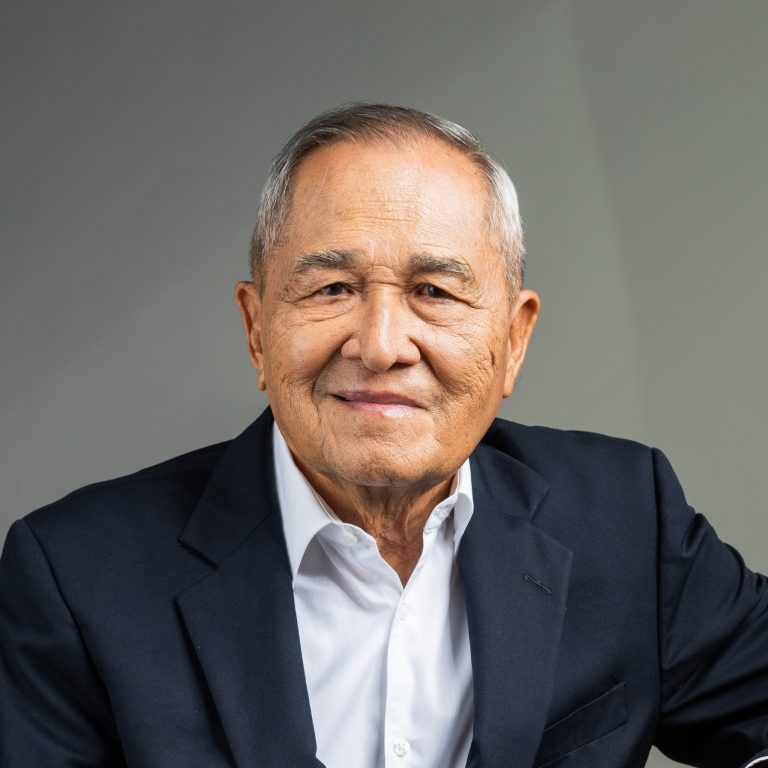
THE DEATH last week at the age of 95 of Cesar Augusto Buenaventura—known to his friends and associates as CAB—marked the passing of yet another member of that golden generation of Filipinos who lived through the Second World War and almost literally built and shaped Philippine industry and society in its aftermath. An engineer by training, CAB was also a management pioneer, a business leader, a civil libertarian, and a valued adviser to presidents. (As a former member of the UP Board of Regents, CAB would often text me for news about goings-on in Diliman, concerned as ever with the state of Philippine higher education and of UP’s role in it.)

I had the privilege of writing a yet-unpublished biography of the Buenaventura siblings (Cesar was followed by social worker Elisa, lawyer Chito, and banker Paeng). And while Cesar chose to self-publish his own three-volume biography a few years ago (I Have a Story to Tell), the original draft has many interesting anecdotes worth sharing with young Filipinos who barely know their economic history. Let me pull up this except you can keep in mind the next time you gas up at a Shell station, visit the UP Chapel, or see a DMCI building.

As soon as he graduated from UP in 1950, Cesar started looking for a job, and almost immediately found one with a man who would become an important influence in his life and a titan in the Philippine construction industry, David M. Consunji. Right after the war, Consunji began building houses—a skill then in high demand in the war-ravaged city—competing on the principle of “price plus quality.” David also made sure that he got the best people and paid them the best wages. And so a strapping 21-year-old named Cesar Buenaventura, fresh out of college, strode into Consunji’s office and got his first job, as Consunji himself recounts:

“In 1951, I hired my very first engineer, Cesar Buenaventura. He was then a young civil engineering graduate from UP who was waiting for the results of the board exams he had just taken. It was my brother Raul, his classmate in UP, who told him to see me because I was starting my own construction company. I thought he was very capable so I hired Cesar. 

“Soon after, we started doing our own projects, and among Cesar’s first assignments were three houses we were building in Forbes Park. Forbes was not yet a posh village then; land there was selling at just P4.00 to P6.00 per square meter. After that, Cesar and I did some more houses. I made Cesar the cost engineer and field engineer for our various other projects. He also took care of the payroll, which amounted to P15,000 to P20,000 a week.

“It was in the Laguna College project that Cesar took on greater responsibilities. While we were doing the plans, Cesar said, ‘Don’t bother hiring a structural engineer, I’ll do it. I asked him if he was sure he could do it and he said ‘Yes.’ Every time I would see him, long after the building was finished, I would tell him that it was still standing intact, even after several earthquakes, without a single crack on a wall.

“Cesar was my very first assistant, and even then, I could see that he would go far. I wanted him to stay with us, but he decided to go to the United States for graduate studies in 1952.”

(Upon returning from Lehigh University with his MS in Civil Engineering), Cesar rejoined Consunji for some work on the UP Chapel, which had been designed by a young architect named Leandro Locsin. Locsin had impressed Fr. Delaney with a small church he had designed in Victorias, and now he took on what would become one of his signature pieces, the UP Chapel. Fred Juinio served as structural engineer, with Dave Consunji as the builder. 

But armed with his Lehigh degree and eager to make full use of his new learning, Cesar could now consider more options. And the offers came. UP, for one, wanted him to teach, and was willing to pay him P400 a month. But a big petroleum company offered him P300 more, with his salary to be raised upon completing probation as an executive trainee. In 1956, Cesar went with Shell—a decision that would define the rest of his professional life.

In 1975, Cesar Buenaventura achieved what no other Filipino had up to that point by becoming president of Shell Philippines and Chief Executive Officer of the Shell Group of Companies.

Cesar’s rise to the helmsmanship of Shell also got the attention of someone in great need of executive talent: Ferdinand E. Marcos, president of the Philippines and, at that time, the country’s martial-law ruler. With the global oil crisis still hurting the Philippines in the wake of the Arab-Israeli war, Marcos put up the Philippine National Oil Company to explore for oil and develop alternative energy sources, and was scouting for the right man to head it. His eye fell on Cesar, who had just stepped up to the Shell presidency; surely such a man had the skills and the vision to head the new PNOC. Marcos had Buenaventura called to Malacañang. 

While he may have been honored to be offered the position, Cesar remembered his father’s admonition against serving in government. He went to see Marcos in the Palace. Luckily, before Marcos could make his pitch and demand Cesar’s commitment, a phone call from the First Lady, who was in New York, interrupted the conversation. Cesar used that break to gather his wits and to come up with the argument that such a move to government would be premature, coming so soon after his appointment as the first Filipino head of a major multinational company. Cesar suggested that he could serve the country’s interests better if he were able to persuade Shell to search for oil in the Philippines—which they eventually did. Marcos did not press the point, and Cesar was spared.

Yet more of Cesar’s friends would join Marcos’s Cabinet: David Consunji, as Secretary and later Minister of Public Works, Transportation, and Communication, then by Dean Fred Juinio in the same post, followed much later by Totoy Dans, when the Cabinet post was divided into two departments—Public Works, and Transportation and Communications. Consunji labored mightily to fight corruption in that notoriously graft-ridden department, only to find himself unceremoniously removed for refusing to play along. Dans followed the same straight and narrow path when took on the job in 1979, but he would later be, in Cesar’s eyes, unjustly vilified for his association with Marcos, even if he hadn’t enriched himself. 

So instead of taking what could have been a personally and politically costly detour into the Marcos government, Cesar Buenaventura managed to stay on at his beloved Shell, in a position he would hold with distinction for the next 14 years. 

Qwertyman No. 174: Doing the Doable

Qwertyman for Monday, December 1, 2025

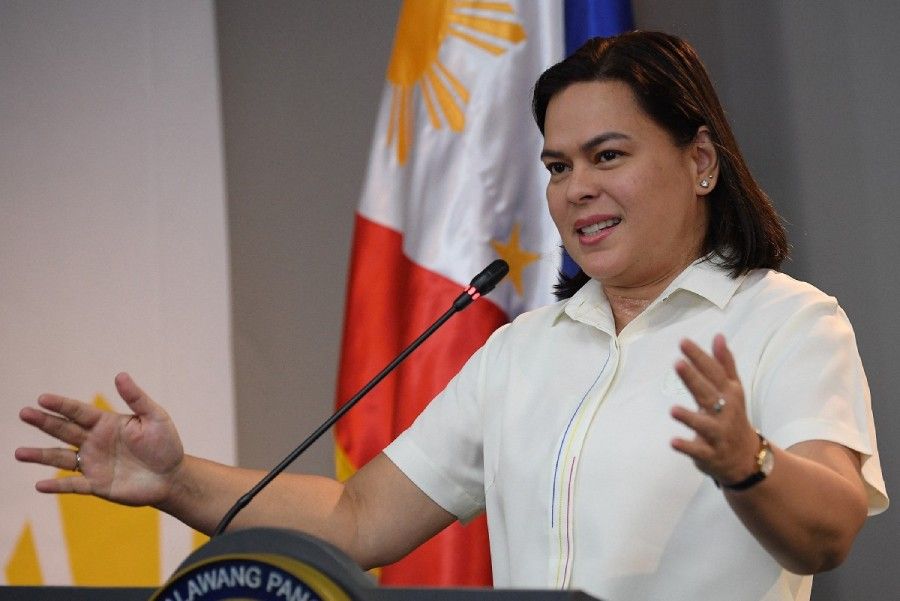
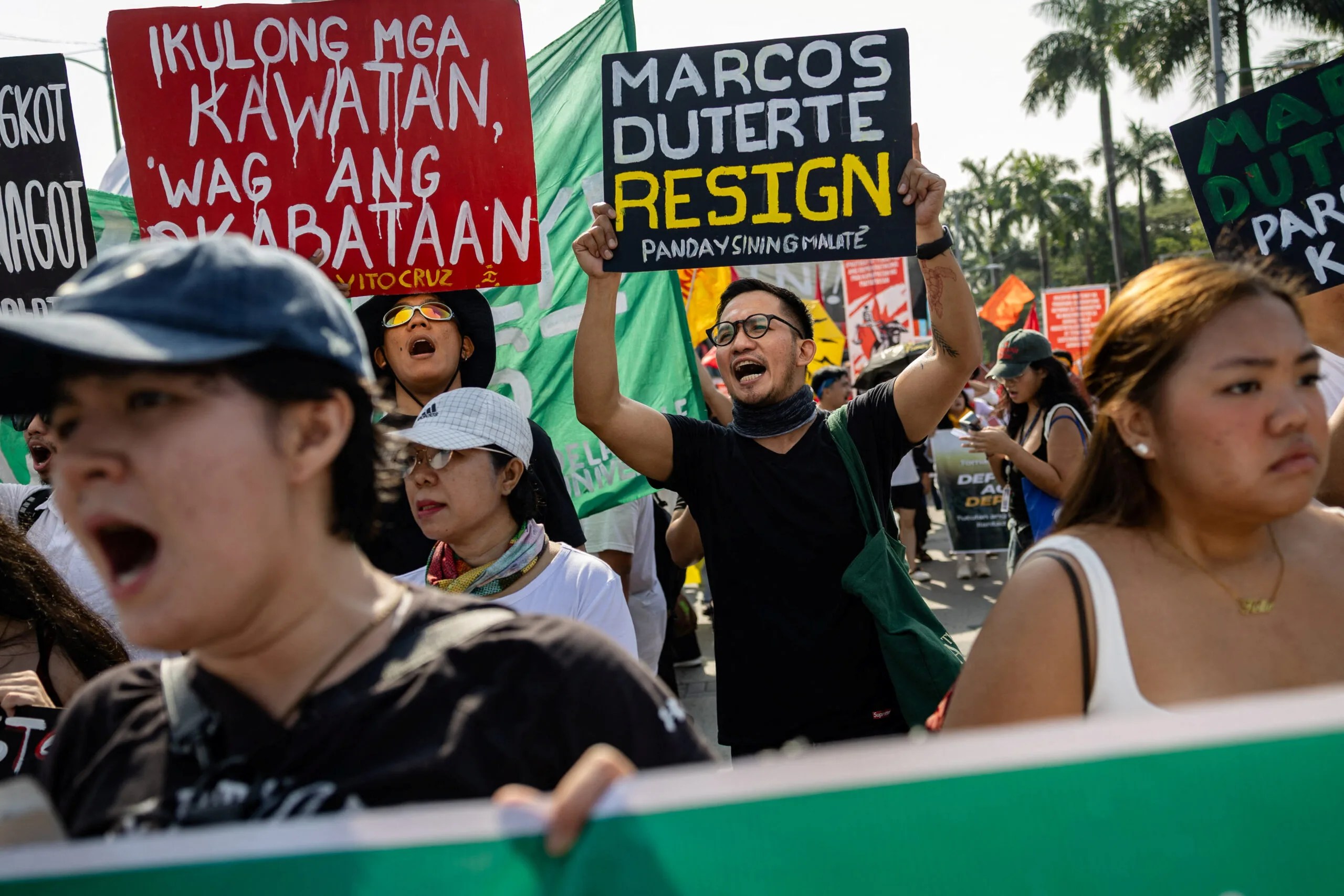
AS NOT a few placards in yesterday’s big anti-corruption march would have said, both President Bongbong Marcos and VP Sara Duterte should resign, along with everyone in public office implicated in the flood-control scandal and all the other shenanigans that have come to light over the past couple of months. 

That probably means half the government, but given the current public mood, the more the better, to give the nation a chance to rebuild itself on new foundations of moral rectitude and accountability. At least that’s the long view, supported by the Left among other parties who think that anything short of a national reset will simply paper over the problems and guarantee their comeback. 

It all sounds good, and it does make sense—except that, as we all know, it ain’t gonna happen. 

It’s about as realistic as the expectation that BBM will fall to his knees, own up to the Marcos billions, and ship all that money back to the Philippines on a FedEx plane for mass distribution, any more than VP Sara will admit to her father’s drug-fueled bloodlust, seek forgiveness of all the tokhang victims, and forsake her presidential ambitions. Let’s face it: the Marcos and Duterte dragons will be clawing at each other all the way to 2028. Meanwhile, what are we mere mortals supposed to do or to hope for? 

In the very least, we can ignore the DDS calls for BBM to step down and for Sara to take over, because there’s even less appetite for that than the Both-Resign demand. The Dutertes want to make hay of the moment, but the sun isn’t exactly shining on them. Despite their strong and well-funded social media efforts, the DDS camp seems pretty much in disarray, with Digong in jail, Sara in limbo until February (it tells me something that they approved the OVP’s 2026 budget in full—it’s for the office, not VP Sara, although she doesn’t seem to know the difference), Bato de la Rosa suddenly scarce, and their shot at a junta takeover badly misfiring. 

(The ICC’s predictable decision not to grant his interim release could in fact prove to be an ironic win. Digong at this point is useful only as emotional capital for Sara’s survival and triumph. His camp, I suspect, secretly wants him to stay in The Hague as a symbol of the Marcoses’ unforgivable perfidy. Bringing him back home will mean having to take care of a grumpy old man whose greatest ability—cursing—isn’t helping him much in his present situation; he was never a Leila de Lima, and certainly no Ninoy Aquino.)

All the players’ moves are interesting in this grand melodrama. I frankly can’t trust the Left, either, to show the way forward. Like a religion (did I hear someone say “Iglesia ni Cristo”?), the Left likes to flaunt its moral ascendancy—to “virtue-signal,” in today’s parlance—and its rock-solid grasp of the global and local situation from the Marxist standpoint. And yet it gets all tone-deaf and cross-eyed when it comes to picking its horses—ditching EDSA, but backing billionaire capitalist Manny Villar and then pseudo-nationalist and butcher Rodrigo Duterte for the presidency (should we even mention slaughtering comrades it deemed wayward in the Ahos campaign?). 

Interestingly, the INC also supported Duterte in 2016, and then BBM and Sara Duterte in 2022. While adopting some progressive liberals like Franklin Drilon, Risa Hontiveros, and more recently Bam Aquino and Kiko Pangilinan into its senatorial slate, it has also flexed its machinery behind Duterte surrogates Bong Go and Bato de la Rosa, as well as corruption-tainted Senators Joel Villanueva and Jinggoy Estrada. During its last mass rally last November 25 for “peace, transparency, and accountability,” however, it was careful to distance itself from recent calls for BBM’s resignation. In other words, the INC is the perfect straddler, the seguristathat makes sure it will survive and prosper under any administration, reportedly to secure key government appointments for its favored nominees.

That leaves us and our own wits, which—considering everyone’s else’s brain fog—might yet prove the most trustworthy.

In the realm of the doable, I want to see heads roll—as close to the top as the situation will allow. One way of looking at this, and strangely enough, is that the Filipino people aside, the party with the greatest stake in seeing this anti-corruption campaign through to the end (i.e., just short of the Palace) is PBBM himself. Having opened this Pandora’s box, he well knows that the only way he can keep his own head and hold sway over 2028 is to catch all those demons he released. I don’t know about you, but right now I’m desperate enough to let BBM finish his term in relative peace if he achieves nothing else than the herculean task of cleaning up the stables.

VP Sara’s impeachment trial should resume in February and will be a more efficient and definitive way to shut her out for good. But we have loads of senators, congressmen, department secretaries and undersecretaries, and lesser flunkies all caught up in this mess who should be held to account for their thievery. Hold the big bosses, the ultimate signatories, accountable, sure. But don’t let the second- and third-level enablers and functionaries off, because the message needs to be sent that complicity won’t pay—and that your sponsors will ditch you when things get too hot.

I want to see our courts work, overtime, to expedite the prosecution of these corruption cases. No pussyfooting, please, no Maguindanao massacre here. Let’s put a quick and decisive end to the kind of legalistic foolishness that lets a senator off the hook for a P30-million “private contribution,” with the judgment rendered by the Comelec commissioner who had previously served as that senator’s lawyer. How the heck can that be allowed to happen? What ethical universe are we in? The same goes for former Ombudsman Samuel Martires’ “forgetting” why he had kept secret his decision junking his predecessor’s carefully crafted case against Sen. Joel Villanueva. 

If the Comelec accepts Sen. Rodante Marcoleta’s ridiculous excuse that he kept millions of political donations off his report of campaign expenses because they were meant to be “secret,” then we should launch a million-people march not just against the likes of Marcoleta but also specifically against the Comelec to hound those charlatans out of office. That commissioner who couldn’t find the shame to recuse himself from his former client’s case should be impeached if he doesn’t resign.

I have no problem with people marching and screaming “Marcos, Duterte, resign!”, because we have billions of reasons to be upset with both. But I hope that doesn’t keep us from going after immediate and tangible if less-than-perfect results. Look at it this way—gut the body, and you’ve effectively chopped off the head.

(Photo from rappler.com)

Qwertyman No. 173: A Page from 1937

Qwertyman for Monday, November 24, 2025

I”M NOT a historian, although there are times I wish I were, and at an early crossroads in my youth, I actually had to choose between Literature and History for my major, settling for the former only because I thought I could finish it faster. But I’ve retained a lifelong interest in history, for the treasure trove of stories to be found in the past and for what those stories might foretell of the future. 

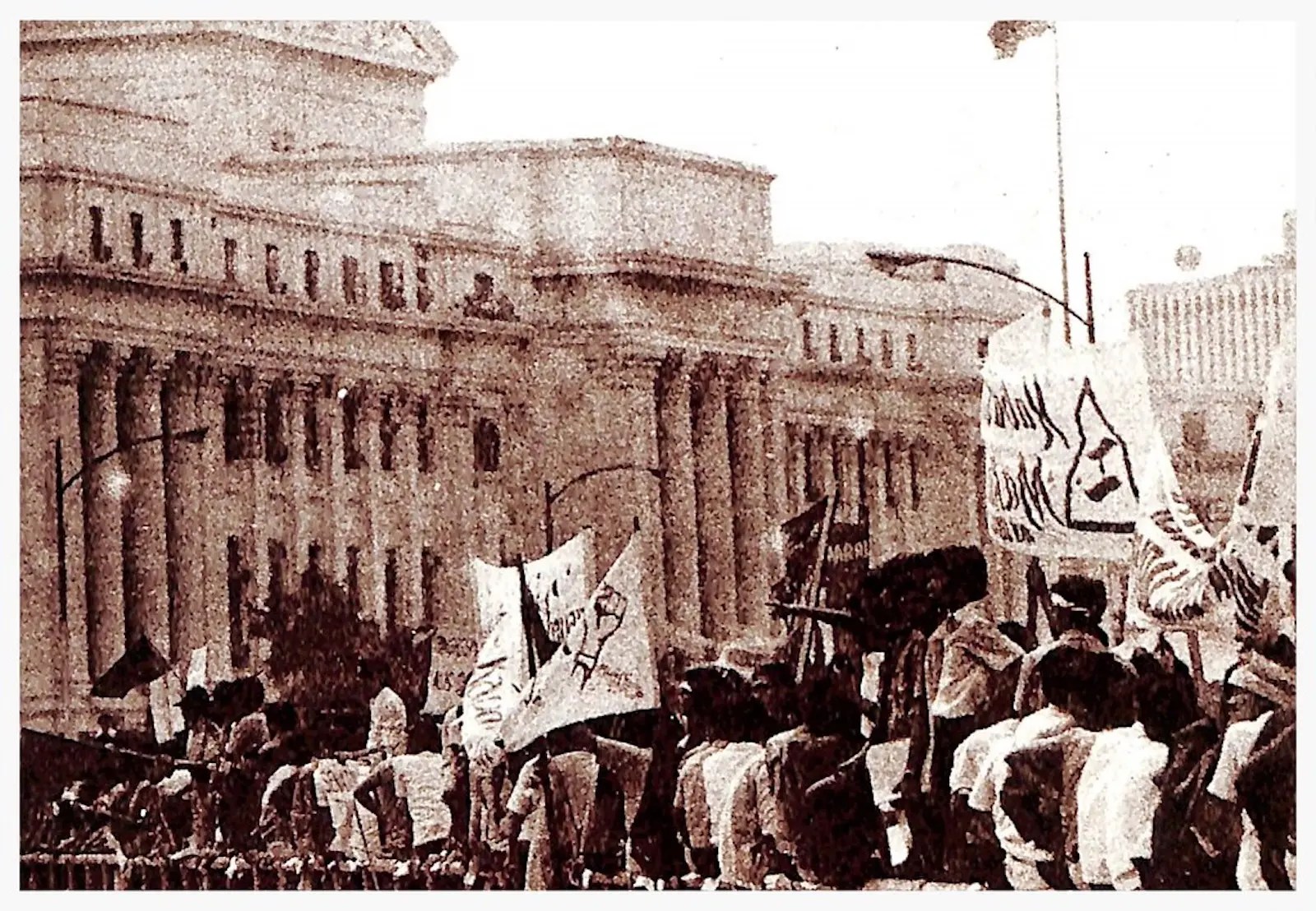
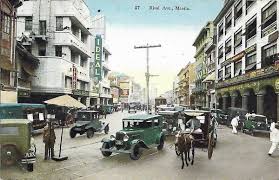
I’m particularly fascinated by the prewar period—what Filipinos of the midcentury looked back on as “peacetime” and what Carmen Guerrero Nakpil called our “fifty years in Hollywood,” which were enough to occlude much of the influence of our “three hundred fifty years in a convent” under the Spanish. It was an age of many transitions, from the jota to jazz, from the caruaje to the Chevrolet, from tradition to that liberative and all-embracing buzzword, the “modern.” Much of that went up in smoke during the Second World War, but you can still catch the ghost of this lost world on the Escolta, among other vestiges of our love-hate affair with America. (You might want to visit the Art Deco exhibition at the National Museum of Fine Arts, ongoing until May 2026; I have some items on display there.)

So entranced have I been by this time that I decided, during the pandemic, to set my third novel in it, at the birth of the Commonwealth and upon Quezon’s assumption of ultimate power, an upstairs-downstairs narrative about the comprador upper class and the world of the Manila Carnival set against the embers of the Sakdal uprising, the fuming and scheming Aguinaldistas, and the netherworld of printing-press Marxists and tranvia pickpockets. Progress has been slow because novels always take the back seat to life’s more pressing needs, but I still hope to get this done if it’s the last thing I do.

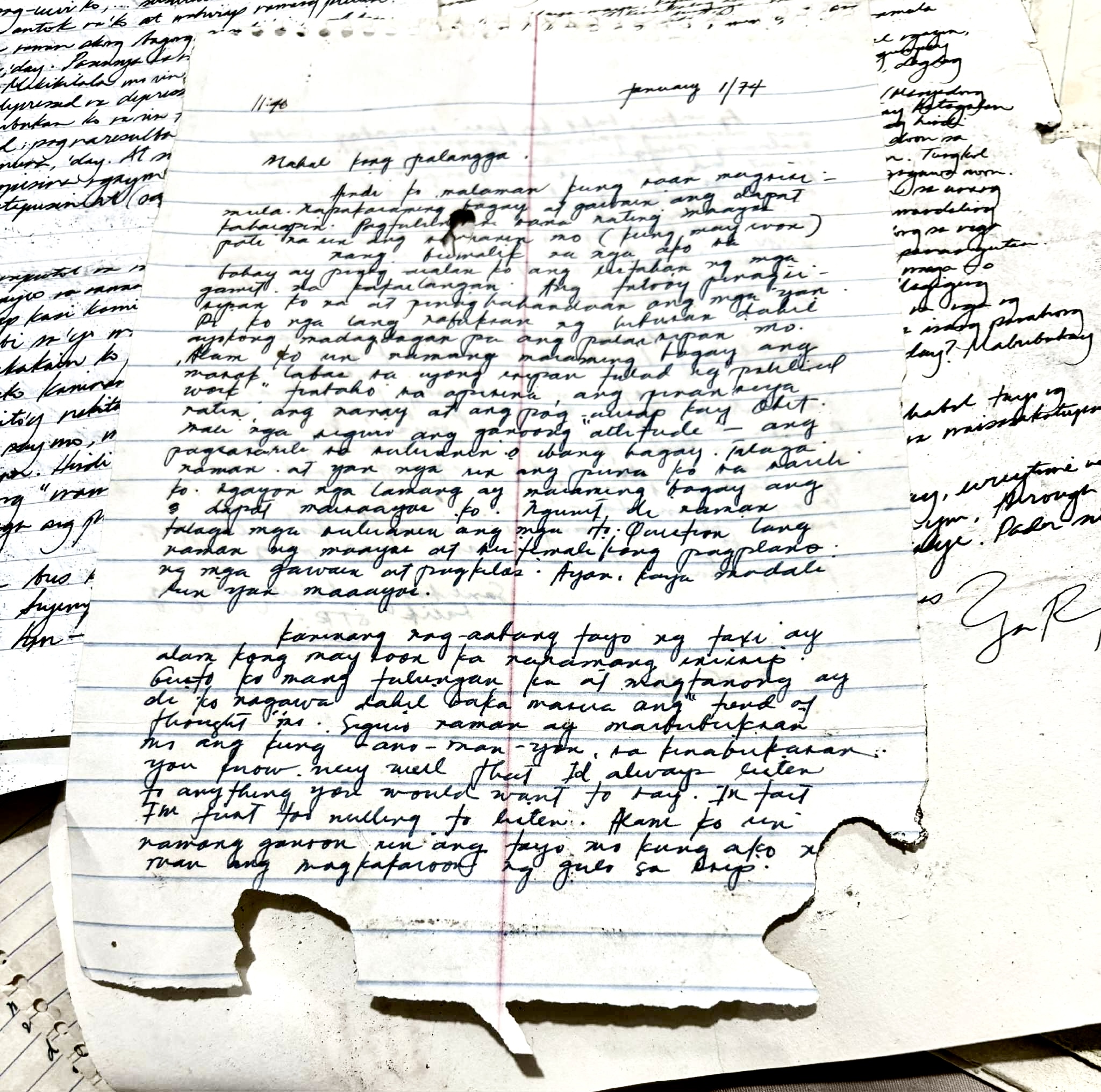
The research for the book, however, has brought its own rewards. Among my main sources for the background has been a slim volume—long out of print and now very  hard to find—titled The Radical Left on the Eve of War: A Political Memoir by James S. Allen (Quezon City: Foundation for Nationalist Studies, 1985). Allen (actually a pseudonym for Sol Auerbach) was an American scholar and journalist, an avowed Marxist who traveled to the Philippines in 1936 and 1938 with his wife Isabelle, also a member of the American Communist Party, to meet with local communists and socialists (then headed by Crisanto Evangelista and Pedro Abad Santos, respectively) and to get a sense of the Philippine situation under American rule. 

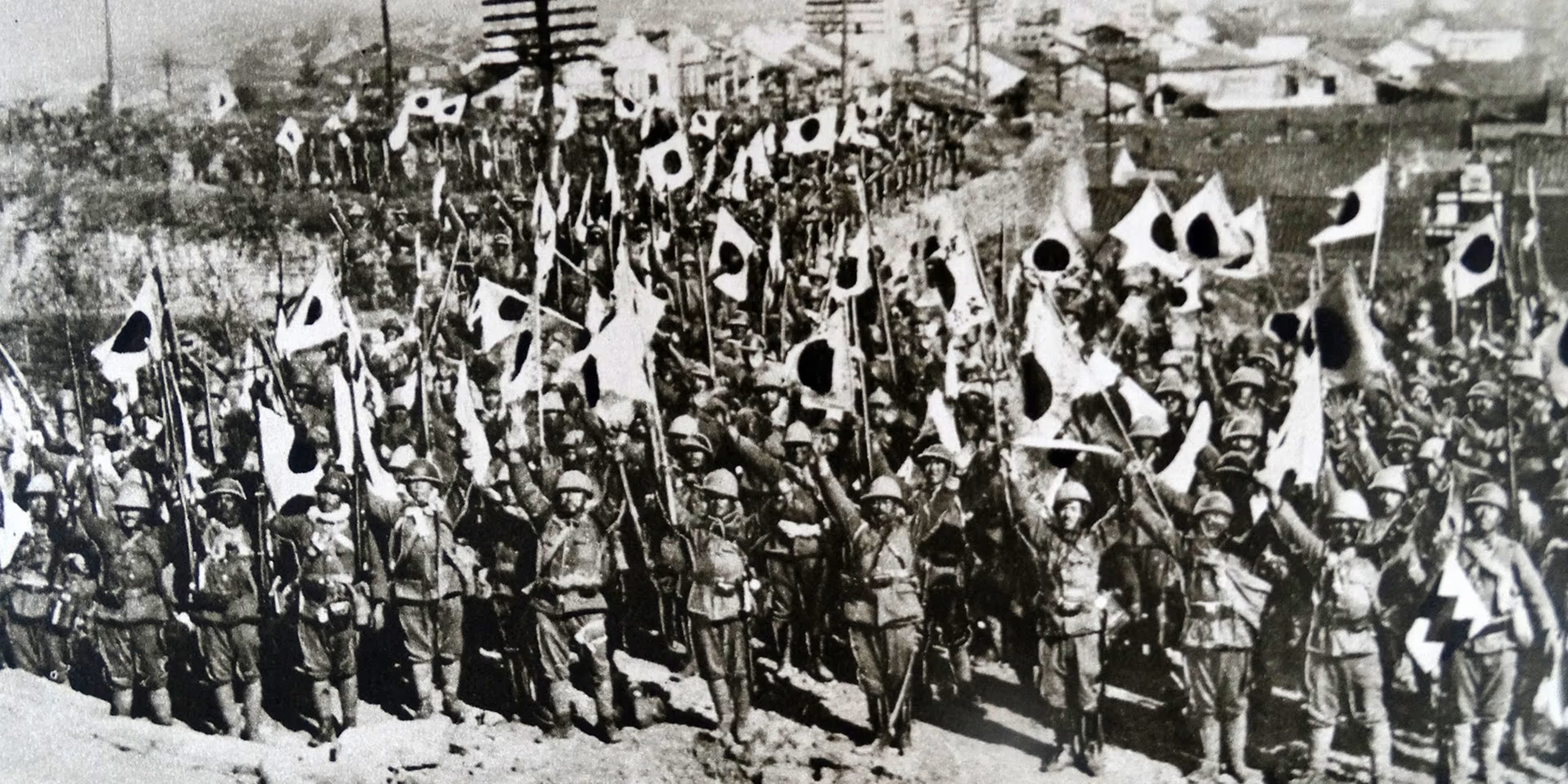
Even that early, the threat of a Japanese invasion was already looming on the horizon and causing great anxiety in the Philippines; Japan had earlier occupied Manchuria and as much as a quarter of the entirety of China by 1937. It seemed like a confrontation between Japan and the United States was inevitable, although some Filipino nationalists—fiercely anti-American—preferred to ally themselves with their fellow Asians than with prolonged white rule. At the same time, others like Pedro Abad Santos feared that the independence Quezon sought would be granted prematurely to give the US an excuse to abandon the islands and avoid confronting the Japanese. 

This is where I tell you why I’m bringing up James Allen’s memoirs this Monday—because of our present situation vis-à-vis China and (in one of history’s ironic reversals from victim to victimizer) its growing domination of the South China Sea. In Quezon, Filipinos had a leader who was deeply mistrusted and opposed by many; the United States’ willingness to defend the Philippines was in doubt; and the threat of a foreign invasion was clear and imminent. 

Allen actually sat down with Quezon for a long interview at the latter’s invitation, and was impressed by the man’s grasp of politics and his singular ambition. But the article that came out of that encounter displeased MLQ; Allen, after all, was still a communist at heart, which makes the following quotation—from a letter Allen would compose and send to his American colleagues in October 1937—even more interesting. I’ll leave it to you to observe the parallels, and to cast them against the Marcos-Duterte issues of our time.

“Filipino Marxists and radicals need to relate independence from the United States to the world crisis created by fascism. The immediate concern in the struggle for an independent and democratic Philippines is to safeguard the country against the threat of Japanese aggression. The objectives of complete independence from the United States and the internal democratic transformation must be obtained without endangering such gains as have been made or subjecting the country to new masters. The people must be awakened to the prime and pressing danger to their national existence. The United States is moving toward alignment with the democratic powers against the fascist bloc, albeit slowly and indecisively.


“Roosevelt is shifting somewhat toward the Left of Center to keep pace with his mass support from the surging labor movement and anti-fascist and anti-war popular sentiment. The national interests of the Philippines call for vigilance and precautions against Japanese aggression. This coincides with the interests of the United States in the Pacific area, and it would be folly not to take full advantage of this concurrence. In the broader perspective, the outcome of the struggle in China will be crucial for all the peoples of the Far East, and if the United States were to withdraw from the Philippines this would be a serious blow against China and encouragement to Japan’s designs upon Southeast Asia and the islands of the Pacific. The cause of Philippine independence at this time can best be served by cooperation with the United States.


“The situation also requires a change in the attitude toward Quezon, from frontal attack to critical support. Unprincipled opposition for the sake of opposition-as with some leading participants in the Popular Alliance is dangerous, for it plays into the hand of pro-Japanese elements and sentiments. Quezon certainly is not an anti-fascist, but he is not intriguing behind the scenes with Japan. The greatest opposition to his early independence plan comes from the landed proprietors, particularly the sugar barons, while it enjoys support among the people. The Popular Alliance should also support the plan, including provisions for mutually satisfactory economic, military and diplomatic collaboration after independence. Though Quezon is far from being a Cardenas or Roosevelt in his domestic policies, every effort should be made to move him away from his pro-fascist and land baron support by providing him with mass backing for such pro-labor and progressive measures as are included in his social justice program. In sum, the Popular Alliance should encourage a national democratic front devoted to the preservation of peace in the Pacific, the safeguarding of Philippine independence, and defense and extension of democracy in the country.”

Qwertyman No. 172: They Chose to Act

Qwertyman for Monday, November 17, 2025

AS A professional writer and editor, I take on many jobs that the other side of me—the fictionist, journalist, and teacher—usually wouldn’t get to do. I write biographies, speeches, and feature stories, among others, and while I do them to the best of my ability and to my clients’ satisfaction, they don’t always coincide with my personal interests, nor necessarily inspire me to think or act a certain way.

These past two years, however, I’ve been proud and privileged to perform a very special assignment that I’ve come to look forward to, because it renews my faith in people and my hopes for a better future—phrases that would otherwise just roll off the tongue like so many other tired and meaningless clichés. At 71, I’d like to believe that I’ve pretty much seen it all and can afford to be cynical, as even Gen Z’ers can affect—a bit prematurely, I think, but understandably so in this sad and sordid world of ours.

So it often comes as a surprise to be reminded that some good people persist at doing good if not great deeds, and that’s what this unique responsibility I’ve taken on is all about—writing the citations for the year’s Ramon Magsaysay Awards laureates, a task I inherited from RMAF stalwart Jim Rush and National Artist Resil Mojares. (Before I go any further I should clarify that I have nothing to do with the selection process, I am covered by an NDA—not even my wife gets to know the winners ahead of everyone else—and I cannot and do not cozy up to the likes of Hayao Miyazaki for selfies and signatures.)

This year only three laureates were chosen, but again the range and the depth of their accomplishments tell us that ordinary people can achieve extraordinary successes—not just for themselves but for society at large—with vision, faith, and perseverance, or what the Ramon Magsaysay Awards Foundation calls “greatness of spirit,” the common element among its 356 winners from 23 countries since 1957.

They included Shaheena Ali from the Maldives, an island-country that often appears in tourist brochures and websites as a tropical island paradise, surrounded by aquamarine waters ideal for snorkeling and fishing. Behind this idyllic façade, however, lies a murkier and unpleasant truth. Plastic pollution has befouled the island chain’s crystalline waters, threatening the marine ecosystem, the economy, and the health of its residents. Waste is either burned or tossed into the ocean, producing harmful smoke and microplastics. As a diver, photojournalist, and diving instructor herself, Ali often came literally face to face with the tides of trash clouding up the once-pristine waters of her beloved islands.

In 2015, deciding to fight back, Ali linked up with an NGO, Parley for the Oceans, to frame a comprehensive program to save the country’s waters from pollution and to turn plastic waste into a useful source of livelihood for the people. Today, as executive director of Parley Maldives, she oversees the implementation of their signature strategy: Avoid, Intercept, and Redesign (AIR) plastics for a better environment. With Ali, Parley has introduced plastic interception and collection sites in island communities and over seventy schools, leading over 700 collaborative cleanups along affected coastlines. Ali has also worked with the government to address climate change. “I go there to clean up with hope,” she says, “hope that my grandchildren will see whales in the ocean in their lifetime as I did growing up.”

For its part, India has become both an economic and political powerhouse, with many visible signs of its rising affluence. Despite the overall surge in growth, however, many rural and tribal girls have had no access to an adequate education. Because of this disparity, illiterate girls are forced to marry early, have children, and work—while culturally privileged males go to school. 

In 2005, a young graduate of the London School of Economics decided to return home to India to take on this challenge. Safeena Husain established the Foundation to Educate Girls Globally (FEGG) or “Educate Girls.” Starting out in Rajasthan, Educate Girls identified the neediest communities, brought unschooled or out-of-school girls into the classroom, and worked to keep them there until they were able to acquire credentials for higher education and gainful employment. 

The results were dramatic. What began with fifty pilot village schools reached over 30,000 villages across India’s most underserved regions, involving over two million girls, with a retention rate of over 90%. Educate Girls also launched Pragati, an open-schooling program that allows young women aged 15-29 to complete their education and avail themselves of lifelong opportunities. Its initial cohort of 300 learners has grown to over 31,500. “Girls’ education is the closest thing we have to a silver bullet to solve some of the world’s most difficult problems,” says Husain. “It is one of the best investments a country can make, impacting nine of the seventeen Sustainable Development Goals, including health, nutrition, and employment. By scaling our programs, deepening government partnerships, and embedding community-led solutions, we strive to create a brighter, more equitable future—one girl at a time.” 

The third awardee was no stranger to those of us long aware of his special ministry. Flaviano Antonio L. Villanueva or simply “Father Flavie” belongs to that breed of socially committed clergy for whom godliness is to be found not in the halls of influence and wealth but in the streets, among the poorest and the most forgotten. 

In 2015, he founded the Arnold Janssen Kalinga Center in Manila to provide “dignified care and service” to thousands of poor and marginalized Filipinos. Kalinga works to recreate the poor’s self-image, reclaim their self-respect, and restore their self-worth. Villanueva also led the effort to locate the bodies of victims of the government’s “war on drugs” where thousands of Filipinos were summarily executed. Often, their impoverished families could not secure permanent graves for them. Villanueva found the funds to exhume, cremate, inurn, and relocate the bodies to a proper resting place. This Paghilom program brought comfort to widows and orphans and allowed them to continue leading productive lives. “Justice can take many forms—among them, the recovery of one’s self-confidence, and forgiving oneself,” he says. Following the late Pope Francis’ example, he initiated showers for the homeless as both a literal and symbolic act of cleansing, to prepare them for a fresh start in life.

I always end up doing more than writing up these people’s stories—I learn from them, and am reminded that instead of just mouthing slogans and railing at the universe—at all the evil, the injustice, and the ugliness we have to live with—we can choose to act and to fight back, like these avatars of social action did. 

Qwertyman No. 171: “Quezon” as Theater

Qwertyman for Monday, November 10, 2025

I’M COMING late to the party, having been away for a couple of weeks, but even in faraway Frankfurt, I was itching to come home to see what the brouhaha over the “Quezon” movie was all about.

Rarely does a Pinoy movie stir a hornet’s nest like this one did, and even without seeing it, I took that as a good sign for our film industry, especially big-ticket projects which sometimes leave people wondering why they were even made.

What especially piqued my interest, of course, was the reaction of Quezon family members and friends who thought the old man’s cartoonish depiction as a womanizing, scheming, and power-hungry politician despicable.

Now, my own grandfathers led pretty quiet lives, so I’m sure that if anyone called them womanizing, scheming, and power-hungry, I’d be mighty upset, too.

The difference is, unlike my lolos and going by what the historians suggest, Manuel Luis Quezon seems to have been all of the above—which isn’t to say he wasn’t much more than all those negatives put together. It was apparently that “much more” that the Quezonistas were looking for—MLQ the patriot and freedom fighter—to balance out the picture, especially since most young Filipinos know nothing of the man except as a place-name. Had that been shown, the outrage might arguably have been muted, the image softened.

But of course that wasn’t what the movie’s makers were going for. As has already been noted by dozens of reviewers before me, “Quezon” is no documentary (and let’s not forget that even documentaries can be biased—just watch Leni Riefenstahl’s adoring portrayal of Hitler and his Nazis in her bizarrely beautiful “Triumph of the Will”). From the outset, it declares that it is mixing up history with “elements of fiction,” which is just as good as using that old commercial come-on, “based on a true story.”

I’m no historian—I’ll confess to being an enthusiast—but as it so happens, I’ve been a playwright, screenwriter, biographer, and fictionist at various points of my otherwise uneventful life, so I can probably speak to these issues with some experience. I can attest, for example, having written some biographies of the rich and famous, that families and descendants can inherit myths about their patriarchs, and treat and pr0pagate them as God’s own truth. 

My take is, I don’t think we should receive “Quezon” as history, biography, fiction, or even film. It’s theater (captured on film), and it declares itself as such right from the beginning, as I’ll shortly explain. This may be due to the fact that the script was co-written by one or our most accomplished playwrights, Rody Vera, alongside director Jerrold Tarog. His approach was explicitly stylized and non-realistic, from the use of silent-movie title cards, ghoulish makeup, and painted backdrops in the black-and-white sequences (including that almost balletic choreography of the young MLQ rising from the floor of his prison cell) to the conception and blocking of such scenes as those of Quezon working the floor of the House and the capitalist bosses gathering round the table. (If all this seems obvious and elementary, dear reader, my apologies—in these days of TikTok, I don’t know what people are looking at anymore).

So what if the movie is theater disguised as film? Does that explain or excuse its supposed excesses and exaggerations?

Well, theater is, almost by nature, exaggeration—movements and motives get simplified and magnified, the easier to get them across. Theater is agitational—it aims to provoke emotion, to bring people to their feet, clapping in delight or screaming in rage.

And that’s what “Quezon” did, didn’t it? It got its message across, effectively and efficiently, like a train on schedule, and taking it as theater, I found it roundly entertaining. By and large, the actors carried themselves off with aplomb, from Jericho Rosales’ masterful Quezon, Romnick Sarmenta’s comic-cool Osmeña (his was actually the most difficult role to play, to my mind), Mon Confiado’s aggrieved Aguinaldo, and Karylle’s restrained Aurora. The employment of the fictional journalist Joven Hernando was what a smart scriptwriter would do, to weave the narrative threads together. (Teaser: Quezon and Aguinaldo figure in the novel I’ve been writing about prewar Manila.)

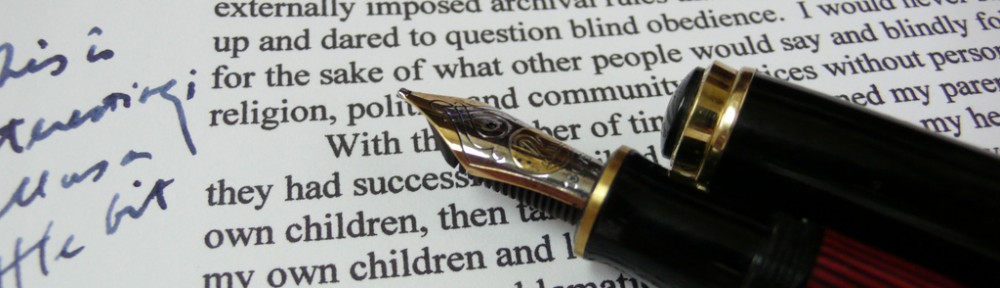
My quibbles have to do with minor complaints like (don’t be surprised) “Wrong period fountain pens again, all of them—why don’t they ever ask me?” (Quezon did hold his pen that odd way, though) and “Does every movie chess scene have to end with a checkmate?” I could have added “Why does everyone’s shirt and pants look fresh in a period movie?” but we’ll excuse those as theatrical costumes.

If there was anything I would have added to the content, it would have been a quiet moment of self-reflection, in which we realize just how Quezon sees himself. That alone might have lifted up his character from caricature.

The real Quezon seems to have been every bit as petty as the movie shows him to be, but also every bit as great, as it seems to have taken for granted.

Quezon had something of a history with the University of the Philippines, whose protesting students (one of them a young buck named Ferdinand Marcos, who accused Quezon of “frivolity” over all the dance parties in Malacañang) led him to ride into UP’s Padre Faura campus astride a white horse to either charm or intimidate them.

He had a long-running tiff with then UP President Rafael Palma over the Hare-Hawes-Cutting Act, and when Palma retired after ten hard years in the hot seat, citing a technicality, the government denied Palma the gratuity that was his due. When Palma died, however, Quezon reportedly went to his wake to deliver a eulogy worthy of the man.

You didn’t see that Quezon in the movie—and then again, maybe you did.

(Image from banknoteworld.com)

Qwertyman No. 170: The Truth Is Not Enough

Qwertyman for Monday, November 3, 2025

ON THE sidelines of the Frankfurt book fair, over many breakfasts and cups of coffee with fellow writers, the tangled web of Philippine politics inevitably came up for discussion, particularly at this juncture when it seems imperative to sort out the good from the bad (or, to account for the nuances of the moment, the better from the worse).

One interesting idea that came up from a seasoned journalist in the group was the suggestion to create a Truth Commission to receive the testimonies of tokhang survivors and the families of victims, presumably in support of the case against former President Rodrigo Duterte at the International Criminal Court. 

The legalities aside—as we don’t know if these statements would even be admissible as evidence—it was argued that what was more important was to compile a dossier of stories, for the people to know now and for the historians and critics to evaluate later. That way, whatever happens in the courts—including the possibility that nothing ever will—a trail of blood and accountability will have been established, an ineradicable record of state-sponsored crime against its own citizens. 

Most of us will recall that South Africa set up a Truth and Reconciliation Commission (TRC) in 1994—at the end of apartheid and upon the assumption to the presidency of Nelson Mandela—to hear from victims of human rights violations and to dispense justice, following the principle of “forgiveness over prosecution, and reparation over retaliation.” We ourselves briefly had a Philippine Truth Commission in 2010 at the urging of new President Noynoy Aquino, organized to investigate graft and corruption under the previous administration, until it was declared unconstitutional even before it could do any real work.

Mandela’s government supported the TRC, led by Archbishop (and later Nobel Peace Laureate) Desmond Tutu, keenly aware of the need to heal the deep wounds left by apartheid so South Africans could move forward to the bright new future that beckoned then.

But that was thirty years ago, and South Africa today remains far from Mandela’s vision of a just and prosperous “Rainbow Nation.” The country remains saddled with corruption and crime, lorded over by new political and economic elites. Despite some successes in its mission of bringing out the truth, in the eyes of many, the TRC failed in what people expected to follow: punishing the guilty and bringing restitution to the victims. (Interestingly, after initially planning to conduct its hearings behind closed doors, the TRC yielded to public pressure and allowed its hearings to be broadcast on radio and television, even appearing as a Sunday TV program.)

In an article for the Nelson Mandela Foundation published online last January, foundation consultant Verne Harris looked back on the TRC’s establishment and pointed out its weaknesses:

“The TRC made wide-ranging recommendations, so wide in fact that it would not be inaccurate to call them a provisional agenda for societal transformation. In my reading of the recommendations, three areas loomed largest in addition to the question of prosecutions: 1) for the longer term healing of a traumatized society to be supported, the state (guided by the ANC) had to find a way of turning the TRC’s own highly stylized performance of testimony into durable community-based spaces for remembering and storytelling; 2) the TRC’s limited short-term reparations work had to be expanded and connected to South Africa’s other special instruments for restitution in ways that would contribute meaningfully to a broader societal restructuring, informed fundamentally by a redistribution of wealth; and 3) the archive assembled by the TRC would have to be built on determinedly and made as accessible as possible both to the public and to the continuing work outlined above. All of these outcomes, of course, were structurally out of the TRC’s hands. They were in the hands of the ruling party and institutions of the state.

“The TRC got a lot wrong, without a doubt. But from the perspective of 2025, it is relatively easy to see that the fundamental failure of the TRC as an instrument of restitution and transformation has to do with the fact that the springboard which it created for continuing work was instead turned into an inert museum artefact by prevailing relations of power. Why did that happen? What went wrong?

“… Elements within the African National Congress (ANC), led by Nelson Mandela, had every intention of turning the TRC springboard into continuing longer term restorative work, but that after Mandela both the ANC and institutions of the state quickly became dominated by constellations of power having a vested interest in shelving TRC recommendations and simply moving on. So, for example, as Du Toit reminds us, in 1999 Mandela was crystal clear on the need for prosecutions: ‘Accountability does need to be established and, where evidence exists of a serious crime, prosecution should be instituted within a fixed time frame. That time frame needs to be realistic … for we cannot afford as a nation and as government to be saddled with unending judicial processes.’ And yet, the subsequent failure to take up prosecutions seriously—there have been a handful of isolated cases and a litany of laughable promises to ‘start the process’—has meant that the ANC has overseen what amounts to a blanket amnesty, the very outcome the leadership had rejected in the early 1990s.”

What we learn from here is that good intentions and even the truth itself can’t ever be enough; once the truth is out, speedy prosecution and commensurate punishment have to follow, or what began as a moral imperative ends up as a sham and eventually a betrayal of the public trust. This bears remembering when we look at the current work of the Independent Commission for Infrastructure, on the results of which a nation’s hopes for deep and overdue reform hang.

My own pedestrian response to the suggestion for a Truth Commission for extrajudicial killings during the Duterte regime was to dissent. Bringing out the truth was a good idea, I said—but we already have a Human Rights Commission to do that. Let it do its job. If it won’t—like an Ombudsman more interested in setting crooks free—then let’s exert pressure to put the right people in place.

It’s about time we put bloody revolutions, street uprisings, special commissions, and other such shortcuts to democracy aside. We have to make the system work, hold people (beginning with our leaders) accountable, and bring justice back to the mainstream. 

Penman No. 479: Postscript to Frankfurt

Penman for Sunday, November 2, 2025

IT WILLl be remembered as one of the largest, most complex, possibly most impactful—and yes, also most expensive and controversial—showcases of Filipino cultural and intellectual talent overseas, and above and beside all else, that fact alone will ensure that few things will remain the same for Philippine literature after Frankfurt 2025: it will be remembered.

Last month—officially from October 14 to 19, but with many other related engagements  before and after—the Philippines attended the 77th Frankfurter Buchmesse or FBM, better known as the Frankfurt Book Fair, in a stellar role as its Guest of Honor or GOH. Accorded yearly to a country with the talent, the energy, and the resources to rise to the challenge, GOH status involves setting up a national stand showcasing the best of that country’s recent publications, filling up a huge national pavilion with exhibits covering not only that country’s literature but also its music, visual art, film, food, and other cultural highlights, presenting a full program of literary discussions, book launches, off-site exhibits, and lectures, and, of course, bringing over a delegation of the country’s best writers and artists. 

It’s as much a job as it is an honor. Past honorees have predictably come mainly from the West, such as France (2017), Norway (2019), Spain (2022), and Italy (2024); only once before was Asia represented, by Indonesia in 2016. Little known to many then, Sen. Loren Legarda—the chief advocate for the arts and culture in the government—had already broached the idea of pushing for the Philippines as GOH in 2015. It took ten years, with a pandemic and two changes of government intervening, but Legarda finally secured the funds—coursed through the National Commission for Culture and the Arts and the National Book Development Board—for us to serve as GOH this year, announced a year earlier.

The Filipino delegates, over a hundred writers and creatives and as many publishers and journalists, took part in a program of about 150 events—talks, panel discussions, demonstrations, book launches, and performances—and ranged from Nobel Peace Prize winner and journalist Maria Ressa and National Artists Virgilio Almario, Ramon Santos, and Kidlat Tahimik to feminist humorist Bebang Siy, graphic novelist Jay Ignacio, poet Mookie Katigbak Lacuesta, and fellow STAR columnist AA Patawaran.

It was my third FBM, having gone for the first time in 2016 and then again last year, when the German translations of my novels Killing Time in a Warm Place and Soledad’s Sister were launched. This year, it was the Spanish translation of Soledad that was set to be launched at Frankfurt’s Instituto Cervantes. 

Those two previous exposures allowed me to appreciate our GOH role for what it was—a once-in-a-lifetime opportunity to put our best foot forward on the global stage. What began in the 1980s as a tiny booth with a few dozen books—which it still was when I first visited nine years ago—had become a full-on promotional campaign, not for the government (which did not object to outspoken critics of authoritarianism being on the delegation) and not even just for Philippine books and writers but for the Filipino people themselves. 

Six out of my eight events took place outside the FBM—two of them involving side-trips to Bad Berleburg in Germany and Zofingen in Switzerland—to bring us closer to local communities interested in what Filipinos were writing and thinking. Indeed my most memorable interactions were those with local Pinoys and with ordinary Germans and Swiss who asked us about everything from the current state of affairs (the resurgence of the Right in both the Philippines and Europe, Marcos and Duterte, the threat from China, the corruption scandal) to Filipino food and culture, the diaspora, the aswang, and inevitably, Jose Rizal, who completed the Noli in Germany and in whose tall and broad shadow we all worked.

Everywhere we went, in Frankfurt and beyond, the local Pinoy community embraced us, eager for news from home and proud to be represented, to hear their stories told in words they themselves could not articulate. “I’ve been living a hard life working here as a nurse in Mannheim,” Elmer Castigador Grampon told me, “and it brings tears to my eyes to see our people here, and to be seen differently.” 

A German lady accosted me on the street outside the exhibition hall and asked if I was the Filipino she had seen on TV explaining the Philippines, and we had our picture taken. A German author in his seventies, Dr. Rainer Werning, recounted how he had been in Manila during the First Quarter Storm and the Diliman Commune, had co-authored two books with Joma Sison since the late 1980s, and had described the Ahos purge in Mindanao and similar ops in other parts of the islands as the most tragic and saddest chapter in the history of the Philippine Left . A sweet and tiny Filipina-Swiss lady, Theresita Reyes Gauckler, brought trays of ube bread she had baked to our reception in Zofingen (the trays were wiped out). Multiply these connections by the hundreds of other Filipinos who participated in the FBM, and you have an idea of the positive energy generated by our visit.

From our indefatigable ambassador in Berlin, Susie Natividad, I learned about how Filipino migrant workers have to learn and pass a test in German to find jobs in Germany, a task even harder in Switzerland, where Swiss German is required. Despite these challenges, our compatriots have done us proud, as the maiden issue of Filipino Voices (The Ultimate Guide to Filipino Life in Switzerland) bears out. 

The FBM was as much a learning as it was a teaching experience for us, for which we all feel deeply grateful. By the time our group took our final bows on the stage in Zofingen—a small Swiss city that hosts writers from the GOH after the FBM as part of its own Literaturtage festival—I felt teary-eyed as well, amazed by how a few words exchanged across a room could spark the laughter of recognition that instantly defined our common humanity. 

I am under no illusion that GOH participation will dramatically expand our global literary footprint overnight, but it has created many new opportunities and openings for our younger writers to pursue in the years to come. It is a beginning and a means, not an end. The greater immediate impact will be to spur domestic literary production and publishing, to have a keener sense of readership, and to encourage the development of new forms of writing.

Sadly, a move to boycott the FBM by Filipino writers protesting what they saw to be Germany’s complicity with Israel’s genocidal war in Gaza has also impacted our literary community. (For the record, there were Palestinian writers—and even an Iranian. delegation—at the FBM, with whom Filipino writers interacted in a forum. There was also a Palestinian book fair across the fairgrounds.)

I have long taken it as my mission to promote an awareness of our work overseas and had opposed the boycott from the very beginning for reasons I have already given many times elsewhere. Many hurtful words have been spoken and many friendships frayed or broken, to which I will add no more, except to quote the Palestinian-Ukrainian refugee Zoya Miari, who visited the Philippine pavilion and sent our delegates this message afterward:

“I’m on my way from Frankfurt back to Zurich, and I’m filled with so much love that I can’t stop thinking about the love I felt in the Philippine Pavilion. I came back today to the Pavilion to say goodbye, not to a specific person, but to the whole community. This space became a safe space for me, one where I deeply felt a sense of belonging.

“I’m writing these words to thank you and your people for creating a space where

I, where we, felt heard and seen. That in itself is such a powerful impact. I know some people decided to stay in the Philippines to show support for the Palestinians, and I want to say that I hear and see them, and I thank them. And to those who decided to come, to resist by existing, by speaking up, by showing up, by connecting the dots, by being present and by sharing stories, I also hear you, see you, and deeply thank you.

“We all share the same intention: to stand for justice, to fight against injustice, and we’re all doing it in the best way we know how. I truly believe that the first step to changing the world is to create safe spaces where people are deeply heard and seen. When stories are heard and seen, we begin to share our vulnerabilities and showing that side of ourselves is an act of love. Through this collectiveness, this solidarity, we fight for collective liberation.”

Qwertyman No. 169: Chatting with Apo Lakay

Qwertyman for Monday, October 27, 2025

I’VE BEEN going out on a limb for the past few weeks, touting the possibility that President Bongbong Marcos—yes, the son of our martial-law dictator—might be considering doing the right thing and leaving behind his own legacy, one notably different from Apo Lakay’s. 

Comes now the news that his spokesperson Atty. Claire Castro—who can usually be counted on for ripostes that elevate the reasonableness of her boss—has been quoted as saying that BBM has been losing sleep conversing with his father (who, let’s not forget, passed on 36 years ago), presumably in search of some advice from the afterlife on contentious current events.

My first reaction was to wonder why their otherworldly tete-a-tete had to take so long, if father and son agreed on the same things. Could they possibly have been arguing? What about? Bank accounts? Sibling rivalry? Forks in the road? And if their encounters leave him sleepless, could BBM be that bothered by FM’s post-mortem perorations on statecraft and, well, craftiness?

This is where VP Sara Duterte enjoys the slight advantage, her father being at least alive and still capable of earthly conversation with Sara on such timely topics as “Your stepmother wants to sell the house in Davao” and “Now where did Pulong’s P51 billion in flood-control funds go?” The Hague may be almost 12,000 kilometers away from Manila, but flying there (on her own dime, she’s careful to insist) beats telepathy or telephony, and creates photo ops with the DDS faithful that nocturnal chit-chats with the departed can’t. (There’s a really nasty and cruel rumor going around, I have to note, that the VP actually wants PRRD to remain and rot away in the Netherlands until he expires—don’t ask me how—just before the May 2028 election, gifting her, like Cory Aquino did on Noynoy’s behalf in 2010, with a wave of sympathy votes. I don’t know if I should applaud or deplore the Pinoy’s political imagination, but there it is.)

Here in Germany, where I’ve just attended the 77th Frankfurt Book Fair where the Philippines was this year’s Guest of Honor and therefore the exotic insect under the microscope, the one inevitable question raised in my many reading and speaking events was “What do you think of the current political situation in your country, and of the fact that another Marcos is now leading it?”

It’s a question I’ve thought about a lot, with or without Frankfurt, and you’ve seen some elements of my answer to it right here in Qwertyman. Pitching these ideas to a foreign audience is a bit more challenging because you don’t have the time to present and explain the details of the context, and you certainly don’t want to lie. 

I’m not the Philippine ambassador, I said to them, so I can and will be frank, but if I seem to equivocate then it’s because the situation isn’t as simple as it looks. Yes, BBM is the dictator’s son and yes, I went to prison as a teenager for seven months—many stayed in far longer—under martial law. Yes, I campaigned for his presidential opponent, Leni Robredo, whom I still believe would have made a better president—and yet could.

But very recently, I noted, PBBM has been making moves that have surprised many, for their effects if not their intentions. Whatever he was thinking at the time, his public disclosure of the bigtime contractors likely tied to multibillion-peso scams that some politicians aided and profited from has shaken the country to its core. The public outrage and demand for justice has been so loud and widespread that it has gone far beyond infrastructure into a searing re-examination of corruption in every aspect and at every level of our government and society.

I brought in the Duterte factor, the continuing threat from his own Vice President and former ally, for whom BBM’s surrender of her father to the International Criminal Court could only be unforgivable. The flood-control scandal and its connection with the Dutertistas was, therefore, a bomb set off by BBM for his own political and personal survival, but one with many unintended consequences and casualties, including some of Marcos’ own soldiers, and still possibly he himself, should the stain reach into the Palace as it has been threatening to (with gleeful encouragement from the DDS).

I don’t know how well the Germans understood or accepted my reading—heck, I’m sure many Filipinos don’t—but when you put over a hundred Filipino creative writers and journalists together for a week, some points of consensus are bound to emerge over the breakfasts and endless cups of coffee. Among them: (1) 2028 can’t come soon enough; (2) BBM should double down on the kind of confidence-building measures that will shore up the rest of his presidency, like pursuing the anti-corruption campaign to the fullest, no matter what; (3) only an alliance between idealist (but sufficiently grounded) moderates and BBM’s best people (not to forget his resources) can hope to stop a Duterte restoration.

I’d tell that to my dad, who died almost 30 years ago and who, to be honest and as close as we were, I haven’t seen much of in my dreams. But like BBM and his papa, we’d likely be up all night. Having passed away while the country was still in the capable hands of “Steady Eddie,” when it seemed that Ramos’ vision of “Philippines 2000” was going to deliver us into a new millennium of political stability and economic growth, Tatay would probably crawl right back into his grave were he to be given a day off to witness what we’ve done since.

(Image from The Independentˆ)

Qwertyman No. 168: A Vote at the Vatican

Qwertyman for Monday, October 20, 2025

iN GERMANY right now attending the 77th Frankfurter Buchmesse or Frankfurt Book Fair as a member of the Philippine delegation, I’ve been fortunate to engage in many interesting discussions with German journalists and fellow writers from all over. But one of the most important and frankly troubling conversations was one I had with a Filipino writer now based in Italy, someone with a deep knowledge and understanding of the political situation in his home country and particularly in Mindanao.

“There are two Philippine embassies in what most of us simply call Italy,” my source explained to me. “One is in Rome, and the other, called the Philippine embassy to the Holy See, is in Vatican City, which is a sovereign city-state. Most overseas Filipinos in Italy—over 100,000 of them, mostly domestic helpers and nurses—cast their votes for Philippine elections in our embassy in Rome. Those in the Vatican—priests, nuns, and other religious workers—vote there.”

“And so?”

“This is where it gets interesting. During the most recent midterm elections, where OFWs could vote for senator, there were 23 votes cast at the Vatican for Apollo Quiboloy.”

I had to let that sink in for a moment. “Wait a minute—you’re telling me that two dozen Catholic priests, nuns, and whoever at the Vatican voted for a disgraced and now imprisoned cult leader who calls himself the Appointed Son of God and New Owner of the Universe? Are you sure?”

“I couldn’t believe it myself,” he answered, “so I double-checked that with our embassy there, and they confirmed that it was true: Pastor Quiboloy got 23 votes in the Vatican. Now, I can try to understand if some Filipino Catholics would still vote for Duterte despite everything, but Quiboloy?” He shuddered. “That shows how far we have to go, and how we can’t assume that the Dutertes are spent as a political force.”

I had to laugh at his story, but it was laughter of the nervous kind, born out of irony than mirth. “Here we are in Frankfurt,” I said, “attending the world’s largest and oldest fair devoted to books and literature, to novels and fiction of the most imaginative variety, with many of us having a hard time selling our stories, and then comes along this Quiboloy tale that seems to show that people will believe the craziest things. This is fiction, popular fiction!”

You had to see the humor in the situation—I can easily imagine a cartoon depicting a soutaned priest receiving absolution from Quiboloy garbed in, well, shiny robes befitting a New Owner of the Universe—but its implications were anything but comic. It meant that presumably sane deeply spiritual men and women, living and working at the very heart of the Catholic faith that defined their lives, had found common cause with an accused sex trafficker and abuser of minors. Sure, the accusations remain just that until they’re proven, and sure, these Vatican voters were merely exercising their democratic rights. 

But really? Quiboloy? Might the pastor’s claim of bearing “the exact DNA of the Almighty Father and the New Jerusalem” and of being “the bodily manifestation of the unseen God” have resonated with them? Could they have been enticed by his devotion to “enthroning prosperity and abundance, and (being) a trustworthy steward of the Father’s financial business on earth”? 

Whatever the reason, it’s clear that the Pinoy’s political imagination is capacious enough to combine disparate perspectives and philosophies into one noggin. Pope Leo? Sure, obey. Senator Quiboloy? Sure, support. 

All throughout my talks here in Frankfurt, I’ve been asked who and what the modern Filipino is, and my best response has been to assert that the Filipino (and the Filipino nation) continues to be a work-in-progress, a compound of various historical and cultural influences contending for primacy. An example I conveniently cite is that of a New People’s Army cadre, presumably Marxist, who remains a practicing Christian and prays to Jesus, but who also begs the indulgence of resident spirits when he passes an anthill in the forest. We’re seguristas, investing in alternative fortunes. 

That’s not to say we don’t have people who think only one way and not the other—thankfully many if not most of us still stand on some kind of principle—but the exceptions make more interesting subjects of study. In this regard, Quiboloy’s Vatican voters may have been DDS who saw no contradiction between their Catholic faith and Dutertismo (something we’ve seen and continue to see among the religious, especially in Mindanao). 

I suddenly recalled an article published on Rappler in July 2020 by Fr. Amado Picardal, CSSR, who wondered aloud why so many of his colleagues, including a university president, openly rallied behind a man who cursed God and the Pope. He wrote: “In the religious community where I was living, most supported his candidacy, and I felt like a lonely voice warning them about the dire consequences…. One confrere proudly told me to my face that he was voting for Duterte, knowing my stance. A seminarian wore a Du30 bracelet. There were three confreres who posted their photos on Facebook doing a fist bump. A contemplative nun campaigned on Facebook for him and even made her pet dog wear a Du30 collar.” Fr. Amado offered some explanations: regionalism, the Left’s deluded belief in Duterte’s progressive pretensions, his strongman appeal. 

Given these, the Vatican result makes more sense, without offering any comfort to those of us who might have been under the illusion that proximity to the Vicar of Christ and Successor to the Prince of the Apostles induced enlightenment. Being the New Owner of the Universe apparently exerts more power, even from prison, and we should be afraid, be very afraid.

(Image from aleteia.org)

Qwertyman No. 166: Though the Heavens Fall

Qwertyman for Monday, October 6, 2025

IT’S BEEN the rising refrain of some friends in media, academia, and the coffeeshop crowd—mostly somewhat to my left—to insist (and, I believe, arguably so) that there is nothing fundamentally different between BBM and Sara, between the families and factions of the ruling class they represent, and between their lust for power and money. Therefore, the correct call to the people in this situation, regardless of the consequences, can only be “Down with both of them! BBM and Sara, resign!” Those Latinate lawyers had a term for it: “fiat justitia, ruat caelum”—let justice be done, though the heavens may fall. 

For the plotters of a recently rumored coup, the heavens falling would have meant the replacement of both Marcos and Duterte with a 30-person junta that would include, as juntas go, retired military generals, civilian leaders, and a couple of clergymen. (What, no writers and artists? Thumbs down!) That plot was dead even before it got off the ground, and perhaps thankfully so—a 30-person junta already sounds worse than a 24-person Senate, and something in me resists the idea of having Catholic priests (or Protestant pastors, or Muslim imams, etc.) in any kind of executive capacity in government.

Yes, the people are marching in the streets and are in the mood for the public execution of their plunderers. Our trust and confidence in our leaders has been so badly abused and misplaced that we are now drowning in cynicism and disbelief, certain only in the fact that we are being stolen from by someone, somewhere, somehow.

Nevertheless I sense no great appetite for a revolutionary regime change that will only unsettle things even more. If anything, what we want is certainty and predictability—that the law will be applied and take its course, that the wrongdoers will be identified, prosecuted, and punished, and that proper and ample restitution will be made for their crimes, so that we can all move along as a reasonably functioning society. 

Not to say that everything will be just peachy once the robber-contractors and their patrons are exposed and put in chains, but that the alert will have been sounded, the people awakened, and the bar raised much higher for aspirants to public office in 2028 and beyond. The progressives and middle forces couldn’t have been handed a greater gift: corruption has to be the top election issue, because it affects the poor more visibly now than any other, especially those who can’t escape the floodwaters while their congressman jets off to France.

It’s a problem and a crisis big enough for another EDSA (not to mention all the coup attempts that followed EDSA), but the first EDSA taught us that a sudden change of people at the top, no matter how good the replacements are, doesn’t guarantee deep and lasting change; it merely opens the door for a new set of crooks to come in, and for some old ones to return. EDSA 1 wasn’t a waste; aside from the relief it brought, it was a lesson we needed badly to learn. But have we?

Until our electorate learns to recognize and to vote for its own best interests, no amount of EDSAs short of the bloody revolution and the mass guillotining we’re all trying to avoid will change the composition of the Congress, the Senate, and the executives they work with. The current crisis is the best and also the most painful teaching point to have come along to show Filipinos who and what exactly they’ve been voting for, and who’s been paying for all those dole-outs come Election Day—no other than themselves, from the money that should have been spent on keeping them alive and well. Vote for the corrupt, and you kill yourself and your family. You are being bribed today to be stolen from tomorrow.

The challenge now is to get that message through, make it stick, and not allow it to be muddled by clever counter-propaganda and by possibly well-meant but adventurous calls for regime change. 

Coup or resignation, neither nor both of these will happen. The coup was stillborn and could have led to worse. If the Marcoses and Dutertes are as thick-skinned as their critics make them out to be, then they will brazen it out, ruat caelum

The way forward can be lit up by the facts that will emerge out of the many parallel investigations now taking place into the infrastructure scam and wheresoever it may lead—not just at the Independent Commission on Infrastructure, but also in the even more independent media.

The enemies of the truth know how easy it is not just to distort the truth, but to destroy the truth-sayers. They did it to Leila de Lima with the sordid expose of a private relationship that, even if it were true, was her own business. They put NBN-ZTE whistleblower Jun Lozada behind bars.

Unlike many others, I am willing to let the albeit imperfectly constituted ICI do its work—but quickly and transparently, please—and to judge it by its results. We can expect that no one facing the ICI will come clean with the truth, the whole truth, and nothing but the truth. We will be dealing instead with a complex puzzle, putting it together piece by irregular piece until the broad and inescapable picture of systemic corruption emerges, with every part and element detailed—from delivery boys and drivers to district engineers to Cabinet-level officials to congressmen, senators, and ultimately to the highest offices of the land. 

The Vice President is already involved—it was the corruption in her office, after all, that led to her impeachment in Congress. Inevitably this circuit of corruption will come around to the Office of the President and to its signing power over whatever budget proposal it receives and presumably reviews; the only question will be that of BBM’s personal culpability and what of it, if any, can be proven.

That could yet be the ultimate test of BBM himself, of our democracy, and of whether, after all’s been said and done, it may time for another regime change outside of the ballot box; fiat justitia, ruat caelum.