Qwertyman No. 163: Redemption and Reversal

Qwertyman for Monday, September 15, 2025

“Enormity” is a word I rarely use in my writing, because I still take it in its traditional, original meaning, which is that of “a great evil, a grave crime or sin.” I would use it in the sense of “the enormity of the Holocaust, in which Adolf Hitler exterminated six million Jews” as well as in “the enormity of Israel’s genocidal assault on the people of Gaza, employing bombing and starvation to bend Palestinians to its will.”

But it has so often been misused as an alternative to “enormousness,” to mean “very large” or “very big” in relation to size, that most modern dictionaries have relented and accepted that secondary definition.

Last week, listening to Sen. Ping Lacson’s revelations about gargantuan sums of money changing hands and being blown at the casinos not by business magnates or heirs to billions but by subalterns at the Department of Public Works and Highways, I saw no inconsistency whatsoever between the word’s two meanings. It was both one and the other, wrongdoing on such a scale that made you wonder if this was still our country, if we still had laws to fall back on, and for how much longer our people would be willing to endure this kind of abuse before the dam breaks and a biblical flood of justice bursts forth to sweep away the evil in our midst.

The quoted sums were mindboggling enough: five DPWH district and assistant engineers in Bulacan accounted for almost P1 billion in casino losses, as reported by Pagcor to Lacson. A district engineer—there were 186 of them at the DPWH last year, according to the Department of Budget and Management—earns a monthly salary of almost P230,000. It’s nothing to sneeze at (my salary as a Full Professor 12 in UP was half that when I retired in 2019, and Filipino minimum wage earners still make less than P20,000 a month), and you could live very comfortably on it if you lead a prudent existence. But who needs prudence when you have tens of millions of pesos in kickbacks to play with at baccarat or roulette?

The theft isn’t even the real crime, the true enormity here; it’s what that money should have been used for, but wasn’t—the prevention of human suffering through public works projects that have instead remained unfinished or grossly substandard. Those engineers weren’t playing with cash and chips—they were playing with lives and futures, the fortunes of entire families and communities gone with a wrong turn of the dice, followed by a casual shrug and a reach for more of the endless chips. 

Forgive these murderous thoughts, but for this alone, once proven guilty, those miscreants deserve to be hanged, or banished to a prison that floods at high tide. One might add that if Digong Duterte had launched a tokhang campaign against the corrupt—but we all know why he couldn’t have—perhaps he wouldn’t be watching windmills from his window now.

Our righteous indignation aside, it’s clear that the buck should and will stop with no other than President Bongbong Marcos, who after all began all this with his surprising and explosive public revelation of the top contractors’ names. Whatever his initial or ulterior motive may have been, that’s practically been rendered moot by the massive outrage and political drama arising over the past few weeks as a result of his action and of the continuing Senate and Congressional investigations. 

In the immediate future, much will hinge on the independent commission that BBM is organizing to probe the issue and on its efficacy. In an ironic turn of history, its credibility will have to match that of the Agrava Commission, whose conclusion that Ninoy’s assassination was the result of a military conspiracy helped to eventually bring his father’s regime down.

But since irony seems to be a strong and inescapable feature of our political life, it may be the perfect time and opportunity for the dictator’s son to become his own man, to redeem his part of the family name, and to prove his doubters and detractors (this martial-law ex-prisoner among them) wrong. He can do that by finding the courage and resolve to pursue this business of weeding out systemic corruption—just beginning with our public works—to its farthest possible conclusion, no matter who or what gets in the way.

Surely PBBM would not have trumpeted this initiative against corruption if he did not expect the money trail to lead back to some of his closest associates and supporters, and even to his family—who, as no one will or should forget, have long stood accused of plunder in the billions, well before the Discayas and their company discovered the short road to riches. The Marcoses may have dodged payment for those debts through favorable court rulings predictably secured upon BBM’s presidential victory, but he cannot escape this responsibility now.

Any attempt to pause or to mute the investigations into this ugly mess will only backfire on BBM and his presidency and invite suspicions of his complicity in these scandals. His only real option is to seize the moment, press on, and do the right thing even if and until it hurts.

I can see many of my liberal cohorts grimacing at the notion that a man we once derided for his profligacy and lack of discipline could lead such a brave and sweeping reform of our society and government, and I have to admit that I too shall remain a skeptic until I see solid results coming out of these investigations. Dismissals and bans won’t be enough for the erring officials and contractors; we want jail time for the guilty and adequate restitution, we want the big fish to fry.

But I’m a great believer in the possibility and the power of redemption (think Saul of Tarsus and Ignatius of Loyola). Even in this seemingly quixotic mission of reforming government, very few people will come to the table with perfectly clean hands—or remain unsullied to the grave. Ultimately less important than their private faults is their public performance—what they did, over the course of their lifetime, to serve the public good and/or to make amends for their past misdeeds and shortcomings.

BBM may be far from the path to sainthood, but he can still employ the vast powers of his office to strengthen constitutional governance in this country, in dramatic reversal of his father’s legacy. If he fails to do that, then he will merely confirm what we have suspected all along. I pray, for once, that we were wrong.

Qwertyman No. 162: Honor Among Thieves

Qwertyman for Monday, September 8, 2025

A FRATERNITY brother—even older than I am and a longtime emigrant—asked in our group chat, “Didn’t we have corruption before? Why all this outrage now?” So I had to bring him up to speed. “It’s the scale, brother. We’re talking billions, possibly even trillions of public funds being pocketed by contractors who don’t deliver the goods and put people’s lives at risk, in cahoots with politicians they’ve bought or are related to.”

I told him the story of Rudy Cuenca, the self-confessed Marcos crony and boss of the Construction and Development Corporation of the Philippines, which built some of the largest infrastructure projects under martial law, including the North and South Expressways and San Juanico Bridge, and made Rudy a very rich man. 

I happened to co-write Cuenca’s biography (Builder of Bridges: The Rudy Cuenca Story, Anvil Publishing, 2010, unfortunately long out of print), after initially refusing to do so. “Why should I write your book,” I told him at our first meeting, “when your boss put me in prison?” “I have stories to tell,” he said, and did he. It wasn’t the money—which ironically was a pittance—but the curiosity that got me on board. And just to show it wasn’t a hack job on my part, the book became a finalist for the National Book Awards for that year.

Rudy—who died two years ago—wasn’t an engineer and didn’t even finish college, but he learned the ropes of contracting doing small bridge projects under the watchful eye of US Army engineers who had him redo the job at a loss if it was substandard. Because American reparations money was involved, the Americans made sure it was well spent. 

Cuenca soon learned the other, non-technical aspects of the business. To move up, you had to pay up. I interviewed him in 2009-2010 in his modest office along EDSA near Guadalupe—any aura of big wealth and power had long been dimmed by years of exile and dealing with lawsuits—and at that time, he lamented the fact that corruption had gone over the top. A cool and down-to-earth kind of guy, he told me in so many words that (and I paraphrase) “In my time, nobody asked, but you gave. The amount was reasonable, and you dealt with just one person. Today, you’re told up front how much to pay, an outrageous sum, and you keep paying up the ladder.” 

While his statements may be self-serving and certainly liable to be interrogated, they should and do raise eyebrows:

“In the late ‘60s, we were looking for funding and supplies for the food terminal. We talked to a bunch of German suppliers, and during our discussion they asked us, why is it that the Japanese get called to work with Philippine projects? I said, you know, the Japanese have a style of business that you don’t understand—they know how to give gifts. And they don’t give gifts before, they give gifts after. But you guys are so decent, that’s why you don’t get jobs here. 

“There was already corruption at that time, but it was not rampant and as grossly done as it is done now. If before people would overprice by about 5 or 10 percent, now it’s about 30 percent. 

“You know, construction is the best source of graft. What Imelda did were seven-day wonders. I didn’t want to have anything to do with those. I was only involved with the reclamation of the area for the Cultural Center. They paid us, but her manager wanted his kickback. Imelda had her own group of contractors, and that’s where they all made money.

“But it wasn’t just then. Do you remember when Pinatubo erupted? The job then was to clear lahar. Now there’s a place in Daly City, San Francisco, that’s known as Lahar City. The people who live there are Pampangueños who earned lots of money because of the lahar. 

“Also during Ramos’ time, Ambuklao Dam was silting. As the dam silts, the ground level goes up, and the water gets smaller, so you have to desilt it. Here comes the contractor with a dredger. But instead of doing a proper sounding first, they raised everything, so that difference got factored into the job. 

“I don’t have any concrete proof of corruption in the current administration, but I think it’s safe to say that graft and corruption will always be present, especially in our government. I have heard that contractors—my brother is still a contractor himself—supposedly deliver money to a Cabinet member, who then turns it over to someone in the Palace. But nobody can say that. If you’re at the top, you have a fence, and only the closest people should be able to touch you so that you’re isolated. 

“I once told Secretary Vigilar that to reduce corruption in Public Works, they should follow a 10-year plan for big projects, meaning that you will pay the contractor 10 years after the project has been completed to your satisfaction and has been transferred to you. That way the contractor will not be as willing to pay off anyone while the project is ongoing because if he does, he’ll be liable for the quality of the work that he has done.”

When I asked him why the roads in places like Malaysia seem much better than ours, he said: “It’s simply a matter of greed. In Malaysia there’s also corruption—I’ve lived there, I should know—but the thieves there make their money by overpricing the materials. Here in the Philippines people are extraordinarily greedy. Not only do they overprice, they also steal the materials. The cement’s deficient, the gravel’s deficient. So the thing crumbles that easily.” In other words, there was honor among thieves; sure, they stole, but at least they built up to spec.

That was 15 years ago, back when the Discayas and their like were probably driving around in Toyota Corollas and buying microwaveable meals at the 7-11. 

One day Rudy got up from our interview and said he was going somewhere—to meet up with the new DPWH secretary, Rogelio “Babes” Singson, to offer some unsolicited advice on how to reduce corruption in his department. I don’t know if that meeting or that chat ever happened, but barely a month ago, in a TV interview, Singson was quoted as saying that “In my full six years at the DPWH, I spent only P182 billion for flood control. Look at the 2025 budget with this insertion—where did the P350 billion go?” 

I never thought I’d miss a Marcos crony, but I’m missing Rudy Cuenca now, as an expert witness to help us sort out this sordid mess. 

Qwertyman No. 161: Torre for Senator

Qwertyman for Monday, September 1, 2025

CAN THERE be any question that the logical next step for cashiered PNP Chief Gen. Nicolas Torre is to run for senator?

The next elections are still three years away; the newly sworn-in senators haven’t even warmed their seats. But the public disgust with the current crop—coupled with Torre’s elevation to hero status—just might create enough momentum and leave enough time for a new wave of Torre-type do-gooders to emerge and coalesce for 2028. The ongoing swell of public outrage against massive corruption in our public works could well become the trigger for a broader and more enduring coalition for good government. 

Many remain skeptical of President Bongbong Marcos’ resolve to pursue this drive to its politically torturous conclusion, but such a coalition—which can tap moderate elements from within the administration’s ranks—could force BBM’s hand, being the only viable option to a DDS resurgence in 2028. 

Let’s get this clear: BBM may not be our idea of a progressive democrat, and he’s been making the right noises not because he found religion, but because a Duterte comeback will threaten the Marcoses with more vicious punishment than they ever got from Cory Aquino. 

Still, it can only be a boon for the middle forces if he helps rather than hinders this brewing tsunami he was at least partially responsible for initiating when he publicly called out those divinely blessed contractors by name. We still don’t know what impelled him to take that extraordinary step, but now that the cat is out of the bag, there’s no pushing it back in, and the people won’t take anything less than decisive action against the greedy rich. You can feel the anger forming out there, the mob right out of Les Miserables taking to the streets, prepared to lynch the next billionaire who flaunts his or her Rolls-Royce umbrella while the poor drown in the floods. 

And the message is getting through: ostentation is in retreat, the Birkins and the Bentleys vanishing from Instagram beneath temporary covers until the wave subsides. But will it? How can it, when, trembling and fuming in their fortresses, the objects of our attention continue to manifest consternation rather than contrition? I love it when one of these clueless ingenues, in the midst of the uproar, protests that her family “owes nothing to the Filipino people, because the government paid for services (they) delivered.” 

The pretty miss obviously never heard Lady Thatcher, or even saw her meme reminding us that “The government has no money. It’s all your money.” (The full quotation, from a Conservative Party conference in Blackpool in 1983, goes thus: “Let us never forget this fundamental truth: the State has no source of money other than money which people earn themselves. If the State wishes to spend more it can do so only by borrowing your savings or by taxing you more. It is no good thinking that someone else will pay—that ‘someone else’ is you. There is no such thing as public money; there is only taxpayers’ money.”)

This brings us back to Gen. Torre, who showed the kind of resolve we’ve long hoped to see in our leaders by attempting to clean up and straighten out a national police force badly begrimed by President Duterte’s tokhang campaign and by its continuing involvement in such nefarious cases as the apparent murder and disappearance of at least 34 sabungeros

It seems odd that we civil libertarians should be supporting a general—and one who was ostensibly fired for ignoring his civilian superiors—but this was a man who went against the grain, who employed his authority for the tangible public good in ways that his predecessors (and yes, those civilian superiors) never did. Can people be blamed for thinking that one Torre is worth more than two or three Remullas when it comes to the delivery of public service?

And Torre was right in rejecting the notion of being designated an “anti-corruption czar” in charge of prosecuting corrupt contractors and their cohorts in government. It’s a trap and a setup, for the inevitable failure of which Torre will once again be the fall guy. Does anyone really believe that yet another toothless commission—on top of all the anti-graft and anti-corruption agencies we’ve seen come and go, and all the laws we already have in place—will solve this mess? 

The Senate could and should have been that commission, but it’s too laughably compromised to investigate its own, and their brethren in the Lower House. Perhaps we should begin by driving the crooks out of both Houses of Congress, and replacing them with men and women of fundamental virtue, honor, and decency: our Vico Sottos and Heidi Mendozas, among others. And yes, I would even include Baguio Mayor Benjamin Magalong in this list, despite his professed and unapologetic gratitude for President Duterte’s assistance to his city during the pandemic. His loyalty, he says, is to the people of Baguio, and I would rather believe him than all those jokers and poseurs in power who speak of corruption and even of establishing “Scam Prevention Centers” when they should be holding up a mirror to their own faces.

Hmmm, maybe that’s a good idea for our next rally against corruption—let’s bring hand mirrors, the way Hong Kong protesters carried yellow umbrellas to fight for their rights in 2014 and South Koreans lit candles to demand President Park Geun-hye’s resignation in 2016—the “Mirror Movement” to shame public officials and the filthy rich. Mga kapal-mukha, mga walanghiya. Not that we truly expect them to change, but that we expect to change them. Torre for senator!

Qwertyman No. 160: Not More Ampao

Qwertyman for Monday, August 25, 2025

IT MAY be too soon if not downright foolish to believe that President Bongbong Marcos’ recent focus on massive corruption in public works projects represents a turning point in his presidency, and is more than another political stunt designed to shore up his popularity after the disastrous results of the recent midterm election. Critics have been quick to point out the irony of a man from a family accused of shamelessly plundering the nation’s coffers and winning back the presidency to avoid restitution now manifesting his “anger” over the billions lost to crooked contractors from the same rapacious elite—even singling out a flimsy dam project in Bulacan as just so much air-filled ampao.

And yet, despite all the predictable and understandable skepticism, I’m willing to bet my low-budget house that many millions of Filipinos of all political stripes would grudgingly if not happily forgive BBM for all his perceived debts and shortcomings if he were to follow through on this initiative with unflinching resolve. Let’s not even talk about sincerity, of which only concrete action and results will bear ample proof. 

What we need and want to see is BBM employing all the powers of his office to bring the massively corrupt to justice, to ensure the full delivery of what the public paid for with its hard-earned money, and to redeem himself and the Marcos name with acts of virtue redounding to the public good. Those acts could be worth more than the many billions his parents were charged with spiriting away—some of which has been recovered, and the rest of which the courts have effectively condoned and we will never see. With three years left on his presidency, BBM might as well use the time to attempt to do what all of his predecessors miserably failed at—go against the grain of the political culture that brought him to power and, for once, uphold the public over personal interest.

As even his detractors concede, BBM has already scored highly on two counts: his departure from Rodrigo Duterte’s catastrophic “war on drugs” that claimed thousands of innocent lives, and also from Duterte’s craven submission to China’s takeover of our territory in the West Philippine Sea. Whatever his ulterior motives may have been, his banishment of former President Duterte to the International Criminal Court at the Hague was widely applauded as a definitive step forward for human rights albeit a major political risk and a clear severance of ties to his “Uniteam” running mate, VP Sara Duterte. 

These measures—and the government’s dismissal of POGOs—were enough to make self-avowed “Kakampink” influencers such as the writer behind the Juan Luna Blog declare that “So here I am—a Kakampink still rooted in my principles—saying this with guarded optimism: This version of Bongbong Marcos is not the Marcos we feared. And if he keeps choosing accountability over loyalty, and stability over revenge, then maybe—just maybe—the Philippines has a chance to move forward.” 

Even among the moderates and indeed the Left, there seems to have arisen the general consensus that for all his problematic pedigree and personal flaws, Bongbong Marcos remains infinitely better and more “presidential” than his predecessor. And I’m sure he knows it, well enough to cultivate the image of a reasonable and well-spoken leader, the kind we porma-prone Pinoys find reassuring, at ease in the company of the world’s A-listers, in crisp barongs and smart gray suits, and most recently wearing glasses that make him look more thoughtful than ever. In short, pretty much everything the old man Digong was not (which, it should be noted, may have been the very same bugoy traits that sent the Davaoeño to the Palace and continue to endear him to the DDS faithful). Whoever his stylist is, she’s earned her keep. 

That said, his administration has been far from stellar in its performance. BBM has had the benefit of good Cabinet members such as Defense Secretary Gilberto Teodoro and Transportation Secretary Vince Dizon, as well as a capable and adept spokesperson in Atty. Claire Castro. (Let’s not forget that, on paper, his father had some of the best-educated Cabinet members ever—none of whom proved strong enough to bridle that regime’s excesses.) But Filipinos cannot and should not easily forget the fiscal folly of the Maharlika Fund with which Marcos II began (and about which we have since heard almost nothing), as well as our runaway debt, the dismal state of our primary education, the lack of housing and basic social services for our poor, and yes, those infernal floods that brought up all the corruption in our infrastructure programs to the surface, so starkly that BBM had no choice but to name names and point fingers.

The question now is where all that finger-pointing will lead. Some fingers will be pointing back at the President’s own political entourage as the enablers behind the billion-peso scams that he now seems so outraged by, as if they had been hatched just yesterday behind his back. Observers have noted that Congress can’t even investigate these scams, with so many of its own members likely to be implicated as either the contractors or beneficiaries in question. And for the cherry on top of the icing, consider the absurdity of a sitting senator—whose family business profited vastly from road diversions and who himself did nothing as a Cabinet member to staunch the outflow of public money into private pockets—now filing a bill to establish the Philippine Scam Prevention Center. Good Lord. Did I just hear someone say “Regulatory capture?”

Whatever we may like or dislike him for, right now, only Bongbong Marcos can sort out this mess and let the axe fall where it may—if he’s really serious about righting historic wrongs and leaving a positive legacy behind him. There’s time enough to do it—but is the will there? In his message acknowledging Ninoy Aquino Day last week—something we didn’t really expect—BBM called the occasion “an invitation to govern with sobriety, conscience, and foresight. Our commemoration achieves meaning when the lessons of the past are reflected in our actions and in the moral architecture of (our) institutions.” I hope that lofty rhetoric has real substance to it, and not just more ampao.

Qwertyman No. 158: Other Battles to Fight

Qwertyman for Monday, August 11, 2025

A LOT has been said this past week about the 12-0 decision of the Supreme Court on the impeachment case against Vice President Sara Duterte essentially supporting her contention that the one-year rule against bringing up new impeachment charges had been violated by the House of Representatives, and pushing back the earliest date for any resumption of such charges to February 6, 2026.

Predictably, the decision raised a storm of protest involving no less than former Justices of the Court, our top legal luminaries and lawyers’ organizations, and key media and political personalities who accused the Court of judicial overreach. On the other side were somewhat more muted voices calling for respecting the Court’s judgment—including, surprisingly or otherwise, a very sedate Sen. de la Rosa, now all flush with legal wisdom and temperance; to be fair, some of these people were hardly Duterte fans, but likely just citizens tired of all the bashing going on. (The Senate’s subsequent vote to “archive” the impeachment complaint would catch even more flak.)

However this issue is ultimately settled, one thing is clear: the Filipino public’s trust and confidence in their political institutions has hit a new low. And contrary to certain suggestions, it’s not because of journalists and gadflies like me who seem keen on tearing the house down, but because, well—it’s in the nature of the beast (or the human) for something so supposedly venerable as our Supreme Court to behave strangely in certain situations. 

The controversy stirred up by the Court in the Duterte case reminded me of a passage that I quoted in my recently published biography of retired Associate Justice and Ombudsman Conchita Carpio Morales, who has also manifested an opinion contrary to that of her current peers. The quotation comes from the former law dean and legal scholar Pacifico A. Agabin, who wrote in his book The Political Supreme Court (Quezon City: UP Press, 2012):

“The Supreme Court, like the US Supreme Court, is both an appellate and a constitutional court. Unlike most countries in Europe, we do not have a constitutional court, and so our high tribunal performs these dual functions under the Constitution. And when it decides constitutional cases, it becomes a political body, just like the executive and legislative branches. ‘Political,’ as used here, means that it acts as a legislature, according to Richard Posner, in the sense of having and exercising discretionary power as capacious as a legislature’s. According to Posner, ‘constitutional cases in the open area are aptly regarded as ‘political’ because the Constitution is about politics and because cases in the open area are not susceptible of confident evaluation on the basis of professional legal norms.’ Thus, when the court decides constitutional cases, it becomes a political organ. Like a chameleon, it changes color and assumes a different role as a political body.

“To repeat, I use the term ‘political’ here not in its partisan sense, but more in its ideological connotations. Unfortunately, there is no dividing line between the ideological and the partisan meanings, and sometimes, these blur into each other. The court itself sometimes fall into the partisan trap.

“This holds especially true in a personalistic culture like ours, where values like utang na loob and pakikisamaare embedded in the Filipino’s subconscious.”

Now, that’s all still very high-minded, but another memory that’s even more disturbing comes from a book that I edited (anonymously, because I didn’t want to be saddled with a libel case—as its author inevitably was): Shadow of Doubt: Probing the Supreme Court (Newsbreak, 2010), written by my friend, the prizewinning journalist Marites Vitug. In her prologue, she recalls this incident:

“During an interview, after I asked an aspiring candidate to the Supreme Court about the unsavory realities of the appointment process, he advised me to tread carefully. The candidate, a Justice of a mid-level court, was fearful of the effects of a book that would pry into the sanctuary of the Supreme Court and ruffle the institution. 

“Over an oatmeal breakfast (mine) and coffee (his), he worried that the public may lose their confidence in the Court. He then told me the story of a staff member of a Supreme Court Justice decades ago. This man had access to confidential information and, after learning of Court decisions, immediately approached winning litigants and informed them that he could work on their cases and get favorable results. He asked for money—and, voila, delivered them the good news when the decisions were promulgated. He always had happy clients.

“The Justice I was speaking with was, at the time, working on the Court. Disturbed by the corrupt behavior of a colleague, he reported this to the Chief Justice. However, the Chief Justice took a benign, almost indifferent view. He told the young lawyer that this would soon come to an end because the erring staff member was about to leave the Court; he held a post co-terminus with that of his boss, an associate Justice. 

“It was best, the Chief Justice said, to let it pass. He feared that if the Court acted on it and the anomalies became known to the public, confidence in the ‘last bulwark of democracy’ would wane. It was paramount to keep the institution pristine in the eyes of the public, never mind if wrongdoing was gnawing the Court.

“The Justice looked back at this moment and narrated the story to impress on me how important it is to protect the institution. For him and the Chief Justice who initiated him into this misplaced patriotism, strengthening the institution meant glossing over grave offenses.”

I’m not a lawyer (something we very often hear these days, followed by some legalistic opinion), but my pedestrian sense tells me that this Court and this Senate aren’t going to dig themselves out of the hole they’ve jumped into. Pinoy officialdom never admits mistakes and apologizes, like the Japanese do; we love to brazen it out with the thickest of cheeks. 

Given that, let’s not hang our expectations on this one peg of VP Sara Duterte’s impeachment. Whether she gets impeached or not, she’ll still have to answer for the serious charges brought against her, perhaps with even more finality than her removal from office will bring. 

February 6, 2026 is less than six months away. Let the prosecutors use the time to prepare an airtight case that will secure a clear conviction, in the court of public opinion if not in the Senate tribunal—a case so compelling that it will embarrass any senator-judge who will ignore its logic (and let’s face it, there will be many), and hold him or her accountable to the people at the next election.

In the meanwhile, we have many other and far more consequential battles to fight—our bloated budget, our growing debt, the illiteracy of our youth, the hunger and homelessness of our poor. These can’t be “archived,” and the “forthwith” on these issues came and went a long time ago.

Penman No. 476: Angels over Angela

Penman for Sunday, August 10, 2025

AS A collector of many things old and wonderful—vintage fountain pens and typewriters, antiquarian books, and midcentury paintings—I occasionally come across the stray and even the strange object that I simply can’t say no to.

My wife and I are inveterate junkers—as I’ve often written about, we travel the world not to visit magnificent palaces, posh boutiques, or Michelin-starred restaurants. Rather, we dive right into a city’s flea markets, resale shops, and discount stores to see what treasures could be had for a song.

But travel costs money, so the next best thing is to go to the Web for the online equivalent of flea markets, among which there’s none larger than eBay, with millions of items on sale at any given minute. Having been on eBay almost since it opened 30 years ago, and with a feedback score over 1,500 (100% positive), I practically live in it, checking out its offerings several times a day, using targeted searches for certain pens, old books, and Filipiniana. 

You’d be surprised how much Philippine material exists out there. I’ve repatriated paintings, maps, magazines, engravings, and such, feeling it my patriotic duty to bring them home. I have collector-friends scouring eBay just as diligently for Philippine medals, coins, stamps, and postcards—the results of which often turn up on our own auction sites, sometimes for millions.

Another virtual flea market that junkers like me habitually visit is the Facebook Marketplace. Facebook is full of selling groups devoted to everything from antiques, collectibles, and furniture to used clothes, fake gold bars, and broken appliances. They all end up at the Marketplace—which, frankly, was the principal reason I finally went on FB, after resisting for many years. I didn’t want to make friends and influence people—I wanted to shop for cheap gadgets like used iPhones and Apple laptops (both of which I’ve bought on FB many times) as well as the odd collectible, like the 1897 two-volume facsimile edition of Don Quixote that I picked up at a Jollibee, and a large pastel seminude by the modern Japanese master Ryohei Koiso.

But as with eBay, and because we’re right at home, nothing interests me more on FB Marketplace than Philippine material, and just this past month two outstanding discoveries reminded me why I should keep an eye out for the good, the strange, and the beautiful.

The first was a stunningly lovely picture of a Filipino woman in native dress, apparently from before the war. The dress seemed to have been colorized, but by hand and not digitally as we often find these days.

As soon as I saw that picture on FB, I knew that I had to have it (or to put it more nicely, I knew I had to get it for Beng). The seller posted it as an “acrylic on board from the 1950s,” which I wondered about but was just barely possible, with acrylic paint beginning to be used in the 1940s. (All the seller could tell me was that it had come from an old house in Sampaloc, and that he had nicknamed her Esther.)

It could have been a modern giclée print or a lithograph, but assured that it was indeed a painting under glass—the seller was highly reputable and lived just 15 minutes away from me—I took a chance and asked how much. Given a quote just in the four figures (I was expecting something significantly higher), I instantly “mined” it, as they say on the Marketplace.

When it arrived, Beng and I couldn’t believe our luck. It was large and gorgeous, but what medium was it? The painting was under glass, and we could see the paint strokes but not discern the texture of canvas. There were some mold spots under the glass, and some adhesions (this is where it pays to be married to an art restorer who has done all the Philippine masters from Luna and Hidalgo to Amorsolo and Magsaysay-Ho). Beng looked more closely at the face of the woman and, informed by her practice, realized what it was—a foto-óleo! 

It was a new word for me, which of course I looked up. Google’s AI Overview had more to say about the technique behind the picture:

“Foto-óleo refers to a technique of hand-painting oil colors onto black and white photographs to enhance their appearance, making them more lifelike and visually appealing. This practice was popular in the Philippines during the mid-19th to mid-20th centuries, particularly in portraiture before the widespread use of color photography. According to the National Museum of the Philippines, it was a way for families, especially those of middle-class and prominent backgrounds, to signify their wealth and social standing. The National Museum of the Philippines and other institutions have collections of foto-óleos, some of which are displayed in exhibitions like ‘Larawan at Litrato: Foto-óleo and Picture Portraits in the Philippines (1891-1953)’.”

Before he let go of the picture, the seller asked me to take good care of his “Esther,” and we certainly will!

Just two days later arrived one of the most beautiful but also the saddest of my discoveries on FB Marketplace. My first reaction upon seeing it online—as might be any viewer’s—was a shudder of realization at what its subject was. But when I zoomed in on the details, I was soon taken and comforted by the care and love and the unspoken grief with which this child named Angela, whose passing on March 27, 1938 is marked, was sent off by her family.

These recuerdos de patay, as keepsake funeral pictures were then called, seemed more than a testament to the dead; they also exalted the living who cared enough to invoke the eternal watchfulness of glass-painted cherubs and angels over Angela.

And so began for Beng the task of restoring the funeral picture of young Angela. As the picture had presumably not been taken out of its frame for over 80 years, both the photograph and the glass were full of dust and grime. Hundreds of mold or age spots pimpled the surface.

The decorative border had been painted on the glass from the inside—but as Beng established after a quick solubility test, the painter didn’t use oil or enamel but likely tempera which dissolves in water, so she will have to be very careful to make sure its surprisingly vivid colors don’t come off. The narra frame will be cleaned and retained. It may be a morbid memento to some, but as art it gives Angela another life beyond March 27, 1938.

These two finds on FB Marketplace, heavy with emotion, reminded me that collecting sometimes goes beyond fun and profit. It involves respect and even reverence for a past that left us some brilliant images to remember it by.

Qwertyman No. 157: Rebalancing the UP-IRRI Partnership

Qwertyman for Monday, August 4, 2025


SINCE ITS establishment in 1960 by an agreement between the Ford and Rockefeller Foundations and the Philippine government, the International Rice Research Institute (IRRI) has been known around the world as a leader in agricultural research and a provider of much-needed and applicable solutions to global hunger. With so many people and economies dependent on rice, IRRI’s outputs—especially the famous “IR8” and similar high-yielding varieties—were hailed as gamechangers for billions, reportedly staving off famine in India in the 1960s and spurring “green revolutions” around Asia. The first President Marcos was a staunch supporter of IRRI, folding its “miracle rice” into his Masagana 99 program, which temporarily achieved self-sufficiency in rice but ultimately failed from bad credit and also proved environmentally destructive.

Headquartered in Laguna on the campus of the University of the Philippines Los Baños (UPLB), IRRI and its achievements became a source of pride for the Philippines, which not only hosted the institute but provided much of its manpower—the scientists in its labs and the farmers tilling its experimental plots, among other staff workers. (That sentiment, it should be noted, isn’t universally shared. A coalition of NGOs and individuals called MASIPAG, opposed to the kind of genetic engineering that IRRI and even UPLB does, sees IRRI as “a research arm of big agrochemical corporations in turning the food and environmental crisis into their businesses.”)

While that’s being debated, another issue has come up between IRRI and UP over the land that IRRI has been using, at the nominal rate of P1 a year for the past 65 years. IRRI’s lease on that land, totaling almost 280 hectares, expired last June 30. UP needs and wants some of that land back for its own use, especially with UPLB’s ambitious plans for the establishment of an Agro-Industrial and Information Technology Park in the area.

UP contends that IRRI has actually been using just around half of that property, so it would be good to put those idle hectares to more productive use, following UPLB’s comprehensive land use plan calling for more buildings for administration and research, housing, support services, engineering, and social sciences. It’s not simply getting land from IRRI (land that, let’s be clear, is really UP’s); according to UP’s Vice President for Legal Affairs Rey Acosta, in exchange for the land UPLB needs for its expansion, the UP System is offering IRRI new land to lease across its various campuses in Mindanao, Iloilo, Leyte, Cebu, Baguio, as well as its land grants in Quezon and Laguna, for both rice and non-rice crop research.

The land exchange was part of a new agreement that UP had proposed to IRRI to replace the expired lease. UP also wanted IRRI to pay more realistic rates for the land it was using. One key factor to consider was that since 1972, IRRI had fallen under the ambit of CGIAR (formerly the Consultative Group for International Agricultural Research), a global research network. CGIAR is apparently funded by contributions from many international agencies and countries including the Philippines, but exactly how it funds IRRI or what its legal status is in the Philippines is unclear to me. 

Under the IRRI charter, the Philippine Secretary of Agriculture and the UP President sit on its board of trustees as ex officio members, but the rest, including the Director General, are international experts nominated either by CGIAR or the outgoing board. It would have been at a board meeting that UP President Angelo Jimenez first brought up UP’s proposals over a year ago in anticipation of the end of IRRI’s lease—which, at the bottom line, UP is under no obligation to renew. Last June, IRRI submitted a counter-proposal ceding much less land than UPLB needed, asking for a much longer lease extension period (25 instead of 10) for much less money than UP deemed fair.

Negotiating in good faith, UP agreed to concessions such as giving IRRI almost 200 hectares for its use, and the possibility of a 25-year lease, subject to periodic reviews, if certain conditions were met. But instead of dealing with UP in the same spirit, IRRI went to court for a TRO, represented by one of the Philippines’ most influential (and must I add expensive) law firms. 

There are quarters in the Philippine academic and scientific community that will be happy to see IRRI go—MASIPAG might stand on the far extreme, but even more moderate voices have noted that much of the research that IRRI was known for can now be undertaken by the Philippine Rice Research Institute or PhilRice. Even so, UP’s leadership maintains that it continues to value its historic partnership with IRRI—based on a more balanced and lawful relationship. “We don’t want IRRI to leave,” said President Jimenez. “We would be happy for IRRI to stay but under fair and reasonable terms.” 

For the sake of not just the Philippines’ but the region’s and indeed the world’s food security, we should hope that this disagreement over how to best use that land in Los Baños doesn’t end up in a messy court case involving money, influence, and public relations. IRRI enjoys a generally positive reputation that, rightly or wrongly, most Filipinos still believe in. After 65 years, it’s time to renegotiate an agreement that will more directly and clearly benefit Philippine agriculture and education through its national university, ensure environmentally safe research, remunerate us fairly, and make IRRI the good global citizen an institution of its stature and intentions needs to be.

Qwertyman No. 152: A Probinsyana from Paoay

Qwertyman for Monday, June 30, 2025

IT WON’T officially be out for another couple of weeks, but I’m happy to announce the publication of my latest book, the biography of one of the Philippine judiciary’s most fearless and remarkable women, former Supreme Court Justice and Ombudsman Conchita Carpio Morales. Begun during the pandemic, Neither Fear Nor Favor: The Life and Legacy of Conchita Carpio Morales (Milflores, 2025) traces the journey of a probinsyanafrom Paoay, Ilocos Norte to the country’s highest court, followed by an even more distinguished period of service as “the people’s agent” at the Office of the Ombudsman.

I’ve written a number of biographies of outstanding Filipinos before—among them the accounting titan Washington SyCip, former UP and Senate President Edgardo Angara, and the renowned economist Leonides Virata, as well as the revolutionary Lava brothers—but this was different in many ways. 

Foremostly, it was because my subject was a woman working her way up a heavily male-dominated system, constantly challenged to adhere to her fundamental values and principles in an environment of corruption, intimidation, and political accommodation.  For the men—given that they had the talent and the grit, and possibly the right connections—success was practically a given; for such women as Conchita, proving oneself worthy was often doubly difficult.

Since the Supreme Court of the Philippines was established in 1901, almost 200 justices have been appointed to that exalted bench; only 18 have been women as of 2023, and it wasn’t until 1973 that the first female justice, Cecilia Muñoz Palma, took office. After Morales was appointed to the SC by President Gloria Macapagal Arroyo in 2002, among the first cases to fall on her lap was the impeachment of no less than Chief Justice Hilario Davide, brought on by pro-Estrada congressmen who believed Davide had misused the Judiciary Development Fund. A fellow Justice approached the novice to ask her pointblank, “Chit, do you think you can handle this?” Inhibiting herself from the case would have been the prudent option, but she took it on, and wrote the decision disposing of the complaint.

She would soon be known for her fierce independence. Despite death threats—a grenade was once left outside her Muntinlupa home, along with a threatening message—she worshiped no sacred cows, spared no one from judicial scrutiny when the situation demanded. This was even much clearer when she retired from the Supreme Court and was appointed Ombudsman, in charge of investigating and prosecuting high-profile cases of graft and corruption in government. Among the cases that crossed her desk were those against PGMA, President Noynoy Aquino, former Senate President Juan Ponce Enrile, and former Vice President Jejomar Binay.

While most of a Justice’s or Ombudsman’s work is done quietly, away from public view, occasionally they come into the limelight even against their wishes because of our fraught political environment where issues often end up in court. One such case was the 2011 impeachment of Chief Justice Renato Corona, a highly significant and contentious case that centered on serious allegations of corruption and betrayal of public trust. 

Then the Ombudsman, Morales engaged a former Supreme Court colleague, Serafin Cuevas, in what came to be known as the “battle of retired justices. “I had been summoned as a hostile witness by the defense,” Conchita recalls. “I sensed that the defense wanted to embarrass and humiliate me even. They thought that my alleged opinion that Corona had millions of dollars in undeclared deposits had been based on the three complaints filed before the Office of the Ombudsman. But it was the Anti-Money Laundering Council that had furnished me with the CJ’s record of bank transactions. I had requested their assistance as reported by the media even before I was summoned to testify. The three complaints filed at the OMB never mentioned any dollar deposits. If the defense counsels had been insightful enough, they should have figured that out.” Corona was eventually impeached on a vote of 20-3.

Her confrontations with former President Rodrigo Duterte—a distant relative, through the marriage of her nephew Manases Carpio to presidential daughter Sara—were also the stuff of theater. At the 2016 wedding of Manases’ brother Waldo, the President and the Ombudsman walked down the aisle together arm in arm—he in a cream barong and she in a bottle-green gown—and appeared friendly, making small talk. The cordiality would not last long.

One year later, in October 2017, President Duterte challenged Conchita to resign as Ombudsman, claiming that she had exercised “selective justice” in asking her deputy, Arthur Carandang, to investigate his unexplained wealth. Duterte suspended Carandang, and threatened to impeach Conchita. “Resign now,” he told Morales, “at kung hindi, huhubaran kita!” The last line—which literally translates into “or else I’ll strip you naked”—was egregiously coarse, but came as no surprise to audiences familiar by this time with Duterte’s tough-guy and often misogynistic language.

Morales promptly hit back, vowing not to be intimidated. “If the President has nothing to hide, he has nothing to fear,” she coolly told a press conference.

What most people never saw was Conchita’s lighter side. The first time she went to Broadway in 1981, she watched Evita with her sister Vicky. Before watching, they had dinner at Gallagher’s, where the size of the steaks made Conchita’s eyes pop. She couldn’t finish her portion and, ever the Ilocana, wanted to have it wrapped to take home. Her sister told her not to do that, so Conchita went to the ladies’ room, got some tissue paper, and wrapped the steak. The following day, they went to Washington, where they went to dinner and had shrimp cocktail. Conchita then took out the previous day’s steak to the shock of Vicky, who said, “Don’t bring that out. Don’t embarrass me!” The steak ended up in the wastebasket. 

Lawyer Ephyro Amatong and others who trained with her were privy to Conchita’s moods and modes. “When she was in her ‘Justice’ mode, she was very strict, very sharp, very hard to read, with an incredible poker face. I knew lawyers like the co-head of litigation at a big firm who thought that she was scary,” Eph says. “But while she could be reserved, she could also be very charming and accommodating. She had a great sense of humor. I remember when she had to attend an en banc meeting or when she had a ponencia for deliberation, just before she went out the door, she might be laughing or making jokes about the grilling she might get, or mention what she was wearing and how fashionable she was. But once the door opened and once she stepped out, her ‘Justice’ face came on, ready for battle.”

You can read more about this feisty Filipina, the Ramon Magsaysay awardee for public service in 2016, in the book. Neither Fear Nor Favor: The Life and Legacy of Conchita Carpio Morales will be available on Shopee and Lazada or from milflorespublishing.com very soon.

Qwertyman No. 150: Let the Curtains Rise

Qwertyman for June 16, 2025

UNLIKE MANY newspaper columnists, I don’t have much of a political or business network, being a not-very-sociable recluse who prefers to play poker with a few regulars and going out on dinner dates with the wife than to clink glasses with the cognoscenti. 

But every now and then I get a seat at the table with people who seem to truly know what is going on—political operatives and operators with the inside track on where people really stand and who’s in bed with whom, and bankers who find themselves serving as confessors to clients pouring out their tales of woe (e.g., the going rate of commissions on government contracts). 

As the fly on the wall with little to contribute but my amazement and credulity, I leave such meetings often profoundly depressed but also grateful to be more of a fictionist than a journalist, a writer who fancies the eternal verities of life instead of someone who has to gulp and swallow the unreportable.

Last week, I sat down to one of these powwows with a group of eminently connected friends whose identities shall go unmentioned, and the talk of course quickly went to VP Sara Duterte’s impeachment, and to the twists and turns the process has taken from the House to the Senate and back to the House again. The consensus among these pundits—who all come from different political persuasions—was that (1) Sara was guilty as hell of something or other; (2) but the trial wouldn’t take place; and (3) even if it did, she would surely get off the hook. 

The reasoning was that, as the last elections showed, the Dutertes were still surprisingly strong, and that the old man Digong’s banishment to the ICC only galvanized his base; therefore, Sara remained a viable candidate for 2028 (barring her impeachment and perpetual disqualification). If the administration slate had done better and had a lock on the numbers, that impeachment and Sara’s future would have been moot. 

But with the tide seemingly shifting Sara’s way—remember, she doesn’t need as many senators to acquit her as those required to convict her—then it may prove opportune for some senators to straddle the fence under cover of impartiality and assure their political future under Duterte 2.0 by at least keeping the door open for the lady. A more impish conjecture had it that this “remand” maneuver—which seems to have taken everyone by surprise except its chief instigator—provides an interlude during which certain crucial negotiations can take place. “It always comes down to money,” concluded one of our cohort. It was in everyone’s best interest not to have a trial, said another, because it would open a Pandora’s box of embarrassing revelations that would make Sara’s alleged transgressions look as petty as, well, Piattos.

Finally, the little Quixote in me had to speak up, and all I could say was, “If there’s no trial, there’ll be big trouble.” Feeling a bit bolder, I added, “And it’s not even just about winning, but holding people accountable—not just Sara but the senators as well.” Cynicism, I thought, was the real enemy in matters like these; we can’t let ourselves be paralyzed by cold reality, and it’s surprising what a little hope and even folly can do to change that reality.

Exactly what I had in mind when I said “big trouble,” I have to admit I wasn’t too sure of. I know people have been talking about an “Edsa IV” (let’s put that in Roman numerals to make it look more historic). But while I like the sound of it and would probably join the angry mob marching to the Senate to the beat of “Do You Hear the People Sing,” there’s an inherent problem or two with this “Edsa IV” scenario. 

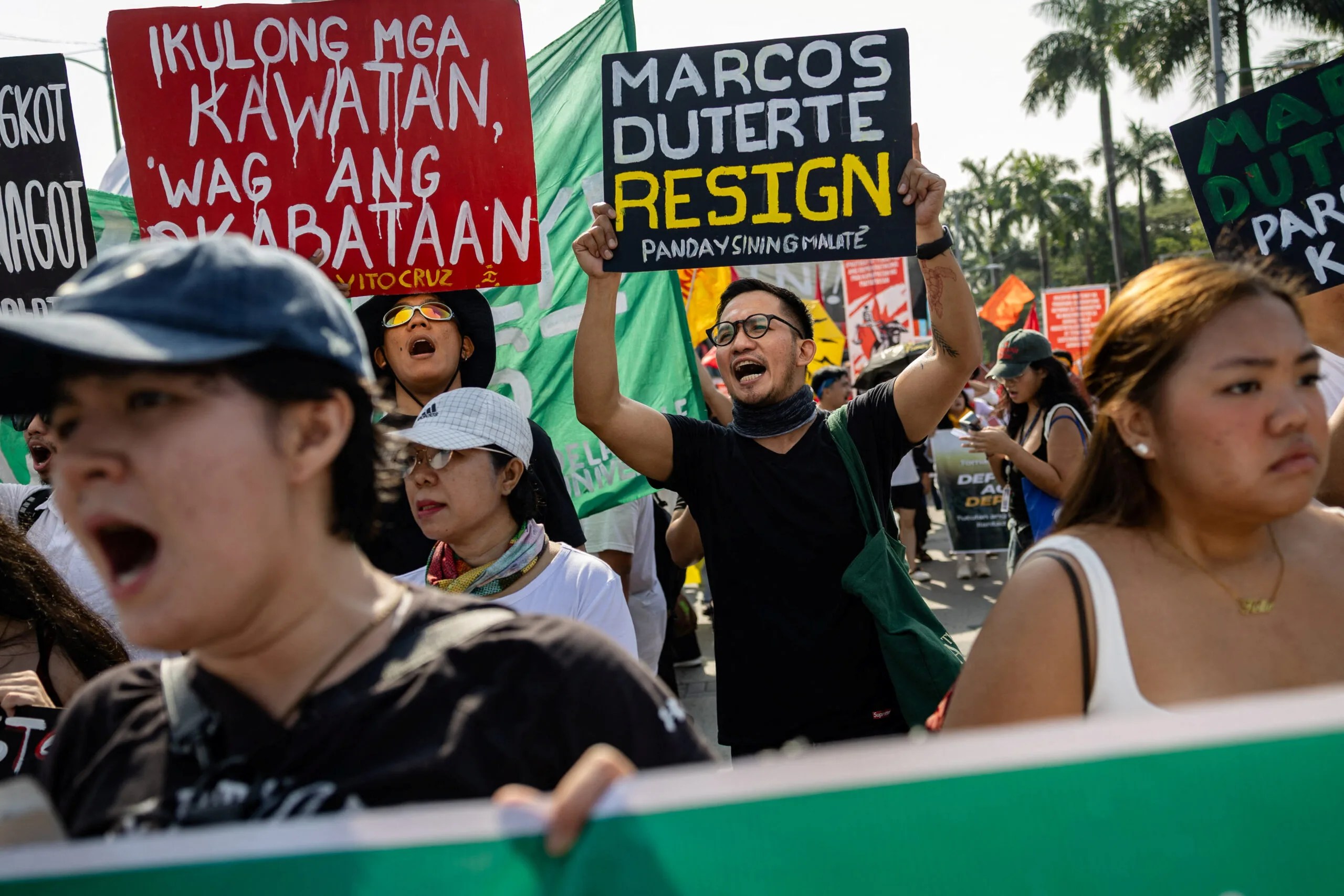
Edsas are usually aimed at shaming and shooing someone out of office, but who would we be up against this time? Certainly not BBM (about whom more, later), who’s been enjoying a free ride on the center-left’s campaign against the Dutertes. VP Sara? She’s beyond shame and will never quit. SP Chiz Escudero? It would flatter him too much to be rallied against; besides, if you counted all the needles already being stuck into his homunculus by the enraged public, he’d look like a porcupine. Also, Edsas work when they reach a turning point, like when the Army decides to go south when they’re being ordered north; no such tactical possibilities here.

So it looks like we’re going to be stuck with the notion of a trial, which I believe will happen despite all the noises to the contrary because—take note I said this—we Pinoys can’t resist putting on and watching a good show and this impeachment promises to be a blockbuster of a melodrama. One way of framing it would be to present a beleaguered princess on the dock, invoking an exiled father and suffering the wrath of a cousin who usurped the throne; or, a comely damsel is revealed to be a hissing and slithering snake-witch when sprayed with the Holy Water of Truth by the village elders. There will be ample opportunity for all players to emerge as heroes or villains in this unfolding narrative.

And then there’s BBM, whose coy “hands-off” pronouncements no one at our table would take at face value. Even as I fought off cynicism, I reminded myself how we fictionists and dramatists sometimes have to be even more cynical than the most hard-bitten journalist to do our work well. We work with human nature—not with data, like good social scientists do, which is also how and why we can make people cry and laugh like the best scholars can’t. We have to see both the best and the worst in our characters to understand them thoroughly. “Ask yourself,” I often tell my writing students, “what does your character most strongly desire? What can he or she least afford to lose? In their moments of direst need, what do they pray for? If you can answer that, then you know who they are.”

So I asked myself: what does BBM want? To survive and prosper, of course—and then again, whether he’ll admit it or not, as a character in a play, he will want redemption, if not for the family name then for himself, to be a Marcos and yet be his own man. What does Sara want? Survival as well, of course, and exoneration—and beyond that, as she has made abundantly plain, revenge for betrayal and willful injury. 

I may not know that much about politics or business, but this has moved to the realm of theater. Mark my words, those curtains will be rising soon.

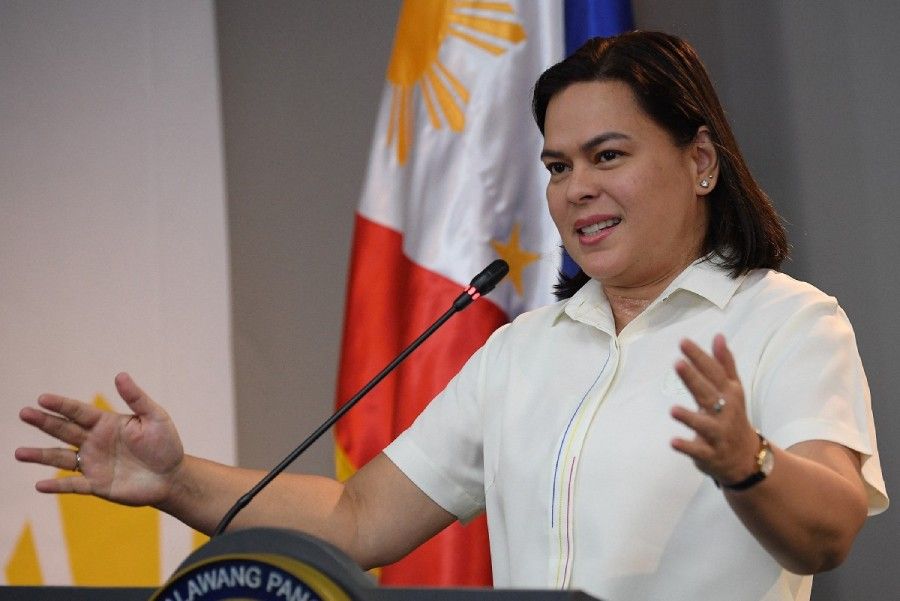
(Photo by Ted Aljibe/AFP)

Qwertyman No. 149: American Idiocracy

Qwertyman for Monday, June 9, 2025

IN HIS controversial but surprisingly popular 1987 book The Closing of the American Mind, the philosopher Allan Bloom lamented what he saw to be the decline of intellectual inquiry in America, indicting its universities for failing their students by promoting “relativism” over the time-honored values embodied by the “Great Books” of Western thought. “The consequences of the abandonment of the quest for the best are far-reaching and destructive,” Bloom intoned. 

Bloom was no flaming liberal; in fact, he was anything but—a true conservative who disdained rock music for its overtly sexual messages and its narcotic effects on the young (imagine what he would have said about TikTok). But his book and its arguments struck a responsive chord in many Americans—half a million of them bought hardcover copies—who were worried that the counterculture that had crept across American society since the tumultuous 196os had weakened it from within and had dulled the blade of American exceptionalism—the rock-solid article of faith that America was, or had to be, No. 1 in everything, because of its unique history and attributes.

That sounds a lot like “Make America Great Again,” although MAGA wasn’t driven by a longing to study Plato, but by deep-seated, grassroots-level grievances and prejudices. One wonders how Allan Bloom, who died in 1992, would respond to the political situation today, which on the surface mirrors some of his concerns, but only just so: a conservative President has declared war on America’s liberal universities, for all the wrong reasons, leading up to the “far-reaching and destructive consequences” that Bloom bewailed. 

Of course, Donald Trump is no Bloomian or even Reaganite conservative; all he seems to be about is unbridled power and money, and testing the limits to where they can go. “Trumpism” has been described as a mash of nationalism, populism, and industrialism, with a generous dollop of pettiness and egotism. 

Sometime last April, messaging on Truth Social (with a shift key typically gone berserk), Trump attacked Harvard University, claiming that “Harvard is an Anti-Semitic, Far Left Institution, as are numerous others, with students being accepted from all over the World that want to rip our Country apart. The place is a Liberal mess, allowing a certain group of crazed lunatics to enter and exit the classroom and spew fake ANGER AND HATE.” 

Shortly after, he ordered the federal government to withdraw more than $2 billion in funding for research grants to Harvard, and sought to cancel its ability to enroll international students. Trump wasn’t alone in declaring war on American academia. Years earlier, his VP-to-be JD Vance had told the National Conservatism Convention that “Universities in our country are fundamentally corrupt and dedicated to deceit and lies, not to the truth…. We have to honestly and aggressively attack (them).”

Not surprisingly, Harvard and a cohort of other leading universities have fought back, taking the administration’s tack as a frontal assault on academic freedom—and, more strategically, on America’s albeit waning intellectual leadership.

MAGAworld’s anti-intellectualism is interesting, because it draws on a long and dark tradition of tyrants from Franco’s Spain to Pol Pot’s Cambodia waging war on scholars—to cite only the most visibly horrifying examples under which hundreds of thousands of intellectuals were massacred. Mass murder makes the withdrawal of grants and visas seem benign, but they come from the same deep mistrust of critical thinking, contrary opinion, and the alien element. Dictatorships thrive on herd mentality and unquestioning obedience, both anathema to academia.

It’s not as if Trump and Vance never went to good schools. Trump went to Wharton and Vance to Yale Law; whether they learned something worth their tuition is another matter. Political instinct, not intellect, drives these men. 

Right now, that instinct is telling them that culture (or its reversal) is more important than anything else—specifically “woke” culture, the greatest threat to the hegemony of straight white men: civil rights, women’s empowerment, abortion rights, gay and gender rights, minority representation, affirmative action, Black heritage, environmental protection, and internationalism, among other values espoused by the liberal Establishment and its bastions like Harvard. 

The collateral damage of this insane and reckless urge to reshape America in Trump’s own image has included truthfulness, justice, accountability, sound science, and, ironically, America’s own long-term economic and academic well-being. MAGA’s success will be America’s diminution from the intellectual powerhouse that has accounted for more than 70 percent of all Nobel Prize winners (about 30 percent of them immigrants to the US) to the fools’ paradise contemplated in the 2006 movie Idiocracy—a comedy that won’t be so funny when it materializes.

Trump’s insistence on characterizing foreign students as potential terrorists and troublemakers will be particularly counterproductive, as it will banish many of the world’s best young minds to more receptive climates, and erode America’s influence on global thinking. 

That may not necessarily be a bad thing, as it reminds everyone that the US has no monopoly on excellence, and never really did. But as a two-time Fulbrighter who, like thousands of other pensionados to America, look back with gratitude and not a little pride on that opportunity to imbibe not just new knowledge but America at its welcoming best, I cannot imagine anything stupider than this willful squandering of American goodwill and soft power for the price of a few missiles. 

It will not even be Donald Trump & Co. who will pay that price, but generations of Americans down the road who will recall this period of infectious lunacy with bewilderment and regret. They will have no one to blame but their red-capped grandparents, who thought that trusting a despotic dunce with all that power was a bright idea. (And I know how much that statement smacks of the elitism that Trumpers hate, but tell me it isn’t true.)