Qwertyman No. 184: What I Told the Fil-Ams

Qwertyman for Monday, February 9, 2026

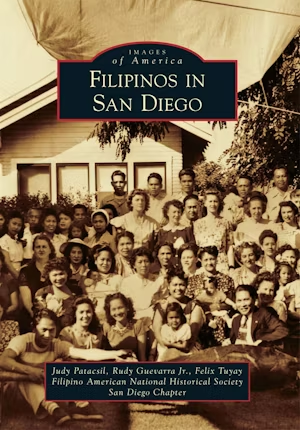
LAST WEEK, at the Executive House of the University of the Philippines where he officially resides, UP President Angelo “Jijil” Jimenez graciously hosted a delegation of about twenty Filipino-American business and community leaders from San Diego, California, led by our honorary consul there, Atty. Audie de Castro. 

I was happy and proud to have helped facilitate this visit, having some close personal and professional ties myself to San Diego. Our unica hija Demi married a San Diegan, and has happily lived there with her husband Jerry for almost 20 years now. My wife Beng and I visit her nearly every year if we can afford it. 

San Diego also happens to be where a dear friend of mine, Mrs. Julie Hill, lives in a lovely home in Rancho Sta. Fe. Julie stayed in the Philippines for some years many decades ago when her husband was the Ford Foundation representative here and fell in love with the country and its people, and despite having traveled and served all over the world, the Philippines retains a special place in Julie’s heart. The last time I dropped in on her a year ago, Julie (who’s approaching 90) announced that she was donating what came out to more than P20 million to help the poorest of UP students. Atty. De Castro helped to formalize that donation as our consul in San Diego, cementing our relationship.

Professionally, but through Julie’s recommendation, I also served as Pacific Leadership Fellow in 2014 at the University of California San Diego, where I had previously lectured on Philippine-American affairs. Beng, meanwhile, observed operations and state-of-the-art techniques at the Balboa Art Conservation Center.

In other words, we’ve established rather close ties to this sunny and vibrant city in Southern California, where many generations of Fil-Ams have taken root, mainly because of the US naval base there, where thousands of Filipino sailors recruited from the Philippines have served. That’s how Demi’s in-laws came to San Diego from Bicol, their children born as Americans but deeply mindful of their Filipino heritage.

Many of our visitors never saw the Philippines until they were grown up, and I think most were setting foot on the UP campus for the first time. So we gave them the warmest reception and the best orientation we could, and engaged them over lunch in a lively discussion.

One of them asked: “What is the Filipino dream?” My UP colleagues responded to that in various ways, coming from different technical and academic disciplines. I tried to give a pedestrian answer: “The Filipino dream is actually a fairly simple one: a roof over one’s head, food on the table, a good education for the children, peace and justice in our communities. We dream for our families. But like all seemingly simple things, achieving that dream is difficult and complicated.”

The visitors had earlier asked President Jimenez about UP’s role in national leadership, and beyond citing how many presidents, senators, and Supreme Court justices we’ve produced—which, to be honest, has also contributed to the ruination of our nation—Jijil emphasized the value his administration places on service to the Filipino people, which can manifest even from beyond our shores. He spoke of UP sharing its knowledge and resources with other SUCs, of UP assuming its responsibilities as the country’s national university—a concept perhaps alien to the American situation but entirely relevant to ours. (I was aware, of course, that UP has many internal issues and priorities of its own to sort out—it always has, regardless of administration.)

A more challenging discussion was one that I had on the side with two ladies who admitted that they represented two ends of the American p0litical spectrum, but had managed to remain friends despite their differences. Their question for me was, what did I personally think of what was happening in America?

No longer in UP spokesman mode, I could have answered as bluntly as possible, but I wanted to give them the more nuanced answer their friendship deserved. 

I began by saying that I considered myself an exemplar of American colonial education, having gone to a private elementary school in the 1960s where I learned about “heifers” and “mackinaws” long before I ever got to see real ones, and even memorized American states and their capitals, to the dismay of my future American friends when we played Trivial Pursuit. I shed off much of the mystification as a student activist in the 1970s and took a far more critical view of the American influence over our history, economy, and politics. 

But the indoctrination was so effective that I retained a fundamental affection and even admiration for many aspects of American culture and technology, and maintained a lifelong and ultimately professional interest in the US. I studied and worked for five years in the Midwestern heartland, in Michigan and Wisconsin, I taught American literature—not just in UP but in America itself, to college students who seemed surprised that I seemed to know more about their country than they did. Not just because our daughter lives there, I continue to follow American affairs keenly, starting my day with the digital editions of the New York Times and the Washington Post (the latter now sadly degraded).

What I told them was that this America was no longer the America I once thought I knew and looked up to, despite its excesses. I said I thought I understood, at least in part, where MAGA was coming from, in the neglect of the American working class and their anxieties in a rapidly changed world. At the same time, Donald Trump had ridden on those grievances to empower and aggrandize himself and the billionaire elite, trampling on the very liberties that had once defined American democracy, imposing his racist and imperialist vision of America, and endangering global peace and security. The shootings in Minnesota were profoundly shocking and depressing. I said that as much as it saddened me, with loved ones in the US, I did not plan on visiting America again until this madness had passed. If even American citizens could be dragged by masked men into vans and summarily deported to El Salvador, then I did not want to risk an encounter with the American Gestapo.

I could have added that both Americans and Filipinos, as polarized as we have become, need to find some common ground, as we share problems that cut across our differences. Bu the time was short, and we sent our guests off with a smile.

Qwertyman No. 183: Lawyers for the People

Qwertyman for Monday, February 2, 2026

I MIGHT have become a lawyer in another life, given that, back in the sixties, the profession of law still carried with it a certain gravitas, a presumption of not only intellectual brilliance but a commitment to public service. The best of legal minds found themselves in the Supreme Court and the Senate, and the latter was studded with such stars as Jovito Salonga, Jose Diokno, Arturo Tolentino, and Tecla San Andres Ziga. (To Gen Z’ers unfamiliar with these names, Diokno topped both the bar and CPA exams—despite the fact that he never completed his law studies, for which the Supreme Court had to give him special dispensation, and was also too young to be given his CPA license, for which he had to wait a few years. Ziga was the first woman bar topnotcher.) 

My father studied to be a lawyer, but other priorities got in the way; his dream would be achieved by my sister Elaine and my brother Jess. As for me, activism and martial law happened, and in that environment where the law as we knew it suddenly didn’t seem to matter, I lost any urge to enter law school, and chose between English and history instead.

Thankfully, many others saw things differently, and now make up the cream of the profession, appearing on lists such as the Philippines’ Top 100 and Asia’s Top 500 Lawyers. Their skills are formidable—I’ve been told that some senior lawyers are so sharp (or so, shall we say, highly persuasive) that they can get a Supreme Court decision reversed—and their fees will certainly reflect that.

But my utmost admiration is reserved for lawyers who have devoted their careers to that portion of the Lawyer’s Oath that says: “I shall conscientiously and courageously work for justice, as well as safeguard the rights and meaningful freedoms of all persons, identities and communities. I shall ensure greater and equitable access to justice.” 

No better group of lawyers represents that than the Free Legal Assistance Group or FLAG, founded in 1974 by Diokno himself, then newly released from prison, together with Lorenzo M. Tanada, Joker P. Arroyo, Alejandro Lichauco, and Luis Mauricio, all fellow members of the Civil Liberties Union of the Philippines (CLUP), as martial law entrenched itself and civil liberties became increasingly threatened. 

In the half-century since then—documented in FLAG’s anniversary book Frontliners for Human Rights: FLAG of the People @50 (FLAG, 2025)—FLAG has worked to locate and release desaparecidos, or persons abducted by State agents, fight the death penalty, defend victims of extrajudicial killings, and contest the Anti-Terrorism law, among other key initiatives.

“From its birth, FLAG has kept faith in its philosophy of developmental legal advocacy—the adept use of the law and its processes and institutions not only to secure rights and freedoms but also to change the social structures that trigger and perpetuate injustice,” FLAG reports. “Over 50 years, FLAG has handled over 9,052 cases and assisted over 9,591 clients throughout the country. These figures are merely a fraction of the cases FLAG has handled, and the clients FLAG has served nationwide. The number of FLAG clients excludes the communities and barangays who had experienced massacres and hamletting, urban poor communities whose homes had been demolished, and landless farmers and tenant farmer associations, whose numbers are impossible to count. Overall, FLAG’s rate of success ranged from a low of 66.89% (in 1989) to a high of 79.11% in 1990. On average, FLAG has won 7 out of every 10 cases it has handled, or an impressive success rate of 72.92%.

“FLAG has always provided its legal services, free of charge. In line with its core mandate, FLAG renders free legal assistance primarily to those who cannot afford, or cannot find, competent legal services. FLAG counts clients among the urban poor, students, indigenous peoples, farmers, fishers, political prisoners, and non-unionized or non-organized workers.”

These gains have come at a huge personal cost—no less than 14 FLAG lawyers have died in the line of duty, presumably at the hands of State agents. FLAG lawyers have been Red-tagged, harassed, and put under surveillance. 

That hasn’t stopped its lawyers from pursuing their mission under its current Chairman, former Supreme Court spokesman Atty. Theodore Te. The need for their services certainly remains, with the Philippines ranking 38th out of 170 countries in the world in the 2023 Atlas of Impunity released by the Eurasia Group for “impunity,” defined as” the exercise of power without accountability, which becomes, in its starkest form, the commission of crimes without punishment.”

We can only wish Ted Te and his courageous colleagues well, as they operate in an environment more complex in many ways than martial law.

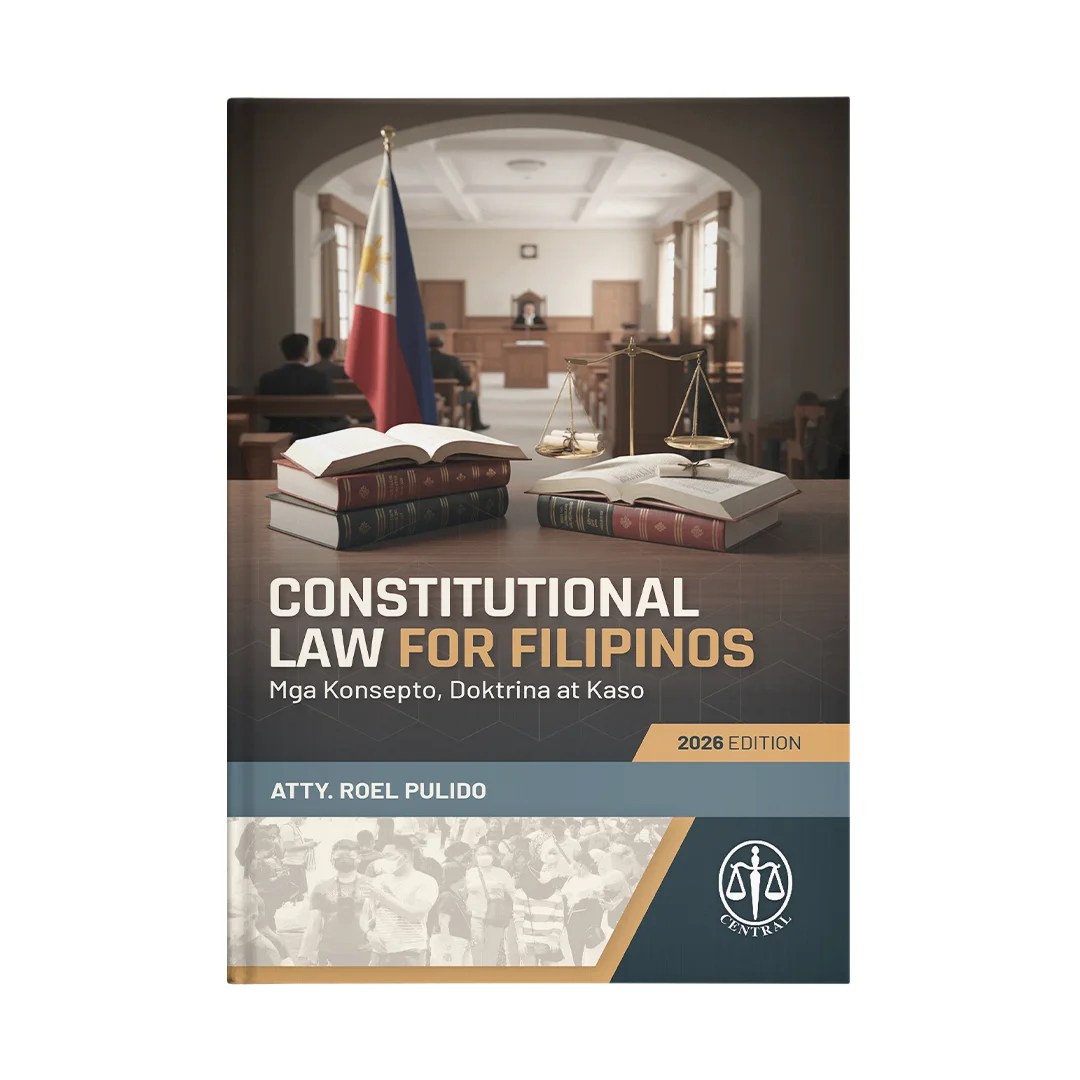
Speaking of law books, I’d like to recommend another book that was launched just recently, Constitutional Law for Filipinos: Mga Konsepto, Doktrina at Kaso (Central Books, 2026) by Atty. Roel Pulido. One of our leading environmental lawyers, Atty. Pulido teaches Constitutional and Environmental Law at Arellano University, where he also serves as Director of the Office of Legal Aid. 

“This is a project designed to be a learning aid,” says Roel. “It has a few unique features. First, It does not explain each and every Article of the Constitution. Instead, it focuses on Constitutional law concepts. Each concept is explained in simple language. Then Supreme Court rulings explaining the concepts are quoted. And in a box, I have placed a short and simple Filipino explanation of the concept. Second, the cases are quoted to explain and elaborate each concept. Instead of including all the convoluted issues in one case, it focuses only on the topic at hand. Third, the doctrine of each case cited is summarized in a sentence in both English and Filipino.”

We need more books like this that make the ideas and the language of the law more accessible to ordinary Filipinos. That’s the first requisite of legal literacy, which is also a form of empowering people. FLAG and Atty. Pulido are the kind of lawyers I would have wanted to become.

Qwertyman No. 181: Another FQS?

Qwertyman for Monday, January 19, 2026

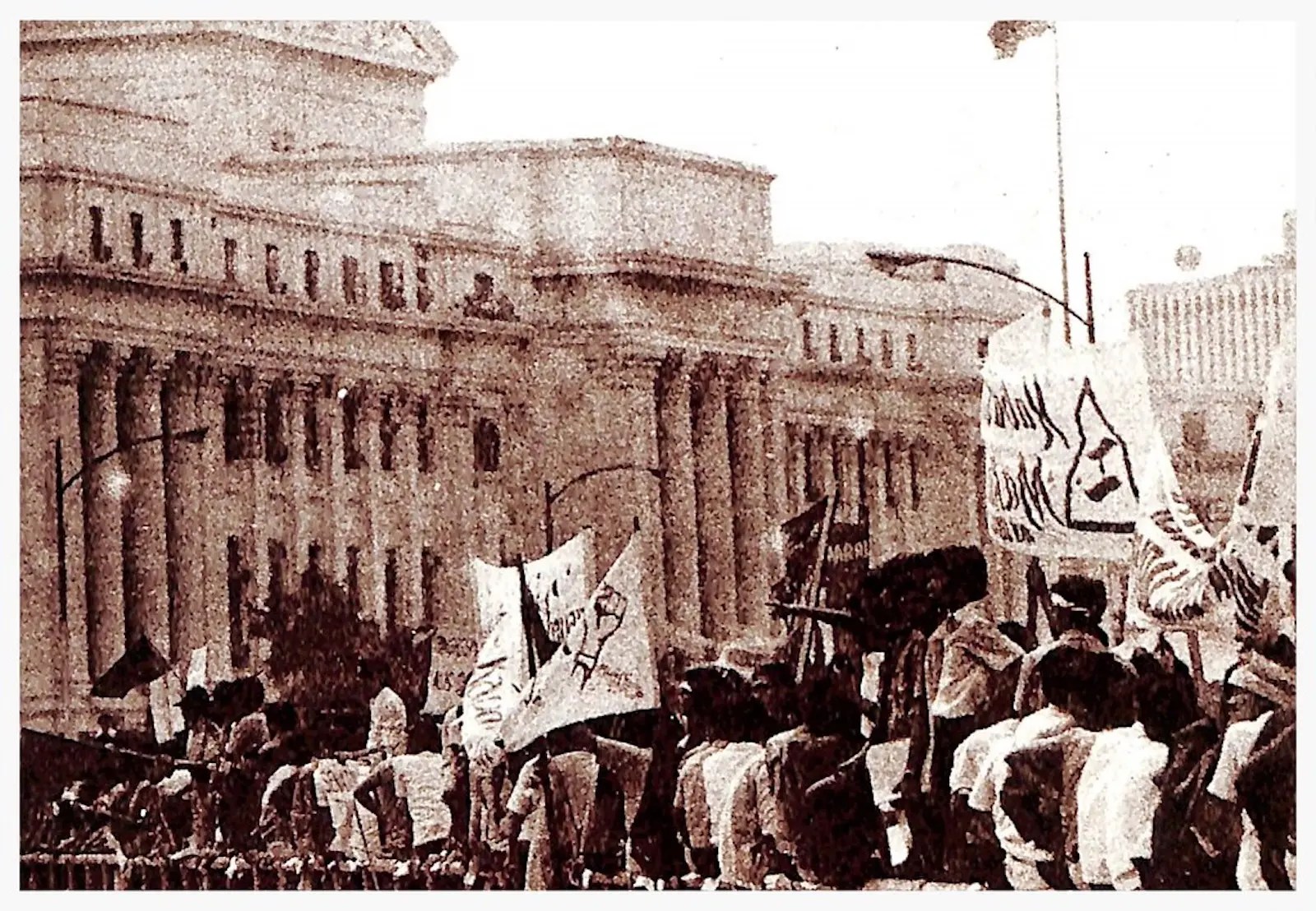
I’M WRITING this piece on my 72nd birthday, so I hope you’ll indulge me if I revert to the memory of another January 56 years ago. On the afternoon of January 26, 1970, I milled with thousands of other young students on the campus of the University of Sto. Tomas, the staging ground for a large contingent of demonstrators marching to the Legislative Building near the Luneta (now the National Museum). President Ferdinand Marcos was going to deliver his State of the Nation Address, and a mass action had been called to protest a host of issues, from Marcos’ increasingly authoritarian rule to rising prices, militarization, corruption, and Philippine subservience to American interests.

I had just turned 16, and was a senior and an activist at the Philippine Science High School. But I was no radical—not yet; I stood under the banner of the National Union of Students of the Philippines (NUSP), among so-called “moderates” led by Edgar Jopson, derided by FM as the “grocer’s son” and later to become a revolutionary martyr. Unlike the far-Left Kabataang Makabayan (KM) and the Samahang Demokratiko ng Kabataan (SDK, which I would soon join) who were railing against “imperialism, feudalism, and bureaucrat capitalism,” the NUSP’s cause sounded much more tangible albeit modest: a non-partisan 1971 Constitutional Convention.

What happened next that afternoon, when both groups of protesters converged at the Senate, would change Philippine political history. The moderates had paid for the rental of the protest mikes and loudspeakers, and wanted to pack up early, but the radicals literally seized the paraphernalia—and figuratively seized the day—launching into a verbal offensive that soon turned physical. Then a young journalist covering the event, Jose “Pete” Lacaba provides the reportage:

“Where the demonstration leaders stood, emblems of the enemy were prominently displayed: a cardboard coffin representing the death of democracy at the hands of the goonstabulary in the last elections; a cardboard crocodile, painted green, symbolizing congressmen greedy for allowances; a paper effigy of Ferdinand Marcos. When the President stepped out of Congress, the effigy was set on fire and, according to report, the coffin was pushed toward him, the crocodile hurled at him. From my position down on the street, I saw only the burning of the effigy—a singularly undramatic incident, since it took the effigy so long to catch fire. I could not even see the President and could only deduce the fact of his coming out of Congress from the commotion at the doors, the sudden radiance created by dozens of flashbulbs bursting simultaneously, and the rise in the streets of the cry: “MARcos PUPpet! MARcos PUPpet! MARcos PUPpet!”

“Things got so confused at this point that I cannot honestly say which came first: the pebbles flying or the cops charging. I remember only the cops rushing down the steps of Congress, pushing aside the demonstration leaders, and jumping down to the streets, straight into the mass of demonstrators. The cops flailed away, the demonstrators scattered. The cops gave chase to anything that moved, clubbed anyone who resisted, and hauled off those they caught up with. The demonstrators who got as far as the sidewalk that led to the Muni golf links started to pick up pebbles and rocks with which they pelted the police. Very soon, placards had turned into missiles, and the sound of broken glass punctuated the yelling: soft-drink bottles were flying, too. The effigy was down on the ground, still burning.”

The January 26 rally and the trouble that erupted would lead to the January 30-31 demos that would prove even more violent, and what would become the First Quarter Storm or the FQS was born. “First quarter” would turn out to describe not only the beginning of 1970 but of the decade itself, as the start of 1971 would prove just as incendiary, with the establishment of the Diliman Commune (and of course, now as a UP freshman, I was there). It seemed that the entire country was politically on fire, with protests mounting by the week, and it would all culminate in what everyone predicted: the declaration of martial law in September 1972. 

It took another 14 years and another “first quarter storm”—the tumultuous months of January and February 1986, following the snap election—to depose Marcos. Fifteen years later in 2001, on another January, yet another president, Joseph Estrada, would be hounded out of office over issues of corruption.

What is it about these first quarters that provoke such firestorms? And do we still have it in us to begin the year on a note of political resolve?

I’ve been worried, like many of us, that the Christmas break, the congressional recess, and intervening issues may have sucked the steam out of the public outrage that boiled over the flood-control scam last year, and lulled the government into thinking that the worst was over and that we could all just settle back into the old routine: let the Ombudsman and the courts do their job, etc. 

What’s worse is if we fall into that mindset, too. The budget deliberations, the Cabral death mystery, the Leviste files, the Barzaga antics, and even a traffic violation episode have all seemed to be distractions from our laser-sharp focus on bringing the crooks to justice. But in fact, they’re all of one piece: demanding better and honest government, the overarching issue we need to press.

And just as the radicals seized the initiative from the moderates 56 years ago, FM’s son, PBBM, can still seize the day by going against all expectations, even against his own nature, and finishing what he may have inadvertently begun: weeding out corruption in government. Never mind the motive—reviving his sagging poll numbers, saving his skin, redeeming the Marcos name, or leaving a worthy legacy behind. He has little choice, if he and his family are to survive. 

There are immediate and concrete steps he can take to achieve this:

1. Activate the Independent People’s Commission. The people are waiting for his next move in this respect; get the enabling law passed and the job done.

2. Impeach VP Sara Duterte. The grounds haven’t changed, and the urgency can only increase as 2028 approaches.

3. Revamp the Cabinet, but replace the non-performers. PBBM knows who they are as well as the public—especially the publicity-seekers whose departments haven’t delivered.

4. Find Atong Ang, Zaldy Co, Harry Roque, etc. and jail the big fish—including political allies. It’s hard to believe that with billions in intelligence funds, the administration can’t track and nail these highly visible fugitives down. Justice is perception.

Do these, and maybe we’ll avoid the generational kind of flare-up and meltdown that followed January 26, 1970.

Qwertyman No. 180: Resolutions We Can Keep

Qwertyman for Monday, January 12, 2026

ALMOST TWO weeks after the New Year, I’m sure many of us are still struggling with the resolutions we made—you know, the same ones we announced a year ago, like losing weight, buying no more (supply the object—shoes, watches, dresses), emptying the closet, and being nicer to (supply the officemate or in-law). I had to think that there must be resolutions we can make and actually keep—not easy or frivolous ones, but resolutions that will make a real difference in how we think, behave, and live. Here’s what I came up with:

1. I will not help spread fake news and hoaxes. Fighting for the truth begins with a healthy skepticism and the patience to verify. There’s no such thing as “harmless” fake news passed on. 

Last year I had to gently warn a score of friends—smart people with outstanding reputations—who posted on Facebook about Meta claiming the rights to their pictures and about pages turning blue (“It really happened!”) It’s a hoax that’s been going around for years, I told them; there was no such thing as the post described. What’s the harm, they said, just wanted to be sure. Well, the harm is in the propagation; every repost expands the space for fake news to grow, and the poster’s credibility only magnifies it further. That credibility also takes a hit, when it’s shown to absorb and help spread falsehood. Next time, visit a reputable fact-checker like http://www.snopes.com to verify a dubious post. The days are gone when you can assume that what you see is true unless proven otherwise; if you have to assume anything, assume the opposite.

2. I will think before I respond. I will reserve judgment until I understand the situation better, with clearer context and trustworthy and verifiable sources. It’s been said that today, especially online and on social media, people don’t read to understand, but to reply. Many of us have trigger itch—the compulsion to react to and comment on anything and everything that crosses our gunsights. And we do that literally without second thought, drawing on little more than scant knowledge and ample prejudice, and the unflinching conviction that we are right. 

The rise of the provocative meme—extremely compact and blunt, digitally manufactured to make a very specific point—has made this even easier, more efficient and more vicious. Memes eschew context, and invite uncritical concurrence. When I see a witty meme, I might smile and even smirk—but I will pause before joining a bashing spree if I have the slightest suspicion that something isn’t quite right. And while I’m at it, I will keep my sense of humor; I will not be baited or feel obliged to respond in anger, and I will remember that forbearance or silence is not surrender, but often victory.

3. I will use AI responsibly. I will use it as an assistant, but not let it do my thinking for me. I will use it to learn, understand, teach, and create. I will not use it to lie, malign, exaggerate, or aggrandize. I will not pretend to know everything AI can do or is doing. I will neither fear nor ignore it, but I will be wary—especially if what it produces is too clean, too good, or too intent to please. Truth often has rough edges that AI could polish out, like it enhances our portraits. 

I was watching a video on YouTube last week that purported to show the detailed production process by which the fashion house Hermes made its hyper-expensive and hard-to-get Birkin bag (am no fashionista, but am deeply curious about that industry’s workings). The video went to great lengths to demonstrate why the company’s bags commanded such high prices—the quality of the leather, the workmanship, the exclusivity—in purposeful contrast to the numerous fakes being made of the popular bag. But there was something about that video that made me uncomfortable—it seemed too luminous, its people too handsome, its tableaux too staged. An outdoor scene, supposedly outside the boutique, gave it away: the large shop sign clearly said HERMEES, with the extra E; it was no mistake—a few scenes later, they showed the sign again. The whole video was AI-driven, and no human seemed to be home and sharp enough to note the error. Now, its content may have been entirely factual, but its implied condemnation of fakery in business can’t possibly be helped by such a clumsy use of AI. 

4. I will not expect of others what I cannot expect of myself. This was something I learned during martial law, when I was imprisoned with all kinds of people—activists and common criminals, from both privileged and impoverished families. There and elsewhere, I saw how people who could speak so boldly and so well about revolution and liberty could break, sometimes so easily, under pressure. I witnessed and understood the marks of torture. I realized that everyone probably has a breaking point. I wondered what mine was. (My dentist would later tell me that I had a high threshold for pain, which surprised me.) But I came away thinking that if I asked another person to make an extraordinary sacrifice, it should be something I would be willing and prepared to do as well. I say this not to excuse weakness in other people, but to demand more of myself.

I will, however, hold public officials to a higher standard. They chose to lead—for which many are also handsomely rewarded—and so they must prove themselves better than the led. I have a right to expect that my President and congressman will act more wisely and more responsibly than me.

That said, I will live as honorably as I can, despite and especially because of the morally degraded environment in which we find ourselves today. I will not abet corruption in any way. This might be the hardest of all to keep, given how we have all somehow been complicit in this crime.

5. I will be more charitable, and share more of what I have. I will rescue “charity”—among the most human of values—from the political dustbin to which it has been relegated as useless and even harmful tokenism. I’ve heard too many people speak loudly and articulately about big themes like “social justice,” “Gaza,” and “anti-poverty” without yielding a peso from their own pockets or actually doing something concrete for the afflicted. Give, or serve. If you can’t change the system, change a life—you might even change yours.

Qwertyman No. 179: Omitting Flowers

Qwertyman for Monday, January 5, 2026

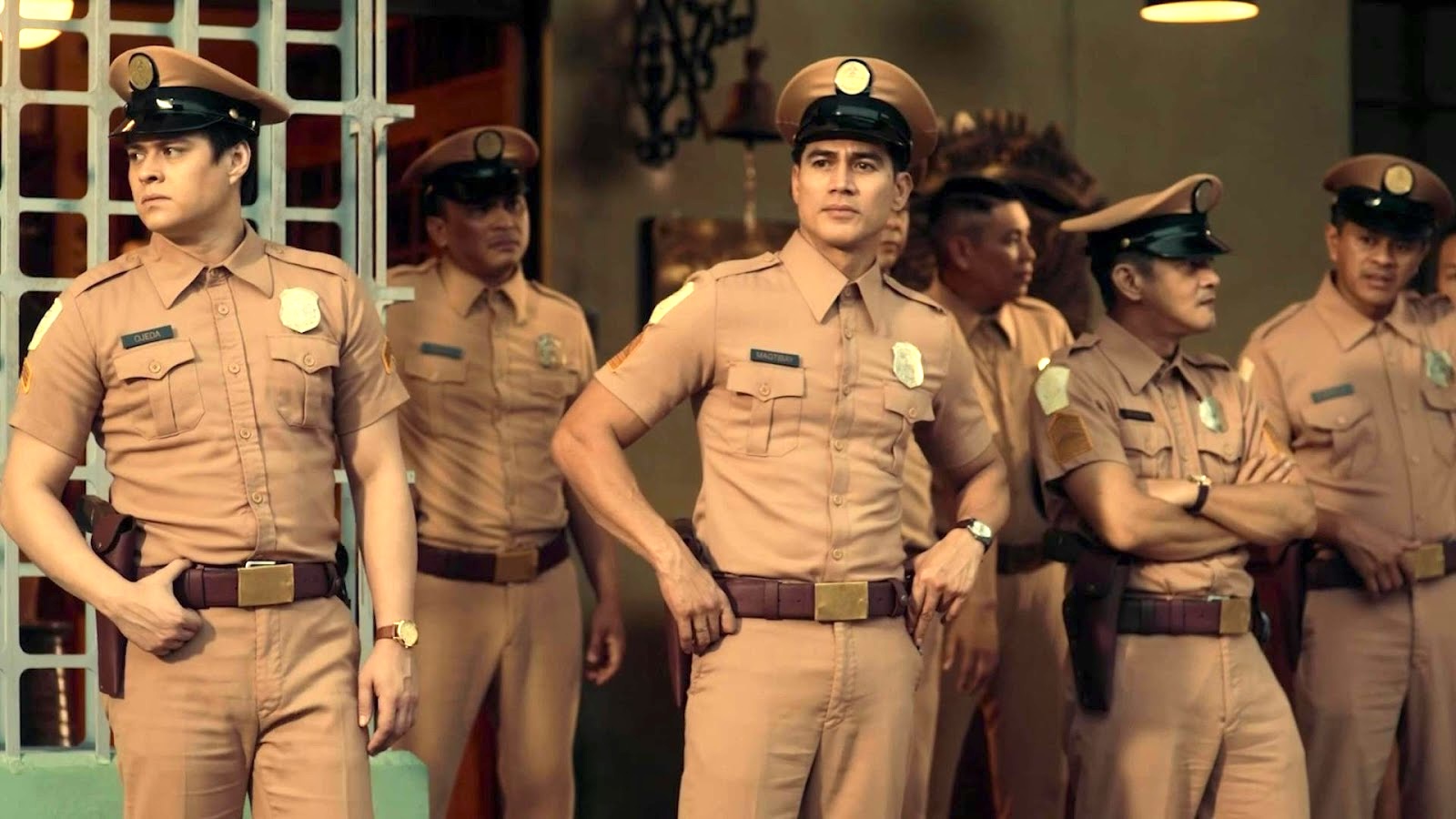
THIS COMES a bit too late to affect the box office in any way (and it’s not as if anything I write sends people scurrying anywhere), but my wife Beng and I just saw “Manila’s Finest,” and we left much impressed and hopeful for Philippine cinema.

We were out of town for most of the Christmas holidays so we unfortunately got to see only this one film among all of the Metro Manila Film Festival entries. We’d heard good things about the other entries as well, and the fact that “Manila’s Finest” ended up in only third place for Best Picture tells me that we probably missed out on what seems to be a bumper crop. But this isn’t about the MMFF, and I won’t even call it a formal review. It’s more of an emotional reaction to a period and a milieu I happen to have some familiarity with.

“Manila’s Finest” is set in a precinct of the Manila Police from 1969 to 1972, a time of great social and political turmoil. It revolves around the character of Lt. Homer Magtibay (very capably played by Piolo Pascual), a policeman who, despite his flaws, holds on to an old-fashioned sense of duty just when the police service is becoming more politicized in preparation for martial law. He has his hands full with a gang war, only to realize that an even deadlier kind of factionalism is emerging within the force itself, with the rising power of the Philippine Constabulary’s Metropolitan Command, or Metrocom. He also has to deal with trouble at home, as his daughter has become a student activist, the kind that he and his fellow cops have to face with truncheons at the rallies. It dawns on him that it isn’t petty crooks creating chaos in the streets, but the government itself, setting the stage for a crackdown. The movie ends, rather abruptly, on a dire note of warning, hinting at darker times ahead.

The film appealed to me on many levels—the political, the aesthetic, the narrative—but most strongly at the personal, because of the memories it inadvertently brought up. To begin with, my late father Jose Sr. was a cop—or almost. A law student who never finished (like the movie’s Homer), he joined the police academy, in the same batch that produced the future MPD chief James Barbers. The very first picture in my photo album is that of him in police uniform, at parade rest. He never joined the force, perhaps because he married, but he did become an agent for the Motor Vehicles Office, and I remember how impressed I was by his silvery badge when he flashed his wallet open on the jeepney rides we took. That was the kind of thrall in which lawmen at the time were held, or at least I so imagined; they kept the world safe and peaceful, and held evil at bay. (I was too young to understand that my dad’s MVO badge got us free rides.)

I became an activist in college and joined many rallies and street marches; this changed my view of the police, who became fascist pigs, the enforcers of laws for the rich and powerful. During the Diliman Commune of 1971, I held a kwitis that I was supposed to fire if I saw cops approaching on the perimeter of UP’s Area 14. And then something happened that would reverse my perspective: I dropped out of school to find a job. At age eighteen, I finagled my way into becoming a reporter for the Philippines Herald, with zero units in Journalism but with loads of pluck and some writing talent. Seeing what they were dealing with, my editors led by Oskee Villadolid and Joe Pavia decided to give me a crash course in journalism by designating me as General Assignments reporter and making me do the rounds of the beats: police, education, sports, and so on.

Of course, the police beat turned out to be the most challenging and instructive. I was stationed at MPD headquarters on UN Avenue, and put on the graveyard shift that ra through midnight until the morning. When nothing much was going on, we played ping-pong and waited for the fire alarm bell to ring (we ran out only for major fires, like the Family Clinic fire where my job was to count the dead). I kept a little black book of phone numbers where I could ring up hospitals to ask if any major accidents had come in. I learned of a restaurant near the Luneta where killers could be hired for not too much. Being a snot-nosed newbie, I trailed veterans like Ruther Batuigas to avoid being kuryented or bum-steered. I covered murders and suicides, visited the city morgue at three in the morning, and joined cops on their drives along Ermita, checking on vagrants, just like in the movie. It was all heady stuff for an eighteen-year-old.

But what proved to be most stressful was covering demonstrations, now that I was looking at them from the other side of the barricades, parked in a Herald jeep with a driver and photographer. Despite my job, my sympathies strongly remained with the activists, and I dreaded watching the police donning their riot gear and preparing for certain trouble. These being the days long before cellphones and pagers, there was no way I could warn my comrades about what I thought to be snipers or provocateurs or just agents taking their pictures from the rooftop of the Shellborne Hotel near the US Embassy. When the tear gas canisters began flying all I could do myself was duck and run, and I remember visiting some wounded marchers in the ER later. After I covered the funeral of a rebel killed in combat, praising him effusively and playing up the drama, an editor cleaned up my prose and gave me a very dry lesson in reportage: “Omit flowers.”

That’s the kind of treatment director Raymond Red gives his material in “Manila’s Finest.” Nothing is romanticized, no hero left unsullied, except perhaps for the young activists whose further awakening yet lies ahead of them. This well-crafted and well-acted film deserves all its plaudits; the mature Piolo Pascual is outstanding, as is the period production design (except again perhaps for everyone’s new-looking uniform, the bane of period movies, and a few questionable references time-wise—“barangay,” “the New Society,” and Pierre Cardin-style barongs all came after 1972, if memory serves me right). Most of all, “Manila’s Finest” deserves and indeed demands a sequel, into the time of tokhang, when the moral choices facing the police became even starker. But as it is, at least for me, “Manila’s Finest” may indeed have been the finest of its kind this year.

(Image from walphs.com)

Qwertyman No. 174: Doing the Doable

Qwertyman for Monday, December 1, 2025

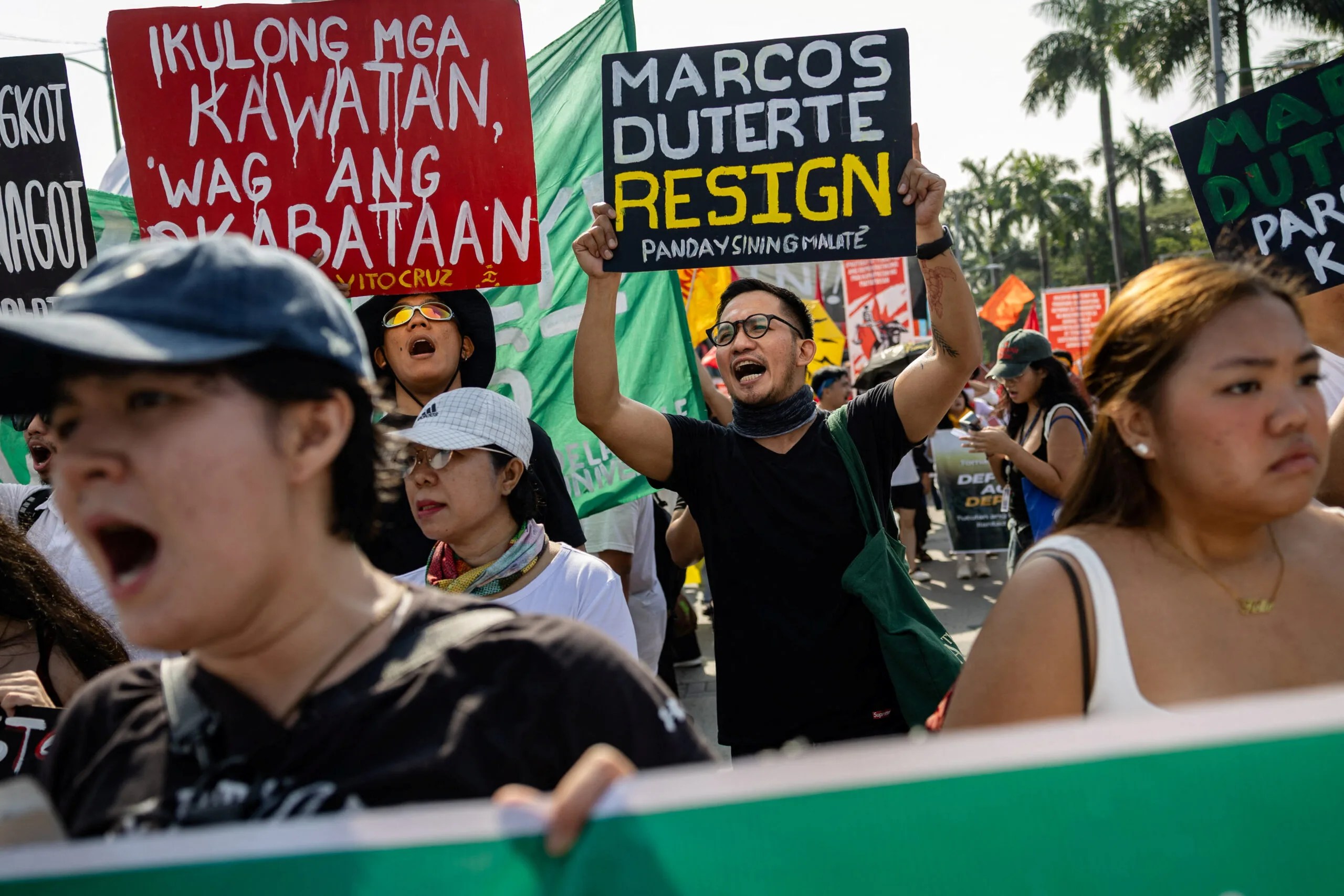
AS NOT a few placards in yesterday’s big anti-corruption march would have said, both President Bongbong Marcos and VP Sara Duterte should resign, along with everyone in public office implicated in the flood-control scandal and all the other shenanigans that have come to light over the past couple of months. 

That probably means half the government, but given the current public mood, the more the better, to give the nation a chance to rebuild itself on new foundations of moral rectitude and accountability. At least that’s the long view, supported by the Left among other parties who think that anything short of a national reset will simply paper over the problems and guarantee their comeback. 

It all sounds good, and it does make sense—except that, as we all know, it ain’t gonna happen. 

It’s about as realistic as the expectation that BBM will fall to his knees, own up to the Marcos billions, and ship all that money back to the Philippines on a FedEx plane for mass distribution, any more than VP Sara will admit to her father’s drug-fueled bloodlust, seek forgiveness of all the tokhang victims, and forsake her presidential ambitions. Let’s face it: the Marcos and Duterte dragons will be clawing at each other all the way to 2028. Meanwhile, what are we mere mortals supposed to do or to hope for? 

In the very least, we can ignore the DDS calls for BBM to step down and for Sara to take over, because there’s even less appetite for that than the Both-Resign demand. The Dutertes want to make hay of the moment, but the sun isn’t exactly shining on them. Despite their strong and well-funded social media efforts, the DDS camp seems pretty much in disarray, with Digong in jail, Sara in limbo until February (it tells me something that they approved the OVP’s 2026 budget in full—it’s for the office, not VP Sara, although she doesn’t seem to know the difference), Bato de la Rosa suddenly scarce, and their shot at a junta takeover badly misfiring. 

(The ICC’s predictable decision not to grant his interim release could in fact prove to be an ironic win. Digong at this point is useful only as emotional capital for Sara’s survival and triumph. His camp, I suspect, secretly wants him to stay in The Hague as a symbol of the Marcoses’ unforgivable perfidy. Bringing him back home will mean having to take care of a grumpy old man whose greatest ability—cursing—isn’t helping him much in his present situation; he was never a Leila de Lima, and certainly no Ninoy Aquino.)

All the players’ moves are interesting in this grand melodrama. I frankly can’t trust the Left, either, to show the way forward. Like a religion (did I hear someone say “Iglesia ni Cristo”?), the Left likes to flaunt its moral ascendancy—to “virtue-signal,” in today’s parlance—and its rock-solid grasp of the global and local situation from the Marxist standpoint. And yet it gets all tone-deaf and cross-eyed when it comes to picking its horses—ditching EDSA, but backing billionaire capitalist Manny Villar and then pseudo-nationalist and butcher Rodrigo Duterte for the presidency (should we even mention slaughtering comrades it deemed wayward in the Ahos campaign?). 

Interestingly, the INC also supported Duterte in 2016, and then BBM and Sara Duterte in 2022. While adopting some progressive liberals like Franklin Drilon, Risa Hontiveros, and more recently Bam Aquino and Kiko Pangilinan into its senatorial slate, it has also flexed its machinery behind Duterte surrogates Bong Go and Bato de la Rosa, as well as corruption-tainted Senators Joel Villanueva and Jinggoy Estrada. During its last mass rally last November 25 for “peace, transparency, and accountability,” however, it was careful to distance itself from recent calls for BBM’s resignation. In other words, the INC is the perfect straddler, the seguristathat makes sure it will survive and prosper under any administration, reportedly to secure key government appointments for its favored nominees.

That leaves us and our own wits, which—considering everyone’s else’s brain fog—might yet prove the most trustworthy.

In the realm of the doable, I want to see heads roll—as close to the top as the situation will allow. One way of looking at this, and strangely enough, is that the Filipino people aside, the party with the greatest stake in seeing this anti-corruption campaign through to the end (i.e., just short of the Palace) is PBBM himself. Having opened this Pandora’s box, he well knows that the only way he can keep his own head and hold sway over 2028 is to catch all those demons he released. I don’t know about you, but right now I’m desperate enough to let BBM finish his term in relative peace if he achieves nothing else than the herculean task of cleaning up the stables.

VP Sara’s impeachment trial should resume in February and will be a more efficient and definitive way to shut her out for good. But we have loads of senators, congressmen, department secretaries and undersecretaries, and lesser flunkies all caught up in this mess who should be held to account for their thievery. Hold the big bosses, the ultimate signatories, accountable, sure. But don’t let the second- and third-level enablers and functionaries off, because the message needs to be sent that complicity won’t pay—and that your sponsors will ditch you when things get too hot.

I want to see our courts work, overtime, to expedite the prosecution of these corruption cases. No pussyfooting, please, no Maguindanao massacre here. Let’s put a quick and decisive end to the kind of legalistic foolishness that lets a senator off the hook for a P30-million “private contribution,” with the judgment rendered by the Comelec commissioner who had previously served as that senator’s lawyer. How the heck can that be allowed to happen? What ethical universe are we in? The same goes for former Ombudsman Samuel Martires’ “forgetting” why he had kept secret his decision junking his predecessor’s carefully crafted case against Sen. Joel Villanueva. 

If the Comelec accepts Sen. Rodante Marcoleta’s ridiculous excuse that he kept millions of political donations off his report of campaign expenses because they were meant to be “secret,” then we should launch a million-people march not just against the likes of Marcoleta but also specifically against the Comelec to hound those charlatans out of office. That commissioner who couldn’t find the shame to recuse himself from his former client’s case should be impeached if he doesn’t resign.

I have no problem with people marching and screaming “Marcos, Duterte, resign!”, because we have billions of reasons to be upset with both. But I hope that doesn’t keep us from going after immediate and tangible if less-than-perfect results. Look at it this way—gut the body, and you’ve effectively chopped off the head.

(Photo from rappler.com)

Qwertyman No. 173: A Page from 1937

Qwertyman for Monday, November 24, 2025

I”M NOT a historian, although there are times I wish I were, and at an early crossroads in my youth, I actually had to choose between Literature and History for my major, settling for the former only because I thought I could finish it faster. But I’ve retained a lifelong interest in history, for the treasure trove of stories to be found in the past and for what those stories might foretell of the future. 

I’m particularly fascinated by the prewar period—what Filipinos of the midcentury looked back on as “peacetime” and what Carmen Guerrero Nakpil called our “fifty years in Hollywood,” which were enough to occlude much of the influence of our “three hundred fifty years in a convent” under the Spanish. It was an age of many transitions, from the jota to jazz, from the caruaje to the Chevrolet, from tradition to that liberative and all-embracing buzzword, the “modern.” Much of that went up in smoke during the Second World War, but you can still catch the ghost of this lost world on the Escolta, among other vestiges of our love-hate affair with America. (You might want to visit the Art Deco exhibition at the National Museum of Fine Arts, ongoing until May 2026; I have some items on display there.)

So entranced have I been by this time that I decided, during the pandemic, to set my third novel in it, at the birth of the Commonwealth and upon Quezon’s assumption of ultimate power, an upstairs-downstairs narrative about the comprador upper class and the world of the Manila Carnival set against the embers of the Sakdal uprising, the fuming and scheming Aguinaldistas, and the netherworld of printing-press Marxists and tranvia pickpockets. Progress has been slow because novels always take the back seat to life’s more pressing needs, but I still hope to get this done if it’s the last thing I do.

The research for the book, however, has brought its own rewards. Among my main sources for the background has been a slim volume—long out of print and now very  hard to find—titled The Radical Left on the Eve of War: A Political Memoir by James S. Allen (Quezon City: Foundation for Nationalist Studies, 1985). Allen (actually a pseudonym for Sol Auerbach) was an American scholar and journalist, an avowed Marxist who traveled to the Philippines in 1936 and 1938 with his wife Isabelle, also a member of the American Communist Party, to meet with local communists and socialists (then headed by Crisanto Evangelista and Pedro Abad Santos, respectively) and to get a sense of the Philippine situation under American rule. 

Even that early, the threat of a Japanese invasion was already looming on the horizon and causing great anxiety in the Philippines; Japan had earlier occupied Manchuria and as much as a quarter of the entirety of China by 1937. It seemed like a confrontation between Japan and the United States was inevitable, although some Filipino nationalists—fiercely anti-American—preferred to ally themselves with their fellow Asians than with prolonged white rule. At the same time, others like Pedro Abad Santos feared that the independence Quezon sought would be granted prematurely to give the US an excuse to abandon the islands and avoid confronting the Japanese. 

This is where I tell you why I’m bringing up James Allen’s memoirs this Monday—because of our present situation vis-à-vis China and (in one of history’s ironic reversals from victim to victimizer) its growing domination of the South China Sea. In Quezon, Filipinos had a leader who was deeply mistrusted and opposed by many; the United States’ willingness to defend the Philippines was in doubt; and the threat of a foreign invasion was clear and imminent. 

Allen actually sat down with Quezon for a long interview at the latter’s invitation, and was impressed by the man’s grasp of politics and his singular ambition. But the article that came out of that encounter displeased MLQ; Allen, after all, was still a communist at heart, which makes the following quotation—from a letter Allen would compose and send to his American colleagues in October 1937—even more interesting. I’ll leave it to you to observe the parallels, and to cast them against the Marcos-Duterte issues of our time.

“Filipino Marxists and radicals need to relate independence from the United States to the world crisis created by fascism. The immediate concern in the struggle for an independent and democratic Philippines is to safeguard the country against the threat of Japanese aggression. The objectives of complete independence from the United States and the internal democratic transformation must be obtained without endangering such gains as have been made or subjecting the country to new masters. The people must be awakened to the prime and pressing danger to their national existence. The United States is moving toward alignment with the democratic powers against the fascist bloc, albeit slowly and indecisively.


“Roosevelt is shifting somewhat toward the Left of Center to keep pace with his mass support from the surging labor movement and anti-fascist and anti-war popular sentiment. The national interests of the Philippines call for vigilance and precautions against Japanese aggression. This coincides with the interests of the United States in the Pacific area, and it would be folly not to take full advantage of this concurrence. In the broader perspective, the outcome of the struggle in China will be crucial for all the peoples of the Far East, and if the United States were to withdraw from the Philippines this would be a serious blow against China and encouragement to Japan’s designs upon Southeast Asia and the islands of the Pacific. The cause of Philippine independence at this time can best be served by cooperation with the United States.


“The situation also requires a change in the attitude toward Quezon, from frontal attack to critical support. Unprincipled opposition for the sake of opposition-as with some leading participants in the Popular Alliance is dangerous, for it plays into the hand of pro-Japanese elements and sentiments. Quezon certainly is not an anti-fascist, but he is not intriguing behind the scenes with Japan. The greatest opposition to his early independence plan comes from the landed proprietors, particularly the sugar barons, while it enjoys support among the people. The Popular Alliance should also support the plan, including provisions for mutually satisfactory economic, military and diplomatic collaboration after independence. Though Quezon is far from being a Cardenas or Roosevelt in his domestic policies, every effort should be made to move him away from his pro-fascist and land baron support by providing him with mass backing for such pro-labor and progressive measures as are included in his social justice program. In sum, the Popular Alliance should encourage a national democratic front devoted to the preservation of peace in the Pacific, the safeguarding of Philippine independence, and defense and extension of democracy in the country.”

Qwertyman No. 172: They Chose to Act

Qwertyman for Monday, November 17, 2025

AS A professional writer and editor, I take on many jobs that the other side of me—the fictionist, journalist, and teacher—usually wouldn’t get to do. I write biographies, speeches, and feature stories, among others, and while I do them to the best of my ability and to my clients’ satisfaction, they don’t always coincide with my personal interests, nor necessarily inspire me to think or act a certain way.

These past two years, however, I’ve been proud and privileged to perform a very special assignment that I’ve come to look forward to, because it renews my faith in people and my hopes for a better future—phrases that would otherwise just roll off the tongue like so many other tired and meaningless clichés. At 71, I’d like to believe that I’ve pretty much seen it all and can afford to be cynical, as even Gen Z’ers can affect—a bit prematurely, I think, but understandably so in this sad and sordid world of ours.

So it often comes as a surprise to be reminded that some good people persist at doing good if not great deeds, and that’s what this unique responsibility I’ve taken on is all about—writing the citations for the year’s Ramon Magsaysay Awards laureates, a task I inherited from RMAF stalwart Jim Rush and National Artist Resil Mojares. (Before I go any further I should clarify that I have nothing to do with the selection process, I am covered by an NDA—not even my wife gets to know the winners ahead of everyone else—and I cannot and do not cozy up to the likes of Hayao Miyazaki for selfies and signatures.)

This year only three laureates were chosen, but again the range and the depth of their accomplishments tell us that ordinary people can achieve extraordinary successes—not just for themselves but for society at large—with vision, faith, and perseverance, or what the Ramon Magsaysay Awards Foundation calls “greatness of spirit,” the common element among its 356 winners from 23 countries since 1957.

They included Shaheena Ali from the Maldives, an island-country that often appears in tourist brochures and websites as a tropical island paradise, surrounded by aquamarine waters ideal for snorkeling and fishing. Behind this idyllic façade, however, lies a murkier and unpleasant truth. Plastic pollution has befouled the island chain’s crystalline waters, threatening the marine ecosystem, the economy, and the health of its residents. Waste is either burned or tossed into the ocean, producing harmful smoke and microplastics. As a diver, photojournalist, and diving instructor herself, Ali often came literally face to face with the tides of trash clouding up the once-pristine waters of her beloved islands.

In 2015, deciding to fight back, Ali linked up with an NGO, Parley for the Oceans, to frame a comprehensive program to save the country’s waters from pollution and to turn plastic waste into a useful source of livelihood for the people. Today, as executive director of Parley Maldives, she oversees the implementation of their signature strategy: Avoid, Intercept, and Redesign (AIR) plastics for a better environment. With Ali, Parley has introduced plastic interception and collection sites in island communities and over seventy schools, leading over 700 collaborative cleanups along affected coastlines. Ali has also worked with the government to address climate change. “I go there to clean up with hope,” she says, “hope that my grandchildren will see whales in the ocean in their lifetime as I did growing up.”

For its part, India has become both an economic and political powerhouse, with many visible signs of its rising affluence. Despite the overall surge in growth, however, many rural and tribal girls have had no access to an adequate education. Because of this disparity, illiterate girls are forced to marry early, have children, and work—while culturally privileged males go to school. 

In 2005, a young graduate of the London School of Economics decided to return home to India to take on this challenge. Safeena Husain established the Foundation to Educate Girls Globally (FEGG) or “Educate Girls.” Starting out in Rajasthan, Educate Girls identified the neediest communities, brought unschooled or out-of-school girls into the classroom, and worked to keep them there until they were able to acquire credentials for higher education and gainful employment. 

The results were dramatic. What began with fifty pilot village schools reached over 30,000 villages across India’s most underserved regions, involving over two million girls, with a retention rate of over 90%. Educate Girls also launched Pragati, an open-schooling program that allows young women aged 15-29 to complete their education and avail themselves of lifelong opportunities. Its initial cohort of 300 learners has grown to over 31,500. “Girls’ education is the closest thing we have to a silver bullet to solve some of the world’s most difficult problems,” says Husain. “It is one of the best investments a country can make, impacting nine of the seventeen Sustainable Development Goals, including health, nutrition, and employment. By scaling our programs, deepening government partnerships, and embedding community-led solutions, we strive to create a brighter, more equitable future—one girl at a time.” 

The third awardee was no stranger to those of us long aware of his special ministry. Flaviano Antonio L. Villanueva or simply “Father Flavie” belongs to that breed of socially committed clergy for whom godliness is to be found not in the halls of influence and wealth but in the streets, among the poorest and the most forgotten. 

In 2015, he founded the Arnold Janssen Kalinga Center in Manila to provide “dignified care and service” to thousands of poor and marginalized Filipinos. Kalinga works to recreate the poor’s self-image, reclaim their self-respect, and restore their self-worth. Villanueva also led the effort to locate the bodies of victims of the government’s “war on drugs” where thousands of Filipinos were summarily executed. Often, their impoverished families could not secure permanent graves for them. Villanueva found the funds to exhume, cremate, inurn, and relocate the bodies to a proper resting place. This Paghilom program brought comfort to widows and orphans and allowed them to continue leading productive lives. “Justice can take many forms—among them, the recovery of one’s self-confidence, and forgiving oneself,” he says. Following the late Pope Francis’ example, he initiated showers for the homeless as both a literal and symbolic act of cleansing, to prepare them for a fresh start in life.

I always end up doing more than writing up these people’s stories—I learn from them, and am reminded that instead of just mouthing slogans and railing at the universe—at all the evil, the injustice, and the ugliness we have to live with—we can choose to act and to fight back, like these avatars of social action did. 

Qwertyman No. 171: “Quezon” as Theater

Qwertyman for Monday, November 10, 2025

I’M COMING late to the party, having been away for a couple of weeks, but even in faraway Frankfurt, I was itching to come home to see what the brouhaha over the “Quezon” movie was all about.

Rarely does a Pinoy movie stir a hornet’s nest like this one did, and even without seeing it, I took that as a good sign for our film industry, especially big-ticket projects which sometimes leave people wondering why they were even made.

What especially piqued my interest, of course, was the reaction of Quezon family members and friends who thought the old man’s cartoonish depiction as a womanizing, scheming, and power-hungry politician despicable.

Now, my own grandfathers led pretty quiet lives, so I’m sure that if anyone called them womanizing, scheming, and power-hungry, I’d be mighty upset, too.

The difference is, unlike my lolos and going by what the historians suggest, Manuel Luis Quezon seems to have been all of the above—which isn’t to say he wasn’t much more than all those negatives put together. It was apparently that “much more” that the Quezonistas were looking for—MLQ the patriot and freedom fighter—to balance out the picture, especially since most young Filipinos know nothing of the man except as a place-name. Had that been shown, the outrage might arguably have been muted, the image softened.

But of course that wasn’t what the movie’s makers were going for. As has already been noted by dozens of reviewers before me, “Quezon” is no documentary (and let’s not forget that even documentaries can be biased—just watch Leni Riefenstahl’s adoring portrayal of Hitler and his Nazis in her bizarrely beautiful “Triumph of the Will”). From the outset, it declares that it is mixing up history with “elements of fiction,” which is just as good as using that old commercial come-on, “based on a true story.”

I’m no historian—I’ll confess to being an enthusiast—but as it so happens, I’ve been a playwright, screenwriter, biographer, and fictionist at various points of my otherwise uneventful life, so I can probably speak to these issues with some experience. I can attest, for example, having written some biographies of the rich and famous, that families and descendants can inherit myths about their patriarchs, and treat and pr0pagate them as God’s own truth. 

My take is, I don’t think we should receive “Quezon” as history, biography, fiction, or even film. It’s theater (captured on film), and it declares itself as such right from the beginning, as I’ll shortly explain. This may be due to the fact that the script was co-written by one or our most accomplished playwrights, Rody Vera, alongside director Jerrold Tarog. His approach was explicitly stylized and non-realistic, from the use of silent-movie title cards, ghoulish makeup, and painted backdrops in the black-and-white sequences (including that almost balletic choreography of the young MLQ rising from the floor of his prison cell) to the conception and blocking of such scenes as those of Quezon working the floor of the House and the capitalist bosses gathering round the table. (If all this seems obvious and elementary, dear reader, my apologies—in these days of TikTok, I don’t know what people are looking at anymore).

So what if the movie is theater disguised as film? Does that explain or excuse its supposed excesses and exaggerations?

Well, theater is, almost by nature, exaggeration—movements and motives get simplified and magnified, the easier to get them across. Theater is agitational—it aims to provoke emotion, to bring people to their feet, clapping in delight or screaming in rage.

And that’s what “Quezon” did, didn’t it? It got its message across, effectively and efficiently, like a train on schedule, and taking it as theater, I found it roundly entertaining. By and large, the actors carried themselves off with aplomb, from Jericho Rosales’ masterful Quezon, Romnick Sarmenta’s comic-cool Osmeña (his was actually the most difficult role to play, to my mind), Mon Confiado’s aggrieved Aguinaldo, and Karylle’s restrained Aurora. The employment of the fictional journalist Joven Hernando was what a smart scriptwriter would do, to weave the narrative threads together. (Teaser: Quezon and Aguinaldo figure in the novel I’ve been writing about prewar Manila.)

My quibbles have to do with minor complaints like (don’t be surprised) “Wrong period fountain pens again, all of them—why don’t they ever ask me?” (Quezon did hold his pen that odd way, though) and “Does every movie chess scene have to end with a checkmate?” I could have added “Why does everyone’s shirt and pants look fresh in a period movie?” but we’ll excuse those as theatrical costumes.

If there was anything I would have added to the content, it would have been a quiet moment of self-reflection, in which we realize just how Quezon sees himself. That alone might have lifted up his character from caricature.

The real Quezon seems to have been every bit as petty as the movie shows him to be, but also every bit as great, as it seems to have taken for granted.

Quezon had something of a history with the University of the Philippines, whose protesting students (one of them a young buck named Ferdinand Marcos, who accused Quezon of “frivolity” over all the dance parties in Malacañang) led him to ride into UP’s Padre Faura campus astride a white horse to either charm or intimidate them.

He had a long-running tiff with then UP President Rafael Palma over the Hare-Hawes-Cutting Act, and when Palma retired after ten hard years in the hot seat, citing a technicality, the government denied Palma the gratuity that was his due. When Palma died, however, Quezon reportedly went to his wake to deliver a eulogy worthy of the man.

You didn’t see that Quezon in the movie—and then again, maybe you did.

(Image from banknoteworld.com)

Qwertyman No. 170: The Truth Is Not Enough

Qwertyman for Monday, November 3, 2025

ON THE sidelines of the Frankfurt book fair, over many breakfasts and cups of coffee with fellow writers, the tangled web of Philippine politics inevitably came up for discussion, particularly at this juncture when it seems imperative to sort out the good from the bad (or, to account for the nuances of the moment, the better from the worse).

One interesting idea that came up from a seasoned journalist in the group was the suggestion to create a Truth Commission to receive the testimonies of tokhang survivors and the families of victims, presumably in support of the case against former President Rodrigo Duterte at the International Criminal Court. 

The legalities aside—as we don’t know if these statements would even be admissible as evidence—it was argued that what was more important was to compile a dossier of stories, for the people to know now and for the historians and critics to evaluate later. That way, whatever happens in the courts—including the possibility that nothing ever will—a trail of blood and accountability will have been established, an ineradicable record of state-sponsored crime against its own citizens. 

Most of us will recall that South Africa set up a Truth and Reconciliation Commission (TRC) in 1994—at the end of apartheid and upon the assumption to the presidency of Nelson Mandela—to hear from victims of human rights violations and to dispense justice, following the principle of “forgiveness over prosecution, and reparation over retaliation.” We ourselves briefly had a Philippine Truth Commission in 2010 at the urging of new President Noynoy Aquino, organized to investigate graft and corruption under the previous administration, until it was declared unconstitutional even before it could do any real work.

Mandela’s government supported the TRC, led by Archbishop (and later Nobel Peace Laureate) Desmond Tutu, keenly aware of the need to heal the deep wounds left by apartheid so South Africans could move forward to the bright new future that beckoned then.

But that was thirty years ago, and South Africa today remains far from Mandela’s vision of a just and prosperous “Rainbow Nation.” The country remains saddled with corruption and crime, lorded over by new political and economic elites. Despite some successes in its mission of bringing out the truth, in the eyes of many, the TRC failed in what people expected to follow: punishing the guilty and bringing restitution to the victims. (Interestingly, after initially planning to conduct its hearings behind closed doors, the TRC yielded to public pressure and allowed its hearings to be broadcast on radio and television, even appearing as a Sunday TV program.)

In an article for the Nelson Mandela Foundation published online last January, foundation consultant Verne Harris looked back on the TRC’s establishment and pointed out its weaknesses:

“The TRC made wide-ranging recommendations, so wide in fact that it would not be inaccurate to call them a provisional agenda for societal transformation. In my reading of the recommendations, three areas loomed largest in addition to the question of prosecutions: 1) for the longer term healing of a traumatized society to be supported, the state (guided by the ANC) had to find a way of turning the TRC’s own highly stylized performance of testimony into durable community-based spaces for remembering and storytelling; 2) the TRC’s limited short-term reparations work had to be expanded and connected to South Africa’s other special instruments for restitution in ways that would contribute meaningfully to a broader societal restructuring, informed fundamentally by a redistribution of wealth; and 3) the archive assembled by the TRC would have to be built on determinedly and made as accessible as possible both to the public and to the continuing work outlined above. All of these outcomes, of course, were structurally out of the TRC’s hands. They were in the hands of the ruling party and institutions of the state.

“The TRC got a lot wrong, without a doubt. But from the perspective of 2025, it is relatively easy to see that the fundamental failure of the TRC as an instrument of restitution and transformation has to do with the fact that the springboard which it created for continuing work was instead turned into an inert museum artefact by prevailing relations of power. Why did that happen? What went wrong?

“… Elements within the African National Congress (ANC), led by Nelson Mandela, had every intention of turning the TRC springboard into continuing longer term restorative work, but that after Mandela both the ANC and institutions of the state quickly became dominated by constellations of power having a vested interest in shelving TRC recommendations and simply moving on. So, for example, as Du Toit reminds us, in 1999 Mandela was crystal clear on the need for prosecutions: ‘Accountability does need to be established and, where evidence exists of a serious crime, prosecution should be instituted within a fixed time frame. That time frame needs to be realistic … for we cannot afford as a nation and as government to be saddled with unending judicial processes.’ And yet, the subsequent failure to take up prosecutions seriously—there have been a handful of isolated cases and a litany of laughable promises to ‘start the process’—has meant that the ANC has overseen what amounts to a blanket amnesty, the very outcome the leadership had rejected in the early 1990s.”

What we learn from here is that good intentions and even the truth itself can’t ever be enough; once the truth is out, speedy prosecution and commensurate punishment have to follow, or what began as a moral imperative ends up as a sham and eventually a betrayal of the public trust. This bears remembering when we look at the current work of the Independent Commission for Infrastructure, on the results of which a nation’s hopes for deep and overdue reform hang.

My own pedestrian response to the suggestion for a Truth Commission for extrajudicial killings during the Duterte regime was to dissent. Bringing out the truth was a good idea, I said—but we already have a Human Rights Commission to do that. Let it do its job. If it won’t—like an Ombudsman more interested in setting crooks free—then let’s exert pressure to put the right people in place.

It’s about time we put bloody revolutions, street uprisings, special commissions, and other such shortcuts to democracy aside. We have to make the system work, hold people (beginning with our leaders) accountable, and bring justice back to the mainstream.