Penman No. 135: Democracy and Cultural Expression

DSC_0024Penman for Monday, February 9, 2015


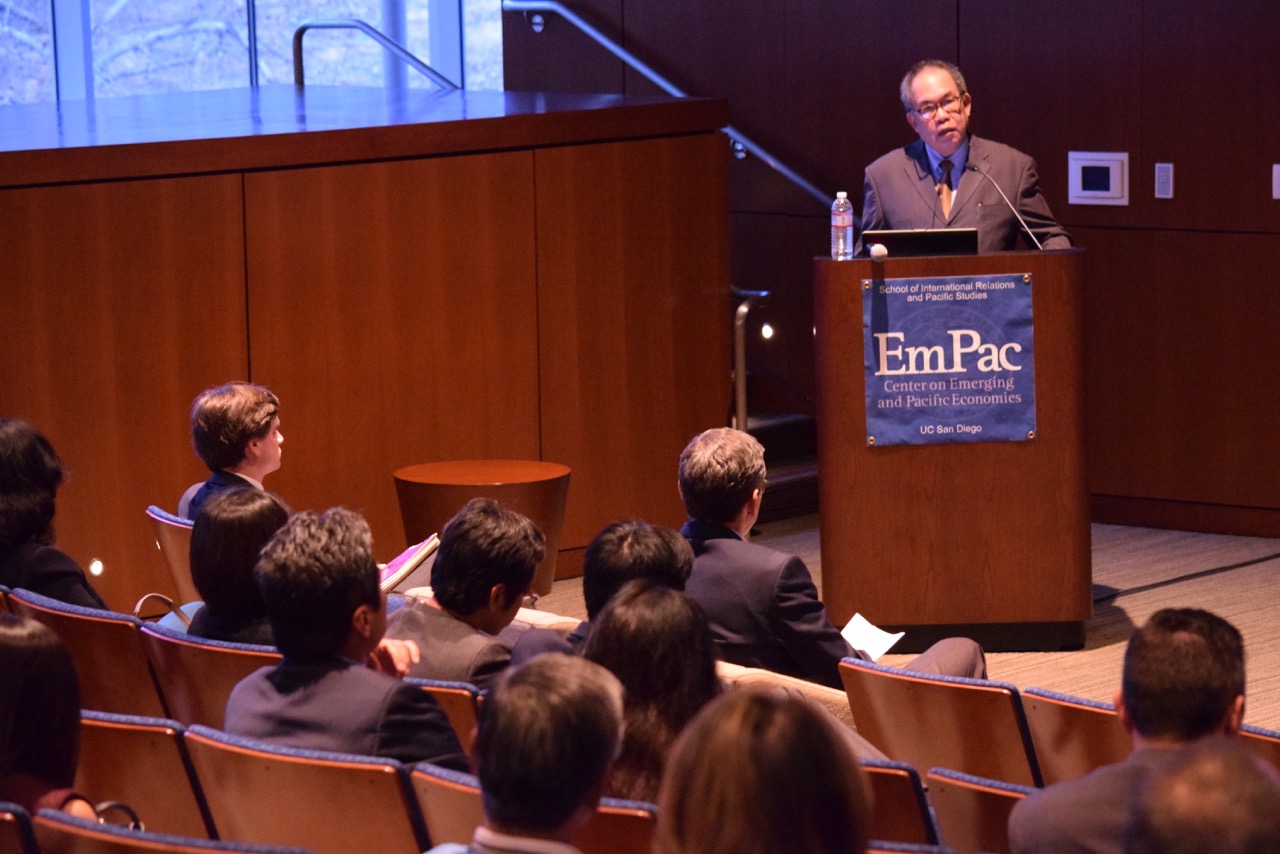
I SPENT the past two weeks as a Pacific Leadership Fellow at the School of International and Pacific Relations of the University of California, San Diego, and the highlight of my fellowship was a 40-minute talk I gave on the general topic of “Democracy and Cultural Expression: Confronting Modernization in the Philippines.” The PLF—usually a government or business leader from the Asia-Pacific region—is asked to make a public presentation to a large audience composed of academic and community representatives, to introduce and discuss major issues facing his or her society.

I felt it safer to presume that the non-Filipino members of my audience last January 28 knew very little about Philippine history and politics, so I began with a broad overview of that history, bringing things to the present and the medium-term horizon, considering both our strengths and resources—noting the robustness of our recent economic growth—but also the longstanding inequalities and structural weaknesses that continue to hold us back. Here’s a slightly edited excerpt from the rest of my talk:

We have to pause and wonder exactly what kind of democracy we have in the Philippines, and what needs to be done—particularly on the cultural front—to achieve a fuller sense of the word.

I wouldn’t go so far as to call Philippine democracy a sham, because most Filipinos enjoy fundamental rights and freedoms absent in patently undemocratic societies—freedom of expression, of association, of mobility, of enterprise; the right to vote, and a presumptive equality under the law. But that presumption is also the weakest leg our democracy stands on, undermined by gross economic and social inequalities in our society showing Philippine democracy as more a democracy of style and spirit than one of substance.

Indeed, economically and politically, the Philippines has been ruled for more than a century by an elite, a roomful of families from the landed gentry and comprador capitalists who developed their wealth and power as agents and executors of colonization, and have taken turns at governing the country well into the present.

We cannot have true democracy without achieving a better balance in our economic and social structure, and its best hope in the Philippines could be in our enlarging middle class. They may not yet have the economic and political clout of the elite, but coming from the poor and aspiring in their own way to become more prosperous, they have the most at stake in creating a new regime of opportunity and fairness.

It is the middle class that has served as the voice of Philippine democracy, primed by its education to value freedom of thought and expression. It is the middle class that stands at the vanguard of modernization, having not just the desire but also the means—through education and entrepreneurship—to change the future.

… One out of every ten Filipinos now lives and works abroad in a decades-long diaspora that has kept the Philippine economy afloat through remittances amounting to more than $25 billion in 2013. But they bring home not only money but new ideas, and I feel confident that, in the long run and for all its social costs, this diaspora will have salutary effects because that domestic helper in Milan or plumber in Bahrain will no longer be simply a domestic helper or plumber when they come home. Tourists bring home snapshots of pretty places and exotic food; foreign workers bring home real learning, lessons in survival and getting ahead, and raised expectations of their local and national leaders.

This exposure to global culture and its elevation of local aspirations will be a major force in reshaping the Filipino future. And again, it is the middle class—the dwellers of the Internet and the Ulysses of this new century—that will lead in this transformation, just as they have led the most important movements for political and social reform in our history.

… One of the bright spots of Philippine society today is the fact that civil society is very much alive, constantly on guard against governmental or corporate abuse and wrongdoing, ever ready to uphold the rights of ordinary citizens and communities, and firmly rooted in those communities. It has stood at the forefront of the movement to fight corruption, which recently came to a new climax with the explosive revelation of a billion-peso pork-barrel scam going all the way to the Senate and even possibly higher.

One of the greatest challenges of our modernization may be that of electoral reform—not just a reform of the electoral process, but a reform of the voter’s mind—not to vote for popular candidates, but to vote wisely, to see the vote as a chance to short-circuit a historical process and to lay claim to one’s equality and patrimony.

And this is where culture comes in, as an instrument of social and political reform and modernization. If we look at culture more proactively not just as a way of living but a way of thinking, then there is much room for the promotion of true democracy through cultural expression.

By cultural expression I don’t mean simply the writing of stories, poems, plays, and essays, which is what I do most days, partly as my civic duty. I mean the use of all media at our disposal—the arts, the press, the Internet, whatever can influence the Filipino mind—to forge and sustain a set of core values, of national interests that cut across family, class, and region.

Of course, we can take “cultural expression” in its more popular and familiar forms—stories, poems, plays, music, painting, and dance, among others—as gestures toward the idea of a larger, national culture. After all, with every poem or painting, the artist seeks to palpate, from an audience of citizens, a sense of what is common and what is important—or to put it both ways, what is commonly important and what is importantly common. This has always been the social value and the political mission of art—not just as a means of self-expression, but of establishing, affirming, and promoting certain commonalities of thought and feeling.

… We need nothing less than a new cultural revolution—focused on the assertion of the ordinary citizen’s rights over power and privilege, on the importance of the rule of law, and on our understanding and acceptance of what it means to be a Filipino in this globalized world. Forging that sense of national identity is crucial to securing our future, again in a world and in a part of the world where the Chinese, the Japanese, the Koreans, and the Americans seem to have very clear ideas about their roles and capabilities. In this ocean of resurgent nationalisms, we Filipinos need to redefine ourselves as more than America’s students and surrogates.

In sum, much remains to be done to lend more substance to Philippine democracy in terms of addressing age-old economic and social inequalities. But the first field of battle exists in the mind and spirit, and the first campaign in this battle, the first declaration of freedom, has to be an act of the imagination.

I prefer to see democracy as a process rather than a product; the aspiration can be as powerful as its actualization. This democracy is first formed by its assertion: by seeking democracy, we begin to achieve it, and this assertion is the task of our artists, writers, thinkers, and opinion makers, the imaginative shapers of our national identity.
Penman No. 133: Revolution in the Time of Facebook

B75xPtWCIAEFJJ4Penman for Monday, January 26, 2015


I’M BACK in the US for a few weeks, to give a series of lectures on Philippine culture and politics as a Pacific Leadership Fellow with the Center on Emerging and Pacific Economies at the School of International Relations and Pacific Studies (IR/PS) of the University of California, San Diego. The PLF is a post usually reserved for senior government officials and business leaders engaged in economic and political affairs, and it’s the first time they’re bringing over someone from the humanities; some years ago, I was preceded in this fellowship by former Central Bank Governor and NCCA Chairman Jimmy Laya.

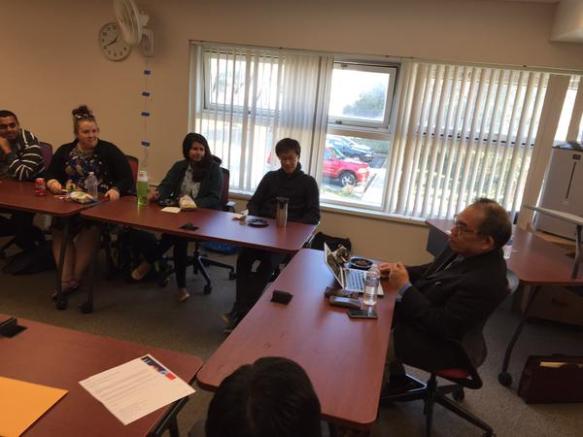
I have a major talk coming up this week on the ponderous topic of “Democracy and Cultural Expression: Confronting the Challenge of Modernization in the Philippines,” but last Wednesday, I sat down with a group of graduate students from IR/PS for a more personal chat. The general topic was “The Youth and Social Reform,” and I decided to share some of my experiences as a former student activist in the 1970s and to observe how protest movements and actions have changed since then.

I began by talking about the First Quarter Storm—our own version of Tiananmen, to use a metaphor more familiar to my audience, and the subject of my current research—my arrest and imprisonment in 1973, and the novel that I wrote about that experience. I recalled the many friends and comrades I lost, remarking on the ironic truth that “If I hadn’t been arrested that cold January evening, I probably wouldn’t be here, or be writing novels; I’d very likely have long been dead,” because I would have gone up to the hills and, being totally unprepared for the life of a guerrilla, would have made an easy target for the military. Here’s part of the rest of my short talk:

It would be nice to think that these horrors belong to the distant past, that the world has become more civilized in this new century of Facebook and social media. Indeed, authors like Steven Pinker (The Better Angels of Our Nature: Why Violence Has Declined) have argued that the world is actually a much safer place today than it was centuries ago, in terms of casualties of war and homicides, among other indices. That may be statistically true, but our street-level perception must surely be different.

It may be bright and sunny here in Southern California, but the world is full of dark and dangerous corners where bombs get strapped to ten-year-old girls who then get blown up in public places. I didn’t even need to tell you that, because it’s all over the evening news, before it all too quickly—and with much relief—gets brushed aside by the latest antics of Kim Kardashian and the latest gadgets from the Consumer Electronics Show. And why not? It seems grossly unfair in a way to be burdened by the misdeeds of others, by the ideological and ethical quandaries of a world one didn’t create, or even wanted to be a part of.

I’m not suggesting that young people today necessarily have it easier. Each generation has to confront its own demons, and those demons can be as large and as fearsome as you want them to be. You don’t have to live in Afghanistan with the Taliban or in Nigeria with the Boko Haram or in the Philippines with the Abu Sayyaf to know what terror is; you could be living in LA, New York, Columbine, or Ferguson to understand what fear or loss or danger means. In other words, we can never trivialize what other people may be going through.

But in another sense, youth and student activism today is rather different from what it was in my time, in my place. Today, people can pick their causes, instead of taking on the whole world. The starting point is the self, and what the self needs or wants, in a social and cultural climate that’s keenly focused on the here and now, with a very short attention span. Facebook promotes the self; Twitter and Instagram capture the unfolding present. We respond instantly to what we see, and do not necessarily work out of a comprehensive agenda for regime or global change. We don’t seek to save the world, but parts or aspects of it we care strongly about, whether it be whales and redwood trees or indigenous peoples or immigration reform or renewable energy.

In the Philippines, I’ve long maintained that the Communist Party lost much of the ground it had held back in the 1970s and 1980s not so much because of the success of the Philippine military on the battlefield, or even because of the collapse of the Soviet Union and its satellites, but because of the emergence of workable options for idealistic young people desiring social and political change, not necessarily by violent means. With almost 70,000 registered NGOs, Filipinos have a lot of causes to choose from.

For my generation, for all its flaws, we had only Marxism, which gave us a comprehensive world-view. Even though we felt in constant danger, that danger in itself was a comfort, an odd assurance or validation that we were on the right path, doing the right thing. It’s chilling to think that, while they may be very different in many ways, the young men and women joining ISIS today may be moved by a kindred spirit. There’s a frightening coherence and consistency to extremism, an inexorable logic strange to everyone else.

I ultimately opted out of Marxism because while we were convinced that everything was political, I came around to realizing that politics wasn’t everything. Also, as a creative writer, I could no longer abide by the need to observe the Party line.

What have I learned from all that?

First, compromise can be good and necessary. Second, I would not ask others to do what I could not do myself. Third, silence and reflection can result in better outcomes than strident shouting. Fourth, despair or cynicism is easy; hope is more difficult, and therefore the worthier challenge.

Indeed the darker aspects of life have never surprised me. It came as a deep disappointment to find comrades breaking under torture or other forms of duress, or even embracing outright betrayal for comfort and coinage—but that did not surprise me. It may have seemed very strange when I myself took up a job with the government shortly after my release from prison—but that, too, was almost inevitable, since all the old media offices had been shut down and the only real employer in town was the government. When people take the path of least resistance and adjust to new conditions to survive, I can understand that, having done it myself.

What keeps surprising me is courage, hope, goodness, and perseverance, which seem such old-fashioned notions but such necessary imperatives in these times. One no longer has to die for the things one values, but to live for them.

Even though, unlike most of my countrymen, I stopped going to church many years ago in protest of the Catholic Church’s position on many social issues, I was deeply moved, almost to tears, by the recent visit of Pope Francis to the Philippines, particularly to the areas ravaged by Typhoon Haiyan. His affection for the poor was palpable, but equally moving was the strength and faith manifested by the poor—one young woman who had lost her right arm in the storm had walked many miles to see him, and what she said with a smile stuck with me: “I am often sad, because I cannot find a job, but life cannot be all sadness all the time.”

For your generation, in your time and in your place, you will have to find your own pathways to social reform, which may have to begin, first of all, with a clarification of your own goals, although a deeper personal transformation will surely take place within the process of social engagement itself. Studying for professional success cannot ever be a bad thing; but it can only be better when all that sharpness of intellect can mean something to the lives of others.

Penman No. 132: Return to Romblon

RomblonPenman for Monday, January 19, 2015


SOMETIMES THE best-laid plans are those you don’t lay out at all. I’d been meaning to pay another visit to my home province of Romblon, where I was born 61 years ago, but I kept putting it off from one year to the next until that absence became 20 years.

The last time I went home in 1994, I was with my father Jose Sr., who incidentally would have marked his 92nd birthday today; he died in 1996, so that trip was also his last journey home. We were born in the same small seaside town of Alcantara on Tablas island. When I went there to address the graduating class of the local high school, the marching band spelled out my full name and WELCOME TO ALCANTARA under the hot summer sun. I felt bad for the kids but deeply appreciated the gesture. I don’t think most of them had any idea who I was and what I’d done, but why should they? The only writers they knew were probably white and dead.

But Romblon has been good to writers (NVM Gonzalez was born several kilometers and 40 years ahead of me), offering a wealth of material as lustrous as its signature marble. And like marble, sometimes it lies starkly bare on the surface, and sometimes its veins need to be probed and palpated. My first novel, Killing Time in a Warm Place (Anvil, 1992) was set largely in Romblon, based on the events and discoveries of a long summer I spent there as a ten-year-old boy in 1964. Those discoveries included my grandfather’s windowed tomb, an enchanted mountain, and sweet water bubbling out of the mountainside, not to mention a crush or two on an older girl. Ten years later I returned with a wife heavy with child, seeking refuge from one of the many dragnets cast by martial law, and it wasn’t government agents my aunts sought to protect my wife and unborn baby from, but other evil spirits best kept away by a wad of herbs pinned to Beng’s chest called a carmen-carmen.

Two Fridays ago I had and took a sudden chance to return to all that, upon the invitation of my niece Susie and her husband Toto, who had to make a quick weekend run on family business to Bgy. Guinbirayan in Sta. Fe town, about an hour’s dusty drive from Alcantara. My mother had been born in Guinbirayan in 1928 and I myself had many happy memories of the place from 1964 of picking up sea shells at low tide and gorging on duhat as fat as my thumbs. I had a mountain of work set up on my desk for the weekend, but how could I possibly say no? I packed as much of my work as I could into my laptop, and Beng and I joined Susie and her sisters in a Pajero driven by Toto to the Batangas seaport, where we left the jeep and got on board a RORO vessel bound for Odiongan, Romblon’s busiest port.

We left Batangas at sunset and arrived in Odiongan early in the morning, shaken and stirred by tall waves off Mindoro, but eager to board the waiting van driven by another one of my nephews (I would discover that I had a whole village full of them—my Lolo Cosme had a dozen children—and the word “Uncle,” in English, would resonate throughout our brief stay). Guinbirayan was another couple of hours away by a winding mountain road, now thankfully paved for the most part (“It depends on who the mayor is and on his political clout,” explained Toto), and getting there at sunrise, in time for a breakfast of grilled fresh fish, crabs, squid, and nilupak, proved well worth the journey.

We had just one full day in Guinbirayan—Susie and her siblings were getting their lots surveyed—so we spent most of that on the old farm feasting on fresh buko and native chicken, and in the afternoon we took a banca ride to Puro Island, where my mother still owns a small seaside lot, with much of the beach now washed away. The following morning, before boarding another RORO boat for Batangas, we paid a visit to my hometown of Alcantara, just long enough to say hello to a favorite aunt, Manang Adoring, and to note that a Globe cellsite now served that part of Tablas (Smart ruled the other part, so it helps to have two phones in such corners of the archipelago). By sunset, we were steaming out of the harbor for home.

Forty-eight hours after twenty years may not seem long enough, but brevity makes for intensity, and everything that I had seen and felt from my previous visits came swarming back to me with poignancy, making me more aware than ever of time past and time passing.

I went back to Lolo Cosme’s tomb, recalling my peek through its curious window in my novel: “I saw my grandfather’s skull on its macerated pillow, its teeth long and raw, the bone laced with patterns of black and yellow moonscapes and Great Walls of China running into the hollows and into the silver thicket of his hair—fine wiry hair that radiated above and around his brow like an aura, rampant, resplendent, indestructible.” That view was gone, as they had joined his bones with my grandmother’s and two aunts’ in a big concrete box. But the beach on which I had strolled many an afternoon was still there, and across it rose the massif of Kalatong, the enchanted mountain, where, my cousins and nieces swore, fairies and spirits abounded, ever ready to cast their spells on the unwitting visitor. “They can look like beautiful children riding golden chariots,” said one. “But they can also be evil.”

As we crossed fields of mango and cassava, I heard how one schoolgirl was known to have been possessed by these spirits, periodically falling into a trance: “She would faint on the muddy road in her white dress, then rise without a spot of dirt on her!” We were spared the carmen-carmen, but were warned about the kilkig, a slow-acting poison induced into one’s food, causing days of misery. My cellphone caught a signal on a hilltop and I called my mother in Manila, who cautioned me about meeting certain people: “They’re a family of witches,” she whispered.

We were, indeed, bewitched during that weekend, and entranced by the food, so I suppose there was some sorcery at work. The first thing I did when we got back was to book ferry tickets for a longer visit in March.

Penman No. 126: Friendships Old and New

IMG_5878Penman for Monday, December 8, 2014


OUR THREE-MONTH American sojourn has come to a close, and by the time you read this we should be back in Manila, a bit wobbly in the knees but glad to be home. I’ve gained back too much weight—the price to pay for all that scrumptiously greasy diner food and the cold spells that excused me from my daily walks—and I’ve begun to miss my morning tinapa and my suppertime tinola. But I’ve hit my research targets and more, and am eager to hunker down to writing the book that should come out of all this. I know that in a couple of weeks this vacation will be another happy memory, and I’ll be stuck in Christmas traffic on EDSA, sweltering and muttering why the heck I didn’t stay out there for another month or two.

Before that happens, let me thank some very fine people we met during this visit, which apart from the work was marked by new friendships made, existing friendships strengthened, and old friendships revived. I’ve already thanked my interview subjects in a previous piece, but there were others behind the scenes who made this particular journey pleasant and memorable. They include Sonny and Ceres Busa, Nomer and Camille Obnamia, Erwin and Titchie Tiongson, and Jun and Myrna Medina.

They may just be names to those who’ve never met them, and indeed they’re not the kind of A-listers you’d find in the glossy magazines that make virtual libraries of Metro Manila’s beauty salons. Even among Filipino-Americans, just a few names keep recurring in the social registers, either titans of industry or doyennes of fashion—leading one to wonder, where’s everybody else and what are they doing? Surely the rich and famous have no monopoly on everything that’s interesting and important? So let me introduce these friends to the world at large, by way of celebrating the non-celebrity whose quiet deeds lend substance to the sparkle of those better known.

IMG_5703

IMG_6134

Sonny and Ceres hosted us twice at their postcard-pretty home in Annandale, Virginia and introduced us to the satisfying simplicity of Ethiopian food. The Waray-born Sonny had been a US consul in Addis Ababa, among other places, and his hilarious but spot-on insights into the American mind enlivened our every conversation. Ceres helps oversee a caregiving company for seniors in Virginia, a job eased by her patience and cheerful disposition, of which Sonny is luckily the prime beneficiary.

Nomer had been born in Sampaloc, Quezon and joined the Navy, where he met Camille in Hawaii; they’ve settled down in Columbus, Ohio, and our friendship began in the most unlikely circumstances. A committed conservative, Nomer had responded sharply to a column I wrote here years ago on artistic license, and our email conversation turned into a more gentle exchange of ideas and gestures. An expert in government procurement, Nomer had freely offered his counsel to our agencies and opinion-makers many times on ways of curbing corruption, but much to his dismay, his letters didn’t even merit the courtesy of a reply; I sadly felt obliged to tell him why. He and Camille took us into their home in the American heartland, where again I was reminded of the complexity and yet also the civility of much of American society, the challenges of Ferguson notwithstanding.

IMG_5951

As I wrote in this column two weeks ago, Eric and Titchie showed us, through their documentation of the Filipino presence in the capital area, that remembering the past need not be the preoccupation of the old, but has to be a continuing project for future generations to appreciate. A freelance journalist who’s been recognized for her work, Titchie wrote a fascinating article (http://www.oovrag.com/essays/essay2013b-3.shtml) about how a pretty stretch along the Potomac River was inspired by the Luneta, thanks to First Lady Helen Taft, who wanted the new park to mimic what she had seen in Manila, where her husband had served as Governor-General.

IMG_6089

Jun and Myrna Medina are old friends from the early 1970s, married four days after Beng and I got hitched. When I met Jun after being released from martial-law prison, he literally emptied his wallet for me, and later helped me get a job, a favor that in turn allowed me to propose marriage to Beng. Jun had also been a newspaperman and a fellow activist before martial law, but what many of his friends didn’t know was that he had eagerly volunteered to join a group of cadres bound for the Visayas, only to be turned down because his Capampangan origins would have marked him instantly as an outsider and gotten him killed (as, tragically, would befall everyone else in that posse). Another spin of the wheel of life took Jun to America, where he and Myrna have devoted themselves to their charismatic ministry. I hadn’t seen Jun in at least 20 years—only to discover that the Medinas had been living barely ten minutes away from my sister’s place in Centreville, Virginia, my virtual second home.

IMG_6132

Of course, let me add our family—Elaine and Eddie Sudeikis in Virginia, Jana and Senen Ricasio in New York, and Demi and Jerry Ricario in San Diego—to our list of hosts and sponsors (led primarily by the Philippine American Educational Foundation, the Fulbright folks). Other friends new and old like Mitzi Pickard, Reme Grefalda, Susan Brooks, and Moira Madrid-Spahr also contributed their time and attention to my visit.

IMG_5392

IMG_6386

IMG_5240

I was hosted by the George Washington University, and from GWU I have to thank English Department chairman Robert McRuer, creative writing program head Lisa Page, and old Manila hand and law professor Ralph Steinhardt. Ralph helped prosecute the Marcoses in Hawaii for human rights abuses when he was a young lawyer, and I’ll always remember his story about the response of a plaintiff whom he warned against the rigors and the costs of fighting the Marcoses: “I just want to be believed.”

In the end, that’s all we can hope for, and may my forthcoming book be worthy of all these good people’s graciousness and generosity.

Penman No. 125: A Date with the Doctrina

1024x1024-1510204Penman for Monday, December 1, 2014


NO VISIT to Washington, DC would be complete without looking into the Library of Congress, which stands behind the US Capitol, perhaps in a symbolic juxtaposition of knowledge and power. The library was, in fact, originally lodged with the Congress, but had to be rebuilt when British troops sacked and burned the Capitol in 1814, starting with the wholesale purchase of Thomas Jefferson’s personal collection of almost 7,000 books for about $24,000.

The LOC has come a long way since then; Jefferson’s volumes are still on display, but they have been joined by 36 million more books, not to mention more than 120 million more non-book items such as photographs, manuscripts, recordings, and sheet music. It’s easily the world’s largest library, adding some 12,000 new items to its roster every day, largely because of the copyright registration process. According to the LOC, half of its collections are in languages other than English—about 480 languages all in all, including nearly 3 million items from Asia.

A simple search of the LOC collections shows that there are more than 40,000 items here related to the Philippines (including, should you want to hear it, a recording of William Howard Taft talking about the Philippines shortly before he became President in 1909). The LOC has early editions of Jose Rizal’s Noli and Fili, which, along with other important Rizaliana, were put on special display at the Asian Reading Room in 2011 to commemorate Rizal’s 150th birth anniversary.

Last week, thanks to the combined efforts of the Filipino-American community in Washington and former LOC librarian and Fil-Am activist Reme Grefalda, I had the once-in-a-lifetime opportunity to see the crown jewel of the LOC’s Philippine holdings—the only known copy in the world of the 1593 Doctrina Christiana, the first book published in the Philippines.

The Doctrina is essentially a catechism, a collection of common prayers, including the Lord’s Prayer and the Hail Mary. Being basic prayer books, there had been other Doctrinas published earlier in other countries. The Philippine version was put together by Fray Juan de Plasencia, a Franciscan friar who helped found many Philippine towns, including Antipolo, Lucban, Meycauayan, and Tayabas. In 1585 he wrote King Philip II of Spain that he had already written several religious and scholarly books that could help spread the faith in the islands—including the Doctrina and studies of the Tagalog language—and asked for royal assistance in funding their publication.

But the good friar died in 1585, and it wouldn’t be until some years later, in 1593, when we see Governor General Gomez Perez Dasmariñas writing the King to present him with copies of the Doctrina in two versions—Tagalog and Chinese—and to explain that he had granted a license for the printing of these books (under Dominican auspices) because of their great value to the evangelization effort. And then, so the story goes, all copies of the Doctrina vanish, until the Tagalog one reappears—presumably the royal copy—in Paris in 1946, where it’s bought by an American dealer, who then resells it along with many other books in a lot to the American book collector and onetime Sears Roebuck chairman Lessing J. Rosenwald (1891-1979), who then bequeaths his collection, including the Doctrina, to the Library of Congress upon his death.

IMG_6183

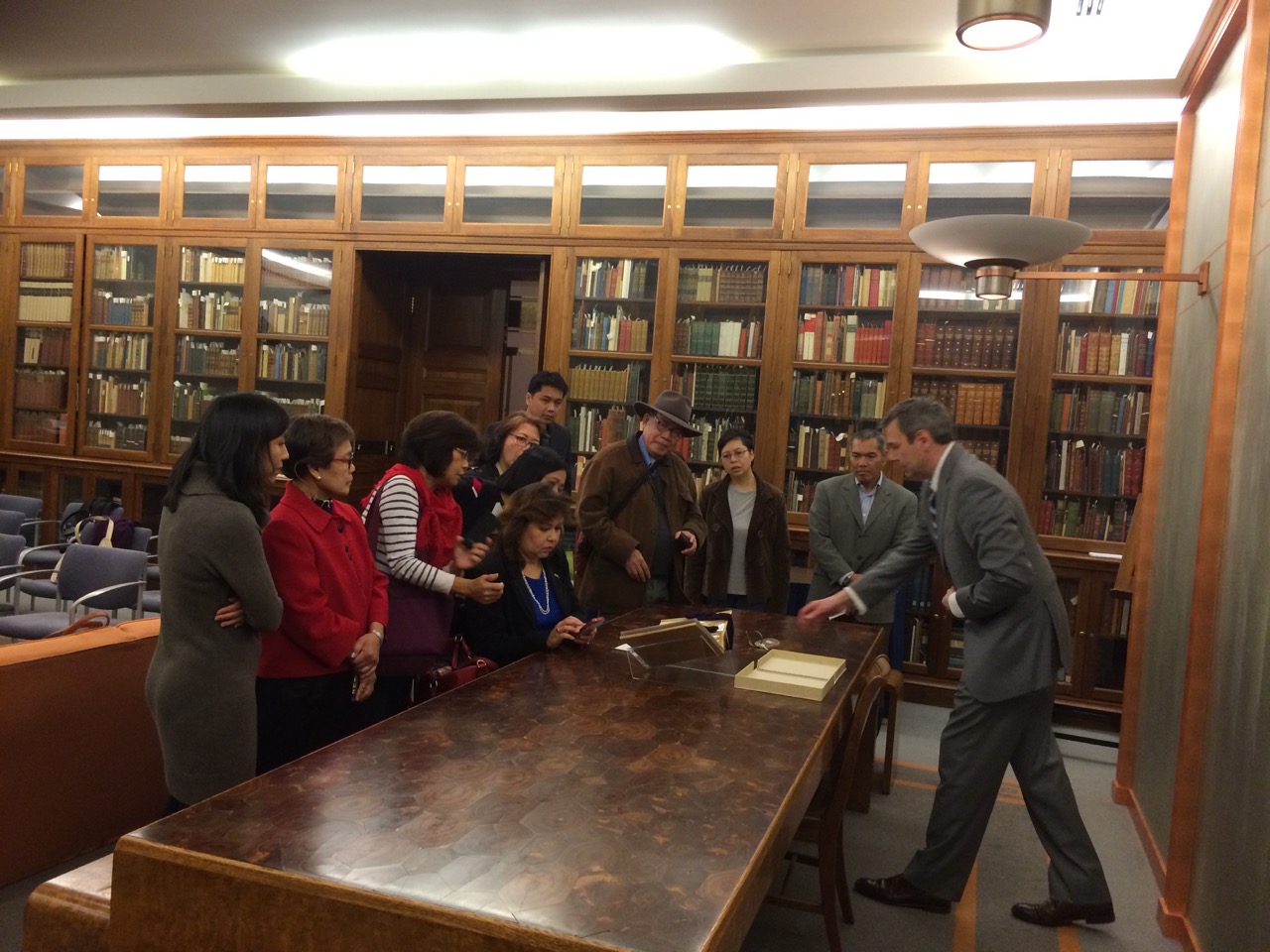
So the LOC’s copy, as far as we know, is the only one of its kind, and it was with great anticipation that Beng and I joined a group of ten Filipino and Filipino-American scholars and advocates who were kindly admitted by the LOC’s Rare Books Division to a private viewing of the Doctrina, with LOC librarian Eric Frazier doing the honors. (While waiting for our appointment, we had taken in a few of the LOC’s other prime offerings including the Gutenberg Bible, which is on permanent display near the stupendous main lobby that welcomes visitors, and the Magna Carta, on loan from the Lincoln Cathedral.)

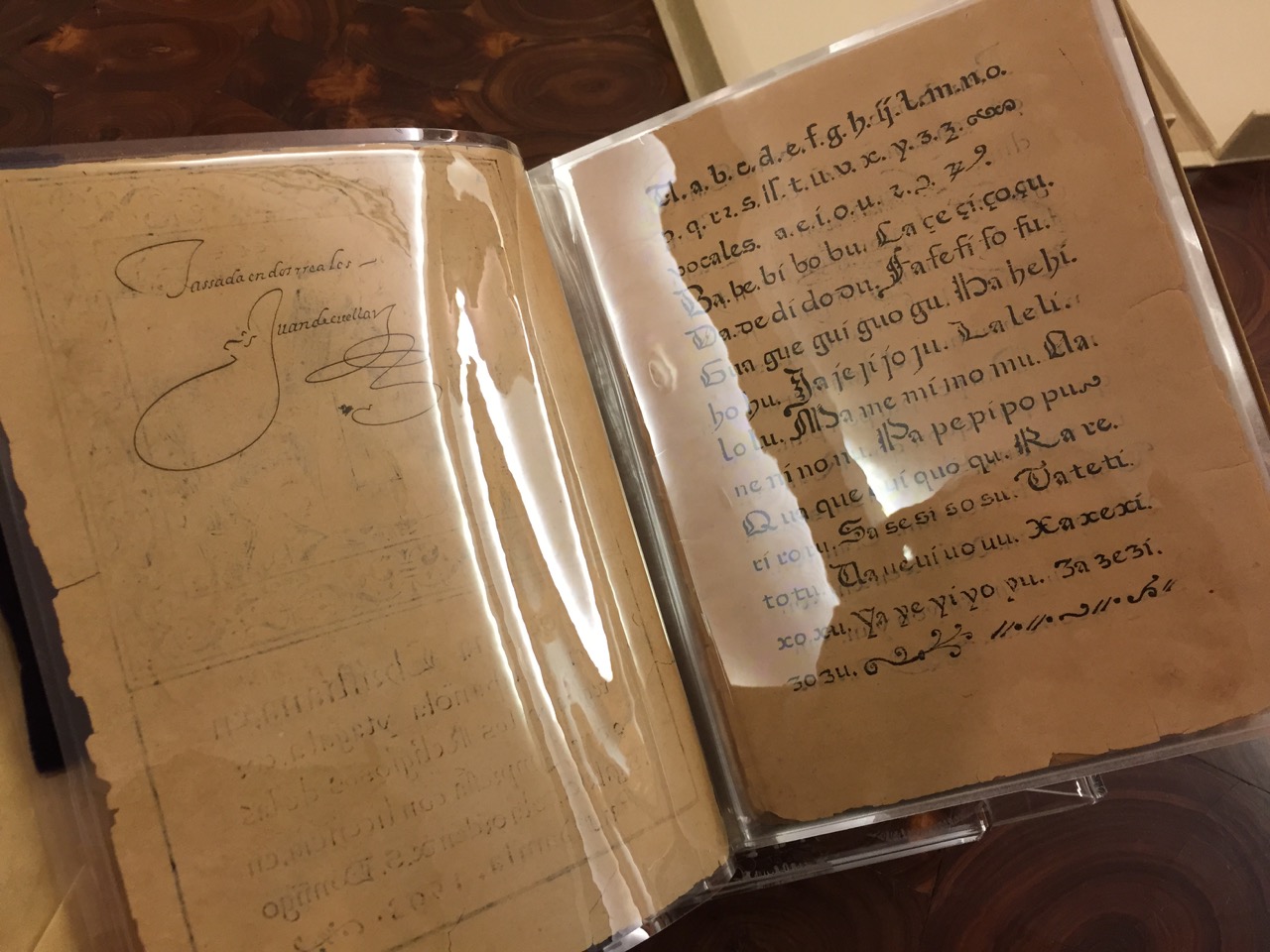
I should’ve read up more on the Doctrina before we went up there, but I was surprised by two things I realized only when I saw the book up close: its relatively small size, and the fragility of its paper. It’s only about 9 by 7 inches, not much bigger than a contemporary textbook. It was a further surprise to hear Eric say that “As far as I know, among the millions of books we have at the LOC, this is the only one whose every page is sheathed in Mylar.”

IMG_6150

I had asked Eric about the condition of the book and the paper, having seen and even handled other books from the 1600s (many of which, printed on stout, crisp linen paper, look good as new, and have survived in much better shape than the acid-lined paper of the 1800s and 1900s). The Doctrina, as it turns out, was printed xylographically—like a woodblock with the letters carved out—on mulberry paper (other sources say rice paper, although that term may have covered other papers made from mashed material). I’m not a professional historian, so I stand to be corrected on these presumptive facts by people who know vastly more about the Doctrina Christiana and about the history of books than I do (two immediately come to mind, our foremost book historians: Dr. Von Totanes and Dr. May Jurilla).

It was with the greatest of care and respect that we flipped those pages, and we saw what generations of the faithful must have seen (that is, if they saw the book at all): a syllabary, followed by prayers and other articles of faith, presented in Spanish, Tagalog, and baybayin, that pre-Hispanic script that survives in our consciousness only in the Katipunan “ka.” What’s remarkable is how fundamentally familiar the text of the prayers is: “Aba guinoo Maria matoua cana, napopono ca nang gracia. ang panginoon dios, ce, nasayyo. Bucor cang pinagpala sa babaying lahat….”

And so it went, a cry of praise and supplication across the ages, come to life again at our trembling fingertips.

I can only hope that, perhaps through an arrangement with a responsible Philippine institution, the Doctrina can be brought back to the Philippines for a special exhibition (the forthcoming Papal visit would have been the perfect occasion), or at least that more Filipinos in the US could see it, along with the other Philippine holdings at the LOC. It does take time and effort to arrange for a viewing, but in the meanwhile, the full digital copy of the book, provided by the LOC, can be found here: http://tinyurl.com/knpzkn5. For more information on the Doctrina Christiana and this particular copy, see the notes of Project Gutenberg editor Edwin Wolf at http://tinyurl.com/p6uqlvr.

Penman No. 122: A Meeting in Manhattan

IMG_5861Penman for Monday, November 10, 2014


BENG AND I were in Philadelphia and New York these past two weekends, so I could do more interviews for my martial-law book project and also get in touch with a few old friends. I normally keep a very low profile and don’t tell or call people when I travel to places where friends are living, not because I’m a snob, but because I don’t want to be a bother, knowing what it’s like when somebody drops in from the blue and throws your schedule out of whack.

But there are always some friends you never mind breaking your routine for, and who never seem to mind, either, if you break theirs. And I was glad to meet up in Manhattan with two such writer-friends, the poet and essayist Luis “Luigi” Francia and the fictionist Gina Apostol, both of whom live and work in New York. Luigi teaches at Hunter College and Gina at the Fieldston School.

The first time I met Luigi, many years ago in a Malate bar on one of his visits home from New York where he has been living since 1970, I remember seeing his calling card, which described him thus beneath the name: “POET. EDITOR. PRINCE.” It seemed cheeky and chic, and I was deeply impressed, being none of the above. (I’ve since written some middling poetry and have done my share of editing chores, but remain utterly unprincely.)

IMG_5856

I had the recent pleasure of writing a blurb for Luigi’s forthcoming collection of essays titled RE: Reviews, Recollections, Reflections, to be published by the University of the Philippines Press, and this is what I said:

“Luis Francia knows New York and America better than many of the native-born, but he never loses his moorings, his critical awareness of what it means to be Filipino-American. But these essays are about far more than racial politics, as they chronicle the travails of that most blessed and in other ways most cursed of citizens—the artist, particularly the artist abroad, for whom alienation acts as a lens that magnifies and reshapes every little thing that crosses the eye. The most arresting and delightful reads are his portraits of the expatriate masters who preceded him in America—most notably Jose Garcia Villa, lover of martinis and hater of cheese. Despite the plaints, Francia has been clearly and distinctly privileged to be where he has been and to see what he has seen, and he shares that privilege with us in this well-wrought collection.”

Gina was my batchmate when I returned to finish my undergrad studies in UP in the early ‘80s; I was ten years older than everyone else, so I was kuya to all of them. It was a time when we were all dreaming of finding a way to take our graduate studies abroad—as English and writing majors, we wanted to become the next Gabriel Garcia Marquez, the next Sylvia Plath, the next Ian McEwan, the next Pablo Neruda, and so on; as Pinoys, we wanted to see America. Eventually, we just became our older selves, but we did get to see the States through one ticket-paying subterfuge or other—for me, a Fulbright grant; for Fidelito Cortes, a Wallace Stegner fellowship; for Ramon Bautista, an assistantship at Wichita. But we had to compete for these, while all the brilliant Gina had to do was to lick a few stamps and mail a couple of her typewritten stories off to John Barth, who directed the writing program at Johns Hopkins and who wrote her back forthwith to offer her an assistantship, smitten as he was with her talent. It was pure magic, in those pre-email days.

That brash young woman from Tacloban who flew off to Baltimore would go on to write several prizewinning novels. Gun Dealers’ Daughter, published by W. W. Norton, won the 2013 PEN Open Book Award given by the PEN American Center to outstanding works by authors of color to promote racial and ethnic diversity within the literary and publishing communities. (Luigi himself had won this prize in 2002, the first year it was given, for his nonfiction book The Eye of the Fish.)

Here’s what the judges said about that novel in their citation: “You will read Gun Dealers’ Daughter wondering where Gina Apostol novels have been all these years (in the Philippines, it turns out). You will feel sure (and you will be correct) that you have discovered a great fiction writer in the midst of making literary history. Gun Dealers’ Daughter is a story of young people who rebel against their parents, have sex with the wrong people, and betray those they should be most loyal to…. This is coming of age in the 1980s, Philippine dictatorship style, where college students are killed for their activism. The telling is fractured, as are the times…. Not only does this novel make an argument for social revolution, it makes an argument for the role of literature in revolution—the argument being that literature can be revolution.”

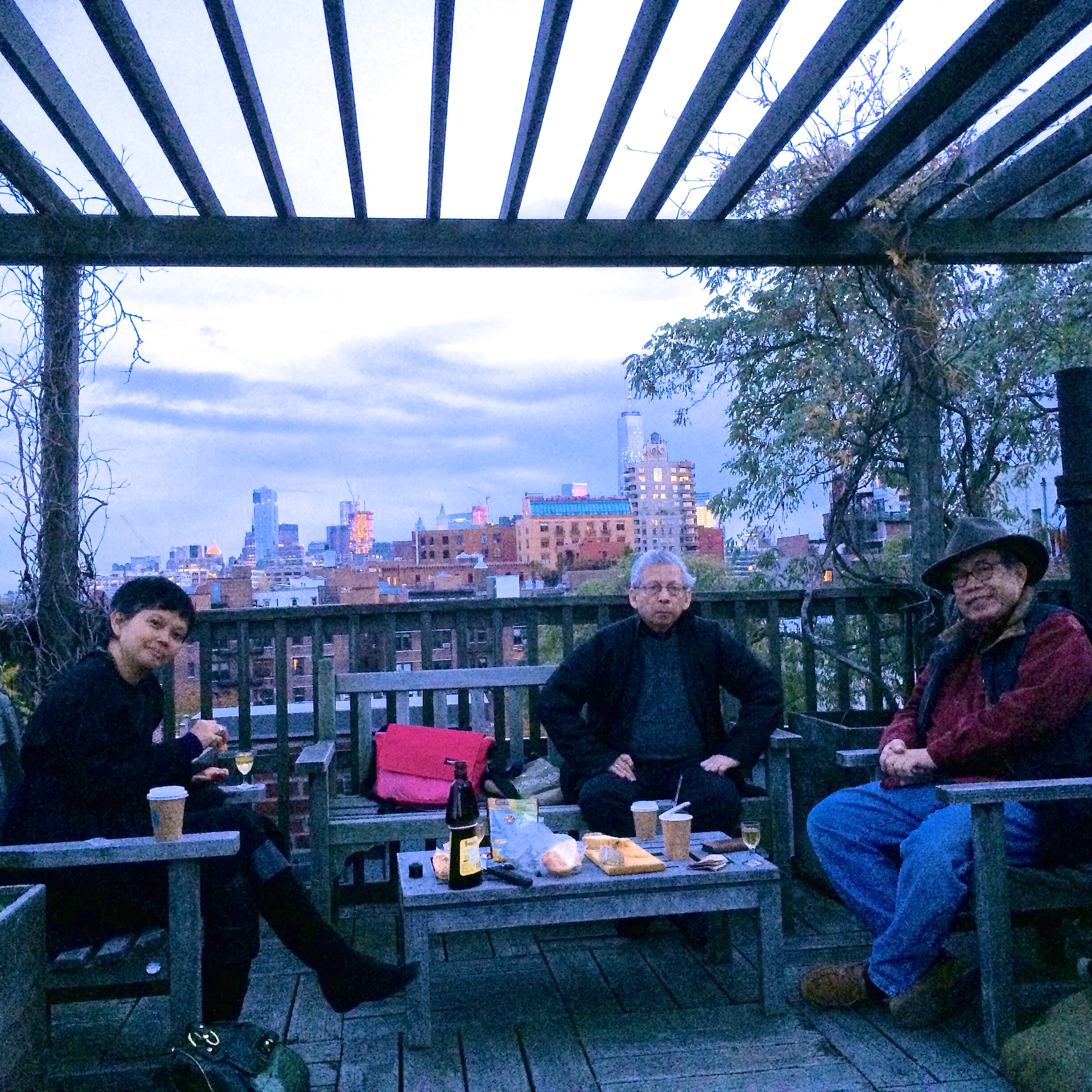
These then were the two literary luminaries who happened to be my friends (or should that be the other way around?) whom I was happy to set up a date with in a coffee shop in the West Village, near the High Line (an elevated garden and walkway that deserves its own story, among other New York landmarks). The coffee place was full, so we brought our steaming cups instead up to the roof deck of Gina’s apartment a few blocks away, pausing for a picture in front of the late Jose Garcia Villa’s old place on Greenwich Street. “This was where he held court,” said Luigi, one of Villa’s acolytes. “Nonoy Marcelo also lived in this area for many years, and I did, too, back when the rent was 65 dollars a month.” Then Gina added, “That white place is where John Lennon and Yoko Ono lived.” And I thought, if they’d stayed here instead of moving to the Dakota, he might still be alive.

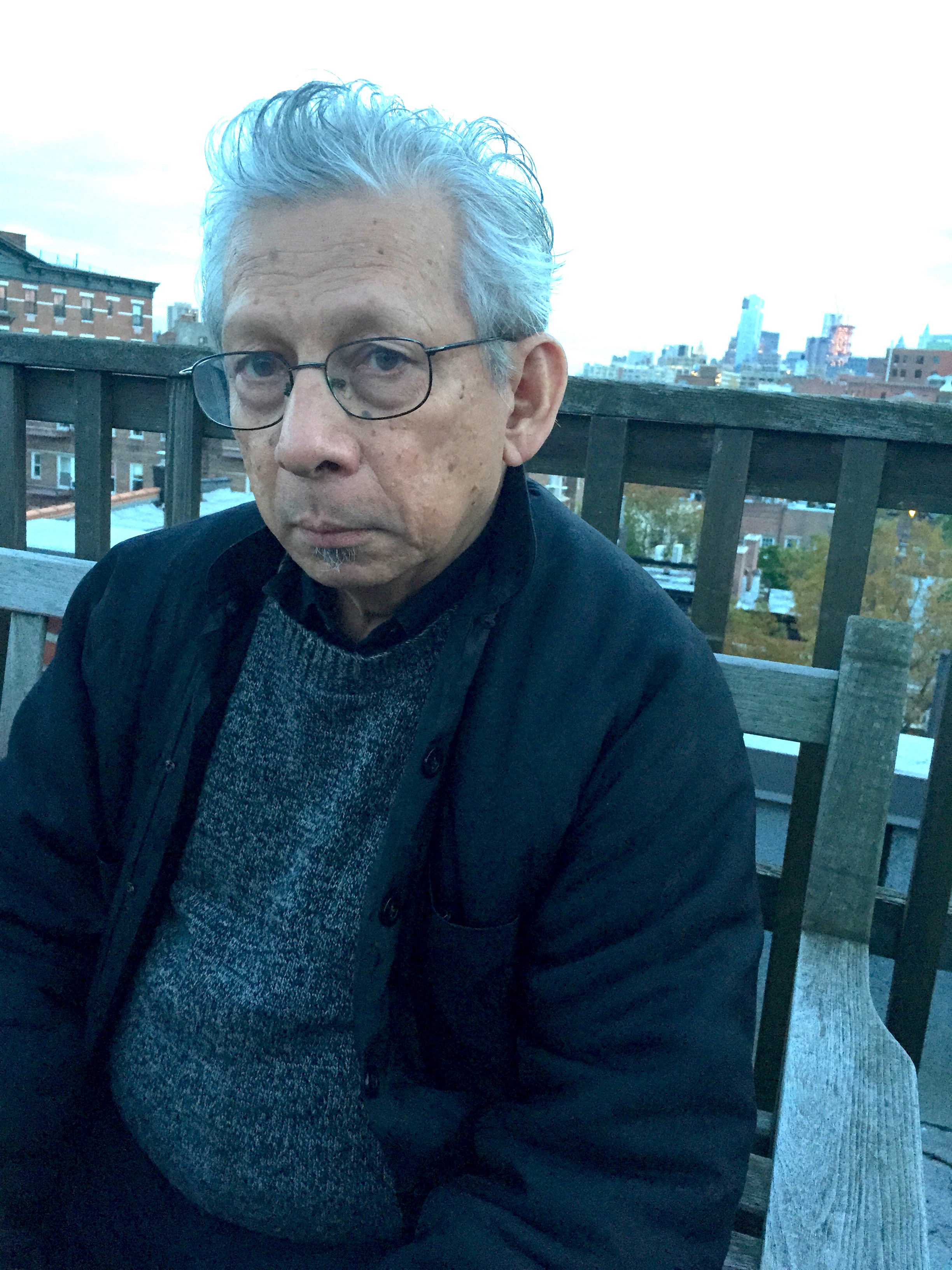
We went up to the roof deck and Beng and I savored the scenery in all its 360-degree magnificence, as the sun set in the west and the full moon rose in the east, competing with the Empire State’s tricolor spire. We talked books, life, and loves over Frangelico, bread, and cheese; channeling Villa, I steered clear of the curd. Looking sharp and happy despite a recent illness, Gina said that her iPhone’s Siri had told her, in response to a question, “I’m just glad to be alive!” At that instant, we all were.

Penman No. 119: Bulosan in the Heart

Penman for Monday, October 20, 2014


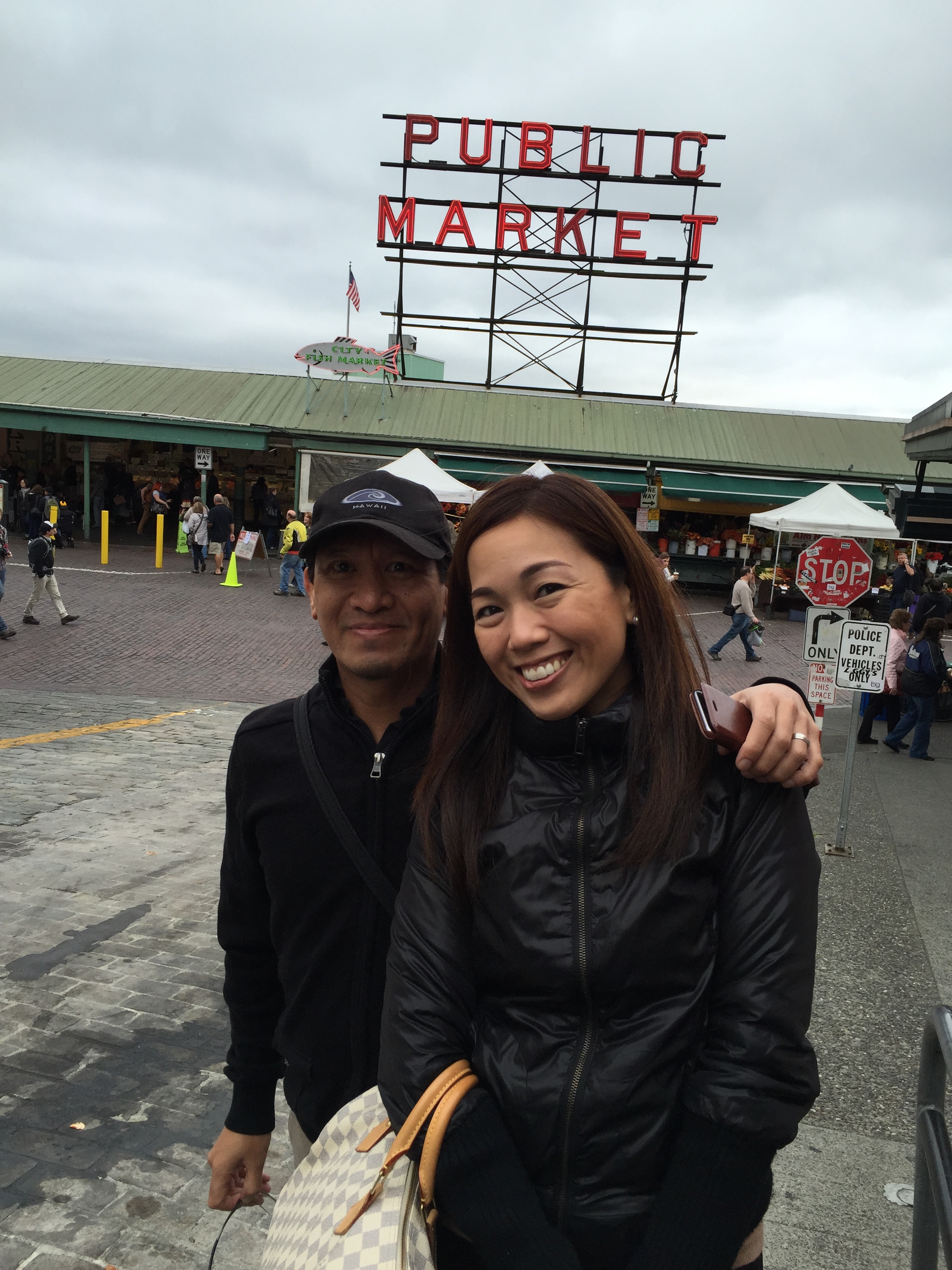
TAKING A short break from my fellowship in Washington, DC, Beng and I flew off to the West Coast a couple of weeks ago for a weekend with our daughter Demi and her husband Jerry. Demi was celebrating her 40th birthday (can you believe it?) and had sent us tickets to join them in Seattle; they live in San Diego, but they’d loved Seattle from a previous visit and wanted to share that discovery with us.

Over three days, we did the Seattle thing, and had loads of fun: the Pike Place Market, the Space Needle, a glimpse of the Chihuly glass garden, antiquing in Snohomish, and a boys’ tour of the Boeing plant in Everett. But it was an unexpected turn in the program that made it all the more worthwhile.

On the drive into the city from the airport, I had mentioned to Jerry (who had been born in Rhode Island to parents from Bicol) that two Asian-American icons—Carlos Bulosan and Bruce Lee—were buried in Seattle. Jerry’s an engineer in the aviation industry, but like Demi, he has a keen interest in culture and in his roots.

Bulosan’s name holds a special significance for our family. In high school, with some help from Beng, Demi had put together a book report on America Is in the Heart—Bulosan’s sprawling semi-autobiographical novel about the Filipino immigrant experience in America, first published by Harcourt Brace in 1946. I myself had written my undergraduate thesis at the University of the Philippines on Bulosan, fascinated by his often paradoxical appreciation of America, which he described as being at once “so kind and yet so cruel.”

Born in Pangasinan, he shipped out to Seattle in 1930, and never returned until his death from bronchopneumonia, also in Seattle, on September 11 (yes, 9/11) in 1956. (There’s some debate over the year of his birth, which has been variously listed as 1911, 1913, and 1914.) In the US, without the benefit of college, he became a voracious reader and taught himself to write, and became known both as a writer and a labor activist. Since the 1970s, many critics such as Epifanio San Juan Jr. have championed a reappreciation of Bulosan and his work; in 1973, the University of Washington Press republished America Is in the Heart, which was translated into Filipino as Nasa Puso ang Amerika by Carolina S. Malay and Paula Carolina S. Malay and published by Anvil in 2000.

When Demi and Jerry made plans to marry in 2007, I knew what I was going to give them as a wedding gift. After a long and eventful search culminating in a meeting with the seller in a Jollibee in Diliman, I had just acquired a first edition of America Is in the Heart, and carried it with me to San Diego. This copy had been inscribed by Bulosan to his friend Fred Ruiz Castro: “This story of my life will, I hope, bring me closer to you and our native land through our good friend J. C. Dionisio, with my best wishes, Carlos Bulosan, Los Angeles, 3-6-1946.”

Upon receiving the book in Manila almost a month later, Castro—who became Chief Justice in 1976—also signed it on April 4, 1946. I signed the book on a following page on April 2, 2007, and Beng and I presented it to Demi and Jerry on April 15. The book now rests proudly on their bookshelf in San Diego. (When I first wrote about this in my column—about finding that “holy grail” of a signed first edition and giving it to our only child on her wedding in America—I got a pleasant surprise upon my return: the gift of another copy of an early edition, acquired by another Filipino writer when he was in college, Greg Brillantes. That book, signed by Greg, now sits on my topmost shelf in Diliman.)

Now back to Seattle. On our last full day there, after touring the Boeing plant in the morning while our wives did their own thing downtown, Jerry and I were hit by the same brain wave in the car: why not look for Carlos Bulosan’s grave and pay our respects to our literary hero? A little Googling quickly revealed his gravesite, at the Mt. Pleasant Cemetery on Queen Anne Hill. We picked up Beng and Demi at the hotel, and located the cemetery not too far away.

GPS helped bring us there, but it couldn’t pinpoint the exact grave among the many hundreds on the site; thankfully, Google also yielded a picture of the grave itself, and the four of us spread out across the cemetery, looking for visual markers—particularly a white obelisk in the distance; it took about 20 minutes until Demi yelled “I found it!”

It was, ironically, very close to the cemetery gates, on the left side. Beng picked some flowers nearby and offered them at the foot of the marker, which read: “CARLOS BULOSAN 1914-1956 Writer Poet Activist,” followed by an epitaph that Bulosan himself had written: “Here here the tomb of Bulosan is / Here here are his words dry as the grass is.” It was a pretty spot, truth to tell, and the grass was hardly dry. After the cemetery, we visited Seattle’s International District near the waterfront, to peek at the Bulosan exhibit through the windows of the historic Eastern Hotel, where Bulosan and other Filipino cannery workers lived.

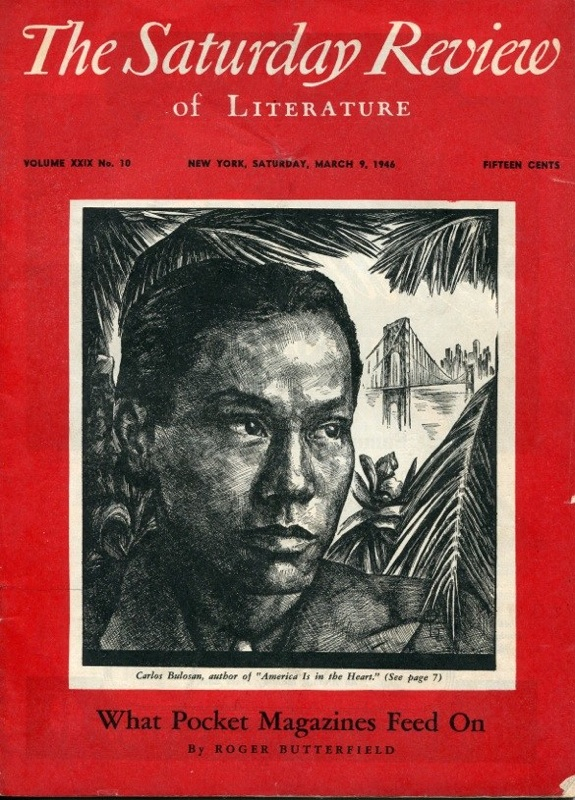
Demi and Jerry don’t know it yet, but they have another Bulosan memento coming from me: a copy of the Saturday Review of Literature from March 9, 1946, on the cover of which the famous pen-and-ink portrait of Bulosan first appeared. One of these days, I’ll pay another homage, to the Bulosan memorabilia on exhibit at the University of Eastern Pangasinan in Binalonan, where they keep copies of his letters, commemorate September 11 as Carlos Bulosan Day, and teach a 3-unit course on his life and works. There’s a trove of material on him at the University of Washington library, and perhaps on another visit to Seattle, with more time, I might look into that, too. But as every Fil-Am and indeed every Filipino should know, a pioneering voice like Carlos Bulosan’s can ring everywhere and forever, in the heart.

Bulosan

Penman No. 117: The Way We Were

IMG_4726Penman for Monday, October 6, 2014


I’D LIKE to thank the people who’ve given me their time and accorded me their hospitality during my current visit to the US. I’m here to do more research for a book project—an oral history of the First Quarter Storm (the story of my generation, in other words)—and so far I’ve had wonderfully productive interview sessions with some people who were either active participants in the anti-martial law movement or were on the other side of things (or simply on the roadside) at the time.

Those who’ve helped me out, either as interview subjects or facilitators, include former campus journalist and retired engineer Gerry Socco and his wife Chet; lawyer Rodel Rodis; editor Rene Ciria-Cruz; tech journalist and developer Joey Arcellana; and journalist Gemma Nemenzo and her husband, Col. Irwin Ver. All of them are conveniently based in the San Francisco Bay Area, so Beng and I flew out there from DC for a long weekend of interviews and reunions with old friends.

Rodel and I go back all the way to the Philippine Science High School, where I served as Rodel’s associate editor when he helmed The Science Scholar. It was also in high school—when I myself became editor in chief—that I first heard of Joey Arcellana from our adviser, Mrs. Agnes Banzon Vea (mother of the accomplished Doy and Rey Vea), who told me one day: “There are two young writers I’d like you to read. One of them writes for the UP Collegian, and his name is Joey Arcellana. The other is still in high school and writes for the Highlights, and his name is Gary Olivar.” Gemma, who now edits the ezine Positively Filipino, also edited the late, lamented Filipinas magazine, which I used to write a column for. Gerry I knew from the pre-martial law College Editors Guild of the Philippines, and we met again in the worst of possible circumstances—as fellow political prisoners in Bicutan; today, in our sixties, we share an unabashedly bourgeois passion for collecting vintage pens and watches.

In Washington, DC, where I’m formally based through my association with the George Washington University, I’ve been lucky to meet and to interview one of the torchbearers of the anti-Marcos resistance on the East Coast, Jon Melegrito, a retired librarian at GWU who now writes for the DC-based fortnightly Manila Mail. I’ve also been glad to gain the insights of three former State Department officials: former Ambassador John Maisto, who headed the old Office of Philippine Affairs and served in Manila in the late 1970s; his colleague Hank Hendrickson who now serves as executive director of the US-Philippines Society, of which Amb. Maisto is the president; and Santiago “Sonny” Busa, a Filipino-American who has served as consul in Manila, Addis Ababa, and Kuwait, and who has taught International Affairs at West Point. I’ll be doing a bit more traveling to see people in New York and possibly the Midwest.

So far, I’ve interviewed about 30 people for the book, which I’ve begun to write at my sister’s place in Virginia. It’s very strange in a way to write about bloody encounters in coconut groves in the Philippine South while reveling in the sight, outside my window, of bluejays and robins perched on the branches of trees just beginning to acquire an autumnal glow. But perhaps it’s precisely this physical and psychological estrangement that I need to handle such an emotional project—emotional, at least, for members of my generation.

Sometimes what I hear gets a bit too much; for the first time, after having written and published over 25 books with a very dry eye, I wept as I listened to an account of someone I knew shooting—executing—someone who had been her best friend. At the same time, events that might have been terrifyingly life-threatening 40 years ago can now sound absolutely hilarious—or deadpan ironic, such as when firebrand Fluellen Ortigas, selected as one of the Ten Outstanding Students of 1968, stands beside President Marcos at the awarding ceremonies, with a book titled The Essentials of Marxism in hand. “Join my staff,” Marcos tells him. “I can’t,” Ortigas replies. “You’re going to be a dictator!” Ortigas would later work for Ninoy Aquino, go underground in Panay, get arrested before martial law, get released in 1976, flee to the US via Sabah, get an MBA, and become a businessman in San Francisco.

I have many more stories like Flue’s to tell, each with its own highlights and insights—Elso Cabangon being ambushed on Taft Avenue and taking four bullets, one of them tearing through his cheek; Boy Camara auditioning for the role of Judas before eventually playing Jesus Christ, Superstar; a female comrade being married in the rites of the Party, one hand on her heart, and the other on Mao’s Quotations (it’s a marriage, like many in the movement, that will unravel). But they’ll have to wait until the book itself, which I hope to finish by early next year.

Even now, many old friends and comrades are probably wondering why I haven’t approached them yet or asked so-and-so to be interviewed, because they have interesting and important stories to tell. I’m sure they do, and I have to extend them my apologies in advance, simply because I just don’t have the time or space at the moment to include everything and everyone I should be covering. I’m almost certain that this oral history will lead to a sequel, all the way to EDSA (a book that someone else should begin writing soon). Some people I’ve asked haven’t replied or have declined, and I can only respect their implied wish to be left alone.

Again, this book will be about the past, and while we might bemoan the innocence we lost, or even wax romantic about the way we were, I don’t think too many of my respondents will want to relive their lives in exactly the same way, knowing what they do now. We might not regret what we did—it arguably needed to be done—but we or our children don’t have to repeat it, if it can be helped. That’s how history helps the future.

Penman No. 115: The Clarity of Prose

Penman for Monday, Sept. 22, 2014


“THE CLARITY of Things” is the title of the new short story I finished a few weeks ago, which will soon be coming out in the Australian literary journal Westerly. The phrase has been ringing in my ears and suggested this piece about the value of clarity in prose—an element whose importance seems so obvious but which still escapes many writers, especially those who remain unsure of what it is exactly they want to produce.

I was thinking of this the other day as I was reading, with much delight, an old essay by the New York-based Luis Francia on Jose Garcia Villa, which begins thus: “Loved New Yorker cartoons. Hated its poetry. ‘Prose,’ he’d sniff.” The essay (in which I happily discovered that I shared with Villa not just a first name but an aversion to French food and cheese) went on to describe Villa’s fabled workshops, where he decried, Luis recalls, “the prose or narrative mentality. Anathema to the poet’s creed. He urged us not to read fiction, to purify ourselves, our poems, and have that lyric spirit fly unfettered.” There was, Villa and Francia agreed, too much bad prose going around, passing itself off as poetry.

It’s an admirable and entirely understandable stance, coming from a consummate aesthete like Villa. I don’t think there’s a real writer alive who won’t concede that, in the hierarchy of letters, poetry sits at the topmost tier; I often remind students too eager to proclaim themselves poets that there’s nothing harder to do well and easier to do badly than poetry. I’ve published a book of what I offer to be poems and I’ve won a couple of prizes for poetry, but I wouldn’t for one minute describe myself as a poet; I am not worthy.

That said, the writing of good and great prose—whether fiction or nonfiction—poses its own challenges, heedless of poetry’s demands for complexity, compactness, and layered meanings. For me, the charm of prose is precisely in its accessibility—or at least, in its seeming accessibility—and then, like stepping into a roomful of riches, in its delivery of even more than the view from the doorway may have suggested.

At its most basic, and also at its best, prose should be unflinchingly clear, which means it should be written with certainty and precision, if not efficiency, from physical description to philosophical musing. (I keep hearing the imaginary voice—ironically, he was a chronic stammerer—of W. Somerset Maugham, one of my early models, intoning in one of his treatises on writing: “Clarity, clarity, clarity!”) A blue sky should come off as blue, or shade into its proper variant; a crowded room should suffocate the reader. Clarity does not imply a singularity or inevitability of meaning, especially in fiction, which thrives on ambiguity; I don’t have to understand what I’m seeing, not right away, but I should know what I’m looking at—a wet street, an orange jacket, an old man’s face. Witness the prudish Miss Mijares in Kerima Polotan’s “The Virgin”: “Secret, short-lived thoughts flitted through her mind in the jeepneys she took to work when a man pressed down beside her and through her dress she felt the curve of his thigh”; she wished she were “in the movies, to sink into a seat as into an embrace, in the darkness with a hundred shadowy figures about her and high on the screen, a man kissing a woman’s mouth while her own fingers stole unconsciously to her unbruised lips.”

Some works, like popular songs, are best understood right away to be fully enjoyed.

On our flight to the US earlier this month, I gorged on the onboard entertainment, and dwelt in particular on an HBO documentary on the life and work of the lyricist-composer Stephen Sondheim, who reminded his audience that the difference between the poem and the song lyric is that the listener has to get the song on the spot, whereas the poem’s meaning can be teased out at leisure. (And sometimes meaning doesn’t matter as much as the music: try figuring out “Send in the Clowns.”)

Clarity often comes with concrete objects, but can be even more valuable when dealing with abstractions—ideas, feelings, complex notions often more surely grasped by the many-fingered poem. I’ve found that the most complex notions are best served by the simplest language. Clarity and simplicity are not always the same thing, but can’t be too far apart. There’s a much-quoted passage from C. S. Lewis’ The Four Loves that illustrates how simple words—with a few exceptions like “irredeemable”—can reach at the most complex of meanings:

“To love at all is to be vulnerable. Love anything, and your heart will certainly be wrung and possibly be broken. If you want to make sure of keeping it intact, you must give your heart to no one, not even to an animal. Wrap it carefully round with hobbies and little luxuries; avoid all entanglements; lock it up safe in the casket or coffin of your selfishness. But in that casket—safe, dark, motionless, airless—it will change. It will not be broken; it will become unbreakable, impenetrable, irredeemable. The alternative to tragedy, or at least to the risk of tragedy, is damnation. The only place outside of Heaven where you can be perfectly safe from all the dangers of love is Hell.”

This also reminds us that good, clear writing begins with good, sharp thinking, which is perhaps the hardest task of all.


Penman No. 107: Small Loans for Big Dreams

WS-Butch-1Penman for Monday, July 28, 2014


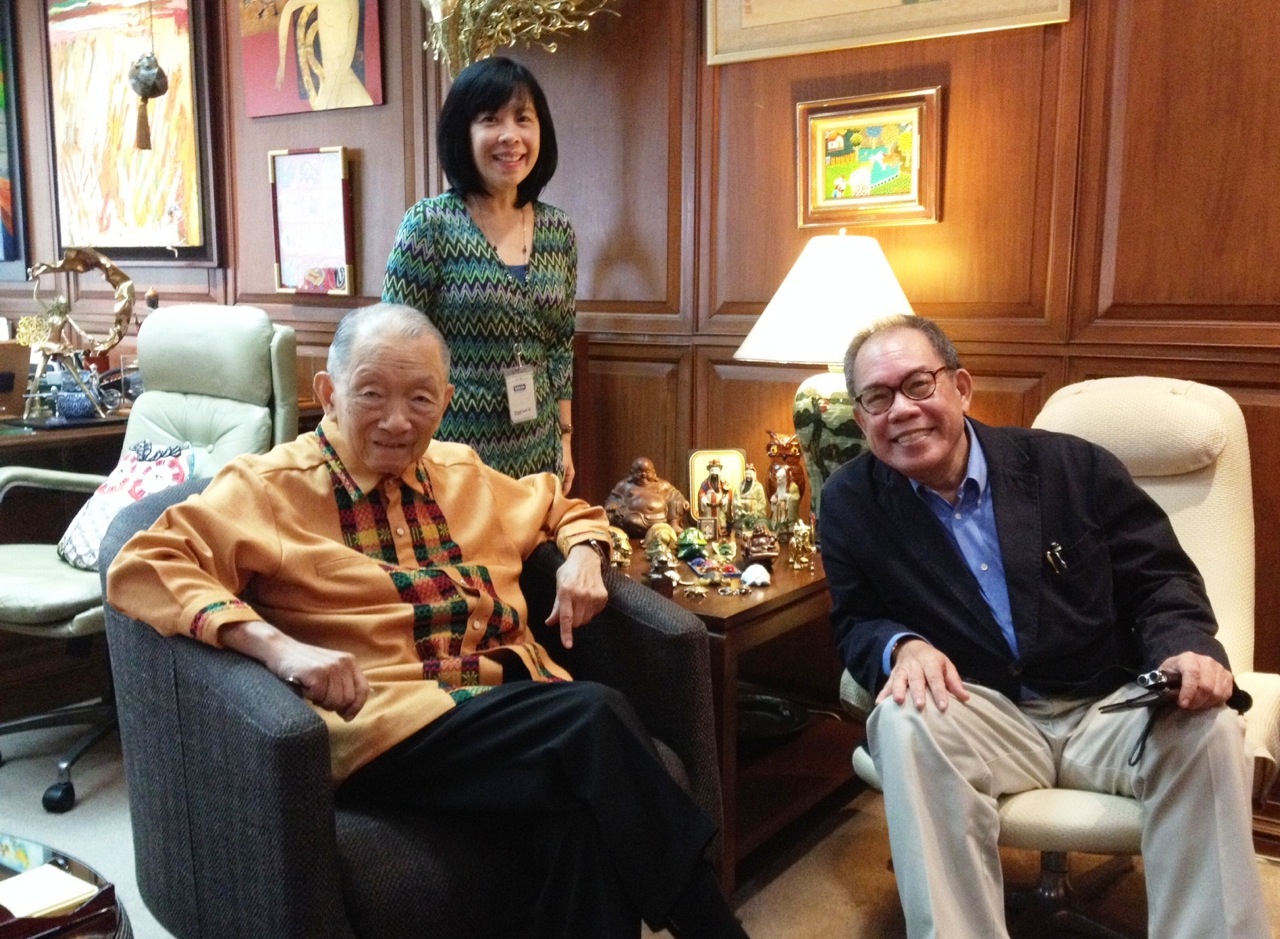
IT HAD been a few years since I last sat down for a chat with the accounting and business guru Washington SyCip, whose biography (Wash: Only a Bookkeeper, published in 2009) I had been privileged to write, so I was only too happy to oblige when our mutual friend Marlu Balmaceda asked if I could spend some time last week to shoot the breeze with Wash.

Both Wash and I had aged a bit since we started working on his book back in 2006—I more so than he, who last month turned 93. Having just gotten my senior card in January, I’ve been feeling entitled to some relaxation, but Wash SyCip was right at his desk in his old 14th floor office where I last saw him, working away, surrounded by a growing menagerie of owls, turtles, and roosters, the gifts of friends. On the wall was a Chinese painting of a dignitary, perhaps the Emperor himself, seeking the counsel of a wizened turtle. Wash caught me looking at it and told me what the turtle’s sage advice was: “Take it easy.”

As cool and dapper as he is, Wash makes it look like he’s taken it easy all his life, but I know for a fact—having chronicled that life—that it just isn’t so. No slouch could’ve put up and sustained what became the regional accounting giant SGV.

But this time, Wash wasn’t talking about himself, but about a new program for education that he and a friend began three years ago, called the Zero Dropout Education Scheme, which seeks to put and keep poor Filipino kids in school. “The country’s biggest problem remains poverty and the wide gap between the rich and the poor,” Wash says. “For me, education is key to alleviating poverty, but ironically, the poorer you are, the more children you have, so half go to school and half don’t. Those who don’t will stay illiterate, and will be resigned to poverty all their lives.”

Seeing that illiteracy still afflicted millions of Filipinos, Wash resolved to do something about it and committed US$1 million of his own money to a fund aimed at the problem. Helping him along was his friend, the Armenian-American businessman and philanthropist Paul Kazarian, who pledged to match Wash’s contribution dollar for dollar. But even with that funding, Wash was modest and realistic enough to know that he couldn’t do the job by himself. “I don’t really know the poor, and how best to reach them,” he admits. “So I got in touch with CARD-MRI, which has been a leader in Philippine microfinance, to help us out.” Radiowealth Finance Corporation has also geared its CSR program toward the Zero Dropout scheme, and committed to provide P30 million.

The Center for Agriculture and Development-Mutually Reinforcing Institutions or CARD-MRI goes all the way back to 1986 when Dr. Jaime Aristotle Alip and 14 other rural development practitioners got together to set up CARD specifically to help empower women in poor communities. In 2008, it received the Ramon Magsaysay Award for Public Service. “With over 1,400 units all over the country, CARD had a network in place we could tap for our program,” Wash says.

Initially available to CARD members, the Zero Dropout scheme offers small renewable loans ranging from P1,500 to P3,000, at a monthly interest rate of 1 percent. “Basic education may be free,” Wash acknowledges. “But families still need money for school supplies, slippers, clothes, and other expenses. That’s where we come in. We’d like to provide not just the money, but an easy way of getting it, with as little red tape as possible.”

As of March this year, the program had supported over 46,000 students through loans totaling over P160 million, out of which P130 million in principal and P6.5 million in interest has already been paid back. They expect to hit 100,000 beneficiaries by year’s end.

While most beneficiaries come from Region IV-A (the Calabarzon area), the program has expanded to the ARMM in Mindanao, where the dropout rates are the highest. Typical beneficiaries include Lucena native Lilia Fernandez, a mother of nine who works as a manicurist alongside her husband, a construction worker; her son Erick dreams of becoming an engineer.

Unlike the government’s conditional cash transfer program, which gives cash direct to poor beneficiaries, Zero Dropout is a loan program. “They repay the loan through microfinance, by increasing their income with a loan for a store, a tricycle, and so on,” adds Wash.

If you think poor borrowers can’t or won’t repay their loans, think again. CARD has made a name for itself making sure its system works, basically because it’s led by people from the very grassroots it serves. Wash tells this story: “I had CARD’s management people over for dinner at my house once, and discovered that none of them were from Makati or Manila. They were all from the rural areas, and they were mostly women, very bright women. I was very impressed with their dedication. CARD knows its clientele. It works with groups of 20 women who guarantee each other. I’ve attended meetings with these groups and I can see that our poor communities are full of people with initiative and drive.”

I came away most impressed by an incident that Wash related: “When Yolanda hit, 8,000 students under the program were affected in Leyte and other places. My first reaction was to cancel their loans, as the least we could do to help. But Dr. Alip said, Wash, no—the poor are more honest than the rich. And as reconstruction took off, the loans also began to be repaid, even if the borrowers had lost their homes.” If that’s not inspiring—in the context of billions lost to crooks and scammers—I don’t know what is.