Qwertyman No. 169: Chatting with Apo Lakay

Qwertyman for Monday, October 27, 2025

I’VE BEEN going out on a limb for the past few weeks, touting the possibility that President Bongbong Marcos—yes, the son of our martial-law dictator—might be considering doing the right thing and leaving behind his own legacy, one notably different from Apo Lakay’s. 

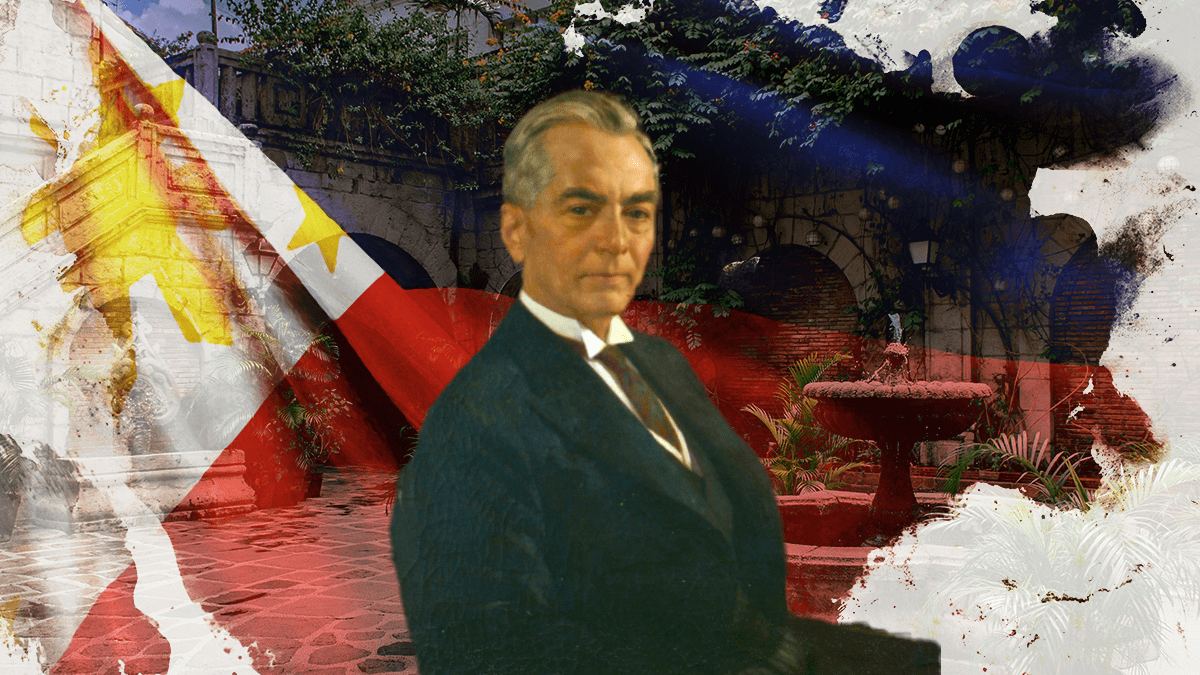
Comes now the news that his spokesperson Atty. Claire Castro—who can usually be counted on for ripostes that elevate the reasonableness of her boss—has been quoted as saying that BBM has been losing sleep conversing with his father (who, let’s not forget, passed on 36 years ago), presumably in search of some advice from the afterlife on contentious current events.

My first reaction was to wonder why their otherworldly tete-a-tete had to take so long, if father and son agreed on the same things. Could they possibly have been arguing? What about? Bank accounts? Sibling rivalry? Forks in the road? And if their encounters leave him sleepless, could BBM be that bothered by FM’s post-mortem perorations on statecraft and, well, craftiness?

This is where VP Sara Duterte enjoys the slight advantage, her father being at least alive and still capable of earthly conversation with Sara on such timely topics as “Your stepmother wants to sell the house in Davao” and “Now where did Pulong’s P51 billion in flood-control funds go?” The Hague may be almost 12,000 kilometers away from Manila, but flying there (on her own dime, she’s careful to insist) beats telepathy or telephony, and creates photo ops with the DDS faithful that nocturnal chit-chats with the departed can’t. (There’s a really nasty and cruel rumor going around, I have to note, that the VP actually wants PRRD to remain and rot away in the Netherlands until he expires—don’t ask me how—just before the May 2028 election, gifting her, like Cory Aquino did on Noynoy’s behalf in 2010, with a wave of sympathy votes. I don’t know if I should applaud or deplore the Pinoy’s political imagination, but there it is.)

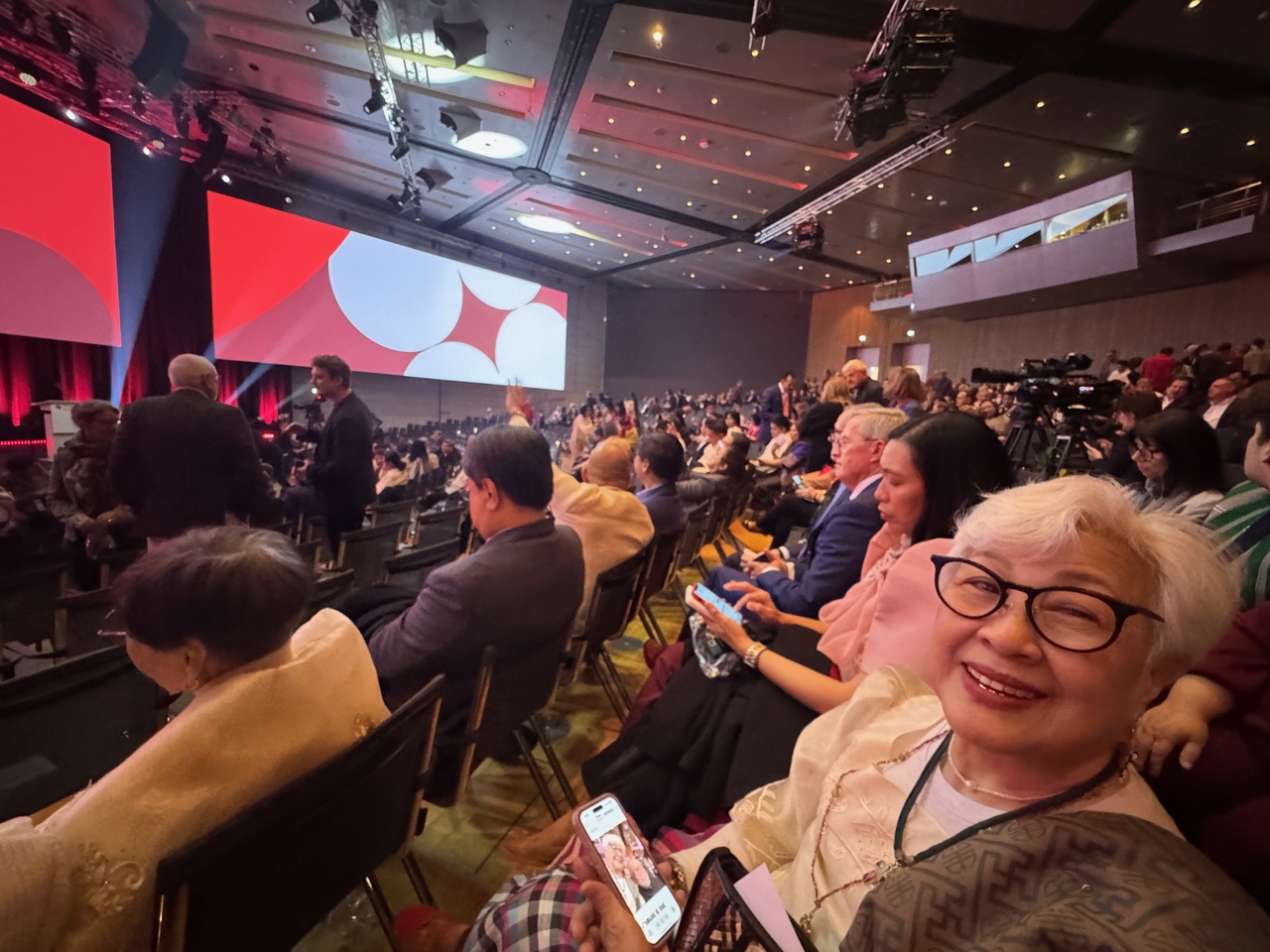
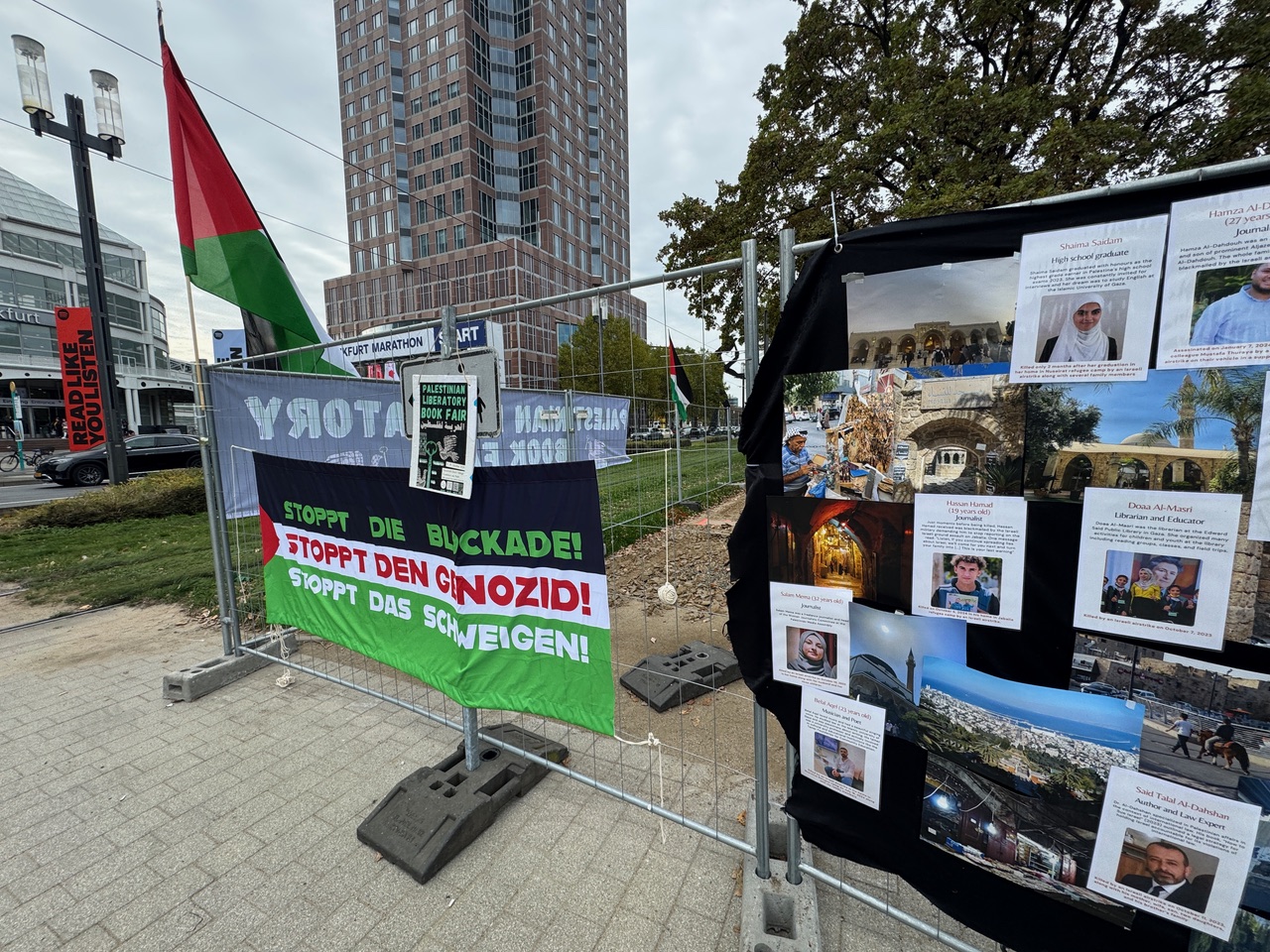
Here in Germany, where I’ve just attended the 77th Frankfurt Book Fair where the Philippines was this year’s Guest of Honor and therefore the exotic insect under the microscope, the one inevitable question raised in my many reading and speaking events was “What do you think of the current political situation in your country, and of the fact that another Marcos is now leading it?”

It’s a question I’ve thought about a lot, with or without Frankfurt, and you’ve seen some elements of my answer to it right here in Qwertyman. Pitching these ideas to a foreign audience is a bit more challenging because you don’t have the time to present and explain the details of the context, and you certainly don’t want to lie. 

I’m not the Philippine ambassador, I said to them, so I can and will be frank, but if I seem to equivocate then it’s because the situation isn’t as simple as it looks. Yes, BBM is the dictator’s son and yes, I went to prison as a teenager for seven months—many stayed in far longer—under martial law. Yes, I campaigned for his presidential opponent, Leni Robredo, whom I still believe would have made a better president—and yet could.

But very recently, I noted, PBBM has been making moves that have surprised many, for their effects if not their intentions. Whatever he was thinking at the time, his public disclosure of the bigtime contractors likely tied to multibillion-peso scams that some politicians aided and profited from has shaken the country to its core. The public outrage and demand for justice has been so loud and widespread that it has gone far beyond infrastructure into a searing re-examination of corruption in every aspect and at every level of our government and society.

I brought in the Duterte factor, the continuing threat from his own Vice President and former ally, for whom BBM’s surrender of her father to the International Criminal Court could only be unforgivable. The flood-control scandal and its connection with the Dutertistas was, therefore, a bomb set off by BBM for his own political and personal survival, but one with many unintended consequences and casualties, including some of Marcos’ own soldiers, and still possibly he himself, should the stain reach into the Palace as it has been threatening to (with gleeful encouragement from the DDS).

I don’t know how well the Germans understood or accepted my reading—heck, I’m sure many Filipinos don’t—but when you put over a hundred Filipino creative writers and journalists together for a week, some points of consensus are bound to emerge over the breakfasts and endless cups of coffee. Among them: (1) 2028 can’t come soon enough; (2) BBM should double down on the kind of confidence-building measures that will shore up the rest of his presidency, like pursuing the anti-corruption campaign to the fullest, no matter what; (3) only an alliance between idealist (but sufficiently grounded) moderates and BBM’s best people (not to forget his resources) can hope to stop a Duterte restoration.

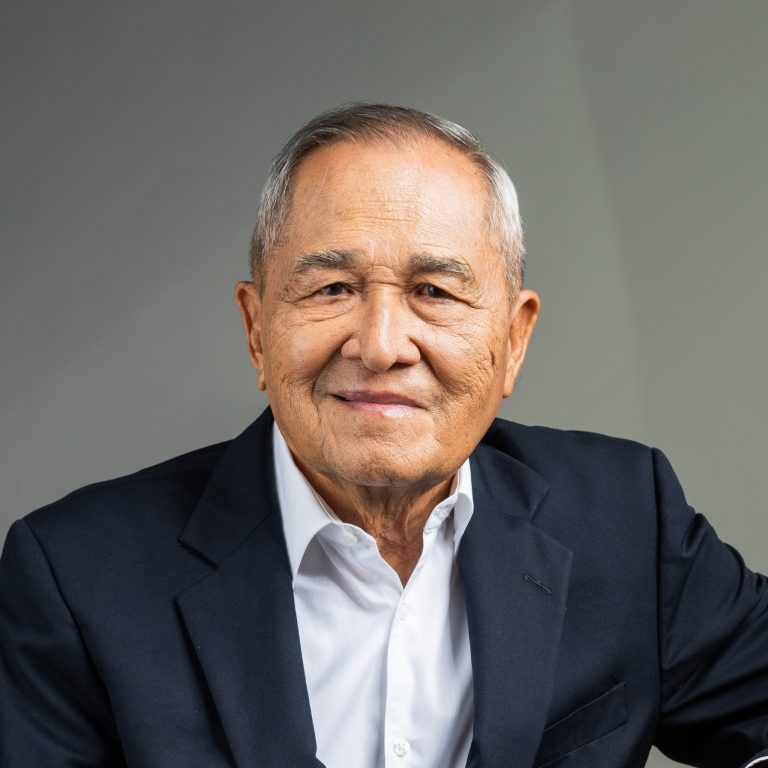
I’d tell that to my dad, who died almost 30 years ago and who, to be honest and as close as we were, I haven’t seen much of in my dreams. But like BBM and his papa, we’d likely be up all night. Having passed away while the country was still in the capable hands of “Steady Eddie,” when it seemed that Ramos’ vision of “Philippines 2000” was going to deliver us into a new millennium of political stability and economic growth, Tatay would probably crawl right back into his grave were he to be given a day off to witness what we’ve done since.

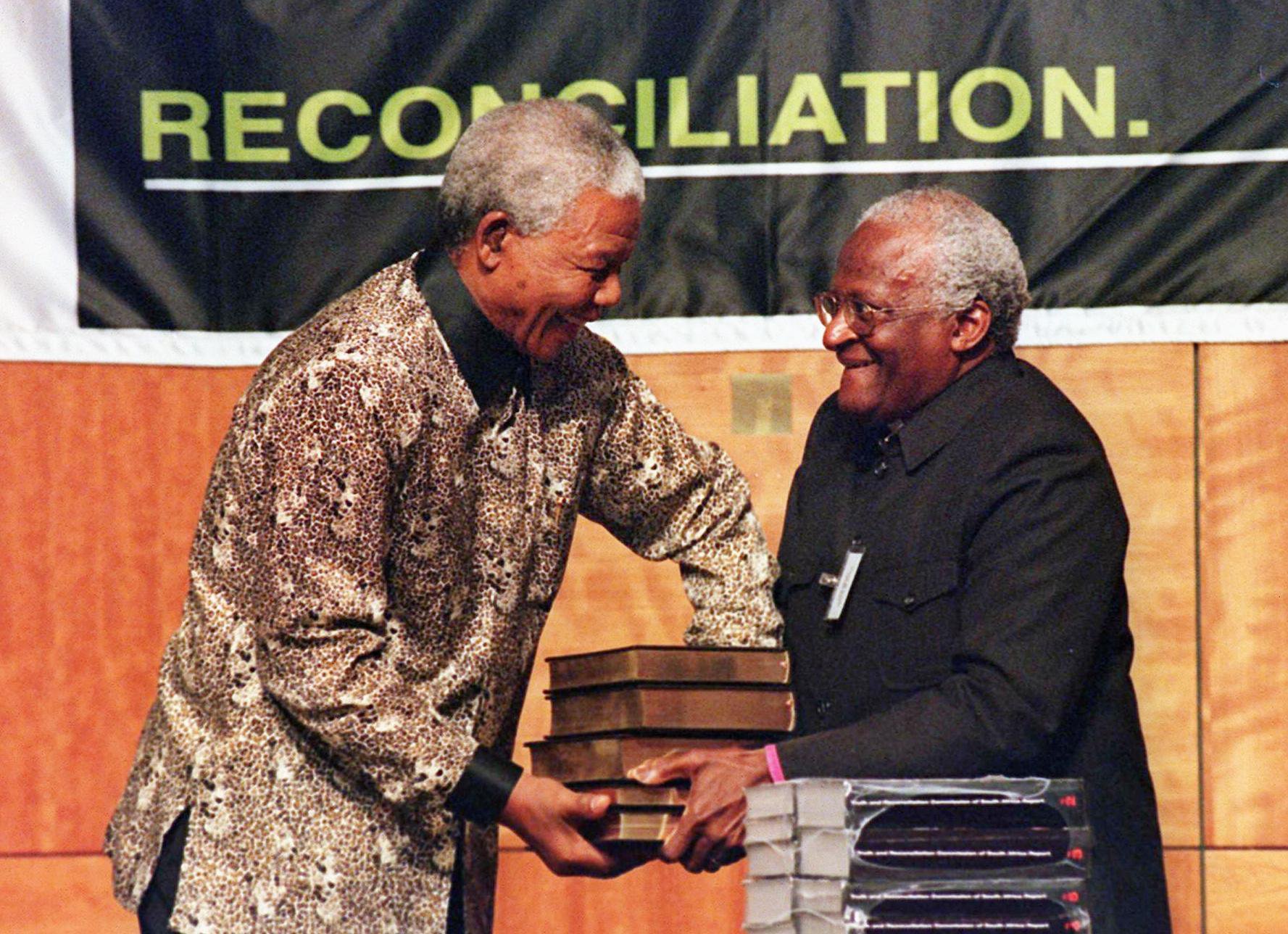
(Image from The Independentˆ)

Qwertyman No. 167: Stranger Than Fiction

Qwertyman for Monday, October 13, 2025

IF SEN. Alan Peter Cayetano and his cohorts in the Senate minority wanted to rile the people even more, they couldn’t have done it better than by having Cayetano challenge Sen. Tito Sotto for the Senate presidency, at the same time that he was floating his supposedly heroic idea of having all elective officials resign because the public was fed up with them.

He had to know that that was exactly the kind of antic that made people throw up at the mention of certain names—a dubious pantheon of the corrupt, the bought, and the compromised. But he did it anyway, employing his imagination to yank public attention away from the burning issue of the hour—the massive flood control scam and its ties to many lawmakers—in the direction of Mars, and the possibility of honest (never mind intelligent) politicians inhabiting that planet.

Why he did that is anyone’s guess, but mine would be that anything to stop the momentum building up at the Blue Ribbon Committee under Sen. Ping Lacson was good for the minority, many of whom were increasingly being threatened by the exposure. If Cayetano had resigned first (and forthwith!) to provide proof positive of his noble intentions, the distraction would have been worth our time, but of course that was never part of the plan. 

The plot to unseat Sotto—brazen and shameless in its purpose—was more credible and worrisome. It fizzled out but remains potent, simmering just beneath the surface. Lacson’s resignation as BRC chair was probably a concession to forestall Sotto’s, but the situation in the Senate is so volatile that it can’t take much for the leadership to switch while we’re brushing our teeth. 

All we seem to be waiting for is that point of utter desperation when the beleaguered, fighting for their political lives and possibly even their personal freedom, ignore all considerations of decency and public sensitivity, weasel their way back into the majority, and deliver the Senate to its most famous watcher from the gallery: Vice President Sara Duterte, whose fate still hangs in the balance of an impeachment vote that has yet to happen.

That vote and its implications, let’s all remember, was what triggered all of this. Premised on rampant corruption within her office, her impeachment, had it passed the Senate, would have barred her from running for the presidency in 2028 (and, for PBBM, from the resurgent Dutertes wreaking retribution on their erstwhile allies). But this isn’t really just about Sara—it’s about all those other trapos who’ve cast their lot with her, whose fortunes depend on her absolution in the Senate and ascension to the Palace. 

Former Senate President Chiz Escudero, who dragged his and the Senate’s feet in that process, has now dropped all pretensions to impartiality, calling the impeachment “unconstitutional” in a speech that would only have pleased the Vice President, a title he himself might be auditioning for. He did his part well, with what many saw to be the ill-considered assistance of the Supreme Court, to freeze the impeachment complaint. 

And there that matter sat, until PBBM—whether unwittingly or presciently—(and here we’ll go fast and loose with the idioms) shook the tree, opened a can of worms, threw mud at the wall, and unleashed the kraken by exposing the trillion-peso infrastructure scandal now rocking the country. He might have done this to suggest a link between the alleged corruption in the VP’s office and even larger acts of plunder emanating from her father’s time in Malacañang, a deft political move. But reality overtook his imagination, and now the issue’s grown far beyond that into his own administration, his own responsibilities, his own accountability. 

That said, and however we may have felt about him, PBBM has done us all a service by drawing the curtain on the systemic rot in our society and governance, for which he, Sara, and their cohorts have all been culpable, directly or administratively. By doing so he rendered himself vulnerable as well, and the VP’s forces are now zeroing in on that vulnerability to deflect attention from their own predicament. 

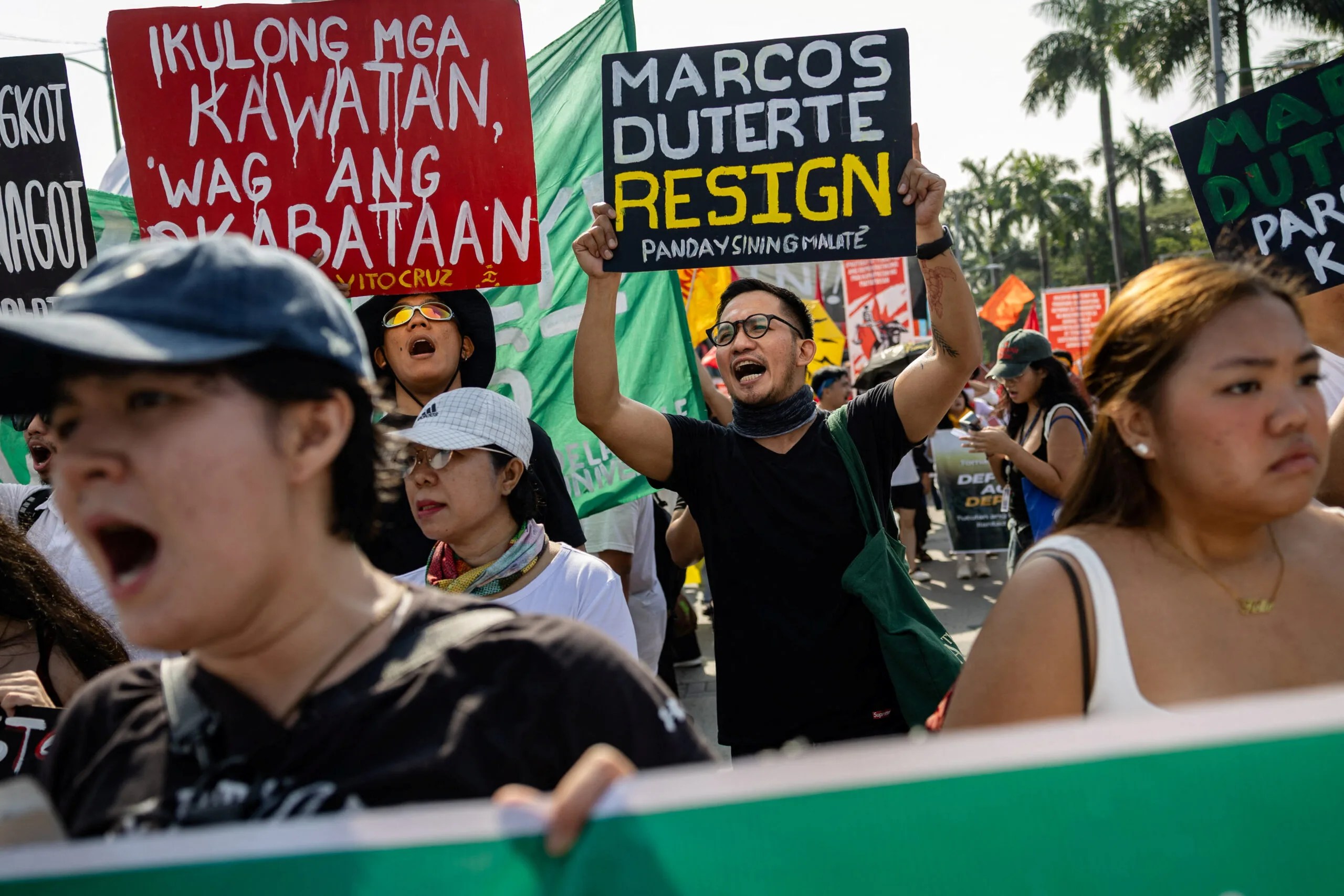
Thus the barrage of “Marcos resign!” calls (as opposed to the Left’s “Marcos and Duterte resign!”), which has become shorthand for BBM out, Sara in. (It was on that key point that the rumored September 21 coup plot reportedly first stumbled, with the plotters balking at the alternative.) It also explains the slew of professionally produced reels on Facebook and other social media calling for the military to depose the President—ironically, something so openly seditious that Digong Duterte’s NTF-ELCAC would have instantly pounced on them, but which BBM and his crew seem to be shrugging off, at least for now. 

What tempts our imagination in this fraught situation—where public trust in our politicians and even in the courts is hitting critical lows, and where no clear and short path to change seems visible until 2028—is the possibility of military intervention, whether by martial law or on its own volition. I’ve been assured by friends who know better that this military of ours today is much more professional in its mindset than its predecessors, and that it will abide by the Constitution. I sincerely hope they’re right, because if there’s anything that all the parties in this mess can probably agree on, it’s that boots in the streets won’t bring us any closer to a functioning democracy. 

I’m reminded in this instance of one of my favorite literary quotations, from Mark Twain who said (in so many words) that “Of course fact is stranger than fiction. Fiction, after all, has to make sense.” If you had told me three years ago that we are now relying on a dictator’s son to save us from an even worse alternative, and in the process—if almost by accident—expose corruption so foul that we are back on EDSA demanding not regime change but the rule of law, I would have called you a lousy fictionist with a runaway imagination. Yet here we are.

Qwertyman No. 166: Though the Heavens Fall

Qwertyman for Monday, October 6, 2025

IT’S BEEN the rising refrain of some friends in media, academia, and the coffeeshop crowd—mostly somewhat to my left—to insist (and, I believe, arguably so) that there is nothing fundamentally different between BBM and Sara, between the families and factions of the ruling class they represent, and between their lust for power and money. Therefore, the correct call to the people in this situation, regardless of the consequences, can only be “Down with both of them! BBM and Sara, resign!” Those Latinate lawyers had a term for it: “fiat justitia, ruat caelum”—let justice be done, though the heavens may fall. 

For the plotters of a recently rumored coup, the heavens falling would have meant the replacement of both Marcos and Duterte with a 30-person junta that would include, as juntas go, retired military generals, civilian leaders, and a couple of clergymen. (What, no writers and artists? Thumbs down!) That plot was dead even before it got off the ground, and perhaps thankfully so—a 30-person junta already sounds worse than a 24-person Senate, and something in me resists the idea of having Catholic priests (or Protestant pastors, or Muslim imams, etc.) in any kind of executive capacity in government.

Yes, the people are marching in the streets and are in the mood for the public execution of their plunderers. Our trust and confidence in our leaders has been so badly abused and misplaced that we are now drowning in cynicism and disbelief, certain only in the fact that we are being stolen from by someone, somewhere, somehow.

Nevertheless I sense no great appetite for a revolutionary regime change that will only unsettle things even more. If anything, what we want is certainty and predictability—that the law will be applied and take its course, that the wrongdoers will be identified, prosecuted, and punished, and that proper and ample restitution will be made for their crimes, so that we can all move along as a reasonably functioning society. 

Not to say that everything will be just peachy once the robber-contractors and their patrons are exposed and put in chains, but that the alert will have been sounded, the people awakened, and the bar raised much higher for aspirants to public office in 2028 and beyond. The progressives and middle forces couldn’t have been handed a greater gift: corruption has to be the top election issue, because it affects the poor more visibly now than any other, especially those who can’t escape the floodwaters while their congressman jets off to France.

It’s a problem and a crisis big enough for another EDSA (not to mention all the coup attempts that followed EDSA), but the first EDSA taught us that a sudden change of people at the top, no matter how good the replacements are, doesn’t guarantee deep and lasting change; it merely opens the door for a new set of crooks to come in, and for some old ones to return. EDSA 1 wasn’t a waste; aside from the relief it brought, it was a lesson we needed badly to learn. But have we?

Until our electorate learns to recognize and to vote for its own best interests, no amount of EDSAs short of the bloody revolution and the mass guillotining we’re all trying to avoid will change the composition of the Congress, the Senate, and the executives they work with. The current crisis is the best and also the most painful teaching point to have come along to show Filipinos who and what exactly they’ve been voting for, and who’s been paying for all those dole-outs come Election Day—no other than themselves, from the money that should have been spent on keeping them alive and well. Vote for the corrupt, and you kill yourself and your family. You are being bribed today to be stolen from tomorrow.

The challenge now is to get that message through, make it stick, and not allow it to be muddled by clever counter-propaganda and by possibly well-meant but adventurous calls for regime change. 

Coup or resignation, neither nor both of these will happen. The coup was stillborn and could have led to worse. If the Marcoses and Dutertes are as thick-skinned as their critics make them out to be, then they will brazen it out, ruat caelum

The way forward can be lit up by the facts that will emerge out of the many parallel investigations now taking place into the infrastructure scam and wheresoever it may lead—not just at the Independent Commission on Infrastructure, but also in the even more independent media.

The enemies of the truth know how easy it is not just to distort the truth, but to destroy the truth-sayers. They did it to Leila de Lima with the sordid expose of a private relationship that, even if it were true, was her own business. They put NBN-ZTE whistleblower Jun Lozada behind bars.

Unlike many others, I am willing to let the albeit imperfectly constituted ICI do its work—but quickly and transparently, please—and to judge it by its results. We can expect that no one facing the ICI will come clean with the truth, the whole truth, and nothing but the truth. We will be dealing instead with a complex puzzle, putting it together piece by irregular piece until the broad and inescapable picture of systemic corruption emerges, with every part and element detailed—from delivery boys and drivers to district engineers to Cabinet-level officials to congressmen, senators, and ultimately to the highest offices of the land. 

The Vice President is already involved—it was the corruption in her office, after all, that led to her impeachment in Congress. Inevitably this circuit of corruption will come around to the Office of the President and to its signing power over whatever budget proposal it receives and presumably reviews; the only question will be that of BBM’s personal culpability and what of it, if any, can be proven.

That could yet be the ultimate test of BBM himself, of our democracy, and of whether, after all’s been said and done, it may time for another regime change outside of the ballot box; fiat justitia, ruat caelum.

Penman No. 478: Best Foot Forward in Frankfurt

Penman for Sunday, October 5, 2025

ON MONDAY next week, several hundred Filipino writers, publishers, artists, journalists and other workers in the book trade will be flying off to Germany for the Frankfurter Buchmesse (FBM), better known as the Frankfurt Book Fair, running this year until October 19.

Led mainly by the National Book Development Board (NBDB) and the National Commission for Culture and the Arts (NCCA), it will probably be the largest cultural mission ever sent out by the country to an international event—the equivalent of an Olympic delegation—and for good reason. This year, the Philippines is the FBM’s Guest of Honor (GOH), an annual distinction designed to draw attention to that particular country’s literature and culture, chiefly through its books. 

As GOH, the Philippines will have its own pavilion of curated exhibits highlighting our literary history and production, as well as the diversity of our works from historical novels and crime fiction to children’s stories and comic books.

Going back over 500 years, the Frankfurt book fair is the world’s largest gathering of publishers, authors, and booksellers, drawing thousands of attendees from all over the world to what is essentially a marketplace for publishing and translation rights. For countries like the Philippines, far away from the global publishing centers in New York and London, it is a matchless opportunity to showcase the best of one’s work. 

Looming largely over our GOH presence will be the work and legacy of Jose Rizal, whose deep personal ties to Germany—where he studied ophthalmology and completed Noli Me Tangere—continue to inform our relationship with that country. Indeed, our GOH slogan—“The imagination peoples the air”—is drawn from Rizal’s Fili, turning Sisa’s frantic search for her missing sons into a metaphor for the power of words to create moving realities.

There are hundreds of events on the Philippines’ official FBM schedule, both onsite and off-site. They range from panel discussions on “Our National Literature: Filipino Spirit and Imagination” with Merlie Alunan and Kristian Cordero, “Women’s Fiction from the Global South” with Cecilia Manguerra Brainard, Jessica Zafra, and Ayu Utami, and “Dismantling Imperial Narratives” with Filomeno Aguilar Jr., Lisandro Claudio, and Patricia May Jurilla to performances by National Artist for Music Ramon Santos and the Philippine Madrigal Singers, a demonstration of Baybayin by Howie Severino, and a book launch of the German editions of the Noli and Fili with historian Ambeth Ocampo. (For the full program, see https://philippinesfrankfurt2025.com/events/)

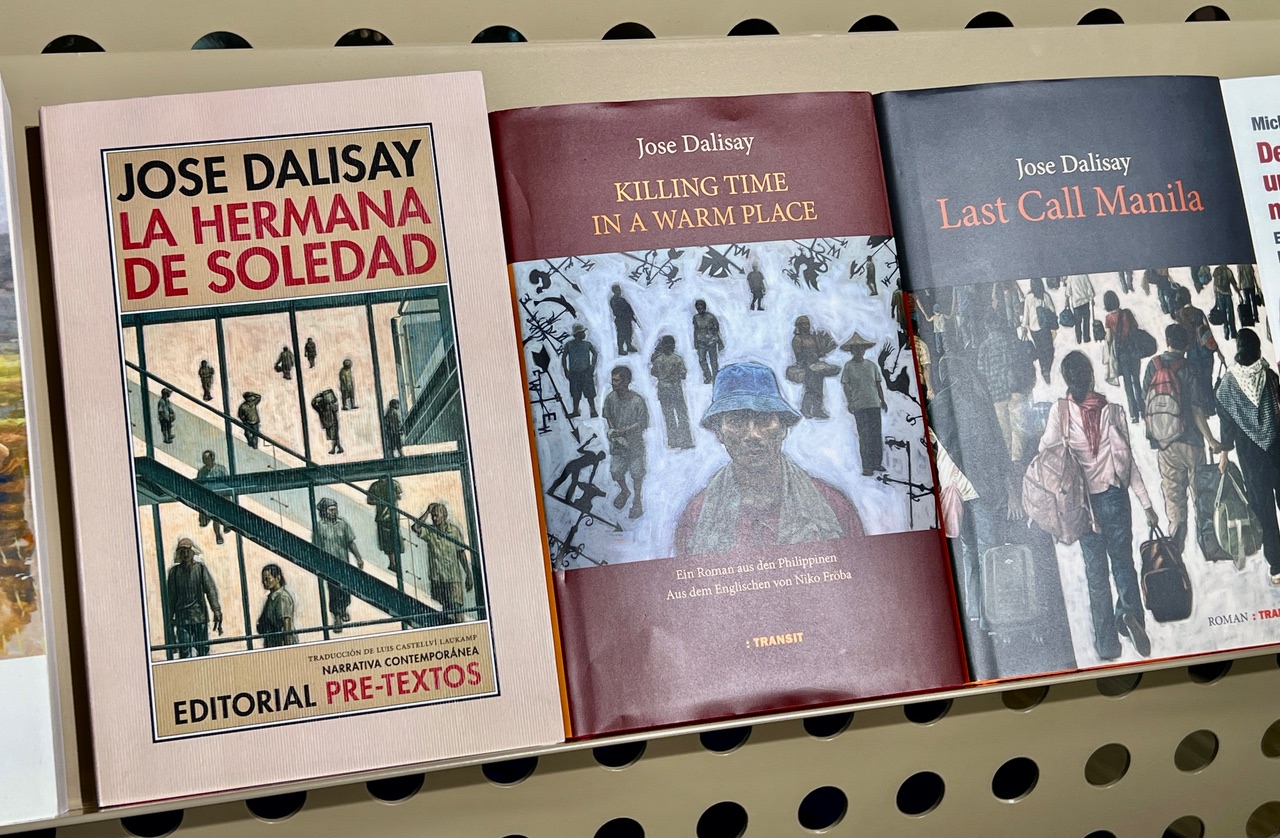
I have eight events on my personal calendar, ranging from the launch of the Spanish edition of my novel Soledad’s Sister to readings at the Union International Club and Bad Bergleburg, so it’s going to be a hectic time for this septuagenarian. This will be my third and likely my last sortie into the FBM, and I know how punishing those long walks down the hangar-sized halls can get. 

Practically all aspects of Philippine art and culture will be on display in Frankfurt, going well beyond books and literature into theater, film, music, dance, food, and fashion. In short, we will be putting our best foot forward on this global stage, although there will be no papering-over of our political and social fractures and crises. (Journalists Maria Ressa and Patricia Evangelista will be there to make sure of that.)

As with any large-scale national enterprise, our GOH effort has not been without controversy. A campaign by cultural activists to boycott the FBM—premised on Germany’s and the book fair’s perceived support for Israel in its genocidal war on Gaza—took off earlier this year and gained some traction, leading to the withdrawal of some authors from the delegation. There was spirited and largely respectful debate over this issue, but it was clear to both sides from the outset that a complete disengagement from the FBM—for which we had planned for many years running—was not going to happen. (I argued, like many others, for our critical participation, minding Gaza as one of the foremost issues facing humanity today. Not incidentally, on the Philippine program is a panel on “Writing Through the Wounds: Filipino and Palestinian Literatures in Relational Solidarity” with Nikki Carsi Cruz, Dorian Merina, Tarik Hamdan, Atef Abu Saif, and Genevieve Asenjo, among other initiatives in support of Palestinian freedom.)

Another criticism raised was the cost of our GOH participation—an effort bannered and sustained by Sen. Loren Legarda, the chief and most consistent supporter of the arts and culture in the Senate. Why not just pour all that money, some have said, into publishing and printing more books for Filipinos? There’s no argument that Philippine education needs more support (the trillion-peso infrastructure scam tells us the money was always there) but the targeted exposure that the GOH opportunity provides comes once in a lifetime, and Sen. Legarda wasn’t about to let it pass. 

As she noted in recent remarks, “When I first envisioned the Philippines as the Guest of Honor at the Frankfurter Buchmesse, some felt that it was far too ambitious, that we were too diverse and too complex for the world’s largest book fair to embrace. But I believed then, as I believe now, that our diversity is our greatest advantage, a gift and never a hurdle.

“The Philippines is more than an archipelago of 7,641 islands. It is a vast constellation of ideas and innovation, of ingenuity and distinct cultures and traditions joined together by the tides of hope and resilience. The 135 languages identified and described by the Komisyon sa Wikang Filipino turn into the voices and stories of Filipinos resonating around the world, reaching across cultures, transcending borders, challenging assumptions, and expanding the boundaries of human empathy.”

Let those voices and stories fill the air in Frankfurt, and spread around the planet.

Qwertyman No. 165: Conspicuous Corruption

Qwertyman for Monday, September 29, 2025

IT WAS during America’s “Gilded Age”—a period that many (not just them Yankees, but also us Pinoys) look back on with borrowed nostalgia—that an economist named Thorstein Veblen wrote a book titled The Theory of the Leisure Class: An Economic Study in the Evolution of Institutions (1899). 

Drawing on Marx, Darwin, and Adam Smith, Veblen went against the grain of neoclassical economics and its presumption of people as rational economic beings seeking utility and happiness from their labors; instead, Veblen argued, they were irrational agents who amassed wealth for social status and prestige. Writing in a scathingly satirical and literary style, Veblen roasted America’s nouveau riche—the robber barons who had built their business empires on coal, steel, and railroads (think Rockefeller, Carnegie, and Vanderbilt), and who then splurged on mansions, yachts, and such other luxurious testaments to their success.

We don’t remember Veblen much, although he cut a sharp impression among his admirers and critics alike as a dour Midwestern misanthrope, a killjoy who saw little economic value in churchgoing, in etiquette, and even in sports (of course, this was way before the MLB, NBA, and NFL). 

What we do remember are some terms that his book bequeathed to our century, most notably “the leisure class” and “conspicuous consumption,” the latter being the purchase and display of goods beyond their practical value for the purpose of manifesting one’s power and prestige—which in itself became a form of social capital, facilitating the accumulation of even more of the same. (Veblen also theorized about “conspicuous compassion” and “conspicuous waste.”)

Dr. Veblen was writing at and about the turn of the 20th century, but his observations were preceded by a history of ostentation as old as, well, Jesus. (And here, being no historian, I’ll acknowledge some help from AI.) The ancient Romans held lavish feasts and circuses to entertain the masses. Their Greek counterparts passed sumptuary laws to curb excess, limiting the gold a person could possess and the number of servants a woman could bring to a public event—which tells us exactly what they were doing. In both feudal Japan and medieval Europe, laws were imposed regulating what people could wear—to preserve social stratification, and visibly distinguish the rich from the poor. 

It didn’t always work—empowered by trade, Italy’s growing merchant class brazenly copied what the old nobility wore. Things got so showy that the Dominican friar Girolamo Savonarola led an anti-ostentation movement in Florence, culminating in the public burning of luxury goods, cosmetics, and elaborate clothing, a.k.a. the “bonfire of the vanities.”

I’m sure you can see by now what I’m getting at, which is the Philippines’ ripeness for its own version of “Bling Empire” and “Dubai Bling,” Netflix shows both devoured and skewered for their “grotesque opulence” and hermetic imperviousness to such inconvenient topics as Gaza, Ukraine, and Donald Trump. I have to admit to binge-watching both series, fascinated and revolted at the same time—fascinated by my revulsion, and revolted by my fascination.

This is how ostentation holds us in its thrall—by indulging our fantasies while providing extravagant proof and reason to cluck our tongues in disapproval. The logical response should be to switch channels, exit YouTube, or just turn the damned TV off. But no, we watch on, bewildered by our inability to comprehend how a Birkin bag could cost $500,000, and further, how someone could afford them, and even further, how someone could own not just one but five of them, and yet even further, how that someone could be a Filipino senator’s wife (last heard opining, with admirable sensitivity to the public temper, that “Now is not the time to attend Paris Fashion Week.”)

Unlike Veblen, who employed sardonic humor to prove his point, this is no longer even satire or damnation by exaggeration, but outsize reality. The gargantuan figures emerging from the infrastructure corruption scandal now transfixing the nation—almost a billion pesos of public money lost in the casinos, P4.7 billion worth of aircraft in one congressman’s hangar, and so on—not only boggle the mind and churn the stomach, but impoverish the imagination. We are too poor to contemplate these sums. 

And so to Veblen’s terminology, we must now add “conspicuous corruption,” as it seems that even among the corrupt—who are not anonymous to one another, needing to operate as a cozy network of thieves if they are to mutually succeed—there exists a virtual competition over who can get away with more. This doesn’t even involve or require the building of real assets such as trains, skyscrapers, and power plants, like the industrial dynasts did. Why bother, when ghost accounting will achieve as much if not more for one’s bottom line?

For now, the public outrage over the flood-control scandal may have dimmed the lights for the accused and their accomplices and beneficiaries. Facebook and Instagram accounts that once flaunted luxury limousines, exotic getaways, and designer labels have been shut down or turned private, their owners gone mute after sulky disclaimers to the effect that “We worked hard for our billions!” (But not everyone, as that high-flying congressman’s wife was reported shopping with impunity in Paris last week, oblivious to the brouhaha.)

Not incidentally, there’s more than a tinge of sexism to the recent backlash against so-called “nepo princesses”—the daughters of rich, powerful, and presumably corrupt politicians and their business cohorts. Privileged indolence, after all, is an equal-opportunity affectation, and doubtlessly their brothers aren’t wasting their time volunteering for NGOs and teaching catechism.

When they will reappear is anybody’s guess. The EDSA 4 brewing in the streets should hopefully result in decisive action against the guilty parties in this mess, and if only to appease the mob, I’m sure a few heads will roll. But I’m under no illusion that human nature will reverse course and that Thorstein Veblen’s leisure class and its blingy profligacy will vanish into oblivion anytime soon.

Me, I’m in the mood for a bonfire, and it’ll be more than croc-skin handbags I’ll want to toss into it.

Qwertyman No. 164: The Great Pinoy Flash Mob

Qwertyman for Monday, September 22, 2025

AT THE Manila International Book Fair last week, a young man approached me to have his copy of my new book Windows on Writing signed, and took the opportunity to ask if there was hope for this country, as many of his fellow millennials didn’t seem to think so.

I kept my smile on, but was deeply saddened by the question. I wasn’t surprised by it, because you hear it every day, everywhere, from Pinoys young and old alike. The dramatic and sickening revelations involving massive corruption in our infrastructure programs only seem to have reinforced that sense of despair over our future.

One regular reader who must be about my age also wrote me to ask, “Where is the outrage of the youth over the corruption scandals now plaguing the country? Why are they not marching in the streets like you did at Mendiola and EDSA?”

Before responding to him—and this column is that response—I had to ask myself, is that so? Indeed I get a lot of memes about corruption in my Facebook and Viber feeds, but these come from people either my age or with the same liberal-centrist disposition. Beyond these, apart from predictable pickets by the militant Left, I haven’t come across the kind of sustained, youth-driven rebellion that challenged if not toppled repressive regimes in Hong Kong, Korea, the Arab world, and now Nepal, among other places. 

But can young Filipinos be ignorant of or indifferent to what’s going on? My gut tells me no, that surely the billions of flood control funds diverted to acquiring luxury cars, California mansions, and buxom bedmates must appall and anger the young as much as us Boomers, who grew up turning lights off and eating our plates clean. After all, it’s their future that’s being stolen from right under their noses. They have much more reason to protest today than we did in 1971, when we teenagers triggered what became the Diliman Commune over a 10-centavo-per-liter increase in the price of gas.

I’m guessing that placard-bearing street marches have fallen out of fashion with the young, except again for the radical few. Today young people wear their pain on their sleeves, and also broadcast it online. Even for political causes, it’s much easier and safer to mount a virtual demonstration, through reposts and likes, with perhaps greater effect. The crooks get named and shamed, the battle lines get drawn, and demands and expectations get laid down, all at the press of a button. And after all, wasn’t this what grizzled First Quarter Stormers like me have been asking for all these years—that the art and science of protest move past the tired clichés of red flags and raised fists?

But then I’m writing this before the September 21 protest rallies—that would have been yesterday—where, despite everything I’ve just said, I expect a huge turnout of young Filipinos, provoked beyond patience and cynicism by the revolting disclosures of massive corruption among their elders. This corruption saga—and we’re watching  just the beginning of it—could yet be the most unifying factor for Filipinos in our modern history, even more than tokhang, the West Philippine Sea, Manny Pacquiao, and Jollibee spaghetti.

For once—and maybe just this once—it doesn’t matter if you voted for BBM, Leni, Digong, or PNoy, or if you support Gaza, Charlie Kirk, same-sex marriage, or transgender bans, or if you listen to Frank Sinatra, the Eraserheads, Yoyoy Villame, or Bini. We all got screwed by the system, which is not saying that systems are neutral (they’re crafted after all by politicians and their ethics or lack thereof), but that corruption on this scale effectively achieves a democracy of the abused. It’s that Great Pinoy Flash Mob, if you will, that went out to the rallies yesterday—perhaps not entirely cohesive or coherent, taking baby steps out of factionalism into a nascent nationhood, welded by the consuming heat of their fury and indignation.

We can’t tell for now what will become of this reconstituted parliament of the streets—if it will hold together and clarify around the most basic and most urgent of its concerns, or if, as some predict and even hope, it will weaken and dissipate over arguments about objectives and tactics and a fundamental mistrust of the fellow on your left and right. We certainly don’t lack for skeptics, pessimists, and cynics who tend to see any and every move by the hero-figures in this play as futile, as it’s all been scripted and the rich and powerful will always win.

If there’s one thing that we liberals and leftists are especially good at, it’s handwringing and doomsaying to the point of paralysis, because we like to believe that we’ve scoped out the territory, researched the history, studied all the characters, plotted out all their possible moves and motives, and found a hundred smart ways to say “This won’t work.”

That “independent commission”? Not independent enough, poor choice of chairman and adviser, beholden to this and that. Forget it. That Luneta rally? DDS-infiltrated, with violence possible. PBBM? Wasn’t he the original nepo baby, and his family the topmost plunderers of them all? Shouldn’t we just have another go at a bloody revolution to take all the bastards out?

When you think about it, on a certain level, all that could be true. And then again, one can be very smugly correct and yet totally unhelpful. When people want to express their anger and see some action, you respect that emotion—or risk irrelevance, as the Left was at EDSA (which arguably and ironically the Left had laid much of the groundwork for, but then ignored as a rightist coup). For me, let that albeit imperfect ICI get to work; the “I told you so’s” can follow later; this drama needs to be played out, if the real villains are to be revealed.

The flash mobbers who went to the Luneta and EDSA yesterday weren’t being foolish; even in their rage, they held out hope, and especially for the young, their very presence was the hope, a cry for justice echoing across the generations. 

We can’t say what will happen next, but something good might yet come out of all this woefulness and despair, if we don’t listen too closely to our inner analyst. Instead of shunning the DDS, for example, I think this corruption crisis is a good opportunity to find common cause with them and even bring some of them over. The catastrophic flooding in Davao despite the billions given to the Dutertes in flood control money should be an eye-opener for their supporters—just as it should be a reminder to us that the DDS are Filipinos, too, with legitimate rights and grievances. 

If this trillion-peso corruption crisis helps us realize the substance and spirit of our nationhood, then it will have served a positive if costly purpose.

Qwertyman No. 163: Redemption and Reversal

Qwertyman for Monday, September 15, 2025

“Enormity” is a word I rarely use in my writing, because I still take it in its traditional, original meaning, which is that of “a great evil, a grave crime or sin.” I would use it in the sense of “the enormity of the Holocaust, in which Adolf Hitler exterminated six million Jews” as well as in “the enormity of Israel’s genocidal assault on the people of Gaza, employing bombing and starvation to bend Palestinians to its will.”

But it has so often been misused as an alternative to “enormousness,” to mean “very large” or “very big” in relation to size, that most modern dictionaries have relented and accepted that secondary definition.

Last week, listening to Sen. Ping Lacson’s revelations about gargantuan sums of money changing hands and being blown at the casinos not by business magnates or heirs to billions but by subalterns at the Department of Public Works and Highways, I saw no inconsistency whatsoever between the word’s two meanings. It was both one and the other, wrongdoing on such a scale that made you wonder if this was still our country, if we still had laws to fall back on, and for how much longer our people would be willing to endure this kind of abuse before the dam breaks and a biblical flood of justice bursts forth to sweep away the evil in our midst.

The quoted sums were mindboggling enough: five DPWH district and assistant engineers in Bulacan accounted for almost P1 billion in casino losses, as reported by Pagcor to Lacson. A district engineer—there were 186 of them at the DPWH last year, according to the Department of Budget and Management—earns a monthly salary of almost P230,000. It’s nothing to sneeze at (my salary as a Full Professor 12 in UP was half that when I retired in 2019, and Filipino minimum wage earners still make less than P20,000 a month), and you could live very comfortably on it if you lead a prudent existence. But who needs prudence when you have tens of millions of pesos in kickbacks to play with at baccarat or roulette?

The theft isn’t even the real crime, the true enormity here; it’s what that money should have been used for, but wasn’t—the prevention of human suffering through public works projects that have instead remained unfinished or grossly substandard. Those engineers weren’t playing with cash and chips—they were playing with lives and futures, the fortunes of entire families and communities gone with a wrong turn of the dice, followed by a casual shrug and a reach for more of the endless chips. 

Forgive these murderous thoughts, but for this alone, once proven guilty, those miscreants deserve to be hanged, or banished to a prison that floods at high tide. One might add that if Digong Duterte had launched a tokhang campaign against the corrupt—but we all know why he couldn’t have—perhaps he wouldn’t be watching windmills from his window now.

Our righteous indignation aside, it’s clear that the buck should and will stop with no other than President Bongbong Marcos, who after all began all this with his surprising and explosive public revelation of the top contractors’ names. Whatever his initial or ulterior motive may have been, that’s practically been rendered moot by the massive outrage and political drama arising over the past few weeks as a result of his action and of the continuing Senate and Congressional investigations. 

In the immediate future, much will hinge on the independent commission that BBM is organizing to probe the issue and on its efficacy. In an ironic turn of history, its credibility will have to match that of the Agrava Commission, whose conclusion that Ninoy’s assassination was the result of a military conspiracy helped to eventually bring his father’s regime down.

But since irony seems to be a strong and inescapable feature of our political life, it may be the perfect time and opportunity for the dictator’s son to become his own man, to redeem his part of the family name, and to prove his doubters and detractors (this martial-law ex-prisoner among them) wrong. He can do that by finding the courage and resolve to pursue this business of weeding out systemic corruption—just beginning with our public works—to its farthest possible conclusion, no matter who or what gets in the way.

Surely PBBM would not have trumpeted this initiative against corruption if he did not expect the money trail to lead back to some of his closest associates and supporters, and even to his family—who, as no one will or should forget, have long stood accused of plunder in the billions, well before the Discayas and their company discovered the short road to riches. The Marcoses may have dodged payment for those debts through favorable court rulings predictably secured upon BBM’s presidential victory, but he cannot escape this responsibility now.

Any attempt to pause or to mute the investigations into this ugly mess will only backfire on BBM and his presidency and invite suspicions of his complicity in these scandals. His only real option is to seize the moment, press on, and do the right thing even if and until it hurts.

I can see many of my liberal cohorts grimacing at the notion that a man we once derided for his profligacy and lack of discipline could lead such a brave and sweeping reform of our society and government, and I have to admit that I too shall remain a skeptic until I see solid results coming out of these investigations. Dismissals and bans won’t be enough for the erring officials and contractors; we want jail time for the guilty and adequate restitution, we want the big fish to fry.

But I’m a great believer in the possibility and the power of redemption (think Saul of Tarsus and Ignatius of Loyola). Even in this seemingly quixotic mission of reforming government, very few people will come to the table with perfectly clean hands—or remain unsullied to the grave. Ultimately less important than their private faults is their public performance—what they did, over the course of their lifetime, to serve the public good and/or to make amends for their past misdeeds and shortcomings.

BBM may be far from the path to sainthood, but he can still employ the vast powers of his office to strengthen constitutional governance in this country, in dramatic reversal of his father’s legacy. If he fails to do that, then he will merely confirm what we have suspected all along. I pray, for once, that we were wrong.

Qwertyman No. 162: Honor Among Thieves

Qwertyman for Monday, September 8, 2025

A FRATERNITY brother—even older than I am and a longtime emigrant—asked in our group chat, “Didn’t we have corruption before? Why all this outrage now?” So I had to bring him up to speed. “It’s the scale, brother. We’re talking billions, possibly even trillions of public funds being pocketed by contractors who don’t deliver the goods and put people’s lives at risk, in cahoots with politicians they’ve bought or are related to.”

I told him the story of Rudy Cuenca, the self-confessed Marcos crony and boss of the Construction and Development Corporation of the Philippines, which built some of the largest infrastructure projects under martial law, including the North and South Expressways and San Juanico Bridge, and made Rudy a very rich man. 

I happened to co-write Cuenca’s biography (Builder of Bridges: The Rudy Cuenca Story, Anvil Publishing, 2010, unfortunately long out of print), after initially refusing to do so. “Why should I write your book,” I told him at our first meeting, “when your boss put me in prison?” “I have stories to tell,” he said, and did he. It wasn’t the money—which ironically was a pittance—but the curiosity that got me on board. And just to show it wasn’t a hack job on my part, the book became a finalist for the National Book Awards for that year.

Rudy—who died two years ago—wasn’t an engineer and didn’t even finish college, but he learned the ropes of contracting doing small bridge projects under the watchful eye of US Army engineers who had him redo the job at a loss if it was substandard. Because American reparations money was involved, the Americans made sure it was well spent. 

Cuenca soon learned the other, non-technical aspects of the business. To move up, you had to pay up. I interviewed him in 2009-2010 in his modest office along EDSA near Guadalupe—any aura of big wealth and power had long been dimmed by years of exile and dealing with lawsuits—and at that time, he lamented the fact that corruption had gone over the top. A cool and down-to-earth kind of guy, he told me in so many words that (and I paraphrase) “In my time, nobody asked, but you gave. The amount was reasonable, and you dealt with just one person. Today, you’re told up front how much to pay, an outrageous sum, and you keep paying up the ladder.” 

While his statements may be self-serving and certainly liable to be interrogated, they should and do raise eyebrows:

“In the late ‘60s, we were looking for funding and supplies for the food terminal. We talked to a bunch of German suppliers, and during our discussion they asked us, why is it that the Japanese get called to work with Philippine projects? I said, you know, the Japanese have a style of business that you don’t understand—they know how to give gifts. And they don’t give gifts before, they give gifts after. But you guys are so decent, that’s why you don’t get jobs here. 

“There was already corruption at that time, but it was not rampant and as grossly done as it is done now. If before people would overprice by about 5 or 10 percent, now it’s about 30 percent. 

“You know, construction is the best source of graft. What Imelda did were seven-day wonders. I didn’t want to have anything to do with those. I was only involved with the reclamation of the area for the Cultural Center. They paid us, but her manager wanted his kickback. Imelda had her own group of contractors, and that’s where they all made money.

“But it wasn’t just then. Do you remember when Pinatubo erupted? The job then was to clear lahar. Now there’s a place in Daly City, San Francisco, that’s known as Lahar City. The people who live there are Pampangueños who earned lots of money because of the lahar. 

“Also during Ramos’ time, Ambuklao Dam was silting. As the dam silts, the ground level goes up, and the water gets smaller, so you have to desilt it. Here comes the contractor with a dredger. But instead of doing a proper sounding first, they raised everything, so that difference got factored into the job. 

“I don’t have any concrete proof of corruption in the current administration, but I think it’s safe to say that graft and corruption will always be present, especially in our government. I have heard that contractors—my brother is still a contractor himself—supposedly deliver money to a Cabinet member, who then turns it over to someone in the Palace. But nobody can say that. If you’re at the top, you have a fence, and only the closest people should be able to touch you so that you’re isolated. 

“I once told Secretary Vigilar that to reduce corruption in Public Works, they should follow a 10-year plan for big projects, meaning that you will pay the contractor 10 years after the project has been completed to your satisfaction and has been transferred to you. That way the contractor will not be as willing to pay off anyone while the project is ongoing because if he does, he’ll be liable for the quality of the work that he has done.”

When I asked him why the roads in places like Malaysia seem much better than ours, he said: “It’s simply a matter of greed. In Malaysia there’s also corruption—I’ve lived there, I should know—but the thieves there make their money by overpricing the materials. Here in the Philippines people are extraordinarily greedy. Not only do they overprice, they also steal the materials. The cement’s deficient, the gravel’s deficient. So the thing crumbles that easily.” In other words, there was honor among thieves; sure, they stole, but at least they built up to spec.

That was 15 years ago, back when the Discayas and their like were probably driving around in Toyota Corollas and buying microwaveable meals at the 7-11. 

One day Rudy got up from our interview and said he was going somewhere—to meet up with the new DPWH secretary, Rogelio “Babes” Singson, to offer some unsolicited advice on how to reduce corruption in his department. I don’t know if that meeting or that chat ever happened, but barely a month ago, in a TV interview, Singson was quoted as saying that “In my full six years at the DPWH, I spent only P182 billion for flood control. Look at the 2025 budget with this insertion—where did the P350 billion go?” 

I never thought I’d miss a Marcos crony, but I’m missing Rudy Cuenca now, as an expert witness to help us sort out this sordid mess. 

Qwertyman No. 161: Torre for Senator

Qwertyman for Monday, September 1, 2025

CAN THERE be any question that the logical next step for cashiered PNP Chief Gen. Nicolas Torre is to run for senator?

The next elections are still three years away; the newly sworn-in senators haven’t even warmed their seats. But the public disgust with the current crop—coupled with Torre’s elevation to hero status—just might create enough momentum and leave enough time for a new wave of Torre-type do-gooders to emerge and coalesce for 2028. The ongoing swell of public outrage against massive corruption in our public works could well become the trigger for a broader and more enduring coalition for good government. 

Many remain skeptical of President Bongbong Marcos’ resolve to pursue this drive to its politically torturous conclusion, but such a coalition—which can tap moderate elements from within the administration’s ranks—could force BBM’s hand, being the only viable option to a DDS resurgence in 2028. 

Let’s get this clear: BBM may not be our idea of a progressive democrat, and he’s been making the right noises not because he found religion, but because a Duterte comeback will threaten the Marcoses with more vicious punishment than they ever got from Cory Aquino. 

Still, it can only be a boon for the middle forces if he helps rather than hinders this brewing tsunami he was at least partially responsible for initiating when he publicly called out those divinely blessed contractors by name. We still don’t know what impelled him to take that extraordinary step, but now that the cat is out of the bag, there’s no pushing it back in, and the people won’t take anything less than decisive action against the greedy rich. You can feel the anger forming out there, the mob right out of Les Miserables taking to the streets, prepared to lynch the next billionaire who flaunts his or her Rolls-Royce umbrella while the poor drown in the floods. 

And the message is getting through: ostentation is in retreat, the Birkins and the Bentleys vanishing from Instagram beneath temporary covers until the wave subsides. But will it? How can it, when, trembling and fuming in their fortresses, the objects of our attention continue to manifest consternation rather than contrition? I love it when one of these clueless ingenues, in the midst of the uproar, protests that her family “owes nothing to the Filipino people, because the government paid for services (they) delivered.” 

The pretty miss obviously never heard Lady Thatcher, or even saw her meme reminding us that “The government has no money. It’s all your money.” (The full quotation, from a Conservative Party conference in Blackpool in 1983, goes thus: “Let us never forget this fundamental truth: the State has no source of money other than money which people earn themselves. If the State wishes to spend more it can do so only by borrowing your savings or by taxing you more. It is no good thinking that someone else will pay—that ‘someone else’ is you. There is no such thing as public money; there is only taxpayers’ money.”)

This brings us back to Gen. Torre, who showed the kind of resolve we’ve long hoped to see in our leaders by attempting to clean up and straighten out a national police force badly begrimed by President Duterte’s tokhang campaign and by its continuing involvement in such nefarious cases as the apparent murder and disappearance of at least 34 sabungeros

It seems odd that we civil libertarians should be supporting a general—and one who was ostensibly fired for ignoring his civilian superiors—but this was a man who went against the grain, who employed his authority for the tangible public good in ways that his predecessors (and yes, those civilian superiors) never did. Can people be blamed for thinking that one Torre is worth more than two or three Remullas when it comes to the delivery of public service?

And Torre was right in rejecting the notion of being designated an “anti-corruption czar” in charge of prosecuting corrupt contractors and their cohorts in government. It’s a trap and a setup, for the inevitable failure of which Torre will once again be the fall guy. Does anyone really believe that yet another toothless commission—on top of all the anti-graft and anti-corruption agencies we’ve seen come and go, and all the laws we already have in place—will solve this mess? 

The Senate could and should have been that commission, but it’s too laughably compromised to investigate its own, and their brethren in the Lower House. Perhaps we should begin by driving the crooks out of both Houses of Congress, and replacing them with men and women of fundamental virtue, honor, and decency: our Vico Sottos and Heidi Mendozas, among others. And yes, I would even include Baguio Mayor Benjamin Magalong in this list, despite his professed and unapologetic gratitude for President Duterte’s assistance to his city during the pandemic. His loyalty, he says, is to the people of Baguio, and I would rather believe him than all those jokers and poseurs in power who speak of corruption and even of establishing “Scam Prevention Centers” when they should be holding up a mirror to their own faces.

Hmmm, maybe that’s a good idea for our next rally against corruption—let’s bring hand mirrors, the way Hong Kong protesters carried yellow umbrellas to fight for their rights in 2014 and South Koreans lit candles to demand President Park Geun-hye’s resignation in 2016—the “Mirror Movement” to shame public officials and the filthy rich. Mga kapal-mukha, mga walanghiya. Not that we truly expect them to change, but that we expect to change them. Torre for senator!

Qwertyman No. 160: Not More Ampao

Qwertyman for Monday, August 25, 2025

IT MAY be too soon if not downright foolish to believe that President Bongbong Marcos’ recent focus on massive corruption in public works projects represents a turning point in his presidency, and is more than another political stunt designed to shore up his popularity after the disastrous results of the recent midterm election. Critics have been quick to point out the irony of a man from a family accused of shamelessly plundering the nation’s coffers and winning back the presidency to avoid restitution now manifesting his “anger” over the billions lost to crooked contractors from the same rapacious elite—even singling out a flimsy dam project in Bulacan as just so much air-filled ampao.

And yet, despite all the predictable and understandable skepticism, I’m willing to bet my low-budget house that many millions of Filipinos of all political stripes would grudgingly if not happily forgive BBM for all his perceived debts and shortcomings if he were to follow through on this initiative with unflinching resolve. Let’s not even talk about sincerity, of which only concrete action and results will bear ample proof. 

What we need and want to see is BBM employing all the powers of his office to bring the massively corrupt to justice, to ensure the full delivery of what the public paid for with its hard-earned money, and to redeem himself and the Marcos name with acts of virtue redounding to the public good. Those acts could be worth more than the many billions his parents were charged with spiriting away—some of which has been recovered, and the rest of which the courts have effectively condoned and we will never see. With three years left on his presidency, BBM might as well use the time to attempt to do what all of his predecessors miserably failed at—go against the grain of the political culture that brought him to power and, for once, uphold the public over personal interest.

As even his detractors concede, BBM has already scored highly on two counts: his departure from Rodrigo Duterte’s catastrophic “war on drugs” that claimed thousands of innocent lives, and also from Duterte’s craven submission to China’s takeover of our territory in the West Philippine Sea. Whatever his ulterior motives may have been, his banishment of former President Duterte to the International Criminal Court at the Hague was widely applauded as a definitive step forward for human rights albeit a major political risk and a clear severance of ties to his “Uniteam” running mate, VP Sara Duterte. 

These measures—and the government’s dismissal of POGOs—were enough to make self-avowed “Kakampink” influencers such as the writer behind the Juan Luna Blog declare that “So here I am—a Kakampink still rooted in my principles—saying this with guarded optimism: This version of Bongbong Marcos is not the Marcos we feared. And if he keeps choosing accountability over loyalty, and stability over revenge, then maybe—just maybe—the Philippines has a chance to move forward.” 

Even among the moderates and indeed the Left, there seems to have arisen the general consensus that for all his problematic pedigree and personal flaws, Bongbong Marcos remains infinitely better and more “presidential” than his predecessor. And I’m sure he knows it, well enough to cultivate the image of a reasonable and well-spoken leader, the kind we porma-prone Pinoys find reassuring, at ease in the company of the world’s A-listers, in crisp barongs and smart gray suits, and most recently wearing glasses that make him look more thoughtful than ever. In short, pretty much everything the old man Digong was not (which, it should be noted, may have been the very same bugoy traits that sent the Davaoeño to the Palace and continue to endear him to the DDS faithful). Whoever his stylist is, she’s earned her keep. 

That said, his administration has been far from stellar in its performance. BBM has had the benefit of good Cabinet members such as Defense Secretary Gilberto Teodoro and Transportation Secretary Vince Dizon, as well as a capable and adept spokesperson in Atty. Claire Castro. (Let’s not forget that, on paper, his father had some of the best-educated Cabinet members ever—none of whom proved strong enough to bridle that regime’s excesses.) But Filipinos cannot and should not easily forget the fiscal folly of the Maharlika Fund with which Marcos II began (and about which we have since heard almost nothing), as well as our runaway debt, the dismal state of our primary education, the lack of housing and basic social services for our poor, and yes, those infernal floods that brought up all the corruption in our infrastructure programs to the surface, so starkly that BBM had no choice but to name names and point fingers.

The question now is where all that finger-pointing will lead. Some fingers will be pointing back at the President’s own political entourage as the enablers behind the billion-peso scams that he now seems so outraged by, as if they had been hatched just yesterday behind his back. Observers have noted that Congress can’t even investigate these scams, with so many of its own members likely to be implicated as either the contractors or beneficiaries in question. And for the cherry on top of the icing, consider the absurdity of a sitting senator—whose family business profited vastly from road diversions and who himself did nothing as a Cabinet member to staunch the outflow of public money into private pockets—now filing a bill to establish the Philippine Scam Prevention Center. Good Lord. Did I just hear someone say “Regulatory capture?”

Whatever we may like or dislike him for, right now, only Bongbong Marcos can sort out this mess and let the axe fall where it may—if he’s really serious about righting historic wrongs and leaving a positive legacy behind him. There’s time enough to do it—but is the will there? In his message acknowledging Ninoy Aquino Day last week—something we didn’t really expect—BBM called the occasion “an invitation to govern with sobriety, conscience, and foresight. Our commemoration achieves meaning when the lessons of the past are reflected in our actions and in the moral architecture of (our) institutions.” I hope that lofty rhetoric has real substance to it, and not just more ampao.