Penman No. 210: From Fantasy to Reality: Comic-Con (1)


IMG_8370.JPGPenman for Monday, August 1, 2016


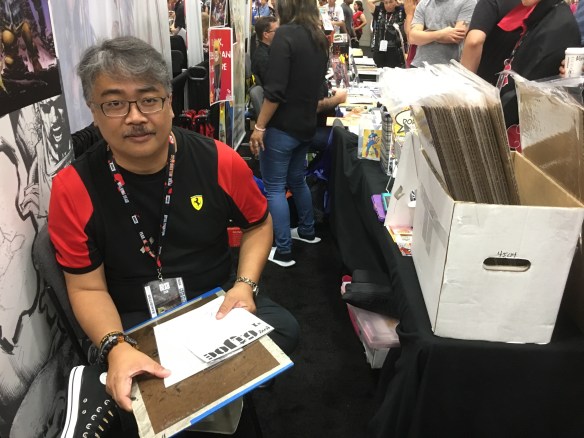
IT WAS a millennial geek’s fantasy come true, except that it happened to a doddering senior with the good luck to be in the right place at the right time. As I reported last week, Beng and I were in the US last month to attend the launch of the foundation behind the prospective American Museum of Philippine Art (AMPA) in Los Angeles, and also to visit our unica hija Demi in nearby San Diego, where she’s been living and working with her husband Jerry for the past nine years.

We save up for these visits, which usually take place every year sometime in October during what used to be our semestral breaks. But with the shift in our academic calendar to the international (okay, the US) model, we timed this year’s trip for July in conjunction with the AMPA event, the sum of which was that we found ourselves in Southern California during the third week of July.

And what’s so special about that week—one marked by 90-degree-plus temperatures, water shortages, and brush fires in California’s sunbaked hinterlands? Well, as every pop-culture-savvy 30-year-old from Pandacan to Pasadena knows, it’s the time when Comics Convention International—better known as Comic-Con—takes place in San Diego, where it began 46 years ago.

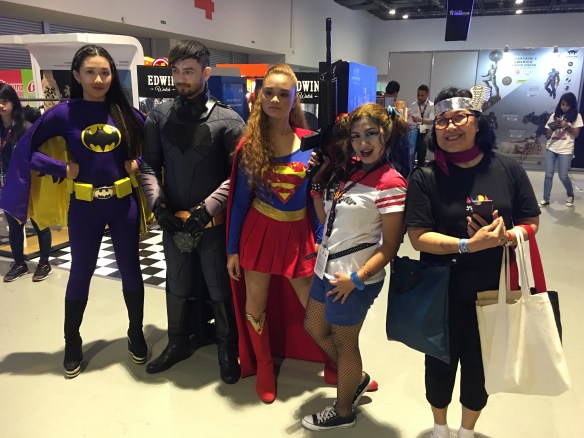
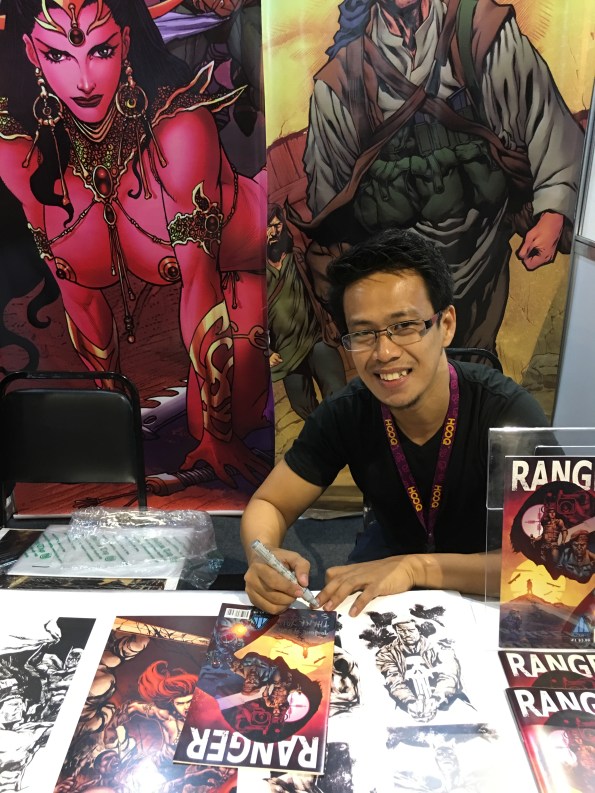
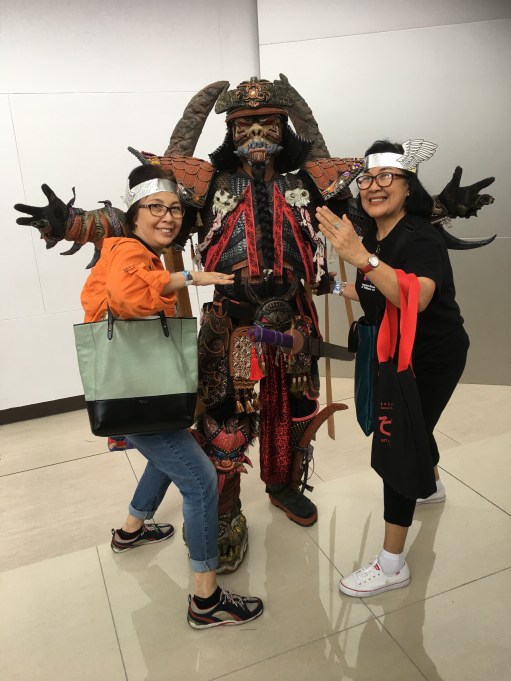
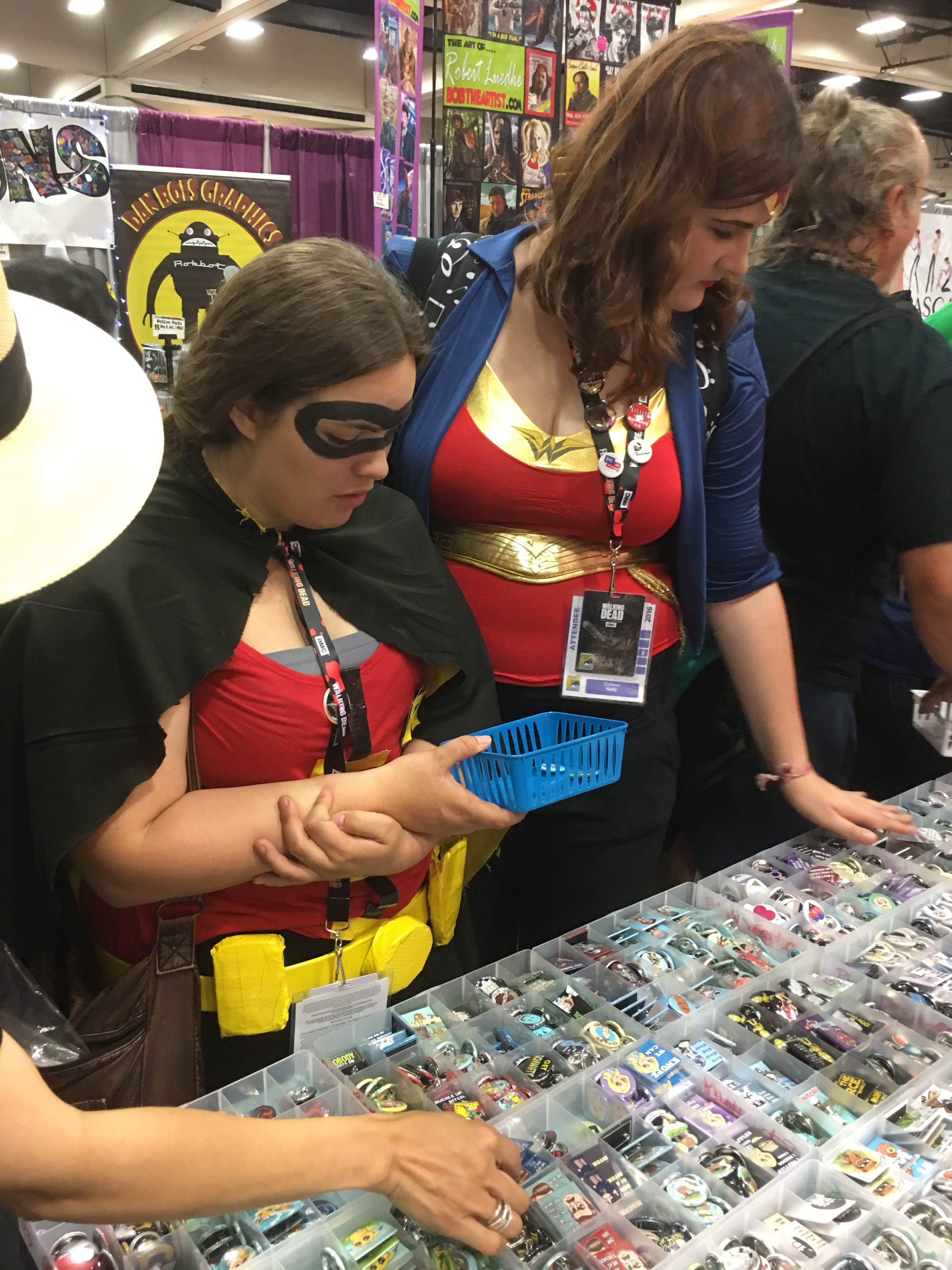
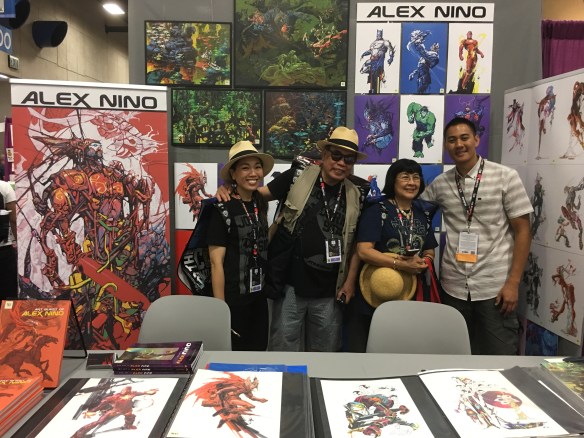
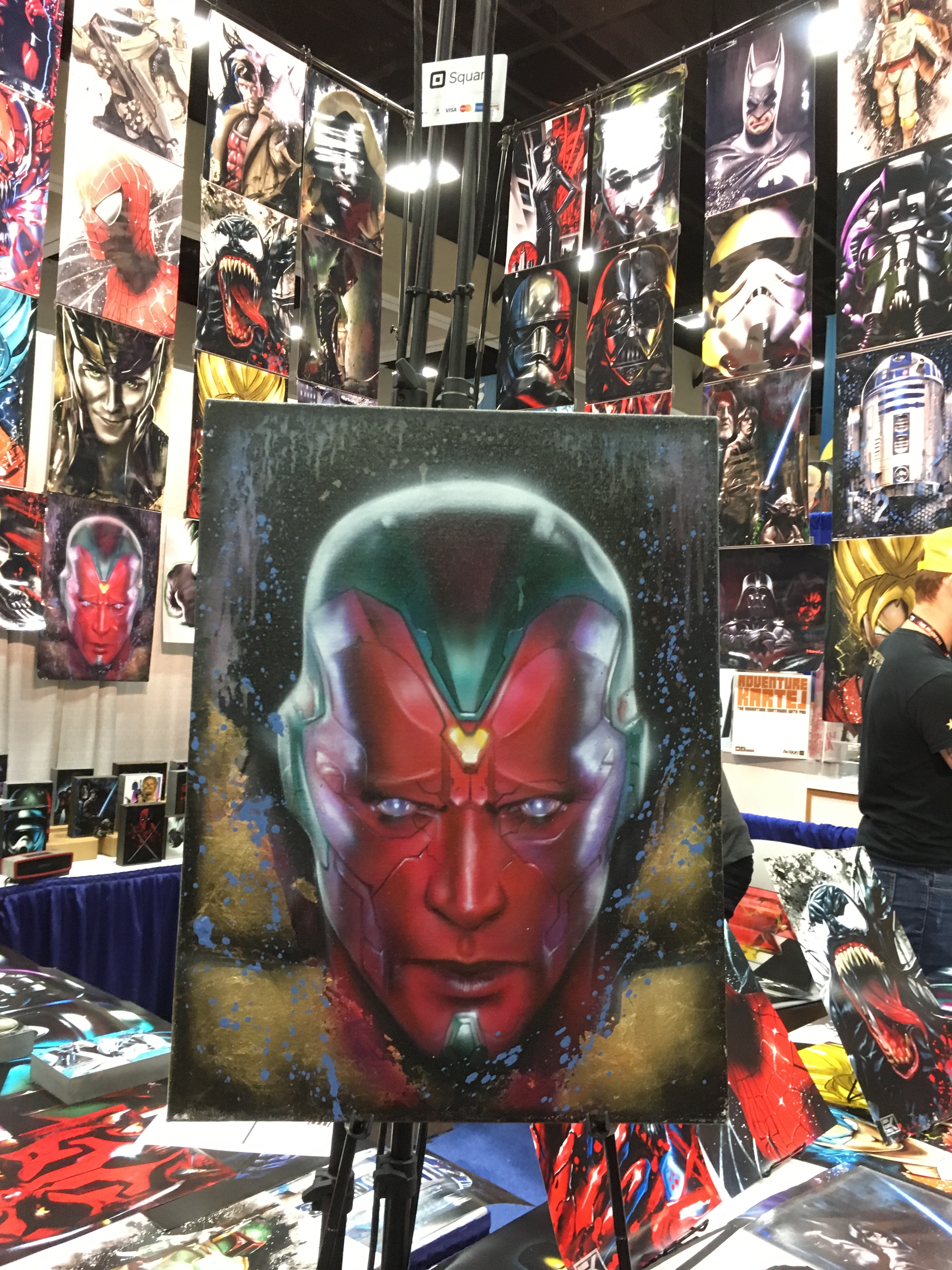
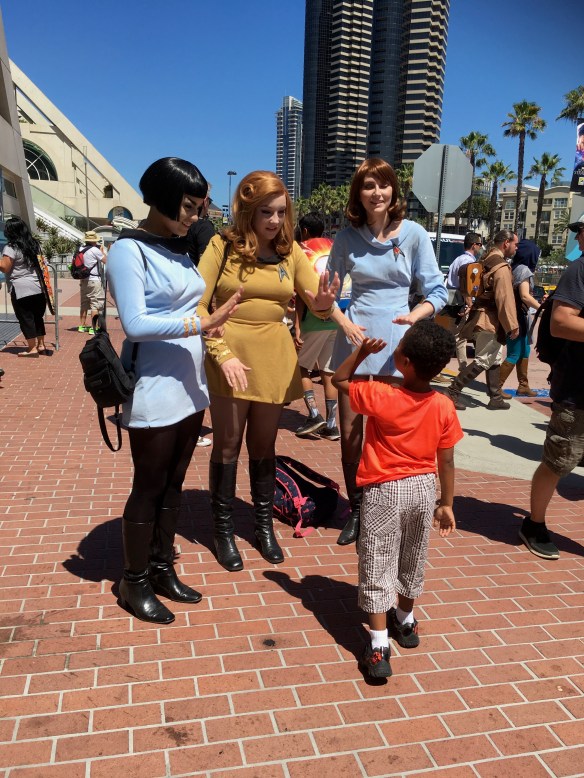
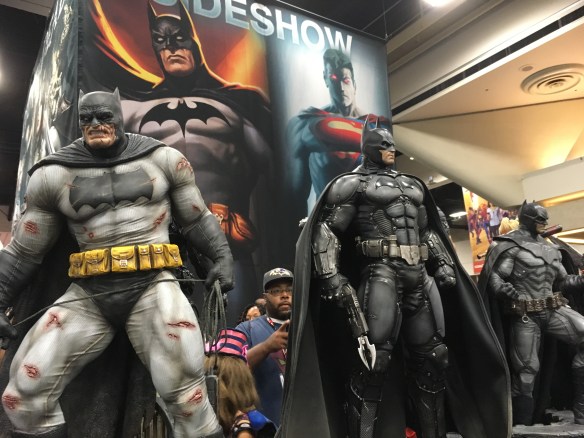
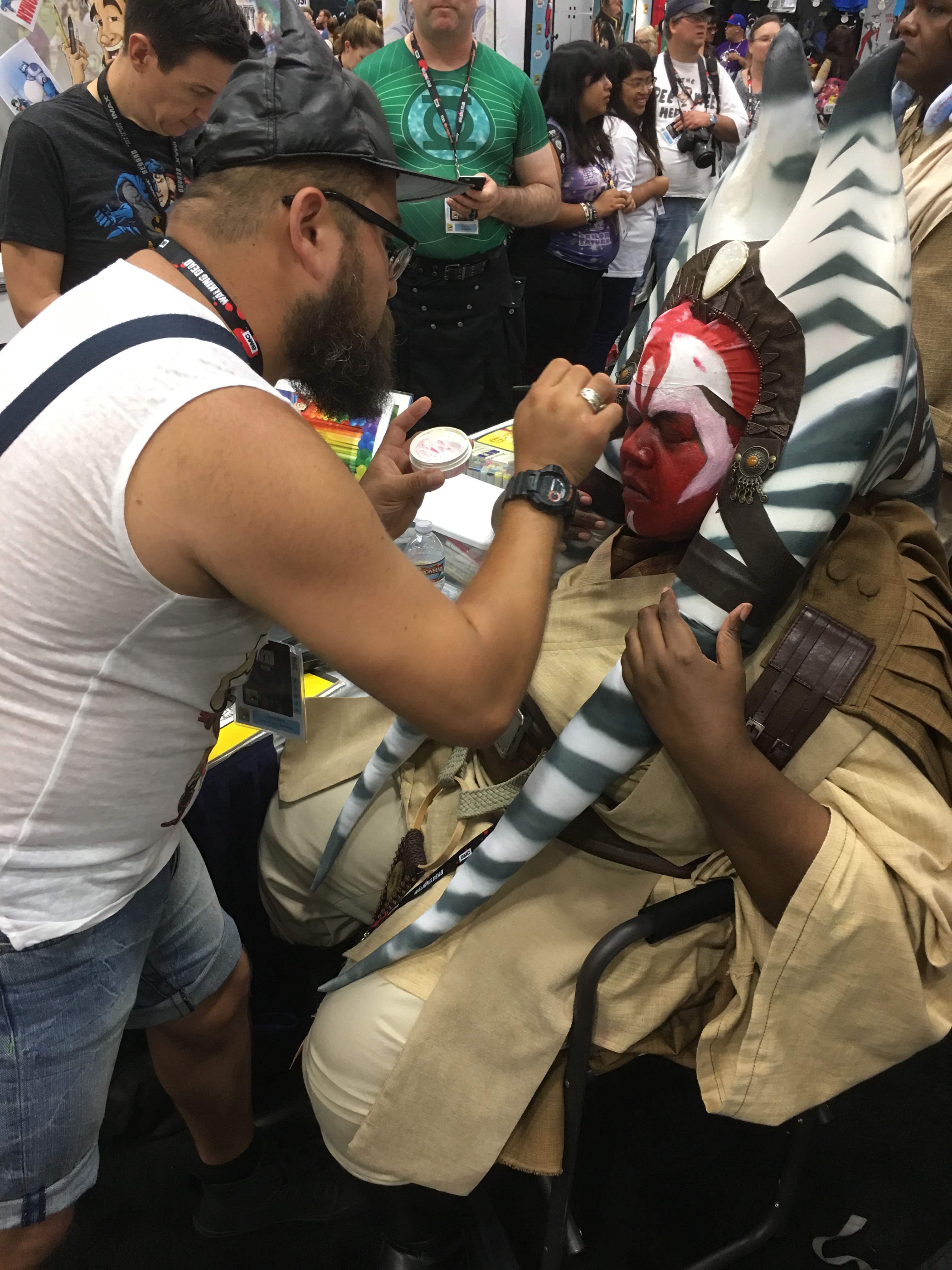
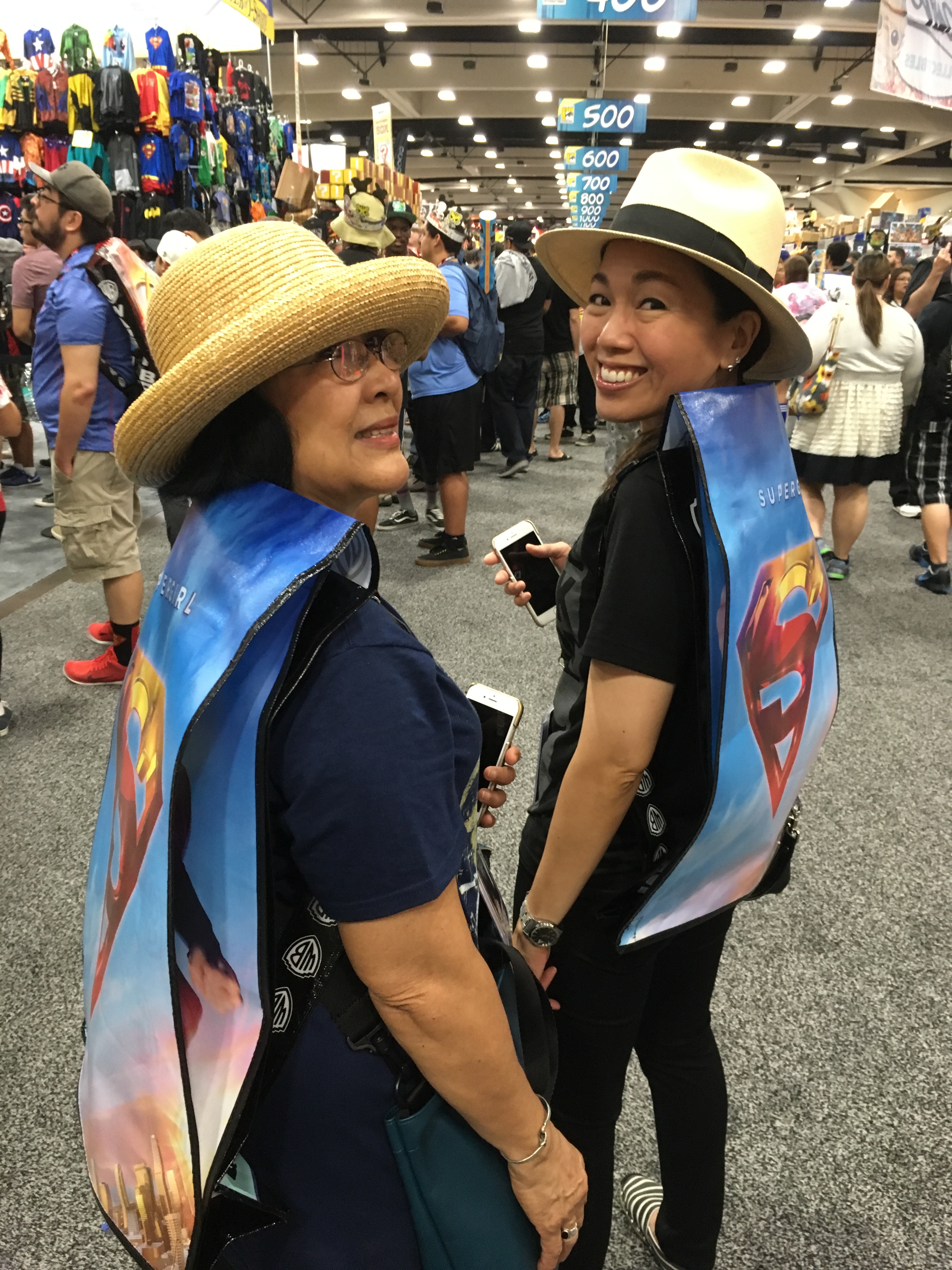
So what exactly is Comic-Con, and what’s all the fuss about this annual pilgrimage attended by hordes of Earthlings, as well as presumptive superheroes and extraterrestials? It’s an exhibition, a convention, an academic conference, a parade, a pageant, a marketplace, and a film festival all at once—the world’s largest and best-known pop-cultural mecca.

IMG_8349.jpg

You might say that at 62, I had no right to be there at all, and I wouldn’t have argued, even if I’d been a staunch DC Comics fan in the ’60s who battled the Marvel masses in lunchtime chalk fights. I could easily think of half a dozen people just in my department in UP who would’ve given their right arms to be in my place, having followed every twist and turn of “Game of Thrones” and having memorized the names of every Jedi Master and Sith Lord in the Star Wars universes (the official and the expanded). These guys (and gals) take their fantasy seriously, and some of them go on from buying every issue of Batman to writing ponderous academic essays for such tomes as It Happens at Comic-Con: Ethnographic Essays on a Pop Culture Phenomenon, edited by Ben Bolling and Matthew J. Smith (Jefferson, NC: McFarland & Co., 2014).

In his foreword to that book, Matthew Pustz would recall that “When I got off the trolley in downtown San Diego, I knew just how to find it: follow the guy in the Green Lantern t-shirt. After a short walk, there it was—Comic-Con International, with the huge convention center sitting in the sun. Waiting to enter were tens of thousands of fans—all with their own strategies for making the most of what has become one of the largest popular culture events in the world. This was the summer of 2007, and I had traveled to San Diego all the way from Boston to attend something that I had dreamed about for a long time. I had attended comic book conventions before, in Chicago, Columbus, Ohio, and St. Louis. But San Diego was different, bigger, more important. This was San Diego—the Super Bowl of comic book conventions—and I was on the comic book fan’s holy pilgrimage, the trip that all fans must make at least once in their lives. This was the Gathering of the Nerd Tribes, Fanboy Woodstock.”

“Comic-Con is a fan event, but it is also a money-making extravaganza where all manner of creators, artists, and corporate owners of media products can sell and promote them to their exact target market. And this target market is one that can be virtually guaranteed to take the ‘buzz’ of Comic-Con back with them to to Iowa or Boston or Tokyo so they can ‘sell’ those products to their friends back home. Comic-Con is the ultimate merging of culture and commerce, and that makes it the perfect place to study how popular culture works in the twenty-first century.”

IMG_8380.JPG

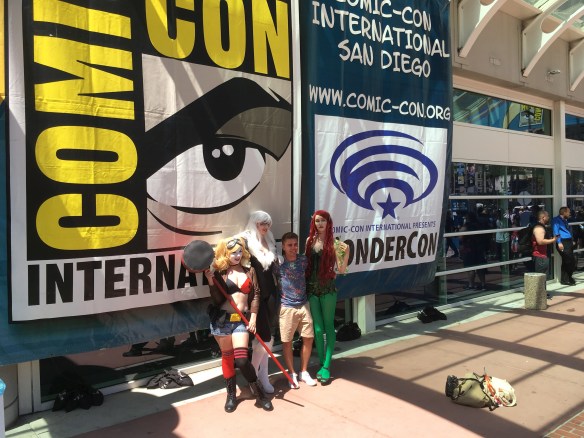
While there are many other fantasy and pop-culture conventions—Dragon Con, for example, is a big cosplay event that takes place every year in Atlanta, Georgia on Labor Day weekend—Comic-Con is a San Diego original, run by “a nonprofit educational corporation dedicated to creating awareness of, and appreciation for, comics and related popular artforms, primarily through the presentation of conventions and events that celebrate the historic and ongoing contribution of comics to art and culture.” WonderCon, a comic-book-focused event, is held in Los Angeles.

The first Comic-Con—then known as the Golden State Comic Book Convention—was held in August 1970 at the US Grant Hotel (the grande dame of San Diego hotels, where our daughter Demi works), but it’s since moved on to the sprawling San Diego Convention Center (where Hall H alone, reserved for the biggest events, fills up its 6,000 seats) and to nearby hotels.

IMG_9048.JPG

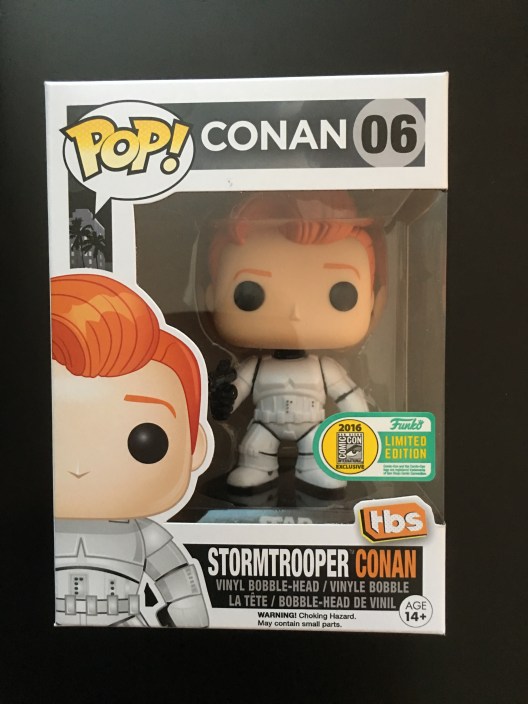
Over its four-day run, Comic-Con 2016 was projected to draw 130,000 attendees from all over the world (and the galaxy), each of whom was also likely to spend at least $1,000 in San Diego, making it the city’s top annual grosser. Movie stars fly in to promote their projects and some celebrities like Conan O’Brien have made Comic-Con a regular item on their calendar.

Getting into Comic-Con used to be a matter of flying into San Diego and walking in through the convention door, but not anymore. According to the organizers, “Although we strive to make attending our show as easy as possible, obtaining a Comic-Con badge can require the persistence of Superman, the patience of a Watcher, the ingenuity of Tony Stark, and the readiness of Batman.” It’s hard to think of any other conference where the rules include the following:

  • All costume props and weapons must conform to state and federal law.
  • Projectile costume props and weapons must be rendered inoperable. Functional (real) arrows must have their tips removed and be bundled and zip-tied to a quiver.

Tickets to Comic-Con were sold out months ago, as were all hotel rooms in San Diego, at peak prices (“Comic-Con attendees book their rooms for next year before they leave,” Demi told us.) You don’t really buy a Comic-Con ticket but a “badge,” and to get a badge you have to pre-register online for a membership ID, with which you can then apply for a badge using a code that entitles you to a slot—well, you get the idea.

So how exactly did we get in? All I’ll say is, it pays to have a daughter in a hotel in San Diego in July. It wasn’t really in our vacation plans, but Demi decided to give a pair of seniors a special treat one morning by announcing that she could get the three of us into Comic-Con. Were we interested? You bet we were!

IMG_8362.JPG


Penman No. 209: Coming: An American Museum of Philippine Art

OnglaoStudy1.jpg

Penman for Monday, July 25, 2016


AS YOU read this, I’ll be winging home with my wife Beng from California where we’ve spent the past two weeks engaged in a pioneering project that should bring the best of Philippine art to a broader American audience, if ongoing plans work out over the next few years.

Have you heard of the American Museum of Philippine Art? Probably not, since it’s still something of a pipe dream, but some people on both sides of the Pacific are blowing very hard on their pipes to make it happen. Those people include businessman Raffy Benitez, president of the Quezon City-based Erehwon Arts Center, and University of the Philippines professor and art expert Dr. Reuben Cañete, who developed the idea late last year after Erehwon’s successful involvement in a binational mural project at Chicago’s Field Museum sponsored by the John D. and Catherine T. MacArthur Foundation through Dr. Almira Astudillo-Gilles, a Chicago based Fil-Am writer and cultural advocate.

I reported on that project in this column last November 25, noting the warm response received by the participating Filipino and Filipino-American artists for their works—two murals, one at Erehwon and another at the Field—depicting the flows of Philippine culture and history from pre-Hispanic times to the present.

That positive experience encouraged Raffy and Reuben to conceive of a bigger and more enduring project that would bring Philippine art even closer to Americans—not just the huge and broadly dispersed Filipino community in the US, but the American public at large. Raffy and Reuben noted that the Mexicans and the Chinese, among other immigrant groups in America, both had their art museums, but that Filipinos—among the largest and fastest-growing minorities in America—did not.

Reuben recalled the long tradition of Filipino artists going over to the US to study and to work—such as Guillermo Tolentino, Victorio Edades, and Alfonso de Ossorio, among others—and observed that while strong cultural ties remained between the two countries, the connection was overwhelmingly one-way, with Philippine art (and music and literature, for that matter) being little known and appreciated in the US.

“In this age of globalization, art is now a global commodity that is exhibited and collected by various international venues, such as Art Basel Miami. Philippine Art, both in its historical as well as contemporary manifestations, must now be aggressively promoted in the United States, which is a major area of collection and promotion of global art,” Dr. Cañete would say in a concept paper on AMPA.

Karlota I. Contreras-Koterbay, a prizewinning Fil-Am sculptor and Director of the Slocumb Galleries at East Tennessee State University, agrees, writing that “There is a rich and dynamic art practice by Filipino-Americans in the US. However, there is a huge discrepancy in the visibility and recognition with regards to the idea and form of ‘Philippine Art’.

“The Philippines is the second highest Asian country whose citizens migrate to the US. The Filipinos have a long, complex history of immigration and residency in America, yet ‘Philippine Art’ is not as accessible nor recognizable in popular culture nor in the global art world. This statement does not claim that there is lack of talent nor creativity; on the contrary, there are thriving communities of artists, art groups and cultural workers who are making a difference in their respective locales, as well as receiving recognitions for their work in the field of arts.”

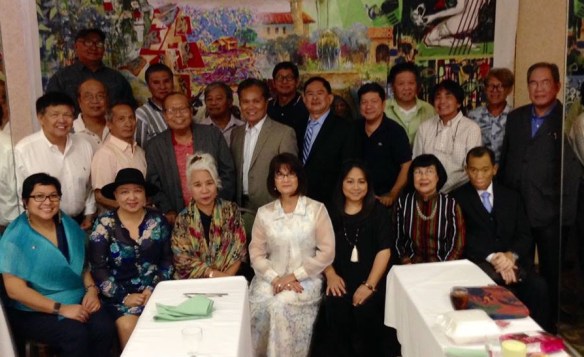
To take the first steps toward turning vision into reality, Raffy, Reuben, Beng, and I flew to LA to meet up with some prominent Filipino-American community leaders and artists to set up a foundation that would start the spadework on the museum. The American Museum of Philippine Art Foundation, Inc. (AMPAFI) was formally launched July 12 at the Holiday Inn in Diamond Bar, California, in a day-long meeting attended by a couple of dozen participants from all over the US.

Raffy Benitez will serve as chairman and president, and Reuben and I are joining him on the board, but we know that this project can’t be run from Manila, so the directors will also include art curator Karlota Contreras-Koterbay, physician Jose Botor Regullano, and engineer Ricardo Real Almonte. The officers include Fil-Am standouts Rafael Maniago, Art Zamora, Sal Budz Floriano, Rosie Vinluan Muñoz, Connie Buenaventura, Daniel Gutierrez Bassig, Dennis Martinez, Bobby Halili, Jess Española, Jun Sison, Ninette Tenza Umali, Ernan Ebreo, and Bernadette Escalona-Cooper. During the launch, a group of Fil-Am Artists headed by Paeng Maniago also rolled out a mural that they had executed to celebrate the occasion.

AMPAFIFound.jpg

We all realize that this project will take many years, enormous resources, and tremendous effort and optimism to realize. (Being Filipinos, we expect a lot of naysaying, and I’ve been Raffy’s chief buzzkiller whenever I think someone needs to pull his feet back to earth, but I have to admire the man’s guts and what he’s done at Erehwon, which you can preview here: http://erehwonartfoundation.org.) The museum as Raffy and Reuben envisage it is a mini-CCP, with enough spaces for exhibitions and performances (and even classes in Pinoy cooking), and the renowned architect Conrado Onglao was motivated and generous enough to contribute a prospective design for the building. That may be years down the road, but in the meanwhile, AMPAFI is taking early and doable steps toward building a countrywide arts community—a virtual museum, as it were—in cooperation with other groups such as Bernadette Escalona-Cooper’s Silicon Valley-based Global Artists’ Creative Collaboration for Empowerment (GACCE), whose leaders also attended the launch.

Karlota reports that “Our first two official projects are: ‘Nandito N Ako’ by 11 emerging Filipinx artists from the School of Art Institute of Chicago (SAIC) and possible community mural headed by NY-based artist Art Zamora with the Phil-Am organization and ETSU organized by Slocumb Galleries in the Northeast. This will be early October 2016 in time for Filipino Heritage Month. Also on the same month on the West Coast is the proposed Indie Film Showing in LA by special committee on fundraising head Ernan Ebreo. Both are curated programming for awareness campaign and fundraising efforts.”

(Wait a minute, did I read “Filipinx?” Indeed I did—and this trip was the first time I encountered the term myself, which seems to be gaining currency among young Fil-Ams, who define “Filipinx”—which I’ve heard pronounced as “Filipinics”—as an effort “to make the community more inclusive—we changed the O in ‘Filipino’ to an X to remain gender-neutral and recognize all genders that exist in the Filipinx community. There’s apparently been a lot of debate on this issue, which we’ll deal with some other time.)

The AMPA website is up at http://www.ampafi.org. Contributions and donations are, of course, very welcome, but more than that, we need goodwill, prayers, and strength of spirit to see this vision through. Mabuhay at salamat sa lahat!

AMPALogo2.jpg


Penman No. 207: The Best Student Speech Ever

66Lee2.jpg

Penman for Monday, July 11, 2016


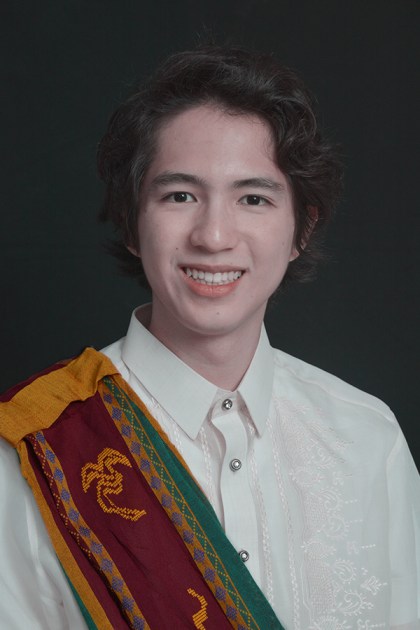
I THOUGHT that the commencement speech I recently gave before the University of the Philippines’ College of Science graduates (excerpted here last week) was pretty good, but it was the student response given by Isaiah Paolo Lee (BS Molecular Biology and Biotechnology, summa cum laude)—known to his friends and teachers as “Pao”—that blew my socks off. I later emailed Pao to say that it was the best student speech I’d ever heard, and asked him for a copy to share with my readers, so here it is, and I hope this goes viral. (Pao acknowledges that his sister Jillian helped him along with the speech—hurray for sisters!)

My name is Isaiah Paolo Atienza Lee, and I am not your valedictorian. I am not the best, I am not the brightest, and I am here speaking to you right now because all the other summas backed out. I’m somehow supposed to talk to you about honor and excellence, so let me start with my story.

When I was in first year, I almost got kicked out because of Chem 16. I wasn’t even bad at the class. I just had a habit of scribbling on my forearm during exams, which was—in hindsight, understandably—interpreted as cheating. After an unchecked exam and a lot of stress, I ended up with a diagnosis of Asperger’s syndrome. On the whole, it was a less than ideal way to get psychological support and an 1.00 in Chem 16, but I didn’t fail the class, I didn’t get dismissed from UP, and I didn’t jump off a bridge. I could have, but I didn’t. That might not sound a lot like honor and excellence to you, but that’s the point.

The College of Science is made up of brilliant people. We can’t deny that. The College of Science is also made up of people who pretend to be engineering majors when questioned about their student numbers and people who tasted their Chem 16 unknown analysis samples out of desperation. We can’t deny that either. And we all answered our exams on bluebooks that might have varied in paper quality and might have shown different scores, but they all had the same message printed on the front: University of the Philippines, 1908, Bird, Honor, Excellence.

Our valedictorian is Mao Leung. He has a weighted average of 1.0375 and a girlfriend. I do not have a weighted average of 1.0375, and most of you won’t either. I’m not going to talk about who doesn’t have a girlfriend, because this is supposed to be a happy occasion. Mao Leung is a great guy, but we can’t all be like him, and that’s okay.

Prodigies are a curse for those who need a curve on the exam to pass and a blessing for the general public; as a whole, people tend to look at the people with the best averages and pin all the country’s hopes on them, leaving the rest of us to wonder what we’re supposed to do. The truth people have difficulty wrangling with is that not only do we not need a messiah, messiahs cannot solve our problems. This country just needs honor and excellence from every single one of us, every single day. Whatever it is you do, do it well, and do it for the people.

Are you going into a career in science? There might be days when you have to run PCRs from 7 to 12. That’s 7 in the morning to 12 midnight, by the way. Do it. There might be times that your graphs would be publication-worthy if only you could get rid of one annoying data point. Don’t do it. That is honor and excellence.

Are you going into medicine despite your teachers’ laments? You might end up spending most of your nights running on adrenaline and Dunkin’ Donuts because you have to stay in the hospital. Stay. There might be an occasional addict suffering from a shabu overdose that you have to tie down to a stretcher because he won’t stop kicking you. Treat him, and treat him again when he comes back. That is honor and excellence.

Are you going to get a girlfriend because studies first no longer applies? She might be angry at you for no easily identifiable reason. Stay calm, listen, and talk things out rationally. After an argument about taking relationship advice from some guy who was supposed to give a valedictory address, you might see a book she would like. Buy it for her. That is honor and excellence.

Are you going to be a full-time parent because you had a successful relationship? You might proudly send your child to UP only to learn that your precious iskolar ng bayan has turned into a class-cutting, DRP collecting, tuition-burning machine despite your warnings. Wake them up in the morning, give them their allowance, and support them without nagging. See to it that they march and that you get to be with them. That is honor and excellence.

Are you just thinking of going to UPTown Center for a celebratory dinner after this is done? You might have a hard time parking because, wow, that is a lot of people. Don’t hog the disabled parking spaces. You might be hungry because the ceremony was too long and parking was nigh impossible because you left the wheelchair spots alone. Be nice to your waiters. They have names. Address them by name, follow up your orders without snapping at them, and say thank you the way you would like to be thanked for doing a good job. That is honor and excellence.

Are you going to do anything at all in your life? Whatever it is, do it well, and do it for the people. Do it well if doing it well is clocking in 70 hours a week at a world-class research institution. Do it well even if doing it well is just staying awake for five more minutes to finish a chapter or a boring lecture. Do it well when it matters, and do it well even when it doesn’t. And do it for the people. Do it for the people even if you don’t like the people. Do it for the marginalized even when they don’t appreciate it. Do it for the privileged even when they cause Katipunan traffic. Do it for the people whether the person in question is a drug addict in the emergency room or your waiter at UPTown Center or a stranger on the internet or even just yourself, because it’s not about the gratitude, or the credit, or the reward, but about the people, and the work. That is honor and excellence.

The unphotogenic, non-headline-grabbing, narratively-unsupported fact is that large-scale change happens in fits and bursts and stops, and often on a scale you can’t see with an electron microscope. We hold ourselves up to unreasonable standards and are subsequently disappointed most of the time, when what matters is the work we do in increments, the lab hours that we log, and the people we encounter.

You might not make your own transgenic crops, but you can disabuse your family of any erroneous notions they may have about Bt talong. You might not eradicate crime in 3 to 6 months, but you can avoid catcalling. You might not make it to the newspaper’s front page, but you can make it to your mom’s proud parent Facebook post.

We often look to larger-than-life figures to celebrate honor and excellence, from Miss Universe to near-perfect-GWA graduates. I’m not saying it’s wrong to do so, but I believe the first place to seek it is within ourselves.

My name is Isaiah Paolo Atienza Lee. I am not the best, but I am good enough, I am not the brightest, but I am a UP graduate, and I am not your valedictorian, but I am going to tell you all to go out there and show the world what we’ve got.

[Photo from the UP Diliman Information Office]


Penman No.205: Sojourn in Seoul (2)

IMG_8666.jpg

Penman for Monday, June 27, 2016


HAVING PLANNED our trip to Seoul months in advance, I made a point of touching base with some local contacts for possible meetings—something I usually don’t do, wary of disturbing people with my unseasonable presence. But with a week to kill in one city and with some longstanding connections in place, I thought it would be even more ill-mannered if I didn’t at least tell them that I was going to be in town.

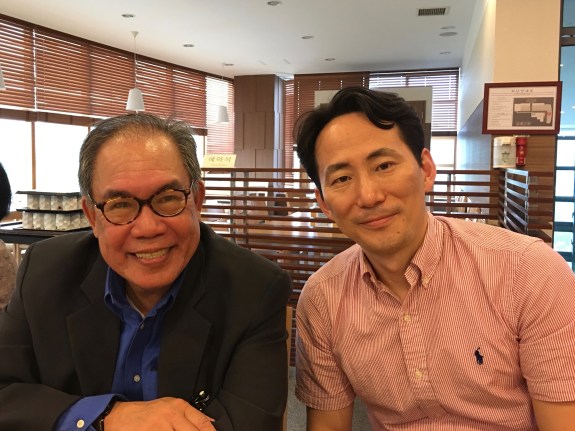
One of those connections was Dr. Sukjoo Sohn, who teaches English at Dong-a University in Busan, Korea’s big industrial center four hours by train from Seoul. Sukjoo—a specialist in world literature—happens to be married to Catherine Rose Torres, one of our bright new young fictionists who now serves as First Secretary and Consul at our embassy in Berlin. I’d first met Catherine in 2011 when I attended the Singapore Writers Festival and she was with our embassy there, and I was later very happy to write a blurb for her first book, Mariposa Gang and Other Stories (UST, 2015).

It’s really these personal connections that make for global literary networking, the value of which I can’t overemphasize. In 2014, Sukjoo translated one of my stories for publication in Global World Literature, which is put out by some of Korea’s foremost literary scholars and critics in that area. Through Sukjoo, I was also able to contribute an article to the Korea-based journal Asia, in which I wrote about some of our most gifted and exciting younger writers. As a result of that article, one of our best young non-fictionists, Sandra Nicole Roldan, will be visiting Seoul this week to attend the 2016 Asia Literature Creative Workshop.

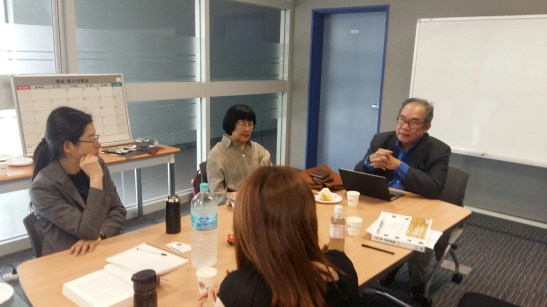
And so our connections continue and deepen. When they learned that I was visiting Korea, Sukjoo’s organization invited me to a special meeting, so I could tell them more about Philippine literature. That gathering took place at Seoul National University toward the end of our visit, and a very fruitful and engaging encounter it turned out to be. Perhaps I shouldn’t have been surprised, but their very first question had nothing to do with lyric poetry: “What do you think of your new President, Rodrigo Duterte?”

It will take more than this column to share my answer with you, but suffice it to say for now that we talked about our colonial history, our Catholic predisposition to suffering, the two Joses (not me) by which our literature is best known overseas, class as the key divisor in our literature and society, Korea’s and the Philippines’ shared experience of dictatorship, and the irony of having to deal with a resurgent Park and a resurgent Marcos, and our younger writers’ affinity with Gaiman, Murakami, and Wattpad.

We discussed my translated story, “In the Garden,” which I’d written in the 1980s about militarization in the countryside and the moral duty of a teacher caught in the crossfire. While the topics were unavoidably contentious, our meeting itself was thoroughly pleasant and mutually informative, capped by dinner, shop talk, and, yes, chatter about Lee Min-ho.

meeting 2.jpg

The second highlight of our visit—away from the malls and the flea markets—was a meeting with the Filipino community in Seoul, which had also been pre-arranged by Catherine through her Seoul colleague, the very capable Third Secretary and Vice Consul Ella Mitra.

It was a Sunday—our last full day in Korea—and much to our surprise, the embassy was open and bustling with people, with a wedding taking place right in Ella’s office. (“We can officiate at weddings,” Ella told us, “as long as the two parties are both Filipino citizens. We’re open on Sundays because that’s when most of the community can come.”) There were over 40,000 Filipinos in Korea, Ella informed me, many employed as factory workers in jobs that the locals themselves prefer not to do.

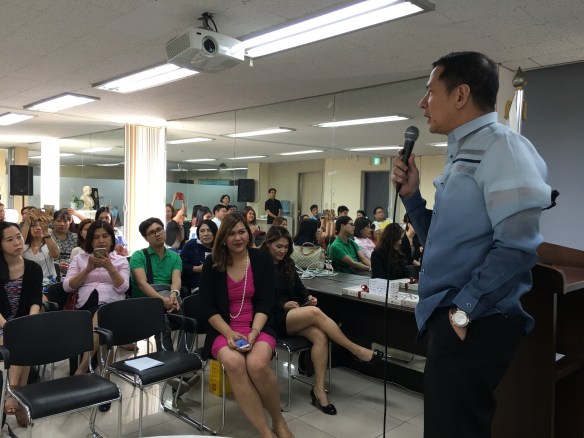
I’d been asked by the embassy to give a reading for the community—something I love to do whenever I’m abroad, as it puts me in touch with ordinary Filipinos striving to do their best in often very challenging circumstances. The Filipino, I like to say whenever the opportunity arises, is the modern-day Ulysses, roaming recklessly to the farthest reaches of the globe, but imbued with an unfailing sense of home. Now here they were, a crowd that filled the room beyond our most generous expectations—professionals, teachers, graduate students, Filipino-Korean couples, even the Ambassador himself, the dapper and articulate Raul Hernandez.

IMG_8681.jpg

The embassy had calendared my reading as its second Sentro Rizal activity, and with June 12 coming up, it seemed a good time to remind ourselves of the things that both divided and united us, and of the need to hang together as Filipinos, at a time and in a region of revived nationalisms. Even so I chose to do a very light reading, one that made fun of my own social ineptitude in cross-cultural situations, and thankfully it went over well with the audience. More than the reading, it was the ensuing Q&A and freewheeling chat over pancit and puto that proved most gratifying. I could sense the community’s strength of spirit, its determination to master a new cultural terrain.

I was especially happy to see a former student, Tech Apognol, now doing an MA in International Relations and speaking Korean. She’s hardly alone; the association of Filipino grad students in Korea now numbers 500, I was told, and there were plenty of masteral and doctoral scholarships for those inclined. “We can take classes in English,” one student named Eve told me.

Another grad student named RJ solved a mystery that had been bugging me for 40 years. Back then, I told him, I was a young writer employed by the National Economic and Development Authority, and one of my tasks was to help edit the Five-Year Development Plan, which was thicker than an encyclopedia because of its bloated prose. On the other hand, I recalled, the South Korean development plan that I used as a reference was no bigger and fatter than a paperback novel—and look, I told RJ, where Korea was now. “Ah, that’s easy,” RJ said. “It’s because the Koreans value brevity, and memos are expected to be no more than a page. The higher up the ladder papers go, the more concise they’re expected to be.”

The shopping was fun—just the flea markets for us, please, not the high-end shops—and the streetcorner food delicious, but it was, ultimately, our encounters with the people that added the most value to our visit. Kamsahamnida, Sukjoo, Cathy, Ella, and Tech for these memorable exchanges.

Penman No. 200: Memoirs of a Teenage Maoist

e13-644.jpg

Penman for Monday, May 23, 2016


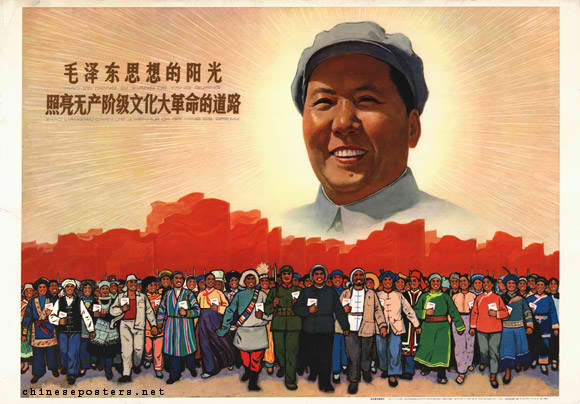
A SMALL item in the foreign news caught my eye last week: a note that the 50th anniversary of China’s Cultural Revolution had gone unnoticed—in China itself, with no parades or ceremonies to mark the historic event. For those of us too young to remember, the Cultural Revolution was launched by Chairman Mao Zedong on May 16, 1966, to consolidate his power and purge his rivals within the Communist Party in the guise of doing away with old ways of thinking. To fight the old, Mao rallied the young—millions of “Red Guards” who turned on their parents, teachers, and superiors, feeling suddenly empowered to reject authority and traditional learning and to see themselves as the vanguards of a new age.

Over the decade that the Cultural Revolution ran its course until Mao’s death in 1976, many millions died—from executions and from famine. While Mao’s legacy would live on, there’s firm consensus both within and outside China that the Cultural Revolution was an unmitigated man-made disaster, something the Party itself in 1981 blamed for “the most serious setback and loss for the Party, the country and the people since the founding of China.”

What did this have to do with us and with me? Well, to put it as simply as I can, I was a teenage Maoist, and for a while back there, I and quite a number of like-minded comrades saw ourselves as the local chapter of the Red Guards. Call it madness, but we saw Mao as a demigod, and looked to his China as a beacon of hope and a model for other countries like ours—also beset by centuries of feudalism and colonial rule—to follow.

How did that happen? I had joined the student activist movement and had gone to my first demonstrations in high school, and as soon as I entered college in 1970, I signed up with the Nationalist Corps. It wasn’t a communist organization, but it was a short step from reading Renato Constantino to reading Mao. Mao’s teachings (in contrast to the heavy-duty theorizing of Marx and Lenin) were attractive in their seeming simplicity, in their pithiness, in their rosy optimism. It was chicken congee for the soul.

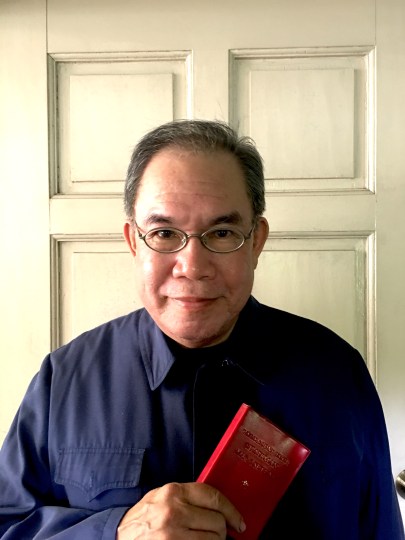
Until today, you’ll hear 60-somethings from my cadre recite gems, chapter and verse, from Mao’s Quotations (better known as the LRB, or the Little Red Book) like “A revolution is not a dinner party, “Political power grows out of the barrel of a gun,” “Dare to struggle, dare to win,” “Wherever there is struggle there is sacrifice, and death is a common occurrence…. All men must die, but death can vary in its significance.” Among my favorites—music to my 17-year-old ears—was “The world is yours, as well as ours, but in the last analysis, it is yours. You young people, full of vigor and vitality, are in the bloom of life, like the sun at eight or nine in the morning. Our hope is placed on you. The world belongs to you.”

It wasn’t too different from what Rizal or the Desiderata said, especially about the youth as the fair hope of the fatherland, but I think what drew us to Mao at that point and to his brand of Marxism was his emphasis on classes and class analysis, his awareness of society as one divided between rich and poor (with the rich collaborating with foreign powers to keep themselves in place), and the fact (or the fantasy) that in China, things were actually going according to the socialist plan. Very few of us had ever been to China then (famously, of course, three senior activists would get stranded there—Eric Baculinao, Chito Sta. Romana, and Jimi FlorCruz), but we accepted it as an article of faith that Chairman Mao was doing right by his own people.

In Manila, we did our best to copy the flag-waving strokes of Peking Opera (eg, “Taking Tiger Mountain by Strategy”), learned about obscure heroes like Norman Bethune, and wore the LRB like a talisman in the breast pockets of our army fatigue jackets. (Procured from US military surplus stores in Dau, it was the closest we could get to the Mao—actually the Sun Yat-sen—jackets that the Red Guards adopted as a uniform, with the red star on the matching cap; but we at least wore genuine “Ho Chi Minh” sandals fashioned out of rubber tires.) At dawn, we tuned our transistor radios to the faint and crackly signal of Radio Peking, for our regular dose of socialist top tunes like the “Internationale,” “Sailing the Seas Depends Upon the Helmsman,” and “The East Is Red”—plus, of course, the daily rundown of the news from the global war on US imperialism. An enterprising fellow even then, I corresponded with a Hong Kong bookseller who seemed only too happy to mail me copies of the Peking Review, even if I had no money to pay him.

Only years later did the failings of Mao’s experiment and the horrors of the Cultural Revolution emerge, revealed not so much by Western propaganda as by the Chinese themselves, who had suffered the most from its excesses. It would take time—and, indeed, a personal visit to China—to appreciate this disconnect between our long-distance romance with Mao’s socialist paradise and cold reality.

It was in July 1987 when I was finally able to set foot on hallowed ground—Tiananmen Square in Beijing, where I was doing a cultural exchange visit along with writer-friends Krip Yuson, Ricky de Ungria, Eric Gamalinda, and Timmy Lim. We had been assigned a translator and a minder, whom we’ll call Chang—a tall wisp of a man who spoke decent English and who was working, he said, on a translation of a biography of Elvis Presley in his spare time. (Had he ever listened to Elvis? No. We sent him a cassette of Elvis from Manila.)

Standing just meters away from Mao’s mausoleum—there seemed to be thousands of Chinese visitors waiting in line to go in—I asked Chang if he could help me see Chairman Mao. “What you want to do that for?” he asked incredulously. “He killed my grandfather in the Cultural Revolution!” Ooops—I tried to say that I was sorry to hear about his angkong, but I had to tell him that I was once a Mao fanboy and just had to meet the man, even his current state of embalmed repose. Chang still didn’t seem ready to believe me, so I sang him the first few lines of the “Helmsman” song: “Sailing the seas depends upon the helmsman, life and growth depend on the sun, rain and dewdrops nourish the crops, making revolution depends on Mao Tsetung Thought!” Chang shushed me up before a crowd could gather: “Okay, okay, I bring you inside, but hurry, okay?”

And so I filed past my fallen idol, awash in conflicting emotions; frankly Mao’s waxen face did little to exude revolutionary vitality, and in just two more years that same square would be bathed in fresh young blood.

I would return to China many times since then as both tourist and writer, and at one point I would chance upon a Mao jacket in a backstreet shop in Shanghai—you’ll never find them in the glitzy stores—and some days I wear it to remind me of what people today will surely say was a youthful folly. Sometimes I’ll stick a most unproletarian Montblanc into the breast pocket, but then again, it’s where the real Chinese revolution led—the freedom to shop for baubles on Nanjing Road.

IMG_8493.jpg

[Image from chineseposters.net]

Penman No. 197: Why the Arts Should Matter

IMG_7956.jpg

Penman for Monday, April 25, 2016


FOR THE first time ever, the University of the Philippines held a Knowledge Festival in Tagaytay last week, showcasing the most significant and interesting projects being undertaken by UP scientists, artists, and researchers, with an emphasis on interdisciplinarity. I was asked to present a keynote talk on “Why the Arts Should Matter.” Herewith, some excerpts:

It has become practically a cliché to say that our lives, and certainly our learning, would not be complete without some appreciation of the humanities. Our tradition of liberal education has primed us to the necessity of cultivating the “well-rounded individual” schooled in the basics of various disciplines.

Within my own field, I often find myself arguing for the importance of being able to adopt a rationalist outlook, of grounding our artistic judgments and perceptions on a concrete appreciation of our economic, social, and political realities. I’ve always urged my creative writing students to take an active interest in history, technology, business, and public policy as a means of broadening their vision and enriching their material as writers.

But conversely, let me ask: Why indeed are the arts and humanities important? I’ll turn to conventional wisdom and quote what should already be obvious, from the Massachusetts Foundation for the Humanities:

“The humanities enrich and ennoble us, and their pursuit would be worthwhile even if they were not socially useful. But in fact, the humanities are socially useful. They fulfill vitally important needs for critical and imaginative thinking about the issues that confront us as citizens and as human beings…. We need the humanities. Without them we cannot possibly govern ourselves wisely or well.”

What strikes me here is the word “govern,” which seems to me to be of utmost importance to us at this juncture of our history, and which is key to our topic today. The role of the humanities in our intellectual and cultural life is to enable us to govern ourselves wisely and well. They deal with issues and value judgments, with defining the commonalities and differences of human experience, hopefully toward an affirmation of our most positive human traits, such as the need to work together as families, communities, and societies. In sum, they help us agree on a common stake, based on which we can make plans, make decisions, and take action.

That notion of a common stake is crucial, especially on this eve of one of the most contested elections in our history. Despite all the predictable rhetoric (and the real need) for national unity, we find it difficult to unite beyond short-term political expediency because we remain unable to agree on our most common ideals—the national dream, as it were, or the direction of the national narrative. What is our story? Who is its hero? Are we looking at an unfolding tragedy, a realist drama, or a romantic myth? To go further, what is important to us as a people? Where do we want to go? What price are we willing to pay to get there?

These are questions that are answerable less by scientific research and inquiry than by artistic imagination and insight. It will be mainly the humanities and the social sciences that will provide that vision, in all its clarities and ambiguities, as it will be science and technology that will provide the means.

This does not mean that scientists and engineers will have little or nothing to contribute to the crafting of this vision; I firmly believe they should, and that one of our worst mistakes has been the fact that we have largely left national policy to the politicians, the priests, the lawyers, the soldiers, and the merchants. Scientists have had little say—and artists even less—in the running of this country and in plotting its direction. We may canonize our boxing champions and beauty queens—and even elect them senator—while our National Scientists and National Artists languish in obscurity and indifference.

Ours is an appallingly innumerate society. Most of our people do not know the simplest numbers that describe our lives, and much less what they mean. We are raised on concepts like the national flower and the national bird and the national tree, but even in college we are hard put to say what the national population, the national birth rate, or the Gross Domestic Product is, and why they matter. This innumeracy is balanced, sadly, by cultural illiteracy. Our notion of culture often consists of pretty images, pleasant melodies, theatrical gestures, and desirable objects.

We have much to do by way of cultural education, and artistic expression is a vital means by which this can be achieved. The arts are the key to those parts of us that reason and logic alone cannot reach.

But I came here this morning to go beyond the obvious, and to present an aspect of the arts that few national and even academic policymakers ever think about, and it’s this: the arts should matter not only because they’re good for the soul, but because they’re good for the body as well—taking the body to mean our economic and material well-being. In simple words, and moving from the philosophical to the practical sphere, the arts can mean big business.

The arts underlie what have been called “creative industries,” and these industries have made tremendous contributions to the economies of countries as diverse as the US, the UK, China, Japan, Brazil, and Thailand.

In 2009, when the Joint Foreign Chambers of the Philippines initiated a focus group discussion on creative industries in the Philippines, they defined the sector as embracing “a wide array of subsectors including advertising, animation, architecture, broadcast arts, crafts, culinary arts, cultural/heritage activities, design, film, literature, music, new media, performing arts, publishing, and visual arts.”

In 2010—the last year for which I have solid figures—copyright-based industries or CBIs contributed more than P661.23 billion to the economy, according to the Intellectual Property Organization of the Philippines. In GDP terms, the economic contribution of CBIs climbed from 4.82 percent in 2006 to 7.34 percent in 2010. Core CBIs comprising companies in the arts, media, and advertising largely accounted for this surge. A corresponding rise in employment occurred in the sector, from 11.1 percent of the total number of jobs in 2006 to 14.14 percent four years later.

There seems to be a greater awareness on the Philippine government’s part of the economic utility of our artistic talent. In 2012, for example, RA 10557 was passed to promote a “national design policy” highlighting “the use of design as a strategic tool for economic competitiveness and social innovation.”

However, culture as a whole remains a low priority, often subsumed to other activities like tourism, entertainment, and sports. And it’s getting worse; very recently, cultural funding by the NCCA—the largest source of government funding for the arts—practically dried up because of onerous conditions imposed on cultural organizations in the wake of the pork-barrel scam, requiring them to undergo a tedious accreditation process by, of all things, the DSWD. Unlike many progressive countries, we do not even see it fit to have a standalone Department of Culture, so the DBM and even the DSWD can push the NCCA around.

We need to see the arts as more than a frivolous diversion that keeps on drawing funds without producing appreciable pay-offs, like an exotic and expensive pet you keep around the house, but rather as an area of strategic and profitable investment that will yield both moral and material dividends. Just as we need to develop more PhD-level scientists and researchers, we need to support advanced practitioners and theorists in the arts, as they have every capability to achieve world-class status, with the right incentives.

Let me end with a message—perhaps even a plea—to those who hold the purse-strings of our institutions. That journal, that play, that exhibit, that concert, or that workshop is always more than a line-item expense. Supporting and patronizing these artistic endeavors is the price we pay to understand ourselves in all our complex, and wondrously unquantifiable, humanity—and also, in ways you may never expect, to create new knowledge and new wealth in many forms.


Penman No. 194: A Tree Grows at the Met

IMG_8118.jpg

Penman for Monday, April 4, 2016


THE FIRST and last time I saw a show at the Manila Metropolitan Theater must have been in the 1990s, for a production of Nick Joaquin’s “Portrait of the Artist as Filipino.” The theater was in fine shape then, and I recall being as enthralled by the place itself as by the spectacle onstage.

As a young boy in the early ‘60s, my father had worked at the old Department of Public Works building across Plaza Lawton (before they became the Post Office and Liwasang Bonifacio), and I had often tagged along to play with his red-and-blue pencils and his swivel chair. The most entrancing element in that locale, truth to tell, was the giant pot above the old Insular Ice Plant that spewed what seemed to be a steady stream of boiling water into a waiting coffee cup; but my eyes would stray to the strange pinkish building in the distance and I would wonder what went on there and what it held.

I got my answer, thanks to Nick Joaquin, but a few Sundays ago, I had an even more amazing opportunity to know the Met more intimately than I would ever have imagined. Sadly the intimacy was that which might exist between a doctor and a patient, like a probe of cold steel into some tubercular organ.

My wife Beng belongs to Kasibulan, a group of women artists, and they had been invited to do a sketching session at the old theater that Sunday morning, alongside a cleanup operation to be undertaken by volunteers. Did I want to come along, perhaps to take pictures, or at least hold bags and run errands for the ladies as they drew arches and vanishing points? Of course I did.

But before I go any further, especially for the benefit of our millennial readers, let me give a backgrounder on the Met and its sorry fate.

When the Manila Metropolitan Theater opened on December 10, 1931, it was an architectural wonder to behold and to step into—an Oriental palace in pink coral, crowned by exquisite minarets, statues, sculpture, and tilework. The overall style was Art Deco, the rage at the time, spilling over from the West but adapted to its new setting in the East. It could seat almost 1,700 people, and it had been put together and adorned by some of Manila’s finest architectural and artistic talents—designed by Juan Marcos Arellano, built by Pedro Siochi and Co., and decorated by the Italian sculptor Francesco Riccardo Monti, the sculptor Isabelo Tampinco, the future National Artist Fernando Amorsolo, and by Juan Arellano’s brother Arcadio.

IMG_8086.jpg

Erected near the site of its predecessor, the Teatro del Principe Alfonso XII which burned down in 1867, the Metropolitan was meant to be the city’s premier cultural venue, a showcase of the Filipino artistic genius. In its heyday, it hosted celebrated singers such as Jovita Fuentes and Atang de la Rama; from highbrow opera to the more popular zarzuela and vaudeville, the Met had the best to offer. Though damaged during the war, it was rebuilt and continued to be a haven for artists and entertainers until it began to decline in the 1960s, as other venues—and the growth of moviehouses in such places as Avenida Rizal, Escolta, and Cubao, followed by the establishment of the posh and modern Cultural Center—gained primacy among audiences.

At one point or other in its slide to abject decrepitude, the Met became a boxing arena, a movie set, a martial arts studio, a gay bar, an ice cream parlor, a TV stage, and a refuge for the homeless, among other incarnations. In 1978, Imelda Marcos took an interest and had the theater restored to its old glory, but then it fell again into disrepair, and was shut down in 1996 in a wrangle over ownership between the city government and the GSIS. Gloria Macapagal Arroyo and Mayor Fred Lim renovated and reopened it in 2010, when it was declared a “National Treasure” by the National Museum, but yet again it succumbed to politics, bureaucracy, and benign neglect; after a concert by the rock band Wolfgang in mid-2011, it was locked up by the GSIS.

In July last year, the ownership question was finally settled with the GSIS selling the property off to the National Commission for Culture and the Arts (NCCA), and shortly after the NCCA received P270 million from the Department of Budget and Management (DBM) for a fourth and hopefully final restoration, which the NCCA expects to complete by 2017.

It was this Met that we entered that Sunday. We were greeted by my UP colleague and one of the restoration project’s consultant-architects, Gerard Lico, who assigned two young but very capable juniors to guide our group on an all-access tour of the building. The lobby was buzzing with the enthusiasm of student volunteers from National University who, after an orientation and a safety briefing, filed into the structure behind their team leaders.

We followed them into a dark and cavernous hulk (the electricity had yet to be brought back), and encountered a touching mix of fragility and resilience. The Met had to be cleaned prior to restoration, and thus we were being privileged to see it at its most hapless state. There was dust and rust everywhere, and the wooden floorboards, reduced to a pulp, were crumbling beneath our feet.

Even so it demanded attention and respect, and we trod slowly, reverentially. Through the squalor emanated a lingering magnificence—the echoes of long-stilled operas, the footfalls of performers scurrying down the corridors. In one room was a tangled mass of costumes—a sailor outfit unmistakably from The Sound of Music—and when we stepped out onto the broad stage, you almost expected the spotlights to burst into life and the phantom audience to roar in approval. There was a hole in the stage floor and water in the orchestra pit, but nothing, it seemed, beyond repair, beyond human care.

Out on the roofdeck, beneath the Moorish spires and the batik-inspired tiles, a small tree had sunk its rope-like roots into the masonry. I found myself hoping that it would be spared the restorer’s saw. Reprieves beget reprieves, and it would provide a fine organic testament to the Metropolitan’s endurance. (See more pics from our walking tour here.)

IMG_8072.jpg


Penman No. 193: Knowledge as Capital

2171790476_7c4dfcd25a

Penman for Monday, March 28, 2016


THE UNIVERSITY of the Philippines (UP) campus in Cebu City hosted the second presidential debate a couple of Sundays ago, and with education on the debate agenda, the setting couldn’t have been more appropriate. UP—so far, our only “national university” so designated—may be more than a hundred years old, but it continues to grow, particularly in places like the Visayas, Mindanao, and Central Luzon, where the demand for quality higher education is as great as ever.

Not too many people may have been aware of it, but in preparation for the debate—and indeed for the next national administration—UP President Alfredo E. Pascual commissioned a study by the university’s think tank, the Center for Integrative Development Studies (CIDS), to look into where we are in the regional scheme of things and how we can expect to catch up and compete with our more advanced neighbors.

Copies of the paper—titled “Knowledge-Based Development and Governance: Challenges and Recommendations to the 2016 Presidential Candidates”—were provided by UP to the staffs of the presidential candidates in advance of the Cebu debate. But knowing most politicians’ propensity to go for the sound bite and dwell on the personal, I tend to doubt if more than one or two of the candidates or their staffs found the time and the focus to read it.

It would be a pity if that indeed were the case, not only because of all the work that UP put into the paper (CIDS was backstopped by the offices of the President and the Vice President for Academic Affairs), but because of all the opportunities for development that we will likely miss, again, if our political leaders don’t heed what our top academic minds are saying.

The full text of the paper can be found here: http://www.up.edu.ph/wp-content/uploads/2016/03/20160315-UP-Knowledge-Paper-Final.pdf. For the benefit of our readers (and maybe the odd politician who will read this), I’ll unpack the technical jargon and get to the core of what the paper says and proposes.

It opens with an indisputable premise: Education is indispensable for economic development. More education means less poverty and income inequality, because it drives innovation and productivity, and helps people adjust to new challenges and opportunities.

But of course we already knew that. In a society like ours, we all look to education as the way out and the way forward, which is why our people slave for years overseas to put their kids through college. So sacred is education to the Filipino family that every candidate for public office, especially the Presidency, feels duty-bound to extol its virtues.

To be fair to the present administration, it’s put its money where its mouth is, for the most part. The study notes that “Since Benigno S. Aquino III assumed the presidency, government expenditure on public education has enjoyed annual increases. Out of the education sector‘s PHP364.9 billion budget for 2015, PHP43.3 billion was given to state universities and colleges—a 13.8 percent increase over the 2014 allotment…. Over PHP3 billion was made available for scholarships under SUCs and more than PHP2 billion for scholarships administered by the Commission on Higher Education. A total of PHP316 million (roughly 0.09 percent) was earmarked to fund research.”

That sounds good, but sadly it’s still not enough. The rest of our ASEAN neighbors spend an average of 5 to 6 percent of their GDP on education, but we try to make do with 3 percent. That’s why even our best universities lag behind their global and regional counterparts. The study notes that “In 2014, the University of the Philippines ranked only 8th out of the top 10 universities in ASEAN. In 2010, the Philippines ranked 89th in the global Knowledge Economy Index, far behind Singapore, which placed 19th.”

With all the new phones, computers, and call centers we see around us, we might be led to believe that the Philippines has become a high-tech haven, but that just isn’t so. (“We may be No. 1 in voice operations,” I once heard President Pascual say in relation to BPOs, “but were just around No. 9 in non-voice, which is where there’s more value-added. We need not just call center agents, but software engineers!”)

In its summary, the study observes that “Our level of technology remains low in quality and scale, and concentrated in low-productivity sectors. To catch up and move ahead faster, we need to raise our scientific and technological skills, which only better and more focused education can achieve.

“This calls for massive government investments in high-level knowledge capital—the so-called ‘suprastructure’ of economic growth. This human capital will create a knowledge-based economy driven not just by brawn but brains, tapping into one of our richest but least developed resources.”

In other words, and to put it plainly, we need more brainpower—more nerds, if you will—of the kind who can innovate, produce, do trailblazing research, and network with their global peers. That kind of knowledge can reap sizeable benefits for our economy, as it’s done for Singapore, China, Korea, and a host of other countries who’ve invested in their “suprastructure.”

But PhDs don’t come easy and don’t come cheap. UP argues that our government should have a plan to produce them systematically. The object of our educational system shouldn’t just be producing hordes of college graduates who can’t find good jobs, but graduates in fields and with skills that the economy actually needs. The best of them should be sent abroad for advanced degrees, and then brought home with sufficient incentives and an environment conducive to research. The UP paper goes even farther and recommends that in areas where we lack expertise, world-class professors and researchers should be enticed to teach here and work with their local counterparts, in the same way that Singapore was able to considerably shorten its learning curve.

While much of this will occur in science and technology, the paper wisely notes that “Because values are important in setting the right path to growth, the promotion of science and engineering should be closely integrated with the social sciences, the arts, and the humanities to ensure the holistic development of the Filipino.”

To spread the work and its benefits, the UP paper envisions a hubs-and-spokes model of development anchored on regional centers of excellence in certain fields—possibly even other national universities beyond UP.

There’s a lot more to be found in the study that was UP’s gift to the candidates—and thereby to the nation—but whether any practical good comes out of it will depend on the political leaders who govern our fortunes, and, ultimately, on us who vote them into office.

(Kindly note that as a “think paper” subject to further discussion, the study mentioned here does not necessarily reflect the position of the UP academic community as a whole, but rather of the researchers and offices involved.)


Penman No. 178: So You Want to Do a Coffee Table Book

IMG_7603.jpg

Penman for Monday, December 14, 2015


PEOPLE OFTEN ask me what it takes to produce a coffee table book. As a writer and editor, I’ve been involved with quite a few of them over the past twenty years. Just a couple of weeks ago, I was happy to attend the launch of one I co-wrote with Exie Abola and Felice Sta. Maria, Lighting the Second Century, produced for Meralco by the prizewinning Studio 5 group of publisher Marily Orosa.

While I suspect I know the answer, the first thing I tell anyone who asks me is, “What do you want a coffee table book for?”

Coffee table books are not cheap, running into the millions to produce—and, with few exceptions, they don’t make money for their publishers. So why even bother? Why does every year bring a plethora of new CTBs off the presses?

Many of those books don’t even come to market—they’re never meant to be sold or to make their investment back, and therein lies the reason for their existence: not to make money so much as to make an impression, not even to the general public but among a select group of readers, fellow connoisseurs, enthusiasts, and avatars of a certain thing or idea, to whom they can be given away as promotional material.

Because they’re generally not for-profit projects and because they require a sizable investment, CTBs are almost always conceived and funded by large institutions—corporations, foundations, universities, and the government—whose leaders have found some special reason to commission a CTB.

That reason is usually to commemorate and to celebrate an important milestone—the founding of an institution, the centenary of a founder, the completion of a major undertaking. CTBs can also be used to introduce or promote a new initiative—say, a province’s tourism program. Some CTBs may seem downright frivolous and extravagant, but many do serve a higher purpose beyond public relations, as visual records of our social and economic history,

But why a book, and why a coffee table book? Even and especially in this digital age—abounding with possibilities online and with new media—print still suggests permanence and prestige. The Web reaches far more people and is practically free, but many see it as an ephemeral medium, lacking the solidity and credibility of a book in the hand. For people and institutions seeking to perpetuate some shining moments and memories, the appeal and cachet of a CTB can be hard to resist.

CTBs are relatively new on the local publishing scene, and it wasn’t until the late 1970s when Gilda Cordero Fernando came out with such landmark tomes as Turn of the Century and A Question of Heroes that this new category of “desirable object” emerged. My own first exposure to CTBs was an epic challenge, when I edited the 10-volume Kasaysayan: The Story of the Filipino People for Readers’ Digest Asia in 1998, working with and learning from such legends as our editorial consultant, the late writer Doreen Fernandez, the late designer Nik Ricio, and our indefatigable project director, Tere Custodio.

Institutions usually go to PR or ad agencies for CTB projects, which are too complicated for in-house PR units to do all by themselves. They can also be put together and undertaken by people like me, Tere, or Marily who’ve had some experience in the work involved, but even I have to assemble a crew of first-rate professionals who can deliver good work on schedule.

CTBs are, first of all, conceptualized by the client in consultation with the writer or the PR specialists. While top management can and should give the marching orders early on—purpose, theme, scope, audience, treatment, budget—it’s best if a mid-level person with some understanding of media were designated to represent the client in dealings with the creatives, with full authority to streamline decisions and processes. (My worst nightmare would be to deal with a whole board of directors, each one of whom will be dipping into the editorial pie and making a general mess of things.)

Aside from the client, the CTB team will typically comprise the project director or manager; the head writer and his or her assistants; the executive editor; the book designer or art director; the photographer; and a production or editorial assistant in charge of logistics—handling money, setting up appointments, liaising with the client, following up the paperwork.

Many future problems can be solved right at the conceptualization stage. If the book’s purpose, scope, and audience are clear from the start, expensive adjustments can be avoided later on. Schedules, budgets, and deliverables have to be established and stipulated in a contract, leaving a little wiggle room for exigencies.

A CTB is picture-intensive, and will typically have a ratio of 60/40 or even 70/30 in terms of images to text. This means that there’s absolutely no excuse in a CTB for bad photography, bad design, and bad printing. If you can’t afford to come up with a good-looking product—never mind the text for the time being—then save your money and go for a regular, black-and-white book, not a CTB. Take note that a good designer could cost more than a good writer. (My pet peeves design-wise include designers who get too fancy with typography or insist on laying out text over an image, compromising readability.)

That said, showing off a well-designed book with awful text—poorly written and riddled with grammatical errors and misspellings—will be much like going to town with a date with the looks but also the brains of a lovebird (not that some people would mind). So invest in a good writer, one possessing a mastery not only of the language but also of the material, and with the patience and maturity to deal with both the client and his or her fellow creatives.

I’ve often found that the actual writing is the easiest and most pleasurable part of the job. Dealing with and interviewing clients can be quite stressful, and there’s a saturation point one reaches with almost any project, no matter how interesting it is.

Like any other book, CTBs also require sharp editors who can look over the writers’ shoulders. I never mind being edited myself, if the editor knows what he or she is doing. (If I don’t have the time to write the books myself, I’ll sometimes offer to do the editing.) CTBs, surprisingly enough, often reveal their lack of editorial oversight in their most visible and therefore vulnerable parts—in their titles, picture captions, and the front and back matter, which tend to be the last pieces of text to come in and are easily overlooked. I’ve seen expensive and glossy books with spelling errors on their title pages!

A good CTB should be a pleasure to read and to own. It should be a showcase of the art of good writing and good design. But above all, beyond being a plaything for creatives, it should do what it was meant to do—provide useful information in a visually engaging way. The best CTBs will retain their value over time and even become heirloom pieces on their own. That’s something worth keeping in mind next time somebody with more money than sense cries, “I want a coffee table book!”


Penman No. 174: What Women Remember

4510563825_5f753e970a

Penman for Monday, 16 November 2015


I WAS very pleased and much relieved—and, as one of the convenors—immensely proud for the Philippines to have successfully hosted this year’s conference of the Asia Pacific Writers and Translators (APWT) late last month in Manila.

Among the highlights of the conference was a keynote talk given on the last day by none other than one of our foremost fictionists and critics, Dr. Cristina “Jing” Pantoja-Hidalgo, now the Director of UST’s Center for Creative Writing and Literary Studies, who spoke on a subject even her fellow Filipino writers like me know very little about or pay only minor attention to—the journals, memoirs, and autobiographies of Filipino women. I found her lecture (titled “The Subversive Memory: Women Tell What Happened”) so informative that I asked her permission to excerpt parts of it to share with my readers, so here:

Several generations are represented in the seven women who are the subject of my new book, which I called To Remember to Remember…. t today is referred to as multi- er, is available at the UST Publshing Housee so informative that I asked her permission to exce

The oldest, Paz Policarpio-Mendez, was born in a small town in the province of Nueva Ecija in 1903, and was among the first children to enter the American public school system, and one of the first women to go all the way to college in UP. But, to get there and to stay there, she had to fight her father – who did not hesitate to beat her when he objected to her behavior or her opinions. Always painfully aware of her father’s preference for his sons, she strove to win honors in school, to merit his approval. But he never gave it. Later, she married a journalist who eventually became a diplomat, and finally the Secretary of Foreign Affairs. But Paz went right on studying and teaching, while raising a family, and attending to the duties of a diplomat’s lady.

The youngest, Rica Bolipata-Santos, was born in Manila, and educated entirely in Catholic schools, until she decided to get a PhD in Creative Writing in UP. She is sister to the three famous Bolipata brothers, musical child prodigies. This doomed her to play second fiddle to them, to grow up feeling unimportant, untalented, even ugly. Kept back from developing her own musical talent (she could sing!), not deliberately or maliciously, but through neglect, she found her voice in writing and in teaching. Now she is also an academic administrator. But the biggest trial in her life has been her special child, and her memoir is the story of her struggle to cope with anger, sorrow, sometimes despair.

In between there is Solita Camara-Besa, a woman who describes herself as a battered child – this abuse by her father did not let up even after she was married, until her husband, demanded that she choose between himself and her parents. For all this, she became one of the country’s first women doctors—though again, she experienced appalling gender discrimination in the UP College of Medicine, of all places—and was part of the heroic little band of UP faculty members who kept UP and its teaching hospital, the Philippine General Hospital – running throughout World War II.

The remaining four writers who are part of the book took for granted their right to an education and to careers of their own. But they had their own battles to fight. For Gilda Cordero-Fernando (b. 1930), maker of baby bags, keeper of antique shop, fashion designer, publisher, and one of the country’s finest writers of fiction and nonfiction, the battle was against her mother and the convent school education that she felt trapped in; against her husband who resented her writing, her writer friends, and the many worlds that her numerous gifts opened up to her, but kept a mistress for most of their life together; and against conventional ideas about what constitutes accomplishment and success.

For the prize-winning poet and academic, Merlie Alunan (b. 1943), it was the battle to hold it all together when she became a single parent, seeing herself and her children through school, teaching in college, holding workshops for struggling young writers, and picking up poetry awards along the way.

Jennifer Ortuoste (b. 1968) trained as an apprentice racehorse jockey, married a professional jockey and raised her babies in the Santa Ana Racetrack. Hers is the story of a battered wife; and the story of the collapse of her marriage is told against the backdrop of the demise of the racetrack that she loved. When her marriage fell apart, she picked herself up, became a journalist, got an M.A., and is now writing prizewinning fiction and nonfiction.

Criselda Yabes (b. 1964) chose a profession, which until the generation before hers was not considered quite respectable for women—journalism. The most independent, unconventional and alienated of the seven, her story is focused on 16 months of her life, the period after she had been abandoned by her lover of seven years. And, to keep a hold on sanity, she went to Europe, first on a scholarship, then as a war correspondent in different countries, until, in a borrowed apartment in Athens, she began to write about the year she had just lived through, and so found her way home.

In life, these women broke from the mold. They would not settle for what was expected of and from them as women. They wanted different things. In writing their memoirs, they, again, transgressed. For in the Philippines, family matters are kept private, particularly matters which will make the family lose face; one’s personal memoirs inevitably include other members of the family. They may not have been flaming radicals, marching down streets, waving banners and chanting slogans, or being hauled off to jail, being tortured and even killed, as some of their sisters were. But, in their own quiet way, they were rebels….

I read the memoirs of the three older writers as variations on a theme, the theme being the education of the modern Filipino woman, and her transformation, from sheltered schoolgirl into formidable, professional woman without relinquishing the role of wife and mother. I do not claim for this narrative that it applies to all modern Filipino women, nor even all modern Filipino women of the middle class (to which all three belong). But I do believe that it is a pattern that many Filipinas aspire to, and can therefore identify with. And I suggest that in telling their own life stories, these writers are creating a different myth, to replace the older narratives about the Filipina and her role in society….

These are the narratives that we, the next generation of Filipino women writers inherited. Most of our mothers had college degrees and careers. After they married, those who lived in extended families, or could afford reliable yayas went on working, and became quite expert at juggling their several roles, what today is referred to as multitasking, and they trained their daughters to do the same.

The memoirs of the younger writers are, in a sense, their response to these narratives. I take them as signposts. They mark the latest paths taken by Filipinas and what they reveal is the distance they have travelled, but not a change of direction. Those pioneers, some of them already so bold for their time, but working in relative obscurity, had pointed the way….

What these women have done is take the personal narrative—either the full-length autobiography or the memoir—and use it to open doors previously kept firmly locked, and to explore their own thoughts and feelings about the monsters lurking in its shadowy corners. This they have done in language both precise and elegant. Thus have they contributed to the story of their country, and the place in it of Filipino women.

(Jing Hidalgo’s new book, To Remember to Remember, is available at the UST Publishing House for P400.)