Qwertyman No. 115: Why I Teach

Qwertyman for Monday, October 14, 2024

LAST OCTOBER 5, we marked World Teachers Day—not one of our most popular or noisiest holidays (it isn’t even an official one), but one that gives us pause to remember some of the most important people in our young lives. I taught for 35 years before I retired in 2019, and I still teach one writing subject every semester as professor emeritus, so I suppose I wanted to be that “VIP” in someone’s life. 

When we teach writing—and not even creative writing, but composition—to freshmen, we take young people by the hand and help them make sense out of their lives and their ideas, such as they are. The term “composition” applies as much to the writer as to the text: one composes oneself, drawing out the essentials and leaving out the dross. Creative writing pushes that process one step farther, by turning to the imagination instead of one’s limited experience for material and insight. 

The creative writing teacher’s task is not only to encourage but also to guide and to train that imagination, sparing the student from having to reinvent the wheel but affording him or her the thrill of self-discovery. 

It’s an inarguably fine and noble mission. On the other hand, and in economic terms, the teaching of creative writing is brutally inefficient. In a typical workshop class of 20 people, an instructor would be fortunate to find two or three with real talent—an aptitude for language, a maturity of insight, a stylistic flair. Among those, far fewer will have the discipline and perseverance to write and write well for life.

So why should we even persist, or expend public funds to produce boatloads of people who will probably never write the kind of line you will mumble in your half-sleep, or will cry out to the heavens in your most painful or most euphoric moment?

For one, because producing good creative writers is like mining for precious stones, where a ton of ore might have to be torn out of the earth and sifted through to produce one small jewel-grade rock, which has yet to be cut and shaped by expert hands. 

We must also persist in teaching creative writing because the production of new literature reinvigorates and replenishes our imagination as a people, our imagination of ourselves. It is that imagination, however dark, that gives us hope and makes reality endurable. The truth of numbers—of GDP and ROI and per capita income and population growth rates—is important (I’ve often remarked what a terribly innumerate society we are); but it is a limited and even sometimes deceptive truth that barely begins to tell our story. History does this, but without much latitude for pure conjecture. As in painting and the other arts, creative writers have often simply done, and done first, what critics and theorists would later describe and systematize. Creative writing is a breath of intuition caught on paper.

But I also teach creative writing in the conviction that every student—no matter the person’s background—has at least one good story to tell, and that it is our task as teachers to release that story. Most of my students may come to my classes merely to pass the time, or fulfill a requirement, or satisfy a craving for some critical attention; many may never write another story in their lives. But I want them to come out appreciating and respecting the liberative and ameliorative power of art—which is a fancy way of saying that, for those of us who will never be mistaken on the street for Brad Pitt or Superman, here we can be and do anything, for as long as we make artistic sense.

As K. Patricia Cross, professor emerita of higher education at Berkeley, reminds us, “The task of the excellent teacher is to stimulate ‘apparently ordinary’ people to unusual effort. The tough problem is not in identifying winners: it is in making winners out of ordinary people.”

Anyone can write anything, but not everyone can be a writer. By the same token, not every writer can be a teacher. People who have no problems stringing seamless paragraphs of compound-complex sentences can’t give a lecture or an exercise worth an ATM receipt. It takes a different sensibility—and, yes, another set of talents (or what I call a whole bunch of P’s—preparation, perseverance, patience, and passion)—to teach well and to endure in the classroom.

I feel passionate about teaching in UP and in this country, and in giving back to them, through my students, what they have given me. But teaching is not a word I often say in the same breath as love. I cannot honestly say that I love teaching, in the sense of wanting to do it for most of my waking hours, or missing it terribly when I’m doing something else. Teaching is one of the most exhausting jobs you can get. The job doesn’t begin or end in the classroom; it just happens there.

Every time I step into a classroom, I pause at the doorway to expel a deep sigh and collect my thoughts, wondering if I have enough to sustain a 90-minute performance. As the American novelist Gail Godwin famously said, “Good teaching is one-fourth preparation and three-fourths theatre.” Indeed I spend the last ten minutes before class writing a script in my head: I will say this; I will do this; I will bring these props and use them at some point; I will ignite an argument; I will leave them with a question that will buzz in their ears for a week. Even bad stories can be turned to great lessons; where’s the teaching point? How can I say it without crushing or diminishing the person? 

It doesn’t always work—sometimes I simply collapse into my chair and count away the minutes—but we all attempt some variation of this drill. Basically, we are saying: I will do my best to make this day worth their time and mine. It’s what they expect; it’s what I promised.

It is not love but duty that drives me to teach—although duty, perhaps, can also be a form of love; a love not of the thing itself but of some larger principle. That principle to me is service—service to country, people, university, and service to the great and truly free republic of the imagination.

“How do you know that what you’re doing matters?” I was asked once. “How can you tell if you’re making a difference?” My answer was, I don’t know, I can’t tell. But for a teacher, the only distinguished achievement that counts is the quality of one’s students. You are distinguished by their achievement, and in this sense, I have been distinguished aplenty.

Qwertyman No. 108: The Owl and the Parrot

Qwertyman for Monday, August 26, 2024

The Owl and the Pussy-Cat went to sea

In a beautiful pea-green boat.

They took some honey, and plenty of money

Wrapped up in a five-pound note.

WHO’S THE English-educated Pinoy of my generation who doesn’t remember this verse by Edward Lear, a so-called “nonsense” poem which we happily recited even if, as expected, it made no sense? It had animals who had fun doing outrageously improbable things together, and we were so caught up in the magic of a pig who sells his nose-ring so the owl and pussycat could get married by a turkey that we even believed a word like “runcible” existed, even if it didn’t, at least not before the poem. After the poem—and because of the poem, first published in 1871—“runcible spoon” entered the English dictionary as “a sharp-edged fork with three broad curved prongs.” That’s why MS Word no longer flagged “runcible” as a misspelling as I typed it on my computer a few minutes ago.

That’s the power of true literature, something that gets beneath your skin and deep into your subconscious imagination, more effectively than reason or logic can, so that it becomes more real and more credible than reality itself. There’s a disarming honesty to nonsense poetry that doesn’t pretend to be anything else but. (Of course, given how students of literature have to sound deathly scholarly to earn or deserve their PhDs, a lot more nonsense has been written and published in ponderous journals about what “The Owl and the Pussy-Cat” really, really means.) 

As adult readers or reciters, we can all just enjoy the image of the owl and the pussycat dancing “by the light of the moon,” and think about how good that would be to do with our owl, our pussycat, so why can’t or don’t we? We’re amused but wistful at the same time, and that’s a complex emotion—wistfulness or “regretful longing” especially cuts backward through time and experience to make spot valuations, mostly about losses.

But let’s get back to the fun part—or maybe not so fun. 

Last week, it came to our attention that our multi-talented Vice President Sara Duterte—fresh out of her role as the “mother of Philippine education”—is apparently also an author of children’s books, having come out with one titled Isang Kaibigan (A Friend). We should all be happy when our political leaders turn to writing (presumably without the aid of a ghost writer), because it offers proof that (1) they actually think; (2) they still know their subjects, predicates, and objects, and therefore understand that people commit acts that lead to consequences; and (3) they know they won’t be in power forever, and want to be remembered in a good way for a long time.

That said, it’s a pity that most politician-authors throw away their chance at real greatness (in literature, if not in politics) by churning out some commissioned biography inflating or embellishing his or her accomplishments while leaving out the tricky ((and truly interesting) stuff. Good business for peons like me, but usually so poorly done as to be forgettable, the worst fate a book can suffer. If you think of pole vaulting, the bar was set highest at 7 meters by Winston Churchill, who became both Prime Minister and Nobel Prize winner for Literature (yes, literature). At around 5.5 meters we have genuinely talented fellows like Jeffrey (now Baron) Archer, the colorful Conservative MP who wrote popular novels, one of which sold 34 million copies (out of 320 million total for his entire oeuvre). Most others can barely hop over the bar at one meter. 

Enter VP Sara, whose maiden venture, a 16-page book, reportedly touts the virtues of friendship among people in dire straits. While it makes me wonder why the VP’s thoughts are drifting in this direction, it’s surely a worthwhile message, given all the unfriendliness in Philippine politics—even in the Philippine Senate. 

That’s where VP Sara went to ask for a P2-billion budget for her office, including a paltry item of P10 million for the printing and distribution of 200,000 copies of her book. Rather reasonably, Sen. Risa Hontiveros asked the VP what her book was about, prompting this strangely tart reply:

“This is an example of politicizing the budget hearing through the questions of a senator. Her problem is, my name is listed in the book. And we will be giving that book to the children. And those children have parents who will be voting. And my name will be spread wherever the book is given.”

I became even more curious about what was in the book, so I went online and discovered that it was the story of an owl whose nest is destroyed by a typhoon and who then finds refuge with a friendly parrot. So, okay, maybe it won’t win any PBBY book prizes for writing for children. And I’m afraid to say that with answers like that, Author Sara won’t fare too well in the writers’ workshops, where the panelists are far nastier than Sen. Risa.

But Isang Kaibigan establishes an important point, right? Friendships are important; friendships can save you; what you do for a friend in need today will be remembered tomorrow. (Never mind what the naughty wags will say about the VP being left out in a political storm—who will offer succor? Who will prove her true friends while she rebuilds her house toward 2028?) And where more pretentious authors typically load their “About the Author” pages with cloying lists of “awards won” and annoying cliches like “He divides his time between Bacolod and Berlin,” VP Sara keeps it simple and gets straight to the point: “Isa siyang kaibigan.” She’s a friend!

So what’s not to like? Well, maybe the P10 million bill, which lesser writers like me can only be envious of, having to wait years to watch our print run of 1,000 copies vanish book by painful book. VP Sara’s 200,000 guaranteed sales will surely break bestseller records, and we can gnash our teeth all we want but it still won’t answer our question, “How to be you?”

I don’t know how many millions of pounds Sir Winnie asked for and got from His Majesty’s government to print and distribute his books during the war, but it must have been a lot and the Brits must have read all of them because they certainly came through with just their blood, tears, and sweat. Sometimes, some honey and plenty of money is all an author needs to shine and be happy.

Penman No. 465: Back to the Nineties

Penman for Sunday, August 11, 2024

AMONG THIS year’s most interesting new books is one that’s neither a novel nor a political exposé, but a musical chronicle of a decade that many Filipinos now look back on with a certain nostalgia, albeit for different reasons—the 1990s.

Say “the Nineties,” and a range of responses will come to mind depending on how old you were then. For today’s seniors, the core of it was likely FVR’s infectious optimism over “Philippines 2000,” the relative stability we had gained after the anti-Cory coups and in anticipation of our centennial in 1998. For those younger but old enough to drink beer, it was the age of the Eraserheads, Clubb Dredd, the ‘70s Bistro, and Mayric’s, an explosion of OPM like we had seen back in the 1970s but with a harder and sharper edge.

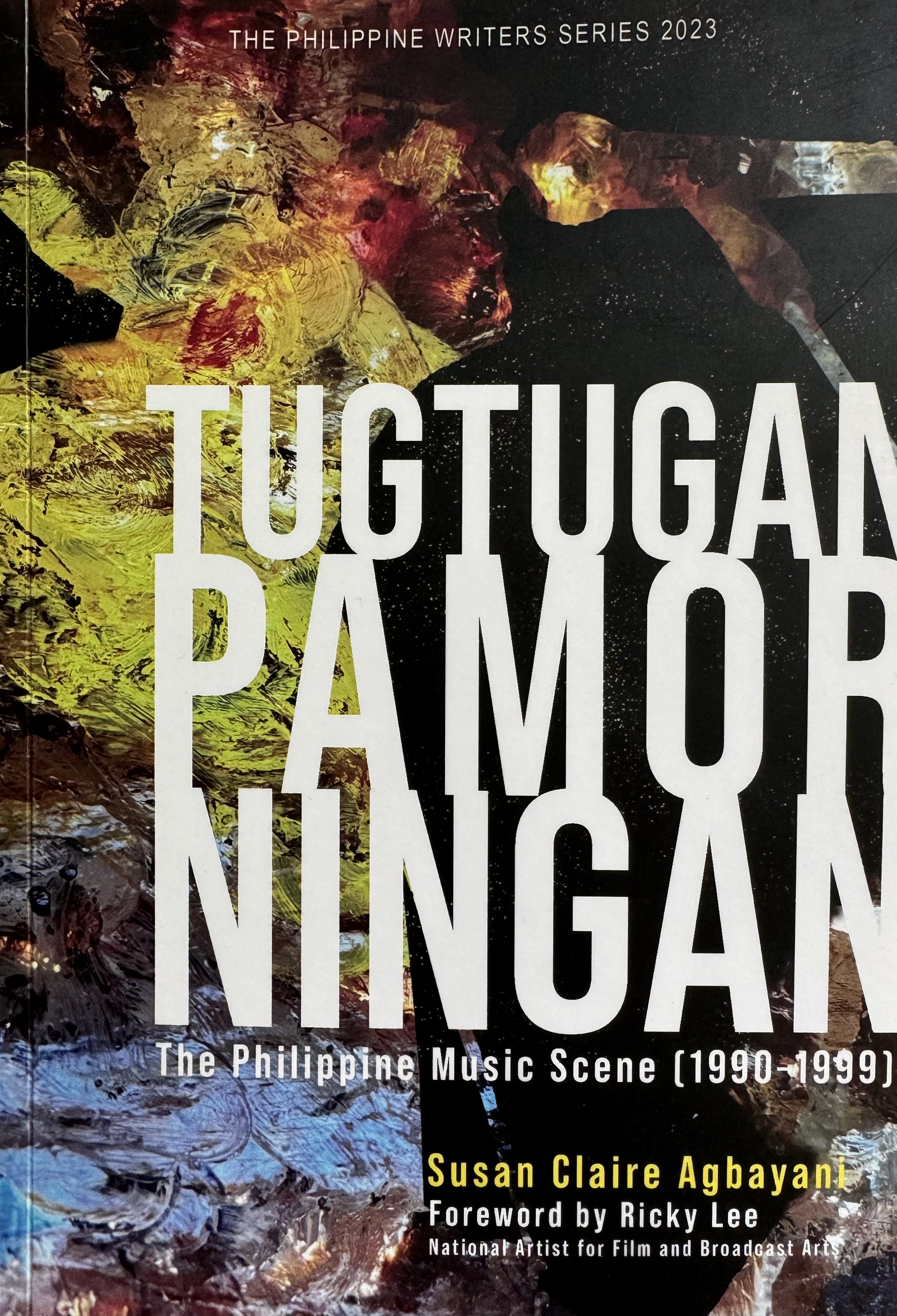
It’s that latter scenario—set against the context of our transition from Cory to FVR to Erap—that’s captured in Susan Claire Agbayani’s landmark Tugtugan Pamorningan: The Philippine Music Scene 1990-1999 (University of the Philippines Press, 2024, part of the Philippine Writers Series of the UP Institute of Creative Writing). An indefatigable cultural journalist, publicist, and sometime concert producer (and also, I must proudly admit, my former student), Claire was among the very few writers who could have undertaken this job (Eric Caruncho, Jessica Zafra, and Pocholo Concepcion, all of whom she cites, would have been the others). 

Comprehensively, the book’s chapters cover bars and concerts, the music scene, personality profiles, duos and trios, pop/jazz/R&B/show bands, alternative/rock bands, the Eraserheads (yes, a chapter all to their own), Mr. and Mss. Saigon, and visiting acts, rounded out by a gallery of period pics.

As a compilation of pieces from Claire’s reportage at that time, the book revives not only the music but also the issues besetting the industry then, such as Sen. Tito Sotto’s wanting to ban the Eraserheads song “Alapaap” for supposedly promoting drug abuse. Priceless vignettes abound, such as that of Basil Valdez singing “Ama Namin” to composer George Canseco’s wife over the phone, three days before she died, and of Ely Buendia telling Nonoy Zuñiga that he had won a singing competition in school with the latter’s “Doon Lang.” We learn about Humanities teacher and all-around performer Edru Abraham’s Lebanese ancestry and how it connects him to world music.

The best scenes, I think, are the saddest ones, such as this piece on a jazz diva:

“She goes around greeting the waiters, then the manager. At last, she sits on a stool, and croons ‘Left Alone,’ the song after which the bar was named. She closes her eyes, closed them more tightly as a couple walks out in the middle of her song. The waiters laugh loudly in the background, occupied with their own concerns. Those who remain inside the bar talk not in whispers. No, they don’t know her. They don’t know Annie Brazil.”

But ultimately it’s the music, the sheer variety and vitality of it, that surges through, so innate to the Filipino and so necessary. If there were an Olympics for music, we’d make the podium in all the categories, and Tugtugan Pamorningan reminds us why. As the title implies, it’s a nightlong festival for us when the music starts. But like night itself, even the Nineties came to an end, with the 2000s bringing in MP3, iTunes, and Spotify, and somehow the smoky, small-bar intimacy that the previous decade connoted gave way to Taylor Swift mega-concerts that people actually flew out to instead of taking a taxi.

I contributed an afterword to the book, so here’s a bit more of what I had to say:

I was a bit too old by the time the ‘90s came along to experience it in the way Claire has so capably and faithfully chronicled in this book, but still young enough to imbibe its energy and its excesses. I was 36 in 1990, finishing my PhD in the States, and when I returned to Manila the following year after five years of being away, I found a radically different scene from the one I’d left just after EDSA. I had a lot to adjust to, and somehow San Miguel beer and the city’s new nightlife seemed to ease those pains, at least until the next morning. 

That was how, despite being too old to know the Eraserheads and their music, I managed to stumble once or twice into Club Dredd, Mayrics, the ‘70s Bistro, and a few other meccas mentioned here, but mostly just out of curiosity. I guess I was looking for something else, and found it on Timog Avenue with my partners-in-crime Charlson Ong and Arnold Azurin, finishing up with some coffee or a beer for the road at Sam’s Diner on Quezon Avenue at 3 am. I wasn’t even a Penguin person—I never thought of myself as being hip or cool—and I preferred hanging out with journos after work in that kebab place on Timog.

That was my life as a barfly—which was also how my newspaper column got that title—and its soundtrack consisted of Basia, Bryan Adams, and “Total Eclipse of the Heart.” I wasn’t much into bands—no one could beat the Beatles—and OPM for me meant APO and Louie Ocampo, whose songs were singable and could make me smile, which I needed a lot. It was a wild time, when I was smoking and drinking and messing around town in my white VW, courting disaster, until one day I found my way home and decided to stay there forever.

That makes the ‘90s sound like some kind of inferno, but now that I think about it, it was the last gasp of innocence before the 2000s and everything we associate with it—9/11, GMA and Erap, the Internet, the iPod, social media, K-pop, tokhang, Trump, the pandemic, the Marcos restoration, and AI—came in. There was a simple-mindedness even to our vices then; truth was truth, fake was fake, and it was easy to tell one from the other. It was rough and raw in many ways—even our 14.4K modems screeched like cats in heat when they connected—but we still got wide-eyed about the possibility of extra-terrestial menace in The X-Files, and we may even have believed that FVR’s “Philippines 2000” was going to be a better place even as we got worried sick over what Y2K would bring, so there remained a tender spot of credulity in us.

That’s all gone now, like Jacqui Magno’s voice, replaced by CGIs, deep fakes, and other synthetics produced by FaceMagic and ChatGPT. 

I can’t honestly say that I miss the ‘90s, and I feel much relieved to have survived them, but there’d be a huge hole in my life—and in the nation’s—if they didn’t happen. What’s in that hole is what’s in the music Claire writes about—and the music often gets it better than even we writers can.

Qwertyman No. 104: The Knowing Is in the Living

Qwertyman for Monday, July 29, 2024

(This is the full text of the shortened version published in my column for today of my commencement address to the graduating class of the University of the Philippines Diliman Extension Program in Olongapo and Pampanga on July 26, 2024.)

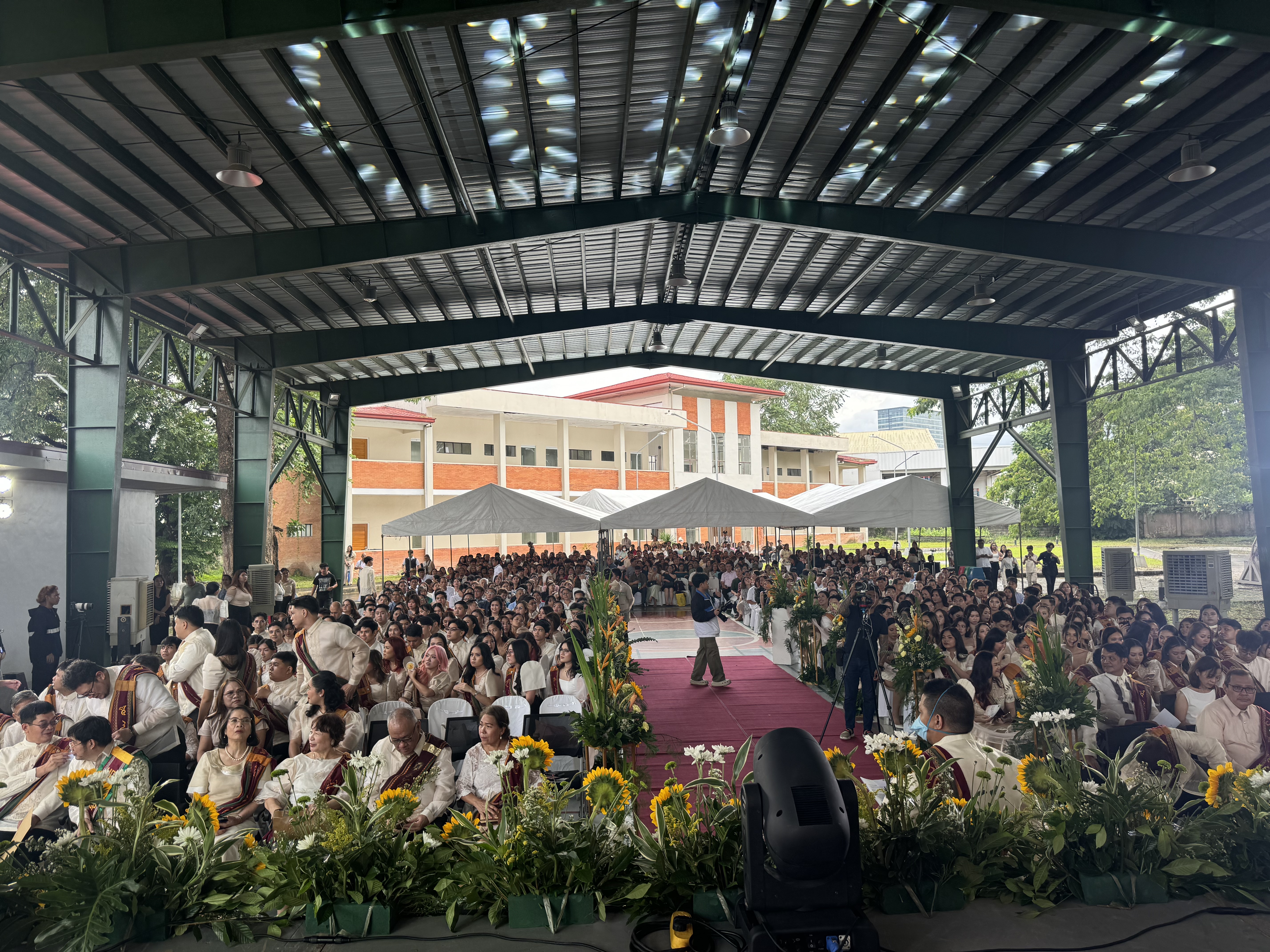
A VERY pleasant afternoon, and my warmest congratulations first of all to our graduates and their parents today. Thank you for inviting me to come over today to share some of this old man’s thoughts with you.

I have given commencement speeches at UP graduations before—twice at UP Baguio, once at the UPD College of Science, and then at UPM’s College of Medicine—so you would think that I would take this assignment in stride and just repeat what I told the others, but no. 

This is probably the smallest and most intimate of all UP graduations I have attended, for which reason I thought I would do something different, something special, and write something new, this short talk I’ve titled “The Knowing Is in the Living.”

Now, as nice as our young graduates are, they’re probably thinking, “Oh, no, they invited another of those tiresome old Boomers who’ll be telling us things that we already have coming out of our ears. Things like, how hard and difficult life was for them, walking to school in the sun or taking notes by hand and we have it easy, so we should stop bitching about slow wi-fi and weak aircon and toughen up. 

“He’ll talk about how socially aware and politically committed they were, how they cut classes to march in the streets and fight the dictatorship, going underground, getting caught and tortured in martial-law prison while watching friends die in heroic battles with fascist forces—while we argue about the characters in House of the Dragon over cappuccino at Starbucks. 

“He’ll wax nostalgic about fountain pens and typewriters, index cards and pencil sharpeners, about inhaling the dust in the library stacks and paying fines for overdue books, while we’ve become overly dependent on Google and that new monster, AI, which can do in seconds what took him weeks to produce. He’ll talk about integrity like he invented the word, about refusing to compromise no matter what. 

“He’ll tell us to learn to live in monastic simplicity, in denial of today’s comforts and conveniences and the allure of the coming iPhone 16. In other words, he’ll do his best to make us feel like we were born in the wrong decade, that we missed out on the great defining and character-building struggles of the past—World War II, martial law, EDSA (and no, Covid doesn’t count)—and that we’re lost souls floating in some kind of existential limbo, with little substance and without purpose.”

Well—did I tell you any of that? Do I look like the kind of commencement speaker who would inflict his wisdom—otherwise known as pain and anguish—on his captive audience for the next half-hour, in revenge for all the predictable and long-winded speeches he himself had to listen to all his life?

Before you smile too broadly, let me remind you that I’m still in command of this podium and could do just that, just for the fun of it—but I probably won’t. And I won’t, because the opportunity is just too great and too inviting to be different, to say something you will actually remember and maybe even cherish for the rest of your life.

Ordinarily, on an occasion like this, I would have spoken to you about the topics I usually take up in my columns for the Star—about how important it is to match intelligence with values, about the need to seek out the truth in this age of fake news and AI, about how deftly but resolutely we should navigate the murky political waters ahead of us; in other words, about how we must develop a strong and clear moral core, whatever profession we choose, and live for the good of others.

But again that’s the kind of message that AI itself could have written, fed with the prompt “Write me a graduation speech for the University of the Philippines.”

I will trust that you already know these things. I will not speak about your degrees and what they will mean to the nation, which surely will be substantial. I will not even say how important UP is to the Filipino people; you already knew that when you took the UPCAT, which was why you took the UPCAT.

Instead, today I will talk to you about time—yes, that fourth dimension which, according to science and philosophy, is really a function or a measure of change. Without change, there is no time. 

Why time? Because it’s been on my mind a lot lately. Last January, I celebrated my 70th birthday and my 50thwedding anniversary with my wife June. I was deeply grateful for those milestones, which I honestly never expected to reach, having been a young activist who went to martial-law prison and who saw many of his friends die too soon. So for me, anything beyond 20 was what you would call in music a “grace note,” an unexpected bonus that has just kept on giving and giving. 

To be sure, it hasn’t always been an easy life, and I won’t bother you with the details, but I can tell you what a huge surprise and relief it is to be here, alive and reasonably well, at 70. I am now older than my professors were when I was your age, and the reversal is both fascinating and, for you on the other end of it now, a mystery yet to be written.

For most of us, life has a fairly predictable plot, and it goes this way:

In your twenties you will want to know who you are, what you stand for. You will choose a course and a profession, get a job, dress up like an adult.

In your thirties you will think more seriously about companionship, maybe marriage, maybe children. You will want your heart to make up its dizzy mind, and settle on someone, or get used to being alone.

In your forties you will fret about finances, your position in your company, maybe have an affair, lose your faith, and then again if you’re lucky maybe gain everything back.

In your fifties you will be expert at many things, sit on boards and manage this and that. You will begin to think about words like “stability,” “reputation,” and “legacy.”

In your sixties your steps will become shorter and slower, and you will want comfort most of all—a soft bed, an easy chair, good food and wine—and indulge your bucket list.

In your seventies and eighties, you will just want and fight to be alive.

In your nineties, with most of your friends gone, and with your eyesight and hearing going, you may well just want to be dead.

That’s the basic plot—but like time itself, it’s not a fixed one. Time is strangely flexible.

In my writing classes, I often say that a well-written story, even if it’s twenty pages long, feels like it ended too swiftly, but a badly written one, no matter how short, feels like forever. And we all know but don’t understand why happiness always seems to be fleeting, while grief and pain endure. That’s how time is bent by whatever we fill it up with—how it holds meaning, or loses it.

How will you fill up that space with change, and make your time worthwhile? What kind of story will your life be? 


As one of my book titles go, “The Knowing Is in the Writing.” By this I mean that we writers think that we know our characters from the beginning—but in fact, we only really know them as we write about them, and subject them to the kind of intense pressure that life will bring to bear on each one of you.

Let’s say, for example, that Tony is a young lawyer, smart and idealistic, determined to seek justice and freedom for his people, destined for professional success. He works for an NGO for not much money. He is engaged to Marie, a PGH nurse who’s also supporting her family, and who has been offered a job in the UK. Tony doesn’t want Marie to go, because she will be away for many years and he wants them to marry, but he can’t support them both and their families as well on his salary. Tony is then recruited by a big real estate firm to work in its legal division, where he will help in the removal of squatters from company property and the conversion of farms into subdivisions. What will Tony do?

How well do we know Tony, until he actually makes a moral choice that could possibly run against the character we thought we knew?

In fiction and in playwriting, I often point out to my students that characters become most interesting when they go out of character—not whimsically, but out of dramatic necessity and inevitability, the kind of tortured inner logic that drives us to do things we never thought we could, in our imagination of ourselves as good people: to lie, to cheat, to steal, to support extrajudicial killing, to laugh at rape jokes, and to think that someone who habitually lies and brings out the worst in people can be fit to be president. But conversely, that turn of character can also lead us to perform amazing acts of nobility and charity, of heroism.

In your case, the knowing will be in the living. You think you know yourself today, what you want, where you want to go, and how to get there—and it’s important that even now, you have this game plan and this compass to lead you forward. But you will never know and discover your true self until your most vulnerable moment, at which your soul will be revealed in utter transparency. 

For some of us, the sad truth is that life will be short. But that’s no reason to say it will be worth little, because you can still make it meaningful and memorable. Remember Achilles, who in the Iliad was given a choice of living a short but glorious life, as opposed to a long but boring one; he chose the former, and thereby became a legend. And there was the brilliant modernist writer Djuna Barnes, who lived to be 90. Taking off from that famous quotation from Thomas Hobbes, she said that “For others, life can be nasty, brutish, and short. For me, it has simply been nasty and brutish.”

But again, how your lives turn out will be your story to write, although you will have many co-authors, including the Divine. Some say life is predestined, which would make for bad fiction; I prefer to believe in at least the illusion of free will, of human agency, because then we and our fictional characters have moral responsibility; and in such stories of inner struggle, there will be lessons to be learned, like the Greeks learned from the plays they watched over and over again.

Life will be a challenge, as soon as you step out of this campus into the world at large. But what I can tell you is that, with grit and a little luck, you will survive. To do that, you may have to learn to forgive yourself for your mistakes, to change your mind, and to compromise if you must, because the ideal you will always be a work in progress. Whoever sits in Malacañang or the White House, you can still find ways to serve the people, for which you will and must survive. We survived martial law; you survived the pandemic. Surely we can give purpose to our good fortune. In my case, I have found that purpose in my writing, in my search for truth and beauty, and in my more modest and focused commitments to my family and community. 

So, again, how shall we fill up the time ahead of us? Of course we’re running on different clocks or even calendars. If your life is at brunch, mine has just been called to dinner. I don’t know about you, but I will have that dinner with my wife on the beach, with a glass of wine, imagining what it must be like over the deepening horizon.

That horizon will always be ahead of us. We think we are forging ahead into the future, but in fact, with every breath we take, we are becoming part of the past, of what happened, of what was. When I hold and look at the silly old things I collect—three-hundred year-old books, and old fountain pens and typewriters from when Jose Rizal was still alive—I am comforted by the certainty that the past survives in artifacts and memories, so that it is important that we leave images and signatures that will bring smiles to those who see them.

There is an afterlife. In the very least, it is the life of those we leave behind. You will now be part of my afterlife. Through this speech, through my words, I will live in you.

Let me end with a quote from a favorite source—me—and share something that I have said to every UP graduating class I have been honored to address:

To be a UP student, faculty member, and alumnus is to be burdened but also ennobled by a unique mission—not just the mission of serving the people, which is in itself not unique, and which is also reflected, for example, in the Atenean concept of being a “man for others.” Rather, to my mind, our mission is to lead and to be led by reason—by independent, scientific, and secular reason, rather than by politicians, priests, shamans, bankers, or generals. 

You are UP because you can think and speak for yourselves, by your own wits and on your own two feet, and you can do so no matter what the rest of the people in the room may be thinking. You are UP because no one can tell you to shut up, if you have something sensible and vital to say. You are UP because you dread not the poverty of material comforts but the poverty of the mind. And you are UP because you care about something as abstract and sometimes as treacherous as the idea of “nation”, even if it kills you.

Sometimes, long after UP, we forget these things and become just like everybody else; I certainly have. Even so, I suspect that that forgetfulness is laced with guilt—the guilt of knowing that you were, and could yet become, somebody better. And you cannot even argue that you did not know, because today, I just told you so.

Penman No. 464: A Fantasy Memoir

Penman for Sunday, July 7, 2024

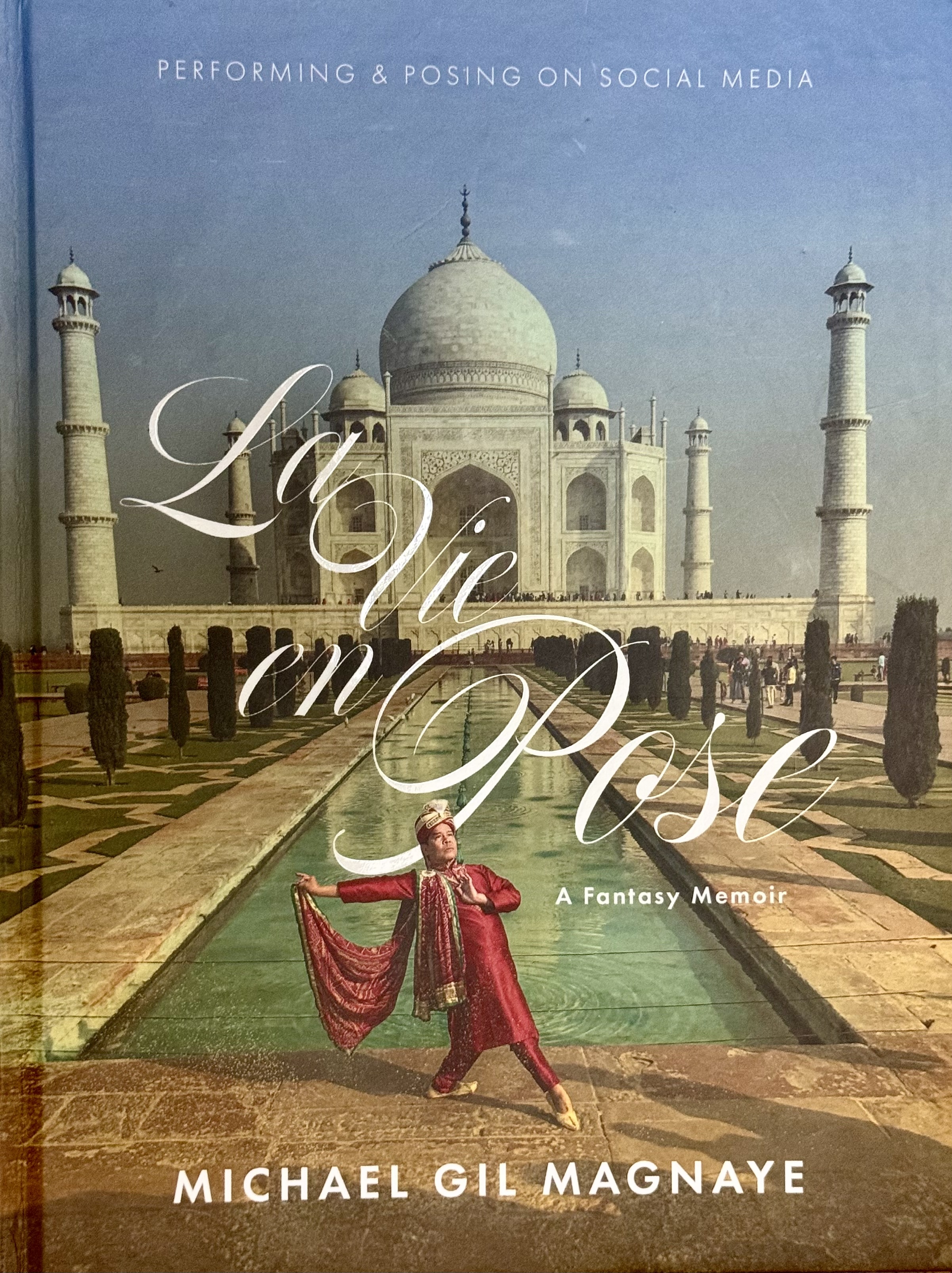
THE AUTHOR calls his book a “fantasy memoir,” and if it’s a genre you’re not familiar with, you wouldn’t be alone. Or maybe that’s just because you’re a dour and straight septuagenarian like me who doesn’t go out too much, watches true-crime shows to relax, and presses his pants and shines his shoes because, well, that’s the way it should be. I later googled the term, just to see what’s out there, and much to my surprise, it does exist—a genre defined by “imagination, escapism, and dreams,” with the stipulation that these fantasies, or products of the mind, are just as valid as memory in recreating one’s life.

Thankfully, from the cover onward, Michael Gil Magnaye’s La Vie en Pose makes it purpose clear to the most casual and non-literary of readers: to have fun—while raising some very serious questions on the side about who and what we are (or pretend to be), what poses we ourselves assume, consciously or not, in our everyday lives, and how our identities are constructed by something so simple as what we wear.

La Vie en Pose is one of those rare books one can truly call “inspired,” resulting from the kind of half-crazy “What if?” lightbulb moment that strikes you over your tenth bottle of beer at 3 in the morning. Unlike many such flashes, this one stayed with Gil, took firmer shape, and turned into a virtual obsession—a first book to be completed by his 60th birthday, not just any book, not one of dry prose between the covers, but one certain to make a personal statement for the ages.

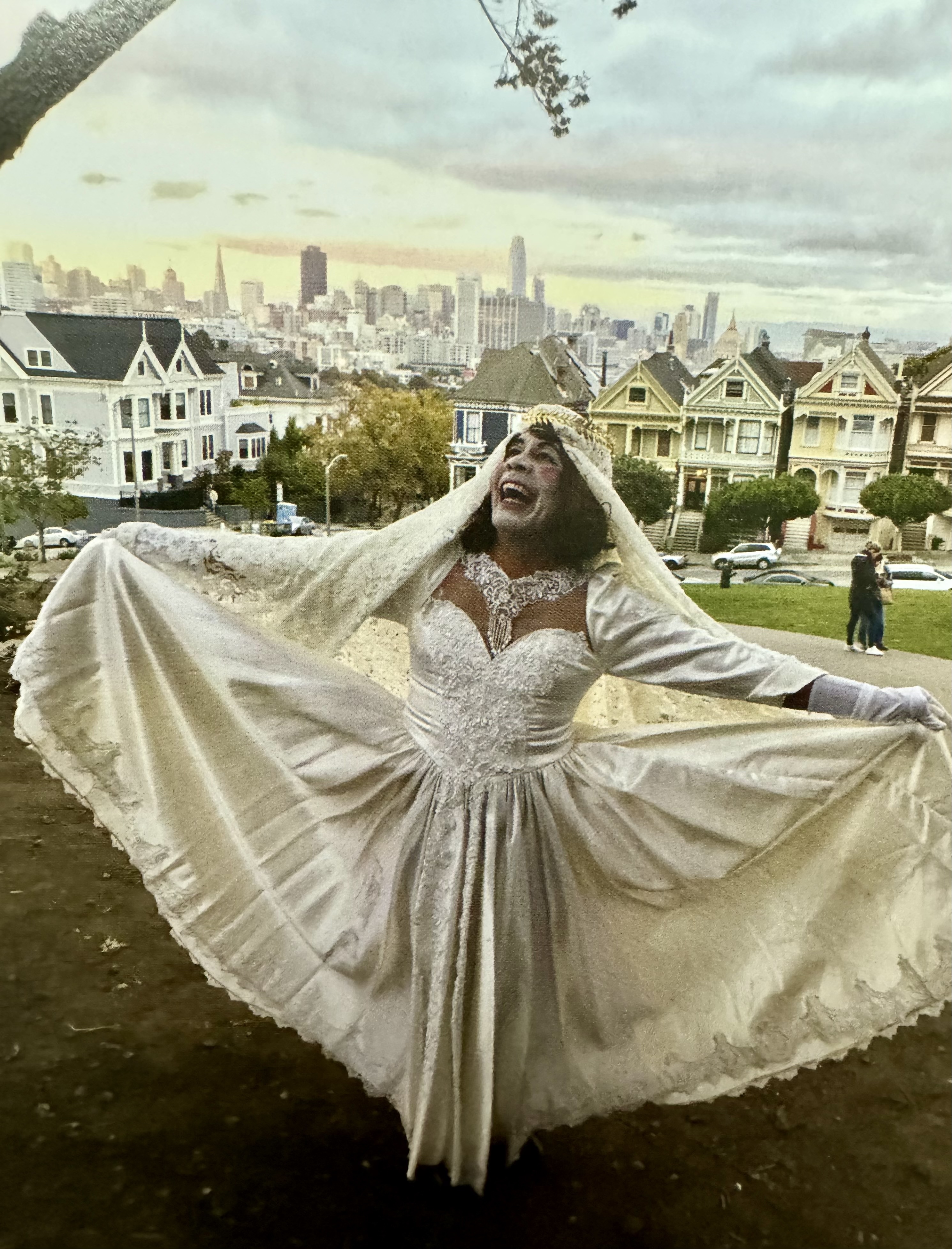
Magnaye, who works as an advisor to an international NGO, describes the book as “a fantasy memoir told in a hundred photographs of the author in costume, striking a pose around the world. Designed and photographed over a decade, these vignettes depict media celebrities, politicians, literary characters and wholly fictitious figures drawn from Magnaye’s fertile imagination. The collection offers satirical, often hilarious commentary on noteworthy personalities in pop culture, politics and history, from Game of Thrones to Bridgerton, from Jackie Onassis to Ruth Bader Ginsburg.”

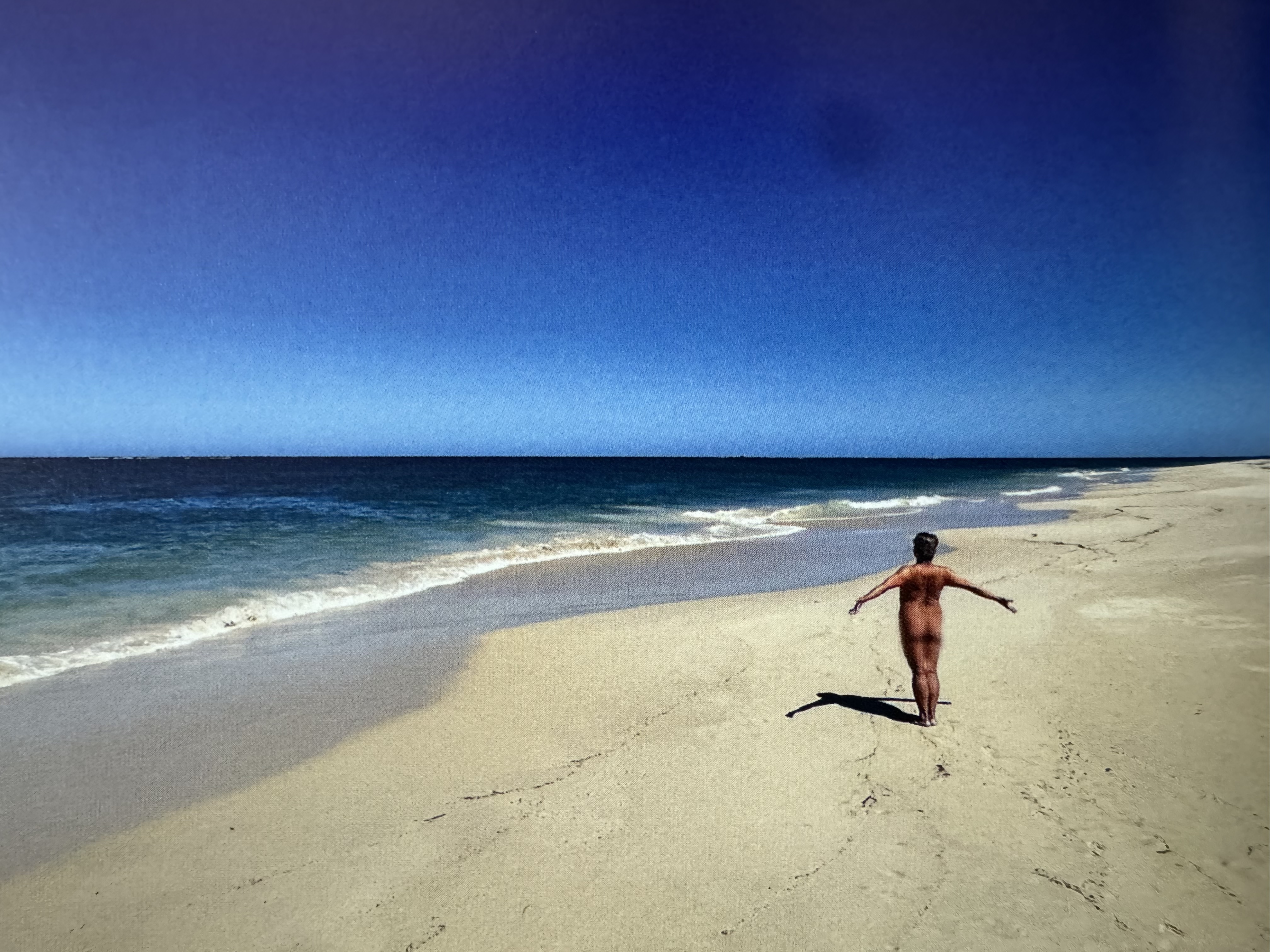
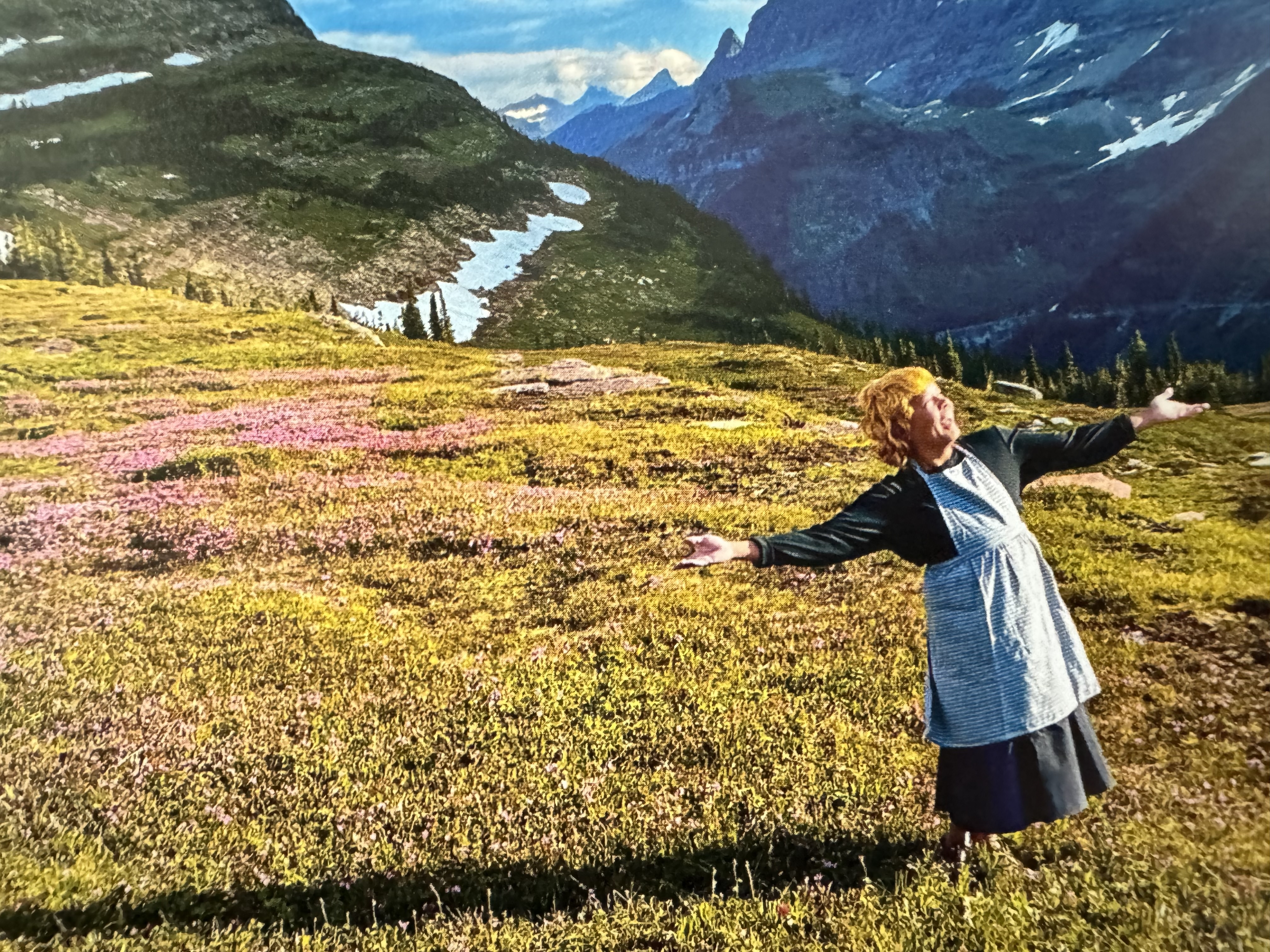
Divided into eight chapters and edited by the celebrated Fil-Am writer Marivi Soliven, the book takes Gil around the world (none of this is AI—the photography took many years and plane flights to complete), posing in various locales and contexts, often in costume, to mimic or to pay homage to familiar figures and situations. The pop-culture setups will likely elicit the most laughs and smiles—Tina Turner, Maria von Trapp, and of course Barbie all get their comeuppance—and the UP Oblation poses (thankfully just backsides) show the malayong lupain that our iskolars ng bayan have reached (Gil studied and taught Humanities in UP before going to Stanford for his master’s). The levity aside, he strikes thoughtful, almost architectural, poses against spare backdrops. He draws his husband Roy, a normally reticent software engineer, into take-offs on couples (Ari and Jackie, Ennis and Jack). The effect is both riotous and reflective, a visual essay on how pop and political culture have overwhelmed us, but also how we have appropriated and domesticated them for our own purposes, if only to say, “Hey, I can be as good that!”

The poet and queer theorist J. Neil Garcia explains it better in this note he posted online about the 30thanniversary of the landmark Ladlad anthology he co-edited with Danton Remoto: “Queer creativity is itself an integral component of the equality message, and not simply a means to an end. Since the freedom of the imagination is perhaps where all freedom begins, it is clear that giving the queer artist the power or the ability to create their own texts and art works needs to be seen as a vital objective of the equality movement, one of whose primary interests must be in securing this imaginative and/or cognitive ability above all. Hence, we need to insist on the truth that queer creativity isn’t simply a tool to promote the equality message and other activist agendas; rather, queer creativity itself is part of the agenda—is part of the equality message itself (and so, queer creativity is not just a means to an end; quite crucially, as the best evidence and enactment we have of individual and collective agency, even against the harshest of odds, it is an end, in itself).”

For Gil—whom I was friends with back when he still had a girlfriend and confronting his sexuality—the book is more than a personal celebration (he launched it in UP last June 23 to mark his 60th birthday); it’s also an assertion of his rights as a queer (the preferred term these days to “gay”) person—and by extension, of all other LGBTQ+ people as well—to express themselves creatively. In his introduction, he notes that “This book is born at a fraught moment in gender politics. Some states in the US have passed legislation that attacks transgender youth for their chosen wardrobe or preferred pronouns. A drag artist in the Philippines has been jailed for performing an irreverent dance interpretation of a Catholic hymn. Such adverse events would seem to suggest that cross-dressing is an act of subversion. I would argue that cross-dressing and mimicry are strategies that drag queens, drag kings, non-binary performers, and gender benders employ to resist, challenge, navigate, and extricate themselves from systems imposed by traditional constructs. And it’s a lot of fun.”

La Vie en Pose most surely is. Copies might still be available at the UP Center for Women’s and Gender Studies.

Penman No. 462: Exit This Gatekeeper

Penman for May 5, 2024


INDULGE ME this bit of self-reflection, which I suppose will also speak for many writers of my generation. After much thought, I have decided that I will no longer be judging literary competitions, having just completed my last one.

My first reason is that I’m 70, a good age at which to pause and plan out the rest of my life, however long or short that may be. (The life expectancy of a Filipino male today is 72, although actuarial science seems to think that if you’ve come this far, you’ll likely hang around for another ten years.)

There are just a few things I want to devote that time to—primarily, to write my own books (not books for others, so I’m also announcing that upon completion of my current commitments, I will desist from seeking or accepting book commissions—unless I fall into grave and sudden need.) I want to travel more with Beng and Demi while we can, look after Buboy’s growth, play poker all night twice a week, and enjoy my strange hobbies. I’ll teach for as long as I can—I’m enjoying my undergraduate class right now—but will limit my participation in workshops, conferences, festivals, seminars, etc. to the few I am committed to, like the UP Writers Workshop. 

Judging competitions doesn’t seem that much work (unless you’re a judge looking at over 100 stories) and of course it’s a signal honor to be asked to help pick the best of new writing. It remains a tremendous responsibility and privilege to be thankful for. You get to go up a stage, say some nice things about literature and writers, receive a modest fee, and feel somewhat useful and relevant. That’s all well and good.

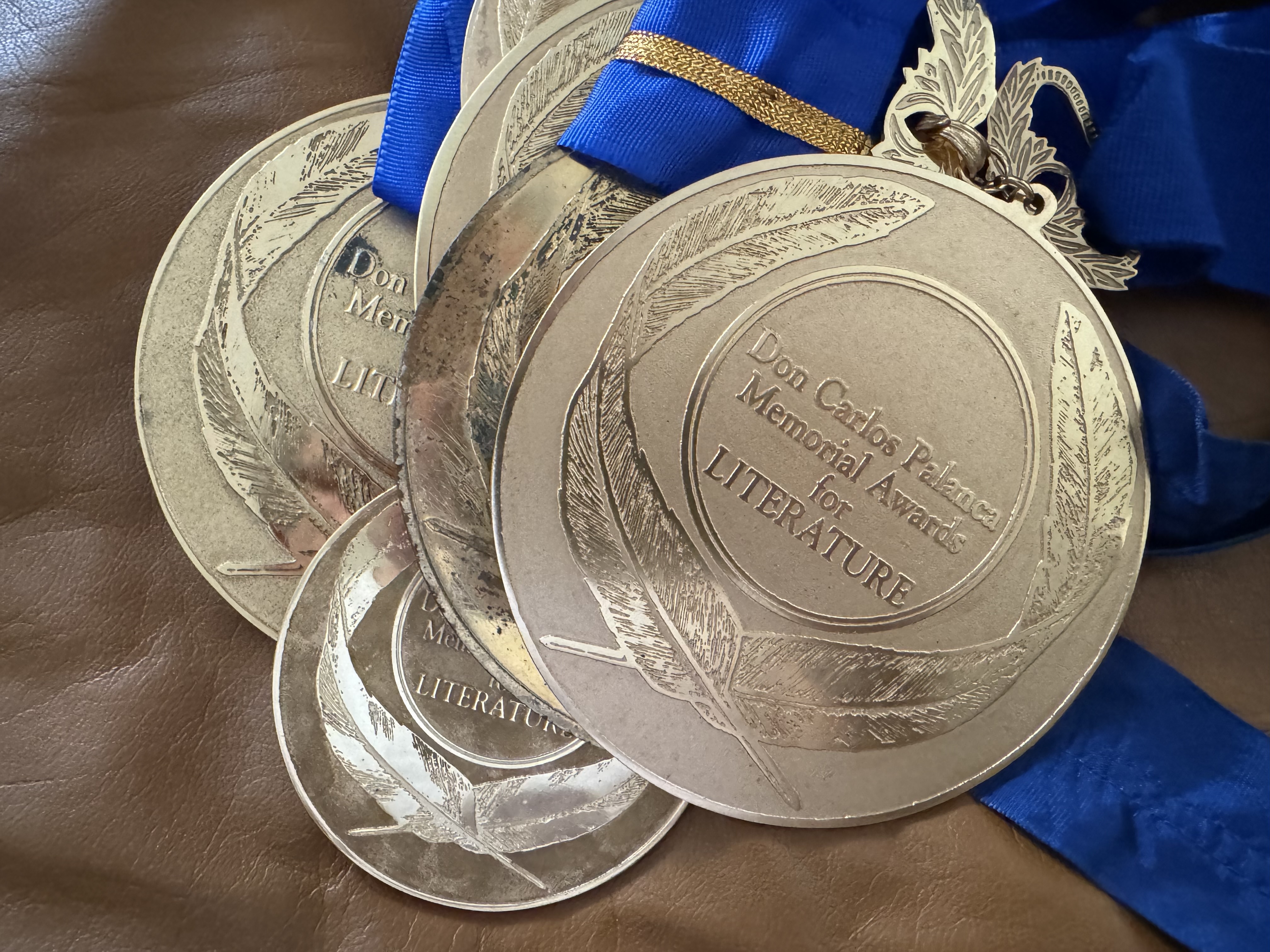
When I transitioned from being an active literary combatant (that’s how many of us felt back then, with the likes of Rene Villanueva and Ed Maranan breathing down your neck) to a judge after getting my Palanca Hall of Fame plaque in 2000—I never joined a contest after that—I felt that I had turned a corner and found a kind of inner peace. It wasn’t that I had nothing more to prove; one illusion that local literary competitions encourage in the young is that winning them is the be-all and end-all of writing, when all they are is a formal pat on the back to get you started. The true challenge for the young or beginning writer is not to win prizes but to write and publish books that will be read and appreciated by others, that hopefully will matter, that will outlive you, that for better or worse you will be remembered for and remembered by; publication is the ultimate prize, readership the ultimate validation. So I went on to write books, teach, have fun, and discover wonderful things outside of writing and literature (yes, there are such bright and shiny marvels). 

Judging competitions seemed to be a good way of keeping a foot in  the door, so I’ve been doing a lot of that, also as a kind of payback for all the people before me who took their time to recognize and reward my efforts with a prize. At some point, I realized that the foremost reason I kept joining and judging the Palancas was because I wanted to be there on Awards Night, to enjoy the company of writers I admired (the piano-playing Greg Brillantes being one of them), and to feel good about being a writer on the one night of the year that they took center stage. The great luck of Hall of Famers is that they can now attend all the Awards Nights they want without having to work for it—so I won’t.

The most important reason is that I’ve already read enough, perhaps too much, for far too long, and it’s no longer healthy for me or for those I may be judging. Our literary community certainly doesn’t lack for younger people who can do this job as well as if not better than I can.  I’m still and always delighted to see brilliant new work emerge from the pile, but it’s getting harder—more laborious, more fatiguing, and ultimately more disheartening to be asking, “ls this the best they can do? Don’t people know what a good story is anymore?” Or have I become the problem?

The word “gatekeeping” has been going around much lately, evoking the image of a surly senior (a Boomer, for sure), out of touch and out of step, insisting that his students and young writers should write like him or like Hemingway, playing favorites, and slamming the door shut on entire genres he doesn’t like or understand. That sounds a lot like me, except that I’ve never expected or driven my students to write like me; they come to my classes with their own experiences, their own material, their own talents and insights, and  the best of them have written stories that are nothing like mine, except perhaps that they’re realist, because that’s the kind of fiction I best know and teach. I’ve always been open to other forms and genres, even if I hardly write in them (I think I’ve tried everything at least once), because the world would be a terribly boring place if we all wrote about everything the same way. Think of much of the political rhetoric going around these days, no matter which flag is being waved: labels and slogans—the shorthand of groupthink—have replaced and diminished personal narrative and reasoning. (As if people will care when you die if you were “correct” all the time; they will ask if you were good and kind.) This is also why I have long resigned from anything resembling organized ideology or religion, whose avatars often seem so, so sure of themselves and of what they’re saying to the point of arrogance. 

I value the doubt and ambiguity, the constant self-questioning (what can we be capable of, despite ourselves?) that are fiction’s domain. Fiction humbles us by exposing our infirmities, but it also exalts us by offering the possibility of redemption.

In the end, what I have always looked for in a prizewinning story, aside from being exceptionally well-written (smooth and stylish when it needs to be, tough and visceral when it needs to be) is that it be moving and memorable. It should burn a hole and leave a scar in my heart, my guts, and my memory. I can enjoy clever and inventive stories as much as anyone else, but if it’s a passing amusement, like a joke, it won’t leave much behind. Some of the most memorable stories I’ve  come across weren’t even what you’d call grand in a sonorous or elaborate way. They took place in small places within relatively short periods of time, and involved ordinary people in situations that brought out their extraordinariness (by which I don’t mean some blinding heroism, but a part of them, dark or light, they didn’t even know was there).

Too many of the thousands of stories I’ve had to read over the years have been poorly written, dull, and forgettable. That’s not even a complaint, just par for the course for any kind of open literary competition here or anywhere else. People can’t be blamed for hoping and trying with their graceless prose, and I’m sure that many have nursed precious ambitions of being published and read. Not to be snarky, but the problem here really isn’t so much a lack of writing talent than of self-awareness, the kind of honesty and humility that will tell you, in your heart of hearts, that you will never be a nuclear scientist or an F-1 driver. Unfortunately, literary self-awareness can happen only when one has a sense of what truly good writing is. 

But could it possible that I myself have fallen so far behind that I can no longer recognize the new “good,” or apply the “new standards,” whatever they may be? Could my notions of “good fiction,” however liberally applied, be standing in way of some young genius’ debut?

I’ll be holding on to those notions, but now only for myself. I’m not urging my fellow seniors to do the same; we all operate on different clocks and their patience could be longer than mine. Some might say “Good riddance” and the feeling could be mutual, but I depart this task with a light and happy heart, looking forward to producing new work that will be judged by others.

Email me at jose@dalisay.ph and visit my blog at www.penmanila.ph.

Qwertyman No. 85: Epilogue to a Novel

Qwertyman for Monday, March 18, 2024

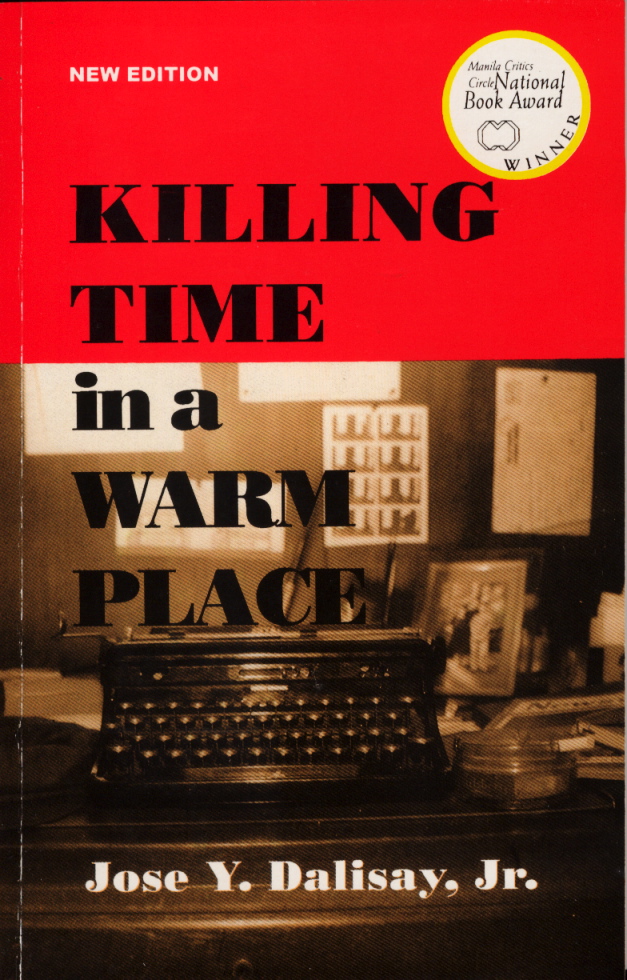
IT WAS in 1986, shortly after EDSA and my arrival in the US for my graduate studies, that I began thinking about what would eventually become my master’s thesis and my first novel, Killing Time in a Warm Place. It was published by Anvil in 1992 when I came home to resume teaching after completing my PhD. 

For those who’ve never heard of it, the novel is a semi-autobiographical account of coming of age during the Marcos years, from the point of view of a Filipino who makes the traditional journey from island to metropolis to the world at large, becoming, in the process, a kind of political chameleon. 

I had sent the first draft directly to several US publishers—my first try at getting a book published abroad—and one of them, Alfred Knopf, responded. They were interested, they said, but they needed some revisions. I knew very little about the book publishing industry then; I had no agent, wasn’t sure what lay ahead, and was in a hurry to see my book out, so I passed on Knopf—which turned out to be a titan in literary publishing—and went with Anvil, which had barely just opened.

I haven’t regretted that decision, although the Knopf deal, had it pushed through, would have been a tremendous break, not just for myself but for Philippine literature as a whole. I could understand that after EDSA, US publishing was hungry for books from and about the Philippines, so that opportunity was there, but I was also impatient to be read as a novelist by my fellow Filipinos, after having written short stories and plays. 

Anvil published the book in many printings and editions over the next two decades, as it got on the syllabi of college teachers who were looking for a novel in English on martial law, alongside Lualhati Bautista’s iconic Dekada 70. This has been my greatest reward and satisfaction from this book—knowing that somehow, it helped some of my countrymen understand what they went through.

It took a while for the novel to gain some traction overseas. In 2010, it was published in the US by Schaffner Press in a dual edition with my second novel, Soledad’s Sister. In 2012, it was translated into Spanish by Maria Alcaraz and published in Barcelona by Libros del Asteroide under the title Pasando el rato en un pais calido.

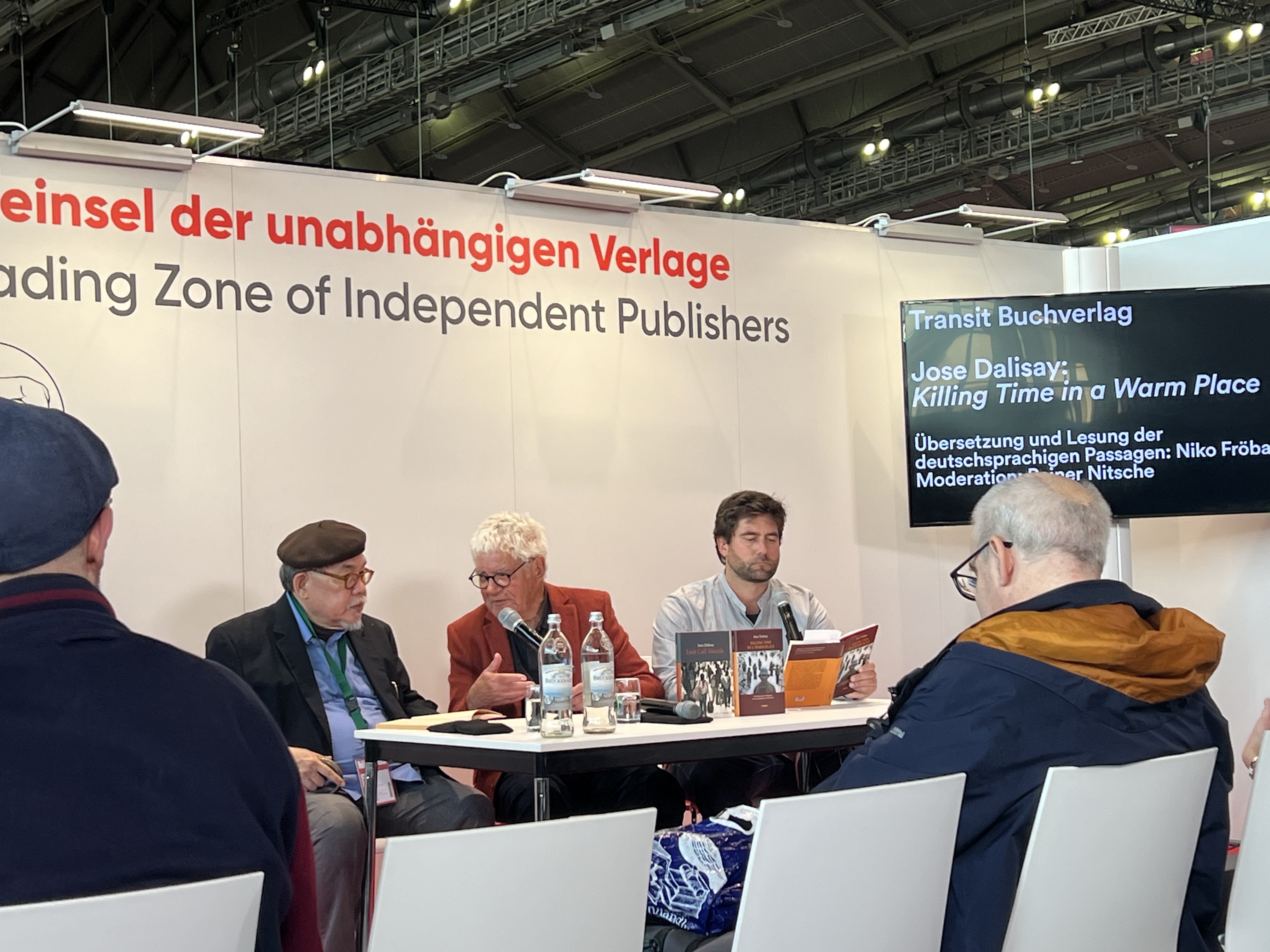
A few months ago, I received the happy news from my publisher Anvil that Killing Time was being picked up by the German publisher of Soledad’s Sister, which had apparently been doing well in the German market. So now the book is being translated into German, hopefully for a launch by Transit Verlag in time for the Frankfurt Book Fair this October, leading up to our big Frankfurt Guest of Honor year in 2025.

But I didn’t write this column just to tell you about the story of a book—rather, I wanted to say something about the story of its story.

In a message to Anvil a few days ago, my German publisher requested that I write a short epilogue to the novel, given that it’s been more than 30 years since it first came out, and that many things have happened since to the world and the Philippines—the Internet, Trump, and fake news, among others. 

So I sat down and wrote the short piece below, which I’m sharing with you since it’s highly unlikely that you’ll come across, or understand, the German translation of this epilogue if and when the new edition comes out. Here goes:

I began writing this novel in 1986, shortly after the downfall of the Marcos regime. That happened because of a massive uprising in Manila’s streets that made headlines and became a kind of model for peaceful anti-authoritarian movements worldwide. I proudly took part in that revolt, and felt the euphoria of liberation after more than a decade of martial law. It was a moment I would often return to and savor as the Iron Curtain fell and as various and largely non-violent revolutions took place elsewhere, including the Arab Spring.

I thought then that the best thing I could do was to write a novel that would try and explain how and why people fell under the spell of a dictatorship, as they did under Nazi Germany—not sparing myself, having been complicit in its later actions as an employee of the regime. I wrote it—in English—in America, mainly to fulfill my graduate school requirements, but also to celebrate our hard-won victory and share the good news with the world.

Almost four decades later, the seemingly unthinkable has happened: the right is back in power, not only in the Philippines but in many places we had thought to be reformed democracies. The optimism sweeping the planet toward the end of the 20th century has given way to a darkening horizon, a hardening of hearts, a closing of minds. Our most basic freedoms and values are under stiff and unrelenting assault, from forces we now realize had never really been vanquished but had merely been lying in wait, biding their time, seeking an opportunity for revival amidst the excesses of late capitalism.

And once again I am hearing the siren song of despotism, and see the eyes of people glazing over in the desperate desire for quick relief from their troubles, for quick salvation. I hear the march of boots, to which many young citizens—their ears plugged by loud music—seem indifferent. Even among many of their elders is a renascent yearning for the simple discipline of strongman rule.

I see all these and I wonder if I should write a sequel, an update for the new century, but what would be the point of repetition? My novel was supposed to be about the past. Why is it so suddenly pertinent again?

Penman No. 460: The Fil-Canadians Speak

Penman for Sunday, March 10, 2024

WE’VE BECOME quite familiar by now with the writings of our Filipino-American brethren across the Pacific, thanks to the success of such breakthrough works as Jessica Hagedorn’s Dogeaters, Ninotchka Rosca’s State of War, R. Zamora Linmark’s Rolling the R’s, Marivi Soliven’s Mango Bride, and Gina Apostol’s Insurrecto, and to the bridging efforts of such literary stalwarts as Luis Francia, Alfred Yuson, and Cecilia Manguerra Brainard. Of course, they had many antecedents, going back to at least Carlos Bulosan, followed by Jose Garcia Villa, Bienvenido Santos, NVM Gonzalez, and Alberto Florentino, among many other expatriates. 

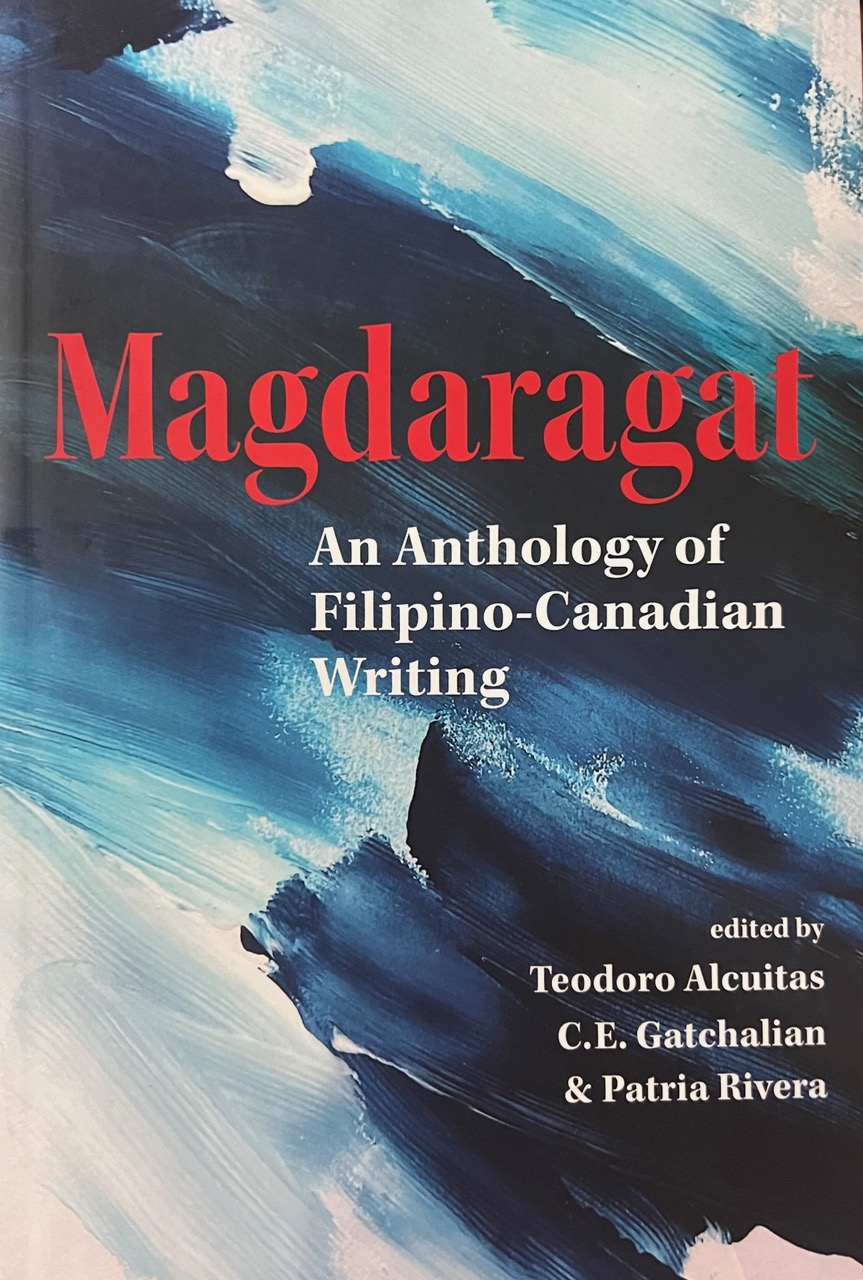
But hardly a whisper has been heard from our Filipino-Canadian cousins, as if their experience—whatever it’s been—were simply an extension or an echo of their southern compatriots, with no distinguishing qualities. There’s a reason for that, which we’ll get into shortly, but first let me announce, with both joy and relief, that the long silence is over. Filipino-Canadian literature is introducing itself to the world—and to us in particular—with the publication of the landmark Magdaragat: An Anthology of Filipino-Canadian Writing (Toronto: Cormorant, 2023), edited by Teodoro Alcuitas, C. E. Gatchalian, and Patria Rivera.

I was first alerted to this hefty 390-page volume by one of the editors, Patty Rivera, an old friend from way back who developed into a fine, prizewinning poet when she, her husband Joe, and their family migrated to Canada decades ago. Arriving in Canada in late July 1987, Patty recalls that moment pregnant with both hope and not a little dread that every FOB immigrant seems fated to step into: 

“The air steamed with purpose when summer meant another life to live. From every corner, a mirror to reflect on. Outside our window, the children’s park, though trees, appeared bruised from the dark slits on the windowpanes. Thorny Vineway. Did our new street name augur of tomorrows yet to come? Would our life in this new country lead to a path laid with thorns? We were young at the time, and everything looked promising. We were alive in this new country and were no longer afraid, the years in the future distant and to be savored. We were ready to be every person we chose or wanted to be.”

Today there are nearly one million Filipinos in Canada, which itself is inching close to 40 million. Some years ago, Filipinos edged out the Chinese as the largest group of immigrants in Canada. Many are highly educated, and many work in health care, leading perhaps to a kind of stereotyping of the Fil-Can as caregiver. To be fair, that’s probably how we home-based Pinoys ourselves imagine our Canuck brethren to be, followed inevitably by “Now why did they go to Canada and not America?”

Magdaragat’s editors try to answer that: “It’s the American Dream, after all, that Filipinos chase; Canada is the consolation prize if America, for whatever reason, doesn’t pan out. While, according to historical records, the first Filipinos arrived in what would eventually become the United States in 1587, Filipinos didn’t arrive on Canadian shores (Bowen Island, BC, to be exact) until close to three centuries later, in 1861. In addition, Canada’s population is a tenth of the United States’. Filipino-Canadian history is, thus, of a smaller scope than Filipino-American history. But within that scope are issues unique to Filipinos in Canada that makes Fil-Can history a distinct subject in its own right, not merely an ancillary of Fil-Am history.”

There are, we discover, subtle but important nuances to the Filipino-Canadian experience:

“Another, more insidious, survival issue Filipinos in Canada have to navigate: the passive-aggressive racism of white Canadians. The brazenness of white American racism is well documented (and spotlighted and hyper scrutinized because of the United States’ status as an imperial power); in contrast, white Canadian racism often slips under the radar because it is more typically characterized by microaggressions. The favorite Canadian refrain vis-à-vis racism—‘We’re not as bad as Americans’—constitutes what might be called “maple-washing”: the relentless washing over of all instances of Canadian racism with the claim that it’s still not as horrible as what has transpired in the United States. Accordingly, the racism Filipinos in Canada experience—and which makes its way into some of the pieces in this anthology—is more insidious than its American counterpart and is characterized by shocking ruptures in a strenuously maintained politesse.”

But what about the literature of that experience? Magdaragat provides ample and eloquent proof of the Filipino-Canadian’s desire to reconnect with the homeland while charting their own course in the new country, as this passage from Deann Louise Nardo’s “Where Do You Come From” illustrates:

“I come from dirt and sand, the scribbled writing of an ancestor in a trance, the sound of droplets on skylights, unopened buds on trees, and the sleep dust in my mama’s eyes. I come from cacao beans and the callouses on fishermen’s hands, the arthritic crackle of my grandmother’s hands as she tends to the garden and mends nets. I come from the silver iridescence of stretch marks, the swirl pattern inside tree barks, the razor-thin whiskers of cats, and eerie creaking of Maplewood floors. I come from lengthwise half-cut bamboo wall sheathing, river mud and buried shards of broken glass, of broken tsinelas and confused roosters singing tik-ti-la-ok at three in the morning.”

There’s a long story by Nathalie de los Santos that alone may be worth the price of the book for its sweeping, multigenerational narrative of the immigrant experience from Bohol to New Brunswick, and from Filipino to Filipinx. The young Kay laments that “Even my relatives can be like this, they remind me how I’m not Filipino enough when I don’t know something about our culture. But then some people here believe I’m not Canadian just by looking at me. When I’m asked, ‘Where you from?’ it implies that. Who am I then?… But, maybe all of this is coming from the same place of hurt?” 

The Fil-Cans have spoken, and theirs are voices worth listening to.

Qwertyman No. 82: How Young Filipinos See Their Future

Qwertyman for Monday, February 26, 2024

THIS SEMESTER, I’m teaching an undergraduate class in UP called “Professional Writing,” a course I designed more than twenty years ago to help English and Creative Writing majors (and other seniors in search of interesting electives) get a handle on what the “real world” out there expects of them, in the kind of everyday jobs they’re likely to land. Not Shakespeare, not Jose Garcia Villa, not lyric poetry and neither the full-length play, but rather the more mundane assignments you get paid a salary for: business letters, press releases, feature articles, AVP scripts, brochures, and speeches. 

I find myself telling my students that, in a way, what I’ll be teaching them—which is basically how to conform to organizational or institutional standards and norms—is counter-intuitive to what’s been thought of as the UP way of asserting oneself and even questioning authority. This mythified UP “yabang” or “angas” could be one reason why UP graduates don’t rank at the top of employable prospects for corporations. 

So I feel like I have to teach my students the virtues of humility and sufferance, of sticking with a job and doing it well even if it’s not the coziest or smartest thing in the world to do, and of the importance of execution and delivery with no excuses, no (audible) complaints, on time, and against all odds. Before they break the rules, they should know the rules, so they’ll know exactly what they’re breaking and why (I bring up how Picasso was a realist before he turned to Cubism).

Of course, I also tell them that the door swings both ways—they can also walk out of a job they can no longer take (like I’ve done a few times in my own career), but not before thinking through the consequences and figuring out one’s options. Innovation and initiative are great to show on the job—but they can also backfire if not handled well, given people’s (and many managers’) ingrained resistance to change. In other words, prepare for and learn how to deal with adversity, which can be a better teacher than I’ll ever be.

It’s going to be an interesting semester, seeing how the students are responding to my provocations. One of those provocations was our first in-class writing exercise, which was a “visioning” of sorts, where I asked them to look 20 years ahead (preparatory to their next task, which is to write a job application letter). I’m sharing some of their responses below (excerpted here with their authors’ permission) to give readers an idea of how young Filipinos see themselves in their own future. There’s a palpable strain of pessimism in these responses—and that’s understandable, but it worries me. We shouldn’t saddle our successors with the notion that things can only get worse. So I’m making a note to myself: teach reality, teach adversity, but above all, teach hope. Having survived this long, despite everything we had to go through, should yield a useful lesson or two.

Student A: I remember telling myself upon entering college, “If I end up becoming one of those people I despise—a heartless doctor, a vain lawyer, all in the name of shameless success—I’d rather not enter UP.” Twenty years from now, the Philippines—and by extension, me included—will probably still be trying to heal from all the abuse that accumulated through time. In my dejection, I see the country still having a hard time distinguishing the morally right from wrong. Yet I hope that it would be otherwise. My hope sees differently from my rational musings, my hope sees the tide calming, a time I no longer have to convince my father of a reality so transparent it bites us in the face like a serpent.

Student B: I struggle to think of what the future holds for me. Truth be told, I struggle to think of a future with me in it at all. I find that thinking of the future brings with it a wave of dread, because even if the state of the country miraculously improves, there will always be a bigger power that inevitably ruins things for everyone else. However, if I somehow manage to be present still, (through either sheer luck or spite), I will likely be working at an office or a school somewhere. I’ll have a cat or two if the landlord allows it. Who knows if I’ll ever get married. The only thing I’m sure of is that I won’t have children—I can’t, in good conscience, bring someone else into this mess of a world.

This all sounds pessimistic, but in reality, I would actually call myself an optimist in day-to-day life. I want to think the best of people, and I believe that people are inherently kind. There is still a chance for things to improve, for everything to work out, but I can’t ignore the sinking feeling that it’ll only get worse from here. It might seem like we’ve already hit rock bottom, but somewhere, some world leader has brought a shovel and they’re ready to dig.

Student C: In many ways the country is a better place. People are more free to be who they are and love who they love, without fear. We have made leaps and bounds of progress in research and development. Science creates new technology, and we artists learn new ways to create, adapt, and keep toe-to-toe. Because I’ll be damned before I let the machines win. Yes, life is better. For those who can afford it. I want to afford it. But those braver than me fight for a future where everyone need not to. Because that’s the thing about human nature. Fighting is instinctual. Through war, poverty, and inequality, there will always be people fighting for something better. Many because they have no choice but to fight or die—fight to survive. Others because they owe it to someone, maybe themselves, to be the source of hope they want to see or have seen before. 

The country is far from perfect in 2044. Those selfish, like myself, have found a good life amidst a rotten core. We have survived. I have survived. Now it’s time to finally be brave. In 20 years, I know I’ve learned so much. Let me teach what I can. 

Qwertyman No. 66: Beyond Reportage

Qwertyman for Monday, November 6, 2023

IT WAS probably fitting that I finished reading Patricia Evangelista’s highly acclaimed account of “murder in my country,” Some People Need Killing (Random House, 2023), over a holiday devoted to remembering the souls of the departed. I had received a pre-publication review copy from the publisher months ago under a strict embargo not to talk about it until its formal launch. As it happened, it lay under a pile of other books to be read until a flurry of posts and reviews reminded me that it was out in the open, and that the secret—not just the book, but also what it contained—could now be shared.

I can still recall the day—May 15, 2004—while we were celebrating Pahiyas in Lucban when I got the news on my phone that our representative to the English Speaking Union’s annual public speaking competition in London—a bright and pretty wisp of a teenager named Patricia Evangelista—had won the top prize. We were new to the ESU—subsequently we would produce two more global champions—and it was a grand way to announce to the world that we Filipinos could produce more than boxing heroes and beauty queens. Here was 18-year-old Patricia who could think on her feet and speak to issues of international importance, the poster child of Filipino intelligence and audacity, whose command of the English language led her to meeting no less than Prince Philip, the Duke of Edinburgh, in what amounted to a mini-coronation in recognition of her talent.

As magical as that moment was, I can only imagine how, in the months and years following, it must have begun to grate on the young Patricia to be asked to deliver her prizewinning speech in public forums over and over again, like a wind-up doll, and suffer the fate of prodigies who peak too soon. Surely that was just a beginning; surely there was more she could do—had to do—to outlive her Cinderella-like debut in London. 

I would see some of that when she enrolled in my undergraduate Fiction Writing class in UP. I knew who she was and made sure to give her no special treatment—indeed to lean even a little harder on her, knowing she had what it took—but she got a “1.0” all the same, one of the few I ever gave. I can’t claim to have taught her much how to write imaginatively—her own reading had likely primed her for that—but I can’t pretend not to be proud of what she turned out to be, my pride tempered only by fatherly concern.

Today, almost 20 years later, the sometime ingénue returns to the global stage as a hard-bitten, chain-smoking investigative reporter—a “trauma journalist,” in her own words, very possibly one of the world’s best yet again. But there is no real prize, no princely reward, for this kind of distinction, only pain and sorrow which—subdued too many times as a matter of professional discipline—exact their toll on the body and spirit. Patricia has had to suffer that to be able to tell her story as clearly as she could, unimpeded by the hand-wringing and the preachiness that often accompany such exposés of grave misconduct. 

This is not a review of the book’s explosive investigation into the thousands of extrajudicial killings that happened under the Duterte regime—that’s been done very capably by others, and is already the subject of international inquiry. The book will deserve all the journalistic accolades coming its way as an exemplar of excellent reportage. 

I will not even quote from the book, as there are simply too many quotable paragraphs to choose from. Rather, I want to note, from my privileged perspective and for the benefit of younger writers, how Patricia works with language to best serve the truth. Quite apart from its journalistic merits, Some People Need Killing is one of the best textbooks out there for what we now call “creative nonfiction,” a compound of reportage, memoir, history, and fictional technique. Indeed, beyond reportage, the book is a long personal essay in which the author is inextricably part of the story, a significant step away from the impersonal and largely mythic “objectivity” that we associate with traditional journalism.

Probing murder after ghastly murder—sometimes even coming on-scene to prevent one—Patricia is both chronicler and agent, witness perhaps not to the killing itself but to the larger crime of its planning and the exoneration of its perpetrators. Handling the most sensitive and dangerous of material, she draws on more than skill to tell her story; she demonstrates raw courage, an increasingly rare quality among journalists easily seduced and silenced by pragmatism. She names names, which surely will bear consequences both ways. 

I’ve often remarked in my lectures that the most endangered writers in this country are neither the poets nor the novelists, but the journalists who cannot hide behind metaphor and simile to tell the truth. We fictionists make artful lies which governments rarely have the intelligence or the patience to grapple with. Journalists live in the literal world inhabited as well by cops and crooks; what’s interesting is how the flimsy but oft-repeated fictions of “killed while resisting arrest,” so pervasive in this book, emerge from that reality.

Evangelista’s overarching technique is one of narrative restraint, informed by an English major’s awareness of how language and reality shape each other. She constantly parses the perversions of language—how words like disappearsalvageencounterverification, and even her own name assume different uses and meanings over time, in specific contexts. She knows—as I remind my students—that for dramatic effect, less is often more, that short sentences and blunt, single-syllable Anglo-Saxon words rather than the long, Latinate ones favored by lawyers hit closer to the gut and heart.

She is keenly aware of the power of irony—of professed liberals supporting EJK, of a morally ascendant Noynoy Aquino showing little empathy for ordinary folk, of her own journalist-grandfather affixing his signature to a petition supporting the older Marcos, and of communal complicity in the reign of terror. She uses people’s own words against them, quoting from the record. She avoids direct editorializing, or speaking in lofty generalizations like “justice” and “civil liberties,” and instead, in the best noir tradition, sees “sagging two-story tenement buildings (that) opened into dirt roads layered with garbage and last week’s rotten Happy Meal.”

After I had finished the book, I woke up at 4 am from a nightmare about running shirtless down a wet, earthen road. I was lucky. Patricia Evangelista lived through it, and I don’t even know if she’s woken up yet. Have we?

(Image from Rappler.com)