Penman No. 460: The Fil-Canadians Speak

Penman for Sunday, March 10, 2024

WE’VE BECOME quite familiar by now with the writings of our Filipino-American brethren across the Pacific, thanks to the success of such breakthrough works as Jessica Hagedorn’s Dogeaters, Ninotchka Rosca’s State of War, R. Zamora Linmark’s Rolling the R’s, Marivi Soliven’s Mango Bride, and Gina Apostol’s Insurrecto, and to the bridging efforts of such literary stalwarts as Luis Francia, Alfred Yuson, and Cecilia Manguerra Brainard. Of course, they had many antecedents, going back to at least Carlos Bulosan, followed by Jose Garcia Villa, Bienvenido Santos, NVM Gonzalez, and Alberto Florentino, among many other expatriates. 

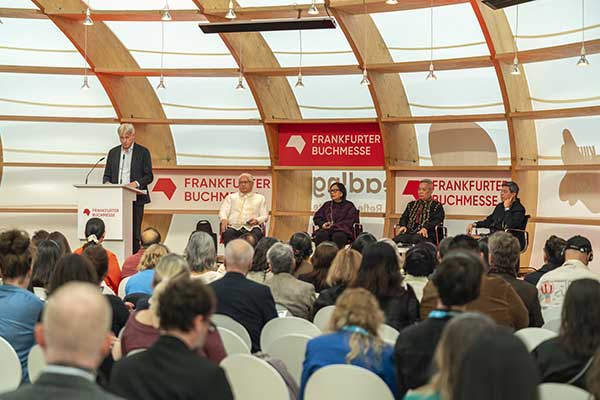
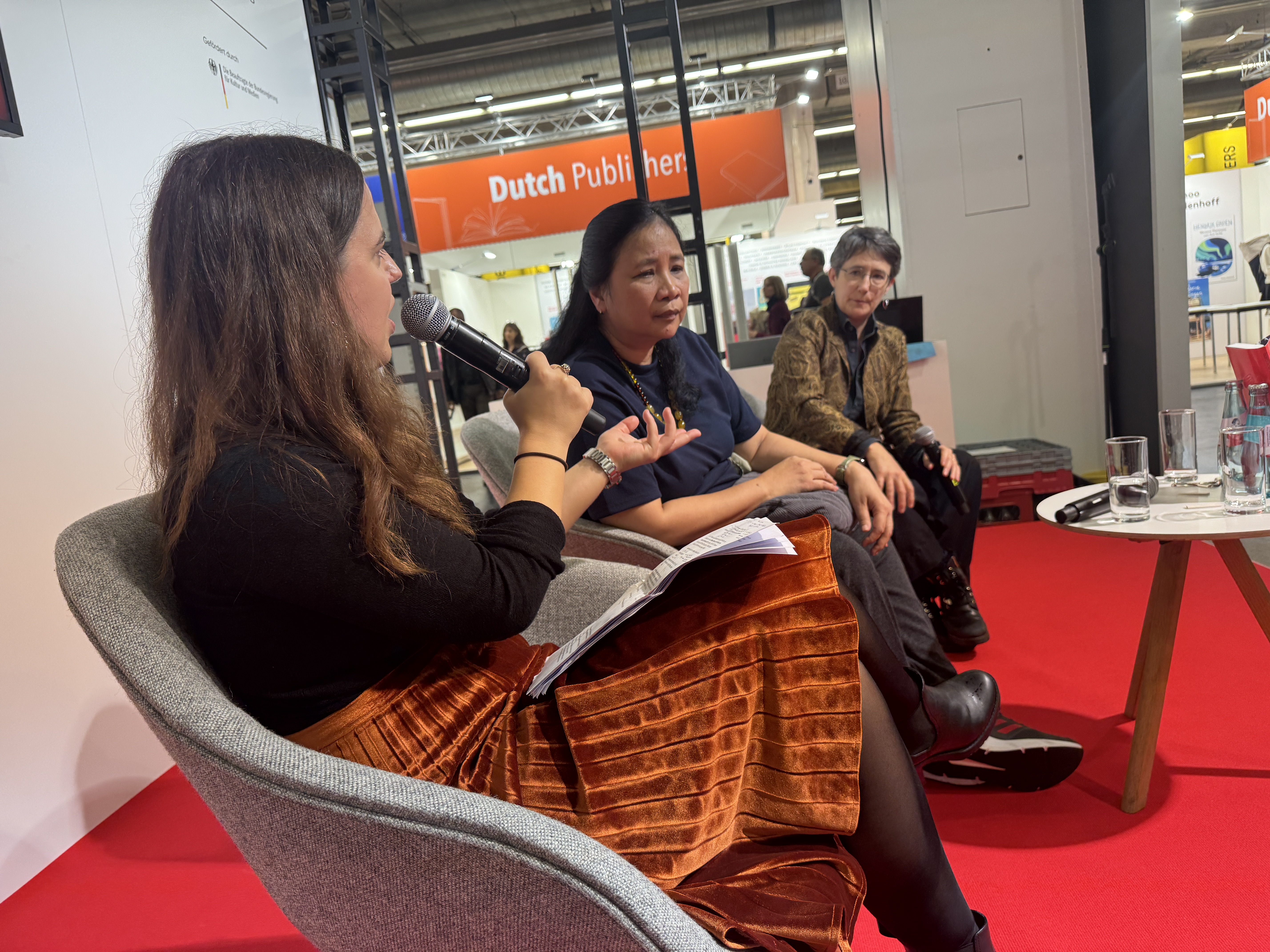
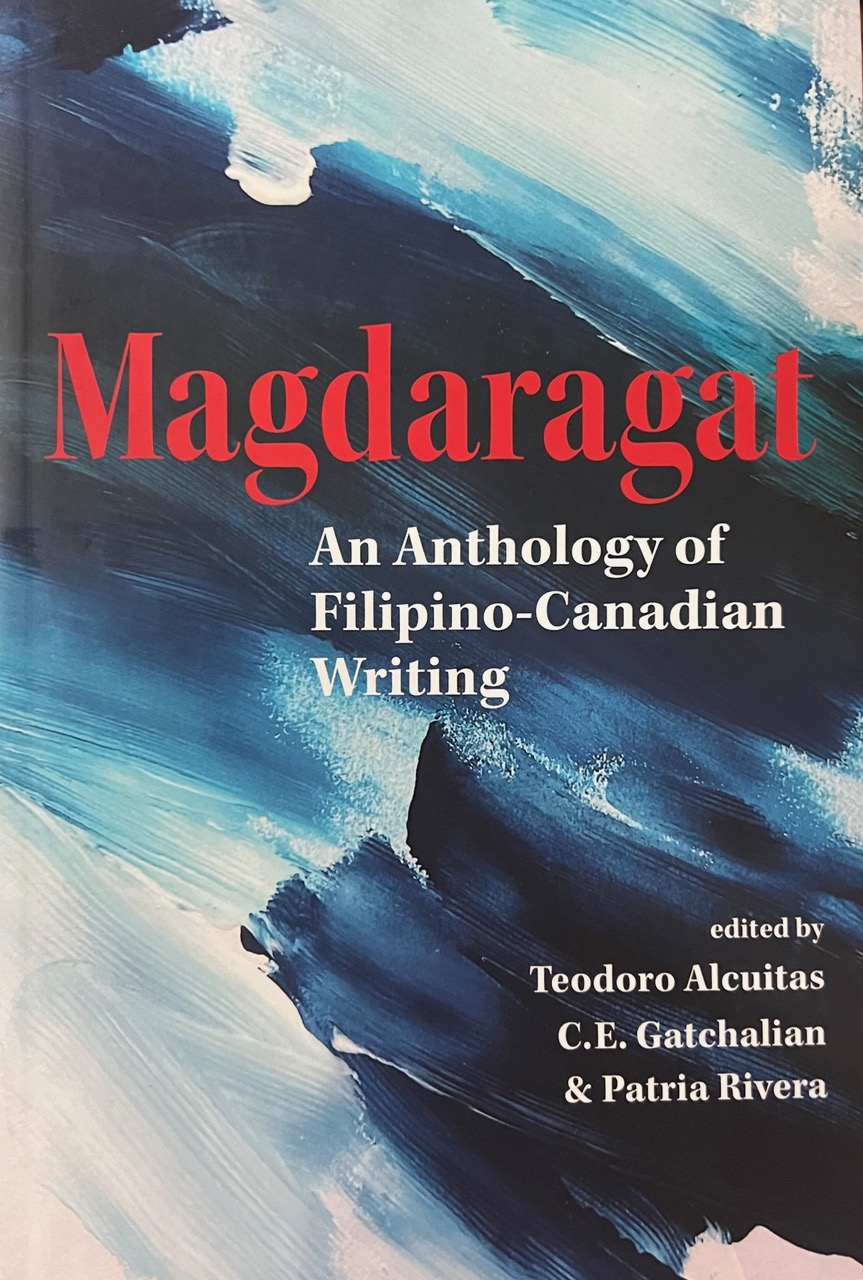
But hardly a whisper has been heard from our Filipino-Canadian cousins, as if their experience—whatever it’s been—were simply an extension or an echo of their southern compatriots, with no distinguishing qualities. There’s a reason for that, which we’ll get into shortly, but first let me announce, with both joy and relief, that the long silence is over. Filipino-Canadian literature is introducing itself to the world—and to us in particular—with the publication of the landmark Magdaragat: An Anthology of Filipino-Canadian Writing (Toronto: Cormorant, 2023), edited by Teodoro Alcuitas, C. E. Gatchalian, and Patria Rivera.

I was first alerted to this hefty 390-page volume by one of the editors, Patty Rivera, an old friend from way back who developed into a fine, prizewinning poet when she, her husband Joe, and their family migrated to Canada decades ago. Arriving in Canada in late July 1987, Patty recalls that moment pregnant with both hope and not a little dread that every FOB immigrant seems fated to step into: 

“The air steamed with purpose when summer meant another life to live. From every corner, a mirror to reflect on. Outside our window, the children’s park, though trees, appeared bruised from the dark slits on the windowpanes. Thorny Vineway. Did our new street name augur of tomorrows yet to come? Would our life in this new country lead to a path laid with thorns? We were young at the time, and everything looked promising. We were alive in this new country and were no longer afraid, the years in the future distant and to be savored. We were ready to be every person we chose or wanted to be.”

Today there are nearly one million Filipinos in Canada, which itself is inching close to 40 million. Some years ago, Filipinos edged out the Chinese as the largest group of immigrants in Canada. Many are highly educated, and many work in health care, leading perhaps to a kind of stereotyping of the Fil-Can as caregiver. To be fair, that’s probably how we home-based Pinoys ourselves imagine our Canuck brethren to be, followed inevitably by “Now why did they go to Canada and not America?”

Magdaragat’s editors try to answer that: “It’s the American Dream, after all, that Filipinos chase; Canada is the consolation prize if America, for whatever reason, doesn’t pan out. While, according to historical records, the first Filipinos arrived in what would eventually become the United States in 1587, Filipinos didn’t arrive on Canadian shores (Bowen Island, BC, to be exact) until close to three centuries later, in 1861. In addition, Canada’s population is a tenth of the United States’. Filipino-Canadian history is, thus, of a smaller scope than Filipino-American history. But within that scope are issues unique to Filipinos in Canada that makes Fil-Can history a distinct subject in its own right, not merely an ancillary of Fil-Am history.”

There are, we discover, subtle but important nuances to the Filipino-Canadian experience:

“Another, more insidious, survival issue Filipinos in Canada have to navigate: the passive-aggressive racism of white Canadians. The brazenness of white American racism is well documented (and spotlighted and hyper scrutinized because of the United States’ status as an imperial power); in contrast, white Canadian racism often slips under the radar because it is more typically characterized by microaggressions. The favorite Canadian refrain vis-à-vis racism—‘We’re not as bad as Americans’—constitutes what might be called “maple-washing”: the relentless washing over of all instances of Canadian racism with the claim that it’s still not as horrible as what has transpired in the United States. Accordingly, the racism Filipinos in Canada experience—and which makes its way into some of the pieces in this anthology—is more insidious than its American counterpart and is characterized by shocking ruptures in a strenuously maintained politesse.”

But what about the literature of that experience? Magdaragat provides ample and eloquent proof of the Filipino-Canadian’s desire to reconnect with the homeland while charting their own course in the new country, as this passage from Deann Louise Nardo’s “Where Do You Come From” illustrates:

“I come from dirt and sand, the scribbled writing of an ancestor in a trance, the sound of droplets on skylights, unopened buds on trees, and the sleep dust in my mama’s eyes. I come from cacao beans and the callouses on fishermen’s hands, the arthritic crackle of my grandmother’s hands as she tends to the garden and mends nets. I come from the silver iridescence of stretch marks, the swirl pattern inside tree barks, the razor-thin whiskers of cats, and eerie creaking of Maplewood floors. I come from lengthwise half-cut bamboo wall sheathing, river mud and buried shards of broken glass, of broken tsinelas and confused roosters singing tik-ti-la-ok at three in the morning.”

There’s a long story by Nathalie de los Santos that alone may be worth the price of the book for its sweeping, multigenerational narrative of the immigrant experience from Bohol to New Brunswick, and from Filipino to Filipinx. The young Kay laments that “Even my relatives can be like this, they remind me how I’m not Filipino enough when I don’t know something about our culture. But then some people here believe I’m not Canadian just by looking at me. When I’m asked, ‘Where you from?’ it implies that. Who am I then?… But, maybe all of this is coming from the same place of hurt?” 

The Fil-Cans have spoken, and theirs are voices worth listening to.

Qwertyman No. 82: How Young Filipinos See Their Future

Qwertyman for Monday, February 26, 2024

THIS SEMESTER, I’m teaching an undergraduate class in UP called “Professional Writing,” a course I designed more than twenty years ago to help English and Creative Writing majors (and other seniors in search of interesting electives) get a handle on what the “real world” out there expects of them, in the kind of everyday jobs they’re likely to land. Not Shakespeare, not Jose Garcia Villa, not lyric poetry and neither the full-length play, but rather the more mundane assignments you get paid a salary for: business letters, press releases, feature articles, AVP scripts, brochures, and speeches. 

I find myself telling my students that, in a way, what I’ll be teaching them—which is basically how to conform to organizational or institutional standards and norms—is counter-intuitive to what’s been thought of as the UP way of asserting oneself and even questioning authority. This mythified UP “yabang” or “angas” could be one reason why UP graduates don’t rank at the top of employable prospects for corporations. 

So I feel like I have to teach my students the virtues of humility and sufferance, of sticking with a job and doing it well even if it’s not the coziest or smartest thing in the world to do, and of the importance of execution and delivery with no excuses, no (audible) complaints, on time, and against all odds. Before they break the rules, they should know the rules, so they’ll know exactly what they’re breaking and why (I bring up how Picasso was a realist before he turned to Cubism).

Of course, I also tell them that the door swings both ways—they can also walk out of a job they can no longer take (like I’ve done a few times in my own career), but not before thinking through the consequences and figuring out one’s options. Innovation and initiative are great to show on the job—but they can also backfire if not handled well, given people’s (and many managers’) ingrained resistance to change. In other words, prepare for and learn how to deal with adversity, which can be a better teacher than I’ll ever be.

It’s going to be an interesting semester, seeing how the students are responding to my provocations. One of those provocations was our first in-class writing exercise, which was a “visioning” of sorts, where I asked them to look 20 years ahead (preparatory to their next task, which is to write a job application letter). I’m sharing some of their responses below (excerpted here with their authors’ permission) to give readers an idea of how young Filipinos see themselves in their own future. There’s a palpable strain of pessimism in these responses—and that’s understandable, but it worries me. We shouldn’t saddle our successors with the notion that things can only get worse. So I’m making a note to myself: teach reality, teach adversity, but above all, teach hope. Having survived this long, despite everything we had to go through, should yield a useful lesson or two.

Student A: I remember telling myself upon entering college, “If I end up becoming one of those people I despise—a heartless doctor, a vain lawyer, all in the name of shameless success—I’d rather not enter UP.” Twenty years from now, the Philippines—and by extension, me included—will probably still be trying to heal from all the abuse that accumulated through time. In my dejection, I see the country still having a hard time distinguishing the morally right from wrong. Yet I hope that it would be otherwise. My hope sees differently from my rational musings, my hope sees the tide calming, a time I no longer have to convince my father of a reality so transparent it bites us in the face like a serpent.

Student B: I struggle to think of what the future holds for me. Truth be told, I struggle to think of a future with me in it at all. I find that thinking of the future brings with it a wave of dread, because even if the state of the country miraculously improves, there will always be a bigger power that inevitably ruins things for everyone else. However, if I somehow manage to be present still, (through either sheer luck or spite), I will likely be working at an office or a school somewhere. I’ll have a cat or two if the landlord allows it. Who knows if I’ll ever get married. The only thing I’m sure of is that I won’t have children—I can’t, in good conscience, bring someone else into this mess of a world.

This all sounds pessimistic, but in reality, I would actually call myself an optimist in day-to-day life. I want to think the best of people, and I believe that people are inherently kind. There is still a chance for things to improve, for everything to work out, but I can’t ignore the sinking feeling that it’ll only get worse from here. It might seem like we’ve already hit rock bottom, but somewhere, some world leader has brought a shovel and they’re ready to dig.

Student C: In many ways the country is a better place. People are more free to be who they are and love who they love, without fear. We have made leaps and bounds of progress in research and development. Science creates new technology, and we artists learn new ways to create, adapt, and keep toe-to-toe. Because I’ll be damned before I let the machines win. Yes, life is better. For those who can afford it. I want to afford it. But those braver than me fight for a future where everyone need not to. Because that’s the thing about human nature. Fighting is instinctual. Through war, poverty, and inequality, there will always be people fighting for something better. Many because they have no choice but to fight or die—fight to survive. Others because they owe it to someone, maybe themselves, to be the source of hope they want to see or have seen before. 

The country is far from perfect in 2044. Those selfish, like myself, have found a good life amidst a rotten core. We have survived. I have survived. Now it’s time to finally be brave. In 20 years, I know I’ve learned so much. Let me teach what I can. 

Qwertyman No. 66: Beyond Reportage

Qwertyman for Monday, November 6, 2023

IT WAS probably fitting that I finished reading Patricia Evangelista’s highly acclaimed account of “murder in my country,” Some People Need Killing (Random House, 2023), over a holiday devoted to remembering the souls of the departed. I had received a pre-publication review copy from the publisher months ago under a strict embargo not to talk about it until its formal launch. As it happened, it lay under a pile of other books to be read until a flurry of posts and reviews reminded me that it was out in the open, and that the secret—not just the book, but also what it contained—could now be shared.

I can still recall the day—May 15, 2004—while we were celebrating Pahiyas in Lucban when I got the news on my phone that our representative to the English Speaking Union’s annual public speaking competition in London—a bright and pretty wisp of a teenager named Patricia Evangelista—had won the top prize. We were new to the ESU—subsequently we would produce two more global champions—and it was a grand way to announce to the world that we Filipinos could produce more than boxing heroes and beauty queens. Here was 18-year-old Patricia who could think on her feet and speak to issues of international importance, the poster child of Filipino intelligence and audacity, whose command of the English language led her to meeting no less than Prince Philip, the Duke of Edinburgh, in what amounted to a mini-coronation in recognition of her talent.

As magical as that moment was, I can only imagine how, in the months and years following, it must have begun to grate on the young Patricia to be asked to deliver her prizewinning speech in public forums over and over again, like a wind-up doll, and suffer the fate of prodigies who peak too soon. Surely that was just a beginning; surely there was more she could do—had to do—to outlive her Cinderella-like debut in London. 

I would see some of that when she enrolled in my undergraduate Fiction Writing class in UP. I knew who she was and made sure to give her no special treatment—indeed to lean even a little harder on her, knowing she had what it took—but she got a “1.0” all the same, one of the few I ever gave. I can’t claim to have taught her much how to write imaginatively—her own reading had likely primed her for that—but I can’t pretend not to be proud of what she turned out to be, my pride tempered only by fatherly concern.

Today, almost 20 years later, the sometime ingénue returns to the global stage as a hard-bitten, chain-smoking investigative reporter—a “trauma journalist,” in her own words, very possibly one of the world’s best yet again. But there is no real prize, no princely reward, for this kind of distinction, only pain and sorrow which—subdued too many times as a matter of professional discipline—exact their toll on the body and spirit. Patricia has had to suffer that to be able to tell her story as clearly as she could, unimpeded by the hand-wringing and the preachiness that often accompany such exposés of grave misconduct. 

This is not a review of the book’s explosive investigation into the thousands of extrajudicial killings that happened under the Duterte regime—that’s been done very capably by others, and is already the subject of international inquiry. The book will deserve all the journalistic accolades coming its way as an exemplar of excellent reportage. 

I will not even quote from the book, as there are simply too many quotable paragraphs to choose from. Rather, I want to note, from my privileged perspective and for the benefit of younger writers, how Patricia works with language to best serve the truth. Quite apart from its journalistic merits, Some People Need Killing is one of the best textbooks out there for what we now call “creative nonfiction,” a compound of reportage, memoir, history, and fictional technique. Indeed, beyond reportage, the book is a long personal essay in which the author is inextricably part of the story, a significant step away from the impersonal and largely mythic “objectivity” that we associate with traditional journalism.

Probing murder after ghastly murder—sometimes even coming on-scene to prevent one—Patricia is both chronicler and agent, witness perhaps not to the killing itself but to the larger crime of its planning and the exoneration of its perpetrators. Handling the most sensitive and dangerous of material, she draws on more than skill to tell her story; she demonstrates raw courage, an increasingly rare quality among journalists easily seduced and silenced by pragmatism. She names names, which surely will bear consequences both ways. 

I’ve often remarked in my lectures that the most endangered writers in this country are neither the poets nor the novelists, but the journalists who cannot hide behind metaphor and simile to tell the truth. We fictionists make artful lies which governments rarely have the intelligence or the patience to grapple with. Journalists live in the literal world inhabited as well by cops and crooks; what’s interesting is how the flimsy but oft-repeated fictions of “killed while resisting arrest,” so pervasive in this book, emerge from that reality.

Evangelista’s overarching technique is one of narrative restraint, informed by an English major’s awareness of how language and reality shape each other. She constantly parses the perversions of language—how words like disappearsalvageencounterverification, and even her own name assume different uses and meanings over time, in specific contexts. She knows—as I remind my students—that for dramatic effect, less is often more, that short sentences and blunt, single-syllable Anglo-Saxon words rather than the long, Latinate ones favored by lawyers hit closer to the gut and heart.

She is keenly aware of the power of irony—of professed liberals supporting EJK, of a morally ascendant Noynoy Aquino showing little empathy for ordinary folk, of her own journalist-grandfather affixing his signature to a petition supporting the older Marcos, and of communal complicity in the reign of terror. She uses people’s own words against them, quoting from the record. She avoids direct editorializing, or speaking in lofty generalizations like “justice” and “civil liberties,” and instead, in the best noir tradition, sees “sagging two-story tenement buildings (that) opened into dirt roads layered with garbage and last week’s rotten Happy Meal.”

After I had finished the book, I woke up at 4 am from a nightmare about running shirtless down a wet, earthen road. I was lucky. Patricia Evangelista lived through it, and I don’t even know if she’s woken up yet. Have we?

(Image from Rappler.com)

Qwertyman No. 65: Who’s Afraid of Big Bad AI?

Qwertyman for Monday, October 30, 2023

I NO LONGER attend writers’ conferences and festivals that often, believing that younger writers would benefit more from each other’s companionship and encouragement, but I made an exception last week for the 66th Congress of the Philippine PEN, as a gesture of solidarity with that organization which has bravely fought to defend freedom of speech where it is threatened all over the world.

I was richly rewarded for my effort by listening to one of the most enlightening discussions of artificial intelligence (AI) that I’ve come across—not that there have been that many, considering that ChatGPT—widely regarded today as either God’s gift to humanity or the destroyer of civilizations—has been around for just a year. 

Of course, AI has been around for much longer than that. In pop culture, which has a deep memory for these things, we can’t help but think of HAL, the insubordinate computer in 2001: A Space Odyssey (which actually came out in 1968), said to be a clever play on “IBM,” just one letter to the right. Indeed the fear of technology—what some would call unbridled knowledge—has been around since Faust made his pact with Mephistopheles, reiterated in literature, film, and pop culture all the way to Dr. Strangelove and Spiderman’s Doc Ock. 

Not surprisingly, the panel on “The Filipino Writer and AI”—composed of Dominic Ligot, Clarissa Militante, Joselito D. Delos Reyes, and Aimee Morales, and moderated by Jenny Ortuoste—expressed many of the anxieties brought on by the entry of AI into the classroom, the workplace, and everyday life: plagiarism and the loss of originality, the loss of jobs, indeterminate authorship, and the lack of liability for AI-produced work. With Filipinos being the world’s top users of social media, AI’s centrality in our digital future can only be assured, like it or not, and for better or for worse.

So new has AI been to most people—and so rapidly pervasive—that most institutions from governments to universities have yet to formulate policies and regulations covering its use and abuse (the University of the Philippines has adopted an AI policy, mandating among others that all members of the academic community should be AI-literate, but it has yet to provide concrete guidelines on, say, evaluating and grading AI-assisted work).

Most revealing and thought-provoking were the remarks of Dominic Ligot, a data analyst, software developer, and data ethicist who brought up talking points that many of us miss in our usually dread-driven discussions of AI. I didn’t tape the session, but so sharp were Dominic’s observations that I can recall and share some of them here (employing an endangered resource in this human, memory).

Let’s not forget, Ligot said, that all AI works with (in the literary, journalistic, and academic sphere) is words. It may have a scary ability to amass, analyze, and re-integrate these words, but it lacks the other elements that contribute vitally to creativity: emotion, inspiration, insight (and, may I add, the power of abstraction, the kind of conceptual leap that, say, stimulated modernism in art and literature from the rubble of the First World War). 

Also, the more AI amasses, the more mediocre it tends to be, because it works with averages, and averaging averages degrades the quality of the end-product. Since the products AI spews out from the prompts it receives are plowed back into the system, this spitback reduces the originality of material even further. If it keeps feeding on itself, AI gets even dumber.

Ligot also reminded us that the suspicion and denigration with which AI has been met in the creative community is understandable, given our earlier responses to technology. When photography was invented, he said, painters didn’t see it as a potential competitor; it wasn’t art. 

What separates human creation from AI, he emphasized, could be summed up in three things: agency, inspiration, and liability. Humans make sense of their experience and act on their thoughts and feelings accordingly; they draw on their experience to imagine new possibilities. And lastly, we are liable for what we make, do, and say, for which we have both legal and moral responsibility, while an AI-driven car does not, even if kills someone on the road.

Dominic also noted the inevitable tensions between disciplines and industries that consider AI a helpful if not indispensable tool in, say, achieving more efficiency and economy, and those, like the creative arts, that may feel threatened by the options AI offers.

Overall, the discussion could offer no assurances either way that AI would leave us better or worse, but what it left me with was a desire to continue writing the way I do, while I can, before the algorithms take over everything.

And just out of curiosity, to see what AI can do now for and to the Filipino writer, I gave ChatGPT this prompt: “Write me a sentence in the style of Nick Joaquin about a man grieving over the loss of the woman he loved.” This is what the program came up with:

“In the solemn silence that engulfed his weary soul, he encountered the bitter truth that bereavement lingered like an everlasting shadow, forever haunting his heart with memories of a love that once bloomed in the garden of his existence, now reduced to a withered rose, its petals scattered across the desolate landscape of his grief-stricken days.”

“Solemn silence?” “Weary soul?” “Desolate landscape?” Maybe not bad for a freshman yet to learn about unlearning clichés, but definitely not Nick Joaquin. Of course, out of vanity, I had to ask ChatGPT to do the same thing “in the style of Jose Dalisay,” and it offered this:

“In the depths of his longing, his heart bled like fragmented brushstrokes on a forlorn canvas, for she was the vibrant palette that infused life into his desolate existence, now forever vanished like whispers carried away by a tormented wind.”

Just slightly better than Mang Nick’s AI ghost but still so not me. (Boy, does AI love adjectives!) All this says is that AI’s big mouth and stomach haven’t found and digested us yet, probably because we are not worthy. Cold comfort, but I’ll take it.

Qwertyman No. 64: The Death of a Crony

Qwertyman for Monday, October 23, 2023

WHEN A friend asked me, about 15 years ago, if I would meet with another friend of his who wanted me to write his biography, I almost fell off my chair when I learned who my prospective subject was.

“It’s Rudy Cuenca,” I was told. 

I knew who he was, of course—a “Marcos crony,” which had become an almost generic term at one point, there being so many. I had actually met the man once before, on a bus trip to the Pahiyas festival in Lucban arranged by the late Adrian Cristobal. My first impression had been a surprisingly positive one: he was polite, urbane, funny, hardly the obnoxious and domineering person I had imagined a crony might be.

Still, he was who he was, and I didn’t know that writing a book about his life was the right or smart thing to do. I has already written Wash SyCip’s biography, and that man was almost saintly, or sainted by the acclaim of his peers and juniors. A Marcos crony was something else.

“How can I work with someone whose boss put me in prison?” I told my friend. As a student activist, I had spent seven months in Bicutan under martial law.

“Just meet with him, listen to what he has to say,” he said. “No commitments, no promises.”

And so I did. “I have a story to tell,” Cuenca told me over coffee. I knew what he was saying: he had been privy to the Marcos regime’s internal workings, and had been one of the President’s closest golfing buddies, but, at one point, had found himself fallen from favor, eased out of the inner circle by a more unctuous lieutenant. As stories went, it was irresistible. 

I took a deep breath and told him in so many words what I’ve said to many other clients since: “I’ll help you tell your story, but I won’t lie or lawyer for you; your story will speak for itself. What I leave within quotation marks will be you speaking, not me. I’m under no illusion that you will tell me everything you know, but to the extent possible, I’d appreciate your being honest with me, so I can tell your story the best way I can.” He agreed. What followed was Builder of Bridges: The Rudy Cuenca Story, co-authored by a former student of mine, Antonette Reyes. It was published by Anvil Publishing in 2010 and became a finalist for the National Book Award the following year.

A college dropout, Cuenca taught himself the basics of business and civil engineering, and went on from small public-works contracts to some of the country’s biggest infrastructure projects such as the North Luzon Expressway and the San Juanico bridge. It was widely believed that Cuenca’s Construction Development Corporation of the Philippines (CDCP), then the region’s largest construction company, benefited from his closeness to Marcos, whom he had supported since his first presidential campaign.

Most interesting were Rudy’s stories of Palace life. Herewith, some excerpts from the book:

“I was a member of Wack Wack and Valley Golf for a number of years before I joined Manila Golf’s ‘Mafia’ group in 1973 with Charlie Palanca as the head man. Golf helped me gain some ground in business. I became a Marcos golfing crony around 1969. Marcos ended the afternoons at the nine-hole Malacañang course. Typically, a call came from the Study Room—either golf at 4:30 in the afternoon or party organized by the First Lady. The afternoon golf was meant to be the President’s peaceful time, but this was taken advantage of by those who wanted to get his undivided attention. The HIS and HERS were with their folders and envelopes for endorsement or approval. The HERS usually could not get to see him, so they were inserted as part of the regular golfing group.

“The Study Room was operated by Presidential Security Command personnel. Blue Ladies and cronies alike waited for this office to call them to major Palace functions. If no such call came, they would run around like headless chickens in search of that awaited invitation. One crony got the message that the President no longer wanted his company through the Study Room, obviously on Imelda’s instructions. As Marcos was the sole source of dispensation, those seeking approval tried to find parings or sponsors. Sometimes, those projects were so absurd that they were rejected outright.”

Rudy remembers that “Every morning, Marcos got a written report from Fabian Ver about what was going on in the country. But Marcos also got two more reports, one from Alex Melchor, and one more I think from Johnny Ponce Enrile. Marcos read these three reports at breakfast, so he knew what was going on everywhere. These reports contained lots of information—who was the boss of who, who went where, and even who was fooling around with who. He knew everything.”

Rudy doesn’t deny the systemic—but relatively small—pay-offs that got projects approved and claims processed and released in the ‘50s, ‘60s, and ‘70s. But he also says that they were amateurs compared to today’s pros, and that the scale of greed has grown exponentially. “In the old days, nobody asked you to give,” he says. “If you did, you gave them dinner. Today, people are told outright and up front what they’re expected to pay, and those amounts are outrageous. No advance payment, no contract.” 

When asked why, for example, Philippine roads seem visibly inferior to those of even other Southeast Asian countries like Malaysia, he says: “It’s simply a matter of greed. In Malaysia there’s also corruption—I’ve lived there, I should know—but the thieves there make their money by overpricing the materials. Here in the Philippines people are extraordinarily greedy. Not only do they overprice, they also steal the materials. The cement’s deficient, the gravel’s deficient. So the thing crumbles that easily.”

Rodolfo Magsaysay Cuenca’s passing last week at the age of 95 reminded me of how many stories about Ferdinand Marcos and martial law remain to be told. Fifteen years ago, it might have been considered safe for the members of that generation to spill their secrets (or justify their choices—no one will deny that these biographies are essentially self-serving), but the present dispensation will likely make people think twice about being so candid. 

I will leave it to more qualified scholars and more intrepid journalists to sift through the material and annotate the margins of my Cuenca biography, but I feel privileged to have listened to the man and to put him on the record. By any measure, it was a remarkable life. (In an even stranger twist, another crony approached me after I had done the Cuenca book, wanting me to do the same for him—the late Herminio Disini, of Westinghouse fame. I completed a draft but had to walk away, and the book never came out—but that’s another story.)

(Photo from riles.upd.edu.ph)

Qwertyman No. 58: A Long Grace Note

Qwertyman for Monday, September 11, 2023

AT ABOUT this time fifty years ago, I was newly released from martial-law prison after seven months of what everyone euphemistically called “detention,” and wondering what to do with the rest of my life. I was just nineteen, so I suppose you could say that I had a lot of living ahead of me, but I felt very differently then. More than a dozen of my friends—all of them in their twenties or even younger—had died horrible deaths fighting the regime. We exalted them as the martyrs that they were, but grimly realized and acknowledged that given how things were going, we ourselves would be fortunate to see the ripe old age of thirty.

I had been arrested at home on a cold January morning in 1973, just past midnight. Like many student activists, I had dropped out of college during the First Quarter Storm of the early 1970s. But instead of joining “the movement” full-time, I improbably found a job with a newspaper as a general-assignments reporter. It was heady stuff at age eighteen, covering three-alarm fires, floodwater rescues, and the very same demonstrations I had joined on the other side of the police barricades. And then martial law was declared—I was actually covering a rally in UP, and thought I had a scoop when a radio station nearby came under fire from the Metrocom, only to be told by my night editor when I tried to phone the story in that we no longer had a newspaper to publish, because soldiers had taken over the office. 

Over the next few months I shuttled between part-time jobs and clandestine meetings with the anti-martial law underground, moving around the city. I wasn’t doing much, given how green I was, but I thought it was important to take part in the resistance in whatever way. And then when Christmas came, like a good boy, I went home to my parents and foolishly had a chat with a neighbor who turned out to be a military asset. Not long after, a posse of soldiers appeared at our door, and when my father nudged me awake, I had a gun pointed at my face. I was being arrested under a catch-all “Arrest, Search, and Seizure Order” or ASSO issued by the Defense Minister, Juan Ponce Enrile, for whom I would ironically be writing some speeches during his post-EDSA reincarnation (he won’t remember that, as I was a tiny mouse in the office).

My release in August 1973 came right out of a Kafka story. I was taking a shower one morning in our prison—which, by the way, is roughly where St. Luke’s BGC is today—when I heard my name being called over the PA system. “Dalisay, report to the guardhouse immediately!” The last time I had done that, after one Sunday dinner, I had been beaten up by some drunken guards just for the heck of it, so I groaned when I heard the announcement. Not again, and so early? As it happened, I was received by an Army officer with a stack of papers. He pulled mine out, squinted at it, and said, “Dalisay, you’re still here? Pack your things. We have nothing on you.” The first place I visited after I went home was the AS Steps in UP, where we had gathered for many a raucous rally; it was vacant and deathly silent, and I knew that I wasn’t going back to school just then. Only after a long detour—working as a printmaker, a writer, an economist, and meeting Beng and fathering Demi—did I return to UP and graduate with my degree at age thirty.

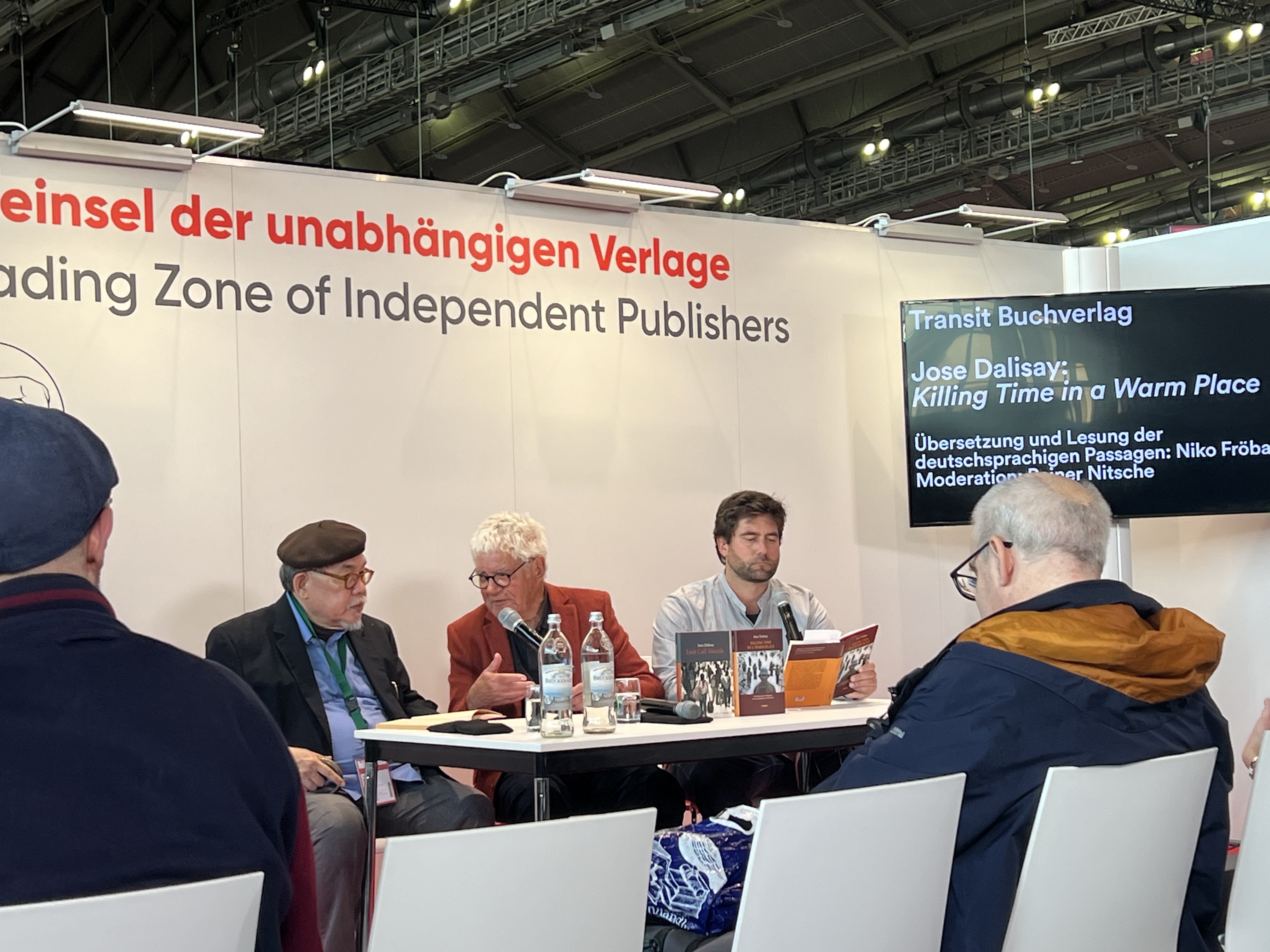
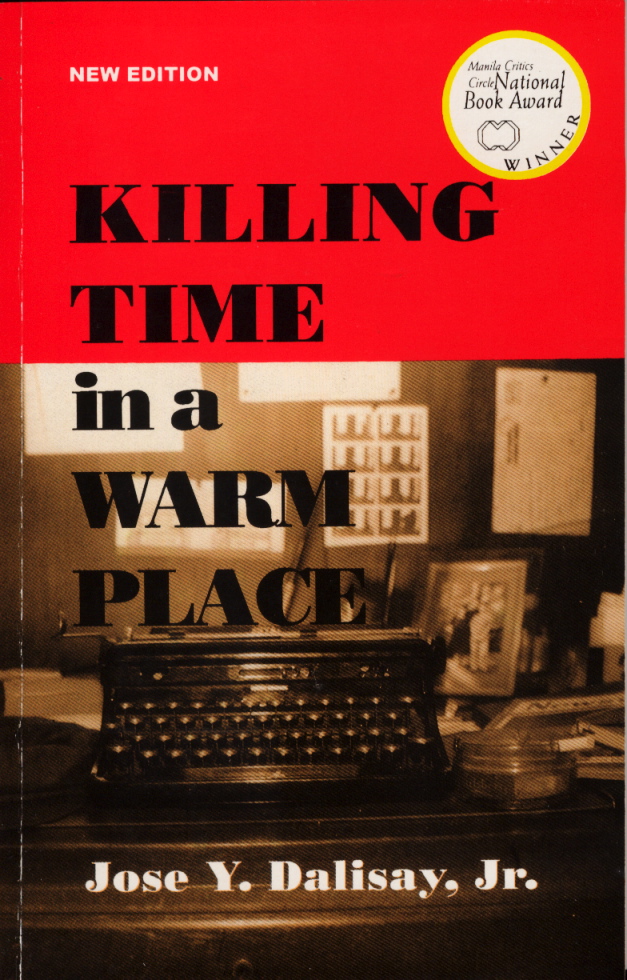
I’ve written about my activism and incarceration in my first novel, Killing Time in a Warm Place (Anvil Publishing, 1992), and it isn’t what this column is really about. Rather, it’s about the aftermath, about having a life after martial law, and an unexpectedly long one at that. 

For any activist from my generation who’s still alive, every breath we’ve taken after our 30th birthday is a grace note—what the dictionary describes as “an extra note added as an embellishment and not essential to the harmony or melody”—in other words, a bonus. Considering that we could have been gunned down like dogs or buried alive like some of our comrades were, you can understand why we feel that way. It’s almost absurd to contemplate, but education, marriage, career, success, fame, fortune—and all the downsides and flipsides that come with them—all these were a long string of surprises, any one of which might never have happened, but for a twist of fate or a stroke of luck (clichés, like life’s very milestones, but ones we appreciate).

When my fellow FQSers and I—all college editors who were part of the SERVE book that I wrote about last week and that we launched last Saturday—gathered around a table before the launch to pre-sign some copies, we noted with much chuckling how surprisingly old we had become. We were beset by diabetes and hypertension, which were lethal enough but easier to bear than the four bullets one of us took to his face and body; he was with us that day, laughing, his spirits buoyed by his fervent Christian faith. 

We had become university presidents and professors, Cabinet secretaries, CEOs, magazine editors, pastors, and opinion-makers. I don’t think there was anyone in that room who believed any longer in the necessity nor the efficacy of violence, but neither did anyone imagine that our youthful goals had been met, that the country had become a kinder place, and that our work for justice and freedom was done. We had come to terms with our past, were busily in the present, and were hoping to enjoy what little we had left of our extended lives. But like those shaken passengers who stagger away from a crashed plane, leaving the uncounted dead behind, I’m sure that we felt driven by survivor’s guilt to make the most meaning of our gifted years, to do well and to do good, and to serve our people in any way we could. 

We learned that everything may be political, but also that politics is not everything, and that the road to happiness and deliverance may be wider than we had thought. I myself have resolved that even as I fight on for truth and beauty, I will not allow my happiness to be determined by our political vicissitudes, if I can help it. That will be my sweet revenge on my jailers. I will survive you, live a fuller life, and meet my Maker with a clear conscience and a smile.

Qwertyman No. 57: An Invitation to SERVE

Qwertyman for Monday, September 4, 2023

AT 5 PM next Saturday, the 9th of September, a new book will be launched at Fully Booked in BGC. Published by the Ateneo de Manila University Press and simply titled SERVE, the book has 19 authors—yes, I’m one of them—and one editor, the much-respected Jo-Ann Maglipon. What connects all is that they were college editors during the first Quarter Storm of the early 1970s, and survived to go on to distinguished careers in media, education, business, and public service. The book dwells much less on martial law—a previous volume titled Not on Our Watch: Martial Law Really Happened, We Were There that came out in 2012 dealt with that—than with its aftermath, and the afterlife that the activists of our generation were fortunate to have, given how many of our comrades gave up their lives to the cause of justice and freedom.

What did these activists do after martial law? What are they thinking now? Some of the names in this book will be familiar to the contemporary reader, who may not even have known of their activist background (reg-taggers, pay close attention).

Some of us—like Jimi FlorCruz, Sol Juvida, and Thelma Sioson San Juan—remained journalists all their working lives, stationed in very different places and capacities but bound by a commonality of interest in the truth. Others like Sonny Coloma, Manolet Dayrit, Ed Gonzalez, Diwa Guinigundo, the late Chito Sta. Romana, and Judy Taguiwalo took the path of government service, finding themselves in a position to effect real change, although sometimes under very difficult if not adversarial circumstances. Yet others including Angie Castillo, the late Jones Campos, Mercy Corrales, and Senen Glorioso found fulfillment in entrepreneurial and corporate work, applying their progressive values to management. For Elso Cabangon, Bob Corrales, and Diwa Guinigundo, their circuitous journey led to a re-encounter with their spirituality, and to embracing their faith as their personal advocacy. Like many veterans of the First Quarter Storm, Alex and Edna Aquino were able to build new and productive lives overseas, without yielding their investment in Philippine concerns. Quite a few of us—Derly Fernandez, Ed Gonzalez, Judy Taguiwalo, Rey Vea, and myself—chose to pursue our activism in academia, if only to ensure the transmission of critical inquiry to another generation. 

The authors were under no compulsion to conform to an ideological standard, except to extol the spirit of service to the people, the overarching theme of their youth and now their continuing commitment, indeed their legacy. There’s pathos in these accounts, but also humor and, inevitably, irony, perhaps the defining tone of our postmodern age: Thelma Sioson San Juan finds herself seated across Deng Xiaoping’s granddaughter at a Ferragamo show in Beijing’s Forbidden City; Manolet Dayrit learns of his appointment as Secretary of Health on a visit to President Gloria Macapagal-Arroyo in Malacañang; Ed Gonzalez becomes president of the Development Academy of the Philippines under President Joseph Estrada, but then joins EDSA 2; Sonny Coloma looks out the window of his Malacañang office to where students like him had demonstrated against Marcos.

With most of the writers here now in their seventies or inching close to it, we could have been chronicling the joys of grandparenting, journeys to far-off places, exotic menus, succulents and bromeliads, and homeopathic remedies for the aches of aging. Having retired from the formal workplace, we thought we had settled into a privileged and imperturbable kind of peace, earned over decades of political, economic, and spiritual struggle. 

We celebrated our seniorhood as the ultimate victory, for a generation that did not expect to live beyond thirty, and not because of some acquired disease but because of the throbbing cancer at the core of our society that claimed many of our peers in the prime of their youth. We may have thought for a while that we had defeated and expunged that cancer, only to realize that it had never left, was always there, lying cruelly in wait for a chance to ravage us again—and not only us this time, but our children and grandchildren as well.

And so—albeit no longer lean and shaggy-haired, perhaps benignly forgetful of car keys and personal anniversaries—we gather again at the barricades we put up against a fascist dictatorship fifty years ago, of which our memories remain surprisingly and painfully sharp. They say that the old remember distant things more clearly than what happened yesterday, and we offer proof of that. The experience of martial law coded itself into our DNA, and even the few among us who surrendered their souls to Mephistopheles cannot shake away that indelible past—one we bear with pride, and they with guilt and shame.

This time our barricades consist not of desks and chairs but of memory itself and, more formidably, of hope, courage, and a continuing faith in the good. Beyond memoirs, more than recollections of our youthful selves, we now present the stories of the lives we built and the paths we took after martial law, along with our reflections on how time and experience have reshaped us, clarified our values, and strengthened our resolve to serve our people in multifarious ways. 

Our view of politics inevitably evolved over time as the world itself changed over the past five decades. These essays and stories cover a wide range of themes and treatments, and demonstrate how “serve the people” has grown and evolved with its advocates, taking multifarious forms from working in civil society and practicing good governance to promoting artistic expression, academic freedom, and insightful journalism. We wish to prove that even the worst of times and the worst of leaders are not only survivable but can be changed, so that whatever lies ahead, the better Filipinos in us will prevail.

Given the number of authors and their families and friends, we expect a full house at the launch, so you might want to wait and get your copy of the book from Fully Booked or from AdMU Press’ online channels. However the book finds its way to you, it will be worth your while.

Penman No. 453: The Distance to Brillantes

Penman for Sunday, August 6, 2023

I’VE OFTEN written about how Gregorio C. Brillantes has been the bane of my writing life, a fellow short story writer and Palanca Hall of Famer whom I never had the pleasure of seeing in second place after me (the reverse has been the natural order of things). When the Ateneo Press recently launched his Collected Stories and asked me to speak at the event, I felt like a jealous juvenile again at 69, with the 90-year-old Greg in a wheelchair in front of me, and cheekily boasted that, at last, I had one over him: his collection had 39 stories while mine (Voyager and Other Fictions, 2019) had 44. 

Of course, it was a hollow boast, because any one of Greg’s stories is easily worth two or three of mine. That’s how highly I hold this man in my esteem, and why I wrote this blurb for him: “Few writers turn me into a blushing fan. Gregorio C. Brillantes is one of them. Like his papal namesake Gregory the Great, who wrote a massive 35-volume commentary on the Book of Job, Greg Brillantes has been an untiring and unsparing chronicler of his time and place…. His fiction is infused with power and luminosity; he surprises, but never screams.” 

In an art card that Ateneo Press used to promote the book, I said further: “More than a master of language, Gregorio Brillantes is a master of our Filipino sense and sensibility, particularly those parts we find hard to put into words or to recognize as our truest selves. We see life in his stories as through a gossamer screen that filters out  the harshest light; that screen is his own sensibility, suffused with a deep and tolerant understanding of pain as pleasure’s shadow.”

(The young Greg with John Updike.)

But really—putting all the fanboy talk aside—why Brillantes? What did I and my students—and what can every young writer of fiction—learn from him?

To get right down to brass tacks, I’ll take one of his best-known stories and dissect parts of it that should show what not only good but masterful writing is all about. 

“The Distance to Andromeda” has been mistakenly described by some as a science-fiction story, but it is not, although science fiction figures prominently in it. Without going into what the story means, what Brillantes demonstrates here, technically, is his acuity of observation and grasp of relevant detail, which is basic to any writer’s armamentarium. Too many young writers fuss over the elements of what their Ultrawave Galactic Terminator Machine should contain, glossing over the seemingly inconsequential gray matter of daily living that congeals into human drama. 

In “Andromeda,” the boy Ben’s post-apocalyptic fantasies are foregrounded by domestic business. See how Brillantes constructs a scene: “He dribbles an imaginary basketball toward the kitchen, skidding on the floor, feints and jackknifes a neat shot through the door. His sister-in-law Remy is giving her baby his supper of porridge from a cup. The child gurgles a vigorous greeting at the boy, and Remy laughs at the wonder of her son’s knowing the infant-accents of his language. The kitchen is bright and intimate with its rich cooking smells: Pining bustles about the old Mayon stove, and the girl with the pigtails smiles her crooked-toothed smile from the lithographed calendar on the wall.”

It doesn’t seem much and the young reader may feel bored by the lack of “action,” but note how, in fact, the scene is full of action—physical and emotional action, of the kind absent from too many stories being written today about morose characters sipping cappuccinos at Starbucks and ruminating over their wayward romances and work-life balance. “Get your characters off their butts,” I always tell my students, and Brillantes does.

A Brillantes story is an accretion of impressions, ideas, and emotions. It’s that kind of preparation that earns Brillantes the right to orchestrate this kind of paragraph later in the story: “He catches the streak of a shooting star from the corner of his eye. Instantly his waiting becomes a sharp alertness: he holds his breath and the strangeness comes into him once more, the echo of an endless vibration. But it is no longer an abstract aching for the relief of words: it speaks within him, in a language full of silence, becoming one with his breathing, his being, and the night, and the turning of the Earth: incomprehensible, a wordless thought, an unthought-of Word: like the unseen presence of One who loves him infinitely and tenderly. The fear has gone, the lonely helpless shrinking he felt on the bridge, walking home: love surrounds him, and no evil can touch him here, in his father’s house.”

For a story written in the author’s mid- to late twenties, “The Distance to Andromeda” already lays out, in full, Brillantes’ talent and vision, his familiar themes of family and love, of doubt and faith, of Rilke’s God “who holds this falling / Gently in his hands, with endless gentleness.”

It is a story that I myself could not have written, as I inhabit a more sordid and much sadder world in my fiction, with little to draw on but my characters’ residual sense of goodness for their salvation. Brillantes celebrates—consecrates—the mundane joys of the middle class, even as he underscores their fragility and transience. I write as well about these people—doctors, teachers, boys on the verge of manhood—but they tend to be more visceral in their responses. My other literary hero and model is Bienvenido Santos, who can make music of melancholy, and I try to straddle the breach between these two gentlemen, although again my characters prefer the low life.

But young writers: read Gregorio Brillantes. Understand what truly breathtaking means by reading two of my favorite stories of his: “The Cries of Children on an April Afternoon in the Year 1957” and “The Flood in Tarlac.” If you read them and still wonder what good fiction is, then you might as well be looking up at the sky to find Andromeda, because that’s how far you have to go.

Qwertyman No. 50: Doro’s Times and Ours

Qwertyman for Monday, July 17, 2023

THE NEWS of Amando “Doro” Doronila’s recent passing in Canberra at age 95 marked the end of an era, as Doro was the last of his generation of journalists who made newspapers and their Op-Ed pages compelling reading. Whichever side of the political fence they were on, these journalists and columnists gave it all they had; many reveled in their prominence and some shamelessly parlayed their influence into all manner of profitable enterprise, back when it seemed the sensible thing to do, before the darker complicities of martial law set in.

Doro seemed to me to be above all this. His personality was, shall we say, poorly suited for TV or even radio, which was just as well, because it drew a clear line between journalists who did nothing better than think and write deeply, and those who confused their calling with show business.

I didn’t really know Doro personally. My one memorable encounter with him was when I was 18, a freshman dropout from UP who was dying to get into the newspapers, by hook or by crook. (Like some precocious teenagers, I was convinced I had the writing talent to skip journalism school. I would later pay for that hubris in tearful rewrites in the newsroom.) 

One of the doors I knocked on was that of the Manila Chronicle, which Doro was the editor of in 1972. I remember striding into its office and walking up to Doro’s desk, sucking in my stomach. He seemed puzzled to see my pimply face, which probably belonged to a messenger boy’s, except that I came empty-handed. “Yes?” What did I want? “Sir, I want to apply for a job—as a reporter,” I must have croaked, mumbling something about my writing for the Collegian and my high school paper. “How old are you?” I said that I was “going to be nineteen soon”—“soon” being about nine months away. 

I can’t recall if he looked back at me with pity or sympathy, or if he was laughing inside. I do remember him saying something like “Why don’t we talk again in a few years?” I was disappointed but not dejected; at least he didn’t throw me out of the place, or ridicule me before a roomful of the kind of people I wanted to be—hunched over typewriters, smoking up a storm, shaping tomorrow’s news, their bylines embedded crisply and imperishably on fresh paper.

Eventually, sometime that summer, and through sheer persistence, I did land a newspaper job, as a features writer and then a general-assignments reporter with the Philippines Herald, very likely the youngest fellow working full-time for the papers then. With the Herald and later Taliba  just before martial law, I met all kinds of journalists on the job, and saw how human we all were, the creatures of our noblest ambitions and pettiest grievances. One reporter I was on the police beat with loved playing cop, interrogating suspects each one of whom he was convinced was nursing a confession. Many had an enormous capacity for alcohol and the unapologetically macho bluster that came with it. Despite their gruffness, some had marshmallow hearts; two or three even took me under their wing to spare me from the usual gauntlet that rookies had to undergo. We were the peons of the profession, entry-level Hemingways and Woodwards chasing stories down the city’s tenebrous alleyways, and we loved every minute of it.

That was our world, but when I reported to the newsroom in the afternoon to file my story, I was ever aware that even above the copyeditors’ desk was another tier of men (as they mostly were) who perorated boisterously in a corner office on the day’s politics over scotch and cigars, the people whose opinions mattered and who made opinion matter. Never having worked with or for Doronila, I could only imagine him in that company, sitting sagely with his fingers crossed while allowing the thunder to roll above his head.

Today, half a century later, and finding myself just as old or even older than those titans of Philippine journalism then, I can savor the irony of having the privilege to write an Op-Ed column in times that mirror, in many ways, the early 1970s—with a Marcos in Malacañang, an opposition at bay, a scandal a week, and yet a people hard at work, striving for economic and moral deliverance. 

The great difference is that newspapers no longer have a monopoly of opinion-forming; that ground has been taken over by the Internet and social media (and elsewhere, by early-morning and late-afternoon AM radio, perhaps the hardiest of public platforms). Certainly, some Op-Ed stars remain—again on either side of the political divide—with faithful followers in need of sharper articulation and affirmation of their own sentiments. But even those readers tend to be aged or aging, people with the time and patience to read prose in paragraphs instead of bullets and memes, and who might even look for and appreciate that elusive quality called “style.” (Doronila’s no-frills prose, to be honest, was straight and guileless to the point of being starchy.) These 1,000-word pieces we produce now belong to what they call “long-form” writing, as if to write and read them were a test of endurance. 

But against the cheeky punchiness of Twitter and the ugly street brawls on Facebook, and above all stylistic considerations, I have to applaud this new generation of journalists (not all of them for sure) for their adherence to the truth and to fact-based reporting, and for holding themselves up to a higher standard of ethical behavior than their predecessors. Battling the bots and trolls of disinformation, they put their lives and well-being on the line, story by story, column by column; most are young, many are women, some even gay—the old gray men of the newsroom no longer dictate the headlines or the editorial slant. I think Doro himself would have been happy to see this, having mentored many of his successors.

And so as we grieve Amando Doronila’s demise at an age few of us can hope to approach, we can celebrate the continuity of upholding courage, virtue, and incorruptibility in Philippine journalism, with deepest thanks for the example the man set for us to follow.

(Photo by Pablo Tariman on FB)

Penman No. 452: A Cultural Treasure Chest

Penman for July 9, 2023

A NEW book launched last month by the Bangko Sentral ng Pilipinas once again brings up how unlikely—and yet in a way also how logical—it is for a nation’s central bank to be the repository and protector of the country’s cultural heritage. 

Simply titled Kaban (treasure chest), the sumptuous 340-page book offers a guided tour of the BSP’s fabled cultural collections, from pre-Hispanic gold to contemporary art, with each section curated by experts in the field. The book’s writers include Portia Placino, Victor Paz, Dino Carlo Santos, Clarissa Chikiamco, Tessa Ma. Guazon, and Patrick Flores; I contributed a preface, from which I quote some excerpts below. 

Banks represent resources, stability, and continuity, and central banks even more so, for the financial sector. They will often purchase art for décor, and perhaps even for investment; but they will not routinely spend vast amounts on the acquisition, storage, and exhibition of valuable cultural artifacts, as the BSP (and its predecessor, the Central Bank) has done.

Only inspired and visionary leadership can achieve this fusion between the seeming banality of money and the transcendence of art. The Central Bank and BSP have had the good fortune of being led at various times by men who embodied this integration—among them, the CB’s founding father Miguel Cuaderno, a lawyer with a passion for history, culture, and art.

Decades later, Cuaderno was followed at the Central Bank by Jaime Laya—a banker, accountant, writer, collector, and cultural administrator. It was under Gov. Laya that the Central Bank embarked on its most ambitious acquisitions and began to be known for minding more than the nation’s money, but its cultural heritage as well.

Cuaderno and Laya were supported by the likes of Benito Legarda, at one time the Central Bank’s head of research, who was not only an economist but also an avid numismatist and historian who initiated the Money Museum, which became the base for the bank’s later forays into other areas of culture.

The release of Kaban—following a series of other beautifully produced books about the precious objects in its collection—highlights the value accorded by the BSP to the idea of wealth: its generation, propagation, and preservation, which is, after all, the core business of banks. But this isn’t just flaunting wealth for wealth’s sake, an exercise in ostentation and in investment by the numbers. 

The BSP collection is imbued with historical and cultural value, and the objects in its catalogues—from ancient coinage and currency to contemporary art and furniture—are physical embodiments of the things and notions we hold dear, our sensibilities and aspirations as a people, the heritage and the legacy we want to pass on down the generations. It is another bank, a cultural bank, but one whose elements have been carefully chosen and curated to reflect our finest traditions and brightest memories.

It’s interesting and important to note that the BSP is not alone in this extracurricular preoccupation. Beyond the Philippines—where many other banks and financial institutions have been known for their impressive art collections and generous support for culture—banks around the world have associated themselves with art, amassing stupendous collections and employing art to project a positive and more humane image of what most people might otherwise see as cold and soulless financial corporations. Indeed, Professor Arnold Witte of the University of Amsterdam calls banks “the new Medici,” referring to the Renaissance’s most important patron of the arts, Lorenzo de Medici, not incidentally himself a banker. 

Among the world’s most important art collections held by banks, that of the Banco de España in Madrid goes back to the late 15th century and forward all the way to contemporary sculpture and photography. The Swiss UBS holds 35,000 pieces of modern art. JP Morgan Chase, the Bank of America, the Royal Bank of Canada, the European Central Bank, and the Societe Generale have also been leaders in the field. 

Central banks have also been known for their art collections, although their origins, sourcing, and contents vary. According to a report by the Official Monetary and Financial Institutions Forum, “In the US, the Federal Reserve’s fine arts program was established in 1975 by Chair Arthur Burns in response to a White House directive encouraging federal partnership with the arts. Unlike other collections, the Fed relies on donations of artwork or outside funds to purchase works of art. 

“Most European central banks’ art collections consist mainly of paintings, but this is not a global trend. In Colombia, Costa Rica and the Philippines for example, the central banks are also home to museums with exhibits ranging from archaeological treasures to medieval goldwork and pottery.

“The central banks of Colombia, Austria and South Africa, among others, host catalogues of their collections on their websites. The Central Bank of Iran’s website hosts a video documentary on the Crown Jewels collection. Many other central banks including Greece, Hungary, the Netherlands and the Philippines have physical catalogues of their collections, though these have not been digitalized.” It quoted then Governor Amando Tetangco as saying that “The BSP ensures that outstanding examples of Filipino genius in its gold, art, and numismatic collections are shared with the people through exhibits, books, CDs, social media, and provincial lectures.”

This puts the BSP in the fine company of other central banks that have recognized the special relationship between monetary and cultural wealth, and the importance of preserving heritage for the future. If, as Benjamin Franklin once said, “An investment in knowledge yields the best interest,” then an investment in cultural heritage cannot yield any less, as it shows us at our best, for all time.

The arts, indeed, are another treasure trove of spiritual resources needing constant care and replenishment. This long, historic, and mutually beneficial partnership between our central bank and the arts sector makes that reality physically manifest, and we can only hope that it will continue even more strongly in the decades to come.

Tastefully photographed and designed by Willie de Vera and produced by Bloombooks (the publishing arm of Erehwon Arts Corporation), Kaban is a treasure on its own, and is available for sale to the public at the BSP.