Qwertyman for Monday, July 27, 2026
LATER TODAY, President Ferdinand Marcos Jr. will be delivering his fifth—and second-to-the-last—State of the Nation Address (SONA). In anticipation of that event, I got invitations from several media networks last week to talk about how SONAs get made, and what I expected BBM to say today.
The invitations were likely prompted by someone’s discovery that I used to be a presidential speechwriter—a title that sounds grander than the job itself, which of course is a privilege in some respects (and presuming your principal isn’t a crook, perhaps more honored in the breach) but also in others a crushing chore.
As I must’ve noted in this corner at some point, in a past life, I wrote or drafted speeches for five presidents since my early twenties—for Marcos Sr., Cory Aquino, Fidel V. Ramos, Joseph Estrada, and Gloria Macapagal-Arroyo—but it was FVR whom I served the longest, and frankly with the greatest satisfaction.
I wrote more than 600 speeches for him as part of a small crew of speechwriters that worked quietly off-site—the so-called West Avenue outfit headed by the late Johnny Gatbonton, my model and mentor in the craft. We operated all those years far from Malacañang—a deliberate choice, to isolate and insulate ourselves from Palace intrigue.
We produced tons of material on demand—there were days when I would write four speeches for occasions as diverse as a bridge inauguration, the Famas awards, a peace agreement signing, and a vin d’honneur, with little to go on—not even Google in those pre-Internet days—but my own wits. And yes, my training as a writer of fiction surely helped, along with a diploma in Development Economics that I picked up along the way. We learned quickly, and we delivered. (I never met FVR as a client when I was writing for him, although ironically, as I’ve related before, he was the guest speaker at the TOYM and Palanca awards when I was an awardee—and yes, bizarrely, I got assigned to write his speeches for those events. I never introduced myself to him as his speechwriter until we met again for a book interview shortly before he died. We had a good laugh then.)
The year’s biggest job, of course, was the SONA. Like I told my interviewers, at least in my experience, no single writer writes the SONA. It takes a bureaucratic barangay to produce one, which probably explains the chop-suey character of certain SONAs you’ve heard. Normally, presidential speeches are produced by the Presidential Management Staff, and the executive departments submit their list of accomplishments to the PMS for consolidation and construction into a SONA. (Under FVR, these inputs ended up with us, although of course the President literally always had the last word.) The President—or his or her chief advisers—might come up with a central theme or slogan, around which the rest of the address could be organized. In 1993, for example, it was “a level playing field” for FVR; ten years later, GMA trumpeted her “strong republic.”
My own sense of a good or ideal SONA is one that’s focused, clear, easy to understand, sincere, and above all hopeful and inspiring. It’s a tall order amidst uncertainty and despair, but it’s precisely when times are bad that people need to hear a message of hope—one they can believe in or at least hold the President to, despite their doubts and misgivings. But that’s just me, as a writer looking for stylistic coherence and a Churchillian sort of impact and memorability, rather than a laundry list of X number of bridges built and Y number of tourists brought in. Leave that to a technical appendix.
The fact is that SONAs are constitutionally mandated documents, a report of an administration’s accomplishments provided as a matter of public accountability. It began in America with George Washington and now continues as the State of the Union (SOTU). For over a century from Jefferson onward, the SOTU became just a written report submitted to Congress; Woodrow Wilson revived it as a speech, thinking that a president had to be seen and heard by the people. We Filipinos took up the practice—and also constitutionalized it—in 1935, with President Quezon focusing presciently on national defense. (Interestingly, he spoke before a unicameral assembly—no senators to complicate life then for a brief interlude.)
It used to be that no one seemed really that interested in SONAs. Even on January 26, 1970, when as a sixteener I marched with thousands of other students outside the Legislative Building to protest Ferdinand Marcos’ SONA and thereby unwittingly helped trigger the tumultuous First Quarter Storm, we neither knew nor cared what FM was saying inside. Today people watch SONAs for the fashion show and for the inevitable mayhem outside the Batasan.
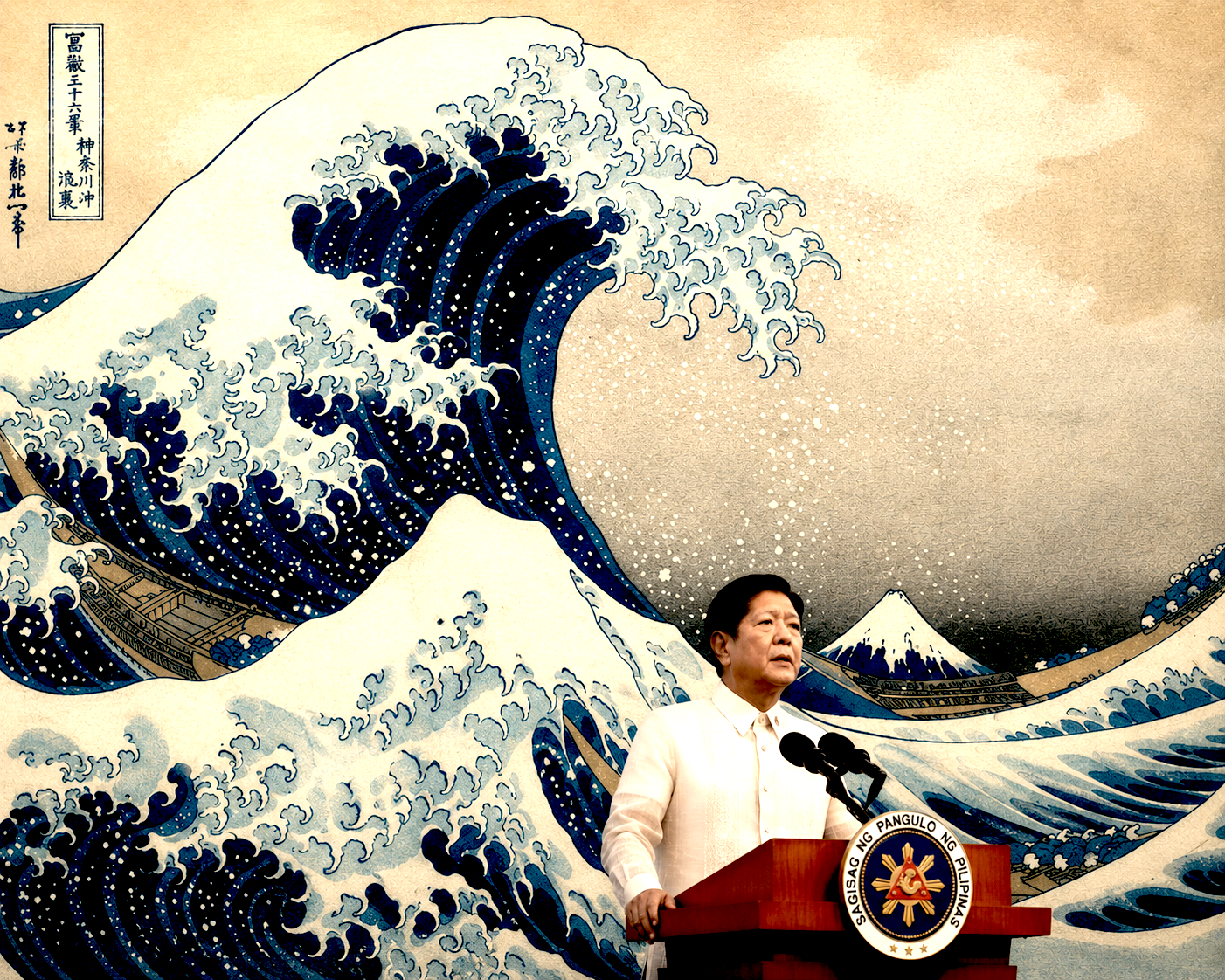
But last year, BBM dropped a bomb at the SONA that I suspect even he didn’t realize was going to be that big. His “Mahiya naman kayo!” broadside against corruption set off a further and indeed continuing series of explosions, all the way to the impeachment trial of VP Sara Duterte, as well as a Kanagawa-sized wave of expectations that now hovers over the last two years of his administration.
So what will or should BBM talk about this afternoon? My short list:
1. An acknowledgment of the economic crisis our people are suffering, and an announcement of meaningful measures to bring some relief. Talk about horrendous power bills, jeepney drivers pulling 16-hour days, seniors collapsing at ayuda lines: this is reality for most Filipinos today.
2. An update on his professed campaign against corruption; what next after the ill-conceived and underpowered Independent Commission on Infrastructure? Corruption bridges economics and politics, with public money being used by and for political power. I doubt that BBM will directly address Sara’s impeachment—best for him to stay above it and let the prosecution do its job—but it remains a corruption and accountability issue, and should be taken in that context.
3. A resolve to pursue these priorities over his last two years. He won’t and can’t use the word “redemption”—a mountain of skepticism still stands in his way there—but I’m sure he’s aware that people are watching what he’ll do next. In the end, it won’t be speeches but deeds that will make the difference—but as he learned last year, a few words can make big things happen. If I were the President—which every presidential speechwriter has to fearlessly assume for a few hours—the best way to think of the next two years is to think of forever.

 Pinoy Penman 3.0