Qwertyman No. 164: The Great Pinoy Flash Mob

Qwertyman for Monday, September 22, 2025

AT THE Manila International Book Fair last week, a young man approached me to have his copy of my new book Windows on Writing signed, and took the opportunity to ask if there was hope for this country, as many of his fellow millennials didn’t seem to think so.

I kept my smile on, but was deeply saddened by the question. I wasn’t surprised by it, because you hear it every day, everywhere, from Pinoys young and old alike. The dramatic and sickening revelations involving massive corruption in our infrastructure programs only seem to have reinforced that sense of despair over our future.

One regular reader who must be about my age also wrote me to ask, “Where is the outrage of the youth over the corruption scandals now plaguing the country? Why are they not marching in the streets like you did at Mendiola and EDSA?”

Before responding to him—and this column is that response—I had to ask myself, is that so? Indeed I get a lot of memes about corruption in my Facebook and Viber feeds, but these come from people either my age or with the same liberal-centrist disposition. Beyond these, apart from predictable pickets by the militant Left, I haven’t come across the kind of sustained, youth-driven rebellion that challenged if not toppled repressive regimes in Hong Kong, Korea, the Arab world, and now Nepal, among other places. 

But can young Filipinos be ignorant of or indifferent to what’s going on? My gut tells me no, that surely the billions of flood control funds diverted to acquiring luxury cars, California mansions, and buxom bedmates must appall and anger the young as much as us Boomers, who grew up turning lights off and eating our plates clean. After all, it’s their future that’s being stolen from right under their noses. They have much more reason to protest today than we did in 1971, when we teenagers triggered what became the Diliman Commune over a 10-centavo-per-liter increase in the price of gas.

I’m guessing that placard-bearing street marches have fallen out of fashion with the young, except again for the radical few. Today young people wear their pain on their sleeves, and also broadcast it online. Even for political causes, it’s much easier and safer to mount a virtual demonstration, through reposts and likes, with perhaps greater effect. The crooks get named and shamed, the battle lines get drawn, and demands and expectations get laid down, all at the press of a button. And after all, wasn’t this what grizzled First Quarter Stormers like me have been asking for all these years—that the art and science of protest move past the tired clichés of red flags and raised fists?

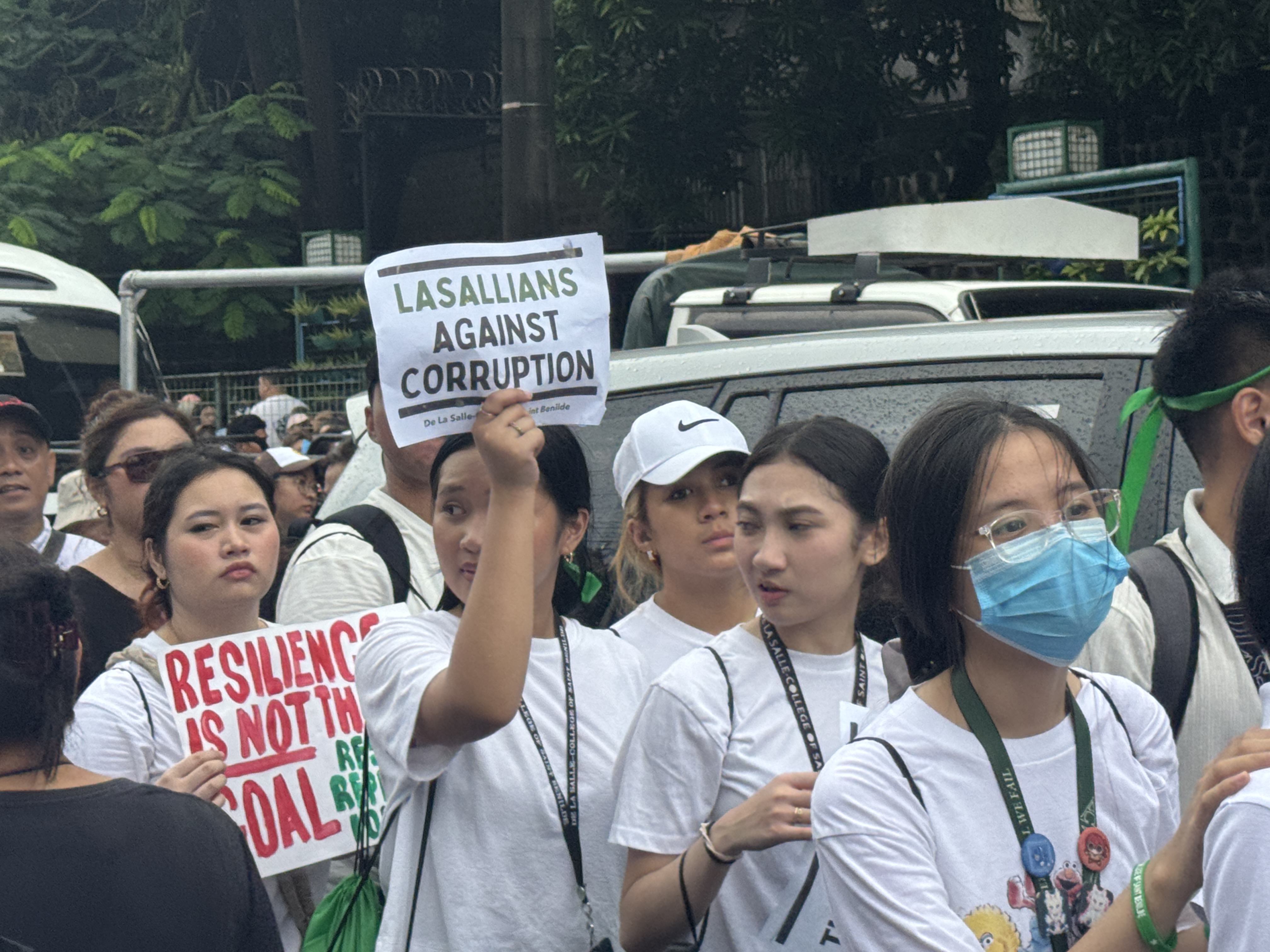
But then I’m writing this before the September 21 protest rallies—that would have been yesterday—where, despite everything I’ve just said, I expect a huge turnout of young Filipinos, provoked beyond patience and cynicism by the revolting disclosures of massive corruption among their elders. This corruption saga—and we’re watching  just the beginning of it—could yet be the most unifying factor for Filipinos in our modern history, even more than tokhang, the West Philippine Sea, Manny Pacquiao, and Jollibee spaghetti.

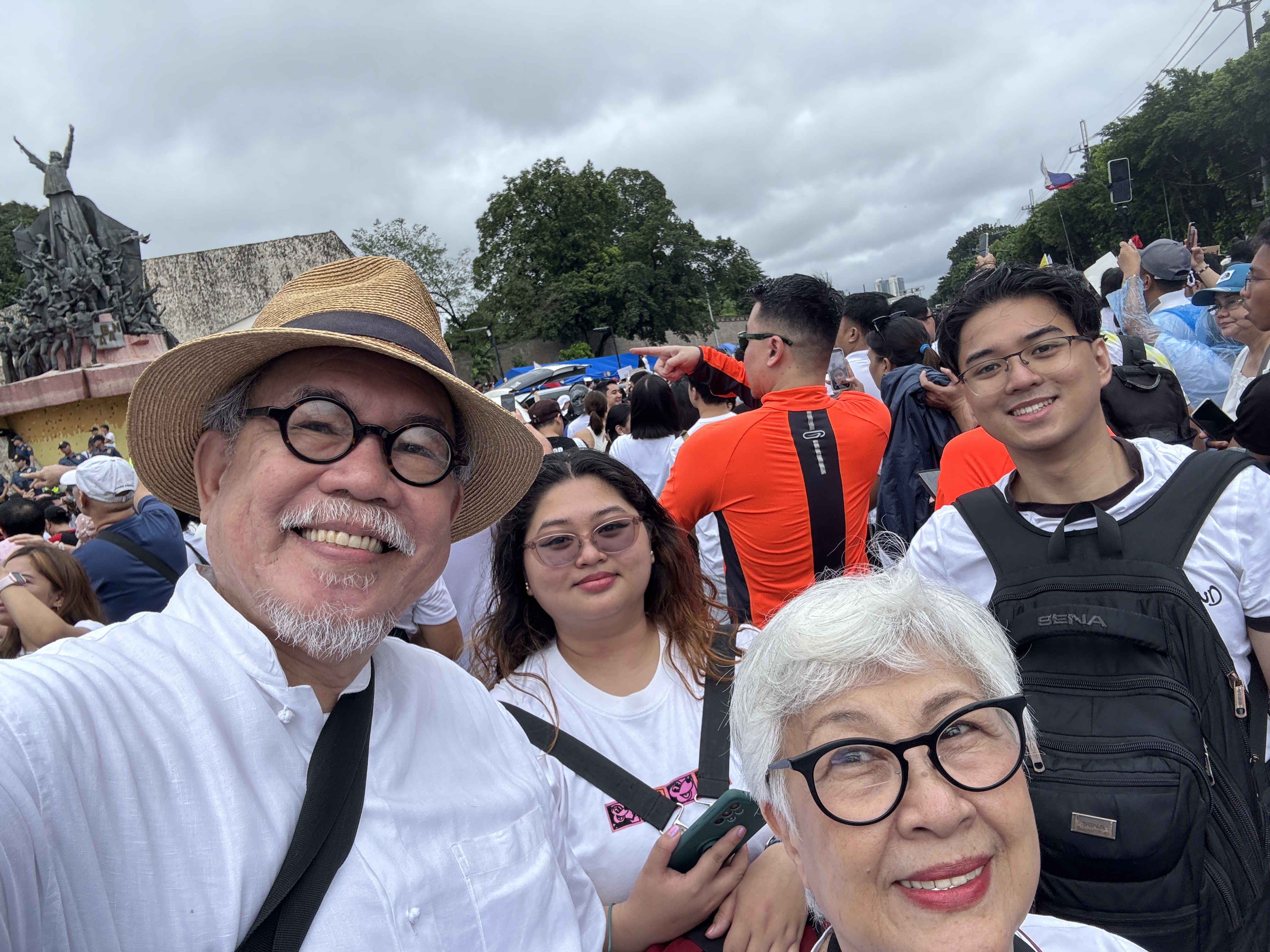
For once—and maybe just this once—it doesn’t matter if you voted for BBM, Leni, Digong, or PNoy, or if you support Gaza, Charlie Kirk, same-sex marriage, or transgender bans, or if you listen to Frank Sinatra, the Eraserheads, Yoyoy Villame, or Bini. We all got screwed by the system, which is not saying that systems are neutral (they’re crafted after all by politicians and their ethics or lack thereof), but that corruption on this scale effectively achieves a democracy of the abused. It’s that Great Pinoy Flash Mob, if you will, that went out to the rallies yesterday—perhaps not entirely cohesive or coherent, taking baby steps out of factionalism into a nascent nationhood, welded by the consuming heat of their fury and indignation.

We can’t tell for now what will become of this reconstituted parliament of the streets—if it will hold together and clarify around the most basic and most urgent of its concerns, or if, as some predict and even hope, it will weaken and dissipate over arguments about objectives and tactics and a fundamental mistrust of the fellow on your left and right. We certainly don’t lack for skeptics, pessimists, and cynics who tend to see any and every move by the hero-figures in this play as futile, as it’s all been scripted and the rich and powerful will always win.

If there’s one thing that we liberals and leftists are especially good at, it’s handwringing and doomsaying to the point of paralysis, because we like to believe that we’ve scoped out the territory, researched the history, studied all the characters, plotted out all their possible moves and motives, and found a hundred smart ways to say “This won’t work.”

That “independent commission”? Not independent enough, poor choice of chairman and adviser, beholden to this and that. Forget it. That Luneta rally? DDS-infiltrated, with violence possible. PBBM? Wasn’t he the original nepo baby, and his family the topmost plunderers of them all? Shouldn’t we just have another go at a bloody revolution to take all the bastards out?

When you think about it, on a certain level, all that could be true. And then again, one can be very smugly correct and yet totally unhelpful. When people want to express their anger and see some action, you respect that emotion—or risk irrelevance, as the Left was at EDSA (which arguably and ironically the Left had laid much of the groundwork for, but then ignored as a rightist coup). For me, let that albeit imperfect ICI get to work; the “I told you so’s” can follow later; this drama needs to be played out, if the real villains are to be revealed.

The flash mobbers who went to the Luneta and EDSA yesterday weren’t being foolish; even in their rage, they held out hope, and especially for the young, their very presence was the hope, a cry for justice echoing across the generations. 

We can’t say what will happen next, but something good might yet come out of all this woefulness and despair, if we don’t listen too closely to our inner analyst. Instead of shunning the DDS, for example, I think this corruption crisis is a good opportunity to find common cause with them and even bring some of them over. The catastrophic flooding in Davao despite the billions given to the Dutertes in flood control money should be an eye-opener for their supporters—just as it should be a reminder to us that the DDS are Filipinos, too, with legitimate rights and grievances. 

If this trillion-peso corruption crisis helps us realize the substance and spirit of our nationhood, then it will have served a positive if costly purpose.

Penman No. 475: True Confessions

Penman for Sunday, July 13, 2025

AS A collector (make that a scavenger) of old books, manuscripts, and what the market generally calls “ephemera,” I inevitably come across material neither written by nor meant for kings and presidents, but rather pedestrians like myself with things to say, perhaps secrets to whisper, likely to no one but to God and posterity.

I’m talking about diaries and journals, which people of my generation used to do (and millennials are back to doing). Worse than a pack rat, I hoard other people’s memories, some in diaries that would make people turn in their graves to know I had. I come across these often as discards or stray items among people selling and buying old books, but I find them equally if not even more fascinating than published (and therefore sanitized) material.

Back then, before computers and digital journals, New Year began with the purchase of a new diary, its pristine pages waiting to be filled with birthdays, appointments, expenses—and more interestingly, interjections of love, pain, joy, and grief, life’s highest and lowest moments. 

I myself kept diaries at one time, although the entries tended to peter out around March or April, when fatigue got the better of my enthusiasm. My most interesting one has to be my martial-law diary, which I rather presumptuously began as soon as I was thrown in prison at Fort Bonifacio; I say “presumptuously” because, at seventeen, I entertained the precious thought that somehow, someday, my juvenile musings would be worth something to someone other than my mother (I had yet to find a wife then). 

When the Italian Marxist Antonio Gramsci languished in a Fascist jail in the late 1920s, presumably between a meager breakfast and gazing out into the starless night, he penned lines like “The old world is dying, and the new world struggles to be born: now is the time of monsters.” He developed his theory of hegemony and held forth on the role of intellectuals in social change, published in his seminal Prison Notebooks.

My own teenage memoirs have survived, but instead of writing about the dominance of the ruling class or about harrowing details of torture and misery—which did happen to others—I chronicled the visits of the pretty young psychologists assigned by the military to interview us; of course we assumed they were spies, but that didn’t stop us from chatting with (more like staring at) them across a table that felt much too wide.

Indeed, for most of us more interested in the personal than the political (although arguably one will always be the other), the value of diaries lies in their true confessions, in their promise of intimacy and insight—along with, let’s admit it, the wicked thrill of voyeurism.

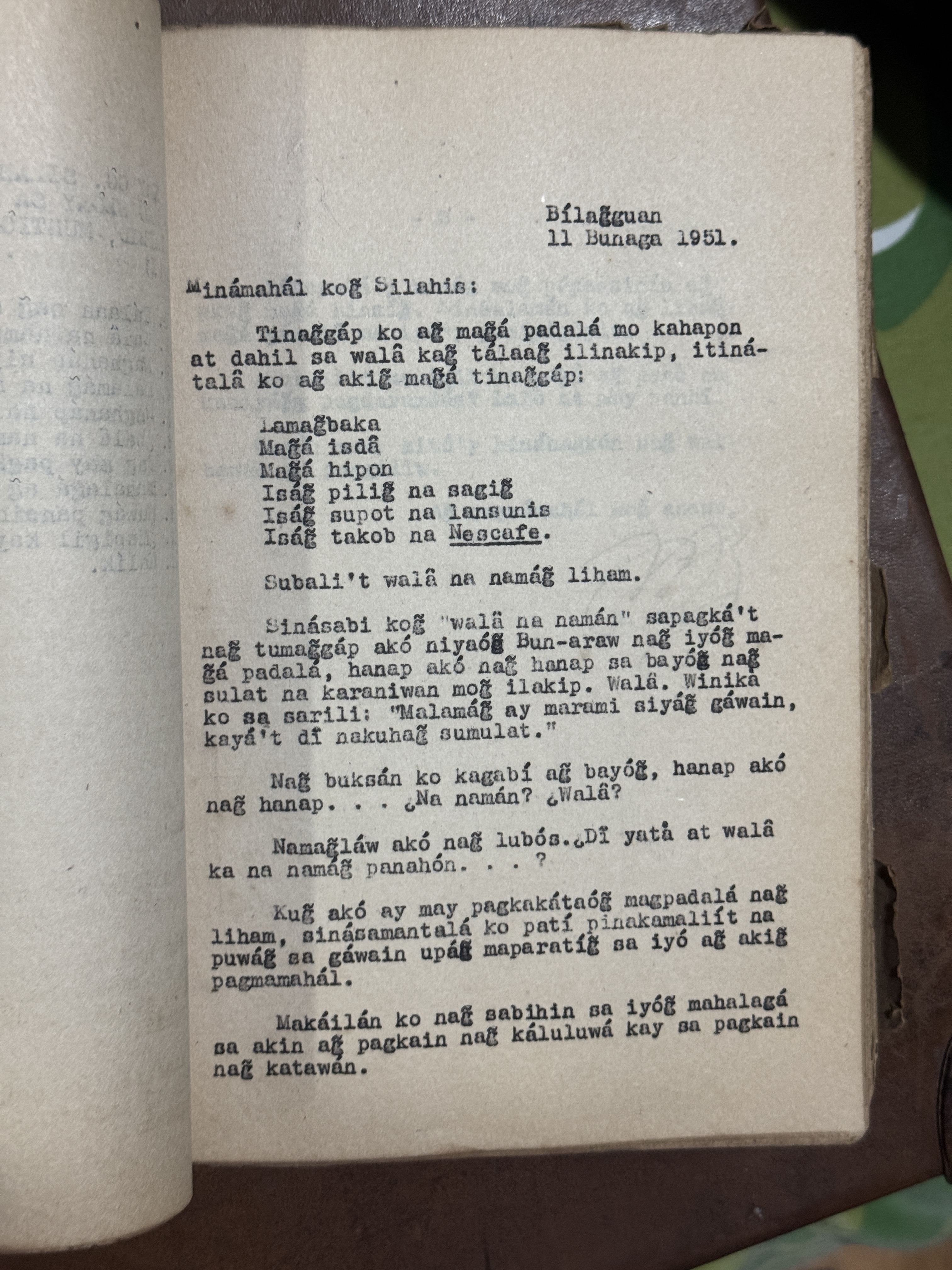
Among the most poignant of my inadvertent discoveries has been the diary—really more a scrapbook—of a once-famous and gifted writer (whose name I’ll leave out for now as he still has family around) who was imprisoned after the War for his stridently pro-Japanese sentiments and actions. In three languages, both typewritten and handwritten, he acknowledges receipt of his beloved’s supplemental rations—beef, fish, fruits, and coffee—but no letter yet again. “Nang buksan ko kagabi ang bayong, hanap ako nang hanap…. Na naman? Wala? Namanglaw ako nang lubos. Di yata at wala ka na naming panahon.” How many times do I have to tell you, he goes on to lament, that even for important to me than sustenance for my body is sustenance for my spirit?

I once came across a whole sheaf of journals in a ditch in front of our house, which I was inspecting because it had gotten clogged with what turned out to be a plastic bag full of papers. It had been carelessly thrown there by the home’s previous occupants or whoever cleaned it out—we had just moved in. They turned out to be the personal papers of a renowned UP professor, and as guilty as I felt about peeking into her life, I read a few pages, in which she confessed her admiration for a certain man (she lived and died a spinster)—only to remind herself, with what I could almost hear was a deep sigh of regret, that she considered herself wedded to God. I read no further, and decided to turn the papers over to a friend, a former and beloved student of hers who was the closest thing to a son.

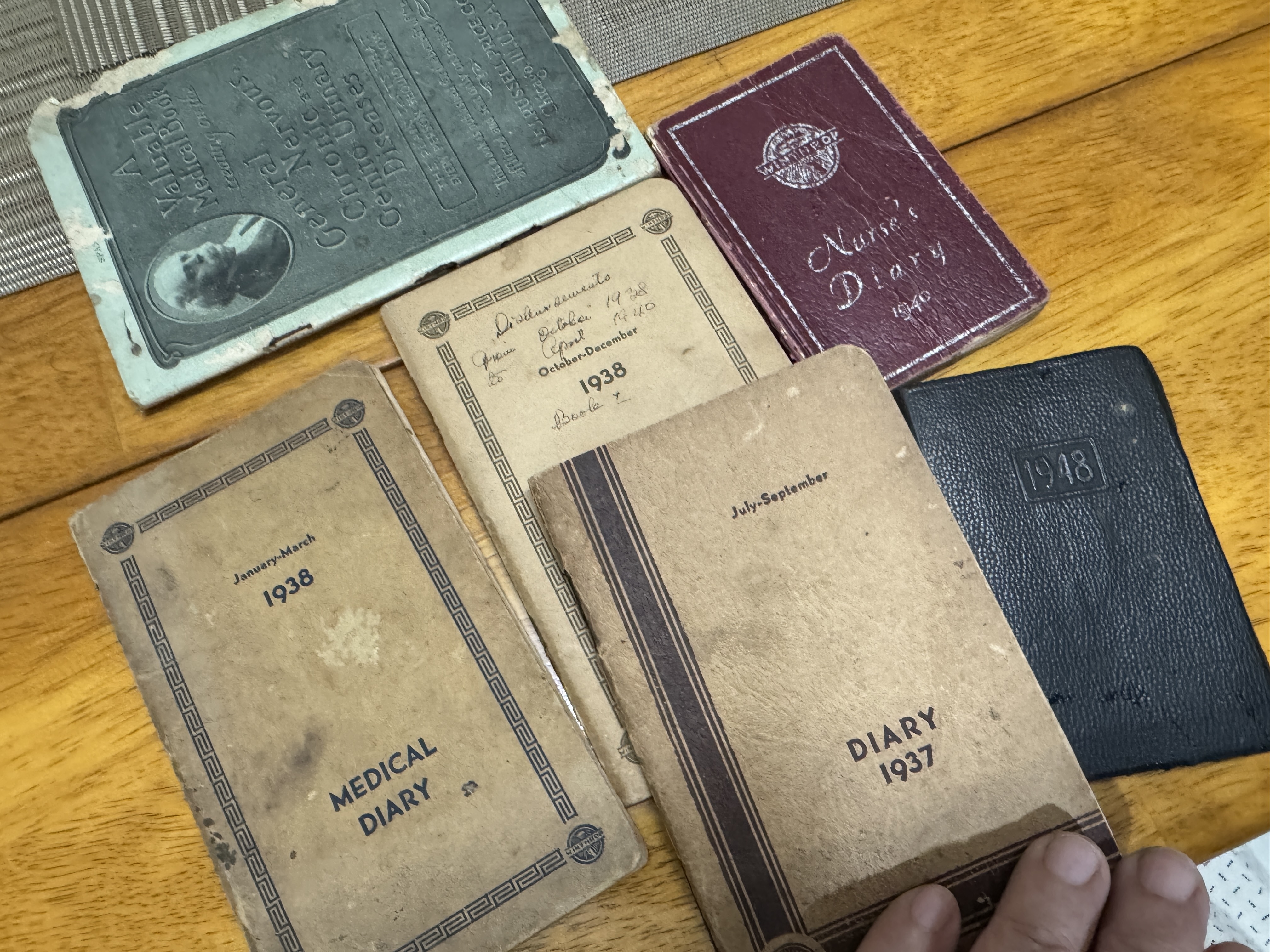
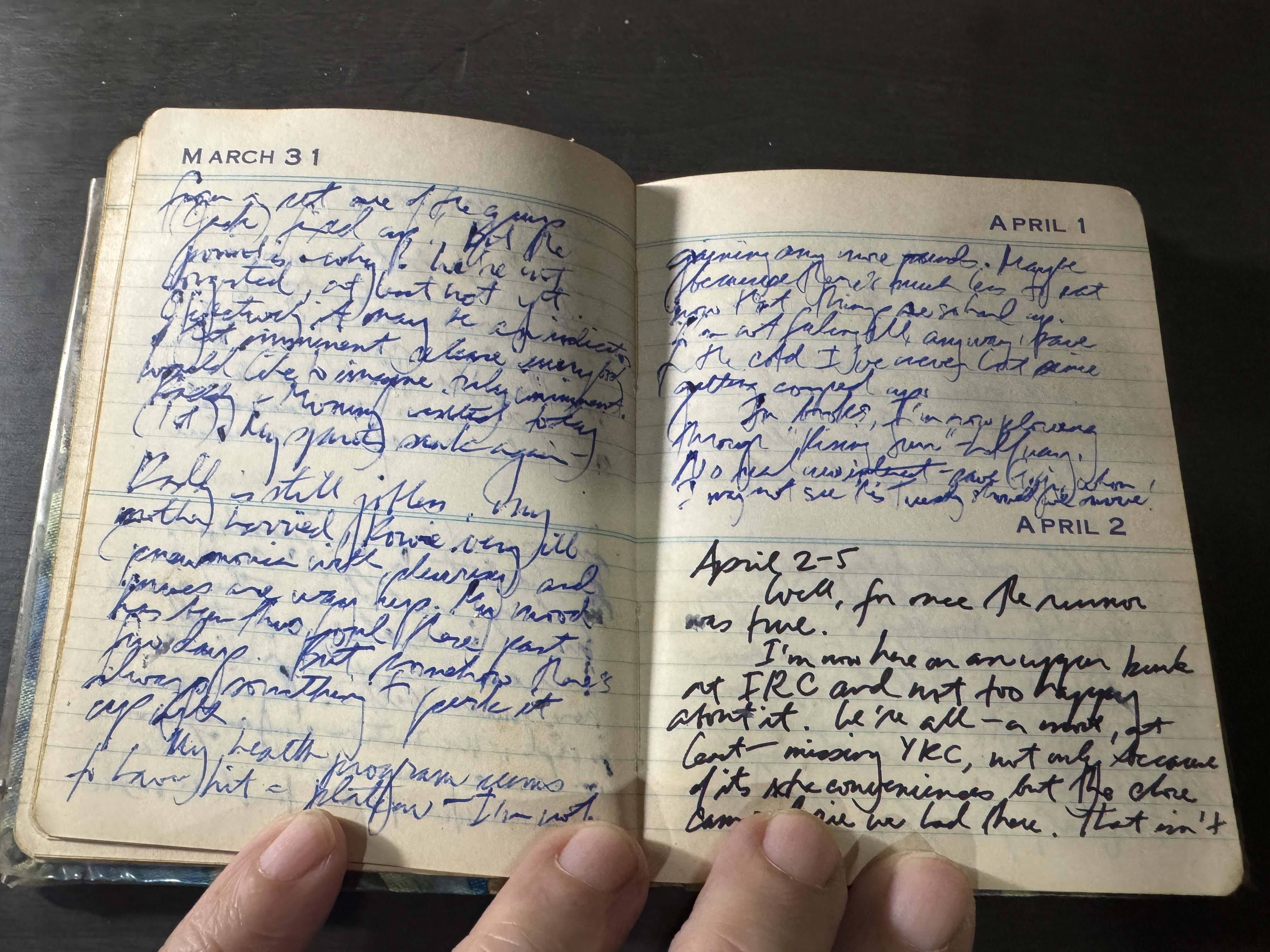
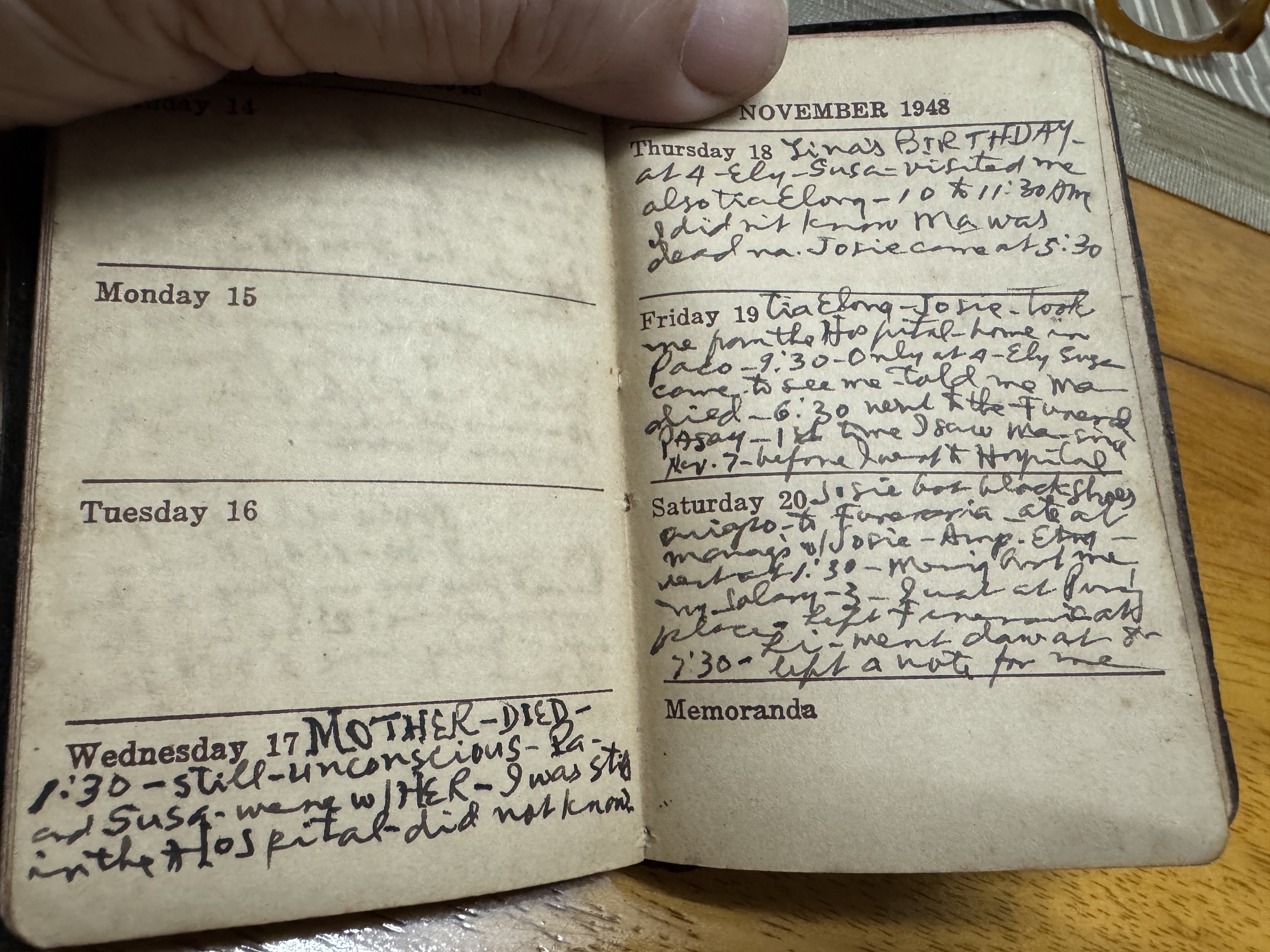
Most recently, some diaries from the late 1930s and 1940s came to me along with a medical book, and they contain nothing so revelatory, but the details of everyday life a,re always engrossing. They obviously belonged to a doctor—perhaps more than one—and while they contain medical marginalia they also carry legal notes, so the owner must have been studying to be a medico-legal person. Rather moving is the narrative in one diary of bringing a very sick mother to the hospital; I flipped a few pages and the inevitable entry appeared: “Mother died.” And there lay the stark helplessness of a doctor who could not save his own mother.

For many years now, the writer and presidential historian Manolo Quezon has been on top of an important enterprise called the Philippine Diary Project, a digitized compilation of diaries and memoirs from such notables as Jose Rizal, Ferdinand E. Marcos, Dean Worcester, and Emilio Aguinaldo all the way to the murdered activist Ericson Acosta (clearly more women need to be added to the roster).

“To me there are two holy grails,” Manolo told me. “The first is the diary of Gregorio H. Del Pilar. The diary of the American officer who led the expedition that killed him, Frederick Funston, exists but has yet to be transcribed. It was he, by all accounts, who pocketed del Pilar’s pocket diary; perhaps his papers will reveal them after a thorough search. The other is the diary of Benigno S. Aquino, Sr. The late Benito Legarda, Jr. told me that it was shown to him by one of the sisters of Ninoy, and that, in Spanish, it began, “I have been summoned to a meeting in Malacañan by the commanding general of the Japanese Military Administration…” The thing is, the last sister who had it, lost her memory and her children have not found the diary since.”

He adds that “A large portion of the Marcos diary is missing and anecdotally is said to be in the possession of a former member of his administration. For me though, what I’m seeking are diaries by Filipinos. Our own voices are woefully underrepresented. I think many were lost in Ondoy, many others have been thrown away, still more exist, but families are afraid people will take offense and so prefer to keep them secret.”

What I find from my own small collection is that whether they wrote in English or Tagalog, or used fountain pens or typewriters, our forebears recorded the smallest details such as “Auto repair 15.00” and “Won jai-alai 5-3 event.” Today we do all that with digital ink. I wonder what some digital pack rat will be remarking about us 50 years hence.

Qwertyman No. 113: My Lessons from Martial Law

Qwertyman for Monday, September 30, 2024

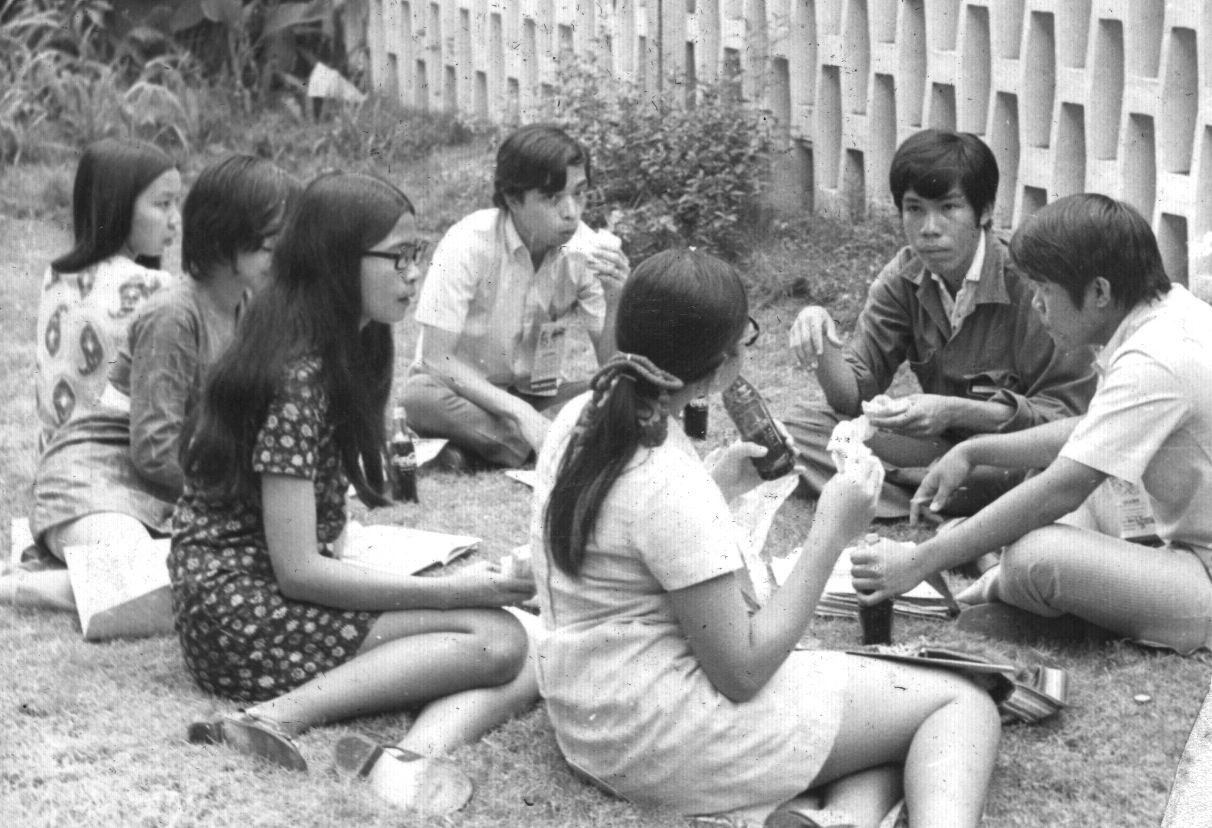
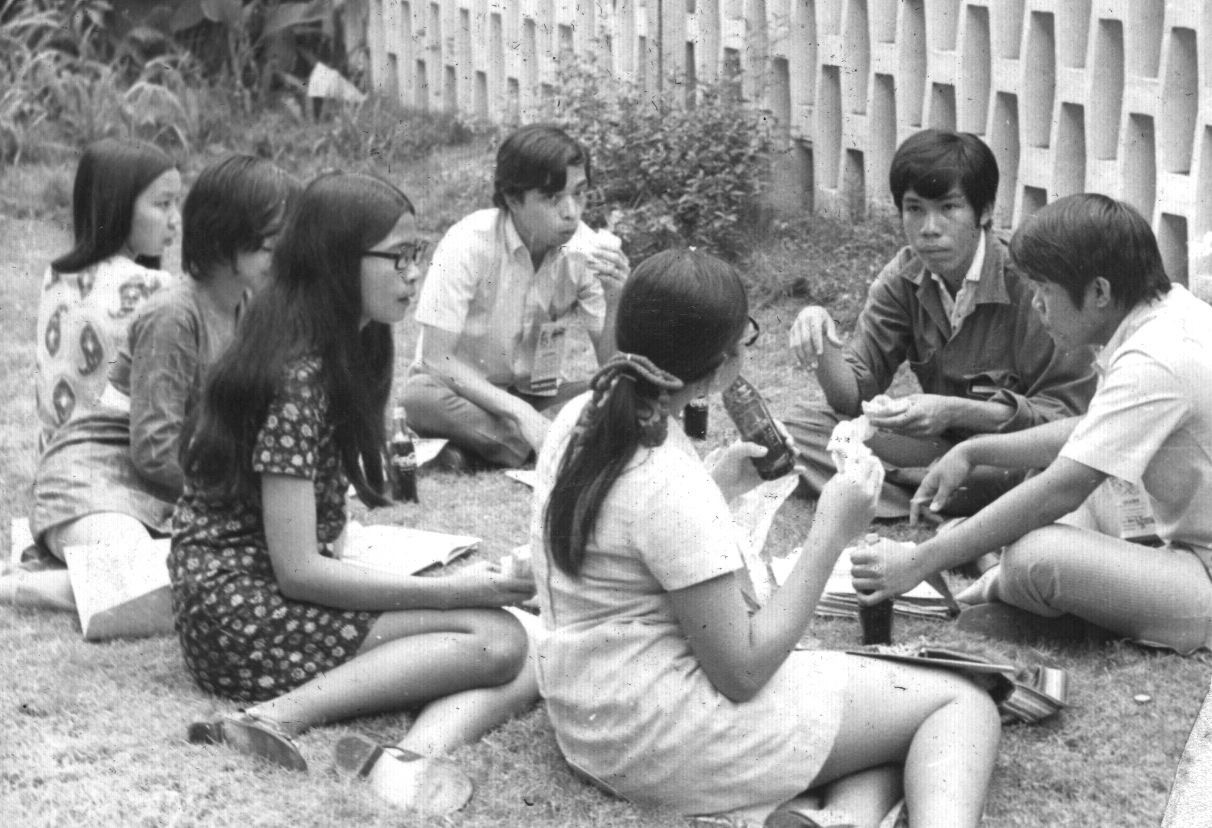
I WAS recently invited by a student organization at the University of the Philippines to speak to them about my martial-law experience, given that I had been a student activist in UP during what we called the First Quarter Storm, had been imprisoned, and had, against all odds, survived into a reasonably comfortable old age. It occurred to me, as I entered the SOLAIR building in Diliman where the event was going to be held, that I had last stepped into that place as a 17-year-old activist back in 1971 (that’s me in the picture, second from right, in that building). What had I learned since then? Here are some points I raised with my young audience:

1. We were always in the minority. Even at the height of student activism in UP and in other universities, those of us whom you might call truly militant or at least progressive were far smaller in numbers than the majority who dutifully went on with their studies and their lives and saw us as little more than a rowdy, noisy bunch of troublemakers. And the fact is, we were still in the minority in 2022, which is why Leni lost (yes, even in Barangay UP Campus). This bears emphasizing and thinking about, because sometimes we fall into the trap of believing that since we think we’re so right, surely others must think the same way. Which brings us to my next point.

2. We have to learn to communicate with other people with different views. The phrase “echo chamber” often came up in the last election, and with 2025 looming, it’s even more vital that we master modern propaganda as well as the other side does. This means sharper and more effective messaging. Enough of those two-page, single-spaced manifestoes written in the Marxist jargon of the 1970s and 1980s and ending with a string of slogans. Learn how to fight the meme war, how to navigate and employ Tiktok, Twitter/X, Facebook, Instagram, Youtube, and all the arenas now open in digital space.

3. When talking about martial law, don’t just dwell on it as the horror movie that it was for some of us. True, many thousands of people were killed, tortured, raped, imprisoned, and harassed. True, the trauma of that experience has lasted a lifetime for those involved. But most Filipinos never went through that experience, adjusting quickly to the new authoritarianism; many even look back to that period with nostalgic longing. That’s proof of martial law’s more widespread and insidious damage—the capture of the passive mind, and its acceptance or denial of the massive scale of theft and State terror taking place behind the scenes. Martial law imprisoned our minds.

3. People change; you could, too. One pointed question I was asked at the forum was, “Why is it that some very prominent student activists turned their backs on the movement and went over to the dark side?” It’s true—many of the shrillest Red-taggers we’ve seen these past few years were reportedly once high-ranking Reds themselves. So why the 180-degree turn? Well, it’s perfectly human, I said, trying to be as kind as I could, despite being at the receiving end of some of that calumny. People can hardly be expected to stay the same after twenty or forty years. Even if many if not most of my generation of activists have remained steadfast in our quest of the truth, freedom, and justice, one’s definition of exactly what is true, free, and just can change. Some people change their stripes out of conviction; some others do it for the oldest of reasons—money and power, or sheer survival. I’m saddened but no longer surprised by brazen betrayal. I learned from martial-law prison that people have breaking points, and some thresholds are much lower than others. 

4. We have to admit we were wrong about some things. This will vary from person to person, and there’s a line that could even constitute the “betrayal” I mentioned above. Some fellow activists will probably disagree with me on one of these key points: armed struggle didn’t work, and it won’t, not in the Philippines nor anytime soon. However we feel about the subject, the fact is, one armed Filipino revolutionary force or other has been at it for more than 80 years now—“the world’s longest running insurgency” as it’s often been referred to—with little gain to show for it. I don’t mean to denigrate the noble and heroic sacrifice of the thousands who gave up their lives fighting what they believed was a brutal dictatorship—many were personal friends—but how many more lives will it take to prove the efficacy of revolutionary violence, one way or another?

5. That leads me to the last point I made to my young listeners: live, don’t die, for your country. We can and will die for it if we absolutely have to (especially us seniors who have little more to lose), but today’s youth have options we never did. In the 1970s, if you were young, idealistic, politically aware, and daring if not brave, you could not but conclude that something was terribly wrong with Philippine society, and that change was badly and urgently needed. You chose between reform and revolution—and it was only a matter of time before you became convinced that the latter was the only way forward. 

Agreed, the basic problems of Philippine society may not have changed much—but one’s ways and means of addressing them have. The growth of civil society—the proliferation of NGOs covering a broad range of causes and concerns—offers practical, focused, peaceful, and professional alternatives to young people seeking social and economic change. One need not embrace the burdens of the entire nation, only to feel inadequate or ineffectual; one can do much if not enough by improving the lives of families and communities. Beyond feeling sorry or guilty for those who fought and died as martyrs, do what you can as a living, intelligent, and capable citizen to create a better Filipino future to the best of your ability.

If this sounds like the voice of a tired old man, it is. I’m tired of death and despair; I choose to fight for life and hope. 

Qwertyman No. 98: Panahon Not

Qwertyman for Monday, June 17, 2024

WHOEVER URGED President Marcos Jr. to issue that memo mandating all government agencies and schools to sing the new “Bagong Pilipinas” hymn and recite the accompanying pledge at flag ceremonies should be banished to the farthest reaches of Malacañang, in the archives chronicling his predecessors’ most stupid mistakes.

PBBM was already riding a cresting wave of nationalism (bordering, let’s admit it, on Sinophobia for many) because of Chinese aggression in the West Philippine Sea and scandals related to offshore gambling operations run by Chinese in the country. He also earned grudging points from even his staunchest critics and detractors for seemingly being open to investigating the human rights excesses of his iron-fisted predecessor and sanctioning the arrest of one of that man’s most notorious cronies (an unsuccessful operation that Vice President Sara Duterte found the delicacy to deplore for its “excessive use of force,” which you never heard her say about her papa’s murderous tokhang campaign). 

Bongbong Marcos, in other words, was beginning to look and sound like what Rodrigo Duterte never could: a president with a grasp of the issues and a sensitivity to public opinion. Even former Associate Justice Antonio Carpio, a prominent figure in the opposition in 2022, praised BBM for the latter’s recent foreign policy speech in Singapore, where he cited the Treaty of Washington whereby Spain ceded Philippine territory beyond what was stipulated in the Treaty of Paris. “This finally corrects the greatest misconception in Philippine history,” said Carpio, a militant advocate of Philippine territorial rights, “a watershed moment in our fight to defend our island territories and maritime zones in the West Philippine Sea.” 

No, it didn’t mean that the old pre-EDSA issues were forgiven and forgotten, nor that new ones like the dubious Maharlika fund haven’t emerged over the first two years of his tenure, on top of his wanderlust. But BBM has had the good luck—if you can call it that—of inheriting Chinese expansionism and the Duterte legacy, and the good sense to get on the right side of these thorny concerns. 

Granted, there’s no real way to know if his deviation from Digong’s Sinophilia and trigger-happiness is sincere and not just a ploy to torpedo Inday Sara’s claim to succeeding him and install his own man. At this point, it doesn’t seem to matter much; so brazen has Chinese aggression been that even Duterte’s boys in the Senate have felt compelled to wear “West Philippine Sea” T-shirts, even as their lesser allies pose as “peaceniks” who somehow saw nothing wrong with the former president waging war on his own people.

So did BBM’s team—or BBM himself—think that this was the right time to reap some of that PR dividend, consolidate his gains, and foist the “Bagong Pilipinas” brand on the country through a new song and pledge?

The implicit rationale, we can understand. It’s a page right out of his dad’s New Society playbook: use music—indeed, use culture and education—to generate team spirit, or at least some semblance of it. That’s what anthems, hymns, and fight songs are for, from the American Civil War’s “Battle Hymn of the Republic” to the quintessentially English “Jerusalem” and the Nazi “Horst Wessel Lied.” Here in the Philippines, no martial-law morning was complete without the “Bagong Lipunan” (its real title was “Bagong Pagsilang”) song playing on the radio. 

To be fair (if it’s even possible to say that, given that the regime put me in prison for seven months in 1973), it was a catchy, well-written song, with a martial (what else) rhythm; that we still remember at least the tune five decades later attests to the success of its imprinting. It resurfaced on the airwaves shortly after BBM took office in 2022, reviving apprehensions of a New Society 2.0, but it seems to have been pulled shortly after, leading me to suspect that BBM, after all, wanted to be taken on his own and move away from his father’s shadow, which would have been the smart (if nearly impossible) thing to do.

But the imposition of this “Bagong Pilipinas” hymn and pledge again invites uncomfortable parallels and comparisons with what FM Sr. did—and I don’t mean just having the martial-law anthem composed and played, but everything else that came with the New Society: the corruption, the arrests and killings, the submission of our institutions to autocratic rule. 

If you don’t want to go there, let’s talk about just the “Bagong Pilipinas” song itself—have you even heard it? I’m not a music critic, but even I can tell that it’s barely singable, with an uneven tempo, with immemorable lyrics, the constant refrain of which is “Panahon na ng pagbabago” (“It’s time for change”), probably the tritest political message there ever was. You need a trained choir and a band capable of trumpet flourishes to render the piece effectively; I can be convinced that this will work only if I see and hear the President himself and his Cabinet singing the song from memory at the Malacañang flag ceremony (and let’s add the new Senate President, who has embraced the directive).

I don’t know how many millions went to the lyricist and composer of the song, who have mysteriously remained anonymous; clearly, they weren’t the late National Artists Levi Celerio and Felipe de Leon, who worked together on the “Bagong Lipunan” hymn. Perhaps BBM’s critics should be happy that they weren’t that good because, presidential mandate or not, this hymn and its equally problematic pledge seem fated to be ignored and forgotten for their sheer unusability, superfluity, and irrelevance.

PBBM should have been advised that at a time when the nation needs to pull together against a visible external threat, we need constancy, not change, not confusion over who and what we are. We need our one and only National Anthem more than ever, and the same Pledge of Allegiance we have been reciting since our childhood years. Panahon naPanahon not.

Qwertyman No. 85: Epilogue to a Novel

Qwertyman for Monday, March 18, 2024

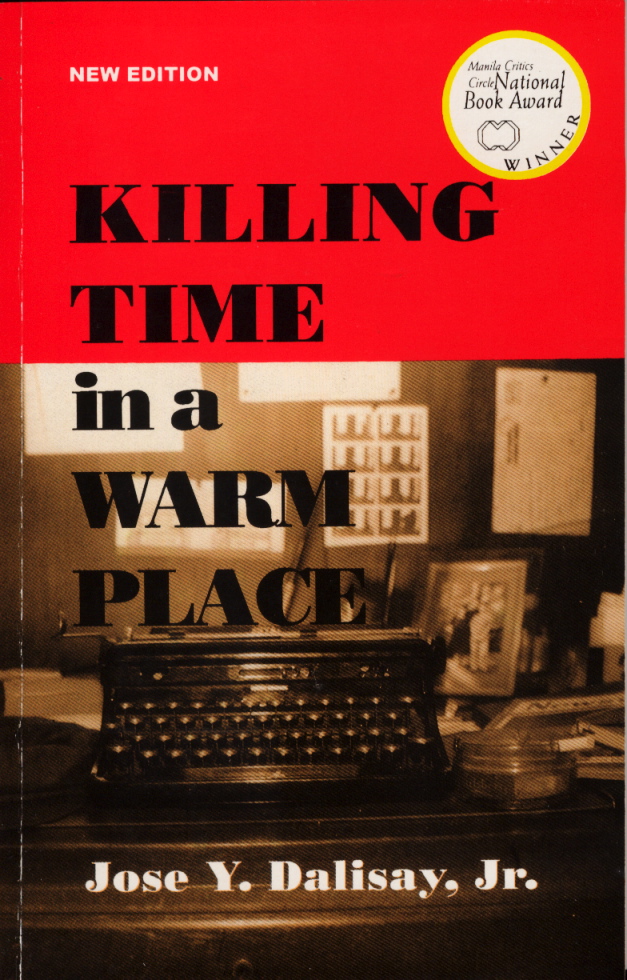
IT WAS in 1986, shortly after EDSA and my arrival in the US for my graduate studies, that I began thinking about what would eventually become my master’s thesis and my first novel, Killing Time in a Warm Place. It was published by Anvil in 1992 when I came home to resume teaching after completing my PhD. 

For those who’ve never heard of it, the novel is a semi-autobiographical account of coming of age during the Marcos years, from the point of view of a Filipino who makes the traditional journey from island to metropolis to the world at large, becoming, in the process, a kind of political chameleon. 

I had sent the first draft directly to several US publishers—my first try at getting a book published abroad—and one of them, Alfred Knopf, responded. They were interested, they said, but they needed some revisions. I knew very little about the book publishing industry then; I had no agent, wasn’t sure what lay ahead, and was in a hurry to see my book out, so I passed on Knopf—which turned out to be a titan in literary publishing—and went with Anvil, which had barely just opened.

I haven’t regretted that decision, although the Knopf deal, had it pushed through, would have been a tremendous break, not just for myself but for Philippine literature as a whole. I could understand that after EDSA, US publishing was hungry for books from and about the Philippines, so that opportunity was there, but I was also impatient to be read as a novelist by my fellow Filipinos, after having written short stories and plays. 

Anvil published the book in many printings and editions over the next two decades, as it got on the syllabi of college teachers who were looking for a novel in English on martial law, alongside Lualhati Bautista’s iconic Dekada 70. This has been my greatest reward and satisfaction from this book—knowing that somehow, it helped some of my countrymen understand what they went through.

It took a while for the novel to gain some traction overseas. In 2010, it was published in the US by Schaffner Press in a dual edition with my second novel, Soledad’s Sister. In 2012, it was translated into Spanish by Maria Alcaraz and published in Barcelona by Libros del Asteroide under the title Pasando el rato en un pais calido.

A few months ago, I received the happy news from my publisher Anvil that Killing Time was being picked up by the German publisher of Soledad’s Sister, which had apparently been doing well in the German market. So now the book is being translated into German, hopefully for a launch by Transit Verlag in time for the Frankfurt Book Fair this October, leading up to our big Frankfurt Guest of Honor year in 2025.

But I didn’t write this column just to tell you about the story of a book—rather, I wanted to say something about the story of its story.

In a message to Anvil a few days ago, my German publisher requested that I write a short epilogue to the novel, given that it’s been more than 30 years since it first came out, and that many things have happened since to the world and the Philippines—the Internet, Trump, and fake news, among others. 

So I sat down and wrote the short piece below, which I’m sharing with you since it’s highly unlikely that you’ll come across, or understand, the German translation of this epilogue if and when the new edition comes out. Here goes:

I began writing this novel in 1986, shortly after the downfall of the Marcos regime. That happened because of a massive uprising in Manila’s streets that made headlines and became a kind of model for peaceful anti-authoritarian movements worldwide. I proudly took part in that revolt, and felt the euphoria of liberation after more than a decade of martial law. It was a moment I would often return to and savor as the Iron Curtain fell and as various and largely non-violent revolutions took place elsewhere, including the Arab Spring.

I thought then that the best thing I could do was to write a novel that would try and explain how and why people fell under the spell of a dictatorship, as they did under Nazi Germany—not sparing myself, having been complicit in its later actions as an employee of the regime. I wrote it—in English—in America, mainly to fulfill my graduate school requirements, but also to celebrate our hard-won victory and share the good news with the world.

Almost four decades later, the seemingly unthinkable has happened: the right is back in power, not only in the Philippines but in many places we had thought to be reformed democracies. The optimism sweeping the planet toward the end of the 20th century has given way to a darkening horizon, a hardening of hearts, a closing of minds. Our most basic freedoms and values are under stiff and unrelenting assault, from forces we now realize had never really been vanquished but had merely been lying in wait, biding their time, seeking an opportunity for revival amidst the excesses of late capitalism.

And once again I am hearing the siren song of despotism, and see the eyes of people glazing over in the desperate desire for quick relief from their troubles, for quick salvation. I hear the march of boots, to which many young citizens—their ears plugged by loud music—seem indifferent. Even among many of their elders is a renascent yearning for the simple discipline of strongman rule.

I see all these and I wonder if I should write a sequel, an update for the new century, but what would be the point of repetition? My novel was supposed to be about the past. Why is it so suddenly pertinent again?

Qwertyman No. 64: The Death of a Crony

Qwertyman for Monday, October 23, 2023

WHEN A friend asked me, about 15 years ago, if I would meet with another friend of his who wanted me to write his biography, I almost fell off my chair when I learned who my prospective subject was.

“It’s Rudy Cuenca,” I was told. 

I knew who he was, of course—a “Marcos crony,” which had become an almost generic term at one point, there being so many. I had actually met the man once before, on a bus trip to the Pahiyas festival in Lucban arranged by the late Adrian Cristobal. My first impression had been a surprisingly positive one: he was polite, urbane, funny, hardly the obnoxious and domineering person I had imagined a crony might be.

Still, he was who he was, and I didn’t know that writing a book about his life was the right or smart thing to do. I has already written Wash SyCip’s biography, and that man was almost saintly, or sainted by the acclaim of his peers and juniors. A Marcos crony was something else.

“How can I work with someone whose boss put me in prison?” I told my friend. As a student activist, I had spent seven months in Bicutan under martial law.

“Just meet with him, listen to what he has to say,” he said. “No commitments, no promises.”

And so I did. “I have a story to tell,” Cuenca told me over coffee. I knew what he was saying: he had been privy to the Marcos regime’s internal workings, and had been one of the President’s closest golfing buddies, but, at one point, had found himself fallen from favor, eased out of the inner circle by a more unctuous lieutenant. As stories went, it was irresistible. 

I took a deep breath and told him in so many words what I’ve said to many other clients since: “I’ll help you tell your story, but I won’t lie or lawyer for you; your story will speak for itself. What I leave within quotation marks will be you speaking, not me. I’m under no illusion that you will tell me everything you know, but to the extent possible, I’d appreciate your being honest with me, so I can tell your story the best way I can.” He agreed. What followed was Builder of Bridges: The Rudy Cuenca Story, co-authored by a former student of mine, Antonette Reyes. It was published by Anvil Publishing in 2010 and became a finalist for the National Book Award the following year.

A college dropout, Cuenca taught himself the basics of business and civil engineering, and went on from small public-works contracts to some of the country’s biggest infrastructure projects such as the North Luzon Expressway and the San Juanico bridge. It was widely believed that Cuenca’s Construction Development Corporation of the Philippines (CDCP), then the region’s largest construction company, benefited from his closeness to Marcos, whom he had supported since his first presidential campaign.

Most interesting were Rudy’s stories of Palace life. Herewith, some excerpts from the book:

“I was a member of Wack Wack and Valley Golf for a number of years before I joined Manila Golf’s ‘Mafia’ group in 1973 with Charlie Palanca as the head man. Golf helped me gain some ground in business. I became a Marcos golfing crony around 1969. Marcos ended the afternoons at the nine-hole Malacañang course. Typically, a call came from the Study Room—either golf at 4:30 in the afternoon or party organized by the First Lady. The afternoon golf was meant to be the President’s peaceful time, but this was taken advantage of by those who wanted to get his undivided attention. The HIS and HERS were with their folders and envelopes for endorsement or approval. The HERS usually could not get to see him, so they were inserted as part of the regular golfing group.

“The Study Room was operated by Presidential Security Command personnel. Blue Ladies and cronies alike waited for this office to call them to major Palace functions. If no such call came, they would run around like headless chickens in search of that awaited invitation. One crony got the message that the President no longer wanted his company through the Study Room, obviously on Imelda’s instructions. As Marcos was the sole source of dispensation, those seeking approval tried to find parings or sponsors. Sometimes, those projects were so absurd that they were rejected outright.”

Rudy remembers that “Every morning, Marcos got a written report from Fabian Ver about what was going on in the country. But Marcos also got two more reports, one from Alex Melchor, and one more I think from Johnny Ponce Enrile. Marcos read these three reports at breakfast, so he knew what was going on everywhere. These reports contained lots of information—who was the boss of who, who went where, and even who was fooling around with who. He knew everything.”

Rudy doesn’t deny the systemic—but relatively small—pay-offs that got projects approved and claims processed and released in the ‘50s, ‘60s, and ‘70s. But he also says that they were amateurs compared to today’s pros, and that the scale of greed has grown exponentially. “In the old days, nobody asked you to give,” he says. “If you did, you gave them dinner. Today, people are told outright and up front what they’re expected to pay, and those amounts are outrageous. No advance payment, no contract.” 

When asked why, for example, Philippine roads seem visibly inferior to those of even other Southeast Asian countries like Malaysia, he says: “It’s simply a matter of greed. In Malaysia there’s also corruption—I’ve lived there, I should know—but the thieves there make their money by overpricing the materials. Here in the Philippines people are extraordinarily greedy. Not only do they overprice, they also steal the materials. The cement’s deficient, the gravel’s deficient. So the thing crumbles that easily.”

Rodolfo Magsaysay Cuenca’s passing last week at the age of 95 reminded me of how many stories about Ferdinand Marcos and martial law remain to be told. Fifteen years ago, it might have been considered safe for the members of that generation to spill their secrets (or justify their choices—no one will deny that these biographies are essentially self-serving), but the present dispensation will likely make people think twice about being so candid. 

I will leave it to more qualified scholars and more intrepid journalists to sift through the material and annotate the margins of my Cuenca biography, but I feel privileged to have listened to the man and to put him on the record. By any measure, it was a remarkable life. (In an even stranger twist, another crony approached me after I had done the Cuenca book, wanting me to do the same for him—the late Herminio Disini, of Westinghouse fame. I completed a draft but had to walk away, and the book never came out—but that’s another story.)

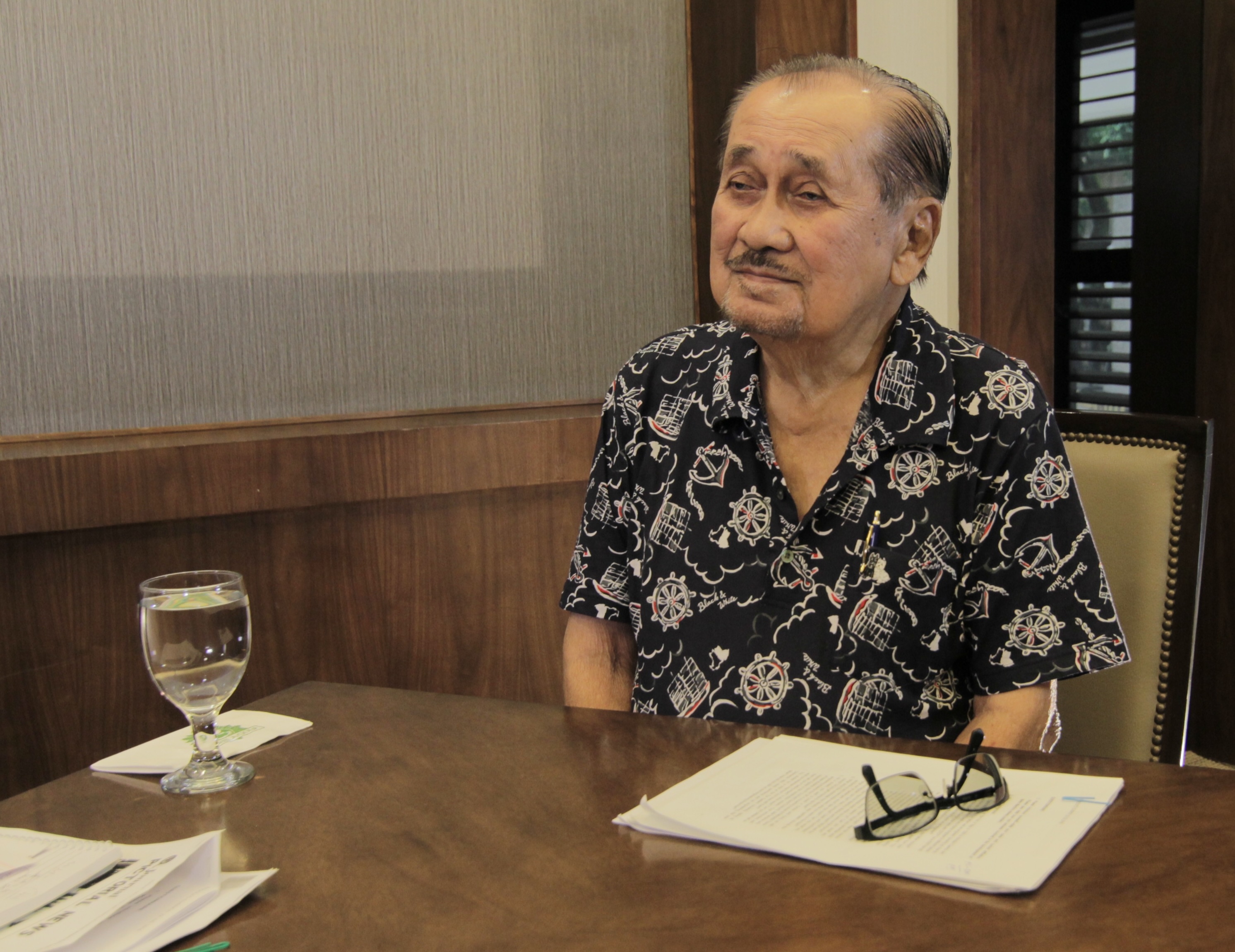
(Photo from riles.upd.edu.ph)

Qwertyman No. 59: Counterintuitive

Qwertyman for Monday, September 18, 2023

ON MY way to NAIA to catch a flight early one morning a few weeks ago, I snapped out of my half-sleep when I heard a song on the radio station that my Grab driver was tuned in to. I hadn’t heard it in almost half a century, and I was surprised to realize that I still knew the lyrics—not that I sang it back then, but because it was inescapable, flooding the airwaves with its bootstep optimism: “May bagong silang, may bago nang buhay, bagong bansa, bagong galaw, sa Bagong Lipunan!” The only difference—and what troubled me even more—was that it was a new arrangement, sung by a solo male voice, obviously a remake for a new generation. We were back in 1973, and whoever was behind that broadcast was making sure we knew it.

But of course, despite all the ironies that have been pointed out with the accession of another Marcos to power, and all the parallels that both the Junior and his detractors have drawn with the Senior’s reign, 2023 isn’t exactly 1973. The convenient conclusion would be to assume that Marcos Part II would be a replay of Marcos Part I—and many Filipinos, myself included, warned of that possibility in the run-up to the May 2022 election. But is there any possibility that President Ferdinand E. Marcos, Jr. might want to break out of his father’s mold and be, to some extent, his own man?

As soon as I say that—and before I get social media all riled up with my seeming revisionism—let me add that it’s the dramatist in me that appreciates the classic bind that Marcos Jr. must find himself in. Drama is premised on the possibility of character change—and even if the character reverts to his old self in the end, a brief flirtation with one’s opposite can be revealing.

In political caricature, characters are reduced to their extreme and basest versions—black and white, sinner and saint, damned and blessed. Oversimplification makes for effective propaganda, just so you don’t forget who the enemy is and which side you’re on. In realist drama, we move beyond types to explore the complexities of human character, taking the individual as a compound of many different—and sometimes even conflicting—traits and predispositions. Thus (goes the playwright’s conceit), no one is totally good or totally evil; the inner monster and the inner angel are in constant contention, and depending on the specific circumstances, one side will prevail at some key point that then defines that character for the history books. 

Motivations are key to what characters ultimately become—or decide to become, as personal agency and moral responsibility attend every important decision we make. Pride, love, honor, greed, revenge, and lust are powerful motivations, and often get the better of characters who are well aware of right and wrong, but who succumb to what’s been described as “human nature.” The good can become the bad; there’s a whole category of English Renaissance drama called “revenge tragedy” where, like Hamlet, a virtuous hero aggrieved by injustice plots to gain retribution, only to be so consumed by his vengeful passions that he becomes the very evil he condemns.

Now back to Marcos Jr. I’m trying, as the playwright and screenwriter I once was, to see him as the protagonist of our present play, shorn of my personal biases. Improbably—though some would say inevitably—he’s back where his father was, and with the weight of history on his shoulders. He’s firmly seated in power, and has all the opportunity and the resources to do what he wants. 

Independent and even critical observers I’ve spoken with have noted how generally cautious Marcos has been, so far, to avoid the kind of issues that will bring masses of people out onto the streets. Yes, the legitimacy of his election remains under serious question (something his handlers still have to convincingly address), but the “single IP” finding hasn’t been as politically incendiary as it probably would be in a more tech-savvy society (no, our appetite for TikTok and Facebook doesn’t count for tech-savvy). Yes, he travels and spends too much, but people—his 31.5 million, real or not—expect that to come with being a Marcos. Yes, he’s backed terribly risky if not silly ideas like a sovereign wealth fund and price ceilings, but again he knows that the economics of it will go over most people’s heads. 

On the other hand, he’s made all the right noises with regard to Chinese expansionism, in a dramatic and popular break from his predecessor. In our porma-conscious society, he looks and sounds more presidential than that predecessor who felt choked by a necktie and visibly lost in a roomful of younger, more articulate world leaders. Like his senior, Marcos Jr. understands imagery and pageantry. His rambling ad libs have been his bane, so he stays on script in his major speeches. He made some inspired and popular Cabinet choices such as the late lamented Toots Ople, although he quickly undermined any suggestion of sagacity with the appointment of the likes of Larry Gadon. 

Clearly he’s not going to repudiate his father’s legacy. His camp will continue to move to revise history and gild the rust and the rot of martial rule. In his recent speech before Singaporean businessmen, he couldn’t resist crowing that the Philippines’ 7.6% growth rate in 2022 was last achieved in 1976, “under my father’s administration.” Thanks to a DepEd edict, Filipino students will no longer learn about the “Marcos dictatorship” but simply “dictatorship,” which would be like talking about World War II without ever mentioning Hitler. The mechanical erasure of Marcosian martial law will be pushed forward by such measures as Sen. Robinhood Padilla’s proposed law designating September 21 as “Unsung Heroes Day,” to honor anti-communists.

But again the playwright in me wants to ask, is there room or possibility in Marcos Jr.’s character to make a clean break from the past and start over as his own man—or will self-interest, political habit, and family pressure prove too strong to overcome? One fellow columnist told me that his sense was that BBM was out to rehabilitate the Marcos name, to do better than his dad. Can that happen without admitting and making restitution for the wrongs of the past? We sentimental Pinoys will understand if the son will never speak ill of the father, but can he go beyond that to repair the damage done and build a bridge of trust toward his detractors—such as by releasing all political prisoners, squashing red-tagging, and putting the government’s massive intelligence funds to better use? Can and will he risk his political alliances to effect good governance?

Or will it be—to use that word that Executive Secretary Bersamin picked in his letter terminating Finance Undersecretary Cielo Magno for her unsolicited lesson in economics—too “counterintuitive” to do the right thing and accept wiser counsel? Only time and Ferdinand R. Marcos, Jr. will tell.

Qwertyman No. 58: A Long Grace Note

Qwertyman for Monday, September 11, 2023

AT ABOUT this time fifty years ago, I was newly released from martial-law prison after seven months of what everyone euphemistically called “detention,” and wondering what to do with the rest of my life. I was just nineteen, so I suppose you could say that I had a lot of living ahead of me, but I felt very differently then. More than a dozen of my friends—all of them in their twenties or even younger—had died horrible deaths fighting the regime. We exalted them as the martyrs that they were, but grimly realized and acknowledged that given how things were going, we ourselves would be fortunate to see the ripe old age of thirty.

I had been arrested at home on a cold January morning in 1973, just past midnight. Like many student activists, I had dropped out of college during the First Quarter Storm of the early 1970s. But instead of joining “the movement” full-time, I improbably found a job with a newspaper as a general-assignments reporter. It was heady stuff at age eighteen, covering three-alarm fires, floodwater rescues, and the very same demonstrations I had joined on the other side of the police barricades. And then martial law was declared—I was actually covering a rally in UP, and thought I had a scoop when a radio station nearby came under fire from the Metrocom, only to be told by my night editor when I tried to phone the story in that we no longer had a newspaper to publish, because soldiers had taken over the office. 

Over the next few months I shuttled between part-time jobs and clandestine meetings with the anti-martial law underground, moving around the city. I wasn’t doing much, given how green I was, but I thought it was important to take part in the resistance in whatever way. And then when Christmas came, like a good boy, I went home to my parents and foolishly had a chat with a neighbor who turned out to be a military asset. Not long after, a posse of soldiers appeared at our door, and when my father nudged me awake, I had a gun pointed at my face. I was being arrested under a catch-all “Arrest, Search, and Seizure Order” or ASSO issued by the Defense Minister, Juan Ponce Enrile, for whom I would ironically be writing some speeches during his post-EDSA reincarnation (he won’t remember that, as I was a tiny mouse in the office).

My release in August 1973 came right out of a Kafka story. I was taking a shower one morning in our prison—which, by the way, is roughly where St. Luke’s BGC is today—when I heard my name being called over the PA system. “Dalisay, report to the guardhouse immediately!” The last time I had done that, after one Sunday dinner, I had been beaten up by some drunken guards just for the heck of it, so I groaned when I heard the announcement. Not again, and so early? As it happened, I was received by an Army officer with a stack of papers. He pulled mine out, squinted at it, and said, “Dalisay, you’re still here? Pack your things. We have nothing on you.” The first place I visited after I went home was the AS Steps in UP, where we had gathered for many a raucous rally; it was vacant and deathly silent, and I knew that I wasn’t going back to school just then. Only after a long detour—working as a printmaker, a writer, an economist, and meeting Beng and fathering Demi—did I return to UP and graduate with my degree at age thirty.

I’ve written about my activism and incarceration in my first novel, Killing Time in a Warm Place (Anvil Publishing, 1992), and it isn’t what this column is really about. Rather, it’s about the aftermath, about having a life after martial law, and an unexpectedly long one at that. 

For any activist from my generation who’s still alive, every breath we’ve taken after our 30th birthday is a grace note—what the dictionary describes as “an extra note added as an embellishment and not essential to the harmony or melody”—in other words, a bonus. Considering that we could have been gunned down like dogs or buried alive like some of our comrades were, you can understand why we feel that way. It’s almost absurd to contemplate, but education, marriage, career, success, fame, fortune—and all the downsides and flipsides that come with them—all these were a long string of surprises, any one of which might never have happened, but for a twist of fate or a stroke of luck (clichés, like life’s very milestones, but ones we appreciate).

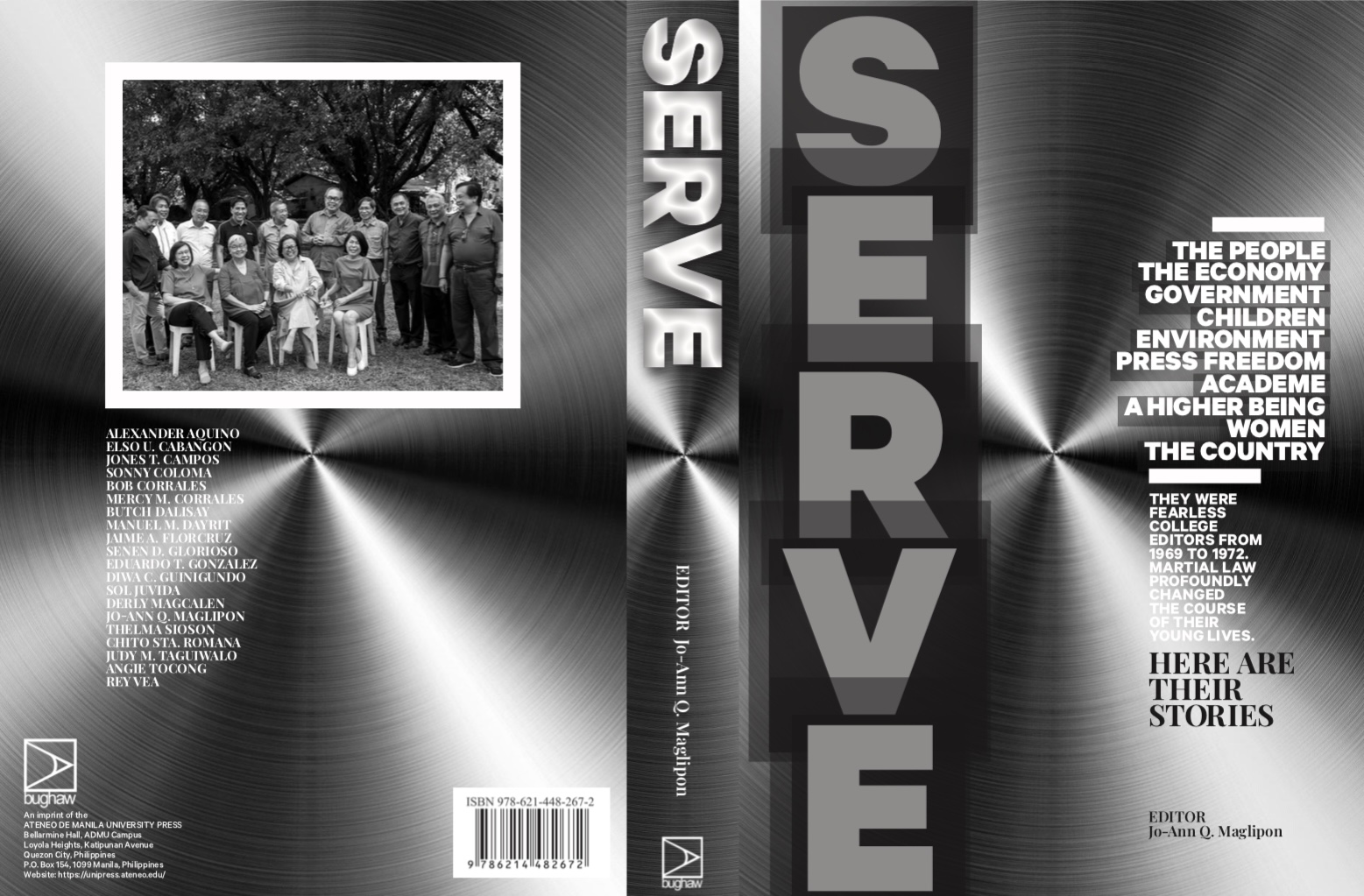
When my fellow FQSers and I—all college editors who were part of the SERVE book that I wrote about last week and that we launched last Saturday—gathered around a table before the launch to pre-sign some copies, we noted with much chuckling how surprisingly old we had become. We were beset by diabetes and hypertension, which were lethal enough but easier to bear than the four bullets one of us took to his face and body; he was with us that day, laughing, his spirits buoyed by his fervent Christian faith. 

We had become university presidents and professors, Cabinet secretaries, CEOs, magazine editors, pastors, and opinion-makers. I don’t think there was anyone in that room who believed any longer in the necessity nor the efficacy of violence, but neither did anyone imagine that our youthful goals had been met, that the country had become a kinder place, and that our work for justice and freedom was done. We had come to terms with our past, were busily in the present, and were hoping to enjoy what little we had left of our extended lives. But like those shaken passengers who stagger away from a crashed plane, leaving the uncounted dead behind, I’m sure that we felt driven by survivor’s guilt to make the most meaning of our gifted years, to do well and to do good, and to serve our people in any way we could. 

We learned that everything may be political, but also that politics is not everything, and that the road to happiness and deliverance may be wider than we had thought. I myself have resolved that even as I fight on for truth and beauty, I will not allow my happiness to be determined by our political vicissitudes, if I can help it. That will be my sweet revenge on my jailers. I will survive you, live a fuller life, and meet my Maker with a clear conscience and a smile.

Qwertyman No. 57: An Invitation to SERVE

Qwertyman for Monday, September 4, 2023

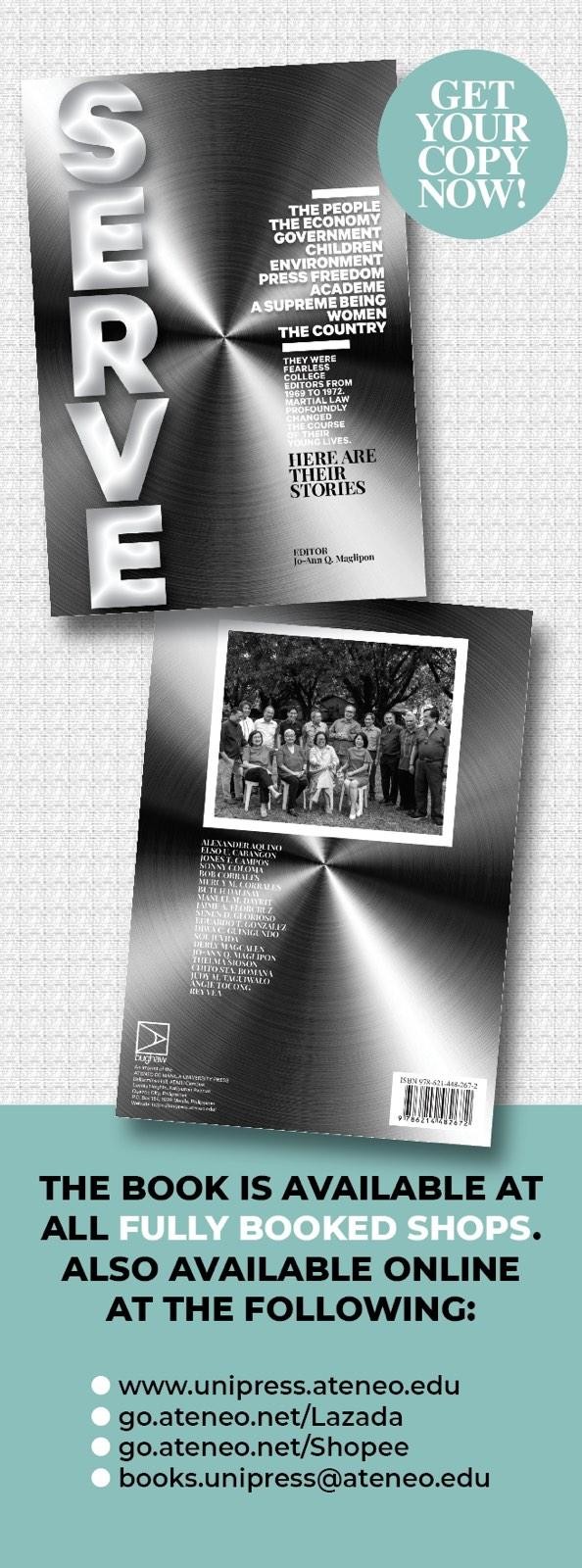
AT 5 PM next Saturday, the 9th of September, a new book will be launched at Fully Booked in BGC. Published by the Ateneo de Manila University Press and simply titled SERVE, the book has 19 authors—yes, I’m one of them—and one editor, the much-respected Jo-Ann Maglipon. What connects all is that they were college editors during the first Quarter Storm of the early 1970s, and survived to go on to distinguished careers in media, education, business, and public service. The book dwells much less on martial law—a previous volume titled Not on Our Watch: Martial Law Really Happened, We Were There that came out in 2012 dealt with that—than with its aftermath, and the afterlife that the activists of our generation were fortunate to have, given how many of our comrades gave up their lives to the cause of justice and freedom.

What did these activists do after martial law? What are they thinking now? Some of the names in this book will be familiar to the contemporary reader, who may not even have known of their activist background (reg-taggers, pay close attention).

Some of us—like Jimi FlorCruz, Sol Juvida, and Thelma Sioson San Juan—remained journalists all their working lives, stationed in very different places and capacities but bound by a commonality of interest in the truth. Others like Sonny Coloma, Manolet Dayrit, Ed Gonzalez, Diwa Guinigundo, the late Chito Sta. Romana, and Judy Taguiwalo took the path of government service, finding themselves in a position to effect real change, although sometimes under very difficult if not adversarial circumstances. Yet others including Angie Castillo, the late Jones Campos, Mercy Corrales, and Senen Glorioso found fulfillment in entrepreneurial and corporate work, applying their progressive values to management. For Elso Cabangon, Bob Corrales, and Diwa Guinigundo, their circuitous journey led to a re-encounter with their spirituality, and to embracing their faith as their personal advocacy. Like many veterans of the First Quarter Storm, Alex and Edna Aquino were able to build new and productive lives overseas, without yielding their investment in Philippine concerns. Quite a few of us—Derly Fernandez, Ed Gonzalez, Judy Taguiwalo, Rey Vea, and myself—chose to pursue our activism in academia, if only to ensure the transmission of critical inquiry to another generation. 

The authors were under no compulsion to conform to an ideological standard, except to extol the spirit of service to the people, the overarching theme of their youth and now their continuing commitment, indeed their legacy. There’s pathos in these accounts, but also humor and, inevitably, irony, perhaps the defining tone of our postmodern age: Thelma Sioson San Juan finds herself seated across Deng Xiaoping’s granddaughter at a Ferragamo show in Beijing’s Forbidden City; Manolet Dayrit learns of his appointment as Secretary of Health on a visit to President Gloria Macapagal-Arroyo in Malacañang; Ed Gonzalez becomes president of the Development Academy of the Philippines under President Joseph Estrada, but then joins EDSA 2; Sonny Coloma looks out the window of his Malacañang office to where students like him had demonstrated against Marcos.

With most of the writers here now in their seventies or inching close to it, we could have been chronicling the joys of grandparenting, journeys to far-off places, exotic menus, succulents and bromeliads, and homeopathic remedies for the aches of aging. Having retired from the formal workplace, we thought we had settled into a privileged and imperturbable kind of peace, earned over decades of political, economic, and spiritual struggle. 

We celebrated our seniorhood as the ultimate victory, for a generation that did not expect to live beyond thirty, and not because of some acquired disease but because of the throbbing cancer at the core of our society that claimed many of our peers in the prime of their youth. We may have thought for a while that we had defeated and expunged that cancer, only to realize that it had never left, was always there, lying cruelly in wait for a chance to ravage us again—and not only us this time, but our children and grandchildren as well.

And so—albeit no longer lean and shaggy-haired, perhaps benignly forgetful of car keys and personal anniversaries—we gather again at the barricades we put up against a fascist dictatorship fifty years ago, of which our memories remain surprisingly and painfully sharp. They say that the old remember distant things more clearly than what happened yesterday, and we offer proof of that. The experience of martial law coded itself into our DNA, and even the few among us who surrendered their souls to Mephistopheles cannot shake away that indelible past—one we bear with pride, and they with guilt and shame.

This time our barricades consist not of desks and chairs but of memory itself and, more formidably, of hope, courage, and a continuing faith in the good. Beyond memoirs, more than recollections of our youthful selves, we now present the stories of the lives we built and the paths we took after martial law, along with our reflections on how time and experience have reshaped us, clarified our values, and strengthened our resolve to serve our people in multifarious ways. 

Our view of politics inevitably evolved over time as the world itself changed over the past five decades. These essays and stories cover a wide range of themes and treatments, and demonstrate how “serve the people” has grown and evolved with its advocates, taking multifarious forms from working in civil society and practicing good governance to promoting artistic expression, academic freedom, and insightful journalism. We wish to prove that even the worst of times and the worst of leaders are not only survivable but can be changed, so that whatever lies ahead, the better Filipinos in us will prevail.

Given the number of authors and their families and friends, we expect a full house at the launch, so you might want to wait and get your copy of the book from Fully Booked or from AdMU Press’ online channels. However the book finds its way to you, it will be worth your while.

Qwertyman No. 50: Doro’s Times and Ours

Qwertyman for Monday, July 17, 2023

THE NEWS of Amando “Doro” Doronila’s recent passing in Canberra at age 95 marked the end of an era, as Doro was the last of his generation of journalists who made newspapers and their Op-Ed pages compelling reading. Whichever side of the political fence they were on, these journalists and columnists gave it all they had; many reveled in their prominence and some shamelessly parlayed their influence into all manner of profitable enterprise, back when it seemed the sensible thing to do, before the darker complicities of martial law set in.

Doro seemed to me to be above all this. His personality was, shall we say, poorly suited for TV or even radio, which was just as well, because it drew a clear line between journalists who did nothing better than think and write deeply, and those who confused their calling with show business.

I didn’t really know Doro personally. My one memorable encounter with him was when I was 18, a freshman dropout from UP who was dying to get into the newspapers, by hook or by crook. (Like some precocious teenagers, I was convinced I had the writing talent to skip journalism school. I would later pay for that hubris in tearful rewrites in the newsroom.) 

One of the doors I knocked on was that of the Manila Chronicle, which Doro was the editor of in 1972. I remember striding into its office and walking up to Doro’s desk, sucking in my stomach. He seemed puzzled to see my pimply face, which probably belonged to a messenger boy’s, except that I came empty-handed. “Yes?” What did I want? “Sir, I want to apply for a job—as a reporter,” I must have croaked, mumbling something about my writing for the Collegian and my high school paper. “How old are you?” I said that I was “going to be nineteen soon”—“soon” being about nine months away. 

I can’t recall if he looked back at me with pity or sympathy, or if he was laughing inside. I do remember him saying something like “Why don’t we talk again in a few years?” I was disappointed but not dejected; at least he didn’t throw me out of the place, or ridicule me before a roomful of the kind of people I wanted to be—hunched over typewriters, smoking up a storm, shaping tomorrow’s news, their bylines embedded crisply and imperishably on fresh paper.

Eventually, sometime that summer, and through sheer persistence, I did land a newspaper job, as a features writer and then a general-assignments reporter with the Philippines Herald, very likely the youngest fellow working full-time for the papers then. With the Herald and later Taliba  just before martial law, I met all kinds of journalists on the job, and saw how human we all were, the creatures of our noblest ambitions and pettiest grievances. One reporter I was on the police beat with loved playing cop, interrogating suspects each one of whom he was convinced was nursing a confession. Many had an enormous capacity for alcohol and the unapologetically macho bluster that came with it. Despite their gruffness, some had marshmallow hearts; two or three even took me under their wing to spare me from the usual gauntlet that rookies had to undergo. We were the peons of the profession, entry-level Hemingways and Woodwards chasing stories down the city’s tenebrous alleyways, and we loved every minute of it.

That was our world, but when I reported to the newsroom in the afternoon to file my story, I was ever aware that even above the copyeditors’ desk was another tier of men (as they mostly were) who perorated boisterously in a corner office on the day’s politics over scotch and cigars, the people whose opinions mattered and who made opinion matter. Never having worked with or for Doronila, I could only imagine him in that company, sitting sagely with his fingers crossed while allowing the thunder to roll above his head.

Today, half a century later, and finding myself just as old or even older than those titans of Philippine journalism then, I can savor the irony of having the privilege to write an Op-Ed column in times that mirror, in many ways, the early 1970s—with a Marcos in Malacañang, an opposition at bay, a scandal a week, and yet a people hard at work, striving for economic and moral deliverance. 

The great difference is that newspapers no longer have a monopoly of opinion-forming; that ground has been taken over by the Internet and social media (and elsewhere, by early-morning and late-afternoon AM radio, perhaps the hardiest of public platforms). Certainly, some Op-Ed stars remain—again on either side of the political divide—with faithful followers in need of sharper articulation and affirmation of their own sentiments. But even those readers tend to be aged or aging, people with the time and patience to read prose in paragraphs instead of bullets and memes, and who might even look for and appreciate that elusive quality called “style.” (Doronila’s no-frills prose, to be honest, was straight and guileless to the point of being starchy.) These 1,000-word pieces we produce now belong to what they call “long-form” writing, as if to write and read them were a test of endurance. 

But against the cheeky punchiness of Twitter and the ugly street brawls on Facebook, and above all stylistic considerations, I have to applaud this new generation of journalists (not all of them for sure) for their adherence to the truth and to fact-based reporting, and for holding themselves up to a higher standard of ethical behavior than their predecessors. Battling the bots and trolls of disinformation, they put their lives and well-being on the line, story by story, column by column; most are young, many are women, some even gay—the old gray men of the newsroom no longer dictate the headlines or the editorial slant. I think Doro himself would have been happy to see this, having mentored many of his successors.

And so as we grieve Amando Doronila’s demise at an age few of us can hope to approach, we can celebrate the continuity of upholding courage, virtue, and incorruptibility in Philippine journalism, with deepest thanks for the example the man set for us to follow.

(Photo by Pablo Tariman on FB)