Penman No. 479: Postscript to Frankfurt

Penman for Sunday, November 2, 2025

IT WILLl be remembered as one of the largest, most complex, possibly most impactful—and yes, also most expensive and controversial—showcases of Filipino cultural and intellectual talent overseas, and above and beside all else, that fact alone will ensure that few things will remain the same for Philippine literature after Frankfurt 2025: it will be remembered.

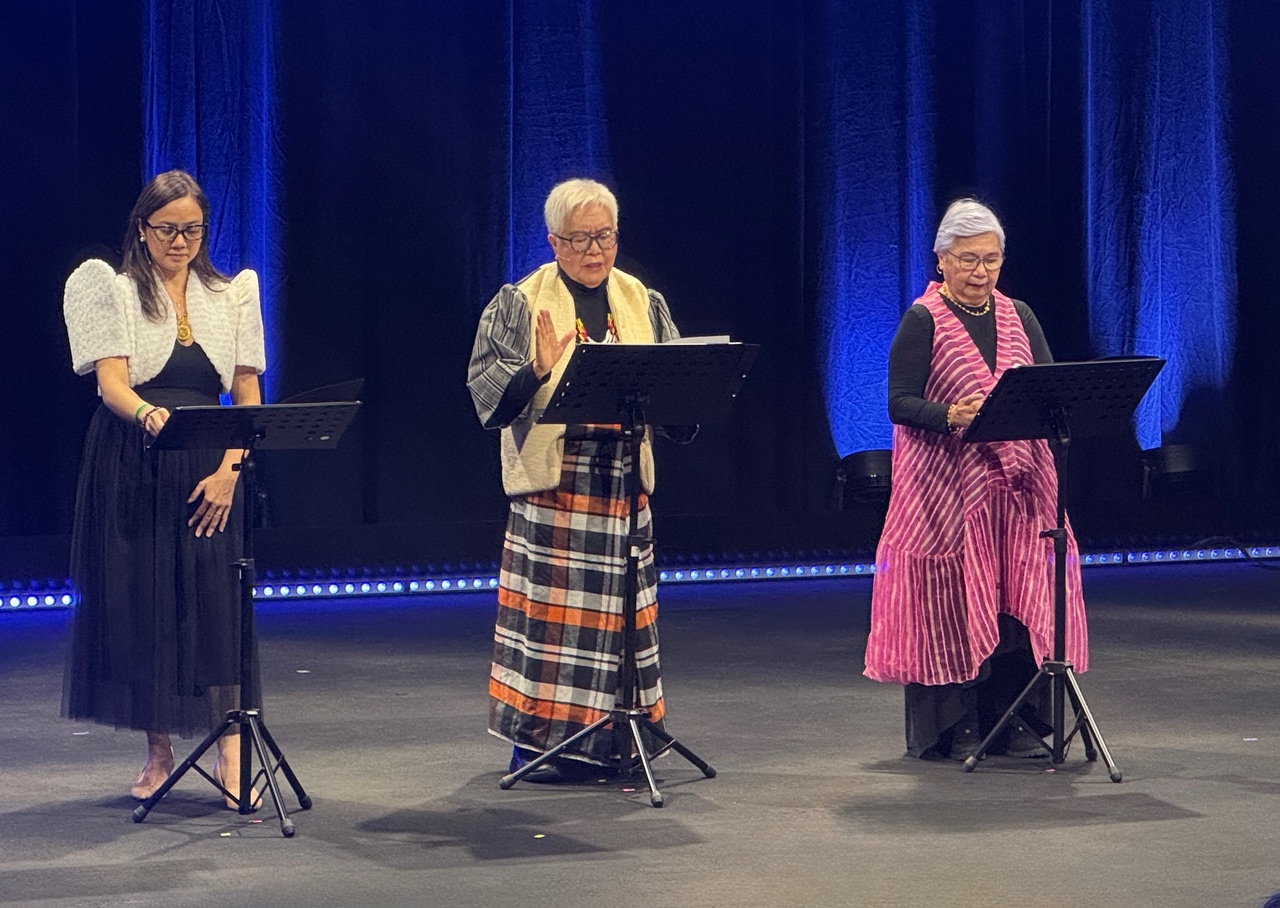
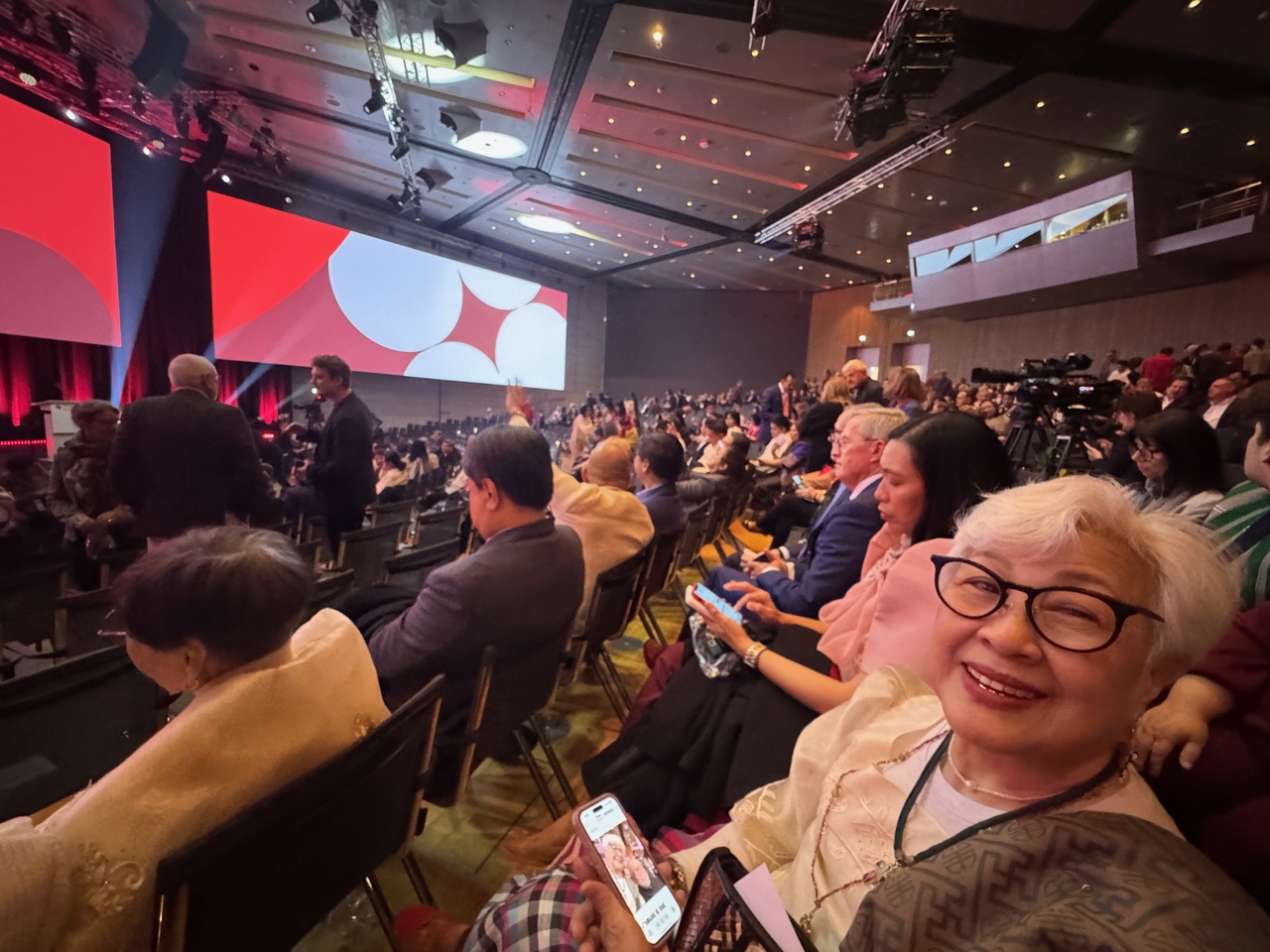
Last month—officially from October 14 to 19, but with many other related engagements  before and after—the Philippines attended the 77th Frankfurter Buchmesse or FBM, better known as the Frankfurt Book Fair, in a stellar role as its Guest of Honor or GOH. Accorded yearly to a country with the talent, the energy, and the resources to rise to the challenge, GOH status involves setting up a national stand showcasing the best of that country’s recent publications, filling up a huge national pavilion with exhibits covering not only that country’s literature but also its music, visual art, film, food, and other cultural highlights, presenting a full program of literary discussions, book launches, off-site exhibits, and lectures, and, of course, bringing over a delegation of the country’s best writers and artists. 

It’s as much a job as it is an honor. Past honorees have predictably come mainly from the West, such as France (2017), Norway (2019), Spain (2022), and Italy (2024); only once before was Asia represented, by Indonesia in 2016. Little known to many then, Sen. Loren Legarda—the chief advocate for the arts and culture in the government—had already broached the idea of pushing for the Philippines as GOH in 2015. It took ten years, with a pandemic and two changes of government intervening, but Legarda finally secured the funds—coursed through the National Commission for Culture and the Arts and the National Book Development Board—for us to serve as GOH this year, announced a year earlier.

The Filipino delegates, over a hundred writers and creatives and as many publishers and journalists, took part in a program of about 150 events—talks, panel discussions, demonstrations, book launches, and performances—and ranged from Nobel Peace Prize winner and journalist Maria Ressa and National Artists Virgilio Almario, Ramon Santos, and Kidlat Tahimik to feminist humorist Bebang Siy, graphic novelist Jay Ignacio, poet Mookie Katigbak Lacuesta, and fellow STAR columnist AA Patawaran.

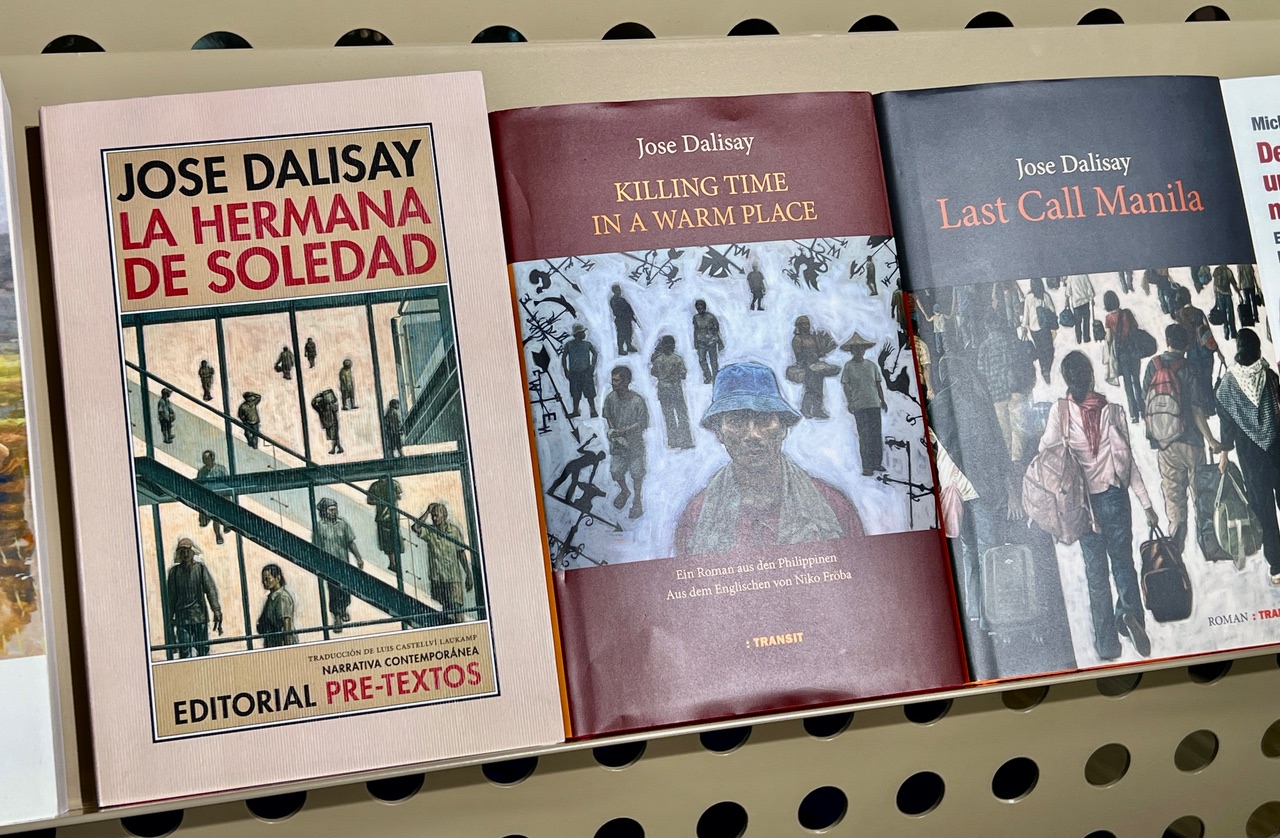
It was my third FBM, having gone for the first time in 2016 and then again last year, when the German translations of my novels Killing Time in a Warm Place and Soledad’s Sister were launched. This year, it was the Spanish translation of Soledad that was set to be launched at Frankfurt’s Instituto Cervantes. 

Those two previous exposures allowed me to appreciate our GOH role for what it was—a once-in-a-lifetime opportunity to put our best foot forward on the global stage. What began in the 1980s as a tiny booth with a few dozen books—which it still was when I first visited nine years ago—had become a full-on promotional campaign, not for the government (which did not object to outspoken critics of authoritarianism being on the delegation) and not even just for Philippine books and writers but for the Filipino people themselves. 

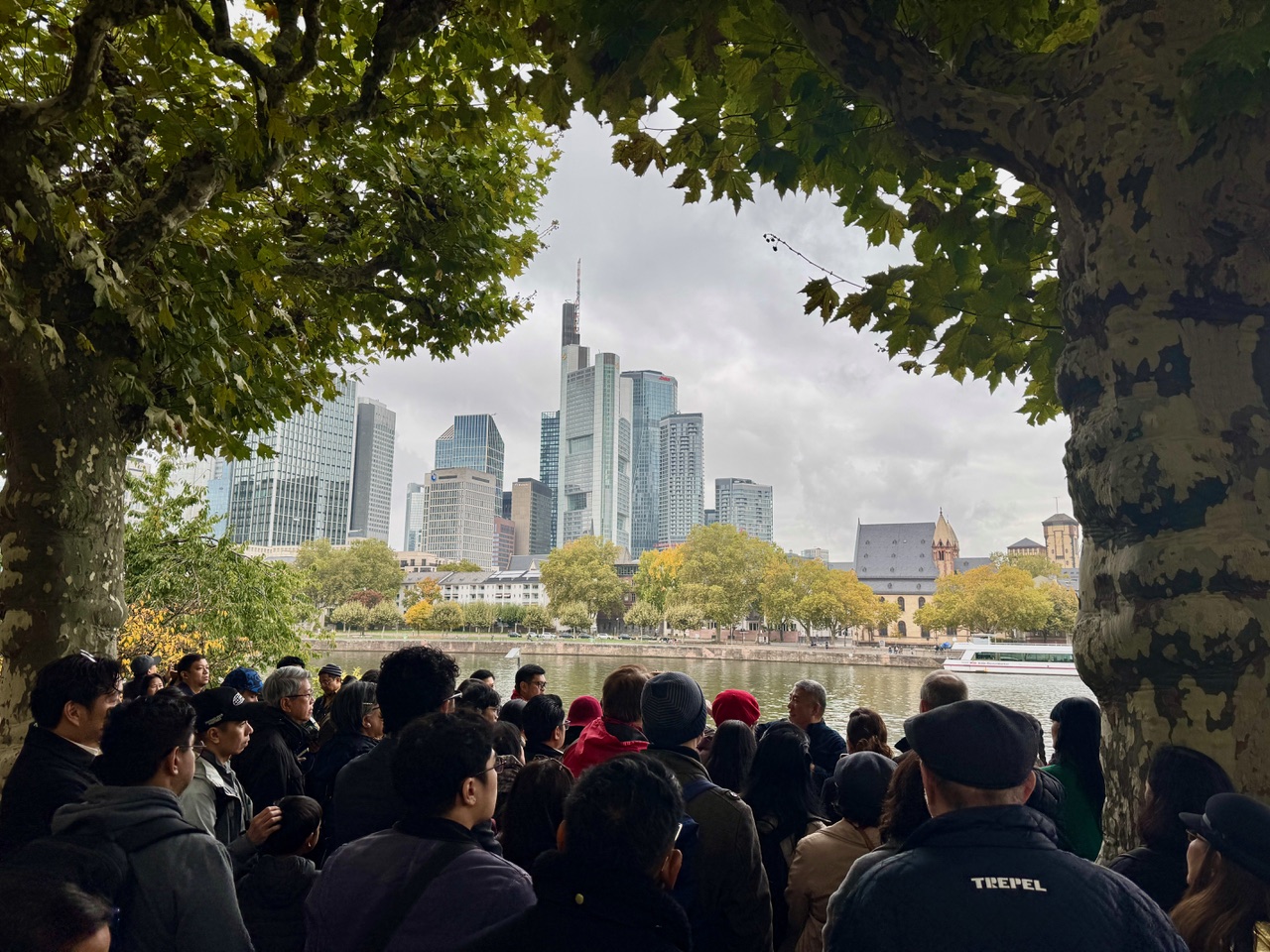
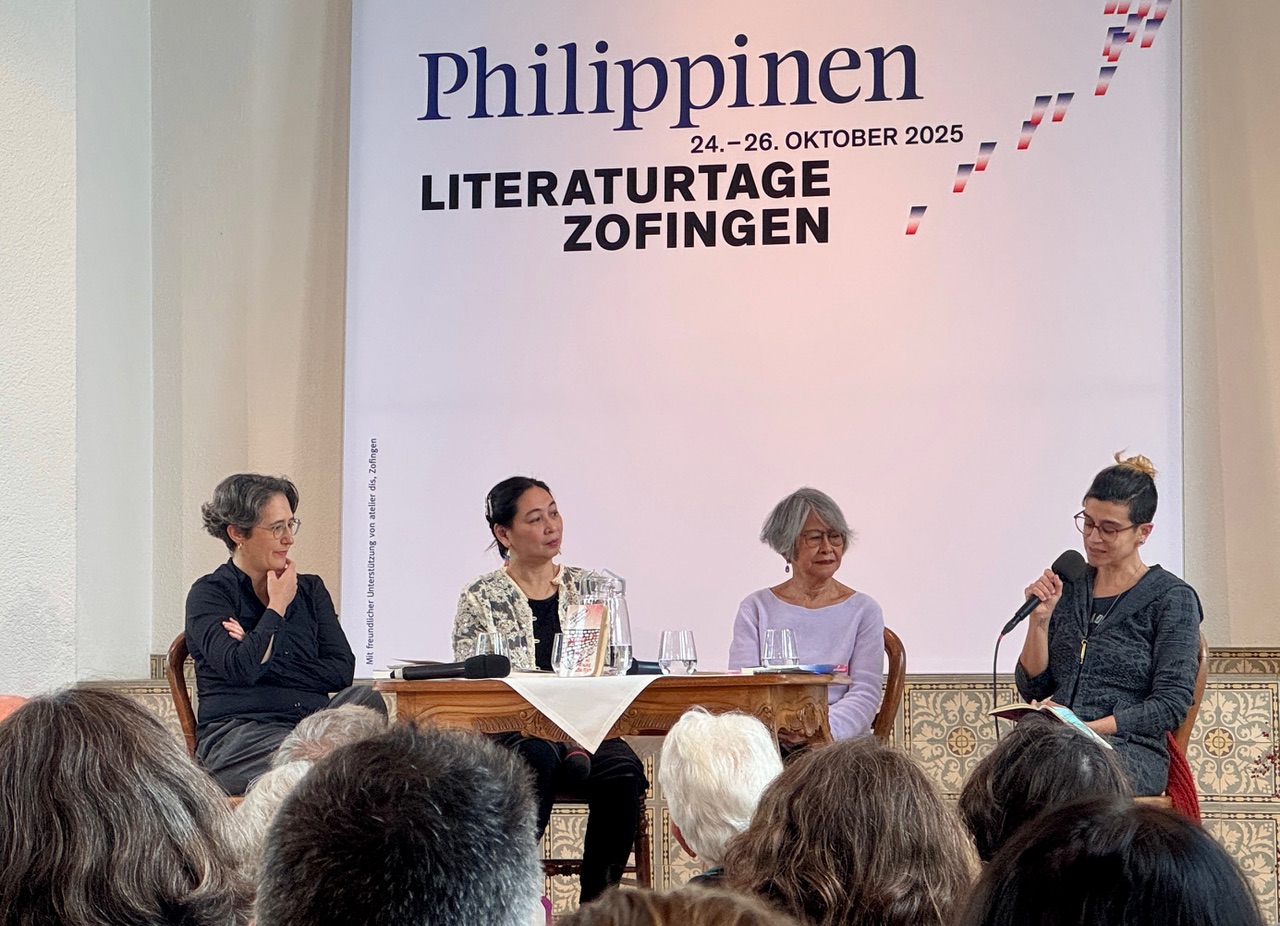
Six out of my eight events took place outside the FBM—two of them involving side-trips to Bad Berleburg in Germany and Zofingen in Switzerland—to bring us closer to local communities interested in what Filipinos were writing and thinking. Indeed my most memorable interactions were those with local Pinoys and with ordinary Germans and Swiss who asked us about everything from the current state of affairs (the resurgence of the Right in both the Philippines and Europe, Marcos and Duterte, the threat from China, the corruption scandal) to Filipino food and culture, the diaspora, the aswang, and inevitably, Jose Rizal, who completed the Noli in Germany and in whose tall and broad shadow we all worked.

Everywhere we went, in Frankfurt and beyond, the local Pinoy community embraced us, eager for news from home and proud to be represented, to hear their stories told in words they themselves could not articulate. “I’ve been living a hard life working here as a nurse in Mannheim,” Elmer Castigador Grampon told me, “and it brings tears to my eyes to see our people here, and to be seen differently.” 

A German lady accosted me on the street outside the exhibition hall and asked if I was the Filipino she had seen on TV explaining the Philippines, and we had our picture taken. A German author in his seventies, Dr. Rainer Werning, recounted how he had been in Manila during the First Quarter Storm and the Diliman Commune, had co-authored two books with Joma Sison since the late 1980s, and had described the Ahos purge in Mindanao and similar ops in other parts of the islands as the most tragic and saddest chapter in the history of the Philippine Left . A sweet and tiny Filipina-Swiss lady, Theresita Reyes Gauckler, brought trays of ube bread she had baked to our reception in Zofingen (the trays were wiped out). Multiply these connections by the hundreds of other Filipinos who participated in the FBM, and you have an idea of the positive energy generated by our visit.

From our indefatigable ambassador in Berlin, Susie Natividad, I learned about how Filipino migrant workers have to learn and pass a test in German to find jobs in Germany, a task even harder in Switzerland, where Swiss German is required. Despite these challenges, our compatriots have done us proud, as the maiden issue of Filipino Voices (The Ultimate Guide to Filipino Life in Switzerland) bears out. 

The FBM was as much a learning as it was a teaching experience for us, for which we all feel deeply grateful. By the time our group took our final bows on the stage in Zofingen—a small Swiss city that hosts writers from the GOH after the FBM as part of its own Literaturtage festival—I felt teary-eyed as well, amazed by how a few words exchanged across a room could spark the laughter of recognition that instantly defined our common humanity. 

I am under no illusion that GOH participation will dramatically expand our global literary footprint overnight, but it has created many new opportunities and openings for our younger writers to pursue in the years to come. It is a beginning and a means, not an end. The greater immediate impact will be to spur domestic literary production and publishing, to have a keener sense of readership, and to encourage the development of new forms of writing.

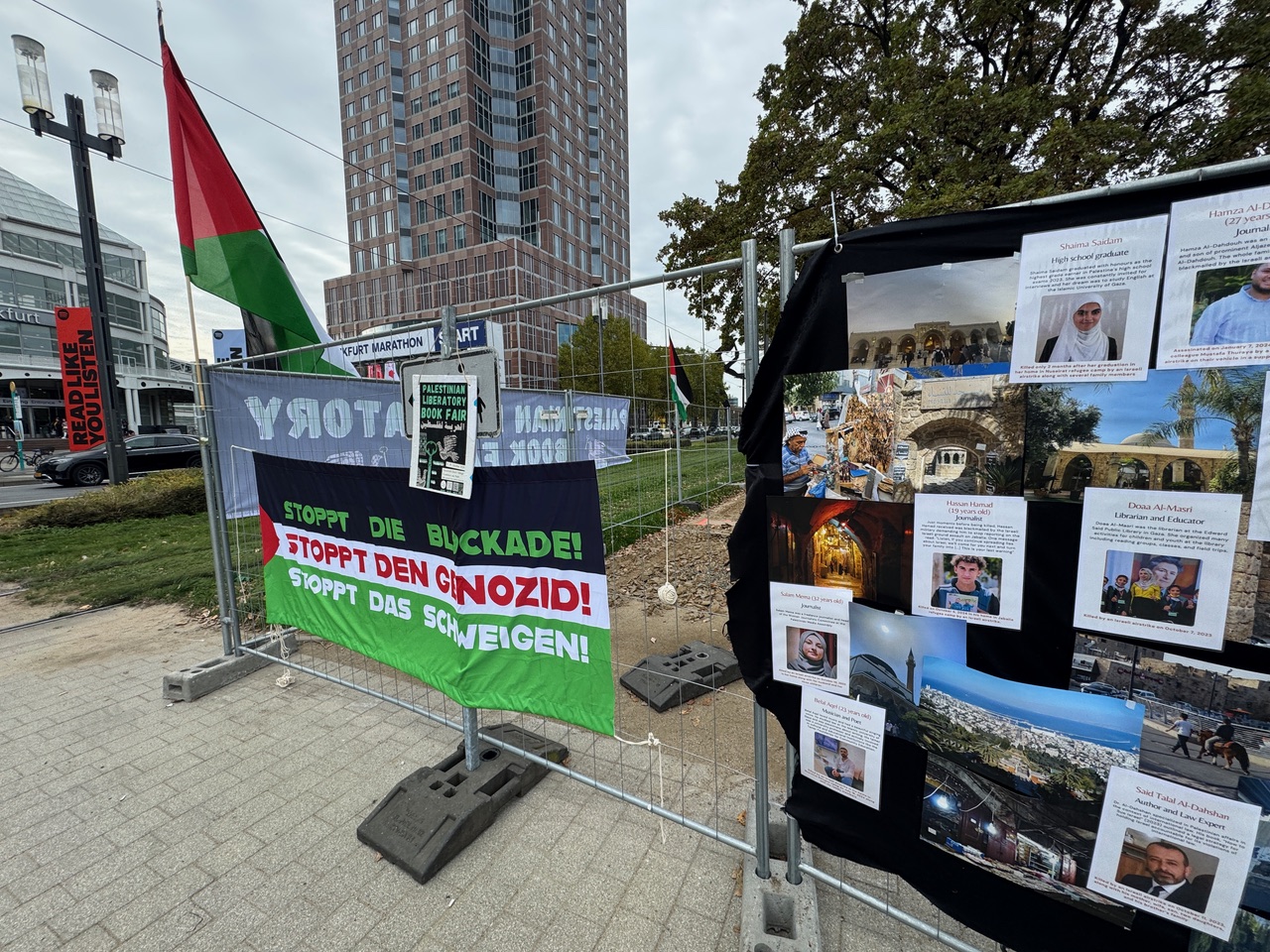
Sadly, a move to boycott the FBM by Filipino writers protesting what they saw to be Germany’s complicity with Israel’s genocidal war in Gaza has also impacted our literary community. (For the record, there were Palestinian writers—and even an Iranian. delegation—at the FBM, with whom Filipino writers interacted in a forum. There was also a Palestinian book fair across the fairgrounds.)

I have long taken it as my mission to promote an awareness of our work overseas and had opposed the boycott from the very beginning for reasons I have already given many times elsewhere. Many hurtful words have been spoken and many friendships frayed or broken, to which I will add no more, except to quote the Palestinian-Ukrainian refugee Zoya Miari, who visited the Philippine pavilion and sent our delegates this message afterward:

“I’m on my way from Frankfurt back to Zurich, and I’m filled with so much love that I can’t stop thinking about the love I felt in the Philippine Pavilion. I came back today to the Pavilion to say goodbye, not to a specific person, but to the whole community. This space became a safe space for me, one where I deeply felt a sense of belonging.

“I’m writing these words to thank you and your people for creating a space where

I, where we, felt heard and seen. That in itself is such a powerful impact. I know some people decided to stay in the Philippines to show support for the Palestinians, and I want to say that I hear and see them, and I thank them. And to those who decided to come, to resist by existing, by speaking up, by showing up, by connecting the dots, by being present and by sharing stories, I also hear you, see you, and deeply thank you.

“We all share the same intention: to stand for justice, to fight against injustice, and we’re all doing it in the best way we know how. I truly believe that the first step to changing the world is to create safe spaces where people are deeply heard and seen. When stories are heard and seen, we begin to share our vulnerabilities and showing that side of ourselves is an act of love. Through this collectiveness, this solidarity, we fight for collective liberation.”

Qwertyman No. 157: Rebalancing the UP-IRRI Partnership

Qwertyman for Monday, August 4, 2025


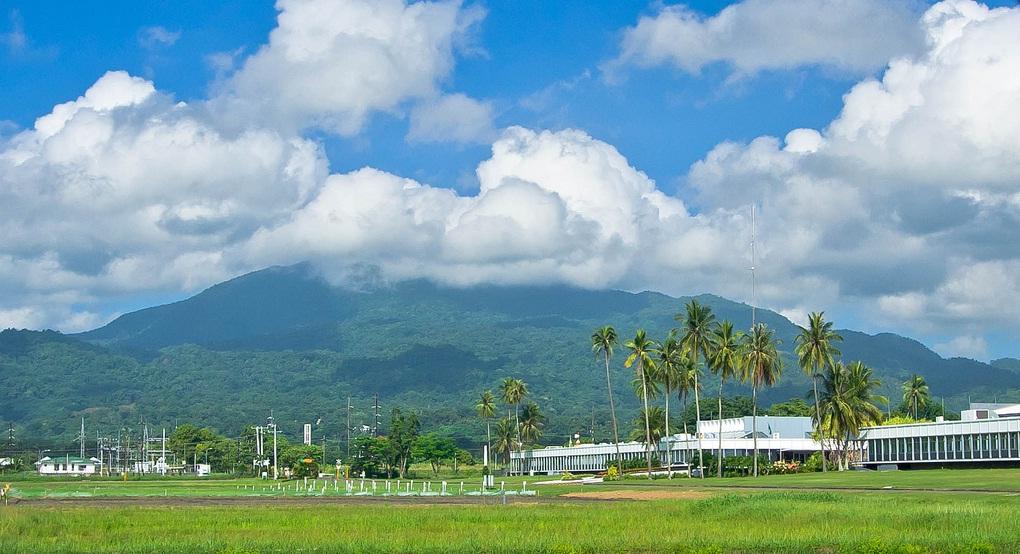
SINCE ITS establishment in 1960 by an agreement between the Ford and Rockefeller Foundations and the Philippine government, the International Rice Research Institute (IRRI) has been known around the world as a leader in agricultural research and a provider of much-needed and applicable solutions to global hunger. With so many people and economies dependent on rice, IRRI’s outputs—especially the famous “IR8” and similar high-yielding varieties—were hailed as gamechangers for billions, reportedly staving off famine in India in the 1960s and spurring “green revolutions” around Asia. The first President Marcos was a staunch supporter of IRRI, folding its “miracle rice” into his Masagana 99 program, which temporarily achieved self-sufficiency in rice but ultimately failed from bad credit and also proved environmentally destructive.

Headquartered in Laguna on the campus of the University of the Philippines Los Baños (UPLB), IRRI and its achievements became a source of pride for the Philippines, which not only hosted the institute but provided much of its manpower—the scientists in its labs and the farmers tilling its experimental plots, among other staff workers. (That sentiment, it should be noted, isn’t universally shared. A coalition of NGOs and individuals called MASIPAG, opposed to the kind of genetic engineering that IRRI and even UPLB does, sees IRRI as “a research arm of big agrochemical corporations in turning the food and environmental crisis into their businesses.”)

While that’s being debated, another issue has come up between IRRI and UP over the land that IRRI has been using, at the nominal rate of P1 a year for the past 65 years. IRRI’s lease on that land, totaling almost 280 hectares, expired last June 30. UP needs and wants some of that land back for its own use, especially with UPLB’s ambitious plans for the establishment of an Agro-Industrial and Information Technology Park in the area.

UP contends that IRRI has actually been using just around half of that property, so it would be good to put those idle hectares to more productive use, following UPLB’s comprehensive land use plan calling for more buildings for administration and research, housing, support services, engineering, and social sciences. It’s not simply getting land from IRRI (land that, let’s be clear, is really UP’s); according to UP’s Vice President for Legal Affairs Rey Acosta, in exchange for the land UPLB needs for its expansion, the UP System is offering IRRI new land to lease across its various campuses in Mindanao, Iloilo, Leyte, Cebu, Baguio, as well as its land grants in Quezon and Laguna, for both rice and non-rice crop research.

The land exchange was part of a new agreement that UP had proposed to IRRI to replace the expired lease. UP also wanted IRRI to pay more realistic rates for the land it was using. One key factor to consider was that since 1972, IRRI had fallen under the ambit of CGIAR (formerly the Consultative Group for International Agricultural Research), a global research network. CGIAR is apparently funded by contributions from many international agencies and countries including the Philippines, but exactly how it funds IRRI or what its legal status is in the Philippines is unclear to me. 

Under the IRRI charter, the Philippine Secretary of Agriculture and the UP President sit on its board of trustees as ex officio members, but the rest, including the Director General, are international experts nominated either by CGIAR or the outgoing board. It would have been at a board meeting that UP President Angelo Jimenez first brought up UP’s proposals over a year ago in anticipation of the end of IRRI’s lease—which, at the bottom line, UP is under no obligation to renew. Last June, IRRI submitted a counter-proposal ceding much less land than UPLB needed, asking for a much longer lease extension period (25 instead of 10) for much less money than UP deemed fair.

Negotiating in good faith, UP agreed to concessions such as giving IRRI almost 200 hectares for its use, and the possibility of a 25-year lease, subject to periodic reviews, if certain conditions were met. But instead of dealing with UP in the same spirit, IRRI went to court for a TRO, represented by one of the Philippines’ most influential (and must I add expensive) law firms. 

There are quarters in the Philippine academic and scientific community that will be happy to see IRRI go—MASIPAG might stand on the far extreme, but even more moderate voices have noted that much of the research that IRRI was known for can now be undertaken by the Philippine Rice Research Institute or PhilRice. Even so, UP’s leadership maintains that it continues to value its historic partnership with IRRI—based on a more balanced and lawful relationship. “We don’t want IRRI to leave,” said President Jimenez. “We would be happy for IRRI to stay but under fair and reasonable terms.” 

For the sake of not just the Philippines’ but the region’s and indeed the world’s food security, we should hope that this disagreement over how to best use that land in Los Baños doesn’t end up in a messy court case involving money, influence, and public relations. IRRI enjoys a generally positive reputation that, rightly or wrongly, most Filipinos still believe in. After 65 years, it’s time to renegotiate an agreement that will more directly and clearly benefit Philippine agriculture and education through its national university, ensure environmentally safe research, remunerate us fairly, and make IRRI the good global citizen an institution of its stature and intentions needs to be.

Qwertyman No. 147: Literature Has Many Flags

Qwertyman for Monday, May 26, 2025

IT WILL be a tempest in a teapot to most Filipinos still caught up in the aftermath of the midterm elections, a topic of interest to a limited few, but I’m bringing it up this week because it’s important enough for larger reasons.

The Philippines will be Guest of Honor (GOH) at this October’s Frankfurt Buchmesse (FBM), the world’s oldest and largest book fair. Being GOH means that the Philippines—its literature, culture, history, and politics—will be foregrounded in Frankfurt, through the dozens of writers, thousands of books, and the many exhibits and presentations that will be brought over to the FBM, through the combined efforts of the National Book Development Board (NBDB) and the National Commission for Culture and the Arts (NCCA), among other organizations. 

Much of the groundwork for this initiative, which began well before the pandemic, was laid by Sen. Loren Legarda, the principal advocate of arts and culture in the Senate. GOH status is an honor given every year to a different country, but it doesn’t come free; the project involves hundreds of millions of pesos, which its proponents see as a worthwhile investment in raising the global profile of the Philippines through its culture and expanding the international market for Philippine books and authors. The past two years have seen intensive efforts made by the NBDB and the Philippine GOH Committee to prepare the program, select the delegates, and arrange the logistics for our historic participation in October at the FBM.

Comes now a move, led by some prominent Filipino writers and activists, to boycott the FBM for various reasons, including what some see as the government’s misplaced priorities in funding our GOH participation, but primarily in protest of the FBM’s alleged support for Israel in its war in Gaza, and also of Germany’s complicity as an Israeli ally in that conflict. At the moment, it hasn’t gained much traction, but I wouldn’t be surprised if, in the intervening months between now and October, it gathers some steam—likely not enough to stop us from going, but enough to cause some dismay and dissension within our ranks.

I’m not in favor of this boycott, for reasons I’ll shortly explain, but first, full disclosure: I have been formally invited to attend the FBM as a delegate, and have accepted the invitation; I will be involved in several events—a launch of the new Spanish translation of my second novel Soledad’s Sister, several book readings, and possibly some panel discussions. All my expenses will be answered for. This will be my third (and at my age, likely my last) participation at the Frankfurt book fair, as an author whose books have been translated into Italian, French, German, and Spanish editions. In other words, I have a vested interest in going to Frankfurt. (To those who have never been to the FBM, it is no junket; expect long hours manning the booths, talking to people, selling book rights, and walking kilometers of hallways on the enormous fairgrounds. Frankfurt is not a particularly scenic city, although a side trip to nearby Heidelberg and its Rizal connections will be a welcome break.)

Some readers might find the connection between the FBM and Gaza tenuous and the call for a boycott bewildering, but it does have some basis worth serious consideration. The relationship between Germany and Israel, or the Germans and Jews, is long and complex (highlighted by the Holocaust before Israel even came to be, and the 1972 Munich Olympics massacre, among others), but the immediate trigger for the outcry was the FBM’s controversial cancelation of an awards ceremony for the celebrated Palestinian writer Adana Shibli in the immediate wake of Hamas’ attack on October 7, 2023. 

The outrage is justifiable and widely shared. In this column and other media, I myself have written against Israel’s assault on the Palestinian people (see “The Country I Wanted to Love,” from April 19, 2024), as have many other commentators. Indeed, I know of very few Filipino writers who have cheered the onslaught on—typically those holding orthodox Catholic views upholding Israel as God’s chosen nation. 

Israel’s relentless pounding of Gaza, resulting in the wanton slaughter of innocents, has long outlived its excuse of neutralizing Hamas. It is genocidal butchery by any standard, this calculated starvation of Gaza’s remaining residents, the killing of aid workers, and the mechanical attribution of atrocities to “operational errors.” Netanyahu’s encouragement of Trump’s crass and bizarre proposal to depopulate Gaza so he can turn it into “the Riviera of the Middle East” reveals the utter moral depravity of these two men. 

Israel’s barbarism in its campaign of terror and annihilation has now exceeded Hamas’ own (yes, unlike many protestors, I hold Hamas accountable for its own brutality—something that will surely not endear me to the far Left on this issue). Those of us who study Elizabethan revenge tragedy know this only too well: the line beyond which the revenger no longer seeks justice but mindless retribution, and becomes a horrifying, blood-soaked caricature of the very object it opposes.

The question for us writers is: will any of this be helped by withdrawing our participation from one of the world’s largest (if arguably not freest) exchanges of ideas through books? Will we prevent ourselves at Frankfurt—should the need and opportunity arise—from expressing our opinions on Gaza, among a host of other global issues concerning human rights? (Current German rules restrict financial support to artists seen as anti-Israel, especially those identified with the Boycott, Divest, and Sanctions movement or BDS, among other repressive measures.)

My answer is no. I stand for peace and justice for both the Palestinian and Israeli people—indeed, for all oppressed peoples of the world, including our own. But divesting ourselves of a historic opportunity to express our collective resistance to injustice—not just in Gaza or over this one issue, no matter how pressing, will only be counter-productive. Unless it catches fire (other prominent authors elsewhere, as in Indonesia—which was GOH some years ago—have expressed support), a symbolic boycott will be as deafening and as consequential as a tree falling in the forest.

In the end, this will come down to an individual act of conscience, however one decides, for which we must reserve our respectful acceptance. Whether one goes or stays, one’s reasons or motives have to be clear, so the gesture will not be wasted. I will go to Frankfurt proudly, with neither guilt nor shame, to speak about our people and our struggles for freedom through my books. Engagement, not withdrawal, will be the best service writers can perform for their country and for all oppressed and silenced people everywhere. 

Politicians like to wave one flag—Filipino, American, Israeli, Palestinian. Literature, like all art, has many flags: peace, justice, freedom, equality, truth, love, beauty, and harmony. Let all these fly in Frankfurt.

(Image from Studio Dialogo)

Qwertyman No. 119: The MAGAverse

Qwertyman for Monday, November 11, 2024

IT’S NEVER good to write out of rage, no matter how righteous you think your rage might be; the anger clouds your reasoning and could reduce you to incoherence. So as I’m writing this—on the afternoon of November 6, our time, and early morning in America where Donald Trump has already claimed victory in a bitterly fought election—I’m taking deep breaths and thinking of happy and pleasant things, far away from politics, before returning to the task at hand.

After the initial sting, it isn’t so much anger as sadness and consternation that stay with me, a deep sense of regret over what could have been, had the outcome been different. There are at least 15 million Filipinos who know what I’m feeling, having gone through a similar shock that May two years ago, when what we most dreaded happened.

Of course, to many Filipinos, a Trump return won’t make one bit of difference, and why should it? We have enough of our own problems to worry about. But for those like me who see the world today as a widening battleground between good and evil, November 5 was a loss not only for American Democrats, but for freedom-loving and truth-seeking people all over the planet, whose lives will eventually be affected by whatever comes out of Washington, like it or not.

On the eve of November 5, perplexed and dismayed by the statistical closeness of a fight that good sense should have blown wide open, I sent a message to friends saying that “My inner cynic almost wants Trump to win so Americans will see for themselves exactly what MAGA means over the next four years.” So I guess I got my cruel wish, except that to “America” we can now add “the rest of us.” Welcome to the MAGAverse.

But before this moment passes, let me just put this out there to those whom we should hold responsible for trusting a felon with the White House and for whatever he may do hereon.

If you didn’t vote for Harris and stayed home because of what you saw to be her lack of support for the Palestinian cause, just wait until Trump dances with Netanyahu over the graves of Palestinians in Gaza and the West Bank.

If you thought that voting for Trump was a vote for the precious life forming in an unborn fetus, start counting the bodies of the living that will pile up in Ukraine when Trump greenlights Putin to take what he wants, with America looking on.

If you’re a legal immigrant from Asia, Africa, and Latin America (one of those “garbage” countries, in Trump-speak) who went for Trump because you think he knows and cares about how hard you worked for your citizenship and sees you as his co-equal American, let’s see how well his Justice Department defends you at your next run-in with the police or with a gun-toting redneck.

If you didn’t vote for Harris because you made a fine point of her waffling on the fracking issue, wait till Trump puts climate-change deniers in charge of the Environmental Protection Agency—which he did, by the way, in 2016, when he appointed a lawyer who led 28 states in a fight against the EPA’s Clean Power Plan.

If you’re a normally bright and decent person who chose to overlook Trump’s moral flaws and lack of character because you thought he would stabilize and grow the economy, and appoint geniuses to manage the store, wait until the likes of Elon Musk play with government like he did with Twitter. 

(And never mind national security, with Trump being chummy with Putin, Kim Jong Un, and the Hungarian tyrant Orban, who just congratulated Trump for “the biggest comeback in US political history…. A much-needed victory for the world!” Who needs counterintelligence when these guys have direct access to the White House? Worry about tooth decay, when RFK Jr. pulls fluoride out of your tap water, because it was supposedly part of a Cold War communist plot to poison America.)

If you took pity on Trump because you felt that Joe Biden had “weaponized” the Department of Justice against him (on cases he had only himself to blame for, like sleeping with a porn star and paying her to shut up), wait until Trump unleashes the DOJ on his political opponents, as he has sworn to do, and anything and anyone else that gets in his way—including you. (I thought that the best endorsement for Kamala was the one from Harrison Ford: “Vote for Harris if you want to protect your right to disagree with her.”)

If this is nothing but doomsaying, what do you think Donald Trump did all throughout his campaign? He is doom, and doom won. This round goes to Darth Vader and the Dark Side.

Excepting Ukraine and Gaza, much of the world will move on like it always has, and so will we. America itself already had a foretaste of Trump in his first incarnation; they survived him and the pandemic as well. We Filipinos survived martial law, right? 

The question is, what did people learn? Or, since those who learn anything eventually die, are people fated to make the same mistakes all over again from generation to generation? There hasn’t even been enough time for the generations to roll over in America since Trump 1.0—didn’t those voters learn anything?

With our own midterm elections coming up next year, we could be telling each other the same things. I better keep my inner cynic in check.

Qwertyman No. 116: Dynasty

Qwertyman for Monday, October 21, 2024

“MAMA, PAPA, I wanna be a congressman!”

Senator Bebot Maybunga and Governor Kikay Maybunga looked up from their dinner plates at Mikmik, who sat at the far end of the table, to where they had deported him for a little peace of mind. Their younger son was given to wild outbursts that disrupted his parents’ serious deliberations about politics, business, and entertainment. Governor Kikay and her friends were planning for Paris Fashion Week, while Senator Bebot was thinking F1 at the Austrian Grand Prix.

“Well it’s about time Hamilton left Mercedes,” Bebot was saying while chewing at his bistek, “after all the crappy cars they built for him. A man’s got to go where he’ll do best. That’s why we joined the Federalistas, right? What’s the use of being a Progresibo if you can’t get any of your projects through? Pity our poor constituents! So we go with the Ferraris of Philippine politics—the Federalistas! And let me tell you something, honey—I’m going to be their Verstappen!”

“Who’s Fershwersh?” asked Kikay. “I want to know what really happened between Nicole Kidman and Selma Hayek. I mean, did Nicole really brush Selma off at the Balenciaga show?” She popped an overripe tomato into her mouth, savoring its sweet-sourness. “The only time I’d swat your hand away is if it was pawing someone else, like that starlet at the XYZ Awards. Don’t tell me you didn’t know she was coming on to you while you played Daddy-o!”

“I want to be a congressman!” cried Mikmik again, this time hitting his plate with his spoon four times for emphasis. Their housemaid Yeye hurriedly mopped the bistek sauce that scattered all around him.

“Stop yelling and finish your food!” said Bebot. “You can’t be a congressman if you don’t finish your food.” That had been Mikmik’s problem since early childhood—half his plate always went to the dogs, so they now had three Rottweilers and three dachshunds, despite which the boy got all puffed up like an Obemio painting. They’d sent him everywhere from the Mayo Clinic to a sanatorium in Switzerland, but all the doctors could tell the Maybungas was that Mikmik had low self-esteem, for which he tried to compensate by eating a little a lot—something called the Schlumpfegel Syndrome, which could be addressed only if the boy succeeded at something truly outstanding, after which he would then complete his meals. It was complicated—and expensive, but thankfully there was all that land that Kikay owned, which Bebot found ways to run public roads and bridges through.

“But what do you want to be a congressman for, hijo?” asked his mama, trying to play the part of the good parent, as Bebot groaned. “It’s a hard job. Look at your Kuya Pepito, he’s always out somewhere with the President, trying to make sure that everything will be okay for—well, everybody.”

“The only thing that bastard is looking out for is himself,” grumbled Bebot. “After everything I did for him, imagine, he goes to Singapore for F1 with the President and leaves me behind!”

“Don’t call him a bastard! He’s our son, he has a father and a mother!”

“Am I a bastard, Mama?” asked Mikmik. Kikay rushed over to where Mikmik sat to wrap her arms around him, as Bebot smirked. Their political enemies had spread the dastardly humor that Mikmik had actually been fathered by one of Kikay’s old flames—something Bebot himself had long suspected, for how could he possibly have spawned such an idiot, but had never pressed because he still needed Kikay’s old-family money for his higher ambitions.

“No, of course not, Mikmik! You too have a mother—and a father!”

“I wanna be a congressman!”

“But your Kuya Pepito is already congressman for the first district, hijo! When his next term ends, Mama will be congressman, because Kuya will be governor.”

“But I can be congressman for the second district, Mama—”

“No, hijo, we don’t live there—”

“But Papa has a house there! A nice house, with a swimming pool!” Bebot nearly choked on his ball of rice, as Kikay’s eyes narrowed into slits. Their political enemies had let it be known to one and all that the senator kept a mistress in the second district, but Kikay decided not to bring it up because, well, she was a firm believer in family unity, and her brothers and sisters would never have forgiven her if they lost their juicy contracts on account of some silly spat over a querida

“I know what we can do, hijo!” Kikay exclaimed, struck by a brilliant idea. “We can make you mayor! This nincompoop mayor of ours has been talking about getting his even more nincompoop wife to run against me for governor, so why not take his job? I agree, it’s about time you joined us in this noble profession!”

“Can a mayor drive a big car and go wang-wang? Because Kuya Pepito does that and it’s why I want to be a congressman!”

“Of course, hijo, you can drive a big car around town all day and go wang-wang if you like. You can even have a police escort and they’ll go wang-wang too.”

“And Papa won’t get mad and hit me over the head like he always does?”

Kikay glared at Bebot who was looking away, whistling.

“No, hijo, even senators can’t hit mayors over the head—”

“But if I’m mayor, then I can hit people over the head, right? Like a, a sheriff, right? I saw it on TV once!”

Bebot finally turned and said, “You can’t be congressman, you can’t even be mayor! The law says you have to be at least twenty-three to be mayor, and you’re only twenty-one—at best!”

“What does he mean by that, Mama? Look, Mama, Papa’s making a face at me again, like he’s going to hit me!”

Again Kikay wrapped her arms around Mikmik and flashed Bebot her meanest look. “No, baby, he won’t, and you’re going to be mayor, Mama will make sure of it. Don’t worry about your age, it’s only a birth certificate, and since when was that piece of paper a problem? Mayor Mikmik Maybunga—let’s not forget your middle name, Mikmik Macatangay Maybunga. Aren’t these people just so lucky to have us at their service?”

Qwertyman No. 88: Wanted: Gentlemen

Qwertyman for Monday, April 8, 2024

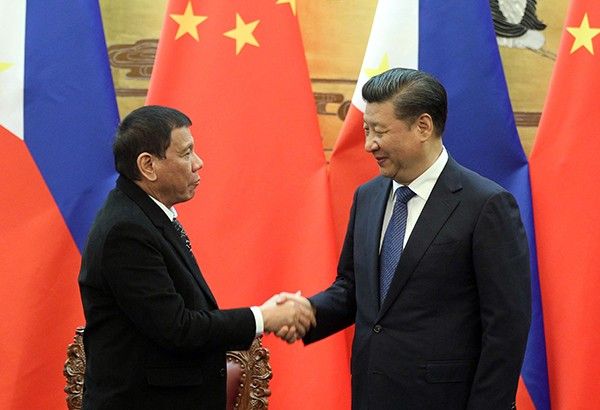
A SHIPLOAD (let’s get that consonant right) of questions has been raised over the “gentleman’s agreement” alleged to have been entered into between former President Rodrigo Duterte and China’s Xi Jing Pin over the disputed Ayungin Shoal in the West Philippine Sea. China has suggested as much, complaining about the present administration’s “inaction” over what it apparently considered a done deal.

According to former Duterte spokesman (should we also call him “former human rights lawyer”?) Harry Roque, Duterte and Xi did pledge between them to “maintain the status quo” in the troubled zone, meaning, there would be no rebuilding or reinforcement of Philippine installations there—specifically referring, I suppose, to the hopelessly decrepit BRP Sierra Madre that has to be the sorriest and loneliest maritime outpost in the world. 

Chinese Coast Guard cutters have routinely tried to block Philippine vessels attempting to resupply the Sierra Madre. A month ago, four Filipino sailors were injured when they were water-cannoned by the Chinese, and their ship rammed. Our resupply ships have been running these Chinese gauntlets to reach the marines on the grounded Sierra Madre, which symbolically enforces our claim to the Spratly Islands, or that portion of it we call the Kalayaan Islands group. This was precisely the kind of situation that Duterte and Xi reportedly tried to avoid with their agreement.

Upon hearing his former colleague’s explosive revelations, former presidential counsel Salvador Panelo quickly went on the air to dismiss them as the fabrications of a publicity-seeker, assuring the public that Digong himself had denied the report. He added that his old boss would never have sold out the country that way. In fact, Panelo claimed, Duterte had brought up the Philippines’ arbitral victory against China at the Hague with Xi—a judgment Duterte had ironically threatened to toss into the wastebasket as nothing more than “a piece of paper.” Roque then went on to explain that the “gentleman’s agreement” covered not just Ayungin Shoal but the entire West Philippine Sea, enlarging its scope exponentially. If it was a lie to begin with, as Panelo suggested, well, the lie got much bigger.

This spectacle of two Duterte mouthpieces not just speaking at cross-purposes but putting each other down would be immensely entertaining if our national territory and patrimony weren’t at stake. It doesn’t really matter who between these two, uhm, gentlemen is right, or whom we end up believing. What’s clear is that either way, beyond token whimpers and some lip service to sovereignty, Duterte and his crew never did much to defend Philippine territorial and maritime rights in the WPS, debating with their local critics on the issue more than with the Chinese, even waging a vain effort to denigrate the Hague ruling and those who had fought so hard for it. 

Given the new administration’s popular pivot toward a more aggressive stance on China, we can understand if Duterte and his boys seem scrambling to be seen as having been patriots all along. Who knows, maybe they were, and maybe we poor kibitzers were just too dumb or too dense to see that. 

Remember when Duterte made that famous “wastebasket” remark in May 2016? Then-spokesman Roque tried to spin that by saying no, no, no, you have to “apply the proper construction” (his exact words) to that statement—meaning (hold your breath), “He really didn’t mean it that way. Instead, go back to his UN speech where he vowed to defend the Philippines against China. When he said ‘I’ll throw this into the wastebasket,’ he wasn’t speaking for himself, he was speaking from the point of view of the Chinese.”

Huh? Forgive me if I can’t wrap my non-lawyerly mind around this “proper construction,” let alone explain why a Philippine president should be expressing the Chinese view.

To help sort this mess out, Sen. Risa Hontiveros has called for a hearing to find out if, indeed, Duterte and Xi had, as the young ones put it, an “MU” over Ayungin and the WPS. Predictably, Panelo thinks this probe will be a “waste of time,” insisting that the reported “gentleman’s agreement” never happened. 

Another newspaper quotes an anonymous Chinese official saying, like Roque, that it did. Under the reported terms of the deal, China would allow the Philippines to resupply the BRP Sierra Madre for as long as it did not reinforce or rebuild the ship. (How the agreement supposedly applies to the entire WPS as Roque claims remains murky.)

One would think that a true, broader, and more meaningful “gentleman’s agreement” in the West Philippine Sea would involve the non-building of offensive structures and bases, the avoidance of violent confrontation, respect for our fishing rights, and freedom of navigation for all nations in international waters—all of which the Chinese have flouted with impunity. Instead—and if true—all our former president did was to ask the Chinese for permission to resupply our own aging and ailing vessel, in exchange for a promise to let it rot. Whether that’s treason or patriotism, you be the judge.

Pending further inquiry, I myself suspect that some kind of bargaining did take place, but I somehow doubt that it was a gentleman’s agreement. For that you’d need at least two gentlemen in the house.

Qwertyman No. 83: It Isn’t Just Money

Qwertyman for Monday, March 4, 2023

MY RECENT column titled “An F for Philippine Education” apparently struck a chord among many readers who messaged me to say how appalled they were by the findings of the Second Congressional Commission on Education or Edcom II. Released just last January, the commission’s report graphically displayed just how poorly young Filipinos are faring in their schooling, especially when compared to the Asian neighbors they’ll be competing with for jobs down the road. 

To recapitulate just one particularly distressing finding, our best high-school learners are performing at a level comparable to the worst of Singapore. I read as much as I could of the report not just to be able to write about it, but—as an educator myself—to find out how this disaster happened.

There’s clearly a lot of blame to be thrown around for this situation, but to be fair, the report makes it clear at the outset that Philippine education’s systemic failures and shortcomings go back many decades, to problems being recognized by previous studies (notably Edcom I in the early 1990s) but left unattended rather than decisively acted upon. 

“This report was not crafted to point fingers,” say the report’s framers. “Our intention, instead, was to find things out and to instill a sense of urgency, along with a sense of doability—a clear horizon, and perhaps a sketch of the map toward that horizon.”

Its noble intentions notwithstanding, the report is a 400-page indictment of what successive Philippine administrations have failed to do, and it isn’t like they didn’t know or weren’t told. There’s been a plethora of studies of Philippine education between the two Edcoms in the 30 years separating them, and they’ve identified many of the same chronic problems plaguing the system today. The report identifies 28 “priority areas” such as governance and financing, in each of which specific problems and their implied solutions are discussed. 

One aspect that drew my attention was that of funding, which many of us, including myself, have thought to be the big problem of Philippine education: throw more money at it, and maybe it will go away. It turns out to not be the case, or in the very least, not the only major issue. Our “more” still isn’t enough, and even with more, the money needs to be spent, and spent wisely.

At the time of Edcom I, the report notes that the Philippine government spent only 2.7% of GDP on education, rising to 3.6% from 2014 to 2022, and to a high of 3.9% in 2017 (do take note that these are percentages of Gross Domestic Product, not the national budget). That comes very close to the global minimum of 4.0% set by the Incheon Declaration, but still falls short of Malaysia’s 4.2% and Singapore’s incredible 25.8% in 2018. Even so, our expenditures on education are rising to an average of 16 to 17% of the national budget for 2023 and 2024, compared to 10.7% in 1987.

Nevertheless, we still spend significantly less on education than our Asian neighbors, and the PISA results show a direct correlation between levels of spending on education and national scores in math, reading, and science. It’s also possible that we’re spending our education money in the wrong places. The report notes that “Between 2015 and 2020, increased government allocations to education were actually mostly at the tertiary level, with per student expenditure rising from only P13,206 to P29,507. In contrast, during the same period, investments at the primary level modestly improved and even fluctuated.”

And it seems like in some cases, we’re not even spending it at all. As I noted in my earlier column, from 2018 to 2022 alone, the Department of Education had a total budget of P12.6 billion allocated to textbooks and other instructional materials, but only P4.5 billion or about a third of this was obligated and only P952 million or less than 8% of it was disbursed for only 27 textbooks for Grades 1 to 10, since 2012. The budget of the Commission on Higher Education grew by 633% from 2013 to 2023, but it wasn’t spent on the additional people that its expanding responsibilities required, with its staffing complement increasing by only 22.7%, from 543 to 666 within the same period. 

There’s a lot of room for reform in education, but Edcom II zeroed in on a problem even more basic than funding in trying to change things—one of institutional culture. “Scholars have criticized the sector’s inability to implement reforms due to frequent changes in leadership, resistance to change within the government, and the agency’s ‘culture of obeisance’ (Bautista et al., 2008)—a bureaucracy accustomed to jaded compliance.”

This reminded me of a point raised by a reader named Peter Traenkner, an expat who recently visited Norway where their youngest son and his family live.

“Almost everybody admires the Nordic educational system,” Peter wrote me. “Their economic growth took off just after 1870, way before their welfare states were established. What really launched the Nordic nations (Norway, Denmark, Sweden, Finland) was generations of phenomenal educational policy. The 19th-century Nordic elites realized that if their countries were to prosper they had to create truly successful ‘folk schools’ for the best educated among them. 

“They realized that they were going to have to make lifelong learning a part of the natural fabric of society. Education meant for them the complete moral, emotional, intellectual and civic transformation of the person. For them education is intended to change the way students see the world, to help them understand complex systems and see the relations between things—between self and society, between a community of relationships in a family and a town.

“The Nordic educators worked hard to cultivate each student’s sense of connection to the nation: ‘That which a person did not burn for in his young years, he will not easily burn for as a man.’ That educational push seems to have had a lasting influence on the culture. All Nordic countries have the lowest rates of corruption in the world. They have a distinctive sense of the relationship between freedom and communal responsibility.

“High social trust doesn’t just happen. It results when people are spontaneously responsible for one another in the daily interaction of life, when institutions of society function well. When you look at the Nordic educational system, you realize that the problem is not only training people with the right job skills. It’s having the right lifelong development model to instill the mode of consciousness people need to thrive in a complex pluralistic society.”

In other words, we have to remember that education is about much more than teaching people the right skills so they can become good workers and earn good money. It has to teach them good citizenship, and their stake in the success of the nation.

Qwertyman No. 81: An F for Philippine Education

Qwertyman for Monday, February 19, 2024

AN IMPORTANT document that’s been showing up in the inboxes and on the desks of both government and private-sector policymakers these past couple of weeks leaves no room in its title for misinterpretation: “Miseducation: The Failed System of Philippine Eduation.” Released last month by the Second Congressional Commission on Education or Edcom II, the report covers just the first year of the commission’s comprehensive review of the state of Philippine education. But the scenario it presents is so grim that, in the words of one of its crafters, “If this were Singapore, they would be declaring a national emergency.”

But then again, that may be the whole point. We are no Singapore—and indeed one of the report’s most damning and embarrassing findings is that “Our best learners are comparable only to the average student in Malaysia, Thailand, Brunei and Vietnam, and correspond to the worst performers in Singapore.”

Edcom II picks up from where its predecessor left off more than three decades ago, when Edcom I was set up under the leadership of then Sen. Edgardo J. Angara to undertake a similar review. In July 2022, RA 11899 created Edcom II to find ways of harnessing the educational sector “with the end in view of making the Philippines globally competitive in both education and labor markets” over the next three years. Edcom II was also charged with drafting the necessary laws to make this happen. It’s just begun its work, with in-depth studies and assessments of our educational system from the ground up, but its early findings already show how difficult the road ahead will be toward the global competitiveness the commission was set up for.

I’ll just quote a few observations from a summary of the highlights of the nearly 400-page full report: 

In terms of the Program for International Student Assessment (PISA) undertaken by the Organization for Economic Cooperation and Development (OECD) in 2018 and 2002, “Grade 10 Filipinos scored lowest among all ASEAN countries in Math, Reading, and Science, besting only Cambodia, with more than 75% of our learners scoring lower than Level 2, or the minimum level of proficiency in Math, Reading, and Science…. Grade 10 Filipinos scored lowest among all ASEAN countries in Math, Reading, and Science, besting only Cambodia, with more than 75% of our learners scoring lower than Level 2, or the minimum level of proficiency in Math, Reading, and Science.” This was the same survey that showed our best learners barely catching up with Singapore’s laggards.

“The proficiency level of our children across social class, rural and urban residence, gender, language at home, type of school, and early childhood center attendance is dismally low.” This means that our deficiencies cut across the social and economic spectrum and can’t be put down to just a question of money.

To underscore the global crisis in education (yes, it isn’t just us), the World Bank and UNESCO have come up with the concept of “learning poverty,” which they define as a child’s inability to read and understand a simple text by age 10. Among some Asian countries recently surveyed for learning poverty, Singapore and South Korea scored the lowest at 3; China came in at 18, India at 56, and the Philippines was highest at 91.

And for those who insistently argue that the problem with our education is that we don’t use English enough, and early enough, Vietnam, which uses Vietnamese as its medium of instruction in the primary grades, has consistently outscored us in nearly all indices, as have Malaysia and other countries that rely on their own languages to move ahead.

A good part of the report dwells on how important it is for government to intervene as early as possible in our children’s growth and development, to prime them for a proper education. Edcom II looked into the problem of “stunting,” a measure of childhood maldevelopment, most easily seen when children are too short for their age, because of malnutrition or poor health. This has implications for the child’s ability to learn.

“The Philippines has one of the highest prevalence of stunting under-five in the world at 26.7%, greater than the global average of 22.3%. Policies are in place, but implementation has been fragmented, coverage remains low, and targeting of interventions has been weak.” (For example, more than 98% or 4.5 million children 2-3 years old are not covered by the DSWD’s supplementary feeding program.)

Here’s another eye-popping revelation: “Since 2012, only 27 textbooks have been procured for Grade 1 to Grade 10, despite  substantial budget allocations. DepEd’s budget utilization data shows that from 2018 to 2022 alone, a total of P12.6 billion has been allocated to textbooks and other instructional materials, but only P4.5 billion (35.3%) has been obligated and P952 million (7.5%) has been disbursed.” Not to mention the fact that many of these textbooks are riddled with errors!

Higher education presents its own host of problems and challenges. “Higher education participation is high given our income level,” the report notes. However, “Access to ‘quality’ higher education narrowed in the last decade…. Most beneficiaries of the tertiary education subsidy were not the poorest…. Between 2018 and 2022, the proportion of the poorest of the poor [in higher education] declined markedly, from 74% to 31%.”

A key part of the problem is the quality of our teachers, who themselves are poorly educated. “Between 2009 and 2023, the average passing rate in the licensure examinations for elementary (33%) and secondary (40%) has been dismally low, when compared to passing rates in other professions. Worse, between 2012 and 2022, 77 HEIs offering BEEd and 105 HEIs offering BSEd continued operations despite having consistently zero passing rates in the LET.”

Our supervisory agencies themselves need to be properly staffed. “The staffing levels in CHED and TESDA have not kept pace with the growing responsibilities of the agencies and the increased investments in education from both the public and private sectors. 

CHED’s budget increased by 633% from 2013 to 2023, but the agency’s staffing complement only increased by 22.7%, from 543 to 666 within the same period.”

The money’s clearly there, but it’s not being spent where it should be. “Budget allocated to education is increasing, but there is a tertiary tilt despite profound gaps in basic education….While government investments have increased substantially, the bulk of the additional resources went to higher education–which is typically regressive. From 2015 to 2019 per capita spending surged from P13,206 to P29,507. Meanwhile profound gaps remain in Early Childhood Care and Development and basic education…. 30–70% of the school MOOE budget is spent on utility bills alone, which leaves meager funds available for improvement projects and initiatives that could address local needs and support better learning.”

We could go on and on—and the full report (downloadable at https://edcom2.gov.ph/) does. But you get the picture: Philippine education gets an F. The question is, will our national leadership recognize this as the national emergency that it clearly is, and respond accordingly?

Qwertyman No. 71: A Breakthrough for Peace

Qwertyman for Monday, December 11, 2023

I HONESTLY didn’t know what to feel when I first read the news that a breakthrough appears imminent in peace negotiations between the Philippine government and the National Democratic Front (and behind it, the Communist Party of the Philippines), whose soldiers and partisans have been at war with each other for over half a century, in one of the world’s longest-running insurgencies.

As a student activist who fought martial law and got imprisoned for it at age 18, I didn’t expect to live past 25 because so many of my friends and comrades were giving up their lives around me in the name of freedom and justice. Instead, in a Forrest-Gumpish turn of events, I survived and even prospered for another 50 years. As I wrote in my introduction to the book SERVE (Ateneo Press, 2023), co-written with 19 other fellow stragglers from what we called the First Quarter Storm, “We celebrated our seniorhood as the ultimate victory” even as “the experience of martial law coded itself into our DNA.” That victory, of course, is a shallow one, considering that the causes we fought for remain as valid and as urgent today, and that the social cancer we sought to excise “had never left, was always there, lying cruelly in wait for a chance to ravage us again—and not only us this time, but our children and grandchildren as well.”

My reaction to the peace talks—and I would guess that of many of my peers as well—was one of joy and relief, but inevitably compounded by some doubt and apprehension. All of these responses, however disparate, have their reasons.

The joy and relief must be paramount because, however we look at it and whatever arguments may be presented by either side, the armed conflict has gone on too long, without truly positive and strategic gains to show for five decades of warfare, at the cost of innumerable lives and massive drains on our resources. This is not to say that those lives were wasted nor that everyone’s goals have been met, but that surely there must be a better way—a more humane and effective way—to resolve our differences and move forward together without having to kill yet another cadre or yet another soldier, both of them probably just farm boys looking to improve their lives. 

Ultimately and simply, it didn’t work as planned—neither the “people’s war” nor the counter-insurgency. (Curiously, they manifest a kind of symbiosis or co-dependency, with one providing the basis for the other.) The Left is as far from seizing State power as we are from achieving a FIBA championship (no matter virtue, skill, or tenacity), and the Right remains essentially as it has always been, unreformed and unrepentant in its monopoly of economic and political power. But the Right seems to have been more clever at shapeshifting, riding on and pandering to the digital consumerism of a new generation and thereby dousing its revolutionary fervor, while the Left has basically stuck to the playbook and rhetoric of 1970s Maoism.

Meanwhile, in the great section between them, the masses of our people remain largely poor and vulnerable, in desperate need of food, housing, work, and education, a significant number of them kept afloat only by the grueling sacrifices of fathers, mothers, and siblings laboring overseas. Some decline has been noted in the incidence of mass poverty in recent decades, but it has been slow and uneven; even moderate economic growth did not necessarily lead to significant poverty reduction. 

We are said to have a rising middle class—estimated by the Philippine Institute of Development Studies at 40 percent of the population—but it is a very fragile one, strongly aspirational in its longing to be rich or be like the rich, but weak in the knees, and easily crushed or co-opted. Those of us in this category spend our lives saving up for the good things and cultivating our composure, only to lose all that in one catastrophic illness or declaration of redundancy.

Politically, as well, I place myself squarely in the middle, never having trusted the Right and its compulsive greed for wealth and power and long having fallen out of love with the Left, which has shown itself to be just as capable of cynical calculation. I declare myself a liberal (with the small “L”), with all of that word’s ambiguities and contradictions. I repose my faith in no party or church or army, but trust my reason (however faulty, and with God’s grace) to lead me to the truth and to the right decisions. I draw strength from knowing, as I saw in the crowds of May 2022, that a huge wellspring of goodness and positive purpose resides in many if not most Filipinos. We cannot and will not let bad politics and bad politicians stop us from doing good, in our families, communities, and eventually our nation.

However fractured our society remains, in the very least we deserve peace, and must agree on peace, so we can banish one of the darkest specters in our national history. No more war; no more political prisoners; no more tokhang. And please, no more Leila de Limas.

But a just and lasting peace will require not only a rejection of violence as conflict resolution. It should also mean strengthening the law and the independence of the judiciary, reducing corruption, and depoliticizing the military and police. It should mean dismantling the broad and expensive State apparatus devoted solely to counter-insurgency, a factor that the National Security Council itself has declared “a dying threat” even as military budgets remain high. Deploy our soldiers to our coastal waters and boundaries, where the real dangers to our national security loom.

The irony of another President Marcos securing the peace has not escaped me, as I’m sure it will perplex others, but I grant that peacemaking will require being able to look beyond the persons for now and focus on the larger goals and processes involved; other reckonings can follow. I’m under no illusion that the GRP and the NDF will sing “Kumbaya” around a campfire and that all will be well thereafter. Neither party comes to the table with clean hands and consciences. Both come with long histories of violence, betrayal, and guilt. There will be more hope than trust to share.

But a peace agreement is not a marriage, with a pledge to love and hold hands no matter what, merely a civil agreement to live under one roof without killing each other and maybe, just maybe, have an occasional cup of coffee or a meal together. 

For this I am willing to suspend my disbelief, and wish all the parties the best of luck, with a silent prayer for this most unlikely and difficult of enterprises. Other battles and debates can follow; let’s end this one first.