Qwertyman No. 122: On Writing as a Profession

Qwertyman for Monday, December 2, 2024

FOLLOWING THROUGH on last week’s piece about the challenges faced by creative writers trying to make a living in this country, let me share some further thoughts on that topic that I wove into my Rizal Lecture last week at the annual congress of Philippine PEN. My talk was titled “The Living Is in the Writing: Notes on the Profession of  Writing in the Philippines.”

Our writers of old made a profession of writing, often by working as journalists, speechwriters, and PR people at the same time that they wrote poems, stories, novels, and essays on the side. Some also taught, and of course some writing comes with that territory, but with teaching you get paid for your classroom hours than for your word count. (To which I should also add, so much of the writing that our literature professors do today is understandable only to themselves.)

Our best and most prolific writers lived by the word and died by it. The two who probably best exemplified this kind of commitment to writing—and nothing but writing—were Nick Joaquin and his good friend Frankie Sionil Jose. Both were journalists and fictionists (in Joaquin’s case, a poet and playwright as well). We can say the same for Carmen Guerrero Nakpil and Kerima Polotan, as well as for Gregorio Brillantes, Jose Lacaba, Ricky Lee, Alfred Yuson, Cristina Pantoja-Hidalgo, and Charlson Ong, among others. 

These were all writers whom you never heard to claim, as has been recent practice, that “I am a poet!” or “I am a fictionist!” They were all just writers, for whom the practice of words was one natural and seamless continuum, and a profession they mastered just as well as we expect doctors, engineers, mechanics, and lawyers to do. This was also when journalists could be poets who could also be politicians and even reformers, revolutionaries, and heroes.

This was paralleled in other arts such as painting, where artists such as Juan Luna, Fernando Amorsolo, and Botong Francisco routinely accepted commissions to support themselves and any other personal undertakings. (Of course, this was well within the old Western tradition of writers and artists having wealthy patrons to help keep them alive and productive.)

But then came a time when, for some reason, creative and professional writing began to diverge, as creative writing withdrew from the popular sphere and became lodged in academia, where it largely remains today. Professional writing, or writing for, money, came to be seen as the work of hacks, devoid of art and honor. Even George Orwell urged writers to take on non-literary jobs such as banking and insurance—which incidentally T.S. Eliot and Wallace Stevens did, respectively—rather than what he called “semi-creative jobs” like teaching and journalism, which he felt was beneath them. (Orwell himself worked as a dishwasher in Paris, where he wryly observed that “nothing unusual for a waiter to wash his face in the water in which clean crockery was rinsing. But the customers saw nothing of this.”)

An attitude of condescension soon emerged among poets and fictionists who looked down on journalists as a lesser breed—something I have always warned my students against, having been a journalist who had to turn in a story, any story, by 2 pm every day on pain of losing my job. Never knock journalists. Let’s not forget that when it comes to facing real dangers brought on by one’s written word, poets and fictionists have it easy. The last Filipino novelist who was shot for what he wrote was Jose Rizal; the only writers dying today are our journalists and broadcasters in the hinterlands offending the local poobahs. Governors and generals read newspapers, not novels; they are impervious to metaphor.

Professional writers, on the other hand, saw creative writers as artsy dilettantes enchanted by fancy words and phrases that no one else understood and very few people paid for. Creative writers took it as a given that they were wedded to a life of monastic penury, unless they had another skill or job like teaching, doctoring or lawyering, or marrying into wealth. It even became a badge of honor of sorts to languish in financial distress while reaping all manner of writing honors, in the misguided notion that starving artists produced the finest and most honest work. 

The fact is, both are two sides of the same coin, which is the currency of public persuasion through words and language. One is an artist, the master of design; the other is the artisan or craftsman, the master of execution. Both can reside in the same person, unless you’re foolish enough to disdain one or the other. You can produce great art, if you have the talent, the discipline, and the hubris for it; but you can also live off your artistic skills, if you have the talent, the discipline, and the humility for it. 

(That said, I have to report that in my forty years of teaching creative writing, some of the students who find it hardest to switch to fiction are journalists, who just can’t let go of the gritty and often linear reality they’ve been accustomed to; poets come next, those who feel preciousness in every word and turn of phrase, so much that they can’t move from one page to the next without agonizing, or, going the other way, without drowning us in verbiage.)

This was why, more than twenty years ago, I designed and began teaching an undergraduate course at the University of the Philippines called “CW198—Professional Writing.” Mainly intended for Creative Writing and English majors who had very little idea of their career options after college aside from teaching, the course syllabus includes everything from business letters, news, interviews, and features to brochures, scripts, speeches, editing, publishing, and professional ethics. The first thing I tell them on Day One is this: “There is writing that you do for yourself, and writing that you do for others. Don’t ever get the two mixed up.”

Penman No. 454: Revenge Travel, Local Edition

Penman for Sunday, September 3, 2023

WE PINOYS don’t really know what “summer” is any longer, with heavy rains falling out of the sky as much in March as they do in September, but especially with the new school calendar in place, most of us now do what used to be our summer traveling between May and August, if Facebook posts are any indication.

Many Filipinos—those who can afford it—still seem to be in “revenge travel” mode, flying off to Prague, Helsinki, Myanmar, and other parts off the usual travel charts. My wife Beng and I had a couple of dream spots halfway around the world in mind—recalling our pre-pandemic spree in 2019 when we blew a chunk of my retirement kitty on an escapade to Penang, Tokyo, England, Scotland, Singapore, the US, Turkey, and Macau—but our shrunken pesos and aching knees urged something kinder and more affordable: go local, and suffer no jetlag.

As it happened, we visited at least four places these past few months that I’d like to share with our readers looking for alternatives to the usual weekend destinations, ie, Tagaytay, Subic, Baguio, and Boracay. Some of these trips were partly for work, although I have to admit that pleasure pretty much overpowered anything else on our minds once we got there.

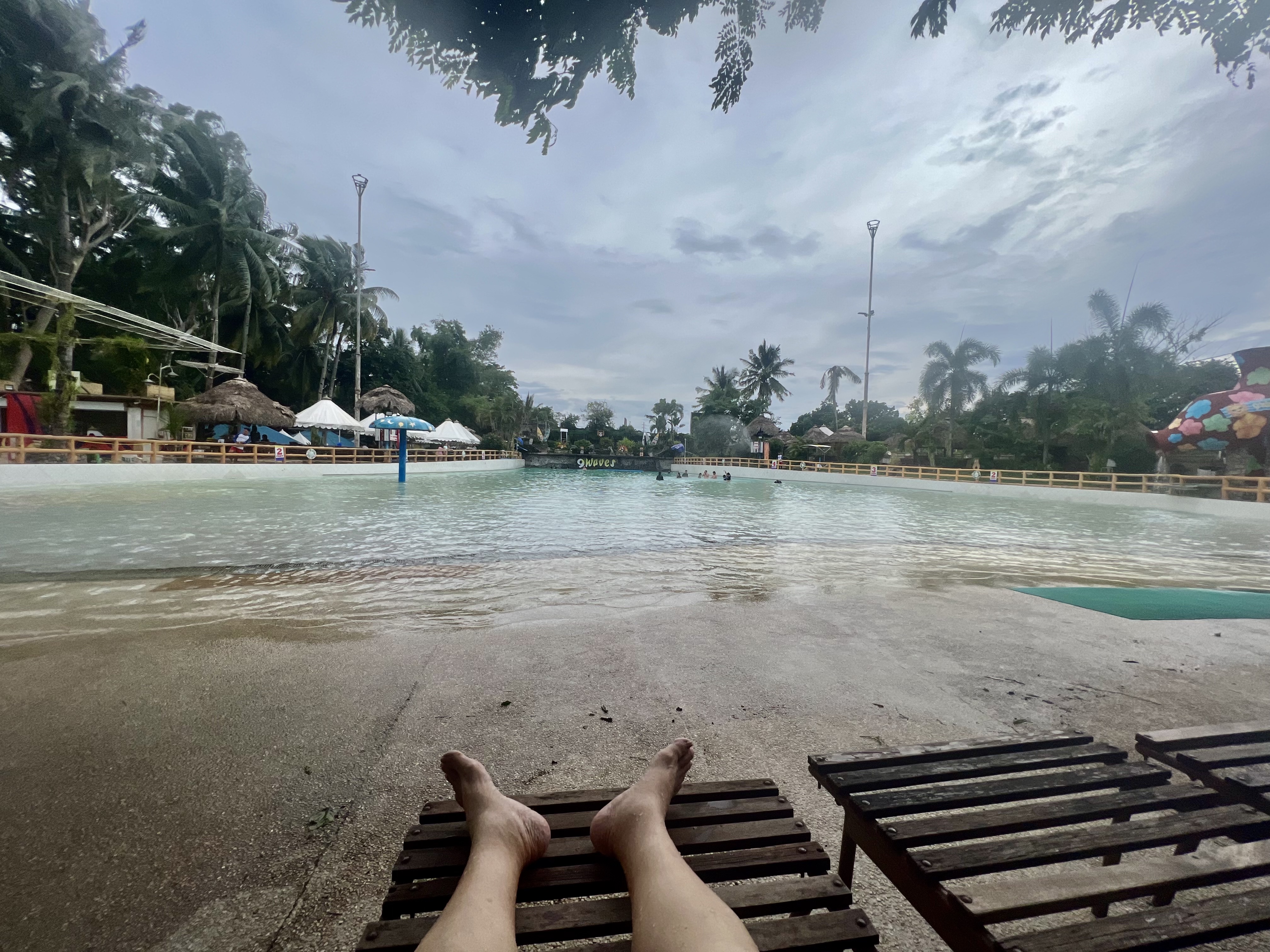
The first was a treat for the whole household—Beng, myself, my 95-year-old mom Emy, her caregiver Jaja, our housekeepers Jenny and Ara, Jenny’s husband and Beng’s assistant Sonny, and Jenny’s and Sonny’s kids Jilliane and Buboy. This is our extended family, whom we genuinely enjoy being with, so every year I promise to take them out on an overnight trip to water resort, as everyone (well, at least below 65) loves to swim. That means a wave pool, a place to cook, good and clean rooms for sleeping and showering, and not too long a ride (for my mom who gets carsick). 

Last year it was the Villa Excellance Beach and Wave Pool Resort in Tanza, Cavite that did the trick for us—and it’s still worth a weekend for your family—but a little Googling yielded me something much closer to our home on UP Campus: the Ciudad Christhia Nine Waves Resort in San Mateo, Rizal, just a 30-minute hop away via the Commonwealth/Tumana route. The place had everything we were looking for—it’s an ideal venue as well for teambuilding seminars, if you don’t want to go too far, with very helpful staff and prices that won’t break the bank; you can do your broiling right beside the huge pool, and the cabanas were clean and cozy. While I flailed around in the knee-high water, six-year-old Buboy had a blast in the wave pool, which was all that mattered.

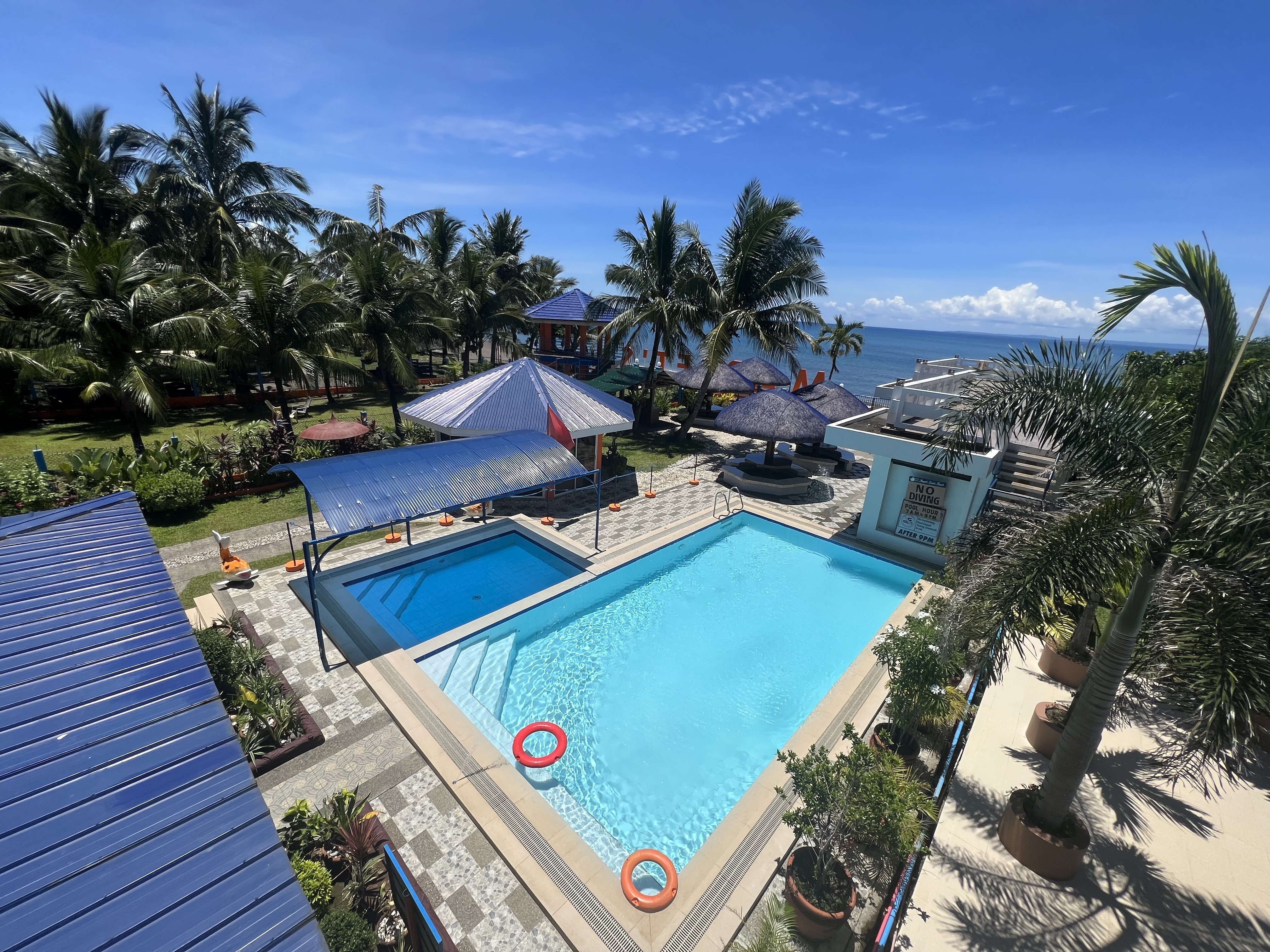
If you don’t mind driving through the mountains on a zigzag road for about three hours, then a trip to Infanta, Quezon will make the effort worth it. Facing the Pacific, but with Pagbilao Island buffering the waves in between, Infanta offers a bevy of beach resorts, of which Beng and I went to the Marpets Beach Resort, which was run by an American expat and his Filipino wife. Aside from its stretch of beach, the resort had three swimming pools, very livable quarters, and deliciously cooked food. The great thing about a roadtrip to Quezon—which is reachable via the zigzag Marilaque Highway from Marikina and also via the equally scenic though more moderate route passing Antipolo, Famy, and Real—is that the journey itself is an adventure, with much local produce to buy along the way, and breathtaking views to snap. 

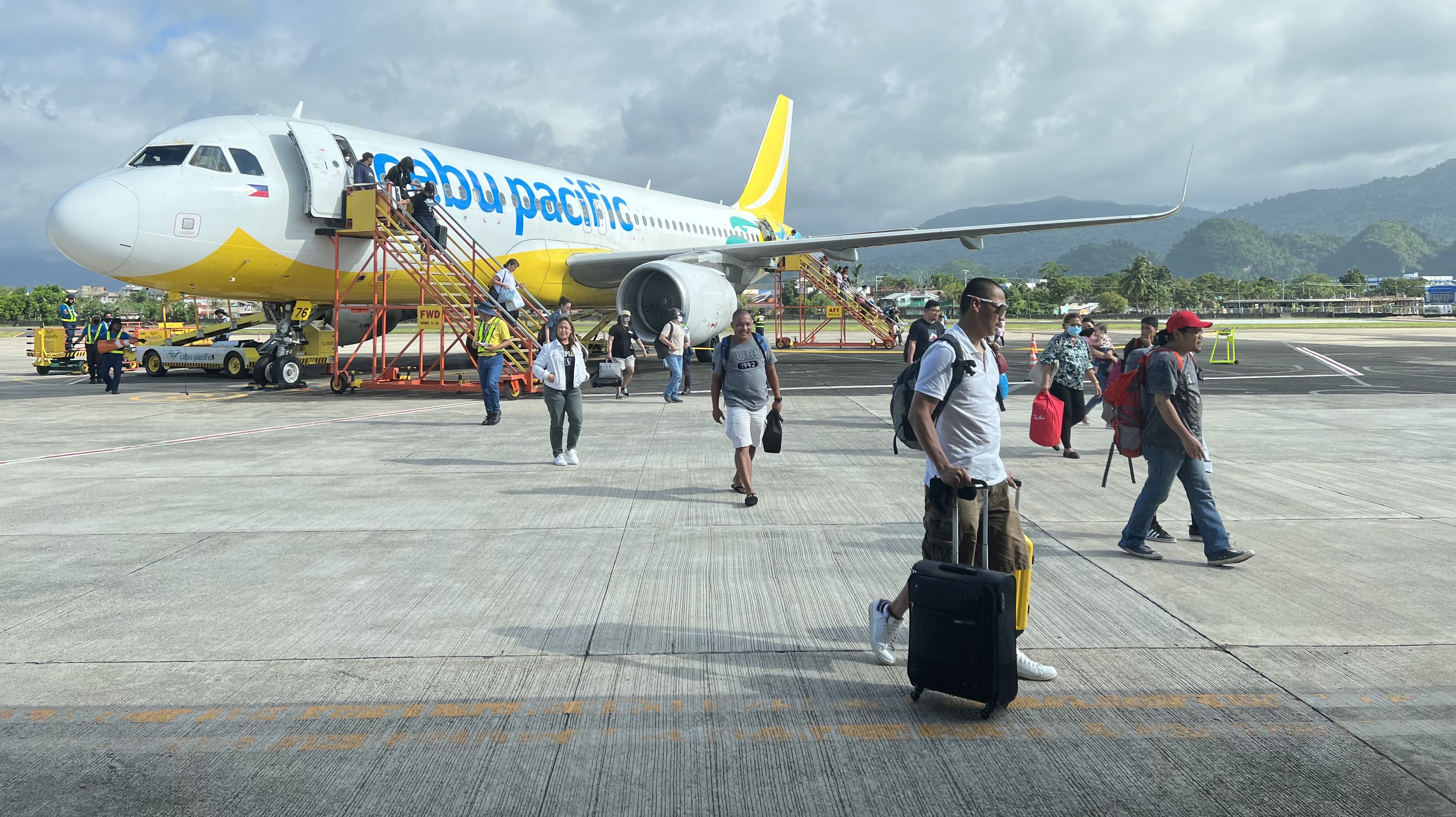
Our third destination was almost a random but providential choice. Looking for an inexpensive getaway far enough from Manila to require a plane, and with some airline credits to expend, Beng and I looked up Cebu Pacific’s destination map and settled on one spot we’d never been to—Virac, Catanduanes. We Manileños often hear of Virac only in the context of incoming typhoons, for which it’s probably unfairly used as a reference point, but if you catch it on a sunny day like we did, then you’d rather be here than busy Boracay. I found a new boutique hotel on booking.com called Happy Island Inn in San Vicente, a short tricycle ride from downtown fronting the water, and it turned out to be a winner, priced very reasonably with the friendliest front desk fellow I’ve ever met in all my travels.

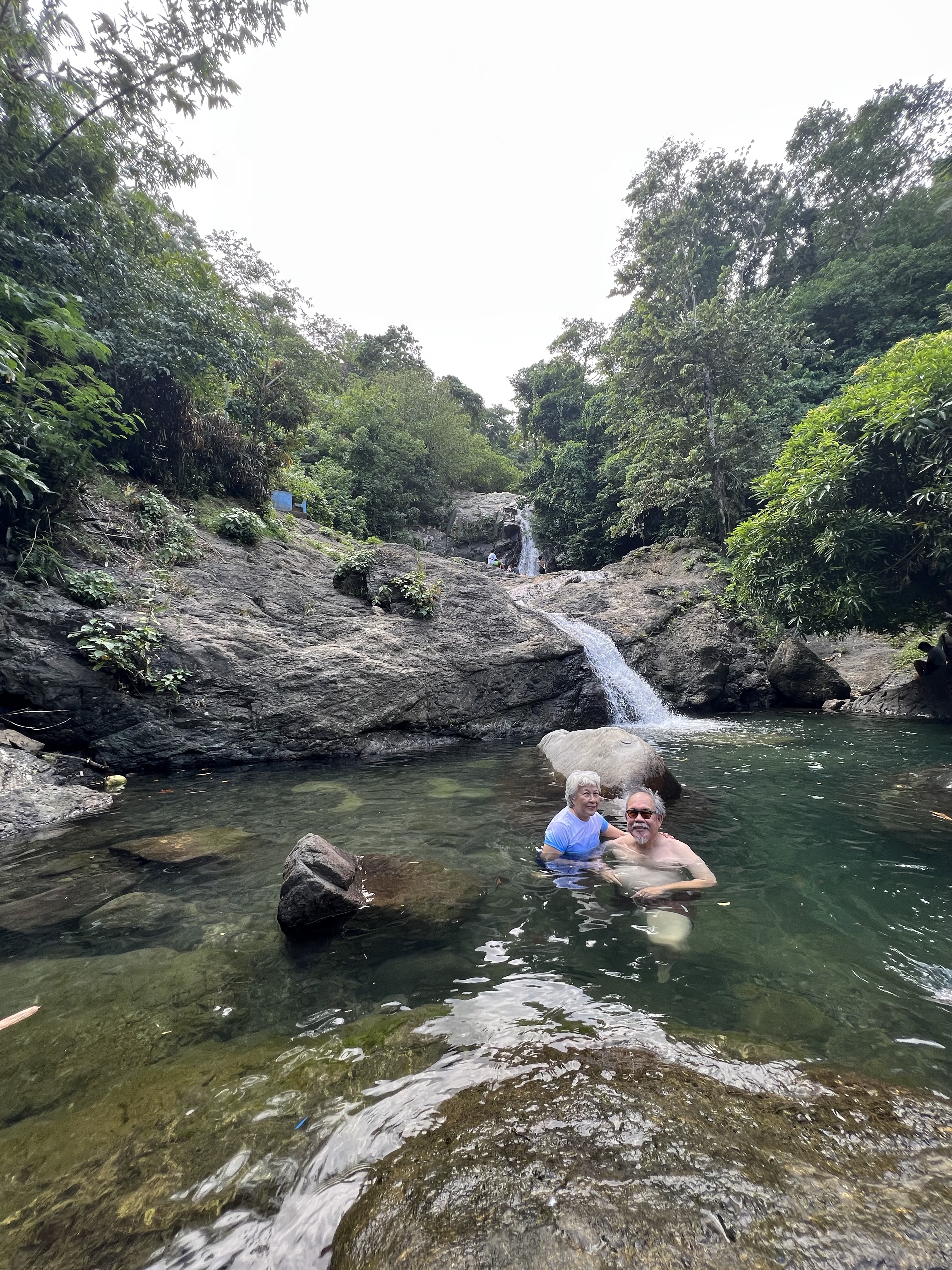
Soon we learned that nearly everything in Virac is reachable by tricycle, which we hired for a day tour that included a beachside lunch at the ritzy Twin Rocks resort, a visit to the historic Bato church, hewn out of stone and coral, and a bracing dip into the cool and clear waters of Maribina Falls (entry fee, P25 per person). We made new friends of a lovely couple, Bobby and Myette Tablizo, with whom we shared stories under a full moon. There’s a lot more to be discovered of Catanduanes up north—the island can be circled on a first-class circumferential road—but we’ll save that for next time.

My last sortie was by my lonesome and work-related, but work gets doubly hard in a place meant to transport you to blissful oblivion. This was in Panglao, Bohol, which, the last time I looked many years ago, was little more than a cluster of huts. Imagine my surprise when we stepped off the plane into a world-class airport and then, just minutes later, were wheeled into the kind of resort you find on some glossy magazine cover or on the travel channel but never thought was right in your backyard. (Well, of course there’s a whole class of Pinoys who do know about such places, and I’ve been fortunate to have been invited to a few, but my poor-boy’s jaw still can’t help dropping in the face of luxury.)

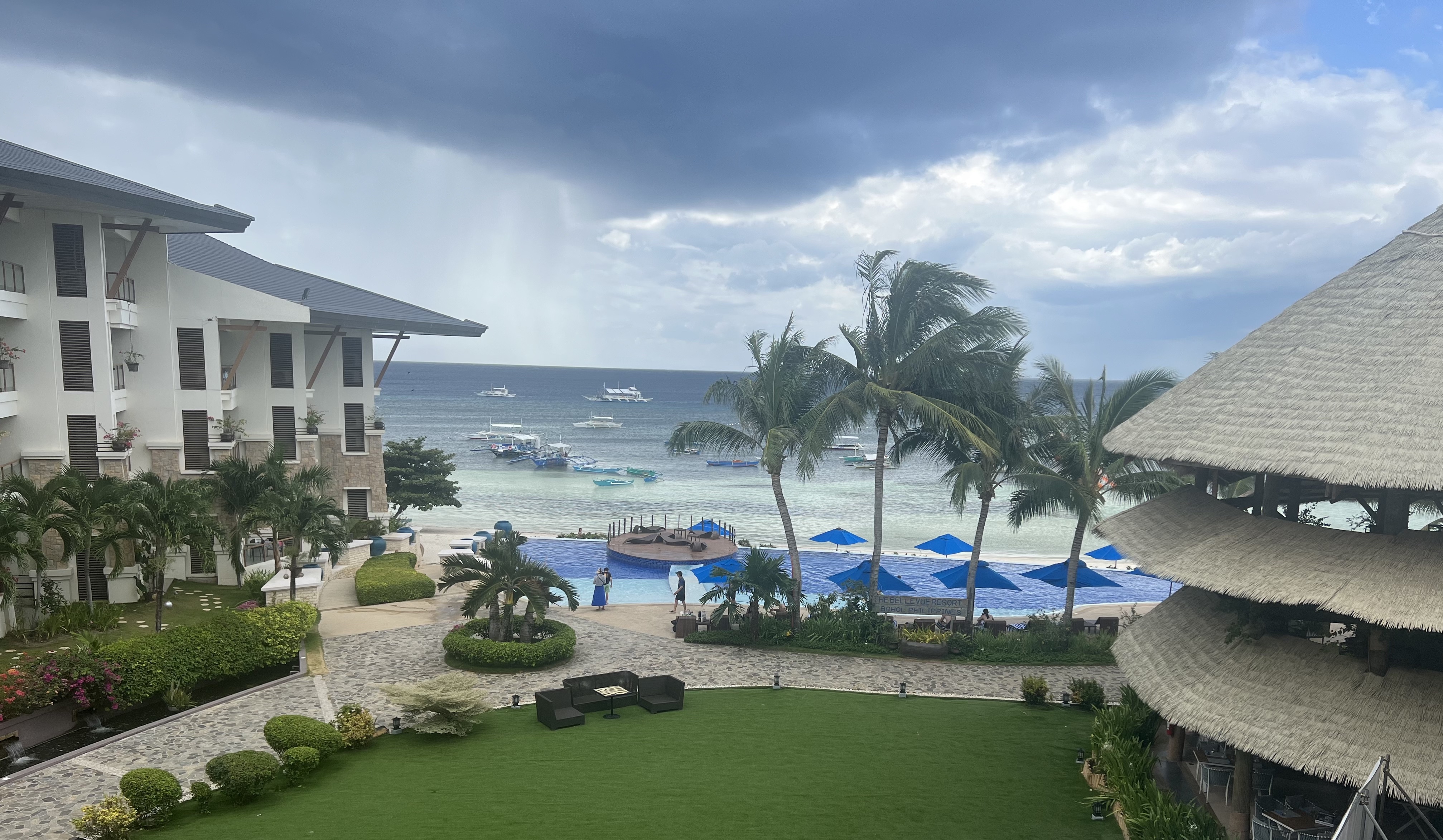
The Bellevue Resort in Panglao is one such place that will make you wish you’d studied something like plastic surgery so you could spend a few weekends here every year. The rooms are as plush and comfortable as you should expect at its price point, but it’s the waterfront that will captivate the first-time visitor, with its white-sand beach, tour boats, infinity pool, and multilevel restaurant. Breakfast or dinner beachside is an option, and a tour of the rest of Bohol can be arranged.

Of course, there’s always Bali or the south of France, but with the new travel paperwork requirements, who needs the hassle at immigration? Save yourself the travel tax and go local. It’s still more fun in the Philippines, if you know where to look.

Qwertyman No. 46: The Writer as Liberator

Qwertyman for Monday, June 19, 2023

AS PART of its Independence Day celebration, the J. Amado Araneta Foundation asked me to give a talk on “The Writer as Liberator” last Saturday, and today being Jose Rizal’s birthday, I’m very happy to share that talk in full (a shorter version appeared as my Qwertyman column in the Star):

When I was first asked to talk about “The Writer as Liberator,” the first thought that went through my mind was probably the thought that’s now going through yours, which was that of the writer as political revolutionary or dissident, in the mold of Jose Rizal, Marcelo H. del Pilar, Lorraine Hansberry, Alexander Solzhenitsyn, Nadine Gordimer, Wole Soyinka, and so many others of their caliber and stature.

That presumption, of course, is certainly valid and reasonable. Indeed, human history is fraught with examples of writers who fought colonialism, slavery, racial prejudice, and feudal and capitalist oppression and exploitation in India, South Africa, and the United States, particularly the American South, among many if not most other countries in the world. Wherever evil has reared its head, writers have arisen to call it out by name in all its forms—overweening pride among the ancient Greeks, blind ambition in Shakespeare’s time, lust and greed everywhere down the ages. 

The Philippines has been no exception. Decades before Rizal, Francisco Baltazar or Balagtas employed allegory in Florante at Laura to depict suffering and denounce injustice. Rizal and the whole Propaganda Movement followed, in a story of resistance and revolution that many of us already know. It’s a high climactic point that we could talk about all day but I won’t, because I’d rather talk about other things that most of us don’t know about writers and liberation. 

Again, to deal with the obvious, writers of all kinds have been at the forefront of political and social change. They included poets, playwrights, novelists, journalists, screenwriters, and today we would have to count bloggers and comic book script writers.

Our heroes and champions of freedom were poets—Rizal’s Mi Ultimo Adios and Bonifacio’s Pag-Ibig sa Tinubuang Lupa spring to mind, but they were also followed by the likes of Claro M. Recto, Francisco “Soc” Rodrigo, Carlos P. Garcia, and Diosdado Macapagal. These men—sadly, our political and even our cultural life was dominated then by the patriarchy—came from a generation when there was a very thin line between journalism and creative writing, when an opinion column could appear in verse, and when senators were expected to be literate and eloquent.

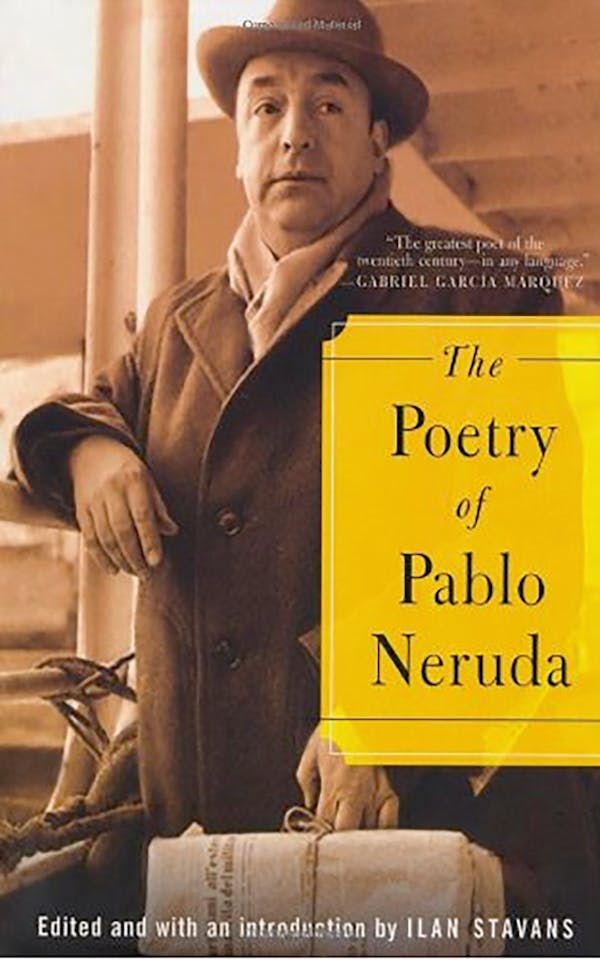
As I mentioned earlier, this was true of many countries around the world where people were fighting for freedom and justice. In South America, Simon Bolivar—who was known as The Liberator or El Libertador—led the fight for independence from Spain of what are now his native Venezuela, Colombia, Bolivia, Peru, Ecuador, and Panama, but he was also a poet, alongside the Cuban Jose Marti, among others. The Chilean poet and Nobel Prize winner Pablo Neruda wrote a poem in tribute to Bolivar, titled “A Song for Bolivar,” which I will read to you:

Our Father thou art in Heaven,
in water, in air
in all our silent and broad latitude
everything bears your name, Father in our dwelling:
your name raises sweetness in sugar cane
Bolívar tin has a Bolívar gleam
the Bolívar bird flies over the Bolívar volcano
the potato, the saltpeter, the special shadows,
the brooks, the phosphorous stone veins
everything comes from your extinguished life
your legacy was rivers, plains, bell towers
your legacy is our daily bread, oh Father.

The line “everything comes from your extinguished life” might as well have applied go Neruda himself, who was murdered by the fascist Pinochet government he opposed. Many writers have died for what they have written—and again we go back to Rizal—but others fought, lived on, and even succeeded in their struggles for national liberation. Two of the most prominent were Ho Chi Minh and Mao Zedong, who led long and ferocious wars against both local and foreign oppressors.

Imprisoned in China during the war, Ho Chi Minh wrote this poem in 1943 upon reading a book called the Anthology of a Thousand Poets:

The ancients liked to sing about natural beauty:
Snow and flowers, moon and wind, mists, mountains and rivers.
Today we should make poems including iron and steel,
And the poet should also know how to lead an attack.

In 1950, shortly after the Communists took over in China, Mao wrote this poem in reply to another poet named Liu Yazi:

The night was long and dawn came slow to the Crimson Land.

For a century demons and monsters whirled in a wild dance,

And the five hundred million people were disunited.

Now the rooster has crowed and all under heaven is bright,

Here is music from all our peoples, even from Yutian,

And the poet is inspired as never before. 

Note how, in these two poems, Ho and Mao locate the poet at the center of a collective struggle. This idea is developed even more strongly by Jose Ma. Sison—who by the way was an English major in UP—in his poem from the 196os titled “The Guerilla is Like a Poet”:

The guerilla is like a poet 
Keen to the rustle of leaves 
The break of twigs 
The ripples of the river 
The smell of fire 
And the ashes of departure. 

The guerilla is like a poet. 
He has merged with the trees 
The bushes and the rocks 
Ambiguous but precise 
Well-versed on the law of motion 
And master of myriad images. 

The guerilla is like a poet. 
Enrhymed with nature 
The subtle rhythm of the greenery 
The inner silence, the outer innocence 
The steel tensile in-grace 
That ensnares the enemy. 

The guerilla is like a poet. 
He moves with the green brown multitude 
In bush burning with red flowers 
That crown and hearten all 
Swarming the terrain as a flood 
Marching at last against the stronghold. 

An endless movement of strength 
Behold the protracted theme: 
The people’s epic, the people’s war. 

Given the aesthetics of the Philippine Left at that time, you could actually reverse this proposition to read “The poet is like a guerilla,” which Emman Lacaba certainly was, as was Ma. Lorena Barros, whose poem “Sampaguita” follows:

This morning Little Comrade

gave me a flower’s bud

I look at it now

remembering you, Felix,

dear friend and comrade

and all the brave sons and daughters

of our suffering land

whose death

makes our blades sharper

gives our bullets

surer aim.

How like this pure white bud

are our martyrs

fiercely fragrant with love

for our country and people!

With what radiance they should still have unfolded!

But sadness should not be

their monument.  

Whipped and lashed desperately

by bombed-raised storms

has not our Asian land

continued to bloom?

Look how bravely our ranks

bloom into each gap.

With the same intense purity and fragrance

we are learning to overcome.

Decades later, her namesake Kerima Lorena Tariman would write “Pagkilos,” a poem that celebrates motion in both nature and society:

Ang lahat ng bagay ay tila kitikiti,
Palagiang kumikilos at hindi mapakali.
Ang paggalaw ay kakambal ng bawat bagay,
Likas na kaugnay at hindi maihihiwalay.

Ang mga bagay-bagay ay kay hirap isipin,
Kung walang paggalaw, kung kaya, gayundin,
Ang paggalaw mismo ay di natin matatanto,
Kung wala ang mga bagay dito sa mundo.

Sa daigdig, halimbawa, nagpapahinga man ang pagod,
Matikas man ang estatwa at patay-malisya ang tuod,
Sila’y hindi naliligtas sa paggalaw ng planeta,
Ang pag-ikid at pag-inog ang palagiang sistema.

Kung kaya ang masa na akala mo’y walang imik,
Kapag natutong lumaban ay nagiging matinik!
May mga kasama man na natitigil sa pagkilos,
Ang rebolusyon sa daigdig ay hindi natatapos!

A, lahat ng bagay ay saklaw ng ating kilusan,
Katotohanan ito na di maaaring iwasan.
Kung kaya’t habang tayo ay may lakas at talino,
Sa pagkilos natin ialay ang ating bawat segundo!

Tragically, both Lorenas—and Emman Lacaba before them—would be killed in the struggle that they took on, and be hallowed as revolutionary martyrs.

Now, all this may sound like an open invitation for our favorite red-taggers to call all poets rebels, and all rebels communists. That would be ridiculous. Most poets are still happy and perfectly within their rights to write about the moon and the stars and undying love. Some rebel-poets were proud and self-admitted communists, at a time when the word was invested with a sheen of holiness. But the abject failure of communism to set up a truly free and egalitarian society and its appropriation in both China and Russia by new and autocratic elites has shed much of that romantic mystique, and it is supremely ironic that those writers and artists now fighting for civil liberties in both countries are considered enemies of the state.

“The Writer as Liberator” was an easier concept to deal with when we had a foreign occupier like Spain, America, or Japan. Today, our oppressors are internal, lodged within our society, and within our hearts and minds. The liberation we need today is from our worst selves, which is often the hardest enemy to face. Bad leadership has enabled and encouraged that side of us that accepts extrajudicial killing and unjust imprisonment as normal. 

The minds of so many of our people remain shackled by ignorance, falsehood, prejudice, superstition, fear, and a crippling dependency on the old and familiar, however self-destructive they may be. In an increasingly polarized and intolerant world, people everywhere face racial violence and discrimination, gender inequality, economic exploitation, and political repression.

The writers who will battle this chimera have many weapons at their disposal—not just books and the traditional press but social media, a universe of communication unto itself that Rizal and his contemporaries never dreamed of. Journalists fight with the truth, creative writers fight with the truth dressed up as artistic lies. 
I have often said that the best antidote to fake news is true fiction. By this I mean that it often takes artistry and good storytelling, more than a mere recitation of facts, to show people what is true.

Long before there were newspapers, writers gave voice to their people’s hopes and fears through what today would be called fiction: through myths, legends, tales, epics. These stories transported people from the crushing routine of their everyday lives to the realm of the gods, to a romantic past cloaked in the mists of fable and fancy. Indeed, these stories came even earlier than literacy itself, transmitted orally from one generation to the next. Creation myths validated and gave meaning to a tribe’s or a people’s existence; tragic drama reminded them of the consequences of our moral choices. 
When I started my Qwertyman column in the Philippine Star and began writing what I called “editorial fiction,” a columnist in another newspaper immediately cried “Foul!”, claiming that fiction cannot possibly be taken as opinion. I responded that all fiction is opinion, if you know how to read it closely enough. Like the mirror Perseus used to kill Medusa, we employ fiction to deal with truths we cannot bear to face.


I am under no illusion that the next revolution, whatever it may be against or when, will be sparked by a novel or a poem. Very likely, it will be a viral video that will ignite that flame. I pray it will not be violent, but rather a comprehensive conversion of our people’s minds and spirits for the good. But there will always be a place for the writer in the offices, kitchens, and workshops of democracy, on the bunkbeds where we lie dreaming of justice and prosperity for all. 

Let me close with a short poem that I wrote last year, titled “Freedom Is When”:

Freedom is when 

We don’t think about it

But it’s there like air

We seek only in its absence

When we’re gasping for breath.

Freedom is when

We can choose whom to love

Or whom or what to believe 

Without any fear

Of punishment or death.

Freedom is when

We can sleep without guilt

And dream without ghosts

Waking up to the aroma

Of steaming rice and stewed fish.

Ang kalayaan ay kung

Hindi natin ito iniisip

Tulad ng hangin

Hanggat ito’y mawala

At tayo’y maghingalo.

Ang kalayaan ay kung

Malaya tayong pumili

Ng iibigin, o paniniwalaan

Nang walang katatakutang

Parusa o kamatayan.

Ang kalayaan ay kung

Mahimbing tayong makakatulog

At managinip nang di minimulto

Hanggang tayo’y pukawin ng halimuyak

Ng bagong saing na kanin at pinangat.

Penman No. 436: A New Blooming at Milflores

Penman for Sunday, March 6, 2022

CHAIRMAN MAO’S dictum about letting “a hundred flowers bloom, a thousand schools of thought contend” must have been on the mind of former activist, writer, retired UN official, and later gentleman-farmer and entrepreneur Antonio “Tony” Hidalgo when he founded Milflores Publishing in 1999 to publish books that would “meet the needs and wants of the Filipino masses.” His wife, the celebrated author Cristina Pantoja “Jing” Hidalgo, could not have been more pleased. Aside from building a lovely heritage home in San Miguel, Bulacan with a cock farm for Tony behind it, the Hidalgos were eager to do their part for Philippine literature beyond teaching and writing. 

Milflores would go on to publish 80 titles on such varied subjects as suburban living, cockfighting, and 20th-century masculinity, on top of the usual fiction. It was beginning to make a mark as a small but quality press—and then Tony sadly and suddenly died in 2011, leaving a devastated Jing to carry on with distributing their titles. Busy with her own professional life, Jing soldiered on as far as she could, until 2020 when a white knight entered the picture in the form of Andrea Pasion-Flores, who had been her student (and mine) at UP many years earlier. 

Since graduation, Drea—a fine fictionist in her own right—moved on to become a lawyer, then executive director of the National Book Development Board, then our first international literary agent, and until 2020 general manager of Anvil Publishing. Post-Amvil, Drea was looking for fresh challenges and opportunities, and she found it in Milflores. Her husband Javi, also a lawyer, put her up to it: “Javi and I thought about starting a new publishing company, which might’ve been cheaper. But Javi gave me the idea of buying Milflores. First, because of the name—it fits with ours. Second, it already had some goodwill that would be a shame if it were forgotten. Third, it wouldn’t hurt to ask Jing if she had any plans for it. In a heartbeat, she said yes.”

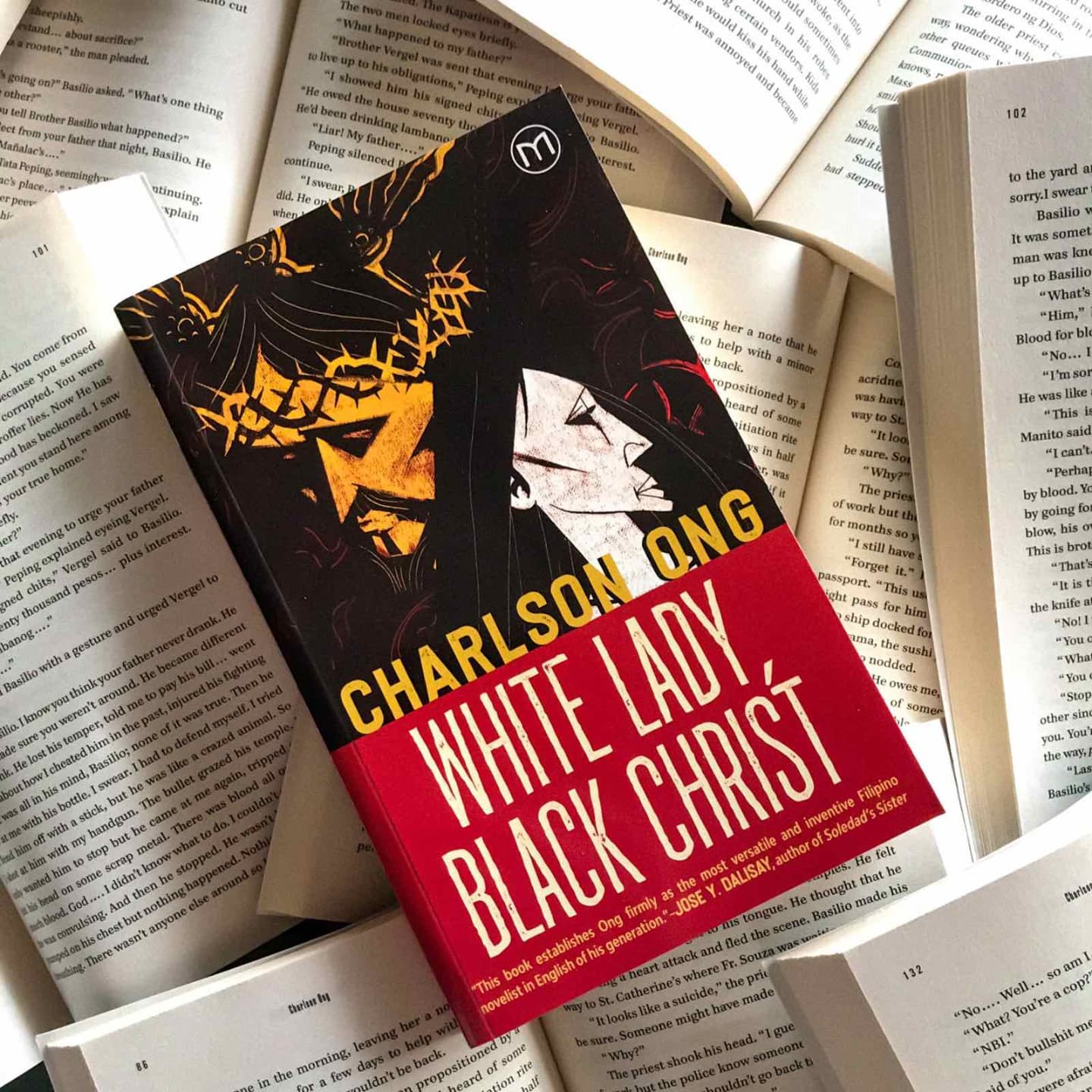
Since that takeover, Milflores has already come out with an impressive list of titles that herald a new blooming for both the company and Philippine literary publishing as a whole. Against all the odds thrown her way by the pandemic, the tenacious Drea managed to secure publishing rights from top-drawer Filipino authors such as Charlson Ong, whose wild and wacky novel White Lady, Black Christ became Milflores’ flagship offering in May 2021. As Charlson’s agent, Drea had already sold an earlier novel of his to a Malaysian publisher, so this was a natural follow-through.

This was followed by a new edition of Nick Joaquin’s Rizal in Saga. Drea had also sold NJ to Penguin Classics. “I wanted this book more than anything because, as Ambeth Ocampo said, the book went out of print the moment it was published because the government gave it out as a souvenir during the centennial of Rizal’s death in 1996, and was never reprinted.” Drea pulled out all the stops, and went for a hardcover edition. “If I was to deserve this book, there would be no cutting corners. I had to make people realize the value of this book. It had to be an object to be desired. And, as Ambeth told me, we both made sure it came out well because we both felt NJ deserved no less. When I die and go to book heaven, I want to hear Nick and Rizal tell me, I did well by them, haha!”

Simeon “Jun” Dumdum’s Why Keanu Reeves Is Lonely and Why the World Goes on as It Does, a small collection of poetry, was another risk worth taking. “Knowing I wouldn’t be raking in millions with this book, why did I want it? Because anyone who reads his poetry will be uplifted. It’s a book to treasure, really. Jun Dumdum was so game with whatever we did with it, even if we said we’d like the book to be neon pink and green. He was onboard! I like those kind of writers.”

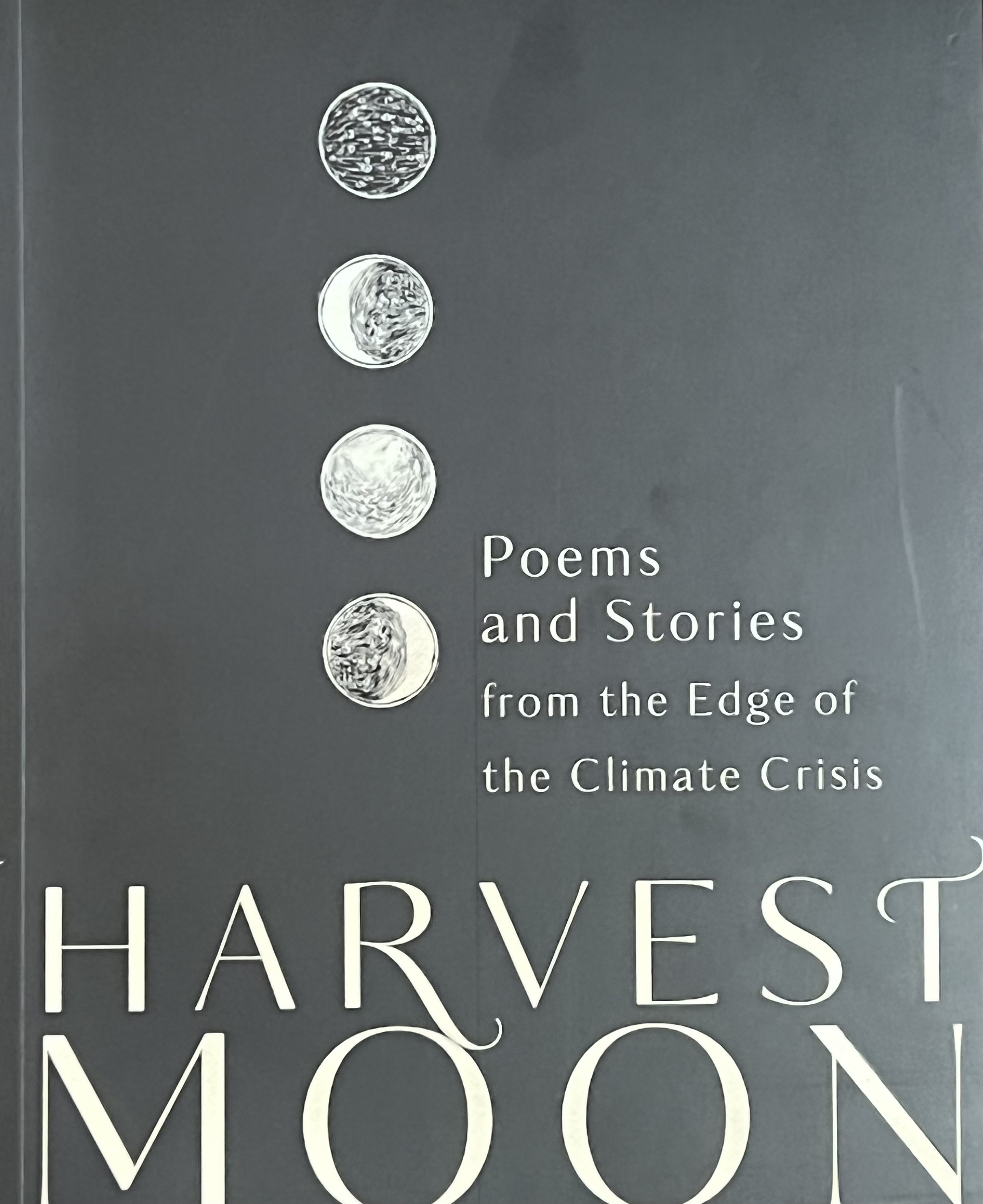
Writer and noted bookseller Padma Perez brought Milflores its biggest book yet, Harvest Moon: Poems and Stories from the Edge of the Climate Crisis, co-published with the Institute for Climate and Sustainable Cities (ICSC). Most books with a political agenda tend to be preachy and off-putting, but Harvest Moon is unique in its concept and execution. Twenty-four writers from around the world were given evocative photographs as prompts, with the further stipulation that they were to avoid buzz words and phrases such as “sustainability” and “climate change.” The result is visually and textually moving, investing the project with deep personal insight. This book is being sold at a deep discount, thanks to a subsidy from ICSC.

Drea Pasion-Flores has followed these up with other provocative projects, including many more in the pipeline. Robby Kwan Laurel’s Ongpin Stories is a timely reprint; former Sen. Rodolfo Biazon’s biography by Eric Ramos is a gripping narrative of a man who rose from doing other people’s laundry and selling in the market to become a general and senator, and one of the heroes of EDSA 1; David Guerrero’s The Crap Ideas Book is an inspirational book on creativity; the bedridden Nick Carbo’s new book of poems, Epithalamion, is, says Drea, his “shot at immortality.”

Milflores also has something lined up for younger readers: Kat Martin’s debut novel At Home with Crazy is the story of a 14-year-old girl dealing with the stress of living with a mother with a mental illness. Internist-oncologist William Liangco’s Even Ducks Get Liver Cancer and Other Essays is a hilarious romp through the travails of med school in a charity hospital. Drea will also publish two graphic nonfiction books by the feminist Swedish graphic illustrator Liv Stromquist and a cookbook by artist and cancer-fighter Robert Alejandro.

“I have big dreams for Milflores,” says Drea. “I want to try to bring a Philippine company out there, not just here. I’m guessing it’s not going to be the next Coca-Cola Company. It’s going to take time and lots of good books, but I have no doubt I can get there—or somewhere close to it.” (More information at milflorespublishing.com)

Penman No. 430: Rizal’s Typewriter

Penman for Monday, December 20, 2021

NOW THAT I have your attention, let me backtrack quickly and clarify that title: I’m talking about a typewriter that Jose Rizal or the Katipunan could have used, had they been tech-savvy enough and infected with 19th-century FOMO.

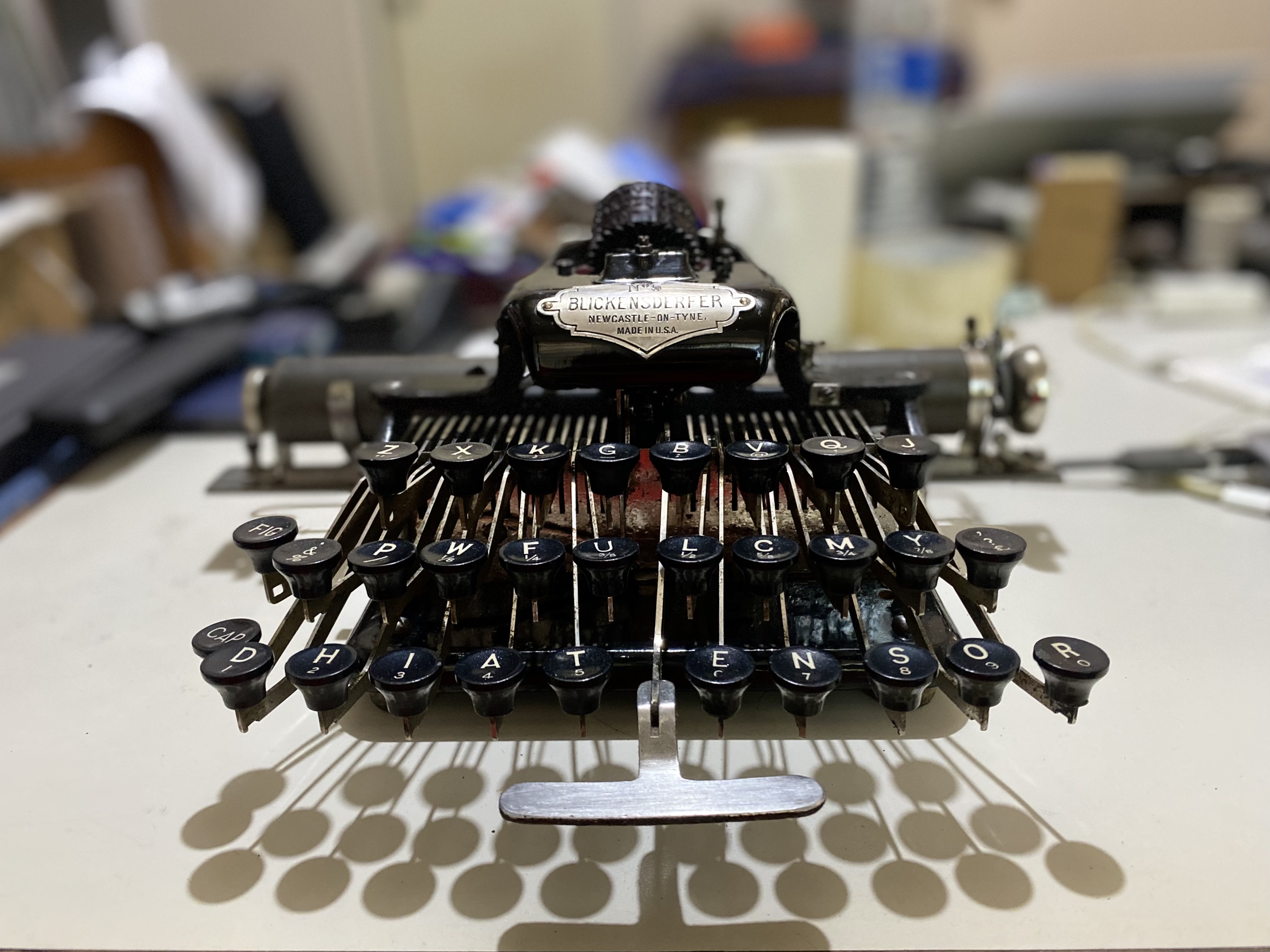
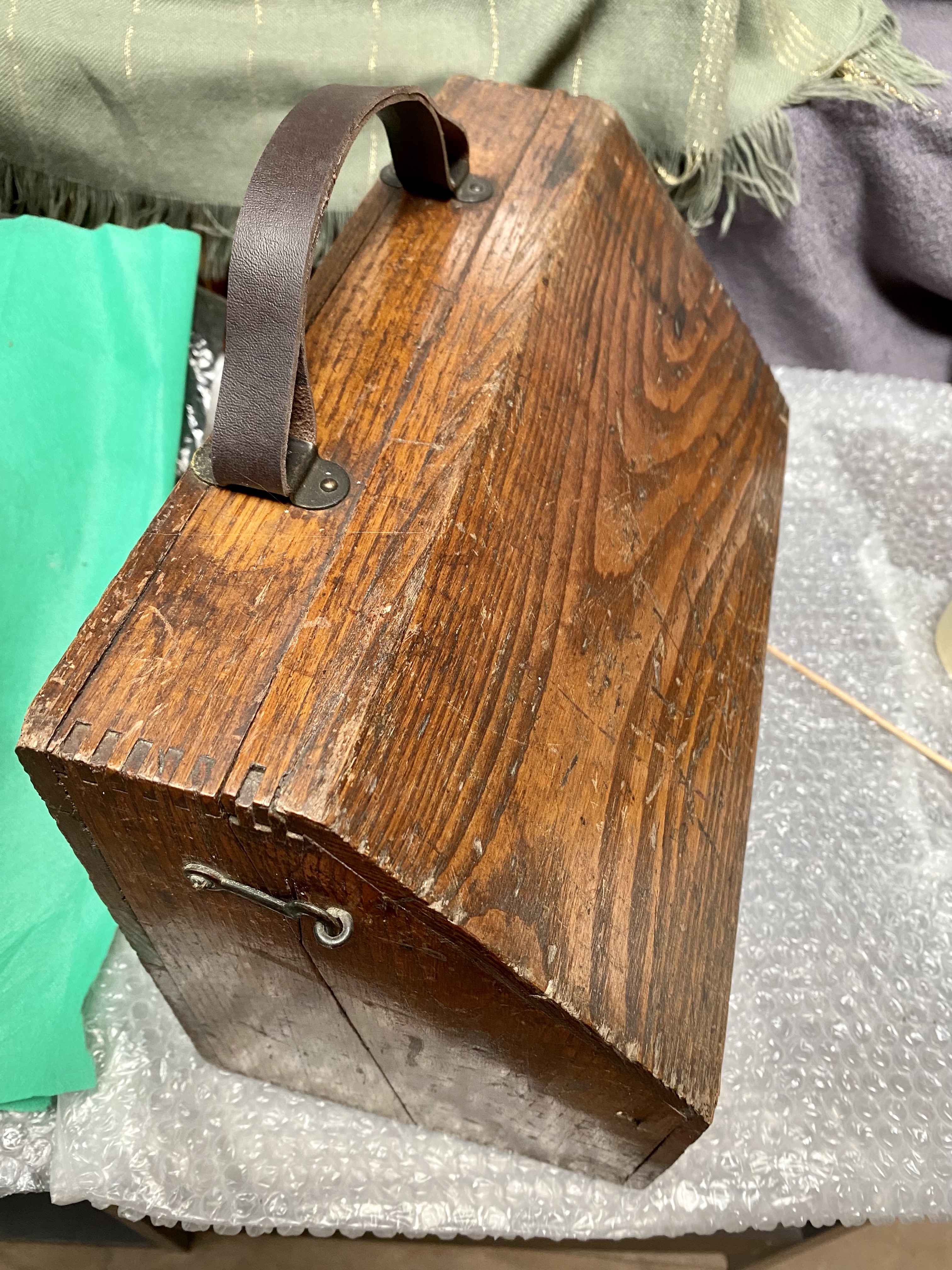
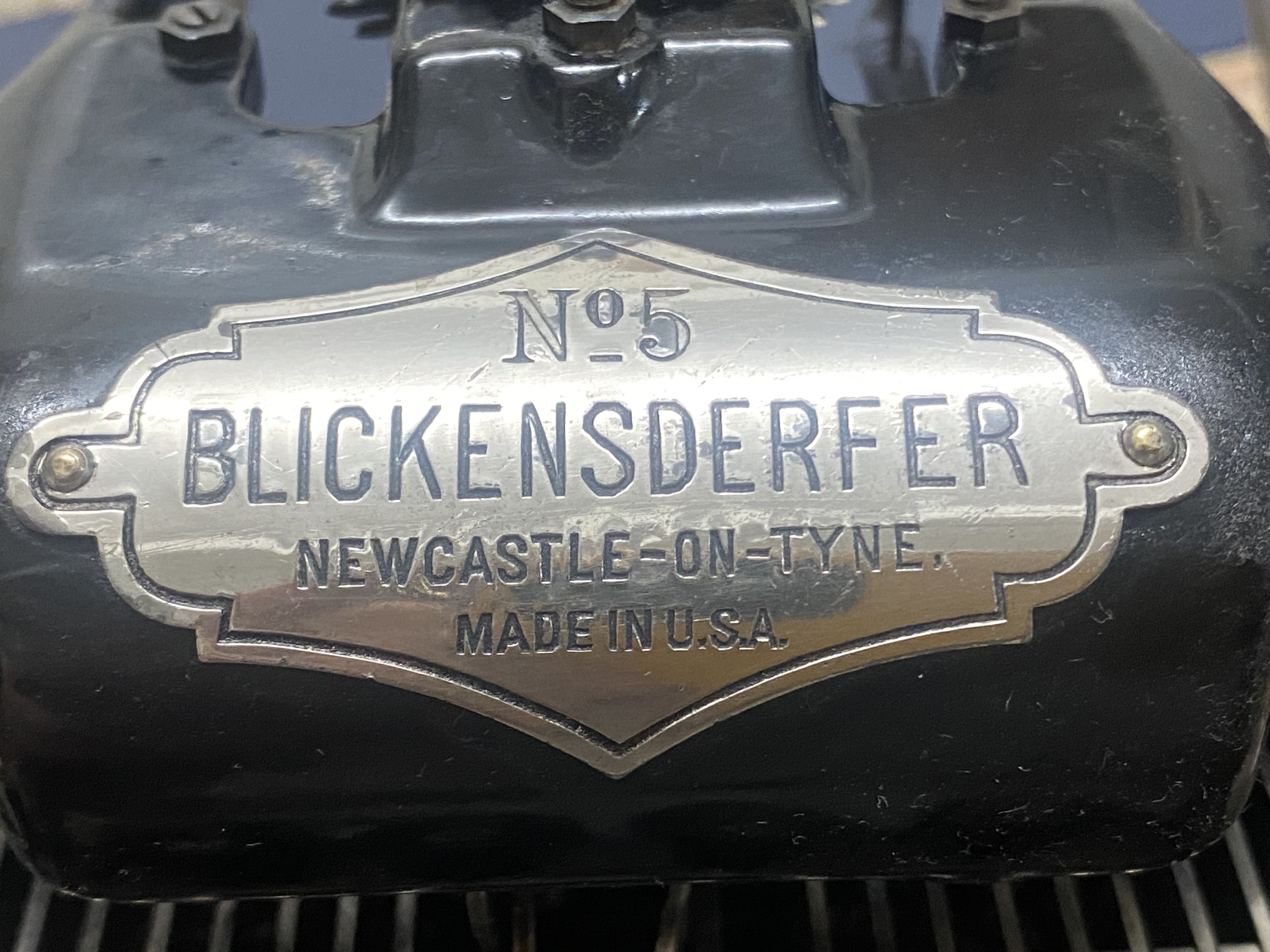
Early this month, a box I had been eagerly awaiting arrived from England, where I had found the machine on—where else?—eBay, selling for a reasonable price (“reasonable,” that is, to oddball collectors like me). Inside the box was a wooden case, visibly old, with a latch on each side. I undid both latches and the case opened to reveal what I expected to see: “an antique Blickensderfer No. 5 typewriter with spare typewheel in original oak case,” according to the ad I saw. But the first thing that struck me wasn’t the machine itself—it was the fragrance of oak, still embedded in the wood after more than a century.

Why did I even want the Blick, as the typewriter invented by the American George Canfield Blickensderfer came to be known? By the time the first Blick was patented in 1891, the typewriter had been on the market for about 17 years (many prototypes preceded the Sholes and Glidden, but were never mass-produced, except for the sci-fi-worthy Hansen Writing Ball, ca. 1870). But most were big and bulky, and—surprise—wrote on the other side of the typist, who couldn’t see what he or she was typing. 

The Blick No. 5 was the first typewriter that could truly be called a portable, with a keyboard and a front-facing platen or paper roller, much like its modern counterpart. Think of it as the MacBook Air of its time. It looked like an insect with a big head and spindly legs, and even more strikingly, it employed what its inventor called the “scientific” DHIATENSOR keyboard—those bottom-row letters supposedly figuring in 85 percent of the words in English. QWERTY had already established itself as the standard layout early on, and later Blicks would use it, but I preferred the quirkiness of DHIATENSOR.

The Blick No. 5 was given its public debut at the 1893 at the World’s Columbian Exposition in Chicago, a monumental event meant to showcase such novelties as a moving walkway, AC electricity, and the Ferris wheel. The small, lightweight typewriter became a hit, helped along by the fact that it sold at a third of the 100 dollars that most other typewriters cost at the time.

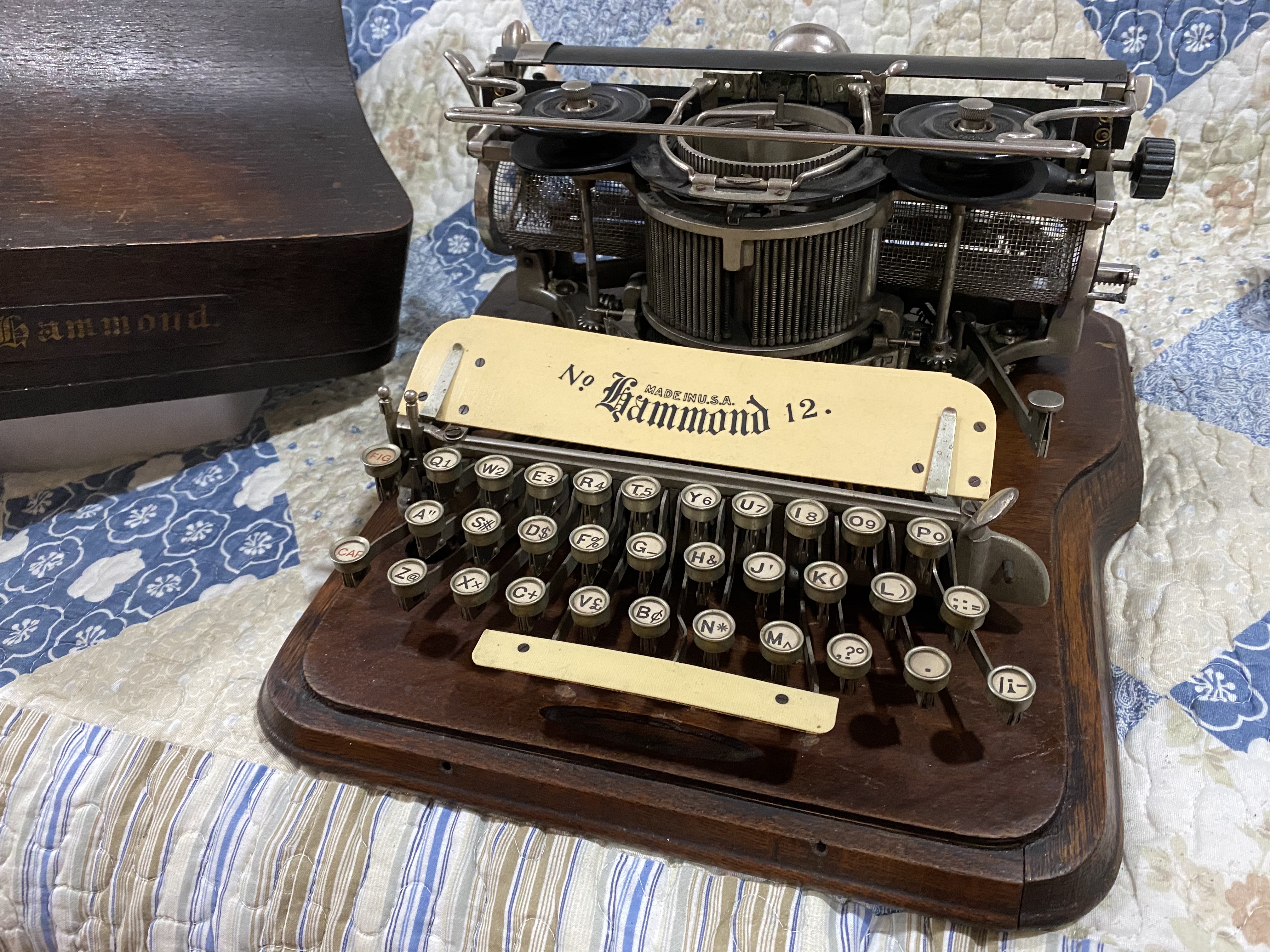
So I wanted one in my collection for historical purposes; prior to this, my earliest machine was a larger and grander-looking Hammond 12 from around 1905. That Hammond got to me, also in its original wooden case and all the way from Ohio, luckily in one piece. 

That’s the trouble with collecting any machine with scores of tiny parts a hundred years old—iron corrodes, rubber shrinks, wood warps, paint fades; screws come off, joints get fused solid, whole sections vanish, and often all you have left is a rusty lump of metal better tossed into the garbage. 

Most Blicks and other old typewriters you can find on eBay will manifest at least a few of these problems. Missing parts—obscure and ancient—can be hard to find; thankfully a global network of typewriter enthusiasts exists to offer help and advice online. Reviving a machine with frozen typebars is another major chore; but again expert repairmen still remain to come to the rescue. (Among them is our own Quiapo-based Gerald Cha, whom I’ve written about, through whose hands all my machines pass for the requisite CLA—cleaning, lubrication, and adjustment.) Shipping is yet another potentially harrowing complication—fragile, valuable, and irreplaceable machines can be turned into scrap with one drop of a poorly padded box.

It was a miracle that the Blickensderfer turned up at my doorstep whole, complete, and needing just a bit of lubrication. When Gerald typed out its first few letters in script, it was as though a mute singer had found her voice after a century.

But one more ritual had to be performed: dating the machine to the year it was manufactured (mine was an English model, made in America but sold out of Newcastle-on-Tyne). For this, typewriter collectors have an online resource to fall back on: typewriterdatabase.com, which has been painstakingly crowdsourcing and cataloguing the serial numbers of hundreds of brands of typewriters. I first had to locate the number on my Blick; it was there on the upper right of the bottom of the frame—68403. A quick check yielded the year it was made: 1896. More than liking the Blick, I now stood in awe of it.

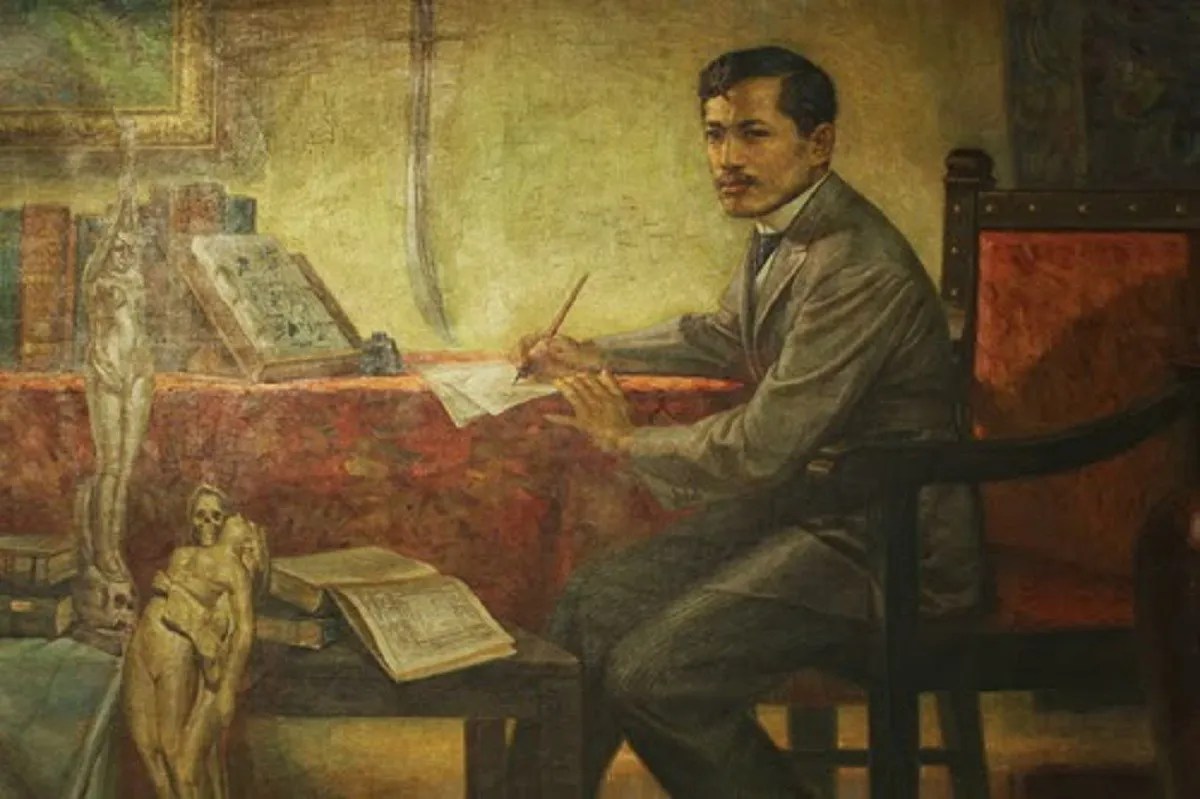
I’d like to fantasize that some of these machines made their way to Manila and figured, somehow or other, in the Revolution, although I do have to admit that the standard image of Rizal poised to write “Mi Ultimo Adios” with a quill pen in hand is much more appealing than him pecking away at a keyboard. 

(Image from joserizal.com)

I asked Ambeth Ocampo about it, and he said that while he hadn’t come across any connection between Rizal and a typewriter, our hero surely would have encountered it in his many travels abroad. Rio Almario seems to recall having seen a copy of the Katipunan’s Kartilya in typescript, but we can’t be certain when that was made. With the Americans came the Remingtons—and it’s no small coincidence that the same company made the firearms that subdued us and the typewriters we began writing in English on. I can only stare at my Blickensderfer No. 5 and wonder what stories sailed across its paper horizon.

Penman No. 376: The Other Pepe

IMG_2234.jpeg

Penman for Monday, December 9, 2019


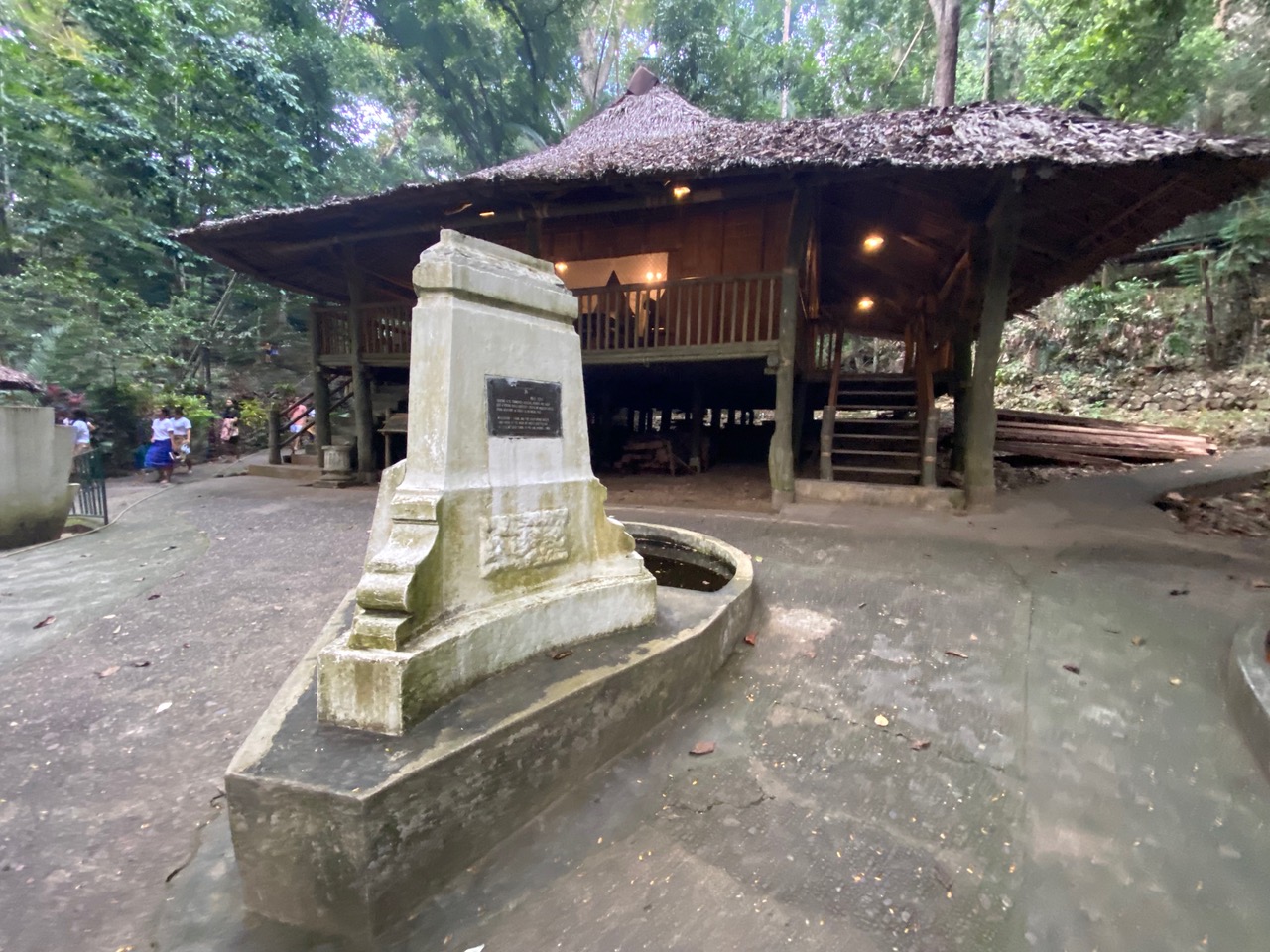
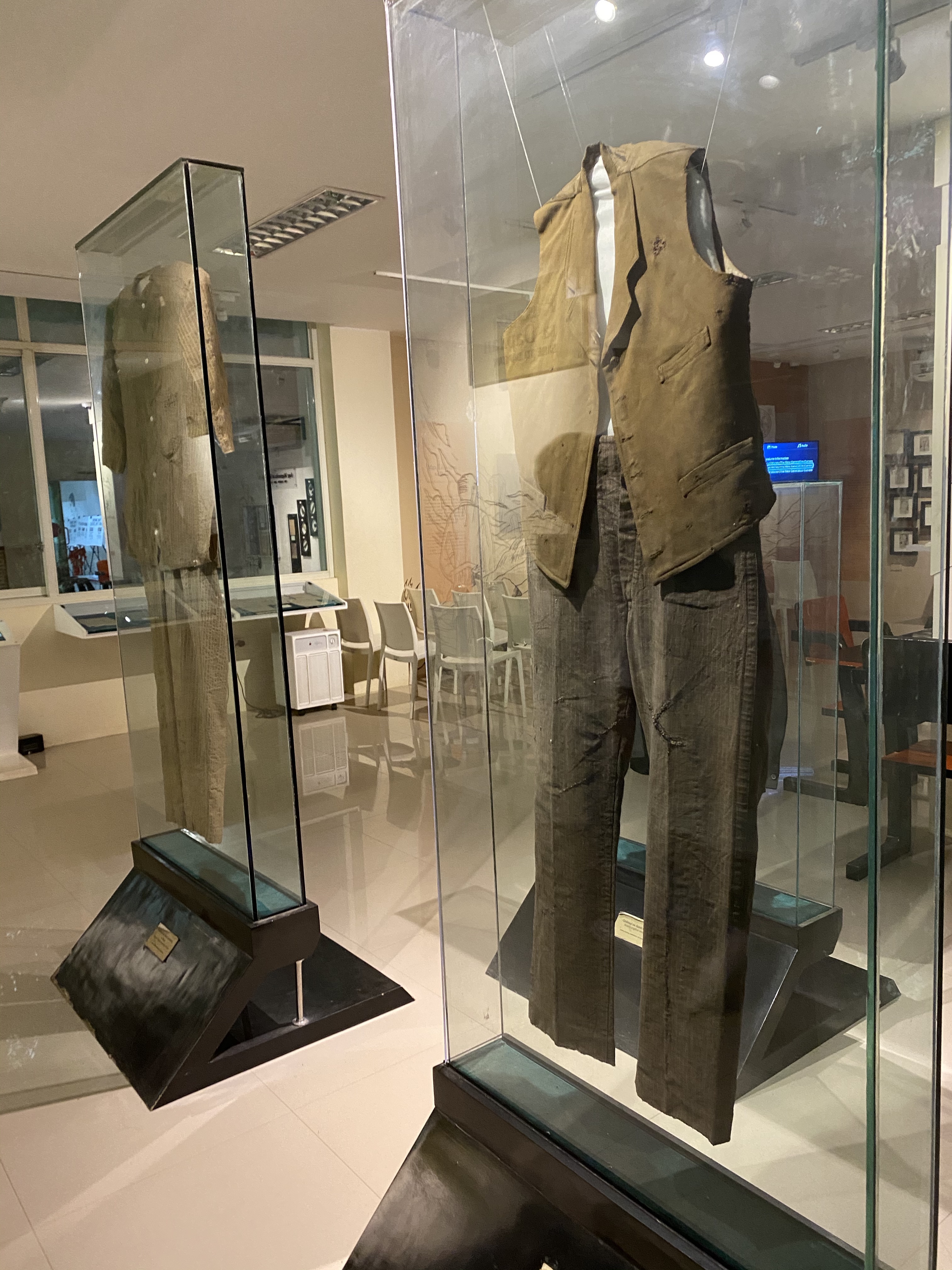
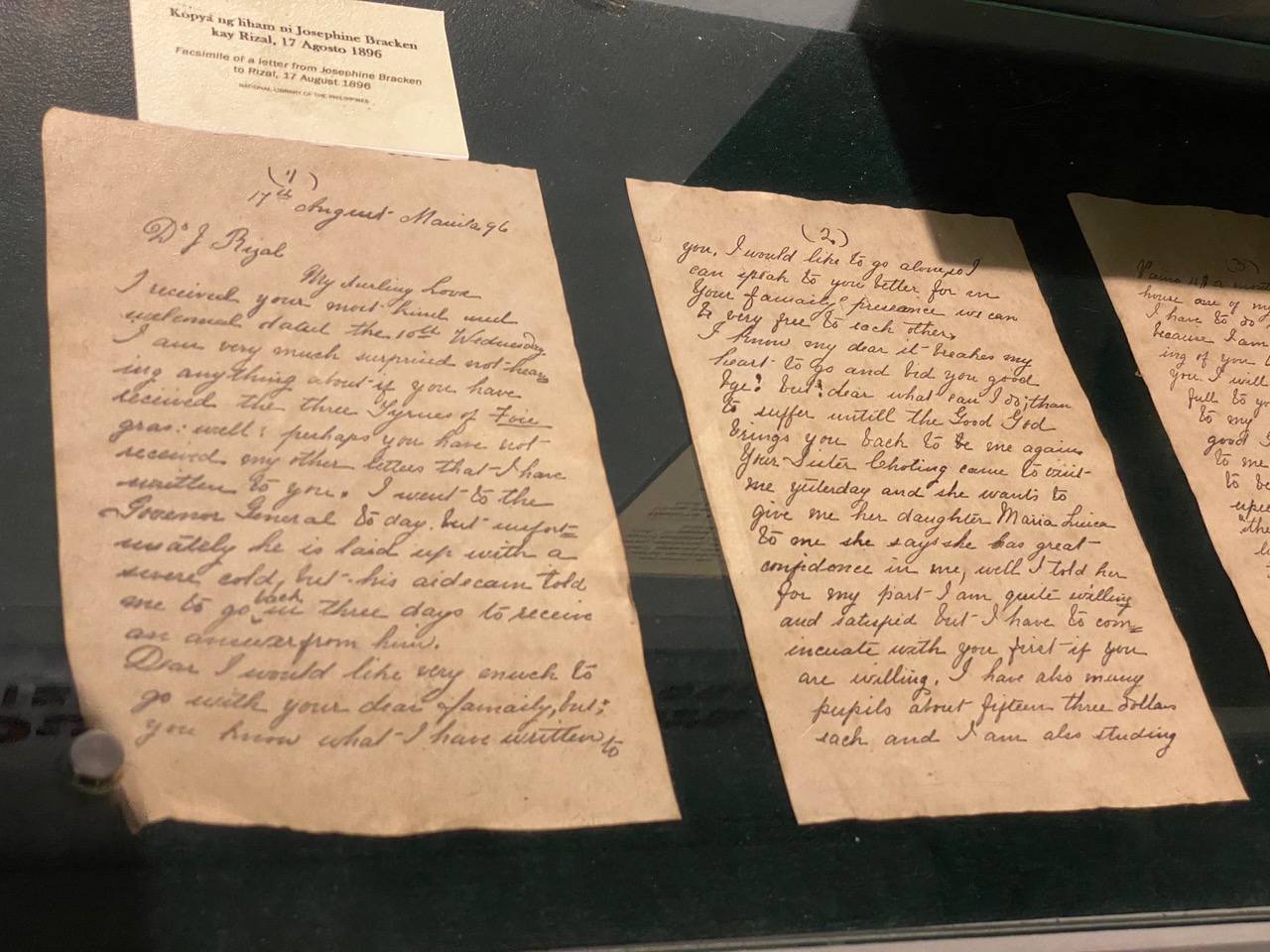
THIS COLUMN started out in my mind as an account of a return visit to Dapitan, where my wife Beng and I had first gone eight years ago to pay homage to Jose Rizal, who had lived there in exile for four years between 1892 and 1896, until shortly before his arrest in Europe and his trial and execution in Manila. It was by many accounts a happy and productive interlude, during which he practiced his skills as physician, teacher, poet, and scientist, a period highlighted by his romance with a young woman named Josephine Bracken, whom he would later marry at death’s door.

IMG_2242.jpeg

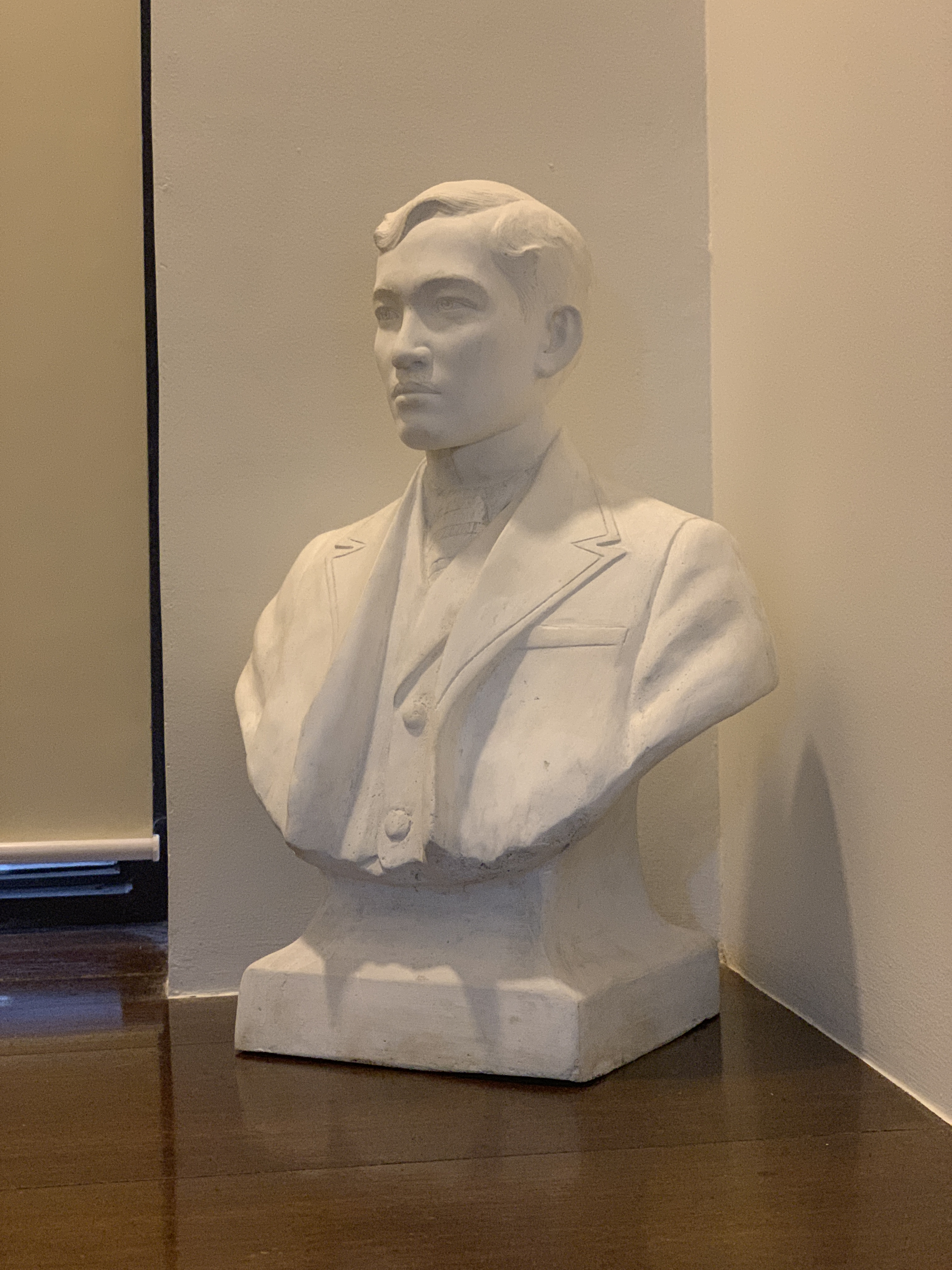
Indeed there’s no way you can visit his beachfront estate named Talisay, now a national shrine, without being swept up by the epic drama of Rizal’s last years—a drama wrought not in the theater of armed combat, but in the innermost recesses of his spirit, torn as he was by many loves and longings, successively losing a stillborn son, his freedom, and then his life. Again I looked at his clothes, his letters, and his artworks, trying to see the man beneath the trees, or on the water’s edge pointing something out to Josephine in the gathering dusk. (I keep a plaster bust of Rizal, crafted in 1961 by Anastacio Caedo, in my home office, and often find myself staring at it and asking, “What are you thinking?”)

IMG_0297.jpeg

IMG_2247.jpeg

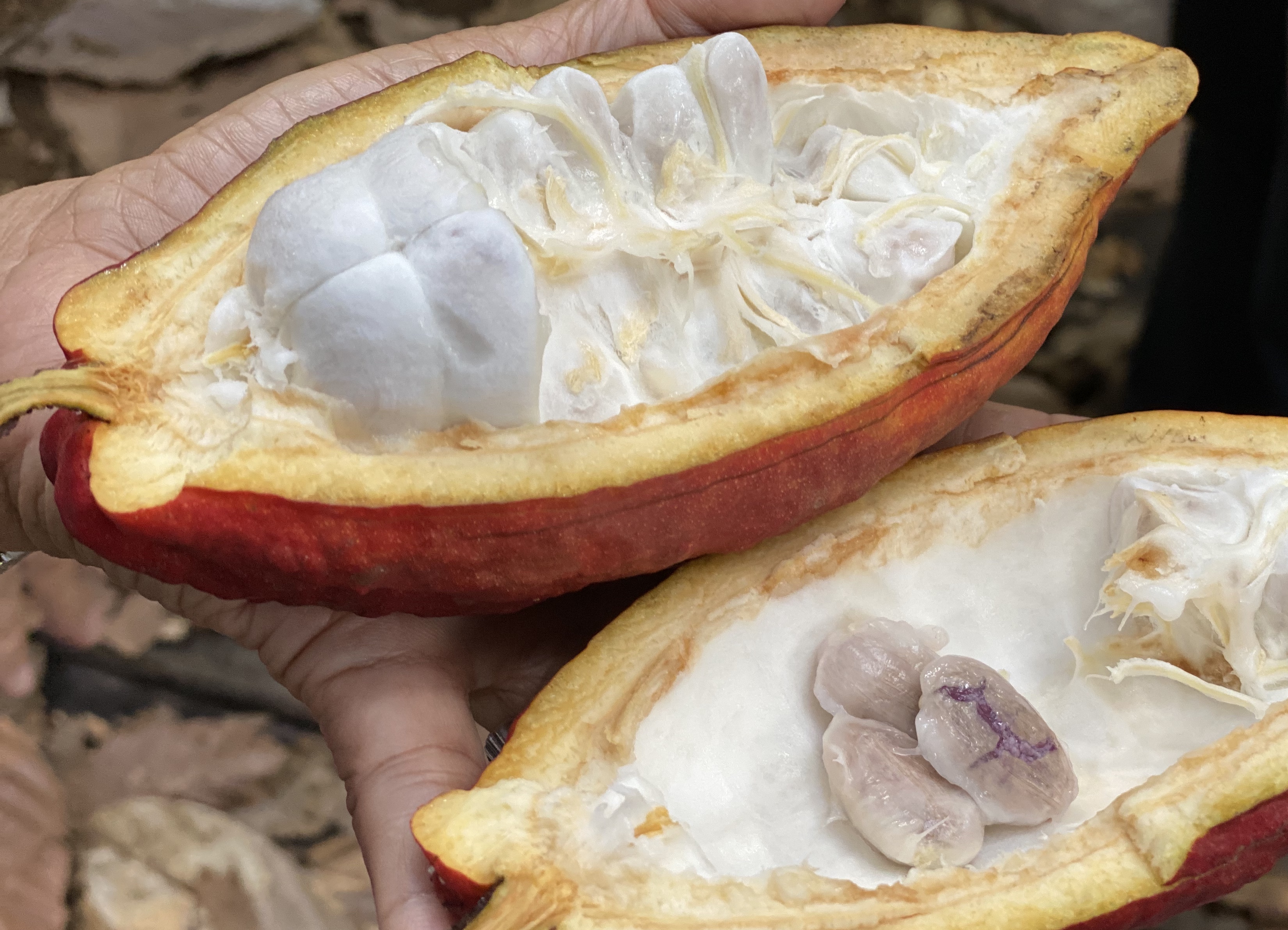
We had gone down to Dapitan via Dipolog, where the airport is, to enjoy a weekend with old friends from our time as the elves and acolytes of Dr. Gerry Sicat at the National Economic and Development Authority, back in the 1970s. Our boss at the Economic Information Staff, Frankie Aseniero, and his wife Nanette had graciously invited us to visit them in Dipolog, where Frankie, now retired but not quite, was a gentleman-farmer planting cacao and milling coco sugar and vinegar for the export market. With Beng and me were Medecins Sans Frontieres volunteer-physician Ginny Pineda Garcia and her husband the photographer Oliver Garcia and the poet Fidel Rillo.

IMG_2324.jpeg

IMG_2372.jpeg

We’re all friends now in our seniorhood, but I have to admit, with some shame, that in our rebellious twenties we gave Frankie a hard time at the office, so let me make up for some of that by talking about his other talents, beyond business and management, as well as his fascinating family history. As it happens, Francisco Aseniero, Jr. is also one of our country’s most celebrated tenors who never fails to make us swoon every time he launches into “Stranger in Paradise” or “Dein ist mein ganzes Herz”; he has concertized all over the world and continues to lend his voice to programs benefiting worthy causes.

IMG_2382.jpeg

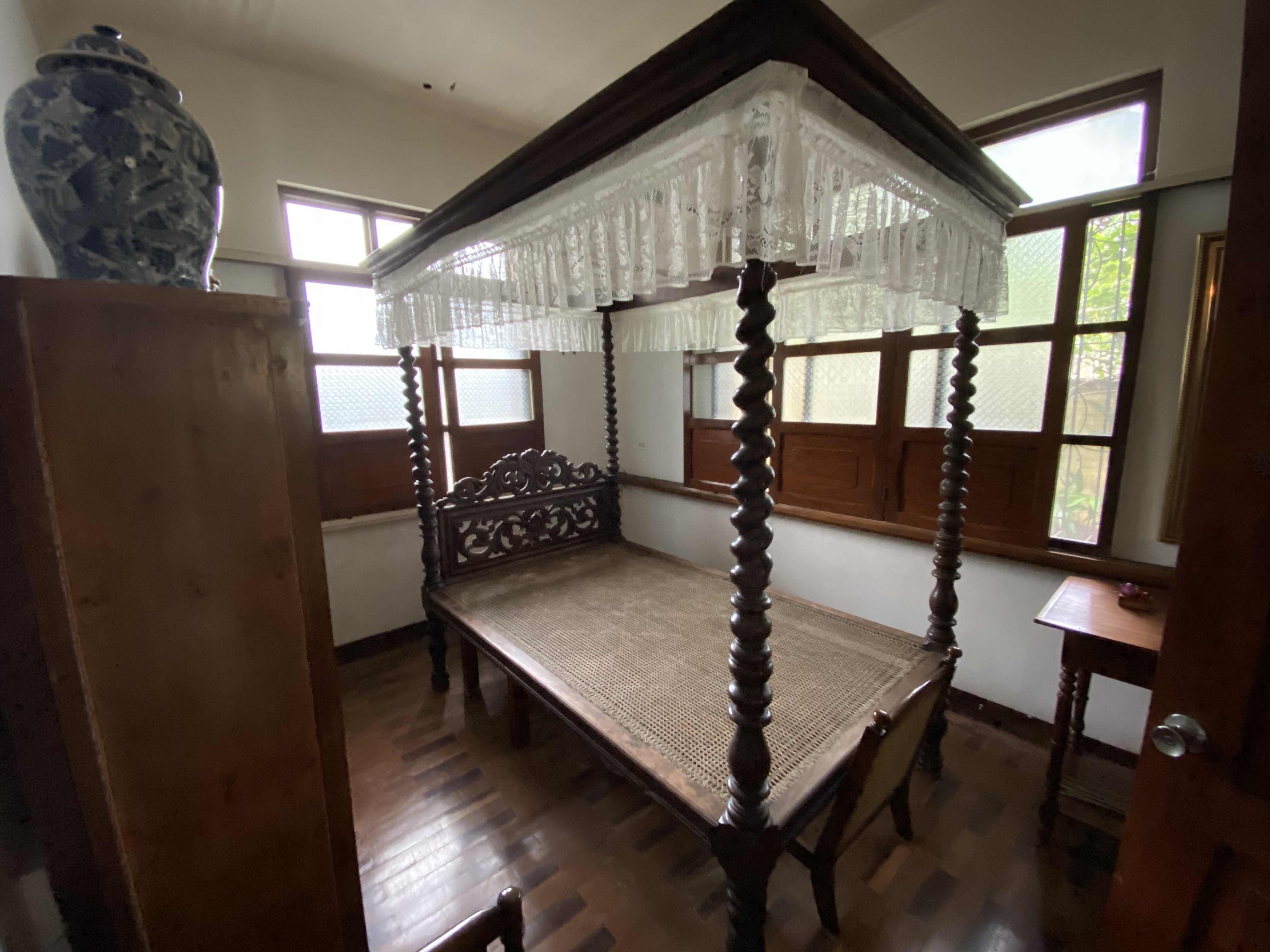
How Frankie’s story connects with Rizal and a later phase of our history brings us back to Talisay, where Frankie’s grandfather Jose, then a boy of eleven or twelve, became a student of the other Pepe. So devoted was the boy to his teacher that he accompanied Rizal to Manila, hoping to be educated further in the big city, but events quickly overtook both master and pupil, and the young Jose had to suffer the harrowing experience of witnessing his hero’s execution. He had joined Rizal’s mother and sister on the eve of his death, and had seen and copied Rizal’s farewell poem, according to Frankie’s brother George, a philosopher and historian. Jose Aseniero went on to serve as governor of Zamboanga before the war. At one point he also acquired some of Rizal’s belongings, among which is the four-poster bed that can still be found in the Asenieros’ ancestral home.

IMG_2353.jpeg

The story is no less interesting on Frankie’s maternal side. His grandfather there was a Swedish engineer named Charles Gustaf Carlson who migrated to the United States in 1895, and shortly after became a Protestant missionary to the Philippines, arriving in 1902 and being counted among the “Thomasites” who taught English to Filipinos. Charles became principal of the Industrial Trade School in Zamboanga, where he married a former student, Eugenia Enriquez. Among their six children was Ingeborg Eughenia, who met and married Francisco Aseniero, Jose’s engineer-son.

But what brought the whole experience together for me was a story that Frankie told us on our last day, as we were winding down, about one of his concerts in a small town in Bulacan. He and some friends had been invited to sing there, and he had obliged as usual. “I was surprised to find that in such a small place, the people thronged to see us, dressed in their Sunday best,” Frankie recalled. “We felt like we owed it to them to sing our hearts out, and we did.” He found himself singing like he would have done in London, Vienna, or New York, and the crowd responded with utmost appreciation as Frankie and his party offered up Broadway and operatic classics. “It was a magical moment, and seeing the people enjoying the music made my hair stand on end!”

How Jose Rizal himself would have loved that, having brought his world-honed talent to Dapitan, enriching and ennobling its soil for other and lesser Pepes like us following in his footsteps.

IMG_2256.jpeg


Penman No. 311: A Trove of Printed Delights

BigBooks

Penman for Monday, July 18, 2018


A FEW months ago, I wrote about picking up some wonderful books online that I plan to add to my retirement library—books that I’ll be poring over at leisure, for no more compelling or more urgent reason than enjoying the stories they contain, or even just the way they were printed, illustrated, and bound. I won’t be writing any papers about them (well, maybe a column or two), and I’ll leave myself the option of reselling some of them to share the fun and feel better about buying some more.

Most of these books come from the USA, chiefly from eBay, where I’ve been actively trading for more than 20 years. You’d be amazed by the Philippine treasures—not just books but paintings and other artifacts—that made their way overseas and eventually turn up on eBay. I’ve made it my personal mission (of course my wife Beng calls it my excuse) to recover these precious objects as much as I can afford on my professor’s salary—important or interesting Filipiniana, for example, such as the first US publications of Manuel Arguilla’s stories, and early editions of Carlos Bulosan’s books.

I’ve sourced books and paintings from as far away as France, Spain, and Portugal, and have successfully had them shipped to me in Manila by regular air mail. To save on shipping, however, I typically accumulate all my US purchases at our daughter Demi’s place in San Diego, California, and then have them couriered to me when they’re enough to fill a box, or wait for our next visit to Demi and her husband Jerry to cart them home.

That opportunity happened last week, on my annual vacation leave. We came too early for Comic Con this year, but I had stranger things than, well, Stranger Things in mind. I was eager to plow through and pack away about a hundred pounds of books and paintings that had been piling up at Demi’s over the past six months.

The paintings—which include a large and marvelous Gabriel Custodio seascape from 1966 that I found at a resale store in Spokane, Washington—will be worth another story, but for now, let me share some of the most interesting publications from the pile.

NoliEtc

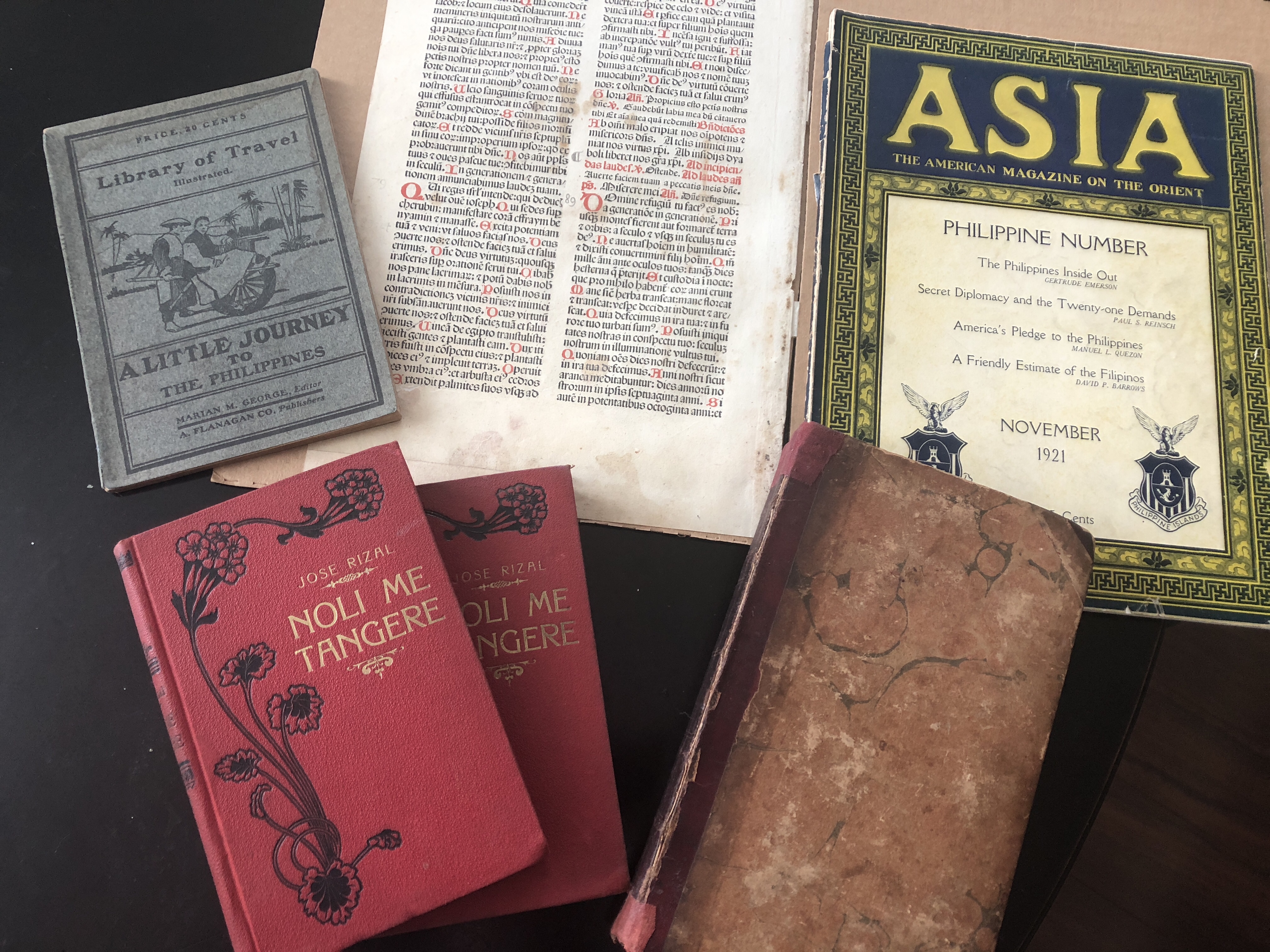
Old editions of the Noli and Fili are always desirable objects of study, and to complement the rather eccentric 1911 Fili I acquired last year, I received a two-volume 1909 Noli from Madrid (also published by Maucci in Barcelona), with annotations by Ramon Sempau. It’s interesting how, scarcely a decade after his execution, Rizal is hailed as a patriot by the Spaniards. This edition contains the Last Farewell and an account of his trial. (Another later edition in the pile, a Noli retitled and published by Norton in 11961 as The Lost Eden, is introduced by James Michener, who describes the novel as “a nineteenth-century Gothic melodrama, filled with eery churches, flashes of lightning, ominous strangers, premonitory whisperings, and almost unacceptable coincidences.”)

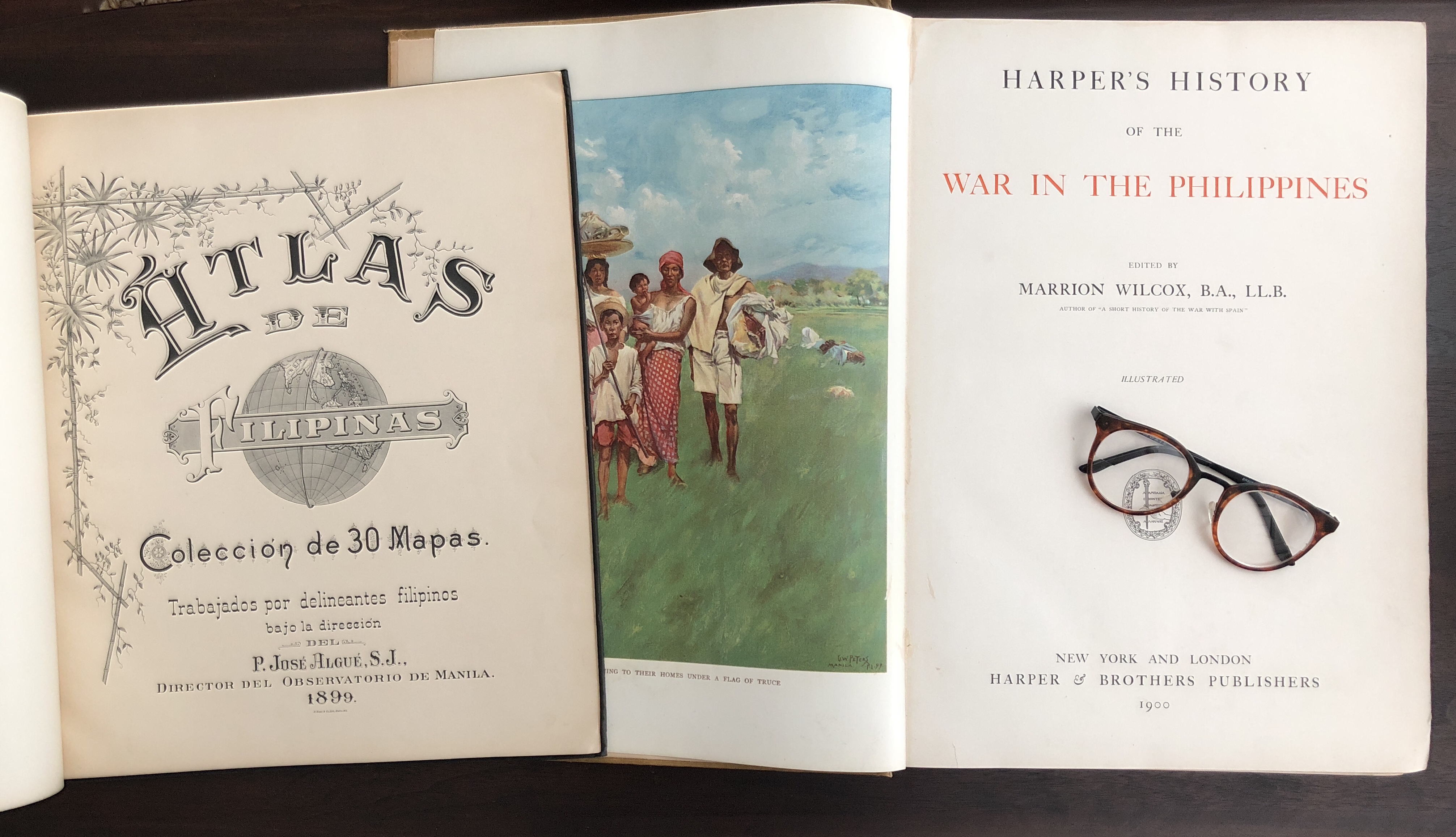
I try to collect old books that have something to do or say about the Philippines, but of course that becomes more difficult the farther back you go. In my office, I display a page from a German book on geography from 1578 that talks about “den Philippinischen Insuln,” and I’m sure other collectors have much earlier material. But sometimes I pick up antiquarian documents just to be able to show my students what truly old texts looked like, and in this batch is a page from a Latin breviary published in Augsburg in 1490—an example of true incunabula, or something printed roughly within 50 years of Gutenberg’s 1455 Bible.

There’s an extensive and rather grisly account of a “Massacre at Manilla” in my 1822 copy of Vol. X of The Atheneum, a Boston-based compilation of highlights from imported contemporary English magazines (the “magazine” as we know it today grew popular in England in the 1700s). The article is an unattributed eyewitness account, reported by a victim of a brutal massacre of foreigners—English French, Danish, Spanish, and Chinese, among others—following a false report that they were responsible for fomenting a cholera epidemic that had decimated the natives by giving out poisoned medicine (shades of today’s Dengvaxia hysteria). It occurred to me that I had read about this same massacre before from Paul P. de la Gironiere, who was serving as a doctor aboard a French ship in Cavite at the time, and who claims to have performed great deeds of daring in the emergency.

More congenial is A Little Journey to the Philippines (Chicago: A. Flanagan, 1900), edited by Marian M. George, filled with observations of a pleasant nature: “Our boat is anchored, and we start off with a guide for the Enchanted Lake. We pass ponds filled with fragrant pink pond lilies, and shortly begin to climb the crater of an extinct volcano.” It also remarks, perhaps presciently, that “There is no Philippine nation. Instead there are numerous governments; the people are divided into over eighty different tribes; and there are over seventy-five different languages spoken among them.”

If I had more space in my baggage and my house, I would buy tons more of these books, which remind me how we keep drifting back to the past, despite the GPS in our iPhones.


Penman No. 301: Mysteries of Art (2)

RizalMural

Penman for Monday, May 7, 2018


LAST WEEK, I wrote about acquiring a trio of unsigned paintings I’m attributing to Serafin Serna (1919-1979), drawing on stylistic, thematic, and circumstantial evidence. This week, I’ll walk you on the trail of an art mystery that’s puzzled generations of viewers and scholars at the University of the Philippines.

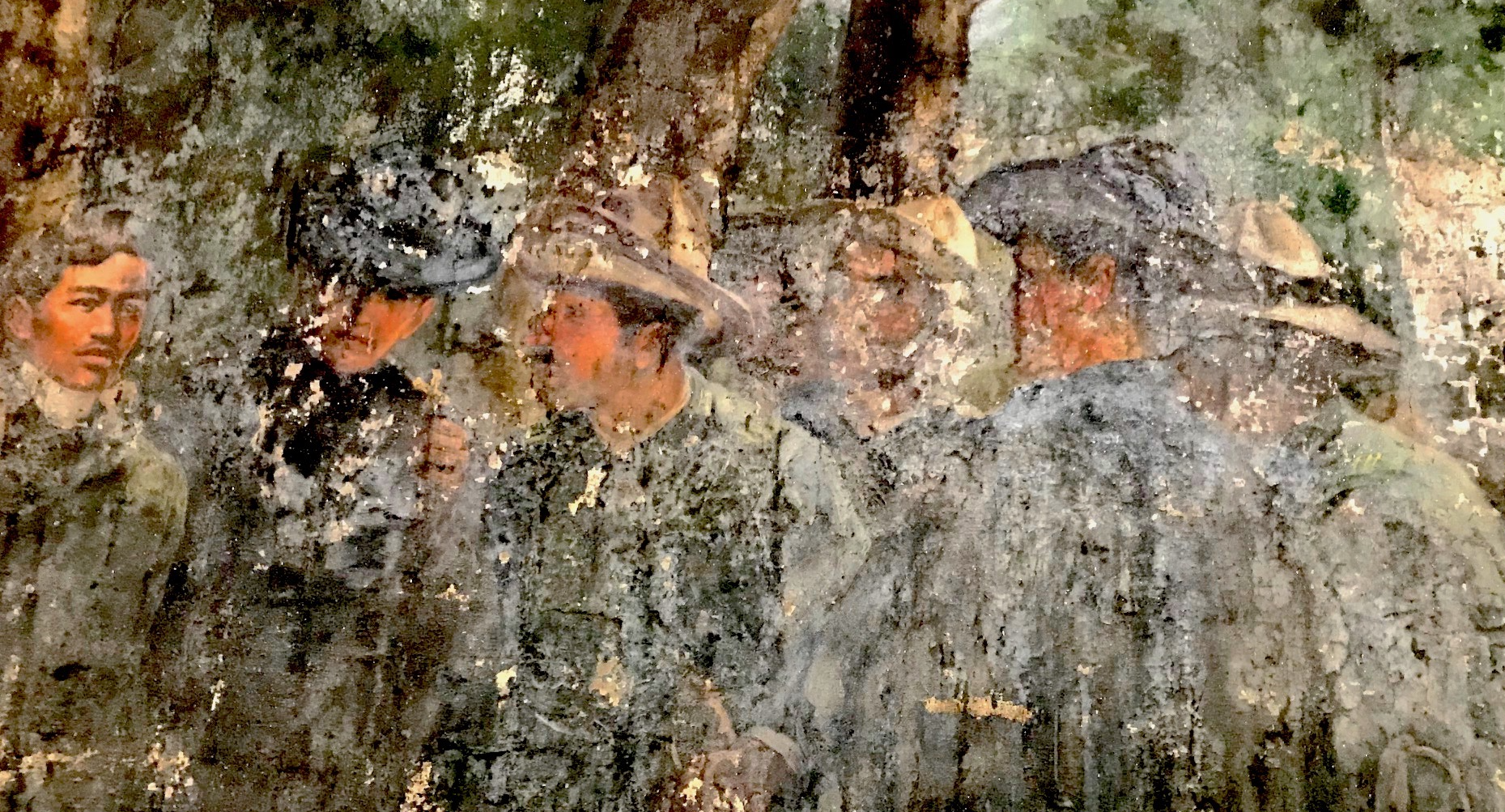
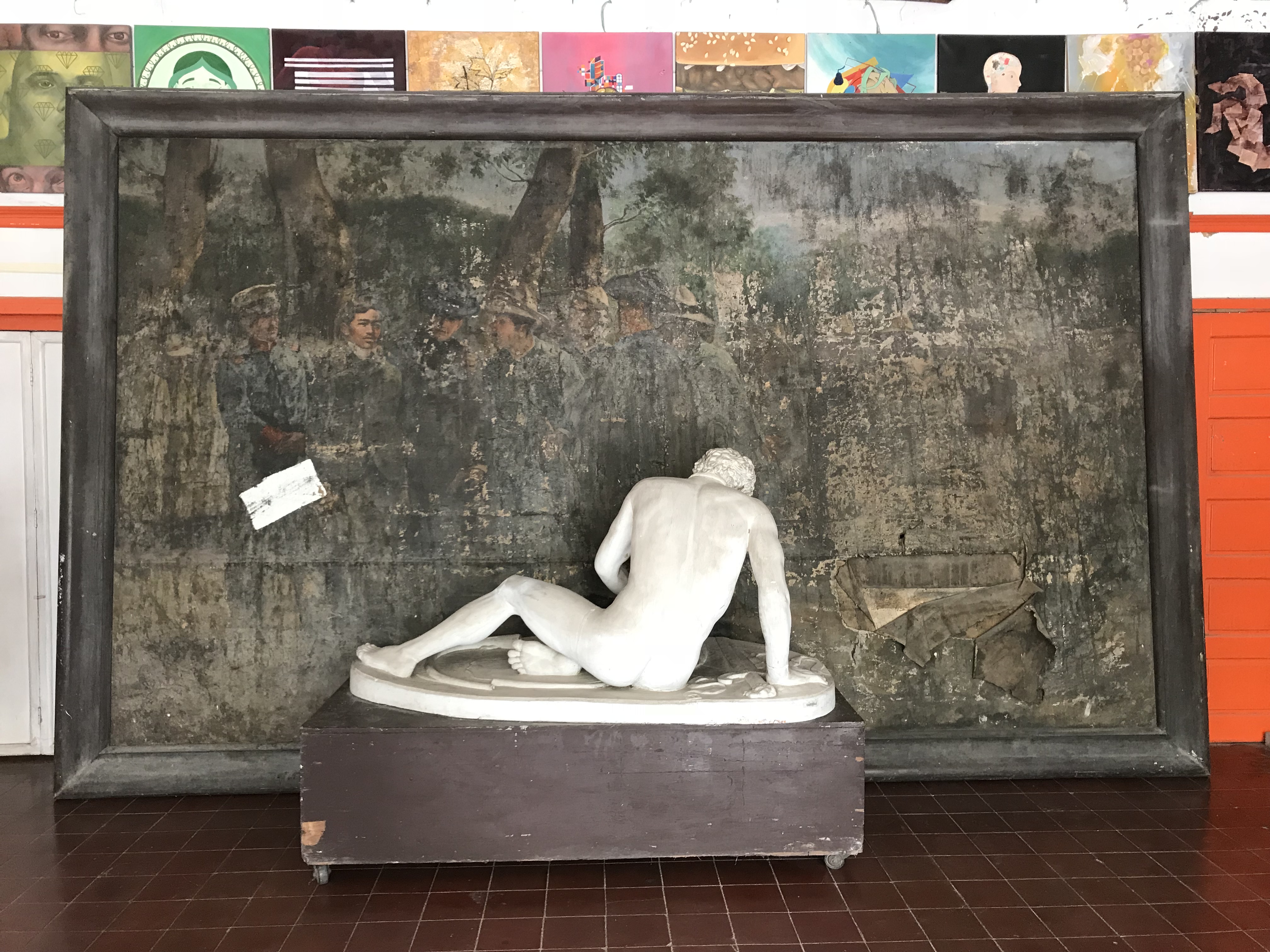
For many decades now, a huge painting has been parked somewhere in UP Diliman—first at the College of Law, from where it was moved to the College of Fine Arts. Although terribly deteriorated, the painting depicts a man—clearly Jose Rizal—being accosted under the trees by at least six other men dressed in two kinds of uniforms—two priests, four soldiers—with more onlookers in the background. Rizal’s arms seem to be held behind his back, so he must be on his way to his execution; his sad, pensive demeanor certainly suggests so.

RizalMartinez

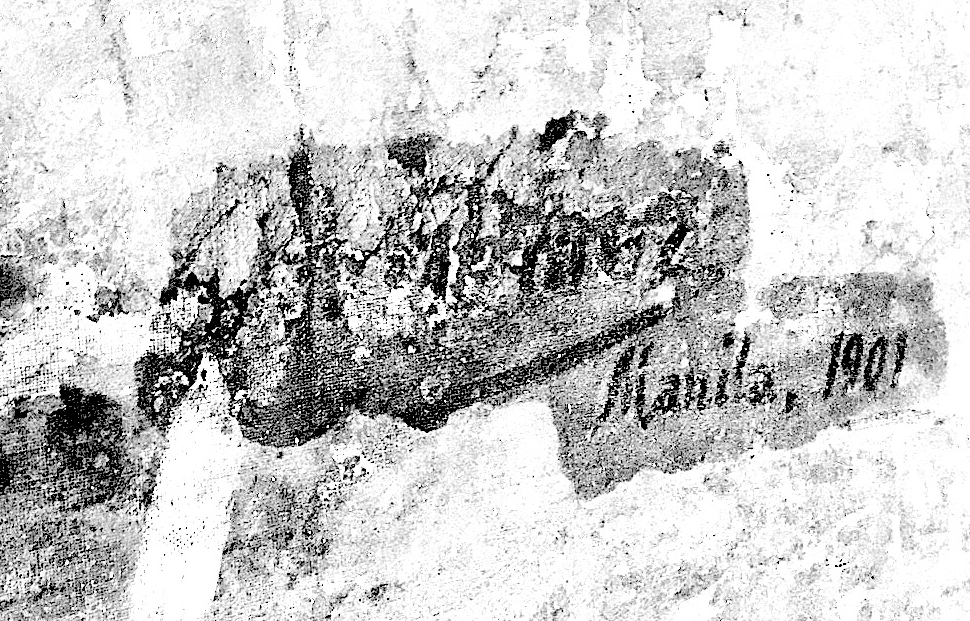
It seems to be an important painting—as any work with Rizal would tend to be, especially given its life-size dimensions (184 x 106 inches)—but the big question is, who painted it? It’s dated by the artist to “Manila, 1901,” but the signature above that has been blurred by age and grime. In the university’s inventory, it’s ascribed to an “A. Gomez,” the name whose letters appeared to emerge from the haze. Because nobody knows an “A. Gomez” who’s ever figured in our art history, the painting was considered second-rate and left quietly to decay.

Enter UP President Danny “Danicon” Concepcion, who as Law dean had seen the painting many times and had wondered, like everyone else, about its origins. Even without establishing who the painter was, now that he was president, he wanted the painting restored, given that it’s been with UP for so long and features a national hero.

For advice on the restoration, Danicon turned to my wife Beng, who’s worked on scores of master paintings over the past 20 years, from pieces by Juan Luna to Anita Magsaysay-Ho. (Just to be clear about this, Beng and I have agreed that she’s not going to do more for or with UP than give advice, pro bono, while I’m serving as Vice President for Public Affairs, to avoid any suggestion of impropriety. If no one else can or will do the job, then she’ll take it on for the most minimal fee she can quote, subject to all the applicable rules.) At the president’s request, Beng got together with noted artist Neil Doloricon, an old friend and former dean of the CFA, to sort out the situation.

They faced the same inescapable question: who painted Rizal & Co., and who was “A. Gomez”? As it happens, I think I’ve found the answer, or at least my theory of it.

MartinezSignatureEnhanced

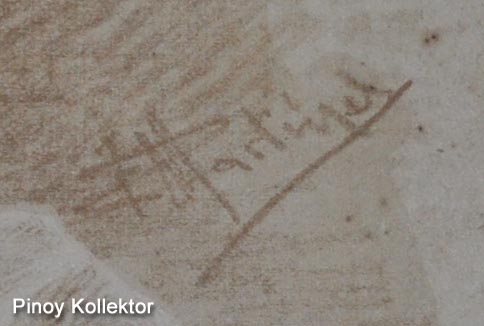
Using high-resolution photographs Beng took of the painting, I digitally enhanced the signature and rendered it in monochrome to sharpen the contrast between the letters and the background. Indeed there’s what looks like an MEZ at the end with a long tail, and ahead of them, what seems to be an A. But I wasn’t seeing a G or an O to make GOMEZ. The more I stared at it, the more I saw “MARTINEZ” shaping up.

Martinez1

Martinez2

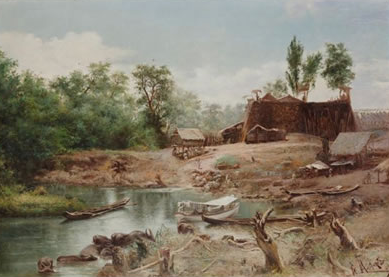
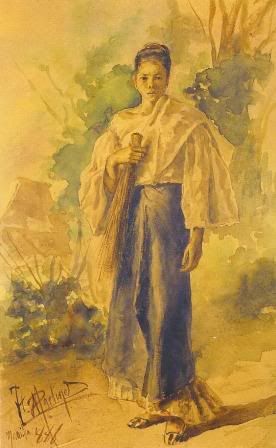
Some Googling revealed that a painter named Felix Martinez (1859-1907) was “a painter and muralist who created religious, genre, landscape and still-life paintings. He was a contemporary of Simon Flores, Lorenzo Guerrero, Paz Paterno and her half-sister Adelaida Paterno…. (He) also painted the interior of the San Sebastian church in Quiapo.” The ASEMUS website notes that “Felix Martinez y Lorenzo was a member of a family of sculptors and artisans. He was also an illustrator and an art professor. As an illustrator, he participated in… La Ilustración Filipina(1894-96) depicting daily life scenes. He also helped Regino García (1840-1916), another known Filipino naturalist art painter, illustrate La Flora de Filipinas(The Flora of the Philippines 1878), a creation of Fray Manuel Blanco.”

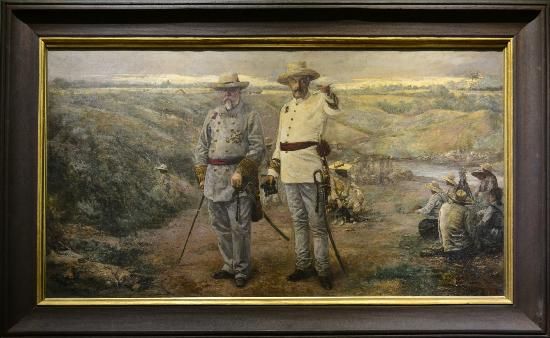
Examples of his paintings—particularly the one of “Gov. Blanco and His Troops” (1895), now at the National Museum—showed that again, in style and substance (and even in coloration), the Rizal mural could well have been his.

Martinez3

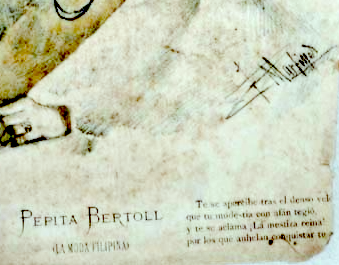
Do the signatures match? From those I’ve recovered—particularly a sharp one from a portrait of Pepita Bertoll in La Moda Filipina(with thanks to Pinoy Kollektor)—there’s a striking resemblance. I could be imagining things, but I can seem to discern the elevated M and T. Of course it will take more than my 64-year-old eyes and my enthusiasm to prove the case—further cleaning of the signature and better digital enhancement will surely yield clearer results—but an argument for Felix Martinez seems to be shaping up. But whether it’s by Martinez or not, this painting of Rizal by one of his contemporaries deserves to be saved.

Bertoll

Signature copy

(With many thanks to pinoykollektor.com for permission to repost the images.)

Penman No. 299: Books with Back Stories (2)


FiliMaucci.png

Penman for Monday, April 23, 2018


LAST WEEK, I wrote about Philippine-related books I’ve come across online with stories to tell beyond what their pages contained. There was that facsimile of the Doctrina Christiana, for example, signed by Lessing J. Rosenwald, the man who donated the world’s only known copy of the 1593 volume to the Library of Congress.

I also said that quite often, I don’t end up buying the book for one reason or another (usually and predictably financial), but I take note anyway of that particular book’s special appeal. I might leave it on my eBay “watch” list for a week while I mull over whether or not to spend any serious money on it, and then I’ll likely decide that the curiosity value just isn’t worth the cash out or the shelf space, which could go to a worthier recipient.

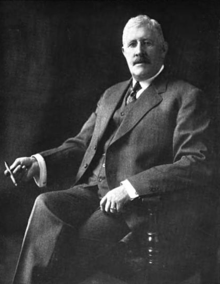
One of those almost-bought books was William D. Boyce’s The Philippine Islands, published in 1914 by Rand McNally. There was a swell of these books at the turn of the century following the American invasion and annexation of the Philippines, which their writers proudly touted as one of the US’ “new possessions.” Part travelogue, part political tract, these reports from the exotic East not only satisfied the curiosity of Americans who had never ventured out of their home states but also advanced the imperialist agenda. In his introduction (you can read the whole text for free online), Boyce—the millionaire-founder of the Boy Scouts of America—huffed that “It is my belief that if readers will carefully weigh and consider what follows in these pages, they will be aided to a larger view of the value of the Philippines, and realize how unjust and unjust it would be to cut adrift these half-civilized children of nature, trusting alone to luck that they may swim rather than sink in the sea of difficulties that surround the most hazardous of human tasks—self-government.” He was, he declared, squarely against those like Mark Twain seeking “to force these valuable Islands out of the hands of their real owners—the American people.”

220px-William_Boyce4.png

It helps sell books to give your chapters titles like “The Dog-Eating Igorots” and “Blood-Soaked Jolo,” but what drew me to this particular copy was the seller’s note that the book was inscribed to one Rev. Joseph Casey, and signed “Truly W. D. Boyce, S. S. Lusitania Feb 3rd1915.” That was just three months before a German U-boat torpedoed and sank the Lusitania in the Atlantic, helping push America into another war. I was intrigued, but in the end, I passed—I already had too many of these triumphal tributes to American imperialism on my shelves, and my $60 could go to better and less aggravating fare.

LostOnes.png

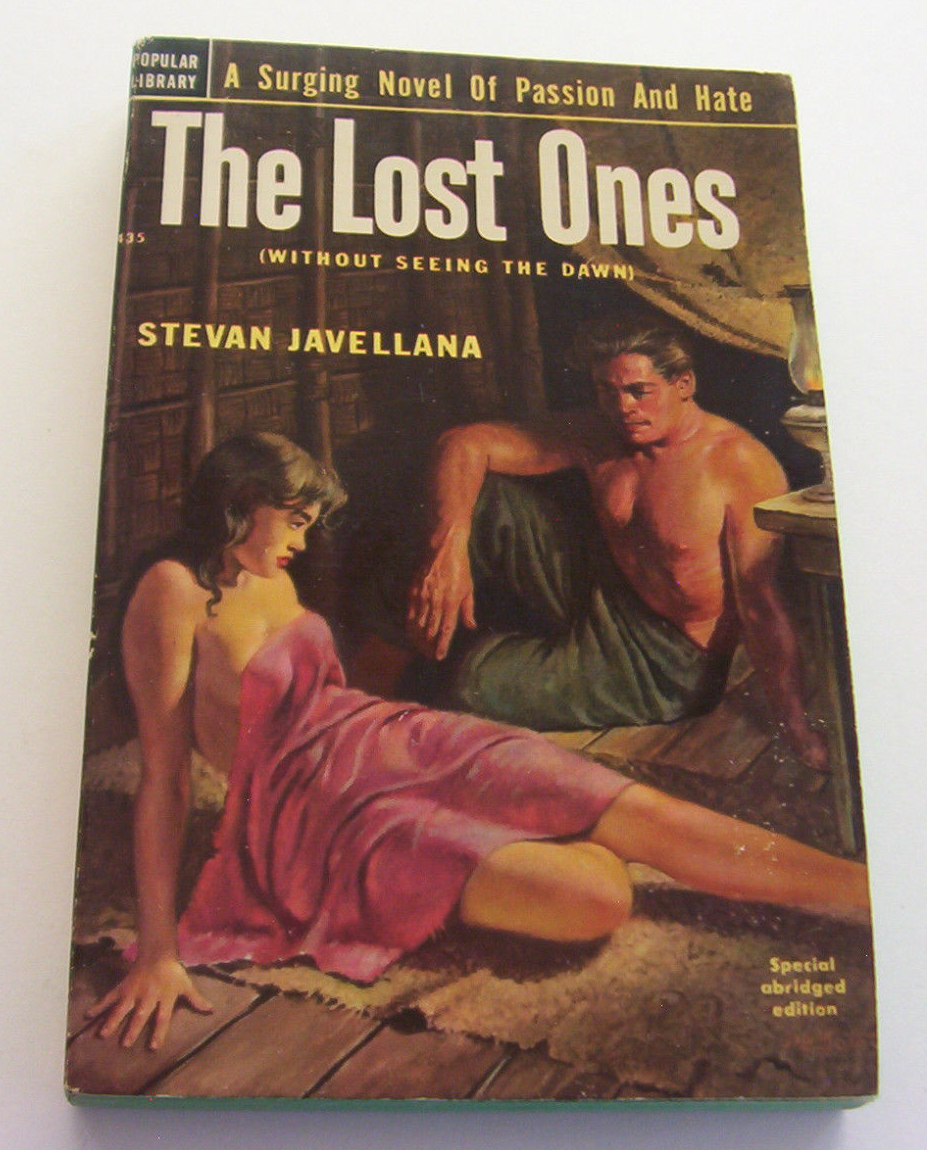
More amusing—but also troubling in its own way—was a book I didn’t even know existed: the paperback edition of Stevan Javellana’s Without Seeing the Dawn (Little Brown, 1947), reissued in 1952 by Popular Library and retitled the The Lost Ones. As if the subtitle “A Surging Novel of Passion and Hate” wasn’t suggestive enough, this paperback sported a racy cover with a seduction scene straight out of a femme-fatale noir film of the period. Blithely (but wisely, market-wise) disregarding the complexity of the relationship between Carding and his wife Lucia, the back-cover blurb goes straight to and quotes the book’s purplest portion:

“’It’s a LARGE bed…’ Rosita smiled wickedly at Carding from the pillow. She wore nothing but a sheer slip, and that was hiked above her rounded white thighs. ‘But I’m married,’ Carding told her, clenching his big hands, trying to tear his eyes away from her. Rosita shrugged. ‘You should have thought of that last night,’ she drawled. ‘Now it’s too late. I could never let you go now, Carding.’ She put a cigarette in her mouth. ‘Bend down,’ she said, ‘and give me a light.’ He got the matches in his trembling hands and leaned far over the bed. Her arms circled his neck like two bands of steel, tumbling her toward him. He was married—but he was a man!”

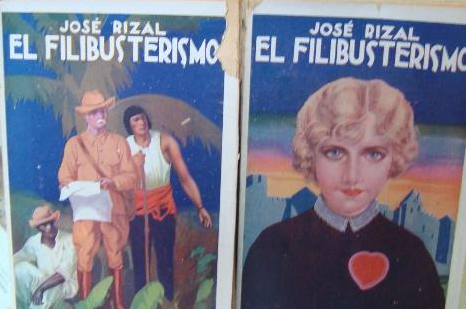
I also passed on the book, preferring the canonical high seriousness of my first edition, but it was a good reminder that, long before they joined the canon, many books were sold—had to be sold—as popular entertainment. There’s probably no better example of this than a two-volume, paperback edition of Jose Rizal’s El Filibusterismo, published in Barcelona in 1911 by Maucci, with covers that one would be hard put to associate with Crisostomo Ibarra (the blonde looks particularly unnerving). I don’t know how many copies were printed and sold, but this was just one of many popular editions of the Noli and Fili that came out in Spain within a decade or so of Rizal’s execution—his revenge from the grave, when you come to think of it. This colorful Fili, I happily got.


Penman No. 295: Writers in Wartime


IMG_5382.jpg

Penman for Monday, March 26, 2018


I WAS busy a couple of weeks ago going through my library to see which books I could donate to a sale being conducted by our students to benefit worthwhile projects. I happily gave away about a hundred books and will be ready and willing to unload even more next time. But what inevitably happens when you sort out your effects like this is that long-forgotten objects turn up in the pile.

One such item that emerged from this recent overhaul was a thin journal of no more than 70 pages, the December 1943 issue of Philippine Review, published by the Manila Sinbun-sya and edited by Vicente Albano Pacis, with Angel C. Anden and Jose Luna Castro as associate editors. A little research shows that the Review didn’t last very long—it ran from March 1943 and closed down in December 1944. But during that brief lifetime, it managed to publish such later luminaries as Nick Joaquin, and apparently enjoyed quite a reputation (it was also edited for some time by Francisco “Mang Kiko” Icasiano, whose musings “From My Nipa Hut” graced the prewar Sunday Tribune Magazine).

Indeed, this issue of December 1943 contained not only short stories by Ligaya Victorio Reyes and Estrella Alfon Rivera, essays by Camilo Osias, Luis Montilla, and Federico Mangahas, and a translation of Mi Ultimo Adios by Juan Collas, but also a short commentary on the language of the Constitution by a 22-year-old Jovito R. Salonga, who had just been released from prison for his work in the underground.

It’s a fascinating window on literature in a time of war, what the politics of the moment can do to writers, and what coping strategies they employ. (My thoughts strayed quickly to a recent discussion online about Filipino writers and politics in these times of tokhang.) The issue opens with paid advertisements—mostly from Japanese companies like the Yokohama Specie Bank’s local branch—hailing “The Second Anniversary of the Outbreak of the Greater East Asia War” while at the same time greeting readers a “Merry Christmas!”

IMG_5383.jpg

The Reyes and Alfon stories (“Christmas Visit” and “Jingle Bells”) speak of love and loss, acknowledging the sudden shift in the meaning of Christmas from that December of just two years ago to this one; both stories end with their protagonists weeping uncontrollably. The Reyes story can’t help falling back on old tropes, referring to “Gary Cooper.” So for the fictionists, at least, the transition remains sharp and painful, with metaphors to imply the darkening of the times.

Most of the essayists seem to have no such qualms. In his essay on “A Program of Enlightenment,” Camilo Osias (yes, he of the Philippine Readers series, and future Senate President) argues for a new culture “for all Filipinos under an independent Philippines,” one “characterized by a sound eclecticism in the choice of its elements—by the same careful eclecticism which the Japanese have observed in their cultural borrowings…. The cultural activities to be carried out shall emphasize the precedence of State, national, or social interests over those of the individual.”

For his part, the scholar Luis Montilla writes on the theme of “Rizal as an Orientalist,” and suggests that Rizal would have been sympathetic to Japanese motives had he been alive, even implying that this could be because Rizal was partly Japanese. In his footnotes, he quotes Austin Craig’s statement in 1940 that “I am putting the finishing touches to my Rizal genealogy, now being able to show Japanese blood as well as two Spanish and five Chinese ancestors. I have church or court certificates proving everything.”

Montilla concludes: “Having had his attention directed early to the abuses, calumnies, and indignities heaped unjustly upon his people by the white race, Rizal had to be, and was, the embodiment of a true Oriental…. Now, the duly authorized representatives of the great Japanese Empire have repeatedly assured the Filipinos that Japan has come to these shores not to subjugate the natives of the country, much less to absorb them, but to guide them in their regeneration as true Filipinos, and that when they… shall have been so rejuvenated as to be, as a nation, worthy of membership in the family of Oriental nations, they will regain their long lost independence (and fully realize) the supreme efforts put up by Rizal as an Oriental to help educate and re-Orientalize his people for their preservation and dignification as a race….”

Was I reading a display of what might be called cultural collaboration? Not knowing these writers and the circumstances under which they worked, I have to withhold my judgment, keeping in mind as well that there was good reason for many Filipinos—after centuries of white-man rule—to accept the invading Japanese as liberators. But I felt much educated by these articles, which also reminded me of how our printed words define us, rightly or wrongly, long after we’re gone. They just might turn up in a dusty corner of someone’s bookshelf.