Hindsight No. 13: The Imperfect Good

Hindsight for Monday, April 11, 2022
The Good and Evil Angels 1795-?c. 1805 William Blake

I’VE RECENTLY come across a number of posts online by people complaining about the “self-righteousness” of campaigners for a certain candidate to explain why they might, or will, vote for the other guy—yep, the tax evader, debate dodger, academic cipher, political under-performer, and, if the surveys are to be believed, our next President. 

Now, I can understand their irritation. Nobody likes to be told they’re wrong to their faces, or have the truth shoved down their throats. 

I can just hear someone muttering: “How can you be so sure of your manok? Don’t you know she’s an airhead, lost in space, a Bar flunker, an unwitting decoy for the (choose your color—Reds or Yellows)? There may not be much I can say for my bet—and okay, I’ll admit I don’t really know or care what he thinks because he’s not telling—but I prefer him to your insufferable assumption that you and your 137,000 friends are torchbearers for the good, the right, and the just. (And you’re such a hypocrite, because I know what you pay your maids, which isn’t more than what I pay mine, but at least I don’t pretend to be some crusading reformer.) To be honest, it’s you I can’t stand, not since you put on that silly all-pink wardrobe and plastered your gate and walls with pink posters. But guess what—you’ll lose! All the polls say so, and I can’t wait to see you crying your eyes out on May 10.”

Whichever side of the political fence you’re on, I’ll bet my favorite socks (which I haven’t worn for the past two years) that you know someone on the other side who’s thought of or verbalized what I just wrote. The forthcoming election has become a test not just of friendships, but of how far some of us are willing to pretend that all politicians are the same, all opinions are equal and should be equally respected, XXX number of people can’t be wrong, and that whoever wins, democracy will, as well.

This presumes a parity of political, financial, and moral power that just doesn’t exist and probably never did, at least in this country. The playing field is far from even. It’s been horribly distorted by disinformation, vote-buying, intimidation, and who else knows what can happen between now and May 9 (and the days of the vote count, after). The dizzying game of musical chairs that preceded the final submission of candidacies to the Comelec last October (resulting, ridiculously, in the ruling party being frozen out of serious contention for the top two slots) was but a preview of the seeming unpredictability of Elections Ver. 2022. I say “seeming” because there may be outfits like the former Cambridge Analytica that will presume to be able to game everything out and bring a method to the madness that will ensure victory for their clients.

What we know is that this will be the first presidential election, at least in recent memory, where the presumptive frontrunner refuses to be questioned about important issues, faces legal liabilities that would crush anyone less powerful, campaigns on little more than a vapid slogan, ignores China’s encroachment into Philippine territory, claims to know next to nothing about his parents’ excesses, and takes no responsibility for them. Even more alarmingly, his lead in the polls suggests that these issues don’t matter to many voters, thanks to miseducation and disinformation. 

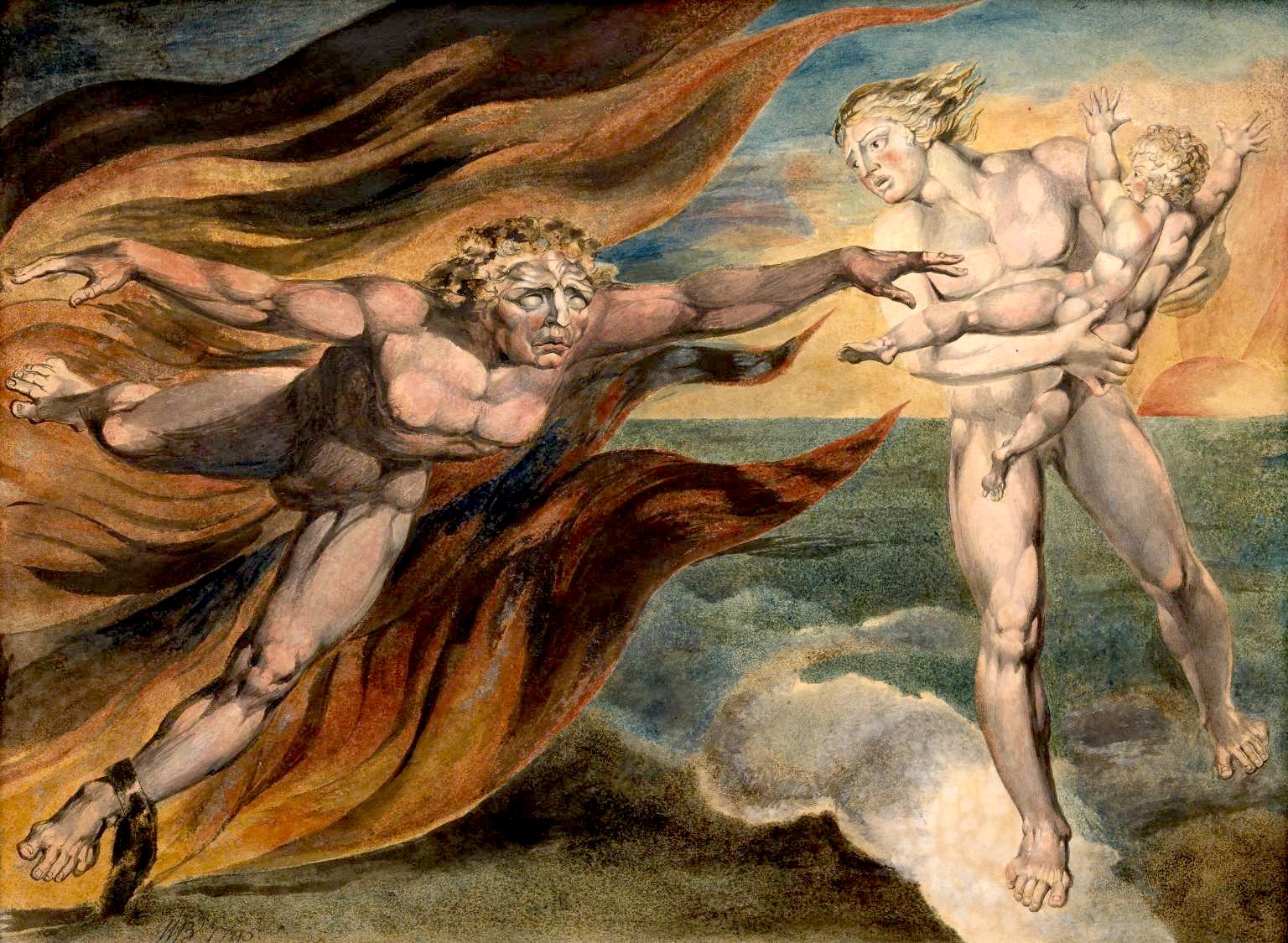
So, no, not all politicians are the same, and not even all elections are the same. But for all its surface complications, May 9 truly and inevitably comes down to a simple choice: that between good and evil—between those who stand for truth, freedom, justice, and the public interest and those who side with falsehood, dictatorship, oppression, and corruption. If you can’t distinguish between the two, or refuse to, or prefer to obfuscate the matter by repackaging it into, say, a war between families or between winners and losers, then you have a problem. 

This isn’t just self-righteousness; it’s righteousness, period. You can’t justify preferring evil because of some perceived shortcoming in the good. It’s in the nature of things that “the good” will forever be imperfect, forever a work-in-progress. It can be clumsy, patchy, plodding, long drawn out, and sometimes, if not often, it will lose skirmishes and battles to the enemy; fighting for it can be wearying and dispiriting. On the other hand, evil is well thought-out, comprehensive, well-funded, and efficient; it can attract hordes to its ranks, and promise quick victory and material rewards. Evil is often more fascinating and mediagenic, from Milton’s Lucifer to Hitler and this century’s despots. But none of that will still make it the right choice. 

Commentators have pointed out that Volodymyr Zelensky, Ukraine’s embattled president, may not be the shining hero that the media has served him up to be, because he had repressed his enemies before the Russian invasion and had established links with neo-Nazi groups. Now that may well be true, although it will be hard to believe that the Zelensky that emerges out of this crisis—if he does—will be the same man he was before.

But none of that excuses Vladimir Putin’s murderous rampage, nor elevates his moral standing, nor permits us to turn our eyes away from the carnage in the smoking rubble. The “Western media” and “Big Tech”—the favorite targets of despots, denialists, and conspiracists—may have their problematic biases, but only the radically lobotomized will accept the alternative, which is the Chinese, Russian, and North Korean interpretation of what constitutes journalism, and of an Internet within a net. 

We cannot let the imperfections or even the failures of the good lead us to believe that evil is better and acceptable. You don’t even have to be saintly to be good. If you’ve led a life of poor decisions, making the right one this time could be your redemption. There are far worse and darker crimes than self-righteousness in others.
Penman No. 437: Cherubs, Columns, and Capitals

Penman for Saturday, April 2, 2022

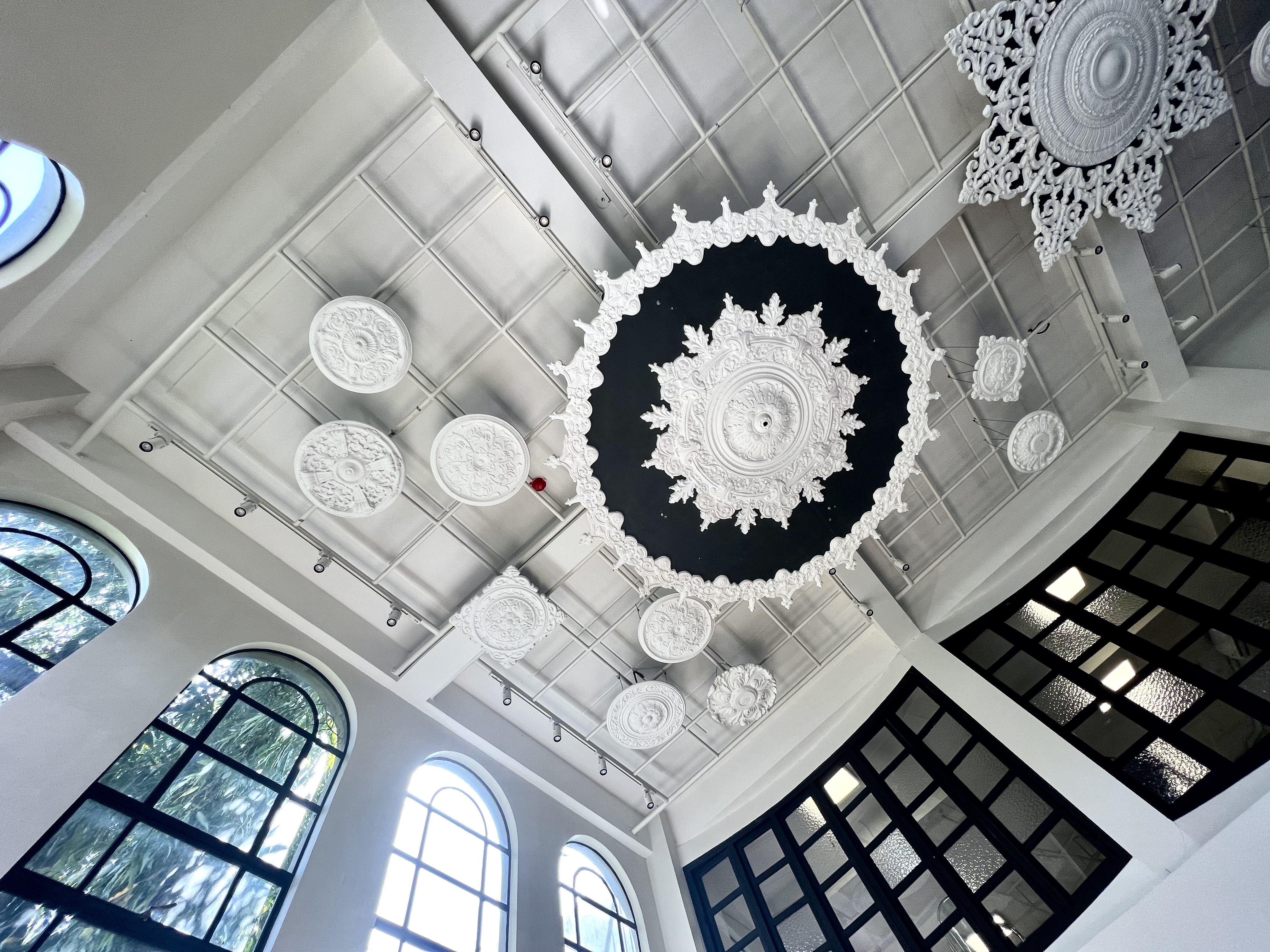
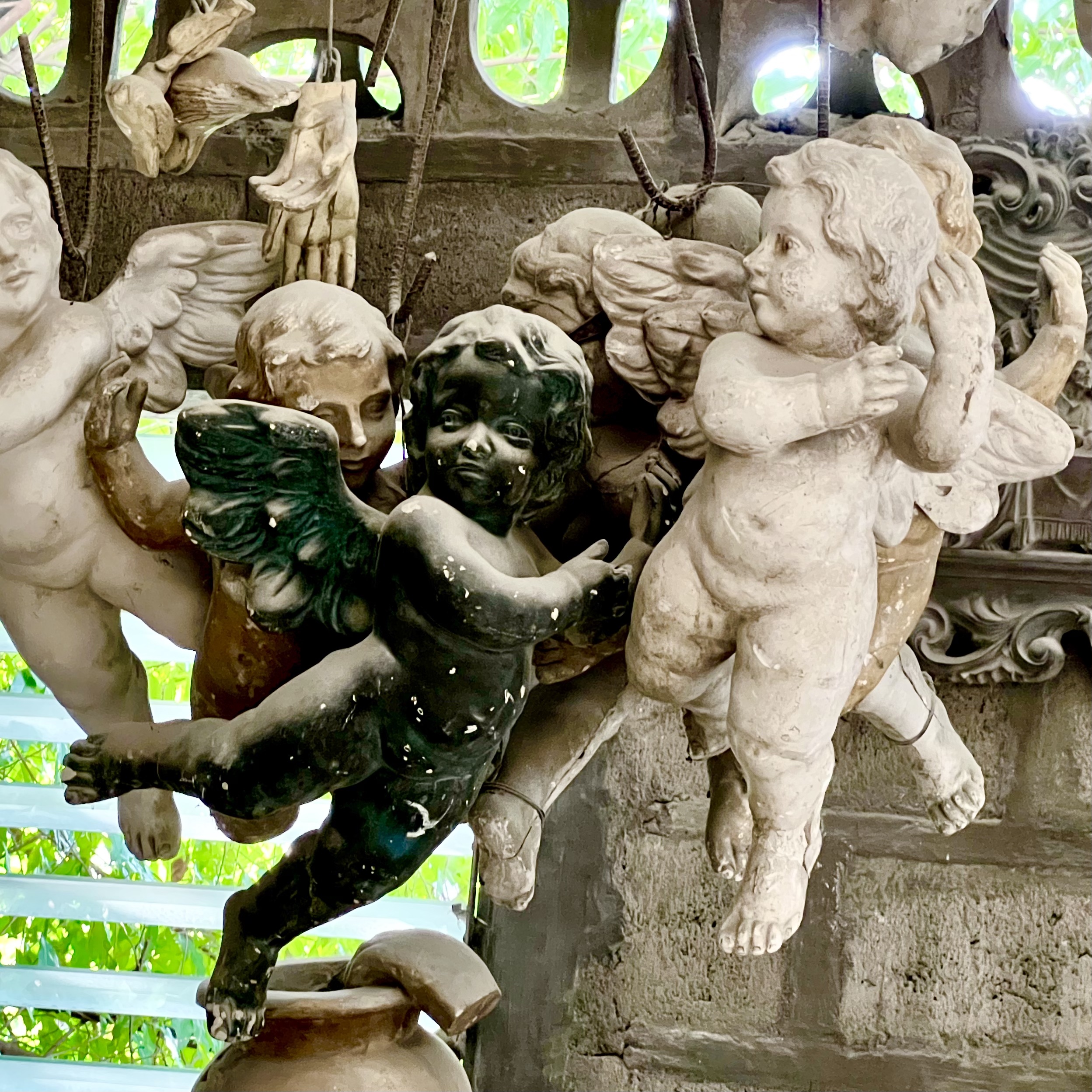
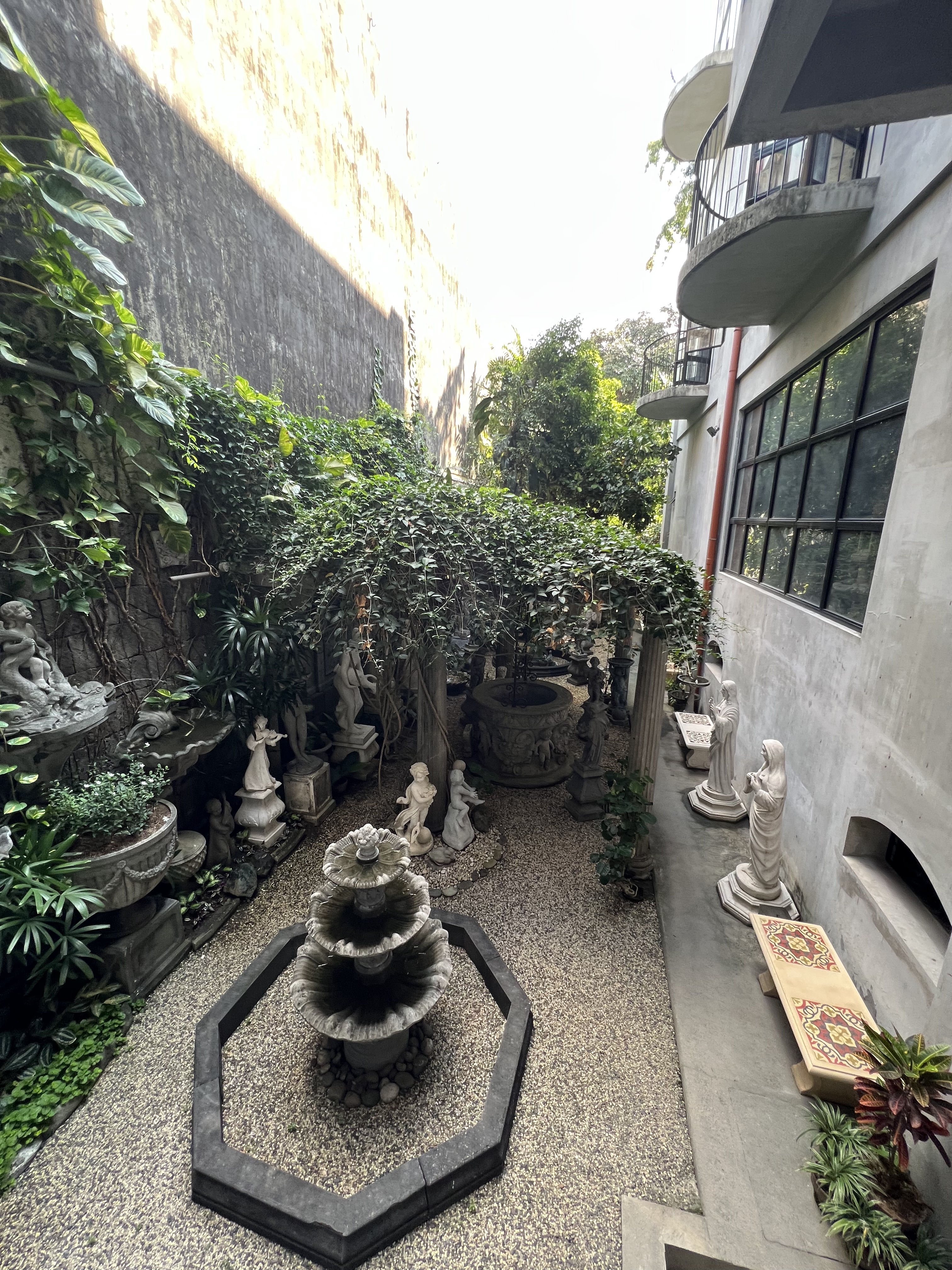
IT’S NOT very often that I stumble on a new source of beauty and wonder, especially not too far from where I live in Quezon City. But sometime last month my wife Beng and I drove out for just about half an hour to a place on the periphery of old Cubao and stepped back three-quarters of a century into a line of work that hasn’t changed much in all that time. What was especially delightful about this encounter was that, as a collector of all kinds of old things, this was new to me.

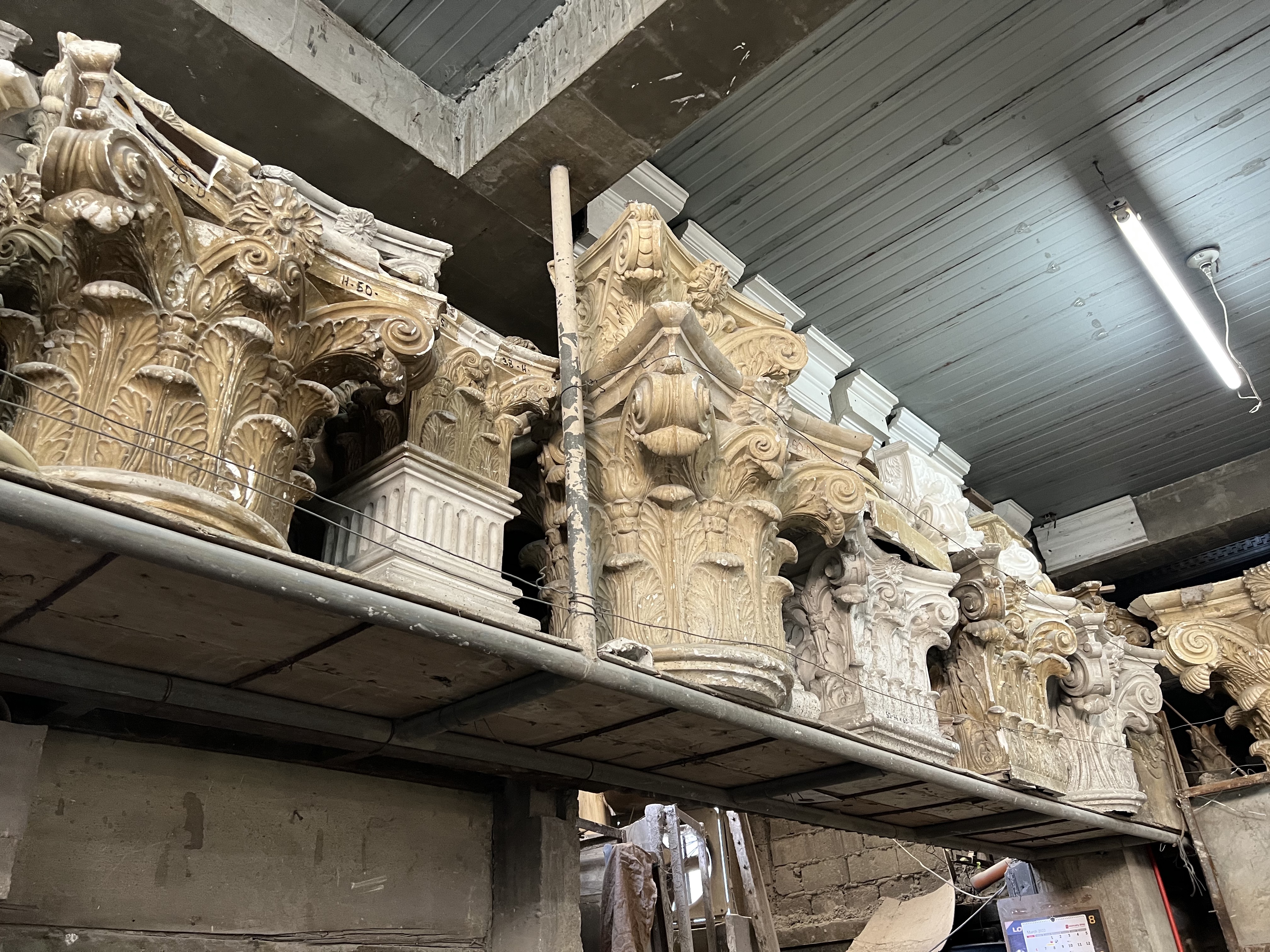
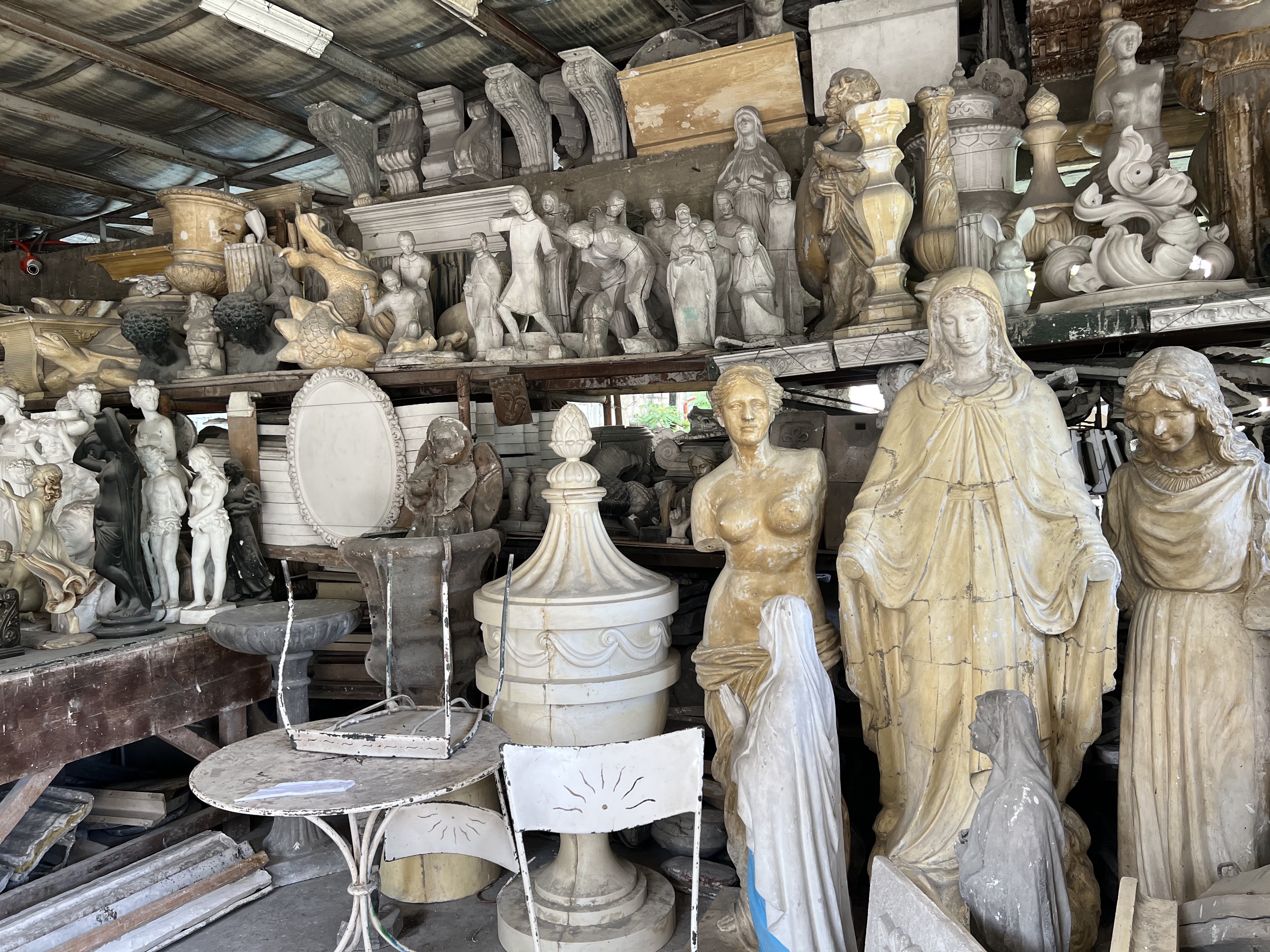
If you’ve ever looked around in church to see a fat little cherub on a pillar, or spent quiet time in a garden mesmerized by water cascading down a wall fountain, or walked down the stairways and corridors of old buildings appreciating the corbels and the balustrades—the fine, graceful touches of a bygone age—then you’ve seen the products of The House of Precast, the pioneer and still the leader in its field.

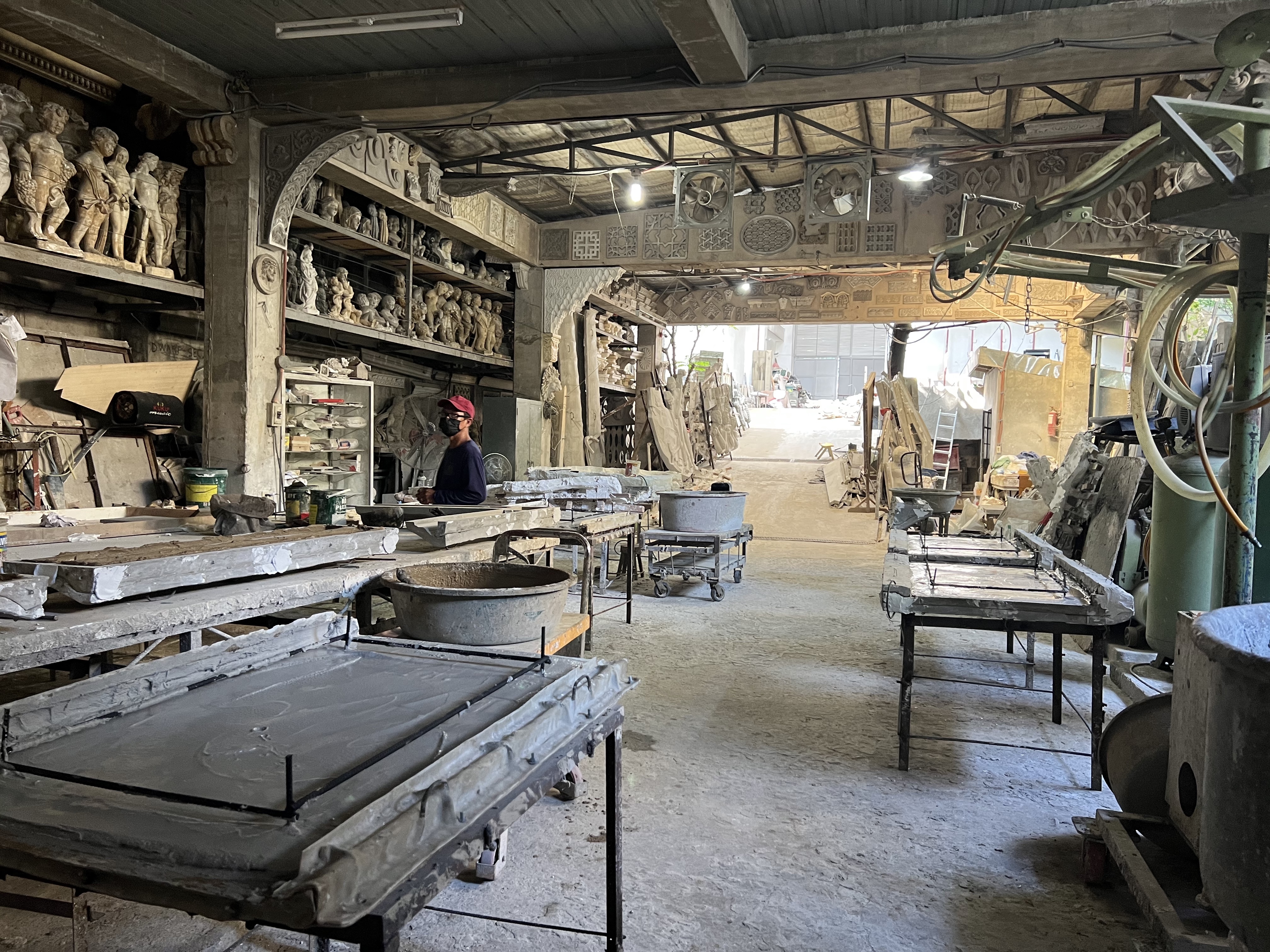
From the outside, its new office building along E. Rodriguez Avenue speaks of the modern efficiency with which its business is conducted, but its interiors quickly lead to the heart of the ancient art that still thrives within: the crafting and production of precast, or molded concrete, for architectural ornamentation and other uses. Behind the building can still be found the postwar home and workshop that started everything.

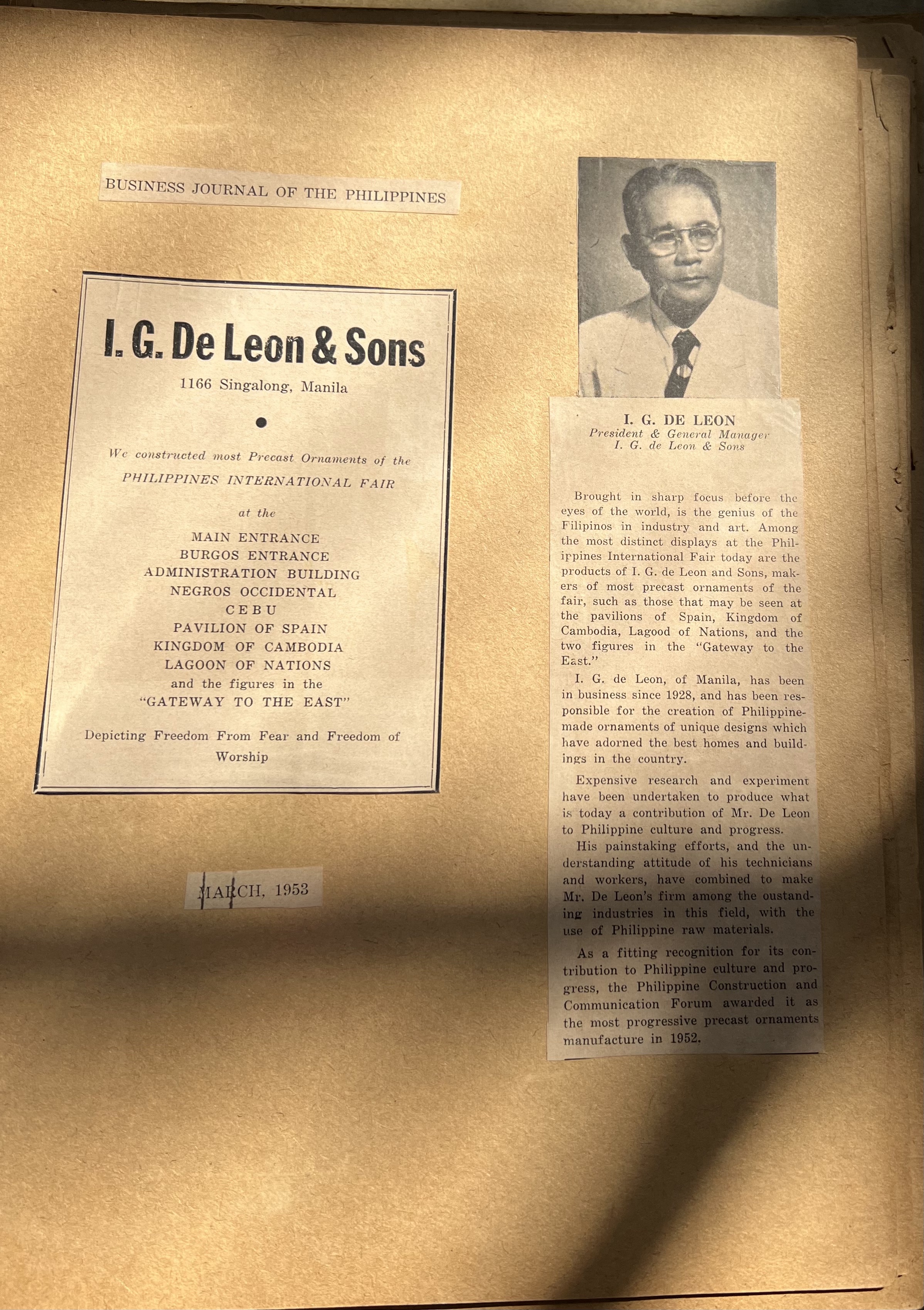
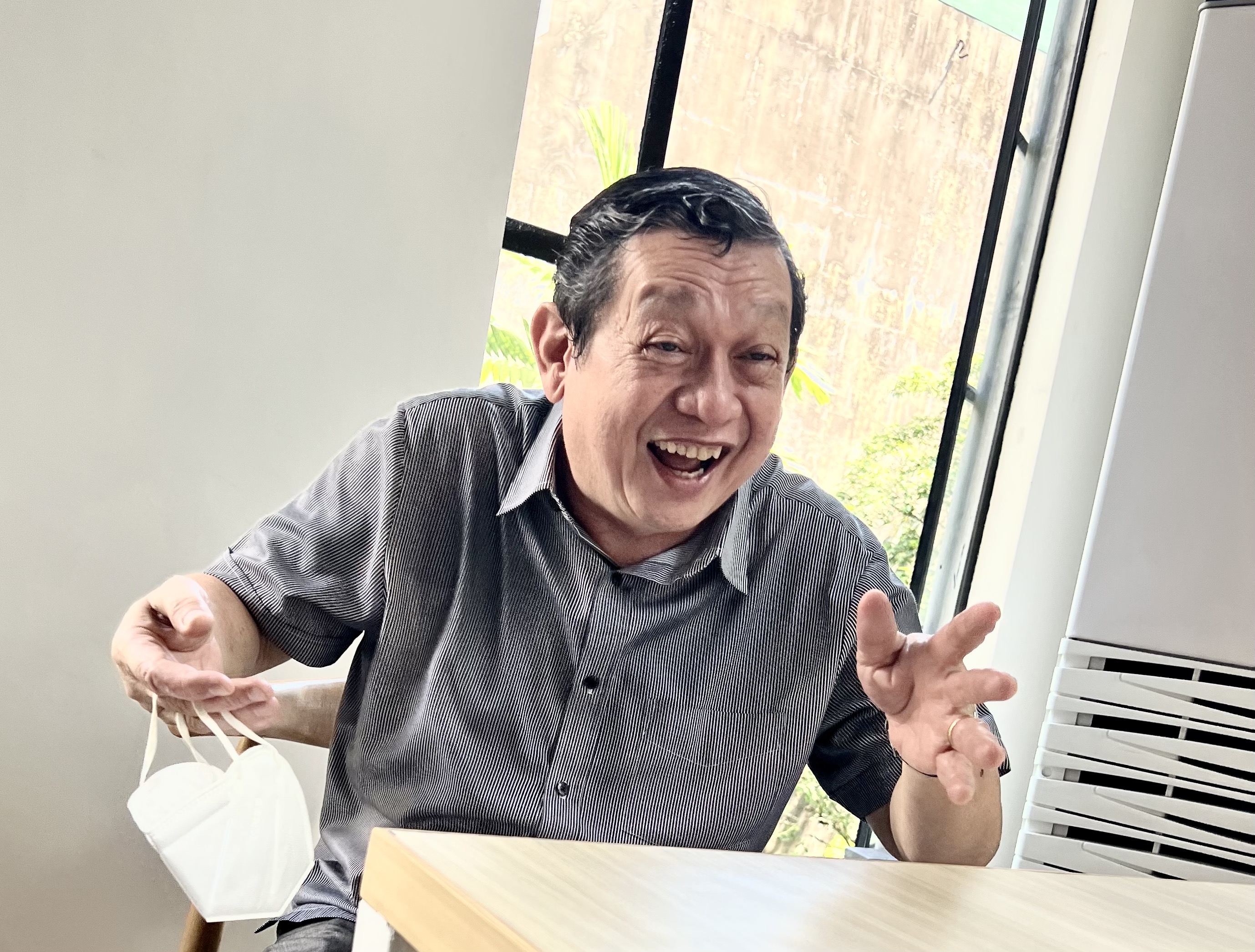
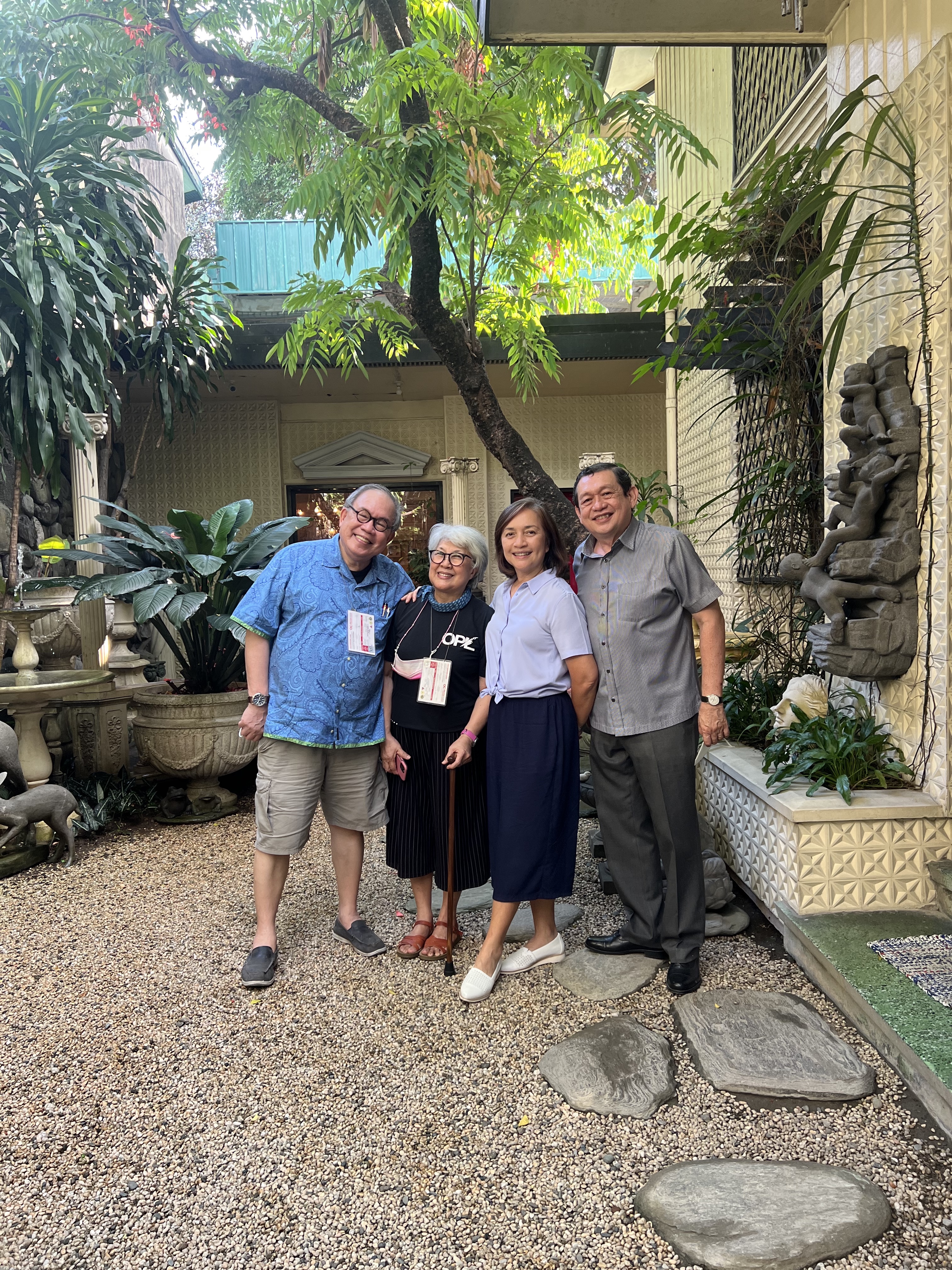
“This place dates back to 1948,” said Martin C. Galan, who runs The House of Precast with his lovely wife Michelle. Martin had met Michelle when they were both law students at UST. (Martin’s grandfather was the distinguished lawyer-banker Miguel Cuaderno.) How they got into the business is a story unto itself. Michelle’s dad, Conrado de Leon, was the son of master artisan Inocencio de Leon, who had worked with the renowned sculptor Isabelo Tampinco, a contemporary of Rizal’s. When the Americans came, they brought concrete, which Tampinco and his associates began to use for their commissions. 

A student of architecture, Conrado apprenticed with Don Isabelo’s son Vidal and later with Guillermo Tolentino, learning the craft and imbibing the high standards of quality and craftsmanship he would bring to his own trade. “He worked for Tolentino on the Bonifacio Monument. They used each other as models. They slapped on the clay and the old man finished it up. The statues were bronze but everything began as clay. They made a mold, which was brought to Europe for casting,” Martin explained. Another important mentor was the Italian sculptor Francisco Monti, who escaped the brownshirts in Italy and was on his way to Australia when he was enticed to go to the Philippines instead. “Monti had his own studio, but he came here to work so Conrado could make his molds for him. There were chickens here, so Monti would get six eggs and drink their contents, and start flinging mud as he sang an operatic aria.”

In 1950, Conrado opened The House of Precast where it remains today, and began filling orders for such premium clients as Malacañang Palace and the mansions of New Manila, Bacolod, and Davao. “When he did well, Conrado hired Vidal Tampinco, as a way of thanking him for his earlier mentorship, and also to learn more secrets of the trade,” said Martin. 

Conrado de Leon died in 1988, and was followed shortly after by his wife; by this time, Martin had married Michelle, and at her deathbed, Michelle’s mother implored the young couple to carry on the business. Despite coming from a very different background and knowing next to nothing about precast, the couple agreed, and have been at it ever since. “We began with a month’s capital and five old employees. We faced many challenges. No one knew us except the old architects. Internally, I had to deal with resistance to change, to modern techniques and methods of management.” 

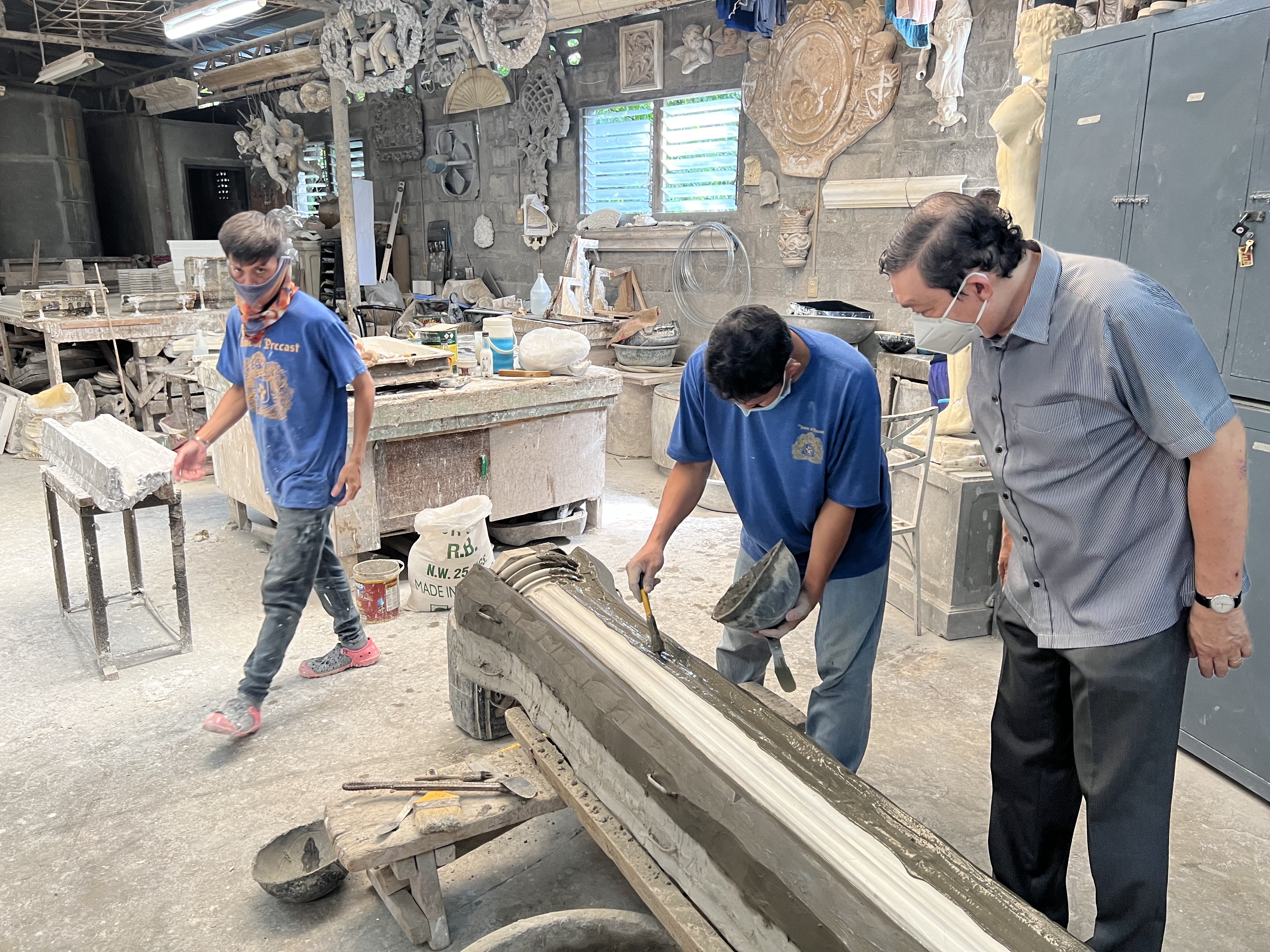
Martin brought in new knowledge, and also began training a new generation of apprentices. “When Michelle and I went to London in the mid-‘90s, I took the opportunity to learn how to make a rubber mold. Today I use three types of rubber as well as cement, and sometimes I mix wood, rubber, and cement. It depends on the job. You can innovate—you can use glass fiber instead of jute–but the basic processes remain the same. Our advantage is that we still know how to do it the old way. I made sure of that.”

The idea of precast can be traced to as far back as the Romans, who used a form of it for their famous buildings, but its modern version really takes off in the late 1890s and early 1900s with the growing use of precast and prestressed concrete in construction and ornamentation (the first recorded use of reinforced concrete, by Joseph Monier in 1867, was for a flower pot). The larger part of the precast industry today involves the production of structural elements for bridges and other infrastructure, so Martin’s and Michelle’s corner of it—architectural ornamentation—is relatively small, but the combination of tradition and technology that it demands also allows for the kind of artisanal care and excellence that only love and practice can create.

“The basic idea behind precasting is to make the object somewhere else and then bring to the site,” explained Martin. “The architects or clients can show us their designs, and we make their vision a reality. We make molds out of concrete, plaster, or rubber. Some molds are for one-time use—the molde perdido, or lost mold. But we can do what others can’t. Today we use CAD, and we work interactively with the client in developing the project. We have references for things like columns and capitals—there are equations and formulas for these classical forms. But for things like how a leaf should turn, our people rely on direct observation. Others might use pictures, and the two-dimensionality shows. To make a good mold, your mind has to think in three dimensions. You’re doing it in reverse—you’re making a negative. So we talk about the alsa and lubog, the rise and fall of the figure. We ask, what does the leaf want to do?”

Quality is The House of Precast’s topmost consideration. “We don’t scrimp on materials, and we abide by international standards.” This quality is evident in the high-ceilinged office that also showcases some of their finest creations.

But the workshop at the back, beside the old house and garden, is the heart of the operation, where skilled hands turn plaster and water into cherubs, columns, and capitals, among dozens of other shapes, familiar adornments often taken for granted that please the eye and tease the imagination. Stepping into it, I began to understand the Galan couple’s commitment to their craft, and to sustaining it into a future more concerned with cost than culture. 

The pandemic hit the business hard—“We’re ornamental, so we’re an expendable item in the budget,” Martin said—but they’ve survived and should recover. Their son Diego—a familiar figure in the watch and pen forums online—is learning the ropes. Martin has ambitious plans for the new building, which he wants to transform into “a venue for the humanities.” He has another business as a consultant in acoustics, and swears that he can see sound moving around in space—nothing strange for a man who fusses about how leaves should curl and open in nature. As long as the Galans find wonder in the world around them, so will we.

Hindsight No. 10: A Princely Welcome

Hindsight for Monday, March 21, 2022

IT WAS a little burp in the flood of election-related stories that we’ve been wading through all month so it may have gone unnoticed by most, but it piqued my interest strongly enough to take note of it for a future column, and here it is.

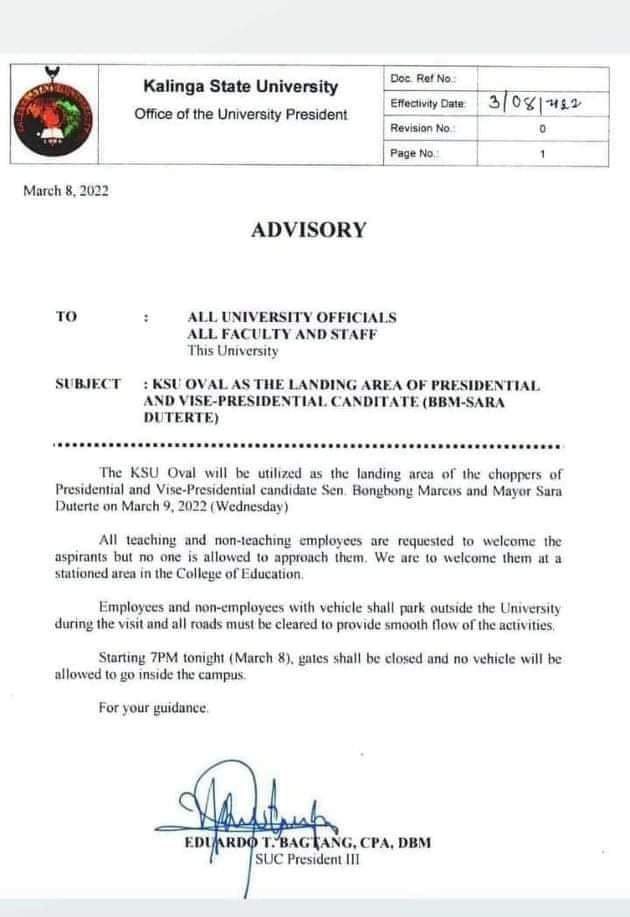
Last March 8, the faculty and staff members of Kalinga State University in Tabuk, Apayao received a memo from their president, Dr. Eduardo T. Bagtang, informing them that the KSU Oval was going to “be utilized as the landing area of the choppers” of presidential and vice-presidential candidates Bongbong Marcos and Sara Duterte the following day. Accordingly, all teaching and non-teaching employees were “requested to welcome the aspirants but no one is allowed to approach them. We are to welcome them at a stationed area in the College of Education.” 

The memo was replete with misspellings and other small infelicities that initially caught my attention as an English teacher, but let’s get past those to the substance of the memo, which was clearly aimed at giving the “Uniteam” combo a warm and hospitable reception. 

Was there anything wrong with that, legally or morally? I’m not entirely sure, which is why I’m raising the question. To be honest, my knee-jerk reaction—as a self-declared non-fan of candidates who avoid debates—was to say yes. To be fair, however, it’ll be good to look at it from both sides, as a study of our culture and its political aspects. The DepEd, the Civil Service Commission, and the Comelec all have rules prohibiting public officials and employees from electioneering. Did the KSU memo cross that line? Was a “request” tantamount to an order?

Just between us Pinoys, it seems the polite and civil thing for a state university president to welcome political candidates. State universities and colleges depend on government support, and whichever parties or officials come to visit, we deem it acceptable if not adroit for SUC presidents to (let’s not say “curry favor”) establish cordial relationships with those in power, or expect to be. (And before we forget, let’s congratulate CHED Chairman Dr. Prospero “Popoy” de Vera, last year’s KSU graduation speaker, for having been named an “adopted son” of Kalinga just this month on the occasion of his visit to KSU.)

Hospitality is arguably ingrained in the Filipino. When then vice-presidential candidate Mar Roxas visited Davao City in November 2009, then Mayor Rodrigo Duterte pulled out all the stops to give him a royal welcome, and even endorsed him for being “clean.” Of course seven years later, running against each other, Rody was calling Mar “the most incompetent Filipino ever to run for president,” but they could both look back to happy memories of walking the streets of Davao together, and of Mar even driving Rody’s pickup truck then. 

Political incumbents routinely welcome campaigning candidates to their territory, which the visitors can spin to their advantage. When Isko Moreno visited Cotabato to meet with BARMM Interim Chief Minister Ahod Ebrahim last month, newspapers were quick to interpret the Manileño’s introduction by Ebrahim as “our incoming president” as a “virtual endorsement” of his candidacy. It was denied the next day by the BARMM spokesman, but denials don’t stick that well in the memory. 

Of course there are thorny exceptions to this ritual politesse. The logistical obstacles reportedly thrown in the way of VP Leni Robredo’s massive rallies by some local politicians and their allies come to mind. Not only were these hosts inhospitable but openly hostile, as if they had been visited and threatened (they probably were) by a pink virus. 

In contrast to the red carpet prepared by KSU President Bagtang and his staff for the BBM-Sara team, a “welcome activity” being planned by the Baybayog National High School in Alcala, Cagayan for Leni set for March 12 had to be scrapped after questions about its “official” nature. The school had sent consent forms for parents to allow their children to attend the activity—deemed “official” because Leni was still, after all, the sitting Vice President, and waving as her convoy passed would have been part of their “civic duty”—but the plan was dropped, to avoid controversy.

This reminds me how it used to be pretty normal for us, when we were kids, to stand at attention under the hot sun for visiting dignitaries, wave flags or flowers, and cheer like our lives depended on it (and maybe, in some ways, they did). We thought politicians, priests, generals, and CEOs were all respectable people and worthy of our admiration. When we realized they were not, the flags and flowers turned into streamers and placards. This is why all but the bravest and most progressive politicians have been loath to set foot in liberal citadels like UP, where a reception of another kind awaits them.

Now, KSU is clearly not UP, by which statement I do not wish to denigrate the strides KSU has made in higher education, which can be found on its website. I refer to the intellectual atmosphere and spirit that inhabit each school and how these are fostered by their constituencies and leadership. KSU, I now recall, was also one of three SUCs that pulled out “subversive” books from their libraries last year in compliance with a much-criticized CHED memo urging them to toe the anti-Red line. Given that background, I shouldn’t have been surprised to find it opening its arms wide to the “Uniteam,” which says it wants national unity for and with everyone—as long as they don’t read, teach, and keep certain naughty books. 

But let’s not be too judgmental, as the campaign season is far from over, and it’s possible that candidates Robredo, Lacson, Pacquiao, Moreno, and de Guzman might yet decide to visit Tabuk, and land their choppers on the greens of KSU. In that case I expect Dr. Bagtang to be his old congenial self and to issue more memos requesting the faculty and staff to welcome the visitors, although I doubt that VP Leni and Ka Leody will be landing in such princely fashion.

Hindsight No. 9: Only the Stupid

Hindsight for Monday, March 14, 2022

(Image from the diplomat.com)

MY BELATED foray into Facebook and the whole FB notion of “friends” led me to ask myself if—in these contentious times—it would be wise to apply a political filter to the many “friend requests” I receive every day, 90% of which come from total strangers.

My simple, old-fashioned liberalism said no. Keep it open. If I were confident in my beliefs, values, and principles, then I shouldn’t fear the presence of contrary ideas, which could be a springboard for a lively and high-minded discussion of alternative futures. 

Maybe I could even make fast friends from the other side, people who were equally concerned about our country’s situation and the need for capable leadership. Maybe we could even meet sometime for coffee or a few beers, engage in playful joshing about other’s politics, and end the day with a soulful rendition of “Kumbaya” around a bonfire. We could show the world the true meaning of unity, love, compassion, and all those nice words politicians can’t resist mouthing every five seconds.

It sounded good—at least in theory. Agree to disagree, turn the other cheek, and all that. Embrace the enemy, and the burrs, bumps, and other imperfections of democracy. Celebrate political diversity as a strength. Accept whatever happens in May as the sovereign will of the people, and yield gracefully to the new president’s wisdom. 

I wish I could say that that I took that high road—but I didn’t; I couldn’t. I did leave the door wide open on my first month on FB, during which I said yes to practically every request that came my way, and kept all my posts public. Soon enough, as my political preferences became obvious, I began to be cursed and trolled. Okay, par for the course—you express an opinion, you expect blowback. I tolerated it for a while, and then I asked myself—do I really want or need this, in my personal space? Were these silly comments enlightening me in any way, except to prove how much savagery you can draw from the tiniest scrap of brain? 

And so I learned the other side of Facebook that everyone else seemed to be adept at: delete, block, mute, unfriend. I began screening every “friend” request to reject dubious characters outright, including and especially those openly campaigning for candidates perpetually too busy to attend public debates. Now, I realize I’m being politically suicidal that way, by hunkering down in my hermit’s cave and refusing to participate in the time-critical mission of conversion. So please don’t do what I did, and be nice. 

But forget the trolls—that’s like talking to your toilet. So far, my toilet’s been telling me this: “Our guy will win. Look at the polls. It’s over. Only the stupid think otherwise.” I flush it all down, but it keeps floating back up. 

Seriously, going beyond paid-by-the-click trolls, I want to find an intelligent, articulate supporter of He Who Will Not Debate and ask just one question: “Why?” 

Do such people exist? They certainly do—I’ve personally known quite a few. Brilliant, eloquent, educated in the world’s best schools, well-traveled, at the top of their professions. They will claim to have been there, done that; some may even have been torchbearers and ideologues for the Left. Somewhere along the way, for reasons known only to them, they make a complete about-face, declare liberal causes dead, and cast their lot with the same people they once found repugnant. They become the gurus of the Right, the stylists of a fashionable authoritarianism they try to invest with narrative inevitability. 

Odd as it may seem, like Franco and his fascists, they will profess to be servants of God, and can be judged only by Him. They are not in it for the money, they will insist, although they live very comfortably. They affect a carapace of cynicism—they support He Who Will Not Debate, not out of love nor confidence in his admittedly mediocre talents, but because he will win, like it or not, so they are already thinking ahead to how he can be manipulated by his No. 2, their real horse. They are in it for the long game.

Sure, they’re smart, or seem to be. The only problem is, they’ve lost a fundamental sense of right and wrong. They’re beyond outrage. Proficient at turning fiction into “fact,” and inflated by their proximity to power, they mistake cleverness for conviction, and survival for salvation. In the end, they believe in nothing but themselves; they are their own echo chambers. “I don’t care what people think about what I think,” one such pundit told me, and it told me enough. 

So if and when I ask these people “Why him?”, I don’t expect a gush of praises for the fellow’s virtues, but rather a PowerPoint lecture on why he will win, regardless of everything. “Only the stupid,” they will remind me, “look at elections in terms of good and evil.” 

Even academics can over-analyze things and ignore or forget the basic question: Is it the right and the good thing to do? “Realpolitik”—a pet word of cynics—is no excuse for resignation and acceptance. 

All the scholarly explanations for Vladimir Putin’s Russo-centric world view can’t justify Russian aggression. Putin may have a right to feel threatened by a pro-NATO Ukraine, but he still doesn’t have a right to invade it and shell it to pieces. And we need to say so. As so often happens, to pose as “neutral” in this case (ostensibly because we have no dog in this fight) is to support the oppressor. We do have a dog, and it isn’t so much Ukraine itself but justice. 

So when I choose my Facebook friends, I choose people who still believe passionately in truth, freedom, and such things as the strategists of the Dark Side find foolish and irrelevant. I choose people who will restore and reinforce my faith in humanity, and who will remind me that we, too, are in this for the long fight, way beyond May 9.

“Only the stupid” may refuse to surrender in the face of looming annihilation, but I’ll take the Zelenskys of the world anytime over its Putins. 

Hindsight No. 8: Who Owes What to Whom

Hindsight for March 7, 2022

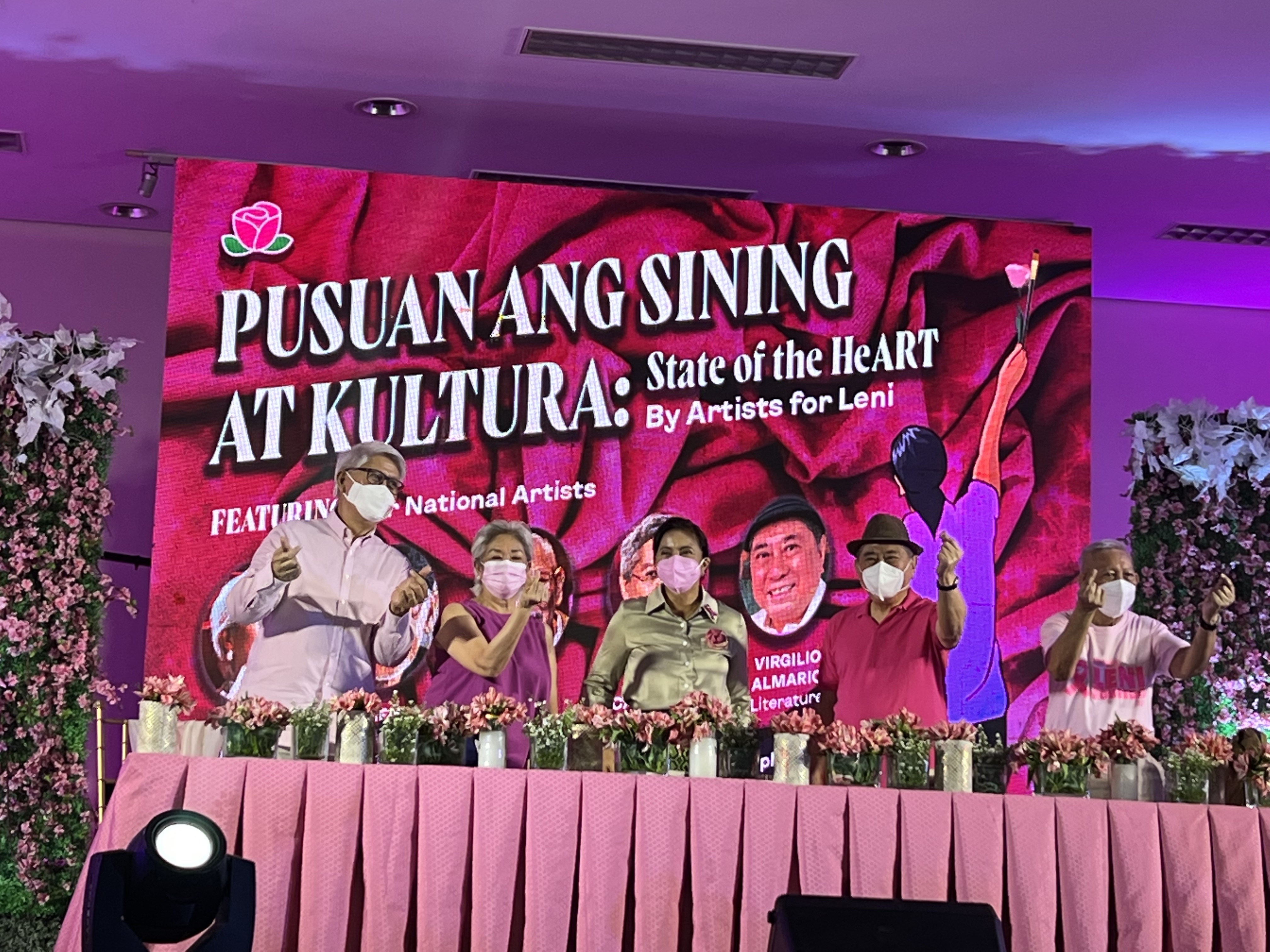
A COUPLE of weeks ago, an unattributed article in another newspaper titled “National artists owe it all to Marcos” berated five National Artists—Bencab, Virgilio Almario, Alice Reyes, Ramon Santos, and Ryan Cayabyab—for proclaiming their support for VP Leni Robredo’s presidential bid. They were, said the unnamed writer, ingrates for forgetting the fact that the National Artist Award had been created by Ferdinand Marcos, implying further that they owed their fame and fortune to Manong Ferdie, without whose patronage they would be nobodies hawking their wares at streetcorners. “Prior to his being named national artist in 2006, Cabrera was not as well known as he is today in the national art scene. Today, his paintings sell in the millions of pesos.”

That’s odd because as far as I knew, Bencab, along with the others, was already famous within and outside Philippine artistic circles well before he was proclaimed National Artist. In fact, didn’t he become one because of his impressive body of work? Or did I get it wrong? According to that article, it was the NA Award that made these people, and since Manong Ferdie established it, then, well, they were forever indebted to him for their professional success. That should go as well for such luminaries as Jose Garcia Villa, Vicente Manansala, Amado Hernandez, F. Sionil Jose, Jovita Fuentes, and Atang de la Rama, among many others. 

The article dutifully reminded the reader that “To recall, on 27 April 1972, President Ferdinand Marcos issued Proclamation 1001 creating the Order of National Artist of the Philippines, to recognize outstanding Filipino artists. Under the Marcos proclamation, a national artist is entitled to a cash award of P100,000, a handsome monthly stipend, yearly medical and hospitalization benefits, life insurance coverage, a place of honor in state functions and national cultural events, a state funeral, and burial space at the Libingan ng mga Bayani.”

Wrong. There were no such benefits under that proclamation, only the honorific title. (Go on, look it up.) The emoluments came later, in the form of the aforementioned one-time cash award and a P2,000 monthly stipend, raised much later to P10,000 and then P50,000 (on the government pay scale, equal to about Salary Grade 19, just one grade above sub-professional supervisors). Since National Artists typically get chosen in their 70s or even posthumously, that’s not much of an outlay. 

I would have been more enthralled by Manong Ferdie’s magnanimity if it had been his personal finances that paid for the package. But that was always the people’s money. And even his personal finances had a way of being traced back to some public source.

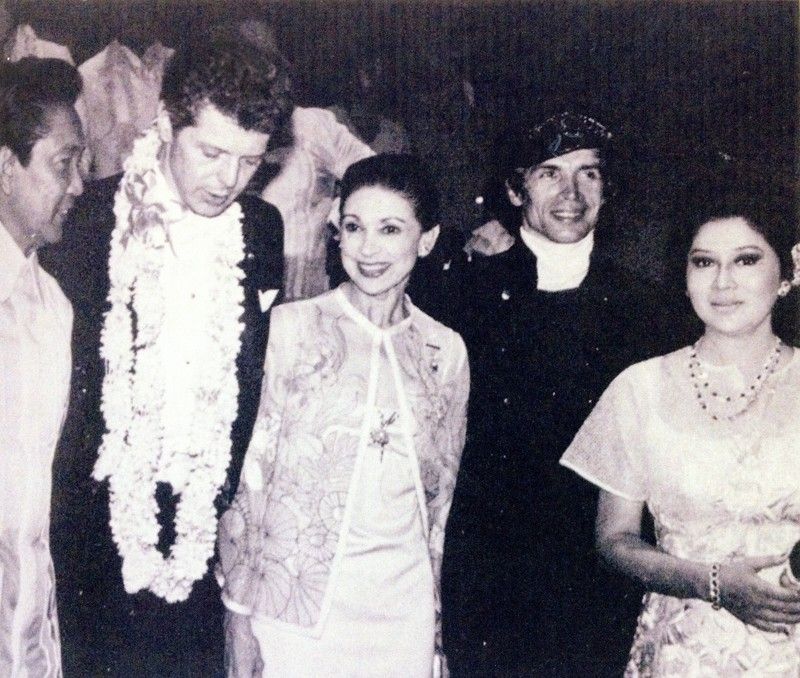
Where else did our taxes go? Why, to the recipients of the CCP International Artist Award, which I’ll bet most of us never even heard of. The book Musical Renderings of the Philippine Nation by Christi-Anne Castro (Oxford University Press, 2011) chronicles how the First Lady instituted this award—which came with an unspecified life pension for such laureates as Van Cliburn and Margot Fonteyn—in June 1973 “as a personal gift from Imelda Marcos as well as a small incentive for international performers to make the long journey to the Philippines to perform at the CCP.”

(Photo from philstar.com)

The article chides “anti-Marcos” creatives for dreaming of becoming National Artists and for accepting its conferment. But since when did the award—or any credible award for that matter—require fealty to its originator or sponsor? Were the victors at the 1936 Berlin Olympics expected to genuflect before Hitler? Should Nobel Prize winners espouse arms sales, as Alfred Nobel once did? 

I don’t dispute the claim that the Marcoses supported the arts and culture through the creation of the Cultural Center of the Philippines, the Folk Arts Theater, and the Manila Film Center, as controversial as they were (and in the case of the Film Center, as tragically ghoulish, with as many as 169 workers’ bodies reportedly entombed in the concrete). Favored artists were set for life. 

But cultural patronage is a PR expense. The art shows decorated and sanitized the regime, and made it appear to whoever cared to look that the Philippines was one big, colorful, glittery stage. For the National Artist Award to be taken seriously, they had to recognize serious artists—even those who weren’t Palace toadies, like Nick Joaquin (who accepted the award in 1976 only on condition that his friend the journalist Pete Lacaba, then in prison after being brutally tortured, be set free). After the Marcoses, the NAA was revived and expanded—the National Scientist and National Social Scientist Awards were also established—but it never quite shook off the stigma of political favoritism. Most notably, in 2009, Gloria Macapagal Arroyo played dagdag-bawas and anointed four of her personal choices NAs, prompting a suit from the real NAs and many other petitioners, which ultimately prevailed. 

If you want to get political about utang na loob, even Rodrigo Duterte acknowledges that it was Cory Aquino who jumpstarted his political career when she appointed him OIC mayor of Davao after EDSA 1 when his mother “Nanay Soling”—among the few staunch anti-Marcos activists in Davao—declined the offer. He later said in an interview that he was not going to dishonor his mother’s memory “by following the persons that she helped shut down.” But then in 2016, against widespread opposition, he allowed Ferdinand Marcos to be interred as a hero. That should have earned him a cache of pogi points with the Marcoses, who then jumped the gun on Inday Sara’s own presidential ambitions—or whatever Tatay Digong had in mind for her—by pushing Junior for No. 1. Of course, my pro-Sara friends (I do keep a handful, for our mutual entertainment) insist that Sara is going her own way and isn’t answerable to her dad. So this puzzle of who-owes-what-to-whom gets more and more difficult to figure out. Does it even matter in Pinoy politics?

And if we’re serious about debt collection, how about the P125 billion in ill-gotten Marcos wealth that the Philippine government still has forthcoming? Sounds more like the Marcoses owe it all to the Filipino people.

Penman No. 436: A New Blooming at Milflores

Penman for Sunday, March 6, 2022

CHAIRMAN MAO’S dictum about letting “a hundred flowers bloom, a thousand schools of thought contend” must have been on the mind of former activist, writer, retired UN official, and later gentleman-farmer and entrepreneur Antonio “Tony” Hidalgo when he founded Milflores Publishing in 1999 to publish books that would “meet the needs and wants of the Filipino masses.” His wife, the celebrated author Cristina Pantoja “Jing” Hidalgo, could not have been more pleased. Aside from building a lovely heritage home in San Miguel, Bulacan with a cock farm for Tony behind it, the Hidalgos were eager to do their part for Philippine literature beyond teaching and writing. 

Milflores would go on to publish 80 titles on such varied subjects as suburban living, cockfighting, and 20th-century masculinity, on top of the usual fiction. It was beginning to make a mark as a small but quality press—and then Tony sadly and suddenly died in 2011, leaving a devastated Jing to carry on with distributing their titles. Busy with her own professional life, Jing soldiered on as far as she could, until 2020 when a white knight entered the picture in the form of Andrea Pasion-Flores, who had been her student (and mine) at UP many years earlier. 

Since graduation, Drea—a fine fictionist in her own right—moved on to become a lawyer, then executive director of the National Book Development Board, then our first international literary agent, and until 2020 general manager of Anvil Publishing. Post-Amvil, Drea was looking for fresh challenges and opportunities, and she found it in Milflores. Her husband Javi, also a lawyer, put her up to it: “Javi and I thought about starting a new publishing company, which might’ve been cheaper. But Javi gave me the idea of buying Milflores. First, because of the name—it fits with ours. Second, it already had some goodwill that would be a shame if it were forgotten. Third, it wouldn’t hurt to ask Jing if she had any plans for it. In a heartbeat, she said yes.”

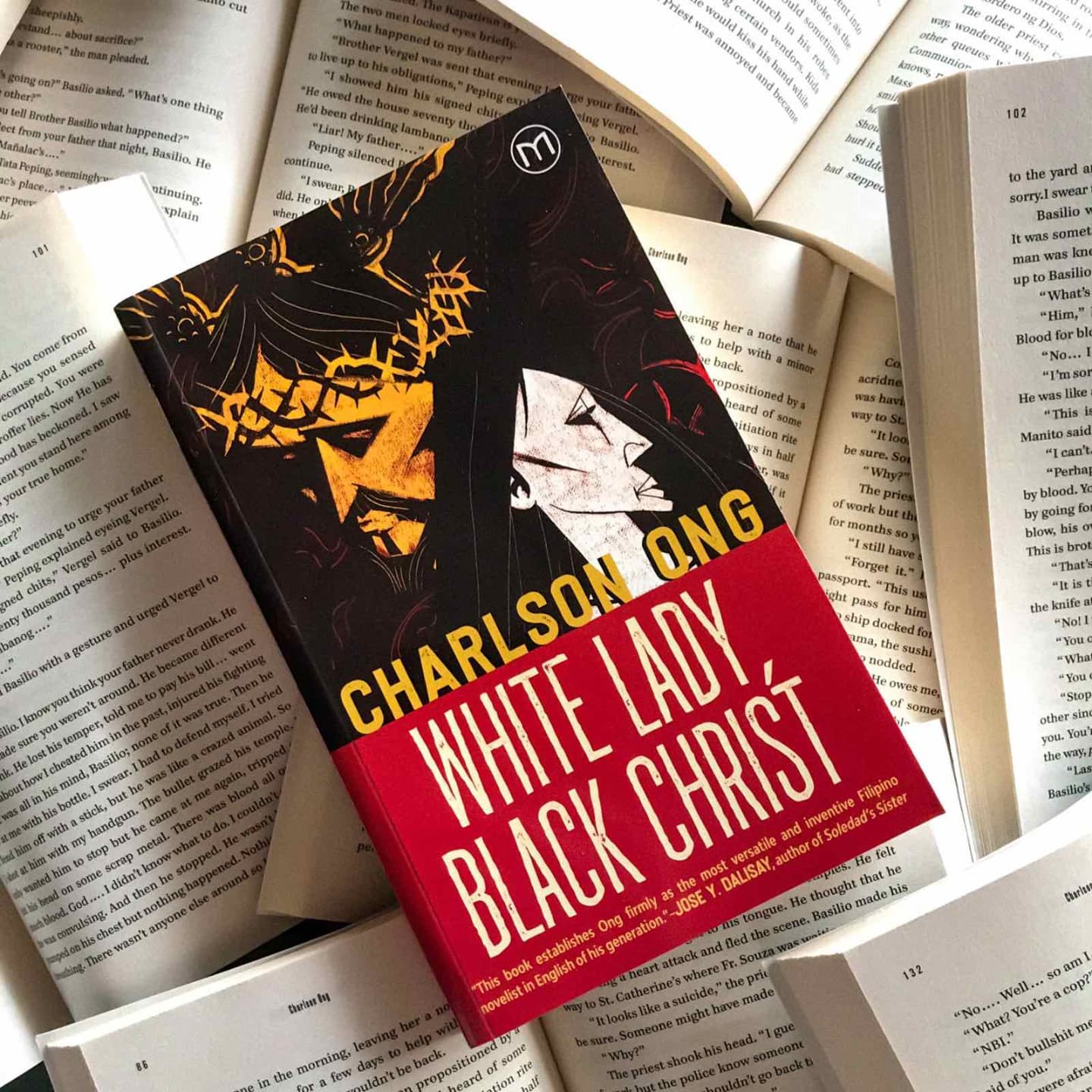
Since that takeover, Milflores has already come out with an impressive list of titles that herald a new blooming for both the company and Philippine literary publishing as a whole. Against all the odds thrown her way by the pandemic, the tenacious Drea managed to secure publishing rights from top-drawer Filipino authors such as Charlson Ong, whose wild and wacky novel White Lady, Black Christ became Milflores’ flagship offering in May 2021. As Charlson’s agent, Drea had already sold an earlier novel of his to a Malaysian publisher, so this was a natural follow-through.

This was followed by a new edition of Nick Joaquin’s Rizal in Saga. Drea had also sold NJ to Penguin Classics. “I wanted this book more than anything because, as Ambeth Ocampo said, the book went out of print the moment it was published because the government gave it out as a souvenir during the centennial of Rizal’s death in 1996, and was never reprinted.” Drea pulled out all the stops, and went for a hardcover edition. “If I was to deserve this book, there would be no cutting corners. I had to make people realize the value of this book. It had to be an object to be desired. And, as Ambeth told me, we both made sure it came out well because we both felt NJ deserved no less. When I die and go to book heaven, I want to hear Nick and Rizal tell me, I did well by them, haha!”

Simeon “Jun” Dumdum’s Why Keanu Reeves Is Lonely and Why the World Goes on as It Does, a small collection of poetry, was another risk worth taking. “Knowing I wouldn’t be raking in millions with this book, why did I want it? Because anyone who reads his poetry will be uplifted. It’s a book to treasure, really. Jun Dumdum was so game with whatever we did with it, even if we said we’d like the book to be neon pink and green. He was onboard! I like those kind of writers.”

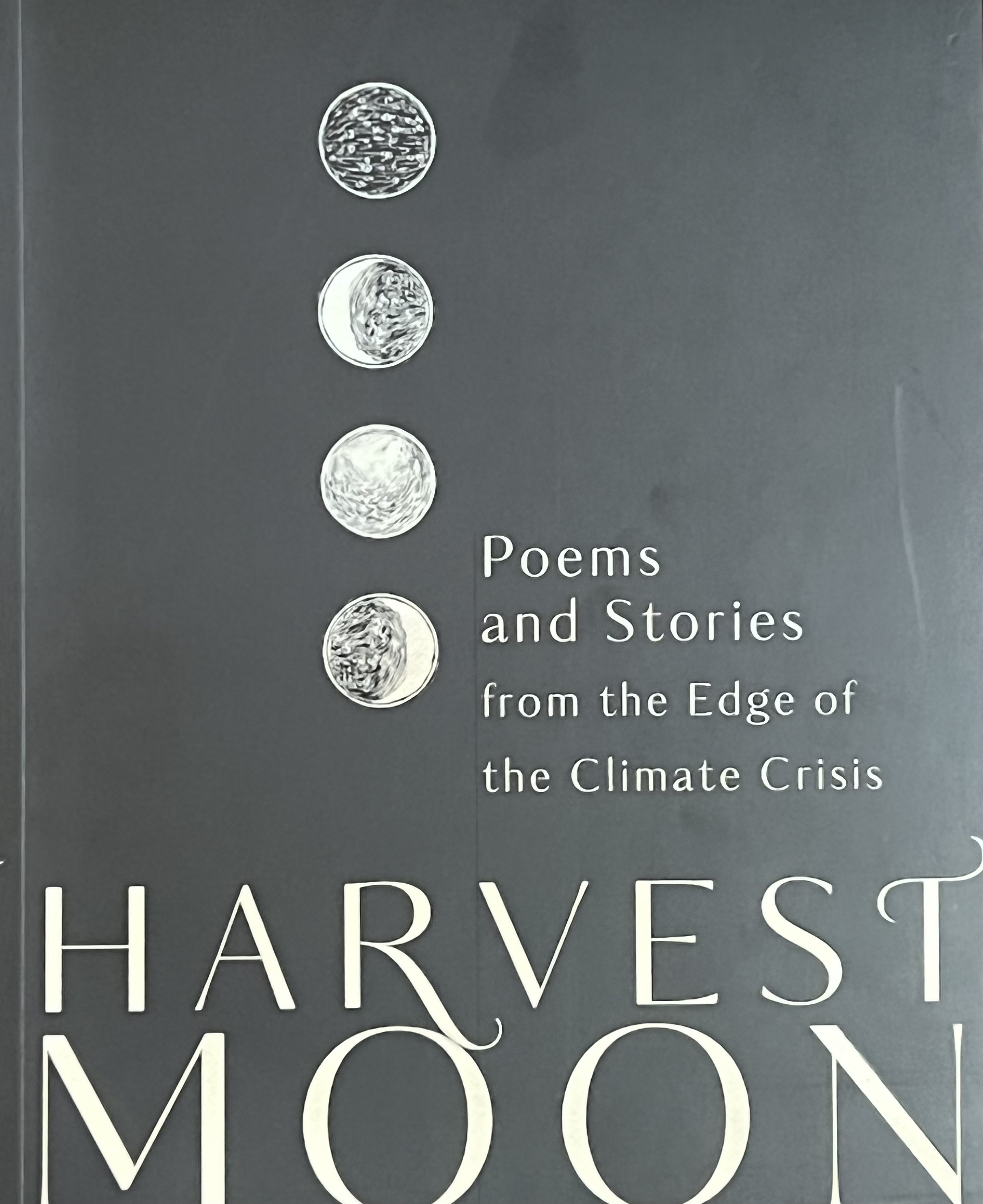
Writer and noted bookseller Padma Perez brought Milflores its biggest book yet, Harvest Moon: Poems and Stories from the Edge of the Climate Crisis, co-published with the Institute for Climate and Sustainable Cities (ICSC). Most books with a political agenda tend to be preachy and off-putting, but Harvest Moon is unique in its concept and execution. Twenty-four writers from around the world were given evocative photographs as prompts, with the further stipulation that they were to avoid buzz words and phrases such as “sustainability” and “climate change.” The result is visually and textually moving, investing the project with deep personal insight. This book is being sold at a deep discount, thanks to a subsidy from ICSC.

Drea Pasion-Flores has followed these up with other provocative projects, including many more in the pipeline. Robby Kwan Laurel’s Ongpin Stories is a timely reprint; former Sen. Rodolfo Biazon’s biography by Eric Ramos is a gripping narrative of a man who rose from doing other people’s laundry and selling in the market to become a general and senator, and one of the heroes of EDSA 1; David Guerrero’s The Crap Ideas Book is an inspirational book on creativity; the bedridden Nick Carbo’s new book of poems, Epithalamion, is, says Drea, his “shot at immortality.”

Milflores also has something lined up for younger readers: Kat Martin’s debut novel At Home with Crazy is the story of a 14-year-old girl dealing with the stress of living with a mother with a mental illness. Internist-oncologist William Liangco’s Even Ducks Get Liver Cancer and Other Essays is a hilarious romp through the travails of med school in a charity hospital. Drea will also publish two graphic nonfiction books by the feminist Swedish graphic illustrator Liv Stromquist and a cookbook by artist and cancer-fighter Robert Alejandro.

“I have big dreams for Milflores,” says Drea. “I want to try to bring a Philippine company out there, not just here. I’m guessing it’s not going to be the next Coca-Cola Company. It’s going to take time and lots of good books, but I have no doubt I can get there—or somewhere close to it.” (More information at milflorespublishing.com)

Hindsight No. 7: Disinformation and Democracy

Hindsight for Monday, February 28, 2022

(Image from designtaxi.com)

LAST FRIDAY—the 36th anniversary of EDSA 1—I spoke to a group of university students who wanted to know what I thought of Filipino democracy. 

I told them that at EDSA, along with millions of other Filipinos, I jumped for joy at the news that Ferdinand Marcos had fled with his family. We did not know—and might not have cared too much then—that they had brought two planeloads of gold and cash with them to Hawaii. All we wanted to hear was that they were gone, presumably for good, and that we were off to a fresh start at peace, freedom, justice, and prosperity. The darkness of the past twenty years would lift, and a new Philippines would emerge, truly democratic and firmly opposed to any form of despotism.

Today we realize what a fantasy that was, what a temporary reprieve. Under Rodrigo Duterte, if the polls are right, most of our people have once again embraced authoritarian rule, implicitly accepting its attendant excesses. The dictator’s son is back, and may even become our next President—to the delight of his supporters for whom martial law never happened; or if it did, then it was a golden age to which we will soon be returning, an age of new roads and bridges, clean streets, industrial peace, Miss Universe pageants, and eternal sunshine. 

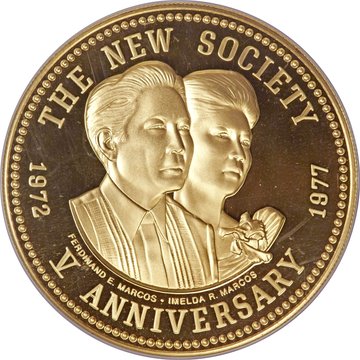
Indeed it would be as if the past half-century between 1972 and 2022 were a confused and hazy dream, and now we were waking up where we had left off yesterday, when Ferdinand E. Marcos was poised to “save the Republic and build a New Society.” His son is making sure that we don’t miss the connection by heralding his entrance at his campaign rallies with the anthem of martial law, “May Bagong Silang.” Most of his followers today have never heard that song, or understand its chilling context, or the price we paid—in blood and in billion-dollar loans—for that “new dawn.” To them, it is a catchy jingle, in marching tempo. It comes with the smell of money and power in the air, the promise of a shower of gold for the hopeful masses. 

This, of course, is also a fantasy, but a powerful one—and I think I will be correct to surmise that many of the students I addressed, and even their teachers, fully believe it. And why not? They were never taught in school about the horrors of martial law. Instead, they were told that those were good times, that the Marcoses were good leaders who were deposed by their enemies and the CIA, that rich people don’t steal, and that the Marcos billions came from the gods, Yamashita, and anywhere but the Philippine treasury. That diet of lies has now become a catered banquet. 

The biggest enemy of democracy today—more than at any other time in our or even the world’s history—is disinformation: the willful distortion or fabrication of information to create false beliefs or impressions in the minds of people, turning bad to good, wrong to right, and vice versa. 

This is happening not only here in the Philippines, but in many other places around the world—including America, where Donald Trump has been pushing the “Big Lie” of a stolen election, despite the lack of any credible evidence. Even earlier, in what has by now become a cliché, Josef Goebbels thundered that if you repeat a lie a thousand times, it becomes the truth. 

During and after WWII, military experts engaged in what was called “psywar” or psychological warfare to weaken the enemy’s mental defenses, lower morale, and make people switch sides. This was done through radio, leaflets, newspapers, and other media available at the time.

Today the prevalence of the Internet and social media has magnified the means for disinformation by a magnitude of millions. And this is scary, because according to a recent survey, every other Pinoy can’t tell real news from fake. How can a society so prone to disinformation—to fake news—function well as a democracy?

Last month, the Akademyang Filipino (on whose Board of Trustees I serve) sponsored a forum on the topic of “Can Democracy Win in May 2022?” Most such questions are meant to be rhetorical, with obvious answers. But this time, the more I thought about it, the more I was bothered by its actual complexity. The problem, I realized, is that we no longer have a clear and common idea of what “democracy” means.

There are as many definitions of democracy as there are politicians eager to appropriate it. “Democracy” has to have been one of the most ambiguous and most abused words of the 20th century, going into the 21st. When a brutal totalitarian state like North Korea styles itself as the “Democratic People’s Republic of Korea,” you know something somewhere has gone awfully wrong. Dictators will call their actions democratic—as Ferdinand Marcos and Muammar Ghaddafi did—by asserting that they are acting on behalf of the people, a responsibility that presumably entitles them to extraordinary powers and compensations.

In my layman’s understanding, democracy is the rule and exercise of power by the people through representatives they choose by a free and fair election. It seems simple, but immediately we can see how vulnerable this definition of democracy is to interpretation and manipulation. What is a “free and fair” election? Does it simply mean an election free of vote-buying, coercion, and fraud?

If a candidate wins more than 51% of the vote without obvious coercion or cheating, then will that candidate have won a democratic election? But what if those voters had been fed provably false information? What if they willingly believed that information to be true, and voted on the basis of it? Would this still be democracy at work? 

Arguably, yes, because democracy never promised only intelligent outcomes. Elections are emotional, not rational, exercises. This disturbs me deeply, but again I have to ask myself, am I idealizing democracy as something that can be perfected? Or should I just accept that democracy, like society itself, is inherently messy, mercurial, and manipulable? 

What kind of democracy do we Filipinos have, and what kind of democracy do we want? The vote this May will help provide the answer. 

Hindsight No. 6: A Cultural Agenda

Hindsight for Monday, February 21, 2022

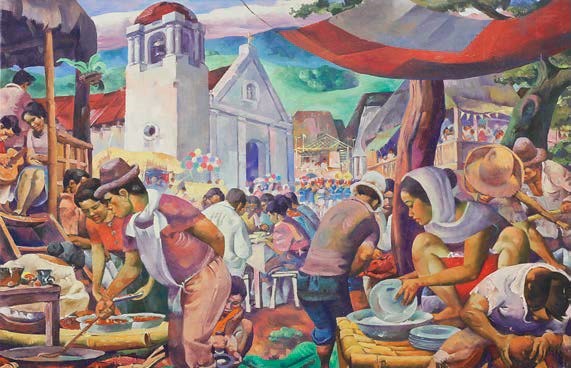
(Botong Francisco’s “Pista sa Angono”)

NOTABLY ABSENT from the platforms of nearly all candidates for the presidency is any mention of culture and the arts as a vital element in our quest of nationhood. Everyone has an opinion about the economy, the pandemic, corruption, peace and order, foreign relations, infrastructure, the environment, and countryside development, but you can hardly hear anyone speak—beyond the usual generalizations and platitudes—about what makes us Filipino, what it means to live as an archipelago with over 100 languages, and why and how we can be so similar in some ways and yet so different in others.

These are all matters of culture, which are often given tangible expression in the arts—the songs that make us weep, the paintings that brighten our walls, the stories that make us wonder about what’s important to us, the dances whose gestures take the place of words. At their best, culture and the arts rehumanize us, remind us of our truest, noblest, and also most vulnerable selves.

Unfortunately, we have been brought up to see them as little more than adornments, passing entertainments, intermission numbers to play in between presumably weightier and more consequential concerns. On an official level, culture has been treated as an adjunct of other ventures such as sports and tourism, culminating in beauty contests and street dances. 

The National Commission for Culture and the Arts (NCCA) and the Cultural Center of the Philippines (CCP) have had active programs for funding the arts and for sponsoring performances and exhibitions, but despite many previous initiatives, efforts to set up a formal Department of Culture to oversee a broader cultural agenda have failed, again because of the low priority accorded to the sector.

Many studies have shown, however, that the arts—transposed into the creative industries that produce cultural products covering everything from books, movies, and TV shows to music, food, advertising, and advertising—create a large economic footprint.

Citing UNCTAD figures, a report commissioned by the British Council some years ago noted that “Depending on how they are defined, the Creative Industries are estimated to represent anywhere from 3% to 12% of global GDP.”

In 2010—the last year for which I have solid figures—copyright-based industries or CBIs contributed more than P660 billion to the economy, according to the Intellectual Property Organization of the Philippines. In GDP terms, the economic contribution of CBIs climbed from less than 5 percent in 2006 to more than 7 percent in 2010. Core CBIs comprising companies in the arts, media, and advertising largely accounted for this surge. A corresponding rise in employment occurred in the sector, from 11 percent of the total number of jobs in 2006 to over 14 percent four years later. Surely these figures have risen much higher since then.

But the most important argument for a clear and strong cultural agenda remains the moral one. Culture is an essential element of national growth and development, as it helps define our national identity and our national interests. Without culture, we have nothing to stand on except our territory. Culture is a dynamic description of our commonalities and differences, without understanding which we will be moving forward blindly, guided only by the political and economic interests of our elites.

That understanding of who we are and why we think and act the way we do should be the end-goal of our education, grounded in an appreciation of our history. But as recent questions have highlighted, the DepEd’s decision to integrate Philippine history into other areas of learning effectively diluted and diffused its teaching in high school, a critical period in the formation of young minds.

For these reasons, a group of Filipino artists, writers, scholars, and cultural workers have organized the Katipunan sa Kultura at Kasaysayan (KKK) to present the leading presidential candidates with a cultural agenda for the next administration. The key items on that agenda include the promotion of a liberative, creative, and innovative culture; support for the study, appreciation, and critical interpretation of Philippine history; the promotion of cultural and creative industries, and Filipino products; the promotion of democratic education and programs to raise literacy nationwide; and serving the health and welfare interests of cultural workers. (Full disclosure: I work with National Artist Virgilio Almario in this organization.) We presented that agenda to all the leading candidates but heard back from only one, who endorsed it warmly: VP Leni Robredo. We were not surprised.

It’s not surprising, either, that those who understand Filipino culture best are those intent on exploiting its fractures and contradictions. The manipulation of public opinion and political outcomes thrives on knowing how people and groups behave, what emotional levers to pull, and which buzzwords to propagate. 

The confused and fragile state of our culture can be easily seen in how susceptible our people are to fake news. A recent SWS survey showed that 51 percent of Filipinos—every other one of us—find it difficult to tell real news from fake. The traditional sources of what most people have deemed the truth—the government, the Church, the traditional media, the schools, law enforcement, and even scientists—no longer carry the same trustworthiness they used to. Their places have been taken over by social media, cable TV, and micro-networks that can spread disinformation at lightning speed.

When I heard the New Society theme “May Bagong Silang” being played at Ferdinand Marcos Jr.’s proclamation rally, I recalled how music, theater, and art were harnessed by the martial-law regime to create spectacle, a key instrument of enthrallment and intimidation, from imperial Rome’s circuses to Nazi Germany’s torchlit parades. That’s culture at the service of dictatorship, belying Leonard Bernstein’s claim that music was one art “incapable of malice.” 

I’ve often noted, in my talks on this topic, how ironic it was that the only presidency that put culture and the arts at the forefront was Marcos Sr.’s, and today even the staunchest of Imelda’s critics will grudgingly acknowledge the value of the CCP. But there was an ulterior agenda to that, which makes it even more urgent to promote a culture that will uphold truth, reason, and justice as a basis for national unity, instead of being used as a glitzy curtain to mask wanton murder and thievery.

Penman No. 435: A Dying Swan at Midnight

Penman for Sunday, February 6, 2022

YOU’VE BEEN reading about some of my book-buying adventures and the most unlikely places I’ve found some of my most valuable books—like a 1551 book of English essays under a lamppost in Cubao, a signed first edition of Carlos Bulosan’s America Is in the Heart at Jollibee on Commonwealth Avenue, and an 1868 two-volume facsimile of Don Quixote at a McDonald’s on that same road.

Now here’s an incredible story that happened to me one night a couple of weeks ago—very late that night, just as I was about to go to bed. Beng had just finished another episode of another interminable K-drama, and I was too sleepy to switch to my own program (typically some violent crime show, which gives me a good night’s sleep). And then as I always do, I checked my messages on my laptop before moving from the La-Z-Boy to the bed, and I saw something that instantly woke me up again.

Let’s backtrack a few days earlier to another idle moment when I was poking around the usual FB sites for garage-sale and Japan-surplus flotsam and jetsam—the “antique” Coke trays (probably China-made), the Ambassador furniture sets, the bobblehead figurines, the wooden fruit bowls, etc. And then I came across a rack of paintings being sold for just P1,000 each—most of them quite awful and not even worth the price, even to a bottom-feeder like me.

But then I spotted a painting that had rather intriguing lines and colors, one that was clearly different in theme and treatment from the nipa huts and carabaos that populated the other canvases. 

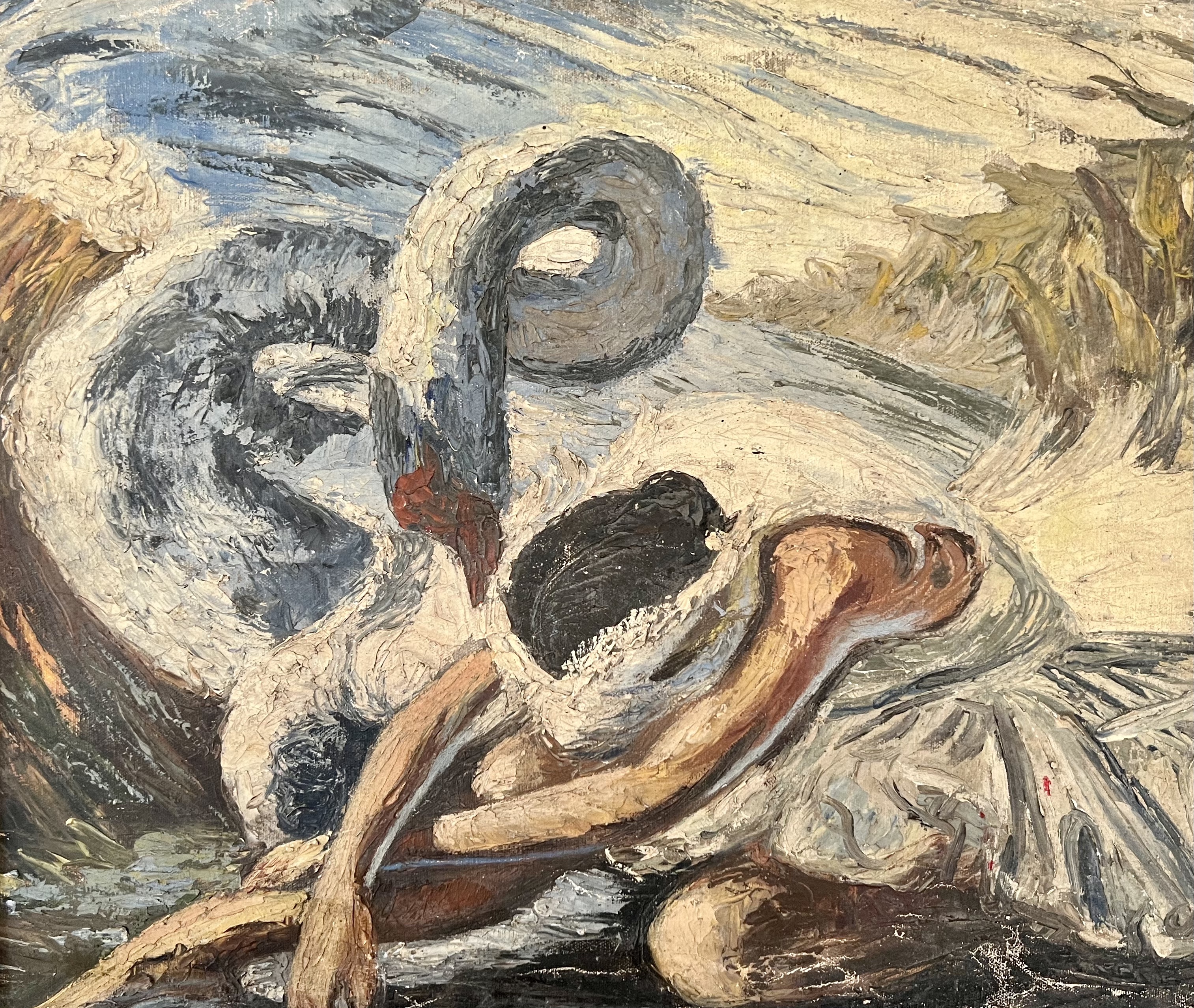
In the foreground was a young woman in a white dress—a dancer immediately came to my mind—set against what first seemed to me a backdrop of the sea, a huge curling wave threatening to envelop her. But there was another element, aside from the strange shape of the “water”, that didn’t make sense: an orange something near the woman’s face.

And then it all snapped into place: the background figure was a swan with one wing outstretched and the other practically smothering the woman, and the orange thing was its beak. What sprang to my mind was Leda and the Swan, the old Greek myth that has been one of art and literature’s most reinterpreted and most referenced stories (where Zeus, in the guise of a swan, rapes or seduces Leda, and has two children by her). 

This could not have been done by a naif painter; it took some education and sophistication to take on a subject like that, and to represent it with both grace and power. This painting could not have been a recent work; its strokes and colors belonged to another age. It felt old, in a good way. I thought that it had to be decades old, possibly even pre-war.

I immediately messaged the seller to reserve the painting for me. For P1,000, it was a no-brainer. Usually the seller would respond within minutes, and we would do the GCash and Lalamove song-and-dance within the hour. But the day passed with no response. I messaged him again that night, and next morning I still heard nothing back. Another day passed; I had saved the picture of the painting on my phone and returned to it now and then, stewing inside, increasingly annoyed by the seller’s silence.

And then I got the message: did I want it? Of course, I messaged back quickly. It will cost you P1,000, he said. Sure, I said, give me your GCash number. I hope you can book it for pickup now, he said, because I’m leaving very early tomorrow morning—unless you want to get it in the afternoon. No, no, I said—I’ll book it right now. It was 11:30 pm, and Beng was sound asleep. 

And so it happened that just past midnight, a Lalamove rider roared up to my gate to deliver the painting, which I examined immediately. It had been very badly framed, with ragged edges of the painted canvas hanging over the back. Since the edges had been pulled over, I could find no signature. Still it was every bit as powerful as I had thought it to be, the colors laid on in a thick impasto. 

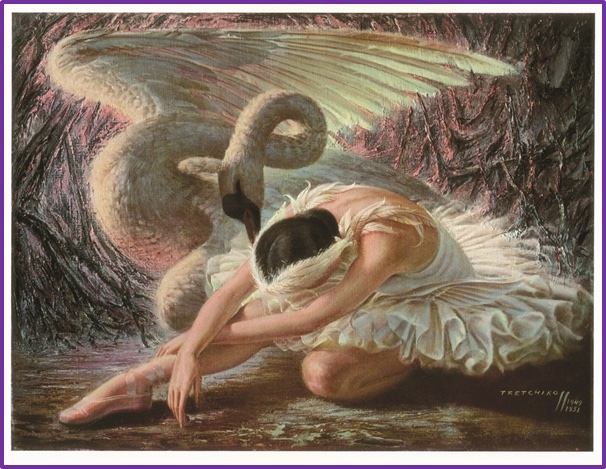
So the mystery was, who painted it, and when? I posted it on FB the next morning, and immediately the writers and artists in my group identified it with Leda and the Swan. I felt vindicated. And then my Toronto-based friend, the poet Patty Rivera (whose husband Joe also paints), posted a link to a story from South Africa, where a painting by a Russian-born artist named Vladimir Tretchikoff was up for auction. It was titled “The Dying Swan,” from the ballet by Mikhail Fokine; Tretchikoff had even persuaded the great ballerina Alicia Markova to pose for him in 1949, when he began the work (one of two he gave that title).

So my midnight acquisition was a copy done by a local painter in the 1950s, possibly by an amateur or even a student. Was I disappointed? How could I be, especially for the price I paid? Tretchikoff’s original was clearly much finer and more radiant; but my rougher copy, in Patty’s words, showed more “torment and despair.” When Beng restores this and we have it reframed, it will have its own life and energy, and the swan will die, over and over again, which means it never will.

Hindsight No. 3: A False Nostalgia

Hindsight for Monday, January 31, 2022

SINCE MY belated debut on Facebook just over a month ago, I seem to have acquired something of a reputation for my posts about the past—not in the scholarly mode of a real historian, which I most certainly am not, but as a collector and keeper of objects that evoke strong associations with times and people long gone. These include century-old fountain pens and typewriters, and even older books and documents steeped in the accumulated oils of the hands that held them.

I’ll admit to having an intense, almost fetishistic, interest in the past—the 1930s are of particular significance to me, because I’m writing a novel set in that period—and I can identify with the romance conjured by postcards of ocean-going liners and of the old Manila Hotel. If you play “Smoke Gets in Your Eyes” on a turntable, you’ll float to the ceiling in my esteem. In my dreams, I fantasize about strolling into the Crystal Arcade one fine day in 1937 and stepping out with a fistful of Parker Vacumatic Senior Maxima pens while towing a cart with all 55 volumes of Blair and Robertson.

But that’s where the nostalgia ends. In many if not most respects—as I’ve told friends who, for example, ask me if UP’s fabled Cadena de Amor ceremony is worth reviving—there’s one place the past deserves to be, which is exactly where it is. Nostalgia is comforting precisely because the past is over, and because we tend to remember just the good parts, and even burnish them to perfection.

But it was never really all that good. Amorsolo’s maidens all seem fresh out of the batis and every Joseon prince’s robes on K-drama seem immaculately pressed even after a swordfight, but the past was literally a filthy place. Queen Elizabeth I was said to take a bath once a month. William Shakespeare and his friends wore those fluffy collars around their necks because that’s all they changed. The lovely ladies of Versailles doused themselves in perfume to quell the odor of their unwashed bodies. The “buntis” window grilles we now admire in old Manila houses were once drenched with dubious liquids being dumped on the street below.

Neither was it so peaceful. Even without counting the devastation of war, the past was fraught with danger, hardship, and unrest. It may have been a grand and glorious time for the rich in their cars and villas, but the masses were suffering in the farms and factories. Power was brazenly exercised, as in the torture and murder of Moises Padilla in 1951. Postwar congressmen carried .45s at their waist into the session hall. As a young police reporter in 1972, I learned where you could find a gun for hire for P500 per target.

We like to think that the past was simple, with fewer choices to be made. But it was never that simple for many without real choices. Poverty was and is never simple, because every morning the mind races to figure out where supper is coming from, and if Nanay can survive on a third of her prescribed dosage or on plain salabat.

All these come to mind when I hear Filipinos today—many of them not even in their 40s—talking about how a return to the “glory days” of Marcosian martial law would set this country back on track and bring us the prosperity, the peace, and the prestige we once enjoyed. I wonder what it is exactly they are “remembering,” and if they understand what putting a Marcos back in Malacañang will mean to this country. This goes beyond the historical amnesia we often hear about these days; the Dictionary of Obscure Sorrows calls it “anemoia,” a nostalgia for a time someone has never known, or that never happened.

No, I’m not calling them stupid or wicked by any means. In many cases they’re simply innocent or uninformed, and therefore suggestible. If they feel oppressed by the present and are facing an uncertain future, the past will acquire the appeal of the womb, offering safety and security. The idealization of martial law as a time when streets were wide and clean and when new buildings were rising right and left is a more inviting prospect for those who can’t be bothered with facts and figures about debt-driven growth, cronyism, and horrific abuses under military rule. (For those facts, check out https://newslab.philstar.com/31-years-of-amnesia/golden-era)

That even oldtimers can wax nostalgic over the Marcos years isn’t hard to understand. Like the Germans under Hitler, many if not most Filipinos then never saw a prison camp, never had a son or daughter tortured and salvaged, never had a business taken over by the regime. Those of us who actively resisted dictatorship were in a distinct minority—as we still are today. Complicity has to be endemic for despots to thrive.

But now once again we are called to arms, in a battle for the imagination—a battle of competing narratives and modes of narration. Will the cold, hard truth alone triumph over romantic fantasy, or will we need to be more inventive in our messaging to get through to those unlike us? Instead of just revisiting the past, should we dwell more on a rosy but realizable vision of the future? Instead of staking out May 9 as a referendum on martial law, should we double down on what a presidential election should be—a competition between platforms and qualities of leadership? (And then use the next six years to correct our history textbooks.)

It’s true that we have good reason to long for seemingly lost or threatened graces like statesmanship and civility (not to mention intelligence) in politics, as well as plain good manners and delicadeza. There are good things we can yet recover and revive from better days, with the right leadership and inspiration. But to do that, we have to save the future from those who would drag us back 50 years into a past that was as morally sordid, as violent, and as dispiriting as anything that ever happened in our history.