Penman No. 187: Journalists and Fictionists

journalist-bw-laptop-o-e1282144424870.jpg

Penman for Monday, February 15, 2016


MY GRADUATE fiction writing workshop—CW 211—opened last month, and I was glad to see that all my 12 or so students were taking fiction with me for the first time. I don’t mind when students study with me over two or three semesters—especially the best ones you want to see through to their first book—but a fresh crop of faces is always a relief of sorts, because you can be assured that everything you say in class will be new to them.

As a first-day practice, I ask the class members to give a brief self-introduction, as a writing workshop is almost like a support group, and requires a certain degree of intimacy, so people should know each other right from the beginning. The self-intros also give me a sense of my students’ backgrounds, from which I might be able to get an idea—albeit a very tentative and imperfect one—of the kind of fiction I can expect from them.

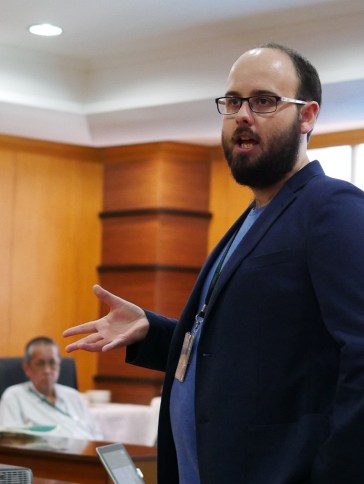
This semester, I have several students coming from Journalism, and I told them, with a semi-serious laugh which they returned, that it was usually the journalists I had the most trouble with in Fiction class. Now why did I say that?

Let me explain, first of all, that I was a journalist myself, and still see myself as a part-time member of the press. Indeed when, in high school, I began firming up my ambition to become a writer, it wasn’t to become a novelist or a short story writer—it was to become a journalist, in the belief that there was nothing nobler and more exciting than to get the news and be the first to tell the world about it. I achieved that ambition—or at least the start of it—when I was hired as a general-assignments reporter by the Philippines Herald and later as a suburban correspondent by Taliba in 1972, as an 18-year-old dropout, but martial law put an abrupt end to that. It wouldn’t be until 20 years later, in 1993, when I was back in a newsroom, though no longer as a reporter but as an editorial writer for TODAY, and in 2001 as a copyeditor for the investigative magazine Newsbreak, about the same time that I began writing this Lifestyle column for the STAR.

That’s not much of a career as lifelong journalists go, but it’s been enough to leave me with a healthy respect for the work that journalists do, especially in comparison to that of the fictionist, which I became as well. Both are difficult, and require their own kind of discipline; neither is particularly remunerative, although journalism, if undertaken as a regular job, will at least provide a steady income, while fiction must remain a strictly part-time avocation for 99% of its practitioners in this country.

When I teach a class in Creative Writing, I always tell my CW majors that they should never feel superior to journalists, because they don’t know what it’s like to have to find, write, and turn in a story every afternoon of every working day. Creative writing students like to bitch that they don’t have enough material, enough inspiration, and enough time to finish their magnum opus (which at the end of all that whining might turn out to be profoundly underwhelming). Journalists can’t even complain about these things, because they simply don’t factor into the making and delivery of a news story. Material? That’s for you to find or create. Time? A few hours. Inspiration? Your paycheck. I’ve commiserated beerside with journalist-friends over the travails they had to suffer to get a particular story—but only after the story was sent in, and not before.

So with all this admiration and respect for journalists and their job, why do I say they give me problems as fictionists? I’m generalizing here, of course, but the answer isn’t too far from from what, ironically, is a journalist’s chief virtue: they can’t let go of the facts. They find it very difficult to switch to a make-believe mode, and even when they do, their stories are thinly-disguised newsfeatures wanting in compelling, internally driven drama. When you point out a problem in the narrative—say an unlikely turn in the plot—the journalist’s defense will invariably be, “Well, that’s what really happened!”

Unfortunately, in fiction, “It really happened” just doesn’t cut it. What’s real in fiction is what’s on the page. Real life might provide the material and the inspiration for the fictional story, but that story has to acquire a life of its own, regardless of its origins in fact. This is why I tell my students that everything they submit to the workshop is fair game for criticism, and that they can’t and shouldn’t take it personally when someone comments that “I think the mother in this story is very narrow-minded and selfish,” even if that mother was based on one’s beloved mom—it’s “the mother on the page,” as I call that character, that we’re following, believing, and either rooting for or disliking.

And the first day of fiction class is also when I trot out one of my favorite quotes, paraphrased from Mark Twain: “Of course fact is stranger than fiction; fiction, after all, has to make sense.” Just think about it: we accept incredible reports in the news that we wouldn’t buy for a minute in a short story, even in a fantasy, because we expect fiction to adhere to an internal dramatic logic, whether it’s set in a garage or in a galaxy far, far away. The factual world has no such givens; things just happen, often for no apparent reason. That’s why fiction had to be invented: to make sense of life in the raw and all of its inconsistencies, paradoxes, and mysteries. (The opinion writer aims to do that as well, but on the plane of the abstract, using words like “justice” and “freedom”, which you normally won’t find in a well-crafted story; they’d be implied.)

If it’s any comfort to the fact-loving journalist, there’s another kind of writer whom I’ve discovered to have equal difficulty transitioning to fiction: the poet, for whom every word and turn of phrase is painfully precious, and a ten-page story might as well be an epic. But that’s fodder for another time.


[Image from thenextweb.com]

Penman No. 186: What the Fax?

Fotolia_1659378_XS.jpg

Penman for Monday, February 1, 2016


A CASUALTY of the recent upgrade in my home-office setup, which I reported on last week, turned out to be something I hadn’t given much thought to in a very long time—my fax machine, or rather the fax part of my multi-function printer. Moving to a new Internet service provider also happened to mean giving up my old telephone line—one which was practically dedicated to faxing—and I realized, while plugging this line in and unplugging that one, that I really didn’t need a fax machine anymore. Who still sends faxes these days, anyway?

I tried to think of the last time I’d received a truly useful fax message, and I honestly couldn’t remember when that happened. A few years ago, my wife Beng would still receive faxed invitations to bid on certain government contracts for her art restoration business, until I told her to tell her senders that they were better off just emailing the invitations to her, which I suppose they did, because the faxes stopped. I even used to get spam faxes advertising car loans and real estate deals, which was the most annoying thing, because unlike junk email, faxes ate up your paper and your ink.

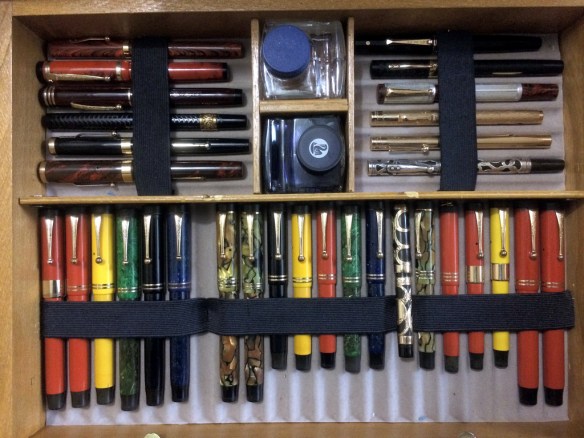
I’ve written requiems in this corner to late, lamented technologies, especially those having to do with writing and communication. In July 2011, I wrote one for the typewriter, noting that an Indian outfit called Godrej and Boyce—the last company in the world still making typewriters—was closing shop. In August 2013 I performed the same sad ritual for the telegraph (which sent its last full stop, again, in India). For a time, the fountain pen seemed fated to be tossed to the dustbin, thanks to the advance of the ballpoint, the rollerball, and of course the computer, but it’s undergone a remarkable resurgence, although more as a fashion accessory than a writing tool. We can write odes to the newsroom telex, the rotary phone, and the pager (I still have my EasyCall beeper, and when I stuck a battery into it the other day, just to see, it still gave off a faint green glow).

But the fax? Does anyone and will anyone truly miss the fax?

Before we try to answer that question, let’s take a long step backward and recall how the fax (short for “facsimile”) was born—in 1843, from a patent applied for by Alexander Bain, a Scottish inventor who’s also credited for the electric clock. The patent was for “improvements in producing and regulating electric currents and improvements in timepieces, and in electric printing, and signal telegraphs,” and one of its results was a contraption, using two pendulums, that transferred an image line-by-line from one to the other. Frederick Bakewell improved on the idea with his “image telegraph” in 1848, and in 1861, the Italian Giovanni Caselli did both men better with his “Pantelegraph,” the first commercial fax service between Paris and Lyon—more than a decade before the first working telephones! (Thank you, Wikipedia, for the factoids.)

The heyday of the fax was back in the 1980s, and that’s where many of us baby boomers will remember it from—particularly the smelly rolls of chemically impregnated paper that you needed to keep feeding the machine (and the Xerox machine in the corner, which wasn’t quite ready to take plain paper yet). Having a fax machine at home meant you were busy and important, and having a phone line dedicated to it meant you were doubly busy and doubly important. For senders, the thing to say was “Fax tone, please!” and if your listener heard you right, you got an ear-ache from the resultant screech.

We were still faxing in the 1990s, by which time I was an editorial writer and Lifestyle columnist for the newspaper TODAY. That meant I had to send my piece in by fax—email and Word attachments hadn’t quite caught on, yet. I remember what a thrill it was to pair my computer—a PowerBook 2400c, the precursor of today’s ultrathin MacBook Air—with my Nokia 6210, through the wonders of infrared. You had to line up the two devices so that their IR ports matched exactly, and in those days before Bluetooth and wi-fi, it was the coolest thing, giving you bragging rights as a “road warrior” in the “Roamin’ Empire,” as the computer and connectivity ads of the period trumpeted.

And then email and PDF happened, and suddenly all you had to do was to scan or even photograph a document—or even more simply, save it as PDF—and then to drag and drop it into your outgoing message. Like photographic film, faxing lost its reason for being in a historical instant, at least for most users.

There are, to be sure, holdouts who insist that reports of the death of fax are grossly exaggerated. There’s a piece online with exactly that title that even points out that instead of dying out, faxing has actually grown in recent times. “In 2010,” says the report, “the computer-based fax market was roughly $350 million per year, according to Business2Community.com. What’s the size of the market in 2013? The market for computer-based faxing is $620 million. Yeah, fax is still around. There are good reasons for the growth in electronic faxing, too. While e-mail has subsumed much of the role faxing used to play, fax technology still offers a number of benefits. These include the need for a paper trail, security, ease of use and business processes that are built around fax and are easier to keep alive than to replace with new processes.”

Take note, however, that the article says “computer-based” or “electronic” faxing, no longer the old method that required a special machine. It goes on to explain that “Just as phone calls have migrated to voice-over-IP (VoIP), fax has migrated to fax-over-IP. This digital version of the fax cuts out the need for paper and fax machines altogether, becoming a form of digital document that acts like e-mail but integrates more fully with older workflows and fax technology.” So FoIP (the “IP” is for “Internet protocol”) seems to be where Bain’s pendulums have gone, and its users argue that there are still things today’s fax technology can do—like provide digital receipts—that regular email can’t (a dubious argument, it seems to me).

As for myself, I’m glad to be rid of that old whine-and-screech. If you have a document for me, email it to me, or upload it to DropBox, and we’ll be saving a small stand of trees and a tub of ink in the process. I’m prone to weeping in remembrance of things past, but losing my fax machine simply leaves me radiant with the glow of digital liberation.

[Image from hlsbs.com]


Penman No. 185: Wired for Fun

IMG_7932.jpg

Penman for Monday, February 1, 2016


SOME INTERESTING changes took place in my home-office environment over the recent Christmas break. First, as a gift to the household, especially my movie-loving mom, I got a multi-user subscription to Netflix. Second, because of Netflix, I signed up with a lifetime Virtual Private Network (VPN) service, which, among other benefits, allows users to watch US-based offerings (like Netflix, which very recently opened a limited Philippine operation, largely dispensing with the need for VPN). Third and perhaps most importantly for the long run, I ramped up our Internet connection, from the old 5 Mbps to a whopping 100 Mbps fiber-optic line that had just become available in our Diliman neighborhood. The setup then prompted me to acquire an Apple TV unit, which streams Netflix shows, among others, from the Internet to your HDTV set, completing the home-movie experience (well, throw in some popcorn and Coke for the full effect).

If you’re not too tech-savvy and if I’ve left you hopelessly confused by that exasperatingly jargon-laden paragraph, let me unpack it for you, as I’d explain it to someone like my mom. (I should add that my mother is unlike most 87-year-olds. She doesn’t have a computer, but she’s otherwise glued to four devices—her TV, her iPhone, her iPad, and her Android tablet. She loves playing vocabulary and bubble-type games, which keep her brain cells humming, on top of the 20-minute walk she takes every afternoon.)

“Home office” refers to the fact that over the past three decades, with the rise of the Internet and indeed its indispensability to modern living, more people have been able to work at home, or to bring much of their work home. I teach at the university, but most of my writing is done at home. My wife Beng also has her art-restoration studio at home. This means that we have to invest in equipment and technology that will allow us to get our work done, and done well, right where we are.

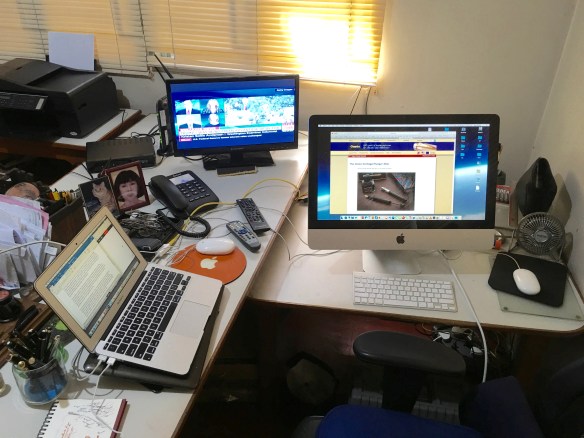
For me, that means several computers—I use a small MacBook Air as my main workhorse, portable but powerful, with a very fast processor and a large hard drive; for a backup, I have an older, larger MacBook Air, a bit slower, but good to have around just in case the main machine falters or is in repair; I also keep an iMac on another desk for when I need to see larger images, or to have fun surfing (or playing online poker) while I work. Yet another screen is almost always open at my desk: a tabletop TV, on which I keep up with the news.

All that hardware would be of little use without a fast and reliable Internet connection, and here I was lucky to be living in an area now covered by PLDTFibr, which ran a promo over the Christmas break offering a 100 Mbps service for six months (it’ll slide back down to 50 after six months, but you can’t sneeze at 50 Mbps either—and no, I’m not getting anything from the company for this plug, not even a coffee mug).

What does “100 Mbps” mean for the consumer? Webpages load in a snap, instead of crawling down the screen as some circular icon keeps spinning; you can download a 1-gigabyte software update in minutes rather than hours or overnight, as I used to be resigned to; and you can upload large files, say to DropBox or YouTube, without having to knit a doily while it loads. Is it expensive? It cost me only P500 more to level up from my old 5 Mbps service from another provider, which I had been a faithful client of for over ten years.

The best beneficiary of a fast Internet connection, however, is streaming, which is the way those who sell movies and music, like the iTunes Store and Netflix send you their material over the air—in one continuous flow, like you were watching a movie at the theater. But that’s more hopeful than achieved for most Pinoy consumers, because, as of a year ago, the Philippines had the third-slowest average Internet speed, at about 2.8 Mbps, in Asia, according to the folks at Akamai, who keep tabs on these things (No. 1 Korea averages 23.6 Mbps).

That means that your screen will very likely freeze just when things get really interesting in the movie, as your provider struggles to bring up the rest, like those guys who ran reels between theaters in the old days. (Lilia Ramos Shahani wrote a great piece on this for the Star, “Why Is Our Internet So Slow?” last August.)

And there’s nothing better to do with streaming than watch movies and TV shows from where they’re stored—the servers of US-based Netflix, for example, which we used to be able to access only through VPN. (Netflix didn’t want people in countries it didn’t serve—like the Philippines, until recently—to see Netflix shows. The Internet being what it is, some smart folks found a workaround, VPN, which tricks the Internet into thinking that you’re in Tampa, Florida instead of Tuguegarao, Cagayan.) There’s been a lot of argument over whether VPN-enabled Netflix is illegal, but it isn’t piracy—you still pay for Netflix, but are simply diverting its stream to your barong-barong. (I pay about $12 or less than P600 a month for a four-user license.)

That argument is now moot, as Netflix has officially added the Philippines to its serviced countries, albeit with a thinner menu; you’d still need to turn on your VPN to get the full US package (Netflix, however, has rethought its toleration of VPN, so that option might not last. I’m not too bothered, as I value VPN more for the PBS documentaries I like to watch on my iPhone in some traffic jam or over long, boring meetings. VPN is also good for your digital security, masking your real IP address from snoopers.)

The piece de resistance in this upgraded setup is the Apple TV, a small black box that uses wi-fi and your TV’s HDMI port to let you enjoy Netflix, YouTube, and other Internet video—even your own library of movies, music, and photos—on your big TV, instead of squinting at them on your phone or laptop. It isn’t cheap—the gadget costs a bit less than P9,000 for the basic fourth-generation model—but there are alternatives. Chromecast, a thumb-sized thingy made by Google and marketed by Globe for about P2,000, will hook you up to Google Play Movies, YouTube, Spotify, and other entertainment fare.

I’ll admit, it’s hard to think of work when you’re this wired for fun, but you can also say that this what makes all that work worth it—digital Disneyland at the click of a remote-control button.


Penman No. 184: Degrees and Diplomas

MI1107TAGAAXX_lg.jpg

Penman for Monday, January 25, 2015


IT WAS with much interest that my eye strayed last week to a story on the BBC website with the headline ‘Penguin scraps degree requirement.” The article went on to report that publishing giant Penguin Random House—presumably one of the world’s most literate employers—was no longer requiring applicants for any job in the company to show college diplomas.

“The firm wants to have a more varied intake of staff and suggests there is no clear link between holding a degree and performance in a job. This announcement follows a series of financial companies dropping academic requirements for applicants. Neil Morrison, human resources director, says they want talented staff ‘regardless of background’,” the article noted. The report went on to say that leading accounting firms such as Deloitte and Ernst & Young had also relaxed their educational requirements, with Deloitte changing its selection process so recruiters would not know what schools its applicants had attended.

It’s a novel idea that sounds fair and makes sense, but I’m sure it will take some time before Philippine businesses catch on, as obsessed as we Pinoys are with college diplomas, especially those that come from certain schools. Just scan the Sunday classifieds in any local newspaper—for jobs of any real economic and social worth, your typical non-equal-opportunity employer will demand a piece of parchment from a “Class A” university, which will count more than any previous experience you may have acquired.

Arguably, that wasn’t always the case. We baby boomers belong to a generation—probably the last one—for whom gutsiness and scrappiness was still the best way forward, rather than degrees and diplomas. Just ask any taipan how many of them have Wharton MBAs. One of them whom I happen to know, because I’ve written his family’s history—Filinvest founder Andrew Gotianun Sr.—didn’t go beyond two years of college at San Beda, and had to drop out because of his father’s unexpected demise. His wife Mercedes, Filinvest’s other dynamo (Andrew was the visionary, Mercedes the executor), graduated from UP with a BS in Pharmacy, magna cum laude—but what led to her success as a banker wasn’t college but streetsmarts. “I made friends with the owners of banks abroad and convinced them to lend me their operations manuals,” Mercedes told me, “which we then adapted to local conditions. That’s how Family Savings Bank began.”

Indeed it used to be that you could get places without a college degree, as long as you had talent and guts (you needed both—just one wouldn’t have done it). Among writers, in particular, a degree was a bonus, maybe even a demerit, in those pre-MFA (Master of Fine Arts, the writing degree of choice) days. The old conviction was that, to know how to write, you had to know how to read, and the serious would-be writer read a lot outside of school without having to be told. The real test of the writer was, well, in the writing—in the quality and the consistency of one’s craft, rather than in the number of English units one could present.

There was no finer example of this than the late National Artist NVM Gonzalez, who never finished college (he did go to National University), but who went on to a distinguished writing and academic career here and in the US. The late journalist I. P. Soliongco was another such titan in his field. My friends Pete Lacaba and Krip Yuson, both dropouts by choice, deserve honorary PhDs for all their work as far as I’m concerned—not that they would care—but more valuable is the fact that they’ve been asked to teach and to share their expertise with younger Filipinos.

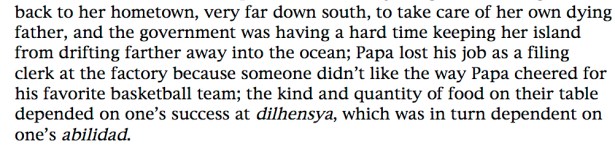
My own dad Jose Sr. also dropped out of college—he was the smartest kid of his time in our province of Romblon and could have gone on to become a de campanilla lawyer, but was too poor and also perhaps too confident in his abilidad to go the full distance, and soon fathered me and my four siblings. Seeing him write as well as he did—he was a keen reader of novels and magazines—I grew up believing that I didn’t need a college degree, either, to get where I wanted, so I dropped out of UP in my freshman year to get a job as a newspaper reporter. My younger brother Jess, also a talented writer, obviously had the same impression and did exactly the same thing, dropping out of UP before landing jobs with San Miguel’s PR department and later becoming editor-in-chief of the Mindanao Cross. I went on to work with the National Economic and Development Authority for ten years, even earning a graduate UP diploma in Development Economics as a special student and working on special detail with the United Nations Development Programme, doing project studies. I began writing plays, stories, and screenplays and winning Palancas, and felt that I could have gone on for life with little more than my 21 undergraduate units in English and 30 grad units in Economics.

But one day in 1981—after attending the Silliman Writers Workshop and falling under the spell of Robert Graves—I decided to go back to school as a returning sophomore, at the age of 27. I found school exhilarating, and later quit my job to study full-time, with my wife Beng taking up the slack. To be honest, it wasn’t the fiction that roped me in, but the poetry of Sidney, Wyatt, Shakespeare, Dylan Thomas, Philip Larkin, and James Dickey, among others. Having tasted such ambrosia, I craved more, and so I went on to Michigan for an MFA and to Wisconsin for a PhD, both on fellowships, making up for lost time (BA at age 30, MFA at 34, PhD at 37). I told myself that there was nothing more that I wanted to do for the rest of my life but write, teach, and spend time with family. There was, I must say, a great material and emotional cost to these degrees, which had I known it then I might not have been willing to pay. But with the deed done, I can’t regret the fact that these degrees have allowed me to move up the job ladder and gain the respect of people who haven’t the faintest idea what I do.

I finished college not so I could get a good job, which I already had, or so I could append little letters to my name, which I hardly use outside of work. (No self-respecting writer, as far as I know, has ever flaunted his or her PhD; you’d simply be laughed out of the place.) I did it for love—for the love of knowledge, especially the kind of knowledge for which there exists no practical utility and which is therefore the purest and sweetest, and for the love of my parents, who deserved some payback for all their hard work and sacrifice.

Make no mistake: I do agree with Penguin in broadening their search for good people to those without diplomas from Harvard or Oxbridge to show. You could miss out on a Steve Jobs, a Bill Gates, or a Mark Zuckerberg that way. But you could also always drop out of college, do your thing, and go back when you have the time to finish up—like Steven Spielberg, Oprah Winfrey, and Shaquille O’Neal did. Make that “Dr. O’Neal”—Shaq even went on to pick up a doctorate in Education in 2012.

And what about my brother Jess? He went back to school, too, earning a BA in Journalism at age 49, and a Bachelor of Laws at age 55. A published author, he now practices and teaches law, completing our father’s dream. Sometimes, those degrees and diplomas do count—for all the right reasons.


Penman No. 183: Why I Choose to Italicize

Abilidad.jpg

Penman for Monday, January 18, 2016


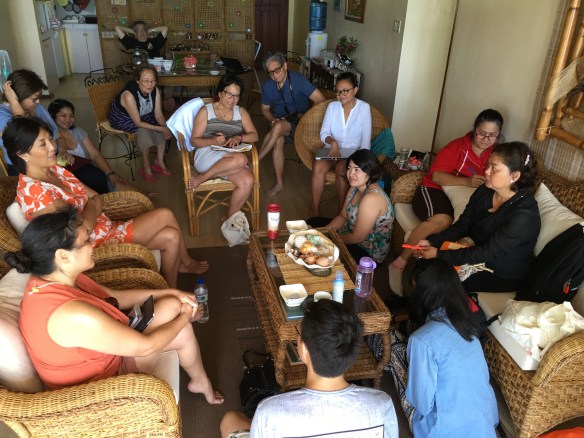
ONE OF the more interesting sidelights in our discussions at the NVM Gonzalez Centennial Workshop in Mindoro a couple of weeks ago had to do with the seemingly small issue of whether or not to italicize Filipino and other non-English words in an English text.

The conventional practice, of course, has been to italicize words like utang na loob, bagoong, kaibigan, and so on. That’s explicitly embodied in editorial stylebooks employed by such publications as The Economist, which hews to the policy that “FOREIGN WORDS AND PHRASES, such as cabinet (French type), dalits, de rigueur, jihad, glasnost, Hindutva, in camera, intifada, loya jirga, Mitbestimmung, pace, papabile, perestroika, sarariman, Schadenfreude, ujamaa, should be set in italics unless they are so familiar that they have become anglicised and so should be in roman. For example: ad hocapartheid
 a priori
 a propos
 avant-garde, etc.”

Not everyone, however, feels bound by this rule. Increasingly, over the past couple of decades, writers of color in both the US and the Commonwealth (and, yes, the Philippines) have chosen to resist and reject italicization, believing that doing so represents a form of acquiescence to the dominance of English, and of exoticizing one’s own language, making it appear quainter and therefore more artificially attractive than it should. It’s a political rather than a mere technical decision, a declaration of independence, as it were, from the strictures of style laid down by the old regime.

One of the most quoted sources for this position is the New York-based novelist Daniel Jose Older, who demonstrates in a YouTube video why italicizing Spanish words and phrases in an English text would sound silly in the real, spoken world.

This was brought up again at the recent NVM Gonzalez workshop, where half of the participants were Filipino-Americans who came over from the US. The workshop leader—the very capable fictionist Dr. Evelina Galang, who directs the creative writing program at the University of Miami—discussed the use of Filipino words in a mainly English text, and why glossaries (and, not incidentally, italics) are better dispensed with, leaving the writer with the responsibility of establishing or at least hinting at their meaning in context.

(Evelina has an essay devoted to this concern, and let me quote an eloquent passage from that piece: “As a girl who grew up hanging upside down on easy chairs with a book in her hand, I often read words—English and other words—that I did not understand. I rarely stopped to define them. Sometimes I wrote them down and looked them up later. (I was a geek, after all.) But more often than not, having stepped into a fiction John Gardner called ‘that vivid and continuous dream,’ and driven to know what happened next, I kept reading. Like Angel, I let the words wash right over me, I watched them working next to other words. I listened to them. I tasted them and felt the weight of them in my mouth. I imagined them surrounded by nothing at all. I followed them as they floated down the page, bumping into semicolons, swimming through parentheses, slapping up against em-dashes, evading italics, and falling right off the page. I read the words in context and, right or wrong, I gave the words their meaning.”

I agree perfectly with Evelina as far as contextualization goes. I’ve always taken it as a technical challenge to show what Filipino words like bucayo and manananggal mean without defining them in that direct but clumsy way that glossaries or footnotes provide. Importantly, Evelina went on to emphasize that these choices are, ultimately, for each author to make for his or her own good reasons, and that those choices deserve to be respected by other writers and readers.

As it happens, I’m one of the holdouts in the matter of italicization, and I premise my position on both technical and political grounds. First, in terms of readability, italics may seem intrusive—and if there’s too many of them in the text, that will certainly be true—but my pet theory is that it’s actually easier on the reader’s eye and mind to spot a non-English word coming up in the text and to prepare for it, rather than be surprised by something “foreign”, even if it’s one of our own. (Just imagine the confusion that words like “ate” (older sister), “pain” (bait), and “noon” (then) would make.) Personally, I don’t want my readers—especially in my fiction—stopping to wonder what specific words mean, which is why the older I get, the simpler my vocabulary becomes; I want the reader to grasp whole sentences, paragraphs, and scenes, and not to trip on individual words.

Politically, when I italicize Filipino words in an English text, I also mean to say that these words are special to me and to my culture, and I don’t want them to be diluted by a dominant foreign language, which is English. As far as I’m concerned, the whole book in English is already a translation of Filipino experience; most of the dialogue there was never spoken in English, in the first place.

I suppose it’s different when you’re writing in English as a minority in America, and you feel bound (as I would, in that situation) to claim and establish a parity between your mother tongue and English. And let’s face it—for many hyphenated minorities, especially second- and third-generation writers, English has become their mother tongue. When they write fiction about themselves, their characters will speak in English, and the odd Filipino word will be just that.

Indeed the issue goes beyond italicization; the question of when and how to use Filipino or other non-English words in an English text should be seriously pondered by every Filipino or Filipino-American (and Filipino-Canadian, etc.) writing in English, mindful that there are words and concepts in Filipino without exact translations in English, which might be better used as is. (And as Salman Rushdie once put it, “To unlock a language, look at its untranslatable words.”) However, one also needs to resist the urge to exoticize one’s writing by peppering it needlessly with native words and expressions just to add more “local color,” especially when ready translations are available.

I’ll go at greater length into matters of translation in another column-piece, but I’ll rest my case on this issue of italics for now, hoping that it adds a bit more asim to the global sinigang of language.

Penman No. 182: In NVM’s Footsteps

IMG_7884.jpg

Penman for Monday, January 11, 2016


I’M WRITING this in Calapan, Oriental Mindoro, where I’ve come with a group of writers, most of them visiting Filipino-Americans, for the second and closing leg of the NVM Gonzalez Workshop, organized and led by NVM’s son Dr. Michael Gonzalez. Last year, 2015, marked the centenary of the late National Artist’s birth, and Myke thought that it would be fitting to hold the workshop, now on its sixth iteration, in the place most closely associated with his father, Mindoro.

NVM was actually born in my home province, Romblon (“about 60 kilometers and 40 years away,” I like to say), but he grew up in Mindoro, and wrote most of his works about its hardy people and their way of life, even when he moved to the United States. NVM died in 1999, but his memory remains fresh among his friends, colleagues, and former students on both sides of the Pacific. It was to honor that memory that Myke put this group together for both a workshop and a literary pilgrimage to the Philippines.

This year’s US-based contingent includes Mary Grace Bertulfo, who has written for television and children’s education and who runs a children’s creative writing workshop, Taleblazers, in Chicago; Anna Alves, a PhD student with the American Studies Program at Rutgers University in New Jersey; Chris “Kawika” Guillermo, a mixed-race Asian-American with Chinese, Filipino and Irish roots who has a PhD in English from the University of Washington, specializing in Asian and Asian-American fiction; Lisa Suguitan Melnick, a third-generation Filipina-American, an adjunct professor at the College of San Mateo and a contributing writer for PositivelyFilipino.com; Penelope Flores, a retired mathematician and educator from San Francisco State University; Myke Gonzalez, of course, who teaches Philippine Studies and Behavioral Science at the City College of San Francisco; and Evelina Galang, the workshop director, an accomplished fictionist who directs the Creative Writing program at the University of Miami.

Their local counterparts were Kat Cruz, a UP Business Administration graduate and company executive with a keen interest in writing; Meeko Camba, a young opera singer now studying Journalism in UP; Sarah Matias, a Creative Writing major who now runs Ant Savvy Creatives, a marketing and events company; Marily Orosa, a prizewinner publisher of coffee table books; Timmy Tuason, an expert in instructional design, materials development and project management; Jojo Hosaka, a surgeon and dog-show judge (and, like Timmy, a fellow fountain-pen enthusiast); Claire Agbayani, a graduate writing student at DLSU and PR practitioner; Judith Castillo, a teacher of English in Calapan; and Raul Manicad, an engineer, businessman, and guitarmaker. Myke and Evelyn were backstopped on the teaching staff by veteran fictionist Charlson Ong and myself.

We held the first part of the workshop from January 4 to 5 at the University of the Philippines in Diliman, where NVM had taught for many years in the 1950s, in the Gonzalo Gonzalez Reading Room of the College of Arts and Letters Library, which my office—the UP Institute of Creative Writing—administers as a repository of contemporary Philippine and Southeast Asian literature. From January 6 to 9, we moved to Calapan, where NVM used to go from their home in Mansalay to type out his manuscripts at the municipio, on paper that, Myke recalls, NVM apparently “borrowed” from the municipal government, whose stamp it bore.

The mixed composition of the group and the diversity of the participants’ backgrounds led to some very interesting discussions dealing with identity, race, language, and representation. While this was a writers’ workshop focused as much on technique as one’s philosophy of writing, inevitably the politics of writing took the foreground, given the Fil-Ams’ engagement with the issues that come with writing as a minority in America.

We talked about how the writer’s political positions define or feed into craft and technique, and how they shape the story itself. Understandably, given the environment they operate in, our US-based friends were keen on discussing the representation of race, of the Other, and the depiction of character in a racially or ethnically charged environment. We agreed that it was important to be accurate and to be fair in creating characters who will inevitably be seen to represent their race, whatever they may be; on the other hand, I interjected, it was just as important to remember that the character had first to succeed as an individual in the story, and that the character could even—and more interestingly—go against type; while we share many beliefs and practices as Filipinos, not all Filipinos think alike, and thankfully so.

The discussions also became a mutual revelation of what it was like to write as a Filipino and as a Filipino-American, and how we could be so similar yet also different in many ways. It wasn’t just the vocabulary, but the sensibility that came into play. In the end, we took the cue from NVM himself, who once famously explained his use of language thus: “I write in Filipino, using English.”

I learned a new word from Myke, who has a background in the social sciences—schismogenesis, promoted by the anthropologist Gregory Bateson in the 1930s, which roughly translates into how groups proliferate by breaking up. The context was the oft-made observation of how Fil-Ams and their organizations tend to fall apart because of personal and political differences (by one account I read, there are more than 3,500 Fil-Am organizations in Southern California alone)—a tendency we uniformly deplore. But Myke’s new word suggests a positive aspect, a way by which a race and its culture propagates itself.

We’d like to thank our hosts—the Madrigal-Gonzalez clan, for the use of the reading room in UP; Myke’s sister Selma, who spread out a very generous merienda for us; the Mother Butler Guild of Calapan, who conducted a charming putongan ceremony for the visitors; Florante Villarica, who has written a history of Oriental Mindoro and who had us over for dinner at his home; Anya Postma and the Mangyan Heritage Center, who made a wonderful presentation on Mangyan life and culture; and Chicago-based Almi Gilles, who lent us her their family’s beach house in Puerto Galera for our penultimate day in Mindoro.

And thanks, of course, to Myke and the Gonzalez family, for keeping their father’s flame alive.

Penman No. 181: A Designer on an Island

IMG_7775.jpg

Penman for Monday, January 4, 2016


ONE OF the side benefits of our recent visit to Bohol was an opportunity to reconnect with an old friend and professional colleague, the prizewinning book designer Felix Mago Miguel, who has chosen to live and work in Bohol for the past ten years with his wife Amel and their five children.

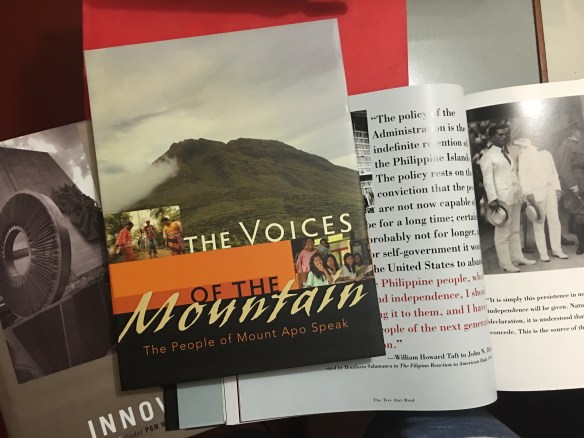
Beng and I had known Felix for a long time, since she saw and bought some of his paintings and gifted the then-newlyweds with her own painting and some plates by the potter Lanelle Abueva-Fernando. (“The plates are all gone now, because we used them and would break one every year,” said Amel apologetically, “but the painting’s still there!”) Felix and I had worked together, as writer and designer, on some coffee table book projects, notably those on Philippine-American relations, the Mt. Apo geothermal project, and the Government Service Insurance System. After my early collaborations with the late, lamented Nik Ricio, it was a relief and a pleasure to find the young and talented Felix, who has rightfully taken over Nik’s mantle as one of the country’s most sought-after book designers.

We invited the couple over to lunch at our hotel and we had a nice long chat about life, work, and what it’s like to keep on top of your profession from an island far from the country’s business and cultural center.

“Honestly, it hasn’t been all that difficult,” said the former Manileño. “In fact, I didn’t tell my clients for a whole year that I was working from Bohol because they might worry about my accessibility and meeting deadlines and so on. But with the help of the Internet and by scheduling my trips to Manila, I’ve been able to cope with the demands of the job. I use WeTransfer and Google Drive to move large files online, on my SmartBro account.”

Amelia Zubiri was born in Bohol, but also grew up and went to school in Manila, where she and Felix met in UP Diliman, where Felix was a Fine Arts major, graduating in 1992. They decided to move to Bohol to get away from Manila’s toxic atmosphere and to raise their children, now aged 16 to 7, in a healthier and more relaxed environment; all the children—the twins Ulan Kalipay and Ulap Namnama, Angin Kalinaw, Araw Naasi, and Langit Biyaya (the only one born on the island)—have been home-schooled. Deeply spiritual, the Miguels have learned to repose their trust in Providence, and their faith has been well placed.

When a huge earthquake devastated Bohol on October 15, 2013—just two weeks before supertyphoon Yolanda ravaged the Visayas—the Miguels and their one-storey home emerged shaken but unscathed, and they shared their good fortune by helping out with relief efforts. “The earthquake was a life-changer for many Boholanos,” Amel reflected. “It encouraged many Boholanos who had left for jobs overseas to come home and spend more time with their families. Seeing the new houses they had painstakingly built crushed in seconds seemed to remind them that nothing was more important than time together.”

Most of these OFWs work as seafarers, an occupation historically favored by Visayans. “It’s not uncommon for a Boholano family to have one or two seamen working on ocean-going vessels,” said Amel. “You can tell the houses that they build with their remittances by little design elements like anchors and portholes,” added Felix, smiling.

Felix Mago Miguel’s own journey to the crest of the book design business is a story of good breaks, sheer talent, and perseverance. Now 44, he started out in 1996 by designing Soledad Lacson-Locsin’s landmark translations of the Noli and Fili for Bookmark. “I’d done book covers before, but this was the first time that the publisher, Lori Tan, let me do everything from cover to cover,” said Felix. Later that same year, another book project, Water in the Ring of Fire: Folktales from the Asia-Pacific, edited by Carla M. Pacis, won for Felix his first design award from the National Book Awards. Since then, he has designed over a hundred books, some of them winning him recognition from the National Book Awards and the Gintong Aklat competition.

It isn’t the awards, however, that drives him to excel in his craft, but the satisfaction that he gets out of seeing a happy client. The project that has given him the most pleasure has been XYZ: The Creativity of Jaime Zobel, which drew on Zobel’s three decades of work in photography and art. “Don Jaime was so ecstatic about the book that he told me he needed to take a Valium to calm down,” recalled Felix. It’s that kind of reception that drives Felix to spend long nights staring at a computer screen, poring over one image after another.

The most technically challenging was Cuaresma, put together by Cora Alvina and edited by Gilda Cordero-Fernando and Fernando Zialcita, and winner of the National Book Award in 2000. “This was before digital photography, and I had to work with a huge box of color slides,” said Felix. But then again, “The technical aspects of book design are often easier to deal with than some people behind the books,” Felix confessed.

Like me, he’s had his share of good book projects that, for some reason or another, went nowhere. He did get paid for work done, as I was, but it’s such a waste of labor and good material when a project that seemed so promising never sees the light of day, because someone in the production process fails to deliver, or because the clients themselves lose interest or change their minds. Thankfully for Felix and me—as I wrote in this column a few weeks ago—coffee table books remain in high demand, and I expect to be working with him again on one or two forthcoming projects soon. One current project he’s excited about is a book on native Philippine trees that he’s doing for the Lopezes.

While he’s based in Tagbilaran, Felix flies out to Manila to personally check on his projects in the press. This used to be done abroad for high-quality printing jobs, but local printers have expanded and improved significantly enough to take on the challenge. “Our best local printers like House Printers can now compete head to head with their counterparts in Hong Kong and Singapore,” Felix said. (House Printers produced one of my most recent books, the biography of former Sen. Ed Angara.)

He misses painting, and spoke wistfully about the last big painting he did, a mural for the Church of Gesu on the Ateneo campus in Quezon City. But the children, the Miguels said, seem to be taking intuitively to art; Felix and Amel have monitored their time online to make sure that they can attend to more active and creative pursuits, and it may not be long before this couple’s decision to forsake Manila for a southern island bears fruit beyond more beautiful books.

IMG_7785.jpg


Penman No. 180: Escapade in Bohol

IMG_7630.jpeg

Penman for Monday, December 28, 2015


YEARS AGO I made a promise to take my wife Beng to all the beautiful places in the world I’ve been, so we’ve been traveling up a storm, flying off to whatever destination our aging knees and limited budget can still afford. The pre- and post-Christmas break is a great time for escapades like this, and we’ve run off to Shanghai and Beijing in Decembers past, availing ourselves of budget fares we’d booked months ahead for the privilege of slurping hot noodles in the freezing cold.

This year—encouraged by another irresistible combo deal on airfare and a good hotel—we chose to go down to Bohol. I’d been there a couple of times before on business and Beng and I actually found ourselves stranded there once, overnight, because our Dumaguete-bound ferry couldn’t make it through a frightful storm, so this time we decided to do a proper tour of the place, mixed in with a bit of work we both had to catch up on.

IMG_7627.jpg

We were lodged at the mid-range Panglao Regents Park Resort, about a 30-minute ride from the airport and a short walk to Alona Beach, a focal point not just for swimming and food but also for the innumerable dive shops that cater to showcasing Panglao’s top attraction, its underwater life. Being sedate and sedentary seniors, Beng and I contented ourselves with sipping cool mango shakes and watching the scenery, but there’s never a dearth of interesting things to look at in Bohol, whether beneath the sea or aboveground.

IMG_7618.jpg

We signed up for two tours: the “Chocolate Hills” tour, which takes you on a daylong ride around the island for an eyeful of its most scenic spots, and the “island-hopping” tour, which promises an early-morning rendezvous with dolphins, snorkeling and lunch at Balicasag Island, then a short detour to Virgin Island. Seasoned travelers may disdain these one-size-fits-all tours, but Beng and I never do, knowing that they’re pretty efficient and often good value for money for first-time tourists, and that ultimately it all depends on knowing what to look for, and knowing how to appreciate what you’re looking at.

It was a rainy day when we headed out for the Chocolate Hills, so the tarsiers were huddled under the branches and the hills themselves were shrouded in mist, but I took the rain in stride, seeing how it lent a certain freshness and vividness to things, and I could sense the earth exhaling after a long dry spell. The tour guide at the butterfly farm led us along with deft humor, making even dead insects come alive, and we gamely crossed the Hanging Bridge, to and fro, like schoolkids on a dare.

IMG_7658.jpg

I had visited the old Loboc Church before an earthquake devastated it a few years ago, so I was sad to see it covered in scaffolding, awaiting restoration. What I didn’t expect to be more deeply moved by—not being a regular churchgoer (I pray every night, but have quarrels with dogma)—was stepping into the Baclayon Church, which I had missed on my first visit. Its altar—a main retablo framed by two smaller ones—stood intact and as majestic as ever, and washed in orange, green, and blue light seemed ethereal. But behind a red cloth curtain and the yellow “Caution” warnings gaped what used to be the nave, a cavity that in the 1800s must have throbbed with pious energy, as well as with the flutter of fans and the murmur of courtships, disapprovals, and ungodly gossip.

IMG_7667.jpeg

IMG_7674.jpg

We set out for our island cruise at 6 am the following morning, and much to Beng’s relief the sky was clear and the water was silvery smooth. We shared our large banca with two women from Canada and another from Germany, our banter laced with the anticipation of meeting our goal for the morning: finding dolphins in the open water. I knew from previous reading that several species of dolphin and whale could be found in the Bohol Sea, but I would have been happy to spot any one of them. Dolphins feed in the morning, until about eight, so it was important that we head out quickly enough, also given that about half a dozen other boats were in the same area for the same reason.

IMG_7692.jpg

Our boatman, whom we’ll call Dencio, was an experienced spotter (more on his story later), and soon enough, about 30 minutes out of port, he pointed to our right, where two gray and shiny heads bobbed in and out of the water—our first of several sightings. Dolphin and whale watching is the sort of thing a CIA analyst would be good at—discerning, from the seemingly immutable pattern of cresting waves and foamy wavelets, the odd leap of a creature into the air. The Risso’s dolphins we saw (the Flipper of TV fame was a bottlenose) broke out out in pairs and trios, but for every one of them that surfaced, we were told, there were many more underwater. Dencio pushed out his boat much farther than the others did, and for a long while it felt like we were simply drifting toward Siquijor, but just as I was about to give up, I noticed a commotion in the distance—a pod of maybe a dozen spinner dolphins frolicking in the air. The whole boat came alive with glee and Dencio tried to give chase, but we were going against the waves, which had become too choppy, and the shiny caravan of fins and flippers vanished into the horizon.

IMG_7721.jpg

Balicasag Island is where the divers go, and was our midday stop. While our companions snorkeled in the fish sanctuary and watched giant turtles feeding on the sea grass, Beng and I ordered lunch (fresh fish, of course, broiled and kinilaw) and listened to Dencio’s story: “We used to hunt whale sharks,” he said, “and would kill two of them a day, baiting them and catching them with large hooks.” (This hook called the pamilac lent its name to Pamilacan Island nearby.) “We sold them very cheaply, not knowing that in Japan, a whale shark could sell for about half a million pesos. We could have been millionaires! We did this until a TV crew filmed what we were doing, and then a ban was imposed, so now we don’t catch whales anymore. Today you can find very large ones swimming under your boat. They’re very smart, and can sense danger. Sometimes they look straight at you with their eyes.”

On the ride back to Panglao, we stopped by Virgin Island (renamed Isola di Francesco by its private owner, who has turned the island into a religious shrine)—little more than a long curling strip of white sand with a clump of trees on one end, but serene and restful, a fine ending to a colorful day. Or rather, make that ending a Thai massage, a grilled seafood dinner, and a cold beer.

IMG_7733.jpg

“They’ll burn in the sun,” Beng had remarked of our European companions, who took every opportunity to swim and to laze in the tropic heat. “That’s because they’ll be flying home in a few days to an icy winter,” I said, “while we just have Manila’s traffic and pollution to deal with.” Sounds like a good reason for another escapade.

Penman No. 179: Pedestrian Pleasures

IMG_7589.jpg

Penman for Monday, December 21, 2015


THERE’S NOTHING better we’d like to do on a weekend—unless we’re running off to some southern island or parts beyond—than to have a foot massage from our suki Tonton branch on West Avenue before taking in a movie and a Chinese or ramen dinner at Trinoma. In fact, we don’t even wait for the weekend to indulge ourselves in these pedestrian pleasures, but do this routine on a Tuesday and then again on a Thursday, whenever the spirit moves us.

Every other month or so, we do something special—we go down to Sta. Cruz (my students no longer have any idea where these districts and streets around Quiapo are), have a fried-chicken lunch at Ramon Lee’s, then check out our favorite ukay-ukay and Japanese-surplus shops on Avenida Rizal, happily carting home several bagfuls of glorious junk, with as much pleasure as we would’ve gotten from the flea markets of New York or Paris.

Beng and I cheerfully acknowledge that this must be one of the signs of aging—settling into a fairly small and thoroughly familiar comfort zone, and stepping out of it just often enough to keep things lively and to refresh the horizon. Or maybe I’m mainly speaking for myself, because Beng’s always been far more adventurous than me, especially culinarily speaking, and now and then exhales a wistful longing for some Indian food (which flusters me, because I can’t stand curry, recognizing only salt, pepper, garlic, onion, and soy sauce in the kingdom of spices and flavors).

The simple explanation is, ours is a generation used to walking a lot. And it wasn’t as if we had a choice. We grew up without cars—the richer kids had them, but not us—and even getting to the jeepney or bus stop meant walking. I remember, as a boy of nine or ten, walking from our rented place on Halcon Street along Boni Avenue in Mandaluyong to what was then Highway 54 (EDSA to you younger ones), crossing the highway, and then taking the bus to Gilmore Avenue, crossing the highway again, and walking several blocks to La Salle Green Hills (“Greenhills” was spelled as two words then)—lugging my heavy bag of books and notebooks, whose cheap unpadded leather cut into my hands. In the afternoon, I would do the same thing all over again, in reverse, unless a chauffeured classmate took pity on me and gave me a ride.

But as torturous as that routine was, it was nothing compared to the literally kilometric walks that our elders took. One of my favorite walking stories is that of the late NVM Gonzalez, who walked many kilometers from their barrio in Mindoro to the poblacion, where he could type his manuscripts in the municipio, making the long trek back in the afternoon (and when his contributions returned months later, rejected by some editor, his father would kid him and say, “Your stories are like homing pigeons!”). That’s a story I like to tell my writing students, who—with the fanciest computers and the Internet at their fingertips—will still sometimes complain about not having “enough material” or “enough time” to produce their first drafts.

Another story I recall having read somewhere involves Bienvenido Santos and Diosdado Macagapagal, who—as students of the University of the Philippines back when it was just on Padre Faura Street in Manila—walked to school together from their lodgings in Tondo. And until his death some years ago, my uncle Juan, who must have been in his nineties, thought nothing of walking the seven kilometers of mountain road between his home in Guinbirayan to the poblacion of Sta. Fe in Romblon, just to deposit the cash in his pocket to his savings account.

I myself took to walking for my health a few years ago when I was diagnosed with diabetes, and had to undergo a radical lifestyle change. Three or four laps around the UP Oval every day, Broadway blaring in my ears, quickly took care of the problem; I lost 45 pounds in five months (some of which I’ve regained since then, but my blood stats still look good).

But walking, of course, is never just a chore and never just exercise to the willful and the observant. I’ve used my long walks around campus as thinking time, composing paragraphs in my head, mulling over turns of phrase and gentler ways of expressing unpleasant truths (the sad corollaries of holding an administrative post). I enjoy the scenery—both natural and human—and store striking details, scenes, and vignettes in my head that I can use for my stories. Once, walking towards the Carbon market in Cebu, I found myself on a street full of sellers of cut flowers, in the midst of which emerged a dark, wiry man, bare from the waist up, heaving over his head a huge basket full of red roses—a veritable Charles Atlas, bearing the weight of all that beauty. That haunting image became the germ of a story I would title “Delivery,” the tale of a lie and its terrible if unintended consequences.

And many of my sharpest memories of my foreign sorties are from long walks taken on fabled boulevards and strange alleyways, very often leading to unexpected discoveries off the tourist guidebooks: a pen shop in Edinburgh, a Filipina hotel worker taking a quick puff from a balcony in Como, a pair of fierce guard dogs prowling the perimeter of a mansion in Johannesburg, beneath a copious spray of jacaranda blossoms.

So it was in this quest of adventure that Beng and I took her sister Jana and our niece Eia on a walking tour of downtown Manila a couple of weeks ago (a zone my friend Krip Yuson affectionately calls “the armpit of the city”), to reacquaint them—newly returned from many years in New York—with home, in all of its bewildering, exasperating, ammoniac intensity. We took them to our Japanese-surplus suki on Avenida and then to lunch at Ramon Lee, before essaying Escolta and the Art-Deco innards of the First United Building; we lamented the loss by fire of the old Savory Restaurant, but pressed on to Chinatown for bagfuls of hopia and ma chang (sampling the goodies both at Polland and Eng Bee Tin) before turning into Ongpin and re-emerging into Sta. Cruz and its amalgam of gold and grime.

It was a day well spent, much of it on foot, and while our soles may have complained, our spirits tingled with reawakened excitement.

IMG_7583.jpg

IMG_7591.jpg

IMG_7596.jpg

Penman No. 178: So You Want to Do a Coffee Table Book

IMG_7603.jpg

Penman for Monday, December 14, 2015


PEOPLE OFTEN ask me what it takes to produce a coffee table book. As a writer and editor, I’ve been involved with quite a few of them over the past twenty years. Just a couple of weeks ago, I was happy to attend the launch of one I co-wrote with Exie Abola and Felice Sta. Maria, Lighting the Second Century, produced for Meralco by the prizewinning Studio 5 group of publisher Marily Orosa.

While I suspect I know the answer, the first thing I tell anyone who asks me is, “What do you want a coffee table book for?”

Coffee table books are not cheap, running into the millions to produce—and, with few exceptions, they don’t make money for their publishers. So why even bother? Why does every year bring a plethora of new CTBs off the presses?

Many of those books don’t even come to market—they’re never meant to be sold or to make their investment back, and therein lies the reason for their existence: not to make money so much as to make an impression, not even to the general public but among a select group of readers, fellow connoisseurs, enthusiasts, and avatars of a certain thing or idea, to whom they can be given away as promotional material.

Because they’re generally not for-profit projects and because they require a sizable investment, CTBs are almost always conceived and funded by large institutions—corporations, foundations, universities, and the government—whose leaders have found some special reason to commission a CTB.

That reason is usually to commemorate and to celebrate an important milestone—the founding of an institution, the centenary of a founder, the completion of a major undertaking. CTBs can also be used to introduce or promote a new initiative—say, a province’s tourism program. Some CTBs may seem downright frivolous and extravagant, but many do serve a higher purpose beyond public relations, as visual records of our social and economic history,

But why a book, and why a coffee table book? Even and especially in this digital age—abounding with possibilities online and with new media—print still suggests permanence and prestige. The Web reaches far more people and is practically free, but many see it as an ephemeral medium, lacking the solidity and credibility of a book in the hand. For people and institutions seeking to perpetuate some shining moments and memories, the appeal and cachet of a CTB can be hard to resist.

CTBs are relatively new on the local publishing scene, and it wasn’t until the late 1970s when Gilda Cordero Fernando came out with such landmark tomes as Turn of the Century and A Question of Heroes that this new category of “desirable object” emerged. My own first exposure to CTBs was an epic challenge, when I edited the 10-volume Kasaysayan: The Story of the Filipino People for Readers’ Digest Asia in 1998, working with and learning from such legends as our editorial consultant, the late writer Doreen Fernandez, the late designer Nik Ricio, and our indefatigable project director, Tere Custodio.

Institutions usually go to PR or ad agencies for CTB projects, which are too complicated for in-house PR units to do all by themselves. They can also be put together and undertaken by people like me, Tere, or Marily who’ve had some experience in the work involved, but even I have to assemble a crew of first-rate professionals who can deliver good work on schedule.

CTBs are, first of all, conceptualized by the client in consultation with the writer or the PR specialists. While top management can and should give the marching orders early on—purpose, theme, scope, audience, treatment, budget—it’s best if a mid-level person with some understanding of media were designated to represent the client in dealings with the creatives, with full authority to streamline decisions and processes. (My worst nightmare would be to deal with a whole board of directors, each one of whom will be dipping into the editorial pie and making a general mess of things.)

Aside from the client, the CTB team will typically comprise the project director or manager; the head writer and his or her assistants; the executive editor; the book designer or art director; the photographer; and a production or editorial assistant in charge of logistics—handling money, setting up appointments, liaising with the client, following up the paperwork.

Many future problems can be solved right at the conceptualization stage. If the book’s purpose, scope, and audience are clear from the start, expensive adjustments can be avoided later on. Schedules, budgets, and deliverables have to be established and stipulated in a contract, leaving a little wiggle room for exigencies.

A CTB is picture-intensive, and will typically have a ratio of 60/40 or even 70/30 in terms of images to text. This means that there’s absolutely no excuse in a CTB for bad photography, bad design, and bad printing. If you can’t afford to come up with a good-looking product—never mind the text for the time being—then save your money and go for a regular, black-and-white book, not a CTB. Take note that a good designer could cost more than a good writer. (My pet peeves design-wise include designers who get too fancy with typography or insist on laying out text over an image, compromising readability.)

That said, showing off a well-designed book with awful text—poorly written and riddled with grammatical errors and misspellings—will be much like going to town with a date with the looks but also the brains of a lovebird (not that some people would mind). So invest in a good writer, one possessing a mastery not only of the language but also of the material, and with the patience and maturity to deal with both the client and his or her fellow creatives.

I’ve often found that the actual writing is the easiest and most pleasurable part of the job. Dealing with and interviewing clients can be quite stressful, and there’s a saturation point one reaches with almost any project, no matter how interesting it is.

Like any other book, CTBs also require sharp editors who can look over the writers’ shoulders. I never mind being edited myself, if the editor knows what he or she is doing. (If I don’t have the time to write the books myself, I’ll sometimes offer to do the editing.) CTBs, surprisingly enough, often reveal their lack of editorial oversight in their most visible and therefore vulnerable parts—in their titles, picture captions, and the front and back matter, which tend to be the last pieces of text to come in and are easily overlooked. I’ve seen expensive and glossy books with spelling errors on their title pages!

A good CTB should be a pleasure to read and to own. It should be a showcase of the art of good writing and good design. But above all, beyond being a plaything for creatives, it should do what it was meant to do—provide useful information in a visually engaging way. The best CTBs will retain their value over time and even become heirloom pieces on their own. That’s something worth keeping in mind next time somebody with more money than sense cries, “I want a coffee table book!”