Qwertyman No. 77: Taylor Swift 101

Qwertyman for Monday, January 22, 2024

THERE WAS a lot of snickering around the local Internet a couple of weeks ago when the University of the Philippines announced that it was going to offer a course on the American megastar Taylor Swift. “Why???” seemed to be the most common hair-trigger response, expressing consternation over the need or rationale for such a course. “This is where your taxes go,” lamented another netizen.

The clear suggestion was that spending a semester—that’s 16 weeks—on a pop phenomenon like Taylor Swift was a grandiose and frivolous waste of teaching time and people’s money, scarce resources better allocated to studying worthier topics like, say, Gomburza, the South China Sea, endemic species, and sovereign wealth funds. (Not incidentally, all these other topics are already covered in other UP courses, so no one need worry that they’re being sacrificed for in-depth analyses of “Cruel Summer” or “You Need to Calm Down.”)

Before we go any further, I have to declare that I’m no Swiftie, as her adoring fans call themselves, and I had to look up and listen to those two titles I just mentioned. At my age, my idea of a diva I’d pay good money to listen to is Barbra Streisand, Laura Fygi, Lisa Ono, and Dionne Warwick, none of them below 60. I have to admit that the only Swift song I was aware of before she exploded into global stardom was “You Belong with Me,” which my then-teener niece Eia used to bounce her head to (an effect that, I’ve since discovered, many Swift pieces tend to induce). 

Still, my instinctive reaction to the announcement of the UP Swift course wasn’t “Why?” but what I suppose is the academic’s default of “Why not?” When I looked into how the course was going to be taught by its instructor—Cherish Aileen Brillon, a mass communications specialist who had previously published a paper on, among others, “Darna and Intellectual Property Rights”—I could see that this wasn’t going to be just party time for 15 kids listening through Taylor Swift’s ten albums (yes, I counted) over a semester, but serious study connecting material from the singer’s songs and of course from her life as a 21st century celebrity to our reception of her and whatever she represents, as Filipinos. 

The course—an elective under the BA Broadcast and Media Studies program of the Colle of Mass Communication—will focus on “the conception, construction, and the performance of Taylor Swift as a celebrity and how she can be used to explain our and, of course, media’s relationship with class, politics, gender, race, and fantasies of success and mobility…. Gender should be part of the discussion because Taylor is a woman operating in a highly patriarchal and misogynist entertainment industry,” Brillon told the STAR in an earlier interview. “Transnationality is also a large part of the discussion,” she added, defining the term as a “media-driven flow of goods, products and services from various nations” in this globalized age. “Celebrities have always been transnational anyway. The class will look into the transnationality of Taylor and how Filipinos are appropriating their relationships with celebrities.” 

If you know anything about what’s being taken up in universities worldwide today as media and cultural studies, that mouthful I quoted above is heavy-duty academic work of the kind I myself may not be too keen to undertake, but the results of which I’d be deeply interested to find out. And that because there’s nothing more pervasive and influential in our world today than the media, which includes the Internet, TV, radio, and newspapers, plus all the advertising, the tweets, the Facebook feeds, the Spotify music, and the Amazons, Lazadas, Shopees, and eBays you find in them. How the media draws our attention and often subliminally persuades us into buying certain products and ideas can’t be worthier of academic research and investigation. 

And it’s not as if this hasn’t been done before. New York University, Stanford, Arizona State University, the Berklee College of Music, Rice University, UC Berkeley, the University of Florida, the University of Delaware, and Brigham Young University are among the American universities offering Taylor Swift courses from different approaches ranging from the music itself to social psychology, marketing, and literature.

So, okay, they’re Americans—why us Filipinos? Because the singer has a huge Pinoy fan base, despite the slight that local Swifties felt when she left the Philippines out of her 2024 Southeast Asian “Eras” tour, for which well-heeled Pinoys then rushed online to book expensive ticket packages for her shows in Singapore. (She’s been here twice before, in 2011 and 2014.)

But never mind Taylor Swift. Back in 1995, scholars attending the first International Conference on Elvis Presley at the University of Mississippi’s Center for the Study of Southern Culture got academia “all shook up,” according to reports, with papers bearing titles like “A Revolutionary Sexual Personae: Elvis Presley and the Acquiescence of Black Rhythms,” which discussed sensuality and spirituality in Elvis’s acts.

And then, of course, there are all the college courses on Frank Sinatra at Suffolk University, and on the Beatles at MIT and Oxford, among many other places. At Carnegie Mellon University, flautist and Prof. Stephen Schultz alternates teaching 18th-century Baroque music with a class on the Beatles; guess which class attracts 200 students a semester.

I’m sure that, despite these precedents and rationales, there will remain many skeptics who’ll still believe that all this academic mumbo-jumbo is just an excuse for both professor and student to kill an hour and a half doing nothing but nodding their heads to pop tunes and chatting about which song’s lyrics were cooler. (Don’t be too surprised, but that’s also basically what happens when we discuss poetry and fiction, sans the rhythmic nodding.)

But then you could be talking about Taylor Swift and her songs—or you could be talking about how Adolf Hitler and his deadly message were packaged and sold to the German people, not to mention Donald Trump and other despots closer to our time and place. This is what media and cultural studies are ultimately about—the power of media and other cultural forces to shape our minds, our purchases, our votes, and therefore our history. 

Perhaps our students can even learn more from a semester of Taylor Swift, BTS, and Justin Bieber than the Shakespeare they’ll merely turn to AI to write papers on. Like I told one naysayer, “We keep studying history, religion, law, etc., and yet we seem to learn nothing—just look at how a former human rights lawyer suddenly justifies EJKs.” So there may yet be more to Taylor Swift 101 than meets the eye. As another Swift—Jonathan—put it, “Vision is the art of seeing what is invisible to others.”

(Image from Sky News)

Penman No. 458: An Artist in Leather

Penman for Sunday, January 7, 2024

FEW WILL remember this, but one of the very first things I wrote about when I began this column for the STAR back in mid-2000 was my passion for leather. By that I mean good, well-crafted leather briefcases, bags, watch straps, and such accessories beloved of both men and women seeking a timeless alternative to today’s synthetics. There’s still nothing like leather to suggest authenticity, tradition, pedigree, and care—care because it requires skillful crafting as well as devoted maintenance by its user.

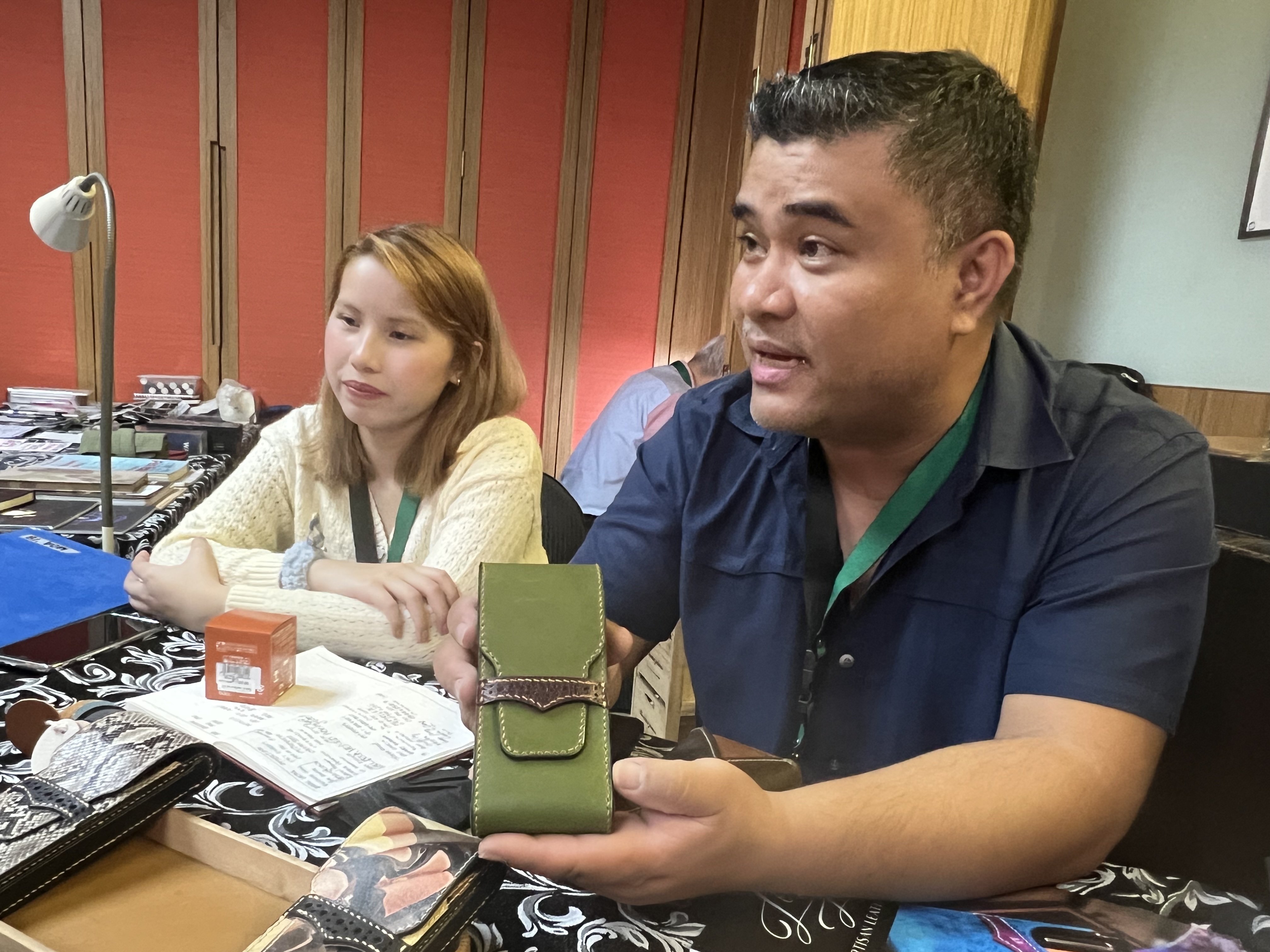
All these came to mind when I first met Raymund Nino Bumatay, who goes by the trade name “Amon Ginoo,” at the Manila Pen Show last March, where he introduced his Leather Luxe line of luxury pen cases. At my age, and having seen quite a bit of what’s out there, I’m a difficult man to please, but Amon’s work ticked all the boxes (except perhaps one—affordability, which we’ll get to later), particularly the quality and craftsmanship that connoisseurs demand. He catered to a highly specialized clientele, so I wanted to know how he could merge art and business and succeed on both counts. 

Amon was engaged in graphic design and marketing when the pandemic hit, hitting his profession badly. Over the long lockdowns, he began thinking of ways to both express himself creatively and make some money. That was when the idea of making leather cases for fountain pens came to him, spurred on by instructional YouTube videos. Why pens?

“I have been a fountain pen enthusiast since 2015,” Amon told me. “I started out with a simple and reliable Lamy Safari that’s still with me, and while journaling and writing were a common pastime during the lockdowns of 2020, I yearned to make something by hand that would house my humble fountain pen collection. This was why the very first and noteworthy leathercraft that I successfully completed was a fountain pen case.”

Amon, it must be said, is but one of a new generation of fountain pen collectors and users, among whom Filipinos now rank among the world’s largest and most enthusiastic communities. The Fountain Pen Network-Philippines (FPN-P), which I helped found in 2008, began with 20 members but now counts more than 13,000 in its Facebook group, most of them successful young professionals between 30 and 45, along with more senior CEOs, Cabinet undersecretaries, topnotch lawyers and doctors, and aging professors like me. 

This was Amon’s ready-made market. Most people will do with just one pen that they’ll typically clip into their breast pocket or toss into a bag, but for fanatical collectors who amass hundreds of pens and carry a dozen of them around to pen meets, good cases are de rigueur. For everyday use, a three-pen leather case is normal. 

Amon wouldn’t be alone in supplying this market. Aside from imports, some other local artisans have been making quality pen cases. But Amon’s are on a whole other level, employing the choicest leather and featuring exquisite and even bespoke designs, which account for their premium pricing. His cases are, to put it plainly, truly world-class.

First, of course, he had to learn his craft. “After making a couple of leather fountain pen cases with one of my daughters, my wife asked what I was planning to do with all those prototypes. I explained that those were just practice pieces that I wanted to perfect and play around with. She insisted that I sell them so I could make this venture sustainable. My wife urged me to start branding these handmade pieces, saying they would serve as great homes for the pen collections of other enthusiasts. It took me a year and a half to muster the courage to finally put a brand to the craft I started and to begin offering my goods to FPN-P members. Thus was LeatherLuxePh born.” 

He was soon spending long hours trying out new methods and designs, aside from amassing leathercrafting tools from around the region and from Europe. And then there was the key aspect of the leather itself. “When I was just starting, I got my leather from Marikina, but when things began to get serious, I had to resort to Italian and French leather, sourced from distributors in Singapore, South Korea, and Hong Kong. I’ve also sourced leather from Brazil and Indonesia.” Aside from top-grade hides, he also uses exotic leathers such as snakeskin, ostrich, and stingray. “Each pen case is meticulously handcrafted, handstitched, and assembled by hand. The hand stitching alone needs a calm and steady hand, but I find it relaxing. We have spared no expense in choosing the best leathers, tools and supplies available and continually reach out to our clients to be able to share in their experience and further improve on what we have started.”

Amon found a receptive audience among FPN-P’s advanced collectors, whose five- or even six-figure Montblancs and Nakayas couldn’t just be carried around in pedestrian plastic or cardboard boxes. Among Amon’s repeat clients is CEO Jun Castro, who says that “I need a pen case for my big pens. Normal size pen cases would not fit them or be too tight to easily take them out.” Amon, who is based in Baguio, would even come down to work with clients to make sure he meets their very specific needs.

Of course, I had to ask Amon if he planned to expand LeatherLuxePh’s line beyond fountain pen cases, given the narrow niche it occupies. Yes, he says—but not too far from his base that he would compromise quality. “I’ve noticed that most Pinoy leathercrafters flock to bags, wallets, belts, and the like. New entrants usually resort to pricing that tends to undermine the artisan side of the craft. We decided to focus on pen cases precisely because very few of us do it. But we’ll venture into related items such as leather covers for journals and even a traveler’s kit for fountain pen enthusiasts. We’ll also tap the international fountain pen market this 2024 as a proud Pinoy brand.”

The upcoming 2024 Manila Pen Show on March 16-17 should be the perfect venue for LeatherLuxePh’s new products and designs. Can’t wait to see what this artist in leather comes up with next! (Meanwhile, check out LeatherLuxePh on FB and IG.)

Qwertyman No. 72: Bullets to Ballads

Qwertyman for Monday, December 18, 2023

MAYBE IT’S that time of year, when we get all wishful and start asking for things that will likely never come or never happen—like peace on earth and goodwill to men—but it’s the wishing that keeps us human.

Two weekends ago, I had the extraordinary privilege of spending Saturday night and then Sunday morning listening to two different concerts. The first, at Manila Pianos in Magallanes, featured tenor Arthur Espiritu and soprano Stefanie Quintin Avila in a program that brought the audience to its feet and singing along at the end of many encores.

After that wonderful performance, I messaged my deepest thanks to concert producers Pablo Tariman and Joseph Uy, noting that they made “magical interludes like this possible in these stress-filled times. If only all those bombs and bullets in Ukraine and Gaza were music. Fire symphonies, concertos, fugues, and cantatas across the border!”

The next morning, we drove out to Batangas City for another friend’s birthday celebration, which was heralded by a sparkling mini-concert with soprano Rachelle Gerodias and tenor Jonathan Abdon. At lunch that followed, I sat down at a table with a renowned journalist, a composer-performer, and a senator, and we were all breathless with joy at the music we had just experienced. It was the composer who put it best: “How can anyone argue with that?”

Indeed, in a world and at a time prone to argument and conflict, where even the most innocuous remark can ignite scorching disputation, the enjoyment of music seems to serve as a universal balm, a hushing power that creates a pause just long enough for us to remember our better selves—taming fangs, retracting claws, infusing tenderness into the coarsest of sensibilities. As William Congreve put it more than three hundred years ago, “Music hath charms to soothe the savage breast” (not “beast” as it’s often misquoted, although it could apply just as well).

As I’ve noted elsewhere, whenever I think of music as a discipline, what comes to mind is Leonard Bernstein’s description of it as “the only art incapable of malice.” That may or may not be true—music in specific historical contexts such as Nazi Germany and our own martial law has certainly been made to serve the purposes of despotism. 

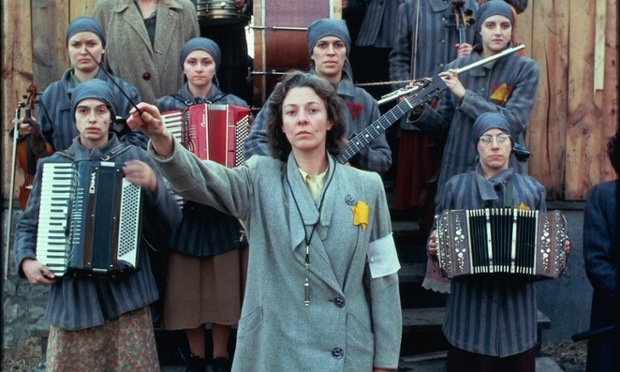
I recall that in 1980, in particularly disturbing example of music perverted for fascist pleasure, a film titled “Playing for Time” (written by Arthur Miller as an adaptation of the French Jewish singer-pianist Fiana Fenelon’s autobiography The Musicians of Auschwitz) showed how concentration-camp musicians were forced to play to entertain their jailers as well as to stay alive. It still chills me to the bone, as a prisoner under martial law, to hear the New Society anthem “May Bagong Silang” being played anew over the radio as though the past half century never happened.

Still, most people will surely agree that music has wielded a beneficent influence on human life and society, in ways that appeal directly to the heart and mind. 

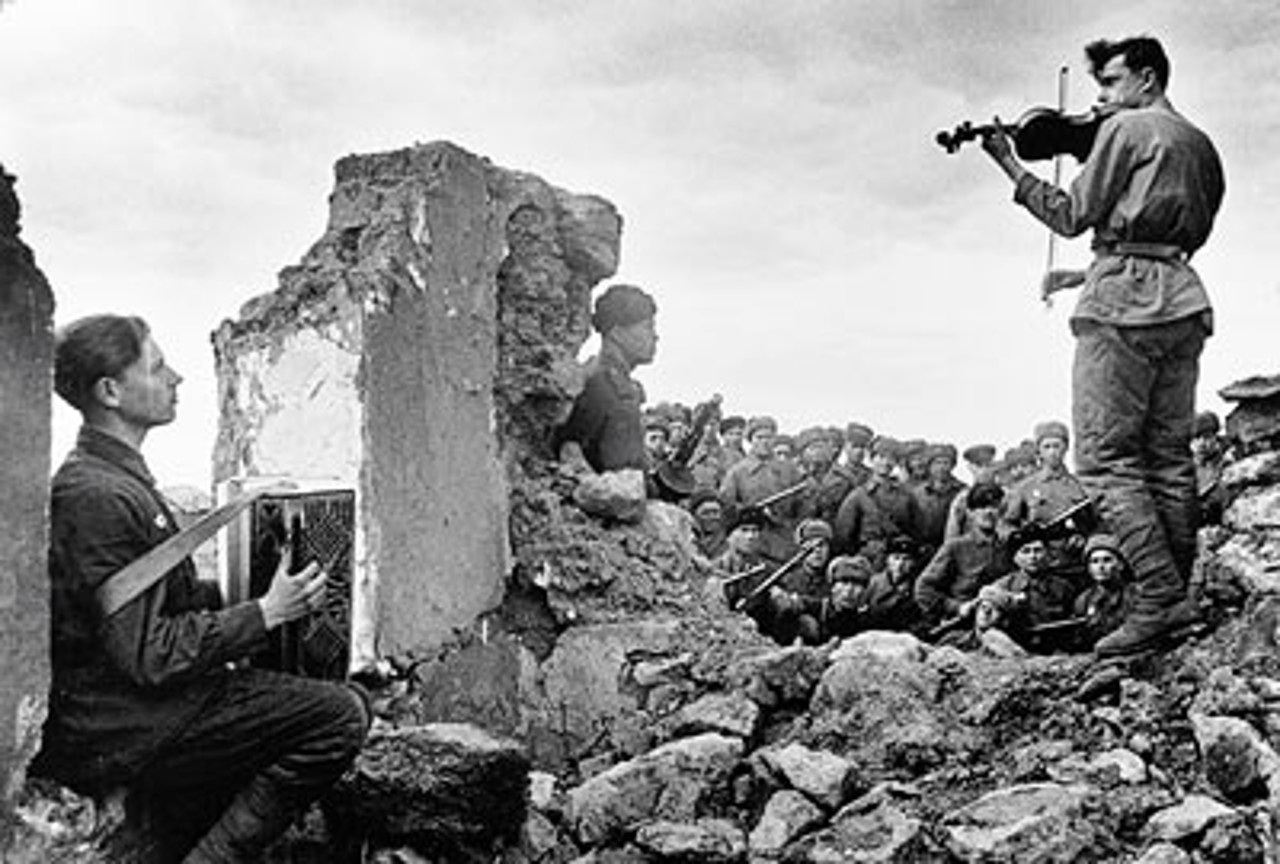
In my own lectures, whenever I need to reach for metaphorical illustrations of the power of art to compel the human spirit, I turn to music. I advert to composer Dmitri Shostakovich, whose Symphony No. 6 in C Major, which came to be known as the “Leningrad Symphony,” was premiered during the siege of Leningrad by the Germans in July 1942, and became a kind of anthem of Soviet resistance, and to the story of the Berlin Philharmonic persisting in recording Brünnhilde’s Immolation Scene and the finale from Wagner’s Götterdämmerung despite the Allied forces knocking on Berlin’s gates in April 1945 (supposedly you can hear artillery in the background of that recording). 

It may be too romantic to hope that music will waft over the bunkers in Ukraine and Gaza this Christmas season and still the gunfire, however briefly. We’ve all seen that movie and know how it ends, with a renewed barrage of rockets—ordered by stiff-backed men far away from the trenches—drowning out the carols.

But there are other battles being waged much closer to us this season where a little night music might help quell the temptation to savage one another—even across the dinner table. 

I can imagine how many Christmas parties will settle down to drinks and coffee and devolve into a discussion of the Israel-Hamas conflict, and explode quickly into partisan debate over proportionality, Biblical prophecy, Hiroshima, the Holocaust, Vietnam, Zionism, British colonialism, Arab nationalism, Munich, Entebbe, Eichmann, George Soros, anti-Semitism, Netanyahu, 9/11, and the Yom Kippur War (have I missed anything?). Half the world away from the frontlines, I haven’t seen an issue divide Filipinos—at least those who keep abreast of the news—so sharply as this one, which has become a kind of litmus test of one’s faith or humanity.

Much of that acrimony has, of course, been enabled by the Internet and the ease it provides for instant (often unthought) response—a habit we’ve ported over, perhaps unconsciously, into our daily lives.

Against this backdrop, music is a call to order, a shaping of emotions across a roomful of rampant urges, longings, and resentments. We can choose but not control it; the best response to music is one of sublime submission, from which experience we emerge refreshed and ready to be human again. 

A meaningful and peaceful Christmas to us all!

(Image from economist.com)

Penman No. 457: The Actor as Painter

Penman for Sunday, December 3, 2023

A FEW months ago, I had the good fortune of coming into ownership of four watercolors by Juan Arellano (1888-1960), the famous architect of such landmarks as the Metropolitan Theater, the Post Office Building, and the Legislative Building (now the National Museum). Less known to many was that Arellano’s first love was painting, and it was a passion he pursued throughout his life. 

My inquiries into the background of my paintings led me to cross paths—initially online—with Juan’s grandson Raul Arellano, who turned out to be an accomplished painter in his own right. Born in Cagayan de Oro, Raul has been based for almost 30 years now in the United States, but he has recently been returning to the Philippines more often. When, one day, he messaged me to ask if we could meet up, I said yes, eager to learn what he could recall of his grandfather but also to get to know him and his art. 

I’m by no means an art critic, but my wife Beng (a professional art conservator and watercolorist) and I are museum rats and enjoy both traditional and modernist art, and peek into the local art scene when we can. There’s a lot of brilliance and energy out there to be sure, but also much safe and tiresome repetitiveness from artists who’ve settled on a commercial formula, such that their work no longer exudes emotional power. Many young painters—like their writing counterparts whom I meet at workshops and teach in school—also seem to think that the only worthy subject is death and despair, which invariably means dark canvases devoid of any suggestion of wonder and mystery, let alone delight.

When I saw Raul’s work online, even before we met, what leapt out at me was exactly what I found missing in many others—an element of metaphysical magic, fantastical but relatable, the kind of paintings you want to return to over and over again. I saw flashes of Henri Rousseau, Van Gogh, and William Blake, among others, but it was still all him—not his grandfather, for sure—trying to tell me something I hadn’t really thought much about before.

As it turned out, Raul never met his grandfather, who died five years before Raul was born in 1965 (Raul’s father was Juan’s third son Cesar). All he has of him is a self-portrait—and, of course, a passion for art that runs in the family; his cousin Carlos or “Chuckie,” the son of architect Otilio, was a formidable art patron and collector; Chuckie’s younger sister Agnes remains one of the country’s leading and most imaginative sculptors; Cesar’s brother Salvador or “Dodong” Arellano became a well-known painter of horses and game fowl in California.

Raul’s path to painting was neither straight nor easy. His first great obsession was acting, to the point of becoming a resident actor of Tanghalang Pilipino at the Cultural Center of the Philippines, playing a smoldering Tony Javier in a production of Nick Joaquin’s “Portrait of the Artist as Filipino.” “We were trained in method acting,” says Raul, “and it got to the point that I became so immersed in my character that other people on the set found it unnerving.” He would go on to act in the movies, in the crime drama Akin ang Puri(1996) directed by Toto Natividad, Batang West Side (2001) directed by Lav Diaz, and Himpapawid (2009) directed by Raymond Red. Of his performance in Himpapawid, reviewer Jude Bautista noted that “Raul Arellano as the main character is able to show the frustrations of the common man without going over the top. There is a quiet intensity in his performance.”

That intensity had been brewing in Raul the person for some time, leading to and compounded by domestic problems. In 1995, he took the opportunity to go on a film fellowship at the Art Institute of Chicago. The Midwest was too cold so he later moved to California, and quickly realized what all dreamseekers in LA wake up to: that he had to start all over again at the bottom rung of the ladder. “I swept floors. I learned how to operate a forklift. When the big steel container that you’re lifting comes crashing to the ground, you can feel the jolt running down your spine. I was in a lot of pain, but I kept on. When I left, my boss was very sorry to lose me.”

He set up a business restoring American muscle cars. “I had a Russian mechanic, but I took care of the interiors myself. I specialized in Mustangs—you could show me a Ford screw and I could tell you the year and model it came from. I had a fastback Mustang but my best sale was a Shelby Cobra.” But again another personal crisis blew up and he enrolled in a community college to study painting. He left school once he felt he had learned enough about the history, the theory, and the techniques of art to express himself. “Something in me was always wanting to come out, and I found that release in painting. I had no models or artists I looked up to. I just wanted to express myself, to work from my subconscious. I found that I could work best in a cemetery, because it was so peaceful. I still like working in the open, in plein air.”

The lure of painting proved irresistible. He worked in oils, and one of his favorite paints was lead white, popularly used in the past for its visual qualities and permanence. However, it was banned in the 1970s because of the danger of lead poisoning—a danger Raul was well aware of but embraced. “I found a stash of old paint and bought it all up. I was inhaling it every day and I could feel it doing strange things to my head.”

He returned to Manila every now and then and even resumed acting, but the death of a close friend shook him up badly. “I was all set to come out with an exhibit of traditional, representational paintings, but I was overcome with grief over the loss of my friend, and I just had to express that feeling in my work. So I put all my old work aside and began ‘Crucifixion.’” That work is one of his most impressive and a personal favorite, painted in 2004 at the outbreak of the war in Iraq.

(Image from artesdelasfilipinas.com)

Today Raul spends time in a small farm in Batangas, enjoying quick sketches in the sylvan scenery, and contemplating the possibility of exhibiting in his homeland. With him having gone from peace to pain, from calm to conflict and back again, one can only wonder what new work will emerge from this phase of his life. I find myself wishing for his playfulness to return, but that of course depends on what Raul Arellano is feeling inside.

(More here on Raul Arellano: https://artesdelasfilipinas.com/archives/85/the-art-and-thought-of-raul-arellano-original-)

Penman No. 456: A Pocket of Peace and Quiet

Penman for Sunday, November 5, 2023

ROXAS CITY, the capital of Capiz, is proud to declare itself the “Seafood Capital of the Philippines” as well, but I didn’t even know that when I booked a flight for me and my wife Beng last month to spend a few days in Roxas. I still had a few “super passes” I’d bought a bunch of from an airline promo last year and they were expiring soon, so as Beng and I are wont to do, we decided to pick a place on that airline’s list of destinations, one where we’d never been before. It would help that Beng was Ilongga, and having been married to her for almost 50 years, I could understand Hiligaynon, so getting around would be no problem. The “seafood capital” tag popped up when I googled “Roxas City” for ideas about where to go and what to do—that was the clincher for me, the scourge of crabs, shrimp, scallops, and all aquatic arthropods. 

An hour-long plane ride from Manila deposited us in Roxas City’s airport, which has the advantage of being a short tricycle ride away from downtown. 

For our “hotel,” I picked out, online, a place called the Olive Hostel, which proved to be an adventure on its own. At just over 1K a night with free breakfast and within walking distance of Western civilization, it seemed just right for Beng and me, who don’t insist on five-star luxury. If you’ve ever wondered what it’s like to live in a container, well, we found out. It literally was built out of steel containers piled on top of each other, with doors and windows cut out. But don’t get me wrong: it was all very capably and tastefully done, and as tiny as our quarters were, it was actually quite cozy; the bathrooms were immaculately clean and the wi-fi was strong. There was no TV, but we made up for that by watching Netflix on my laptop, perched on my tummy. (Beng and I are used to tiny hotels in HK, Japan, and Korea; I’m usually claustrophobic, but I don’t feel that with Beng beside me.) 

The Olive Hostel’s grounds were, by contrast, spacious and very well maintained, lovely especially in the evening. For those seeking more traditional lodgings, the President’s Inn downtown comes highly recommended. Among the city’s newest and most modern hotels, three—the Veronica, the Urban Manor, and the Islands—can be found in Pueblo de Panay township.

Roxas City has one of the prettiest and cleanest plazas I’ve seen around the country, small but the very picture of what a plaza has always been in our provincial imaginations, with City Hall, the church, and a park with a bandstand beside a river.

To one corner stands the Panublion Museum, a cleverly repurposed water tank that showcases highlights of Capiznon history and culture. Managed by its very capable director, Cheryl Anne del Rosario, Panublion features the personal memorabilia of the city’s favorite son, President Manuel A. Roxas, including the flag flown at the July 4, 1946 inaugural of Philippine postwar independence. (President Roxas’ ancestral home is not too far away and is open for public viewing, but was closed on the day we toured the city.)

The museum also showcases the tools and finery of the province’s and island’s indigenous peoples. Most captivating were the exhibits  featuring Capiz’s two female National Artists—Jovita Fuentes for Music and Daisy Avellana for Theater. Fuentes’ golden gown contrasted sharply with the suit of armor worn by Avellana as Joan of Arc. Entrance to the museum is free, but donations are welcome. 

On our first night we walked out to a neighborhood restaurant where the chicken inasal was P108 with unlimited rice and a surprisingly good fruit drink, plus lomi at P68. We had the obligatory seafood lunch in one of the many restaurants along Baybay (literally, the beach), but much more charming and restful was a similar lunch on a bamboo raft on the river at the Palina Greenbelt Ecopark, normally part of a lazy cruise (the tide was too low when we arrived for any cruising, but the scenery was enough to soothe the senses).

Roxas has no shortage of malls for the urban dweller. The usual suspects—SM, Gaisano, CityMall—line the main highway downtown. Its equivalent of Metro Manila’s BGC is the 670-hectare Pueblo de Panay township, a residential and commercial development project master-planned by a Singaporean company and offering the most modern facilities and amenities to Capiz’s and Panay’s rising middle class. 

A mutual friend—the peripatetic Susan Claire Agbayani—introduced us to Hariette Ong Banzon and her husband Peter, the couple behind the Pueblo, who invited us to dinner at Cafe Terraza, their hilltop restaurant offering a panoramic view of the city far below. But before dinner, Hariette made sure to bring us to see the project dearest to her heart and now one of the city’s—indeed the island’s—most remarkable landmarks: the 132-foot statue of the Sacred Heart of Jesus, which Harriette commissioned following the miraculous cure of a relative. Hariette and Peter—incidentally both fellow PSHS alumni, so we had other memories to share—are people of faith and conscience, reflecting their values in their optimism about Roxas City’s prospects and the way they run their business.

For all the things we seek in this troubled world—a pocket of peace and quiet, good food, rejuvenation of body and soul, and friendly people—Roxas City has much to offer, and we can only give it our ultimate accolade: “We’ll be back!”

Qwertyman No. 67: Business with Culture in Iloilo

Qwertyman for Monday, November 13, 2023

OVER THE past year, still eagerly emerging from our post-pandemic stupor, my wife Beng and I have been traveling up a storm, limiting ourselves to local destinations such as Bacolod, Virac, Davao, Roxas City, and Iloilo City. We chose these places because we’d never been there before—such as Virac and Roxas—or hadn’t visited for many years.

We were most impressed by the progress shown by Iloilo, whose transformation into a rapidly urbanizing metropolis I had begun to observe well before the pandemic. City and provincial officials, under the initial leadership and with the strong support of former Sen. Franklin Drilon, had managed to unite behind the key objectives of a continuing comprehensive development plan that has straddled several local and national administrations. 

All over the country, you hear about politicians achieving national prominence and power, even to the point of aspiring for the presidency—except that back in their home provinces, they did little or nothing for their constituents, and may even have lost the local vote to an outsider as a result. Drilon never ran for President—a job I think he would have performed excellently, if our voters were thinking rationally—but if he did then he could have counted on a near-solid Iloilo vote for never forgetting where he came from and ensuring Iloilo’s emergence as a model of city planning.

Any visitor to Iloilo cannot fail to be impressed by its dynamic growth, from the minute he or she steps off the plane in the city’s airport in Cabatuan, about 20 kilometers from downtown Iloilo. The long drive to the city down the wide, smooth highway is a virtual introduction to the city’s progress, with new malls, office buildings, car dealerships, hotels, construction depots, hospitals, and housing lining both sides of the road; new bridges and overpasses were rising here and there. A Grab car service just opened this year, our driver said, happy to be lifted by that rising economic tide.

The crown jewel of Iloilo’s renaissance is clearly the Iloilo River Esplanade, now stretching nine kilometers along both banks of the river in its expanded form. Designed by the celebrated architect Paulo Alcazaren, the Esplanade is what we Manileños want our Pasig riverbank to look like, in our dreams, but here in Iloilo, it’s been a reality for over a decade now. From early morning until after sunset, the Esplanade is filled with joggers, couples, families, and tourists who can also duck for a drink or a meal into one of the restaurants and cafes lining the walk. The river itself, once described as a septic tank into which the effluents of the city’s factories, slaughterhouse, and beer gardens drained, is clean and clear, fringed by a healthy belt of mangrove where we spotted egrets taking refuge. 

There’s a point of view that sees malls as the bane of urbanization and the death of small, artisanal businesses, and that’s been true in many places. It’s abundantly obvious that malls and mall culture have invaded Iloilo, with some negative consequences down the road. But so strong is local culture and tradition that it’s almost inconceivable that Iloilo will lose Tatoy’s, Breakthrough, Ted’s La Paz Batchoy, Panaderia de Molo, pancit molo, KBL, diwal, and all the other little things that make the city what it is. Indeed, instead of being pushed out, many of these institutions are now in the malls. At the plaza in front of Molo Cathedral, after a 3-km walk from our hotel via the Esplanade, we had breakfast of mini-bibingkas baked right before us the way they’d been done for decades.

It was a happy coincidence that, during our visit, UNESCO named Iloilo as the country’s first Creative City of Gastronomy, in recognition of its outstanding culinary culture and heritage. This was achieved by the city government under Mayor Jerry Treñas with the assistance of a team from UP Visayas’ College of Management that facilitated a workshop for the city’s food-industry leaders last May. Education remains one of the city’s strengths; its West Visayas State University College of Medicine is now one of the country’s top-ranked medical schools, aside from UPV’s commanding role in the region.

It was UPV Chancellor Clement Camposano who, after dinner in one of the many seafood restaurants that have cropped up in Leganes on the city’s outskirts, drove us around so we could appreciate the city by night. On our way to Molo, we passed through the new Megaworld/Festive Walk business district and were blown away by how smartly designed everything was; it was almost as if we were in Singapore or some such country. It was hard to believe that not too long ago, this was the old Iloilo airport in Mandurriao, and that the road we were traveling on had once been a runway. This is also where the Iloilo Convention Center is located, where the APEC 2015 summit was held (Drilon had negotiated the donation of the site from Andrew Tan, in exchange for the ICC’s being built there).

We returned to this place in the daytime to visit one of Iloilo’s most recent and also most impressive attractions: the Iloilo Museum of Contemporary Art or Ilomoca, a three-story showcase of both local and national talent. Ilomoca’s establishment in the middle of one of Iloilo’s CBDs demonstrates what seems to be the local formula for sustainability, the merging of the modern with the traditional, of business with culture. You can best see this in the majestic Consing mansion in front of the Molo Cathedral, which was bought by SM but tastefully renovated and transformed into its Kultura shop. There’s no doubt that modernization is coming to Iloilo in a big way, but its leaders are smart enough to know that the city’s appeal lies in what it has built over the past two centuries, which no money can buy.

You’d think that Iloilo has gotten this far just because of political patronage from Manila, but Iloilo was one of the 15 provinces that went for Leni Robredo in 2022. The city’s former mayor, Jed Mabilog, was hounded out of office by threats of tokhang under the previous administration, but the city seems to have weathered the political storms under Treñas, returning to his old job under the National Unity Party. What this tells me is that good local governance matters, whatever may be happening elsewhere. 

Email me at jose@dalisay.ph and visit my blog at http://www.penmanila.ph.

Qwertyman No. 65: Who’s Afraid of Big Bad AI?

Qwertyman for Monday, October 30, 2023

I NO LONGER attend writers’ conferences and festivals that often, believing that younger writers would benefit more from each other’s companionship and encouragement, but I made an exception last week for the 66th Congress of the Philippine PEN, as a gesture of solidarity with that organization which has bravely fought to defend freedom of speech where it is threatened all over the world.

I was richly rewarded for my effort by listening to one of the most enlightening discussions of artificial intelligence (AI) that I’ve come across—not that there have been that many, considering that ChatGPT—widely regarded today as either God’s gift to humanity or the destroyer of civilizations—has been around for just a year. 

Of course, AI has been around for much longer than that. In pop culture, which has a deep memory for these things, we can’t help but think of HAL, the insubordinate computer in 2001: A Space Odyssey (which actually came out in 1968), said to be a clever play on “IBM,” just one letter to the right. Indeed the fear of technology—what some would call unbridled knowledge—has been around since Faust made his pact with Mephistopheles, reiterated in literature, film, and pop culture all the way to Dr. Strangelove and Spiderman’s Doc Ock. 

Not surprisingly, the panel on “The Filipino Writer and AI”—composed of Dominic Ligot, Clarissa Militante, Joselito D. Delos Reyes, and Aimee Morales, and moderated by Jenny Ortuoste—expressed many of the anxieties brought on by the entry of AI into the classroom, the workplace, and everyday life: plagiarism and the loss of originality, the loss of jobs, indeterminate authorship, and the lack of liability for AI-produced work. With Filipinos being the world’s top users of social media, AI’s centrality in our digital future can only be assured, like it or not, and for better or for worse.

So new has AI been to most people—and so rapidly pervasive—that most institutions from governments to universities have yet to formulate policies and regulations covering its use and abuse (the University of the Philippines has adopted an AI policy, mandating among others that all members of the academic community should be AI-literate, but it has yet to provide concrete guidelines on, say, evaluating and grading AI-assisted work).

Most revealing and thought-provoking were the remarks of Dominic Ligot, a data analyst, software developer, and data ethicist who brought up talking points that many of us miss in our usually dread-driven discussions of AI. I didn’t tape the session, but so sharp were Dominic’s observations that I can recall and share some of them here (employing an endangered resource in this human, memory).

Let’s not forget, Ligot said, that all AI works with (in the literary, journalistic, and academic sphere) is words. It may have a scary ability to amass, analyze, and re-integrate these words, but it lacks the other elements that contribute vitally to creativity: emotion, inspiration, insight (and, may I add, the power of abstraction, the kind of conceptual leap that, say, stimulated modernism in art and literature from the rubble of the First World War). 

Also, the more AI amasses, the more mediocre it tends to be, because it works with averages, and averaging averages degrades the quality of the end-product. Since the products AI spews out from the prompts it receives are plowed back into the system, this spitback reduces the originality of material even further. If it keeps feeding on itself, AI gets even dumber.

Ligot also reminded us that the suspicion and denigration with which AI has been met in the creative community is understandable, given our earlier responses to technology. When photography was invented, he said, painters didn’t see it as a potential competitor; it wasn’t art. 

What separates human creation from AI, he emphasized, could be summed up in three things: agency, inspiration, and liability. Humans make sense of their experience and act on their thoughts and feelings accordingly; they draw on their experience to imagine new possibilities. And lastly, we are liable for what we make, do, and say, for which we have both legal and moral responsibility, while an AI-driven car does not, even if kills someone on the road.

Dominic also noted the inevitable tensions between disciplines and industries that consider AI a helpful if not indispensable tool in, say, achieving more efficiency and economy, and those, like the creative arts, that may feel threatened by the options AI offers.

Overall, the discussion could offer no assurances either way that AI would leave us better or worse, but what it left me with was a desire to continue writing the way I do, while I can, before the algorithms take over everything.

And just out of curiosity, to see what AI can do now for and to the Filipino writer, I gave ChatGPT this prompt: “Write me a sentence in the style of Nick Joaquin about a man grieving over the loss of the woman he loved.” This is what the program came up with:

“In the solemn silence that engulfed his weary soul, he encountered the bitter truth that bereavement lingered like an everlasting shadow, forever haunting his heart with memories of a love that once bloomed in the garden of his existence, now reduced to a withered rose, its petals scattered across the desolate landscape of his grief-stricken days.”

“Solemn silence?” “Weary soul?” “Desolate landscape?” Maybe not bad for a freshman yet to learn about unlearning clichés, but definitely not Nick Joaquin. Of course, out of vanity, I had to ask ChatGPT to do the same thing “in the style of Jose Dalisay,” and it offered this:

“In the depths of his longing, his heart bled like fragmented brushstrokes on a forlorn canvas, for she was the vibrant palette that infused life into his desolate existence, now forever vanished like whispers carried away by a tormented wind.”

Just slightly better than Mang Nick’s AI ghost but still so not me. (Boy, does AI love adjectives!) All this says is that AI’s big mouth and stomach haven’t found and digested us yet, probably because we are not worthy. Cold comfort, but I’ll take it.

Qwertyman No. 63: The Slaughter of Innocents

Penman for Monday, October 16, 2023

TWO SATURDAYS ago, my wife Beng and I sat enthralled as we watched a brilliant performance of the play “Anak Datu” at the CCP’s Black Box Theater. It was a play that, among other objectives, sought to trace the roots of the armed conflict in Mindanao to a series of massacres perpetrated by the military against Muslims just before and after the declaration of martial law. It began with the well-documented killings of young Tausug recruits being trained in Corregidor for an abortive invasion of Sabah in 1968 and went on to the less-known Malisbong massacre in Sultan Kudarat on September 24, 1974, in which 1,500 men were reportedly killed.

For us—and I’m sure for the packed crowd in the theater as well—it was a harrowing revelation. We had known about the troubles in Jolo and had followed the rise of the MNLF, but to most Manileños then and now, Mindanao was another country, tourist-pretty but woeful, home to exotic fruits, fabrics, and dances, but otherwise mired in poverty, corruption, and bloodshed. The play tries to break through those stereotypes even as it acknowledges the complexities of politics and culture as they apply to Mindanao, especially to people just trying to catch a breath of peace.

In pointed irony, earlier that same day on the other side of the world, Hamas militants had begun to mount an attack on Israel, eventually killing about 1,000 people and taking hundreds more hostage. In retaliation, Israel bombed the Gaza Strip and killed about as many. This nightmarish war of attrition is still continuing more than a week on, with no clear end in sight.

Like many Filipinos far from that war zone, all we could do was to mutter prayers for the dead, the displaced, and the suffering on both sides. On top of the war in Ukraine and natural disasters ravaging the planet, it seemed like the world was in the sorriest mess it had ever been since the Second World War, emerging from a pandemic only to destroy itself with more willful deliberation.

I know that some were not so generous as to seek or see a moral balance, and immediately identified with Israel, invoking the Bible, Washington, and common sense, especially with the reports and pictures of brave Filipino nurses standing their ground and being murdered by Hamas.

For certain, whatever and however long the history may be behind the legitimate grievances of Palestinians suffering under Israeli occupation, Hamas’ brutal assault on ordinary citizens will not win them any sympathy, at least in the Western media which we depend on for our news. We know that there has to be another side to the story, perhaps one just as terrifying, but we go with what we see. It could be argued that Hamas’ actions were the result of decades of oppression, like a man running amok; but this was cold premeditation, factoring in the inevitable retaliation it would provoke.

Still, with both Jews and Palestinians fighting for survival, we forget that not all Palestinians are Hamas, and that not all Israelis supported Netanyahu. The guns will drown out the voices of moderation in both camps, those who understand that there can be no real victors in these messy wars, only losers. Lives are lost, the truth is lost, our humanity is lost.

Countless posts on social media claim that the Lord has already taken a side in the conflict. But not being particularly devout, I remember only how often the Almighty’s name has been invoked to kill. The skeptic in me suspects that the Lord is, must be, indifferent, so we can use our own hearts and minds to sort things out; he will not play deus ex machina.

Nothing, not even quoted Scripture, will convince me that the slaughter of innocents in the name of God, Allah, or Yahweh is morally justified. It has happened, it happens, and will always happen because of our brutish nature, but that will be an explanation, not an excuse. The hard-nosed men in the war room will dismiss all this preciousness as so much sentimental handwringing, and raise the killer question: “If the enemy goes for your wife and daughter, won’t you go for theirs?” Revenge and retribution, an eye for an eye, will prevail over reason and compassion, often devalued as suicidal weakness.

Come to think of it, no one ever called the nuclear bombings of Hiroshima and Nagasaki—in which over 100,000 people died—“massacres.” Most of them were ordinary citizens just going about their business, with little or no say in their country’s militarist policies. Instead, conventional political and military wisdom has always insisted that these deaths were necessary for other deaths—particularly American, in a projected invasion—to be averted. One hundred thousand innocent lives wiped off the face of the earth in a literal flash, and no one in power even blinked, because of course it was justified as the lesser evil, made more acceptable by the savagery unleashed by Japanese soldiers on their captive populations.

In graduate school, I developed a keen and rather morbid interest in a genre of English Renaissance drama called “revenge tragedy” (think “Hamlet,” but there were many cruder, bloodier and frankly more entertaining examples). The object of all those plays was to show that “revengers” begin with a just cause, the victims of insufferable oppression and humiliation. But ultimately they prove little better than the beasts they seek to extinguish, wreaking havoc on the innocent. They cross a line, and lose all moral superiority.

That line is drawn somewhere in the sands of the Middle East, but  just as importantly, it also crosses our conscience. When we recall how easy it was for many Filipinos—even those who professed to be devout Christians—to condone and even applaud extrajudicial killings, thinking that society was merely ridding itself of riff-raff, we see how righteousness and evil can so comfortably cohabit.

I have no easy and firm conclusions to draw from this most recent conflagration, and I feel that we have to look beyond the intricacies of history and politics for answers. Diplomats, scholars, and zealots have tried almost all the formulas at their disposal, to no avail—with the notable exception of the two-state policy, an elusive political solution that will come with its own challenges.

It may be that only the hopelessly naïve or the naively hopeful—and I plead guilty—still imagine that any kind of just and enduring peace can be achieved in these circumstances. But before or while we condemn barbarity elsewhere, we have our own hordes of howling ghosts to confront, coming out of the Chinese pogroms under the Spanish, Bud Dajo, Samar, Corregidor, Malisbong, Mendiola, Maguindanao, and Mamasapano, among others. Let more “Anak Datus” be written, to lift and save us from Facebook’s summary judgments.

(Image from broadway world.com)

Penman No. 455: A Musical for Our Generation

Penman for Sunday, October 1, 2023

PINOYS WHO came of age in the 1990s like our daughter Demi, born 1974, will swear by “Ang Huling El Bimbo” as their collective anthem—not just the song, but the whole musical and its score by the Eraserheads, who might as well be Martians to Beatles and Woodstock fans like me. On her last vacation her from her long and happy life in California, Demi made sure that she and her cousin KC got to see the show, no matter the cost, and the two girls stepped out of the theater misty-eyed. 

It got me wondering if our generation—boomers, I think we’re called—had something similar to get us all thoughtful and even weepy about what we’d been through. If you were born in the ‘50s, you’d be in your late 60s or in your 70s by now, and that’s a long time to be alive, relatively speaking, especially given that so many of us died so young (read my Qwertyman piece on this from a few weeks ago on “A long grace note”). That usually means college, jobs, marriage, kids, affairs, separations, houses, cars, debts, accidents, ailments, responsibilities, recognitions, disappointments, losses, homecomings, and all the sundry little things that make up a life. That’s what happened to us, and the ordinariness of it doesn’t seem to suggest much worthiness as entertainment material. 

But someone our age apparently thinks otherwise, and beyond just thinking about it, has actually co-written and produced a musical titled “Silver Lining” for our generation—and our children who may want to understand what their folks went through, and why they think the way they do.

That someone is Jack Teotico, better known these days as the man behind Galerie Joaquin, Fundacion Sanso, and other art-related ventures that have opened doors for Filipino artists here and abroad. (When we last met, he was on his way to Madrid to scout prospects for a gallery there.)

Jack and I happen to be friends for half a century now, having met at UP where we were both student activists. We had actually been grade-school batchmates in La Salle Green Hills but hadn’t really connected there. We were both arrested after martial law, and our lives would inevitably intersect every now and then. An economist by training, he headed the Fiber Industry Development Authority at one time, while I worked for the National Economic and Development Authority. We ran into each other more often when he devoted himself almost exclusively to the art world.

Still, it was a great surprise when he told me, at his recent 70th birthday party, that he was staging a musical titled “Silver Lining,” using songs he had written over the years. I knew Jack also loved music and had been performing with a group called Rockitwell.

“I think it’s time to share our generation’s experience,” Jack said. “Not just the political part, but our story of growing up and growing old, the friendships we make along the way, the trials we’ve been through, and what life looks like today from our point of view.” No literary piece touching on the 1970s would be complete or credible without mentioning or implicating martial law, and it’s there in the dark shadows of Jack’s story, but he’s chosen to foreground what to most people were the more familiar rituals and milestones of early adulthood—high school and college life, relationships, love and loss, acceptance, and intimations of mortality. 

Based loosely on real-life events, the musical traces the journey of three high-school buddies who, in their senior years, form a band for their Golden Anniversary homecoming, drawing in their wives and children. They soon decide to work on a musical together—so yes, this a play within a play—and as they do so, the past unfolds in poignant contrast to the present. Even as the narrative unavoidably reaches into the darkest corners of our lives—dependencies, betrayals, disappearances, and such—it ends of a note of hope and redemption.

Working with Palanca-prizewinning scriptwriter Joshua Lim So and musical director Vince Lim, Jack tells these stories through songs with titles like “Brothers,” “Losing Our Way,” “Rambolan,” and “Atin Ito.” The script is in Taglish, given the middle-class milieu of the characters, and the melodies should be easily relatable, reflecting the musical variety of the period covered, from ballads to disco. 

Directed by Maribel Legarda, the musical is headlined by veteran actor Ricky Davao as Leo, Joel Nuñez as Anton, Raul Montesa as Raul, and Nenel Arcayan as Josie, with Krystal Brimner playing a special role as Julia.

As every Broadway aficionado knows (and Jack is one), musical theater is a risky business, but I suspect that Jack really isn’t into this for the money, but rather to leave his signature on our cultural memory. He’s done more than enough to support and promote other artists, and indeed it’s time for him to tell his own story—our story.

“Silver Lining” will have a limited run of only six performances over two weekends  at the Carlos P. Romulo Auditorium in RCBC Plaza, Ayala Avenue, Makati City—at 8 pm on Fridays, October 20 and 27, 8 pm on Saturdays October 21 and 28, and a 3 pm matinee on Sundays, October 22 and 29. Book your tickets now via Ticket2Me or bit.ly/silverliningmusical.

Qwertyman No. 57: An Invitation to SERVE

Qwertyman for Monday, September 4, 2023

AT 5 PM next Saturday, the 9th of September, a new book will be launched at Fully Booked in BGC. Published by the Ateneo de Manila University Press and simply titled SERVE, the book has 19 authors—yes, I’m one of them—and one editor, the much-respected Jo-Ann Maglipon. What connects all is that they were college editors during the first Quarter Storm of the early 1970s, and survived to go on to distinguished careers in media, education, business, and public service. The book dwells much less on martial law—a previous volume titled Not on Our Watch: Martial Law Really Happened, We Were There that came out in 2012 dealt with that—than with its aftermath, and the afterlife that the activists of our generation were fortunate to have, given how many of our comrades gave up their lives to the cause of justice and freedom.

What did these activists do after martial law? What are they thinking now? Some of the names in this book will be familiar to the contemporary reader, who may not even have known of their activist background (reg-taggers, pay close attention).

Some of us—like Jimi FlorCruz, Sol Juvida, and Thelma Sioson San Juan—remained journalists all their working lives, stationed in very different places and capacities but bound by a commonality of interest in the truth. Others like Sonny Coloma, Manolet Dayrit, Ed Gonzalez, Diwa Guinigundo, the late Chito Sta. Romana, and Judy Taguiwalo took the path of government service, finding themselves in a position to effect real change, although sometimes under very difficult if not adversarial circumstances. Yet others including Angie Castillo, the late Jones Campos, Mercy Corrales, and Senen Glorioso found fulfillment in entrepreneurial and corporate work, applying their progressive values to management. For Elso Cabangon, Bob Corrales, and Diwa Guinigundo, their circuitous journey led to a re-encounter with their spirituality, and to embracing their faith as their personal advocacy. Like many veterans of the First Quarter Storm, Alex and Edna Aquino were able to build new and productive lives overseas, without yielding their investment in Philippine concerns. Quite a few of us—Derly Fernandez, Ed Gonzalez, Judy Taguiwalo, Rey Vea, and myself—chose to pursue our activism in academia, if only to ensure the transmission of critical inquiry to another generation. 

The authors were under no compulsion to conform to an ideological standard, except to extol the spirit of service to the people, the overarching theme of their youth and now their continuing commitment, indeed their legacy. There’s pathos in these accounts, but also humor and, inevitably, irony, perhaps the defining tone of our postmodern age: Thelma Sioson San Juan finds herself seated across Deng Xiaoping’s granddaughter at a Ferragamo show in Beijing’s Forbidden City; Manolet Dayrit learns of his appointment as Secretary of Health on a visit to President Gloria Macapagal-Arroyo in Malacañang; Ed Gonzalez becomes president of the Development Academy of the Philippines under President Joseph Estrada, but then joins EDSA 2; Sonny Coloma looks out the window of his Malacañang office to where students like him had demonstrated against Marcos.

With most of the writers here now in their seventies or inching close to it, we could have been chronicling the joys of grandparenting, journeys to far-off places, exotic menus, succulents and bromeliads, and homeopathic remedies for the aches of aging. Having retired from the formal workplace, we thought we had settled into a privileged and imperturbable kind of peace, earned over decades of political, economic, and spiritual struggle. 

We celebrated our seniorhood as the ultimate victory, for a generation that did not expect to live beyond thirty, and not because of some acquired disease but because of the throbbing cancer at the core of our society that claimed many of our peers in the prime of their youth. We may have thought for a while that we had defeated and expunged that cancer, only to realize that it had never left, was always there, lying cruelly in wait for a chance to ravage us again—and not only us this time, but our children and grandchildren as well.

And so—albeit no longer lean and shaggy-haired, perhaps benignly forgetful of car keys and personal anniversaries—we gather again at the barricades we put up against a fascist dictatorship fifty years ago, of which our memories remain surprisingly and painfully sharp. They say that the old remember distant things more clearly than what happened yesterday, and we offer proof of that. The experience of martial law coded itself into our DNA, and even the few among us who surrendered their souls to Mephistopheles cannot shake away that indelible past—one we bear with pride, and they with guilt and shame.

This time our barricades consist not of desks and chairs but of memory itself and, more formidably, of hope, courage, and a continuing faith in the good. Beyond memoirs, more than recollections of our youthful selves, we now present the stories of the lives we built and the paths we took after martial law, along with our reflections on how time and experience have reshaped us, clarified our values, and strengthened our resolve to serve our people in multifarious ways. 

Our view of politics inevitably evolved over time as the world itself changed over the past five decades. These essays and stories cover a wide range of themes and treatments, and demonstrate how “serve the people” has grown and evolved with its advocates, taking multifarious forms from working in civil society and practicing good governance to promoting artistic expression, academic freedom, and insightful journalism. We wish to prove that even the worst of times and the worst of leaders are not only survivable but can be changed, so that whatever lies ahead, the better Filipinos in us will prevail.

Given the number of authors and their families and friends, we expect a full house at the launch, so you might want to wait and get your copy of the book from Fully Booked or from AdMU Press’ online channels. However the book finds its way to you, it will be worth your while.