
Penman for Monday, August 27, 2012
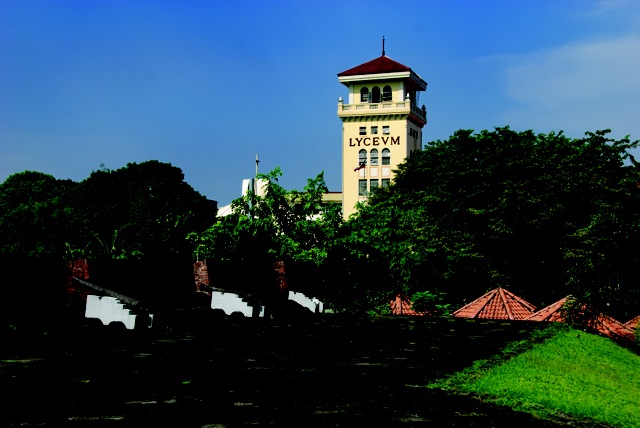
LAST JULY, a school that has done more for Philippine education and public leadership than most Filipinos realize quietly celebrated its 60th anniversary. Tucked away in a corner of old Intramuros, the Lyceum of the Philippines University—known to generations of Manileños simply as the Lyceum—may seem to outsiders to be just one of the many private colleges and universities that sprang up in the metropolis in the 20th century and managed to stagger into the 21st, dazed and confused by the challenges of globalization and the daunting economics of higher education.
Not quite. Today, the LPU is a progressive six-campus university system, with full-grown offshoots in Batangas, Laguna, and Cavite, and a law school in Makati. Its original and main campus in Manila is home to 13,500 students who are enjoying the benefit of an education anchored squarely on one foot in the classical tradition and, on the other, in new, responsive programs designed to give them an advantage in today’s economy.
I rediscovered the Lyceum in the course of writing the biography of the Lyceum’s longtime president and moving spirit, the late Sen. Sotero H. “Teroy” Laurel, the son of the school’s founder, former President Jose P. Laurel.
There’s no question that the bigger, better-known schools—UP, Ateneo, La Salle, and UST, in particular—dominate Philippine higher education and the preferences of Filipino parents and their wards. These are universities that have produced most of our presidents and heroes, big-name artists and athletes, cutting-edge scientists, business tycoons, and government leaders. They have traditionally catered to, and have also helped to form and strengthen, the Philippines’ intellectual and economic elite. And need we add that these schools, their titanic rivalries, and their alumni (both illustrious and otherwise) hog the media’s attention.
But what we don’t appreciate as much is the fact that so many more of us went to smaller schools that have also offered a good and (importantly to many) an affordable, accessible education that prepared our young people well for productive and gainful lives.
This was the vision of former President Laurel when, close to retiring from a long career in government and politics, he thought of setting up what he called “an Alexandria for the masses,” drawing its name from Aristotle’s school, the lykeion. In a book that he wrote around the same time, Laurel lamented: “How can our schools develop moral character among the young, when the schools themselves have become the centers of shocking scandals in such matters as the procurement of supplies, the selection of textbooks, or in the case of private education, the diploma mills? And where will both teachers and pupils get the inspiration for developing moral character, when they see all around them high officials who have been involved in all sorts of irregularities?
“… The truth is, the wonderful institution established by mankind, known as education, can have only one function and this is the pursuit, in the words of our Mabini, of truth, honor and justice. It can have only one sublime and overriding purpose: the recognition and dignification of the human personality.”
The “old man” Laurel, as was often called, was well positioned and prepared to assume the academic mission that his fellow Tanaueño, Mabini, had effectively bequeathed to him. He himself had a prodigious intellect, capped by a doctorate in law from Yale and honed in service with all three branches of the government—as senator, Associate Justice of the Supreme Court, and Justice Secretary—before his service as wartime president.
The Lyceum opened in July 1952 on a 1.3-hectare lot that used to be the site of the old San Juan de Dios Hospital in Intramuros, acquired for the family by Laurel’s indefatigable wife Paciencia. Teroy Laurel, who had returned from his studies in the US and who was running a law practice with his good friend and compadre Jovito “Jovy” Salonga, joined the school as his father’s executive secretary, perhaps little knowing then that the Lyceum would be the great labor and crowning glory of his own life, apart from his work in the 1971 Constitutional Convention and the Cory-era Senate.
“Jovy used to tell me that he and Teroy would go to Intramuros in the evenings to watch the construction of the school. Jovito was, I believe, the one who drew up the corporation papers, as his line was corporate law,” says Teroy’s widow Lorna.
The new Lyceum may have been a tiny school compared to its well-established neighbors, but it had one thing going for it, something that the Laurel name (the wartime charges of collaboration—eloquently disputed by Salonga, who had suffered torture under the Japanese—notwithstanding) was able to invite: prestige. As I note in my forthcoming book, “The new school had assembled the most formidable array of legal luminaries that one could put together in the Philippines at that time. These were men who would lend their names to Manila’s major streets after their time. Jose P. Laurel was the school president, the dean of the law school was Claro M. Recto, and on the Lyceum faculty were such men as Law Vice-Dean Ambrosio Padilla, Sen. Pedro Sabido, Jorge Vargas, Leon Guinto, Eusebio Lopez, Ramon Avanceña, Aguedo Agbayani, Justo Albert, Isagani Cruz, Marcos Herras, Neptali Gonzales, Roberto Concepcion, Arturo Tolentino, and Gil Puyat—men who had been or would become senators, congressmen, mayors, Cabinet secretaries, and Justices of the Supreme Court.”
Not surprisingly, the law school became one of the Lyceum’s bastions. This was accompanied by very strong programs in Journalism, Foreign Service, and Political Science, with the likes of Jose Lansang Sr., Francisco Lava, Emmanuel Yap, and Jose Ma. Sison on the faculty roster. They instructed and inspired a generation of young nationalists who included Journalism majors Satur Ocampo and Tony Zumel.
The Lyceum would go on to produce a veritable rainbow of luminaries including at least 17 ambassadors and eight Justices, three generals, three senators (Jinggoy Estrada, Ernesto Herrera, Panfilo Lacson), Speaker Sonny Belmonte, Gov. Grace Padaca and three other governors, media men Isagani Yambot, Fred Gabot, Gus Abelgas, Gerry Baja, and Deo Macalma, actor Cesar Montano, film director Joel Lamangan, Philamlife president Rodrigo de los Reyes, and education advocate Milwida Guevara, among many others.
New offerings in such areas as Hotel and Restaurant Management, Computer Science, and (in its Batangas campus) Robotics and Digital Animation and Marine Transportation keep revitalizing the traditional curriculum and assure the Lyceum’s continuing responsiveness to the times.Today, Teroy’s eldest son Bobby is on top of LPU-Manila as its president, assisted by his sister Sallie. Under the watchful eye of their mother Lorna, most of the other Laurel siblings—notably Peter, who serves as president of LPU-Batangas—are also involved in this unique family enterprise, proving themselves worthy of their father’s and grandfather’s name, and giving thousands of young Filipinos a fighting chance for a better future.


