Qwertyman No. 81: An F for Philippine Education

Qwertyman for Monday, February 19, 2024

AN IMPORTANT document that’s been showing up in the inboxes and on the desks of both government and private-sector policymakers these past couple of weeks leaves no room in its title for misinterpretation: “Miseducation: The Failed System of Philippine Eduation.” Released last month by the Second Congressional Commission on Education or Edcom II, the report covers just the first year of the commission’s comprehensive review of the state of Philippine education. But the scenario it presents is so grim that, in the words of one of its crafters, “If this were Singapore, they would be declaring a national emergency.”

But then again, that may be the whole point. We are no Singapore—and indeed one of the report’s most damning and embarrassing findings is that “Our best learners are comparable only to the average student in Malaysia, Thailand, Brunei and Vietnam, and correspond to the worst performers in Singapore.”

Edcom II picks up from where its predecessor left off more than three decades ago, when Edcom I was set up under the leadership of then Sen. Edgardo J. Angara to undertake a similar review. In July 2022, RA 11899 created Edcom II to find ways of harnessing the educational sector “with the end in view of making the Philippines globally competitive in both education and labor markets” over the next three years. Edcom II was also charged with drafting the necessary laws to make this happen. It’s just begun its work, with in-depth studies and assessments of our educational system from the ground up, but its early findings already show how difficult the road ahead will be toward the global competitiveness the commission was set up for.

I’ll just quote a few observations from a summary of the highlights of the nearly 400-page full report: 

In terms of the Program for International Student Assessment (PISA) undertaken by the Organization for Economic Cooperation and Development (OECD) in 2018 and 2002, “Grade 10 Filipinos scored lowest among all ASEAN countries in Math, Reading, and Science, besting only Cambodia, with more than 75% of our learners scoring lower than Level 2, or the minimum level of proficiency in Math, Reading, and Science…. Grade 10 Filipinos scored lowest among all ASEAN countries in Math, Reading, and Science, besting only Cambodia, with more than 75% of our learners scoring lower than Level 2, or the minimum level of proficiency in Math, Reading, and Science.” This was the same survey that showed our best learners barely catching up with Singapore’s laggards.

“The proficiency level of our children across social class, rural and urban residence, gender, language at home, type of school, and early childhood center attendance is dismally low.” This means that our deficiencies cut across the social and economic spectrum and can’t be put down to just a question of money.

To underscore the global crisis in education (yes, it isn’t just us), the World Bank and UNESCO have come up with the concept of “learning poverty,” which they define as a child’s inability to read and understand a simple text by age 10. Among some Asian countries recently surveyed for learning poverty, Singapore and South Korea scored the lowest at 3; China came in at 18, India at 56, and the Philippines was highest at 91.

And for those who insistently argue that the problem with our education is that we don’t use English enough, and early enough, Vietnam, which uses Vietnamese as its medium of instruction in the primary grades, has consistently outscored us in nearly all indices, as have Malaysia and other countries that rely on their own languages to move ahead.

A good part of the report dwells on how important it is for government to intervene as early as possible in our children’s growth and development, to prime them for a proper education. Edcom II looked into the problem of “stunting,” a measure of childhood maldevelopment, most easily seen when children are too short for their age, because of malnutrition or poor health. This has implications for the child’s ability to learn.

“The Philippines has one of the highest prevalence of stunting under-five in the world at 26.7%, greater than the global average of 22.3%. Policies are in place, but implementation has been fragmented, coverage remains low, and targeting of interventions has been weak.” (For example, more than 98% or 4.5 million children 2-3 years old are not covered by the DSWD’s supplementary feeding program.)

Here’s another eye-popping revelation: “Since 2012, only 27 textbooks have been procured for Grade 1 to Grade 10, despite  substantial budget allocations. DepEd’s budget utilization data shows that from 2018 to 2022 alone, a total of P12.6 billion has been allocated to textbooks and other instructional materials, but only P4.5 billion (35.3%) has been obligated and P952 million (7.5%) has been disbursed.” Not to mention the fact that many of these textbooks are riddled with errors!

Higher education presents its own host of problems and challenges. “Higher education participation is high given our income level,” the report notes. However, “Access to ‘quality’ higher education narrowed in the last decade…. Most beneficiaries of the tertiary education subsidy were not the poorest…. Between 2018 and 2022, the proportion of the poorest of the poor [in higher education] declined markedly, from 74% to 31%.”

A key part of the problem is the quality of our teachers, who themselves are poorly educated. “Between 2009 and 2023, the average passing rate in the licensure examinations for elementary (33%) and secondary (40%) has been dismally low, when compared to passing rates in other professions. Worse, between 2012 and 2022, 77 HEIs offering BEEd and 105 HEIs offering BSEd continued operations despite having consistently zero passing rates in the LET.”

Our supervisory agencies themselves need to be properly staffed. “The staffing levels in CHED and TESDA have not kept pace with the growing responsibilities of the agencies and the increased investments in education from both the public and private sectors. 

CHED’s budget increased by 633% from 2013 to 2023, but the agency’s staffing complement only increased by 22.7%, from 543 to 666 within the same period.”

The money’s clearly there, but it’s not being spent where it should be. “Budget allocated to education is increasing, but there is a tertiary tilt despite profound gaps in basic education….While government investments have increased substantially, the bulk of the additional resources went to higher education–which is typically regressive. From 2015 to 2019 per capita spending surged from P13,206 to P29,507. Meanwhile profound gaps remain in Early Childhood Care and Development and basic education…. 30–70% of the school MOOE budget is spent on utility bills alone, which leaves meager funds available for improvement projects and initiatives that could address local needs and support better learning.”

We could go on and on—and the full report (downloadable at https://edcom2.gov.ph/) does. But you get the picture: Philippine education gets an F. The question is, will our national leadership recognize this as the national emergency that it clearly is, and respond accordingly?

Qwertyman No. 80: Bringing UP to the People

Qwertyman for Monday, February 12, 2024

SINCE IT was established in 1908 as a “university for Filipinos,” the University of the Philippines has grown into a system of eight “constituent universities,” each with a certain degree of autonomy but all of them unified by a common vision, shared practices, and high academic standards. UP began in Manila, followed by Los Baños and then Diliman, which became UP’s flagship campus after the war. 

Of course, as the country’s premier public university and with its relatively hefty budget, there was pressure on UP to go out even farther, especially beyond Luzon, to become truly more representative of the Filipino people. In the past, that form of democratization was achieved to some extent by UP’s old policy of accepting valedictorians and salutatorians from high schools all over the country; once in UP, these provincianos did well, and many went on to positions of national leadership. 

But the general decline in public education and UP’s more stringent admissions policy have changed all that, so that the majority of successful UPCAT applicants now come from private high schools in the big cities. As nearly everyone agrees, that’s not what a presumably “national” university is supposed to do—meaning, giving quality education to the children of the affluent at the expense of ordinary taxpayers (I say “nearly,” because there are a few on the “excellence” side of this “excellence vs. equity” argument who also argue that the State’s best strategy going forward is simply to fund and support the country’s best minds, no matter where they come from—kind of Singapore-style, but then we’re no Singapore). 

Also, a UP education doesn’t happen just with a student’s admission. Even now that the law has made public university education free (ironically, again, subsidizing rich metro kids), many UPCAT passers from the regions never show up, or drop out early on, because of the prohibitive costs of living and studying in Manila, especially. They could have gone to UP if it were closer to where they were, pointing to the continuing need for more UP units to be opened in our far-flung regions. (To this day, for example, no UP has been established in Bicol, although to be fair, that region is already being served by many excellent universities.)

The traditional reluctance by the UP Board of Regents to open UPs here and there has been based on sound academic reasoning: building and opening a physical school is easy, but establishing academic programs with qualified faculty is much harder, especially in so-called “hardship” posts, to which presumably Manila-based faculty will have to be enticed to relocate until enough local capability is built up. A UP education should come with a guarantee that a degree earned, say ,in Baguio or Iloilo is equivalent in quality and efficacy to one earned in Diliman or Manila. 

There were early attempts to “democratize” UP by setting up teaching outposts as far north as Vigan, where a UP Northern Luzon Junior College was opened in 1930, complementing a similar Junior College in Cebu. (That college in Cebu, interestingly enough, was almost shut down shortly after it opened for lack of funding. Then UP President Jorge Bocobo was too proud and proper to accept a P5,000 donation from Cebuano UP alumni, because it had been raised from sweepstakes. Politicians jumped into the fray, with some arguing that Cebu needed support as a “moral alternative” to Manila, only to be reminded that Cebu was no prelapsarian paradise, with at least “three cabarets and five moviehouses,” according to an unofficial history of UP. The day was saved only when Gov. Mariano Cuenco threw P8,000 into the pot.)

In the late 1950s, President Vicente Sinco set up a Department of Extramural Studies to undertake extension classes in Iloilo, Davao, Zamboanga, San Pablo, Subic, and Clark Airforce Base. 

Thus were the seeds sown for today’s full-blown UP System, which has Diliman, Los Baños, Manila, Visayas, Mindanao, Cebu, Baguio, and the Open University among its constituents.

Each of these CUs has its own specific strengths, history, and traditions—Manila is also UP’s and the country’s health sciences center, with the Philippine General Hospital as its crown jewel; Los Baños celebrates Loyalty Day, which began in honor of faculty and students who took part in World War I (yes, I). UPOU is a regional leader in distance learning, providing a UP education even to OFWs abroad.

A particularly bright spot in this stellar array is UP Mindanao, which is marking its 29th anniversary later this month. When it was established by RA 7889 on February 20, 1995 under President Fidel V. Ramos, it was met with much skepticism even from within UP, and there were dire predictions that it would fail within a few years. The indifference was caused by the fact that UPMin was the first CU to come into being through legislative fiat, rather than the usual process of study and approval by the Board of Regents. What had happened was that UP alumni from Mindanao had banded together to demand a UP on their island, given its economic and political importance. Mindanao’s political leaders led by Reps. Prospero Nograles and Elias B. Lopez rallied to their cause, and UPMin was born.

Almost three decades later, it’s clear that that decision was the right one to make. Despite many teething problems—the path to UPMin’s hilly campus in Mintal was so rough that people took to calling it “Abortion Road”—UP Min has gone on to become an educational powerhouse in the region, particularly in such specializations as Agribusiness Economics. On the cultural front, UPMin leads in such studies as “Mindanao epics as pre-colonial roots of Philippine nationalism” and “Planning and architecture from the vernacular dwellings of Mindanao.” Its writers such as poet and former Chancellor Ricardo M. de Ungria and fictionist and Dean Jhoanna Lynn Cruz are nationally renowned. 

It was no accident that, when he was choosing a site for his investiture last September as UP’s 22nd president, Atty. Angelo A. Jimenez—UP’s first Mindanawon and lumad president, having been born a Manobo in Butuan City—chose UP Mindanao. Keenly conscious of his opportunity to make historic changes, Jimenez has pledged to improve access to a UP education even further, especially for the poor and the underrepresented. 

We look forward to a time when the children of farmers, fisherfolk , and factory workers can walk UP’s hallways again with their heads held high—if not in Diliman, then in a capital city closer to home. It will go a long way toward making UP a truly “national university,” and help build a stronger and more cohesive nation.

.

Penman No. 459: Spartan but Splendorous

Penman for Sunday, February 11, 2024

WE OFTEN think of ecotourism in terms of swimming with whale sharks or encountering rare species of flora and fauna in some faraway forest. But not too far from Metro Manila lies a natural haven that will satisfy adventurers and conservationists alike—and the ecotourists who are both.

That haven is the Masungi Georeserve, a 3,000-hectare tract of largely reforested land marked by sharp karst or limestone shards jutting out into the sky amid bamboo groves, exotic orchids, and Benguet pine.

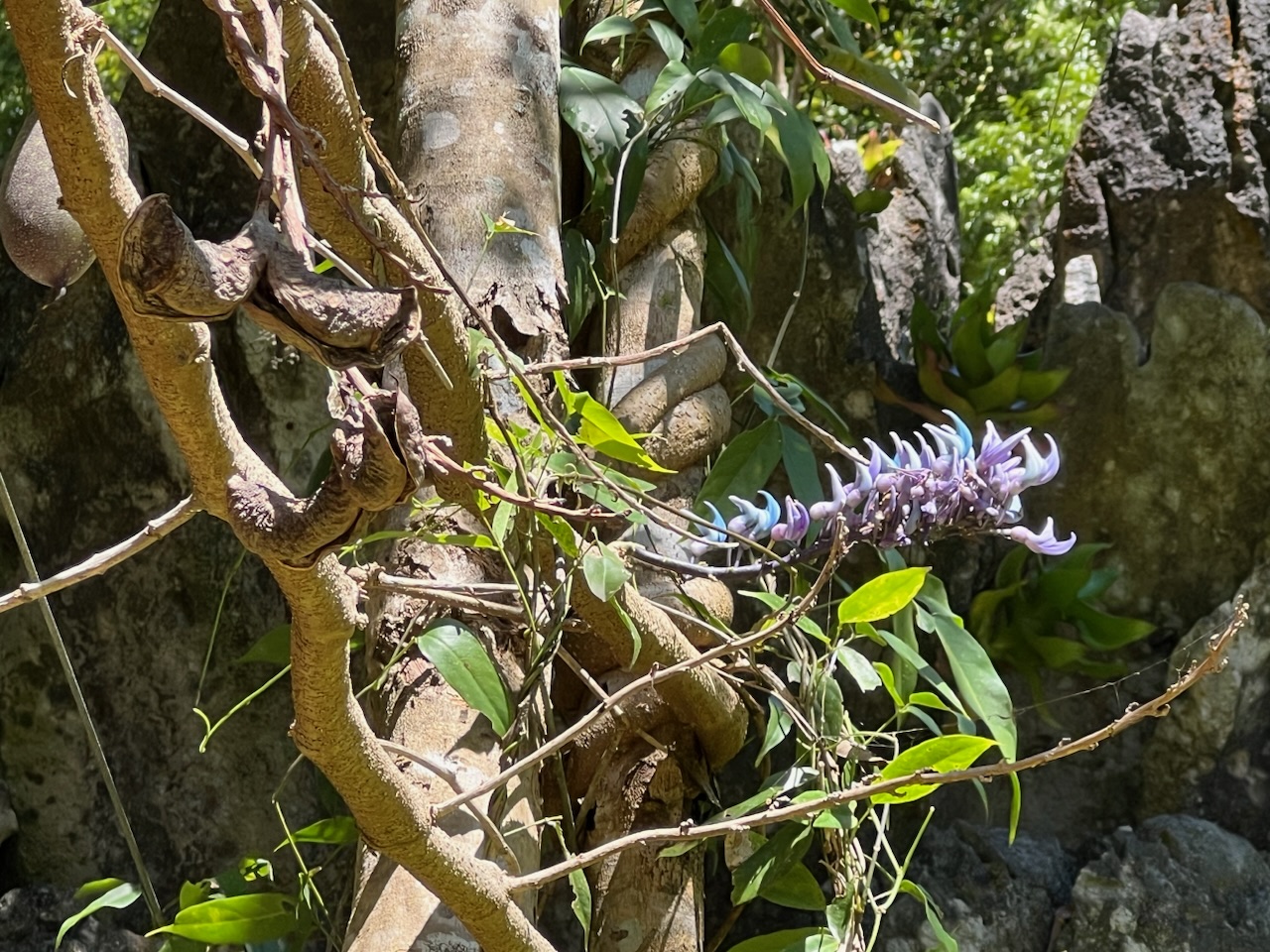
The unlikely remainder of an aborted housing project for DENR employees, Masungi now serves as home to hundreds of species, many of them rare and some even unique, such as the purple jade vine and the Masungi microsnail.

These sightings alone would be well worth the trip—a pleasant 30-kilometer drive from Quezon City through Masinag and Antipolo on the Marikina-Infanta or Marilaque Highway, on some of the country’s best and widest roads. (On the weekday morning we went there, it took us just a little over an hour from UP Diliman.) 

Masungi straddles the Sierra Madre boundary between Baras and Tanay, Rizal, much of which is occupied by the Upper Marikina Watershed, across the Kaliwa Watershed on the northern side. Its name comes from the Tagalog sungi, meaning sharp, a reference to the profusion of limestone outcrops looking like sharp teeth across the mountainous landscape.

The georeserve—now being managed by the Masungi Georeserve Foundation—wasn’t set up as any kind of pleasure park. Indeed “pleasure”—except the visual kind—was the last thing this septuagenarian thought of when he went up the steep trails to a vantage point that afforded a spectacular view of Laguna de Bay and the surrounding metropolis far below. Younger and fitter visitors, however, will surely find the challenge pleasurable and even exhilarating.

When the housing project with the DENR failed to materialize—the DENR couldn’t evict the squatters already there and the land, in truth, was simply too steep and inhospitable to permanent human habitation—engineer Ben Dumaliang and his Blue Star company (the housing project contractor) took it upon themselves to rehabilitate what land they could and regrow the forest that would have been lost forever. In 2015, Ben’s daughters established the Masungi Georeserve Foundation to oversee the place, and in 2017, the MGF entered into a contract with the DENR under then Sec. Gina Lopez for the georeserve’s replanting and conservation.

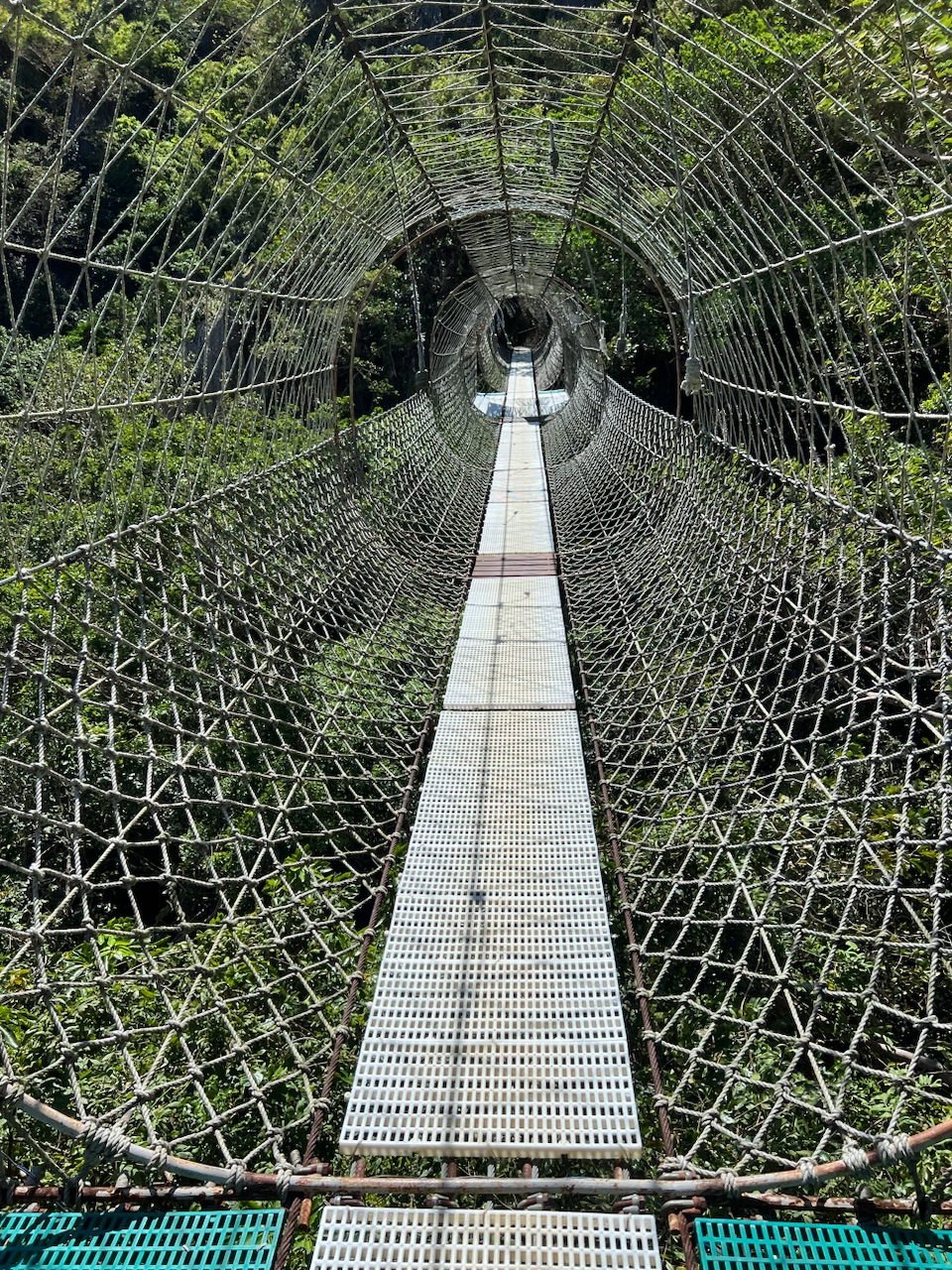
Masungi now features a Discovery Trail for hikers aged 13 and up that takes about three to four hours to complete, although it can be shortened depending on the hikers’ preference. The challenging trails feature hanging bridges, a giant spiderweb, rope walls, caves, and other points of interest (or maybe not, for acrophobes like me). Protective headgear is provided.

Typical reviews on Tripadvisor include comments like this one, from a Singaporean visitor: “Perfect day at Masungi Georeserve. The hike was well-organized and well-paced with sufficient rest stops. Our guide was knowledgeable and friendly, allowing us to take our time and helping to take our photos. You do need a certain level of fitness and daring to tackle the ropes, steps, and hanging bridges, but you will be rewarded with stunning views of the limestone karst formations. There are alternative paths to take for those who have a fear of heights but these detours may take longer. Best not to rush and go with people who won’t judge you if you feel like dropping out! Well done to the Foundation and for educating the public on biodiversity and sustainable tourism. Book ahead and pray for great weather.”

This one came from a repeat visitor, Ronald R: “Had the privilege of visiting Masungi Georeserve for the ninth time (six times on the Legacy Trail, thrice at side trails and once on the Discovery Trail) and every visit was a memorable learning and life-changing experience. All dedicated forest rangers are well versed in the changing landscape and diversity of flora and fauna. The experience differs depending on the weather. I prefer windy, cloudy weather when going up there. The Sierra Madre is more dramatic with rain clouds. Beyond the transformations, the team behind Masungi Georeserve is focused on restoring the lost and abused part of the Upper Marikina Watershed Area. Masungi Georeserve is a platform to make anyone fall in love with nature in a much deeper level. The Masungi Georeserve experience should be in every nature lover’s bucket list.”

Experienced rangers—most of them recruited from the local community, including indigenous Dumagats—serve as guides for these treks. To support the place’s upkeep—it gets no funding from the government—the georeserve charges guests P1,500 each on weekdays and P1,800 on weekends, covering the tour and simple but satisfying snacks (including a refreshingly minty tea made from the kayumanis, a native plant; a set lunch buffet is also available at the hilltop Silayan restaurant). The number of daily visitors is strictly controlled to minimize wear and tear to the area, and groups are kept manageably small. (For more helpful and detailed instructions, as well as photos of the various features along the trail, visit willflyforfood.com and look for “The Masungi Georeserve Survival Guide.”)

It’s a spartan but bracing experience, minus the spa, the massage, the gourmet menu, the uniformed attendants, and all the other amenities we associate with more genteel and patrician hideaways. This is nature in your face—but what a splendorous sight it is to behold, a painterly tableau of rock, tree, bird, and flower set against a radiant blue sky, 640 meters up and far removed from the smog and sludge of the metropolis. 

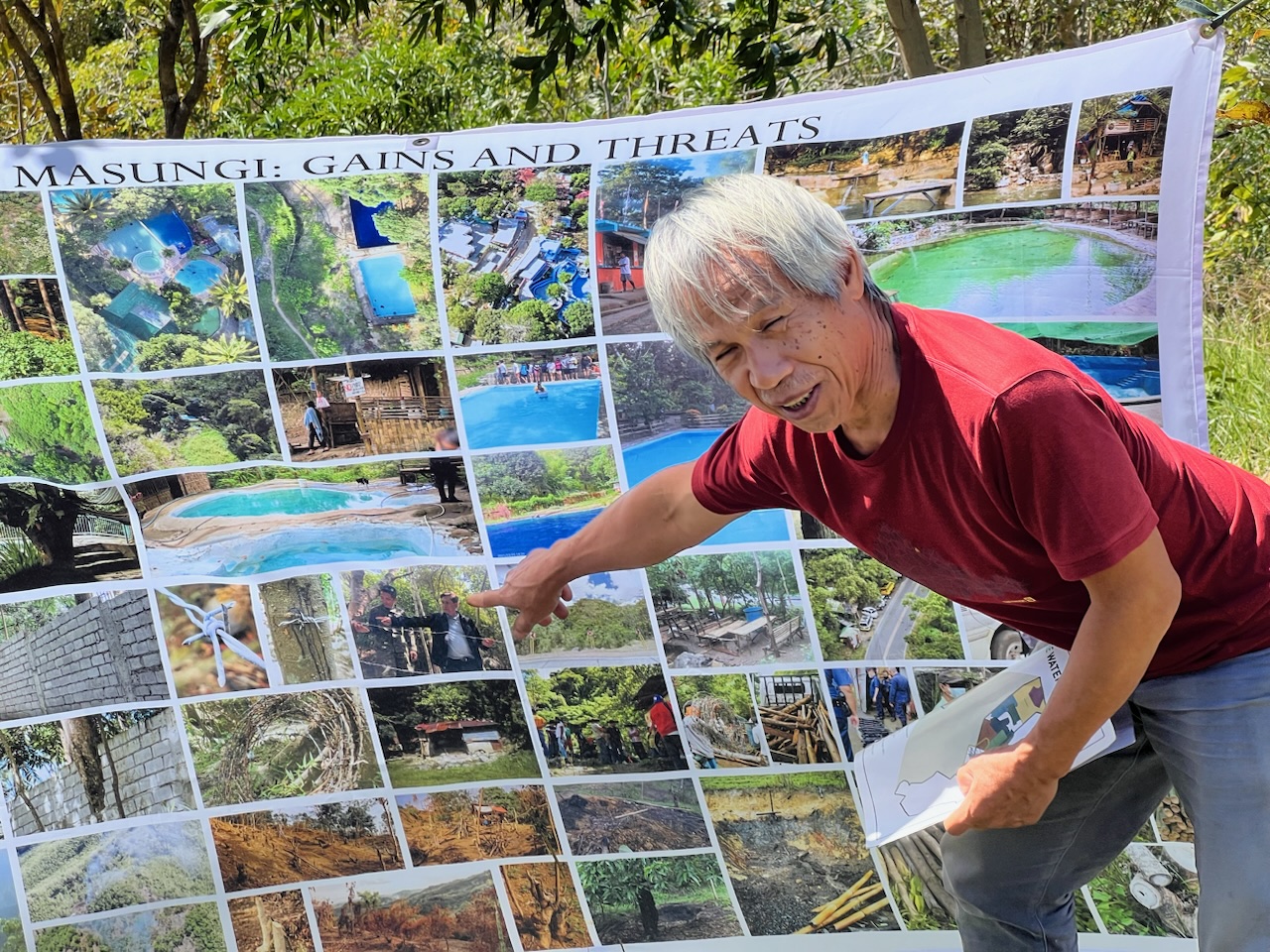
It’s sad and alarming that Masungi continues to be threatened by powerful landgrabbing syndicates as well as by the indifference if not hostility of the government people who should be supporting it, but that’s another story (check out my Qwertyman column last January 29, “Fighting Windmills at Masungi”). In the meanwhile, avail yourself of this chance to encounter nature like you never have before, and enjoy Masungi while it lasts.

Qwertyman No. 77: Taylor Swift 101

Qwertyman for Monday, January 22, 2024

THERE WAS a lot of snickering around the local Internet a couple of weeks ago when the University of the Philippines announced that it was going to offer a course on the American megastar Taylor Swift. “Why???” seemed to be the most common hair-trigger response, expressing consternation over the need or rationale for such a course. “This is where your taxes go,” lamented another netizen.

The clear suggestion was that spending a semester—that’s 16 weeks—on a pop phenomenon like Taylor Swift was a grandiose and frivolous waste of teaching time and people’s money, scarce resources better allocated to studying worthier topics like, say, Gomburza, the South China Sea, endemic species, and sovereign wealth funds. (Not incidentally, all these other topics are already covered in other UP courses, so no one need worry that they’re being sacrificed for in-depth analyses of “Cruel Summer” or “You Need to Calm Down.”)

Before we go any further, I have to declare that I’m no Swiftie, as her adoring fans call themselves, and I had to look up and listen to those two titles I just mentioned. At my age, my idea of a diva I’d pay good money to listen to is Barbra Streisand, Laura Fygi, Lisa Ono, and Dionne Warwick, none of them below 60. I have to admit that the only Swift song I was aware of before she exploded into global stardom was “You Belong with Me,” which my then-teener niece Eia used to bounce her head to (an effect that, I’ve since discovered, many Swift pieces tend to induce). 

Still, my instinctive reaction to the announcement of the UP Swift course wasn’t “Why?” but what I suppose is the academic’s default of “Why not?” When I looked into how the course was going to be taught by its instructor—Cherish Aileen Brillon, a mass communications specialist who had previously published a paper on, among others, “Darna and Intellectual Property Rights”—I could see that this wasn’t going to be just party time for 15 kids listening through Taylor Swift’s ten albums (yes, I counted) over a semester, but serious study connecting material from the singer’s songs and of course from her life as a 21st century celebrity to our reception of her and whatever she represents, as Filipinos. 

The course—an elective under the BA Broadcast and Media Studies program of the Colle of Mass Communication—will focus on “the conception, construction, and the performance of Taylor Swift as a celebrity and how she can be used to explain our and, of course, media’s relationship with class, politics, gender, race, and fantasies of success and mobility…. Gender should be part of the discussion because Taylor is a woman operating in a highly patriarchal and misogynist entertainment industry,” Brillon told the STAR in an earlier interview. “Transnationality is also a large part of the discussion,” she added, defining the term as a “media-driven flow of goods, products and services from various nations” in this globalized age. “Celebrities have always been transnational anyway. The class will look into the transnationality of Taylor and how Filipinos are appropriating their relationships with celebrities.” 

If you know anything about what’s being taken up in universities worldwide today as media and cultural studies, that mouthful I quoted above is heavy-duty academic work of the kind I myself may not be too keen to undertake, but the results of which I’d be deeply interested to find out. And that because there’s nothing more pervasive and influential in our world today than the media, which includes the Internet, TV, radio, and newspapers, plus all the advertising, the tweets, the Facebook feeds, the Spotify music, and the Amazons, Lazadas, Shopees, and eBays you find in them. How the media draws our attention and often subliminally persuades us into buying certain products and ideas can’t be worthier of academic research and investigation. 

And it’s not as if this hasn’t been done before. New York University, Stanford, Arizona State University, the Berklee College of Music, Rice University, UC Berkeley, the University of Florida, the University of Delaware, and Brigham Young University are among the American universities offering Taylor Swift courses from different approaches ranging from the music itself to social psychology, marketing, and literature.

So, okay, they’re Americans—why us Filipinos? Because the singer has a huge Pinoy fan base, despite the slight that local Swifties felt when she left the Philippines out of her 2024 Southeast Asian “Eras” tour, for which well-heeled Pinoys then rushed online to book expensive ticket packages for her shows in Singapore. (She’s been here twice before, in 2011 and 2014.)

But never mind Taylor Swift. Back in 1995, scholars attending the first International Conference on Elvis Presley at the University of Mississippi’s Center for the Study of Southern Culture got academia “all shook up,” according to reports, with papers bearing titles like “A Revolutionary Sexual Personae: Elvis Presley and the Acquiescence of Black Rhythms,” which discussed sensuality and spirituality in Elvis’s acts.

And then, of course, there are all the college courses on Frank Sinatra at Suffolk University, and on the Beatles at MIT and Oxford, among many other places. At Carnegie Mellon University, flautist and Prof. Stephen Schultz alternates teaching 18th-century Baroque music with a class on the Beatles; guess which class attracts 200 students a semester.

I’m sure that, despite these precedents and rationales, there will remain many skeptics who’ll still believe that all this academic mumbo-jumbo is just an excuse for both professor and student to kill an hour and a half doing nothing but nodding their heads to pop tunes and chatting about which song’s lyrics were cooler. (Don’t be too surprised, but that’s also basically what happens when we discuss poetry and fiction, sans the rhythmic nodding.)

But then you could be talking about Taylor Swift and her songs—or you could be talking about how Adolf Hitler and his deadly message were packaged and sold to the German people, not to mention Donald Trump and other despots closer to our time and place. This is what media and cultural studies are ultimately about—the power of media and other cultural forces to shape our minds, our purchases, our votes, and therefore our history. 

Perhaps our students can even learn more from a semester of Taylor Swift, BTS, and Justin Bieber than the Shakespeare they’ll merely turn to AI to write papers on. Like I told one naysayer, “We keep studying history, religion, law, etc., and yet we seem to learn nothing—just look at how a former human rights lawyer suddenly justifies EJKs.” So there may yet be more to Taylor Swift 101 than meets the eye. As another Swift—Jonathan—put it, “Vision is the art of seeing what is invisible to others.”

(Image from Sky News)

Qwertyman No. 68: What We Aspire For

Qwertyman for Monday, November 20, 2023

IT WAS a humbling but also uplifting experience to attend the 65th Ramon Magsaysay Awards ceremonies last November 11 at the Metropolitan Theater, in which four new awardees—including Filipino peace negotiator Miriam Coronel-Ferrer—were honored for their contributions to humanity. Long considered Asia’s version of the Nobel Prize and certainly its most prestigious honor, the RMA has now gone to over 300 recipients from all over the world in the fields of government service, public service, community leadership, journalism, literature, and creative communication arts, peace and international understanding, and emergent leadership.

This year’s four laureates represent a wide range of endeavors.

Miriam Coronel-Ferrer (Philippines) exemplified and championed the role of women in peacemaking, leading the negotiations with the Moro Islamic Liberation Front that led to a Comprehensive Agreement on the Bangsamoro. She has since lent her skills and wisdom to peacemaking efforts in East Timor, Cambodia, Afghanistan, Kosovo, and Iraq, among other conflict zones.

Eugenio Lemos (Timor-Leste) mobilized young Timorese to adopt permaculture, a holistic system to create and manage sustainable agrosystems. His approach and methods have been adopted by Timor-Leste’s schools and local governments. Going beyond food security, Lemos emphasizes the need for “food sovereignty,” a country’s ability to produce its own food, with a focus on local, natural, and nutritious food. 

Ravi Kannan (India) set up the Cachar Cancer Hospital and Research Center in one of India’s most remote and poorest regions to bring cancer care to those who could least afford it. Dr. Kannan resolved not just to create a state-of-the-art facility, but also to make it accessible to the poor by offering free treatment, room and board, temporary employment for caregivers, and a homecare program for patients. 

Korvi Rakshand (Bangladesh) began by helping poor Bangladeshi children learn English so they could find gainful employment. His JAAGO Foundation has since expanded to provide free English-language primary and secondary education to 30,000 students in both traditional and online schools, as well as embracing other causes such as women empowerment, children’s rights, and climate change.

One thing stood out in all of these awardees—and, indeed, in those who preceded them as RM laureates. It wasn’t about them. Their backgrounds, their education, their previous honors and awards were hardly even mentioned—and when they were, it was only to suggest that Dr. Kannan could have chosen to pursue a lucrative career as an oncologist in Chennai, and Rakshand could have parlayed his law degree from the University of London into success as a barrister. 

It was all about what they did for others, the public service they performed with quiet dedication, selflessness, and humility. Rakshand would relate that when he got a phone call from RMAF President Susan Afan, his first thought was that he was being called to vet another candidate, not expecting to be told that he was the awardee.

All this made me think more deeply about how the rest of us aspire for honors, by which we almost exclusively mean personal and individual recognition. Indeed, from the grades up, we’re trained to venerate valedictorians, summa cum laudes, board topnotchers, top salesmen, beauty queens, boxing champions, singing sensations, and best actors and actresses. To be one of them is to have achieved meaning in one’s life. Our living rooms and offices have long been excuses for trophy displays, but now social media has done them better by offering a free and wide platform for self-promotion, so that not a day goes by without someone announcing some new achievement.

And why not? I suppose it’s a natural human desire to rise above the herd and be known for something, be it physical beauty, vocal prowess, athletic skill, or mathematical genius. In a world where we’ve become increasingly commodified and homogenized, self-assertion (in many cases—think Instagram—to the point of narcissism) seems mandatory, if only to say “I’m here. I’m good—no, make that, I’m great!”

So we look around at what others are doing and try to do them one better. The Internet has magnified expectations to such unrealistic extents that young people have committed suicide for reasons that people from a hardier generation would have found laughable were they not so tragic. In our quest for recognition—any recognition—we’ve fallen prey to a slew of awards, pageants, and prizes of doubtful value, even paying to play Cinderella for a day and half the night. The awards themselves have become commodified and homogenized.

To be honest, I myself have built up my own little stack of writing prizes, some of them worth more than others. But again, what is “worth” beyond oneself? Like a punch-drunk boxer with a rack of belts, all they show is that I’ve lived a life as a literary combatant, when a writer’s true prize should be the readership of his or her people, perhaps the world. In a society that gives little value to books, or is too poor to buy books, that’s an Olympian challenge. 

The Ramon Magsaysay Awards and what they stand for remind us that while service to others is often thankless and sometimes even dangerous, it’s just as legitimate an aspiration as any other, and one we don’t emphasize enough in our personality-focused culture. Our historians and sociologists will have reasons for why we seem to value kani-kaniya over the tayo, or why the African concept of ubuntu, of finding one’s meaning in community, sounds foreign to many of us. I can only guess that the ruthless demands of surviving and succeeding in a cash-driven society have encouraged us to compete rather than cooperate.

The RM Awards are, of course, also a kind of competition, but one without losers, as everyone nominated has already won in his or her own sphere, has already done good by others. The chosen laureates merely stand for their co-workers, for the ideas and values they represent, and above all for an insistently optimistic and assertive humanity in a world splintered by violence, greed, and intolerance. 

Greatness can be aspired for—I suspect the truly great don’t even think about it—but it cannot be applied for, much less paid for.

Qwertyman No. 67: Business with Culture in Iloilo

Qwertyman for Monday, November 13, 2023

OVER THE past year, still eagerly emerging from our post-pandemic stupor, my wife Beng and I have been traveling up a storm, limiting ourselves to local destinations such as Bacolod, Virac, Davao, Roxas City, and Iloilo City. We chose these places because we’d never been there before—such as Virac and Roxas—or hadn’t visited for many years.

We were most impressed by the progress shown by Iloilo, whose transformation into a rapidly urbanizing metropolis I had begun to observe well before the pandemic. City and provincial officials, under the initial leadership and with the strong support of former Sen. Franklin Drilon, had managed to unite behind the key objectives of a continuing comprehensive development plan that has straddled several local and national administrations. 

All over the country, you hear about politicians achieving national prominence and power, even to the point of aspiring for the presidency—except that back in their home provinces, they did little or nothing for their constituents, and may even have lost the local vote to an outsider as a result. Drilon never ran for President—a job I think he would have performed excellently, if our voters were thinking rationally—but if he did then he could have counted on a near-solid Iloilo vote for never forgetting where he came from and ensuring Iloilo’s emergence as a model of city planning.

Any visitor to Iloilo cannot fail to be impressed by its dynamic growth, from the minute he or she steps off the plane in the city’s airport in Cabatuan, about 20 kilometers from downtown Iloilo. The long drive to the city down the wide, smooth highway is a virtual introduction to the city’s progress, with new malls, office buildings, car dealerships, hotels, construction depots, hospitals, and housing lining both sides of the road; new bridges and overpasses were rising here and there. A Grab car service just opened this year, our driver said, happy to be lifted by that rising economic tide.

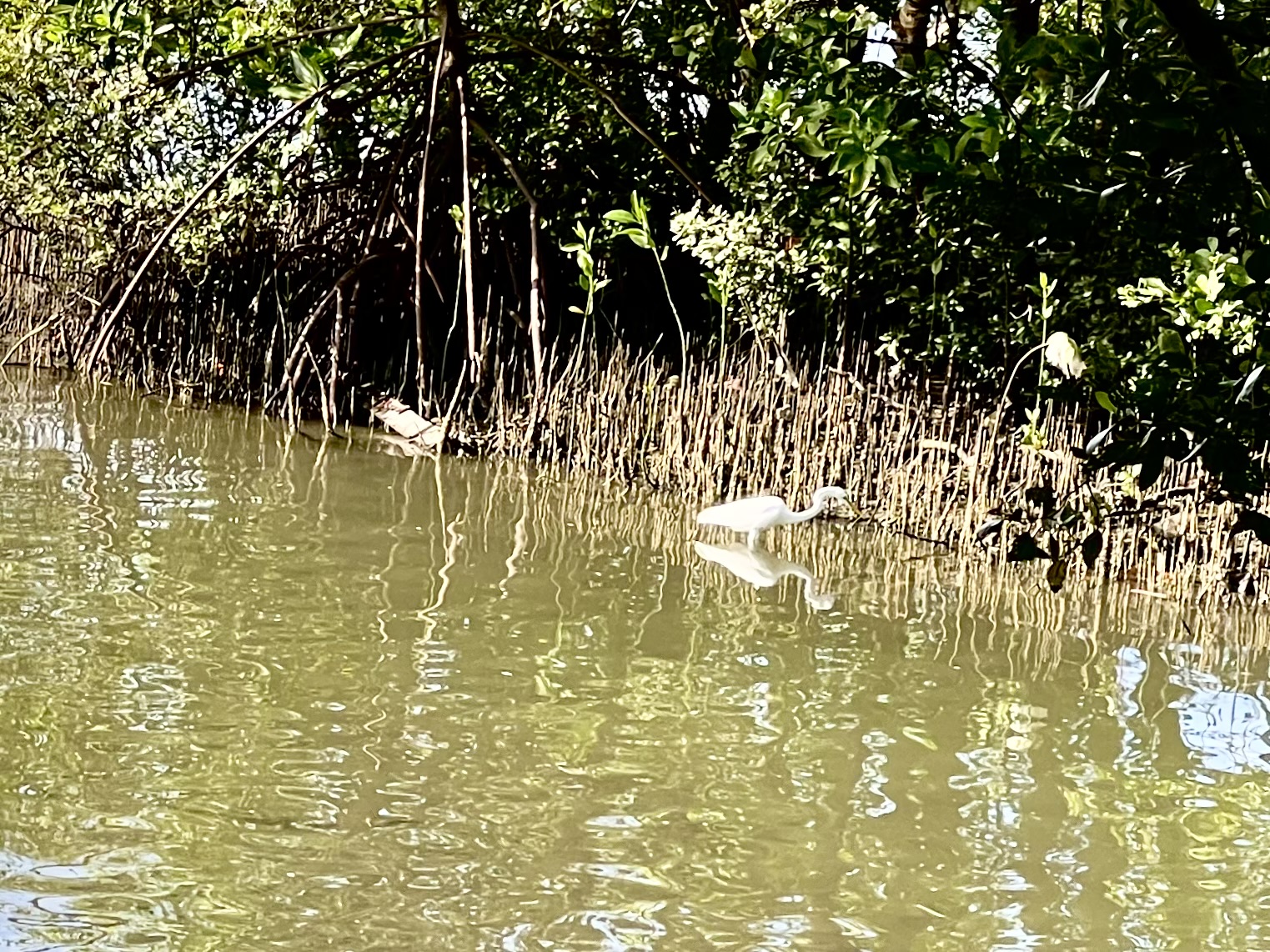
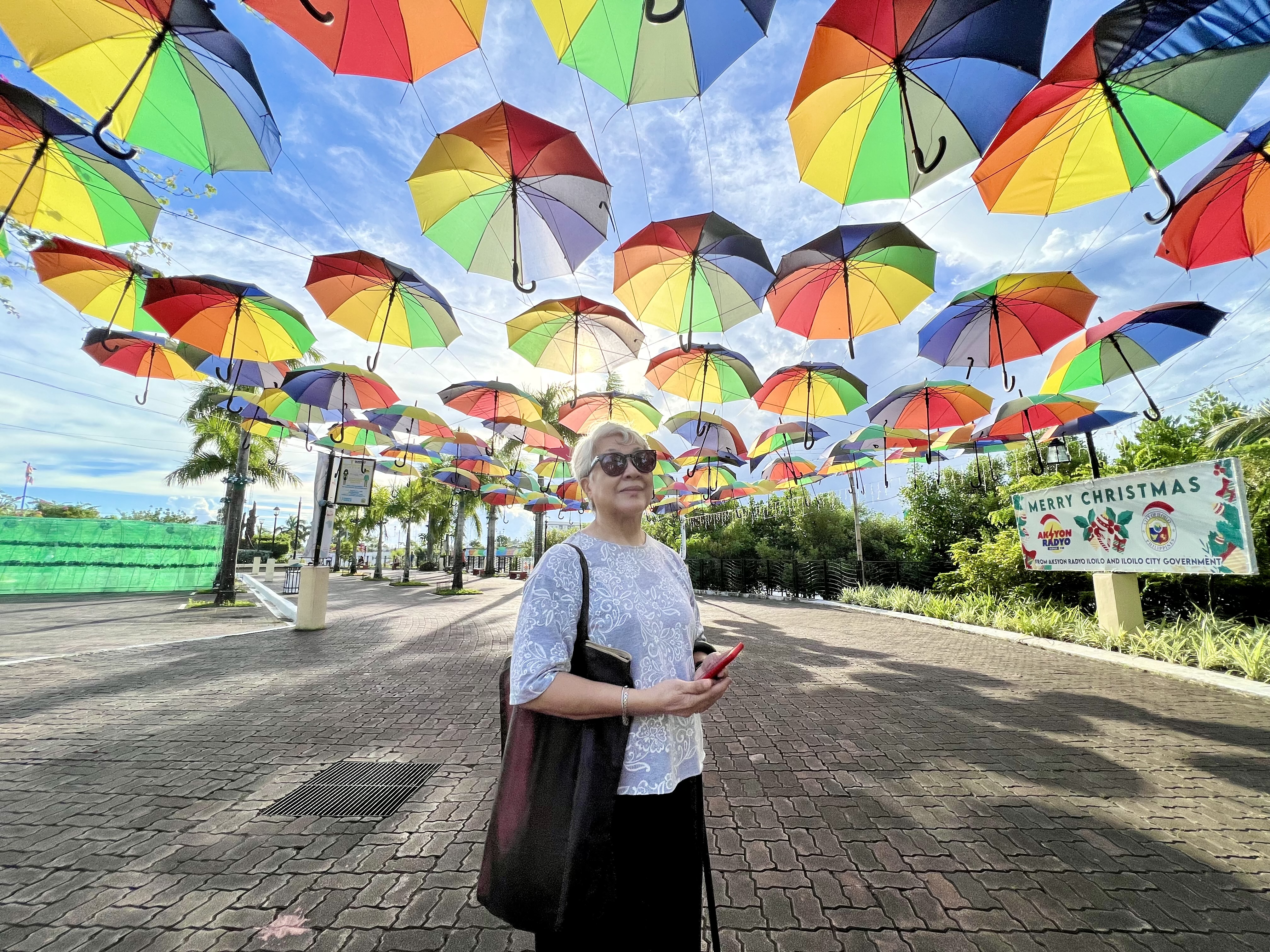
The crown jewel of Iloilo’s renaissance is clearly the Iloilo River Esplanade, now stretching nine kilometers along both banks of the river in its expanded form. Designed by the celebrated architect Paulo Alcazaren, the Esplanade is what we Manileños want our Pasig riverbank to look like, in our dreams, but here in Iloilo, it’s been a reality for over a decade now. From early morning until after sunset, the Esplanade is filled with joggers, couples, families, and tourists who can also duck for a drink or a meal into one of the restaurants and cafes lining the walk. The river itself, once described as a septic tank into which the effluents of the city’s factories, slaughterhouse, and beer gardens drained, is clean and clear, fringed by a healthy belt of mangrove where we spotted egrets taking refuge. 

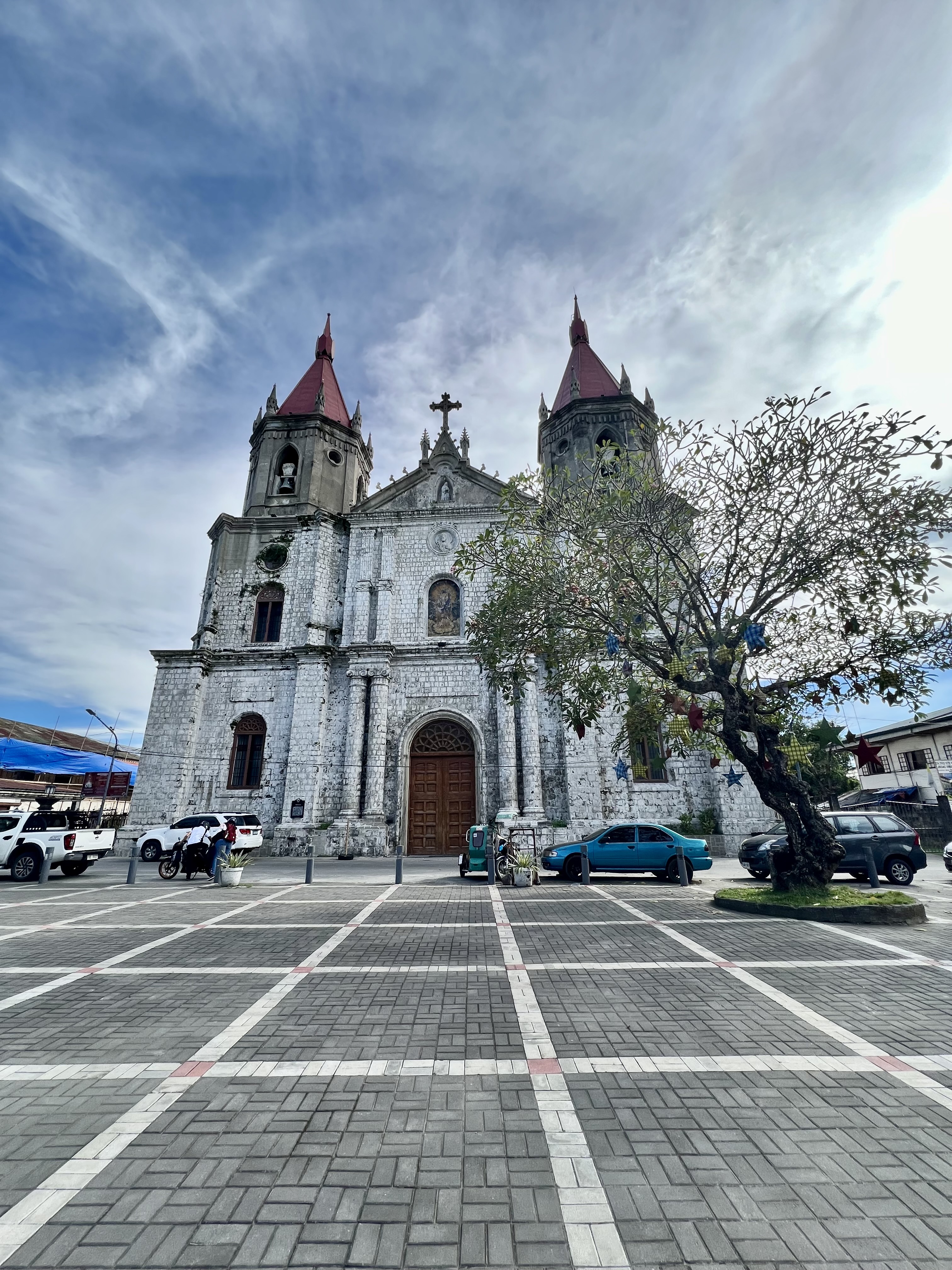
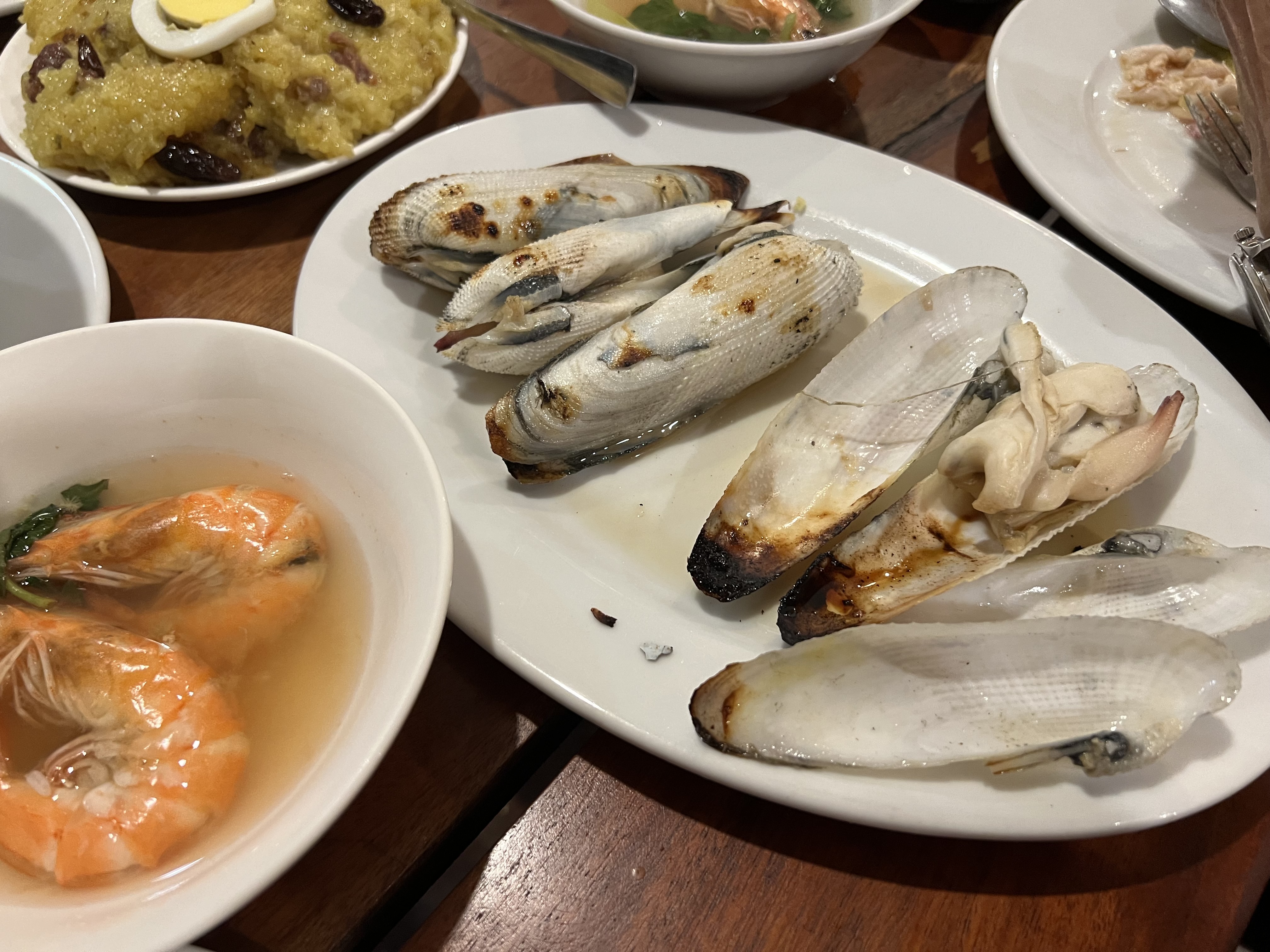
There’s a point of view that sees malls as the bane of urbanization and the death of small, artisanal businesses, and that’s been true in many places. It’s abundantly obvious that malls and mall culture have invaded Iloilo, with some negative consequences down the road. But so strong is local culture and tradition that it’s almost inconceivable that Iloilo will lose Tatoy’s, Breakthrough, Ted’s La Paz Batchoy, Panaderia de Molo, pancit molo, KBL, diwal, and all the other little things that make the city what it is. Indeed, instead of being pushed out, many of these institutions are now in the malls. At the plaza in front of Molo Cathedral, after a 3-km walk from our hotel via the Esplanade, we had breakfast of mini-bibingkas baked right before us the way they’d been done for decades.

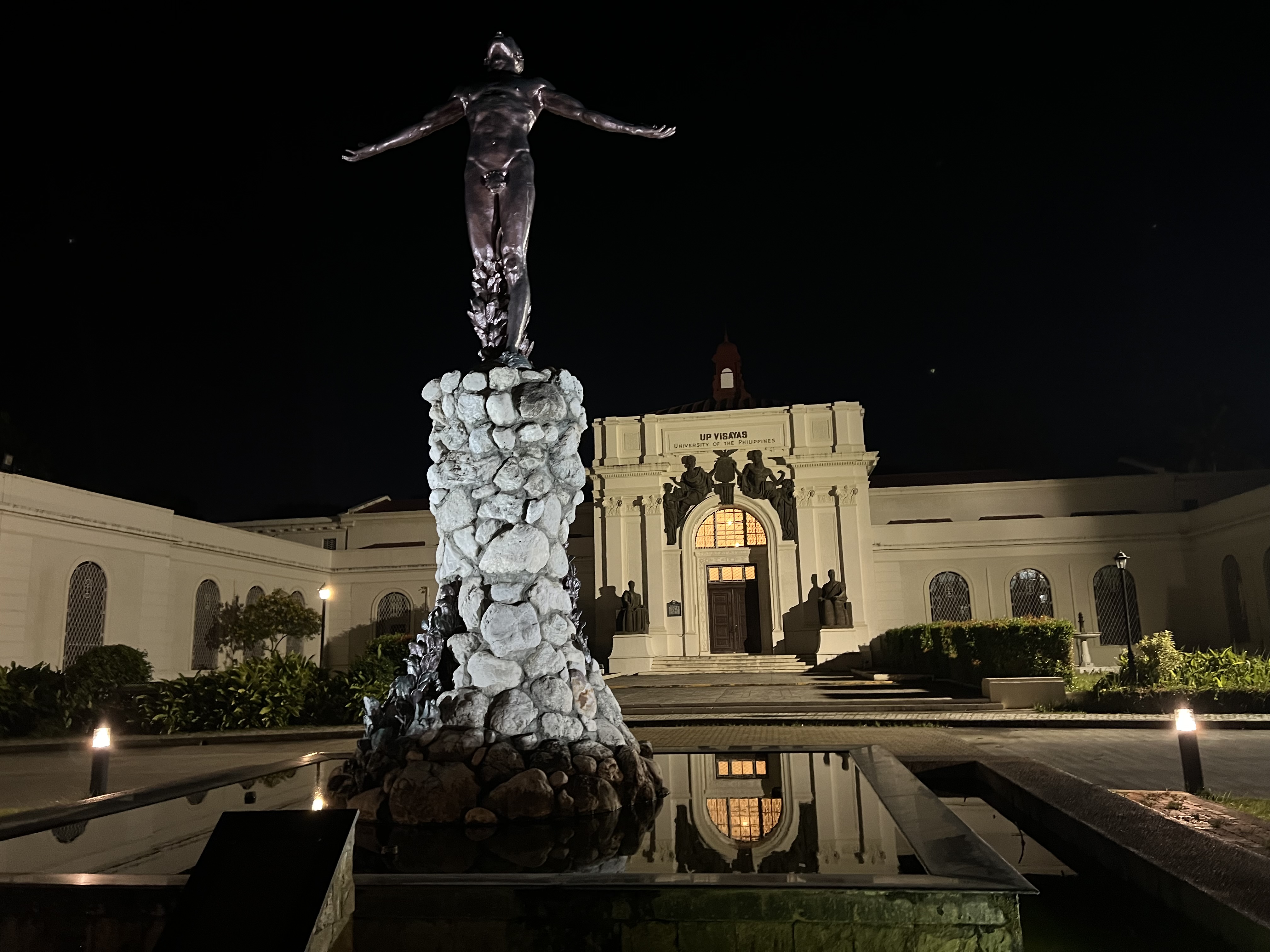
It was a happy coincidence that, during our visit, UNESCO named Iloilo as the country’s first Creative City of Gastronomy, in recognition of its outstanding culinary culture and heritage. This was achieved by the city government under Mayor Jerry Treñas with the assistance of a team from UP Visayas’ College of Management that facilitated a workshop for the city’s food-industry leaders last May. Education remains one of the city’s strengths; its West Visayas State University College of Medicine is now one of the country’s top-ranked medical schools, aside from UPV’s commanding role in the region.

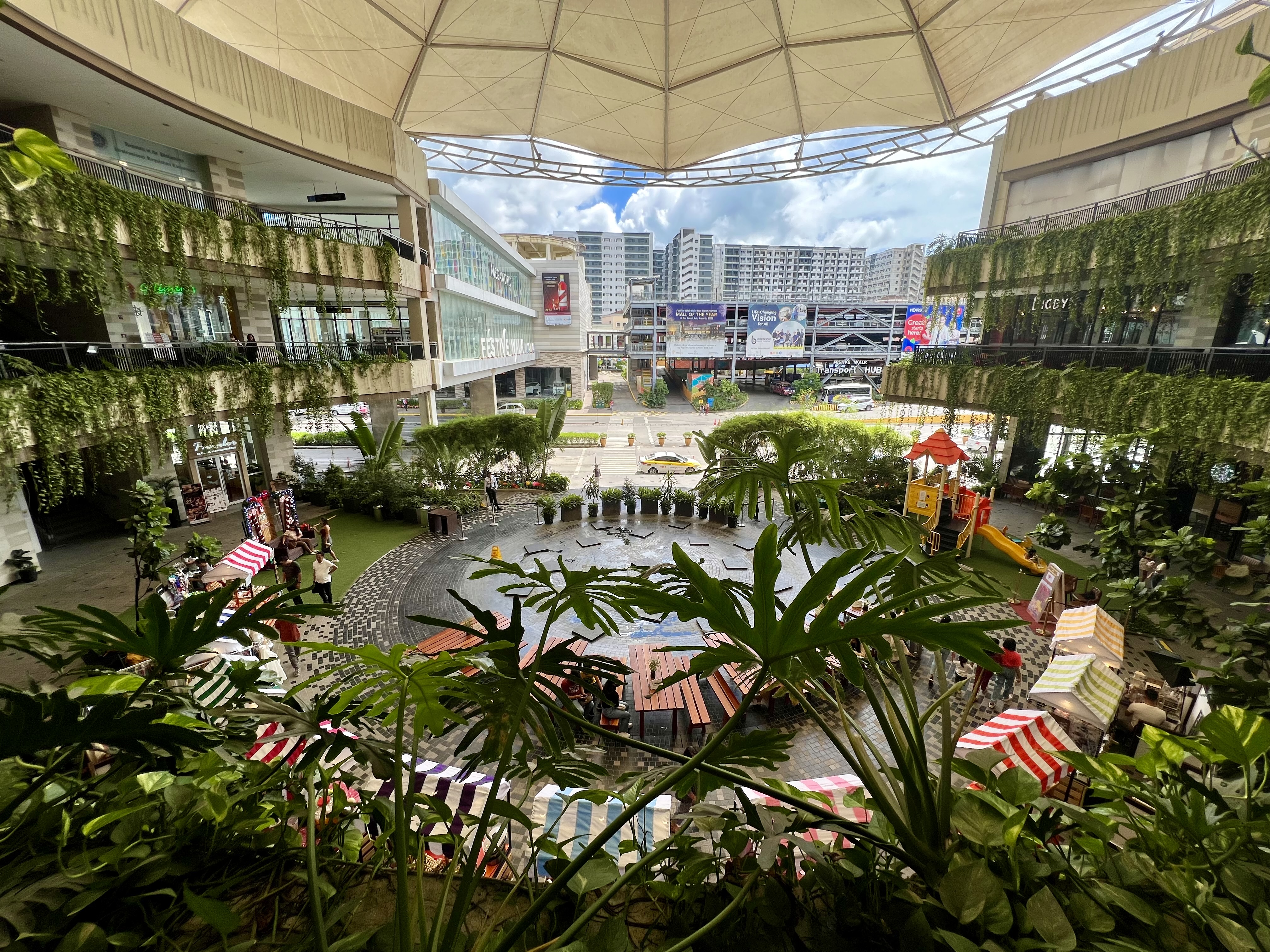
It was UPV Chancellor Clement Camposano who, after dinner in one of the many seafood restaurants that have cropped up in Leganes on the city’s outskirts, drove us around so we could appreciate the city by night. On our way to Molo, we passed through the new Megaworld/Festive Walk business district and were blown away by how smartly designed everything was; it was almost as if we were in Singapore or some such country. It was hard to believe that not too long ago, this was the old Iloilo airport in Mandurriao, and that the road we were traveling on had once been a runway. This is also where the Iloilo Convention Center is located, where the APEC 2015 summit was held (Drilon had negotiated the donation of the site from Andrew Tan, in exchange for the ICC’s being built there).

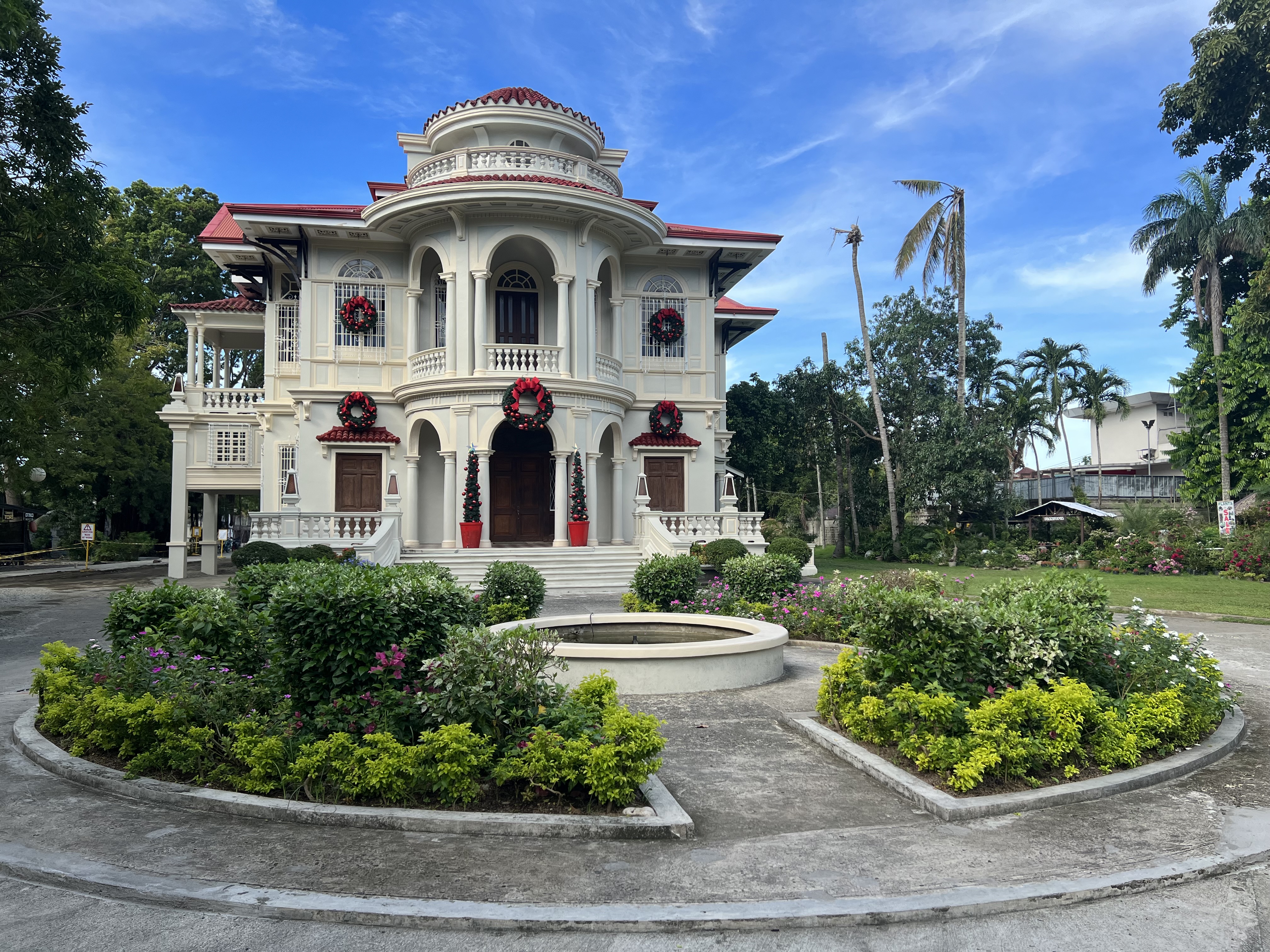
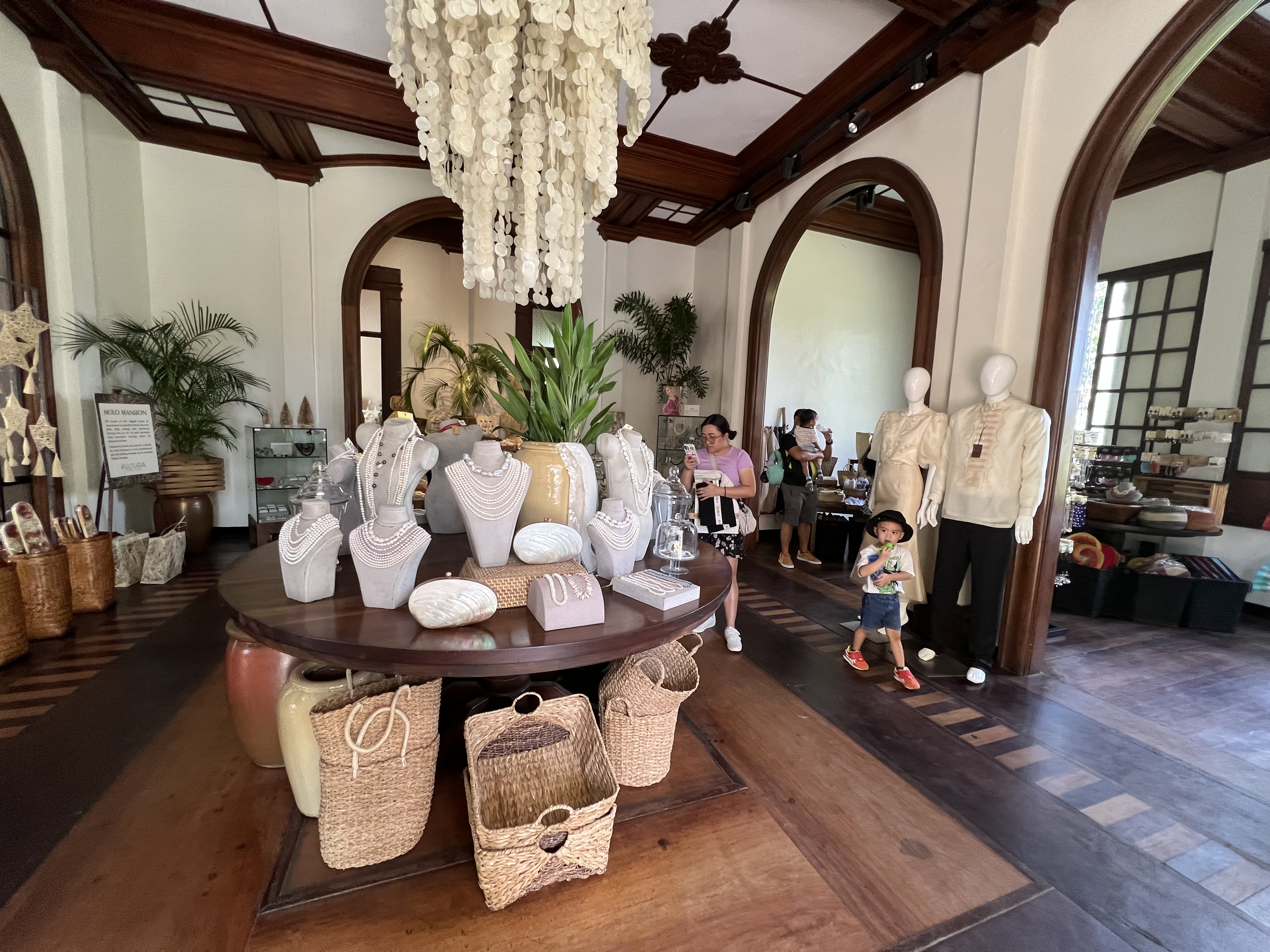
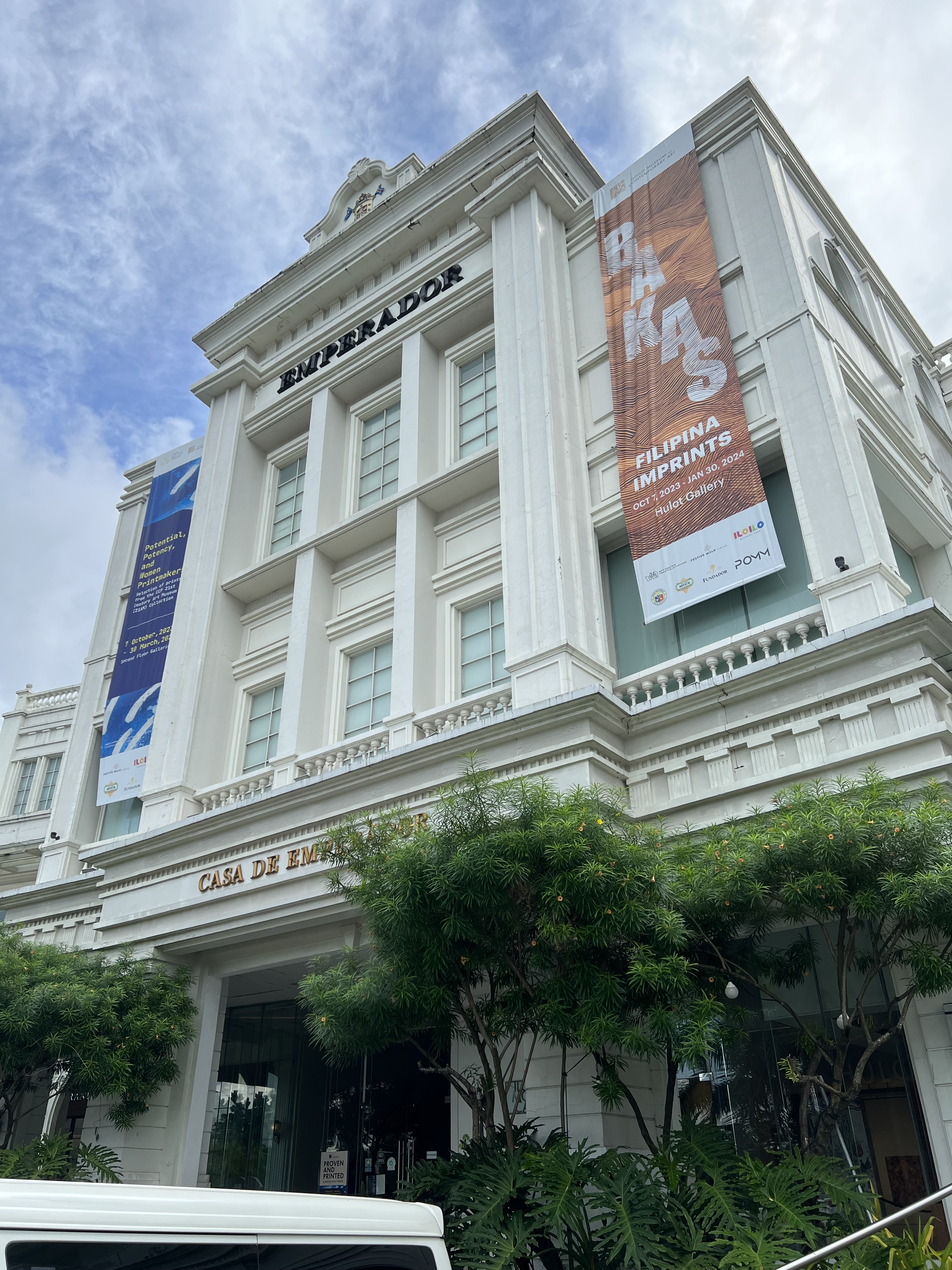
We returned to this place in the daytime to visit one of Iloilo’s most recent and also most impressive attractions: the Iloilo Museum of Contemporary Art or Ilomoca, a three-story showcase of both local and national talent. Ilomoca’s establishment in the middle of one of Iloilo’s CBDs demonstrates what seems to be the local formula for sustainability, the merging of the modern with the traditional, of business with culture. You can best see this in the majestic Consing mansion in front of the Molo Cathedral, which was bought by SM but tastefully renovated and transformed into its Kultura shop. There’s no doubt that modernization is coming to Iloilo in a big way, but its leaders are smart enough to know that the city’s appeal lies in what it has built over the past two centuries, which no money can buy.

You’d think that Iloilo has gotten this far just because of political patronage from Manila, but Iloilo was one of the 15 provinces that went for Leni Robredo in 2022. The city’s former mayor, Jed Mabilog, was hounded out of office by threats of tokhang under the previous administration, but the city seems to have weathered the political storms under Treñas, returning to his old job under the National Unity Party. What this tells me is that good local governance matters, whatever may be happening elsewhere. 

Email me at jose@dalisay.ph and visit my blog at http://www.penmanila.ph.

Qwertyman No. 65: Who’s Afraid of Big Bad AI?

Qwertyman for Monday, October 30, 2023

I NO LONGER attend writers’ conferences and festivals that often, believing that younger writers would benefit more from each other’s companionship and encouragement, but I made an exception last week for the 66th Congress of the Philippine PEN, as a gesture of solidarity with that organization which has bravely fought to defend freedom of speech where it is threatened all over the world.

I was richly rewarded for my effort by listening to one of the most enlightening discussions of artificial intelligence (AI) that I’ve come across—not that there have been that many, considering that ChatGPT—widely regarded today as either God’s gift to humanity or the destroyer of civilizations—has been around for just a year. 

Of course, AI has been around for much longer than that. In pop culture, which has a deep memory for these things, we can’t help but think of HAL, the insubordinate computer in 2001: A Space Odyssey (which actually came out in 1968), said to be a clever play on “IBM,” just one letter to the right. Indeed the fear of technology—what some would call unbridled knowledge—has been around since Faust made his pact with Mephistopheles, reiterated in literature, film, and pop culture all the way to Dr. Strangelove and Spiderman’s Doc Ock. 

Not surprisingly, the panel on “The Filipino Writer and AI”—composed of Dominic Ligot, Clarissa Militante, Joselito D. Delos Reyes, and Aimee Morales, and moderated by Jenny Ortuoste—expressed many of the anxieties brought on by the entry of AI into the classroom, the workplace, and everyday life: plagiarism and the loss of originality, the loss of jobs, indeterminate authorship, and the lack of liability for AI-produced work. With Filipinos being the world’s top users of social media, AI’s centrality in our digital future can only be assured, like it or not, and for better or for worse.

So new has AI been to most people—and so rapidly pervasive—that most institutions from governments to universities have yet to formulate policies and regulations covering its use and abuse (the University of the Philippines has adopted an AI policy, mandating among others that all members of the academic community should be AI-literate, but it has yet to provide concrete guidelines on, say, evaluating and grading AI-assisted work).

Most revealing and thought-provoking were the remarks of Dominic Ligot, a data analyst, software developer, and data ethicist who brought up talking points that many of us miss in our usually dread-driven discussions of AI. I didn’t tape the session, but so sharp were Dominic’s observations that I can recall and share some of them here (employing an endangered resource in this human, memory).

Let’s not forget, Ligot said, that all AI works with (in the literary, journalistic, and academic sphere) is words. It may have a scary ability to amass, analyze, and re-integrate these words, but it lacks the other elements that contribute vitally to creativity: emotion, inspiration, insight (and, may I add, the power of abstraction, the kind of conceptual leap that, say, stimulated modernism in art and literature from the rubble of the First World War). 

Also, the more AI amasses, the more mediocre it tends to be, because it works with averages, and averaging averages degrades the quality of the end-product. Since the products AI spews out from the prompts it receives are plowed back into the system, this spitback reduces the originality of material even further. If it keeps feeding on itself, AI gets even dumber.

Ligot also reminded us that the suspicion and denigration with which AI has been met in the creative community is understandable, given our earlier responses to technology. When photography was invented, he said, painters didn’t see it as a potential competitor; it wasn’t art. 

What separates human creation from AI, he emphasized, could be summed up in three things: agency, inspiration, and liability. Humans make sense of their experience and act on their thoughts and feelings accordingly; they draw on their experience to imagine new possibilities. And lastly, we are liable for what we make, do, and say, for which we have both legal and moral responsibility, while an AI-driven car does not, even if kills someone on the road.

Dominic also noted the inevitable tensions between disciplines and industries that consider AI a helpful if not indispensable tool in, say, achieving more efficiency and economy, and those, like the creative arts, that may feel threatened by the options AI offers.

Overall, the discussion could offer no assurances either way that AI would leave us better or worse, but what it left me with was a desire to continue writing the way I do, while I can, before the algorithms take over everything.

And just out of curiosity, to see what AI can do now for and to the Filipino writer, I gave ChatGPT this prompt: “Write me a sentence in the style of Nick Joaquin about a man grieving over the loss of the woman he loved.” This is what the program came up with:

“In the solemn silence that engulfed his weary soul, he encountered the bitter truth that bereavement lingered like an everlasting shadow, forever haunting his heart with memories of a love that once bloomed in the garden of his existence, now reduced to a withered rose, its petals scattered across the desolate landscape of his grief-stricken days.”

“Solemn silence?” “Weary soul?” “Desolate landscape?” Maybe not bad for a freshman yet to learn about unlearning clichés, but definitely not Nick Joaquin. Of course, out of vanity, I had to ask ChatGPT to do the same thing “in the style of Jose Dalisay,” and it offered this:

“In the depths of his longing, his heart bled like fragmented brushstrokes on a forlorn canvas, for she was the vibrant palette that infused life into his desolate existence, now forever vanished like whispers carried away by a tormented wind.”

Just slightly better than Mang Nick’s AI ghost but still so not me. (Boy, does AI love adjectives!) All this says is that AI’s big mouth and stomach haven’t found and digested us yet, probably because we are not worthy. Cold comfort, but I’ll take it.

Qwertyman No. 61: Funding Real Intelligence

Qwertyman for Monday, October 2, 2023

YOU COULD hear the gnashing of teeth from Aparri to Zamboanga when the Filipino men’s basketball team crashed out of the recent FIBA tournament with three losses, the fans’ dismay relieved only momentarily by the locals’ drubbing of arch-nemesis China. All over social media and even in the mainstream press, there was a lot of hand-wringing, with soul-piercing questions like “Is basketball really a Filipino sport?” and “How do we regain our hardcourt glory?”, followed by angry demands for certain heads to roll and fresh calls for a renewed grassroots-based sports development program.

Aside from politics—arguably the most vicious blood sport hereabouts—nothing gets us Pinoys more worked up than sports (and maybe beauty contests, another kind of sport). We know all the players and coaches, can recite the history, analyze all the moves, surveille the opposition, and scout and spot the best prospects. You would think that it was a national industry, although it all comes down to one thing: Pinoy pride, our fervent desire to matter in the world at large, if not be No. 1.

That’s all understandable, so hold that in your memory while I rattle off some other “sporting” statistics for the Philippines.

In a 2018 PISA ranking of 15-year-old students from more than 100 countries worldwide in terms of their abilities in reading, math, and science, the Philippines scored second to last in both math and science, next only to the Dominican Republic. If that sounds bad, we scored last in reading. (The Program for International Student Assessment is run by the Organization for Economic Cooperation and Development.)

Maybe they got something wrong? In 2019, the Trends in International Mathematics and Science Study or TIMMS, with covered fourth-graders from 58 countries in math and science, ranked the Philippines last. That same year, the Southeast Asia Primary Learning Metrics, checking up on fifth-graders and their proficiency in reading, writing, and math, scored the Philippines below the regional average in all three; more than 40 percent of all Filipino students tested failed to meet the minimum proficiency standard for math.

Did we hear or do I hear any gasps of dismay or demands for accountability from our government and educational leaders—or from the general public, for that matter? Of course not. The private sector has taken note, knowing they’ll be paying for these gross deficiencies down the road, but they don’t make policy, or decide the budget. Otherwise, we don’t seem to be seeing ourselves in any kind of race in global education, which just isn’t sexy or entertaining enough like singing, dancing, or basketball. We’d all be insulted if anyone called us “stupid”—and these surveys don’t use the word—so we pretend that it’s not a real problem and that we can get by on our natural smarts, like we always have. 

If we’re feeling feistier, we can even trot out the names of all the Pinoy Spelling Bee and Quiz Bee winners, chess grandmasters, Moot Court victors, World Poetry Laureates, inventors of this and that gizmo, and so on. In the meanwhile, we scratch our heads and wonder why our neighbors like the Thais and Vietnamese are surging ahead of us (“Why, we have nicer beaches! And didn’t we teach those people advanced rice technology?)

So instead of ensuring adequate funding for  programs, reforms, and resources to address these shameful scores, what do we do?

We cut the budget of the Philippine Science High School System—our flagship secondary school system, especially in math and science—from P3 billion to P2.7 billion, an 11 percent reduction. Not only the PSHS, but other agencies in our science and technology cluster found their 2024 budgets slashed as well—a 14.17 percent budget cut for the Advanced Science and Technology Institute, 18.04 percent for the Food and Nutrition Research Institute, and 83.7 percent cut for the National Research Council of the Philippines.

“We can no longer sustain our cloud-based Knowledge Hub or KHUB learning system because of this cut,” PSHS Executive Director Lilia Habacon was quoted as saying. “We developed KHUB during the pandemic, and it was being accessed by 10,000 students.” The PSHS System now comprises 16 science high schools nationwide. “Even as we’ve returned to face-to-face learning, many of our modules remain online, and the students really learn from there.” The cut will also halt the system’s infrastructure projects such as gymnasiums, dormitories and multipurpose halls in Mimaropa, Zamboanga, Soccsksargen, Calabarzon and Caraga.

The Department of Budget and Management says that the cut corresponds to “38 non-recurring and terminating locally-funded projects in FY 2023,” but as Dir. Habacon points out, there are clearly many ongoing and vital projects that need continuing funding through to at least next year. 

The DBM also took the PSHS to task for its lack of “absorptive capacity,” meaning that it couldn’t spend its allotted funds fast enough. And here’s where the irony of this whole budget business and our national priorities really gets me. (Granted, the problem goes much deeper and at more basic levels than the PSHS, but if they can do that to our premier high school, what do you think they’re doing with the less illustrious others?)

The Office of the Vice President (OVP)—under recent criticism for spending P125 million in “confidential funds” in 11 days in 2022—claimed in its defense that it did so not in 11 days, but 19. Oh, okay—is that supposed to make us feel better? Does that qualify in the DBM’s books as proof of “absorptive capacity?”

Confidential funds here, intelligence funds there in the hundreds of millions, and the recipients even feel demeaned if they’re asked to account for the money, for which their fawning friends in Congress are only too happy to give a free pass.

Meanwhile, we scrutinize every line in our budget for science education, and probably in other areas as well, and get all uptight when we spot some tiny item we can’t figure out, like some alien cockroach, and squash it with gusto, thinking we’ve done our job. When it comes to funding real intelligence, we balk.

The sad part is, we’ll get away with it, because appallingly low science, math, and reading proficiency doesn’t get people worked up as much as poor basketball tactics do. We don’t even know who our National Scientists are (there are now 42 of them), nor care what they’ve done. Fire the education coach? What for? No harm, no foul.

Qwertyman No. 60: UP’s Southern Pivot

Qwertyman for Monday, September 25, 2023

AT HIS formal investiture as the University of the Philippines’ 22nd president last September 14 in Davao, Atty. Angelo “Jijil” A. Jimenez made clear what his and UP’s priorities were going to be for the next six years of his administration: a renewed emphasis on service and equity, and more collaboration with other state universities and colleges (SUCs) and private higher education institutions (HEIs).

These priorities, he said, sprang naturally out of what he called the “three moral paradoxes” facing UP, the country’s “national university” mandated by RA 9500 to lead in Philippine higher education.

The first one he mentioned in his speech was the fact that, despite more than a century of UP producing national leaders, the country remains beset by mass poverty and economic and social inequality. “Beyond nurturing the Filipino mind and spirit, should UP have been more explicitly charged with raising our people’s material welfare? Are we doing enough at present to promote economic progress and social justice among our people?”

The second was his observation that UP, conceived as a “university for the Filipino people,” primarily serves the children of well-off, urban-based families, with 60 percent of its freshman population coming from private schools, “and our admissions policy unfortunately does not do enough to correct that bias.” Jimenez wants UP to help more underprivileged youth from the countryside prepare for, take, and pass the UPCAT, aside from other measures that can be undertaken to democratize access to a UP education.

Third, UP accounts for a fifth of the national budget for higher education, with the balance to be shared by more than 110 other SUCs, but was UP doing enough to share its academic resources with other schools? “If not everyone can come to UP, then UP must go not only where it can help raise academic standards, but also where it can cooperate and collaborate as an equal partner, and learn from SUCs with advanced and specialized expertise in certain areas,” said Jimenez.

Following through on his commitment to place UP at the service of HEIs all over the country, Jimenez convened an “SUC Summit” on the day after his investiture, attended by about 80 SUC presidents and representatives, to map out areas of collaboration between them and UP. Earlier, UP had also inked an agreement with officials of the Bangsamoro Autonomous Region in Muslim Mindanao (BARMM) to assist the latter in promoting access to quality education, improving health outcomes, strengthening the capabilities of SUCs and LGUs, and rehabilitating conflict-affected communities.

UP’s southward pivot was no accident. A former student leader and labor lawyer by training—he served as labor attaché in wartorn Iraq—Jimenez was born in Butuan, of Manobo blood. “It was a long way from Butuan to Baghdad, but in many ways, it is even longer from Mindanao to Manila. We have been so accustomed to thinking of Manila as the capital and Mindanao as the periphery, forgetting that once upon a time, the reverse was true. That imbalance is now being redressed, with Mindanao shaping up as our gateway to ASEAN, as the political and economic force that it has always been…. That it took the national university 115 years to have a president from Mindanao tells us something about we Mindanawons—and especially those of us who come from lumad origins—have had to contend with.”

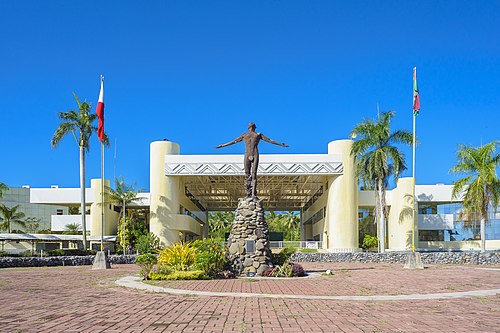
So it was more than symbolic that Jimenez chose to hold his investiture not in Diliman, UP’s seat of administrative and academic power, but in UP Mindanao, one of the UP System’s eight “constituent universities” (and interestingly, the only one created by congressional fiat, after a push by Mindanawon lawmakers in the 1990s to have a UP of their own). 

President Jimenez also emphasized that he was adding one important word to UP’s longstanding motto of “Honor and Excellence.” That word was “Service,” a reminder to every Isko and Iska, as UP’s students are called, that their education is a debt to be repaid to the Filipino people for the rest of their lives.

These are noble and praiseworthy ambitions—most significantly, Jimenez’s desire to open UP up to the children of the poor, to break the tightening lock of privileged students on admission to the country’s premier state university. Ironically, because of the politically expedient but economically questionable free tuition law, public funds are subsidizing the college education of many children whose parents could very well afford to pay full tuition, while leaving the truly needy even farther behind. 

This wouldn’t be the first time that the “excellence vs. equity” issue came up for re-evaluation. UP oldtimers will recall when high school valedictorians and salutatorians from all over the country merited automatic entry into UP, ensuring broader geographical coverage. During the time of President Edgardo Angara, a system allowing disadvantaged students to come in via “presidential discretion” was put in place, but this was reportedly abused and later junked. (When I served as Vice President, I—and other UP officials—would routinely get calls from politicians, friends, and frantic parents hoping that we could work some magic to get their children in. I said I would rather resign than even try to compromise UP’s admissions system—it just doesn’t work that way in UP, even if it might elsewhere.)

Any strategy for producing an intellectual elite based on talent alone will favor those who come from strong elementary and high school backgrounds, most likely our top private and science high schools. On the other hand, especially given the sorry state of our public schools (this, even before budgetary diversions to “confidential funds”), you can’t just bring in students from all over just to make sure of equal representation; many of these poorly prepared students will suffer, as would the university itself. 

It’s a complicated but vital question: what primary purpose should UP serve? With universities today encouraged to join the global rat race run by Quacquarelli Symonds, Times Higher Education, Shanghai Ranking Consultancy, and other ratings bodies (businesses, that’s what they are), are we forgetting more basic needs by chasing after these costly metrics?

Jijil Jimenez’s heart seems to be in the right place in calling for UP to return to its roots—as he returned to his in Mindanao—as a university of the people, but working out the details will be a challenge. If he can rally the faculty behind him and get government support, then he can yet be one of  UP’s most effective and even beloved presidents.

(Photo from sunstar.com.ph)

Qwertyman No. 58: A Long Grace Note

Qwertyman for Monday, September 11, 2023

AT ABOUT this time fifty years ago, I was newly released from martial-law prison after seven months of what everyone euphemistically called “detention,” and wondering what to do with the rest of my life. I was just nineteen, so I suppose you could say that I had a lot of living ahead of me, but I felt very differently then. More than a dozen of my friends—all of them in their twenties or even younger—had died horrible deaths fighting the regime. We exalted them as the martyrs that they were, but grimly realized and acknowledged that given how things were going, we ourselves would be fortunate to see the ripe old age of thirty.

I had been arrested at home on a cold January morning in 1973, just past midnight. Like many student activists, I had dropped out of college during the First Quarter Storm of the early 1970s. But instead of joining “the movement” full-time, I improbably found a job with a newspaper as a general-assignments reporter. It was heady stuff at age eighteen, covering three-alarm fires, floodwater rescues, and the very same demonstrations I had joined on the other side of the police barricades. And then martial law was declared—I was actually covering a rally in UP, and thought I had a scoop when a radio station nearby came under fire from the Metrocom, only to be told by my night editor when I tried to phone the story in that we no longer had a newspaper to publish, because soldiers had taken over the office. 

Over the next few months I shuttled between part-time jobs and clandestine meetings with the anti-martial law underground, moving around the city. I wasn’t doing much, given how green I was, but I thought it was important to take part in the resistance in whatever way. And then when Christmas came, like a good boy, I went home to my parents and foolishly had a chat with a neighbor who turned out to be a military asset. Not long after, a posse of soldiers appeared at our door, and when my father nudged me awake, I had a gun pointed at my face. I was being arrested under a catch-all “Arrest, Search, and Seizure Order” or ASSO issued by the Defense Minister, Juan Ponce Enrile, for whom I would ironically be writing some speeches during his post-EDSA reincarnation (he won’t remember that, as I was a tiny mouse in the office).

My release in August 1973 came right out of a Kafka story. I was taking a shower one morning in our prison—which, by the way, is roughly where St. Luke’s BGC is today—when I heard my name being called over the PA system. “Dalisay, report to the guardhouse immediately!” The last time I had done that, after one Sunday dinner, I had been beaten up by some drunken guards just for the heck of it, so I groaned when I heard the announcement. Not again, and so early? As it happened, I was received by an Army officer with a stack of papers. He pulled mine out, squinted at it, and said, “Dalisay, you’re still here? Pack your things. We have nothing on you.” The first place I visited after I went home was the AS Steps in UP, where we had gathered for many a raucous rally; it was vacant and deathly silent, and I knew that I wasn’t going back to school just then. Only after a long detour—working as a printmaker, a writer, an economist, and meeting Beng and fathering Demi—did I return to UP and graduate with my degree at age thirty.

I’ve written about my activism and incarceration in my first novel, Killing Time in a Warm Place (Anvil Publishing, 1992), and it isn’t what this column is really about. Rather, it’s about the aftermath, about having a life after martial law, and an unexpectedly long one at that. 

For any activist from my generation who’s still alive, every breath we’ve taken after our 30th birthday is a grace note—what the dictionary describes as “an extra note added as an embellishment and not essential to the harmony or melody”—in other words, a bonus. Considering that we could have been gunned down like dogs or buried alive like some of our comrades were, you can understand why we feel that way. It’s almost absurd to contemplate, but education, marriage, career, success, fame, fortune—and all the downsides and flipsides that come with them—all these were a long string of surprises, any one of which might never have happened, but for a twist of fate or a stroke of luck (clichés, like life’s very milestones, but ones we appreciate).

When my fellow FQSers and I—all college editors who were part of the SERVE book that I wrote about last week and that we launched last Saturday—gathered around a table before the launch to pre-sign some copies, we noted with much chuckling how surprisingly old we had become. We were beset by diabetes and hypertension, which were lethal enough but easier to bear than the four bullets one of us took to his face and body; he was with us that day, laughing, his spirits buoyed by his fervent Christian faith. 

We had become university presidents and professors, Cabinet secretaries, CEOs, magazine editors, pastors, and opinion-makers. I don’t think there was anyone in that room who believed any longer in the necessity nor the efficacy of violence, but neither did anyone imagine that our youthful goals had been met, that the country had become a kinder place, and that our work for justice and freedom was done. We had come to terms with our past, were busily in the present, and were hoping to enjoy what little we had left of our extended lives. But like those shaken passengers who stagger away from a crashed plane, leaving the uncounted dead behind, I’m sure that we felt driven by survivor’s guilt to make the most meaning of our gifted years, to do well and to do good, and to serve our people in any way we could. 

We learned that everything may be political, but also that politics is not everything, and that the road to happiness and deliverance may be wider than we had thought. I myself have resolved that even as I fight on for truth and beauty, I will not allow my happiness to be determined by our political vicissitudes, if I can help it. That will be my sweet revenge on my jailers. I will survive you, live a fuller life, and meet my Maker with a clear conscience and a smile.